EP4053958A1 - Phosphorous-free sulfide solid-state electrolyte - Google Patents
Phosphorous-free sulfide solid-state electrolyte Download PDFInfo
- Publication number
- EP4053958A1 EP4053958A1 EP19950266.7A EP19950266A EP4053958A1 EP 4053958 A1 EP4053958 A1 EP 4053958A1 EP 19950266 A EP19950266 A EP 19950266A EP 4053958 A1 EP4053958 A1 EP 4053958A1
- Authority
- EP
- European Patent Office
- Prior art keywords
- solid electrolyte
- electrolyte material
- lithium
- application
- material according
- Prior art date
- Legal status (The legal status is an assumption and is not a legal conclusion. Google has not performed a legal analysis and makes no representation as to the accuracy of the status listed.)
- Pending
Links
- 239000003792 electrolyte Substances 0.000 title description 7
- UCKMPCXJQFINFW-UHFFFAOYSA-N Sulphide Chemical compound [S-2] UCKMPCXJQFINFW-UHFFFAOYSA-N 0.000 title description 3
- 239000000463 material Substances 0.000 claims abstract description 88
- 239000007784 solid electrolyte Substances 0.000 claims abstract description 53
- 239000000126 substance Substances 0.000 claims abstract description 10
- 229910052732 germanium Inorganic materials 0.000 claims abstract description 8
- 229910052710 silicon Inorganic materials 0.000 claims abstract description 8
- 229910052733 gallium Inorganic materials 0.000 claims abstract description 7
- 229910052738 indium Inorganic materials 0.000 claims abstract description 7
- 229910052782 aluminium Inorganic materials 0.000 claims abstract description 6
- 230000005012 migration Effects 0.000 claims description 24
- 238000013508 migration Methods 0.000 claims description 24
- 230000004888 barrier function Effects 0.000 claims description 16
- OAICVXFJPJFONN-UHFFFAOYSA-N Phosphorus Chemical compound [P] OAICVXFJPJFONN-UHFFFAOYSA-N 0.000 abstract description 6
- 229910052698 phosphorus Inorganic materials 0.000 abstract description 6
- 239000011574 phosphorus Substances 0.000 abstract description 6
- XLYOFNOQVPJJNP-UHFFFAOYSA-N water Substances O XLYOFNOQVPJJNP-UHFFFAOYSA-N 0.000 abstract description 6
- 239000000203 mixture Substances 0.000 abstract description 3
- 229910001416 lithium ion Inorganic materials 0.000 description 52
- HBBGRARXTFLTSG-UHFFFAOYSA-N Lithium ion Chemical compound [Li+] HBBGRARXTFLTSG-UHFFFAOYSA-N 0.000 description 19
- 239000002203 sulfidic glass Substances 0.000 description 12
- 230000003287 optical effect Effects 0.000 description 7
- 229910052744 lithium Inorganic materials 0.000 description 6
- 229920000642 polymer Polymers 0.000 description 6
- 239000007787 solid Substances 0.000 description 5
- 229910003405 Li10GeP2S12 Inorganic materials 0.000 description 4
- -1 LiSiO4 Chemical compound 0.000 description 4
- WHXSMMKQMYFTQS-UHFFFAOYSA-N Lithium Chemical compound [Li] WHXSMMKQMYFTQS-UHFFFAOYSA-N 0.000 description 4
- 239000002253 acid Substances 0.000 description 4
- 238000000498 ball milling Methods 0.000 description 4
- 230000015572 biosynthetic process Effects 0.000 description 4
- 238000000034 method Methods 0.000 description 4
- 238000002360 preparation method Methods 0.000 description 4
- QCJQWJKKTGJDCM-UHFFFAOYSA-N [P].[S] Chemical class [P].[S] QCJQWJKKTGJDCM-UHFFFAOYSA-N 0.000 description 3
- 239000012212 insulator Substances 0.000 description 3
- 150000002500 ions Chemical group 0.000 description 3
- 239000005486 organic electrolyte Substances 0.000 description 3
- 230000008569 process Effects 0.000 description 3
- 238000003786 synthesis reaction Methods 0.000 description 3
- 239000002227 LISICON Substances 0.000 description 2
- 229910009311 Li2S-SiS2 Inorganic materials 0.000 description 2
- 229910009433 Li2S—SiS2 Inorganic materials 0.000 description 2
- 102100021164 Vasodilator-stimulated phosphoprotein Human genes 0.000 description 2
- 238000004364 calculation method Methods 0.000 description 2
- 239000003990 capacitor Substances 0.000 description 2
- 239000013078 crystal Substances 0.000 description 2
- 125000004122 cyclic group Chemical group 0.000 description 2
- 238000009792 diffusion process Methods 0.000 description 2
- 238000011156 evaluation Methods 0.000 description 2
- 239000007789 gas Substances 0.000 description 2
- 239000011521 glass Substances 0.000 description 2
- 238000009413 insulation Methods 0.000 description 2
- 238000007578 melt-quenching technique Methods 0.000 description 2
- 238000012545 processing Methods 0.000 description 2
- 238000011160 research Methods 0.000 description 2
- 229910052711 selenium Inorganic materials 0.000 description 2
- 239000004065 semiconductor Substances 0.000 description 2
- 238000004088 simulation Methods 0.000 description 2
- 239000000243 solution Substances 0.000 description 2
- 229910052717 sulfur Inorganic materials 0.000 description 2
- 230000007704 transition Effects 0.000 description 2
- BVKZGUZCCUSVTD-UHFFFAOYSA-L Carbonate Chemical compound [O-]C([O-])=O BVKZGUZCCUSVTD-UHFFFAOYSA-L 0.000 description 1
- 229910006210 Li1+xAlxTi2-x(PO4)3 Inorganic materials 0.000 description 1
- 229910006212 Li1+xAlxTi2−x(PO4)3 Inorganic materials 0.000 description 1
- FUJCRWPEOMXPAD-UHFFFAOYSA-N Li2O Inorganic materials [Li+].[Li+].[O-2] FUJCRWPEOMXPAD-UHFFFAOYSA-N 0.000 description 1
- 229910009297 Li2S-P2S5 Inorganic materials 0.000 description 1
- 229910009228 Li2S—P2S5 Inorganic materials 0.000 description 1
- 229910012137 Li3AlO3 Inorganic materials 0.000 description 1
- 229910011244 Li3xLa2/3-xTiO3 Inorganic materials 0.000 description 1
- 229910011245 Li3xLa2/3−xTiO3 Inorganic materials 0.000 description 1
- 229910002984 Li7La3Zr2O12 Inorganic materials 0.000 description 1
- 239000002033 PVDF binder Substances 0.000 description 1
- 229910020358 SiS4 Inorganic materials 0.000 description 1
- 238000010521 absorption reaction Methods 0.000 description 1
- 230000009471 action Effects 0.000 description 1
- 230000004913 activation Effects 0.000 description 1
- 230000006978 adaptation Effects 0.000 description 1
- 230000009286 beneficial effect Effects 0.000 description 1
- 229910052796 boron Inorganic materials 0.000 description 1
- OJIJEKBXJYRIBZ-UHFFFAOYSA-N cadmium nickel Chemical compound [Ni].[Cd] OJIJEKBXJYRIBZ-UHFFFAOYSA-N 0.000 description 1
- 230000015556 catabolic process Effects 0.000 description 1
- 210000004027 cell Anatomy 0.000 description 1
- 238000012512 characterization method Methods 0.000 description 1
- 238000005229 chemical vapour deposition Methods 0.000 description 1
- 229920000891 common polymer Polymers 0.000 description 1
- 238000004891 communication Methods 0.000 description 1
- 230000000536 complexating effect Effects 0.000 description 1
- 239000000039 congener Substances 0.000 description 1
- 238000007796 conventional method Methods 0.000 description 1
- 238000007334 copolymerization reaction Methods 0.000 description 1
- 238000005260 corrosion Methods 0.000 description 1
- 230000007797 corrosion Effects 0.000 description 1
- 238000002425 crystallisation Methods 0.000 description 1
- 230000008025 crystallization Effects 0.000 description 1
- 238000006731 degradation reaction Methods 0.000 description 1
- 210000001787 dendrite Anatomy 0.000 description 1
- 238000000151 deposition Methods 0.000 description 1
- 230000008021 deposition Effects 0.000 description 1
- 238000013461 design Methods 0.000 description 1
- XUCJHNOBJLKZNU-UHFFFAOYSA-M dilithium;hydroxide Chemical compound [Li+].[Li+].[OH-] XUCJHNOBJLKZNU-UHFFFAOYSA-M 0.000 description 1
- 230000007646 directional migration Effects 0.000 description 1
- 238000009826 distribution Methods 0.000 description 1
- 230000000694 effects Effects 0.000 description 1
- 230000005684 electric field Effects 0.000 description 1
- 238000010292 electrical insulation Methods 0.000 description 1
- 238000003487 electrochemical reaction Methods 0.000 description 1
- 239000008151 electrolyte solution Substances 0.000 description 1
- 238000004146 energy storage Methods 0.000 description 1
- 238000004880 explosion Methods 0.000 description 1
- 239000000446 fuel Substances 0.000 description 1
- 239000002241 glass-ceramic Substances 0.000 description 1
- 229910052739 hydrogen Inorganic materials 0.000 description 1
- 239000001257 hydrogen Substances 0.000 description 1
- 229910052909 inorganic silicate Inorganic materials 0.000 description 1
- 229910003480 inorganic solid Inorganic materials 0.000 description 1
- 239000010416 ion conductor Substances 0.000 description 1
- 239000007788 liquid Substances 0.000 description 1
- 239000004973 liquid crystal related substance Substances 0.000 description 1
- 229910001386 lithium phosphate Inorganic materials 0.000 description 1
- 229910003002 lithium salt Inorganic materials 0.000 description 1
- 159000000002 lithium salts Chemical class 0.000 description 1
- 238000004519 manufacturing process Methods 0.000 description 1
- 239000011159 matrix material Substances 0.000 description 1
- 238000003801 milling Methods 0.000 description 1
- 230000003647 oxidation Effects 0.000 description 1
- 238000007254 oxidation reaction Methods 0.000 description 1
- CYQAYERJWZKYML-UHFFFAOYSA-N phosphorus pentasulfide Chemical compound S1P(S2)(=S)SP3(=S)SP1(=S)SP2(=S)S3 CYQAYERJWZKYML-UHFFFAOYSA-N 0.000 description 1
- 238000005240 physical vapour deposition Methods 0.000 description 1
- 229920003229 poly(methyl methacrylate) Polymers 0.000 description 1
- 239000004926 polymethyl methacrylate Substances 0.000 description 1
- 229920002981 polyvinylidene fluoride Polymers 0.000 description 1
- 239000007774 positive electrode material Substances 0.000 description 1
- 239000000843 powder Substances 0.000 description 1
- 239000002994 raw material Substances 0.000 description 1
- 238000003836 solid-state method Methods 0.000 description 1
- 150000004763 sulfides Chemical class 0.000 description 1
- XTQHKBHJIVJGKJ-UHFFFAOYSA-N sulfur monoxide Chemical compound S=O XTQHKBHJIVJGKJ-UHFFFAOYSA-N 0.000 description 1
- 239000002226 superionic conductor Substances 0.000 description 1
- 230000009897 systematic effect Effects 0.000 description 1
- 239000013077 target material Substances 0.000 description 1
- RIUWBIIVUYSTCN-UHFFFAOYSA-N trilithium borate Chemical compound [Li+].[Li+].[Li+].[O-]B([O-])[O-] RIUWBIIVUYSTCN-UHFFFAOYSA-N 0.000 description 1
- TWQULNDIKKJZPH-UHFFFAOYSA-K trilithium;phosphate Chemical compound [Li+].[Li+].[Li+].[O-]P([O-])([O-])=O TWQULNDIKKJZPH-UHFFFAOYSA-K 0.000 description 1
Images


Classifications
-
- H—ELECTRICITY
- H01—ELECTRIC ELEMENTS
- H01M—PROCESSES OR MEANS, e.g. BATTERIES, FOR THE DIRECT CONVERSION OF CHEMICAL ENERGY INTO ELECTRICAL ENERGY
- H01M10/00—Secondary cells; Manufacture thereof
- H01M10/05—Accumulators with non-aqueous electrolyte
- H01M10/056—Accumulators with non-aqueous electrolyte characterised by the materials used as electrolytes, e.g. mixed inorganic/organic electrolytes
- H01M10/0561—Accumulators with non-aqueous electrolyte characterised by the materials used as electrolytes, e.g. mixed inorganic/organic electrolytes the electrolyte being constituted of inorganic materials only
- H01M10/0562—Solid materials
-
- H—ELECTRICITY
- H01—ELECTRIC ELEMENTS
- H01M—PROCESSES OR MEANS, e.g. BATTERIES, FOR THE DIRECT CONVERSION OF CHEMICAL ENERGY INTO ELECTRICAL ENERGY
- H01M10/00—Secondary cells; Manufacture thereof
- H01M10/05—Accumulators with non-aqueous electrolyte
- H01M10/052—Li-accumulators
- H01M10/0525—Rocking-chair batteries, i.e. batteries with lithium insertion or intercalation in both electrodes; Lithium-ion batteries
-
- H—ELECTRICITY
- H01—ELECTRIC ELEMENTS
- H01M—PROCESSES OR MEANS, e.g. BATTERIES, FOR THE DIRECT CONVERSION OF CHEMICAL ENERGY INTO ELECTRICAL ENERGY
- H01M10/00—Secondary cells; Manufacture thereof
- H01M10/05—Accumulators with non-aqueous electrolyte
- H01M10/052—Li-accumulators
-
- H—ELECTRICITY
- H01—ELECTRIC ELEMENTS
- H01M—PROCESSES OR MEANS, e.g. BATTERIES, FOR THE DIRECT CONVERSION OF CHEMICAL ENERGY INTO ELECTRICAL ENERGY
- H01M10/00—Secondary cells; Manufacture thereof
- H01M10/05—Accumulators with non-aqueous electrolyte
- H01M10/054—Accumulators with insertion or intercalation of metals other than lithium, e.g. with magnesium or aluminium
-
- H—ELECTRICITY
- H01—ELECTRIC ELEMENTS
- H01M—PROCESSES OR MEANS, e.g. BATTERIES, FOR THE DIRECT CONVERSION OF CHEMICAL ENERGY INTO ELECTRICAL ENERGY
- H01M10/00—Secondary cells; Manufacture thereof
- H01M10/05—Accumulators with non-aqueous electrolyte
- H01M10/058—Construction or manufacture
-
- H—ELECTRICITY
- H01—ELECTRIC ELEMENTS
- H01M—PROCESSES OR MEANS, e.g. BATTERIES, FOR THE DIRECT CONVERSION OF CHEMICAL ENERGY INTO ELECTRICAL ENERGY
- H01M2300/00—Electrolytes
- H01M2300/0017—Non-aqueous electrolytes
- H01M2300/0065—Solid electrolytes
- H01M2300/0068—Solid electrolytes inorganic
-
- Y—GENERAL TAGGING OF NEW TECHNOLOGICAL DEVELOPMENTS; GENERAL TAGGING OF CROSS-SECTIONAL TECHNOLOGIES SPANNING OVER SEVERAL SECTIONS OF THE IPC; TECHNICAL SUBJECTS COVERED BY FORMER USPC CROSS-REFERENCE ART COLLECTIONS [XRACs] AND DIGESTS
- Y02—TECHNOLOGIES OR APPLICATIONS FOR MITIGATION OR ADAPTATION AGAINST CLIMATE CHANGE
- Y02E—REDUCTION OF GREENHOUSE GAS [GHG] EMISSIONS, RELATED TO ENERGY GENERATION, TRANSMISSION OR DISTRIBUTION
- Y02E60/00—Enabling technologies; Technologies with a potential or indirect contribution to GHG emissions mitigation
- Y02E60/10—Energy storage using batteries
-
- Y—GENERAL TAGGING OF NEW TECHNOLOGICAL DEVELOPMENTS; GENERAL TAGGING OF CROSS-SECTIONAL TECHNOLOGIES SPANNING OVER SEVERAL SECTIONS OF THE IPC; TECHNICAL SUBJECTS COVERED BY FORMER USPC CROSS-REFERENCE ART COLLECTIONS [XRACs] AND DIGESTS
- Y02—TECHNOLOGIES OR APPLICATIONS FOR MITIGATION OR ADAPTATION AGAINST CLIMATE CHANGE
- Y02P—CLIMATE CHANGE MITIGATION TECHNOLOGIES IN THE PRODUCTION OR PROCESSING OF GOODS
- Y02P70/00—Climate change mitigation technologies in the production process for final industrial or consumer products
- Y02P70/50—Manufacturing or production processes characterised by the final manufactured product
Definitions
- the invention relates to a phosphorus-free sulfide solid electrolyte.
- lithium-ion batteries are characterized in high energy density, high power density, long life, good safety, low self-discharge rate, and wide temperature adaptation range, thereby being most widely used.
- a flammable organic solution as an electrolyte for traditional lithium-ion batteries, so a great potential safety hazard exists.
- lithium-ion batteries with higher energy density Although measures can be taken to improve material, electrode, cell, module, power management, heat management, systematic design, or the like, battery safety still remains prominent and it is hard to completely avoid thermal runaway. In recent years, vicious battery explosion accidents sometimes happen. Therefore, it is especially important to explore lithium-ion secondary batteries with good safety performance.
- an organic electrolyte solution with a solid electrolyte.
- the solid electrolyte is incombustible, non-volatile, and free from corrosion and liquid leakage, therefore, an all-solid-state battery assembled with the solid electrolyte has extremely high safety.
- an all-solid-state battery is characterized in long life and high theoretical energy density.
- the solid electrolytes are featured with good mechanical strength and can inhibit lithium dendrites effectively. This can also significantly improve the cycle performance and service life of batteries.
- the solid electrolyte since the solid electrolyte generally has a wide electrochemical window, it can match with more high-voltage positive electrodes; moreover, the all-solid-state battery can greatly simplify the battery thermal management system and can greatly improve the energy density.
- polymer-type there are three types of common solid electrolytes at present: polymer-type, oxide-type and sulfide-type.
- the concept of polymer solid electrolyte was firstly put forward by Armand in 1978.
- the polymer solid electrolyte includes a polymer and a lithium salt. Lithium ions and polar groups in a polymer chain are complexing with each other. Under the action of an external electric field, the flexibility of the polymer chain is used for the directional migration of lithium ions.
- Common polymer solid electrolytes include PEO-based, PPO-based, PAN-based, PMMA-based, and PVDF-based electrolytes, or the like.
- electrolytes have light mass, good viscoelasticity, and good mechanical processability, but very low ionic conductivity has a severe impact on the high-rate charge and discharge capacity of batteries.
- Chemical copolymerization, grafting, or the like are usually used to reduce the crystallinity of a polymer matrix and improve the ionic conductivity, but improved room temperature ionic conductivity is still very low.
- Oxide solid electrolytes include Perovskite-type (e.g., Li 3x La 2/3-x TiO 3 ), Anti-Perovskite-type (e.g., Li 3 OCl), NASICON-type (e.g., Li 1+x Al x Ti 2-x (PO 4 ) 3 ), Garnet-type (e.g., Li 7 La 3 Zr 2 O 12 ) electrolytes, or the like.
- These kinds of electrolytes generally have good chemical stability and can exist in the air stably, but the ionic conductivity is relatively low, the grain boundary resistance is great, and the compatibility with an electrode is poor.
- the sulfide solid electrolyte is characterized in high ionic conductivity, low grain boundary resistance, good electrochemical stability, or the like, receives wide attention from researchers, and is the material that is most promising for scale application.
- Li 2 S-SiS 2 system is a type of solid electrolyte that is first studied.
- Tatsumisago et al. "Solid state lithium secondary batteries using an amorphous solid electrolyte in the system (100-x)(0.6Li2S-0.4SiS2) ⁇ xLi4SiO4 obtained by mechanochemical synthesis", 2001, Solid State Ionics, Volume 140, Pages 83-87 ) used mechanical ball milling instead of melt quenching to prepare a glassy-state solid electrolyte (100-x)(0.6Li 2 S-0.4SiS 2 )xLi 4 SiO 4 , and exhaustively discussed the impact of milling time on the formation of a glassy state and the performance of all-solid-state batteries. Subsequently, Tatsumisago, et al.
- P 5+ in the sulfur phosphorus compounds is hard acid, and compared with S 2- , O 2- in water is harder base.
- Hard acid reacts with hard base firstly, thus sulfides with phosphorus may deteriorate easily when they absorb water.
- exploration of some novel sulfide solid electrolyte materials with good Li+ conductivity and without phosphorus is of great importance.
- the application provides a novel sulfide solid electrolyte material and an electrochemical device comprising the solid electrolyte material.
- the solid electrolyte material is simple in composition, contains no phosphorus sensitive to water, and has good Li + conductivity at the same time. It is a promising solid electrolyte material.
- a first purpose of the application is to disclose a novel sulfide solid electrolyte material.
- a second purpose of the application is to disclose the crystallographic characteristics, structural information, XRD spectrogram, PBE band gap, Li + migration path, and migration barrier of the solid electrolyte material.
- the application discloses a novel sulfide solid electrolyte material, represented by a general chemical formula Li 2+x M 2+x M' 1-x S 6 , wherein M is at least one of Al, Ga or In, M' is at least one of Si or Ge, and 0 ⁇ x ⁇ 0.5.
- the Li 2+x M 2+x M' 1-x S 6 material has diamond-like structural characteristics.
- coordination of M 3+ (e.g., Al 3+ ) and M' 4+ (e.g., Si 4+ ) with S 2- forms tetrahedrons. All connected corner-sharing tetrahedrons form a three-dimensional network, and Li + is filled in the gap between tetrahedrons.
- the application discloses XRD spectrogram characteristics of Li 2+x M 2+x M' 1-x S 6 .
- strong diffraction peaks may occur at about 14.5° ⁇ 3°, 15.5° ⁇ 3°, 17° ⁇ 3°, 25.5° ⁇ 3°, 31.5° ⁇ 3°, 53.0° ⁇ 3°, or the like.
- Li 2+x Al 2+x Si 1-x S 6 the application exhaustively evaluates lithium-ion migration paths and migration barriers of Li 2.125 Al 2.125 Si 0.875 S 6 , Li 2.25 Al 2.25 Si 0.75 S 6 , and Li 2.5 Al 2.5 Si 0.5 S 6 .
- the invention provides a novel sulfide solid electrolyte material Li 2+x M 2+x M' 1-x S 6 , with a diamond-like structure, where coordination of M 3+ and M' 4+ with four S 2- forms [MS 4 ] and [M'S 4 ] tetrahedrons. All corner-sharing tetrahedrons are connected, and Li + is filled in the gap between tetrahedrons.
- This kind of material has a wide optical band gap. Particularly, for the Li 2+x Al 2+x Si 1-x S 6 material, the intrinsic band gap is no less than about 4.3eV, and Li + migration barrier is no greater than 0.45 eV Overall, this kind of material has a wide band gap and a low Li + conduction barrier, indicating that it has strong Li + conducting power and is a novel fast lithium-ion conductor material, with a good application prospect.
- this kind of material does not contain hard acid P 5+ and should have good stability.
- all tetrahedrons are corner-sharing connected, groups are arranged compactly with a little gap, and the structural stability is good.
- the general chemical formula of the solid electrolyte material is Li 2+x M 2+x M' 1-x S 6 , wherein M is at least one of Ga or In, M' is at least one of Si or Ge, and 0 ⁇ x ⁇ 0.5.
- the general chemical formula of the solid electrolyte material is Li 2+x Al 2+x Si 1-x S 6 , wherein 0 ⁇ x ⁇ 0.5.
- coordination of M 3+ (Al 3+ ) and M' 4+ (Si 4+ ) in the solid electrolyte material structure with S 2- forms [MS 4 ] ([AlS 4 ]) and [M'S 4 ] ([SiS 4 ]). All corner-sharing tetrahedrons are connected, and Li + is filled in the gap between tetrahedrons.
- strong diffraction peaks may occur at about 14.5° ⁇ 3°, 15.5° ⁇ 3°, 17° ⁇ 3°, 25.5° ⁇ 3°, 31.5° ⁇ 3°, 53.0° ⁇ 3°, or the like in XRD spectrogram of the solid electrolyte material.
- Li + migration barrier of the solid electrolyte material is no greater than about 0.45 eV.
- the PBE band gap of the solid electrolyte material is no less than about 2.80 eV.
- the solid electrolyte material can replace the organic electrolyte solution and is applied to novel lithium-ion batteries.
- the safety risks arising from thermal runaway are thermal runaways in principle.
- the invention provides a type of novel sulfide solid electrolyte, with great application potential.
- the solution is of high innovation and practical value, and can promote the further application of sulfide solid electrolyte.
- inorganic solid electrolyte material usually comprises a stable ion skeleton and a moveable ion (e.g., Li + ).
- a moveable ion e.g., Li +
- the ionic radius of S 2- in the sulfide solid electrolytes is much greater than O 2- , enabling a much larger movable space for Li + between skeletons; at the same time, the nucleus of S 2- has a lower constraint to the ambient electron cloud, making that the electron cloud is more easily polarized and the charge distribution may cooperate with Li + more easily during the movement of Li + to form deformation and reduce the force on lithium-ion, thereby reducing the migration barrier of Li + .
- the embodiments of the application provide a solid electrolyte material.
- the general chemical formula of the material is Li 2+x M 2+x M' 1-x S 6 , wherein M is at least one of Al, Ga or In, M' is at least one of Si or Ge, and 0 ⁇ x ⁇ 0.5.
- the application firstly discloses the structural characteristics of the Li 2+x M 2+x M' 1-x S 6 material, which has diamond-like structural characteristics.
- the application also discloses characteristics of an XRD spectrogram of the Li 2+x M 2+x M' 1-x S 6 material. As shown in Figs. 2 , 6 and 10 , in the XRD spectrogram, strong diffraction peaks may occur at about 14.5° ⁇ 3°, 15.5° ⁇ 3°, 17° ⁇ 3°, 25.5° ⁇ 3°, 31.5° ⁇ 3°, 53.0° ⁇ 3°, or the like.
- strong diffraction peaks may occur at about 14.6°, 16.0°, 18.0°, 26.0°, 31.3°, and 53.5°; for the Li 2.25 Al 2.25 Si 0.75 S 6 material, strong diffraction peaks may occur at about 14.6°, 16.0°, 17.7°, 26.0°, 31.1°, and 53.4°; for the Li 2.5 Al 2.5 Si 0.5 S 6 material, strong diffraction peaks may occur at about 14.0°, 15.4°, 16.8°, 25.4°, 30.8°, and 52.1°.
- the invention uses PBE exchange-correlation functional for calculating the total density of states of several Li 2+x M 2+x M' 1-x S 6 materials (taking Li 2.125 Al 2.125 Si 0.875 S 6 , Li 2.25 Al 2.25 Si 0.75 S 6 , and Li 2.5 Al 2.5 Si 0.5 S 6 as demonstrative examples).
- the PBE band gap of the Li 2+x Al 2+x Si 1-x S 6 material is no less than 2.80 eV.
- Lithium-ion transport characteristics are the most critical characteristics of solid electrolytes. Therefore, the inventor calculates Li + migration path and migration barrier of the Li 2+x M 2+x M' 1-x S 6 material by using First Principle and VASP software (Hafner research group of University of Vienna, Vienna Ab-initio Simulation Package).
- M and M' can be arbitrarily selected from Al, Ga, In and Si, Ge respectively.
- the invention takes Li 2+x Al 2+x Si 1-x S 6 as an example to discuss, and exhaustively calculates Li + migration path and migration barrier of Li 2.125 Al 2.125 Si 0.875 S 6 , Li 2.25 Al 2.25 Si 0.75 S 6 , Li 2.5 Al 2.5 Si 0.5 S 6 , or the like.
- Figs 1 , 5 , and 9 illustrate Li + migration paths of the Li 2+x Al 2+x Si 1-x S 6 material, wherein gray Li + ion is at a transition position artificially inserted between the initial state and the final state, and Li + transits from the initial state to the final state via the intermediate state.
- Figs. 4 , 8 , and 12 illustrate the migration barrier shape of lowest activation energy in these migration channels through the further calculation of transition state. Specifically, the interstitial lithium-ion pushes the lattice lithium-ion to the next gap site and occupies a lattice site, enabling Li + transport by the means of "interstitialcy".
- the migration barrier is about 0.41, 0.34, and 0.25eV respectively.
- Ceder et al. “First principles study of the Li10GeP2S12 lithium super ionic conductor material", 2012, Chemistry of Materials, Volume 24, Pages 15-17 .
- Li + migration barrier of LGPS material (benchmark material in sulfide solid electrolyte) is about 0.2eV It can be seen from this that Li + in a lattice structure of the Li 2.5 Al 2.5 Si 0.5 S 6 material can diffuse easily, and this material is a good potential solid electrolyte material.
- the Li 2+x M 2+x M' 1-x S 6 material disclosed by the invention does not contain phosphorus, and is characterized in improved chemical stability, wide optical band gap (wide electrochemical window), and good Li + transport capability, thereby having great application potential.
- the electrochemical device according to the application includes any device that generates an electrochemical reaction, and specific examples include all kinds of primary batteries, secondary batteries, fuel batteries, solar batteries, or capacitors.
- the electrochemical device is a lithium secondary battery, including a lithium metal secondary battery or a lithium-ion secondary battery.
- the electrochemical device according to the application includes a positive electrode, a negative electrode, and the solid electrolyte of the application.
- the electrochemical devices manufactured according to the application are applicable to electronic equipment in various fields.
- the electrochemical device according to the application is not particularly limited in the purpose, and can be used for any purpose known in the prior art.
- the electrochemical device according to the application can be used for, including but not limited to notebook computers, pen-type computers, mobile computers, e-book players, portable phones, portable fax machines, portable copiers, portable printers, head-mounted stereo headsets, video recorders, liquid crystal TVs, portable cleaners, portable CD players, mini disks, transceivers, electronic notebooks, calculators, memory cards, portable recorders, radios, standby power supplies, motors, automobiles, motorcycles, power-assisted bicycles, bicycles, lighting appliances, toys, game machines, clocks, electric tools, flashlights, cameras, large household batteries, and lithium-ion capacitors.
- the Li 2+x M 2+x M' 1-x S 6 material disclosed by the invention can be prepared by many conventional methods. For instance, Li 2 O, M 2 O 3 , and M'O 2 can be used as raw materials. They are mixed evenly according to the required molar ratio, ground into the uniform powder by ball milling under the protection of the inert atmosphere, and sintered by the high-temperature solid-state method under the inert atmosphere or vacuum. It can be understood that other preparation means can be selected, e.g., melt quenching. Certainly, appropriate target materials can also be selected, and the solid electrolyte material is prepared by physical or chemical vapor deposition. The expected element molar ratio can be obtained by deposition by adjusting relevant process parameters. Since these preparation processes are familiar to those skilled in the art, they will not be repeated here.
- Some embodiments of the invention also provide a secondary battery, which can be a lithium-ion battery or a lithium metal battery.
- a secondary battery which can be a lithium-ion battery or a lithium metal battery.
- the Li 2+x M 2+x M' 1-x S 6 material described in the aforesaid embodiments of the invention can be used. Since the structure of the solid secondary battery is familiar to those skilled in the art, it will not be repeated here.
Landscapes
- Chemical & Material Sciences (AREA)
- Engineering & Computer Science (AREA)
- Chemical Kinetics & Catalysis (AREA)
- General Chemical & Material Sciences (AREA)
- Electrochemistry (AREA)
- Manufacturing & Machinery (AREA)
- Materials Engineering (AREA)
- Inorganic Chemistry (AREA)
- Physics & Mathematics (AREA)
- General Physics & Mathematics (AREA)
- Condensed Matter Physics & Semiconductors (AREA)
- Conductive Materials (AREA)
- Secondary Cells (AREA)
- Inert Electrodes (AREA)
- Primary Cells (AREA)
- Battery Electrode And Active Subsutance (AREA)
- Fuel Cell (AREA)
- Silicon Compounds (AREA)
- Electric Double-Layer Capacitors Or The Like (AREA)
Abstract
Description
- The invention relates to a phosphorus-free sulfide solid electrolyte.
- As the electronic technique rapidly develops, electronic equipment such as phones, notebook computers, vidicon and electric tools increases, and people's demand for energy storage power is getting higher. It is urgent to develop secondary batteries with high capacity, long life, and good safety performance. In contrast with lead-acid, nickel-cadmium, nickel-hydrogen batteries, or the like, lithium-ion batteries are characterized in high energy density, high power density, long life, good safety, low self-discharge rate, and wide temperature adaptation range, thereby being most widely used. However, it is required to use a flammable organic solution as an electrolyte for traditional lithium-ion batteries, so a great potential safety hazard exists. Particularly, for lithium-ion batteries with higher energy density, although measures can be taken to improve material, electrode, cell, module, power management, heat management, systematic design, or the like, battery safety still remains prominent and it is hard to completely avoid thermal runaway. In recent years, vicious battery explosion accidents sometimes happen. Therefore, it is especially important to explore lithium-ion secondary batteries with good safety performance.
- In order to solve the above safety problem fundamentally, it is a good scheme to replace an organic electrolyte solution with a solid electrolyte. The solid electrolyte is incombustible, non-volatile, and free from corrosion and liquid leakage, therefore, an all-solid-state battery assembled with the solid electrolyte has extremely high safety. In addition, an all-solid-state battery is characterized in long life and high theoretical energy density. During the use of lithium-ion batteries with the organic electrolyte solution, since an SEI film gets broken and is generated repeatedly during the cyclic process, resulting in accelerating the degradation of battery capacity, and lots of side effects during the cyclic process also have a severe impact on the service life of batteries, the solid electrolyte can solve this problem. In another aspect, most of the solid electrolytes are featured with good mechanical strength and can inhibit lithium dendrites effectively. This can also significantly improve the cycle performance and service life of batteries. In addition, since the solid electrolyte generally has a wide electrochemical window, it can match with more high-voltage positive electrodes; moreover, the all-solid-state battery can greatly simplify the battery thermal management system and can greatly improve the energy density.
- In recent years, researchers have conducted a lot of exploratory work on the solid electrolyte. In summary, there are three types of common solid electrolytes at present: polymer-type, oxide-type and sulfide-type. The concept of polymer solid electrolyte was firstly put forward by Armand in 1978. The polymer solid electrolyte includes a polymer and a lithium salt. Lithium ions and polar groups in a polymer chain are complexing with each other. Under the action of an external electric field, the flexibility of the polymer chain is used for the directional migration of lithium ions. Common polymer solid electrolytes include PEO-based, PPO-based, PAN-based, PMMA-based, and PVDF-based electrolytes, or the like. These kinds of electrolytes have light mass, good viscoelasticity, and good mechanical processability, but very low ionic conductivity has a severe impact on the high-rate charge and discharge capacity of batteries. Chemical copolymerization, grafting, or the like are usually used to reduce the crystallinity of a polymer matrix and improve the ionic conductivity, but improved room temperature ionic conductivity is still very low. Oxide solid electrolytes include Perovskite-type (e.g., Li3xLa2/3-xTiO3), Anti-Perovskite-type (e.g., Li3OCl), NASICON-type (e.g., Li1+xAlxTi2-x(PO4)3), Garnet-type (e.g., Li7La3Zr2O12) electrolytes, or the like. These kinds of electrolytes generally have good chemical stability and can exist in the air stably, but the ionic conductivity is relatively low, the grain boundary resistance is great, and the compatibility with an electrode is poor. Compared with two types of solid electrolytes aforesaid, the sulfide solid electrolyte is characterized in high ionic conductivity, low grain boundary resistance, good electrochemical stability, or the like, receives wide attention from researchers, and is the material that is most promising for scale application. In the sulfide materials, Li2S-SiS2 system is a type of solid electrolyte that is first studied. It is reported that (Hayashi et al., "Characterization of Li2S-SiS2-Li3MO3 M=B, Al, Ga and In) oxysulfide glasses and their application to solid state lithium secondary batteries", 2002, Solid State Ionics, Volume 152-153, Pages 285-290): Li3PO4, LiSiO4, Li3BO3, and Li3AlO3 with glassy-state Li2S-SiS2 can significantly improve the conductivity and inhibit crystallization of materials. In 2001, Tatsumisago, et al. (Tatsumisago et al., "Solid state lithium secondary batteries using an amorphous solid electrolyte in the system (100-x)(0.6Li2S-0.4SiS2)·xLi4SiO4 obtained by mechanochemical synthesis", 2001, Solid State Ionics, Volume 140, Pages 83-87) used mechanical ball milling instead of melt quenching to prepare a glassy-state solid electrolyte (100-x)(0.6Li2S-0.4SiS2)xLi4SiO4, and exhaustively discussed the impact of milling time on the formation of a glassy state and the performance of all-solid-state batteries. Subsequently, Tatsumisago, et al. (Tatsumisago et al., "New, Highly Ion-Conductive Crystals Precipitated from Li2S-P2S5 Glasses", 2005, Advanced Materials, Volume 17, Pages 918-921) reported for the first time in 2005 the preparation of sulfur phosphorus compound material 70Li2S-30P2S5 by energetic ball milling, with the room temperature ionic conductivity up to 3.2×10⁻³ S/cm, thereby starting a trend of preparing glass-ceramic sulfur phosphorus compound materials by energetic ball milling. In 2011, Tokyo Institute of Technology and Toyota Motor Corporation made a breakthrough (Kamaya et al., "A lithium superionic conductor", 2011, Nature Materials, ). They jointly reported a crystal sulfur phosphide electrolyte with a lithium-ion three-dimensional diffusion channel, Li10GeP2S12 (LGPS), on nature materials, a top international journal of materials science. The room temperature ionic conductivity reaches 1.2×10⁻² S/cm, which even can be comparable to the ionic conductivity of common carbonate electrolyte solution, thereby further attracting global attention to sulfur phosphorus compound materials. However, in another aspect, sulfur phosphorus compounds are generally sensitive to water in the air, and can easily generate malodorous H2S gas due to water absorption during the processing in a conventional environment. The gas is harmful to the environment and processing personnel. According to the Hard-Soft Acid-Base theory, P5+ in the sulfur phosphorus compounds is hard acid, and compared with S2-, O2- in water is harder base. Hard acid reacts with hard base firstly, thus sulfides with phosphorus may deteriorate easily when they absorb water. In view of this, exploration of some novel sulfide solid electrolyte materials with good Li+ conductivity and without phosphorus is of great importance.
- The application provides a novel sulfide solid electrolyte material and an electrochemical device comprising the solid electrolyte material. The solid electrolyte material is simple in composition, contains no phosphorus sensitive to water, and has good Li+ conductivity at the same time. It is a promising solid electrolyte material.
- A first purpose of the application is to disclose a novel sulfide solid electrolyte material.
- A second purpose of the application is to disclose the crystallographic characteristics, structural information, XRD spectrogram, PBE band gap, Li+ migration path, and migration barrier of the solid electrolyte material.
- Specifically, the application discloses a novel sulfide solid electrolyte material, represented by a general chemical formula Li2+xM2+xM'1-xS6, wherein M is at least one of Al, Ga or In, M' is at least one of Si or Ge, and 0<x≤0.5.
- First, the Li2+xM2+xM'1-xS6 material has diamond-like structural characteristics. In the structure, coordination of M3+ (e.g., Al3+) and M'4+ (e.g., Si4+) with S2- forms tetrahedrons. All connected corner-sharing tetrahedrons form a three-dimensional network, and Li+ is filled in the gap between tetrahedrons.
- Next, the application discloses XRD spectrogram characteristics of Li2+xM2+xM'1-xS6. In an XRD spectrogram, strong diffraction peaks may occur at about 14.5°±3°, 15.5°±3°, 17°±3°, 25.5°±3°, 31.5°±3°, 53.0°±3°, or the like.
- Then, by taking Li2+xAl2+xSi1-xS6 as a demonstrative example and using VASP software (Hafner research group of University of Vienna, Vienna Ab-initio Simulation Package) for calculation, a PBE band gap of the Li2+xAl2+xSi1-xS6 material is no less than 2.8eV It is well-known that exchange-correlation functional in the form of PBE may severely underestimate the optical band gap of insulators and semiconductors (refer to the patent document, publication number:
CN106684437A ), and the intrinsic band gap of the Li2+xAl2+xSi1-xS6 material should be far beyond 2.8eV In 2012, Yin Wenlong, et al. (Yin et al., "Synthesis, Structure, and Properties of Li2In2MQ6 (M = Si, Ge; Q = S, Se): A New Series of IR Nonlinear Optical Materials", 2012, Inorganic Chemistry, Volume 51, Pages 5839-5843) firstly reported the experimental band gap of Li2In2SiS6 is about 3.61eV In the application, Li2In2SiS6 is calculated with the same parameters, and the PBE band gap is 2.08eV It can be seen from this that the intrinsic band gap of Li2+xAl2+xSi1-xS6 should exceed about 4.3eV - Finally, by taking Li2+xAl2+xSi1-xS6 as an example, the application exhaustively evaluates lithium-ion migration paths and migration barriers of Li2.125Al2.125Si0.875S6, Li2.25Al2.25Si0.75S6, and Li2.5Al2.5Si0.5S6.
- Compared with the prior art, the invention has the following beneficial effects:
The invention provides a novel sulfide solid electrolyte material Li2+xM2+xM'1-xS6, with a diamond-like structure, where coordination of M3+ and M'4+ with four S2- forms [MS4] and [M'S4] tetrahedrons. All corner-sharing tetrahedrons are connected, and Li+ is filled in the gap between tetrahedrons. - This kind of material has a wide optical band gap. Particularly, for the Li2+xAl2+xSi1-xS6 material, the intrinsic band gap is no less than about 4.3eV, and Li+ migration barrier is no greater than 0.45 eV Overall, this kind of material has a wide band gap and a low Li+ conduction barrier, indicating that it has strong Li+ conducting power and is a novel fast lithium-ion conductor material, with a good application prospect.
- More importantly, compared with sulfur phosphorus family solid electrolytes, according to the Hard-Soft Acid-Base theory, this kind of material does not contain hard acid P5+ and should have good stability. At the same time, it can be seen from the structure that all tetrahedrons are corner-sharing connected, groups are arranged compactly with a little gap, and the structural stability is good.
- In some embodiments, the general chemical formula of the solid electrolyte material is Li2+xM2+xM'1-xS6, wherein M is at least one of Ga or In, M' is at least one of Si or Ge, and 0<x≤0.5.
- In some embodiments, the general chemical formula of the solid electrolyte material is Li2+xAl2+xSi1-xS6, wherein 0<x≤0.5.
- In some embodiments, lattice parameters of the solid electrolyte material are about a=13.0±2.0Å, b=8.0±2.0Å, c=13.0±2.0Å, α=90.0°±5°, β=110.0°±10°, and γ=90.0°±5°.
- In some embodiments, lattice parameters of the solid electrolyte material are about a=12.0±1.0Å, b=7.0±1.0Å, c=12.0±1.0Å, α=90.0°±5°, β=105°±5°, and γ=90.0°±5°.
- In some embodiments, coordination of M3+ (Al3+) and M'4+ (Si4+) in the solid electrolyte material structure with S2- forms [MS4] ([AlS4]) and [M'S4] ([SiS4]). All corner-sharing tetrahedrons are connected, and Li+ is filled in the gap between tetrahedrons.
- In some embodiments, strong diffraction peaks may occur at about 14.5°±3°, 15.5°±3°, 17°±3°, 25.5°±3°, 31.5°±3°, 53.0°±3°, or the like in XRD spectrogram of the solid electrolyte material.
- In some embodiments, Li+ migration barrier of the solid electrolyte material is no greater than about 0.45 eV.
- In some embodiments, the PBE band gap of the solid electrolyte material is no less than about 2.80 eV.
- Unprecedented attention is paid to the safety of batteries. The solid electrolyte material can replace the organic electrolyte solution and is applied to novel lithium-ion batteries. The safety risks arising from thermal runaway are thermal runaways in principle. The invention provides a type of novel sulfide solid electrolyte, with great application potential. The solution is of high innovation and practical value, and can promote the further application of sulfide solid electrolyte.
-
-
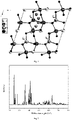
Fig. 1 illustrates a lattice structure and a Li+ migration path of Li2.125Al2.125Si0.875S6. -
Fig. 2 illustrates an XRD spectrogram of Li2.125Al2.125Si0.875S6. -
Fig. 3 illustrates a state density of Li2.125Al2.125Si0.875S6. -
Fig. 4 illustrates a gap Li+ migration barrier of Li2.125Al2.125Si0.875S6. -
Fig. 5 illustrates a lattice structure and a Li+ migration path of Li2.25Al2.25Si0.75S6 -
Fig. 6 illustrates an XRD spectrogram of Li2.25Al2.25Si0.75S6. -
Fig. 7 illustrates a state density of Li2.25Al2.25Si0.75S6. -
Fig. 8 illustrates a gap Li+ migration barrier of Li2.25Al2.25Si0.75S6. -
Fig. 9 illustrates a lattice structure and a Li+ migration path of Li2.5Al2.5Si0.5S6. -
Fig. 10 illustrates an XRD spectrogram of Li2.5Al2.5Si0.5S6. -
Fig. 11 illustrates a state density of Li2.5Al2.5Si0.5S6. -
Fig. 12 illustrates a gap Li+ migration barrier of Li2.5Al2.5Si0.5S6. - Exemplary embodiments of the invention will be described below by reference to the figures. The exemplary embodiments are the interpretation of the invention, instead of limiting the scope of protection of the claims of the invention. The scope of the invention is only defined by the claims attached and equivalents thereof.
- In general, inorganic solid electrolyte material usually comprises a stable ion skeleton and a moveable ion (e.g., Li+). Compared with oxide solid electrolytes, the ionic radius of S2- in the sulfide solid electrolytes is much greater than O2-, enabling a much larger movable space for Li+ between skeletons; at the same time, the nucleus of S2- has a lower constraint to the ambient electron cloud, making that the electron cloud is more easily polarized and the charge distribution may cooperate with Li+ more easily during the movement of Li+ to form deformation and reduce the force on lithium-ion, thereby reducing the migration barrier of Li+. On the basis of fully understanding the structural characteristics of sulfide, by replacing with congeners, using part of M3+ instead of M'4+, and introducing the thinking of gap Li+, the inventor finds a novel sulfide solid electrolyte, Li2+xM2+xM'1-xS6. This kind of material does not contain phosphorus, and has a low Li+ migration barrier, with great application potential.
- The embodiments of the application provide a solid electrolyte material. The general chemical formula of the material is Li2+xM2+xM'1-xS6, wherein M is at least one of Al, Ga or In, M' is at least one of Si or Ge, and 0<x≤0.5.
- The application firstly discloses the structural characteristics of the Li2+xM2+xM'1-xS6 material, which has diamond-like structural characteristics. Lattice parameters are around a=13.0±2.0Å, b=8.0±2.0Å, c=13.0±2.0Å, α=90.0°±5°, β=110.0°±10°, and γ=90.0°±5°. For the Li2+xAl2+xSi1-xS6 in the application, lattice parameters are about a=12.0±1.0Å, b=7.0±1.0Å, c=12.0±1.0Å, α=90.0°±5°, β=105°±5°, and γ=90.0°±5°. Specifically, for a Li2.125Al2.125Si0.875S6 material, lattice parameters are about a=11.7, b=7.2, c=11.6, α=90.3°, β=107.9°, and γ=89.7°; for a Li2.25Al2.25Si0.75S6 material, lattice parameters are about a=11.7, b=7.3, c=11.7, α=89.7°, β=107.5°, and γ=90.1°; for a Li2.5Al2.5Si0.5S6 material, lattice parameters are about a=12.0, b=7.6, c=11.8, α=88.5°, β=102.9°, and γ=90.2°. In the structure, coordination of M3+and M'4+ with four S2-forms tetrahedrons. All connected corner-sharing tetrahedrons form a three-dimensional network, and Li+ is filled in the gap between tetrahedrons. It can be seen from the composition and structural characteristics of elements that Li2+xM2+xM'1-xS6 has good stability.
- The application also discloses characteristics of an XRD spectrogram of the Li2+xM2+xM'1-xS6 material. As shown in
Figs. 2 ,6 and10 , in the XRD spectrogram, strong diffraction peaks may occur at about 14.5°±3°, 15.5°±3°, 17°±3°, 25.5°±3°, 31.5°±3°, 53.0°±3°, or the like. Specifically, for the Li2.125Al2.125Si0.875S6 material, strong diffraction peaks may occur at about 14.6°, 16.0°, 18.0°, 26.0°, 31.3°, and 53.5°; for the Li2.25Al2.25Si0.75S6 material, strong diffraction peaks may occur at about 14.6°, 16.0°, 17.7°, 26.0°, 31.1°, and 53.4°; for the Li2.5Al2.5Si0.5S6 material, strong diffraction peaks may occur at about 14.0°, 15.4°, 16.8°, 25.4°, 30.8°, and 52.1°. - Materials that can be used as solid electrolytes must meet the conditions of electronic insulation and ionic conductivity. It is well-known that electronic insulation is greatly related to the optical band gap of materials. Therefore, the invention uses PBE exchange-correlation functional for calculating the total density of states of several Li2+xM2+xM'1-xS6 materials (taking Li2.125Al2.125Si0.875S6, Li2.25Al2.25Si0.75S6, and Li2.5Al2.5Si0.5S6 as demonstrative examples). As shown in
Figs. 3 ,7 , and11 , the PBE band gap of the Li2+xAl2+xSi1-xS6 material is no less than 2.80 eV. It is well-known that exchange-correlation functional in the form of PBE may severely underestimate the optical band gap of insulators and semiconductors (refer to the patent document, publication number:CN106684437A ), and the intrinsic band gap of the Li2+xAl2+xSi1-xS6 material should be far beyond 2.8eV. In 2012, Yin Wenlong, et al. (Yin et al., "Synthesis, Structure, and Properties of Li2In2MQ6 (M = Si, Ge; Q = S, Se): A New Series of IR Nonlinear Optical Materials", 2012, Inorganic Chemistry, Volume 51, Pages 5839-5843) firstly reported the experimental band gap of Li2In2SiS6 is about 3.61eV. In the invention, Li2In2SiS6 is calculated with the same parameters, and the PBE band gap is 2.08eV. It can be seen from this that the intrinsic band gap of Li2+xAl2+xSi1-xS6 should exceed about 4.3eV. It is an insulator with a wide energy gap, and is characterized in electrical insulation. Wide energy gap width also indicates the low bonding-state energy, i.e., high oxidation potential, and indicates that the structure has a wide electrochemical window at the same time, conducive to match with high-voltage positive electrode materials. - Lithium-ion transport characteristics are the most critical characteristics of solid electrolytes. Therefore, the inventor calculates Li+ migration path and migration barrier of the Li2+xM2+xM'1-xS6 material by using First Principle and VASP software (Hafner research group of University of Vienna, Vienna Ab-initio Simulation Package).
- It's understandable that in the Li2+xM2+xM'1-xS6 material, M and M' can be arbitrarily selected from Al, Ga, In and Si, Ge respectively. In order to describe clearly and simply, the invention takes Li2+xAl2+xSi1-xS6 as an example to discuss, and exhaustively calculates Li+ migration path and migration barrier of Li2.125Al2.125Si0.875S6, Li2.25Al2.25Si0.75S6, Li2.5Al2.5Si0.5S6, or the like.
-
Figs 1 ,5 , and9 illustrate Li+ migration paths of the Li2+xAl2+xSi1-xS6 material, wherein gray Li+ ion is at a transition position artificially inserted between the initial state and the final state, and Li+ transits from the initial state to the final state via the intermediate state.Figs. 4 ,8 , and12 illustrate the migration barrier shape of lowest activation energy in these migration channels through the further calculation of transition state. Specifically, the interstitial lithium-ion pushes the lattice lithium-ion to the next gap site and occupies a lattice site, enabling Li+ transport by the means of "interstitialcy". For Li2.125Al2.125Si0.875S6, Li2.25Al2.25Si0.75S6, and Li2.5Al2.5Si0.5S6, the migration barrier is about 0.41, 0.34, and 0.25eV respectively. As a contrast, it is reported in the document (Ceder et al., "First principles study of the Li10GeP2S12 lithium super ionic conductor material", 2012, Chemistry of Materials, Volume 24, Pages 15-17. Mo et al., "Origin of fast ion diffusion in super-ionic conductors", 2017, Nature Communications, Volume 8, Pages 15893.) that Li+ migration barrier of LGPS material (benchmark material in sulfide solid electrolyte) is about 0.2eV It can be seen from this that Li+ in a lattice structure of the Li2.5Al2.5Si0.5S6 material can diffuse easily, and this material is a good potential solid electrolyte material. - It can be seen from the embodiments above that the Li2+xM2+xM'1-xS6 material disclosed by the invention does not contain phosphorus, and is characterized in improved chemical stability, wide optical band gap (wide electrochemical window), and good Li+ transport capability, thereby having great application potential.
- The electrochemical device according to the application includes any device that generates an electrochemical reaction, and specific examples include all kinds of primary batteries, secondary batteries, fuel batteries, solar batteries, or capacitors. Particularly, the electrochemical device is a lithium secondary battery, including a lithium metal secondary battery or a lithium-ion secondary battery. In some embodiments, the electrochemical device according to the application includes a positive electrode, a negative electrode, and the solid electrolyte of the application.
- The electrochemical devices manufactured according to the application are applicable to electronic equipment in various fields.
- The electrochemical device according to the application is not particularly limited in the purpose, and can be used for any purpose known in the prior art. In one embodiment, the electrochemical device according to the application can be used for, including but not limited to notebook computers, pen-type computers, mobile computers, e-book players, portable phones, portable fax machines, portable copiers, portable printers, head-mounted stereo headsets, video recorders, liquid crystal TVs, portable cleaners, portable CD players, mini disks, transceivers, electronic notebooks, calculators, memory cards, portable recorders, radios, standby power supplies, motors, automobiles, motorcycles, power-assisted bicycles, bicycles, lighting appliances, toys, game machines, clocks, electric tools, flashlights, cameras, large household batteries, and lithium-ion capacitors.
- The description below is the performance evaluation according to the embodiments of the application.
- The Li2+xM2+xM'1-xS6 material disclosed by the invention can be prepared by many conventional methods. For instance, Li2O, M2O3, and M'O2 can be used as raw materials. They are mixed evenly according to the required molar ratio, ground into the uniform powder by ball milling under the protection of the inert atmosphere, and sintered by the high-temperature solid-state method under the inert atmosphere or vacuum. It can be understood that other preparation means can be selected, e.g., melt quenching. Certainly, appropriate target materials can also be selected, and the solid electrolyte material is prepared by physical or chemical vapor deposition. The expected element molar ratio can be obtained by deposition by adjusting relevant process parameters. Since these preparation processes are familiar to those skilled in the art, they will not be repeated here.
- Some embodiments of the invention also provide a secondary battery, which can be a lithium-ion battery or a lithium metal battery. In the secondary battery, the Li2+xM2+xM'1-xS6 material described in the aforesaid embodiments of the invention can be used. Since the structure of the solid secondary battery is familiar to those skilled in the art, it will not be repeated here.
- The embodiments above are demonstrative implementations of the invention. The implementations of the invention are not limited by the embodiments above. The scope of the invention is only defined by the claims attached and equivalents thereof.
Claims (10)
- A solid electrolyte material, wherein a general chemical formula of the material is Li2+xM2+xM'1-xS6, where M is at least one of Al, Ga or In, M' is at least one of Si or Ge, and 0<x≤0.5.
- The solid electrolyte material according to claim 1, wherein a general chemical formula of the material is Li2+xA2+xSi1-xS6, where 0<x≤0.5.
- The solid electrolyte material according to claim 1, wherein lattice parameters thereof are about a=13.0±2.0Å,b=8.0±2.0Å, c=13.0±2.0Å, α=90.0°±5°, β=110.0°±10°, and γ=90.0°±5°.
- The solid electrolyte material according to claim 2, wherein lattice parameters thereof are about a=12.0±1.0Å, b=7.0±1.0Å, c=12.0±1.0Å, α=90.0°±5°, β=105°±5°, and γ=90.0°±5°.
- The solid electrolyte material according to claim 1 or 2, wherein the material has diamond-like structural characteristics, coordination of M3+and M'4+in a structure with S2- forms tetrahedrons [MS4] and [M'S4], all corner-sharing tetrahedrons are connected, and Li+ is filled in a gap between tetrahedrons.
- The solid electrolyte material according to claim 1, wherein diffraction peaks may occur at about 14.5°±3°, 15.5°±3°, 17°±3°, 25.5°±3°, 31.5°±3°, 53.0°±3°, or the like in an XRD spectrogram.
- The solid electrolyte material according to claim 2, wherein a Li+ migration barrier thereof is no less than about 0.45 eV.
- The solid electrolyte material according to claim 2, wherein a PBE band gap thereof is no less than about 2.80 eV.
- An electrochemical device, comprising a positive electrode, a negative electrode, and the solid electrolyte according to any one of claims 1-8.
- An electronic device, comprising the electrochemical device according to claim 9.
Applications Claiming Priority (2)
| Application Number | Priority Date | Filing Date | Title |
|---|---|---|---|
| CN201911061250.5A CN110808407B (en) | 2019-11-01 | 2019-11-01 | A Phosphorus-Free Sulfide Solid State Electrolyte |
| PCT/CN2019/124604 WO2021082200A1 (en) | 2019-11-01 | 2019-12-11 | Phosphorous-free sulfide solid-state electrolyte |
Publications (2)
| Publication Number | Publication Date |
|---|---|
| EP4053958A1 true EP4053958A1 (en) | 2022-09-07 |
| EP4053958A4 EP4053958A4 (en) | 2023-01-04 |
Family
ID=69501022
Family Applications (1)
| Application Number | Title | Priority Date | Filing Date |
|---|---|---|---|
| EP19950266.7A Pending EP4053958A4 (en) | 2019-11-01 | 2019-12-11 | Phosphorous-free sulfide solid-state electrolyte |
Country Status (5)
| Country | Link |
|---|---|
| US (1) | US12288845B2 (en) |
| EP (1) | EP4053958A4 (en) |
| JP (1) | JP7454665B2 (en) |
| CN (1) | CN110808407B (en) |
| WO (1) | WO2021082200A1 (en) |
Families Citing this family (2)
| Publication number | Priority date | Publication date | Assignee | Title |
|---|---|---|---|---|
| DE102023000539B3 (en) | 2023-02-17 | 2024-08-08 | Mercedes-Benz Group AG | Sulfidic solid electrolyte for solid-state batteries and process for producing |
| CN117776189A (en) * | 2023-12-25 | 2024-03-29 | 浙江锋锂新能源科技有限公司 | An amorphous-crystal complex-phase solid electrolyte and its preparation method |
Family Cites Families (18)
| Publication number | Priority date | Publication date | Assignee | Title |
|---|---|---|---|---|
| CN100530806C (en) * | 2006-09-29 | 2009-08-19 | 中国科学院上海硅酸盐研究所 | Sulfide material as solid electrolyte for lithium ion cell and its preparing method |
| JP6234665B2 (en) * | 2011-11-07 | 2017-11-22 | 出光興産株式会社 | Solid electrolyte |
| JP5888609B2 (en) * | 2012-02-06 | 2016-03-22 | 国立大学法人東京工業大学 | Sulfide solid electrolyte material, battery, and method for producing sulfide solid electrolyte material |
| CN103290478B (en) * | 2012-02-27 | 2015-11-11 | 中国科学院理化技术研究所 | Li2In2GeS6Compound, Li2In2GeS6Nonlinear optical crystal and its preparation method and use |
| CN103288058B (en) * | 2012-02-27 | 2015-03-18 | 中国科学院理化技术研究所 | Li2In2GeSe6Nonlinear optical crystal and its preparation method and use |
| CN103290480B (en) * | 2012-02-27 | 2015-11-04 | 中国科学院理化技术研究所 | Li2In2SiS6Compound, Li2In2SiS6Nonlinear optical crystal and its preparation method and use |
| JP5971756B2 (en) * | 2012-09-11 | 2016-08-17 | トヨタ自動車株式会社 | Sulfide solid electrolyte |
| DE112014001986B4 (en) | 2013-04-16 | 2024-06-27 | Toyota Jidosha Kabushiki Kaisha | Sulfide solid electrolyte material, battery and manufacturing process for sulfide solid electrolyte material |
| US9231275B2 (en) * | 2013-07-22 | 2016-01-05 | Electronics And Telecommunications Research Institute | Method for manufacturing sulfide-based solid electrolyte |
| JP6225859B2 (en) * | 2014-09-19 | 2017-11-08 | コニカミノルタ株式会社 | All-solid-state lithium ion battery |
| EP3349289B1 (en) * | 2016-01-12 | 2019-03-06 | LG Chem, Ltd. | All-solid-state battery with a sulfide-based solid electrolyte |
| JP6352960B2 (en) * | 2016-02-09 | 2018-07-04 | 国立大学法人東京工業大学 | Sulfide solid electrolyte material, battery, and method for producing sulfide solid electrolyte material |
| CN106684437B (en) * | 2017-01-22 | 2019-10-18 | 中国科学院物理研究所 | Solid electrolyte material and secondary battery including same |
| US10158142B1 (en) * | 2017-06-19 | 2018-12-18 | Toyota Motor Engineering & Manufacturing North America, Inc. | Lithium composite compounds with anionic framework isostructural to Laves Mg2Cu lattice as solid Li-ion conductors |
| CN109761265B (en) * | 2019-01-23 | 2020-08-14 | 宁德新能源科技有限公司 | Solid electrolyte, method of preparing the same, electrochemical device and electronic device including the same |
| US10923763B2 (en) * | 2019-01-31 | 2021-02-16 | University Of Maryland, College Park | Lithium metal sulfides as lithium super ionic conductors, solid electrolyte and coating layer for lithium metal battery and lithium-ion battery |
| CN109841898B (en) * | 2019-03-13 | 2021-01-19 | 宁德新能源科技有限公司 | Solid electrolyte and method for producing the same, electrochemical device and electronic device comprising the same |
| KR102308458B1 (en) * | 2019-10-01 | 2021-10-06 | 울산대학교 산학협력단 | Positive active material surface-modified with metal sulfide and lithium all state solid battery including the same |
-
2019
- 2019-11-01 CN CN201911061250.5A patent/CN110808407B/en active Active
- 2019-12-11 EP EP19950266.7A patent/EP4053958A4/en active Pending
- 2019-12-11 JP JP2022525919A patent/JP7454665B2/en active Active
- 2019-12-11 WO PCT/CN2019/124604 patent/WO2021082200A1/en not_active Ceased
-
2022
- 2022-03-30 US US17/708,180 patent/US12288845B2/en active Active
Also Published As
| Publication number | Publication date |
|---|---|
| JP2023500135A (en) | 2023-01-04 |
| JP7454665B2 (en) | 2024-03-22 |
| US12288845B2 (en) | 2025-04-29 |
| US20220223909A1 (en) | 2022-07-14 |
| CN110808407B (en) | 2020-11-20 |
| WO2021082200A1 (en) | 2021-05-06 |
| CN110808407A (en) | 2020-02-18 |
| EP4053958A4 (en) | 2023-01-04 |
Similar Documents
| Publication | Publication Date | Title |
|---|---|---|
| KR101886003B1 (en) | Lithium rich antiperovskite compound, electrolyte for lithium secondary battery comprising the same and lithium secondary battery comprising the same | |
| US7674557B2 (en) | Electrode active materials for lithium secondary batteries, method for preparing the same, and lithium secondary batteries using the same | |
| KR102677615B1 (en) | Electrolyte and electrochemical device | |
| US20200235421A1 (en) | Solid electrolyte and preparation method thereof, and electrochemical device and electronic device comprising solid electrolyte | |
| CN108767263B (en) | A kind of preparation method and application of modified metal lithium negative electrode copper foil current collector | |
| WO2024174452A1 (en) | Solid electrolyte material, preparation method, electrode, and lithium ion battery | |
| WO2015198848A1 (en) | Sulfide solid electrolyte material, battery, and method for producing sulfide solid electrolyte material | |
| KR20080033421A (en) | Plastic crystal electrolyte in lithium-based electrochemical devices | |
| US11050081B2 (en) | Solid electrolyte and preparation method thereof, and electrochemical device and electronic device comprising same | |
| EP4037052B1 (en) | Secondary battery and device containing secondary battery | |
| US12288845B2 (en) | Phosphorus-free sulfide solid electrolyte | |
| US20230411693A1 (en) | Non-aqueous electrolyte and secondary battery, battery module, battery pack and electrical device containing the same | |
| CN114614081A (en) | Solid electrolyte material and application thereof | |
| Tripathi | Solid state lithium-sulfur (Li-S) batteries based on solid electrolytes-a brief review | |
| Poches et al. | Fluorinated high-voltage electrolytes to stabilize nickel-rich lithium batteries | |
| CN114497739A (en) | A kind of lithium secondary battery electrolyte and its application | |
| KR102940490B1 (en) | Non-aqueous electrolytic solution, method for manufacturing the same, and secondary battery and electric device including the same | |
| CN115332631A (en) | High-voltage electrolyte and high-voltage lithium ion battery | |
| KR102851557B1 (en) | Non-aqueous electrolyte solution, method for producing same, and secondary battery and electrical device containing same | |
| Imanishi et al. | Lithium metal anode for high-power and high-capacity rechargeable batteries | |
| EP4235870A1 (en) | Lithium ion secondary battery, battery module, battery pack, and electronic apparatus | |
| Singh et al. | Polymer Batteries | |
| CN119920988B (en) | Non-aqueous electrolyte and secondary battery | |
| CN119674189B (en) | A composite solid electrolyte and its preparation method and application | |
| KR102967339B1 (en) | A positive electrode active material, a method for manufacturing the same, a lithium-ion battery, a battery module, a battery pack, and an electrical device comprising the same |
Legal Events
| Date | Code | Title | Description |
|---|---|---|---|
| STAA | Information on the status of an ep patent application or granted ep patent |
Free format text: STATUS: THE INTERNATIONAL PUBLICATION HAS BEEN MADE |
|
| PUAI | Public reference made under article 153(3) epc to a published international application that has entered the european phase |
Free format text: ORIGINAL CODE: 0009012 |
|
| STAA | Information on the status of an ep patent application or granted ep patent |
Free format text: STATUS: REQUEST FOR EXAMINATION WAS MADE |
|
| 17P | Request for examination filed |
Effective date: 20220531 |
|
| AK | Designated contracting states |
Kind code of ref document: A1 Designated state(s): AL AT BE BG CH CY CZ DE DK EE ES FI FR GB GR HR HU IE IS IT LI LT LU LV MC MK MT NL NO PL PT RO RS SE SI SK SM TR |
|
| A4 | Supplementary search report drawn up and despatched |
Effective date: 20221202 |
|
| RIC1 | Information provided on ipc code assigned before grant |
Ipc: H01M 10/0525 20100101ALI20221128BHEP Ipc: H01M 10/0562 20100101AFI20221128BHEP |
|
| DAV | Request for validation of the european patent (deleted) | ||
| DAX | Request for extension of the european patent (deleted) |