EP4053714A1 - Information processing system, method, program, and data structure - Google Patents
Information processing system, method, program, and data structure Download PDFInfo
- Publication number
- EP4053714A1 EP4053714A1 EP20882636.2A EP20882636A EP4053714A1 EP 4053714 A1 EP4053714 A1 EP 4053714A1 EP 20882636 A EP20882636 A EP 20882636A EP 4053714 A1 EP4053714 A1 EP 4053714A1
- Authority
- EP
- European Patent Office
- Prior art keywords
- raw material
- product
- term
- information
- formulation
- Prior art date
- Legal status (The legal status is an assumption and is not a legal conclusion. Google has not performed a legal analysis and makes no representation as to the accuracy of the status listed.)
- Withdrawn
Links
Images




Classifications
-
- G—PHYSICS
- G06—COMPUTING OR CALCULATING; COUNTING
- G06F—ELECTRIC DIGITAL DATA PROCESSING
- G06F16/00—Information retrieval; Database structures therefor; File system structures therefor
- G06F16/90—Details of database functions independent of the retrieved data types
- G06F16/903—Querying
-
- G—PHYSICS
- G06—COMPUTING OR CALCULATING; COUNTING
- G06F—ELECTRIC DIGITAL DATA PROCESSING
- G06F16/00—Information retrieval; Database structures therefor; File system structures therefor
- G06F16/30—Information retrieval; Database structures therefor; File system structures therefor of unstructured textual data
- G06F16/36—Creation of semantic tools, e.g. ontology or thesauri
-
- G—PHYSICS
- G06—COMPUTING OR CALCULATING; COUNTING
- G06F—ELECTRIC DIGITAL DATA PROCESSING
- G06F16/00—Information retrieval; Database structures therefor; File system structures therefor
- G06F16/90—Details of database functions independent of the retrieved data types
- G06F16/903—Querying
- G06F16/90335—Query processing
- G06F16/90344—Query processing by using string matching techniques
-
- G—PHYSICS
- G06—COMPUTING OR CALCULATING; COUNTING
- G06F—ELECTRIC DIGITAL DATA PROCESSING
- G06F16/00—Information retrieval; Database structures therefor; File system structures therefor
- G06F16/20—Information retrieval; Database structures therefor; File system structures therefor of structured data, e.g. relational data
- G06F16/28—Databases characterised by their database models, e.g. relational or object models
- G06F16/284—Relational databases
-
- G—PHYSICS
- G06—COMPUTING OR CALCULATING; COUNTING
- G06F—ELECTRIC DIGITAL DATA PROCESSING
- G06F16/00—Information retrieval; Database structures therefor; File system structures therefor
- G06F16/30—Information retrieval; Database structures therefor; File system structures therefor of unstructured textual data
- G06F16/33—Querying
- G06F16/332—Query formulation
-
- G—PHYSICS
- G06—COMPUTING OR CALCULATING; COUNTING
- G06F—ELECTRIC DIGITAL DATA PROCESSING
- G06F16/00—Information retrieval; Database structures therefor; File system structures therefor
- G06F16/90—Details of database functions independent of the retrieved data types
- G06F16/901—Indexing; Data structures therefor; Storage structures
-
- G—PHYSICS
- G06—COMPUTING OR CALCULATING; COUNTING
- G06F—ELECTRIC DIGITAL DATA PROCESSING
- G06F16/00—Information retrieval; Database structures therefor; File system structures therefor
- G06F16/90—Details of database functions independent of the retrieved data types
- G06F16/903—Querying
- G06F16/9032—Query formulation
-
- G—PHYSICS
- G06—COMPUTING OR CALCULATING; COUNTING
- G06Q—INFORMATION AND COMMUNICATION TECHNOLOGY [ICT] SPECIALLY ADAPTED FOR ADMINISTRATIVE, COMMERCIAL, FINANCIAL, MANAGERIAL OR SUPERVISORY PURPOSES; SYSTEMS OR METHODS SPECIALLY ADAPTED FOR ADMINISTRATIVE, COMMERCIAL, FINANCIAL, MANAGERIAL OR SUPERVISORY PURPOSES, NOT OTHERWISE PROVIDED FOR
- G06Q10/00—Administration; Management
- G06Q10/10—Office automation; Time management
-
- G—PHYSICS
- G06—COMPUTING OR CALCULATING; COUNTING
- G06Q—INFORMATION AND COMMUNICATION TECHNOLOGY [ICT] SPECIALLY ADAPTED FOR ADMINISTRATIVE, COMMERCIAL, FINANCIAL, MANAGERIAL OR SUPERVISORY PURPOSES; SYSTEMS OR METHODS SPECIALLY ADAPTED FOR ADMINISTRATIVE, COMMERCIAL, FINANCIAL, MANAGERIAL OR SUPERVISORY PURPOSES, NOT OTHERWISE PROVIDED FOR
- G06Q50/00—Information and communication technology [ICT] specially adapted for implementation of business processes of specific business sectors, e.g. utilities or tourism
- G06Q50/10—Services
- G06Q50/18—Legal services
-
- G—PHYSICS
- G06—COMPUTING OR CALCULATING; COUNTING
- G06Q—INFORMATION AND COMMUNICATION TECHNOLOGY [ICT] SPECIALLY ADAPTED FOR ADMINISTRATIVE, COMMERCIAL, FINANCIAL, MANAGERIAL OR SUPERVISORY PURPOSES; SYSTEMS OR METHODS SPECIALLY ADAPTED FOR ADMINISTRATIVE, COMMERCIAL, FINANCIAL, MANAGERIAL OR SUPERVISORY PURPOSES, NOT OTHERWISE PROVIDED FOR
- G06Q50/00—Information and communication technology [ICT] specially adapted for implementation of business processes of specific business sectors, e.g. utilities or tourism
- G06Q50/10—Services
- G06Q50/18—Legal services
- G06Q50/184—Intellectual property management
-
- G—PHYSICS
- G06—COMPUTING OR CALCULATING; COUNTING
- G06F—ELECTRIC DIGITAL DATA PROCESSING
- G06F2216/00—Indexing scheme relating to additional aspects of information retrieval not explicitly covered by G06F16/00 and subgroups
- G06F2216/11—Patent retrieval
-
- G—PHYSICS
- G16—INFORMATION AND COMMUNICATION TECHNOLOGY [ICT] SPECIALLY ADAPTED FOR SPECIFIC APPLICATION FIELDS
- G16C—COMPUTATIONAL CHEMISTRY; CHEMOINFORMATICS; COMPUTATIONAL MATERIALS SCIENCE
- G16C20/00—Chemoinformatics, i.e. ICT specially adapted for the handling of physicochemical or structural data of chemical particles, elements, compounds or mixtures
- G16C20/90—Programming languages; Computing architectures; Database systems; Data warehousing
-
- G—PHYSICS
- G16—INFORMATION AND COMMUNICATION TECHNOLOGY [ICT] SPECIALLY ADAPTED FOR SPECIFIC APPLICATION FIELDS
- G16C—COMPUTATIONAL CHEMISTRY; CHEMOINFORMATICS; COMPUTATIONAL MATERIALS SCIENCE
- G16C60/00—Computational materials science, i.e. ICT specially adapted for investigating the physical or chemical properties of materials or phenomena associated with their design, synthesis, processing, characterisation or utilisation
Definitions
- the present invention relates to an information processing system, method, program, and data structure.
- Non-Patent Document 1 the patent information platform of the Japan Patent Office
- ingredient labeling described in products, and the like are used.
- Non-Patent Document 1 " Patent Information Platforms” [online], [Searched on September 20, 2019], Internet ⁇ URL: https://www.j-platpat.inpit.go.jp/>
- the name of the raw material of the product may not be described as it is, but a superordinate term or an equivalent term may be described. Therefore, it is difficult for a person searching for a patent for a product containing an identified raw material to extract the relevant patent document even if the name of the raw material of the product is searched as a keyword. Further, because the term recited in the claims of the patent document and the name of the raw material of the product are different, it may be difficult to match a potentially infringing product with a patent right.
- an object of an embodiment of the present invention is to facilitate extraction of a product relating to a patent or facilitating extraction of a patent relating to a product.
- An aspect of the present invention includes a database in which terms associated with raw materials recited in claims of patent documents and raw materials that correspond to the terms are associated with each other, an acquiring unit configured to acquire patent information, and an extracting unit configured to extract products containing raw materials that correspond to terms recited in claims that are identified by the patent information, with reference to the database and a correspondence between a product and a raw material contained in the product, based on whether the raw material that corresponds to the term and the raw material contained in the product match.
- extraction of a product relating to a patent can be facilitated or extraction of a patent relating to a product can be facilitated.
- FIG. 1 is a diagram of an overall configuration according to an embodiment of the present invention. As illustrated in FIG. 1 , an information processing system 10 is communicatively connected to one or more user terminals 20 via any network 30. Each of them will be described below.
- the information processing system 10 may extract a product relating to a patent according to a request from the user terminal 20.
- the information processing system 10 may extract a patent relating to the product according to a request from the user terminal 20.
- the information processing system 10 includes one or more computers. Further, the information processing system 10 can transmit and receive data from the user terminal 20 via any network 30. Hereinafter, the information processing system 10 will be described in detail with reference to FIG. 2 .
- the user terminal 20 is a terminal used by a person who desires to extract a patent relating to a product or a person who desires to extract a patent relating to a product. Specifically, the user terminal 20 transmits a request input into the user terminal 20 to the information processing system 10. The user terminal 20 receives a result extracted in response to the request from the user terminal 20 (i.e., product information or patent information) from the information processing system 10 and displays the result on a display.
- the user terminal 20 may be any terminal, such as a personal computer, a tablet terminal, a smartphone, or the like.
- FIG. 2 is a functional block diagram of the information processing system 10 according to the embodiment of the present invention.
- the information processing system 10 may include an acquiring unit 101, an extracting unit 102, a patent database 103, and a product database 104. Further, the information processing system 10 can function as the acquiring unit 101 and the extracting unit 102 by executing a program.
- the information processing system 10 may refer to a product database 104 inside the information processing system 10 or may refer to a product database 104 outside the information processing system 10.
- the acquiring unit 101 receives data of the request input into the user terminal 20 from the user terminal 20.
- the description is divided into ⁇ Extracting Product Relating to Patent>, ⁇ Extracting Patent Relating to Product>, and ⁇ Extracting Patent Relating to Formulation>.
- the acquiring unit 101 acquires patent information from the user terminal 20.
- the patent information is information that identifies a patent right or a patent application.
- the patent information may be a patent number (registration number), a patent application number, a publication number, a patent appeal number, or the like.
- the acquiring unit 101 acquires product information from the user terminal 20.
- the product information is information that identifies a product.
- the product information is the name of the product or the like.
- a patent relating to a formulation as well as the product may be extracted.
- the acquiring unit 101 acquires the formulation from the user terminal 20.
- the formulation includes information indicating the raw materials required to make substances, such as cosmetics.
- the formulation may also include information on the "blending amount" indicating the amount of the raw material (for example, the ratio of the amount of the raw material to the total amount of the substances, such as cosmetics (for example, in weight, volume, moles, or the like)).
- the formulation may also include information on "item classification” indicating the category to which the substance such as cosmetics belongs, a “container” indicating a container in which the substance is stored, a “target portion” indicating the body portion to which the substances is applied, an “emulsified type” indicating the emulsified state of the substance, a “dosage form” indicating the form of the substance, a “viscosity” indicating the degree of stickiness of the substance, and “pH” indicating the hydrogen ion index of the substance.
- the extracting unit 102 extracts a product based on the patent information acquired by the acquiring unit 101 or extracts a patent based on the product information or the formulation acquired by the acquiring unit 101.
- the patent database 103 and the product database 104 will be described.
- the patent database 103 is a database in which terms recited in patent claims of the patent document that are associated with a raw material and raw materials are associated with the corresponding terms.
- the patent document may be a patent publication, a patent application publication, an international patent application publication, or the like.
- the patent document also includes procedural amendments.
- the patent database 103 will be described in detail with reference to FIG. 3 .
- FIG. 3 is an example of the patent database 103 according to the embodiment of the present invention.
- a "term (also referred to as an element) associated with a raw material” is associated with a "raw material that corresponds to the term".
- the "raw material for example, International Nomenclature of Cosmetic Ingredients (INCI), Monograph ID (MID), Chemical Abstracts Service (CAS), or the like
- a "blending amount" may be stored in association with each other.
- the "element i.e., the term associated with the raw material" is a component necessary for identifying the claimed invention.
- the claimed inventions may be an invention of a product, an invention of a method (also referred to as a simple method), or an invention of producing a product. Note that each claim includes one or more "elements”.
- the "raw material that corresponds to the element” is information for identifying the raw material that corresponds to the "element (i.e., the term associated with the raw material)".
- the "raw material that corresponds to the element” is an INCI name, a MID, a Chemical Abstracts Service registry number (CAS Registry Number) (registered trademark), or the like.
- each "element” corresponds to one or more "raw materials that correspond to the element”.
- Each "element” may include one type of information (for example, INCI only) for identifying the raw material that corresponds to the element, or multiple types of information (for example, INCI, MID, and CAS) for identifying the raw material that corresponds to the element.
- each claim includes one or more “elements”. Further, each "element” is associated with one or more of the “raw material that corresponds to the element”. For example, the "raw material that corresponds to the element” may be stored based on the contents described in the specification or the like.
- the "blending amount” refers to an amount of "element” (i.e., the term associated with the raw material).
- the "blending amount” is a ratio of the total amount (for example, in weight, volume, moles, or the like) of a product according to the claimed invention (or a product used in a method according to the claimed invention or a product produced by the method according to the claimed invention) with respect to the amount of the "element (i.e., the term associated with the raw material)".
- information of the "blending amount” may be stored based on the contents described in the specification or the like.
- the "item classification” refers to a category to which a product according to the claimed invention (or a product used in a method according to the claimed invention or a product produced by the method according to the claimed invention) belongs (for example, a category classified by the purpose of use of the product).
- the "item classification” includes sun care, skincare, or the like.
- information of the "item classification” may be stored based on the contents described in the specification or the like.
- the “container” refers to a container containing a product according to the claimed invention (or a product used in a method according to the claimed invention or a product produced by the method according to the claimed invention).
- the “container” is a tube, a jar, or the like.
- information of the "container” may be stored based on the contents described in the specification or the like.
- target portion refers to a body portion to which a substance according to the claimed invention (or a substance used in a process according to the invention or a substance produced by a process according to the invention) is applied.
- the "target portion” includes skin, hair, lips, or the like.
- information of the "target portion” may be stored based on the contents described in the specification or the like.
- the "emulsified type” refers to an emulsified state of a product according to the claimed invention (or a product used in a method according to the claimed invention or a product produced by the method according to the claimed invention).
- the "emulsified type” includes Water in Oil (W/O), Oil in Water (O/W), water, oil, and the like.
- information of the "emulsified type” may be stored based on the contents described in the specification or the like.
- the "dosage form” refers to a form of a product according to the claimed invention (or a product used in a method according to the claimed invention or a product produced by the method according to the claimed invention).
- the "dosage form” may be a cream, gel, solid, lotion, or the like.
- information of the "dosage form” may be stored based on the contents described in the specification or the like.
- viscosity refers to a degree of stickiness of a product according to the claimed invention (or a product used in a method according to the claimed invention or a product produced by the method according to the claimed invention).
- information of "viscosity” may be stored based on the contents described in the specification or the like.
- the “pH” refers to the hydrogen ion index of a product according to the claimed invention (or a product used in a method according to the claimed invention or a product produced by the method according to the claimed invention). For example, information of the "pH” based on the contents described in the specification or the like is stored.
- the product database 104 is a database in which the product and the raw material contained in the product are associated.
- the product may be any product, not limited to cosmetics.
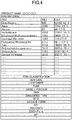
- the product database 104 will be described in detail with reference to FIG. 4 .
- FIG. 4 is an example of the product database 104 according to the embodiment of the present invention.
- information of the "raw material (for example, INCI, MID, CAS, or the like)" contained in the product is stored for each product. Further, the information such as an "item classification”, a “container”, a “target portion”, an “emulsified type”, a “dosage form”, a “viscosity”, and “pH” may be stored. Each of them will be described below.
- the "Raw material” is the information used to identify the raw material contained in the product.
- the "raw material” is an INCI name, a MID, a CAS registry number (registered trademark), or the like.
- Each product includes one or more raw materials. Further, each product may also include one type of information (for example, INCI only) for identifying the raw material, or multiple types of information (for example, INCI, MID, and CAS) for identifying the raw material.
- the "item classification” refers to a category to which a product belongs (for example, a category classified by the purpose of use of the product).
- the “item classification” includes sun care, skincare, or the like.
- the “container” refers to a container containing a product.
- the “container” is a tube, a jar, or the like.
- target portion refers to a body portion to which a product is applied.
- target portion includes skin, hair, lips, or the like.
- the "emulsified type” refers to an emulsified state of a product.
- the “emulsified type” includes Water in Oil (W/O), Oil in Water (O/W), water, oil, and the like.
- the "dosage form” refers to a form of a product.
- the “dosage form” may be a cream, gel, solid, lotion, or the like.
- viscosity refers to the degree of stickiness of a product.
- the “pH” refers to the hydrogen ion index of a product.
- blending amount refers to the amount of the "raw material”.
- “blending amount” is a ratio of the amount of the “raw material” to the total amount of the product (for example, in weight, volume, moles, or the like).
- the extracting unit 102 extracts a product containing a raw material that corresponds to a term recited in the claim to be identified by patent information acquired by the acquiring unit 101.
- the extracting unit 102 identifies a claim based on the patent information acquired by the acquiring unit 101. For example, if a patent publication exists, the extracting unit 102 identifies a claim (for example, claim 1) recited in the patent publication. Further, for example, if a patent publication does not exist, the extracting unit 102 identifies a claim (for example, claim 1) recited in the patent application publication or the international patent application publication. Further, for example, if a patent publication does not exist and a procedural amendment is submitted, the extracting unit 102 identifies a claim (for example, claim 1) recited in the last submitted procedural amendment.
- the extracting unit 102 identifies all the elements recited in the claim to be identified by the patent information with reference to the patent database 103.
- the extracting unit 102 identifies all the raw materials that correspond to each of the identified elements with reference to the patent database 103.
- the extracting unit 102 may be configured to identify the "blending amount" of each of the identified elements with reference to the patent database 103. Further, the extracting unit 102 may also be configured to identify at least one of the "item classification", "container”, “target portion”, “emulsified type”, “dosage form”, “viscosity”, and “pH” of the claim to be identified by the patent information with reference to the patent database 103.
- the extracting unit 102 calculates a matching rate between the raw material that corresponds to the element recited in the claim to be identified by the patent information and the raw material contained in the product. Hereinafter, the calculation of the matching rate will be described in detail with reference to FIG. 5 .
- FIG. 5 is a diagram illustrating the calculation of the matching rate between the information in the patent database 103 and the information in the product database 104 according to the embodiment of the present invention.
- the extracting unit 102 determines, for each element, whether at least one of the raw materials that correspond to the elements is contained in the product (i.e., whether the raw materials that correspond to the elements and the raw materials contained in the product match). For example, in FIG.
- the extracting unit 102 determines that a raw material that corresponds to Element A is contained (i.e., matches) in the product, a raw material that corresponds to Element B is contained (i.e., matches) in the product, a raw material that corresponds to Element C is contained (i.e., matches) in the product, and a raw material that corresponds to Element D is not contained (i.e., does not match) in the product.
- the extracting unit 102 may be configured to determine whether the "blending amount" of the element and the "blending amount” of the raw material contained in the product match.
- the extracting unit 102 may be configured to determine whether at least one of the "item classification”, “container”, “target portion”, “emulsified type”, “dosage form”, “viscosity”, and “pH” of the claim and at least one of the "item classification", “container”, “target portion”, “emulsified type”, “dosage form”, “viscosity”, and “pH” of the product match.
- the extracting unit 102 calculates a ratio of the "matching number” to "the number of times of determination of matching” as the matching rate. Specifically, the extracting unit 102 calculates the ratio of "the number of elements matching the raw materials of the product" to "the number of all elements". Further, the extracting unit 102 may be configured to calculate the ratio of "the number of elements matching the raw materials and blending amount of the product" to "the number of all elements”. Further, the extracting unit 102 may be configured to calculate a matching rate including whether at least one of the "item classification", “container", “target portion”, “emulsified type”, “dosage form”, “viscosity", and “pH” match.
- a matching rate may be calculated by weighting each of the "elements”, “blending amount”, “item classification”, “container”, “application destination”, “emulsification form”, “dosage form”, “viscosity” and “pH” (for example, when the "element” matches, the matching rate is calculated such that the matching rate is higher than when the other items match).
- the extracting unit 102 lists products in order of a high matching rate or a low matching rate based on the calculated matching rate.
- the extracting unit 102 transmits information of certain products (for example, a predetermined number of products having a high matching rate order) among the listed products to the user terminal 20. For example, the extracting unit 102 transmits information for identifying the product such as the name of the product to the user terminal 20.
- the extracting unit 102 may be configured to transmit information of a product in which the matching rate is 100 % (i.e., a product is likely to be within the technical scope of the patented invention) to the user terminal 20.
- the extracting unit 102 extracts a claim in which a term associated with a raw material contained in a product to be identified by the product information acquired by the acquiring unit 101 is described.
- the extracting unit 102 identifies the raw material contained in the product to be identified by the product information with reference to the product database 104.
- the extracting unit 102 may be configured to identify the "blending amount" of the identified raw material with reference to the product database 104. Further, the extracting unit 102 may be configured to identify at least one of the "item classification", “container”, “target portion”, “emulsified type”, “dosage form”, “viscosity", and “pH” of the product to be identified by the product information with reference to the product database 104.
- the extracting unit 102 calculates a matching rate between the raw material contained in the product to be identified by the product information and the raw material that corresponds to the element recited in the claim.
- the extracting unit 102 determines, for each element of each claim, whether at least one of the raw materials that correspond to the elements is contained in the product (i.e., whether the raw material contained in the product and the raw material that corresponds to the element match).
- the extracting unit 102 may be configured to determine whether the "blending amount" of the raw material contained in the product and the "blending amount" of the element match.
- the extracting unit 102 may be configured to determine whether at least one of the "item classification", “container”, “target portion”, “emulsified type”, “dosage form”, “viscosity”, and “pH” of the product and at least one of the "item classification", "container”, “target portion”, “emulsified type”, “dosage form”, “viscosity”, and “pH” of the claim match.
- the extracting unit 102 calculates a ratio of the "matching number” to "the number of times of determination of matching” as the matching rate. Specifically, the extracting unit 102 calculates the ratio of "the number of elements matching the raw materials of the product" to "the number of all elements". Further, the extracting unit 102 may be configured to calculate the ratio of "the number of elements matching the raw materials and blending amount of the product" to "the number of all elements”. Further, the extracting unit 102 may be configured to calculate a matching rate including whether at least one of the "item classification", “container", “target portion”, “emulsified type”, “dosage form”, “viscosity", and “pH” match.
- a matching rate may be calculated by weighting each of the "elements”, “blending amount”, “item classification”, “container”, “application destination”, “emulsification form”, “dosage form”, “viscosity” and “pH” (for example, when the "element” matches, the matching rate is calculated such that the matching rate is higher than when the other items match).
- the extracting unit 102 lists claims (i.e., all claims of all patent documents) in order of a high matching rate or a low matching rate based on the calculated matching rate.
- the extracting unit 102 may be configured to list claims 1 (i.e., the claim having the broadest patent right) of each of the patent documents in order of a high matching rate or a low matching rate.
- the extracting unit 102 transmits information of certain claims (for example, a predetermined number of claims having a high matching rate order) among the listed claims to the user terminal 20. For example, the extracting unit 102 transmits information for identifying a claim, such as a patent number and a claim number, to the user terminal 20.
- the extracting unit 102 may be configured to transmit information of a certain portion of claims 1's (for example, a predetermined number of claims 1's having a high matching rate order) among the listed claims 1's to the user terminal 20. For example, the extracting unit 102 transmits information (a patent number or the like) for identifying a patent document recited in claim 1 to the user terminal 20.
- the extracting unit 102 extracts a claim in which a term associated with a raw material contained in the formulation acquired by the acquiring unit 101 is described.
- the extracting unit 102 identifies the raw material contained in the formulation.
- the extracting unit 102 may be configured to identify the "blending amount" of the raw material contained in the formulation. Further, the extracting unit 102 may be configured to identify at least one of the "item classification", “container”, “target portion”, “emulsified type”, “dosage form”, “viscosity”, and “pH” included in the formulation.
- the extracting unit 102 calculates a matching rate between the raw material contained in the formulation and the raw material that corresponds to the element recited in the claim.
- the extracting unit 102 determines, for each element of each claim, whether at least one of the raw materials that correspond to the elements is contained in the formulation (i.e., whether the raw material contained in the formulation and the raw material that corresponds to the element match).
- the extracting unit 102 may be configured to determine whether the "blending amount" of the raw material contained in the formulation and the "blending amount" of the element match.
- the extracting unit 102 may be configured to determine whether at least one of the "item classification”, “container”, “target portion”, “emulsified type”, “dosage form”, “viscosity”, and “pH” of the formulation and at least one of the "item classification", “container”, “target portion”, “emulsified type”, “dosage form”, “viscosity”, and “pH” of the claim match.
- the extracting unit 102 calculates a ratio of the "matching number” to the number of times of determination of matching" as the matching rate. Specifically, the extracting unit 102 calculates the ratio of "the number of elements matching the raw materials of the formulation" to "the number of all elements". Further, the extracting unit 102 may be configured to calculate the ratio of "the number of elements matching the raw materials and blending amount of the formulation" to "the number of all elements”. Further, the extracting unit 102 may be configured to calculate a matching rate including whether at least one of the "item classification", “container", “target portion”, “emulsified type”, “dosage form”, “viscosity", and "pH" match.
- a matching rate may be calculated by weighting each of the "elements”, “blending amount”, “item classification”, “container”, “application destination”, “emulsification form”, “dosage form”, “viscosity” and “pH” (for example, when the "element" matches, the matching rate is calculated such that the matching rate is higher than when the others match).
- the extracting unit 102 lists claims (i.e., all claims of all patent documents) in order of a high matching rate or a low matching rate based on the calculated matching rate.
- the extracting unit 102 may be configured to list claims 1's (i.e., the claim having the broadest patent right) of each of the patent documents in order of a high matching rate or a low matching rate.
- the extracting unit 102 transmits information of a certain claim (for example, a predetermined number of claims having a high matching rate order) among the listed claims to the user terminal 20. For example, the extracting unit 102 transmits information for identifying a claim, such as a patent number and a claim number, to the user terminal 20.
- a certain claim for example, a predetermined number of claims having a high matching rate order
- the extracting unit 102 transmits information for identifying a claim, such as a patent number and a claim number, to the user terminal 20.
- the extracting unit 102 may be configured to transmit information of a certain portion of claims 1's (for example, a predetermined number of claims 1's having a high matching rate order) among the listed claims 1's to the user terminal 20. For example, the extracting unit 102 transmits information (a patent number or the like) for identifying a patent document recited in claim 1 to the user terminal 20.
- FIG. 6 is a flowchart of a process for extracting a product relating to a patent according to an embodiment of the present invention.
- step 11 (S11) the acquiring unit 101 acquires the patent information from the user terminal 20.
- step 12 (S12) the extracting unit 102 identifies a claim based on the patent information acquired in S11.
- step 13 (S13) the extracting unit 102 identifies all elements recited in the claim identified in S12 with reference to the patent database 103.
- step 14 the extracting unit 102 identifies all raw materials that correspond to each of the elements identified in S13 with reference to the patent database 103.
- step 15 (S15) the extracting unit 102 calculates a matching rate between the raw material identified in S14 and the raw material contained in the product.
- step 16 the extracting unit 102 lists the products based on the matching rate calculated in S15.
- step 17 (S17) the extracting unit 102 transmits information of a certain product (for example, a predetermined number of products having a high matching rate order) among the products listed in S16 to the user terminal 20.
- a certain product for example, a predetermined number of products having a high matching rate order
- FIG. 7 is a flowchart of a process for extracting a patent relating to a product according to an embodiment of the present invention.
- step S21 the acquiring unit 101 acquires product information from the user terminal 20.
- step 22 (S22) the extracting unit 102 identifies the raw material contained in the product to be identified by the product information acquired in S21 with reference to the product database 104.
- step 23 (S23) the extracting unit 102 calculates a matching rate between the raw material identified in S22 and the raw material that corresponds to the element recited in the claim.
- step 24 the extracting unit 102 lists the claims (i.e., all claims of all patent documents) based on the matching rate calculated in S23.
- step 25 (S25) the extracting unit 102 transmits information of a certain claims listed in S24 (for example, a predetermined number of claims having a high matching rate order) to the user terminal 20.
- FIG. 8 is a flowchart of a process for extracting a patent relating to formulation according to an embodiment of the present invention.
- step (S31) the acquiring unit 101 acquires the formulation from the user terminal 20.
- the formulation includes information of the raw material required to make a product such as cosmetics.
- step 32 the extracting unit 102 identifies the raw material contained in the formulation acquired in S31.
- step 33 the extracting unit 102 calculates a matching rate between the raw material identified in S32 and the raw material that corresponds to the element recited in the claim.
- step 34 the extracting unit 102 lists the claims (i.e., all claims of all patent documents) based on the matching rate calculated in S33.
- step 35 (S35) the extracting unit 102 transmits information of certain claims listed in S34 (for example, a predetermined number of claims having a high matching rate order) to the user terminal 20.
- a product that is likely within the technical scope of the patented invention can be easily extracted. Further, in an embodiment of the present invention, a patent that is likely to be infringed by the product can be easily extracted.
- FIG. 9 is a block diagram illustrating an example of a hardware configuration of the information processing system 10 according to an embodiment of the present invention.
- the information processing system 10 includes a Central Processing Unit (CPU) 1, a Read Only Memory (ROM) 2, and a Random Access Memory (RAM) 3.
- CPU Central Processing Unit
- ROM Read Only Memory
- RAM Random Access Memory
- the CPU 1, the ROM 2, and the RAM 3 form a so-called computer.
- the information processing system 10 may include an auxiliary storage device 4, a display device 5, an operation device 6, an I/F (interface) device 7, and a drive device 8. Each of the hardware of the information processing system 10 is connected to each other via the bus B.
- the CPU 1 is an arithmetic unit that executes various programs installed in the auxiliary storage device 4.
- the ROM 2 is a non-volatile memory.
- the ROM 2 functions as a main storage device that stores various programs and data necessary for executing various programs installed in the auxiliary storage device 4 by the CPU 1.
- the ROM 2 functions as a main storage device that stores boot programs such as a Basic Input/Output System (BIOS) and an Extensible Firmware Interface (EFI).
- BIOS Basic Input/Output System
- EFI Extensible Firmware Interface
- the RAM 3 is a volatile memory such as a Dynamic Random Access Memory (DRAM) and a Static Random Access Memory (SRAM).
- the RAM 3 functions as a main storage device that provides a workspace deployed when various programs installed in the auxiliary storage device 4 are executed by the CPU 1.
- the auxiliary storage device 4 is an auxiliary storage device that stores various programs or information to be used when the various programs are executed.
- the display device 5 is a display device that displays an internal state or the like of the information processing system 10.
- the operation device 6 is an input device in which an administrator of the information processing system 10 inputs various instructions to the information processing system 10.
- the I/F device 7 is a communication device for connecting to a network and communicating with the user terminal 20.
- the drive device 8 is a device for setting the storage medium 9.
- the storage medium 9 herein includes a medium for optically, electrically, or magnetically recording information, such as a CD-ROM, a flexible disk, or a magneto-optical disk. Further, the storage medium 9 may include a semiconductor memory or the like that electrically records information, such as an Erasable Programmable Read Only Memory (EPROM), a flash memory, or the like.
- EPROM Erasable Programmable Read Only Memory
- various programs installed in the auxiliary storage device 4 are installed when the distributed storage medium 9 is set in the drive device 8 and various programs recorded in the storage medium 9 are read out by the drive device 8.
- various programs installed in the auxiliary storage device 4 may be installed by being downloaded from the network via the I/F device 7.
Landscapes
- Engineering & Computer Science (AREA)
- Theoretical Computer Science (AREA)
- Databases & Information Systems (AREA)
- Physics & Mathematics (AREA)
- General Physics & Mathematics (AREA)
- Data Mining & Analysis (AREA)
- Business, Economics & Management (AREA)
- General Engineering & Computer Science (AREA)
- Computational Linguistics (AREA)
- Tourism & Hospitality (AREA)
- Strategic Management (AREA)
- Human Resources & Organizations (AREA)
- Mathematical Physics (AREA)
- Marketing (AREA)
- Economics (AREA)
- General Business, Economics & Management (AREA)
- Technology Law (AREA)
- Entrepreneurship & Innovation (AREA)
- Health & Medical Sciences (AREA)
- General Health & Medical Sciences (AREA)
- Primary Health Care (AREA)
- Operations Research (AREA)
- Software Systems (AREA)
- Quality & Reliability (AREA)
- Information Retrieval, Db Structures And Fs Structures Therefor (AREA)
- Management, Administration, Business Operations System, And Electronic Commerce (AREA)
Abstract
Description
- The present invention relates to an information processing system, method, program, and data structure.
- Conventionally, various searches relating to patents of others or one's own have been carried out. For example, companies are conducting clearance searches to search whether new products infringe on the patent rights of others. Further, searches are being conducted to see whether a product that infringes on their patents are on the market.
- In such searches relating to patents, for example, the patent information platform of the Japan Patent Office (Non-Patent Document 1), ingredient labeling described in products, and the like are used.
- Non-Patent Document 1: "Patent Information Platforms" [online], [Searched on September 20, 2019], Internet<URL: https://www.j-platpat.inpit.go.jp/>
- However, in the claims of a patent document, the name of the raw material of the product may not be described as it is, but a superordinate term or an equivalent term may be described. Therefore, it is difficult for a person searching for a patent for a product containing an identified raw material to extract the relevant patent document even if the name of the raw material of the product is searched as a keyword. Further, because the term recited in the claims of the patent document and the name of the raw material of the product are different, it may be difficult to match a potentially infringing product with a patent right.
- In consideration of the above, an object of an embodiment of the present invention is to facilitate extraction of a product relating to a patent or facilitating extraction of a patent relating to a product.
- An aspect of the present invention includes a database in which terms associated with raw materials recited in claims of patent documents and raw materials that correspond to the terms are associated with each other, an acquiring unit configured to acquire patent information, and an extracting unit configured to extract products containing raw materials that correspond to terms recited in claims that are identified by the patent information, with reference to the database and a correspondence between a product and a raw material contained in the product, based on whether the raw material that corresponds to the term and the raw material contained in the product match.
- According to the present invention, extraction of a product relating to a patent can be facilitated or extraction of a patent relating to a product can be facilitated.
-
-
FIG. 1 is a diagram of an overall configuration according to an embodiment of the present invention; -
FIG. 2 is a functional block diagram of an information processing system according to an embodiment of the present invention; -
FIG. 3 is an example of a patent database according to an embodiment of the present invention; -
FIG. 4 is an example of a product database according to an embodiment of the present invention; -
FIG. 5 is a diagram for explaining calculation of a matching rate between information in the patent database and information in the product database according to an embodiment of the present invention; -
FIG. 6 is a flowchart of a process for extracting a product relating to a patent according to an embodiment of the present invention; -
FIG. 7 is a flowchart of a process for extracting a patent relating to a product according to an embodiment of the present invention; -
FIG. 8 is a flowchart of a process for extracting a patent relating to a formulation according to an embodiment of the present invention; and -
FIG. 9 is a block diagram illustrating an example of a hardware configuration of the information processing system according to an embodiment of the present invention. - Hereinafter, embodiments of the present invention will be described with reference to the drawings.
- In the present disclosure, a case of extracting a cosmetic relating to a patent or a case of extracting a patent relating to a cosmetic will be mainly described as an example, but the present invention can be applied to any product, and is not limited to cosmetics.
-
FIG. 1 is a diagram of an overall configuration according to an embodiment of the present invention. As illustrated inFIG. 1 , aninformation processing system 10 is communicatively connected to one ormore user terminals 20 via anynetwork 30. Each of them will be described below. - The
information processing system 10 may extract a product relating to a patent according to a request from theuser terminal 20. Theinformation processing system 10 may extract a patent relating to the product according to a request from theuser terminal 20. Theinformation processing system 10 includes one or more computers. Further, theinformation processing system 10 can transmit and receive data from theuser terminal 20 via anynetwork 30. Hereinafter, theinformation processing system 10 will be described in detail with reference toFIG. 2 . - The
user terminal 20 is a terminal used by a person who desires to extract a patent relating to a product or a person who desires to extract a patent relating to a product. Specifically, theuser terminal 20 transmits a request input into theuser terminal 20 to theinformation processing system 10. Theuser terminal 20 receives a result extracted in response to the request from the user terminal 20 (i.e., product information or patent information) from theinformation processing system 10 and displays the result on a display. Theuser terminal 20 may be any terminal, such as a personal computer, a tablet terminal, a smartphone, or the like. -
FIG. 2 is a functional block diagram of theinformation processing system 10 according to the embodiment of the present invention. As illustrated inFIG. 2 , theinformation processing system 10 may include an acquiringunit 101, an extractingunit 102, apatent database 103, and aproduct database 104. Further, theinformation processing system 10 can function as the acquiringunit 101 and the extractingunit 102 by executing a program. - The
information processing system 10 may refer to aproduct database 104 inside theinformation processing system 10 or may refer to aproduct database 104 outside theinformation processing system 10. - The acquiring
unit 101 receives data of the request input into theuser terminal 20 from theuser terminal 20. Hereinafter, the description is divided into <Extracting Product Relating to Patent>, <Extracting Patent Relating to Product>, and <Extracting Patent Relating to Formulation>. - <Extracting Product Relating to Patent> The acquiring
unit 101 acquires patent information from theuser terminal 20. The patent information is information that identifies a patent right or a patent application. For example, the patent information may be a patent number (registration number), a patent application number, a publication number, a patent appeal number, or the like. - <Extracting Patent Relating to Product> The acquiring
unit 101 acquires product information from theuser terminal 20. The product information is information that identifies a product. For example, the product information is the name of the product or the like. - In an embodiment of the present invention, a patent relating to a formulation as well as the product may be extracted. The acquiring
unit 101 acquires the formulation from theuser terminal 20. The formulation includes information indicating the raw materials required to make substances, such as cosmetics. Note that the formulation may also include information on the "blending amount" indicating the amount of the raw material (for example, the ratio of the amount of the raw material to the total amount of the substances, such as cosmetics (for example, in weight, volume, moles, or the like)). The formulation may also include information on "item classification" indicating the category to which the substance such as cosmetics belongs, a "container" indicating a container in which the substance is stored, a "target portion" indicating the body portion to which the substances is applied, an "emulsified type" indicating the emulsified state of the substance, a "dosage form" indicating the form of the substance, a "viscosity" indicating the degree of stickiness of the substance, and "pH" indicating the hydrogen ion index of the substance. - The extracting
unit 102 extracts a product based on the patent information acquired by the acquiringunit 101 or extracts a patent based on the product information or the formulation acquired by the acquiringunit 101. Before describing the extractingunit 102 in detail, thepatent database 103 and theproduct database 104 will be described. - The
patent database 103 is a database in which terms recited in patent claims of the patent document that are associated with a raw material and raw materials are associated with the corresponding terms. For example, the patent document may be a patent publication, a patent application publication, an international patent application publication, or the like. The patent document also includes procedural amendments. Hereinafter, thepatent database 103 will be described in detail with reference toFIG. 3 . -
FIG. 3 is an example of thepatent database 103 according to the embodiment of the present invention. As illustrated inFIG. 3 , in thepatent database 103, for each claim, a "term (also referred to as an element) associated with a raw material" is associated with a "raw material that corresponds to the term". For example, information of the "element", the "raw material (for example, International Nomenclature of Cosmetic Ingredients (INCI), Monograph ID (MID), Chemical Abstracts Service (CAS), or the like) that corresponds to the element", and a "blending amount" may be stored in association with each other. Further, information such as an "item classification", a "container", a "target portion", an "emulsified type", a "dosage form", a "viscosity", and "pH" may be stored. Each of them will be described below. - The "element (i.e., the term associated with the raw material)" is a component necessary for identifying the claimed invention. The claimed inventions may be an invention of a product, an invention of a method (also referred to as a simple method), or an invention of producing a product. Note that each claim includes one or more "elements".
- The "raw material that corresponds to the element" is information for identifying the raw material that corresponds to the "element (i.e., the term associated with the raw material)". For example, the "raw material that corresponds to the element" is an INCI name, a MID, a Chemical Abstracts Service registry number (CAS Registry Number) (registered trademark), or the like. Note that each "element" corresponds to one or more "raw materials that correspond to the element". Each "element" may include one type of information (for example, INCI only) for identifying the raw material that corresponds to the element, or multiple types of information (for example, INCI, MID, and CAS) for identifying the raw material that corresponds to the element.
- Here, the relationship between the "element" and the "raw material that corresponds to the element" will be described. As described above, each claim includes one or more "elements". Further, each "element" is associated with one or more of the "raw material that corresponds to the element". For example, the "raw material that corresponds to the element" may be stored based on the contents described in the specification or the like.
- The "blending amount" refers to an amount of "element" (i.e., the term associated with the raw material). For example, the "blending amount" is a ratio of the total amount (for example, in weight, volume, moles, or the like) of a product according to the claimed invention (or a product used in a method according to the claimed invention or a product produced by the method according to the claimed invention) with respect to the amount of the "element (i.e., the term associated with the raw material)". For example, information of the "blending amount" may be stored based on the contents described in the specification or the like.
- The "item classification" refers to a category to which a product according to the claimed invention (or a product used in a method according to the claimed invention or a product produced by the method according to the claimed invention) belongs (for example, a category classified by the purpose of use of the product). For example, the "item classification" includes sun care, skincare, or the like. For example, information of the "item classification" may be stored based on the contents described in the specification or the like.
- The "container" refers to a container containing a product according to the claimed invention (or a product used in a method according to the claimed invention or a product produced by the method according to the claimed invention). For example, the "container" is a tube, a jar, or the like. For example, information of the "container" may be stored based on the contents described in the specification or the like.
- The "target portion" refers to a body portion to which a substance according to the claimed invention (or a substance used in a process according to the invention or a substance produced by a process according to the invention) is applied. For example, the "target portion" includes skin, hair, lips, or the like. For example, information of the "target portion" may be stored based on the contents described in the specification or the like.
- The "emulsified type" refers to an emulsified state of a product according to the claimed invention (or a product used in a method according to the claimed invention or a product produced by the method according to the claimed invention). For example, the "emulsified type" includes Water in Oil (W/O), Oil in Water (O/W), water, oil, and the like. For example, information of the "emulsified type" may be stored based on the contents described in the specification or the like.
- The "dosage form" refers to a form of a product according to the claimed invention (or a product used in a method according to the claimed invention or a product produced by the method according to the claimed invention). For example, the "dosage form" may be a cream, gel, solid, lotion, or the like. For example, information of the "dosage form" may be stored based on the contents described in the specification or the like.
- The "viscosity" refers to a degree of stickiness of a product according to the claimed invention (or a product used in a method according to the claimed invention or a product produced by the method according to the claimed invention). For example, information of "viscosity" may be stored based on the contents described in the specification or the like.
- The "pH" refers to the hydrogen ion index of a product according to the claimed invention (or a product used in a method according to the claimed invention or a product produced by the method according to the claimed invention). For example, information of the "pH" based on the contents described in the specification or the like is stored.
- The description will return to
FIG. 2 . Theproduct database 104 is a database in which the product and the raw material contained in the product are associated. The product may be any product, not limited to cosmetics. Hereinafter, theproduct database 104 will be described in detail with reference toFIG. 4 . -
FIG. 4 is an example of theproduct database 104 according to the embodiment of the present invention. As illustrated inFIG. 4 , in theproduct database 104, information of the "raw material (for example, INCI, MID, CAS, or the like)" contained in the product is stored for each product. Further, the information such as an "item classification", a "container", a "target portion", an "emulsified type", a "dosage form", a "viscosity", and "pH" may be stored. Each of them will be described below. - The "Raw material" is the information used to identify the raw material contained in the product. For example, the "raw material" is an INCI name, a MID, a CAS registry number (registered trademark), or the like. Each product includes one or more raw materials. Further, each product may also include one type of information (for example, INCI only) for identifying the raw material, or multiple types of information (for example, INCI, MID, and CAS) for identifying the raw material.
- The "item classification" refers to a category to which a product belongs (for example, a category classified by the purpose of use of the product). For example, the "item classification" includes sun care, skincare, or the like.
- The "container" refers to a container containing a product. For example, the "container" is a tube, a jar, or the like.
- The "target portion" refers to a body portion to which a product is applied. For example, the "target portion" includes skin, hair, lips, or the like.
- The "emulsified type" refers to an emulsified state of a product. For example, the "emulsified type" includes Water in Oil (W/O), Oil in Water (O/W), water, oil, and the like.
- The "dosage form" refers to a form of a product. For example, the "dosage form" may be a cream, gel, solid, lotion, or the like.
- The "viscosity" refers to the degree of stickiness of a product.
- The "pH" refers to the hydrogen ion index of a product.
- In the
product database 104, information on the "raw material" contained in the product and the "blending amount" of the raw material may be stored in association with each other. The "blending amount" refers to the amount of the "raw material". For example, "blending amount" is a ratio of the amount of the "raw material" to the total amount of the product (for example, in weight, volume, moles, or the like). - The description will return to the description of the extracting
unit 102 inFIG. 2 . Hereinafter, the description is divided into <Extracting Product Relating to Patent>, <Extracting Patent Relating to Product>, and <Extracting Patent Relating to Formulation>. - The extracting
unit 102 extracts a product containing a raw material that corresponds to a term recited in the claim to be identified by patent information acquired by the acquiringunit 101. - Specifically, the extracting
unit 102 identifies a claim based on the patent information acquired by the acquiringunit 101. For example, if a patent publication exists, the extractingunit 102 identifies a claim (for example, claim 1) recited in the patent publication. Further, for example, if a patent publication does not exist, the extractingunit 102 identifies a claim (for example, claim 1) recited in the patent application publication or the international patent application publication. Further, for example, if a patent publication does not exist and a procedural amendment is submitted, the extractingunit 102 identifies a claim (for example, claim 1) recited in the last submitted procedural amendment. - The extracting
unit 102 identifies all the elements recited in the claim to be identified by the patent information with reference to thepatent database 103. - The extracting
unit 102 identifies all the raw materials that correspond to each of the identified elements with reference to thepatent database 103. The extractingunit 102 may be configured to identify the "blending amount" of each of the identified elements with reference to thepatent database 103. Further, the extractingunit 102 may also be configured to identify at least one of the "item classification", "container", "target portion", "emulsified type", "dosage form", "viscosity", and "pH" of the claim to be identified by the patent information with reference to thepatent database 103. - The extracting
unit 102 calculates a matching rate between the raw material that corresponds to the element recited in the claim to be identified by the patent information and the raw material contained in the product. Hereinafter, the calculation of the matching rate will be described in detail with reference toFIG. 5 . -
FIG. 5 is a diagram illustrating the calculation of the matching rate between the information in thepatent database 103 and the information in theproduct database 104 according to the embodiment of the present invention. With reference to theproduct database 104, the extractingunit 102 determines, for each element, whether at least one of the raw materials that correspond to the elements is contained in the product (i.e., whether the raw materials that correspond to the elements and the raw materials contained in the product match). For example, inFIG. 5 , the extractingunit 102 determines that a raw material that corresponds to Element A is contained (i.e., matches) in the product, a raw material that corresponds to Element B is contained (i.e., matches) in the product, a raw material that corresponds to Element C is contained (i.e., matches) in the product, and a raw material that corresponds to Element D is not contained (i.e., does not match) in the product. - The extracting
unit 102 may be configured to determine whether the "blending amount" of the element and the "blending amount" of the raw material contained in the product match. - The extracting
unit 102 may be configured to determine whether at least one of the "item classification", "container", "target portion", "emulsified type", "dosage form", "viscosity", and "pH" of the claim and at least one of the "item classification", "container", "target portion", "emulsified type", "dosage form", "viscosity", and "pH" of the product match. - The extracting
unit 102 calculates a ratio of the "matching number" to "the number of times of determination of matching" as the matching rate. Specifically, the extractingunit 102 calculates the ratio of "the number of elements matching the raw materials of the product" to "the number of all elements". Further, the extractingunit 102 may be configured to calculate the ratio of "the number of elements matching the raw materials and blending amount of the product" to "the number of all elements". Further, the extractingunit 102 may be configured to calculate a matching rate including whether at least one of the "item classification", "container", "target portion", "emulsified type", "dosage form", "viscosity", and "pH" match. A matching rate may be calculated by weighting each of the "elements", "blending amount", "item classification", "container", "application destination", "emulsification form", "dosage form", "viscosity" and "pH" (for example, when the "element" matches, the matching rate is calculated such that the matching rate is higher than when the other items match). - The extracting
unit 102 lists products in order of a high matching rate or a low matching rate based on the calculated matching rate. - The extracting
unit 102 transmits information of certain products (for example, a predetermined number of products having a high matching rate order) among the listed products to theuser terminal 20. For example, the extractingunit 102 transmits information for identifying the product such as the name of the product to theuser terminal 20. - The extracting
unit 102 may be configured to transmit information of a product in which the matching rate is 100 % (i.e., a product is likely to be within the technical scope of the patented invention) to theuser terminal 20. - The extracting
unit 102 extracts a claim in which a term associated with a raw material contained in a product to be identified by the product information acquired by the acquiringunit 101 is described. - Specifically, the extracting
unit 102 identifies the raw material contained in the product to be identified by the product information with reference to theproduct database 104. The extractingunit 102 may be configured to identify the "blending amount" of the identified raw material with reference to theproduct database 104. Further, the extractingunit 102 may be configured to identify at least one of the "item classification", "container", "target portion", "emulsified type", "dosage form", "viscosity", and "pH" of the product to be identified by the product information with reference to theproduct database 104. - The extracting
unit 102 calculates a matching rate between the raw material contained in the product to be identified by the product information and the raw material that corresponds to the element recited in the claim. - With reference to the
patent database 103, the extractingunit 102 determines, for each element of each claim, whether at least one of the raw materials that correspond to the elements is contained in the product (i.e., whether the raw material contained in the product and the raw material that corresponds to the element match). - The extracting
unit 102 may be configured to determine whether the "blending amount" of the raw material contained in the product and the "blending amount" of the element match. - The extracting
unit 102 may be configured to determine whether at least one of the "item classification", "container", "target portion", "emulsified type", "dosage form", "viscosity", and "pH" of the product and at least one of the "item classification", "container", "target portion", "emulsified type", "dosage form", "viscosity", and "pH" of the claim match. - The extracting
unit 102 calculates a ratio of the "matching number" to "the number of times of determination of matching" as the matching rate. Specifically, the extractingunit 102 calculates the ratio of "the number of elements matching the raw materials of the product" to "the number of all elements". Further, the extractingunit 102 may be configured to calculate the ratio of "the number of elements matching the raw materials and blending amount of the product" to "the number of all elements". Further, the extractingunit 102 may be configured to calculate a matching rate including whether at least one of the "item classification", "container", "target portion", "emulsified type", "dosage form", "viscosity", and "pH" match. A matching rate may be calculated by weighting each of the "elements", "blending amount", "item classification", "container", "application destination", "emulsification form", "dosage form", "viscosity" and "pH" (for example, when the "element" matches, the matching rate is calculated such that the matching rate is higher than when the other items match). - The extracting
unit 102 lists claims (i.e., all claims of all patent documents) in order of a high matching rate or a low matching rate based on the calculated matching rate. - Further, the extracting
unit 102 may be configured to list claims 1 (i.e., the claim having the broadest patent right) of each of the patent documents in order of a high matching rate or a low matching rate. - The extracting
unit 102 transmits information of certain claims (for example, a predetermined number of claims having a high matching rate order) among the listed claims to theuser terminal 20. For example, the extractingunit 102 transmits information for identifying a claim, such as a patent number and a claim number, to theuser terminal 20. - The extracting
unit 102 may be configured to transmit information of a certain portion ofclaims 1's (for example, a predetermined number ofclaims 1's having a high matching rate order) among the listedclaims 1's to theuser terminal 20. For example, the extractingunit 102 transmits information (a patent number or the like) for identifying a patent document recited inclaim 1 to theuser terminal 20. - The extracting
unit 102 extracts a claim in which a term associated with a raw material contained in the formulation acquired by the acquiringunit 101 is described. - Specifically, the extracting
unit 102 identifies the raw material contained in the formulation. The extractingunit 102 may be configured to identify the "blending amount" of the raw material contained in the formulation. Further, the extractingunit 102 may be configured to identify at least one of the "item classification", "container", "target portion", "emulsified type", "dosage form", "viscosity", and "pH" included in the formulation. - The extracting
unit 102 calculates a matching rate between the raw material contained in the formulation and the raw material that corresponds to the element recited in the claim. - With reference to the
patent database 103, the extractingunit 102 determines, for each element of each claim, whether at least one of the raw materials that correspond to the elements is contained in the formulation (i.e., whether the raw material contained in the formulation and the raw material that corresponds to the element match). - The extracting
unit 102 may be configured to determine whether the "blending amount" of the raw material contained in the formulation and the "blending amount" of the element match. - The extracting
unit 102 may be configured to determine whether at least one of the "item classification", "container", "target portion", "emulsified type", "dosage form", "viscosity", and "pH" of the formulation and at least one of the "item classification", "container", "target portion", "emulsified type", "dosage form", "viscosity", and "pH" of the claim match. - The extracting
unit 102 calculates a ratio of the "matching number" to the number of times of determination of matching" as the matching rate. Specifically, the extractingunit 102 calculates the ratio of "the number of elements matching the raw materials of the formulation" to "the number of all elements". Further, the extractingunit 102 may be configured to calculate the ratio of "the number of elements matching the raw materials and blending amount of the formulation" to "the number of all elements". Further, the extractingunit 102 may be configured to calculate a matching rate including whether at least one of the "item classification", "container", "target portion", "emulsified type", "dosage form", "viscosity", and "pH" match. A matching rate may be calculated by weighting each of the "elements", "blending amount", "item classification", "container", "application destination", "emulsification form", "dosage form", "viscosity" and "pH" (for example, when the "element" matches, the matching rate is calculated such that the matching rate is higher than when the others match). - The extracting
unit 102 lists claims (i.e., all claims of all patent documents) in order of a high matching rate or a low matching rate based on the calculated matching rate. - Further, the extracting
unit 102 may be configured to listclaims 1's (i.e., the claim having the broadest patent right) of each of the patent documents in order of a high matching rate or a low matching rate. - The extracting
unit 102 transmits information of a certain claim (for example, a predetermined number of claims having a high matching rate order) among the listed claims to theuser terminal 20. For example, the extractingunit 102 transmits information for identifying a claim, such as a patent number and a claim number, to theuser terminal 20. - The extracting
unit 102 may be configured to transmit information of a certain portion ofclaims 1's (for example, a predetermined number ofclaims 1's having a high matching rate order) among the listedclaims 1's to theuser terminal 20. For example, the extractingunit 102 transmits information (a patent number or the like) for identifying a patent document recited inclaim 1 to theuser terminal 20. - Hereinafter, processing of <Extracting Product Relating to Patent>, <Extracting Patent Relating to Product>, and <Extracting Patent Relating to Formulation> will be described.
-
FIG. 6 is a flowchart of a process for extracting a product relating to a patent according to an embodiment of the present invention. - In step 11 (S11), the acquiring
unit 101 acquires the patent information from theuser terminal 20. - In step 12 (S12), the extracting
unit 102 identifies a claim based on the patent information acquired in S11. - In step 13 (S13), the extracting
unit 102 identifies all elements recited in the claim identified in S12 with reference to thepatent database 103. - In step 14 (S14), the extracting
unit 102 identifies all raw materials that correspond to each of the elements identified in S13 with reference to thepatent database 103. - In step 15 (S15), the extracting
unit 102 calculates a matching rate between the raw material identified in S14 and the raw material contained in the product. - In step 16 (S16), the extracting
unit 102 lists the products based on the matching rate calculated in S15. - In step 17 (S17), the extracting
unit 102 transmits information of a certain product (for example, a predetermined number of products having a high matching rate order) among the products listed in S16 to theuser terminal 20. -
FIG. 7 is a flowchart of a process for extracting a patent relating to a product according to an embodiment of the present invention. - In step S21, the acquiring
unit 101 acquires product information from theuser terminal 20. - In step 22 (S22), the extracting
unit 102 identifies the raw material contained in the product to be identified by the product information acquired in S21 with reference to theproduct database 104. - In step 23 (S23), the extracting
unit 102 calculates a matching rate between the raw material identified in S22 and the raw material that corresponds to the element recited in the claim. - In step 24 (S24), the extracting
unit 102 lists the claims (i.e., all claims of all patent documents) based on the matching rate calculated in S23. - In step 25 (S25), the extracting
unit 102 transmits information of a certain claims listed in S24 (for example, a predetermined number of claims having a high matching rate order) to theuser terminal 20. -
FIG. 8 is a flowchart of a process for extracting a patent relating to formulation according to an embodiment of the present invention. - In step (S31), the acquiring
unit 101 acquires the formulation from theuser terminal 20. The formulation includes information of the raw material required to make a product such as cosmetics. - In step 32 (S32), the extracting
unit 102 identifies the raw material contained in the formulation acquired in S31. - In step 33 (S33), the extracting
unit 102 calculates a matching rate between the raw material identified in S32 and the raw material that corresponds to the element recited in the claim. - In step 34 (S34), the extracting
unit 102 lists the claims (i.e., all claims of all patent documents) based on the matching rate calculated in S33. - In step 35 (S35), the extracting
unit 102 transmits information of certain claims listed in S34 (for example, a predetermined number of claims having a high matching rate order) to theuser terminal 20. - As described above, in an embodiment of the present invention, a product that is likely within the technical scope of the patented invention can be easily extracted. Further, in an embodiment of the present invention, a patent that is likely to be infringed by the product can be easily extracted.
-
FIG. 9 is a block diagram illustrating an example of a hardware configuration of theinformation processing system 10 according to an embodiment of the present invention. Theinformation processing system 10 includes a Central Processing Unit (CPU) 1, a Read Only Memory (ROM) 2, and a Random Access Memory (RAM) 3. TheCPU 1, theROM 2, and theRAM 3 form a so-called computer. - The
information processing system 10 may include anauxiliary storage device 4, adisplay device 5, anoperation device 6, an I/F (interface)device 7, and adrive device 8. Each of the hardware of theinformation processing system 10 is connected to each other via the bus B. - The
CPU 1 is an arithmetic unit that executes various programs installed in theauxiliary storage device 4. - The
ROM 2 is a non-volatile memory. TheROM 2 functions as a main storage device that stores various programs and data necessary for executing various programs installed in theauxiliary storage device 4 by theCPU 1. Specifically, theROM 2 functions as a main storage device that stores boot programs such as a Basic Input/Output System (BIOS) and an Extensible Firmware Interface (EFI). - The
RAM 3 is a volatile memory such as a Dynamic Random Access Memory (DRAM) and a Static Random Access Memory (SRAM). TheRAM 3 functions as a main storage device that provides a workspace deployed when various programs installed in theauxiliary storage device 4 are executed by theCPU 1. - The
auxiliary storage device 4 is an auxiliary storage device that stores various programs or information to be used when the various programs are executed. - The
display device 5 is a display device that displays an internal state or the like of theinformation processing system 10. - The
operation device 6 is an input device in which an administrator of theinformation processing system 10 inputs various instructions to theinformation processing system 10. - The I/
F device 7 is a communication device for connecting to a network and communicating with theuser terminal 20. - The
drive device 8 is a device for setting thestorage medium 9. Thestorage medium 9 herein includes a medium for optically, electrically, or magnetically recording information, such as a CD-ROM, a flexible disk, or a magneto-optical disk. Further, thestorage medium 9 may include a semiconductor memory or the like that electrically records information, such as an Erasable Programmable Read Only Memory (EPROM), a flash memory, or the like. - For example, various programs installed in the
auxiliary storage device 4 are installed when the distributedstorage medium 9 is set in thedrive device 8 and various programs recorded in thestorage medium 9 are read out by thedrive device 8. Alternatively, various programs installed in theauxiliary storage device 4 may be installed by being downloaded from the network via the I/F device 7. - Although example embodiments have been described in detail above, the invention is not limited to the embodiments described above, and various modifications and substitutions can be made to the embodiments described above without departing from the scope of the claims.
- This international application claims priority based on
Japanese Patent Application No. 2019-197177 Japanese Patent Application No. 2019-197177 -
- 10
- information processing system
- 20
- user terminal
- 30
- network
- 101
- acquiring unit
- 102
- extracting unit
- 103
- patent database
- 104
- product database
Claims (15)
- An information processing system comprising:a database in which a term associated with a raw material recited in a claim of a patent document and a raw material corresponding to the term are associated with each other;an acquiring unit configured to acquire patent information; andan extracting unit configured to extract a product containing a raw material that corresponds to a term recited in a claim that is identified by the patent information, with reference to the database and a correspondence between a product and a raw material contained in the product, based on whether the raw material that corresponds to the term and the raw material contained in the product match.
- An information processing system comprising:a database in which a term associated with a raw material recited in a claim of a patent document and a raw material corresponding to the term are associated with each other;an acquiring unit configured to acquire product information; andan extracting unit configured to extract a claim reciting the term associated with the raw material contained in the product to be identified by the acquired product information, with reference to the database and a correspondence between a product and a raw material contained in the product, based on whether the raw material contained in the product and the raw material that corresponds to the term match.
- An information processing system comprising:a database in which a term associated with a raw material recited in a claim of a patent document and a raw material corresponding to the term are associated with each other;an acquiring unit configured to acquire a formulation, the formulation containing a raw material; andan extracting unit configured to extract a claim reciting the term associated with the raw material contained in the acquired formulation, with reference to the database, based on whether the raw material contained in the formulation matches the raw material corresponding to the term.
- The information processing system according to claim 2, wherein the extracting unit extracts a claim that recites all or part of terms associated with the raw material contained in the product.
- The information processing system according to claim 3, wherein the extracting unit extracts a claim that recites all or part of terms associated with the raw material contained in the formulation.
- The information processing system according to claim 1 or 2, wherein the database and the correspondence further includes a blending amount of the raw material, and
the extracting unit further performs extraction based on whether the blending amount of the raw material that corresponds to the term matches the blending amount of the raw material contained in the product. - The information processing system according to claim 3, wherein the database and the formulation further includes a blending amount of the raw material, and
the extracting unit further performs extraction based on whether the blending amount of the raw material contained in the formulation matches the blending amount of the raw material that corresponds to the term. - The information processing system according to claim 1 or 2, wherein the database and the correspondence further include information of at least one of an item classification, a container, a target portion, an emulsified type, a dosage form, a viscosity, or pH, and
the extracting unit further performs extraction based on whether information of at least one of the item classification, the container, the target portion, the emulsified type, the dosage form, the viscosity, or the pH with regard to the claim matches information of at least one of the item classification, the container, the target portion, the emulsified type, the dosage form, the viscosity, and the pH with regard to the product. - The information processing system according to claim 3, wherein the database and the formulation further include information of at least one of an item classification, a container, a target portion, an emulsified type, a dosage form, a viscosity, or pH, and
the extracting unit further performs extraction based on whether information of at least one of the item classification, the container, the target portion, the emulsified type, the dosage form, the viscosity, or the pH with regard to the formulation matches information of at least one of the item classification, the container, the target portion, the emulsified type, the dosage form, the viscosity, or the pH with regard to the claim. - The information processing system according to claim 1 or 2, wherein the product is a cosmetic.
- The information processing system according to claim 3, wherein the formulation is a cosmetic formulation.
- The information processing system according to any one of claims 1 to 11, wherein the raw material is identified by at least one of an International Nomenclature of Cosmetic Ingredients (INCI) name, a Monograph ID (MID), or a Chemical Abstracts Service (CAS) registry number (registered trademark) .
- A method implemented by an information processing system, the method comprising:acquiring patent information, product information, or a formulation, the formulation containing a raw material; andextracting a product containing a raw material that corresponds to a term recited in a claim that is identified by the patent information, with reference to a database in which a term associated with a raw material recited in a claim of a patent document and a raw material that corresponds to the term are associated with each other and a correspondence between a product and a raw material contained in the product, based on whether the raw material that corresponds to the term and the raw material contained in the product match;extracting a claim reciting the term associated with the raw material contained in the product to be identified by the acquired product information, with reference to the database and the correspondence between the product and the raw material contained in the product, based on whether the raw material contained in the product and the raw material that corresponds to the term match; orextracting a claim reciting the term associated with the raw material contained in the acquired formulation, with reference to the database, based on whether the raw material contained in the formulation and the raw material that corresponds to the term match.
- A program that causes an information processing system to function as:an acquiring unit configured to acquire patent information, product information, or a formulation, the formulation containing a raw material; andan extracting unit configured to:extract a product containing a raw material that corresponds to a term recited in a claim that is identified by the patent information, with reference to a database in which a term associated with a raw material recited in a claim of a patent document and a raw material that corresponds to the term are associated with each other and a correspondence between a product and a raw material contained in the product, based on whether the raw material that corresponds to the term and the raw material contained in the product match;extract a claim reciting the term associated with the raw material contained in the product to be identified by the acquired product information, with reference to the database and the correspondence between the product and the raw material contained in the product and extract, based on whether the raw material contained in the product and the raw material that corresponds to the term match; orextract a claim reciting the term associated with the raw material contained in the acquired formulation, with reference to the database, based on whether the raw material contained in the formulation and the raw material that corresponds to the term match.
- A data structure in which a term associated with a raw material recited in a claim of a patent document and a raw material that corresponds to the term are associated with each other,wherein an information processing system acquires patent information, product information, or a formulation, the formulation containing a raw material, andwherein the data structure is used to extract a product containing the raw material that corresponds to the term recited in the claim to be identified by the acquired patent information; or the data structure is used to extract a claim reciting the term associated with the raw material contained in the product to be identified by the acquired product information or the raw material contained in the acquired formulation.
Applications Claiming Priority (2)
| Application Number | Priority Date | Filing Date | Title |
|---|---|---|---|
| JP2019197177A JP6694104B1 (en) | 2019-10-30 | 2019-10-30 | Information processing system, method, program |
| PCT/JP2020/016328 WO2021084781A1 (en) | 2019-10-30 | 2020-04-13 | Information processing system, method, program, and data structure |
Publications (2)
| Publication Number | Publication Date |
|---|---|
| EP4053714A1 true EP4053714A1 (en) | 2022-09-07 |
| EP4053714A4 EP4053714A4 (en) | 2023-11-01 |
Family
ID=70549845
Family Applications (1)
| Application Number | Title | Priority Date | Filing Date |
|---|---|---|---|
| EP20882636.2A Withdrawn EP4053714A4 (en) | 2019-10-30 | 2020-04-13 | INFORMATION PROCESSING SYSTEM, METHOD, PROGRAM, AND DATA STRUCTURE |
Country Status (6)
| Country | Link |
|---|---|
| US (1) | US12204589B2 (en) |
| EP (1) | EP4053714A4 (en) |
| JP (1) | JP6694104B1 (en) |
| KR (1) | KR20220084302A (en) |
| CN (1) | CN114600098A (en) |
| WO (1) | WO2021084781A1 (en) |
Families Citing this family (3)
| Publication number | Priority date | Publication date | Assignee | Title |
|---|---|---|---|---|
| WO2022270538A1 (en) * | 2021-06-22 | 2022-12-29 | 正林 真之 | Information processing device, information processing method, and program |
| WO2023008317A1 (en) * | 2021-07-28 | 2023-02-02 | 株式会社資生堂 | Information processing system, method, and program |
| FR3150888A1 (en) | 2023-07-06 | 2025-01-10 | Tecknowmetrix | Method for retrieving and organizing data originating from patent claims in the field of chemistry or cosmetics |
Family Cites Families (18)
| Publication number | Priority date | Publication date | Assignee | Title |
|---|---|---|---|---|
| WO2002058533A2 (en) * | 2000-11-17 | 2002-08-01 | Slanetz Alfred E | Process for determining target function and identifying drug leads |
| JP2005092794A (en) | 2003-09-19 | 2005-04-07 | Shigematsu:Kk | System and method for evaluating intellectual property |
| JP4356541B2 (en) * | 2004-07-01 | 2009-11-04 | 住友金属工業株式会社 | Patent map creation support system, program thereof, and analysis apparatus |
| WO2006071876A2 (en) | 2004-12-29 | 2006-07-06 | Ipifini | Systems and methods for computer aided inventing |
| US20070288256A1 (en) * | 2006-06-07 | 2007-12-13 | Speier Gary J | Patent claim reference generation |
| JP2007220144A (en) * | 2007-05-18 | 2007-08-30 | Seiko Epson Corp | Patent search device, control method and control program for patent search device |
| CN101201847A (en) * | 2007-12-26 | 2008-06-18 | 北京东方灵盾科技有限公司 | System and method for searching conventional medicament patent information |
| US20140289675A1 (en) | 2009-08-20 | 2014-09-25 | Tyron Jerrod Stading | System and Method of Mapping Products to Patents |
| CN101673291A (en) * | 2009-10-28 | 2010-03-17 | 北京东方灵盾科技有限公司 | Method, system and device of data retrieval of patent documents |
| CN101697164B (en) * | 2009-10-30 | 2011-11-23 | 北京东方灵盾科技有限公司 | Method, system and device for extracting information on traditional medicament patent documents |
| CN101751479B (en) * | 2010-01-27 | 2012-07-25 | 北京东方灵盾科技有限公司 | Similarity matching system for prescription information of traditional medicine patents and matching method thereof |
| US10891701B2 (en) * | 2011-04-15 | 2021-01-12 | Rowan TELS Corp. | Method and system for evaluating intellectual property |
| US9098588B2 (en) * | 2012-06-27 | 2015-08-04 | Rakuten, Inc. | Information processing apparatus, information processing method, and information processing program |
| JP6206874B2 (en) * | 2013-10-02 | 2017-10-04 | 株式会社野村総合研究所 | Case component extraction program |
| JP5923806B1 (en) * | 2015-04-09 | 2016-05-25 | 真之 正林 | Information processing apparatus and method, and program |
| CN108197230A (en) * | 2017-12-29 | 2018-06-22 | 广东丸美生物技术股份有限公司 | A kind of cosmetic formulations generation method and device |
| JP7196418B2 (en) | 2018-05-11 | 2022-12-27 | セイコーエプソン株式会社 | Connection device, display device, connection device control method, and display device control method |
| KR102490554B1 (en) * | 2018-10-24 | 2023-01-20 | 한국전자통신연구원 | Similar patent search method and apparatus using alignment of elements |
-
2019
- 2019-10-30 JP JP2019197177A patent/JP6694104B1/en active Active
-
2020
- 2020-04-13 EP EP20882636.2A patent/EP4053714A4/en not_active Withdrawn
- 2020-04-13 CN CN202080075051.4A patent/CN114600098A/en active Pending
- 2020-04-13 KR KR1020227014180A patent/KR20220084302A/en not_active Withdrawn
- 2020-04-13 WO PCT/JP2020/016328 patent/WO2021084781A1/en not_active Ceased
- 2020-04-13 US US17/755,166 patent/US12204589B2/en active Active
Also Published As
| Publication number | Publication date |
|---|---|
| JP2021071841A (en) | 2021-05-06 |
| CN114600098A (en) | 2022-06-07 |
| WO2021084781A1 (en) | 2021-05-06 |
| US12204589B2 (en) | 2025-01-21 |
| EP4053714A4 (en) | 2023-11-01 |
| JP6694104B1 (en) | 2020-05-13 |
| KR20220084302A (en) | 2022-06-21 |
| US20220414160A1 (en) | 2022-12-29 |
Similar Documents
| Publication | Publication Date | Title |
|---|---|---|
| Cornell et al. | Time for a makeover‐cosmetics regulation in the United States | |
| US12204589B2 (en) | Information processing system, method, program and data structure | |
| Theis et al. | Symbiotic bacteria appear to mediate hyena social odors | |
| Uter et al. | Coupled exposure to ingredients of cosmetic products: I. Fragrances | |
| Lee et al. | Runx1 and p21 synergistically limit the extent of hair follicle stem cell quiescence in vivo | |
| Gabb et al. | An informatics approach to evaluating combined chemical exposures from consumer products: a case study of asthma-associated chemicals and potential endocrine disruptors | |
| KR102450424B1 (en) | Method and apparatus for recommending cosmetics suitable for users based on the efficacy of the user's skin type and cosmetic ingredients | |
| Inui et al. | Reversal of androgenetic alopecia by topical ketoconzole: relevance of anti-androgenic activity | |
| Assi et al. | Exploring consumer and patient knowledge, behavior, and attitude toward medicinal and lifestyle products purchased from the internet: a web-based survey | |
| CN104919458A (en) | Text mining device, text mining system, text mining method and recording medium | |
| Burnett et al. | Amended safety assessment of methylisothiazolinone as used in cosmetics | |
| WO2021045293A1 (en) | Product recommendation device and method, providing component analysis function | |
| CN111540421A (en) | Smart medical condition monitoring method based on big data and big data medical cloud platform | |
| Whitelegge | Plant proteomics: BLASTing out of a MudPIT | |
| Juhasz et al. | Characterizing the skin and gut microbiome of alopecia areata patients | |
| Dvořáková et al. | The safety assessment of cosmetic perfumes by using in chemico and in vitro methods in combination with GC-MS/MS analysis | |
| US20150347564A1 (en) | Category name extraction device, category name extraction method, and category name extraction program | |
| Rackovsky | Sequence determinants of protein architecture | |
| Warshaw et al. | Patch Testing to Mentha piperita (Peppermint) Oil: The North American Contact Dermatitis Group Experience (2009–2020) | |
| CN111435609A (en) | Nutrient information generation method, device, computer equipment and storage medium | |
| Admani et al. | Cinnamon sugar scrub dermatitis:“natural” is not always best | |
| WO2023008317A1 (en) | Information processing system, method, and program | |
| Glaser et al. | Homogeneous heavy substances from healthy tissues | |
| Cherian et al. | Safety Assessment of Polysilicone-11 as Used in Cosmetics | |
| CN118969164B (en) | Method and device for obtaining violation identification result, electronic equipment and storage medium |
Legal Events
| Date | Code | Title | Description |
|---|---|---|---|
| STAA | Information on the status of an ep patent application or granted ep patent |
Free format text: STATUS: THE INTERNATIONAL PUBLICATION HAS BEEN MADE |
|
| PUAI | Public reference made under article 153(3) epc to a published international application that has entered the european phase |
Free format text: ORIGINAL CODE: 0009012 |
|
| STAA | Information on the status of an ep patent application or granted ep patent |
Free format text: STATUS: REQUEST FOR EXAMINATION WAS MADE |
|
| 17P | Request for examination filed |
Effective date: 20220427 |
|
| AK | Designated contracting states |
Kind code of ref document: A1 Designated state(s): AL AT BE BG CH CY CZ DE DK EE ES FI FR GB GR HR HU IE IS IT LI LT LU LV MC MK MT NL NO PL PT RO RS SE SI SK SM TR |
|
| DAV | Request for validation of the european patent (deleted) | ||
| DAX | Request for extension of the european patent (deleted) | ||
| A4 | Supplementary search report drawn up and despatched |
Effective date: 20231005 |
|
| RIC1 | Information provided on ipc code assigned before grant |
Ipc: G06F 16/36 20190101ALI20230928BHEP Ipc: G06Q 50/18 20120101ALI20230928BHEP Ipc: G06Q 10/10 20120101ALI20230928BHEP Ipc: G06F 16/332 20190101ALI20230928BHEP Ipc: G06F 16/903 20190101AFI20230928BHEP |
|
| STAA | Information on the status of an ep patent application or granted ep patent |
Free format text: STATUS: EXAMINATION IS IN PROGRESS |
|
| 17Q | First examination report despatched |
Effective date: 20250624 |
|
| STAA | Information on the status of an ep patent application or granted ep patent |
Free format text: STATUS: THE APPLICATION HAS BEEN WITHDRAWN |
|
| 18W | Application withdrawn |
Effective date: 20250829 |