EP4053139A1 - Diimine metal complex, preparation method therefor, and application thereof - Google Patents
Diimine metal complex, preparation method therefor, and application thereof Download PDFInfo
- Publication number
- EP4053139A1 EP4053139A1 EP20882359.1A EP20882359A EP4053139A1 EP 4053139 A1 EP4053139 A1 EP 4053139A1 EP 20882359 A EP20882359 A EP 20882359A EP 4053139 A1 EP4053139 A1 EP 4053139A1
- Authority
- EP
- European Patent Office
- Prior art keywords
- substituent
- formula
- complex represented
- methyl
- alkyl
- Prior art date
- Legal status (The legal status is an assumption and is not a legal conclusion. Google has not performed a legal analysis and makes no representation as to the accuracy of the status listed.)
- Granted
Links
Images

Classifications
-
- C—CHEMISTRY; METALLURGY
- C07—ORGANIC CHEMISTRY
- C07F—ACYCLIC, CARBOCYCLIC OR HETEROCYCLIC COMPOUNDS CONTAINING ELEMENTS OTHER THAN CARBON, HYDROGEN, HALOGEN, OXYGEN, NITROGEN, SULFUR, SELENIUM OR TELLURIUM
- C07F15/00—Compounds containing elements of Groups 8, 9, 10 or 18 of the Periodic Table
- C07F15/04—Nickel compounds
- C07F15/045—Nickel compounds without a metal-carbon linkage
-
- C—CHEMISTRY; METALLURGY
- C08—ORGANIC MACROMOLECULAR COMPOUNDS; THEIR PREPARATION OR CHEMICAL WORKING-UP; COMPOSITIONS BASED THEREON
- C08F—MACROMOLECULAR COMPOUNDS OBTAINED BY REACTIONS ONLY INVOLVING CARBON-TO-CARBON UNSATURATED BONDS
- C08F4/00—Polymerisation catalysts
- C08F4/42—Metals; Metal hydrides; Metallo-organic compounds; Use thereof as catalyst precursors
- C08F4/44—Metals; Metal hydrides; Metallo-organic compounds; Use thereof as catalyst precursors selected from light metals, zinc, cadmium, mercury, copper, silver, gold, boron, gallium, indium, thallium, rare earths or actinides
- C08F4/60—Metals; Metal hydrides; Metallo-organic compounds; Use thereof as catalyst precursors selected from light metals, zinc, cadmium, mercury, copper, silver, gold, boron, gallium, indium, thallium, rare earths or actinides together with refractory metals, iron group metals, platinum group metals, manganese, rhenium technetium or compounds thereof
- C08F4/70—Iron group metals, platinum group metals or compounds thereof
- C08F4/7095—Cobalt, nickel or compounds thereof
- C08F4/7098—Nickel or compounds thereof
-
- C—CHEMISTRY; METALLURGY
- C07—ORGANIC CHEMISTRY
- C07F—ACYCLIC, CARBOCYCLIC OR HETEROCYCLIC COMPOUNDS CONTAINING ELEMENTS OTHER THAN CARBON, HYDROGEN, HALOGEN, OXYGEN, NITROGEN, SULFUR, SELENIUM OR TELLURIUM
- C07F15/00—Compounds containing elements of Groups 8, 9, 10 or 18 of the Periodic Table
- C07F15/04—Nickel compounds
-
- C—CHEMISTRY; METALLURGY
- C08—ORGANIC MACROMOLECULAR COMPOUNDS; THEIR PREPARATION OR CHEMICAL WORKING-UP; COMPOSITIONS BASED THEREON
- C08F—MACROMOLECULAR COMPOUNDS OBTAINED BY REACTIONS ONLY INVOLVING CARBON-TO-CARBON UNSATURATED BONDS
- C08F10/00—Homopolymers and copolymers of unsaturated aliphatic hydrocarbons having only one carbon-to-carbon double bond
- C08F10/02—Ethene
-
- C—CHEMISTRY; METALLURGY
- C08—ORGANIC MACROMOLECULAR COMPOUNDS; THEIR PREPARATION OR CHEMICAL WORKING-UP; COMPOSITIONS BASED THEREON
- C08F—MACROMOLECULAR COMPOUNDS OBTAINED BY REACTIONS ONLY INVOLVING CARBON-TO-CARBON UNSATURATED BONDS
- C08F110/00—Homopolymers of unsaturated aliphatic hydrocarbons having only one carbon-to-carbon double bond
- C08F110/02—Ethene
-
- C—CHEMISTRY; METALLURGY
- C08—ORGANIC MACROMOLECULAR COMPOUNDS; THEIR PREPARATION OR CHEMICAL WORKING-UP; COMPOSITIONS BASED THEREON
- C08F—MACROMOLECULAR COMPOUNDS OBTAINED BY REACTIONS ONLY INVOLVING CARBON-TO-CARBON UNSATURATED BONDS
- C08F2/00—Processes of polymerisation
- C08F2/38—Polymerisation using regulators, e.g. chain terminating agents, e.g. telomerisation
-
- C—CHEMISTRY; METALLURGY
- C08—ORGANIC MACROMOLECULAR COMPOUNDS; THEIR PREPARATION OR CHEMICAL WORKING-UP; COMPOSITIONS BASED THEREON
- C08F—MACROMOLECULAR COMPOUNDS OBTAINED BY REACTIONS ONLY INVOLVING CARBON-TO-CARBON UNSATURATED BONDS
- C08F4/00—Polymerisation catalysts
- C08F4/42—Metals; Metal hydrides; Metallo-organic compounds; Use thereof as catalyst precursors
- C08F4/44—Metals; Metal hydrides; Metallo-organic compounds; Use thereof as catalyst precursors selected from light metals, zinc, cadmium, mercury, copper, silver, gold, boron, gallium, indium, thallium, rare earths or actinides
- C08F4/52—Metals; Metal hydrides; Metallo-organic compounds; Use thereof as catalyst precursors selected from light metals, zinc, cadmium, mercury, copper, silver, gold, boron, gallium, indium, thallium, rare earths or actinides selected from boron, aluminium, gallium, indium, thallium or rare earths
-
- C—CHEMISTRY; METALLURGY
- C08—ORGANIC MACROMOLECULAR COMPOUNDS; THEIR PREPARATION OR CHEMICAL WORKING-UP; COMPOSITIONS BASED THEREON
- C08F—MACROMOLECULAR COMPOUNDS OBTAINED BY REACTIONS ONLY INVOLVING CARBON-TO-CARBON UNSATURATED BONDS
- C08F4/00—Polymerisation catalysts
- C08F4/42—Metals; Metal hydrides; Metallo-organic compounds; Use thereof as catalyst precursors
- C08F4/44—Metals; Metal hydrides; Metallo-organic compounds; Use thereof as catalyst precursors selected from light metals, zinc, cadmium, mercury, copper, silver, gold, boron, gallium, indium, thallium, rare earths or actinides
- C08F4/60—Metals; Metal hydrides; Metallo-organic compounds; Use thereof as catalyst precursors selected from light metals, zinc, cadmium, mercury, copper, silver, gold, boron, gallium, indium, thallium, rare earths or actinides together with refractory metals, iron group metals, platinum group metals, manganese, rhenium technetium or compounds thereof
- C08F4/62—Refractory metals or compounds thereof
- C08F4/64—Titanium, zirconium, hafnium or compounds thereof
- C08F4/659—Component covered by group C08F4/64 containing a transition metal-carbon bond
- C08F4/65912—Component covered by group C08F4/64 containing a transition metal-carbon bond in combination with an organoaluminium compound
-
- C—CHEMISTRY; METALLURGY
- C08—ORGANIC MACROMOLECULAR COMPOUNDS; THEIR PREPARATION OR CHEMICAL WORKING-UP; COMPOSITIONS BASED THEREON
- C08F—MACROMOLECULAR COMPOUNDS OBTAINED BY REACTIONS ONLY INVOLVING CARBON-TO-CARBON UNSATURATED BONDS
- C08F4/00—Polymerisation catalysts
- C08F4/42—Metals; Metal hydrides; Metallo-organic compounds; Use thereof as catalyst precursors
- C08F4/44—Metals; Metal hydrides; Metallo-organic compounds; Use thereof as catalyst precursors selected from light metals, zinc, cadmium, mercury, copper, silver, gold, boron, gallium, indium, thallium, rare earths or actinides
- C08F4/60—Metals; Metal hydrides; Metallo-organic compounds; Use thereof as catalyst precursors selected from light metals, zinc, cadmium, mercury, copper, silver, gold, boron, gallium, indium, thallium, rare earths or actinides together with refractory metals, iron group metals, platinum group metals, manganese, rhenium technetium or compounds thereof
- C08F4/70—Iron group metals, platinum group metals or compounds thereof
- C08F4/7001—Iron group metals, platinum group metals or compounds thereof the metallic compound containing a multidentate ligand, i.e. a ligand capable of donating two or more pairs of electrons to form a coordinate or ionic bond
- C08F4/7003—Bidentate ligand
- C08F4/7004—Neutral ligand
- C08F4/7006—NN
-
- C—CHEMISTRY; METALLURGY
- C08—ORGANIC MACROMOLECULAR COMPOUNDS; THEIR PREPARATION OR CHEMICAL WORKING-UP; COMPOSITIONS BASED THEREON
- C08F—MACROMOLECULAR COMPOUNDS OBTAINED BY REACTIONS ONLY INVOLVING CARBON-TO-CARBON UNSATURATED BONDS
- C08F4/00—Polymerisation catalysts
- C08F4/42—Metals; Metal hydrides; Metallo-organic compounds; Use thereof as catalyst precursors
- C08F4/44—Metals; Metal hydrides; Metallo-organic compounds; Use thereof as catalyst precursors selected from light metals, zinc, cadmium, mercury, copper, silver, gold, boron, gallium, indium, thallium, rare earths or actinides
- C08F4/60—Metals; Metal hydrides; Metallo-organic compounds; Use thereof as catalyst precursors selected from light metals, zinc, cadmium, mercury, copper, silver, gold, boron, gallium, indium, thallium, rare earths or actinides together with refractory metals, iron group metals, platinum group metals, manganese, rhenium technetium or compounds thereof
- C08F4/70—Iron group metals, platinum group metals or compounds thereof
- C08F4/7001—Iron group metals, platinum group metals or compounds thereof the metallic compound containing a multidentate ligand, i.e. a ligand capable of donating two or more pairs of electrons to form a coordinate or ionic bond
- C08F4/7003—Bidentate ligand
- C08F4/7032—Dianionic ligand
- C08F4/7034—NN
-
- C—CHEMISTRY; METALLURGY
- C07—ORGANIC CHEMISTRY
- C07F—ACYCLIC, CARBOCYCLIC OR HETEROCYCLIC COMPOUNDS CONTAINING ELEMENTS OTHER THAN CARBON, HYDROGEN, HALOGEN, OXYGEN, NITROGEN, SULFUR, SELENIUM OR TELLURIUM
- C07F15/00—Compounds containing elements of Groups 8, 9, 10 or 18 of the Periodic Table
- C07F15/0006—Compounds containing elements of Groups 8, 9, 10 or 18 of the Periodic Table compounds of the platinum group
- C07F15/006—Palladium compounds
- C07F15/0066—Palladium compounds without a metal-carbon linkage
-
- C—CHEMISTRY; METALLURGY
- C08—ORGANIC MACROMOLECULAR COMPOUNDS; THEIR PREPARATION OR CHEMICAL WORKING-UP; COMPOSITIONS BASED THEREON
- C08F—MACROMOLECULAR COMPOUNDS OBTAINED BY REACTIONS ONLY INVOLVING CARBON-TO-CARBON UNSATURATED BONDS
- C08F2410/00—Features related to the catalyst preparation, the catalyst use or to the deactivation of the catalyst
- C08F2410/03—Multinuclear procatalyst, i.e. containing two or more metals, being different or not
-
- C—CHEMISTRY; METALLURGY
- C08—ORGANIC MACROMOLECULAR COMPOUNDS; THEIR PREPARATION OR CHEMICAL WORKING-UP; COMPOSITIONS BASED THEREON
- C08F—MACROMOLECULAR COMPOUNDS OBTAINED BY REACTIONS ONLY INVOLVING CARBON-TO-CARBON UNSATURATED BONDS
- C08F2500/00—Characteristics or properties of obtained polyolefins; Use thereof
- C08F2500/01—High molecular weight, e.g. >800,000 Da.
-
- Y—GENERAL TAGGING OF NEW TECHNOLOGICAL DEVELOPMENTS; GENERAL TAGGING OF CROSS-SECTIONAL TECHNOLOGIES SPANNING OVER SEVERAL SECTIONS OF THE IPC; TECHNICAL SUBJECTS COVERED BY FORMER USPC CROSS-REFERENCE ART COLLECTIONS [XRACs] AND DIGESTS
- Y02—TECHNOLOGIES OR APPLICATIONS FOR MITIGATION OR ADAPTATION AGAINST CLIMATE CHANGE
- Y02P—CLIMATE CHANGE MITIGATION TECHNOLOGIES IN THE PRODUCTION OR PROCESSING OF GOODS
- Y02P20/00—Technologies relating to chemical industry
- Y02P20/50—Improvements relating to the production of bulk chemicals
- Y02P20/52—Improvements relating to the production of bulk chemicals using catalysts, e.g. selective catalysts
Definitions
- the invention relates to diimine-metal complexes, preparation methods therefor and application thereof.
- polyolefin resins Compared with other resin materials, polyolefin resins have excellent environmental compatibility, and they are therefore widely used in industry and living goods.
- Polyethylene resins are important polyolefin resins.
- Commercial polyethylene catalysts include Ziegler-Natta type catalysts (see, for example, DE Pat 889229 (1953 ); IT Pat 545332 (1956 ) and IT Pat 536899 (1955 ); Chem. Rev., 2000, 100, 1169 and related references therein), Phillips type catalysts (see, for example, Belg. Pat. 530617 (1955 ); Chem. Rev. 1996, 96, 3327 ), and metallocene type catalysts (see, for example, W.
- ⁇ -diimine nickel catalysts have attracted much attention because of their high activity and a great adjustability in molecular weight and branching degree of resulting polymers.
- Companies including Du Pont have filed multiple patent applications ( WO 96/23010 , WO 98/03521 , WO 98/40374 , WO 99/05189 , WO 99/62968 , WO 00/06620 , US 6,103,658 , US 6,660,677 ).
- Such ⁇ -diimine nickel catalysts can catalyze ethylene oligomerization or polymerization at a high activity under the action of methylaluminoxane or aluminum alkyls at normal temperature or a low temperature.
- the reaction temperature is increased to above 50°C, the activity of such ⁇ -diimide nickel catalysts generally decreases rapidly, and the molecular weight of the prepared polyethylene decreases rapidly as the polymerization temperature increases.
- the inventors have conducted diligent researches. As a result, it has been found that a class of diimine-metal complexes have good thermal stability. In particular, the diimine-metal complexes can still maintain a higher ethylene polymerization activity at a higher temperature, and the resulting polymer has a narrower molecular weight distribution.
- An object of the present invention is to provide a diimine-metal complex as shown by wherein, R 1 and R 2 are each independently a C1-C30 hydrocarbyl with or without a substituent Q; R 3 and R 4 are each independently selected from the group consisting of hydrogen, halogen, hydroxy, C1-C20 hydrocarbyl with or without a substituent Q, and adjacent R 3 and R 4 groups are optionally joined to form a ring or ring system; each R 11 is independently a C1-C20 hydrocarbyl with or without a substituent Q; each Y is independently a Group VIA non-metal atom; each M is independently a Group VIII metal; each X is independently selected from the group consisting of halogen, C1-C10 hydrocarbyl with or without a substituent Q and C1-C10 hydrocarbyloxy with or without a substituent Q.
- Another object of the present invention is to provide a method for preparing the diimine-metal complex.
- Another object of the present invention is to provide the use of the diimine-metal complex in olefin polymerization.
- Still another object of the present invention is to provide a process for olefin polymerization, comprising performing an olefin polymerization reaction in the presence of the diimine-metal complex or a catalyst comprising the same.
- the present invention provides a diimine-metal complex represented by Formula I: wherein, R 1 and R 2 are each independently a C1-C30 hydrocarbyl with or without a substituent Q; R 3 and R 4 are each independently selected from the group consisting of hydrogen, halogen, hydroxy, C1-C20 hydrocarbyl with or without a substituent Q, and adjacent R 3 and R 4 groups are optionally joined to form a ring or ring system; each R 11 is independently a C1-C20 hydrocarbyl with or without a substituent Q; each Y is independently a Group VIA non-metal atom; each M is independently a Group VIII metal; each X is independently selected from the group consisting of halogen, C1-C10 hydrocarbyl with or without a substituent Q and C1-C10 hydrocarbyloxy with or without a substituent Q.
- R 1 and R 2 are each independently a C1-C30 hydrocarbyl with or without a substituent Q
- R 1 and R 2 are independently selected from the group consisting of C1-C20 alkyl with or without a substituent Q and C6-C20 aryl with or without a substituent Q.
- R 1 and/or R 2 are/is a group represented by Formula A: wherein, R 1 -R 5 are each independently selected from the group consisting of hydrogen, halogen, hydroxy, C1-C20 alkyl with or without a substituent Q, C2-C20 alkenyl with or without a substituent Q, C2-C20 alkynyl with or without a substituent Q, C1-C20 alkoxy with or without a substituent Q, C2-C20 alkenoxy with or without a substituent Q, C2-C20 alkynoxy with or without a substituent Q, C6-C20 aryl with or without a substituent Q, C6-C20 aryloxy with or without a substituent Q, C7-C20 aralkyl with or without a substituent Q, C7-C20 aralkoxy with or without a substituent Q, C7-C20 alkaryl with or without a substituent Q and C7-C20 alkaryloxy with or without
- R 1 -R 5 are each independently selected from the group consisting of hydrogen, halogen, hydroxy, C1-C10 alkyl with or without a substituent Q, C2-C10 alkenyl with or without a substituent Q, C2-C10 alkynyl with or without a substituent Q, C3-C10 cycloalkyl with or without a substituent Q, C1-C10 alkoxy with or without a substituent Q, C2-C10 alkenoxy with or without a substituent Q, C2-C10 alkynoxy with or without a substituent Q, C3-C10 cycloalkoxy with or without a substituent Q, C6-C15 aryl with or without a substituent Q, C6-C15 aryloxy with or without a substituent Q, C7-C15 aralkyl with or without a substituent Q, C7-C15 aralkoxy with or without a substituent Q, C7-C15 alka
- each M is independently selected from the group consisting of nickel and palladium.
- each Y is independently selected from the group consisting of O and S.
- each X is independently selected from the group consisting of halogen, C1-C10 alkyl with or without a substituent Q and C1-C10 alkoxy with or without a substituent Q, preferably from the group consisting of halogen, C1-C6 alkyl with or without a substituent Q and C1-C6 alkoxy with or without a substituent Q.
- each R 11 is independently a C1-C20 alkyl with or without a substituent Q, preferably a C1-C10 alkyl with or without a substituent Q, and more preferably a C1-C6 alkyl with or without a substituent Q.
- R 3 and R 4 are each independently selected from the group consisting of hydrogen, halogen, hydroxy, C1-C20 alkyl with or without a substituent Q, C2-C20 alkenyl with or without a substituent Q, C2-C20 alkynyl with or without a substituent Q, C1-C20 alkoxy with or without a substituent Q, C2-C20 alkenoxy with or without a substituent Q, C2-C20 alkynoxy with or without a substituent Q, C6-C20 aryl with or without a substituent Q, C6-C20 aryloxy with or without a substituent Q, C7-C20 aralkyl with or without a substituent Q, C7-C20 aralkoxy with or without a substituent Q, C7-C20 alkaryl with or without a substituent Q and C7-C20 alkaryloxy with or without a substituent Q.
- R 3 and R 4 are each independently selected from the group consisting of hydrogen, halogen, hydroxy, C1-C10 alkyl with or without a substituent Q, C2-C10 alkenyl with or without a substituent Q, C2-C10 alkynyl with or without a substituent Q, C3-C10 cycloalkyl with or without a substituent Q, C1-C10 alkoxy with or without a substituent Q, C2-C10 alkenoxy with or without a substituent Q, C2-C10 alkynoxy with or without a substituent Q, C3-C10 cycloalkoxy with or without a substituent Q, C6-C15 aryl with or without a substituent Q, C6-C15 aryloxy with or without a substituent Q, C7-C15 aralkyl with or without a substituent Q, C7-C15 aralkoxy with or without a substituent Q, C7-C15 alkaryl with or without or without a
- R 3 and R 4 are each independently selected from the group consisting of hydrogen, C1-C10 alkyl, halogenated C1-C10 alkyl, C1-C10 alkoxy, halogenated C1-C10 alkoxy and halogen, and more preferably from the group consisting of hydrogen, C1-C6 alkyl, halogenated C1-C6 alkyl, C1-C6 alkoxy, halogenated C1-C6 alkoxy and halogen.
- the substituent Q is selected from the group consisting of halogen, hydroxy, C1-C10 alkyl, halogenated C1-C10 alkyl, C1-C10 alkoxy and halogenated C1-C10 alkoxy, preferably from the group consisting of halogen, hydroxy, C1-C6 alkyl, halogenated C1-C6 alkyl, C1-C6 alkoxy and halogenated C1-C6 alkoxy.
- the C1-C6 alkyl is selected from the group consisting of methyl, ethyl, n-propyl, isopropyl, n-butyl, isobutyl, n-pentyl, isopentyl, n-hexyl, isohexyl and 3,3-dimethylbutyl.
- the C1-C6 alkoxy is selected from the group consisting of methoxy, ethoxy, n-propoxy, iso-propoxy, n-butoxy, iso-butoxy, n-pentoxy, iso-pentoxy, n-hexoxy, iso-hexoxy and 3,3-dimethylbutoxy.
- halogen refers to fluorine, chlorine, bromine or iodine.
- the diimine-metal complexes according to the invention are as shown by Formula III: wherein, R 1 -R 5 are each independently selected from the group consisting of hydrogen, halogen, hydroxy, C1-C10 alkyl with or without a substituent Q, C3-C10 cycloalkyl with or without a substituent Q, C1-C10 alkoxy with or without a substituent Q, C3-C10 cycloalkoxy with or without a substituent Q, C6-C15 aryl with or without a substituent Q, C7-C15 aralkyl with or without a substituent Q and C7-C15 alkaryl with or without a substituent Q;
- the diimine-metal complexes according to the invention are as shown by wherein, R 5 -R 7 are each independently selected from the group consisting of hydrogen, halogen, hydroxy, C1-C20 hydrocarbyl with or without a substituent Q, and R 5 -R 7 are optionally joined to form a ring or ring system; R 1 , R 2 , R 11 , Y, M and X are as defined above for Formula I.
- R 1 and R 2 are independently selected from the group consisting of C1-C20 alkyl with or without a substituent Q and C6-C20 aryl with or without a substituent Q.
- R 1 and/or R 2 are/is a group represented by Formula A: wherein, R 1 -R 5 are each independently selected from the group consisting of hydrogen, halogen, hydroxy, C1-C20 alkyl with or without a substituent Q, C2-C20 alkenyl with or without a substituent Q, C2-C20 alkynyl with or without a substituent Q, C1-C20 alkoxy with or without a substituent Q, C2-C20 alkenoxy with or without a substituent Q, C2-C20 alkynoxy with or without a substituent Q, C6-C20 aryl with or without a substituent Q, C6-C20 aryloxy with or without a substituent Q, C7-C20 aralkyl
- R 1 -R 5 are each independently selected from the group consisting of hydrogen, halogen, hydroxy, C1-C10 alkyl with or without a substituent Q, C2-C10 alkenyl with or without a substituent Q, C2-C10 alkynyl with or without a substituent Q, C3-C10 cycloalkyl with or without a substituent Q, C1-C10 alkoxy with or without a substituent Q, C2-C10 alkenoxy with or without a substituent Q, C2-C10 alkynoxy with or without a substituent Q, C3-C10 cycloalkoxy with or without a substituent Q, C6-C15 aryl with or without a substituent Q, C6-C15 aryloxy with or without a substituent Q, C7-C15 aralkyl with or without a substituent Q, C7-C15 aralkoxy with or without a substituent Q, C7-C15 alkaryl with or without
- each M is independently selected from the group consisting of nickel and palladium.
- each Y is independently selected from the group consisting of O and S.
- each X is independently selected from the group consisting of halogen, C1-C10 alkyl with or without a substituent Q and C1-C10 alkoxy with or without a substituent Q, preferably from the group consisting of halogen, C1-C6 alkyl with or without a substituent Q and C1-C6 alkoxy with or without a substituent Q.
- each R 11 is independently a C1-C20 alkyl with or without a substituent Q, preferably a C1-C10 alkyl with or without a substituent Q, and more preferably a C1-C6 alkyl with or without a substituent Q.
- the substituent Q is selected from the group consisting of halogen, hydroxy, C1-C10 alkyl, halogenated C1-C10 alkyl, C1-C10 alkoxy and halogenated C1-C10 alkoxy, preferably from the group consisting of halogen, hydroxy, C1-C6 alkyl, halogenated C1-C6 alkyl, C1-C6 alkoxy and halogenated C1-C6 alkoxy.
- the C1-C6 alkyl is selected from the group consisting of methyl, ethyl, n-propyl, isopropyl, n-butyl, isobutyl, n-pentyl, isopentyl, n-hexyl, isohexyl and 3,3-dimethylbutyl.
- the C1-C6 alkoxy is selected from the group consisting of methoxy, ethoxy, n-propoxy, iso-propoxy, n-butoxy, iso-butoxy, n-pentoxy, iso-pentoxy, n-hexoxy, iso-hexoxy and 3,3-dimethylbutoxy.
- the diimine-metal complexes are as shown by Formula IIa: wherein, R 5 -R 10 are each independently selected from the group consisting of hydrogen, halogen, hydroxy, C1-C20 alkyl with or without a substituent Q, C2-C20 alkenyl with or without a substituent Q, C2-C20 alkynyl with or without a substituent Q, C1-C20 alkoxy with or without a substituent Q, C2-C20 alkenoxy with or without a substituent Q, C2-C20 alkynoxy with or without a substituent Q, C6-C20 aryl with or without a substituent Q, C6-C20 aryloxy with or without a substituent Q, C7-C20 aralkyl with or without a substituent Q, C7-C20 aralkoxy with or without a substituent Q, C7-C20 alkaryl with or without a substituent Q and C7-C20 alka
- R 1 , R 2 , M, X, Y and R 11 are as defined above for Formula Ia.
- R 5 -R 7 in Formula Ia and R 5 -R 10 in Formula IIa are each independently selected from the group consisting of hydrogen, halogen, hydroxy, C1-C10 alkyl with or without a substituent Q, C2-C10 alkenyl with or without a substituent Q, C2-C10 alkynyl with or without a substituent Q, C3-C10 cycloalkyl with or without a substituent Q, C1-C10 alkoxy with or without a substituent Q, C2-C10 alkenoxy with or without a substituent Q, C2-C10 alkynoxy with or without a substituent Q, C3-C10 cycloalkoxy with or without a substituent Q, C6-C15 aryl with or without a substituent Q, C6-C15 aryloxy with or without a substituent Q, C7-C15 aralkyl with or without a substituent Q, C7-C15 aralk
- R 5 -R 7 in Formula Ia and R 5 -R 10 in Formula IIa are each independently selected from the group consisting of hydrogen, C1-C10 alkyl, halogenated C1-C10 alkyl, C1-C10 alkoxy, halogenated C1-C10 alkoxy and halogen, and more preferably from the group consisting of hydrogen, C1-C6 alkyl, halogenated C1-C6 alkyl, C1-C6 alkoxy, halogenated C1-C6 alkoxy and halogen.
- the diimine-metal complexes are as shown by Formula IIIa: wherein, R 1 -R 5 are independently selected from the group consisting of hydrogen, halogen, C1-C6 alkyl with or without a substituent Q and C1-C6 alkoxy with or without a substituent Q; R 5 -R 10 are independently selected from the group consisting of hydrogen, halogen, C1-C6 alkyl and C1-C6 alkoxy; each M is nickel; each Y is O; each X is independently a halogen; each R 11 is independently a C1-C6 alkyl with or without a substituent Q.
- the diimine-metal complexes according to the invention are selected from the group consisting of:
- the diimine-metal complexes according to the invention are represented by Formula Ib: wherein, R 1 and R 2 are each independently a C1-C30 hydrocarbyl with or without a substituent Q; Rs-Rs are each independently selected from the group consisting of hydrogen, halogen, hydroxy, C1-C20 hydrocarbyl with or without a substituent Q, and Rs-Rs are optionally joined to form a ring or ring system; each R 12 is independently a C1-C20 hydrocarbyl with or without a substituent Q; each Y is independently a Group VIA nonmetal atom; each M is independently a Group VIII metal; each X is independently selected from the group consisting of halogen, C1-C10 hydrocarbyl with or without a substituent Q and C1-C10 hydrocarbyloxy with or without a substituent Q.
- R 1 and R 2 are independently selected from the group consisting of C1-C20 alkyl with or without a substituent Q and C6-C20 aryl with or without a substituent Q.
- R 1 and/or R 2 are/is a group represented by Formula A: wherein R 1 -R 5 are each independently selected from the group consisting of hydrogen, halogen, hydroxy, C1-C20 alkyl with or without a substituent Q, C2-C20 alkenyl with or without a substituent Q, C2-C20 alkynyl with or without a substituent Q, C1-C20 alkoxy with or without a substituent Q, C2-C20 alkenoxy with or without a substituent Q, C2-C20 alkynoxy with or without a substituent Q, C6-C20 aryl with or without a substituent Q, C6-C20 aryloxy with or without a substituent Q, C7-C20 aralkyl with
- R 1 -R 5 are each independently selected from the group consisting of hydrogen, halogen, hydroxy, C1-C10 alkyl with or without a substituent Q, C2-C10 alkenyl with or without a substituent Q, C2-C10 alkynyl with or without a substituent Q, C3-C10 cycloalkyl with or without a substituent Q, C1-C10 alkoxy with or without a substituent Q, C2-C10 alkenoxy with or without a substituent Q, C2-C10 alkynoxy with or without a substituent Q, C3-C10 cycloalkoxy with or without a substituent Q, C6-C15 aryl with or without a substituent Q, C6-C15 aryloxy with or without a substituent Q, C7-C15 aralkyl with or without a substituent Q, C7-C15 aralkoxy with or without a substituent Q, C7-C15 alkaryl with or without
- each M is independently selected from the group consisting of nickel and palladium.
- each Y is independently selected from the group consisting of O and S.
- each X is independently selected from the group consisting of halogen, C1-C10 alkyl with or without a substituent Q and C1-C10 alkoxy with or without a substituent Q, preferably from the group consisting of halogen, C1-C6 alkyl with or without a substituent Q and C1-C6 alkoxy with or without a substituent Q.
- each R 12 is independently a C1-C20 alkyl with or without a substituent Q, preferably a C1-C10 alkyl with or without a substituent Q, and more preferably a C1-C6 alkyl with or without a substituent Q.
- the substituent Q is selected from the group consisting of halogen, hydroxy, C1-C10 alkyl, halogenated C1-C10 alkyl, C1-C10 alkoxy and halogenated C1-C10 alkoxy, preferably from the group consisting of halogen, hydroxy, C1-C6 alkyl, halogenated C1-C6 alkyl, C1-C6 alkoxy and halogenated C1-C6 alkoxy.
- the C1-C6 alkyl is selected from the group consisting of methyl, ethyl, n-propyl, isopropyl, n-butyl, isobutyl, n-pentyl, isopentyl, n-hexyl, isohexyl and 3,3-dimethylbutyl.
- the C1-C6 alkoxy is selected from the group consisting of methoxy, ethoxy, n-propoxy, iso-propoxy, n-butoxy, iso-butoxy, n-pentoxy, iso-pentoxy, n-hexoxy, iso-hexoxy and 3,3-dimethylbutoxy.
- the diimine-metal complexes are as shown by Formula IIIb: wherein, R 1 -R 11 are each independently selected from the group consisting of hydrogen, halogen, hydroxy, C1-C20 alkyl with or without a substituent Q, C2-C20 alkenyl with or without a substituent Q, C2-C20 alkynyl with or without a substituent Q, C1-C20 alkoxy with or without a substituent Q, C2-C20 alkenoxy with or without a substituent Q, C2-C20 alkynoxy with or without a substituent Q, C6-C20 aryl with or without a substituent Q, C6-C20 aryloxy with or without a substituent Q, C7-C20 aralkyl with or without a substituent Q, C7-C20 aralkoxy with or without a substituent Q, C7-C20 alkaryl with or without a substituent Q and C7-C20 alka
- M, X, Y and R 12 are as defined above for Formula Ib.
- R 1 -R 11 are each independently selected from the group consisting of hydrogen, halogen, hydroxy, C1-C10 alkyl with or without a substituent Q, C2-C10 alkenyl with or without a substituent Q, C2-C10 alkynyl with or without a substituent Q, C3-C10 cycloalkyl with or without a substituent Q, C1-C10 alkoxy with or without a substituent Q, C2-C10 alkenoxy with or without a substituent Q, C2-C10 alkynoxy with or without a substituent Q, C3-C10 cycloalkoxy with or without a substituent Q, C6-C15 aryl with or without a substituent Q, C6-C15 aryloxy with or without a substituent Q, C7-C15 aralkyl with or without a substituent Q, C7-C15 aralkoxy with or without a substituent Q, C7-C15 aralkoxy with or without
- R 1 -R 11 are each independently selected from the group consisting of hydrogen, C1-C10 alkyl, halogenated C1-C10 alkyl, C1-C10 alkoxy, halogenated C1-C10 alkoxy and halogen, and more preferably from the group consisting of hydrogen, C1-C6 alkyl, halogenated C1-C6 alkyl, C1-C6 alkoxy, halogenated C1-C6 alkoxy and halogen.
- the diimine-metal complexes according to the invention are selected from the group consisting of:
- the diimine-metal complexes according to the invention are represented by Formula Ic: wherein, R 21 -R 24 are each independently selected from the group consisting of hydrogen, halogen, hydroxy, C1-C20 hydrocarbyl with or without a substituent Q and C1-C20 hydrocarbyloxy with or without a substituent Q, and R 21 -R 24 are optionally joined to form a ring or ring system; R 1 , R 2 , R 11 , Y, M and X are as defined above for Formula I.
- R 1 and R 2 are independently selected from the group consisting of C1-C20 alkyl with or without a substituent Q and C6-C20 aryl with or without a substituent Q.
- R 1 and/or R 2 are/is a group represented by Formula A: wherein, R 1 -R 5 are each independently selected from the group consisting of hydrogen, halogen, hydroxy, C1-C20 alkyl with or without a substituent Q, C2-C20 alkenyl with or without a substituent Q, C2-C20 alkynyl with or without a substituent Q, C1-C20 alkoxy with or without a substituent Q, C2-C20 alkenoxy with or without a substituent Q, C2-C20 alkynoxy with or without a substituent Q, C6-C20 aryl with or without a substituent Q, C6-C20 aryloxy with or without a substituent Q, C7-C20 aralkyl
- R 1 -R 5 are each independently selected from the group consisting of hydrogen, halogen, hydroxy, C1-C10 alkyl with or without a substituent Q, C2-C10 alkenyl with or without a substituent Q, C2-C10 alkynyl with or without a substituent Q, C3-C10 cycloalkyl with or without a substituent Q, C1-C10 alkoxy with or without a substituent Q, C2-C10 alkenoxy with or without a substituent Q, C2-C10 alkynoxy with or without a substituent Q, C3-C10 cycloalkoxy with or without a substituent Q, C6-C15 aryl with or without a substituent Q, C6-C15 aryloxy with or without a substituent Q, C7-C15 aralkyl with or without a substituent Q, C7-C15 aralkoxy with or without a substituent Q, C7-C15 alkaryl with or without
- each M is independently selected from the group consisting of nickel and palladium.
- each Y is independently selected from the group consisting of O and S.
- each X is independently selected from the group consisting of halogen, C1-C10 alkyl with or without a substituent Q and C1-C10 alkoxy with or without a substituent Q, preferably from the group consisting of halogen, C1-C6 alkyl with or without a substituent Q and C1-C6 alkoxy with or without a substituent Q.
- each R 11 is independently a C1-C20 alkyl with or without a substituent Q, preferably a C1-C10 alkyl with or without a substituent Q, and more preferably a C1-C6 alkyl with or without a substituent Q.
- the substituent Q is selected from the group consisting of halogen, hydroxy, C1-C10 alkyl, halogenated C1-C10 alkyl, C1-C10 alkoxy and halogenated C1-C10 alkoxy, preferably from the group consisting of halogen, hydroxy, C1-C6 alkyl, halogenated C1-C6 alkyl, C1-C6 alkoxy and halogenated C1-C6 alkoxy.
- the C1-C6 alkyl is selected from the group consisting of methyl, ethyl, n-propyl, isopropyl, n-butyl, isobutyl, n-pentyl, isopentyl, n-hexyl, isohexyl and 3,3-dimethylbutyl.
- the C1-C6 alkoxy is selected from the group consisting of methoxy, ethoxy, n-propoxy, iso-propoxy, n-butoxy, iso-butoxy, n-pentoxy, iso-pentoxy, n-hexoxy, iso-hexoxy and 3,3-dimethylbutoxy.
- the diimine-metal complexes according to the invention have a structure represented by Formula IIIc: wherein, R 1 -R 10 , R 21 -R 24 are each independently selected from the group consisting of hydrogen, halogen, hydroxy, C1-C20 alkyl with or without a substituent Q, C2-C20 alkenyl with or without a substituent Q, C2-C20 alkynyl with or without a substituent Q, C1-C20 alkoxy with or without a substituent Q, C2-C20 alkenoxy with or without a substituent Q, C2-C20 alkynoxy with or without a substituent Q, C6-C20 aryl with or without a substituent Q, C6-C20 aryloxy with or without a substituent Q, C7-C20 aralkyl with or without a substituent Q, C7-C20 aralkoxy with or without a substituent Q, C7-C20 alkaryl with or
- R 1 -R 10 , R 21 -R 24 are each independently selected from the group consisting of hydrogen, halogen, hydroxy, C1-C10 alkyl with or without a substituent Q, C2-C10 alkenyl with or without a substituent Q, C2-C10 alkynyl with or without a substituent Q, C3-C10 cycloalkyl with or without a substituent Q, C1-C10 alkoxy with or without a substituent Q, C2-C10 alkenoxy with or without a substituent Q, C2-C10 alkynoxy with or without a substituent Q, C3-C10 cycloalkoxy with or without a substituent Q, C6-C15 aryl with or without a substituent Q, C6-C15 aryloxy with or without a substituent Q, C7-C15 aralkyl with or without a substituent Q, C7-C15 aralkoxy with or without a substituent
- R 1 -R 10 , R 21 -R 24 are each independently selected from the group consisting of hydrogen, C1-C10 alkyl, halogenated C1-C10 alkyl, C1-C10 alkoxy, halogenated C1-C10 alkoxy and halogen, and more preferably from the group consisting of hydrogen, C1-C6 alkyl, halogenated C1-C6 alkyl, C1-C6 alkoxy, halogenated C1-C6 alkoxy and halogen.
- the diimine-metal complexes of the present invention have a structure represented by Formula IIc: wherein, R 31 -R 34 have the same meanings as R 21 -R 24 in Formula Ic, preferably R 33 and R 34 are hydrogen; and R 11 , Y, M and X are as defined above for Formula Ic.
- R 31 -R 34 are each independently selected from the group consisting of hydrogen, hydroxy, C1-C20 alkyl with or without a substituent Q, C2-C20 alkenyl with or without a substituent Q, C2-C20 alkynyl with or without a substituent Q, C1-C20 alkoxy with or without a substituent Q, C2-C20 alkenoxy with or without a substituent Q, C2-C20 alkynoxy with or without a substituent Q, C6-C20 aryl with or without a substituent Q, C6-C20 aryloxy with or without a substituent Q, C7-C20 aralkyl with or without a substituent Q, C7-C20 aralkoxy with or without a substituent Q, C7-C20 alkaryl with or without a substituent Q, C7-C20 alkaryloxy with or without a substituent Q and halogen.
- R 31 -R 34 are each independently selected from the group consisting of hydrogen, halogen, hydroxy, C1-C10 alkyl with or without a substituent Q, C2-C10 alkenyl with or without a substituent Q, C2-C10 alkynyl with or without a substituent Q, C3-C10 cycloalkyl with or without a substituent Q, C1-C10 alkoxy with or without a substituent Q, C2-C10 alkenoxy with or without a substituent Q, C2-C10 alkynoxy with or without a substituent Q, C3-C10 cycloalkoxy with or without a substituent Q, C6-C15 aryl with or without a substituent Q, C6-C15 aryloxy with or without a substituent Q, C7-C15 aralkyl with or without a substituent Q, C7-C15 aralkoxy with or without a substituent Q, C7-C15 alkaryl with or without
- R 31 -R 34 are each independently selected from the group consisting of hydrogen, C1-C10 alkyl, halogenated C1-C10 alkyl, C1-C10 alkoxy, halogenated C1-C10 alkoxy and halogen, and more preferably from the group consisting of hydrogen, C1-C6 alkyl, halogenated C1-C6 alkyl, C1-C6 alkoxy, halogenated C1-C6 alkoxy and halogen.
- the diimine-metal complexes of the present invention are selected from the group consisting of:
- the present invention provides a method for preparing the diimine-metal complexes as described above, comprising step 1) reacting a diimine compound represented by Formula IV with MX n and R 11 YH to form the diimine-metal complex represented by Formula I, wherein R 1 , R 2 , R 3 and R 4 in Formula IV have the same definitions as in Formula I;
- the reaction in step 1) is carried out in an organic solvent, and the organic solvent is preferably a halogenated alkane, and more preferably the organic solvent is one or more selected from dichloromethane, trichloromethane and 1,2-dichloroethane. According to some embodiments of the present invention, the reaction in step 1) is carried out at a temperature of 15-40°C.
- the MX n includes nickel halides, such as nickel bromide and nickel chloride, 1,2-dimethoxyethane nickel halides, such as 1,2-dimethoxyethane nickel bromide and 1,2-dimethoxyethane nickel chloride.
- the present invention provides use of the above-described diimine-metal complexes in olefin polymerization.
- the olefin includes ethylene and a-olefins containing a polar group.
- the present invention provides a catalyst for olefin polymerization, the catalyst comprising the above-described diimine-metal complex.
- the catalyst further comprises a cocatalyst selected from the group consisting of organoaluminum compounds and/or organoboron compounds;
- the organoaluminum compounds are independently selected from the group consisting of alkylaluminoxanes or organoaluminum compounds of general Formula AlR n X 1 3-n (alkylaluminums or alkyl aluminum halides), in which R is H, a C 1 -C 20 hydrocarbyl or a C 1 -C 20 hydrocarbyloxy, preferably a C 1 -C 20 alkyl, a C 1 -C 20 alkoxy, a C 7 -C 20 aralkyl or a C 6 -C 20 aryl;
- X 1 is a halogen, preferably chlorine or bromine; and 0 ⁇ n ⁇ 3.
- organoaluminum compound examples include, but are not limited to, trimethylaluminum, triethylaluminum, triisobutylaluminum, tri-n-hexylaluminum, trioctylaluminum, diethyl aluminum hydride, diisobutyl aluminum hydride, diethyl aluminum chloride, diisobutyl aluminum chloride, ethyl aluminum sesquichloride, ethyl aluminum dichloride, methylaluminoxane (MAO), and modified methyl aluminoxane (MMAO).
- the organoaluminum compound is methylaluminoxane (MAO).
- the organoboron compound is selected from the group consisting of aromatic hydrocarbyl boron compounds and borates.
- aromatic hydrocarbyl boron compounds are preferably substituted or unsubstituted phenyl boron, more preferably tris(pentafluorophenyl)boron.
- the borates are preferably N,N-dimethylanilinium tetrakis(pentafluorophenyl)borate and/or triphenylcarbonium tetrakis(pentafluorophenyl)borate.
- the molar ratio of aluminum in the co-catalyst to M in the main catalyst is (10-10 7 ):1, for example, 10:1, 20:1, 50:1, 100:1, 200:1, 300:1, 500:1, 700:1, 800:1, 1,000:1, 2,000:1, 3,000:1, 5,000:1, 10,000:1, 100,000:1, 1,000,000:1, 10,000,000:1, and any value therebetween, preferably (10-100000):1, and more preferably (100-10,000):1;
- the cocatalyst is an organoboron compound
- the molar ratio of boron in the cocatalyst to M in the main catalyst is (0.1-1000):1, for example, 0.1:1, 0.2:1, 0.5:1, 1:1, 2:1, 3:1, 5:1, 8:1, 10:1, 20:1, 50:1, 100:1, 200:1, 300:1, 500:1, 700:1, 800:1, 1,000:1, and any value therebetween, preferably (
- the catalyst further comprises a chain transfer agent, which is one or more selected from aluminum alkyls, magnesium alkyls, boron alkyls and zinc alkyls, and the molar ratio of the chain transfer agent to M in the main catalyst is (0.1-5,000):1.
- a chain transfer agent which is one or more selected from aluminum alkyls, magnesium alkyls, boron alkyls and zinc alkyls, and the molar ratio of the chain transfer agent to M in the main catalyst is (0.1-5,000):1.
- the catalyst provided by the invention can be used in the homopolymerization or copolymerization of olefins, particularly in the homopolymerization of ethylene or the copolymerization of ethylene with other ⁇ -olefin(s) and olefin(s) with a polar functional group such as hydroxyl and carboxyl group.
- the ⁇ -olefin is at least one selected from propylene, butene, pentene, hexene, octene, 4-methylpentene-1, and the like.
- the olefin with a polar functional group may be a vinyl monomer containing one or more hydroxyl groups and/or one or more carboxyl groups. The same molecule of the vinyl monomer can contain multiple different polar groups.
- the olefin polymerized by using the catalyst of the present invention is a C2-C16 olefin.
- the olefin is ethylene or an ⁇ -olefin having 3-16 carbon atoms.
- the present invention provides an olefin polymerization method comprising performing an olefin polymerization reaction such as homopolymerization or copolymerization in the presence of the above-described diimine-metal complex or the above-described catalyst, with the temperature of the polymerization reaction ranging from -78°C to 200°C, preferably from -20°C to 150°C and the polymerization pressure ranging from 0.01 to 10.0 MPa, preferably from 0.01 to 2.0 MPa.
- an olefin polymerization reaction such as homopolymerization or copolymerization in the presence of the above-described diimine-metal complex or the above-described catalyst
- the olefin includes a C2-C16 olefin.
- the olefin includes a C2-C16 ⁇ -olefin.
- the olefin includes ethylene
- the olefin includes ethylene and ⁇ -olefins containing a polar group.
- the polymerization temperature ranges from -78°C to 200°C, and preferably from -20°C to 150°C.
- the polymerization pressure ranges from 0.01 to 10.0 MPa, and preferably from 0.01-2.0 MPa.
- the polymerization is performed by using an olefin monomer in a solvent, and the solvent for polymerization is one or more selected from alkanes, aromatic hydrocarbons and halogenated hydrocarbons.
- the solvent for polymerization is one or more selected from hexane, pentane, heptane, benzene, toluene, dichloromethane, chloroform and dichloroethane, preferably one or more of hexane, toluene and heptane.
- alkyl refers to straight chain alkyl, branched chain alkyl or cycloalkyl, and examples include, but are not limited to, methyl, ethyl, n-propyl, isopropyl, n-butyl, sec-butyl, isobutyl, tert-butyl, n-pentyl, isopentyl, tert-pentyl, neopentyl, n-hexyl, n-heptyl, n-octyl, n-decyl, cyclopropyl, cyclopentyl, cyclohexyl, 4-methylcyclohexyl, 4-ethylcyclohexyl, 4-n-propylcyclohexyl and 4-n-butylcyclohexyl.
- aryl examples include, but are not limited to, phenyl, 4-methylphenyl, 4-ethylphenyl, dimethylphenyl, vinylphenyl.
- alkenyl refers to straight chain alkenyl, branched alkenyl or cycloalkenyl, and examples include, but are not limited to, vinyl, allyl, butenyl.
- examples of aralkyl include, but are not limited to, phenylmethyl, phenylethyl, phenyl-n-propyl, phenylisopropyl, phenyl-n-butyl and phenyl-tert-butyl.
- alkaryl examples include, but are not limited to, tolyl, ethylphenyl, n-propylphenyl, isopropylphenyl, n-butylphenyl, and tert-butylphenyl.
- the present invention has the following advantages:
- a 1L stainless steel polymerization autoclave equipped with mechanical stirring was evacuated while it was hot and then filled with N 2 gas 3 times.
- 500 mL of hexane and 10mL of 1-hexene were charged into the polymerization autoclave, then 5.0 mL of methylaluminoxane (MAO) (1.53 mol/l solution in toluene) was added, and 7.7 mg (15 ⁇ mol) of catalyst compound A was added.
- MAO methylaluminoxane
- the reaction was vigorously stirred at 80°C for 30 minutes, with ethylene pressure being maintained at 10 atm.
- the reaction mixture was neutralized with an ethanol solution acidified with 10 wt% hydrochloric acid to obtain a polyethylene.
- a 1L stainless steel polymerization autoclave equipped with mechanical stirring was evacuated while it was hot and then filled with N 2 gas 3 times.
- 500 mL of hexane and 10mL of 1-hexene were charged into the polymerization autoclave, then 6.5 mL of methylaluminoxane (MAO) (1.53 mol/l solution in toluene) was added, and 4.6 mg (7.5 ⁇ mol) of Catalyst Compound B was added.
- MAO methylaluminoxane
- Example 27 Preparation of complex Ni 11 (represented by structural Formula IIIb, wherein R 1 , R 3 are ethyl; R 2 , R 4 -R 7 , R 10 are hydrogen; R 8 , R 9 and R 11 are methyl; R 12 is ethyl; M is nickel, Y is O, and X is Br):
- Example 31 Preparation of complex Ni 12 (represented by structural Formula IIIb, wherein R 1 , R 3 are isopropyl; R 2 , R 4 -R 7 , R 10 are hydrogen; R 8 , R 9 and R 11 are methyl; R 12 is ethyl; M is nickel, Y is O, and X is Br) :
- Example 36 Preparation of complex Ni 13 (represented by structural Formula IIIb, wherein R 1 , R 3 are isopropyl; R 2 , R 4 -R 7 , R 10 are hydrogen; R 8 , R 9 and R 11 are methyl; R 12 is isobutyl; M is nickel, Y is O, and X is Br):
- Ethylene Polymerization After having been continuously dried at 130°C for 6hrs, a 1L stainless steel polymerization autoclave equipped with mechanical stirring was evacuated while it was hot and then filled with N 2 gas 3 times. 500 mL of hexane was charged into the polymerization autoclave, then 5.0 mL of methylaluminoxane (MAO) (1.53 mol/l solution in toluene) was added, and 4.4 mg (2.5 ⁇ mol) of the complex Ni 13 was added. The reaction was vigorously stirred at 100 °C for 30 minutes, with ethylene pressure being maintained at 10 atm. The reaction mixture was neutralized with an ethanol solution acidified with 10 wt% hydrochloric acid to obtain a polyethylene. The results are shown in Table 3 below.
- MAO methylaluminoxane
- Example 37 Preparation of complex Ni 14 (represented by structural Formula IIIb, wherein R 1 , R 3 are fluorine; R 2 , R 4 -R 7 , R 10 are hydrogen; R 8 , R 9 and R 11 are methyl; R 12 is ethyl; M is nickel, Y is O, and X is Br) :
- Ethylene Polymerization After having been continuously dried at 130°C for 6hrs, a 1L stainless steel polymerization autoclave equipped with mechanical stirring was evacuated while it was hot and then filled with N 2 gas 3 times. 500 mL of hexane was charged into the polymerization autoclave, then 5.0 mL of methylaluminoxane (MAO) (1.53 mol/l solution in toluene) was added, and 3.8 mg (2.5 ⁇ mol) of the complex Ni 14 was added. The reaction was vigorously stirred at 60 °C for 30 minutes, with ethylene pressure being maintained at 10 atm. The reaction mixture was neutralized with an ethanol solution acidified with 10 wt% hydrochloric acid to obtain a polyethylene. The results are shown in Table 3 below.
- MAO methylaluminoxane
- Example 38 Preparation of complex Ni 15 (represented by the structural Formula IIIb, wherein R 1 -R 3 are methyl, R 4 -R 7 and R 10 are hydrogen, R 8 , R 9 and R 11 are methyl, R 12 is ethyl, M is nickel, Y is O, and X is Br):
- Ethylene Polymerization After having been continuously dried at 130°C for 6hrs, a 1L stainless steel polymerization autoclave equipped with mechanical stirring was evacuated while it was hot and then filled with N 2 gas 3 times. 500 mL of hexane was charged into the polymerization autoclave, then 5.0 mL of methylaluminoxane (MAO) (1.53 mol/l solution in toluene) was added, and 3.9 mg (2.5 ⁇ mol) of the complex Ni 15 was added. The reaction was vigorously stirred at 60 °C for 30 minutes, with ethylene pressure being maintained at 10 atm. The reaction mixture was neutralized with an ethanol solution acidified with 10 wt% hydrochloric acid to obtain a polyethylene. The results are shown in Table 3 below.
- MAO methylaluminoxane
- Example 39 Preparation of complex Ni 16 (represented by the structural Formula IIIb, wherein R 1 and R 3 are methyl, R 2 is bromine, R 4 -R 7 and R 10 are hydrogen, R 8 , R 9 and R 11 are methyl, R 12 is ethyl, M is nickel, Y is O, and X is Br):
- Ethylene Polymerization After having been continuously dried at 130°C for 6hrs, a 1L stainless steel polymerization autoclave equipped with mechanical stirring was evacuated while it was hot and then filled with N 2 gas 3 times. 500 mL of hexane was charged into the polymerization autoclave, then 5.0 mL of methylaluminoxane (MAO) (1.53 mol/l solution in toluene) was added, and 4.5 mg (2.5 ⁇ mol) of the complex Ni 16 was added. The reaction was vigorously stirred at 60 °C for 30 minutes, with ethylene pressure being maintained at 10 atm. The reaction mixture was neutralized with an ethanol solution acidified with 10 wt% hydrochloric acid to obtain a polyethylene. The results are shown in Table 3 below.
- MAO methylaluminoxane
- Example 40 Preparation of complex Ni 17 (represented by the structural Formula IIIb, wherein R 1 and R 3 are isopropyl, R 2 , R 4 -R 7 and R 10 are hydrogen, R 8 and R 9 are methyl, R 11 is CH 2 Br, and R 12 is ethyl):
- Ethylene Polymerization After having been continuously dried at 130°C for 6hrs, a 1L stainless steel polymerization autoclave equipped with mechanical stirring was evacuated while it was hot and then filled with N 2 gas 3 times. 500 mL of hexane was charged into the polymerization autoclave, then 5.0 mL of methylaluminoxane (MAO) (1.53 mol/l solution in toluene) was added, and 4.7 mg (2.5 ⁇ mol) of the complex Ni 17 was added. The reaction was vigorously stirred at 60 °C for 30 minutes, with ethylene pressure being maintained at 10 atm. The reaction mixture was neutralized with an ethanol solution acidified with 10 wt% hydrochloric acid to obtain a polyethylene. The results are shown in Table 3 below.
- MAO methylaluminoxane
- the metal complexes of the present invention when used as the main catalyst, have much higher polymerization activities under high temperature polymerization conditions, compared with the complexes of Comparative Examples 7 and 8, and the obtained polymers have a significantly higher molecular weight and a narrower molecular weight distribution than that of the polymers obtained in the comparative examples.
- Ethylene polymerization was carried out according to the procedure for ethylene polymerization described in Example 41, except that the temperature for ethylene polymerization was 100°C. The results are shown in Table 4 below.
- Copolymerization of ethylene and 10-undecen-1-ol was carried out according to the polymerization procedure described in Example 44, except that the polymerization temperature was 100°C. The results are shown in Table 4 below.
- Copolymerization of ethylene and 10-undecenoic acid was carried out according to the polymerization procedure described in Example 45, except that the polymerization temperature was 100°C. The results are shown in Table 4 below.
- Ethylene polymerization was carried out according to the procedure for ethylene polymerization described in Example 46, except that the temperature for ethylene polymerization was 100°C. The results are shown in Table 4 below.
- Copolymerization of ethylene and 10-undecen-1-ol was carried out according to the polymerization procedure described in Example 49, except that the polymerization temperature was 100°C. The results are shown in Table 4 below.
- Copolymerization of ethylene and 10-undecenoic acid was carried out according to the polymerization procedure described in Example 50, except that the polymerization temperature was 100°C. The results are shown in Table 4 below.
- Ethylene polymerization was carried out according to the procedure for ethylene polymerization described in Example 53, except that the temperature for ethylene polymerization was 100°C. The results are shown in Table 4 below.
- Comparative catalyst E was prepared by following the literature Organometallics, 2013, 32, 2291-2299 .
- Ethylene Polymerization After having been continuously dried at 130°C for 6hrs, a 1L stainless steel polymerization autoclave equipped with mechanical stirring was evacuated while it was hot and then filled with N 2 gas 3 times. 500 mL of hexane was charged into the polymerization autoclave, then 5.0 mL of methylaluminoxane (MAO) (1.53 mol/l solution in toluene) was added, and 5.8 mg (7.5 ⁇ mol) of Comparative catalyst A was added. The reaction was vigorously stirred at 60 °C for 30 minutes, with ethylene pressure being maintained at 10 atm. The reaction mixture was neutralized with an ethanol solution acidified with 10 wt% hydrochloric acid to obtain a polyethylene. The results are shown in Table 4 below.
- MAO methylaluminoxane
- Ethylene polymerization was carried out according to the procedure for ethylene polymerization described in Comparative Example 11, except that the temperature for ethylene polymerization was 100°C. The results are shown in Table 4 below.
- Comparative catalyst F was prepared by following the literature J. Am. Chem. Soc, 1995, 117, 6414-6415 .
- the metal complexes of the present invention when used as the main catalyst, have higher polymerization activities under high temperature polymerization conditions, compared with the Comparative catalysts E and F, and the obtained polymers have a higher molecular weight and a narrower molecular weight distribution than that of the polymers obtained in the comparative examples.
Landscapes
- Chemical & Material Sciences (AREA)
- Organic Chemistry (AREA)
- Health & Medical Sciences (AREA)
- Chemical Kinetics & Catalysis (AREA)
- Medicinal Chemistry (AREA)
- Polymers & Plastics (AREA)
- Engineering & Computer Science (AREA)
- Materials Engineering (AREA)
- Crystallography & Structural Chemistry (AREA)
- Transition And Organic Metals Composition Catalysts For Addition Polymerization (AREA)
- Organic Low-Molecular-Weight Compounds And Preparation Thereof (AREA)
- Low-Molecular Organic Synthesis Reactions Using Catalysts (AREA)
Abstract
Description
- The invention relates to diimine-metal complexes, preparation methods therefor and application thereof.
- Compared with other resin materials, polyolefin resins have excellent environmental compatibility, and they are therefore widely used in industry and living goods. Polyethylene resins are important polyolefin resins. Commercial polyethylene catalysts include Ziegler-Natta type catalysts (see, for example,
DE Pat 889229 (1953 );IT Pat 545332 (1956 IT Pat 536899 (1955 530617 (1955 - The α-diimine nickel catalysts have attracted much attention because of their high activity and a great adjustability in molecular weight and branching degree of resulting polymers. Companies including Du Pont have filed multiple patent applications (
WO 96/23010 WO 98/03521 WO 98/40374 WO 99/05189 WO 99/62968 WO 00/06620 US 6,103,658 ,US 6,660,677 ). Such α-diimine nickel catalysts can catalyze ethylene oligomerization or polymerization at a high activity under the action of methylaluminoxane or aluminum alkyls at normal temperature or a low temperature. However, when the reaction temperature is increased to above 50°C, the activity of such α-diimide nickel catalysts generally decreases rapidly, and the molecular weight of the prepared polyethylene decreases rapidly as the polymerization temperature increases. - Existing ethylene gas phase polymerization processes usually require a polymerization temperature of 85°C or higher, and ethylene solution polymerization processes usually require a polymerization temperature of 130 to 250°C. Thus, there is a need to develop a late-transition metal catalyst suitable for use at a relatively high temperature, such as 80°C or higher, to meet the requirements of existing gas-phase and solution ethylene polymerization equipment.
- In order to overcome the shortcomings of the prior art, the inventors have conducted diligent researches. As a result, it has been found that a class of diimine-metal complexes have good thermal stability. In particular, the diimine-metal complexes can still maintain a higher ethylene polymerization activity at a higher temperature, and the resulting polymer has a narrower molecular weight distribution.
- An object of the present invention is to provide a diimine-metal complex as shown by

- Another object of the present invention is to provide a method for preparing the diimine-metal complex.
- Another object of the present invention is to provide the use of the diimine-metal complex in olefin polymerization.
- Still another object of the present invention is to provide a process for olefin polymerization, comprising performing an olefin polymerization reaction in the presence of the diimine-metal complex or a catalyst comprising the same.
- In a first aspect, the present invention provides a diimine-metal complex represented by Formula I:

- In some embodiments, R1 and R2 are independently selected from the group consisting of C1-C20 alkyl with or without a substituent Q and C6-C20 aryl with or without a substituent Q.
- In preferred embodiments, R1 and/or R2 are/is a group represented by Formula A:

- Preferably, in Formula A, R1-R5 are each independently selected from the group consisting of hydrogen, halogen, hydroxy, C1-C10 alkyl with or without a substituent Q, C2-C10 alkenyl with or without a substituent Q, C2-C10 alkynyl with or without a substituent Q, C3-C10 cycloalkyl with or without a substituent Q, C1-C10 alkoxy with or without a substituent Q, C2-C10 alkenoxy with or without a substituent Q, C2-C10 alkynoxy with or without a substituent Q, C3-C10 cycloalkoxy with or without a substituent Q, C6-C15 aryl with or without a substituent Q, C6-C15 aryloxy with or without a substituent Q, C7-C15 aralkyl with or without a substituent Q, C7-C15 aralkoxy with or without a substituent Q, C7-C15 alkaryl with or without a substituent Q and C7-C15 alkaryloxy with or without a substituent Q.
- In some embodiments, each M is independently selected from the group consisting of nickel and palladium.
- In some embodiments, each Y is independently selected from the group consisting of O and S.
- In some embodiments, each X is independently selected from the group consisting of halogen, C1-C10 alkyl with or without a substituent Q and C1-C10 alkoxy with or without a substituent Q, preferably from the group consisting of halogen, C1-C6 alkyl with or without a substituent Q and C1-C6 alkoxy with or without a substituent Q.
- In some embodiments, each R11 is independently a C1-C20 alkyl with or without a substituent Q, preferably a C1-C10 alkyl with or without a substituent Q, and more preferably a C1-C6 alkyl with or without a substituent Q.
- In some embodiments, R3 and R4 are each independently selected from the group consisting of hydrogen, halogen, hydroxy, C1-C20 alkyl with or without a substituent Q, C2-C20 alkenyl with or without a substituent Q, C2-C20 alkynyl with or without a substituent Q, C1-C20 alkoxy with or without a substituent Q, C2-C20 alkenoxy with or without a substituent Q, C2-C20 alkynoxy with or without a substituent Q, C6-C20 aryl with or without a substituent Q, C6-C20 aryloxy with or without a substituent Q, C7-C20 aralkyl with or without a substituent Q, C7-C20 aralkoxy with or without a substituent Q, C7-C20 alkaryl with or without a substituent Q and C7-C20 alkaryloxy with or without a substituent Q. Preferably, R3 and R4 are each independently selected from the group consisting of hydrogen, halogen, hydroxy, C1-C10 alkyl with or without a substituent Q, C2-C10 alkenyl with or without a substituent Q, C2-C10 alkynyl with or without a substituent Q, C3-C10 cycloalkyl with or without a substituent Q, C1-C10 alkoxy with or without a substituent Q, C2-C10 alkenoxy with or without a substituent Q, C2-C10 alkynoxy with or without a substituent Q, C3-C10 cycloalkoxy with or without a substituent Q, C6-C15 aryl with or without a substituent Q, C6-C15 aryloxy with or without a substituent Q, C7-C15 aralkyl with or without a substituent Q, C7-C15 aralkoxy with or without a substituent Q, C7-C15 alkaryl with or without a substituent Q and C7-C15 alkaryloxy with or without a substituent Q. More preferably, R3 and R4 are each independently selected from the group consisting of hydrogen, C1-C10 alkyl, halogenated C1-C10 alkyl, C1-C10 alkoxy, halogenated C1-C10 alkoxy and halogen, and more preferably from the group consisting of hydrogen, C1-C6 alkyl, halogenated C1-C6 alkyl, C1-C6 alkoxy, halogenated C1-C6 alkoxy and halogen.
- In some embodiments, the substituent Q is selected from the group consisting of halogen, hydroxy, C1-C10 alkyl, halogenated C1-C10 alkyl, C1-C10 alkoxy and halogenated C1-C10 alkoxy, preferably from the group consisting of halogen, hydroxy, C1-C6 alkyl, halogenated C1-C6 alkyl, C1-C6 alkoxy and halogenated C1-C6 alkoxy. Preferably, the C1-C6 alkyl is selected from the group consisting of methyl, ethyl, n-propyl, isopropyl, n-butyl, isobutyl, n-pentyl, isopentyl, n-hexyl, isohexyl and 3,3-dimethylbutyl. Preferably, the C1-C6 alkoxy is selected from the group consisting of methoxy, ethoxy, n-propoxy, iso-propoxy, n-butoxy, iso-butoxy, n-pentoxy, iso-pentoxy, n-hexoxy, iso-hexoxy and 3,3-dimethylbutoxy.
- As used herein, the term "halogen" refers to fluorine, chlorine, bromine or iodine.
- In some embodiments, the diimine-metal complexes according to the invention are as shown by Formula III:

- R3 and R4 are each independently selected from the group consisting of hydrogen, C1-C10 alkyl, halogenated C1-C10 alkyl, C1-C10 alkoxy, halogenated C1-C10 alkoxy and halogen, and more preferably from the group consisting of hydrogen, C1-C6 alkyl, halogenated C1-C6 alkyl, C1-C6 alkoxy, halogenated C1-C6 alkoxy and halogen;
- each M is nickel;
- each Y is O;
- each X is independently selected from the group consisting of fluorine, chlorine and bromine;
- each R11 is independently a C1-C20 alkyl with or without a substituent Q, preferably a C1-C10 alkyl with or without a substituent Q, and more preferably a C1-C6 alkyl with or without a substituent Q;
- preferably, the substituent Q are independently selected from the group consisting of halogen, hydroxy, C1-C6 alkyl, halogenated C1-C6 alkyl, C1-C6 alkoxy and halogenated C1-C6 alkoxy.
- In a subaspect, the diimine-metal complexes according to the invention are as shown by

- In some embodiments of this subaspect, R1 and R2 are independently selected from the group consisting of C1-C20 alkyl with or without a substituent Q and C6-C20 aryl with or without a substituent Q. Preferably, R1 and/or R2 are/is a group represented by Formula A:

- In some embodiments of this subaspect, each M is independently selected from the group consisting of nickel and palladium.
- In some embodiments of this subaspect, each Y is independently selected from the group consisting of O and S.
- In some embodiments of this subaspect, each X is independently selected from the group consisting of halogen, C1-C10 alkyl with or without a substituent Q and C1-C10 alkoxy with or without a substituent Q, preferably from the group consisting of halogen, C1-C6 alkyl with or without a substituent Q and C1-C6 alkoxy with or without a substituent Q.
- In some embodiments of this subaspect, each R11 is independently a C1-C20 alkyl with or without a substituent Q, preferably a C1-C10 alkyl with or without a substituent Q, and more preferably a C1-C6 alkyl with or without a substituent Q.
- In some embodiments of this subaspect, the substituent Q is selected from the group consisting of halogen, hydroxy, C1-C10 alkyl, halogenated C1-C10 alkyl, C1-C10 alkoxy and halogenated C1-C10 alkoxy, preferably from the group consisting of halogen, hydroxy, C1-C6 alkyl, halogenated C1-C6 alkyl, C1-C6 alkoxy and halogenated C1-C6 alkoxy. Preferably, the C1-C6 alkyl is selected from the group consisting of methyl, ethyl, n-propyl, isopropyl, n-butyl, isobutyl, n-pentyl, isopentyl, n-hexyl, isohexyl and 3,3-dimethylbutyl. Preferably, the C1-C6 alkoxy is selected from the group consisting of methoxy, ethoxy, n-propoxy, iso-propoxy, n-butoxy, iso-butoxy, n-pentoxy, iso-pentoxy, n-hexoxy, iso-hexoxy and 3,3-dimethylbutoxy.
- In some embodiments of this subaspect, the diimine-metal complexes are as shown by Formula IIa:

- R1, R2, M, X, Y and R11 are as defined above for Formula Ia.
- In some embodiments of this subaspect, R5-R7 in Formula Ia and R5-R10 in Formula IIa are each independently selected from the group consisting of hydrogen, halogen, hydroxy, C1-C10 alkyl with or without a substituent Q, C2-C10 alkenyl with or without a substituent Q, C2-C10 alkynyl with or without a substituent Q, C3-C10 cycloalkyl with or without a substituent Q, C1-C10 alkoxy with or without a substituent Q, C2-C10 alkenoxy with or without a substituent Q, C2-C10 alkynoxy with or without a substituent Q, C3-C10 cycloalkoxy with or without a substituent Q, C6-C15 aryl with or without a substituent Q, C6-C15 aryloxy with or without a substituent Q, C7-C15 aralkyl with or without a substituent Q, C7-C15 aralkoxy with or without a substituent Q, C7-C15 alkaryl with or without a substituent Q and C7-C15 alkaryloxy with or without a substituent Q. Preferably, R5-R7 in Formula Ia and R5-R10 in Formula IIa are each independently selected from the group consisting of hydrogen, C1-C10 alkyl, halogenated C1-C10 alkyl, C1-C10 alkoxy, halogenated C1-C10 alkoxy and halogen, and more preferably from the group consisting of hydrogen, C1-C6 alkyl, halogenated C1-C6 alkyl, C1-C6 alkoxy, halogenated C1-C6 alkoxy and halogen.
- In some embodiments of this subaspect, the diimine-metal complexes are as shown by Formula IIIa:

- In some embodiments of this subaspect, the diimine-metal complexes according to the invention are selected from the group consisting of:
- 1) the complex represented by Formula IIIa, wherein R1=R3=isopropyl, R2=R4=R5=R5 - R10=H, R11=methyl, M=Ni, Y=O, X=Br;
- 2) the complex represented by Formula IIIa, wherein R1=R3=ethyl, R2=R4=R5=R5 - R10=H, R11=methyl, M=Ni, Y=O, X=Br;
- 3) the complex represented by Formula IIIa, wherein R1=R3=methyl, R2=R4=R5=R5 - R10=H, R11=methyl, M=Ni, Y=O, X=Br;
- 4) the complex represented by Formula IIIa, wherein R1- R3=methyl, R4=R5=R5 - R10=H, R11=methyl, M=Ni, Y=O, X=Br;
- 5) the complex represented by Formula IIIa, wherein R1=R3=methyl, R2=Br, R4=R5=R5 - R10=H, R11=methyl, M=Ni, Y=O, X=Br;
- 6) the complex represented by Formula IIIa, wherein R1=R3=Br, R2=R4=R5=R5 - R10=H, R11=methyl, M=Ni, Y=O, X=Br;
- 7) the complex represented by Formula IIIa, wherein R1=R3=Cl, R2=R4=R5=R5 - R10=H, R11=methyl, M=Ni, Y=O, X=Br;
- 8) the complex represented by Formula IIIa, wherein R1=R3=F, R2=R4=R5=R5 - R10=H, R11=methyl, M=Ni, Y=O, X=Br;
- 9) the complex represented by Formula IIIa, wherein R1=R3=isopropyl, R2=R4=R5=R5 - R10=H, R11=ethyl, M=Ni, Y=O, X=Br;
- 10) the complex represented by Formula IIIa, wherein R1=R3=ethyl, R2=R4=R5=R5 - R10=H, R11=ethyl, M=Ni, Y=O, X=Br;
- 11) the complex represented by Formula IIIa, wherein R1=R3=methyl, R2=R4=R5=R5 - R10=H, R11=ethyl, M=Ni, Y=O, X=Br;
- 12) the complex represented by Formula IIIa, wherein R1- R3=methyl, R4=R5=R5 - R10=H, R11=ethyl, M=Ni, Y=O, X=Br;
- 13) the complex represented by Formula IIIa, wherein R1=R3=methyl, R2=Br, R4=R5=R5 - R10=H, R11=ethyl, M=Ni, Y=O, X=Br;
- 14) the complex represented by Formula IIIa, wherein R1=R3=Br, R2=R4=R5=R5 - R10=H, R11=ethyl, M=Ni, Y=O, X=Br;
- 15) the complex represented by Formula IIIa, wherein R1=R3=Cl, R2=R4=R5=R5 - R10=H, R11=ethyl, M=Ni, Y=O, X=Br;
- 16) the complex represented by Formula IIIa, wherein R1=R3=F, R=R 4=R5=R5 - R10=H, R11=ethyl, M=Ni, Y=O, X=Br;
- 17) the complex represented by Formula IIIa, wherein R1=R3=isopropyl, R2=R4=R5=R5 - R10=H, R11=isobutyl, M=Ni, Y=O, X=Br;
- 18) the complex represented by Formula IIIa, wherein R1=R3=ethyl, R2=R4=R5=R5 - R10=H, R11=isobutyl, M=Ni, Y=O, X=Br;
- 19) the complex represented by Formula IIIa, wherein R1=R3=methyl, R2=R4=R5=R5 - R10=H, R11=isobutyl, M=Ni, Y=O, X=Br;
- 20) the complex represented by Formula IIIa, wherein R1- R3=methyl, R4=R5=R5 - R10=H, R11=isobutyl, M=Ni, Y=O, X=Br;
- 21) the complex represented by Formula IIIa, wherein R1=R3=methyl, R2=Br, R4=R5=R5 - R10=H, R11=isobutyl, M=Ni, Y=O, X=Br;
- 22) the complex represented by Formula IIIa, wherein R1=R3=Br, R2=R4=R5=R5 - R10=H, R11=isobutyl, M=Ni, Y=O, X=Br;
- 23) the complex represented by Formula IIIa, wherein R1=R3=Cl, R2=R4=R5=R5 - R10=H, R11=isobutyl, M=Ni, Y=O, X=Br;
- 24) the complex represented by Formula IIIa, wherein R1=R3=F, R=R4=R5=R5 - R10=H, R11=isobutyl, M=Ni, Y=O, X=Br;
- 25) the complex represented by Formula IIIa, wherein R1=R3=isopropyl, R2=R4=R5=R5=R6 =R9 =R10=H, R7=R8=methyl, R11=ethyl, M=Ni, Y=O, X=Br;
- 26) the complex represented by Formula IIIa, wherein R1=R3=ethyl, R2=R4=R5=R5=R6=R9 =R10=H, R7=R8=methyl, R11=ethyl, M=Ni, Y=O, X=Br;
- 27) the complex represented by Formula IIIa, wherein R1=R3=methyl, R2=R4=R5=R5=R6 =R9 =R10=H, R7=R8=methyl, R11=ethyl, M=Ni, Y=O, X=Br;
- 28) the complex represented by Formula IIIa, wherein R1- R3=methyl, R4=R5=R5=R6 =R9 =R10=H, R7=R8=methyl, R11=ethyl, M=Ni, Y=O, X=Br;
- 29) the complex represented by Formula IIIa, wherein R1=R3=methyl, R2=Br, R4=R5=R5=R6 =R9 =R10=H, R7=R8=methyl, R11=ethyl, M=Ni, Y=O, X=Br;
- 30) the complex represented by Formula IIIa, wherein R1=R3=Br, R2=R4=R5=R5=R6 =R9 =R10=H, R7=R8=methyl, R11=ethyl, M=Ni, Y=O, X=Br;
- 31) the complex represented by Formula IIIa, wherein R1=R3=Cl, R2=R4=R5=R5=R6 =R9 =R10=H, R7=R8=methyl, R11=ethyl, M=Ni, Y=O, X=Br; and
- 32) the complex represented by Formula IIIa, wherein R1=R3=F, R2=R4=R5=R5=R6=R9 =R10=H, R7=R8=methyl, R11=ethyl, M=Ni, Y=O, X=Br.
- In a subaspect, the diimine-metal complexes according to the invention are represented by Formula Ib:

- In some embodiments of this subaspect, R1 and R2 are independently selected from the group consisting of C1-C20 alkyl with or without a substituent Q and C6-C20 aryl with or without a substituent Q. Preferably, R1 and/or R2 are/is a group represented by Formula A:

- In some embodiments of this subaspect, each M is independently selected from the group consisting of nickel and palladium.
- In some embodiments of this subaspect, each Y is independently selected from the group consisting of O and S.
- In some embodiments of this subaspect, each X is independently selected from the group consisting of halogen, C1-C10 alkyl with or without a substituent Q and C1-C10 alkoxy with or without a substituent Q, preferably from the group consisting of halogen, C1-C6 alkyl with or without a substituent Q and C1-C6 alkoxy with or without a substituent Q.
- In some embodiments of this subaspect, each R12 is independently a C1-C20 alkyl with or without a substituent Q, preferably a C1-C10 alkyl with or without a substituent Q, and more preferably a C1-C6 alkyl with or without a substituent Q.
- In some embodiments of this subaspect, the substituent Q is selected from the group consisting of halogen, hydroxy, C1-C10 alkyl, halogenated C1-C10 alkyl, C1-C10 alkoxy and halogenated C1-C10 alkoxy, preferably from the group consisting of halogen, hydroxy, C1-C6 alkyl, halogenated C1-C6 alkyl, C1-C6 alkoxy and halogenated C1-C6 alkoxy. Preferably, the C1-C6 alkyl is selected from the group consisting of methyl, ethyl, n-propyl, isopropyl, n-butyl, isobutyl, n-pentyl, isopentyl, n-hexyl, isohexyl and 3,3-dimethylbutyl. Preferably, the C1-C6 alkoxy is selected from the group consisting of methoxy, ethoxy, n-propoxy, iso-propoxy, n-butoxy, iso-butoxy, n-pentoxy, iso-pentoxy, n-hexoxy, iso-hexoxy and 3,3-dimethylbutoxy.
- In some embodiments of this subaspect, the diimine-metal complexes are as shown by Formula IIIb:

- M, X, Y and R12 are as defined above for Formula Ib.
- In some embodiments of this subaspect, R1-R11 are each independently selected from the group consisting of hydrogen, halogen, hydroxy, C1-C10 alkyl with or without a substituent Q, C2-C10 alkenyl with or without a substituent Q, C2-C10 alkynyl with or without a substituent Q, C3-C10 cycloalkyl with or without a substituent Q, C1-C10 alkoxy with or without a substituent Q, C2-C10 alkenoxy with or without a substituent Q, C2-C10 alkynoxy with or without a substituent Q, C3-C10 cycloalkoxy with or without a substituent Q, C6-C15 aryl with or without a substituent Q, C6-C15 aryloxy with or without a substituent Q, C7-C15 aralkyl with or without a substituent Q, C7-C15 aralkoxy with or without a substituent Q, C7-C15 alkaryl with or without a substituent Q and C7-C15 alkaryloxy with or without a substituent Q. Preferably, R1-R11 are each independently selected from the group consisting of hydrogen, C1-C10 alkyl, halogenated C1-C10 alkyl, C1-C10 alkoxy, halogenated C1-C10 alkoxy and halogen, and more preferably from the group consisting of hydrogen, C1-C6 alkyl, halogenated C1-C6 alkyl, C1-C6 alkoxy, halogenated C1-C6 alkoxy and halogen.
- In some embodiments of this subaspect, the diimine-metal complexes according to the invention are selected from the group consisting of:
- 1) the diimine-metal complex represented by Formula IIIb, wherein R1=R3=methyl, R2=R4-R7 =R10=H, R8=R9=R11=R12=methyl, M=Ni, Y=O, X=Br;
- 2) the diimine-metal complex represented by Formula IIIb, wherein R1=R3=ethyl, R2=R4-R7 =R10=H, R8=R9=R11=R12=methyl, M=Ni, Y=O, X=Br;
- 3) the diimine-metal complex represented by Formula IIIb, wherein R1=R3 =isopropyl, R2=R4-R7 =R10=H, R8=R9=R11=R12=methyl, M=Ni, Y=O, X=Br;
- 4) the diimine-metal complex represented by Formula IIIb, wherein R1- R3 =methyl, R4-R7 =R10=H, R8=R9=R11=R12=methyl, M=Ni, Y=O, X=Br;
- 5) the diimine-metal complex represented by Formula IIIb, wherein R1=R3 =methyl, R2=Br, R4-R7 =R10=H, R8=R9=R11=R12=methyl, M=Ni, Y=O, X=Br;
- 6) the diimine-metal complex represented by Formula IIIb, wherein R1=R3=F, R2=R4-R7 =R10=H, R8=R9=R11=R12=methyl, M=Ni, Y=O, X=Br;
- 7) the diimine-metal complex represented by Formula IIIb, wherein R1=R3=Cl, R2=R4-R7 =R10=H, R8=R9=R11=R12=methyl, M=Ni, Y=O, X=Br;
- 8) the diimine-metal complex represented by Formula IIIb, wherein R1=R3=Br, R2=R4-R7 =R10=H, R8=R9=R11=R12=methyl, M=Ni, Y=O, X=Br;
- 9) the diimine-metal complex represented by Formula IIIb, wherein R1=R3=methyl, R2=R4-R7 =R10=H, R8=R9=R11=methyl, R12=ethyl, M=Ni, Y=O, X=Br;
- 10) the diimine-metal complex represented by Formula IIIb, wherein R1=R3=ethyl, R2=R4-R7 =R10=H, R8=R9=R11=methyl, R12=ethyl, M=Ni, Y=O, X=Br;
- 11) the diimine-metal complex represented by Formula IIIb, wherein R1=R3 =isopropyl, R2=R4-R7 =R10=H, R8=R9=R11=methyl, R12=ethyl, M=Ni, Y=O, X=Br;
- 12) the diimine-metal complex represented by Formula IIIb, wherein R1- R3 =methyl, R4-R7 =R10=H, R8=R9=R11=methyl, R12=ethyl, M=Ni, Y=O, X=Br;
- 13) the diimine-metal complex represented by Formula IIIb, wherein R1=R3 =methyl, R2=Br , R4-R7 =R10=H, R8=R9=R11=methyl, R12=ethyl, M=Ni, Y=O, X=Br;
- 14) the diimine-metal complex represented by Formula IIIb, wherein R1=R3=F, R2=R4-R7 =R10=H, R8=R9=R11=methyl, R12=ethyl, M=Ni, Y=O, X=Br;
- 15) the diimine-metal complex represented by Formula IIIb, wherein R1=R3=Cl, R2=R4-R7 =R10=H, R8=R9=R11=methyl, R12=ethyl, M=Ni, Y=O, X=Br;
- 16) the diimine-metal complex represented by Formula IIIb, wherein R1=R3=Br, R2=R4-R7 =R10=H, R8=R9=R11=methyl R12=ethyl, M=Ni, Y=O, X=Br;
- 17) the diimine-metal complex represented by Formula IIIb, wherein R1=R3=methyl, R2=R4-R7 =R10=H, R8=R9=R11=methyl, R12=isobutyl, M=Ni, Y=O, X=Br;
- 18) the diimine-metal complex represented by Formula IIIb, wherein R1=R3=ethyl, R2=R4-R7 =R10=H, R8=R9=R11=methyl, R12=isobutyl, M=Ni, Y=O, X=Br;
- 19) the diimine-metal complex represented by Formula IIIb, wherein R1=R3 =isopropyl, R2=R4-R7 =R10=H, R8=R9=R11=methyl, R12=isobutyl, M=Ni, Y=O, X=Br;
- 20) the diimine-metal complex represented by Formula IIIb, wherein R1- R3 =methyl, R4-R7 =R10=H, R8=R9=R11=methyl, R12=isobutyl, M=Ni, Y=O, X=Br;
- 21) the diimine-metal complex represented by Formula IIIb, wherein R1=R3 =methyl, R2=Br , R4-R7 =R10=H, R8=R9=R11=methyl, R12=isobutyl, M=Ni, Y=O, X=Br;
- 22) the diimine-metal complex represented by Formula IIIb, wherein R1=R3=F, R2=R4-R7 =R10=H, R8=R9=R11=methyl, R12=isobutyl, M=Ni, Y=O, X=Br;
- 23) the diimine-metal complex represented by Formula IIIb, wherein R1=R3=Cl, R2=R4-R7 =R10=H, RX=R9=R1 1=methyl, R12=isobutyl, M=Ni, Y=O, X=Br;
- 24) the diimine-metal complex represented by Formula IIIb, wherein R1=R3=Br, R2=R4-R7 =R10=H, R8=R9=R11=methyl, R12=isobutyl, M=Ni, Y=O, X=Br;
- 25) the diimine-metal complex represented by Formula IIIb, wherein R1=R3=methyl, R2=R4-R7 =R10=H, R8=R9=methyl, R11=bromomethyl, R12=ethyl, M=Ni, Y=O, X=Br;
- 26) the diimine-metal complex represented by Formula IIIb, wherein R1=R3=ethyl, R2=R4-R7 =R10=H, R8=R9=methyl, R11=bromomethyl, R12=ethyl, M=Ni, Y=O, X=Br;
- 27) the diimine-metal complex represented by Formula IIIb, wherein R1=R3 =isopropyl, R2=R4-R7 =R10=H, R8=R9=methyl, R11=bromomethyl, R12=ethyl, M=Ni, Y=O, X=Br;
- 28) the diimine-metal complex represented by Formula IIIb, wherein R1- R3 =methyl, R4-R7 =R10=H, R8=R9=methyl, R11=bromomethyl, R12=ethyl, M=Ni, Y=O, X=Br;
- 29) the diimine-metal complex represented by Formula IIIb, wherein R1=R3 =methyl, R2=Br , R4-R7 =R10=H, R8=R9=methyl, R11=bromomethyl, R12=ethyl, M=Ni, Y=O, X=Br;
- 30) the diimine-metal complex represented by Formula IIIb, wherein R1=R3=F, R2=R4-R7 =R10=H, R8=R9=methyl, R11=bromomethyl, R12=ethyl, M=Ni, Y=O, X=Br;
- 31) the diimine-metal complex represented by Formula IIIb, wherein R1=R3=Cl, R2=R4-R7 =R10=H, R8=R9=methyl, R11=bromomethyl, R12=ethyl, M=Ni, Y=O, X=Br;
- 32) the diimine-metal complex represented by Formula IIIb, wherein R1=R3=Br, R2=R4-R7 =R10=H, R8=R9=methyl, R11=bromomethyl, R12=ethyl, M=Ni, Y=O, X=Br.
- In another sub-aspect, the diimine-metal complexes according to the invention are represented by Formula Ic:

- In some embodiments of this subaspect, R1 and R2 are independently selected from the group consisting of C1-C20 alkyl with or without a substituent Q and C6-C20 aryl with or without a substituent Q. Preferably, R1 and/or R2 are/is a group represented by Formula A:

- In some embodiments of this subaspect, each M is independently selected from the group consisting of nickel and palladium.
- In some embodiments of this subaspect, each Y is independently selected from the group consisting of O and S.
- In some embodiments of this subaspect, each X is independently selected from the group consisting of halogen, C1-C10 alkyl with or without a substituent Q and C1-C10 alkoxy with or without a substituent Q, preferably from the group consisting of halogen, C1-C6 alkyl with or without a substituent Q and C1-C6 alkoxy with or without a substituent Q.
- In some embodiments of this subaspect, each R11 is independently a C1-C20 alkyl with or without a substituent Q, preferably a C1-C10 alkyl with or without a substituent Q, and more preferably a C1-C6 alkyl with or without a substituent Q.
- In some embodiments of this subaspect, the substituent Q is selected from the group consisting of halogen, hydroxy, C1-C10 alkyl, halogenated C1-C10 alkyl, C1-C10 alkoxy and halogenated C1-C10 alkoxy, preferably from the group consisting of halogen, hydroxy, C1-C6 alkyl, halogenated C1-C6 alkyl, C1-C6 alkoxy and halogenated C1-C6 alkoxy. Preferably, the C1-C6 alkyl is selected from the group consisting of methyl, ethyl, n-propyl, isopropyl, n-butyl, isobutyl, n-pentyl, isopentyl, n-hexyl, isohexyl and 3,3-dimethylbutyl. Preferably, the C1-C6 alkoxy is selected from the group consisting of methoxy, ethoxy, n-propoxy, iso-propoxy, n-butoxy, iso-butoxy, n-pentoxy, iso-pentoxy, n-hexoxy, iso-hexoxy and 3,3-dimethylbutoxy.
- In some embodiments of this subaspect, the diimine-metal complexes according to the invention have a structure represented by Formula IIIc:

- In some embodiments of this subaspect, R1-R10, R21-R24 are each independently selected from the group consisting of hydrogen, halogen, hydroxy, C1-C10 alkyl with or without a substituent Q, C2-C10 alkenyl with or without a substituent Q, C2-C10 alkynyl with or without a substituent Q, C3-C10 cycloalkyl with or without a substituent Q, C1-C10 alkoxy with or without a substituent Q, C2-C10 alkenoxy with or without a substituent Q, C2-C10 alkynoxy with or without a substituent Q, C3-C10 cycloalkoxy with or without a substituent Q, C6-C15 aryl with or without a substituent Q, C6-C15 aryloxy with or without a substituent Q, C7-C15 aralkyl with or without a substituent Q, C7-C15 aralkoxy with or without a substituent Q, C7-C15 alkaryl with or without a substituent Q and C7-C15 alkaryloxy with or without a substituent Q. Preferably, R1-R10, R21-R24 are each independently selected from the group consisting of hydrogen, C1-C10 alkyl, halogenated C1-C10 alkyl, C1-C10 alkoxy, halogenated C1-C10 alkoxy and halogen, and more preferably from the group consisting of hydrogen, C1-C6 alkyl, halogenated C1-C6 alkyl, C1-C6 alkoxy, halogenated C1-C6 alkoxy and halogen.
- In some embodiments of this subaspect, the diimine-metal complexes of the present invention have a structure represented by Formula IIc:

- In some embodiments, R31-R34 are each independently selected from the group consisting of hydrogen, hydroxy, C1-C20 alkyl with or without a substituent Q, C2-C20 alkenyl with or without a substituent Q, C2-C20 alkynyl with or without a substituent Q, C1-C20 alkoxy with or without a substituent Q, C2-C20 alkenoxy with or without a substituent Q, C2-C20 alkynoxy with or without a substituent Q, C6-C20 aryl with or without a substituent Q, C6-C20 aryloxy with or without a substituent Q, C7-C20 aralkyl with or without a substituent Q, C7-C20 aralkoxy with or without a substituent Q, C7-C20 alkaryl with or without a substituent Q, C7-C20 alkaryloxy with or without a substituent Q and halogen. Preferably, R31-R34 are each independently selected from the group consisting of hydrogen, halogen, hydroxy, C1-C10 alkyl with or without a substituent Q, C2-C10 alkenyl with or without a substituent Q, C2-C10 alkynyl with or without a substituent Q, C3-C10 cycloalkyl with or without a substituent Q, C1-C10 alkoxy with or without a substituent Q, C2-C10 alkenoxy with or without a substituent Q, C2-C10 alkynoxy with or without a substituent Q, C3-C10 cycloalkoxy with or without a substituent Q, C6-C15 aryl with or without a substituent Q, C6-C15 aryloxy with or without a substituent Q, C7-C15 aralkyl with or without a substituent Q, C7-C15 aralkoxy with or without a substituent Q, C7-C15 alkaryl with or without a substituent Q and C7-C15 alkaryloxy with or without a substituent Q. More preferably, R31-R34 are each independently selected from the group consisting of hydrogen, C1-C10 alkyl, halogenated C1-C10 alkyl, C1-C10 alkoxy, halogenated C1-C10 alkoxy and halogen, and more preferably from the group consisting of hydrogen, C1-C6 alkyl, halogenated C1-C6 alkyl, C1-C6 alkoxy, halogenated C1-C6 alkoxy and halogen.
- In some embodiments of this subaspect, the diimine-metal complexes of the present invention are selected from the group consisting of:
- 1) the complex represented by Formula IIIc, wherein R1=R3=R4=R6=isopropyl, R2=R5=R7-R10=R21=R22=R23=R24=H, R11=ethyl, M=Ni, Y=O, X=Br;
- 2) the complex represented by Formula IIIc, wherein R1=R3=R4=R6=ethyl, R2=R5=R7-R10=R21=R22=R23=R24=H, R11=ethyl, M=Ni, Y=O, X=Br;
- 3) the complex represented by Formula IIIc, wherein R1=R3=R4=R6=methyl, R2=R5=R7-R10=R21=R22=R23=R24=H, R11=ethyl, M=Ni, Y=O, X=Br;
- 4) the complex represented by Formula IIIc, wherein R1- R6=methyl, R7-R10=R21=R22=R23=R24=H, R11=ethyl, M=Ni, Y=O, X=Br;
- 5) the complex represented by Formula IIIc, wherein R1=R3=R4=R6=Br, R2=R5=R7-R10=R21=R22=R23=R24=H, R11=ethyl, M=Ni, Y=O, X=Br;
- 6) the complex represented by Formula IIIc, wherein R1=R3=R4=R6=Cl, R2=R5=R7-R10=R21=R22=R23=R24=H, R11=ethyl, M=Ni, Y=O, X=Br;
- 7) the complex represented by Formula IIIc, wherein R1=R3=R4=R6=F, R2=R5=R7-R10=R21=R22=R23=R24=H, R11=ethyl, M=Ni, Y=O, X=Br;
- 8) the complex represented by Formula IIIc, wherein R1=R3=R4=R6=isopropyl, R2=R5=R7-R10=R21=R22=R23=R24=H, R11=isobutyl, M=Ni, Y=O, X=Br;
- 9) the complex represented by Formula IIIc, wherein R1=R3=R4=R6=ethyl, R2=R5=R7-R10=R21=R22=R23=R24=H, R11=isobutyl, M=Ni, Y=O, X=Br;
- 10) the complex represented by Formula IIIc, wherein R1=R3=R4=R6=methyl, R2=R5=R7-R10=R21=R22=R23=R24=H, R11=isobutyl, M=Ni, Y=O, X=Br;
- 11) the complex represented by Formula IIIc, wherein R1- R6=methyl, R7-R10=R21=R22=R23=R24=H, R11=isobutyl, M=Ni, Y=O, X=Br;
- 12) the complex represented by Formula IIIc, wherein R1=R3=R4=R6=Br, R2=R5=R7-R10=R21=R22=R23=R24=H, R11=isobutyl, M=Ni, Y=O, X=Br;
- 13) the complex represented by Formula IIIc, wherein R1=R3=R4=R6=Cl, R2=R5=R7-R10=R21=R22=R23=R24=H, R11=isobutyl, M=Ni, Y=O, X=Br;
- 14) the complex represented by Formula IIIc, wherein R1=R3=R4=R6=F, R2=R5=R7-R10=R21=R22=R23=R24=H, R11=isobutyl, M=Ni, Y=O, X=Br;
- 15) the complex represented by Formula IIIc, wherein R1=R3=R4=R6=isopropyl, R2=R5=R7-R10=R22=H, R21=tert-butyl, R23=R24=H, R11=ethyl, M=Ni, Y=O, X=Br;
- 16) the complex represented by Formula IIIc, wherein R1=R3=R4=R6=ethyl, R2=R5=R7-R10=R22=H, R21=tert-butyl, R23=R24=H, R11=ethyl, M=Ni, Y=O, X=Br;
- 17) the complex represented by Formula IIIc, wherein R1=R3=R4=R6=methyl, R2=R5=R7-R10=R22=H, R21=tert-butyl, R23=R24=H, R11=ethyl, M=Ni, Y=O, X=Br;
- 18) the complex represented by Formula IIIc, wherein R1- R6=methyl, R7- R10=R22=H, R21=tert-butyl, R23=R24=H, R11=ethyl, M=Ni, Y=O, X=Br;
- 19) the complex represented by Formula IIIc, wherein R1=R3=R4=R6=Br, R2=R5=R7-R10=R22=H, R21=tert-butyl, R23=R24=H, R11=ethyl, M=Ni, Y=O, X=Br;
- 20) the complex represented by Formula IIIc, wherein R1=R3=R4=R6=Cl, R2=R5=R7-R10=R22=H, R21=tert-butyl, R23=R24=H, R11=ethyl, M=Ni, Y=O, X=Br;
- 21) the complex represented by Formula IIIc, wherein R1=R3=R4=R6=F, R2=R5=R7-R10=R22=H, R21=tert-butyl, R23=R24=H, R11=ethyl, M=Ni, Y=O, X=Br;
- 22) the complex represented by Formula IIIc, wherein R1=R3=R4=R6=isopropyl, R2=R5=R7-R10=R22=H, R21=tert-butyl, R23=R24=H, R11=isobutyl, M=Ni, Y=O, X=Br;
- 23) the complex represented by Formula IIIc, wherein R1=R3=R4=R6=ethyl, R2=R5=R7-R10=R22=H, R21=tert-butyl, R23=R24=H, R11=isobutyl, M=Ni, Y=O, X=Br;
- 24) the complex represented by Formula IIIc, wherein R1=R3=R4=R6=methyl, R2=R5=R7-R10=R22=H, R21=tert-butyl, R23=R24=H, R11=isobutyl, M=Ni, Y=O, X=Br;
- 25) the complex represented by Formula IIIc, wherein R1- R6=methyl, R7- R10=R22=H, R21=tert-butyl, R23=R24=H, R11=isobutyl, M=Ni, Y=O, X=Br;
- 26) the complex represented by Formula IIIc, wherein R1=R3=R4=R6=Br, R2=R5=R7-R10=R22=H, R21=tert-butyl, R23=R24=H, R11=isobutyl, M=Ni, Y=O, X=Br;
- 27) the complex represented by Formula IIIc, wherein R1=R3=R4=R6=Cl, R2=R5=R7-R10=R22=H, R21=tert-butyl, R23=R24=H, R11=isobutyl, M=Ni, Y=O, X=Br;
- 28) the complex represented by Formula IIIc, wherein R1=R3=R4=R6=F, R2=R5=R7-R10=R22=H, R21=tert-butyl, R23=R24=H, R11=isobutyl, M=Ni, Y=O, X=Br;

- 29) the complex represented by Formula (IIIc'), wherein R1=R3=R4=R6=isopropyl, R2=R5=R7- R10=R31=R32=H, R11=ethyl, M=Ni, Y=O, X=Br;
- 30) the complex represented by Formula (IIIc'), wherein R1=R3=R4=R6=ethyl, R2=R5=R7-R10=R31=R32=H, R11=ethyl, M=Ni, Y=O, X=Br;
- 31) the complex represented by Formula (IIIc'), wherein R1=R3=R4=R6=methyl, R2=R5=R7-R10=R31=R32=H, R11=ethyl, M=Ni, Y=O, X=Br;
- 32) the complex represented by Formula (IIIc'), wherein R1- R6=methyl, R7-R10=R31=R32=H, R11=ethyl, M=Ni, Y=O, X=Br;
- 33) the complex represented by Formula (IIIc'), wherein R1=R3=R4=R6=Br, R2=R5=R7-R10=R31=R32=H, R11=ethyl, M=Ni, Y=O, X=Br;
- 34) the complex represented by Formula (IIIc'), wherein R1=R3=R4=R6=Cl, R2=R5=R7-R10=R31=R32=H, R11=ethyl, M=Ni, Y=O, X=Br;
- 35) the complex represented by Formula (IIIc'), wherein R1=R3=R4=R6=F, R2=R5=R7-R10=R31=R32=H, R11=ethyl, M=Ni, Y=O, X=Br;
- 36) the complex represented by Formula (IIIc'), wherein R1=R3=R4=R6=isopropyl, R2=R5=R7- R10=R31=R32=H, R11=isobutyl, M=Ni, Y=O, X=Br;
- 37) the complex represented by Formula (IIIc'), wherein R1=R3=R4=R6=ethyl, R2=R5=R7-R10=R31=R32=H, R11=isobutyl, M=Ni, Y=O, X=Br;
- 38) the complex represented by Formula (IIIc'), wherein R1=R3=R4=R6=methyl, R2=R5=R7-R10=R31=R32=H, R11=isobutyl, M=Ni, Y=O, X=Br;
- 39) the complex represented by Formula (IIIc'), wherein R1- R6=methyl, R7-R10=R31=R32=H, R11=isobutyl, M=Ni, Y=O, X=Br;
- 40) the complex represented by Formula (IIIc'), wherein R1=R3=R4=R6=Br, R2=R5=R7-R10=R31=R32=H, R11=isobutyl, M=Ni, Y=O, X=Br;
- 41) the complex represented by Formula (IIIc'), wherein R1=R3=R4=R6=Cl, R2=R5=R7-R10=R31=R32=H, R11=isobutyl, M=Ni, Y=O, X=Br;
- 42) the complex represented by Formula (IIIc'), wherein R1=R3=R4=R6=F, R2=R5=R7-R10=R31=R32=H, R11=isobutyl, M=Ni, Y=O, X=Br;
- 43) the complex represented by Formula (IIIc'), wherein R1=R3=R4=R6=isopropyl, R2=R5=R7- R10=H, R31=R32=R11=ethyl, M=Ni, Y=O, X=Br;
- 44) the complex represented by Formula (IIIc'), wherein R1=R3=R4=R6=ethyl, R2=R5=R7-R10=H, R31=R32=R11=ethyl, M=Ni, Y=O, X=Br;
- 45) the complex represented by Formula (IIIc'), wherein R1=R3=R4=R6=methyl, R2=R5=R7-R10=H, R31=R32=R11=ethyl, M=Ni, Y=O, X=Br;
- 46) the complex represented by Formula (IIIc'), wherein R1- R6=methyl, R7- R10=H, R31=R32=R11=ethyl, M=Ni, Y=O, X=Br;
- 47) the complex represented by Formula (IIIc'), wherein R1=R3=R4=R6=Br, R2=R5=R7-R10=H, R31=R32=R11=ethyl, M=Ni, Y=O, X=Br;
- 48) the complex represented by Formula (IIIc'), wherein R1=R3=R4=R6=Cl, R2=R5=R7-R10=H, R31=R32=R11=ethyl, M=Ni, Y=O, X=Br;
- 49) the complex represented by Formula (IIIc'), wherein R1=R3=R4=R6=F, R2=R5=R7-R10=H, R31=R32=R11=ethyl, M=Ni, Y=O, X=Br;
- 50) the complex represented by Formula (IIIc'), wherein R1=R3=R4=R6=isopropyl, R2=R5=R7- R10=H, R31=R32=R11=ethyl, M=Ni, Y=O, X=Br;
- 51) the complex represented by Formula (IIIc'), wherein R1=R3=R4=R6=ethyl, R2=R5=R7-R10=H, R31=R32=ethyl, R11=isobutyl, M=Ni, Y=O, X=Br;
- 52) the complex represented by Formula (IIIc'), wherein R1=R3=R4=R6=methyl, R2=R5=R7-R10=H, R31=R32=ethyl, R11=isobutyl, M=Ni, Y=O, X=Br;
- 53) the complex represented by Formula (IIIc'), wherein R1- R6=methyl, R7- R10=H, R31=R32=ethyl, R11=isobutyl, M=Ni, Y=O, X=Br;
- 54) the complex represented by Formula (IIIc'), wherein R1=R3=R4=R6=Br, R2=R5=R7-R10=H, R31=R32=ethyl, R11=isobutyl, M=Ni, Y=O, X=Br;
- 55) the complex represented by Formula (IIIc'), wherein R1=R3=R4=R6=Cl, R2=R5=R7-R10=H, R31=R32=ethyl, R11=isobutyl, M=Ni, Y=O, X=Br;
- 56) the complex represented by Formula (IIIc'), wherein R1=R3=R4=R6=F, R2=R5=R7-R10=H, R31=R32=ethyl, R11=isobutyl, M=Ni, Y=O, X=Br.
- In a second aspect, the present invention provides a method for preparing the diimine-metal complexes as described above, comprising step 1) reacting a diimine compound represented by Formula IV with MXn and R11YH to form the diimine-metal complex represented by Formula I,

- M and X in the MXn have the same definitions as in Formula I, n is the number of X satisfying the valence state of M, such as 1, 2 or 3;
- Y and R11 in the R11YH have the same definitions as in Formula I.
- According to some embodiments of the invention, the reaction in step 1) is carried out in an organic solvent, and the organic solvent is preferably a halogenated alkane, and more preferably the organic solvent is one or more selected from dichloromethane, trichloromethane and 1,2-dichloroethane. According to some embodiments of the present invention, the reaction in step 1) is carried out at a temperature of 15-40°C.
- In some embodiments of the present invention, the MXn includes nickel halides, such as nickel bromide and nickel chloride, 1,2-dimethoxyethane nickel halides, such as 1,2-dimethoxyethane nickel bromide and 1,2-dimethoxyethane nickel chloride.
- In a third aspect, the present invention provides use of the above-described diimine-metal complexes in olefin polymerization. Preferably, the olefin includes ethylene and a-olefins containing a polar group.
- In a fourth aspect, the present invention provides a catalyst for olefin polymerization, the catalyst comprising the above-described diimine-metal complex.
- According to some embodiments of the invention, the catalyst further comprises a cocatalyst selected from the group consisting of organoaluminum compounds and/or organoboron compounds; the organoaluminum compounds are independently selected from the group consisting of alkylaluminoxanes or organoaluminum compounds of general Formula AlRnX1 3-n (alkylaluminums or alkyl aluminum halides), in which R is H, a C1-C20 hydrocarbyl or a C1-C20 hydrocarbyloxy, preferably a C1-C20 alkyl, a C1-C20 alkoxy, a C7-C20 aralkyl or a C6-C20 aryl; X1 is a halogen, preferably chlorine or bromine; and 0<n≤3.
- According to some embodiments of the invention, specific examples of the organoaluminum compound include, but are not limited to, trimethylaluminum, triethylaluminum, triisobutylaluminum, tri-n-hexylaluminum, trioctylaluminum, diethyl aluminum hydride, diisobutyl aluminum hydride, diethyl aluminum chloride, diisobutyl aluminum chloride, ethyl aluminum sesquichloride, ethyl aluminum dichloride, methylaluminoxane (MAO), and modified methyl aluminoxane (MMAO). Preferably, the organoaluminum compound is methylaluminoxane (MAO).
- According to some embodiments of the invention, the organoboron compound is selected from the group consisting of aromatic hydrocarbyl boron compounds and borates. The aromatic hydrocarbyl boron compounds are preferably substituted or unsubstituted phenyl boron, more preferably tris(pentafluorophenyl)boron. The borates are preferably N,N-dimethylanilinium tetrakis(pentafluorophenyl)borate and/or triphenylcarbonium tetrakis(pentafluorophenyl)borate.
- According to some embodiments of the invention, when the cocatalyst is an organoaluminum compound, the molar ratio of aluminum in the co-catalyst to M in the main catalyst is (10-107):1, for example, 10:1, 20:1, 50:1, 100:1, 200:1, 300:1, 500:1, 700:1, 800:1, 1,000:1, 2,000:1, 3,000:1, 5,000:1, 10,000:1, 100,000:1, 1,000,000:1, 10,000,000:1, and any value therebetween, preferably (10-100000):1, and more preferably (100-10,000):1; when the cocatalyst is an organoboron compound, the molar ratio of boron in the cocatalyst to M in the main catalyst is (0.1-1000):1, for example, 0.1:1, 0.2:1, 0.5:1, 1:1, 2:1, 3:1, 5:1, 8:1, 10:1, 20:1, 50:1, 100:1, 200:1, 300:1, 500:1, 700:1, 800:1, 1,000:1, and any value therebetween, preferably (0.1-500):1.
- According to some embodiments of the present invention, the catalyst further comprises a chain transfer agent, which is one or more selected from aluminum alkyls, magnesium alkyls, boron alkyls and zinc alkyls, and the molar ratio of the chain transfer agent to M in the main catalyst is (0.1-5,000):1.
- The catalyst provided by the invention can be used in the homopolymerization or copolymerization of olefins, particularly in the homopolymerization of ethylene or the copolymerization of ethylene with other α-olefin(s) and olefin(s) with a polar functional group such as hydroxyl and carboxyl group. The α-olefin is at least one selected from propylene, butene, pentene, hexene, octene, 4-methylpentene-1, and the like. The olefin with a polar functional group may be a vinyl monomer containing one or more hydroxyl groups and/or one or more carboxyl groups. The same molecule of the vinyl monomer can contain multiple different polar groups.
- According to some embodiments of the present invention, the olefin polymerized by using the catalyst of the present invention is a C2-C16 olefin. Preferably, the olefin is ethylene or an α-olefin having 3-16 carbon atoms.
- In a fifth aspect, the present invention provides an olefin polymerization method comprising performing an olefin polymerization reaction such as homopolymerization or copolymerization in the presence of the above-described diimine-metal complex or the above-described catalyst, with the temperature of the polymerization reaction ranging from -78°C to 200°C, preferably from -20°C to 150°C and the polymerization pressure ranging from 0.01 to 10.0 MPa, preferably from 0.01 to 2.0 MPa.
- According to some embodiments of the present invention, the olefin includes a C2-C16 olefin.
- According to some embodiments of the present invention, the olefin includes a C2-C16 α-olefin.
- According to some embodiments of the present invention, the olefin includes ethylene.
- According to some embodiments of the present invention, the olefin includes ethylene and α-olefins containing a polar group.
- According to some embodiments of the present invention, the polymerization temperature ranges from -78°C to 200°C, and preferably from -20°C to 150°C.
- According to some embodiments of the present invention, the polymerization pressure ranges from 0.01 to 10.0 MPa, and preferably from 0.01-2.0 MPa.
- According to some embodiments of the present invention, the polymerization is performed by using an olefin monomer in a solvent, and the solvent for polymerization is one or more selected from alkanes, aromatic hydrocarbons and halogenated hydrocarbons.
- According to some specific embodiments of the present invention, the solvent for polymerization is one or more selected from hexane, pentane, heptane, benzene, toluene, dichloromethane, chloroform and dichloroethane, preferably one or more of hexane, toluene and heptane.
- In the present invention, the term "alkyl" refers to straight chain alkyl, branched chain alkyl or cycloalkyl, and examples include, but are not limited to, methyl, ethyl, n-propyl, isopropyl, n-butyl, sec-butyl, isobutyl, tert-butyl, n-pentyl, isopentyl, tert-pentyl, neopentyl, n-hexyl, n-heptyl, n-octyl, n-decyl, cyclopropyl, cyclopentyl, cyclohexyl, 4-methylcyclohexyl, 4-ethylcyclohexyl, 4-n-propylcyclohexyl and 4-n-butylcyclohexyl.
- In the present invention, examples of aryl include, but are not limited to, phenyl, 4-methylphenyl, 4-ethylphenyl, dimethylphenyl, vinylphenyl.
- In the present invention, the term "alkenyl" refers to straight chain alkenyl, branched alkenyl or cycloalkenyl, and examples include, but are not limited to, vinyl, allyl, butenyl.
- In the present invention, examples of aralkyl include, but are not limited to, phenylmethyl, phenylethyl, phenyl-n-propyl, phenylisopropyl, phenyl-n-butyl and phenyl-tert-butyl.
- In the present invention, examples of alkaryl include, but are not limited to, tolyl, ethylphenyl, n-propylphenyl, isopropylphenyl, n-butylphenyl, and tert-butylphenyl.
- Compared with the prior art, the present invention has the following advantages:
- 1. The synthesis method of the complexes of the present invention is simple and easy to implement, whereby the trinuclear complexes can be directly prepared from the ligands.
- 2. The catalyst of the present invention can catalyze, under the action of the organoaluminum or organoboron co-catalyst, the polymerization of ethylene at a high activity, and especially can maintain high polymerization activity at a higher polymerization temperature. (The activity of diimine nickel catalysts reported in the previous literatures or patents is greatly attenuated above 50 degrees, and the molecular weight is greatly reduced).
- 3. The catalyst of the present invention has better copolymerization performance with α-olefins or polar monomers.
- The present invention will be described in detail below in conjunction with examples, but it should be understood that the examples are used only to exemplarily illustrate the present invention, and do not constitute any limitation on the protection scope of the present invention. All reasonable alterations and combinations included in the scope of the inventive concept of the present invention fall into the protection scope of the present invention.
- The analytical characterization instruments and test methods used in the present invention are as follows:
- 1. Nuclear magnetic resonance instrument: Bruker DMX 300 (300MHz), with tetramethyl silicon (TMS) as the internal standard.
- 2. Molecular weight and molecular weight distribution PDI (PDI=Mw/Mn) of polymer: PL-GPC220 chromatograph, with trichlorobenzene as solvent, measured at 150°C (standard sample: PS; flow rate: 1.0mL/min; Column: 3×PLgel 10um M1×ED-B 300×7.5nm).
- 3. Activity measurement method: polymer weight (g) / nickel (mol) × 2.
- 4. Structure analysis of complex: single crystal test analysis, using Rigaku RAXIS Rapid IP diffractometer.
- 5. Analysis of comonomer content of polymer: measured through 1H NMR and 13C NMR spectra recorded on a 400MHz Bruker Avance 400 nuclear magnetic resonance spectrometer, using a 10mm PASEX 13 probe, with the polymer sample being dissolved in 1,2,4-trichlorobenzene at 120°C.
-

- A solution of 0.277g (0.9mmol) of (DME)NiBr2 in ethanol (10mL) was added slowly dropwise to a solution of 0.175g (0.6mmol) of ligand L1 in dichloromethane (10mL), the resulting mixture was stirred at room temperature for 6h, and then anhydrous diethyl ether was added to cause precipitation. A filtration was performed to afford a filter cake, and the filter cake was washed with anhydrous diethyl ether and dried in vacuum to afford Ni1 as yellow powdery solids. Yield: 70.2%. Elemental analysis (calculated for C44H58Br6N4Ni3O2): C, 39.72; H, 4.39; N, 4.21; experimental value (%): C, 39.38; H, 4.60; N, 3.96.
- After having been continuously dried at 130°C for 6hrs, a 1L stainless steel polymerization autoclave equipped with mechanical stirring was evacuated while it was hot and then filled with N2 gas 3 times. 500 mL of hexane was charged into the polymerization autoclave, then 5.0 mL of methylaluminoxane (MAO) (1.53 mol/l solution in toluene) was added, and 3.3 mg (2.5 µmol) of the complex Ni1 was added. The reaction was vigorously stirred at 60°C for 30 minutes, with ethylene pressure being maintained at 10 atm. The reaction mixture was neutralized with an ethanol solution acidified with 10 wt% hydrochloric acid to obtain a polyethylene. The results are shown in Table 1 below.
- After having been continuously dried at 130°C for 6hrs, a 1L stainless steel polymerization autoclave equipped with mechanical stirring was evacuated while it was hot and then filled with N2 gas 3 times. 500 mL of hexane was charged into the polymerization autoclave, then 5.0 mL of methylaluminoxane (MAO) (1.53 mol/l solution in toluene) was added, and 3.3 mg (2.5 µmol) of the complex Ni1 was added. The reaction was vigorously stirred at 80°C for 30 minutes, with ethylene pressure being maintained at 10 atm. The reaction mixture was neutralized with an ethanol solution acidified with 10 wt% hydrochloric acid to obtain a polyethylene. The results are shown in Table 1 below.
- After having been continuously dried at 130°C for 6hrs, a 1L stainless steel polymerization autoclave equipped with mechanical stirring was evacuated while it was hot and then filled with N2 gas 3 times. 500 mL of hexane and 10ml of 1-hexene were charged into the polymerization autoclave, then 5.0 mL of methylaluminoxane (MAO) (1.53 mol/l solution in toluene) was added, and 3.3 mg (2.5 µmol) of the complex Ni1 was added. The reaction was vigorously stirred at 80°C for 30 minutes, with ethylene pressure being maintained at 10 atm. The reaction mixture was neutralized with an ethanol solution acidified with 10 wt% hydrochloric acid to obtain a polyethylene. The results are shown in Table 1 below.
- After having been continuously dried at 130°C for 6hrs, a 1L stainless steel polymerization autoclave equipped with mechanical stirring was evacuated while it was hot and then filled with N2 gas 3 times. 500 mL of hexane was charged into the polymerization autoclave, and at the same time 3.3 mg (2.5 µmol) of the complex Ni1, 6 mL of 10-undecen-1-ol, 30 mL of AlEt3 (1.0mol/L solution in hexane), and 5.0 mL of MAO (1.53 mol/l solution in toluene) were added thereto. The reaction was stirred at 60°C for 30 minutes, with ethylene pressure being maintained at 10 atm. The reaction mixture was finally neutralized with an ethanol solution acidified with 10 wt% hydrochloric acid to obtain a polymer. The polymerization activity and polymer performance parameters are shown in Table 1 below.
- After having been continuously dried at 130°C for 6hrs, a 1L stainless steel polymerization autoclave equipped with mechanical stirring was evacuated while it was hot and then filled with N2 gas 3 times. 500 mL of hexane was charged into the polymerization autoclave, and at the same time 3.3 mg (2.5 µmol) of the complex Ni1, 5.52 g of 10-undecenoic acid, 30 mL of AlEt3 (1.0mol/L solution in hexane), and 5.0 mL of MAO (1.53 mol/l solution in toluene) were added thereto. The reaction was stirred at 60°C for 30 minutes, with ethylene pressure being maintained at 10 atm. The reaction mixture was finally neutralized with an ethanol solution acidified with 10 wt% hydrochloric acid to obtain a polymer. The polymerization activity and polymer performance parameters are shown in Table 1 below.
-

- A solution of 0.277g (0.9mmol) of (DME)NiBr2 in ethanol (10mL) was added slowly dropwise to a solution of 0.243 g (0.6mmol) of ligand L2 in dichloromethane (10mL), the resulting mixture was stirred at room temperature for 6h, and then anhydrous diethyl ether was added to cause precipitation. A filtration was performed to afford a filter cake, and the filter cake was washed with anhydrous diethyl ether and dried in vacuum to afford Ni2 as yellow powdery solids. Yield: 74.0%. Elemental analysis (calculated for C60H90Br6N4Ni3O2): C, 46.35; H, 5.83; N, 3.60; experimental value (%): C, 46.48; H, 6.12; N, 3.50.
- After having been continuously dried at 130°C for 6hrs, a 1L stainless steel polymerization autoclave equipped with mechanical stirring was evacuated while it was hot and then filled with N2 gas 3 times. 500 mL of hexane was charged into the polymerization autoclave, then 5.0 mL of methylaluminoxane (MAO) (1.53 mol/l solution in toluene) was added, and 3.9 mg (2.5 µmol) of the complex Ni2 was added. The reaction was vigorously stirred at 60°C for 30 minutes, with ethylene pressure being maintained at 10 atm. The reaction mixture was neutralized with an ethanol solution acidified with 10 wt% hydrochloric acid to obtain a polyethylene. The results are shown in Table 1 below.
- After having been continuously dried at 130°C for 6hrs, a 1L stainless steel polymerization autoclave equipped with mechanical stirring was evacuated while it was hot and then filled with N2 gas 3 times. 500 mL of hexane was charged into the polymerization autoclave, then 5.0 mL of methylaluminoxane (MAO) (1.53 mol/l solution in toluene) was added, and 3.9 mg (2.5 µmol) of the complex Ni2 was added. The reaction was vigorously stirred at 80°C for 30 minutes, with ethylene pressure being maintained at 10 atm. The reaction mixture was neutralized with an ethanol solution acidified with 10 wt% hydrochloric acid to obtain a polyethylene. The results are shown in Table 1 below.
- After having been continuously dried at 130°C for 6hrs, a 1L stainless steel polymerization autoclave equipped with mechanical stirring was evacuated while it was hot and then filled with N2 gas 3 times. 500 mL of hexane and 10 mL of 1-hexene were charged into the polymerization autoclave, then 5.0 mL of methylaluminoxane (MAO) (1.53 mol/l solution in toluene) was added, and 3.9 mg (2.5 µmol) of the complex Ni2 was added. The reaction was vigorously stirred at 80°C for 30 minutes, with ethylene pressure being maintained at 10 atm. The reaction mixture was neutralized with an ethanol solution acidified with 10 wt% hydrochloric acid to obtain a polyethylene. The results are shown in Table 1 below.
- After having been continuously dried at 130°C for 6hrs, a 1L stainless steel polymerization autoclave equipped with mechanical stirring was evacuated while it was hot and then filled with N2 gas 3 times. 500 mL of hexane was charged into the polymerization autoclave, and at the same time 3.9 mg (2.5 µmol) of the complex Ni2, 6 mL of 10-undecen-1-ol, 30 mL of AlEt3 (1.0mol/L solution in hexane), and 5.0 mL of MAO (1.53 mol/l solution in toluene) were added thereto. The reaction was stirred at 60°C for 30 minutes, with ethylene pressure being maintained at 10 atm. The reaction mixture was finally neutralized with an ethanol solution acidified with 10 wt% hydrochloric acid to obtain a polymer. The polymerization activity and polymer performance parameters are shown in Table 1 below.
- After having been continuously dried at 130°C for 6hrs, a 1L stainless steel polymerization autoclave equipped with mechanical stirring was evacuated while it was hot and then filled with N2 gas 3 times. 500 mL of hexane was charged into the polymerization autoclave, and at the same time 3.9 mg (2.5 µmol) of the complex Ni2, 5.52 g of 10-undecenoic acid, 30 mL of AlEt3 (1.0mol/L solution in hexane), and 5.0 mL of MAO (1.53 mol/l solution in toluene) were added thereto. The reaction was stirred at 60°C for 30 minutes, with ethylene pressure being maintained at 10 atm. The reaction mixture was finally neutralized with an ethanol solution acidified with 10 wt% hydrochloric acid to obtain a polymer. The polymerization activity and polymer performance parameters are shown in Table 1 below.
-

- A solution of 0.277g (0.9mmol) of (DME)NiBr2 in 2-methyl-1-propanol (10mL) was added slowly dropwise to a solution of 0.243 g (0.6mmol) of ligand L2 in dichloromethane (10mL), the resulting mixture was stirred at room temperature for 6h, and then anhydrous diethyl ether was added to cause precipitation. A filtration was performed to afford a filter cake, and the filter cake was washed with anhydrous diethyl ether and dried in vacuum to afford Ni3 as yellow powdery solids. Yield: 74.5 %. Elemental analysis (calculated for C64H98Br6N4Ni3O2): C, 47.71; H, 6.13; N, 3.48; experimental value (%): C, 47.48; H, 6.42; N, 3.29.
- After having been continuously dried at 130°C for 6hrs, a 1L stainless steel polymerization autoclave equipped with mechanical stirring was evacuated while it was hot and then filled with N2 gas 3 times. 500 mL of hexane was charged into the polymerization autoclave, then 5.0 mL of methylaluminoxane (MAO) (1.53 mol/l solution in toluene) was added, and 4.0 mg (2.5 µmol) of the complex Ni3 was added. The reaction was vigorously stirred at 80°C for 30 minutes, with ethylene pressure being maintained at 10 atm. The reaction mixture was neutralized with an ethanol solution acidified with 10 wt% hydrochloric acid to obtain a polyethylene. The results are shown in Table 1 below.
-

- A solution of 0.277g (0.9mmol) of (DME)NiBr2 in ethanol (10mL) was added slowly dropwise to a solution of 0.272 g (0.6 mmol) of ligand L3 in dichloromethane (10mL). The color of the solution immediately changed to deep red, and a large quantity of precipitants was formed. The reaction was stirred at room temperature for 6h, and then anhydrous diethyl ether was added to perform precipitation. A filtration was performed to afford a filter cake, and the filter cake was washed with anhydrous diethyl ether and dried in vacuum to afford Ni4 as brownish-red powdery solids. Yield: 74.1 %. Elemental analysis (calculated for C64H62Br6F4N4Ni3O2): C, 46.57; H, 3.79; N, 3.39; experimental value (%): C, 46.72; H, 3.97; N, 3.48.
- After having been continuously dried at 130°C for 6hrs, a 1L stainless steel polymerization autoclave equipped with mechanical stirring was evacuated while it was hot and then filled with N2 gas 3 times. 500 mL of hexane was charged into the polymerization autoclave, then 5.0 mL of methylaluminoxane (MAO) (1.53 mol/l solution in toluene) was added, and 4.1 mg (2.5 µmol) of the complex Ni4 was added. The reaction was vigorously stirred at 80°C for 30 minutes, with ethylene pressure being maintained at 10 atm. The reaction mixture was neutralized with an ethanol solution acidified with 10 wt% hydrochloric acid to obtain a polyethylene. The results are shown in Table 1 below.
- 10 Atm ethylene: After having been continuously dried at 130°C for 6hrs, a 1L stainless steel polymerization autoclave equipped with mechanical stirring was evacuated while it was hot and then filled with N2 gas 3 times. 500 mL of hexane was charged into the polymerization autoclave, then 5.0 mL of methylaluminoxane (MAO) (1.53 mol/l solution in toluene) was added, and 7.7 mg (15 µmol) of catalyst compound A was added. The reaction was vigorously stirred at 60°C for 30 minutes, with ethylene pressure being maintained at 10 atm. The reaction mixture was neutralized with an ethanol solution acidified with 10 wt% hydrochloric acid to obtain a polyethylene. The results are shown in Table 1 below.

- After having been continuously dried at 130°C for 6hrs, a 1L stainless steel polymerization autoclave equipped with mechanical stirring was evacuated while it was hot and then filled with N2 gas 3 times. 500 mL of hexane was charged into the polymerization autoclave, then 5.0 mL of methylaluminoxane (MAO) (1.53 mol/l solution in toluene) was added, and 7.7 mg (15 µmol) of catalyst compound A was added. The reaction was vigorously stirred at 80°C for 30 minutes, with ethylene pressure being maintained at 10 atm. The reaction mixture was neutralized with an ethanol solution acidified with 10 wt% hydrochloric acid to obtain a polyethylene. The results are shown in Table 1 below.
- After having been continuously dried at 130°C for 6hrs, a 1L stainless steel polymerization autoclave equipped with mechanical stirring was evacuated while it was hot and then filled with N2 gas 3 times. 500 mL of hexane and 10mL of 1-hexene were charged into the polymerization autoclave, then 5.0 mL of methylaluminoxane (MAO) (1.53 mol/l solution in toluene) was added, and 7.7 mg (15 µmol) of catalyst compound A was added. The reaction was vigorously stirred at 80°C for 30 minutes, with ethylene pressure being maintained at 10 atm. The reaction mixture was neutralized with an ethanol solution acidified with 10 wt% hydrochloric acid to obtain a polyethylene. The results are shown in Table 1 below.
Table 1 Example Complex Activity (106g/molcat.h) Mw×10-4 Mw/Mn Example 1 Ni1 3.53 20.9 2.10 Example 2 Ni1 1.27 11.4 2.08 Example 3 Ni1 1.53 11.0 2.03 Example 4 Ni1 3.12 18.4 2.12 Example 5 Ni1 3.21 17.3 2.13 Example 6 Ni2 6.04 70.2 2.04 Example 7 Ni2 3.22 33.1 2.03 Example 8 Ni2 3.41 32.8 2.02 Example 9 Ni2 4.73 48.4 2.10 Example 10 Ni2 4.20 41.6 2.12 Example 11 Ni3 3.02 30.3 2.02 Example 12 Ni4 1.25 8.9 2.06 Comp. Ex. 1 A 1.96 15.4 2.65 Comp. Ex. 2 A 0.82 8.3 2.62 Comp. Ex. 3 A 0.96 8.7 2.57 - It can be seen from Table 1 that, compared with the complex of the comparative examples, when the metal complexes of the present invention are used as the main catalyst, the polymerization activity under high temperature polymerization conditions is higher, and the molecular weight distribution of the obtained polymer is significantly lower than that of the polymers obtained in the comparative examples.
-

- A solution of 0.277g (0.9mmol) of (DME)NiBr2 in ethanol (10mL) was added slowly dropwise to a solution of 0.233 g (0.6 mmol) of ligand L5 in dichloromethane (10mL). The color of the solution immediately changed to deep red, and a large quantity of precipitants was formed. The reaction was stirred at room temperature for 6h, and then anhydrous diethyl ether was added to perform precipitation. A filtration was performed to afford a filter cake, and the filter cake was washed with anhydrous diethyl ether and dried in vacuum to afford Nis as brownish-red powdery solids. Yield: 78.2 %. Elemental analysis (calculated for C60H58Br6N4Ni3O2): C, 47.33; H, 3.84; N, 3.68; experimental value (%): C, 47.38; H, 4.00; N, 3.46.
- After having been continuously dried at 130°C for 6hrs, a 1L stainless steel polymerization autoclave equipped with mechanical stirring was evacuated while it was hot and then filled with N2 gas 3 times. 500 mL of hexane was charged into the polymerization autoclave, then 6.5 mL of methylaluminoxane (MAO) (1.53 mol/l solution in toluene) was added, and 3.8 mg (2.5 µmol) of the complex Nis was added. The reaction was vigorously stirred at 60°C for 30 minutes, with ethylene pressure being maintained at 10 atm. The reaction mixture was neutralized with an ethanol solution acidified with 10 wt% hydrochloric acid to obtain a polyethylene. The results are shown in Table 1 below.
- After having been continuously dried at 130°C for 6hrs, a 1L stainless steel polymerization autoclave equipped with mechanical stirring was evacuated while it was hot and then filled with N2 gas 3 times. 500 mL of hexane was charged into the polymerization autoclave, then 6.5 mL of methylaluminoxane (MAO) (1.53 mol/l solution in toluene) was added, and 3.8 mg (2.5 µmol) of the complex Nis was added. The reaction was stirred at 80°C for 30 minutes, with ethylene pressure being maintained at 10 atm. The reaction mixture was neutralized with an ethanol solution acidified with 10 wt% hydrochloric acid to obtain a polyethylene. The results are shown in Table 1 below.
- After having been continuously dried at 130°C for 6hrs, a 1L stainless steel polymerization autoclave equipped with mechanical stirring was evacuated while it was hot and then filled with N2 gas 3 times. 500 mL of hexane and 10mL of 1-hexene were charged into the polymerization autoclave, then 6.5 mL of methylaluminoxane (MAO) (1.53 mol/l solution in toluene) was added, and 3.8 mg (5 µmol) of the complex Nis was added. The reaction was vigorously stirred at 80°C for 30 minutes, with ethylene pressure being maintained at 10 atm. The reaction mixture was neutralized with an ethanol solution acidified with 10 wt% hydrochloric acid to obtain a polyethylene. The results are shown in Table 1 below.
- After having been continuously dried at 130°C for 6hrs, a 1L stainless steel polymerization autoclave equipped with mechanical stirring was evacuated while it was hot and then filled with N2 gas 3 times. 500 mL of hexane was charged into the polymerization autoclave, and at the same time 3.8 mg (2.5 µmol) of the complex Nis, 6 mL of 10-undecen-1-ol, 30 mL of AlEt3 (1.0 mol/L solution in hexane), and 6.5 mL of MAO (1.53 mol/l solution in toluene) were added thereto. The reaction was stirred at 60 °C for 30 minutes, with ethylene pressure being maintained at 10 atm. The reaction mixture was finally neutralized with an ethanol solution acidified with 10 wt% hydrochloric acid to obtain a polymer. The polymerization activity and polymer performance parameters are shown in Table 1 below.
- After having been continuously dried at 130°C for 6hrs, a 1L stainless steel polymerization autoclave equipped with mechanical stirring was evacuated while it was hot and then filled with N2 gas 3 times. 500 mL of hexane was charged into the polymerization autoclave, and at the same time 3.8 mg (2.5 µmol) of the complex Nis, 5.52 g of 10-undecenoic acid, 30 mL of AlEt3 (1.0 mol/L solution in hexane), and 6.5 mL of MAO (1.53 mol/l solution in toluene) were added thereto. The reaction was stirred at 60 °C for 30 minutes, with ethylene pressure being maintained at 10 atm. The reaction mixture was finally neutralized with an ethanol solution acidified with 10 wt% hydrochloric acid to obtain a polymer. The polymerization activity and polymer performance parameters are shown in Table 1 below.
-

- A solution of 0.277g (0.9mmol) of (DME)NiBr2 in ethanol (10mL) was added slowly dropwise to a solution of 0.300 g (0.6 mmol) of ligand L6 in dichloromethane (10mL). The color of the solution immediately changed to deep red, and a large quantity of precipitants was formed. The reaction was stirred at room temperature for 6h, and then anhydrous diethyl ether was added to perform precipitation. A filtration was performed to afford a filter cake, and the filter cake was washed with anhydrous diethyl ether and dried in vacuum to afford Ni6 as brownish-red powdery solids. Yield: 74.0 %. Elemental analysis (calculated for C76H90Br6N4Ni3O2): C, 52.25; H, 5.19; N, 3.21; experimental value (%): C, 52.48; H, 5.52; N, 3.10.
- After having been continuously dried at 130°C for 6hrs, a 1L stainless steel polymerization autoclave equipped with mechanical stirring was evacuated while it was hot and then filled with N2 gas 3 times. 500 mL of hexane was charged into the polymerization autoclave, then 6.5 mL of methylaluminoxane (MAO) (1.53 mol/l solution in toluene) was added, and 4.4 mg (2.5 µmol) of the complex Ni6 was added. The reaction was vigorously stirred at 60°C for 30 minutes, with ethylene pressure being maintained at 10 atm. The reaction mixture was neutralized with an ethanol solution acidified with 10 wt% hydrochloric acid to obtain a polyethylene. The results are shown in Table 2 below.
- After having been continuously dried at 130°C for 6hrs, a 1L stainless steel polymerization autoclave equipped with mechanical stirring was evacuated while it was hot and then filled with N2 gas 3 times. 500 mL of hexane was charged into the polymerization autoclave, then 6.5 mL of methylaluminoxane (MAO) (1.53 mol/l solution in toluene) was added, and 4.4 mg (2.5 µmol) of the complex Ni6 was added. The reaction was vigorously stirred at 80 °C for 30 minutes, with ethylene pressure being maintained at 10 atm. The reaction mixture was neutralized with an ethanol solution acidified with 10 wt% hydrochloric acid to obtain a polyethylene. The results are shown in Table 2 below.
- After having been continuously dried at 130°C for 6hrs, a 1L stainless steel polymerization autoclave equipped with mechanical stirring was evacuated while it was hot and then filled with N2 gas 3 times. 500 mL of hexane and 10mL of 1-hexene were charged into the polymerization autoclave, then 6.5 mL of methylaluminoxane (MAO) (1.53 mol/l solution in toluene) was added, and 4.4 mg (5 µmol) of the complex Ni6 was added. The reaction was vigorously stirred at 80 °C for 30 minutes, with ethylene pressure being maintained at 10 atm. The reaction mixture was neutralized with an ethanol solution acidified with 10 wt% hydrochloric acid to obtain a polymer. The results are shown in Table 2 below.
- After having been continuously dried at 130°C for 6hrs, a 1L stainless steel polymerization autoclave equipped with mechanical stirring was evacuated while it was hot and then filled with N2 gas 3 times. 500 mL of hexane was charged into the polymerization autoclave, and at the same time 4.4 mg (2.5 µmol) of the complex Ni6, 6 mL of 10-undecen-1-ol, 30 mL of AlEt3 (1.0 mol/L solution in hexane), and 6.5 mL of MAO (1.53 mol/l solution in toluene) were added thereto. The reaction was stirred at 60 °C for 30 minutes, with ethylene pressure being maintained at 10 atm. The reaction mixture was finally neutralized with an ethanol solution acidified with 10 wt% hydrochloric acid to obtain a polymer. The polymerization activity and polymer performance parameters are shown in Table 2 below.
- After having been continuously dried at 130°C for 6hrs, a 1L stainless steel polymerization autoclave equipped with mechanical stirring was evacuated while it was hot and then filled with N2 gas 3 times. 500 mL of hexane was charged into the polymerization autoclave, and at the same time 4.4 mg (2.5 µmol) of the complex Ni6, 5.52 g of 10-undecenoic acid, 30 mL of AlEt3 (1.0 mol/L solution in hexane), and 6.5 mL of MAO (1.53 mol/l solution in toluene) were added thereto. The reaction was stirred at 60 °C for 30 minutes, with ethylene pressure being maintained at 10 atm. The reaction mixture was finally neutralized with an ethanol solution acidified with 10 wt% hydrochloric acid to obtain a polymer. The polymerization activity and polymer performance parameters are shown in Table 2 below.
-

- A solution of 0.277g (0.9 mmol) of (DME)NiBr2 in 2-methyl-1-propanol (10mL) was added slowly dropwise to a solution of 0.300 g (0.6 mmol) of ligand L2 in dichloromethane (10mL). The color of the solution immediately changed to deep red, and a large quantity of precipitants was formed. The reaction was stirred at room temperature for 6h, and then anhydrous diethyl ether was added to perform precipitation. A filtration was performed to afford a filter cake, and the filter cake was washed with anhydrous diethyl ether and dried in vacuum to afford Ni7 as brownish-red powdery solids. Yield: 74.0 %. Elemental analysis (calculated for C80H98Br6N4Ni3O2): C, 53.29; H, 5.48; N, 3.11; experimental value (%): C, 53.28; H, 5.82; N, 3.29.
- After having been continuously dried at 130°C for 6hrs, a 1L stainless steel polymerization autoclave equipped with mechanical stirring was evacuated while it was hot and then filled with N2 gas 3 times. 500 mL of hexane was charged into the polymerization autoclave, then 6.5 mL of methylaluminoxane (MAO) (1.53 mol/l solution in toluene) was added, and 4.5 mg (2.5 µmol) of the complex Ni7 was added. The reaction was vigorously stirred at 60 °C for 30 minutes, with ethylene pressure being maintained at 10 atm. The reaction mixture was neutralized with an ethanol solution acidified with 10 wt% hydrochloric acid to obtain a polyethylene. The results are shown in Table 2 below.
-

- A solution of 0.277g (0.9 mmol) of (DME)NiBr2 in ethanol (10mL) was added slowly dropwise to a solution of 0.389 g (0.6 mmol) of ligand L7 in dichloromethane (10mL). The color of the solution immediately changed to deep red, and a large quantity of precipitants was formed. The reaction was stirred at room temperature for 6h, and then anhydrous diethyl ether was added to perform precipitation. A filtration was performed to afford a filter cake, and the filter cake was washed with anhydrous diethyl ether and dried in vacuum to afford Ni8 as brownish-red powdery solids. Yield: 74.1 %. Elemental analysis (calculated for C52H34Br14N4Ni3O2): C, 30.59; H, 1.68; N, 2.74; experimental value (%): C, 30.72; H, 1.97; N, 2.48.
- After having been continuously dried at 130°C for 6hrs, a 1L stainless steel polymerization autoclave equipped with mechanical stirring was evacuated while it was hot and then filled with N2 gas 3 times. 500 mL of hexane was charged into the polymerization autoclave, then 6.5 mL of methylaluminoxane (MAO) (1.53 mol/l solution in toluene) was added, and 5.1 mg (2.5 µmol) of the complex Ni8 was added. The reaction was vigorously stirred at 60 °C for 30 minutes, with ethylene pressure being maintained at 10 atm. The reaction mixture was neutralized with an ethanol solution acidified with 10 wt% hydrochloric acid to obtain a polyethylene. The results are shown in Table 2 below.
-

- A solution of 0.277g (0.9 mmol) of (DME)NiBr2 in ethanol (10mL) was added slowly dropwise to a solution of 0.249 g (0.6 mmol) of ligand L8 in dichloromethane (10mL). The color of the solution immediately changed to deep red, and a large quantity of precipitants was formed. The reaction was stirred at room temperature for 6h, and then anhydrous diethyl ether was added to perform precipitation. A filtration was performed to afford a filter cake, and the filter cake was washed with anhydrous diethyl ether and dried in vacuum to afford Ni9 as brownish-red powdery solids. Yield: 78.6 %. Elemental analysis (calculated for C64H66Br6N4Ni3O2): C, 48.69; H, 4.21; N, 3.55; experimental value (%): C, 48.54; H, 4.47; N, 3.21.
- After having been continuously dried at 130°C for 6hrs, a 1L stainless steel polymerization autoclave equipped with mechanical stirring was evacuated while it was hot and then filled with N2 gas 3 times. 500 mL of hexane was charged into the polymerization autoclave, then 6.5 mL of methylaluminoxane (MAO) (1.53 mol/l solution in toluene) was added, and 3.9 mg (2.5 µmol) of the complex Ni9 was added. The reaction was vigorously stirred at 60 °C for 30 minutes, with ethylene pressure being maintained at 10 atm. The reaction mixture was neutralized with an ethanol solution acidified with 10 wt% hydrochloric acid to obtain a polyethylene. The results are shown in Table 2 below.
-

- A solution of 0.277g (0.9 mmol) of (DME)NiBr2 in ethanol (10mL) was added slowly dropwise to a solution of 0.317 g (0.6 mmol) of ligand L9 in dichloromethane (10mL). The color of the solution immediately changed to deep red, and a large quantity of precipitants was formed. The reaction was stirred at room temperature for 6h, and then anhydrous diethyl ether was added to perform precipitation. A filtration was performed to afford a filter cake, and the filter cake was washed with anhydrous diethyl ether and dried in vacuum to afford Ni10 as brownish-red powdery solids. Yield: 75.2 %. Elemental analysis (calculated for C80H98Br6N4Ni3O2): C, 53.29; H, 5.48; N, 3.11; experimental value (%): C, 53.62; H, 5.87; N, 3.00.
- After having been continuously dried at 130°C for 6hrs, a 1L stainless steel polymerization autoclave equipped with mechanical stirring was evacuated while it was hot and then filled with N2 gas 3 times. 500 mL of hexane was charged into the polymerization autoclave, then 6.5 mL of methylaluminoxane (MAO) (1.53 mol/l solution in toluene) was added, and 4.5 mg (2.5 µmol) of the complex Ni10 was added. The reaction was vigorously stirred at 60 °C for 30 minutes, with ethylene pressure being maintained at 10 atm. The reaction mixture was neutralized with an ethanol solution acidified with 10 wt% hydrochloric acid to obtain a polyethylene. The results are shown in Table 2 below.
- After having been continuously dried at 130°C for 6hrs, a 1L stainless steel polymerization autoclave equipped with mechanical stirring was evacuated while it was hot and then filled with N2 gas 3 times. 500 mL of hexane was charged into the polymerization autoclave, then 6.5 mL of methylaluminoxane (MAO) (1.53 mol/l solution in toluene) was added, and 4.6 mg (7.5 µmol) of Catalyst Compound B was added. The reaction was vigorously stirred at 60 °C for 30 minutes, with ethylene pressure being maintained at 10 atm. The reaction mixture was neutralized with an ethanol solution acidified with 10 wt% hydrochloric acid to obtain a polyethylene. The results are shown in Table 2 below.

- After having been continuously dried at 130°C for 6hrs, a 1L stainless steel polymerization autoclave equipped with mechanical stirring was evacuated while it was hot and then filled with N2 gas 3 times. 500 mL of hexane was charged into the polymerization autoclave, then 6.5 mL of methylaluminoxane (MAO) (1.53 mol/l solution in toluene) was added, and 4.6 mg (7.5 µmol) of Catalyst Compound B was added. The reaction was vigorously stirred at 80 °C for 30 minutes, with ethylene pressure being maintained at 10 atm. The reaction mixture was neutralized with an ethanol solution acidified with 10 wt% hydrochloric acid to obtain a polyethylene. The results are shown in Table 2 below.
- After having been continuously dried at 130°C for 6hrs, a 1L stainless steel polymerization autoclave equipped with mechanical stirring was evacuated while it was hot and then filled with N2 gas 3 times. 500 mL of hexane and 10mL of 1-hexene were charged into the polymerization autoclave, then 6.5 mL of methylaluminoxane (MAO) (1.53 mol/l solution in toluene) was added, and 4.6 mg (7.5 µmol) of Catalyst Compound B was added. The reaction was vigorously stirred at 80 °C for 30 minutes, with ethylene pressure being maintained at 10 atm. The reaction mixture was neutralized with an ethanol solution acidified with 10 wt% hydrochloric acid to obtain a polyethylene. The results are shown in Table 2 below.
Table 2 Example Complex Activity (106g/molcat.h) Mw×10-4 Mw/Mn Example 13 Ni5 11.4 10.3 2.08 Example 14 Ni5 4.2 6.7 2.09 Example 15 Ni5 5.1 6.9 2.06 Example 16 Ni5 10.6 10.4 2.12 Example 17 Ni5 10.2 9.3 2.16 Example 18 Ni6 22.9 41.2 2.03 Example 19 Ni6 13.6 22.7 2.04 Example 20 Ni6 14.4 21.9 2.04 Example 21 Ni6 16.3 33.8 2.10 Example 22 Ni6 15.2 31.2 2.16 Example 23 Ni7 18.1 40.4 2.02 Example 24 Ni8 10.3 14.8 2.07 Example 25 Ni9 13.6 8.6 2.03 Example 26 Ni10 19.4 37.2 2.06 Comp. Ex. 4 B 9.6 9.3 2.40 Comp. Ex. 5 B 3.7 6.0 2.32 Comp. Ex. 6 B 4.3 6.2 2.37 - It can be seen from Table 2 that, compared with the complex of the comparative examples, when the metal complexes of the present invention are used as the main catalyst, the polymerization activity under high temperature polymerization conditions is much higher, and the molecular weight distribution of the obtained polymer is significantly lower than that of the polymers obtained in the comparative examples.
- The structural formula of the complexes involved in the following Examples 27-40 is as follows:

- Under nitrogen atmosphere, 2,6-diethylaniline (2.0 ml, 12 mmol) was dissolved in 20 ml of toluene, and 12 ml of trimethylaluminum (1.0M, 12 mmol) was added dropwise at room temperature. The reaction was refluxed for 2 hours, and the system was then cooled to room temperature. Camphorquinone (0.831 g, 5mmol) was added, and the system was refluxed for 6h. The reaction product was neutralized with aqueous sodium hydroxide solution, extracted with dichloromethane, and dried, and then subjected to a column chromatography to afford yellow ligand L10. Yield: 69.2 %. 1H-NMR (CDCl3): δ 6.94-6.92 (m, 6H, CAr-CH3), 2.56-2.51 (m, 4H, CAr-CH3), 2.36-2.31 (m, 4H, CAr-CH3), 1.82-1.78 (m, 4H, CH2), 1.54 (m, 1H), 1.24-1.18 (m, 12H), 1.09 (s, 3H, CH3), 0.94 (m, 6H, CH3).
- A solution of 0.277g (0.9 mmol) of (DME)NiBr2 in ethanol (10mL) was added slowly dropwise to a solution of 0.258 g (0.6 mmol) of ligand L10 in dichloromethane (10mL). The color of the solution immediately changed to deep red, and a large quantity of precipitants was formed. The reaction was stirred at room temperature for 6h, and then anhydrous diethyl ether was added to perform precipitation. A filtration was performed to afford a filter cake, and the filter cake was washed with anhydrous diethyl ether and dried in vacuum to afford Ni11 as brownish-red powdery solids. Yield: 78.2 %. Elemental analysis (calculated for C64H90Br6N4Ni3O2): C, 47.96; H, 5.66; N, 3.50; experimental value (%): C, 47.48; H, 6.00; N, 3.26.
- After having been continuously dried at 130°C for 6hrs, a 1L stainless steel polymerization autoclave equipped with mechanical stirring was evacuated while it was hot and then filled with N2 gas 3 times. 500 mL of hexane was charged into the polymerization autoclave, then 5.0 mL of methylaluminoxane (MAO) (1.53 mol/l solution in toluene) was added, and 4.0 mg (2.5 µmol) of the complex Ni11 was added. The reaction was vigorously stirred at 60 °C for 30 minutes, with ethylene pressure being maintained at 10 atm. The reaction mixture was neutralized with an ethanol solution acidified with 10 wt% hydrochloric acid to obtain a polyethylene. The results are shown in Table 3 below.
- After having been continuously dried at 130°C for 6hrs, a 1L stainless steel polymerization autoclave equipped with mechanical stirring was evacuated while it was hot and then filled with N2 gas 3 times. 500 mL of hexane was charged into the polymerization autoclave, then 5.0 mL of methylaluminoxane (MAO) (1.53 mol/l solution in toluene) was added, and 4.0 mg (2.5 µmol) of the complex Ni11 was added. The reaction was vigorously stirred at 100 °C for 30 minutes, with ethylene pressure being maintained at 10 atm. The reaction mixture was neutralized with an ethanol solution acidified with 10 wt% hydrochloric acid to obtain a polyethylene. The results are shown in Table 3 below.
- After having been continuously dried at 130°C for 6hrs, a 1L stainless steel polymerization autoclave equipped with mechanical stirring was evacuated while it was hot and then filled with N2 gas 3 times. 500 mL of hexane and 10 mL of 1-hexene were charged into the polymerization autoclave, then 5.0 mL of methylaluminoxane (MAO) (1.53 mol/l solution in toluene) was added, and 4.0 mg (2.5 µmol) of the complex Ni11 was added. The reaction was vigorously stirred at 100 °C for 30 minutes, with ethylene pressure being maintained at 10 atm. The reaction mixture was neutralized with an ethanol solution acidified with 10 wt% hydrochloric acid to obtain a polyethylene. The results are shown in Table 3 below.
- After having been continuously dried at 130°C for 6hrs, a 1L stainless steel polymerization autoclave equipped with mechanical stirring was evacuated while it was hot and then filled with N2 gas 3 times. 500 mL of hexane was charged into the polymerization autoclave, and at the same time 4.0 mg (2.5 µmol) of the complex Ni11, 6 mL of 10-undecen-1-ol, 30 mL of AlEt3 (1.0 mol/L solution in hexane), and 5.0 mL of MAO (1.53 mol/l solution in toluene) were added thereto. The reaction was stirred at 60 °C for 30 minutes, with ethylene pressure being maintained at 10 atm. The reaction mixture was finally neutralized with an ethanol solution acidified with 10 wt% hydrochloric acid to obtain a polymer. The polymerization activity and polymer performance parameters are shown in Table 3 below.
- After having been continuously dried at 130°C for 6hrs, a 1L stainless steel polymerization autoclave equipped with mechanical stirring was evacuated while it was hot and then filled with N2 gas 3 times. 500 mL of hexane was charged into the polymerization autoclave, and at the same time 4.0 mg (2.5 µmol) of the complex Ni11, 5.52 g of 10-undecenoic acid, 30 mL of AlEt3 (1.0 mol/L solution in hexane), and 5.0 mL of MAO (1.53 mol/l solution in toluene) were added thereto. The reaction was stirred at 60 °C for 30 minutes, with ethylene pressure being maintained at 10 atm. The reaction mixture was finally neutralized with an ethanol solution acidified with 10 wt% hydrochloric acid to obtain a polymer. The polymerization activity and polymer performance parameters are shown in Table 3 below.
- Under nitrogen atmosphere, 2,6-diisopropylaniline (2.4 ml, 12 mmol) was dissolved in 20 ml of toluene, and 12 ml of trimethylaluminum (1.0M, 12 mmol) was added dropwise at room temperature. The reaction was refluxed for 2 hours, and the system was then cooled to room temperature. Camphorquinone (0.831 g, 5 mmol) was added, and the system was refluxed for 6h. The reaction product was neutralized with aqueous sodium hydroxide solution, extracted with dichloromethane, and dried, and then subjected to a column chromatography to afford yellow ligand L11. Yield: 41.3%. 1H NMR (300 MHz, CDCl3), δ (ppm): 7.06-6.81 (m, 6H, Ar-H), 2.88 (m, 4H, CH(CH3)2), 2.36 (m, 1H), 1.86 (m, 4H, CH2), 1.24 (d, 24H, CH(CH3)2), 0.96 (s, 6H, CH3 at camphyl), 0.77 (s, 3H, CH3).
- A solution of 0.277g (0.9 mmol) of (DME)NiBr2 in ethanol (10mL) was added slowly dropwise to a solution of 0.291 g (0.6 mmol) of ligand L11 in dichloromethane (10mL). The color of the solution immediately changed to deep red, and a large quantity of precipitants was formed. The reaction was stirred at room temperature for 6h, and then anhydrous diethyl ether was added to perform precipitation. A filtration was performed to afford a filter cake, and the filter cake was washed with anhydrous diethyl ether and dried in vacuum to afford Ni12 as brownish-red powdery solids. Yield: 74.0 %. Elemental analysis (calculated for C72H106Br6N4Ni3O2): C, 50.42; H, 6.23; N, 3.27; experimental value (%): C, 50.28; H, 6.42; N, 3.18.
- After having been continuously dried at 130°C for 6hrs, a 1L stainless steel polymerization autoclave equipped with mechanical stirring was evacuated while it was hot and then filled with N2 gas 3 times. 500 mL of hexane was charged into the polymerization autoclave, then 5.0 mL of methylaluminoxane (MAO) (1.53 mol/l solution in toluene) was added, and 4.3 mg (2.5 µmol) of the complex Ni12 was added. The reaction was vigorously stirred at 60 °C for 30 minutes, with ethylene pressure being maintained at 10 atm. The reaction mixture was neutralized with an ethanol solution acidified with 10 wt% hydrochloric acid to obtain a polyethylene. The results are shown in Table 3 below.
- After having been continuously dried at 130°C for 6hrs, a 1L stainless steel polymerization autoclave equipped with mechanical stirring was evacuated while it was hot and then filled with N2 gas 3 times. 500 mL of hexane was charged into the polymerization autoclave, then 5.0 mL of methylaluminoxane (MAO) (1.53 mol/l solution in toluene) was added, and 4.3 mg (2.5 µmol) of the complex Ni12 was added. The reaction was vigorously stirred at 100 °C for 30 minutes, with ethylene pressure being maintained at 10 atm. The reaction mixture was neutralized with an ethanol solution acidified with 10 wt% hydrochloric acid to obtain a polyethylene. The results are shown in Table 3 below.
- After having been continuously dried at 130°C for 6hrs, a 1L stainless steel polymerization autoclave equipped with mechanical stirring was evacuated while it was hot and then filled with N2 gas 3 times. 500 mL of hexane and 10 mL of 1-hexene were charged into the polymerization autoclave, then 5.0 mL of methylaluminoxane (MAO) (1.53 mol/l solution in toluene) was added, and 4.3 mg (2.5 µmol) of the complex Ni12 was added. The reaction was vigorously stirred at 100 °C for 30 minutes, with ethylene pressure being maintained at 10 atm. The reaction mixture was neutralized with an ethanol solution acidified with 10 wt% hydrochloric acid to obtain a polymer. The results are shown in Table 3 below.
- After having been continuously dried at 130°C for 6hrs, a 1L stainless steel polymerization autoclave equipped with mechanical stirring was evacuated while it was hot and then filled with N2 gas 3 times. 500 mL of hexane was charged into the polymerization autoclave, and at the same time 4.3 mg (2.5 µmol) of the complex Ni12, 6 mL of 10-undecen-1-ol, 30 mL of AlEt3 (1.0 mol/L solution in hexane), and 5.0 mL of MAO (1.53 mol/l solution in toluene) were added thereto. The reaction was stirred at 60 °C for 30 minutes, with ethylene pressure being maintained at 10 atm. The reaction mixture was finally neutralized with an ethanol solution acidified with 10 wt% hydrochloric acid to obtain a polymer. The polymerization activity and polymer performance parameters are shown in Table 3 below.
- After having been continuously dried at 130°C for 6hrs, a 1L stainless steel polymerization autoclave equipped with mechanical stirring was evacuated while it was hot and then filled with N2 gas 3 times. 500 mL of hexane was charged into the polymerization autoclave, and at the same time 4.3 mg (2.5 µmol) of the complex Ni12, 5.52 g of 10-undecenoic acid, 30 mL of AlEt3 (1.0 mol/L solution in hexane), and 5.0 mL of MAO (1.53 mol/l solution in toluene) were added thereto. The reaction was stirred at 60 °C for 30 minutes, with ethylene pressure being maintained at 10 atm. The reaction mixture was finally neutralized with an ethanol solution acidified with 10 wt% hydrochloric acid to obtain a polymer. The polymerization activity and polymer performance parameters are shown in Table 3 below.
- A solution of 0.277g (0.9 mmol) of (DME)NiBr2 in 2-methyl-1-propanol (10mL) was added slowly dropwise to a solution of 0.291 g (0.6 mmol) of ligand L11 in dichloromethane (10mL). The color of the solution immediately changed to deep red, and a large quantity of precipitants was formed. The reaction was stirred at room temperature for 6h, and then anhydrous diethyl ether was added to perform precipitation. A filtration was performed to afford a filter cake, and the filter cake was washed with anhydrous diethyl ether and dried in vacuum to afford Ni13 as brownish-red powdery solids. Yield: 74.0 %. Elemental analysis (calculated for C76H114Br6N4Ni3O2): C, 51.54; H, 6.49; N, 3.16; experimental value (%): C, 51.28; H, 6.82; N, 3.19.
- Ethylene Polymerization: After having been continuously dried at 130°C for 6hrs, a 1L stainless steel polymerization autoclave equipped with mechanical stirring was evacuated while it was hot and then filled with N2 gas 3 times. 500 mL of hexane was charged into the polymerization autoclave, then 5.0 mL of methylaluminoxane (MAO) (1.53 mol/l solution in toluene) was added, and 4.4 mg (2.5 µmol) of the complex Ni13 was added. The reaction was vigorously stirred at 100 °C for 30 minutes, with ethylene pressure being maintained at 10 atm. The reaction mixture was neutralized with an ethanol solution acidified with 10 wt% hydrochloric acid to obtain a polyethylene. The results are shown in Table 3 below.
- Under nitrogen atmosphere, 2,6-difluoro-aniline (1.3 ml, 12 mmol) was dissolved in 20 ml of toluene, and 12 ml of trimethylaluminum (1.0M, 12 mmol) was added dropwise at room temperature. The reaction was refluxed for 2 hours, and the system was then cooled to room temperature. Camphorquinone (0.831 g, 5 mmol) was added, and the system was refluxed for 6h. The reaction product was neutralized with aqueous sodium hydroxide solution, extracted with dichloromethane, and dried, and then subjected to a column chromatography to afford yellow ligand L12. Yield: 50.3%. 1HNMR (CDCl3): δ [with an isomer ratio of 1.2:1]: major isomer: 6.83-6.74 (m, 6H, CAr-CH3), 1.93-1.90 (m, 4H, CH2), 1.55 (m, 1Hl), 1.26 (s, 3H, CH3), 1.06 (s, 6H, CH3), minor isomer: 6.91-6.84 (m, 6H, CAr-CH3), 1.96-1.94 (m, 4H, CH2), 1.55 (m, 1H,), 1.26 (s, 3H, CH3), 1.02 (s, 6H, CH3).
- A solution of 0.277g (0.9 mmol) of (DME)NiBr2 in ethanol (10mL) was added slowly dropwise to a solution of 0.233 g (0.6 mmol) of ligand L12 in dichloromethane (10mL). The color of the solution immediately changed to deep red, and a large quantity of precipitants was formed. The reaction was stirred at room temperature for 6h, and then anhydrous diethyl ether was added to perform precipitation. A filtration was performed to afford a filter cake, and the filter cake was washed with anhydrous diethyl ether and dried in vacuum to afford Ni14 as brownish-red powdery solids. Yield: 74.3 %. Elemental analysis (calculated for C48H50Br6F8N4Ni3O2): C, 37.87; H, 3.31; N, 3.68; experimental value (%): C, 37.78; H, 3.62; N, 3.28.
- Ethylene Polymerization: After having been continuously dried at 130°C for 6hrs, a 1L stainless steel polymerization autoclave equipped with mechanical stirring was evacuated while it was hot and then filled with N2 gas 3 times. 500 mL of hexane was charged into the polymerization autoclave, then 5.0 mL of methylaluminoxane (MAO) (1.53 mol/l solution in toluene) was added, and 3.8 mg (2.5 µmol) of the complex Ni14 was added. The reaction was vigorously stirred at 60 °C for 30 minutes, with ethylene pressure being maintained at 10 atm. The reaction mixture was neutralized with an ethanol solution acidified with 10 wt% hydrochloric acid to obtain a polyethylene. The results are shown in Table 3 below.
- Under nitrogen atmosphere, 2,4,6-trimethyl-aniline (1.7 ml, 12 mmol) was dissolved in 20 ml of toluene, and 12 ml of trimethylaluminum (1.0M, 12 mmol) was added dropwise at room temperature. The reaction was refluxed for 2 hours, and the system was then cooled to room temperature. Camphorquinone (0.831 g, 5 mmol) was added, and the system was refluxed for 6h. The reaction product was neutralized with aqueous sodium hydroxide solution, extracted with dichloromethane, and dried, and then subjected to a column chromatography to afford yellow ligand L13. Yield: 62.5%. 1HNMR (300 MHz, CDCl3), δ (ppm) [with an isomer ratio of 1.2:1]: major isomer: 6.72 (s, 4H, Ar-H), 2.26-2.13 (m, 12H, CAr-CH3), 1.87 (s, 6H, CAr-CH3), 1.79 (m, 4H, CH2), 1.42 (m, 1H), 1.26 (s, 3H, CH3), 1.07 (s, 6H,CH3); minor isomer: 6.67 (s, 4H, Ar-H), 2.09-2.01 (m, 12H, CAr-CH3), 1.85 (s, 6H, CAr-CH3), 1.79 (m, 4H, CH2), 1.40 (m, 1H), 1.26 (s, 3H, CH3), 0.94 (s, 6H, CH3).
- A solution of 0.277g (0.9 mmol) of (DME)NiBr2 in ethanol (10mL) was added slowly dropwise to a solution of 0.240 g (0.6 mmol) of ligand L13 in dichloromethane (10mL). The color of the solution immediately changed to deep red, and a large quantity of precipitants was formed. The reaction was stirred at room temperature for 6h, and then anhydrous diethyl ether was added to perform precipitation. A filtration was performed to afford a filter cake, and the filter cake was washed with anhydrous diethyl ether and dried in vacuum to afford Ni15 as brownish-red powdery solids. Yield: 78.6 %. Elemental analysis (calculated for C60H82Br6N4Ni3O2): C, 46.59; H, 5.34; N, 3.62; experimental value (%): C, 46.24; H, 5.67; N, 3.21.
- Ethylene Polymerization: After having been continuously dried at 130°C for 6hrs, a 1L stainless steel polymerization autoclave equipped with mechanical stirring was evacuated while it was hot and then filled with N2 gas 3 times. 500 mL of hexane was charged into the polymerization autoclave, then 5.0 mL of methylaluminoxane (MAO) (1.53 mol/l solution in toluene) was added, and 3.9 mg (2.5 µmol) of the complex Ni15 was added. The reaction was vigorously stirred at 60 °C for 30 minutes, with ethylene pressure being maintained at 10 atm. The reaction mixture was neutralized with an ethanol solution acidified with 10 wt% hydrochloric acid to obtain a polyethylene. The results are shown in Table 3 below.
- Under nitrogen atmosphere, 2,6-dimethyl-4-bromo-aniline (2.45 g, 12 mmol) was dissolved in 20 ml of toluene, and 12 ml of trimethylaluminum (1.0M, 12 mmol) was added dropwise at room temperature. The reaction was refluxed for 2 hours, and the system was then cooled to room temperature. Camphorquinone (0.831 g, 5 mmol) was added, and the system was refluxed for 6h. The reaction product was neutralized with aqueous sodium hydroxide solution, extracted with dichloromethane, and dried, and then subjected to a column chromatography to afford yellow ligand L14. Yield: 60.7%. 1HNMR (300 MHz, CDCl3), δ (ppm) [with an isomer ratio of 1.1:1]: major isomer: 7.05 (s, 4H, Ar-H), 2.18 (m, 12H, CAr-CH3), 1.85 (m, 4H, CH2), 1.37 (m, 1H), 1.26 (s, 3H, CH3), 1.06 (s, 6H, CH3); minor isomer: 7.02 (s, 4H, Ar-H), 2.04 (m, 12H, CAr-CH3), 1.85 (m, 4H, CH2), 1.37 (m, 1H), 1.26 (s, 3H, CH3), 0.96 (s, 6H, CH3).
- A solution of 0.278 g (0.9 mmol) of (DME)NiBr2 in ethanol (10mL) was added slowly dropwise to a solution of 0.318 g (0.6 mmol) of ligand L14 in dichloromethane (10mL). The color of the solution immediately changed to deep red, and a large quantity of precipitants was formed. The reaction was stirred at room temperature for 6h, and then anhydrous diethyl ether was added to perform precipitation. A filtration was performed to afford a filter cake, and the filter cake was washed with anhydrous diethyl ether and dried in vacuum to afford Ni16 as brownish-red powdery solids. Yield: 74.1 %. Elemental analysis (calculated for C56H70Br10N4Ni3O2): C, 37.24; H, 3.91; N, 3.10; experimental value (%): C, 37.38; H, 4.30; N, 3.03.
- Ethylene Polymerization: After having been continuously dried at 130°C for 6hrs, a 1L stainless steel polymerization autoclave equipped with mechanical stirring was evacuated while it was hot and then filled with N2 gas 3 times. 500 mL of hexane was charged into the polymerization autoclave, then 5.0 mL of methylaluminoxane (MAO) (1.53 mol/l solution in toluene) was added, and 4.5 mg (2.5 µmol) of the complex Ni16 was added. The reaction was vigorously stirred at 60 °C for 30 minutes, with ethylene pressure being maintained at 10 atm. The reaction mixture was neutralized with an ethanol solution acidified with 10 wt% hydrochloric acid to obtain a polyethylene. The results are shown in Table 3 below.
- Under nitrogen atmosphere, 2,6-diisopropyl-aniline (2.30 ml, 12 mmol) was dissolved in 20 ml of toluene, and 12 ml of trimethylaluminum (1.0M, 12 mmol) was added dropwise at room temperature. The reaction was refluxed for 2 hours, and the system was then cooled to room temperature. Dione

- A solution of 0.277 g (0.9 mmol) of (DME)NiBr2 in ethanol (10mL) was added slowly dropwise to a solution of 0.338 g (0.6 mmol) of ligand L15 in dichloromethane (10mL). The color of the solution immediately changed to deep red, and a large quantity of precipitants was formed. The reaction was stirred at room temperature for 6h, and then anhydrous diethyl ether was added to perform precipitation. A filtration was performed to afford a filter cake, and the filter cake was washed with anhydrous diethyl ether and dried in vacuum to afford Ni17 as brownish-red powdery solids. Yield: 80.2 %. Elemental analysis (calculated for C72H104Br8N4Ni3O2): C, 46.17; H, 5.60; N, 2.99; experimental value (%): C, 46.24; H, 5.80; N, 3.13.
- Ethylene Polymerization: After having been continuously dried at 130°C for 6hrs, a 1L stainless steel polymerization autoclave equipped with mechanical stirring was evacuated while it was hot and then filled with N2 gas 3 times. 500 mL of hexane was charged into the polymerization autoclave, then 5.0 mL of methylaluminoxane (MAO) (1.53 mol/l solution in toluene) was added, and 4.7 mg (2.5 µmol) of the complex Ni17 was added. The reaction was vigorously stirred at 60 °C for 30 minutes, with ethylene pressure being maintained at 10 atm. The reaction mixture was neutralized with an ethanol solution acidified with 10 wt% hydrochloric acid to obtain a polyethylene. The results are shown in Table 3 below.
- After having been continuously dried at 130°C for 6hrs, a 1L stainless steel polymerization autoclave equipped with mechanical stirring was evacuated while it was hot and then filled with N2 gas 3 times. 500 mL of hexane was charged into the polymerization autoclave, then 5.0 mL of methylaluminoxane (MAO) (1.53 mol/l solution in toluene) was added, and 4.8 mg (7.5 µmol) of Catalyst Compound C was added. The reaction was vigorously stirred at 60 °C for 30 minutes, with ethylene pressure being maintained at 10 atm. The reaction mixture was neutralized with an ethanol solution acidified with 10 wt% hydrochloric acid to obtain a polyethylene. The results are shown in Table 3 below.

- After having been continuously dried at 130°C for 6hrs, a 1L stainless steel polymerization autoclave equipped with mechanical stirring was evacuated while it was hot and then filled with N2 gas 3 times. 500 mL of hexane was charged into the polymerization autoclave, then 5.0 mL of methylaluminoxane (MAO) (1.53 mol/l solution in toluene) was added, and 4.8 mg (7.5 µmol) of Catalyst Compound C was added. The reaction was vigorously stirred at 100 °C for 30 minutes, with ethylene pressure being maintained at 10 atm. The reaction mixture was neutralized with an ethanol solution acidified with 10 wt% hydrochloric acid to obtain a polyethylene. The results are shown in Table 3 below.
- After having been continuously dried at 130°C for 6hrs, a 1L stainless steel polymerization autoclave equipped with mechanical stirring was evacuated while it was hot and then filled with N2 gas 3 times. 500 mL of hexane and 10ml of 1-hexene were charged into the polymerization autoclave, then 5.0 mL of methylaluminoxane (MAO) (1.53 mol/l solution in toluene) was added, and 4.8 mg (7.5 µmol) of Catalyst Compound C was added. The reaction was vigorously stirred at 100 °C for 30 minutes, with ethylene pressure being maintained at 10 atm. The reaction mixture was neutralized with an ethanol solution acidified with 10 wt% hydrochloric acid to obtain a polymer. The results are shown in Table 3 below.
- After having been continuously dried at 130°C for 6hrs, a 1L stainless steel polymerization autoclave equipped with mechanical stirring was evacuated while it was hot and then filled with N2 gas 3 times. 500 mL of hexane was charged into the polymerization autoclave, then 5.0 mL of methylaluminoxane (MAO) (1.53 mol/l solution in toluene) was added, and 4.7 mg (7.5 µmol) of Catalyst Compound D was added. The reaction was vigorously stirred at 90 °C for 30 minutes, with ethylene pressure being maintained at 10 atm. The reaction mixture was neutralized with an ethanol solution acidified with 10 wt% hydrochloric acid to obtain a polyethylene. Polymerization activity was found to be 0.02×10⁶ g·mol-1(Ni)·h-1, and the results are shown in Table 3 below.

Table 3 Example Complex Activity (106g/molNi.h) Mw×10-4 Mw/Mn Example 27 Ni11 11.76 9.38 2.25 Example 28 Ni11 4.14 4.32 2.21 Example 29 Ni11 6.32 5.37 2.12 Example 30 Ni11 17.42 12.4 2.08 Example 31 Ni11 13.28 10.2 2.03 Example 32 Ni12 18.32 73.4 2.02 Example 33 Ni12 8.30 31.3 2.06 Example 34 Ni12 9.20 32.7 2.01 Example 35 Ni12 18.41 31.3 2.01 Example 36 Ni12 15.42 18.7 2.04 Example 37 Ni13 9.21 33.6 2.03 Example 38 Ni14 5.44 3.2 2.01 Example 39 Ni15 13.21 16.24 2.18 Example 40 Ni16 6.03 8.96 2.09 Example 41 Ni17 17.6 63.2 2.03 Comp. Ex. 7 C 8.49 8.02 2.62 Comp. Ex. 8 C 1.21 1.33 2.70 Comp. Ex. 9 C 1.25 1.35 2.82 Comp. Ex. 10 D Trace amount - It can be seen from Table 3 that when used as the main catalyst, the metal complexes of the present invention have much higher polymerization activities under high temperature polymerization conditions, compared with the complexes of Comparative Examples 7 and 8, and the obtained polymers have a significantly higher molecular weight and a narrower molecular weight distribution than that of the polymers obtained in the comparative examples.
-
- 1) Ligand L16 (represented by the structural Formula B, wherein R1, R3, R4, and R6 are isopropyl, R2, R5, R7- R10, R21, and R22 are hydrogen) was prepared by following the literature Organometallics, 2013, 32, 2291-2299.

- 2) Preparation of complex Ni18 (represented by the structural Formula IIIc, wherein R1, R3, R4, and R6 are isopropyl, R2, R5, R7- R10, R21, and R22 are hydrogen, R11 is ethyl, M is nickel, Y is O, and X is Br):

- A solution of 0.277 g (0.9 mmol) of (DME)NiBr2 in ethanol (10mL) was added slowly dropwise to a solution of 0.332 g (0.6 mmol) of ligand L16 in dichloromethane (10mL). The color of the solution immediately changed to deep red, and a large quantity of precipitants was formed. The reaction was stirred at room temperature for 6h, and then anhydrous diethyl ether was added to perform precipitation. A filtration was performed to afford a filter cake, and the filter cake was washed with anhydrous diethyl ether and dried in vacuum to afford Ni18 as red powdery solids. Yield: 78.2 %. Elemental analysis (calculated for C84H98Br6N4Ni3O2): C, 54.50; H, 5.34; N, 3.03; experimental value (%): C, 54.38; H, 5.72; N, 3.16.
- After having been continuously dried at 130°C for 6hrs, a 1L stainless steel polymerization autoclave equipped with mechanical stirring was evacuated while it was hot and then filled with N2 gas 3 times. 500 mL of hexane was charged into the polymerization autoclave, then 5.0 mL of methylaluminoxane (MAO) (1.53 mol/l solution in toluene) was added, and 4.6 mg (2.5 µmol) of the complex Ni18 was added. The reaction was vigorously stirred at 60 °C for 30 minutes, with ethylene pressure being maintained at 10 atm. The reaction mixture was neutralized with an ethanol solution acidified with 10 wt% hydrochloric acid to obtain a polyethylene. The results are shown in Table 4 below.
- Ethylene polymerization was carried out according to the procedure for ethylene polymerization described in Example 41, except that the temperature for ethylene polymerization was 100°C. The results are shown in Table 4 below.
- After having been continuously dried at 130°C for 6hrs, a 1L stainless steel polymerization autoclave equipped with mechanical stirring was evacuated while it was hot and then filled with N2 gas 3 times. 500 mL of hexane and 10mL of 1-hexene were charged into the polymerization autoclave, then 5.0 mL of methylaluminoxane (MAO) (1.53 mol/l solution in toluene) was added, and 4.6 mg (2.5 µmol) of the complex Ni18 was added. The reaction was vigorously stirred at 100 °C for 30 minutes, with ethylene pressure being maintained at 10 atm. The reaction mixture was neutralized with an ethanol solution acidified with 10 wt% hydrochloric acid to obtain a polymer. The results are shown in Table 4 below.
- After having been continuously dried at 130°C for 6hrs, a 1L stainless steel polymerization autoclave equipped with mechanical stirring was evacuated while it was hot and then filled with N2 gas 3 times. 500 mL of hexane was charged into the polymerization autoclave, and at the same time 4.6 mg (2.5 µmol) of the complex Ni18, 6 mL of 10-undecen-1-ol, 30 mL of AlEt3 (1.0 mol/L solution in hexane), and 5.0 mL of MAO (1.53 mol/l solution in toluene) were added thereto. The reaction was stirred at 60 °C for 30 minutes, with ethylene pressure being maintained at 10 atm. The reaction mixture was finally neutralized with an ethanol solution acidified with 10 wt% hydrochloric acid to obtain a polymer. The results are shown in Table 4 below.
- Copolymerization of ethylene and 10-undecen-1-ol was carried out according to the polymerization procedure described in Example 44, except that the polymerization temperature was 100°C. The results are shown in Table 4 below.
- After having been continuously dried at 130°C for 6hrs, a 1L stainless steel polymerization autoclave equipped with mechanical stirring was evacuated while it was hot and then filled with N2 gas 3 times. 500 mL of hexane was charged into the polymerization autoclave, and at the same time 4.6 mg (2.5 µmol) of the complex Ni18, 5.52 g of 10-undecenoic acid, 30 mL of AlEt3 (1.0 mol/L solution in hexane), and 5.0 mL of MAO (1.53 mol/l solution in toluene) were added thereto. The reaction was stirred at 60 °C for 30 minutes, with ethylene pressure being maintained at 10 atm. The reaction mixture was finally neutralized with an ethanol solution acidified with 10 wt% hydrochloric acid to obtain a polymer. The results are shown in Table 4 below.
- Copolymerization of ethylene and 10-undecenoic acid was carried out according to the polymerization procedure described in Example 45, except that the polymerization temperature was 100°C. The results are shown in Table 4 below.
-
- 1) Ligand L17 (represented by the structural Formula B, wherein R1, R3, R4 and R6 are ethyl, R2, R5, R7-R10 and R22 are hydrogen, and R21 is tert-butyl) was prepared by following the Patent
CN106397264 . - 2) Preparation of complex Ni19 (represented by the structural Formula IIIc, wherein R1, R3, R4 and R6 are ethyl, R2, R5, R7-R10 and R22 are hydrogen, R21 is tert-butyl, R11 is ethyl, M is nickel, Y is O, and X is Br):
A solution of 0.277 g (0.9 mmol) of (DME)NiBr2 in ethanol (10mL) was added slowly dropwise to a solution of 0.365 g (0.6 mmol) of ligand L17 in dichloromethane (10mL). The color of the solution immediately changed to deep red, and a large quantity of precipitants was formed. The reaction was stirred at room temperature for 6h, and then anhydrous diethyl ether was added to perform precipitation. A filtration was performed to afford a filter cake, and the filter cake was washed with anhydrous diethyl ether and dried in vacuum to afford Ni19 as brownish-red powdery solids. Yield: 82.0 %. Elemental analysis (calculated for C92H114Br6N4Ni3O2): C, 56.28; H, 5.85; N, 2.85; experimental value (%): C, 56.43; H, 6.12; N, 3.08. - 3) Ethylene Polymerization:
After having been continuously dried at 130°C for 6hrs, a 1L stainless steel polymerization autoclave equipped with mechanical stirring was evacuated while it was hot and then filled with N2 gas 3 times. 500 mL of hexane was charged into the polymerization autoclave, then 5.0 mL of methylaluminoxane (MAO) (1.53 mol/l solution in toluene) was added, and 4.9 mg (2.5 µmol) of the complex Ni19 was added. The reaction was vigorously stirred at 60 °C for 30 minutes, with ethylene pressure being maintained at 10 atm. The reaction mixture was neutralized with an ethanol solution acidified with 10 wt% hydrochloric acid to obtain a polyethylene. The results are shown in Table 4 below. - Ethylene polymerization was carried out according to the procedure for ethylene polymerization described in Example 46, except that the temperature for ethylene polymerization was 100°C. The results are shown in Table 4 below.
- After having been continuously dried at 130°C for 6hrs, a 1L stainless steel polymerization autoclave equipped with mechanical stirring was evacuated while it was hot and then filled with N2 gas 3 times. 500 mL of hexane and 10mL of 1-hexene were charged into the polymerization autoclave, then 5.0 mL of methylaluminoxane (MAO) (1.53 mol/l solution in toluene) was added, and 4.9 mg (2.5 µmol) of the complex Ni19 was added. The reaction was vigorously stirred at 100 °C for 30 minutes, with ethylene pressure being maintained at 10 atm. The reaction mixture was neutralized with an ethanol solution acidified with 10 wt% hydrochloric acid to obtain a polymer. The results are shown in Table 4 below.
- After having been continuously dried at 130°C for 6hrs, a 1L stainless steel polymerization autoclave equipped with mechanical stirring was evacuated while it was hot and then filled with N2 gas 3 times. 500 mL of hexane was charged into the polymerization autoclave, and at the same time 4.9 mg (2.5 µmol) of the complex Ni19, 6 mL of 10-undecen-1-ol, 30 mL of AlEt3 (1.0 mol/L solution in hexane), and 5.0 mL of MAO (1.53 mol/l solution in toluene) were added thereto. The reaction was stirred at 60 °C for 30 minutes, with ethylene pressure being maintained at 10 atm. The reaction mixture was finally neutralized with an ethanol solution acidified with 10 wt% hydrochloric acid to obtain a polymer. The results are shown in Table 4 below.
- Copolymerization of ethylene and 10-undecen-1-ol was carried out according to the polymerization procedure described in Example 49, except that the polymerization temperature was 100°C. The results are shown in Table 4 below.
- After having been continuously dried at 130°C for 6hrs, a 1L stainless steel polymerization autoclave equipped with mechanical stirring was evacuated while it was hot and then filled with N2 gas 3 times. 500 mL of hexane was charged into the polymerization autoclave, and at the same time 4.9 mg (2.5 µmol) of the complex Ni19, 5.52 g of 10-undecenoic acid, 30 mL of AlEt3 (1.0 mol/L solution in hexane), and 5.0 mL of MAO (1.53 mol/l solution in toluene) were added thereto. The reaction was stirred at 60 °C for 30 minutes, with ethylene pressure being maintained at 10 atm. The reaction mixture was finally neutralized with an ethanol solution acidified with 10 wt% hydrochloric acid to obtain a polymer. The results are shown in Table 4 below.
- Copolymerization of ethylene and 10-undecenoic acid was carried out according to the polymerization procedure described in Example 50, except that the polymerization temperature was 100°C. The results are shown in Table 4 below.
-
- 1) Preparation of ligand L18: Compound A:

- 2) Preparation of complex Ni20 (represented by the structural Formula IIIc, wherein R1, R3, R4 and R6 are methyl, R2 and R5 are bromine, R7-R10 and R22 are hydrogen, R21 is tert-butyl, R11 is ethyl, M is nickel, Y is O, and X is Br):
A solution of 0.277 g (0.9 mmol) of (DME)NiBr2 in ethanol (10mL) was added slowly dropwise to a solution of 0.426 g (0.6 mmol) of ligand L18 in dichloromethane (10mL). The color of the solution immediately changed to deep red, and a large quantity of precipitants was formed. The reaction was stirred at room temperature for 6h, and then anhydrous diethyl ether was added to perform precipitation. A filtration was performed to afford a filter cake, and the filter cake was washed with anhydrous diethyl ether and dried in vacuum to afford Ni20 as brownish-red powdery solids. Yield: 82.0 %. Elemental analysis (calculated for C84H94Br10N4Ni3O2): C, 46.56; H, 4.37; N, 2.59; experimental value (%): C, 46.43; H, 4.72; N, 2.98. - 3) Ethylene Polymerization:
After having been continuously dried at 130°C for 6hrs, a 1L stainless steel polymerization autoclave equipped with mechanical stirring was evacuated while it was hot and then filled with N2 gas 3 times. 500 mL of hexane was charged into the polymerization autoclave, then 5.0 mL of methylaluminoxane (MAO) (1.53 mol/l solution in toluene) was added, and 5.4 mg (2.5 µmol) of the complex Ni20 was added. The reaction was vigorously stirred at 100 °C for 30 minutes, with ethylene pressure being maintained at 10 atm. The reaction mixture was neutralized with an ethanol solution acidified with 10 wt% hydrochloric acid to obtain a polyethylene. The results are shown in Table 4 below. -
- 1) Preparation of complex Ni21 (represented by the structural Formula IIIc, wherein R1, R3, R4 and R6 are ethyl, R2, R5, R7-R10 and R22 are hydrogen, R21 is tert-butyl, R11 is isobutyl, M is nickel, Y is O, and X is Br):
- A solution of 0.277 g (0.9 mmol) of (DME)NiBr2 in 2-methyl-1-propanol (10mL) was added slowly dropwise to a solution of 0.365 g (0.6 mmol) of ligand L17 in dichloromethane (10mL). The color of the solution immediately changed to deep red, and a large quantity of precipitants was formed. The reaction was stirred at room temperature for 6h, and then anhydrous diethyl ether was added to perform precipitation. A filtration was performed to afford a filter cake, and the filter cake was washed with anhydrous diethyl ether and dried in vacuum to afford Ni21 as brownish-red powdery solids. Yield: 83.0%. Elemental analysis (calculated for C96H122Br6N4Ni3O2): C, 57.09; H, 6.09; N, 2.77; experimental value (%): C, 57.24; H, 6.32; N, 3.04.
- 3) Ethylene Polymerization:
After having been continuously dried at 130°C for 6hrs, a 1L stainless steel polymerization autoclave equipped with mechanical stirring was evacuated while it was hot and then filled with N2 gas 3 times. 500 mL of hexane was charged into the polymerization autoclave, then 5.0 mL of methylaluminoxane (MAO) (1.53 mol/l solution in toluene) was added, and 5.0 mg (2.5 µmol) of the complex Ni21 was added. The reaction was vigorously stirred at 60 °C for 30 minutes, with ethylene pressure being maintained at 10 atm. The reaction mixture was neutralized with an ethanol solution acidified with 10 wt% hydrochloric acid to obtain a polyethylene. The results are shown in Table 4 below. -

- 1) Ligand L19 was prepared by following the method disclosed in patent application
CN201510462932.2 - 2) Preparation of complex Ni22 (represented by Formula IIIc', wherein R1= R3= R4= R6=Et, R2= R5= R7- R10= R31=R32=H, R11=Et, M=Ni, Y=O, and X=Br):

- A solution of 0.277 g (0.9 mmol) of (DME)NiBr2 in ethanol (10mL) was added slowly dropwise to a solution of 0.358 g (0.6 mmol) of ligand L19 in dichloromethane (10mL). The color of the solution immediately changed to deep red, and a large quantity of precipitants was formed. The reaction was stirred at room temperature for 6h, and then anhydrous diethyl ether was added to perform precipitation. A filtration was performed to afford a filter cake, and the filter cake was washed with anhydrous diethyl ether and dried in vacuum to afford Ni22 as brownish-red powdery solids. Yield: 84.3 %. Elemental analysis (calculated for C92H90Br6N4Ni3O2): C, 56.98; H, 4.68; N, 2.89; experimental value (%): C, 56.78; H, 4.62; N, 3.18.
- After having been continuously dried at 130°C for 6hrs, a 1L stainless steel polymerization autoclave equipped with mechanical stirring was evacuated while it was hot and then filled with N2 gas 3 times. 500 mL of hexane was charged into the polymerization autoclave, then 5.0 mL of methylaluminoxane (MAO) (1.53 mol/l solution in toluene) was added, and 4.8 mg (2.5 µmol) of the complex Ni22 was added. The reaction was vigorously stirred at 60 °C for 30 minutes, with ethylene pressure being maintained at 10 atm. The reaction mixture was neutralized with an ethanol solution acidified with 10 wt% hydrochloric acid to obtain a polyethylene. The results are shown in Table 4 below.
- Ethylene polymerization was carried out according to the procedure for ethylene polymerization described in Example 53, except that the temperature for ethylene polymerization was 100°C. The results are shown in Table 4 below.
- Comparative catalyst E was prepared by following the literature Organometallics, 2013, 32, 2291-2299.
- Ethylene Polymerization: After having been continuously dried at 130°C for 6hrs, a 1L stainless steel polymerization autoclave equipped with mechanical stirring was evacuated while it was hot and then filled with N2 gas 3 times. 500 mL of hexane was charged into the polymerization autoclave, then 5.0 mL of methylaluminoxane (MAO) (1.53 mol/l solution in toluene) was added, and 5.8 mg (7.5 µmol) of Comparative catalyst A was added. The reaction was vigorously stirred at 60 °C for 30 minutes, with ethylene pressure being maintained at 10 atm. The reaction mixture was neutralized with an ethanol solution acidified with 10 wt% hydrochloric acid to obtain a polyethylene. The results are shown in Table 4 below.

- Ethylene polymerization was carried out according to the procedure for ethylene polymerization described in Comparative Example 11, except that the temperature for ethylene polymerization was 100°C. The results are shown in Table 4 below.
- After having been continuously dried at 130°C for 6hrs, a 1L stainless steel polymerization autoclave equipped with mechanical stirring was evacuated while it was hot and then filled with N2 gas 3 times. 500 mL of hexane and 10mL of 1-hexene were charged into the polymerization autoclave, then 5.0 mL of methylaluminoxane (MAO) (1.53 mol/l solution in toluene) was added, and 5.8 mg (7.5 µmol) of Comparative catalyst E was added. The reaction was vigorously stirred at 100 °C for 30 minutes, with ethylene pressure being maintained at 10 atm. The reaction mixture was neutralized with an ethanol solution acidified with 10 wt% hydrochloric acid to obtain a polymer. The results are shown in Table 4 below.
- Comparative catalyst F was prepared by following the literature J. Am. Chem. Soc, 1995, 117, 6414-6415.
- After having been continuously dried at 130°C for 6hrs, a 1L stainless steel polymerization autoclave equipped with mechanical stirring was evacuated while it was hot and then filled with N2 gas 3 times. 500 mL of hexane was charged into the polymerization autoclave, then 5.0 mL of methylaluminoxane (MAO) (1.53 mol/l solution in toluene) was added, and 4.7 mg (7.5 µmol) of Comparative catalyst F was added. The reaction was vigorously stirred at 90 °C for 30 minutes, with ethylene pressure being maintained at 10 atm. The reaction mixture was neutralized with an ethanol solution acidified with 10 wt% hydrochloric acid to obtain a polyethylene. The results are shown in Table 4 below.

Table 4 Example Complex Activity (106g/molNi.h) Mw×10-4 Mw/Mn Example 41 Ni18 2.12 128.0 2.31 Example 42 Ni18 4.24 69.1 2.51 Example 43 Ni18 4.84 70.2 2.32 Example 44 Ni18 5.73 46.2 2.02 Example 44A Ni18 1.27 13.22 2.01 Example 45 Ni18 4.64 27.60 2.01 Example 45A Ni18 1.04 12.17 2.01 Example 46 Ni19 2.03 72.4 2.56 Example 47 Ni19 3.26 28.4 2.86 Example 48 Ni19 3.72 29.1 2.71 Example 49 Ni19 2.52 22.7 2.16 Example 49A Ni19 1.02 10.4 2.13 Example 50 Ni19 3.26 8.7 2.14 Example 50A Ni19 1.13 5.3 2.13 Example 51 Ni20 2.53 4.64 2.87 Example 52 Ni21 1.96 53.2 2.63 Example 53 Ni22 2.58 10.37 2.42 Example 54 Ni22 4.17 5.26 2.20 Comp. Ex. 11 E 1.58 110 2.81 Comp. Ex. 12 E 3.45 54.5 2.79 Comp. Ex. 13 E 3.62 60.8 2.58 Comp. Ex. 14 F 0.02 0.68 2.14 - It can be seen from Table 4 that when used as the main catalyst, the metal complexes of the present invention have higher polymerization activities under high temperature polymerization conditions, compared with the Comparative catalysts E and F, and the obtained polymers have a higher molecular weight and a narrower molecular weight distribution than that of the polymers obtained in the comparative examples.
- The foregoing are only the preferred embodiments of the present invention and are not intended to limit the present invention. All modifications, equivalent replacements, changes, and the like made within the spirit and principle of the present invention shall be included in the protection of the present invention.
Claims (23)
- A diimine-metal complex represented by Formula I:

- The diimine-metal complex as claimed in claim 1, having at least one of the following features:- R1 and R2 are independently selected from the group consisting of C1-C20 alkyl with or without a substituent Q and C6-C20 aryl with or without a substituent Q, and preferably R1 and/or R2 are/is a group represented by Formula A:
 wherein, R1-R5 are each independently selected from the group consisting of hydrogen, halogen, hydroxy, C1-C20 alkyl with or without a substituent Q, C2-C20 alkenyl with or without a substituent Q, C2-C20 alkynyl with or without a substituent Q, C1-C20 alkoxy with or without a substituent Q, C2-C20 alkenoxy with or without a substituent Q, C2-C20 alkynoxy with or without a substituent Q, C6-C20 aryl with or without a substituent Q, C6-C20 aryloxy with or without a substituent Q, C7-C20 aralkyl with or without a substituent Q, C7-C20 aralkoxy with or without a substituent Q, C7-C20 alkaryl with or without a substituent Q and C7-C20 alkaryloxy with or without a substituent Q, and R1-R5 are optionally joined to form a ring or ring system;preferably, R1-R5 are each independently selected from the group consisting of hydrogen, halogen, hydroxy, C1-C10 alkyl with or without a substituent Q, C2-C10 alkenyl with or without a substituent Q, C2-C10 alkynyl with or without a substituent Q, C3-C10 cycloalkyl with or without a substituent Q, C1-C10 alkoxy with or without a substituent Q, C2-C10 alkenoxy with or without a substituent Q, C2-C10 alkynoxy with or without a substituent Q, C3-C10 cycloalkoxy with or without a substituent Q, C6-C15 aryl with or without a substituent Q, C6-C15 aryloxy with or without a substituent Q, C7-C15 aralkyl with or without a substituent Q, C7-C15 aralkoxy with or without a substituent Q, C7-C15 alkaryl with or without a substituent Q and C7-C15 alkaryloxy with or without a substituent Q;- each M is independently selected from the group consisting of nickel and palladium;- each Y is independently selected from the group consisting of O and S;- each X is independently selected from the group consisting of halogen, C1-C10 alkyl with or without a substituent Q and C1-C10 alkoxy with or without a substituent Q, and preferably from the group consisting of halogen, C1-C6 alkyl with or without a substituent Q and C1-C6 alkoxy with or without a substituent Q;- each R11 is independently a C1-C20 alkyl with or without a substituent Q, preferably a C1-C10 alkyl with or without a substituent Q, and more preferably a C1-C6 alkyl with or without a substituent Q;- R3 and R4 are each independently selected from the group consisting of hydrogen, halogen, hydroxy, C1-C20 alkyl with or without a substituent Q, C2-C20 alkenyl with or without a substituent Q, C2-C20 alkynyl with or without a substituent Q, C1-C20 alkoxy with or without a substituent Q, C2-C20 alkenoxy with or without a substituent Q, C2-C20 alkynoxy with or without a substituent Q, C6-C20 aryl with or without a substituent Q, C6-C20 aryloxy with or without a substituent Q, C7-C20 aralkyl with or without a substituent Q, C7-C20 aralkoxy with or without a substituent Q, C7-C20 alkaryl with or without a substituent Q and C7-C20 alkaryloxy with or without a substituent Q;preferably, R3 and R4 are each independently selected from the group consisting of hydrogen, halogen, hydroxy, C1-C10 alkyl with or without a substituent Q, C2-C10 alkenyl with or without a substituent Q, C2-C10 alkynyl with or without a substituent Q, C3-C10 cycloalkyl with or without a substituent Q, C1-C10 alkoxy with or without a substituent Q, C2-C10 alkenoxy with or without a substituent Q, C2-C10 alkynoxy with or without a substituent Q, C3-C10 cycloalkoxy with or without a substituent Q, C6-C15 aryl with or without a substituent Q, C6-C15 aryloxy with or without a substituent Q, C7-C15 aralkyl with or without a substituent Q, C7-C15 aralkoxy with or without a substituent Q, C7-C15 alkaryl with or without a substituent Q and C7-C15 alkaryloxy with or without a substituent Q;more preferably, R3 and R4 are each independently selected from the group consisting of hydrogen, C1-C10 alkyl, halogenated C1-C10 alkyl, C1-C10 alkoxy, halogenated C1-C10 alkoxy and halogen, and more preferably from the group consisting of hydrogen, C1-C6 alkyl, halogenated C1-C6 alkyl, C1-C6 alkoxy, halogenated C1-C6 alkoxy and halogen;- the substituent Q is selected from the group consisting of halogen, hydroxy, C1-C10 alkyl, halogenated C1-C10 alkyl, C1-C10 alkoxy and halogenated C1-C10 alkoxy, and preferably from the group consisting of halogen, hydroxy, C1-C6 alkyl, halogenated C1-C6 alkyl, C1-C6 alkoxy and halogenated C1-C6 alkoxy.
 - The diimine-metal complex as claimed in any one of claims 1 to 2, which is represented by Formula III:
 wherein, R1-R5 are each independently selected from the group consisting of hydrogen, halogen, hydroxy, C1-C10 alkyl with or without a substituent Q, C3-C10 cycloalkyl with or without a substituent Q, C1-C10 alkoxy with or without a substituent Q, C3-C10 cycloalkoxy with or without a substituent Q, C6-C15 aryl with or without a substituent Q, C7-C15 aralkyl with or without a substituent Q and C7-C15 alkaryl with or without a substituent Q;R3 and R4 are each independently selected from the group consisting of hydrogen, C1-C10 alkyl, halogenated C1-C10 alkyl, C1-C10 alkoxy, halogenated C1-C10 alkoxy and halogen, and more preferably from the group consisting of hydrogen, C1-C6 alkyl, halogenated C1-C6 alkyl, C1-C6 alkoxy, halogenated C1-C6 alkoxy and halogen;each M is nickel;each Y is O;each X is independently selected from the group consisting of fluorine, chlorine and bromine;each R11 is independently a C1-C20 alkyl with or without a substituent Q, preferably a C1-C10 alkyl with or without a substituent Q, and more preferably a C1-C6 alkyl with or without a substituent Q;preferably, the substituent Q are independently selected from the group consisting of halogen, hydroxy, C1-C6 alkyl, halogenated C1-C6 alkyl, C1-C6 alkoxy and halogenated C1-C6 alkoxy.
 - The diimine-metal complex as claimed in claim 1, which is represented by Formula Ia:

R1, R2, R11, Y, M and X are as defined in claim 1. - The diimine-metal complex as claimed in claim 4, having at least one of the following features:- R1 and R2 are independently selected from the group consisting of C1-C20 alkyl with or without a substituent Q and C6-C20 aryl with or without a substituent Q, and preferably R1 and/or R2 are/is a group represented by Formula A:
 wherein, R1-R5 are each independently selected from the group consisting of hydrogen, halogen, hydroxy, C1-C20 alkyl with or without a substituent Q, C2-C20 alkenyl with or without a substituent Q, C2-C20 alkynyl with or without a substituent Q, C3-C20 cycloalkyl with or without a substituent Q (according to the definitions in the description, alkyl encompasses cycloalkyl so that the cycloalkyl seems redundant here), C1-C20 alkoxy with or without a substituent Q, C2-C20 alkenoxy with or without a substituent Q, C2-C20 alkynoxy with or without a substituent Q, C6-C20 aryl with or without a substituent Q, C6-C20 aryloxy with or without a substituent Q, C7-C20 aralkyl with or without a substituent Q, C7-C20 aralkoxy with or without a substituent Q, C7-C20 alkaryl with or without a substituent Q and C7-C20 alkaryloxy with or without a substituent Q, and R1-R5 are optionally joined to form a ring or ring system;preferably, R1-R5 are each independently selected from the group consisting of hydrogen, halogen, hydroxy, C1-C10 alkyl with or without a substituent Q, C2-C10 alkenyl with or without a substituent Q, C2-C10 alkynyl with or without a substituent Q, C3-C10 cycloalkyl with or without a substituent Q, C1-C10 alkoxy with or without a substituent Q, C2-C10 alkenoxy with or without a substituent Q, C2-C10 alkynoxy with or without a substituent Q, C3-C10 cycloalkoxy with or without a substituent Q, C6-C15 aryl with or without a substituent Q, C6-C15 aryloxy with or without a substituent Q, C7-C15 aralkyl with or without a substituent Q, C7-C15 aralkoxy with or without a substituent Q, C7-C15 alkaryl with or without a substituent Q and C7-C15 alkaryloxy with or without a substituent Q;- each M is independently selected from the group consisting of nickel and palladium;- each Y is independently selected from the group consisting of O and S;- each X is independently selected from the group consisting of halogen, C1-C10 alkyl with or without a substituent Q and C1-C10 alkoxy with or without a substituent Q, and preferably from the group consisting of halogen, C1-C6 alkyl with or without a substituent Q and C1-C6 alkoxy with or without a substituent Q;- each R11 is independently a C1-C20 alkyl with or without a substituent Q, preferably a C1-C10 alkyl with or without a substituent Q, and more preferably a C1-C6 alkyl with or without a substituent Q; and- the substituent Q is selected from the group consisting of halogen, hydroxy, C1-C10 alkyl, halogenated C1-C10 alkyl, C1-C10 alkoxy and halogenated C1-C10 alkoxy, and preferably from the group consisting of halogen, hydroxy, C1-C6 alkyl, halogenated C1-C6 alkyl, C1-C6 alkoxy and halogenated C1-C6 alkoxy.
 - The diimine-metal complex as claimed in claim 4 or 5, which is represented by Formula IIa:

R1, R2, M, X, Y and R11 are as defined in claim 4. - The diimine-metal complex as claimed in any one of claims 4 to 6, wherein the R5-R7 in Formula Ia and the R5-R10 in Formula IIa are each independently selected from the group consisting of hydrogen, halogen, hydroxy, C1-C10 alkyl with or without a substituent Q, C2-C10 alkenyl with or without a substituent Q, C2-C10 alkynyl with or without a substituent Q, C3-C10 cycloalkyl with or without a substituent Q, C1-C10 alkoxy with or without a substituent Q, C2-C10 alkenoxy with or without a substituent Q, C2-C10 alkynoxy with or without a substituent Q, C3-C10 cycloalkoxy with or without a substituent Q, C6-C15 aryl with or without a substituent Q, C6-C15 aryloxy with or without a substituent Q, C7-C15 aralkyl with or without a substituent Q, C7-C15 aralkoxy with or without a substituent Q, C7-C15 alkaryl with or without a substituent Q and C7-C15 alkaryloxy with or without a substituent Q;
preferably, the R5-R7 in Formula Ia and the R5-R10 in Formula IIa are each independently selected from the group consisting of hydrogen, C1-C10 alkyl, halogenated C1-C10 alkyl, C1-C10 alkoxy, halogenated C1-C10 alkoxy and halogen, and more preferably from the group consisting of hydrogen, C1-C6 alkyl, halogenated C1-C6 alkyl, C1-C6 alkoxy, halogenated C1-C6 alkoxy and halogen. - The diimine-metal complex as claimed in any one of claims 4 to 7, which is represented by Formula IIIa:

preferably, the diimine-metal complex is selected from the group consisting of1) the complex represented by Formula IIIa, wherein R1=R3=isopropyl, R2=R4=R5=R5 - R10=H, R11=methyl, M=Ni, Y=O, X=Br;2) the complex represented by Formula IIIa, wherein R1=R3=ethyl, R2=R4=R5=R5 - R10=H, R11=methyl, M=Ni, Y=O, X=Br;3) the complex represented by Formula IIIa, wherein R1=R3=methyl, R2=R4=R5=R5 - R10=H, R11=methyl, M=Ni, Y=O, X=Br;4) the complex represented by Formula IIIa, wherein R1- R3=methyl, R4=R5=R5 - R10=H, R11=methyl, M=Ni, Y=O, X=Br;5) the complex represented by Formula IIIa, wherein R1=R3=methyl, R2=Br, R4=R5=R5 - R10=H, R11=methyl, M=Ni, Y=O, X=Br;6) the complex represented by Formula IIIa, wherein R1=R3=Br, R2=R4=R5=R5 - R10=H, R11=methyl, M=Ni, Y=O, X=Br;7) the complex represented by Formula IIIa, wherein R1=R3=Cl, R2=R4=R5=R5 - R10=H, R11=methyl, M=Ni, Y=O, X=Br;8) the complex represented by Formula IIIa, wherein R1=R3=F, R2=R4=R5=R5 - R10=H, R11=methyl, M=Ni, Y=O, X=Br;9) the complex represented by Formula IIIa, wherein R1=R3=isopropyl, R2=R4=R5=R5 - R10=H, R11=ethyl, M=Ni, Y=O, X=Br;10) the complex represented by Formula IIIa, wherein R1=R3=ethyl, R2=R4=R5=R5 - R10=H, R11=ethyl, M=Ni, Y=O, X=Br;11) the complex represented by Formula IIIa, wherein R1=R3=methyl, R2=R4=R5=R5 - R10=H, R11=ethyl, M=Ni, Y=O, X=Br;12) the complex represented by Formula IIIa, wherein R1- R3=methyl, R4=R5=R5 - R10=H, R11=ethyl, M=Ni, Y=O, X=Br;13) the complex represented by Formula IIIa, wherein R1=R3=methyl, R2=Br, R4=R5=R5 - R10=H, R11=ethyl, M=Ni, Y=O, X=Br;14) the complex represented by Formula IIIa, wherein R1=R3=Br, R2=R4=R5=R5 - R10=H, R11=ethyl, M=Ni, Y=O, X=Br;15) the complex represented by Formula IIIa, wherein R1=R3=Cl, R2=R4=R5=R5 - R10=H, R11=ethyl, M=Ni, Y=O, X=Br;16) the complex represented by Formula IIIa, wherein R1=R3=F, R2=R4=R5=R5 - R10=H, R11=ethyl, M=Ni, Y=O, X=Br;17) the complex represented by Formula IIIa, wherein R1=R3=isopropyl, R2=R4=R5=R5 - R10=H, R11=isobutyl, M=Ni, Y=O, X=Br;18) the complex represented by Formula IIIa, wherein R1=R3=ethyl, R2=R4=R5=R5 - R10=H, R11=isobutyl, M=Ni, Y=O, X=Br;19) the complex represented by Formula IIIa, wherein R1=R3=methyl, R2=R4=R5=R5 - R10=H, R11=isobutyl, M=Ni, Y=O, X=Br;20) the complex represented by Formula IIIa, wherein R1- R3=methyl, R4=R5=R5 - R10=H, R11=isobutyl, M=Ni, Y=O, X=Br;21) the complex represented by Formula IIIa, wherein R1=R3=methyl, R2=Br, R4=R5=R5 - R10=H, R11=isobutyl, M=Ni, Y=O, X=Br;22) the complex represented by Formula IIIa, wherein R1=R3=Br, R2=R4=R5=R5 - R10=H, R11=isobutyl, M=Ni, Y=O, X=Br;23) the complex represented by Formula IIIa, wherein R1=R3=Cl, R2=R4=R5=R5 - R10=H, R11=isobutyl, M=Ni, Y=O, X=Br;24) the complex represented by Formula IIIa, wherein R1=R3=F, R2=R4=R5=R5 - R10=H, R11=isobutyl, M=Ni, Y=O, X=Br;25) the complex represented by Formula IIIa, wherein R1=R3=isopropyl, R2=R4=R5=R5=R6 =R9 =R10=H, R7=R8=methyl, R11=ethyl, M=Ni, Y=O, X=Br;26) the complex represented by Formula IIIa, wherein R1=R3=ethyl, R2=R4=R5=R5=R6 =R9 =R10=H, R7=R8=methyl, R11=ethyl, M=Ni, Y=O, X=Br;27) the complex represented by Formula IIIa, wherein R1=R3=methyl, R2=R4=R5=R5=R6 =R9 =R10=H, R7=R8=methyl, R11=ethyl, M=Ni, Y=O, X=Br;28) the complex represented by Formula IIIa, wherein R1-R3=methyl, R4=R5=R5=R6 =R9 =R10=H, R7=R8=methyl, R11=ethyl, M=Ni, Y=O, X=Br;29) the complex represented by Formula IIIa, wherein R1=R3=methyl, R2=Br, R4=R5=R5=R6 =R9 =R10=H, R7=R8=methyl, R11=ethyl, M=Ni, Y=O, X=Br;30) the complex represented by Formula IIIa, wherein R1=R3=Br, R2=R4=R5=R5=R6 =R9 =R10=H, R7=R8=methyl, R11=ethyl, M=Ni, Y=O, X=Br;31) the complex represented by Formula IIIa, wherein R1=R3=Cl, R2=R4=R5=R5=R6 =R9 =R10=H, R7=R8=methyl, R11=ethyl, M=Ni, Y=O, X=Br; and32) the complex represented by Formula IIIa, wherein R1=R3=F, R2=R4=R5=R5=R6 =R9 =R10=H, R7=R8=methyl, R11=ethyl, M=Ni, Y=O, X=Br. - The diimine-metal complex as claimed in claim 1, which is represented by Formula Ib:

- The diimine-metal complex as claimed in claim 9, having at least one of the following features:- R1 and R2 are independently selected from the group consisting of C1-C20 alkyl with or without a substituent Q and C6-C20 aryl with or without a substituent Q, and preferably R1 and/or R2 are/is a group represented by Formula A:

preferably, R1-R5 are each independently selected from the group consisting of hydrogen, halogen, hydroxy, C1-C10 alkyl with or without a substituent Q, C2-C10 alkenyl with or without a substituent Q, C2-C10 alkynyl with or without a substituent Q, C3-C10 cycloalkyl with or without a substituent Q, C1-C10 alkoxy with or without a substituent Q, C2-C10 alkenoxy with or without a substituent Q, C2-C10 alkynoxy with or without a substituent Q, C3-C10 cycloalkoxy with or without a substituent Q, C6-C15 aryl with or without a substituent Q, C6-C15 aryloxy with or without a substituent Q, C7-C15 aralkyl with or without a substituent Q, C7-C15 aralkoxy with or without a substituent Q, C7-C15 alkaryl with or without a substituent Q and C7-C15 alkaryloxy with or without a substituent Q;- each M is independently selected from the group consisting of nickel and palladium;- each Y is independently selected from the group consisting of O and S;- each X is independently selected from the group consisting of halogen, C1-C10 alkyl with or without a substituent Q and C1-C10 alkoxy with or without a substituent Q, and preferably from the group consisting of halogen, C1-C6 alkyl with or without a substituent Q and C1-C6 alkoxy with or without a substituent Q;- each R12 is independently a C1-C20 alkyl with or without a substituent Q, preferably a C1-C10 alkyl with or without a substituent Q, and more preferably a C1-C6 alkyl with or without a substituent Q; and- the substituent Q is selected from the group consisting of halogen, hydroxy, C1-C10 alkyl, halogenated C1-C10 alkyl, C1-C10 alkoxy and halogenated C1-C10 alkoxy, and preferably from the group consisting of halogen, hydroxy, C1-C6 alkyl, halogenated C1-C6 alkyl, C1-C6 alkoxy and halogenated C1-C6 alkoxy. - The diimine-metal complex as claimed in claim 9 or 10, which is represented by Formula IIIb:

M, X, Y and R12 are as defined in claim 9. - The diimine-metal complex as claimed in any one of claims 9 to 11, wherein R1-R11 are each independently selected from the group consisting of hydrogen, halogen, hydroxy, C1-C10 alkyl with or without a substituent Q, C2-C10 alkenyl with or without a substituent Q, C2-C10 alkynyl with or without a substituent Q, C3-C10 cycloalkyl with or without a substituent Q, C1-C10 alkoxy with or without a substituent Q, C2-C10 alkenoxy with or without a substituent Q, C2-C10 alkynoxy with or without a substituent Q, C3-C10 cycloalkoxy with or without a substituent Q, C6-C15 aryl with or without a substituent Q, C6-C15 aryloxy with or without a substituent Q, C7-C15 aralkyl with or without a substituent Q, C7-C15 aralkoxy with or without a substituent Q, C7-C15 alkaryl with or without a substituent Q and C7-C15 alkaryloxy with or without a substituent Q;
preferably, R1-R11 are each independently selected from the group consisting of hydrogen, C1-C10 alkyl, halogenated C1-C10 alkyl, C1-C10 alkoxy, halogenated C1-C10 alkoxy and halogen, and more preferably from the group consisting of hydrogen, C1-C6 alkyl, halogenated C1-C6 alkyl, C1-C6 alkoxy, halogenated C1-C6 alkoxy and halogen. - The diimine-metal complex as claimed in any one of claims 9 to 12, which is selected from the group consisting of1) the diimine-metal complex represented by Formula IIIb, wherein R1=R3=methyl, R2=R4-R7 =R10=H, R8=R9=R11=R12=methyl, M=Ni, Y=O, X=Br;2) the diimine-metal complex represented by Formula IIIb, wherein R1=R3=ethyl, R2=R4-R7 =R10=H, R8=R9=R11=R12=methyl, M=Ni, Y=O, X=Br;3) the diimine-metal complex represented by Formula IIIb, wherein R1=R3 =isopropyl, R2=R4-R7 =R10=H, R8=R9=R11=R12=methyl, M=Ni, Y=O, X=Br;4) the diimine-metal complex represented by Formula IIIb, wherein R1- R3 =methyl, R4-R7 =R10=H, R8=R9=R11=R12=methyl, M=Ni, Y=O, X=Br;5) the diimine-metal complex represented by Formula IIIb, wherein R1=R3 =methyl, R2=Br, R4-R7 =R10=H, R8=R9=R11=R12=methyl, M=Ni, Y=O, X=Br;6) the diimine-metal complex represented by Formula IIIb, wherein R1=R3=F, R2=R4-R7 =R10=H, R8=R9=R11=R12=methyl, M=Ni, Y=O, X=Br;7) the diimine-metal complex represented by Formula IIIb, wherein R1=R3=Cl, R2=R4-R7 =R10=H, R8=R9=R11=R12=methyl, M=Ni, Y=O, X=Br;8) the diimine-metal complex represented by Formula IIIb, wherein R1=R3=Br, R2=R4-R7 =R10=H, R8=R9=R11=R12=methyl, M=Ni, Y=O, X=Br;9) the diimine-metal complex represented by Formula IIIb, wherein R1=R3=methyl, R2=R4-R7 =R10=H, R8=R9=R11=methyl, R12=ethyl, M=Ni, Y=O, X=Br;10) the diimine-metal complex represented by Formula IIIb, wherein R1=R3=ethyl, R2=R4-R7 =R10=H, R8=R9=R11=methyl, R12=ethyl, M=Ni, Y=O, X=Br;11) the diimine-metal complex represented by Formula IIIb, wherein R1=R3 =isopropyl, R2=R4-R7 =R10=H, R8=R9=R11=methyl, R12=ethyl, M=Ni, Y=O, X=Br;12) the diimine-metal complex represented by Formula IIIb, wherein R1- R3 =methyl, R4-R7 =R10=H, R8=R9=R11=methyl R12=ethyl, M=Ni, Y=O, X=Br;13) the diimine-metal complex represented by Formula IIIb, wherein R1=R3 =methyl, R2=Br, R4-R7 =R10=H, R8=R9=R11=methyl R12=ethyl, M=Ni, Y=O, X=Br;14) the diimine-metal complex represented by Formula IIIb, wherein R1=R3=F, R2=R4-R7 =R10=H, R8=R9=R11=methyl R12=ethyl, M=Ni, Y=O, X=Br;15) the diimine-metal complex represented by Formula IIIb, wherein R1=R3=Cl, R2=R4-R7 =R10=H, R8=R9=R11=methyl R12=ethyl, M=Ni, Y=O, X=Br;16) the diimine-metal complex represented by Formula IIIb, wherein R1=R3=Br, R2=R4-R7 =R10=H, R8=R9=R11=methyl R12=ethyl, M=Ni, Y=O, X=Br;17) the diimine-metal complex represented by Formula IIIb, wherein R1=R3=methyl, R2=R4-R7 =R10=H, R8=R9=R11=methyl, R12=isobutyl, M=Ni, Y=O, X=Br;18) the diimine-metal complex represented by Formula IIIb, wherein R1=R3=ethyl, R2=R4-R7 =R10=H, R8=R9=R11=methyl, R12=isobutyl, M=Ni, Y=O, X=Br;19) the diimine-metal complex represented by Formula IIIb, wherein R1=R3 =isopropyl, R2=R4-R7 =R10=H, R8=R9=R11=methyl, R12=isobutyl, M=Ni, Y=O, X=Br;20) the diimine-metal complex represented by Formula IIIb, wherein R1- R3 =methyl, R4-R7 =R10=H, R8=R9=R11=methyl, R12=isobutyl, M=Ni, Y=O, X=Br;21) the diimine-metal complex represented by Formula IIIb, wherein R1=R3 =methyl, R2=Br, R4-R7 =R10=H, R8=R9=R11=methyl, R12=isobutyl, M=Ni, Y=O, X=Br;22) the diimine-metal complex represented by Formula IIIb, wherein R1=R3=F, R2=R4-R7 =R10=H, R8=R9=R11=methyl, R12=isobutyl, M=Ni, Y=O, X=Br;23) the diimine-metal complex represented by Formula IIIb, wherein R1=R3=Cl, R2=R4-R7 =R10=H, R8=R9=R11=methyl, R12=isobutyl, M=Ni, Y=O, X=Br;24) the diimine-metal complex represented by Formula IIIb, wherein R1=R3=Br, R2=R4-R7 =R10=H, R8=R9=R11=methyl, R12=isobutyl, M=Ni, Y=O, X=Br;25) the diimine-metal complex represented by Formula IIIb, wherein R1=R3=methyl, R2=R4-R7 =R10=H, R8=R9=methyl, R11=bromomethyl, R12=ethyl, M=Ni, Y=O, X=Br;26) the diimine-metal complex represented by Formula IIIb, wherein R1=R3=ethyl, R2=R4-R7 =R10=H, R8=R9=methyl, R11=bromomethyl, R12=ethyl, M=Ni, Y=O, X=Br;27) the diimine-metal complex represented by Formula IIIb, wherein R1=R3 =isopropyl, R2=R4-R7 =R10=H, R8=R9=methyl, R11=bromomethyl, R12=ethyl, M=Ni, Y=O, X=Br;28) the diimine-metal complex represented by Formula IIIb, wherein R1- R3 =methyl, R4-R7 =R10=H, R8=R9=methyl, R11=bromomethyl, R12=ethyl, M=Ni, Y=O, X=Br;29) the diimine-metal complex represented by Formula IIIb, wherein R1=R3 =methyl, R2=Br, R4-R7 =R10=H, R8=R9=methyl, R11=bromomethyl, R12=ethyl, M=Ni, Y=O, X=Br;30) the diimine-metal complex represented by Formula IIIb, wherein R1=R3=F, R2=R4-R7 =R10=H, R8=R9=methyl, R11=bromomethyl, R12=ethyl, M=Ni, Y=O, X=Br;31) the diimine-metal complex represented by Formula IIIb, wherein R1=R3=Cl, R2=R4-R7 =R10=H, R8=R9=methyl, R11=bromomethyl, R12=ethyl, M=Ni, Y=O, X=Br;32) the diimine-metal complex represented by Formula IIIb, wherein R1=R3=Br, R2=R4-R7 =R10=H, R8=R9=methyl, R11=bromomethyl, R12=ethyl, M=Ni, Y=O, X=Br.
- The diimine-metal complex as claimed in claim 1, which is represented by Formula Ic:

R1, R2, R11, Y, M and X are as defined in claim 1. - The diimine-metal complex as claimed in claim 14, having at least one of the following features:- R1 and R2 are independently selected from the group consisting of C1-C20 alkyl with or without a substituent Q and C6-C20 aryl with or without a substituent Q, and preferably R1 and/or R2 are/is a group represented by Formula A:
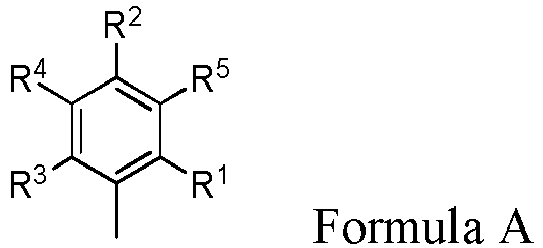
preferably, R1-R5 are each independently selected from the group consisting of hydrogen, halogen, hydroxy, C1-C10 alkyl with or without a substituent Q, C2-C10 alkenyl with or without a substituent Q, C2-C10 alkynyl with or without a substituent Q, C3-C10 cycloalkyl with or without a substituent Q, C1-C10 alkoxy with or without a substituent Q, C2-C10 alkenoxy with or without a substituent Q, C2-C10 alkynoxy with or without a substituent Q, C3-C10 cycloalkoxy with or without a substituent Q, C6-C15 aryl with or without a substituent Q, C6-C15 aryloxy with or without a substituent Q, C7-C15 aralkyl with or without a substituent Q, C7-C15 aralkoxy with or without a substituent Q, C7-C15 alkaryl with or without a substituent Q and C7-C15 alkaryloxy with or without a substituent Q;- each M is independently selected from the group consisting of nickel and palladium;- each Y is independently selected from the group consisting of O and S;- each X is independently selected from the group consisting of halogen, C1-C10 alkyl with or without a substituent Q and C1-C10 alkoxy with or without a substituent Q, and preferably from the group consisting of halogen, C1-C6 alkyl with or without a substituent Q and C1-C6 alkoxy with or without a substituent Q;- each R11 is independently a C1-C20 alkyl with or without a substituent Q, preferably a C1-C10 alkyl with or without a substituent Q, and more preferably a C1-C6 alkyl with or without a substituent Q; and- the substituent Q is selected from the group consisting of halogen, hydroxy, C1-C10 alkyl, halogenated C1-C10 alkyl, C1-C10 alkoxy and halogenated C1-C10 alkoxy, and preferably from the group consisting of halogen, hydroxy, C1-C6 alkyl, halogenated C1-C6 alkyl, C1-C6 alkoxy and halogenated C1-C6 alkoxy. - The diimine-metal complex as claimed in claim 14 or 15, having a structure represented by Formula IIIc:

R11, Y, M and X are as defined in claim 14. - The diimine-metal complex as claimed in any one of claims 14 to 16, wherein R1-R10, R21-R24 are each independently selected from the group consisting of hydrogen, halogen, hydroxy, C1-C10 alkyl with or without a substituent Q, C2-C10 alkenyl with or without a substituent Q, C2-C10 alkynyl with or without a substituent Q, C3-C10 cycloalkyl with or without a substituent Q, C1-C10 alkoxy with or without a substituent Q, C2-C10 alkenoxy with or without a substituent Q, C2-C10 alkynoxy with or without a substituent Q, C3-C10 cycloalkoxy with or without a substituent Q, C6-C15 aryl with or without a substituent Q, C6-C15 aryloxy with or without a substituent Q, C7-C15 aralkyl with or without a substituent Q, C7-C15 aralkoxy with or without a substituent Q, C7-C15 alkaryl with or without a substituent Q and C7-C15 alkaryloxy with or without a substituent Q;
preferably, R1-R10, R21-R24 are each independently selected from the group consisting of hydrogen, C1-C10 alkyl, halogenated C1-C10 alkyl, C1-C10 alkoxy, halogenated C1-C10 alkoxy and halogen, and more preferably from the group consisting of hydrogen, C1-C6 alkyl, halogenated C1-C6 alkyl, C1-C6 alkoxy, halogenated C1-C6 alkoxy and halogen. - The diimine-metal complex as claimed in any one of claims 14 to 17, which is selected from the group consisting of1) the complex represented by Formula IIIc, wherein R1=R3=R4=R6=isopropyl, R2=R5=R7-R10=R21=R22=R23=R24=H, R11=ethyl, M=Ni, Y=O, X=Br;2) the complex represented by Formula IIIc, wherein R1=R3=R4=R6=ethyl, R2=R5=R7-R10=R21=R22=R23=R24=H, R11=ethyl, M=Ni, Y=O, X=Br;3) the complex represented by Formula IIIc, wherein R1=R3=R4=R6=methyl, R2=R5=R7-R10=R21=R22=R23=R24=H, R11=ethyl, M=Ni, Y=O, X=Br;4) the complex represented by Formula IIIc, wherein R1- R6=methyl, R7-R10=R21=R22=R23=R24=H, R11=ethyl, M=Ni, Y=O, X=Br;5) the complex represented by Formula IIIc, wherein R1=R3=R4=R6=Br, R2=R5=R7-R10=R21=R22=R23=R24=H, R11=ethyl, M=Ni, Y=O, X=Br;6) the complex represented by Formula IIIc, wherein R1=R3=R4=R6=Cl, R2=R5=R7-R10=R21=R22=R23=R24=H, R11=ethyl, M=Ni, Y=O, X=Br;7) the complex represented by Formula IIIc, wherein R1=R3=R4=R6=F, R2=R5=R7-R10=R21=R22=R23=R24=H, R11=ethyl, M=Ni, Y=O, X=Br;8) the complex represented by Formula IIIc, wherein R1=R3=R4=R6=isopropyl, R2=R5=R7-R10=R21=R22=R23=R24=H, R11=isobutyl, M=Ni, Y=O, X=Br;9) the complex represented by Formula IIIc, wherein R1=R3=R4=R6=ethyl, R2=R5=R7-R10=R21=R22=R23=R24=H, R11=isobutyl, M=Ni, Y=O, X=Br;10) the complex represented by Formula IIIc, wherein R1=R3=R4=R6=methyl, R2=R5=R7-R10=R21=R22=R23=R24=H, R11=isobutyl, M=Ni, Y=O, X=Br;11) the complex represented by Formula IIIc, wherein R1- R6=methyl, R7-R10=R21=R22=R23=R24=H, R11=isobutyl, M=Ni, Y=O, X=Br;12) the complex represented by Formula IIIc, wherein R1=R3=R4=R6=Br, R2=R5=R7-R10=R21=R22=R23=R24=H, R11=isobutyl, M=Ni, Y=O, X=Br;13) the complex represented by Formula IIIc, wherein R1=R3=R4=R6=Cl, R2=R5=R7-R10=R21=R22=R23=R24=H, R11=isobutyl, M=Ni, Y=O, X=Br;14) the complex represented by Formula IIIc, wherein R1=R3=R4=R6=F, R2=R5=R7-R10=R21=R22=R23=R24=H, R11=isobutyl, M=Ni, Y=O, X=Br;15) the complex represented by Formula IIIc, wherein R1=R3=R4=R6=isopropyl, R2=R5=R7-R10=R22=H, R21=tert-butyl, R23=R24=H, R11=ethyl, M=Ni, Y=O, X=Br;16) the complex represented by Formula IIIc, wherein R1=R3=R4=R6=ethyl, R2=R5=R7-R10=R22=H, R21=tert-butyl, R23=R24=H, R11=ethyl, M=Ni, Y=O, X=Br;17) the complex represented by Formula IIIc, wherein R1=R3=R4=R6=methyl, R2=R5=R7-R10=R22=H, R21=tert-butyl, R23=R24=H, R11=ethyl, M=Ni, Y=O, X=Br;18) the complex represented by Formula IIIc, wherein R1- R6=methyl, R7- R10=R22=H, R21=tert-butyl, R23=R24=H, R11=ethyl, M=Ni, Y=O, X=Br;19) the complex represented by Formula IIIc, wherein R1=R3=R4=R6=Br, R2=R5=R7-R10=R22=H, R21=tert-butyl, R23=R24=H, R11=ethyl, M=Ni, Y=O, X=Br;20) the complex represented by Formula IIIc, wherein R1=R3=R4=R6=Cl, R2=R5=R7-R10=R22=H, R21=tert-butyl, R23=R24=H, R11=ethyl, M=Ni, Y=O, X=Br;21) the complex represented by Formula IIIc, wherein R1=R3=R4=R6=F, R2=R5=R7-R10=R22=H, R21=tert-butyl, R23=R24=H, R11=ethyl, M=Ni, Y=O, X=Br;22) the complex represented by Formula IIIc, wherein R1=R3=R4=R6=isopropyl, R2=R5=R7-R10=R22=H, R21=tert-butyl, R23=R24=H, R11=isobutyl, M=Ni, Y=O, X=Br;23) the complex represented by Formula IIIc, wherein R1=R3=R4=R6=ethyl, R2=R5=R7-R10=R22=H, R21=tert-butyl, R23=R24=H, R11=isobutyl, M=Ni, Y=O, X=Br;24) the complex represented by Formula IIIc, wherein R1=R3=R4=R6=methyl, R2=R5=R7-R10=R22=H, R21=tert-butyl, R23=R24=H, R11=isobutyl, M=Ni, Y=O, X=Br;25) the complex represented by Formula IIIc, wherein R1- R6=methyl, R7- R10=R22=H, R21=tert-butyl, R23=R24=H, R11=isobutyl, M=Ni, Y=O, X=Br;26) the complex represented by Formula IIIc, wherein R1=R3=R4=R6=Br, R2=R5=R7-R10=R22=H, R21=tert-butyl, R23=R24=H, R11=isobutyl, M=Ni, Y=O, X=Br;27) the complex represented by Formula IIIc, wherein R1=R3=R4=R6=Cl, R2=R5=R7-R10=R22=H, R21=tert-butyl, R23=R24=H, R11=isobutyl, M=Ni, Y=O, X=Br;28) the complex represented by Formula IIIc, wherein R1=R3=R4=R6=F, R2=R5=R7-R10=R22=H, R21=tert-butyl, R23=R24=H, R11=isobutyl, M=Ni, Y=O, X=Br;
 29) the complex represented by Formula (IIIc'), wherein R1=R3=R4=R6=isopropyl, R2=R5=R7- R10=R31=R32=H, R11=ethyl, M=Ni, Y=O, X=Br;30) the complex represented by Formula (IIIc'), wherein R1=R3=R4=R6=ethyl, R2=R5=R7-R10=R31=R32=H, R11=ethyl, M=Ni, Y=O, X=Br;31) the complex represented by Formula (IIIc'), wherein R1=R3=R4=R6=methyl, R2=R5=R7-R10=R31=R32=H, R11=ethyl, M=Ni, Y=O, X=Br;32) the complex represented by Formula (IIIc'), wherein R1- R6=methyl, R7-R10=R31=R32=H, R11=ethyl, M=Ni, Y=O, X=Br;33) the complex represented by Formula (IIIc'), wherein R1=R3=R4=R6=Br, R2=R5=R7-R10=R31=R32=H, R11=ethyl, M=Ni, Y=O, X=Br;34) the complex represented by Formula (IIIc'), wherein R1=R3=R4=R6=Cl, R2=R5=R7-R10=R31=R32=H, R11=ethyl, M=Ni, Y=O, X=Br;35) the complex represented by Formula (IIIc'), wherein R1=R3=R4=R6=F, R2=R5=R7-R10=R31=R32=H, R11=ethyl, M=Ni, Y=O, X=Br;36) the complex represented by Formula (IIIc'), wherein R1=R3=R4=R6=isopropyl, R2=R5=R7- R10=R31=R32=H, R11=isobutyl, M=Ni, Y=O, X=Br;37) the complex represented by Formula (IIIc'), wherein R1=R3=R4=R6=ethyl, R2=R5=R7-R10=R31=R32=H, R11=isobutyl, M=Ni, Y=O, X=Br;38) the complex represented by Formula (IIIc'), wherein R1=R3=R4=R6=methyl, R2=R5=R7-R10=R31=R32=H, R11=isobutyl, M=Ni, Y=O, X=Br;39) the complex represented by Formula (IIIc'), wherein R1- R6=methyl, R7-R10=R31=R32=H, R11=isobutyl, M=Ni, Y=O, X=Br;40) the complex represented by Formula (IIIc'), wherein R1=R3=R4=R6=Br, R2=R5=R7-R10=R31=R32=H, R11=isobutyl, M=Ni, Y=O, X=Br;41) the complex represented by Formula (IIIc'), wherein R1=R3=R4=R6=Cl, R2=R5=R7-R10=R31=R32=H, R11=isobutyl, M=Ni, Y=O, X=Br;42) the complex represented by Formula (IIIc'), wherein R1=R3=R4=R6=F, R2=R5=R7-R10=R31=R32=H, R11=isobutyl, M=Ni, Y=O, X=Br;43) the complex represented by Formula (IIIc'), wherein R1=R3=R4=R6=isopropyl, R2=R5=R7- R10=H R31=R32=R11=ethyl, M=Ni, Y=O, X=Br;44) the complex represented by Formula (IIIc'), wherein R1=R3=R4=R6=ethyl, R2=R5=R7-R10=H, R31=R32=R11=ethyl, M=Ni, Y=O, X=Br;45) the complex represented by Formula (IIIc'), wherein R1=R3=R4=R6=methyl, R2=R5=R7-R10=H, R31=R32=R11=ethyl, M=Ni, Y=O, X=Br;46) the complex represented by Formula (IIIc'), wherein R1- R6=methyl, R7- R10=H, R31=R32=R11=ethyl, M=Ni, Y=O, X=Br;47) the complex represented by Formula (IIIc'), wherein R1=R3=R4=R6=Br, R2=R5=R7-R10=H, R31=R32=R11=ethyl, M=Ni, Y=O, X=Br;48) the complex represented by Formula (IIIc'), wherein R1=R3=R4=R6=Cl, R2=R5=R7-R10=H, R31=R32=R11=ethyl, M=Ni, Y=O, X=Br;49) the complex represented by Formula (IIIc'), wherein R1=R3=R4=R6=F, R2=R5=R7-R10=H, R31=R32=R11=ethyl, M=Ni, Y=O, X=Br;50) the complex represented by Formula (IIIc'), wherein R1=R3=R4=R6=isopropyl, R2=R5=R7- R10=H, R31=R32=R11=ethyl, M=Ni, Y=O, X=Br;51) the complex represented by Formula (IIIc'), wherein R1=R3=R4=R6=ethyl, R2=R5=R7-R10=H, R31=R32=ethyl, R11=isobutyl, M=Ni, Y=O, X=Br;52) the complex represented by Formula (IIIc'), wherein R1=R3=R4=R6=methyl, R2=R5=R7-R10=H, R31=R32=ethyl, R11=isobutyl, M=Ni, Y=O, X=Br;53) the complex represented by Formula (IIIc'), wherein R1- R6=methyl, R7- R10=H, R31=R32=ethyl, R11=isobutyl, M=Ni, Y=O, X=Br;54) the complex represented by Formula (IIIc'), wherein R1=R3=R4=R6=Br, R2=R5=R7-R10=H, R31=R32=ethyl, R11=isobutyl, M=Ni, Y=O, X=Br;55) the complex represented by Formula (IIIc'), wherein R1=R3=R4=R6=Cl, R2=R5=R7-R10=H, R31=R32=ethyl, R11=isobutyl, M=Ni, Y=O, X=Br;56) the complex represented by Formula (IIIc'), wherein R1=R3=R4=R6=F, R2=R5=R7-R10=H, R31=R32=ethyl, R11=isobutyl, M=Ni, Y=O, X=Br.
 - A method for preparing the diamine-metal complex according to claim 1, comprising step 1) reacting a diimine compound represented by Formula IV with MXn and R11YH to generate the diamine-metal complex represented by Formula I,
 M and X in the MXn have the meanings as defined for Formula I in claim 1, and n is the number of X satisfying the valence state of M;and Y and R11 in the R11YH have the meanings as defined for Formula I in claim 1.
 - The method as claimed in claim 19, wherein the reaction in step 1) is carried out in an organic solvent, which is preferably a halogenated alkane, and more preferably is selected from the group consisting of dichloromethane, chloroform, 1,2-dichloroethane and mixtures thereof.
- Use of the diamine-metal complex as claimed in any one of claims 1 to 18 in olefin polymerization.
- A catalyst for olefin polymerization, comprising the diamine-metal complex as claimed in any one of claims 1 to 18, a co-catalyst and/or a chain transfer agent,
preferably, the cocatalyst is selected from the group consisting of organoaluminum compounds and organoboron compounds; preferably, the organoaluminum compounds are one or more selected from alkylaluminoxanes, aluminum alkyls and alkylaluminum halides; preferably, the organoboron compounds are one or more selected from aromatic hydrocarbyl boron and borates. - A process for olefin polymerization, comprising conducting an olefin polymerization reaction in the presence of the diamine-metal complex according to any one of claims 1-18 or the catalyst according to claim 22, preferably the temperature for the polymerization reaction ranging from -78°C to 200°C, preferably from -20°C to 150°C, and the polymerization pressure ranging from 0.01 to 10.0 MPa, preferably from 0.01 to 2.0 MPa.
Applications Claiming Priority (5)
| Application Number | Priority Date | Filing Date | Title |
|---|---|---|---|
| CN201911049899.5A CN112745362B (en) | 2019-10-31 | 2019-10-31 | Diimine metal complex and preparation method and application thereof |
| CN201911048975.0A CN112745358B (en) | 2019-10-31 | 2019-10-31 | Diimine metal complex, preparation method and application thereof |
| CN201911049898.0A CN112745361B (en) | 2019-10-31 | 2019-10-31 | Diimine complex and preparation method and application thereof |
| CN201911049039.1A CN112745359B (en) | 2019-10-31 | 2019-10-31 | Diimine metal complex and preparation method and application thereof |
| PCT/CN2020/125399 WO2021083350A1 (en) | 2019-10-31 | 2020-10-30 | Diimine metal complex, preparation method therefor, and application thereof |
Publications (3)
| Publication Number | Publication Date |
|---|---|
| EP4053139A1 true EP4053139A1 (en) | 2022-09-07 |
| EP4053139A4 EP4053139A4 (en) | 2023-11-15 |
| EP4053139B1 EP4053139B1 (en) | 2025-07-16 |
Family
ID=75714475
Family Applications (1)
| Application Number | Title | Priority Date | Filing Date |
|---|---|---|---|
| EP20882359.1A Active EP4053139B1 (en) | 2019-10-31 | 2020-10-30 | Diimine metal complex, preparation method therefor, and application thereof |
Country Status (8)
| Country | Link |
|---|---|
| US (1) | US12454586B2 (en) |
| EP (1) | EP4053139B1 (en) |
| JP (1) | JP7748939B2 (en) |
| KR (1) | KR20220092910A (en) |
| BR (1) | BR112022008180A2 (en) |
| CA (1) | CA3159655A1 (en) |
| ES (1) | ES3041609T3 (en) |
| WO (1) | WO2021083350A1 (en) |
Families Citing this family (1)
| Publication number | Priority date | Publication date | Assignee | Title |
|---|---|---|---|---|
| KR102953256B1 (en) * | 2019-10-31 | 2026-04-15 | 차이나 페트로리움 앤드 케미컬 코포레이션 | Method for preparing an olefin-polar monomer copolymer |
Citations (9)
| Publication number | Priority date | Publication date | Assignee | Title |
|---|---|---|---|---|
| DE889229C (en) | 1950-08-17 | 1953-09-07 | Karl Dr Dr E H Ziegler | Process for the polymerization and interpolymerization of olefins |
| WO1996023010A2 (en) | 1995-01-24 | 1996-08-01 | E.I. Du Pont De Nemours And Company | α-OLEFINS AND OLEFIN POLYMERS AND PROCESSES THEREFOR |
| WO1998003521A1 (en) | 1996-07-23 | 1998-01-29 | Symyx Technologies | Combinatorial synthesis and analysis of organometallic compounds and catalysts |
| WO1998040374A2 (en) | 1997-03-10 | 1998-09-17 | Eastman Chemical Company | Olefin polymerization catalysts containing group 8-10 transition metals, bidentate ligands, processes employing such catalysts and polymers obtained therefrom |
| WO1999005189A1 (en) | 1997-07-23 | 1999-02-04 | E.I. Du Pont De Nemours And Company | Polymerization of olefins |
| WO1999062968A1 (en) | 1998-06-01 | 1999-12-09 | Eastman Chemical Company | Supported group 8-10 transition metal olefin polymerization catalysts |
| WO2000006620A2 (en) | 1998-07-29 | 2000-02-10 | E.I. Du Pont De Nemours And Company | Polymerization of olefins |
| US6660677B1 (en) | 1997-03-10 | 2003-12-09 | Eastman Chemical Company | Supported group 8-10 transition metal olefin polymerization catalysts |
| CN106397264A (en) | 2015-07-31 | 2017-02-15 | 中国石油化工股份有限公司 | Diimine ligand compound, and complex and application thereof |
Family Cites Families (12)
| Publication number | Priority date | Publication date | Assignee | Title |
|---|---|---|---|---|
| LU34020A1 (en) | 1953-01-27 | 1956-02-06 | ||
| CN106397261B (en) | 2015-07-31 | 2018-07-20 | 中国石油化工股份有限公司 | A kind of diimide ligand compound, complex and application |
| CN108864336B (en) * | 2017-05-10 | 2020-12-15 | 浙江大学 | Dinuclear pyrene (α-diimine) nickel olefin catalyst and preparation method and application thereof |
| CN108864335A (en) * | 2017-05-10 | 2018-11-23 | 浙江大学 | Double-core (alpha-diimine) nickel/palladium alkene catalyst and the preparation method and application thereof |
| CN108864334A (en) * | 2017-05-10 | 2018-11-23 | 浙江大学 | Double-core(Alpha-diimine)Nickel/palladium alkene catalyst, preparation method and application |
| RU2681535C1 (en) | 2018-03-12 | 2019-03-07 | Федеральное государственное бюджетное учреждение науки Новосибирский институт органической химии им. Н.Н. Ворожцова Сибирского отделения Российской академии наук (НИОХ СО РАН) | Catalyst component for the ethylene polymerization into the high-molecular elastomer, the catalyst and its preparation method |
| CN112745362B (en) * | 2019-10-31 | 2022-10-21 | 中国石油化工股份有限公司 | Diimine metal complex and preparation method and application thereof |
| KR102953256B1 (en) * | 2019-10-31 | 2026-04-15 | 차이나 페트로리움 앤드 케미컬 코포레이션 | Method for preparing an olefin-polar monomer copolymer |
| CN112745361B (en) * | 2019-10-31 | 2022-10-21 | 中国石油化工股份有限公司 | Diimine complex and preparation method and application thereof |
| CN112745359B (en) * | 2019-10-31 | 2022-10-21 | 中国石油化工股份有限公司 | Diimine metal complex and preparation method and application thereof |
| CN112745358B (en) * | 2019-10-31 | 2022-10-21 | 中国石油化工股份有限公司 | Diimine metal complex, preparation method and application thereof |
| US12404292B2 (en) * | 2019-10-31 | 2025-09-02 | China Petroleum & Chemical Corporation | Amino-imine metal complex and preparation method therefor and application thereof |
-
2020
- 2020-10-30 WO PCT/CN2020/125399 patent/WO2021083350A1/en not_active Ceased
- 2020-10-30 KR KR1020227017501A patent/KR20220092910A/en active Pending
- 2020-10-30 ES ES20882359T patent/ES3041609T3/en active Active
- 2020-10-30 EP EP20882359.1A patent/EP4053139B1/en active Active
- 2020-10-30 CA CA3159655A patent/CA3159655A1/en active Pending
- 2020-10-30 BR BR112022008180A patent/BR112022008180A2/en unknown
- 2020-10-30 JP JP2022525763A patent/JP7748939B2/en active Active
- 2020-10-30 US US17/755,554 patent/US12454586B2/en active Active
Patent Citations (10)
| Publication number | Priority date | Publication date | Assignee | Title |
|---|---|---|---|---|
| DE889229C (en) | 1950-08-17 | 1953-09-07 | Karl Dr Dr E H Ziegler | Process for the polymerization and interpolymerization of olefins |
| WO1996023010A2 (en) | 1995-01-24 | 1996-08-01 | E.I. Du Pont De Nemours And Company | α-OLEFINS AND OLEFIN POLYMERS AND PROCESSES THEREFOR |
| WO1998003521A1 (en) | 1996-07-23 | 1998-01-29 | Symyx Technologies | Combinatorial synthesis and analysis of organometallic compounds and catalysts |
| WO1998040374A2 (en) | 1997-03-10 | 1998-09-17 | Eastman Chemical Company | Olefin polymerization catalysts containing group 8-10 transition metals, bidentate ligands, processes employing such catalysts and polymers obtained therefrom |
| US6103658A (en) | 1997-03-10 | 2000-08-15 | Eastman Chemical Company | Olefin polymerization catalysts containing group 8-10 transition metals, processes employing such catalysts and polymers obtained therefrom |
| US6660677B1 (en) | 1997-03-10 | 2003-12-09 | Eastman Chemical Company | Supported group 8-10 transition metal olefin polymerization catalysts |
| WO1999005189A1 (en) | 1997-07-23 | 1999-02-04 | E.I. Du Pont De Nemours And Company | Polymerization of olefins |
| WO1999062968A1 (en) | 1998-06-01 | 1999-12-09 | Eastman Chemical Company | Supported group 8-10 transition metal olefin polymerization catalysts |
| WO2000006620A2 (en) | 1998-07-29 | 2000-02-10 | E.I. Du Pont De Nemours And Company | Polymerization of olefins |
| CN106397264A (en) | 2015-07-31 | 2017-02-15 | 中国石油化工股份有限公司 | Diimine ligand compound, and complex and application thereof |
Non-Patent Citations (5)
| Title |
|---|
| CHEM. REV., vol. 100, 2000, pages 1169 |
| CHEM. REV., vol. 96, 1996, pages 3327 |
| J. AM. CHEM. SOC, vol. 117, 1995, pages 6414 - 6415 |
| ORGANOMETALLICS, vol. 32, 2013, pages 2291 - 2299 |
| W. KAMINSKY: "Metalorganic Catalysts for Synthesis and Polymerization", 1999, SPRINGER |
Also Published As
| Publication number | Publication date |
|---|---|
| BR112022008180A2 (en) | 2022-07-12 |
| JP7748939B2 (en) | 2025-10-03 |
| JP2022554342A (en) | 2022-12-28 |
| WO2021083350A1 (en) | 2021-05-06 |
| ES3041609T3 (en) | 2025-11-13 |
| EP4053139B1 (en) | 2025-07-16 |
| CA3159655A1 (en) | 2021-05-06 |
| KR20220092910A (en) | 2022-07-04 |
| US20220282005A1 (en) | 2022-09-08 |
| EP4053139A4 (en) | 2023-11-15 |
| US12454586B2 (en) | 2025-10-28 |
Similar Documents
| Publication | Publication Date | Title |
|---|---|---|
| Wang et al. | α-Diimine nickel complexes bearing axially bulky terphenyl and equatorially bulky dibenzobarrelene groups: synthesis, characterization and olefin polymerization studies | |
| JP6657180B2 (en) | Method for producing oligomer and catalyst | |
| JP2026010117A (en) | Process for preparing olefin-polar monomer copolymers | |
| EP4053138B1 (en) | Amino-imine metal complex and preparation method therefor and application thereof | |
| CN112745362B (en) | Diimine metal complex and preparation method and application thereof | |
| CN112745358B (en) | Diimine metal complex, preparation method and application thereof | |
| CN112745359B (en) | Diimine metal complex and preparation method and application thereof | |
| EP4053139B1 (en) | Diimine metal complex, preparation method therefor, and application thereof | |
| CN112745361B (en) | Diimine complex and preparation method and application thereof | |
| RU2833273C1 (en) | Diimine metal complex, method for production thereof and use thereof | |
| CN115246893B (en) | Catalyst composition for preparing bimodal polyolefin, and preparation method and application thereof | |
| EP4332129A1 (en) | Branched olefin polymer, preparation method therefor and use thereof | |
| EP4332135A1 (en) | Method for preparing polymer, and obtained polymer | |
| RU2846037C1 (en) | Method of producing olefin-(polar monomer) copolymer | |
| RU2827476C1 (en) | Amino-imine metal complex and method for obtaining thereof and use thereof | |
| CA3159659C (en) | Method for preparing olefin-polar monomer copolymer | |
| BR112022008300B1 (en) | METHOD FOR PREPARING A POLAR OLEFIN MONOMER COPOLYMER | |
| JPWO2018043418A1 (en) | Method for producing oligomer and catalyst |
Legal Events
| Date | Code | Title | Description |
|---|---|---|---|
| STAA | Information on the status of an ep patent application or granted ep patent |
Free format text: STATUS: THE INTERNATIONAL PUBLICATION HAS BEEN MADE |
|
| PUAI | Public reference made under article 153(3) epc to a published international application that has entered the european phase |
Free format text: ORIGINAL CODE: 0009012 |
|
| STAA | Information on the status of an ep patent application or granted ep patent |
Free format text: STATUS: REQUEST FOR EXAMINATION WAS MADE |
|
| 17P | Request for examination filed |
Effective date: 20220524 |
|
| AK | Designated contracting states |
Kind code of ref document: A1 Designated state(s): AL AT BE BG CH CY CZ DE DK EE ES FI FR GB GR HR HU IE IS IT LI LT LU LV MC MK MT NL NO PL PT RO RS SE SI SK SM TR |
|
| DAV | Request for validation of the european patent (deleted) | ||
| DAX | Request for extension of the european patent (deleted) | ||
| A4 | Supplementary search report drawn up and despatched |
Effective date: 20231012 |
|
| RIC1 | Information provided on ipc code assigned before grant |
Ipc: C07F 15/00 20060101ALI20231006BHEP Ipc: C08F 4/70 20060101ALI20231006BHEP Ipc: C08F 12/00 20060101ALI20231006BHEP Ipc: C08F 10/00 20060101ALI20231006BHEP Ipc: C07F 15/04 20060101AFI20231006BHEP |
|
| GRAP | Despatch of communication of intention to grant a patent |
Free format text: ORIGINAL CODE: EPIDOSNIGR1 |
|
| STAA | Information on the status of an ep patent application or granted ep patent |
Free format text: STATUS: GRANT OF PATENT IS INTENDED |
|
| INTG | Intention to grant announced |
Effective date: 20250305 |
|
| GRAS | Grant fee paid |
Free format text: ORIGINAL CODE: EPIDOSNIGR3 |
|
| GRAA | (expected) grant |
Free format text: ORIGINAL CODE: 0009210 |
|
| STAA | Information on the status of an ep patent application or granted ep patent |
Free format text: STATUS: THE PATENT HAS BEEN GRANTED |
|
| P01 | Opt-out of the competence of the unified patent court (upc) registered |
Free format text: CASE NUMBER: APP_24561/2025 Effective date: 20250522 |
|
| AK | Designated contracting states |
Kind code of ref document: B1 Designated state(s): AL AT BE BG CH CY CZ DE DK EE ES FI FR GB GR HR HU IE IS IT LI LT LU LV MC MK MT NL NO PL PT RO RS SE SI SK SM TR |
|
| REG | Reference to a national code |
Ref country code: GB Ref legal event code: FG4D |
|
| REG | Reference to a national code |
Ref country code: CH Ref legal event code: EP |
|
| REG | Reference to a national code |
Ref country code: DE Ref legal event code: R096 Ref document number: 602020054782 Country of ref document: DE |
|
| REG | Reference to a national code |
Ref country code: IE Ref legal event code: FG4D |
|
| REG | Reference to a national code |
Ref country code: NL Ref legal event code: FP |
|
| PGFP | Annual fee paid to national office [announced via postgrant information from national office to epo] |
Ref country code: NL Payment date: 20250912 Year of fee payment: 6 |
|
| PGFP | Annual fee paid to national office [announced via postgrant information from national office to epo] |
Ref country code: FR Payment date: 20250908 Year of fee payment: 6 |
|
| REG | Reference to a national code |
Ref country code: ES Ref legal event code: FG2A Ref document number: 3041609 Country of ref document: ES Kind code of ref document: T3 Effective date: 20251113 |
|
| PG25 | Lapsed in a contracting state [announced via postgrant information from national office to epo] |
Ref country code: PT Free format text: LAPSE BECAUSE OF FAILURE TO SUBMIT A TRANSLATION OF THE DESCRIPTION OR TO PAY THE FEE WITHIN THE PRESCRIBED TIME-LIMIT Effective date: 20251117 |
|
| PG25 | Lapsed in a contracting state [announced via postgrant information from national office to epo] |
Ref country code: IS Free format text: LAPSE BECAUSE OF FAILURE TO SUBMIT A TRANSLATION OF THE DESCRIPTION OR TO PAY THE FEE WITHIN THE PRESCRIBED TIME-LIMIT Effective date: 20251116 |
|
| PGFP | Annual fee paid to national office [announced via postgrant information from national office to epo] |
Ref country code: DE Payment date: 20250902 Year of fee payment: 6 |
|
| PG25 | Lapsed in a contracting state [announced via postgrant information from national office to epo] |
Ref country code: NO Free format text: LAPSE BECAUSE OF FAILURE TO SUBMIT A TRANSLATION OF THE DESCRIPTION OR TO PAY THE FEE WITHIN THE PRESCRIBED TIME-LIMIT Effective date: 20251016 |
|
| REG | Reference to a national code |
Ref country code: LT Ref legal event code: MG9D |
|
| PGFP | Annual fee paid to national office [announced via postgrant information from national office to epo] |
Ref country code: AT Payment date: 20251027 Year of fee payment: 6 |
|
| PG25 | Lapsed in a contracting state [announced via postgrant information from national office to epo] |
Ref country code: FI Free format text: LAPSE BECAUSE OF FAILURE TO SUBMIT A TRANSLATION OF THE DESCRIPTION OR TO PAY THE FEE WITHIN THE PRESCRIBED TIME-LIMIT Effective date: 20250716 |
|
| PG25 | Lapsed in a contracting state [announced via postgrant information from national office to epo] |
Ref country code: HR Free format text: LAPSE BECAUSE OF FAILURE TO SUBMIT A TRANSLATION OF THE DESCRIPTION OR TO PAY THE FEE WITHIN THE PRESCRIBED TIME-LIMIT Effective date: 20250716 |
|
| PG25 | Lapsed in a contracting state [announced via postgrant information from national office to epo] |
Ref country code: GR Free format text: LAPSE BECAUSE OF FAILURE TO SUBMIT A TRANSLATION OF THE DESCRIPTION OR TO PAY THE FEE WITHIN THE PRESCRIBED TIME-LIMIT Effective date: 20251017 |
|
| PG25 | Lapsed in a contracting state [announced via postgrant information from national office to epo] |
Ref country code: SE Free format text: LAPSE BECAUSE OF FAILURE TO SUBMIT A TRANSLATION OF THE DESCRIPTION OR TO PAY THE FEE WITHIN THE PRESCRIBED TIME-LIMIT Effective date: 20250716 |
|
| PG25 | Lapsed in a contracting state [announced via postgrant information from national office to epo] |
Ref country code: LV Free format text: LAPSE BECAUSE OF FAILURE TO SUBMIT A TRANSLATION OF THE DESCRIPTION OR TO PAY THE FEE WITHIN THE PRESCRIBED TIME-LIMIT Effective date: 20250716 |
|
| PG25 | Lapsed in a contracting state [announced via postgrant information from national office to epo] |
Ref country code: PL Free format text: LAPSE BECAUSE OF FAILURE TO SUBMIT A TRANSLATION OF THE DESCRIPTION OR TO PAY THE FEE WITHIN THE PRESCRIBED TIME-LIMIT Effective date: 20250716 Ref country code: BG Free format text: LAPSE BECAUSE OF FAILURE TO SUBMIT A TRANSLATION OF THE DESCRIPTION OR TO PAY THE FEE WITHIN THE PRESCRIBED TIME-LIMIT Effective date: 20250716 |
|
| PG25 | Lapsed in a contracting state [announced via postgrant information from national office to epo] |
Ref country code: RS Free format text: LAPSE BECAUSE OF FAILURE TO SUBMIT A TRANSLATION OF THE DESCRIPTION OR TO PAY THE FEE WITHIN THE PRESCRIBED TIME-LIMIT Effective date: 20251016 |
|
| PGFP | Annual fee paid to national office [announced via postgrant information from national office to epo] |
Ref country code: ES Payment date: 20251106 Year of fee payment: 6 |
|
| PG25 | Lapsed in a contracting state [announced via postgrant information from national office to epo] |
Ref country code: RO Free format text: LAPSE BECAUSE OF FAILURE TO SUBMIT A TRANSLATION OF THE DESCRIPTION OR TO PAY THE FEE WITHIN THE PRESCRIBED TIME-LIMIT Effective date: 20250716 |
|
| PG25 | Lapsed in a contracting state [announced via postgrant information from national office to epo] |
Ref country code: SM Free format text: LAPSE BECAUSE OF FAILURE TO SUBMIT A TRANSLATION OF THE DESCRIPTION OR TO PAY THE FEE WITHIN THE PRESCRIBED TIME-LIMIT Effective date: 20250716 |
|
| PG25 | Lapsed in a contracting state [announced via postgrant information from national office to epo] |
Ref country code: DK Free format text: LAPSE BECAUSE OF FAILURE TO SUBMIT A TRANSLATION OF THE DESCRIPTION OR TO PAY THE FEE WITHIN THE PRESCRIBED TIME-LIMIT Effective date: 20250716 |
|
| PG25 | Lapsed in a contracting state [announced via postgrant information from national office to epo] |
Ref country code: IT Free format text: LAPSE BECAUSE OF FAILURE TO SUBMIT A TRANSLATION OF THE DESCRIPTION OR TO PAY THE FEE WITHIN THE PRESCRIBED TIME-LIMIT Effective date: 20250716 |
|
| REG | Reference to a national code |
Ref country code: DE Ref legal event code: R097 Ref document number: 602020054782 Country of ref document: DE |
|
| PG25 | Lapsed in a contracting state [announced via postgrant information from national office to epo] |
Ref country code: CZ Free format text: LAPSE BECAUSE OF FAILURE TO SUBMIT A TRANSLATION OF THE DESCRIPTION OR TO PAY THE FEE WITHIN THE PRESCRIBED TIME-LIMIT Effective date: 20250716 |
|
| PG25 | Lapsed in a contracting state [announced via postgrant information from national office to epo] |
Ref country code: EE Free format text: LAPSE BECAUSE OF FAILURE TO SUBMIT A TRANSLATION OF THE DESCRIPTION OR TO PAY THE FEE WITHIN THE PRESCRIBED TIME-LIMIT Effective date: 20250716 Ref country code: SK Free format text: LAPSE BECAUSE OF FAILURE TO SUBMIT A TRANSLATION OF THE DESCRIPTION OR TO PAY THE FEE WITHIN THE PRESCRIBED TIME-LIMIT Effective date: 20250716 |
|
| PLBE | No opposition filed within time limit |
Free format text: ORIGINAL CODE: 0009261 |
|
| STAA | Information on the status of an ep patent application or granted ep patent |
Free format text: STATUS: NO OPPOSITION FILED WITHIN TIME LIMIT |
|
| REG | Reference to a national code |
Ref country code: CH Ref legal event code: H13 Free format text: ST27 STATUS EVENT CODE: U-0-0-H10-H13 (AS PROVIDED BY THE NATIONAL OFFICE) Effective date: 20260527 |
|
| REG | Reference to a national code |
Ref country code: CH Ref legal event code: L10 Free format text: ST27 STATUS EVENT CODE: U-0-0-L10-L00 (AS PROVIDED BY THE NATIONAL OFFICE) Effective date: 20260528 |
|
| PG25 | Lapsed in a contracting state [announced via postgrant information from national office to epo] |
Ref country code: LU Free format text: LAPSE BECAUSE OF NON-PAYMENT OF DUE FEES Effective date: 20251030 |
|
| REG | Reference to a national code |
Ref country code: BE Ref legal event code: MM Effective date: 20251031 |
|
| 26N | No opposition filed |
Effective date: 20260417 |
|
| GBPC | Gb: european patent ceased through non-payment of renewal fee |
Effective date: 20251030 |
|
| PG25 | Lapsed in a contracting state [announced via postgrant information from national office to epo] |
Ref country code: LT Free format text: LAPSE BECAUSE OF FAILURE TO SUBMIT A TRANSLATION OF THE DESCRIPTION OR TO PAY THE FEE WITHIN THE PRESCRIBED TIME-LIMIT Effective date: 20250716 Ref country code: MC Free format text: LAPSE BECAUSE OF FAILURE TO SUBMIT A TRANSLATION OF THE DESCRIPTION OR TO PAY THE FEE WITHIN THE PRESCRIBED TIME-LIMIT Effective date: 20250716 |
|
| PG25 | Lapsed in a contracting state [announced via postgrant information from national office to epo] |
Ref country code: GB Free format text: LAPSE BECAUSE OF NON-PAYMENT OF DUE FEES Effective date: 20251030 |
|
| REG | Reference to a national code |
Ref country code: AT Ref legal event code: UEP Ref document number: 1813961 Country of ref document: AT Kind code of ref document: T Effective date: 20250716 |
|
| PG25 | Lapsed in a contracting state [announced via postgrant information from national office to epo] |
Ref country code: BE Free format text: LAPSE BECAUSE OF NON-PAYMENT OF DUE FEES Effective date: 20251031 Ref country code: CH Free format text: LAPSE BECAUSE OF NON-PAYMENT OF DUE FEES Effective date: 20251031 |