EP4053109A1 - Acid addition salt of ror? regulator - Google Patents
Acid addition salt of ror? regulator Download PDFInfo
- Publication number
- EP4053109A1 EP4053109A1 EP20881503.5A EP20881503A EP4053109A1 EP 4053109 A1 EP4053109 A1 EP 4053109A1 EP 20881503 A EP20881503 A EP 20881503A EP 4053109 A1 EP4053109 A1 EP 4053109A1
- Authority
- EP
- European Patent Office
- Prior art keywords
- compound
- formula
- acid addition
- addition salt
- crystalline form
- Prior art date
- Legal status (The legal status is an assumption and is not a legal conclusion. Google has not performed a legal analysis and makes no representation as to the accuracy of the status listed.)
- Withdrawn
Links
Images

















Classifications
-
- C—CHEMISTRY; METALLURGY
- C07—ORGANIC CHEMISTRY
- C07D—HETEROCYCLIC COMPOUNDS
- C07D235/00—Heterocyclic compounds containing 1,3-diazole or hydrogenated 1,3-diazole rings, condensed with other rings
- C07D235/02—Heterocyclic compounds containing 1,3-diazole or hydrogenated 1,3-diazole rings, condensed with other rings condensed with carbocyclic rings or ring systems
- C07D235/04—Benzimidazoles; Hydrogenated benzimidazoles
- C07D235/06—Benzimidazoles; Hydrogenated benzimidazoles with only hydrogen atoms, hydrocarbon or substituted hydrocarbon radicals, directly attached in position 2
-
- C—CHEMISTRY; METALLURGY
- C07—ORGANIC CHEMISTRY
- C07D—HETEROCYCLIC COMPOUNDS
- C07D235/00—Heterocyclic compounds containing 1,3-diazole or hydrogenated 1,3-diazole rings, condensed with other rings
- C07D235/02—Heterocyclic compounds containing 1,3-diazole or hydrogenated 1,3-diazole rings, condensed with other rings condensed with carbocyclic rings or ring systems
- C07D235/04—Benzimidazoles; Hydrogenated benzimidazoles
- C07D235/06—Benzimidazoles; Hydrogenated benzimidazoles with only hydrogen atoms, hydrocarbon or substituted hydrocarbon radicals, directly attached in position 2
- C07D235/16—Radicals substituted by carbon atoms having three bonds to hetero atoms with at the most one bond to halogen, e.g. ester or nitrile radicals
-
- A—HUMAN NECESSITIES
- A61—MEDICAL OR VETERINARY SCIENCE; HYGIENE
- A61K—PREPARATIONS FOR MEDICAL, DENTAL OR TOILETRY PURPOSES
- A61K31/00—Medicinal preparations containing organic active ingredients
- A61K31/33—Heterocyclic compounds
- A61K31/395—Heterocyclic compounds having nitrogen as a ring hetero atom, e.g. guanethidine or rifamycins
- A61K31/41—Heterocyclic compounds having nitrogen as a ring hetero atom, e.g. guanethidine or rifamycins having five-membered rings with two or more ring hetero atoms, at least one of which being nitrogen, e.g. tetrazole
- A61K31/4164—1,3-Diazoles
- A61K31/4184—1,3-Diazoles condensed with carbocyclic rings, e.g. benzimidazoles
-
- C—CHEMISTRY; METALLURGY
- C07—ORGANIC CHEMISTRY
- C07B—GENERAL METHODS OF ORGANIC CHEMISTRY; APPARATUS THEREFOR
- C07B2200/00—Indexing scheme relating to specific properties of organic compounds
- C07B2200/13—Crystalline forms, e.g. polymorphs
Definitions
- the present disclosure relates to the field of pharmaceutical chemistry, and in particular, to an acid addition salt of a compound of formula II as an ROR ⁇ regulator.
- Nuclear receptors are ligand-regulated transcription factors that regulate development, immunity, and cellular metabolism, and are one of the major therapeutic target classes for human diseases.
- Retinoid-related orphan receptor gamma (ROR ⁇ ) is a member of the nuclear receptor NR1 subfamily and has a typical nuclear receptor domain structure consisting of a DNA-binding domain, a ligand-binding domain, a hinge domain and an activation function 2 domain ( Benoit G, et al., Pharmacological Reviews, 58(4):798-836, 2006 ; Zhang, Y, et al., Acta Pharmacogica Sinica, 36:71-87, 2015 ). In contrast to most other nuclear receptors that function as dimers, ROR ⁇ works as a monomer. It binds to specific DNA sequences usually consisting of TAAA/TNTAGGTCA, which are called ROR response elements (ROREs).
- ROR ⁇ 1 and RORy2 also known as RORyt
- ROR ⁇ 1 and RORy2 also known as RORyt
- the two ROR ⁇ subtypes are derived from the same mRNA, they have identical ligand-binding domains, and are distinguished by N terminus only (Jetten, A. M., 2009; Ivanov, I. I. et al., 2006).
- Small molecule inhibitors generally bind to the ligand-binding domain to inhibit the function of the receptor. As such, they have no selectivity for the two ROR ⁇ subtypes, and are all referred to as ROR ⁇ small molecule inhibitors (or modulators) without subtyping.
- RORyt is mainly expressed in thymus and several immune cells
- ROR ⁇ 1 is expressed in many tissues, such as thymus, liver, muscle, testis, pancreas, prostate and heart.
- Th17 T helper 17 (Th17) cells are the major source of autoimmune disease (Ivanov, I. I. et al., 2006).
- Both ROR ⁇ subtypes are expressed in Th17 cells, regulating T cell differentiation and inducing gene transcription in Th17 cells (Ruan, Q., et al., 2011).
- Cytokines IL-6 and TGF- ⁇ induce differentiation of undifferentiated CD4 T helper cells into Th17 cells.
- RORyt highly expressed in Th17 cells induces transcription of IL-23 receptor gene in undifferentiated CD4 T helper cells, IL23 receptors in turn promote and stabilize production of Th17 cells, forming part of a positive feedback loop (Ivanov, I. I. et al., 2006; Jetten, A. M., 2009).
- RORyt can induce the gene transcription of proinflammatory cytokines such as IL-17A, IL-17F, IL-21 and IL-22, and enhance the inflammation process.
- ROR ⁇ 1 is also expressed in Th17 cells, and can also regulate differentiation and induce gene transcription in Th17 cells (Ruan, Q., et al., 2011).
- Pharmacological antagonism against ROR ⁇ has therapeutic potential for autoimmune diseases, making it an attractive target for small molecule inhibitors.
- ROR ⁇ has been identified as a key mediator in the pathogenesis of several diseases, such as rheumatoid arthritis, psoriasis vulgaris, multiple sclerosis, inflammatory bowel disease, Crohn's disease, sicca syndrome and asthma.
- diseases such as rheumatoid arthritis, psoriasis vulgaris, multiple sclerosis, inflammatory bowel disease, Crohn's disease, sicca syndrome and asthma.
- Some other diseases such as chronic xerophthalmia, Kawasaki's disease, mucosal leishmaniasis and Hashimoto's thyroiditis, are characterized by increased Th17 proportion and/or increased levels of Th17 marker cytokines, such as IL-17, IL-22 and IL-23.
- Th17 marker cytokines such as IL-17, IL-22 and IL-23.
- ROR ⁇ t inhibitors are currently being developed for the treatment of autoimmune diseases such as psoriasis vulgaris and rheumatoid arthritis. See Jun R. Huh and Dan R. Littman, Eur. J. Immunol., 42(9):2232-2237 (2012 ), WO2012/027965 , WO2013/029338 and US2015/291607 .
- Patent Application No. PCT/US19/30526 provides an ROR ⁇ regulator having a structure of formula II: which is incorporated herein in its entirety.
- the present disclosure provides an acid addition salt of a compound of formula II or a pharmaceutically acceptable solvate of the acid addition salt, wherein the acid addition salt is an organic acid addition salt or an inorganic acid addition salt.
- the present disclosure further relates to a method for preparing an acid addition salt of a compound of formula II or a pharmaceutically acceptable solvate of the acid addition salt, wherein the acid addition salt is an organic acid addition salt or an inorganic acid addition salt, and the method comprises mixing a certain amount of the compound of formula II with a proper amount of a solvent and the organic acid or the inorganic acid, and reacting for a period of time to obtain the salt of the compound of formula II with the corresponding acid, wherein the solvent is selected from the group consisting of one or more of a hydrocarbon solvent, an ether solvent, an alcohol solvent, an ester solvent, a ketone solvent, a nitrile solvent, a halogenated hydrocarbon solvent, a nitrogenous solvent, water and dimethyl sulfoxide.
- the solvent is selected from the group consisting of one or more of a hydrocarbon solvent, an ether solvent, an alcohol solvent, an ester solvent, a ketone solvent, a nitrile solvent, a halogenated
- the organic acid addition salt is at least one selected from the group consisting of formate, acetate, propionate, butyrate, benzoate, malonate, succinate, pyruvate, methanesulfonate, ethanesulfonate, propanesulfonate, citrate, 4-nitrobenzoate, benzenesulfonate, p -toluenesulfonate, 1,2-ethanedisulfonate, ⁇ -naphthalenesulfonate, malate, propiolate, 2-butynoate, 2-hydroxy-ethanesulfonate, 3-butenoate, tartrate, fumarate, isethionate, maleate, lactate, lactobionate, pamoate, salicylate, galactarate, glucoheptonate, mandelate, 1,2-ethanedisulfonate, oxalate, trifluoroacetate, trifluoromethanesul
- the inorganic acid addition salt is at least one selected from the group consisting of hydrochloride, sulfate, bisulfate, nitrate, hydrobromide, hydroiodide, carbonate, bicarbonate, sulfite, bisulfite, pyrosulfate, monohydrogen phosphate, dihydrogen phosphate, perchlorate, persulfate, hemisulfate, disulfate, thiocyanate, phosphate, pyrophosphate and metaphosphate.
- the organic acid addition salt may be at least one selected from the group consisting of benzoate, oxalate, methanesulfonate, maleate and acetate, and the inorganic acid addition salt may be selected from the group consisting of hydrochloride and hydrobromide.
- the present disclosure provides a crystalline form of benzoate, an amorphous form of benzoate, a crystalline form of oxalate, an amorphous form of oxalate, an amorphous form of methanesulfonate, a crystalline form B of maleate, a crystalline form C of maleate, a crystalline form D of maleate, a crystalline form I of hydrobromide, a crystalline form ⁇ of hydrochloride, a crystalline form ⁇ of hydrochloride, a crystalline form ⁇ of hydrochloride and a crystalline form of acetate of a compound of formula II, and methods for preparing the same.
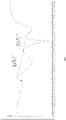
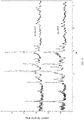
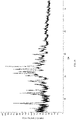
- the present disclosure provides an amorphous form of a compound of formula II, having an XRPD pattern with no distinct sharp diffraction peaks; preferably, the amorphous form has an XRPD pattern as shown in FIG. 1 .
- the present disclosure provides a benzoate of a compound of formula II.
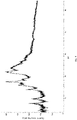
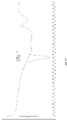
- the benzoate is an amorphous form having an XRPD pattern with no distinct sharp diffraction peaks; preferably, the amorphous form has an XRPD pattern as shown in FIG. 2 .
- the benzoate is a crystalline form having an X-ray powder diffraction pattern with characteristic peaks at diffraction angles 2 ⁇ of 5.305 and 7.411.
- the crystalline form of the benzoate has an X-ray powder diffraction pattern with characteristic peaks at diffraction angles 2 ⁇ of 5.305, 7.411 and 22.031.
- the crystalline form of the benzoate has an X-ray powder diffraction pattern with characteristic peaks at diffraction angles 2 ⁇ of 5.305, 7.411, 19.140 and 22.0314.
- the present disclosure provides an oxalate of a compound of formula II.
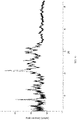
- the oxalate is an amorphous form having an XRPD pattern with no distinct sharp diffraction peaks; preferably, the amorphous form has an XRPD pattern as shown in FIG. 5 .
- the oxalate is a crystalline form having an X-ray powder diffraction pattern with characteristic peaks at diffraction angles 2 ⁇ of 14.378, 18.463 and 21.670. Furthermore, the crystalline form of the oxalate has an X-ray powder diffraction pattern with characteristic peaks at diffraction angles 2 ⁇ of 14.378, 18.463, 21.670 and 23.075. Furthermore, the crystalline form of the oxalate has an X-ray powder diffraction pattern with characteristic peaks at diffraction angles 2 ⁇ of 14.378, 18.463, 21.670, 23.075 and 28.127.
- the present disclosure provides a methanesulfonate of a compound of formula II.
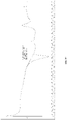
- the methanesulfonate is an amorphous form having an XRPD pattern with no distinct sharp diffraction peaks; preferably, the amorphous form has an XRPD pattern as shown in FIG. 7 .
- the present disclosure provides a maleate of a compound of formula II.
- the maleate is a crystalline form B having an X-ray powder diffraction pattern with characteristic peaks at diffraction angles 2 ⁇ of 7.624, 9.659, 13.815, 15.844 and 17.391.
- the crystalline form B of the maleate has an X-ray powder diffraction pattern with characteristic peaks at diffraction angles 2 ⁇ of 7.624, 9.659, 13.815, 15.844, 17.391 and 21.802. Furthermore, the crystalline form B of the maleate has an X-ray powder diffraction pattern with characteristic peaks at diffraction angles 2 ⁇ of 7.624, 9.659, 13.815, 15.844, 17.391, 18.619 and 21.802.
- the crystalline form B of the maleate has an X-ray powder diffraction pattern with characteristic peaks at diffraction angles 2 ⁇ of 7.624, 9.659, 13.815, 15.844, 17.391, 18.619, 21.802, 23.667 and 26.441.
- the maleate is a crystalline form C having an X-ray powder diffraction pattern with characteristic peaks at diffraction angles 2 ⁇ of 7.325, 8.635, 9.809, 13.649, 16.133, 16.765 and 18.346.
- the crystalline form C of the maleate has an X-ray powder diffraction pattern with characteristic peaks at diffraction angles 2 ⁇ of 7.325, 8.635, 9.809, 13.649, 16.133, 16.765, 18.346, 21.689 and 23.586.
- the crystalline form C of the maleate has an X-ray powder diffraction pattern with characteristic peaks at diffraction angles 2 ⁇ of 7.325, 8.635, 9.809, 11.661, 13.649, 16.133, 16.765, 18.346, 21.689, 23.586 and 25.303.
- the maleate is a crystalline form D having an X-ray powder diffraction pattern with characteristic peaks at diffraction angles 2 ⁇ of 4.486, 7.288, 9.067, 10.001, 13.914, 18.229 and 18.940.
- the crystalline form D of the maleate has an X-ray powder diffraction pattern with characteristic peaks at diffraction angles 2 ⁇ of 4.486, 5.998, 7.288, 9.067, 10.001, 13.914, 15.026, 16.227, 18.229 and 18.940.
- the crystalline form D of the maleate has an X-ray powder diffraction pattern with characteristic peaks at diffraction angles 2 ⁇ of 4.486, 5.998, 7.288, 9.067, 10.001, 13.914, 15.026, 16.227, 18.229, 18.940, 23.076, 25.612 and 28.102.
- the present disclosure provides a hydrobromide of a compound of formula II.
- the hydrobromide is a crystalline form I having an X-ray powder diffraction pattern with characteristic peaks at diffraction angles 2 ⁇ of 8.128, 12.579, 16.414, 17.075, 17.780 and 20.733.
- the crystalline form I of the hydrobromide has an X-ray powder diffraction pattern with characteristic peaks at diffraction angles 2 ⁇ of 8.128, 12.579, 16.414, 17.075, 17.780, 19.675, 20.733, 21.262, 23.113, 23.906, 24.391, 26.550, 28.445, 28.930 and 29.547.
- the crystalline form I of the hydrobromide has an X-ray powder diffraction pattern with characteristic peaks at diffraction angles 2 ⁇ of 8.128, 11.918, 12.579, 16.414, 17.075, 17.780, 18.750, 19.675, 20.733, 21.262, 23.113, 23.906, 24.391, 26.550, 28.445, 28.930, 29.547, 30.958, 32.236, 33.382, 38.670, 39.640, 40.830, 42.064, 43.342, 46.824, 48.190, 48.983 and 50.746.
- the present disclosure provides a hydrochloride of a compound of formula II.
- the hydrochloride is a crystalline form ⁇ having an X-ray powder diffraction pattern with characteristic peaks at diffraction angles 2 ⁇ of 7.931, 10.115, 13.920, 15.224, 17.425 and 18.309.
- the crystalline form ⁇ of the hydrochloride has an X-ray powder diffraction pattern with characteristic peaks at diffraction angles 2 ⁇ of 7.931, 10.115, 12.166, 13.920, 15.224, 16.041, 16.315, 16.748, 17.425, 18.309, 22.340, 23.359 and 24.570.
- the crystalline form ⁇ of the hydrochloride has an X-ray powder diffraction pattern with characteristic peaks at diffraction angles 2 ⁇ of 7.931, 10.115, 12.166, 13.920, 15.224, 16.041, 16.315, 16.748, 17.425, 18.309, 19.624, 20.235, 21.491, 22.340, 23.359, 23.905 and 24.570.
- the crystalline form ⁇ of the hydrochloride has an X-ray powder diffraction pattern with characteristic peaks at diffraction angles 2 ⁇ of 7.931, 10.115, 12.166, 13.920, 15.224, 16.041, 16.315, 16.748, 17.425, 18.309, 19.624, 20.235, 21.491, 22.340, 23.359, 23.905, 24.570, 25.320, 25.811, 26.096, 27.624, 28.213, 29.190, 29.760, 31.266, 31.795, 32.324, 35.906 and 37.291.
- the hydrochloride is a crystalline form ⁇ having an X-ray powder diffraction pattern with characteristic peaks at diffraction angles 2 ⁇ of 5.386, 8.191, 12.688, 16.607 and 20.036.
- the crystalline form ⁇ of the hydrochloride has an X-ray powder diffraction pattern with characteristic peaks at diffraction angles 2 ⁇ of 5.386, 8.191, 10.818, 12.688, 13.980, 14.915, 16.607, 20.036 and 21.372.
- the crystalline form ⁇ of the hydrochloride has an X-ray powder diffraction pattern with characteristic peaks at diffraction angles 2 ⁇ of 5.386, 8.191, 10.818, 12.688, 13.980, 14.915, 16.607, 18.076, 19.056, 20.036, 21.372, 22.040, 23.465, 24.355, 25.869, 26.582, 27.383, 29.253, 29.832, 30.946, 31.480, 32.504 and 33.439.
- the hydrochloride is a crystalline form ⁇ having an X-ray powder diffraction pattern with characteristic peaks at diffraction angles 2 ⁇ of 8.114, 11.997, 12.640, 13.772, 16.478, 17.897 and 20.337.
- the crystalline form ⁇ of the hydrochloride has an X-ray powder diffraction pattern with characteristic peaks at diffraction angles 2 ⁇ of 8.114, 11.997, 12.640, 13.772, 16.478, 17.897, 20.337, 21.422, 23.228 and 24.472.
- the crystalline form ⁇ of the hydrochloride has an X-ray powder diffraction pattern with characteristic peaks at diffraction angles 2 ⁇ of 8.114, 11.997, 12.640, 13.772, 16.478, 17.897, 19.671, 20.337, 21.422, 22.156, 23.228, 24.472, 25.882, 27.567, 28.277, 29.830, 31.160, 32.269 and 33.334.
- the present disclosure provides an acetate of a compound of formula II.
- the acetate is a crystalline form having an X-ray powder diffraction pattern with characteristic peaks at diffraction angles 2 ⁇ of 11.651, 12.495, 15.636, 15.965, 18.075 and 20.935.
- the crystalline form of the acetate has an X-ray powder diffraction pattern with characteristic peaks at diffraction angles 2 ⁇ of 11.651, 12.495, 14.323, 15.121, 15.636, 15.965, 18.075, 19.247, 19.903 and 20.935.
- the crystalline form of the acetate has an X-ray powder diffraction pattern with characteristic peaks at diffraction angles 2 ⁇ of 11.651, 12.495, 14.323, 15.121, 15.636, 15.965, 18.075, 19.247, 19.903, 20.935, 22.107, 22.998, 23.842, 24.733, 25.530, 26.843, 28.719, 29.750, 30.829, 32.142, 35.143 and 39.973.
- the present disclosure further relates to a method for preparing benzoate, oxalate, methanesulfonate, maleate, hydrobromide, hydrochloride or acetate of a compound of formula II, comprising: mixing a certain amount of the compound of formula II with a proper amount of a solvent and benzoic acid, oxalic acid, methanesulfonic acid, maleic acid, hydrobromic acid, hydrochloric acid or acetic acid for reaction to obtain the salt of the compound of formula II with the corresponding acid, wherein the solvent is selected from the group consisting of one or more of a hydrocarbon solvent, an ether solvent, an alcohol solvent, an ester solvent, a ketone solvent, a nitrile solvent, a halogenated hydrocarbon solvent, a nitrogenous solvent, water and dimethyl sulfoxide,
- a method for preparing an amorphous form of a compound of formula II comprises: taking a certain amount of the compound of formula II, adding a proper amount of a solvent, precipitating a solid, filtering and drying to obtain the amorphous form of the compound of formula II.
- a method for preparing an amorphous form of a compound of formula II comprises: purifying a certain amount of the compound of formula II by high performance liquid chromatography with an elution system of ammonium bicarbonate/water/acetonitrile to obtain the amorphous form of the compound of formula II.
- the present disclosure further relates to a method for preparing an amorphous or crystalline form of a benzoate of a compound of formula II, comprising: taking a certain amount of the compound of formula II, adding a proper amount of a solvent and benzoic acid, precipitating a solid, filtering and drying to obtain the amorphous or crystalline form of the benzoate of the compound of formula II.
- the solvent is n -hexane or methyl tert -butyl ether.
- the present disclosure further relates to a method for preparing an amorphous or crystalline form of an oxalate of a compound of formula II, comprising: taking a certain amount of the compound of formula II, adding a proper amount of a solvent and oxalic acid, precipitating a solid, filtering and drying to obtain the amorphous or crystalline form of the oxalate of the compound of formula II.
- the solvent is n -hexane or methyl tert -butyl ether.
- the present disclosure further relates to a method for preparing an amorphous form of a methanesulfonate of a compound of formula II, comprising: taking a certain amount of the compound of formula II, adding a proper amount of a solvent and methanesulfonic acid, precipitating a solid, filtering and drying to obtain the amorphous form of the methanesulfonate of the compound of formula II.
- the solvent is methyl tert -butyl ether.
- the present disclosure further relates to a method for preparing crystalline forms B, C and D of a maleate of a compound of formula II, comprising: taking a certain amount of the compound of formula II, adding a proper amount of a solvent and maleic acid, precipitating a solid, filtering and drying to obtain the crystalline forms B, C and D of the maleate of the compound of formula II.
- the solvent is methyl tert -butyl ether.
- the present disclosure further relates to a method for preparing a crystalline form I of a hydrobromide of a compound of formula II, comprising: precipitating a crystal by reacting the compound of formula II with hydrobromic acid in a proper amount of a solvent selected from the group consisting of one or more of a hydrocarbon solvent, an ether solvent, an alcohol solvent, an ester solvent, a ketone solvent, a nitrile solvent, a halogenated hydrocarbon solvent, a nitrogenous solvent, water and dimethyl sulfoxide, wherein
- the solvent is methyl tert -butyl ether and ethanol.
- the present disclosure further relates to a method for preparing a crystalline form I of a hydrobromide of a compound of formula II, comprising: mixing a certain amount of the compound of formula II with a proper amount of a solvent and hydrobromic acid, precipitating a solid, filtering and drying to obtain the crystalline form I of the hydrobromide of the compound of formula II.
- the solvent is methyl tert -butyl ether and ethanol.
- the present disclosure further relates to a method for preparing crystalline forms ⁇ , ⁇ and ⁇ of a hydrochloride of a compound of formula II, comprising: taking a certain amount of the compound of formula II, adding a proper amount of a solvent and hydrochloric acid, precipitating a solid, filtering and drying to obtain the crystalline forms ⁇ , ⁇ and ⁇ of the hydrochloride of the compound of formula II.
- the solvent is methyl tert -butyl ether.
- the present disclosure further relates to a method for preparing a crystalline form of an acetate of a compound of formula II, comprising: taking a certain amount of the compound of formula II, adding a proper amount of a solvent and acetic acid, precipitating a solid, filtering and drying to obtain the crystalline form of the acetate of the compound of formula II.
- the solvent is water and ethanol.
- the solvent is selected from the group consisting of one or more of a hydrocarbon solvent, an ether solvent, an alcohol solvent, an ester solvent, a ketone solvent, a nitrile solvent, a halogenated hydrocarbon solvent, a nitrogenous solvent, water and di
- the hydrocarbon solvent includes, but is not limited to, n -butane, n -pentane, n -hexane or n -heptane;
- the ether solvent includes, but is not limited to, diethyl ether, propylene glycol methyl ether, methyl tert -butyl ether, isopropyl ether or 1,4-dioxane;
- the alcohol solvent includes, but is not limited to, methanol, ethanol, isopropanol, n -propanol, isoamyl alcohol or trifluoroethanol;
- the ester solvent includes, but is not limited to, ethyl acetate, isopropyl acetate or butyl acetate;
- the ketone solvent includes, but is not limited to, acetone, acetophenone or 4-methyl-2-pentanone;
- the nitrile solvent includes, but is not limited to, acetonitrile or
- the method for precipitating a solid form of the amorphous form of the compound of formula II or the acid addition salt of the compound of formula II or the pharmaceutically acceptable solvate of the acid addition salt disclosed herein is selected from the group consisting of precipitation at room temperature, precipitation by cooling and precipitation by volatilizing the solvent.
- the solid form of the acid addition salt of the compound of formula II or the pharmaceutically acceptable solvate of the acid addition salt disclosed herein refers to the crystalline form of the benzoate, the amorphous form of the benzoate, the crystalline form of the oxalate, the amorphous form of the oxalate, the amorphous form of the methanesulfonate, the crystalline forms B, C and D of the maleate, the crystalline form I of the hydrobromide, the crystalline forms ⁇ , ⁇ and ⁇ of the hydrochloride and the crystalline form of the acetate of the compound of formula II.
- the method for crystallizing the crystalline form of the compound disclosed herein is selected from the group consisting of crystallization at room temperature, crystallization by cooling, crystallization by volatilization or induction crystallization by adding seed crystal, and the crystalline form of the compound is selected from the group consisting of the crystalline form of the benzoate, the crystalline form of the oxalate, the crystalline forms B, C and D of the maleate, the crystalline form I of the hydrobromide, the crystalline forms ⁇ , ⁇ and ⁇ of the hydrochloride and the crystalline form of the acetate of the compound of formula II.
- the present disclosure further relates to a method for preparing an amorphous or crystalline form of a benzoate of a compound of formula II, comprising: taking a certain amount of the compound of formula II, adding a proper amount of n -hexane or methyl tert-butyl ether and benzoic acid, stirring at 50 °C overnight, filtering and drying to obtain the amorphous or crystalline form of the benzoate of the compound of formula II.
- the present disclosure further relates to a method for preparing an amorphous or crystalline form of an oxalate of a compound of formula II, comprising: taking a certain amount of the compound of formula II, adding a proper amount of methyl tert -butyl ether or n -hexane and oxalic acid, stirring at 50 °C overnight, filtering and drying to obtain the amorphous or crystalline form of the oxalate of the compound of formula II.
- the present disclosure further relates to a method for preparing an amorphous form of a methanesulfonate of a compound of formula II, comprising: taking a certain amount of the compound of formula II, adding a proper amount of methyl tert-butyl ether and methanesulfonic acid, stirring at 50 °C overnight, filtering and drying to obtain the amorphous form of the methanesulfonate of the compound of formula II.
- the present disclosure further relates to a method for preparing a crystalline form B of a maleate of a compound of formula II, comprising: taking a certain amount of the compound of formula II, adding a proper amount of methyl tert -butyl ether and maleic acid, stirring at 50 °C at 600 rpm for 10 min to 10 h, filtering and drying to obtain the crystalline form B of the maleate of the compound of formula II.
- the present disclosure further relates to a method for preparing a crystalline form B of a maleate of a compound of formula II, comprising: taking a certain amount of the compound of formula II, adding a proper amount of methyl tert -butyl ether and maleic acid, stirring at 50 °C at 600 rpm for 10 min, 20 min, 30 min, 1 h or 2 h, filtering and drying to obtain the crystalline form B of the maleate of the compound of formula II.
- the present disclosure further relates to a method for preparing a crystalline form C of a maleate of a compound of formula II, comprising: taking a certain amount of the compound of formula II, adding a proper amount of methyl tert -butyl ether and maleic acid, stirring at 50 °C at 600 rpm for 12 h to 36 h, filtering and drying to obtain the crystalline form C of the maleate of the compound of formula II.
- the present disclosure further relates to a method for preparing a crystalline form C of a maleate of a compound of formula II, comprising: taking a certain amount of the compound of formula II, adding a proper amount of methyl tert -butyl ether and maleic acid, stirring at 50 °C at 600 rpm for 1 d, filtering and drying to obtain the crystalline form C of the maleate of the compound of formula II.
- the present disclosure further relates to a method for preparing a crystalline form D of a maleate of a compound of formula II, comprising: taking a certain amount of the compound of formula II, adding a proper amount of methyl tert -butyl ether and maleic acid, stirring at 50 °C at 600 rpm for 48 h to 72 h, filtering and drying to obtain the crystalline form D of the maleate of the compound of formula II.
- the present disclosure further relates to a method for preparing a crystalline form D of a maleate of a compound of formula II, comprising: taking a certain amount of the compound of formula II, adding a proper amount of methyl tert -butyl ether and maleic acid, stirring at 50 °C at 600 rpm for 3 d, filtering and drying to obtain the crystalline form D of the maleate of the compound of formula II.
- the present disclosure further relates to a method for preparing a crystalline form I of a hydrobromide of a compound of formula II, comprising: taking a certain amount of the compound of formula II, adding a proper amount of methyl tert-butyl ether and hydrobromic acid or a mixture of hydrobromic acid and ethanol, stirring at 25 °C at 600 rpm for 12 h to 72 h, filtering and drying to obtain the crystalline form I of the hydrobromide of the compound of formula II.
- the present disclosure further relates to a method for preparing a crystalline form I of a hydrobromide of a compound of formula II, comprising: taking a certain amount of the compound of formula II, adding a proper amount of methyl tert-butyl ether and hydrobromic acid, stirring at 25 °C at 600 rpm for 3 d, filtering and drying to obtain the crystalline form I of the hydrobromide of the compound of formula II.
- the present disclosure further relates to a method for preparing a crystalline form I of a hydrobromide of a compound of formula II, comprising: taking a certain amount of the compound of formula II, adding a proper amount of methyl tert-butyl ether and a mixture of hydrobromic acid and ethanol (in a volume ratio selected from the group consisting of 1:1, 1:50 and 1:99), stirring at 25 °C at 600 rpm overnight and for 3 d, filtering and drying to obtain the crystalline form I of the hydrobromide of the compound of formula II.
- the present disclosure further relates to a method for preparing a crystalline form ⁇ of a hydrochloride of a compound of formula II, comprising: taking a certain amount of the compound of formula II, adding a proper amount of methyl tert -butyl ether and concentrated hydrochloric acid, stirring at 50 °C for 12 h to 48 h, filtering and drying to obtain the crystalline form ⁇ of the hydrochloride of the compound of formula II.
- the present disclosure further relates to a method for preparing a crystalline form ⁇ of a hydrochloride of a compound of formula II, comprising: taking a certain amount of the compound of formula II, adding a proper amount of methyl tert -butyl ether and concentrated hydrochloric acid, stirring at 50 °C for 2 d, filtering and drying to obtain the crystalline form ⁇ of the hydrochloride of the compound of formula II.
- the present disclosure further relates to a method for preparing a crystalline form ⁇ of a hydrochloride of a compound of formula II, comprising: taking a certain amount of the compound of formula II, adding a proper amount of methyl tert-butyl ether and a solution of hydrochloric acid in ethanol, precipitating a solid, filtering and drying to obtain the crystalline form ⁇ of the hydrochloride of the compound of formula II.
- the present disclosure further relates to a method for preparing a crystalline form of an acetate of a compound of formula II, comprising: taking a certain amount of the compound of formula II, adding a proper amount of water and a solution of acetic acid in ethanol, precipitating a solid, filtering and drying to obtain the crystalline form of the acetate of the compound of formula II.
- the present disclosure further relates to a method for preparing a crystalline form of an acetate of a compound of formula II, comprising: taking a certain amount of the compound of formula II, adding a proper amount of water and a solution of acetic acid in ethanol (precisely transferring 0.1 mL of acetic acid, adding 9.9 mL of ethanol, mixing well), stirring at 50 °C overnight, filtering and drying to obtain the crystalline form of the acetate of the compound of formula II.
- the present disclosure further relates to a pharmaceutical composition
- a pharmaceutical composition comprising an acid addition salt of a compound of formula II or a pharmaceutically acceptable solvate of the acid addition salt or an amorphous form of the compound of formula II, and one or more pharmaceutically acceptable carriers, diluents or excipients.
- the present disclosure further relates to a pharmaceutical composition
- a pharmaceutical composition comprising a crystalline form I of a hydrobromide of a compound of formula II, and one or more pharmaceutically acceptable carriers, diluents or excipients.
- the present disclosure further relates to a pharmaceutical composition prepared from an amorphous form of a compound of formula II, an acid addition salt of the compound of formula II or a pharmaceutically acceptable solvate of the acid addition salt, and one or more pharmaceutically acceptable carriers, diluents or excipients.
- the present disclosure further relates to a pharmaceutical composition prepared from a crystalline form I of a hydrobromide of a compound of formula II and one or more pharmaceutically acceptable carriers, diluents or excipients.
- the present disclosure further relates to a pharmaceutical composition
- a pharmaceutical composition comprising an amorphous form of a compound of formula II or an acid addition salt of the compound of formula II or a pharmaceutically acceptable solvate of the acid addition salt, and optionally one or more pharmaceutically acceptable carriers and/or diluents.
- the pharmaceutical composition can be formulated into any pharmaceutically acceptable dosage form, for example, into tablet, capsule, pill, granule, solution, suspension, syrup, injection (the formulation is prepared from the amorphous form of the compound of formula II or the acid addition salt of the compound of formula II or the pharmaceutically acceptable solvate of the acid addition salt disclosed herein, or the injection itself comprises the amorphous form of the compound of formula II or the acid addition salt of the compound of formula II or the pharmaceutically acceptable solvate of the acid addition salt disclosed herein, including a solution for injection, a sterile powder for injection and a concentrated solution for injection), suppository, inhalant or spray.
- any pharmaceutically acceptable dosage form for example, into tablet, capsule, pill, granule, solution, suspension, syrup, injection
- the formulation is prepared from the amorphous form of the compound of formula II or the acid addition salt of the compound of formula II or the pharmaceutically acceptable solvate of the acid addition salt disclosed herein, or the injection itself comprises the amorphous form of the compound of
- the present disclosure further relates to a method for preparing a pharmaceutical composition, comprising: mixing the amorphous form of the compound of formula II or the acid addition salt of the compound of formula II or the pharmaceutically acceptable solvate of the acid addition salt disclosed herein with at least one pharmaceutically acceptable carrier, diluent or excipient.
- the pharmaceutical composition disclosed herein can be administered by any suitable route of administration, such as oral, parenteral, rectal, pulmonary or local administration, to a patient or subject in need.
- the pharmaceutical composition can be formulated into an oral formulation, for example, a solid oral formulation such as tablet, capsule, pill and granule, or a liquid oral formulation such as oral solution, oral suspension and syrup.
- the pharmaceutical formulation may further comprise a suitable filler, binder, disintegrant, lubricant and the like.
- the pharmaceutical composition can be formulated into an injection, including a solution for injection, a sterile powder for injection and a concentrated solution for injection.
- the pharmaceutical composition may be manufactured by conventional methods in the prior art.
- the pharmaceutical formulation may be free of additives, or contain proper additives according to the nature of the medicament.
- the pharmaceutical formulation can be formulated into a suppository or the like.
- the pharmaceutical formulation can be formulated into an inhalant or spray.
- the amorphous form of the compound of formula II or the acid addition salt of the compound of formula II or the pharmaceutically acceptable solvate of the acid addition salt disclosed herein is present in the pharmaceutical composition or medicament in a therapeutically and/or prophylactically effective amount. In certain embodiments, the amorphous form of the compound of formula II or the acid addition salt of the compound of formula II or the pharmaceutically acceptable solvate of the acid addition salt disclosed herein is present in the pharmaceutical composition or medicament in a form of unit dose.
- the present disclosure further relates to use of an amorphous form of a compound of formula II or an acid addition salt of the compound of formula II or a pharmaceutically acceptable solvate of the acid addition salt, or a pharmaceutical composition comprising or prepared from the same, in preparing a medicament for treating a disease or condition mediated by ROR ⁇ .
- the disease or condition mediated by ROR ⁇ includes, but is not limited to, inflammatory and autoimmune diseases and cancers, wherein the inflammatory and autoimmune diseases include, but are not limited to, arthritis, rheumatoid arthritis, juvenile rheumatoid arthritis, psoriasis vulgaris, psoriatic arthritis, osteoarthritis, regional suppurative, ulcerative colitis, ankylosing spondylitis, autoimmune diabetes, type I diabetes, autoimmune ocular disease, autoimmune thyroid disease, type I immune hypersecretion syndrome, type II autoimmune polycyrine syndrome, multiple sclerosis, inflammatory bowel disease, inflammatory bowel syndrome, juvenile idiopathic arthritis, Sjögren syndrome, Crohn's disease, asthma, Kawasaki's disease, Hashimoto's thyroiditis, infectious disease, ankylosing spondylitis, chronic obstructive pulmonary disease (COPD), pulmonary disease, glomerulonephritis, myocarditis, thyroiditis
- ether solvent includes, but is not limited to: tetrahydrofuran, diethyl ether, propylene glycol methyl ether, methyl tert -butyl ether, isopropyl ether or 1,4-dioxane.
- alcohol solvent examples include, but are not limited to: methanol, ethanol, isopropanol, n -propanol, isoamyl alcohol or trifluoroethanol.
- ester solvent includes, but is not limited to: ethyl acetate, isopropyl acetate or butyl acetate.
- ketone solvent described herein include, but are not limited to: acetone, acetophenone or 4-methyl-2-pentanone.
- nitrile solvent examples include, but are not limited to: acetonitrile or propionitrile.
- halogenated hydrocarbon solvent examples include, but are not limited to: chloromethane, dichloromethane, chloroform or carbon tetrachloride.
- hydrocarbon solvent examples include, but are not limited to: n- butane, n -pentane, n -hexane or n -heptane.
- the "X-ray powder diffraction pattern or XRPD" described herein is obtained by Cu-K ⁇ ray diffraction.
- the “differential scanning calorimetry or DSC” described herein refers to measurement of the temperature difference and heat flow difference between a sample and a reference substance during a process of increasing or holding the temperature of the sample to characterize all the physical changes and chemical changes related to the thermal effect, and to obtain the phase change information of the sample.
- the "2 ⁇ or angle 2 ⁇ " described herein refers to diffraction angle. ⁇ is Bragg angle in unit ° or degree.
- the error range of 2 ⁇ may be ⁇ 0.3, ⁇ 0.2 or ⁇ 0.1.
- NMR nuclear magnetic resonance
- MS mass spectrometry
- ⁇ NMR shifts ( ⁇ ) are given in a unit of 10 -6 (ppm).
- NMR analysis was conducted with a Bruker AVANCE-400 system using deuterated dimethyl sulfoxide (DMSO-d 6 ), deuterated chloroform (CDCl 3 ) and deuterated methanol (CD 3 OD) as solvents and tetramethylsilane (TMS) as internal standard.
- DMSO-d 6 deuterated dimethyl sulfoxide
- CDCl 3 deuterated chloroform
- CD 3 OD deuterated methanol
- TMS tetramethylsilane
- the HPLC was conducted with an Agilent 1200 DAD high pressure liquid chromatograph (Sunfire C18 150 ⁇ 4.6 mm chromatographic column) and a Waters 2695-2996 high pressure liquid chromatograph (Gimini C18 150 ⁇ 4.6 mm chromatographic column).
- DSC refers to differential scanning calorimetry: The measurement was conducted using a METTLER TOLEDO DSC 3+ differential scanning calorimeter with a temperature ramping rate of 10 °C/min, specific temperature ranges shown in corresponding patterns (mostly 25-300 or 25-350 °C) and a nitrogen purging speed of 50 mL/min.
- TGA refers to thermogravimetric analysis: The measurement was conducted using a METTLER TOLEDO TGA 2 thermogravimetric analyzer with a temperature ramping rate of 10 °C/min, specific temperature ranges shown in corresponding patterns (mostly 25-300 °C) and a nitrogen purging speed of 20 mL/min.
- DVS refers to dynamic vapor sorption: The measurement was conducted with a Surface Measurement Systems advantage 2 at 25 °C, starting from 50% humidity in humidity range of 0%-95% with a step size of 10%. The judging criterion was that the mass change of each gradient dM/dT is less than 0.002 and TMAX is less than 360 min in two circles.
- the monitoring of the reaction progress in the examples was conducted by thin layer chromatography (TLC).
- TLC thin layer chromatography
- the volume ratio of the solvents was adjusted according to the polarity of the compound, or by adding a small amount of basic or acidic reagents such as triethylamine and acetic acid.
- Step II Preparation of ethyl 4-((4-amino-6-chloro-2'-(dichloromethoxy)-[1,1'-biphenyl]-3-yl)amino)-3-(4-((cyclopropylmethyl)sulfonyl)phenyl)-4-oxobutanoate
- reaction solution was adsorbed on 5 g of silica gel, loaded onto a silica gel column, and eluted with 45% ethyl acetate in n -hexane to obtain a mixture of ethyl 4-((4-amino-6-chloro-2'-(dichloromethoxy)-[1,1'-biphenyl]-3-yl)amino)-3-(4-((cyclopropylmethyl)sulfonyl)phenyl)-4-oxobutanoate and ethyl 4-((5-amino-2-chloro-2'-(dichloromethoxy)-[1,1-biphenyl]-4-yl)amino)-3-(4-((cyclopropylmethyl)sulfonyl)phenyl)-4-oxobutanoate as a white solid (600 mg, 62.3% yield). MS (ESI): 607 (M+H) +
- Step III Preparation of ethyl 3-(6-chloro-5-(2-(difluoromethoxy)phenyl)-1 H- benzo[ d ]imidazol-2-yl)-3-(4-((cyclopropylmethyl)sulfonyl)phenyl)propionate
- Step IV Preparation of ( S )-3-(6-chloro-5-(2-(difluoromethoxy)phenyl)-1 H -benzo[ d ]imidazol-2-yl)-3-(4-((cyclopropylmethyl)sulfonyl)phenyl)propanamide
- the resulting product was subjected to chiral resolution (conditions: CHIRALCEL OZ-H (OZH00CD-VC005), 0.46 cm I.D. ⁇ 15 cm L; mobile phase: 100% methanol; flow rate: 1.0 mL/min). The corresponding fractions were collected and concentrated at reduced pressure to obtain the target compound (67 mg, 60 mg).
- Test Example 1 Biochemical assay of LanthaScreen TR-FRET ROR ⁇ -LBD and co-activation peptide
- Complete TR-FRET Coregulator Buffer D was prepared by diluting 1 M DTT with TR-FRET Coregulator Buffer D to a final concentration of 5 mM DTT. The compounds were diluted in Complete TR-FRET Coregulator Buffer D. The solutions were serially 7-fold diluted from an initial concentration of 3 ⁇ M to the 7 th concentration. 10 ⁇ L of the dilutions was added to each well of the 384-well plate. For negative and positive controls, 10 ⁇ L of Complete TR-FRET Coregulator Buffer D was added.
- a ROR ⁇ LBD solution was prepared using Complete TR-FRET Coregulator Buffer D. The final concentration of the ROR ⁇ LBD solution in each reaction was 25 ng. Other than the negative wells receiving 5 ⁇ L of Complete TR-FRET Coregulator Buffer D, 5 ⁇ L of the ROR ⁇ LBD solution was added to the remaining wells of the 384-well assay plate.
- Complete TR-FRET Coregulator Buffer D was used to prepare a solution containing 0.6 ⁇ M Fluorescein-D22 and 8 nM Tbanti-GST antibody, and 5 ⁇ L of the prepared solution was added to all wells of the 384-well assay plate.
- the 384-well plate was mixed gently on a plate shaker and let stand at room temperature for 1 h away from light.
- the 384-well plate was sealed with a plastic film to avoid evaporation.
- the plate was measured on a Tecan Infinite M1000 plate reader at wavelengths of 520 nm and 495 nm.
- IC 50 values were calculated using GraphPad Prism by plotting log compound concentration versus percentage inhibition. The IC 50 values for the compounds are shown in Table 1.
- Test Example 2 Assay for inhibiting cytokine IL-17A production in human peripheral blood mononuclear cells
- PBMCs peripheral blood mononuclear cells
- T cell activating reagent cytostim (10 ⁇ L/mL) was added to the cell suspension in certain proportions, and then the cells were seeded in a 96-well cell culture plate at a density of 1 ⁇ 10 5 PBMCs/well.
- Test compounds were diluted in gradient using TexMACS medium and added to the treatment wells in 2-3 replicates. Negative control wells containing cells only without cytostim were prepared to obtain background readings.
- inhibition% is inhibition rate
- OD(NC) is the reading of cells in negative control groups with no cytostim and no compound
- OD(PC) is the reading of cells in positive control groups with cytostim but no compound
- OD(compound) is the reading of cells with cytostim and compound.
- Table 1 Binding of compounds of formula II to ROR ⁇ and IL-17 production in human peripheral blood mononuclear cells Compound ROR ⁇ coactivation assay (IC 50 , ⁇ M) IL-17 production (IC 50 , ⁇ M) Those with longer retention time in Examples 152 and 153 (compound of formula II) 0.013 0.010
- the compound of formula II (30 mg, 53.57 ⁇ mol) was added to isopropyl ether (1.5 mL). The mixture was heated to 70 °C to obtain an opaque white suspension. The suspension was slowly cooled to room temperature, stirred for 16 h and filtered. The filter cake was collected and dried in vacuo to obtain a product (20 mg, 66% yield). The product was in an amorphous form with XRPD pattern shown in FIG. 1 .
- the compound of formula II (30 mg, 53.57 ⁇ mol) was added to toluene (1.5 mL). The mixture was heated to 70 °C and stirred to obtain a clarified solution. The solution was slowly cooled to room temperature and a solid was precipitated on the inner wall of the container. The mixture was stirred for 16 h at room temperature and filtered. The filter cake was collected and dried in vacuo to obtain a product (20 mg, 66% yield). The product was in an amorphous form as determined by X-ray powder diffraction.
- the compound of formula II (5 g, 8.93 mmol) was purified by high performance liquid chromatography (Waters-2767, eluent system: ammonium bicarbonate, water and acetonitrile) to obtain a product (2.5 g, 50% yield).
- the product was in an amorphous form as determined by X-ray powder diffraction.
- Example 4 A sample of the amorphous form of the compound of formula II (Example 4) was let stand open to examine the stability of the sample in conditions of heating (40 °C and 60 °C), illumination (4500 Lux) and high humidity (RH 75% and RH 90%) in a period of 30 days.
- the amorphous form of the compound of the formula II has good chemical stability after standing for 30 days in conditions of illumination, high temperature of 40 °C, high temperature of 60 °C, high humidity of 75% and high humidity of 90%.
- the amorphous form of the compound of formula II (Example 4) was subjected to a long-term (25 °C, 60% RH)/accelerated (40 °C, 75% RH) stability study with a period of 3 months.
- Example 10 Preparation of crystalline form of oxalate of compound of formula II 0.5 mL of n -hexane was added to 10 mg of the compound of formula II before 2 mg of oxalic acid was added. The mixture was stirred overnight at 50 °C and filtered in vacuo. The residue was dried for 1 h at 40 °C to obtain a product. The product was identified as a crystalline form of the oxalate of the compound of formula II by X-ray powder diffraction, with an XRPD pattern shown in FIG. 6 . Table 5. Characteristic peaks of crystalline form of oxalate of compound of formula II No. 2-Theta d(A) I% Peak 1 14.378 6.15525 100.0 Peak 2 18.463 4.80158 51.5 Peak 3 21.670 4.09779 70.9 Peak 4 23.075 3.85126 50.6 Peak 5 28.127 3.17003 21.6
- DVS characterization the vapor sorption of the crystalline form B of the maleate at 25 °C increased along with the increase of humidity in a range of 20.0% RH to 80.0% RH, with a weight change of 1.731%, less than 2% but not less than 0.2%, indicating that the sample is slightly hygroscopic.
- a normal storage condition i.e., 60% humidity/25 °C
- the vapor sorption was about 1.438%
- an accelerated test condition i.e., 70% humidity
- the vapor sorption was about 1.809%
- an extreme condition i.e., 90% humidity
- Peak 1 7.624 11.58707 74.9 Peak 2 9.659 9.14922 40.7 Peak 3 13.815 6.40503 41.2 Peak 4 15.844 5.58882 56.9 Peak 5 17.391 5.09522 100.0 Peak 6 18.619 4.76186 31.5 Peak 7 21.802 4.07319 76.4 Peak 8 23.667 3.75633 49.8 Peak 9 26.441 3.36816 13.2
- DVS characterization the vapor sorption of the crystalline form I of the hydrobromide at 25 °C increased along with the increase of humidity in a range of 20.0% RH to 80.0% RH, with a weight change of 0.636%, less than 2% but not less than 0.2%, indicating that the sample is slightly hygroscopic.
- a normal storage condition i.e., 60% humidity/25 °C
- the vapor sorption was about 0.589%
- an accelerated test condition i.e., 70% humidity
- the vapor sorption was about 0.702%
- an extreme condition i.e., 90% humidity
- the desorption process and the sorption process of the sample basically overlapped in the process of 0-95% humidity change; the comparison of X-ray powder diffraction patterns before and after DVS showed that crystalline form did not change during DVS.
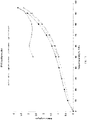
- the DVS pattern is shown in FIG. 22
- the comparison of X-ray powder diffraction patterns before and after DVS is shown in FIG. 23 .
- Table 9 Characteristic peaks of crystalline form I of hydrobromide of compound of formula II No.
- Peak 1 8.128 10.86905 68.5 Peak 2 11.918 7.41964 7.5 Peak 3 12.579 7.03116 19.0 Peak 4 16.414 5.39626 54.1 Peak 5 17.075 5.18879 15.6 Peak 6 17.780 4.98456 39.3 Peak 7 18.750 4.72892 7.8 Peak 8 19.675 4.50851 9.9 Peak 9 20.733 4.28082 27.1 Peak 10 21.262 4.17552 100.0 Peak 11 23.113 3.84512 36.8 Peak 12 23.906 3.71929 15.0 Peak 13 24.391 3.64645 67.5 Peak 14 26.550 3.35455 14.5 Peak 15 28.445 3.13522 29.4 Peak 16 28.930 3.08378 26.0 Peak 17 29.547 3.02077 55.8 Peak 18 30.958 2.88630 27.7 Peak 19 32.236 2.77471 19.3 Peak 20 33.382 2.68204 1.4 Peak 21 38.670 2.32653 2.4 Peak 22 39.640 2.27183 3.3 Peak 23
- DVS characterization the vapor sorption of the sample at 25 °C increased along with the increase of humidity in a range of 20.0% RH to 80.0% RH, with a weight change of 0.549%, less than 2% but not less than 0.2%, indicating that the sample is slightly hygroscopic.
- a normal storage condition i.e., 60% humidity/25 °C
- the vapor sorption was about 0.463%
- the vapor sorption was about 0.574%
- an extreme condition i.e., 90% humidity
- the desorption process and the sorption process of the sample basically overlapped in the process of 0-95% humidity change; the comparison of X-ray powder diffraction patterns before and after DVS showed that crystalline form did not change during DVS.
- the DVS pattern is shown in FIG. 27
- the comparison of X-ray powder diffraction patterns before and after DVS is shown in FIG. 28 .
- Table 10 Characteristic peaks of crystalline form ⁇ of hydrochloride of compound of formula II No.
- Peak 1 7.931 11.13829 53.4 Peak 2 10.115 8.73832 19.9 Peak 3 12.166 7.26910 15.4 Peak 4 13.920 6.35673 24.2 Peak 5 15.224 5.81523 33.9 Peak 6 16.041 5.52078 13.9 Peak 7 16.315 5.42854 12.6 Peak 8 16.748 5.28930 12.2 Peak 9 17.425 5.08526 21.3 Peak 10 18.309 4.84177 64.7 Peak 11 19.624 4.52003 15.9 Peak 12 20.235 4.38496 19.6 Peak 13 21.491 4.13138 36.6 Peak 14 22.340 3.97642 67.3 Peak 15 23.359 3.80507 65.0 Peak 16 23.905 3.71950 48.0 Peak 17 24.570 3.62032 100.0 Peak 18 25.320 3.51464 20.1 Peak 19 25.811 3.44896 13.9 Peak 20 26.096 3.41194 10.5 Peak 21 27.624 3.22652 24.8 Peak 22 28.213 3.16057 24.6 Peak 23 29.190 3.05697 5.1
- DVS characterization the vapor sorption of the sample at 25 °C increased along with the increase of humidity in a range of 20.0% RH to 80.0% RH, with a weight change of 1.235%, less than 2% but not less than 0.2%, indicating that the sample is slightly hygroscopic.
- a normal storage condition i.e., 60% humidity/25 °C
- the vapor sorption was about 1.755%
- an accelerated test condition i.e., 70% humidity
- the vapor sorption was about 1.954%
- an extreme condition i.e., 90% humidity
- the desorption process and the sorption process of the sample basically overlapped in individual processes of 0-95% humidity change, but the desorption process and the sorption process of the first and second cycles could not overlap; the comparison of X-ray powder diffraction patterns before and after DVS showed that crystalline form changed during DVS.
- the DVS pattern is shown in FIG. 32
- the comparison of X-ray powder diffraction patterns before and after DVS is shown in FIG. 33 .
- Table 11 Characteristic peaks of crystalline form ⁇ of hydrochloride of compound of formula II No.
- Peak 1 5.386 16.39621 39.0 Peak 2 8.191 10.78576 77.6 Peak 3 10.818 8.17156 29.1 Peak 4 12.688 6.97098 42.8 Peak 5 13.980 6.32982 20.9 Peak 6 14.915 5.93499 26.6 Peak 7 16.607 5.33388 19.7 Peak 8 18.076 4.90345 12.8 Peak 9 19.056 4.65352 12.9 Peak 10 20.036 4.42814 20.8 Peak 11 21.372 4.15427 100.0 Peak 12 22.040 4.02986 35.2 Peak 13 23.465 3.78826 25.0 Peak 14 24.355 3.65171 28.5 Peak 15 25.869 3.44132 36.7 Peak 16 26.582 3.35068 21.8 Peak 17 27.383 3.25440 12.0 Peak 18 29.253 3.05045 29.5 Peak 19 29.832 2.99256 39.9 Peak 20 30.946 2.88740 22.9 Peak 21 31.480 2.83959 41.4 Peak 22 32.504 2.75242 7.6 Peak
- Peak 1 8.114 10.88737 89.0 Peak 2 11.997 7.37097 42.5 Peak 3 12.640 6.99748 77.7 Peak 4 13.772 6.42501 45.7 Peak 5 16.478 5.37549 25.8 Peak 6 17.897 4.95221 45.6 Peak 7 19.671 4.50933 9.7 Peak 8 20.337 4.36327 52.8 Peak 9 21.422 4.14464 79.1 Peak 10 22.156 4.00903 62.3 Peak 11 23.228 3.82632 79.1 Peak 12 24.472 3.63450 100.0 Peak 13 25.882 3.43968 26.9 Peak 14 27.567 3.23307 27.4 Peak 15 28.277 3.15351 14.1 Peak 16 29.830 2.99281 38.1 Peak 17 31.160 2.86797 15.9 Peak 18 32.269 2.77189 17.0 Peak 19 33.334 2.68576 13.6
- Peak 1 11.651 7.58948 96.9 Peak 2 12.495 7.07863 38.2 Peak 3 14.323 6.17872 29.8 Peak 4 15.121 5.85472 28.9 Peak 5 15.636 5.66274 100.0 Peak 6 15.965 5.54704 66.5 Peak 7 18.075 4.90394 58.9 Peak 8 19.247 4.60782 20.4 Peak 9 19.903 4.45730 25.1 Peak 10 20.935 4.23993 38.5 Peak 11 22.107 4.01768 29.1 Peak 12 22.998 3.86402 47.4 Peak 13 23.842 3.72910 52.3 Peak 14 24.733 3.59676 59.9 Peak 15 25.530 3.48623 35.2 Peak 16 26.843 3.31862 11.7 Peak 17 28.719 3.10600 12.9 Peak 18 29.750 3.00061 6.1 Peak 19 30.829 2.89805 18.2 Peak 20 32.142 2.78260 14.6 Peak 21 35.143 2.55155 3.6 Peak 22 39.973
- Example 28 Influencing factor study of crystalline form ⁇ of hydrochloride and crystalline form I of hydrobromide of compound of formula II
- the influencing factor study showed that: the crystalline form ⁇ of the hydrochloride and the crystalline form I of the hydrobromide of the compound of formula II have good physical and chemical stabilities in conditions of illumination, high temperatures of 40 °C and 60 °C and high humidities of 75% and 92.5%.
Landscapes
- Chemical & Material Sciences (AREA)
- Organic Chemistry (AREA)
- Health & Medical Sciences (AREA)
- Medicinal Chemistry (AREA)
- Pharmacology & Pharmacy (AREA)
- Epidemiology (AREA)
- Life Sciences & Earth Sciences (AREA)
- Animal Behavior & Ethology (AREA)
- General Health & Medical Sciences (AREA)
- Public Health (AREA)
- Veterinary Medicine (AREA)
- Pharmaceuticals Containing Other Organic And Inorganic Compounds (AREA)
- Organic Low-Molecular-Weight Compounds And Preparation Thereof (AREA)
Abstract
Description
- The present application claims priority to Chinese Patent Application No.
CN201911049930.5 filed on Oct. 31, 2019 - The present disclosure relates to the field of pharmaceutical chemistry, and in particular, to an acid addition salt of a compound of formula II as an RORγ regulator.
- Nuclear receptors are ligand-regulated transcription factors that regulate development, immunity, and cellular metabolism, and are one of the major therapeutic target classes for human diseases. Retinoid-related orphan receptor gamma (RORγ) is a member of the nuclear receptor NR1 subfamily and has a typical nuclear receptor domain structure consisting of a DNA-binding domain, a ligand-binding domain, a hinge domain and an
activation function 2 domain (Benoit G, et al., Pharmacological Reviews, 58(4):798-836, 2006; Zhang, Y, et al., Acta Pharmacogica Sinica, 36:71-87, 2015). In contrast to most other nuclear receptors that function as dimers, RORγ works as a monomer. It binds to specific DNA sequences usually consisting of TAAA/TNTAGGTCA, which are called ROR response elements (ROREs). - There are two RORγ subtypes, RORγ1 and RORy2 (also known as RORyt) that arise from the same RORC gene, and possibly differ in selection of promoters (Villey I et al, Eur. J. Immunol., 29(12):4072-80, 1999). Since the two RORγ subtypes (RORγ1 and RORyt) are derived from the same mRNA, they have identical ligand-binding domains, and are distinguished by N terminus only (Jetten, A. M., 2009; Ivanov, I. I. et al., 2006). Small molecule inhibitors generally bind to the ligand-binding domain to inhibit the function of the receptor. As such, they have no selectivity for the two RORγ subtypes, and are all referred to as RORγ small molecule inhibitors (or modulators) without subtyping.
- The two RORγ subtypes have very different tissue distributions. RORyt is mainly expressed in thymus and several immune cells, while RORγ1 is expressed in many tissues, such as thymus, liver, muscle, testis, pancreas, prostate and heart. (Jetten, A. M., 2009; Zhang, Y. et al., 2015). It has been reported that one of the functions of RORγ1 is to regulate the human biochronometer, and particularly, to regulate the circadian rhythm (Jetten, A. M., 2009). T helper 17 (Th17) cells are the major source of autoimmune disease (Ivanov, I. I. et al., 2006). Both RORγ subtypes are expressed in Th17 cells, regulating T cell differentiation and inducing gene transcription in Th17 cells (Ruan, Q., et al., 2011). Cytokines IL-6 and TGF-β induce differentiation of undifferentiated CD4 T helper cells into Th17 cells. RORyt highly expressed in Th17 cells induces transcription of IL-23 receptor gene in undifferentiated CD4 T helper cells, IL23 receptors in turn promote and stabilize production of Th17 cells, forming part of a positive feedback loop (Ivanov, I. I. et al., 2006; Jetten, A. M., 2009). Meanwhile, RORyt can induce the gene transcription of proinflammatory cytokines such as IL-17A, IL-17F, IL-21 and IL-22, and enhance the inflammation process. Like RORyt, RORγ1 is also expressed in Th17 cells, and can also regulate differentiation and induce gene transcription in Th17 cells (Ruan, Q., et al., 2011). Pharmacological antagonism against RORγ has therapeutic potential for autoimmune diseases, making it an attractive target for small molecule inhibitors.
- RORγ has been identified as a key mediator in the pathogenesis of several diseases, such as rheumatoid arthritis, psoriasis vulgaris, multiple sclerosis, inflammatory bowel disease, Crohn's disease, sicca syndrome and asthma. (Louten et al., J. Allergy Clin. Immunol., 123:1004-1011, 2009; Annuziato, F., et al., Nat. Rev. Rheumatol., 5(6):325-331, 2009; Lizuka, M., et al., J. Immunol., 194:56-67, 2014). Some other diseases, such as chronic xerophthalmia, Kawasaki's disease, mucosal leishmaniasis and Hashimoto's thyroiditis, are characterized by increased Th17 proportion and/or increased levels of Th17 marker cytokines, such as IL-17, IL-22 and IL-23. (Chen, Y. et al., Mucosal. Immunol., 7(1):38-45, 2014; Jia, S., et al., Clin. Exp. Immunol., 162:131-137, 2010; Boaventura, VS et al., Eur. J. Immunol., 40:2830-2836, 2010; Figueroa-Vega, N. et al., J. Clin. Endocrinol. Metab., 95:953-62, 2010). In each of the above examples, the inhibitory effect can be enhanced by inhibiting RORα. RORγt inhibitors are currently being developed for the treatment of autoimmune diseases such as psoriasis vulgaris and rheumatoid arthritis. See Jun R. Huh and Dan R. Littman, Eur. J. Immunol., 42(9):2232-2237 (2012),
WO2012/027965 ,WO2013/029338 andUS2015/291607 . - Patent Application No.
PCT/US19/30526 provides an RORγ regulator having a structure of formula II:
- The present disclosure provides an acid addition salt of a compound of formula II or a pharmaceutically acceptable solvate of the acid addition salt, wherein the acid addition salt is an organic acid addition salt or an inorganic acid addition salt.
- The present disclosure further relates to a method for preparing an acid addition salt of a compound of formula II or a pharmaceutically acceptable solvate of the acid addition salt, wherein the acid addition salt is an organic acid addition salt or an inorganic acid addition salt, and the method comprises mixing a certain amount of the compound of formula II with a proper amount of a solvent and the organic acid or the inorganic acid, and reacting for a period of time to obtain the salt of the compound of formula II with the corresponding acid, wherein the solvent is selected from the group consisting of one or more of a hydrocarbon solvent, an ether solvent, an alcohol solvent, an ester solvent, a ketone solvent, a nitrile solvent, a halogenated hydrocarbon solvent, a nitrogenous solvent, water and dimethyl sulfoxide.
- In some embodiments, the organic acid addition salt is at least one selected from the group consisting of formate, acetate, propionate, butyrate, benzoate, malonate, succinate, pyruvate, methanesulfonate, ethanesulfonate, propanesulfonate, citrate, 4-nitrobenzoate, benzenesulfonate, p-toluenesulfonate, 1,2-ethanedisulfonate, β-naphthalenesulfonate, malate, propiolate, 2-butynoate, 2-hydroxy-ethanesulfonate, 3-butenoate, tartrate, fumarate, isethionate, maleate, lactate, lactobionate, pamoate, salicylate, galactarate, glucoheptonate, mandelate, 1,2-ethanedisulfonate, oxalate, trifluoroacetate, trifluoromethanesulfonate, adipate, suberate, sebacate, butyne-1,4-dioate, hexyne-1,6-dioate, glycolate, alginate, ascorbate, aspartate, glutamate, 2-phenoxybenzoate, 2-(4-hydroxybenzoyl)benzoate, acetoacetate, 2-hydroxyethanesulfonate, borate, chlorobenzoate, camphorate, itaconate, camphorsulfonate, methylbenzoate, dinitrobenzoate, sulfamate, galacturonate, cyclopentylpropionate, dodecylsulfate, acrylate, cyclopentanepropionate, glycerophosphate, methoxybenzoate, digluconate, gluconate, heptanoate, hexanoate, pivalate, glucuronate, laurate, phthalate, phenylacetate, laurylsulfate, 2-acetoxybenzoate, nicotinate, cinnamate, oleate, palmitate, pectate, p-phthalate, glutarate, hydroxymaleate, hydroxybenzoate, phenylacetate, 3-hydroxy-2-naphthoate, 3-phenylpropionate, isobutyrate, neopentanoate, picrate, stearate, 2,2-dichloroacetate, acylated amino acid salt, alginate, 4-acetamidobenzenesulfonate, caprate, cholate, caprylate, nonanoate, cyclamate, phthalate, cysteine hydrochloride salt, sorbate, glycine hydrochloride salt, 1,5-naphthalenedisulfonate, xylenesulfonate, cystine dihydrochloride salt, undecanoate, polyvinyl sulfonate salt, sulfosalicylate, phenylbutyrate, 4-hydroxybutyrate, polyvinyl sulfate salt, naphthalene-1-sulphonate and valerate.
- In some embodiments, the inorganic acid addition salt is at least one selected from the group consisting of hydrochloride, sulfate, bisulfate, nitrate, hydrobromide, hydroiodide, carbonate, bicarbonate, sulfite, bisulfite, pyrosulfate, monohydrogen phosphate, dihydrogen phosphate, perchlorate, persulfate, hemisulfate, disulfate, thiocyanate, phosphate, pyrophosphate and metaphosphate.
- In some embodiments, the organic acid addition salt may be at least one selected from the group consisting of benzoate, oxalate, methanesulfonate, maleate and acetate, and the inorganic acid addition salt may be selected from the group consisting of hydrochloride and hydrobromide. The present disclosure provides a crystalline form of benzoate, an amorphous form of benzoate, a crystalline form of oxalate, an amorphous form of oxalate, an amorphous form of methanesulfonate, a crystalline form B of maleate, a crystalline form C of maleate, a crystalline form D of maleate, a crystalline form I of hydrobromide, a crystalline form α of hydrochloride, a crystalline form β of hydrochloride, a crystalline form γ of hydrochloride and a crystalline form of acetate of a compound of formula II, and methods for preparing the same.
- The present disclosure provides an amorphous form of a compound of formula II, having an XRPD pattern with no distinct sharp diffraction peaks; preferably, the amorphous form has an XRPD pattern as shown in
FIG. 1 . - The present disclosure provides a benzoate of a compound of formula II.
- In some embodiments, the benzoate is an amorphous form having an XRPD pattern with no distinct sharp diffraction peaks; preferably, the amorphous form has an XRPD pattern as shown in
FIG. 2 . - In some embodiments, the benzoate is a crystalline form having an X-ray powder diffraction pattern with characteristic peaks at diffraction angles 2θ of 5.305 and 7.411.
- Furthermore, the crystalline form of the benzoate has an X-ray powder diffraction pattern with characteristic peaks at diffraction angles 2θ of 5.305, 7.411 and 22.031.
- Furthermore, the crystalline form of the benzoate has an X-ray powder diffraction pattern with characteristic peaks at diffraction angles 2θ of 5.305, 7.411, 19.140 and 22.0314.
- The present disclosure provides an oxalate of a compound of formula II.
- In some embodiments, the oxalate is an amorphous form having an XRPD pattern with no distinct sharp diffraction peaks; preferably, the amorphous form has an XRPD pattern as shown in
FIG. 5 . - In some embodiments, the oxalate is a crystalline form having an X-ray powder diffraction pattern with characteristic peaks at diffraction angles 2θ of 14.378, 18.463 and 21.670. Furthermore, the crystalline form of the oxalate has an X-ray powder diffraction pattern with characteristic peaks at diffraction angles 2θ of 14.378, 18.463, 21.670 and 23.075. Furthermore, the crystalline form of the oxalate has an X-ray powder diffraction pattern with characteristic peaks at diffraction angles 2θ of 14.378, 18.463, 21.670, 23.075 and 28.127. The present disclosure provides a methanesulfonate of a compound of formula II.
- In some embodiments, the methanesulfonate is an amorphous form having an XRPD pattern with no distinct sharp diffraction peaks; preferably, the amorphous form has an XRPD pattern as shown in
FIG. 7 . - The present disclosure provides a maleate of a compound of formula II.
- In some embodiments, the maleate is a crystalline form B having an X-ray powder diffraction pattern with characteristic peaks at diffraction angles 2θ of 7.624, 9.659, 13.815, 15.844 and 17.391.
- Furthermore, the crystalline form B of the maleate has an X-ray powder diffraction pattern with characteristic peaks at diffraction angles 2θ of 7.624, 9.659, 13.815, 15.844, 17.391 and 21.802. Furthermore, the crystalline form B of the maleate has an X-ray powder diffraction pattern with characteristic peaks at diffraction angles 2θ of 7.624, 9.659, 13.815, 15.844, 17.391, 18.619 and 21.802.
- Furthermore, the crystalline form B of the maleate has an X-ray powder diffraction pattern with characteristic peaks at diffraction angles 2θ of 7.624, 9.659, 13.815, 15.844, 17.391, 18.619, 21.802, 23.667 and 26.441.
- In some embodiments, the maleate is a crystalline form C having an X-ray powder diffraction pattern with characteristic peaks at diffraction angles 2θ of 7.325, 8.635, 9.809, 13.649, 16.133, 16.765 and 18.346.
- Furthermore, the crystalline form C of the maleate has an X-ray powder diffraction pattern with characteristic peaks at diffraction angles 2θ of 7.325, 8.635, 9.809, 13.649, 16.133, 16.765, 18.346, 21.689 and 23.586.
- Furthermore, the crystalline form C of the maleate has an X-ray powder diffraction pattern with characteristic peaks at diffraction angles 2θ of 7.325, 8.635, 9.809, 11.661, 13.649, 16.133, 16.765, 18.346, 21.689, 23.586 and 25.303.
- In some embodiments, the maleate is a crystalline form D having an X-ray powder diffraction pattern with characteristic peaks at diffraction angles 2θ of 4.486, 7.288, 9.067, 10.001, 13.914, 18.229 and 18.940.
- Furthermore, the crystalline form D of the maleate has an X-ray powder diffraction pattern with characteristic peaks at diffraction angles 2θ of 4.486, 5.998, 7.288, 9.067, 10.001, 13.914, 15.026, 16.227, 18.229 and 18.940.
- Furthermore, the crystalline form D of the maleate has an X-ray powder diffraction pattern with characteristic peaks at diffraction angles 2θ of 4.486, 5.998, 7.288, 9.067, 10.001, 13.914, 15.026, 16.227, 18.229, 18.940, 23.076, 25.612 and 28.102.
- The present disclosure provides a hydrobromide of a compound of formula II.
- In some embodiments, the hydrobromide is a crystalline form I having an X-ray powder diffraction pattern with characteristic peaks at diffraction angles 2θ of 8.128, 12.579, 16.414, 17.075, 17.780 and 20.733.
- Furthermore, the crystalline form I of the hydrobromide has an X-ray powder diffraction pattern with characteristic peaks at diffraction angles 2θ of 8.128, 12.579, 16.414, 17.075, 17.780, 19.675, 20.733, 21.262, 23.113, 23.906, 24.391, 26.550, 28.445, 28.930 and 29.547. Furthermore, the crystalline form I of the hydrobromide has an X-ray powder diffraction pattern with characteristic peaks at diffraction angles 2θ of 8.128, 11.918, 12.579, 16.414, 17.075, 17.780, 18.750, 19.675, 20.733, 21.262, 23.113, 23.906, 24.391, 26.550, 28.445, 28.930, 29.547, 30.958, 32.236, 33.382, 38.670, 39.640, 40.830, 42.064, 43.342, 46.824, 48.190, 48.983 and 50.746.
- The present disclosure provides a hydrochloride of a compound of formula II.
- In some embodiments, the hydrochloride is a crystalline form α having an X-ray powder diffraction pattern with characteristic peaks at diffraction angles 2θ of 7.931, 10.115, 13.920, 15.224, 17.425 and 18.309.
- Furthermore, the crystalline form α of the hydrochloride has an X-ray powder diffraction pattern with characteristic peaks at diffraction angles 2θ of 7.931, 10.115, 12.166, 13.920, 15.224, 16.041, 16.315, 16.748, 17.425, 18.309, 22.340, 23.359 and 24.570.
- Furthermore, the crystalline form α of the hydrochloride has an X-ray powder diffraction pattern with characteristic peaks at diffraction angles 2θ of 7.931, 10.115, 12.166, 13.920, 15.224, 16.041, 16.315, 16.748, 17.425, 18.309, 19.624, 20.235, 21.491, 22.340, 23.359, 23.905 and 24.570. Furthermore, the crystalline form α of the hydrochloride has an X-ray powder diffraction pattern with characteristic peaks at diffraction angles 2θ of 7.931, 10.115, 12.166, 13.920, 15.224, 16.041, 16.315, 16.748, 17.425, 18.309, 19.624, 20.235, 21.491, 22.340, 23.359, 23.905, 24.570, 25.320, 25.811, 26.096, 27.624, 28.213, 29.190, 29.760, 31.266, 31.795, 32.324, 35.906 and 37.291.
- In some embodiments, the hydrochloride is a crystalline form β having an X-ray powder diffraction pattern with characteristic peaks at diffraction angles 2θ of 5.386, 8.191, 12.688, 16.607 and 20.036.
- Furthermore, the crystalline form β of the hydrochloride has an X-ray powder diffraction pattern with characteristic peaks at diffraction angles 2θ of 5.386, 8.191, 10.818, 12.688, 13.980, 14.915, 16.607, 20.036 and 21.372.
- Furthermore, the crystalline form β of the hydrochloride has an X-ray powder diffraction pattern with characteristic peaks at diffraction angles 2θ of 5.386, 8.191, 10.818, 12.688, 13.980, 14.915, 16.607, 18.076, 19.056, 20.036, 21.372, 22.040, 23.465, 24.355, 25.869, 26.582, 27.383, 29.253, 29.832, 30.946, 31.480, 32.504 and 33.439.
- In some embodiments, the hydrochloride is a crystalline form γ having an X-ray powder diffraction pattern with characteristic peaks at diffraction angles 2θ of 8.114, 11.997, 12.640, 13.772, 16.478, 17.897 and 20.337.
- Furthermore, the crystalline form γ of the hydrochloride has an X-ray powder diffraction pattern with characteristic peaks at diffraction angles 2θ of 8.114, 11.997, 12.640, 13.772, 16.478, 17.897, 20.337, 21.422, 23.228 and 24.472.
- Furthermore, the crystalline form γ of the hydrochloride has an X-ray powder diffraction pattern with characteristic peaks at diffraction angles 2θ of 8.114, 11.997, 12.640, 13.772, 16.478, 17.897, 19.671, 20.337, 21.422, 22.156, 23.228, 24.472, 25.882, 27.567, 28.277, 29.830, 31.160, 32.269 and 33.334.
- The present disclosure provides an acetate of a compound of formula II.
- In some embodiments, the acetate is a crystalline form having an X-ray powder diffraction pattern with characteristic peaks at diffraction angles 2θ of 11.651, 12.495, 15.636, 15.965, 18.075 and 20.935.
- Furthermore, the crystalline form of the acetate has an X-ray powder diffraction pattern with characteristic peaks at diffraction angles 2θ of 11.651, 12.495, 14.323, 15.121, 15.636, 15.965, 18.075, 19.247, 19.903 and 20.935.
- Furthermore, the crystalline form of the acetate has an X-ray powder diffraction pattern with characteristic peaks at diffraction angles 2θ of 11.651, 12.495, 14.323, 15.121, 15.636, 15.965, 18.075, 19.247, 19.903, 20.935, 22.107, 22.998, 23.842, 24.733, 25.530, 26.843, 28.719, 29.750, 30.829, 32.142, 35.143 and 39.973.
- The present disclosure further relates to a method for preparing benzoate, oxalate, methanesulfonate, maleate, hydrobromide, hydrochloride or acetate of a compound of formula II, comprising: mixing a certain amount of the compound of formula II with a proper amount of a solvent and benzoic acid, oxalic acid, methanesulfonic acid, maleic acid, hydrobromic acid, hydrochloric acid or acetic acid for reaction to obtain the salt of the compound of formula II with the corresponding acid, wherein the solvent is selected from the group consisting of one or more of a hydrocarbon solvent, an ether solvent, an alcohol solvent, an ester solvent, a ketone solvent, a nitrile solvent, a halogenated hydrocarbon solvent, a nitrogenous solvent, water and dimethyl sulfoxide,
- the hydrocarbon solvent includes, but is not limited to, n-butane, n-pentane, n-hexane or n-heptane;
- the ether solvent includes, but is not limited to, tetrahydrofuran, diethyl ether, propylene glycol methyl ether, methyl tert-butyl ether, isopropyl ether or 1,4-dioxane;
- the alcohol solvent includes, but is not limited to, methanol, ethanol, isopropanol, n-propanol, isoamyl alcohol or trifluoroethanol;
- the ester solvent includes, but is not limited to, ethyl acetate, isopropyl acetate or butyl acetate; the ketone solvent includes, but is not limited to, acetone, acetophenone or 4-methyl-2-pentanone;
- the nitrile solvent includes, but is not limited to, acetonitrile or propionitrile;
- the halogenated hydrocarbon solvent includes, but is not limited to, chloromethane, dichloromethane, chloroform or carbon tetrachloride;
- the nitrogenous solvent includes, but is not limited to, nitromethane, N,N-dimethylformamide or N,N-dimethylacetamide.
- In some embodiments, a method for preparing an amorphous form of a compound of formula II, comprises: taking a certain amount of the compound of formula II, adding a proper amount of a solvent, precipitating a solid, filtering and drying to obtain the amorphous form of the compound of formula II. In certain embodiments, the solvent may be selected from the group consisting of isopropyl ether, toluene and isopropyl acetate/n-hexane (v:v = 1:3).
- In some embodiments, a method for preparing an amorphous form of a compound of formula II, comprises: purifying a certain amount of the compound of formula II by high performance liquid chromatography with an elution system of ammonium bicarbonate/water/acetonitrile to obtain the amorphous form of the compound of formula II.
- In some embodiments, a method for preparing an amorphous form of a compound of formula II, comprises: taking a certain amount of the compound of formula II, adding a proper amount of a solvent, precipitating a solid, filtering and drying to obtain the amorphous form of the compound of formula II, wherein the solvent is selected from the group consisting of isopropyl ether, toluene and a mixed solvent of isopropyl acetate and n-hexane (v:v = 1:3), and the method for precipitating the amorphous form is selected from the group consisting of precipitation at room temperature, precipitation by cooling and precipitation by volatilizing the solvent.
- In some embodiments, a method for preparing an amorphous form of a compound of formula II, comprises: taking a certain amount of the compound of formula II, adding a proper amount of isopropyl ether, toluene or a mixed solvent of isopropyl acetate and n-hexane (v:v = 1:3), heating until complete or incomplete dissolution, cooling to room temperature, stirring to precipitate a solid, filtering and drying to obtain the amorphous form of the compound of formula II.
- The present disclosure further relates to a method for preparing an amorphous or crystalline form of a benzoate of a compound of formula II, comprising: taking a certain amount of the compound of formula II, adding a proper amount of a solvent and benzoic acid, precipitating a solid, filtering and drying to obtain the amorphous or crystalline form of the benzoate of the compound of formula II. In certain embodiments, the solvent is n-hexane or methyl tert-butyl ether.
- The present disclosure further relates to a method for preparing an amorphous or crystalline form of an oxalate of a compound of formula II, comprising: taking a certain amount of the compound of formula II, adding a proper amount of a solvent and oxalic acid, precipitating a solid, filtering and drying to obtain the amorphous or crystalline form of the oxalate of the compound of formula II. In certain embodiments, the solvent is n-hexane or methyl tert-butyl ether.
- The present disclosure further relates to a method for preparing an amorphous form of a methanesulfonate of a compound of formula II, comprising: taking a certain amount of the compound of formula II, adding a proper amount of a solvent and methanesulfonic acid, precipitating a solid, filtering and drying to obtain the amorphous form of the methanesulfonate of the compound of formula II. In certain embodiments, the solvent is methyl tert-butyl ether. The present disclosure further relates to a method for preparing crystalline forms B, C and D of a maleate of a compound of formula II, comprising: taking a certain amount of the compound of formula II, adding a proper amount of a solvent and maleic acid, precipitating a solid, filtering and drying to obtain the crystalline forms B, C and D of the maleate of the compound of formula II. In certain embodiments, the solvent is methyl tert-butyl ether.
- The present disclosure further relates to a method for preparing a crystalline form I of a hydrobromide of a compound of formula II, comprising: precipitating a crystal by reacting the compound of formula II with hydrobromic acid in a proper amount of a solvent selected from the group consisting of one or more of a hydrocarbon solvent, an ether solvent, an alcohol solvent, an ester solvent, a ketone solvent, a nitrile solvent, a halogenated hydrocarbon solvent, a nitrogenous solvent, water and dimethyl sulfoxide, wherein
- the hydrocarbon solvent includes, but is not limited to, n-butane, n-pentane, n-hexane or n-heptane;
- the ether solvent includes, but is not limited to, tetrahydrofuran, diethyl ether, propylene glycol methyl ether, methyl tert-butyl ether, isopropyl ether or 1,4-dioxane;
- the alcohol solvent includes, but is not limited to, methanol, ethanol, isopropanol, n-propanol, isoamyl alcohol or trifluoroethanol;
- the ester solvent includes, but is not limited to, ethyl acetate, isopropyl acetate or butyl acetate; the ketone solvent includes, but is not limited to, acetone, acetophenone or 4-methyl-2-pentanone;
- the nitrile solvent includes, but is not limited to, acetonitrile or propionitrile;
- the halogenated hydrocarbon solvent includes, but is not limited to, chloromethane, dichloromethane, chloroform or carbon tetrachloride;
- the nitrogenous solvent includes, but is not limited to, nitromethane, N,N-dimethylformamide or N,N-dimethylacetamide.
- In some embodiments, for the method for preparing the crystalline form I of the hydrobromide of the compound of formula II, the solvent is methyl tert-butyl ether and ethanol.
- The present disclosure further relates to a method for preparing a crystalline form I of a hydrobromide of a compound of formula II, comprising: mixing a certain amount of the compound of formula II with a proper amount of a solvent and hydrobromic acid, precipitating a solid, filtering and drying to obtain the crystalline form I of the hydrobromide of the compound of formula II. In certain embodiments, the solvent is methyl tert-butyl ether and ethanol.
- The present disclosure further relates to a method for preparing crystalline forms α, β and γ of a hydrochloride of a compound of formula II, comprising: taking a certain amount of the compound of formula II, adding a proper amount of a solvent and hydrochloric acid, precipitating a solid, filtering and drying to obtain the crystalline forms α, β and γ of the hydrochloride of the compound of formula II. In certain embodiments, the solvent is methyl tert-butyl ether.
- The present disclosure further relates to a method for preparing a crystalline form γ of a hydrochloride of a compound of formula II, comprising: loading a certain amount of the crystalline form β of the compound of formula II to a DVS system and running a process with parameters of dm/dt = 0.002, 50-95-0-95-50% RH, Max 360 min, 25 °C to obtain the crystalline form γ of the hydrochloride of the compound of formula II.
- The present disclosure further relates to a method for preparing a crystalline form of an acetate of a compound of formula II, comprising: taking a certain amount of the compound of formula II, adding a proper amount of a solvent and acetic acid, precipitating a solid, filtering and drying to obtain the crystalline form of the acetate of the compound of formula II. In certain embodiments, the solvent is water and ethanol.
- In certain embodiments, for the preparation process of the amorphous form of the compound of formula II, the benzoate, oxalate, methanesulfonate, maleate, hydrobromide, hydrochloride and acetate of the compound of formula II, and the crystalline form of the benzoate, the amorphous form of the benzoate, the crystalline form of the oxalate, the amorphous form of the oxalate, the amorphous form of the methanesulfonate, the crystalline forms B, C and D of the maleate, the crystalline form I of the hydrobromide, the crystalline forms α, β and γ of the hydrochloride and the crystalline form of the acetate, the solvent is selected from the group consisting of one or more of a hydrocarbon solvent, an ether solvent, an alcohol solvent, an ester solvent, a ketone solvent, a nitrile solvent, a halogenated hydrocarbon solvent, a nitrogenous solvent, water and dimethyl sulfoxide. The hydrocarbon solvent includes, but is not limited to, n-butane, n-pentane, n-hexane or n-heptane; the ether solvent includes, but is not limited to, diethyl ether, propylene glycol methyl ether, methyl tert-butyl ether, isopropyl ether or 1,4-dioxane; the alcohol solvent includes, but is not limited to, methanol, ethanol, isopropanol, n-propanol, isoamyl alcohol or trifluoroethanol; the ester solvent includes, but is not limited to, ethyl acetate, isopropyl acetate or butyl acetate; the ketone solvent includes, but is not limited to, acetone, acetophenone or 4-methyl-2-pentanone; the nitrile solvent includes, but is not limited to, acetonitrile or propionitrile; the halogenated hydrocarbon solvent includes, but is not limited to, chloromethane, dichloromethane, 1,2-dichloroethane, chloroform or carbon tetrachloride; and the nitrogenous solvent includes, but is not limited to, nitromethane, N,N-dimethylformamide or N,N-dimethylacetamide.
- The method for precipitating a solid form of the amorphous form of the compound of formula II or the acid addition salt of the compound of formula II or the pharmaceutically acceptable solvate of the acid addition salt disclosed herein is selected from the group consisting of precipitation at room temperature, precipitation by cooling and precipitation by volatilizing the solvent.
- In certain embodiments, the solid form of the acid addition salt of the compound of formula II or the pharmaceutically acceptable solvate of the acid addition salt disclosed herein refers to the crystalline form of the benzoate, the amorphous form of the benzoate, the crystalline form of the oxalate, the amorphous form of the oxalate, the amorphous form of the methanesulfonate, the crystalline forms B, C and D of the maleate, the crystalline form I of the hydrobromide, the crystalline forms α, β and γ of the hydrochloride and the crystalline form of the acetate of the compound of formula II.
- The method for crystallizing the crystalline form of the compound disclosed herein is selected from the group consisting of crystallization at room temperature, crystallization by cooling, crystallization by volatilization or induction crystallization by adding seed crystal, and the crystalline form of the compound is selected from the group consisting of the crystalline form of the benzoate, the crystalline form of the oxalate, the crystalline forms B, C and D of the maleate, the crystalline form I of the hydrobromide, the crystalline forms α, β and γ of the hydrochloride and the crystalline form of the acetate of the compound of formula II.
- The present disclosure further relates to a method for preparing an amorphous or crystalline form of a benzoate of a compound of formula II, comprising: taking a certain amount of the compound of formula II, adding a proper amount of n-hexane or methyl tert-butyl ether and benzoic acid, stirring at 50 °C overnight, filtering and drying to obtain the amorphous or crystalline form of the benzoate of the compound of formula II.
- The present disclosure further relates to a method for preparing an amorphous or crystalline form of an oxalate of a compound of formula II, comprising: taking a certain amount of the compound of formula II, adding a proper amount of methyl tert-butyl ether or n-hexane and oxalic acid, stirring at 50 °C overnight, filtering and drying to obtain the amorphous or crystalline form of the oxalate of the compound of formula II.
- The present disclosure further relates to a method for preparing an amorphous form of a methanesulfonate of a compound of formula II, comprising: taking a certain amount of the compound of formula II, adding a proper amount of methyl tert-butyl ether and methanesulfonic acid, stirring at 50 °C overnight, filtering and drying to obtain the amorphous form of the methanesulfonate of the compound of formula II.
- The present disclosure further relates to a method for preparing a crystalline form B of a maleate of a compound of formula II, comprising: taking a certain amount of the compound of formula II, adding a proper amount of methyl tert-butyl ether and maleic acid, stirring at 50 °C at 600 rpm for 10 min to 10 h, filtering and drying to obtain the crystalline form B of the maleate of the compound of formula II.
- The present disclosure further relates to a method for preparing a crystalline form B of a maleate of a compound of formula II, comprising: taking a certain amount of the compound of formula II, adding a proper amount of methyl tert-butyl ether and maleic acid, stirring at 50 °C at 600 rpm for 10 min, 20 min, 30 min, 1 h or 2 h, filtering and drying to obtain the crystalline form B of the maleate of the compound of formula II.
- The present disclosure further relates to a method for preparing a crystalline form C of a maleate of a compound of formula II, comprising: taking a certain amount of the compound of formula II, adding a proper amount of methyl tert-butyl ether and maleic acid, stirring at 50 °C at 600 rpm for 12 h to 36 h, filtering and drying to obtain the crystalline form C of the maleate of the compound of formula II.
- The present disclosure further relates to a method for preparing a crystalline form C of a maleate of a compound of formula II, comprising: taking a certain amount of the compound of formula II, adding a proper amount of methyl tert-butyl ether and maleic acid, stirring at 50 °C at 600 rpm for 1 d, filtering and drying to obtain the crystalline form C of the maleate of the compound of formula II.
- The present disclosure further relates to a method for preparing a crystalline form D of a maleate of a compound of formula II, comprising: taking a certain amount of the compound of formula II, adding a proper amount of methyl tert-butyl ether and maleic acid, stirring at 50 °C at 600 rpm for 48 h to 72 h, filtering and drying to obtain the crystalline form D of the maleate of the compound of formula II.
- The present disclosure further relates to a method for preparing a crystalline form D of a maleate of a compound of formula II, comprising: taking a certain amount of the compound of formula II, adding a proper amount of methyl tert-butyl ether and maleic acid, stirring at 50 °C at 600 rpm for 3 d, filtering and drying to obtain the crystalline form D of the maleate of the compound of formula II.
- The present disclosure further relates to a method for preparing a crystalline form I of a hydrobromide of a compound of formula II, comprising: taking a certain amount of the compound of formula II, adding a proper amount of methyl tert-butyl ether and hydrobromic acid or a mixture of hydrobromic acid and ethanol, stirring at 25 °C at 600 rpm for 12 h to 72 h, filtering and drying to obtain the crystalline form I of the hydrobromide of the compound of formula II.
- The present disclosure further relates to a method for preparing a crystalline form I of a hydrobromide of a compound of formula II, comprising: taking a certain amount of the compound of formula II, adding a proper amount of methyl tert-butyl ether and hydrobromic acid, stirring at 25 °C at 600 rpm for 3 d, filtering and drying to obtain the crystalline form I of the hydrobromide of the compound of formula II.
- The present disclosure further relates to a method for preparing a crystalline form I of a hydrobromide of a compound of formula II, comprising: taking a certain amount of the compound of formula II, adding a proper amount of methyl tert-butyl ether and a mixture of hydrobromic acid and ethanol (in a volume ratio selected from the group consisting of 1:1, 1:50 and 1:99), stirring at 25 °C at 600 rpm overnight and for 3 d, filtering and drying to obtain the crystalline form I of the hydrobromide of the compound of formula II.
- The present disclosure further relates to a method for preparing a crystalline form α of a hydrochloride of a compound of formula II, comprising: taking a certain amount of the compound of formula II, adding a proper amount of methyl tert-butyl ether and concentrated hydrochloric acid, stirring at 50 °C for 12 h to 48 h, filtering and drying to obtain the crystalline form α of the hydrochloride of the compound of formula II.
- The present disclosure further relates to a method for preparing a crystalline form α of a hydrochloride of a compound of formula II, comprising: taking a certain amount of the compound of formula II, adding a proper amount of methyl tert-butyl ether and concentrated hydrochloric acid, stirring at 50 °C for 2 d, filtering and drying to obtain the crystalline form α of the hydrochloride of the compound of formula II.
- The present disclosure further relates to a method for preparing a crystalline form β of a hydrochloride of a compound of formula II, comprising: taking a certain amount of the compound of formula II, adding a proper amount of methyl tert-butyl ether and a solution of hydrochloric acid in ethanol, precipitating a solid, filtering and drying to obtain the crystalline form β of the hydrochloride of the compound of formula II.
- The present disclosure further relates to a method for preparing a crystalline form β of a hydrochloride of a compound of formula II, comprising: taking a certain amount of the compound of formula II, adding a proper amount of methyl tert-butyl ether and a solution of hydrochloric acid in ethanol (concentrated hydrochloric acid:ethanol = 1:99, well mixed), stirring at 25 °C for 1 h and at 50 °C for 2 d, filtering and drying to obtain the crystalline form β of the hydrochloride of the compound of formula II.
- The present disclosure further relates to a method for preparing a crystalline form of an acetate of a compound of formula II, comprising: taking a certain amount of the compound of formula II, adding a proper amount of water and a solution of acetic acid in ethanol, precipitating a solid, filtering and drying to obtain the crystalline form of the acetate of the compound of formula II. The present disclosure further relates to a method for preparing a crystalline form of an acetate of a compound of formula II, comprising: taking a certain amount of the compound of formula II, adding a proper amount of water and a solution of acetic acid in ethanol (precisely transferring 0.1 mL of acetic acid, adding 9.9 mL of ethanol, mixing well), stirring at 50 °C overnight, filtering and drying to obtain the crystalline form of the acetate of the compound of formula II. The present disclosure further relates to a pharmaceutical composition comprising an acid addition salt of a compound of formula II or a pharmaceutically acceptable solvate of the acid addition salt or an amorphous form of the compound of formula II, and one or more pharmaceutically acceptable carriers, diluents or excipients.
- The present disclosure further relates to a pharmaceutical composition comprising a crystalline form I of a hydrobromide of a compound of formula II, and one or more pharmaceutically acceptable carriers, diluents or excipients.
- The present disclosure further relates to a pharmaceutical composition prepared from an amorphous form of a compound of formula II, an acid addition salt of the compound of formula II or a pharmaceutically acceptable solvate of the acid addition salt, and one or more pharmaceutically acceptable carriers, diluents or excipients.
- The present disclosure further relates to a pharmaceutical composition prepared from a crystalline form I of a hydrobromide of a compound of formula II and one or more pharmaceutically acceptable carriers, diluents or excipients.
- The present disclosure further relates to a pharmaceutical composition comprising an amorphous form of a compound of formula II or an acid addition salt of the compound of formula II or a pharmaceutically acceptable solvate of the acid addition salt, and optionally one or more pharmaceutically acceptable carriers and/or diluents. The pharmaceutical composition can be formulated into any pharmaceutically acceptable dosage form, for example, into tablet, capsule, pill, granule, solution, suspension, syrup, injection (the formulation is prepared from the amorphous form of the compound of formula II or the acid addition salt of the compound of formula II or the pharmaceutically acceptable solvate of the acid addition salt disclosed herein, or the injection itself comprises the amorphous form of the compound of formula II or the acid addition salt of the compound of formula II or the pharmaceutically acceptable solvate of the acid addition salt disclosed herein, including a solution for injection, a sterile powder for injection and a concentrated solution for injection), suppository, inhalant or spray.
- The present disclosure further relates to a method for preparing a pharmaceutical composition, comprising: mixing the amorphous form of the compound of formula II or the acid addition salt of the compound of formula II or the pharmaceutically acceptable solvate of the acid addition salt disclosed herein with at least one pharmaceutically acceptable carrier, diluent or excipient. In addition, the pharmaceutical composition disclosed herein can be administered by any suitable route of administration, such as oral, parenteral, rectal, pulmonary or local administration, to a patient or subject in need. For oral administration, the pharmaceutical composition can be formulated into an oral formulation, for example, a solid oral formulation such as tablet, capsule, pill and granule, or a liquid oral formulation such as oral solution, oral suspension and syrup. When formulated into an oral formulation, the pharmaceutical formulation may further comprise a suitable filler, binder, disintegrant, lubricant and the like. For parenteral administration, the pharmaceutical composition can be formulated into an injection, including a solution for injection, a sterile powder for injection and a concentrated solution for injection. When formulated into an injection, the pharmaceutical composition may be manufactured by conventional methods in the prior art. When formulated into an injection, the pharmaceutical formulation may be free of additives, or contain proper additives according to the nature of the medicament. For rectal administration, the pharmaceutical formulation can be formulated into a suppository or the like. For pulmonary administration, the pharmaceutical formulation can be formulated into an inhalant or spray. In certain embodiments, the amorphous form of the compound of formula II or the acid addition salt of the compound of formula II or the pharmaceutically acceptable solvate of the acid addition salt disclosed herein is present in the pharmaceutical composition or medicament in a therapeutically and/or prophylactically effective amount. In certain embodiments, the amorphous form of the compound of formula II or the acid addition salt of the compound of formula II or the pharmaceutically acceptable solvate of the acid addition salt disclosed herein is present in the pharmaceutical composition or medicament in a form of unit dose.
- The present disclosure further relates to use of an amorphous form of a compound of formula II or an acid addition salt of the compound of formula II or a pharmaceutically acceptable solvate of the acid addition salt, or a pharmaceutical composition comprising or prepared from the same, in preparing a medicament for treating a disease or condition mediated by RORγ. The disease or condition mediated by RORγ includes, but is not limited to, inflammatory and autoimmune diseases and cancers, wherein the inflammatory and autoimmune diseases include, but are not limited to, arthritis, rheumatoid arthritis, juvenile rheumatoid arthritis, psoriasis vulgaris, psoriatic arthritis, osteoarthritis, regional suppurative, ulcerative colitis, ankylosing spondylitis, autoimmune diabetes, type I diabetes, autoimmune ocular disease, autoimmune thyroid disease, type I immune hypersecretion syndrome, type II autoimmune polycyrine syndrome, multiple sclerosis, inflammatory bowel disease, inflammatory bowel syndrome, juvenile idiopathic arthritis, Sjögren syndrome, Crohn's disease, asthma, Kawasaki's disease, Hashimoto's thyroiditis, infectious disease, ankylosing spondylitis, chronic obstructive pulmonary disease (COPD), pulmonary disease, glomerulonephritis, myocarditis, thyroiditis, dry eye, uveitis, Behcet's disease, asthma, atopic dermatitis, contact dermatitis, allograft rejection, polymyositis, GVHD, acne, ulcerative colitis, systemic lupus erythematosus, scleroderma, bronchitis, dermatomyositis and allergic rhinitis; the cancers include, but are not limited to, non-Hodgkin's lymphoma, diffuse large B-cell lymphoma, follicular lymphoma, synovial sarcoma, breast cancer, cervical cancer, colon cancer, lung cancer, stomach cancer, rectal cancer, pancreatic cancer, brain cancer, skin cancer, mouth cancer, prostate cancer, bone cancer, kidney cancer, ovarian cancer, bladder cancer, liver cancer, fallopian tube tumor, ovarian tumor, peritoneal tumor, melanoma, solid tumor, glioma, glioblastoma, hepatocellular carcinoma, papillary renal tumor, head and neck tumor, leukemia, lymphoma, myeloma and non-small cell lung cancer.
- In the specification and claims of the present application, unless otherwise specified, the scientific and technological terms used herein have meanings generally understood by those skilled in the art. However, definitions and explanations for some of the related terms are provided below to better understand the present disclosure. In addition, if the definitions and explanations of the terms provided in the present application are not consistent with the meanings generally understood by those skilled in the art, the definitions and explanations of the terms provided in the present application shall prevail.
- The "ether solvent" described herein includes, but is not limited to: tetrahydrofuran, diethyl ether, propylene glycol methyl ether, methyl tert-butyl ether, isopropyl ether or 1,4-dioxane.
- Specific examples of "alcohol solvent" described herein include, but are not limited to: methanol, ethanol, isopropanol, n-propanol, isoamyl alcohol or trifluoroethanol.
- The "ester solvent" described herein includes, but is not limited to: ethyl acetate, isopropyl acetate or butyl acetate.
- Specific examples of "ketone solvent" described herein include, but are not limited to: acetone, acetophenone or 4-methyl-2-pentanone.
- Specific examples of "nitrile solvent" described herein include, but are not limited to: acetonitrile or propionitrile.
- Specific examples of "halogenated hydrocarbon solvent" described herein include, but are not limited to: chloromethane, dichloromethane, chloroform or carbon tetrachloride.
- Specific examples of "hydrocarbon solvent" described herein include, but are not limited to: n-butane, n-pentane, n-hexane or n-heptane.
- The "X-ray powder diffraction pattern or XRPD" described herein is obtained by Cu-Kα ray diffraction.
- The "differential scanning calorimetry or DSC" described herein refers to measurement of the temperature difference and heat flow difference between a sample and a reference substance during a process of increasing or holding the temperature of the sample to characterize all the physical changes and chemical changes related to the thermal effect, and to obtain the phase change information of the sample.
- The "2θ or angle 2θ" described herein refers to diffraction angle. θ is Bragg angle in unit ° or degree. The error range of 2θ may be ±0.3, ±0.2 or ±0.1.
- The amorphous form of the compound of formula II, the benzoate, oxalate, methanesulfonate, maleate, hydrobromide, hydrochloride and acetate of the compound of formula II, and the crystalline form of the benzoate, the amorphous form of the benzoate, the crystalline form of the oxalate, the amorphous form of the oxalate, the amorphous form of the methanesulfonate, the crystalline forms B, C and D of the maleate, the crystalline form I of the hydrobromide, the crystalline forms α, β and γ of the hydrochloride and the crystalline form of the acetate of the compound of formula II provided herein provide alternative solid forms of the compound of formula II that can be used as RORγ regulators in drug development processes.
-
-
FIG. 1 is an XRPD pattern of an amorphous form of a compound of formula II. -
FIG. 2 is an XRPD pattern of an amorphous form of a benzoate of a compound of formula II. -
FIG. 3 is an XRPD pattern of a crystalline form of a benzoate of a compound of formula II. -
FIG. 4 is a DSC pattern of a crystalline form of a benzoate of a compound of formula II. -
FIG. 5 is an XRPD pattern of an amorphous form of an oxalate of a compound of formula II. -
FIG. 6 is an XRPD pattern of a crystalline form of an oxalate of a compound of formula II. -
FIG. 7 is an XRPD pattern of an amorphous form of a methanesulfonate of a compound of formula II. -
FIG. 8 is an XRPD pattern of a crystalline form B of a maleate of a compound of formula II. -
FIG. 9 is a DSC pattern of a crystalline form B of a maleate of a compound of formula II. -
FIG. 10 is a TGA pattern of a crystalline form B of a maleate of a compound of formula II. -
FIG. 11 is a DVS vapor sorption plot of a crystalline form B of a maleate of a compound of formula II. -
FIG. 12 is a comparison of XRPD patterns before and after DVS analysis of a crystalline form B of a maleate of a compound of formula II. -
FIG. 13 is an XRPD pattern of a crystalline form C of a maleate of a compound of formula II. -
FIG. 14 is a DSC pattern of a crystalline form C of a maleate of a compound of formula II. -
FIG. 15 is a TGA pattern of a crystalline form C of a maleate of the compound of formula II. -
FIG. 16 is an XRPD pattern of a crystalline form D of a maleate of a compound of formula II. -
FIG. 17 is a DSC pattern of a crystalline form D of a maleate of a compound of formula II. -
FIG. 18 is a TGA pattern of a crystalline form D of a maleate of a compound of formula II. -
FIG. 19 is an XRPD pattern of a crystalline form I of a hydrobromide of a compound of formula II. -
FIG. 20 is a DSC pattern of a crystalline form I of a hydrobromide of a compound of formula II. -
FIG. 21 is a TGA pattern of a crystalline form I of a hydrobromide of a compound of formula II. -
FIG. 22 is a DVS vapor sorption plot of a crystalline form I of a hydrobromide of a compound of formula II. -
FIG. 23 is a comparison of XRPD patterns before and after DVS analysis of a crystalline form I of a hydrobromide of a compound of formula II. -
FIG. 24 is an XRPD pattern of a crystalline form α of a hydrochloride of a compound of formula II. -
FIG. 25 is a DSC pattern of a crystalline form α of a hydrochloride of a compound of formula II. -
FIG. 26 is a TGA pattern of a crystalline form α of a hydrochloride of a compound of formula II. -
FIG. 27 is a DVS vapor sorption plot of a crystalline form α of a hydrochloride of a compound of formula II. -
FIG. 28 is a comparison of XRPD patterns before and after DVS analysis of a crystalline form α of a hydrochloride of a compound of formula II. -
FIG. 29 is an XRPD pattern of a crystalline form β of a hydrochloride of a compound of formula II. -
FIG. 30 is a DSC pattern of a crystalline form β of a hydrochloride of a compound of formula II. -
FIG. 31 is a TGA pattern of a crystalline form β of a hydrochloride of a compound of formula II. -
FIG. 32 is a DVS vapor sorption plot of a crystalline form β of a hydrochloride of a compound of formula II. -
FIG. 33 is a comparison of XRPD patterns before and after DVS analysis of a crystalline form β of a hydrochloride of a compound of formula II. -
FIG. 34 is an XRPD pattern of a crystalline form γ of a hydrochloride of a compound of formula II. -
FIG. 35 is an XRPD pattern of a crystalline form of an acetate of a compound of formula II. -
FIG. 36 is a DSC pattern of a crystalline form of an acetate of a compound of formula II. - Hereinafter, the present disclosure will be explained in more details with reference to the examples. The examples are only used to illustrate the technical solutions of the present disclosure, rather than limit the essence and scope of the present disclosure.
- Test conditions for the instruments used in the experiment:
The structure of the compounds was determined by nuclear magnetic resonance (NMR) analysis or/and mass spectrometry (MS). NMR shifts (δ) are given in a unit of 10-6 (ppm). NMR analysis was conducted with a Bruker AVANCE-400 system using deuterated dimethyl sulfoxide (DMSO-d6), deuterated chloroform (CDCl3) and deuterated methanol (CD3OD) as solvents and tetramethylsilane (TMS) as internal standard. - MS was conducted with a FINNIGAN LCQAd (ESI) mass spectrometer (manufacturer: Thermo, model: Finnigan LCQ advantage MAX).
- The HPLC was conducted with an Agilent 1200 DAD high pressure liquid chromatograph (
Sunfire C18 150 × 4.6 mm chromatographic column) and a Waters 2695-2996 high pressure liquid chromatograph (Gimini C18 150 × 4.6 mm chromatographic column). - XRPD refers to X-ray powder diffraction detection: The measurement was conducted using a BRUKER D8 X-ray diffractometer with a Cu anode (40 kV, 40 mA) and Cu-Kα radiation (λ = 1.5418 Å). Scanning mode: θ/2θ, scanning range: 10-48°.
- DSC refers to differential scanning calorimetry: The measurement was conducted using a
METTLER TOLEDO DSC 3+ differential scanning calorimeter with a temperature ramping rate of 10 °C/min, specific temperature ranges shown in corresponding patterns (mostly 25-300 or 25-350 °C) and a nitrogen purging speed of 50 mL/min. - TGA refers to thermogravimetric analysis: The measurement was conducted using a
METTLER TOLEDO TGA 2 thermogravimetric analyzer with a temperature ramping rate of 10 °C/min, specific temperature ranges shown in corresponding patterns (mostly 25-300 °C) and a nitrogen purging speed of 20 mL/min. - DVS refers to dynamic vapor sorption: The measurement was conducted with a Surface
Measurement Systems advantage 2 at 25 °C, starting from 50% humidity in humidity range of 0%-95% with a step size of 10%. The judging criterion was that the mass change of each gradient dM/dT is less than 0.002 and TMAX is less than 360 min in two circles. - The monitoring of the reaction progress in the examples was conducted by thin layer chromatography (TLC). The developing solvent for reactions, the eluent system for column chromatography purification and the developing solvent system for thin layer chromatography included: A: n-hexane/ethyl acetate system. The volume ratio of the solvents was adjusted according to the polarity of the compound, or by adding a small amount of basic or acidic reagents such as triethylamine and acetic acid.
- Comparative Example 1. Preparation example of compound of formula II (methods in Examples 152 and 153 of Patent Application No.
PCT/US19/30526 ) -

- A mixture of 4-bromo-5-chlorobenzene-1,2-diamine (1.5 g, 6.78 mmol), 2-(2-(difluoromethoxy)phenyl)-4,4,5,5-tetramethyl-1,3,2-dioxaborolane (2.2 g, 8.15 mmol), tris(dibenzylideneacetone)dipalladium (620 mg), tri-tert-butylphosphonium tetrafluoroborate (393 mg), sodium carbonate (1.7 g, 13.7 mmol), 1,4-dioxane (50 mL) and water (10 mL) was deoxygenated, heated to 90 °C, and stirred for 3 h. The reaction solution was concentrated at reduced pressure. The residue was directly loaded on an ISCO solid column, and eluted with a mixed solvent of n-hexane/ethyl acetate to give a white solid product (1.0 g, 51.9% yield). MS (+) ES: 285 (M+H)+.
- EDCl (560 mg, 2.93 mmol), HOBT (447 mg, 2.93 mmol) and DIPEA (380 mg, 2.94 mmol) were added to a solution of 6-chloro-2'-(difluoromethoxy)-[1,1'-biphenyl]-3,4-diamine (543 mg, 1.9 mmol), 2-(4-((cyclopropylmethyl)sulfonyl)phenyl)-4-ethoxy-4-oxobutanoic acid (500 mg, 1.47 mmol) and DMF (5 mL), and the reaction system was stirred at room temperature for 2 h. The reaction solution was adsorbed on 5 g of silica gel, loaded onto a silica gel column, and eluted with 45% ethyl acetate in n-hexane to obtain a mixture of ethyl 4-((4-amino-6-chloro-2'-(dichloromethoxy)-[1,1'-biphenyl]-3-yl)amino)-3-(4-((cyclopropylmethyl)sulfonyl)phenyl)-4-oxobutanoate and ethyl 4-((5-amino-2-chloro-2'-(dichloromethoxy)-[1,1-biphenyl]-4-yl)amino)-3-(4-((cyclopropylmethyl)sulfonyl)phenyl)-4-oxobutanoate as a white solid (600 mg, 62.3% yield). MS (ESI): 607 (M+H)+.
- A solution of the mixture of ethyl 4-((4-amino-6-chloro-2'-(dichloromethoxy)-[1,1'-biphenyl]-3-yl)amino)-3-(4-((cyclopropylmethyl)sulfonyl)phenyl)-4-oxobutanoate and ethyl 4-((5-amino-2-chloro-2'-(dichloromethoxy)-[1,1'-biphenyl]-4-yl)amino)-3-(4-((cyclopropylmethyl)sulfonyl)phenyl)-4-oxobutanoate (800 mg) in acetic acid (15 mL) was heated to 80 °C and stirred for 2 h for reaction. The reaction solution was concentrated at reduced pressure, and the obtained residue was purified by column chromatography with an eluent of 60% ethyl acetate in n-hexane to obtain ethyl 3-(6-chloro-5-(2-(dichloromethoxy)phenyl)-1H-benzo[d]imidazol-2-yl)-3-(4-((cyclopropylmethyl)sulfonyl)phenyl)propionate as an off-white solid (600 mg, 77.3% yield). MS (ESI): 589 (M+H)+.
- A 7 N solution of ammonia in methanol (4.8 mL, 33.9 mmol) was added to a solution of ethyl 3-(6-chloro-5-(2-(difluoromethoxy)phenyl)-1H-benzo[d]imidazol-2-yl)-3-(4-((cyclopropylmethyl)sulfonyl)phenyl)propionate (400 mg, 0.68 mmol) in methanol (5 mL). The reaction system was heated to 60 °C and stirred for 12 h for reaction. The reaction solution was concentrated at reduced pressure, and the resulting crude product was purified by column chromatography with a n-hexane/ethyl acetate eluent system to obtain 3-(6-chloro-5-(2-(difluoromethoxy)phenyl)-1H-benzo[d]imidazol-2-yl)-3-(4-((cyclopropylmethyl)sulfonyl)phenyl)propanamide (177 mg).
- The resulting product was subjected to chiral resolution (conditions: CHIRALCEL OZ-H (OZH00CD-VC005), 0.46 cm I.D. × 15 cm L; mobile phase: 100% methanol; flow rate: 1.0 mL/min). The corresponding fractions were collected and concentrated at reduced pressure to obtain the target compound (67 mg, 60 mg).
- MS (+) ES: 560 (M+H)+
- Chiral analysis methodology: retention time: 3.919 min, chiral purity: 100% (column: OD Phenomenex Lux Cellulose-1 150 × 4.6 mm, 5 µm; mobile phase: ethanol/n-hexane = 80:20 (v:v)).
- 1H NMR (400 mHz, CD3OD): 7.92 (d, 8.0Hz, 2H), 7.51-7.49 (s, 1H), 7.65 (d, 8.0 Hz, 2 H), 7.56-7.54 (m, 1H), 7.48-7.44 (m, 1H), 7.33-7.32 (m, 2H), 7.28-7.26 (d, 8.0Hz, 1H), 6.86 (d, 8.0Hz, 1H), 4.96-4.92 (t, 8.0Hz, 1H), 3.41-3.35 (dd, 8.0Hz, 1H), 3.13-3.11 (d, 8.0Hz, 2H), 3.12-3.06 (dd, 8.0Hz, 1H), 0.93-0.91 (m, 1H), 0.52-0.50 (d, 8.0Hz, 2H), 0.13-0.11 (d, 8.0Hz, 2H).
- MS (+) ES: 560 (M+H)+
- Chiral analysis methodology: retention time: 8.942 min, chiral purity: 100% (column: OD Phenomenex Lux Cellulose-1 150 × 4.6 mm, 5 µm; mobile phase: ethanol/n-hexane = 80:20 (v:v)).
- 1H NMR (400 mHz, CD3OD): 7.92 (d, 8.0Hz, 2H), 7.51-7.49 (s, 1H), 7.65 (d, 8.0 Hz, 2 H), 7.56-7.54 (m, 1H), 7.48-7.44 (m, 1H), 7.33-7.32 (m, 2H), 7.28-7.26 (d, 8.0Hz, 1H), 6.86 (d, 8.0Hz, 1H), 4.96-4.92 (t, 8.0Hz, 1H), 3.41-3.35 (dd, 8.0Hz, 1H), 3.13-3.11 (d, 8.0Hz, 2H), 3.12-3.06 (dd, 8.0Hz, 1H), 0.93-0.91 (m, 1H), 0.52-0.50 (d, 8.0Hz, 2H), 0.13-0.11 (d, 8.0Hz, 2H).
-
- 1. RORγ LBD-GST tagged (Cat No. RORC-114H, Creative Biomart)
- 2. Fluorescein-D22 coactivator (Cat No. PV4386, Invitrogen)
- 3. LanthaScreen™ Tb anti-GST antibody (Cat No. PV3550, Invitrogen)
- 4. TR-FRET coregulatory buffer D (Cat No. PV4420, Invitrogen)
- 5. DTT (Cat No. P2325, Fisher)
- 6. 384 well assay plate (Cat No. 6008280, Perkin Elmer)
- 7. Tecan Infinite M1000 plate reader (Tecan)
- Complete TR-FRET Coregulator Buffer D was prepared by diluting 1 M DTT with TR-FRET Coregulator Buffer D to a final concentration of 5 mM DTT. The compounds were diluted in Complete TR-FRET Coregulator Buffer D. The solutions were serially 7-fold diluted from an initial concentration of 3 µM to the 7th concentration. 10 µL of the dilutions was added to each well of the 384-well plate. For negative and positive controls, 10 µL of Complete TR-FRET Coregulator Buffer D was added.
- A RORγ LBD solution was prepared using Complete TR-FRET Coregulator Buffer D. The final concentration of the RORγ LBD solution in each reaction was 25 ng. Other than the negative wells receiving 5 µL of Complete TR-FRET Coregulator Buffer D, 5 µL of the RORγ LBD solution was added to the remaining wells of the 384-well assay plate.
- Complete TR-FRET Coregulator Buffer D was used to prepare a solution containing 0.6 µM Fluorescein-D22 and 8 nM Tbanti-GST antibody, and 5 µL of the prepared solution was added to all wells of the 384-well assay plate.
- The 384-well plate was mixed gently on a plate shaker and let stand at room temperature for 1 h away from light. The 384-well plate was sealed with a plastic film to avoid evaporation.
- The plate was measured on a Tecan Infinite M1000 plate reader at wavelengths of 520 nm and 495 nm. IC50 values were calculated using GraphPad Prism by plotting log compound concentration versus percentage inhibition. The IC50 values for the compounds are shown in Table 1.
-
- 1. Human PBMC (Stemcell, Cat No. 70025.1)
- 2. Lymphocyte medium (Zenbio, Cat No. LYMPH-1)
- 3. TexMACS (Miltenyi Biotec, Cat No. 130-097-196)
- 4. Human Cytostim (Miltenyi Biotec, Cat No. 130-092-173)
- 5. Human IL-17 ELISA, human IL-17 enzyme-linked immunosorbent assay kit (R&D Systems, D1700)
- 6. 96-well cell culture plate (Fisher Scientific, Cat No. 07-200-80)
- 7. Tecan SPARK plate reader (Tecan)
- Frozen human peripheral blood mononuclear cells (PBMCs) were rapidly thawed in a prewarmed lymphocyte medium and centrifuged at 1000 rpm for 10 min. The cell culture supernatant was discarded, and the cells were gently suspended in the TexMACS medium and counted. T cell activating reagent cytostim (10 µL/mL) was added to the cell suspension in certain proportions, and then the cells were seeded in a 96-well cell culture plate at a density of 1 × 10⁵ PBMCs/well. Test compounds were diluted in gradient using TexMACS medium and added to the treatment wells in 2-3 replicates. Negative control wells containing cells only without cytostim were prepared to obtain background readings. The cell culture plate was incubated in a 5% carbon dioxide/37 °C incubator for 3 days. Cell culture supernatant was collected 3 days after treatment and centrifuged to remove the suspended matter. IL-17A in the supernatant was then quantified using an IL-17A enzyme-linked immunosorbent assay kit. The log(inhibitor) vs. response -- Variable slope (four parameters) algorithm in GraphPad Prism 6.0 was used to plot the curve for calculating the IC50 values of the compounds. The calculation equation of inhibition is as follows:

- In the calculation equation, inhibition% is inhibition rate; OD(NC) is the reading of cells in negative control groups with no cytostim and no compound; OD(PC) is the reading of cells in positive control groups with cytostim but no compound; OD(compound) is the reading of cells with cytostim and compound.
Table 1. Binding of compounds of formula II to RORγ and IL-17 production in human peripheral blood mononuclear cells Compound RORγ coactivation assay (IC50, µM) IL-17 production (IC50, µM) Those with longer retention time in Examples 152 and 153 (compound of formula II) 0.013 0.010 - The compound of formula II (30 mg, 53.57 µmol) was added to isopropyl ether (1.5 mL). The mixture was heated to 70 °C to obtain an opaque white suspension. The suspension was slowly cooled to room temperature, stirred for 16 h and filtered. The filter cake was collected and dried in vacuo to obtain a product (20 mg, 66% yield). The product was in an amorphous form with XRPD pattern shown in
FIG. 1 . - The compound of formula II (30 mg, 53.57 µmol) was added to toluene (1.5 mL). The mixture was heated to 70 °C and stirred to obtain a clarified solution. The solution was slowly cooled to room temperature and a solid was precipitated on the inner wall of the container. The mixture was stirred for 16 h at room temperature and filtered. The filter cake was collected and dried in vacuo to obtain a product (20 mg, 66% yield). The product was in an amorphous form as determined by X-ray powder diffraction.
- The compound of formula II (30 mg, 53.57 µmol) was added to a 1.5 mL mixture of isopropyl acetate/n-hexane (v:v = 1:3). The mixture was heated to 70 °C and a viscous solid was precipitated. The solution was slowly cooled to room temperature and a solid was precipitated. The mixture was stirred for 16 h at room temperature and filtered. The filter cake was collected and dried in vacuo to obtain a product (20 mg, 66% yield). The product was in an amorphous form as determined by X-ray powder diffraction.
- The compound of formula II (5 g, 8.93 mmol) was purified by high performance liquid chromatography (Waters-2767, eluent system: ammonium bicarbonate, water and acetonitrile) to obtain a product (2.5 g, 50% yield). The product was in an amorphous form as determined by X-ray powder diffraction.
- A sample of the amorphous form of the compound of formula II (Example 4) was let stand open to examine the stability of the sample in conditions of heating (40 °C and 60 °C), illumination (4500 Lux) and high humidity (RH 75% and
RH 90%) in a period of 30 days. -
Table 2. Results of influencing factor study Conditions Time (days) Color and appearance Amorphous form Purity (%) Weight gain (%) Chiral purity Initial 0 White solid 99.91 / 99.4 5 White solid 99.91 / / 4500 Lux 10 White solid 99.91 / 99.3 40° C 30 White solid 99.93 / 99.3 5 White solid 99.93 / / 10 White solid 99.90 / 99.4 30 White solid 99.92 / 99.5 60° C 5 White solid 99.95 / / 10 White solid 99.95 / 99.4 30 White solid 99.95 / 99.4 RH 75% 5 White solid 99.92 10.42 / 10 White solid 99.90 13.2 99.3 30 White solid 99.90 23.24 99.4 RH 90%5 White solid 99.91 21.67 / 10 White solid 99.92 26.49 99.4 30 White solid 99.89 37.24 99.4 - The results of influencing factor study in Table 2 showed that: the amorphous form of the compound of the formula II has good chemical stability after standing for 30 days in conditions of illumination, high temperature of 40 °C, high temperature of 60 °C, high humidity of 75% and high humidity of 90%.
- The amorphous form of the compound of formula II (Example 4) was subjected to a long-term (25 °C, 60% RH)/accelerated (40 °C, 75% RH) stability study with a period of 3 months.
-
Table 3. Result of long-term/accelerated stability study of amorphous form of compound of formula II Sample Condition of standing Purity/chiral purity Initial Purity (%) Month 1Purity (%) Month 2Purity (%) Month 3Chiral purity (%) Month 3Amorphous 25°C, 60%RH 99.87/99.2 99.86 99.86 99.85 99.2 form 40°C, 75%RH 99.87/99.2 99.87 99.86 99.88 99.1 5°C 99.87/99.2 99.86 99.86 99.85 99.1 - The results of the long-term/accelerated stability study in Table 3 showed that: the amorphous form of the compound of formula II has good chemical stability in conditions of a long term (25 °C, 60% RH) and acceleration (40 °C, 75% RH) in a period of 3 months.
- 0.5 mL of n-hexane was added to 10 mg of the compound of formula II before 2.3 mg of benzoic acid was added. The mixture was stirred overnight at 50 °C and filtered in vacuo. The residue was dried for 1 h at 40 °C to obtain a product. The product was identified as an amorphous form of the benzoate of the compound of formula II by X-ray powder diffraction, with an XRPD pattern shown in
FIG. 2 . - 0.5 mL of methyl tert-butyl ether was added to 10 mg of the compound of formula II before 2.3 mg of benzoic acid was added. The mixture was stirred overnight at 50 °C and filtered in vacuo. The residue was dried for 1 h at 40 °C to obtain a product. The product was identified as a crystalline form of the benzoate of the compound of formula II by X-ray powder diffraction, with an XRPD pattern shown in
FIG. 3 . The DSC pattern is shown inFIG. 4 , with a first endothermic peak value at 178.46 °C and a second endothermic peak value at 237.42 °C.Table 4. Characteristic peaks of crystalline form of benzoate of compound of formula II No. 2-Theta d(A) I % Peak 1 5.305 16.64444 100.0 Peak 2 7.411 11.91828 43.6 Peak 3 19.140 4.63321 1.3 Peak 422.031 4.03134 23.9 - 0.5 mL of methyl tert-butyl ether was added to 10 mg of the compound of formula II before 2 mg of oxalic acid was added. The mixture was stirred overnight at 50 °C and filtered in vacuo. The residue was dried for 1 h at 40 °C to obtain a product. The product was identified as an amorphous form of the oxalate of the compound of formula II by X-ray powder diffraction, with an XRPD pattern shown in
FIG. 5 . - Example 10. Preparation of crystalline form of oxalate of compound of formula II 0.5 mL of n-hexane was added to 10 mg of the compound of formula II before 2 mg of oxalic acid was added. The mixture was stirred overnight at 50 °C and filtered in vacuo. The residue was dried for 1 h at 40 °C to obtain a product. The product was identified as a crystalline form of the oxalate of the compound of formula II by X-ray powder diffraction, with an XRPD pattern shown in
FIG. 6 .Table 5. Characteristic peaks of crystalline form of oxalate of compound of formula II No. 2-Theta d(A) I % Peak 1 14.378 6.15525 100.0 Peak 2 18.463 4.80158 51.5 Peak 3 21.670 4.09779 70.9 Peak 4 23.075 3.85126 50.6 Peak 5 28.127 3.17003 21.6 - 0.5 mL of methyl tert-butyl ether was added to 10 mg of the compound of formula II before 1.8 µL of methanesulfonic acid was added. The mixture was stirred overnight at 50 °C and filtered in vacuo. The residue was dried for 1 h at 40 °C to obtain a product. The product was identified as an amorphous form of the methanesulfonate of the compound of formula II by X-ray powder diffraction, with an XRPD pattern shown in
FIG. 7 . - 100 mg of the compound of formula II and 22 mg of maleic acid were added to 5 mL of methyl tert-butyl ether. The mixture was stirred at 600 rpm at 50 °C for 30 min to obtain a suspension. The suspension was filtered in vacuo and the residue was dried for 1 h at 40 °C to obtain a product. The product was identified as a crystalline form B of the maleate of the compound of formula II by X-ray powder diffraction, with an XRPD pattern shown in
FIG. 8 . The DSC pattern is shown inFIG. 9 , with a first endothermic peak value at 138.04 °C; the TGA pattern is shown inFIG. 10 . - DVS characterization: the vapor sorption of the crystalline form B of the maleate at 25 °C increased along with the increase of humidity in a range of 20.0% RH to 80.0% RH, with a weight change of 1.731%, less than 2% but not less than 0.2%, indicating that the sample is slightly hygroscopic. In a normal storage condition (i.e., 60% humidity/25 °C), the vapor sorption was about 1.438%; in an accelerated test condition (i.e., 70% humidity), the vapor sorption was about 1.809%; in an extreme condition (i.e., 90% humidity), the vapor sorption was about 3.077%.
- The comparison of X-ray powder diffraction patterns before and after DVS showed that crystalline form did not change during DVS. The DVS pattern is shown in
FIG. 11 , and the comparison of X-ray powder diffraction patterns before and after DVS is shown inFIG. 12 .Table 6. Characteristic peaks of crystalline form B of maleate of compound of formula II No. 2-Theta d(A) I % Peak 1 7.624 11.58707 74.9 Peak 2 9.659 9.14922 40.7 Peak 3 13.815 6.40503 41.2 Peak 4 15.844 5.58882 56.9 Peak 5 17.391 5.09522 100.0 Peak 6 18.619 4.76186 31.5 Peak 7 21.802 4.07319 76.4 Peak 8 23.667 3.75633 49.8 Peak 9 26.441 3.36816 13.2 - 100 mg of the compound of formula II and 22 mg of maleic acid were added to 5 mL of methyl tert-butyl ether. The mixture was stirred at 600 rpm at 50 °C for 10 min to obtain a suspension. The suspension was filtered in vacuo and the residue was dried for 1 h at 40 °C to obtain a product. The product was a crystalline form B of the maleate of the compound of formula II as determined by X-ray powder diffraction.
- 100 mg of the compound of formula II and 22 mg of maleic acid were added to 5 mL of methyl tert-butyl ether. The mixture was stirred at 600 rpm at 50 °C for 20 min to obtain a suspension. The suspension was filtered in vacuo and the residue was dried for 1 h at 40 °C to obtain a product. The product was a crystalline form B of the maleate of the compound of formula II as determined by X-ray powder diffraction.
- 100 mg of the compound of formula II and 22 mg of maleic acid were added to 5 mL of methyl tert-butyl ether. The mixture was stirred at 600 rpm at 50 °C for 1 h to obtain a suspension. The suspension was filtered in vacuo and the residue was dried for 1 h at 40 °C to obtain a product. The product was a crystalline form B of the maleate of the compound of formula II as determined by X-ray powder diffraction.
- 100 mg of the compound of formula II and 22 mg of maleic acid were added to 5 mL of methyl tert-butyl ether. The mixture was stirred at 600 rpm at 50 °C for 2 h to obtain a suspension. The suspension was filtered in vacuo and the residue was dried for 1 h at 40 °C to obtain a product. The product was a crystalline form B of the maleate of the compound of formula II as determined by X-ray powder diffraction.
- 100 mg of the compound of formula II and 22 mg of maleic acid were added to 5 mL of methyl tert-butyl ether. The mixture was stirred at 600 rpm at 50 °C for 1 d to obtain a suspension. The suspension was filtered in vacuo and the residue was dried for 1 h at 40 °C to obtain a product. The product was identified as a crystalline form C of the maleate of the compound of formula II by X-ray powder diffraction, with an XRPD pattern shown in
FIG. 13 . The DSC pattern is shown inFIG. 14 , with a first endothermic peak value at 154.58 °C; the TGA pattern is shown inFIG. 15 .Table 7. Characteristic peaks of crystalline form C of maleate of compound of formula II No. 2-Theta d(A) I % Peak 1 7.325 12.05902 24.9 Peak 2 8.635 10.23231 46.0 Peak 3 9.809 9.00970 38.0 Peak 4 11.661 7.58265 14.6 Peak 5 13.649 6.48261 27.1 Peak 6 16.133 5.48950 23.5 Peak 7 16.765 5.28383 27.8 Peak 8 18.346 4.83192 100.0 Peak 9 21.689 4.09421 37.3 Peak 1023.586 3.76901 31.9 Peak 1125.303 3.51708 15.5 - 100 mg of the compound of formula II and 22 mg of maleic acid were added to 5 mL of methyl tert-butyl ether. The mixture was stirred at 600 rpm at 50 °C for 3 d to obtain a suspension. The suspension was filtered in vacuo and the residue was dried for 1 h at 40 °C to obtain a product. The product was identified as a crystalline form D of the maleate of the compound of formula II by X-ray powder diffraction, with an XRPD pattern shown in
FIG. 16 . The DSC pattern is shown inFIG. 17 , with a first endothermic peak value at 159.27 °C; the TGA pattern is shown inFIG. 18 .Table 8. Characteristic peaks of crystalline form D of maleate of compound of formula II No. 2-Theta d(A) I % Peak 1 4.486 19.68368 65.1 Peak 2 5.998 14.72391 35.9 Peak 3 7.288 12.12061 48.6 Peak 4 9.067 9.74591 49.9 Peak 5 10.001 8.83770 50.9 Peak 6 13.914 6.35938 59.0 Peak 7 15.026 5.89121 34.9 Peak 8 16.227 5.45786 27.0 Peak 9 18.229 4.86287 100.0 Peak 1018.940 4.68174 84.8 Peak 1123.076 3.85108 58.0 Peak 1225.612 3.47535 60.6 Peak 1328.102 3.17274 12.9 - 5 mL of methyl tert-butyl ether was added to 100 mg of the compound of formula II before 20 µL of hydrobromic acid was added. The mixture was stirred at 600 rpm at 25 °C for 3 days and filtered in vacuo. The residue was dried for 1 h at 40 °C to obtain a product. The product was identified as a crystalline form I of the hydrobromide of the compound of formula II by X-ray powder diffraction, with an XRPD pattern shown in
FIG. 19 . The DSC pattern is shown inFIG. 20 , with a first endothermic peak value at 201.73 °C; the TGA pattern is shown inFIG. 21 . DVS characterization: the vapor sorption of the crystalline form I of the hydrobromide at 25 °C increased along with the increase of humidity in a range of 20.0% RH to 80.0% RH, with a weight change of 0.636%, less than 2% but not less than 0.2%, indicating that the sample is slightly hygroscopic. In a normal storage condition (i.e., 60% humidity/25 °C), the vapor sorption was about 0.589%; in an accelerated test condition (i.e., 70% humidity), the vapor sorption was about 0.702%; in an extreme condition (i.e., 90% humidity), the vapor sorption was about 1.094%. - The desorption process and the sorption process of the sample basically overlapped in the process of 0-95% humidity change; the comparison of X-ray powder diffraction patterns before and after DVS showed that crystalline form did not change during DVS. The DVS pattern is shown in
FIG. 22 , and the comparison of X-ray powder diffraction patterns before and after DVS is shown inFIG. 23 .Table 9. Characteristic peaks of crystalline form I of hydrobromide of compound of formula II No. 2-Theta d(A) I % Peak 1 8.128 10.86905 68.5 Peak 2 11.918 7.41964 7.5 Peak 312.579 7.03116 19.0 Peak 4 16.414 5.39626 54.1 Peak 5 17.075 5.18879 15.6 Peak 6 17.780 4.98456 39.3 Peak 7 18.750 4.72892 7.8 Peak 819.675 4.50851 9.9 Peak 920.733 4.28082 27.1 Peak 1021.262 4.17552 100.0 Peak 1123.113 3.84512 36.8 Peak 1223.906 3.71929 15.0 Peak 1324.391 3.64645 67.5 Peak 1426.550 3.35455 14.5 Peak 1528.445 3.13522 29.4 Peak 1628.930 3.08378 26.0 Peak 1729.547 3.02077 55.8 Peak 1830.958 2.88630 27.7 Peak 1932.236 2.77471 19.3 Peak 2033.382 2.68204 1.4 Peak 2138.670 2.32653 2.4 Peak 2239.640 2.27183 3.3 Peak 2340.830 2.20832 12.6 Peak 2442.064 2.14635 5.4 Peak 2543.342 2.08597 5.2 Peak 2646.824 1.93865 4.0 Peak 2748.190 1.88683 6.2 Peak 2848.983 1.85811 4.1 Peak 2950.746 1.79762 9.3 - 5 mL of methyl tert-butyl ether was added to 100 mg of the compound of formula II before a 500 µL mixture of hydrobromic acid/ethanol (v:v = 1:50) was added. The mixture was stirred at 600 rpm at 25 °C for 3 days and filtered in vacuo. The residue was dried for 1 h at 40 °C to obtain a product. The product was a crystalline form I of the hydrobromide of the compound of formula II as determined by X-ray powder diffraction.
- 5 mL of methyl tert-butyl ether was added to 100 mg of the compound of formula II before a 40 µL mixture of hydrobromic acid/ethanol (v:v = 1:1) was added. The mixture was stirred at 600 rpm at 25 °C for 3 days and filtered in vacuo. The residue was dried for 1 h at 40 °C to obtain a product. The product was a crystalline form I of the hydrobromide of the compound of formula II as determined by X-ray powder diffraction.
- 15 mL of methyl tert-butyl ether was added to 100 mg of the compound of formula II before a 1000 µL mixture of hydrobromic acid/ethanol (v:v = 1:99) was added. The mixture was stirred at 600 rpm at 25 °C overnight and filtered in vacuo. The residue was dried for 1 h at 40 °C to obtain a product. The product was a crystalline form I of the hydrobromide of the compound of formula II as determined by X-ray powder diffraction.
- 5 mL of methyl tert-butyl ether was added to 100 mg of the compound of formula II before a 1000 µL mixture of hydrobromic acid/ethanol (v:v = 1:99) was added. The mixture was stirred at 600 rpm at 25 °C overnight and filtered in vacuo. The residue was dried for 1 h at 40 °C to obtain a product. The product was a crystalline form I of the hydrobromide of the compound of formula II as determined by X-ray powder diffraction.
- 5 mL of methyl tert-butyl ether and 15.6 µL of concentrated hydrochloric acid were added to 100 mg of the compound of formula II. The mixture was stirred at 50 °C for 2 d and dried for 1 h at 40 °C to obtain a product. The product was identified as a crystalline form α of the hydrochloride of the compound of formula II by X-ray powder diffraction, with an XRPD pattern shown in
FIG. 24 . The DSC pattern is shown inFIG. 25 , with a first endothermic peak value at 192.13 °C; the TGA pattern is shown inFIG. 26 . - DVS characterization: the vapor sorption of the sample at 25 °C increased along with the increase of humidity in a range of 20.0% RH to 80.0% RH, with a weight change of 0.549%, less than 2% but not less than 0.2%, indicating that the sample is slightly hygroscopic. In a normal storage condition (i.e., 60% humidity/25 °C), the vapor sorption was about 0.463%; in an accelerated test condition (i.e., 70% humidity), the vapor sorption was about 0.574%; in an extreme condition (i.e., 90% humidity), the vapor sorption was about 1.040%.
- The desorption process and the sorption process of the sample basically overlapped in the process of 0-95% humidity change; the comparison of X-ray powder diffraction patterns before and after DVS showed that crystalline form did not change during DVS. The DVS pattern is shown in
FIG. 27 , and the comparison of X-ray powder diffraction patterns before and after DVS is shown inFIG. 28 .Table 10. Characteristic peaks of crystalline form α of hydrochloride of compound of formula II No. 2-Theta d(A) I % Peak 1 7.931 11.13829 53.4 Peak 2 10.115 8.73832 19.9 Peak 3 12.166 7.26910 15.4 Peak 4 13.920 6.35673 24.2 Peak 5 15.224 5.81523 33.9 Peak 6 16.041 5.52078 13.9 Peak 7 16.315 5.42854 12.6 Peak 8 16.748 5.28930 12.2 Peak 9 17.425 5.08526 21.3 Peak 1018.309 4.84177 64.7 Peak 1119.624 4.52003 15.9 Peak 1220.235 4.38496 19.6 Peak 1321.491 4.13138 36.6 Peak 1422.340 3.97642 67.3 Peak 1523.359 3.80507 65.0 Peak 1623.905 3.71950 48.0 Peak 1724.570 3.62032 100.0 Peak 1825.320 3.51464 20.1 Peak 1925.811 3.44896 13.9 Peak 2026.096 3.41194 10.5 Peak 2127.624 3.22652 24.8 Peak 2228.213 3.16057 24.6 Peak 2329.190 3.05697 5.1 Peak 2429.760 2.99971 2.4 Peak 2531.266 2.85855 10.1 Peak 2631.795 2.81217 5.5 Peak 2732.324 2.76732 8.1 Peak 2835.906 2.49902 3.7 Peak 2937.291 2.40939 8.3 - 5 mL of methyl tert-butyl ether and a 0.6 mL solution of concentrated hydrochloric acid in ethanol (0.1 mL of concentrated hydrochloric acid was added to 9.9 mL of ethanol and the mixture was well mixed) were added to 100 mg of the compound of formula II. The mixture was stirred at 25 °C for 1 h and at 50 °C for 2 d, and filtered in vacuo. The residue was dried for 2 h at 40 °C to obtain a product. The product was identified as a crystalline form β of the hydrochloride of the compound of formula II by X-ray powder diffraction, with an XRPD pattern shown in
FIG. 29 . The DSC pattern is shown inFIG. 30 , with a first endothermic peak value at 194.04 °C; the TGA pattern is shown inFIG. 31 . - DVS characterization: the vapor sorption of the sample at 25 °C increased along with the increase of humidity in a range of 20.0% RH to 80.0% RH, with a weight change of 1.235%, less than 2% but not less than 0.2%, indicating that the sample is slightly hygroscopic. In a normal storage condition (i.e., 60% humidity/25 °C), the vapor sorption was about 1.755%; in an accelerated test condition (i.e., 70% humidity), the vapor sorption was about 1.954%; in an extreme condition (i.e., 90% humidity), the vapor sorption was about 2.534%.
- The desorption process and the sorption process of the sample basically overlapped in individual processes of 0-95% humidity change, but the desorption process and the sorption process of the first and second cycles could not overlap; the comparison of X-ray powder diffraction patterns before and after DVS showed that crystalline form changed during DVS. The DVS pattern is shown in
FIG. 32 , and the comparison of X-ray powder diffraction patterns before and after DVS is shown inFIG. 33 .Table 11. Characteristic peaks of crystalline form β of hydrochloride of compound of formula II No. 2-Theta d(A) I % Peak 1 5.386 16.39621 39.0 Peak 2 8.191 10.78576 77.6 Peak 3 10.818 8.17156 29.1 Peak 4 12.688 6.97098 42.8 Peak 5 13.980 6.32982 20.9 Peak 6 14.915 5.93499 26.6 Peak 7 16.607 5.33388 19.7 Peak 8 18.076 4.90345 12.8 Peak 9 19.056 4.65352 12.9 Peak 1020.036 4.42814 20.8 Peak 1121.372 4.15427 100.0 Peak 1222.040 4.02986 35.2 Peak 1323.465 3.78826 25.0 Peak 1424.355 3.65171 28.5 Peak 1525.869 3.44132 36.7 Peak 1626.582 3.35068 21.8 Peak 1727.383 3.25440 12.0 Peak 1829.253 3.05045 29.5 Peak 1929.832 2.99256 39.9 Peak 2030.946 2.88740 22.9 Peak 2131.480 2.83959 41.4 Peak 2232.504 2.75242 7.6 Peak 2333.439 2.67755 8.5 - A small amount of the crystalline form β of the hydrochloride of the compound of formula II was loaded on a DVS system and subjected to a detection with parameters of dm/dt=0.002, 50-95-0-95-50% RH, Max 360 min, 25 °C. The product was identified as a crystalline form β of the hydrochloride of the compound of formula II by X-ray powder diffraction, with an XRPD pattern shown in
FIG. 34 .Table 12. Characteristic peaks of crystalline form γ of hydrochloride of compound of formula II No. 2-Theta d(A) I % Peak 1 8.114 10.88737 89.0 Peak 2 11.997 7.37097 42.5 Peak 3 12.640 6.99748 77.7 Peak 4 13.772 6.42501 45.7 Peak 5 16.478 5.37549 25.8 Peak 6 17.897 4.95221 45.6 Peak 7 19.671 4.50933 9.7 Peak 820.337 4.36327 52.8 Peak 9 21.422 4.14464 79.1 Peak 1022.156 4.00903 62.3 Peak 1123.228 3.82632 79.1 Peak 1224.472 3.63450 100.0 Peak 1325.882 3.43968 26.9 Peak 1427.567 3.23307 27.4 Peak 1528.277 3.15351 14.1 Peak 1629.830 2.99281 38.1 Peak 1731.160 2.86797 15.9 Peak 1832.269 2.77189 17.0 Peak 1933.334 2.68576 13.6 - 1 mL of water was added to 20 mg of the compound of formula II before a solution of acetic acid in ethanol (0.1 mL of acetic acid was added to 9.9 mL of ethanol and the mixture was well mixed) was added in a molar ratio of 1:1. The mixture was stirred overnight at 50 °C and filtered in vacuo. The residue was dried for 1 h at 40 °C to obtain a product. The product was identified as a crystalline form of the acetate of the compound of formula II by X-ray powder diffraction, with an XRPD pattern shown in
FIG. 35 . The DSC pattern is shown inFIG. 36 , with a first endothermic peak value at 206.96 °C, a first exothermic peak value at 213.49 °C and a second endothermic peak value at 246.30 °C.Table 13. Characteristic peaks of crystalline form of acetate of compound of formula II No. 2-Theta d(A) I % Peak 1 11.651 7.58948 96.9 Peak 2 12.495 7.07863 38.2 Peak 3 14.323 6.17872 29.8 Peak 4 15.121 5.85472 28.9 Peak 5 15.636 5.66274 100.0 Peak 6 15.965 5.54704 66.5 Peak 7 18.075 4.90394 58.9 Peak 8 19.247 4.60782 20.4 Peak 9 19.903 4.45730 25.1 Peak 1020.935 4.23993 38.5 Peak 1122.107 4.01768 29.1 Peak 1222.998 3.86402 47.4 Peak 1323.842 3.72910 52.3 Peak 1424.733 3.59676 59.9 Peak 1525.530 3.48623 35.2 Peak 1626.843 3.31862 11.7 Peak 1728.719 3.10600 12.9 Peak 1829.750 3.00061 6.1 Peak 1930.829 2.89805 18.2 Peak 2032.142 2.78260 14.6 Peak 2135.143 2.55155 3.6 Peak 2239.973 2.25369 2.6 - Sample of the crystalline form α of the hydrochloride and the crystalline form I of the hydrobromide of the compound of formula II were let stand open to examine the stability of the samples in conditions of illumination (4500 Lux), high temperature (40 °C and 60 °C) and high humidity (RH 75% and RH 92.5%) in a period of 30 days.
Table 14. Stability data of the influencing factor study Conditions Time (days) Crystalline form α of hydrochloride of compound of formula II Color and appearance Main peak purity (%) Chiral purity (%) Chloride ion content (%) Crystalline form Initial 0 White solid 96.925 99.14 5.75 Crystalline form α 7 White solid 96.915 99.131 / Not changed 40°C 14 White solid 96.921 99.115 / Not changed 30 White solid 96.824 99.207 5.75 Not changed 60°C 7 White solid 96.884 99.136 / Not changed 14 White solid 96.907 99.106 / Not changed 30 White solid 96.814 99.232 5.65 Not changed 75% RH 7 White solid 96.916 99.138 / Not changed 14 White solid 96.908 99.130 / Not changed 30 White solid 96.903 99.220 5.68 Not changed 92.5% RH 7 White solid 96.912 99.132 / Not changed 14 White solid 96.908 99.111 / Not changed 30 White solid 96.880 99.211 5.67 Not changed 4500 Lux 7 White solid 96.911 99.137 / Not changed 14 White solid 96.911 99.139 / Not changed 30 White solid 96.810 99.216 5.71 Not changed Conditions Time (days) Crystalline form I of hydrobromide of compound of formula II Color and appearance Main peak purity (%) Chiral purity (%) Bromide ion content (%) Crystalline form Initial 0 White solid 97.689 99.298 11.75 Crystalline form I 40°C 7 White solid 97.716 99.293 / Not changed 14 White solid 97.727 99.165 / Not changed 30 White solid 97.644 99.251 11.73 Not changed 60°C 7 White solid 97.645 99.299 / Not changed 14 White solid 97.671 99.187 / Not changed 30 White solid 97.630 99.263 11.50 Not changed 75% RH 7 White solid 97.687 99.293 / Not changed 14 White solid 97.705 99.179 / Not changed 30 White solid 97.676 99.274 11.73 Not changed 92.5% RH 7 White solid 97.706 99.294 / Not changed 14 White solid 97.701 99.175 / Not changed 30 White solid 97.653 99.268 11.55 Not changed 4500 Lux 7 White solid 97.683 99.297 / Not changed 14 White solid 97.660 99.152 / Not changed 30 White solid 97.626 99.243 11.18 Not changed - Conclusions: the influencing factor study showed that: the crystalline form α of the hydrochloride and the crystalline form I of the hydrobromide of the compound of formula II have good physical and chemical stabilities in conditions of illumination, high temperatures of 40 °C and 60 °C and high humidities of 75% and 92.5%.
- The crystalline form α of the hydrochloride of the compound of formula II was let stand in conditions of 25 °C/60% RH and 40 °C/75% RH to examine its stability.
Table 15. Long term/accelerated stability study data for the crystalline form α of the hydrochloride of the compound of formula II Conditions Time Crystalline form α of hydrochloride of compound of formula II Color and appearance Main peak purity (%) Chiral purity (%) Chloride ion content (%) Crystalline form Initial 0 White solid 96.925 99.14 5.75 Crystalline form α 25 °C, 60 %RH Day 7 White solid 96.915 99.131 / Not changed Day 14White solid 96.831 99.111 / Not changed Month 1White solid 96.906 99.225 5.75 Not changed Month 2White solid 96.883 99.332 5.74 Not changed Month 3White solid 96.749 99.239 / Not changed Month 6White solid 96.170 99.187 5.85 Not changed 40°C, 75 %RH Day 7 White solid 96.906 99.137 / Not changed Day 14White solid 96.902 99.104 / Not changed Month 1White solid 96.846 99.206 5.44 Not changed Month 2White solid 96.780 99.292 5.86 Not changed Month 3White solid 96.664 99.149 / Not changed Month 6White solid 95.990 98.972 5.98 Not changed - The long-term/accelerated stability study showed that: the crystalline form α of the hydrochloride of the compound of formula II has good physical and chemical stability in conditions of a long term and acceleration in a period of 6 months.
- The crystalline form I of the hydrobromide of the compound of formula II was let stand in conditions of 25 °C/60% RH and 40 °C/75% RH to examine its stability.
Table 16. Long term/accelerated stability study data for the crystalline form I of the hydrobromide of the compound of formula II Conditions Time Crystalline form I of hydrobromide of compound of formula II Color and appearance Main peak purity (%) Chiral purity (%) Bromide ion content (%) Crystalline form Initial 0 White solid 97.689 99.298 11.75 Crystalline form I 25 °C, 60 %RH Day 7 White solid 97.689 99.297 / Not changed Day 14White solid 97.697 99.198 / Not changed Month 1White solid 97.649 99.255 11.20 Not changed Month 2White solid 97.661 99.363 11.05 Not changed Month 3White solid 97.552 99.283 / Not changed Month 6White solid 96.981 99.228 11.82 Not changed 40°C, 75 %RH Day 7 White solid 97.661 99.295 / Not changed Day 14White solid 97.660 99.174 / Not changed Month 1White solid 97.558 99.262 11.49 Not changed Month 2White solid 97.561 99.328 10.93 Not changed Month 3White solid 97.259 99.275 / Not changed Month 6White solid 96.412 99.199 11.91 Not changed - The long-term/accelerated stability study showed that: the crystalline form I of the hydrobromide of the compound of formula II has good physical and chemical stability in conditions of a long term and acceleration in a period of 6 months.
Claims (27)
- An acid addition salt of a compound of formula II or a pharmaceutically acceptable solvate of the acid addition salt, wherein the acid addition salt is an organic acid addition salt or an inorganic acid addition salt,

- The acid addition salt of the compound of formula II or the pharmaceutically acceptable solvate of the acid addition salt according to claim 1, wherein the organic acid addition salt is selected from the group consisting of benzoate, oxalate, methanesulfonate, maleate and acetate, and the inorganic acid addition salt is selected from the group consisting of hydrobromide and hydrochloride.
- The acid addition salt of the compound of formula II or the pharmaceutically acceptable solvate of the acid addition salt according to claim 2, wherein the benzoate, oxalate and methanesulfonate are amorphous.
- The acid addition salt of the compound of formula II or the pharmaceutically acceptable solvate of the acid addition salt according to claim 2, wherein the benzoate is a crystalline form having an X-ray powder diffraction pattern with characteristic peaks at diffraction angles 2θ of 5.305 and 7.411.
- The acid addition salt of the compound of formula II or the pharmaceutically acceptable solvate of the acid addition salt according to claim 2, wherein the oxalate is a crystalline form having an X-ray powder diffraction pattern with characteristic peaks at diffraction angles 2θ of 14.378, 18.463 and 21.670.
- The acid addition salt of the compound of formula II or the pharmaceutically acceptable solvate of the acid addition salt according to claim 2, wherein the maleate is a crystalline form B having an X-ray powder diffraction pattern with characteristic peaks at diffraction angles 2θ of 7.624, 9.659, 13.815, 15.844 and 17.391.
- The acid addition salt of the compound of formula II or the pharmaceutically acceptable solvate of the acid addition salt according to claim 2, wherein the maleate is a crystalline form C having an X-ray powder diffraction pattern with characteristic peaks at diffraction angles 2θ of 7.325, 8.635, 9.809, 13.649, 16.133, 16.765 and 18.346.
- The acid addition salt of the compound of formula II or the pharmaceutically acceptable solvate of the acid addition salt according to claim 2, wherein the maleate is a crystalline form D having an X-ray powder diffraction pattern with characteristic peaks at diffraction angles 2θ of 4.486, 7.288, 9.067, 10.001, 13.914, 18.229 and 18.940.
- The acid addition salt of the compound of formula II or the pharmaceutically acceptable solvate of the acid addition salt according to claim 2, wherein the hydrobromide is a crystalline form I having an X-ray powder diffraction pattern with characteristic peaks at diffraction angles 2θ of 8.128, 12.579, 16.414, 17.075, 17.780 and 20.733.
- The acid addition salt of the compound of formula II or the pharmaceutically acceptable solvate of the acid addition salt according to claim 2, wherein the hydrobromide is a crystalline form I having an X-ray powder diffraction pattern with characteristic peaks at diffraction angles 2θ of 8.128, 12.579, 16.414, 17.075, 17.780, 19.675, 20.733, 21.262, 23.113, 23.906, 24.391, 26.550, 28.445, 28.930 and 29.547.
- The acid addition salt of the compound of formula II or the pharmaceutically acceptable solvate of the acid addition salt according to claim 2, wherein the hydrobromide is a crystalline form I having an X-ray powder diffraction pattern with characteristic peaks at diffraction angles 2θ of 8.128, 11.918, 12.579, 16.414, 17.075, 17.780, 18.750, 19.675, 20.733, 21.262, 23.113, 23.906, 24.391, 26.550, 28.445, 28.930, 29.547, 30.958, 32.236, 33.382, 38.670, 39.640, 40.830, 42.064, 43.342, 46.824, 48.190, 48.983 and 50.746.
- The acid addition salt of the compound of formula II or the pharmaceutically acceptable solvate of the acid addition salt according to claim 2, wherein the hydrochloride is a crystalline form α having an X-ray powder diffraction pattern with characteristic peaks at diffraction angles 2θ of 7.931, 10.115, 13.920, 15.224, 17.425 and 18.309.
- The acid addition salt of the compound of formula II or the pharmaceutically acceptable solvate of the acid addition salt according to claim 2, wherein the hydrochloride is a crystalline form β having an X-ray powder diffraction pattern with characteristic peaks at diffraction angles 2θ of 5.386, 8.191, 12.688, 16.607 and 20.036.
- The acid addition salt of the compound of formula II or the pharmaceutically acceptable solvate of the acid addition salt according to claim 2, wherein the hydrochloride is a crystalline form γ having an X-ray powder diffraction pattern with characteristic peaks at diffraction angles 2θ of 8.114, 11.997, 12.640, 13.772, 16.478, 17.897 and 20.337.
- The acid addition salt of the compound of formula II or the pharmaceutically acceptable solvate of the acid addition salt according to claim 2, wherein the acetate is a crystalline form having an X-ray powder diffraction pattern with characteristic peaks at diffraction angles 2θ of 11.651, 12.495, 15.636, 15.965, 18.075 and 20.935.
- The acid addition salt of the compound of formula II or the pharmaceutically acceptable solvate of the acid addition salt according to any of claims 4 to 15, wherein the 2θ values of the crystalline forms have an error range of ±0.2.
- A method for preparing the crystalline form I of the hydrobromide of the compound of formula II according to any of claims 9 to 11, comprising: precipitating a crystal by reacting the compound of formula II with hydrobromic acid in a proper amount of a solvent selected from the group consisting of one or more of a hydrocarbon solvent, an ether solvent, an alcohol solvent, an ester solvent, a ketone solvent, a nitrile solvent, a halogenated hydrocarbon solvent, a nitrogenous solvent, water and dimethyl sulfoxide, whereinthe hydrocarbon solvent includes, but is not limited to, n-butane, n-pentane, n-hexane or n-heptane;the ether solvent includes, but is not limited to, tetrahydrofuran, diethyl ether, propylene glycol methyl ether, methyl tert-butyl ether, isopropyl ether or 1,4-dioxane;the alcohol solvent includes, but is not limited to, methanol, ethanol, isopropanol, n-propanol, isoamyl alcohol or trifluoroethanol;the ester solvent includes, but is not limited to, ethyl acetate, isopropyl acetate or butyl acetate; the ketone solvent includes, but is not limited to, acetone, acetophenone or 4-methyl-2-pentanone;the nitrile solvent includes, but is not limited to, acetonitrile or propionitrile;the halogenated hydrocarbon solvent includes, but is not limited to, chloromethane, dichloromethane, chloroform or carbon tetrachloride;the nitrogenous solvent includes, but is not limited to, nitromethane, N,N-dimethylformamide or N,N-dimethylacetamide.
- The method according to claim 17, wherein the solvent is methyl tert-butyl ether and ethanol.
- A pharmaceutical composition comprising the acid addition salt or the pharmaceutically acceptable solvate of the acid addition salt according to any of claims 1 to 16, and one or more pharmaceutically acceptable carriers, diluents or excipients.
- A pharmaceutical composition comprising an amorphous form of a compound of formula II, and one or more pharmaceutically acceptable carriers, diluents or excipients,

- A pharmaceutical composition comprising the crystalline form I of the hydrobromide according to any of claims 9 to 11, and one or more pharmaceutically acceptable carriers, diluents or excipients.
- A pharmaceutical composition prepared from the acid addition salt of the compound of formula II or the pharmaceutically acceptable solvate of the acid addition salt according to any of claims 1 to 16 and one or more pharmaceutically acceptable carriers, diluents or excipients.
- A pharmaceutical composition prepared from an amorphous form of a compound of formula II and one or more pharmaceutically acceptable carriers, diluents or excipients,

- A pharmaceutical composition prepared from the crystalline form I of the hydrobromide according to any of claims 9 to 11 and one or more pharmaceutically acceptable carriers, diluents or excipients.
- A method for preparing a pharmaceutical composition, comprising: mixing the acid addition salt of the compound of formula II or the pharmaceutically acceptable solvate of the acid addition salt according to any of claims 1 to 16 with at least one pharmaceutically acceptable carrier, diluent or excipient.
- A method for preparing a pharmaceutical composition, comprising: mixing an amorphous form of a compound of formula II with at least one pharmaceutically acceptable carrier, diluent or excipient,

- Use of the acid addition salt of the compound of formula II or the pharmaceutically acceptable solvate of the acid addition salt according to any of claims 1 to 16 or the pharmaceutical composition according to any of claims 19 to 24 in preparing a medicament for treating a disease or disorder mediated by RORγ.
Applications Claiming Priority (2)
| Application Number | Priority Date | Filing Date | Title |
|---|---|---|---|
| CN201911049930 | 2019-10-31 | ||
| PCT/CN2020/125125 WO2021083311A1 (en) | 2019-10-31 | 2020-10-30 | ACID ADDITION SALT OF RORγ REGULATOR |
Publications (2)
| Publication Number | Publication Date |
|---|---|
| EP4053109A1 true EP4053109A1 (en) | 2022-09-07 |
| EP4053109A4 EP4053109A4 (en) | 2022-12-21 |
Family
ID=75714860
Family Applications (1)
| Application Number | Title | Priority Date | Filing Date |
|---|---|---|---|
| EP20881503.5A Withdrawn EP4053109A4 (en) | 2019-10-31 | 2020-10-30 | RORy REGULATOR ACID ADDITION SALT |
Country Status (11)
| Country | Link |
|---|---|
| US (1) | US20220411380A1 (en) |
| EP (1) | EP4053109A4 (en) |
| JP (1) | JP2023500291A (en) |
| KR (1) | KR20220093340A (en) |
| CN (1) | CN114502535B (en) |
| AU (1) | AU2020377114A1 (en) |
| BR (1) | BR112022008293A2 (en) |
| CA (1) | CA3156332A1 (en) |
| MX (1) | MX2022005260A (en) |
| TW (1) | TW202118751A (en) |
| WO (1) | WO2021083311A1 (en) |
Families Citing this family (1)
| Publication number | Priority date | Publication date | Assignee | Title |
|---|---|---|---|---|
| WO2023232870A1 (en) | 2022-05-31 | 2023-12-07 | Immunic Ag | Rorg/rorgt modulators for the treatment of virus infections like covid-19 |
Family Cites Families (13)
| Publication number | Priority date | Publication date | Assignee | Title |
|---|---|---|---|---|
| WO2001016097A1 (en) * | 1999-08-27 | 2001-03-08 | Sugen, Inc. | Phosphate mimics and methods of treatment using phosphatase inhibitors |
| US7951829B2 (en) * | 2006-05-03 | 2011-05-31 | Janssen Pharmaceutica Nv | Benzimidazole modulators of VR1 |
| JP5892550B2 (en) * | 2010-05-24 | 2016-03-23 | トーアエイヨー株式会社 | Condensed imidazole derivatives |
| WO2012027965A1 (en) | 2010-09-01 | 2012-03-08 | Glaxo Group Limited | Novel compounds |
| WO2013029338A1 (en) | 2011-09-01 | 2013-03-07 | Glaxo Group Limited | Novel compounds |
| SG11201407919WA (en) * | 2012-05-31 | 2014-12-30 | Phenex Pharmaceuticals Ag | Carboxamide or sulfonamide substituted thiazoles and related derivatives as modulators for the orphan nuclear receptor ror[gamma] |
| US9290476B2 (en) * | 2012-10-16 | 2016-03-22 | Janssen Pharmaceutica Nv | Methylene linked quinolinyl modulators of RORγt |
| AU2014365915C1 (en) * | 2013-12-19 | 2019-04-04 | Merck Patent Gmbh | Tetrahydro-tetrazolo[1,5-a]pyrazines as ROR-gamma inhibitors |
| NZ723530A (en) | 2014-04-14 | 2023-05-26 | Boehringer Ingelheim Int | Compounds as modulators of ror gamma |
| EP3172197A4 (en) * | 2014-07-25 | 2018-03-14 | Innov17 LLC | Benzimidazole retinoic acid receptor-related orphan receptor modulators and uses thereof |
| TWI757266B (en) * | 2016-01-29 | 2022-03-11 | 美商維它藥物有限責任公司 | Modulators of ror-gamma |
| CN109485595B (en) * | 2017-09-12 | 2022-05-27 | 江苏恒瑞医药股份有限公司 | Hydrophilic group substituted indole formamide derivative, preparation method and medical application thereof |
| KR102709804B1 (en) * | 2018-05-03 | 2024-09-25 | 지앙수 헨그루이 파마슈티컬스 컴퍼니 리미티드 | Benzimidazole derivatives as modulators of retinoid-related orphan receptor gamma (RORγ) and their pharmaceutical uses |
-
2020
- 2020-10-30 KR KR1020227018288A patent/KR20220093340A/en not_active Ceased
- 2020-10-30 BR BR112022008293A patent/BR112022008293A2/en unknown
- 2020-10-30 CA CA3156332A patent/CA3156332A1/en active Pending
- 2020-10-30 JP JP2022525442A patent/JP2023500291A/en active Pending
- 2020-10-30 CN CN202080069974.9A patent/CN114502535B/en active Active
- 2020-10-30 WO PCT/CN2020/125125 patent/WO2021083311A1/en not_active Ceased
- 2020-10-30 US US17/755,292 patent/US20220411380A1/en not_active Abandoned
- 2020-10-30 EP EP20881503.5A patent/EP4053109A4/en not_active Withdrawn
- 2020-10-30 AU AU2020377114A patent/AU2020377114A1/en active Pending
- 2020-10-30 MX MX2022005260A patent/MX2022005260A/en unknown
- 2020-10-30 TW TW109137921A patent/TW202118751A/en unknown
Also Published As
| Publication number | Publication date |
|---|---|
| BR112022008293A2 (en) | 2022-07-26 |
| CN114502535B (en) | 2024-04-12 |
| CN114502535A (en) | 2022-05-13 |
| CA3156332A1 (en) | 2021-05-06 |
| EP4053109A4 (en) | 2022-12-21 |
| AU2020377114A1 (en) | 2022-06-16 |
| MX2022005260A (en) | 2022-06-09 |
| WO2021083311A1 (en) | 2021-05-06 |
| TW202118751A (en) | 2021-05-16 |
| JP2023500291A (en) | 2023-01-05 |
| US20220411380A1 (en) | 2022-12-29 |
| KR20220093340A (en) | 2022-07-05 |
Similar Documents
| Publication | Publication Date | Title |
|---|---|---|
| JP6942853B2 (en) | Diazanaphthalene compounds as JAK kinase inhibitors | |
| JP6913274B2 (en) | Crystal form of BTK kinase inhibitor and its production method | |
| TW202128617A (en) | Novel salt of terphenyl compound | |
| ES2989149T3 (en) | HAT p300/CBP inhibitors | |
| US20250263420A1 (en) | Method for synthesizing furoimidazopyridine compound, polymorphic substance and polymorphic substance of salt | |
| EP3573989A1 (en) | Crystalline forms of (s) -7- (1- (but-2-ynoyl) piperidin-4-yl) -2- (4-phenoxyphenyl) -4, 5, 6, 7-tetrahy dropyrazolo [1, 5-a]pyrimidine-3-carboxamide, preparation, and uses thereof | |
| WO2019154252A1 (en) | Substituted nicotinamide compound and pharmaceutical composition and use thereof | |
| US9532993B2 (en) | Aprepitant L-proline solvates—compositions and cocrystals | |
| EP4053109A1 (en) | Acid addition salt of ror? regulator | |
| US20250313564A1 (en) | Acidic salt or crystal form of nitrogen-containing fused ring derivative inhibitor, and preparation method therefor and use thereof | |
| CN115667241A (en) | TrkA inhibitor | |
| CN104876879B (en) | A kind of BCR-ABL kinase inhibitors | |
| CN112745268B (en) | Crystal form of benzimidazole derivative and preparation method thereof | |
| CN109422798B (en) | Free alkali crystal form of phenylpropionamide derivative and preparation method thereof | |
| US20250282797A1 (en) | Crystalline form of fgfr4 inhibitor and use thereof | |
| JP2026508943A (en) | Crystal morphology | |
| HK40074681A (en) | ACID ADDITION SALT OF RORγ REGULATOR | |
| CN120092004A (en) | TYK2 inhibitors and uses thereof | |
| HK40074681B (en) | ACID ADDITION SALT OF RORγ REGULATOR | |
| CA3194077A1 (en) | Crystal form of pyrrolo heterocyclic derivative and preparation method therefor | |
| RU2787767C2 (en) | Benzoxazole derivative crystal | |
| RS61833B1 (en) | Pyridoquinazoline derivatives useful as protein kinase inhibitors | |
| AU2023320677A1 (en) | Crystal form of pyridinopyrimidinone compound, acid salt thereof, crystal form of acid salt thereof, and use | |
| TW202100513A (en) | Crystal form of indole formamide derivatives substituted by deuterium atom and preparation method thereof | |
| WO2019120200A1 (en) | Quinoline derivative and uses thereof |
Legal Events
| Date | Code | Title | Description |
|---|---|---|---|
| STAA | Information on the status of an ep patent application or granted ep patent |
Free format text: STATUS: THE INTERNATIONAL PUBLICATION HAS BEEN MADE |
|
| PUAI | Public reference made under article 153(3) epc to a published international application that has entered the european phase |
Free format text: ORIGINAL CODE: 0009012 |
|
| STAA | Information on the status of an ep patent application or granted ep patent |
Free format text: STATUS: REQUEST FOR EXAMINATION WAS MADE |
|
| 17P | Request for examination filed |
Effective date: 20220530 |
|
| AK | Designated contracting states |
Kind code of ref document: A1 Designated state(s): AL AT BE BG CH CY CZ DE DK EE ES FI FR GB GR HR HU IE IS IT LI LT LU LV MC MK MT NL NO PL PT RO RS SE SI SK SM TR |
|
| A4 | Supplementary search report drawn up and despatched |
Effective date: 20221121 |
|
| RIC1 | Information provided on ipc code assigned before grant |
Ipc: A61K 31/4184 20060101ALI20221115BHEP Ipc: C07D 235/04 20060101AFI20221115BHEP |
|
| DAV | Request for validation of the european patent (deleted) | ||
| DAX | Request for extension of the european patent (deleted) | ||
| STAA | Information on the status of an ep patent application or granted ep patent |
Free format text: STATUS: EXAMINATION IS IN PROGRESS |
|
| 17Q | First examination report despatched |
Effective date: 20250623 |
|
| STAA | Information on the status of an ep patent application or granted ep patent |
Free format text: STATUS: THE APPLICATION IS DEEMED TO BE WITHDRAWN |
|
| 18D | Application deemed to be withdrawn |
Effective date: 20251024 |