EP4051537B1 - Through-type taillight and vehicle having same - Google Patents
Through-type taillight and vehicle having same Download PDFInfo
- Publication number
- EP4051537B1 EP4051537B1 EP20799669.5A EP20799669A EP4051537B1 EP 4051537 B1 EP4051537 B1 EP 4051537B1 EP 20799669 A EP20799669 A EP 20799669A EP 4051537 B1 EP4051537 B1 EP 4051537B1
- Authority
- EP
- European Patent Office
- Prior art keywords
- side part
- housing
- vehicle tail
- tail component
- component
- Prior art date
- Legal status (The legal status is an assumption and is not a legal conclusion. Google has not performed a legal analysis and makes no representation as to the accuracy of the status listed.)
- Active
Links
Images

Classifications
-
- B—PERFORMING OPERATIONS; TRANSPORTING
- B60—VEHICLES IN GENERAL
- B60Q—ARRANGEMENT OF SIGNALLING OR LIGHTING DEVICES, THE MOUNTING OR SUPPORTING THEREOF OR CIRCUITS THEREFOR, FOR VEHICLES IN GENERAL
- B60Q1/00—Arrangement of optical signalling or lighting devices, the mounting or supporting thereof or circuits therefor
- B60Q1/26—Arrangement of optical signalling or lighting devices, the mounting or supporting thereof or circuits therefor the devices being primarily intended to indicate the vehicle, or parts thereof, or to give signals, to other traffic
- B60Q1/2619—Arrangement of optical signalling or lighting devices, the mounting or supporting thereof or circuits therefor the devices being primarily intended to indicate the vehicle, or parts thereof, or to give signals, to other traffic built in the vehicle body
- B60Q1/2649—Arrangement of optical signalling or lighting devices, the mounting or supporting thereof or circuits therefor the devices being primarily intended to indicate the vehicle, or parts thereof, or to give signals, to other traffic built in the vehicle body with provision for pre-mounting or temporary holding the device before or during final mounting
-
- B—PERFORMING OPERATIONS; TRANSPORTING
- B60—VEHICLES IN GENERAL
- B60Q—ARRANGEMENT OF SIGNALLING OR LIGHTING DEVICES, THE MOUNTING OR SUPPORTING THEREOF OR CIRCUITS THEREFOR, FOR VEHICLES IN GENERAL
- B60Q1/00—Arrangement of optical signalling or lighting devices, the mounting or supporting thereof or circuits therefor
- B60Q1/26—Arrangement of optical signalling or lighting devices, the mounting or supporting thereof or circuits therefor the devices being primarily intended to indicate the vehicle, or parts thereof, or to give signals, to other traffic
- B60Q1/2619—Arrangement of optical signalling or lighting devices, the mounting or supporting thereof or circuits therefor the devices being primarily intended to indicate the vehicle, or parts thereof, or to give signals, to other traffic built in the vehicle body
- B60Q1/2623—Details of the fastening means
-
- B—PERFORMING OPERATIONS; TRANSPORTING
- B60—VEHICLES IN GENERAL
- B60Q—ARRANGEMENT OF SIGNALLING OR LIGHTING DEVICES, THE MOUNTING OR SUPPORTING THEREOF OR CIRCUITS THEREFOR, FOR VEHICLES IN GENERAL
- B60Q1/00—Arrangement of optical signalling or lighting devices, the mounting or supporting thereof or circuits therefor
- B60Q1/26—Arrangement of optical signalling or lighting devices, the mounting or supporting thereof or circuits therefor the devices being primarily intended to indicate the vehicle, or parts thereof, or to give signals, to other traffic
- B60Q1/30—Arrangement of optical signalling or lighting devices, the mounting or supporting thereof or circuits therefor the devices being primarily intended to indicate the vehicle, or parts thereof, or to give signals, to other traffic for indicating rear of vehicle, e.g. by means of reflecting surfaces
-
- B—PERFORMING OPERATIONS; TRANSPORTING
- B60—VEHICLES IN GENERAL
- B60Q—ARRANGEMENT OF SIGNALLING OR LIGHTING DEVICES, THE MOUNTING OR SUPPORTING THEREOF OR CIRCUITS THEREFOR, FOR VEHICLES IN GENERAL
- B60Q1/00—Arrangement of optical signalling or lighting devices, the mounting or supporting thereof or circuits therefor
- B60Q1/26—Arrangement of optical signalling or lighting devices, the mounting or supporting thereof or circuits therefor the devices being primarily intended to indicate the vehicle, or parts thereof, or to give signals, to other traffic
- B60Q1/30—Arrangement of optical signalling or lighting devices, the mounting or supporting thereof or circuits therefor the devices being primarily intended to indicate the vehicle, or parts thereof, or to give signals, to other traffic for indicating rear of vehicle, e.g. by means of reflecting surfaces
- B60Q1/304—Adaptations of signalling devices having a part on the vehicle body and another on the boot door
-
- F—MECHANICAL ENGINEERING; LIGHTING; HEATING; WEAPONS; BLASTING
- F21—LIGHTING
- F21S—NON-PORTABLE LIGHTING DEVICES; SYSTEMS THEREOF; VEHICLE LIGHTING DEVICES SPECIALLY ADAPTED FOR VEHICLE EXTERIORS
- F21S43/00—Signalling devices specially adapted for vehicle exteriors, e.g. brake lamps, direction indicator lights or reversing lights
- F21S43/50—Signalling devices specially adapted for vehicle exteriors, e.g. brake lamps, direction indicator lights or reversing lights characterised by aesthetic components not otherwise provided for, e.g. decorative trim, partition walls or covers
- F21S43/51—Attachment thereof
Definitions
- the present invention relates to a vehicle tail component comprising a through-type taillight and a vehicle having same
- through-type taillights are becoming more and more popular with vehicle companies. Besides looking cool, through-type taillights also have a safety advantage, mainly because the enlarged light output area enables a vehicle equipped with through-type taillights to be noticed and identified by a following vehicle more easily, thereby reducing a risk of collision.
- the document US 2018/264991 A1 is showing an example of a vehicle tail component with a through-type taillight.
- Through-type taillights are installed in a tail component (such as a boot lid) of the vehicle.
- a tail component such as a boot lid
- an accommodation such as an accommodating recess for installing the through-type taillight is reserved in the tail component.
- the through-type taillight is pushed into the accommodation.
- a side part of the through-type taillight will hinder the operation of pushing the through-type taillight into the accommodating space.
- one conventional approach is to first of all push a through-type taillight body into the accommodating space, and then install the side parts separately on the through-type taillight body once the through-type taillight body occupies the correct position in the accommodating space.
- This approach requires at least one additional separate assembly step, and thus undesirably lengthens the assembly time.
- the side part must also be separately stored and transported.
- An object of the present invention is to propose a vehicle tail component comprising a through-type taillight capable of at least partially avoiding the problems mentioned above.
- Another object of the present invention is to propose a vehicle having the vehicle tail component with a through-type taillight.
- the through-type taillight is installed in an accommodation of a vehicle tail component, and has an outer lens, a housing and a side part.
- the housing is closed by the outer lens, and together with the outer lens defines an accommodating space for accommodating an optoelectronic component of the through-type taillight.
- the side part is arranged on the side of the housing in such a way as to prevent loosening, and at least occupies a first position and a second position relative to the housing, such that in the first position the through-type taillight can be fitted into the accommodation, and in the second position the side part forms a corresponding compensating face of the vehicle tail component.
- the main portion can be understood to be a portion comprising the main components of the through-type taillight, e.g. an assembly including the housing, an optoelectronic module held at the housing, a lens, etc.
- the side part occupies at least two different positions, and final assembly can be completed in a simple manner while ensuring that the relevant components are not damaged, thus helping to reduce the load on operating personnel.
- the side part is moveably connected to the housing on its side that faces the outer lens, such that the side part can be moved from the first position into the second position.
- “Moveably connected” can be understood to mean that the side part can change position relative to the housing, such that the side part can occupy at least two different positions.
- the housing has a groove on the side facing the outer lens, and an edge of the side part lies in the groove, wherein the dimensions of the groove are matched to the dimensions of the edge, such that the side part can rotate in the groove.
- the edge of the side part is provided with a recess, a protrusion is provided in the groove, and the protrusion interacts with the recess. Specifically, the protrusion is accommodated in the recess, thereby limiting shifting of the side part relative to the housing in a direction.
- At least one additional protrusion is provided in the groove.
- the edge of the side part abuts against the additional protrusion.
- a region of the housing that is adjacent to the groove is provided with at least one projection, and the side part can abut against the projection; or a region of the side part that is adjacent to the edge is provided with at least one projection, and the housing can abut against the projection.
- the through-type taillight according to the present invention is provided with a limiting structure, comprising at least one first limitation on one of the housing and the side part and at least one first mating limitation on the other, in order to limit movement of the side part in a first direction, and thereby avoid disengagement from the housing.
- the through-type taillight according to the present invention is further provided with a first locking structure, to limit movement of the side part in the first position in a second direction; and is further provided with a second locking structure, to limit movement of the side part in the second position in the second direction.
- the first locking structure can take the form of a combination of a locking hook assembly and a stop.
- the locking hook assembly comprises a first locking hook on one of the housing and the side part and a first mating locking hook on the other.
- the second locking structure takes the form of a lock-fastening assembly.
- the lock-fastening assembly comprises at least one engagement hook on one of the housing and the side part and at least one fastening eye on the other.
- the side part can be regarded as a lever, wherein the corresponding projection disposed at the housing or side part forms a fulcrum of the side part, the edge of the side part forms a force-bearing point, and the locking structure disposed at the side part forms a force application point. Since the movement of the edge is restricted by the groove, when the locking hook or mating locking hook disposed at the side part is engaged in the corresponding mating locking hook or locking hook disposed at the housing, a force is applied to the force application point of the side part, thereby fixing the side part to the housing with a simple structure. In addition, shifting of the side part transversely to a direction defined by the abovementioned force-bearing point, fulcrum and force application point is prevented by means of the limitation and mating limitation, to further ensure a stable connection.
- the first limitation takes the form of an elastic plate
- the first mating limitation takes the form of a hole
- the elastic plate extends into the hole.
- the same limiting structure can be used for limiting, thereby simplifying the structural design, and facilitating assembly.
- the side part has a body and a flexible part arranged on a periphery of the body.
- the flexible part can cover a gap between the housing and the accommodation of the vehicle tail component.
- a manufacturing tolerance between the side part and the vehicle tail component can be better compensated by means of the flexible part, in order to lower the manufacturing cost.
- the body and flexible part can be separately formed components, which are then connected together by a suitable connection method, e.g. bonding, snap-fitting, etc.
- a suitable connection method e.g. bonding, snap-fitting, etc.
- the side part formed by the body and flexible part is a one-piece member formed by two-component injection moulding.
- constituent parts of the limiting structure and locking structures i.e. the limitation and mating limitation and the locking hook and mating locking hook are integrally formed on the body of the side part or on the housing, e.g. by injection moulding. This enables simple manufacturing.
- a tail portion of a vehicle is shown schematically in fig. 1 .
- a vehicle tail component 1 in the form of a boot lid and a through-type taillight 10 installed therein are shown in a simplified form.
- the X axis is parallel to the ground and points towards a region in front of the vehicle (also called a first direction)
- the Z axis points upwards through the center of mass of the vehicle (also called a third direction)
- the Y axis points towards the left side of a driver (also called a second direction).
- an accommodation 4 for the through-type taillight 10 is formed in the vehicle tail component 1, and extends over the entire width of the vehicle tail component 1 in the Y direction.
- the through-type taillight 10 is fitted by pushing in the X direction, such that when it occupies the correct position in the accommodation 4, an outer surface 2 and a side face 3 of the vehicle tail component 1 that were interrupted due to the accommodation 4 are covered by an outer lens 12 and a side part 13 of the through-type taillight 10, thereby forming a complete outer contour of the vehicle tail portion.
- the through-type taillight 10 cannot be directly pushed into the corresponding accommodation 4, in particular due to geometric structural restrictions of the side part.
- this can cause deformation of the side part 13 during assembly, thereby adversely affecting assembly quality.
- the through-type taillight 10 according to the present invention is expounded further below with the aid of figs. 2 - 7 . Since the through-type taillight 10 is a symmetric structure, only the left side of the through-type taillight 10 is expounded here; for the structure of the right side, the explanation of the structure of the left side can be referred to.
- the through-type taillight 10 is also accommodated in the accommodation 4 of the vehicle tail component 1, and has an outer lens 12, a housing 11 and a side part 13.
- the housing 11 is closed by the outer lens 12, and together with the outer lens 12 defines an accommodating space for accommodating an optoelectronic component, not shown here, of the through-type taillight 10.
- the side part 13 is arranged on the side of the housing 11 in advance in such a way as to prevent loosening, and at least occupies a first position I (see fig. 2 ) and a second position II (see fig. 3 ) relative to the housing 11, such that in the first position I the through-type taillight 10 can be fitted into the accommodation 4, and in the second position II the side part 13 forms a corresponding compensating face of the vehicle tail component 1.
- the housing 11 has a groove 30 on a side facing the outer lens 12.
- An edge 20 of the side part 13 is accommodated in the groove 30.
- the running of the groove 30 is matched to that of the edge 20.
- a protrusion 36 is constructed in the groove 30, and a recess 26 is provided in a corresponding region of the edge 20; the protrusion and the recess interact with each other.
- the protrusion 36 and the recess 26 are disposed in a middle region, but of course could also be disposed in another suitable region.
- At least one additional protrusion 37 can also be provided in the groove 30, and a front edge of the side part 13 abuts against the additional protrusion 37. Thereby surface contact is changed to approximately point contact, to reduce the manufacturing precision of the corresponding components.
- a moveable connection between the side part 13 and the housing 11 can also be established in other ways.
- the side part 13 and housing 11 form a pivoting connection.
- a pivot rod is provided on one of these components, and a recess for accommodating the pivot rod is provided on the other component.
- the side part 13 and housing 11 can also be in abutment near the abovementioned moveable connection region, which will be explained below.
- a projection 38 is formed on the housing 11 in a position adjacent to the groove 30, and can take the form of a rib. In an assembled state, a top end of the projection 38 is in contact with an inner side of the side part 13.
- the projection can also be formed on the side part. The number of projections is set as required.
- corresponding locking structures 7, 8 are also provided for example on the side of the side part that is opposite the edge 20; the locking structures enable the side part 13 to be locked in at least two positions.
- the first position I can be regarded as a delivered state
- the second position II can be regarded as a final assembled state.
- a limiting structure 6 comprising at least one first limitation on one of the housing 11 and the side part 13 and at least one first mating limitation on the other, in order to limit movement of the side part 13 in the X direction, i.e. the first direction, and thereby prevent the side part from falling off the housing.
- a first limitation in the form of an elastic plate 23 is provided on the side part 13; a hollow frame-like part is formed on the housing, and defines a first mating limitation in the form of a hole 35. The elastic plate 23 extends into the hole 35.
- the elastic plate 23 in the first position I and second position II, the elastic plate 23 is correspondingly deformed elastically, and one side of the elastic plate 23 abuts against an inner wall of the frame-like part forming the hole 35, thereby preventing the side part mounted on the housing from disengaging from the housing in the first direction.
- the top of the elastic plate 23 can slide on a corresponding surface 33 of the housing.
- locking structures are also provided to lock the occupied position of the side part 13 relative to the housing 11 in the first position I and second position II, i.e. prevent the side part 13 from shifting relative to the housing 11 in the Y direction, i.e. the second direction, in the first position I and second position II respectively.
- a first locking structure 7 which takes the form of a combination of a locking hook assembly and a stop, in order to limit movement of the side part 13 in the Y direction, i.e. the second direction.
- a first locking hook 22 is provided on the side part 13, and a first mating locking hook 32 is provided on the housing 11.
- the first locking hook 22 can deform elastically, and has a protruding head.
- the protruding head has a triangular cross section.
- the first mating locking hook 32 can be regarded as another protruding head.
- the first locking hook 22 deforms elastically, and once a first surface 22a of the protruding head thereof has slid past the protruding head of the first mating locking hook 32, the first locking hook 22 springs back, such that a second surface 22b is engaged with the first mating locking hook 32; the first locking hook 22 thereby hooks onto the first mating locking hook 32, and establishes a locking connection, see the state indicated by the solid lines in fig. 4 .
- the first locking structure 7 is further provided with a stop.
- the stop comprises protruding parts in the form of engagement hooks 21, 24, which extend out from the side part 13 towards the housing, and abut against the housing 11 in the first position I, thereby preventing the side part 13 from continuing to move towards the housing in the state in which the first locking hook 22 and first mating locking hook 32 are engaged in the Y direction.
- the side part 13 In the first position I, the side part 13 can be regarded as having been rotated relative to the housing 11 by a certain angle around the edge 20 in a direction away from the housing 11, such that a space for an edge of the accommodation is left between the side part 13 and the housing 11, and the through-type taillight can be fitted into the reserved accommodation without damage.
- the second locking structure 8 for example takes the form of a lock-fastening assembly, comprising at least one engagement hook 21, 24 on one of the housing 11 and the side part 13 and at least one fastening eye 31, 34 on the other. It can be seen here that besides forming the stop for the first locking structure 7, the engagement hooks 21, 24 are also constituent parts of the second locking structure. For this purpose, the engagement hooks 21, 24 are constructed to be elastically deformable. Before elastic deformation, top ends of the engagement hooks abut against the edges of the fastening eyes of the housing.
- the engagement hooks When an external force is applied to make the engagement hooks deform elastically, the engagement hooks can pass through the fastening eyes 31, 34, and hook the opposite edges of the fastening eyes 31, 34, to prevent disengagement of the engagement hooks from the housing.
- the tops of the engagement hooks abut against a wall of the housing, to prevent the side part from continuing to move towards the middle of the housing in the Y direction, thereby ensuring that the side part occupies the correct position relative to the housing in the second position.
- the locking hook 22 of the first locking structure and the elastic plate 23 of the stop have experienced further deformation relative to the first position.
- first engagement hooks 21 of the second locking structure 8 are formed in a pair, and their heads are formed with a slope.
- the pair of engagement hooks 21 move towards each other, so as to be able to pass through the allocated fastening eye 31.
- the engagement hooks 21 spring back, thereby preventing disengagement of the side part in a direction opposite to the direction of insertion.
- a second engagement hook 24 of the second locking structure 8 is shown schematically in fig. 7 . It can be seen that a bulge 24a is constructed on a peripheral face of the second engagement hook 24, and an elastically deformable tongue 24b is constructed in a middle of the second engagement hook. In the first position, the bulge 24a abuts an edge of the fastening eye 34 allocated to the second engagement hook 24; in the second position, a front end of the tongue 24b abuts on another opposite edge of the fastening eye 34.
- the side part 13 can comprise a body 13a, and a flexible part 13b arranged on a periphery of the body 13a.
- the body 13a and flexible part 13b can be formed separately, and subsequently connected together, e.g. by bonding, snap-fitting or in another way.
- the body 13a and flexible part 13b can be integrally formed, e.g. by two-component injection moulding.
- a gap between the through-type taillight and the vehicle tail component can be covered in the assembled state.
- the relevant constituent parts forming the limiting structure 6 and the locking structures 7, 8 are preferably integrally formed on the housing 11 and on the side part 13, more precisely on the body 13a of the side part, as can be seen from fig. 3 ; the flexible part 13b of the side part has not been shown here.
Landscapes
- Engineering & Computer Science (AREA)
- Mechanical Engineering (AREA)
- Lighting Device Outwards From Vehicle And Optical Signal (AREA)
- Non-Portable Lighting Devices Or Systems Thereof (AREA)
Description
- The present invention relates to a vehicle tail component comprising a through-type taillight and a vehicle having same
- As LED and OLED lighting technologies have emerged and matured, through-type taillights are becoming more and more popular with vehicle companies. Besides looking cool, through-type taillights also have a safety advantage, mainly because the enlarged light output area enables a vehicle equipped with through-type taillights to be noticed and identified by a following vehicle more easily, thereby reducing a risk of collision.
- The document
US 2018/264991 A1 is showing an example of a vehicle tail component with a through-type taillight. - Through-type taillights are installed in a tail component (such as a boot lid) of the vehicle. For this purpose, an accommodation such as an accommodating recess for installing the through-type taillight is reserved in the tail component. When installation is performed, the through-type taillight is pushed into the accommodation.
- However, in some situations, due to structural restrictions of the tail component, a side part of the through-type taillight will hinder the operation of pushing the through-type taillight into the accommodating space. In such a situation, one conventional approach is to first of all push a through-type taillight body into the accommodating space, and then install the side parts separately on the through-type taillight body once the through-type taillight body occupies the correct position in the accommodating space. This approach requires at least one additional separate assembly step, and thus undesirably lengthens the assembly time. Furthermore, the side part must also be separately stored and transported.
- An object of the present invention is to propose a vehicle tail component comprising a through-type taillight capable of at least partially avoiding the problems mentioned above.
- Another object of the present invention is to propose a vehicle having the vehicle tail component with a through-type taillight.
- The through-type taillight is installed in an accommodation of a vehicle tail component, and has an outer lens, a housing and a side part. The housing is closed by the outer lens, and together with the outer lens defines an accommodating space for accommodating an optoelectronic component of the through-type taillight. The side part is arranged on the side of the housing in such a way as to prevent loosening, and at least occupies a first position and a second position relative to the housing, such that in the first position the through-type taillight can be fitted into the accommodation, and in the second position the side part forms a corresponding compensating face of the vehicle tail component.
- This design makes it possible for a through-type taillight that has already been assembled to a large extent to be delivered to a customer in its entirety, with no need to provide an individual component such as a side part that is separate from a main portion of the pre-assembled through-type taillight, thereby avoiding the loss of parts and reducing additional warehousing costs. Here, the main portion can be understood to be a portion comprising the main components of the through-type taillight, e.g. an assembly including the housing, an optoelectronic module held at the housing, a lens, etc. Depending on the specific conditions of the through-type taillight accommodation, the side part occupies at least two different positions, and final assembly can be completed in a simple manner while ensuring that the relevant components are not damaged, thus helping to reduce the load on operating personnel.
- The side part is moveably connected to the housing on its side that faces the outer lens, such that the side part can be moved from the first position into the second position. "Moveably connected" can be understood to mean that the side part can change position relative to the housing, such that the side part can occupy at least two different positions.
- According to an embodiment of the present invention, the housing has a groove on the side facing the outer lens, and an edge of the side part lies in the groove, wherein the dimensions of the groove are matched to the dimensions of the edge, such that the side part can rotate in the groove.
- The edge of the side part is provided with a recess, a protrusion is provided in the groove, and the protrusion interacts with the recess. Specifically, the protrusion is accommodated in the recess, thereby limiting shifting of the side part relative to the housing in a direction.
- Additionally, at least one additional protrusion is provided in the groove. The edge of the side part abuts against the additional protrusion. Compared with direct contact between the edge of the side part and a bottom of the groove, this design can reduce the manufacturing precision of the relevant components while ensuring the required positioning precision, thereby lowering costs.
- A region of the housing that is adjacent to the groove is provided with at least one projection, and the side part can abut against the projection; or a region of the side part that is adjacent to the edge is provided with at least one projection, and the housing can abut against the projection.
- The through-type taillight according to the present invention is provided with a limiting structure, comprising at least one first limitation on one of the housing and the side part and at least one first mating limitation on the other, in order to limit movement of the side part in a first direction, and thereby avoid disengagement from the housing.
- The through-type taillight according to the present invention is further provided with a first locking structure, to limit movement of the side part in the first position in a second direction; and is further provided with a second locking structure, to limit movement of the side part in the second position in the second direction.
- The first locking structure can take the form of a combination of a locking hook assembly and a stop. For example, the locking hook assembly comprises a first locking hook on one of the housing and the side part and a first mating locking hook on the other.
- The second locking structure takes the form of a lock-fastening assembly. For example, the lock-fastening assembly comprises at least one engagement hook on one of the housing and the side part and at least one fastening eye on the other.
- In the solution mentioned above, the side part can be regarded as a lever, wherein the corresponding projection disposed at the housing or side part forms a fulcrum of the side part, the edge of the side part forms a force-bearing point, and the locking structure disposed at the side part forms a force application point. Since the movement of the edge is restricted by the groove, when the locking hook or mating locking hook disposed at the side part is engaged in the corresponding mating locking hook or locking hook disposed at the housing, a force is applied to the force application point of the side part, thereby fixing the side part to the housing with a simple structure. In addition, shifting of the side part transversely to a direction defined by the abovementioned force-bearing point, fulcrum and force application point is prevented by means of the limitation and mating limitation, to further ensure a stable connection.
- According to an embodiment of the present invention, the first limitation takes the form of an elastic plate, the first mating limitation takes the form of a hole, and the elastic plate extends into the hole. In this case, the same limiting structure can be used for limiting, thereby simplifying the structural design, and facilitating assembly.
- According to an embodiment of the present invention, the side part has a body and a flexible part arranged on a periphery of the body. In an installed state, the flexible part can cover a gap between the housing and the accommodation of the vehicle tail component. A manufacturing tolerance between the side part and the vehicle tail component can be better compensated by means of the flexible part, in order to lower the manufacturing cost.
- The body and flexible part can be separately formed components, which are then connected together by a suitable connection method, e.g. bonding, snap-fitting, etc. Preferably, the side part formed by the body and flexible part is a one-piece member formed by two-component injection moulding.
- According to an embodiment of the present invention, constituent parts of the limiting structure and locking structures, i.e. the limitation and mating limitation and the locking hook and mating locking hook are integrally formed on the body of the side part or on the housing, e.g. by injection moulding. This enables simple manufacturing.
- The present invention is expounded further below with the aid of schematic drawings. In the drawings:
-
Fig. 1 shows schematically, in an exploded view, a vehicle tail component equipped with a through-type taillight. -
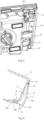
Fig. 2 shows schematically a first state of a side part of the through-type taillight according to the present invention. -
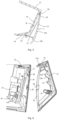
Fig. 3 shows schematically a second state of a side part of the through-type taillight according to the present invention. -
Fig. 4 shows a sectional view of a locking structure of the through-type taillight according to the present invention, wherein the locking structure in a first position is shown by solid lines, and the locking structure in a second position is shown by dotted lines. -
Fig. 5 shows a sectional view of a limiting structure of the through-type taillight according to the present invention, wherein the limiting structure in a first position is shown by solid lines, and the limiting structure in a second position is shown by dotted lines. -
Fig. 6 shows an exploded view of the through-type taillight according to the present invention. -
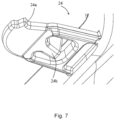
Fig. 7 shows a partial enlarged view of a constituent part of another locking structure of the through-type taillight according to the present invention. - Embodiments of the present invention are described demonstratively below.. Thus, the drawings and the description are in essence demonstrative and non-limiting. In the following text, identical references generally indicate functionally identical or similar elements.
- A tail portion of a vehicle is shown schematically in
fig. 1 . Here, only avehicle tail component 1 in the form of a boot lid and a through-type taillight 10 installed therein are shown in a simplified form. To facilitate explanation here and hereinbelow, reference is made here to a coordinate system used for the vehicle, that is, when the vehicle is in a stationary state on a horizontal road, the X axis is parallel to the ground and points towards a region in front of the vehicle (also called a first direction), the Z axis points upwards through the center of mass of the vehicle (also called a third direction), and the Y axis points towards the left side of a driver (also called a second direction). Here, an accommodation 4 for the through-type taillight 10 is formed in thevehicle tail component 1, and extends over the entire width of thevehicle tail component 1 in the Y direction. The through-type taillight 10 is fitted by pushing in the X direction, such that when it occupies the correct position in the accommodation 4, anouter surface 2 and a side face 3 of thevehicle tail component 1 that were interrupted due to the accommodation 4 are covered by anouter lens 12 and aside part 13 of the through-type taillight 10, thereby forming a complete outer contour of the vehicle tail portion. - However, in some situations, the through-
type taillight 10 cannot be directly pushed into the corresponding accommodation 4, in particular due to geometric structural restrictions of the side part. For example, in the case where a region of theside part 13 of the through-type taillight 10 adjacent to the accommodation 4 is flexible, this can cause deformation of theside part 13 during assembly, thereby adversely affecting assembly quality. - The through-
type taillight 10 according to the present invention is expounded further below with the aid offigs. 2 - 7 . Since the through-type taillight 10 is a symmetric structure, only the left side of the through-type taillight 10 is expounded here; for the structure of the right side, the explanation of the structure of the left side can be referred to. - The through-
type taillight 10 is also accommodated in the accommodation 4 of thevehicle tail component 1, and has anouter lens 12, ahousing 11 and aside part 13. Thehousing 11 is closed by theouter lens 12, and together with theouter lens 12 defines an accommodating space for accommodating an optoelectronic component, not shown here, of the through-type taillight 10. Theside part 13 is arranged on the side of thehousing 11 in advance in such a way as to prevent loosening, and at least occupies a first position I (seefig. 2 ) and a second position II (seefig. 3 ) relative to thehousing 11, such that in the first position I the through-type taillight 10 can be fitted into the accommodation 4, and in the second position II theside part 13 forms a corresponding compensating face of thevehicle tail component 1. - As can be seen especially clearly from
figs. 4 - 6 , thehousing 11 has agroove 30 on a side facing theouter lens 12. Anedge 20 of theside part 13 is accommodated in thegroove 30. Here, the running of thegroove 30 is matched to that of theedge 20. - In order to prevent movement of the
side part 13 in thegroove 30 of thehousing 11, aprotrusion 36 is constructed in thegroove 30, and arecess 26 is provided in a corresponding region of theedge 20; the protrusion and the recess interact with each other. In the example shown, theprotrusion 36 and therecess 26 are disposed in a middle region, but of course could also be disposed in another suitable region. At least oneadditional protrusion 37 can also be provided in thegroove 30, and a front edge of theside part 13 abuts against theadditional protrusion 37. Thereby surface contact is changed to approximately point contact, to reduce the manufacturing precision of the corresponding components. - A moveable connection between the
side part 13 and thehousing 11 can also be established in other ways. For example, theside part 13 andhousing 11 form a pivoting connection. For this purpose, a pivot rod is provided on one of these components, and a recess for accommodating the pivot rod is provided on the other component. - Furthermore, the
side part 13 andhousing 11 can also be in abutment near the abovementioned moveable connection region, which will be explained below. For this purpose, as can be seen fromfig. 6 , aprojection 38 is formed on thehousing 11 in a position adjacent to thegroove 30, and can take the form of a rib. In an assembled state, a top end of theprojection 38 is in contact with an inner side of theside part 13. Of course, the projection can also be formed on the side part. The number of projections is set as required. - In order to lock the
side part 13 on thehousing 11, corresponding lockingstructures 7, 8 are also provided for example on the side of the side part that is opposite theedge 20; the locking structures enable theside part 13 to be locked in at least two positions. Here, the first position I can be regarded as a delivered state, and the second position II can be regarded as a final assembled state. - In this case, a limiting structure 6 is provided, comprising at least one first limitation on one of the
housing 11 and theside part 13 and at least one first mating limitation on the other, in order to limit movement of theside part 13 in the X direction, i.e. the first direction, and thereby prevent the side part from falling off the housing. For example, a first limitation in the form of anelastic plate 23 is provided on theside part 13; a hollow frame-like part is formed on the housing, and defines a first mating limitation in the form of ahole 35. Theelastic plate 23 extends into thehole 35. As can be seen especially clearly fromfig. 5 , in the first position I and second position II, theelastic plate 23 is correspondingly deformed elastically, and one side of theelastic plate 23 abuts against an inner wall of the frame-like part forming thehole 35, thereby preventing the side part mounted on the housing from disengaging from the housing in the first direction. The top of theelastic plate 23 can slide on acorresponding surface 33 of the housing. - In addition, locking structures are also provided to lock the occupied position of the
side part 13 relative to thehousing 11 in the first position I and second position II, i.e. prevent theside part 13 from shifting relative to thehousing 11 in the Y direction, i.e. the second direction, in the first position I and second position II respectively. - In the example shown, in order to perform locking in the first position I, a
first locking structure 7 is provided, which takes the form of a combination of a locking hook assembly and a stop, in order to limit movement of theside part 13 in the Y direction, i.e. the second direction. For this purpose, afirst locking hook 22 is provided on theside part 13, and a firstmating locking hook 32 is provided on thehousing 11. Thefirst locking hook 22 can deform elastically, and has a protruding head. The protruding head has a triangular cross section. The firstmating locking hook 32 can be regarded as another protruding head. In the process of moving from an initial position to the first position, thefirst locking hook 22 deforms elastically, and once afirst surface 22a of the protruding head thereof has slid past the protruding head of the firstmating locking hook 32, thefirst locking hook 22 springs back, such that a second surface 22b is engaged with the firstmating locking hook 32; thefirst locking hook 22 thereby hooks onto the firstmating locking hook 32, and establishes a locking connection, see the state indicated by the solid lines infig. 4 . - In order to prevent the
side part 13 from continuing to move towards the middle of the housing in the Y direction due to external force when thefirst locking hook 22 hooks the firstmating locking hook 32, thefirst locking structure 7 is further provided with a stop. As can be seen fromfig. 2 , the stop comprises protruding parts in the form of engagement hooks 21, 24, which extend out from theside part 13 towards the housing, and abut against thehousing 11 in the first position I, thereby preventing theside part 13 from continuing to move towards the housing in the state in which thefirst locking hook 22 and firstmating locking hook 32 are engaged in the Y direction. In the first position I, theside part 13 can be regarded as having been rotated relative to thehousing 11 by a certain angle around theedge 20 in a direction away from thehousing 11, such that a space for an edge of the accommodation is left between theside part 13 and thehousing 11, and the through-type taillight can be fitted into the reserved accommodation without damage. - When it is necessary to move the
side part 13 from the first position I into the second position II, all that need be done is to apply a force to theside part 13 in a direction towards the middle of the housing; this force can overcome the effect of the stop. When theside part 13 has moved into the second position II, movement of theside part 13 in the second direction can be limited in the second position II by means of a second locking structure 8. - The second locking structure 8 for example takes the form of a lock-fastening assembly, comprising at least one
engagement hook housing 11 and theside part 13 and at least onefastening eye first locking structure 7, the engagement hooks 21, 24 are also constituent parts of the second locking structure. For this purpose, the engagement hooks 21, 24 are constructed to be elastically deformable. Before elastic deformation, top ends of the engagement hooks abut against the edges of the fastening eyes of the housing. When an external force is applied to make the engagement hooks deform elastically, the engagement hooks can pass through thefastening eyes fastening eyes figs. 4 and5 , the lockinghook 22 of the first locking structure and theelastic plate 23 of the stop have experienced further deformation relative to the first position. - It can be seen from
fig. 6 that the first engagement hooks 21 of the second locking structure 8 are formed in a pair, and their heads are formed with a slope. In the process of moving to the second position, the pair of engagement hooks 21 move towards each other, so as to be able to pass through the allocatedfastening eye 31. When in the second position, the engagement hooks 21 spring back, thereby preventing disengagement of the side part in a direction opposite to the direction of insertion. - A
second engagement hook 24 of the second locking structure 8 is shown schematically infig. 7 . It can be seen that abulge 24a is constructed on a peripheral face of thesecond engagement hook 24, and an elasticallydeformable tongue 24b is constructed in a middle of the second engagement hook. In the first position, thebulge 24a abuts an edge of thefastening eye 34 allocated to thesecond engagement hook 24; in the second position, a front end of thetongue 24b abuts on another opposite edge of thefastening eye 34. - The
side part 13 can comprise abody 13a, and aflexible part 13b arranged on a periphery of thebody 13a. Thebody 13a andflexible part 13b can be formed separately, and subsequently connected together, e.g. by bonding, snap-fitting or in another way. Alternatively, thebody 13a andflexible part 13b can be integrally formed, e.g. by two-component injection moulding. In particular by means of the flexible part arranged at the periphery, a gap between the through-type taillight and the vehicle tail component can be covered in the assembled state. - The relevant constituent parts forming the limiting structure 6 and the
locking structures 7, 8 are preferably integrally formed on thehousing 11 and on theside part 13, more precisely on thebody 13a of the side part, as can be seen fromfig. 3 ; theflexible part 13b of the side part has not been shown here. - The positions and numbers of the limiting structure and locking structures mentioned above can be designed according to specific needs, with no limitation to the examples shown in the drawings.
- The present invention is not limited to the structure described above; various other variants could also be used. Although the present invention has already been described by means of a limited number of embodiments, those skilled in the art could, benefiting from this disclosure, design other embodiments which do not depart from the scope of protection of the present invention disclosed herein. Thus, the scope of protection of the present invention should be limited only by the appended claims.
Claims (17)
- Vehicle tail component (1) comprising a through-type taillight (10) installed in an accommodation (4) and comprising an outer lens (12), a housing (11) and a side part (13), the housing (11) being closed by the outer lens (12), and together with the outer lens (12) defining an accommodating space for accommodating an optoelectronic component of the through-type taillight (10), characterized in that the side part (13) is arranged on a side of the housing (11) in such a way as to prevent loosening, and at least occupies a first position (I) and a second position (II) relative to the housing (11), such that in the first position (I) the through-type taillight (10) can be fitted into the accommodation (4), and in the second position (II) the side part (13) forms a corresponding compensating face of the vehicle tail component (1).
- Vehicle tail component (1) according to Claim 1, characterized in that the side part (13) is moveably connected to the housing (11) on its side that faces the outer lens (12), such that the side part (13) can move from the first position (I) into the second position (II).
- Vehicle tail component (1) according to Claim 2, characterized in that the housing (11) is provided with a groove (30) on the side facing the outer lens (12), and an edge (20) of the side part (13) lies in the groove (30).
- Vehicle tail component (1) according to Claim 3, characterized in that the edge (20) is provided with a recess (26), a protrusion (36) is provided in the groove (30), and the protrusion interacts with the recess (26).
- Vehicle tail component (1) according to Claim 4, characterized in that at least one additional protrusion (37) is provided in the groove (30).
- Vehicle tail component (1) according to Claim 3, characterized in that a region of the housing (11) that is adjacent to the groove (30) is provided with at least one projection (38), and the side part (13) can abut against the projection (38); or a region of the side part that is adjacent to the edge (20) is provided with at least one projection (38), and the housing (11) can abut against the projection (38).
- Vehicle tail component (1) according to any one of Claims 1 - 6, characterized by a limiting structure (6), comprising at least one first limitation on one of the housing (11) and the side part (13) and at least one first mating limitation on the other, in order to limit movement of the side part (13) in a first direction.
- Vehicle tail component (1) according to Claim 7, characterized by a first locking structure (7), to limit movement of the side part (13) in the first position (I) in a second direction, and a second locking structure (8), to limit movement of the side part (13) in the second position (II) in the second direction.
- Vehicle tail component (1) according to Claim 8, characterized in that the first locking structure (7) takes the form of a combination of a locking hook assembly and a stop.
- Vehicle tail component (1) according to Claim 9, characterized in that the locking hook assembly comprises a first locking hook (22) on one of the housing (11) and the side part (13) and a first mating locking hook (32) on the other.
- Vehicle tail component (1) according to Claim 8, characterized in that the second locking structure (8) takes the form of a lock-fastening assembly.
- Vehicle tail component (1) according to Claim 11, characterized in that the lock-fastening assembly comprises at least one engagement hook (21, 24) on one of the housing (11) and the side part (13) and at least one fastening eye (31, 34) on the other.
- Vehicle tail component (1) according to Claim 7, characterized in that the first limitation takes the form of an elastic plate (23), the first mating limitation takes the form of a hole (35), and the elastic plate (23) extends into the hole (35).
- Vehicle tail component (1) according to Claim 8, characterized in that the side part (13) has a body (13a) and a flexible part (13b) arranged on a periphery of the body (13a).
- Vehicle tail component (1) according to Claim 14, characterized in that the side part (13) is a one-piece member formed by two-component injection moulding.
- Vehicle tail component (1) according to Claim 14, characterized in that constituent parts of the limiting structure (6) and the locking structures (7, 8) are integrally formed on the body (13a) or the housing (11).
- Vehicle, characterized by having the vehicle tail component (1) according to any one of Claims 1 to 16.
Applications Claiming Priority (2)
| Application Number | Priority Date | Filing Date | Title |
|---|---|---|---|
| CN201911040722.9A CN112721796B (en) | 2019-10-28 | 2019-10-28 | Through-type taillight and vehicle having the same |
| PCT/EP2020/080197 WO2021083906A1 (en) | 2019-10-28 | 2020-10-27 | Through-type taillight and vehicle having same |
Publications (2)
| Publication Number | Publication Date |
|---|---|
| EP4051537A1 EP4051537A1 (en) | 2022-09-07 |
| EP4051537B1 true EP4051537B1 (en) | 2024-09-18 |
Family
ID=73037968
Family Applications (1)
| Application Number | Title | Priority Date | Filing Date |
|---|---|---|---|
| EP20799669.5A Active EP4051537B1 (en) | 2019-10-28 | 2020-10-27 | Through-type taillight and vehicle having same |
Country Status (4)
| Country | Link |
|---|---|
| US (1) | US12233774B2 (en) |
| EP (1) | EP4051537B1 (en) |
| CN (1) | CN112721796B (en) |
| WO (1) | WO2021083906A1 (en) |
Families Citing this family (1)
| Publication number | Priority date | Publication date | Assignee | Title |
|---|---|---|---|---|
| US12370941B2 (en) | 2023-06-30 | 2025-07-29 | Nissan North America, Inc. | Vehicle rear tail lamp structure |
Citations (1)
| Publication number | Priority date | Publication date | Assignee | Title |
|---|---|---|---|---|
| FR2918632A1 (en) * | 2007-07-13 | 2009-01-16 | Peugeot Citroen Automobiles Sa | FIXING SYSTEM OF A VEHICLE FIRE SKIRT, AND METHOD OF ASSEMBLING A FIRE SKIRT ON A FIRE BOX USING SUCH A SYSTEM |
Family Cites Families (12)
| Publication number | Priority date | Publication date | Assignee | Title |
|---|---|---|---|---|
| FR2201429B1 (en) * | 1972-09-27 | 1977-08-05 | Tecalemit Sa | |
| US5150939A (en) * | 1992-01-10 | 1992-09-29 | General Motors Corporation | Swing-out tail lamp |
| US6217203B1 (en) * | 1999-09-01 | 2001-04-17 | Wesbar Corporation | Resealable light capsule for a tail light |
| CN203580758U (en) * | 2013-11-08 | 2014-05-07 | 北京汽车股份有限公司 | Vehicle taillight box structure and vehicle |
| DE102015015841B4 (en) * | 2015-12-05 | 2022-01-13 | Daimler Ag | Light assembly with rear lights and illuminated trim |
| US10259377B2 (en) * | 2017-01-20 | 2019-04-16 | Tractor Supply Company | Vehicle light bar with straight and curved frame portions |
| CN207815203U (en) * | 2017-12-23 | 2018-09-04 | 丹阳市华升汽车部件有限公司 | A kind of automobile tail light |
| CN208457856U (en) * | 2018-07-23 | 2019-02-01 | 嘉兴海拉灯具有限公司 | A kind of automobile tail light |
| CN109282240A (en) * | 2018-09-10 | 2019-01-29 | 奇瑞汽车股份有限公司 | An integrated taillight structure on the back door of an automobile |
| CN209245875U (en) | 2019-01-05 | 2019-08-13 | 中山市麦光照明科技有限公司 | An embedded LED spotlight |
| CN209245975U (en) * | 2019-02-20 | 2019-08-13 | 华域视觉科技(上海)有限公司 | Automobile tail light lamp chamber structure and penetration type taillight |
| US11904952B2 (en) * | 2022-02-17 | 2024-02-20 | Ford Global Technologies, Llc | Extendable cargo bed side wall |
-
2019
- 2019-10-28 CN CN201911040722.9A patent/CN112721796B/en active Active
-
2020
- 2020-10-27 US US17/770,664 patent/US12233774B2/en active Active
- 2020-10-27 EP EP20799669.5A patent/EP4051537B1/en active Active
- 2020-10-27 WO PCT/EP2020/080197 patent/WO2021083906A1/en not_active Ceased
Patent Citations (1)
| Publication number | Priority date | Publication date | Assignee | Title |
|---|---|---|---|---|
| FR2918632A1 (en) * | 2007-07-13 | 2009-01-16 | Peugeot Citroen Automobiles Sa | FIXING SYSTEM OF A VEHICLE FIRE SKIRT, AND METHOD OF ASSEMBLING A FIRE SKIRT ON A FIRE BOX USING SUCH A SYSTEM |
Also Published As
| Publication number | Publication date |
|---|---|
| WO2021083906A1 (en) | 2021-05-06 |
| US12233774B2 (en) | 2025-02-25 |
| US20220355727A1 (en) | 2022-11-10 |
| EP4051537A1 (en) | 2022-09-07 |
| CN112721796B (en) | 2025-09-12 |
| CN112721796A (en) | 2021-04-30 |
Similar Documents
| Publication | Publication Date | Title |
|---|---|---|
| US9139165B2 (en) | Device for attaching a windshield wiper blade on an arm | |
| US11552425B2 (en) | Holding frame for a plug connector and methods of populating same | |
| US5765942A (en) | Outer lens attachment structure for vehicular lamps | |
| US11124156B2 (en) | Adapter for a motor vehicle windscreen wiper and wiper comprising such an adapter | |
| US7785145B2 (en) | Electrical connector for attenuating vibrations, in particular for the injector of a motor vehicle engine | |
| US11117552B2 (en) | Adapter for a motor vehicle windscreen wiper and wiper comprising such an adapter | |
| EP4051537B1 (en) | Through-type taillight and vehicle having same | |
| JP2020131809A (en) | Camera mounting structure | |
| US20190334278A1 (en) | Holding frame for a plug connector and methods of populating same | |
| US20210080072A1 (en) | Projection headlight | |
| US20180222379A1 (en) | Optical module for a motor vehicle and locking in position of a component of the module by an elastically deformable clamping element | |
| US20220194324A1 (en) | Windscreen wiper blade adapter having a mechanical and magnetic connection | |
| US6786756B2 (en) | Connector | |
| US9548575B2 (en) | Device for fixing and electrical contacting a facing element of an aircraft on a support structure | |
| JP7521326B2 (en) | Vehicle parts, vehicle lighting | |
| US11590916B2 (en) | Steering device assembly and method for installing an airbag module on a steering device of a motor vehicle | |
| US7563007B2 (en) | Bumper cover and lamp housing assembly with integral fasteners for independent removal of parts from a vehicle | |
| CN216158984U (en) | Buckle connection structure, lighting device and vehicle | |
| KR100315293B1 (en) | Head lamp for automobile | |
| US20220055682A1 (en) | Rack bar support apparatus of vehicle steering apparatus | |
| GB2584328A (en) | Connection device for connecting a push-rod to a control member, such as a control pedal of a vehicle | |
| KR20260047793A (en) | Connector Apparatus with Improved Locking Structure and Head Lamp including the same | |
| US12479401B2 (en) | Wiper adapter | |
| US20250304172A1 (en) | Vehicle rear fascia assembly | |
| CN120720556A (en) | Vehicle lamps and vehicles |
Legal Events
| Date | Code | Title | Description |
|---|---|---|---|
| STAA | Information on the status of an ep patent application or granted ep patent |
Free format text: STATUS: UNKNOWN |
|
| STAA | Information on the status of an ep patent application or granted ep patent |
Free format text: STATUS: THE INTERNATIONAL PUBLICATION HAS BEEN MADE |
|
| PUAI | Public reference made under article 153(3) epc to a published international application that has entered the european phase |
Free format text: ORIGINAL CODE: 0009012 |
|
| STAA | Information on the status of an ep patent application or granted ep patent |
Free format text: STATUS: REQUEST FOR EXAMINATION WAS MADE |
|
| 17P | Request for examination filed |
Effective date: 20220530 |
|
| AK | Designated contracting states |
Kind code of ref document: A1 Designated state(s): AL AT BE BG CH CY CZ DE DK EE ES FI FR GB GR HR HU IE IS IT LI LT LU LV MC MK MT NL NO PL PT RO RS SE SI SK SM TR |
|
| DAV | Request for validation of the european patent (deleted) | ||
| DAX | Request for extension of the european patent (deleted) | ||
| P01 | Opt-out of the competence of the unified patent court (upc) registered |
Effective date: 20230528 |
|
| RIC1 | Information provided on ipc code assigned before grant |
Ipc: B60Q 1/26 20060101ALI20240219BHEP Ipc: B60Q 1/30 20060101AFI20240219BHEP |
|
| GRAP | Despatch of communication of intention to grant a patent |
Free format text: ORIGINAL CODE: EPIDOSNIGR1 |
|
| STAA | Information on the status of an ep patent application or granted ep patent |
Free format text: STATUS: GRANT OF PATENT IS INTENDED |
|
| INTG | Intention to grant announced |
Effective date: 20240418 |
|
| GRAS | Grant fee paid |
Free format text: ORIGINAL CODE: EPIDOSNIGR3 |
|
| GRAA | (expected) grant |
Free format text: ORIGINAL CODE: 0009210 |
|
| STAA | Information on the status of an ep patent application or granted ep patent |
Free format text: STATUS: THE PATENT HAS BEEN GRANTED |
|
| AK | Designated contracting states |
Kind code of ref document: B1 Designated state(s): AL AT BE BG CH CY CZ DE DK EE ES FI FR GB GR HR HU IE IS IT LI LT LU LV MC MK MT NL NO PL PT RO RS SE SI SK SM TR |
|
| REG | Reference to a national code |
Ref country code: GB Ref legal event code: FG4D |
|
| REG | Reference to a national code |
Ref country code: CH Ref legal event code: EP |
|
| REG | Reference to a national code |
Ref country code: IE Ref legal event code: FG4D |
|
| REG | Reference to a national code |
Ref country code: DE Ref legal event code: R096 Ref document number: 602020038019 Country of ref document: DE |
|
| REG | Reference to a national code |
Ref country code: LT Ref legal event code: MG9D |
|
| PG25 | Lapsed in a contracting state [announced via postgrant information from national office to epo] |
Ref country code: NO Free format text: LAPSE BECAUSE OF FAILURE TO SUBMIT A TRANSLATION OF THE DESCRIPTION OR TO PAY THE FEE WITHIN THE PRESCRIBED TIME-LIMIT Effective date: 20241218 |
|
| PG25 | Lapsed in a contracting state [announced via postgrant information from national office to epo] |
Ref country code: GR Free format text: LAPSE BECAUSE OF FAILURE TO SUBMIT A TRANSLATION OF THE DESCRIPTION OR TO PAY THE FEE WITHIN THE PRESCRIBED TIME-LIMIT Effective date: 20241219 Ref country code: FI Free format text: LAPSE BECAUSE OF FAILURE TO SUBMIT A TRANSLATION OF THE DESCRIPTION OR TO PAY THE FEE WITHIN THE PRESCRIBED TIME-LIMIT Effective date: 20240918 |
|
| PG25 | Lapsed in a contracting state [announced via postgrant information from national office to epo] |
Ref country code: BG Free format text: LAPSE BECAUSE OF FAILURE TO SUBMIT A TRANSLATION OF THE DESCRIPTION OR TO PAY THE FEE WITHIN THE PRESCRIBED TIME-LIMIT Effective date: 20240918 |
|
| PG25 | Lapsed in a contracting state [announced via postgrant information from national office to epo] |
Ref country code: LV Free format text: LAPSE BECAUSE OF FAILURE TO SUBMIT A TRANSLATION OF THE DESCRIPTION OR TO PAY THE FEE WITHIN THE PRESCRIBED TIME-LIMIT Effective date: 20240918 |
|
| PG25 | Lapsed in a contracting state [announced via postgrant information from national office to epo] |
Ref country code: HR Free format text: LAPSE BECAUSE OF FAILURE TO SUBMIT A TRANSLATION OF THE DESCRIPTION OR TO PAY THE FEE WITHIN THE PRESCRIBED TIME-LIMIT Effective date: 20240918 |
|
| REG | Reference to a national code |
Ref country code: NL Ref legal event code: MP Effective date: 20240918 |
|
| PG25 | Lapsed in a contracting state [announced via postgrant information from national office to epo] |
Ref country code: RS Free format text: LAPSE BECAUSE OF FAILURE TO SUBMIT A TRANSLATION OF THE DESCRIPTION OR TO PAY THE FEE WITHIN THE PRESCRIBED TIME-LIMIT Effective date: 20241218 |
|
| PG25 | Lapsed in a contracting state [announced via postgrant information from national office to epo] |
Ref country code: RS Free format text: LAPSE BECAUSE OF FAILURE TO SUBMIT A TRANSLATION OF THE DESCRIPTION OR TO PAY THE FEE WITHIN THE PRESCRIBED TIME-LIMIT Effective date: 20241218 Ref country code: NO Free format text: LAPSE BECAUSE OF FAILURE TO SUBMIT A TRANSLATION OF THE DESCRIPTION OR TO PAY THE FEE WITHIN THE PRESCRIBED TIME-LIMIT Effective date: 20241218 Ref country code: LV Free format text: LAPSE BECAUSE OF FAILURE TO SUBMIT A TRANSLATION OF THE DESCRIPTION OR TO PAY THE FEE WITHIN THE PRESCRIBED TIME-LIMIT Effective date: 20240918 Ref country code: HR Free format text: LAPSE BECAUSE OF FAILURE TO SUBMIT A TRANSLATION OF THE DESCRIPTION OR TO PAY THE FEE WITHIN THE PRESCRIBED TIME-LIMIT Effective date: 20240918 Ref country code: GR Free format text: LAPSE BECAUSE OF FAILURE TO SUBMIT A TRANSLATION OF THE DESCRIPTION OR TO PAY THE FEE WITHIN THE PRESCRIBED TIME-LIMIT Effective date: 20241219 Ref country code: FI Free format text: LAPSE BECAUSE OF FAILURE TO SUBMIT A TRANSLATION OF THE DESCRIPTION OR TO PAY THE FEE WITHIN THE PRESCRIBED TIME-LIMIT Effective date: 20240918 Ref country code: BG Free format text: LAPSE BECAUSE OF FAILURE TO SUBMIT A TRANSLATION OF THE DESCRIPTION OR TO PAY THE FEE WITHIN THE PRESCRIBED TIME-LIMIT Effective date: 20240918 |
|
| REG | Reference to a national code |
Ref country code: AT Ref legal event code: MK05 Ref document number: 1724435 Country of ref document: AT Kind code of ref document: T Effective date: 20240918 |
|
| PG25 | Lapsed in a contracting state [announced via postgrant information from national office to epo] |
Ref country code: NL Free format text: LAPSE BECAUSE OF FAILURE TO SUBMIT A TRANSLATION OF THE DESCRIPTION OR TO PAY THE FEE WITHIN THE PRESCRIBED TIME-LIMIT Effective date: 20240918 |
|
| PG25 | Lapsed in a contracting state [announced via postgrant information from national office to epo] |
Ref country code: PT Free format text: LAPSE BECAUSE OF FAILURE TO SUBMIT A TRANSLATION OF THE DESCRIPTION OR TO PAY THE FEE WITHIN THE PRESCRIBED TIME-LIMIT Effective date: 20250120 Ref country code: IS Free format text: LAPSE BECAUSE OF FAILURE TO SUBMIT A TRANSLATION OF THE DESCRIPTION OR TO PAY THE FEE WITHIN THE PRESCRIBED TIME-LIMIT Effective date: 20250118 |
|
| PG25 | Lapsed in a contracting state [announced via postgrant information from national office to epo] |
Ref country code: RO Free format text: LAPSE BECAUSE OF FAILURE TO SUBMIT A TRANSLATION OF THE DESCRIPTION OR TO PAY THE FEE WITHIN THE PRESCRIBED TIME-LIMIT Effective date: 20240918 Ref country code: SM Free format text: LAPSE BECAUSE OF FAILURE TO SUBMIT A TRANSLATION OF THE DESCRIPTION OR TO PAY THE FEE WITHIN THE PRESCRIBED TIME-LIMIT Effective date: 20240918 |
|
| PG25 | Lapsed in a contracting state [announced via postgrant information from national office to epo] |
Ref country code: ES Free format text: LAPSE BECAUSE OF FAILURE TO SUBMIT A TRANSLATION OF THE DESCRIPTION OR TO PAY THE FEE WITHIN THE PRESCRIBED TIME-LIMIT Effective date: 20240918 |
|
| PG25 | Lapsed in a contracting state [announced via postgrant information from national office to epo] |
Ref country code: AT Free format text: LAPSE BECAUSE OF FAILURE TO SUBMIT A TRANSLATION OF THE DESCRIPTION OR TO PAY THE FEE WITHIN THE PRESCRIBED TIME-LIMIT Effective date: 20240918 Ref country code: EE Free format text: LAPSE BECAUSE OF FAILURE TO SUBMIT A TRANSLATION OF THE DESCRIPTION OR TO PAY THE FEE WITHIN THE PRESCRIBED TIME-LIMIT Effective date: 20240918 |
|
| PG25 | Lapsed in a contracting state [announced via postgrant information from national office to epo] |
Ref country code: PL Free format text: LAPSE BECAUSE OF FAILURE TO SUBMIT A TRANSLATION OF THE DESCRIPTION OR TO PAY THE FEE WITHIN THE PRESCRIBED TIME-LIMIT Effective date: 20240918 Ref country code: CZ Free format text: LAPSE BECAUSE OF FAILURE TO SUBMIT A TRANSLATION OF THE DESCRIPTION OR TO PAY THE FEE WITHIN THE PRESCRIBED TIME-LIMIT Effective date: 20240918 |
|
| PG25 | Lapsed in a contracting state [announced via postgrant information from national office to epo] |
Ref country code: SK Free format text: LAPSE BECAUSE OF FAILURE TO SUBMIT A TRANSLATION OF THE DESCRIPTION OR TO PAY THE FEE WITHIN THE PRESCRIBED TIME-LIMIT Effective date: 20240918 Ref country code: IT Free format text: LAPSE BECAUSE OF FAILURE TO SUBMIT A TRANSLATION OF THE DESCRIPTION OR TO PAY THE FEE WITHIN THE PRESCRIBED TIME-LIMIT Effective date: 20240918 |
|
| REG | Reference to a national code |
Ref country code: CH Ref legal event code: PL |
|
| REG | Reference to a national code |
Ref country code: DE Ref legal event code: R097 Ref document number: 602020038019 Country of ref document: DE |
|
| PG25 | Lapsed in a contracting state [announced via postgrant information from national office to epo] |
Ref country code: MC Free format text: LAPSE BECAUSE OF FAILURE TO SUBMIT A TRANSLATION OF THE DESCRIPTION OR TO PAY THE FEE WITHIN THE PRESCRIBED TIME-LIMIT Effective date: 20240918 |
|
| PG25 | Lapsed in a contracting state [announced via postgrant information from national office to epo] |
Ref country code: DK Free format text: LAPSE BECAUSE OF FAILURE TO SUBMIT A TRANSLATION OF THE DESCRIPTION OR TO PAY THE FEE WITHIN THE PRESCRIBED TIME-LIMIT Effective date: 20240918 |
|
| PG25 | Lapsed in a contracting state [announced via postgrant information from national office to epo] |
Ref country code: LU Free format text: LAPSE BECAUSE OF NON-PAYMENT OF DUE FEES Effective date: 20241027 Ref country code: BE Free format text: LAPSE BECAUSE OF NON-PAYMENT OF DUE FEES Effective date: 20241031 |
|
| PG25 | Lapsed in a contracting state [announced via postgrant information from national office to epo] |
Ref country code: CH Free format text: LAPSE BECAUSE OF NON-PAYMENT OF DUE FEES Effective date: 20241031 |
|
| PLBE | No opposition filed within time limit |
Free format text: ORIGINAL CODE: 0009261 |
|
| STAA | Information on the status of an ep patent application or granted ep patent |
Free format text: STATUS: NO OPPOSITION FILED WITHIN TIME LIMIT |
|
| REG | Reference to a national code |
Ref country code: BE Ref legal event code: MM Effective date: 20241031 |
|
| 26N | No opposition filed |
Effective date: 20250619 |
|
| GBPC | Gb: european patent ceased through non-payment of renewal fee |
Effective date: 20241218 |
|
| PG25 | Lapsed in a contracting state [announced via postgrant information from national office to epo] |
Ref country code: SE Free format text: LAPSE BECAUSE OF FAILURE TO SUBMIT A TRANSLATION OF THE DESCRIPTION OR TO PAY THE FEE WITHIN THE PRESCRIBED TIME-LIMIT Effective date: 20240918 |
|
| PG25 | Lapsed in a contracting state [announced via postgrant information from national office to epo] |
Ref country code: GB Free format text: LAPSE BECAUSE OF NON-PAYMENT OF DUE FEES Effective date: 20241218 |
|
| PG25 | Lapsed in a contracting state [announced via postgrant information from national office to epo] |
Ref country code: IE Free format text: LAPSE BECAUSE OF NON-PAYMENT OF DUE FEES Effective date: 20241027 |
|
| PGFP | Annual fee paid to national office [announced via postgrant information from national office to epo] |
Ref country code: DE Payment date: 20251015 Year of fee payment: 6 |
|
| PGFP | Annual fee paid to national office [announced via postgrant information from national office to epo] |
Ref country code: FR Payment date: 20251027 Year of fee payment: 6 |
|
| PG25 | Lapsed in a contracting state [announced via postgrant information from national office to epo] |
Ref country code: CY Free format text: LAPSE BECAUSE OF FAILURE TO SUBMIT A TRANSLATION OF THE DESCRIPTION OR TO PAY THE FEE WITHIN THE PRESCRIBED TIME-LIMIT; INVALID AB INITIO Effective date: 20201027 |
|
| PG25 | Lapsed in a contracting state [announced via postgrant information from national office to epo] |
Ref country code: HU Free format text: LAPSE BECAUSE OF FAILURE TO SUBMIT A TRANSLATION OF THE DESCRIPTION OR TO PAY THE FEE WITHIN THE PRESCRIBED TIME-LIMIT; INVALID AB INITIO Effective date: 20201027 |