EP4050935B1 - Wireless bandwidth adjustment method and apparatus, and terminal and storage medium - Google Patents
Wireless bandwidth adjustment method and apparatus, and terminal and storage medium Download PDFInfo
- Publication number
- EP4050935B1 EP4050935B1 EP19949803.1A EP19949803A EP4050935B1 EP 4050935 B1 EP4050935 B1 EP 4050935B1 EP 19949803 A EP19949803 A EP 19949803A EP 4050935 B1 EP4050935 B1 EP 4050935B1
- Authority
- EP
- European Patent Office
- Prior art keywords
- bandwidth
- transmission time
- wireless
- strategy
- wireless bandwidth
- Prior art date
- Legal status (The legal status is an assumption and is not a legal conclusion. Google has not performed a legal analysis and makes no representation as to the accuracy of the status listed.)
- Active
Links
Images


Classifications
-
- H—ELECTRICITY
- H04—ELECTRIC COMMUNICATION TECHNIQUE
- H04W—WIRELESS COMMUNICATION NETWORKS
- H04W28/00—Network traffic management; Network resource management
- H04W28/16—Central resource management; Negotiation of resources or communication parameters, e.g. negotiating bandwidth or QoS [Quality of Service]
- H04W28/18—Negotiating wireless communication parameters
- H04W28/20—Negotiating bandwidth
-
- H—ELECTRICITY
- H04—ELECTRIC COMMUNICATION TECHNIQUE
- H04W—WIRELESS COMMUNICATION NETWORKS
- H04W24/00—Supervisory, monitoring or testing arrangements
- H04W24/08—Testing, supervising or monitoring using real traffic
-
- H—ELECTRICITY
- H04—ELECTRIC COMMUNICATION TECHNIQUE
- H04W—WIRELESS COMMUNICATION NETWORKS
- H04W72/00—Local resource management
- H04W72/04—Wireless resource allocation
- H04W72/044—Wireless resource allocation based on the type of the allocated resource
- H04W72/0453—Resources in frequency domain, e.g. a carrier in FDMA
-
- H—ELECTRICITY
- H04—ELECTRIC COMMUNICATION TECHNIQUE
- H04W—WIRELESS COMMUNICATION NETWORKS
- H04W72/00—Local resource management
- H04W72/50—Allocation or scheduling criteria for wireless resources
- H04W72/52—Allocation or scheduling criteria for wireless resources based on load
-
- H—ELECTRICITY
- H04—ELECTRIC COMMUNICATION TECHNIQUE
- H04W—WIRELESS COMMUNICATION NETWORKS
- H04W72/00—Local resource management
- H04W72/50—Allocation or scheduling criteria for wireless resources
- H04W72/535—Allocation or scheduling criteria for wireless resources based on resource usage policies
-
- H—ELECTRICITY
- H04—ELECTRIC COMMUNICATION TECHNIQUE
- H04W—WIRELESS COMMUNICATION NETWORKS
- H04W4/00—Services specially adapted for wireless communication networks; Facilities therefor
- H04W4/70—Services for machine-to-machine communication [M2M] or machine type communication [MTC]
-
- H—ELECTRICITY
- H04—ELECTRIC COMMUNICATION TECHNIQUE
- H04W—WIRELESS COMMUNICATION NETWORKS
- H04W72/00—Local resource management
- H04W72/50—Allocation or scheduling criteria for wireless resources
- H04W72/53—Allocation or scheduling criteria for wireless resources based on regulatory allocation policies
Definitions
- the present disclosure relates to the field of wireless local area network communication technologies, and in particular, to a wireless bandwidth adjustment method, a wireless bandwidth adjustment apparatus, a terminal, and a storage medium.
- Patent document No. CN107623643A discloses a method and device for forwarding a data packet, which comprises reading a data amount of the data packet and obtaining an available bandwidth of user's transmission channel based on an occupied bandwidth of a client; when it is determined that the data amount of the data packet is greater than the available bandwidth, dividing the data packet into multiple sub data packets with equal data amount based on the available bandwidth; dynamically allocating the available bandwidth based on the data amount of the sub data packets, and forwarding the multiple sub data packets within a predetermined time through the dynamically allocated available bandwidth, and the data amount of the sub data packets is not greater than the available bandwidth.
- the bandwidth includes: a bandwidth included by a sub-channel, defined in an IEEE 802.11ax communication protocol, allocated by an AP for the target IOT device.
- the determining a target IOT device includes:
- the present disclosure provides a wireless bandwidth adjustment method and apparatus, a terminal, and a storage medium, which can improve stability of connection between an IOT device and AP.
- Step S101 Determining a target IOT device and a bandwidth currently used by the target IOT device.
- the target IOT device is any IOT device that has accessed the AP.
- the target IOT device is determined based on a specific strategy, for example, a randomized strategy, a polling strategy, or a user-defined strategy, and the embodiments of the present disclosure are not limited thereto.
- a wireless bandwidth entry that matches the target IOT device is searched locally on the AP.
- a bandwidth currently used by the target IOT device is recorded in the wireless bandwidth entry, and then the bandwidth currently used by the target IOT device is determined based on the wireless bandwidth entry.
- Step S102 Collecting statistics on communication data of the target IOT device generated within a preset time period.
- the communication data of the target IOT device generated within the preset time period is communication data generated between the target IOT device and the AP within the preset time period.
- the target IOT device For example, for the target IOT device (IOT device 1), statistics on communication data of 1 MB (or 1 GB) generated between the target IOT device (IOT device 1) and the AP within the last 1 minute (or the last 1 hour) are collected.
- Step S103 Determining a wireless bandwidth adjustment strategy based on the communication data.
- the wireless bandwidth adjustment strategy is determined based on the statistics on the communication data that are collected in the foregoing step.
- a wireless bandwidth adjustment strategy 1 is determined based on the communication data of 1 MB (or 1 GB).
- Step S104 Adjusting the bandwidth based on the wireless bandwidth adjustment strategy.
- the bandwidth currently used by the target IOT device is adjusted based on the wireless bandwidth adjustment strategy determined in the foregoing step.
- the bandwidth currently used by the target IOT device (IOT device 1) is B1
- the bandwidth B1 currently used by the target IOT device (IOT device 1) is adjusted based on the wireless bandwidth adjustment strategy 1 determined based on the foregoing communication data of 1 MB (or 1 GB).
- a target IOT device for a target IOT device, statistics on communication data generated within a preset time period are collected, a wireless bandwidth adjustment strategy is determined based on the communication data, and a bandwidth currently used by the target IOT device is adjusted based on the wireless bandwidth adjustment strategy, thereby implementing dynamic adjustment of a wireless bandwidth, further improving stability of connection between an IOT device and an AP, and guaranteeing user experience.
- a bandwidth currently used by the IOT device is an initial bandwidth (or a default bandwidth) allocated by the AP for the IOT device.
- the IOT device uses the initial bandwidth (or the default bandwidth) to communicate with the AP.
- Step S302 Collecting statistics on communication data of the target IOT device generated within a preset time period.
- the wireless bandwidth adjustment strategy is determined based on a comparison result between the first transmission time and the second transmission time.
- the wireless bandwidth adjustment strategy is a wireless bandwidth narrowing strategy P2.
- the wireless bandwidth adjustment strategy is the wireless bandwidth narrowing strategy
- the bandwidth currently used by the target IOT device is narrowed based on the wireless bandwidth narrowing strategy, and the target IOT device subsequently uses a narrowed bandwidth to communication.
- the bandwidth currently used by the target IOT device (IOT device 2) is B0
- the wireless bandwidth adjustment strategy is the wireless bandwidth narrowing strategy.
- the bandwidth B0 currently used by the target IOT device (IOT device 2) is narrowed based on the wireless bandwidth narrowing strategy, and the narrowed bandwidth used by the target IOT device (IOT device 2) is B2, as shown in FIG. 6 .
- an embodiment of the present disclosure further provides a wireless bandwidth adjustment apparatus.
- the apparatus includes a device-and-bandwidth determining module 710, a data statistics module 720, a strategy determining module 730, and a bandwidth adjusting module 740.
- the processor 81 is configured to execute the computer program stored in the memory 83, to implement any one of the foregoing wireless bandwidth adjustment methods, for example, implement the following steps: determining a target IOT device and a bandwidth currently used by the target IOT device; collecting statistics on communication data of the target IOT device generated within a preset time period; determining a wireless bandwidth adjustment strategy based on the communication data; and adjusting the bandwidth based on the wireless bandwidth adjustment strategy.
- the communication bus is a Peripheral Component Interconnect (PCI) bus, an Extended Industry Standard Architecture (EISA) bus, or the like.
- PCI Peripheral Component Interconnect
- EISA Extended Industry Standard Architecture
- the communication bus includes an address bus, a data bus, a control bus, and the like. For ease of representation, only one bold line is used to represent the bus in this figure, but this does not mean that there is only one bus or one type of bus.
- the communication interface is used for communication between the foregoing terminal and another device.
- the memory includes a Random Access Memory (RAM).
- the memory includes a non-volatile memory, for example, at least one magnetic disk storage.
- the memory is at least one storage apparatus located away from the processor.
- the processor is a general-purpose processor, including a Central Processing Unit (CPU), a Network Processor (NP), and the like.
- the processor may be a Digital Signal Processor (DSP), an Application-Specific Integrated Circuit (ASIC), a Field-Programmable Gate Array (FPGA) or another programmable logic component, a discrete gate or a transistor logic component, or a discrete hardware component.
- DSP Digital Signal Processor
- ASIC Application-Specific Integrated Circuit
- FPGA Field-Programmable Gate Array
- An embodiment of the present disclosure further provides a storage medium storing a computer program.
- the computer program is executed by a processor, any one of the foregoing wireless bandwidth adjustment method embodiments is implemented.
- All or some of the foregoing embodiments may be implemented by means of software, hardware, firmware, or any combination thereof.
- all or some of the embodiments may be implemented in a form of a computer program product.
- the computer program product includes one or more computer instructions.
- the computer may be a general-purpose computer, a special-purpose computer, a computer network, or another programmable apparatus.
- the computer instructions may be stored in a storage medium or transmitted from one storage medium to another storage medium.
- the computer instructions may be transmitted from a website, a computer, a server, or a data center to another website, computer, server or data center via a wired (such as a coaxial cable, an optical fiber and a Digital Subscriber Line (DSL)) manner or a wireless (such as infrared, wireless and microwave) manner.
- the storage medium may be any usable medium that can be accessed by a computer or a data storage device such as a server or data center integrated with one or more available mediums.
- the usable medium may be a magnetic medium (for example, a floppy disk, a hard disk, or a magnetic tape), an optical medium (for example, a DVD), a semiconductor medium (for example, a Solid State Disk (SSD)), or the like.
Landscapes
- Engineering & Computer Science (AREA)
- Computer Networks & Wireless Communication (AREA)
- Signal Processing (AREA)
- Quality & Reliability (AREA)
- Mobile Radio Communication Systems (AREA)
Description
- The present disclosure relates to the field of wireless local area network communication technologies, and in particular, to a wireless bandwidth adjustment method, a wireless bandwidth adjustment apparatus, a terminal, and a storage medium.
- The rapid development of the Internet has brought great changes to the work and life of users. In recent years, Wireless Local Area Network (WLAN) based on an IEEE 802.11 standard has been developed rapidly. In order to meet ever-increasing demands for high speed data flow, the Institute of Electrical and Electronics Engineers (IEEE) formulated a newest wireless network standard 802.11ax. An IEEE 802.11ax communication protocol aims to support both indoor and outdoor scenarios, improve bandwidth efficiency, and achieve a fourfold increase in actual throughput in a user dense environment.
- With the formulation of the IEEE 802.11ax communication protocol, a communication technology based on Orthogonal Frequency Division Multiple Access (OFDMA) is going to be gradually developed in application of the Internet of Things (IOT) in the wireless local area network. The communication technology based on OFDMA greatly increases a current communication rate based on the conventional 802.11 communication protocol.
- Patent document No.
CN107623643A discloses a method and device for forwarding a data packet, which comprises reading a data amount of the data packet and obtaining an available bandwidth of user's transmission channel based on an occupied bandwidth of a client; when it is determined that the data amount of the data packet is greater than the available bandwidth, dividing the data packet into multiple sub data packets with equal data amount based on the available bandwidth; dynamically allocating the available bandwidth based on the data amount of the sub data packets, and forwarding the multiple sub data packets within a predetermined time through the dynamically allocated available bandwidth, and the data amount of the sub data packets is not greater than the available bandwidth. - According to an aspect of the present disclosure, a wireless bandwidth adjustment method is provided, including:
- determining a target IOT device and a bandwidth currently used by the target IOT device;
- collecting statistics on communication data of the target IOT device generated within a preset time period;
- determining a wireless bandwidth adjustment strategy based on the statistics on the communication data; and
- adjusting the bandwidth based on the wireless bandwidth adjustment strategy, and
- the determining a wireless bandwidth adjustment strategy based on the statistics on the communication data includes:
- determining a first transmission time corresponding to the communication data, where the first transmission time includes a time consumed by the target IOT device to transmit the communication data to an AP;
- obtaining a second transmission time, in the target Internet of Things device, for the target IOT device to transmit a preset amount of communication data, the second transmission time being used to indicate a time limit for the target Internet of Things device to transmit the preset amount of communication data to the wireless access point;
- comparing the first transmission time with the second transmission time; and
- determining the wireless bandwidth adjustment strategy based on a comparison result, and
- the determining the wireless bandwidth adjustment strategy based on a comparison result includes:
- if the first transmission time is greater than the second transmission time, determining that the wireless bandwidth adjustment strategy is a wireless bandwidth extending strategy,
- where the adjusting the bandwidth based on the wireless bandwidth adjustment strategy includes:
- extending the bandwidth based on the wireless bandwidth extending strategy, and
- the wireless bandwidth extending strategy is as follows:


- wherein B0 denotes the bandwidth currently used by the target Internet of Things device; T0 denotes the first transmission time; T denotes the second transmission time; and
- the determining the wireless bandwidth adjustment strategy based on a comparison result includes:
- if the first transmission time is less than the second transmission time, determining that the wireless bandwidth adjustment strategy is a wireless bandwidth narrowing strategy,
- where the adjusting the bandwidth based on the wireless bandwidth adjustment strategy includes:
- narrowing the bandwidth based on the wireless bandwidth narrowing strategy, and
- the wireless bandwidth narrowing strategy is as follows:


- wherein B0 denotes the bandwidth currently used by the target Internet of Things device; T0 denotes the first transmission time; T denotes the second transmission time.
- In some embodiments, the bandwidth includes:
a bandwidth included by a sub-channel, defined in an IEEE 802.11ax communication protocol, allocated by an AP for the target IOT device. - In some embodiments, the determining a target IOT device includes:
- determining an IOT device currently accessing an AP; and
- determining the IOT device as the target IOT device.
- According to an aspect of the present disclosure, a wireless bandwidth adjustment apparatus is provided, including:
- a device-and-bandwidth determining module, configured to determine a target IOT device and a bandwidth currently used by the target IOT device;
- a data statistics module, configured to collect statistics on communication data of the target IOT device generated within a preset time period;
- a strategy determining module, configured to determine a wireless bandwidth adjustment strategy based on the statistics on the communication data; and
- a bandwidth adjusting module, configured to adjust the bandwidth based on the wireless bandwidth adjustment strategy, and
- the determine a wireless bandwidth adjustment strategy based on the statistics on the communication data includes:
- determining a first transmission time corresponding to the communication data, where the first transmission time includes a time consumed by the target IOT device to transmit the communication data to an AP;
- obtaining a second transmission time, in the target Internet of Things device, for the target IOT device to transmit a preset amount of communication data, the second transmission time being used to indicate a time limit for the target Internet of Things device to transmit the preset amount of communication data to the wireless access point;
- comparing the first transmission time with the second transmission time; and
- determining the wireless bandwidth adjustment strategy based on a comparison result, and
- the determining the wireless bandwidth adjustment strategy based on a comparison result includes:
- if the first transmission time is greater than the second transmission time, determining that the wireless bandwidth adjustment strategy is a wireless bandwidth extending strategy,
- where the adjust the bandwidth based on the wireless bandwidth adjustment strategy includes:
- extending the bandwidth based on the wireless bandwidth extending strategy, and
- the wireless bandwidth extending strategy is as follows:


- wherein B0 denotes the bandwidth currently used by the target Internet of Things device; T0 denotes the first transmission time; T denotes the second transmission time; and
- the determining the wireless bandwidth adjustment strategy based on a comparison result includes:
- if the first transmission time is less than the second transmission time, determining that the wireless bandwidth adjustment strategy is a wireless bandwidth narrowing strategy,
- where the adjust the bandwidth based on the wireless bandwidth adjustment strategy includes:
- narrowing the bandwidth based on the wireless bandwidth narrowing strategy, and
- the wireless bandwidth narrowing strategy is as follows:


- wherein B0 denotes the bandwidth currently used by the target Internet of Things device; T0 denotes the first transmission time; T denotes the second transmission time.
- In some embodiments, the bandwidth includes:
a bandwidth included by a sub-channel, defined in an IEEE 802.11ax communication protocol, allocated by a wireless access point for the target Internet of Things device. - According to an aspect of the present disclosure, a terminal is provided, including: a processor, a communication interface, a memory, and a communication bus. The processor, the communication interface, and the memory complete communication with each other by using the communication bus. The memory is configured to store a computer program, and the processor is configured to execute the program stored in the memory, to implement the foregoing wireless bandwidth adjustment method.
- According to an aspect of the present disclosure, a storage medium storing a computer program is provided. When the program is executed by a processor, the foregoing wireless bandwidth adjustment method is implemented.
- Accompanying drawings herein included in this specification and constituting a part of this specification illustrate embodiments in accordance with the present disclosure, and are used for explaining principles of the present disclosure together with this specification.
- To describe the technical solutions in the embodiments of the present disclosure or the prior art more clearly, the following briefly describes the accompanying drawings required for describing the embodiments or the prior art. Apparently, a person of ordinary skill in the art may still derive other drawings from these accompanying drawings without creative efforts.
-
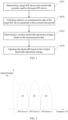
FIG. 1 is a schematic flowchart of some embodiments of a wireless bandwidth adjustment method according to the present disclosure. -
FIG. 2 is a schematic diagram of a bandwidth currently used by an IOT device related to some embodiments of a wireless bandwidth adjustment method according to the present disclosure. -
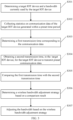
FIG. 3 is a schematic flowchart of some other embodiments of a wireless bandwidth adjustment method according to the present disclosure. -
FIG. 4 is a schematic diagram of a bandwidth currently used by a target IOT device related to some other embodiments of a wireless bandwidth adjustment method according to the present disclosure. -
FIG. 5 is a schematic diagram of extending a bandwidth currently used by a target IOT device related to some other embodiments of a wireless bandwidth adjustment method according to the present disclosure. -
FIG. 6 is a schematic diagram of narrowing a bandwidth currently used by a target IOT device related to some other embodiments of a wireless bandwidth adjustment method according to the present disclosure. -
FIG. 7 is a schematic structural diagram of some embodiments of a wireless bandwidth adjustment apparatus according to the present disclosure. -
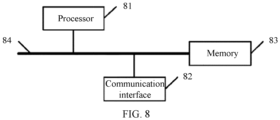
FIG. 8 is a schematic structural diagram of some embodiments of a terminal according to the present disclosure. - For clearer description of the objectives, technical solutions and advantages of embodiments of the present disclosure, the technical solutions in the embodiments of the present disclosure are clearly described below with reference to the accompanying drawings in the embodiments of the present disclosure. Apparently, the described embodiments are some rather than all of the embodiments of the present disclosure. All other embodiments obtained by a person of ordinary skill in the art based on the embodiments of the present disclosure without creative efforts shall fall within the protection scope of the present disclosure.
- Research has found that when communication is performed between a wireless access point (AP) and an IOT device based on a communication technology based on OFDMA, a bandwidth used by the IOT device needs to be dynamically adjusted.
- In view of this, the present disclosure provides a wireless bandwidth adjustment method and apparatus, a terminal, and a storage medium, which can improve stability of connection between an IOT device and AP.
- In the embodiments of the present disclosure, for a target IOT device, statistics on communication data of the target IOT device generated within a preset time period are collected, a wireless bandwidth adjustment strategy is determined based on the communication data of the target IOT device generated within the preset time period, and a bandwidth currently used by the target IOT device is further adjusted based on the wireless bandwidth adjustment strategy, to implement dynamic adjustment of a wireless bandwidth, improve stability of connection between an IOT device and an AP, and guarantee user experience.
- The following further describes the technical solutions provided in the embodiments of the present disclosure with reference to the accompanying drawings.
FIG. 1 is a schematic flowchart of some embodiments of a wireless bandwidth adjustment method according to the present disclosure. Referring toFIG. 1 , in some embodiments, the method may be applied to an AP, and specifically includes the following steps S101 to S104. - Step S101: Determining a target IOT device and a bandwidth currently used by the target IOT device.
- In the embodiments of the present disclosure, to adjust a bandwidth currently used by an IOT device, it is necessary to determine adjustment objects, namely the target IOT device, and the bandwidth currently used by the target IOT device, so that the bandwidth currently used by the target IOT device is subsequently adjusted.
- In the embodiments of the present disclosure, the target IOT device is any IOT device that has accessed the AP.
- For a target IOT device, in the embodiments of the present disclosure, the target IOT device is determined based on a specific strategy, for example, a randomized strategy, a polling strategy, or a user-defined strategy, and the embodiments of the present disclosure are not limited thereto.
- For the foregoing determined target IOT device, in some embodiments, a wireless bandwidth entry that matches the target IOT device is searched locally on the AP. A bandwidth currently used by the target IOT device is recorded in the wireless bandwidth entry, and then the bandwidth currently used by the target IOT device is determined based on the wireless bandwidth entry.
- For example, IOT devices that have accessed the AP include an
IOT device 1, anIOT device 2, anIOT device 3, and the like. The target IOT device (IOT device 1) is determined based on a randomized strategy. The AP locally stores awireless bandwidth entry 1 that matches theIOT device 1, awireless bandwidth entry 2 that matches theIOT device 2, and awireless bandwidth entry 3 that matches theIOT device 3. A bandwidth B1 currently used by theIOT device 1 is recorded in thewireless bandwidth entry 1, a bandwidth B2 currently used by theIOT device 2 is recorded in thewireless bandwidth entry 2, and a bandwidth B3 currently used by theIOT device 3 is recorded in thewireless bandwidth entry 3. As shown inFIG. 2 , the bandwidth B1 currently used by the target IOT device (IOT device 1) is determined. - Step S102: Collecting statistics on communication data of the target IOT device generated within a preset time period.
- In the embodiments of the present disclosure, for the target IOT device determined in the foregoing step, statistics on the communication data of the target IOT device generated within the preset time period are collected. In the embodiments of the present disclosure, the communication data of the target IOT device generated within the preset time period is communication data generated between the target IOT device and the AP within the preset time period.
- For example, for the target IOT device (IOT device 1), statistics on communication data of 1 MB (or 1 GB) generated between the target IOT device (IOT device 1) and the AP within the last 1 minute (or the last 1 hour) are collected.
- Step S103: Determining a wireless bandwidth adjustment strategy based on the communication data.
- In the embodiments of the present disclosure, the wireless bandwidth adjustment strategy is determined based on the statistics on the communication data that are collected in the foregoing step.
- For example, after the statistics on communication data of 1 MB (or 1 GB) generated between the target IOT device (IOT device 1) and the AP within the last 1 minute (or the last 1 hour) are collected, a wireless
bandwidth adjustment strategy 1 is determined based on the communication data of 1 MB (or 1 GB). - Step S104: Adjusting the bandwidth based on the wireless bandwidth adjustment strategy.
- In the embodiments of the present disclosure, the bandwidth currently used by the target IOT device is adjusted based on the wireless bandwidth adjustment strategy determined in the foregoing step.
- For example, the bandwidth currently used by the target IOT device (IOT device 1) is B1, and the bandwidth B1 currently used by the target IOT device (IOT device 1) is adjusted based on the wireless
bandwidth adjustment strategy 1 determined based on the foregoing communication data of 1 MB (or 1 GB). - Through the description of the technical solutions provided in the embodiments of the present disclosure, for a target IOT device, statistics on communication data generated within a preset time period are collected, a wireless bandwidth adjustment strategy is determined based on the communication data, and a bandwidth currently used by the target IOT device is adjusted based on the wireless bandwidth adjustment strategy, thereby implementing dynamic adjustment of a wireless bandwidth, further improving stability of connection between an IOT device and an AP, and guaranteeing user experience.
-
FIG. 3 is a schematic flowchart of some other embodiments of a wireless bandwidth adjustment method according to the present disclosure. The method specifically includes the following steps S301 to S307. - Step S301: Determining a target IOT device and a bandwidth currently used by the target IOT device.
- In the embodiments of the present disclosure, to adjust a bandwidth currently used by an IOT device, it is necessary to determine adjustment objects, namely the target IOT device, and the bandwidth currently used by the target IOT device, so that the bandwidth currently used by the target IOT device is subsequently adjusted.
- In the embodiments of the present disclosure, the target IOT device is an IOT device currently accessing an AP, that is, the IOT device currently accessing the AP is determined as the target IOT device.
- In the embodiments of the present disclosure, because the target IOT device is the IOT device currently accessing an AP, a bandwidth currently used by the IOT device is an initial bandwidth (or a default bandwidth) allocated by the AP for the IOT device. The IOT device uses the initial bandwidth (or the default bandwidth) to communicate with the AP.
- For example, for an
IOT device 2 currently accessing the AP, theIOT device 2 is determined as the target IOT device. Since an initial bandwidth allocated by the AP for theIOT device 2 is B0, the bandwidth currently used by the target IOT device (IOT device 2) is further determined as B0, as shown inFIG. 4 . - In some embodiments of the present disclosure, the bandwidth currently used by the target IOT device is a bandwidth included by a sub-channel, defined in an IEEE 802.11ax communication protocol, allocated by the AP for the target IOT device. In some other embodiments, the bandwidth currently used by the target IOT device is a bandwidth included by a sub-channel, defined in an IEEE 802.11a communication protocol, an IEEE 802.11g communication protocol, or the like, allocated by the AP for the target IOT device.
- For example, the bandwidth currently used by the target IOT device (IOT device 2) is a bandwidth B2 included by a
sub-channel 1, defined in an IEEE 802.11ax communication protocol, allocated by the AP for the target IOT device, as shown inFIG. 2 . - Step S302: Collecting statistics on communication data of the target IOT device generated within a preset time period.
- In the embodiments of the present disclosure, this step is similar to Step S102 in the embodiments illustrated in
FIG. 1 , and details are not described herein again. - Step S303: Determining a first transmission time corresponding to the communication data, where the first transmission time includes a time consumed by the target IOT device to transmit the communication data to an AP.
- In some embodiments, the communication data of the target IOT device generated within the preset time period is communication data generated between the target IOT device and the AP within the preset time period, and the first transmission time corresponding to the communication data is a time consumed by the target IOT device to transmit the communication data generated within the preset time period to the AP.
- For example, for the target IOT device (IOT device 2), statistics on communication data (1 MB) generated between the target IOT device (IOT device 2) and the AP within the last 1 minute are collected, and a time consumed by the target IOT device (IOT device 2) to transmit the communication data (1 MB) to the AP is T0. It can be determined that the first transmission time corresponding to the communication data is T0.
- Step S304: Obtaining a second transmission time, in the target Internet of Things device, for the target IOT device to transmit preset communication data.
- In the present invention, the second transmission time for transmitting preset communication data is locally stored on the target IOT device, and the second transmission time is used to indicate a time limit for the target IOT device to transmit a preset amount of communication data to the AP.
- For example, the second transmission time is recorded as T, which denotes a time limit for the target IOT device to transmit communication data of 1 MB to the AP. In an ideal case, to guarantee a utilization rate of a wireless bandwidth, a time for the target IOT device to transmit communication data of 1 MB to the AP is set to T. However, in an actual case, the time for the target IOT device to transmit communication data of 1 MB to the AP is greater than or less than T, which does not match the second transmission time.
- In the embodiments of the present disclosure, to implement dynamic adjustment of a wireless bandwidth, the second transmission time for the target IOT device to transmit preset communication data needs to be obtained from the target IOT device.
- Step S305: Comparing the first transmission time with the second transmission time.
- For the first transmission time, corresponding to the communication data, determined in the foregoing step, and the obtained second transmission time, the first transmission time is compared with the second transmission time .
- For the first transmission time T0, corresponding to the communication data, determined in the foregoing step, and the obtained second transmission time T, the first transmission time T0 is compared with the second transmission time T in the embodiments of the present disclosure.
- Step S306: Determining a wireless bandwidth adjustment strategy based on a comparison result.
- The wireless bandwidth adjustment strategy is determined based on a comparison result between the first transmission time and the second transmission time.
- If the first transmission time is greater than the second transmission time, it is determined that the wireless bandwidth adjustment strategy is a wireless bandwidth extending strategy.
- If the first transmission time T0 is greater than the second transmission time T, it is determined that the wireless bandwidth adjustment strategy is a wireless bandwidth extending strategy P1. The wireless bandwidth extending strategy P1 is as follows:

- B0 denotes a bandwidth currently used by a target IOT device, and F(T0&B0) denotes a function that meets a specific mathematical relation. For example, F(T0&B0) is ((T0+T)/T)*B0.
- The wireless bandwidth extending strategy is in another form, and the present disclosure is not limited thereto.
- In addition, if the first transmission time is less than the second transmission time, it is determined that the wireless bandwidth adjustment strategy is a wireless bandwidth narrowing strategy.
- If the first transmission time T0 is less than the second transmission time T, it is determined that the wireless bandwidth adjustment strategy is a wireless bandwidth narrowing strategy P2. The wireless bandwidth narrowing strategy P2 is as follows:

- B0 denotes a bandwidth currently used by a target IOT device, and F(T0&B0) denotes a function that meets a specific mathematical relation. For example, F(T0&B0) is ((T-T0)/T)*B0.
- The wireless bandwidth narrowing strategy is in another form, and the present disclosure is not limited thereto.
- If the first transmission time is equal to the second transmission time, the bandwidth currently used by the target IOT device does not need to be adjusted, and it may be determined that the bandwidth currently used by the target IOT device is a bandwidth suitable for the target IOT device.
- Step S307: Adjusting the bandwidth based on the wireless bandwidth adjustment strategy.
- In the present invention, for the wireless bandwidth adjustment strategy determined in the foregoing step, the bandwidth currently used by the target IOT device may be adjusted based on the wireless bandwidth adjustment strategy.
- Specifically, if the wireless bandwidth adjustment strategy is the wireless bandwidth extending strategy, the bandwidth currently used by the target IOT device is widened based on the wireless bandwidth extending strategy, and the target IOT device subsequently uses a widened bandwidth to communication.
- For example, the bandwidth currently used by the target IOT device (IOT device 2) is B0, and the wireless bandwidth adjustment strategy is the wireless bandwidth extending strategy. The bandwidth B0 currently used by the target IOT device (IOT device 2) is widened based on the wireless bandwidth extending strategy, and the widened bandwidth used by the target IOT device (IOT device 2) is B1, as shown in
FIG. 5 . - If the wireless bandwidth adjustment strategy is the wireless bandwidth narrowing strategy, the bandwidth currently used by the target IOT device is narrowed based on the wireless bandwidth narrowing strategy, and the target IOT device subsequently uses a narrowed bandwidth to communication.
- For example, the bandwidth currently used by the target IOT device (IOT device 2) is B0, and the wireless bandwidth adjustment strategy is the wireless bandwidth narrowing strategy. The bandwidth B0 currently used by the target IOT device (IOT device 2) is narrowed based on the wireless bandwidth narrowing strategy, and the narrowed bandwidth used by the target IOT device (IOT device 2) is B2, as shown in
FIG. 6 . - In correspondence to the foregoing method embodiments, an embodiment of the present disclosure further provides a wireless bandwidth adjustment apparatus. As shown in
FIG. 7 , the apparatus includes a device-and-bandwidth determining module 710, adata statistics module 720, astrategy determining module 730, and abandwidth adjusting module 740. - The device-and-
bandwidth determining module 710 is configured to determine a target IOT device and a bandwidth currently used by the target IOT device. Thedata statistics module 720 is configured to collect statistics on communication data of the target IOT device generated within a preset time period. Thestrategy determining module 730 is configured to determine a wireless bandwidth adjustment strategy based on the communication data. Thebandwidth adjusting module 740 is configured to adjust the bandwidth based on the wireless bandwidth adjustment strategy. - In some embodiments of the present disclosure, the
strategy determining module 730 is specifically configured to: determine a first transmission time corresponding to the communication data, where the first transmission time includes a time consumed by the target IOT device to transmit the communication data to an AP; obtain a second transmission time, in the target IOT device, for the target IOT device to transmit preset communication data; compare the first transmission time with the second transmission time; and determine the wireless bandwidth adjustment strategy based on a comparison result. - An embodiment of the present disclosure further provides a terminal. As shown in
FIG. 8 , the terminal includes aprocessor 81, acommunication interface 82, amemory 83, and acommunication bus 84. Theprocessor 81, thecommunication interface 82, and thememory 83 complete communication with each other by using thecommunication bus 84. Thememory 83 is configured to store a computer program. Theprocessor 81 is configured to execute the computer program stored in thememory 83, to implement any one of the foregoing wireless bandwidth adjustment methods, for example, implement the following steps: determining a target IOT device and a bandwidth currently used by the target IOT device; collecting statistics on communication data of the target IOT device generated within a preset time period; determining a wireless bandwidth adjustment strategy based on the communication data; and adjusting the bandwidth based on the wireless bandwidth adjustment strategy. - In some embodiments, the communication bus is a Peripheral Component Interconnect (PCI) bus, an Extended Industry Standard Architecture (EISA) bus, or the like. The communication bus includes an address bus, a data bus, a control bus, and the like. For ease of representation, only one bold line is used to represent the bus in this figure, but this does not mean that there is only one bus or one type of bus.
- The communication interface is used for communication between the foregoing terminal and another device.
- In some embodiments, the memory includes a Random Access Memory (RAM). In some embodiments, the memory includes a non-volatile memory, for example, at least one magnetic disk storage. In some other embodiments, the memory is at least one storage apparatus located away from the processor.
- In some embodiments, the processor is a general-purpose processor, including a Central Processing Unit (CPU), a Network Processor (NP), and the like. In some embodiments, the processor may be a Digital Signal Processor (DSP), an Application-Specific Integrated Circuit (ASIC), a Field-Programmable Gate Array (FPGA) or another programmable logic component, a discrete gate or a transistor logic component, or a discrete hardware component.
- An embodiment of the present disclosure further provides a storage medium storing a computer program. When the computer program is executed by a processor, any one of the foregoing wireless bandwidth adjustment method embodiments is implemented.
- All or some of the foregoing embodiments may be implemented by means of software, hardware, firmware, or any combination thereof. When being implemented by using software, all or some of the embodiments may be implemented in a form of a computer program product. The computer program product includes one or more computer instructions. When the computer program instructions are loaded and executed on the computer, the procedures or functions described in the embodiments of the present disclosure are generated in whole or in part. The computer may be a general-purpose computer, a special-purpose computer, a computer network, or another programmable apparatus. The computer instructions may be stored in a storage medium or transmitted from one storage medium to another storage medium. For example, the computer instructions may be transmitted from a website, a computer, a server, or a data center to another website, computer, server or data center via a wired (such as a coaxial cable, an optical fiber and a Digital Subscriber Line (DSL)) manner or a wireless (such as infrared, wireless and microwave) manner. The storage medium may be any usable medium that can be accessed by a computer or a data storage device such as a server or data center integrated with one or more available mediums. The usable medium may be a magnetic medium (for example, a floppy disk, a hard disk, or a magnetic tape), an optical medium (for example, a DVD), a semiconductor medium (for example, a Solid State Disk (SSD)), or the like.
- It should further be noted that in this specification, relational terms such as "first" and "second" are only used to distinguish one entity or operation from another, and do not necessarily require or imply that any actual relationship or sequence exists between these entities or operations. In addition, the terms "comprise", "include" and any other variants thereof are intended to cover non-exclusive inclusion, so that a process, a method, an article, or a device that includes a series of elements not only includes these very elements, but may also include other elements not expressly listed, or also include elements inherent to this process, method, article, or device. Without being subject to further limitations, an element defined by a phrase "including one..." does not exclude presence of other identical elements in the process, method, article, or terminal device that includes the element.
Claims (7)
- A wireless bandwidth adjustment method, characterized by, comprising:determining (S101) a target Internet of Things device and a bandwidth currently used by the target Internet of Things device;collecting (S102) statistics on communication data of the target Internet of Things device generated within a preset time period;determining (S103) a wireless bandwidth adjustment strategy based on the statistics on the communication data; andadjusting (S104) the bandwidth based on the wireless bandwidth adjustment strategy,wherein the determining (S103) a wireless bandwidth adjustment strategy based on the statistics on the communication data comprises:determining (S303) a first transmission time corresponding to the communication data, wherein the first transmission time comprises a time consumed by the target Internet of Things device to transmit the communication data to a wireless access point;obtaining (S304) a second transmission time, in the target Internet of Things device, for the target Internet of Things device to transmit a preset amount of communication data, the second transmission time being used to indicate a time limit for the target Internet of Things device to transmit the preset amount of communication data to the wireless access point;comparing (S305) the first transmission time with the second transmission time; anddetermining (S306) the wireless bandwidth adjustment strategy based on a comparison result,wherein the determining (S306) the wireless bandwidth adjustment strategy based on a comparison result comprises:if the first transmission time is greater than the second transmission time, determining that the wireless bandwidth adjustment strategy is a wireless bandwidth extending strategy,wherein the adjusting the bandwidth based on the wireless bandwidth adjustment strategy comprises:extending the bandwidth based on the wireless bandwidth extending strategy, andthe wireless bandwidth extending strategy is as follows:

 wherein B0 denotes the bandwidth currently used by the target Internet of Things device; T0 denotes the first transmission time; T denotes the second transmission time,wherein the determining (S306) the wireless bandwidth adjustment strategy based on a comparison result comprises:if the first transmission time is less than the second transmission time, determining that the wireless bandwidth adjustment strategy is a wireless bandwidth narrowing strategy,wherein the adjusting the bandwidth based on the wireless bandwidth adjustment strategy comprises:narrowing the bandwidth based on the wireless bandwidth narrowing strategy, andthe wireless bandwidth narrowing strategy is as follows:
 wherein B0 denotes the bandwidth currently used by the target Internet of Things device; T0 denotes the first transmission time; T denotes the second transmission time.
 - The method according to claim 1, wherein the bandwidth comprises:
a bandwidth included by a sub-channel, defined in an IEEE 802.11ax communication protocol, allocated by a wireless access point for the target Internet of Things device. - The method according to claim 1 or 2, wherein the determining a target Internet of Things device comprises:determining an Internet of Things device currently accessing a wireless access point; anddetermining the Internet of Things device as the target Internet of Things device.
- A wireless bandwidth adjustment apparatus, characterized by, comprising:a device-and-bandwidth determining module (710), configured to determine a target Internet of Things device and a bandwidth currently used by the target Internet of Things device;a data statistics module (720), configured to collect statistics on communication data of the target Internet of Things device generated within a preset time period;a strategy determining module (730), configured to determine a wireless bandwidth adjustment strategy based on the statistics on the communication data; anda bandwidth adjusting module (740), configured to adjust the bandwidth based on the wireless bandwidth adjustment strategy,wherein the determine a wireless bandwidth adjustment strategy based on the statistics on the communication data comprises:determining a first transmission time corresponding to the communication data, wherein the first transmission time comprises a time consumed by the target Internet of Things device to transmit the communication data to a wireless access point;obtaining a second transmission time, in the target Internet of Things device, for the target Internet of Things device to transmit preset communication data, the second transmission time being used to indicate a time limit for the target Internet of Things device to transmit the preset amount of communication data to the wireless access point;comparing the first transmission time with the second transmission time; anddetermining the wireless bandwidth adjustment strategy based on a comparison result,wherein the determining the wireless bandwidth adjustment strategy based on a comparison result comprises:if the first transmission time is greater than the second transmission time, determining that the wireless bandwidth adjustment strategy is a wireless bandwidth extending strategy,wherein the adjust the bandwidth based on the wireless bandwidth adjustment strategy comprises:extending the bandwidth based on the wireless bandwidth extending strategy, andthe wireless bandwidth extending strategy is as follows:

 wherein B0 denotes the bandwidth currently used by the target Internet of Things device; T0 denotes the first transmission time; T denotes the second transmission time,wherein the determining the wireless bandwidth adjustment strategy based on a comparison result comprises:if the first transmission time is less than the second transmission time, determining that the wireless bandwidth adjustment strategy is a wireless bandwidth narrowing strategy,wherein the adjust the bandwidth based on the wireless bandwidth adjustment strategy comprises:narrowing the bandwidth based on the wireless bandwidth narrowing strategy, andthe wireless bandwidth narrowing strategy is as follows:
 wherein B0 denotes the bandwidth currently used by the target Internet of Things device; T0 denotes the first transmission time; T denotes the second transmission time.
 - The apparatus according to claim 4, wherein the bandwidth comprises:
a bandwidth included by a sub-channel, defined in an IEEE 802.11ax communication protocol, allocated by a wireless access point for the target Internet of Things device. - A terminal, characterized by, comprising: a processor (81), a communication interface (82), a memory (83), and a communication bus (84), wherein the processor (81), the communication interface (82), and the memory (83) complete communication with each other by using the communication bus (84), the memory (83) is configured to store a computer program, and the processor (81) is configured to execute the computer program stored in the memory (83), to implement the wireless bandwidth adjustment method according to any one of claims 1 to 3.
- A storage medium storing a computer program, characterized in that, when the computer program is executed by a processor, the wireless bandwidth adjustment method according to any one of claims 1 to 3 is implemented.
Applications Claiming Priority (2)
| Application Number | Priority Date | Filing Date | Title |
|---|---|---|---|
| CN201911002689.0A CN110996353A (en) | 2019-10-21 | 2019-10-21 | Wireless bandwidth adjusting method, device, terminal and storage medium |
| PCT/CN2019/127512 WO2021077597A1 (en) | 2019-10-21 | 2019-12-23 | Wireless bandwidth adjustment method and apparatus, and terminal and storage medium |
Publications (3)
| Publication Number | Publication Date |
|---|---|
| EP4050935A1 EP4050935A1 (en) | 2022-08-31 |
| EP4050935A4 EP4050935A4 (en) | 2022-11-30 |
| EP4050935B1 true EP4050935B1 (en) | 2025-02-26 |
Family
ID=70082221
Family Applications (1)
| Application Number | Title | Priority Date | Filing Date |
|---|---|---|---|
| EP19949803.1A Active EP4050935B1 (en) | 2019-10-21 | 2019-12-23 | Wireless bandwidth adjustment method and apparatus, and terminal and storage medium |
Country Status (4)
| Country | Link |
|---|---|
| US (1) | US12127043B2 (en) |
| EP (1) | EP4050935B1 (en) |
| CN (1) | CN110996353A (en) |
| WO (1) | WO2021077597A1 (en) |
Family Cites Families (8)
| Publication number | Priority date | Publication date | Assignee | Title |
|---|---|---|---|---|
| US9756131B2 (en) * | 2013-10-01 | 2017-09-05 | Verizon Deutschland Gmbh | Label for use in the internet of things |
| CN106412628B (en) * | 2015-07-30 | 2020-07-24 | 华为技术有限公司 | Bandwidth adjusting method and related equipment |
| US10069751B2 (en) * | 2015-11-03 | 2018-09-04 | International Business Machines Corporation | On-demand IOT bandwidth allocation in response to a changing sensor population |
| US10680785B2 (en) * | 2017-03-31 | 2020-06-09 | Apple Inc. | Extending narrow band monitoring |
| CN107623643B (en) * | 2017-09-22 | 2021-10-08 | 深圳市盛路物联通讯技术有限公司 | Data packet forwarding method and device |
| CN109962856B (en) * | 2017-12-26 | 2022-07-12 | 中国电信股份有限公司 | Resource allocation method, device and computer readable storage medium |
| CN108848536B (en) * | 2018-06-27 | 2023-06-06 | 新华三技术有限公司 | Bandwidth control method and device and communication equipment |
| US11770740B2 (en) * | 2019-07-02 | 2023-09-26 | Cisco Technology, Inc. | Automatic classification and enforcement of low-bandwidth internet of things (IoT) devices |
-
2019
- 2019-10-21 CN CN201911002689.0A patent/CN110996353A/en active Pending
- 2019-12-23 WO PCT/CN2019/127512 patent/WO2021077597A1/en not_active Ceased
- 2019-12-23 EP EP19949803.1A patent/EP4050935B1/en active Active
-
2022
- 2022-04-14 US US17/720,593 patent/US12127043B2/en active Active
Also Published As
| Publication number | Publication date |
|---|---|
| EP4050935A4 (en) | 2022-11-30 |
| US20220240125A1 (en) | 2022-07-28 |
| CN110996353A (en) | 2020-04-10 |
| EP4050935A1 (en) | 2022-08-31 |
| WO2021077597A1 (en) | 2021-04-29 |
| US12127043B2 (en) | 2024-10-22 |
Similar Documents
| Publication | Publication Date | Title |
|---|---|---|
| CN104040912B (en) | Device and method supporting simultaneous data transmission service over multiple networks | |
| WO2004077225A2 (en) | Quality of service differentiation in wireless networks | |
| CN114205316A (en) | Network slice resource allocation method and device based on power service | |
| CN108040358A (en) | Wireless network connection method, terminal device and storage medium | |
| WO2021143901A1 (en) | Quasi-co-location information obtaining method, communication node, and storage medium | |
| WO2018094654A1 (en) | Vpn transmission tunnel scheduling method and device, and vpn client-end server | |
| CN112868265A (en) | Network resource management method, management device, electronic device and storage medium | |
| EP1861958A1 (en) | MEASURING AND MONITORING QoS IN SERVICE DIFFERENTIATED WIRELESS NETWORKS | |
| WO2013178177A2 (en) | Ue type report and resource allocation method and device, ue and base station | |
| CN114286447B (en) | Scheduling priority adjustment method, equipment and storage medium | |
| CN110677684A (en) | Video processing method, video access method, distributed storage method and distributed video access system | |
| US20260113774A1 (en) | Method for application control and adaptive quality of service (qos) handling | |
| CN109041236B (en) | Method and device for allocating radio resources for services with different weights | |
| CN116015583A (en) | AP channel automatic adjustment method, device, equipment and medium | |
| CN112492635B (en) | Method and device for determining scheduling priority | |
| US12127043B2 (en) | Wireless bandwidth adjustment method and apparatus, terminal and storage medium | |
| US12439436B1 (en) | Wireless channel control using client feedback | |
| CN117640643A (en) | Back-to-origin node selection methods, devices, equipment and media | |
| CN111885625B (en) | Method and device for determining resource utilization rate | |
| CN116962258A (en) | A bandwidth detection method, device, system, equipment and storage medium | |
| CN114339980A (en) | Method, device, unit, equipment and storage medium for synchronizing downlink data | |
| JP2004280407A (en) | Information transfer device | |
| CN115460637B (en) | Resource load determining method, device and storage medium | |
| CN111970073A (en) | Method and device for determining network load state | |
| CN112685455B (en) | Real-time data classification display method and device, electronic equipment and readable medium |
Legal Events
| Date | Code | Title | Description |
|---|---|---|---|
| STAA | Information on the status of an ep patent application or granted ep patent |
Free format text: STATUS: THE INTERNATIONAL PUBLICATION HAS BEEN MADE |
|
| PUAI | Public reference made under article 153(3) epc to a published international application that has entered the european phase |
Free format text: ORIGINAL CODE: 0009012 |
|
| STAA | Information on the status of an ep patent application or granted ep patent |
Free format text: STATUS: REQUEST FOR EXAMINATION WAS MADE |
|
| 17P | Request for examination filed |
Effective date: 20220421 |
|
| AK | Designated contracting states |
Kind code of ref document: A1 Designated state(s): AL AT BE BG CH CY CZ DE DK EE ES FI FR GB GR HR HU IE IS IT LI LT LU LV MC MK MT NL NO PL PT RO RS SE SI SK SM TR |
|
| A4 | Supplementary search report drawn up and despatched |
Effective date: 20221103 |
|
| RIC1 | Information provided on ipc code assigned before grant |
Ipc: H04W 72/04 20090101ALI20221027BHEP Ipc: H04W 4/70 20180101ALI20221027BHEP Ipc: H04W 28/20 20090101AFI20221027BHEP |
|
| DAV | Request for validation of the european patent (deleted) | ||
| DAX | Request for extension of the european patent (deleted) | ||
| STAA | Information on the status of an ep patent application or granted ep patent |
Free format text: STATUS: EXAMINATION IS IN PROGRESS |
|
| P01 | Opt-out of the competence of the unified patent court (upc) registered |
Effective date: 20230530 |
|
| 17Q | First examination report despatched |
Effective date: 20230629 |
|
| REG | Reference to a national code |
Ref country code: DE Ref legal event code: R079 Free format text: PREVIOUS MAIN CLASS: H04W0028200000 Ipc: H04W0072045300 Ref country code: DE Ref legal event code: R079 Ref document number: 602019066702 Country of ref document: DE Free format text: PREVIOUS MAIN CLASS: H04W0028200000 Ipc: H04W0072045300 |
|
| GRAP | Despatch of communication of intention to grant a patent |
Free format text: ORIGINAL CODE: EPIDOSNIGR1 |
|
| STAA | Information on the status of an ep patent application or granted ep patent |
Free format text: STATUS: GRANT OF PATENT IS INTENDED |
|
| RIC1 | Information provided on ipc code assigned before grant |
Ipc: H04W 28/20 20090101ALI20241023BHEP Ipc: H04W 24/08 20090101ALI20241023BHEP Ipc: H04W 72/0453 20230101AFI20241023BHEP |
|
| INTG | Intention to grant announced |
Effective date: 20241113 |
|
| GRAS | Grant fee paid |
Free format text: ORIGINAL CODE: EPIDOSNIGR3 |
|
| GRAA | (expected) grant |
Free format text: ORIGINAL CODE: 0009210 |
|
| STAA | Information on the status of an ep patent application or granted ep patent |
Free format text: STATUS: THE PATENT HAS BEEN GRANTED |
|
| AK | Designated contracting states |
Kind code of ref document: B1 Designated state(s): AL AT BE BG CH CY CZ DE DK EE ES FI FR GB GR HR HU IE IS IT LI LT LU LV MC MK MT NL NO PL PT RO RS SE SI SK SM TR |
|
| REG | Reference to a national code |
Ref country code: GB Ref legal event code: FG4D |
|
| REG | Reference to a national code |
Ref country code: CH Ref legal event code: EP |
|
| REG | Reference to a national code |
Ref country code: DE Ref legal event code: R096 Ref document number: 602019066702 Country of ref document: DE |
|
| REG | Reference to a national code |
Ref country code: IE Ref legal event code: FG4D |
|
| REG | Reference to a national code |
Ref country code: NL Ref legal event code: MP Effective date: 20250226 |
|
| PG25 | Lapsed in a contracting state [announced via postgrant information from national office to epo] |
Ref country code: RS Free format text: LAPSE BECAUSE OF FAILURE TO SUBMIT A TRANSLATION OF THE DESCRIPTION OR TO PAY THE FEE WITHIN THE PRESCRIBED TIME-LIMIT Effective date: 20250526 |
|
| PG25 | Lapsed in a contracting state [announced via postgrant information from national office to epo] |
Ref country code: FI Free format text: LAPSE BECAUSE OF FAILURE TO SUBMIT A TRANSLATION OF THE DESCRIPTION OR TO PAY THE FEE WITHIN THE PRESCRIBED TIME-LIMIT Effective date: 20250226 |
|
| PG25 | Lapsed in a contracting state [announced via postgrant information from national office to epo] |
Ref country code: PL Free format text: LAPSE BECAUSE OF FAILURE TO SUBMIT A TRANSLATION OF THE DESCRIPTION OR TO PAY THE FEE WITHIN THE PRESCRIBED TIME-LIMIT Effective date: 20250226 |
|
| PG25 | Lapsed in a contracting state [announced via postgrant information from national office to epo] |
Ref country code: ES Free format text: LAPSE BECAUSE OF FAILURE TO SUBMIT A TRANSLATION OF THE DESCRIPTION OR TO PAY THE FEE WITHIN THE PRESCRIBED TIME-LIMIT Effective date: 20250226 |
|
| REG | Reference to a national code |
Ref country code: LT Ref legal event code: MG9D |
|
| PG25 | Lapsed in a contracting state [announced via postgrant information from national office to epo] |
Ref country code: NO Free format text: LAPSE BECAUSE OF FAILURE TO SUBMIT A TRANSLATION OF THE DESCRIPTION OR TO PAY THE FEE WITHIN THE PRESCRIBED TIME-LIMIT Effective date: 20250526 Ref country code: IS Free format text: LAPSE BECAUSE OF FAILURE TO SUBMIT A TRANSLATION OF THE DESCRIPTION OR TO PAY THE FEE WITHIN THE PRESCRIBED TIME-LIMIT Effective date: 20250626 |
|
| PG25 | Lapsed in a contracting state [announced via postgrant information from national office to epo] |
Ref country code: NL Free format text: LAPSE BECAUSE OF FAILURE TO SUBMIT A TRANSLATION OF THE DESCRIPTION OR TO PAY THE FEE WITHIN THE PRESCRIBED TIME-LIMIT Effective date: 20250226 |
|
| PG25 | Lapsed in a contracting state [announced via postgrant information from national office to epo] |
Ref country code: HR Free format text: LAPSE BECAUSE OF FAILURE TO SUBMIT A TRANSLATION OF THE DESCRIPTION OR TO PAY THE FEE WITHIN THE PRESCRIBED TIME-LIMIT Effective date: 20250226 |
|
| PG25 | Lapsed in a contracting state [announced via postgrant information from national office to epo] |
Ref country code: LV Free format text: LAPSE BECAUSE OF FAILURE TO SUBMIT A TRANSLATION OF THE DESCRIPTION OR TO PAY THE FEE WITHIN THE PRESCRIBED TIME-LIMIT Effective date: 20250226 Ref country code: PT Free format text: LAPSE BECAUSE OF FAILURE TO SUBMIT A TRANSLATION OF THE DESCRIPTION OR TO PAY THE FEE WITHIN THE PRESCRIBED TIME-LIMIT Effective date: 20250626 |
|
| PG25 | Lapsed in a contracting state [announced via postgrant information from national office to epo] |
Ref country code: BG Free format text: LAPSE BECAUSE OF FAILURE TO SUBMIT A TRANSLATION OF THE DESCRIPTION OR TO PAY THE FEE WITHIN THE PRESCRIBED TIME-LIMIT Effective date: 20250226 Ref country code: GR Free format text: LAPSE BECAUSE OF FAILURE TO SUBMIT A TRANSLATION OF THE DESCRIPTION OR TO PAY THE FEE WITHIN THE PRESCRIBED TIME-LIMIT Effective date: 20250527 |
|
| REG | Reference to a national code |
Ref country code: AT Ref legal event code: MK05 Ref document number: 1771918 Country of ref document: AT Kind code of ref document: T Effective date: 20250226 |
|
| PG25 | Lapsed in a contracting state [announced via postgrant information from national office to epo] |
Ref country code: SE Free format text: LAPSE BECAUSE OF FAILURE TO SUBMIT A TRANSLATION OF THE DESCRIPTION OR TO PAY THE FEE WITHIN THE PRESCRIBED TIME-LIMIT Effective date: 20250226 |
|
| PG25 | Lapsed in a contracting state [announced via postgrant information from national office to epo] |
Ref country code: SM Free format text: LAPSE BECAUSE OF FAILURE TO SUBMIT A TRANSLATION OF THE DESCRIPTION OR TO PAY THE FEE WITHIN THE PRESCRIBED TIME-LIMIT Effective date: 20250226 |
|
| PG25 | Lapsed in a contracting state [announced via postgrant information from national office to epo] |
Ref country code: DK Free format text: LAPSE BECAUSE OF FAILURE TO SUBMIT A TRANSLATION OF THE DESCRIPTION OR TO PAY THE FEE WITHIN THE PRESCRIBED TIME-LIMIT Effective date: 20250226 |
|
| PG25 | Lapsed in a contracting state [announced via postgrant information from national office to epo] |
Ref country code: IT Free format text: LAPSE BECAUSE OF FAILURE TO SUBMIT A TRANSLATION OF THE DESCRIPTION OR TO PAY THE FEE WITHIN THE PRESCRIBED TIME-LIMIT Effective date: 20250226 |
|
| PG25 | Lapsed in a contracting state [announced via postgrant information from national office to epo] |
Ref country code: AT Free format text: LAPSE BECAUSE OF FAILURE TO SUBMIT A TRANSLATION OF THE DESCRIPTION OR TO PAY THE FEE WITHIN THE PRESCRIBED TIME-LIMIT Effective date: 20250226 |
|
| PG25 | Lapsed in a contracting state [announced via postgrant information from national office to epo] |
Ref country code: CZ Free format text: LAPSE BECAUSE OF FAILURE TO SUBMIT A TRANSLATION OF THE DESCRIPTION OR TO PAY THE FEE WITHIN THE PRESCRIBED TIME-LIMIT Effective date: 20250226 Ref country code: EE Free format text: LAPSE BECAUSE OF FAILURE TO SUBMIT A TRANSLATION OF THE DESCRIPTION OR TO PAY THE FEE WITHIN THE PRESCRIBED TIME-LIMIT Effective date: 20250226 |
|
| PG25 | Lapsed in a contracting state [announced via postgrant information from national office to epo] |
Ref country code: RO Free format text: LAPSE BECAUSE OF FAILURE TO SUBMIT A TRANSLATION OF THE DESCRIPTION OR TO PAY THE FEE WITHIN THE PRESCRIBED TIME-LIMIT Effective date: 20250226 |
|
| PG25 | Lapsed in a contracting state [announced via postgrant information from national office to epo] |
Ref country code: SK Free format text: LAPSE BECAUSE OF FAILURE TO SUBMIT A TRANSLATION OF THE DESCRIPTION OR TO PAY THE FEE WITHIN THE PRESCRIBED TIME-LIMIT Effective date: 20250226 |
|
| REG | Reference to a national code |
Ref country code: DE Ref legal event code: R097 Ref document number: 602019066702 Country of ref document: DE |
|
| PLBE | No opposition filed within time limit |
Free format text: ORIGINAL CODE: 0009261 |
|
| STAA | Information on the status of an ep patent application or granted ep patent |
Free format text: STATUS: NO OPPOSITION FILED WITHIN TIME LIMIT |
|
| PGFP | Annual fee paid to national office [announced via postgrant information from national office to epo] |
Ref country code: GB Payment date: 20251229 Year of fee payment: 7 |
|
| PGFP | Annual fee paid to national office [announced via postgrant information from national office to epo] |
Ref country code: FR Payment date: 20251230 Year of fee payment: 7 |
|
| 26N | No opposition filed |
Effective date: 20251127 |
|
| PGFP | Annual fee paid to national office [announced via postgrant information from national office to epo] |
Ref country code: DE Payment date: 20251231 Year of fee payment: 7 |