EP4050196B1 - Inertial particle separator for a turbine section of a gas turbine engine - Google Patents
Inertial particle separator for a turbine section of a gas turbine engine Download PDFInfo
- Publication number
- EP4050196B1 EP4050196B1 EP22156446.1A EP22156446A EP4050196B1 EP 4050196 B1 EP4050196 B1 EP 4050196B1 EP 22156446 A EP22156446 A EP 22156446A EP 4050196 B1 EP4050196 B1 EP 4050196B1
- Authority
- EP
- European Patent Office
- Prior art keywords
- baffle
- cavity
- rotor
- gas turbine
- turbine engine
- Prior art date
- Legal status (The legal status is an assumption and is not a legal conclusion. Google has not performed a legal analysis and makes no representation as to the accuracy of the status listed.)
- Active
Links
Images




Classifications
-
- F—MECHANICAL ENGINEERING; LIGHTING; HEATING; WEAPONS; BLASTING
- F01—MACHINES OR ENGINES IN GENERAL; ENGINE PLANTS IN GENERAL; STEAM ENGINES
- F01D—NON-POSITIVE DISPLACEMENT MACHINES OR ENGINES, e.g. STEAM TURBINES
- F01D5/00—Blades; Blade-carrying members; Heating, heat-insulating, cooling or antivibration means on the blades or the members
- F01D5/02—Blade-carrying members, e.g. rotors
-
- F—MECHANICAL ENGINEERING; LIGHTING; HEATING; WEAPONS; BLASTING
- F02—COMBUSTION ENGINES; HOT-GAS OR COMBUSTION-PRODUCT ENGINE PLANTS
- F02C—GAS-TURBINE PLANTS; AIR INTAKES FOR JET-PROPULSION PLANTS; CONTROLLING FUEL SUPPLY IN AIR-BREATHING JET-PROPULSION PLANTS
- F02C7/00—Features, components parts, details or accessories, not provided for in, or of interest apart form groups F02C1/00 - F02C6/00; Air intakes for jet-propulsion plants
- F02C7/04—Air intakes for gas-turbine plants or jet-propulsion plants
- F02C7/05—Air intakes for gas-turbine plants or jet-propulsion plants having provisions for obviating the penetration of damaging objects or particles
- F02C7/052—Air intakes for gas-turbine plants or jet-propulsion plants having provisions for obviating the penetration of damaging objects or particles with dust-separation devices
-
- F—MECHANICAL ENGINEERING; LIGHTING; HEATING; WEAPONS; BLASTING
- F01—MACHINES OR ENGINES IN GENERAL; ENGINE PLANTS IN GENERAL; STEAM ENGINES
- F01D—NON-POSITIVE DISPLACEMENT MACHINES OR ENGINES, e.g. STEAM TURBINES
- F01D25/00—Component parts, details, or accessories, not provided for in, or of interest apart from, other groups
- F01D25/08—Cooling; Heating; Heat-insulation
- F01D25/14—Casings modified therefor
-
- F—MECHANICAL ENGINEERING; LIGHTING; HEATING; WEAPONS; BLASTING
- F01—MACHINES OR ENGINES IN GENERAL; ENGINE PLANTS IN GENERAL; STEAM ENGINES
- F01D—NON-POSITIVE DISPLACEMENT MACHINES OR ENGINES, e.g. STEAM TURBINES
- F01D25/00—Component parts, details, or accessories, not provided for in, or of interest apart from, other groups
- F01D25/32—Collecting of condensation water; Drainage ; Removing solid particles
-
- F—MECHANICAL ENGINEERING; LIGHTING; HEATING; WEAPONS; BLASTING
- F01—MACHINES OR ENGINES IN GENERAL; ENGINE PLANTS IN GENERAL; STEAM ENGINES
- F01D—NON-POSITIVE DISPLACEMENT MACHINES OR ENGINES, e.g. STEAM TURBINES
- F01D5/00—Blades; Blade-carrying members; Heating, heat-insulating, cooling or antivibration means on the blades or the members
- F01D5/02—Blade-carrying members, e.g. rotors
- F01D5/06—Rotors for more than one axial stage, e.g. of drum or multiple disc type; Details thereof, e.g. shafts, shaft connections
-
- F—MECHANICAL ENGINEERING; LIGHTING; HEATING; WEAPONS; BLASTING
- F01—MACHINES OR ENGINES IN GENERAL; ENGINE PLANTS IN GENERAL; STEAM ENGINES
- F01D—NON-POSITIVE DISPLACEMENT MACHINES OR ENGINES, e.g. STEAM TURBINES
- F01D5/00—Blades; Blade-carrying members; Heating, heat-insulating, cooling or antivibration means on the blades or the members
- F01D5/02—Blade-carrying members, e.g. rotors
- F01D5/08—Heating, heat-insulating or cooling means
- F01D5/081—Cooling fluid being directed on the side of the rotor disc or at the roots of the blades
- F01D5/082—Cooling fluid being directed on the side of the rotor disc or at the roots of the blades on the side of the rotor disc
-
- B—PERFORMING OPERATIONS; TRANSPORTING
- B01—PHYSICAL OR CHEMICAL PROCESSES OR APPARATUS IN GENERAL
- B01D—SEPARATION
- B01D45/00—Separating dispersed particles from gases or vapours by gravity, inertia, or centrifugal forces
- B01D45/04—Separating dispersed particles from gases or vapours by gravity, inertia, or centrifugal forces by utilising inertia
-
- F—MECHANICAL ENGINEERING; LIGHTING; HEATING; WEAPONS; BLASTING
- F01—MACHINES OR ENGINES IN GENERAL; ENGINE PLANTS IN GENERAL; STEAM ENGINES
- F01D—NON-POSITIVE DISPLACEMENT MACHINES OR ENGINES, e.g. STEAM TURBINES
- F01D5/00—Blades; Blade-carrying members; Heating, heat-insulating, cooling or antivibration means on the blades or the members
- F01D5/02—Blade-carrying members, e.g. rotors
- F01D5/08—Heating, heat-insulating or cooling means
- F01D5/081—Cooling fluid being directed on the side of the rotor disc or at the roots of the blades
-
- F—MECHANICAL ENGINEERING; LIGHTING; HEATING; WEAPONS; BLASTING
- F01—MACHINES OR ENGINES IN GENERAL; ENGINE PLANTS IN GENERAL; STEAM ENGINES
- F01D—NON-POSITIVE DISPLACEMENT MACHINES OR ENGINES, e.g. STEAM TURBINES
- F01D5/00—Blades; Blade-carrying members; Heating, heat-insulating, cooling or antivibration means on the blades or the members
- F01D5/02—Blade-carrying members, e.g. rotors
- F01D5/08—Heating, heat-insulating or cooling means
- F01D5/085—Heating, heat-insulating or cooling means cooling fluid circulating inside the rotor
-
- F—MECHANICAL ENGINEERING; LIGHTING; HEATING; WEAPONS; BLASTING
- F01—MACHINES OR ENGINES IN GENERAL; ENGINE PLANTS IN GENERAL; STEAM ENGINES
- F01D—NON-POSITIVE DISPLACEMENT MACHINES OR ENGINES, e.g. STEAM TURBINES
- F01D5/00—Blades; Blade-carrying members; Heating, heat-insulating, cooling or antivibration means on the blades or the members
- F01D5/02—Blade-carrying members, e.g. rotors
- F01D5/08—Heating, heat-insulating or cooling means
- F01D5/085—Heating, heat-insulating or cooling means cooling fluid circulating inside the rotor
- F01D5/087—Heating, heat-insulating or cooling means cooling fluid circulating inside the rotor in the radial passages of the rotor disc
-
- F—MECHANICAL ENGINEERING; LIGHTING; HEATING; WEAPONS; BLASTING
- F05—INDEXING SCHEMES RELATING TO ENGINES OR PUMPS IN VARIOUS SUBCLASSES OF CLASSES F01-F04
- F05D—INDEXING SCHEME FOR ASPECTS RELATING TO NON-POSITIVE-DISPLACEMENT MACHINES OR ENGINES, GAS-TURBINES OR JET-PROPULSION PLANTS
- F05D2240/00—Components
- F05D2240/10—Stators
- F05D2240/11—Shroud seal segments
-
- F—MECHANICAL ENGINEERING; LIGHTING; HEATING; WEAPONS; BLASTING
- F05—INDEXING SCHEMES RELATING TO ENGINES OR PUMPS IN VARIOUS SUBCLASSES OF CLASSES F01-F04
- F05D—INDEXING SCHEME FOR ASPECTS RELATING TO NON-POSITIVE-DISPLACEMENT MACHINES OR ENGINES, GAS-TURBINES OR JET-PROPULSION PLANTS
- F05D2240/00—Components
- F05D2240/10—Stators
- F05D2240/12—Fluid guiding means, e.g. vanes
- F05D2240/126—Baffles or ribs
-
- F—MECHANICAL ENGINEERING; LIGHTING; HEATING; WEAPONS; BLASTING
- F05—INDEXING SCHEMES RELATING TO ENGINES OR PUMPS IN VARIOUS SUBCLASSES OF CLASSES F01-F04
- F05D—INDEXING SCHEME FOR ASPECTS RELATING TO NON-POSITIVE-DISPLACEMENT MACHINES OR ENGINES, GAS-TURBINES OR JET-PROPULSION PLANTS
- F05D2260/00—Function
- F05D2260/60—Fluid transfer
- F05D2260/607—Preventing clogging or obstruction of flow paths by dirt, dust, or foreign particles
-
- Y—GENERAL TAGGING OF NEW TECHNOLOGICAL DEVELOPMENTS; GENERAL TAGGING OF CROSS-SECTIONAL TECHNOLOGIES SPANNING OVER SEVERAL SECTIONS OF THE IPC; TECHNICAL SUBJECTS COVERED BY FORMER USPC CROSS-REFERENCE ART COLLECTIONS [XRACs] AND DIGESTS
- Y02—TECHNOLOGIES OR APPLICATIONS FOR MITIGATION OR ADAPTATION AGAINST CLIMATE CHANGE
- Y02T—CLIMATE CHANGE MITIGATION TECHNOLOGIES RELATED TO TRANSPORTATION
- Y02T50/00—Aeronautics or air transport
- Y02T50/60—Efficient propulsion technologies, e.g. for aircraft
Definitions
- the invention relates generally to gas turbine engines and, more particularly, to turbine sections used in such engines and to cooling systems therefore.
- Gas turbine engines operate at temperatures above which many materials are unable to withstand.
- a solution used in the aerospace industry to overcome the material heat limitation is the use of pressurized cooling air generated by the compressor section of the engine.
- the cooling air passes around and through hotter components removing heat from them and allowing continued reliable operation using materials and metal alloys in demanding high temperature exposure conditions.
- the generation of compressed air and conveying the cooling air consumes energy.
- the quantity of cooling air is generally kept to the minimum possible using small orifices and narrow cooling passages.
- the cooling passages are typically sufficient for the purposes required.
- proper flow may be impeded in these narrow passages by these contaminants. While larger particles can be separated by centrifugal force in the air inlet duct, engaging the inlet fan and exhausted through a bypass duct, smaller suspended particles and chemical contaminants may continue to be carried into the engine core with the air flow into the compressor, combustor and turbine sections.
- the result of air passages blocked by accumulation of small suspended particles and chemical contaminants can include overheating of cooled components which may have detrimental effects such as leading to engine removal or early overhaul, seal replacement, and spare part consumption. Improvements are therefore sought.
- EP 3 165 712 A1 discloses a prior art gas turbine engine as set forth in the preamble of claim 1.
- JP S55 104529 A disclose a prior art power recovering turbine.
- EP 3 561 265 A1 discloses a prior art gas turbine engine with inertial particle separator.
- Fig. 1 illustrates a gas turbine engine 10 of a type preferably provided for use in subsonic flight, generally comprising in serial flow communication, a fan 12 through which ambient air is propelled, a compressor section 14 for pressurizing the air, a combustor 16 in which the compressed air is mixed with fuel and ignited for generating an annular stream of hot combustion gases, and a turbine section 18 for extracting energy from the combustion gases.
- the fan 12, the compressor section 14, and the turbine section 18 are rotatable about a central axis 11 of the engine 10.
- the engine 10 is depicted here as a turbofan engine, but the present disclosure may apply to any gas turbine engine, such as, an Auxiliary Power Unit (APU), a turboprop, and a turboshaft.
- APU Auxiliary Power Unit
- the turbine section 18 may include a plurality of stages serially fluidly connected to one another.
- a first one of these stages is located immediately downstream of the combustor 16 and includes a stator 18a and a rotor 18b downstream of the stator 18a.
- the stator 18a includes a plurality of stator vanes 18c that are circumferentially distributed around the central axis 11.
- the stator vanes 18c are non-rotatable relative to the combustor 16 and are used to orient a flow of combustion gases of an annular gaspath 20 of the engine 10 toward the rotor 18b.
- the annular gaspath 20 is contained between inner and outer casing of the engine and, in the combustor 16, the annular gaspath 20 is defined between an inner liner 16a and an outer liner 16b.
- the stator vanes 18c are secured to a casing of the engine 10 via a structural member 22 of the engine 10.
- the stator vanes 18c have flanges 18d that are bolted to a flange 22a of the structural member 22.
- the structural member 22 is a bearing housing sized to contain a bearing and to define a bearing cavity receiving oil for proper lubrication of the bearing.
- the rotor 18b includes blades 18e that are circumferentially distributed around the central axis 11 and that are secured to a periphery of a disk 18f.
- the blades 18e have blade roots that are received into correspondingly shaped slots 18g defined by the disk 18f.
- the blades 18e and the disk 18f may be portions of a monolithic part referred as an integrally bladed rotor, or "blisk”.
- the rotor 18b is engaged to a shaft 24 of the engine 10.
- the shaft 24 may be a high-pressure shaft.
- the engine 10 may further includes a low-pressure shaft that may be concentric with the high-pressure shaft 24. In use, combustion gases exiting the combustor 16 flows past the stator vanes 18c and induce rotation of the rotor 18b thereby rotating the shaft 24, which is drivingly engaged to one or more stages of the compressor section 14 of the engine 10.
- cooling air may be injected into a cavity containing the disk 18f of the rotor 18b and, in some embodiments, into internal cooling flow passages 18h defined by the blades 18e.
- the internal cooling flow passages 18h are shown schematically with dashed lines in Fig. 2 .
- the cooling air typically comes from the compressor section 14. This air flows along a cooling air flow F0 within a plenum 26, which may be annularly extending around the central axis 11 and defined radially between the structural member 22 and the outer liner 16b of the combustor 16.
- This plenum 26 is in fluid flow communication with the cavity and may be in fluid flow communication with the internal cooling flow passages 18h of the blades 18e, if the internal cooling flow passages 18h are present, such that heat imparted to the rotor 18b by the combustion gases may be picked up by the air flowing into the cavity containing the rotor 18b and expelled into the annular gaspath 20.
- the structural member 22 defines an aperture 22b, a plurality of apertures 22b circumferentially distributed around the central axis 11 in the present embodiment, that extends therethrough.
- the apertures 22b may extend through the flange 22a that is bolted to the flanges 18d of the stator vanes 18c.
- the air of the cooling air flow F0 therefore reaches a cavity 28 that contains the disk 18f of the rotor 18b via the apertures 22b. This air is therefore able to reach the cavity 28 containing the disk 18f and, in some cases, reaches inlets of the internal cooling flow passages 18h, if such passages are present.
- the inlets of the internal cooling flow passages 18h may be located proximate the slots 18g where the blades 18e are engaged to the disk 18f.
- the engine 10 is equipped with an inertial particle separator to remove at least a portion of the particles (e.g., sand) before said air flows into the internal cooling flow passages 18h.
- the disclosed inertial particle separators may be retrofitted to existing gas turbine engines, such as existing APUs.
- the IPS 30 includes an intake conduit 31, an inlet conduit 32, and a bypass conduit 33.
- the intake conduit 31, the inlet conduit 32, and the bypass conduit 33 include a plurality of intake, inlet, and bypass conduits 31, 32, 33 circumferentially distributed around the central axis 11.
- the cross-section shown in Figs. 3-4 may therefore be repeated at a plurality of circumferential positions around the central axis 11.
- Each of the intake conduits 31 has an inlet 31a that is in fluid flow communication with the plenum 26 between the structural member 22 and the outer liner 16b of the combustor 16.
- Each of the intake conduits 31 defines an elbow 31b to impart a change of direction to an air and particle flow F1 received into the intake conduit 31 via the inlet 31a.
- the IPS 30 includes a splitter, a plurality of splitters 34 in the present embodiment, that extend into the intake conduits 31.
- the splitters 34 have leading edges 34a that are received into the intake conduits 31 and located downstream of the elbows 31b relative to a direction of the air and particle flow F1.
- Each of the intake conduits 31 has a radially-outer wall 31c and an opposed radially-inner wall 31d.
- the splitters 34 are located between the radially-outer wall 31c and the radially-inner wall 31d and divides the intake conduits 31 into the inlet conduits 32 and the bypass conduits 33.
- Each of the inlet conduits 32 has an inlet between the radially-outer wall 31c and the splitter 34 and an outlet between the radially-outer wall 31c and the splitter 34.
- Each of the bypass conduits 33 has an inlet between the radially-inner wall 31d and the splitter 34 and an outlet between the radially-inner wall 31d and the splitter 34.
- the elbows 31b impart a change of direction in the intake conduits 31 to decrease a component in a radial direction relative to the central axis 11. That is, the intake conduits 31 curve at the elbows 31b to increase an axial component of a direction of the flow F1 flowing therein.
- This change of direction from being, in one embodiment, mainly radial to being mainly axial, causes the air to follow this change of direction, but because the particles (e.g., dust, sand) are heavier, they miss this change of direction and tend to remain proximate to the radially-inner walls 31d of the intake conduits 31.
- the air and particle flow F1 that flows into the intake conduits 31 becomes stratified in two layers: an inner layer and an outer layer.
- a concentration of the particles is greater in the outer layer adjacent the radially-inner walls 31d than in the inner layer adjacent the radially-outer walls 31c whereas the particle concentration might have been substantially uniform in the intake conduits 31 upstream of the elbows 31b.
- the splitters 34 are located such that the leading edges 34a are positioned to separate the inner layers from the outer layers. At which point, the inner layers flow into the inlet conduits 32 toward the internal cooling flow passages 18h and the outer layers flow into the bypass conduits 33 toward an environment E outside the gas turbine engine 10 while bypassing the internal cooling flow passages 18h.
- the bypass conduits 33 are fluidly connected to the environment E via the annular gaspath 20 or via a passage defined by a shaft 24 of the engine 10.
- the elbows 31b may change a direction of the flow F1 from being mainly axial to being mainly radial. In some cases, this change of direction may impart a circumferential component to the flow. Therefore, any suitable configuration able to impart a change of direction of the flow resulting in a separation of the particles from the air is contemplated without departing from the scope of the present disclosure.
- the intake conduits 31 are tubes 31e that are received within the apertures 22b defined through the flange 22a of the structural member 22.
- the apertures receiving the tubes 31e may be defined through any suitable component, for instance, through the flange of the stator 18a of the turbine section 18.
- the tubes 31e are circumferentially distributed about the central axis 11.
- Each of the tubes 31e is inserted into a respective one of the apertures 22b.
- the tubes 31e of the present embodiment have a circular cross-section. However, any other suitable shape is contemplated.
- the tubes 31e may be square, oval, elliptical, and so on.
- the inlet conduit 32 may be annularly extending around the central axis 11.
- the radially-outer wall 31c and the radially-inner wall 31d may be annularly extending around the central axis 11. In one embodiment, they may extend fully around the central axis 11. In another embodiment, they may extend around a portion of a circumference around the central axis 11. It is further contemplated that the splitters 34 are located downstream of outlets of the tubes 31e as long as they are adequately positioned to efficiently separate the two layers described above.
- a portion of the tubes 31e extend into the plenum 26 past the apertures 22b in an upstream direction relative to the cooling air flow F0.
- the inlets 31a of the intake conduits 31 are offset from the apertures 22b.
- particles may accumulate in the plenum 26 against the structural member 22. Having the tubes 31e protruding into the plenum 26 may avoid these accumulated particles from flowing into the tubes 31e.
- the IPS 30 includes a first baffle 35 and a second baffle 36.
- the splitters 34 are defined by the second baffle 36.
- the first and second baffles 35, 36 may be annular plates extending circumferentially all around the central axis 11.
- the first and second baffles 35, 36 may include a plurality of plates secured to one another to extend annularly all around the central axis 11.
- the first baffle 35 may be secured to the flange 22a of the structural member 22 and/or to the flanges 18d of the stator 18a.
- the first baffle 35 has a radially-inner edge 35a and a radially-outer edge 35b.
- the radially-inner edge 35a of the first baffle 35 defines apertures 35c through which the tubes 31e extend.
- the tubes 31e protrude radially-inwardly toward the central axis 11 beyond the radially-inner edge 35a of the first baffle 35.
- the tubes 31e may be secured to the first baffle 35.
- the second baffle 36 has a first edge 36a, which defines the leading edges 34a of the splitters 34.
- the second baffle 36 has a second edge 36b that is located axially offset and radially inward of the first edge 36a relative to the central axis 11.
- the second baffle 36 defines a curve, or a C-shape. In other words, the second baffle 36 curves in a radially-inward direction relative to the central axis 11 downstream of tubes 31e to guide the particles away from the rotor 18b.
- the second baffle 36 is secured to the radially-inner edge 35a of the first baffle 35 between the first and second edges 36a, 36b of the second baffle 36 and may be secured to the tubes 31e.
- a portion of the second baffle 36 is therefore transverse to the first baffle 35.
- the second baffle 36 is therefore received into the tubes 31e.
- the tubes 31e Downstream of the elbows 31b, the tubes 31e are therefore divided into the inlet conduits 32, which includes spaces between the second baffle 36 and the radially-outer walls 31c of the tubes 31e, and into the bypass conduit 33, which includes spaces between the second baffle 36 and the radially-inner walls 31d.
- the inlet conduits 32 are herein located radially-outwardly of the bypass conduits 33 relative to the central axis 11. However, other configurations are contemplated depending of the direction change imparted to the tubes 31e at the elbows 31b.
- the first and second baffles 35, 36 separates the cavity 28 that receives the cooling air flow F0 into a first cavity, or first plenum or zone, 28a and into a second cavity, or second plenum or zone, 28b.
- the first cavity 28a and the second cavity 28b may be annular and may extend circumferentially all around the central axis 11.
- the first cavity 28a is in fluid flow communication with the inlet conduits 32 and leads to the internal cooling flow passages 18h ( Fig. 2 ) of the rotor 18b.
- the second cavity 28b is in fluid flow communication with the bypass conduits 33 and leads to the environment E outside the gas turbine engine 10 while bypassing the internal cooling flow passages 18h.
- the radially-outer edge 35b of the first baffle 35 extends radially outwardly beyond a platform 18i of the blades 18e of the rotor 18b such that the particles that have been separated and flown into the second cavity 28b via the bypass conduits 33 are directed into the annular gaspath 20 along side the first baffle 35.
- the first baffle 35 by so extending radially beyond the platform 18i of the blades 18e of the rotor 18b, may prevent the particles from reaching the inlets of the internal cooling flow passages 18h that may be located proximate the slots 18g that receive the blades 18e of the rotor 18b.
- the first baffle 35 may radially overlap inlets of the internal cooling flow passages 18h to shield said inlets from the particles flowing out of the bypass conduits 33 into the second cavity 28b.
- the second edge 36b of the second baffle 36 may be secured to the structural member 22 (e.g., bearing housing) along an annular joint such that the only outlet of the second cavity 28b may be at the radially-outer edge 35b of the first baffle 35 to discharge the separated particles into the annular gaspath 20 from where they will be expelled with the combustion gases outside the engine 10 in the environment E.
- This annular joint between the structural member 22 and the second edge 36b of the second baffle 36 may fluidly separate the first cavity 28a from the second cavity 28b to prevent particle migration from one cavity to the other.
- the outlet of the second cavity 28b is defined by an annular gap 18j between shrouds 18k of the stator vanes 18c and the radially-outer edge 35b of the first baffle 35.
- An outlet of the first cavity 28a may be defined by an annular gap between the radially-outer edge 35b of the first baffle 35 and the platforms 18i of the blades 18e of the rotor 18b.
- the air and particle flow F1 is received into the tubes 31e. As this flow F1 changes direction because of the elbow 31b, the particles migrate toward the radially-inner wall 31d.
- the splitter 34 then divides the flow into a particle flow F2 and an air flow F3.
- the particle flow F2 flows into the second cavity 28b via the bypass conduit 33 and is directed toward the annular gaspath 20 by the two baffles 35, 36.
- the air flow F3 is received into the first cavity 28a via the inlet conduit 32 and is directed toward the inlet of the internal cooling flow passages 18h of the rotor 18b of the turbine section 18 by the first baffle 35. Air substantially cleaned from the particles it contained may therefore flow into the internal cooling flow passages 18h.
- the IPS 30 may therefore reduce risks of impeding the flow into these internal cooling flow passages 18h.
- FIG. 7-8 another embodiment of an IPS is shown at 130.
- Figs. 7-8 another embodiment of an IPS is shown at 130.
- elements that differ form the IPS 30 described above with reference to Figs. 3-6 are described below.
- the IPS 130 includes a first baffle 135 that has a radially-inner edge 135a secured to the second baffle 136 and to the tubes 31e.
- a radially-outer edge 135b of the first baffle 135 is secured to the structural member 22 or to the flange 18d of the stator 18a of the turbine section 18.
- the second baffle 136 has a portion defining a C-shape such that a first edge 136a of the second baffle 136 extends into the tubes 31e to define the splitter for separating the air and particle flow F1 into the particle flow F2 and the air flow F3.
- the first and second baffles 135, 136 divides the cavity 28 into a first cavity 128a and a second cavity 128b.
- the first cavity 128a fluidly communicates with the internal cooling flow passages 18h of the rotor 18b of the turbine section 18.
- the second cavity 128b has an outlet corresponding to an aperture 24a defined through the shaft 24 of the engine 10.
- the shaft 24 is therefore hollow and may define an outlet in communication with the environment E outside the engine 10.
- the particles that flows into the bypass conduit 33 end up in the second cavity 128b from where they flow in an internal passage of the shaft 24 to exit the engine 10 and are expelled into the environment E outside the engine 10.
- the second baffle 136 has a portion that extends radially-inwardly from the C-shape portion and guides the particles toward the apertures 24a defined through the shaft 24.
- the portion of the second baffle 136 that extends radially-inwardly from the C-shape portion may have an edge 136b located proximate the shaft 24 or to the disk 18f of the rotor 18b to limit the particles from flowing from the second cavity 128b toward the first cavity 128a.
- a seal such as a brush seal or a labyrinth seal may be disposed between the second baffle 136 and the shaft 24 or the disk 18f to limit particle migration from one cavity to the other.
- the particles that are removed may be stored in a dedicated container that is periodically emptied.
- the second cavity 128b is disconnected from the annular gaspath 20.
- the number of inlet conduits 32 and tubes 31e to be distributed around the central axis 11 may be based on engine requirements.
- a diameter of the tubes 31e may be tuned as a function of boundary conditions to be able to provide required cooling flow.
- a length of the tube 31e that protrudes into the plenum 26 between the bearing housing 22 and the outer liner 16b of the combustor 16 may be at least one diameter of the tube 31e away from the aperture 22b defined through the flange 22a.
- the lengths of the tube 31e from the apertures 22b to the elbow 31b and from the elbow 31b to the outlets of the tube 31e that correspond to the outlets of the inlet and bypass conduits 32, 33 may be each at least one diameter of the tube 31e.
- a position of the leading edge 34a of the splitter 34 used to separate the particles and air flows F2, F3 may be selected as a function of boundary conditions to provide required cooling flow.
- the angle A1 between the portion of the tube 31e upstream of the elbow 31b and the portion of the tube 31e downstream of the elbow 31b is less than 180 degrees and more than 90 degrees in such a way as to capture most of the bouncing particles under the splitter 34.
- the design parameters of the IPS 30, 130 should be such that a majority (e.g., more than 50%) of the particles are captured into the bypass conduit 33 while respecting the necessary cooling flow at all locations.
- the tubes 31e may be inserted into already existing apertures 22b defined through the flange 22a of the bearing housing 22.
- the two baffles 35, 36, 135, 136 may be disposed in the cavity 28 between the bearing housing 22 and the rotor 18b of the turbine section 18.
- the tubes 31e may be disposed such as to extend beyond the apertures 22b into the plenum 26 between the bearing housing 22 and the outer liner 16b of the combustor 16.
- the second baffle 36 may be secured to the bearing housing 22.
- the second baffle 136 may be brought in close proximity to the shaft 24 or disk 18f of the rotor 18b.
- the IPS includes plurality of sections, each including one or more tubes 31e.
- the plurality of sections may be installed in position in the engine 10 before being secured to one another.
- the first baffle 35, 135 is secured to the tubes 31e and/or to the second baffle 36, 136 while the baffles are in position in the engine 10 depending of space allowable for installation. Some components may need to be removed prior to installing the IPS 30, 130.
- the radially-outer edge 35b, 135b of the first baffle 35, 135 may be disposed radially outwardly of the inlets of the internal cooling flow passages 18h to guide particles into the annular gaspath 20 or be secured to the bearing housing 22 or other components to prevent particles from being ingested into the internal cooling flow passages 18h.
- the method includes the step 201 of receiving the cooling airflow F1 from the compressor section 14 of the gas turbine engine 10 into the intake conduit 31, the cooling air flow F1 containing air and particles; the step 202 of inducing separation of the particles from the air by changing a direction of the received cooling air flow F1 into the intake conduit 31; and the step 203 of separating the received cooling air flow F1 into a particle flow F2 and an air flow F3, flowing the particle flow F2 toward the environment E outside the gas turbine engine 10 via the bypass conduit 33 while bypassing the first cavity 28a containing the rotor 18b, and flowing the air flow F3 in the first cavity 28a containing the rotor 18b to cool the rotor 18b.
- the receiving of the cooling air flow F1 includes receiving the cooling air flow F1 in the plenum 26 upstream of the intake conduit 31, the intake conduit 31 extending into the plenum 26.
- the inducing of the separation may include separating the received cooling air flow F1 with the splitter 34 extending into the intake conduit 31, the splitter 34 separating the intake conduit 31 into the bypass conduit 33 and the inlet conduit 32.
- the flowing of the particle flow F2 toward the environment E and the flowing of the air flow F3 in the first cavity 28a containing the rotor 18b may include: receiving the particle flow F2 into the second cavity 28b separated from the first cavity 28a containing the rotor 18b via the baffle 35 and flowing the received particle flow F2 from the second cavity 28b toward the environment E, and receiving the air flow F3 into the first cavity 28a and flowing the received air flow F3 in the first cavity 28a containing the rotor 18b.
Landscapes
- Engineering & Computer Science (AREA)
- Mechanical Engineering (AREA)
- General Engineering & Computer Science (AREA)
- Chemical & Material Sciences (AREA)
- Combustion & Propulsion (AREA)
- Turbine Rotor Nozzle Sealing (AREA)
Description
- The invention relates generally to gas turbine engines and, more particularly, to turbine sections used in such engines and to cooling systems therefore.
- Gas turbine engines operate at temperatures above which many materials are unable to withstand. A solution used in the aerospace industry to overcome the material heat limitation is the use of pressurized cooling air generated by the compressor section of the engine. The cooling air passes around and through hotter components removing heat from them and allowing continued reliable operation using materials and metal alloys in demanding high temperature exposure conditions. The generation of compressed air and conveying the cooling air consumes energy. To reduce the effect of cooling air consumption on overall engine performance and fuel efficiency, the quantity of cooling air is generally kept to the minimum possible using small orifices and narrow cooling passages.
- During standard operation, the cooling passages are typically sufficient for the purposes required. However, during operation in high contamination environments where large quantities of fine particulate matter, such as sand, is suspended in the surrounding air, proper flow may be impeded in these narrow passages by these contaminants. While larger particles can be separated by centrifugal force in the air inlet duct, engaging the inlet fan and exhausted through a bypass duct, smaller suspended particles and chemical contaminants may continue to be carried into the engine core with the air flow into the compressor, combustor and turbine sections. The result of air passages blocked by accumulation of small suspended particles and chemical contaminants can include overheating of cooled components which may have detrimental effects such as leading to engine removal or early overhaul, seal replacement, and spare part consumption. Improvements are therefore sought.
-
EP 3 165 712 A1 discloses a prior art gas turbine engine as set forth in the preamble of claim 1.JP S55 104529 A -
EP 3 561 265 A1 discloses a prior art gas turbine engine with inertial particle separator. - In one aspect, there is provided a gas turbine engine as recited in claim 1.
- In another aspect, there is provided a method of supplying cooling air to a rotor of a turbine section of a gas turbine engine as recited in
claim 11. - Features of embodiments are set forth in the dependent claims.
- Reference is now made to the accompanying figures in which:
-
Fig. 1 is a schematic cross sectional view of a gas turbine engine; -
Fig. 2 is a cross-sectional view showing portion of a combustor and of a turbine section of the gas turbine engine ofFig. 1 ; -
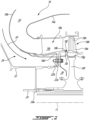
Fig. 3 is an enlarged view of a portion ofFig. 2 showing an exemplary implementation of an inertial particle separator in accordance with one embodiment between the combustor and the turbine section; -
Fig. 4 is an enlarged view of a portion ofFig. 3 ; -
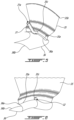
Fig. 5 is a partially transparent three dimensional view showing a circumferential section of the inertial particle separator ofFig. 3 ; -
Fig. 6 is another partially transparent three dimensional view showing the circumferential section of the inertial particle separator ofFig. 3 at a different angle; -
Fig. 7 is an enlarged view of a portion ofFig. 2 showing another exemplary implementation of an inertial particle separator in accordance with another embodiment between the combustor and the turbine section; -
Fig. 8 is a partially transparent three dimensional view showing a circumferential section of the inertial particle separator ofFig. 7 ; and -
Fig. 9 is a flow chart illustrating steps of a method of supplying cooling air to a rotor of a turbine section of the gas turbine engine ofFig. 1 . -
Fig. 1 illustrates agas turbine engine 10 of a type preferably provided for use in subsonic flight, generally comprising in serial flow communication, afan 12 through which ambient air is propelled, acompressor section 14 for pressurizing the air, acombustor 16 in which the compressed air is mixed with fuel and ignited for generating an annular stream of hot combustion gases, and aturbine section 18 for extracting energy from the combustion gases. Thefan 12, thecompressor section 14, and theturbine section 18 are rotatable about acentral axis 11 of theengine 10. Theengine 10 is depicted here as a turbofan engine, but the present disclosure may apply to any gas turbine engine, such as, an Auxiliary Power Unit (APU), a turboprop, and a turboshaft. - Referring to
Figs. 1-2 , theturbine section 18 may include a plurality of stages serially fluidly connected to one another. A first one of these stages is located immediately downstream of thecombustor 16 and includes astator 18a and arotor 18b downstream of thestator 18a. In the embodiment shown, thestator 18a includes a plurality ofstator vanes 18c that are circumferentially distributed around thecentral axis 11. Thestator vanes 18c are non-rotatable relative to thecombustor 16 and are used to orient a flow of combustion gases of anannular gaspath 20 of theengine 10 toward therotor 18b. Theannular gaspath 20 is contained between inner and outer casing of the engine and, in thecombustor 16, theannular gaspath 20 is defined between aninner liner 16a and anouter liner 16b. - As shown in
Fig. 2 , thestator vanes 18c are secured to a casing of theengine 10 via astructural member 22 of theengine 10. Thestator vanes 18c haveflanges 18d that are bolted to aflange 22a of thestructural member 22. In the embodiment shown, thestructural member 22 is a bearing housing sized to contain a bearing and to define a bearing cavity receiving oil for proper lubrication of the bearing. - The
rotor 18b includesblades 18e that are circumferentially distributed around thecentral axis 11 and that are secured to a periphery of adisk 18f. In the depicted embodiment, theblades 18e have blade roots that are received into correspondinglyshaped slots 18g defined by thedisk 18f. Alternatively, theblades 18e and thedisk 18f may be portions of a monolithic part referred as an integrally bladed rotor, or "blisk". Therotor 18b is engaged to ashaft 24 of theengine 10. Theshaft 24 may be a high-pressure shaft. Theengine 10 may further includes a low-pressure shaft that may be concentric with the high-pressure shaft 24. In use, combustion gases exiting thecombustor 16 flows past thestator vanes 18c and induce rotation of therotor 18b thereby rotating theshaft 24, which is drivingly engaged to one or more stages of thecompressor section 14 of theengine 10. - In use, the combustion gases are at high temperatures. To cool down the
rotor 18b, cooling air may be injected into a cavity containing thedisk 18f of therotor 18b and, in some embodiments, into internalcooling flow passages 18h defined by theblades 18e. The internalcooling flow passages 18h are shown schematically with dashed lines inFig. 2 . The cooling air typically comes from thecompressor section 14. This air flows along a cooling air flow F0 within aplenum 26, which may be annularly extending around thecentral axis 11 and defined radially between thestructural member 22 and theouter liner 16b of thecombustor 16. Thisplenum 26 is in fluid flow communication with the cavity and may be in fluid flow communication with the internalcooling flow passages 18h of theblades 18e, if the internalcooling flow passages 18h are present, such that heat imparted to therotor 18b by the combustion gases may be picked up by the air flowing into the cavity containing therotor 18b and expelled into theannular gaspath 20. - Still referring to
Fig. 2 , thestructural member 22 defines anaperture 22b, a plurality ofapertures 22b circumferentially distributed around thecentral axis 11 in the present embodiment, that extends therethrough. Theapertures 22b may extend through theflange 22a that is bolted to theflanges 18d of thestator vanes 18c. The air of the cooling air flow F0 therefore reaches acavity 28 that contains thedisk 18f of therotor 18b via theapertures 22b. This air is therefore able to reach thecavity 28 containing thedisk 18f and, in some cases, reaches inlets of the internalcooling flow passages 18h, if such passages are present. The inlets of the internalcooling flow passages 18h may be located proximate theslots 18g where theblades 18e are engaged to thedisk 18f. - However, when the
engine 10 is operated in some regions of the world where a concentration of particles, such as dust and sand, is above a given threshold, these particles may reach theplenum 26 and thecavity 28 and may flow into the internalcooling flow passages 18h of theblades 18e and/or may flow into gaps defined at theslots 18g between theblades 18e and thedisk 18f. Accumulation of particles in these gaps may have detrimental effects on theblades 18e as a result of thermal stress. With time, these particles may affect a flow of cooling air into the internalcooling flow passages 18h. Gas turbine engines, such as turboprop and turbofan, may be equipped with separators at their inlets. However, in some applications, for instance, for APU, it might be difficult to add such a separator. Moreover, some finer particles may still find their way into theannular gaspath 20 regardless of whether or not an inlet separator is used. To at least partially alleviate this drawback, theengine 10 is equipped with an inertial particle separator to remove at least a portion of the particles (e.g., sand) before said air flows into the internalcooling flow passages 18h. Moreover, the disclosed inertial particle separators may be retrofitted to existing gas turbine engines, such as existing APUs. - Referring now to
Figs. 3-6 , an inertial particle separator (IPS) in accordance with one embodiment is shown at 30. TheIPS 30 includes anintake conduit 31, aninlet conduit 32, and abypass conduit 33. In the present embodiment, theintake conduit 31, theinlet conduit 32, and thebypass conduit 33 include a plurality of intake, inlet, andbypass conduits central axis 11. The cross-section shown inFigs. 3-4 may therefore be repeated at a plurality of circumferential positions around thecentral axis 11. - Each of the
intake conduits 31 has aninlet 31a that is in fluid flow communication with theplenum 26 between thestructural member 22 and theouter liner 16b of thecombustor 16. Each of theintake conduits 31 defines anelbow 31b to impart a change of direction to an air and particle flow F1 received into theintake conduit 31 via theinlet 31a. TheIPS 30 includes a splitter, a plurality ofsplitters 34 in the present embodiment, that extend into theintake conduits 31. Thesplitters 34 have leadingedges 34a that are received into theintake conduits 31 and located downstream of theelbows 31b relative to a direction of the air and particle flow F1. - Each of the
intake conduits 31 has a radially-outer wall 31c and an opposed radially-inner wall 31d. Thesplitters 34 are located between the radially-outer wall 31c and the radially-inner wall 31d and divides theintake conduits 31 into theinlet conduits 32 and thebypass conduits 33. Each of theinlet conduits 32 has an inlet between the radially-outer wall 31c and thesplitter 34 and an outlet between the radially-outer wall 31c and thesplitter 34. Each of thebypass conduits 33 has an inlet between the radially-inner wall 31d and thesplitter 34 and an outlet between the radially-inner wall 31d and thesplitter 34. - The
elbows 31b impart a change of direction in theintake conduits 31 to decrease a component in a radial direction relative to thecentral axis 11. That is, theintake conduits 31 curve at theelbows 31b to increase an axial component of a direction of the flow F1 flowing therein. This change of direction, from being, in one embodiment, mainly radial to being mainly axial, causes the air to follow this change of direction, but because the particles (e.g., dust, sand) are heavier, they miss this change of direction and tend to remain proximate to the radially-inner walls 31d of theintake conduits 31. Hence, the air and particle flow F1 that flows into theintake conduits 31 becomes stratified in two layers: an inner layer and an outer layer. A concentration of the particles is greater in the outer layer adjacent the radially-inner walls 31d than in the inner layer adjacent the radially-outer walls 31c whereas the particle concentration might have been substantially uniform in theintake conduits 31 upstream of theelbows 31b. Thesplitters 34 are located such that theleading edges 34a are positioned to separate the inner layers from the outer layers. At which point, the inner layers flow into theinlet conduits 32 toward the internalcooling flow passages 18h and the outer layers flow into thebypass conduits 33 toward an environment E outside thegas turbine engine 10 while bypassing the internalcooling flow passages 18h. As discussed below, thebypass conduits 33 are fluidly connected to the environment E via theannular gaspath 20 or via a passage defined by ashaft 24 of theengine 10. - It will be appreciated that other configurations of the
intake conduits 31 are contemplated depending of where it will be installed in theengine 10 between the combustor 16 andturbine section 18. For instance, theelbows 31b may change a direction of the flow F1 from being mainly axial to being mainly radial. In some cases, this change of direction may impart a circumferential component to the flow. Therefore, any suitable configuration able to impart a change of direction of the flow resulting in a separation of the particles from the air is contemplated without departing from the scope of the present disclosure. - In the embodiment shown, the
intake conduits 31 aretubes 31e that are received within theapertures 22b defined through theflange 22a of thestructural member 22. The apertures receiving thetubes 31e may be defined through any suitable component, for instance, through the flange of thestator 18a of theturbine section 18. Thetubes 31e are circumferentially distributed about thecentral axis 11. Each of thetubes 31e is inserted into a respective one of theapertures 22b. Thetubes 31e of the present embodiment have a circular cross-section. However, any other suitable shape is contemplated. For instance, thetubes 31e may be square, oval, elliptical, and so on. In one embodiment, theinlet conduit 32 may be annularly extending around thecentral axis 11. That is, the radially-outer wall 31c and the radially-inner wall 31d may be annularly extending around thecentral axis 11. In one embodiment, they may extend fully around thecentral axis 11. In another embodiment, they may extend around a portion of a circumference around thecentral axis 11. It is further contemplated that thesplitters 34 are located downstream of outlets of thetubes 31e as long as they are adequately positioned to efficiently separate the two layers described above. - As shown in
Fig. 3 , a portion of thetubes 31e extend into theplenum 26 past theapertures 22b in an upstream direction relative to the cooling air flow F0. In other words, theinlets 31a of theintake conduits 31 are offset from theapertures 22b. In use, particles may accumulate in theplenum 26 against thestructural member 22. Having thetubes 31e protruding into theplenum 26 may avoid these accumulated particles from flowing into thetubes 31e. - Referring to
Figs. 3-6 , theIPS 30 includes afirst baffle 35 and asecond baffle 36. Thesplitters 34 are defined by thesecond baffle 36. The first andsecond baffles central axis 11. The first andsecond baffles central axis 11. Although not shown, thefirst baffle 35 may be secured to theflange 22a of thestructural member 22 and/or to theflanges 18d of thestator 18a. Thefirst baffle 35 has a radially-inner edge 35a and a radially-outer edge 35b. The radially-inner edge 35a of thefirst baffle 35 definesapertures 35c through which thetubes 31e extend. Thetubes 31e protrude radially-inwardly toward thecentral axis 11 beyond the radially-inner edge 35a of thefirst baffle 35. Thetubes 31e may be secured to thefirst baffle 35. - The
second baffle 36 has afirst edge 36a, which defines theleading edges 34a of thesplitters 34. Thesecond baffle 36 has asecond edge 36b that is located axially offset and radially inward of thefirst edge 36a relative to thecentral axis 11. Thesecond baffle 36 defines a curve, or a C-shape. In other words, thesecond baffle 36 curves in a radially-inward direction relative to thecentral axis 11 downstream oftubes 31e to guide the particles away from therotor 18b. Thesecond baffle 36 is secured to the radially-inner edge 35a of thefirst baffle 35 between the first andsecond edges second baffle 36 and may be secured to thetubes 31e. A portion of thesecond baffle 36 is therefore transverse to thefirst baffle 35. Thesecond baffle 36 is therefore received into thetubes 31e. Downstream of theelbows 31b, thetubes 31e are therefore divided into theinlet conduits 32, which includes spaces between thesecond baffle 36 and the radially-outer walls 31c of thetubes 31e, and into thebypass conduit 33, which includes spaces between thesecond baffle 36 and the radially-inner walls 31d. Theinlet conduits 32 are herein located radially-outwardly of thebypass conduits 33 relative to thecentral axis 11. However, other configurations are contemplated depending of the direction change imparted to thetubes 31e at theelbows 31b. - Referring more particularly to
Figs. 3-4 , the first andsecond baffles cavity 28 that receives the cooling air flow F0 into a first cavity, or first plenum or zone, 28a and into a second cavity, or second plenum or zone, 28b. Thefirst cavity 28a and thesecond cavity 28b may be annular and may extend circumferentially all around thecentral axis 11. Thefirst cavity 28a is in fluid flow communication with theinlet conduits 32 and leads to the internalcooling flow passages 18h (Fig. 2 ) of therotor 18b. Thesecond cavity 28b is in fluid flow communication with thebypass conduits 33 and leads to the environment E outside thegas turbine engine 10 while bypassing the internalcooling flow passages 18h. - As shown in
Fig. 3 , the radially-outer edge 35b of thefirst baffle 35 extends radially outwardly beyond aplatform 18i of theblades 18e of therotor 18b such that the particles that have been separated and flown into thesecond cavity 28b via thebypass conduits 33 are directed into theannular gaspath 20 along side thefirst baffle 35. Thefirst baffle 35, by so extending radially beyond theplatform 18i of theblades 18e of therotor 18b, may prevent the particles from reaching the inlets of the internalcooling flow passages 18h that may be located proximate theslots 18g that receive theblades 18e of therotor 18b. In other words, thefirst baffle 35 may radially overlap inlets of the internalcooling flow passages 18h to shield said inlets from the particles flowing out of thebypass conduits 33 into thesecond cavity 28b. Thesecond edge 36b of thesecond baffle 36 may be secured to the structural member 22 (e.g., bearing housing) along an annular joint such that the only outlet of thesecond cavity 28b may be at the radially-outer edge 35b of thefirst baffle 35 to discharge the separated particles into theannular gaspath 20 from where they will be expelled with the combustion gases outside theengine 10 in the environment E. This annular joint between thestructural member 22 and thesecond edge 36b of thesecond baffle 36 may fluidly separate thefirst cavity 28a from thesecond cavity 28b to prevent particle migration from one cavity to the other. In the embodiment shown, the outlet of thesecond cavity 28b is defined by an annular gap 18j betweenshrouds 18k of thestator vanes 18c and the radially-outer edge 35b of thefirst baffle 35. An outlet of thefirst cavity 28a may be defined by an annular gap between the radially-outer edge 35b of thefirst baffle 35 and theplatforms 18i of theblades 18e of therotor 18b. - In use, the air and particle flow F1 is received into the
tubes 31e. As this flow F1 changes direction because of theelbow 31b, the particles migrate toward the radially-inner wall 31d. Thesplitter 34 then divides the flow into a particle flow F2 and an air flow F3. The particle flow F2 flows into thesecond cavity 28b via thebypass conduit 33 and is directed toward theannular gaspath 20 by the twobaffles first cavity 28a via theinlet conduit 32 and is directed toward the inlet of the internalcooling flow passages 18h of therotor 18b of theturbine section 18 by thefirst baffle 35. Air substantially cleaned from the particles it contained may therefore flow into the internalcooling flow passages 18h. TheIPS 30 may therefore reduce risks of impeding the flow into these internalcooling flow passages 18h. - Referring now to
Figs. 7-8 , another embodiment of an IPS is shown at 130. For the sake of conciseness, only elements that differ form theIPS 30 described above with reference toFigs. 3-6 are described below. - The IPS 130 includes a
first baffle 135 that has a radially-inner edge 135a secured to thesecond baffle 136 and to thetubes 31e. A radially-outer edge 135b of thefirst baffle 135 is secured to thestructural member 22 or to theflange 18d of thestator 18a of theturbine section 18. Thesecond baffle 136 has a portion defining a C-shape such that afirst edge 136a of thesecond baffle 136 extends into thetubes 31e to define the splitter for separating the air and particle flow F1 into the particle flow F2 and the air flow F3. - The first and
second baffles cavity 28 into afirst cavity 128a and asecond cavity 128b. Thefirst cavity 128a fluidly communicates with the internalcooling flow passages 18h of therotor 18b of theturbine section 18. Thesecond cavity 128b has an outlet corresponding to anaperture 24a defined through theshaft 24 of theengine 10. Theshaft 24 is therefore hollow and may define an outlet in communication with the environment E outside theengine 10. Hence, the particles that flows into thebypass conduit 33 end up in thesecond cavity 128b from where they flow in an internal passage of theshaft 24 to exit theengine 10 and are expelled into the environment E outside theengine 10. In the embodiment shown, thesecond baffle 136 has a portion that extends radially-inwardly from the C-shape portion and guides the particles toward theapertures 24a defined through theshaft 24. The portion of thesecond baffle 136 that extends radially-inwardly from the C-shape portion may have anedge 136b located proximate theshaft 24 or to thedisk 18f of therotor 18b to limit the particles from flowing from thesecond cavity 128b toward thefirst cavity 128a. A seal, such as a brush seal or a labyrinth seal may be disposed between thesecond baffle 136 and theshaft 24 or thedisk 18f to limit particle migration from one cavity to the other. - In some cases, the particles that are removed may be stored in a dedicated container that is periodically emptied. In the present embodiment, the
second cavity 128b is disconnected from theannular gaspath 20. - The number of
inlet conduits 32 andtubes 31e to be distributed around thecentral axis 11 may be based on engine requirements. A diameter of thetubes 31e may be tuned as a function of boundary conditions to be able to provide required cooling flow. A length of thetube 31e that protrudes into theplenum 26 between the bearinghousing 22 and theouter liner 16b of thecombustor 16 may be at least one diameter of thetube 31e away from theaperture 22b defined through theflange 22a. The lengths of thetube 31e from theapertures 22b to theelbow 31b and from theelbow 31b to the outlets of thetube 31e that correspond to the outlets of the inlet andbypass conduits tube 31e. A position of theleading edge 34a of thesplitter 34 used to separate the particles and air flows F2, F3 may be selected as a function of boundary conditions to provide required cooling flow. The angle A1 between the portion of thetube 31e upstream of theelbow 31b and the portion of thetube 31e downstream of theelbow 31b is less than 180 degrees and more than 90 degrees in such a way as to capture most of the bouncing particles under thesplitter 34. The design parameters of theIPS 30, 130 should be such that a majority (e.g., more than 50%) of the particles are captured into thebypass conduit 33 while respecting the necessary cooling flow at all locations. - For retrofitting an existing gas turbine engine with the disclosed
IPS 30, 130, thetubes 31e may be inserted into already existingapertures 22b defined through theflange 22a of the bearinghousing 22. The two baffles 35, 36, 135, 136 may be disposed in thecavity 28 between the bearinghousing 22 and therotor 18b of theturbine section 18. Thetubes 31e may be disposed such as to extend beyond theapertures 22b into theplenum 26 between the bearinghousing 22 and theouter liner 16b of thecombustor 16. Thesecond baffle 36 may be secured to the bearinghousing 22. Or, alternatively, thesecond baffle 136 may be brought in close proximity to theshaft 24 ordisk 18f of therotor 18b. In some cases, the IPS includes plurality of sections, each including one ormore tubes 31e. The plurality of sections may be installed in position in theengine 10 before being secured to one another. In some cases, thefirst baffle tubes 31e and/or to thesecond baffle engine 10 depending of space allowable for installation. Some components may need to be removed prior to installing theIPS 30, 130. The radially-outer edge first baffle cooling flow passages 18h to guide particles into theannular gaspath 20 or be secured to the bearinghousing 22 or other components to prevent particles from being ingested into the internalcooling flow passages 18h. - Referring now to
Fig. 9 , amethod 200 of supplying cooling air to therotor 18b of theturbine section 18 of thegas turbine engine 10 is shown. The method includes thestep 201 of receiving the cooling airflow F1 from thecompressor section 14 of thegas turbine engine 10 into theintake conduit 31, the cooling air flow F1 containing air and particles; thestep 202 of inducing separation of the particles from the air by changing a direction of the received cooling air flow F1 into theintake conduit 31; and thestep 203 of separating the received cooling air flow F1 into a particle flow F2 and an air flow F3, flowing the particle flow F2 toward the environment E outside thegas turbine engine 10 via thebypass conduit 33 while bypassing thefirst cavity 28a containing therotor 18b, and flowing the air flow F3 in thefirst cavity 28a containing therotor 18b to cool therotor 18b. - In the embodiment shown, the receiving of the cooling air flow F1 includes receiving the cooling air flow F1 in the
plenum 26 upstream of theintake conduit 31, theintake conduit 31 extending into theplenum 26. The inducing of the separation may include separating the received cooling air flow F1 with thesplitter 34 extending into theintake conduit 31, thesplitter 34 separating theintake conduit 31 into thebypass conduit 33 and theinlet conduit 32. The flowing of the particle flow F2 toward the environment E and the flowing of the air flow F3 in thefirst cavity 28a containing therotor 18b may include: receiving the particle flow F2 into thesecond cavity 28b separated from thefirst cavity 28a containing therotor 18b via thebaffle 35 and flowing the received particle flow F2 from thesecond cavity 28b toward the environment E, and receiving the air flow F3 into thefirst cavity 28a and flowing the received air flow F3 in thefirst cavity 28a containing therotor 18b. - The embodiments described in this document provide non-limiting examples of possible implementations of the present invention, and a person of ordinary skill in the art will recognize that changes may be made to the embodiments described herein without departing from the scope of the present invention as defined by the appended claims.
Claims (14)
- A gas turbine engine (10), comprising:a compressor section (14);a turbine section (18) downstream of the compressor section (14), the turbine section (18) having a rotor (18b) rotatable about a central axis (11); andan inertial particle separator (30; 130) located upstream of the turbine section (18) and downstream of the compressor section (14) relative to a cooling air flow (F0) from the compressor section (14), the inertial particle separator (30; 130) having:an intake conduit (31) in fluid flow communication with the compressor section (14), the intake conduit (31) defining an elbow (31b),a splitter (34), a leading edge (34a) of the splitter (34) located downstream of the elbow (31b), the splitter (34) located to divide a flow (F1) received in the intake conduit (31) into a particle flow (F2) and an air flow (F3), andan inlet conduit (32) and a bypass conduit (33) located on respective opposite sides of the splitter (34), the inlet conduit (32) receiving the air flow (F3), the inlet conduit (32) in fluid flow communication with a cavity (28a; 128a) containing the rotor (18b) for cooling the rotor (18b) of the turbine section (18), the bypass conduit (33) receiving the particle flow (F2), the bypass conduit (33) in fluid flow communication with an environment (E) outside the gas turbine engine (10) while bypassing the cavity (28a; 128a) containing the rotor (18b),wherein the turbine section (18) includes stator vanes (18c) located upstream of the rotor (18b), the stator vanes (18c) secured to a structural member (22),characterised in thatthe intake conduit (31) extends in an aperture (22b) defined through the structural member (22).
- The gas turbine engine (10) of claim 1, wherein the aperture (22b) includes a plurality of apertures (22b) circumferentially distributed about the central axis (11) and wherein the intake conduit (31) includes a plurality of intake conduits (31) each extending in a respective one of the plurality of apertures (22b).
- The gas turbine engine (10) of claim 2, wherein the plurality of intake conduits (31) are tubes (31e), each of the tubes (31e) received within a respective one of the plurality of apertures (22b).
- The gas turbine engine (10) of claim 3, wherein the tubes (31e) have circular cross-sections.
- The gas turbine engine (10) of claim 1, wherein the intake conduit (31) is defined by a tube (31e) extending through the aperture (22b), a portion of the tube (31e) extending away from the structural member (22) and away from the rotor (18b) into an annular plenum (26) circumferentially extending around the central axis (11), the annular plenum (26) defined radially between the structural member (22) and an outer liner (16b) of a combustor (16) of the gas turbine engine (10), the combustor (16) located downstream of the compressor section (14) and upstream of the turbine section (18).
- The gas turbine engine (10) of any one of claims 1 to 5, wherein the inertial particle separator (30; 130) includes a first baffle (35; 135), the intake conduit (31) extending through the first baffle (35; 135), a second baffle (36; 136) secured to the first baffle (35; 135), a portion of the second baffle (36; 136) extending into the intake conduit (31) to define the splitter (34).
- The gas turbine engine (10) of claim 6, wherein the first baffle (35; 135) has a first edge (35a; 135a) secured to the second baffle (36; 136) and a second edge (35b; 135b) opposed to the first edge (35a; 135a), the second edge (35b; 135b) extending radially outwardly relative to the central axis (11) and radially overlapping slots (18g) of a disk (18f) of the rotor, the slots receiving roots of blades of the rotor.
- The gas turbine engine (10) of claim 6 or 7, wherein the first baffle (35; 135) has a or the first edge (35a; 135a) secured to the second baffle (36; 136) and a or the second edge (35b; 135b) opposed to the first edge (35a; 135a), the second edge (35b; 135b) secured to a or the structural member (22) of the gas turbine engine (10).
- The gas turbine engine (10) of any of claims 6 to 8, wherein the cavity (28a; 128a) is a first cavity (28a; 128a) located between the first baffle (35; 135) and the second baffle (36; 136) and the rotor (18b), a second cavity (28b; 128b) is located between the first baffle (35; 135) and the second baffle (36; 136) and a bearing housing (22) of the gas turbine engine (10), the first cavity (28a; 128a) communicating with the inlet conduit (32), the second cavity (28b; 128b) communicating with the bypass conduit (33).
- The gas turbine engine (10) of claim 9, wherein an outlet of the second cavity (28b) is defined by an annular gap (18j) between a radially outer edge (35b) of the first baffle (35) and shrouds (18k) of vanes (18c) of a turbine stator (18a) located upstream of the rotor (18b), or wherein the outlet is defined by an aperture (24a) through a shaft (24) of the gas turbine engine (10), the aperture (24a) communicating with an internal passage of the shaft (24).
- A method of supplying cooling air to a rotor (18b) of a turbine section (18) of a gas turbine engine (10), wherein the turbine section (18) includes stator vanes (18c) located upstream of the rotor (18b), the stator vanes (18c) secured to a structural member (22), the method comprising:receiving a cooling air flow (F0, F1) from a compressor section (14) of the gas turbine engine (10) into an intake conduit (31), the cooling air flow (F0, F1) containing air and particles;inducing separation of the particles from the air by changing a direction of the received cooling air flow (F0, F1) into the intake conduit (31);separating the received cooling air flow (F0I, F1) into a particle flow (F2) and an air flow (F3), flowing the particle flow (F2) toward an environment (E) outside the gas turbine (10) engine via a bypass conduit (33) while bypassing a cavity (28a; 128a) containing the rotor (18b), and flowing the air flow (F3) in the cavity (28a; 128a) to cool the rotor (18b) via an inlet conduit (32), characterised in thatthe intake conduit (31) extends in an aperture (22b) defined through the structural member (22).
- The method of claim 11, wherein the receiving of the cooling air flow (F0, F1) includes receiving the cooling air flow (F0, F1) in a plenum (26) upstream of the intake conduit (31), the intake conduit (31) extending into the plenum (26).
- The method of claim 11 or 12, wherein the inducing of the separation includes separating the received cooling air flow (F0, F1) with a splitter (34) extending into the intake conduit (31), the splitter (34) separating the intake conduit (31) into the bypass conduit (33) and the inlet conduit (32).
- The method of any one of claims 11 to 13 , wherein the flowing of the particle flow (F2) toward the environment (E) and the flowing of the air flow (F3) in the cavity (28a; 128a) includes:receiving the particle flow (F2) into a second cavity (28b; 128b) separated from the cavity (28a; 128a) via a baffle (35; 135) and flowing the received particle flow (F2) from the second cavity (28b; 128b) toward the environment (E), andreceiving the air flow (F3) into the cavity (28a; 128a) containing the rotor (18b) for cooling the rotor (18b).
Applications Claiming Priority (1)
| Application Number | Priority Date | Filing Date | Title |
|---|---|---|---|
| US17/178,932 US11560844B2 (en) | 2021-02-18 | 2021-02-18 | Inertial particle separator for a turbine section of a gas turbine engine |
Publications (2)
| Publication Number | Publication Date |
|---|---|
| EP4050196A1 EP4050196A1 (en) | 2022-08-31 |
| EP4050196B1 true EP4050196B1 (en) | 2024-01-31 |
Family
ID=80447447
Family Applications (1)
| Application Number | Title | Priority Date | Filing Date |
|---|---|---|---|
| EP22156446.1A Active EP4050196B1 (en) | 2021-02-18 | 2022-02-11 | Inertial particle separator for a turbine section of a gas turbine engine |
Country Status (3)
| Country | Link |
|---|---|
| US (1) | US11560844B2 (en) |
| EP (1) | EP4050196B1 (en) |
| CA (1) | CA3149085A1 (en) |
Families Citing this family (1)
| Publication number | Priority date | Publication date | Assignee | Title |
|---|---|---|---|---|
| US11964223B1 (en) * | 2022-10-15 | 2024-04-23 | Beta Air, Llc | Methods and apparatus for an inertial separation of air in an electric aircraft |
Citations (3)
| Publication number | Priority date | Publication date | Assignee | Title |
|---|---|---|---|---|
| EP3795475A1 (en) * | 2019-09-17 | 2021-03-24 | Pratt & Whitney Canada Corp. | Inertial particle separator for aircraft engine |
| US20210324797A1 (en) * | 2020-04-15 | 2021-10-21 | Pratt & Whitney Canada Corp. | Inertial particle separator for turbine engine |
| EP3957840A1 (en) * | 2020-08-19 | 2022-02-23 | Honeywell International Inc. | Compressor particle separator for gas turbine engine |
Family Cites Families (9)
| Publication number | Priority date | Publication date | Assignee | Title |
|---|---|---|---|---|
| JPS55104529A (en) * | 1979-02-01 | 1980-08-11 | Mitsubishi Heavy Ind Ltd | Power recovering turbine |
| FR2823794B1 (en) * | 2001-04-19 | 2003-07-11 | Snecma Moteurs | REPORTED AND COOLED DAWN FOR TURBINE |
| US10167725B2 (en) * | 2014-10-31 | 2019-01-01 | General Electric Company | Engine component for a turbine engine |
| US10450960B2 (en) * | 2015-09-21 | 2019-10-22 | United Technologies Corporation | Tangential on-board injectors for gas turbine engines |
| US10450951B2 (en) * | 2015-10-28 | 2019-10-22 | General Electric Company | Cyclonic separator for a turbine engine |
| US10196982B2 (en) * | 2015-11-04 | 2019-02-05 | General Electric Company | Gas turbine engine having a flow control surface with a cooling conduit |
| US10458266B2 (en) * | 2017-04-18 | 2019-10-29 | United Technologies Corporation | Forward facing tangential onboard injectors for gas turbine engines |
| US11066996B2 (en) * | 2018-04-27 | 2021-07-20 | Pratt & Whitney Canada Corp. | Gas turbine engine with inertial particle separator |
| US11262071B2 (en) * | 2019-07-24 | 2022-03-01 | Raytheon Technologies Corporation | Combustor particulate deflector |
-
2021
- 2021-02-18 US US17/178,932 patent/US11560844B2/en active Active
-
2022
- 2022-02-11 EP EP22156446.1A patent/EP4050196B1/en active Active
- 2022-02-16 CA CA3149085A patent/CA3149085A1/en active Pending
Patent Citations (3)
| Publication number | Priority date | Publication date | Assignee | Title |
|---|---|---|---|---|
| EP3795475A1 (en) * | 2019-09-17 | 2021-03-24 | Pratt & Whitney Canada Corp. | Inertial particle separator for aircraft engine |
| US20210324797A1 (en) * | 2020-04-15 | 2021-10-21 | Pratt & Whitney Canada Corp. | Inertial particle separator for turbine engine |
| EP3957840A1 (en) * | 2020-08-19 | 2022-02-23 | Honeywell International Inc. | Compressor particle separator for gas turbine engine |
Also Published As
| Publication number | Publication date |
|---|---|
| EP4050196A1 (en) | 2022-08-31 |
| CA3149085A1 (en) | 2022-08-18 |
| US20220260014A1 (en) | 2022-08-18 |
| US11560844B2 (en) | 2023-01-24 |
Similar Documents
| Publication | Publication Date | Title |
|---|---|---|
| US11846209B2 (en) | Turbine engine inducer assembly | |
| US10167725B2 (en) | Engine component for a turbine engine | |
| US11541340B2 (en) | Inducer assembly for a turbine engine | |
| US10450951B2 (en) | Cyclonic separator for a turbine engine | |
| EP2093384B2 (en) | Filter system for blade outer air seal | |
| US10267179B2 (en) | Dirt extraction apparatus for a gas turbine engine | |
| US9915176B2 (en) | Shroud assembly for turbine engine | |
| US10196982B2 (en) | Gas turbine engine having a flow control surface with a cooling conduit | |
| EP3453840B1 (en) | Gas turbine engine active clearance control system using inlet particle separator | |
| US20190046999A9 (en) | Inertial separator | |
| EP3957840B1 (en) | Compressor particle separator for gas turbine engine | |
| EP4050196B1 (en) | Inertial particle separator for a turbine section of a gas turbine engine | |
| WO2016025056A2 (en) | Turbine engine and particle separators therefore | |
| EP4556690A1 (en) | Cyclonic separator for a gas turbine seal support | |
| EP4512997A1 (en) | Blocker assembly for tangential onboard injectors | |
| EP4328419A1 (en) | Exhaust assembly for purging a nacelle cavity of a propulsion system |
Legal Events
| Date | Code | Title | Description |
|---|---|---|---|
| PUAI | Public reference made under article 153(3) epc to a published international application that has entered the european phase |
Free format text: ORIGINAL CODE: 0009012 |
|
| STAA | Information on the status of an ep patent application or granted ep patent |
Free format text: STATUS: THE APPLICATION HAS BEEN PUBLISHED |
|
| AK | Designated contracting states |
Kind code of ref document: A1 Designated state(s): AL AT BE BG CH CY CZ DE DK EE ES FI FR GB GR HR HU IE IS IT LI LT LU LV MC MK MT NL NO PL PT RO RS SE SI SK SM TR |
|
| STAA | Information on the status of an ep patent application or granted ep patent |
Free format text: STATUS: REQUEST FOR EXAMINATION WAS MADE |
|
| 17P | Request for examination filed |
Effective date: 20230224 |
|
| RBV | Designated contracting states (corrected) |
Designated state(s): AL AT BE BG CH CY CZ DE DK EE ES FI FR GB GR HR HU IE IS IT LI LT LU LV MC MK MT NL NO PL PT RO RS SE SI SK SM TR |
|
| GRAP | Despatch of communication of intention to grant a patent |
Free format text: ORIGINAL CODE: EPIDOSNIGR1 |
|
| STAA | Information on the status of an ep patent application or granted ep patent |
Free format text: STATUS: GRANT OF PATENT IS INTENDED |
|
| INTG | Intention to grant announced |
Effective date: 20231016 |
|
| GRAS | Grant fee paid |
Free format text: ORIGINAL CODE: EPIDOSNIGR3 |
|
| GRAA | (expected) grant |
Free format text: ORIGINAL CODE: 0009210 |
|
| STAA | Information on the status of an ep patent application or granted ep patent |
Free format text: STATUS: THE PATENT HAS BEEN GRANTED |
|
| AK | Designated contracting states |
Kind code of ref document: B1 Designated state(s): AL AT BE BG CH CY CZ DE DK EE ES FI FR GB GR HR HU IE IS IT LI LT LU LV MC MK MT NL NO PL PT RO RS SE SI SK SM TR |
|
| REG | Reference to a national code |
Ref country code: GB Ref legal event code: FG4D Ref country code: CH Ref legal event code: EP |
|
| REG | Reference to a national code |
Ref country code: DE Ref legal event code: R096 Ref document number: 602022001711 Country of ref document: DE |
|
| REG | Reference to a national code |
Ref country code: IE Ref legal event code: FG4D |
|
| REG | Reference to a national code |
Ref country code: LT Ref legal event code: MG9D |
|
| REG | Reference to a national code |
Ref country code: NL Ref legal event code: MP Effective date: 20240131 |
|
| PG25 | Lapsed in a contracting state [announced via postgrant information from national office to epo] |
Ref country code: IS Free format text: LAPSE BECAUSE OF FAILURE TO SUBMIT A TRANSLATION OF THE DESCRIPTION OR TO PAY THE FEE WITHIN THE PRESCRIBED TIME-LIMIT Effective date: 20240531 |
|
| PG25 | Lapsed in a contracting state [announced via postgrant information from national office to epo] |
Ref country code: LT Free format text: LAPSE BECAUSE OF FAILURE TO SUBMIT A TRANSLATION OF THE DESCRIPTION OR TO PAY THE FEE WITHIN THE PRESCRIBED TIME-LIMIT Effective date: 20240131 |
|
| PG25 | Lapsed in a contracting state [announced via postgrant information from national office to epo] |
Ref country code: GR Free format text: LAPSE BECAUSE OF FAILURE TO SUBMIT A TRANSLATION OF THE DESCRIPTION OR TO PAY THE FEE WITHIN THE PRESCRIBED TIME-LIMIT Effective date: 20240501 |
|
| REG | Reference to a national code |
Ref country code: AT Ref legal event code: MK05 Ref document number: 1654021 Country of ref document: AT Kind code of ref document: T Effective date: 20240131 |
|
| PG25 | Lapsed in a contracting state [announced via postgrant information from national office to epo] |
Ref country code: HR Free format text: LAPSE BECAUSE OF FAILURE TO SUBMIT A TRANSLATION OF THE DESCRIPTION OR TO PAY THE FEE WITHIN THE PRESCRIBED TIME-LIMIT Effective date: 20240131 Ref country code: RS Free format text: LAPSE BECAUSE OF FAILURE TO SUBMIT A TRANSLATION OF THE DESCRIPTION OR TO PAY THE FEE WITHIN THE PRESCRIBED TIME-LIMIT Effective date: 20240430 Ref country code: NL Free format text: LAPSE BECAUSE OF FAILURE TO SUBMIT A TRANSLATION OF THE DESCRIPTION OR TO PAY THE FEE WITHIN THE PRESCRIBED TIME-LIMIT Effective date: 20240131 |
|
| PG25 | Lapsed in a contracting state [announced via postgrant information from national office to epo] |
Ref country code: ES Free format text: LAPSE BECAUSE OF FAILURE TO SUBMIT A TRANSLATION OF THE DESCRIPTION OR TO PAY THE FEE WITHIN THE PRESCRIBED TIME-LIMIT Effective date: 20240131 |
|
| PG25 | Lapsed in a contracting state [announced via postgrant information from national office to epo] |
Ref country code: AT Free format text: LAPSE BECAUSE OF FAILURE TO SUBMIT A TRANSLATION OF THE DESCRIPTION OR TO PAY THE FEE WITHIN THE PRESCRIBED TIME-LIMIT Effective date: 20240131 |
|
| PG25 | Lapsed in a contracting state [announced via postgrant information from national office to epo] |
Ref country code: RS Free format text: LAPSE BECAUSE OF FAILURE TO SUBMIT A TRANSLATION OF THE DESCRIPTION OR TO PAY THE FEE WITHIN THE PRESCRIBED TIME-LIMIT Effective date: 20240430 Ref country code: NO Free format text: LAPSE BECAUSE OF FAILURE TO SUBMIT A TRANSLATION OF THE DESCRIPTION OR TO PAY THE FEE WITHIN THE PRESCRIBED TIME-LIMIT Effective date: 20240430 Ref country code: NL Free format text: LAPSE BECAUSE OF FAILURE TO SUBMIT A TRANSLATION OF THE DESCRIPTION OR TO PAY THE FEE WITHIN THE PRESCRIBED TIME-LIMIT Effective date: 20240131 Ref country code: LT Free format text: LAPSE BECAUSE OF FAILURE TO SUBMIT A TRANSLATION OF THE DESCRIPTION OR TO PAY THE FEE WITHIN THE PRESCRIBED TIME-LIMIT Effective date: 20240131 Ref country code: IS Free format text: LAPSE BECAUSE OF FAILURE TO SUBMIT A TRANSLATION OF THE DESCRIPTION OR TO PAY THE FEE WITHIN THE PRESCRIBED TIME-LIMIT Effective date: 20240531 Ref country code: HR Free format text: LAPSE BECAUSE OF FAILURE TO SUBMIT A TRANSLATION OF THE DESCRIPTION OR TO PAY THE FEE WITHIN THE PRESCRIBED TIME-LIMIT Effective date: 20240131 Ref country code: GR Free format text: LAPSE BECAUSE OF FAILURE TO SUBMIT A TRANSLATION OF THE DESCRIPTION OR TO PAY THE FEE WITHIN THE PRESCRIBED TIME-LIMIT Effective date: 20240501 Ref country code: FI Free format text: LAPSE BECAUSE OF FAILURE TO SUBMIT A TRANSLATION OF THE DESCRIPTION OR TO PAY THE FEE WITHIN THE PRESCRIBED TIME-LIMIT Effective date: 20240131 Ref country code: ES Free format text: LAPSE BECAUSE OF FAILURE TO SUBMIT A TRANSLATION OF THE DESCRIPTION OR TO PAY THE FEE WITHIN THE PRESCRIBED TIME-LIMIT Effective date: 20240131 Ref country code: BG Free format text: LAPSE BECAUSE OF FAILURE TO SUBMIT A TRANSLATION OF THE DESCRIPTION OR TO PAY THE FEE WITHIN THE PRESCRIBED TIME-LIMIT Effective date: 20240131 Ref country code: AT Free format text: LAPSE BECAUSE OF FAILURE TO SUBMIT A TRANSLATION OF THE DESCRIPTION OR TO PAY THE FEE WITHIN THE PRESCRIBED TIME-LIMIT Effective date: 20240131 |
|
| PG25 | Lapsed in a contracting state [announced via postgrant information from national office to epo] |
Ref country code: PL Free format text: LAPSE BECAUSE OF FAILURE TO SUBMIT A TRANSLATION OF THE DESCRIPTION OR TO PAY THE FEE WITHIN THE PRESCRIBED TIME-LIMIT Effective date: 20240131 Ref country code: PT Free format text: LAPSE BECAUSE OF FAILURE TO SUBMIT A TRANSLATION OF THE DESCRIPTION OR TO PAY THE FEE WITHIN THE PRESCRIBED TIME-LIMIT Effective date: 20240531 |
|
| PG25 | Lapsed in a contracting state [announced via postgrant information from national office to epo] |
Ref country code: SE Free format text: LAPSE BECAUSE OF FAILURE TO SUBMIT A TRANSLATION OF THE DESCRIPTION OR TO PAY THE FEE WITHIN THE PRESCRIBED TIME-LIMIT Effective date: 20240131 Ref country code: PT Free format text: LAPSE BECAUSE OF FAILURE TO SUBMIT A TRANSLATION OF THE DESCRIPTION OR TO PAY THE FEE WITHIN THE PRESCRIBED TIME-LIMIT Effective date: 20240531 Ref country code: PL Free format text: LAPSE BECAUSE OF FAILURE TO SUBMIT A TRANSLATION OF THE DESCRIPTION OR TO PAY THE FEE WITHIN THE PRESCRIBED TIME-LIMIT Effective date: 20240131 Ref country code: LV Free format text: LAPSE BECAUSE OF FAILURE TO SUBMIT A TRANSLATION OF THE DESCRIPTION OR TO PAY THE FEE WITHIN THE PRESCRIBED TIME-LIMIT Effective date: 20240131 |
|
| PG25 | Lapsed in a contracting state [announced via postgrant information from national office to epo] |
Ref country code: DK Free format text: LAPSE BECAUSE OF FAILURE TO SUBMIT A TRANSLATION OF THE DESCRIPTION OR TO PAY THE FEE WITHIN THE PRESCRIBED TIME-LIMIT Effective date: 20240131 |
|
| PG25 | Lapsed in a contracting state [announced via postgrant information from national office to epo] |
Ref country code: SM Free format text: LAPSE BECAUSE OF FAILURE TO SUBMIT A TRANSLATION OF THE DESCRIPTION OR TO PAY THE FEE WITHIN THE PRESCRIBED TIME-LIMIT Effective date: 20240131 |
|
| PG25 | Lapsed in a contracting state [announced via postgrant information from national office to epo] |
Ref country code: LU Free format text: LAPSE BECAUSE OF NON-PAYMENT OF DUE FEES Effective date: 20240211 |
|
| PG25 | Lapsed in a contracting state [announced via postgrant information from national office to epo] |
Ref country code: CZ Free format text: LAPSE BECAUSE OF FAILURE TO SUBMIT A TRANSLATION OF THE DESCRIPTION OR TO PAY THE FEE WITHIN THE PRESCRIBED TIME-LIMIT Effective date: 20240131 Ref country code: EE Free format text: LAPSE BECAUSE OF FAILURE TO SUBMIT A TRANSLATION OF THE DESCRIPTION OR TO PAY THE FEE WITHIN THE PRESCRIBED TIME-LIMIT Effective date: 20240131 |
|
| PG25 | Lapsed in a contracting state [announced via postgrant information from national office to epo] |
Ref country code: SK Free format text: LAPSE BECAUSE OF FAILURE TO SUBMIT A TRANSLATION OF THE DESCRIPTION OR TO PAY THE FEE WITHIN THE PRESCRIBED TIME-LIMIT Effective date: 20240131 |
|
| PG25 | Lapsed in a contracting state [announced via postgrant information from national office to epo] |
Ref country code: SM Free format text: LAPSE BECAUSE OF FAILURE TO SUBMIT A TRANSLATION OF THE DESCRIPTION OR TO PAY THE FEE WITHIN THE PRESCRIBED TIME-LIMIT Effective date: 20240131 Ref country code: SK Free format text: LAPSE BECAUSE OF FAILURE TO SUBMIT A TRANSLATION OF THE DESCRIPTION OR TO PAY THE FEE WITHIN THE PRESCRIBED TIME-LIMIT Effective date: 20240131 Ref country code: RO Free format text: LAPSE BECAUSE OF FAILURE TO SUBMIT A TRANSLATION OF THE DESCRIPTION OR TO PAY THE FEE WITHIN THE PRESCRIBED TIME-LIMIT Effective date: 20240131 Ref country code: LU Free format text: LAPSE BECAUSE OF NON-PAYMENT OF DUE FEES Effective date: 20240211 Ref country code: EE Free format text: LAPSE BECAUSE OF FAILURE TO SUBMIT A TRANSLATION OF THE DESCRIPTION OR TO PAY THE FEE WITHIN THE PRESCRIBED TIME-LIMIT Effective date: 20240131 Ref country code: DK Free format text: LAPSE BECAUSE OF FAILURE TO SUBMIT A TRANSLATION OF THE DESCRIPTION OR TO PAY THE FEE WITHIN THE PRESCRIBED TIME-LIMIT Effective date: 20240131 Ref country code: CZ Free format text: LAPSE BECAUSE OF FAILURE TO SUBMIT A TRANSLATION OF THE DESCRIPTION OR TO PAY THE FEE WITHIN THE PRESCRIBED TIME-LIMIT Effective date: 20240131 |
|
| REG | Reference to a national code |
Ref country code: DE Ref legal event code: R097 Ref document number: 602022001711 Country of ref document: DE |
|
| PG25 | Lapsed in a contracting state [announced via postgrant information from national office to epo] |
Ref country code: MC Free format text: LAPSE BECAUSE OF FAILURE TO SUBMIT A TRANSLATION OF THE DESCRIPTION OR TO PAY THE FEE WITHIN THE PRESCRIBED TIME-LIMIT Effective date: 20240131 |
|
| PG25 | Lapsed in a contracting state [announced via postgrant information from national office to epo] |
Ref country code: MC Free format text: LAPSE BECAUSE OF FAILURE TO SUBMIT A TRANSLATION OF THE DESCRIPTION OR TO PAY THE FEE WITHIN THE PRESCRIBED TIME-LIMIT Effective date: 20240131 |
|
| PG25 | Lapsed in a contracting state [announced via postgrant information from national office to epo] |
Ref country code: IT Free format text: LAPSE BECAUSE OF FAILURE TO SUBMIT A TRANSLATION OF THE DESCRIPTION OR TO PAY THE FEE WITHIN THE PRESCRIBED TIME-LIMIT Effective date: 20240131 |
|
| PLBE | No opposition filed within time limit |
Free format text: ORIGINAL CODE: 0009261 |
|
| STAA | Information on the status of an ep patent application or granted ep patent |
Free format text: STATUS: NO OPPOSITION FILED WITHIN TIME LIMIT |
|
| REG | Reference to a national code |
Ref country code: BE Ref legal event code: MM Effective date: 20240229 |
|
| PG25 | Lapsed in a contracting state [announced via postgrant information from national office to epo] |
Ref country code: IT Free format text: LAPSE BECAUSE OF FAILURE TO SUBMIT A TRANSLATION OF THE DESCRIPTION OR TO PAY THE FEE WITHIN THE PRESCRIBED TIME-LIMIT Effective date: 20240131 |
|
| 26N | No opposition filed |
Effective date: 20241101 |
|
| PG25 | Lapsed in a contracting state [announced via postgrant information from national office to epo] |
Ref country code: BE Free format text: LAPSE BECAUSE OF NON-PAYMENT OF DUE FEES Effective date: 20240229 |
|
| PG25 | Lapsed in a contracting state [announced via postgrant information from national office to epo] |
Ref country code: IE Free format text: LAPSE BECAUSE OF NON-PAYMENT OF DUE FEES Effective date: 20240211 |
|
| PG25 | Lapsed in a contracting state [announced via postgrant information from national office to epo] |
Ref country code: IE Free format text: LAPSE BECAUSE OF NON-PAYMENT OF DUE FEES Effective date: 20240211 Ref country code: BE Free format text: LAPSE BECAUSE OF NON-PAYMENT OF DUE FEES Effective date: 20240229 |
|
| PG25 | Lapsed in a contracting state [announced via postgrant information from national office to epo] |
Ref country code: SI Free format text: LAPSE BECAUSE OF FAILURE TO SUBMIT A TRANSLATION OF THE DESCRIPTION OR TO PAY THE FEE WITHIN THE PRESCRIBED TIME-LIMIT Effective date: 20240131 |
|
| PG25 | Lapsed in a contracting state [announced via postgrant information from national office to epo] |
Ref country code: CY Free format text: LAPSE BECAUSE OF FAILURE TO SUBMIT A TRANSLATION OF THE DESCRIPTION OR TO PAY THE FEE WITHIN THE PRESCRIBED TIME-LIMIT; INVALID AB INITIO Effective date: 20220211 |
|
| REG | Reference to a national code |
Ref country code: CH Ref legal event code: PL |
|
| PG25 | Lapsed in a contracting state [announced via postgrant information from national office to epo] |
Ref country code: CH Free format text: LAPSE BECAUSE OF NON-PAYMENT OF DUE FEES Effective date: 20250228 |
|
| PG25 | Lapsed in a contracting state [announced via postgrant information from national office to epo] |
Ref country code: TR Free format text: LAPSE BECAUSE OF FAILURE TO SUBMIT A TRANSLATION OF THE DESCRIPTION OR TO PAY THE FEE WITHIN THE PRESCRIBED TIME-LIMIT Effective date: 20240131 |
|
| PGFP | Annual fee paid to national office [announced via postgrant information from national office to epo] |
Ref country code: GB Payment date: 20260121 Year of fee payment: 5 |
|
| PGFP | Annual fee paid to national office [announced via postgrant information from national office to epo] |
Ref country code: DE Payment date: 20260121 Year of fee payment: 5 |
|
| PGFP | Annual fee paid to national office [announced via postgrant information from national office to epo] |
Ref country code: FR Payment date: 20260121 Year of fee payment: 5 |