EP4049975A1 - Method for manufacturing iron-chromium oxide using ion exchange resin - Google Patents
Method for manufacturing iron-chromium oxide using ion exchange resin Download PDFInfo
- Publication number
- EP4049975A1 EP4049975A1 EP20892816.8A EP20892816A EP4049975A1 EP 4049975 A1 EP4049975 A1 EP 4049975A1 EP 20892816 A EP20892816 A EP 20892816A EP 4049975 A1 EP4049975 A1 EP 4049975A1
- Authority
- EP
- European Patent Office
- Prior art keywords
- iron
- ions
- ion exchange
- exchange resin
- ion
- Prior art date
- Legal status (The legal status is an assumption and is not a legal conclusion. Google has not performed a legal analysis and makes no representation as to the accuracy of the status listed.)
- Pending
Links
- QEFDIAQGSDRHQW-UHFFFAOYSA-N [O-2].[Cr+3].[Fe+2] Chemical compound [O-2].[Cr+3].[Fe+2] QEFDIAQGSDRHQW-UHFFFAOYSA-N 0.000 title claims abstract description 31
- 238000000034 method Methods 0.000 title claims abstract description 27
- NWUYHJFMYQTDRP-UHFFFAOYSA-N 1,2-bis(ethenyl)benzene;1-ethenyl-2-ethylbenzene;styrene Chemical compound C=CC1=CC=CC=C1.CCC1=CC=CC=C1C=C.C=CC1=CC=CC=C1C=C NWUYHJFMYQTDRP-UHFFFAOYSA-N 0.000 title claims abstract description 22
- 239000003456 ion exchange resin Substances 0.000 title claims abstract description 14
- 229920003303 ion-exchange polymer Polymers 0.000 title claims abstract description 14
- 238000004519 manufacturing process Methods 0.000 title 1
- 229910001416 lithium ion Inorganic materials 0.000 claims abstract description 16
- HBBGRARXTFLTSG-UHFFFAOYSA-N Lithium ion Chemical compound [Li+] HBBGRARXTFLTSG-UHFFFAOYSA-N 0.000 claims abstract description 11
- 239000011651 chromium Substances 0.000 claims description 42
- -1 Fe3+ ions Chemical group 0.000 claims description 35
- JOPOVCBBYLSVDA-UHFFFAOYSA-N chromium(6+) Chemical compound [Cr+6] JOPOVCBBYLSVDA-UHFFFAOYSA-N 0.000 claims description 31
- 239000012298 atmosphere Substances 0.000 claims description 23
- 238000010438 heat treatment Methods 0.000 claims description 23
- 239000007864 aqueous solution Substances 0.000 claims description 18
- 238000005342 ion exchange Methods 0.000 claims description 13
- 150000001875 compounds Chemical class 0.000 claims description 12
- XKRFYHLGVUSROY-UHFFFAOYSA-N Argon Chemical compound [Ar] XKRFYHLGVUSROY-UHFFFAOYSA-N 0.000 claims description 10
- UPHIPHFJVNKLMR-UHFFFAOYSA-N chromium iron Chemical compound [Cr].[Fe] UPHIPHFJVNKLMR-UHFFFAOYSA-N 0.000 claims description 10
- 229910052760 oxygen Inorganic materials 0.000 claims description 10
- 239000003729 cation exchange resin Substances 0.000 claims description 8
- 229910021578 Iron(III) chloride Inorganic materials 0.000 claims description 7
- QVGXLLKOCUKJST-UHFFFAOYSA-N atomic oxygen Chemical compound [O] QVGXLLKOCUKJST-UHFFFAOYSA-N 0.000 claims description 7
- RBTARNINKXHZNM-UHFFFAOYSA-K iron trichloride Chemical compound Cl[Fe](Cl)Cl RBTARNINKXHZNM-UHFFFAOYSA-K 0.000 claims description 7
- 239000001301 oxygen Substances 0.000 claims description 7
- IJGRMHOSHXDMSA-UHFFFAOYSA-N Atomic nitrogen Chemical compound N#N IJGRMHOSHXDMSA-UHFFFAOYSA-N 0.000 claims description 6
- 229910052786 argon Inorganic materials 0.000 claims description 5
- 229910002554 Fe(NO3)3·9H2O Inorganic materials 0.000 claims description 3
- VCJMYUPGQJHHFU-UHFFFAOYSA-N iron(III) nitrate Inorganic materials [Fe+3].[O-][N+]([O-])=O.[O-][N+]([O-])=O.[O-][N+]([O-])=O VCJMYUPGQJHHFU-UHFFFAOYSA-N 0.000 claims description 3
- KMUONIBRACKNSN-UHFFFAOYSA-N potassium dichromate Chemical compound [K+].[K+].[O-][Cr](=O)(=O)O[Cr]([O-])(=O)=O KMUONIBRACKNSN-UHFFFAOYSA-N 0.000 claims description 3
- 239000010406 cathode material Substances 0.000 abstract description 12
- 230000000694 effects Effects 0.000 abstract description 3
- 229910000314 transition metal oxide Inorganic materials 0.000 abstract description 3
- 230000001747 exhibiting effect Effects 0.000 abstract description 2
- 229910001402 Cr8O21 Inorganic materials 0.000 description 24
- 238000004458 analytical method Methods 0.000 description 15
- 238000005259 measurement Methods 0.000 description 12
- 238000002441 X-ray diffraction Methods 0.000 description 11
- XEEYBQQBJWHFJM-UHFFFAOYSA-N iron Substances [Fe] XEEYBQQBJWHFJM-UHFFFAOYSA-N 0.000 description 10
- 239000013078 crystal Substances 0.000 description 8
- WGLPBDUCMAPZCE-UHFFFAOYSA-N Trioxochromium Chemical group O=[Cr](=O)=O WGLPBDUCMAPZCE-UHFFFAOYSA-N 0.000 description 6
- 238000002474 experimental method Methods 0.000 description 6
- 238000012360 testing method Methods 0.000 description 6
- 239000000470 constituent Substances 0.000 description 5
- 238000007796 conventional method Methods 0.000 description 4
- 238000007599 discharging Methods 0.000 description 4
- 238000002354 inductively-coupled plasma atomic emission spectroscopy Methods 0.000 description 4
- 229910052742 iron Inorganic materials 0.000 description 4
- 239000002245 particle Substances 0.000 description 4
- 239000000243 solution Substances 0.000 description 4
- 230000008859 change Effects 0.000 description 3
- 238000000113 differential scanning calorimetry Methods 0.000 description 3
- 238000009830 intercalation Methods 0.000 description 3
- 150000002500 ions Chemical class 0.000 description 3
- 229910052748 manganese Inorganic materials 0.000 description 3
- 239000000203 mixture Substances 0.000 description 3
- 229910052759 nickel Inorganic materials 0.000 description 3
- 238000006722 reduction reaction Methods 0.000 description 3
- 229910052723 transition metal Inorganic materials 0.000 description 3
- 150000003624 transition metals Chemical class 0.000 description 3
- VYZAMTAEIAYCRO-UHFFFAOYSA-N Chromium Chemical compound [Cr] VYZAMTAEIAYCRO-UHFFFAOYSA-N 0.000 description 2
- OIFBSDVPJOWBCH-UHFFFAOYSA-N Diethyl carbonate Chemical compound CCOC(=O)OCC OIFBSDVPJOWBCH-UHFFFAOYSA-N 0.000 description 2
- KMTRUDSVKNLOMY-UHFFFAOYSA-N Ethylene carbonate Chemical compound O=C1OCCO1 KMTRUDSVKNLOMY-UHFFFAOYSA-N 0.000 description 2
- 230000015572 biosynthetic process Effects 0.000 description 2
- 229910052804 chromium Inorganic materials 0.000 description 2
- AYTAKQFHWFYBMA-UHFFFAOYSA-N chromium dioxide Chemical compound O=[Cr]=O AYTAKQFHWFYBMA-UHFFFAOYSA-N 0.000 description 2
- 238000010835 comparative analysis Methods 0.000 description 2
- 238000002447 crystallographic data Methods 0.000 description 2
- 238000011161 development Methods 0.000 description 2
- 239000003792 electrolyte Substances 0.000 description 2
- 230000002687 intercalation Effects 0.000 description 2
- 229910052744 lithium Inorganic materials 0.000 description 2
- 239000000463 material Substances 0.000 description 2
- 230000003647 oxidation Effects 0.000 description 2
- 238000007254 oxidation reaction Methods 0.000 description 2
- 239000004810 polytetrafluoroethylene Substances 0.000 description 2
- 229920001343 polytetrafluoroethylene Polymers 0.000 description 2
- 239000000843 powder Substances 0.000 description 2
- 230000008569 process Effects 0.000 description 2
- 238000003786 synthesis reaction Methods 0.000 description 2
- 238000004627 transmission electron microscopy Methods 0.000 description 2
- OKTJSMMVPCPJKN-UHFFFAOYSA-N Carbon Chemical compound [C] OKTJSMMVPCPJKN-UHFFFAOYSA-N 0.000 description 1
- 229910010681 LiFeO4 Inorganic materials 0.000 description 1
- 229910013191 LiMO2 Inorganic materials 0.000 description 1
- 229910001290 LiPF6 Inorganic materials 0.000 description 1
- WHXSMMKQMYFTQS-UHFFFAOYSA-N Lithium Chemical compound [Li] WHXSMMKQMYFTQS-UHFFFAOYSA-N 0.000 description 1
- 238000000026 X-ray photoelectron spectrum Methods 0.000 description 1
- 239000006230 acetylene black Substances 0.000 description 1
- 239000003929 acidic solution Substances 0.000 description 1
- 239000011149 active material Substances 0.000 description 1
- 239000012300 argon atmosphere Substances 0.000 description 1
- 230000005540 biological transmission Effects 0.000 description 1
- 150000001768 cations Chemical class 0.000 description 1
- 238000004587 chromatography analysis Methods 0.000 description 1
- 229910001430 chromium ion Inorganic materials 0.000 description 1
- UOUJSJZBMCDAEU-UHFFFAOYSA-N chromium(3+);oxygen(2-) Chemical class [O-2].[O-2].[O-2].[Cr+3].[Cr+3] UOUJSJZBMCDAEU-UHFFFAOYSA-N 0.000 description 1
- 230000000052 comparative effect Effects 0.000 description 1
- 229910052802 copper Inorganic materials 0.000 description 1
- 238000002425 crystallisation Methods 0.000 description 1
- 230000008025 crystallization Effects 0.000 description 1
- IEJIGPNLZYLLBP-UHFFFAOYSA-N dimethyl carbonate Chemical compound COC(=O)OC IEJIGPNLZYLLBP-UHFFFAOYSA-N 0.000 description 1
- 238000006056 electrooxidation reaction Methods 0.000 description 1
- 239000011888 foil Substances 0.000 description 1
- 238000003780 insertion Methods 0.000 description 1
- 230000037431 insertion Effects 0.000 description 1
- 238000002156 mixing Methods 0.000 description 1
- 238000012986 modification Methods 0.000 description 1
- 230000004048 modification Effects 0.000 description 1
- 230000007935 neutral effect Effects 0.000 description 1
- 238000001683 neutron diffraction Methods 0.000 description 1
- 239000012299 nitrogen atmosphere Substances 0.000 description 1
- 229910052609 olivine Inorganic materials 0.000 description 1
- 239000010450 olivine Substances 0.000 description 1
- 229920003223 poly(pyromellitimide-1,4-diphenyl ether) Polymers 0.000 description 1
- 230000005855 radiation Effects 0.000 description 1
- 238000006479 redox reaction Methods 0.000 description 1
- 238000001878 scanning electron micrograph Methods 0.000 description 1
- 238000004626 scanning electron microscopy Methods 0.000 description 1
- 238000000851 scanning transmission electron micrograph Methods 0.000 description 1
- 229910052596 spinel Inorganic materials 0.000 description 1
- 239000011029 spinel Substances 0.000 description 1
- 238000003756 stirring Methods 0.000 description 1
- 238000001308 synthesis method Methods 0.000 description 1
- 238000005979 thermal decomposition reaction Methods 0.000 description 1
- 229910021561 transition metal fluoride Inorganic materials 0.000 description 1
Images




Classifications
-
- C—CHEMISTRY; METALLURGY
- C01—INORGANIC CHEMISTRY
- C01G—COMPOUNDS CONTAINING METALS NOT COVERED BY SUBCLASSES C01D OR C01F
- C01G49/00—Compounds of iron
- C01G49/0018—Mixed oxides or hydroxides
-
- C—CHEMISTRY; METALLURGY
- C01—INORGANIC CHEMISTRY
- C01G—COMPOUNDS CONTAINING METALS NOT COVERED BY SUBCLASSES C01D OR C01F
- C01G49/00—Compounds of iron
- C01G49/0009—Preparation involving a liquid-liquid extraction, an adsorption or an ion-exchange
-
- H—ELECTRICITY
- H01—ELECTRIC ELEMENTS
- H01M—PROCESSES OR MEANS, e.g. BATTERIES, FOR THE DIRECT CONVERSION OF CHEMICAL ENERGY INTO ELECTRICAL ENERGY
- H01M4/00—Electrodes
- H01M4/02—Electrodes composed of, or comprising, active material
- H01M4/36—Selection of substances as active materials, active masses, active liquids
- H01M4/48—Selection of substances as active materials, active masses, active liquids of inorganic oxides or hydroxides
- H01M4/52—Selection of substances as active materials, active masses, active liquids of inorganic oxides or hydroxides of nickel, cobalt or iron
- H01M4/525—Selection of substances as active materials, active masses, active liquids of inorganic oxides or hydroxides of nickel, cobalt or iron of mixed oxides or hydroxides containing iron, cobalt or nickel for inserting or intercalating light metals, e.g. LiNiO2, LiCoO2 or LiCoOxFy
-
- C—CHEMISTRY; METALLURGY
- C01—INORGANIC CHEMISTRY
- C01P—INDEXING SCHEME RELATING TO STRUCTURAL AND PHYSICAL ASPECTS OF SOLID INORGANIC COMPOUNDS
- C01P2002/00—Crystal-structural characteristics
- C01P2002/70—Crystal-structural characteristics defined by measured X-ray, neutron or electron diffraction data
- C01P2002/72—Crystal-structural characteristics defined by measured X-ray, neutron or electron diffraction data by d-values or two theta-values, e.g. as X-ray diagram
-
- C—CHEMISTRY; METALLURGY
- C01—INORGANIC CHEMISTRY
- C01P—INDEXING SCHEME RELATING TO STRUCTURAL AND PHYSICAL ASPECTS OF SOLID INORGANIC COMPOUNDS
- C01P2002/00—Crystal-structural characteristics
- C01P2002/70—Crystal-structural characteristics defined by measured X-ray, neutron or electron diffraction data
- C01P2002/76—Crystal-structural characteristics defined by measured X-ray, neutron or electron diffraction data by a space-group or by other symmetry indications
-
- C—CHEMISTRY; METALLURGY
- C01—INORGANIC CHEMISTRY
- C01P—INDEXING SCHEME RELATING TO STRUCTURAL AND PHYSICAL ASPECTS OF SOLID INORGANIC COMPOUNDS
- C01P2002/00—Crystal-structural characteristics
- C01P2002/70—Crystal-structural characteristics defined by measured X-ray, neutron or electron diffraction data
- C01P2002/77—Crystal-structural characteristics defined by measured X-ray, neutron or electron diffraction data by unit-cell parameters, atom positions or structure diagrams
-
- C—CHEMISTRY; METALLURGY
- C01—INORGANIC CHEMISTRY
- C01P—INDEXING SCHEME RELATING TO STRUCTURAL AND PHYSICAL ASPECTS OF SOLID INORGANIC COMPOUNDS
- C01P2002/00—Crystal-structural characteristics
- C01P2002/80—Crystal-structural characteristics defined by measured data other than those specified in group C01P2002/70
- C01P2002/88—Crystal-structural characteristics defined by measured data other than those specified in group C01P2002/70 by thermal analysis data, e.g. TGA, DTA, DSC
-
- C—CHEMISTRY; METALLURGY
- C01—INORGANIC CHEMISTRY
- C01P—INDEXING SCHEME RELATING TO STRUCTURAL AND PHYSICAL ASPECTS OF SOLID INORGANIC COMPOUNDS
- C01P2004/00—Particle morphology
- C01P2004/01—Particle morphology depicted by an image
- C01P2004/03—Particle morphology depicted by an image obtained by SEM
-
- C—CHEMISTRY; METALLURGY
- C01—INORGANIC CHEMISTRY
- C01P—INDEXING SCHEME RELATING TO STRUCTURAL AND PHYSICAL ASPECTS OF SOLID INORGANIC COMPOUNDS
- C01P2004/00—Particle morphology
- C01P2004/01—Particle morphology depicted by an image
- C01P2004/04—Particle morphology depicted by an image obtained by TEM, STEM, STM or AFM
-
- C—CHEMISTRY; METALLURGY
- C01—INORGANIC CHEMISTRY
- C01P—INDEXING SCHEME RELATING TO STRUCTURAL AND PHYSICAL ASPECTS OF SOLID INORGANIC COMPOUNDS
- C01P2006/00—Physical properties of inorganic compounds
- C01P2006/40—Electric properties
-
- H—ELECTRICITY
- H01—ELECTRIC ELEMENTS
- H01M—PROCESSES OR MEANS, e.g. BATTERIES, FOR THE DIRECT CONVERSION OF CHEMICAL ENERGY INTO ELECTRICAL ENERGY
- H01M4/00—Electrodes
- H01M4/02—Electrodes composed of, or comprising, active material
- H01M2004/026—Electrodes composed of, or comprising, active material characterised by the polarity
- H01M2004/028—Positive electrodes
-
- Y—GENERAL TAGGING OF NEW TECHNOLOGICAL DEVELOPMENTS; GENERAL TAGGING OF CROSS-SECTIONAL TECHNOLOGIES SPANNING OVER SEVERAL SECTIONS OF THE IPC; TECHNICAL SUBJECTS COVERED BY FORMER USPC CROSS-REFERENCE ART COLLECTIONS [XRACs] AND DIGESTS
- Y02—TECHNOLOGIES OR APPLICATIONS FOR MITIGATION OR ADAPTATION AGAINST CLIMATE CHANGE
- Y02E—REDUCTION OF GREENHOUSE GAS [GHG] EMISSIONS, RELATED TO ENERGY GENERATION, TRANSMISSION OR DISTRIBUTION
- Y02E60/00—Enabling technologies; Technologies with a potential or indirect contribution to GHG emissions mitigation
- Y02E60/10—Energy storage using batteries
Definitions
- the present invention relates to a method of preparing an iron-chromium oxide using an ion exchange resin, and more particularly, to a method of preparing an iron-chromium oxide usable as a cathode material for lithium-ion batteries.
- transition-metal-based intercalation oxides which are capable of generating a high voltage compared with conversion-type cathode materials.
- transition-metal-based intercalation oxides have a disadvantage in that they have a relatively low capacity.
- conversion-type materials have a relatively high capacity.
- Chromium oxides such as CrO 2 , Cr 2 O 5 , and Cr 8 O 21 , have been reported as potential cathode materials.
- Cr 2 O 5 and Cr 8 O 21 showed high specific capacities of 200-350 mAhg -1 in the voltage range of 2-4.5 V vs. Li + /Li and can be synthesized by thermal decomposition of CrO 3 at 350 °C and 270 °C, respectively.
- the crystal structure of Cr 2 O 5 was predicted by Hewston and Chamberland using the crystallographic data of Cr 5 O 12 single crystals reported by Wilhelmi.
- the crystallographic formula of Cr 5 O 12 is Cr 3+ 2 (Cr 6+ O 4 ) 3 , with an atomic ratio of 3:2 for Cr 6+ in tetrahedral sites to Cr 3+ in octahedral sites.
- Cr 2 O 5 has a formula of Cr 3+ 2 (Cr 6+ O 4 ) 2 (Cr 6+ 2 O 7 ) with a Cr 6+ /Cr 3+ atomic ratio of 4:2.
- the crystal structure of Cr 8 O 21 was analyzed by Norby et al.
- the present invention has been developed based on the above-stated problems, with the objective to provide an iron-chromium oxide suitable for application as a novel cathode material for lithium-ion batteries, which has a high specific capacity and generates a high voltage.
- a cathode material with a high capacity may be achieved by replacing the Cr 3+ ions with Fe 3+ ions, which may positively contribute to the electrochemical oxidation/reduction reaction compared with the previously developed Cr 8 O 21 and Cr 2 O 5 compounds.
- a method preparing an iron-chromium oxide including a step of providing an ion exchange column substituted with Fe 3+ ions; a step of adding a hexavalent chromium (Cr 6+ ) compound to the ion exchange resin column to obtain an ion-exchanged aqueous solution; and a step of heat-treating the ion-exchanged aqueous solution.
- an ion exchange column substituted with Fe 3+ ions may be provided by adding an aqueous solution containing one or more selected from the group consisting of FeCl 3 , FeCl 3 ⁇ 6H 2 O, Fe(NO 3 ) 3 , and Fe(NO 3 ) 3 ⁇ 9H 2 O to an ion exchange resin.
- the ion exchange resin may be a cation exchange resin.
- the hexavalent chromium (Cr 6+ ) compound may be CaCrO 4 , Na 2 CrO 4 , or K 2 Cr 2 O 7 .
- the ion-exchanged aqueous solution may include Fe 3+ ions and Cr 6+ ions.
- the heat treatment may be performed under a vacuum atmosphere, an oxygen (O 2 ) atmosphere, a nitrogen (N 2 ) atmosphere, or an argon (Ar) atmosphere.
- the heat treatment may be performed at 270-350 °C.
- a cathode for lithium-ion batteries including the iron-chromium compound prepared by the method.
- the iron-chromium compound may have a Fe/Cr ratio of 0.2 to 0.5.
- the iron-chromium compound may have a monoclinic unit cell.
- the present invention has an effect of providing a cathode material for lithium-ion batteries that has a high specific capacity while exhibiting a voltage similar to that of a transition metal oxide (2 to 4.5 V vs Li + /Li).
- first and second are used herein merely to describe a variety of constituent elements, but the constituent elements are not limited by the terms. The terms are used only for the purpose of distinguishing one constituent element from another constituent element.
- an element such as a layer, a film, a region, and a constituent
- the element can be directly on another element or an intervening element can be present.
- a method of preparing an iron-chromium oxide according to one embodiment of the present invention is to prepare an iron-chromium oxide using an ion-exchange chromatographic method, and includes a step of providing an ion exchange column substituted with Fe 3+ ions; a step of adding a hexavalent chromium (Cr 6+ ) compound to the ion exchange resin column to obtain an ion-exchanged aqueous solution; and a step of heat-treating the ion-exchanged aqueous solution.
- an ion exchange column may be provided by adding an aqueous solution containing one or more selected from the group consisting of FeCl 3 , FeCl 3 ⁇ 6H 2 O, Fe(NO 3 ) 3 , and Fe(NO 3 ) 3 ⁇ 9H 2 O to an ion exchange resin. More specifically, an ion exchange column substituted with Fe 3+ ions may be provided by passing an aqueous solution containing Fe 3+ ions through a cation exchange resin (cation exchanger) or mixing and stirring a cation exchange resin and an aqueous solution containing Fe 3+ ions.
- a cation exchange resin cation exchanger
- Whether all of the cation exchange resin in the ion exchange column have been substituted with Fe 3+ ions may be confirmed by passing the aqueous solution through the ion exchange column and measuring the pH of the discharged solution. At this time, the pH may be measured using a litmus test paper. More specifically, when H + ions are substituted with Fe 3+ ions, an acidic solution having a pH of 7 or less is discharged during the process of substituting H + ions with Fe 3+ ions, and a neutral solution is discharged after all H + ions are substituted with Fe 3+ ions. Based on this principle, it can be confirmed that all of the cation exchange resin in the ion exchange resin column have been substituted with Fe 3+ ions.
- the ion exchange resin may be a cation exchange resin.
- the hexavalent chromium (Cr 6+ ) compound may be CaCrO 4 , Na 2 CrO 4 , or K 2 Cr 2 O 7 .
- the ion-exchanged aqueous solution may include Fe 3+ ions and Cr 6+ ions.
- the heat treatment may be performed under a vacuum atmosphere, an oxygen (O 2 ) atmosphere, a nitrogen (N 2 ) atmosphere, or an argon (Ar) atmosphere.
- the heat treatment may be performed at 350 °C or lower or at 270 °C to 350 °C. More preferably, the heat treatment is performed under an oxygen (O 2 ) atmosphere, a nitrogen (N 2 ) atmosphere, an argon (Ar) atmosphere, or vacuum. For example, the heat treatment may be performed under a degree of vacuum of 10 -4 torr or less.
- the cathode for lithium-ion batteries of the present invention includes the iron-chromium compound prepared using the above method.
- the iron-chromium compound may have a Fe/Cr ratio of 0.2 to 0.5.
- the iron-chromium compound may have a monoclinic unit cell.
- the present invention may provide the cathode for lithium-ion batteries including the iron-chromium compound prepared using the above method.
- a column substituted with Fe 3+ ions was prepared using an aqueous solution containing FeCl 3 ⁇ 6H 2 O and cation-exchange resin IR-120(H).
- an aqueous CaCrO 4 solution at 80 °C was passed through the column to exchange the Fe 3+ ions attached to the ion-exchange resin with Ca 2+ ions, and obtain an aqueous solution containing Fe 3+ ions and Cr 6+ ions.
- the aqueous solution was dried at 80 °C and was subjected to heat treatment at 300-580 °C under a vacuum atmosphere of 1 ⁇ 10 -4 Torr or less to obtain iron-chromium oxide.
- Example 2 The same procedure as in Example 1 was performed except that heat treatment was performed at 270 °C to 350 °C under an oxygen (O 2 ) atmosphere.
- Example 2 The same procedure as in Example 1 was performed except that heat treatment was performed at 350 °C under an argon (Ar) atmosphere.
- Example 3 The same procedure as in Example 3 was performed except that heat treatment was performed at 350 °C under a nitrogen (N 2 ) atmosphere.
- TGA-DSC Thermogravimetric-differential scanning calorimetry
- Example 1 X-ray diffraction analysis for iron-chromium oxides prepared in Example 1 (vacuum atmosphere, heat treatment temperature: 300 to 580 °C), Example 2 (oxygen atmosphere, heat treatment temperature: 270 to 350 °C), Example 3 (argon atmosphere, heat treatment temperature: 350 °C), and Example 4 (nitrogen atmosphere, heat treatment temperature: 350 °C) was performed using an X-ray diffractometer (Rigaku X-ray diffractometer, 40 kV, 100 mA) equipped with a Cu-K ⁇ radiation source, and the analysis results were compared with The International Centre for Diffraction Data (ICDD). XRD diffraction pattern analysis results are shown in FIGS. 2 and 3 .
- ICDD International Centre for Diffraction Data
- the XRD diffraction pattern of the Fe-Cr-O compound obtained by heat treatment at 350 °C under vacuum was analyzed using the LeBail fitting method, and the results are shown in Fig. 4 .
- Figure 5A shows a scanning electron micrograph and transmission electron micrograph of iron-chromium oxide prepared in Example 1 (vacuum, heat treatment temperature: 350 °C).
- ICP-AES Inductively coupled plasma-atomic emission spectroscopy
- Hexagonal column-shaped crystal clusters were observed at a magnification of 200,000 ⁇ ( Fig. 5A , upper left image), and each hexagonal column-shaped particle consisted of smaller particles with a size of several tens of nanometers observed at a high magnification of 3 million ⁇ ( Fig. 5A , upper right image).
- a coin cell was manufactured using iron-chromium oxide (composition ratio of chromium to iron: 3:1) prepared in Example 1 (vacuum, heat treatment: 350 °C) and analyzed in Measurement Example 3, and a battery charge/discharge experiment was performed. The results are shown in Fig. 6A .
- coin cells were assembled in the same procedure using Cr 8 O 21 and Cr 2 O 5 powder (specimens analyzed in Measurement Examples 2 and 3), and battery charge/discharge experiments were performed under the same conditions. The results are shown in Figs. 6B (Cr 8 O 21 ) and 6C (Cr 2 O 5 ).
- the oxide electrodes were fabricated using a mixture of the active materials, acetylene black, and polytetrafluoroethylene (PTFE) taken in a ratio of 70:20:10 weight percentage.
- PTFE polytetrafluoroethylene
- One molar LiPF 6 in ethylene carbonate (EC)/diethyl carbonate (DEC)/dimethyl carbonate (DMC) (1:1:1 by volume) was used as the electrolyte, and a lithium metal foil (14-mm diameter circular disk) was used as the counter and reference electrodes.
- the electrode, separator, and electrolyte were assembled and sealed in an Ar-filled glove box to obtain the cells.
- Atomic ratio of Cr 6+ /Cr 3+ is 2 and 3 for Cr 2 O 5 and Cr 8 O 21 , respectively, as previously reported.
- the iron-chromium oxide was predicted to have a monoclinic crystal structure similar to that of Cr 2 O 5 , as shown in Fig. 4 , and the ICP-AES analysis indicated that the composition Cr/Fe ratio was 3.0.
- the substituted Fe 3+ ions may participate in the oxidation/reduction reaction and contribute to higher capacitive properties.
- X-ray photoelectron analysis was performed on Cr 8 O 21 , Cr 2 O 5 , and iron-chromium oxide, and the results are shown in Fig. 8 .
- the relative peak intensities (Cr 6+ /Cr 3+ ) of Cr 2p 3/2 were in the order of Fe 3+ 1.5 Cr 3+ 0.5 Cr 6+ 4 O 15 > Cr 8 O 21 > Cr 2 O 5 , which corresponded with the order of the Cr 6+ /Cr 3+ ratio.
Landscapes
- Chemical & Material Sciences (AREA)
- Organic Chemistry (AREA)
- Inorganic Chemistry (AREA)
- Chemical Kinetics & Catalysis (AREA)
- Electrochemistry (AREA)
- General Chemical & Material Sciences (AREA)
- Battery Electrode And Active Subsutance (AREA)
Abstract
Description
- The present invention relates to a method of preparing an iron-chromium oxide using an ion exchange resin, and more particularly, to a method of preparing an iron-chromium oxide usable as a cathode material for lithium-ion batteries.
- In the development of cathode materials for lithium-ion batteries, the main problem to overcome is the specific capacity, which needs to be increased. To date, the cathode materials developed for lithium-ion batteries include layered LiMO2 (M = Mn, Co, and Ni), spinel (LiMn2O4), and olivine (LiFeO4) crystal structures that are capable of intercalating lithium ions into transition-metal oxide host frameworks, such as Fe, Mn, Co, and Ni, and several conversion-type transition-metal fluorides MF3, MF2 (M= Fe, Mn, Cu, Co, Ni).
- Most cathode materials currently used are transition-metal-based intercalation oxides, which are capable of generating a high voltage compared with conversion-type cathode materials. However, transition-metal-based intercalation oxides have a disadvantage in that they have a relatively low capacity. In contrast, conversion-type materials have a relatively high capacity.
- Chromium oxides, such as CrO2, Cr2O5, and Cr8O21, have been reported as potential cathode materials. Cr2O5 and Cr8O21 showed high specific capacities of 200-350 mAhg-1 in the voltage range of 2-4.5 V vs. Li+/Li and can be synthesized by thermal decomposition of CrO3 at 350 °C and 270 °C, respectively. The crystal structure of Cr2O5 was predicted by Hewston and Chamberland using the crystallographic data of Cr5O12 single crystals reported by Wilhelmi. The crystallographic formula of Cr5O12 is Cr3+ 2(Cr6+O4)3, with an atomic ratio of 3:2 for Cr6+ in tetrahedral sites to Cr3+ in octahedral sites. Contrastingly, Cr2O5 has a formula of Cr3+ 2(Cr6+O4)2(Cr6+ 2O7) with a Cr6+/Cr3+ atomic ratio of 4:2. The crystal structure of Cr8O21 was analyzed by Norby et al. using neutron diffraction experiments, and the formula was predicted as Cr3+ 2(Cr6+O4)2(Cr6+ 4O13), with a Cr6+/Cr3+ ratio of 6:2. The battery test results of these compounds indicated a higher specific capacity for Cr8O21 than that for Cr2O5. This can be attributed to the higher content of Cr6+ ions in Cr8O21 than that in Cr2O5, since the redox reaction occurs to Cr6+ ions when Li+ ions are inserted in the compound. Therefore, a novel cathode material can be designed by substituting Cr3+ ions with another transition metal having an active redox couple to improve the energy density.
-
Korean Patent Application Publication No. 10-1999-004384 - V. Sivakumar, C.A. Ross, N. Yabuuchi, Y. Shao-Horn, K. Persson, and G. Ceder, J. Electrochem. Soc. 2008, 155, P83-P88.
- K.A. Wilhelmi, Acta Chem. Scand. 1965, 19, 165-176.
- T.A. Hewston and B.L. Chamberland, J. Mag. Mag. Mat. 1984, 43, 89-95.
- P. Norby, A. N. Christensen, H. Fjellvag, and M. Nielsen, J. Solid State Chem. 1991, 94, 281-293.
- Jianyong Liu, Zhaoxiang Wang, Hong Li, and Xuejie Huang, Solid State Ionics, 2006, 177, 2675-2678.
- Xu-Yong Feng, Ning Ding, Li Wang, Xiao-Hang Ma, Yong-Ming Li, and Chun-Hua Chen, J. Power Sources, 2013, 222, 184-187.
- Therefore, the present invention has been developed based on the above-stated problems, with the objective to provide an iron-chromium oxide suitable for application as a novel cathode material for lithium-ion batteries, which has a high specific capacity and generates a high voltage.
- More specifically, a cathode material with a high capacity may be achieved by replacing the Cr3+ ions with Fe3+ ions, which may positively contribute to the electrochemical oxidation/reduction reaction compared with the previously developed Cr8O21 and Cr2O5 compounds.
- In accordance with one aspect of the present invention, provided is a method preparing an iron-chromium oxide, the method including a step of providing an ion exchange column substituted with Fe3+ ions; a step of adding a hexavalent chromium (Cr6+) compound to the ion exchange resin column to obtain an ion-exchanged aqueous solution; and a step of heat-treating the ion-exchanged aqueous solution.
- In the step of providing an ion exchange column substituted with Fe3+ ions, an ion exchange column substituted with Fe3+ ions may be provided by adding an aqueous solution containing one or more selected from the group consisting of FeCl3, FeCl3·6H2O, Fe(NO3)3, and Fe(NO3)3·9H2O to an ion exchange resin.
- The ion exchange resin may be a cation exchange resin.
- The hexavalent chromium (Cr6+) compound may be CaCrO4, Na2CrO4, or K2Cr2O7. The ion-exchanged aqueous solution may include Fe3+ ions and Cr6+ ions.
- The heat treatment may be performed under a vacuum atmosphere, an oxygen (O2) atmosphere, a nitrogen (N2) atmosphere, or an argon (Ar) atmosphere.
- The heat treatment may be performed at 270-350 °C.
- In accordance with another aspect of the present invention, provided is a cathode for lithium-ion batteries including the iron-chromium compound prepared by the method.
- The iron-chromium compound may have a Fe/Cr ratio of 0.2 to 0.5.
- The iron-chromium compound may have a monoclinic unit cell.
- According to one aspect of the present invention, the present invention has an effect of providing a cathode material for lithium-ion batteries that has a high specific capacity while exhibiting a voltage similar to that of a transition metal oxide (2 to 4.5 V vs Li+/Li).
-
-
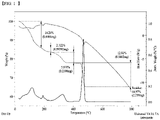
FIG. 1 shows the results of thermogravimetric-differential scanning calorimetry analysis for an iron-chromium oxide prepared according to one embodiment of the present invention. -
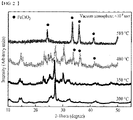
FIG. 2 shows the results of X-ray diffraction analysis for an iron-chromium oxide prepared according to one embodiment of the present invention. -
FIG. 3 shows the results of X-ray diffraction analysis for an iron-chromium oxide prepared according to one embodiment of the present invention compared to Cr8O21 and Cr2O5 prepared by a conventional method, respectively. -
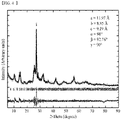
FIG. 4 shows the results of Le Bail fitting for the X-ray diffraction pattern of an iron-chromium oxide prepared according to one embodiment of the present invention. -
FIG. 5A includes the scanning electron microscope (SEM) images and transmission electron microscope (TEM) images of an iron-chromium oxide prepared according to one embodiment of the present invention. -
FIG. 5B includes the scanning electron microscope (SEM) images of Cr8O21 and Cr2O5 prepared by a conventional method, respectively. -
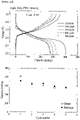
FIGS. 6A to 6C show the results of the battery charge/discharge experiments for the coin cell made of an iron-chromium oxide prepared according to one embodiment of the present invention, and those of Cr8O21 and Cr2O5 prepared by a conventional method, respectively. -
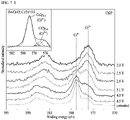
FIG. 7 shows the results of X-ray photoelectron analysis during the battery cell test performed on an iron-chromium oxide prepared according to one embodiment of the present invention; the tests were performed after stopping the coin cells at different discharge voltages (4.5, 4.0, 3.1, 2.8, 2.5, 2.0 V). -
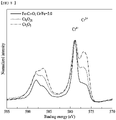
FIG. 8 shows the results of comparative analysis of X-ray photoelectron spectra of Cr 2p for an iron-chromium oxide prepared according to one embodiment of the present invention, and those of the Cr8O21 and Cr2O5 prepared by a conventional method, respectively. -
FIG. 9 shows the results of X-ray diffraction analysis during the battery cell test performed on an iron-chromium oxide prepared according to one embodiment of the present invention; the tests were performed after stopping the coin cells at different discharge voltages (4.5, 4.0, 3.1, 2.8, 2.5, 2.0 V). - The present invention will now be described more fully with reference to the accompanying drawings and contents disclosed in the drawings. However, the present invention should not be construed as limited to the exemplary embodiments described herein.
- The terms used in the present specification are used to explain a specific exemplary embodiment and not to limit the present inventive concept. Thus, the expression of singularity in the present specification includes the expression of plurality unless clearly specified otherwise in context. It will be further understood that the terms "comprise" and/or "comprising", when used in this specification, specify the presence of stated components, steps, operations, and/or elements, but do not preclude the presence or addition of one or more other components, steps, operations, and/or elements thereof.
- It should not be understood that arbitrary aspects or designs disclosed in "embodiments", "examples", "aspects", etc. used in the specification are more satisfactory or advantageous than other aspects or designs.
- Although terms used in the specification are selected from terms generally used in related technical fields, other terms may be used according to technical development and/or due to change, practices, priorities of technicians, etc. Therefore, it should not be understood that terms used below limit the technical spirit of the present invention, and it should be understood that the terms are exemplified to describe embodiments of the present invention.
- Also, some of the terms used herein may be arbitrarily chosen by the present applicant. In this case, these terms are defined in detail below. Accordingly, the specific terms used herein should be understood based on the unique meanings thereof and the whole context of the present invention.
- Meanwhile, terms such as "first" and "second" are used herein merely to describe a variety of constituent elements, but the constituent elements are not limited by the terms. The terms are used only for the purpose of distinguishing one constituent element from another constituent element.
- In addition, when an element such as a layer, a film, a region, and a constituent is referred to as being "on" another element, the element can be directly on another element or an intervening element can be present.
- Unless defined otherwise, all terms (including technical and scientific terms) used herein have the same meaning as commonly understood by one of ordinary skill in the art. It will be further understood that terms, such as those defined in commonly used dictionaries, should be interpreted as having a meaning that is consistent with their meaning in the context of the relevant art and the present invention, and will not be interpreted in an idealized or overly formal sense unless expressly so defined herein.
- In addition, in the following description of the present invention, a detailed description of known functions and configurations incorporated herein will be omitted when it may make the subject matter of the present invention unclear. The terms used in the specification are defined in consideration of functions used in the present invention, and can be changed according to the intent or conventionally used methods of clients, operators, and users. Accordingly, definitions of the terms should be understood on the basis of the entire description of the present specification.
- Hereinafter, embodiments of the present invention will be described in detail with reference to the accompanying drawings.
- A method of preparing an iron-chromium oxide according to one embodiment of the present invention is to prepare an iron-chromium oxide using an ion-exchange chromatographic method, and includes a step of providing an ion exchange column substituted with Fe3+ ions; a step of adding a hexavalent chromium (Cr6+) compound to the ion exchange resin column to obtain an ion-exchanged aqueous solution; and a step of heat-treating the ion-exchanged aqueous solution.
- In the step of providing an ion exchange column substituted with Fe3+ ions, an ion exchange column may be provided by adding an aqueous solution containing one or more selected from the group consisting of FeCl3, FeCl3·6H2O, Fe(NO3)3, and Fe(NO3)3·9H2O to an ion exchange resin. More specifically, an ion exchange column substituted with Fe3+ ions may be provided by passing an aqueous solution containing Fe3+ ions through a cation exchange resin (cation exchanger) or mixing and stirring a cation exchange resin and an aqueous solution containing Fe3+ ions. Whether all of the cation exchange resin in the ion exchange column have been substituted with Fe3+ ions may be confirmed by passing the aqueous solution through the ion exchange column and measuring the pH of the discharged solution. At this time, the pH may be measured using a litmus test paper. More specifically, when H+ ions are substituted with Fe3+ ions, an acidic solution having a pH of 7 or less is discharged during the process of substituting H+ ions with Fe3+ ions, and a neutral solution is discharged after all H+ ions are substituted with Fe3+ ions. Based on this principle, it can be confirmed that all of the cation exchange resin in the ion exchange resin column have been substituted with Fe3+ ions.
- The ion exchange resin may be a cation exchange resin.
- The hexavalent chromium (Cr6+) compound may be CaCrO4, Na2CrO4, or K2Cr2O7. The ion-exchanged aqueous solution may include Fe3+ ions and Cr6+ ions.
- The heat treatment may be performed under a vacuum atmosphere, an oxygen (O2) atmosphere, a nitrogen (N2) atmosphere, or an argon (Ar) atmosphere.
- The heat treatment may be performed at 350 °C or lower or at 270 °C to 350 °C. More preferably, the heat treatment is performed under an oxygen (O2) atmosphere, a nitrogen (N2) atmosphere, an argon (Ar) atmosphere, or vacuum. For example, the heat treatment may be performed under a degree of vacuum of 10-4 torr or less.
- In addition, the cathode for lithium-ion batteries of the present invention includes the iron-chromium compound prepared using the above method.
- The iron-chromium compound may have a Fe/Cr ratio of 0.2 to 0.5.
- The iron-chromium compound may have a monoclinic unit cell.
- In addition, the present invention may provide the cathode for lithium-ion batteries including the iron-chromium compound prepared using the above method.
- A column substituted with Fe3+ ions was prepared using an aqueous solution containing FeCl3·6H2O and cation-exchange resin IR-120(H).
- Subsequently, an aqueous CaCrO4 solution at 80 °C was passed through the column to exchange the Fe3+ ions attached to the ion-exchange resin with Ca2+ ions, and obtain an aqueous solution containing Fe3+ ions and Cr6+ ions. The aqueous solution was dried at 80 °C and was subjected to heat treatment at 300-580 °C under a vacuum atmosphere of 1×10⁻⁴ Torr or less to obtain iron-chromium oxide.
- The same procedure as in Example 1 was performed except that heat treatment was performed at 270 °C to 350 °C under an oxygen (O2) atmosphere.
- The same procedure as in Example 1 was performed except that heat treatment was performed at 350 °C under an argon (Ar) atmosphere.
- The same procedure as in Example 3 was performed except that heat treatment was performed at 350 °C under a nitrogen (N2) atmosphere.
- Thermogravimetric-differential scanning calorimetry (TGA-DSC) for the iron-chromium oxide prepared in Example 1 was performed at a heating rate of 10 °C/min under a nitrogen (N2) atmosphere of 100 ml/min, and the analysis results are shown in
FIG. 1 . - X-ray diffraction analysis for iron-chromium oxides prepared in Example 1 (vacuum atmosphere, heat treatment temperature: 300 to 580 °C), Example 2 (oxygen atmosphere, heat treatment temperature: 270 to 350 °C), Example 3 (argon atmosphere, heat treatment temperature: 350 °C), and Example 4 (nitrogen atmosphere, heat treatment temperature: 350 °C) was performed using an X-ray diffractometer (Rigaku X-ray diffractometer, 40 kV, 100 mA) equipped with a Cu-Kα radiation source, and the analysis results were compared with The International Centre for Diffraction Data (ICDD). XRD diffraction pattern analysis results are shown in
FIGS. 2 and3 . - As shown in
Fig. 2 , an FeCrO3 perovskite phase with no battery characteristics was observed in the heat-treated sample prepared at temperatures of 400 and 580 °C, which correspond to Example 1. It can be confirmed that heat-treated samples prepared in the temperature range of 270-350 °C under various atmospheres (Examples 2 to 4) exhibited XRD diffraction patterns similar to that of Cr2O5 obtained by heat-treatment of CrO3 at 350 °C under an oxygen atmosphere; each diffraction pattern is shown inFig. 3 . The synthesis of Cr2O5 and Cr8O21 was sensitive to the heating temperature. In contrast, in the case of the synthesis method performed in the present invention, it was confirmed that the Fe-Cr-O samples synthesized at temperatures between 270 °C and 350 °C under various atmospheres exhibited similar XRD patterns. - As shown in
Figs. 2 and3 , the XRD diffraction pattern of the Fe-Cr-O compound obtained by heat treatment at 350 °C under vacuum was analyzed using the LeBail fitting method, and the results are shown inFig. 4 . The Cr2O5 sample analyzed by Hewston et al. had a monoclinic unit cell of a = 12.01 Å, b = 8.52 Å, c = 9.39 Å; β = 92.0°. The analysis results ofFig. 4 shows that the Fe-Cr-O compound had a monoclinic unit cell of a = 11.97 Å, b = 8.59 Å, c = 9.19 Å; β = 92.76°. -
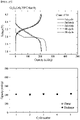
Figure 5A shows a scanning electron micrograph and transmission electron micrograph of iron-chromium oxide prepared in Example 1 (vacuum, heat treatment temperature: 350 °C). Inductively coupled plasma-atomic emission spectroscopy (ICP-AES) analysis for the iron-chromium oxide used for microphotography confirmed that the component ratio of chromium to iron was 3:1. Hexagonal column-shaped crystal clusters were observed at a magnification of 200,000× (Fig. 5A , upper left image), and each hexagonal column-shaped particle consisted of smaller particles with a size of several tens of nanometers observed at a high magnification of 3 million× (Fig. 5A , upper right image). The shape and size of these small particles were confirmed using transmission electron microscopy (TEM) (FIG. 5A , lower images), and particles with diameters of approximately 30-40 nm were observed. The material observed above is composed of crystal grains with sizes that are at least 100× times smaller (several µm) than the size of Cr8O21 and Cr2O5 crystals synthesized by heat treatment of CrO3 at 270 and 350 °C, respectively (Fig. 5B ), which indicated that the crystallization was achieved via different processes during synthesis. These results are consistent with the change in peak broadening observed in the X-ray diffraction pattern shown in Measurement Example 2. - A coin cell was manufactured using iron-chromium oxide (composition ratio of chromium to iron: 3:1) prepared in Example 1 (vacuum, heat treatment: 350 °C) and analyzed in Measurement Example 3, and a battery charge/discharge experiment was performed. The results are shown in
Fig. 6A . For a performance comparison analysis with conventional Cr8O21 and Cr2O5, coin cells were assembled in the same procedure using Cr8O21 and Cr2O5 powder (specimens analyzed in Measurement Examples 2 and 3), and battery charge/discharge experiments were performed under the same conditions. The results are shown inFigs. 6B (Cr8O21) and 6C (Cr2O5). - The oxide electrodes were fabricated using a mixture of the active materials, acetylene black, and polytetrafluoroethylene (PTFE) taken in a ratio of 70:20:10 weight percentage. One molar LiPF6 in ethylene carbonate (EC)/diethyl carbonate (DEC)/dimethyl carbonate (DMC) (1:1:1 by volume) was used as the electrolyte, and a lithium metal foil (14-mm diameter circular disk) was used as the counter and reference electrodes. The electrode, separator, and electrolyte were assembled and sealed in an Ar-filled glove box to obtain the cells.
- As shown in
Figs. 6A-C , when repeated five times at a C/10 rate, a voltage of 2-4.5 V vs Li+/Li was observed. After five cycles, the charge/discharge capacities of Cr8O21, Cr2O5, and iron-chromium oxide were 210, 280, and 380 mAh/g, respectively. It was confirmed that Cr8O21 and Cr2O5 were nearly consistent with previous experimental results. Based on these comparative experimental results and the battery performance analysis using iron-chromium oxide prepared in Example 1 as a cathode material, it was confirmed that a charge/discharge capacity higher than 100 mAh/g was obtained compared with previously developed Cr8O21 and Cr2O5. - After the coin cell composed of the iron-chromium oxide used in the charge/discharge experiment performed in Measurement Example 4 was stopped at different discharge voltages (4.5, 4.0, 3.1, 2.8, 2.5, 2.0 V), the coin cell was moved into a glove box, disassembled, and X-ray photoelectron analysis was performed while the cathode electrode was not exposed to air. The results are shown in
Fig. 7 , indicating a change in the valence states of the chromium ions from Cr6+ at 4.5 V to Cr3+ with the insertion of Li ions. - The comparative analysis between Cr8O21, Cr2O5, and iron-chromium oxide in Measurement Example 4 revealed the cause of the difference in charge/discharge capacity, which and can be attributed to the difference in the atomic ratios of tetrahedral Cr6+ to octahedral Cr3+. Atomic ratio of Cr6+/Cr3+ is 2 and 3 for Cr2O5 and Cr8O21, respectively, as previously reported. The Cr8O21 compound, with relatively more Cr6+ ions which can participate in the oxidation/reduction reaction during battery charging/discharging, showed higher charge/discharge capacity than Cr2O5. In the case of iron-chromium oxide prepared in Example 1, the iron-chromium oxide was predicted to have a monoclinic crystal structure similar to that of Cr2O5, as shown in
Fig. 4 , and the ICP-AES analysis indicated that the composition Cr/Fe ratio was 3.0. Based on these results, the crystallographic formula for Fe-Cr-O can be estimated as Fe3+ xCr3+ 2-x(Cr6+O4)2(Cr6+ 2O7) assuming some Cr3+ of Cr2O5 (= Cr2 3+(Cr6+O4)2(Cr2 6+O7)) is substituted with Fe3+, whereas the ICP-AES (Cr/Fe = 3.0) suggested the formula to be Fe3+ 1.5Cr3+ 0.5(Cr6+O4)2(Cr6+ 2O7). In this case, the Cr6+/Cr3+ ratio was 8, which is 2.5 times greater than that of the Cr8O21 (3). The substituted Fe3+ ions may participate in the oxidation/reduction reaction and contribute to higher capacitive properties. To confirm this experimentally, X-ray photoelectron analysis was performed on Cr8O21, Cr2O5, and iron-chromium oxide, and the results are shown inFig. 8 . As expected, the relative peak intensities (Cr6+/Cr3+) of Cr 2p3/2 were in the order of Fe3+ 1.5Cr3+ 0.5Cr6+ 4O15 > Cr8O21 > Cr2O5, which corresponded with the order of the Cr6+/Cr3+ ratio. - After the coin cell used in the charge/discharge experiment performed in Measurement Example 4 was stopped at different discharge voltages (4.5, 4, 3.1, 2.8, 2.5, and 2.0 V), it was moved into a glove box, disassembled, and X-ray diffraction analysis was performed on a sample sealed with a Kapton film. The results are shown in
Fig. 9 . - The crystalline peak, which observed in X-ray diffraction patterns of Example 2 (
Figs. 2 and3 ) performed on the powder samples, disappeared and new peaks were observed at approximately 45° as lithium was inserted. These results are consistent with the experimental results for Cr2O5 previously published in literature (Xu-Yong Feng, Ning Ding, Li Wang, Xiao-Hang Ma, Yong-Ming Li, and Chun-Hua Chen, J. Power Sources, 2013, 222, 184-187.). - Meanwhile, embodiments of the present invention disclosed in the present specification and drawings are only provided to aid in understanding of the present invention and the present invention is not limited to the embodiments. It will be apparent to those skilled in the art that various modifications can be made to the above-described exemplary embodiments of the present invention without departing from the spirit and scope of the invention.
Claims (10)
- A method of preparing an iron-chromium oxide, comprising:a step of providing an ion exchange column substituted with Fe3+ ions;a step of adding a hexavalent chromium (Cr6+) compound to the ion exchange resin column to obtain an ion-exchanged aqueous solution; anda step of heat-treating the ion-exchanged aqueous solution.
- The method according to claim 1, wherein, in the step of providing an ion exchange column substituted with Fe3+ ions, an ion exchange column substituted with Fe3+ ions is provided by adding an aqueous solution containing one or more selected from the group consisting of FeCl3, FeCl3·6H2O, Fe(NO3)3, and Fe(NO3)3·9H2O to an ion exchange resin.
- The method according to claim 2, wherein the ion exchange resin is a cation exchange resin.
- The method according to claim 1, wherein the hexavalent chromium (Cr6+) compound is CaCrO4, Na2CrO4, or K2Cr2O7.
- The method according to claim 1, wherein the ion-exchanged aqueous solution comprises Fe3+ ions and Cr6+ ions.
- The method according to claim 1, wherein the heat treatment is performed under a vacuum atmosphere, an oxygen (O2) atmosphere, a nitrogen (N2) atmosphere, or an argon (Ar) atmosphere.
- The method according to claim 1, wherein the heat treatment is performed at 270 °C to 350 °C.
- A cathode for lithium-ion batteries, comprising the iron-chromium compound prepared using the method according to any one of claims 1 to 7.
- The cathode according to claim 8, wherein the iron-chromium compound has a Fe/Cr ratio of 0.2 to 0.5.
- The cathode according to claim 8, wherein the iron-chromium compound has a monoclinic unit cell.
Applications Claiming Priority (2)
| Application Number | Priority Date | Filing Date | Title |
|---|---|---|---|
| KR20190156996 | 2019-11-29 | ||
| PCT/KR2020/017331 WO2021107740A1 (en) | 2019-11-29 | 2020-11-30 | Method for manufacturing iron-chromium oxide using ion exchange resin |
Publications (2)
| Publication Number | Publication Date |
|---|---|
| EP4049975A1 true EP4049975A1 (en) | 2022-08-31 |
| EP4049975A4 EP4049975A4 (en) | 2024-02-21 |
Family
ID=76399927
Family Applications (1)
| Application Number | Title | Priority Date | Filing Date |
|---|---|---|---|
| EP20892816.8A Pending EP4049975A4 (en) | 2019-11-29 | 2020-11-30 | Method for manufacturing iron-chromium oxide using ion exchange resin |
Country Status (2)
| Country | Link |
|---|---|
| EP (1) | EP4049975A4 (en) |
| KR (1) | KR102475076B1 (en) |
Family Cites Families (4)
| Publication number | Priority date | Publication date | Assignee | Title |
|---|---|---|---|---|
| KR100368754B1 (en) | 1997-06-27 | 2003-04-03 | 주식회사 엘지화학 | cathode for lithium electric cell and method of manufacturing the same |
| CN100518936C (en) * | 2007-07-06 | 2009-07-29 | 哈尔滨工业大学 | Method of manufacturing erric trichloride modified ion exchange resin catalyzer |
| CN101357794B (en) | 2008-09-19 | 2010-12-15 | 南京南大表面和界面化学工程技术研究中心有限责任公司 | Ion-exchange process technique of hexavalent chrome-containing waste water |
| KR101381695B1 (en) * | 2012-09-21 | 2014-04-10 | 한국과학기술원 | Method for preparing multilayer anti-reflective coating |
-
2020
- 2020-11-30 KR KR1020200164191A patent/KR102475076B1/en active Active
- 2020-11-30 EP EP20892816.8A patent/EP4049975A4/en active Pending
Also Published As
| Publication number | Publication date |
|---|---|
| KR102475076B1 (en) | 2022-12-07 |
| EP4049975A4 (en) | 2024-02-21 |
| KR20210067959A (en) | 2021-06-08 |
Similar Documents
| Publication | Publication Date | Title |
|---|---|---|
| Zhang et al. | Facile synthesis of yolk–shell MoO 2 microspheres with excellent electrochemical performance as a Li-ion battery anode | |
| Bai et al. | Yttrium-modified Li 4 Ti 5 O 12 as an effective anode material for lithium ion batteries with outstanding long-term cyclability and rate capabilities | |
| US8168329B2 (en) | Electrochemical composition and associated technology | |
| Li et al. | Incorporation of rubidium cations into Li1. 2Mn0. 54Co0. 13Ni0. 13O2 layered oxide cathodes for improved cycling stability | |
| Yan et al. | Synthesis of single crystal LiNi0. 92Co0. 06Mn0. 01Al0. 01O2 cathode materials with superior electrochemical performance for lithium ion batteries | |
| Yi et al. | Li-rich layered/spinel heterostructured special morphology cathode material with high rate capability for Li-ion batteries | |
| Li et al. | LiNi0. 5Mn1. 5O4 microrod with ultrahigh Mn3+ content: A high performance cathode material for lithium ion battery | |
| Van Nguyen et al. | A study of the electrochemical kinetics of sodium intercalation in P2/O1/O3-NaNi1/3Mn1/3Co1/3O2 | |
| Venkatesh et al. | Effect of dopants and microstructure on the electrochemical cyclic stability of layered P2-type Na0. 67MnO2 prepared by different chemical routes: An experimental and theoretical study | |
| Ahn et al. | Achieving high capacity and rate capability in layered lithium transition metal oxide cathodes for lithium-ion batteries | |
| CN115583672A (en) | Quaternary sodium-ion battery positive electrode material and sodium-ion battery comprising same | |
| Wang et al. | High capacity spherical Li [Li0. 24Mn0. 55Co0. 14Ni0. 07] O2 cathode material for lithium ion batteries | |
| Ma et al. | Synthesis of Li1. 2Mn0. 54Co0. 13Ni0. 13O2 by sol–gel method and its electrochemical properties as cathode materials for lithium-ion batteries | |
| Guan et al. | Enhancing the electrochemical performance of Li1. 2Ni0. 2Mn0. 6O2 by surface modification with nickel–manganese composite oxide | |
| Li et al. | Effect of Nb5+ doping on LiNi0. 5Co0. 25Mn0. 25O2 cathode material | |
| KR20080111388A (en) | Electrochemical Compositions and Related Technologies | |
| Windmüller et al. | Impact of fluorination on phase stability, crystal chemistry, and capacity of LiCoMnO4 high voltage spinels | |
| Altin et al. | Investigations of the capacity fading mechanism of Na 0.44 MnO 2 via ex situ XAS and magnetization measurements | |
| Liu et al. | Investigation of the structural and electrochemical performance of Li1. 2Ni0. 2Mn0. 6O2 with Cr doping | |
| CN118791056B (en) | Ni-MOFs-based O3 type sodium ion battery positive electrode material and preparation method and application thereof | |
| Cao et al. | A novel method for the modification of LiNi0. 8Co0. 15Al0. 05O2 with high cycle stability and low pH | |
| WO2022082080A2 (en) | Compositions and methods for making lithium-transition metal oxide compounds including niobium | |
| Hao et al. | Tuning Na Occupation and Annealing Temperature on Na Diffusion Pathways in P2-Type Na x Ni0. 25Mn0. 75O2 for Sodium-Ion Batteries by Ab Initio Calculations | |
| Hashem et al. | Effect of carbon coating process on the structure and electrochemical performance of LiNi0. 5Mn0. 5O2 used as cathode in Li-ion batteries | |
| US12559384B2 (en) | Method for manufacturing iron-chromium oxide using ion exchange resin |
Legal Events
| Date | Code | Title | Description |
|---|---|---|---|
| STAA | Information on the status of an ep patent application or granted ep patent |
Free format text: STATUS: THE INTERNATIONAL PUBLICATION HAS BEEN MADE |
|
| PUAI | Public reference made under article 153(3) epc to a published international application that has entered the european phase |
Free format text: ORIGINAL CODE: 0009012 |
|
| STAA | Information on the status of an ep patent application or granted ep patent |
Free format text: STATUS: REQUEST FOR EXAMINATION WAS MADE |
|
| 17P | Request for examination filed |
Effective date: 20220527 |
|
| AK | Designated contracting states |
Kind code of ref document: A1 Designated state(s): AL AT BE BG CH CY CZ DE DK EE ES FI FR GB GR HR HU IE IS IT LI LT LU LV MC MK MT NL NO PL PT RO RS SE SI SK SM TR |
|
| DAV | Request for validation of the european patent (deleted) | ||
| DAX | Request for extension of the european patent (deleted) | ||
| A4 | Supplementary search report drawn up and despatched |
Effective date: 20240122 |
|
| RIC1 | Information provided on ipc code assigned before grant |
Ipc: H01M 4/02 20060101ALI20240117BHEP Ipc: H01M 4/525 20100101ALI20240117BHEP Ipc: C01G 49/00 20060101AFI20240117BHEP |