EP4048562B1 - An electromechanical brake system - Google Patents
An electromechanical brake system Download PDFInfo
- Publication number
- EP4048562B1 EP4048562B1 EP20799632.3A EP20799632A EP4048562B1 EP 4048562 B1 EP4048562 B1 EP 4048562B1 EP 20799632 A EP20799632 A EP 20799632A EP 4048562 B1 EP4048562 B1 EP 4048562B1
- Authority
- EP
- European Patent Office
- Prior art keywords
- motor
- brake
- capacitor
- energy
- brake system
- Prior art date
- Legal status (The legal status is an assumption and is not a legal conclusion. Google has not performed a legal analysis and makes no representation as to the accuracy of the status listed.)
- Active
Links
Images


Classifications
-
- B—PERFORMING OPERATIONS; TRANSPORTING
- B60—VEHICLES IN GENERAL
- B60L—PROPULSION OF ELECTRICALLY-PROPELLED VEHICLES; SUPPLYING ELECTRIC POWER FOR AUXILIARY EQUIPMENT OF ELECTRICALLY-PROPELLED VEHICLES; ELECTRODYNAMIC BRAKE SYSTEMS FOR VEHICLES IN GENERAL; MAGNETIC SUSPENSION OR LEVITATION FOR VEHICLES; MONITORING OPERATING VARIABLES OF ELECTRICALLY-PROPELLED VEHICLES; ELECTRIC SAFETY DEVICES FOR ELECTRICALLY-PROPELLED VEHICLES
- B60L7/00—Electrodynamic brake systems for vehicles in general
- B60L7/10—Dynamic electric regenerative braking
-
- B—PERFORMING OPERATIONS; TRANSPORTING
- B60—VEHICLES IN GENERAL
- B60T—VEHICLE BRAKE CONTROL SYSTEMS OR PARTS THEREOF; BRAKE CONTROL SYSTEMS OR PARTS THEREOF, IN GENERAL; ARRANGEMENT OF BRAKING ELEMENTS ON VEHICLES IN GENERAL; PORTABLE DEVICES FOR PREVENTING UNWANTED MOVEMENT OF VEHICLES; VEHICLE MODIFICATIONS TO FACILITATE COOLING OF BRAKES
- B60T17/00—Component parts, details, or accessories of power brake systems not covered by groups B60T8/00, B60T13/00 or B60T15/00, or presenting other characteristic features
- B60T17/18—Safety devices; Monitoring
- B60T17/22—Devices for monitoring or checking brake systems; Signal devices
- B60T17/221—Procedure or apparatus for checking or keeping in a correct functioning condition of brake systems
-
- B—PERFORMING OPERATIONS; TRANSPORTING
- B60—VEHICLES IN GENERAL
- B60T—VEHICLE BRAKE CONTROL SYSTEMS OR PARTS THEREOF; BRAKE CONTROL SYSTEMS OR PARTS THEREOF, IN GENERAL; ARRANGEMENT OF BRAKING ELEMENTS ON VEHICLES IN GENERAL; PORTABLE DEVICES FOR PREVENTING UNWANTED MOVEMENT OF VEHICLES; VEHICLE MODIFICATIONS TO FACILITATE COOLING OF BRAKES
- B60T13/00—Transmitting braking action from initiating means to ultimate brake actuator with power assistance or drive; Brake systems incorporating such transmitting means, e.g. air-pressure brake systems
- B60T13/74—Transmitting braking action from initiating means to ultimate brake actuator with power assistance or drive; Brake systems incorporating such transmitting means, e.g. air-pressure brake systems with electrical assistance or drive
-
- B—PERFORMING OPERATIONS; TRANSPORTING
- B60—VEHICLES IN GENERAL
- B60T—VEHICLE BRAKE CONTROL SYSTEMS OR PARTS THEREOF; BRAKE CONTROL SYSTEMS OR PARTS THEREOF, IN GENERAL; ARRANGEMENT OF BRAKING ELEMENTS ON VEHICLES IN GENERAL; PORTABLE DEVICES FOR PREVENTING UNWANTED MOVEMENT OF VEHICLES; VEHICLE MODIFICATIONS TO FACILITATE COOLING OF BRAKES
- B60T1/00—Arrangements of braking elements, i.e. of those parts where braking effect occurs specially for vehicles
- B60T1/02—Arrangements of braking elements, i.e. of those parts where braking effect occurs specially for vehicles acting by retarding wheels
- B60T1/10—Arrangements of braking elements, i.e. of those parts where braking effect occurs specially for vehicles acting by retarding wheels by utilising wheel movement for accumulating energy, e.g. driving air compressors
-
- B—PERFORMING OPERATIONS; TRANSPORTING
- B60—VEHICLES IN GENERAL
- B60T—VEHICLE BRAKE CONTROL SYSTEMS OR PARTS THEREOF; BRAKE CONTROL SYSTEMS OR PARTS THEREOF, IN GENERAL; ARRANGEMENT OF BRAKING ELEMENTS ON VEHICLES IN GENERAL; PORTABLE DEVICES FOR PREVENTING UNWANTED MOVEMENT OF VEHICLES; VEHICLE MODIFICATIONS TO FACILITATE COOLING OF BRAKES
- B60T13/00—Transmitting braking action from initiating means to ultimate brake actuator with power assistance or drive; Brake systems incorporating such transmitting means, e.g. air-pressure brake systems
- B60T13/10—Transmitting braking action from initiating means to ultimate brake actuator with power assistance or drive; Brake systems incorporating such transmitting means, e.g. air-pressure brake systems with fluid assistance, drive, or release
- B60T13/66—Electrical control in fluid-pressure brake systems
-
- B—PERFORMING OPERATIONS; TRANSPORTING
- B60—VEHICLES IN GENERAL
- B60T—VEHICLE BRAKE CONTROL SYSTEMS OR PARTS THEREOF; BRAKE CONTROL SYSTEMS OR PARTS THEREOF, IN GENERAL; ARRANGEMENT OF BRAKING ELEMENTS ON VEHICLES IN GENERAL; PORTABLE DEVICES FOR PREVENTING UNWANTED MOVEMENT OF VEHICLES; VEHICLE MODIFICATIONS TO FACILITATE COOLING OF BRAKES
- B60T13/00—Transmitting braking action from initiating means to ultimate brake actuator with power assistance or drive; Brake systems incorporating such transmitting means, e.g. air-pressure brake systems
- B60T13/10—Transmitting braking action from initiating means to ultimate brake actuator with power assistance or drive; Brake systems incorporating such transmitting means, e.g. air-pressure brake systems with fluid assistance, drive, or release
- B60T13/66—Electrical control in fluid-pressure brake systems
- B60T13/662—Electrical control in fluid-pressure brake systems characterised by specified functions of the control system components
-
- B—PERFORMING OPERATIONS; TRANSPORTING
- B60—VEHICLES IN GENERAL
- B60T—VEHICLE BRAKE CONTROL SYSTEMS OR PARTS THEREOF; BRAKE CONTROL SYSTEMS OR PARTS THEREOF, IN GENERAL; ARRANGEMENT OF BRAKING ELEMENTS ON VEHICLES IN GENERAL; PORTABLE DEVICES FOR PREVENTING UNWANTED MOVEMENT OF VEHICLES; VEHICLE MODIFICATIONS TO FACILITATE COOLING OF BRAKES
- B60T13/00—Transmitting braking action from initiating means to ultimate brake actuator with power assistance or drive; Brake systems incorporating such transmitting means, e.g. air-pressure brake systems
- B60T13/74—Transmitting braking action from initiating means to ultimate brake actuator with power assistance or drive; Brake systems incorporating such transmitting means, e.g. air-pressure brake systems with electrical assistance or drive
- B60T13/741—Transmitting braking action from initiating means to ultimate brake actuator with power assistance or drive; Brake systems incorporating such transmitting means, e.g. air-pressure brake systems with electrical assistance or drive acting on an ultimate actuator
-
- B—PERFORMING OPERATIONS; TRANSPORTING
- B60—VEHICLES IN GENERAL
- B60T—VEHICLE BRAKE CONTROL SYSTEMS OR PARTS THEREOF; BRAKE CONTROL SYSTEMS OR PARTS THEREOF, IN GENERAL; ARRANGEMENT OF BRAKING ELEMENTS ON VEHICLES IN GENERAL; PORTABLE DEVICES FOR PREVENTING UNWANTED MOVEMENT OF VEHICLES; VEHICLE MODIFICATIONS TO FACILITATE COOLING OF BRAKES
- B60T13/00—Transmitting braking action from initiating means to ultimate brake actuator with power assistance or drive; Brake systems incorporating such transmitting means, e.g. air-pressure brake systems
- B60T13/74—Transmitting braking action from initiating means to ultimate brake actuator with power assistance or drive; Brake systems incorporating such transmitting means, e.g. air-pressure brake systems with electrical assistance or drive
- B60T13/746—Transmitting braking action from initiating means to ultimate brake actuator with power assistance or drive; Brake systems incorporating such transmitting means, e.g. air-pressure brake systems with electrical assistance or drive and mechanical transmission of the braking action
-
- B—PERFORMING OPERATIONS; TRANSPORTING
- B60—VEHICLES IN GENERAL
- B60T—VEHICLE BRAKE CONTROL SYSTEMS OR PARTS THEREOF; BRAKE CONTROL SYSTEMS OR PARTS THEREOF, IN GENERAL; ARRANGEMENT OF BRAKING ELEMENTS ON VEHICLES IN GENERAL; PORTABLE DEVICES FOR PREVENTING UNWANTED MOVEMENT OF VEHICLES; VEHICLE MODIFICATIONS TO FACILITATE COOLING OF BRAKES
- B60T8/00—Arrangements for adjusting wheel-braking force to meet varying vehicular or ground-surface conditions, e.g. limiting or varying distribution of braking force
- B60T8/32—Arrangements for adjusting wheel-braking force to meet varying vehicular or ground-surface conditions, e.g. limiting or varying distribution of braking force responsive to a speed condition, e.g. acceleration or deceleration
- B60T8/88—Arrangements for adjusting wheel-braking force to meet varying vehicular or ground-surface conditions, e.g. limiting or varying distribution of braking force responsive to a speed condition, e.g. acceleration or deceleration with failure responsive means, i.e. means for detecting and indicating faulty operation of the speed responsive control means
- B60T8/885—Arrangements for adjusting wheel-braking force to meet varying vehicular or ground-surface conditions, e.g. limiting or varying distribution of braking force responsive to a speed condition, e.g. acceleration or deceleration with failure responsive means, i.e. means for detecting and indicating faulty operation of the speed responsive control means using electrical circuitry
-
- B—PERFORMING OPERATIONS; TRANSPORTING
- B60—VEHICLES IN GENERAL
- B60T—VEHICLE BRAKE CONTROL SYSTEMS OR PARTS THEREOF; BRAKE CONTROL SYSTEMS OR PARTS THEREOF, IN GENERAL; ARRANGEMENT OF BRAKING ELEMENTS ON VEHICLES IN GENERAL; PORTABLE DEVICES FOR PREVENTING UNWANTED MOVEMENT OF VEHICLES; VEHICLE MODIFICATIONS TO FACILITATE COOLING OF BRAKES
- B60T2270/00—Further aspects of brake control systems not otherwise provided for
- B60T2270/40—Failsafe aspects of brake control systems
- B60T2270/414—Power supply failure
-
- B—PERFORMING OPERATIONS; TRANSPORTING
- B60—VEHICLES IN GENERAL
- B60T—VEHICLE BRAKE CONTROL SYSTEMS OR PARTS THEREOF; BRAKE CONTROL SYSTEMS OR PARTS THEREOF, IN GENERAL; ARRANGEMENT OF BRAKING ELEMENTS ON VEHICLES IN GENERAL; PORTABLE DEVICES FOR PREVENTING UNWANTED MOVEMENT OF VEHICLES; VEHICLE MODIFICATIONS TO FACILITATE COOLING OF BRAKES
- B60T2270/00—Further aspects of brake control systems not otherwise provided for
- B60T2270/84—Driver circuits for actuating motor, valve and the like
-
- B—PERFORMING OPERATIONS; TRANSPORTING
- B60—VEHICLES IN GENERAL
- B60Y—INDEXING SCHEME RELATING TO ASPECTS CROSS-CUTTING VEHICLE TECHNOLOGY
- B60Y2400/00—Special features of vehicle units
- B60Y2400/11—Electric energy storages
- B60Y2400/114—Super-capacities
-
- B—PERFORMING OPERATIONS; TRANSPORTING
- B60—VEHICLES IN GENERAL
- B60Y—INDEXING SCHEME RELATING TO ASPECTS CROSS-CUTTING VEHICLE TECHNOLOGY
- B60Y2400/00—Special features of vehicle units
- B60Y2400/61—Arrangements of controllers for electric machines, e.g. inverters
-
- B—PERFORMING OPERATIONS; TRANSPORTING
- B60—VEHICLES IN GENERAL
- B60Y—INDEXING SCHEME RELATING TO ASPECTS CROSS-CUTTING VEHICLE TECHNOLOGY
- B60Y2400/00—Special features of vehicle units
- B60Y2400/81—Braking systems
Definitions
- the present invention relates to electromechanical brake technology, and more particularly to an electromechanical brake system.
- Vehicles are essential to the daily traffic of people and have a high penetration rate. In order to avoid obstacles around the car, it is often necessary to use a brake device to reduce the moving speed of vehicles or even stop the movement of vehicles during driving.
- the conventional brake device usually uses hydraulic or pneumatic pressure as a medium mechanical drive to drive brake pads to frictionally engage a rotary brake disc, thereby achieving the purpose of braking.
- the conventional brake system has a long response time and a complicated energy transmission path that causes low efficiency.
- EMB electromechanical brake
- the raw energy of a brake action is derived from a battery of a vehicle.
- the raw energy is charged by a voltage conversion to an ultra-capacitor module.
- the ultra-capacitor module may directly output electrical energy to a brake motor to generate a braking force.
- the existing electromechanical brake system may comprise a motor for generating a braking force and a mechanical transmission mechanism driven by the motor.
- the mechanical transmission mechanism may comprise a calliper.
- a motor controller may control the motor to rotate in a forward direction after receiving the brake command, thereby driving the mechanical transmission to push brake pads against a brake disc for generating a braking force.
- the mechanical transmission mechanism may store part of energy output from the motor while transmitting the braking force.
- the motor controller may control the motor to changed the applied braking force in response to receiving a command to reduce or release a service brake or a parking brake.
- the motor may rotate in a reverse direction under the effect of the mechanical transmission mechanism.
- the speed of motor rotation in the reverse direction is proportional to the amount of braking force generated when the brake action was applied. That is to say, the greater the braking force applied during the brake action, the greater the force that the mechanical transmission rebounds when the brake pedal is released. Accordingly, the speed of motor rotation in the reverse direction may be greater.
- a reverse electromotive force may be generated when the motor rotates in a reverse direction.
- the reverse electromotive force may cause a voltage rise across the motor controller. Therefore, if this part of the energy is not released, it is highly likely to cause overvoltage damage to the circuit of the electromechanical brake system.
- the existing electromechanical brake system may inevitably cause a large amount of energy loss, which is disadvantageous for reducing energy consumption of the vehicle.
- US 2006/0108867 A1 discloses an electromechanical brake system for an aircraft. US 2006/0108867 A1 starts from the observation that electromechanical braking systems have a tendency to produce regenerative electrical energy. In prior art brake systems the regenerative electrical energy is dissipated as heat which leads to power usage in efficiencies.
- the brake system proposed in US 2006/0108867 A1 comprises redundant power sources, redundant digital brake system control units (BSCUs) and couples of electromechanical actuator controllers (EMACs) and brake actuators associated with each of the wheels.
- the BSCUs serve for carrying out the brake control and anti-skid processing functions.
- the EMACs convert brake clamp force demands from the BSCUs to control signals of servo motors of the brake actuators.
- the power sources power the circuitry of the BSCUs and EMACs wherein power is provided by the EMACs to the brake actuators via respective power lines which might be embodied as redundant power busses.
- Electrical energy back-up systems ensure operating power in the braking system in the event of a failure of the redundant power lines.
- the back-up system includes capacitor banks and converters. The capacitor banks are charged via the converters by the power lines. The capacitor banks are dimensioned for providing electrical power for the operation of the brake system for a given amount of time and for being able to bring the aircraft to a complete stop including anti-skid brake control and braking for ground maneuvering after the stop.
- the torque of the servo motor is transmitted via a gear train and an actuator ram to a stack of brake discs.
- a capacitive energy storage device formed by a capacitor is arranged parallel to the EMAC.
- the capacitive energy storage device can be charged by regenerative electrical energy supplied by the motor of the brake actuator.
- regenerative electrical energy results from the energy of the rotor of the motor when reducing the number of revolutions of the motor.
- regenerative electrical energy stems from elastic energy stored in the compressed brake stack which forms an energy storage similar to a spring.
- the actuator ram is retracted the brake stack releases the stored energy which drives the actuator ram, the gear train and the motor backwards. If the charging of the capacitive energy storage device by regenerative energy leads to a high voltage level, a flow of power from the capacitive energy storage device to the main power supply is blocked by an interposed diode.
- the energy stored in the capacitive energy storage device can be used for powering the EMAC and the brake actuator.
- the capacitive energy storage device can also be used in the case of a power failure of the main power supply.
- Regenerative energy stored in the capacitive energy storage device can also be used for providing a power boost for a subsequent application of braking force.
- the actuator ram is cyclically actuated between compressions of and retractions from the brake stack.
- regenerative energy is produced and stored. Thereafter, during the compression of a subsequent cycle the stored energy can avail more electrical power than if regenerative energy had not been stored.
- US 2006/0108867 A1 also proposes a regenerative management circuit wherein the capacitive energy storage device and a regenerative clamp are arranged in parallel circuit branches.
- the regenerative clamp is configured to limit voltage transients across the capacitive energy storage device.
- the regenerative clamp might be embodied as resistive element converting electrical energy into heat.
- the resistor can be switched to the capacitive energy storage device using a solid state switch as power FET or IGBT.
- a sense line connected to the capacitive energy storage device can be used to activate the switching at the predetermined value.
- CN 201466779 U relates to an electric motor management for operating the electric motor in a load mode and a regeneration mode.
- the electric motor is used for driving an elevator, a crane for lifting goods or a pump used for oil exploitation.
- EP 3 339 119 A1 discloses a redundant electric brake system for a motor vehicle wherein capacitor-based power sources can be recharged by an external recharging power source which might be a vehicle accumulator, a generator, a retarder, a hub generator or an electric motor used for driving the vehicle which can be used in a recuperation mode and the like. Also here, capacitor-base power sources can be recharged when receiving mechanical spring energy from the brake actuator when releasing the brake.
- an external recharging power source which might be a vehicle accumulator, a generator, a retarder, a hub generator or an electric motor used for driving the vehicle which can be used in a recuperation mode and the like.
- capacitor-base power sources can be recharged when receiving mechanical spring energy from the brake actuator when releasing the brake.
- the present invention provides an electromechanical brake (EMB) system to avoid an accumulation of a back electromotive force generated when the motor rotates in a reverse direction, thereby avoiding a hidden danger of circuit overvoltage damage and reducing energy consumption of the electromechanical brake system.
- EMB electromechanical brake
- the electromechanical brake system provided in the present invention comprises a capacitor-based power source and at least one electric brake device.
- the electric brake device comprises a motor that acquires electric power from the capacitor-based power source via a power supply main circuit to generate a braking force.
- the electromechanical brake system further comprises an energy recycling circuit connected in parallel to the power supply main circuit.
- the energy recycling circuit comprises a unidirectional conduction element and/or a voltage regulating element.
- the motor When the brake force is reduced or the brake is at least partially released in response to a braking demand, the motor generates energy which is returned to the capacitor-based power source via the energy recycling circuit.
- the electromechanical brake system further comprises a protective switch assembly, the capacitor-based power source being electrically connected to the motor through the protective switch assembly and the protective switch assembly being configured to control forward conduction of the power supply main circuit.
- the electric brake device further comprises a control module, which is electrically connected to the motor and the protection switch assembly, and controls the protective switch assembly to cut off an electrical connection between the motor and the capacitor-based power source in response to an abnormality signal.
- the energy recycling circuit protects the control module from an overvoltage damage and recovers the energy generated when the brake motor is reversed.
- the energy recycling circuit comprises the voltage regulating element
- the voltage regulating element comprises a linear voltage regulator and/or a DC-DC converter.
- an operating voltage threshold of the voltage regulating element is greater than a maximum operating voltage of the capacitor-based power source.
- the energy recycling circuit may comprise a resistance for limiting a recharge current generated by the energy.
- the unidirectional conduction element may comprise at least one of a diode, a thyristor, a triode or a MOS transistor.
- the motor may comprise a DC motor.
- the capacitor-based power source may comprise an ultra-capacitor.
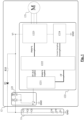
- the electromechanical brake system (1) provided by this embodiment may comprise a capacitor-based power source 11 and at least one electric brake device 12.
- the three-phase full-bridge driving circuit 1223 may drive the three-phase motor 121 to rotate in a forward direction by on and off of the MOS transistors QH1-QH3, QL1-QL3 to generate a braking force.
- the on and off of the MOS transistors QH1-QH3, QL1-QL3 may be determined according to the received control command and the position of a rotor of the three-phase motor 121.
- the three-phase brake motor 121 may obtain power from the capacitor-based power source 11 via the power supply main circuit (13) of the electric brake device 12 by at least one of the three phase inputs alternately, thereby rotating in the forward direction to produce a braking force required to reduce the speed of a vehicle.
- control module 122 may control the power switch assembly 123 to turn on the power supply main circuit (13) to supply power to the brake motor 121.
- the three-phase brake motor 121 provided in this embodiment may alternately obtain power from the power supply main circuit (13) through at least one of three phase inputs. Meanwhile, an energy recycling circuit (14) may recover power from the motor through the remaining of the three phase inputs. At this time, the force for driving the brake motor 121 to be reversed is moderated, so that the process of releasing the braking force may be gentle and stable, avoiding the impact of the calliper and the mechanical transmission mechanism at the moment when the braking force is released.
- the brake motor 121 may directly generate a braking force to reduce the speed of the vehicle, or generate a driving force for driving a mechanical transmission mechanism of the electric brake device, to drive the mechanical transmission mechanism to generate a braking force to reduce the speed of the vehicle.
- the control module 122 of the electric brake device 12 may control the brake motor 121 to rotate in a forward direction to drive the mechanical transmission mechanism to push the calliper against the brake disc of the wheel in response to receiving a command indicating a brake demand, thereby generating a braking force.
- Fig. 3 shows a schematic of an electric brake device according to an embodiment of the present invention.
- the mechanical transmission mechanism and the calliper may store a portion of mechanical energy during transfer of the braking force from the motor to the brake disc.
- the control module 122 may stop supplying power to the brake motor 121 in response to a command to release the brake, thereby releasing the brake calliper.
- the brake motor 121 may be reversely rotated by the mechanical transmission mechanism, and the speed of its rotation may be proportional to the braking force generated when the brake is applied. That is to say, the greater the braking force applied during braking, the greater the force transmitted backward by the mechanical transmission mechanism when the brake calliper is released, and the faster the motor reverses accordingly.
- the unidirectional conduction element D1 comprises but is not limited to a diode, a thyristor, a triode or a MOS transistor, mainly configured to prevent the capacitor-based power source 11 from supplying power to the brake motor 121 via the energy recycling circuit (14).
- the unidirectional conduction element D1 may allow the reverse electromotive force to charge the capacitor-based power source 11 via the energy recycling circuit (14) to recover the energy generated when the brake motor 121 is reversed, thereby avoiding the overvoltage damage of the control module 122.
- Fig. 4A shows a schematic of power recovering by a three-phase motor according to an embodiment of the present invention.
- Fig. 4B shows a schematic of power recovering by a three-phase motor according to an embodiment of the present invention.
- the three-phase full-bridge driving circuit 1223 may first turn on the high-side transistor QH3 of the U-phase and the low-side transistor QL2 of the V-phase, and turn off the low-side transistor QL3 of the U-phase and the high-side transistor QH2 of the V-phase, thereby supplying power to the three-phase brake motor 121 via the U-phase input to drive the braking motor 121 to output a positive small torque to slowly release the brake.
- the direction of the positive torque coincides with the direction of the forward rotation mentioned above.
- the mechanical transmission mechanism of the electric brake device 12 may push brake pads to press a brake disk to generate a braking force under the positive torque.
- the transistors QH1 and QL1 of the W phase that are not involved in the power supply are all in the off state.
- the electric power may be recovered from the three-phase brake motor 121 through a body diode of the high-side transistor QH1 of the W-phase.
- the three-phase brake motor 121 may obtain power from the capacitor-based power source 11 via the power supply main circuit (13) of the electric brake device 12 by two of the three phase inputs alternately.
- the energy recycling circuit (14) provided in this embodiment may alternately recover power from the three-phase brake motor 121 through one of the three phase inputs of the brake motor 121 that is not involved in power supply.
- the energy generated by the brake motor 121 may be recovered to the capacitor-based power source 11 via the energy recycling circuit (14) to charge the capacitor-based power source 11 to compensate for energy consumed during braking.
- the retraction of the motor 121 may be slowed down according to the speed at which the driver releases the braking pedal during the service braking, so that energy may be recovered whether the brake is released quickly or slowly.
- the electromechanical brake system (1) with energy recycling circuit (14) shown in Fig. 1 is based on the principle of electromechanical braking to recover energy stored in a mechanical transmission mechanism of the brake system.
- the energy recycling circuit (14) may further comprise a current limiting resistor R10.
- the current limiting resistor R10 may be configured to limit a reverse current caused by the energy generated when the brake motor 121 is reversed.
- the specific value of the current limiting resistor R10 may be determined by the current capability of each circuit unit on the energy recycling circuit (14).
- a current limiting resistor R10 with insufficient resistance may cause overcurrent damage to wires or the unidirectional conduction element D1 on the energy recycling circuit (14).
- a current limiting resistor R10 with excessive resistance may cause an insufficient recharging flow, so that the energy generated when the brake motor 121 is reversed may not be recovered in time, thereby causing overvoltage damage of the control module 122.
- a current limiting resistor R10 with excessive resistance may also cause more energy loss, thereby reducing energy recovering efficiency of the energy recycling circuit (14), and generating a large amount of heat to increase the load on the heat dissipation system of the vehicle.
- the energy recycling circuit (14) comprising the unidirectional conduction element D1 is an embodiment of the present invention.
- the energy recycling circuit (14) may also comprise a voltage regulating element.
- the voltage regulating element comprises, but is not limited to, a DC-DC converter 53.
- Fig. 5 shows a schematic of an energy recycling circuit (14) according to an embodiment of the present invention.
- a vehicle battery may be used as a recharging source 51 to provide raw energy for vehicle braking.
- the raw energy may charge an ultra-capacitor module 11 after being voltage converted by a DC-DC charging module 52.
- the ultra-capacitor module 11 may output electric energy to the brake motor 121 via a control module 122 of the electric brake device 12 to generate a braking force.
- the control module 122 may stop powering the brake motor 121.
- the brake motor 121 may be reversely rotated by the mechanical transmission mechanism to generate a reverse electromotive force.
- the reverse electromotive force is higher than a motor input voltage V1 (for example, 48 V) provided by the ultra-capacitor module 11.
- An operating voltage threshold of a DC-DC converter 53 of the energy recycling circuit (14) may be greater than the maximum operating voltage V1 of the ultra-capacitor module 11.
- the DC-DC converter 53 may recover the energy generated by the brake motor 121 to the ultra-capacitor module 11 for charging, or transfer the energy to other devices of the vehicle to supply power to the other devices, thereby recovering the energy generated when the brake motor 121 is reversed and preventing overvoltage damage of the control module 122.
- the rated voltage of the ultra-capacitor module 11 may be 48 V, and the maximum energy input to the electric brake device 12 may charge the ultra-capacitor module 11 from 46 V to 48 V during recovery.
- the charging of the ultra-capacitor module 11 by the recharging source 51 may always be stopped at 46 V to remain a margin for energy recovery.
- Fig. 6 shows a schematic of an energy recycling circuit (14) according to an embodiment of the present invention.
- the energy recycling circuit (14) may further comprise a current limiting resistor for limiting reverse current flow caused by the energy generated when the brake motor 121 is reversed.
- the protection switch assembly 123 may comprise two P-channel MOS transistors Q7-Q8 and a transistor T1, connected in series to the power supply main circuit (13).
- the capacitor-based power source 11 may be electrically connected to the brake motor 121 through the protection switch assembly 123 to supply power to the brake motor 121.
- the protection switch assembly 123 may still have basic functions of the power switch assembly described above, configured to control whether the power supply main circuit (13) is forward conducted.
- the main control unit 1221 may be electrically connected to the power switch T1 of the protection switch assembly 123, configured to turn on or off the power switch T1, thereby turning on or off the protection switch assembly, i.e. the power switch assembly 123.
- the main control unit 1221 of the control module 122 may not operate, turning off the transistor T1.
- the Q7_S is negative to the Q7_G/Q8_G, turning off the transistor Q7. Therefore, current may not flow, thereby preventing reverse connection.
- the protection switch assembly 123 combined by the transistors Q7 and Q8 may further constitute a high-side switch.
- the electromechanical brake system may be applied to a passenger vehicle or a large commercial vehicle.
- Fig. 8 shows a schematic of an electromechanical brake system (1), comprising a plurality of electric brake devices 12, according to an embodiment of the present invention.
- the plurality of electric brake devices 12 in the electromechanical brake system (1) may be disposed at a plurality of wheel ends of the vehicle, configured to respectively brake a plurality of wheels, thereby providing a more uniform braking force.
- the electromechanical brake system (1) may comprise two controllers 110, respectively corresponding to a front axle and a rear axle.
- Each controller 110 may comprise a control unit 112 and a capacitor-based power source 11 for providing braking energy, wherein the capacitor-based power source 11 may employ any configurations described in the foregoing embodiments.
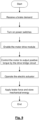
- Fig. 9 shows a flowchart of a brake action performed by an electromechanical brake system (1) according to another embodiment of the present invention.
- the main control unit 1221 of the control module 122 may output a control signal to turn on the power switch T1.
- the source Q7_S of the transistor Q7 is positive to the gates Q7_G/Q8_G of the transistors Q7 and Q8 in Fig. 7A , turning on the transistor Q7.
- the voltage of the drain Q7_D of the transistor Q7 is equal to the input voltage of Q7_S, setting high the voltage of the drain Q8_D of the transistor Q8, which is equal to the voltage of Q7_D.
- the voltage of Q8_S is higher than the voltage of the gates Q7_G/Q8_G of the transistors Q7 and Q8, turning on the transistor Q8.
- the protection switch assembly 123 is turned on to set the voltage of the terminal V1 high. Current may flow from the input terminal Q7_S to the brake motor 121 to supply power to the brake motor 121.
- the main control unit 1221 of the control module 122 may further output a control signal to enable the motor drive module 1222.
- the motor drive module 1222 may convert the control signal into a drive signal for controlling on and off of each of the MOS transistors in the drive bridge circuit 1223, thereby controlling the three phase inputs U, V, and W to alternately supply power to the brake motor 121.
- the brake motor 121 may be rotated forward under a drive control of the three phase inputs U, V, W, thereby outputting a corresponding positive torque to operate the electric actuator 31 and drive the mechanical transmission mechanism.
- the mechanical transmission mechanism may make a brake calliper clamp the brake disc of a wheel under the driving of the positive torque, thereby generating a braking force.
- the speed of the vehicle may be lowered by the braking force, and the mechanical transmission mechanism and the brake calliper may store a portion of energy during the transfer of braking force from the motor to the brake disc.
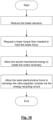
- Fig. 10 shows a flowchart of energy recovery performed by an electromechanical brake system (1) according to another embodiment of the present invention.
- the main control unit 1221 of the control module 122 may output a control signal to the motor drive module 1222 to request a lower torque than needed to hold the brake force, hence allowing the mechanical energy stored in the mechanical transmission mechanism and the calliper to rotate the motor reversely.
- the back electromotive force generated may recharge the ultra-capacitor module 11 via the energy recycling circuit (14), thus the energy recycling is achieved.
- the main control unit 1221 of the control module 122 may stop supplying power to the brake motor 121 directly. Meanwhile, the three phase inputs U, V, W of the three-phase full bridge drive circuit may stop driving the brake motor 121.
- the brake motor 121 may stop outputting positive torque to the mechanical transmission.
- the mechanical transmission mechanism may release the brake calliper by losing the urging force provided by the brake motor 121.
- the brake motor 121 may be reversely rotated under the effect of the mechanical transmission mechanism, wherein the speed of rotation of the brake motor 121 may be proportional to the braking force generated when the brake is applied. That is to say, the greater the braking force applied during the brake, the greater the force of rebounding when the brake is released, and the faster the motor reverses accordingly.
- the main control unit 1221 of the control module 122 may output a control signal to enable the motor drive module 1222.
- the motor drive module 1222 may convert the control signal into a drive signal for controlling the on and off of each MOS transistor in the drive bridge circuit 1223, thereby controlling the three phase inputs U, V, W to recover power from the three-phase brake motor 121 through ones of the three phase inputs of the brake motor 121 that are not involved in power supply alternately.
- the energy generated in form of a reverse electromotive force when the brake motor 121 is reversed, may be returned to the capacitor-based power source 11 via the energy recycling circuit (14).
- the energy recycling circuit (14) may comprise a unidirectional conduction element D1.
- the unidirectional conduction element D1 comprises, but is not limited to, at least one of a diode, a thyristor, a triode or a MOS transistor, mainly configured to prevent the capacitor-based power source 11 from supplying power to the brake motor 121.
- the unidirectional conduction element D1 may further configured to charge the capacitor-based power source 11 by the reverse electromotive force to recover the energy generated when the brake motor 121 is reversed, thereby avoiding overvoltage damage of the control module 122.
- the current recycling circuit may further comprise a current limiting resistor R10.
- the current limiting resistor R10 may be configured to limit the return current flow caused by the energy generated when the brake motor 121 is reversed.
- the current limiting resistor R10 with excessive resistance may further cause more energy loss, thereby reducing energy recovering rate of the energy recycling circuit (14), and generating a large amount of heat to increase the load on the heat dissipation system of the vehicle.
- the power switch assembly 123 of the electromechanical brake system (1) provided by the embodiment may further implement a protection switch function.
- the protection switch assembly 123 may comprise two P-channel MOS transistors Q7-Q8 and a transistor T1, connected in series to the power supply main circuit (13).
- the transistor T1 may be respectively connected to the main control unit 1221 of the control module 122 and the gates of the P-channel MOS transistors Q7-Q8.
- the main control unit 1221 of the control module 122 may not operate, turning off the transistor T1.
- the Q7_S is negative to the Q7_G/Q8_G, turning off the transistor Q7. Therefore, current may not flow, thereby preventing a reverse connection.
- protection switch assembly 123 having the function of a power switch assembly is only a specific solution provided by the embodiment, mainly configured to more clearly showing the main idea of the present invention to the public and provide a practical implementation, but not intended to limit the scope of protection of the present invention.
- those skilled in the art may also provide a separate power switch assembly and a separate protection switch assembly to achieve the same function.
Landscapes
- Engineering & Computer Science (AREA)
- Transportation (AREA)
- Mechanical Engineering (AREA)
- Chemical & Material Sciences (AREA)
- Combustion & Propulsion (AREA)
- Power Engineering (AREA)
- Braking Systems And Boosters (AREA)
- Stopping Of Electric Motors (AREA)
- Braking Arrangements (AREA)
- Control Of Electric Motors In General (AREA)
- Control Of Ac Motors In General (AREA)
Description
- The present invention relates to electromechanical brake technology, and more particularly to an electromechanical brake system.
- Vehicles are essential to the daily traffic of people and have a high penetration rate. In order to avoid obstacles around the car, it is often necessary to use a brake device to reduce the moving speed of vehicles or even stop the movement of vehicles during driving.
- The conventional brake device usually uses hydraulic or pneumatic pressure as a medium mechanical drive to drive brake pads to frictionally engage a rotary brake disc, thereby achieving the purpose of braking. The conventional brake system has a long response time and a complicated energy transmission path that causes low efficiency.
- In order to enhance the braking ability of vehicles and simplify the structure of brake system, the prior art further proposes an electromechanical brake (EMB) system.
- In an existing electromechanical brake system, the raw energy of a brake action is derived from a battery of a vehicle. The raw energy is charged by a voltage conversion to an ultra-capacitor module. The ultra-capacitor module may directly output electrical energy to a brake motor to generate a braking force.
- The existing electromechanical brake system may comprise a motor for generating a braking force and a mechanical transmission mechanism driven by the motor. In a disc brake, the mechanical transmission mechanism may comprise a calliper.
- When a driver steps on a brake pedal or generates a brake command in a non-human operation mode, such as ABS, ESP, automatic driving system, etc., a motor controller may control the motor to rotate in a forward direction after receiving the brake command, thereby driving the mechanical transmission to push brake pads against a brake disc for generating a braking force.
- In the meantime, the mechanical transmission mechanism may store part of energy output from the motor while transmitting the braking force.
- The motor controller may control the motor to changed the applied braking force in response to receiving a command to reduce or release a service brake or a parking brake. The motor may rotate in a reverse direction under the effect of the mechanical transmission mechanism. The speed of motor rotation in the reverse direction is proportional to the amount of braking force generated when the brake action was applied. That is to say, the greater the braking force applied during the brake action, the greater the force that the mechanical transmission rebounds when the brake pedal is released. Accordingly, the speed of motor rotation in the reverse direction may be greater.
- A reverse electromotive force may be generated when the motor rotates in a reverse direction. The reverse electromotive force may cause a voltage rise across the motor controller. Therefore, if this part of the energy is not released, it is highly likely to cause overvoltage damage to the circuit of the electromechanical brake system.
- In addition, due to the need of multiple brake actions during a running of a vehicle, the existing electromechanical brake system may inevitably cause a large amount of energy loss, which is disadvantageous for reducing energy consumption of the vehicle.
- Therefore, in order to overcome the above drawbacks, there is a need in the art of electromechanical brake technology to avoid an accumulation of a back electromotive force generated when the motor rotates in a reverse direction, thereby avoiding a hidden danger of circuit overvoltage damage and reducing energy consumption of the electromechanical brake system.
-
US 2006/0108867 A1 discloses an electromechanical brake system for an aircraft.US 2006/0108867 A1 starts from the observation that electromechanical braking systems have a tendency to produce regenerative electrical energy. In prior art brake systems the regenerative electrical energy is dissipated as heat which leads to power usage in efficiencies. The brake system proposed inUS 2006/0108867 A1 comprises redundant power sources, redundant digital brake system control units (BSCUs) and couples of electromechanical actuator controllers (EMACs) and brake actuators associated with each of the wheels. The BSCUs serve for carrying out the brake control and anti-skid processing functions. The EMACs convert brake clamp force demands from the BSCUs to control signals of servo motors of the brake actuators. The power sources power the circuitry of the BSCUs and EMACs wherein power is provided by the EMACs to the brake actuators via respective power lines which might be embodied as redundant power busses. Electrical energy back-up systems ensure operating power in the braking system in the event of a failure of the redundant power lines. The back-up system includes capacitor banks and converters. The capacitor banks are charged via the converters by the power lines. The capacitor banks are dimensioned for providing electrical power for the operation of the brake system for a given amount of time and for being able to bring the aircraft to a complete stop including anti-skid brake control and braking for ground maneuvering after the stop. The torque of the servo motor is transmitted via a gear train and an actuator ram to a stack of brake discs. A capacitive energy storage device formed by a capacitor is arranged parallel to the EMAC. The capacitive energy storage device can be charged by regenerative electrical energy supplied by the motor of the brake actuator. Such regenerative electrical energy results from the energy of the rotor of the motor when reducing the number of revolutions of the motor. Furthermore, regenerative electrical energy stems from elastic energy stored in the compressed brake stack which forms an energy storage similar to a spring. When the actuator ram is retracted the brake stack releases the stored energy which drives the actuator ram, the gear train and the motor backwards. If the charging of the capacitive energy storage device by regenerative energy leads to a high voltage level, a flow of power from the capacitive energy storage device to the main power supply is blocked by an interposed diode. The energy stored in the capacitive energy storage device can be used for powering the EMAC and the brake actuator. The capacitive energy storage device can also be used in the case of a power failure of the main power supply. Regenerative energy stored in the capacitive energy storage device can also be used for providing a power boost for a subsequent application of braking force. For example, during anti-skid operation of the electromechanical braking system the actuator ram is cyclically actuated between compressions of and retractions from the brake stack. Here, during the retraction of the cycle regenerative energy is produced and stored. Thereafter, during the compression of a subsequent cycle the stored energy can avail more electrical power than if regenerative energy had not been stored.US 2006/0108867 A1 also proposes a regenerative management circuit wherein the capacitive energy storage device and a regenerative clamp are arranged in parallel circuit branches. The regenerative clamp is configured to limit voltage transients across the capacitive energy storage device. The regenerative clamp might be embodied as resistive element converting electrical energy into heat. The resistor can be switched to the capacitive energy storage device using a solid state switch as power FET or IGBT. A sense line connected to the capacitive energy storage device can be used to activate the switching at the predetermined value. -
CN 201466779 U relates to an electric motor management for operating the electric motor in a load mode and a regeneration mode. Here, the electric motor is used for driving an elevator, a crane for lifting goods or a pump used for oil exploitation. -
EP 3 339 119 A1 discloses a redundant electric brake system for a motor vehicle wherein capacitor-based power sources can be recharged by an external recharging power source which might be a vehicle accumulator, a generator, a retarder, a hub generator or an electric motor used for driving the vehicle which can be used in a recuperation mode and the like. Also here, capacitor-base power sources can be recharged when receiving mechanical spring energy from the brake actuator when releasing the brake. - It is the object of the present invention to provide a electromechanical brake system which is in particular improved with respect to
- an avoidance of an accumulation of a back electromotive force generated when the motor rotates in a reverse direction and/or
- an avoidance of a hidden danger of circuit overvoltage damage and/or
- a reduction of an energy consumption of the electromechanical brake system.
- According to the present invention, the object of the invention is solved by the features of the independent claim. Additional preferred embodiments according to the invention are to be seen in the dependent claims.
- A brief overview of one or more aspects is provided below to provide a basic understanding of these aspects. The summary is not an extensive overview of all of the aspects that are contemplated, and is not intended to identify key or decisive elements in all aspects. The sole purpose of the summary is to present some concepts of one or more aspects in a simplified form as a prelude to the more detailed description that is presented later.
- In order to overcome the above drawbacks, the present invention provides an electromechanical brake (EMB) system to avoid an accumulation of a back electromotive force generated when the motor rotates in a reverse direction, thereby avoiding a hidden danger of circuit overvoltage damage and reducing energy consumption of the electromechanical brake system.
- The electromechanical brake system provided in the present invention comprises a capacitor-based power source and at least one electric brake device. The electric brake device comprises a motor that acquires electric power from the capacitor-based power source via a power supply main circuit to generate a braking force. The electromechanical brake system further comprises an energy recycling circuit connected in parallel to the power supply main circuit. The energy recycling circuit comprises a unidirectional conduction element and/or a voltage regulating element.
- When the brake force is reduced or the brake is at least partially released in response to a braking demand, the motor generates energy which is returned to the capacitor-based power source via the energy recycling circuit.
- According to the electromechanical brake system provided in the present invention, the electromechanical brake system further comprises a protective switch assembly, the capacitor-based power source being electrically connected to the motor through the protective switch assembly and the protective switch assembly being configured to control forward conduction of the power supply main circuit.
- According to the electromechanical brake system provided in the present invention, the electric brake device further comprises a control module, which is electrically connected to the motor and the protection switch assembly, and controls the protective switch assembly to cut off an electrical connection between the motor and the capacitor-based power source in response to an abnormality signal.
- In the inventive electromechanical brake system the energy recycling circuit protects the control module from an overvoltage damage and recovers the energy generated when the brake motor is reversed.
- According to the electromechanical brake system provided in the present invention, optionally, when the energy recycling circuit comprises the voltage regulating element, the voltage regulating element comprises a linear voltage regulator and/or a DC-DC converter.
- According to the electromechanical brake system provided in the present invention, optionally, when the energy recycling circuit comprises the voltage regulating element, an operating voltage threshold of the voltage regulating element is greater than a maximum operating voltage of the capacitor-based power source.
- According to the electromechanical brake system provided in the present invention, preferably, the energy recycling circuit may comprise a resistance for limiting a recharge current generated by the energy.
- According to the electromechanical brake system provided in the present invention, optionally, when the energy recycling circuit comprises the unidirectional conduction element, the unidirectional conduction element may comprise at least one of a diode, a thyristor, a triode or a MOS transistor.
- According to the electromechanical brake system provided in the present invention, optionally, a charging level of the capacitor-based power source is configured to be associated with actual recyclable energy recovered from the motor to the capacitor-based power source via the energy recycling circuit.
- According to the electromechanical brake system provided in the present invention, optionally, a charging level of the capacitor-based power source is configured to reserve a preset margin corresponding to maximum recyclable energy that is recovered from the motor to the capacitor-based power source via the energy recycling circuit.
- According to the electromechanical brake system provided in the present invention, optionally, a mechanical transmission mechanism of the electric brake device may be a non-self-locking mechanism.
- According to the electromechanical brake system provided in the present invention, preferably, the protective switch assembly may comprise a triode and at least two MOS transistors, the at least two MOS transistors may be connected in series with the power supply main circuit, the triode may be electrically connected to the at least two the MOS transistors, the control module may turn off the at least two MOS transistors by controlling the triode to cut off the electrical connection between the motor and the capacitor-based power source in response to the abnormality signal.
- According to the electromechanical brake system provided in the present invention, optionally, the control module may comprise a main control unit and a motor drive module, the motor may comprise at least two phase inputs, the main control unit may be communicatively connected to the power switch, the main control unit may be configured to turn the power switch on or off, the power switch may be configured to enable the motor drive module, the motor drive module may be configured to control the motor to output a positive torque.
- According to the electromechanical brake system provided in the present invention, preferably, the motor may comprise three phase inputs, when the brake force is reduced or the brake is at least partially released in response to the braking demand, the motor may acquire electric power from the power supply main circuit through at least one of the three phase inputs to drive the motor to output a positive torque, the energy recycling circuit may recover electric power from the motor through the remaining of the three phase inputs.
- According to the electromechanical brake system provided in the present invention, optionally, the motor may comprise a DC motor.
- According to the electromechanical brake system provided in the present invention, optionally, the capacitor-based power source may comprise an ultra-capacitor.
- Advantageous developments of the invention result from the claims, the description and the drawings.
- The advantages of features and of combinations of a plurality of features mentioned at the beginning of the description only serve as examples.
- The number of the features mentioned in the claims and in the description is to be understood to cover this exact number and a greater number than the mentioned number without having to explicitly use the adverb "at least". For example, if an element is mentioned, this is to be understood such that there is exactly one element or there are two elements or more elements. Additional features may be added to these features, or these features may be the only features of the respective product.
- The reference signs contained in the claims are not limiting the extent of the matter protected by the claims. Their sole function is to make the claims easier to understand.
- The above features and advantages of the present invention will be better understood after reading the detailed description of the embodiments of the present disclosure in conjunction with the following figures. In the figures, components are not necessarily drawn to scale, and components having similar related features may have the same or similar reference numerals.
- Fig. 1
- shows a circuit diagram of an electromechanical brake system according to an embodiment of the present invention.
- Fig. 2
- shows a schematic of a three-phase motor according to an embodiment of the present invention.
- Fig. 3
- shows a schematic of an electric brake device according to an embodiment of the present invention.
- Fig. 4A
- shows a schematic of power recovering by a three-phase motor according to an embodiment of the present invention.
- Fig. 4B
- shows a schematic of power recovering by a three-phase motor according to an embodiment of the present invention.
- Fig. 5
- shows a schematic of an energy recycling circuit according to an embodiment of the present invention.
- Fig. 6
- shows a schematic of an energy recycling circuit according to an embodiment of the present invention.
- Fig. 7A-7B
- show schematics of ports of a protective switch assembly according to an embodiment of the present invention.
- Fig. 8
- shows a schematic of an electromechanical brake system according to an embodiment of the present invention.
- Fig. 9
- shows a flowchart of a brake action performed by an electromechanical brake system according to another embodiment of the present invention.
- Fig. 10
- shows a flowchart of energy recovery performed by an electromechanical brake system according to another embodiment of the present invention.
- The embodiments of the present invention are described below by way of specific embodiments. Those skilled in the art may readily understand other advantages and functions of the present invention from the disclosure of the present invention. Although the description of the present invention may be described in conjunction with the embodiments, this does not mean that the features of the invention are limited to the embodiments. On the contrary, the invention is described in connection with the embodiments so as to cover other alternatives or modifications that are possible in the embodiments of the invention. In order to provide a thorough understanding of the present invention, many specific details may be included in the following description. The invention may also be practiced without these details. In addition, some specific details are omitted in the description in order to avoid obscuring the present invention.
- The present invention provides an embodiment of an electromechanical brake (EMB) system to avoid an accumulation of a back electromotive force generated when the motor rotates in a reverse direction, thereby avoiding a hidden danger of circuit overvoltage damage and reducing energy consumption of the electromechanical brake system.
- Referring to
Fig. 1, Fig. 1 shows a circuit diagram of an electromechanical brake system (1) according to an embodiment of the present invention. - As shown in
Fig. 1 , the electromechanical brake system (1) provided by this embodiment may comprise a capacitor-basedpower source 11 and at least oneelectric brake device 12. - The capacitor-based
power source 11 is mainly configured to supply energy, required to drive abrake motor 121 that generates a braking force, to the electromechanical brake system (1). The capacitor-basedpower source 11 comprises, but is not limited to, an ultra-capacitor group composed of a plurality of capacitor units in series and/or parallel. The ultra-capacitor group may be configured to directly supply power to the motor and perform energy recovery. This circuit structure may ensure high-capacity transmission in a short time. - In the electromechanical brake system (1) according to the embodiment, an
ultra-capacitor group 11, composed of a plurality of capacitor units C1-Cn connected in series, may be selected as the capacitor-basedpower source 11 of the electromechanical brake system (1). - The electromechanical brake system (1) may obtain energy from an energy storage battery, a power battery or a generator of the vehicle, and charge the capacitor-based
power source 11 by means of prior art methods well known to those skilled in the art, such as voltage conversion. The capacitor-based power source 11may directly output electric energy to thebrake motor 121 to generate a braking force, in response to a brake demand. - Those skilled in the art may understand that the
ultra-capacitor group 11 composed of the plurality of capacitor units C1-Cn connected in series, and the solution for obtaining energy from a battery of the vehicle are only specific embodiments provided in the present invention, mainly for more clearly showing the concept of the present invention to the public, and providing a feasible solution, but not intended to limit the scope of the invention. - In other embodiments, those skilled in the art may also employ other configurations or forms of capacitor-based
power source 11, or employ other means to obtain the energy required to drive thebrake motor 121. - As shown in
Fig. 1 , the electromechanical brake system (1) provided by this embodiment may comprise one or moreelectric brake devices 12. A plurality ofelectric brake devices 12 may be disposed at a plurality of wheel ends of the vehicle to reduce the speed of the vehicle. - The
electric brake device 12 may comprise abrake motor 121, acontrol module 122 andpower switch assembly 123. Thebrake motor 121 comprises, but is not limited to, a three-phase motor, and may obtain electric power from the capacitor-basedpower source 11 via the power supply main circuit (13) of theelectric brake device 12, thereby rotating in a forward direction to generate a braking force, required to reduce the speed of the vehicle. - Exemplarily, the
control module 122 comprises amain control unit 1221 for processing brake demands and outputting motor control signals, amotor drive module 1223 and acurrent sampling circuit 1224. Those skilled in the art may understand that the motor controller and drive circuit of thecontrol module 122 can be replaced by various feasible configurations of existing motor technology. - Referring to
Fig. 2, Fig. 2 shows a schematic of a three-phase motor according to an embodiment of the present invention. - As shown in
Fig. 2 , in an embodiment, thebrake motor 121 mentioned above may be a three-phase motor comprising three phase inputs U, V, and W. The three-phase motor 121 may be driven by a three-phase full-bridge driving circuit 1223 composed of six MOS transistors QH1-QH3, QL1-QL3. - In response to a control command, the three-phase full-
bridge driving circuit 1223 may drive the three-phase motor 121 to rotate in a forward direction by on and off of the MOS transistors QH1-QH3, QL1-QL3 to generate a braking force. The on and off of the MOS transistors QH1-QH3, QL1-QL3 may be determined according to the received control command and the position of a rotor of the three-phase motor 121. Specifically, in response to the control command, the high-side transistor QH1 of the W-phase and the low-side transistor QL3 of the U-phase of the three-phase full-bridge driving circuit 1223 may be turned on first, and the low-side transistor QL1 of the W-phase and the high-side transistor QH3 of the U-phase may be turned off. At this time, the three-phase brake motor 121 may obtain electric power through the W-phase input. - Thereafter, the high-side transistor QH2 of the V-phase and the low-side transistor QL1 of the W-phase of the three-phase full-
bridge driving circuit 1223 may be turned on, and the low-side transistor QL2 of the V-phase and the high-side transistor QH1 of the W-phase may be turned off. At this time, the three-phase brake motor 121 may obtain electric power through the V-phase input. - Thereafter, the high-side transistor QH3 of the U-phase and the low-side transistor QL2 of the V-phase of the three-phase full-
bridge driving circuit 1223 may be turned on, and the low-side transistor QL3 of the U-phase and the high-side transistor QH2 of the V-phase may be turned off. At this time, the three-phase brake motor 121 may obtain electric power through the U-phase input. - By analogy, the three-
phase brake motor 121 may obtain power from the capacitor-basedpower source 11 via the power supply main circuit (13) of theelectric brake device 12 by at least one of the three phase inputs alternately, thereby rotating in the forward direction to produce a braking force required to reduce the speed of a vehicle. - Those skilled in the art may understand that the three-
phase motor 121 mentioned above is an embodiment according to the present invention. In another embodiment, a motor with only two phase inputs may also possibly employed to obtain power from the capacitor-basedpower source 11 via the power supply main circuit (13) of theelectric brake device 12, thereby rotating in the forward direction to generate a braking force required to reduce the speed of a vehicle. Accordingly, the motor may also be driven by a two-phase full-bridge drive circuit or a two-phase half-bridge drive circuit. - In order to simplify the drive circuit structure of the
brake motor 121 and obtain better speed regulation performance, a DC motor may also be selected as thebrake motor 121 that generates a braking force. The DC motor may be directly powered by a capacitor-basedpower source 11 that outputs a suitable voltage, or powered by a capacitor-basedpower source 11 via a DC-DC transformer module. - As shown in
Fig. 1 , the power supply main circuit (13) of theelectric brake device 12 may be respectively connected to a voltage output end of the capacitor-basedpower source 11 and a voltage input end of thebrake motor 121. The power supply main circuit (13) is mainly configured to supply power, output by the capacitor-basedpower source 11, to thebrake motor 121. - The power supply main circuit (13) may be further connected to a
power switch assembly 123 for turning the power supply main circuit (13) on or off. Thepower switch assembly 123 may be comprised of one or more power switches and controlled by acontrol module 122 of theelectric brake device 12. - When the driver depresses a brake pedal or generates a brake command in a non-human operation mode, such as with ABS, ESP, automatic driving system, etc., in response to receiving the command indicating a brake demand, the
control module 122 may control thepower switch assembly 123 to turn on the power supply main circuit (13) to supply power to thebrake motor 121. - The three-
phase brake motor 121 provided in this embodiment may alternately obtain power from the power supply main circuit (13) through at least one of three phase inputs. Meanwhile, an energy recycling circuit (14) may recover power from the motor through the remaining of the three phase inputs. At this time, the force for driving thebrake motor 121 to be reversed is moderated, so that the process of releasing the braking force may be gentle and stable, avoiding the impact of the calliper and the mechanical transmission mechanism at the moment when the braking force is released. - In response to obtaining power from the capacitor-based
power source 11 via the power supply main circuit (13), thebrake motor 121 may directly generate a braking force to reduce the speed of the vehicle, or generate a driving force for driving a mechanical transmission mechanism of the electric brake device, to drive the mechanical transmission mechanism to generate a braking force to reduce the speed of the vehicle. - Specifically, in the electromechanical brake system provided in the embodiment, a calliper may be connected to the end of the mechanical transmission mechanism for clamping a brake disc connected to the wheel, thereby achieving braking purpose.
- The
control module 122 of theelectric brake device 12 may control thebrake motor 121 to rotate in a forward direction to drive the mechanical transmission mechanism to push the calliper against the brake disc of the wheel in response to receiving a command indicating a brake demand, thereby generating a braking force. - Referring to
Fig. 3, Fig. 3 shows a schematic of an electric brake device according to an embodiment of the present invention. - As shown in
Fig. 3 , anelectric actuator 31 comprising abrake motor 121 and acontrol module 122 of theelectric brake device 12 is configured to output a braking torque. Taking a disc brake as an example, theelectric actuator 31 may output a torque to the mechanical transmission mechanism 33 via ashaft 32, driving a brake calliper after speed reduction, torque increase, rotary-linear motion conversion, and finally clampbrake pads 34 to the brake disc (not shown) by a thrust applied to thebrake pad 34, thereby generating the braking force. The mechanical transmission mechanism 33 may employ any mechanisms known to those skilled in the art, such as using a planetary gear mechanism for speed reduction and torque increase, and using a mechanism, such as a thread, a lead screw or a roller ramp, for rotary-linear motion conversion. When a non-self-locking transmission mechanism is employed, torque transfer may be transmitted from thebrake motor 121 to thebrake pad 34 and transmitted freely reversed. In addition to being integrated in the electronic brake system, thecontrol module 122 may also be deposed at other locations on the vehicle, such as a chassis, as a separate controller or integrated with the capacitor-based power source. - When the calliper presses the brake disc of the wheel, the mechanical transmission mechanism and the calliper may store a portion of mechanical energy during transfer of the braking force from the motor to the brake disc. When the driver releases the brake pedal to release or reduce the service brake or operates the parking switch to release the parking brake, the
control module 122 may stop supplying power to thebrake motor 121 in response to a command to release the brake, thereby releasing the brake calliper. Thebrake motor 121 may be reversely rotated by the mechanical transmission mechanism, and the speed of its rotation may be proportional to the braking force generated when the brake is applied. That is to say, the greater the braking force applied during braking, the greater the force transmitted backward by the mechanical transmission mechanism when the brake calliper is released, and the faster the motor reverses accordingly. - Those skilled in the art may understand that when the
brake motor 121 is reversed, energy may be generated in a form of a back electromotive force that may cause a voltage rise across thecontrol module 122. The energy may cause overvoltage damage to thecontrol module 122. - As shown in
Fig. 1 , in order to protect thecontrol module 122 from the overvoltage damage and recover the energy generated when thebrake motor 121 is reversed, the electromechanical brake system (1) provided in this embodiment may further comprise an energy recycling circuit (14). The energy recycling circuit (14) may be connected in parallel to the power supply main circuit (13), and may be disposed at the wheel side of the vehicle together with thebrake motor 121. The energy recycling circuit (14) may comprise a unidirectional conduction element D1. - The unidirectional conduction element D1 comprises but is not limited to a diode, a thyristor, a triode or a MOS transistor, mainly configured to prevent the capacitor-based
power source 11 from supplying power to thebrake motor 121 via the energy recycling circuit (14). When thebrake motor 121 is reversed to generate a reverse electromotive force, the unidirectional conduction element D1 may allow the reverse electromotive force to charge the capacitor-basedpower source 11 via the energy recycling circuit (14) to recover the energy generated when thebrake motor 121 is reversed, thereby avoiding the overvoltage damage of thecontrol module 122. - Referring to
Fig. 4A, Fig. 4A shows a schematic of power recovering by a three-phase motor according to an embodiment of the present invention. - As shown in
Fig. 4A , in response to a command to release the brake, the three-phase full-bridge driving circuit 1223 may stop supplying power to thebrake motor 121 by turning off all of the MOS transistors QH1-QH3, QL1-QL3. Thebrake motor 121 may be reversely rotated by the mechanical transmission mechanism to generate a reverse electromotive force. The reverse electromotive force is higher than a motor input voltage V1 provided by the capacitor-basedpower source 11. At this time, energy generated in the form of the reverse electromotive force may enter the energy recycling circuit (14) via body diodes of the respective MOS transistor s QH1-QH3, QL1-QL3 for energy recovery. - Those skilled in the art may understand that the solution that stops powering the
brake motor 121 to completely release the brake is an embodiment according to the present invention. In another embodiment, when the driver releases the brake pedal to release the service brake slowly or operates the parking switch to release the parking brake, the three-phase full-bridge driving circuit 1223 may also supply power to thebrake motor 121 by two phase inputs, thereby driving thebrake motor 121 to output a positive small torque to slowly release the brake. At the same time, the three-phase full-bridge driving circuit 1223 may recover power from the three-phase brake motor 121 via the remaining one phase. - Referring to
Fig. 4B, Fig. 4B shows a schematic of power recovering by a three-phase motor according to an embodiment of the present invention. - As shown in
Fig. 4B , in response to a command to release the brake, the three-phase full-bridge driving circuit 1223 may first turn on the high-side transistor QH3 of the U-phase and the low-side transistor QL2 of the V-phase, and turn off the low-side transistor QL3 of the U-phase and the high-side transistor QH2 of the V-phase, thereby supplying power to the three-phase brake motor 121 via the U-phase input to drive thebraking motor 121 to output a positive small torque to slowly release the brake. The direction of the positive torque coincides with the direction of the forward rotation mentioned above. The mechanical transmission mechanism of theelectric brake device 12 may push brake pads to press a brake disk to generate a braking force under the positive torque. - At the same time, the transistors QH1 and QL1 of the W phase that are not involved in the power supply are all in the off state. In response to a reverse electromotive force, generated by the
brake motor 121 under the action of the mechanical transmission mechanism, being higher than the motor input voltage V1 provided by the capacitor-basedpower source 11, the electric power may be recovered from the three-phase brake motor 121 through a body diode of the high-side transistor QH1 of the W-phase. - By analogy, the three-
phase brake motor 121 may obtain power from the capacitor-basedpower source 11 via the power supply main circuit (13) of theelectric brake device 12 by two of the three phase inputs alternately. In the meantime, the energy recycling circuit (14) provided in this embodiment may alternately recover power from the three-phase brake motor 121 through one of the three phase inputs of thebrake motor 121 that is not involved in power supply. The energy generated by thebrake motor 121 may be recovered to the capacitor-basedpower source 11 via the energy recycling circuit (14) to charge the capacitor-basedpower source 11 to compensate for energy consumed during braking. - By braking a vehicle with the solution, obtaining power from the power supply main circuit (13) with two phase inputs while recovering power from the
brake motor 121 with a remaining phase input, the retraction of themotor 121 may be slowed down according to the speed at which the driver releases the braking pedal during the service braking, so that energy may be recovered whether the brake is released quickly or slowly. - Unlike the regenerative braking of vehicle kinetic energy recovery performed by a vehicle drive motor in the prior art, the electromechanical brake system (1) with energy recycling circuit (14) shown in
Fig. 1 is based on the principle of electromechanical braking to recover energy stored in a mechanical transmission mechanism of the brake system. In order to avoid excessive current on the energy recycling circuit (14) when thebrake motor 121 reverses to generate a reverse electromotive force, the energy recycling circuit (14) may further comprise a current limiting resistor R10. The current limiting resistor R10 may be configured to limit a reverse current caused by the energy generated when thebrake motor 121 is reversed. - The specific value of the current limiting resistor R10 may be determined by the current capability of each circuit unit on the energy recycling circuit (14). A current limiting resistor R10 with insufficient resistance may cause overcurrent damage to wires or the unidirectional conduction element D1 on the energy recycling circuit (14). On the contrary, a current limiting resistor R10 with excessive resistance may cause an insufficient recharging flow, so that the energy generated when the
brake motor 121 is reversed may not be recovered in time, thereby causing overvoltage damage of thecontrol module 122. A current limiting resistor R10 with excessive resistance may also cause more energy loss, thereby reducing energy recovering efficiency of the energy recycling circuit (14), and generating a large amount of heat to increase the load on the heat dissipation system of the vehicle. - Those skilled in the art may understand that the energy recycling circuit (14) comprising the unidirectional conduction element D1 is an embodiment of the present invention. In another embodiment of the present invention, the energy recycling circuit (14) may also comprise a voltage regulating element. The voltage regulating element comprises, but is not limited to, a DC-
DC converter 53. - Referring to
Fig. 5, Fig. 5 shows a schematic of an energy recycling circuit (14) according to an embodiment of the present invention. - As shown in
Fig. 5 , a vehicle battery may be used as a rechargingsource 51 to provide raw energy for vehicle braking. The raw energy may charge anultra-capacitor module 11 after being voltage converted by a DC-DC charging module 52. Theultra-capacitor module 11 may output electric energy to thebrake motor 121 via acontrol module 122 of theelectric brake device 12 to generate a braking force. - In response to a command to release the brake, the
control module 122 may stop powering thebrake motor 121. Thebrake motor 121 may be reversely rotated by the mechanical transmission mechanism to generate a reverse electromotive force. The reverse electromotive force is higher than a motor input voltage V1 (for example, 48 V) provided by theultra-capacitor module 11. An operating voltage threshold of a DC-DC converter 53 of the energy recycling circuit (14) may be greater than the maximum operating voltage V1 of theultra-capacitor module 11. In response to a reverse electromotive force higher than the motor input voltage V1, the DC-DC converter 53 may recover the energy generated by thebrake motor 121 to theultra-capacitor module 11 for charging, or transfer the energy to other devices of the vehicle to supply power to the other devices, thereby recovering the energy generated when thebrake motor 121 is reversed and preventing overvoltage damage of thecontrol module 122. - Optionally, in an embodiment, the charging level of the
ultra-capacitor module 11, namely the amount of energy charged thereinto is associated with the actual recyclable energy recovered via the energy recycling circuit (14). Specifically, after estimating possible recovering energy, the rechargingsource 51 may not charge theultra-capacitor module 11 to a rated voltage (for example, 48 V), but remain a voltage margin for the recovering energy. In response to a reverse electromotive force higher than the motor input voltage V1, the DC-DC converter 53 may recover the energy generated by thebrake motor 121 to thesuper capacitor module 11 for charging, thereby charging the remaining voltage margin to save energy of the rechargingsource 51. The recovering energy may be estimated by multiplying energy, input into all of theelectric brake devices 12, by a corresponding recovery factor. If it is estimated that there is no energy available for recovery, the rechargingsource 51 may directly charge the voltage of theultra-capacitor module 11 to a rated voltage of 48 V. - Optionally, in another embodiment, the charging level of the
ultra-capacitor module 11 is configured to reserve a preset margin corresponding to the maximum recyclable energy recovered via the energy recycling circuit (14). In response to a control command indicating braking, theultra-capacitor module 11 may power theelectric brake device 12 to brake. At this time, energy is stored in theelectric brake device 12. The rechargingsource 51 may always remain a preset margin when charging theultra-capacitor module 11. The preset margin may correspond to the maximum recoverable energy that may be recovered from thebrake motor 121 to theultra-capacitor module 11 via the energy recycling circuit (14). Specifically, in the present embodiment, the rated voltage of theultra-capacitor module 11 may be 48 V, and the maximum energy input to theelectric brake device 12 may charge theultra-capacitor module 11 from 46 V to 48 V during recovery. When energy is stored in theelectric brake device 12, the charging of theultra-capacitor module 11 by the rechargingsource 51 may always be stopped at 46 V to remain a margin for energy recovery. - In another embodiment of the present invention, the energy recycling circuit (14) may comprise a unidirectional conduction element D1 and a voltage regulating element. The voltage regulating element may be a
linear voltage regulator 54 or a DC-DC converter 53. - Referring to
Fig. 6, Fig. 6 shows a schematic of an energy recycling circuit (14) according to an embodiment of the present invention. - As shown in
Fig. 6 , in the energy recycling circuit (14), the unidirectional conduction element D1 comprises, but is not limited to, at least one of a diode, a thyristor, a triode or a MOS transistor. The unidirectional conduction element D1 is mainly configured to prevent the capacitor-basedpower source 11 from supplying power to thebrake motor 121 via the energy recycling circuit (14). The unidirectional conduction element D1 is also configured to allow the reverse electromotive force to charge the capacitor-basedpower source 11 via the energy recycling circuit (14) when thebrake motor 121 is reversed to generate the reverse electromotive force, to recover the energy generated when thebrake motor 121 is reversed, thereby avoiding overvoltage damage of thecontrol module 122. - Taking a
linear voltage regulator 54 as a voltage regulating element as an example, thelinear voltage regulator 54 may be a voltage mode voltage regulator or a current mode voltage regulator. The operating voltage threshold of thelinear voltage regulator 54 may be greater than the maximum operating voltage V1 of the capacitor-based power source 11 (for example, 48 V). In response to a reverse electromotive force higher than the motor input voltage V1, thelinear regulator 54 may adjust the voltage from thebrake motor 121 to theultra-capacitor module 11 or other device, thereby taking advantage of energy generated when thebrake motor 121 is reversed and preventing overvoltage damage to thecontrol module 122. - In order to prevent the current on the energy recycling circuit (14) from being excessive when the
brake motor 121 reverses to generate the reverse electromotive force, the energy recycling circuit (14) may further comprise a current limiting resistor for limiting reverse current flow caused by the energy generated when thebrake motor 121 is reversed. - As described above, in order to further prevent the
control module 122 from overvoltage damage caused by the transient reverse electromotive force generated when thebrake motor 121 is reversed, thepower switch assembly 123 of the electromechanical brake system (1) provided by the embodiment may implement a protection switch function. - As shown in
Fig. 1 , theprotection switch assembly 123 may comprise two P-channel MOS transistors Q7-Q8 and a transistor T1, connected in series to the power supply main circuit (13). - The transistor T1 may be respectively connected to the
main control unit 1221 of thecontrol module 122 and the gates of the P-channel MOS transistors Q7-Q8. - The capacitor-based
power source 11 may be electrically connected to thebrake motor 121 through theprotection switch assembly 123 to supply power to thebrake motor 121. Theprotection switch assembly 123 may still have basic functions of the power switch assembly described above, configured to control whether the power supply main circuit (13) is forward conducted. - Those skilled in the art may understand that the
protection switch assembly 123 having the function of a power switch assembly is only a specific solution provided by the embodiment, mainly configured to more clearly showing the main idea of the present invention to the public and provide a practical implementation, but not intended to limit the scope of protection of the present invention. In other embodiments, those skilled in the art may also provide a separate power switch assembly and a separate protection switch assembly to achieve the same function. - In order to accurately control the braking torque provided, by the
brake motor 121, to a brake actuator, the electromechanical brake system (1) provided in this embodiment may further comprise acontrol module 122 for controlling theprotection switch assembly 123 to be turned on and off. Thecontrol module 122 may comprise amain control unit 1221, amotor drive module 1222, and adrive bridge circuit 1223. - The
main control unit 1221 may be electrically connected to the power switch T1 of theprotection switch assembly 123, configured to turn on or off the power switch T1, thereby turning on or off the protection switch assembly, i.e. thepower switch assembly 123. - The
motor drive module 1222 may be connected in series between themain control unit 1221 and thedrive bridge circuit 1223 for receiving control signal output by themain control unit 1221 and converting it into a driving signal for controlling on and off of each MOS transistor in thedrive bridge circuit 1223, thereby controlling the three phase inputs U, V, W of thebrake motor 121 to supply power to thebrake motor 121 alternately. - The protection switch assembly, i.e.
power switch assembly 123 may be configured to control the conduction of the power supply main circuit (13) to enable themotor drive module 1222. Themotor drive module 1222 may be configured to control thebrake motor 121 to perform a positive rotation to output a positive torque. - In addition, the
control module 122 may further control theprotection switch assembly 123 to cut off the electrical connection between themotor 121 and the capacitor-basedpower source 11, in response to an abnormal signal, such as a reverse electromotive force generated by a reverse rotation of thebrake motor 121. - Further referring to
Fig. 7A-7B, Fig. 7A-7B show schematics of ports of a protective switch assembly according to an embodiment of the present invention. - As shown in
Fig. 7A-7B , the conduction condition of the P-channel MOS transistors Q7-Q8 of theprotection switch assembly 123, may be that the voltage difference between the source and the gate should be greater than a certain voltage, such as 12 V. - As shown in
Fig. 7A , when the source Q7_S of the transistor Q7 is positive to the ground GND, that is, when the capacitor-basedpower source 11 outputs a positive voltage, themain control unit 1221 of thecontrol module 122 may work normally to control the conduction of the transistor T1. At this time, the source Q7_S of the transistor Q7 is positive to the gates Q7_G/Q8_G of the transistors Q7 and Q8, turning on the transistor Q7. The voltage of the drain Q7_D of the transistor Q7 is equal to the input voltage of Q7_S, setting high the voltage of the drain Q8_D of the transistor Q8, which is equal to the voltage of Q7_D. Current flows through a body diode of transistor Q8, setting high the voltage of the source Q8_S of the transistor Q8. At this time, the voltage of Q8_S is higher than the voltage of the gates Q7_G/Q8_G of the transistors Q7 and Q8, turning on the transistor Q8. Therefore, current may flow from the input terminal Q7_S to thebrake motor 121. - As shown in
Fig. 7B , when the input terminal Q7_S is negative to the ground GND, themain control unit 1221 of thecontrol module 122 may not operate, turning off the transistor T1. The Q7_S is negative to the Q7_G/Q8_G, turning off the transistor Q7. Therefore, current may not flow, thereby preventing reverse connection. - Further, in addition to the anti-reverse connection function described above, the
protection switch assembly 123 combined by the transistors Q7 and Q8 may further constitute a high-side switch. - The high-side switch may turn off the transistor T1 by the
main control unit 1221 when the system has an abnormality such as overcurrent, overvoltage, short circuit, etc., thereby turning off the transistors Q7 and Q8 to cut off the electrical connection between thebrake motor 121 and the capacitor-based power source 11to protect the circuit. - In order to more clearly disclose the concept of the present invention, facilitating the public to understand the technical solutions of the present invention, an embodiment of braking and recovering energy, employing the electromechanical brake system, is also provided herein. The electromechanical brake system may be applied to a passenger vehicle or a large commercial vehicle.
- Referring to
Fig. 8, Fig. 8 shows a schematic of an electromechanical brake system (1), comprising a plurality ofelectric brake devices 12, according to an embodiment of the present invention. - As shown in
Fig. 8 , the plurality ofelectric brake devices 12 in the electromechanical brake system (1) may be disposed at a plurality of wheel ends of the vehicle, configured to respectively brake a plurality of wheels, thereby providing a more uniform braking force. Exemplarily, the electromechanical brake system (1) may comprise twocontrollers 110, respectively corresponding to a front axle and a rear axle. Eachcontroller 110 may comprise acontrol unit 112 and a capacitor-basedpower source 11 for providing braking energy, wherein the capacitor-basedpower source 11 may employ any configurations described in the foregoing embodiments. - Referring to
Fig. 9, Fig. 9 shows a flowchart of a brake action performed by an electromechanical brake system (1) according to another embodiment of the present invention. - As shown in
Fig. 9 , when the driver depresses a brake pedal, in response to receiving a command indicating a brake demand, themain control unit 1221 of thecontrol module 122 may output a control signal to turn on the power switch T1. - At this time, the source Q7_S of the transistor Q7 is positive to the gates Q7_G/Q8_G of the transistors Q7 and Q8 in
Fig. 7A , turning on the transistor Q7. The voltage of the drain Q7_D of the transistor Q7 is equal to the input voltage of Q7_S, setting high the voltage of the drain Q8_D of the transistor Q8, which is equal to the voltage of Q7_D. Current flows through a body diode of transistor Q8, setting high the voltage of the source Q8_S of the transistor Q8. At this time, the voltage of Q8_S is higher than the voltage of the gates Q7_G/Q8_G of the transistors Q7 and Q8, turning on the transistor Q8. Theprotection switch assembly 123 is turned on to set the voltage of the terminal V1 high. Current may flow from the input terminal Q7_S to thebrake motor 121 to supply power to thebrake motor 121. - Meanwhile, the
main control unit 1221 of thecontrol module 122 may further output a control signal to enable themotor drive module 1222. - In response to receiving a control signal output by the
main control unit 1221, themotor drive module 1222 may convert the control signal into a drive signal for controlling on and off of each of the MOS transistors in thedrive bridge circuit 1223, thereby controlling the three phase inputs U, V, and W to alternately supply power to thebrake motor 121. - The
brake motor 121 may be rotated forward under a drive control of the three phase inputs U, V, W, thereby outputting a corresponding positive torque to operate theelectric actuator 31 and drive the mechanical transmission mechanism. The mechanical transmission mechanism may make a brake calliper clamp the brake disc of a wheel under the driving of the positive torque, thereby generating a braking force. - At this time, the speed of the vehicle may be lowered by the braking force, and the mechanical transmission mechanism and the brake calliper may store a portion of energy during the transfer of braking force from the motor to the brake disc.
- Referring to
Fig. 10, Fig. 10 shows a flowchart of energy recovery performed by an electromechanical brake system (1) according to another embodiment of the present invention. - As shown in
Fig. 10 , when the driver releases a brake pedal, in response to receiving a brake command to release or reduce a brake demand, themain control unit 1221 of thecontrol module 122 may output a control signal to themotor drive module 1222 to request a lower torque than needed to hold the brake force, hence allowing the mechanical energy stored in the mechanical transmission mechanism and the calliper to rotate the motor reversely. Thereby the back electromotive force generated may recharge theultra-capacitor module 11 via the energy recycling circuit (14), thus the energy recycling is achieved. - In some emergency situation, the
main control unit 1221 of thecontrol module 122 may stop supplying power to thebrake motor 121 directly. Meanwhile, the three phase inputs U, V, W of the three-phase full bridge drive circuit may stop driving thebrake motor 121. Thebrake motor 121 may stop outputting positive torque to the mechanical transmission. The mechanical transmission mechanism may release the brake calliper by losing the urging force provided by thebrake motor 121. - At this time, the
brake motor 121 may be reversely rotated under the effect of the mechanical transmission mechanism, wherein the speed of rotation of thebrake motor 121 may be proportional to the braking force generated when the brake is applied. That is to say, the greater the braking force applied during the brake, the greater the force of rebounding when the brake is released, and the faster the motor reverses accordingly. - When the
brake motor 121 is reversed, energy may be generated in form of a reverse electromotive force that may cause a voltage rise across thecontrol module 122. - At this time, the
main control unit 1221 of thecontrol module 122 may output a control signal to enable themotor drive module 1222. - In response to receiving the control signal output by the
main control unit 1221, themotor drive module 1222 may convert the control signal into a drive signal for controlling the on and off of each MOS transistor in thedrive bridge circuit 1223, thereby controlling the three phase inputs U, V, W to recover power from the three-phase brake motor 121 through ones of the three phase inputs of thebrake motor 121 that are not involved in power supply alternately. - The energy generated in form of a reverse electromotive force when the
brake motor 121 is reversed, may be returned to the capacitor-basedpower source 11 via the energy recycling circuit (14). - Specifically, the energy recycling circuit (14) may comprise a unidirectional conduction element D1. The unidirectional conduction element D1 comprises, but is not limited to, at least one of a diode, a thyristor, a triode or a MOS transistor, mainly configured to prevent the capacitor-based
power source 11 from supplying power to thebrake motor 121. When thebrake motor 121 is reversed to generate a reverse electromotive force, the unidirectional conduction element D1 may further configured to charge the capacitor-basedpower source 11 by the reverse electromotive force to recover the energy generated when thebrake motor 121 is reversed, thereby avoiding overvoltage damage of thecontrol module 122. - In order to prevent excessive current on the energy recycling circuit (14) when the
brake motor 121 reverses to generate the reverse electromotive force, the current recycling circuit may further comprise a current limiting resistor R10. The current limiting resistor R10 may be configured to limit the return current flow caused by the energy generated when thebrake motor 121 is reversed. - Those skilled in the art may understand that the specific value of the current limiting resistor R10 may be determined by the current capability of each circuit unit on the energy recycling circuit (14). A current limiting resistor R10 with an insufficient resistance may cause overcurrent damage to the wires or unidirectional conduction element D1 on the energy recycling circuit (14). On the contrary, a current limiting resistor R10 with excessive resistance may cause an insufficient recharging flow, so that the energy generated when the
brake motor 121 is reversed may not be recovered in time, thereby causing overvoltage damage of thecontrol module 122. - In addition, the current limiting resistor R10 with excessive resistance may further cause more energy loss, thereby reducing energy recovering rate of the energy recycling circuit (14), and generating a large amount of heat to increase the load on the heat dissipation system of the vehicle.
- In order to further prevent the
control module 122 from overvoltage damage caused by the transient reverse electromotive force generated when thebrake motor 121 is reversed, thepower switch assembly 123 of the electromechanical brake system (1) provided by the embodiment may further implement a protection switch function. - As shown in
Fig. 1 , theprotection switch assembly 123 may comprise two P-channel MOS transistors Q7-Q8 and a transistor T1, connected in series to the power supply main circuit (13). The transistor T1 may be respectively connected to themain control unit 1221 of thecontrol module 122 and the gates of the P-channel MOS transistors Q7-Q8. - The capacitor-based
power source 11 may be electrically connected to thebrake motor 121 through theprotection switch assembly 123 to supply power to thebrake motor 121. Theprotection switch assembly 123 may still have basic functions of the power switch assembly described above, configured to control whether the power supply main circuit (13) is forward conducted. - As shown in
Fig. 7B , when the input terminal Q7_S is negative to the ground GND, themain control unit 1221 of thecontrol module 122 may not operate, turning off the transistor T1. The Q7_S is negative to the Q7_G/Q8_G, turning off the transistor Q7. Therefore, current may not flow, thereby preventing a reverse connection. - Those skilled in the art may understand that the
protection switch assembly 123 having the function of a power switch assembly is only a specific solution provided by the embodiment, mainly configured to more clearly showing the main idea of the present invention to the public and provide a practical implementation, but not intended to limit the scope of protection of the present invention. In other embodiments, those skilled in the art may also provide a separate power switch assembly and a separate protection switch assembly to achieve the same function. -
- 1
- electromechanical brake system
- 11
- capacitor-based power source
- C1-Cn
- capacitor unit
- 110
- controller
- 112
- control unit
- 12
- electric brake device
- 121
- brake motor
- 122
- control module
- 1221
- main control unit
- 1222
- motor drive module
- 1223
- drive bridge circuit
- 1224
- current sampling circuit
- 123
- power switch assembly
- 13
- power supply main circuit
- 14
- energy recycling circuit
- D1
- unidirectional conduction element
- R10
- current limiting resistor
- T1
- transistor
- Q7-Q8
- PMOS transistor
- V1
- motor input voltage
- GND
- ground
- QH1-QH3
- MOS transistor
- QL1-QL3
- MOS transistor
- 31
- electric actuator
- 32
- shaft
- 33
- mechanical transmission mechanism
- 34
- brake pad
- 51
- recharging source
- 52
- DC-DC charging module
- 53
- DC-DC converter
- 54
- linear voltage regulator
- Q7_S
- source of Q7
- Q8_S
- source of Q8
- Q7_D/Q8_D
- drains of Q7 and Q8
- Q7_G/Q8_G
- gates of Q7 and Q8
- G_TH
- base of T1
Claims (13)
- An electromechanical brake system, the electromechanical brake system (1) comprisinga) a caliper connected to the end of a mechanical transmission mechanism for clamping a brake disc,b) a capacitor-based power source (11) andc) at least one electric brake device (12), the electric brake device (12) comprising a motor (121) that acquires electric power from the capacitor-based power source (11) via a power supply main circuit (13) to generate a braking force, whereind) the electromechanical brake system (1) further comprises an energy recycling circuit (14) connected in parallel to the power supply main circuit (13), the energy recycling circuit (14) comprises a unidirectional conduction element (D1) and/or a voltage regulating element (53, 54),e) when the brake force is reduced or the brake is at least partially released in response to a braking demand, the motor (121) generates energy which is returned to the capacitor-based power source (11) via the energy recycling circuit (14),f) the electromechanical brake system (1) further comprises a protective switch assembly (123), the capacitor-based power source (11) is electrically connected to the motor (121) through the protective switch assembly (123) and the protective switch assembly (123) is configured to control forward conduction of the power supply main circuit (13) andg) the electric brake device (12) further comprises a control module (122), which is electrically connected to the motor (121) and the protection switch assembly (123), and controls the protective switch assembly (123) to cut off an electrical connection between the motor (121) and the capacitor-based power source (11) in response to an abnormality signal,h) the energy recycling circuit (14) protecting the control module (122) from an overvoltage damage and recovering the energy generated when the brake motor (121) is reversed.
- The electromechanical brake system of claim 1, wherein when the energy recycling circuit (14) comprises the voltage regulating element,
the voltage regulating element comprises a linear voltage regulator (54) and/or a DC-DC converter (53). - The electromechanical brake system of claim 1, wherein when the energy recycling circuit (14) comprises the voltage regulating element,
an operating voltage threshold of the voltage regulating element is greater than a maximum operating voltage of the capacitor-based power source (11). - The electromechanical brake system of claim 1, wherein the energy recycling circuit (14) comprises a resistance (R10) for limiting a recharge current generated by the energy.
- The electromechanical brake system of claim 1, wherein when the energy recycling circuit (14) comprises the unidirectional conduction element (D1),
the unidirectional conduction element (D1) comprises at least one of a diode, a thyristor, a triode or a MOS transistor. - The electromechanical brake system of claim 1, wherein a charging level of the capacitor-based power source (11) is configured to be associated with actual recyclable energy recovered from the motor (121) to the capacitor-based power source (11) via the energy recycling circuit (14).
- The electromechanical brake system of claim 1, wherein a charging level of the capacitor-based power source (11) is configured to reserve a preset margin corresponding to maximum recyclable energy that is recovered from the motor (121) to the capacitor-based power source (11) via the energy recycling circuit (14).
- The electromechanical brake system of claim 1, wherein a mechanical transmission mechanism of the electric brake device (12) is a non-self-locking mechanism.
- The electromechanical brake system of claim 1, wherein the protective switch assembly (123) comprises a triode (T1) and at least two MOS transistors (Q7-Q8),the at least two MOS transistors (Q7-Q8) are connected in series with the power supply main circuit (13), the triode (T1) is electrically connected to the at least two the MOS transistors (Q7-Q8),the control module (122) turns off at least two of the MOS transistors (Q7-Q8) by controlling the triode (T1) to cut off the electrical connection between the motor (121) and the capacitor-based power source (11) in response to the abnormality signal.
- The electromechanical brake system of claim 1, wherein the control module (122) comprises a main control unit (1221) and a motor drive module (1222), the motor (121) comprises at least two phase inputs,the main control unit (1221) is communicatively connected to a power switch,the main control unit (1221) is configured to turn the power switch on or off,the power switch is configured to enable the motor drive module (1222),the motor drive module (1222) is configured to control the motor (121) to output a positive torque.
- The electromechanical brake system of claim 1, wherein the motor (121) comprises three phase inputs,
when the brake force is reduced or the brake is at least partially released in response to the braking demand, the motor (121) acquires electric power from the power supply main circuit (13) through at least one of the three phase inputs to drive the motor (121) to output a positive torque, the energy recycling circuit (14) recovers electric power from the motor (121) through the remaining of the three phase inputs. - The electromechanical brake system of one of claims 1 to 11, wherein that the motor (121) comprises a DC motor.
- The electromechanical brake system of one of claims 1 to 11, wherein in that the capacitor-based power source (11) comprises an ultra-capacitor.
Applications Claiming Priority (2)
| Application Number | Priority Date | Filing Date | Title |
|---|---|---|---|
| CN201911001134.4A CN112757905B (en) | 2019-10-21 | 2019-10-21 | Electronic mechanical brake system |
| PCT/EP2020/079458 WO2021078716A1 (en) | 2019-10-21 | 2020-10-20 | An electromechanical brake system |
Publications (2)
| Publication Number | Publication Date |
|---|---|
| EP4048562A1 EP4048562A1 (en) | 2022-08-31 |
| EP4048562B1 true EP4048562B1 (en) | 2023-12-20 |
Family
ID=73037931
Family Applications (1)
| Application Number | Title | Priority Date | Filing Date |
|---|---|---|---|
| EP20799632.3A Active EP4048562B1 (en) | 2019-10-21 | 2020-10-20 | An electromechanical brake system |
Country Status (5)
| Country | Link |
|---|---|
| EP (1) | EP4048562B1 (en) |
| JP (1) | JP2022552871A (en) |
| KR (1) | KR20220083747A (en) |
| CN (1) | CN112757905B (en) |
| WO (1) | WO2021078716A1 (en) |
Families Citing this family (6)
| Publication number | Priority date | Publication date | Assignee | Title |
|---|---|---|---|---|
| TWI874730B (en) * | 2021-11-26 | 2025-03-01 | 成運汽車製造股份有限公司 | Regenerative braking mode recharge method and system thereof |
| EP4190648B1 (en) * | 2021-12-06 | 2024-05-29 | KNORR-BREMSE Systeme für Schienenfahrzeuge GmbH | Electromechanical brake actuator, brake system having the electromechanical brake actuator and method for operating the electromechanical brake actuator |
| CN114337470B (en) * | 2022-01-04 | 2024-01-30 | 大陆汽车研发(重庆)有限公司 | Motor reversal protection device, protection method thereof and motor driving system |
| CN115065140B (en) * | 2022-08-19 | 2022-11-15 | 深圳市宝润科技有限公司 | Motor energy recovery circuit, charge-discharge module and electric equipment |
| CN117118273B (en) * | 2023-08-29 | 2024-03-29 | 睿尔曼智能科技(北京)有限公司 | Motor braking device and method and mechanical arm braking system adopting same |
| CN119239524A (en) * | 2024-11-04 | 2025-01-03 | 格陆博科技有限公司 | Automobile parking control system with integrated overcurrent protection function and working method thereof |
Family Cites Families (15)
| Publication number | Priority date | Publication date | Assignee | Title |
|---|---|---|---|---|
| US20060108867A1 (en) * | 2004-09-17 | 2006-05-25 | Mihai Ralea | Electromechanical braking system with electrical energy back-up and regenerative energy management |
| US20080135357A1 (en) * | 2004-11-29 | 2008-06-12 | Hans Lang | Electromechanical Braking System |
| FR2915435B1 (en) * | 2007-04-25 | 2009-08-07 | Alstom Transport Sa | SYSTEM, SUBSTATION AND METHOD FOR RECOVERING THE BRAKING ENERGY OF RAILWAY VEHICLES, RAILWAY VEHICLES FOR THIS SYSTEM. |
| CN201466779U (en) * | 2009-08-27 | 2010-05-12 | 刘培 | Electric energy recycling device for electromotor brake |
| SI2737621T1 (en) * | 2011-07-26 | 2022-10-28 | Moog Inc. | Electric motor clamping system |
| CN102616145B (en) * | 2012-03-29 | 2013-11-20 | 青岛易特优电子有限公司 | Regenerative braking energy storage device for electric automobile |
| CN203267808U (en) * | 2013-05-31 | 2013-11-06 | 大洋电机新动力科技有限公司 | Permanent magnet synchronous motor trolley bus control system with energy feedback function |
| CN106476776A (en) * | 2015-08-24 | 2017-03-08 | 江苏华普新能源科技有限公司 | Electric motor car electromechanics series parallel type brakes based on intelligent charge distribution and control method |
| JP2017085723A (en) * | 2015-10-26 | 2017-05-18 | ダイムラー・アクチェンゲゼルシャフトDaimler AG | Electric car control device |
| CN105480098B (en) * | 2016-01-19 | 2019-02-15 | 重庆邮电大学 | An electric vehicle braking energy recovery system |
| CN105751902B (en) * | 2016-03-31 | 2017-08-29 | 湖北师范学院 | A kind of motor all-electronin regenerative braking energy reclaiming system |
| EP3339119A1 (en) * | 2016-12-22 | 2018-06-27 | Haldex Brake Products Aktiebolag | Electric brake system for a vehicle |
| CN108621798A (en) * | 2018-03-27 | 2018-10-09 | 广东陆地方舟新能源电动车辆有限公司 | A kind of entire new energy automobile control system and its method |
| CN110336515B (en) * | 2018-03-30 | 2021-12-28 | 瀚德万安(上海)电控制动系统有限公司 | Motor control module, actuator and electromechanical brake device |
| CN110239354A (en) * | 2019-05-07 | 2019-09-17 | 江苏大学 | A passive series composite power supply braking energy recovery system |
-
2019
- 2019-10-21 CN CN201911001134.4A patent/CN112757905B/en active Active
-
2020
- 2020-10-20 KR KR1020227015805A patent/KR20220083747A/en not_active Withdrawn
- 2020-10-20 JP JP2022523437A patent/JP2022552871A/en active Pending
- 2020-10-20 WO PCT/EP2020/079458 patent/WO2021078716A1/en not_active Ceased
- 2020-10-20 EP EP20799632.3A patent/EP4048562B1/en active Active
Also Published As
| Publication number | Publication date |
|---|---|
| CN112757905B (en) | 2022-12-23 |
| CN112757905A (en) | 2021-05-07 |
| KR20220083747A (en) | 2022-06-20 |
| WO2021078716A1 (en) | 2021-04-29 |
| EP4048562A1 (en) | 2022-08-31 |
| JP2022552871A (en) | 2022-12-20 |
Similar Documents
| Publication | Publication Date | Title |
|---|---|---|
| EP4048562B1 (en) | An electromechanical brake system | |
| EP1954956B1 (en) | Electromechanical braking system with electrical energy back-up and regenerative energy management | |
| US11654872B2 (en) | Electric brake system for a vehicle | |
| US9242565B2 (en) | Method for braking of a motor vehicle | |
| EP1976721B1 (en) | Vehicle propulsion system | |
| CN102166963A (en) | Brake energy feedback control method of pure electric automobile | |
| TWI606670B (en) | Brake energy recovery module | |
| CN105189049A (en) | Power tool with step-up converter | |
| CN109733367A (en) | A high-reliability EMB brake-by-wire system and its control method | |
| JP7076532B2 (en) | Brake device, electric brake device, and motor control device | |
| CN109476297B (en) | Electric Brakes and Electric Brake Systems | |
| KR102336556B1 (en) | System for controlling integrated power of vehicle | |
| JP2800586B2 (en) | Brake device for electric vehicles | |
| KR20250071452A (en) | Energy Recycling Circuit for Electric Disc Brake Drive Motor | |
| EP4190648B1 (en) | Electromechanical brake actuator, brake system having the electromechanical brake actuator and method for operating the electromechanical brake actuator | |
| CN114274581B (en) | Electric energy management system of servo press | |
| CN116461330B (en) | Control system for downhill working condition and overhead working truck | |
| CN116234713A (en) | Method for controlling an electric motor drive of a motor vehicle | |
| US20250121806A1 (en) | Electronic control unit for electric brake system, and electric brake system and vehicle including same | |
| CN116461331B (en) | Control systems and aerial work platforms for downhill working conditions | |
| JP2025052739A (en) | vehicle | |
| TWM397923U (en) | Break recharging and energy storage control device | |
| KR20050045023A (en) | Drive and regeneration for electric vehicle | |
| CN101081615A (en) | Brake system of car assisted by electric machine |
Legal Events
| Date | Code | Title | Description |
|---|---|---|---|
| STAA | Information on the status of an ep patent application or granted ep patent |
Free format text: STATUS: UNKNOWN |
|
| STAA | Information on the status of an ep patent application or granted ep patent |
Free format text: STATUS: THE INTERNATIONAL PUBLICATION HAS BEEN MADE |
|
| PUAI | Public reference made under article 153(3) epc to a published international application that has entered the european phase |
Free format text: ORIGINAL CODE: 0009012 |
|
| STAA | Information on the status of an ep patent application or granted ep patent |
Free format text: STATUS: REQUEST FOR EXAMINATION WAS MADE |
|
| 17P | Request for examination filed |
Effective date: 20220519 |
|
| AK | Designated contracting states |
Kind code of ref document: A1 Designated state(s): AL AT BE BG CH CY CZ DE DK EE ES FI FR GB GR HR HU IE IS IT LI LT LU LV MC MK MT NL NO PL PT RO RS SE SI SK SM TR |
|
| DAV | Request for validation of the european patent (deleted) | ||
| DAX | Request for extension of the european patent (deleted) | ||
| GRAP | Despatch of communication of intention to grant a patent |
Free format text: ORIGINAL CODE: EPIDOSNIGR1 |
|
| STAA | Information on the status of an ep patent application or granted ep patent |
Free format text: STATUS: GRANT OF PATENT IS INTENDED |
|
| INTG | Intention to grant announced |
Effective date: 20230728 |
|
| RAP1 | Party data changed (applicant data changed or rights of an application transferred) |
Owner name: HALDEX BRAKE PRODUCTS AKTIEBOLAG |
|
| GRAS | Grant fee paid |
Free format text: ORIGINAL CODE: EPIDOSNIGR3 |
|
| GRAA | (expected) grant |
Free format text: ORIGINAL CODE: 0009210 |
|
| STAA | Information on the status of an ep patent application or granted ep patent |
Free format text: STATUS: THE PATENT HAS BEEN GRANTED |
|
| AK | Designated contracting states |
Kind code of ref document: B1 Designated state(s): AL AT BE BG CH CY CZ DE DK EE ES FI FR GB GR HR HU IE IS IT LI LT LU LV MC MK MT NL NO PL PT RO RS SE SI SK SM TR |
|
| REG | Reference to a national code |
Ref country code: GB Ref legal event code: FG4D |
|
| REG | Reference to a national code |
Ref country code: DE Ref legal event code: R096 Ref document number: 602020023147 Country of ref document: DE |
|
| REG | Reference to a national code |
Ref country code: CH Ref legal event code: EP |
|
| REG | Reference to a national code |
Ref country code: IE Ref legal event code: FG4D |
|
| PG25 | Lapsed in a contracting state [announced via postgrant information from national office to epo] |
Ref country code: GR Free format text: LAPSE BECAUSE OF FAILURE TO SUBMIT A TRANSLATION OF THE DESCRIPTION OR TO PAY THE FEE WITHIN THE PRESCRIBED TIME-LIMIT Effective date: 20240321 |
|
| P01 | Opt-out of the competence of the unified patent court (upc) registered |
Effective date: 20240304 |
|
| REG | Reference to a national code |
Ref country code: LT Ref legal event code: MG9D |
|
| PG25 | Lapsed in a contracting state [announced via postgrant information from national office to epo] |
Ref country code: LT Free format text: LAPSE BECAUSE OF FAILURE TO SUBMIT A TRANSLATION OF THE DESCRIPTION OR TO PAY THE FEE WITHIN THE PRESCRIBED TIME-LIMIT Effective date: 20231220 |
|
| REG | Reference to a national code |
Ref country code: NL Ref legal event code: MP Effective date: 20231220 |
|
| PG25 | Lapsed in a contracting state [announced via postgrant information from national office to epo] |
Ref country code: ES Free format text: LAPSE BECAUSE OF FAILURE TO SUBMIT A TRANSLATION OF THE DESCRIPTION OR TO PAY THE FEE WITHIN THE PRESCRIBED TIME-LIMIT Effective date: 20231220 |
|
| PG25 | Lapsed in a contracting state [announced via postgrant information from national office to epo] |
Ref country code: LT Free format text: LAPSE BECAUSE OF FAILURE TO SUBMIT A TRANSLATION OF THE DESCRIPTION OR TO PAY THE FEE WITHIN THE PRESCRIBED TIME-LIMIT Effective date: 20231220 Ref country code: GR Free format text: LAPSE BECAUSE OF FAILURE TO SUBMIT A TRANSLATION OF THE DESCRIPTION OR TO PAY THE FEE WITHIN THE PRESCRIBED TIME-LIMIT Effective date: 20240321 Ref country code: FI Free format text: LAPSE BECAUSE OF FAILURE TO SUBMIT A TRANSLATION OF THE DESCRIPTION OR TO PAY THE FEE WITHIN THE PRESCRIBED TIME-LIMIT Effective date: 20231220 Ref country code: ES Free format text: LAPSE BECAUSE OF FAILURE TO SUBMIT A TRANSLATION OF THE DESCRIPTION OR TO PAY THE FEE WITHIN THE PRESCRIBED TIME-LIMIT Effective date: 20231220 Ref country code: BG Free format text: LAPSE BECAUSE OF FAILURE TO SUBMIT A TRANSLATION OF THE DESCRIPTION OR TO PAY THE FEE WITHIN THE PRESCRIBED TIME-LIMIT Effective date: 20240320 |
|
| REG | Reference to a national code |
Ref country code: AT Ref legal event code: MK05 Ref document number: 1642235 Country of ref document: AT Kind code of ref document: T Effective date: 20231220 |
|
| PG25 | Lapsed in a contracting state [announced via postgrant information from national office to epo] |
Ref country code: NL Free format text: LAPSE BECAUSE OF FAILURE TO SUBMIT A TRANSLATION OF THE DESCRIPTION OR TO PAY THE FEE WITHIN THE PRESCRIBED TIME-LIMIT Effective date: 20231220 |
|
| PG25 | Lapsed in a contracting state [announced via postgrant information from national office to epo] |
Ref country code: SE Free format text: LAPSE BECAUSE OF FAILURE TO SUBMIT A TRANSLATION OF THE DESCRIPTION OR TO PAY THE FEE WITHIN THE PRESCRIBED TIME-LIMIT Effective date: 20231220 Ref country code: RS Free format text: LAPSE BECAUSE OF FAILURE TO SUBMIT A TRANSLATION OF THE DESCRIPTION OR TO PAY THE FEE WITHIN THE PRESCRIBED TIME-LIMIT Effective date: 20231220 Ref country code: NO Free format text: LAPSE BECAUSE OF FAILURE TO SUBMIT A TRANSLATION OF THE DESCRIPTION OR TO PAY THE FEE WITHIN THE PRESCRIBED TIME-LIMIT Effective date: 20240320 Ref country code: NL Free format text: LAPSE BECAUSE OF FAILURE TO SUBMIT A TRANSLATION OF THE DESCRIPTION OR TO PAY THE FEE WITHIN THE PRESCRIBED TIME-LIMIT Effective date: 20231220 Ref country code: LV Free format text: LAPSE BECAUSE OF FAILURE TO SUBMIT A TRANSLATION OF THE DESCRIPTION OR TO PAY THE FEE WITHIN THE PRESCRIBED TIME-LIMIT Effective date: 20231220 Ref country code: HR Free format text: LAPSE BECAUSE OF FAILURE TO SUBMIT A TRANSLATION OF THE DESCRIPTION OR TO PAY THE FEE WITHIN THE PRESCRIBED TIME-LIMIT Effective date: 20231220 |
|
| REG | Reference to a national code |
Ref country code: DE Ref legal event code: R081 Ref document number: 602020023147 Country of ref document: DE Owner name: HALDEX AB, SE Free format text: FORMER OWNER: HALDEX BRAKE PRODUCTS AKTIEBOLAG, LANDSKRONA, SE |
|
| PG25 | Lapsed in a contracting state [announced via postgrant information from national office to epo] |
Ref country code: IS Free format text: LAPSE BECAUSE OF FAILURE TO SUBMIT A TRANSLATION OF THE DESCRIPTION OR TO PAY THE FEE WITHIN THE PRESCRIBED TIME-LIMIT Effective date: 20240420 |
|
| RAP2 | Party data changed (patent owner data changed or rights of a patent transferred) |
Owner name: HALDEX AKTIEBOLAG |
|
| PG25 | Lapsed in a contracting state [announced via postgrant information from national office to epo] |
Ref country code: CZ Free format text: LAPSE BECAUSE OF FAILURE TO SUBMIT A TRANSLATION OF THE DESCRIPTION OR TO PAY THE FEE WITHIN THE PRESCRIBED TIME-LIMIT Effective date: 20231220 Ref country code: AT Free format text: LAPSE BECAUSE OF FAILURE TO SUBMIT A TRANSLATION OF THE DESCRIPTION OR TO PAY THE FEE WITHIN THE PRESCRIBED TIME-LIMIT Effective date: 20231220 |
|
| PG25 | Lapsed in a contracting state [announced via postgrant information from national office to epo] |
Ref country code: SK Free format text: LAPSE BECAUSE OF FAILURE TO SUBMIT A TRANSLATION OF THE DESCRIPTION OR TO PAY THE FEE WITHIN THE PRESCRIBED TIME-LIMIT Effective date: 20231220 |
|
| PG25 | Lapsed in a contracting state [announced via postgrant information from national office to epo] |
Ref country code: SM Free format text: LAPSE BECAUSE OF FAILURE TO SUBMIT A TRANSLATION OF THE DESCRIPTION OR TO PAY THE FEE WITHIN THE PRESCRIBED TIME-LIMIT Effective date: 20231220 Ref country code: SK Free format text: LAPSE BECAUSE OF FAILURE TO SUBMIT A TRANSLATION OF THE DESCRIPTION OR TO PAY THE FEE WITHIN THE PRESCRIBED TIME-LIMIT Effective date: 20231220 Ref country code: RO Free format text: LAPSE BECAUSE OF FAILURE TO SUBMIT A TRANSLATION OF THE DESCRIPTION OR TO PAY THE FEE WITHIN THE PRESCRIBED TIME-LIMIT Effective date: 20231220 Ref country code: IT Free format text: LAPSE BECAUSE OF FAILURE TO SUBMIT A TRANSLATION OF THE DESCRIPTION OR TO PAY THE FEE WITHIN THE PRESCRIBED TIME-LIMIT Effective date: 20231220 Ref country code: IS Free format text: LAPSE BECAUSE OF FAILURE TO SUBMIT A TRANSLATION OF THE DESCRIPTION OR TO PAY THE FEE WITHIN THE PRESCRIBED TIME-LIMIT Effective date: 20240420 Ref country code: EE Free format text: LAPSE BECAUSE OF FAILURE TO SUBMIT A TRANSLATION OF THE DESCRIPTION OR TO PAY THE FEE WITHIN THE PRESCRIBED TIME-LIMIT Effective date: 20231220 Ref country code: CZ Free format text: LAPSE BECAUSE OF FAILURE TO SUBMIT A TRANSLATION OF THE DESCRIPTION OR TO PAY THE FEE WITHIN THE PRESCRIBED TIME-LIMIT Effective date: 20231220 Ref country code: AT Free format text: LAPSE BECAUSE OF FAILURE TO SUBMIT A TRANSLATION OF THE DESCRIPTION OR TO PAY THE FEE WITHIN THE PRESCRIBED TIME-LIMIT Effective date: 20231220 |
|
| PG25 | Lapsed in a contracting state [announced via postgrant information from national office to epo] |
Ref country code: PL Free format text: LAPSE BECAUSE OF FAILURE TO SUBMIT A TRANSLATION OF THE DESCRIPTION OR TO PAY THE FEE WITHIN THE PRESCRIBED TIME-LIMIT Effective date: 20231220 Ref country code: PT Free format text: LAPSE BECAUSE OF FAILURE TO SUBMIT A TRANSLATION OF THE DESCRIPTION OR TO PAY THE FEE WITHIN THE PRESCRIBED TIME-LIMIT Effective date: 20240422 |
|
| PG25 | Lapsed in a contracting state [announced via postgrant information from national office to epo] |
Ref country code: PT Free format text: LAPSE BECAUSE OF FAILURE TO SUBMIT A TRANSLATION OF THE DESCRIPTION OR TO PAY THE FEE WITHIN THE PRESCRIBED TIME-LIMIT Effective date: 20240422 Ref country code: PL Free format text: LAPSE BECAUSE OF FAILURE TO SUBMIT A TRANSLATION OF THE DESCRIPTION OR TO PAY THE FEE WITHIN THE PRESCRIBED TIME-LIMIT Effective date: 20231220 |
|
| P01 | Opt-out of the competence of the unified patent court (upc) registered |
Free format text: CASE NUMBER: APP_44912/2024 Effective date: 20240802 |
|
| REG | Reference to a national code |
Ref country code: DE Ref legal event code: R097 Ref document number: 602020023147 Country of ref document: DE |
|
| PG25 | Lapsed in a contracting state [announced via postgrant information from national office to epo] |
Ref country code: DK Free format text: LAPSE BECAUSE OF FAILURE TO SUBMIT A TRANSLATION OF THE DESCRIPTION OR TO PAY THE FEE WITHIN THE PRESCRIBED TIME-LIMIT Effective date: 20231220 |
|
| PLBE | No opposition filed within time limit |
Free format text: ORIGINAL CODE: 0009261 |
|
| STAA | Information on the status of an ep patent application or granted ep patent |
Free format text: STATUS: NO OPPOSITION FILED WITHIN TIME LIMIT |
|
| PG25 | Lapsed in a contracting state [announced via postgrant information from national office to epo] |
Ref country code: SI Free format text: LAPSE BECAUSE OF FAILURE TO SUBMIT A TRANSLATION OF THE DESCRIPTION OR TO PAY THE FEE WITHIN THE PRESCRIBED TIME-LIMIT Effective date: 20231220 |
|
| P03 | Opt-out of the competence of the unified patent court (upc) deleted |
Free format text: CASE NUMBER: APP_44913/2024 |
|
| PG25 | Lapsed in a contracting state [announced via postgrant information from national office to epo] |
Ref country code: SI Free format text: LAPSE BECAUSE OF FAILURE TO SUBMIT A TRANSLATION OF THE DESCRIPTION OR TO PAY THE FEE WITHIN THE PRESCRIBED TIME-LIMIT Effective date: 20231220 Ref country code: DK Free format text: LAPSE BECAUSE OF FAILURE TO SUBMIT A TRANSLATION OF THE DESCRIPTION OR TO PAY THE FEE WITHIN THE PRESCRIBED TIME-LIMIT Effective date: 20231220 |
|
| 26N | No opposition filed |
Effective date: 20240923 |
|
| REG | Reference to a national code |
Ref country code: CH Ref legal event code: PL |
|
| GBPC | Gb: european patent ceased through non-payment of renewal fee |
Effective date: 20241020 |
|
| PG25 | Lapsed in a contracting state [announced via postgrant information from national office to epo] |
Ref country code: MC Free format text: LAPSE BECAUSE OF FAILURE TO SUBMIT A TRANSLATION OF THE DESCRIPTION OR TO PAY THE FEE WITHIN THE PRESCRIBED TIME-LIMIT Effective date: 20231220 |
|
| PG25 | Lapsed in a contracting state [announced via postgrant information from national office to epo] |
Ref country code: GB Free format text: LAPSE BECAUSE OF NON-PAYMENT OF DUE FEES Effective date: 20241020 |
|
| PG25 | Lapsed in a contracting state [announced via postgrant information from national office to epo] |
Ref country code: BE Free format text: LAPSE BECAUSE OF NON-PAYMENT OF DUE FEES Effective date: 20241031 Ref country code: LU Free format text: LAPSE BECAUSE OF NON-PAYMENT OF DUE FEES Effective date: 20241020 |
|
| PG25 | Lapsed in a contracting state [announced via postgrant information from national office to epo] |
Ref country code: FR Free format text: LAPSE BECAUSE OF NON-PAYMENT OF DUE FEES Effective date: 20241031 |
|
| PG25 | Lapsed in a contracting state [announced via postgrant information from national office to epo] |
Ref country code: CH Free format text: LAPSE BECAUSE OF NON-PAYMENT OF DUE FEES Effective date: 20241031 |
|
| REG | Reference to a national code |
Ref country code: BE Ref legal event code: MM Effective date: 20241031 |
|
| PG25 | Lapsed in a contracting state [announced via postgrant information from national office to epo] |
Ref country code: IE Free format text: LAPSE BECAUSE OF NON-PAYMENT OF DUE FEES Effective date: 20241020 |
|
| PGFP | Annual fee paid to national office [announced via postgrant information from national office to epo] |
Ref country code: DE Payment date: 20250915 Year of fee payment: 6 |
|
| PG25 | Lapsed in a contracting state [announced via postgrant information from national office to epo] |
Ref country code: CY Free format text: LAPSE BECAUSE OF FAILURE TO SUBMIT A TRANSLATION OF THE DESCRIPTION OR TO PAY THE FEE WITHIN THE PRESCRIBED TIME-LIMIT; INVALID AB INITIO Effective date: 20201020 |
|
| PG25 | Lapsed in a contracting state [announced via postgrant information from national office to epo] |
Ref country code: HU Free format text: LAPSE BECAUSE OF FAILURE TO SUBMIT A TRANSLATION OF THE DESCRIPTION OR TO PAY THE FEE WITHIN THE PRESCRIBED TIME-LIMIT; INVALID AB INITIO Effective date: 20201020 |