EP4047721B1 - Energy storage module - Google Patents
Energy storage module Download PDFInfo
- Publication number
- EP4047721B1 EP4047721B1 EP21164115.4A EP21164115A EP4047721B1 EP 4047721 B1 EP4047721 B1 EP 4047721B1 EP 21164115 A EP21164115 A EP 21164115A EP 4047721 B1 EP4047721 B1 EP 4047721B1
- Authority
- EP
- European Patent Office
- Prior art keywords
- heat
- cells
- energy storage
- storage module
- wall
- Prior art date
- Legal status (The legal status is an assumption and is not a legal conclusion. Google has not performed a legal analysis and makes no representation as to the accuracy of the status listed.)
- Active
Links
Images






Classifications
-
- H—ELECTRICITY
- H01—ELECTRIC ELEMENTS
- H01M—PROCESSES OR MEANS, e.g. BATTERIES, FOR THE DIRECT CONVERSION OF CHEMICAL ENERGY INTO ELECTRICAL ENERGY
- H01M10/00—Secondary cells; Manufacture thereof
- H01M10/60—Heating or cooling; Temperature control
- H01M10/65—Means for temperature control structurally associated with the cells
- H01M10/653—Means for temperature control structurally associated with the cells characterised by electrically insulating or thermally conductive materials
-
- H—ELECTRICITY
- H01—ELECTRIC ELEMENTS
- H01M—PROCESSES OR MEANS, e.g. BATTERIES, FOR THE DIRECT CONVERSION OF CHEMICAL ENERGY INTO ELECTRICAL ENERGY
- H01M10/00—Secondary cells; Manufacture thereof
- H01M10/60—Heating or cooling; Temperature control
- H01M10/61—Types of temperature control
- H01M10/613—Cooling or keeping cold
-
- H—ELECTRICITY
- H01—ELECTRIC ELEMENTS
- H01M—PROCESSES OR MEANS, e.g. BATTERIES, FOR THE DIRECT CONVERSION OF CHEMICAL ENERGY INTO ELECTRICAL ENERGY
- H01M10/00—Secondary cells; Manufacture thereof
- H01M10/60—Heating or cooling; Temperature control
- H01M10/61—Types of temperature control
- H01M10/617—Types of temperature control for achieving uniformity or desired distribution of temperature
-
- H—ELECTRICITY
- H01—ELECTRIC ELEMENTS
- H01M—PROCESSES OR MEANS, e.g. BATTERIES, FOR THE DIRECT CONVERSION OF CHEMICAL ENERGY INTO ELECTRICAL ENERGY
- H01M10/00—Secondary cells; Manufacture thereof
- H01M10/60—Heating or cooling; Temperature control
- H01M10/64—Heating or cooling; Temperature control characterised by the shape of the cells
- H01M10/647—Prismatic or flat cells, e.g. pouch cells
-
- H—ELECTRICITY
- H01—ELECTRIC ELEMENTS
- H01M—PROCESSES OR MEANS, e.g. BATTERIES, FOR THE DIRECT CONVERSION OF CHEMICAL ENERGY INTO ELECTRICAL ENERGY
- H01M10/00—Secondary cells; Manufacture thereof
- H01M10/60—Heating or cooling; Temperature control
- H01M10/65—Means for temperature control structurally associated with the cells
- H01M10/655—Solid structures for heat exchange or heat conduction
- H01M10/6551—Surfaces specially adapted for heat dissipation or radiation, e.g. fins or coatings
-
- H—ELECTRICITY
- H01—ELECTRIC ELEMENTS
- H01M—PROCESSES OR MEANS, e.g. BATTERIES, FOR THE DIRECT CONVERSION OF CHEMICAL ENERGY INTO ELECTRICAL ENERGY
- H01M10/00—Secondary cells; Manufacture thereof
- H01M10/60—Heating or cooling; Temperature control
- H01M10/65—Means for temperature control structurally associated with the cells
- H01M10/655—Solid structures for heat exchange or heat conduction
- H01M10/6554—Rods or plates
-
- H—ELECTRICITY
- H01—ELECTRIC ELEMENTS
- H01M—PROCESSES OR MEANS, e.g. BATTERIES, FOR THE DIRECT CONVERSION OF CHEMICAL ENERGY INTO ELECTRICAL ENERGY
- H01M10/00—Secondary cells; Manufacture thereof
- H01M10/60—Heating or cooling; Temperature control
- H01M10/65—Means for temperature control structurally associated with the cells
- H01M10/655—Solid structures for heat exchange or heat conduction
- H01M10/6556—Solid parts with flow channel passages or pipes for heat exchange
-
- H—ELECTRICITY
- H01—ELECTRIC ELEMENTS
- H01M—PROCESSES OR MEANS, e.g. BATTERIES, FOR THE DIRECT CONVERSION OF CHEMICAL ENERGY INTO ELECTRICAL ENERGY
- H01M10/00—Secondary cells; Manufacture thereof
- H01M10/60—Heating or cooling; Temperature control
- H01M10/65—Means for temperature control structurally associated with the cells
- H01M10/658—Means for temperature control structurally associated with the cells by thermal insulation or shielding
-
- H—ELECTRICITY
- H01—ELECTRIC ELEMENTS
- H01M—PROCESSES OR MEANS, e.g. BATTERIES, FOR THE DIRECT CONVERSION OF CHEMICAL ENERGY INTO ELECTRICAL ENERGY
- H01M50/00—Constructional details or processes of manufacture of the non-active parts of electrochemical cells other than fuel cells, e.g. hybrid cells
- H01M50/20—Mountings; Secondary casings or frames; Racks, modules or packs; Suspension devices; Shock absorbers; Transport or carrying devices; Holders
- H01M50/204—Racks, modules or packs for multiple batteries or multiple cells
- H01M50/207—Racks, modules or packs for multiple batteries or multiple cells characterised by their shape
- H01M50/211—Racks, modules or packs for multiple batteries or multiple cells characterised by their shape adapted for pouch cells
-
- H—ELECTRICITY
- H01—ELECTRIC ELEMENTS
- H01M—PROCESSES OR MEANS, e.g. BATTERIES, FOR THE DIRECT CONVERSION OF CHEMICAL ENERGY INTO ELECTRICAL ENERGY
- H01M50/00—Constructional details or processes of manufacture of the non-active parts of electrochemical cells other than fuel cells, e.g. hybrid cells
- H01M50/20—Mountings; Secondary casings or frames; Racks, modules or packs; Suspension devices; Shock absorbers; Transport or carrying devices; Holders
- H01M50/218—Mountings; Secondary casings or frames; Racks, modules or packs; Suspension devices; Shock absorbers; Transport or carrying devices; Holders characterised by the material
- H01M50/22—Mountings; Secondary casings or frames; Racks, modules or packs; Suspension devices; Shock absorbers; Transport or carrying devices; Holders characterised by the material of the casings or racks
- H01M50/231—Mountings; Secondary casings or frames; Racks, modules or packs; Suspension devices; Shock absorbers; Transport or carrying devices; Holders characterised by the material of the casings or racks having a layered structure
-
- H—ELECTRICITY
- H01—ELECTRIC ELEMENTS
- H01M—PROCESSES OR MEANS, e.g. BATTERIES, FOR THE DIRECT CONVERSION OF CHEMICAL ENERGY INTO ELECTRICAL ENERGY
- H01M50/00—Constructional details or processes of manufacture of the non-active parts of electrochemical cells other than fuel cells, e.g. hybrid cells
- H01M50/20—Mountings; Secondary casings or frames; Racks, modules or packs; Suspension devices; Shock absorbers; Transport or carrying devices; Holders
- H01M50/233—Mountings; Secondary casings or frames; Racks, modules or packs; Suspension devices; Shock absorbers; Transport or carrying devices; Holders characterised by physical properties of casings or racks, e.g. dimensions
-
- H—ELECTRICITY
- H01—ELECTRIC ELEMENTS
- H01M—PROCESSES OR MEANS, e.g. BATTERIES, FOR THE DIRECT CONVERSION OF CHEMICAL ENERGY INTO ELECTRICAL ENERGY
- H01M50/00—Constructional details or processes of manufacture of the non-active parts of electrochemical cells other than fuel cells, e.g. hybrid cells
- H01M50/20—Mountings; Secondary casings or frames; Racks, modules or packs; Suspension devices; Shock absorbers; Transport or carrying devices; Holders
- H01M50/244—Secondary casings; Racks; Suspension devices; Carrying devices; Holders characterised by their mounting method
-
- H—ELECTRICITY
- H01—ELECTRIC ELEMENTS
- H01M—PROCESSES OR MEANS, e.g. BATTERIES, FOR THE DIRECT CONVERSION OF CHEMICAL ENERGY INTO ELECTRICAL ENERGY
- H01M50/00—Constructional details or processes of manufacture of the non-active parts of electrochemical cells other than fuel cells, e.g. hybrid cells
- H01M50/50—Current conducting connections for cells or batteries
- H01M50/502—Interconnectors for connecting terminals of adjacent batteries; Interconnectors for connecting cells outside a battery casing
- H01M50/507—Interconnectors for connecting terminals of adjacent batteries; Interconnectors for connecting cells outside a battery casing comprising an arrangement of two or more busbars within a container structure, e.g. busbar modules
-
- Y—GENERAL TAGGING OF NEW TECHNOLOGICAL DEVELOPMENTS; GENERAL TAGGING OF CROSS-SECTIONAL TECHNOLOGIES SPANNING OVER SEVERAL SECTIONS OF THE IPC; TECHNICAL SUBJECTS COVERED BY FORMER USPC CROSS-REFERENCE ART COLLECTIONS [XRACs] AND DIGESTS
- Y02—TECHNOLOGIES OR APPLICATIONS FOR MITIGATION OR ADAPTATION AGAINST CLIMATE CHANGE
- Y02E—REDUCTION OF GREENHOUSE GAS [GHG] EMISSIONS, RELATED TO ENERGY GENERATION, TRANSMISSION OR DISTRIBUTION
- Y02E60/00—Enabling technologies; Technologies with a potential or indirect contribution to GHG emissions mitigation
- Y02E60/10—Energy storage using batteries
Definitions
- the invention relates to an energy storage module.
- Performance of an energy storage module can be greatly affected by external temperature of the environment in which the module is arranged as well as internal temperature of the module. Temperature fluctuation external to the energy storage module includes the fluctuation of the ambient temperature. For example, cool or cold air surrounding the energy storage module may lower the activity of the ions in the cells of the module thereby resulting in an increase in the internal resistance. The increase in internal resistance would adversely affect the discharge of the energy storage module and cause power loss. An increase in ambient temperature would decrease the internal resistance. However, an excessively hot ambient temperature may adversely affect the balance in the chemistry of the cells in the module and promote unwanted side reactions that degrades the performance of the module (e.g., cause loss of capacity and power).
- thermal runaway may be triggered, which may lead to self-ignition and even explosion in some cases. It is thus important to maintain an optimal temperature for the energy storage module to function properly. Temperature fluctuation internally of the module requires attention as well. During charging and discharging of the energy storage module, heat is generated and accumulated in the module. The high temperature will lower the operational efficiency of the energy storage module and will damage the core of the energy storage module. This is especially the case in energy storage module with battery stack.
- Heat dissipation in energy storage module are usually implemented by way of structural design.
- One existing design includes networks of air ducts in specifically arranged to bring about convention for cooling the energy storage module.
- Prior art document EP3675274A1 discloses a battery module including a plurality of battery cells, a top plate configured to cover an upper side of the battery cells; a bottom plate configured to cover a lower side of the battery cells; a pair of side plates configured to cover both side surfaces of the battery cells; a bus bar unit configured to cover a front side and a rear side of the battery cells and electrically connected to the battery cells; and a pair of heatsinks respectively having a coolant injection portion and a coolant discharge portion protruding out of the battery module and respectively provided at the upper side and the lower side of the battery cells.
- Prior art document US2021/028517A1 discloses a battery module which includes a battery cell stack in which a plurality of battery cells are stacked; and a heat dissipation plate coupled to one side of the battery cell stack to discharge heat generated in the battery cells externally, wherein the battery cell stack includes a first blocking member formed of an insulating material and disposed between the plurality of battery cells to provide a plurality of insulating spaces, wherein the plurality of battery cells are distributedly disposed in the plurality of insulating spaces
- an energy storage module as defined in claim 1 as appended hereto, comprising one or more cells; a body having a first wall and a second wall arranged transversely to the first wall, the first wall and the second wall running parallel to an axis; and a cavity in the body containing said one or more cells, the cavity being at least partially defined by the first wall and the second wall; wherein the first wall includes first and second heat conducting layers to form a first heat dissipating path in a first direction which extends transverse to the axis; and the second wall includes first and second heat insulating layers to form a heat conduction barrier for preventing heat dissipation in a second direction that extends transverse to the first direction and the axis.
- the body is configured to promote heat dissipation in a third direction which extends parallel to the axis.
- the body includes a heat conducting connector for connecting said one or more cells to the first heat conducting layer thereby forming a second heat dissipation path that at least partially extends in the third direction.
- the second heat conducting layer is the only layer between the cavity and the first heat conducting layer. More preferably, the second heat conducting layer is electrically insulating.
- the heat conducting connector includes a coupling portion for coupling with the first heat conducting layer, at least the coupling portion is electrically insulating. More advantageously, the heat conducting connector includes an electrically conducting portion for establishing direct connection with said one or more cells.
- the body includes a third wall arranged parallel to the first wall, the third wall includes first and second heat conducting layers to form part of the first heat dissipating path in the first direction.
- the body includes a heat conducting connector for connecting said one or more cells to the first heat conducting layer thereby forming a second heat dissipation path that at least partially extends in the third direction.
- the heat conducting connector includes an electrically conducting portion sandwiched between two coupling portions that are electrically insulating.
- the heat conducting connector is in fixed connection with the first heat conducting layer.
- the first heat conducting layer is formed from metal.
- the second heat conducting layer is formed from a material selected from a group consisting of silicone, heat conductive rubber and a mixture thereof.
- the second heat insulating layer is formed from a material selected from a group consisting of Bakelite, glass fiber, foam, inorganic composite material and a mixture thereof.
- the first wall is in connection with a fluid heat exchanger for facilitating heat dissipation from the first wall.
- the energy storage module's body is a frame; a plurality of cells arranged in the frame, the cells being in face-wise contact with each other to form a stack; wherein the frame includes a heat dissipation structure in contact with each of the cells to facilitate heat transfer between the cells and the frame along the first direction, and a heat insulation structure in face-wise contact with one of two outer-most cells of the stack to prevent heat transfer between the cells and the frame in the second direction.
- the first direction and the second direction are substantially orthogonal.
- the heat dissipation structure comprises: a thermally conductive wall with a heat sink.
- the heat insulation structure comprises a pair of thermally insulating walls one adjacent each of the two outer-most cells of the stack.
- the cells are pouch cells.
- an energy storage module 1 in the form of a pouch cell energy storage module.
- the energy storage module 1 includes a plurality of pouch cells 2 arranged side-by-side in alignment with one another along a width of the energy storage module 1 in an X direction (second direction).
- Each of the pouch cells 2 include edge(s) and opposing faces (flat, convex, concave, etc.).
- the cells 2 are arranged such that the faces of the cells 2 are in face-wise contact.
- the face-wise contact involves a full contact between opposing faces of adjacent cells however in some other embodiments the face-wise contact could involve at least some direct contact between opposing faces of adjacent cells.
- the energy storage module 1 has a length along an axis extending in a Y direction (third direction) and a height along an axis extending in a Z direction (first direction). Referring to the frame of reference of Figure 2 , the energy storage module 1 is configured to promote heat dissipation in Z direction and Y direction while discourage heat conduction in X direction.
- the energy storage module 1 includes a body or frame with top (first wall/third wall), left (second wall), right (second wall) and bottom sides (first wall/third wall) that collectively surround the cells 2.
- Each of the top, left, right and bottom sides includes two layers of materials.
- Each of the cells 2 has two ear lugs 10 on opposite sides of the cell and all ear lugs 10 on the same side of the cells 2 are arranged in parallel alignment to each other.
- the upper metal plate 3 may include or be a fluid heat exchanger such as liquid heat exchanger or gas heat exchanger to promote heat dissipation.
- the liquid heat exchanger in Figure 12 includes various liquid passages 15 in which liquid coolant may flow.
- the gas heat exchanger in Figure 13 includes a plurality of parallel plates 16 arranged to form gas passages in which gaseous coolant may flow.
- a layer of heat insulator 9 is sandwiched between the cells 2 and an outer protector 6.
- another layer of heat insulator 9 is sandwiched between the cells and the outer protector 5.
- the layers of heat insulators 9 can be formed using sponge materials, silicon rubber (e.g., polyurethane, chloroprene rubber, styrene butadiene rubber, polyethylene), foam material (e.g., phenolic resin foam, polyethylene foam material, PVC foam, etc.), or any of their combination.
- the energy storage module 1 is relatively compact.
- the heat-conducting layers 7 and 8 are in direct contact or engagement with the respective metal plates 3 and 4, which are respectively larger than the heat-conducting layers 7 and 8. More specifically, an entire outer surface of the heat-conducting layers 7 and 8 are in direct contact with the inner surface of the respective metal plates 3 and 4. This maximizes the surface area for heat conduction between the heat-conducting layers 7 and 8 and the metal plates 3 and 4. This arrangement enables heat from the cells 2 to be evenly and efficiently conducted away from respective center of the cells 2 towards the respective metal plates 3 and 4.
- the heat-conducting layer 7 or 8 is the only layer or sole layer between the cells 2 and the metal plates 3 or 4. As such, the size of the energy storage module 1 is reduced. Heat dissipation and conduction in the Z direction is promoted by the aforementioned arrangement.
- the heat-conducting layers 7 and 8 can be of any shape and can be formed (e.g., molded) with any surface patterns.
- the heat-conducting layers 7 and 8 can be sized and shaped to correspond closely with the shape of the cells 2 for improved thermal contact to facilitate heat transmission.
- the heat-conducting layers 7 and 8 are electrically insulating and may be formed from any heat conducting electric insulator such as silicone or heat conductive rubber. Such heat-conducting layers 7 and 8 are recyclable as they are not bonded to the cells 2 but are independent layers in the form of gaskets being placed on top and bottom of the cells 2 and are shaped to closely resemble that of the cell 2 for better heat conduction.
- Inner surfaces of the metal plates 3 and 4 may be flat. Alternatively, inner surfaces of the metal plates 3 and 4 may be shaped (e.g., textured, corrugated, with grooves, with channels, with hexagonal honeycomb structure, etc.) to create gaps between the heat-conducting layers 7 and the metal plate 3 or to create gaps between the heat-conducting layer 8 and the metal plate 4.
- the edges of the cells 2 in contact with the heat-conducting layer 7 or 8 may include a seam or seal line or other irregularities, which may hinder proper (e.g., full) contact of the edges of the cells 2 with the heat-conducting layer 7 or 8.
- the gaps between the heat-conducting layers 7 and the metal plate 3 or 4 or between the heat-conducting layer 8 and the metal plate 4 facilitates proper (e.g., full) contact of the edges of the cells 2 with the heat-conducting layer 7 or 8, by allowing the relatively flexible heat-conducting layer 7 or 8 to be compressed by the seam or seal line or other irregularities into the gaps such that the layer 7 or 8 can assume close or full contact with the cells 2 and the metal plates 3, 4 to facilitate heat transfer.
- FIG. 3 opposite ends of the cell 2 are provided with ear lugs 10, one on each end.
- two connectors 11 are provided on respective ends to directly conduct heat from the respective ear lugs 10 of each cell 2 to the metal plates 3 and 4.
- Figures 4 and 8 show two embodiments of the connector 11.
- the connectors 11 in these embodiments share three common structures, namely, a heat conducting and electrically insulating upper coupler 12, a heat and electrically conducting portion 13, and a heat conducting and electrically insulating lower coupler 12.
- the upper coupler 12 and the lower coupler 12 each has a coupling portion 14 that is configured to engage and couple with the upper and lower metal plates 3 and 4 respectively.
- the portion 13 is in direct contact with the ear lug 10 of a cell 2.
- the ear lug 10 is attached to the portion 13 in the X or Y direction by way of, for example, mechanical locking, fastening using fasteners, riveting or welding.
- the ear lug 10 is an L-shaped member with a first plate-like portion extending in X direction and connected to portion 13 and a second plate-like portion extending in Y direction and from the first plate-like portion.
- the ear lug 10 is a plate like member extending in X direction and connected to portion 13.
- the portion 13 may be made of metal. Heat from the cell 2 travels to the upper metal plate 3 through the ear lug 10 to the portion 13 via the upper coupler 12.
- the heat from the cell 2 can also travel to the lower metal plate 4 through the same ear lug 10 to the portion 13 via the lower coupler 12.
- the upper and lower couplers 12 are made of a material that is electrically insulating to avoid short circuit during charging and discharging of the cell 2.
- the coupling portions 14 each includes a recess configured to accommodate an edge of the upper or lower metal plate 3 or 4.
- the coupling portions 14 fix the position of the ear lugs 10 relative to the upper and lower metal plates 3 and 4.
- each of the coupling portions 14 has a shape that correspond to the shape of the edge of the respective metal plates 3 and 4.
- the coupling portions 14 have corrugated cross-sectional shape that matches the corrugating cross-sectional shape of the edge of the metal plates 3 and 4.
- the main purpose of the coupling portions 14 are to connect with the metal plates 3 or 4 and to fix the position of the cell 2 relative to the metal plates 3 and 4.
- the embodiments are only examples to show the possible shapes of the coupling portions 14. It is not the intention of the inventors to limit the shape of the coupling portions 14 to those as shown in the specific embodiments.
- the cells 2 are packed in the body closely and side-by-side.
- the two cells 2 at the lateral ends of the energy storage module 1 along direction X are covered by respective heat insulator pads 9.
- These insulator pads 9 are isolated from the external environment by left and right outer protectors 6 and 5. This arrangement prevents heat conduction from the cells 2 in the direction X thereby prevent heat from the cells 2 to be conducted in a sideway direction towards the outer protectors 5 and 6.
- the insulator pads 9 are formed from heat insulating materials such as Bakelite, glass fiber, foam and/or inorganic composite material.
- the insulator pads 9 together with the outer protectors 6 and 5 form a heat conduction barrier or heat insulator that lowers the temperature difference between cells 2 and the environment outside of the energy storage module 1 thereby lowers, and if possible prevents, sideway heat conduction. Sideway conduction will result in uneven heat distribution amongst the cells 2. Cells 2 closer to the outer protectors 6 and 5 would be cooler than the cells 2 at the center of the energy storage module 1. Heat conduction between cells 2 may lead to uneven heat distribution or heat dissipation amongst the cells 2. Temperature difference between the cells 2 lowers the performance of the cells 2. Direct conduction from a cell 2 to the heat-conduction layer 7 or 8 would be most effective way of heat dissipation without affecting the temperature of neighboring cells 2. The temperature differences between the cells 2 is kept to a minimum to ensure consistency in performance amongst the cells 2 and enhance the life cycle of the energy storage module 1.
- the above embodiments of the invention are advantageous in that the heat conduction arrangement of the cells in the energy storage module encourages heat transfer in one or more directions and discourages heat transfer in one or more other directions, thus effectively controlling heat flow in the module.
- the energy storage module in particular its heat conduction arrangement, has a relatively simple structure, is safe in operation, and can be made compact, hence can operate cost effectively.
- the energy storage module includes a stack of cells, heat transfer from one cell via one or more other cells to the body of the module, or from the body of the module to one cell via one or more other cells can be prevented. This reduces the chance of a temperature gradient being built up across (some or all of) the cells, which would adversely affect performance or lifespan of the cells.
- the energy storage module may be a battery pack.
- the energy storage module may include any number of cells that can be of different chemistries.
- the cell(s) can be pouch cell(s), cylindrical cell(s), button cell(s), prismatic cell(s), etc.
- the energy storage module and its components can take shapes, sizes, forms, etc., different from those illustrated. The skilled person could appreciate that heat transfer will occur based on temperature gradient and hence may occur both ways depending on the temperature difference.
Landscapes
- Chemical & Material Sciences (AREA)
- Chemical Kinetics & Catalysis (AREA)
- Electrochemistry (AREA)
- General Chemical & Material Sciences (AREA)
- Engineering & Computer Science (AREA)
- Manufacturing & Machinery (AREA)
- Secondary Cells (AREA)
- Battery Mounting, Suspending (AREA)
- Hybrid Cells (AREA)
- Inorganic Insulating Materials (AREA)
Description
- The invention relates to an energy storage module.
- Performance of an energy storage module can be greatly affected by external temperature of the environment in which the module is arranged as well as internal temperature of the module. Temperature fluctuation external to the energy storage module includes the fluctuation of the ambient temperature. For example, cool or cold air surrounding the energy storage module may lower the activity of the ions in the cells of the module thereby resulting in an increase in the internal resistance. The increase in internal resistance would adversely affect the discharge of the energy storage module and cause power loss. An increase in ambient temperature would decrease the internal resistance. However, an excessively hot ambient temperature may adversely affect the balance in the chemistry of the cells in the module and promote unwanted side reactions that degrades the performance of the module (e.g., cause loss of capacity and power). If the temperature of the module is out of control, thermal runaway may be triggered, which may lead to self-ignition and even explosion in some cases. It is thus important to maintain an optimal temperature for the energy storage module to function properly. Temperature fluctuation internally of the module requires attention as well. During charging and discharging of the energy storage module, heat is generated and accumulated in the module. The high temperature will lower the operational efficiency of the energy storage module and will damage the core of the energy storage module. This is especially the case in energy storage module with battery stack.
- Heat dissipation in energy storage module are usually implemented by way of structural design. One existing design includes networks of air ducts in specifically arranged to bring about convention for cooling the energy storage module. Prior art document
EP3675274A1 discloses a battery module including a plurality of battery cells, a top plate configured to cover an upper side of the battery cells; a bottom plate configured to cover a lower side of the battery cells; a pair of side plates configured to cover both side surfaces of the battery cells; a bus bar unit configured to cover a front side and a rear side of the battery cells and electrically connected to the battery cells; and a pair of heatsinks respectively having a coolant injection portion and a coolant discharge portion protruding out of the battery module and respectively provided at the upper side and the lower side of the battery cells. Prior art documentUS2021/028517A1 discloses a battery module which includes a battery cell stack in which a plurality of battery cells are stacked; and a heat dissipation plate coupled to one side of the battery cell stack to discharge heat generated in the battery cells externally, wherein the battery cell stack includes a first blocking member formed of an insulating material and disposed between the plurality of battery cells to provide a plurality of insulating spaces, wherein the plurality of battery cells are distributedly disposed in the plurality of insulating spaces - Such designs involve complicated structural arrangements, which sometimes result in uneven heat dissipation with evident temperature difference between different cells or thermal gradient across the cells in the energy storage module.
- The invention is set out in the appended set of claims.
- According to the present invention there is provided an energy storage module as defined in
claim 1 as appended hereto, comprising one or more cells; a body having a first wall and a second wall arranged transversely to the first wall, the first wall and the second wall running parallel to an axis; and a cavity in the body containing said one or more cells, the cavity being at least partially defined by the first wall and the second wall; wherein the first wall includes first and second heat conducting layers to form a first heat dissipating path in a first direction which extends transverse to the axis; and the second wall includes first and second heat insulating layers to form a heat conduction barrier for preventing heat dissipation in a second direction that extends transverse to the first direction and the axis. The body is configured to promote heat dissipation in a third direction which extends parallel to the axis. The body includes a heat conducting connector for connecting said one or more cells to the first heat conducting layer thereby forming a second heat dissipation path that at least partially extends in the third direction. Preferably, the second heat conducting layer is the only layer between the cavity and the first heat conducting layer. More preferably, the second heat conducting layer is electrically insulating. Advantageously, the heat conducting connector includes a coupling portion for coupling with the first heat conducting layer, at least the coupling portion is electrically insulating. More advantageously, the heat conducting connector includes an electrically conducting portion for establishing direct connection with said one or more cells. Yet more advantageously, the body includes a third wall arranged parallel to the first wall, the third wall includes first and second heat conducting layers to form part of the first heat dissipating path in the first direction. Preferably, the body includes a heat conducting connector for connecting said one or more cells to the first heat conducting layer thereby forming a second heat dissipation path that at least partially extends in the third direction. More preferably, the heat conducting connector includes an electrically conducting portion sandwiched between two coupling portions that are electrically insulating. Yet more preferably, the heat conducting connector is in fixed connection with the first heat conducting layer. Advantageously, the first heat conducting layer is formed from metal. More advantageously, the second heat conducting layer is formed from a material selected from a group consisting of silicone, heat conductive rubber and a mixture thereof. Yet more advantageously, the second heat insulating layer is formed from a material selected from a group consisting of Bakelite, glass fiber, foam, inorganic composite material and a mixture thereof. More preferably, the first wall is in connection with a fluid heat exchanger for facilitating heat dissipation from the first wall. - The energy storage module's body is a frame; a plurality of cells arranged in the frame, the cells being in face-wise contact with each other to form a stack; wherein the frame includes a heat dissipation structure in contact with each of the cells to facilitate heat transfer between the cells and the frame along the first direction, and a heat insulation structure in face-wise contact with one of two outer-most cells of the stack to prevent heat transfer between the cells and the frame in the second direction. Preferably, the first direction and the second direction are substantially orthogonal. More preferably, the heat dissipation structure comprises: a thermally conductive wall with a heat sink. More preferably, the heat insulation structure comprises a pair of thermally insulating walls one adjacent each of the two outer-most cells of the stack. Yet more preferably, the cells are pouch cells.
- The invention will now be described, with reference to the accompanying drawings, in which:
-
Figure 1 is a front view of an energy storage module in the form of a high-density pouch cell energy storage module in one embodiment of the invention; -
Figure 2 is a perspective view of the energy storage module ofFigure 1 ; -
Figure 3 is a perspective view of one of the cells in the energy storage module ofFigure 1 ; -
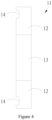
Figure 4 is a side view of a first connector for connecting terminals of the cells in the energy storage module ofFigure 1 ; -
Figure 5 is a perspective view of the energy storage module ofFigure 1 in which terminals of the cells are connected with the connectors ofFigure 4 ; -
Figure 6 is a front view of the energy storage module ofFigure 5 ; -
Figure 7 is a cross-sectional view of the energy storage module ofFigure 5 taken along line A-A inFigure 5 ; -
Figure 8 is a side view of a second connector for connecting terminals of the cells in the energy storage module inFigure 1 ; -
Figure 9 is a perspective view of the energy storage module ofFigure 1 in which terminals of the cells are connected with the connectors ofFigure 8 ; -
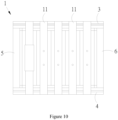
Figure 10 is a front view of the energy storage module ofFigure 9 ; -
Figure 11 is cross-sectional view of the energy storage module ofFigure 9 taken along line B-B inFigure 9 ; -
Figure 12 is a perspective view of the energy storage module ofFigure 9 with an upper metal plate acting as a fluid heat exchanger making use of liquid as the medium for heat exchange; and -
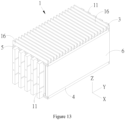
Figure 13 is a perspective view of the energy storage module ofFigure 9 with an upper metal plate acting as a fluid heat exchanger making use of gas as the medium for heat exchange. - Referring to
Figures 1 and2 , there is shown an embodiment of anenergy storage module 1 in the form of a pouch cell energy storage module. Theenergy storage module 1 includes a plurality ofpouch cells 2 arranged side-by-side in alignment with one another along a width of theenergy storage module 1 in an X direction (second direction). Each of thepouch cells 2 include edge(s) and opposing faces (flat, convex, concave, etc.). Thecells 2 are arranged such that the faces of thecells 2 are in face-wise contact. In this embodiment, the face-wise contact involves a full contact between opposing faces of adjacent cells however in some other embodiments the face-wise contact could involve at least some direct contact between opposing faces of adjacent cells. As shown inFigure 2 , theenergy storage module 1 has a length along an axis extending in a Y direction (third direction) and a height along an axis extending in a Z direction (first direction). Referring to the frame of reference ofFigure 2 , theenergy storage module 1 is configured to promote heat dissipation in Z direction and Y direction while discourage heat conduction in X direction. - The
energy storage module 1 includes a body or frame with top (first wall/third wall), left (second wall), right (second wall) and bottom sides (first wall/third wall) that collectively surround thecells 2. Each of the top, left, right and bottom sides includes two layers of materials. Each of thecells 2 has two ear lugs 10 on opposite sides of the cell and all ear lugs 10 on the same side of thecells 2 are arranged in parallel alignment to each other. On the top side (first wall/third wall) of thecells 2, there is an upper heat-conductinglayer 7 in the form of a heat-conducting and electrically non-conducting pad and above which is anupper metal plate 3. Below thecells 2 at the bottom side (first wall/third wall), there is a lower heat-conductinglayer 8 in the form of a heat-conducting pad and below which is alower metal plate 4. The heat-conductinglayer 7 is placed between the edges of thecells 2 and themetal plate 3. The heat-conductinglayer 8 is placed between the edges of thecells 2 and themetal plate 4. In the embodiments shown inFigures 12 and13 , theupper metal plate 3 may include or be a fluid heat exchanger such as liquid heat exchanger or gas heat exchanger to promote heat dissipation. The liquid heat exchanger inFigure 12 includes variousliquid passages 15 in which liquid coolant may flow. The gas heat exchanger inFigure 13 includes a plurality ofparallel plates 16 arranged to form gas passages in which gaseous coolant may flow. On the left side (second wall) of thecells 2, a layer ofheat insulator 9 is sandwiched between thecells 2 and anouter protector 6. On the right side (second wall) of the cells, another layer ofheat insulator 9 is sandwiched between the cells and theouter protector 5. The layers ofheat insulators 9 can be formed using sponge materials, silicon rubber (e.g., polyurethane, chloroprene rubber, styrene butadiene rubber, polyethylene), foam material (e.g., phenolic resin foam, polyethylene foam material, PVC foam, etc.), or any of their combination. As seen fromFigure 2 , theenergy storage module 1 is relatively compact. - The heat-conducting
layers respective metal plates layers layers respective metal plates layers metal plates cells 2 to be evenly and efficiently conducted away from respective center of thecells 2 towards therespective metal plates layer metal plate layer cells 2 and themetal plates energy storage module 1 is reduced. Heat dissipation and conduction in the Z direction is promoted by the aforementioned arrangement. The heat-conductinglayers layers cells 2 for improved thermal contact to facilitate heat transmission. The heat-conductinglayers layers cells 2 but are independent layers in the form of gaskets being placed on top and bottom of thecells 2 and are shaped to closely resemble that of thecell 2 for better heat conduction. - Inner surfaces of the
metal plates metal plates layers 7 and themetal plate 3 or to create gaps between the heat-conductinglayer 8 and themetal plate 4. In some cases, the edges of thecells 2 in contact with the heat-conductinglayer cells 2 with the heat-conductinglayer layers 7 and themetal plate layer 8 and themetal plate 4 facilitates proper (e.g., full) contact of the edges of thecells 2 with the heat-conductinglayer layer layer cells 2 and themetal plates - With reference to
Figure 3 , opposite ends of thecell 2 are provided with ear lugs 10, one on each end. To promote heat dissipation and conduction in the Y direction, twoconnectors 11 are provided on respective ends to directly conduct heat from the respective ear lugs 10 of eachcell 2 to themetal plates Figures 4 and8 show two embodiments of the connector 11.Theconnectors 11 in these embodiments share three common structures, namely, a heat conducting and electrically insulatingupper coupler 12, a heat and electrically conductingportion 13, and a heat conducting and electrically insulatinglower coupler 12. Theupper coupler 12 and thelower coupler 12 each has acoupling portion 14 that is configured to engage and couple with the upper andlower metal plates portion 13 is in direct contact with theear lug 10 of acell 2. Theear lug 10 is attached to theportion 13 in the X or Y direction by way of, for example, mechanical locking, fastening using fasteners, riveting or welding. In one example, theear lug 10 is an L-shaped member with a first plate-like portion extending in X direction and connected toportion 13 and a second plate-like portion extending in Y direction and from the first plate-like portion. In another example, theear lug 10 is a plate like member extending in X direction and connected toportion 13. Theportion 13 may be made of metal. Heat from thecell 2 travels to theupper metal plate 3 through theear lug 10 to theportion 13 via theupper coupler 12. The heat from thecell 2 can also travel to thelower metal plate 4 through thesame ear lug 10 to theportion 13 via thelower coupler 12. The upper andlower couplers 12 are made of a material that is electrically insulating to avoid short circuit during charging and discharging of thecell 2. - Referring to
Figures 4 to 7 , thecoupling portions 14 each includes a recess configured to accommodate an edge of the upper orlower metal plate coupling portions 14 fix the position of the ear lugs 10 relative to the upper andlower metal plates Figures 8 to 11 , each of thecoupling portions 14 has a shape that correspond to the shape of the edge of therespective metal plates Figure 11 , thecoupling portions 14 have corrugated cross-sectional shape that matches the corrugating cross-sectional shape of the edge of themetal plates coupling portions 14 are to connect with themetal plates cell 2 relative to themetal plates coupling portions 14. It is not the intention of the inventors to limit the shape of thecoupling portions 14 to those as shown in the specific embodiments. - With reference to
Figure 1 , thecells 2 are packed in the body closely and side-by-side. The twocells 2 at the lateral ends of theenergy storage module 1 along direction X are covered by respectiveheat insulator pads 9. Theseinsulator pads 9 are isolated from the external environment by left and rightouter protectors cells 2 in the direction X thereby prevent heat from thecells 2 to be conducted in a sideway direction towards theouter protectors insulator pads 9 are formed from heat insulating materials such as Bakelite, glass fiber, foam and/or inorganic composite material. Theinsulator pads 9 together with theouter protectors cells 2 and the environment outside of theenergy storage module 1 thereby lowers, and if possible prevents, sideway heat conduction. Sideway conduction will result in uneven heat distribution amongst thecells 2.Cells 2 closer to theouter protectors cells 2 at the center of theenergy storage module 1. Heat conduction betweencells 2 may lead to uneven heat distribution or heat dissipation amongst thecells 2. Temperature difference between thecells 2 lowers the performance of thecells 2. Direct conduction from acell 2 to the heat-conduction layer cells 2. The temperature differences between thecells 2 is kept to a minimum to ensure consistency in performance amongst thecells 2 and enhance the life cycle of theenergy storage module 1. - The above embodiments of the invention are advantageous in that the heat conduction arrangement of the cells in the energy storage module encourages heat transfer in one or more directions and discourages heat transfer in one or more other directions, thus effectively controlling heat flow in the module. The energy storage module, in particular its heat conduction arrangement, has a relatively simple structure, is safe in operation, and can be made compact, hence can operate cost effectively. In some embodiments in which the energy storage module includes a stack of cells, heat transfer from one cell via one or more other cells to the body of the module, or from the body of the module to one cell via one or more other cells can be prevented. This reduces the chance of a temperature gradient being built up across (some or all of) the cells, which would adversely affect performance or lifespan of the cells.
- The invention has been given by way of example only, and various other modifications of and/or alterations to the described embodiment may be made by persons skilled in the art by employing the aforementioned features of the embodiments of the invention without departing from the scope of the invention as specified in the appended claims. For example, the energy storage module may be a battery pack. The energy storage module may include any number of cells that can be of different chemistries. The cell(s) can be pouch cell(s), cylindrical cell(s), button cell(s), prismatic cell(s), etc. The energy storage module and its components can take shapes, sizes, forms, etc., different from those illustrated. The skilled person could appreciate that heat transfer will occur based on temperature gradient and hence may occur both ways depending on the temperature difference.
Claims (15)
- An energy storage module (1) comprising:one or more cells (2);a body having a first wall (3) and a second wall (6) arranged transversely to the first wall (3, 4), the first wall (3) and the second wall (6) running parallel to an axis (Y); anda cavity in the body containing said one or more cells (2), the cavity being at least partially defined by the first wall (3) and the second wall (6);wherein the first wall (3) includes first and second heat conducting layers to form a first heat dissipating path in a first direction (Z) which extends transverse to the axis (Y); and the second wall (6) includes first and second heat insulating layers to form a heat conduction barrier for preventing heat dissipation in a second direction (X) that extends transverse to the first direction (Z) and the axis (Y);wherein the body is configured to promote heat dissipation in a third direction (Y) which extends parallel to the axis (Y); andcharacterised in that the body includes a heat conducting connector (11) for connecting said one or more cells (2) to the first heat conducting layer thereby forming a second heat dissipation path that at least partially extends in the third direction (Y)..
- The energy storage module (1) as claimed in claim 1, wherein the second heat conducting layer is the only layer between the cavity and the first heat conducting layer.
- The energy storage module (1) as claimed in claim 2, wherein the second heat conducting layer is electrically insulating.
- The energy storage module (1) as claimed in claim 3, wherein the heat conducting connector (11) includes a coupling portion (12) for coupling with the first heat conducting layer, at least the coupling portion (12) is electrically insulating.
- The energy storage module (1) as claimed in claim 3 or claim 4, wherein the heat conducting connector (11) includes an electrically conducting portion (13) for establishing direct connection with said one or more cells (2).
- The energy storage module (1) as claimed in any one of the preceding claims, wherein the body includes a third wall (4) arranged parallel to the first wall (3), the third wall (4) includes first and second heat conducting layers to form part of the first heat dissipating path in the first direction (Z); andoptionally, wherein the body includes a heat conducting connector (11) for connecting said one or more cells (2) to the first heat conducting layer thereby forming a second heat dissipation path that at least partially extends in the third direction (Y); andoptionally, wherein the heat conducting connector (11) includes an electrically conducting portion (13) sandwiched between two coupling portions (12) that are electrically insulating.
- The energy storage module (1) as claimed in claim 3, wherein the heat conducting connector (11) is in fixed connection with the first heat conducting layer.
- The energy storage module (1) as claimed in any one of the preceding claims, wherein the first heat conducting layer is formed from metal; and
optionally, wherein the second heat conducting layer is formed from a material selected from a group consisting of silicone, heat conductive rubber and a mixture thereof. - The energy storage module (1) as claimed in any one of the preceding claims, wherein the second heat insulating layer is formed from a material selected from a group consisting of Bakelite, glass fiber, foam, inorganic composite material and a mixture thereof.
- The energy storage module (1) as claimed in any one of the preceding claims, wherein the first wall (3) is in connection with a fluid heat exchanger for facilitating heat dissipation from the first wall (3).
- The energy storage module (1) of any one of the preceding claims, wherein:the body is a frame;a plurality of cells (2) are arranged in the frame, the cells (2) being in face-wise contact with each other to form a stack;wherein the frame includesa heat dissipation structure in contact with each of the cells to facilitate heat transfer between the cells (2) and the frame along the first direction (Z), anda heat insulation structure in face-wise contact with the outer-most cell of the stack to prevent heat transfer between the cells (2) and the frame in the second direction (X).
- The energy storage module (1) as claimed in claim 11, wherein the first direction (Z) and the second direction (X) are substantially orthogonal.
- The energy storage module (1) as claimed in claim 11 or claim 12, wherein the heat dissipation structure comprises a thermally conductive wall (3) with a heat sink (16).
- The energy storage module (1) as claimed in any one of claims 11 to 13, wherein the heat insulation structure comprises a pair of thermally insulating walls (5, 6), each one adjacent to one of two outer-most cells (2) of the stack, each of the thermally insulating walls (5, 6) including first and second heat insulating layers.
- The energy storage module (1) as claimed in any one of claims 11 to 14, wherein the cells (2) are pouch cells.
Applications Claiming Priority (1)
| Application Number | Priority Date | Filing Date | Title |
|---|---|---|---|
| US17/177,889 US11165120B1 (en) | 2021-02-17 | 2021-02-17 | Energy storage module |
Publications (3)
| Publication Number | Publication Date |
|---|---|
| EP4047721A1 EP4047721A1 (en) | 2022-08-24 |
| EP4047721C0 EP4047721C0 (en) | 2023-06-07 |
| EP4047721B1 true EP4047721B1 (en) | 2023-06-07 |
Family
ID=75173040
Family Applications (1)
| Application Number | Title | Priority Date | Filing Date |
|---|---|---|---|
| EP21164115.4A Active EP4047721B1 (en) | 2021-02-17 | 2021-03-22 | Energy storage module |
Country Status (6)
| Country | Link |
|---|---|
| US (1) | US11165120B1 (en) |
| EP (1) | EP4047721B1 (en) |
| ES (1) | ES2948515T3 (en) |
| GB (1) | GB2593981B (en) |
| PL (1) | PL4047721T3 (en) |
| TW (1) | TWI761132B (en) |
Families Citing this family (1)
| Publication number | Priority date | Publication date | Assignee | Title |
|---|---|---|---|---|
| US12160011B2 (en) | 2022-06-14 | 2024-12-03 | Beta Air Llc | Battery pack for a carbon fiber pouch cell casing configured to cool battery cells |
Family Cites Families (12)
| Publication number | Priority date | Publication date | Assignee | Title |
|---|---|---|---|---|
| DE10214366B4 (en) * | 2002-03-30 | 2017-03-16 | Robert Bosch Gmbh | measuring arrangement |
| DE102007010745B4 (en) * | 2007-02-27 | 2009-01-22 | Daimler Ag | Battery with a heat conducting plate |
| DE102008034871A1 (en) * | 2008-07-26 | 2010-01-28 | Daimler Ag | Battery, in particular vehicle battery |
| DE102010011983A1 (en) * | 2010-03-19 | 2011-09-22 | Li-Tec Battery Gmbh | Battery housing for receiving electrochemical energy storage cells |
| WO2016159944A1 (en) * | 2015-03-27 | 2016-10-06 | Intel Corporation | Energy storage material for thermal management and associated techniques and configurations |
| US11309604B2 (en) * | 2015-04-13 | 2022-04-19 | Cps Technology Holdings Llc | Thermal epoxy and positioning of electrochemical cells |
| KR102277035B1 (en) * | 2018-03-21 | 2021-07-13 | 주식회사 엘지에너지솔루션 | Battery module, battery pack comprising the battery module and vehicle comprising the battery pack |
| CN111355004B (en) * | 2018-12-21 | 2021-06-08 | 江苏时代新能源科技有限公司 | Battery module |
| KR102814054B1 (en) * | 2019-07-23 | 2025-05-29 | 에스케이온 주식회사 | Bettery module |
| CN110739413A (en) * | 2019-09-30 | 2020-01-31 | 深圳君耀投资合伙企业(有限合伙) | flame-retardant heat-insulation battery and battery module |
| CN211929538U (en) * | 2019-09-30 | 2020-11-13 | 深圳君耀投资合伙企业(有限合伙) | Flame-retardant heat-insulation battery module |
| CN212542544U (en) * | 2020-08-13 | 2021-02-12 | 江西迪芯能源科技有限公司 | High-power lithium ion storage battery for automobile |
-
2021
- 2021-02-17 US US17/177,889 patent/US11165120B1/en active Active
- 2021-03-16 TW TW110109322A patent/TWI761132B/en active
- 2021-03-22 ES ES21164115T patent/ES2948515T3/en active Active
- 2021-03-22 PL PL21164115.4T patent/PL4047721T3/en unknown
- 2021-03-22 GB GB2103984.7A patent/GB2593981B/en active Active
- 2021-03-22 EP EP21164115.4A patent/EP4047721B1/en active Active
Also Published As
| Publication number | Publication date |
|---|---|
| TW202234747A (en) | 2022-09-01 |
| PL4047721T3 (en) | 2023-08-14 |
| GB2593981B (en) | 2022-04-13 |
| EP4047721A1 (en) | 2022-08-24 |
| GB2593981A (en) | 2021-10-13 |
| EP4047721C0 (en) | 2023-06-07 |
| GB202103984D0 (en) | 2021-05-05 |
| TWI761132B (en) | 2022-04-11 |
| ES2948515T3 (en) | 2023-09-13 |
| GB2593981A9 (en) | 2022-01-26 |
| US11165120B1 (en) | 2021-11-02 |
Similar Documents
| Publication | Publication Date | Title |
|---|---|---|
| JP7171615B2 (en) | Separator for power supply and power supply | |
| US11355800B2 (en) | Battery pack | |
| CN102498610B (en) | Including novel structural heat dissipation components, battery modules and medium and large battery packs | |
| KR101447057B1 (en) | Battery Module Having Heat Dissipation Mounting Member for Dissipating Heat And Mounting Battery cell | |
| EP2366202B1 (en) | Battery module having cooling means, and middle or large-sized battery pack containing the same | |
| JP5540070B2 (en) | Battery module and battery pack | |
| JP5779793B2 (en) | Battery module having excellent heat dissipation capability and battery pack using the same | |
| US20200203784A1 (en) | Battery module and battery pack | |
| JP2004362879A (en) | Collective battery | |
| US20200136114A1 (en) | Power storage device | |
| KR20140037452A (en) | Battery module | |
| EP4047721B1 (en) | Energy storage module | |
| US20230282903A1 (en) | Battery device | |
| KR102683482B1 (en) | Battery Pack | |
| KR20240041134A (en) | Battery pack | |
| CN220821824U (en) | Battery pack | |
| JP7493869B2 (en) | Battery module with improved temperature uniformity of battery cells | |
| KR101898009B1 (en) | Battery Cell for Secondary Battery | |
| CN220121935U (en) | Battery module and electric equipment | |
| CN223539679U (en) | Battery pack, battery module and energy storage device | |
| JP7845766B2 (en) | Battery module, battery pack including the battery module, and method for manufacturing the battery module | |
| CN223023361U (en) | Single battery, battery pack and electric equipment | |
| EP4496076A2 (en) | Rechargeable battery module | |
| US20250329815A1 (en) | Battery pack | |
| EP4443607A1 (en) | Battery pack equipped with heat non-diffusion cooling structure using comb shape |
Legal Events
| Date | Code | Title | Description |
|---|---|---|---|
| STAA | Information on the status of an ep patent application or granted ep patent |
Free format text: STATUS: EXAMINATION IS IN PROGRESS |
|
| PUAI | Public reference made under article 153(3) epc to a published international application that has entered the european phase |
Free format text: ORIGINAL CODE: 0009012 |
|
| 17P | Request for examination filed |
Effective date: 20220125 |
|
| AK | Designated contracting states |
Kind code of ref document: A1 Designated state(s): AL AT BE BG CH CY CZ DE DK EE ES FI FR GB GR HR HU IE IS IT LI LT LU LV MC MK MT NL NO PL PT RO RS SE SI SK SM TR |
|
| GRAP | Despatch of communication of intention to grant a patent |
Free format text: ORIGINAL CODE: EPIDOSNIGR1 |
|
| STAA | Information on the status of an ep patent application or granted ep patent |
Free format text: STATUS: GRANT OF PATENT IS INTENDED |
|
| RIC1 | Information provided on ipc code assigned before grant |
Ipc: H01M 10/6556 20140101ALI20220830BHEP Ipc: H01M 50/211 20210101ALI20220830BHEP Ipc: H01M 10/655 20140101ALI20220830BHEP Ipc: H01M 10/658 20140101ALI20220830BHEP Ipc: H01M 10/653 20140101ALI20220830BHEP Ipc: H01M 50/507 20210101ALI20220830BHEP Ipc: H01M 10/647 20140101ALI20220830BHEP Ipc: H01M 10/613 20140101ALI20220830BHEP Ipc: H01M 10/6554 20140101AFI20220830BHEP |
|
| INTG | Intention to grant announced |
Effective date: 20220923 |
|
| RBV | Designated contracting states (corrected) |
Designated state(s): AL AT BE BG CH CY CZ DE DK EE ES FI FR GR HR HU IE IS IT LI LT LU LV MC MK MT NL NO PL PT RO RS SE SI SK SM TR |
|
| GRAS | Grant fee paid |
Free format text: ORIGINAL CODE: EPIDOSNIGR3 |
|
| GRAA | (expected) grant |
Free format text: ORIGINAL CODE: 0009210 |
|
| STAA | Information on the status of an ep patent application or granted ep patent |
Free format text: STATUS: THE PATENT HAS BEEN GRANTED |
|
| AK | Designated contracting states |
Kind code of ref document: B1 Designated state(s): AL AT BE BG CH CY CZ DE DK EE ES FI FR GR HR HU IE IS IT LI LT LU LV MC MK MT NL NO PL PT RO RS SE SI SK SM TR |
|
| REG | Reference to a national code |
Ref country code: CH Ref legal event code: EP Ref country code: AT Ref legal event code: REF Ref document number: 1577652 Country of ref document: AT Kind code of ref document: T Effective date: 20230615 |
|
| REG | Reference to a national code |
Ref country code: DE Ref legal event code: R096 Ref document number: 602021002637 Country of ref document: DE |
|
| U01 | Request for unitary effect filed |
Effective date: 20230704 |
|
| U07 | Unitary effect registered |
Designated state(s): AT BE BG DE DK EE FI FR IT LT LU LV MT NL PT SE SI Effective date: 20230714 |
|
| REG | Reference to a national code |
Ref country code: NO Ref legal event code: T2 Effective date: 20230607 |
|
| REG | Reference to a national code |
Ref country code: ES Ref legal event code: FG2A Ref document number: 2948515 Country of ref document: ES Kind code of ref document: T3 Effective date: 20230913 |
|
| REG | Reference to a national code |
Ref country code: LT Ref legal event code: MG9D |
|
| PG25 | Lapsed in a contracting state [announced via postgrant information from national office to epo] |
Ref country code: RS Free format text: LAPSE BECAUSE OF FAILURE TO SUBMIT A TRANSLATION OF THE DESCRIPTION OR TO PAY THE FEE WITHIN THE PRESCRIBED TIME-LIMIT Effective date: 20230607 Ref country code: HR Free format text: LAPSE BECAUSE OF FAILURE TO SUBMIT A TRANSLATION OF THE DESCRIPTION OR TO PAY THE FEE WITHIN THE PRESCRIBED TIME-LIMIT Effective date: 20230607 Ref country code: GR Free format text: LAPSE BECAUSE OF FAILURE TO SUBMIT A TRANSLATION OF THE DESCRIPTION OR TO PAY THE FEE WITHIN THE PRESCRIBED TIME-LIMIT Effective date: 20230908 |
|
| PG25 | Lapsed in a contracting state [announced via postgrant information from national office to epo] |
Ref country code: SK Free format text: LAPSE BECAUSE OF FAILURE TO SUBMIT A TRANSLATION OF THE DESCRIPTION OR TO PAY THE FEE WITHIN THE PRESCRIBED TIME-LIMIT Effective date: 20230607 |
|
| PG25 | Lapsed in a contracting state [announced via postgrant information from national office to epo] |
Ref country code: IS Free format text: LAPSE BECAUSE OF FAILURE TO SUBMIT A TRANSLATION OF THE DESCRIPTION OR TO PAY THE FEE WITHIN THE PRESCRIBED TIME-LIMIT Effective date: 20231007 |
|
| PG25 | Lapsed in a contracting state [announced via postgrant information from national office to epo] |
Ref country code: SM Free format text: LAPSE BECAUSE OF FAILURE TO SUBMIT A TRANSLATION OF THE DESCRIPTION OR TO PAY THE FEE WITHIN THE PRESCRIBED TIME-LIMIT Effective date: 20230607 Ref country code: SK Free format text: LAPSE BECAUSE OF FAILURE TO SUBMIT A TRANSLATION OF THE DESCRIPTION OR TO PAY THE FEE WITHIN THE PRESCRIBED TIME-LIMIT Effective date: 20230607 Ref country code: RO Free format text: LAPSE BECAUSE OF FAILURE TO SUBMIT A TRANSLATION OF THE DESCRIPTION OR TO PAY THE FEE WITHIN THE PRESCRIBED TIME-LIMIT Effective date: 20230607 Ref country code: IS Free format text: LAPSE BECAUSE OF FAILURE TO SUBMIT A TRANSLATION OF THE DESCRIPTION OR TO PAY THE FEE WITHIN THE PRESCRIBED TIME-LIMIT Effective date: 20231007 Ref country code: CZ Free format text: LAPSE BECAUSE OF FAILURE TO SUBMIT A TRANSLATION OF THE DESCRIPTION OR TO PAY THE FEE WITHIN THE PRESCRIBED TIME-LIMIT Effective date: 20230607 |
|
| REG | Reference to a national code |
Ref country code: DE Ref legal event code: R097 Ref document number: 602021002637 Country of ref document: DE |
|
| PLBE | No opposition filed within time limit |
Free format text: ORIGINAL CODE: 0009261 |
|
| STAA | Information on the status of an ep patent application or granted ep patent |
Free format text: STATUS: NO OPPOSITION FILED WITHIN TIME LIMIT |
|
| U20 | Renewal fee for the european patent with unitary effect paid |
Year of fee payment: 4 Effective date: 20240318 |
|
| 26N | No opposition filed |
Effective date: 20240308 |
|
| PG25 | Lapsed in a contracting state [announced via postgrant information from national office to epo] |
Ref country code: MC Free format text: LAPSE BECAUSE OF FAILURE TO SUBMIT A TRANSLATION OF THE DESCRIPTION OR TO PAY THE FEE WITHIN THE PRESCRIBED TIME-LIMIT Effective date: 20230607 |
|
| PG25 | Lapsed in a contracting state [announced via postgrant information from national office to epo] |
Ref country code: MC Free format text: LAPSE BECAUSE OF FAILURE TO SUBMIT A TRANSLATION OF THE DESCRIPTION OR TO PAY THE FEE WITHIN THE PRESCRIBED TIME-LIMIT Effective date: 20230607 |
|
| PG25 | Lapsed in a contracting state [announced via postgrant information from national office to epo] |
Ref country code: IE Free format text: LAPSE BECAUSE OF NON-PAYMENT OF DUE FEES Effective date: 20240322 |
|
| PG25 | Lapsed in a contracting state [announced via postgrant information from national office to epo] |
Ref country code: IE Free format text: LAPSE BECAUSE OF NON-PAYMENT OF DUE FEES Effective date: 20240322 |
|
| U20 | Renewal fee for the european patent with unitary effect paid |
Year of fee payment: 5 Effective date: 20250320 |
|
| PGFP | Annual fee paid to national office [announced via postgrant information from national office to epo] |
Ref country code: ES Payment date: 20250410 Year of fee payment: 5 |
|
| PGFP | Annual fee paid to national office [announced via postgrant information from national office to epo] |
Ref country code: CH Payment date: 20250402 Year of fee payment: 5 |
|
| PG25 | Lapsed in a contracting state [announced via postgrant information from national office to epo] |
Ref country code: CY Free format text: LAPSE BECAUSE OF FAILURE TO SUBMIT A TRANSLATION OF THE DESCRIPTION OR TO PAY THE FEE WITHIN THE PRESCRIBED TIME-LIMIT; INVALID AB INITIO Effective date: 20210322 |
|
| PG25 | Lapsed in a contracting state [announced via postgrant information from national office to epo] |
Ref country code: HU Free format text: LAPSE BECAUSE OF FAILURE TO SUBMIT A TRANSLATION OF THE DESCRIPTION OR TO PAY THE FEE WITHIN THE PRESCRIBED TIME-LIMIT; INVALID AB INITIO Effective date: 20210322 |
|
| REG | Reference to a national code |
Ref country code: CH Ref legal event code: U11 Free format text: ST27 STATUS EVENT CODE: U-0-0-U10-U11 (AS PROVIDED BY THE NATIONAL OFFICE) Effective date: 20260401 |
|
| PGFP | Annual fee paid to national office [announced via postgrant information from national office to epo] |
Ref country code: NO Payment date: 20260325 Year of fee payment: 6 |
|
| PGFP | Annual fee paid to national office [announced via postgrant information from national office to epo] |
Ref country code: TR Payment date: 20260317 Year of fee payment: 6 |
|
| PGFP | Annual fee paid to national office [announced via postgrant information from national office to epo] |
Ref country code: PL Payment date: 20260320 Year of fee payment: 6 |
|
| U1N | Appointed representative for the unitary patent procedure changed after the registration of the unitary effect |
Representative=s name: MARKS & CLERK LLP; GB |
|
| U20 | Renewal fee for the european patent with unitary effect paid |
Year of fee payment: 6 Effective date: 20260319 |