EP4047489B1 - Human-machine conversation processing method - Google Patents
Human-machine conversation processing method Download PDFInfo
- Publication number
- EP4047489B1 EP4047489B1 EP19948949.3A EP19948949A EP4047489B1 EP 4047489 B1 EP4047489 B1 EP 4047489B1 EP 19948949 A EP19948949 A EP 19948949A EP 4047489 B1 EP4047489 B1 EP 4047489B1
- Authority
- EP
- European Patent Office
- Prior art keywords
- duplex
- dialogue
- mode
- voice message
- client
- Prior art date
- Legal status (The legal status is an assumption and is not a legal conclusion. Google has not performed a legal analysis and makes no representation as to the accuracy of the status listed.)
- Active
Links
Images



Classifications
-
- G—PHYSICS
- G06—COMPUTING OR CALCULATING; COUNTING
- G06F—ELECTRIC DIGITAL DATA PROCESSING
- G06F9/00—Arrangements for program control, e.g. control units
- G06F9/06—Arrangements for program control, e.g. control units using stored programs, i.e. using an internal store of processing equipment to receive or retain programs
- G06F9/44—Arrangements for executing specific programs
- G06F9/4401—Bootstrapping
- G06F9/4418—Suspend and resume; Hibernate and awake
-
- G—PHYSICS
- G06—COMPUTING OR CALCULATING; COUNTING
- G06F—ELECTRIC DIGITAL DATA PROCESSING
- G06F16/00—Information retrieval; Database structures therefor; File system structures therefor
- G06F16/90—Details of database functions independent of the retrieved data types
- G06F16/903—Querying
- G06F16/9032—Query formulation
- G06F16/90332—Natural language query formulation or dialogue systems
-
- G—PHYSICS
- G10—MUSICAL INSTRUMENTS; ACOUSTICS
- G10L—SPEECH ANALYSIS TECHNIQUES OR SPEECH SYNTHESIS; SPEECH RECOGNITION; SPEECH OR VOICE PROCESSING TECHNIQUES; SPEECH OR AUDIO CODING OR DECODING
- G10L15/00—Speech recognition
- G10L15/08—Speech classification or search
- G10L15/18—Speech classification or search using natural language modelling
- G10L15/1815—Semantic context, e.g. disambiguation of the recognition hypotheses based on word meaning
-
- G—PHYSICS
- G06—COMPUTING OR CALCULATING; COUNTING
- G06F—ELECTRIC DIGITAL DATA PROCESSING
- G06F3/00—Input arrangements for transferring data to be processed into a form capable of being handled by the computer; Output arrangements for transferring data from processing unit to output unit, e.g. interface arrangements
- G06F3/16—Sound input; Sound output
- G06F3/162—Interface to dedicated audio devices, e.g. audio drivers, interface to CODECs
-
- G—PHYSICS
- G06—COMPUTING OR CALCULATING; COUNTING
- G06F—ELECTRIC DIGITAL DATA PROCESSING
- G06F3/00—Input arrangements for transferring data to be processed into a form capable of being handled by the computer; Output arrangements for transferring data from processing unit to output unit, e.g. interface arrangements
- G06F3/16—Sound input; Sound output
- G06F3/167—Audio in a user interface, e.g. using voice commands for navigating, audio feedback
-
- G—PHYSICS
- G10—MUSICAL INSTRUMENTS; ACOUSTICS
- G10L—SPEECH ANALYSIS TECHNIQUES OR SPEECH SYNTHESIS; SPEECH RECOGNITION; SPEECH OR VOICE PROCESSING TECHNIQUES; SPEECH OR AUDIO CODING OR DECODING
- G10L15/00—Speech recognition
- G10L15/22—Procedures used during a speech recognition process, e.g. man-machine dialogue
-
- G—PHYSICS
- G10—MUSICAL INSTRUMENTS; ACOUSTICS
- G10L—SPEECH ANALYSIS TECHNIQUES OR SPEECH SYNTHESIS; SPEECH RECOGNITION; SPEECH OR VOICE PROCESSING TECHNIQUES; SPEECH OR AUDIO CODING OR DECODING
- G10L15/00—Speech recognition
- G10L15/08—Speech classification or search
- G10L15/18—Speech classification or search using natural language modelling
- G10L15/1822—Parsing for meaning understanding
-
- G—PHYSICS
- G10—MUSICAL INSTRUMENTS; ACOUSTICS
- G10L—SPEECH ANALYSIS TECHNIQUES OR SPEECH SYNTHESIS; SPEECH RECOGNITION; SPEECH OR VOICE PROCESSING TECHNIQUES; SPEECH OR AUDIO CODING OR DECODING
- G10L15/00—Speech recognition
- G10L15/08—Speech classification or search
- G10L2015/088—Word spotting
-
- G—PHYSICS
- G10—MUSICAL INSTRUMENTS; ACOUSTICS
- G10L—SPEECH ANALYSIS TECHNIQUES OR SPEECH SYNTHESIS; SPEECH RECOGNITION; SPEECH OR VOICE PROCESSING TECHNIQUES; SPEECH OR AUDIO CODING OR DECODING
- G10L15/00—Speech recognition
- G10L15/22—Procedures used during a speech recognition process, e.g. man-machine dialogue
- G10L2015/223—Execution procedure of a spoken command
Definitions
- the present disclosure belongs to the field of Internet technologies, and in particular relates to a method for processing human-machine dialogue.
- man-machine dialogue technology has developed rapidly.
- a full-duplex man-machine dialogue technology which is free of wake-up has emerged. That is, a device can continuously conduct dialogue in such a manner that it can talk to others and meanwhile perform man-machine interaction without interfering with each other.
- a full-duplex wake-up-free capability users do not need to conduct wake up operation repeatedly, allowing the users to enjoy a more natural and smooth voice interaction experience.
- the application program is generally fixedly set to be in a full-duplex wake-up-free mode or a half-duplex wake-up-free mode.
- both full-duplex and half-duplex scenarios may be involved. For example, when a contact's name corresponds to a plurality of phone numbers, it is necessary to determine a user's real intent through interaction therewith, so as to make an operation that meets the user's expectations.
- US patent publication No. US 2014/309996 is directed to a voice control method to start and perform voice interaction by through voice trigger and a mobile terminal apparatus using the method.
- Chinese patent publication No. CN109657091A provides a method and a device for presenting a state of a voice interaction device, so as to at least solve the technical problems that the current voice interactive apparatus is incapable of presenting a state of a voice interaction device to a user in a good presentation mode and are incapable of providing the user with necessary usage recommendations and prompts, rendering poor user experience.
- Embodiments of the present disclosure provide a method and apparatus for processing man-machine dialogue which are intended to solve at least one of the above technical problems.
- an embodiment of the present disclosure provides a method applied to a server for processing man-machine dialogues, including: acquiring a first user voice message from a client; determining a dialogue intent corresponding to the first user voice message; determining a target duplex wake-up mode corresponding to the dialogue intent based on an intent wake-up mode table, wherein the intent wake-up mode table comprises duplex wake-up modes corresponding to a plurality of candidate dialogue intents respectively, and the duplex wake-up modes comprise a full-duplex wake-up mode and a half-duplex wake-up mode; and sending a wake-up mode instruction corresponding to the target duplex wake-up mode to the client, such that the client processes the user voice message according to the target duplex wake-up mode.
- an embodiment of the present disclosure provides a method applied to a client for processing man-machine dialogues, including: acquiring a first user voice message; sending the first user voice message to a server; receiving a wake-up mode instruction from the server in response to the first user voice message; and processing the user voice message according to a target one of the duplex wake-up mode indicated by the wake-up mode instruction, wherein duplex wake-up modes comprise a full-duplex wake-up mode and a half-duplex wake-up mode.
- an embodiment of the present disclosure provides an apparatus for processing man-machine dialogues, including: a voice message acquiring unit configured to acquire a first user voice message from a client; a user intent determining unit configured to determine a dialogue intent corresponding to the first user voice message; a target wake-up mode determining unit configured to determine a target duplex wake-up mode corresponding to the dialogue intent based on an intent wake-up mode table, wherein the intent wake-up mode table includes duplex wake-up modes corresponding to a plurality of candidate dialogue intents, including a full-duplex wake-up mode and a half-duplex wake-up mode; and a wake-up instruction sending unit configured to send a wake-up mode instruction corresponding to the target duplex wake-up mode to the client, such that the client can process the user voice message according to the target duplex wake-up mode.
- an embodiment of the present disclosure provides an electronic device, including: at least one processor, and a memory communicatively connected to the at least one processor, wherein the memory stores instructions executable by the at least one processor, and the instructions are executed by the at least one processor to perform the steps of the above method.
- an embodiment of the present disclosure provides a storage medium on which a computer program is stored, and the program, when being executed by a processor, performs the steps of the above method.
- a server after receiving a user voice, a server will determine a corresponding dialogue intent, and determine a corresponding target duplex wake-up mode by querying an intent wake-up mode table, such that a client can work in a duplex wake-up mode according with the dialogue intent, and duplex wake-up modes can be switched dynamically in a client.
- the present invention can be described in the general context of computer-executable instructions such as program modules executed by a computer.
- program modules include routines, programs, objects, elements, and data structures, etc. that perform specific tasks or implement specific abstract data types.
- the present invention can also be practiced in distributed computing environments in which tasks are performed by remote processing devices connected through a communication network.
- program modules may be located in local and remote computer storage media including storage devices.
- module “means”, “system”, etc. refer to related entities applied to a computer, such as hardware, a combination of hardware and software, software or software in execution, etc.
- an element may be, but is not limited to, a process running on a processor, a processor, an object, an executable element, an execution thread, a program, and/or a computer.
- an application program or a script program running on the server or the server may be an element.
- One or more elements can be in the process and/or thread in execution, and the elements can be localized in one computer and/or distributed between two or more computers and can be executed by various computer-readable media.
- Elements can also be based on signals with one or more data packets, for example, a signal from data that interacts with another element in a local system, a distributed system, and/or interacts with other systems through signals on a network on the internet communicates through local and/or remote processes.
- a signal interaction flow of a method for processing man-machine dialogues involves data interaction between a client 100 and a server 200.
- the client 100 may be various types of terminals (such as a mobile phone, a smart speaker, a cleaning robot, etc., which is not limited in the present disclosure), and can collect user voices through a microphone, and conduct man-machine dialogue and communication with users.
- the server 200 may be a functional module in a voice service platform for processing interaction of man-machine dialogue, such as a server or a processor.
- the client 100 receives a user voice, and generates a first user voice message according to the user voice.
- step 102 the client 100 sends the first user voice message to the server 200.
- the server 200 determines a dialogue intent corresponding to the first user voice message.
- the server 200 obtains the corresponding voice semantics through NLP processing, and determines the corresponding dialogue intent.
- the term "dialogue intent" may refer to that a user wishes to operate the client through a dialogue to perform corresponding actions, such as making a phone call, playing music, turning on the TV, or answering the user's question.
- a full-duplex wake-up mode is preferable when the client processes user voice messages of some dialogue intents.
- the client in a full-duplex wake-up mode can receive and process user voice messages when providing the music service, improving voice interaction experience.
- the client needs to be in a half-duplex wake-up mode when processing user operation information of some dialogue intents. That is, the client cannot receive and process user voice messages until the provision of the service is completed.
- the user intent is to make a phone call to persons in the address book with the same name, it is necessary to wait for the user to input further instructions to provide the calling service.
- the server 200 determines a target duplex wake-up mode corresponding to the dialogue intent based on an intent wake-up mode table.
- the intent wake-up mode table includes duplex wake-up modes corresponding to a plurality of candidate dialogue intents, including a full-duplex wake-up mode and a half-duplex wake-up mode, and the intent-wake-up mode table may be set manually.
- step 105 the server 200 sends a wake-up mode instruction corresponding to the target duplex wake-up mode to the client 100.
- the client 100 may process the user voice message according to the target duplex wake-up mode.
- the client can process the user voice message according to the target wake-up mode corresponding to the intent of the user voice message, and adopt different duplex wake-up modes for different user voice messages, so as to adapt to diverse application scenarios.
- the server 200 determines that the target duplex wake-up mode is a half-duplex wake-up mode.
- the target wake-up mode may be determined to be a half-duplex wake-up mode according to the user intent.
- the specific operation reference may made to the description in FIG. 1 , which will not be repeated here.
- the server 200 determines a query voice message for the dialogue intent. For example, for a dialogue intent such as "making a phone call to contacts having the same name in the address book", and the corresponding query voice in this case may be "Do you want to call the contact whose phone number is XX or the contact whose phone number is YY".
- step 203 the server 200 sends the query voice message to the client 100.
- step 204 the client 100 performs a man-machine dialogue operation in a half-duplex wake-up mode using the query voice message. For example, the client 100 broadcasts the received query voice message, and waits for user input to respond after the broadcast is completed.
- step 205 after receiving the query voice message, the user makes a voice reply, such that a second user voice message is generated at the client 100.
- step 206 the client 100 sends the second user voice message to the server 200.
- the server 200 determines whether the second user voice message meets a set reply condition.
- the set reply condition may indicate whether the second user voice message satisfies a semantic filling requirement.
- the client performs a corresponding action (e.g., making a phone call to a specific object).
- step 208 when the second user voice message meets a preset reply condition, the server 200 sends a mode switching instruction to the client 100.
- the client can enable the full-duplex wake-up mode by default, and then switches back to the full-duplex wake-up mode after the processing of the voice message corresponding to the half-duplex wake-up mode is completed.
- step 209 the client 100 performs a man-machine dialogue operation according to the full-duplex wake-up mode.
- the client terminal adopts the full-duplex wake-up mode by default, that is, the client 100 may acquire the first user voice message according to the full-duplex wake-up mode. After that, whether to switch to the half-duplex wake-up mode is determined according to the dialogue intent and the user input.
- the client 100 may also receive a full-duplex wake-up turn-off instruction from the server 200, so as to turn off the full-duplex wake-up mode and re-enter a wait-to-wake state.
- FIG. 3 shows a flow of a method for processing man-machine dialogues according to an embodiment of the present disclosure.
- a full-duplex dialogue process is started. If a user voice message complies with a specified intent, the cloud (or server) sends an instruction to simulate half-duplex to the client. After that, the client switches to a half-duplex voice dialogue mode according to this instruction. In this mode, the dialogue will continue to wait for the user to input instructions until the next instruction on turning off half-duplex is sent.
- a full-duplex dialogue mode is enabled. Then, the client receives a user voice message.
- the input may be normal user instruction audio or abnormal non-instruction audio.
- the user voice message needs to be uploaded to the server, and then the server returns a dialogue processing instruction according to the user voice message.
- the client determines whether to end the full-duplex dialogue or switch to half-duplex according to the dialogue processing instruction.
- the client will wait for the user to input an expected instruction, or otherwise it will listen repeatedly until the expected instruction is received. For example, User input "make a phone call to Zhang San". Assuming that Zhang San has two numbers locally, the server will reply "which one?" In this case, the expected reply of the user is to select a certain one. If the user's input is not the expected one, the process will be repeated.
- the cloud will issue an instruction to end full-duplex mode, and the client will also re-enter the wait-to-wake state.
- different duplex dialogue modes may be customized for different specified user scenarios, such as maintaining the full-duplex dialogue mode in a first user scenario and the half-duplex dialogue mode in a second user scenario.
- the dialogue mode may be dynamically adjusted in a dialogue so as to adapt to a variety of user scenarios, and can avoid the problem of full-duplex experience caused by differences among devices and that among networks.
- an apparatus 400 for processing man-machine dialogues includes: a voice message acquiring unit 410 configured to acquire a first user voice message from a client; a user intent determining unit 420 configured to determine a dialogue intent corresponding to the first user voice message; a target wake-up mode determining unit 430 configured to determine a target duplex wake-up mode corresponding to the dialogue intent based on an intent wake-up mode table which includes duplex wake-up modes corresponding to a plurality of candidate dialogue intents such as full-duplex wake-up mode and half-duplex wake-up mode; and a wake-up instruction sending unit 440 configured to send a wake-up mode instruction corresponding to the target duplex wake-up mode to the client, such that the client can process the user voice message according to the target duplex wake-up mode.
- the apparatus according to the above embodiment of the present disclosure may be applied to execute the corresponding method embodiment of the present disclosure, and correspondingly achieve the technical effects achieved by the above method embodiment of the present disclosure, which will not be repeated.
- relevant functional modules may be implemented by a hardware processor.
- an embodiment of the present disclosure provides a storage medium on which a computer program is stored, and the program is executed by a processor to execute the steps of the above method for processing man-machine dialogues.
- the above product can execute the method according to the embodiments of the present disclosure and has corresponding functional modules to execute the method and beneficial effects.
- the above product can execute the method according to the embodiments of the present disclosure and has corresponding functional modules to execute the method and beneficial effects.
- the present disclosure also provides a server, including at least one processor, and a memory communicatively connected to the at least one processor, wherein the memory stores instructions executable by the at least one processor, and the instructions are executed by the at least one processor to:
- the at least one processor of the server of the present disclosure is further configured to, after sending the wake-up mode instruction corresponding to the target duplex wake-up mode to the client,
- the at least one processor of the server of the present disclosure is further configured to, after sending the query voice message to the client,
- the present disclosure further provides a client, including: at least one processor, and a memory communicatively connected to the at least one processor, wherein the memory stores instructions executable by the at least one processor, and the instructions are executed by the at least one processor to:
- the step of acquiring the first user voice message includes acquiring the first user voice message according to a full-duplex wake-up mode.
- the step of processing the user voice message according to the target duplex wake-up mode indicated by the wake-up mode instruction comprises:
- the at least one processor of the client according to the application is further configured so that after performing the man-machine dialogue operation according to the half-duplex wake-up mode based on the query voice message, the following steps are performed:
- the client in the embodiments of the present application exists in various forms, including but not limited to:
- the device embodiments described above are only exemplary.
- the units described as separate components may or may not be physically separated, and the components displayed as units may or may not be physical units, that is, may be located in one place, or it can be distributed to multiple network elements. Some or all of the modules may be selected according to actual needs to achieve the object of the solution of this embodiment.
- each embodiment can be implemented by means of software plus a common hardware platform, and of course, it can also be implemented by hardware.
- the above technical solutions can essentially be embodied in the form of software products that contribute to related technologies, and the computer software products can be stored in computer-readable storage media, such as ROM/RAM, magnetic disks, CD-ROM, etc., including several instructions to enable a computer device (which may be a personal computer, server, or network device, etc.) to perform the method described in each embodiment or some parts of the embodiment.
Landscapes
- Engineering & Computer Science (AREA)
- Physics & Mathematics (AREA)
- Theoretical Computer Science (AREA)
- Health & Medical Sciences (AREA)
- Audiology, Speech & Language Pathology (AREA)
- Human Computer Interaction (AREA)
- Multimedia (AREA)
- Computational Linguistics (AREA)
- Acoustics & Sound (AREA)
- General Engineering & Computer Science (AREA)
- General Physics & Mathematics (AREA)
- Software Systems (AREA)
- Artificial Intelligence (AREA)
- Mathematical Physics (AREA)
- Databases & Information Systems (AREA)
- General Health & Medical Sciences (AREA)
- Data Mining & Analysis (AREA)
- Computer Security & Cryptography (AREA)
- Telephonic Communication Services (AREA)
Description
- The present disclosure belongs to the field of Internet technologies, and in particular relates to a method for processing human-machine dialogue.
- With the continuous development of Internet technologies, man-machine dialogue technology has developed rapidly. In the development of man-machine dialogue technology, a full-duplex man-machine dialogue technology which is free of wake-up has emerged. That is, a device can continuously conduct dialogue in such a manner that it can talk to others and meanwhile perform man-machine interaction without interfering with each other. With such a full-duplex wake-up-free capability, users do not need to conduct wake up operation repeatedly, allowing the users to enjoy a more natural and smooth voice interaction experience.
- At present, the application program is generally fixedly set to be in a full-duplex wake-up-free mode or a half-duplex wake-up-free mode. However, during the actual operation of the application in the full-duplex wake-up-free mode, both full-duplex and half-duplex scenarios may be involved. For example, when a contact's name corresponds to a plurality of phone numbers, it is necessary to determine a user's real intent through interaction therewith, so as to make an operation that meets the user's expectations.
- US patent publication No.
US 2014/309996 is directed to a voice control method to start and perform voice interaction by through voice trigger and a mobile terminal apparatus using the method. Chinese patent publication No.CN109657091A provides a method and a device for presenting a state of a voice interaction device, so as to at least solve the technical problems that the current voice interactive apparatus is incapable of presenting a state of a voice interaction device to a user in a good presentation mode and are incapable of providing the user with necessary usage recommendations and prompts, rendering poor user experience. - Embodiments of the present disclosure provide a method and apparatus for processing man-machine dialogue which are intended to solve at least one of the above technical problems.
- In a first aspect, an embodiment of the present disclosure provides a method applied to a server for processing man-machine dialogues, including: acquiring a first user voice message from a client; determining a dialogue intent corresponding to the first user voice message; determining a target duplex wake-up mode corresponding to the dialogue intent based on an intent wake-up mode table, wherein the intent wake-up mode table comprises duplex wake-up modes corresponding to a plurality of candidate dialogue intents respectively, and the duplex wake-up modes comprise a full-duplex wake-up mode and a half-duplex wake-up mode; and sending a wake-up mode instruction corresponding to the target duplex wake-up mode to the client, such that the client processes the user voice message according to the target duplex wake-up mode. In a second aspect, an embodiment of the present disclosure provides a method applied to a client for processing man-machine dialogues, including: acquiring a first user voice message; sending the first user voice message to a server; receiving a wake-up mode instruction from the server in response to the first user voice message; and processing the user voice message according to a target one of the duplex wake-up mode indicated by the wake-up mode instruction, wherein duplex wake-up modes comprise a full-duplex wake-up mode and a half-duplex wake-up mode.
- In a third aspect, an embodiment of the present disclosure provides an apparatus for processing man-machine dialogues, including: a voice message acquiring unit configured to acquire a first user voice message from a client; a user intent determining unit configured to determine a dialogue intent corresponding to the first user voice message; a target wake-up mode determining unit configured to determine a target duplex wake-up mode corresponding to the dialogue intent based on an intent wake-up mode table, wherein the intent wake-up mode table includes duplex wake-up modes corresponding to a plurality of candidate dialogue intents, including a full-duplex wake-up mode and a half-duplex wake-up mode; and a wake-up instruction sending unit configured to send a wake-up mode instruction corresponding to the target duplex wake-up mode to the client, such that the client can process the user voice message according to the target duplex wake-up mode.
- In a fourth aspect, an embodiment of the present disclosure provides an electronic device, including: at least one processor, and a memory communicatively connected to the at least one processor, wherein the memory stores instructions executable by the at least one processor, and the instructions are executed by the at least one processor to perform the steps of the above method.
- In a fifth aspect, an embodiment of the present disclosure provides a storage medium on which a computer program is stored, and the program, when being executed by a processor, performs the steps of the above method.
- The beneficial effects of the embodiments of the present disclosure are that, after receiving a user voice, a server will determine a corresponding dialogue intent, and determine a corresponding target duplex wake-up mode by querying an intent wake-up mode table, such that a client can work in a duplex wake-up mode according with the dialogue intent, and duplex wake-up modes can be switched dynamically in a client.
- In order to more clearly explain the technical solutions of the embodiments of the present invention, drawings necessary in the description of the embodiments will be described below. Obviously, the drawings in the following description are some embodiments of the present invention. Those skilled in the art can obtain other drawings based on these drawings without inventive effort.
-
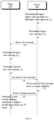
FIG. 1 shows a signal interaction flowchart of an example of a method for processing man-machine dialogues according to an embodiment of the present disclosure; -
FIG. 2 shows a signal interaction flowchart of an example of a method for processing man-machine dialogues in a half-duplex wake-up mode according to an embodiment of the present disclosure; -
FIG. 3 shows a schematic flowchart of an example of a method for processing man-machine dialogues according to an embodiment of the present disclosure; and -
FIG. 4 shows a structural block diagram of an example of an apparatus for processing man-machine dialogues according to an embodiment of the present disclosure. - In order to make the objectives, technical solutions and advantages of the embodiments of the present disclosure clearer, the technical solutions in the embodiments of the present disclosure will be described clearly and completely below with reference to the accompanying drawings in the embodiments of the present disclosure. Obviously, the described are merely some but not all of the embodiments of the present invention. Based on the embodiments of the present invention, all other embodiments obtained by ordinary skilled in the art without inventive efforts shall fall within the scope of the present invention.
- It should be noted that the embodiments in the present application and the features in these embodiments can be combined with each other when no conflict exists.
- The present invention can be described in the general context of computer-executable instructions such as program modules executed by a computer. Generally, program modules include routines, programs, objects, elements, and data structures, etc. that perform specific tasks or implement specific abstract data types. The present invention can also be practiced in distributed computing environments in which tasks are performed by remote processing devices connected through a communication network. In a distributed computing environment, program modules may be located in local and remote computer storage media including storage devices. In the present invention, "module", "means", "system", etc. refer to related entities applied to a computer, such as hardware, a combination of hardware and software, software or software in execution, etc. In detail, for example, an element may be, but is not limited to, a process running on a processor, a processor, an object, an executable element, an execution thread, a program, and/or a computer. Also, an application program or a script program running on the server or the server may be an element. One or more elements can be in the process and/or thread in execution, and the elements can be localized in one computer and/or distributed between two or more computers and can be executed by various computer-readable media. Elements can also be based on signals with one or more data packets, for example, a signal from data that interacts with another element in a local system, a distributed system, and/or interacts with other systems through signals on a network on the internet communicates through local and/or remote processes.
- Finally, it should be noted that in this specification, terms such as first and second are used only to distinguish one entity or operation from another entity or operation, and do not necessarily require or imply there is any such actual relationship or order among these entities or operations. Moreover, terms such as "including" and "comprising" shall mean that not only those elements described, but also other elements not explicitly listed, or elements inherent to the described processes, methods, objects, or devices, are included. In the absence of specific restrictions, elements defined by the phrase "comprising ..." do not mean excluding other identical elements from process, method, article or device involving these mentioned elements.
- As shown in
FIG. 1 , a signal interaction flow of a method for processing man-machine dialogues according to an embodiment of the present disclosure involves data interaction between aclient 100 and aserver 200. Theclient 100 may be various types of terminals (such as a mobile phone, a smart speaker, a cleaning robot, etc., which is not limited in the present disclosure), and can collect user voices through a microphone, and conduct man-machine dialogue and communication with users. Theserver 200 may be a functional module in a voice service platform for processing interaction of man-machine dialogue, such as a server or a processor. As shown in the interaction flow shown inFIG. 1 , in step 101, theclient 100 receives a user voice, and generates a first user voice message according to the user voice. - In
step 102, theclient 100 sends the first user voice message to theserver 200. - In
step 103, theserver 200 determines a dialogue intent corresponding to the first user voice message. Here, after receiving the first user voice message, theserver 200 obtains the corresponding voice semantics through NLP processing, and determines the corresponding dialogue intent. - It should be noted that the term "dialogue intent" may refer to that a user wishes to operate the client through a dialogue to perform corresponding actions, such as making a phone call, playing music, turning on the TV, or answering the user's question. Here, a full-duplex wake-up mode is preferable when the client processes user voice messages of some dialogue intents. For example, when the user intent is to request to play music, the client in a full-duplex wake-up mode can receive and process user voice messages when providing the music service, improving voice interaction experience. However, the client needs to be in a half-duplex wake-up mode when processing user operation information of some dialogue intents. That is, the client cannot receive and process user voice messages until the provision of the service is completed. For example, when the user intent is to make a phone call to persons in the address book with the same name, it is necessary to wait for the user to input further instructions to provide the calling service.
- In
step 104, theserver 200 determines a target duplex wake-up mode corresponding to the dialogue intent based on an intent wake-up mode table. Here, the intent wake-up mode table includes duplex wake-up modes corresponding to a plurality of candidate dialogue intents, including a full-duplex wake-up mode and a half-duplex wake-up mode, and the intent-wake-up mode table may be set manually. - In
step 105, theserver 200 sends a wake-up mode instruction corresponding to the target duplex wake-up mode to theclient 100. - In
step 106, theclient 100 may process the user voice message according to the target duplex wake-up mode. Thus, the client can process the user voice message according to the target wake-up mode corresponding to the intent of the user voice message, and adopt different duplex wake-up modes for different user voice messages, so as to adapt to diverse application scenarios. - As shown in
FIG. 2 , a flow of an example of a method for processing man-machine dialogues in a half-duplex wake-up mode according to an embodiment of the present disclosure is illustrated. In step 201, theserver 200 determines that the target duplex wake-up mode is a half-duplex wake-up mode. For example, the target wake-up mode may be determined to be a half-duplex wake-up mode according to the user intent. For the specific operation, reference may made to the description inFIG. 1 , which will not be repeated here. - In step 202, the
server 200 determines a query voice message for the dialogue intent. For example, for a dialogue intent such as "making a phone call to contacts having the same name in the address book", and the corresponding query voice in this case may be "Do you want to call the contact whose phone number is XX or the contact whose phone number is YY". - In
step 203, theserver 200 sends the query voice message to theclient 100. - In
step 204, theclient 100 performs a man-machine dialogue operation in a half-duplex wake-up mode using the query voice message. For example, theclient 100 broadcasts the received query voice message, and waits for user input to respond after the broadcast is completed. - In step 205, after receiving the query voice message, the user makes a voice reply, such that a second user voice message is generated at the
client 100. - In step 206, the
client 100 sends the second user voice message to theserver 200. - In step 207, the
server 200 determines whether the second user voice message meets a set reply condition. Here, the set reply condition may indicate whether the second user voice message satisfies a semantic filling requirement. Following the above example, if the semantics of the second user voice message does not include the phone number "XX" or "YY", it is determined that the second user voice message does not meet the semantic filling requirement. Additionally, if the semantics of the second user voice message includes a phone number "XX" or "YY", the client performs a corresponding action (e.g., making a phone call to a specific object). - In
step 208, when the second user voice message meets a preset reply condition, theserver 200 sends a mode switching instruction to theclient 100. In some application scenarios, the client can enable the full-duplex wake-up mode by default, and then switches back to the full-duplex wake-up mode after the processing of the voice message corresponding to the half-duplex wake-up mode is completed. - In step 209, the
client 100 performs a man-machine dialogue operation according to the full-duplex wake-up mode. - As described above, it may be recommended that the client terminal adopts the full-duplex wake-up mode by default, that is, the
client 100 may acquire the first user voice message according to the full-duplex wake-up mode. After that, whether to switch to the half-duplex wake-up mode is determined according to the dialogue intent and the user input. In addition, in some application scenarios, theclient 100 may also receive a full-duplex wake-up turn-off instruction from theserver 200, so as to turn off the full-duplex wake-up mode and re-enter a wait-to-wake state. -
FIG. 3 shows a flow of a method for processing man-machine dialogues according to an embodiment of the present disclosure. In this embodiment, after a client is awoken, a full-duplex dialogue process is started. If a user voice message complies with a specified intent, the cloud (or server) sends an instruction to simulate half-duplex to the client. After that, the client switches to a half-duplex voice dialogue mode according to this instruction. In this mode, the dialogue will continue to wait for the user to input instructions until the next instruction on turning off half-duplex is sent. - Specifically, after the client is awoken by the user from the wait-to-wake state, a full-duplex dialogue mode is enabled. Then, the client receives a user voice message. In this case, the input may be normal user instruction audio or abnormal non-instruction audio. The user voice message needs to be uploaded to the server, and then the server returns a dialogue processing instruction according to the user voice message. After that, the client determines whether to end the full-duplex dialogue or switch to half-duplex according to the dialogue processing instruction. Here, after the client switches to the half-duplex mode, the client will wait for the user to input an expected instruction, or otherwise it will listen repeatedly until the expected instruction is received. For example, User input "make a phone call to Zhang San". Assuming that Zhang San has two numbers locally, the server will reply "which one?" In this case, the expected reply of the user is to select a certain one. If the user's input is not the expected one, the process will be repeated.
- It should be noted that in some user scenarios, the cloud will issue an instruction to end full-duplex mode, and the client will also re-enter the wait-to-wake state.
- In some embodiments, different duplex dialogue modes may be customized for different specified user scenarios, such as maintaining the full-duplex dialogue mode in a first user scenario and the half-duplex dialogue mode in a second user scenario. However, it may not be possible to dynamically switch between modes during one user dialogue, and it may also be difficult to handle new scenarios.
- Through the embodiments of the present disclosure, the dialogue mode may be dynamically adjusted in a dialogue so as to adapt to a variety of user scenarios, and can avoid the problem of full-duplex experience caused by differences among devices and that among networks.
- As shown in
FIG. 4 , anapparatus 400 for processing man-machine dialogues according to an embodiment of the present disclosure includes: a voicemessage acquiring unit 410 configured to acquire a first user voice message from a client; a userintent determining unit 420 configured to determine a dialogue intent corresponding to the first user voice message; a target wake-upmode determining unit 430 configured to determine a target duplex wake-up mode corresponding to the dialogue intent based on an intent wake-up mode table which includes duplex wake-up modes corresponding to a plurality of candidate dialogue intents such as full-duplex wake-up mode and half-duplex wake-up mode; and a wake-upinstruction sending unit 440 configured to send a wake-up mode instruction corresponding to the target duplex wake-up mode to the client, such that the client can process the user voice message according to the target duplex wake-up mode. - The apparatus according to the above embodiment of the present disclosure may be applied to execute the corresponding method embodiment of the present disclosure, and correspondingly achieve the technical effects achieved by the above method embodiment of the present disclosure, which will not be repeated.
- In the embodiments of the present disclosure, relevant functional modules may be implemented by a hardware processor.
- On the other hand, an embodiment of the present disclosure provides a storage medium on which a computer program is stored, and the program is executed by a processor to execute the steps of the above method for processing man-machine dialogues.
- The above product can execute the method according to the embodiments of the present disclosure and has corresponding functional modules to execute the method and beneficial effects. For technical details not described in detail in this embodiment, reference may be made to the method according to the embodiments of the present disclosure.
- Exemplarily, the present disclosure also provides a server, including at least one processor, and a memory communicatively connected to the at least one processor, wherein the memory stores instructions executable by the at least one processor, and the instructions are executed by the at least one processor to:
- acquire a first user voice message from a client;
- determine a dialogue intent corresponding to the first user voice message;
- determine a target duplex wake-up mode corresponding to the dialogue intent based on an intent wake-up mode table, wherein the intent-wake mode table comprises duplex wake-up modes corresponding to a plurality of candidate dialogue intents respectively, and the duplex wake-up modes comprise full-duplex wake-up mode and half-duplex wake-up mode; and
- send a wake-up mode instruction corresponding to the target duplex wake-up mode to the client, such that the client processes the user voice message according to the target duplex wake-up mode.
- In some embodiments, the at least one processor of the server of the present disclosure is further configured to, after sending the wake-up mode instruction corresponding to the target duplex wake-up mode to the client,
- determine a query voice message for the dialogue intent when the target duplex wake-up mode is a half-duplex wake-up mode; and
- send the query voice message to the client, such that the client performs a man-machine dialogue operation in a half-duplex wake-up mode using the query voice message.
- In some embodiments, the at least one processor of the server of the present disclosure is further configured to, after sending the query voice message to the client,
- acquire a second user voice message for the query voice message from the client;
- determine whether the second user voice message meets a set reply condition; and
- send a mode switching instruction to the client when the second user voice message meets the set reply condition, such that the client performs a man-machine dialogue operation in a full-duplex wake-up mode.
- Exemplarily, the present disclosure further provides a client, including: at least one processor, and a memory communicatively connected to the at least one processor, wherein the memory stores instructions executable by the at least one processor, and the instructions are executed by the at least one processor to:
- acquire a first user voice message;
- send the first user voice message to a server;
- receive a wake-up mode instruction from the server in response to the first user voice message; and
- process the user voice message according to a target duplex wake-up mode indicated by the wake-up mode instruction, wherein duplex wake-up modes comprise a full-duplex wake-up mode and a half-duplex wake-up mode.
- In some embodiments, the step of acquiring the first user voice message includes acquiring the first user voice message according to a full-duplex wake-up mode.
- In some embodiments, the step of processing the user voice message according to the target duplex wake-up mode indicated by the wake-up mode instruction comprises:
- when the target duplex wake-up mode is a half-duplex wake-up mode, acquiring a query voice message from the server; and
- performing a man-machine dialogue operation according to the half-duplex wake-up mode based on the query voice message.
- In some embodiments, the at least one processor of the client according to the application is further configured so that after performing the man-machine dialogue operation according to the half-duplex wake-up mode based on the query voice message, the following steps are performed:
- acquiring a second user voice message in response to the query voice message;
- sending the second voice message to the server; and
- upon receiving a mode switching instruction in response to the second voice message from the server, performing a man-machine dialogue operation according to a full-duplex wake-up mode.
- The client in the embodiments of the present application exists in various forms, including but not limited to:
- (1) Mobile communication device which features in its mobile communication function and the main goal thereof is to provide voice and data communication, such as smart phones (such as iPhone), multimedia phones, functional phones, and low-end phones;
- (2) Ultra-mobile personal computer device which belongs to the category of personal computers and has computing and processing functions and generally mobile Internet access capability, such as PDA, MID and UMPC devices, e.g., iPad;
- (3) Portable entertainment devices which can display and play multimedia content, such as audio and video players (such as iPod), handheld game consoles, e-books, and smart toys and portable car navigation devices; and
- (4) Other electronic devices with data interaction function.
- The device embodiments described above are only exemplary. The units described as separate components may or may not be physically separated, and the components displayed as units may or may not be physical units, that is, may be located in one place, or it can be distributed to multiple network elements. Some or all of the modules may be selected according to actual needs to achieve the object of the solution of this embodiment.
- Through the description of the above embodiments, those skilled in the art can clearly understand that each embodiment can be implemented by means of software plus a common hardware platform, and of course, it can also be implemented by hardware. Based on this understanding, the above technical solutions can essentially be embodied in the form of software products that contribute to related technologies, and the computer software products can be stored in computer-readable storage media, such as ROM/RAM, magnetic disks, CD-ROM, etc., including several instructions to enable a computer device (which may be a personal computer, server, or network device, etc.) to perform the method described in each embodiment or some parts of the embodiment.
- Finally, it should be noted that the above embodiments are only used to illustrate the technical solutions of the present application, rather than limitation. Although the present application has been described in detail with reference to the foregoing embodiments, those skilled in the art should understand that the technical solutions described in the foregoing embodiments can be modified, or some of the technical features can be replaced without deviating from the scope of the invention as defined by the following claims.
Claims (10)
- A method for processing man-machine dialogues, applied to a server, comprising:acquiring a first user voice message from a client (102);determining a dialogue intent corresponding to the first user voice message (103);determining a target duplex dialogue mode corresponding to the dialogue intent based on an intent wake-up mode table (104), wherein the intent wake-up mode table comprises duplex dialogue modes corresponding to a plurality of candidate dialogue intents respectively, and the duplex dialogue modes refer to a full-duplex dialogue mode and a half-duplex dialogue mode, wherein, in the full-duplex dialogue mode, the client receives and processes user voice messages while providing service, and in the half-duplex dialogue mode, the client receives and processes user voice messages only after it completes the service; andsending a dialogue mode instruction corresponding to the target duplex dialogue mode to the client, such that the client processes the user voice message according to the target duplex dialogue mode (105).
- The method according to claim 1, wherein after sending the dialogue mode instruction corresponding to the target duplex dialogue mode to the client, the method further comprises:when the target duplex dialogue mode is a half-duplex dialogue mode (201), determining a query voice message for the dialogue intent (202); andsending the query voice message to the client, such that the client performs a man-machine dialogue operation in a half-duplex dialogue mode using the query voice message (203).
- The method according to claim 2, wherein after sending the query voice message to the client, the method further comprises:acquiring a second user voice message for the query voice message from the client (206);determining whether the second user voice message meets a set reply condition (207); andwhen the second user voice message meets the set reply condition, sending a mode switching instruction to the client, such that the client performs a man-machine dialogue operation in a full-duplex dialogue mode (208).
- A method for processing man-machine dialogues, applied to a client, comprising:acquiring a first user voice message (101);sending the first user voice message to a server (102);receiving a dialogue mode instruction from the server in response to the first user voice message (105); andprocessing the user voice message according to a target one of duplex dialogue modes indicated by the dialogue mode instruction (106), wherein the duplex dialogue modes refer to full-duplex dialogue mode and half-duplex dialogue mode, wherein, in the full-duplex dialogue mode, the client receives and processes user voice messages while providing service, and in the half-duplex dialogue mode, the client receives and processes user voice messages only after it completes the service.
- The method according to claim 4, wherein said acquiring the first user voice message comprises:
acquiring the first user voice message according to a full-duplex dialogue mode. - The method according to claim 5, wherein said processing the user voice message according to the target duplex dialogue mode indicated by the dialogue mode instruction comprises:when the target duplex dialogue mode is a half-duplex dialogue mode, acquiring a query voice message from the server (203); andperforming a man-machine dialogue operation according to the half-duplex dialogue mode based on the query voice message (204).
- The method according to claim 6, wherein after performing the man-machine dialogue operation according to the half-duplex dialogue mode based on the query voice message, the method further comprises:acquiring a second user voice message in response to the query voice message (205);sending the second voice message to the server (206); andupon receiving a mode switching instruction in response to the second voice message from the server, performing a man-machine dialogue operation according to a full-duplex dialogue mode (209).
- A server comprising at least one processor and a memory communicatively connected to the at least one processor, wherein the memory stores instructions executable by the at least one processor, and the instructions are executed by the at least one processor to:acquire a first user voice message from a client (102);determine a dialogue intent corresponding to the first user voice message (103);determine a target duplex dialogue mode corresponding to the dialogue intent based on an intent wake-up mode table (104), wherein the intent wake-up mode table comprises duplex dialogue modes corresponding to a plurality of candidate dialogue intents respectively, and the duplex dialogue modes refer to full-duplex dialogue mode and half-duplex dialogue mode, wherein, in the full-duplex dialogue mode, the client receives and processes user voice messages while providing service, and in the half-duplex dialogue mode, the client receives and processes user voice messages only after it completes the service; andsend a dialogue mode instruction corresponding to the target duplex dialogue mode to the client, such that the client processes the user voice message according to the target duplex dialogue mode (105).
- The server according to claim 8, wherein the at least one processor is further configured to: after sending the dialogue mode instruction corresponding to the target duplex dialogue mode to the client,when the target duplex dialogue mode is a half-duplex dialogue mode (201), determine a query voice message for the dialogue intent (202); andsend the query voice message to the client, such that the client performs a man-machine dialogue operation in a half-duplex dialogue mode using the query voice message (203).
- A client, comprising at least one processor and a memory communicatively coupled to the at least one processor, wherein the memory stores instructions executable by the at least one processor, and the instructions are executed by the at least one processor to:acquire a first user voice message (101);send the first user voice message to a server (102);receive a dialogue mode instruction from the server in response to the first user voice message (105); andprocess the user voice message according to a target one of duplex dialogue modes indicated by the dialogue mode instruction (106), wherein the duplex dialogue modes refer to a full-duplex dialogue mode and a half-duplex dialogue mode, wherein, in the full-duplex dialogue mode, the client receives and processes user voice messages while providing service, and in the half-duplex dialogue mode, the client receives and processes user voice messages only after it completes the service.
Applications Claiming Priority (2)
| Application Number | Priority Date | Filing Date | Title |
|---|---|---|---|
| CN201910975502.9A CN112732340B (en) | 2019-10-14 | 2019-10-14 | Man-machine dialogue processing method and device |
| PCT/CN2019/120612 WO2021072914A1 (en) | 2019-10-14 | 2019-11-25 | Human-machine conversation processing method |
Publications (3)
| Publication Number | Publication Date |
|---|---|
| EP4047489A1 EP4047489A1 (en) | 2022-08-24 |
| EP4047489A4 EP4047489A4 (en) | 2022-11-23 |
| EP4047489B1 true EP4047489B1 (en) | 2025-05-21 |
Family
ID=75538276
Family Applications (1)
| Application Number | Title | Priority Date | Filing Date |
|---|---|---|---|
| EP19948949.3A Active EP4047489B1 (en) | 2019-10-14 | 2019-11-25 | Human-machine conversation processing method |
Country Status (5)
| Country | Link |
|---|---|
| US (1) | US11830483B2 (en) |
| EP (1) | EP4047489B1 (en) |
| JP (1) | JP7311707B2 (en) |
| CN (1) | CN112732340B (en) |
| WO (1) | WO2021072914A1 (en) |
Families Citing this family (6)
| Publication number | Priority date | Publication date | Assignee | Title |
|---|---|---|---|---|
| CN113628622A (en) * | 2021-08-24 | 2021-11-09 | 北京达佳互联信息技术有限公司 | Voice interaction method, device, electronic device and storage medium |
| CN113744743B (en) * | 2021-08-27 | 2022-11-08 | 海信冰箱有限公司 | Voice interaction method and device for washing machine |
| CN114417891B (en) * | 2022-01-22 | 2023-05-09 | 平安科技(深圳)有限公司 | Method, device and electronic equipment for determining reply sentence based on rough semantics |
| CN117153157B (en) * | 2023-09-19 | 2024-06-04 | 深圳市麦驰信息技术有限公司 | Multi-mode full duplex dialogue method and system for semantic recognition |
| CN118645094A (en) * | 2024-05-30 | 2024-09-13 | 奇瑞汽车股份有限公司 | Method, device, electronic device and storage medium for controlling voice interaction mode of vehicle computer |
| CN118865967B (en) * | 2024-07-01 | 2026-01-09 | 浙江未来精灵人工智能科技有限公司 | Voice interaction methods, devices and electronic devices |
Family Cites Families (13)
| Publication number | Priority date | Publication date | Assignee | Title |
|---|---|---|---|---|
| CN101389059B (en) * | 2007-09-11 | 2012-08-08 | 华为技术有限公司 | Method, and device for implementing session mode switching |
| EP2045140B1 (en) | 2007-10-01 | 2010-01-27 | Harman/Becker Automotive Systems GmbH | Adjustment of vehicular elements by speech control |
| US8681664B2 (en) * | 2008-08-11 | 2014-03-25 | Qualcomm Incorporated | Setting up a full-duplex communication session and transitioning between half-duplex and full-duplex during a communication session within a wireless communications system |
| WO2014134216A1 (en) * | 2013-02-27 | 2014-09-04 | Audience, Inc. | Voice-controlled communication connections |
| CN103198831A (en) * | 2013-04-10 | 2013-07-10 | 威盛电子股份有限公司 | Voice control method and mobile terminal device |
| CN104679472A (en) * | 2015-02-13 | 2015-06-03 | 百度在线网络技术(北京)有限公司 | Man-machine voice interactive method and device |
| US9713192B2 (en) * | 2015-03-27 | 2017-07-18 | Intel Corporation | Device and method for processing audio data |
| CN106658369B (en) * | 2016-12-06 | 2020-02-07 | 歌尔科技有限公司 | Bidirectional voice communication equipment, communication system and communication method |
| CN109657091B (en) * | 2019-01-02 | 2021-06-22 | 百度在线网络技术(北京)有限公司 | State presentation method, device and equipment of voice interaction equipment and storage medium |
| CN109739971B (en) | 2019-01-03 | 2021-04-23 | 浙江百应科技有限公司 | Method for realizing full-duplex intelligent voice conversation based on WeChat applet |
| CN112017650B (en) * | 2019-05-31 | 2024-05-24 | 百度在线网络技术(北京)有限公司 | Voice control method, device, computer equipment and storage medium for electronic equipment |
| CN110660390B (en) * | 2019-09-17 | 2022-05-03 | 百度在线网络技术(北京)有限公司 | Intelligent device wake-up method, intelligent device and computer readable storage medium |
| CN112002315B (en) | 2020-07-28 | 2023-12-29 | 珠海格力节能环保制冷技术研究中心有限公司 | Voice control method and device, electrical equipment, storage medium and processor |
-
2019
- 2019-10-14 CN CN201910975502.9A patent/CN112732340B/en active Active
- 2019-11-25 JP JP2022522284A patent/JP7311707B2/en active Active
- 2019-11-25 EP EP19948949.3A patent/EP4047489B1/en active Active
- 2019-11-25 US US17/768,666 patent/US11830483B2/en active Active
- 2019-11-25 WO PCT/CN2019/120612 patent/WO2021072914A1/en not_active Ceased
Also Published As
| Publication number | Publication date |
|---|---|
| US20230162730A1 (en) | 2023-05-25 |
| JP2022545981A (en) | 2022-11-01 |
| JP7311707B2 (en) | 2023-07-19 |
| EP4047489A4 (en) | 2022-11-23 |
| CN112732340A (en) | 2021-04-30 |
| WO2021072914A1 (en) | 2021-04-22 |
| US11830483B2 (en) | 2023-11-28 |
| CN112732340B (en) | 2022-03-15 |
| EP4047489A1 (en) | 2022-08-24 |
Similar Documents
| Publication | Publication Date | Title |
|---|---|---|
| US11830483B2 (en) | Method for processing man-machine dialogues | |
| CN110459221B (en) | Method and device for multi-device cooperative voice interaction | |
| US11247134B2 (en) | Message push method and apparatus, device, and storage medium | |
| US12211508B2 (en) | Server-side processing method and server for actively initiating dialogue, and voice interaction system capable of initiating dialogue | |
| CN113127609A (en) | Voice control method, device, server, terminal equipment and storage medium | |
| US11551693B2 (en) | Method of man-machine interaction and electronic device | |
| WO2012055315A1 (en) | System and method for providing and managing interactive services | |
| CN106384591A (en) | Method and device for interacting with voice assistant application | |
| CN112735398B (en) | Man-machine conversation mode switching method and system | |
| WO2021196617A1 (en) | Voice interaction method and apparatus, electronic device and storage medium | |
| CN115373577B (en) | Image processing method, device and computer-readable storage medium | |
| CN106528692A (en) | Dialogue control method and device based on artificial intelligence | |
| WO2021042584A1 (en) | Full duplex voice chatting method | |
| WO2014194647A1 (en) | Data exchange method, device, and system for group communication | |
| CN103200077A (en) | Method, device and system for data interaction during voice communication | |
| CN108062952A (en) | A kind of sound control method, apparatus and system | |
| CN112954760B (en) | Connection method, device and electronic device for Bluetooth device | |
| CN112786031B (en) | Man-machine conversation method and system | |
| CN117008713A (en) | An augmented reality display method, device and computer-readable storage medium | |
| US11082826B2 (en) | Emergency communication method and apparatus | |
| CN112861542A (en) | Method and device for limiting scene voice interaction | |
| US20170170912A1 (en) | Multimedia sharing method and electronic device | |
| KR20180001870A (en) | Method for executing of mobile terminal playing game application with voice chatting | |
| CN105049593A (en) | Communication method and terminal | |
| CN121151506A (en) | A method, apparatus and related products for robot outbound call task processing |
Legal Events
| Date | Code | Title | Description |
|---|---|---|---|
| STAA | Information on the status of an ep patent application or granted ep patent |
Free format text: STATUS: THE INTERNATIONAL PUBLICATION HAS BEEN MADE |
|
| PUAI | Public reference made under article 153(3) epc to a published international application that has entered the european phase |
Free format text: ORIGINAL CODE: 0009012 |
|
| STAA | Information on the status of an ep patent application or granted ep patent |
Free format text: STATUS: REQUEST FOR EXAMINATION WAS MADE |
|
| 17P | Request for examination filed |
Effective date: 20220329 |
|
| AK | Designated contracting states |
Kind code of ref document: A1 Designated state(s): AL AT BE BG CH CY CZ DE DK EE ES FI FR GB GR HR HU IE IS IT LI LT LU LV MC MK MT NL NO PL PT RO RS SE SI SK SM TR |
|
| REG | Reference to a national code |
Ref country code: DE Ref legal event code: R079 Free format text: PREVIOUS MAIN CLASS: G06F0016332000 Ipc: G06F0016903200 Ref country code: DE Ref legal event code: R079 Ref document number: 602019070437 Country of ref document: DE Free format text: PREVIOUS MAIN CLASS: G06F0016332000 Ipc: G06F0016903200 |
|
| A4 | Supplementary search report drawn up and despatched |
Effective date: 20221025 |
|
| RIC1 | Information provided on ipc code assigned before grant |
Ipc: G06F 9/4401 20180101ALI20221019BHEP Ipc: G06F 3/16 20060101ALI20221019BHEP Ipc: G10L 15/22 20060101ALI20221019BHEP Ipc: G06F 16/332 20190101ALI20221019BHEP Ipc: G06F 16/9032 20190101AFI20221019BHEP |
|
| DAV | Request for validation of the european patent (deleted) | ||
| DAX | Request for extension of the european patent (deleted) | ||
| STAA | Information on the status of an ep patent application or granted ep patent |
Free format text: STATUS: EXAMINATION IS IN PROGRESS |
|
| 17Q | First examination report despatched |
Effective date: 20230804 |
|
| GRAP | Despatch of communication of intention to grant a patent |
Free format text: ORIGINAL CODE: EPIDOSNIGR1 |
|
| STAA | Information on the status of an ep patent application or granted ep patent |
Free format text: STATUS: GRANT OF PATENT IS INTENDED |
|
| RIC1 | Information provided on ipc code assigned before grant |
Ipc: G10L 15/18 20130101ALN20241205BHEP Ipc: G06F 3/16 20060101ALI20241205BHEP Ipc: G10L 15/22 20060101ALI20241205BHEP Ipc: G06F 16/9032 20190101AFI20241205BHEP |
|
| INTG | Intention to grant announced |
Effective date: 20241216 |
|
| GRAS | Grant fee paid |
Free format text: ORIGINAL CODE: EPIDOSNIGR3 |
|
| GRAA | (expected) grant |
Free format text: ORIGINAL CODE: 0009210 |
|
| STAA | Information on the status of an ep patent application or granted ep patent |
Free format text: STATUS: THE PATENT HAS BEEN GRANTED |
|
| AK | Designated contracting states |
Kind code of ref document: B1 Designated state(s): AL AT BE BG CH CY CZ DE DK EE ES FI FR GB GR HR HU IE IS IT LI LT LU LV MC MK MT NL NO PL PT RO RS SE SI SK SM TR |
|
| REG | Reference to a national code |
Ref country code: GB Ref legal event code: FG4D |
|
| REG | Reference to a national code |
Ref country code: CH Ref legal event code: EP |
|
| REG | Reference to a national code |
Ref country code: DE Ref legal event code: R096 Ref document number: 602019070437 Country of ref document: DE |
|
| REG | Reference to a national code |
Ref country code: IE Ref legal event code: FG4D |
|
| P01 | Opt-out of the competence of the unified patent court (upc) registered |
Free format text: CASE NUMBER: UPC_APP_0686_4047489/2025 Effective date: 20250721 |
|
| P02 | Opt-out of the competence of the unified patent court (upc) changed |
Free format text: CASE NUMBER: UPC_APP_2833_4047489/2025 Effective date: 20250808 |
|
| REG | Reference to a national code |
Ref country code: NL Ref legal event code: MP Effective date: 20250521 |
|
| PG25 | Lapsed in a contracting state [announced via postgrant information from national office to epo] |
Ref country code: FI Free format text: LAPSE BECAUSE OF FAILURE TO SUBMIT A TRANSLATION OF THE DESCRIPTION OR TO PAY THE FEE WITHIN THE PRESCRIBED TIME-LIMIT Effective date: 20250521 Ref country code: PT Free format text: LAPSE BECAUSE OF FAILURE TO SUBMIT A TRANSLATION OF THE DESCRIPTION OR TO PAY THE FEE WITHIN THE PRESCRIBED TIME-LIMIT Effective date: 20250922 Ref country code: ES Free format text: LAPSE BECAUSE OF FAILURE TO SUBMIT A TRANSLATION OF THE DESCRIPTION OR TO PAY THE FEE WITHIN THE PRESCRIBED TIME-LIMIT Effective date: 20250521 |
|
| REG | Reference to a national code |
Ref country code: LT Ref legal event code: MG9D |
|
| PG25 | Lapsed in a contracting state [announced via postgrant information from national office to epo] |
Ref country code: NO Free format text: LAPSE BECAUSE OF FAILURE TO SUBMIT A TRANSLATION OF THE DESCRIPTION OR TO PAY THE FEE WITHIN THE PRESCRIBED TIME-LIMIT Effective date: 20250821 Ref country code: GR Free format text: LAPSE BECAUSE OF FAILURE TO SUBMIT A TRANSLATION OF THE DESCRIPTION OR TO PAY THE FEE WITHIN THE PRESCRIBED TIME-LIMIT Effective date: 20250822 |
|
| PG25 | Lapsed in a contracting state [announced via postgrant information from national office to epo] |
Ref country code: PL Free format text: LAPSE BECAUSE OF FAILURE TO SUBMIT A TRANSLATION OF THE DESCRIPTION OR TO PAY THE FEE WITHIN THE PRESCRIBED TIME-LIMIT Effective date: 20250521 Ref country code: NL Free format text: LAPSE BECAUSE OF FAILURE TO SUBMIT A TRANSLATION OF THE DESCRIPTION OR TO PAY THE FEE WITHIN THE PRESCRIBED TIME-LIMIT Effective date: 20250521 |
|
| PG25 | Lapsed in a contracting state [announced via postgrant information from national office to epo] |
Ref country code: BG Free format text: LAPSE BECAUSE OF FAILURE TO SUBMIT A TRANSLATION OF THE DESCRIPTION OR TO PAY THE FEE WITHIN THE PRESCRIBED TIME-LIMIT Effective date: 20250521 |
|
| PG25 | Lapsed in a contracting state [announced via postgrant information from national office to epo] |
Ref country code: HR Free format text: LAPSE BECAUSE OF FAILURE TO SUBMIT A TRANSLATION OF THE DESCRIPTION OR TO PAY THE FEE WITHIN THE PRESCRIBED TIME-LIMIT Effective date: 20250521 |
|
| PG25 | Lapsed in a contracting state [announced via postgrant information from national office to epo] |
Ref country code: RS Free format text: LAPSE BECAUSE OF FAILURE TO SUBMIT A TRANSLATION OF THE DESCRIPTION OR TO PAY THE FEE WITHIN THE PRESCRIBED TIME-LIMIT Effective date: 20250821 |
|
| PG25 | Lapsed in a contracting state [announced via postgrant information from national office to epo] |
Ref country code: IS Free format text: LAPSE BECAUSE OF FAILURE TO SUBMIT A TRANSLATION OF THE DESCRIPTION OR TO PAY THE FEE WITHIN THE PRESCRIBED TIME-LIMIT Effective date: 20250921 |
|
| PG25 | Lapsed in a contracting state [announced via postgrant information from national office to epo] |
Ref country code: LV Free format text: LAPSE BECAUSE OF FAILURE TO SUBMIT A TRANSLATION OF THE DESCRIPTION OR TO PAY THE FEE WITHIN THE PRESCRIBED TIME-LIMIT Effective date: 20250521 |
|
| REG | Reference to a national code |
Ref country code: AT Ref legal event code: MK05 Ref document number: 1797371 Country of ref document: AT Kind code of ref document: T Effective date: 20250521 |
|
| PGFP | Annual fee paid to national office [announced via postgrant information from national office to epo] |
Ref country code: GB Payment date: 20251226 Year of fee payment: 7 |
|
| PG25 | Lapsed in a contracting state [announced via postgrant information from national office to epo] |
Ref country code: DK Free format text: LAPSE BECAUSE OF FAILURE TO SUBMIT A TRANSLATION OF THE DESCRIPTION OR TO PAY THE FEE WITHIN THE PRESCRIBED TIME-LIMIT Effective date: 20250521 Ref country code: AT Free format text: LAPSE BECAUSE OF FAILURE TO SUBMIT A TRANSLATION OF THE DESCRIPTION OR TO PAY THE FEE WITHIN THE PRESCRIBED TIME-LIMIT Effective date: 20250521 Ref country code: SM Free format text: LAPSE BECAUSE OF FAILURE TO SUBMIT A TRANSLATION OF THE DESCRIPTION OR TO PAY THE FEE WITHIN THE PRESCRIBED TIME-LIMIT Effective date: 20250521 |
|
| PGFP | Annual fee paid to national office [announced via postgrant information from national office to epo] |
Ref country code: FR Payment date: 20251128 Year of fee payment: 7 |
|
| PG25 | Lapsed in a contracting state [announced via postgrant information from national office to epo] |
Ref country code: CZ Free format text: LAPSE BECAUSE OF FAILURE TO SUBMIT A TRANSLATION OF THE DESCRIPTION OR TO PAY THE FEE WITHIN THE PRESCRIBED TIME-LIMIT Effective date: 20250521 |
|
| PG25 | Lapsed in a contracting state [announced via postgrant information from national office to epo] |
Ref country code: EE Free format text: LAPSE BECAUSE OF FAILURE TO SUBMIT A TRANSLATION OF THE DESCRIPTION OR TO PAY THE FEE WITHIN THE PRESCRIBED TIME-LIMIT Effective date: 20250521 |
|
| PG25 | Lapsed in a contracting state [announced via postgrant information from national office to epo] |
Ref country code: SK Free format text: LAPSE BECAUSE OF FAILURE TO SUBMIT A TRANSLATION OF THE DESCRIPTION OR TO PAY THE FEE WITHIN THE PRESCRIBED TIME-LIMIT Effective date: 20250521 |
|
| PG25 | Lapsed in a contracting state [announced via postgrant information from national office to epo] |
Ref country code: IT Free format text: LAPSE BECAUSE OF FAILURE TO SUBMIT A TRANSLATION OF THE DESCRIPTION OR TO PAY THE FEE WITHIN THE PRESCRIBED TIME-LIMIT Effective date: 20250521 |
|
| PG25 | Lapsed in a contracting state [announced via postgrant information from national office to epo] |
Ref country code: RO Free format text: LAPSE BECAUSE OF FAILURE TO SUBMIT A TRANSLATION OF THE DESCRIPTION OR TO PAY THE FEE WITHIN THE PRESCRIBED TIME-LIMIT Effective date: 20250521 |
|
| REG | Reference to a national code |
Ref country code: DE Ref legal event code: R097 Ref document number: 602019070437 Country of ref document: DE |
|
| PLBE | No opposition filed within time limit |
Free format text: ORIGINAL CODE: 0009261 |
|
| STAA | Information on the status of an ep patent application or granted ep patent |
Free format text: STATUS: NO OPPOSITION FILED WITHIN TIME LIMIT |
|
| REG | Reference to a national code |
Ref country code: CH Ref legal event code: L10 Free format text: ST27 STATUS EVENT CODE: U-0-0-L10-L00 (AS PROVIDED BY THE NATIONAL OFFICE) Effective date: 20260402 |
|
| PGFP | Annual fee paid to national office [announced via postgrant information from national office to epo] |
Ref country code: DE Payment date: 20251231 Year of fee payment: 7 |
|
| 26N | No opposition filed |
Effective date: 20260224 |