EP4047309B1 - System with constant up-finding - Google Patents
System with constant up-finding Download PDFInfo
- Publication number
- EP4047309B1 EP4047309B1 EP22154370.5A EP22154370A EP4047309B1 EP 4047309 B1 EP4047309 B1 EP 4047309B1 EP 22154370 A EP22154370 A EP 22154370A EP 4047309 B1 EP4047309 B1 EP 4047309B1
- Authority
- EP
- European Patent Office
- Prior art keywords
- finding
- vehicle
- measurements
- inertial
- finding sensor
- Prior art date
- Legal status (The legal status is an assumption and is not a legal conclusion. Google has not performed a legal analysis and makes no representation as to the accuracy of the status listed.)
- Active
Links
Images

Classifications
-
- G—PHYSICS
- G01—MEASURING; TESTING
- G01C—MEASURING DISTANCES, LEVELS OR BEARINGS; SURVEYING; NAVIGATION; GYROSCOPIC INSTRUMENTS; PHOTOGRAMMETRY OR VIDEOGRAMMETRY
- G01C21/00—Navigation; Navigational instruments not provided for in groups G01C1/00 - G01C19/00
- G01C21/10—Navigation; Navigational instruments not provided for in groups G01C1/00 - G01C19/00 by using measurements of speed or acceleration
- G01C21/12—Navigation; Navigational instruments not provided for in groups G01C1/00 - G01C19/00 by using measurements of speed or acceleration executed aboard the object being navigated; Dead reckoning
- G01C21/16—Navigation; Navigational instruments not provided for in groups G01C1/00 - G01C19/00 by using measurements of speed or acceleration executed aboard the object being navigated; Dead reckoning by integrating acceleration or speed, i.e. inertial navigation
- G01C21/165—Navigation; Navigational instruments not provided for in groups G01C1/00 - G01C19/00 by using measurements of speed or acceleration executed aboard the object being navigated; Dead reckoning by integrating acceleration or speed, i.e. inertial navigation combined with non-inertial navigation instruments
-
- F—MECHANICAL ENGINEERING; LIGHTING; HEATING; WEAPONS; BLASTING
- F41—WEAPONS
- F41G—WEAPON SIGHTS; AIMING
- F41G7/00—Direction control systems for self-propelled missiles
- F41G7/20—Direction control systems for self-propelled missiles based on continuous observation of target position
- F41G7/22—Homing guidance systems
- F41G7/2213—Homing guidance systems maintaining the axis of an orientable seeking head pointed at the target, e.g. target seeking gyro
-
- F—MECHANICAL ENGINEERING; LIGHTING; HEATING; WEAPONS; BLASTING
- F41—WEAPONS
- F41G—WEAPON SIGHTS; AIMING
- F41G7/00—Direction control systems for self-propelled missiles
- F41G7/20—Direction control systems for self-propelled missiles based on continuous observation of target position
- F41G7/22—Homing guidance systems
- F41G7/222—Homing guidance systems for spin-stabilized missiles
-
- F—MECHANICAL ENGINEERING; LIGHTING; HEATING; WEAPONS; BLASTING
- F41—WEAPONS
- F41G—WEAPON SIGHTS; AIMING
- F41G7/00—Direction control systems for self-propelled missiles
- F41G7/34—Direction control systems for self-propelled missiles based on predetermined target position data
- F41G7/346—Direction control systems for self-propelled missiles based on predetermined target position data using global navigation satellite systems, e.g. GPS, GALILEO, GLONASS
-
- F—MECHANICAL ENGINEERING; LIGHTING; HEATING; WEAPONS; BLASTING
- F41—WEAPONS
- F41G—WEAPON SIGHTS; AIMING
- F41G7/00—Direction control systems for self-propelled missiles
- F41G7/34—Direction control systems for self-propelled missiles based on predetermined target position data
- F41G7/36—Direction control systems for self-propelled missiles based on predetermined target position data using inertial references
-
- G—PHYSICS
- G01—MEASURING; TESTING
- G01D—MEASURING NOT SPECIALLY ADAPTED FOR A SPECIFIC VARIABLE; ARRANGEMENTS FOR MEASURING TWO OR MORE VARIABLES NOT COVERED IN A SINGLE OTHER SUBCLASS; TARIFF METERING APPARATUS; MEASURING OR TESTING NOT OTHERWISE PROVIDED FOR
- G01D1/00—Measuring arrangements giving results other than momentary value of variable, of general application
-
- G—PHYSICS
- G05—CONTROLLING; REGULATING
- G05D—SYSTEMS FOR CONTROLLING OR REGULATING NON-ELECTRIC VARIABLES
- G05D1/00—Control of position, course, altitude or attitude of land, water, air or space vehicles, e.g. using automatic pilots
- G05D1/0088—Control of position, course, altitude or attitude of land, water, air or space vehicles, e.g. using automatic pilots characterized by the autonomous decision making process, e.g. artificial intelligence, predefined behaviours
-
- G—PHYSICS
- G05—CONTROLLING; REGULATING
- G05D—SYSTEMS FOR CONTROLLING OR REGULATING NON-ELECTRIC VARIABLES
- G05D1/00—Control of position, course, altitude or attitude of land, water, air or space vehicles, e.g. using automatic pilots
- G05D1/08—Control of attitude, i.e. control of roll, pitch, or yaw
- G05D1/0808—Control of attitude, i.e. control of roll, pitch, or yaw specially adapted for aircraft
-
- G—PHYSICS
- G05—CONTROLLING; REGULATING
- G05D—SYSTEMS FOR CONTROLLING OR REGULATING NON-ELECTRIC VARIABLES
- G05D1/00—Control of position, course, altitude or attitude of land, water, air or space vehicles, e.g. using automatic pilots
- G05D1/20—Control system inputs
- G05D1/22—Command input arrangements
- G05D1/221—Remote-control arrangements
- G05D1/227—Handing over between remote control and on-board control; Handing over between remote control arrangements
-
- G—PHYSICS
- G06—COMPUTING OR CALCULATING; COUNTING
- G06F—ELECTRIC DIGITAL DATA PROCESSING
- G06F17/00—Digital computing or data processing equipment or methods, specially adapted for specific functions
- G06F17/10—Complex mathematical operations
Definitions
- Some systems use inertial navigation systems to increase the accuracy, efficiency, safety, and other operational characteristics of the systems. These inertial navigation systems require initialization and provide a basis for an integrated navigation solution, where the integrated navigation solution describes an optimized navigational state of the systems.
- Some systems may also include a trajectory predictor that uses input initial conditions, together with vehicle model parameters and time, to calculate a predicted trajectory.
- the system may use the predicted trajectory solution to provide initial conditions to an inertial navigation solution.
- the system can improve the accuracy of the integrated navigation solution by comparing the predicted trajectory against the integrated navigation solution to improve the accuracy of the integrated navigation solution.
- Integrated navigation systems typically receive external aiding measurements at specific windows during operation. For example, the external aiding may include up-finding measurements at the beginning of operation and a range-to-target.
- the trajectory predictors use vehicle initial conditions, model parameters and time to predict vehicle location.
- Inertial navigation solutions use initial navigation position, initial navigation velocity, initial navigation attitude, and the continuous inertial measurement outputs to compute continuous navigation position, velocity and attitude.
- Trajectory predictor errors arise from errors in initial conditions, model parameter errors, and unmodeled vehicle dynamics while inertial navigation errors depend on navigation initial conditions and inertial measurement unit errors.
- US20210041897A1 discloses a pulse beacon that is used to generate a plurality of pulses detected by a detector or receiver located on the rear of a projectile such that direction of arrival can be determined.
- a synchronized clock proved for velocity and range information.
- Altitude can also be determined and may use an altimeter or the like.
- the use of an IMU is possible with internal calibration by the system. Real-time attitude information provides for correction for crosswind and other drift enabling the system to have less down range dispersion.
- EP3073223 discloses a method of navigating a body. The method includes determining a respective measured direction of each of a plurality of celestial objects with respect to the body based on an output of one or more star tracking sensors mounted to the body. Calculating an expected direction of at least one of the plurality of celestial objects with respect to the body based on a current navigation solution for the body. Calculating an updated navigation solution for the body based on the expected direction of the at least one celestial object, the measured direction of the plurality of celestial objects, and an output of one or more inertial sensors mounted to the body.
- a system according to claim 1, and a method according to claim 7 are provided.
- the present disclosure describes systems and methods for a tightly coupled trajectory predictor with constant up-finding and inertial navigation.
- the trajectory predictor provides position, velocity, and attitude updates based on constant up-finding.
- constant up-finding may refer to the use of up-finding measurements as they become available.
- the integrated system tightly couples the trajectory predictions to the navigation solution by calculating position, velocity, and attitude updates based on a comparison of the trajectory prediction solution to the inertial navigation solution to reduce the amount of integrated error in the integrated navigation solution.
- Constant up-finding provides an advantage for trajectory predictors.
- external aiding measurements are sporadically available.
- typical trajectory predictors receive an up-finding measurement at the beginning of operation, a range to target at the mid-point of operation, and potential position updates during operation.
- Constant-up-finding may aid in the bounding of inertial drift errors in the navigation solution.
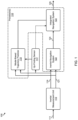
- FIG. 1 is a block diagram of a system 100 for using constant up-finding in a vehicle to provide an integrated navigation solution 125.
- the system 100 monitors the movement of a spinning vehicle (object).
- the system 100 is a spinning projectile, like a ballistic missile.
- the system 100 monitors object dynamics 111, where the object dynamics 111 include measurable, dynamic movements of the object.
- the system 100 includes an inertial measurement unit 113.
- the inertial measurement unit 113 includes instruments and sensors to measure the object dynamics 111.
- the inertial measurement unit 113 may include gyroscopes to measure rotation and accelerometers to measure acceleration. Accordingly, the inertial measurement unit 113 may provide angular rate measurements 119 and specific force measurements 121 as outputs.
- the system 100 may include additional sensors to measure the object dynamics 111.
- the additional sensors may include magnetometers, barometers, velocimeters, global navigation satellite system receivers, and other devices.
- the inertial measurement unit 113 may provide the angular rate measurements 119 and the specific force measurements 121 to an inertial navigation system 122.
- the inertial navigation system 122 calculates an inertial navigation solution 124 based on the received angular rate measurements 119 and specific force measurements 121.
- the inertial navigation system 122 uses dead reckoning to calculate the inertial navigation solution 124 from incremental acceleration and rotation measurements, the calculated inertial navigation solution 124 may drift because of the accumulation of measurement errors in the acceleration and rotation measurements.
- the inertial navigation system 122 may use information from one or more aiding sources to act as a bound for the drift in the inertial navigation solution 124.
- the inertial navigation system 122 may receive aiding GNSS measurements from a GNSS receiver and other sensors.
- the aiding sources may become unavailable.
- the object may operate within a GNSS-denied environment, receive spoofing or jamming GNSS signals, and the like.
- the inertial navigation system 122 provides the inertial navigation solution 124 to an integrated navigation system 123.
- the integrated navigation system 123 receives aiding information regarding trajectory prediction for an object from a model-based trajectory predictor 115.
- the model-based trajectory predictor 115 may be implemented within a computing device, such as a processor(s) 110, where the model-based trajectory predictor 115 provides trajectory information for an object traveling along a trajectory based on simulated model information.
- the trajectory information may include estimates of position, velocity, and attitude.
- the model information may include information used by the model-based trajectory predictor 115 when providing the trajectory information.
- the model information may include the initial state of the object. For example, when the object is a ballistic missile, the initial state may include information regarding the initial velocity, initial direction, atmospheric conditions, and flight path, among other factors that potentially affect the predicted trajectory.
- the model-based trajectory predictor 115 may receive measurements from other sensors during flight. The model-based trajectory predictor 115 may use the received measurements to increase the accuracy of the calculated trajectory information. For example, the model-based trajectory predictor 115 may receive the angular rate measurements 119 and specific force measurements 121 from the inertial measurement unit 113. The model-based trajectory predictor 115 may update the trajectory predictions based on the received angular rate measurements 119 and specific force measurements 121 during the flight of the object.
- the system 100 includes an up-finding sensor 117.
- the up-finding sensor 117 is a device that determines when a portion of an object is facing up, down, or another direction. As used herein, the term “up” may refer to when an object, or face thereon, is facing a direction away from the ground. While the sensor 117 is referred to as an up-finding sensor, the up-finding sensor 117 may determine when the object is facing a different direction, i.e. down. For example, the up-finding sensor 117 may determine when a portion or monitored location on the object is facing away from the ground or up. Alternatively, the up-finding sensor 117 may determine when the monitored location is facing a particular monitoring station.
- the up-finding sensor 117 may be a device that emits light or a signal for reflection off a surface. When the up-finding sensor 117 does not receive a reflected light or signal, the up-finding sensor 117 determines that the monitored location is facing up. In some embodiments, the up-finding sensor 117 may receive a signal from a ground station. When the up-finding sensor 117 receives the signal, the up-finding sensor 117 determines that the monitored location is facing the ground station. When the up-finding sensor 117 does not receive the signal, the up-finding sensor 117 determines that the monitored location is facing up or not facing the ground station.
- the up-finding sensor 117 may determine the up direction using quantized measurements. For example, when the object is spinning, the up-finding sensor 117 may emit laser light. When the up-finding sensor 117 detects reflections of the emitted laser light, the up-finding sensor 117 may indicate the reception of reflected laser light with a "0" or other similarly indicative symbols. When the up-finding sensor 117 fails to detect reflections of the emitted laser light, the up-finding sensor 117 may indicate that reflections are not being received with a "1".
- the up-finding sensor 117 in communication with the up-finding sensor 117 may determine that an object has spun 360° when the up-finding sensor 117 provides sequences of "1-0-1" or "0-1-0.” The up-finding sensor 117 may then communicate that the object has spun 360° to the model-based trajectory predictor 115. Alternatively, the up-finding sensor 117 may increment a spin counter, where the spin counter counts how many revolutions the object has experienced as determined by the up-finding sensor 117. The up-finding sensor 117 then provides the count from the spin counter to the model-based trajectory predictor 115.
- the up-finding sensor 117 may also determine that no light is received when the received light is below a no-light threshold value and that light is being received when the received light is above a received light threshold value.
- the no-light threshold value and the received light threshold value may or may not be equal.
- the up-finding sensor 117 may find up by monitoring the periodicity of the measured intensity of the received reflected light. For example, the up-finding sensor 117 may receive light intensity measurements and track the change in light intensity. When the sign of the change in light intensity changes from positive to negative or from negative to positive, the up-finding sensor 117 may determine that the up-finding sensor 117 has measured a maximum or a minimum light intensity. The up-finding sensor 117 may determine that the object has spun 360° on every other sign change.
- the up-finding sensor 117 provides up-finding information to the model-based trajectory predictor 115.
- the up-finding information may include a notification to the model-based trajectory predictor 115 that the up-finding sensor 117 has detected a complete rotation of the object or the up-finding sensor 117 is currently detecting the up direction.
- the up-finding sensor 117 may transmit either a "1" or "0" to the model-based trajectory predictor 115 to indicate whether the up-finding sensor 117 is currently detecting the up direction.
- the up-finding information may include a count of how often the up-finding sensor 117 has determined that the monitored location has faced a particular direction.
- the up-finding sensor 117 provides up-finding measurements continuously. For example, while the vehicle is in motion, the up-finding sensor 117 attempts to find up or other particular direction. Alternatively, the up-finding sensor 117 provides up-finding measurements over non-contiguous time periods. For example, the up-finding sensor 117 provides up-finding measurements over a first time period and then may stop providing measurements for a time, before providing additional measurements for a second time period. Also, the up-finding sensor 117 may provide measurements every tenth time (or other number of detections) up is detected.
- the object may spin at a particular rate.
- the model-based trajectory predictor 115 may use the information about how often the up-finding sensor 117 determines that an object is facing up along with the spin rate as an additional source of information. Additionally, the model-based trajectory predictor 115 may predict the number of rotations experienced by the object. The model-based trajectory predictor 115 may use the detected number of rotations from the up-finding sensor 117 to act as a bound for errors in the predicted number of rotations. Additionally, the model-based trajectory predictor 115 may calculate the number of rotations based on the received angular rate measurements 119 from the inertial measurement unit 113.
- the model-based trajectory predictor 115 may use information as predicted by the model-based trajectory predictor 115, the angular rate measurements 119, and the up-finding information from the up-finding sensor 117 to provide a measurement for the number of rotations experienced by the object.
- the model-based trajectory predictor 115 provides trajectory information to an integrated navigation system 123.
- the integrated navigation system 123 uses measurements from multiple sources in the system 100 as inputs for a filter, such as a Kalman filter or other filter. For example, the integrated navigation system 123 calculates a predicted navigation state.
- the predicted navigation state includes the position, velocity, and attitude of a moving object associated with the integrated navigation system 123.
- the integrated navigation system 123 uses inertial navigation solution 124 and the prediction from the model-based trajectory predictor 115 as measurement inputs for the Kalman filter.
- the integrated navigation system 123 uses the measurements to update the predicted navigation state.
- the prediction from the model-based trajectory predictor 115 is based on the information from the up-finding sensor 117, the prediction is not subject to the same errors that affect the inertial navigation solution 124 from the inertial navigation system 122.
- the measurements from the up-finding sensor 117 can limit the drift errors that occur in the inertial navigation solution 124.
- the up-finding sensor 117 provides the up-finding information directly to the integrated navigation system 123.
- the integrated navigation system 123 may use the up-finding information in much the same way the integrated navigation system 123 used the prediction from the model-based trajectory predictor 115 to bound errors in the inertial navigation solution 124 provided by the inertial navigation system 122.
- the model-based trajectory predictor 115, the inertial navigation system 122, and the integrated navigation system 123 may be implemented using one or more processors 110 and memory storage devices.
- the one or more processors 110 may be implemented using software, firmware, hardware, or other appropriate combinations thereof.
- the processor and/or other computational devices may be supplemented by, or incorporated in, specially designed application-specific integrated circuits (ASICs) or field programmable gate arrays (FPGAs).
- ASICs application-specific integrated circuits
- FPGAs field programmable gate arrays
- the processor may be a general or special purpose computer or processor, or other programmable logic devices.
- the processor and other computing devices may also include or function with software programs, firmware, or other computer-readable instructions for carrying out various process tasks, calculations, and control functions used in the present methods and systems.
- computer-executable instructions may implement the methods described in this description.
- At least one processor may execute the computer-executable instructions.
- Software, firmware, or other execution-capable devices may execute the computer-readable instructions for carrying out various process tasks, calculations, and generation of data used in the operations of the described methods.
- the computer-readable instructions may be stored as part of one or more appropriate computer-program products, where a computer-program product may be a set of computer-readable instructions or data structures stored on a computer-readable medium.
- the computer-readable medium may be a media that stores data that can be accessed by the processor or other computing device.
- the computer-readable medium may form a part of the memory storage devices used to implement the model-based trajectory predictor 115, the inertial navigation system 122, and the integrated navigation system 123.
- Non-volatile memory devices may include semiconductor memory devices such as random access memory (RAM), read-only memory (ROM), electrically erasable programmable ROM (EEPROM), or flash memory devices.
- the non-volatile memory devices may also include magnetic disks (such as internal hard disks or removable disks), optical storage devices (such as compact discs (CDs), digital versatile discs (DVDs), Blu-ray discs), or other media that can store computer-executable instructions or data structures.
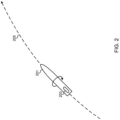
- FIG. 2 is a diagram illustrating the path 205 of a spinning projectile 201 having an up-finding sensor 203 mounted on the spinning projectile 201.
- the up-finding sensor 203 may detect how many times the spinning projectile 201 spins around.
- the up-finding sensor 203 may provide cumulative measurements of how often the up direction is detected along the path 205, or the up-finding sensor 203 may provide individual measurements that the up-finding sensor 203 is detecting the up direction.
- the up-finding sensor 203 may provide the measurements to either a trajectory predictor, such as the model-based trajectory predictor 115 in FIG. 1 , or an integrated navigation system such as the integrated navigation system 123 in FIG. 1 .
- the integrated navigation system may use the measurements from the up-finding sensor 203 to act as a bound for potential errors that develop from inertial measurements, such as the drift errors that develop in the inertial navigation solution 124.
- the up-finding sensor 203 may produce up-finding measurements independently of systems or devices not located on the spinning projectile 201.
- the up-finding sensor 203 may provide up-finding measurements without being affected by environmental effects and interfering sources (like interference and spoofing signals). Accordingly, the up-finding sensor 203 may provide measurements while the spinning projectile 201 travels along the path 205 independent of other devices.
- FIG. 3 is a flowchart diagram of a method 300 for using a tightly coupled trajectory predictor with constant up-finding and inertial navigation.
- the method 300 displays separate sub-methods performed by different components of the system 100 in FIG. 1 .
- the method 300 illustrates an inertial navigation system sub-method 322 performed by the inertial navigation system 122, an up-finding sensor sub-method 317 performed by the up-finding sensor 117, a model-based trajectory predictor sub-method 315 performed by the model-based trajectory predictor 115, and an integrated navigation system sub- method 323 performed by the integrated navigation system 123.
- the inertial navigation system sub-method 322 proceeds at 331, where an initial position, velocity, attitude, and time is received.
- the inertial navigation system 122 may receive initial navigation data from an external source, such as a GNSS satellite, another sensor, or through manual entry by a pilot, user, or other individual.
- the inertial navigation system sub-method 322 proceeds at 333, where inertial measurements for sensed motion of a vehicle are received.
- a vehicle may receive inertial measurements from inertial sensors coupled to the inertial navigation system 122.
- the inertial navigation system sub-method 322 proceeds at 335, where an inertial navigation solution is computed.
- the inertial navigation system 122 may use the received inertial measurements and the received initial position, velocity, attitude, and time measurements to calculate an inertial navigation solution.
- the up-finding sensor sub-method 317 proceeds at 337, where up-finding measurements are provided based on detection of when a portion of the vehicle is facing a particular direction during the motion of the vehicle.
- the up-finding sensor 117 may detect when a particular location on a vehicle is facing up or some other particular direction.
- the up-finding sensor may provide indications that the particular location is facing a particular direction or provide a count of the separate times that the up-finding sensor has detected that the particular location faced the particular direction.
- model-based trajectory predictor sub-method 315 may proceed at 339, where model parameters, including time, are initialized. Additionally, the model-based trajectory predictor sub-method 315 may proceed at 341, where a time update of model parameters is performed based on available input such as vehicle configuration, actuation position, and environmental data such as temperature and pressure. In some implementations, the inputs may include information from the up-finding sensor.
- the integrated navigation system sub-method 323 may proceed at 343, where the integrated navigation solution is updated based on inertial navigation, up-finding, and model-based trajectory predictions.
- the integrated navigation system 123 may receive the products of the inertial navigation system sub-method 322, the up-finding sensor sub-method 317, and the model-based trajectory predictor sub-method 315. Using the information from the different sub-methods, the integrated navigation system 123 may calculate an integrated navigation solution.
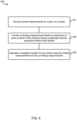
- FIG. 4 is a flowchart diagram of a method 400 for using a tightly coupled trajectory predictor with constant up-finding and inertial navigation.
- the method 400 proceeds at 401, where inertial measurements are received for motion of a vehicle. Also, the method 400 proceeds at 403, where up-finding measurements are provided based on detections of when a portion of the vehicle is facing a particular direction during the motion of the vehicle. Further, the method 400 proceeds at 405, where a navigation solution is calculated for the vehicle using the inertial measurements and the up-finding measurements.
Landscapes
- Engineering & Computer Science (AREA)
- Radar, Positioning & Navigation (AREA)
- Remote Sensing (AREA)
- Physics & Mathematics (AREA)
- General Physics & Mathematics (AREA)
- General Engineering & Computer Science (AREA)
- Combustion & Propulsion (AREA)
- Chemical & Material Sciences (AREA)
- Automation & Control Theory (AREA)
- Aviation & Aerospace Engineering (AREA)
- Mathematical Physics (AREA)
- Data Mining & Analysis (AREA)
- Theoretical Computer Science (AREA)
- Evolutionary Computation (AREA)
- Game Theory and Decision Science (AREA)
- Artificial Intelligence (AREA)
- Health & Medical Sciences (AREA)
- Business, Economics & Management (AREA)
- Medical Informatics (AREA)
- Algebra (AREA)
- Software Systems (AREA)
- Databases & Information Systems (AREA)
- Pure & Applied Mathematics (AREA)
- Mathematical Optimization (AREA)
- Mathematical Analysis (AREA)
- Computational Mathematics (AREA)
- Navigation (AREA)
- Radar Systems Or Details Thereof (AREA)
Description
- Many systems use inertial navigation systems to increase the accuracy, efficiency, safety, and other operational characteristics of the systems. These inertial navigation systems require initialization and provide a basis for an integrated navigation solution, where the integrated navigation solution describes an optimized navigational state of the systems. Some systems may also include a trajectory predictor that uses input initial conditions, together with vehicle model parameters and time, to calculate a predicted trajectory. The system may use the predicted trajectory solution to provide initial conditions to an inertial navigation solution. The system can improve the accuracy of the integrated navigation solution by comparing the predicted trajectory against the integrated navigation solution to improve the accuracy of the integrated navigation solution. Integrated navigation systems typically receive external aiding measurements at specific windows during operation. For example, the external aiding may include up-finding measurements at the beginning of operation and a range-to-target.
- The trajectory predictors use vehicle initial conditions, model parameters and time to predict vehicle location. Inertial navigation solutions use initial navigation position, initial navigation velocity, initial navigation attitude, and the continuous inertial measurement outputs to compute continuous navigation position, velocity and attitude. Trajectory predictor errors arise from errors in initial conditions, model parameter errors, and unmodeled vehicle dynamics while inertial navigation errors depend on navigation initial conditions and inertial measurement unit errors.
-
US20210041897A1 discloses a pulse beacon that is used to generate a plurality of pulses detected by a detector or receiver located on the rear of a projectile such that direction of arrival can be determined. A synchronized clock proved for velocity and range information. Altitude can also be determined and may use an altimeter or the like. The use of an IMU is possible with internal calibration by the system. Real-time attitude information provides for correction for crosswind and other drift enabling the system to have less down range dispersion. -
EP3073223 discloses a method of navigating a body. The method includes determining a respective measured direction of each of a plurality of celestial objects with respect to the body based on an output of one or more star tracking sensors mounted to the body. Calculating an expected direction of at least one of the plurality of celestial objects with respect to the body based on a current navigation solution for the body. Calculating an updated navigation solution for the body based on the expected direction of the at least one celestial object, the measured direction of the plurality of celestial objects, and an output of one or more inertial sensors mounted to the body. - A system according to
claim 1, and a method according to claim 7 are provided. - Drawings accompany this description and depict only some embodiments associated with the appended claims. Thus, the described and depicted embodiments should not be considered limiting in scope. The accompanying drawings and specification describe the exemplary embodiments, and features thereof, with additional specificity and detail, in which:
-
FIG. 1 is a block diagram illustrating a system with a tightly coupled trajectory predictor with constant up-finding and an inertial navigation solution according to an aspect of the present disclosure; -
FIG. 2 is a diagram illustrating the use of an up-finder mounted to a spinning ballistic according to an aspect of the present disclosure; -
FIG. 3 is a flowchart diagram of a method for using a tightly coupled trajectory predictor with constant up-finding and inertial navigation according to an aspect of the present disclosure; and -
FIG. 4 is a flowchart diagram of a method for using tightly coupled trajectory predictor with constant up-finding and inertial navigation according to an aspect of the present disclosure. - Under common practice, the various described features are not drawn to scale but are drawn to emphasize specific features relevant to the example embodiments.
- In the following detailed description, reference is made to the accompanying drawings that form a part of the present description, and in which is shown, through illustration, specific illustrative embodiments. However, it is to be understood that other embodiments may be used and that logical, mechanical, and electrical changes may be made.
- The present disclosure describes systems and methods for a tightly coupled trajectory predictor with constant up-finding and inertial navigation. For example, the trajectory predictor provides position, velocity, and attitude updates based on constant up-finding. As used herein, constant up-finding may refer to the use of up-finding measurements as they become available. The integrated system tightly couples the trajectory predictions to the navigation solution by calculating position, velocity, and attitude updates based on a comparison of the trajectory prediction solution to the inertial navigation solution to reduce the amount of integrated error in the integrated navigation solution.
- Constant up-finding provides an advantage for trajectory predictors. For a typical trajectory predictor, external aiding measurements are sporadically available. For example, typical trajectory predictors receive an up-finding measurement at the beginning of operation, a range to target at the mid-point of operation, and potential position updates during operation. When systems lack constant external aiding measurements, movement of the system can lead to inertial error drift that can corrupt the navigation solution. Constant-up-finding may aid in the bounding of inertial drift errors in the navigation solution.
-
FIG. 1 is a block diagram of asystem 100 for using constant up-finding in a vehicle to provide an integratednavigation solution 125. Thesystem 100 monitors the movement of a spinning vehicle (object). - In some embodiments, the
system 100 is a spinning projectile, like a ballistic missile. To calculate the integratednavigation solution 125, thesystem 100monitors object dynamics 111, where theobject dynamics 111 include measurable, dynamic movements of the object. - The
system 100 includes aninertial measurement unit 113. Theinertial measurement unit 113 includes instruments and sensors to measure theobject dynamics 111. Theinertial measurement unit 113 may include gyroscopes to measure rotation and accelerometers to measure acceleration. Accordingly, theinertial measurement unit 113 may provideangular rate measurements 119 andspecific force measurements 121 as outputs. In addition to theinertial measurement unit 113, thesystem 100 may include additional sensors to measure theobject dynamics 111. The additional sensors may include magnetometers, barometers, velocimeters, global navigation satellite system receivers, and other devices. - In some embodiments, the
inertial measurement unit 113 may provide theangular rate measurements 119 and thespecific force measurements 121 to aninertial navigation system 122. Theinertial navigation system 122 calculates aninertial navigation solution 124 based on the receivedangular rate measurements 119 andspecific force measurements 121. As theinertial navigation system 122 uses dead reckoning to calculate theinertial navigation solution 124 from incremental acceleration and rotation measurements, the calculatedinertial navigation solution 124 may drift because of the accumulation of measurement errors in the acceleration and rotation measurements. In some embodiments, theinertial navigation system 122 may use information from one or more aiding sources to act as a bound for the drift in theinertial navigation solution 124. For example, theinertial navigation system 122 may receive aiding GNSS measurements from a GNSS receiver and other sensors. However, in some operational environments, the aiding sources may become unavailable. For example, the object may operate within a GNSS-denied environment, receive spoofing or jamming GNSS signals, and the like. - In certain embodiments, the
inertial navigation system 122 provides theinertial navigation solution 124 to an integratednavigation system 123. The integratednavigation system 123 receives aiding information regarding trajectory prediction for an object from a model-basedtrajectory predictor 115. The model-basedtrajectory predictor 115 may be implemented within a computing device, such as a processor(s) 110, where the model-basedtrajectory predictor 115 provides trajectory information for an object traveling along a trajectory based on simulated model information. The trajectory information may include estimates of position, velocity, and attitude. The model information may include information used by the model-basedtrajectory predictor 115 when providing the trajectory information. Typically, the model information may include the initial state of the object. For example, when the object is a ballistic missile, the initial state may include information regarding the initial velocity, initial direction, atmospheric conditions, and flight path, among other factors that potentially affect the predicted trajectory. - In certain embodiments, the model-based
trajectory predictor 115 may receive measurements from other sensors during flight. The model-basedtrajectory predictor 115 may use the received measurements to increase the accuracy of the calculated trajectory information. For example, the model-basedtrajectory predictor 115 may receive theangular rate measurements 119 andspecific force measurements 121 from theinertial measurement unit 113. The model-basedtrajectory predictor 115 may update the trajectory predictions based on the receivedangular rate measurements 119 andspecific force measurements 121 during the flight of the object. - The
system 100 includes an up-findingsensor 117. The up-findingsensor 117 is a device that determines when a portion of an object is facing up, down, or another direction. As used herein, the term "up" may refer to when an object, or face thereon, is facing a direction away from the ground. While thesensor 117 is referred to as an up-finding sensor, the up-findingsensor 117 may determine when the object is facing a different direction, i.e. down. For example, the up-findingsensor 117 may determine when a portion or monitored location on the object is facing away from the ground or up. Alternatively, the up-findingsensor 117 may determine when the monitored location is facing a particular monitoring station. The up-findingsensor 117 may be a device that emits light or a signal for reflection off a surface. When the up-findingsensor 117 does not receive a reflected light or signal, the up-findingsensor 117 determines that the monitored location is facing up. In some embodiments, the up-findingsensor 117 may receive a signal from a ground station. When the up-findingsensor 117 receives the signal, the up-findingsensor 117 determines that the monitored location is facing the ground station. When the up-findingsensor 117 does not receive the signal, the up-findingsensor 117 determines that the monitored location is facing up or not facing the ground station. - In some embodiments, the up-finding
sensor 117 may determine the up direction using quantized measurements. For example, when the object is spinning, the up-findingsensor 117 may emit laser light. When the up-findingsensor 117 detects reflections of the emitted laser light, the up-findingsensor 117 may indicate the reception of reflected laser light with a "0" or other similarly indicative symbols. When the up-findingsensor 117 fails to detect reflections of the emitted laser light, the up-findingsensor 117 may indicate that reflections are not being received with a "1". The up-findingsensor 117 in communication with the up-findingsensor 117 may determine that an object has spun 360° when the up-findingsensor 117 provides sequences of "1-0-1" or "0-1-0." The up-findingsensor 117 may then communicate that the object has spun 360° to the model-basedtrajectory predictor 115. Alternatively, the up-findingsensor 117 may increment a spin counter, where the spin counter counts how many revolutions the object has experienced as determined by the up-findingsensor 117. The up-findingsensor 117 then provides the count from the spin counter to the model-basedtrajectory predictor 115. While a "0" is used for the reception of light and a "1" is used for the lack of light, the "1" can indicate the reception of light and the "0" the lack of light. The up-findingsensor 117 may also determine that no light is received when the received light is below a no-light threshold value and that light is being received when the received light is above a received light threshold value. The no-light threshold value and the received light threshold value may or may not be equal. - In another embodiment, the up-finding
sensor 117 may find up by monitoring the periodicity of the measured intensity of the received reflected light. For example, the up-findingsensor 117 may receive light intensity measurements and track the change in light intensity. When the sign of the change in light intensity changes from positive to negative or from negative to positive, the up-findingsensor 117 may determine that the up-findingsensor 117 has measured a maximum or a minimum light intensity. The up-findingsensor 117 may determine that the object has spun 360° on every other sign change. - In certain embodiments, the up-finding
sensor 117 provides up-finding information to the model-basedtrajectory predictor 115. The up-finding information may include a notification to the model-basedtrajectory predictor 115 that the up-findingsensor 117 has detected a complete rotation of the object or the up-findingsensor 117 is currently detecting the up direction. For example, the up-findingsensor 117 may transmit either a "1" or "0" to the model-basedtrajectory predictor 115 to indicate whether the up-findingsensor 117 is currently detecting the up direction. Alternatively, the up-finding information may include a count of how often the up-findingsensor 117 has determined that the monitored location has faced a particular direction. - In additional embodiments, the up-finding
sensor 117 provides up-finding measurements continuously. For example, while the vehicle is in motion, the up-findingsensor 117 attempts to find up or other particular direction. Alternatively, the up-findingsensor 117 provides up-finding measurements over non-contiguous time periods. For example, the up-findingsensor 117 provides up-finding measurements over a first time period and then may stop providing measurements for a time, before providing additional measurements for a second time period. Also, the up-findingsensor 117 may provide measurements every tenth time (or other number of detections) up is detected. - In some embodiments, the object may spin at a particular rate. The model-based
trajectory predictor 115 may use the information about how often the up-findingsensor 117 determines that an object is facing up along with the spin rate as an additional source of information. Additionally, the model-basedtrajectory predictor 115 may predict the number of rotations experienced by the object. The model-basedtrajectory predictor 115 may use the detected number of rotations from the up-findingsensor 117 to act as a bound for errors in the predicted number of rotations. Additionally, the model-basedtrajectory predictor 115 may calculate the number of rotations based on the receivedangular rate measurements 119 from theinertial measurement unit 113. The model-basedtrajectory predictor 115 may use information as predicted by the model-basedtrajectory predictor 115, theangular rate measurements 119, and the up-finding information from the up-findingsensor 117 to provide a measurement for the number of rotations experienced by the object. - In certain embodiments, the model-based
trajectory predictor 115 provides trajectory information to anintegrated navigation system 123. Theintegrated navigation system 123 uses measurements from multiple sources in thesystem 100 as inputs for a filter, such as a Kalman filter or other filter. For example, theintegrated navigation system 123 calculates a predicted navigation state. The predicted navigation state includes the position, velocity, and attitude of a moving object associated with theintegrated navigation system 123. Theintegrated navigation system 123 then usesinertial navigation solution 124 and the prediction from the model-basedtrajectory predictor 115 as measurement inputs for the Kalman filter. Theintegrated navigation system 123 uses the measurements to update the predicted navigation state. As the prediction from the model-basedtrajectory predictor 115 is based on the information from the up-findingsensor 117, the prediction is not subject to the same errors that affect theinertial navigation solution 124 from theinertial navigation system 122. Thus, the measurements from the up-findingsensor 117 can limit the drift errors that occur in theinertial navigation solution 124. - In alternative embodiments, the up-finding
sensor 117 provides the up-finding information directly to theintegrated navigation system 123. When theintegrated navigation system 123 receives the up-finding information from the up-findingsensor 117, theintegrated navigation system 123 may use the up-finding information in much the same way theintegrated navigation system 123 used the prediction from the model-basedtrajectory predictor 115 to bound errors in theinertial navigation solution 124 provided by theinertial navigation system 122. - In some embodiments, the model-based
trajectory predictor 115, theinertial navigation system 122, and theintegrated navigation system 123 may be implemented using one ormore processors 110 and memory storage devices. The one ormore processors 110 may be implemented using software, firmware, hardware, or other appropriate combinations thereof. The processor and/or other computational devices may be supplemented by, or incorporated in, specially designed application-specific integrated circuits (ASICs) or field programmable gate arrays (FPGAs). The processor may be a general or special purpose computer or processor, or other programmable logic devices. The processor and other computing devices may also include or function with software programs, firmware, or other computer-readable instructions for carrying out various process tasks, calculations, and control functions used in the present methods and systems. - Further, computer-executable instructions (such as program modules or components) may implement the methods described in this description. At least one processor may execute the computer-executable instructions. Software, firmware, or other execution-capable devices may execute the computer-readable instructions for carrying out various process tasks, calculations, and generation of data used in the operations of the described methods. The computer-readable instructions may be stored as part of one or more appropriate computer-program products, where a computer-program product may be a set of computer-readable instructions or data structures stored on a computer-readable medium. The computer-readable medium may be a media that stores data that can be accessed by the processor or other computing device. In certain implementations, the computer-readable medium may form a part of the memory storage devices used to implement the model-based
trajectory predictor 115, theinertial navigation system 122, and theintegrated navigation system 123. - Computer-readable mediums may include non-volatile memory devices. Non-volatile memory devices may include semiconductor memory devices such as random access memory (RAM), read-only memory (ROM), electrically erasable programmable ROM (EEPROM), or flash memory devices. The non-volatile memory devices may also include magnetic disks (such as internal hard disks or removable disks), optical storage devices (such as compact discs (CDs), digital versatile discs (DVDs), Blu-ray discs), or other media that can store computer-executable instructions or data structures.
-
FIG. 2 is a diagram illustrating thepath 205 of a spinning projectile 201 having an up-findingsensor 203 mounted on the spinningprojectile 201. As discussed above, the up-findingsensor 203 may detect how many times the spinning projectile 201 spins around. The up-findingsensor 203 may provide cumulative measurements of how often the up direction is detected along thepath 205, or the up-findingsensor 203 may provide individual measurements that the up-findingsensor 203 is detecting the up direction. The up-findingsensor 203 may provide the measurements to either a trajectory predictor, such as the model-basedtrajectory predictor 115 inFIG. 1 , or an integrated navigation system such as theintegrated navigation system 123 inFIG. 1 . The integrated navigation system may use the measurements from the up-findingsensor 203 to act as a bound for potential errors that develop from inertial measurements, such as the drift errors that develop in theinertial navigation solution 124. - In some embodiments, the up-finding
sensor 203 may produce up-finding measurements independently of systems or devices not located on the spinningprojectile 201. Thus, unlike some measurement sources that communicate with systems and devices that are not on the spinning projectile 201, like GNSS measurements, the up-findingsensor 203 may provide up-finding measurements without being affected by environmental effects and interfering sources (like interference and spoofing signals). Accordingly, the up-findingsensor 203 may provide measurements while the spinning projectile 201 travels along thepath 205 independent of other devices. -
FIG. 3 is a flowchart diagram of amethod 300 for using a tightly coupled trajectory predictor with constant up-finding and inertial navigation. As illustrated, themethod 300 displays separate sub-methods performed by different components of thesystem 100 inFIG. 1 . For example, themethod 300 illustrates an inertial navigation system sub-method 322 performed by theinertial navigation system 122, an up-findingsensor sub-method 317 performed by the up-findingsensor 117, a model-based trajectory predictor sub-method 315 performed by the model-basedtrajectory predictor 115, and an integrated navigation system sub-method 323 performed by theintegrated navigation system 123. - In certain embodiments, the inertial navigation system sub-method 322 proceeds at 331, where an initial position, velocity, attitude, and time is received. For example, the
inertial navigation system 122 may receive initial navigation data from an external source, such as a GNSS satellite, another sensor, or through manual entry by a pilot, user, or other individual. The inertial navigation system sub-method 322 proceeds at 333, where inertial measurements for sensed motion of a vehicle are received. For example, during motion, a vehicle may receive inertial measurements from inertial sensors coupled to theinertial navigation system 122. Further, the inertial navigation system sub-method 322 proceeds at 335, where an inertial navigation solution is computed. For example, theinertial navigation system 122 may use the received inertial measurements and the received initial position, velocity, attitude, and time measurements to calculate an inertial navigation solution. - In additional embodiments, the up-finding
sensor sub-method 317 proceeds at 337, where up-finding measurements are provided based on detection of when a portion of the vehicle is facing a particular direction during the motion of the vehicle. For example, the up-findingsensor 117 may detect when a particular location on a vehicle is facing up or some other particular direction. The up-finding sensor may provide indications that the particular location is facing a particular direction or provide a count of the separate times that the up-finding sensor has detected that the particular location faced the particular direction. - In further embodiments, the model-based trajectory predictor sub-method 315 may proceed at 339, where model parameters, including time, are initialized. Additionally, the model-based trajectory predictor sub-method 315 may proceed at 341, where a time update of model parameters is performed based on available input such as vehicle configuration, actuation position, and environmental data such as temperature and pressure. In some implementations, the inputs may include information from the up-finding sensor.
- In additional embodiments, the integrated navigation system sub-method 323 may proceed at 343, where the integrated navigation solution is updated based on inertial navigation, up-finding, and model-based trajectory predictions. For example, the
integrated navigation system 123 may receive the products of the inertial navigation system sub-method 322, the up-findingsensor sub-method 317, and the model-basedtrajectory predictor sub-method 315. Using the information from the different sub-methods, theintegrated navigation system 123 may calculate an integrated navigation solution. Sure -
FIG. 4 is a flowchart diagram of amethod 400 for using a tightly coupled trajectory predictor with constant up-finding and inertial navigation. Themethod 400 proceeds at 401, where inertial measurements are received for motion of a vehicle. Also, themethod 400 proceeds at 403, where up-finding measurements are provided based on detections of when a portion of the vehicle is facing a particular direction during the motion of the vehicle. Further, themethod 400 proceeds at 405, where a navigation solution is calculated for the vehicle using the inertial measurements and the up-finding measurements.
Claims (8)
- A system comprising:an inertial measurement unit (113) that provides inertial measurements for a motion of a spinning vehicle:an up-finding sensor (117) that provides up-finding measurements based on when a portion of the vehicle is pointing up, wherein the up-finding sensor (117) uses light to detect when a portion of the vehicle is facing a particular direction during the motion of the vehicle; andone or more processors (110) that uses a count of a detected number of spins of the vehicle from the up-finding measurements, based on the detections of when the portion of the vehicle is pointing up,to provide a bound for errors from the inertial measurements in an inertial navigation solution (124) during navigation of the vehicle by comparing the number of detected spins of the vehicle from the up-finding measurements against a number of estimated spins of the vehicle based on the inertial measurements.
- The system of claim 1, wherein the up-finding measurements comprise a number of non-contiguous time periods when the vehicle is pointing up.
- The system of claim 1, wherein the one or more processors (110) implement a model-based trajectory predictor (115), wherein the model-based trajectory predictor (115) calculates trajectory predictions based on the up-finding measurements.
- The system of claim 1, wherein the up-finding sensor (117) acquires the up-finding measurements without communicating with devices not located on the vehicle.
- The system of claim 1, wherein the up-finding measurements are acquired through detecting reflections of an emitted laser and determining at least one of:whether the reflections are being received; andperiodicity of intensity of the detected reflections.
- The system of claim 1, wherein the up-finding measurements comprise an indication that the up-finding sensor has pointed towards a particular direction.
- A method comprising:receiving inertial measurements for a motion of a spinning vehicle;providing up-finding measurements by an up-finding sensor (117) that uses light to detect when a portion of the vehicle is facing a particular direction during the motion of the vehicle to a model-based trajectory predictor (115), wherein the model-based trajectory predictor (115) calculates trajectory predictions based on the up-finding measurements;calculating an integrated navigation solution for the vehicle using the inertial measurements and the trajectory predictions; wherein a count of a detected number of spins of the vehicle from the up-finding measurements, based on the detections of when the portion of the vehicle is pointing up, is used to provide a bound for errors from the inertial measurements in an inertial navigation solution (124) during navigation of the vehicle by comparing the number of detected spins of the vehicle from the up-finding measurements against a number of estimated spins of the vehicle based on the inertial measurements.
- The method of claim 7, wherein the up-finding measurements comprise a number of non-contiguous time periods when the vehicle is pointing up.
Applications Claiming Priority (1)
| Application Number | Priority Date | Filing Date | Title |
|---|---|---|---|
| US17/179,039 US12152862B2 (en) | 2021-02-18 | 2021-02-18 | Tightly coupled trajectory predictor with constant up-finding |
Publications (2)
| Publication Number | Publication Date |
|---|---|
| EP4047309A1 EP4047309A1 (en) | 2022-08-24 |
| EP4047309B1 true EP4047309B1 (en) | 2024-05-01 |
Family
ID=80119528
Family Applications (1)
| Application Number | Title | Priority Date | Filing Date |
|---|---|---|---|
| EP22154370.5A Active EP4047309B1 (en) | 2021-02-18 | 2022-01-31 | System with constant up-finding |
Country Status (3)
| Country | Link |
|---|---|
| US (1) | US12152862B2 (en) |
| EP (1) | EP4047309B1 (en) |
| IL (1) | IL290053B2 (en) |
Family Cites Families (13)
| Publication number | Priority date | Publication date | Assignee | Title |
|---|---|---|---|---|
| US7249730B1 (en) * | 2004-09-23 | 2007-07-31 | United States Of America As Represented By The Secretary Of The Army | System and method for in-flight trajectory path synthesis using the time sampled output of onboard sensors |
| WO2007089243A2 (en) * | 2005-02-07 | 2007-08-09 | Bae Systems Information And Electronic Systems Integration Inc. | Optically guided munition control system and method |
| US7395987B2 (en) * | 2005-07-26 | 2008-07-08 | Honeywell International Inc. | Apparatus and appertaining method for upfinding in spinning projectiles using a phase-lock-loop or correlator mechanism |
| US8519313B2 (en) * | 2008-12-01 | 2013-08-27 | Raytheon Company | Projectile navigation enhancement method |
| US8513580B1 (en) * | 2012-06-26 | 2013-08-20 | The United States Of America As Represented By The Secretary Of The Navy | Targeting augmentation for short-range munitions |
| CN104165640B (en) | 2014-08-11 | 2017-02-15 | 东南大学 | Near-space missile-borne strap-down inertial navigation system transfer alignment method based on star sensor |
| US9791278B2 (en) * | 2015-03-24 | 2017-10-17 | Honeywell International Inc. | Navigating with star tracking sensors |
| CN105115508B (en) | 2015-08-27 | 2017-12-22 | 北京航天控制仪器研究所 | Alignment methods in rotation guided cartridge Quick air based on rear data |
| CN105180728B (en) | 2015-08-27 | 2017-01-11 | 北京航天控制仪器研究所 | Front data based rapid air alignment method of rotary guided projectiles |
| GB2565264B (en) * | 2017-05-23 | 2022-03-09 | Atlantic Inertial Systems Ltd | Inertial navigation system |
| US11215454B2 (en) * | 2019-04-04 | 2022-01-04 | Bae Systems Information And Electronic Systems Integration Inc. | Apparatus and method for up finding |
| US10962990B2 (en) * | 2019-08-07 | 2021-03-30 | Bae Systems Information And Electronic Systems Integration Inc. | Attitude determination by pulse beacon and low cost inertial measuring unit |
| CN111381217B (en) | 2020-04-01 | 2022-10-18 | 上海无线电设备研究所 | Missile-borne SAR motion compensation method based on low-precision inertial navigation system |
-
2021
- 2021-02-18 US US17/179,039 patent/US12152862B2/en active Active
-
2022
- 2022-01-23 IL IL290053A patent/IL290053B2/en unknown
- 2022-01-31 EP EP22154370.5A patent/EP4047309B1/en active Active
Also Published As
| Publication number | Publication date |
|---|---|
| US12152862B2 (en) | 2024-11-26 |
| EP4047309A1 (en) | 2022-08-24 |
| IL290053B1 (en) | 2025-04-01 |
| US20220260341A1 (en) | 2022-08-18 |
| IL290053B2 (en) | 2025-08-01 |
| IL290053A (en) | 2022-09-01 |
Similar Documents
| Publication | Publication Date | Title |
|---|---|---|
| US11441906B2 (en) | Iterative estimation of non-holonomic constraints in an inertial navigation system | |
| US8560218B1 (en) | Method and apparatus to correct for erroneous global positioning system data | |
| US7979207B2 (en) | Systems and methods for detecting a vehicle static condition | |
| US7979231B2 (en) | Method and system for estimation of inertial sensor errors in remote inertial measurement unit | |
| US7860651B2 (en) | Enhanced inertial system performance | |
| EP3246661B1 (en) | Hybrid inertial measurement unit | |
| US8548731B2 (en) | Navigation method, navigation system, navigation device, vehicle provided therewith and group of vehicles | |
| EP2583059B1 (en) | Improved north finder | |
| US10488432B2 (en) | Systems and methods for compensating for the absence of a sensor measurement in a heading reference system | |
| JP2019060620A (en) | Movement state determining device, electronic timepiece, movement state determination method and program | |
| JP5164645B2 (en) | Method and apparatus for repetitive calculation control in Kalman filter processing | |
| KR20100127343A (en) | Navigation system with improved reliability and its providing method | |
| US11454515B2 (en) | Method for calibrating gyro sensor on basis of vehicle speed | |
| WO2020222790A1 (en) | Positioning autonomous vehicles | |
| WO2017090360A1 (en) | Sensor error calculation device, attitude angle calculation device, sensor error calculation method, and attitude angle calculation method | |
| EP4047309B1 (en) | System with constant up-finding | |
| EP3882572B1 (en) | Single-difference based pre-filter of measurements for use in solution separation framework | |
| US12092726B2 (en) | Methods and systems for millimeter wave assisted vehicle navigation | |
| EP4535042A1 (en) | Systems and methods for gnss interference monitoring | |
| WO2024075498A1 (en) | Localization method and localization device | |
| CN117739987A (en) | Relative navigation method based on ultra-long-distance tracking and aiming | |
| CN114008487A (en) | Error and integrity assessment by motion prediction |
Legal Events
| Date | Code | Title | Description |
|---|---|---|---|
| PUAI | Public reference made under article 153(3) epc to a published international application that has entered the european phase |
Free format text: ORIGINAL CODE: 0009012 |
|
| STAA | Information on the status of an ep patent application or granted ep patent |
Free format text: STATUS: THE APPLICATION HAS BEEN PUBLISHED |
|
| AK | Designated contracting states |
Kind code of ref document: A1 Designated state(s): AL AT BE BG CH CY CZ DE DK EE ES FI FR GB GR HR HU IE IS IT LI LT LU LV MC MK MT NL NO PL PT RO RS SE SI SK SM TR |
|
| STAA | Information on the status of an ep patent application or granted ep patent |
Free format text: STATUS: REQUEST FOR EXAMINATION WAS MADE |
|
| 17P | Request for examination filed |
Effective date: 20230206 |
|
| RBV | Designated contracting states (corrected) |
Designated state(s): AL AT BE BG CH CY CZ DE DK EE ES FI FR GB GR HR HU IE IS IT LI LT LU LV MC MK MT NL NO PL PT RO RS SE SI SK SM TR |
|
| P01 | Opt-out of the competence of the unified patent court (upc) registered |
Effective date: 20230421 |
|
| RIC1 | Information provided on ipc code assigned before grant |
Ipc: F41G 7/36 20060101ALI20230908BHEP Ipc: G05D 1/08 20060101ALI20230908BHEP Ipc: G05D 1/10 20060101ALI20230908BHEP Ipc: G01C 21/16 20060101AFI20230908BHEP |
|
| GRAP | Despatch of communication of intention to grant a patent |
Free format text: ORIGINAL CODE: EPIDOSNIGR1 |
|
| STAA | Information on the status of an ep patent application or granted ep patent |
Free format text: STATUS: GRANT OF PATENT IS INTENDED |
|
| INTG | Intention to grant announced |
Effective date: 20231117 |
|
| GRAS | Grant fee paid |
Free format text: ORIGINAL CODE: EPIDOSNIGR3 |
|
| GRAA | (expected) grant |
Free format text: ORIGINAL CODE: 0009210 |
|
| STAA | Information on the status of an ep patent application or granted ep patent |
Free format text: STATUS: THE PATENT HAS BEEN GRANTED |
|
| AK | Designated contracting states |
Kind code of ref document: B1 Designated state(s): AL AT BE BG CH CY CZ DE DK EE ES FI FR GB GR HR HU IE IS IT LI LT LU LV MC MK MT NL NO PL PT RO RS SE SI SK SM TR |
|
| REG | Reference to a national code |
Ref country code: GB Ref legal event code: FG4D |
|
| REG | Reference to a national code |
Ref country code: CH Ref legal event code: EP |
|
| REG | Reference to a national code |
Ref country code: IE Ref legal event code: FG4D |
|
| REG | Reference to a national code |
Ref country code: DE Ref legal event code: R096 Ref document number: 602022003088 Country of ref document: DE |
|
| REG | Reference to a national code |
Ref country code: LT Ref legal event code: MG9D |
|
| REG | Reference to a national code |
Ref country code: NL Ref legal event code: MP Effective date: 20240501 |
|
| PG25 | Lapsed in a contracting state [announced via postgrant information from national office to epo] |
Ref country code: IS Free format text: LAPSE BECAUSE OF FAILURE TO SUBMIT A TRANSLATION OF THE DESCRIPTION OR TO PAY THE FEE WITHIN THE PRESCRIBED TIME-LIMIT Effective date: 20240901 |
|
| PG25 | Lapsed in a contracting state [announced via postgrant information from national office to epo] |
Ref country code: BG Free format text: LAPSE BECAUSE OF FAILURE TO SUBMIT A TRANSLATION OF THE DESCRIPTION OR TO PAY THE FEE WITHIN THE PRESCRIBED TIME-LIMIT Effective date: 20240501 |
|
| PG25 | Lapsed in a contracting state [announced via postgrant information from national office to epo] |
Ref country code: HR Free format text: LAPSE BECAUSE OF FAILURE TO SUBMIT A TRANSLATION OF THE DESCRIPTION OR TO PAY THE FEE WITHIN THE PRESCRIBED TIME-LIMIT Effective date: 20240501 Ref country code: FI Free format text: LAPSE BECAUSE OF FAILURE TO SUBMIT A TRANSLATION OF THE DESCRIPTION OR TO PAY THE FEE WITHIN THE PRESCRIBED TIME-LIMIT Effective date: 20240501 |
|
| PG25 | Lapsed in a contracting state [announced via postgrant information from national office to epo] |
Ref country code: GR Free format text: LAPSE BECAUSE OF FAILURE TO SUBMIT A TRANSLATION OF THE DESCRIPTION OR TO PAY THE FEE WITHIN THE PRESCRIBED TIME-LIMIT Effective date: 20240802 |
|
| PG25 | Lapsed in a contracting state [announced via postgrant information from national office to epo] |
Ref country code: PT Free format text: LAPSE BECAUSE OF FAILURE TO SUBMIT A TRANSLATION OF THE DESCRIPTION OR TO PAY THE FEE WITHIN THE PRESCRIBED TIME-LIMIT Effective date: 20240902 |
|
| REG | Reference to a national code |
Ref country code: AT Ref legal event code: MK05 Ref document number: 1682909 Country of ref document: AT Kind code of ref document: T Effective date: 20240501 |
|
| PG25 | Lapsed in a contracting state [announced via postgrant information from national office to epo] |
Ref country code: NL Free format text: LAPSE BECAUSE OF FAILURE TO SUBMIT A TRANSLATION OF THE DESCRIPTION OR TO PAY THE FEE WITHIN THE PRESCRIBED TIME-LIMIT Effective date: 20240501 |
|
| PG25 | Lapsed in a contracting state [announced via postgrant information from national office to epo] |
Ref country code: ES Free format text: LAPSE BECAUSE OF FAILURE TO SUBMIT A TRANSLATION OF THE DESCRIPTION OR TO PAY THE FEE WITHIN THE PRESCRIBED TIME-LIMIT Effective date: 20240501 |
|
| PG25 | Lapsed in a contracting state [announced via postgrant information from national office to epo] |
Ref country code: AT Free format text: LAPSE BECAUSE OF FAILURE TO SUBMIT A TRANSLATION OF THE DESCRIPTION OR TO PAY THE FEE WITHIN THE PRESCRIBED TIME-LIMIT Effective date: 20240501 |
|
| PG25 | Lapsed in a contracting state [announced via postgrant information from national office to epo] |
Ref country code: PL Free format text: LAPSE BECAUSE OF FAILURE TO SUBMIT A TRANSLATION OF THE DESCRIPTION OR TO PAY THE FEE WITHIN THE PRESCRIBED TIME-LIMIT Effective date: 20240501 |
|
| PG25 | Lapsed in a contracting state [announced via postgrant information from national office to epo] |
Ref country code: LV Free format text: LAPSE BECAUSE OF FAILURE TO SUBMIT A TRANSLATION OF THE DESCRIPTION OR TO PAY THE FEE WITHIN THE PRESCRIBED TIME-LIMIT Effective date: 20240501 |
|
| PG25 | Lapsed in a contracting state [announced via postgrant information from national office to epo] |
Ref country code: PT Free format text: LAPSE BECAUSE OF FAILURE TO SUBMIT A TRANSLATION OF THE DESCRIPTION OR TO PAY THE FEE WITHIN THE PRESCRIBED TIME-LIMIT Effective date: 20240902 Ref country code: PL Free format text: LAPSE BECAUSE OF FAILURE TO SUBMIT A TRANSLATION OF THE DESCRIPTION OR TO PAY THE FEE WITHIN THE PRESCRIBED TIME-LIMIT Effective date: 20240501 Ref country code: NO Free format text: LAPSE BECAUSE OF FAILURE TO SUBMIT A TRANSLATION OF THE DESCRIPTION OR TO PAY THE FEE WITHIN THE PRESCRIBED TIME-LIMIT Effective date: 20240801 Ref country code: NL Free format text: LAPSE BECAUSE OF FAILURE TO SUBMIT A TRANSLATION OF THE DESCRIPTION OR TO PAY THE FEE WITHIN THE PRESCRIBED TIME-LIMIT Effective date: 20240501 Ref country code: LV Free format text: LAPSE BECAUSE OF FAILURE TO SUBMIT A TRANSLATION OF THE DESCRIPTION OR TO PAY THE FEE WITHIN THE PRESCRIBED TIME-LIMIT Effective date: 20240501 Ref country code: IS Free format text: LAPSE BECAUSE OF FAILURE TO SUBMIT A TRANSLATION OF THE DESCRIPTION OR TO PAY THE FEE WITHIN THE PRESCRIBED TIME-LIMIT Effective date: 20240901 Ref country code: HR Free format text: LAPSE BECAUSE OF FAILURE TO SUBMIT A TRANSLATION OF THE DESCRIPTION OR TO PAY THE FEE WITHIN THE PRESCRIBED TIME-LIMIT Effective date: 20240501 Ref country code: GR Free format text: LAPSE BECAUSE OF FAILURE TO SUBMIT A TRANSLATION OF THE DESCRIPTION OR TO PAY THE FEE WITHIN THE PRESCRIBED TIME-LIMIT Effective date: 20240802 Ref country code: FI Free format text: LAPSE BECAUSE OF FAILURE TO SUBMIT A TRANSLATION OF THE DESCRIPTION OR TO PAY THE FEE WITHIN THE PRESCRIBED TIME-LIMIT Effective date: 20240501 Ref country code: ES Free format text: LAPSE BECAUSE OF FAILURE TO SUBMIT A TRANSLATION OF THE DESCRIPTION OR TO PAY THE FEE WITHIN THE PRESCRIBED TIME-LIMIT Effective date: 20240501 Ref country code: BG Free format text: LAPSE BECAUSE OF FAILURE TO SUBMIT A TRANSLATION OF THE DESCRIPTION OR TO PAY THE FEE WITHIN THE PRESCRIBED TIME-LIMIT Effective date: 20240501 Ref country code: AT Free format text: LAPSE BECAUSE OF FAILURE TO SUBMIT A TRANSLATION OF THE DESCRIPTION OR TO PAY THE FEE WITHIN THE PRESCRIBED TIME-LIMIT Effective date: 20240501 Ref country code: RS Free format text: LAPSE BECAUSE OF FAILURE TO SUBMIT A TRANSLATION OF THE DESCRIPTION OR TO PAY THE FEE WITHIN THE PRESCRIBED TIME-LIMIT Effective date: 20240801 |
|
| PG25 | Lapsed in a contracting state [announced via postgrant information from national office to epo] |
Ref country code: DK Free format text: LAPSE BECAUSE OF FAILURE TO SUBMIT A TRANSLATION OF THE DESCRIPTION OR TO PAY THE FEE WITHIN THE PRESCRIBED TIME-LIMIT Effective date: 20240501 |
|
| PG25 | Lapsed in a contracting state [announced via postgrant information from national office to epo] |
Ref country code: EE Free format text: LAPSE BECAUSE OF FAILURE TO SUBMIT A TRANSLATION OF THE DESCRIPTION OR TO PAY THE FEE WITHIN THE PRESCRIBED TIME-LIMIT Effective date: 20240501 |
|
| PG25 | Lapsed in a contracting state [announced via postgrant information from national office to epo] |
Ref country code: CZ Free format text: LAPSE BECAUSE OF FAILURE TO SUBMIT A TRANSLATION OF THE DESCRIPTION OR TO PAY THE FEE WITHIN THE PRESCRIBED TIME-LIMIT Effective date: 20240501 |
|
| PG25 | Lapsed in a contracting state [announced via postgrant information from national office to epo] |
Ref country code: SK Free format text: LAPSE BECAUSE OF FAILURE TO SUBMIT A TRANSLATION OF THE DESCRIPTION OR TO PAY THE FEE WITHIN THE PRESCRIBED TIME-LIMIT Effective date: 20240501 Ref country code: RO Free format text: LAPSE BECAUSE OF FAILURE TO SUBMIT A TRANSLATION OF THE DESCRIPTION OR TO PAY THE FEE WITHIN THE PRESCRIBED TIME-LIMIT Effective date: 20240501 |
|
| PG25 | Lapsed in a contracting state [announced via postgrant information from national office to epo] |
Ref country code: SM Free format text: LAPSE BECAUSE OF FAILURE TO SUBMIT A TRANSLATION OF THE DESCRIPTION OR TO PAY THE FEE WITHIN THE PRESCRIBED TIME-LIMIT Effective date: 20240501 |
|
| PG25 | Lapsed in a contracting state [announced via postgrant information from national office to epo] |
Ref country code: SM Free format text: LAPSE BECAUSE OF FAILURE TO SUBMIT A TRANSLATION OF THE DESCRIPTION OR TO PAY THE FEE WITHIN THE PRESCRIBED TIME-LIMIT Effective date: 20240501 Ref country code: SK Free format text: LAPSE BECAUSE OF FAILURE TO SUBMIT A TRANSLATION OF THE DESCRIPTION OR TO PAY THE FEE WITHIN THE PRESCRIBED TIME-LIMIT Effective date: 20240501 Ref country code: RO Free format text: LAPSE BECAUSE OF FAILURE TO SUBMIT A TRANSLATION OF THE DESCRIPTION OR TO PAY THE FEE WITHIN THE PRESCRIBED TIME-LIMIT Effective date: 20240501 Ref country code: EE Free format text: LAPSE BECAUSE OF FAILURE TO SUBMIT A TRANSLATION OF THE DESCRIPTION OR TO PAY THE FEE WITHIN THE PRESCRIBED TIME-LIMIT Effective date: 20240501 Ref country code: DK Free format text: LAPSE BECAUSE OF FAILURE TO SUBMIT A TRANSLATION OF THE DESCRIPTION OR TO PAY THE FEE WITHIN THE PRESCRIBED TIME-LIMIT Effective date: 20240501 Ref country code: CZ Free format text: LAPSE BECAUSE OF FAILURE TO SUBMIT A TRANSLATION OF THE DESCRIPTION OR TO PAY THE FEE WITHIN THE PRESCRIBED TIME-LIMIT Effective date: 20240501 |
|
| REG | Reference to a national code |
Ref country code: DE Ref legal event code: R097 Ref document number: 602022003088 Country of ref document: DE |
|
| PG25 | Lapsed in a contracting state [announced via postgrant information from national office to epo] |
Ref country code: IT Free format text: LAPSE BECAUSE OF FAILURE TO SUBMIT A TRANSLATION OF THE DESCRIPTION OR TO PAY THE FEE WITHIN THE PRESCRIBED TIME-LIMIT Effective date: 20240501 |
|
| PLBE | No opposition filed within time limit |
Free format text: ORIGINAL CODE: 0009261 |
|
| STAA | Information on the status of an ep patent application or granted ep patent |
Free format text: STATUS: NO OPPOSITION FILED WITHIN TIME LIMIT |
|
| 26N | No opposition filed |
Effective date: 20250204 |
|
| PG25 | Lapsed in a contracting state [announced via postgrant information from national office to epo] |
Ref country code: SI Free format text: LAPSE BECAUSE OF FAILURE TO SUBMIT A TRANSLATION OF THE DESCRIPTION OR TO PAY THE FEE WITHIN THE PRESCRIBED TIME-LIMIT Effective date: 20240501 |
|
| REG | Reference to a national code |
Ref country code: DE Ref legal event code: R119 Ref document number: 602022003088 Country of ref document: DE |
|
| REG | Reference to a national code |
Ref country code: CH Ref legal event code: PL |
|
| PG25 | Lapsed in a contracting state [announced via postgrant information from national office to epo] |
Ref country code: SE Free format text: LAPSE BECAUSE OF FAILURE TO SUBMIT A TRANSLATION OF THE DESCRIPTION OR TO PAY THE FEE WITHIN THE PRESCRIBED TIME-LIMIT Effective date: 20240501 |
|
| PG25 | Lapsed in a contracting state [announced via postgrant information from national office to epo] |
Ref country code: LU Free format text: LAPSE BECAUSE OF NON-PAYMENT OF DUE FEES Effective date: 20250131 Ref country code: MC Free format text: LAPSE BECAUSE OF FAILURE TO SUBMIT A TRANSLATION OF THE DESCRIPTION OR TO PAY THE FEE WITHIN THE PRESCRIBED TIME-LIMIT Effective date: 20240501 |
|
| PG25 | Lapsed in a contracting state [announced via postgrant information from national office to epo] |
Ref country code: DE Free format text: LAPSE BECAUSE OF NON-PAYMENT OF DUE FEES Effective date: 20250801 |
|
| PG25 | Lapsed in a contracting state [announced via postgrant information from national office to epo] |
Ref country code: BE Free format text: LAPSE BECAUSE OF NON-PAYMENT OF DUE FEES Effective date: 20250131 |
|
| PG25 | Lapsed in a contracting state [announced via postgrant information from national office to epo] |
Ref country code: CH Free format text: LAPSE BECAUSE OF NON-PAYMENT OF DUE FEES Effective date: 20250131 |
|
| REG | Reference to a national code |
Ref country code: BE Ref legal event code: MM Effective date: 20250131 |
|
| PG25 | Lapsed in a contracting state [announced via postgrant information from national office to epo] |
Ref country code: IE Free format text: LAPSE BECAUSE OF NON-PAYMENT OF DUE FEES Effective date: 20250131 |
|
| PGFP | Annual fee paid to national office [announced via postgrant information from national office to epo] |
Ref country code: FR Payment date: 20260127 Year of fee payment: 5 |