EP4046686A1 - Salt types, crystal forms, and preparation methods for benzopyrazole compounds as rho kinase inhibitors - Google Patents
Salt types, crystal forms, and preparation methods for benzopyrazole compounds as rho kinase inhibitors Download PDFInfo
- Publication number
- EP4046686A1 EP4046686A1 EP20876972.9A EP20876972A EP4046686A1 EP 4046686 A1 EP4046686 A1 EP 4046686A1 EP 20876972 A EP20876972 A EP 20876972A EP 4046686 A1 EP4046686 A1 EP 4046686A1
- Authority
- EP
- European Patent Office
- Prior art keywords
- crystal form
- formula
- compound
- preparation
- hydrochloride
- Prior art date
- Legal status (The legal status is an assumption and is not a legal conclusion. Google has not performed a legal analysis and makes no representation as to the accuracy of the status listed.)
- Granted
Links
Images



Classifications
-
- C—CHEMISTRY; METALLURGY
- C07—ORGANIC CHEMISTRY
- C07D—HETEROCYCLIC COMPOUNDS
- C07D401/00—Heterocyclic compounds containing two or more hetero rings, having nitrogen atoms as the only ring hetero atoms, at least one ring being a six-membered ring with only one nitrogen atom
- C07D401/02—Heterocyclic compounds containing two or more hetero rings, having nitrogen atoms as the only ring hetero atoms, at least one ring being a six-membered ring with only one nitrogen atom containing two hetero rings
- C07D401/04—Heterocyclic compounds containing two or more hetero rings, having nitrogen atoms as the only ring hetero atoms, at least one ring being a six-membered ring with only one nitrogen atom containing two hetero rings directly linked by a ring-member-to-ring-member bond
-
- A—HUMAN NECESSITIES
- A61—MEDICAL OR VETERINARY SCIENCE; HYGIENE
- A61K—PREPARATIONS FOR MEDICAL, DENTAL OR TOILETRY PURPOSES
- A61K31/00—Medicinal preparations containing organic active ingredients
- A61K31/33—Heterocyclic compounds
- A61K31/395—Heterocyclic compounds having nitrogen as a ring hetero atom, e.g. guanethidine or rifamycins
- A61K31/41—Heterocyclic compounds having nitrogen as a ring hetero atom, e.g. guanethidine or rifamycins having five-membered rings with two or more ring hetero atoms, at least one of which being nitrogen, e.g. tetrazole
- A61K31/415—1,2-Diazoles
- A61K31/416—1,2-Diazoles condensed with carbocyclic ring systems, e.g. indazole
-
- A—HUMAN NECESSITIES
- A61—MEDICAL OR VETERINARY SCIENCE; HYGIENE
- A61P—SPECIFIC THERAPEUTIC ACTIVITY OF CHEMICAL COMPOUNDS OR MEDICINAL PREPARATIONS
- A61P11/00—Drugs for disorders of the respiratory system
-
- C—CHEMISTRY; METALLURGY
- C07—ORGANIC CHEMISTRY
- C07B—GENERAL METHODS OF ORGANIC CHEMISTRY; APPARATUS THEREFOR
- C07B2200/00—Indexing scheme relating to specific properties of organic compounds
- C07B2200/13—Crystalline forms, e.g. polymorphs
Definitions
- the present disclosure relates to a salt type, a crystal form and a preparation method thereof for benzopyrazole compounds as RHO kinase inhibitors, specifically relates to a hydrochloride and an acetate of a compound of formula (I), and a crystal form thereof, and also includes a use of the salt type and crystal form in the manufacture of RHO inhibitor medicaments.
- ROCK RHO associated kinase
- MLC myosin light chain
- ROCK kinase family includes two subtypes, ROCK1 and ROCK2.
- ROCK2 kinase is related to inflammation and fibrosis. Selective ROCK2 inhibitor does not cause vasodilation at high concentration in vitro vasodilation experiment, which can reduce cardiovascular side effects. Although the embryo mortality rate of ROCK1 knockout mice is not high, most of them die from cytoskeleton variation caused by MLC phosphorylation reduction after birth, while 90 % of ROCK2 knockout mice die in embryonic stage, but there is no difference between surviving mice and wild type mice, so selective inhibition of ROCK2 activity may have higher safety. Therefore, selective ROCK2 kinase inhibitors can avoid cardiovascular side effects of drugs.
- KD025 ( WO2006105081A1 , WO2008054599A1 , WO2010104851A1 and WO2014055996A1 ) is an oral selective inhibitor of ROCK2 kinase developed by Kadmon Company. Studies have shown that KD025 represents a novel mechanism to treat idiopathic pulmonary fibrosis (IPF) by inhibiting fibrosis-regulating proteins such as RHO kinase. The trigger for idiopathic pulmonary fibrosis (IPF) may be muscle damage.
- the body response to injury involves the reorganization of the actin cytoskeleton in a variety of cells (e.g., epithelial cells, fibroblasts, endothelial cells, and macrophages), while the assembly of actin filaments and the contraction of actomyosins are regulated by RHO kinase family proteins (including ROCK1 and ROCK2) guidance.
- RHO kinase family proteins including ROCK1 and ROCK2
- Previous studies have shown that RHO kinase family proteins can be activated in the lungs of IPF patients and animal models of this disease, and RHO kinase inhibitors can prevent the tissue fibrosis process in these models and induce the established fibrosis to subside.
- the Phase II clinical trial of moderate to severe psoriasis has been completed, and KD025 is in the Phase II clinical research stage of idiopathic pulmonary fibrosis (IPF) treatment.
- IPPF idiopathic pulmonary fibrosis
- WO2014134388A1 and WO2016028971A1 also disclose a class of compounds with structural general formula as shown in formula (a) and formula (b), which can also be used in the treatment of cardiovascular diseases, neuropathological diseases, tumors, autoimmune diseases, pulmonary fibrosis, inflammatory diseases, etc.
- the present disclosure provides a hydrochloride of a compound of formula (I), having the structure shown in formula (I') wherein, n is 1.6-2.4, and the carbon atoms with " ⁇ " are chiral carbon atoms, which exist in a (R) or ( S ) single enantiomer form or a (R) or ( S ) single enantiomer-rich form.
- the n is 1.9, 2.0 or 2.1.
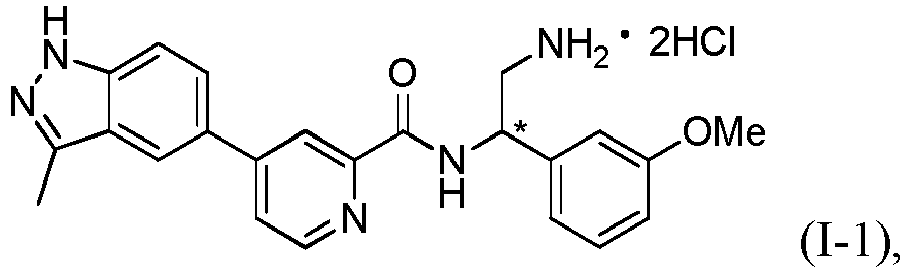
- the hydrochloride has the structure shown in formula (1-1), wherein, the carbon atom with " ⁇ " is a chiral carbon atom, which exists in a (R) or ( S ) single enantiomer form or a (R) or ( S ) single enantiomer-rich form.
- the hydrochloride has the structure shown in formula (II-1),
- the X-ray powder diffraction (XRPD) pattern measured by Cu K ⁇ radiation of a crystal form A of the hydrochloride has characteristic diffraction peaks at the following 2 ⁇ angles: 14.77 ⁇ 0.20°, 20.50 ⁇ 0.20°, 22.38 ⁇ 0.20° and 24.15 ⁇ 0.20°.
- the X-ray powder diffraction pattern measured by Cu K ⁇ radiation of the crystal form A of the hydrochloride has characteristic diffraction peaks at the following 2 ⁇ angles: 10.22 ⁇ 0.20°, 13.36 ⁇ 0.20°, 14.77 ⁇ 0.20°, 18.69 ⁇ 0.20°, 20.50 ⁇ 0.20°, 22.38 ⁇ 0.20°, 24.15 ⁇ 0.20°, and 25.03 ⁇ 0.20°.
- the X-ray powder diffraction pattern measured by Cu K ⁇ radiation of the crystal form A of the hydrochloride has characteristic diffraction peaks at the following 2 ⁇ angles: 7.38°, 9.32°, 10.22°, 13.36°, 14.77°, 15.21°, 18.69°, 20.50°, 21.69°, 22.08°, 22.38, 24.15°, 24.58°, 25.03°, 26.28°, 27.13°, 28.15°, 29.44°, 30.15°, 31.49°, 32.1°, 32.69°, 35.17°, and 38.51°.
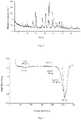
- the XRPD pattern of the crystal form A of the hydrochloride is shown in Fig. 1 .
- the peak positions and relative intensities of the diffraction peaks in the XRPD pattern measured by Cu K ⁇ radiation of the crystal form A of the hydrochloride are shown in the following Table 1: Table 1 XRPD diffraction data of the crystal form A of the compound of formula (II-1) No.
- the differential scanning calorimetry (DSC) curve of the crystal form A of the hydrochloride has an endothermic peak with an onset at 245.2°C + 3°C.
- the DSC pattern of the crystal form A of the hydrochloride is shown in Fig. 2 .
- thermogravimetric analysis (TGA) curve of the crystal form A of the hydrochloride has a weight loss of 3.14 % occurred at 190.0 °C ⁇ 3 °C.
- the TGA pattern of the crystal form A of the hydrochloride is shown in Fig. 3 .
- the present disclosure also provides a preparation method of the crystal form A of the hydrochloride, and the method comprises the following steps:
- the organic solvent is ethanol in the preparation method of the crystal form A of the hydrochloride.
- the appropriate temperature is 25 °C in the preparation method of the crystal form A of the hydrochloride.
- the stirring time is 10 - 12 hours in the preparation method of the crystal form A of the hydrochloride.
- the present disclosure also provides an acetate of a compound of formula (I), wherein, the carbon atom with " ⁇ " is a chiral carbon atom, which exists in a (R) or ( S ) single enantiomer form or a (R) or ( S ) single enantiomer-rich form.
- the acetate has the structure shown in formula (1-2) wherein, the carbon atom with " ⁇ " is a chiral carbon atom, which exists in a (R) or ( S ) single enantiomer form or a (R) or ( S ) single enantiomer-rich form.
- the acetate has the structure shown in formula (II-2)
- the X-ray powder diffraction pattern measured by Cu K ⁇ radiation of a crystal form B of the acetate has characteristic diffraction peaks at the following 2 ⁇ angles: 6.18 ⁇ 0.20°, 12.37 ⁇ 0.20°, 17.08 ⁇ 0.20°, 21.22 ⁇ 0.20° and 24.88 ⁇ 0.20°.
- the X-ray powder diffraction pattern measured by Cu K ⁇ radiation of the crystal form B of the acetate has characteristic diffraction peaks at the following 2 ⁇ angles: 6.18 ⁇ 0.20°, 11.94 ⁇ 0.20°, 12.37 ⁇ 0.20°, 17.08 ⁇ 0.20°, 20.76 ⁇ 0.20°, 21.22 ⁇ 0.20°, 22.01 ⁇ 0.20° and 24.88 ⁇ 0.20°.
- the X-ray powder diffraction pattern measured by Cu K ⁇ radiation of the crystal form B of the acetate has characteristic diffraction peaks at the following 2 ⁇ angles: 6.18°, 10.57°, 11.94°, 12.37°, 12.94°, 13.93°, 16.22°, 17.08°, 17.93°, 18.30°, 19.47°, 20.34°, 20.76°, 21.22°, 21.58°, 22.01°, 22.25°, 23.06°, 24.07°, 24.46°, 24.88°, 25.28°, 25.69°, 25.99°, 26.66°, 27.03°, 28.85°, 29.54°, 31.14°, 31.88°, 32.48°, 33.70°, 34.43°, 35.54°, 36.33°, 37.89°, and 39.67°.
- the X-ray powder diffraction pattern of the crystal form B of the acetate is shown in Fig. 4 .
- the peak positions and relative intensities of the diffraction peaks in the XRPD pattern measured by Cu K ⁇ radiation of the crystal form B of the acetate are shown in the following Table 2: Table 2 XRPD diffraction data of the crystal form B of the compound of formula (II-2) No.
- the differential scanning calorimetry (DSC) curve of the crystal form B of the acetate has an endothermic peak with an onset at 157.9 °C.
- the DSC pattern of the crystal form B of the acetate is shown in Fig. 5 .
- thermogravimetric analysis (TGA) curve of the crystal form B of the acetate has a weight loss of 2.00 % occurred at 120.0 °C ⁇ 3 °C.
- the TGA pattern of the crystal form B of the acetate is shown in Fig. 6 .
- the present disclosure also provides a preparation method of the crystal form B of the acetate, and the method comprises the following steps:
- the organic solvent is ethyl acetate in the preparation method of the crystal form B of the acetate.
- the present disclosure also provides a use of the hydrochloride, the crystal form A of the hydrochloride, the acetate, and the crystal form B of the acetate in the manufacture of RHO inhibitor medicaments.
- the present disclosure also provides a use of the hydrochloride, the crystal form A of the hydrochloride, the acetate, and the crystal form B of the acetate in the manufacture of a medicament for the treatment of pulmonary fibrosis and radiation pulmonary fibrosis.
- the preparation process of the crystal forms of the present disclosure is simple; the crystal forms are stable; the influence of heat and illumination in the crystal forms is small; and the crystal forms are convenient for preparation.
- the intermediate compounds of the present disclosure can be prepared by various synthetic methods known to those skilled in the art, including the embodiments described below, the embodiments formed by combining the embodiments described below with other chemical synthesis methods, and equivalent alternatives well-known to those skilled in the art.
- Preferred embodiments include, but are not limited to, the embodiments of the present disclosure.
- the solvents used in the present disclosure are commercially available.
- ACN stands for acetonitrile
- Bis-Tris stands for bis(2-hydroxyethyl)aminotris(hydroxymethyl)methane
- DMSO stands for dimethyl sulfoxide.
- the compounds of the present disclosure are named according to the conventional naming principles in the art or by ChemDraw ® software, and the commercial compounds are named by the supplier directory.
- the total number of collected diffraction points was 16827, the number of independent diffraction points was 5091, and the number of observable points (I/sigma ⁇ 2) was 2177.
- 2 ), S 0.957.
- dichlorobis[di- tert -butyl-(4-dimethylaminophenyl)phosphine]palladium (41.3 g, 59.2 mmol) was added to the reaction kettle, and then the reaction kettle was sealed, and the reaction system was replaced with nitrogen for three times; the internal temperature was controlled at 50 °C, and the mixture was stirred for 23 hours. After the reaction was completed, the distillation was continued under reduced pressure at an internal temperature of 50 °C (about 4 L of solvent was distilled out), and the heating was turned off. The concentrated reaction solution was diluted with 30 L of water and extracted with ethyl acetate (10 L ⁇ 2, 5 L ⁇ 1), and the combined organic phases were concentrated under reduced pressure.
- the obtained crude product was added to 2.8 M sodium hydroxide aqueous solution (10 L), and the mixture was stirred for 30 minutes, filtered; the filter cake was washed with water (1 L), and the obtained filtrate (15 L) was diluted with water (45 L); the pH of the solution was neutralized with 12 M hydrochloric acid to 6 - 7, and the mixture was stirred. At this time, solid would precipitate, and the mixture was filtered; the filter cake was added to water, stirred at 25 °C for 2.5 hours, filtered, and the filter cake was vacuum dried to obtain compound 2.
- N,N -Dimethylformamide (15 L) was added to a reaction kettle, and the stirring was turned on, and then compound 3 (1.50 kg, 5.63 mol, the carbon atom with " ⁇ " in compound 3 is a chiral carbon atom, which exists in a (R) or ( S ) single enantiomer form or a (R) or ( S ) single enantiomer-rich form) and compound 4 (1.19 kg, 5.91 mol) were added, and the internal temperature was controlled to 10 to 30 °C, then N , N -diisopropylethylamine (1.96 L) was added; and a 50% ethyl acetate solution of tri- n -propylphosphonic anhydride (5.02 L) was slowly added in batches at an internal temperature of -5 to 5 °C, and the reaction solution was stirred at 25 °C for 19 hours.
- the crude product was added to tert -butyl methyl ether (10.0 L), and the mixture was stirred at 25 °C for 16 hours.
- the reaction solution was filtered under reduced pressure, and the filter cake was washed with tert-butyl methyl ether (1.00 L ⁇ 3), collected, and concentrated under reduced pressure.
- the obtained crude product was dissolved in ethanol (10.0 L), and thiourea resin of equal mass to the crude product was added, and the mixture was stirred at 90 °C for 16 hours.
- the mixture was filtered while hot, and the filter cake was washed once with ethanol (1.00 L).
- the filtrate was put back into the reaction kettle, and thiourea resin of about equal mass to the crude product was added with stirring, and the mixture was stirred at 90 °C for 3 hours.
- the mixture was filtered while hot, and the filter cake was washed once with ethanol (1.00 L).
- the filtrate was put back into the reaction kettle, and thiourea resin of about half mass to the crude product was added with stirring, and the mixture was stirred at 90 °C for 3 hours.
- the reaction solution was then filtered while hot, and the filter cake was washed once with ethanol (1.00 L).
- the obtained filtrate was put back into the reaction kettle, and the system was replaced with nitrogen, then activated carbon about one-tenth of the mass of crude product was added, and the system was replaced with nitrogen again, and the mixture was stirred at 90 °C for 1 hour.
- the reaction solution was filtered while hot with diatomite under reduced pressure, and the filter cake was washed with ethanol (2.00 L ⁇ 2), and the collected filtrate was concentrated under reduced pressure to obtain a crude product.
- tert -Butyl methyl ether (3.50 L) was added to the crude product and stirred at room temperature for 2 hours.
- the mixture was filtered under reduced pressure, and the filter cake was washed with acetonitrile (500 mL ⁇ 2).
- the filter cake was collected and vacuum dried (45 °C, pressure ⁇ -0.1 MPa) to obtain a crude product of the compound of formula (1-1) (the carbon atom with " ⁇ " in the compound of formula (1-1) is a chiral carbon atom, which exists in a (R) or ( S ) single enantiomer form or a (R) or ( S ) single enantiomer-rich form).
- the compound of formula (1-1) (1.78 g, 4.43 mmol) and 4-bromobenzoic acid (compound 7, 0.98 g, 4.88 mmol) were weighed and dissolved in DMF (15 mL), and then diisopropylethylamine (2.31 mL, 13.3 mmol) and tri- n -propyl cyclic phosphonic anhydride (50% ethyl acetate solution) (3.95 mL, 6.64 mmol) were added. The reaction solution was stirred at 15 °C for 18 hours. The remaining compound of formula (1-1) was monitored by LCMS.
- the absolute configuration of the compound of formula (1-1) can be determined from the absolute configuration of compound 8, having the structure shown in the following formula:
- the dried compound of formula (II-1) (401 g, 0.85 mol) was put into a 5 L reaction flask, then ethanol (4 L) was added, and the mixture was stirred for 12 hours at 25 °C. The mixture was filtered under reduced pressure; and the filter cake was washed with ethanol (200 mL ⁇ 2), collected and vacuum dried (50 °C, pressure ⁇ -0.1 Mp) to obtain the crystal form A of the compound of formula (II-1) by XRPD detection.
- the compound of formula (II-1) (25.0 g, 52.7 mmol) after concentration under reduced pressure was diluted with water (100 mL), then the pH of the solution was adjusted to about 8 with saturated sodium bicarbonate aqueous solution, and the aqueous phase was poured out, and the compound was dissolved with ethanol (100 mL) and concentrated under reduced pressure. The aqueous phase was then extracted with ethyl acetate (200 mL ⁇ 3), and the combined organic phases were washed with saturated brine (150 mL ⁇ 1), dried with anhydrous sodium sulfate, filtered, and all the above organic phases were concentrated under reduced pressure.
- the compound of formula (II) (1.05 g, 2.62 mmol) was dissolved in ethyl acetate (30 mL), then acetic acid (310 ⁇ L) was added at room temperature, and the mixture was stirred for 24.5 hours. The mixture was filtered under reduced pressure, and the filter cake was dried to dryness under reduced pressure at 45 °C with an oil pump.
- the crystal form B of the compound of formula (II-2) was obtained by XRPD detection.
- the cover was covered, and the flask was sealed using sealing film, and stored in -20°C refrigerator.
- the sample was removed from the refrigerator, restored to room temperature; 10 mL of 80 % ACN was added, and the sample was dissolved by sonication for 2 min to obtain a solution with a concentration of about 1 mg/mL, then the liquid phase was used for injection analysis, and the detection results were compared with the initial detection results on day 0.
- the test results are shown in the following Table 3.
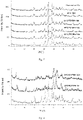
- the crystal form A of the compound of formula (II-1) has good stability at high temperature, 75% humidity and strong illumination conditions as shown in Fig. 7 , but under 92.5% high humidity conditions, crystal transformation will occur as shown in Fig. 8 .
- High humidity 25 °C/92.5 %RH: 1g of each sample was weighed and the sample was placed in an open flat weighing bottle (70 ⁇ 35mm) under 25°C/92.5%RH conditions, and then placed in a comprehensive drug stability chamber (25°C/92.5%RH) for investigation.
- Illumination 1g of each sample was weighed. The samples with illumination condition were placed in a clean watch glass, spread into a thin layer and put into 5000 ⁇ 500 lux (visible light) with 90 ⁇ w/cm 2 (UV) conditions for illumination.
- Table 4 Stability test results of influence factors of the crystal form A of the compound of formula (II-1) Research conditions / 60 °C 25 °C/ 92.5%RH Illumination Time 0 day 1 month 1 month 10 days Relative retention time (RRT) 0.66 0.06% 0.06% 0.06% 0.09% 0.85 0.34% 0.31% 0.32% 0.31% 0.90 0.02% 0.06% 0.03% 0.02% 1.64 0.06% 0.04% 0.05% 0.05% Total impurities 0.46% 0.43% 0.43% 0.51% Content 99.5% 99.6% 98.9% 97.6%
- Accelerated stability test each sample was weighed 0.8 g (accelerated 1 month, accelerated 2 months) or 1.2 g (accelerated 3 months, accelerated 6 months) into double-layer low-density polyethylene (LDPE) bags, and each layer of LDPE bags was pierced and sealed, and then the LDPE bags were put into aluminum foil bags and heat sealed, respectively, and put into 40 °C/75 % RH conditions for investigation.
- LDPE double-layer low-density polyethylene
- Table 5 Stability test results of influence factors of the crystal form A of the compound of formula (II-1) Research conditions 40 °C/ 75%RH Time 0 day 1 month 2 months 3 months RRT 0.66 0.06% 0.06% 0.06% 0.85 0.34% 0.36% 0.33% 0.33% 0.90 0.02% 0.02% 0.03% 0.04% 1.64 0.06% 0.05% 0.04% 0.04% Total impurities 0.46% 0.47% 0.39% 0.39% Content 99.5% 100.0% 99.6% 98.8%
- the cover was covered, and the flask was sealed using sealing film, and stored in -20°C refrigerator.
- the sample was removed from the refrigerator, restored to room temperature; 80 % ACN (10mL) was added, and the sample was dissolved by sonication for 2 min to obtain a solution with a concentration of about 1 mg/mL, then the liquid phase was used for injection analysis, and the detection results were compared with the initial detection results on day 0.
- the test results are shown in the following Table 6.
- the crystal form B of the compound of formula (II-2) has good stability at high temperature, high humidity and strong illumination conditions as shown in Fig. 9 .
- assay buffer solution 20 mM 4-hydroxyethyl piperazine ethanesulfonic acid (pH 7.5), 10 mM magnesium chloride, 1 mM ethylene glycol diethyl ether diaminetetraacetic acid, 0.02% polyoxyethylene lauryl ether, 0.02 mg/mL bovine serum albumin, 0.1 mM sodium vanadate, 2 mM dithiothreitol, 1% DMSO.
- ROCK protein kinase substrate Long S6 Kinase substrate peptide was added to a freshly prepared buffer solution at a concentration of 20 ⁇ M, then 1 nM ROCK protein kinase was added, and the mixture was stirred evenly.
- a series of DMSO diluents containing the compounds to be tested were added with Echo550 (started at 10M, diluted by 3 times series), preincubated at room temperature for 20 minutes, and 33 P-ATP (radiation intensity 10 ⁇ Ci/ ⁇ L) was added to initiate the reaction, and the reaction was carried out for 2 hours at room temperature.
- the mixture was then filtered using P81 ion exchange paper (Whatman # 3698-915) and washed with 0.75 % phosphoric acid. Radiation intensity was detected using the Filter-Binding method.
- the protein kinase inhibitory activity of the compound was expressed as the residual protein kinase activity relative to the blank substrate (DMSO alone). IC 50 values and curves were calculated using the Prism software package (GraphPad Software, San Diego California, USA).
- the compound of formula (II) has good inhibitory activity against ROCK2, and also has some selectivity for ROCK2.
- racemate of the compound of formula (I) has good pharmacokinetic properties, including good oral bioavailability, oral exposure, half-life and clearance rate, etc.
- the crystal form A of the compound of formula (II-1) has good pharmacokinetic properties in rats, including good oral bioavailability, oral exposure, half-life and clearance rate, etc.
- the crystal form A of the compound of formula (II-1) has good pharmacokinetic properties in beagle dogs, including good oral bioavailability, oral exposure, half-life and clearance rate, etc.
Landscapes
- Chemical & Material Sciences (AREA)
- Organic Chemistry (AREA)
- Health & Medical Sciences (AREA)
- General Health & Medical Sciences (AREA)
- Veterinary Medicine (AREA)
- Pharmacology & Pharmacy (AREA)
- Life Sciences & Earth Sciences (AREA)
- Animal Behavior & Ethology (AREA)
- Medicinal Chemistry (AREA)
- Public Health (AREA)
- Epidemiology (AREA)
- Engineering & Computer Science (AREA)
- Bioinformatics & Cheminformatics (AREA)
- Pulmonology (AREA)
- Chemical Kinetics & Catalysis (AREA)
- General Chemical & Material Sciences (AREA)
- Nuclear Medicine, Radiotherapy & Molecular Imaging (AREA)
- Pharmaceuticals Containing Other Organic And Inorganic Compounds (AREA)
- Plural Heterocyclic Compounds (AREA)
Abstract
Description
- The present application claims the following priority:
CN201910993446.1, filing date: October 18, 2019 - The present disclosure relates to a salt type, a crystal form and a preparation method thereof for benzopyrazole compounds as RHO kinase inhibitors, specifically relates to a hydrochloride and an acetate of a compound of formula (I), and a crystal form thereof, and also includes a use of the salt type and crystal form in the manufacture of RHO inhibitor medicaments.
- RHO associated kinase (abbreviated as ROCK), a serine/threonine protein kinase, is a downstream target effector molecule of RHO and is widely expressed in human body. RHO associated kinase (ROCK) is involved in the regulation of myosin light chain (MLC) and is suitable for vasodilatory therapy. New research supports the involvement of ROCK kinase in the regulation of immune response and fibroblast activation in TH17 cells, which may extend the indications for pulmonary diseases such as pulmonary fibrosis and asthma, and further indications include autoimmune diseases. ROCK kinase family includes two subtypes, ROCK1 and ROCK2. ROCK2 kinase is related to inflammation and fibrosis. Selective ROCK2 inhibitor does not cause vasodilation at high concentration in vitro vasodilation experiment, which can reduce cardiovascular side effects. Although the embryo mortality rate of ROCK1 knockout mice is not high, most of them die from cytoskeleton variation caused by MLC phosphorylation reduction after birth, while 90 % of ROCK2 knockout mice die in embryonic stage, but there is no difference between surviving mice and wild type mice, so selective inhibition of ROCK2 activity may have higher safety. Therefore, selective ROCK2 kinase inhibitors can avoid cardiovascular side effects of drugs.
- KD025 (
WO2006105081A1 ,WO2008054599A1 ,WO2010104851A1 andWO2014055996A1 ) is an oral selective inhibitor of ROCK2 kinase developed by Kadmon Company. Studies have shown that KD025 represents a novel mechanism to treat idiopathic pulmonary fibrosis (IPF) by inhibiting fibrosis-regulating proteins such as RHO kinase. The trigger for idiopathic pulmonary fibrosis (IPF) may be muscle damage. The body response to injury involves the reorganization of the actin cytoskeleton in a variety of cells (e.g., epithelial cells, fibroblasts, endothelial cells, and macrophages), while the assembly of actin filaments and the contraction of actomyosins are regulated by RHO kinase family proteins (including ROCK1 and ROCK2) guidance. Previous studies have shown that RHO kinase family proteins can be activated in the lungs of IPF patients and animal models of this disease, and RHO kinase inhibitors can prevent the tissue fibrosis process in these models and induce the established fibrosis to subside. At present, the Phase II clinical trial of moderate to severe psoriasis has been completed, and KD025 is in the Phase II clinical research stage of idiopathic pulmonary fibrosis (IPF) treatment.
-
WO2014134388A1 andWO2016028971A1 also disclose a class of compounds with structural general formula as shown in formula (a) and formula (b), which can also be used in the treatment of cardiovascular diseases, neuropathological diseases, tumors, autoimmune diseases, pulmonary fibrosis, inflammatory diseases, etc.
- The present disclosure provides a hydrochloride of a compound of formula (I), having the structure shown in formula (I')

- In some embodiments of the present disclosure, the n is 1.9, 2.0 or 2.1.
- In some embodiments of the present disclosure, the hydrochloride has the structure shown in formula (1-1),
- In some embodiments of the present disclosure, the hydrochloride has the structure shown in formula (II-1),

- In some embodiments of the present disclosure, the X-ray powder diffraction (XRPD) pattern measured by Cu Kα radiation of a crystal form A of the hydrochloride has characteristic diffraction peaks at the following 2θ angles: 14.77±0.20°, 20.50±0.20°, 22.38±0.20° and 24.15±0.20°.
- In some embodiments of the present disclosure, the X-ray powder diffraction pattern measured by Cu Kα radiation of the crystal form A of the hydrochloride has characteristic diffraction peaks at the following 2θ angles: 10.22 ± 0.20°, 13.36 ± 0.20°, 14.77 ± 0.20°, 18.69 ± 0.20°, 20.50 ± 0.20°, 22.38 ± 0.20°, 24.15 ± 0.20°, and 25.03±0.20°.
- In some embodiments of the present disclosure, the X-ray powder diffraction pattern measured by Cu Kα radiation of the crystal form A of the hydrochloride has characteristic diffraction peaks at the following 2θ angles: 7.38°, 9.32°, 10.22°, 13.36°, 14.77°, 15.21°, 18.69°, 20.50°, 21.69°, 22.08°, 22.38, 24.15°, 24.58°, 25.03°, 26.28°, 27.13°, 28.15°, 29.44°, 30.15°, 31.49°, 32.1°, 32.69°, 35.17°, and 38.51°.
- In some embodiments of the present disclosure, the XRPD pattern of the crystal form A of the hydrochloride is shown in
Fig. 1 . - In some embodiments of the present disclosure, the peak positions and relative intensities of the diffraction peaks in the XRPD pattern measured by Cu Kα radiation of the crystal form A of the hydrochloride are shown in the following Table 1:
Table 1 XRPD diffraction data of the crystal form A of the compound of formula (II-1) No. 2θ(°) d-Spacing (Å) Intensity Relative intensity (%) 1 7.38 11.98 287.96 13.08 2 9.32 9.49 204.84 9.3 3 10.22 8.66 559.92 25.43 4 13.36 6.63 628.24 28.53 5 14.77 6.00 1309.95 59.5 6 15.21 5.82 973.08 44.2 7 18.69 4.75 997.97 45.33 8 20.5 4.33 1228.56 55.8 9 21.69 4.10 360.44 16.37 10 22.08 4.03 886 40.24 11 22.38 3.97 2201.7 100 12 24.15 3.68 1367.01 62.09 13 24.58 3.62 459.56 20.87 14 25.03 3.56 894.6 40.63 15 26.28 3.39 554.27 25.17 16 27.13 3.29 382.63 17.38 17 28.15 3.17 603.64 27.42 18 29.44 3.03 606.61 27.55 19 30.15 2.96 322.57 14.65 20 31.49 2.84 209.76 9.53 21 32.1 2.79 106.48 4.84 22 32.69 2.74 126.86 5.76 23 35.17 2.55 216.88 9.85 24 38.51 2.34 154.39 7.01 - In some embodiments of the present disclosure, the differential scanning calorimetry (DSC) curve of the crystal form A of the hydrochloride has an endothermic peak with an onset at 245.2°C + 3°C.
- In some embodiments of the present disclosure, the DSC pattern of the crystal form A of the hydrochloride is shown in
Fig. 2 . - In some embodiments of the present disclosure, the thermogravimetric analysis (TGA) curve of the crystal form A of the hydrochloride has a weight loss of 3.14 % occurred at 190.0 °C ± 3 °C.
- In some embodiments of the present disclosure, the TGA pattern of the crystal form A of the hydrochloride is shown in
Fig. 3 . - The present disclosure also provides a preparation method of the crystal form A of the hydrochloride, and the method comprises the following steps:
- 1) adding a compound of formula (1-1) to an organic solvent and stirring at an appropriate temperature;
- 2) filtering under reduced pressure, collecting filter cake;
- 3) vacuum drying the filter cake.
- In some embodiments of the present disclosure, the organic solvent is ethanol in the preparation method of the crystal form A of the hydrochloride.
- In some embodiments of the present disclosure, the appropriate temperature is 25 °C in the preparation method of the crystal form A of the hydrochloride.
- In some aspects of the present disclosure, the stirring time is 10 - 12 hours in the preparation method of the crystal form A of the hydrochloride.
- The present disclosure also provides an acetate of a compound of formula (I),

- In some embodiments of the present disclosure, the acetate has the structure shown in formula (1-2)

- In some embodiments of the present disclosure, the acetate has the structure shown in formula (II-2)

- In some embodiments of the present disclosure, the X-ray powder diffraction pattern measured by Cu Kα radiation of a crystal form B of the acetate has characteristic diffraction peaks at the following 2θ angles: 6.18 ± 0.20°, 12.37 ± 0.20°, 17.08 ± 0.20°, 21.22 ± 0.20° and 24.88 ± 0.20°.
- In some embodiments of the present disclosure, the X-ray powder diffraction pattern measured by Cu Kα radiation of the crystal form B of the acetate has characteristic diffraction peaks at the following 2θ angles: 6.18±0.20°, 11.94±0.20°, 12.37±0.20°, 17.08±0.20°, 20.76±0.20°, 21.22±0.20°, 22.01±0.20° and 24.88±0.20°.
- In some embodiments of the present disclosure, the X-ray powder diffraction pattern measured by Cu Kα radiation of the crystal form B of the acetate has characteristic diffraction peaks at the following 2θ angles: 6.18°, 10.57°, 11.94°, 12.37°, 12.94°, 13.93°, 16.22°, 17.08°, 17.93°, 18.30°, 19.47°, 20.34°, 20.76°, 21.22°, 21.58°, 22.01°, 22.25°, 23.06°, 24.07°, 24.46°, 24.88°, 25.28°, 25.69°, 25.99°, 26.66°, 27.03°, 28.85°, 29.54°, 31.14°, 31.88°, 32.48°, 33.70°, 34.43°, 35.54°, 36.33°, 37.89°, and 39.67°.
- In some embodiments of the present disclosure, the X-ray powder diffraction pattern of the crystal form B of the acetate is shown in
Fig. 4 . - In some embodiments of the present disclosure, the peak positions and relative intensities of the diffraction peaks in the XRPD pattern measured by Cu Kα radiation of the crystal form B of the acetate are shown in the following Table 2:
Table 2 XRPD diffraction data of the crystal form B of the compound of formula (II-2) No. 2θ(°) d-Spacing (Å) Intensity Relative intensity (%) 1 6.18 14.3 4109.68 100 2 10.57 8.37 721.3 17.55 3 11.94 7.41 2041.45 49.67 4 12.37 7.16 2590.18 63.03 5 12.94 6.84 758.47 18.46 6 13.93 6.36 946.38 23.03 7 16.22 5.47 834 20.29 8 17.08 5.19 2268.53 55.2 9 17.93 4.95 929.49 22.62 10 18.3 4.85 938.61 22.84 11 19.47 4.56 691.65 16.83 12 20.34 4.37 562.17 13.68 13 20.76 4.28 1986.28 48.33 14 21.22 4.19 2474.24 60.21 15 21.58 4.12 904.49 22.01 16 22.01 4.04 950.1 23.12 17 22.25 3.99 427.79 10.41 18 23.06 3.86 659.24 16.04 19 24.07 3.7 645.13 15.7 20 24.46 3.64 1005.52 24.47 21 24.88 3.58 2630.84 64.02 22 25.28 3.52 856.61 20.84 23 25.69 3.47 588.55 14.32 24 25.99 3.43 554.06 13.48 25 26.66 3.34 501.75 12.21 26 27.03 3.3 134.17 3.26 27 28.85 3.09 874.93 21.29 28 29.54 3.02 218.63 5.32 29 31.14 2.87 160.35 3.9 30 31.88 2.81 141.63 3.45 31 32.48 2.76 141.68 3.45 32 33.7 2.66 69.63 1.69 33 34.43 2.6 136.93 3.33 34 35.54 2.53 156.4 3.81 35 36.33 2.47 113.75 2.77 36 37.89 2.37 38.07 0.93 37 39.67 2.27 55.41 1.35 - In some embodiments of the present disclosure, the differential scanning calorimetry (DSC) curve of the crystal form B of the acetate has an endothermic peak with an onset at 157.9 °C.
- In some embodiments of the present disclosure, the DSC pattern of the crystal form B of the acetate is shown in
Fig. 5 . - In some embodiments of the present disclosure, the thermogravimetric analysis (TGA) curve of the crystal form B of the acetate has a weight loss of 2.00 % occurred at 120.0 °C ± 3 °C.
- In some embodiments of the present disclosure, the TGA pattern of the crystal form B of the acetate is shown in
Fig. 6 . - The present disclosure also provides a preparation method of the crystal form B of the acetate, and the method comprises the following steps:
- 1) dissolving a compound of formula (I) in an organic solvent, then adding acetic acid and stirring;
- 2) filtering under reduced pressure, collecting filter cake;
- 3) vacuum drying the filter cake.
- In some embodiments of the present disclosure, the organic solvent is ethyl acetate in the preparation method of the crystal form B of the acetate.
- The present disclosure also provides a use of the hydrochloride, the crystal form A of the hydrochloride, the acetate, and the crystal form B of the acetate in the manufacture of RHO inhibitor medicaments.
- The present disclosure also provides a use of the hydrochloride, the crystal form A of the hydrochloride, the acetate, and the crystal form B of the acetate in the manufacture of a medicament for the treatment of pulmonary fibrosis and radiation pulmonary fibrosis.
- The preparation process of the crystal forms of the present disclosure is simple; the crystal forms are stable; the influence of heat and illumination in the crystal forms is small; and the crystal forms are convenient for preparation.
- Unless otherwise indicated, the following terms and phrases used in this document are intended to have the following meanings. A specific term or phrase should not be considered indefinite or unclear in the absence of a particular definition, but should be understood in the ordinary sense. When a trade name appears herein, it is intended to refer to its corresponding commodity or active ingredient thereof.
- The intermediate compounds of the present disclosure can be prepared by various synthetic methods known to those skilled in the art, including the embodiments described below, the embodiments formed by combining the embodiments described below with other chemical synthesis methods, and equivalent alternatives well-known to those skilled in the art. Preferred embodiments include, but are not limited to, the embodiments of the present disclosure.
- The chemical reactions of the embodiments of the present disclosure are carried out in a suitable solvent, and the solvent should be suitable for the chemical change, and the reagents and materials required therefor of the present disclosure. In order to obtain the compounds of the present disclosure, it is sometimes necessary for those skilled in the art to modify or select the synthetic steps or reaction schemes based on the existing embodiments.
- The present disclosure will be specifically described below by way of embodiments, but the scope of the present disclosure is not limited thereto.
- All solvents used in the present disclosure are commercially available and can be directly used without further purification.
- The solvents used in the present disclosure are commercially available.
- The present disclosure employs the following abbreviations:
- ACN stands for acetonitrile; Bis-Tris stands for bis(2-hydroxyethyl)aminotris(hydroxymethyl)methane; DMSO stands for dimethyl sulfoxide.
- The compounds of the present disclosure are named according to the conventional naming principles in the art or by ChemDraw® software, and the commercial compounds are named by the supplier directory.
-
- Instrument model: X'pert3 X-ray diffractometer of PANalytical Company
- Detection method: about 10 mg of the sample was used for XRPD detection
- The detailed XRPD parameters were as follows:
- Radioactive source: Cu, Kα1=1.540598 Å, Cu, Kα2=1.544426 Å
- Tube voltage: 45 kV, tube current: 40 mA
- Scanning angle range: 3-40 deg
- Step time: 46.665 second
-
- Instrument model:
TA 2500 differential scanning calorimeter - Test method: Samples (about 1-5 mg) were taken and placed in a DSC aluminum tray with a non-pierced cover and heated from 25 °C (room temperature) at a heating rate of 10 °C/min under 50 mL/min N2 until sample decomposition.
-
- Instrument model: TA 5500 thermal gravimetric analyzer
- Test method: Samples (about 1-5 mg) were taken and placed in an open TGA aluminum plate for testing, and the samples were heated from room temperature to 350 °C at a heating rate of 10 °C/min under 10-25 mL/min N2.
-
Name Model Equipment number Manufacturers Valid until Ion Chromatograph LC-20ADSP CAS-WH-IC-A SHIMADZU 09-Jul-2021 Analytical balance XS205DU CAS-WH-BAL-A METTLER TOLEDO 05-Sep-2019 Chromatographic columns Shim-pack IC-A3 CASWH-LC-15-0112 SHIMADZU N/A Water Purifier Milli - QIQ7000 CAS-WH-PWG-E Merck 26-Dec-2019 -
Name Grade/Purity Batch number Manufacturers Valid until Cl standard solution 1000 µg/mL 189003-1 National Center for Analysis and Testing of Non-ferrous Metals and Electronic Materials 04-Sep-2020 Water 18.2 MΩ·cm 20190717 WuXi AppTec 23-Jul-2019 -
Preparation of standard solution Aspirating 1mL of Cl- standard solution in a 50mL volumetric flask, diluting to scale with water and labeling as STD-Cl-1 Aspirating 1mL of Cl- standard solution in a 50mL volumetric flask, diluting to scale with water and labeling as STD-Cl-2 Preparation of sample solution Weighing about 20 mg of sample in a 100 mL volumetric flask, dissolving and diluting with water to the scale and labeling as SPL1-1 Weighing about 20 mg of sample in a 100 mL volumetric flask, dissolving and diluting with water to the scale and labeling as SPL1-2 -
Method name IC-A3 Instrument SHIMADZU LC-20AD sp Software Lab Solution Version 5.92 Chromatographic columns SHIMADZU Shim-pack IC-A3 4.6mm∗15cm 5µm Mobile phase 8.0 mmol/L p-Hydroxybenzoic acid + 3.2 mmol/L Bis(2-hydroxyethyl)aminotris(hydroxymethyl)methane (Bis-Tris) Column temperature 40 °C Flow rate 1.5 mL/min Detectors CDD-10A VP LC stop time 18 min -
- Instrument model: Bruker D8 Venture Photon II diffractometer
- Light source: CuKα radiation
- Scanning mode: ϕ/ω scanning
- The total number of collected diffraction points was 16827, the number of independent diffraction points was 5091, and the number of observable points (I/sigma ≥ 2) was 2177.
- Test method: The direct method (Shelxs97) was used to analyze the crystal structure and obtain all 39 non-hydrogen atomic positions, then the least squares method was used to correct the structural parameters and discriminate the atomic species, and the geometric calculation method and the difference Fourier method were used to obtain all hydrogen atomic positions, and after refinement R1=0.0783, wR2=0.2735 (w=1/σ|F|2), S= 0.957.
-
-
Fig. 1 is a XRPD pattern of the crystal form A of the compound of formula (II-1). -
Fig. 2 is a DSC pattern of the crystal form A of the compound of formula (II-1). -
Fig. 3 is a TGA pattern of the crystal form A of the compound of formula (II-1). -
Fig. 4 is a XRPD pattern of the crystal form B of the compound of formula (II-2). -
Fig. 5 is a DSC pattern of the crystal form B of the compound of formula (II-2). -
Fig. 6 is a TGA pattern of the crystal form B of the compound of formula (II-2). -
Fig. 7 is a comparison XRPD pattern of the crystal form A of the compound of formula (II-1) under high temperature, high humidity and illumination conditions. -
Fig. 8 is a comparison XRPD pattern of the crystal form A of the compound of formula (II-1) under 92.5 % high humidity. -
Fig. 9 is a comparison XRPD pattern of the crystal form B of the compound of formula (II-2) under high temperature, high humidity and illumination conditions. -
Fig. 10 is a single crystal X-ray diffraction pattern of compound 8. - The present disclosure will be specifically described below by way of embodiments, but the scope of the present disclosure is not limited thereto. The present disclosure has been described in detail herein, in which specific embodiments thereof are also disclosed, and various changes and modifications with respect to specific embodiments of the present disclosure will be apparent to those skilled in the art without departing from the spirit and scope of the present disclosure.
-

-

- Ethanol (12.5 L) was added to a reaction kettle, then compound 1 (2.5 kg, 11.8 mol), tetrahydroxydiboron (1.06 kg, 11.8 mol) and potassium acetate (1.75 kg, 17.8 mol) were added successively, and the mixture was started to stir between 25 to 30 °C. The reaction kettle was sealed, and the reaction system was replaced with nitrogen for three times. Then dichlorobis[di-tert-butyl-(4-dimethylaminophenyl)phosphine]palladium (41.3 g, 59.2 mmol) was added to the reaction kettle, and then the reaction kettle was sealed, and the reaction system was replaced with nitrogen for three times; the internal temperature was controlled at 50 °C, and the mixture was stirred for 23 hours. After the reaction was completed, the distillation was continued under reduced pressure at an internal temperature of 50 °C (about 4 L of solvent was distilled out), and the heating was turned off. The concentrated reaction solution was diluted with 30 L of water and extracted with ethyl acetate (10 L × 2, 5 L × 1), and the combined organic phases were concentrated under reduced pressure. The obtained crude product was added to 2.8 M sodium hydroxide aqueous solution (10 L), and the mixture was stirred for 30 minutes, filtered; the filter cake was washed with water (1 L), and the obtained filtrate (15 L) was diluted with water (45 L); the pH of the solution was neutralized with 12 M hydrochloric acid to 6 - 7, and the mixture was stirred. At this time, solid would precipitate, and the mixture was filtered; the filter cake was added to water, stirred at 25 °C for 2.5 hours, filtered, and the filter cake was vacuum dried to obtain compound 2.
- 1H NMR (400 MHz, DMSO-d 6 ) δ 12.60 (s, 1 H), 8.22 (s, 1 H), 7.94 (s, 2 H), 7.76 (dd, J=0.8 Hz, J=8.4 Hz, 1 H), 7.40-7.38 (m, 1 H), 2.51 - 2.52 (s, 3 H). MS-ESI Calcd for [M+H]+ 177, Found 177.
-

-

- N,N-Dimethylformamide (15 L) was added to a reaction kettle, and the stirring was turned on, and then compound 3 (1.50 kg, 5.63 mol, the carbon atom with "∗" in compound 3 is a chiral carbon atom, which exists in a (R) or (S) single enantiomer form or a (R) or (S) single enantiomer-rich form) and compound 4 (1.19 kg, 5.91 mol) were added, and the internal temperature was controlled to 10 to 30 °C, then N,N-diisopropylethylamine (1.96 L) was added; and a 50% ethyl acetate solution of tri-n-propylphosphonic anhydride (5.02 L) was slowly added in batches at an internal temperature of -5 to 5 °C, and the reaction solution was stirred at 25 °C for 19 hours. After the reaction was completed, water (30 L) was added to the reaction solution, and a solid was precipitated; the mixture was stirred for 30 min, filtered under reduced pressure, and the filter cake was vacuum dried to obtain compound 5 (the carbon atom with "∗" in
compound 5 is a chiral carbon atom, which exists in a (R) or (S) single enantiomer form or a (R) or (S) single enantiomer-rich form). - 1H NMR (400 MHz, DMSO-d 6 ) δ 9.19 (d, J=8.4 Hz, 1 H), 8.57 (d, J=5.2 Hz, 1 H), 8.14 (d, J=1.6 Hz, 1 H), 7.86 - 7.96 (m, 1 H), 7.26 - 7.22 (m, 1 H), 7.03 - 7.06 (m, 1 H), 6.88 - 6.98 (m, 2 H), 6.78 - 6.87 (m, 1 H), 5.03 - 5.19 (m, 1 H), 3.74 (s, 3 H), 3.39 - 3.51 (m, 1 H), 3.24 - 3.34 (m, 1 H), 1.32 (s, 9 H).
- MS-ESI Calcd for [M+H-t-Bu]+ 393.396, Found 393.396.
- Dioxane (4.00 L) and water (1.00 L) were added to a reaction kettle, then compound 5 (1.00 kg, 2.22 mol), compound 2 (0.41 kg, 2.33 mol) and potassium phosphate (0.71 kg, 3.33 mol) were added successively with stirring, and the internal temperature was controlled to be less than 30 °C. After the reaction system was replaced with nitrogen for three times, triphenylphosphine (28.8 g, 110 mmol) and tris(dibenzylideneacetone)dipalladium (50.3 g, 54.9 mmol) were added, then the reaction system was replaced with nitrogen for three times, and the mixture was stirred at 85 °C for 12 hours. After the reaction was completed, the temperature of the reaction solution was lowered to room temperature, and water (2.50 L) and ethyl acetate (2.50 L) were added to the reaction solution, and the mixture was stirred for 30 min. The mixture was filtered with diatomite, and the filter cake was rinsed with ethyl acetate (1.00 L × 3). The filtrate was stood to separate the layers, and the aqueous phase was extracted with ethyl acetate (1.50 L × 3); the organic phases were combined, washed with saturated brine (5.00 L), dried with anhydrous sodium sulfate (1.00 kg), and concentrated under reduced pressure to obtain a crude product. The crude product was added to tert-butyl methyl ether (10.0 L), and the mixture was stirred at 25 °C for 16 hours. The reaction solution was filtered under reduced pressure, and the filter cake was washed with tert-butyl methyl ether (1.00 L × 3), collected, and concentrated under reduced pressure. The obtained crude product was dissolved in ethanol (10.0 L), and thiourea resin of equal mass to the crude product was added, and the mixture was stirred at 90 °C for 16 hours. The mixture was filtered while hot, and the filter cake was washed once with ethanol (1.00 L). The filtrate was put back into the reaction kettle, and thiourea resin of about equal mass to the crude product was added with stirring, and the mixture was stirred at 90 °C for 3 hours. The mixture was filtered while hot, and the filter cake was washed once with ethanol (1.00 L). The filtrate was put back into the reaction kettle, and thiourea resin of about half mass to the crude product was added with stirring, and the mixture was stirred at 90 °C for 3 hours. The reaction solution was then filtered while hot, and the filter cake was washed once with ethanol (1.00 L). The obtained filtrate was put back into the reaction kettle, and the system was replaced with nitrogen, then activated carbon about one-tenth of the mass of crude product was added, and the system was replaced with nitrogen again, and the mixture was stirred at 90 °C for 1 hour. The reaction solution was filtered while hot with diatomite under reduced pressure, and the filter cake was washed with ethanol (2.00 L × 2), and the collected filtrate was concentrated under reduced pressure to obtain a crude product. tert-Butyl methyl ether (3.50 L) was added to the crude product and stirred at room temperature for 2 hours. The mixture was filtered under reduced pressure, and the filter cake was washed with tert-butyl methyl ether (500 mL × 2), collected and vacuum dried to obtain compound 6 (the carbon atom with "∗" in compound 6 is a chiral carbon atom, which exists in a (R) or (S) single enantiomer form or a (R) or (S) single enantiomer-rich form).
- 1H NMR (400 MHz, DMSO-d6 ) δ 12.85 (s, 1H), 9.24-9.11 (m, 1H), 8.70 (d, J = 5.2 Hz, 1H), 8.37-8.32 (m, 1H), 8.27 (s, 1H), 8.01-7.09 (m, 1H), 7.81-7.79 (m, 1H), 7.60 (d, J = 8.4 Hz, 1H), 7.31-7.20 (m, 1H), 7.10-7.07 (m, 1H), 7.01-6.93 (m, 2H), 6.89-6.78 (m, 1H), 5.25-5.05 (m, 1H), 3.75 (s, 3H), 3.53-3.38 (m, 2H), 2.57 (s, 3H), 1.33 (s, 9H). MS-ESI Calcd for [M+H]+ 502, Found 502.
- Compound 6 (451 g, 879 mmol) was dissolved in ethyl acetate (2.30 L). The stirring was started, then an ethyl acetate solution of hydrogen chloride (4 M, 2.30 L) was slowly added in batches, and the reaction was stirred at 25 °C for 16 hours. After the reaction was completed, the reaction solution was concentrated under reduced pressure, and the compound of formula (I-1) after concentration under reduced pressure was dissolved in water (1.30 L) and acetonitrile (900 mL); the mixture was stirred, dissolved and clarified, and then filtered under reduced pressure. The filtrate was transferred to a 30 L barrel, and acetonitrile (12 L) was added, and the mixture was stirred at 25 °C for 30 minutes. The mixture was filtered under reduced pressure, and the filter cake was washed with acetonitrile (500 mL × 2). The filter cake was collected and vacuum dried (45 °C, pressure <-0.1 MPa) to obtain a crude product of the compound of formula (1-1) (the carbon atom with "∗" in the compound of formula (1-1) is a chiral carbon atom, which exists in a (R) or (S) single enantiomer form or a (R) or (S) single enantiomer-rich form).
- MS-ESI Calcd for [M+H] + 402, Found 402.
-

- The compound of formula (1-1) (1.78 g, 4.43 mmol) and 4-bromobenzoic acid (compound 7, 0.98 g, 4.88 mmol) were weighed and dissolved in DMF (15 mL), and then diisopropylethylamine (2.31 mL, 13.3 mmol) and tri-n-propyl cyclic phosphonic anhydride (50% ethyl acetate solution) (3.95 mL, 6.64 mmol) were added. The reaction solution was stirred at 15 °C for 18 hours. The remaining compound of formula (1-1) was monitored by LCMS. Diisopropylethylamine (2.31 mL, 13.3 mmol) and tri-n-propyl cyclic phosphonic anhydride (50% ethyl acetate solution) (2.63 mL, 4.43 mmol) were added, and the reaction was continued to stir at 15 °C for 4 hours. The complete of the reaction was monitored by LCMS, and the reaction was stopped. Saturated sodium bicarbonate solution (20 mL) was added for quenching, and the mixture was extracted with ethyl acetate (20 mL × 2). The organic phases were combined, washed with saturated sodium chloride solution (40 mL × 2), dried with anhydrous sodium sulfate, filtered, and the filtrate was concentrated under reduced pressure. Compound 8 (the carbon atom with "∗" in compound 8 is a chiral carbon atom, which exists in a (R) or (S) single enantiomer form or a (R) or (S) single enantiomer-rich form) was prepared and separated from the crude product by high performance liquid chromatography.
- Single crystal culture process of compound 8: Compound 8 (10.66 mg, 18.2 µmol) was weighed, dissolved with 0.5 mL of methanol, filtered through an organic phase needle filter, and transferred to a 2 mL colorless clear glass flask. Needle-like crystals were obtained by standing and volatilizing at 15 to 25 °C.
- From the single crystal diffraction results of compound 8, as shown in
Fig. 10 , it can be determined that it exists in a (S) single enantiomer form or a (S) single enantiomer-rich form, and its absolute configuration structure is as follows:
- The absolute configuration of the compound of formula (1-1) can be determined from the absolute configuration of compound 8, having the structure shown in the following formula:

-

- The dried compound of formula (II-1) (401 g, 0.85 mol) was put into a 5 L reaction flask, then ethanol (4 L) was added, and the mixture was stirred for 12 hours at 25 °C. The mixture was filtered under reduced pressure; and the filter cake was washed with ethanol (200 mL × 2), collected and vacuum dried (50 °C, pressure < -0.1 Mp) to obtain the crystal form A of the compound of formula (II-1) by XRPD detection.
- 1H NMR (400 MHz, DMSO-d6 ) δ 10.34 - 10.13 (m, 1H), 8.99 (s, 1H), 8.79 (d, J= 5.6 Hz, 1H), 8.66 (s, 1H), 8.41 (s, 3H), 8.32 - 8.25 (m, 1H), 8.02 (dd, J = 1.2, 8.8 Hz, 1H), 7.64 (d, J = 8.8 Hz, 1H), 7.37 - 7.25 (m, 1H), 7.18 (s, 1H), 7.10 (d, J = 8.0 Hz, 1H), 6.89 (dd, J = 2.0, 8.0 Hz, 1H), 5.52 - 5.40 (m, 1H), 3.77 (s, 3H), 3.70 - 3.58 (m, 1H), 3.29 - 3.17 (m, 1H), 2.61 (s, 3H); MS-ESI Calcd for [M+H]+ 402, Found 402; the chloride ion content test showed that the chloride ion content was 15.7 %, and the compound of formula (II-1) contains two chlorine atoms.
-

-

- The compound of formula (II-1) (25.0 g, 52.7 mmol) after concentration under reduced pressure was diluted with water (100 mL), then the pH of the solution was adjusted to about 8 with saturated sodium bicarbonate aqueous solution, and the aqueous phase was poured out, and the compound was dissolved with ethanol (100 mL) and concentrated under reduced pressure. The aqueous phase was then extracted with ethyl acetate (200 mL × 3), and the combined organic phases were washed with saturated brine (150 mL × 1), dried with anhydrous sodium sulfate, filtered, and all the above organic phases were concentrated under reduced pressure. The obtained crude product was purified by high performance liquid chromatographic column (alkaline) to obtain the compound of formula (I), MS-ESI Calcd for [M+H]+ 402, Found 402. The absolute configuration of the compound of formula (1-1) can be determined from the absolute configuration of the compound of formula (II-1), having the structure shown in the following formula (II):

- The compound of formula (II) (1.05 g, 2.62 mmol) was dissolved in ethyl acetate (30 mL), then acetic acid (310 µL) was added at room temperature, and the mixture was stirred for 24.5 hours. The mixture was filtered under reduced pressure, and the filter cake was dried to dryness under reduced pressure at 45 °C with an oil pump. The crystal form B of the compound of formula (II-2) was obtained by XRPD detection.
- 1H NMR (400 MHz, DMSO-d6 ) δ 9.21 (d, J = 8.4 Hz, 1H), 8.80-8.64 (m, 1H), 8.34 (d, J = 1.6 Hz, 1H), 8.26 (s, 1H), 8.01 - 7.997 (m, 1H), 7.80 (dd, J = 1.6, 8.8 Hz, 1H), 7.60 (d, J = 8.4 Hz, 1H), 7.26 - 7.22 (m, 1H), 7.01 - 6.92 (m, 2H), 6.86 - 6.76 (m, 1H), 5.10 - 4.93 (m, 1H), 3.73 (s, 3H), 3.08 - 3.03 (m, 1H), 2.99 - 2.90 (m, 1H), 2.56 (m, 3H), 1.88 (s, 3H). MS-ESI Calcd for [M+H]+ 402, Found 402.
- According to the "Guidelines for the Stability Test of APIs and Preparations" (Chinese Pharmacopoeia 2015 Edition Part IV general rules 9001), the stability of the crystal form A of the compound of formula (II-1) was investigated at high temperature (60 °C, open), high humidity (room temperature/relative humidity (RH) 92.5%, open) and strong illumination (total illumination = 1.2×10⁶ Lux•hr/near UV = 200 w•hr/m2, open).
- About 10 mg of the crystal form was accurately weighed and added to a dry and clean glass flask, spread into a thin layer, covered with aluminum foil, pierced small holes and placed under the influence factor test conditions and under accelerated conditions. Samples placed under illumination (visible light 1200000 Lux, UV 200 W) conditions were placed in clear glass flasks, fully exposed, and samples used for XRPD detection were placed separately.
- After the samples were removed at the time point, the cover was covered, and the flask was sealed using sealing film, and stored in -20°C refrigerator. When preparing the sample, the sample was removed from the refrigerator, restored to room temperature; 10 mL of 80 % ACN was added, and the sample was dissolved by sonication for 2 min to obtain a solution with a concentration of about 1 mg/mL, then the liquid phase was used for injection analysis, and the detection results were compared with the initial detection results on
day 0. The test results are shown in the following Table 3. - Preparation of standard solution on day 0: About 10 mg of the crystal was weighed and added to a 10 mL volumetric flask, dissolved with 80 % ACN and the volume was fixed to the scale.
Table 3: Solid stability test results of the crystal form A of the compound of formula (II-1) Test condition Time point Crystal form - 0 day Crystal form A High temperature (60 °C, open) 5 days Crystal form A 10 days Crystal form A High humidity (relative humidity 75%, open) 5 days Crystal form A 10 days Crystal form A High humidity (relative humidity 92.5%, open) 5 days Crystal form C 10 days Crystal form C High temperature and humidity (40°C relative humidity 75%, open) 5 days Crystal form A 10 days Crystal form A High temperature and humidity (60°C relative humidity 75%, open) 5 days Crystal form A 10 days Crystal form A Illumination (total illuminance=1.2×10⁶ Lux•hr/near UV =200w•hr/m2, open) 5 days Crystal form A 10 days Crystal form A - Conclusion: The crystal form A of the compound of formula (II-1) has good stability at high temperature, 75% humidity and strong illumination conditions as shown in
Fig. 7 , but under 92.5% high humidity conditions, crystal transformation will occur as shown inFig. 8 . - Stability studies of the crystal form A of the compound of formula (II-1) in influence factor test:
- High humidity (25 °C/92.5 %RH): 1g of each sample was weighed and the sample was placed in an open flat weighing bottle (70 × 35mm) under 25°C/92.5%RH conditions, and then placed in a comprehensive drug stability chamber (25°C/92.5%RH) for investigation.
- High temperature (60 °C): 1g of each sample was weighed and the sample was placed in an open flat weighing bottle under 60 °C conditions, and then placed in a blast drying oven (60 °C) for investigation.
- Illumination: 1g of each sample was weighed. The samples with illumination condition were placed in a clean watch glass, spread into a thin layer and put into 5000 ± 500 lux (visible light) with 90 µw/cm2 (UV) conditions for illumination.
- The experimental results are shown in the following Table 4:
Table 4: Stability test results of influence factors of the crystal form A of the compound of formula (II-1) Research conditions / 60 ° C 25 °C/ 92.5% RH Illumination Time 0 day 1 month 1 month 10 days Relative retention time (RRT) 0.66 0.06% 0.06% 0.06% 0.09% 0.85 0.34% 0.31% 0.32% 0.31% 0.90 0.02% 0.06% 0.03% 0.02% 1.64 0.06% 0.04% 0.05% 0.05% Total impurities 0.46% 0.43% 0.43% 0.51% Content 99.5% 99.6% 98.9% 97.6% - The results show that the crystal form A of the compound of formula (II-1) is stable under the conditions of illumination, high temperature and high humidity, and the main impurities and total impurities have no obvious change.
- Stability studies of the crystal form A of the compound of formula (II-1) in accelerated test:
- Accelerated stability test: each sample was weighed 0.8 g (accelerated 1 month, accelerated 2 months) or 1.2 g (accelerated 3 months, accelerated 6 months) into double-layer low-density polyethylene (LDPE) bags, and each layer of LDPE bags was pierced and sealed, and then the LDPE bags were put into aluminum foil bags and heat sealed, respectively, and put into 40 °C/75 % RH conditions for investigation. The experimental results are shown in the following Table 5:
Table 5: Stability test results of influence factors of the crystal form A of the compound of formula (II-1) Research conditions 40 °C/ 75 %RH Time 0 day 1 month 2 months 3 months RRT 0.66 0.06% 0.06% 0.06% 0.06% 0.85 0.34% 0.36% 0.33% 0.33% 0.90 0.02% 0.02% 0.03% 0.04% 1.64 0.06% 0.05% 0.04% 0.04% Total impurities 0.46% 0.47% 0.39% 0.39% Content 99.5% 100.0% 99.6% 98.8% - The results show that the crystal form A of the compound of formula (II-1) is stable under long-term placement conditions.
- According to the "Guidelines for the Stability Test of APIs and Preparations" (Chinese Pharmacopoeia 2015 Edition Part IV general rules 9001), the stability of the crystal form B of the compound of formula (II-2) was investigated at high temperature (60 °C, open), high humidity (room temperature/relative humidity (RH) 92.5%, open) and strong illumination (total illumination = 1.2×10⁶ Lux•hr/near UV = 200 w•hr/m2, open).
- About 10 mg of the crystal form was accurately weighed and added to a dry and clean glass flask, spread into a thin layer, covered with aluminum foil, pierced small holes and placed under the influence factor test conditions and under accelerated conditions. Samples placed under illumination (visible light 1200000 Lux, UV 200 W) conditions were placed in clear glass flasks, fully exposed, and samples used for XRPD detection were placed separately.
- After the samples were removed at the time point, the cover was covered, and the flask was sealed using sealing film, and stored in -20°C refrigerator. When preparing the sample, the sample was removed from the refrigerator, restored to room temperature; 80 % ACN (10mL) was added, and the sample was dissolved by sonication for 2 min to obtain a solution with a concentration of about 1 mg/mL, then the liquid phase was used for injection analysis, and the detection results were compared with the initial detection results on
day 0. The test results are shown in the following Table 6. - Preparation of standard solution on day 0: About 10 mg of the crystal form was weighed and added to a 10mL volumetric flask, dissolved with 80 % ACN and the volume was fixed to the scale.
Table 6: Solid stability test results of the crystal form B of the compound of formula (II-2) Test condition Time point Crystal form - 0 day Crystal form B High temperature (60 °C, open) 5 days Crystal form B 10 days Crystal form B High humidity (relative humidity 75%, open) 5 days Crystal form B 10 days Crystal form B High humidity (relative humidity 92.5%, open) 5 days Crystal form B 10 days Crystal form B High temperature and humidity (40°C relative humidity 75%, open) 5 days Crystal form B 10 days Crystal form B High temperature and humidity (40°C relative humidity 75%, open) 5 days Crystal form B 10 days Crystal form B Illumination (total illuminance=1.2× 10⁶ Lux•hr /near UV =200 w•hr/m2, open) 5 days Crystal form B 10 days Crystal form B - Conclusion: The crystal form B of the compound of formula (II-2) has good stability at high temperature, high humidity and strong illumination conditions as shown in
Fig. 9 . - Experimental purpose: To detect the IC50 value of ROCK protein kinase inhibition of compounds.
- Experimental materials: assay buffer solution: 20 mM 4-hydroxyethyl piperazine ethanesulfonic acid (pH 7.5), 10 mM magnesium chloride, 1 mM ethylene glycol diethyl ether diaminetetraacetic acid, 0.02% polyoxyethylene lauryl ether, 0.02 mg/mL bovine serum albumin, 0.1 mM sodium vanadate, 2 mM dithiothreitol, 1% DMSO.
- Experimental operation: ROCK protein kinase substrate Long S6 Kinase substrate peptide was added to a freshly prepared buffer solution at a concentration of 20 µM, then 1 nM ROCK protein kinase was added, and the mixture was stirred evenly. A series of DMSO diluents containing the compounds to be tested were added with Echo550 (started at 10M, diluted by 3 times series), preincubated at room temperature for 20 minutes, and 33P-ATP (
radiation intensity 10 µCi/µL) was added to initiate the reaction, and the reaction was carried out for 2 hours at room temperature. The mixture was then filtered using P81 ion exchange paper (Whatman # 3698-915) and washed with 0.75 % phosphoric acid. Radiation intensity was detected using the Filter-Binding method. - The protein kinase inhibitory activity of the compound was expressed as the residual protein kinase activity relative to the blank substrate (DMSO alone). IC50 values and curves were calculated using the Prism software package (GraphPad Software, San Diego California, USA).
- Experimental results:
Table 7: Test results of ROCK inhibitory activity of the compound of formula (I) Compound IC 50 for ROCK1 (nM) IC 50 for ROCK2 (nM) Compound of formula (II) 13 2 - Conclusion: The compound of formula (II) has good inhibitory activity against ROCK2, and also has some selectivity for ROCK2.
- Experimental purpose: To study the pharmacokinetics of the compounds in SD rats
- Experimental material: SD rats (male, 7-10 weeks old, WTLH/SLAC)
- Experimental procedure: The pharmacokinetic characteristics of the compounds were tested in rodents after intravenous (IV) and oral (PO) administration using standard protocols. The candidate compounds were prepared into 0.2 mg/mL clarified solutions and administrated to rats for single intravenous injection and oral administration. The solvent for both intravenous and oral administration was 5% DMSO/95% (10% hydroxypropyl β-cyclodextrin) aqueous solution. Four male SD rats were used in this project, and two rats were administered intravenously at a dose of 1 mg/kg and plasma samples were collected at 0.0833, 0.25, 0.5, 1, 2, 4, 6, 8 and 24 h after administration, and the other two rats were administered orally by gavage at a dose of 2 mg/kg and plasma samples were collected at 0.25, 0.5, 1, 2, 3, 4, 6, 8 and 24 h after administration. Whole blood samples were collected within 24 hours, centrifuged at 3000 g for 15 minutes, and the supernatant was separated to obtain plasma samples, and the proteins were precipitated by adding acetonitrile solution containing internal standard; the mixture was well mixed and centrifuged, and the supernatant was injected for quantitative analysis of plasma drug concentrations by LC-MS/MS analysis method, and pharmacokinetic parameters were calculated, such as peak concentration (Cmax), clearance rate (CL), half-life (T1/2), tissue distribution (Vdss), area under the drug-time curve (AUC0-last), bioavailability (F), etc.
- The pharmacokinetic related parameters of the embodiments of the present disclosure in rats are shown in the following Table 8.
Table 8: Pharmacokinetic test results Compound Peak concentration Cmax (nM) Clearance rate CL (mL/min/kg) Tissue distribution Vdss (L/kg) Half-life T1/2 (IV, h) Area under drug-time curve AUC0-last PO (nM.hr) Bioavailability F (%) Racemate of compound of formula (I) 117 23.4 6 3.58 758 21 - Conclusion: The racemate of the compound of formula (I) has good pharmacokinetic properties, including good oral bioavailability, oral exposure, half-life and clearance rate, etc.
-
- Experimental purpose: To study the pharmacokinetics of the compounds in SD rats
- Experimental materials: SD rats (12, half male and half female)
- Experimental procedure: The pharmacokinetic characteristics of the compounds were tested in rodents after intravenous (IV) and oral (PO) administration using standard protocols. The candidate compounds were prepared into 0.5 mg/mL and 1 mg/mL clarified solutions and administrated to rats for single intravenous injection and oral administration. The solvent for both intravenous and oral administration was 5 % DMSO/95 % (10 % hydroxypropyl β-cyclodextrin) aqueous solution. 12 SD rats were used in this project, and 6 rats (half male and half female) were administered intravenously at a dose of 1 mg/kg and plasma samples were collected at 0.0833, 0.25, 0.5, 1, 2, 4, 8, 12, and 24 h after administration, and the other 6 rats (half male and half female) were administered orally by gavage at a dose of 10 mg/kg and plasma samples were collected at 0.25, 0.5, 1, 2, 4, 8, 12 and 24 h after administration. 15 µL of plasma sample was added to a 96-well plate, and 300 µL of internal standard working solution (MeOH (containing 1.00 ng/mL Verapamil and 0.1 % formic acid (FA)): ACN (v: v, 50: 50) solution) was added to precipitate the proteins, the 96-well plate was shaken for 15 min, followed by centrifugation at 4 °C, 3220 g for 15 min. 150 µL of supernatant was placed in a new 96-well plate with 150 µL of aqueous solution containing 0.1% formic acid (FA) and shaken for 10 min, and then centrifuged at 4 °C, 3220 g for 5 min. The samples were directly injected, and the plasma drug concentration was quantitatively analyzed by LC-MS/MS analysis method, and pharmacokinetic parameters were calculated, such as peak concentration (Cmax), clearance rate (CL), half-life (T1/2), tissue distribution (Vdss), area under the drug-time curve (AUC0-last), bioavailability (F), etc.
- The pharmacokinetic related parameters of the crystal form A of the compound of formula (II-1) of the present disclosure in rats are shown in the following Table 9.
Table 9: Pharmacokinetic test results of the crystal form A of the compound of formula (II-1) Compound Peak concentration Cmax (nM) Clearance rate CL (mL/min/kg) Tissue distribution Vdss (L/kg) Half-life T1/2 (IV, h) Area under drug-time curve AUC0-last PO (nM.hr) Bioavailability F (%) Crystal form A of compound of formula (II-1) 519 22.4 7.39 4.93 3690 17.8 - Conclusion: The crystal form A of the compound of formula (II-1) has good pharmacokinetic properties in rats, including good oral bioavailability, oral exposure, half-life and clearance rate, etc.
-
- Experimental purpose: To study the pharmacokinetics of the compounds in Beagle dogs
- Experimental materials: SD rats (12, half male and half female)
- Experimental procedure: The pharmacokinetic characteristics of the compounds were tested in Beagle dogs after intravenous (IV) and oral (PO) administration using standard protocols. The candidate compounds were prepared into 0.5 mg/mL and 1.5 mg/mL clarified solutions and administrated to Beagle dogs for single intravenous injection and oral administration. The solvent for both intravenous and oral administration was 5% DMSO/95% (10% hydroxypropyl β-cyclodextrin) aqueous solution. 12 beagle dogs were used in this project, 6 beagle dogs (half male and half female) were administered intravenously at a dose of 1 mg/kg and plasma samples were collected at 0.083, 0.25, 0.25, 0.5, 1, 2, 4, 8, 12, 24,36,48 and 72 h after administration, and the other 6 beagle dogs (half male and half female ) were administered orally by gavage at a dose of 7.5 mg/kg and plasma samples were collected at 0.25, 0.5, 1, 2, 4, 8 ,12, 24, 36, 48 and 72 h after administration. 15µL of plasma sample was added to a 96-well plate, and 300 µL of internal standard working solution (MeOH (containing 1.00 ng/mL Verapamil and 0.1 % formic acid (FA)): ACN (v: v, 50: 50) solution) was added to precipitate the proteins, the 96-well plate was shaken for 15 min, followed by centrifugation at 4 °C, 3220 g for 15 min. 150 µL of supernatant was placed in a new 96-well plate with 150 µL of aqueous solution containing 0.1% formic acid (FA) and shaken for 10 min, and then centrifuged at 4 °C, 3220 g for 5 min. The sample was directly injected, and the plasma drug concentration was quantitatively analyzed by LC-MS/MS analysis method, and pharmacokinetic parameters were calculated, such as peak concentration (Cmax), clearance rate (CL), half-life (T1/2), tissue distribution (Vdss), area under the drug-time curve (AUC0-last), bioavailability (F), etc.
- The pharmacokinetic related parameters of the crystal form A of the compound of formula (II-1) of the present disclosure in rats are shown in the following Table 10.
Table 10: Pharmacokinetic test results of the crystal form A of the compound of formula (II-1 Compound Peak concentration Cmax (nM) Clearance rate CL (mL/min/kg) Tissue distribution Vdss (L/kg) Half-life T1/2 (IV, h) Area under drug-time curve AUC0-last PO (nM.hr) Bioavailability F (%) Crystal Form A of compound of formula (II-1) 834 22.3 18.6 12.4 12600 90.4 - Conclusion: The crystal form A of the compound of formula (II-1) has good pharmacokinetic properties in beagle dogs, including good oral bioavailability, oral exposure, half-life and clearance rate, etc.
Claims (25)
- A hydrochloride of a compound of formula (I), having the structure shown in formula (I'),

- The hydrochloride as defined in claim 1, wherein, n is 1.9, 2.0 or 2.1.
- The hydrochloride as defined in claim 2, having the structure shown in formula (1-1),

- The hydrochloride as defined in claim 3, having the structure shown in formula (II-1),

- A crystal form A of the hydrochloride as defined in claim 4, wherein, the X-ray powder diffraction pattern thereof measured by Cu Kα radiation has characteristic diffraction peaks at the following 2θ angles: 14.77±0.20°, 20.50±0.20°, 22.38±0.20° and 24.15±0.20°.
- The crystal form A as defined in claim 5, wherein, the X-ray powder diffraction pattern thereof measured by Cu Kα radiation has characteristic diffraction peaks at the following 2θ angles: 10.22±0.20°, 13.36±0.20°, 14.77±0.20°, 18.69±0.20°, 20.50±0.20°, 22.38±0.20°, 24.15±0.20° and 25.03±0.20°.
- The crystal form A as defined in claim 6, wherein, the X-ray powder diffraction pattern thereof measured by Cu Kα radiation has characteristic diffraction peaks at the following 2θ angles: 7.38°, 9.32°, 10.22°, 13.36°, 14.77°, 15.21°, 18.69°, 20.50°, 21.69°, 22.08°, 22.38°, 24.15°, 24.58°, 25.03°, 26.28°, 27.13°, 28.15°, 29.44°, 30.15°, 31.49°, 32.1°, 32.69°, 35.17° and 38.51°.
- The crystal form A as defined in claim 6 or 7, wherein, the XRPD pattern thereof is shown in Fig. 1.
- The crystal form A as defined in claim 8, wherein, the differential scanning calorimetry curve thereof has an endothermic peak with an onset at 245.2 °C ± 3 °C.
- The crystal form A as defined in claim 9, wherein, the DSC pattern thereof is shown in Fig. 2.
- A preparation method of the crystal form A as defined in any one of claims 5-10, comprising the following steps:1) adding a compound of formula (1-1) to an organic solvent and stirring at an appropriate temperature;2) filtering under reduced pressure, collecting filter cake;3) vacuum drying the filter cake.
- The preparation method as defined in claim 11, wherein, the organic solvent is ethanol.
- The preparation method as defined in claim 11, wherein, the appropriate temperature is 25 °C.
- The preparation method as defined in claim 11, wherein, the stirring time is 10 - 12 hours.
- An acetate of a compound of formula (I),

- The acetate as defined in claim 15, having the structure shown in formula (1-2),

- The acetate as defined in claim 16, having the structure shown in formula (II-2),

- A crystal form B of the acetate as defined in claim 17, wherein, the X-ray powder diffraction pattern thereof measured by Cu Kα radiation has characteristic diffraction peaks at the following 2θ angles: 6.18 ± 0.20°, 12.37 ± 0.20°, 17.08 ± 0.20°, 21.22 ± 0.20° and 24.88 ± 0.20°.
- The crystal form B as defined in claim 18, wherein, the X-ray powder diffraction pattern thereof measured by Cu Kα radiation has characteristic diffraction peaks at the following 2θ angles: 6.18±0.20°, 11.94±0.20°, 12.37±0.20°, 17.08±0.20°, 20.76±0.20°, 21.22±0.20°, 22.01±0.20° and 24.88±0.20°.
- The crystal form B as defined in claim 19, wherein, the X-ray powder diffraction pattern thereof measured by Cu Kα radiation has characteristic diffraction peaks at the following 2θ angles: 6.18°, 10.57°, 11.94°, 12.37°, 12.94°, 13.93°, 16.22°, 17.08°, 17.93°, 18.30°, 19.47° 20.34°, 20.76°, 21.22°, 21.58°, 22.01°, 22.25°, 23.06°, 24.07°, 24.46°, 24.88°, 25.28°, 25.69°, 25.99°, 26.66°, 27.03°, 28.85°, 29.54°, 31.14°, 31.88°, 32.48°, 33.70°, 34.43°, 35.54°, 36.33°, 37.89°, and 39.67°.
- The crystal form B as defined in claim 19 or 20, wherein, the X- ray powder diffraction pattern thereof is shown in Fig. 4.
- A preparation method of the crystal form B as defined in any one of claims 18-21, comprising the following steps:1) dissolving a compound of formula (I) in an organic solvent, then adding acetic acid and stirring;2) filtering under reduced pressure, collecting filter cake;3) vacuum drying the filter cake.
- The preparation method as defined in claim 22, wherein, the organic solvent is ethyl acetate.
- A use of the hydrochloride as defined in any one of claims 1-4, the crystal form A as defined in any one of claims 5-10, the crystal form A obtained by the preparation method as defined in any one of claims 11-14, the acetate as defined in any one of claims 15-17, the crystal form B as defined in any one of claims 18-21, or the crystal form B obtained by the preparation method as defined in claim 22 or 23 in the manufacture of RHO inhibitor medicaments.
- A use of the hydrochloride as defined in any one of claims 1-4, the crystal form A as defined in any one of claims 5-10, the crystal form A obtained by the preparation method as defined in any one of claims 11-14, the acetate as defined in any one of claims 15-17, the crystal form B as defined in any one of claims 18-21, or the crystal form B obtained by the preparation method as defined in claim 22 or 23 in the manufacture of a medicament for the treatment of pulmonary fibrosis and radiation pulmonary fibrosis.
Applications Claiming Priority (2)
| Application Number | Priority Date | Filing Date | Title |
|---|---|---|---|
| CN201910993446 | 2019-10-18 | ||
| PCT/CN2020/121388 WO2021073592A1 (en) | 2019-10-18 | 2020-10-16 | Salt types, crystal forms, and preparation methods for benzopyrazole compounds as rho kinase inhibitors |
Publications (3)
| Publication Number | Publication Date |
|---|---|
| EP4046686A1 true EP4046686A1 (en) | 2022-08-24 |
| EP4046686A4 EP4046686A4 (en) | 2022-08-24 |
| EP4046686B1 EP4046686B1 (en) | 2023-11-01 |
Family
ID=75537712
Family Applications (1)
| Application Number | Title | Priority Date | Filing Date |
|---|---|---|---|
| EP20876972.9A Active EP4046686B1 (en) | 2019-10-18 | 2020-10-16 | Salt types, crystal forms, and preparation methods for benzopyrazole compounds as rho kinase inhibitors |
Country Status (5)
| Country | Link |
|---|---|
| US (1) | US11702400B2 (en) |
| EP (1) | EP4046686B1 (en) |
| JP (1) | JP7252417B2 (en) |
| CN (1) | CN114555561B (en) |
| WO (1) | WO2021073592A1 (en) |
Families Citing this family (2)
| Publication number | Priority date | Publication date | Assignee | Title |
|---|---|---|---|---|
| WO2022100614A1 (en) * | 2020-11-11 | 2022-05-19 | 南京明德新药研发有限公司 | Benzourea ring derivative, and preparation method therefor and use thereof |
| US20240366604A1 (en) * | 2021-04-28 | 2024-11-07 | Graviton Bioscience Bv | Selective inhibitors of rock2 for the treatment of muscular dystrophy |
Family Cites Families (12)
| Publication number | Priority date | Publication date | Assignee | Title |
|---|---|---|---|---|
| EP1713775A4 (en) * | 2004-01-30 | 2009-08-12 | Smithkline Beecham Corp | Chemical compounds |
| CR9465A (en) | 2005-03-25 | 2008-06-19 | Surface Logix Inc | PHARMACOCINETICALLY IMPROVED COMPOUNDS |
| CA2700988A1 (en) | 2006-09-27 | 2008-05-08 | Surface Logix, Inc. | Rho kinase inhibitors |
| EP2406236A4 (en) | 2009-03-09 | 2013-07-24 | Surface Logix Inc | INHIBITORS OF RHO KINASE |
| EP2464231A4 (en) | 2009-08-10 | 2013-02-06 | Samumed Llc | Indazoles as wnt/b-catenin signaling pathway inhibitors and therapeutic uses thereof |
| WO2013028445A1 (en) * | 2011-08-19 | 2013-02-28 | Glaxosmithkline Llc | Fatty acid synthase inhibitors |
| WO2013045413A1 (en) | 2011-09-27 | 2013-04-04 | Sanofi | 6-(4-hydroxy-phenyl)-3-alkyl-1h-pyrazolo[3,4-b]pyridine-4-carboxylic acid amide derivatives as kinase inhibitors |
| EP2903618B1 (en) | 2012-10-05 | 2022-06-01 | Kadmon Corporation, LLC | Rho kinase inhibitors |
| AR094929A1 (en) | 2013-02-28 | 2015-09-09 | Bristol Myers Squibb Co | DERIVATIVES OF PHENYLPIRAZOL AS POWERFUL INHIBITORS OF ROCK1 AND ROCK2 |
| WO2016028971A1 (en) | 2014-08-21 | 2016-02-25 | Bristol-Myers Squibb Company | Tied-back benzamide derivatives as potent rock inhibitors |
| CN106279101B (en) | 2015-05-28 | 2020-03-17 | 中国科学院上海药物研究所 | Benzopyrazolopyridines, pharmaceutical compositions comprising same and use thereof |
| US11345678B2 (en) * | 2018-04-18 | 2022-05-31 | Medshine Discovery Inc. | Benzopyrazole compound used as RHO kinase inhibitor |
-
2020
- 2020-10-16 US US17/767,104 patent/US11702400B2/en active Active
- 2020-10-16 WO PCT/CN2020/121388 patent/WO2021073592A1/en not_active Ceased
- 2020-10-16 JP JP2022523071A patent/JP7252417B2/en active Active
- 2020-10-16 CN CN202080072404.5A patent/CN114555561B/en active Active
- 2020-10-16 EP EP20876972.9A patent/EP4046686B1/en active Active
Also Published As
| Publication number | Publication date |
|---|---|
| JP7252417B2 (en) | 2023-04-04 |
| WO2021073592A1 (en) | 2021-04-22 |
| EP4046686B1 (en) | 2023-11-01 |
| US11702400B2 (en) | 2023-07-18 |
| JP2022543924A (en) | 2022-10-14 |
| CN114555561A (en) | 2022-05-27 |
| CN114555561B (en) | 2023-08-11 |
| EP4046686A4 (en) | 2022-08-24 |
| US20220380336A1 (en) | 2022-12-01 |
Similar Documents
| Publication | Publication Date | Title |
|---|---|---|
| CN113260613B (en) | Salts and crystal forms of EGFR inhibitor and preparation method thereof | |
| BR112018008880B1 (en) | 7-(THIAZOL-5-IL) PYRROLOPYRMIDINE, ITS USE, AND PHARMACEUTICAL COMPOSITION | |
| EP3626241B1 (en) | Deuterated n-benzenesulfonylbenzamide compound for inhibiting bcl-2 protein and composition and use thereof | |
| EP3021847B1 (en) | Spiroquinoxaline derivatives as inhibitors of non-apoptotic regulated cell-death | |
| EP4046686B1 (en) | Salt types, crystal forms, and preparation methods for benzopyrazole compounds as rho kinase inhibitors | |
| EP3057965B1 (en) | Salt and crystal forms of plk-4 inhibitor | |
| JP6501773B2 (en) | Salt of dasatinib in crystalline form | |
| EP3992192A1 (en) | Dominant salt forms of pyrimidine derivatives, and crystal forms thereof | |
| US20180134722A1 (en) | Aza-phenalene-3-ketone derivative, preparation method thereof, and its application as parp inhibitor | |
| CN118084881A (en) | PROTAC small molecules, pharmaceutical composition and application thereof | |
| EP4438613A1 (en) | Mono-p-toluenesulfonate of axl kinase inhibitor and crystal form thereof | |
| EP4342899A1 (en) | Salt form and crystal form of heterocyclic substituted purinone derivative | |
| CN113582864B (en) | PRMTI type methyltransferase inhibitory active compounds and their preparation and application | |
| JP2022516922A (en) | Fluorine-containing substituted benzothiophene compounds and their pharmaceutical compositions and applications | |
| CN107987054B (en) | A CDK2 inhibitor | |
| CN115974723B (en) | Carboxamide ethylene anthracene compound, pharmaceutical composition containing same and application thereof | |
| CN112500353B (en) | Levosimendan prodrug compound, preparation method and application thereof | |
| CN111484495B (en) | Preparation method and application of derivative containing dihydropteridine diketone framework | |
| CN111393377A (en) | Deuterated pyrimidine derivative with anticancer effect | |
| WO2019114838A1 (en) | Crystal and salt of 4-(naphthalen-1-yl)-4h-1,2,4-triazole compound and preparation method therefor | |
| HK40065903A (en) | 作為rho激酶抑制劑的苯並吡唑類化合物的鹽型、晶型及其製備方法 | |
| HK40065903B (en) | 作為rho激酶抑制劑的苯並吡唑類化合物的鹽型、晶型及其製備方法 | |
| EP4596538A1 (en) | Pharmaceutically acceptable salt and crystal form of tetrahydronaphthalene derivative, and preparation method | |
| RU2794977C2 (en) | Lsd1 inhibitor salt and its polymorphic form | |
| EP4194455A1 (en) | Crystal forms of pyridopyrazole compounds and preparation method therefor |
Legal Events
| Date | Code | Title | Description |
|---|---|---|---|
| STAA | Information on the status of an ep patent application or granted ep patent |
Free format text: STATUS: THE INTERNATIONAL PUBLICATION HAS BEEN MADE |
|
| PUAI | Public reference made under article 153(3) epc to a published international application that has entered the european phase |
Free format text: ORIGINAL CODE: 0009012 |
|
| STAA | Information on the status of an ep patent application or granted ep patent |
Free format text: STATUS: REQUEST FOR EXAMINATION WAS MADE |
|
| 17P | Request for examination filed |
Effective date: 20220517 |
|
| A4 | Supplementary search report drawn up and despatched |
Effective date: 20220620 |
|
| AK | Designated contracting states |
Kind code of ref document: A1 Designated state(s): AL AT BE BG CH CY CZ DE DK EE ES FI FR GB GR HR HU IE IS IT LI LT LU LV MC MK MT NL NO PL PT RO RS SE SI SK SM TR |
|
| DAV | Request for validation of the european patent (deleted) | ||
| DAX | Request for extension of the european patent (deleted) | ||
| GRAP | Despatch of communication of intention to grant a patent |
Free format text: ORIGINAL CODE: EPIDOSNIGR1 |
|
| STAA | Information on the status of an ep patent application or granted ep patent |
Free format text: STATUS: GRANT OF PATENT IS INTENDED |
|
| INTG | Intention to grant announced |
Effective date: 20230510 |
|
| GRAS | Grant fee paid |
Free format text: ORIGINAL CODE: EPIDOSNIGR3 |
|
| GRAA | (expected) grant |
Free format text: ORIGINAL CODE: 0009210 |
|
| STAA | Information on the status of an ep patent application or granted ep patent |
Free format text: STATUS: THE PATENT HAS BEEN GRANTED |
|
| AK | Designated contracting states |
Kind code of ref document: B1 Designated state(s): AL AT BE BG CH CY CZ DE DK EE ES FI FR GB GR HR HU IE IS IT LI LT LU LV MC MK MT NL NO PL PT RO RS SE SI SK SM TR |
|
| REG | Reference to a national code |
Ref country code: GB Ref legal event code: FG4D |
|
| REG | Reference to a national code |
Ref country code: CH Ref legal event code: EP |
|
| REG | Reference to a national code |
Ref country code: IE Ref legal event code: FG4D |
|
| REG | Reference to a national code |
Ref country code: DE Ref legal event code: R096 Ref document number: 602020020495 Country of ref document: DE |
|
| P01 | Opt-out of the competence of the unified patent court (upc) registered |
Effective date: 20231109 |
|
| REG | Reference to a national code |
Ref country code: LT Ref legal event code: MG9D |
|
| REG | Reference to a national code |
Ref country code: NL Ref legal event code: MP Effective date: 20231101 |
|
| PG25 | Lapsed in a contracting state [announced via postgrant information from national office to epo] |
Ref country code: GR Free format text: LAPSE BECAUSE OF FAILURE TO SUBMIT A TRANSLATION OF THE DESCRIPTION OR TO PAY THE FEE WITHIN THE PRESCRIBED TIME-LIMIT Effective date: 20240202 |
|
| PG25 | Lapsed in a contracting state [announced via postgrant information from national office to epo] |
Ref country code: IS Free format text: LAPSE BECAUSE OF FAILURE TO SUBMIT A TRANSLATION OF THE DESCRIPTION OR TO PAY THE FEE WITHIN THE PRESCRIBED TIME-LIMIT Effective date: 20240301 |
|
| PG25 | Lapsed in a contracting state [announced via postgrant information from national office to epo] |
Ref country code: LT Free format text: LAPSE BECAUSE OF FAILURE TO SUBMIT A TRANSLATION OF THE DESCRIPTION OR TO PAY THE FEE WITHIN THE PRESCRIBED TIME-LIMIT Effective date: 20231101 |
|
| REG | Reference to a national code |
Ref country code: AT Ref legal event code: MK05 Ref document number: 1626544 Country of ref document: AT Kind code of ref document: T Effective date: 20231101 |
|
| PG25 | Lapsed in a contracting state [announced via postgrant information from national office to epo] |
Ref country code: NL Free format text: LAPSE BECAUSE OF FAILURE TO SUBMIT A TRANSLATION OF THE DESCRIPTION OR TO PAY THE FEE WITHIN THE PRESCRIBED TIME-LIMIT Effective date: 20231101 |
|
| PG25 | Lapsed in a contracting state [announced via postgrant information from national office to epo] |
Ref country code: AT Free format text: LAPSE BECAUSE OF FAILURE TO SUBMIT A TRANSLATION OF THE DESCRIPTION OR TO PAY THE FEE WITHIN THE PRESCRIBED TIME-LIMIT Effective date: 20231101 |
|
| PG25 | Lapsed in a contracting state [announced via postgrant information from national office to epo] |
Ref country code: ES Free format text: LAPSE BECAUSE OF FAILURE TO SUBMIT A TRANSLATION OF THE DESCRIPTION OR TO PAY THE FEE WITHIN THE PRESCRIBED TIME-LIMIT Effective date: 20231101 |
|
| PG25 | Lapsed in a contracting state [announced via postgrant information from national office to epo] |
Ref country code: NL Free format text: LAPSE BECAUSE OF FAILURE TO SUBMIT A TRANSLATION OF THE DESCRIPTION OR TO PAY THE FEE WITHIN THE PRESCRIBED TIME-LIMIT Effective date: 20231101 Ref country code: LT Free format text: LAPSE BECAUSE OF FAILURE TO SUBMIT A TRANSLATION OF THE DESCRIPTION OR TO PAY THE FEE WITHIN THE PRESCRIBED TIME-LIMIT Effective date: 20231101 Ref country code: IS Free format text: LAPSE BECAUSE OF FAILURE TO SUBMIT A TRANSLATION OF THE DESCRIPTION OR TO PAY THE FEE WITHIN THE PRESCRIBED TIME-LIMIT Effective date: 20240301 Ref country code: GR Free format text: LAPSE BECAUSE OF FAILURE TO SUBMIT A TRANSLATION OF THE DESCRIPTION OR TO PAY THE FEE WITHIN THE PRESCRIBED TIME-LIMIT Effective date: 20240202 Ref country code: ES Free format text: LAPSE BECAUSE OF FAILURE TO SUBMIT A TRANSLATION OF THE DESCRIPTION OR TO PAY THE FEE WITHIN THE PRESCRIBED TIME-LIMIT Effective date: 20231101 Ref country code: BG Free format text: LAPSE BECAUSE OF FAILURE TO SUBMIT A TRANSLATION OF THE DESCRIPTION OR TO PAY THE FEE WITHIN THE PRESCRIBED TIME-LIMIT Effective date: 20240201 Ref country code: AT Free format text: LAPSE BECAUSE OF FAILURE TO SUBMIT A TRANSLATION OF THE DESCRIPTION OR TO PAY THE FEE WITHIN THE PRESCRIBED TIME-LIMIT Effective date: 20231101 Ref country code: PT Free format text: LAPSE BECAUSE OF FAILURE TO SUBMIT A TRANSLATION OF THE DESCRIPTION OR TO PAY THE FEE WITHIN THE PRESCRIBED TIME-LIMIT Effective date: 20240301 |
|
| PG25 | Lapsed in a contracting state [announced via postgrant information from national office to epo] |
Ref country code: SE Free format text: LAPSE BECAUSE OF FAILURE TO SUBMIT A TRANSLATION OF THE DESCRIPTION OR TO PAY THE FEE WITHIN THE PRESCRIBED TIME-LIMIT Effective date: 20231101 Ref country code: RS Free format text: LAPSE BECAUSE OF FAILURE TO SUBMIT A TRANSLATION OF THE DESCRIPTION OR TO PAY THE FEE WITHIN THE PRESCRIBED TIME-LIMIT Effective date: 20231101 Ref country code: PL Free format text: LAPSE BECAUSE OF FAILURE TO SUBMIT A TRANSLATION OF THE DESCRIPTION OR TO PAY THE FEE WITHIN THE PRESCRIBED TIME-LIMIT Effective date: 20231101 Ref country code: NO Free format text: LAPSE BECAUSE OF FAILURE TO SUBMIT A TRANSLATION OF THE DESCRIPTION OR TO PAY THE FEE WITHIN THE PRESCRIBED TIME-LIMIT Effective date: 20240201 Ref country code: LV Free format text: LAPSE BECAUSE OF FAILURE TO SUBMIT A TRANSLATION OF THE DESCRIPTION OR TO PAY THE FEE WITHIN THE PRESCRIBED TIME-LIMIT Effective date: 20231101 Ref country code: HR Free format text: LAPSE BECAUSE OF FAILURE TO SUBMIT A TRANSLATION OF THE DESCRIPTION OR TO PAY THE FEE WITHIN THE PRESCRIBED TIME-LIMIT Effective date: 20231101 |
|
| PG25 | Lapsed in a contracting state [announced via postgrant information from national office to epo] |
Ref country code: DK Free format text: LAPSE BECAUSE OF FAILURE TO SUBMIT A TRANSLATION OF THE DESCRIPTION OR TO PAY THE FEE WITHIN THE PRESCRIBED TIME-LIMIT Effective date: 20231101 |
|
| PG25 | Lapsed in a contracting state [announced via postgrant information from national office to epo] |
Ref country code: CZ Free format text: LAPSE BECAUSE OF FAILURE TO SUBMIT A TRANSLATION OF THE DESCRIPTION OR TO PAY THE FEE WITHIN THE PRESCRIBED TIME-LIMIT Effective date: 20231101 |
|
| PG25 | Lapsed in a contracting state [announced via postgrant information from national office to epo] |
Ref country code: SK Free format text: LAPSE BECAUSE OF FAILURE TO SUBMIT A TRANSLATION OF THE DESCRIPTION OR TO PAY THE FEE WITHIN THE PRESCRIBED TIME-LIMIT Effective date: 20231101 |
|
| PG25 | Lapsed in a contracting state [announced via postgrant information from national office to epo] |
Ref country code: SM Free format text: LAPSE BECAUSE OF FAILURE TO SUBMIT A TRANSLATION OF THE DESCRIPTION OR TO PAY THE FEE WITHIN THE PRESCRIBED TIME-LIMIT Effective date: 20231101 Ref country code: SK Free format text: LAPSE BECAUSE OF FAILURE TO SUBMIT A TRANSLATION OF THE DESCRIPTION OR TO PAY THE FEE WITHIN THE PRESCRIBED TIME-LIMIT Effective date: 20231101 Ref country code: IT Free format text: LAPSE BECAUSE OF FAILURE TO SUBMIT A TRANSLATION OF THE DESCRIPTION OR TO PAY THE FEE WITHIN THE PRESCRIBED TIME-LIMIT Effective date: 20231101 Ref country code: EE Free format text: LAPSE BECAUSE OF FAILURE TO SUBMIT A TRANSLATION OF THE DESCRIPTION OR TO PAY THE FEE WITHIN THE PRESCRIBED TIME-LIMIT Effective date: 20231101 Ref country code: DK Free format text: LAPSE BECAUSE OF FAILURE TO SUBMIT A TRANSLATION OF THE DESCRIPTION OR TO PAY THE FEE WITHIN THE PRESCRIBED TIME-LIMIT Effective date: 20231101 Ref country code: CZ Free format text: LAPSE BECAUSE OF FAILURE TO SUBMIT A TRANSLATION OF THE DESCRIPTION OR TO PAY THE FEE WITHIN THE PRESCRIBED TIME-LIMIT Effective date: 20231101 |
|
| REG | Reference to a national code |
Ref country code: DE Ref legal event code: R097 Ref document number: 602020020495 Country of ref document: DE |
|
| PLBE | No opposition filed within time limit |
Free format text: ORIGINAL CODE: 0009261 |
|
| STAA | Information on the status of an ep patent application or granted ep patent |
Free format text: STATUS: NO OPPOSITION FILED WITHIN TIME LIMIT |
|
| 26N | No opposition filed |
Effective date: 20240802 |
|
| PG25 | Lapsed in a contracting state [announced via postgrant information from national office to epo] |
Ref country code: SI Free format text: LAPSE BECAUSE OF FAILURE TO SUBMIT A TRANSLATION OF THE DESCRIPTION OR TO PAY THE FEE WITHIN THE PRESCRIBED TIME-LIMIT Effective date: 20231101 |
|
| PG25 | Lapsed in a contracting state [announced via postgrant information from national office to epo] |
Ref country code: SI Free format text: LAPSE BECAUSE OF FAILURE TO SUBMIT A TRANSLATION OF THE DESCRIPTION OR TO PAY THE FEE WITHIN THE PRESCRIBED TIME-LIMIT Effective date: 20231101 |
|
| PGFP | Annual fee paid to national office [announced via postgrant information from national office to epo] |
Ref country code: GB Payment date: 20241028 Year of fee payment: 5 |
|
| PGFP | Annual fee paid to national office [announced via postgrant information from national office to epo] |
Ref country code: FR Payment date: 20241024 Year of fee payment: 5 |
|
| REG | Reference to a national code |
Ref country code: DE Ref legal event code: R119 Ref document number: 602020020495 Country of ref document: DE |
|
| REG | Reference to a national code |
Ref country code: CH Ref legal event code: PL |
|
| PG25 | Lapsed in a contracting state [announced via postgrant information from national office to epo] |
Ref country code: MC Free format text: LAPSE BECAUSE OF FAILURE TO SUBMIT A TRANSLATION OF THE DESCRIPTION OR TO PAY THE FEE WITHIN THE PRESCRIBED TIME-LIMIT Effective date: 20231101 |
|
| PG25 | Lapsed in a contracting state [announced via postgrant information from national office to epo] |
Ref country code: DE Free format text: LAPSE BECAUSE OF NON-PAYMENT OF DUE FEES Effective date: 20250501 |
|
| PG25 | Lapsed in a contracting state [announced via postgrant information from national office to epo] |
Ref country code: BE Free format text: LAPSE BECAUSE OF NON-PAYMENT OF DUE FEES Effective date: 20241031 Ref country code: LU Free format text: LAPSE BECAUSE OF NON-PAYMENT OF DUE FEES Effective date: 20241016 |
|
| PG25 | Lapsed in a contracting state [announced via postgrant information from national office to epo] |
Ref country code: CH Free format text: LAPSE BECAUSE OF NON-PAYMENT OF DUE FEES Effective date: 20241031 |
|
| REG | Reference to a national code |
Ref country code: BE Ref legal event code: MM Effective date: 20241031 |
|
| PG25 | Lapsed in a contracting state [announced via postgrant information from national office to epo] |
Ref country code: FI Free format text: LAPSE BECAUSE OF FAILURE TO SUBMIT A TRANSLATION OF THE DESCRIPTION OR TO PAY THE FEE WITHIN THE PRESCRIBED TIME-LIMIT Effective date: 20231101 |
|
| PG25 | Lapsed in a contracting state [announced via postgrant information from national office to epo] |
Ref country code: IE Free format text: LAPSE BECAUSE OF NON-PAYMENT OF DUE FEES Effective date: 20241016 |
|
| PG25 | Lapsed in a contracting state [announced via postgrant information from national office to epo] |
Ref country code: RO Free format text: LAPSE BECAUSE OF FAILURE TO SUBMIT A TRANSLATION OF THE DESCRIPTION OR TO PAY THE FEE WITHIN THE PRESCRIBED TIME-LIMIT Effective date: 20231101 |
|
| PG25 | Lapsed in a contracting state [announced via postgrant information from national office to epo] |
Ref country code: CY Free format text: LAPSE BECAUSE OF FAILURE TO SUBMIT A TRANSLATION OF THE DESCRIPTION OR TO PAY THE FEE WITHIN THE PRESCRIBED TIME-LIMIT; INVALID AB INITIO Effective date: 20201016 |
|
| PG25 | Lapsed in a contracting state [announced via postgrant information from national office to epo] |
Ref country code: HU Free format text: LAPSE BECAUSE OF FAILURE TO SUBMIT A TRANSLATION OF THE DESCRIPTION OR TO PAY THE FEE WITHIN THE PRESCRIBED TIME-LIMIT; INVALID AB INITIO Effective date: 20201016 |