EP4045410B1 - Aircraft nacelle inlet - Google Patents
Aircraft nacelle inlet Download PDFInfo
- Publication number
- EP4045410B1 EP4045410B1 EP20790044.0A EP20790044A EP4045410B1 EP 4045410 B1 EP4045410 B1 EP 4045410B1 EP 20790044 A EP20790044 A EP 20790044A EP 4045410 B1 EP4045410 B1 EP 4045410B1
- Authority
- EP
- European Patent Office
- Prior art keywords
- joining frame
- lip skin
- air inlet
- inner barrel
- radially outer
- Prior art date
- Legal status (The legal status is an assumption and is not a legal conclusion. Google has not performed a legal analysis and makes no representation as to the accuracy of the status listed.)
- Active
Links
Images






Classifications
-
- B—PERFORMING OPERATIONS; TRANSPORTING
- B64—AIRCRAFT; AVIATION; COSMONAUTICS
- B64D—EQUIPMENT FOR FITTING IN OR TO AIRCRAFT; FLIGHT SUITS; PARACHUTES; ARRANGEMENT OR MOUNTING OF POWER PLANTS OR PROPULSION TRANSMISSIONS IN AIRCRAFT
- B64D33/00—Arrangement in aircraft of power plant parts or auxiliaries not otherwise provided for
- B64D33/02—Arrangement in aircraft of power plant parts or auxiliaries not otherwise provided for of combustion air intakes
-
- B—PERFORMING OPERATIONS; TRANSPORTING
- B64—AIRCRAFT; AVIATION; COSMONAUTICS
- B64D—EQUIPMENT FOR FITTING IN OR TO AIRCRAFT; FLIGHT SUITS; PARACHUTES; ARRANGEMENT OR MOUNTING OF POWER PLANTS OR PROPULSION TRANSMISSIONS IN AIRCRAFT
- B64D29/00—Power-plant nacelles, fairings or cowlings
-
- F—MECHANICAL ENGINEERING; LIGHTING; HEATING; WEAPONS; BLASTING
- F02—COMBUSTION ENGINES; HOT-GAS OR COMBUSTION-PRODUCT ENGINE PLANTS
- F02C—GAS-TURBINE PLANTS; AIR INTAKES FOR JET-PROPULSION PLANTS; CONTROLLING FUEL SUPPLY IN AIR-BREATHING JET-PROPULSION PLANTS
- F02C7/00—Features, components parts, details or accessories, not provided for in, or of interest apart form groups F02C1/00 - F02C6/00; Air intakes for jet-propulsion plants
- F02C7/04—Air intakes for gas-turbine plants or jet-propulsion plants
- F02C7/045—Air intakes for gas-turbine plants or jet-propulsion plants having provisions for noise suppression
-
- B—PERFORMING OPERATIONS; TRANSPORTING
- B64—AIRCRAFT; AVIATION; COSMONAUTICS
- B64D—EQUIPMENT FOR FITTING IN OR TO AIRCRAFT; FLIGHT SUITS; PARACHUTES; ARRANGEMENT OR MOUNTING OF POWER PLANTS OR PROPULSION TRANSMISSIONS IN AIRCRAFT
- B64D33/00—Arrangement in aircraft of power plant parts or auxiliaries not otherwise provided for
- B64D33/02—Arrangement in aircraft of power plant parts or auxiliaries not otherwise provided for of combustion air intakes
- B64D2033/0206—Arrangement in aircraft of power plant parts or auxiliaries not otherwise provided for of combustion air intakes comprising noise reduction means, e.g. acoustic liners
-
- B—PERFORMING OPERATIONS; TRANSPORTING
- B64—AIRCRAFT; AVIATION; COSMONAUTICS
- B64D—EQUIPMENT FOR FITTING IN OR TO AIRCRAFT; FLIGHT SUITS; PARACHUTES; ARRANGEMENT OR MOUNTING OF POWER PLANTS OR PROPULSION TRANSMISSIONS IN AIRCRAFT
- B64D33/00—Arrangement in aircraft of power plant parts or auxiliaries not otherwise provided for
- B64D33/02—Arrangement in aircraft of power plant parts or auxiliaries not otherwise provided for of combustion air intakes
- B64D2033/0233—Arrangement in aircraft of power plant parts or auxiliaries not otherwise provided for of combustion air intakes comprising de-icing means
-
- Y—GENERAL TAGGING OF NEW TECHNOLOGICAL DEVELOPMENTS; GENERAL TAGGING OF CROSS-SECTIONAL TECHNOLOGIES SPANNING OVER SEVERAL SECTIONS OF THE IPC; TECHNICAL SUBJECTS COVERED BY FORMER USPC CROSS-REFERENCE ART COLLECTIONS [XRACs] AND DIGESTS
- Y02—TECHNOLOGIES OR APPLICATIONS FOR MITIGATION OR ADAPTATION AGAINST CLIMATE CHANGE
- Y02T—CLIMATE CHANGE MITIGATION TECHNOLOGIES RELATED TO TRANSPORTATION
- Y02T50/00—Aeronautics or air transport
- Y02T50/60—Efficient propulsion technologies, e.g. for aircraft
Definitions
- This invention relates to an aircraft nacelle inlet and an aircraft nacelle incorporating such an inlet.
- Conventional sound attenuation is provided by sound attenuation layers, which may be non-structural layers.
- Known aircraft nacelle inlet design requires a junction between a lip skin, a forward bulkhead and an inner barrel assembly (known as an A0 junction), which is formed as two separate joints, with the joint between the forward bulkhead and lip skin being separate from the joint between the lip skin and the inner barrel.
- Known A0 junctions suffer from a large area which has no sound attenuating layer or a sound attenuating layer which is tapered to a reduced thickness, which may be referred to as not acoustically treated, and may thereby allow excess noise to escape from an air inlet of a nacelle.
- This invention enables the area which can be acoustically treated between the lip skin and the acoustically treated inner barrel to be improved and may thereby reduce the amount of noise leaving the nacelle.
- an aircraft nacelle inlet comprising: a lip skin defining a curved surface of the inlet, the curved surface extending about a longitudinal axis of the inlet; a forward bulkhead; an inner barrel having a radially inner surface defining a surface of the inlet, a radially outer surface, and a sound attenuating layer arranged between the radially inner and radially outer surfaces; and a joining frame fixed to the lip skin and/or to the forward bulkhead; wherein a first portion of the joining frame extends over at least a portion of the sound attenuating layer of the inner barrel and is fixed to the radially outer surface of the inner barrel, wherein a second portion of the joining frame is substantially perpendicular to the first portion and defines a flat surface extending over an end surface of the inner barrel.
- a sound attenuating layer of the inner barrel may extend further forward, and/or may not be tapered. Therefore, the acoustically treatable area may be increased.
- providing a joining frame that extends over at least a portion of the sound attenuating layer of the inner barrel provides a strong mounting point to the acoustically treated inner barrel.
- the sound attenuating layer between the radially inner and outer surfaces of the inner barrel need not be tapered to create a strong mounting point on the inner barrel, as is often necessary using a conventional A0 junction. In this way, the acoustically treated area of the inner barrel is increased and noise pollution may be reduced.
- the inner barrel by mounting the forward bulkhead to the inner barrel via the joining frame, the inner barrel, and therefore also the sound attenuating layer, can be extended forward. This increases the acoustically treated area of the inner barrel.
- the lip skin and the bulkhead may together define a compartment.
- the compartment may be used to provide an anti-icing function for the air inlet of the nacelle by allowing hot gases to vent out forward of the A0 junction and therefore prevent build-up of ice on a radially inner surface of the inlet.
- the inner barrel may have an end surface substantially perpendicular to the radially outer surface and/or the radially inner surface of the inner barrel.
- Such an inner barrel with a squared-off end surface may increase the acoustically treated area of the inner barrel and therefore improve acoustic attenuation as there may be no tapering of the thickness of the acoustic attenuation layer.
- the joining frame comprises a second portion and the second portion of the joining frame extends over the end surface of the inner barrel and may thereby provide a strong connection between the inner barrel and the lip skin, optionally between a radially outer surface of the inner barrel and the lip skin.
- the joining frame may further comprise a third portion and the third portion of the joining frame may extend over or overlap at least a portion of the forward bulkhead. Such an arrangement may improve the transfer of loads from the forward bulkhead to the inner barrel and may provide a more secure connection.
- the joining frame may further comprise a fourth portion, the fourth portion being a curved surface of the joining frame, designated as the joining frame curved surface hereon, arranged to overlap the lip skin. Such an arrangement may provide a stronger joint between the joining frame and the lip skin.
- the joining frame may comprise, for instance, the first portion and the fourth portion without necessarily also comprising the second and/or third portion. Equally, the joining frame may comprise, for instance, the first portion and the third portion without necessarily also comprising the second portion.
- the presence of a third or fourth portion does not necessitate the presence of a second or third portion respectively.
- the lip skin may have a flat surface extending radially outwardly from the curved surface defined by the lip skin and at least a portion of the flat surface of the lip skin may overlap the joining frame, optionally the second portion of the joining frame. With such an arrangement, load may be transferred from the lip skin through the joining frame and into the radially outer surface of the inner barrel. Such an arrangement allows an additional acoustic treatment to be applied to the lip skin. Mounting the flat surface of the lip skin to the joining frame may enable the space between the lip skin and the acoustically treated area of the inner barrel to be reduced.
- the first portion of the joining frame may be formed integrally with the second, third, and/or fourth portions. Such an arrangement may improve the strength of the joining frame.
- the lip skin may comprise a structural sheet defining the lip skin curved surface and a lip skin sound attenuating layer arranged on a radially outer side of the structural sheet. With such an arrangement, additional sound attenuation may be provided forward of the inner barrel.
- the lip skin may further comprise a further structural sheet on a radially outer surface of the lip skin sound attenuating layer, the further structural sheet being fixed to the joining frame. Such an arrangement may provide improved strength of the lip skin and protection to the sound attenuating sheet.
- the aircraft nacelle may further comprise a second joining frame, the second joining frame being coupled to the further structural sheet and to the structural sheet of the lip skin.
- Such an arrangement may reduce any prospect of separation of the layers on the lip skin.
- This arrangement may also improve the stress resistance of the lip skin portion including the additional acoustic treatment.
- the joining frame and/or the second joining frame may be annular.
- the joining frame and/or second joining frame may be formed of multiple parts, each part being a sector of an annulus, optionally two semi-annular parts. This may provide a more easily assembled arrangement.
- the aircraft nacelle may further comprise ventilation holes through a skin of the nacelle forward of the joining frame. These may provide an anti-icing function to the inlet.
- the inner barrel may comprise a radially inner structural sheet defining the radially inner surface and a radially outer structural sheet defining the radially outer surface, the sound attenuating layer being disposed between the radially inner and radially outer structural sheets. With such an arrangement, the strength of the inner barrel may be improved.
- a nacelle including an air inlet according to any aspect described above.
- Figure 1 shows an aircraft nacelle 10, the nacelle exterior being formed of three primary parts: an air intake 12, which may also be referred to as an air inlet 12, a fan casing 14 and a thrust reverser 16.
- the purpose of the air intake 12, which may be referred to as an inlet cowling, is to direct airflow into the fan and into the engine and to create an aerosmooth surface for airflow over the exterior of the aircraft nacelle 10.
- the airflow into the inlet cowling 12 generates a significant amount of noise, and so the inlet cowling 12 should function to attenuate the noise and prevent excessive noise pollution outside of the aircraft.
- the nacelle may have a longitudinal axis A1 extending through the nacelle.
- the longitudinal axis A1 may be generally aligned with an intended direction of motion of the nacelle.
- the term radial direction as used herein is defined relative to the longitudinal axis A1, with radially inner areas being closer to the longitudinal axis A1 and radially outer areas being further from the longitudinal axis A1.
- the longitudinal axis A1 may equally be regarded as the longitudinal axis of the air intake 12.
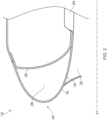
- FIG. 2 shows a cross-section of a portion of the air intake 12.
- the air intake 12 comprises a lip skin 18 that forms an air intake lip 20 that extends around the circumference of the nacelle and forms the leading edge of the nacelle.
- the lip skin 18 has a curved surface 22 that extends circumferentially about the longitudinal axis A1 of the nacelle, defining a radially inner surface of the lip 20. In this way, the most forward portion of the inner surface of the annular inlet to the nacelle is defined by the curved surface 22 of lip skin 18.
- the air intake 12 of Figure 2 also comprises an inner barrel 24.
- a radially inner surface of inner barrel 24 is aligned with the curved surface 22 of lip skin 18, such that the lip skin curved surface 22 and the radially inner surface of inner barrel 24 create an aerosmooth surface for airflow into the nacelle.
- an upstream portion of the inlet to the nacelle is defined by the curved surface 22 of the lip skin 18, and a downstream portion of the inlet to the nacelle is defined by the radially inner surface of the inner barrel 24.
- the inner barrel 24 is connected to fan casing 14.
- the inner barrel 24 is acoustically treated in that the inner barrel 24 comprises a sound attenuating layer, which may be a honeycomb sheet or a different low density material, such as a cellular foam or sponge.
- the sound attenuating layer is arranged between the radially inner and outer surfaces of the inner barrel 24.
- air intake 12 also comprises a forward bulkhead 26 extending across the interior of the air intake lip 20, such that the lip skin 18 and the forward bulkhead together define a compartment 28.
- the compartment 28 may contain hot gas, or a duct for delivering hot gas, and may have ventilation holes 19, disposed on a radially inner side of the leading edge of the nacelle 10, arranged to exhaust hot gas, which may pass over a radially inner surface of the inlet 12 in order to prevent build-up of ice on the surface of the nacelle.
- Figure 3 shows in more detail a cross-section of a known junction between the lip skin 18, the inner barrel 24 and the forward bulkhead 26 of the nacelle intake 12 (this region being known as an A0 junction).
- the forward bulkhead 26 is connected directly to the lip skin 18 and, in a separate connection, the lip skin 18 is connected to the inner barrel 24.
- the lip skin 18 may be connected to the inner barrel 24 at a thin portion of the inner barrel 24a via a first joining plate 17a and the forward bulkhead 26 may be connected to the lip skin 18 via a second joining plate 17b.
- the first joining plate 17a which connects the inner barrel 24 and the lip skin 18, may be mounted over the second joining plate 17b, as shown in Figure 3 .
- this requires a tapered portion 24t of the inner barrel 24, for transitioning from a thick portion having a sound attenuating layer to a thinner region 24a.
- the first and second joining plates 17a, 17b cannot be easily attached to sound attenuating sheets, which results in an area A that is not acoustically treated.
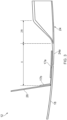
- a first embodiment of the invention is shown in cross-section in Figure 4 .
- the lip skin 118 is connected to the inner barrel 124 via a joining frame 130.
- the inner barrel 124 has a radially outer surface 124a, which is defined by a radially outer structural sheet 125a and a radially inner surface 124b, which is defined by a radially inner structural sheet 125b.
- the structural sheets 125a, 125b may each be a composite sheet or a metallic sheet such as aluminium.
- a sound attenuating sheet 132 may be positioned between the structural sheets 125a and 125b.
- the radially inner sheet 125b may have holes so that sound waves from the inlet 12 can enter and be absorbed by the sound attenuating sheet 132. For this reason, a greater force may be carried by the radially outer structural sheet 125a.
- a first portion 130a of the joining frame extends over and is fixed to the radially outer surface 124a of the inner barrel 124 and in particular to the radially outer sheet 125a, such that the first portion 130a extends at least partially over the sound attenuating layer 132 that is positioned between the radially inner 125b and radially outer sheet 125a of the inner barrel 124.
- the inner barrel 124 extends aft of the joining frame 130.
- a second portion 130b of the joining frame 130 extends over a forward surface 124c of the inner barrel 124, the forward surface 124c, which may also be referred to as an end surface, is an annular surface substantially perpendicular to the radially inner and radially outer surfaces 124a, b.
- the second portion 130b of the joining frame 130 is fixed to the lip skin 118 and in particular to a radially extending annular surface 118b of the lip skin 118.
- the overlapping portions of the joining frame 130 and the lip skin 118 may provide a strong joint between the lip skin 118 and the inner barrel 130.
- the thickness of the sound attenuating layer 132 at the end surface 124c may be the same as that of the rest of the inner barrel 124 (i.e. the inner barrel thickness is not tapered towards the end surface). As explained above, this means that the loss of acoustic attenuation towards end surface 124c may be reduced.
- the second portion 130b of the joining frame 130 may be substantially perpendicular to the first portion 130a, and may define a flat surface extending radially outwardly from the curved surfaces 124a, b of the inner barrel 124.
- the forward bulkhead 126 may be fixed to the lip skin 118 as in known arrangements.
- Figure 5 illustrates a cross-section of the connection between the forward bulkhead 126 and the inner barrel 124 via the joining frame 130.
- a first portion 130a of the joining frame is fixed to the radially outer surface 124a of the inner barrel 124 in the manner described above in reference to Figure 4 (i.e. with the first portion 130a extending at least partially over the sound attenuating layer 132).
- a third portion 130c of the joining frame 130 may overlap and be fixed to at least a portion 126c of the forward bulkhead 126.
- the inner barrel 124 may comprise a tapered portion, ending in a thin portion 124d, which may be connected to the lip skin 118 via a joining plate 117b as in known arrangements.
- the inner barrel 124 may have a substantially constant thickness from the fan casing 14 to the forward bulkhead 126 and may therefore provide improved sound attenuation.
- Figure 6 illustrates a cross-section of an integrated A0 junction between the inner barrel 124, the lip skin 118 and the forward bulkhead 126, via an integral joining frame 130.
- Figure 6 comprises aspects of the configurations described above with reference to Figures 4 and 5 .
- the lip skin-to-inner barrel connection may be the same as that described in reference to Figure 4
- the forward bulkhead-to-inner barrel connection may be the same as that described in reference to Figure 5 .
- the integral joining frame 130 may provide improved strength and/or reduced weight.
- the joining frame may also be comprised of multiple pieces to aid assembly, with each piece defining a part of the joining frame 130, such as a sector of an annulus, each annular sector may comprise integrally formed first, second and third portions 130a, 130b, 130c. In this way, the first, second and third portions 130a, 130b, 130c of each piece of the joining frame 130 may be formed together as a single piece.
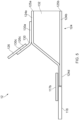
- Figure 7 shows a cross-section of a third embodiment, incorporating an alternative connection between the lip skin 118 and the inner barrel 124 via the joining frame 130.
- the joining frame 130 comprises a fourth portion 130d arranged to overlap a portion 118d of the lip skin 118.
- the fourth portion 130d of the joining frame 130 has a joining frame curved surface having a shape arranged to extend over the curvature of the lip skin 118.
- the fourth portion 130d may be substantially parallel to the inner and/or outer surfaces 124a, 124b of the inner barrel 124 and/or to the first portion 130a of the joining frame 130.
- the fourth portion 130d may extend from the second portion 130b substantially perpendicularly.
- the fourth portion 130d may be integrally formed with the first, second, and/or third portions 130a, 130b, 130c in the same way as set out above in respect of figures 5 and 6 .
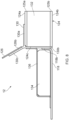
- Figure 8 shows a fourth embodiment, substantially similar to the embodiment of figure 6 , incorporating a lip skin sound attenuating layer 134, which may further reduce noise escaping from the inlet 12.
- the lip skin sound attenuating layer 134 may be on a radially outer side of the lip skin 118, which may be a structural sheet.
- An additional structural sheet 136 may be provided over the lip skin sound attenuating layer 134.
- the additional structural sheet 136 may be fixed to the joining frame 130 and to the lip skin 118 at a location forward of the lip skin sound attenuating sheet 134, as illustrated in Figure 8 .
- At least a portion of the lip skin 118 may be perforated similarly to the radially inner structural sheet 125b of the inner barrel 124 and a significant portion of the structural strength of the lip skin may be provided by the additional structural sheet 136.
- Figure 9 shows a cross-section of a fifth embodiment.
- the lip skin provides an acoustic treatment section 134, which comprises a radially inner structural sheet 134a, a radially outer structural sheet 134b and a sound attenuating layer 135 between the radially inner and outer structural sheets 134a, 134b.
- the inner structural sheet 134a may have holes in order to allow sound waves to enter the lip skin sound attenuating sheet 135 and thereby be absorbed.
- the fourth portion 130d of the joining frame 130 overlaps and is fixed to the radially outer structural sheet 134b, which extends over the lip skin sound attenuating layer 135.
- the second portion 130b of the joining frame 130 extends only partially over the end surface 124c of the inner barrel 124 (the second portion 130b may otherwise be identical to that described in previous examples).
- a second joining frame 138 connects the additional acoustic treatment section 134 to the lip skin 118.
- a first portion 138a of the second joining frame 138 may overlap a radially outer portion of the acoustically treated section such that it extends over the sound attenuating sheet 135 and is fixed to the radially outer structural sheet 134b.
- a second portion 138b of the second joining frame 138 may overlap a portion of the lip skin 118 and thereby be fixed to the lip skin 118.
- a third portion 138c of the second joining frame 138 may extend over an end surface 134c of the acoustically treated section 134.
- the second joining frame 138 is positioned at a forward end of the acoustically treated section 134, opposite the end adjacent to the inner barrel 134.
- FIG 10 shows the joining frame 130.
- the illustrated joining frame 130 corresponds to the cross-section shown in Figure 7 , this concept is applicable to any of the embodiments discussed above, and to the second joining frame 138 of Figure 9 .
- the joining frame 130 is a substantially circular component which may be a single piece or may be formed of multiple pieces, for example two annular portions 142a, 142b which may be connected via shorter connecting pieces 144a, 144b.
- connection between the joining frame 130 and any other element of the nacelle may be by means of mechanical fasteners and/or splice plates, or using any other method known to the skilled person, such as welding or adhesive bonding.
Landscapes
- Engineering & Computer Science (AREA)
- Chemical & Material Sciences (AREA)
- Combustion & Propulsion (AREA)
- Aviation & Aerospace Engineering (AREA)
- Mechanical Engineering (AREA)
- General Engineering & Computer Science (AREA)
- Wind Motors (AREA)
- Structures Of Non-Positive Displacement Pumps (AREA)
- Body Structure For Vehicles (AREA)
Description
- This invention relates to an aircraft nacelle inlet and an aircraft nacelle incorporating such an inlet.
- There is a desire to isolate sounds in one section of an aircraft from other sections of the aircraft and/or the outside of the aircraft. This is particularly important for an aircraft nacelle, and even more particularly for the inlet thereof, where noise generated by the engine and by airflow at the intake to the engine should be contained or attenuated in order to avoid excessive noise pollution.
- Conventional sound attenuation is provided by sound attenuation layers, which may be non-structural layers. Known aircraft nacelle inlet design requires a junction between a lip skin, a forward bulkhead and an inner barrel assembly (known as an A0 junction), which is formed as two separate joints, with the joint between the forward bulkhead and lip skin being separate from the joint between the lip skin and the inner barrel.
- Known A0 junctions suffer from a large area which has no sound attenuating layer or a sound attenuating layer which is tapered to a reduced thickness, which may be referred to as not acoustically treated, and may thereby allow excess noise to escape from an air inlet of a nacelle.
- The prior art is illustrated by documents
EP 2241504 A2 andFR 2954282 A1 - This invention enables the area which can be acoustically treated between the lip skin and the acoustically treated inner barrel to be improved and may thereby reduce the amount of noise leaving the nacelle.
- According to a first aspect of the invention there is provided an aircraft nacelle inlet comprising: a lip skin defining a curved surface of the inlet, the curved surface extending about a longitudinal axis of the inlet; a forward bulkhead; an inner barrel having a radially inner surface defining a surface of the inlet, a radially outer surface, and a sound attenuating layer arranged between the radially inner and radially outer surfaces; and a joining frame fixed to the lip skin and/or to the forward bulkhead; wherein a first portion of the joining frame extends over at least a portion of the sound attenuating layer of the inner barrel and is fixed to the radially outer surface of the inner barrel, wherein a second portion of the joining frame is substantially perpendicular to the first portion and defines a flat surface extending over an end surface of the inner barrel.
- With such an arrangement, a sound attenuating layer of the inner barrel may extend further forward, and/or may not be tapered. Therefore, the acoustically treatable area may be increased. In particular, providing a joining frame that extends over at least a portion of the sound attenuating layer of the inner barrel provides a strong mounting point to the acoustically treated inner barrel. This means that the sound attenuating layer between the radially inner and outer surfaces of the inner barrel need not be tapered to create a strong mounting point on the inner barrel, as is often necessary using a conventional A0 junction. In this way, the acoustically treated area of the inner barrel is increased and noise pollution may be reduced.
- Additionally, or alternatively, by mounting the forward bulkhead to the inner barrel via the joining frame, the inner barrel, and therefore also the sound attenuating layer, can be extended forward. This increases the acoustically treated area of the inner barrel.
- The lip skin and the bulkhead may together define a compartment. The compartment may be used to provide an anti-icing function for the air inlet of the nacelle by allowing hot gases to vent out forward of the A0 junction and therefore prevent build-up of ice on a radially inner surface of the inlet.
- The inner barrel may have an end surface substantially perpendicular to the radially outer surface and/or the radially inner surface of the inner barrel. Such an inner barrel with a squared-off end surface may increase the acoustically treated area of the inner barrel and therefore improve acoustic attenuation as there may be no tapering of the thickness of the acoustic attenuation layer.
- The joining frame comprises a second portion and the second portion of the joining frame extends over the end surface of the inner barrel and may thereby provide a strong connection between the inner barrel and the lip skin, optionally between a radially outer surface of the inner barrel and the lip skin.
- The joining frame may further comprise a third portion and the third portion of the joining frame may extend over or overlap at least a portion of the forward bulkhead. Such an arrangement may improve the transfer of loads from the forward bulkhead to the inner barrel and may provide a more secure connection.
- The joining frame may further comprise a fourth portion, the fourth portion being a curved surface of the joining frame, designated as the joining frame curved surface hereon, arranged to overlap the lip skin. Such an arrangement may provide a stronger joint between the joining frame and the lip skin.
- The joining frame may comprise, for instance, the first portion and the fourth portion without necessarily also comprising the second and/or third portion. Equally, the joining frame may comprise, for instance, the first portion and the third portion without necessarily also comprising the second portion. The presence of a third or fourth portion does not necessitate the presence of a second or third portion respectively.
- The lip skin may have a flat surface extending radially outwardly from the curved surface defined by the lip skin and at least a portion of the flat surface of the lip skin may overlap the joining frame, optionally the second portion of the joining frame. With such an arrangement, load may be transferred from the lip skin through the joining frame and into the radially outer surface of the inner barrel. Such an arrangement allows an additional acoustic treatment to be applied to the lip skin. Mounting the flat surface of the lip skin to the joining frame may enable the space between the lip skin and the acoustically treated area of the inner barrel to be reduced.
- The first portion of the joining frame may be formed integrally with the second, third, and/or fourth portions. Such an arrangement may improve the strength of the joining frame.
- The lip skin may comprise a structural sheet defining the lip skin curved surface and a lip skin sound attenuating layer arranged on a radially outer side of the structural sheet. With such an arrangement, additional sound attenuation may be provided forward of the inner barrel.
- The lip skin may further comprise a further structural sheet on a radially outer surface of the lip skin sound attenuating layer, the further structural sheet being fixed to the joining frame. Such an arrangement may provide improved strength of the lip skin and protection to the sound attenuating sheet.
- The aircraft nacelle may further comprise a second joining frame, the second joining frame being coupled to the further structural sheet and to the structural sheet of the lip skin. Such an arrangement may reduce any prospect of separation of the layers on the lip skin. This arrangement may also improve the stress resistance of the lip skin portion including the additional acoustic treatment.
- The joining frame and/or the second joining frame may be annular. The joining frame and/or second joining frame may be formed of multiple parts, each part being a sector of an annulus, optionally two semi-annular parts. This may provide a more easily assembled arrangement.
- The aircraft nacelle may further comprise ventilation holes through a skin of the nacelle forward of the joining frame. These may provide an anti-icing function to the inlet.
- The inner barrel may comprise a radially inner structural sheet defining the radially inner surface and a radially outer structural sheet defining the radially outer surface, the sound attenuating layer being disposed between the radially inner and radially outer structural sheets. With such an arrangement, the strength of the inner barrel may be improved.
- According to a second aspect of the invention, there is provided a nacelle including an air inlet according to any aspect described above.
- Embodiments of the invention will now be described with reference to the accompanying drawings, in which:
-
Figure 1 shows an aircraft nacelle; -
Figure 2 shows a cross-section of an air inlet of a nacelle; -
Figure 3 shows a cross-section of a known junction between the lip skin, forward bulkhead and inner barrel; -
Figure 4 shows a cross-section of an air inlet according to an embodiment of the invention; -
Figure 5 shows a cross-section of an air inlet that does not constitute an embodiment of the invention; -
Figure 6 shows a cross-section of an air inlet according to an embodiment of the invention; -
Figure 7 shows a cross-section of an air inlet according to an embodiment of the invention; -
Figure 8 shows a cross-section of an air inlet according to an embodiment of the invention; -
Figure 9 shows a cross-section of an air inlet according to an embodiment of the invention; -
Figure 10 shows a joining frame according to the invention. -
Figure 1 shows anaircraft nacelle 10, the nacelle exterior being formed of three primary parts: anair intake 12, which may also be referred to as anair inlet 12, afan casing 14 and athrust reverser 16. The purpose of theair intake 12, which may be referred to as an inlet cowling, is to direct airflow into the fan and into the engine and to create an aerosmooth surface for airflow over the exterior of theaircraft nacelle 10. The airflow into theinlet cowling 12 generates a significant amount of noise, and so theinlet cowling 12 should function to attenuate the noise and prevent excessive noise pollution outside of the aircraft. - As shown in
Figure 1 , the nacelle may have a longitudinal axis A1 extending through the nacelle. The longitudinal axis A1 may be generally aligned with an intended direction of motion of the nacelle. The term radial direction as used herein is defined relative to the longitudinal axis A1, with radially inner areas being closer to the longitudinal axis A1 and radially outer areas being further from the longitudinal axis A1. The longitudinal axis A1 may equally be regarded as the longitudinal axis of theair intake 12. -
Figure 2 shows a cross-section of a portion of theair intake 12. Theair intake 12 comprises alip skin 18 that forms anair intake lip 20 that extends around the circumference of the nacelle and forms the leading edge of the nacelle. Thelip skin 18 has acurved surface 22 that extends circumferentially about the longitudinal axis A1 of the nacelle, defining a radially inner surface of thelip 20. In this way, the most forward portion of the inner surface of the annular inlet to the nacelle is defined by thecurved surface 22 oflip skin 18. - The
air intake 12 ofFigure 2 also comprises aninner barrel 24. A radially inner surface ofinner barrel 24 is aligned with thecurved surface 22 oflip skin 18, such that the lip skin curvedsurface 22 and the radially inner surface ofinner barrel 24 create an aerosmooth surface for airflow into the nacelle. In this way, an upstream portion of the inlet to the nacelle is defined by thecurved surface 22 of thelip skin 18, and a downstream portion of the inlet to the nacelle is defined by the radially inner surface of theinner barrel 24. At an aft end of theinner barrel 24, theinner barrel 24 is connected tofan casing 14. - The
inner barrel 24 is acoustically treated in that theinner barrel 24 comprises a sound attenuating layer, which may be a honeycomb sheet or a different low density material, such as a cellular foam or sponge. The sound attenuating layer is arranged between the radially inner and outer surfaces of theinner barrel 24. - As shown in
Figure 2 ,air intake 12 also comprises aforward bulkhead 26 extending across the interior of theair intake lip 20, such that thelip skin 18 and the forward bulkhead together define acompartment 28. Thecompartment 28 may contain hot gas, or a duct for delivering hot gas, and may haveventilation holes 19, disposed on a radially inner side of the leading edge of thenacelle 10, arranged to exhaust hot gas, which may pass over a radially inner surface of theinlet 12 in order to prevent build-up of ice on the surface of the nacelle. -
Figure 3 shows in more detail a cross-section of a known junction between thelip skin 18, theinner barrel 24 and theforward bulkhead 26 of the nacelle intake 12 (this region being known as an A0 junction). In this design theforward bulkhead 26 is connected directly to thelip skin 18 and, in a separate connection, thelip skin 18 is connected to theinner barrel 24. Thelip skin 18 may be connected to theinner barrel 24 at a thin portion of theinner barrel 24a via a first joiningplate 17a and theforward bulkhead 26 may be connected to thelip skin 18 via a second joiningplate 17b. The first joiningplate 17a, which connects theinner barrel 24 and thelip skin 18, may be mounted over the second joiningplate 17b, as shown inFigure 3 . - As shown in
Figure 3 , this requires a taperedportion 24t of theinner barrel 24, for transitioning from a thick portion having a sound attenuating layer to athinner region 24a. This results in an area that cannot be acoustically treated as the taperedportion 24t may have sub-optimal sound attenuation due to having a thinner sound attenuating layer. Additionally, the first and second joiningplates - A first embodiment of the invention is shown in cross-section in
Figure 4 . Here, thelip skin 118 is connected to theinner barrel 124 via a joiningframe 130. Theinner barrel 124 has a radiallyouter surface 124a, which is defined by a radially outerstructural sheet 125a and a radiallyinner surface 124b, which is defined by a radially innerstructural sheet 125b. Thestructural sheets sound attenuating sheet 132 may be positioned between thestructural sheets inner sheet 125b may have holes so that sound waves from theinlet 12 can enter and be absorbed by thesound attenuating sheet 132. For this reason, a greater force may be carried by the radially outerstructural sheet 125a. - A
first portion 130a of the joining frame extends over and is fixed to the radiallyouter surface 124a of theinner barrel 124 and in particular to the radiallyouter sheet 125a, such that thefirst portion 130a extends at least partially over thesound attenuating layer 132 that is positioned between the radially inner 125b and radiallyouter sheet 125a of theinner barrel 124. Theinner barrel 124 extends aft of the joiningframe 130. - A
second portion 130b of the joiningframe 130 extends over aforward surface 124c of theinner barrel 124, theforward surface 124c, which may also be referred to as an end surface, is an annular surface substantially perpendicular to the radially inner and radiallyouter surfaces 124a, b. - The
second portion 130b of the joiningframe 130 is fixed to thelip skin 118 and in particular to a radially extendingannular surface 118b of thelip skin 118. The overlapping portions of the joiningframe 130 and thelip skin 118 may provide a strong joint between thelip skin 118 and theinner barrel 130. - In contrast to the known arrangement shown in
Figure 3 , the thickness of thesound attenuating layer 132 at theend surface 124c, and thus the distance between radially outer and radiallyinner sheets 125a, b atend surface 124c, may be the same as that of the rest of the inner barrel 124 (i.e. the inner barrel thickness is not tapered towards the end surface). As explained above, this means that the loss of acoustic attenuation towardsend surface 124c may be reduced. - The
second portion 130b of the joiningframe 130 may be substantially perpendicular to thefirst portion 130a, and may define a flat surface extending radially outwardly from thecurved surfaces 124a, b of theinner barrel 124. In this embodiment, theforward bulkhead 126 may be fixed to thelip skin 118 as in known arrangements. - A configuration of an air inlet that does not constitute an embodiment of the invention is shown in
Figure 5. Figure 5 illustrates a cross-section of the connection between theforward bulkhead 126 and theinner barrel 124 via the joiningframe 130. Afirst portion 130a of the joining frame is fixed to the radiallyouter surface 124a of theinner barrel 124 in the manner described above in reference toFigure 4 (i.e. with thefirst portion 130a extending at least partially over the sound attenuating layer 132). Athird portion 130c of the joiningframe 130 may overlap and be fixed to at least aportion 126c of theforward bulkhead 126. - In this configuration, the
inner barrel 124 may comprise a tapered portion, ending in athin portion 124d, which may be connected to thelip skin 118 via a joiningplate 117b as in known arrangements. However, in this arrangement, theinner barrel 124 may have a substantially constant thickness from thefan casing 14 to theforward bulkhead 126 and may therefore provide improved sound attenuation. - A second embodiment of the invention is shown in
Figure 6. Figure 6 illustrates a cross-section of an integrated A0 junction between theinner barrel 124, thelip skin 118 and theforward bulkhead 126, via an integral joiningframe 130.Figure 6 comprises aspects of the configurations described above with reference toFigures 4 and5 . The lip skin-to-inner barrel connection may be the same as that described in reference toFigure 4 , and the forward bulkhead-to-inner barrel connection may be the same as that described in reference toFigure 5 . - By integrating aspects of both of the configurations of
Figures 5 and6 , a greater sound attenuation may be achieved and the integral joiningframe 130, where the first, second andthird portions frame 130, such as a sector of an annulus, each annular sector may comprise integrally formed first, second andthird portions third portions frame 130 may be formed together as a single piece. -
Figure 7 shows a cross-section of a third embodiment, incorporating an alternative connection between thelip skin 118 and theinner barrel 124 via the joiningframe 130. Here, the joiningframe 130 comprises afourth portion 130d arranged to overlap aportion 118d of thelip skin 118. Thefourth portion 130d of the joiningframe 130 has a joining frame curved surface having a shape arranged to extend over the curvature of thelip skin 118. Thefourth portion 130d may be substantially parallel to the inner and/orouter surfaces inner barrel 124 and/or to thefirst portion 130a of the joiningframe 130. Thefourth portion 130d may extend from thesecond portion 130b substantially perpendicularly. Thefourth portion 130d may be integrally formed with the first, second, and/orthird portions figures 5 and6 . -
Figure 8 shows a fourth embodiment, substantially similar to the embodiment offigure 6 , incorporating a lip skinsound attenuating layer 134, which may further reduce noise escaping from theinlet 12. The lip skinsound attenuating layer 134 may be on a radially outer side of thelip skin 118, which may be a structural sheet. An additionalstructural sheet 136 may be provided over the lip skinsound attenuating layer 134. The additionalstructural sheet 136 may be fixed to the joiningframe 130 and to thelip skin 118 at a location forward of the lip skinsound attenuating sheet 134, as illustrated inFigure 8 . - In order to allow sound waves to enter the lip skin
sound attenuating layer 134, at least a portion of thelip skin 118 may be perforated similarly to the radially innerstructural sheet 125b of theinner barrel 124 and a significant portion of the structural strength of the lip skin may be provided by the additionalstructural sheet 136. -
Figure 9 shows a cross-section of a fifth embodiment. InFigure 9 , the lip skin provides anacoustic treatment section 134, which comprises a radially innerstructural sheet 134a, a radially outerstructural sheet 134b and asound attenuating layer 135 between the radially inner and outerstructural sheets structural sheet 134a may have holes in order to allow sound waves to enter the lip skinsound attenuating sheet 135 and thereby be absorbed. Thefourth portion 130d of the joiningframe 130 overlaps and is fixed to the radially outerstructural sheet 134b, which extends over the lip skinsound attenuating layer 135. In this arrangement, thesecond portion 130b of the joiningframe 130 extends only partially over theend surface 124c of the inner barrel 124 (thesecond portion 130b may otherwise be identical to that described in previous examples). - A second joining
frame 138 connects the additionalacoustic treatment section 134 to thelip skin 118. Afirst portion 138a of the second joiningframe 138 may overlap a radially outer portion of the acoustically treated section such that it extends over thesound attenuating sheet 135 and is fixed to the radially outerstructural sheet 134b. Asecond portion 138b of the second joiningframe 138 may overlap a portion of thelip skin 118 and thereby be fixed to thelip skin 118. Athird portion 138c of the second joiningframe 138 may extend over anend surface 134c of the acoustically treatedsection 134. As shown inFigure 9 , the second joiningframe 138 is positioned at a forward end of the acoustically treatedsection 134, opposite the end adjacent to theinner barrel 134. -
Figure 10 shows the joiningframe 130. Although the illustrated joiningframe 130 corresponds to the cross-section shown inFigure 7 , this concept is applicable to any of the embodiments discussed above, and to the second joiningframe 138 ofFigure 9 . The joiningframe 130 is a substantially circular component which may be a single piece or may be formed of multiple pieces, for example twoannular portions pieces - The joining frame described in any of the above embodiments has the advantage of improving the transfer of loads between the inner barrel and lip skin and/or forward bulkhead. In any of the embodiments described above, the connection between the joining
frame 130 and any other element of the nacelle may be by means of mechanical fasteners and/or splice plates, or using any other method known to the skilled person, such as welding or adhesive bonding. - It should be noted that the above-mentioned embodiments illustrate rather than limit the invention, and that those skilled in the art will be capable of designing many alternative embodiments without departing from the scope of the invention as defined by the appended claims. In the claims, any reference signs placed in parenthesis shall not be construed as limiting the claims. The word "comprising" does not exclude the presence of elements or steps other than those listed in any claim or the specification as a whole. The singular reference of an element does not exclude the plural reference of such elements and vice-versa. Parts of the invention may be implemented by means of hardware comprising several distinct elements. In a device claim enumerating several parts, several of these parts may be embodied by one and the same item of hardware. The mere fact that certain measures are recited in mutually different dependent claims does not indicate that a combination of these measures cannot be used to advantage.
Claims (15)
- An air inlet for an aircraft nacelle comprising:a lip skin (118) defining a curved surface of the inlet, the curved surface extending about a longitudinal axis of the inlet;a forward bulkhead (126);an inner barrel (124) having a radially inner surface (124b) defining a surface of the inlet, a radially outer surface (124a), and a sound attenuating layer (132) arranged between the radially inner and radially outer surfaces; anda joining frame (130) fixed to the lip skin and/or to the forward bulkhead;wherein a first portion (130a) of the joining frame extends over at least a portion of the sound attenuating layer of the inner barrel and is fixed to the radially outer surface of the inner barrel,characterised in that:a second portion (130b) of the joining frame is substantially perpendicular to the first portion and defines a flat surface extending over an end surface of the inner barrel.
- The air inlet of claim 1, wherein the inner barrel has an end surface substantially perpendicular to the radially outer surface and/or the radially inner surface.
- The air inlet of any preceding claim, wherein the joining frame further comprises a third portion (130c), the third portion extending over at least a portion of the forward bulkhead.
- The air inlet of any preceding claim, wherein the joining frame further comprises a fourth portion (130d), the fourth portion being a joining frame curved surface extending over at least a portion of the lip skin.
- The air inlet of claim 4, wherein the first portion of the joining frame is formed integrally with the second, third, and/or fourth portions.
- The air inlet of any preceding claim, wherein the lip skin has a flat surface extending radially outwardly from the curved surface and at least a portion of the flat surface of the lip skin overlaps the joining frame.
- The air inlet of any preceding claim, wherein the lip skin and the bulkhead together define a compartment.
- The air inlet of any preceding claim, wherein the lip skin comprises a structural sheet defining the curved surface and a lip skin sound attenuating layer (134) arranged on a radially outer side of the structural sheet.
- The air inlet of claim 8, wherein the lip skin further comprises a further structural sheet (136) on a radially outer surface of the lip skin sound attenuating layer, the further structural sheet being fixed to the joining frame.
- The air inlet of claim 9, further comprising a second joining frame (138), the second joining frame being coupled to the further structural sheet and to the structural sheet of the lip skin.
- The air inlet of any preceding claim, wherein the joining frame and/or the second joining frame is annular.
- The air inlet of claim 11, wherein the joining frame and/or the second joining frame is formed of multiple parts, each part being a sector of an annulus, optionally two semi-annular parts.
- The air inlet of any preceding claim, further comprising ventilation holes through the lip skin, the ventilation holes arranged forward of the joining frame and configured to vent hot gas for heating a radially inner surface of the inlet.
- The air inlet of any preceding claim, wherein the inner barrel comprises a radially inner structural sheet defining the radially inner surface and a radially outer structural sheet defining the radially outer surface, the sound attenuating layer being disposed between the radially inner and radially outer structural sheets.
- An aircraft nacelle including the air inlet of any preceding claim.
Applications Claiming Priority (2)
| Application Number | Priority Date | Filing Date | Title |
|---|---|---|---|
| GB1914916.0A GB2588204B (en) | 2019-10-15 | 2019-10-15 | Aircraft nacelle inlet |
| PCT/GB2020/052554 WO2021074609A1 (en) | 2019-10-15 | 2020-10-14 | Aircraft nacelle inlet |
Publications (2)
| Publication Number | Publication Date |
|---|---|
| EP4045410A1 EP4045410A1 (en) | 2022-08-24 |
| EP4045410B1 true EP4045410B1 (en) | 2024-04-24 |
Family
ID=68619620
Family Applications (1)
| Application Number | Title | Priority Date | Filing Date |
|---|---|---|---|
| EP20790044.0A Active EP4045410B1 (en) | 2019-10-15 | 2020-10-14 | Aircraft nacelle inlet |
Country Status (5)
| Country | Link |
|---|---|
| US (1) | US12006054B2 (en) |
| EP (1) | EP4045410B1 (en) |
| CN (1) | CN115103802B (en) |
| GB (1) | GB2588204B (en) |
| WO (1) | WO2021074609A1 (en) |
Families Citing this family (1)
| Publication number | Priority date | Publication date | Assignee | Title |
|---|---|---|---|---|
| FR3133593A1 (en) * | 2022-03-17 | 2023-09-22 | Safran Nacelles | Air inlet for the nacelle of an aircraft turbomachine and method of mounting an air inlet |
Family Cites Families (26)
| Publication number | Priority date | Publication date | Assignee | Title |
|---|---|---|---|---|
| US3933327A (en) * | 1974-08-30 | 1976-01-20 | Rohr Industries, Inc. | Aircraft anti-icing plenum |
| US4738416A (en) * | 1986-09-26 | 1988-04-19 | Quiet Nacelle Corporation | Nacelle anti-icing system |
| US6129311A (en) | 1997-07-30 | 2000-10-10 | The Boeing Company | Engine nacelle outer cowl panel with integral track fairings |
| FR2767560B1 (en) * | 1997-08-19 | 1999-11-12 | Aerospatiale | NOISE REDUCTION ASSEMBLY FOR AN AIRCRAFT TURBOREACTOR |
| FR2869360B1 (en) | 2004-04-27 | 2006-07-14 | Airbus France Sas | NOISE REDUCING ASSEMBLY FOR AIRCRAFT TURBOJET ENGINE |
| FR2888816B1 (en) | 2005-07-20 | 2007-08-31 | Airbus France Sas | MONOLITHIC AUTO-RAIDI PANEL |
| FR2912781B1 (en) | 2007-02-20 | 2009-04-10 | Airbus France Sas | COATING FOR ACOUSTIC TREATMENT INCORPORATING THE FUNCTION OF TREATING FROST WITH HOT AIR |
| FR2924409B1 (en) * | 2007-12-03 | 2010-05-14 | Airbus France | AIRCRAFT NACELLE COMPRISING MEANS FOR HOT AIR EXHAUST |
| US7837150B2 (en) | 2007-12-21 | 2010-11-23 | Rohr, Inc. | Ice protection system for a multi-segment aircraft component |
| US7798285B2 (en) | 2008-11-14 | 2010-09-21 | Rohr, Inc. | Acoustic barrel for aircraft engine nacelle including crack and delamination stoppers |
| EP2391542B1 (en) * | 2009-02-02 | 2014-07-30 | Airbus Operations (S.A.S.) | Engine nacelle having a noise reducing structure |
| FR2952032B1 (en) * | 2009-11-05 | 2012-04-06 | Airbus Operations Sas | AIRCRAFT NACELLE COMPRISING AN OPTIMIZED ACOUSTIC TREATMENT SYSTEM |
| US8616498B2 (en) * | 2009-03-31 | 2013-12-31 | The Boeing Company | Aircraft insulation systems and methods |
| US8197191B2 (en) * | 2009-04-14 | 2012-06-12 | Rohr, Inc. | Inlet section of an aircraft engine nacelle |
| FR2954282B1 (en) * | 2009-12-22 | 2012-02-17 | Airbus Operations Sas | NACELLE INCORPORATING A JUNCTION ELEMENT BETWEEN A LIP AND AN ACOUSTICAL ATTENUATION PANEL |
| FR2980775B1 (en) | 2011-10-03 | 2014-07-11 | Airbus Operations Sas | AIRCRAFT NACELLE COMPRISING A PANEL FOR ACOUSTIC TREATMENT INTEGRATING HOT AIR CHANNELS AND AT LEAST ONE STABILIZING CHAMBER |
| FR2980902B1 (en) | 2011-10-04 | 2013-09-13 | Aircelle Sa | STRUCTURAL ACOUSTIC ATTENUATION PANEL |
| US8800714B2 (en) | 2012-06-26 | 2014-08-12 | Hexcel Corporation | Structure with active acoustic openings |
| US9168716B2 (en) | 2012-09-14 | 2015-10-27 | The Boeing Company | Metallic sandwich structure having small bend radius |
| US9663238B2 (en) * | 2013-11-11 | 2017-05-30 | The Boeing Company | Nacelle inlet lip skin with pad-up defining a developable surface having parallel ruling lines |
| US10800117B2 (en) | 2015-03-12 | 2020-10-13 | Rohr, Inc. | Method of forming an acoustic bond panel with insertable acoustic assemblies |
| US9927374B2 (en) | 2015-06-10 | 2018-03-27 | The Boeing Company | Optical scanning assembly and method of inspecting a channel |
| US9779715B1 (en) | 2016-07-26 | 2017-10-03 | Hexcel Corporation | Method for making contoured acoustic structures |
| FR3055612B1 (en) | 2016-09-06 | 2022-03-04 | Airbus Operations Sas | COMPARTMENTED STRUCTURE FOR ACOUSTIC TREATMENT AND DE-ICING OF AN AIRCRAFT NACELLE AND AIRCRAFT NACELLE INCORPORATING SAID STRUCTURE |
| US11325717B2 (en) * | 2016-10-13 | 2022-05-10 | Airbus Operations Sas | Aircraft nacelle including a link between a conduit of an air inlet and a conduit of an engine |
| FR3087489B1 (en) * | 2018-10-18 | 2022-12-09 | Airbus Operations Sas | FRONT PART OF AN AIRCRAFT PROPULSION GROUP NACELLE COMPRISING A MAIN STRUCTURE PROPAGATION PATH BETWEEN AN AIR INTAKE LIP AND A BACK SKIN OF AN ACOUSTIC PANEL |
-
2019
- 2019-10-15 GB GB1914916.0A patent/GB2588204B/en active Active
-
2020
- 2020-10-14 WO PCT/GB2020/052554 patent/WO2021074609A1/en not_active Ceased
- 2020-10-14 EP EP20790044.0A patent/EP4045410B1/en active Active
- 2020-10-14 CN CN202080071636.9A patent/CN115103802B/en active Active
- 2020-10-14 US US17/766,852 patent/US12006054B2/en active Active
Also Published As
| Publication number | Publication date |
|---|---|
| GB2588204A (en) | 2021-04-21 |
| GB2588204B (en) | 2022-09-14 |
| EP4045410A1 (en) | 2022-08-24 |
| WO2021074609A1 (en) | 2021-04-22 |
| CN115103802B (en) | 2025-05-13 |
| GB201914916D0 (en) | 2019-11-27 |
| US12006054B2 (en) | 2024-06-11 |
| CN115103802A (en) | 2022-09-23 |
| US20230202666A1 (en) | 2023-06-29 |
Similar Documents
| Publication | Publication Date | Title |
|---|---|---|
| US9897007B2 (en) | Thrust reverser-integrated track beam and inner fixed structure | |
| CN102301122B (en) | Acoustic attenuation panel for aircraft engine nacelle | |
| US9403599B2 (en) | Inlet section of an aircraft engine nacelle | |
| US6920958B2 (en) | Annular acoustic panel | |
| CN109838311B (en) | Sound insulation panel with structural partition | |
| US9051899B2 (en) | Exhaust cone for aircraft turbojet engine | |
| US7798285B2 (en) | Acoustic barrel for aircraft engine nacelle including crack and delamination stoppers | |
| EP1880941B1 (en) | System for joining acoustic cellular panel sections in edge-to-edge relation | |
| US9016042B2 (en) | Reinforcement members for aircraft propulsion system components configured to address delamination of the inner fixed structure | |
| US11325718B2 (en) | Aircraft propulsion system assembly including one or more acoustic panels | |
| US7503425B2 (en) | Integrated inlet attachment | |
| EP3623295B1 (en) | Nacelle inlet, gas turbine engine nacelle comprising such an inlet and method of manufacturing such an inlet | |
| US10738738B2 (en) | Nacelle with bifurcation extension and integral structural reinforcement | |
| EP3594127B1 (en) | Active laminar flow control system with composite panel | |
| EP2781728A2 (en) | Thrust reverser inner fixed structure with corner fitting | |
| EP2530016A2 (en) | Aircraft engine cowl and process therefor | |
| CN104105868A (en) | Composite fan containment case assembly | |
| CA2292096C (en) | Backside fitting attachment for nacelle acoustic panels | |
| EP4045410B1 (en) | Aircraft nacelle inlet | |
| US11448161B2 (en) | Acoustic fairing |
Legal Events
| Date | Code | Title | Description |
|---|---|---|---|
| STAA | Information on the status of an ep patent application or granted ep patent |
Free format text: STATUS: UNKNOWN |
|
| STAA | Information on the status of an ep patent application or granted ep patent |
Free format text: STATUS: THE INTERNATIONAL PUBLICATION HAS BEEN MADE |
|
| PUAI | Public reference made under article 153(3) epc to a published international application that has entered the european phase |
Free format text: ORIGINAL CODE: 0009012 |
|
| STAA | Information on the status of an ep patent application or granted ep patent |
Free format text: STATUS: REQUEST FOR EXAMINATION WAS MADE |
|
| 17P | Request for examination filed |
Effective date: 20220329 |
|
| AK | Designated contracting states |
Kind code of ref document: A1 Designated state(s): AL AT BE BG CH CY CZ DE DK EE ES FI FR GB GR HR HU IE IS IT LI LT LU LV MC MK MT NL NO PL PT RO RS SE SI SK SM TR |
|
| DAV | Request for validation of the european patent (deleted) | ||
| DAX | Request for extension of the european patent (deleted) | ||
| GRAP | Despatch of communication of intention to grant a patent |
Free format text: ORIGINAL CODE: EPIDOSNIGR1 |
|
| STAA | Information on the status of an ep patent application or granted ep patent |
Free format text: STATUS: GRANT OF PATENT IS INTENDED |
|
| INTG | Intention to grant announced |
Effective date: 20240123 |
|
| GRAS | Grant fee paid |
Free format text: ORIGINAL CODE: EPIDOSNIGR3 |
|
| GRAA | (expected) grant |
Free format text: ORIGINAL CODE: 0009210 |
|
| STAA | Information on the status of an ep patent application or granted ep patent |
Free format text: STATUS: THE PATENT HAS BEEN GRANTED |
|
| AK | Designated contracting states |
Kind code of ref document: B1 Designated state(s): AL AT BE BG CH CY CZ DE DK EE ES FI FR GB GR HR HU IE IS IT LI LT LU LV MC MK MT NL NO PL PT RO RS SE SI SK SM TR |
|
| REG | Reference to a national code |
Ref country code: GB Ref legal event code: FG4D |
|
| REG | Reference to a national code |
Ref country code: CH Ref legal event code: EP |
|
| REG | Reference to a national code |
Ref country code: DE Ref legal event code: R096 Ref document number: 602020029719 Country of ref document: DE |
|
| REG | Reference to a national code |
Ref country code: IE Ref legal event code: FG4D |
|
| REG | Reference to a national code |
Ref country code: LT Ref legal event code: MG9D |
|
| REG | Reference to a national code |
Ref country code: NL Ref legal event code: MP Effective date: 20240424 |
|
| REG | Reference to a national code |
Ref country code: AT Ref legal event code: MK05 Ref document number: 1679357 Country of ref document: AT Kind code of ref document: T Effective date: 20240424 |
|
| PG25 | Lapsed in a contracting state [announced via postgrant information from national office to epo] |
Ref country code: NL Free format text: LAPSE BECAUSE OF FAILURE TO SUBMIT A TRANSLATION OF THE DESCRIPTION OR TO PAY THE FEE WITHIN THE PRESCRIBED TIME-LIMIT Effective date: 20240424 |
|
| PG25 | Lapsed in a contracting state [announced via postgrant information from national office to epo] |
Ref country code: NL Free format text: LAPSE BECAUSE OF FAILURE TO SUBMIT A TRANSLATION OF THE DESCRIPTION OR TO PAY THE FEE WITHIN THE PRESCRIBED TIME-LIMIT Effective date: 20240424 |
|
| PG25 | Lapsed in a contracting state [announced via postgrant information from national office to epo] |
Ref country code: IS Free format text: LAPSE BECAUSE OF FAILURE TO SUBMIT A TRANSLATION OF THE DESCRIPTION OR TO PAY THE FEE WITHIN THE PRESCRIBED TIME-LIMIT Effective date: 20240824 |
|
| PG25 | Lapsed in a contracting state [announced via postgrant information from national office to epo] |
Ref country code: BG Free format text: LAPSE BECAUSE OF FAILURE TO SUBMIT A TRANSLATION OF THE DESCRIPTION OR TO PAY THE FEE WITHIN THE PRESCRIBED TIME-LIMIT Effective date: 20240424 |
|
| PG25 | Lapsed in a contracting state [announced via postgrant information from national office to epo] |
Ref country code: FI Free format text: LAPSE BECAUSE OF FAILURE TO SUBMIT A TRANSLATION OF THE DESCRIPTION OR TO PAY THE FEE WITHIN THE PRESCRIBED TIME-LIMIT Effective date: 20240424 Ref country code: HR Free format text: LAPSE BECAUSE OF FAILURE TO SUBMIT A TRANSLATION OF THE DESCRIPTION OR TO PAY THE FEE WITHIN THE PRESCRIBED TIME-LIMIT Effective date: 20240424 |
|
| PG25 | Lapsed in a contracting state [announced via postgrant information from national office to epo] |
Ref country code: GR Free format text: LAPSE BECAUSE OF FAILURE TO SUBMIT A TRANSLATION OF THE DESCRIPTION OR TO PAY THE FEE WITHIN THE PRESCRIBED TIME-LIMIT Effective date: 20240725 |
|
| PG25 | Lapsed in a contracting state [announced via postgrant information from national office to epo] |
Ref country code: PT Free format text: LAPSE BECAUSE OF FAILURE TO SUBMIT A TRANSLATION OF THE DESCRIPTION OR TO PAY THE FEE WITHIN THE PRESCRIBED TIME-LIMIT Effective date: 20240826 |
|
| PG25 | Lapsed in a contracting state [announced via postgrant information from national office to epo] |
Ref country code: ES Free format text: LAPSE BECAUSE OF FAILURE TO SUBMIT A TRANSLATION OF THE DESCRIPTION OR TO PAY THE FEE WITHIN THE PRESCRIBED TIME-LIMIT Effective date: 20240424 |
|
| PG25 | Lapsed in a contracting state [announced via postgrant information from national office to epo] |
Ref country code: AT Free format text: LAPSE BECAUSE OF FAILURE TO SUBMIT A TRANSLATION OF THE DESCRIPTION OR TO PAY THE FEE WITHIN THE PRESCRIBED TIME-LIMIT Effective date: 20240424 |
|
| PG25 | Lapsed in a contracting state [announced via postgrant information from national office to epo] |
Ref country code: PL Free format text: LAPSE BECAUSE OF FAILURE TO SUBMIT A TRANSLATION OF THE DESCRIPTION OR TO PAY THE FEE WITHIN THE PRESCRIBED TIME-LIMIT Effective date: 20240424 |
|
| PG25 | Lapsed in a contracting state [announced via postgrant information from national office to epo] |
Ref country code: LV Free format text: LAPSE BECAUSE OF FAILURE TO SUBMIT A TRANSLATION OF THE DESCRIPTION OR TO PAY THE FEE WITHIN THE PRESCRIBED TIME-LIMIT Effective date: 20240424 |
|
| PG25 | Lapsed in a contracting state [announced via postgrant information from national office to epo] |
Ref country code: PT Free format text: LAPSE BECAUSE OF FAILURE TO SUBMIT A TRANSLATION OF THE DESCRIPTION OR TO PAY THE FEE WITHIN THE PRESCRIBED TIME-LIMIT Effective date: 20240826 Ref country code: PL Free format text: LAPSE BECAUSE OF FAILURE TO SUBMIT A TRANSLATION OF THE DESCRIPTION OR TO PAY THE FEE WITHIN THE PRESCRIBED TIME-LIMIT Effective date: 20240424 Ref country code: NO Free format text: LAPSE BECAUSE OF FAILURE TO SUBMIT A TRANSLATION OF THE DESCRIPTION OR TO PAY THE FEE WITHIN THE PRESCRIBED TIME-LIMIT Effective date: 20240724 Ref country code: LV Free format text: LAPSE BECAUSE OF FAILURE TO SUBMIT A TRANSLATION OF THE DESCRIPTION OR TO PAY THE FEE WITHIN THE PRESCRIBED TIME-LIMIT Effective date: 20240424 Ref country code: IS Free format text: LAPSE BECAUSE OF FAILURE TO SUBMIT A TRANSLATION OF THE DESCRIPTION OR TO PAY THE FEE WITHIN THE PRESCRIBED TIME-LIMIT Effective date: 20240824 Ref country code: HR Free format text: LAPSE BECAUSE OF FAILURE TO SUBMIT A TRANSLATION OF THE DESCRIPTION OR TO PAY THE FEE WITHIN THE PRESCRIBED TIME-LIMIT Effective date: 20240424 Ref country code: GR Free format text: LAPSE BECAUSE OF FAILURE TO SUBMIT A TRANSLATION OF THE DESCRIPTION OR TO PAY THE FEE WITHIN THE PRESCRIBED TIME-LIMIT Effective date: 20240725 Ref country code: FI Free format text: LAPSE BECAUSE OF FAILURE TO SUBMIT A TRANSLATION OF THE DESCRIPTION OR TO PAY THE FEE WITHIN THE PRESCRIBED TIME-LIMIT Effective date: 20240424 Ref country code: ES Free format text: LAPSE BECAUSE OF FAILURE TO SUBMIT A TRANSLATION OF THE DESCRIPTION OR TO PAY THE FEE WITHIN THE PRESCRIBED TIME-LIMIT Effective date: 20240424 Ref country code: BG Free format text: LAPSE BECAUSE OF FAILURE TO SUBMIT A TRANSLATION OF THE DESCRIPTION OR TO PAY THE FEE WITHIN THE PRESCRIBED TIME-LIMIT Effective date: 20240424 Ref country code: AT Free format text: LAPSE BECAUSE OF FAILURE TO SUBMIT A TRANSLATION OF THE DESCRIPTION OR TO PAY THE FEE WITHIN THE PRESCRIBED TIME-LIMIT Effective date: 20240424 Ref country code: RS Free format text: LAPSE BECAUSE OF FAILURE TO SUBMIT A TRANSLATION OF THE DESCRIPTION OR TO PAY THE FEE WITHIN THE PRESCRIBED TIME-LIMIT Effective date: 20240724 |
|
| PG25 | Lapsed in a contracting state [announced via postgrant information from national office to epo] |
Ref country code: DK Free format text: LAPSE BECAUSE OF FAILURE TO SUBMIT A TRANSLATION OF THE DESCRIPTION OR TO PAY THE FEE WITHIN THE PRESCRIBED TIME-LIMIT Effective date: 20240424 |
|
| PG25 | Lapsed in a contracting state [announced via postgrant information from national office to epo] |
Ref country code: EE Free format text: LAPSE BECAUSE OF FAILURE TO SUBMIT A TRANSLATION OF THE DESCRIPTION OR TO PAY THE FEE WITHIN THE PRESCRIBED TIME-LIMIT Effective date: 20240424 |
|
| PG25 | Lapsed in a contracting state [announced via postgrant information from national office to epo] |
Ref country code: CZ Free format text: LAPSE BECAUSE OF FAILURE TO SUBMIT A TRANSLATION OF THE DESCRIPTION OR TO PAY THE FEE WITHIN THE PRESCRIBED TIME-LIMIT Effective date: 20240424 |
|
| PG25 | Lapsed in a contracting state [announced via postgrant information from national office to epo] |
Ref country code: SK Free format text: LAPSE BECAUSE OF FAILURE TO SUBMIT A TRANSLATION OF THE DESCRIPTION OR TO PAY THE FEE WITHIN THE PRESCRIBED TIME-LIMIT Effective date: 20240424 Ref country code: RO Free format text: LAPSE BECAUSE OF FAILURE TO SUBMIT A TRANSLATION OF THE DESCRIPTION OR TO PAY THE FEE WITHIN THE PRESCRIBED TIME-LIMIT Effective date: 20240424 |
|
| REG | Reference to a national code |
Ref country code: DE Ref legal event code: R097 Ref document number: 602020029719 Country of ref document: DE |
|
| PG25 | Lapsed in a contracting state [announced via postgrant information from national office to epo] |
Ref country code: SM Free format text: LAPSE BECAUSE OF FAILURE TO SUBMIT A TRANSLATION OF THE DESCRIPTION OR TO PAY THE FEE WITHIN THE PRESCRIBED TIME-LIMIT Effective date: 20240424 |
|
| PG25 | Lapsed in a contracting state [announced via postgrant information from national office to epo] |
Ref country code: SM Free format text: LAPSE BECAUSE OF FAILURE TO SUBMIT A TRANSLATION OF THE DESCRIPTION OR TO PAY THE FEE WITHIN THE PRESCRIBED TIME-LIMIT Effective date: 20240424 Ref country code: SK Free format text: LAPSE BECAUSE OF FAILURE TO SUBMIT A TRANSLATION OF THE DESCRIPTION OR TO PAY THE FEE WITHIN THE PRESCRIBED TIME-LIMIT Effective date: 20240424 Ref country code: RO Free format text: LAPSE BECAUSE OF FAILURE TO SUBMIT A TRANSLATION OF THE DESCRIPTION OR TO PAY THE FEE WITHIN THE PRESCRIBED TIME-LIMIT Effective date: 20240424 Ref country code: EE Free format text: LAPSE BECAUSE OF FAILURE TO SUBMIT A TRANSLATION OF THE DESCRIPTION OR TO PAY THE FEE WITHIN THE PRESCRIBED TIME-LIMIT Effective date: 20240424 Ref country code: DK Free format text: LAPSE BECAUSE OF FAILURE TO SUBMIT A TRANSLATION OF THE DESCRIPTION OR TO PAY THE FEE WITHIN THE PRESCRIBED TIME-LIMIT Effective date: 20240424 Ref country code: CZ Free format text: LAPSE BECAUSE OF FAILURE TO SUBMIT A TRANSLATION OF THE DESCRIPTION OR TO PAY THE FEE WITHIN THE PRESCRIBED TIME-LIMIT Effective date: 20240424 |
|
| PLBE | No opposition filed within time limit |
Free format text: ORIGINAL CODE: 0009261 |
|
| STAA | Information on the status of an ep patent application or granted ep patent |
Free format text: STATUS: NO OPPOSITION FILED WITHIN TIME LIMIT |
|
| 26N | No opposition filed |
Effective date: 20250127 |
|
| PG25 | Lapsed in a contracting state [announced via postgrant information from national office to epo] |
Ref country code: SI Free format text: LAPSE BECAUSE OF FAILURE TO SUBMIT A TRANSLATION OF THE DESCRIPTION OR TO PAY THE FEE WITHIN THE PRESCRIBED TIME-LIMIT Effective date: 20240424 |
|
| REG | Reference to a national code |
Ref country code: CH Ref legal event code: PL |
|
| PG25 | Lapsed in a contracting state [announced via postgrant information from national office to epo] |
Ref country code: MC Free format text: LAPSE BECAUSE OF FAILURE TO SUBMIT A TRANSLATION OF THE DESCRIPTION OR TO PAY THE FEE WITHIN THE PRESCRIBED TIME-LIMIT Effective date: 20240424 |
|
| PG25 | Lapsed in a contracting state [announced via postgrant information from national office to epo] |
Ref country code: BE Free format text: LAPSE BECAUSE OF NON-PAYMENT OF DUE FEES Effective date: 20241031 Ref country code: LU Free format text: LAPSE BECAUSE OF NON-PAYMENT OF DUE FEES Effective date: 20241014 |
|
| PG25 | Lapsed in a contracting state [announced via postgrant information from national office to epo] |
Ref country code: CH Free format text: LAPSE BECAUSE OF NON-PAYMENT OF DUE FEES Effective date: 20241031 |
|
| REG | Reference to a national code |
Ref country code: BE Ref legal event code: MM Effective date: 20241031 |
|
| PG25 | Lapsed in a contracting state [announced via postgrant information from national office to epo] |
Ref country code: SE Free format text: LAPSE BECAUSE OF FAILURE TO SUBMIT A TRANSLATION OF THE DESCRIPTION OR TO PAY THE FEE WITHIN THE PRESCRIBED TIME-LIMIT Effective date: 20240424 |
|
| PG25 | Lapsed in a contracting state [announced via postgrant information from national office to epo] |
Ref country code: IE Free format text: LAPSE BECAUSE OF NON-PAYMENT OF DUE FEES Effective date: 20241014 |
|
| PGFP | Annual fee paid to national office [announced via postgrant information from national office to epo] |
Ref country code: DE Payment date: 20251020 Year of fee payment: 6 |
|
| PGFP | Annual fee paid to national office [announced via postgrant information from national office to epo] |
Ref country code: GB Payment date: 20251029 Year of fee payment: 6 |
|
| PGFP | Annual fee paid to national office [announced via postgrant information from national office to epo] |
Ref country code: FR Payment date: 20251024 Year of fee payment: 6 |
|
| PG25 | Lapsed in a contracting state [announced via postgrant information from national office to epo] |
Ref country code: CY Free format text: LAPSE BECAUSE OF FAILURE TO SUBMIT A TRANSLATION OF THE DESCRIPTION OR TO PAY THE FEE WITHIN THE PRESCRIBED TIME-LIMIT; INVALID AB INITIO Effective date: 20201014 Ref country code: IT Free format text: LAPSE BECAUSE OF FAILURE TO SUBMIT A TRANSLATION OF THE DESCRIPTION OR TO PAY THE FEE WITHIN THE PRESCRIBED TIME-LIMIT Effective date: 20240424 |
|
| PG25 | Lapsed in a contracting state [announced via postgrant information from national office to epo] |
Ref country code: HU Free format text: LAPSE BECAUSE OF FAILURE TO SUBMIT A TRANSLATION OF THE DESCRIPTION OR TO PAY THE FEE WITHIN THE PRESCRIBED TIME-LIMIT; INVALID AB INITIO Effective date: 20201014 |