EP4044036A1 - Integration of debug probes into web-based integrated development environments - Google Patents
Integration of debug probes into web-based integrated development environments Download PDFInfo
- Publication number
- EP4044036A1 EP4044036A1 EP21156743.3A EP21156743A EP4044036A1 EP 4044036 A1 EP4044036 A1 EP 4044036A1 EP 21156743 A EP21156743 A EP 21156743A EP 4044036 A1 EP4044036 A1 EP 4044036A1
- Authority
- EP
- European Patent Office
- Prior art keywords
- web
- interface
- communication
- microcontroller
- debug
- Prior art date
- Legal status (The legal status is an assumption and is not a legal conclusion. Google has not performed a legal analysis and makes no representation as to the accuracy of the status listed.)
- Pending
Links
Images
Classifications
-
- G—PHYSICS
- G06—COMPUTING OR CALCULATING; COUNTING
- G06F—ELECTRIC DIGITAL DATA PROCESSING
- G06F11/00—Error detection; Error correction; Monitoring
- G06F11/36—Prevention of errors by analysis, debugging or testing of software
- G06F11/362—Debugging of software
- G06F11/3648—Debugging of software using additional hardware
- G06F11/3656—Debugging of software using additional hardware using a specific debug interface
-
- G—PHYSICS
- G06—COMPUTING OR CALCULATING; COUNTING
- G06F—ELECTRIC DIGITAL DATA PROCESSING
- G06F11/00—Error detection; Error correction; Monitoring
- G06F11/36—Prevention of errors by analysis, debugging or testing of software
- G06F11/3698—Environments for analysis, debugging or testing of software
Definitions
- the present invention relates to embedded software engineering.
- the present invention relates to an adapter device for connecting a web-based integrated development environment (IDE) and a debug interface of a microcontroller, a system comprising the adapter device, and a method of programming the microcontroller using the web-based IDE.
- IDE integrated development environment
- Web-based IDEs also known as online IDEs or cloud-based IDEs, allow for software engineering in a portable browser-based work environment.
- web-based IDEs currently fail to support debugging. For example, debug probes cannot be passed into a web browser. Thus, an executable program needs to be downloaded and flashed to the target microcontroller manually, and debugging is carried out outside of the web browser.
- the object of the present invention is thus to improve an embedded software engineering workflow based on web-based IDEs.
- an adapter device for connecting a web-based IDE and a debug interface of a microcontroller.
- the adapter device comprises: a first communication interface configured to exercise a first communication protocol and connectable to a web client configured to execute the web-based IDE; a second communication interface configured to exercise a second communication protocol and connectable to the debug interface of the microcontroller; and a processor configured to convert between the first communication protocol and the second communication protocol.
- the first communication interface may comprise an USB interface.
- the first communication protocol may be for communication with a WebUSB API of the web client.
- the second communication interface may comprise a multi-pin electrical interface.
- the second communication protocol may be for communication with a debug interface of the microcontroller.
- the second communication protocol may be for communication with a Joint Test Action Group (JTAG) debug interface of the microcontroller.
- JTAG Joint Test Action Group
- the second communication protocol may be for communication with a Serial Wire Debug (SWD) interface of the microcontroller.
- SWD Serial Wire Debug
- the adapter device may further comprise a debug probe.
- a system comprising a web client configured to execute a web-based IDE; a microcontroller comprising a debug interface; and an adapter device of the first aspect or any of its implementations for connecting the web-based IDE and the debug interface of the microcontroller.
- a method of programming a microcontroller using a web-based IDE.
- the method comprises connecting a first communication interface of an adapter device to a corresponding communication interface of a web client configured to execute the web-based IDE; connecting a second communication interface of the adapter device to a debug interface of a microcontroller; generating an executable program for the microcontroller using the web-based IDE; sending the executable program via the corresponding communication interface in accordance with a first communication protocol exercised by the first communication interface of the adapter device; and converting between the first communication protocol and a second communication protocol exercised by the second communication interface.
- the generating the executable program may comprise generating the executable program on the web client.
- the generating the executable program may comprise generating the executable program on a web server connectable to the web-based IDE.
- the method may further comprise debugging the executable program being executed on the microcontroller using the web-based IDE.
- the method of the third aspect or any of its implementations may be performed by the system of the second aspect or any of its implementations.
- debugging support for embedded controllers may be added by using WebUSB technology on debug probes to be able to pass USB devices to the browser or, in other words, to integrate debug probes into web-based IDEs, since the debug probe may then be detected by the browser. It is thus possible to have a complete embedded software engineering workflow in a web browser.
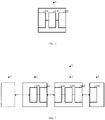
- FIG. 1 illustrates an adapter device 1 according to a first aspect of the present disclosure.
- the adapter device 1 is for connecting a web-based IDE 201 and a debug interface 301 of a microcontroller 3 (see FIG. 2 ).
- a web-based IDE as used herein also known as online IDE or cloud-based DIE, may refer to a system that allows for software engineering in a portable browser-based work environment.
- a debug interface as used herein may refer to a chip-level interface of an integrated circuit (IC), such as a microcontroller ( ⁇ C), to particularly aid development, programming and in-circuit debugging of programs executable by said IC.
- IC integrated circuit
- ⁇ C microcontroller
- a debug interface is not necessary for end-use function and is often hidden or disabled in finished products. Examples of debug interfaces include JTAGand SWD interfaces (see below).
- a microcontroller as used herein may refer to a computer on an IC, including a number of central processing units (CPUs) or processor cores, memory, and programmable input/output peripherals.
- the adapter device 1 comprises a first communication interface 101, a second communication interface 102, and a processor 103.
- a processor as used herein may refer to a CPU having a number of processor cores.
- the first communication interface 101 is configured to exercise a first communication protocol and connectable to a web client 2 (see FIG. 2 ) configured to execute the web-based IDE 201.
- a web client as used herein may refer to a role of a requester of a web service in a client-server model.
- the server provides a function or service, such as a hosted web page or web app, to one or more clients which request such functions or services and render/present the function or service to a user.
- the first communication interface 101 may comprise an USB interface.
- the first communication protocol may be for communication with a WebUSB API of the web client 2.
- WebUSB API as used herein may refer to an application programming interface (API) that enables exposing USB device services to the web, so that the exposed services may be used in a web browser.
- API application programming interface
- the second communication interface 102 is configured to exercise a second communication protocol and connectable to the debug interface 301 (see FIG. 2 ) of the microcontroller 3.
- the second communication interface 102 may comprise a multi-pin electrical interface, for example a two-pin interface.
- the second communication protocol may be for communication with the debug interface 301 of the microcontroller 3.
- the second communication protocol may be for communication with a Joint Test Action Group (JTAG) debug interface of the microcontroller 3, or for communication with a Serial Wire Debug (SWD) interface of the microcontroller 3.
- JTAG Joint Test Action Group
- SWD Serial Wire Debug
- a JTAG interface as used herein may refer to a debug interface in accordance with an industry standard (IEEE 1149.1) for development, programming and in-circuit debugging of programs executable in embedded systems.
- IEEE 1149.1 an industry standard for development, programming and in-circuit debugging of programs executable in embedded systems.
- a SWD interface as used herein may refer to a non-JTAG debug interface in accordance with a proprietary specification.
- the processor 103 is configured to convert between the first communication protocol and the second communication protocol.
- the adapter device 1 may further comprise a debug probe.
- a debug probe as used herein may refer to a device used to control a target IC at a level of individual processor registers, program counter, and instructions within the IC. It allows the processor to be single-stepped or for breakpoints to be set, at which program execution is interrupted for inspection.
- FIG. 2 illustrates a system 5 according to a second aspect of the present disclosure.
- the system 5 comprises an adapter device 1 according to the first aspect of the present disclosure, a web client 2 and a microcontroller 3.
- the web client 2 is configured to execute a web-based IDE 201.
- the microcontroller 3 comprises a debug interface 301.
- the adapter device 1 is for connecting the web-based IDE 201 of the web client 2 and the debug interface 301 of the microcontroller 3.
- the web client 2 may be configured to generate 603 an executable program for the microcontroller 3 using the web-based IDE 201.
- the executable program may be generated 603A on the web client 2.
- a web server 4 connectable to the web-based IDE 201 may be provided to generate 603B the executable program.
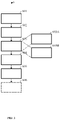
- FIG. 3 illustrates a method 6 according to a third aspect of the present disclosure.
- the method 6 is for programming a microcontroller 3 using a web-based IDE 201.
- the method 6 comprises a step of connecting 601 a first communication interface 101 of an adapter device 1 to a corresponding communication interface 202 of a web client 2 configured to execute the web-based IDE 201.
- the method 6 further comprises a step of connecting 602 a second communication interface 102 of the adapter device 1 to a debug interface 301 of a microcontroller 3.
- the method 6 further comprises a step of generating 603 an executable program for the microcontroller 3 using the web-based IDE 201.
- the step of generating 603 the executable program may comprise generating 603A the executable program on the web client 2.
- the step of generating 603 the executable program may comprise generating 603B the executable program on a web server 4 connectable to the web-based IDE 201.
- a web server as used herein may refer to a role of a provider of a web service in a client-server model.
- the server provides a function or service, such as a hosted web page or web app, to one or more clients which request such functions or services and render/present the function or service to a user.
- the method 6 further comprises a step of sending 604 the executable program via the corresponding communication interface 202 in accordance with a first communication protocol exercised by the first communication interface 101 of the adapter device 1.
- the method 6 further comprises a step of converting 605 between the first communication protocol and a second communication protocol exercised by the second communication interface 102.
- the method 6 may further comprise a step of debugging 606 the executable program being executed on the microcontroller 3 using the web-based IDE 201.
- Debugging as used herein may refer to a software engineering process of finding and resolving bugs (i.e., defects or problems that prevent correct operation) within executable programs.
- the method 6 may be performed by the system 5 according to the second aspect of the present disclosure.
Landscapes
- Engineering & Computer Science (AREA)
- Theoretical Computer Science (AREA)
- Computer Hardware Design (AREA)
- Quality & Reliability (AREA)
- Physics & Mathematics (AREA)
- General Engineering & Computer Science (AREA)
- General Physics & Mathematics (AREA)
- Stored Programmes (AREA)
Abstract
Description
- The present invention relates to embedded software engineering. In particular, the present invention relates to an adapter device for connecting a web-based integrated development environment (IDE) and a debug interface of a microcontroller, a system comprising the adapter device, and a method of programming the microcontroller using the web-based IDE.
- Web-based IDEs, also known as online IDEs or cloud-based IDEs, allow for software engineering in a portable browser-based work environment. With respect to embedded software engineering, web-based IDEs currently fail to support debugging. For example, debug probes cannot be passed into a web browser. Thus, an executable program needs to be downloaded and flashed to the target microcontroller manually, and debugging is carried out outside of the web browser.
- The object of the present invention is thus to improve an embedded software engineering workflow based on web-based IDEs.
- The invention is defined by the appended independent claims. Preferred embodiments are set forth in the dependent claims and in the following description and drawings.
- According to a first aspect of the present disclosure, an adapter device is provided for connecting a web-based IDE and a debug interface of a microcontroller.
The adapter device comprises: a first communication interface configured to exercise a first communication protocol and connectable to a web client configured to execute the web-based IDE; a second communication interface configured to exercise a second communication protocol and connectable to the debug interface of the microcontroller; and a processor configured to convert between the first communication protocol and the second communication protocol. - In an implementation of the first aspect, the first communication interface may comprise an USB interface.
- In an implementation of the first aspect, the first communication protocol may be for communication with a WebUSB API of the web client.
- In an implementation of the first aspect, the second communication interface may comprise a multi-pin electrical interface.
- In an implementation of the first aspect, the second communication protocol may be for communication with a debug interface of the microcontroller.
- In an implementation of the first aspect, the second communication protocol may be for communication with a Joint Test Action Group (JTAG) debug interface of the microcontroller.
- In an implementation of the first aspect, the second communication protocol may be for communication with a Serial Wire Debug (SWD) interface of the microcontroller.
- In an implementation of the first aspect, the adapter device may further comprise a debug probe.
- According to a second aspect of the present disclosure, a system is provided. The system comprises a web client configured to execute a web-based IDE; a microcontroller comprising a debug interface; and an adapter device of the first aspect or any of its implementations for connecting the web-based IDE and the debug interface of the microcontroller.
- According to a third aspect of the present disclosure, a method is provided of programming a microcontroller using a web-based IDE. The method comprises connecting a first communication interface of an adapter device to a corresponding communication interface of a web client configured to execute the web-based IDE; connecting a second communication interface of the adapter device to a debug interface of a microcontroller; generating an executable program for the microcontroller using the web-based IDE; sending the executable program via the corresponding communication interface in accordance with a first communication protocol exercised by the first communication interface of the adapter device; and converting between the first communication protocol and a second communication protocol exercised by the second communication interface.
- In an implementation of the third aspect, the generating the executable program may comprise generating the executable program on the web client.
- In an implementation of the third aspect, the generating the executable program may comprise generating the executable program on a web server connectable to the web-based IDE.
- In an implementation of the third aspect, the method may further comprise debugging the executable program being executed on the microcontroller using the web-based IDE.
- In an implementation of the third aspect, the method of the third aspect or any of its implementations may be performed by the system of the second aspect or any of its implementations.
- In accordance with the present disclosure, debugging support for embedded controllers may be added by using WebUSB technology on debug probes to be able to pass USB devices to the browser or, in other words, to integrate debug probes into web-based IDEs, since the debug probe may then be detected by the browser. It is thus possible to have a complete embedded software engineering workflow in a web browser.
- Further advantages include
- a possibility of remote debugging,
- no requirement of local installation on developer PCs,
- reduced installation time for new members of software engineering teams, and
- alignment of software engineering tool chain and versions within software engineering teams and thus less errors due to discrepancies related to the tools.
- Further aspects, advantages and objects of the invention will become evident for the skilled reader by means of the following detailed description of the embodiments of the invention, when taking into conjunction with the figures of the enclosed drawings.
- FIG. 1
- illustrates an adapter device according to a first aspect of the present disclosure;
- FIG. 2
- illustrates a system according to a second aspect of the present disclosure; and
- FIG. 3
- illustrates a method according to a third aspect of the present disclosure.
- The invention will now be described with respect to various embodiments. The features of these embodiments may be combined with each other unless specified otherwise.
-
FIG. 1 illustrates anadapter device 1 according to a first aspect of the present disclosure. - The
adapter device 1 is for connecting a web-based IDE 201 and a debug interface 301 of a microcontroller 3 (seeFIG. 2 ). - A web-based IDE as used herein, also known as online IDE or cloud-based DIE, may refer to a system that allows for software engineering in a portable browser-based work environment.
- A debug interface as used herein may refer to a chip-level interface of an integrated circuit (IC), such as a microcontroller (µC), to particularly aid development, programming and in-circuit debugging of programs executable by said IC. A debug interface is not necessary for end-use function and is often hidden or disabled in finished products. Examples of debug interfaces include JTAGand SWD interfaces (see below).
- A microcontroller as used herein may refer to a computer on an IC, including a number of central processing units (CPUs) or processor cores, memory, and programmable input/output peripherals.
- In accordance with
FIG. 1 , theadapter device 1 comprises afirst communication interface 101, asecond communication interface 102, and aprocessor 103. - A processor as used herein may refer to a CPU having a number of processor cores.
- The
first communication interface 101 is configured to exercise a first communication protocol and connectable to a web client 2 (seeFIG. 2 ) configured to execute the web-based IDE 201. - A web client as used herein may refer to a role of a requester of a web service in a client-server model. The server provides a function or service, such as a hosted web page or web app, to one or more clients which request such functions or services and render/present the function or service to a user.
- In particular, the
first communication interface 101 may comprise an USB interface. - In particular, the first communication protocol may be for communication with a WebUSB API of the web client 2.
- WebUSB API as used herein may refer to an application programming interface (API) that enables exposing USB device services to the web, so that the exposed services may be used in a web browser.
- The
second communication interface 102 is configured to exercise a second communication protocol and connectable to the debug interface 301 (seeFIG. 2 ) of the microcontroller 3. - In particular, the
second communication interface 102 may comprise a multi-pin electrical interface, for example a two-pin interface. - In particular, the second communication protocol may be for communication with the debug interface 301 of the microcontroller 3.
- In particular, the second communication protocol may be for communication with a Joint Test Action Group (JTAG) debug interface of the microcontroller 3, or for communication with a Serial Wire Debug (SWD) interface of the microcontroller 3.
- A JTAG interface as used herein may refer to a debug interface in accordance with an industry standard (IEEE 1149.1) for development, programming and in-circuit debugging of programs executable in embedded systems.
- A SWD interface as used herein may refer to a non-JTAG debug interface in accordance with a proprietary specification.
- The
processor 103 is configured to convert between the first communication protocol and the second communication protocol. - The
adapter device 1 may further comprise a debug probe. - A debug probe as used herein may refer to a device used to control a target IC at a level of individual processor registers, program counter, and instructions within the IC. It allows the processor to be single-stepped or for breakpoints to be set, at which program execution is interrupted for inspection.
-
FIG. 2 illustrates a system 5 according to a second aspect of the present disclosure. - The system 5 comprises an
adapter device 1 according to the first aspect of the present disclosure, a web client 2 and a microcontroller 3. - The web client 2 is configured to execute a web-based
IDE 201. - The microcontroller 3 comprises a debug interface 301.
- The
adapter device 1 is for connecting the web-basedIDE 201 of the web client 2 and the debug interface 301 of the microcontroller 3. - The web client 2 may be configured to generate 603 an executable program for the microcontroller 3 using the web-based
IDE 201. - In particular, the executable program may be generated 603A on the web client 2. Alternatively, a web server 4 connectable to the web-based
IDE 201 may be provided to generate 603B the executable program. -
FIG. 3 illustrates a method 6 according to a third aspect of the present disclosure. - The method 6 is for programming a microcontroller 3 using a web-based
IDE 201. - The method 6 comprises a step of connecting 601 a
first communication interface 101 of anadapter device 1 to acorresponding communication interface 202 of a web client 2 configured to execute the web-basedIDE 201. - The method 6 further comprises a step of connecting 602 a
second communication interface 102 of theadapter device 1 to a debug interface 301 of a microcontroller 3. - The method 6 further comprises a step of generating 603 an executable program for the microcontroller 3 using the web-based
IDE 201. - In particular, the step of generating 603 the executable program may comprise generating 603A the executable program on the web client 2.
- Alternatively, the step of generating 603 the executable program may comprise generating 603B the executable program on a web server 4 connectable to the web-based
IDE 201. - A web server as used herein may refer to a role of a provider of a web service in a client-server model. The server provides a function or service, such as a hosted web page or web app, to one or more clients which request such functions or services and render/present the function or service to a user.
- The method 6 further comprises a step of sending 604 the executable program via the
corresponding communication interface 202 in accordance with a first communication protocol exercised by thefirst communication interface 101 of theadapter device 1. - The method 6 further comprises a step of converting 605 between the first communication protocol and a second communication protocol exercised by the
second communication interface 102. - In particular, the method 6 may further comprise a step of debugging 606 the executable program being executed on the microcontroller 3 using the web-based
IDE 201. - Debugging as used herein may refer to a software engineering process of finding and resolving bugs (i.e., defects or problems that prevent correct operation) within executable programs.
- In particular, the method 6 may be performed by the system 5 according to the second aspect of the present disclosure.
Claims (14)
- An adapter device (1) for connecting a web-based IDE (201) and a debug interface (301) of a microcontroller (3), comprisinga first communication interface (101)configured to exercise a first communication protocol andconnectable to a web client (2) configured to execute the web-based IDE (201);a second communication interface (102)configured to exercise a second communication protocol andconnectable to the debug interface (301) of the microcontroller (3); anda processor (103)
configured to convert between the first communication protocol and the second communication protocol. - The adapter device (1) of claim 1,
the first communication interface (101) comprising an USB interface. - The adapter device (1) of claim 2,
the first communication protocol being for communication with a WebUSB API of the web client (2). - The adapter device (1) of any of the preceding claims,
the second communication interface (102) comprising a multi-pin electrical interface. - The adapter device (1) of claim 4,
the second communication protocol being for communication with the debug interface (301) of the microcontroller (3). - The adapter device (1) of claim 5,
the second communication protocol being for communication with a Joint Test Action Group (JTAG) debug interface of the microcontroller (3). - The adapter device (1) of claim 5,
the second communication protocol being for communication with a Serial Wire Debug (SWD) interface of the microcontroller (3). - The adapter device (1) of any one of the preceding claims, further comprising a debug probe.
- A system (5), comprisinga web client (2) configured to execute a web-based IDE (201);a microcontroller (3) comprising a debug interface (301); andan adapter device (1) of any one of the preceding claims for connecting the web-based IDE (201) and the debug interface (301) of the microcontroller (3).
- A method (6) of programming a microcontroller (3) using a web-based IDE (201), comprisingconnecting (601) a first communication interface (101) of an adapter device (1) to a corresponding communication interface (202) of a web client (2) configured to execute the web-based IDE (201);connecting (602) a second communication interface (102) of the adapter device (1) to a debug interface (301) of a microcontroller (3);generating (603) an executable program for the microcontroller (3) using the web-based IDE (201);sending (604) the executable program via the corresponding communication interface (202) in accordance with a first communication protocol exercised by the first communication interface (101) of the adapter device (1); andconverting (605) between the first communication protocol and a second communication protocol exercised by the second communication interface (102).
- The method (6) of claim 10,
the generating (603) the executable program comprising generating (603A) the executable program on the web client (2). - The method (6) of claim 10,
the generating (603) the executable program comprising generating (603B) the executable program on a web server (4) connectable to the web-based IDE (201). - The method (6) of any one of the claims 10 to 12, further comprising
debugging (606) the executable program being executed on the microcontroller (3) using the web-based IDE (201). - The method (6) of any one of the claims 10 to 13
being performed by the system (5) of claim 9.
Priority Applications (2)
| Application Number | Priority Date | Filing Date | Title |
|---|---|---|---|
| EP21156743.3A EP4044036A1 (en) | 2021-02-12 | 2021-02-12 | Integration of debug probes into web-based integrated development environments |
| PCT/EP2022/052427 WO2022171497A1 (en) | 2021-02-12 | 2022-02-02 | Integration of debug probes into web-based integrated development environments |
Applications Claiming Priority (1)
| Application Number | Priority Date | Filing Date | Title |
|---|---|---|---|
| EP21156743.3A EP4044036A1 (en) | 2021-02-12 | 2021-02-12 | Integration of debug probes into web-based integrated development environments |
Publications (1)
| Publication Number | Publication Date |
|---|---|
| EP4044036A1 true EP4044036A1 (en) | 2022-08-17 |
Family
ID=74595095
Family Applications (1)
| Application Number | Title | Priority Date | Filing Date |
|---|---|---|---|
| EP21156743.3A Pending EP4044036A1 (en) | 2021-02-12 | 2021-02-12 | Integration of debug probes into web-based integrated development environments |
Country Status (2)
| Country | Link |
|---|---|
| EP (1) | EP4044036A1 (en) |
| WO (1) | WO2022171497A1 (en) |
Citations (1)
| Publication number | Priority date | Publication date | Assignee | Title |
|---|---|---|---|---|
| US20100107146A1 (en) * | 2008-10-23 | 2010-04-29 | Xmos Ltd | Development system |
-
2021
- 2021-02-12 EP EP21156743.3A patent/EP4044036A1/en active Pending
-
2022
- 2022-02-02 WO PCT/EP2022/052427 patent/WO2022171497A1/en not_active Ceased
Patent Citations (1)
| Publication number | Priority date | Publication date | Assignee | Title |
|---|---|---|---|---|
| US20100107146A1 (en) * | 2008-10-23 | 2010-04-29 | Xmos Ltd | Development system |
Also Published As
| Publication number | Publication date |
|---|---|
| WO2022171497A1 (en) | 2022-08-18 |
Similar Documents
| Publication | Publication Date | Title |
|---|---|---|
| CN109800159B (en) | Program debugging method, program debugging device, terminal device and storage medium | |
| CN110096425B (en) | A kind of automatic testing method, device and storage medium based on QT development mode | |
| CN105446933B (en) | debugging system and debugging method of multi-core processor | |
| CN103412816B (en) | A kind of continuous integrating test platform building method based on linux | |
| US20100107146A1 (en) | Development system | |
| CN107145438A (en) | Code test method, code tester device and code tester system | |
| TW202242642A (en) | Method for real-time firmware configuration and apparatus for debugging | |
| CN105468507A (en) | Branch fulfillment detection method and apparatus | |
| WO2012077704A1 (en) | Debug stub server, debugging method and program | |
| CN118394663A (en) | Universal interface automatic test method, device, computer equipment and storage medium | |
| Even-Mendoza et al. | Search+ LLM-based testing for ARM simulators | |
| KR20180061589A (en) | Software build system and software build method using the system | |
| WO2022171497A1 (en) | Integration of debug probes into web-based integrated development environments | |
| JP5778808B2 (en) | Software application analysis system and method with reference to entry points | |
| TWI273264B (en) | Test system and method | |
| US9612870B2 (en) | Inversion of control for executable extensions in a run-time environment | |
| Ghosh et al. | Effective spectrum-based technique for software fault finding | |
| Jiang et al. | To what extent is stress testing of android TV applications automated in industrial environments? | |
| US9405658B1 (en) | Method and apparatus for debugging applications in development environments | |
| Tinetti et al. | An automated approach to hardware performance monitoring counters | |
| Santhanam | Automating software module testing for FAA certification | |
| KR20220110323A (en) | Auxiliary processing methods, devices, storage media and programs in software development. Products and programs. | |
| CN114968751A (en) | A program debugging method and program debugging device of a codeless development platform | |
| Virtanen | Käytännön toiminnon toteutus nRF9160-piirillä | |
| CN116743626B (en) | Front-end service proxy method, device, and electronic device for connecting to microservice development |
Legal Events
| Date | Code | Title | Description |
|---|---|---|---|
| PUAI | Public reference made under article 153(3) epc to a published international application that has entered the european phase |
Free format text: ORIGINAL CODE: 0009012 |
|
| STAA | Information on the status of an ep patent application or granted ep patent |
Free format text: STATUS: THE APPLICATION HAS BEEN PUBLISHED |
|
| AK | Designated contracting states |
Kind code of ref document: A1 Designated state(s): AL AT BE BG CH CY CZ DE DK EE ES FI FR GB GR HR HU IE IS IT LI LT LU LV MC MK MT NL NO PL PT RO RS SE SI SK SM TR |
|
| STAA | Information on the status of an ep patent application or granted ep patent |
Free format text: STATUS: REQUEST FOR EXAMINATION WAS MADE |
|
| 17P | Request for examination filed |
Effective date: 20221117 |
|
| RBV | Designated contracting states (corrected) |
Designated state(s): AL AT BE BG CH CY CZ DE DK EE ES FI FR GB GR HR HU IE IS IT LI LT LU LV MC MK MT NL NO PL PT RO RS SE SI SK SM TR |
|
| STAA | Information on the status of an ep patent application or granted ep patent |
Free format text: STATUS: EXAMINATION IS IN PROGRESS |
|
| 17Q | First examination report despatched |
Effective date: 20240410 |