EP4043681B1 - Pinch detection system - Google Patents
Pinch detection system Download PDFInfo
- Publication number
- EP4043681B1 EP4043681B1 EP21156659.1A EP21156659A EP4043681B1 EP 4043681 B1 EP4043681 B1 EP 4043681B1 EP 21156659 A EP21156659 A EP 21156659A EP 4043681 B1 EP4043681 B1 EP 4043681B1
- Authority
- EP
- European Patent Office
- Prior art keywords
- pinch
- detection system
- pinch detection
- closure member
- detect
- Prior art date
- Legal status (The legal status is an assumption and is not a legal conclusion. Google has not performed a legal analysis and makes no representation as to the accuracy of the status listed.)
- Active
Links
Images



Classifications
-
- E—FIXED CONSTRUCTIONS
- E05—LOCKS; KEYS; WINDOW OR DOOR FITTINGS; SAFES
- E05F—DEVICES FOR MOVING WINGS INTO OPEN OR CLOSED POSITION; CHECKS FOR WINGS; WING FITTINGS NOT OTHERWISE PROVIDED FOR, CONCERNED WITH THE FUNCTIONING OF THE WING
- E05F15/00—Power-operated mechanisms for wings
- E05F15/40—Safety devices, e.g. detection of obstructions or end positions
- E05F15/41—Detection by monitoring transmitted force or torque; Safety couplings with activation dependent upon torque or force, e.g. slip couplings
-
- B—PERFORMING OPERATIONS; TRANSPORTING
- B60—VEHICLES IN GENERAL
- B60J—WINDOWS, WINDSCREENS, NON-FIXED ROOFS, DOORS, OR SIMILAR DEVICES FOR VEHICLES; REMOVABLE EXTERNAL PROTECTIVE COVERINGS SPECIALLY ADAPTED FOR VEHICLES
- B60J7/00—Non-fixed roofs; Roofs with movable panels, e.g. rotary sunroofs
-
- B—PERFORMING OPERATIONS; TRANSPORTING
- B60—VEHICLES IN GENERAL
- B60J—WINDOWS, WINDSCREENS, NON-FIXED ROOFS, DOORS, OR SIMILAR DEVICES FOR VEHICLES; REMOVABLE EXTERNAL PROTECTIVE COVERINGS SPECIALLY ADAPTED FOR VEHICLES
- B60J7/00—Non-fixed roofs; Roofs with movable panels, e.g. rotary sunroofs
- B60J7/02—Non-fixed roofs; Roofs with movable panels, e.g. rotary sunroofs of sliding type, e.g. comprising guide shoes
- B60J7/04—Non-fixed roofs; Roofs with movable panels, e.g. rotary sunroofs of sliding type, e.g. comprising guide shoes with rigid plate-like element or elements, e.g. open roofs with harmonica-type folding rigid panels
- B60J7/057—Driving or actuating arrangements e.g. manually operated levers or knobs
-
- B—PERFORMING OPERATIONS; TRANSPORTING
- B60—VEHICLES IN GENERAL
- B60J—WINDOWS, WINDSCREENS, NON-FIXED ROOFS, DOORS, OR SIMILAR DEVICES FOR VEHICLES; REMOVABLE EXTERNAL PROTECTIVE COVERINGS SPECIALLY ADAPTED FOR VEHICLES
- B60J7/00—Non-fixed roofs; Roofs with movable panels, e.g. rotary sunroofs
- B60J7/02—Non-fixed roofs; Roofs with movable panels, e.g. rotary sunroofs of sliding type, e.g. comprising guide shoes
- B60J7/04—Non-fixed roofs; Roofs with movable panels, e.g. rotary sunroofs of sliding type, e.g. comprising guide shoes with rigid plate-like element or elements, e.g. open roofs with harmonica-type folding rigid panels
- B60J7/057—Driving or actuating arrangements e.g. manually operated levers or knobs
- B60J7/0573—Driving or actuating arrangements e.g. manually operated levers or knobs power driven arrangements, e.g. electrical
-
- B—PERFORMING OPERATIONS; TRANSPORTING
- B60—VEHICLES IN GENERAL
- B60J—WINDOWS, WINDSCREENS, NON-FIXED ROOFS, DOORS, OR SIMILAR DEVICES FOR VEHICLES; REMOVABLE EXTERNAL PROTECTIVE COVERINGS SPECIALLY ADAPTED FOR VEHICLES
- B60J7/00—Non-fixed roofs; Roofs with movable panels, e.g. rotary sunroofs
- B60J7/22—Wind deflectors for open roofs
-
- E—FIXED CONSTRUCTIONS
- E05—LOCKS; KEYS; WINDOW OR DOOR FITTINGS; SAFES
- E05F—DEVICES FOR MOVING WINGS INTO OPEN OR CLOSED POSITION; CHECKS FOR WINGS; WING FITTINGS NOT OTHERWISE PROVIDED FOR, CONCERNED WITH THE FUNCTIONING OF THE WING
- E05F15/00—Power-operated mechanisms for wings
- E05F15/40—Safety devices, e.g. detection of obstructions or end positions
-
- E—FIXED CONSTRUCTIONS
- E05—LOCKS; KEYS; WINDOW OR DOOR FITTINGS; SAFES
- E05F—DEVICES FOR MOVING WINGS INTO OPEN OR CLOSED POSITION; CHECKS FOR WINGS; WING FITTINGS NOT OTHERWISE PROVIDED FOR, CONCERNED WITH THE FUNCTIONING OF THE WING
- E05F15/00—Power-operated mechanisms for wings
- E05F15/60—Power-operated mechanisms for wings using electrical actuators
- E05F15/603—Power-operated mechanisms for wings using electrical actuators using rotary electromotors
- E05F15/632—Power-operated mechanisms for wings using electrical actuators using rotary electromotors for horizontally-sliding wings
- E05F15/643—Power-operated mechanisms for wings using electrical actuators using rotary electromotors for horizontally-sliding wings operated by flexible elongated pulling elements, e.g. belts, chains or cables
- E05F15/646—Power-operated mechanisms for wings using electrical actuators using rotary electromotors for horizontally-sliding wings operated by flexible elongated pulling elements, e.g. belts, chains or cables allowing or involving a secondary movement of the wing, e.g. rotational or transversal
-
- E—FIXED CONSTRUCTIONS
- E05—LOCKS; KEYS; WINDOW OR DOOR FITTINGS; SAFES
- E05F—DEVICES FOR MOVING WINGS INTO OPEN OR CLOSED POSITION; CHECKS FOR WINGS; WING FITTINGS NOT OTHERWISE PROVIDED FOR, CONCERNED WITH THE FUNCTIONING OF THE WING
- E05F15/00—Power-operated mechanisms for wings
- E05F15/60—Power-operated mechanisms for wings using electrical actuators
- E05F15/603—Power-operated mechanisms for wings using electrical actuators using rotary electromotors
- E05F15/632—Power-operated mechanisms for wings using electrical actuators using rotary electromotors for horizontally-sliding wings
- E05F15/655—Power-operated mechanisms for wings using electrical actuators using rotary electromotors for horizontally-sliding wings specially adapted for vehicle wings
- E05F15/659—Control circuits therefor
-
- E—FIXED CONSTRUCTIONS
- E05—LOCKS; KEYS; WINDOW OR DOOR FITTINGS; SAFES
- E05Y—INDEXING SCHEME ASSOCIATED WITH SUBCLASSES E05D AND E05F, RELATING TO CONSTRUCTION ELEMENTS, ELECTRIC CONTROL, POWER SUPPLY, POWER SIGNAL OR TRANSMISSION, USER INTERFACES, MOUNTING OR COUPLING, DETAILS, ACCESSORIES, AUXILIARY OPERATIONS NOT OTHERWISE PROVIDED FOR, APPLICATION THEREOF
- E05Y2400/00—Electronic control; Electrical power; Power supply; Power or signal transmission; User interfaces
- E05Y2400/10—Electronic control
- E05Y2400/52—Safety arrangements associated with the wing motor
- E05Y2400/53—Wing impact prevention or reduction
- E05Y2400/54—Obstruction or resistance detection
- E05Y2400/55—Obstruction or resistance detection by using load sensors
- E05Y2400/554—Obstruction or resistance detection by using load sensors sensing motor load
-
- E—FIXED CONSTRUCTIONS
- E05—LOCKS; KEYS; WINDOW OR DOOR FITTINGS; SAFES
- E05Y—INDEXING SCHEME ASSOCIATED WITH SUBCLASSES E05D AND E05F, RELATING TO CONSTRUCTION ELEMENTS, ELECTRIC CONTROL, POWER SUPPLY, POWER SIGNAL OR TRANSMISSION, USER INTERFACES, MOUNTING OR COUPLING, DETAILS, ACCESSORIES, AUXILIARY OPERATIONS NOT OTHERWISE PROVIDED FOR, APPLICATION THEREOF
- E05Y2400/00—Electronic control; Electrical power; Power supply; Power or signal transmission; User interfaces
- E05Y2400/10—Electronic control
- E05Y2400/52—Safety arrangements associated with the wing motor
- E05Y2400/53—Wing impact prevention or reduction
- E05Y2400/54—Obstruction or resistance detection
- E05Y2400/56—Obstruction or resistance detection by using speed sensors
- E05Y2400/564—Obstruction or resistance detection by using speed sensors sensing motor speed
-
- E—FIXED CONSTRUCTIONS
- E05—LOCKS; KEYS; WINDOW OR DOOR FITTINGS; SAFES
- E05Y—INDEXING SCHEME ASSOCIATED WITH SUBCLASSES E05D AND E05F, RELATING TO CONSTRUCTION ELEMENTS, ELECTRIC CONTROL, POWER SUPPLY, POWER SIGNAL OR TRANSMISSION, USER INTERFACES, MOUNTING OR COUPLING, DETAILS, ACCESSORIES, AUXILIARY OPERATIONS NOT OTHERWISE PROVIDED FOR, APPLICATION THEREOF
- E05Y2400/00—Electronic control; Electrical power; Power supply; Power or signal transmission; User interfaces
- E05Y2400/10—Electronic control
- E05Y2400/52—Safety arrangements associated with the wing motor
- E05Y2400/53—Wing impact prevention or reduction
- E05Y2400/54—Obstruction or resistance detection
- E05Y2400/58—Sensitivity setting or adjustment
-
- E—FIXED CONSTRUCTIONS
- E05—LOCKS; KEYS; WINDOW OR DOOR FITTINGS; SAFES
- E05Y—INDEXING SCHEME ASSOCIATED WITH SUBCLASSES E05D AND E05F, RELATING TO CONSTRUCTION ELEMENTS, ELECTRIC CONTROL, POWER SUPPLY, POWER SIGNAL OR TRANSMISSION, USER INTERFACES, MOUNTING OR COUPLING, DETAILS, ACCESSORIES, AUXILIARY OPERATIONS NOT OTHERWISE PROVIDED FOR, APPLICATION THEREOF
- E05Y2800/00—Details, accessories and auxiliary operations not otherwise provided for
- E05Y2800/20—Combinations of elements
- E05Y2800/22—Combinations of elements of not identical elements of the same category, e.g. combinations of not identical springs
-
- E—FIXED CONSTRUCTIONS
- E05—LOCKS; KEYS; WINDOW OR DOOR FITTINGS; SAFES
- E05Y—INDEXING SCHEME ASSOCIATED WITH SUBCLASSES E05D AND E05F, RELATING TO CONSTRUCTION ELEMENTS, ELECTRIC CONTROL, POWER SUPPLY, POWER SIGNAL OR TRANSMISSION, USER INTERFACES, MOUNTING OR COUPLING, DETAILS, ACCESSORIES, AUXILIARY OPERATIONS NOT OTHERWISE PROVIDED FOR, APPLICATION THEREOF
- E05Y2900/00—Application of doors, windows, wings or fittings thereof
- E05Y2900/50—Application of doors, windows, wings or fittings thereof for vehicles
- E05Y2900/53—Type of wing
- E05Y2900/542—Roof panels
Definitions
- a pinch detection system needs to be able to detect a pinch with any foreign object irrespective of properties of the foreign object.
- Indirect pinch detection systems need to designed with different kind of properties of foreign objects in mind.
- a stiffness or compression rate of the object needs to be considered. The stiffer the object, i.e. the higher the compression rate of the object, the faster an exerted force increases with displacement of the closure member.
- the stiffness or compression rate may be represented with a spring rate expressed in N/mm. With a soft object having a relatively small spring rate, e.g. a spring rate of about 10 or about 20 N/mm, the closure member may move over a small distance before a maximum pinch force of e.g.
- the object is achieved in an open-roof assembly for covering or at least partly uncovering an opening in a vehicle roof exhibiting all features of claim 1.
- Adapting such configuration setting enables the first pinch detection system to detect a hard object next to or instead of a soft object, although such configuration setting for hard object detection may result in false reversals if used continuously.
- a hard object is effectively detected twice before a reversal is initiated: a first time by the second pinch detection system and a second time by the first pinch detection unit.
- the chance of incorrect pinch detection is reduced.
- a single, short deviation from normal operation may be detected by the second pinch detection system as a potential pinch with a hard object, after which the first pinch detection system may not detect any further deviation such that an incorrect pinch detection does not occur.
- the first detection unit is also operable to detect a pinch with a soft object, while the second pinch detection system detects a pinch with a hard object.
- the first pinch detection system may be already detecting a deviation from normal operation without determining that a soft object is pinched, when the second pinch detection system detects a potential pinch with a hard object. Then, the configuration setting of the first pinch detection system is adapted and the detection of the pinch with a hard object by the first pinch detection system may not need to start from the beginning, but may continue with the already detected deviation, ensuring a timely detection.
- the configuration setting comprises a detection threshold and the adaption of the configuration setting comprises lowering the detection threshold.
- a pinch with a hard object needs to be detected earlier than a pinch with a soft object as the pinch force increases faster while the closure member is moving.
- An earlier detection is possible by lowering a detection threshold.
- any physical property relating to a force exerted by the drive assembly through the closure member may be monitored. Then, when such physical property exceeds a predetermined threshold, it may be considered that a pinch has occurred. Lowering the threshold inevitably results in earlier detection. Examples of a possibly relevant physical property are a motor current, a motor rotational speed, a position of the closure member, advancement in position of the closure member and combinations thereof. Other suitable properties may be used as well.
- the first pinch detection system is configured to detect a pinch by comparison of a property detected during movement of the closure member with a predetermined reference value of such property.
- a physical property relating to the movement of the closure member and/or a force exerted by the closure member may be monitored.
- a reference value may be stored and be used for comparison.
- such value may be dependent on a position of the closure member, for example, which may improve accuracy. Such increase in accuracy reduces the chance of an incorrect reversal, as apparent to those skilled in the art.
- Such a pinch detection system is as such known from prior art and is therefore not further elucidated herein.
- the second pinch detection system is configured to detect a pinch by application of a mathematical model of the open-roof assembly.
- a mathematical model and suitable mathematical theory a fast and accurate system may be designed, which is enabled to detect any unexpected behaviour quickly.
- the second pinch detection system uses a state space representation as a mathematical model and a disturbance observer to detect a deviation from a normal operation.
- Fig. 1A illustrates a vehicle roof 1 having an open roof assembly arranged therein.
- the open roof assembly comprises a moveable panel 2a and a fixed panel 2b.
- the moveable panel 2a is also referred to as a closure member, since the moveable panel 2a is moveable over a first roof opening 3a such to enable to open and to close the first roof opening 3a.
- a wind deflector 4 is arranged at a front side of the first roof opening 3a.
- the illustrated vehicle roof 1 corresponds to a passenger car.
- the present invention is however not limited to passenger cars. Any other kind of vehicles that may be provided with a moveable panel are contemplated as well.
- the wind deflector 4 is raised by a spring force when the moveable panel 2a slides to an open position and the wind deflector 4 is pushed down by the moveable panel 2a when the moveable panel 2a slides back into its closed position.
- the moveable panel 2a is shown in an open position and the wind deflector 4 is shown in a raised position.
- Fig. 1B the moveable panel 2a is shown in a closed position and the wind deflector 4 is correspondingly shown in a position in which it is held down.
- Fig. 2C illustrates a relation between position and needed force.
- position is represented and the vertical axis represents an exerted force.
- F max represents a maximum force to be exerted on a foreign object before a movement of the closure member is interrupted and preferably reversed.
- a number of pinch detection systems are known that are suitable as the first pinch detection system.
- a known and common system compares a force exerted by the drive assembly driving the moveable closure member with a predetermined reference value. For increased accuracy, such reference value may be dependent on the position of the closure member. Such position dependent reference value may be determined or updated during a preceding closing movement that is executed without disturbance.
- the second pinch detection system 200 is configured to detect a pinch with a hard object.
- the second pinch detection system 200 may be suitable to detect only hard objects or may be configurable to detect a pinch with either soft or hard objects or may be suited to detect a pinch with any kind of object.
- the second pinch detection system 200 detects the occurrence of a pinch
- a configuration setting of the first pinch detection system 100 is adapted. So as above described, the threshold is decreased, resulting in the first pinch detection system being able to detect a pinch with either a soft or a hard object. Then, if the first pinch detection system 100 detects a pinch as well, it is presumed that the pinch actually has occurred as it has been detected twice, reducing the chance that it was an accidental, incorrect detection. The pinch detection by the first pinch detection system 100 is then used as the output signal of the pinch detection unit 20.
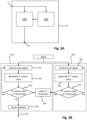
- Fig. 3B illustrates the method of pinch detection by the pinch detection unit 20 of Fig. 3A .
- the first pinch detection system 100 performs steps 100 - 106, while the second pinch detection system 200 performs steps 201 - 203.
- the first step 201 of the second pinch detection system 200 comprises receiving the input signal, representing the data needed for detecting the occurrence of a pinch.
- the received data are processed in a second step 202 of the second pinch detection system 200, generating at least one second output value, which is compared to a second threshold in a third step 203 of the second pinch detection system 200. If the second output value does not exceed the second threshold, the method returns to the first step 201. If it however does exceed the second threshold, the second pinch detection system 200 induces a further step 106 in the first pinch detection system 100, wherein the first threshold is adapted to increase detection sensitivity for hard-object pinches.
- the first detection system upon detection of a hard object by the second pinch detection system, the first detection system needs to perform a second detection to prevent an incorrect detection. Therefore, a certain period of time is needed for the first detection system after detection of a pinch with a hard object by the second detection system.
- This additional detection time T add is added to the second detection time T 200 in case of a detection of a pinch with a hard object.
- the additional detection time T add is however shorter than the first detection time T 100 due to the adapted configuration setting, e.g. an adapted threshold.
- the second pinch detection system is expected to detect the pinch before the first pinch detection system does.
- the configuration setting of the first pinch detection system is then adapted accordingly. Still, in the range [SR2 - SR3], even without adapting the configuration setting, the first pinch detection system would detect the pinch at the first detection time T 100 . With the adaption of the configuration setting, such detection can only be sooner. So, in a worst case situation, a pinch is detected at the first detection time T 100 , possibly sooner.
- structural elements may be generated by application of three-dimensional (3D) printing techniques. Therefore, any reference to a structural element is intended to encompass any computer executable instructions that instruct a computer to generate such a structural element by three-dimensional printing techniques or similar computer controlled manufacturing techniques. Furthermore, any such reference to a structural element is also intended to encompass a computer readable medium carrying such computer executable instructions.
Landscapes
- Engineering & Computer Science (AREA)
- Mechanical Engineering (AREA)
- Power-Operated Mechanisms For Wings (AREA)
- Geophysics And Detection Of Objects (AREA)
Description
- This invention relates to a pinch detection system for detecting a pinch of a moveably arranged closure member of an open-roof assembly with an object. Further, the invention relates to a corresponding method of detecting a pinch.
- An open-roof assembly is well-known. The open-roof assembly is configured to be mounted in a vehicle roof and comprises at least one moveably arranged closure member. The closure member is configured and arranged to cover an opening in the vehicle roof or at least partly uncover the opening in the vehicle roof. Usually, but not necessarily, the closure member is a transparent panel and comprises glass or a suitable plastics. The closure member may be configured to tilt or to slide.
- During a movement, i.e. a tilting movement or a sliding movement, a foreign object may become trapped between an edge of the opening in the vehicle roof and the moving closure member. In order to prevent damage to the closure member and the trapped object, it is known to provide a pinch detection system. Such a pinch detection system is intended to detect a pinch with a foreign object as soon as possible and to reverse a movement to ensure safe release of the foreign object. A pinch needs to be detected as soon as possible such that a force exerted on the foreign object is kept as small as possible. Legal requirements applicable in certain jurisdictions limit the maximum force under specified conditions.
- Several different pinch detection system are known. One of the known kinds of pinch detection systems is an indirect system, wherein a property of the open-roof system is detected, when the closure member is moving. The detected property is immediately analysed and an unexpected value of the property may be used to determine that a pinch has occurred.
- A pinch detection system needs to be able to detect a pinch with any foreign object irrespective of properties of the foreign object. Indirect pinch detection systems need to designed with different kind of properties of foreign objects in mind. In particular, a stiffness or compression rate of the object needs to be considered. The stiffer the object, i.e. the higher the compression rate of the object, the faster an exerted force increases with displacement of the closure member. The stiffness or compression rate may be represented with a spring rate expressed in N/mm. With a soft object having a relatively small spring rate, e.g. a spring rate of about 10 or about 20 N/mm, the closure member may move over a small distance before a maximum pinch force of e.g. 100N is reached, giving the pinch detection system a small period of time to accurately detect whether a pinch actually has occurred. Thus, it is possible to prevent too frequent false pinch detections. However, with a hard object having a relatively large spring rate, e.g. about 65 N/mm, there is less time available and reliable detection becomes more challenging.
- It is known that known pinch detection systems are usually suitable for reliable detection of soft objects or timely detection of hard objects. Combinations of two of such systems are therefore also suggested in prior art such that both soft and hard objects may each be detected in a timely manner. The pinch detection systems suitable for hard object detection are however still susceptive to false pinch detection and thus unnecessary reversals of the closure member, which may evidently annoy vehicle occupants and other users.
- Here,
US-6794837 is acknowledged to disclose features defined in the preamble of appendedindependent claim 1. - It is an object of the present invention to provide a pinch detection system that reliably detects a pinch with soft and hard objects in a timely manner.
- In a first aspect, the object is achieved in an open-roof assembly for covering or at least partly uncovering an opening in a vehicle roof exhibiting all features of
claim 1. - The pinch detection unit comprises a two separate pinch detection system cooperating to reliably detect a pinch with any foreign object. The first pinch detection system is initially configured to reliably detect a pinch with a soft object, wherein a slow change in operation over time may be detected in time to stop or reverse the closure member. The second pinch detection system is configured to detect a pinch with a hard object, wherein a sudden change in operation may quickly be detected and acted upon. The sudden change may be detected so fast, that sudden changes due to e.g. road conditions may be detected as a pinch as well. The detection may be so fast that there remains sufficient time to have the first detection system to detect the pinch with the hard object as well by adapting a configuration setting of the first pinch detection system. Adapting such configuration setting enables the first pinch detection system to detect a hard object next to or instead of a soft object, although such configuration setting for hard object detection may result in false reversals if used continuously. However, with use of this pinch detection unit, a hard object is effectively detected twice before a reversal is initiated: a first time by the second pinch detection system and a second time by the first pinch detection unit. Thus, the chance of incorrect pinch detection is reduced. For example, a single, short deviation from normal operation may be detected by the second pinch detection system as a potential pinch with a hard object, after which the first pinch detection system may not detect any further deviation such that an incorrect pinch detection does not occur.
- It is noted that the first detection unit is also operable to detect a pinch with a soft object, while the second pinch detection system detects a pinch with a hard object. The first pinch detection system may be already detecting a deviation from normal operation without determining that a soft object is pinched, when the second pinch detection system detects a potential pinch with a hard object. Then, the configuration setting of the first pinch detection system is adapted and the detection of the pinch with a hard object by the first pinch detection system may not need to start from the beginning, but may continue with the already detected deviation, ensuring a timely detection.
- The configuration setting comprises a detection threshold and the adaption of the configuration setting comprises lowering the detection threshold. A pinch with a hard object needs to be detected earlier than a pinch with a soft object as the pinch force increases faster while the closure member is moving. An earlier detection is possible by lowering a detection threshold. For example, any physical property relating to a force exerted by the drive assembly through the closure member may be monitored. Then, when such physical property exceeds a predetermined threshold, it may be considered that a pinch has occurred. Lowering the threshold inevitably results in earlier detection. Examples of a possibly relevant physical property are a motor current, a motor rotational speed, a position of the closure member, advancement in position of the closure member and combinations thereof. Other suitable properties may be used as well.
- The first pinch detection system is configured to detect a pinch by comparison of a property detected during movement of the closure member with a predetermined reference value of such property. As above mentioned, a physical property relating to the movement of the closure member and/or a force exerted by the closure member may be monitored. In order to determine whether a deviation from a normal operation occurs, a reference value may be stored and be used for comparison. In a particular embodiment, such value may be dependent on a position of the closure member, for example, which may improve accuracy. Such increase in accuracy reduces the chance of an incorrect reversal, as apparent to those skilled in the art. Such a pinch detection system is as such known from prior art and is therefore not further elucidated herein.
- The second pinch detection system is configured to detect a pinch by application of a mathematical model of the open-roof assembly. Using a mathematical model and suitable mathematical theory, a fast and accurate system may be designed, which is enabled to detect any unexpected behaviour quickly. In particular, the second pinch detection system uses a state space representation as a mathematical model and a disturbance observer to detect a deviation from a normal operation.
- In an embodiment of the open-roof assembly, the pinch detection unit is configured to determine that a pinch has occurred when the first pinch detection system has detected a pinch. Essentially, the second pinch detection unit is provided to adapt the configuration setting of the first pinch detection system, when a pinch with a hard object is suspected. The actual determination that a pinch has occurred is based on a pinch detection by the first pinch detection system, irrespective of the stiffness of the foreign object.
- In an embodiment of the open-roof assembly, the pinch detection unit is configured to re-adapt the configuration setting of the first pinch detection system to detect a pinch with a soft object, if a pinch with a hard object is not detected within a predetermined amount of time after adaption of the configuration setting of the first pinch detection system. If and when the second pinch detection system detects a potential pinch with a hard object, but the first pinch detection system subsequently does not detect such a pinch, the pinch detection unit may reset to its original configuration by resetting the configuration setting of the first pinch detection system to its original value. This prevents an accidental, incorrect detection of a pinch. The re-adaption of the configuration setting may be a step-wise adaption or may be a gradual adaption, for example.
- In an aspect, a method of detecting a pinch of a moveably arranged closure member of an open-roof assembly is provided in accordance with the appended method claims, corresponding with the above features of the open-roof assembly.
- In a further aspect, a computer-readable storage medium storing computer executable instructions for instructing a control unit of an open-roof assembly to perform the method is provided. It is noted that the pinch detection unit as above described may be embodied in hardware or in software. In particular, as apparent to those skilled in the art, many processing means like a microcontroller, a microprocessor, ASIC, FPGA and the like means, may be suitably used. Further, a control unit, comprising the pinch detection unit, may be embodied with a single processing unit or with multiple processing units.
- Further scope of applicability of the present invention will become apparent from the detailed description given hereinafter. However, it should be understood that the detailed description and specific examples, while indicating embodiments of the invention, are given by way of illustration only, since various changes and modifications within the scope of the invention as defined by the claims, will become apparent to those skilled in the art from this detailed description with reference to the appended schematical drawings, in which:
- Fig. 1A
- shows a perspective view of a vehicle roof with an open roof assembly;
- Fig. 1B
- shows an exploded view of the open roof assembly of
Fig. 1A ; - Figs. 2A and 2B
- show a foreign object being pinched and trapped between a closure member and a frame of the open roof assembly of
Figs. 1A and 1B ; - Fig. 2C
- illustrates a force exerted by a closure member on a trapped foreign object;
- Fig. 3A
- shows a diagram of an embodiment of a pinch detection unit;
- Fig. 3B
- shows a flow diagram illustrating an embodiment of a pinch detection method as embodied in the pinch detection unit of
Fig. 3A ; and - Fig. 4
- shows a diagram illustrating a system response time of a pinch detection unit.
- The present invention will now be described with reference to the accompanying drawings, wherein the same reference numerals have been used to identify the same or similar elements throughout the several views.
-
Fig. 1A illustrates avehicle roof 1 having an open roof assembly arranged therein. The open roof assembly comprises amoveable panel 2a and a fixedpanel 2b. Themoveable panel 2a is also referred to as a closure member, since themoveable panel 2a is moveable over a first roof opening 3a such to enable to open and to close the first roof opening 3a. Awind deflector 4 is arranged at a front side of the first roof opening 3a. - In the illustrated embodiment, the
moveable panel 2a may be in a closed position, which is a position wherein themoveable panel 2a is arranged over and closes the first roof opening 3a and thus usually is arranged in a plane of thevehicle roof 1. Further, themoveable panel 2a may be in a tilted position, which is a position wherein a rear end RE of themoveable panel 2a is raised as compared to the closed position, while a front end FE of themoveable panel 2a is still in the closed position. Further, themoveable panel 2a may be in an open position, which is a position wherein themoveable panel 2a is slid open and the first roof opening 3a is partly or completely exposed. - It is noted that the illustrated
vehicle roof 1 corresponds to a passenger car. The present invention is however not limited to passenger cars. Any other kind of vehicles that may be provided with a moveable panel are contemplated as well. -
Fig. 1B illustrates the same vehicle roof as shown inFig. 1A having panels Fig. 1A shows the open roof assembly in the open position,Fig. 1B is an exploded view of the open roof assembly in a closed position. Further, in this exploded view ofFig. 1B , it is shown that there is a second roof opening 3b. The first andsecond roof openings 3a, 3b are provided in aframe 5 of the open roof assembly. Anedge 5a of theframe 5 defines the first roof opening 3a. - The second roof opening 3b is arranged under the fixed
panel 2b such that light may enter a vehicle interior passenger compartment through the fixedpanel 2b, presuming that the fixedpanel 2b is a glass panel or a similarly transparent panel, for example made of a plastic material or any other suitable material. The second roof opening 3b with a transparent or translucent fixedpanel 2b is optional and may be omitted in another embodiment of the open roof assembly. - The
wind deflector 4 is commonly a flexible material, e.g. a woven or non-woven cloth having through holes arranged therein or a web or net. The flexible material is supported by asupport structure 4a, e.g. a bar-like or tube-like structure, which structure is hingedly coupled, directly or indirectly, to theframe 5 at ahinge 4b. - The
wind deflector 4 is arranged in front of the first roof opening 3a and adapts air flow when themoveable panel 2a is in the open position. In its raised position, thewind deflector 4 reduces inconvenient noise due to air flow during driving. When themoveable panel 2a is in the closed position or in the tilted position, thewind deflector 4 is held down below the front end FE of themoveable panel 2a. - Usually, the
wind deflector 4 is raised by a spring force when themoveable panel 2a slides to an open position and thewind deflector 4 is pushed down by themoveable panel 2a when themoveable panel 2a slides back into its closed position. InFig. 1A , themoveable panel 2a is shown in an open position and thewind deflector 4 is shown in a raised position. InFig. 1B , themoveable panel 2a is shown in a closed position and thewind deflector 4 is correspondingly shown in a position in which it is held down. -
Fig. 1B further illustrates a drive assembly having a first guide assembly 6a, asecond guide assembly 6b, afirst drive cable 7 and asecond drive cable 8. The first andsecond guide assemblies 6a, 6b are arranged on respective side ends SE of themoveable panel 2a and may each comprise a guide and a mechanism. The guide is coupled to theframe 5, while the mechanism comprises moveable parts and is slideably moveable in the guide. The first and thesecond drive cables respective guide assemblies 6a, 6b and aelectric motor 9. - The
drive cables electric motor 9 to the mechanisms of therespective guide assemblies 6a, 6b such that upon operating theelectric motor 9, the mechanisms start to move. In particular, a core of thedrive cable electric motor 9 such to push or pull on the mechanisms of therespective guides 6a, 6b. Such a drive assembly is well known in the art and is therefore not further elucidated herein. Still, any other suitable drive assembly may be employed as well without departing from the scope of the present invention. Moreover, in a particular embodiment, an electric motor may be operatively arranged between the respective guides and the respective mechanisms of theguide assemblies 6a, 6b and, in such embodiment, a drive assembly may be omitted completely. - In the illustrated embodiment, the
guide assemblies 6a, 6b may start movement with raising the rear end RE of themoveable panel 2a, thereby bringing themoveable panel 2a in the tilted position. Then, from the tilted position, theguide assemblies 6a, 6b may start to slide to bring themoveable panel 2a in the open position. The present invention is however not limited to such embodiment. For example, in another embodiment, themoveable panel 2a may be moveable to a tilted position by raising the rear end RE, while an open position is reached by first lowering the rear end RE and then sliding themoveable panel 2a under the fixedpanel 2b or any other structure or element provided behind the rear end RE of themoveable panel 2a. In further exemplary embodiments, themoveable panel 2a may be merely moveable between a closed position and a tilted position or between a closed position and an open position. - In the illustrated embodiment, the
electric motor 9 is mounted near or below the front end FE of themoveable panel 2a at arecess 10. In another embodiment, theelectric motor 9 may be positioned at any other suitable position or location. For example, theelectric motor 9 may be arranged near or below the rear end RE of themoveable panel 2a or below the fixedpanel 2b. - A
control module 11 is schematically illustrated and is operatively coupled to theelectric motor 9. Thecontrol module 11 may be any kind of processing module, either a software controlled processing module or a dedicated processing module, like an ASIC, which are both well known to those skilled in the art. Thecontrol module 11 may be a stand-alone control module or it may be operatively connected to another control module, like a multipurpose, generic vehicle control module. In yet another embodiment, thecontrol module 11 may be embedded in or be part of such a generic vehicle control module. Essentially, thecontrol module 11 may be embodied by any control module suitable for, capable of and configured for performing operation of theelectric motor 9 and thus the moveable roof assembly. -
Fig. 2A shows a cross-section of theframe 5 and themoveable closure member 2a. A foreign object FO is arranged between themoveable closure member 2a and theedge 5a of theframe 5. Themoveable closure member 2a moves in a closing direction D towards theedge 5a. -
Fig. 2B shows theclosure member 2a, the foreign object FO and theframe 5 ofFig. 2A , wherein theclosure member 2a has advanced in the closing direction D. A front edge of theclosure member 2a touches the foreign object FO. With further advancement of theclosure member 2a, the foreign object FO becomes trapped between theedge 5a and theclosure member 2a. Due to this entrapment, theclosure member 2a can only move further in the closing direction D by compressing the foreign object FO. A stiffness of the foreign object FO determines the amount of movement possible and any force needed therefor. If the foreign object FO is soft and thus has a relatively low stiffness, e.g. expressed as a low spring rate, theclosure member 2a may be advanced with a slowly increasing force. If the foreign object FO is hard and thus has a relatively high stiffness, e.g. expressed as a high spring rate, theclosure member 2a can only be advanced with a rapidly increasing force. -
Fig. 2C illustrates a relation between position and needed force. In particular, on the horizontal axis, position is represented and the vertical axis represents an exerted force. Fmax represents a maximum force to be exerted on a foreign object before a movement of the closure member is interrupted and preferably reversed. - In
Fig. 2C , the solid line shows a force exerted by or on the closure member during an undisturbed closing movement Mcl. At position x1, a foreign object is pinched. If the foreign object is hard and thus has a high stiffness, an exerted force increases rapidly during a hard-object disturbed closing movement Mho (dotted line) and reaches the maximum force at position x2. If the foreign object is soft and has a low stiffness, the exerted force increases slowly during a soft-object disturbed closing movement Mso (dashed line) and reaches the maximum force at position x3. As apparent fromFig. 2C , if a soft object is pinched, a significantly longer displacement length is available for pinch detection and interruption / reversal of the closing movement compared to a pinch with a hard object. - It is noted that upon detection of a pinch, the control unit and the drive assembly (inertia and play in the drive assembly) require some time and thus displacement of the closure member before the closure member is actually stopped or reversed. Therefore and in view of the rapid force increase in case of a pinch with a hard object, a pinch with a hard object needs to be detected at a smaller force to be in time for preventing exceeding the maximum force Fmax, which makes such a detection inevitably more sensitive to incorrect pinch detection.
- In order to detect both hard and soft foreign objects timely and reliably without an excessive number of incorrect detections, many different pinch detection systems have been described in prior art. Still, a single pinch detection system for any kind of foreign objects having different stiffness is not available. Therefore, combinations of two or even more pinch detection systems have been proposed. However, for reliably detecting a hard foreign object, it has remained challenging to prevent an excessive number of incorrect detections, which could lead to an excessive number of unnecessary reversals and potentially could prevent closing of the open roof assembly when driving on e.g. a rocky or bumpy road.
-
Fig. 3A shows an embodiment of apinch detection unit 20 for use in, or in combination with, a control unit of an open roof assembly, for example in thecontrol unit 11 ofFig. 1B . Thepinch detection unit 20 comprises aninput terminal 21 and anoutput terminal 22. Theinput terminal 21 may be configured to receive an input signal from the control unit, wherein the input signal comprises one or more data signals representing one or more physical properties sensed, measured or generated by the control unit, which physical properties relate to the movement of the closure member, as known in the art. For example, the physical properties may include a voltage and a current supplied to an electric motor, a rotational speed of such electric motor, a position of the closure member, a speed of the closure member, a temperature, and any other property relevant to the movement of the closure member. The data signals are fed to a firstpinch detection system 100 and a secondpinch detection system 200. All data signals may be fed to eachpinch detection system pinch detection systems pinch detection system - An output signal at the
output terminal 22 is configured to indicate a detection of a pinch such that the control unit may stop or reverse the movement of the closure member in response to such an output signal. - The first
pinch detection system 100 is configured to detect a pinch with a soft object. Still, the firstpinch detection system 100 may be adapted by adapting a configuration setting to detect a pinch with a hard object as well, although such detection of a hard object may be less reliable. - A number of pinch detection systems are known that are suitable as the first pinch detection system. A known and common system compares a force exerted by the drive assembly driving the moveable closure member with a predetermined reference value. For increased accuracy, such reference value may be dependent on the position of the closure member. Such position dependent reference value may be determined or updated during a preceding closing movement that is executed without disturbance.
- Instead of the force, any other property relating to the force may be employed. For example, the current supplied to the electric motor of the drive assembly, a voltage supplied to the electric motor of the drive assembly, a rotational motor speed, a travel speed of the closure member, and the like, may be suitable for detecting an abnormal closing operation due to a pinch.
- A configuration setting of such a first
pinch detection system 100 here is a detection threshold for a difference between the actual property value and the reference value. When the difference exceeds the threshold, a pinch may be determined to have occurred. With a soft object, a relatively high threshold may be selected as sufficient time may remain to reverse the movement before the maximum force is reached. With a hard object, detection needs to be quicker and thus needs a lower threshold, which results in less reliability as it may be accidentally exceeded, e.g. due to rocky or bumpy road conditions, for example. - The second
pinch detection system 200 is configured to detect a pinch with a hard object. The secondpinch detection system 200 may be suitable to detect only hard objects or may be configurable to detect a pinch with either soft or hard objects or may be suited to detect a pinch with any kind of object. - Suitable pinch detection systems for quickly detecting a pinch with a hard object are known. For example, mathematical models of the mechanical system, comprising the drive assembly and the closure member, may be used to quickly detect an abnormal movement or behaviour of the mechanical system. Such a mathematical model is used in combination with a disturbance observer and a state space representation.
- If the second
pinch detection system 200 detects the occurrence of a pinch, a configuration setting of the firstpinch detection system 100 is adapted. So as above described, the threshold is decreased, resulting in the first pinch detection system being able to detect a pinch with either a soft or a hard object. Then, if the firstpinch detection system 100 detects a pinch as well, it is presumed that the pinch actually has occurred as it has been detected twice, reducing the chance that it was an accidental, incorrect detection. The pinch detection by the firstpinch detection system 100 is then used as the output signal of thepinch detection unit 20. - It is noted that the first and the second
pinch detection systems -
Fig. 3B illustrates the method of pinch detection by thepinch detection unit 20 ofFig. 3A . The firstpinch detection system 100 performs steps 100 - 106, while the secondpinch detection system 200 performs steps 201 - 203. - A
first step 101 of thefirst detection system 100 comprises receiving the input signal, representing the data needed for detecting the occurrence of a pinch. The received data are processed in asecond step 102 of the firstpinch detection system 100, generating at least one first output value, which is compared to a first threshold in athird step 103 of the firstpinch detection system 100. If the first output value does not exceed the first threshold, the method returns to thefirst step 101. If it however does exceed the first threshold, the firstpinch detection system 100 detects in afourth step 104 that a pinch has occurred and acorresponding output signal 105 is generated and output. - The
first step 201 of the secondpinch detection system 200 comprises receiving the input signal, representing the data needed for detecting the occurrence of a pinch. The received data are processed in asecond step 202 of the secondpinch detection system 200, generating at least one second output value, which is compared to a second threshold in athird step 203 of the secondpinch detection system 200. If the second output value does not exceed the second threshold, the method returns to thefirst step 201. If it however does exceed the second threshold, the secondpinch detection system 200 induces afurther step 106 in the firstpinch detection system 100, wherein the first threshold is adapted to increase detection sensitivity for hard-object pinches. -
Fig. 4 illustrates schematically an overall behaviour of thepinch detection unit 20 and in particular a unit detection time T20. In the diagram ofFig. 4 , the horizontal axis represents a stiffness of a pinched object and the vertical axis represents a response time, i.e. a time needed to detect a pinch with an object. - A maximum detection time Tmax is indicated with a dashed line. For safety reasons, a pinch should be detected before the maximum detection time Tmax is exceeded to allow the open-roof assembly to stop and possibly reverse the movement of the closure member in time.
- An exemplary first detection time T100 of a first pinch detection system is indicated with a dash-dotted line. The first detection time T100 is illustrated as a constant, i.e. independent of the stiffness. In another exemplary embodiment, this may be different. Still, in order to timely detect a pinch with a soft object, the first detection time T100 should be below the maximum detection time Tmax for objects at least within a predetermined range of low stiffness. In the illustrated example, the first pinch detection system is configured to detect a pinch with an object having a stiffness smaller than a fourth representative spring rate SR4, since the first detection time T100 is below the maximum detection time Tmax for such an object.
- An exemplary second detection time T200 of a second pinch detection system is indicated with a dashed line. The second detection time T200 is illustrated having a declining slope, i.e. having a decreasing response time with increasing stiffness. In another exemplary embodiment, this may be different. Still, in order to timely detect a pinch with a hard object, the second detection time T200 should be below the maximum detection time Tmax for objects at least within a predetermined range of high stiffness. In the illustrated example, the second pinch detection system is configured to detect a pinch with an object having a stiffness higher than a first representative spring rate SR1, since the second detection time T200 is below the maximum detection time Tmax for such an object.
- In the pinch detection unit, upon detection of a hard object by the second pinch detection system, the first detection system needs to perform a second detection to prevent an incorrect detection. Therefore, a certain period of time is needed for the first detection system after detection of a pinch with a hard object by the second detection system. This additional detection time Tadd is added to the second detection time T200 in case of a detection of a pinch with a hard object. The additional detection time Tadd is however shorter than the first detection time T100 due to the adapted configuration setting, e.g. an adapted threshold.
- In practice, a pinch with an object may be detected in accordance with the unit response time T20 as illustrated. For an object having a stiffness lower than a second representative spring rate SR2, the first pinch detection system will detect the pinch first. So, for a pinch with an object having a stiffness in a range of [0 - SR2], the unit detection time T20 is similar to the first detection time T100.
- For a pinch with an object having a stiffness in a range of [SR2 - SR3], the second pinch detection system is expected to detect the pinch before the first pinch detection system does. The configuration setting of the first pinch detection system is then adapted accordingly. Still, in the range [SR2 - SR3], even without adapting the configuration setting, the first pinch detection system would detect the pinch at the first detection time T100. With the adaption of the configuration setting, such detection can only be sooner. So, in a worst case situation, a pinch is detected at the first detection time T100, possibly sooner.
- For a pinch with an object having a stiffness higher than a third representative spring rate SR3, the second pinch detection system detects the pinch at the second detection time T200. Then, the configuration setting of the first pinch detection system is adapted and in the additional detection time Tadd, the first detection system detects the pinch as well. Thus, the unit detection time T20 is equal to the sum of the second detection time T200 and the additional detection time Tadd.
- As above described, the graphical representation of the pinch detection unit of
Fig. 4 is schematical and for illustrative purposes only. In practice, for example, the relation between response time and stiffness may not be linear and are not expected to become zero as illustrated for the second detection time T200 for very high stiffness. A graphical representation as illustrated inFig. 4 may however be suitable for designing and configuring the pinch detection unit. For example, the stiffness thresholds for configuration of the first and second pinch detection systems may be selected suitably to ensure a reliable pinch detection unit. In an exemplary embodiment, the stiffness threshold for the first pinch detection system, i.e. the fourth representative spring rate SR4, may be selected to be about 20 N/mm and the stiffness threshold for the second pinch detection system, i.e. the first representative spring rate SR1, may be selected to be about 15 N/mm. - Detailed embodiments of the present invention are disclosed herein; however, it is to be understood that the disclosed embodiments are merely exemplary of the invention, which can be embodied in various forms. Therefore, specific structural and functional details disclosed herein are not to be interpreted as limiting, but merely as a basis for the claims and as a representative basis for teaching one skilled in the art to variously employ the present invention in expectedly any appropriately detailed structure.
- Further, it is contemplated that structural elements may be generated by application of three-dimensional (3D) printing techniques. Therefore, any reference to a structural element is intended to encompass any computer executable instructions that instruct a computer to generate such a structural element by three-dimensional printing techniques or similar computer controlled manufacturing techniques. Furthermore, any such reference to a structural element is also intended to encompass a computer readable medium carrying such computer executable instructions.
- Further, the terms and phrases used herein are not intended to be limiting, but rather to provide an understandable description of the invention. The terms "a" or "an", as used herein, are defined as one or more than one. The term plurality, as used herein, is defined as two or more than two. The term another, as used herein, is defined as at least a second or more. The terms including and/or having, as used herein, are defined as comprising (i.e., open language). The term coupled, as used herein, is defined as connected, although not necessarily directly.
- The invention being thus described it is apparent that the same may be varied in many ways, as long as such variations fall within the scope of the following claims.
Claims (7)
- An open-roof assembly for covering or at least partly uncovering an opening in a vehicle roof (1), the open-roof assembly comprising a moveably arranged closure member (2a), a drive assembly for moving the closure member (2a) and a control unit (11) operatively coupled to the drive assembly for controlling a movement of the closure member (2a), wherein the control unit (11) comprises a pinch detection unit (20) for detecting a pinch of the closure member (2a) with an object, the pinch detection unit (20) comprising a first pinch detection system (100) and a second, different, pinch detection system (200), wherein• the first pinch detection system (100) is configured to detect a pinch with an object having a stiffness lower than a first predetermined threshold, hereafter "a soft object"; and• the second pinch detection system (200) is configured to detect a pinch with an object having a stiffness higher than a second predetermined threshold, hereafter "a hard object";wherein the pinch detection unit (20) is configured to adapt a configuration setting of the first pinch detection system (100) upon detection of a pinch with a hard object by the second pinch detection system (200) to configure the first pinch detection system (100) to detect a pinch with said hard object,characterised in thatthe configuration setting comprises a detection threshold and adaptation of the configuration setting comprises lowering the detection threshold;the first pinch detection system (100) is configured to detect a pinch by comparison of a physical property relating to the movement of the closure member and/or to a force exerted by the closure member detected during movement of the closure member (2a) with a predetermined reference value of such property; andthe second pinch detection system (200) is configured to detect a pinch by application of a state space representation of the open-roof assembly as a mathematical model and disturbance observer to detect a deviation from a normal operation.
- The open-roof assembly according to claim 1, wherein the pinch detection unit (20) is configured to determine that a pinch has occurred when the first pinch detection system (100) has detected a pinch.
- The open-roof assembly according to claim 1, wherein the pinch detection unit (20) is configured to re-adapt the configuration setting of the first pinch detection system (100) to detect a pinch with a soft object, if a pinch with a hard object is not detected within a predetermined amount of time after adaption of the first predetermined threshold configuration setting of the first pinch detection system (100).
- A method of detecting a pinch of a moveably arranged closure member (2a) of an open-roof assembly, the method comprising operating a control unit (11) to perform the steps ofa) detecting a pinch with an object having a stiffness lower than a first predetermined threshold, hereafter "a soft object" using a first pinch detection system (100);b) detecting a pinch with an object having a stiffness higher than a second predetermined threshold, hereafter "a hard object" using a second pinch detection system (200);c) when the second pinch detection system (200) detects a pinch, adapting a configuration setting of the first pinch detection system (100) to configure the first pinch detection system (100) to detect a pinch with a hard object, wherein the configuration setting comprises a detection threshold and wherein adaptation of the configuration setting comprises lowering the detection threshold; andd) after adapting the configuration setting of the first pinch detection system (100), detecting a pinch with a hard object using the first pinch detection system (100),whereindetecting a pinch using the first pinch detection system (100) comprises: detecting a physical property relating to the movement of the closure member and/or to a force exerted by the closure member during movement of theclosure member (2a), and comparing the property with a predetermined reference value of such property, anddetecting a pinch using the second pinch detection system (200) comprises applying a state space representation of the open-roof assembly as a mathematical model and disturbance observer to determine a deviation from a normal operation.
- The method according to claim 4, wherein the method further comprises a step of
e) determining that a pinch has occurred when the first pinch detection system (100) has detected a pinch in at least one of step a and step d. - The method according to claim 4, wherein the method further comprises a step of
f) re-adapting the configuration setting of the first pinch detection system (100) to detect a pinch with a soft object, if a pinch with a hard object is not detected within a predetermined amount of time after adaption of the configuration setting. - A computer-readable storage medium storing computer executable instructions for instructing a control unit (11) of an open-roof assembly to perform the method according to claim 4.
Priority Applications (3)
| Application Number | Priority Date | Filing Date | Title |
|---|---|---|---|
| EP21156659.1A EP4043681B1 (en) | 2021-02-11 | 2021-02-11 | Pinch detection system |
| US17/667,831 US12084904B2 (en) | 2021-02-11 | 2022-02-09 | Pinch detection system |
| CN202210123302.2A CN114919386A (en) | 2021-02-11 | 2022-02-10 | Extrusion detection system |
Applications Claiming Priority (1)
| Application Number | Priority Date | Filing Date | Title |
|---|---|---|---|
| EP21156659.1A EP4043681B1 (en) | 2021-02-11 | 2021-02-11 | Pinch detection system |
Publications (2)
| Publication Number | Publication Date |
|---|---|
| EP4043681A1 EP4043681A1 (en) | 2022-08-17 |
| EP4043681B1 true EP4043681B1 (en) | 2025-04-09 |
Family
ID=74591914
Family Applications (1)
| Application Number | Title | Priority Date | Filing Date |
|---|---|---|---|
| EP21156659.1A Active EP4043681B1 (en) | 2021-02-11 | 2021-02-11 | Pinch detection system |
Country Status (3)
| Country | Link |
|---|---|
| US (1) | US12084904B2 (en) |
| EP (1) | EP4043681B1 (en) |
| CN (1) | CN114919386A (en) |
Families Citing this family (1)
| Publication number | Priority date | Publication date | Assignee | Title |
|---|---|---|---|---|
| EP4379179A1 (en) | 2022-11-30 | 2024-06-05 | Inalfa Roof Systems Group B.V. | Pinch detection system |
Citations (1)
| Publication number | Priority date | Publication date | Assignee | Title |
|---|---|---|---|---|
| WO2021004188A1 (en) * | 2019-07-10 | 2021-01-14 | 北京经纬恒润科技股份有限公司 | Anti-pinch detection method and system |
Family Cites Families (6)
| Publication number | Priority date | Publication date | Assignee | Title |
|---|---|---|---|---|
| US5351439A (en) * | 1992-04-21 | 1994-10-04 | Koito Manufacturing Co., Ltd. | Power window apparatus having improved safety device |
| US7579802B2 (en) * | 1992-04-22 | 2009-08-25 | Nartron Corporation | Collision monitoring system |
| US6794837B1 (en) * | 2002-05-31 | 2004-09-21 | Valeo Electrical Systems, Inc. | Motor speed-based anti-pinch control apparatus and method with start-up transient detection and compensation |
| DE102009019015A1 (en) * | 2009-04-27 | 2010-11-11 | Continental Automotive Gmbh | Method and device for detecting a pinching situation |
| US20220243521A1 (en) * | 2016-04-25 | 2022-08-04 | Magna Closures Inc. | A power closure member actuation system |
| CN111251847B (en) * | 2018-11-30 | 2024-09-20 | 英纳法天窗系统集团有限公司 | Anti-pinch system for an open roof assembly |
-
2021
- 2021-02-11 EP EP21156659.1A patent/EP4043681B1/en active Active
-
2022
- 2022-02-09 US US17/667,831 patent/US12084904B2/en active Active
- 2022-02-10 CN CN202210123302.2A patent/CN114919386A/en active Pending
Patent Citations (1)
| Publication number | Priority date | Publication date | Assignee | Title |
|---|---|---|---|---|
| WO2021004188A1 (en) * | 2019-07-10 | 2021-01-14 | 北京经纬恒润科技股份有限公司 | Anti-pinch detection method and system |
Also Published As
| Publication number | Publication date |
|---|---|
| EP4043681A1 (en) | 2022-08-17 |
| US20220268073A1 (en) | 2022-08-25 |
| CN114919386A (en) | 2022-08-19 |
| US12084904B2 (en) | 2024-09-10 |
Similar Documents
| Publication | Publication Date | Title |
|---|---|---|
| US7309971B2 (en) | Opening and closing body control device | |
| JP4781127B2 (en) | Electric motor control device | |
| CN101934711B (en) | Sunroof system with pinch protection including a sunroof panel and a sunshade panel | |
| JP2004003159A (en) | Open / close body pinch detection device | |
| US10464399B2 (en) | Vehicle window opening device | |
| EP4043681B1 (en) | Pinch detection system | |
| US7570001B2 (en) | Vehicular open and close panel system | |
| KR101323028B1 (en) | Methods of controlling anti pinch system and appratuses using the same | |
| EP4379179A1 (en) | Pinch detection system | |
| JP2002256762A (en) | Electric moving device | |
| US11577589B2 (en) | Open roof assembly for use in a vehicle and a method for operating same | |
| US11718163B2 (en) | Method and system for obstruction detection | |
| EP4082812B1 (en) | Pinch detection system | |
| US12234678B2 (en) | Control unit and method for operating an open roof assembly | |
| US12110728B2 (en) | Method and motor control system for use in a vehicle roof assembly | |
| EP3650627B1 (en) | Method and device for accurate positioning of a moveably arranged panel | |
| JP2021032019A (en) | Roll shade device | |
| JP2024062211A (en) | Opening and closing body control device | |
| JP4789601B2 (en) | Electric motor control device | |
| KR100534275B1 (en) | Device of Preventing an Over-Load of a Slide Door at Slope Way | |
| JPH11350833A (en) | Power window control device | |
| JPH0719563U (en) | Power window device with safety device |
Legal Events
| Date | Code | Title | Description |
|---|---|---|---|
| PUAI | Public reference made under article 153(3) epc to a published international application that has entered the european phase |
Free format text: ORIGINAL CODE: 0009012 |
|
| STAA | Information on the status of an ep patent application or granted ep patent |
Free format text: STATUS: THE APPLICATION HAS BEEN PUBLISHED |
|
| AK | Designated contracting states |
Kind code of ref document: A1 Designated state(s): AL AT BE BG CH CY CZ DE DK EE ES FI FR GB GR HR HU IE IS IT LI LT LU LV MC MK MT NL NO PL PT RO RS SE SI SK SM TR |
|
| STAA | Information on the status of an ep patent application or granted ep patent |
Free format text: STATUS: REQUEST FOR EXAMINATION WAS MADE |
|
| 17P | Request for examination filed |
Effective date: 20230217 |
|
| RBV | Designated contracting states (corrected) |
Designated state(s): AL AT BE BG CH CY CZ DE DK EE ES FI FR GB GR HR HU IE IS IT LI LT LU LV MC MK MT NL NO PL PT RO RS SE SI SK SM TR |
|
| STAA | Information on the status of an ep patent application or granted ep patent |
Free format text: STATUS: EXAMINATION IS IN PROGRESS |
|
| 17Q | First examination report despatched |
Effective date: 20230725 |
|
| GRAP | Despatch of communication of intention to grant a patent |
Free format text: ORIGINAL CODE: EPIDOSNIGR1 |
|
| STAA | Information on the status of an ep patent application or granted ep patent |
Free format text: STATUS: GRANT OF PATENT IS INTENDED |
|
| INTG | Intention to grant announced |
Effective date: 20240912 |
|
| GRAS | Grant fee paid |
Free format text: ORIGINAL CODE: EPIDOSNIGR3 |
|
| GRAA | (expected) grant |
Free format text: ORIGINAL CODE: 0009210 |
|
| STAA | Information on the status of an ep patent application or granted ep patent |
Free format text: STATUS: THE PATENT HAS BEEN GRANTED |
|
| AK | Designated contracting states |
Kind code of ref document: B1 Designated state(s): AL AT BE BG CH CY CZ DE DK EE ES FI FR GB GR HR HU IE IS IT LI LT LU LV MC MK MT NL NO PL PT RO RS SE SI SK SM TR |
|
| REG | Reference to a national code |
Ref country code: GB Ref legal event code: FG4D |
|
| REG | Reference to a national code |
Ref country code: CH Ref legal event code: EP |
|
| REG | Reference to a national code |
Ref country code: DE Ref legal event code: R096 Ref document number: 602021028742 Country of ref document: DE |
|
| REG | Reference to a national code |
Ref country code: IE Ref legal event code: FG4D |
|
| REG | Reference to a national code |
Ref country code: NL Ref legal event code: MP Effective date: 20250409 |
|
| PG25 | Lapsed in a contracting state [announced via postgrant information from national office to epo] |
Ref country code: NL Free format text: LAPSE BECAUSE OF FAILURE TO SUBMIT A TRANSLATION OF THE DESCRIPTION OR TO PAY THE FEE WITHIN THE PRESCRIBED TIME-LIMIT Effective date: 20250409 |
|
| REG | Reference to a national code |
Ref country code: AT Ref legal event code: MK05 Ref document number: 1783650 Country of ref document: AT Kind code of ref document: T Effective date: 20250409 |
|
| PG25 | Lapsed in a contracting state [announced via postgrant information from national office to epo] |
Ref country code: ES Free format text: LAPSE BECAUSE OF FAILURE TO SUBMIT A TRANSLATION OF THE DESCRIPTION OR TO PAY THE FEE WITHIN THE PRESCRIBED TIME-LIMIT Effective date: 20250409 Ref country code: PT Free format text: LAPSE BECAUSE OF FAILURE TO SUBMIT A TRANSLATION OF THE DESCRIPTION OR TO PAY THE FEE WITHIN THE PRESCRIBED TIME-LIMIT Effective date: 20250811 Ref country code: FI Free format text: LAPSE BECAUSE OF FAILURE TO SUBMIT A TRANSLATION OF THE DESCRIPTION OR TO PAY THE FEE WITHIN THE PRESCRIBED TIME-LIMIT Effective date: 20250409 |
|
| REG | Reference to a national code |
Ref country code: LT Ref legal event code: MG9D |
|
| PG25 | Lapsed in a contracting state [announced via postgrant information from national office to epo] |
Ref country code: GR Free format text: LAPSE BECAUSE OF FAILURE TO SUBMIT A TRANSLATION OF THE DESCRIPTION OR TO PAY THE FEE WITHIN THE PRESCRIBED TIME-LIMIT Effective date: 20250710 Ref country code: NO Free format text: LAPSE BECAUSE OF FAILURE TO SUBMIT A TRANSLATION OF THE DESCRIPTION OR TO PAY THE FEE WITHIN THE PRESCRIBED TIME-LIMIT Effective date: 20250709 |
|
| PG25 | Lapsed in a contracting state [announced via postgrant information from national office to epo] |
Ref country code: PL Free format text: LAPSE BECAUSE OF FAILURE TO SUBMIT A TRANSLATION OF THE DESCRIPTION OR TO PAY THE FEE WITHIN THE PRESCRIBED TIME-LIMIT Effective date: 20250409 |
|
| PG25 | Lapsed in a contracting state [announced via postgrant information from national office to epo] |
Ref country code: BG Free format text: LAPSE BECAUSE OF FAILURE TO SUBMIT A TRANSLATION OF THE DESCRIPTION OR TO PAY THE FEE WITHIN THE PRESCRIBED TIME-LIMIT Effective date: 20250409 |
|
| PG25 | Lapsed in a contracting state [announced via postgrant information from national office to epo] |
Ref country code: HR Free format text: LAPSE BECAUSE OF FAILURE TO SUBMIT A TRANSLATION OF THE DESCRIPTION OR TO PAY THE FEE WITHIN THE PRESCRIBED TIME-LIMIT Effective date: 20250409 |
|
| PG25 | Lapsed in a contracting state [announced via postgrant information from national office to epo] |
Ref country code: AT Free format text: LAPSE BECAUSE OF FAILURE TO SUBMIT A TRANSLATION OF THE DESCRIPTION OR TO PAY THE FEE WITHIN THE PRESCRIBED TIME-LIMIT Effective date: 20250409 |
|
| PG25 | Lapsed in a contracting state [announced via postgrant information from national office to epo] |
Ref country code: RS Free format text: LAPSE BECAUSE OF FAILURE TO SUBMIT A TRANSLATION OF THE DESCRIPTION OR TO PAY THE FEE WITHIN THE PRESCRIBED TIME-LIMIT Effective date: 20250709 |
|
| PG25 | Lapsed in a contracting state [announced via postgrant information from national office to epo] |
Ref country code: IS Free format text: LAPSE BECAUSE OF FAILURE TO SUBMIT A TRANSLATION OF THE DESCRIPTION OR TO PAY THE FEE WITHIN THE PRESCRIBED TIME-LIMIT Effective date: 20250809 |
|
| PG25 | Lapsed in a contracting state [announced via postgrant information from national office to epo] |
Ref country code: LV Free format text: LAPSE BECAUSE OF FAILURE TO SUBMIT A TRANSLATION OF THE DESCRIPTION OR TO PAY THE FEE WITHIN THE PRESCRIBED TIME-LIMIT Effective date: 20250409 |
|
| REG | Reference to a national code |
Ref country code: DE Ref legal event code: R097 Ref document number: 602021028742 Country of ref document: DE |
|
| PG25 | Lapsed in a contracting state [announced via postgrant information from national office to epo] |
Ref country code: DK Free format text: LAPSE BECAUSE OF FAILURE TO SUBMIT A TRANSLATION OF THE DESCRIPTION OR TO PAY THE FEE WITHIN THE PRESCRIBED TIME-LIMIT Effective date: 20250409 Ref country code: SM Free format text: LAPSE BECAUSE OF FAILURE TO SUBMIT A TRANSLATION OF THE DESCRIPTION OR TO PAY THE FEE WITHIN THE PRESCRIBED TIME-LIMIT Effective date: 20250409 |
|
| PG25 | Lapsed in a contracting state [announced via postgrant information from national office to epo] |
Ref country code: CZ Free format text: LAPSE BECAUSE OF FAILURE TO SUBMIT A TRANSLATION OF THE DESCRIPTION OR TO PAY THE FEE WITHIN THE PRESCRIBED TIME-LIMIT Effective date: 20250409 |
|
| PG25 | Lapsed in a contracting state [announced via postgrant information from national office to epo] |
Ref country code: EE Free format text: LAPSE BECAUSE OF FAILURE TO SUBMIT A TRANSLATION OF THE DESCRIPTION OR TO PAY THE FEE WITHIN THE PRESCRIBED TIME-LIMIT Effective date: 20250409 |
|
| PG25 | Lapsed in a contracting state [announced via postgrant information from national office to epo] |
Ref country code: SK Free format text: LAPSE BECAUSE OF FAILURE TO SUBMIT A TRANSLATION OF THE DESCRIPTION OR TO PAY THE FEE WITHIN THE PRESCRIBED TIME-LIMIT Effective date: 20250409 |
|
| PG25 | Lapsed in a contracting state [announced via postgrant information from national office to epo] |
Ref country code: IT Free format text: LAPSE BECAUSE OF FAILURE TO SUBMIT A TRANSLATION OF THE DESCRIPTION OR TO PAY THE FEE WITHIN THE PRESCRIBED TIME-LIMIT Effective date: 20250409 |
|
| PLBE | No opposition filed within time limit |
Free format text: ORIGINAL CODE: 0009261 |
|
| STAA | Information on the status of an ep patent application or granted ep patent |
Free format text: STATUS: NO OPPOSITION FILED WITHIN TIME LIMIT |
|
| REG | Reference to a national code |
Ref country code: CH Ref legal event code: L10 Free format text: ST27 STATUS EVENT CODE: U-0-0-L10-L00 (AS PROVIDED BY THE NATIONAL OFFICE) Effective date: 20260218 |
|
| 26N | No opposition filed |
Effective date: 20260112 |
|
| PGFP | Annual fee paid to national office [announced via postgrant information from national office to epo] |
Ref country code: DE Payment date: 20260220 Year of fee payment: 6 |
|
| PGFP | Annual fee paid to national office [announced via postgrant information from national office to epo] |
Ref country code: FR Payment date: 20260224 Year of fee payment: 6 |