EP4043513A1 - Use of triazines for selective modification of natural polymers - Google Patents
Use of triazines for selective modification of natural polymers Download PDFInfo
- Publication number
- EP4043513A1 EP4043513A1 EP22162672.4A EP22162672A EP4043513A1 EP 4043513 A1 EP4043513 A1 EP 4043513A1 EP 22162672 A EP22162672 A EP 22162672A EP 4043513 A1 EP4043513 A1 EP 4043513A1
- Authority
- EP
- European Patent Office
- Prior art keywords
- polymer
- tannin
- recited
- triazine
- aqueous medium
- Prior art date
- Legal status (The legal status is an assumption and is not a legal conclusion. Google has not performed a legal analysis and makes no representation as to the accuracy of the status listed.)
- Granted
Links
Images
Classifications
-
- C—CHEMISTRY; METALLURGY
- C08—ORGANIC MACROMOLECULAR COMPOUNDS; THEIR PREPARATION OR CHEMICAL WORKING-UP; COMPOSITIONS BASED THEREON
- C08L—COMPOSITIONS OF MACROMOLECULAR COMPOUNDS
- C08L99/00—Compositions of natural macromolecular compounds or of derivatives thereof not provided for in groups C08L89/00 - C08L97/00
-
- C—CHEMISTRY; METALLURGY
- C02—TREATMENT OF WATER, WASTE WATER, SEWAGE, OR SLUDGE
- C02F—TREATMENT OF WATER, WASTE WATER, SEWAGE, OR SLUDGE
- C02F1/00—Treatment of water, waste water, or sewage
- C02F1/52—Treatment of water, waste water, or sewage by flocculation or precipitation of suspended impurities
- C02F1/54—Treatment of water, waste water, or sewage by flocculation or precipitation of suspended impurities using organic material
- C02F1/56—Macromolecular compounds
-
- C—CHEMISTRY; METALLURGY
- C08—ORGANIC MACROMOLECULAR COMPOUNDS; THEIR PREPARATION OR CHEMICAL WORKING-UP; COMPOSITIONS BASED THEREON
- C08F—MACROMOLECULAR COMPOUNDS OBTAINED BY REACTIONS ONLY INVOLVING CARBON-TO-CARBON UNSATURATED BONDS
- C08F2/00—Processes of polymerisation
- C08F2/12—Polymerisation in non-solvents
- C08F2/16—Aqueous medium
-
- C—CHEMISTRY; METALLURGY
- C08—ORGANIC MACROMOLECULAR COMPOUNDS; THEIR PREPARATION OR CHEMICAL WORKING-UP; COMPOSITIONS BASED THEREON
- C08G—MACROMOLECULAR COMPOUNDS OBTAINED OTHERWISE THAN BY REACTIONS ONLY INVOLVING UNSATURATED CARBON-TO-CARBON BONDS
- C08G73/00—Macromolecular compounds obtained by reactions forming a linkage containing nitrogen with or without oxygen or carbon in the main chain of the macromolecule, not provided for in groups C08G12/00 - C08G71/00
- C08G73/06—Polycondensates having nitrogen-containing heterocyclic rings in the main chain of the macromolecule
- C08G73/0622—Polycondensates containing six-membered rings, not condensed with other rings, with nitrogen atoms as the only ring hetero atoms
- C08G73/0638—Polycondensates containing six-membered rings, not condensed with other rings, with nitrogen atoms as the only ring hetero atoms with at least three nitrogen atoms in the ring
-
- C—CHEMISTRY; METALLURGY
- C08—ORGANIC MACROMOLECULAR COMPOUNDS; THEIR PREPARATION OR CHEMICAL WORKING-UP; COMPOSITIONS BASED THEREON
- C08L—COMPOSITIONS OF MACROMOLECULAR COMPOUNDS
- C08L79/00—Compositions of macromolecular compounds obtained by reactions forming in the main chain of the macromolecule a linkage containing nitrogen with or without oxygen or carbon only, not provided for in groups C08L61/00 - C08L77/00
- C08L79/04—Polycondensates having nitrogen-containing heterocyclic rings in the main chain; Polyhydrazides; Polyamide acids or similar polyimide precursors
-
- C—CHEMISTRY; METALLURGY
- C10—PETROLEUM, GAS OR COKE INDUSTRIES; TECHNICAL GASES CONTAINING CARBON MONOXIDE; FUELS; LUBRICANTS; PEAT
- C10L—FUELS NOT OTHERWISE PROVIDED FOR; NATURAL GAS; SYNTHETIC NATURAL GAS OBTAINED BY PROCESSES NOT COVERED BY SUBCLASSES C10G OR C10K; LIQUIFIED PETROLEUM GAS; USE OF ADDITIVES TO FUELS OR FIRES; FIRE-LIGHTERS
- C10L9/00—Treating solid fuels to improve their combustion
- C10L9/10—Treating solid fuels to improve their combustion by using additives
-
- C—CHEMISTRY; METALLURGY
- C02—TREATMENT OF WATER, WASTE WATER, SEWAGE, OR SLUDGE
- C02F—TREATMENT OF WATER, WASTE WATER, SEWAGE, OR SLUDGE
- C02F2101/00—Nature of the contaminant
- C02F2101/30—Organic compounds
- C02F2101/32—Hydrocarbons, e.g. oil
-
- C—CHEMISTRY; METALLURGY
- C02—TREATMENT OF WATER, WASTE WATER, SEWAGE, OR SLUDGE
- C02F—TREATMENT OF WATER, WASTE WATER, SEWAGE, OR SLUDGE
- C02F2103/00—Nature of the water, waste water, sewage or sludge to be treated
- C02F2103/007—Contaminated open waterways, rivers, lakes or ponds
-
- C—CHEMISTRY; METALLURGY
- C02—TREATMENT OF WATER, WASTE WATER, SEWAGE, OR SLUDGE
- C02F—TREATMENT OF WATER, WASTE WATER, SEWAGE, OR SLUDGE
- C02F2103/00—Nature of the water, waste water, sewage or sludge to be treated
- C02F2103/16—Nature of the water, waste water, sewage or sludge to be treated from metallurgical processes, i.e. from the production, refining or treatment of metals, e.g. galvanic wastes
-
- C—CHEMISTRY; METALLURGY
- C02—TREATMENT OF WATER, WASTE WATER, SEWAGE, OR SLUDGE
- C02F—TREATMENT OF WATER, WASTE WATER, SEWAGE, OR SLUDGE
- C02F2103/00—Nature of the water, waste water, sewage or sludge to be treated
- C02F2103/32—Nature of the water, waste water, sewage or sludge to be treated from the food or foodstuff industry, e.g. brewery waste waters
-
- C—CHEMISTRY; METALLURGY
- C02—TREATMENT OF WATER, WASTE WATER, SEWAGE, OR SLUDGE
- C02F—TREATMENT OF WATER, WASTE WATER, SEWAGE, OR SLUDGE
- C02F2103/00—Nature of the water, waste water, sewage or sludge to be treated
- C02F2103/34—Nature of the water, waste water, sewage or sludge to be treated from industrial activities not provided for in groups C02F2103/12 - C02F2103/32
- C02F2103/36—Nature of the water, waste water, sewage or sludge to be treated from industrial activities not provided for in groups C02F2103/12 - C02F2103/32 from the manufacture of organic compounds
- C02F2103/365—Nature of the water, waste water, sewage or sludge to be treated from industrial activities not provided for in groups C02F2103/12 - C02F2103/32 from the manufacture of organic compounds from petrochemical industry (e.g. refineries)
Definitions
- modified tannin polymers has been known.
- One popular product is a reaction product of tannin/amine and formaldehyde that is used as a water clarification product. These types of products have demonstrated good performance, for example, in the removal of residual oil from wastewater.
- these reaction products must be made by complex and sensitive manufacturing processes and they may also pose storage and short product shelf life issues.
- Formaldehyde exists in the aqueous reaction product solutions in a polymeric or hydrated form.
- the latter is referred to as methanediol and has a boiling point of 194 °C. Thus, it is impossible to distill this compound from aqueous solutions.
- Formaldehyde scavengers may be used in order to reduce formaldehyde concentration levels. However, due to the low concentration of formaldehyde in the aqueous reaction media, multiple stoichiometric excesses of formaldehyde scavenger are necessary, resulting in increased costs, toxicity, and reduced activity of the desired amine/tannin product.
- a method for forming an amine functionalized tannin based polymer compound comprising reacting tannin, triazine and an acid under heated conditions in a liquid medium such as an aqueous medium.
- the triazine is present in an amount of about 0.5-5 moles triazine per one kilogram of tannin.
- the reaction is conducted at temperatures of about 60-100 °C.
- the tannin may be present in dry powder form and the triazine may be an alkyl or hydroxylated alkyl s-triazine.
- the acid reactant may be chosen from a host of acids including mineral and organic acids.
- the acid is hydrochloric acid.
- amine functionalized tannin reaction products are formed in an aqueous reaction medium. These products are dissolved or dispersed in the aqueous reaction medium with formaldehyde levels of the medium being less than 1,000 ppm based on one thousand parts of the medium. In some instances, the content of the reaction medium is on the order of about 600 ppm or less, and in some instances, the formaldehyde content is about 500-600 ppm.
- aqueous medium is treated with about 1-1,000 ppm of the tannin based reaction product compounds of the invention.
- the aqueous medium may comprise river water having clay particles disposed therein, oil refinery wastewater with oil dispersed therein, steel mill wastewater with oil particles dispersed therein, or agricultural or food industrial wastewater.
- the aqueous medium may comprise crude oil from a fracking or SAGD operation.
- the aqueous medium to be treated is produced water from an oil field operation or the medium may be industrial wastewater.
- the tannin/triazine/acid reaction products are utilized to inhibit auto oxidation or spontaneous combustion of coal.
- reaction products of the invention are utilized to inhibit dust generation from coal such as exists during the transport, mining or storage of the coal.
- the reaction products of the invention are added to the coal in an amount of 0.01-10 pounds of the reaction product per ton of coal.
- triazines such as C 1 -C 5 alkyl or C 1 -C 5 hydroxylated s-triazine are employed as a reactant with tannin polymers and an acid in order to form amine substituted polymeric tannin products. These reactions minimize residual formaldehyde otherwise formed as a result of known tannin/formaldehyde/amine Mannich reactions.
- Triazines are cyclic six-member ring molecules and can be prepared and stored by themselves or they can be prepared in the same reaction vessel into which the tannin and acid are introduced. Reaction of triazines with tannin and acid is relatively mild, selective, and easily controlled, resulting in products having acceptable shelf life.
- tannin reactant that is to be employed, these are well known as reported for example in U.S. Patent 4,558,080 .
- These tannin components can be obtained from various wood and vegetation materials found throughout the world. Tannins are a large group of water-soluble, complex organic compounds. Almost every tree or shrub that grows contains some tannins in the leaves, twigs, barks, wood or fruit. Examples of barks are wattle, mangrove, oak, eucalyptus, hemlock, pine, larch and willow. Examples of woods are the quebracho, chestnut, oak, and urunday. Examples of fruits are myrobalans, valonia, divi-divi, tara, and algarrobilla.
- leaves are sumac and gambier and examples of roots are canaigre and palmetto.
- exemplary materials are quebracho wood.
- a spray-dried quebracho powder is commercially available and may be used as the tannin reactant in one embodiment.
- Condensed tannin extracts are those manufactured from the bark of the black wattle tree (or mimosa tannin of commerce), from the wood of the quebracho tree (Spanish: Quebra hacha, axe-breaker), from the bark of the hemlock tree, and from the bark of several commonly used pine species.
- the preparation of wattle and quebracho extracts is a well established industrial practice and they are freely available in considerable amounts.
- Condensed tannin extracts such as wattle and quebracho
- Condensed tannin extracts are composed of approximately 70% polyphenolic tannins, 20% to 25% nontannins, mainly simple sugars and polymeric carbohydrates (hydrocolloid gums), the latter of which constitute 3% to 6% of the extract and heavily contribute to extract viscosity, while the balance is accounted for by a low percentage of moisture.
- polyphenolic tannins 20% to 25% nontannins
- nontannins mainly simple sugars and polymeric carbohydrates (hydrocolloid gums)
- hydrocolloid gums hydrocolloid gums
- the main polyphenolic pattern in quebracho tannins may be represented by the following structural Formula I showing a representative tannin fragment.
- the triazines that are to be reacted with the tannin are alkylated or hydroxylated derivatives of a precursor triazine molecule having the empirical formula C 3 H 6 N 3 .
- the triazines are alkylated or hydroxylated 1,3,5-triazines.
- exemplary triazines may be represented by the structural Formula II wherein R 1 , R 2 , and R 3 are each independently selected from H, C 1 -C 5 alkyl and C 1 -C 5 hydroxylated alkyl.
- exemplary triazines include hexahydro-1,3,5-trimethyl-s-triazine and hexahydro-1,3,5-tris(hydroxyethyl)-s-triazine.
- Acids are also reacted with the tannin and triazine.
- a host of exemplary acids including mineral and organic acids can be mentioned such as HCl, H 2 SO 4 , HNO 3 , H 3 PO 4 , formic acid, acetic acid etc.
- HCl can be used as a reactant.
- the acid is present in the reaction medium in an equimolar amount based upon amine presence.
- the acid is present in an amount of about three moles per mole of triazine (triazine having tri-amine functionality).
- the reactants may be introduced into the reaction vessel along with a polar solvent such as water.
- a polar solvent such as water.
- co-solvents such as methanol or ethylene glycol in minor amounts (e.g., 5-20%) in order to improved product viscosity or provide freeze protection.
- the reactants are dissolved or dispersed in the reaction medium, they are heated and stirred, for example, within the range of about 60-100 °C for a time period of about two to about six hours. In some cases, it may be advantageous to heat the reactants at a temperature of about 80-85 °C.
- the pH of the reaction medium can be controlled in an acidic range with the pH maintained on the order of 0-4 or 1-3 in some instances.
- reaction medium After heating and stirring for the requisite time period in order to provide a satisfactory product yield, the reaction medium may be cooled for about an hour and then diluted with additional water to achieve an acceptable solids level of triazine modified tannin such as 20-50%, depending on ultimate end use application.
- the reaction may be monitored for residual triazine levels by HPLC or NMR techniques in order to determine completion.
- the tannin polymer reaction product is typically dissolved in the reaction medium and may be used in solution.
- the tannin is present as a dry powder and the triazine reactant is present in a molar amount of about 0.5-5 moles triazine : 1 kilogram of tannin powder.
- the molecular weight or viscosity of the resulting tannin based polymer reaction products are not critical as long as the reaction product is soluble or dispersible in the aqueous reaction medium.
- triazine is present in an amount of about 2 moles triazine : 1 kilogram tannin.
- the tannin polymer reaction products may desirably be used for a host of end use applications including: as coal additives to inhibit air oxidation and spontaneous combustion of coal, in dust prevention of coal and other air-borne particulates, as de-oiling and filtering aids, as demulsifiers or flocculants to clarify aqueous streams, in wastewater or municipal waste treatment systems, in agricultural and food industry wastewater treatment, in crude oil and natural gas production (fracking water, SAGD, mining, flood water, produced water), and in industrial water treatment (refineries, steel mills, chemical plants, mining, automotive).
- the tannin/triazine/acid polymer reaction products of the invention can be used as flocculants in order to clarify suspended particles and oils in natural waters or industrial wastewaters.
- the reaction product may be added to the aqueous medium in need of clarification in an amount of about 1-1,000 ppm based upon 1 million parts of the aqueous medium.
- the treatment level can be from about 1-300 ppm.
- the tannin polymer reaction products can be used as flocculants in the clarification of natural waters such as rivers, ponds, lagoons, etc. in which clay or other solid particles are present. Additionally, in another embodiment, the reaction products can be used as a flocculant treatment in oily wastewaters such as in so-called produced waters in crude oil production, refining, and petrochemical operations or in oily industrial effluents or wastewaters such as may be encountered in steel mill and metal fabrication or processing operations.
Landscapes
- Chemical & Material Sciences (AREA)
- Organic Chemistry (AREA)
- Health & Medical Sciences (AREA)
- Chemical Kinetics & Catalysis (AREA)
- Medicinal Chemistry (AREA)
- Polymers & Plastics (AREA)
- Engineering & Computer Science (AREA)
- Oil, Petroleum & Natural Gas (AREA)
- Combustion & Propulsion (AREA)
- Life Sciences & Earth Sciences (AREA)
- Hydrology & Water Resources (AREA)
- Environmental & Geological Engineering (AREA)
- Water Supply & Treatment (AREA)
- Separation Of Suspended Particles By Flocculating Agents (AREA)
- Phenolic Resins Or Amino Resins (AREA)
- Water Treatment By Sorption (AREA)
Abstract
Description
- This application claims the benefit of
U.S. Provisional Patent Application Serial No. 62/175,518 filed June 15, 2015 - The use of modified tannin polymers has been known. One popular product is a reaction product of tannin/amine and formaldehyde that is used as a water clarification product. These types of products have demonstrated good performance, for example, in the removal of residual oil from wastewater. However, in certain instances, these reaction products must be made by complex and sensitive manufacturing processes and they may also pose storage and short product shelf life issues.
- Byproducts such as secondary and tertiary amines are often formed during the preparation of these products, resulting in increased cost and an unstable product. Another problem is formation of gaseous carbon dioxide, which causes foaming and minimizes loading of reactors during manufacturing, thus increasing manufacturing costs.
- The manufacture of these tannin/amine/formaldehyde reaction products also results in significant levels of formaldehyde on the order of 3,000-4,000 ppm and more. Formaldehyde can result in immune system problems and is also a cancer hazard. Exposure to formaldehyde can be irritating to the eyes, nose, and throat and can cause coughing and wheezing. Prolonged exposure can cause severe allergic reaction of the skin, eyes and respiratory tract.
- Recently, residual formaldehyde levels have been subjected to increased global security and materials containing more than 1,000 ppm of residual formaldehyde are being banned or limited in commercial applications due to human and environmental hazards. Attempts at increasing the temperature or time of the tannin/amine/formaldehyde reaction to drive the residual formaldehyde to less than 1,000 ppm causes unwanted crosslinking of tannin, gelling and solidification of product batches.
- Removal of formaldehyde from the known tannin/amine/formaldehyde products is challenging. Formaldehyde exists in the aqueous reaction product solutions in a polymeric or hydrated form. The latter is referred to as methanediol and has a boiling point of 194 °C. Thus, it is impossible to distill this compound from aqueous solutions.
- Formaldehyde scavengers may be used in order to reduce formaldehyde concentration levels. However, due to the low concentration of formaldehyde in the aqueous reaction media, multiple stoichiometric excesses of formaldehyde scavenger are necessary, resulting in increased costs, toxicity, and reduced activity of the desired amine/tannin product.
- In one exemplary embodiment of the invention a method is provided for forming an amine functionalized tannin based polymer compound comprising reacting tannin, triazine and an acid under heated conditions in a liquid medium such as an aqueous medium. In other embodiments of the invention, the triazine is present in an amount of about 0.5-5 moles triazine per one kilogram of tannin. In other embodiments of the invention, the reaction is conducted at temperatures of about 60-100 °C. In one aspect of the invention, the tannin may be present in dry powder form and the triazine may be an alkyl or hydroxylated alkyl s-triazine.
- The acid reactant may be chosen from a host of acids including mineral and organic acids. In one embodiment, the acid is hydrochloric acid.
- In another aspect of the invention, amine functionalized tannin reaction products are formed in an aqueous reaction medium. These products are dissolved or dispersed in the aqueous reaction medium with formaldehyde levels of the medium being less than 1,000 ppm based on one thousand parts of the medium. In some instances, the content of the reaction medium is on the order of about 600 ppm or less, and in some instances, the formaldehyde content is about 500-600 ppm.
- In other embodiments of the invention, methods for clarifying aqueous media are provided wherein an aqueous medium is treated with about 1-1,000 ppm of the tannin based reaction product compounds of the invention. The aqueous medium may comprise river water having clay particles disposed therein, oil refinery wastewater with oil dispersed therein, steel mill wastewater with oil particles dispersed therein, or agricultural or food industrial wastewater. In other embodiments, the aqueous medium may comprise crude oil from a fracking or SAGD operation. In other embodiments, the aqueous medium to be treated is produced water from an oil field operation or the medium may be industrial wastewater. In other embodiments of the invention, the tannin/triazine/acid reaction products are utilized to inhibit auto oxidation or spontaneous combustion of coal. In these embodiments, from about 0.01-10 pounds of the reaction product are added to the coal per ton of coal. In other embodiments, the reaction products of the invention are utilized to inhibit dust generation from coal such as exists during the transport, mining or storage of the coal. In these embodiments, the reaction products of the invention are added to the coal in an amount of 0.01-10 pounds of the reaction product per ton of coal.
- This invention will be further described in the appended drawings wherein:
-
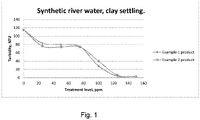
Fig. 1 is a graphical representation of the results obtained upon use of the reaction products of the invention in synthetic river water clay settling tests as referred to in Example 3; -
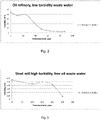
Fig. 2 is a graphical representation of the results obtained upon use of the reaction products of the invention in oil refinery low turbidity wastewater as reported in Example 4; and -
Fig. 3 is a graphical representation of the results obtained upon use of the reaction products of the invention in free oil settling tests in high turbidity steel mill wastewater as reported in Example 5. - In one aspect of the invention, triazines, such as C1-C5 alkyl or C1-C5 hydroxylated s-triazine are employed as a reactant with tannin polymers and an acid in order to form amine substituted polymeric tannin products. These reactions minimize residual formaldehyde otherwise formed as a result of known tannin/formaldehyde/amine Mannich reactions.
- Triazines are cyclic six-member ring molecules and can be prepared and stored by themselves or they can be prepared in the same reaction vessel into which the tannin and acid are introduced. Reaction of triazines with tannin and acid is relatively mild, selective, and easily controlled, resulting in products having acceptable shelf life.
- As to the tannin reactant that is to be employed, these are well known as reported for example in
U.S. Patent 4,558,080 . These tannin components can be obtained from various wood and vegetation materials found throughout the world. Tannins are a large group of water-soluble, complex organic compounds. Almost every tree or shrub that grows contains some tannins in the leaves, twigs, barks, wood or fruit. Examples of barks are wattle, mangrove, oak, eucalyptus, hemlock, pine, larch and willow. Examples of woods are the quebracho, chestnut, oak, and urunday. Examples of fruits are myrobalans, valonia, divi-divi, tara, and algarrobilla. Examples of leaves are sumac and gambier and examples of roots are canaigre and palmetto. Among the exemplary materials are quebracho wood. A spray-dried quebracho powder is commercially available and may be used as the tannin reactant in one embodiment. - These natural tannins can be categorized into the traditional "hydrolyzable" tannins and "condensed tannins" as disclosed by A. Pizzi in "Condensed Tannins for Adhesives", Ind. Eng. Chem. Prod. Res. Dev. 1982, 21, 359-369. Condensed tannin extracts are those manufactured from the bark of the black wattle tree (or mimosa tannin of commerce), from the wood of the quebracho tree (Spanish: Quebra hacha, axe-breaker), from the bark of the hemlock tree, and from the bark of several commonly used pine species. The preparation of wattle and quebracho extracts is a well established industrial practice and they are freely available in considerable amounts.
- Condensed tannin extracts, such as wattle and quebracho, are composed of approximately 70% polyphenolic tannins, 20% to 25% nontannins, mainly simple sugars and polymeric carbohydrates (hydrocolloid gums), the latter of which constitute 3% to 6% of the extract and heavily contribute to extract viscosity, while the balance is accounted for by a low percentage of moisture. Although the exact structure is not known, it is believed that the main polyphenolic pattern in quebracho tannins may be represented by the following structural Formula I showing a representative tannin fragment.

- The triazines that are to be reacted with the tannin are alkylated or hydroxylated derivatives of a precursor triazine molecule having the empirical formula C3H6N3. In certain embodiments, the triazines are alkylated or hydroxylated 1,3,5-triazines.
- In some embodiments, exemplary triazines may be represented by the structural Formula II

- Acids are also reacted with the tannin and triazine. A host of exemplary acids including mineral and organic acids can be mentioned such as HCl, H2SO4, HNO3, H3PO4, formic acid, acetic acid etc. In one embodiment of the invention, HCl can be used as a reactant. In certain exemplary embodiments the acid is present in the reaction medium in an equimolar amount based upon amine presence. Thus, in some embodiments, the acid is present in an amount of about three moles per mole of triazine (triazine having tri-amine functionality).
- The reactants may be introduced into the reaction vessel along with a polar solvent such as water. In some instances, it may be beneficial to add co-solvents to the reaction vessel such as methanol or ethylene glycol in minor amounts (e.g., 5-20%) in order to improved product viscosity or provide freeze protection. After the reactants are dissolved or dispersed in the reaction medium, they are heated and stirred, for example, within the range of about 60-100 °C for a time period of about two to about six hours. In some cases, it may be advantageous to heat the reactants at a temperature of about 80-85 °C. The pH of the reaction medium can be controlled in an acidic range with the pH maintained on the order of 0-4 or 1-3 in some instances.
- After heating and stirring for the requisite time period in order to provide a satisfactory product yield, the reaction medium may be cooled for about an hour and then diluted with additional water to achieve an acceptable solids level of triazine modified tannin such as 20-50%, depending on ultimate end use application.
- The reaction may be monitored for residual triazine levels by HPLC or NMR techniques in order to determine completion. The tannin polymer reaction product is typically dissolved in the reaction medium and may be used in solution.
- In certain embodiments, the tannin is present as a dry powder and the triazine reactant is present in a molar amount of about 0.5-5 moles triazine : 1 kilogram of tannin powder. The molecular weight or viscosity of the resulting tannin based polymer reaction products are not critical as long as the reaction product is soluble or dispersible in the aqueous reaction medium. In some exemplary embodiments, triazine is present in an amount of about 2 moles triazine : 1 kilogram tannin.
- The tannin polymer reaction products may desirably be used for a host of end use applications including: as coal additives to inhibit air oxidation and spontaneous combustion of coal, in dust prevention of coal and other air-borne particulates, as de-oiling and filtering aids, as demulsifiers or flocculants to clarify aqueous streams, in wastewater or municipal waste treatment systems, in agricultural and food industry wastewater treatment, in crude oil and natural gas production (fracking water, SAGD, mining, flood water, produced water), and in industrial water treatment (refineries, steel mills, chemical plants, mining, automotive).
- In one exemplary embodiment, the tannin/triazine/acid polymer reaction products of the invention can be used as flocculants in order to clarify suspended particles and oils in natural waters or industrial wastewaters. Typically, in such applications, the reaction product may be added to the aqueous medium in need of clarification in an amount of about 1-1,000 ppm based upon 1 million parts of the aqueous medium. In other embodiments, the treatment level can be from about 1-300 ppm.
- Based upon data now available, the tannin polymer reaction products can be used as flocculants in the clarification of natural waters such as rivers, ponds, lagoons, etc. in which clay or other solid particles are present. Additionally, in another embodiment, the reaction products can be used as a flocculant treatment in oily wastewaters such as in so-called produced waters in crude oil production, refining, and petrochemical operations or in oily industrial effluents or wastewaters such as may be encountered in steel mill and metal fabrication or processing operations.
- The invention will be explained in conjunction with the following examples which are presented as being illustrative of certain embodiments of the invention.
- 240 gm water was placed into a flask equipped with stirrer, heater, and temperature controller and then heated to 40 °C. 222 gm of tannin was added over a period of 20 minutes. 138 gm of 36.5% hydrochloric acid was added over the period of 10 minutes. 66 gm of 90% solution of hexahydro-1,3,5-trimethyl-s-triazine was added to the reaction flask over a period of 10 minutes at 40 °C. The reaction mixture was then heated to 85 °C and stirred for about three hours. DI water and hydrochloric acid were added to bring the product into the desired specification.
- 76 gm of water was admitted into a flask equipped with stirrer, heater, and temperature controller and then heated to 40 °C. 79 gm of tannin was added over a period of 20 minutes. 46 gm of 36.5% hydrochloric acid was added over a period of 10 minutes. 70 gm of 55% solution of hexahydro-1,3,5-tris(hydroxyethyl)-s-triazine was added to the reaction flask over a period of 10 minutes at 40 °C. The reaction mixture was then heated to 85 °C and stirred for about three hours. DI water and hydrochloric acid were added to bring the product into the desired specification.
- Both of the triazine/tannin/acid reaction product media of Example 1 and Example 2 were tested for formaldehyde content by NMR analysis. Each product media was found to contain about 500-600 ppm of residual formaldehyde which was most probably formed from triazine decomposition under the Example 1 and 2 reaction conditions.
- 500 ml samples of the water to be tested were placed in a jar test apparatus. The reaction products of Examples 1 and 2 were added to the jar test apparatus, stirred for about seven minutes, and allowed to settle for about five minutes. Then, the resulting supernatant liquid was tested for turbidity using a HACH turbidimeter.
- These tests were undertaken on synthetic river water having suspended clay particles therein. Results are shown in
Fig. 1 . - These tests were undertaken on oil refinery, low turbidity wastewater. Results are shown in
Fig. 2 . - These tests were undertaken on oily, high turbidity wastewater from a steel mill. Results are shown in
Fig. 3 . - While this invention has been described in conjunction with the specific embodiments described above, it is evident that many alternatives, combinations, modifications, and variations are apparent to those skilled in the art. Accordingly, the specific embodiments of this invention, as set forth above, are intended to be illustrative only, and should not be construed in a limiting sense. Various changes can be made without departing from the spirit and scope of this invention. Therefore, the technical scope of the present invention encompasses not only those embodiments described above, but also all that fall within the scope of the appended claims.
- The following numbered clauses set out a number of non-limiting aspects of the disclosure:
- 1. A method of forming a tannin based polymer compound comprising reacting tannin, triazine and an acid under heated conditions in a liquid medium.
- 2. A method as recited in
clause 1 wherein said liquid medium is an aqueous medium. - 3. A method as recited in clause 2 wherein about 0.5-5 moles of said triazine is present per one kilogram of tannin.
- 4. A method as recited in clause 2 wherein said acid is present in an amount of about 3 moles acid: 1 mole triazine.
- 5. A method as recited in clause 4 wherein said liquid medium is heated to a temperature of about 60 to 100 °C.
- 6. A method as recited in clause 5 wherein said tannin is in dry powder form.
- 7. A method as recited in clause 5 wherein said triazine has the formula

- 8. A method as recited in clause 7 wherein R1, R2, and R3 are all methyl.
- 9. A method as recited in clause 7 wherein R1, R2, and R3 are all hydroxyethyl.
- 10. A method as recited in clause 5 wherein said acid is a mineral acid.
- 11. A method as recited in
clause 10 wherein said acid is HCl. - 12. A method as recited in
clause 10 wherein said acid is an organic acid. - 13. A method as recited in clause 2 wherein said tannin based polymer is dissolved or dispersed in said aqueous medium, said medium having a formaldehyde content of less than about 1,000 ppm.
- 14. A method as recited in clause 13 wherein said formaldehyde content is less than or equal to about 600 ppm.
- 15. Amine modified tannin dissolved or dispersed in an aqueous medium, said medium having a formaldehyde content of less than about 1,000 ppm.
- 16. Amine modified tannin as recited in clause 15 wherein said formaldehyde content is less than or equal to about 600 ppm.
- 17. Amine modified tannin polymer as recited in clause 15 wherein said amine modified tannin polymer is present in said aqueous medium in an amount of about 25-50% per weight based upon total weight of said aqueous medium and said amine modified tannin.
- 18. Amine modified tannin polymer as recited in clause 15 wherein said amine is a triazine.
- 19. Amine modified tannin polymer as recited in clause 18 wherein said triazine has the formula

- 20. Amine modified tannin polymer as recited in clause 19 wherein said triazine is hexahydro-1,3,5- trimethyl - s - triazine.
- 21. Amine modified tannin polymer as recited in
clause 20 wherein said triazine is hexahydro-1,3,5- tris(hydroxyethyl)- s - triazine. - 22. A method of clarifying an aqueous medium comprising adding about 1-1,000 ppm of an amine modified tannin polymer to said aqueous medium, based on one million parts of said aqueous medium, said amine modified tannin polymer being present in an aqueous reaction medium having less than 1,000 ppm of formaldehyde tannin.
- 23. A method as recited in clause 22 wherein said amine is a triazine.
- 24. A method as recited in clause 22 wherein said triazine has the formula

- 25. A method as recited in clause 24 wherein said triazine is hexahydro - 1,3,5, - trimethyl - s-triazine.
- 26. A method as recited in clause 25 wherein said triazine is hexahydro - 1,3, 5 - tris(hydroxyethyl) s-triazine.
- 27. A method as recited in clause 23 wherein said aqueous medium is river water having clay particles dispersed therein.
- 28. A method as recited in clause 23 wherein said aqueous medium is oil refinery wastewater with oil dispersed therein.
- 29. A method as recited in clause 23 wherein said aqueous medium is steel mill wastewater with oil dispersed therein.
- 30. A method as recited in clause 23 wherein said aqueous medium is agricultural or food industry wastewater.
- 31. A method as recited in clause 23 wherein said aqueous medium comprises crude oil from a fracking or SAGD, operation.
- 32. A method as recited in clause 23 wherein said aqueous medium is produced water from an oilfield operation.
- 33. A method as recited in clause 23 wherein said aqueous medium is industrial wastewater.
- 34. A method of clarifying an aqueous medium comprising adding about 1-1,000 ppm of a tannin based reaction product prepared by any of clauses 1-14 therein, based upon one million parts of said aqueous medium.
- 35. A method of treating coal to inhibit auto oxidation of said coal comprising adding to said coal from about 0.01-10 pounds of the reaction product of any of clauses 1-14 per one ton of coal.
- 36. A method of inhibiting dust generation from coal comprising adding to said coal from about 0.01-10 pounds of the reaction product of any of clauses 1-14 per ton of coal.
Claims (14)
- A tannin polymer, the polymer comprising a reaction product of a tannin, a triazine, and an acid, wherein said triazine has the formula:

wherein said polymer is dissolved or dispersed in an aqueous medium. - The tannin polymer as recited in Claim 1, wherein said triazine is hexahydro-1,3,5-trimethyl-s-triazine.
- The tannin polymer as recited in Claim 1, wherein said triazine is hexahydro-1,3, 5-tris(hydroxyethyl)-s-triazine.
- The tannin polymer as recited in Claim 1, wherein said aqueous medium having a formaldehyde content of less than about 1,000 ppm.
- The tannin polymer as recited in Claim 4, wherein said formaldehyde content is less than or equal to about 600 ppm.
- The tannin polymer as recited in Claim 1, wherein said tannin polymer is present in said aqueous medium in an amount of about 25-50% per weight based upon total weight of said aqueous medium and said tannin polymer.
- The tannin polymer as recited in Claim 1, wherein said polymer is used as a flocculant treatment, and said aqueous medium is (1) natural water, or (2) oily wastewater.
- The tannin polymer as recited in Claim 7, wherein said natural water comprises river water having clay particles or other solid particles dispersed therein.
- The tannin polymer as recited in Claim 7, wherein said oily wastewater comprises produced waters obtained from (i) crude oil production, (i) refining operations, or (iii) petrochemical operations.
- The tannin polymer as recited in Claim 1, wherein said polymer is used as an agricultural or food industry wastewater treatment, and said aqueous medium is agricultural or food industry wastewater.
- The tannin polymer as recited in Claim 1, wherein said polymer is used as a treatment for crude oil and natural gas production, and said aqueous medium comprises crude oil from a fracking or SAGD operation.
- The tannin polymer as recited in Claim 1, wherein said polymer is used as an industrial water treatment, and wherein said aqueous medium is industrial wastewater.
- The tannin polymer as recited in Claim 12, wherein said industrial wastewater comprises (1) oil refinery wastewater with oil dispersed therein, or (2) steel mill wastewater with oil dispersed therein.
- The tannin polymer as recited in Claim 1, wherein said polymer is used as a coal additive, de-oiling aid, or filtering aid.
Applications Claiming Priority (3)
| Application Number | Priority Date | Filing Date | Title |
|---|---|---|---|
| US201562175518P | 2015-06-15 | 2015-06-15 | |
| EP16724151.2A EP3307808B1 (en) | 2015-06-15 | 2016-04-25 | Use of triazines for selective modification of natural polymers |
| PCT/US2016/029167 WO2016204864A1 (en) | 2015-06-15 | 2016-04-25 | Use of triazines for selective modification of natural polymers |
Related Parent Applications (2)
| Application Number | Title | Priority Date | Filing Date |
|---|---|---|---|
| EP16724151.2A Division EP3307808B1 (en) | 2015-06-15 | 2016-04-25 | Use of triazines for selective modification of natural polymers |
| EP16724151.2A Division-Into EP3307808B1 (en) | 2015-06-15 | 2016-04-25 | Use of triazines for selective modification of natural polymers |
Publications (2)
| Publication Number | Publication Date |
|---|---|
| EP4043513A1 true EP4043513A1 (en) | 2022-08-17 |
| EP4043513B1 EP4043513B1 (en) | 2023-11-15 |
Family
ID=56027155
Family Applications (2)
| Application Number | Title | Priority Date | Filing Date |
|---|---|---|---|
| EP16724151.2A Active EP3307808B1 (en) | 2015-06-15 | 2016-04-25 | Use of triazines for selective modification of natural polymers |
| EP22162672.4A Active EP4043513B1 (en) | 2015-06-15 | 2016-04-25 | Use of triazines for selective modification of natural polymers |
Family Applications Before (1)
| Application Number | Title | Priority Date | Filing Date |
|---|---|---|---|
| EP16724151.2A Active EP3307808B1 (en) | 2015-06-15 | 2016-04-25 | Use of triazines for selective modification of natural polymers |
Country Status (5)
| Country | Link |
|---|---|
| US (1) | US10533090B2 (en) |
| EP (2) | EP3307808B1 (en) |
| AU (1) | AU2016278768B2 (en) |
| CA (1) | CA2989801C (en) |
| WO (1) | WO2016204864A1 (en) |
Families Citing this family (2)
| Publication number | Priority date | Publication date | Assignee | Title |
|---|---|---|---|---|
| AU2016278768B2 (en) * | 2015-06-15 | 2020-01-23 | General Electric Company | Use of triazines for selective modification of natural polymers |
| ES2989634T3 (en) | 2020-12-17 | 2024-11-27 | Servyeco Iberia S L | Coagulating agent of plant origin for water treatment |
Citations (2)
| Publication number | Priority date | Publication date | Assignee | Title |
|---|---|---|---|---|
| US4558080A (en) | 1984-01-24 | 1985-12-10 | Dearborn Chemical Company | Stable tannin based polymer compound |
| WO2014209452A1 (en) * | 2013-06-27 | 2014-12-31 | General Electric Company | Tannin-based polymer as filter aid for reducing fouling in filtration of high tds water |
Family Cites Families (7)
| Publication number | Priority date | Publication date | Assignee | Title |
|---|---|---|---|---|
| GB979991A (en) * | 1960-01-14 | 1965-01-06 | Polygram Casting Co Ltd | Improvements in or relating to thermosetting compositions based on carbohydrates |
| US3896166A (en) | 1970-05-06 | 1975-07-22 | Hoffmann La Roche | Formyl-substituted tyrosine |
| JP3693491B2 (en) * | 1997-07-11 | 2005-09-07 | 株式会社カネカ | Improved regenerated collagen fiber and method for producing the same |
| WO2001006045A1 (en) * | 1999-07-14 | 2001-01-25 | Kaneka Corporation | Regenerated collagen fiber with excellent heat resistance |
| BR9904021A (en) * | 1999-08-27 | 2001-04-24 | Tanac S A | Process of manufacturing a vegetable coagulant / flocculant quaternary ammonium tannate. |
| US20080135492A1 (en) * | 2006-12-08 | 2008-06-12 | Ashok Shyadligeri | Tannin based polymeric coagulants and their use in waste water clarification |
| AU2016278768B2 (en) * | 2015-06-15 | 2020-01-23 | General Electric Company | Use of triazines for selective modification of natural polymers |
-
2016
- 2016-04-25 AU AU2016278768A patent/AU2016278768B2/en not_active Expired - Fee Related
- 2016-04-25 EP EP16724151.2A patent/EP3307808B1/en active Active
- 2016-04-25 EP EP22162672.4A patent/EP4043513B1/en active Active
- 2016-04-25 US US15/580,512 patent/US10533090B2/en active Active
- 2016-04-25 WO PCT/US2016/029167 patent/WO2016204864A1/en not_active Ceased
- 2016-04-25 CA CA2989801A patent/CA2989801C/en active Active
Patent Citations (2)
| Publication number | Priority date | Publication date | Assignee | Title |
|---|---|---|---|---|
| US4558080A (en) | 1984-01-24 | 1985-12-10 | Dearborn Chemical Company | Stable tannin based polymer compound |
| WO2014209452A1 (en) * | 2013-06-27 | 2014-12-31 | General Electric Company | Tannin-based polymer as filter aid for reducing fouling in filtration of high tds water |
Non-Patent Citations (1)
| Title |
|---|
| A. PIZZI: "Condensed Tannins for Adhesives", IND. ENG. CHEM. PROD. RES. DEV., vol. 21, 1982, pages 359 - 369 |
Also Published As
| Publication number | Publication date |
|---|---|
| EP3307808A1 (en) | 2018-04-18 |
| US10533090B2 (en) | 2020-01-14 |
| CA2989801C (en) | 2023-08-22 |
| US20180163051A1 (en) | 2018-06-14 |
| EP4043513B1 (en) | 2023-11-15 |
| CA2989801A1 (en) | 2016-12-22 |
| AU2016278768B2 (en) | 2020-01-23 |
| AU2016278768A1 (en) | 2018-01-04 |
| WO2016204864A1 (en) | 2016-12-22 |
| EP3307808B1 (en) | 2022-06-08 |
Similar Documents
| Publication | Publication Date | Title |
|---|---|---|
| KR101387034B1 (en) | How to purify oily wastewater | |
| CN116082183A (en) | Multi-charged ionic compounds derived from polyamines, compositions thereof and use thereof as reverse demulsifiers for oil and gas operations | |
| JP5167271B2 (en) | Polymer coagulant composition based on tannin and method of use | |
| NL1023694C2 (en) | Process for purifying Fischer-Tropsch-derived water. | |
| US10829699B2 (en) | Functionalized aldehydes as H2S and mercaptan scavengers | |
| US20120059088A1 (en) | Novel Copolymers for Use as Oilfield Demulsifiers | |
| WO2014209318A1 (en) | Treatment of treating wastewater containing high levels of total dissolved solids with a tannin-based polymer | |
| EP4043513B1 (en) | Use of triazines for selective modification of natural polymers | |
| KR20140143419A (en) | Method of removal of calcium from hydrocarbon feedstock | |
| US20150122742A1 (en) | Novel copolymers for use as oilfield demulsifiers | |
| US20180346825A1 (en) | Composition of sequestrant for application to the elimination and/or reduction of hydrogen sulfide and/or mercaptans in fluid | |
| US8211294B1 (en) | Method of removing arsenic from hydrocarbons | |
| US8241491B1 (en) | Method of removing arsenic from hydrocarbons | |
| RU2714069C2 (en) | Modified amines useful as scale inhibitors in wet process phosphoric acid production | |
| RU2619930C1 (en) | Method of cleaning hydrocarbonic media from hydrocarbon and mercaptanes | |
| PL200104B1 (en) | Melamine purification process | |
| EP4171777A1 (en) | Carbon disulfide-modified amine additives for separation of oil from water | |
| RU2641910C1 (en) | Process of cleaning hydrocarbon media from h2s and/or mercaptanes | |
| EP4015465B1 (en) | Coagulating agent of vegetal origin for water treatment | |
| KR20200045146A (en) | Manufacturing Methods of Coagulant and Coagulant Thereby | |
| Adeoye et al. | Hydrophobic deep eutectic solvents for the sono-degradation of organic pollutants in wastewater | |
| Tomasi et al. | Glyoxal-modified chestnut tannins as sustainable coagulants for textile wastewater treatment | |
| CN117105373A (en) | Paint mist flocculant and preparation method and application thereof | |
| Bayramov et al. | AN INVESTIGATION OF THE FUNCTIONAL PROPERTIES OF AMINOMETHYL DERIVATIVES OF 2-ALLYLISOOCTYL PHENOLS AND THEIR QUATERNARY AMMONIUM SALTS | |
| Mirzaahmadova et al. | DEHYDRATION AND DESALTING OF WATER-OIL EMULSIONS WITH APPLICATION OF DEMULSIFIERS |
Legal Events
| Date | Code | Title | Description |
|---|---|---|---|
| PUAI | Public reference made under article 153(3) epc to a published international application that has entered the european phase |
Free format text: ORIGINAL CODE: 0009012 |
|
| STAA | Information on the status of an ep patent application or granted ep patent |
Free format text: STATUS: THE APPLICATION HAS BEEN PUBLISHED |
|
| AC | Divisional application: reference to earlier application |
Ref document number: 3307808 Country of ref document: EP Kind code of ref document: P |
|
| AK | Designated contracting states |
Kind code of ref document: A1 Designated state(s): AL AT BE BG CH CY CZ DE DK EE ES FI FR GB GR HR HU IE IS IT LI LT LU LV MC MK MT NL NO PL PT RO RS SE SI SK SM TR |
|
| STAA | Information on the status of an ep patent application or granted ep patent |
Free format text: STATUS: REQUEST FOR EXAMINATION WAS MADE |
|
| 17P | Request for examination filed |
Effective date: 20230208 |
|
| RBV | Designated contracting states (corrected) |
Designated state(s): AL AT BE BG CH CY CZ DE DK EE ES FI FR GB GR HR HU IE IS IT LI LT LU LV MC MK MT NL NO PL PT RO RS SE SI SK SM TR |
|
| GRAP | Despatch of communication of intention to grant a patent |
Free format text: ORIGINAL CODE: EPIDOSNIGR1 |
|
| STAA | Information on the status of an ep patent application or granted ep patent |
Free format text: STATUS: GRANT OF PATENT IS INTENDED |
|
| P01 | Opt-out of the competence of the unified patent court (upc) registered |
Effective date: 20230521 |
|
| INTG | Intention to grant announced |
Effective date: 20230628 |
|
| GRAS | Grant fee paid |
Free format text: ORIGINAL CODE: EPIDOSNIGR3 |
|
| GRAA | (expected) grant |
Free format text: ORIGINAL CODE: 0009210 |
|
| STAA | Information on the status of an ep patent application or granted ep patent |
Free format text: STATUS: THE PATENT HAS BEEN GRANTED |
|
| AC | Divisional application: reference to earlier application |
Ref document number: 3307808 Country of ref document: EP Kind code of ref document: P |
|
| AK | Designated contracting states |
Kind code of ref document: B1 Designated state(s): AL AT BE BG CH CY CZ DE DK EE ES FI FR GB GR HR HU IE IS IT LI LT LU LV MC MK MT NL NO PL PT RO RS SE SI SK SM TR |
|
| REG | Reference to a national code |
Ref country code: CH Ref legal event code: EP Ref country code: GB Ref legal event code: FG4D |
|
| REG | Reference to a national code |
Ref country code: DE Ref legal event code: R096 Ref document number: 602016084239 Country of ref document: DE |
|
| REG | Reference to a national code |
Ref country code: IE Ref legal event code: FG4D |
|
| REG | Reference to a national code |
Ref country code: NL Ref legal event code: FP |
|
| REG | Reference to a national code |
Ref country code: LT Ref legal event code: MG9D |
|
| PG25 | Lapsed in a contracting state [announced via postgrant information from national office to epo] |
Ref country code: GR Free format text: LAPSE BECAUSE OF FAILURE TO SUBMIT A TRANSLATION OF THE DESCRIPTION OR TO PAY THE FEE WITHIN THE PRESCRIBED TIME-LIMIT Effective date: 20240216 |
|
| PG25 | Lapsed in a contracting state [announced via postgrant information from national office to epo] |
Ref country code: IS Free format text: LAPSE BECAUSE OF FAILURE TO SUBMIT A TRANSLATION OF THE DESCRIPTION OR TO PAY THE FEE WITHIN THE PRESCRIBED TIME-LIMIT Effective date: 20240315 |
|
| PG25 | Lapsed in a contracting state [announced via postgrant information from national office to epo] |
Ref country code: LT Free format text: LAPSE BECAUSE OF FAILURE TO SUBMIT A TRANSLATION OF THE DESCRIPTION OR TO PAY THE FEE WITHIN THE PRESCRIBED TIME-LIMIT Effective date: 20231115 |
|
| REG | Reference to a national code |
Ref country code: AT Ref legal event code: MK05 Ref document number: 1631751 Country of ref document: AT Kind code of ref document: T Effective date: 20231115 |
|
| PG25 | Lapsed in a contracting state [announced via postgrant information from national office to epo] |
Ref country code: AT Free format text: LAPSE BECAUSE OF FAILURE TO SUBMIT A TRANSLATION OF THE DESCRIPTION OR TO PAY THE FEE WITHIN THE PRESCRIBED TIME-LIMIT Effective date: 20231115 |
|
| PG25 | Lapsed in a contracting state [announced via postgrant information from national office to epo] |
Ref country code: ES Free format text: LAPSE BECAUSE OF FAILURE TO SUBMIT A TRANSLATION OF THE DESCRIPTION OR TO PAY THE FEE WITHIN THE PRESCRIBED TIME-LIMIT Effective date: 20231115 |
|
| PG25 | Lapsed in a contracting state [announced via postgrant information from national office to epo] |
Ref country code: LT Free format text: LAPSE BECAUSE OF FAILURE TO SUBMIT A TRANSLATION OF THE DESCRIPTION OR TO PAY THE FEE WITHIN THE PRESCRIBED TIME-LIMIT Effective date: 20231115 Ref country code: IS Free format text: LAPSE BECAUSE OF FAILURE TO SUBMIT A TRANSLATION OF THE DESCRIPTION OR TO PAY THE FEE WITHIN THE PRESCRIBED TIME-LIMIT Effective date: 20240315 Ref country code: GR Free format text: LAPSE BECAUSE OF FAILURE TO SUBMIT A TRANSLATION OF THE DESCRIPTION OR TO PAY THE FEE WITHIN THE PRESCRIBED TIME-LIMIT Effective date: 20240216 Ref country code: ES Free format text: LAPSE BECAUSE OF FAILURE TO SUBMIT A TRANSLATION OF THE DESCRIPTION OR TO PAY THE FEE WITHIN THE PRESCRIBED TIME-LIMIT Effective date: 20231115 Ref country code: BG Free format text: LAPSE BECAUSE OF FAILURE TO SUBMIT A TRANSLATION OF THE DESCRIPTION OR TO PAY THE FEE WITHIN THE PRESCRIBED TIME-LIMIT Effective date: 20240215 Ref country code: AT Free format text: LAPSE BECAUSE OF FAILURE TO SUBMIT A TRANSLATION OF THE DESCRIPTION OR TO PAY THE FEE WITHIN THE PRESCRIBED TIME-LIMIT Effective date: 20231115 Ref country code: PT Free format text: LAPSE BECAUSE OF FAILURE TO SUBMIT A TRANSLATION OF THE DESCRIPTION OR TO PAY THE FEE WITHIN THE PRESCRIBED TIME-LIMIT Effective date: 20240315 |
|
| PG25 | Lapsed in a contracting state [announced via postgrant information from national office to epo] |
Ref country code: SE Free format text: LAPSE BECAUSE OF FAILURE TO SUBMIT A TRANSLATION OF THE DESCRIPTION OR TO PAY THE FEE WITHIN THE PRESCRIBED TIME-LIMIT Effective date: 20231115 Ref country code: RS Free format text: LAPSE BECAUSE OF FAILURE TO SUBMIT A TRANSLATION OF THE DESCRIPTION OR TO PAY THE FEE WITHIN THE PRESCRIBED TIME-LIMIT Effective date: 20231115 Ref country code: PL Free format text: LAPSE BECAUSE OF FAILURE TO SUBMIT A TRANSLATION OF THE DESCRIPTION OR TO PAY THE FEE WITHIN THE PRESCRIBED TIME-LIMIT Effective date: 20231115 Ref country code: NO Free format text: LAPSE BECAUSE OF FAILURE TO SUBMIT A TRANSLATION OF THE DESCRIPTION OR TO PAY THE FEE WITHIN THE PRESCRIBED TIME-LIMIT Effective date: 20240215 Ref country code: LV Free format text: LAPSE BECAUSE OF FAILURE TO SUBMIT A TRANSLATION OF THE DESCRIPTION OR TO PAY THE FEE WITHIN THE PRESCRIBED TIME-LIMIT Effective date: 20231115 Ref country code: HR Free format text: LAPSE BECAUSE OF FAILURE TO SUBMIT A TRANSLATION OF THE DESCRIPTION OR TO PAY THE FEE WITHIN THE PRESCRIBED TIME-LIMIT Effective date: 20231115 |
|
| PG25 | Lapsed in a contracting state [announced via postgrant information from national office to epo] |
Ref country code: DK Free format text: LAPSE BECAUSE OF FAILURE TO SUBMIT A TRANSLATION OF THE DESCRIPTION OR TO PAY THE FEE WITHIN THE PRESCRIBED TIME-LIMIT Effective date: 20231115 |
|
| PG25 | Lapsed in a contracting state [announced via postgrant information from national office to epo] |
Ref country code: CZ Free format text: LAPSE BECAUSE OF FAILURE TO SUBMIT A TRANSLATION OF THE DESCRIPTION OR TO PAY THE FEE WITHIN THE PRESCRIBED TIME-LIMIT Effective date: 20231115 |
|
| PG25 | Lapsed in a contracting state [announced via postgrant information from national office to epo] |
Ref country code: SK Free format text: LAPSE BECAUSE OF FAILURE TO SUBMIT A TRANSLATION OF THE DESCRIPTION OR TO PAY THE FEE WITHIN THE PRESCRIBED TIME-LIMIT Effective date: 20231115 |
|
| PG25 | Lapsed in a contracting state [announced via postgrant information from national office to epo] |
Ref country code: SM Free format text: LAPSE BECAUSE OF FAILURE TO SUBMIT A TRANSLATION OF THE DESCRIPTION OR TO PAY THE FEE WITHIN THE PRESCRIBED TIME-LIMIT Effective date: 20231115 Ref country code: SK Free format text: LAPSE BECAUSE OF FAILURE TO SUBMIT A TRANSLATION OF THE DESCRIPTION OR TO PAY THE FEE WITHIN THE PRESCRIBED TIME-LIMIT Effective date: 20231115 Ref country code: RO Free format text: LAPSE BECAUSE OF FAILURE TO SUBMIT A TRANSLATION OF THE DESCRIPTION OR TO PAY THE FEE WITHIN THE PRESCRIBED TIME-LIMIT Effective date: 20231115 Ref country code: EE Free format text: LAPSE BECAUSE OF FAILURE TO SUBMIT A TRANSLATION OF THE DESCRIPTION OR TO PAY THE FEE WITHIN THE PRESCRIBED TIME-LIMIT Effective date: 20231115 Ref country code: DK Free format text: LAPSE BECAUSE OF FAILURE TO SUBMIT A TRANSLATION OF THE DESCRIPTION OR TO PAY THE FEE WITHIN THE PRESCRIBED TIME-LIMIT Effective date: 20231115 Ref country code: CZ Free format text: LAPSE BECAUSE OF FAILURE TO SUBMIT A TRANSLATION OF THE DESCRIPTION OR TO PAY THE FEE WITHIN THE PRESCRIBED TIME-LIMIT Effective date: 20231115 |
|
| REG | Reference to a national code |
Ref country code: DE Ref legal event code: R097 Ref document number: 602016084239 Country of ref document: DE |
|
| PLBE | No opposition filed within time limit |
Free format text: ORIGINAL CODE: 0009261 |
|
| STAA | Information on the status of an ep patent application or granted ep patent |
Free format text: STATUS: NO OPPOSITION FILED WITHIN TIME LIMIT |
|
| 26N | No opposition filed |
Effective date: 20240819 |
|
| PG25 | Lapsed in a contracting state [announced via postgrant information from national office to epo] |
Ref country code: SI Free format text: LAPSE BECAUSE OF FAILURE TO SUBMIT A TRANSLATION OF THE DESCRIPTION OR TO PAY THE FEE WITHIN THE PRESCRIBED TIME-LIMIT Effective date: 20231115 |
|
| PG25 | Lapsed in a contracting state [announced via postgrant information from national office to epo] |
Ref country code: SI Free format text: LAPSE BECAUSE OF FAILURE TO SUBMIT A TRANSLATION OF THE DESCRIPTION OR TO PAY THE FEE WITHIN THE PRESCRIBED TIME-LIMIT Effective date: 20231115 |
|
| PG25 | Lapsed in a contracting state [announced via postgrant information from national office to epo] |
Ref country code: MC Free format text: LAPSE BECAUSE OF FAILURE TO SUBMIT A TRANSLATION OF THE DESCRIPTION OR TO PAY THE FEE WITHIN THE PRESCRIBED TIME-LIMIT Effective date: 20231115 |
|
| PG25 | Lapsed in a contracting state [announced via postgrant information from national office to epo] |
Ref country code: MC Free format text: LAPSE BECAUSE OF FAILURE TO SUBMIT A TRANSLATION OF THE DESCRIPTION OR TO PAY THE FEE WITHIN THE PRESCRIBED TIME-LIMIT Effective date: 20231115 |
|
| REG | Reference to a national code |
Ref country code: CH Ref legal event code: PL |
|
| PG25 | Lapsed in a contracting state [announced via postgrant information from national office to epo] |
Ref country code: LU Free format text: LAPSE BECAUSE OF NON-PAYMENT OF DUE FEES Effective date: 20240425 |
|
| GBPC | Gb: european patent ceased through non-payment of renewal fee |
Effective date: 20240425 |
|
| PG25 | Lapsed in a contracting state [announced via postgrant information from national office to epo] |
Ref country code: LU Free format text: LAPSE BECAUSE OF NON-PAYMENT OF DUE FEES Effective date: 20240425 |
|
| PG25 | Lapsed in a contracting state [announced via postgrant information from national office to epo] |
Ref country code: GB Free format text: LAPSE BECAUSE OF NON-PAYMENT OF DUE FEES Effective date: 20240425 |
|
| PG25 | Lapsed in a contracting state [announced via postgrant information from national office to epo] |
Ref country code: GB Free format text: LAPSE BECAUSE OF NON-PAYMENT OF DUE FEES Effective date: 20240425 Ref country code: CH Free format text: LAPSE BECAUSE OF NON-PAYMENT OF DUE FEES Effective date: 20240430 |
|
| PG25 | Lapsed in a contracting state [announced via postgrant information from national office to epo] |
Ref country code: IE Free format text: LAPSE BECAUSE OF NON-PAYMENT OF DUE FEES Effective date: 20240425 |
|
| PGFP | Annual fee paid to national office [announced via postgrant information from national office to epo] |
Ref country code: NL Payment date: 20250427 Year of fee payment: 10 |
|
| PGFP | Annual fee paid to national office [announced via postgrant information from national office to epo] |
Ref country code: DE Payment date: 20250429 Year of fee payment: 10 |
|
| PGFP | Annual fee paid to national office [announced via postgrant information from national office to epo] |
Ref country code: BE Payment date: 20250428 Year of fee payment: 10 Ref country code: IT Payment date: 20250422 Year of fee payment: 10 |
|
| PGFP | Annual fee paid to national office [announced via postgrant information from national office to epo] |
Ref country code: FR Payment date: 20250425 Year of fee payment: 10 |
|
| PG25 | Lapsed in a contracting state [announced via postgrant information from national office to epo] |
Ref country code: CY Free format text: LAPSE BECAUSE OF FAILURE TO SUBMIT A TRANSLATION OF THE DESCRIPTION OR TO PAY THE FEE WITHIN THE PRESCRIBED TIME-LIMIT; INVALID AB INITIO Effective date: 20160425 |
|
| PG25 | Lapsed in a contracting state [announced via postgrant information from national office to epo] |
Ref country code: HU Free format text: LAPSE BECAUSE OF FAILURE TO SUBMIT A TRANSLATION OF THE DESCRIPTION OR TO PAY THE FEE WITHIN THE PRESCRIBED TIME-LIMIT; INVALID AB INITIO Effective date: 20160425 |
|
| PG25 | Lapsed in a contracting state [announced via postgrant information from national office to epo] |
Ref country code: FI Free format text: LAPSE BECAUSE OF FAILURE TO SUBMIT A TRANSLATION OF THE DESCRIPTION OR TO PAY THE FEE WITHIN THE PRESCRIBED TIME-LIMIT Effective date: 20231115 |