EP4043416A1 - Thermal energy storage media based on concrete and use of hybrid cement as a binder for production of such concrete media - Google Patents
Thermal energy storage media based on concrete and use of hybrid cement as a binder for production of such concrete media Download PDFInfo
- Publication number
- EP4043416A1 EP4043416A1 EP21156975.1A EP21156975A EP4043416A1 EP 4043416 A1 EP4043416 A1 EP 4043416A1 EP 21156975 A EP21156975 A EP 21156975A EP 4043416 A1 EP4043416 A1 EP 4043416A1
- Authority
- EP
- European Patent Office
- Prior art keywords
- alkaline
- sio
- leachates
- concrete
- concentrate
- Prior art date
- Legal status (The legal status is an assumption and is not a legal conclusion. Google has not performed a legal analysis and makes no representation as to the accuracy of the status listed.)
- Pending
Links
- 239000004567 concrete Substances 0.000 title claims abstract description 61
- 239000004568 cement Substances 0.000 title claims abstract description 33
- 238000004146 energy storage Methods 0.000 title claims abstract description 21
- 239000011230 binding agent Substances 0.000 title claims abstract description 13
- 238000004519 manufacturing process Methods 0.000 title claims description 8
- 239000000203 mixture Substances 0.000 claims abstract description 22
- 239000002893 slag Substances 0.000 claims abstract description 22
- 239000003513 alkali Substances 0.000 claims abstract description 12
- RYGMFSIKBFXOCR-UHFFFAOYSA-N Copper Chemical compound [Cu] RYGMFSIKBFXOCR-UHFFFAOYSA-N 0.000 claims abstract description 10
- 229910052802 copper Inorganic materials 0.000 claims abstract description 10
- 239000010949 copper Substances 0.000 claims abstract description 10
- 229910000831 Steel Inorganic materials 0.000 claims abstract description 6
- 239000010959 steel Substances 0.000 claims abstract description 6
- VYPSYNLAJGMNEJ-UHFFFAOYSA-N Silicium dioxide Chemical compound O=[Si]=O VYPSYNLAJGMNEJ-UHFFFAOYSA-N 0.000 claims description 24
- 150000003839 salts Chemical class 0.000 claims description 19
- 239000002351 wastewater Substances 0.000 claims description 18
- 239000012141 concentrate Substances 0.000 claims description 15
- 229910052681 coesite Inorganic materials 0.000 claims description 9
- 229910052906 cristobalite Inorganic materials 0.000 claims description 9
- 239000000377 silicon dioxide Substances 0.000 claims description 9
- 229910052682 stishovite Inorganic materials 0.000 claims description 9
- 229910052905 tridymite Inorganic materials 0.000 claims description 9
- 239000002699 waste material Substances 0.000 claims description 8
- CDBYLPFSWZWCQE-UHFFFAOYSA-L Sodium Carbonate Chemical compound [Na+].[Na+].[O-]C([O-])=O CDBYLPFSWZWCQE-UHFFFAOYSA-L 0.000 claims description 6
- UIIMBOGNXHQVGW-UHFFFAOYSA-M Sodium bicarbonate Chemical compound [Na+].OC([O-])=O UIIMBOGNXHQVGW-UHFFFAOYSA-M 0.000 claims description 6
- LSNNMFCWUKXFEE-UHFFFAOYSA-N Sulfurous acid Chemical class OS(O)=O LSNNMFCWUKXFEE-UHFFFAOYSA-N 0.000 claims description 6
- 239000012190 activator Substances 0.000 claims description 6
- BVKZGUZCCUSVTD-UHFFFAOYSA-N carbonic acid Chemical class OC(O)=O BVKZGUZCCUSVTD-UHFFFAOYSA-N 0.000 claims description 6
- 239000010881 fly ash Substances 0.000 claims description 6
- 229910052909 inorganic silicate Inorganic materials 0.000 claims description 6
- 238000006386 neutralization reaction Methods 0.000 claims description 6
- BWHMMNNQKKPAPP-UHFFFAOYSA-L potassium carbonate Chemical compound [K+].[K+].[O-]C([O-])=O BWHMMNNQKKPAPP-UHFFFAOYSA-L 0.000 claims description 6
- 150000004760 silicates Chemical class 0.000 claims description 6
- -1 leachates Substances 0.000 claims description 5
- BVKZGUZCCUSVTD-UHFFFAOYSA-M Bicarbonate Chemical compound OC([O-])=O BVKZGUZCCUSVTD-UHFFFAOYSA-M 0.000 claims description 3
- 229910020451 K2SiO3 Inorganic materials 0.000 claims description 3
- 239000007832 Na2SO4 Substances 0.000 claims description 3
- 229910020284 Na2SO4.10H2O Inorganic materials 0.000 claims description 3
- 229910020489 SiO3 Inorganic materials 0.000 claims description 3
- PMZURENOXWZQFD-UHFFFAOYSA-L Sodium Sulfate Chemical compound [Na+].[Na+].[O-]S([O-])(=O)=O PMZURENOXWZQFD-UHFFFAOYSA-L 0.000 claims description 3
- QAOWNCQODCNURD-UHFFFAOYSA-N Sulfuric acid Chemical compound OS(O)(=O)=O QAOWNCQODCNURD-UHFFFAOYSA-N 0.000 claims description 3
- 239000002253 acid Substances 0.000 claims description 3
- PNEYBMLMFCGWSK-UHFFFAOYSA-N aluminium oxide Inorganic materials [O-2].[O-2].[O-2].[Al+3].[Al+3] PNEYBMLMFCGWSK-UHFFFAOYSA-N 0.000 claims description 3
- 229910001570 bauxite Inorganic materials 0.000 claims description 3
- 150000004649 carbonic acid derivatives Chemical class 0.000 claims description 3
- 150000001875 compounds Chemical class 0.000 claims description 3
- 229910052593 corundum Inorganic materials 0.000 claims description 3
- 238000002386 leaching Methods 0.000 claims description 3
- 239000011736 potassium bicarbonate Substances 0.000 claims description 3
- 229910000028 potassium bicarbonate Inorganic materials 0.000 claims description 3
- 229910000027 potassium carbonate Inorganic materials 0.000 claims description 3
- TYJJADVDDVDEDZ-UHFFFAOYSA-M potassium hydrogencarbonate Chemical compound [K+].OC([O-])=O TYJJADVDDVDEDZ-UHFFFAOYSA-M 0.000 claims description 3
- OTYBMLCTZGSZBG-UHFFFAOYSA-L potassium sulfate Chemical compound [K+].[K+].[O-]S([O-])(=O)=O OTYBMLCTZGSZBG-UHFFFAOYSA-L 0.000 claims description 3
- 229910052939 potassium sulfate Inorganic materials 0.000 claims description 3
- 229910021487 silica fume Inorganic materials 0.000 claims description 3
- 229910000030 sodium bicarbonate Inorganic materials 0.000 claims description 3
- 229910000029 sodium carbonate Inorganic materials 0.000 claims description 3
- 229910052911 sodium silicate Inorganic materials 0.000 claims description 3
- 229910052938 sodium sulfate Inorganic materials 0.000 claims description 3
- RSIJVJUOQBWMIM-UHFFFAOYSA-L sodium sulfate decahydrate Chemical compound O.O.O.O.O.O.O.O.O.O.[Na+].[Na+].[O-]S([O-])(=O)=O RSIJVJUOQBWMIM-UHFFFAOYSA-L 0.000 claims description 3
- GEHJYWRUCIMESM-UHFFFAOYSA-L sodium sulfite Chemical compound [Na+].[Na+].[O-]S([O-])=O GEHJYWRUCIMESM-UHFFFAOYSA-L 0.000 claims description 3
- AKEJUJNQAAGONA-UHFFFAOYSA-N sulfur trioxide Inorganic materials O=S(=O)=O AKEJUJNQAAGONA-UHFFFAOYSA-N 0.000 claims description 3
- 150000003467 sulfuric acid derivatives Chemical class 0.000 claims description 3
- 239000003643 water by type Substances 0.000 claims description 3
- 229910001845 yogo sapphire Inorganic materials 0.000 claims description 3
- 238000005259 measurement Methods 0.000 description 18
- 238000010438 heat treatment Methods 0.000 description 16
- 239000000843 powder Substances 0.000 description 16
- 238000003860 storage Methods 0.000 description 9
- 238000002411 thermogravimetry Methods 0.000 description 9
- XLYOFNOQVPJJNP-UHFFFAOYSA-N water Substances O XLYOFNOQVPJJNP-UHFFFAOYSA-N 0.000 description 9
- 239000000463 material Substances 0.000 description 8
- 238000002474 experimental method Methods 0.000 description 6
- 238000001565 modulated differential scanning calorimetry Methods 0.000 description 6
- 238000005516 engineering process Methods 0.000 description 5
- 238000005338 heat storage Methods 0.000 description 5
- 239000011232 storage material Substances 0.000 description 5
- IJGRMHOSHXDMSA-UHFFFAOYSA-N Atomic nitrogen Chemical compound N#N IJGRMHOSHXDMSA-UHFFFAOYSA-N 0.000 description 4
- OKTJSMMVPCPJKN-UHFFFAOYSA-N Carbon Chemical compound [C] OKTJSMMVPCPJKN-UHFFFAOYSA-N 0.000 description 4
- 230000007613 environmental effect Effects 0.000 description 4
- 229910002804 graphite Inorganic materials 0.000 description 4
- 239000010439 graphite Substances 0.000 description 4
- 239000004411 aluminium Substances 0.000 description 3
- 229910052782 aluminium Inorganic materials 0.000 description 3
- XAGFODPZIPBFFR-UHFFFAOYSA-N aluminium Chemical compound [Al] XAGFODPZIPBFFR-UHFFFAOYSA-N 0.000 description 3
- 238000004458 analytical method Methods 0.000 description 3
- 239000000919 ceramic Substances 0.000 description 3
- 238000011161 development Methods 0.000 description 3
- 239000006185 dispersion Substances 0.000 description 3
- 238000001704 evaporation Methods 0.000 description 3
- 230000008020 evaporation Effects 0.000 description 3
- 238000005184 irreversible process Methods 0.000 description 3
- 238000000034 method Methods 0.000 description 3
- 229920001296 polysiloxane Polymers 0.000 description 3
- 230000002441 reversible effect Effects 0.000 description 3
- 238000012546 transfer Methods 0.000 description 3
- 229910021642 ultra pure water Inorganic materials 0.000 description 3
- 239000012498 ultrapure water Substances 0.000 description 3
- 230000008901 benefit Effects 0.000 description 2
- 238000001816 cooling Methods 0.000 description 2
- 238000000265 homogenisation Methods 0.000 description 2
- 238000011835 investigation Methods 0.000 description 2
- 238000002156 mixing Methods 0.000 description 2
- 229910052757 nitrogen Inorganic materials 0.000 description 2
- 239000008188 pellet Substances 0.000 description 2
- 239000012782 phase change material Substances 0.000 description 2
- 230000008569 process Effects 0.000 description 2
- 239000011044 quartzite Substances 0.000 description 2
- 239000011343 solid material Substances 0.000 description 2
- 241000078491 Almeria Species 0.000 description 1
- 108010053481 Antifreeze Proteins Proteins 0.000 description 1
- 239000004677 Nylon Substances 0.000 description 1
- 239000004698 Polyethylene Substances 0.000 description 1
- 239000004743 Polypropylene Substances 0.000 description 1
- 230000004075 alteration Effects 0.000 description 1
- 230000002528 anti-freeze Effects 0.000 description 1
- 230000015556 catabolic process Effects 0.000 description 1
- 238000002507 cathodic stripping potentiometry Methods 0.000 description 1
- 238000010276 construction Methods 0.000 description 1
- 230000001186 cumulative effect Effects 0.000 description 1
- 230000001351 cycling effect Effects 0.000 description 1
- 238000006731 degradation reaction Methods 0.000 description 1
- 238000007599 discharging Methods 0.000 description 1
- 230000001747 exhibiting effect Effects 0.000 description 1
- 239000000835 fiber Substances 0.000 description 1
- 239000012530 fluid Substances 0.000 description 1
- 230000004907 flux Effects 0.000 description 1
- 238000009472 formulation Methods 0.000 description 1
- 239000002803 fossil fuel Substances 0.000 description 1
- 239000011521 glass Substances 0.000 description 1
- 239000005431 greenhouse gas Substances 0.000 description 1
- 231100001261 hazardous Toxicity 0.000 description 1
- 239000013529 heat transfer fluid Substances 0.000 description 1
- 238000010348 incorporation Methods 0.000 description 1
- 239000002440 industrial waste Substances 0.000 description 1
- 238000011326 mechanical measurement Methods 0.000 description 1
- 230000007246 mechanism Effects 0.000 description 1
- 229910052751 metal Inorganic materials 0.000 description 1
- 239000002184 metal Substances 0.000 description 1
- 230000009972 noncorrosive effect Effects 0.000 description 1
- 231100000252 nontoxic Toxicity 0.000 description 1
- 230000003000 nontoxic effect Effects 0.000 description 1
- 229920001778 nylon Polymers 0.000 description 1
- 238000005457 optimization Methods 0.000 description 1
- 230000035699 permeability Effects 0.000 description 1
- 229920000573 polyethylene Polymers 0.000 description 1
- 229920001155 polypropylene Polymers 0.000 description 1
- 238000002360 preparation method Methods 0.000 description 1
- 238000012545 processing Methods 0.000 description 1
- 238000004064 recycling Methods 0.000 description 1
- 238000011160 research Methods 0.000 description 1
- 238000013341 scale-up Methods 0.000 description 1
- 238000004626 scanning electron microscopy Methods 0.000 description 1
- 239000007787 solid Substances 0.000 description 1
- 239000000126 substance Substances 0.000 description 1
- 230000002123 temporal effect Effects 0.000 description 1
- 230000001052 transient effect Effects 0.000 description 1
- 230000004580 weight loss Effects 0.000 description 1
Images




Classifications
-
- C—CHEMISTRY; METALLURGY
- C04—CEMENTS; CONCRETE; ARTIFICIAL STONE; CERAMICS; REFRACTORIES
- C04B—LIME, MAGNESIA; SLAG; CEMENTS; COMPOSITIONS THEREOF, e.g. MORTARS, CONCRETE OR LIKE BUILDING MATERIALS; ARTIFICIAL STONE; CERAMICS; REFRACTORIES; TREATMENT OF NATURAL STONE
- C04B28/00—Compositions of mortars, concrete or artificial stone, containing inorganic binders or the reaction product of an inorganic and an organic binder, e.g. polycarboxylate cements
- C04B28/02—Compositions of mortars, concrete or artificial stone, containing inorganic binders or the reaction product of an inorganic and an organic binder, e.g. polycarboxylate cements containing hydraulic cements other than calcium sulfates
- C04B28/021—Ash cements, e.g. fly ash cements ; Cements based on incineration residues, e.g. alkali-activated slags from waste incineration ; Kiln dust cements
-
- C—CHEMISTRY; METALLURGY
- C04—CEMENTS; CONCRETE; ARTIFICIAL STONE; CERAMICS; REFRACTORIES
- C04B—LIME, MAGNESIA; SLAG; CEMENTS; COMPOSITIONS THEREOF, e.g. MORTARS, CONCRETE OR LIKE BUILDING MATERIALS; ARTIFICIAL STONE; CERAMICS; REFRACTORIES; TREATMENT OF NATURAL STONE
- C04B28/00—Compositions of mortars, concrete or artificial stone, containing inorganic binders or the reaction product of an inorganic and an organic binder, e.g. polycarboxylate cements
- C04B28/006—Compositions of mortars, concrete or artificial stone, containing inorganic binders or the reaction product of an inorganic and an organic binder, e.g. polycarboxylate cements containing mineral polymers, e.g. geopolymers of the Davidovits type
- C04B28/008—Mineral polymers other than those of the Davidovits type, e.g. from a reaction mixture containing waterglass
-
- C—CHEMISTRY; METALLURGY
- C04—CEMENTS; CONCRETE; ARTIFICIAL STONE; CERAMICS; REFRACTORIES
- C04B—LIME, MAGNESIA; SLAG; CEMENTS; COMPOSITIONS THEREOF, e.g. MORTARS, CONCRETE OR LIKE BUILDING MATERIALS; ARTIFICIAL STONE; CERAMICS; REFRACTORIES; TREATMENT OF NATURAL STONE
- C04B28/00—Compositions of mortars, concrete or artificial stone, containing inorganic binders or the reaction product of an inorganic and an organic binder, e.g. polycarboxylate cements
- C04B28/02—Compositions of mortars, concrete or artificial stone, containing inorganic binders or the reaction product of an inorganic and an organic binder, e.g. polycarboxylate cements containing hydraulic cements other than calcium sulfates
- C04B28/08—Slag cements
-
- C—CHEMISTRY; METALLURGY
- C04—CEMENTS; CONCRETE; ARTIFICIAL STONE; CERAMICS; REFRACTORIES
- C04B—LIME, MAGNESIA; SLAG; CEMENTS; COMPOSITIONS THEREOF, e.g. MORTARS, CONCRETE OR LIKE BUILDING MATERIALS; ARTIFICIAL STONE; CERAMICS; REFRACTORIES; TREATMENT OF NATURAL STONE
- C04B2111/00—Mortars, concrete or artificial stone or mixtures to prepare them, characterised by specific function, property or use
- C04B2111/00439—Physico-chemical properties of the materials not provided for elsewhere in C04B2111/00
- C04B2111/00465—Heat conducting materials
-
- C—CHEMISTRY; METALLURGY
- C04—CEMENTS; CONCRETE; ARTIFICIAL STONE; CERAMICS; REFRACTORIES
- C04B—LIME, MAGNESIA; SLAG; CEMENTS; COMPOSITIONS THEREOF, e.g. MORTARS, CONCRETE OR LIKE BUILDING MATERIALS; ARTIFICIAL STONE; CERAMICS; REFRACTORIES; TREATMENT OF NATURAL STONE
- C04B2111/00—Mortars, concrete or artificial stone or mixtures to prepare them, characterised by specific function, property or use
- C04B2111/00474—Uses not provided for elsewhere in C04B2111/00
- C04B2111/00853—Uses not provided for elsewhere in C04B2111/00 in electrochemical cells or batteries, e.g. fuel cells
-
- C—CHEMISTRY; METALLURGY
- C04—CEMENTS; CONCRETE; ARTIFICIAL STONE; CERAMICS; REFRACTORIES
- C04B—LIME, MAGNESIA; SLAG; CEMENTS; COMPOSITIONS THEREOF, e.g. MORTARS, CONCRETE OR LIKE BUILDING MATERIALS; ARTIFICIAL STONE; CERAMICS; REFRACTORIES; TREATMENT OF NATURAL STONE
- C04B2111/00—Mortars, concrete or artificial stone or mixtures to prepare them, characterised by specific function, property or use
- C04B2111/20—Resistance against chemical, physical or biological attack
- C04B2111/28—Fire resistance, i.e. materials resistant to accidental fires or high temperatures
-
- C—CHEMISTRY; METALLURGY
- C09—DYES; PAINTS; POLISHES; NATURAL RESINS; ADHESIVES; COMPOSITIONS NOT OTHERWISE PROVIDED FOR; APPLICATIONS OF MATERIALS NOT OTHERWISE PROVIDED FOR
- C09K—MATERIALS FOR MISCELLANEOUS APPLICATIONS, NOT PROVIDED FOR ELSEWHERE
- C09K5/00—Heat-transfer, heat-exchange or heat-storage materials, e.g. refrigerants; Materials for the production of heat or cold by chemical reactions other than by combustion
- C09K5/08—Materials not undergoing a change of physical state when used
- C09K5/14—Solid materials, e.g. powdery or granular
Definitions
- Present invention relates to a thermal energy storage media based on alkali activated concrete, for high temperature applications and use of hybrid cement as a binder for production of such concrete media.
- the residual energy from low demand periods can be used to charge a TES, to have backup energy for high-demand periods and periods of low solar availability.
- TES systems There are currently three kinds of TES systems available: sensible heat storage, latent heat storage and thermo-chemical heat storage. Sensible heat storage systems are the most mature and simple
- Table 1 MATERIAL Molten Salts Castable Ceramic HighT Concrete Cp [J/(gxK)] 1.6 0.86 0.91 ⁇ [mm 2 /s] ⁇ 0.26 0.43 0.39 price [euros/tonne] 300 4500 80
- the study introduces thermal storage concrete prepared by using alkali-activated ground-granulated blast furnace slag as cementitious material.
- graphite aggregate is used to replace part of the coarse aggregate, and, furthermore, polypropylene fiber is added to improve the heat resistance performance of the concrete.
- the compressive strength of concrete specimens before and after heating was tested, and, furthermore, scanning electron microscopy was used to investigate the structure alteration due to heating. Results showed that the partial replacement of coarse aggregate by graphite block could obviously improve the thermal conductivity of the thermal storage concrete.
- the specimen with 30% graphite aggregate replacement still exhibited good mechanical properties. The mechanism of the high residual strength was investigated.
- a thermal energy storage media based on concrete comprising alkali activated binder and an aggregate, according to the invention characterized in that the alkali activated binder is hybrid cement.
- Hybrid cement is understood here, and also further in description of embodiments, as a cement comprising Portland siliceous clinker in the amount of 5 to 40 wt%, preferably 10 to 30 wt%, 94.5 to 50 wt% of fly ash, or a mixture of fly ash and metallurgical slag, or metallurgical slag, and an alkaline activator in the amount of 0.5 to 10 wt.%, preferably 3 to 7 wt%, where the alkaline activator are alkaline wastewaters, leachates of red and brown mud landfills, red and brown mud being the waste from alkaline leaching of bauxite in Al 2 O 3 production, and products formed thereof in the amount having content of active alkaline compound analytically represented as 0.01 to 6.5 wt%
- the products produced from the alkaline wastewater and/or leachate are thick concentrate with high content of Na + and OH - and/or dry residue thereof, and/or salts from the alkaline wastewaters and/or leachates neutralization, and/or mixture of said salts with alkaline waters, leachates, concentrate, dry residue.
- the alkaline wastewaters and/or leachates, and/or concentrate contain an addition of acid H 2 SO 4 , H 2 SO 3 , H 2 CO 3 , and/or nano-SiO 2 , micro-SiO 2 , silica fume SiO 2 and/or gaseous SO 3 , SO 2 and CO 2 .
- the alkaline wastewaters and/or leachates, and/or concentrate and products formed thereof contain an addition of waste inorganic salts based on Na 2 SO 4 , Na 2 SO 4 .10H 2 O, Na 2 SO 3 , Na 2 CO 3 , Na 2 CO 3 .10H 2 O, NaHCO 3 , Na 4 SO 4 , Na 2 SiO 3 and/or K 2 SO 4 , K 2 SO 3 , K 2 CO 3 , KHCO 3 , K 4 SiO 4 , K 2 SiO 3 .
- Document SK 288418 B6 discloses alkali activated binder - hybrid cement produced at industrial scale. It is known that other alkali activated hybrid binders are prepared at laboratory scale or imitated by batching of separate components directly in in production of concrete mixture. Object of the solution according to SK 288418 B6 was to reduce CO 2 emissions and to make use of hazardous alkaline industrial waste to reduce environmental burden. The inventors of this application unexpectedly found that a concrete produced with the hybrid cement provides for concrete thermal energy storage media with improved performance at high temperatures.
- Object of the present invention is therefore also met by use of the above described hybrid cement as a binder for production of concrete thermal energy storage media.
- Thermal energy storage media according to the invention is especially suited to work at high temperatures, i.e. in the range between 400°C and 650°C, a temperature range where the concrete-based TES solutions do not work.
- present invention offers a better performance at higher temperatures, and offers the opportunity of going beyond current limit of ⁇ 450°C.
- Operations at higher temperatures, T> 450°C is especially appealing from a practical point of view, since the power block efficiency of Concentrated Solar Plants (CSP) largely increases with temperature. Indeed, one of current perspectives in the optimization of the CSPs is the operation at higher temperatures, about 500 °C and 60 0°C, replacing, for instance, the oil by steam water as heat transfer fluids.
- CSP Concentrated Solar Plants
- powders were mixed using a mechanical blender at low speed (350 rpm) during 1 minute to obtain a uniform dispersion of silicious aggregates in the hybrid cement powder.
- Ultra-pure water was added and the solution was stirred at 750 rpm during 1 min and 30 seconds. Then, the solution rested for 1 minute and was mixed again at 750 rpm during 1 min and 30 seconds.
- MDSC Modulated Differential Scanning Calorimetry
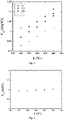
- Results are represented in graph in Fig. 1 .
- powders were mixed using a mechanical blender at low speed (350 rpm) during 1 minute to obtain a uniform dispersion of silicious aggregates in the hybrid cement powder.
- Ultra-pure water was added and the solution was stirred at 750 rpm during 1 min and 30 seconds. Hence, the solution rested for 1 minute and was mixed again at 750 rpm during 1 min and 30 seconds.
- MDSC Modulated Differential Scanning Calorimetry
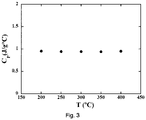
- Specific heat capacity of S75 is represented in graph in Fig. 2
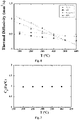
- specific heat capacity of LKS is represented in graph in Fig. 3 .
- thermogravimetric analysis and thermal stability investigation were done by using a TGA-Q500 (TA Instruments). All measurements were conducted under high-purity nitrogen flow. Standard measurements were performed over a temperature range of 30-900 °C with a ramp rate of 10 °C/min. Thermal stability was investigated by heating the sample powder up to 400 °C with a heating rate of 10 °C/min followed by isothermal segment of 30 minutes. Therefore, 3 cycles consisted of two isothermal segments with a length of 30 mins at 250 °C and 400 °C were performed. Each temperature was reached with a cooling/heating rate of 10°C/min.
- Thermogravimetric analysis measurements of S75 are represented in graphs in Fig. 4
- Thermogravimetric analysis measurements of LKS are represented in graphs in Fig. 5 .
- Thermal diffusivity was investigated by means of Laser Flash Analysis (LFA 457 Microflash). Sample powders (size grain ⁇ 64 ⁇ m) were compressed by a manual hydraulic press (SPECAC) applying 7 tons during 5 minutes. Therefore, the so-obtained pellet was investigated by LFA 457 Microflash. Measurements were made at room temperature, 50, 100, 200, 300, 400, 500, 600, 700, 800 and 900 °C. The heating rate was 10 °C/min. Five laser shots were made for each temperature, with intervals of 1.5 minutes between shots, to allow a homogenization of the temperature of the samples.
- LFA 457 Microflash Laser Flash Analysis
Landscapes
- Chemical & Material Sciences (AREA)
- Engineering & Computer Science (AREA)
- Ceramic Engineering (AREA)
- Materials Engineering (AREA)
- Inorganic Chemistry (AREA)
- Chemical Kinetics & Catalysis (AREA)
- Structural Engineering (AREA)
- Organic Chemistry (AREA)
- Combustion & Propulsion (AREA)
- Life Sciences & Earth Sciences (AREA)
- Environmental & Geological Engineering (AREA)
- General Life Sciences & Earth Sciences (AREA)
- Geochemistry & Mineralogy (AREA)
- Geology (AREA)
- Curing Cements, Concrete, And Artificial Stone (AREA)
Abstract
Description
- Present invention relates to a thermal energy storage media based on alkali activated concrete, for high temperature applications and use of hybrid cement as a binder for production of such concrete media.
- Energy supply is a vital issue, with special concerns of the public regarding the emission of greenhouse gases and the need to reduce the use of fossil fuels (see Zhang et al., Prog. Energy Combust. Sci. 2016). The worldwide economic crisis since 2008 added additional challenges, leading worldwide governments to enact new policies and financial incentives in support of renewable energies.
- Among renewable resources, solar energy is the most promising due to the great quantities of solar irradiation flux arriving on earth. In particular, concentrated solar power (CSP) is a very attractive technology due to its advantages in terms of high efficiency, low operating cost and good scale-up potential. CSP technology is already developed and available for commercialization. However, the energy cost per kilowatt hour from current solar energy plants is high. Such a drawback is mainly due to the temporal intermittency of solar energy. To overcome this problem, one solution is to use thermal energy storage (TES) system to store heat during sunshine periods and release it during the periods of weak or no solar irradiation.
- Moreover, the residual energy from low demand periods can be used to charge a TES, to have backup energy for high-demand periods and periods of low solar availability.
- There are currently three kinds of TES systems available: sensible heat storage, latent heat storage and thermo-chemical heat storage. Sensible heat storage systems are the most mature and simple
- The performance of a TES system depends strongly on the thermal properties of the material. These properties include thermal conductivity k, specific heat capacity cp, and the density ρ.
- In fact, the amount of thermal energy stored in a mass of material (Q) can be expressed as: Q = ρ cp · V · ΔT, where Q is the amount of heat stored, V is the volume of storage material used and ΔT is the temperature range of operation. Moreover, a high thermal conductivity improves transient heat transfer and, hence, shortens the time for charging and discharging processes. Other important storage material requirements include high availability, low capital costs, safety, high thermal (cycling) stability, and easy processing.
- Thus, in general a good TES must have
- (i) A good capacity to storage thermal energy (quantified by the cumulative heat energy, Q= r cp V ΔT)
- (ii) Large velocity to release and storage heat (quantified by the thermal diffusivity, λ=k/(ρ cp) where k is the thermal conductivity)
- (iii) Stability and durability over a large ΔT range (something that can be quantified by mechanical measurements or TGA analysis...), and must be
- (iv) Cheap, available, non-toxic and non-corrosive.
- State of the art storage materials are molten salts. However, molten salts freeze at 220 °C. Consequently, TES systems with molten salts require quite expensive anti-freeze systems. Moreover, molten salts have a low thermal conductivity and are very corrosive. Therefore, many studies have been carried out to find alternative storage materials. In this scenario, it is not surprising that the possibility of using solid materials like castable ceramics or concrete was immediately proposed and studied (see Laing et al. Sol. Energy 2006). Overall, concrete presented itself as a good solid material for TES applications, as it has a low price and has, in general, relatively good thermal capacities. As can be seen in the Table 1, thermal properties of concrete are in between those of molten salts and castable ceramics, resulting in a cheap "compromise" in terms of heat storage capacities (Cp) and thermal diffusivities (λ)(=k/ρcp).
Table 1 MATERIAL Molten Salts Castable Ceramic HighT Concrete Cp [J/(gxK)] 1.6 0.86 0.91 λ[mm2/s] ∼ 0.26 0.43 0.39 price [euros/tonne] 300 4500 80 - Thermal storage of sensible heat using concrete is at present a known procedure. Indeed, TES with concrete as storage material have been already tested for CSP applications. Deutsche Luftraum (DLR) Zentrum built storage units at the Plataforma Solar de Almeria (PSA) in Spain using high temperature concrete (see Laing et al. Sol. Energy 2006). In addition, the Department of Civil Engineering of the University of Arkansas (UA) evaluated the concrete's performances and worked to develop a concrete to be used as a TES medium (see Skinner et al. J. Sol. Energy Eng. 2013).
- Different strategies have been reported in the state of the art to increase the performance of concrete as TES media but, to our understanding, they have limited themselves to improve the mixing of concrete rather than undertaking an in-deep analysis of the concrete's structure-performance linkages.
- For instance, the need of resistance and stability at high temperatures (i.e. greater than 300°C) has been achieved by playing with the aggregates. It is well known in that certain aggregates like basalt or granite-like aggregates improve the ability of concrete to withstand higher temperatures, and therefore they are routinely employed in construction whenever high-temperature Ordinary Portland (OPC) concretes are needed (see Z. Bazant and M.F. Kaplan; Concrete at High Temperature; Person Education). This is in general terms, the strategy employed by the group of the German Aerospace Center (DLR) and colleagues (see for instance D. Laing and S. Zunft; "Using concrete and other solid storage media in thermal energy storage (TES) systems"; Advances in Thermal Energy Storage Systems, and references therein) to propose their TES-based concretes.
- As concrete contains water, another aspect of main concern has been the requirement of certain structural permeability to let free water evaporate without compromising the structure when the concrete is heated above 100 °C. For this, both the "DLR team" and the Italian groups working under the umbrella of ENEA (Italian National Agency for New Technologies, Energy and Sustainable Economic Development) have proposed the same type of solution: the use of small amounts of fibres (polyethylene fibres in the case of the "DRL team" (see D. Laing et al.; Proceedings of the IEEE ; Vol.100,No.2, 10.1109/JPROC.2011.2154290) and nylon fibres in the case of the "ENEA team" (see V. A. Salomoni et al; Solar Energy 103 (2014) 303-315).
- Improvements of poor thermal conductivity of OPC-based concretes have been the main technological challenge and various solutions have been investigated. One way is to introduce high conducting metal or graphite fibres, splinters or even including three-dimensional structures (called heat transfer structures), but the additional costs largely overweigh the benefits (see D. Laing et al.; Proceedings of the IEEE ; Vol.100,No.2, 10.1109/JPROC.2011.2154290). In general, the thermal conductivity of the OPC concrete-based TES systems has been improved with respect to normal concretes by playing with the aggregates, and the best performances are still modest. Even, the recently released HEATCRETE solution proposed by Energy Nest company (Norwegian company commercializing concrete-based TES modules) in collaboration Heidelberg Cement (see Report "Initiative for Global Leadership in Concentrated Solar Power" belonging to the EU's 'Towards an Integrated Strategic Energy Technology (SET) Plan) offers thermal diffusivities about 0.5 mm2/s at 400°C, a value often found in high temperature concretes containing igneous crystalline aggregates (basalt-like and granite-like) or silicious crystalline aggregates (quartzite). While the exact recipe of HEATCRETE is not known, it is however known that its main component is quartzite.
- However, neither the energy storage capacity nor the thermal stability have not been optimized, as they have been taken as an inherent limit of OPC's concretes. Indeed, current research focuses on the development of appropriate OPC concrete mixing to increase thermal performances and durability performances in high temperature range but obliterates the chances given by other cement binders.
- A study is known, Preparation and Properties of Alkali-Activated Ground-Granulated Blast Furnace Slag Thermal Storage Concrete, 4th International Conference on the Durability of Concrete Structures, 24-26 July 2014, Purdue University, West Lafayette, IN, USA.
- The study introduces thermal storage concrete prepared by using alkali-activated ground-granulated blast furnace slag as cementitious material. To improve thermal conductivity, graphite aggregate is used to replace part of the coarse aggregate, and, furthermore, polypropylene fiber is added to improve the heat resistance performance of the concrete. The compressive strength of concrete specimens before and after heating (up to 450 °C) was tested, and, furthermore, scanning electron microscopy was used to investigate the structure alteration due to heating. Results showed that the partial replacement of coarse aggregate by graphite block could obviously improve the thermal conductivity of the thermal storage concrete. At the same time, the specimen with 30% graphite aggregate replacement still exhibited good mechanical properties. The mechanism of the high residual strength was investigated.
- Further study is known, Alkali-Activated Cements for TES Materials in Buildings' Envelops Formulated With Glass Cullet Recycling Waste and Microencapsulated Phase Change Materials, Jessica Giro-Paloma et.al, Materials 2019, 12, 2144, published 3 July 2019,
Purpose of this study is a development of alkali-activated cements (AACs) with mechanical properties to store high amounts of heat. These AACs incorporate wastes from industrial glass process as well as microencapsulated phase change materials (mPCMs) to improve the thermal inertia of building walls, and accordingly respective energy savings. The material developed was resistant enough to perform as insulating panels. The formulated materials had high storage capacity depending on the PCM content. Durability of the mPCM shell was studied in contact with alkaline medium (NaOH4 M) and no degradation was confirmed. Moreover, the higher the content of mPCM, the lower
the mechanical properties expected, due to the porosity increments with mPCM incorporation in the formulations. - Object of the present invention is thus to provide a thermal energy storage media based on alkali activated concrete capable of exhibiting high heat capacities, high thermal diffusivities and ultra-high temperature stability/integrity.
- Said object is achieved by a thermal energy storage media based on concrete, comprising alkali activated binder and an aggregate, according to the invention characterized in that the alkali activated binder is hybrid cement. Hybrid cement is understood here, and also further in description of embodiments, as a cement comprising Portland siliceous clinker in the amount of 5 to 40 wt%, preferably 10 to 30 wt%, 94.5 to 50 wt% of fly ash, or a mixture of fly ash and metallurgical slag, or metallurgical slag, and an alkaline activator in the amount of 0.5 to 10 wt.%, preferably 3 to 7 wt%, where the alkaline activator are alkaline wastewaters, leachates of red and brown mud landfills, red and brown mud being the waste from alkaline leaching of bauxite in Al2O3 production, and products formed thereof in the amount having content of active alkaline compound analytically represented as 0.01 to 6.5 wt% %NaO. The aggregate is chosen from silicious aggregate, steel slag aggregate or copper aggregate, or their mixtures, in the amount up to 75 wt% in the concrete.
- Preferably, the products produced from the alkaline wastewater and/or leachate are thick concentrate with high content of Na+ and OH- and/or dry residue thereof, and/or salts from the alkaline wastewaters and/or leachates neutralization, and/or mixture of said salts with alkaline waters, leachates, concentrate, dry residue.
- Preferably, the salts from the alkaline wastewaters and/or leachates neutralization, concentrate, dry residue are sulphates SO4 2-, sulphites SO3 2-, carbonates CO3 2-, hydrogen carbonates HCO3 -, silicates SiO4 4-, SiO3 2-, non-stoichiometric silicates SiXOY Z-, with predominantly bound Na+.
- Preferably, the alkaline wastewaters and/or leachates, and/or concentrate contain an addition of acid H2SO4, H2SO3, H2CO3, and/or nano-SiO2, micro-SiO2, silica fume SiO2 and/or gaseous SO3, SO2 and CO2.
- Preferably, the alkaline wastewaters and/or leachates, and/or concentrate and products formed thereof contain an addition of waste inorganic salts based on Na2SO4, Na2SO4.10H2O, Na2SO3, Na2CO3, Na2CO3.10H2O, NaHCO3, Na4SO4, Na2SiO3 and/or K2SO4, K2SO3, K2CO3, KHCO3, K4SiO4, K2SiO3.
- Said hybrid cement is substantially described in patent document
SK 288418 B6 of Považ̌ská - Document
SK 288418 B6 SK 288418 B6 - Object of the present invention is therefore also met by use of the above described hybrid cement as a binder for production of concrete thermal energy storage media.
- Thermal energy storage media according to the invention is especially suited to work at high temperatures, i.e. in the range between 400°C and 650°C, a temperature range where the concrete-based TES solutions do not work.
- In comparison to previous TES media based on concrete, present invention offers a better performance at higher temperatures, and offers the opportunity of going beyond current limit of ∼450°C. Operations at higher temperatures, T> 450°C is especially appealing from a practical point of view, since the power block efficiency of Concentrated Solar Plants (CSP) largely increases with temperature. Indeed, one of current perspectives in the optimization of the CSPs is the operation at higher temperatures, about 500 °C and 60 0°C, replacing, for instance, the oil by steam water as heat transfer fluids. In terms of the TES media, this increase in the operation temperature of CPSs makes unviable the use of concrete-based TES, so advanced high temperature molten salts are currently being searched for (see for instance Report "Initiative for Global Leadership in Concentrated Solar Power" belonging to the EU's 'Towards an Integrated Strategic Energy Technology (SET) Plan). However, present invention offers again the possibility of using concrete-based TES solutions at these high temperatures.
- Overall characteristics of the TES media according to present invention are:
- Heat capacities >0.85 J/g/K in the whole range between T=200 °C and 600 °C. Usually larger than 1 J/gK in the same range;
- Thermal diffusivities > 0.5 mm2/s in the whole range between T=200 °C and 400 °C, but still larger than 0.4 mm2/s up to 600 °C;
- Thermal stabilities given by mass losses lower than 1% after several cycles (4) of temperature changes between 250 °C and 450 °C. In some particular cases, below 0.5%.
-
-
Fig. 1 shows graph representing the impact of the amount of aggregates on the heat capacity of TES media according to this invention. -
Fig. 2 shows graph representing specific heat capacity of TES sample containing silicious aggregate in amount of 75 wt%, also as S75, in the concrete composition. -
Fig. 3 shows graph representing specific heat capacity of TES sample containing steel slag aggregate in amount of 75 wt%, also as LKS, in the concrete composition. -
Fig. 4 shows graphs of thermogravimetric analysis measurements of S75. -
Fig. 5 shows graphs of thermogravimetric analysis measurements of LKS. -
Fig. 6 shows graph with results of thermal diffusivity of different TES media compared to Hybrid Cement and LKS specimen. -
Fig. 7 shows graph representing specific heat capacity of TES sample containing copper slag in the concrete composition. -
Fig. 8 shows graph of thermogravimetric analysis measurements of copper slag, also as BLACK. -
Fig. 9 shows graph of thermal diffusivity of copper slag. - In order to show characteristics of the TES media according to this invention, several examples are introduced.
- In general, as will be shown, for pursued high temperature operations (T>400°C), sufficiently good heat capacities (Cp close or higher than 1.0 J/g°C) can be obtained with aggregate/cement ratios up to 0.75.
- Later, the thermal diffusivities and the thermal stability can be tuned with appropriate aggregate selections.
- In this example, the impact of the amount of aggregates on the heat capacity is analyzed. Samples were prepared with a typical silicious aggregate. Mix proportions in grams (g) are presented in Table 2. Specimens referred to as S0, S25, S50 and S75 have corresponding content of the aggregate of 0 wt%, 25 wt%, 50 wt%, 75 wt% in the concrete composition.
Table 2 Specimen Hybrid Cement Silicious Aggregate Water S0 44.4 0 22.2 S25 44.4 11.1 22.2 S50 44.4 22.2 22.2 S75 44.4 33.3 22.2 - Aggregates were crushed to fine powder (size grain < 0.25 mm).
- Then, powders were mixed using a mechanical blender at low speed (350 rpm) during 1 minute to obtain a uniform dispersion of silicious aggregates in the hybrid cement powder.
- Ultra-pure water was added and the solution was stirred at 750 rpm during 1 min and 30 seconds. Then, the solution rested for 1 minute and was mixed again at 750 rpm during 1 min and 30 seconds.
- The compositions were cast in cylindrical silicone moulds with d = 4 cm and sealed. After 24h, the specimens were removed from moulds and stored in environmental chamber with 100% RH during 28 days.
- Finally, the cylinders were crushed to fine powder and measured.
- Modulated Differential Scanning Calorimetry (MDSC) measurements were performed by means of Q2000TA Instrument to calculate the reversible part of the specific heat capacity of the sample. In these measurements, signals from evaporation of water molecules (irreversible process) are neglected. Aluminium pans were used in the experiment and the sample weights was about 30 mg. Experiment was performed on heating between 100 °C and 400 °C with a heating rate of 3 °C/min and modulated with ± 0.48 °C every 60 s.
- Results are represented in graph in
Fig. 1 . - As expected, when increasing the amount of aggregates the values of Cp decrease. However, even with the highest amount of silicious aggregates (75 wt%), the Cp is higher than 0.75 J/(g °C) in all the studied temperature range. As this value that can be considered satisfactory.
- In this example, impact of aggregate nature on thermal diffusivity is analyzed. As shown in the Example 1, the values of Cp are satisfactory for TES applications even at high doses, aggregate/cement ratio = 0.75. The silicious aggregate S75 from the previous example is compared with steel slag aggregate, referred to as LKS. Mix proportions in grams (g) are presented in Table 3.
Table 3 Specimen Hybrid Cement Silicious Aggregate LKS Water S75 44.4 33.3 0 22.2 LKS 44.4 0 33.3 22.2 - Aggregates were crushed to fine powder (size grain < 0.25 mm).
- Then, powders were mixed using a mechanical blender at low speed (350 rpm) during 1 minute to obtain a uniform dispersion of silicious aggregates in the hybrid cement powder.
- Ultra-pure water was added and the solution was stirred at 750 rpm during 1 min and 30 seconds. Hence, the solution rested for 1 minute and was mixed again at 750 rpm during 1 min and 30 seconds.
- Compositions were cast in cylindrical silicone moulds with d = 4 cm and sealed. After 24h, the specimens were removed from moulds and stored in environmental chamber with 100% RH during 28 days.
- Finally, the cylinders were crushed to fine powder and measured.
- Modulated Differential Scanning Calorimetry (MDSC) measurements were performed by means of Q2000TA Instrument to calculate the reversible part of the specific heat capacity of the sample. In these measurements, signals from evaporation of water molecules (irreversible process) are neglected. Aluminium pans were used in the experiment and the sample weights was about 30 mg. Experiment was performed on heating between 100 °C and 400 °C with a heating rate of 3 °C/min and modulated with ± 0.48 °C every 60 s.
- Specific heat capacity of S75 is represented in graph in
Fig. 2 , and specific heat capacity of LKS is represented in graph inFig. 3 . - Standard thermogravimetric analysis and thermal stability investigation were done by using a TGA-Q500 (TA Instruments). All measurements were conducted under high-purity nitrogen flow. Standard measurements were performed over a temperature range of 30-900 °C with a ramp rate of 10 °C/min. Thermal stability was investigated by heating the sample powder up to 400 °C with a heating rate of 10 °C/min followed by isothermal segment of 30 minutes. Therefore, 3 cycles consisted of two isothermal segments with a length of 30 mins at 250 °C and 400 °C were performed. Each temperature was reached with a cooling/heating rate of 10°C/min.
- Thermogravimetric analysis measurements of S75 are represented in graphs in
Fig. 4 , and Thermogravimetric analysis measurements of LKS are represented in graphs inFig. 5 . - Thermal diffusivity was investigated by means of Laser Flash Analysis (LFA 457 Microflash). Sample powders (size grain < 64 µm) were compressed by a manual hydraulic press (SPECAC) applying 7 tons during 5 minutes. Therefore, the so-obtained pellet was investigated by LFA 457 Microflash. Measurements were made at room temperature, 50, 100, 200, 300, 400, 500, 600, 700, 800 and 900 °C. The heating rate was 10 °C/min. Five laser shots were made for each temperature, with intervals of 1.5 minutes between shots, to allow a homogenization of the temperature of the samples.
- Results of thermal diffusivity of different TES media compared to Hybrid Cement and LKS specimen are represented in graph in
Fig. 6 . - The addition of LKS leads to an increase of thermal diffusivity. In all the temperature range investigated, Hybrid Cement and LKS specimen shows values of thermal diffusivity higher than 0.5 mm2/s. Moreover, when comparing the LKS results with those extrapolated at high temperature of commercial concretes for TES applications, Heatcrete and DRL, it is clear that the LKS mix appears to have better thermal diffusivity for applications at temperatures higher than 400 °C.
- In this example, impact of aggregate nature on thermal stability is analyzed. Sample is composed of Hybrid cement in the amount of 44.4 g, Copper slag aggregate in the amount of 33.3 g and water 22.2 g. Aggregate/cement ratio = 0.75.
- Aggregate was crushed to fine powder (size grain < 0.25 mm). Copper slag aggregate is referred to as BLACK.
- Then, powders were mixed using a mechanical blender at low speed (350 rpm) during 1 minute to obtain a uniform dispersion of Copper slag aggregate in the hybrid cement powder.
- Ultra-pure water was added and the solution was stirred at 750 rpm during 1 min and 30 seconds. Hence, the solution rested for 1 minute and was mixed again at 750 rpm during 1 min and 30 seconds.
- Composition was cast in cylindrical silicone moulds with d = 4 cm and sealed. After 24h, the specimen was removed from the mould and stored in environmental chamber with 100% RH during 28 days.
- Finally, the cylinder was crushed in fine powder and measured.
- Modulated Differential Scanning Calorimetry (MDSC) measurements were performed by means of Q2000TA Instrument to calculate the reversible part of the specific heat capacity of the sample. In these measurements, signals from evaporation of water molecules (irreversible process) are neglected. Aluminium pans were used in the experiment and the sample weights was about 30 mg. Experiment was performed on heating between 100 °C and 400 °C with a heating rate of 3 °C/min and modulated with ± 0.48 °C every 60 s.
- Specific heat capacity of the sample is represented in graph in
Fig. 7 . - Standard thermogravimetric analysis and thermal stability investigation were done by using a TGA-Q500 (TA Instruments). All measurements were conducted under high-purity nitrogen flow. Standard measurements were performed over a temperature range of 30-900 °C with a ramp rate of 10 °C/min. Thermal stability was investigated by heating the sample powder up to 400 °C with a heating rate of 10 °C/min followed by isothermal segment of 30 minutes. Therefore, 3 cycles consisted of two isothermal segments with a length of 30 mins at 250 °C and 400 °C were performed. Each temperature was reached with a cooling/heating rate of 10 °C/min.
- Thermogravimetric analysis measurements of Cooper slag, BLACK, are represented in graphs in
Fig. 8 . - Thermal diffusivity was investigated by means of Laser Flash Analysis (LFA 457 Microflash). Sample powder (size grain < 64 µm) was compressed by a manual hydraulic press (SPECAC) applying 7 tons during 5 minutes. Therefore, the so-obtained pellet was investigated by LFA 457 Microflash. Measurements were made at room temperature, 50, 100, 200, 300, 400, 500, 600, 700, 800 and 900 °C. The heating rate was 10 °C/min. Five laser shots were made for each temperature, with intervals of 1.5 minutes between shots, to allow a homogenization of the temperature of the sample.
- Results of thermal diffusivity are represented in graph in
Fig. 9 . - In comparison of results presented by Table 4 copper slag aggregates, BLACK, in hybrid cement composition lead to a weight loss of 0.37 wt% after 4 cycles between 250 °C and 400°C, that is high thermal stability of the specimen.
Table 4 Sample wt% 400-250 °C (4 cycles) BLACK 0.37 LKS 0.6 Silicious Aggregates 0.66 Heatcrete 0.58 - Thermal energy storage media based on concrete according to this invention can be used in various applications requiring effective thermal energy storage media, especially for high temperature applications. The specific geometry of such concrete products depends on conditions of their use and these are designed in a case by case basis. In general, the TES systems based on concrete are mainly big blocks of concrete containing a heat exchanger body, typically steel pipe, to separate heat transfer fluid from the TES media.
Claims (12)
- Thermal energy storage media based on concrete, comprising alkali activated binder and an aggregate, characterized in that the alkali activated binder is hybrid cement and the aggregate is chosen from silicious aggregate, steel slag aggregate or copper aggregate, or their mixtures, in the amount up to 75 wt% in the concrete.
- Thermal energy storage media according to claim 1, characterized in that hybrid cement is cement comprising Portland siliceous clinker in the amount of 5 to 40 wt%, preferably 10 to 30 wt%, 94.5 to 50 wt% of fly ash, or a mixture of fly ash and metallurgical slag, or metallurgical slag, and an alkaline activator in the amount of 0.5 to 10 wt.%, preferably 3 to 7 wt%, where the alkaline activator are alkaline wastewaters, leachates of red and brown mud landfills, red and brown mud being the waste from alkaline leaching of bauxite in Al2O3 production, and products formed thereof in the amount having content of active alkaline compound analytically represented as 0.01 to 6.5 wt% %NaO.
- Thermal energy storage media according to claim 2, characterized in that the products produced from the alkaline wastewater and/or leachate are thick concentrate with high content of Na+ and OH- and/or dry residue thereof, and/or salts from the alkaline wastewaters and/or leachates neutralization, and/or mixture of said salts with alkaline waters, leachates, concentrate, dry residue.
- Thermal energy storage media according to claim 3, characterized in that the salts from the alkaline wastewaters and/or leachates neutralization, concentrate, dry residue are sulphates SO4 2-, sulphites SO3 2-, carbonates CO3 2-, hydrogen carbonates HCO3 -, silicates SiO4 4-, SiO3 2-, non-stoichiometric silicates SiXOY Z-, with predominantly bound Na+.
- Thermal energy storage media according to claim 3 or 4, characterized in that the alkaline wastewaters and/or leachates, and/or concentrate contain an addition of acid H2SO4, H2SO3, H2CO3, and/or nano-SiO2, micro-SiO2, silica fume SiO2 and/or gaseous SO3, SO2 and CO2.
- Thermal energy storage media according to claim 3, 4 or 5, characterized in that the alkaline wastewaters and/or leachates, and/or concentrate and products formed thereof contain an addition of waste inorganic salts based on Na2SO4, Na2SO4.10H2O, Na2SO3, Na2CO3, Na2CO3.10H2O, NaHCO3, Na4SO4, Na2SiO3 and/or K2SO4, K2SO3, K2CO3, KHCO3, K4SiO4, K2SiO3.
- Use of hybrid cement as a binder for production of concrete thermal energy storage media.
- Use according to claim 7, where hybrid cement is cement comprising Portland siliceous clinker in the amount of 5 to 40 wt%, preferably 10 to 30 wt%, 94.5 to 50 wt% of fly ash, or a mixture of fly ash and metallurgical slag, or metallurgical slag, and an alkaline activator in the amount of 0.5 to 10 wt.%, preferably 3 to 7 wt%, where the alkaline activator are alkaline wastewaters, leachates of red and brown mud landfills, red and brown mud being the waste from alkaline leaching of bauxite in Al2O3 production, and products formed thereof in the amount having content of active alkaline compound analytically represented as 0.01 to 6.5 wt% %NaO.
- Use according to claim 8, where the products produced from the alkaline wastewater and/or leachate are thick concentrate with high content of Na+ and OH- and/or dry residue thereof, and/or salts from the alkaline wastewaters and/or leachates neutralization, and/or mixture of said salts with alkaline waters, leachates, concentrate, dry residue.
- Use according to claim 9, where the salts from the alkaline wastewaters and/or leachates neutralization, concentrate, dry residue are sulphates SO4 2-, sulphites SO3 2-, carbonates CO3 2-, hydrogen carbonates HCO3 -, silicates SiO4 4-, SiO3 2-, non-stoichiometric silicates SiXOY Z-, with predominantly bound Na+.
- Use according to claim 9 or 10, where the alkaline wastewaters and/or leachates, and/or concentrate contain an addition of acid H2SO4, H2SO3, H2CO3, and/or nano-SiO2, micro-SiO2, silica fume SiO2 and/or gaseous SO3, SO2 and CO2.
- Use according to claim 9, 10 or 11, where the alkaline wastewaters and/or leachates, and/or concentrate and products formed thereof contain an addition of waste inorganic salts based on Na2SO4, Na2SO4.10H2O, Na2SO3, Na2CO3, Na2CO3.10H2O, NaHCO3, Na4SO4, Na2SiO3 and/or K2SO4, K2SO3, K2CO3, KHCO3, K4SiO4, K2SiO3.
Priority Applications (1)
| Application Number | Priority Date | Filing Date | Title |
|---|---|---|---|
| EP21156975.1A EP4043416A1 (en) | 2021-02-12 | 2021-02-12 | Thermal energy storage media based on concrete and use of hybrid cement as a binder for production of such concrete media |
Applications Claiming Priority (1)
| Application Number | Priority Date | Filing Date | Title |
|---|---|---|---|
| EP21156975.1A EP4043416A1 (en) | 2021-02-12 | 2021-02-12 | Thermal energy storage media based on concrete and use of hybrid cement as a binder for production of such concrete media |
Publications (1)
| Publication Number | Publication Date |
|---|---|
| EP4043416A1 true EP4043416A1 (en) | 2022-08-17 |
Family
ID=74595237
Family Applications (1)
| Application Number | Title | Priority Date | Filing Date |
|---|---|---|---|
| EP21156975.1A Pending EP4043416A1 (en) | 2021-02-12 | 2021-02-12 | Thermal energy storage media based on concrete and use of hybrid cement as a binder for production of such concrete media |
Country Status (1)
| Country | Link |
|---|---|
| EP (1) | EP4043416A1 (en) |
Cited By (4)
| Publication number | Priority date | Publication date | Assignee | Title |
|---|---|---|---|---|
| CN116283143A (en) * | 2023-03-03 | 2023-06-23 | 湖北工业大学 | Method for preparing material of corrosion-resistant pipe sheet by using copper carbide slag |
| CN119977383A (en) * | 2025-02-27 | 2025-05-13 | 河海大学 | A method for preparing low-carbon waste incineration fly ash (MSWIFA) cement-based material by carbonization of modified nano-solution and its application |
| EP4575373A1 (en) | 2023-12-20 | 2025-06-25 | MS THERM s.r.o. | Hybrid thermal energy storage with oily sludges and mill scale from steelworks |
| WO2025149216A1 (en) * | 2024-01-09 | 2025-07-17 | Tata Steel Ijmuiden B.V. | Concrete having improved heat resistance |
Citations (7)
| Publication number | Priority date | Publication date | Assignee | Title |
|---|---|---|---|---|
| US2302988A (en) * | 1941-09-23 | 1942-11-24 | Witty George | Brick and process of manufacturing same |
| US8236098B2 (en) * | 2010-03-24 | 2012-08-07 | Wisconsin Electric Power Company | Settable building material composition including landfill leachate |
| CN102701704B (en) * | 2012-05-31 | 2014-07-02 | 武汉理工大学 | Novel heat accumulation concrete for solar thermal power station and preparation method for novel heat accumulation concrete |
| SK288418B6 (en) | 2012-06-28 | 2016-11-02 | Považská Cementáreň, A. S. | Waste-based combined binder |
| CN106927769A (en) * | 2017-04-10 | 2017-07-07 | 燕山大学 | A kind of alkaline residue pervious concrete and preparation method thereof |
| CN108821713A (en) * | 2018-07-17 | 2018-11-16 | 燕山大学 | Mortar specimen based on alkali slag-slag-cement ternary cementitious material and preparation method thereof |
| WO2020021451A1 (en) * | 2018-07-25 | 2020-01-30 | The Catholic University Of America | Geopolymer concretes for energy storage applications |
-
2021
- 2021-02-12 EP EP21156975.1A patent/EP4043416A1/en active Pending
Patent Citations (7)
| Publication number | Priority date | Publication date | Assignee | Title |
|---|---|---|---|---|
| US2302988A (en) * | 1941-09-23 | 1942-11-24 | Witty George | Brick and process of manufacturing same |
| US8236098B2 (en) * | 2010-03-24 | 2012-08-07 | Wisconsin Electric Power Company | Settable building material composition including landfill leachate |
| CN102701704B (en) * | 2012-05-31 | 2014-07-02 | 武汉理工大学 | Novel heat accumulation concrete for solar thermal power station and preparation method for novel heat accumulation concrete |
| SK288418B6 (en) | 2012-06-28 | 2016-11-02 | Považská Cementáreň, A. S. | Waste-based combined binder |
| CN106927769A (en) * | 2017-04-10 | 2017-07-07 | 燕山大学 | A kind of alkaline residue pervious concrete and preparation method thereof |
| CN108821713A (en) * | 2018-07-17 | 2018-11-16 | 燕山大学 | Mortar specimen based on alkali slag-slag-cement ternary cementitious material and preparation method thereof |
| WO2020021451A1 (en) * | 2018-07-25 | 2020-01-30 | The Catholic University Of America | Geopolymer concretes for energy storage applications |
Non-Patent Citations (10)
| Title |
|---|
| D. LAING ET AL., PROCEEDINGS OF THE IEEE, vol. 100, no. 2 |
| D. LAINGS. ZUNFT: "Using concrete and other solid storage media in thermal energy storage (TES) systems", ADVANCES IN THERMAL ENERGY STORAGE SYSTEMS |
| JESSICA GIRO-PALOMA: "Buildings' Envelops Formulated With Glass Cullet Recycling Waste and Microencapsulated Phase Change Materials", MATERIALS, vol. 12, 3 July 2019 (2019-07-03), pages 2144 |
| LAING ET AL., SOL. ENERGY, 2006 |
| LUUKKONEN TERO ET AL: "One-part alkali-activated materials: A review", CEMENT AND CONCRETE RESEARCH, PERGAMON PRESS, ELMSFORD, NY, US, vol. 103, 6 November 2017 (2017-11-06), pages 21 - 34, XP085304115, ISSN: 0008-8846, DOI: 10.1016/J.CEMCONRES.2017.10.001 * |
| P. MARTAUZ ET AL: "Fundamental properties of industrial hybrid cement: utilization in ready-mixed concretes and shrinkage-reducing applications", MATERIALES DE CONSTRUCCION, vol. 66, no. 322, 19 May 2016 (2016-05-19), ES, pages e084, XP055709522, ISSN: 0465-2746, DOI: 10.3989/mc.2016.04615 * |
| PURDUE UNIVERSITY: "Preparation and Properties of Alkali-Activated Ground-Granulated Blast Furnace Slag Thermal Storage Concrete", 4TH INTERNATIONAL CONFERENCE ON THE DURABILITY OF CONCRETE STRUCTURES, 24 July 2014 (2014-07-24) |
| SKINNER ET AL., J. SOL. ENERGY ENG., 2013 |
| V. A. SALOMONI ET AL., SOLAR ENERGY, vol. 103, 2014, pages 303 - 315 |
| ZHANG ET AL., PROG. ENERGY COMBUST. SCI., 2016 |
Cited By (4)
| Publication number | Priority date | Publication date | Assignee | Title |
|---|---|---|---|---|
| CN116283143A (en) * | 2023-03-03 | 2023-06-23 | 湖北工业大学 | Method for preparing material of corrosion-resistant pipe sheet by using copper carbide slag |
| EP4575373A1 (en) | 2023-12-20 | 2025-06-25 | MS THERM s.r.o. | Hybrid thermal energy storage with oily sludges and mill scale from steelworks |
| WO2025149216A1 (en) * | 2024-01-09 | 2025-07-17 | Tata Steel Ijmuiden B.V. | Concrete having improved heat resistance |
| CN119977383A (en) * | 2025-02-27 | 2025-05-13 | 河海大学 | A method for preparing low-carbon waste incineration fly ash (MSWIFA) cement-based material by carbonization of modified nano-solution and its application |
Similar Documents
| Publication | Publication Date | Title |
|---|---|---|
| US11525077B2 (en) | Geopolymer concretes for energy storage applications | |
| EP4043416A1 (en) | Thermal energy storage media based on concrete and use of hybrid cement as a binder for production of such concrete media | |
| Aguilar et al. | Lightweight concretes of activated metakaolin-fly ash binders, with blast furnace slag aggregates | |
| Hussin et al. | Performance of blended ash geopolymer concrete at elevated temperatures | |
| Alonso et al. | Calcium aluminate based cement for concrete to be used as thermal energy storage in solar thermal electricity plants | |
| Cristelo et al. | One-part hybrid cements from fly ash and electric arc furnace slag activated by sodium sulphate or sodium chloride | |
| Zhang et al. | Changes in color and thermal properties of fly ash cement mortar after heat treatment | |
| Dai et al. | Influence and mechanism of borax on the physico-mechanical properties of magnesium potassium phosphate cement exposed to high temperatures | |
| Cunha et al. | Cement mortars with ceramic molds shells and paraffin waxes wastes: Physical and mechanical behavior | |
| Dutta et al. | The role of delayed water curing in improving the mechanical and microstructural properties of alkali activated fly ash based geopolymer paste blended with slag | |
| CN103332877A (en) | Method for preparing inorganic cementing material by using dredged silt | |
| Sarkar et al. | Influence of metal oxide (V2O5) in recycled waste materials for advanced durable construction technology | |
| Ramón-Álvarez et al. | Viability of hybrid and alkali-activated slag materials for thermal energy storage: Analysis of the evolution of mechanical and thermal properties | |
| Jin et al. | Early strength and durability of tannery sludge/metakaolin based geopolymer as concrete pavement repair material | |
| Jankovsky et al. | Wood chips ash processing and its utilization in magnesium phosphate cement composites | |
| Vidyadhara et al. | Impact of pond ash as fine aggregate on mechanical and microstructural properties of geopolymer concrete | |
| Alshaaer et al. | Synthesis of geopolymer cement using natural resources for green construction materials | |
| Fernando et al. | Mix optimization of geopolymer mortar produced with low calcium fly ash in Sri Lanka | |
| Dassanayake et al. | Development of geopolymer with coal fired boiler ash | |
| Tiwari et al. | Strength of Steel Fiber Concrete Using Coal Fly Ash and Silica Fume | |
| Reddy et al. | Effect of silica fume on the compressive strength of cement-silica fume mortars | |
| Xiaoli et al. | Study on chemical stability and modification of geopolymers. | |
| Nikolov | Physical properties and powder XRD characterization of coal fly ash-based geopolymer heated up to 1150 C | |
| Alhamdan | Shrinkage Behaviour of One and Two Part Alkali-Activated Mortars: Factors and Mitigation Techniques | |
| Li et al. | Development of geopolymer concrete using ground molten slag of municipal waste incineration ash |
Legal Events
| Date | Code | Title | Description |
|---|---|---|---|
| PUAI | Public reference made under article 153(3) epc to a published international application that has entered the european phase |
Free format text: ORIGINAL CODE: 0009012 |
|
| STAA | Information on the status of an ep patent application or granted ep patent |
Free format text: STATUS: THE APPLICATION HAS BEEN PUBLISHED |
|
| AK | Designated contracting states |
Kind code of ref document: A1 Designated state(s): AL AT BE BG CH CY CZ DE DK EE ES FI FR GB GR HR HU IE IS IT LI LT LU LV MC MK MT NL NO PL PT RO RS SE SI SK SM TR |
|
| STAA | Information on the status of an ep patent application or granted ep patent |
Free format text: STATUS: REQUEST FOR EXAMINATION WAS MADE |
|
| 17P | Request for examination filed |
Effective date: 20230215 |
|
| RBV | Designated contracting states (corrected) |
Designated state(s): AL AT BE BG CH CY CZ DE DK EE ES FI FR GB GR HR HU IE IS IT LI LT LU LV MC MK MT NL NO PL PT RO RS SE SI SK SM TR |