EP4042134B1 - Method and composition for staining and sample processing - Google Patents
Method and composition for staining and sample processing Download PDFInfo
- Publication number
- EP4042134B1 EP4042134B1 EP20799914.5A EP20799914A EP4042134B1 EP 4042134 B1 EP4042134 B1 EP 4042134B1 EP 20799914 A EP20799914 A EP 20799914A EP 4042134 B1 EP4042134 B1 EP 4042134B1
- Authority
- EP
- European Patent Office
- Prior art keywords
- contrast agent
- sample
- particle contrast
- fluid sample
- composition
- Prior art date
- Legal status (The legal status is an assumption and is not a legal conclusion. Google has not performed a legal analysis and makes no representation as to the accuracy of the status listed.)
- Active
Links
Images





Classifications
-
- G—PHYSICS
- G01—MEASURING; TESTING
- G01N—INVESTIGATING OR ANALYSING MATERIALS BY DETERMINING THEIR CHEMICAL OR PHYSICAL PROPERTIES
- G01N1/00—Sampling; Preparing specimens for investigation
- G01N1/28—Preparing specimens for investigation including physical details of (bio-)chemical methods covered elsewhere, e.g. G01N33/50, C12Q
- G01N1/30—Staining; Impregnating ; Fixation; Dehydration; Multistep processes for preparing samples of tissue, cell or nucleic acid material and the like for analysis
-
- G—PHYSICS
- G01—MEASURING; TESTING
- G01N—INVESTIGATING OR ANALYSING MATERIALS BY DETERMINING THEIR CHEMICAL OR PHYSICAL PROPERTIES
- G01N15/00—Investigating characteristics of particles; Investigating permeability, pore-volume or surface-area of porous materials
- G01N15/10—Investigating individual particles
- G01N15/14—Optical investigation techniques, e.g. flow cytometry
- G01N15/1434—Optical arrangements
-
- G—PHYSICS
- G01—MEASURING; TESTING
- G01N—INVESTIGATING OR ANALYSING MATERIALS BY DETERMINING THEIR CHEMICAL OR PHYSICAL PROPERTIES
- G01N1/00—Sampling; Preparing specimens for investigation
- G01N1/28—Preparing specimens for investigation including physical details of (bio-)chemical methods covered elsewhere, e.g. G01N33/50, C12Q
- G01N1/30—Staining; Impregnating ; Fixation; Dehydration; Multistep processes for preparing samples of tissue, cell or nucleic acid material and the like for analysis
- G01N2001/302—Stain compositions
-
- G—PHYSICS
- G01—MEASURING; TESTING
- G01N—INVESTIGATING OR ANALYSING MATERIALS BY DETERMINING THEIR CHEMICAL OR PHYSICAL PROPERTIES
- G01N1/00—Sampling; Preparing specimens for investigation
- G01N1/28—Preparing specimens for investigation including physical details of (bio-)chemical methods covered elsewhere, e.g. G01N33/50, C12Q
- G01N1/30—Staining; Impregnating ; Fixation; Dehydration; Multistep processes for preparing samples of tissue, cell or nucleic acid material and the like for analysis
- G01N2001/305—Fixative compositions
-
- G—PHYSICS
- G01—MEASURING; TESTING
- G01N—INVESTIGATING OR ANALYSING MATERIALS BY DETERMINING THEIR CHEMICAL OR PHYSICAL PROPERTIES
- G01N15/00—Investigating characteristics of particles; Investigating permeability, pore-volume or surface-area of porous materials
- G01N15/10—Investigating individual particles
- G01N15/14—Optical investigation techniques, e.g. flow cytometry
- G01N15/1434—Optical arrangements
- G01N2015/144—Imaging characterised by its optical setup
-
- G—PHYSICS
- G01—MEASURING; TESTING
- G01N—INVESTIGATING OR ANALYSING MATERIALS BY DETERMINING THEIR CHEMICAL OR PHYSICAL PROPERTIES
- G01N15/00—Investigating characteristics of particles; Investigating permeability, pore-volume or surface-area of porous materials
- G01N15/10—Investigating individual particles
- G01N15/14—Optical investigation techniques, e.g. flow cytometry
- G01N2015/1486—Counting the particles
Definitions
- Blood cell analysis is one of the most commonly performed medical tests for providing an overview of a patient's health status.
- a blood sample can be drawn from a patient's body and stored in a test tube containing an anticoagulant to prevent clotting.
- a whole blood sample normally comprises three major classes of blood cells including red blood cells (erythrocytes), white blood cells (leukocytes) and platelets (thrombocytes). Each class can be further divided into subclasses of members. For example, five major types or subclasses of white blood cells (WBCs) have different shapes and functions.
- White blood cells may include neutrophils, lymphocytes, monocytes, eosinophils, and basophils.
- Red blood cell subclasses may include reticulocytes and nucleated red blood cells.
- a blood cell count estimating the concentration of RBCs, WBCs or platelets can be done manually or using an automatic analyzer.
- a drop of blood is applied to a microscope slide as a thin smear.
- manual examination of a dried, stained smear of blood on a microscope slide has been used to determine the number or relative amounts of the five types of white blood cells.
- Histological dyes and stains have been used to stain cells or cellular structures. For example, Wright's stain is a histologic stain that has been used to stain blood smears for examination under a light microscope.
- Staining a sample involves the use of multiple solutions and steps in proper order to ensure the staining agent is correctly applied and the cell structure is appropriately preserved.
- a fixing agent can be applied to the sample in a first step to preserve the sample from degredation and maintain the cell structure.
- a permeabilizing agent can be applied to the sample in a second step to dissolve cell membranes in order to allow the staining agent to enter the cells.
- the staining agent can be applied to the sample in a third step to stain the appropriate structures.
- the sample may be further rinsed for observation, or additional steps may be taken to apply additional stains, counterstains, or other perform other actions.
- the sample is permeabilized before being fixed, the cell structures in the sample can be degraded prior to being fixed and any ability to discern the original cellular morphology is lost. Additionally, the staining cannot occur prior to the permeabilizing step, or the staining agent will not properly penetrate the cells and stain the structures within the cells. Additionally, if any of the steps, such as fixing, permeabilizing, and staining, are performed too rapidly, the cell's morpohology may be lost and/or the cell and its internal structures may not be properly stained. Current staining techniques require multiple steps and significant time.
- Automated particle analysis systems can be more efficient if the staining process is shortened, and further more efficient if the staining process is performed in a single step. Additionally, the automated particle analysis systems can be more efficient if the total size of the sample is kept to a minimum.
- the present disclosure relates to an improved particle contrast agent composition for rapidly generating visual distinctions in a sample, such as a blood fluid sample and/or a body fluid sample.
- the particle contrast agent composition can be especially useful in automated flow cytometry systems.
- the present invention is defined in the appended claims.
- the disclosure relates to a particle contrast agent composition for staining particles, the particle contrast agent composition comprising: Basic Fuchsin; Crysta Violet and New Methylene Blue; one or more permeabilizing agents; and one or more fixing agents.
- Such compositions are suitable for imaging a blood fluid sample or a body fluid sample in an automated particle analysis system.
- the disclosure relates to a method of treating particles of a blood fluid sample or a body fluid sample comprising: combining the blood fluid sample or a body fluid sample with a particle contrast agent composition comprising Basic Fuchsin; Crystal Violet and New Methylene Blue; one or more permeabilizing agents; and one or more fixing agents to obtain a sample mixture; and incubating the sample mixture at a temperature between about 37°C and about 60°C for fewer than 90 seconds.
- a particle contrast agent composition comprising Basic Fuchsin; Crystal Violet and New Methylene Blue; one or more permeabilizing agents; and one or more fixing agents to obtain a sample mixture; and incubating the sample mixture at a temperature between about 37°C and about 60°C for fewer than 90 seconds.
- the method can be performed in an automated particle analysis system.
- kits comprising a particle contrast agent composition comprising Basic Fuchsin; Crystal Violet and New Methylene Blue; one or more permeabilizing agents; and one or more fixing agents all in a suitable container.
- the present disclosure relates to an improved particle contrast agent composition for rapidly generating visual distinctions in a sample, such as a blood fluid sample and/or a body fluid sample.
- body fluid samples include serous fluid (e.g., pleural, pericardial,, peritoneal, and lavage fluids), amniotic fluid, cerebrospinal fluid, seminal fluid, synovial fluid, bone marrow aspirate fluid, effusions and exudates.
- the particle contrast agent composition can be especially useful in automated flow cytometry systems, such as the one described in U.S. Patent No. 9,279,750 .
- the particle contrast agent composition is comprised of a combination of a particle contrast agent, a permeabilizing agent, and a fixing agent.
- the particle contrast agent composition is a composition comprising: Basic Fuchsin; at least one of Brilliant Cresyl Blue, Azure B, Crystal Violet and New Methylene Blue; one or more permeabilizing agents; and one or more fixing agents.
- the particle contrast agent compositions described herein can be used to perform automated, image-based sample analysis, such as blood analysis.
- Cells including at least one of platelets, reticulocytes, immature granulocytes, eosinophils, monocytes, and lymphocytes are able to absorb the particle contrast agent compositions described herein at a higher rate relative to other stains.
- the particle contrast agent compositions described herein can be more evenly distributed throughout one or more of such cells.
- compositions and method disclosed herein can be used with manual staining and in many different types of particle analysis systems, including hematology imaging systems.
- the compositions and methods described herein can be used with image-based sample analysis, such as flowcell analysis.
- An example of such a flowcell analysis can include traditional, known methods of flow cytometry.
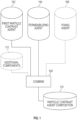
- FIG. 1 is a schematic diagram of the preparation of a particle contrast agent composition according to one embodiment.
- a particle contrast agent 102, a permeabilizing agent 104, and a fixing agent 106 are combined to create the particle contrast agent composition 110.
- the particle contrast agent 102, permeabilizing agent 104, and fixing agent 106 are combined at the same time.
- one of the particle contrast agent 102, permeabilizing agent 104, and fixing agent 106 is combined with another one of the particle contrast agent 102, permeabilizing agent 104, and fixing agent 106, which is then combined with the last of the particle contrast agent 102, permeabilizing agent 104, and fixing agent 106, in any order.
- the combination at block 108 can be performed in any order and in any suitable way.
- one of the permeabilizing agent 104 and fixing agent 106 is not included in the particle contrast agent composition 110.
- additional materials can be combined at block 108 as part of the particle contrast agent composition 110, as described in further detail below.
- the particle contrast agent compositions 110 described herein can be provided as part of a kit.
- the particle contrast agent composition 110 can be provided already prepared or as one or more components that must be combined.
- the particle contrast agent 102 can be any contrast agent capable of producing visible distinctions in particular, cells including at least one of immature granulocytes, eosinophils, monocytes, and lymphocytes.
- the particle contrast agent compositions 110 described herein comprise Basic Fuchsin Crystal Violet and New Methylene Blue.
- the particle contrast agent composition 110 is a particle contrast agent composition 110 comprising a particle contrast agent 102 that includes Basic Fuchsin, Crystal Violet, and New Methylene Blue.
- the particle contrast agent 102 is added in an amount effective to stain viable and/or substantially intact cells for image-based categorization and subcategorization.
- the particle contrast agent 102 can be any combination of two or more of the aforementioned particle contrast agents.
- the particle contrast agent 102 includes Basic Fuchsin in an amount sufficient to achieve between about 1 ⁇ M to about 500 ⁇ M (e.g., from about 50 ⁇ M to about 200 ⁇ M, about 100 ⁇ M to about 200 ⁇ M, about 110 ⁇ M to about 190 ⁇ M or about 110 ⁇ M to about 180 ⁇ M) under staining conditions.
- the term "under staining conditions" refers to when the component is mixed with the sample.
- the Basic Fuchsin can be purified to at least 90% pure.
- the Basic Fuchsin can be purified to at least 80%, 85%, 91%, 92%, 93%, 94%, 95%, 96%, 97%, or 98% pure.
- the Basic Fuchsin can be purified to at least 99% pure.
- the particle contrast agent 102 includes Crystal Violet.
- the Crystal Violet can be present in amounts sufficient to achieve between about 1 ⁇ M to about 100 ⁇ M (e.g., from about 1 ⁇ M to about 50 ⁇ M, about 5 ⁇ M to about 25 ⁇ M, about 10 ⁇ M to about 50 ⁇ M or about 15 ⁇ M to about 30 ⁇ M) under staining conditions.
- the term "under staining conditions" refers to when the component is mixed with the sample.
- the Crystal Violet can be purified to at least 90% pure.
- the Crystal Violet can be purified to at least 91%, 92%, 93%, 94%, 95%, 96%, 97%, or 98% pure.
- the Crystal Violet can be purified to at least 99% pure.
- the particle contrast agent 202 can be solely Crystal Violet, or can be Crystal Violet combined with one or more additional particle contrast agents.
- the particle contrast agent 102 can include New Methylene Blue.
- the New Methylene Blue can be present in amounts sufficient to achieve between about 70 ⁇ M to about 2.4 mM (e.g., from about 100 ⁇ M to about 500 ⁇ M, about 100 ⁇ M to about 1.5 mM, about 500 ⁇ M to about 1.5 ⁇ M or about 750 ⁇ M to about 1.5 ⁇ M) under staining conditions.
- the New Methylene Blue can be present in amounts sufficient to achieve between about 500 ⁇ M to about 950 ⁇ M under staining conditions.
- the New Methylene Blue can be purified to at least 70% pure.
- the New Methylene Blue can be purified to at least 71%, 72%, 73%, 74%, 75%, 76%, 77%, 78%, 79%, 80%, 81%, 82%, 83%, 84%, 85%, 86%, 87%, 88%, 89%, 90%, 91%, 92%, 93%, 94%, 95%, 96%, 97%, 98%, or 99% pure.
- the New Methylene Blue can be purified to at least 100% pure.
- the particle contrast agent 102 includes Basic Fuchsin and both Crystal Violet and New Methylene Blue.
- the particle contrast agent 102 is a combination of Crystal Violet, New Methylene Blue, and Basic Fuchsin, each having any combination of concentrations and purities as described herein.
- the particle contrast agent 102 can comprise specifically Crystal Violet present in amounts sufficient to achieve about 15 ⁇ M to about 30 ⁇ M under staining conditions, New Methylene Blue present in amounts sufficient to achieve about 750 ⁇ M to about 1.5 mM under staining conditions, and Basic Fuchsin present in amounts sufficient to achieve about 100 ⁇ M to about 200 ⁇ M under staining conditions.
- the permeabilizing agent 104 can include a surfactant.
- the permeabilizing agent 104 can include, among other components, a saponin. Alternatively, or in addition to a saponin, the permeabilizing agent 104 can include at least one of a quarternary ammonium salt, a nonionic surfactant, and a zwitterionic surfactant.
- the permeabilizing agent can alter the permeability of a cell in order to increase accessibility of the particle contrast agent 102 to the intracellular contents.
- the permeabilizing agent can be selected and included in quantities sufficient to permit a one-step staining procedure.
- nonionic surfactant can include (1) polyoxyethylene alkyl or aryl ethers (polyethoxylates), including straight-chain aliphatic hydrophobes etherified to polyethylene glycol or polyoxyethylene ethanol, e.g., Brij TM 35; (2) branched-chain aliphatic/aromatic (e.g., octylphenol) hydrophobes etherified to polyethylene glycol, e.g., Triton X TM -100; (3) straight-chain aliphatic/aromatic (e.g., n-nonylphenol) hydrophobes etherified to polyethylene glycol, e.g., Igepal TM C0897; and (4) straight-chain aliphatic (e.g., carboxylic acid) hydrophobes esterified to polyethylene glycol, e.g., Myrj TM 53, and others.
- polyoxyethylene alkyl or aryl ethers polyethoxylates
- nonionic polyoxyethylene alkyl or aryl ethers (polyethoxylates) surfactants can include polyoxyethylene(4) lauryl ether (Brij TM 30); polyoxyethylene(23) lauryl ether (Brij TM 35); polyoxyethylene(2) cetyl ether (Brij TM 52); polyoxyethylene(20) cetyl ether (Brij TM 58); polyoxyethylene(2) stearyl ether (Brij TM 72); polyoxyethylene(10)stearyl ether (Brij TM 76); polyoxyethylene(20) stearyl ether (Brij TM 78); polyoxyethylene(2) oleyl ether (Brij TM 92); polyoxyethylene(10) oleyl ether (Brij TM 96); polyoxyethylene(20) oleyl ether (Brij TM 98); polyoxyethylene(21) stearyl ether (Brij TM 721); polyoxyethylene(100) stearyl ether (Brij TM 700); and others.
- nonionic surfactants can include Triton X TM -100 (non-reduced or reduced), Triton TM X-114 non-reduced or reduced), Triton X TM -165, and Triton X TM -305 (non-reduced and reduced), and others.
- zwitterionic surfactants can include TDAPS (tetradecyldimethylammoniopropanesulfonate), CHAPSO (3-[(3-cholamidopropyl) dimethylammonio]-2-hydroxy-1-propanesulfonate), alkyl N,N-dimethyl N-oxides having from about 12 to about 16 carbon atoms, lauryl dimethylamine N-oxide (LO), DDAPS(N-dodecyl-N,N-dimethyl-3-ammonio-1-propanesulfonate), and others.
- TDAPS tetradecyldimethylammoniopropanesulfonate
- CHAPSO 3-[(3-cholamidopropyl) dimethylammonio]-2-hydroxy-1-propanesulfonate
- alkyl N,N-dimethyl N-oxides having from about 12 to about 16 carbon atoms
- the permeabilizing agent 104 can include an agent sufficient to lyse red blood cells.
- the permeabilizing agent 104 can include an agent sufficient to lyse red blood cells other than reticulocytes or nucleated red blood cells.
- the permeabilizing agent 204 can include an agent sufficient to lyse red blood cells while white blood cells, reticulocytes, nucleated red blood cells, platelets, and other cells remain substantially intact.
- the permeabilizing agent 104 can render the members and/or nuclear membranes of white blood cells, reticulocytes, nucleated red blood cells, and/or platelets more permeable and/or porous to facilitate access by the particle contrast agent 102.
- the permeabilizing agent 104 is selected to be able to quickly create the pores or openings necessary to allow the particle contrast agent 102 to enter cells in the sample.
- Effective results can be achieved with particle contrast agent compositions 110 with the use of a permeabilizing agent 104 that includes IRIS Lyse and CDS Lytic available from Clinical Diagnostics Solutions, Inc., Plantation, FL.
- a permeabilizing agent 104 that includes IRIS Lyse and CDS Lytic available from Clinical Diagnostics Solutions, Inc., Plantation, FL.
- Effective results can be achieved with particle contrast agent compositions 110 with the use of a permeabilizing agent 104 that includes a saponin present in amounts sufficient to result in concentrations of about 10 mg/L to about 1000 mg/L under staining conditions.
- the saponin can be present in amounts sufficient to result in concentrations of about 50 mg/L to about 750 mg/L.
- the saponin can be a quarternary ammonium-substituted saponin ether.
- the fixing agent 106 can be selected to ensure, among other things, the white blood cells do not degrade during staining and imaging.
- the fixing agent 106 can ensure other cells and cell structures do not degrade.
- fixing agents can include glutaraldyde; formaldehyde; cross-linking agents; ammonia picrate in isotonic saline (e.g., for methylene blue staining); ethyl alcohol; methanol (e.g., at room temperature, -20°C or-70°C); Heidenhain's Susa-HgCl 2 , NaCl Trichloroacetic acid, formalin; Bouin's--Picric acid, Formalin, acetic acid; Duboseq-Brazil--Bouins with 80% EtOH; Carnoy's--EtOH, Chloroform, acetic acid; Zenker's--HgC.sub.12, K 2 CrO 7 , NaSO 4 H
- the fixing agent 106 can be an oxidizing agent, a mercurial, a picrate, a hepes-glutamic acid buffer-mediated organic solvent protection effect (HOPE) fixative, or a water soluble preservative.
- oxidizing agents include Potassium dichromate, chromic acid, potassium permanganate, and others.
- mercurial include B-5, Zernker's fixative, and others.
- water-soluble preservatives include methyl paraben, propyl paraben, dimethylolurea, 2-pyridinethiol-1-oxide, sorbic acid, potassium sorbate, and others.
- Effective results can be achieved in some embodiments of the particle contrast agent composition 110 with the use of a fixing agent 106 that includes at least one of Gluteraldehyde and Formaldehyde.
- effective results can be achieved by using a fixing agent 106 that includes Gluteraldehyde at or below 0.1% by weight.
- Optional additional components 112 can be optionally combined at block 108 into the particle contrast agent composition 110.
- additional components 112 can include buffer components (e.g., Sodium Acetate, Sodium Borate, Sodium Bicarbonate, Sodium Citrate, Sodium Carbonate, Sodium Tartrate), viscosity modifying agents, an antimicrobial agent, an osmotic adjusting agent, an ionic strength modifier, a surfactant, a chelating agent, and others. Effective results can be achieved when the particle contrast agent composition 110 includes a phosphate buffered saline. Buffer components can be used to buffer the particle contrast agent composition 110 to a pH of about 5 to about 7.
- the contrast agent composition 110 can have an osmolarity of at least about 230 mOsm, such as an osmolarity of from about 280 mOsm to about 325 mOsm, about 285 mOsm to about 305 mOsm or about 240 mOsm to about 270 mOsm.
- viscosity modifying agents examples include natural hydrocolloids (and derivatives), such as carrageenan, locust bean gum, guar gum, and gelatin; sugars (and derivatives), such as dextrose, fructose; polydextrose; dextrans; polydextrans; saccharides; and polysaccharides; semisynthetic hydrocolloids (and derivatives), such as Methylcellulose, Carboxymethylcellulose; Synthetic hydro colloids (and derivatives), such as Carbopol TM ; and Clays (and derivatives), such as Bentonite and Veegum TM .
- natural hydrocolloids such as carrageenan, locust bean gum, guar gum, and gelatin
- sugars (and derivatives) such as dextrose, fructose; polydextrose; dextrans; polydextrans; saccharides; and polysaccharides
- semisynthetic hydrocolloids (and derivatives) such as Methylcellulose, Carbox
- FIG. 2 is a flowchart of a one-step staining process 200. While the one-step staining process 200 can contain several sub-steps, the term "one-step" is used to identify that the sample need not be introduced to multiple, different solutions during the staining procedure.
- the particle contrast agent composition 110 is prepared at block 102, as described herein with reference to FIG. 1 .
- components, such as any particle contrast agents 102 can be purified at block 206. Purifying particle contrast agents 102 can reduce the level of precipitates formed upon contact with a sample, thereby reducing the background and improving the results of image-based blood sample analysis with a decreased need for further review of images or slides, or manually prepared microscopy.
- the particle contrast agent composition 110 is combined with the sample.
- the particle contrast agent composition 110 can be combined with the sample in any suitable way, including mixing together. Combining at block 208 can include diluting the sample with a certain amount of particle contrast agent composition 110.
- the sample can be diluted with particle contrast agent composition 110.
- the amount of dilution can be selected to provide an optimal number of cells per frame during an image-based analysis.
- the amount of dilution can be selected to provide an optimal number of white blood cells per frame during an image-based analysis.
- the amount of dilution can be otherwise selected to provide an optimal volume for any other non-image-based analysis.
- Effective results can be achieved using a ratio of the particle contrast agent composition 110 to the sample at between about 2:1 to about 20:1.
- the ratio of the particle contrast agent composition 110 to the sample can be between about 3:1 to about 10:1.
- the ratio of the particle contrast agent composition 110 to the sample can be between about 3:1 to about 4:1.
- the ratio of the particle contrast agent composition 110 to the sample can be between about 3:1 or about 4:1.
- Effective results can be achieved using a ratio of the particle contrast agent composition 110 to the sample at very nearly 3:1 or very nearly 4:1.
- the sample can be combined with the particle contrast agent composition 110 at elevated temperatures, such as any of the temperatures described below with reference to incubating.
- the combined sample and particle contrast agent composition 110 is referred to as the sample mixture.
- the sample mixture is incubated for a certain amount of time at a certain temperature.
- Incubation can increase the permeability of the cells or their internal structures, allowing the particle contrast agent 102 to better infiltrate the cells or cellular structures.
- the time and temperature of incubation can be selected to enable the particle contrast agent composition 110 to properly permeate, fix, and stain the sample.
- the time and temperature of incubation can be selected to ensure lysing of red blood cells while keeping white blood cells, platelets, and nucleated red blood cells substantially intact.
- the sample mixture can be incubated at temperatures between about 37°C and about 60°C for about 1 to 60 seconds.
- the sample mixture can be heated to temperatures between about 46°C and about 49°C
- the sample mixture can be incubated for between 40 and 50 seconds.
- the sample mixture can be incubated up to an hour. Effective results can be achieved by incubating the sample mixture at about 48°C for about 45 seconds. Effective results can be achieved by incubating the sample mixture at about 47°C for about 45 seconds.
- the combining at block 208 and the incubating at block 210 complete in approximately the same amount of time or less time than the time it takes for a sample mixture to be processed in the imaging equipment and for the lines of the imaging equipment to be flushed and/or cleaned. In this way, a first sample mixture can be imaged while a second sample mixture is being combined and incubated. Once the first sample mixture has been imaged and the imaging equipment has been cleaned, the second sample mixture can immediately be imaged.
- the combining at block 208 and the incubating at block 210 complete in less than twice the time it takes for a sample mixture to be processed in the imaging equipment and for the lines of the imaging equipment to be flushed and/or cleaned.
- a second sample mixture can be ready to be imaged, and a third sample mixture and fourth sample mixture can be in the process of being combined and incubated.
- the second sample mixture can immediately be imaged.
- the third sample mixture can be finishing its combining and incubating and the fourth sample mixture can still be combining and incubating.
- the third sample mixture can immediately be imaged, while the fourth sample mixture begins to finish combining and incubating and a fifth sample mixture begins combining and incubating.
- the process can continue indefinitely to continually image sample mixtures.
- the particle contrast agent compositions 110 and staining procedures are effective to stain neutrophils, lymphocytes, monocytes, eosinophils, basophils, platelets, reticulocytes, nucleated red blood cells, blasts, promyelocytes, myelocytes, metamyelocytes, casts, bacteria, epithelials, and/or parasites. Additionally, or alternatively, the particle contrast agent compositionists 110 and staining procedures described herein are effective to stain mesothelial cells, macrophages, plasma cells, malignant cells, and crystals along with cells found in blood and bacteria.
- Certain effective particle contrast agent compositions 110 and staining procedures are effective to generate visual distinctions for particle categorization and subcategorization, for example, by providing for differential staining of primary and secondary granules in cells, such as to aid in sub-categorization of immature granulocytes and their age determination based on the differential staining or enhancement of primary and secondary granules.
- the disclosure is also directed to methods of using the particle contrast agent compositions 110 described herein.
- the particle contrast agent compositions 110 are suitable for imaging a blood fluid sample or a body fluid sample in an automated particle analysis system.
- the methods include, for example, methods of treating particles of a blood fluid sample or a body fluid sample comprising: combining the blood fluid sample or a body fluid sample with a particle contrast agent composition 110 to obtain a sample mixture; and incubating the sample mixture at a temperature between about 37°C and about 60°C for fewer than 90 seconds.
- the permeabilizing agent can comprise saponin present in amounts sufficient to result in concentrations between about 50 mg/L and about 750 mg/L under staining conditions.
- the fixing agent can comprise gluteraldehyde present in amounts sufficient to result in concentrations at or below 0.1% under staining conditions.
- the Basic Fuchsin can be present in an amount sufficient to result in concentrations between about 100 ⁇ M to about 200 ⁇ M under staining conditions.
- the Crystal Violet is present in amounts sufficient to achieve between about 15 ⁇ M to about 30 ⁇ M under staining conditions.
- the New Methylene Blue is present in amounts sufficient to achieve between about 750 ⁇ M to about 1.5 mM under staining conditions.
- incubating the sample mixture includes heating the sample mixture to between about 40°C and about 50°C for about 30 seconds to about 60 seconds.
- combining the blood fluid sample or a body fluid sample with the particle contrast agent composition includes combining to a ratio of the blood fluid sample or a body fluid sample to the particle contrast agent composition of about 1:3 to about 1:6 (e.g., about 1:3 to about 1:5); and incubating the sample mixture includes heating the sample mixture to about 40°C and about 50°C for about 30 seconds to about 60 seconds.
- the methods described herein can be performed in an automated particle analysis system.
- kits may be conveniently assembled for use with the particle contrast agent compositions 110 described herein.
- the kit can contain at least one container for each of the components of the particle contrast agent compositions 110 described herein or it can contain a single container containing all of the components of the particle contrast agent compositions 110 described herein.
- kits can include standard reagents and/or pre-measured components of the particle contrast agent compositions 110 described herein.
- Such kits can also include buffers.
- the kits can further include instructions regarding how the kit is to be used and/or examples of the staining patterns that can typically be expected for various cell types.
- a kit comprises the particle contrast agent composition 110 described herein in a suitable container.
- a kit can comprise, in separate containers: Basic Fuchsin in a first container;
- kits can comprise: in a first container, Basic Fuchsin, Crystal Violet and New Methylene, and one or more permeabilizing agents; and in a second container, one or more fixing agents.
- a kit can comprise in a first container, Basic Fuchsin and Crystal Violet and New Methylene; one or more permeabilizing agents in a second container; and in a third container, one or more fixing agents.
- a kit can comprise: in a first container, Basic Fuchsin and Crystal Violet and New Methylene; in a second container one or more permeabilizing agents and one or more fixing agents.
- the steps can be carried out in any order without departing from the principles of the invention, except when a temporal or operational sequence is explicitly recited. Furthermore, specified steps can be carried out concurrently unless explicit claim language recites that they be carried out separately. For example, a claimed step of doing X and a claimed step of doing Y can be conducted simultaneously within a single operation, and the resulting process will fall within the literal scope of the claimed process.
- Concentrations of gluteraldehyde can be ⁇ about 0.1% by volume.
- the buffer component can comprise, for example, about 40 mM to about 70 mM sodium acetate.
- a permeablizing agent is used to prepare a contrast agent, such as IRIS Lyse.
- Deionized water can be used to dissolve or dilute one or more components of the contrast agent.
- the permeabilizing agent can be used to dissolve at least one of the NMB and the CV to prepare a contrast agent.
- NMB refers to New Methylene Blue
- CV refers to Crystal Violet
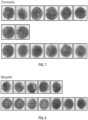
- FIGS. 3-8 show how immature granulocytes, neutrophils, lymphocytes, monocytes, eosinophils, and basophils, respectively, in a body fluid sample are stained with the contrast agent composition shown in Table 2.
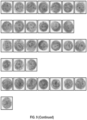
- FIGS. 9-14 are immature granulocytes, neutrophils, lymphocytes, monocytes, eosinophils, and basophils respectively, stained with the contrast agent composition E43.
- the staining results are remarkable in that the contrast agent composition shown in Table 2 provides darker and more uniform staining, with greater resolution. For example, immature granulocytes are stained better with more uniform staining. Further, eosinophil granules are darker stained with improved color identification. Finally, monocytes and lymphocytes are better stained and easy to distinguish.
Landscapes
- Health & Medical Sciences (AREA)
- Life Sciences & Earth Sciences (AREA)
- Chemical & Material Sciences (AREA)
- Biochemistry (AREA)
- Physics & Mathematics (AREA)
- Analytical Chemistry (AREA)
- General Health & Medical Sciences (AREA)
- General Physics & Mathematics (AREA)
- Immunology (AREA)
- Pathology (AREA)
- Engineering & Computer Science (AREA)
- Biomedical Technology (AREA)
- Molecular Biology (AREA)
- Dispersion Chemistry (AREA)
- Investigating Or Analysing Biological Materials (AREA)
Description
- This application claims the benefit of
U.S. Provisional Appl. No. 62/914,117, filed October 11, 2019 - Blood cell analysis is one of the most commonly performed medical tests for providing an overview of a patient's health status. A blood sample can be drawn from a patient's body and stored in a test tube containing an anticoagulant to prevent clotting. A whole blood sample normally comprises three major classes of blood cells including red blood cells (erythrocytes), white blood cells (leukocytes) and platelets (thrombocytes). Each class can be further divided into subclasses of members. For example, five major types or subclasses of white blood cells (WBCs) have different shapes and functions. White blood cells may include neutrophils, lymphocytes, monocytes, eosinophils, and basophils. There are also subclasses of the red blood cell types. The appearances of particles in a sample may differ according to pathological conditions, cell maturity and other causes. Red blood cell subclasses may include reticulocytes and nucleated red blood cells.
- A blood cell count estimating the concentration of RBCs, WBCs or platelets can be done manually or using an automatic analyzer. When blood cell counts are done manually, a drop of blood is applied to a microscope slide as a thin smear. Traditionally, manual examination of a dried, stained smear of blood on a microscope slide has been used to determine the number or relative amounts of the five types of white blood cells. Histological dyes and stains have been used to stain cells or cellular structures. For example, Wright's stain is a histologic stain that has been used to stain blood smears for examination under a light microscope. Staining a sample involves the use of multiple solutions and steps in proper order to ensure the staining agent is correctly applied and the cell structure is appropriately preserved. A fixing agent can be applied to the sample in a first step to preserve the sample from degredation and maintain the cell structure. Afterwards, a permeabilizing agent can be applied to the sample in a second step to dissolve cell membranes in order to allow the staining agent to enter the cells. The staining agent can be applied to the sample in a third step to stain the appropriate structures. The sample may be further rinsed for observation, or additional steps may be taken to apply additional stains, counterstains, or other perform other actions.
- It is important to perform the steps in the appropriate order for the appropriate amounts of time. If the sample is permeabilized before being fixed, the cell structures in the sample can be degraded prior to being fixed and any ability to discern the original cellular morphology is lost. Additionally, the staining cannot occur prior to the permeabilizing step, or the staining agent will not properly penetrate the cells and stain the structures within the cells. Additionally, if any of the steps, such as fixing, permeabilizing, and staining, are performed too rapidly, the cell's morpohology may be lost and/or the cell and its internal structures may not be properly stained. Current staining techniques require multiple steps and significant time.
- Automated analyzers are becoming more prevalent. Aspects of automated diagnosis systems with flowcells are disclosed in
U.S. Pat. Nos. 6,825,926 ;6,184,978 ;6,424,415 ; and6,590,646 . - The various automated systems described above rely on rapid analysis of samples. The number of and duration of the steps of the staining process can be a limiting factor in the speed and efficacy of automated particle analysis systems. Automated particle analysis systems can be more efficient if the staining process is shortened, and further more efficient if the staining process is performed in a single step. Additionally, the automated particle analysis systems can be more efficient if the total size of the sample is kept to a minimum.
- It is sometimes difficult to obtain even staining for many cell types, including immature granulocytes. Further, it can be difficult to differentiate, e.g., monocytes and lymphocytes using the color features. There is therefore a need for stains or combinations of stains that solve the aforementioned issues.
- The present disclosure relates to an improved particle contrast agent composition for rapidly generating visual distinctions in a sample, such as a blood fluid sample and/or a body fluid sample. The particle contrast agent composition can be especially useful in automated flow cytometry systems. The present invention is defined in the appended claims.
- In a first aspect, the disclosure relates to a particle contrast agent composition for staining particles, the particle contrast agent composition comprising: Basic Fuchsin; Crysta Violet and New Methylene Blue; one or more permeabilizing agents; and one or more fixing agents. Such compositions are suitable for imaging a blood fluid sample or a body fluid sample in an automated particle analysis system.
- In a second aspect, the disclosure relates to a method of treating particles of a blood fluid sample or a body fluid sample comprising: combining the blood fluid sample or a body fluid sample with a particle contrast agent composition comprising Basic Fuchsin; Crystal Violet and New Methylene Blue; one or more permeabilizing agents; and one or more fixing agents to obtain a sample mixture; and incubating the sample mixture at a temperature between about 37°C and about 60°C for fewer than 90 seconds. The method can be performed in an automated particle analysis system.
- In a third aspect, the disclosure relates to kits comprising a particle contrast agent composition comprising Basic Fuchsin; Crystal Violet and New Methylene Blue; one or more permeabilizing agents; and one or more fixing agents all in a suitable container.
- The drawings illustrate generally, by way of example, but not by way of limitation, various embodiments discussed herein.
-
FIG. 1 is a schematic diagram of the preparation of a particle contrast agent composition according to the disclosure. -
FIG. 2 is a flowchart of one-step staining process according to the disclosure. -
FIGS. 3-8 are photographs of immature granulocytes, neutrophils, lymphocytes, monocytes, eosinophils, and basophils, respectively, stained with the contrast agent composition according to the disclosure. -
FIGS. 9-14 are photographs of immature granulocytes, neutrophils, lymphocytes, monocytes, eosinophils, and basophils respectively, stained with the contrast agent composition E43. The so-called E43 contrast agent composition is generally described inU.S. Patent No. 9,279,750 -
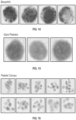
FIG. 15 is a photograph of giant platelets stained with the contrast agent composition according to the disclosure. -
FIG. 16 . Is a photograph of platelet clumps stained with the contrast agent composition according to the disclosure. - Reference will now be made in detail to certain embodiments of the disclosed subject matter, examples of which are illustrated in part in the accompanying drawings. While the disclosed subject matter will be described in conjunction with the enumerated claims, it will be understood that the exemplified subject matter is not intended to limit the claims to the disclosed subject matter.
- The present disclosure relates to an improved particle contrast agent composition for rapidly generating visual distinctions in a sample, such as a blood fluid sample and/or a body fluid sample. Examples of body fluid samples include serous fluid (e.g., pleural, pericardial,, peritoneal, and lavage fluids), amniotic fluid, cerebrospinal fluid, seminal fluid, synovial fluid, bone marrow aspirate fluid, effusions and exudates. The particle contrast agent composition can be especially useful in automated flow cytometry systems, such as the one described in
U.S. Patent No. 9,279,750 - The particle contrast agent compositions described herein, including for example, stain/dye compositions, and/or combinations thereof, can be used to perform automated, image-based sample analysis, such as blood analysis. Cells including at least one of platelets, reticulocytes, immature granulocytes, eosinophils, monocytes, and lymphocytes are able to absorb the particle contrast agent compositions described herein at a higher rate relative to other stains. Further, the particle contrast agent compositions described herein can be more evenly distributed throughout one or more of such cells.
- The compositions and method disclosed herein can be used with manual staining and in many different types of particle analysis systems, including hematology imaging systems. For example, the compositions and methods described herein can be used with image-based sample analysis, such as flowcell analysis. An example of such a flowcell analysis can include traditional, known methods of flow cytometry.
-
FIG. 1 is a schematic diagram of the preparation of a particle contrast agent composition according to one embodiment. Atblock 108, aparticle contrast agent 102, apermeabilizing agent 104, and a fixingagent 106 are combined to create the particlecontrast agent composition 110. In one embodiment, theparticle contrast agent 102,permeabilizing agent 104, and fixingagent 106 are combined at the same time. In other embodiments, one of theparticle contrast agent 102,permeabilizing agent 104, and fixingagent 106 is combined with another one of theparticle contrast agent 102,permeabilizing agent 104, and fixingagent 106, which is then combined with the last of theparticle contrast agent 102,permeabilizing agent 104, and fixingagent 106, in any order. The combination atblock 108 can be performed in any order and in any suitable way. - Alternatively, one of the
permeabilizing agent 104 and fixingagent 106 is not included in the particlecontrast agent composition 110. In various instances, additional materials can be combined atblock 108 as part of the particlecontrast agent composition 110, as described in further detail below. - The particle
contrast agent compositions 110 described herein can be provided as part of a kit. The particlecontrast agent composition 110 can be provided already prepared or as one or more components that must be combined. - The
particle contrast agent 102 can be any contrast agent capable of producing visible distinctions in particular, cells including at least one of immature granulocytes, eosinophils, monocytes, and lymphocytes. The particlecontrast agent compositions 110 described herein comprise Basic Fuchsin Crystal Violet and New Methylene Blue. - According to the invention the particle
contrast agent composition 110, as described in further detail herein, is a particlecontrast agent composition 110 comprising aparticle contrast agent 102 that includes Basic Fuchsin, Crystal Violet, and New Methylene Blue. Theparticle contrast agent 102 is added in an amount effective to stain viable and/or substantially intact cells for image-based categorization and subcategorization. Theparticle contrast agent 102 can be any combination of two or more of the aforementioned particle contrast agents. - In one example, the
particle contrast agent 102 includes Basic Fuchsin in an amount sufficient to achieve between about 1 µM to about 500 µM (e.g., from about 50 µM to about 200 µM, about 100 µM to about 200 µM, about 110 µM to about 190 µM or about 110 µM to about 180 µM) under staining conditions. As used herein, the term "under staining conditions" refers to when the component is mixed with the sample. The Basic Fuchsin can be purified to at least 90% pure. The Basic Fuchsin can be purified to at least 80%, 85%, 91%, 92%, 93%, 94%, 95%, 96%, 97%, or 98% pure. The Basic Fuchsin can be purified to at least 99% pure. - The
particle contrast agent 102 includes Crystal Violet. The Crystal Violet can be present in amounts sufficient to achieve between about 1 µM to about 100 µM (e.g., from about 1 µM to about 50 µM, about 5 µM to about 25 µM, about 10 µM to about 50 µM or about 15 µM to about 30 µM) under staining conditions. As used herein, the term "under staining conditions" refers to when the component is mixed with the sample. The Crystal Violet can be purified to at least 90% pure. The Crystal Violet can be purified to at least 91%, 92%, 93%, 94%, 95%, 96%, 97%, or 98% pure. The Crystal Violet can be purified to at least 99% pure. Theparticle contrast agent 202 can be solely Crystal Violet, or can be Crystal Violet combined with one or more additional particle contrast agents. - The
particle contrast agent 102 can include New Methylene Blue. The New Methylene Blue can be present in amounts sufficient to achieve between about 70 µM to about 2.4 mM (e.g., from about 100 µM to about 500 µM, about 100 µM to about 1.5 mM, about 500 µM to about 1.5 µM or about 750 µM to about 1.5 µM) under staining conditions. The New Methylene Blue can be present in amounts sufficient to achieve between about 500 µM to about 950 µM under staining conditions. The New Methylene Blue can be purified to at least 70% pure. The New Methylene Blue can be purified to at least 71%, 72%, 73%, 74%, 75%, 76%, 77%, 78%, 79%, 80%, 81%, 82%, 83%, 84%, 85%, 86%, 87%, 88%, 89%, 90%, 91%, 92%, 93%, 94%, 95%, 96%, 97%, 98%, or 99% pure. The New Methylene Blue can be purified to at least 100% pure. - In agreement with the invention the
particle contrast agent 102 includes Basic Fuchsin and both Crystal Violet and New Methylene Blue. - In another example, the
particle contrast agent 102 is a combination of Crystal Violet, New Methylene Blue, and Basic Fuchsin, each having any combination of concentrations and purities as described herein. Theparticle contrast agent 102 can comprise specifically Crystal Violet present in amounts sufficient to achieve about 15 µM to about 30 µM under staining conditions, New Methylene Blue present in amounts sufficient to achieve about 750 µM to about 1.5 mM under staining conditions, and Basic Fuchsin present in amounts sufficient to achieve about 100 µM to about 200 µM under staining conditions. - The
permeabilizing agent 104 can include a surfactant. Thepermeabilizing agent 104 can include, among other components, a saponin. Alternatively, or in addition to a saponin, thepermeabilizing agent 104 can include at least one of a quarternary ammonium salt, a nonionic surfactant, and a zwitterionic surfactant. The permeabilizing agent can alter the permeability of a cell in order to increase accessibility of theparticle contrast agent 102 to the intracellular contents. The permeabilizing agent can be selected and included in quantities sufficient to permit a one-step staining procedure. - Examples of a nonionic surfactant can include (1) polyoxyethylene alkyl or aryl ethers (polyethoxylates), including straight-chain aliphatic hydrophobes etherified to polyethylene glycol or polyoxyethylene ethanol, e.g., Brij™ 35; (2) branched-chain aliphatic/aromatic (e.g., octylphenol) hydrophobes etherified to polyethylene glycol, e.g., Triton X™-100; (3) straight-chain aliphatic/aromatic (e.g., n-nonylphenol) hydrophobes etherified to polyethylene glycol, e.g., Igepal™ C0897; and (4) straight-chain aliphatic (e.g., carboxylic acid) hydrophobes esterified to polyethylene glycol, e.g., Myrj™ 53, and others. Examples of nonionic polyoxyethylene alkyl or aryl ethers (polyethoxylates) surfactants can include polyoxyethylene(4) lauryl ether (Brij™ 30); polyoxyethylene(23) lauryl ether (Brij™ 35); polyoxyethylene(2) cetyl ether (Brij™ 52); polyoxyethylene(20) cetyl ether (Brij™ 58); polyoxyethylene(2) stearyl ether (Brij™ 72); polyoxyethylene(10)stearyl ether (Brij™ 76); polyoxyethylene(20) stearyl ether (Brij™ 78); polyoxyethylene(2) oleyl ether (Brij™ 92); polyoxyethylene(10) oleyl ether (Brij™ 96); polyoxyethylene(20) oleyl ether (Brij™ 98); polyoxyethylene(21) stearyl ether (Brij™ 721); polyoxyethylene(100) stearyl ether (Brij™ 700); and others. Further examples of nonionic surfactants can include Triton X™-100 (non-reduced or reduced), Triton™X-114 non-reduced or reduced), Triton X™-165, and Triton X™-305 (non-reduced and reduced), and others.
- Examples of zwitterionic surfactants can include TDAPS (tetradecyldimethylammoniopropanesulfonate), CHAPSO (3-[(3-cholamidopropyl) dimethylammonio]-2-hydroxy-1-propanesulfonate), alkyl N,N-dimethyl N-oxides having from about 12 to about 16 carbon atoms, lauryl dimethylamine N-oxide (LO), DDAPS(N-dodecyl-N,N-dimethyl-3-ammonio-1-propanesulfonate), and others.
- The
permeabilizing agent 104 can include an agent sufficient to lyse red blood cells. Thepermeabilizing agent 104 can include an agent sufficient to lyse red blood cells other than reticulocytes or nucleated red blood cells. The permeabilizing agent 204 can include an agent sufficient to lyse red blood cells while white blood cells, reticulocytes, nucleated red blood cells, platelets, and other cells remain substantially intact. Thepermeabilizing agent 104 can render the members and/or nuclear membranes of white blood cells, reticulocytes, nucleated red blood cells, and/or platelets more permeable and/or porous to facilitate access by theparticle contrast agent 102. For example, thepermeabilizing agent 104 is selected to be able to quickly create the pores or openings necessary to allow theparticle contrast agent 102 to enter cells in the sample. - Effective results can be achieved with particle
contrast agent compositions 110 with the use of apermeabilizing agent 104 that includes IRIS Lyse and CDS Lytic available from Clinical Diagnostics Solutions, Inc., Plantation, FL. - Effective results can be achieved with particle
contrast agent compositions 110 with the use of apermeabilizing agent 104 that includes a saponin present in amounts sufficient to result in concentrations of about 10 mg/L to about 1000 mg/L under staining conditions. The saponin can be present in amounts sufficient to result in concentrations of about 50 mg/L to about 750 mg/L. The saponin can be a quarternary ammonium-substituted saponin ether. - The fixing
agent 106 can be selected to ensure, among other things, the white blood cells do not degrade during staining and imaging. The fixingagent 106 can ensure other cells and cell structures do not degrade. Examples of fixing agents can include glutaraldyde; formaldehyde; cross-linking agents; ammonia picrate in isotonic saline (e.g., for methylene blue staining); ethyl alcohol; methanol (e.g., at room temperature, -20°C or-70°C); Heidenhain's Susa-HgCl2, NaCl Trichloroacetic acid, formalin; Bouin's--Picric acid, Formalin, acetic acid; Duboseq-Brazil--Bouins with 80% EtOH; Carnoy's--EtOH, Chloroform, acetic acid; Zenker's--HgC.sub.12, K2CrO7, NaSO4H2O; acetocarmine; Gatensby's-Chromic acid, Osmium tetroxide, NaCl; Baker's-Formalin, CaCl2; Smith's-K2Cr2O7, formalin, acetic acid; 1% methyl green, 1% acetic acid; Phenol, formalin, glycerol, Genetian violet; Schaudin-HgCl2, EtOH, acetic acid; Champy's--Chromic acid, K2CrO7, OsO4; Fleming's--Cromic acid, OSO4, acetic acid; Formol-Silver--Formaldehyde, AgNOs; Streck's Tissue Fixative-- Bronopol, Diazolidinyl urea, ZnSO47H2O, sodium citrate; 1% imidazolidnyl urea in PBS; Glyoxal: Glyofix, Prefer, Safefix, Histochoice; Glydant--Hydantoin; Dimethylol urea; Sodium hydroxymethylglycinate; Karnovsky's; Mecuric chloride (B-5); Hollande's; and others. In addition, suitable fixing agents can include any of the following either alone or in combination. - The fixing
agent 106 can be an oxidizing agent, a mercurial, a picrate, a hepes-glutamic acid buffer-mediated organic solvent protection effect (HOPE) fixative, or a water soluble preservative. Examples of oxidizing agents include Potassium dichromate, chromic acid, potassium permanganate, and others. Examples of mercurial include B-5, Zernker's fixative, and others. Examples of water-soluble preservatives include methyl paraben, propyl paraben, dimethylolurea, 2-pyridinethiol-1-oxide, sorbic acid, potassium sorbate, and others. - Effective results can be achieved in some embodiments of the particle
contrast agent composition 110 with the use of a fixingagent 106 that includes at least one of Gluteraldehyde and Formaldehyde. For example, effective results can be achieved by using afixing agent 106 that includes Gluteraldehyde at or below 0.1% by weight. - Optional
additional components 112 can be optionally combined atblock 108 into the particlecontrast agent composition 110. Examples ofadditional components 112 can include buffer components (e.g., Sodium Acetate, Sodium Borate, Sodium Bicarbonate, Sodium Citrate, Sodium Carbonate, Sodium Tartrate), viscosity modifying agents, an antimicrobial agent, an osmotic adjusting agent, an ionic strength modifier, a surfactant, a chelating agent, and others. Effective results can be achieved when the particlecontrast agent composition 110 includes a phosphate buffered saline. Buffer components can be used to buffer the particlecontrast agent composition 110 to a pH of about 5 to about 7. In addition, thecontrast agent composition 110 can have an osmolarity of at least about 230 mOsm, such as an osmolarity of from about 280 mOsm to about 325 mOsm, about 285 mOsm to about 305 mOsm or about 240 mOsm to about 270 mOsm. - Examples of viscosity modifying agents include natural hydrocolloids (and derivatives), such as carrageenan, locust bean gum, guar gum, and gelatin; sugars (and derivatives), such as dextrose, fructose; polydextrose; dextrans; polydextrans; saccharides; and polysaccharides; semisynthetic hydrocolloids (and derivatives), such as Methylcellulose, Carboxymethylcellulose; Synthetic hydro colloids (and derivatives), such as Carbopol™; and Clays (and derivatives), such as Bentonite and Veegum™.
-
FIG. 2 is a flowchart of a one-step staining process 200. While the one-step staining process 200 can contain several sub-steps, the term "one-step" is used to identify that the sample need not be introduced to multiple, different solutions during the staining procedure. The particlecontrast agent composition 110 is prepared atblock 102, as described herein with reference toFIG. 1 . Optionally, components, such as anyparticle contrast agents 102, can be purified atblock 206. Purifyingparticle contrast agents 102 can reduce the level of precipitates formed upon contact with a sample, thereby reducing the background and improving the results of image-based blood sample analysis with a decreased need for further review of images or slides, or manually prepared microscopy. - At
block 208, the particlecontrast agent composition 110 is combined with the sample. The particlecontrast agent composition 110 can be combined with the sample in any suitable way, including mixing together. Combining atblock 208 can include diluting the sample with a certain amount of particlecontrast agent composition 110. The sample can be diluted with particlecontrast agent composition 110. The amount of dilution can be selected to provide an optimal number of cells per frame during an image-based analysis. The amount of dilution can be selected to provide an optimal number of white blood cells per frame during an image-based analysis. The amount of dilution can be otherwise selected to provide an optimal volume for any other non-image-based analysis. - Effective results can be achieved using a ratio of the particle
contrast agent composition 110 to the sample at between about 2:1 to about 20:1. The ratio of the particlecontrast agent composition 110 to the sample can be between about 3:1 to about 10:1. The ratio of the particlecontrast agent composition 110 to the sample can be between about 3:1 to about 4:1. The ratio of the particlecontrast agent composition 110 to the sample can be between about 3:1 or about 4:1. Effective results can be achieved using a ratio of the particlecontrast agent composition 110 to the sample at very nearly 3:1 or very nearly 4:1. - In some instances, the sample can be combined with the particle
contrast agent composition 110 at elevated temperatures, such as any of the temperatures described below with reference to incubating. - As used herein, the combined sample and particle
contrast agent composition 110 is referred to as the sample mixture. - At
block 210, the sample mixture is incubated for a certain amount of time at a certain temperature. Incubation can increase the permeability of the cells or their internal structures, allowing theparticle contrast agent 102 to better infiltrate the cells or cellular structures. The time and temperature of incubation can be selected to enable the particlecontrast agent composition 110 to properly permeate, fix, and stain the sample. The time and temperature of incubation can be selected to ensure lysing of red blood cells while keeping white blood cells, platelets, and nucleated red blood cells substantially intact. Thus, for example, the sample mixture can be incubated at temperatures between about 37°C and about 60°C for about 1 to 60 seconds. The sample mixture can be heated to temperatures between about 46°C and about 49°C The sample mixture can be incubated for between 40 and 50 seconds. The sample mixture can be incubated up to an hour. Effective results can be achieved by incubating the sample mixture at about 48°C for about 45 seconds. Effective results can be achieved by incubating the sample mixture at about 47°C for about 45 seconds. - The combining at
block 208 and the incubating atblock 210 complete in approximately the same amount of time or less time than the time it takes for a sample mixture to be processed in the imaging equipment and for the lines of the imaging equipment to be flushed and/or cleaned. In this way, a first sample mixture can be imaged while a second sample mixture is being combined and incubated. Once the first sample mixture has been imaged and the imaging equipment has been cleaned, the second sample mixture can immediately be imaged. - Alternatively, the combining at
block 208 and the incubating atblock 210 complete in less than twice the time it takes for a sample mixture to be processed in the imaging equipment and for the lines of the imaging equipment to be flushed and/or cleaned. In this way, while a first sample mixture is being imaged, a second sample mixture can be ready to be imaged, and a third sample mixture and fourth sample mixture can be in the process of being combined and incubated. Once the first sample mixture has been imaged and the imaging equipment has been cleaned, the second sample mixture can immediately be imaged. The third sample mixture can be finishing its combining and incubating and the fourth sample mixture can still be combining and incubating. Once the second sample mixture has been imaged and the imaging equipment has been cleaned, the third sample mixture can immediately be imaged, while the fourth sample mixture begins to finish combining and incubating and a fifth sample mixture begins combining and incubating. The process can continue indefinitely to continually image sample mixtures. - The particle
contrast agent compositions 110 and staining procedures are effective to stain neutrophils, lymphocytes, monocytes, eosinophils, basophils, platelets, reticulocytes, nucleated red blood cells, blasts, promyelocytes, myelocytes, metamyelocytes, casts, bacteria, epithelials, and/or parasites. Additionally, or alternatively, the particle contrast agent compositionists 110 and staining procedures described herein are effective to stain mesothelial cells, macrophages, plasma cells, malignant cells, and crystals along with cells found in blood and bacteria. Certain effective particlecontrast agent compositions 110 and staining procedures are effective to generate visual distinctions for particle categorization and subcategorization, for example, by providing for differential staining of primary and secondary granules in cells, such as to aid in sub-categorization of immature granulocytes and their age determination based on the differential staining or enhancement of primary and secondary granules. - The disclosure is also directed to methods of using the particle
contrast agent compositions 110 described herein. The particlecontrast agent compositions 110 are suitable for imaging a blood fluid sample or a body fluid sample in an automated particle analysis system. The methods include, for example, methods of treating particles of a blood fluid sample or a body fluid sample comprising: combining the blood fluid sample or a body fluid sample with a particlecontrast agent composition 110 to obtain a sample mixture; and incubating the sample mixture at a temperature between about 37°C and about 60°C for fewer than 90 seconds. The permeabilizing agent can comprise saponin present in amounts sufficient to result in concentrations between about 50 mg/L and about 750 mg/L under staining conditions. Alternatively, or in addition, the fixing agent can comprise gluteraldehyde present in amounts sufficient to result in concentrations at or below 0.1% under staining conditions. Alternatively, or in addition, the Basic Fuchsin can be present in an amount sufficient to result in concentrations between about 100 µM to about 200 µM under staining conditions. Alternatively, or in addition, the Crystal Violet is present in amounts sufficient to achieve between about 15 µM to about 30 µM under staining conditions. Alternatively, or in addition, the New Methylene Blue is present in amounts sufficient to achieve between about 750 µM to about 1.5 mM under staining conditions. Alternatively, or in addition, incubating the sample mixture includes heating the sample mixture to between about 40°C and about 50°C for about 30 seconds to about 60 seconds. Alternatively or in addition, combining the blood fluid sample or a body fluid sample with the particle contrast agent composition includes combining to a ratio of the blood fluid sample or a body fluid sample to the particle contrast agent composition of about 1:3 to about 1:6 (e.g., about 1:3 to about 1:5); and incubating the sample mixture includes heating the sample mixture to about 40°C and about 50°C for about 30 seconds to about 60 seconds. Alternatively, or in addition, the methods described herein can be performed in an automated particle analysis system. - The disclosure is also directed to kits. Kits may be conveniently assembled for use with the particle
contrast agent compositions 110 described herein. The kit can contain at least one container for each of the components of the particlecontrast agent compositions 110 described herein or it can contain a single container containing all of the components of the particlecontrast agent compositions 110 described herein. Moreover, kits can include standard reagents and/or pre-measured components of the particlecontrast agent compositions 110 described herein. Such kits can also include buffers. Finally, the kits can further include instructions regarding how the kit is to be used and/or examples of the staining patterns that can typically be expected for various cell types. In one example, a kit comprises the particlecontrast agent composition 110 described herein in a suitable container. In another example, a kit can comprise, in separate containers: Basic Fuchsin in a first container; - Crystal Violet and New Methylene Blue in a second container; one or more permeabilizing agents in a third container; and one or more fixing agents in a fourth container. In another example, a kit can comprise: in a first container, Basic Fuchsin, Crystal Violet and New Methylene, and one or more permeabilizing agents; and in a second container, one or more fixing agents. In still another example, a kit can comprise in a first container, Basic Fuchsin and Crystal Violet and New Methylene; one or more permeabilizing agents in a second container; and in a third container, one or more fixing agents. In still another example, a kit can comprise: in a first container, Basic Fuchsin and Crystal Violet and New Methylene; in a second container one or more permeabilizing agents and one or more fixing agents.
- Different arrangements of the components depicted in the drawings or described herein, as well as components and steps not shown or described are possible. Similarly, some features and sub-combinations are useful and may be employed without reference to other features and sub-combinations.
- Values expressed in a range format should be interpreted in a flexible manner to include not only the numerical values explicitly recited as the limits of the range, but also to include all the individual numerical values or sub-ranges encompassed within that range as if each numerical value and sub-range were explicitly recited. For example, a range of "about 0.1% to about 5%" or "about 0.1% to 5%" should be interpreted to include not just about 0.1% to about 5%, but also the individual values (e.g., 1%, 2%, 3%, and 4%) and the sub-ranges (e.g., 0.1% to 0.5%, 1.1% to 2.2%, 3.3% to 4.4%) within the indicated range. The statement "about X to Y" has the same meaning as "about X to about Y," unless indicated otherwise. Likewise, the statement "about X, Y, or about Z" has the same meaning as "about X, about Y, or about Z," unless indicated otherwise.
- In this document, the terms "a," "an," or "the" are used to include one or more than one unless the context clearly dictates otherwise. The term "or" is used to refer to a nonexclusive "or" unless otherwise indicated. In addition, it is to be understood that the phraseology or terminology employed herein, and not otherwise defined, is for the purpose of description only and not of limitation. Any use of section headings is intended to aid reading of the document and is not to be interpreted as limiting. Further, information that is relevant to a section heading may occur within or outside of that particular section.
- In the methods described herein, the steps can be carried out in any order without departing from the principles of the invention, except when a temporal or operational sequence is explicitly recited. Furthermore, specified steps can be carried out concurrently unless explicit claim language recites that they be carried out separately. For example, a claimed step of doing X and a claimed step of doing Y can be conducted simultaneously within a single operation, and the resulting process will fall within the literal scope of the claimed process.
- The term "about" as used herein can allow for a degree of variability in a value or range, for example, within 10%, within 5%, or within 1% of a stated value or of a stated limit of a range.
- The present invention can be better understood by reference to the following examples which are offered by way of illustration. The present invention is not limited to the examples given herein.
- Numerous staining compositions and methods were tested and modified in order to result in the embodiments disclosed herein.
- A body fluid sample was combined and incubated for 40 seconds at 47.5°C with the contrast agent composition shown in Table 1.
Table 1 Final Concentration NMB 750 µM - 1.5 mM CV 15 µM - 30 µM Basic Fuchsin 100 µM - 200 µM - Concentrations of gluteraldehyde can be ≤ about 0.1% by volume. Further, the buffer component can comprise, for example, about 40 mM to about 70 mM sodium acetate. In addition, a permeablizing agent is used to prepare a contrast agent, such as IRIS Lyse. Deionized water can be used to dissolve or dilute one or more components of the contrast agent. The permeabilizing agent can be used to dissolve at least one of the NMB and the CV to prepare a contrast agent.
- In Table 1, NMB refers to New Methylene Blue; CV refers to Crystal Violet.
- Then a quenching reagent was applied to the body fluid sample mixture.
FIGS. 3-8 show how immature granulocytes, neutrophils, lymphocytes, monocytes, eosinophils, and basophils, respectively, in a body fluid sample are stained with the contrast agent composition shown in Table 2.FIGS. 9-14 are immature granulocytes, neutrophils, lymphocytes, monocytes, eosinophils, and basophils respectively, stained with the contrast agent composition E43. - The staining results are remarkable in that the contrast agent composition shown in Table 2 provides darker and more uniform staining, with greater resolution. For example, immature granulocytes are stained better with more uniform staining. Further, eosinophil granules are darker stained with improved color identification. Finally, monocytes and lymphocytes are better stained and easy to distinguish.
Claims (15)
- A particle contrast agent composition for staining particles, the particle contrast agent composition comprising:Basic Fuchsin;Crystal Violet; andNew Methylene Blue;one or more permeabilizing agents; andone or more fixing agents.
- The composition of claim 1, wherein:(i) the Basic Fuchsin is present in an amount sufficient to result in concentrations between about 100 µM to about 200 µM under staining conditions;(ii) the Crystal Violet is present in amounts sufficient to achieve between about 15 µM to about30 µM under staining conditions;(iii) the New Methylene Blue is present in amounts sufficient to achieve between about 750 µM to about 1.5 mM under staining conditions; and/or(iv) the one or more fixingagents comprises glutaraldehyde.
- The composition of any preceding claim, further comprising a buffer component, optionally wherein the buffer component comprises sodium acetate.
- The composition of any preceding claim:(i) further comprising an antimicrobial;(ii) wherein the composition has a pH of about 5 to about 7;(iii) having an osmolarity of at least about 230 mOsm; and/or(iv) having an osmolarity of from about 240 mOsm to about 270 mOsm.
- Use of the composition of any preceding claim for imaging a blood fluid sample or a body fluid sample in anautomated particle analysis system.
- A method of treating particles of a blood fluid sample or a body fluid sample comprising:combining the blood fluid sample or a body fluid sample with a particle contrast agent composition of claim 1 to obtain a sample mixture; andincubating the sample mixture at a temperature between about 37°C and about 60°C for fewer than 90 seconds.
- The method of claim 6, wherein the permeabilizing agent comprises saponin present in amounts sufficient to result in concentrations between about 50 mg/L and about 750 mg/L under staining conditions.
- The method of claim 6 or 7, wherein the fixing agent comprises glutaraldehyde present in amounts sufficient to result in concentrations at or below 0.1% under staining conditions.
- The method of claims 6-8, wherein the Basic Fuchsin is present in an amount sufficient to result in concentrations between about 100 µM to about 200 µM under staining conditions.
- The method of claims 6-9 , wherein the Crystal Violet is present in amounts sufficient to achieve between about 15 µM to about 30 µM under staining conditions.
- The method of claims 6-10, wherein the New Methylene Blue is present in amounts sufficient to achieve between about 750 µM to about 1.5 mM under staining conditions.
- The method of claims 6-11, wherein incubating the sample mixture includes heating the sample mixture to between about 40°C and about 50°C for about 30 seconds to about 60 seconds.
- The method of claims 6-12, wherein combining the blood fluid sample or a body fluid sample with the particle contrast agent composition includes combining to a ratio of the blood fluid sample or a body fluid sample to the particle contrast agent composition of about 1:3 to about 1:6; and
incubating the sample mixture includes heating the sample mixture to about 40°C and about 50°C for about 30 seconds to about 60 seconds. - The method of claims 6-13, wherein the method is performed in an automated particle analysis system.
- A kit comprising the particle contrast agent composition of claim 1 in a suitable container.
Applications Claiming Priority (2)
| Application Number | Priority Date | Filing Date | Title |
|---|---|---|---|
| US201962914117P | 2019-10-11 | 2019-10-11 | |
| PCT/US2020/054791 WO2021072080A1 (en) | 2019-10-11 | 2020-10-08 | Method and composition for staining and sample processing |
Publications (2)
| Publication Number | Publication Date |
|---|---|
| EP4042134A1 EP4042134A1 (en) | 2022-08-17 |
| EP4042134B1 true EP4042134B1 (en) | 2024-12-18 |
Family
ID=73038426
Family Applications (1)
| Application Number | Title | Priority Date | Filing Date |
|---|---|---|---|
| EP20799914.5A Active EP4042134B1 (en) | 2019-10-11 | 2020-10-08 | Method and composition for staining and sample processing |
Country Status (4)
| Country | Link |
|---|---|
| US (1) | US12517018B2 (en) |
| EP (1) | EP4042134B1 (en) |
| CN (1) | CN114502941A (en) |
| WO (1) | WO2021072080A1 (en) |
Families Citing this family (9)
| Publication number | Priority date | Publication date | Assignee | Title |
|---|---|---|---|---|
| EP4042134B1 (en) | 2019-10-11 | 2024-12-18 | Beckman Coulter, Inc. | Method and composition for staining and sample processing |
| US20240024867A1 (en) | 2022-07-22 | 2024-01-25 | Beckman Coulter, Inc. | Flowcell holder and biological analysis systems and methods |
| JP2025527255A (en) | 2022-08-05 | 2025-08-20 | ベックマン コールター, インコーポレイテッド | Identifying immature cell types using imaging |
| EP4630784A1 (en) | 2022-12-05 | 2025-10-15 | Beckman Coulter, Inc. | Multi-channel hematology flow system |
| CN116148020A (en) * | 2023-03-14 | 2023-05-23 | 深圳安侣医学科技有限公司 | Single-dye staining reagents and methods for single-step staining of reptile blood multicellular cells |
| WO2025144829A1 (en) | 2023-12-27 | 2025-07-03 | Qbeckman Coulter, Inc. | Systems and methods of for integrating stained and unstained sample processing |
| WO2025145095A1 (en) | 2023-12-29 | 2025-07-03 | Beckman Coulter, Inc. | Customized sample handling in biological analysis |
| WO2025245510A1 (en) | 2024-05-24 | 2025-11-27 | Beckman Coulter, Inc. | Patient and control sample based analyzer evaluation |
| WO2025245513A1 (en) | 2024-05-24 | 2025-11-27 | Beckman Coulter, Inc. | Assessing and enhancing biological analyzer functionality through particle staining |
Family Cites Families (11)
| Publication number | Priority date | Publication date | Assignee | Title |
|---|---|---|---|---|
| US4983375A (en) * | 1989-10-23 | 1991-01-08 | Cambridge Diagnostic Products, Inc. | Hematological stain system |
| US6184978B1 (en) | 1996-05-15 | 2001-02-06 | International Remote Imaging Systems, Inc. | Method and apparatus for verifying uniform flow of a fluid sample through a flow cell and distribution on a slide |
| JP3997773B2 (en) | 2001-12-10 | 2007-10-24 | 和光純薬工業株式会社 | Gram staining reagent, reagent kit, and Gram staining method using the same |
| US6825926B2 (en) | 2002-11-19 | 2004-11-30 | International Remote Imaging Systems, Inc. | Flow cell for urinalysis diagnostic system and method of making same |
| US20110229879A1 (en) | 2010-03-19 | 2011-09-22 | University Of Rochester | Methods and compositions for nuclear staining |
| CN104245955B (en) | 2012-03-19 | 2018-03-16 | 文塔纳医疗系统公司 | Improved Gram Stain Method for Depigmentation of the Crystal Violet‑Iodine Complex of Gram-Negative Bacteria |
| WO2014145983A1 (en) | 2013-03-15 | 2014-09-18 | Iris International, Inc. | Sheath fluid systems and methods for particle analysis in blood samples |
| ES2658692T3 (en) * | 2013-03-15 | 2018-03-12 | Iris International, Inc. | Method and composition for dyeing and processing a urine sample |
| ES2711364T3 (en) * | 2013-03-15 | 2019-05-03 | Iris Int Inc | Flow cell systems and methods for the analysis of particles in blood samples |
| JP6688057B2 (en) | 2015-12-01 | 2020-04-28 | 日水製薬株式会社 | Post-dyeing reagent for Gram stain and Gram stain method |
| EP4042134B1 (en) | 2019-10-11 | 2024-12-18 | Beckman Coulter, Inc. | Method and composition for staining and sample processing |
-
2020
- 2020-10-08 EP EP20799914.5A patent/EP4042134B1/en active Active
- 2020-10-08 US US17/066,195 patent/US12517018B2/en active Active
- 2020-10-08 WO PCT/US2020/054791 patent/WO2021072080A1/en not_active Ceased
- 2020-10-08 CN CN202080071120.4A patent/CN114502941A/en active Pending
Also Published As
| Publication number | Publication date |
|---|---|
| EP4042134A1 (en) | 2022-08-17 |
| CN114502941A (en) | 2022-05-13 |
| WO2021072080A1 (en) | 2021-04-15 |
| US20210108994A1 (en) | 2021-04-15 |
| US12517018B2 (en) | 2026-01-06 |
Similar Documents
| Publication | Publication Date | Title |
|---|---|---|
| US12517018B2 (en) | Method and composition for staining and sample processing | |
| EP2972208B1 (en) | Method and composition for staining and sample processing | |
| US9939356B2 (en) | Method and composition for staining and processing a urine sample | |
| US5460797A (en) | Method for fixing tissues and cells for analysis using oxazolidine compounds | |
| US8685661B2 (en) | Reagent and kit for classifying and counting leukocytes, the preparation thereof, and process for classifying and counting leukocytes | |
| CN101097181A (en) | Reagent for sample analysis, kit for sample analysis, and sample analysis method | |
| EP1766045B1 (en) | Hematology reference control containing an immature granulocyte component | |
| EP1422509A1 (en) | Lysing Reagent and Method of Lysing Red Blood Cells for Hematology | |
| JPH06109725A (en) | Flow cytometry reagents | |
| US20050026240A1 (en) | Reagent composition for the analysis of residual white blood cells in leuko-reduced blood banking products | |
| US12498371B2 (en) | Formulation for total and differential counting of leukocytes in liquid medium and method of making and using same | |
| CN112639467B (en) | Platelet-simulating particles and preparation method thereof, and quality control or calibration material containing the platelet-simulating particles | |
| JP4107441B2 (en) | Reagent for classification counting of erythroblasts | |
| JP4338206B2 (en) | Classification and counting method of erythroblasts | |
| Curtis et al. | Effects of preparation and fixation on three quantitative fluorescent cytochemical procedures | |
| Tvedten | Routine stains and automated stainers | |
| CN118883217A (en) | A rapid reticulocyte staining reagent and its application |
Legal Events
| Date | Code | Title | Description |
|---|---|---|---|
| STAA | Information on the status of an ep patent application or granted ep patent |
Free format text: STATUS: UNKNOWN |
|
| STAA | Information on the status of an ep patent application or granted ep patent |
Free format text: STATUS: THE INTERNATIONAL PUBLICATION HAS BEEN MADE |
|
| PUAI | Public reference made under article 153(3) epc to a published international application that has entered the european phase |
Free format text: ORIGINAL CODE: 0009012 |
|
| STAA | Information on the status of an ep patent application or granted ep patent |
Free format text: STATUS: REQUEST FOR EXAMINATION WAS MADE |
|
| 17P | Request for examination filed |
Effective date: 20220324 |
|
| AK | Designated contracting states |
Kind code of ref document: A1 Designated state(s): AL AT BE BG CH CY CZ DE DK EE ES FI FR GB GR HR HU IE IS IT LI LT LU LV MC MK MT NL NO PL PT RO RS SE SI SK SM TR |
|
| DAV | Request for validation of the european patent (deleted) | ||
| DAX | Request for extension of the european patent (deleted) | ||
| P01 | Opt-out of the competence of the unified patent court (upc) registered |
Effective date: 20230529 |
|
| GRAP | Despatch of communication of intention to grant a patent |
Free format text: ORIGINAL CODE: EPIDOSNIGR1 |
|
| STAA | Information on the status of an ep patent application or granted ep patent |
Free format text: STATUS: GRANT OF PATENT IS INTENDED |
|
| INTG | Intention to grant announced |
Effective date: 20240724 |
|
| GRAS | Grant fee paid |
Free format text: ORIGINAL CODE: EPIDOSNIGR3 |
|
| GRAA | (expected) grant |
Free format text: ORIGINAL CODE: 0009210 |
|
| STAA | Information on the status of an ep patent application or granted ep patent |
Free format text: STATUS: THE PATENT HAS BEEN GRANTED |
|
| AK | Designated contracting states |
Kind code of ref document: B1 Designated state(s): AL AT BE BG CH CY CZ DE DK EE ES FI FR GB GR HR HU IE IS IT LI LT LU LV MC MK MT NL NO PL PT RO RS SE SI SK SM TR |
|
| REG | Reference to a national code |
Ref country code: CH Ref legal event code: EP |
|
| REG | Reference to a national code |
Ref country code: DE Ref legal event code: R096 Ref document number: 602020043431 Country of ref document: DE |
|
| REG | Reference to a national code |
Ref country code: IE Ref legal event code: FG4D |
|
| REG | Reference to a national code |
Ref country code: LT Ref legal event code: MG9D |
|
| PG25 | Lapsed in a contracting state [announced via postgrant information from national office to epo] |
Ref country code: HR Free format text: LAPSE BECAUSE OF FAILURE TO SUBMIT A TRANSLATION OF THE DESCRIPTION OR TO PAY THE FEE WITHIN THE PRESCRIBED TIME-LIMIT Effective date: 20241218 |
|
| PG25 | Lapsed in a contracting state [announced via postgrant information from national office to epo] |
Ref country code: FI Free format text: LAPSE BECAUSE OF FAILURE TO SUBMIT A TRANSLATION OF THE DESCRIPTION OR TO PAY THE FEE WITHIN THE PRESCRIBED TIME-LIMIT Effective date: 20241218 |
|
| PG25 | Lapsed in a contracting state [announced via postgrant information from national office to epo] |
Ref country code: BG Free format text: LAPSE BECAUSE OF FAILURE TO SUBMIT A TRANSLATION OF THE DESCRIPTION OR TO PAY THE FEE WITHIN THE PRESCRIBED TIME-LIMIT Effective date: 20241218 |
|
| PG25 | Lapsed in a contracting state [announced via postgrant information from national office to epo] |
Ref country code: NO Free format text: LAPSE BECAUSE OF FAILURE TO SUBMIT A TRANSLATION OF THE DESCRIPTION OR TO PAY THE FEE WITHIN THE PRESCRIBED TIME-LIMIT Effective date: 20250318 |
|
| REG | Reference to a national code |
Ref country code: NL Ref legal event code: MP Effective date: 20241218 |
|
| PG25 | Lapsed in a contracting state [announced via postgrant information from national office to epo] |
Ref country code: GR Free format text: LAPSE BECAUSE OF FAILURE TO SUBMIT A TRANSLATION OF THE DESCRIPTION OR TO PAY THE FEE WITHIN THE PRESCRIBED TIME-LIMIT Effective date: 20250319 Ref country code: LV Free format text: LAPSE BECAUSE OF FAILURE TO SUBMIT A TRANSLATION OF THE DESCRIPTION OR TO PAY THE FEE WITHIN THE PRESCRIBED TIME-LIMIT Effective date: 20241218 |
|
| PG25 | Lapsed in a contracting state [announced via postgrant information from national office to epo] |
Ref country code: RS Free format text: LAPSE BECAUSE OF FAILURE TO SUBMIT A TRANSLATION OF THE DESCRIPTION OR TO PAY THE FEE WITHIN THE PRESCRIBED TIME-LIMIT Effective date: 20250318 |
|
| PG25 | Lapsed in a contracting state [announced via postgrant information from national office to epo] |
Ref country code: NL Free format text: LAPSE BECAUSE OF FAILURE TO SUBMIT A TRANSLATION OF THE DESCRIPTION OR TO PAY THE FEE WITHIN THE PRESCRIBED TIME-LIMIT Effective date: 20241218 |
|
| REG | Reference to a national code |
Ref country code: AT Ref legal event code: MK05 Ref document number: 1752577 Country of ref document: AT Kind code of ref document: T Effective date: 20241218 |
|
| PG25 | Lapsed in a contracting state [announced via postgrant information from national office to epo] |
Ref country code: SM Free format text: LAPSE BECAUSE OF FAILURE TO SUBMIT A TRANSLATION OF THE DESCRIPTION OR TO PAY THE FEE WITHIN THE PRESCRIBED TIME-LIMIT Effective date: 20241218 |
|
| PG25 | Lapsed in a contracting state [announced via postgrant information from national office to epo] |
Ref country code: PL Free format text: LAPSE BECAUSE OF FAILURE TO SUBMIT A TRANSLATION OF THE DESCRIPTION OR TO PAY THE FEE WITHIN THE PRESCRIBED TIME-LIMIT Effective date: 20241218 |
|
| PG25 | Lapsed in a contracting state [announced via postgrant information from national office to epo] |
Ref country code: ES Free format text: LAPSE BECAUSE OF FAILURE TO SUBMIT A TRANSLATION OF THE DESCRIPTION OR TO PAY THE FEE WITHIN THE PRESCRIBED TIME-LIMIT Effective date: 20241218 |
|
| PG25 | Lapsed in a contracting state [announced via postgrant information from national office to epo] |
Ref country code: IS Free format text: LAPSE BECAUSE OF FAILURE TO SUBMIT A TRANSLATION OF THE DESCRIPTION OR TO PAY THE FEE WITHIN THE PRESCRIBED TIME-LIMIT Effective date: 20250418 |
|
| PG25 | Lapsed in a contracting state [announced via postgrant information from national office to epo] |
Ref country code: PT Free format text: LAPSE BECAUSE OF FAILURE TO SUBMIT A TRANSLATION OF THE DESCRIPTION OR TO PAY THE FEE WITHIN THE PRESCRIBED TIME-LIMIT Effective date: 20250421 |
|
| PG25 | Lapsed in a contracting state [announced via postgrant information from national office to epo] |
Ref country code: EE Free format text: LAPSE BECAUSE OF FAILURE TO SUBMIT A TRANSLATION OF THE DESCRIPTION OR TO PAY THE FEE WITHIN THE PRESCRIBED TIME-LIMIT Effective date: 20241218 |
|
| PG25 | Lapsed in a contracting state [announced via postgrant information from national office to epo] |
Ref country code: AT Free format text: LAPSE BECAUSE OF FAILURE TO SUBMIT A TRANSLATION OF THE DESCRIPTION OR TO PAY THE FEE WITHIN THE PRESCRIBED TIME-LIMIT Effective date: 20241218 Ref country code: RO Free format text: LAPSE BECAUSE OF FAILURE TO SUBMIT A TRANSLATION OF THE DESCRIPTION OR TO PAY THE FEE WITHIN THE PRESCRIBED TIME-LIMIT Effective date: 20241218 |
|
| PG25 | Lapsed in a contracting state [announced via postgrant information from national office to epo] |
Ref country code: SK Free format text: LAPSE BECAUSE OF FAILURE TO SUBMIT A TRANSLATION OF THE DESCRIPTION OR TO PAY THE FEE WITHIN THE PRESCRIBED TIME-LIMIT Effective date: 20241218 |
|
| PG25 | Lapsed in a contracting state [announced via postgrant information from national office to epo] |
Ref country code: CZ Free format text: LAPSE BECAUSE OF FAILURE TO SUBMIT A TRANSLATION OF THE DESCRIPTION OR TO PAY THE FEE WITHIN THE PRESCRIBED TIME-LIMIT Effective date: 20241218 |
|
| PG25 | Lapsed in a contracting state [announced via postgrant information from national office to epo] |
Ref country code: SE Free format text: LAPSE BECAUSE OF FAILURE TO SUBMIT A TRANSLATION OF THE DESCRIPTION OR TO PAY THE FEE WITHIN THE PRESCRIBED TIME-LIMIT Effective date: 20241218 |
|
| REG | Reference to a national code |
Ref country code: DE Ref legal event code: R097 Ref document number: 602020043431 Country of ref document: DE |
|
| PG25 | Lapsed in a contracting state [announced via postgrant information from national office to epo] |
Ref country code: DK Free format text: LAPSE BECAUSE OF FAILURE TO SUBMIT A TRANSLATION OF THE DESCRIPTION OR TO PAY THE FEE WITHIN THE PRESCRIBED TIME-LIMIT Effective date: 20241218 |
|
| PLBE | No opposition filed within time limit |
Free format text: ORIGINAL CODE: 0009261 |
|
| STAA | Information on the status of an ep patent application or granted ep patent |
Free format text: STATUS: NO OPPOSITION FILED WITHIN TIME LIMIT |
|
| 26N | No opposition filed |
Effective date: 20250919 |
|
| PGFP | Annual fee paid to national office [announced via postgrant information from national office to epo] |
Ref country code: DE Payment date: 20251028 Year of fee payment: 6 |
|
| PGFP | Annual fee paid to national office [announced via postgrant information from national office to epo] |
Ref country code: GB Payment date: 20251023 Year of fee payment: 6 |
|
| PGFP | Annual fee paid to national office [announced via postgrant information from national office to epo] |
Ref country code: IT Payment date: 20251022 Year of fee payment: 6 |
|
| PGFP | Annual fee paid to national office [announced via postgrant information from national office to epo] |
Ref country code: FR Payment date: 20251027 Year of fee payment: 6 |