EP4040626B1 - Systems and methods for operating a power generating asset - Google Patents
Systems and methods for operating a power generating asset Download PDFInfo
- Publication number
- EP4040626B1 EP4040626B1 EP22150058.0A EP22150058A EP4040626B1 EP 4040626 B1 EP4040626 B1 EP 4040626B1 EP 22150058 A EP22150058 A EP 22150058A EP 4040626 B1 EP4040626 B1 EP 4040626B1
- Authority
- EP
- European Patent Office
- Prior art keywords
- storage device
- energy storage
- state
- function
- esr
- Prior art date
- Legal status (The legal status is an assumption and is not a legal conclusion. Google has not performed a legal analysis and makes no representation as to the accuracy of the status listed.)
- Active
Links
Images




Classifications
-
- G—PHYSICS
- G06—COMPUTING OR CALCULATING; COUNTING
- G06Q—INFORMATION AND COMMUNICATION TECHNOLOGY [ICT] SPECIALLY ADAPTED FOR ADMINISTRATIVE, COMMERCIAL, FINANCIAL, MANAGERIAL OR SUPERVISORY PURPOSES; SYSTEMS OR METHODS SPECIALLY ADAPTED FOR ADMINISTRATIVE, COMMERCIAL, FINANCIAL, MANAGERIAL OR SUPERVISORY PURPOSES, NOT OTHERWISE PROVIDED FOR
- G06Q10/00—Administration; Management
- G06Q10/06—Resources, workflows, human or project management; Enterprise or organisation planning; Enterprise or organisation modelling
- G06Q10/063—Operations research, analysis or management
- G06Q10/0639—Performance analysis of employees; Performance analysis of enterprise or organisation operations
-
- F—MECHANICAL ENGINEERING; LIGHTING; HEATING; WEAPONS; BLASTING
- F03—MACHINES OR ENGINES FOR LIQUIDS; WIND, SPRING, OR WEIGHT MOTORS; PRODUCING MECHANICAL POWER OR A REACTIVE PROPULSIVE THRUST, NOT OTHERWISE PROVIDED FOR
- F03D—WIND MOTORS
- F03D7/00—Controlling wind motors
- F03D7/02—Controlling wind motors the wind motors having rotation axis substantially parallel to the air flow entering the rotor
- F03D7/04—Automatic control; Regulation
- F03D7/042—Automatic control; Regulation by means of an electrical or electronic controller
- F03D7/043—Automatic control; Regulation by means of an electrical or electronic controller characterised by the type of control logic
- F03D7/045—Automatic control; Regulation by means of an electrical or electronic controller characterised by the type of control logic with model-based controls
-
- F—MECHANICAL ENGINEERING; LIGHTING; HEATING; WEAPONS; BLASTING
- F03—MACHINES OR ENGINES FOR LIQUIDS; WIND, SPRING, OR WEIGHT MOTORS; PRODUCING MECHANICAL POWER OR A REACTIVE PROPULSIVE THRUST, NOT OTHERWISE PROVIDED FOR
- F03D—WIND MOTORS
- F03D17/00—Monitoring or testing of wind motors, e.g. diagnostics
-
- F—MECHANICAL ENGINEERING; LIGHTING; HEATING; WEAPONS; BLASTING
- F03—MACHINES OR ENGINES FOR LIQUIDS; WIND, SPRING, OR WEIGHT MOTORS; PRODUCING MECHANICAL POWER OR A REACTIVE PROPULSIVE THRUST, NOT OTHERWISE PROVIDED FOR
- F03D—WIND MOTORS
- F03D7/00—Controlling wind motors
- F03D7/02—Controlling wind motors the wind motors having rotation axis substantially parallel to the air flow entering the rotor
- F03D7/04—Automatic control; Regulation
- F03D7/042—Automatic control; Regulation by means of an electrical or electronic controller
- F03D7/047—Automatic control; Regulation by means of an electrical or electronic controller characterised by the controller architecture, e.g. multiple processors or data communications
-
- G—PHYSICS
- G06—COMPUTING OR CALCULATING; COUNTING
- G06Q—INFORMATION AND COMMUNICATION TECHNOLOGY [ICT] SPECIALLY ADAPTED FOR ADMINISTRATIVE, COMMERCIAL, FINANCIAL, MANAGERIAL OR SUPERVISORY PURPOSES; SYSTEMS OR METHODS SPECIALLY ADAPTED FOR ADMINISTRATIVE, COMMERCIAL, FINANCIAL, MANAGERIAL OR SUPERVISORY PURPOSES, NOT OTHERWISE PROVIDED FOR
- G06Q50/00—Information and communication technology [ICT] specially adapted for implementation of business processes of specific business sectors, e.g. utilities or tourism
- G06Q50/06—Energy or water supply
-
- H—ELECTRICITY
- H02—GENERATION; CONVERSION OR DISTRIBUTION OF ELECTRIC POWER
- H02J—ELECTRIC POWER NETWORKS; CIRCUIT ARRANGEMENTS OR SYSTEMS FOR SUPPLYING OR DISTRIBUTING ELECTRIC POWER; SYSTEMS FOR STORING ELECTRIC ENERGY
- H02J3/00—Circuit arrangements for AC mains or AC distribution networks
-
- H—ELECTRICITY
- H02—GENERATION; CONVERSION OR DISTRIBUTION OF ELECTRIC POWER
- H02J—ELECTRIC POWER NETWORKS; CIRCUIT ARRANGEMENTS OR SYSTEMS FOR SUPPLYING OR DISTRIBUTING ELECTRIC POWER; SYSTEMS FOR STORING ELECTRIC ENERGY
- H02J7/00—Circuit arrangements for charging or discharging batteries or for supplying loads from batteries
- H02J7/80—Circuit arrangements for charging or discharging batteries or for supplying loads from batteries including monitoring or indicating arrangements
- H02J7/84—Control of state of health [SOH]
-
- H—ELECTRICITY
- H02—GENERATION; CONVERSION OR DISTRIBUTION OF ELECTRIC POWER
- H02J—ELECTRIC POWER NETWORKS; CIRCUIT ARRANGEMENTS OR SYSTEMS FOR SUPPLYING OR DISTRIBUTING ELECTRIC POWER; SYSTEMS FOR STORING ELECTRIC ENERGY
- H02J7/00—Circuit arrangements for charging or discharging batteries or for supplying loads from batteries
- H02J7/90—Regulation of charging or discharging current or voltage
- H02J7/971—Regulation of charging or discharging current or voltage the charge cycle being controlled or terminated in response to non-electric parameters
-
- H—ELECTRICITY
- H02—GENERATION; CONVERSION OR DISTRIBUTION OF ELECTRIC POWER
- H02J—ELECTRIC POWER NETWORKS; CIRCUIT ARRANGEMENTS OR SYSTEMS FOR SUPPLYING OR DISTRIBUTING ELECTRIC POWER; SYSTEMS FOR STORING ELECTRIC ENERGY
- H02J7/00—Circuit arrangements for charging or discharging batteries or for supplying loads from batteries
- H02J7/90—Regulation of charging or discharging current or voltage
- H02J7/971—Regulation of charging or discharging current or voltage the charge cycle being controlled or terminated in response to non-electric parameters
- H02J7/975—Regulation of charging or discharging current or voltage the charge cycle being controlled or terminated in response to non-electric parameters in response to temperature
-
- H—ELECTRICITY
- H02—GENERATION; CONVERSION OR DISTRIBUTION OF ELECTRIC POWER
- H02J—ELECTRIC POWER NETWORKS; CIRCUIT ARRANGEMENTS OR SYSTEMS FOR SUPPLYING OR DISTRIBUTING ELECTRIC POWER; SYSTEMS FOR STORING ELECTRIC ENERGY
- H02J2101/00—Supply or distribution of decentralised, dispersed or local electric power generation
- H02J2101/20—Dispersed power generation using renewable energy sources
- H02J2101/28—Wind energy
-
- H—ELECTRICITY
- H02—GENERATION; CONVERSION OR DISTRIBUTION OF ELECTRIC POWER
- H02J—ELECTRIC POWER NETWORKS; CIRCUIT ARRANGEMENTS OR SYSTEMS FOR SUPPLYING OR DISTRIBUTING ELECTRIC POWER; SYSTEMS FOR STORING ELECTRIC ENERGY
- H02J3/00—Circuit arrangements for AC mains or AC distribution networks
- H02J3/38—Arrangements for feeding a single network from two or more generators or sources in parallel; Arrangements for feeding already energised networks from additional generators or sources in parallel
- H02J3/381—Dispersed generators
Definitions
- the present disclosure relates in general to power generating assets, and more particularly to systems and methods for determining a state-of-health rating for an energy storage device of a power generating asset.
- Power generating assets may take a variety of forms, including but not limited to assets which rely on renewable and/or nonrenewable sources of energy. Such power generating assets may generally be considered one of the cleanest, most environmentally friendly energy sources presently available.
- wind turbines have gained increased attention in this regard.
- a modern wind turbine typically includes a tower, a generator, a gearbox, a nacelle, and one or more rotor blades.
- the nacelle includes a rotor assembly coupled to the gearbox and to the generator.
- the rotor assembly and the gearbox are mounted on a bedplate support frame located within the nacelle.
- the rotor blades capture kinetic energy of wind using known airfoil principles.
- the rotor blades transmit the kinetic energy in the form of rotational energy so as to turn a shaft coupling the rotor blades to a gearbox, or if a gearbox is not used, directly to the generator.
- the generator then converts the mechanical energy to electrical energy and the electrical energy may be transmitted to a converter and/or a transformer housed within the tower and subsequently deployed to a utility grid.
- Modern wind power generation systems typically take the form of a wind farm having multiple wind turbine generators that are operable to supply power to a transmission system providing power to a power grid.
- WO2020/149288A1 describes a soh/soc detecting device for power storage element, and power storage element managing unit; Patrick T. Moseley et al.
- Certain power generating assets may also include at least one energy storage device, such as a battery or capacitor, which may serve as a backup power supply to a component of the power generating asset.
- components of the wind turbine such as pitch drive motors, may be driven by power supplied by the power grid.
- these components may be driven by the energy storage devices.
- the utilization of an energy storage device may ensure that the power generating asset may be controlled even in the absence of grid power.
- the utilization of an energy storage device coupled to the pitch drive system of the wind turbine may permit the pitching of the rotor blades toward feather in the event grid power is lost. This, in turn, may prevent an overspeed event from negatively impacting the wind turbine.
- the energy storage may be desirable to ensure that the energy storage is capable of operating when needed. As such, it may be desirable to determine a state of health of the energy storage device on a regular basis.
- the art is continuously seeking new and improved systems and methods that address the aforementioned issues.
- the present disclosure is directed to systems and methods for determining a state-of-health rating for an energy storage device of a power generating asset so as to ensure the energy storage device remains operable.
- the invention is defined by a method for operating a power generating asset with the steps of independent method claim 1.
- the method may include defining, via the controller, a plurality of temperature intervals across a nominal operating range of temperatures for the energy storage device.
- a temperature interval of the plurality of temperature intervals may correspond to the ambient temperature.
- the method may also include determining, via the controller, the nominal ESR function and the potential ESR function(s) at each temperature interval of the plurality of temperature intervals. Additionally, the method may include establishing a correlation between the actual ESR function and the state-of-health rating for the energy storage device at each temperature interval as a function of the second electrical condition of the energy storage device.
- determining the state-of-health rating for the energy storage device may also include determining the state-of-health rating corresponding to the determined actual ESR function at the ambient temperature of the energy storage device based on the correlation between the actual ESR function and the state-of-health rating.
- implementing the control action may include detecting an approach of the state-of-health rating to a state-of-health threshold and generating an alert to facilitate scheduling of a maintenance event.
- the state-change event may include a scheduled test event and/or a manipulation of the energy storage device during operation of the power generating asset.
- the scheduled test event may be accomplished in conjunction with at least one additional component test of the power generating asset and results in an updating of the state-of-health rating.
- the state-change event may include a discharging event of the energy storage device or a charging event of the energy storage device.
- determining the actual ESR function may include determining the actual ESR function as a function of the second electrical condition and independent of a first electrical condition discharge profile and a second electrical condition discharge profile.
- first and second may be used interchangeably to distinguish one component from another and are not intended to signify location or importance of the individual components.
- Coupled refers to both direct coupling, as well as indirect coupling, unless otherwise specified herein.
- the present invention is directed to systems and methods for operating a power generating asset.
- the power generating asset such as a wind turbine
- the energy storage device may, for example, be a battery, a capacitor, or other suitable energy storage device which permits the continued, or emergency, operation of the component should grid power be disrupted.
- the pitch system of the wind turbine may be equipped with an energy storage device in order to ensure that the pitch system remains operable in the event of a power failure. This, in turn, may permit the pitching of the rotor blades to feather in order to slow the wind turbine as necessary even if the power from the power grid is interrupted.
- the ability to control a component of the power generating asset regardless of whether grid power is being received may facilitate the transition of the power generating asset to a safe operating mode and, thereby serve to prevent/mitigate potential damage to the power generating asset. Therefore, it may be desirable to determine a state of health of the energy storage device in order to ensure the energy storage device may be fully operational when called upon.
- the present disclosure requires the initiation of a state-change event, such as a charge or a discharge event, for the energy storage device.
- a state-change event such as a charge or a discharge event
- the change in a first electrical condition and a second electrical condition of the energy storage device such as a change in voltage and/or current
- an actual equivalent series resistance (ESR) function for the energy storage device is determined.
- the ESR represents the internal resistance of the energy storage device as seen during a charging or discharging event.
- the magnitude of ESR may vary depending on the particular characteristics (e.g. materials used, construction quality, degree of degradation, cell chemistry, ambient temperature) of the energy storage device.
- the ESR may be compared to a nominal ESR and/or projected ESR.
- This comparison may, for example, include plotting the actual ESR function and the nominal ESR function relative to the second electrical condition (e.g. current).
- a comparison of the ESR values at a specified value of the second electrical condition may indicate a decline in the state of health of the power generating asset.
- the nominal ESR function may indicate a first ESR value
- the actual ESR function may indicate a second ESR value.
- a second ESR value which is greater than the first ESR value may be indicative of a decline in the state of health of the energy storage device.
- the ESR of the energy storage device may increase as the remaining lifespan of the energy storage device decreases. It should be appreciated that detecting this degradation in the energy storage device may facilitate the generation of an alarm and/or a maintenance schedule.
- FIG. 1 illustrates a perspective view of one embodiment of a power generating asset 100 according to the present disclosure.
- the power generating asset 100 may be configured as a wind turbine 114.
- the power generating asset 100 may, for example, be configured as a solar power generating asset, a hydroelectric plant, a fossil fuel generator, and/or a hybrid power generating asset.
- the wind turbine 114 may generally include a tower 102 extending from a support surface 104, a nacelle 106, mounted on the tower 102, and a rotor 108 coupled to the nacelle 106.
- the rotor 108 may include a rotatable hub 110 and at least one rotor blade 112 coupled to, and extending outwardly from, the hub 110.
- the rotor 108 includes three rotor blades 112.
- the rotor 108 may include more or less than three rotor blades 112.
- Each rotor blade 112 may be spaced about the hub 110 to facilitate rotating the rotor 108 to enable kinetic energy to be transferred from the wind into usable mechanical energy, and subsequently, electrical energy.
- the hub 110 may be rotatably coupled to an electric generator 118 ( FIG. 2 ) positioned within the nacelle 106 to permit electrical energy to be produced.
- the power generating asset 100 includes a controller 200.
- the controller 200 may be configured as a turbine controller centralized within the nacelle 106. However, in other embodiments, the controller 200 may be located within any other component of the wind turbine 114 or at a location outside the wind turbine 114. Further, the controller 200 may be communicatively coupled to any number of the components of the power generating asset 100 in order to control the components. As such, the controller 200 may include a computer or other suitable processing unit. Thus, in several embodiments, the controller 200 may include suitable computer-readable instructions that, when implemented, configure the controller 200 to perform various different functions, such as receiving, transmitting and/or executing wind turbine control signals.
- the generator 118 may be coupled to the rotor 108 for producing electrical power from the rotational energy generated by the rotor 108.
- the rotor 108 may include a rotor shaft 122 coupled to the hub 110 for rotation therewith.
- the rotor shaft 122 may be rotatably supported by a main bearing 144.
- the rotor shaft 122 may, in turn, be rotatably coupled to a high-speed shaft 124 of the generator 118 through a gearbox 126 connected to a bedplate support frame 136.
- the rotor shaft 122 may provide a low-speed, high-torque input to the gearbox 126 in response to rotation of the rotor blades 112 and the hub 110.
- the gearbox 126 may then be configured to convert the low-speed, high-torque input to a high-speed, low-torque output to drive the high-speed shaft 124 and, thus, the generator 118.
- Each rotor blade 112 may also include a pitch control mechanism 120 configured to rotate each rotor blade 112 about its pitch axis 116.
- Each pitch control mechanism 120 may include a pitch drive motor 128, a pitch drive gearbox 130, and a pitch drive pinion 132.
- the pitch drive motor 128 may be coupled to the pitch drive gearbox 130 so that the pitch drive motor 128 imparts mechanical force to the pitch drive gearbox 130.
- the pitch drive gearbox 130 may be coupled to the pitch drive pinion 132 for rotation therewith.
- the pitch drive pinion 132 may, in turn, be in rotational engagement with a pitch bearing 134 coupled between the hub 110 and a corresponding rotor blade 112 such that rotation of the pitch drive pinion 132 causes rotation of the pitch bearing 134.
- rotation of the pitch drive motor 128 drives the pitch drive gearbox 130 and the pitch drive pinion 132, thereby rotating the pitch bearing 134 and the rotor blade(s) 112 about the pitch axis 116.
- pitching the rotor blade(s) 112 about the pitch axis 116 may alter an angle of attack between the rotor blade(s) 112 and an apparent wind. Accordingly, the rotor blade(s)112 may pitch to feather when the rotor blade(s) 112 rotates about the pitch axis 116 towards alignment with the apparent wind and to power when the rotor blade(s) rotates towards an orientation generally perpendicular to the apparent wind. It should be further appreciated that pitching to feather generally depowers the rotor blade(s) 112 as a result of a reduction in the resultant lift.
- the wind turbine 114 may include one or more yaw drive mechanisms 138 communicatively coupled to the controller 200, with each yaw drive mechanism(s) 138 being configured to change the angle of the nacelle 106 relative to the wind (e.g., by engaging a yaw bearing 140 of the wind turbine 114).
- the controller 200 may direct the yawing of the nacelle 106 and/or the pitching of the rotor blades 112 so as to aerodynamically orient the wind turbine 114 relative to a wind acting on the wind turbine 114, thereby facilitating power production.
- the power generating asset 100 may also include an environmental sensor 156 configured for gathering data indicative of one or more environmental conditions.
- the environmental sensor 156 may be operably coupled to the controller 200.
- the environmental sensor(s) 156 may, for example, be a wind vane, an anemometer, a lidar sensor, thermometer, barometer, or any other suitable sensor.
- the data gathered by the environmental sensor(s) 156 may include measures of wind speed, wind direction, wind shear, wind gust, wind veer, atmospheric pressure, and/or ambient temperature.
- the environmental sensor(s) 156 may be mounted to the power generating asset 100 (e.g., to the nacelle 106 at a location downwind of the rotor 108).
- the environmental sensor(s) 156 may, in alternative embodiments, be coupled to, or integrated with, the rotor 108 and/or positioned within the nacelle 106. It should be appreciated that the environmental sensor(s) 156 may include a network of sensors and may be positioned away from the power generating asset 100.
- the term "monitor" and variations thereof indicates that the various sensors of the power generating asset 100 may be configured to provide a direct measurement of the parameters being monitored or an indirect measurement of such parameters.
- the sensors described herein may, for example, be used to generate signals relating to the parameter being monitored, which can then be utilized by the controller 200 to determine a condition or response of the power generating asset 100 and/or a component thereof.
- FIG. 3 a schematic diagram of one embodiment of an energy storage device 150 operably coupled to a component 142 of the power generating asset 100 is illustrated.
- the component 142 may be configured as the pitch control mechanism 120 of the wind turbine 114.
- the component 142 may be communicatively coupled to the power grid 146.
- the component 142 may be communicatively coupled to at least one energy storage device 150.
- the energy storage device(s) 150 may be a single battery, capacitor, and/or other suitable energy storage device or pluralities thereof.
- At least one condition sensor 158 may be communicatively coupled to the energy storage device(s) 150.
- the condition sensor(s) 158 may be configured to monitor at least a first electrical condition and a second electrical condition 302, 304 ( FIG. 5 ) of the energy storage device(s) 150.
- the condition sensor(s) 158 may monitor an open-circuit voltage, an instantaneous voltage, and/or a current of the energy storage device(s) 150.
- the condition sensor(s) 158 may, in an embodiment, be an ammeter, a voltmeter, an ohmmeter, and/or any other suitable sensor for monitoring the electrical conditions 302, 304 of the energy storage device(s) 150.
- the component 142 may be driven by the power grid 146. However, in some instances, such as during an adverse grid event or grid loss, the component 142 may be powered by the energy storage device(s) 150. Therefore, in an embodiment, the energy storage device(s) 150 may be configured as an uninterrupted power supply. Accordingly, the energy storage device(s) 150 may, in an embodiment, be utilized in a top-of-charge application. For example, when configured as pitch control mechanism 120, the pitch drive motor 128 may utilize power from the energy storage device(s) 150 in order to pitch the rotor blade(s) 112 toward feather in response to an adverse grid event.
- the component 142 may be the controller 200 and the energy storage device(s) 150 may provide an uninterrupted power source to the controller 200 in response to a loss of grid power.
- the energy storage device(s) 150 may be operably coupled to the generator 118 and configured to receive at least a portion of the power output of the generator 118 and, in certain instances, deliver the received portion of the power to the power grid 146. It should be appreciated that if control of the component 142 relies on the energy storage device(s) 150 (i.e., due to a loss of grid power), it may be desirable to ensure that the energy storage device(s) 150 are capable of operating when called upon.
- the controller 200 may, in an embodiment, be configured to determine the state of health of the energy storage device(s) 150 on a regular basis.
- FIGS. 4-7 multiple embodiments of a system 300 for operating the power generating asset 100, e.g. the wind turbine 114, according to the present disclosure are presented.
- the system 300 may include the controller 200 communicatively coupled to the environmental sensor(s) 156 and/or the condition sensor(s) 158.
- the controller 200 includes one or more processor(s) 206 and associated memory device(s) 208 configured to perform a variety of computer-implemented functions (e.g., performing the methods, steps, calculations and the like and storing relevant data as disclosed herein).
- the controller 200 may also include a communications module 210 to facilitate communications between the controller 200, and the various components of the power generating asset 100.
- the communications module 210 may include a sensor interface 212 (e.g., one or more analog-to-digital converters) to permit signals transmitted from the sensor(s) 156, 158 to be converted into signals that can be understood and processed by the processors 206.
- the sensor(s) 156, 158 may be communicatively coupled to the communications module 210 using any suitable means.
- the sensor(s) 156, 158 may be coupled to the sensor interface 212 via a wired connection.
- the senor(s) 156, 158 may be coupled to the sensor interface 212 via a wireless connection, such as by using any suitable wireless communications protocol known in the art.
- the communications module 210 may also be operably coupled to an operating state control module 214 configured to implement a control action based on a determination of the state of health of the energy storage device(s) 150.
- the term "processor” refers not only to integrated circuits referred to in the art as being included in a computer, but also refers to a controller, a microcontroller, a microcomputer, a programmable logic controller (PLC), an application specific integrated circuit, and other programmable circuits.
- the memory device(s) 208 may generally comprise memory element(s) including, but not limited to, computer readable medium (e.g., random access memory (RAM)), computer readable non-volatile medium (e.g., a flash memory), a floppy disk, a compact disc-read only memory (CD-ROM), a magneto-optical disk (MOD), a digital versatile disc (DVD) and/or other suitable memory elements.
- RAM random access memory
- CD-ROM compact disc-read only memory
- MOD magneto-optical disk
- DVD digital versatile disc
- Such memory device(s) 208 may generally be configured to store suitable computer-readable instructions that, when implemented by the processor(s) 206, configure the controller 200 to perform various functions including, but not limited to, operating a power generating asset 100 as described herein, as well as various other suitable computer-implemented functions.
- the controller 200 of the system 300 is configured to initiate a state-change event 306 for the energy storage device(s) 150.
- the state-change event 306 defines a plurality of sampling intervals.
- the plurality of sampling intervals may be time intervals, the sum of which may correspond to a duration of the state-change event 306.
- the controller 200 determines a change in the first and second electrical conditions 302, 304 at each of the plurality of sampling intervals of the state-change event 306. From the change in the first and second electrical conditions 302, 304, the controller 200 determines an actual equivalent series resistance (ESR) value (ESR t ) at each of the plurality of sampling intervals of the state-change event 306.
- ESR equivalent series resistance
- the controller utilizes the ESR value (ESR t ) to determine an actual ESR function 310 for the energy storage device(s) 150.
- the controller 200 may determine a state-of-health rating 312 for the energy storage device(s) 150 based on the actual ESR function 310 of the energy storage device(s) 150. Based on the state-of-health rating 312, a control action 314 is implemented.
- the state-change event 306 may be a discharge event. In an additional embodiment, the state-change event 306 may be a charging event. Accordingly, the state-change event 306 may, for example, be associated with a scheduled test event of the energy storage device(s) 150 and/or the component 142. Additionally, the state-change event 306 may, in an embodiment, be associated with a manipulation (e.g. usage) of the energy storage device(s) during an operation of the power generating asset 100. In other words, in an embodiment, the scheduled test event may be accomplished in conjunction with at least one additional component test of the power generating asset 100 and may result in an updating of the state-of-health rating 312.
- the controller 200 determines the change in the first and second electrical conditions 302, 304 which may occur during the state-change event 306.
- the change is detected, received, and/or computed at each of the sampling intervals defined by the state-change event 306. Accordingly, the change in the first and second electrical conditions 302, 304 may reflect a difference between an initial state of the first and second electrical conditions 302, 304 and a state of the electrical conditions at each of the sampling intervals.
- the first electrical condition 302 may, for example, be a voltage (V).
- determining a change in the first electrical condition 302 of the energy storage device(s) 150 may include determining a difference between an open-circuit voltage (V OC ) of the energy storage device(s) 150 and an instantaneous voltage (V t ) of the energy storage device(s) 150 at each of the plurality of sampling intervals of the state-change event 306.
- the open-circuit voltage (V OC ) may represent a no-load voltage, or a rest potential, of the energy storage device(s) 150.
- the open circuit voltage (V OC ) may depend on a state of charge of the energy storage device(s) 150.
- the open-circuit voltage (V OC ) may be considered to be a top-of-charge voltage.
- the open-circuit voltage (V OC ) may be a known/nominal value.
- the open-circuit voltage (V OC ) may be measured prior to the initiation of the state-change event 306.
- the second electrical condition 304 may, for example, be a current (I). Accordingly, determining a change in the second electrical condition 304 of the energy storage device(s) 150 may include determining a difference between the initial current (I i ) of the energy storage device(s) 150 immediately preceding the state-change event 306 and the instantaneous current (I t ) of the energy storage device(s) 150 at each of the plurality of sampling intervals of the state-change event 306. In an embodiment wherein the energy storage device(s) 150 is neither charging nor discharging prior to the initiation of the state-change event 306, the initial current (I i ) of the energy storage device(s) 150 preceding the state-change event 306 may be zero.
- the change in the current (I) may equal the instantaneous current (I t ) measured by the condition sensor(s) 158 at each of the plurality of sampling intervals during the state-change event 306.
- the initial current (I i ) may be measured by the condition sensor(s) 158 at the instant of initiation of the state-change event 306.
- the controller 200 may be configured to monitor the current (I) prior to the initiation of the state-change event 306.
- the current (I) may, in an embodiment, indicate a recharging operation for the energy storage device(s) 150.
- a current (I) above a specified threshold may indicate a degree of charging that may yield uncertainty regarding the open-circuit voltage (V OC ).
- the controller 200 may be configured to refrain from determining the state-of-health rating 312 for the state-change event 306 because uncertainty regarding the open-circuit voltage (V OC ) exists.
- a current (I) below the specified threshold may indicate that the recharging operation is complete and that the open-circuit voltage (V OC ) may be considered to be a top-of-charge voltage.
- the controller 200 may utilize the changes in the first and second electrical conditions 302, 304 to determine the corresponding ESR value (ESR t ) at each of the plurality of sampling intervals of the state-change event 306.
- the controller 200 may then utilize the ESR values (ESR t ) to determine an actual ESR function 310.
- ESR t ESR values
- the actual ESR function 310 may be a function of the second electrical condition 304 (e.g., current).
- the actual ESR function 310 may be independent of a first electrical condition 302 discharge profile and a second electrical condition 304 discharge profile.
- the ESR of the energy storage device(s) 150 may be a function of the instantaneous current (I t ).
- a degradation of the energy storage device(s) 150 may be manifest in an increasing ESR for a given second electrical condition (e.g. current).
- the controller 200 may determine a state-of-health rating 312 based on the actual ESR function 310.
- the controller 200 models a nominal ESR function 316 at an ambient temperature 318.
- the nominal ESR function 316 may represent the degree of internal resistance for a non-degraded energy storage device(s) 150. Therefore, the nominal ESR function 316 may correlate to a state-of-health rating 312 of a maximal value (e.g., 1, 100%, etc.) which may decrease with the degradation of the energy storage device(s) 150.
- the state-of-health rating 312 may be indicative of a degree of degradation and may therefore be a minimal value (e.g., 0, 0%, etc.) which may increase in proportion to an increasing degradation of the energy storage device(s) 150. It should be appreciated that when the actual ESR function 310 corresponds to the nominal ESR function 316, the state-of-health rating 312 may be considered to be a non-degraded state-of-health rating.
- the controller 200 also models at least one potential ESR function 320 at the ambient temperature 318.
- the potential ESR function(s) 320 may, as depicted in FIG. 7 , indicate an increased ESR value 322 relative to a nominal ESR value 324 as a function of the second electrical condition 304.
- the potential ESR function(s) 320 may indicate that for a given current 326, the energy storage device(s) 150 may present a greater degree of resistance (e.g., points 322) than at the nominal ESR value 324. This increase in the ESR value 322 may be indicative of a degradation of the energy storage device(s) 150.
- the potential ESR function(s) 320 may correspond to a degraded/reduced state-of-health rating 330 at the same ambient temperature 318.
- the degraded state-of-health rating 330 may represent a percentage of the maximum value (e.g., 0.9, 0.8, 0.7, etc.).
- the non-degraded state-of-health rating 328 represents a minimal value
- the degraded state-of-health rating 330 may represent a degree of degradation (e.g., 0.1, 0.2, 0.3, etc.).
- the controller 200 consolidates the nominal ESR function 316 and the potential ESR function(s) 320 into a look-up table, a graphical representation, and/or an algorithm. This consolidation may establish a correlation 334 between the actual ESR function 310 and the state-of-health rating 312 for the energy storage device(s) 150 at the ambient temperature 318 as a function of the second electrical condition 304 of the energy storage device(s) 150.
- determining the state-of-health rating 312 for the energy storage device(s) 150 may include the utilization of the look-up table, graphic orientation, and/or algorithm to determine the state-of-health rating 312 corresponding to the actual ESR function 310, which may be based off of the changes in the electrical conditions during the state-change event 306.
- the controller 200 may define a plurality of temperature intervals 336 across a nominal operating range of temperatures for the energy storage device(s) 150.
- at least one of the plurality of temperature intervals 336 may correspond to or overlap the ambient temperature 318 at the initiation of the state-change event 306.
- the plurality of temperature intervals 336 may, in an embodiment, correspond to a plurality of less than or equal to ten-degree temperature intervals 336.
- the controller 200 may determine the nominal ESR function 316 and the potential ESR function(s) 320 at each of the plurality of temperature intervals 336.
- the nominal ESR functions 316 and the potential ESR function(s)s 320 at each of the plurality of temperature intervals 336 may be assembled into a multi-dimensional, look-up table, a multi-dimensional graphical representation, and/or an algorithm.
- Such an assemblage may facilitate the establishment of a correlation between the actual ESR function 310 and the state-of-health rating 312 as a function of the second electrical condition 304 of the energy storage device(s) 150 at each temperature interval of the plurality of temperature intervals 336.
- the correlations (such as those assembled into the multi-dimensional, look-up table, a multi-dimensional graphical representation, and/or an algorithm) may be utilized to determine the state-of-health rating 312 for the energy storage device(s) 150.
- the controller 200 may correlate the state-of-health rating 312 determined for the ambient temperature to a state-of-health rating 312 at a second temperature via a correlation function.
- the state-of-health rating 312 at the second temperature may indicate a decreased capability of the energy storage device(s) 150 than is indicated for the energy storage device(s) 150 operating at the ambient temperature.
- the relationship between the state of health rating and the ambient/forecasted temperatures may be employed to predict the ability of the energy storage device(s) 150 to provide the necessary power when required during a forecasted period (e.g. winter or summer).
- the system 300 implements the control action 314 based on the state-of-health rating 312.
- the control action 314 may include generating an alert 338.
- the generation of the alert 338 may facilitate the scheduling of a maintenance event.
- the alert 338 may include an auditory signal, a visual signal, a notification, a system input, and/or any other system which may identify the state-of-health rating 312 to an operator.
- the control action 314, as described herein may further include any suitable command or constraint by the controller 200.
- the control action 314 may include temporarily de-rating the power generating asset 100.
- control action 314 may include limiting an operation of at least one component of the power generating asset.
- control action 314 may limit a pitching of a rotor blade 112 and/or a yawing of the nacelle 106 of the wind turbine 114 when the state-of-health rating 312 indicates that the energy storage device(s) 150 may not have sufficient health to respond in the expected manner when called upon.
- the controller 200 may, in an embodiment, receive a state-of-health threshold 340.
- the state-of-health threshold 340 may be indicative of a degree of degradation of the component 142 at which a control action may be desirable.
- the controller 200 may, at 342, detect an approach of the state-of-health rating 312 to the state-of-health threshold 340.
- the controller 200 may implement the control action 314 by generating the alert 338 to facilitate scheduling of the maintenance event.
- the controller 200 may determine a rate of degradation of the energy storage device(s) 150 in terms of the cycle/time count 344, 346 and utilize the rate of degradation to project a remaining service life until maintenance of the energy storage device(s) 150 is required.
- determining state-of-health rating for the energy storage device further comprises: defining, via the controller, a plurality of temperature intervals across a nominal operating range of temperatures for the energy storage device, wherein a temperature interval of the plurality of temperature intervals corresponds to the ambient temperature; modeling, via the controller, a nominal ESR function for the energy storage device at the ambient temperature, wherein the nominal ESR function corresponds to a maximal state-of-health rating at the ambient temperature; modeling, via the controller, at least one potential ESR function for the energy storage device at the ambient temperature, the at least one potential ESR function indicating an increased ESR value relative to a nominal ESR value as a function of current, the at least one potential ESR function corresponding to a reduced state-of-health rating at the ambient temperature; determining, via the controller, the nominal ESR function and the at least one potential ESR function at each temperature interval of the plurality of temperature intervals; establishing a correlation between the nominal ESR function and the at least one potential ESR function at each temperature interval as
- determining the actual ESR function further comprises determining the actual ESR function as a function of current and independent of a voltage discharge profile and a current discharge profile.
- determining a change in the voltage of the energy storage device further comprises determining a difference between an open-circuit voltage of the energy storage device and an instantaneous voltage of the energy storage device at each of the plurality of sampling intervals of the state-change event.
Landscapes
- Engineering & Computer Science (AREA)
- Business, Economics & Management (AREA)
- Power Engineering (AREA)
- Human Resources & Organizations (AREA)
- Economics (AREA)
- Sustainable Development (AREA)
- Combustion & Propulsion (AREA)
- Mechanical Engineering (AREA)
- General Engineering & Computer Science (AREA)
- Chemical & Material Sciences (AREA)
- Sustainable Energy (AREA)
- Life Sciences & Earth Sciences (AREA)
- Strategic Management (AREA)
- Health & Medical Sciences (AREA)
- Marketing (AREA)
- Theoretical Computer Science (AREA)
- Entrepreneurship & Innovation (AREA)
- Educational Administration (AREA)
- Development Economics (AREA)
- Tourism & Hospitality (AREA)
- Physics & Mathematics (AREA)
- General Business, Economics & Management (AREA)
- General Physics & Mathematics (AREA)
- General Health & Medical Sciences (AREA)
- Public Health (AREA)
- Primary Health Care (AREA)
- Water Supply & Treatment (AREA)
- Game Theory and Decision Science (AREA)
- Operations Research (AREA)
- Quality & Reliability (AREA)
- Charge And Discharge Circuits For Batteries Or The Like (AREA)
- Medical Informatics (AREA)
- Secondary Cells (AREA)
- Supply And Distribution Of Alternating Current (AREA)
Description
- The present disclosure relates in general to power generating assets, and more particularly to systems and methods for determining a state-of-health rating for an energy storage device of a power generating asset.
- Power generating assets may take a variety of forms, including but not limited to assets which rely on renewable and/or nonrenewable sources of energy. Such power generating assets may generally be considered one of the cleanest, most environmentally friendly energy sources presently available. For example, wind turbines have gained increased attention in this regard. A modern wind turbine typically includes a tower, a generator, a gearbox, a nacelle, and one or more rotor blades. The nacelle includes a rotor assembly coupled to the gearbox and to the generator. The rotor assembly and the gearbox are mounted on a bedplate support frame located within the nacelle. The rotor blades capture kinetic energy of wind using known airfoil principles. The rotor blades transmit the kinetic energy in the form of rotational energy so as to turn a shaft coupling the rotor blades to a gearbox, or if a gearbox is not used, directly to the generator. The generator then converts the mechanical energy to electrical energy and the electrical energy may be transmitted to a converter and/or a transformer housed within the tower and subsequently deployed to a utility grid. Modern wind power generation systems typically take the form of a wind farm having multiple wind turbine generators that are operable to supply power to a transmission system providing power to a power grid.
WO2020/149288A1 describes a soh/soc detecting device for power storage element, and power storage element managing unit; Patrick T. Moseley et al. describe an "Electrochemical Energy Storage for Renewable Sources and Grid Balancing" in "Electrochemical Energy Storage for Renewable Sources and Grid Balancing", 2014-11-07, Elsevier, NL ISBN: 978-0-444-62616-5, pages ToC,Ch13-Ch14,Ch16,Ch20,Ind;WO2020026502A1 describes battery management device, battery management method, and electric power storage system. - Certain power generating assets may also include at least one energy storage device, such as a battery or capacitor, which may serve as a backup power supply to a component of the power generating asset. During normal operation, components of the wind turbine, such as pitch drive motors, may be driven by power supplied by the power grid. However, in some instances, such as during a transient grid event, these components may be driven by the energy storage devices. Thus, the utilization of an energy storage device may ensure that the power generating asset may be controlled even in the absence of grid power. For example, the utilization of an energy storage device coupled to the pitch drive system of the wind turbine may permit the pitching of the rotor blades toward feather in the event grid power is lost. This, in turn, may prevent an overspeed event from negatively impacting the wind turbine.
- Accordingly, it may be desirable to ensure that the energy storage is capable of operating when needed. As such, it may be desirable to determine a state of health of the energy storage device on a regular basis.
- Thus, the art is continuously seeking new and improved systems and methods that address the aforementioned issues. As such, the present disclosure is directed to systems and methods for determining a state-of-health rating for an energy storage device of a power generating asset so as to ensure the energy storage device remains operable.
- Aspects and advantages of the invention will be set forth in part in the following description, or may be obvious from the description, or may be learned through practice of the invention.
- The invention is defined by a method for operating a power generating asset with the steps of
independent method claim 1. - In an additional embodiment, the method may include defining, via the controller, a plurality of temperature intervals across a nominal operating range of temperatures for the energy storage device. A temperature interval of the plurality of temperature intervals may correspond to the ambient temperature. The method may also include determining, via the controller, the nominal ESR function and the potential ESR function(s) at each temperature interval of the plurality of temperature intervals. Additionally, the method may include establishing a correlation between the actual ESR function and the state-of-health rating for the energy storage device at each temperature interval as a function of the second electrical condition of the energy storage device.
- In a further embodiment, determining the state-of-health rating for the energy storage device may also include determining the state-of-health rating corresponding to the determined actual ESR function at the ambient temperature of the energy storage device based on the correlation between the actual ESR function and the state-of-health rating.
- In yet a further embodiment, the first electrical condition may be a voltage. Determining a change in the first electrical condition of the energy storage device may also include determining a difference between an open-circuit voltage of the energy storage device and an instantaneous voltage of the energy storage device at each of the sampling intervals of the state-change event.
- In an embodiment, implementing the control action may include detecting an approach of the state-of-health rating to a state-of-health threshold and generating an alert to facilitate scheduling of a maintenance event.
- In an additional embodiment, the state-change event may include a scheduled test event and/or a manipulation of the energy storage device during operation of the power generating asset.
- In a further embodiment, the scheduled test event may be accomplished in conjunction with at least one additional component test of the power generating asset and results in an updating of the state-of-health rating.
- In yet a further embodiment, the state-change event may include a discharging event of the energy storage device or a charging event of the energy storage device.
- In an embodiment, determining the actual ESR function may include determining the actual ESR function as a function of the second electrical condition and independent of a first electrical condition discharge profile and a second electrical condition discharge profile.
- In an additional embodiment, the method may include receiving, via the controller, a cycle count and/or a time count elapsed from an installation date. The method may also include determining, via the controller, a correlation between the state-of-health rating and the received cycle count and/or time count. The correlation may be indicative of a rate of degradation of the energy storage device per cycle count and/or, time count. Additionally, the method may include determining a state-of-health threshold for the energy storage device. Based on the correlation of the state-of-health threshold, the method may also include determining, via the controller, a number of cycles and/or time until the state-of-health threshold is reached. The present invention is further directed to a system for operating a power generating asset according to claim 11. Alternative embodiments of this system are described in the dependent system claims.
- These and other features, aspects and advantages of the present invention will become better understood with reference to the following description and appended claims. The accompanying drawings, which are incorporated in and constitute a part of this specification, illustrate embodiments of the invention and, together with the description, serve to explain the principles of the invention.
- A full and enabling disclosure of the present invention, including the best mode thereof, directed to one of ordinary skill in the art, is set forth in the specification, which makes reference to the appended figures, in which:
-
FIG. 1 illustrates a perspective view of one embodiment of a power generating asset configured as a wind turbine according to the present disclosure; -
FIG. 2 illustrates a perspective, internal view of one embodiment of a nacelle of the wind turbine according to the present disclosure; -
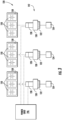
FIG. 3 illustrates a schematic diagram of one embodiment of an energy storage device operably coupled to a component of the power generating asset according to the present disclosure; -
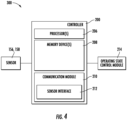
FIG. 4 illustrates a block diagram of one embodiment of a controller for use with the power generating asset according to the present disclosure; -
FIG. 5 illustrates a flow diagram of one embodiment of a control logic of a system for operating a power generating asset according to the present disclosure; -
FIG. 6 illustrates a graphical representation of a relationship between changes in a first and a second electrical condition and an equivalent series resistance for an energy storage device of the power generating asset according to the present disclosure; and -
FIG. 7 illustrates a graphical representation of nominal, actual, and potential equivalent series resistance functions relative to a second electrical condition according to the present disclosure. - Repeat use of reference characters in the present specification and drawings is intended to represent the same or analogous features or elements of the present invention.
- Reference now will be made in detail to embodiments of the invention, one or more examples of which are illustrated in the drawings. Each example is provided by way of explanation of the invention, not limitation of the invention. In fact, it will be apparent to those skilled in the art that various modifications and variations can be made in the present invention if they do not depart from the scope spiritof the invention as defined by the appended claims.
- As used herein, the terms "first" or "second" may be used interchangeably to distinguish one component from another and are not intended to signify location or importance of the individual components.
- The term "coupled" and the like refers to both direct coupling, as well as indirect coupling, unless otherwise specified herein.
- Here and throughout the specification and claims, range limitations are combined and interchanged, such ranges are identified and include all the sub-ranges contained therein unless context or language indicates otherwise. For example, all ranges disclosed herein are inclusive of the endpoints, and the endpoints are independently combinable with each other.
- Generally, the present invention is directed to systems and methods for operating a power generating asset. The power generating asset, such as a wind turbine, has an energy storage device operably coupled to at least one component. The energy storage device may, for example, be a battery, a capacitor, or other suitable energy storage device which permits the continued, or emergency, operation of the component should grid power be disrupted. By way of illustration, when configured as a wind turbine, the pitch system of the wind turbine may be equipped with an energy storage device in order to ensure that the pitch system remains operable in the event of a power failure. This, in turn, may permit the pitching of the rotor blades to feather in order to slow the wind turbine as necessary even if the power from the power grid is interrupted. It should be appreciated that the ability to control a component of the power generating asset regardless of whether grid power is being received may facilitate the transition of the power generating asset to a safe operating mode and, thereby serve to prevent/mitigate potential damage to the power generating asset. Therefore, it may be desirable to determine a state of health of the energy storage device in order to ensure the energy storage device may be fully operational when called upon.
- In order to determine the state of health of the energy storage device, the present disclosure requires the initiation of a state-change event, such as a charge or a discharge event, for the energy storage device. During the state-change event, the change in a first electrical condition and a second electrical condition of the energy storage device, such as a change in voltage and/or current, is determined. From the change in conditions, an actual equivalent series resistance (ESR) function for the energy storage device is determined. The ESR represents the internal resistance of the energy storage device as seen during a charging or discharging event. The magnitude of ESR may vary depending on the particular characteristics (e.g. materials used, construction quality, degree of degradation, cell chemistry, ambient temperature) of the energy storage device. Accordingly, the ESR may be compared to a nominal ESR and/or projected ESR. This comparison may, for example, include plotting the actual ESR function and the nominal ESR function relative to the second electrical condition (e.g. current). A comparison of the ESR values at a specified value of the second electrical condition may indicate a decline in the state of health of the power generating asset.
- For example, at a specific current level, the nominal ESR function may indicate a first ESR value, while at the same current level, the actual ESR function may indicate a second ESR value. A second ESR value which is greater than the first ESR value may be indicative of a decline in the state of health of the energy storage device. In other words, for a given current and temperature, the ESR of the energy storage device may increase as the remaining lifespan of the energy storage device decreases. It should be appreciated that detecting this degradation in the energy storage device may facilitate the generation of an alarm and/or a maintenance schedule.
- Referring now to the drawings,
FIG. 1 illustrates a perspective view of one embodiment of a power generating asset 100 according to the present disclosure. As shown, the power generating asset 100 may be configured as a wind turbine 114. In an additional embodiment, the power generating asset 100 may, for example, be configured as a solar power generating asset, a hydroelectric plant, a fossil fuel generator, and/or a hybrid power generating asset. As shown, the wind turbine 114 may generally include atower 102 extending from asupport surface 104, anacelle 106, mounted on thetower 102, and arotor 108 coupled to thenacelle 106. Therotor 108 may include arotatable hub 110 and at least onerotor blade 112 coupled to, and extending outwardly from, thehub 110. For example, in the illustrated embodiment, therotor 108 includes threerotor blades 112. However, in an additional embodiment, therotor 108 may include more or less than threerotor blades 112. Eachrotor blade 112 may be spaced about thehub 110 to facilitate rotating therotor 108 to enable kinetic energy to be transferred from the wind into usable mechanical energy, and subsequently, electrical energy. For instance, thehub 110 may be rotatably coupled to an electric generator 118 (FIG. 2 ) positioned within thenacelle 106 to permit electrical energy to be produced. - The power generating asset 100 includes a
controller 200. When configured as a wind turbine 114, thecontroller 200 may be configured as a turbine controller centralized within thenacelle 106. However, in other embodiments, thecontroller 200 may be located within any other component of the wind turbine 114 or at a location outside the wind turbine 114. Further, thecontroller 200 may be communicatively coupled to any number of the components of the power generating asset 100 in order to control the components. As such, thecontroller 200 may include a computer or other suitable processing unit. Thus, in several embodiments, thecontroller 200 may include suitable computer-readable instructions that, when implemented, configure thecontroller 200 to perform various different functions, such as receiving, transmitting and/or executing wind turbine control signals. - Referring now to
FIG. 2 , a simplified, internal view of one embodiment of thenacelle 106 of the wind turbine 114 shown inFIG. 1 is illustrated. As shown, thegenerator 118 may be coupled to therotor 108 for producing electrical power from the rotational energy generated by therotor 108. For example, as shown in the illustrated embodiment, therotor 108 may include arotor shaft 122 coupled to thehub 110 for rotation therewith. Therotor shaft 122 may be rotatably supported by amain bearing 144. Therotor shaft 122 may, in turn, be rotatably coupled to a high-speed shaft 124 of thegenerator 118 through agearbox 126 connected to abedplate support frame 136. As is generally understood, therotor shaft 122 may provide a low-speed, high-torque input to thegearbox 126 in response to rotation of therotor blades 112 and thehub 110. Thegearbox 126 may then be configured to convert the low-speed, high-torque input to a high-speed, low-torque output to drive the high-speed shaft 124 and, thus, thegenerator 118. - Each
rotor blade 112 may also include apitch control mechanism 120 configured to rotate eachrotor blade 112 about itspitch axis 116. Eachpitch control mechanism 120 may include apitch drive motor 128, apitch drive gearbox 130, and apitch drive pinion 132. In such embodiments, thepitch drive motor 128 may be coupled to thepitch drive gearbox 130 so that thepitch drive motor 128 imparts mechanical force to thepitch drive gearbox 130. Similarly, thepitch drive gearbox 130 may be coupled to thepitch drive pinion 132 for rotation therewith. Thepitch drive pinion 132 may, in turn, be in rotational engagement with a pitch bearing 134 coupled between thehub 110 and acorresponding rotor blade 112 such that rotation of thepitch drive pinion 132 causes rotation of thepitch bearing 134. Thus, in such embodiments, rotation of thepitch drive motor 128 drives thepitch drive gearbox 130 and thepitch drive pinion 132, thereby rotating thepitch bearing 134 and the rotor blade(s) 112 about thepitch axis 116. - It should be appreciated that pitching the rotor blade(s) 112 about the
pitch axis 116 may alter an angle of attack between the rotor blade(s) 112 and an apparent wind. Accordingly, the rotor blade(s)112 may pitch to feather when the rotor blade(s) 112 rotates about thepitch axis 116 towards alignment with the apparent wind and to power when the rotor blade(s) rotates towards an orientation generally perpendicular to the apparent wind. It should be further appreciated that pitching to feather generally depowers the rotor blade(s) 112 as a result of a reduction in the resultant lift. - Similarly, the wind turbine 114 may include one or more
yaw drive mechanisms 138 communicatively coupled to thecontroller 200, with each yaw drive mechanism(s) 138 being configured to change the angle of thenacelle 106 relative to the wind (e.g., by engaging a yaw bearing 140 of the wind turbine 114). It should be appreciated that thecontroller 200 may direct the yawing of thenacelle 106 and/or the pitching of therotor blades 112 so as to aerodynamically orient the wind turbine 114 relative to a wind acting on the wind turbine 114, thereby facilitating power production. - In an embodiment, the power generating asset 100 may also include an
environmental sensor 156 configured for gathering data indicative of one or more environmental conditions. Theenvironmental sensor 156 may be operably coupled to thecontroller 200. Thus, in an embodiment, the environmental sensor(s) 156 may, for example, be a wind vane, an anemometer, a lidar sensor, thermometer, barometer, or any other suitable sensor. The data gathered by the environmental sensor(s) 156 may include measures of wind speed, wind direction, wind shear, wind gust, wind veer, atmospheric pressure, and/or ambient temperature. In at least one embodiment, the environmental sensor(s) 156 may be mounted to the power generating asset 100 (e.g., to thenacelle 106 at a location downwind of the rotor 108). For example, the environmental sensor(s) 156 may, in alternative embodiments, be coupled to, or integrated with, therotor 108 and/or positioned within thenacelle 106. It should be appreciated that the environmental sensor(s) 156 may include a network of sensors and may be positioned away from the power generating asset 100. - It should also be appreciated that, as used herein, the term "monitor" and variations thereof indicates that the various sensors of the power generating asset 100 may be configured to provide a direct measurement of the parameters being monitored or an indirect measurement of such parameters. Thus, the sensors described herein may, for example, be used to generate signals relating to the parameter being monitored, which can then be utilized by the
controller 200 to determine a condition or response of the power generating asset 100 and/or a component thereof. - Referring now to
FIG. 3 , a schematic diagram of one embodiment of anenergy storage device 150 operably coupled to acomponent 142 of the power generating asset 100 is illustrated. In an embodiment such as depicted inFIG. 3 , thecomponent 142 may be configured as thepitch control mechanism 120 of the wind turbine 114. In an embodiment, thecomponent 142 may be communicatively coupled to thepower grid 146. Additionally, thecomponent 142 may be communicatively coupled to at least oneenergy storage device 150. In various embodiments, the energy storage device(s) 150 may be a single battery, capacitor, and/or other suitable energy storage device or pluralities thereof. - In an embodiment, at least one
condition sensor 158 may be communicatively coupled to the energy storage device(s) 150. The condition sensor(s) 158 may be configured to monitor at least a first electrical condition and a secondelectrical condition 302, 304 (FIG. 5 ) of the energy storage device(s) 150. For example, in monitoring theelectrical conditions electrical conditions - During normal operation of the power generating asset 100, the
component 142 may be driven by thepower grid 146. However, in some instances, such as during an adverse grid event or grid loss, thecomponent 142 may be powered by the energy storage device(s) 150. Therefore, in an embodiment, the energy storage device(s) 150 may be configured as an uninterrupted power supply. Accordingly, the energy storage device(s) 150 may, in an embodiment, be utilized in a top-of-charge application. For example, when configured aspitch control mechanism 120, thepitch drive motor 128 may utilize power from the energy storage device(s) 150 in order to pitch the rotor blade(s) 112 toward feather in response to an adverse grid event. In an additional example, thecomponent 142 may be thecontroller 200 and the energy storage device(s) 150 may provide an uninterrupted power source to thecontroller 200 in response to a loss of grid power. In yet a further example, the energy storage device(s) 150 may be operably coupled to thegenerator 118 and configured to receive at least a portion of the power output of thegenerator 118 and, in certain instances, deliver the received portion of the power to thepower grid 146. It should be appreciated that if control of thecomponent 142 relies on the energy storage device(s) 150 (i.e., due to a loss of grid power), it may be desirable to ensure that the energy storage device(s) 150 are capable of operating when called upon. Thus, thecontroller 200 may, in an embodiment, be configured to determine the state of health of the energy storage device(s) 150 on a regular basis. - Referring now to
FIGS. 4-7 , multiple embodiments of asystem 300 for operating the power generating asset 100, e.g. the wind turbine 114, according to the present disclosure are presented. As shown particularly inFIG. 4 , a schematic diagram of one embodiment of suitable components that may be included within thesystem 300 is illustrated. For example, as shown, thesystem 300 may include thecontroller 200 communicatively coupled to the environmental sensor(s) 156 and/or the condition sensor(s) 158. Further, as shown, thecontroller 200 includes one or more processor(s) 206 and associated memory device(s) 208 configured to perform a variety of computer-implemented functions (e.g., performing the methods, steps, calculations and the like and storing relevant data as disclosed herein). Additionally, thecontroller 200, may also include acommunications module 210 to facilitate communications between thecontroller 200, and the various components of the power generating asset 100. Further, thecommunications module 210 may include a sensor interface 212 (e.g., one or more analog-to-digital converters) to permit signals transmitted from the sensor(s) 156, 158 to be converted into signals that can be understood and processed by theprocessors 206. It should be appreciated that the sensor(s) 156, 158 may be communicatively coupled to thecommunications module 210 using any suitable means. For example, the sensor(s) 156, 158 may be coupled to thesensor interface 212 via a wired connection. However, in other embodiments, the sensor(s) 156, 158 may be coupled to thesensor interface 212 via a wireless connection, such as by using any suitable wireless communications protocol known in the art. Additionally, thecommunications module 210 may also be operably coupled to an operatingstate control module 214 configured to implement a control action based on a determination of the state of health of the energy storage device(s) 150. - As used herein, the term "processor" refers not only to integrated circuits referred to in the art as being included in a computer, but also refers to a controller, a microcontroller, a microcomputer, a programmable logic controller (PLC), an application specific integrated circuit, and other programmable circuits. Additionally, the memory device(s) 208 may generally comprise memory element(s) including, but not limited to, computer readable medium (e.g., random access memory (RAM)), computer readable non-volatile medium (e.g., a flash memory), a floppy disk, a compact disc-read only memory (CD-ROM), a magneto-optical disk (MOD), a digital versatile disc (DVD) and/or other suitable memory elements. Such memory device(s) 208 may generally be configured to store suitable computer-readable instructions that, when implemented by the processor(s) 206, configure the
controller 200 to perform various functions including, but not limited to, operating a power generating asset 100 as described herein, as well as various other suitable computer-implemented functions. - Referring particularly to
FIG. 5 , thecontroller 200 of thesystem 300 is configured to initiate a state-change event 306 for the energy storage device(s) 150. The state-change event 306 defines a plurality of sampling intervals. In an embodiment, the plurality of sampling intervals may be time intervals, the sum of which may correspond to a duration of the state-change event 306. As depicted at 308, thecontroller 200 determines a change in the first and secondelectrical conditions change event 306. From the change in the first and secondelectrical conditions controller 200 determines an actual equivalent series resistance (ESR) value (ESRt) at each of the plurality of sampling intervals of the state-change event 306. The controller utilizes the ESR value (ESRt) to determine anactual ESR function 310 for the energy storage device(s) 150. In an embodiment, thecontroller 200 may determine a state-of-health rating 312 for the energy storage device(s) 150 based on theactual ESR function 310 of the energy storage device(s) 150. Based on the state-of-health rating 312, acontrol action 314 is implemented. - In an embodiment, the state-
change event 306 may be a discharge event. In an additional embodiment, the state-change event 306 may be a charging event. Accordingly, the state-change event 306 may, for example, be associated with a scheduled test event of the energy storage device(s) 150 and/or thecomponent 142. Additionally, the state-change event 306 may, in an embodiment, be associated with a manipulation (e.g. usage) of the energy storage device(s) during an operation of the power generating asset 100. In other words, in an embodiment, the scheduled test event may be accomplished in conjunction with at least one additional component test of the power generating asset 100 and may result in an updating of the state-of-health rating 312. - In order to determine the state-of-
health rating 312 for the energy storage device(s) 150, thecontroller 200, as depicted at 308, determines the change in the first and secondelectrical conditions change event 306. In an embodiment, the change is detected, received, and/or computed at each of the sampling intervals defined by the state-change event 306. Accordingly, the change in the first and secondelectrical conditions electrical conditions - As depicted in
FIG. 6 , in an embodiment, the firstelectrical condition 302 may, for example, be a voltage (V). In such an embodiment, determining a change in the firstelectrical condition 302 of the energy storage device(s) 150 may include determining a difference between an open-circuit voltage (VOC) of the energy storage device(s) 150 and an instantaneous voltage (Vt) of the energy storage device(s) 150 at each of the plurality of sampling intervals of the state-change event 306. The open-circuit voltage (VOC) may represent a no-load voltage, or a rest potential, of the energy storage device(s) 150. The open circuit voltage (VOC) may depend on a state of charge of the energy storage device(s) 150. In an embodiment wherein the energy storage device(s) 150 is configured as a backup energy source, such as an uninterrupted power supply, the open-circuit voltage (VOC) may be considered to be a top-of-charge voltage. As such, the open-circuit voltage (VOC) may be a known/nominal value. In an additional embodiment, the open-circuit voltage (VOC) may be measured prior to the initiation of the state-change event 306. - In an additional embodiment, the second
electrical condition 304 may, for example, be a current (I). Accordingly, determining a change in the secondelectrical condition 304 of the energy storage device(s) 150 may include determining a difference between the initial current (Ii) of the energy storage device(s) 150 immediately preceding the state-change event 306 and the instantaneous current (It) of the energy storage device(s) 150 at each of the plurality of sampling intervals of the state-change event 306. In an embodiment wherein the energy storage device(s) 150 is neither charging nor discharging prior to the initiation of the state-change event 306, the initial current (Ii) of the energy storage device(s) 150 preceding the state-change event 306 may be zero. As such, the change in the current (I) may equal the instantaneous current (It) measured by the condition sensor(s) 158 at each of the plurality of sampling intervals during the state-change event 306. In an additional embodiment, wherein the energy storage device(s) 150 is in a charging or discharging state immediately prior to the state-change event 306, the initial current (Ii) may be measured by the condition sensor(s) 158 at the instant of initiation of the state-change event 306. - It should be appreciated that, in an embodiment, it may be desirable to prefilter the first and second
electrical conditions health rating 312 for the energy storage device(s) 150. For example, in an embodiment, thecontroller 200 may be configured to monitor the current (I) prior to the initiation of the state-change event 306. The current (I) may, in an embodiment, indicate a recharging operation for the energy storage device(s) 150. As such, a current (I) above a specified threshold may indicate a degree of charging that may yield uncertainty regarding the open-circuit voltage (VOC). In such an embodiment, thecontroller 200 may be configured to refrain from determining the state-of-health rating 312 for the state-change event 306 because uncertainty regarding the open-circuit voltage (VOC) exists. Similarly, in an alternative embodiment, a current (I) below the specified threshold may indicate that the recharging operation is complete and that the open-circuit voltage (VOC) may be considered to be a top-of-charge voltage. - As particularly depicted in
FIGS. 5 and6 , in an embodiment, thecontroller 200 may utilize the changes in the first and secondelectrical conditions change event 306. Thecontroller 200 may then utilize the ESR values (ESRt) to determine anactual ESR function 310. Accordingly, such an embodiment may normalize theactual ESR function 310 so that theactual ESR function 310 is invariant to a discharge history and discharge profiles, thereby establishing a tractable metric. For example, in an embodiment, theactual ESR function 310 may be a function of the second electrical condition 304 (e.g., current). Further, in an embodiment, theactual ESR function 310 may be independent of a firstelectrical condition 302 discharge profile and a secondelectrical condition 304 discharge profile. - In an embodiment wherein the first
electrical condition 302 is the voltage (V) and the secondelectrical condition 304 is the current (I), the ESR of the energy storage device(s) 150 may be a function of the instantaneous current (It). As such, the ESR values (ESRt) may be determined using the following equation:
- In an embodiment, a degradation of the energy storage device(s) 150 may be manifest in an increasing ESR for a given second electrical condition (e.g. current). According to the invention, the
controller 200 may determine a state-of-health rating 312 based on theactual ESR function 310. In order to facilitate the determination of the state-of-health rating 312, thecontroller 200 models anominal ESR function 316 at anambient temperature 318. Thenominal ESR function 316 may represent the degree of internal resistance for a non-degraded energy storage device(s) 150. Therefore, thenominal ESR function 316 may correlate to a state-of-health rating 312 of a maximal value (e.g., 1, 100%, etc.) which may decrease with the degradation of the energy storage device(s) 150. It should, however, be appreciated that in an additional embodiment, the state-of-health rating 312 may be indicative of a degree of degradation and may therefore be a minimal value (e.g., 0, 0%, etc.) which may increase in proportion to an increasing degradation of the energy storage device(s) 150. It should be appreciated that when theactual ESR function 310 corresponds to thenominal ESR function 316, the state-of-health rating 312 may be considered to be a non-degraded state-of-health rating. - In addition to modeling the
nominal ESR function 316, thecontroller 200 also models at least onepotential ESR function 320 at theambient temperature 318. The potential ESR function(s) 320 may, as depicted inFIG. 7 , indicate an increasedESR value 322 relative to anominal ESR value 324 as a function of the secondelectrical condition 304. For example, the potential ESR function(s) 320 may indicate that for a given current 326, the energy storage device(s) 150 may present a greater degree of resistance (e.g., points 322) than at thenominal ESR value 324. This increase in theESR value 322 may be indicative of a degradation of the energy storage device(s) 150. Therefore, the potential ESR function(s) 320 may correspond to a degraded/reduced state-of-health rating 330 at the sameambient temperature 318. In an embodiment wherein the non-degraded state-of-health rating 328 represents a maximal value, the degraded state-of-health rating 330 may represent a percentage of the maximum value (e.g., 0.9, 0.8, 0.7, etc.). Similarly, in an embodiment wherein the non-degraded state-of-health rating 328 represents a minimal value, the degraded state-of-health rating 330 may represent a degree of degradation (e.g., 0.1, 0.2, 0.3, etc.). - As depicted at 332 of
FIG. 5 , thecontroller 200 consolidates thenominal ESR function 316 and the potential ESR function(s) 320 into a look-up table, a graphical representation, and/or an algorithm. This consolidation may establish acorrelation 334 between theactual ESR function 310 and the state-of-health rating 312 for the energy storage device(s) 150 at theambient temperature 318 as a function of the secondelectrical condition 304 of the energy storage device(s) 150. Accordingly, determining the state-of-health rating 312 for the energy storage device(s) 150 may include the utilization of the look-up table, graphic orientation, and/or algorithm to determine the state-of-health rating 312 corresponding to theactual ESR function 310, which may be based off of the changes in the electrical conditions during the state-change event 306. - It should be appreciated that the level of internal resistance of the energy storage device(s) 150 may, for example, vary with the
ambient temperature 318 regardless of any degradation of the energy storage device(s) 150. As such, in an embodiment, thecontroller 200 may define a plurality oftemperature intervals 336 across a nominal operating range of temperatures for the energy storage device(s) 150. In an embodiment, at least one of the plurality oftemperature intervals 336 may correspond to or overlap theambient temperature 318 at the initiation of the state-change event 306. The plurality oftemperature intervals 336 may, in an embodiment, correspond to a plurality of less than or equal to ten-degree temperature intervals 336. - Insofar as the
nominal ESR function 316 and potential ESR function(s) 320 may vary at different ambient temperatures at which the energy storage device(s) 150 may operate, in an embodiment, thecontroller 200 may determine thenominal ESR function 316 and the potential ESR function(s) 320 at each of the plurality oftemperature intervals 336. In an embodiment, the nominal ESR functions 316 and the potential ESR function(s)s 320 at each of the plurality oftemperature intervals 336 may be assembled into a multi-dimensional, look-up table, a multi-dimensional graphical representation, and/or an algorithm. Such an assemblage may facilitate the establishment of a correlation between theactual ESR function 310 and the state-of-health rating 312 as a function of the secondelectrical condition 304 of the energy storage device(s) 150 at each temperature interval of the plurality oftemperature intervals 336. In other words, given anambient temperature 318 within the nominal operating range of temperatures for the energy storage device(s) 150 and anactual ESR function 310 based on the determined electrical condition change for the state-change event 306, the correlations (such as those assembled into the multi-dimensional, look-up table, a multi-dimensional graphical representation, and/or an algorithm) may be utilized to determine the state-of-health rating 312 for the energy storage device(s) 150. - Additionally, in an embodiment, the
controller 200 may correlate the state-of-health rating 312 determined for the ambient temperature to a state-of-health rating 312 at a second temperature via a correlation function. For example, in an embodiment wherein the second temperature is lower than the ambient temperature, the state-of-health rating 312 at the second temperature may indicate a decreased capability of the energy storage device(s) 150 than is indicated for the energy storage device(s) 150 operating at the ambient temperature. It should be appreciated that the relationship between the state of health rating and the ambient/forecasted temperatures may be employed to predict the ability of the energy storage device(s) 150 to provide the necessary power when required during a forecasted period (e.g. winter or summer). - The
system 300 implements thecontrol action 314 based on the state-of-health rating 312. For example, in an embodiment, thecontrol action 314 may include generating analert 338. The generation of the alert 338 may facilitate the scheduling of a maintenance event. Accordingly, the alert 338 may include an auditory signal, a visual signal, a notification, a system input, and/or any other system which may identify the state-of-health rating 312 to an operator. It should be appreciated that thecontrol action 314, as described herein, may further include any suitable command or constraint by thecontroller 200. For example, in an embodiment, thecontrol action 314 may include temporarily de-rating the power generating asset 100. Additionally, in an embodiment, thecontrol action 314 may include limiting an operation of at least one component of the power generating asset. For example, thecontrol action 314 may limit a pitching of arotor blade 112 and/or a yawing of thenacelle 106 of the wind turbine 114 when the state-of-health rating 312 indicates that the energy storage device(s) 150 may not have sufficient health to respond in the expected manner when called upon. - As depicted in
FIG. 5 , in implementing thecontrol action 314, thecontroller 200 may, in an embodiment, receive a state-of-health threshold 340. The state-of-health threshold 340 may be indicative of a degree of degradation of thecomponent 142 at which a control action may be desirable. In such an embodiment, thecontroller 200 may, at 342, detect an approach of the state-of-health rating 312 to the state-of-health threshold 340. In response to detecting the approach of the state-of-health rating 312 to the state-of-health threshold 340, thecontroller 200 may implement thecontrol action 314 by generating the alert 338 to facilitate scheduling of the maintenance event. - Referring still to
FIG. 5 , in an embodiment, thecontroller 200 of thesystem 300 may receive a cycle count 344 and/or a time count 346 elapsed from an installation date of the energy storage device(s) 150. Thecontroller 200 may then determine acorrelation 348 between the state-of-health rating 312 and the cycle count 344 and/or time count 346. Thecorrelation 348 may be indicative of a rate of degradation of the energy storage device(s) 150 per the cycle count 344 and/or the time count 346. Based on thecorrelation 348 and the state-of-health threshold 340, thecontroller 200 may, as depicted at 350, in an embodiment, determine a number of cycles and/or time remaining until the state-of-health threshold 340 is reached. In other words, in an embodiment, thecontroller 200 may determine a rate of degradation of the energy storage device(s) 150 in terms of the cycle/time count 344, 346 and utilize the rate of degradation to project a remaining service life until maintenance of the energy storage device(s) 150 is required. - This written description uses examples to disclose the invention, including the best mode, and also to enable any person skilled in the art to practice the invention.
- In some embodiments, determining state-of-health rating for the energy storage device further comprises: defining, via the controller, a plurality of temperature intervals across a nominal operating range of temperatures for the energy storage device, wherein a temperature interval of the plurality of temperature intervals corresponds to the ambient temperature; modeling, via the controller, a nominal ESR function for the energy storage device at the ambient temperature, wherein the nominal ESR function corresponds to a maximal state-of-health rating at the ambient temperature; modeling, via the controller, at least one potential ESR function for the energy storage device at the ambient temperature, the at least one potential ESR function indicating an increased ESR value relative to a nominal ESR value as a function of current, the at least one potential ESR function corresponding to a reduced state-of-health rating at the ambient temperature; determining, via the controller, the nominal ESR function and the at least one potential ESR function at each temperature interval of the plurality of temperature intervals; establishing a correlation between the nominal ESR function and the at least one potential ESR function at each temperature interval as a function of the current of the energy storage device; and determining the state-of-health rating corresponding to the determined actual ESR function at the ambient temperature of the energy storage device based on the correlation between the actual ESR function and the state-of-health rating.
- In some embodiments, determining the actual ESR function further comprises determining the actual ESR function as a function of current and independent of a voltage discharge profile and a current discharge profile.
- In some embodiments, determining a change in the voltage of the energy storage device further comprises determining a difference between an open-circuit voltage of the energy storage device and an instantaneous voltage of the energy storage device at each of the plurality of sampling intervals of the state-change event.
Claims (13)
- A method for operating a power generating asset, the power generating asset having an energy storage device operably coupled to a component of the power generating asset, the method comprising:Initiating (306), with a controller, a state-change event for the energy storage device, the state-change event defining a plurality of sampling intervals;Determining (308), via the controller, a change in a first electrical condition and a second electrical condition of the energy storage device at each of the plurality of sampling intervals of the state-change event;Determining (310), via the controller, an actual equivalent series resistance (ESR) function for the energy storage device based on the change in the first and second electrical conditions at each of the plurality of sampling intervals of the state-change event;Determining (312), via the controller, a state-of-health rating for the energy storage device based on the actual ESR function of the energy storage device; and implementing (314) a control action based on the state-of-health rating; and wherein determining the state-of-health rating for the energy storage device further comprises:modeling, via the controller, a nominal ESR function for the energy storage device at an ambient temperature, wherein the nominal ESR function corresponds to a maximal state-of-health rating at the ambient temperature;modeling, via the controller, at least one potential ESR function for the energy storage device at the ambient temperature, the at least one potential ESR function indicating an increased ESR value relative to a nominal ESR value as a function of the second electrical condition, the at least one potential ESR function corresponding to a reduced state-of-health rating at the ambient temperature; andconsolidating, via the controller, the nominal ESR function and the at least one potential ESR function into at least one of a look-up table, a graphical representation, and an algorithm so as to establish a correlation between the actual ESR function and the state-of-health rating for the energy storage device at the ambient temperature as a function of the second electrical condition of the energy storage device.
- The method of any of the preceding claims, further comprising:defining, via the controller, a plurality of temperature intervals across a nominal operating range of temperatures for the energy storage device, wherein a temperature interval of the plurality of temperature intervals corresponds to the ambient temperature;determining, via the controller, the nominal ESR function and the at least one potential ESR function at each temperature interval of the plurality of temperature intervals; andestablishing a correlation between the actual ESR function and the state-of-health rating for the energy storage device at each temperature interval as a function of the second electrical condition of the energy storage device.
- The method of any of the preceding claims, wherein determining the state-of-health rating for the energy storage device further comprises determining the state-of-health rating corresponding to the determined actual ESR function at the ambient temperature of the energy storage device based on the correlation between the actual ESR function and the state-of-health rating.
- The method of any of the preceding claims, wherein the first electrical condition comprises a voltage, and wherein determining a change in the first electrical condition of the energy storage device further comprises determining a difference between an open-circuit voltage of the energy storage device and an instantaneous voltage of the energy storage device at each of the plurality of sampling intervals of the state-change event.
- The method of any of the preceding claims, wherein implementing the control action further comprises:detecting an approach of the state-of-health rating to a state-of-health threshold; andgenerating an alert to facilitate scheduling of a maintenance event.
- The method of any of the preceding claims, wherein the state-change event comprises at least one of a scheduled test event and a manipulation of the energy storage device during an operation of the power generating asset.
- The method of any of the preceding claims, wherein the scheduled test event is accomplished in conjunction with at least one additional component test of the power generating asset and results in an updating of the state-of-health rating.
- The method of any of the preceding claims, wherein the state-change event comprises a discharging event of the energy storage device or a charging event of the energy storage device.
- The method of any of the preceding claims, wherein determining the actual ESR function further comprises determining the actual ESR function as a function of the second electrical condition and independent of a first electrical condition discharge profile and a second electrical condition discharge profile.
- The method of any of the preceding claims, further comprising:receiving, via the controller, at least one of a cycle count and a time count elapsed from an installation date;determining, via the controller, a correlation between the state-of-health rating and the received at least one of the cycle count and the time count, wherein the correlation is indicative of a rate of degradation of the energy to storage device per at least one of the cycle count and the time count;determining a state-of-health threshold for the energy storage device; andbased on the correlation and the state-of-health threshold, determining, via the controller, at least one of a number of cycles and time until the state-of-health threshold is reached.
- A system for operating a power generating asset, the system comprising:an energy storage device operably coupled to a component of the power generating asset; anda controller communicatively coupled to the energy storage device, the controller comprising at least one processor configured to perform a plurality of operations, the plurality of operations comprising:initiating (306) a state-change event for the energy storage device, the state-change event defining a plurality of sampling intervals,determining (308) a change in a first and a second electrical condition of the energy storage device at each of the plurality of sampling intervals of the state-change event,determining (310) an actual equivalent series resistance (ESR) function for the energy storage device based on the change in first and the second electrical conditions at each of the plurality of sampling intervals of the state-change event,determining (312) a state-of-health rating for the energy storage device based on the actual ESR function of the energy storage device, andimplementing (314) a control action based on the state-of-health rating;, and wherein determining the state-of-health rating for the energy storage device further comprises:modeling a nominal ESR function for the energy storage device at an ambient temperature, wherein the nominal ESR function corresponds to a maximal state-of-health rating at the ambient temperature;modeling at least one potential ESR function for the energy storage device at the ambient temperature, the at least one potential ESR function indicating an increased ESR value relative to a nominal ESR value as a function of second electrical condition, the at least one potential ESR function corresponding to a reduced state-of-health rating at the ambient temperature; andconsolidating the nominal ESR function and the at least one potential ESR function into at least one of a look-up table, a graphical representation, and an algorithm so as to establish a correlation between the actual ESR function and state-of-health rating for the energy storage device at the ambient temperature as a function of the second electrical condition of the energy storage device.
- The system of claim 11, the plurality of operations further comprising:defining a plurality of temperature intervals across a nominal operating range of temperatures for the energy storage device, wherein a temperature interval of the plurality of temperature intervals corresponds to the ambient temperature;determining the nominal ESR function and the at least one potential ESR function at each temperature interval of the plurality of temperature intervals; andestablishing a correlation between the actual ESR function and state-of-health rating for the energy storage device at each temperature interval as a function of the second electrical condition of the energy storage device.
- The system of claims 11-12, wherein determining the state-of-health rating for the energy storage device further comprises determining the state-of-health rating corresponding to the determined actual ESR function at the ambient temperature of the energy storage device based on the correlation between the actual ESR function and the state-of-health rating.
Applications Claiming Priority (1)
| Application Number | Priority Date | Filing Date | Title |
|---|---|---|---|
| US17/151,764 US12098708B2 (en) | 2021-01-19 | 2021-01-19 | Systems and methods for operating a power generating asset |
Publications (2)
| Publication Number | Publication Date |
|---|---|
| EP4040626A1 EP4040626A1 (en) | 2022-08-10 |
| EP4040626B1 true EP4040626B1 (en) | 2025-03-19 |
Family
ID=79185816
Family Applications (1)
| Application Number | Title | Priority Date | Filing Date |
|---|---|---|---|
| EP22150058.0A Active EP4040626B1 (en) | 2021-01-19 | 2022-01-03 | Systems and methods for operating a power generating asset |
Country Status (5)
| Country | Link |
|---|---|
| US (1) | US12098708B2 (en) |
| EP (1) | EP4040626B1 (en) |
| CN (1) | CN114819459A (en) |
| DK (1) | DK4040626T3 (en) |
| ES (1) | ES3033301T3 (en) |
Families Citing this family (1)
| Publication number | Priority date | Publication date | Assignee | Title |
|---|---|---|---|---|
| JP7427944B2 (en) * | 2019-12-06 | 2024-02-06 | 株式会社Gsユアサ | Control device, deterioration estimation system, control method, and computer program |
Family Cites Families (26)
| Publication number | Priority date | Publication date | Assignee | Title |
|---|---|---|---|---|
| US6462507B2 (en) * | 1998-08-07 | 2002-10-08 | Okc Products, Inc. | Apparatus and method for initial charging, self-starting, and operation of a power supply with an intermittent and/or variable energy source and a rechargeable energy storage device |
| US6469512B2 (en) | 2000-01-12 | 2002-10-22 | Honeywell International Inc. | System and method for determining battery state-of-health |
| KR100756837B1 (en) | 2005-06-30 | 2007-09-07 | 주식회사 엘지화학 | Method and apparatus of estimating state of health of battery |
| KR100823507B1 (en) | 2006-08-29 | 2008-04-21 | 삼성에스디아이 주식회사 | Battery management system and its driving method |
| US8560257B2 (en) | 2010-11-29 | 2013-10-15 | GM Global Technology Operations LLC | Dynamic battery capacity estimation |
| JPWO2012091077A1 (en) * | 2010-12-28 | 2014-06-05 | 三洋電機株式会社 | How to detect battery deterioration |
| US9157966B2 (en) | 2011-11-25 | 2015-10-13 | Honeywell International Inc. | Method and apparatus for online determination of battery state of charge and state of health |
| WO2014083856A1 (en) * | 2012-11-30 | 2014-06-05 | 三洋電機株式会社 | Battery management device, power supply, and soc estimation method |
| US9841464B2 (en) * | 2012-12-26 | 2017-12-12 | Mitsubishi Electric Corporation | Life prediction apparatus for electrical storage device and life prediction method for electrical storage device |
| WO2014132321A1 (en) * | 2013-02-26 | 2014-09-04 | 株式会社 日立製作所 | Power source device |
| US20140266228A1 (en) | 2013-03-15 | 2014-09-18 | Qualcomm Incorporated | Active measurement of battery equivalent series resistance |
| US20140306712A1 (en) | 2013-04-12 | 2014-10-16 | Broadcom Corporation | Tracking aging effect on battery impedance and tracking battery state of health |
| DK2821640T3 (en) * | 2013-07-05 | 2017-03-13 | Alstom Renovables Espana Sl | Pitch drive system with emergency power supply controlled by a switching device and method thereof |
| CN106300407B (en) * | 2015-05-26 | 2020-03-17 | 通用电气公司 | Power generation system |
| KR102534623B1 (en) * | 2015-06-01 | 2023-05-22 | 한국전자통신연구원 | Apparatus for managing energy in building based on state of health of device for storing energy and method using the same |
| US9906051B2 (en) * | 2015-07-01 | 2018-02-27 | Changs Ascending Enterprise Co., Ltd. | Power supply system using energy storage cell |
| JP6554410B2 (en) * | 2015-12-14 | 2019-07-31 | 株式会社日立製作所 | POWER STORAGE SYSTEM MANAGEMENT DEVICE, POWER STORAGE SYSTEM MANAGEMENT METHOD, POWER STORAGE SYSTEM |
| US10720675B2 (en) * | 2016-06-07 | 2020-07-21 | Nova Lumos Ltd. | System and method for prolonging battery life |
| KR101839141B1 (en) | 2016-10-31 | 2018-03-15 | 한국기술교육대학교 산학협력단 | Method for predicting battery health in consideration of temperature of battery management system |
| US10788538B2 (en) * | 2017-09-12 | 2020-09-29 | General Electric Company | Predictive battery test systems and methods |
| DK180754B1 (en) * | 2018-05-25 | 2022-02-24 | Kk Wind Solutions As | Wind turbine converter with integrated battery storage |
| JP7185437B2 (en) | 2018-07-30 | 2022-12-07 | ビークルエナジージャパン株式会社 | BATTERY MANAGEMENT DEVICE, BATTERY MANAGEMENT METHOD, POWER STORAGE SYSTEM |
| CN112771708B (en) * | 2019-01-15 | 2024-05-07 | 五育电池株式会社 | Degradation degree and remaining storage amount detection device of electric storage element and electric storage element management unit |
| US11264807B2 (en) * | 2019-09-30 | 2022-03-01 | James Arnim White | Renewable energy metering system |
| JP7427944B2 (en) * | 2019-12-06 | 2024-02-06 | 株式会社Gsユアサ | Control device, deterioration estimation system, control method, and computer program |
| DK180691B1 (en) * | 2019-12-23 | 2021-12-02 | Kk Wind Solutions As | Controlling on-time of energy modules of an energy storage |
-
2021
- 2021-01-19 US US17/151,764 patent/US12098708B2/en active Active
-
2022
- 2022-01-03 EP EP22150058.0A patent/EP4040626B1/en active Active
- 2022-01-03 DK DK22150058.0T patent/DK4040626T3/en active
- 2022-01-03 ES ES22150058T patent/ES3033301T3/en active Active
- 2022-01-19 CN CN202210062951.6A patent/CN114819459A/en active Pending
Also Published As
| Publication number | Publication date |
|---|---|
| DK4040626T3 (en) | 2025-06-23 |
| US20220228558A1 (en) | 2022-07-21 |
| US12098708B2 (en) | 2024-09-24 |
| EP4040626A1 (en) | 2022-08-10 |
| CN114819459A (en) | 2022-07-29 |
| ES3033301T3 (en) | 2025-08-01 |
Similar Documents
| Publication | Publication Date | Title |
|---|---|---|
| US10371124B2 (en) | System and method for determining wind farm wake loss | |
| US9822762B2 (en) | System and method for operating a wind turbine | |
| EP3317519B1 (en) | Control method and system for wind turbines | |
| EP2910777B1 (en) | Dynamic cut-in wind speed for wind turbines | |
| CN110017249A (en) | The method for running wind turbine | |
| EP3543523B1 (en) | System and method for testing an energy storage device of a wind turbine pitch system | |
| EP3581795B1 (en) | System and method for controlling a wind turbine to minimize rotor blade damage | |
| EP3406897B1 (en) | System and method for determining wind farm wake loss | |
| EP3454067B1 (en) | Predictive battery test systems and methods | |
| EP3249218B1 (en) | System and method for micrositing a wind farm for loads optimization | |
| EP3608538A1 (en) | Model-based repowering solutions for wind turbines | |
| EP3703213A1 (en) | System and method for operating a hybrid energy facility having multiple power sources | |
| EP3796016A1 (en) | System and method for detecting battery faults in a pitch system of a wind turbine | |
| EP4083421A1 (en) | System and method for slip detection and surface health monitoring in a slip coupling of a rotary shaft | |
| US10738767B2 (en) | System and method for estimating consumed battery life of a pitch system of a wind turbine | |
| EP4040626B1 (en) | Systems and methods for operating a power generating asset | |
| EP3722596B1 (en) | System and method for mitigating damage in a rotor blade of a wind turbine | |
| EP4033091A1 (en) | System for operating a wind turbine using cumulative load histograms based on actual operation thereof | |
| US10697432B2 (en) | Wind farm energy storage device for curtailment and auxiliary loads use | |
| EP4474925A1 (en) | System and method for adaptively operating a power generating plant using optimal setpoints |
Legal Events
| Date | Code | Title | Description |
|---|---|---|---|
| PUAI | Public reference made under article 153(3) epc to a published international application that has entered the european phase |
Free format text: ORIGINAL CODE: 0009012 |
|
| STAA | Information on the status of an ep patent application or granted ep patent |
Free format text: STATUS: THE APPLICATION HAS BEEN PUBLISHED |
|
| AK | Designated contracting states |
Kind code of ref document: A1 Designated state(s): AL AT BE BG CH CY CZ DE DK EE ES FI FR GB GR HR HU IE IS IT LI LT LU LV MC MK MT NL NO PL PT RO RS SE SI SK SM TR |
|
| STAA | Information on the status of an ep patent application or granted ep patent |
Free format text: STATUS: REQUEST FOR EXAMINATION WAS MADE |
|
| 17P | Request for examination filed |
Effective date: 20230209 |
|
| RBV | Designated contracting states (corrected) |
Designated state(s): AL AT BE BG CH CY CZ DE DK EE ES FI FR GB GR HR HU IE IS IT LI LT LU LV MC MK MT NL NO PL PT RO RS SE SI SK SM TR |
|
| P01 | Opt-out of the competence of the unified patent court (upc) registered |
Effective date: 20230530 |
|
| GRAP | Despatch of communication of intention to grant a patent |
Free format text: ORIGINAL CODE: EPIDOSNIGR1 |
|
| STAA | Information on the status of an ep patent application or granted ep patent |
Free format text: STATUS: GRANT OF PATENT IS INTENDED |
|
| RIC1 | Information provided on ipc code assigned before grant |
Ipc: H02J 3/38 20060101ALN20241011BHEP Ipc: H02J 11/00 20060101ALI20241011BHEP Ipc: H02J 7/00 20060101AFI20241011BHEP |
|
| INTG | Intention to grant announced |
Effective date: 20241030 |
|
| RAP3 | Party data changed (applicant data changed or rights of an application transferred) |
Owner name: GENERAL ELECTRIC RENOVABLES ESPANA S.L. |
|
| GRAS | Grant fee paid |
Free format text: ORIGINAL CODE: EPIDOSNIGR3 |
|
| GRAA | (expected) grant |
Free format text: ORIGINAL CODE: 0009210 |
|
| STAA | Information on the status of an ep patent application or granted ep patent |
Free format text: STATUS: THE PATENT HAS BEEN GRANTED |
|
| AK | Designated contracting states |
Kind code of ref document: B1 Designated state(s): AL AT BE BG CH CY CZ DE DK EE ES FI FR GB GR HR HU IE IS IT LI LT LU LV MC MK MT NL NO PL PT RO RS SE SI SK SM TR |
|
| REG | Reference to a national code |
Ref country code: GB Ref legal event code: FG4D |
|
| REG | Reference to a national code |
Ref country code: CH Ref legal event code: EP |
|
| REG | Reference to a national code |
Ref country code: IE Ref legal event code: FG4D |
|
| REG | Reference to a national code |
Ref country code: DE Ref legal event code: R096 Ref document number: 602022011823 Country of ref document: DE |
|
| REG | Reference to a national code |
Ref country code: DK Ref legal event code: T3 Effective date: 20250616 |
|
| PG25 | Lapsed in a contracting state [announced via postgrant information from national office to epo] |
Ref country code: RS Free format text: LAPSE BECAUSE OF FAILURE TO SUBMIT A TRANSLATION OF THE DESCRIPTION OR TO PAY THE FEE WITHIN THE PRESCRIBED TIME-LIMIT Effective date: 20250619 |
|
| PG25 | Lapsed in a contracting state [announced via postgrant information from national office to epo] |
Ref country code: FI Free format text: LAPSE BECAUSE OF FAILURE TO SUBMIT A TRANSLATION OF THE DESCRIPTION OR TO PAY THE FEE WITHIN THE PRESCRIBED TIME-LIMIT Effective date: 20250319 |
|
| REG | Reference to a national code |
Ref country code: LT Ref legal event code: MG9D |
|
| PG25 | Lapsed in a contracting state [announced via postgrant information from national office to epo] |
Ref country code: NO Free format text: LAPSE BECAUSE OF FAILURE TO SUBMIT A TRANSLATION OF THE DESCRIPTION OR TO PAY THE FEE WITHIN THE PRESCRIBED TIME-LIMIT Effective date: 20250619 |
|
| PG25 | Lapsed in a contracting state [announced via postgrant information from national office to epo] |
Ref country code: HR Free format text: LAPSE BECAUSE OF FAILURE TO SUBMIT A TRANSLATION OF THE DESCRIPTION OR TO PAY THE FEE WITHIN THE PRESCRIBED TIME-LIMIT Effective date: 20250319 |
|
| PG25 | Lapsed in a contracting state [announced via postgrant information from national office to epo] |
Ref country code: LV Free format text: LAPSE BECAUSE OF FAILURE TO SUBMIT A TRANSLATION OF THE DESCRIPTION OR TO PAY THE FEE WITHIN THE PRESCRIBED TIME-LIMIT Effective date: 20250319 |
|
| PG25 | Lapsed in a contracting state [announced via postgrant information from national office to epo] |
Ref country code: GR Free format text: LAPSE BECAUSE OF FAILURE TO SUBMIT A TRANSLATION OF THE DESCRIPTION OR TO PAY THE FEE WITHIN THE PRESCRIBED TIME-LIMIT Effective date: 20250620 Ref country code: BG Free format text: LAPSE BECAUSE OF FAILURE TO SUBMIT A TRANSLATION OF THE DESCRIPTION OR TO PAY THE FEE WITHIN THE PRESCRIBED TIME-LIMIT Effective date: 20250319 |
|
| REG | Reference to a national code |
Ref country code: NL Ref legal event code: MP Effective date: 20250319 |
|
| REG | Reference to a national code |
Ref country code: ES Ref legal event code: FG2A Ref document number: 3033301 Country of ref document: ES Kind code of ref document: T3 Effective date: 20250801 |
|
| REG | Reference to a national code |
Ref country code: AT Ref legal event code: MK05 Ref document number: 1777782 Country of ref document: AT Kind code of ref document: T Effective date: 20250319 |
|
| PG25 | Lapsed in a contracting state [announced via postgrant information from national office to epo] |
Ref country code: NL Free format text: LAPSE BECAUSE OF FAILURE TO SUBMIT A TRANSLATION OF THE DESCRIPTION OR TO PAY THE FEE WITHIN THE PRESCRIBED TIME-LIMIT Effective date: 20250319 |
|
| PG25 | Lapsed in a contracting state [announced via postgrant information from national office to epo] |
Ref country code: SE Free format text: LAPSE BECAUSE OF FAILURE TO SUBMIT A TRANSLATION OF THE DESCRIPTION OR TO PAY THE FEE WITHIN THE PRESCRIBED TIME-LIMIT Effective date: 20250319 |
|
| PG25 | Lapsed in a contracting state [announced via postgrant information from national office to epo] |
Ref country code: SM Free format text: LAPSE BECAUSE OF FAILURE TO SUBMIT A TRANSLATION OF THE DESCRIPTION OR TO PAY THE FEE WITHIN THE PRESCRIBED TIME-LIMIT Effective date: 20250319 |
|
| PG25 | Lapsed in a contracting state [announced via postgrant information from national office to epo] |
Ref country code: PT Free format text: LAPSE BECAUSE OF FAILURE TO SUBMIT A TRANSLATION OF THE DESCRIPTION OR TO PAY THE FEE WITHIN THE PRESCRIBED TIME-LIMIT Effective date: 20250721 |
|
| PG25 | Lapsed in a contracting state [announced via postgrant information from national office to epo] |
Ref country code: PL Free format text: LAPSE BECAUSE OF FAILURE TO SUBMIT A TRANSLATION OF THE DESCRIPTION OR TO PAY THE FEE WITHIN THE PRESCRIBED TIME-LIMIT Effective date: 20250319 Ref country code: IT Free format text: LAPSE BECAUSE OF FAILURE TO SUBMIT A TRANSLATION OF THE DESCRIPTION OR TO PAY THE FEE WITHIN THE PRESCRIBED TIME-LIMIT Effective date: 20250319 |
|
| PG25 | Lapsed in a contracting state [announced via postgrant information from national office to epo] |
Ref country code: AT Free format text: LAPSE BECAUSE OF FAILURE TO SUBMIT A TRANSLATION OF THE DESCRIPTION OR TO PAY THE FEE WITHIN THE PRESCRIBED TIME-LIMIT Effective date: 20250319 |
|
| PG25 | Lapsed in a contracting state [announced via postgrant information from national office to epo] |
Ref country code: EE Free format text: LAPSE BECAUSE OF FAILURE TO SUBMIT A TRANSLATION OF THE DESCRIPTION OR TO PAY THE FEE WITHIN THE PRESCRIBED TIME-LIMIT Effective date: 20250319 Ref country code: CZ Free format text: LAPSE BECAUSE OF FAILURE TO SUBMIT A TRANSLATION OF THE DESCRIPTION OR TO PAY THE FEE WITHIN THE PRESCRIBED TIME-LIMIT Effective date: 20250319 |
|
| PG25 | Lapsed in a contracting state [announced via postgrant information from national office to epo] |
Ref country code: RO Free format text: LAPSE BECAUSE OF FAILURE TO SUBMIT A TRANSLATION OF THE DESCRIPTION OR TO PAY THE FEE WITHIN THE PRESCRIBED TIME-LIMIT Effective date: 20250319 |
|
| PG25 | Lapsed in a contracting state [announced via postgrant information from national office to epo] |
Ref country code: SK Free format text: LAPSE BECAUSE OF FAILURE TO SUBMIT A TRANSLATION OF THE DESCRIPTION OR TO PAY THE FEE WITHIN THE PRESCRIBED TIME-LIMIT Effective date: 20250319 |
|
| PG25 | Lapsed in a contracting state [announced via postgrant information from national office to epo] |
Ref country code: IS Free format text: LAPSE BECAUSE OF FAILURE TO SUBMIT A TRANSLATION OF THE DESCRIPTION OR TO PAY THE FEE WITHIN THE PRESCRIBED TIME-LIMIT Effective date: 20250719 |
|
| REG | Reference to a national code |
Ref country code: DE Ref legal event code: R097 Ref document number: 602022011823 Country of ref document: DE |
|
| PGFP | Annual fee paid to national office [announced via postgrant information from national office to epo] |
Ref country code: DK Payment date: 20251217 Year of fee payment: 5 |
|
| PLBE | No opposition filed within time limit |
Free format text: ORIGINAL CODE: 0009261 |
|
| STAA | Information on the status of an ep patent application or granted ep patent |
Free format text: STATUS: NO OPPOSITION FILED WITHIN TIME LIMIT |
|
| REG | Reference to a national code |
Ref country code: CH Ref legal event code: L10 Free format text: ST27 STATUS EVENT CODE: U-0-0-L10-L00 (AS PROVIDED BY THE NATIONAL OFFICE) Effective date: 20260128 |
|
| 26N | No opposition filed |
Effective date: 20251222 |
|
| PGFP | Annual fee paid to national office [announced via postgrant information from national office to epo] |
Ref country code: ES Payment date: 20260202 Year of fee payment: 5 |
|
| PGFP | Annual fee paid to national office [announced via postgrant information from national office to epo] |
Ref country code: DE Payment date: 20251217 Year of fee payment: 5 |