EP4039515B1 - Open roof construction for a vehicle - Google Patents
Open roof construction for a vehicle Download PDFInfo
- Publication number
- EP4039515B1 EP4039515B1 EP21155206.2A EP21155206A EP4039515B1 EP 4039515 B1 EP4039515 B1 EP 4039515B1 EP 21155206 A EP21155206 A EP 21155206A EP 4039515 B1 EP4039515 B1 EP 4039515B1
- Authority
- EP
- European Patent Office
- Prior art keywords
- height
- members
- panel
- roof construction
- open roof
- Prior art date
- Legal status (The legal status is an assumption and is not a legal conclusion. Google has not performed a legal analysis and makes no representation as to the accuracy of the status listed.)
- Active
Links
Images








Classifications
-
- B—PERFORMING OPERATIONS; TRANSPORTING
- B60—VEHICLES IN GENERAL
- B60J—WINDOWS, WINDSCREENS, NON-FIXED ROOFS, DOORS, OR SIMILAR DEVICES FOR VEHICLES; REMOVABLE EXTERNAL PROTECTIVE COVERINGS SPECIALLY ADAPTED FOR VEHICLES
- B60J7/00—Non-fixed roofs; Roofs with movable panels, e.g. rotary sunroofs
- B60J7/02—Non-fixed roofs; Roofs with movable panels, e.g. rotary sunroofs of sliding type, e.g. comprising guide shoes
- B60J7/024—Non-fixed roofs; Roofs with movable panels, e.g. rotary sunroofs of sliding type, e.g. comprising guide shoes characterised by the height regulating mechanism of the sliding panel
-
- B—PERFORMING OPERATIONS; TRANSPORTING
- B60—VEHICLES IN GENERAL
- B60J—WINDOWS, WINDSCREENS, NON-FIXED ROOFS, DOORS, OR SIMILAR DEVICES FOR VEHICLES; REMOVABLE EXTERNAL PROTECTIVE COVERINGS SPECIALLY ADAPTED FOR VEHICLES
- B60J7/00—Non-fixed roofs; Roofs with movable panels, e.g. rotary sunroofs
- B60J7/02—Non-fixed roofs; Roofs with movable panels, e.g. rotary sunroofs of sliding type, e.g. comprising guide shoes
- B60J7/04—Non-fixed roofs; Roofs with movable panels, e.g. rotary sunroofs of sliding type, e.g. comprising guide shoes with rigid plate-like element or elements, e.g. open roofs with harmonica-type folding rigid panels
- B60J7/043—Sunroofs e.g. sliding above the roof
- B60J7/0435—Sunroofs e.g. sliding above the roof pivoting upwardly to vent mode and moving at the outside of the roof to fully open mode
-
- B—PERFORMING OPERATIONS; TRANSPORTING
- B60—VEHICLES IN GENERAL
- B60J—WINDOWS, WINDSCREENS, NON-FIXED ROOFS, DOORS, OR SIMILAR DEVICES FOR VEHICLES; REMOVABLE EXTERNAL PROTECTIVE COVERINGS SPECIALLY ADAPTED FOR VEHICLES
- B60J7/00—Non-fixed roofs; Roofs with movable panels, e.g. rotary sunroofs
- B60J7/02—Non-fixed roofs; Roofs with movable panels, e.g. rotary sunroofs of sliding type, e.g. comprising guide shoes
- B60J7/04—Non-fixed roofs; Roofs with movable panels, e.g. rotary sunroofs of sliding type, e.g. comprising guide shoes with rigid plate-like element or elements, e.g. open roofs with harmonica-type folding rigid panels
- B60J7/053—Non-fixed roofs; Roofs with movable panels, e.g. rotary sunroofs of sliding type, e.g. comprising guide shoes with rigid plate-like element or elements, e.g. open roofs with harmonica-type folding rigid panels sliding with final closing motion having vertical component to attain closed and sealed condition, e.g. sliding under the roof
-
- B—PERFORMING OPERATIONS; TRANSPORTING
- B60—VEHICLES IN GENERAL
- B60J—WINDOWS, WINDSCREENS, NON-FIXED ROOFS, DOORS, OR SIMILAR DEVICES FOR VEHICLES; REMOVABLE EXTERNAL PROTECTIVE COVERINGS SPECIALLY ADAPTED FOR VEHICLES
- B60J7/00—Non-fixed roofs; Roofs with movable panels, e.g. rotary sunroofs
- B60J7/02—Non-fixed roofs; Roofs with movable panels, e.g. rotary sunroofs of sliding type, e.g. comprising guide shoes
- B60J7/04—Non-fixed roofs; Roofs with movable panels, e.g. rotary sunroofs of sliding type, e.g. comprising guide shoes with rigid plate-like element or elements, e.g. open roofs with harmonica-type folding rigid panels
- B60J7/057—Driving or actuating arrangements e.g. manually operated levers or knobs
-
- B—PERFORMING OPERATIONS; TRANSPORTING
- B60—VEHICLES IN GENERAL
- B60J—WINDOWS, WINDSCREENS, NON-FIXED ROOFS, DOORS, OR SIMILAR DEVICES FOR VEHICLES; REMOVABLE EXTERNAL PROTECTIVE COVERINGS SPECIALLY ADAPTED FOR VEHICLES
- B60J7/00—Non-fixed roofs; Roofs with movable panels, e.g. rotary sunroofs
- B60J7/02—Non-fixed roofs; Roofs with movable panels, e.g. rotary sunroofs of sliding type, e.g. comprising guide shoes
- B60J7/04—Non-fixed roofs; Roofs with movable panels, e.g. rotary sunroofs of sliding type, e.g. comprising guide shoes with rigid plate-like element or elements, e.g. open roofs with harmonica-type folding rigid panels
- B60J7/057—Driving or actuating arrangements e.g. manually operated levers or knobs
- B60J7/0573—Driving or actuating arrangements e.g. manually operated levers or knobs power driven arrangements, e.g. electrical
-
- B—PERFORMING OPERATIONS; TRANSPORTING
- B60—VEHICLES IN GENERAL
- B60J—WINDOWS, WINDSCREENS, NON-FIXED ROOFS, DOORS, OR SIMILAR DEVICES FOR VEHICLES; REMOVABLE EXTERNAL PROTECTIVE COVERINGS SPECIALLY ADAPTED FOR VEHICLES
- B60J7/00—Non-fixed roofs; Roofs with movable panels, e.g. rotary sunroofs
- B60J7/08—Non-fixed roofs; Roofs with movable panels, e.g. rotary sunroofs of non-sliding type, i.e. movable or removable roofs or panels, e.g. let-down tops or roofs capable of being easily detached or of assuming a collapsed or inoperative position
- B60J7/16—Non-fixed roofs; Roofs with movable panels, e.g. rotary sunroofs of non-sliding type, i.e. movable or removable roofs or panels, e.g. let-down tops or roofs capable of being easily detached or of assuming a collapsed or inoperative position non-foldable and rigid, e.g. a one-piece hard-top or a single rigid roof panel
- B60J7/1628—Non-fixed roofs; Roofs with movable panels, e.g. rotary sunroofs of non-sliding type, i.e. movable or removable roofs or panels, e.g. let-down tops or roofs capable of being easily detached or of assuming a collapsed or inoperative position non-foldable and rigid, e.g. a one-piece hard-top or a single rigid roof panel for covering the passenger compartment
- B60J7/1635—Non-fixed roofs; Roofs with movable panels, e.g. rotary sunroofs of non-sliding type, i.e. movable or removable roofs or panels, e.g. let-down tops or roofs capable of being easily detached or of assuming a collapsed or inoperative position non-foldable and rigid, e.g. a one-piece hard-top or a single rigid roof panel for covering the passenger compartment of non-convertible vehicles
- B60J7/1642—Roof panels, e.g. sunroofs or hatches, movable relative to the main roof structure, e.g. by lifting or pivoting
Definitions
- the invention relates to an open roof construction for a vehicle having an opening in its fixed roof, comprising a stationary frame fitted in the opening of the fixed roof, at least a panel movably supported by the frame and capable of at least partly opening and closing the opening in the fixed roof by tilting the panel with its rear edge up and down.
- Such open roof construction is for example known from JP 2015-123805 A .
- This prior art open roof construction is a so-called pop-up roof in which the panel can only be tilted from its closed position to a venting position and back.
- the operating mechanism includes a lever structure below each side edge of the panel.
- FIGs. 7 and 8 show an operating mechanism at the rear of the panel comprising a lever that is driven in lateral direction of the panel by a driving cable and is caused to rotate by means of a second lever mounted for rotation and engaging a stationary curve.
- a slot in the panel allows the lateral movement of the lever.
- the open roof construction according to the invention comprises the features of the characterizing portion of claim 1.
- the open roof construction can be built with a low vertical package along the sides of the roof opening where maximum head space is required.
- the rear of the roof opening is often positioned between front and rear occupants of the vehicle, so that a greater building height there is not deteriorating head space.
- Due to the fixed height-adjustable members the support of the panel can be made more stable and less complex. In general, the lifting height will be less in comparison with levers when the building height is similar, so that such fixed members are especially suitable for open roof constructions needing a relatively small lifting height.
- the height-adjusting members on the frame engage the height-adjustable members on the panel at a distance from a respective side edge of the panel, such that the middle of the connection of each height-adjusting member to the height-adjustable member is at a distance from the longitudinal centre of the panel ranging from 10% - 45% of the local width of the panel.
- the height-adjusting members and the height-adjustable members each include a guide curve and a guide pin engaging the curve, one thereof being fixed to the panel, the other being connected to the frame.
- the panel When the panel is tiltable around a lateral axis near a front edge of the panel it is favourable if at least a portion of the pin engaging the curve is shaped like a barrel to enable a limited angular rotation between the pin and the curve around said lateral axis.
- the drive motor comprises a substantially vertical output shaft and the elongate drive members being in engagement with a gear wheel on said output shaft.
- the drive members are each a drive cable which are in engagement with the gear wheel on opposite sides thereof, the height-adjustable members and the height-adjusting members are mirror-shaped with respect to each other and the drive cables with the height-adjusting members move in opposite directions.
- the elongated drive member can be short and with only slight curves. Therefore, the operating mechanism can be driven with a low motor torque and thus only a small drive motor is required, which is generally cheaper and occupies less space.
- the drive members are each an end portion of a single drive cable extending substantially in a straight line in lateral direction of the roof, the height-adjustable members and the height-adjusting members are equally shaped and the height-adjusting members move in the same direction by means of said single drive cable.
- This straight single drive cable leads to an even lower resistance in the drive cable and therefore needs even less torque from the drive motor.
- the height-adjusting members may be guided to move substantially in lateral direction only leading to a low resistance in the operating mechanism.
- the height-adjusting members are guided to move at least partly along an inclined path in lateral and vertical directions.
- the height-adjusting members may each be provided with a guide curve and the height-adjustable members with a guide pin, or the height-adjusting members may each be provided with a guide pin and the height-adjustable members with a guide curve.
- the height-adjusting members are each provided with a lever which is provided with said guide pin near a free end of the lever, and wherein each lever engages the frame such that it is urged to rotate when it moves with the respective drive member.
- each lever engages the frame at a position near the free end of the lever at a distance substantially below the guide pin.
- the operating mechanism is preferably configured such that the panel can only be tilted up and down which leads to a venting function and a low package height as the operating mechanism is concentrated near the centre of the open roof construction at the rear thereof, where generally no passenger seats are located.
- the height-adjusting members on the frame are connected to the height-adjustable members on the panel at a distance from a respective side edge of the panel, in particular such that the middle of the connection of each height-adjusting member to the height-adjustable member is at a distance from the longitudinal centre line of the panel ranging from 10% - 45% of the local width of the panel.
- the invention also includes a vehicle comprising the open roof construction as described above.
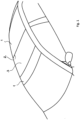
- a fixed roof 1 of a vehicle in this case a passenger car, having an open roof construction positioned in a roof opening 2 in fixed roof 1.
- This roof opening 2 can be opened and closed by a panel 3 of the open roof construction.
- This panel 3 is in this case a rigid, at least partly transparent panel, made of glass, plastic, or the like.
- the open roof construction is of the so-called "pop up" type, which means that an operating mechanism of the open roof construction is capable of lifting the panel 1 at its rear end upwardly to open the panel 1 to a rearwardly and upwardly inclined venting position (see e.g. Fig.
- the openable panel 1 may be a top loaded open roof construction or a bottom loaded roof construction, meaning that the open roof construction may be assembled from the upper (top) side of the fixed roof 1 of the vehicle or the from the lower (bottom) side of the roof.
- the drawings in this document show a top loaded open roof construction.
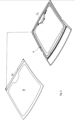
- Fig. 3 the panel 1 is shown separately from the remainder of the open roof construction.
- This remainder includes a stationary frame 4 with which the open roof construction is attached to the fixed roof 1 of the vehicle.
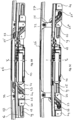
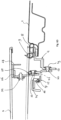
- Fig. 5D shows a cross beam 5 and a roof skin of fixed roof 1 forming a flange 6 onto which a rear portion of frame 4 rests with interposition of a seal 7, glue bead or the like (this shows it is a top loaded roof).
- the frame 4 may be bolted, glued, welded or the like to fixed roof 1.
- a seal 8 further seals frame 4 to fixed roof 1, and frame 4 to the circumference of panel 3, while a seal 9 seals frame 4 to a lower surface of panel 3, when it is in its closed position, see dashed lines in Fig. 5D .
- Fig. 4 The exploded view of Fig. 4 shows all parts of the operating mechanism, including an electric motor 10 driving it. Dashed lines show the connections between parts.
- Motor 10 is fixed by fixing means 10A to a plate-shaped motor support 11 which is attached to frame 4 (not shown here) by fixing means having vibration dampers 12.
- Motor 10 has an output shaft which is directed substantially vertically when in use and is provided with an output gearwheel 13.
- Drive cables 15, which carry a toothing on their surface, are in engagement with opposite sides of gearwheel 13 and are kept in engagement by guide tubes 14 clamped between motor 10 and motor support 11.
- Motor support 11 carries guide rails 16 each having a guide groove 17 communicating with one of the guide tubes 14 and guiding the respective drive cable 15. Because drive cables 15 are in engagement with opposite sides of gear wheel 13 (i.e. at positions on its circumference 180° apart), drive cables 15 move in opposite directions when output shaft and gearwheel 13 of motor 10 rotate.
- Drive cables 15 are guided in lateral direction of the open roof construction. Because drive cables 15 are offset at the position of gearwheel 13 a portion of one or both drive cables 15 is guided in an S-shape S in order for drive cables 15 to become aligned with each other before entering aligned guide grooves 17 of guide rails 16.
- the operating mechanism for panel 3 includes a stationary guide rail 18 on frame 4, which guide rail 18 includes two pairs of guide slots 19 engaged by sliding pins 20 which are attached to a pair of curve slides 21.
- These curve slides 21 include cable attachments 22 engaging the respective guide groove 17 of guide rail 16 and to which the respective drive cables 15 are attached in order to drive curve slides 21 in opposite directions such that sliding pins 20 slide from one end of respective guide slot 19 to the other.
- Curve slides 21 are shaped in mirror image and so are guide curves 23 therein.
- Each guide curve 23 includes two short horizontal end portions 23', 23'' on different heights and an inclined main portion 23′′′ connecting them.
- a guide pin 24 engages its respective guide curve 22 and is fixed to a downwardly suspended leg 25 of a common bracket 26.
- This bracket 26 is attached to a reinforcing member 27 on the lower surface of panel 3.
- Curve slides 21 with guide curves 23 act as height-adjusting members, whereas guide pins 24 on legs 25 of bracket 26 act as height-adjustable members.
- connection between the height-adjusting members (curve slide 21 with guide curve 23) and the height-adjustable members (guide pins 24) is at a position between the centre Y 0 ( Fig. 3 and 5B, 5C ) of panel 3 (in the middle between guide pins 24) and the side edge of panel 3, i.e. at a distance from the centre and from the side edge.
- this connection (or the centre of this connection) is at a distance of 10% - 45% of the local width W (see Fig. 3 ) of panel 3 from the longitudinal centre Y 0 of panel 3.
- the width W of panel 3 will be between 800mm and 1200mm, while the distance between the (centre of the) connection and the centre Y 0 of panel 3 is between 100mm and 550mm.
- Figs. 5B and 5C show the two extreme positions of the operating mechanism.
- drive cables 15 are in retracted position, so that curve slides 21 are closest to the centre of panel 3 and therefore closest to drive motor 10.
- guide pins 24 are in the lower horizontal curve portion 23' so that panel 3 is in its lower, i.e. closed position.
- Fig. 5D shows panel 3 also in its upwardly moved venting position in which the front of panel 3 is kept down, while the rear of panel 3 is moved up so that panel 3 takes up a rearwardly and upwardly inclined position.
- Panel 3 has thus been rotated around a front axis and therefore guide legs 25 with guide pins 24 also have been slightly rotated during their upward movement.
- the guide pins 24 are slightly barrel-shaped as is shown in Fig. 5D .
- the cross section of guide curves 23 could also be adapted to the barrel shape of guide pins 24, but this is not required if the rotation is limited.
- Fig. 6A - 6D show a second embodiment of the operating mechanism.
- This embodiment could lead to a greater lift height within the same package height, or to a similar lift height with a smaller package height.
- the main difference is that guide slots 19 are not horizontal and/or aligned but extend in an inclined direction in which the guide slots 19 of a pair extend parallel to each other outwardly and upwardly.
- guide rails 16 and drive cables 15 run for a certain length parallel to adjacent guide slots 19 such that cable attachment 22 moves parallel to curve slide 21 and therefore cable attachment can still be immovably fixed to curve slide 21.
- guide rails 16 and drive cables 15 do not run parallel to guide slots 19 but remain substantially horizontal, i.e. substantially parallel to reinforcing member 27 and panel 3 above.
- the connection between cable attachment 22 and curve slide 21 must be height adjustable to compensate for the non-parallel movement between cable attachment 22 and curve slide 21.
- it is done through a pin-slot connection, including a vertical slot 28 in curve slide 21 and a pin 29 on cable attachment 22.
- guide curves 23 and guide pins 24 have switched places.
- Guide pin 24 is now present on each cable attachment 22, while guide curves 23 are now present in bracket 26 (on reinforcing member 27) below panel 3.
- bracket 26 on reinforcing member 27
- guide curves 23 now include an outwardly and upwardly inclined main portion 23′′′ between end portions 23' and 23".
- End portion 23' of guide curve 23 in which guide pin 24 is situated when panel 3 is closed is now at the upper outer end of guide curve 23.
- the distance of the connection between the height-adjusting member (pin 24 on cable attachment 22) and the height-adjustable member (bracket 26 with guide curve 23) to the centre Y 0 is slightly variable but still within the ranges mentioned above.
- Fig. 9A - 9F show a further revised embodiment of the operating mechanism for the open roof construction.
- This embodiment includes a lever 30, but this lever is supported in a very stable manner.
- lever 30 is pivotally connected to cable attachment 22 through a pivot 31.
- Stationary guide rail 18 is now provided with a single guide slot 19 on each end, which is engaged by sliding pin 20 on a lower portion of a free end of lever 30.
- Guide pin 24 on an upper portion of the free end of lever 30, almost above sliding pin 20, is engaging guide curve 23 at each end of bracket 26 below panel 3.
- Figs. 9D and 9E show the operating mechanism from the front and rear side.
- Fig. 9F shows that guide pin 24 on lever 30 is barrel-shaped.
- lever 30 is rotated as a result of the travel of its sliding pin 20 in inclined guide slot 19, while another height adjustment takes place due to the travel of guide pin 24 in inclined guide curve 23.
- the advantage of this embodiment is the relatively low resistance of the operating mechanism during operation and therefore low load on electric motor 10.
- the other embodiments have two drive cables 15 and at least one of those cables 15 should have an S-shaped portion in order to align the end parts thereof which are attached to the aligned cable attachments 22.
- This single cable embodiment can be used in other embodiments as well if the height-adjusting parts on either side of motor 10 are equally shaped as well and not mirror shaped.
- the terms and phrases used herein are not intended to be limiting, but rather to provide an understandable description of the invention.
- the terms "a” or “an”, as used herein, are defined as one or more than one.
- the term plurality, as used herein, is defined as two or more than two.
- the term another, as used herein, is defined as at least a second or more.
- the terms including and/or having, as used herein, are defined as comprising (i.e., open language).
- the term coupled, as used herein, is defined as connected, although not necessarily directly.
- drive cables may be replaced by other elongate drive members, especially in the case of a single drive cable, this may be replaced by a rigid drive element such as a rod, rack and pinion and the like.
Landscapes
- Engineering & Computer Science (AREA)
- Mechanical Engineering (AREA)
- Power-Operated Mechanisms For Wings (AREA)
Description
- The invention relates to an open roof construction for a vehicle having an opening in its fixed roof, comprising a stationary frame fitted in the opening of the fixed roof, at least a panel movably supported by the frame and capable of at least partly opening and closing the opening in the fixed roof by tilting the panel with its rear edge up and down.
- Such open roof construction is for example known from
JP 2015-123805 A - An open roof according to the preamble of
claim 1 is disclosed inEP 0 531 881 A2 .Figs. 7 and8 show an operating mechanism at the rear of the panel comprising a lever that is driven in lateral direction of the panel by a driving cable and is caused to rotate by means of a second lever mounted for rotation and engaging a stationary curve. A slot in the panel allows the lateral movement of the lever. - Document
JP S56 155928 U - It is one of the objects of the invention to provide an open roof construction offering better head room for the vehicle occupants and also a stable support of the panel.
- To obtain this object, the open roof construction according to the invention comprises the features of the characterizing portion of
claim 1. - By placing the drive motor and all or most parts of the operating mechanism behind the roof opening, the open roof construction can be built with a low vertical package along the sides of the roof opening where maximum head space is required. The rear of the roof opening is often positioned between front and rear occupants of the vehicle, so that a greater building height there is not deteriorating head space. Due to the fixed height-adjustable members, the support of the panel can be made more stable and less complex. In general, the lifting height will be less in comparison with levers when the building height is similar, so that such fixed members are especially suitable for open roof constructions needing a relatively small lifting height.
- The height-adjusting members on the frame engage the height-adjustable members on the panel at a distance from a respective side edge of the panel, such that the middle of the connection of each height-adjusting member to the height-adjustable member is at a distance from the longitudinal centre of the panel ranging from 10% - 45% of the local width of the panel.
- By using two height-adjustable members instead of one arranged in the centre of the panel and by attaching these members at a distance from the edges of the panel instead of at the edges, the stability will be better compared to the other two situations. Furthermore, seal pressure on the seal below the rear edge of the closed panel will be better distributed if the connections will be spaced from the centre and sides of the panel.
- In one embodiment, the height-adjusting members and the height-adjustable members each include a guide curve and a guide pin engaging the curve, one thereof being fixed to the panel, the other being connected to the frame.
- This is a simple but stable manner of obtaining the height adjustability.
- When the panel is tiltable around a lateral axis near a front edge of the panel it is favourable if at least a portion of the pin engaging the curve is shaped like a barrel to enable a limited angular rotation between the pin and the curve around said lateral axis.
- In a favourable embodiment, the drive motor comprises a substantially vertical output shaft and the elongate drive members being in engagement with a gear wheel on said output shaft.
- In one embodiment, the drive members are each a drive cable which are in engagement with the gear wheel on opposite sides thereof, the height-adjustable members and the height-adjusting members are mirror-shaped with respect to each other and the drive cables with the height-adjusting members move in opposite directions.
- Such arrangement with the height-adjusting members close to the motor the elongated drive member can be short and with only slight curves. Therefore, the operating mechanism can be driven with a low motor torque and thus only a small drive motor is required, which is generally cheaper and occupies less space.
- In another embodiment, the drive members are each an end portion of a single drive cable extending substantially in a straight line in lateral direction of the roof, the height-adjustable members and the height-adjusting members are equally shaped and the height-adjusting members move in the same direction by means of said single drive cable.
- This straight single drive cable leads to an even lower resistance in the drive cable and therefore needs even less torque from the drive motor.
- The height-adjusting members may be guided to move substantially in lateral direction only leading to a low resistance in the operating mechanism.
- However, it is also possible that the height-adjusting members are guided to move at least partly along an inclined path in lateral and vertical directions.
- This leads to a slightly higher resistance in the operating mechanism but also to a higher lift of the panel with the same package height or to a lower package height and the same lifting height.
- The height-adjusting members may each be provided with a guide curve and the height-adjustable members with a guide pin, or the height-adjusting members may each be provided with a guide pin and the height-adjustable members with a guide curve.
- In a particular embodiment, the height-adjusting members are each provided with a lever which is provided with said guide pin near a free end of the lever, and wherein each lever engages the frame such that it is urged to rotate when it moves with the respective drive member. Preferably, each lever engages the frame at a position near the free end of the lever at a distance substantially below the guide pin.
- The operating mechanism is preferably configured such that the panel can only be tilted up and down which leads to a venting function and a low package height as the operating mechanism is concentrated near the centre of the open roof construction at the rear thereof, where generally no passenger seats are located.
- According to another aspect of the invention, the height-adjusting members on the frame are connected to the height-adjustable members on the panel at a distance from a respective side edge of the panel, in particular such that the middle of the connection of each height-adjusting member to the height-adjustable member is at a distance from the longitudinal centre line of the panel ranging from 10% - 45% of the local width of the panel.
- The invention also includes a vehicle comprising the open roof construction as described above.
- Further details and advantages of the invention follow from the below description with reference to the drawings in which:
-
Fig.1 is a perspective view of a vehicle roof comprising an embodiment of the open roof construction. -
Fig. 2 is a perspective view of the open roof construction separate from the vehicle. -
Fig. 3 is a view similar to that ofFig. 3 but showing the panel of the open roof construction separately. -
Fig. 4 is an enlarged exploded view of a first embodiment of the electric motor and operating mechanism of the open roof construction ofFigs. 2 and3 , which is used to open and close the panel thereof. -
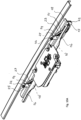
Fig. 5A is a perspective view of the motor and operating mechanism ofFig. 4 in an assembled state. -
Figs. 5B and 5C are enlarged frontal views of the motor and operating mechanism ofFig. 5A in closed and opened position. -
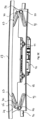
Fig. 5D is a cross-sectional side view of the operating mechanism ofFig. 5C as built into a vehicle. -
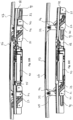
Figs. 6A - 6D and7A - 7D are views similar to those ofFigs. 5A - 5D but showing other embodiments. -
Fig. 8A is a view similar to that ofFig. 5A but showing still another embodiment of the motor and operating mechanism of the open roof construction. -
Fig. 8B is an exploded view corresponding to that ofFig. 4 but showing the embodiment ofFig. 8A . -
Figs. 8C - 8E are views corresponding to those ofFigs. 5B - 5D but showing the embodiment ofFig. 8A . -
Figs. 9A - 9D are views corresponding to those ofFigs. 8A - 8D but showing yet another embodiment. -
Fig. 9E is a rear view of the motor and operating mechanism ofFig. 9A in the position ofFig. 9D . -
Fig. 9F is a view corresponding to that ofFig. 8E but showing the embodiment ofFig. 8A . -
Figs. 10A - 10C are views corresponding to those ofFigs. 5A - 5C but showing a last embodiment. - In the following embodiments of the open roof construction like reference numbers are used to denote like parts in different embodiments.
- Referring to
Fig. 1 , there is shown a fixedroof 1 of a vehicle, in this case a passenger car, having an open roof construction positioned in a roof opening 2 in fixedroof 1. This roof opening 2 can be opened and closed by apanel 3 of the open roof construction. Thispanel 3 is in this case a rigid, at least partly transparent panel, made of glass, plastic, or the like. The open roof construction is of the so-called "pop up" type, which means that an operating mechanism of the open roof construction is capable of lifting thepanel 1 at its rear end upwardly to open thepanel 1 to a rearwardly and upwardly inclined venting position (see e.g.Fig. 5D ) and downwardly again to close thepanel 1 in a closed position substantially flush with the fixed roof of the vehicle (cf.Figs. 1 and2 and dashed line inFig. 5D ). Theopenable panel 1 may be a top loaded open roof construction or a bottom loaded roof construction, meaning that the open roof construction may be assembled from the upper (top) side of the fixedroof 1 of the vehicle or the from the lower (bottom) side of the roof. The drawings in this document show a top loaded open roof construction. - In
Fig. 3 , thepanel 1 is shown separately from the remainder of the open roof construction. This remainder includes a stationary frame 4 with which the open roof construction is attached to the fixedroof 1 of the vehicle.Fig. 5D shows across beam 5 and a roof skin of fixedroof 1 forming aflange 6 onto which a rear portion of frame 4 rests with interposition of aseal 7, glue bead or the like (this shows it is a top loaded roof). The frame 4 may be bolted, glued, welded or the like to fixedroof 1. A seal 8 further seals frame 4 to fixedroof 1, and frame 4 to the circumference ofpanel 3, while aseal 9 seals frame 4 to a lower surface ofpanel 3, when it is in its closed position, see dashed lines inFig. 5D . - The exploded view of
Fig. 4 shows all parts of the operating mechanism, including anelectric motor 10 driving it. Dashed lines show the connections between parts. -
Motor 10 is fixed by fixing means 10A to a plate-shapedmotor support 11 which is attached to frame 4 (not shown here) by fixing means havingvibration dampers 12.Motor 10 has an output shaft which is directed substantially vertically when in use and is provided with anoutput gearwheel 13. Drivecables 15, which carry a toothing on their surface, are in engagement with opposite sides ofgearwheel 13 and are kept in engagement byguide tubes 14 clamped betweenmotor 10 andmotor support 11.Motor support 11 carries guiderails 16 each having aguide groove 17 communicating with one of theguide tubes 14 and guiding therespective drive cable 15. Becausedrive cables 15 are in engagement with opposite sides of gear wheel 13 (i.e. at positions on its circumference 180° apart),drive cables 15 move in opposite directions when output shaft andgearwheel 13 ofmotor 10 rotate. Drivecables 15 are guided in lateral direction of the open roof construction. Becausedrive cables 15 are offset at the position of gearwheel 13 a portion of one or both drivecables 15 is guided in an S-shape S in order fordrive cables 15 to become aligned with each other before entering alignedguide grooves 17 of guide rails 16. - The operating mechanism for
panel 3 includes astationary guide rail 18 on frame 4, which guiderail 18 includes two pairs ofguide slots 19 engaged by slidingpins 20 which are attached to a pair of curve slides 21. These curve slides 21 includecable attachments 22 engaging therespective guide groove 17 ofguide rail 16 and to which therespective drive cables 15 are attached in order to drive curve slides 21 in opposite directions such that slidingpins 20 slide from one end ofrespective guide slot 19 to the other. - Curve slides 21 are shaped in mirror image and so are
guide curves 23 therein. Eachguide curve 23 includes two short horizontal end portions 23', 23'' on different heights and an inclinedmain portion 23‴ connecting them. Aguide pin 24 engages itsrespective guide curve 22 and is fixed to a downwardly suspendedleg 25 of acommon bracket 26. Thisbracket 26 is attached to a reinforcingmember 27 on the lower surface ofpanel 3. Curve slides 21 with guide curves 23 act as height-adjusting members, whereas guide pins 24 onlegs 25 ofbracket 26 act as height-adjustable members. - In this embodiment, the connection between the height-adjusting members (
curve slide 21 with guide curve 23) and the height-adjustable members (guide pins 24) is at a position between the centre Y0 (Fig. 3 and5B, 5C ) of panel 3 (in the middle between guide pins 24) and the side edge ofpanel 3, i.e. at a distance from the centre and from the side edge. Preferably, this connection (or the centre of this connection) is at a distance of 10% - 45% of the local width W (seeFig. 3 ) ofpanel 3 from the longitudinal centre Y0 ofpanel 3. In practice the width W ofpanel 3 will be between 800mm and 1200mm, while the distance between the (centre of the) connection and the centre Y0 ofpanel 3 is between 100mm and 550mm. -
Figs. 5B and 5C show the two extreme positions of the operating mechanism. In the position ofFig. 5B , drivecables 15 are in retracted position, so that curve slides 21 are closest to the centre ofpanel 3 and therefore closest to drivemotor 10. As a result, guide pins 24 are in the lower horizontal curve portion 23' so thatpanel 3 is in its lower, i.e. closed position. - In
Fig. 5C , drivecables 15 with theircable attachments 22 have been moved outwardly away fromdrive motor 10. As a result, curve slides 21 have been taken along such that their slidingpins 20 have moved to the outer end of theirrespective guide slots 19. Guide pins 24 are kept bybracket 26 ofpanel 3 in a laterally stationary position, so that guide pins 24 are forced to slide through guide curves 23 thereby moving upwardly throughmain portion 23‴ to endportion 23" ofguide curve 23. -
Fig. 5D showspanel 3 also in its upwardly moved venting position in which the front ofpanel 3 is kept down, while the rear ofpanel 3 is moved up so thatpanel 3 takes up a rearwardly and upwardly inclined position.Panel 3 has thus been rotated around a front axis and therefore guidelegs 25 with guide pins 24 also have been slightly rotated during their upward movement. In order to allowguide pins 24 to rotate around a lateral axis with respect to their guide curves 23, the guide pins 24 are slightly barrel-shaped as is shown inFig. 5D . The cross section of guide curves 23 could also be adapted to the barrel shape of guide pins 24, but this is not required if the rotation is limited. -
Fig. 6A - 6D show a second embodiment of the operating mechanism. This embodiment could lead to a greater lift height within the same package height, or to a similar lift height with a smaller package height. The main difference is thatguide slots 19 are not horizontal and/or aligned but extend in an inclined direction in which theguide slots 19 of a pair extend parallel to each other outwardly and upwardly. This means that not only guidepin 24 is lifted during its travel throughguide curve 23 when curve slide 21 moves outwardly away frommotor 10, but also curveslide 21 itself moves upwardly when its slidingpins 20 move throughinclined guide slots 19. As is shown in the figures,guide rails 16 and drivecables 15 run for a certain length parallel toadjacent guide slots 19 such thatcable attachment 22 moves parallel tocurve slide 21 and therefore cable attachment can still be immovably fixed tocurve slide 21. - In the
Fig. 7A - 7C embodiment,guide rails 16 and drivecables 15 do not run parallel to guideslots 19 but remain substantially horizontal, i.e. substantially parallel to reinforcingmember 27 andpanel 3 above. As a result, the connection betweencable attachment 22 and curve slide 21 must be height adjustable to compensate for the non-parallel movement betweencable attachment 22 andcurve slide 21. Here it is done through a pin-slot connection, including avertical slot 28 incurve slide 21 and apin 29 oncable attachment 22. - In the embodiment of
Fig. 8A - 8E the guide curves 23 and guide pins 24 have switched places.Guide pin 24 is now present on eachcable attachment 22, while guide curves 23 are now present in bracket 26 (on reinforcing member 27) belowpanel 3. As guide pins 24 move outwardly away frommotor 10 for openingpanel 3, guide curves 23 now include an outwardly and upwardly inclinedmain portion 23‴ betweenend portions 23' and 23". End portion 23' ofguide curve 23 in which guidepin 24 is situated whenpanel 3 is closed is now at the upper outer end ofguide curve 23. In this embodiment the distance of the connection between the height-adjusting member (pin 24 on cable attachment 22) and the height-adjustable member (bracket 26 with guide curve 23) to the centre Y0 is slightly variable but still within the ranges mentioned above. -
Fig. 9A - 9F show a further revised embodiment of the operating mechanism for the open roof construction. This embodiment includes alever 30, but this lever is supported in a very stable manner. As is shown inFig. 9B ,lever 30 is pivotally connected tocable attachment 22 through apivot 31.Stationary guide rail 18 is now provided with asingle guide slot 19 on each end, which is engaged by slidingpin 20 on a lower portion of a free end oflever 30.Guide pin 24 on an upper portion of the free end oflever 30, almost above slidingpin 20, is engagingguide curve 23 at each end ofbracket 26 belowpanel 3. Thus, forces frompanel 3 are almost directly transferred fromguide pin 24 to slidingpin 20 without bending forces onlever 30. -
Fasteners 32 are used to attachbracket 26 to reinforcingmember 27 belowpanel 3.Figs. 9D and9E show the operating mechanism from the front and rear side.Fig. 9F shows thatguide pin 24 onlever 30 is barrel-shaped. - Thus, in this
embodiment lever 30 is rotated as a result of the travel of its slidingpin 20 ininclined guide slot 19, while another height adjustment takes place due to the travel ofguide pin 24 ininclined guide curve 23. The advantage of this embodiment is the relatively low resistance of the operating mechanism during operation and therefore low load onelectric motor 10. - The difference of the last embodiment shown in
Figs. 10A - 10C with the former embodiments is that it uses only onedrive cable 15, so thatcable attachments 22 are attached to the opposite ends of thesame drive cable 15. As a consequence,cable attachments 22 do not move in opposite directions as in the other embodiments but in the same direction. Therefore the parts cooperating with thecable attachments 22 are not shaped in mirror image but are equally shaped as they should react to an equally directed movement ofcable attachment 22 and curve slide 21 attached to it. The advantage of this embodiment is the fact thatsingle drive cable 15 could be completely straight (as shown by the dottedlines 15 inFig. 10A ) and therefore the resistance ofdrive cable 15 and the resulting load onelectric motor 10 is relatively low. The other embodiments have twodrive cables 15 and at least one of thosecables 15 should have an S-shaped portion in order to align the end parts thereof which are attached to the alignedcable attachments 22. This single cable embodiment can be used in other embodiments as well if the height-adjusting parts on either side ofmotor 10 are equally shaped as well and not mirror shaped. - Detailed embodiments of the present invention are disclosed herein; however, it is to be understood that the disclosed embodiments are merely exemplary of the invention, which can be embodied in various forms. Therefore, specific structural and functional details disclosed herein are not to be interpreted as limiting, but merely as a basis for the claims and as a representative basis for teaching one skilled in the art to variously employ the present invention in expectedly any appropriately detailed structure. In particular, features presented and described in separate dependent claims may be applied in combination and any advantageous combination of such claims are herewith disclosed.
- Further, the terms and phrases used herein are not intended to be limiting, but rather to provide an understandable description of the invention. The terms "a" or "an", as used herein, are defined as one or more than one. The term plurality, as used herein, is defined as two or more than two. The term another, as used herein, is defined as at least a second or more. The terms including and/or having, as used herein, are defined as comprising (i.e., open language). The term coupled, as used herein, is defined as connected, although not necessarily directly.
- The invention being thus described it is apparent that the same may be varied in many ways. For example, drive cables may be replaced by other elongate drive members, especially in the case of a single drive cable, this may be replaced by a rigid drive element such as a rod, rack and pinion and the like.
Claims (13)
- Open roof construction for a vehicle having an opening (2) in its fixed roof (1), comprising:a stationary frame (4) fitted in the opening (2) of the fixed roof (1),at least a panel (3) movably supported by the frame and capable of at least partly opening and closing the opening (2) in the fixed roof (1) by tilting the panel with its rear edge up and down,a drive motor (10) placed in the vicinity of the rear edge of the opening (2) in the fixed roof (1) and in the vicinity of a longitudinal centre line of the opening, said drive motor (10) being attached to the stationary frame (4), said drive motor (10) comprising an output shaft and elongate drive members (15) extending from the output shaft oppositely along the rear edge of the opening,an operating mechanism movably connected between the frame (4) at the rear edge of the opening (2) and the rear edge of the panel (3), the operating mechanism including two height-adjusting (21, 23; 22, 24) members on the frame, one on each lateral side of the drive motor (10) and guided for a movement in lateral direction initiated by the drive members (15), and two height-adjustable members (24, 25, 26; 23, 26) immovably fixed to the panel (3),characterized in that the height-adjustable members (24, 25, 26; 23, 26) cooperate with the height-adjusting members on the frame so as to cause the height adjustment, andin that the height-adjusting members (21, 23; 22, 24; 22, 24, 30) on the frame (4) engage the height-adjustable members (24, 25, 26; 23, 26) on the panel (3) at a distance from a respective side edge of the panel, such that the middle of the connection of each height-adjusting member (21, 23; 22, 24; 22, 24, 30) to the height-adjustable member (24, 25, 26; 23, 26) is at a distance from the longitudinal centre line (Y0) of the panel ranging from 10% - 45% of the local width (W) of the panel.
- Open roof construction according to claim 1, wherein the height-adjusting members (21, 23; 22, 24; 22, 24, 30) and the height-adjustable members (24, 25, 26; 23, 26) each include a guide curve (23) and a guide pin (24) engaging the guide curve, one thereof being fixed to the panel (3), the other being connected to the frame (4).
- Open roof construction according to claim 2, wherein the panel (3) is tiltable around a lateral axis near a front edge of the panel and wherein at least a portion of the guide pin (24) engaging the guide curve (23) is substantially barrel-shaped to enable a limited angular rotation between the guide pin (24) and the guide curve (23) around said lateral axis.
- Open roof construction according to any of the preceding claims, wherein the drive motor (10) comprises a substantially vertical output shaft and the elongate drive members (15) being in engagement with a gear wheel (13) on said output shaft.
- Open roof construction according to claim 4, wherein the drive members (15) are each a drive cable which are in engagement with the gear wheel (13) on opposite sides thereof, the height-adjustable members (24, 25, 26; 23, 26) and the height-adjusting members (21, 23; 22, 24; 22, 24, 30) are each mutually mirror-shaped with respect to the longitudinal centre line (Y0), and the drive cables (15) with the height-adjusting members move in opposite directions.
- Open roof construction according to claim 4, wherein the drive members (15) are each an end portion of a single drive cable extending substantially in a straight line in lateral direction of the roof, the height-adjustable members (24, 25, 26; 23, 26) and the height-adjusting members (21, 23; 22, 24; 22, 24, 30) are equally shaped and the height-adjusting members move in the same direction by means of said single drive cable.
- Open roof construction according to any of claims 1 - 6, wherein the height-adjusting members (21, 23; 22, 24; 22, 24, 30) are guided to move substantially in lateral direction only.
- Open roof construction according to any of claims 1 - 6, wherein the height-adjusting members (21, 23; 22, 24) are guided to move at least partly along an inclined path in lateral and vertical directions.
- Open roof construction according to any of claims 1 - 8, wherein the height-adjusting members (21, 23) are each provided with a guide curve (23) and the height-adjustable members (22, 24) with a guide pin (24).
- Open roof construction according to any of claims 1 - 8, wherein the height-adjusting members (22, 24) are each provided with a guide pin (24) and the height-adjustable members (23, 26) with a guide curve (23).
- Open roof construction according to claim 10, wherein the height-adjusting members (22, 24, 30) are each provided with a lever (30) which is provided with said guide pin (24) near a free end of said lever, and wherein each lever engages the frame (4, 18) such that it is urged to rotate when it moves with the respective drive member (15), the lever preferably engages the frame (4, 18) at a position near the free end of the lever (30) at a distance substantially below the guide pin (24) .
- Open roof construction according to any of the preceding claims, wherein the operating mechanism is configured such that the panel (3) can only be tilted up and down.
- Vehicle comprising the open roof construction according to any one of the preceding claims.
Priority Applications (3)
| Application Number | Priority Date | Filing Date | Title |
|---|---|---|---|
| EP21155206.2A EP4039515B1 (en) | 2021-02-04 | 2021-02-04 | Open roof construction for a vehicle |
| CN202210096869.5A CN114851815A (en) | 2021-02-04 | 2022-01-27 | Open roof construction for a vehicle |
| US17/591,372 US12187106B2 (en) | 2021-02-04 | 2022-02-02 | Open roof construction for a vehicle |
Applications Claiming Priority (1)
| Application Number | Priority Date | Filing Date | Title |
|---|---|---|---|
| EP21155206.2A EP4039515B1 (en) | 2021-02-04 | 2021-02-04 | Open roof construction for a vehicle |
Publications (2)
| Publication Number | Publication Date |
|---|---|
| EP4039515A1 EP4039515A1 (en) | 2022-08-10 |
| EP4039515B1 true EP4039515B1 (en) | 2024-05-01 |
Family
ID=74553649
Family Applications (1)
| Application Number | Title | Priority Date | Filing Date |
|---|---|---|---|
| EP21155206.2A Active EP4039515B1 (en) | 2021-02-04 | 2021-02-04 | Open roof construction for a vehicle |
Country Status (3)
| Country | Link |
|---|---|
| US (1) | US12187106B2 (en) |
| EP (1) | EP4039515B1 (en) |
| CN (1) | CN114851815A (en) |
Citations (1)
| Publication number | Priority date | Publication date | Assignee | Title |
|---|---|---|---|---|
| EP0531881B1 (en) * | 1991-09-07 | 1995-11-15 | WEBASTO KAROSSERIESYSTEME GmbH | Vehicle roof |
Family Cites Families (5)
| Publication number | Priority date | Publication date | Assignee | Title |
|---|---|---|---|---|
| JPS56155928U (en) * | 1980-04-22 | 1981-11-20 | ||
| FR2664543B1 (en) * | 1990-07-16 | 1993-07-30 | Farnier & Penin | SUNROOF DEVICE FOR A MOTOR VEHICLE. |
| GB9106973D0 (en) * | 1991-04-03 | 1991-05-22 | Britax Weathershields | Vehicle opening roof |
| JP2015123805A (en) | 2013-12-25 | 2015-07-06 | アイシン精機株式会社 | Sunroof device for vehicle |
| DE102018124336B4 (en) * | 2018-10-02 | 2024-05-23 | Webasto SE | Openable vehicle roof with a cover and a storage device for the cover |
-
2021
- 2021-02-04 EP EP21155206.2A patent/EP4039515B1/en active Active
-
2022
- 2022-01-27 CN CN202210096869.5A patent/CN114851815A/en active Pending
- 2022-02-02 US US17/591,372 patent/US12187106B2/en active Active
Patent Citations (1)
| Publication number | Priority date | Publication date | Assignee | Title |
|---|---|---|---|---|
| EP0531881B1 (en) * | 1991-09-07 | 1995-11-15 | WEBASTO KAROSSERIESYSTEME GmbH | Vehicle roof |
Also Published As
| Publication number | Publication date |
|---|---|
| CN114851815A (en) | 2022-08-05 |
| EP4039515A1 (en) | 2022-08-10 |
| US12187106B2 (en) | 2025-01-07 |
| US20220242206A1 (en) | 2022-08-04 |
Similar Documents
| Publication | Publication Date | Title |
|---|---|---|
| US8523278B2 (en) | Sliding roof device, in particular for a motor vehicle | |
| US7441833B1 (en) | Arrangement and method for converting of single panel sunroofs into double panel sunroofs and component parts thereof | |
| CN109435653B (en) | Double-glass double-open type automobile panoramic sunroof and operation method thereof | |
| US20180326821A1 (en) | Drive system for a movable roof part of a spoiler roof module of a motor vehicle | |
| JP6523574B2 (en) | Sun roof unit | |
| EP3552853B1 (en) | Sunroof system for a vehicle with rotating drive slide | |
| US6682124B1 (en) | Convertible vehicle with through-openings for linkage elements | |
| EP4023472B1 (en) | Sunroof unit | |
| US5046779A (en) | Sunroof structure for automotive vehicle | |
| EP2305500B1 (en) | Open roof construction for a vehicle | |
| EP3795395B1 (en) | Support mechanism for an open-roof assembly in a vehicle roof | |
| CN215662899U (en) | Assembly for a sunroof for a vehicle | |
| EP4039515B1 (en) | Open roof construction for a vehicle | |
| EP2501575B1 (en) | Tiltable sun roof for vehicles | |
| US6419309B1 (en) | Open roof construction for a vehicle | |
| EP3647094A1 (en) | Roof system for a vehicle | |
| US8333426B2 (en) | Rise up panoramic roof for a vehicle | |
| EP3795394B1 (en) | A guide rail for a guide assembly for an open-roof system | |
| JP2005522369A (en) | Roof assembly for vehicle | |
| CN115635832A (en) | Roof system | |
| JPH0434090Y2 (en) | ||
| EP3763554B1 (en) | Open-roof assembly with a wind drop deflector | |
| JP2597087Y2 (en) | Deflector mounting structure for vehicle sunroof device | |
| JP2957600B2 (en) | Sunroof equipment | |
| GB2442233A (en) | Sunblind with flexible web which may be bent to increase its curvature |
Legal Events
| Date | Code | Title | Description |
|---|---|---|---|
| PUAI | Public reference made under article 153(3) epc to a published international application that has entered the european phase |
Free format text: ORIGINAL CODE: 0009012 |
|
| STAA | Information on the status of an ep patent application or granted ep patent |
Free format text: STATUS: THE APPLICATION HAS BEEN PUBLISHED |
|
| AK | Designated contracting states |
Kind code of ref document: A1 Designated state(s): AL AT BE BG CH CY CZ DE DK EE ES FI FR GB GR HR HU IE IS IT LI LT LU LV MC MK MT NL NO PL PT RO RS SE SI SK SM TR |
|
| STAA | Information on the status of an ep patent application or granted ep patent |
Free format text: STATUS: REQUEST FOR EXAMINATION WAS MADE |
|
| 17P | Request for examination filed |
Effective date: 20230207 |
|
| RBV | Designated contracting states (corrected) |
Designated state(s): AL AT BE BG CH CY CZ DE DK EE ES FI FR GB GR HR HU IE IS IT LI LT LU LV MC MK MT NL NO PL PT RO RS SE SI SK SM TR |
|
| GRAP | Despatch of communication of intention to grant a patent |
Free format text: ORIGINAL CODE: EPIDOSNIGR1 |
|
| STAA | Information on the status of an ep patent application or granted ep patent |
Free format text: STATUS: GRANT OF PATENT IS INTENDED |
|
| INTG | Intention to grant announced |
Effective date: 20240104 |
|
| GRAS | Grant fee paid |
Free format text: ORIGINAL CODE: EPIDOSNIGR3 |
|
| GRAA | (expected) grant |
Free format text: ORIGINAL CODE: 0009210 |
|
| STAA | Information on the status of an ep patent application or granted ep patent |
Free format text: STATUS: THE PATENT HAS BEEN GRANTED |
|
| AK | Designated contracting states |
Kind code of ref document: B1 Designated state(s): AL AT BE BG CH CY CZ DE DK EE ES FI FR GB GR HR HU IE IS IT LI LT LU LV MC MK MT NL NO PL PT RO RS SE SI SK SM TR |
|
| REG | Reference to a national code |
Ref country code: GB Ref legal event code: FG4D |
|
| REG | Reference to a national code |
Ref country code: CH Ref legal event code: EP |
|
| REG | Reference to a national code |
Ref country code: DE Ref legal event code: R096 Ref document number: 602021012440 Country of ref document: DE |
|
| REG | Reference to a national code |
Ref country code: IE Ref legal event code: FG4D |
|
| REG | Reference to a national code |
Ref country code: LT Ref legal event code: MG9D |
|
| REG | Reference to a national code |
Ref country code: NL Ref legal event code: MP Effective date: 20240501 |
|
| PG25 | Lapsed in a contracting state [announced via postgrant information from national office to epo] |
Ref country code: IS Free format text: LAPSE BECAUSE OF FAILURE TO SUBMIT A TRANSLATION OF THE DESCRIPTION OR TO PAY THE FEE WITHIN THE PRESCRIBED TIME-LIMIT Effective date: 20240901 |
|
| PG25 | Lapsed in a contracting state [announced via postgrant information from national office to epo] |
Ref country code: BG Free format text: LAPSE BECAUSE OF FAILURE TO SUBMIT A TRANSLATION OF THE DESCRIPTION OR TO PAY THE FEE WITHIN THE PRESCRIBED TIME-LIMIT Effective date: 20240501 |
|
| PG25 | Lapsed in a contracting state [announced via postgrant information from national office to epo] |
Ref country code: FI Free format text: LAPSE BECAUSE OF FAILURE TO SUBMIT A TRANSLATION OF THE DESCRIPTION OR TO PAY THE FEE WITHIN THE PRESCRIBED TIME-LIMIT Effective date: 20240501 Ref country code: HR Free format text: LAPSE BECAUSE OF FAILURE TO SUBMIT A TRANSLATION OF THE DESCRIPTION OR TO PAY THE FEE WITHIN THE PRESCRIBED TIME-LIMIT Effective date: 20240501 |
|
| PG25 | Lapsed in a contracting state [announced via postgrant information from national office to epo] |
Ref country code: GR Free format text: LAPSE BECAUSE OF FAILURE TO SUBMIT A TRANSLATION OF THE DESCRIPTION OR TO PAY THE FEE WITHIN THE PRESCRIBED TIME-LIMIT Effective date: 20240802 |
|
| PG25 | Lapsed in a contracting state [announced via postgrant information from national office to epo] |
Ref country code: PT Free format text: LAPSE BECAUSE OF FAILURE TO SUBMIT A TRANSLATION OF THE DESCRIPTION OR TO PAY THE FEE WITHIN THE PRESCRIBED TIME-LIMIT Effective date: 20240902 |
|
| REG | Reference to a national code |
Ref country code: AT Ref legal event code: MK05 Ref document number: 1681893 Country of ref document: AT Kind code of ref document: T Effective date: 20240501 |
|
| PG25 | Lapsed in a contracting state [announced via postgrant information from national office to epo] |
Ref country code: NL Free format text: LAPSE BECAUSE OF FAILURE TO SUBMIT A TRANSLATION OF THE DESCRIPTION OR TO PAY THE FEE WITHIN THE PRESCRIBED TIME-LIMIT Effective date: 20240501 |
|
| PG25 | Lapsed in a contracting state [announced via postgrant information from national office to epo] |
Ref country code: ES Free format text: LAPSE BECAUSE OF FAILURE TO SUBMIT A TRANSLATION OF THE DESCRIPTION OR TO PAY THE FEE WITHIN THE PRESCRIBED TIME-LIMIT Effective date: 20240501 |
|
| PG25 | Lapsed in a contracting state [announced via postgrant information from national office to epo] |
Ref country code: AT Free format text: LAPSE BECAUSE OF FAILURE TO SUBMIT A TRANSLATION OF THE DESCRIPTION OR TO PAY THE FEE WITHIN THE PRESCRIBED TIME-LIMIT Effective date: 20240501 |
|
| PG25 | Lapsed in a contracting state [announced via postgrant information from national office to epo] |
Ref country code: PL Free format text: LAPSE BECAUSE OF FAILURE TO SUBMIT A TRANSLATION OF THE DESCRIPTION OR TO PAY THE FEE WITHIN THE PRESCRIBED TIME-LIMIT Effective date: 20240501 |
|
| PG25 | Lapsed in a contracting state [announced via postgrant information from national office to epo] |
Ref country code: LV Free format text: LAPSE BECAUSE OF FAILURE TO SUBMIT A TRANSLATION OF THE DESCRIPTION OR TO PAY THE FEE WITHIN THE PRESCRIBED TIME-LIMIT Effective date: 20240501 |
|
| PG25 | Lapsed in a contracting state [announced via postgrant information from national office to epo] |
Ref country code: PT Free format text: LAPSE BECAUSE OF FAILURE TO SUBMIT A TRANSLATION OF THE DESCRIPTION OR TO PAY THE FEE WITHIN THE PRESCRIBED TIME-LIMIT Effective date: 20240902 Ref country code: PL Free format text: LAPSE BECAUSE OF FAILURE TO SUBMIT A TRANSLATION OF THE DESCRIPTION OR TO PAY THE FEE WITHIN THE PRESCRIBED TIME-LIMIT Effective date: 20240501 Ref country code: NO Free format text: LAPSE BECAUSE OF FAILURE TO SUBMIT A TRANSLATION OF THE DESCRIPTION OR TO PAY THE FEE WITHIN THE PRESCRIBED TIME-LIMIT Effective date: 20240801 Ref country code: NL Free format text: LAPSE BECAUSE OF FAILURE TO SUBMIT A TRANSLATION OF THE DESCRIPTION OR TO PAY THE FEE WITHIN THE PRESCRIBED TIME-LIMIT Effective date: 20240501 Ref country code: LV Free format text: LAPSE BECAUSE OF FAILURE TO SUBMIT A TRANSLATION OF THE DESCRIPTION OR TO PAY THE FEE WITHIN THE PRESCRIBED TIME-LIMIT Effective date: 20240501 Ref country code: IS Free format text: LAPSE BECAUSE OF FAILURE TO SUBMIT A TRANSLATION OF THE DESCRIPTION OR TO PAY THE FEE WITHIN THE PRESCRIBED TIME-LIMIT Effective date: 20240901 Ref country code: HR Free format text: LAPSE BECAUSE OF FAILURE TO SUBMIT A TRANSLATION OF THE DESCRIPTION OR TO PAY THE FEE WITHIN THE PRESCRIBED TIME-LIMIT Effective date: 20240501 Ref country code: GR Free format text: LAPSE BECAUSE OF FAILURE TO SUBMIT A TRANSLATION OF THE DESCRIPTION OR TO PAY THE FEE WITHIN THE PRESCRIBED TIME-LIMIT Effective date: 20240802 Ref country code: FI Free format text: LAPSE BECAUSE OF FAILURE TO SUBMIT A TRANSLATION OF THE DESCRIPTION OR TO PAY THE FEE WITHIN THE PRESCRIBED TIME-LIMIT Effective date: 20240501 Ref country code: ES Free format text: LAPSE BECAUSE OF FAILURE TO SUBMIT A TRANSLATION OF THE DESCRIPTION OR TO PAY THE FEE WITHIN THE PRESCRIBED TIME-LIMIT Effective date: 20240501 Ref country code: BG Free format text: LAPSE BECAUSE OF FAILURE TO SUBMIT A TRANSLATION OF THE DESCRIPTION OR TO PAY THE FEE WITHIN THE PRESCRIBED TIME-LIMIT Effective date: 20240501 Ref country code: AT Free format text: LAPSE BECAUSE OF FAILURE TO SUBMIT A TRANSLATION OF THE DESCRIPTION OR TO PAY THE FEE WITHIN THE PRESCRIBED TIME-LIMIT Effective date: 20240501 Ref country code: RS Free format text: LAPSE BECAUSE OF FAILURE TO SUBMIT A TRANSLATION OF THE DESCRIPTION OR TO PAY THE FEE WITHIN THE PRESCRIBED TIME-LIMIT Effective date: 20240801 |
|
| PG25 | Lapsed in a contracting state [announced via postgrant information from national office to epo] |
Ref country code: DK Free format text: LAPSE BECAUSE OF FAILURE TO SUBMIT A TRANSLATION OF THE DESCRIPTION OR TO PAY THE FEE WITHIN THE PRESCRIBED TIME-LIMIT Effective date: 20240501 |
|
| PG25 | Lapsed in a contracting state [announced via postgrant information from national office to epo] |
Ref country code: EE Free format text: LAPSE BECAUSE OF FAILURE TO SUBMIT A TRANSLATION OF THE DESCRIPTION OR TO PAY THE FEE WITHIN THE PRESCRIBED TIME-LIMIT Effective date: 20240501 |
|
| PG25 | Lapsed in a contracting state [announced via postgrant information from national office to epo] |
Ref country code: CZ Free format text: LAPSE BECAUSE OF FAILURE TO SUBMIT A TRANSLATION OF THE DESCRIPTION OR TO PAY THE FEE WITHIN THE PRESCRIBED TIME-LIMIT Effective date: 20240501 |
|
| PG25 | Lapsed in a contracting state [announced via postgrant information from national office to epo] |
Ref country code: SK Free format text: LAPSE BECAUSE OF FAILURE TO SUBMIT A TRANSLATION OF THE DESCRIPTION OR TO PAY THE FEE WITHIN THE PRESCRIBED TIME-LIMIT Effective date: 20240501 Ref country code: RO Free format text: LAPSE BECAUSE OF FAILURE TO SUBMIT A TRANSLATION OF THE DESCRIPTION OR TO PAY THE FEE WITHIN THE PRESCRIBED TIME-LIMIT Effective date: 20240501 |
|
| PG25 | Lapsed in a contracting state [announced via postgrant information from national office to epo] |
Ref country code: SM Free format text: LAPSE BECAUSE OF FAILURE TO SUBMIT A TRANSLATION OF THE DESCRIPTION OR TO PAY THE FEE WITHIN THE PRESCRIBED TIME-LIMIT Effective date: 20240501 |
|
| PG25 | Lapsed in a contracting state [announced via postgrant information from national office to epo] |
Ref country code: SM Free format text: LAPSE BECAUSE OF FAILURE TO SUBMIT A TRANSLATION OF THE DESCRIPTION OR TO PAY THE FEE WITHIN THE PRESCRIBED TIME-LIMIT Effective date: 20240501 Ref country code: SK Free format text: LAPSE BECAUSE OF FAILURE TO SUBMIT A TRANSLATION OF THE DESCRIPTION OR TO PAY THE FEE WITHIN THE PRESCRIBED TIME-LIMIT Effective date: 20240501 Ref country code: RO Free format text: LAPSE BECAUSE OF FAILURE TO SUBMIT A TRANSLATION OF THE DESCRIPTION OR TO PAY THE FEE WITHIN THE PRESCRIBED TIME-LIMIT Effective date: 20240501 Ref country code: EE Free format text: LAPSE BECAUSE OF FAILURE TO SUBMIT A TRANSLATION OF THE DESCRIPTION OR TO PAY THE FEE WITHIN THE PRESCRIBED TIME-LIMIT Effective date: 20240501 Ref country code: DK Free format text: LAPSE BECAUSE OF FAILURE TO SUBMIT A TRANSLATION OF THE DESCRIPTION OR TO PAY THE FEE WITHIN THE PRESCRIBED TIME-LIMIT Effective date: 20240501 Ref country code: CZ Free format text: LAPSE BECAUSE OF FAILURE TO SUBMIT A TRANSLATION OF THE DESCRIPTION OR TO PAY THE FEE WITHIN THE PRESCRIBED TIME-LIMIT Effective date: 20240501 |
|
| REG | Reference to a national code |
Ref country code: DE Ref legal event code: R097 Ref document number: 602021012440 Country of ref document: DE |
|
| PG25 | Lapsed in a contracting state [announced via postgrant information from national office to epo] |
Ref country code: IT Free format text: LAPSE BECAUSE OF FAILURE TO SUBMIT A TRANSLATION OF THE DESCRIPTION OR TO PAY THE FEE WITHIN THE PRESCRIBED TIME-LIMIT Effective date: 20240501 |
|
| PLBE | No opposition filed within time limit |
Free format text: ORIGINAL CODE: 0009261 |
|
| STAA | Information on the status of an ep patent application or granted ep patent |
Free format text: STATUS: NO OPPOSITION FILED WITHIN TIME LIMIT |
|
| 26N | No opposition filed |
Effective date: 20250204 |
|
| PG25 | Lapsed in a contracting state [announced via postgrant information from national office to epo] |
Ref country code: SI Free format text: LAPSE BECAUSE OF FAILURE TO SUBMIT A TRANSLATION OF THE DESCRIPTION OR TO PAY THE FEE WITHIN THE PRESCRIBED TIME-LIMIT Effective date: 20240501 |
|
| PG25 | Lapsed in a contracting state [announced via postgrant information from national office to epo] |
Ref country code: SE Free format text: LAPSE BECAUSE OF FAILURE TO SUBMIT A TRANSLATION OF THE DESCRIPTION OR TO PAY THE FEE WITHIN THE PRESCRIBED TIME-LIMIT Effective date: 20240501 |
|
| PG25 | Lapsed in a contracting state [announced via postgrant information from national office to epo] |
Ref country code: MC Free format text: LAPSE BECAUSE OF FAILURE TO SUBMIT A TRANSLATION OF THE DESCRIPTION OR TO PAY THE FEE WITHIN THE PRESCRIBED TIME-LIMIT Effective date: 20240501 |
|
| REG | Reference to a national code |
Ref country code: CH Ref legal event code: PL |
|
| PG25 | Lapsed in a contracting state [announced via postgrant information from national office to epo] |
Ref country code: LU Free format text: LAPSE BECAUSE OF NON-PAYMENT OF DUE FEES Effective date: 20250204 |
|
| PG25 | Lapsed in a contracting state [announced via postgrant information from national office to epo] |
Ref country code: CH Free format text: LAPSE BECAUSE OF NON-PAYMENT OF DUE FEES Effective date: 20250228 |
|
| GBPC | Gb: european patent ceased through non-payment of renewal fee |
Effective date: 20250204 |
|
| REG | Reference to a national code |
Ref country code: BE Ref legal event code: MM Effective date: 20250228 |
|
| PG25 | Lapsed in a contracting state [announced via postgrant information from national office to epo] |
Ref country code: GB Free format text: LAPSE BECAUSE OF NON-PAYMENT OF DUE FEES Effective date: 20250204 |
|
| PG25 | Lapsed in a contracting state [announced via postgrant information from national office to epo] |
Ref country code: BE Free format text: LAPSE BECAUSE OF NON-PAYMENT OF DUE FEES Effective date: 20250228 |
|
| PG25 | Lapsed in a contracting state [announced via postgrant information from national office to epo] |
Ref country code: IE Free format text: LAPSE BECAUSE OF NON-PAYMENT OF DUE FEES Effective date: 20250204 |
|
| PGFP | Annual fee paid to national office [announced via postgrant information from national office to epo] |
Ref country code: DE Payment date: 20260220 Year of fee payment: 6 |
|
| PGFP | Annual fee paid to national office [announced via postgrant information from national office to epo] |
Ref country code: FR Payment date: 20260224 Year of fee payment: 6 |