EP4039386B1 - Press-molding method for vehicle exterior panel and press-molding device - Google Patents
Press-molding method for vehicle exterior panel and press-molding device Download PDFInfo
- Publication number
- EP4039386B1 EP4039386B1 EP20871650.6A EP20871650A EP4039386B1 EP 4039386 B1 EP4039386 B1 EP 4039386B1 EP 20871650 A EP20871650 A EP 20871650A EP 4039386 B1 EP4039386 B1 EP 4039386B1
- Authority
- EP
- European Patent Office
- Prior art keywords
- die
- elastic body
- metal sheet
- press
- punch
- Prior art date
- Legal status (The legal status is an assumption and is not a legal conclusion. Google has not performed a legal analysis and makes no representation as to the accuracy of the status listed.)
- Active
Links
Images





Classifications
-
- B—PERFORMING OPERATIONS; TRANSPORTING
- B21—MECHANICAL METAL-WORKING WITHOUT ESSENTIALLY REMOVING MATERIAL; PUNCHING METAL
- B21D—WORKING OR PROCESSING OF SHEET METAL OR METAL TUBES, RODS OR PROFILES WITHOUT ESSENTIALLY REMOVING MATERIAL; PUNCHING METAL
- B21D22/00—Shaping without cutting, by stamping, spinning, or deep-drawing
- B21D22/10—Stamping using yieldable or resilient pads
-
- B—PERFORMING OPERATIONS; TRANSPORTING
- B21—MECHANICAL METAL-WORKING WITHOUT ESSENTIALLY REMOVING MATERIAL; PUNCHING METAL
- B21D—WORKING OR PROCESSING OF SHEET METAL OR METAL TUBES, RODS OR PROFILES WITHOUT ESSENTIALLY REMOVING MATERIAL; PUNCHING METAL
- B21D22/00—Shaping without cutting, by stamping, spinning, or deep-drawing
- B21D22/20—Deep-drawing
- B21D22/22—Deep-drawing with devices for holding the edge of the blanks
-
- B—PERFORMING OPERATIONS; TRANSPORTING
- B21—MECHANICAL METAL-WORKING WITHOUT ESSENTIALLY REMOVING MATERIAL; PUNCHING METAL
- B21D—WORKING OR PROCESSING OF SHEET METAL OR METAL TUBES, RODS OR PROFILES WITHOUT ESSENTIALLY REMOVING MATERIAL; PUNCHING METAL
- B21D22/00—Shaping without cutting, by stamping, spinning, or deep-drawing
- B21D22/20—Deep-drawing
- B21D22/26—Deep-drawing for making peculiarly, e.g. irregularly, shaped articles
-
- B—PERFORMING OPERATIONS; TRANSPORTING
- B21—MECHANICAL METAL-WORKING WITHOUT ESSENTIALLY REMOVING MATERIAL; PUNCHING METAL
- B21D—WORKING OR PROCESSING OF SHEET METAL OR METAL TUBES, RODS OR PROFILES WITHOUT ESSENTIALLY REMOVING MATERIAL; PUNCHING METAL
- B21D24/00—Special deep-drawing arrangements in, or in connection with, presses
- B21D24/04—Blank holders; Mounting means therefor
-
- B—PERFORMING OPERATIONS; TRANSPORTING
- B21—MECHANICAL METAL-WORKING WITHOUT ESSENTIALLY REMOVING MATERIAL; PUNCHING METAL
- B21D—WORKING OR PROCESSING OF SHEET METAL OR METAL TUBES, RODS OR PROFILES WITHOUT ESSENTIALLY REMOVING MATERIAL; PUNCHING METAL
- B21D24/00—Special deep-drawing arrangements in, or in connection with, presses
- B21D24/04—Blank holders; Mounting means therefor
- B21D24/08—Pneumatically or hydraulically loaded blank holders
-
- B—PERFORMING OPERATIONS; TRANSPORTING
- B21—MECHANICAL METAL-WORKING WITHOUT ESSENTIALLY REMOVING MATERIAL; PUNCHING METAL
- B21D—WORKING OR PROCESSING OF SHEET METAL OR METAL TUBES, RODS OR PROFILES WITHOUT ESSENTIALLY REMOVING MATERIAL; PUNCHING METAL
- B21D53/00—Making other particular articles
- B21D53/88—Making other particular articles other parts for vehicles, e.g. cowlings, mudguards
-
- B—PERFORMING OPERATIONS; TRANSPORTING
- B60—VEHICLES IN GENERAL
- B60J—WINDOWS, WINDSCREENS, NON-FIXED ROOFS, DOORS, OR SIMILAR DEVICES FOR VEHICLES; REMOVABLE EXTERNAL PROTECTIVE COVERINGS SPECIALLY ADAPTED FOR VEHICLES
- B60J5/00—Doors
-
- B—PERFORMING OPERATIONS; TRANSPORTING
- B60—VEHICLES IN GENERAL
- B60J—WINDOWS, WINDSCREENS, NON-FIXED ROOFS, DOORS, OR SIMILAR DEVICES FOR VEHICLES; REMOVABLE EXTERNAL PROTECTIVE COVERINGS SPECIALLY ADAPTED FOR VEHICLES
- B60J5/00—Doors
- B60J5/04—Doors arranged at the vehicle sides
- B60J5/0412—Lower door structure
- B60J5/0415—Outer panel
Definitions
- the present invention relates to a press forming method and a press forming apparatus for an automotive outer panel, in which an automotive outer panel in which a character line is formed is press formed.
- a metal sheet refers to a hot-rolled sheet, a cold-rolled sheet, or a surface treated steel sheet with surface treatment (electro galvanization, hot-dip galvanization, organic coating treatment, and the like) applied to a steel sheet, as well as a sheet made of various metals such as stainless steel, aluminum, and magnesium.
- the automotive outer panel used for a door outer, a front fender, a rear fender, and the like of automobiles is often marked with a character line on its outer surface from the viewpoint of improving designability and tension rigidity of the automobiles.
- the character line is usually given by pressing a metal sheet (blank) against a ridgeline provided on a punch of a press mold, and sandwiching it with valley lines of a die.
- a sharp that is, curvature of the ridgeline is large (curvature radius is small) character line.
- Patent Literature 1 discloses a press forming method for providing a die and a blank holder with a forming auxiliary cross-sectional shape of a design recess to sandwich a peripheral edge of a blank, so that a central portion of the blank is bent and deformed in advance along a forming surface of the punch, and then forming a design surface by forming with the punch.
- Patent Literature 2 discloses a method for preventing the skid line by using a suction device, in which a suction port is formed on a press surface provided with a linear protrusion for forming the character line to perform suction from the suction port via a gas flow path, and adsorbing the metal sheet to the press surface and press forming it, thereby restraining movement of the metal sheet.
- Patent Literature 3 discloses a technique for performing primary press forming on a material by a punch angle and a cushion pad, and then performing deep drawing and bulging while lowering the punch, thereby preventing the skid line generated in a portion of a metal material with which the punch angle is in contact.
- DE 10 2014 221 878 A1 describes a press tool, in particular a deep-drawing tool, for forming a sheet material, having a lower tool part and an upper tool part, the effective tool surface of the lower tool part and/or the upper tool part has at least one tool edge for forming a sharp-edged sheet metal part edge and the tool effective surface of the respective other tool part has a groove-like depression opposite the tool edge, which locally has a Physical contact of the sheet material with this effective tool surface is prevented.
- the invention also relates to a specially designed sheet metal part produced by means of such a press tool.
- Patent Literatures 1 to 6 have the following problems.
- the present invention has been made to solve the above-mentioned problems, and an object of the present invention is to provide the press forming method and the press forming apparatus for the automotive outer panel, in which the skid line is prevented without increasing man-hours for press forming and a target character line is formed.
- a press forming apparatus for an automotive outer panel according to the present invention is defined by claim 5.
- Dependent claims relate to preferred embodiments.
- the elastic body is supported on the die side via a movable device configured to press the elastic body toward the punch and press the metal sheet.
- the elastic body is provided on the die so as to press a portion on a side having low tension among portions on both sides sandwiching the portion corresponding to the character line.
- the elastic body is provided on the die so as to press a portion on a side having high tension among portions on both sides sandwiching the portion corresponding to the character line.
- a frictional force between the elastic body that protrudes from the die-side forming surface portion and is crushed and the metal sheet can be larger than a difference between tensions acting on both sides sandwiching the portion corresponding to the character line in the metal sheet, and it is possible to press form the automotive outer panel in which the skid line generated by the difference between the tensions is prevented and the character line is formed.
- an automotive outer panel 61 which is an object of the present invention, is deep drawn as follows using a press forming apparatus 41 including a punch 43 having a ridgeline 43a extending in a front and back direction of a paper surface, a die 45 having a valley line 45a extending in the front and back direction of the paper surface, and blank holders 47 facing both ends of the die 45.
- an end 51a and an end 51b of a metal sheet 51 are respectively sandwiched between the die 45 and the blank holders 47. Then, while the ends of the metal sheet are sandwiched, as illustrated in (b) to (d) of FIG. 8 , the die 45 is moved relative to the punch 43 side up to a bottom dead center, to press form the automotive outer panel 61 forming a character line 63 by the ridgeline 43a of the punch 43 and the valley line 45a of the die 45.
- Such tensions generated in the metal sheet 51 differ with each other with the initial bending fold as a boundary due to a difference between respective distances from the initial bending fold to the end 51a and the end 51b, a difference between angles of a panel surface portion 65a and a panel surface portion 65b ((d) of FIG. 8 ) with respect to a press forming direction, and the like.
- the metal sheet 51 slides from a side having low tension to a side having high tension, and the initial bending fold slides to the end 51b side having high tension ((c) of FIG. 8 ). Then, the initial bending fold is crushed by the die 45 and the punch 43 at the bottom dead center, and a linear pattern, that is, the skid line is generated ((d) of FIG. 8 ).
- tension imbalance generated in the metal sheet 51 in a deep drawing process is a factor that causes the skid line.
- examples of a factor that causes the tension imbalance include the difference between respective distances and angles from a portion, with which the ridgeline 43a of the punch 43 comes into contact, to the end 51a and the end 51b, and a difference between the forming depths at both ends of the metal sheet 51 due to these factors.
- the metal sheet 51 is previously placed in a direction (horizontal direction on the paper surface) perpendicular to the press forming direction, to be press formed, and tensions respectively acting on regions (on the end 51a side and the end 51b side) divided by the portion with which the ridgeline 43a of the punch 43 comes into contact are actually measured, or the tensions are calculated by press forming analysis by a finite element method (FEM) or the like, so that the magnitude and value of the tensions generated in the metal sheet 51 in the press forming process are obtained in advance.
- FEM finite element method
- a press forming apparatus 1 for the automotive outer panel parts according to the first embodiment is an apparatus for press forming the metal sheet 51 into the automotive outer panel 61 having the character line 63 and the panel surface portions 65a and 65b continuous on both sides of the character line 63, and as illustrated in FIGS. 1 and 2 , includes a punch 3, a die 5, blank holders 7, and an elastic body 9.
- the automotive outer panel 61 ((e) of FIG. 2 ) to be formed in the first embodiment has the tension generated on the end 51b side larger than the tension generated on the end 51a side from the initial bending fold in the press forming process ( FIG. 2 ).
- the punch 3 has a ridgeline 3a and punch-side forming surface portions 3b and 3c located on both sides sandwiching the ridgeline 3a.
- the ridgeline 3a forms the character line 63 ((e) of FIG. 2 ).
- the punch-side forming surface portions 3b and 3c respectively form the panel surface portions 65a and 65b ((e) of FIG. 2 ).
- a 0.7 mm thick steel plate SGCC-F was used as the metal sheet, and the outer panel model (not illustrated) having the character line and the panel surface portions continuous on both sides of the character line was analyzed.
- a press forming method and a press forming apparatus for an automotive outer panel in which a skid line is prevented without increasing man-hours for press forming and a target character line is formed.
Landscapes
- Engineering & Computer Science (AREA)
- Mechanical Engineering (AREA)
- Shaping Metal By Deep-Drawing, Or The Like (AREA)
Description
- The present invention relates to a press forming method and a press forming apparatus for an automotive outer panel, in which an automotive outer panel in which a character line is formed is press formed. In the present invention, a metal sheet refers to a hot-rolled sheet, a cold-rolled sheet, or a surface treated steel sheet with surface treatment (electro galvanization, hot-dip galvanization, organic coating treatment, and the like) applied to a steel sheet, as well as a sheet made of various metals such as stainless steel, aluminum, and magnesium.
- The automotive outer panel used for a door outer, a front fender, a rear fender, and the like of automobiles is often marked with a character line on its outer surface from the viewpoint of improving designability and tension rigidity of the automobiles. The character line is usually given by pressing a metal sheet (blank) against a ridgeline provided on a punch of a press mold, and sandwiching it with valley lines of a die. Especially in recent years, in order to further improve the designability of the automobiles, it has been required to give a sharp (that is, curvature of the ridgeline is large (curvature radius is small)) character line.
- By the way, in this kind of press forming, when tension generated in the metal sheet during forming is imbalanced, the metal sheet may slide in a direction of large tension, the ridgeline of the punch may come into contact with a portion other than a portion to which the character line should be given, and a linear pattern may be generated. Such a linear pattern remains even after coating, to be an appearance defect called a skid line of the outer panel. The skid line is an obstacle to improving the designability of the automobiles because the skid line is especially noticeable when the press forming is performed to give a sharp character line using a punch in which a tip of the ridgeline is formed by an arc having a small section radius.
- Several techniques have been proposed so far for restraining generation of such a linear pattern and giving a character line.
- For example,
Patent Literature 1 discloses a press forming method for providing a die and a blank holder with a forming auxiliary cross-sectional shape of a design recess to sandwich a peripheral edge of a blank, so that a central portion of the blank is bent and deformed in advance along a forming surface of the punch, and then forming a design surface by forming with the punch.Patent Literature 2 discloses a method for preventing the skid line by using a suction device, in which a suction port is formed on a press surface provided with a linear protrusion for forming the character line to perform suction from the suction port via a gas flow path, and adsorbing the metal sheet to the press surface and press forming it, thereby restraining movement of the metal sheet.Patent Literature 3 discloses a technique for performing primary press forming on a material by a punch angle and a cushion pad, and then performing deep drawing and bulging while lowering the punch, thereby preventing the skid line generated in a portion of a metal material with which the punch angle is in contact. -
Patent Literature 4 discloses a technique for removing the skid line to obtain a high-quality press formed product by a first press forming step of forming a pre-forming shape and a second press forming step of further forming the pre-forming shape, when the press formed product having a ridgeline portion is produced.Patent Literature 5 discloses a technique for forming the character line on the blank by a die pad made of an elastic body and a tip of the punch, and forming a portion other than the character line by the die and the punch while the formed character line is constrained by the die pad and the punch.Patent Literature 6 discloses a technique for restraining sliding of the blank by pressing a plate-shaped blank against a lower tool of press forming having a convex R portion for forming the character line, and bringing a pressing pad into contact with the blank in the vicinity of the convex R portion after the blank gets attached to the convex R portion. -
- Patent Literature 1:
Japanese Patent No. 5876786 - Patent Literature 2:
Japanese Patent Application Laid-open No. 2015-199102 - Patent Literature 3:
Japanese Patent No. S63-58652 - Patent Literature 4:
Japanese Patent No. 5959702 - Patent Literature 5:
Japanese Patent Application Laid-open No. 2018-158351 - Patent Literature 6:
Japanese Patent Application Laid-open No. 2018-183786 -
DE 10 2014 221 878 A1 describes a press tool, in particular a deep-drawing tool, for forming a sheet material, having a lower tool part and an upper tool part, the effective tool surface of the lower tool part and/or the upper tool part has at least one tool edge for forming a sharp-edged sheet metal part edge and the tool effective surface of the respective other tool part has a groove-like depression opposite the tool edge, which locally has a Physical contact of the sheet material with this effective tool surface is prevented. The invention also relates to a specially designed sheet metal part produced by means of such a press tool. - However, the techniques disclosed in
Patent Literatures 1 to 6 have the following problems. - In the technique disclosed in
Patent Literature 1, deformation by the die and the blank holder provided with the forming auxiliary cross-sectional shape is not constrained by the punch, and only both ends of the blank corresponding to the design recess can be constrained, and thus this bending deformation is limited to a linear shape. In the technique disclosed inPatent Literature 2, a suction device that is not used in ordinary press forming is required, and there is a concern that a shape of the suction port is transferred to a surface of the formed product. In the technique disclosed inPatent Literature 3, since a final product shape is partially formed during forming, there is a concern that surface distortion occurs between a forming completed portion and a forming uncompleted portion. - In the technique disclosed in
Patent Literature 4, since the tool of press forming for forming the pre-forming shape and the tool of press forming for forming a target shape are different, the number of steps such as replacement of the tool of press forming has increased. In the technique disclosed inPatent Literature 5, since the character line is formed by the elastic body, there is a concern that, when a plurality of character lines are close to each other, the character line cannot be formed according to the target shape. In the technique disclosed inPatent Literature 6, when shaping of the surface is complicated, there is a concern that it is not possible to set an appropriate timing for the pressing pad to come into contact with the blank, and the pressing pad causes a fold on the blank. - The present invention has been made to solve the above-mentioned problems, and an object of the present invention is to provide the press forming method and the press forming apparatus for the automotive outer panel, in which the skid line is prevented without increasing man-hours for press forming and a target character line is formed.
- A press forming method according to the present invention is defined by
claim 1. Dependent claims relate to preferred embodiments. - According to some preferred embodiments, the elastic body is supported on the die side via a movable device configured to press the elastic body toward the punch and pressing the metal sheet.
- According to some preferred embodiments, the elastic body presses a portion on a side having low tension among portions on both sides sandwiching the portion corresponding to the character line.
- According to some preferred embodiments, the elastic body presses a portion on a side having high tension among portions on both sides sandwiching the portion corresponding to the character line.
- A press forming apparatus for an automotive outer panel according to the present invention is defined by
claim 5. Dependent claims relate to preferred embodiments. - According to some preferred embodiments, the elastic body is supported on the die side via a movable device configured to press the elastic body toward the punch and press the metal sheet.
- According to some preferred embodiments, the elastic body is provided on the die so as to press a portion on a side having low tension among portions on both sides sandwiching the portion corresponding to the character line.
- According to some preferred embodiments, the elastic body is provided on the die so as to press a portion on a side having high tension among portions on both sides sandwiching the portion corresponding to the character line.
- According to the present invention, by projecting the elastic body from the die-side forming surface portion, and press forming the metal sheet while pressing the elastic body against the metal sheet, a frictional force between the elastic body that protrudes from the die-side forming surface portion and is crushed and the metal sheet can be larger than a difference between tensions acting on both sides sandwiching the portion corresponding to the character line in the metal sheet, and it is possible to press form the automotive outer panel in which the skid line generated by the difference between the tensions is prevented and the character line is formed.
-
-
FIG. 1 is a diagram illustrating a press forming apparatus for an automotive outer panel according to a first embodiment of the present invention. -
FIG. 2 is a diagram illustrating a press forming method for the automotive outer panel according to the first embodiment of the present invention. -
FIG. 3 is a diagram illustrating a load P pressing a metal sheet by a crushed elastic body and tensions F1 and F2 generated in the metal sheet in a press forming process, in the press forming method for the automotive outer panel according to the first embodiment of the present invention. -
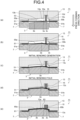
FIG. 4 is a diagram illustrating another aspect of the press forming apparatus and the press forming method for the automotive outer panel according to the first embodiment of the present invention. -
FIG. 5 is a diagram illustrating a press forming apparatus for an automotive outer panel according to a second embodiment of the present invention. -
FIG. 6 is a diagram illustrating a press forming method for the automotive outer panel according to the second embodiment of the present invention. -
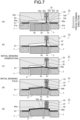
FIG. 7 is a diagram illustrating another aspect of the press forming apparatus and the press forming method for the automotive outer panel according to the second embodiment of the present invention. -
FIG. 8 is a diagram illustrating a conventional press forming apparatus and press forming method for the automotive outer panel, and a skid line generated in the press forming process. -
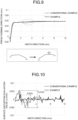
FIG. 9 is a diagram illustrating a result of a cross-sectional shape of the outer panel obtained by press forming analysis in an example. -
FIG. 10 is a diagram illustrating a result of an evaluation value Δs of surface distortion of the outer panel obtained by the press forming analysis in the example. Description of Embodiments - Prior to explaining a press forming method and a press forming apparatus for an automotive outer panel according to first and second embodiments of the present invention, a skid line generated in press forming of the automotive outer panel having a character line will be described.
- For example, as illustrated in
FIG. 8 , an automotiveouter panel 61, which is an object of the present invention, is deep drawn as follows using apress forming apparatus 41 including apunch 43 having aridgeline 43a extending in a front and back direction of a paper surface, adie 45 having avalley line 45a extending in the front and back direction of the paper surface, andblank holders 47 facing both ends of thedie 45. - First, as illustrated in (a) of
FIG. 8 , anend 51a and anend 51b of ametal sheet 51 are respectively sandwiched between thedie 45 and theblank holders 47. Then, while the ends of the metal sheet are sandwiched, as illustrated in (b) to (d) ofFIG. 8 , thedie 45 is moved relative to thepunch 43 side up to a bottom dead center, to press form the automotiveouter panel 61 forming acharacter line 63 by theridgeline 43a of thepunch 43 and thevalley line 45a of thedie 45. - When the die 45 is moved relative to the
punch 43 side in this press forming process, theridgeline 43a of thepunch 43 first comes into contact with themetal sheet 51, and initial bending occurs in the metal sheet 51 ((b) ofFIG. 8 ). Then, in a process of deep drawing progress by thedie 45 and thepunch 43, tensions are generated in themetal sheet 51 in respective directions from an initial bending fold toward theends FIG. 8 ). - Such tensions generated in the
metal sheet 51 differ with each other with the initial bending fold as a boundary due to a difference between respective distances from the initial bending fold to theend 51a and theend 51b, a difference between angles of apanel surface portion 65a and apanel surface portion 65b ((d) ofFIG. 8 ) with respect to a press forming direction, and the like. - For example, as in the press forming of the automotive
outer panel 61 illustrated inFIG. 8 , when forming depths of theend 51a and theend 51b are almost the same, and an angle θb on theend 51b side from the initial bending fold with respect to the press forming direction is smaller than an angle θa on theend 51a side, the tension generated on theend 51b side is larger than the tension generated on theend 51a side ((b) ofFIG. 8 ). - When a difference in tension is generated in the
metal sheet 51 as described above, themetal sheet 51 slides from a side having low tension to a side having high tension, and the initial bending fold slides to theend 51b side having high tension ((c) ofFIG. 8 ). Then, the initial bending fold is crushed by thedie 45 and thepunch 43 at the bottom dead center, and a linear pattern, that is, the skid line is generated ((d) ofFIG. 8 ). - In this way, in the automotive
outer panel 61 in which thecharacter line 63 is formed, tension imbalance generated in themetal sheet 51 in a deep drawing process is a factor that causes the skid line. Then, examples of a factor that causes the tension imbalance include the difference between respective distances and angles from a portion, with which theridgeline 43a of thepunch 43 comes into contact, to theend 51a and theend 51b, and a difference between the forming depths at both ends of themetal sheet 51 due to these factors. - When the forming depths at both ends 51a and 51b of the
metal sheet 51 are different from each other, the tension generated on theend 51b side having a larger forming depth in the deep drawing process is larger, and the skid line is generated by the difference in tension with the end having a smaller forming depth. - Therefore, in employing the press forming method of the present invention, as illustrated in
FIG. 8 , it is preferred that themetal sheet 51 is previously placed in a direction (horizontal direction on the paper surface) perpendicular to the press forming direction, to be press formed, and tensions respectively acting on regions (on theend 51a side and theend 51b side) divided by the portion with which theridgeline 43a of thepunch 43 comes into contact are actually measured, or the tensions are calculated by press forming analysis by a finite element method (FEM) or the like, so that the magnitude and value of the tensions generated in themetal sheet 51 in the press forming process are obtained in advance. - Next, the press forming method and the press forming apparatus for automotive outer panel parts according to the first embodiment and the second embodiment of the present invention will be described. Note that in the following description, components having the same function are denoted by the same reference numerals as those described above, and duplicate explanations will be omitted.
- A
press forming apparatus 1 for the automotive outer panel parts according to the first embodiment (hereinafter, simply referred to as the "press forming apparatus 1") is an apparatus for press forming themetal sheet 51 into the automotiveouter panel 61 having thecharacter line 63 and thepanel surface portions character line 63, and as illustrated inFIGS. 1 and2 , includes apunch 3, adie 5,blank holders 7, and anelastic body 9. - As illustrated in
FIG. 8 described above, it is assumed that the automotive outer panel 61 ((e) ofFIG. 2 ) to be formed in the first embodiment has the tension generated on theend 51b side larger than the tension generated on theend 51a side from the initial bending fold in the press forming process (FIG. 2 ). - As illustrated in
FIGS. 1 and2 , thepunch 3 has aridgeline 3a and punch-side formingsurface portions ridgeline 3a. Theridgeline 3a forms the character line 63 ((e) ofFIG. 2 ). The punch-side formingsurface portions panel surface portions FIG. 2 ). - The
die 5 has avalley line 5a, die-side formingsurface portions valley line 5a, and agroove 5d formed in a concave shape in the die-side formingsurface portion 5b. Thevalley line 5a cooperates with theridgeline 3a of thepunch 3 to form the character line 63 ((e) ofFIG. 2 ). The die-side formingsurface portions surface portions panel surface portions FIG. 2 ). - Here, the punch-side forming
surface portion 3b and the die-side formingsurface portion 5b form aportion 55a on a side having low tension acting on themetal sheet 51 in the press forming process, into thepanel surface portion 65a. On the other hand, the punch-side formingsurface portion 3c and the die-side formingsurface portion 5c form aportion 55b, which is on a side having high tension acting on themetal sheet 51 in the press forming process, into thepanel surface portion 65b. - The
groove 5d is formed in a concave shape in the die-side formingsurface portion 5b, and theelastic body 9 is provided therein. - The
blank holders 7 are arranged to face both ends of thedie 5, and cooperate with thedie 5 to sandwich theends metal sheet 51. - The
elastic body 9 is provided in thegroove 5d of the die-side formingsurface portion 5b so that theelastic body 9 can contact a position away from aportion 53 corresponding to thecharacter line 63 in themetal sheet 51, along theportion 53 and press themetal sheet 51, protrudes toward thepunch 3 than the die-side formingsurface portion 5b does, and is supported by a bottom of thegroove 5d so as to be contractable in the press forming direction until acontact surface portion 9a in contact with themetal sheet 51 is flush with the die-side formingsurface portion 5b. - The
elastic body 9 has a hardness and a shape that can be deformed along a shape of a tool of press forming at the bottom dead center, and is preferably a rubber material or a urethane material having, for example, a Shore hardness of 40 to 100HS. - Then, as illustrated in the following equation (1), an amount of protrusion of the
elastic body 9 from the die-side formingsurface portion 5b is set so that a frictional force between theelastic body 9 and themetal sheet 51 given by a product of a load P pressing themetal sheet 51 by contraction of theelastic body 9 crushed in the press forming process and a friction coefficient µe of theelastic body 9 and themetal sheet 51 is equal to or greater than an absolute value of a difference between tensions F1 and F2 acting on both sides sandwiching theportion 53 corresponding to thecharacter line 63.
- Here, the amount of protrusion of the
elastic body 9 is assumed to be equal to an amount of contraction of theelastic body 9 in the press forming direction when thedie 5 is moved relative to thepunch 3 side up to the bottom dead center. Then, the load P that presses themetal sheet 51 by the contraction of theelastic body 9 is preferred to be calculated from the amount of contraction of the crushedelastic body 9. - Further, the friction coefficient µe of the
elastic body 9 and themetal sheet 51 are measured in advance by a sliding test or the like. Alternatively, when the rubber material or the urethane material is used as theelastic body 9, the friction coefficient µe with themetal sheet 51 is generally µe = 0.1 to 0.3 (lubricant), µe ≈ 0.5 to 0.6 (dry), and thus these values may be used. - The difference between tensions acting on both sides sandwiching the
portion 53 corresponding to thecharacter line 63 in the press forming process is obtained in advance by an experiment using a strain gauge or the like to measure the tension acting on themetal sheet 51 when actually press forming the automotiveouter panel 61 or the press forming analysis of the automotiveouter panel 61 by the finite element method (FEM) or the like. - The press forming method for the automotive
outer panel 61 according to the first embodiment will be described by taking as an example a case of using thepress forming apparatus 1 where the automotiveouter panel 61 in which thecharacter line 63 illustrated in (e) ofFIG. 2 is formed by using thepress forming apparatus 1 including thepunch 3, thedie 5, theblank holders 7, and theelastic body 9 illustrated inFIG. 1 . - As illustrated in
FIG. 2 , the press forming method for the automotive outer panel according to the first embodiment is a method in which themetal sheet 51 disposed between thepunch 3 and thedie 5 and having bothends die 5 and theblank holders 7 is press formed into the automotiveouter panel 61 having thecharacter line 63 and thepanel surface portions character line 63, and includes an elastic body contact step of moving thedie 5 relative to thepunch 3 side, to bring theelastic body 9 into contact with themetal sheet 51 prior to thedie 5, and a press forming step of further moving thedie 5 relative to thepunch 3 side up to the bottom dead center while crushing theelastic body 9 and pressing themetal sheet 51. - The elastic body contact step is a step in which the
die 5 is moved relative to thepunch 3 side while theends metal sheet 51 are respectively sandwiched between thedie 5 and theblank holders 7, and theelastic body 9 is brought into contact with themetal sheet 51 prior to thedie 5 before a portion of themetal sheet 51 in contact with theridgeline 3a of thepunch 3 is plastically deformed to generate the initial bending fold. - It can be determined that plastic deformation of the
metal sheet 51 by theridgeline 3a occurs, for example, when strain of the portion of themetal sheet 51 in contact with theridgeline 3a exceeds a strain ε0 calculated by the following equation (2).
- Here, R is a curvature radius of bending of the
character line 63, and t is a plate thickness of themetal sheet 51. - The press forming step is a step of further moving the
die 5 relative to thepunch 3 side up to the bottom dead center while pressing themetal sheet 51 by thecontact surface portion 9a of theelastic body 9 to contract theelastic body 9. - As illustrated in the above-mentioned equation (1), the amount of protrusion of the
elastic body 9 provided on the die-side formingsurface portion 5b is set so that the frictional force given by the product of the load P due to the contraction (deformation) in the press forming direction of theelastic body 9 crushed in the press forming step and the friction coefficient µe of theelastic body 9 and themetal sheet 51 is equal to or greater than the absolute value of the difference between tensions (F1 and F2 inFIG. 3 ) respectively acting on theends portion 53 corresponding to thecharacter line 63 in themetal sheet 51. - Here, the load P by the
elastic body 9, the friction coefficient µe of theelastic body 9 and themetal sheet 51, and the difference between tensions (F1 - F2) acting on both sides sandwiching theportion 53 of themetal sheet 51 are given as described above. - The reason why the automotive
outer panel 61 can be press formed by preventing the skid line by the press forming method and thepress forming apparatus 1 for the automotiveouter panel 61 according to the first embodiment will be described below with reference toFIGS. 2 and3 . - First, the
die 5 moves relative to thepunch 3 side, and theelastic body 9 provided on the die-side formingsurface portion 5b comes into contact with theportion 55a of themetal sheet 51 prior to thedie 5 and presses themetal sheet 51 to press it against the punch-side formingsurface portion 3b ((a) and (b) ofFIG. 2 ). Subsequently, the portion of themetal sheet 51 in contact with theridgeline 3a of thepunch 3 is plastically deformed to generate the initial bending fold ((c) ofFIG. 2 ). - Subsequently, when the
die 5 is further moved relative to thepunch 3 side ((d) ofFIG. 2 ), the tensions F1 and F2 are generated in themetal sheet 51 in the respective directions toward theends FIG. 3 ). Then, as in the conventional press forming method described above, there is a difference between the tension F1 on theend 51b side and the tension F2 on theend 51a side. - Due to this difference between the tensions, the
metal sheet 51 may slide from theend 51a side having low tension to theend 51b side having high tension, and the initial bending fold may slide to theend 51b side having high tension. However, due to friction with theelastic body 9 contacting and pressing theportion 55b on the side having low tension in themetal sheet 51, it is possible to prevent themetal sheet 51 from sliding toward theend 51b having high tension, and to move thedie 5 relative up to the bottom dead center without sliding the initial bending fold ((d) and (e) ofFIGS. 2 ). As a result, it is possible to press form the automotiveouter panel 61 in which the skid line is prevented and thecharacter line 63 is formed. - Note that in the first embodiment, a position where the
metal sheet 51 is pressed by theelastic body 9 is set to a position away from theportion 53 corresponding to thecharacter line 63. When the automotiveouter panel 61 illustrated inFIG. 2 is press formed, the position away from theportion 53 corresponding to thecharacter line 63 in theportion 55a corresponding to thepanel surface portion 65a is brought into contact with theelastic body 9 along theportion 53. - A width of the
groove 5d needs to be wider than that of theelastic body 9 in order to accommodate the deformation of theelastic body 9 being pressed. As described inPatent Literature 6, when theelastic body 9 is disposed in the vicinity of theportion 53 corresponding to thecharacter line 63, since the vicinity is a position where a stress of forming thecharacter line 63 is high, a corner of the widenedgroove 5d comes into contact with the vicinity of theportion 53 corresponding to thecharacter line 63, and a linear flaw is likely to occur. - In the present invention, the
groove 5d is located at the position away from theportion 53 corresponding to thecharacter line 63, and is located in the die-side formingsurface portion 5b which is relatively flat and has not high stress, and thus there is no problem of causing the above-mentioned linear flaw described inPatent Literature 6. Note that in thegroove 5d for accommodating theelastic body 9, the corner of thegroove 5d on thecharacter line 63 side is preferably separated from theportion 53 corresponding to thecharacter line 63 by 10% or more of length of the die-side formingsurface portion 5b. - In the above-mentioned press forming method and press forming
apparatus 1, theelastic body 9 is brought into contact with theportion 55a on the side having low tension among theportions portion 53 corresponding to thecharacter line 63 in themetal sheet 51, and the automotiveouter panel 61 having thecharacter line 63 is press formed while theelastic body 9 was crushed to press themetal sheet 51. - However, as another aspect of the first embodiment of the present invention, as illustrated in
FIG. 4 , apress forming apparatus 11 may be employed in which anelastic body 15 is brought into contact with and presses theportion 55b on the side having high tension among theportions portion 53 corresponding to thecharacter line 63 in themetal sheet 51. - As illustrated in
FIG. 4 , thepress forming apparatus 11 includes thepunch 3, adie 13, theblank holders 7, and theelastic body 15. Since thepunch 3 and theblank holders 7 are the same as those of thepress forming apparatus 1 described above, thedie 13 and theelastic body 15 will be described below. - The
die 13 has avalley line 13a, die-side formingsurface portions valley line 13a, and agroove 13d formed in a concave shape in the die-side formingsurface portion 13c. - The
valley line 13a cooperates with theridgeline 3a of thepunch 3 to form the character line 63 ((e) ofFIG. 4 ). The die-side formingsurface portion 13b forms theportion 55a on the side having low tension acting on themetal sheet 51 in the press forming process into thepanel surface portion 65a. On the other hand, the die-side formingsurface portion 13c forms theportion 55b on the side having high tension acting on themetal sheet 51 in the press forming process into thepanel surface portion 65b. - The
groove 13d is formed in a concave shape in the die-side formingsurface portion 13c, and theelastic body 15 is provided therein. - The
elastic body 15 is provided in thegroove 13d formed in the die-side formingsurface portion 13c so that theelastic body 15 can contact a position away from theportion 53 corresponding to thecharacter line 63 in themetal sheet 51, along theportion 53 and press themetal sheet 51, protrudes toward thepunch 3 than the die-side formingsurface portion 13c does, and is supported by a bottom of thegroove 13d so as to be contractable in the press forming direction until acontact surface portion 15a in contact with themetal sheet 51 is flush with the die-side formingsurface portion 13c. - In the press forming of the automotive
outer panel 61 using such apress forming apparatus 11, first, thedie 13 is moved relative to thepunch 3 side, and theelastic body 15 is brought into contact with themetal sheet 51 prior to the die 13 before the portion of themetal sheet 51 in contact with theridgeline 3a of thepunch 3 is plastically deformed to generate the initial bending fold ((a) and (b) ofFIG. 4 ). - Subsequently, the contacted
elastic body 15 is crushed, and thedie 13 is further moved relative to thepunch 3 side up to the bottom dead center while pressing themetal sheet 51, to press form the automotiveouter panel 61 having the character line 63 ((c) to (e) ofFIG. 4 ). - Here, as illustrated in the above-mentioned equation (1), an amount of protrusion of the
elastic body 15 is set so that the frictional force between theelastic body 15 protruding toward thepunch 3 than the die-side formingsurface portion 13c does and themetal sheet 51 is equal to or greater than the absolute value of the difference between the tensions F1 and F2 respectively acting on theends portion 53 corresponding to thecharacter line 63. - In this way, even by press forming the
metal sheet 51 while theelastic body 15 is brought into contact with and presses theportion 55b on the side having high tension, themetal sheet 51 does not slide to theend 51b side having high tension, and it is possible to move the die 13 relative up to the bottom dead center without sliding the initial bending fold ((c) to (e) ofFIG. 4 ). From the above, it is possible to press form the automotiveouter panel 61 in which the skid line is prevented and thecharacter line 63 is formed. - In explaining the press forming method and a
press forming apparatus 21 of the automotiveouter panel 61 according to the second embodiment of the present invention, first, thepress forming apparatus 21 according to the second embodiment will be described. - The
press forming apparatus 21 for the automotiveouter panel 61 according to the second embodiment (hereinafter, simply referred to as the "press forming apparatus 21") is an apparatus for press forming themetal sheet 51 on the automotiveouter panel 61 having thecharacter line 63 and thepanel surface portions character line 63, and as illustrated inFIGS. 5 and6 , includes thepunch 3, adie 23, theblank holders 7, anelastic body 25, and amovable device 27. - Since the
punch 3 and theblank holders 7 are the same as those of thepress forming apparatus 1 according to the first embodiment described above, thedie 23, theelastic body 25, and themovable device 27 will be described below. - Similar to the
die 5 of thepress forming apparatus 1 according to the first embodiment described above, thedie 23 has avalley line 23a, die-side formingsurface portions valley line 23a, and agroove 23d formed in a concave shape in the die-side formingsurface portion 23b. - The
valley line 23a cooperates with theridgeline 3a of thepunch 3 to form the character line 63 ((e) ofFIG. 6 ). The die-side formingsurface portions surface portions panel surface portions FIG. 6 ). - The die-side forming
surface portion 23b forms theportion 55a on the side having low tension acting on themetal sheet 51 in the press forming process into thepanel surface portion 65a. On the other hand, the die-side formingsurface portion 23c forms theportion 55b on the side having high tension acting on themetal sheet 51 in the press forming process into thepanel surface portion 65b. - The
groove 23d is formed in a concave shape in the die-side formingsurface portion 23b, and is provided with theelastic body 25 and themovable device 27. - The
elastic body 25 is provided in thegroove 23d of the die-side formingsurface portion 23b so that theelastic body 25 can contact a position away from theportion 53 corresponding to thecharacter line 63 in themetal sheet 51, along theportion 53 and press themetal sheet 51, protrudes toward thepunch 3 than the die-side formingsurface portion 23b does, and is provided in thegroove 23d so as to be contractable in the press forming direction until acontact surface portion 25a in contact with themetal sheet 51 is flush with the die-side formingsurface portion 23b. - The
elastic body 25 has the hardness and the shape that can be deformed along the shape of the tool of press forming at the bottom dead center, and is preferably the rubber material or the urethane material having, for example, a Shore hardness of 40 to 100HS. - Further, the
elastic body 25 is supported by the bottom of thegroove 23d via themovable device 27 capable of pressing theelastic body 25 toward thepunch 3 to press themetal sheet 51. - The
movable device 27 presses theelastic body 25 toward thepunch 3 so that theelastic body 25 protrudes toward thepunch 3 than the die-side formingsurface portion 23b does, and in the press forming process, thecontact surface portion 25a of theelastic body 25 brought into contact with themetal sheet 51 and crushed is made flush with the die-side formingsurface portion 23b and theelastic body 25 contracts, and includes apad 27a to which theelastic body 25 is attached and apressure source 27b for applying pressure to thepad 27a. Here, examples of thepressure source 27b include air pressure and oil pressure. - In the
press forming apparatus 21 according to the second embodiment, the amount of protrusion of theelastic body 25 is set so that the frictional force between theelastic body 25 and themetal sheet 51, which is given by the product of the load P pressing themetal sheet 51 by theelastic body 25 crushed in the press forming process and themovable device 27 and the friction coefficient µe of theelastic body 25 and themetal sheet 51, is equal to or greater than the absolute value of the difference between tensions F1 and F2 acting on both sides sandwiching the portion corresponding to the character line 63 (see the above equation (1)). - Here, the load pressing the
metal sheet 51 by theelastic body 25 is a load due to the contraction of the crushedelastic body 25, and themovable device 27 presses theelastic body 25 with a pressure acting on thepad 27a by thepressure source 27b. - Further, the value of the friction coefficient µe of the
elastic body 25 and themetal sheet 51 is given as in the first embodiment described above. - Further, the difference between the tensions acting on the
metal sheet 51 in the press forming process using thepress forming apparatus 21 according to the second embodiment is obtained in advance by the experiment using the strain gauge or the like to measure the tension acting on themetal sheet 51 when actually press forming the automotiveouter panel 61 or the press forming analysis of the automotiveouter panel 61 by the finite element method (FEM) or the like. - The press forming method for the automotive
outer panel 61 according to the second embodiment will be described by taking as an example a case where the automotiveouter panel 61 in which thecharacter line 63 illustrated in (e) ofFIG. 6 is formed is press formed by using thepress forming apparatus 21 including thepunch 3, thedie 23, theblank holders 7, theelastic body 25, and themovable device 27 illustrated inFIG. 5 . - As illustrated in
FIG. 6 , the press forming method for the automotiveouter panel 61 according to the second embodiment is a method in which themetal sheet 51 disposed between thepunch 3 and thedie 23 and having bothends blank holders 7 is press formed into the automotiveouter panel 61 having thecharacter line 63 and thepanel surface portions character line 63, and includes an elastic body contact step of moving the die 23 relative to thepunch 3 side, to bring theelastic body 25 into contact with themetal sheet 51 prior to thedie 23, and a press forming step of further moving the die 23 relative to thepunch 3 side up to the bottom dead center while crushing theelastic body 25 and pressing themetal sheet 51. - The elastic body contact step is a step in which the
die 23 is moved relative to thepunch 3 side while theends metal sheet 51 are respectively sandwiched between the die 23 and theblank holders 7, and theelastic body 25 is brought into contact with themetal sheet 51 prior to the die 23 before the portion of themetal sheet 51 in contact with theridgeline 3a of thepunch 3 is plastically deformed to generate the initial bending fold. - It is determined that plastic deformation of the
metal sheet 51 by theridgeline 3a occurs, for example, when the strain of the portion of themetal sheet 51 in contact with theridgeline 3a exceeds the strain ε0 calculated by the above equation (2). - The press forming step is a step of further moving the die 23 relative to the
punch 3 side up to the bottom dead center while crushing theelastic body 25 until theelastic body 25 is flush with the die-side formingsurface portion 23b and pressing themetal sheet 51. - In the press forming method according to the second embodiment, as illustrated in the above-mentioned equation (1), in the
elastic body 25 provided on the die-side formingsurface portion 23b, the amount of protrusion from the die-side formingsurface portion 23b and a pressure of thepressure source 27b acting on thepad 27a are adjusted so that the frictional force given by the product of the load P (P inFIG. 1 ) pressing themetal sheet 51 by theelastic body 25 supported via themovable device 27 in the press forming step and the friction coefficient µe of theelastic body 25 and themetal sheet 51 is equal to or greater than the absolute value of the difference between tensions F1 and F2 respectively acting on theends portion 53 corresponding to thecharacter line 63 in themetal sheet 51. - Here, the friction coefficient µe of the
elastic body 25 and themetal sheet 51, and the difference between tensions (F1 - F2) acting on both sides sandwiching theportion 53 of themetal sheet 51 are given as described above. - Operational effects of the press forming method and the
press forming apparatus 21 according to the second embodiment are as follows. As illustrated inFIG. 6 , when themetal sheet 51 is press formed while theelastic body 25 supported by thegroove 23d of the die-side formingsurface portion 23b via themovable device 27 is brought into contact with and presses themetal sheet 51, it is possible to apply a load due to the contraction of theelastic body 25 crushed by a load acting on thepad 27a by thepressure source 27b to themetal sheet 51. - Then, the load pressing the
metal sheet 51 by theelastic body 25 can be adjusted by the amount of protrusion of theelastic body 25 from the die-side formingsurface portion 23b and the load acting on thepad 27a by thepressure source 27b. Here, the amount of protrusion of theelastic body 25 is assumed to be equal to the amount of contraction in the press forming direction of theelastic body 25 when thedie 23 is moved relative to thepunch 3 side up to the bottom dead center. - For example, even when sufficient frictional force cannot be obtained with the
metal sheet 51, or the difference between tensions (F1 - F2) in themetal sheet 51 is large before the load pressing themetal sheet 51 is sufficiently large due to the contraction of theelastic body 25, by further applying a load to thepad 27a to which theelastic body 25 is attached by thepressure source 27b, the degree of freedom for adjusting the load of theelastic body 25 pressing themetal sheet 51 is increased. - This is preferable because it is possible to press form the automotive
outer panel 61 in which the skid line is more effectively prevented and thecharacter line 63 is formed. - In the above-mentioned press forming method and press forming
apparatus 21 for the automotiveouter panel 61, the automotiveouter panel 61 having thecharacter line 63 is press formed while theelastic body 25 supported by themovable device 27 is brought into contact with and presses theportion 55a on the side having low tension in themetal sheet 51. - However, as another aspect of the second embodiment of the present invention, as illustrated in
FIG. 7 , apress forming apparatus 31 may be employed in which anelastic body 35 supported by amovable device 37 is brought into contact with and presses theportion 55b on the side having high tension in themetal sheet 51. - As illustrated in
FIG. 7 , thepress forming apparatus 31 includes thepunch 3, adie 33, theblank holders 7, theelastic body 35, and themovable device 37. Since thepunch 3 and theblank holders 7 are the same as those of thepress forming apparatus 1 described above, thedie 33, theelastic body 35, and themovable device 37 will be described below. - The
die 33 has avalley line 33a, die-side formingsurface portions valley line 33a, and agroove 33d formed in a concave shape in the die-side formingsurface portion 33c. - The
valley line 33a cooperates with theridgeline 3a of thepunch 3 to form the character line 63 ((e) ofFIG. 7 ). The die-side formingsurface portion 33b forms theportion 55a on the side having low tension acting on themetal sheet 51 in the press forming process into thepanel surface portion 65a. On the other hand, the die-side formingsurface portion 33c forms theportion 55b on the side having high tension acting on themetal sheet 51 in the press forming process into thepanel surface portion 65b. - The
groove 33d is formed in a concave shape in the die-side formingsurface portion 33c, and theelastic body 35 and themovable device 37 are provided therein. - The
elastic body 35 is provided in thegroove 33d of the die-side formingsurface portion 33c so that theelastic body 35 can contact a position away from theportion 53 corresponding to thecharacter line 63 in themetal sheet 51, along theportion 53 and press themetal sheet 51, protrudes toward thepunch 3 than the die-side formingsurface portion 33c does, and is provided in thegroove 33d so as to be contractable in the press forming direction until acontact surface portion 35a in contact with themetal sheet 51 is flush with the die-side formingsurface portion 33c. - The
elastic body 35 has the hardness and the shape that can be deformed along the shape of the tool of press forming at the bottom dead center, and is preferably the rubber material or the urethane material having, for example, a Shore hardness of 40 to 100HS. - Further, the
elastic body 35 is supported by the bottom of thegroove 33d via themovable device 37 capable of pressing theelastic body 35 toward thepunch 3 to press themetal sheet 51. - The
movable device 37 presses theelastic body 35 toward thepunch 3 so that theelastic body 35 protrudes toward thepunch 3 from the die-side formingsurface portion 33c, and in the press forming process, thecontact surface portion 35a of theelastic body 35 brought into contact with themetal sheet 51 and crushed is made flush with the die-side formingsurface portion 33c and theelastic body 35 contracts, and includes apad 37a to which theelastic body 35 is attached and apressure source 37b for applying pressure to thepad 37a. Here, examples of thepressure source 37b include air pressure and oil pressure. - In the press forming of the automotive
outer panel 61 using such apress forming apparatus 31, first, thedie 33 is moved relative to thepunch 3 side, and theelastic body 35 is brought into contact with themetal sheet 51 prior to the die 33 before the portion of themetal sheet 51 in contact with theridgeline 3a of thepunch 3 is plastically deformed to generate the initial bending fold ((a) and (b) ofFIG. 7 ). - Subsequently, the
die 33 is further moved relative to thepunch 3 side up to the bottom dead center while crushing theelastic body 35 and pressing themetal sheet 51, to press form the automotiveouter panel 61 in which thecharacter line 63 is formed ((c) to (e) ofFIG. 7 ). - When the
metal sheet 51 is press formed while theelastic body 35 supported by thegroove 33d of the die-side formingsurface portion 33c via themovable device 37 is brought into contact with and presses themetal sheet 51, it is possible to apply a load due to the contraction of theelastic body 35 crushed by a load acting on thepad 37a by thepressure source 37b to themetal sheet 51. - In this way, even when the
metal sheet 51 is press formed while theelastic body 35 is brought into contact with and presses theportion 55b on the side having high tension, themetal sheet 51 does not slide to theend 51b side having high tension, and it is possible to move the die 33 relative up to the bottom dead center without sliding the initial bending fold ((c) to (e) ofFIG. 7 ). Thus, it is possible to press form the automotiveouter panel 61 in which the skid line is prevented and thecharacter line 63 is formed. - Note that the load pressing the
metal sheet 51 by theelastic body 35 can be adjusted by the amount of protrusion of theelastic body 35 from the die-side formingsurface portion 33c and the load acting on thepad 37a by thepressure source 37b. - Therefore, for example, even when sufficient frictional force cannot be obtained with the
metal sheet 51, or the difference between tensions (F1 - F2) in themetal sheet 51 is large before the load pressing themetal sheet 51 is sufficiently large due to the contraction of theelastic body 35, the degree of freedom for adjusting the load of theelastic body 35 pressing themetal sheet 51 is increased. - This is preferable because it is possible to press form the automotive
outer panel 61 in which the skid line is more effectively prevented and thecharacter line 63 is formed. - An example was carried out to verify an effect of preventing the skid line when the automotive outer panel is press formed and the character line is formed by the press forming method and the press forming apparatus for the automotive outer panel according to the present invention, and thus this will be described below.
- In the present embodiment, the press forming analysis was performed in which an outer panel model simulating the automotive outer panel having the character line was press formed by the press forming method according to the present invention, and the presence or absence of the skid line in the press formed outer panel model was evaluated.
- In the press forming analysis, a 0.7 mm thick steel plate SGCC-F was used as the metal sheet, and the outer panel model (not illustrated) having the character line and the panel surface portions continuous on both sides of the character line was analyzed.
- Here, the curvature radius R of the character line was 3 mm, and the width of the panel surface portions was 50 mm. The angles of the panel surface with respect to the press forming direction were θa = 85° and θb = 65°.
- In the present embodiment, as a conventional example, the press forming analysis of a process of deep drawing the metal sheet into the outer panel by a press forming apparatus including the punch, the die, and the blank holders (see
FIG. 8 ) was performed. - Then, in the press forming process, the tension on the panel surface portion side having a small angle (θb = 65°) is larger than that on the other panel surface portion side, and the obtained difference between tensions acting on both sides of the portion corresponding to the character line was to be 202 kN.
- Next, as an example of the invention, the press forming apparatus including the punch, the die, the blank holders, and the elastic body was used, and the press forming analysis was performed in the process of deep drawing the metal sheet (see
FIG. 2 ) while the elastic body is brought into contact with and presses the position away from the portion corresponding to the character line in the metal sheet (position in which a corner on the character line side of the groove is at 10% of the length of die-side forming surface portion). - The elastic body was provided in the groove of the die-side forming surface portion so as to project 12 mm from the die-side forming surface portion to the punch side so that the elastic body can contact the position away from the portion corresponding to the character line in the metal sheet, along the portion and can press the metal sheet.
- Here, the amount of protrusion of the elastic body from the die-side forming surface portion was set on the basis of the difference between tensions (= 202 kN) acting on both sides sandwiching the portion corresponding to the character line in the press forming process according to the conventional example. Note that in the press analysis, the material of the elastic body was rigid urethane, the friction coefficient of the elastic body and the metal sheet was 0.6, and an elastic modulus of the elastic body was 253 N/mm2.
-
FIG. 9 illustrates a result of a cross-sectional shape of the outer panel obtained by the press forming analysis. Here,FIG. 9 illustrates a state of enlarging a portion of the press formed outer panel centered on the character line, and rotating the result of the cross-sectional shape so that the panel surface portion on the side having a small angle with respect to the press forming direction is substantially horizontal. - From
FIG. 9 , as compared with the example, in the conventional example, a concave shape (a portion surrounded by a dotted ellipse inFIG. 9 ) due to the skid line was observed on the panel surface portion on the side having high tension. -
FIG. 10 illustrates a result of evaluation of surface distortion of the outer panel obtained by the press forming analysis. An evaluation value Δs of the surface distortion illustrated inFIG. 10 is expressed by the maximum-minimum difference in mountain height by a three-point gauge (fixed span L) as described in the following known reference. (Reference Literature) The Japan Sheet Metal Forming Research Group, Press Forming Difficulty Handbook 4th Edition, ") - From
FIG. 10 , the difference between the maximum value and the minimum value of the evaluation value Δs of the surface distortion was 0.0102 in the conventional example, whereas it was 0.0046 in the example. Thus, it can be understood that the surface distortion in the panel surface portion was reduced by press forming while pressing by the elastic body. - As described above, according to the present invention, it has been illustrated that it is possible to press form the automotive outer panel in which the skid line is prevented and the character line is formed.
- According to the present invention, it is possible to provide a press forming method and a press forming apparatus for an automotive outer panel, in which a skid line is prevented without increasing man-hours for press forming and a target character line is formed.
-
- 1 PRESS FORMING APPARATUS
- 3 PUNCH
- 3a RIDGELINE
- 3b, 3c PUNCH-SIDE FORMING SURFACE PORTION
- 5 DIE
- 5a VALLEY LINE
- 5b, 5c DIE-SIDE FORMING SURFACE PORTION
- 5d GROOVE
- 7 BLANK HOLDER
- 9 ELASTIC BODY
- 11 PRESS FORMING APPARATUS
- 13 DIE
- 13a VALLEY LINE
- 13b, 13c DIE-SIDE FORMING SURFACE PORTION
- 13d GROOVE
- 15 ELASTIC BODY
- 21 PRESS FORMING APPARATUS
- 23 DIE
- 23a VALLEY LINE
- 23b, 23c DIE-SIDE FORMING SURFACE PORTION
- 23d GROOVE
- 25 ELASTIC BODY
- 27 MOVABLE DEVICE
- 27a PAD
- 27b PRESSURE SOURCE
- 31 PRESS FORMING APPARATUS
- 33 DIE
- 33a VALLEY LINE
- 33b, 33c DIE-SIDE FORMING SURFACE PORTION
- 33d GROOVE
- 35 ELASTIC BODY
- 37 MOVABLE DEVICE
- 37a PAD
- 37b PRESSURE SOURCE
- 41 PRESS FORMING APPARATUS
- 43 PUNCH
- 43a RIDGELINE
- 45 DIE
- 45a VALLEY LINE
- 47 BLANK HOLDER
- 51 METAL SHEET
- 53 PORTION CORRESPONDING TO CHARACTER LINE
- 55a, 55b PORTION CORRESPONDING TO PANEL SURFACE PORTION
- 61 AUTOMOTIVE OUTER PANEL
- 63 CHARACTER LINE
- 65a, 65b PANEL SURFACE PORTION
Claims (8)
- A press forming method for an automotive outer panel, press forming a metal sheet (51) into the automotive outer panel (61) having a character line (63) and panel surface portions (65a, 65b) continuous on both sides of the character line (63) using a punch (3), a die (5) facing the punch (3) and a blank holder (7) facing an end of the die (13), whereinthe die (5) includes an elastic body (9) thatprotrudes further toward the punch (3) than a die-side forming surface portion (5b, 5c; 13b 13c; 23b, 23c; 33b, 33c) so that the elastic body (9) is able to contact and press a position away from a portion corresponding to the character line (63) in the metal sheet (51), along the portion corresponding to the character line (63), andis supported to be contractable until a contact surface portion (9a) in contact with the metal sheet (51) is flush with the die-side forming surface portion (5b, 5c; 13b 13c; 23b, 23c; 33b, 33c),the press forming method comprising:an elastic body contact step of moving the die (5) relative to the punch side while both ends of the metal sheet (51) are sandwiched between the die (5) and the blank holder (7), to bring the contact surface portion (9a) of the elastic body (9) into contact with the metal sheet (51) before a portion of the metal sheet (51) in contact with the punch (3) is plastically deformed; anda press forming step of further moving the die (5) relative to the punch side up to a bottom dead center while pressing the metal sheet (51) by the contact surface portion (9a) of the elastic body (9) to contract the elastic body, whereinan amount of protrusion of the elastic body (9) from the die-side forming surface portion (5b, 5c; 13b 13c; 23b, 23c; 33b, 33c) is set so that
a frictional force given by a product of a load of the elastic body (9) pressing the metal sheet (51) in the press forming step and a friction coefficient of the elastic body (9) and the metal sheet (51), is equal to or greater than an absolute value of a difference between tensions acting on both sides sandwiching the portion (53) corresponding to the character line (63), wherein the difference between tensions acting on both sides sandwiching the portion (53) corresponding to the character line (63) in the press forming process is obtained in advance by an experiment using a strain gauge or the like to measure the tension acting on the metal sheet (51) when actually press forming the automotive outer panel (61) or the press forming analysis of the automotive outer panel (61) by the finite element method (FEM) or the like. - The press forming method for the automotive outer panel according to claim 1, wherein the elastic body (9) is supported on the die side via a movable device configured to press the elastic body toward the punch and pressing the metal sheet.
- The press forming method for the automotive outer panel according to claim 1 or 2, wherein the elastic body (9) presses a portion on a side having low tension among portions on both sides sandwiching the portion (53) corresponding to the character line (63), wherein the side having a low tension is the side on which an angle on an end side is larger than an angle on an end side of the other side among portions on both sides sandwiching the portion (53) corresponding to the character line (63), the angles being angles of the panel surface portion with respect to a press forming direction.
- The press forming method for the automotive outer panel according to claim 1 or 2, wherein the elastic body (9) presses a portion on a side having high tension among portions on both sides sandwiching the portion (53) corresponding to the character line (63), wherein the side having a high tension is the side on which an angle on an end side is smaller than an angle on an end side of the other side among portions on both sides sandwiching the portion (53) corresponding to the character line (63), the angles being angles of the panel surface portion with respect to a press forming direction.
- A press forming apparatus for an automotive outer panel, comprising:a punch (3);a die (5) facing the punch (3); anda blank holder (7) facing an end of the die (5), whereinthe apparatus is configured to press form a metal sheet into the automotive outer panel having a character line (63) and panel surface portions continuous on both sides of the character line (63), whereinthe die (5) includes die-side forming surface portions (5b, 5c; 13b 13c; 23b, 23c; 33b, 33c) respectively forming the panel surface portions on both sides of the character line (63),the press forming apparatus being characterized in that one of the die-side forming surface portions (5b, 5c; 13b 13c; 23b, 23c; 33b, 33c) of the die (5) includes an elastic body (9) thatprotrudes further toward the punch than the die-side forming surface portion (5b, 5c; 13b 13c; 23b, 23c; 33b, 33c) so that the elastic body (9) is able to contact and press a position away from a portion corresponding to the character line (63) in the metal sheet, along the portion corresponding to the character line, and
is supported to be contractable until a contact surface portion in contact with the metal sheet is flush with the die-side forming surface portion (5b, 5c; 13b 13c; 23b, 23c; 33b, 33c). - The press forming apparatus for the automotive outer panel according to claim 5, wherein the elastic body (9) is supported on the die side via a movable device configured to press the elastic body toward the punch and press the metal sheet.
- The press forming apparatus for the automotive outer panel according to claim 5 or 6, wherein the punch (3) has a ridgeline (3a) and punch-side forming surface portions (3b, 3c) located on both sides sandwiching the ridgeline (3a), the ridgeline (3a) being configured to form the character line (63), and wherein the elastic body (9) is provided on the die (5) so as to press a portion of a metal sheet on a side, with respect to the ridgeline (3a), of the punch-side forming portion (3b) having an angle with respect to a press forming direction that is larger than an angle of the other punch-side forming portion (3a) with respect to a press forming direction.
- The press forming apparatus for the automotive outer panel according to claim 5 or 6, wherein the punch (3) has a ridgeline (3a) and punch-side forming surface portions (3b, 3c) located on both sides sandwiching the ridgeline (3a), the ridgeline (3a) being configured to form the character line (63), and wherein the elastic body (9) is provided on the die (13) so as to press a portion of a metal sheet on a side, with respect to the ridgeline (3a), of the punch-side forming portion (3b) having an angle with respect to a press forming direction that is smaller than an angle of the other punch-side forming portion (3a) with respect to a press forming direction.
Applications Claiming Priority (2)
| Application Number | Priority Date | Filing Date | Title |
|---|---|---|---|
| JP2019178269A JP6753502B1 (en) | 2019-09-30 | 2019-09-30 | Press forming method and press forming equipment for automobile outer panel |
| PCT/JP2020/015855 WO2021065054A1 (en) | 2019-09-30 | 2020-04-08 | Press-molding method for vehicle exterior panel and press-molding device |
Publications (3)
| Publication Number | Publication Date |
|---|---|
| EP4039386A1 EP4039386A1 (en) | 2022-08-10 |
| EP4039386A4 EP4039386A4 (en) | 2022-11-30 |
| EP4039386B1 true EP4039386B1 (en) | 2025-03-19 |
Family
ID=72333437
Family Applications (1)
| Application Number | Title | Priority Date | Filing Date |
|---|---|---|---|
| EP20871650.6A Active EP4039386B1 (en) | 2019-09-30 | 2020-04-08 | Press-molding method for vehicle exterior panel and press-molding device |
Country Status (7)
| Country | Link |
|---|---|
| US (1) | US11813659B2 (en) |
| EP (1) | EP4039386B1 (en) |
| JP (1) | JP6753502B1 (en) |
| KR (1) | KR102707723B1 (en) |
| CN (1) | CN114466714B (en) |
| MX (1) | MX2022003809A (en) |
| WO (1) | WO2021065054A1 (en) |
Families Citing this family (4)
| Publication number | Priority date | Publication date | Assignee | Title |
|---|---|---|---|---|
| JP6996605B1 (en) | 2020-10-26 | 2022-02-04 | Jfeスチール株式会社 | Press forming method and press forming equipment for automobile outer panel |
| GR20220100098A (en) * | 2022-02-02 | 2023-09-08 | Σωτηριος Μιλτιαδη Κοβος | METHOD OF MANUFACTURING THE INTERIOR AND EXTERIOR PARTS OF VEHICLES, USING A SINGLE MOLD |
| KR20240174759A (en) * | 2023-06-09 | 2024-12-17 | 주식회사 엘지에너지솔루션 | Forming apparatus, system and method |
| CN117123682B (en) * | 2023-10-23 | 2024-02-09 | 北京集度科技有限公司 | Feature line processing method and device and shell structure |
Family Cites Families (27)
| Publication number | Priority date | Publication date | Assignee | Title |
|---|---|---|---|---|
| US2783727A (en) * | 1951-09-12 | 1957-03-05 | Lake Erie Engineering Corp | Cushion die structure for apparatus for pressing sheet metal shapes |
| JPS5752525A (en) | 1980-09-17 | 1982-03-29 | Toyota Motor Corp | Method for press forming |
| JPS5876786U (en) | 1981-11-18 | 1983-05-24 | 三菱鉛筆株式会社 | writing implements |
| JPS5959702U (en) | 1982-10-13 | 1984-04-19 | 株式会社クボタ | walk-behind tiller |
| JPS6358652A (en) | 1986-08-29 | 1988-03-14 | Toshiba Corp | Floppy disk device |
| FR2655576B1 (en) * | 1989-12-11 | 1995-01-06 | Lorraine Laminage | METHOD AND APPARATUS FOR STAMPING CONTAINERS WITH A TRONCONIC FORM, AND A REPIPIENT THEREOF. |
| JP2007268608A (en) * | 2006-03-08 | 2007-10-18 | Kobe Steel Ltd | Press-forming method of aluminum alloy sheet and press device |
| JP2007326112A (en) * | 2006-06-06 | 2007-12-20 | Hiroshima Pref Gov | Press forming method |
| JP4801645B2 (en) * | 2007-08-31 | 2011-10-26 | 株式会社神戸製鋼所 | Aluminum alloy sheet press forming method and press apparatus |
| JP2010167480A (en) * | 2009-01-26 | 2010-08-05 | Honda Motor Co Ltd | Press-forming die and press-forming method |
| US8683836B2 (en) | 2011-07-29 | 2014-04-01 | Ford Global Technologies, Llc | Method and apparatus for forming sharp styling lines on metal panels |
| JP5876786B2 (en) | 2012-07-31 | 2016-03-02 | 株式会社神戸製鋼所 | Outer panel press molding method |
| JP5733475B2 (en) * | 2012-09-12 | 2015-06-10 | 新日鐵住金株式会社 | Method for manufacturing curved part and apparatus for manufacturing curved part |
| JP5664704B2 (en) * | 2013-06-11 | 2015-02-04 | Jfeスチール株式会社 | Press forming method |
| JP6354272B2 (en) | 2014-04-09 | 2018-07-11 | 新日鐵住金株式会社 | Press molding apparatus, press molding method, and method for manufacturing metal plate outer panel |
| US20170108418A1 (en) * | 2014-06-11 | 2017-04-20 | Magna International Inc. | Shifting A Forming Limit Curve Based On Zero Friction Analysis |
| DE102014221878A1 (en) | 2014-10-28 | 2016-04-28 | Bayerische Motoren Werke Aktiengesellschaft | Press tool for producing a sheet metal part having at least one sharp-edged sheet metal part edge and sheet metal part produced therewith |
| CA2966971A1 (en) * | 2014-11-12 | 2016-05-19 | Nippon Steel & Sumitomo Metal Corporation | Producing method and producing apparatus of press formed product |
| RU2669956C1 (en) * | 2014-12-22 | 2018-10-17 | Ниппон Стил Энд Сумитомо Метал Корпорейшн | Method of manufacture of the component with the cross section in the form of the hat |
| JP5959702B1 (en) | 2015-08-05 | 2016-08-02 | 株式会社Uacj | Manufacturing method of press-molded product and press-molding die |
| US10493512B2 (en) * | 2016-01-21 | 2019-12-03 | Nippon Steel Corporation | Press-molded article manufacturing method and press apparatus |
| KR101947338B1 (en) * | 2016-04-04 | 2019-02-12 | 신닛테츠스미킨 카부시키카이샤 | Manufacturing method and manufacturing line of press-formed article |
| JP6315163B1 (en) * | 2016-10-05 | 2018-04-25 | 新日鐵住金株式会社 | Method and apparatus for manufacturing a press-formed product |
| JP6844255B2 (en) * | 2016-12-28 | 2021-03-17 | 日本製鉄株式会社 | Manufacturing equipment and manufacturing method for panels with character lines |
| JP6798380B2 (en) * | 2017-03-22 | 2020-12-09 | 日本製鉄株式会社 | Manufacturing equipment and manufacturing method for panels with character lines |
| JP2018183786A (en) * | 2017-04-24 | 2018-11-22 | トヨタ自動車株式会社 | Method for suppressing line displacement in press molding |
| JP7140132B2 (en) * | 2017-10-12 | 2022-09-22 | 日本製鉄株式会社 | Manufacturing method and manufacturing apparatus for skin panel having character lines |
-
2019
- 2019-09-30 JP JP2019178269A patent/JP6753502B1/en active Active
-
2020
- 2020-04-08 WO PCT/JP2020/015855 patent/WO2021065054A1/en not_active Ceased
- 2020-04-08 KR KR1020227008367A patent/KR102707723B1/en active Active
- 2020-04-08 US US17/642,778 patent/US11813659B2/en active Active
- 2020-04-08 EP EP20871650.6A patent/EP4039386B1/en active Active
- 2020-04-08 CN CN202080067891.6A patent/CN114466714B/en active Active
- 2020-04-08 MX MX2022003809A patent/MX2022003809A/en unknown
Also Published As
| Publication number | Publication date |
|---|---|
| EP4039386A4 (en) | 2022-11-30 |
| MX2022003809A (en) | 2022-05-06 |
| KR20220044593A (en) | 2022-04-08 |
| CN114466714B (en) | 2024-08-16 |
| US20220388053A1 (en) | 2022-12-08 |
| US11813659B2 (en) | 2023-11-14 |
| JP2021053664A (en) | 2021-04-08 |
| KR102707723B1 (en) | 2024-09-20 |
| EP4039386A1 (en) | 2022-08-10 |
| JP6753502B1 (en) | 2020-09-09 |
| WO2021065054A1 (en) | 2021-04-08 |
| CN114466714A (en) | 2022-05-10 |
Similar Documents
| Publication | Publication Date | Title |
|---|---|---|
| EP4039386B1 (en) | Press-molding method for vehicle exterior panel and press-molding device | |
| EP3238845A1 (en) | Panel-shaped molded article and production method for panel-shaped molded article | |
| EP4043116B1 (en) | Press-forming method and press-forming device for vehicular outer plate panel | |
| JP6717269B2 (en) | Press forming method for automobile outer panel | |
| JP6629891B2 (en) | Press forming device and outer panel | |
| US12090541B2 (en) | Press forming method and shape evaluation method for press formed part | |
| Durmaz et al. | Influence of the forming process on springback | |
| JP6996605B1 (en) | Press forming method and press forming equipment for automobile outer panel | |
| KR102753870B1 (en) | Tool of press forming | |
| Abe et al. | Bending process for producing uniform angle distribution from ultra-high strength steel sheets having thickness distribution | |
| US20250313069A1 (en) | Outer panel | |
| LIU et al. | A fundamental study on the hardness-strain in bent cross-section of thin steel panels during the hemming process with a comparison between experimental and numerical approach | |
| RU2323057C2 (en) | Bending method by right angle with small radius | |
| Liewald et al. | Chances and risks when using high strength steel sheets in structural parts of modern car bodies | |
| Suranuntchai | Finite Element Analysis of Sheet Metal under Drawing Processes for Body Brake Booster | |
| Meinders et al. | Wrinkling prediction in sheet metal forming and experimental verification | |
| Andersson | SPRINGBACK ANALYSIS IN ADVANCED HIGH STRENGTH STEEL USING A NEW FLEXIBLE SEMI-INDUSTRIAL TOOL GEOMETRY, THE FLEX-RAIL |
Legal Events
| Date | Code | Title | Description |
|---|---|---|---|
| STAA | Information on the status of an ep patent application or granted ep patent |
Free format text: STATUS: THE INTERNATIONAL PUBLICATION HAS BEEN MADE |
|
| PUAI | Public reference made under article 153(3) epc to a published international application that has entered the european phase |
Free format text: ORIGINAL CODE: 0009012 |
|
| STAA | Information on the status of an ep patent application or granted ep patent |
Free format text: STATUS: REQUEST FOR EXAMINATION WAS MADE |
|
| 17P | Request for examination filed |
Effective date: 20220328 |
|
| AK | Designated contracting states |
Kind code of ref document: A1 Designated state(s): AL AT BE BG CH CY CZ DE DK EE ES FI FR GB GR HR HU IE IS IT LI LT LU LV MC MK MT NL NO PL PT RO RS SE SI SK SM TR |
|
| A4 | Supplementary search report drawn up and despatched |
Effective date: 20221028 |
|
| RIC1 | Information provided on ipc code assigned before grant |
Ipc: B60J 5/04 20060101ALN20221024BHEP Ipc: B21D 22/10 20060101ALI20221024BHEP Ipc: B21D 53/88 20060101ALI20221024BHEP Ipc: B21D 24/08 20060101ALI20221024BHEP Ipc: B21D 22/22 20060101AFI20221024BHEP |
|
| DAV | Request for validation of the european patent (deleted) | ||
| DAX | Request for extension of the european patent (deleted) | ||
| REG | Reference to a national code |
Ref country code: DE Free format text: PREVIOUS MAIN CLASS: B21D0022260000 Ipc: B21D0022220000 Ref country code: DE Ref legal event code: R079 Ref document number: 602020048102 Country of ref document: DE Free format text: PREVIOUS MAIN CLASS: B21D0022260000 Ipc: B21D0022220000 |
|
| GRAP | Despatch of communication of intention to grant a patent |
Free format text: ORIGINAL CODE: EPIDOSNIGR1 |
|
| STAA | Information on the status of an ep patent application or granted ep patent |
Free format text: STATUS: GRANT OF PATENT IS INTENDED |
|
| RIC1 | Information provided on ipc code assigned before grant |
Ipc: B60J 5/04 20060101ALN20241126BHEP Ipc: B21D 22/10 20060101ALI20241126BHEP Ipc: B21D 53/88 20060101ALI20241126BHEP Ipc: B21D 24/08 20060101ALI20241126BHEP Ipc: B21D 22/22 20060101AFI20241126BHEP |
|
| INTG | Intention to grant announced |
Effective date: 20241205 |
|
| GRAS | Grant fee paid |
Free format text: ORIGINAL CODE: EPIDOSNIGR3 |
|
| GRAA | (expected) grant |
Free format text: ORIGINAL CODE: 0009210 |
|
| STAA | Information on the status of an ep patent application or granted ep patent |
Free format text: STATUS: THE PATENT HAS BEEN GRANTED |
|
| AK | Designated contracting states |
Kind code of ref document: B1 Designated state(s): AL AT BE BG CH CY CZ DE DK EE ES FI FR GB GR HR HU IE IS IT LI LT LU LV MC MK MT NL NO PL PT RO RS SE SI SK SM TR |
|
| REG | Reference to a national code |
Ref country code: GB Ref legal event code: FG4D |
|
| REG | Reference to a national code |
Ref country code: CH Ref legal event code: EP |
|
| REG | Reference to a national code |
Ref country code: DE Ref legal event code: R096 Ref document number: 602020048102 Country of ref document: DE |
|
| REG | Reference to a national code |
Ref country code: IE Ref legal event code: FG4D |
|
| PG25 | Lapsed in a contracting state [announced via postgrant information from national office to epo] |
Ref country code: RS Free format text: LAPSE BECAUSE OF FAILURE TO SUBMIT A TRANSLATION OF THE DESCRIPTION OR TO PAY THE FEE WITHIN THE PRESCRIBED TIME-LIMIT Effective date: 20250619 |
|
| PG25 | Lapsed in a contracting state [announced via postgrant information from national office to epo] |
Ref country code: FI Free format text: LAPSE BECAUSE OF FAILURE TO SUBMIT A TRANSLATION OF THE DESCRIPTION OR TO PAY THE FEE WITHIN THE PRESCRIBED TIME-LIMIT Effective date: 20250319 |
|
| PGFP | Annual fee paid to national office [announced via postgrant information from national office to epo] |
Ref country code: DE Payment date: 20250423 Year of fee payment: 6 |
|
| REG | Reference to a national code |
Ref country code: LT Ref legal event code: MG9D |
|
| PG25 | Lapsed in a contracting state [announced via postgrant information from national office to epo] |
Ref country code: NO Free format text: LAPSE BECAUSE OF FAILURE TO SUBMIT A TRANSLATION OF THE DESCRIPTION OR TO PAY THE FEE WITHIN THE PRESCRIBED TIME-LIMIT Effective date: 20250619 |
|
| PG25 | Lapsed in a contracting state [announced via postgrant information from national office to epo] |
Ref country code: HR Free format text: LAPSE BECAUSE OF FAILURE TO SUBMIT A TRANSLATION OF THE DESCRIPTION OR TO PAY THE FEE WITHIN THE PRESCRIBED TIME-LIMIT Effective date: 20250319 |
|
| PG25 | Lapsed in a contracting state [announced via postgrant information from national office to epo] |
Ref country code: LV Free format text: LAPSE BECAUSE OF FAILURE TO SUBMIT A TRANSLATION OF THE DESCRIPTION OR TO PAY THE FEE WITHIN THE PRESCRIBED TIME-LIMIT Effective date: 20250319 |
|
| PG25 | Lapsed in a contracting state [announced via postgrant information from national office to epo] |
Ref country code: GR Free format text: LAPSE BECAUSE OF FAILURE TO SUBMIT A TRANSLATION OF THE DESCRIPTION OR TO PAY THE FEE WITHIN THE PRESCRIBED TIME-LIMIT Effective date: 20250620 Ref country code: BG Free format text: LAPSE BECAUSE OF FAILURE TO SUBMIT A TRANSLATION OF THE DESCRIPTION OR TO PAY THE FEE WITHIN THE PRESCRIBED TIME-LIMIT Effective date: 20250319 |
|
| REG | Reference to a national code |
Ref country code: NL Ref legal event code: MP Effective date: 20250319 |
|
| REG | Reference to a national code |
Ref country code: AT Ref legal event code: MK05 Ref document number: 1776561 Country of ref document: AT Kind code of ref document: T Effective date: 20250319 |
|
| PG25 | Lapsed in a contracting state [announced via postgrant information from national office to epo] |
Ref country code: NL Free format text: LAPSE BECAUSE OF FAILURE TO SUBMIT A TRANSLATION OF THE DESCRIPTION OR TO PAY THE FEE WITHIN THE PRESCRIBED TIME-LIMIT Effective date: 20250319 |
|
| PG25 | Lapsed in a contracting state [announced via postgrant information from national office to epo] |
Ref country code: SE Free format text: LAPSE BECAUSE OF FAILURE TO SUBMIT A TRANSLATION OF THE DESCRIPTION OR TO PAY THE FEE WITHIN THE PRESCRIBED TIME-LIMIT Effective date: 20250319 |
|
| PG25 | Lapsed in a contracting state [announced via postgrant information from national office to epo] |
Ref country code: SM Free format text: LAPSE BECAUSE OF FAILURE TO SUBMIT A TRANSLATION OF THE DESCRIPTION OR TO PAY THE FEE WITHIN THE PRESCRIBED TIME-LIMIT Effective date: 20250319 |
|
| PG25 | Lapsed in a contracting state [announced via postgrant information from national office to epo] |
Ref country code: ES Free format text: LAPSE BECAUSE OF FAILURE TO SUBMIT A TRANSLATION OF THE DESCRIPTION OR TO PAY THE FEE WITHIN THE PRESCRIBED TIME-LIMIT Effective date: 20250319 Ref country code: PT Free format text: LAPSE BECAUSE OF FAILURE TO SUBMIT A TRANSLATION OF THE DESCRIPTION OR TO PAY THE FEE WITHIN THE PRESCRIBED TIME-LIMIT Effective date: 20250721 |
|
| PG25 | Lapsed in a contracting state [announced via postgrant information from national office to epo] |
Ref country code: PL Free format text: LAPSE BECAUSE OF FAILURE TO SUBMIT A TRANSLATION OF THE DESCRIPTION OR TO PAY THE FEE WITHIN THE PRESCRIBED TIME-LIMIT Effective date: 20250319 Ref country code: IT Free format text: LAPSE BECAUSE OF FAILURE TO SUBMIT A TRANSLATION OF THE DESCRIPTION OR TO PAY THE FEE WITHIN THE PRESCRIBED TIME-LIMIT Effective date: 20250319 |
|
| PG25 | Lapsed in a contracting state [announced via postgrant information from national office to epo] |
Ref country code: AT Free format text: LAPSE BECAUSE OF FAILURE TO SUBMIT A TRANSLATION OF THE DESCRIPTION OR TO PAY THE FEE WITHIN THE PRESCRIBED TIME-LIMIT Effective date: 20250319 |
|
| PG25 | Lapsed in a contracting state [announced via postgrant information from national office to epo] |
Ref country code: CZ Free format text: LAPSE BECAUSE OF FAILURE TO SUBMIT A TRANSLATION OF THE DESCRIPTION OR TO PAY THE FEE WITHIN THE PRESCRIBED TIME-LIMIT Effective date: 20250319 Ref country code: EE Free format text: LAPSE BECAUSE OF FAILURE TO SUBMIT A TRANSLATION OF THE DESCRIPTION OR TO PAY THE FEE WITHIN THE PRESCRIBED TIME-LIMIT Effective date: 20250319 |
|
| PG25 | Lapsed in a contracting state [announced via postgrant information from national office to epo] |
Ref country code: RO Free format text: LAPSE BECAUSE OF FAILURE TO SUBMIT A TRANSLATION OF THE DESCRIPTION OR TO PAY THE FEE WITHIN THE PRESCRIBED TIME-LIMIT Effective date: 20250319 |
|
| PG25 | Lapsed in a contracting state [announced via postgrant information from national office to epo] |
Ref country code: SK Free format text: LAPSE BECAUSE OF FAILURE TO SUBMIT A TRANSLATION OF THE DESCRIPTION OR TO PAY THE FEE WITHIN THE PRESCRIBED TIME-LIMIT Effective date: 20250319 |
|
| PG25 | Lapsed in a contracting state [announced via postgrant information from national office to epo] |
Ref country code: IS Free format text: LAPSE BECAUSE OF FAILURE TO SUBMIT A TRANSLATION OF THE DESCRIPTION OR TO PAY THE FEE WITHIN THE PRESCRIBED TIME-LIMIT Effective date: 20250719 |
|
| REG | Reference to a national code |
Ref country code: CH Ref legal event code: H13 Free format text: ST27 STATUS EVENT CODE: U-0-0-H10-H13 (AS PROVIDED BY THE NATIONAL OFFICE) Effective date: 20251125 |
|
| PG25 | Lapsed in a contracting state [announced via postgrant information from national office to epo] |
Ref country code: LU Free format text: LAPSE BECAUSE OF NON-PAYMENT OF DUE FEES Effective date: 20250408 |
|
| PG25 | Lapsed in a contracting state [announced via postgrant information from national office to epo] |
Ref country code: MC Free format text: LAPSE BECAUSE OF FAILURE TO SUBMIT A TRANSLATION OF THE DESCRIPTION OR TO PAY THE FEE WITHIN THE PRESCRIBED TIME-LIMIT Effective date: 20250319 |
|
| REG | Reference to a national code |
Ref country code: DE Ref legal event code: R097 Ref document number: 602020048102 Country of ref document: DE |
|
| REG | Reference to a national code |
Ref country code: BE Ref legal event code: MM Effective date: 20250430 |
|
| PG25 | Lapsed in a contracting state [announced via postgrant information from national office to epo] |
Ref country code: DK Free format text: LAPSE BECAUSE OF FAILURE TO SUBMIT A TRANSLATION OF THE DESCRIPTION OR TO PAY THE FEE WITHIN THE PRESCRIBED TIME-LIMIT Effective date: 20250319 |
|
| PG25 | Lapsed in a contracting state [announced via postgrant information from national office to epo] |
Ref country code: BE Free format text: LAPSE BECAUSE OF NON-PAYMENT OF DUE FEES Effective date: 20250430 |
|
| PG25 | Lapsed in a contracting state [announced via postgrant information from national office to epo] |
Ref country code: CH Free format text: LAPSE BECAUSE OF NON-PAYMENT OF DUE FEES Effective date: 20250430 |
|
| PLBE | No opposition filed within time limit |
Free format text: ORIGINAL CODE: 0009261 |
|
| STAA | Information on the status of an ep patent application or granted ep patent |
Free format text: STATUS: NO OPPOSITION FILED WITHIN TIME LIMIT |
|
| REG | Reference to a national code |
Ref country code: CH Ref legal event code: L10 Free format text: ST27 STATUS EVENT CODE: U-0-0-L10-L00 (AS PROVIDED BY THE NATIONAL OFFICE) Effective date: 20260128 |
|
| 26N | No opposition filed |
Effective date: 20251222 |
|
| GBPC | Gb: european patent ceased through non-payment of renewal fee |
Effective date: 20250619 |
|
| PG25 | Lapsed in a contracting state [announced via postgrant information from national office to epo] |
Ref country code: GB Free format text: LAPSE BECAUSE OF NON-PAYMENT OF DUE FEES Effective date: 20250619 |
|
| PG25 | Lapsed in a contracting state [announced via postgrant information from national office to epo] |
Ref country code: IE Free format text: LAPSE BECAUSE OF NON-PAYMENT OF DUE FEES Effective date: 20250408 |
|
| PGFP | Annual fee paid to national office [announced via postgrant information from national office to epo] |
Ref country code: FR Payment date: 20260309 Year of fee payment: 7 |