EP4039194A1 - Machine learning apparatus - Google Patents
Machine learning apparatus Download PDFInfo
- Publication number
- EP4039194A1 EP4039194A1 EP20870459.3A EP20870459A EP4039194A1 EP 4039194 A1 EP4039194 A1 EP 4039194A1 EP 20870459 A EP20870459 A EP 20870459A EP 4039194 A1 EP4039194 A1 EP 4039194A1
- Authority
- EP
- European Patent Office
- Prior art keywords
- learning
- image
- classifier
- database
- processor
- Prior art date
- Legal status (The legal status is an assumption and is not a legal conclusion. Google has not performed a legal analysis and makes no representation as to the accuracy of the status listed.)
- Pending
Links
Images





Classifications
-
- G—PHYSICS
- G06—COMPUTING OR CALCULATING; COUNTING
- G06N—COMPUTING ARRANGEMENTS BASED ON SPECIFIC COMPUTATIONAL MODELS
- G06N20/00—Machine learning
-
- G—PHYSICS
- G16—INFORMATION AND COMMUNICATION TECHNOLOGY [ICT] SPECIALLY ADAPTED FOR SPECIFIC APPLICATION FIELDS
- G16H—HEALTHCARE INFORMATICS, i.e. INFORMATION AND COMMUNICATION TECHNOLOGY [ICT] SPECIALLY ADAPTED FOR THE HANDLING OR PROCESSING OF MEDICAL OR HEALTHCARE DATA
- G16H50/00—ICT specially adapted for medical diagnosis, medical simulation or medical data mining; ICT specially adapted for detecting, monitoring or modelling epidemics or pandemics
- G16H50/20—ICT specially adapted for medical diagnosis, medical simulation or medical data mining; ICT specially adapted for detecting, monitoring or modelling epidemics or pandemics for computer-aided diagnosis, e.g. based on medical expert systems
-
- G—PHYSICS
- G06—COMPUTING OR CALCULATING; COUNTING
- G06F—ELECTRIC DIGITAL DATA PROCESSING
- G06F18/00—Pattern recognition
- G06F18/20—Analysing
- G06F18/21—Design or setup of recognition systems or techniques; Extraction of features in feature space; Blind source separation
- G06F18/214—Generating training patterns; Bootstrap methods, e.g. bagging or boosting
-
- G—PHYSICS
- G06—COMPUTING OR CALCULATING; COUNTING
- G06F—ELECTRIC DIGITAL DATA PROCESSING
- G06F18/00—Pattern recognition
- G06F18/20—Analysing
- G06F18/285—Selection of pattern recognition techniques, e.g. of classifiers in a multi-classifier system
-
- G—PHYSICS
- G06—COMPUTING OR CALCULATING; COUNTING
- G06N—COMPUTING ARRANGEMENTS BASED ON SPECIFIC COMPUTATIONAL MODELS
- G06N3/00—Computing arrangements based on biological models
- G06N3/02—Neural networks
- G06N3/04—Architecture, e.g. interconnection topology
- G06N3/045—Combinations of networks
-
- G—PHYSICS
- G06—COMPUTING OR CALCULATING; COUNTING
- G06N—COMPUTING ARRANGEMENTS BASED ON SPECIFIC COMPUTATIONAL MODELS
- G06N3/00—Computing arrangements based on biological models
- G06N3/02—Neural networks
- G06N3/04—Architecture, e.g. interconnection topology
- G06N3/0464—Convolutional networks [CNN, ConvNet]
-
- G—PHYSICS
- G06—COMPUTING OR CALCULATING; COUNTING
- G06N—COMPUTING ARRANGEMENTS BASED ON SPECIFIC COMPUTATIONAL MODELS
- G06N3/00—Computing arrangements based on biological models
- G06N3/02—Neural networks
- G06N3/08—Learning methods
-
- G—PHYSICS
- G06—COMPUTING OR CALCULATING; COUNTING
- G06N—COMPUTING ARRANGEMENTS BASED ON SPECIFIC COMPUTATIONAL MODELS
- G06N3/00—Computing arrangements based on biological models
- G06N3/02—Neural networks
- G06N3/08—Learning methods
- G06N3/09—Supervised learning
-
- G—PHYSICS
- G06—COMPUTING OR CALCULATING; COUNTING
- G06V—IMAGE OR VIDEO RECOGNITION OR UNDERSTANDING
- G06V10/00—Arrangements for image or video recognition or understanding
- G06V10/70—Arrangements for image or video recognition or understanding using pattern recognition or machine learning
-
- G—PHYSICS
- G16—INFORMATION AND COMMUNICATION TECHNOLOGY [ICT] SPECIALLY ADAPTED FOR SPECIFIC APPLICATION FIELDS
- G16H—HEALTHCARE INFORMATICS, i.e. INFORMATION AND COMMUNICATION TECHNOLOGY [ICT] SPECIALLY ADAPTED FOR THE HANDLING OR PROCESSING OF MEDICAL OR HEALTHCARE DATA
- G16H30/00—ICT specially adapted for the handling or processing of medical images
- G16H30/20—ICT specially adapted for the handling or processing of medical images for handling medical images, e.g. DICOM, HL7 or PACS
-
- G—PHYSICS
- G16—INFORMATION AND COMMUNICATION TECHNOLOGY [ICT] SPECIALLY ADAPTED FOR SPECIFIC APPLICATION FIELDS
- G16H—HEALTHCARE INFORMATICS, i.e. INFORMATION AND COMMUNICATION TECHNOLOGY [ICT] SPECIALLY ADAPTED FOR THE HANDLING OR PROCESSING OF MEDICAL OR HEALTHCARE DATA
- G16H30/00—ICT specially adapted for the handling or processing of medical images
- G16H30/40—ICT specially adapted for the handling or processing of medical images for processing medical images, e.g. editing
-
- G—PHYSICS
- G16—INFORMATION AND COMMUNICATION TECHNOLOGY [ICT] SPECIALLY ADAPTED FOR SPECIFIC APPLICATION FIELDS
- G16H—HEALTHCARE INFORMATICS, i.e. INFORMATION AND COMMUNICATION TECHNOLOGY [ICT] SPECIALLY ADAPTED FOR THE HANDLING OR PROCESSING OF MEDICAL OR HEALTHCARE DATA
- G16H50/00—ICT specially adapted for medical diagnosis, medical simulation or medical data mining; ICT specially adapted for detecting, monitoring or modelling epidemics or pandemics
- G16H50/70—ICT specially adapted for medical diagnosis, medical simulation or medical data mining; ICT specially adapted for detecting, monitoring or modelling epidemics or pandemics for mining of medical data, e.g. analysing previous cases of other patients
Definitions
- the present invention relates to machine learning, and is applicable to, for example, an image processing technique using machine learning for detecting a specific object (for example, cancer cells or bubbles on a liquid surface) included in a captured image.
- a specific object for example, cancer cells or bubbles on a liquid surface
- PTL 1 a technique proposed in PTL 1 is provided.
- PTL 1 a plurality of learning image data groups are set to execute machine learning, and parameters of a neural network are calculated.
- the image groups may include an image that does not contribute to an improvement in identification accuracy of a classifier, and the identification accuracy of the classifier is not necessarily improved.
- a machine learning device includes: a processor configured to process a data sample; and a storage device configured to store a result of the process.
- the processor is configured to: create a plurality of classifiers based on a plurality of learning databases, each of the plurality of learning databases storing a plurality of learning data samples; create an evaluation result on identification performance of each of the plurality of classifiers; and determine, based on the evaluation result, one learning database among the plurality of learning databases and a classifier to be generated based on the one learning database as a learning database and a classifier that are to be used.
- an appropriate learning database and an appropriate classifier can be created and used.
- machine learning is executed using images in learning image databases to create a plurality of classifiers, evaluation results are further obtained by evaluating the plurality of created classifiers, and whether the classifiers and the learning image databases can be updated is controlled by determining a plurality of evaluation results.
- a machine learning device and a machine learning method are provided for implementing creations of a classifier capable of identifying an object (for example, a tissue or a cell) in an image with high accuracy and a learning image database including an image contributing to a continuous improvement in identification accuracy of the classifier.
- the embodiments of the invention may be implemented by software running on a general purpose computer, or may be implemented by dedicated hardware or a combination of software and hardware.
- each processing unit for example, a learning unit
- a program is executed by a processor (CPU or the like) to execute a determined process using a memory and a communication port (communication control device), the description may be made with the processor as the subject.
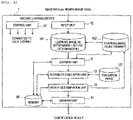
- FIG. 1 is a block diagram illustrating a functional configuration of a machine learning device according to a first embodiment.
- a machine learning device 1 includes an input unit 10, a learning unit 11, a suitability evaluation unit 12, an update determination unit 13, a drawing unit 14, a control unit 91, a learning image database (DB) (determined) 100, a learning image DB (determined + before determination) 101, an evaluation image 102, and a memory 90.
- the machine learning device 1 may be implemented in an image acquisition device such as an image diagnosis support device, or may be implemented in, as will be described later (third to fourth embodiments), a server to be connected to the image acquisition device via a network.
- the input unit 10, the learning unit 11, the suitability evaluation unit 12, the update determination unit 13, and the drawing unit 14 in the machine learning device 1 may be implemented by a program or a processor that executes the program, or may be implemented by a hardware module.
- Image data is input to the input unit 10.
- the input unit 10 may acquire, as an input image, encoded still image data in a format of JPG, Jpeg2000, PNG, BMP, or the like captured at predetermined time intervals by an image capturing unit such as a camera built in the image acquisition device (not illustrated in FIG. 1 ).
- the input unit 10 may extract the still image data of frames at predetermined intervals from moving image data in a format of MotionJPEG, MPEG, H.264, HD/SDI, or the like, and acquire an image of the still image data as an input image.
- the input unit 10 may acquire the input image from an image capturing unit via a bus, a network, or the like.
- the input unit 10 may acquire an image already stored in a detachable recording medium as an input image.
- the image input by the input unit 10 is stored in the learning image DB (determined + before determination) 101 as a learning image (before determination).
- the learning image DB (determined) 100 stores a plurality of combinations of images determined as learning images and correct labels. Correct labels corresponding to the images are determined.
- the learning image (before determination) includes a plurality of combinations of images before being determined as the learning images and the correct labels. The correct labels corresponding to the images may be changed.
- the learning unit 11 executes the machine learning such that an image of a specific object in the input image is identified as the specific object, for example, an image of a normal tissue or cell is identified as the normal tissue or cell, and an image of an abnormal tissue or cell in the input image is identified as the abnormal tissue or cell.
- the learning unit 11 creates a classifier CA (parameters (a filter coefficient, an offset value, and the like) necessary for identification) based on the learning image DB (determined) 100.
- the learning unit 11 creates a classifier CB based on the learning image DB (determined + before determination) 101 obtained by adding the learning image (before determination) input by the input unit 10 to the learning image DB (determined) 100.
- the suitability evaluation unit 12 calculates identification results and identification values of the classifiers CA and CB using the evaluation image 102.
- the update determination unit 13 controls whether the classifier CA and the learning image DB (determined) 100 can be updated using the identification results and the identification values of the classifiers CA and CB obtained by the suitability evaluation unit 12.
- the update determination unit 13 stores, in the memory 90, information such as later-described Ave dr1 and Ave dr2 that are obtained by the suitability evaluation unit 12, each M drN , the number of updates of the classifier CA and the learning image DB (determined) determined by the update determination unit 13, and transition of the updated Ave dr1 .
- the drawing unit 14 outputs, to an output device such as a display or a printer, the information such as the later-described Ave dr1 and Ave dr2 that are obtained by the suitability evaluation unit 12, each M drN , the number of updates of the classifier CA and the learning image DB (determined) determined by the update determination unit 13, and transition of the updated Ave dr1 .
- the control unit 91 is implemented by, for example, a processor that executes a program, and is connected to each element in the machine learning device 1. Each component of the machine learning device 1 operates as described above autonomously or in response to an instruction from the control unit 91.
- the learning unit 11 executes the machine learning to create the classifier CA from the learning image DB (determined) 100, and to create the classifier CB based on the learning image DB (determined + before determination) 101 obtained by adding the learning image (before determination) input by the input unit 10 to the learning image DB (determined) 100.
- the suitability evaluation unit 12 calculates the identification results and the identification values of the classifiers CA and CB using the evaluation image 102.
- the update determination unit 13 controls whether the classifier CA and the learning image DB (determined) 100 can be updated using the identification results and the identification values of the classifiers CA and CB obtained by the suitability evaluation unit 12.
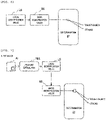
- FIG. 2A is a diagram illustrating a configuration example of hardware of the machine learning device 1 according to the first embodiment.
- the machine learning device 1 includes a CPU (processor) 201 that executes various programs, a memory 202 (main storage device) that stores various programs, and an auxiliary storage device 203 (equivalent to the memory 90) that stores various types of data.
- the machine learning device 1 further includes an output device 204 that outputs an identification result and an update possibility result of the classifier and the learning image DB (determined) 100, an input device 205 that inputs an instruction of a user, an image, or the like, and a communication device 206 that executes communication with another device.
- These components in the machine learning device 1 are connected to one another by a bus 207.
- the CPU 201 reads various programs from the memory 202 as necessary and executes the programs.
- the memory 202 stores the input unit 10, the learning unit 11, the suitability evaluation unit 12, the update determination unit 13, and the drawing unit 14 as programs.
- the auxiliary storage device 203 stores the learning image (before determination), parameters of the classifiers CA and CB generated by the learning unit 11, the identification results and the identification values generated by the suitability evaluation unit 12, and an update result determined by the update determination unit 13.
- the auxiliary storage device 203 further stores the learning image DB (determined) 100, the learning image DB (determined + before determination) 101, position information for drawing a detection frame generated by the drawing unit 14, and the like.
- Each of the memory 202, the auxiliary storage device 203, and a combination thereof is a storage device.
- the output device 204 includes devices such as a display, a printer, and a speaker.
- the output device 204 is a display device, and displays data generated by the drawing unit 14 on a screen.
- the input device 205 includes devices such as a keyboard, a mouse, and a microphone.
- the instruction (including determination of a learning image (before determination) input) of the user is input to the machine learning device 1 by the input device 205.
- the communication device 206 is not essential in the machine learning device 1, and in a case in which a communication device is provided in a personal computer or the like connected to the image acquisition device, the machine learning device 1 may not hold the communication device 206.
- the communication device 206 receives, for example, data (including an image) transmitted from another device (for example, a server) to be connected via a network, and stores the data in the auxiliary storage device 203.
- the machine learning device executes the machine learning using the images in the learning image databases to create a plurality of classifiers, and further evaluates the plurality of created classifiers to obtain evaluation results.
- the machine learning device can create the classifier capable of identifying the object (for example, a tissue or a cell) in the image with higher accuracy and the learning image database including the image contributing to a continuous improvement in identification accuracy of the classifier by determining the evaluation results and controlling whether the classifier and the learning image database can be updated.
- FIG. 2B illustrates a configuration example of the learning unit 11.
- the learning unit 11 includes a feature extraction unit 111, a local identification unit 112, and an overall identification unit 113.
- the feature extraction unit 111 obtains a feature amount of the input image.
- FIG. 3 illustrates an example of obtaining the feature amount.
- CNN in FIG. 3 represents a convolutional neural network.
- the feature extraction unit 111 obtains a feature amount FAi of an object (for example, a tissue or a cell) of an input image Ai from the input image Ai using a feature extractor FEA that executes a calculation according to Equation 1.
- the learning unit 11 obtains a filter coefficient wj by the machine learning such that an image of each object is identified as each object (a normal tissue or a normal cell is identified as a normal tissue or a normal cell, or an abnormal tissue or an abnormal cell is identified as an abnormal tissue or an abnormal cell).
- pj represents a pixel value
- bi represents an offset value
- m represents the number of filter coefficients
- h represents a nonlinear function.
- the feature extraction unit 111 obtains a feature amount fi of any filter i by obtaining a calculation result of each filter 42 from the upper left to the lower right of a target image (for example, a pathological tissue image) 41 according to Equation 1.
- a matrix of feature amounts fi obtained by the feature extractor FEA is set as the feature amount FAi of the input image Ai. A method for creating the feature extractor FEA will be described later.
- the local identification unit 112 calculates a value of an object likelihood (for example, a lesion likelihood) for each local region according to Equation 2 using the feature amount FAi of the feature extractor FEA obtained by the feature extraction unit 111 and a nonlinear function NF (for example, a sigmoid function). The local identification unit 112 determines, based on the calculated value, whether an object in the input image Ai is an object (for example, a normal cell or an abnormal cell) to be detected.
- an object likelihood for example, a lesion likelihood
- LS represents a local identification value including a three-dimensional array of a class, a height, and a width
- FAi represents a feature amount including a three-dimensional array of a feature amount number, a height, and a width that are obtained by the feature extraction unit 111.
- W represents a filter for calculating a local identification value including a four-dimensional array of a class, a feature amount number, a height, and a width
- B represents an offset value for calculating a local identification value including a one-dimensional array of a class.
- c represents an index of the class
- y represents an index of the feature amount in a vertical direction
- x represents an index of the feature amount in a horizontal direction
- fy represents an index of the filter in the vertical direction
- fx represents an index of the filter in the horizontal direction
- j represents an index of the filter.
- the local identification value is calculated using a Convolution process, but the method for calculating the local identification value is not limited thereto.
- the local identification value may be obtained by applying the Convolution process, the nonlinear function, or the like a plurality of times, or the local identification value may be calculated by inputting a feature amount at each coordinate to another identification method such as Random forest or SVM.
- the overall identification unit 113 obtains a basic identification value BS using a local identification value LS obtained by the local identification unit 112 and the nonlinear function (for example, a sigmoid function).
- the overall identification unit 113 determines whether the object in the input image Ai is an object (for example, a normal cell or an abnormal cell) to be detected using the basic identification value BS as a calculation result R indicating a value of the object likelihood (for example, the lesion likelihood) of each object image in the input image (S1).
- the basic identification value BS is calculated using a global identification value GS in Equation 3 and according to Equation 4.
- GS represents a global identification value including a one-dimensional array of a class
- FAi represents the feature amount including the three-dimensional array of the feature amount number, the height, and the width that are obtained by the feature extraction unit 111
- W represents a filter for calculating a global identification value including a four-dimensional array of a class, a feature amount number, a height, and a width
- B represents an offset value for calculating a global identification value including a one-dimensional array of a class
- c represents an index of the class.
- y represents the index of the feature amount in the vertical direction
- x represents the index of the feature amount in the horizontal direction
- fy represents the index of the filter in the vertical direction
- fx represents the index of the filter in the horizontal direction
- j represents the index of the filter.
- Label in Equation 4 indicates a teacher label (correct label) in an image unit including a one-dimensional array of a class.
- the learning unit 11 to be described later obtains the coefficient of the filter W and the offset value B that are to be updated in Equation 3 by the machine learning.
- NLL represents a loss function, for example, a negative log likelihood.
- the global identification value is calculated using the Convolution process and an average process in the horizontal and vertical directions, but the method for calculating the global identification value is not limited thereto.
- the average process in the horizontal and vertical directions may be executed after the Convolution process, the nonlinear function, or the like is applied a plurality of times, or average values in the horizontal and vertical directions of values obtained by inputting the feature amount at each coordinate to another identification method such as Random forest or SVM may be calculated.
- the process is not limited to the average process in the horizontal and vertical directions, and may be a summation process or the like.
- the learning unit 11 learns the feature amount of each object using a present machine learning technique such that the overall identification unit 113 identifies each object in the input image as each object (for example, a normal tissue or a normal cell is identified as a normal tissue or a normal cell, or an abnormal tissue or an abnormal cell is identified as an abnormal tissue or an abnormal cell) using the local identification value, and obtains the coefficient of the filter W and the offset value B.
- the convolutional neural network may be used as the machine learning technique.
- the learning unit 11 calculates the feature amount FAi of the input image Ai according to Equation 1 using the input image Ai (for example, a pathological image). Next, the learning unit 11 obtains the local identification value LS based on the feature amount FAi according to Equation 2. The learning unit 11 calculates the parameters in Equations 1 to 3 using the basic identification value BS obtained based on the local identification value LS, such that the image of the target object is determined as the target object (for example, an abnormal tissue or an abnormal cell is determined as an abnormal tissue or an abnormal cell, and a normal tissue or a normal cell is determined as a normal tissue or a normal cell).
- the learning unit 11 repeatedly executes processes of the feature extraction unit 111, the local identification unit 112, and the overall identification unit 113 using a plurality of learning images of the learning image DB (determined) 100, and obtains the parameters (the filter coefficient wj, the coefficient of the filter W, the offset values bi and B, and the like) shown in Equations 1, 2, and 3.
- the learning unit 11 creates the classifier CA including the feature extractor that calculates the feature amount of the input image based on the input image, a local classifier that obtains the local identification value, and a global classifier that obtains the global identification value. Similarly, the learning unit 11 obtains the parameters (the filter coefficient wj, the coefficient of the filter W, the offset values bi and B, and the like) shown in Equations 1, 2, and 3 using a plurality of learning images in the learning image DB (determined + before determination) 101, and creates the classifier CB. The learning unit 11 stores the obtained parameters (the filter coefficient wj, the coefficient of the filter W, the offset values bi and B, and the like) in the memory 90.
- the learning unit 11 creates the classifiers CA and CB by adjusting a balance between the numbers of images of identification types of the learning image DB (determined) 100 and the learning image DB (determined + before determination) 101. For example, the learning unit 11 adjusts the number of images such that a difference in the number of images between the identification types of the learning image DB (determined) 100 and the learning image DB (determined + before determination) 101 is smaller than a predetermined threshold. Accordingly, more appropriate evaluations can be executed.
- the suitability evaluation unit 12 evaluates the classifiers by obtaining Ave drX (Ave dr1 ) of the classifier CA and Ave drX (Ave dr2 ) of the classifier CB according to Equation 5 using the evaluation image 102.
- N represents the number of types to be identified.
- the update determination unit 13 does not update the classifier CA and the learning image DB (determined), and changes an order of images in the learning image DB (before determination), for example, at random.
- the learning unit 11 executes relearning using the learning image DB (before determination) whose order of images is changed.
- the update determination unit 13 changes correct labels of several images in the learning image DB (before determination) automatically or according to an instruction of the user via the input device. For example, the update determination unit 13 may determine whether there is a change in the correct label for each mini batch of the images.
- the update determination unit 13 records, in the memory 90 or a log file, Ave dr1 and Ave dr2 that are obtained by the suitability evaluation unit 12, each M drN , the number of updates of the classifier CA and the learning image DB (determined) 100 that are determined by the update determination unit 13, transition of the updated Ave dr1 , and the like.
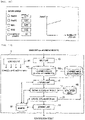
- the drawing unit 14 displays, on a graphical user interface (GUI) illustrated in FIG. 11 , Ave dr1 and Ave dr2 that are obtained by the suitability evaluation unit 12, each M drN , the number of updates of the classifier CA and the learning image DB (determined) that are determined by the update determination unit 13, the transition of the updated Ave dr1 , and the like.
- GUI graphical user interface
- Ave dr1 is displayed as 0.71
- Ave dr2 is displayed as 0.81
- M dr1 is displayed as 0.80
- M dr2 is displayed as 0.82
- the number of updates is displayed as 10.
- the drawing unit 14 displays an identification result obtained by each classifier for an unknown image input by the input unit 10.
- the drawing unit 14 may draw a detection frame 82 in an input target image 81 in order to indicate a portion (for example, a portion suspected as an abnormal tissue or an abnormal cell) of the object to be detected.
- the drawing unit 14 may display the input target image 81 as it is without drawing the detection frame 82 on the input target image 81.
- the drawing unit 14 displays a result (for example, a tumor) 83 of the determined object likelihood.
- the drawing unit 14 is not an essential component of the machine learning device 1, and when the image diagnosis support device is provided with a drawing unit, the machine learning device 1 may not hold the drawing unit 14.
- FIG. 9 is a flowchart illustrating an operation of the learning unit 11 of the machine learning device 1 according to the first embodiment.
- the learning unit 11 is described as an operation subject. It may be interpreted that the CPU 201 is the operation subject, and the CPU 201 executes each processing unit as a program.
- the input unit 10 receives the learning input image Ai and outputs the input image Ai to the learning unit 11.
- the learning unit 11 By executing the machine learning and according to the above-mentioned Equation 1, the learning unit 11 obtains a feature amount of an object (for example, a tissue or a cell) in the input image Ai using a filter, and creates the feature extractor FEA. The learning unit 11 obtains the filter coefficient wj and the offset value bi for the feature amount FAi.
- a feature amount of an object for example, a tissue or a cell
- the learning unit 11 obtains the local identification value LS based on the feature amount FAi, calculates a value of the object likelihood (for example, a lesion likelihood) for each local region, and obtains the parameters (the coefficient of the filter W, the offset value B, or the like) in Equation 2 for obtaining the local identification value so as to determine whether the object in the input image Ai is an object (for example, a normal cell or an abnormal cell) to be detected.
- the object likelihood for example, a lesion likelihood
- the parameters the coefficient of the filter W, the offset value B, or the like
- the learning unit 11 By executing the machine learning and using the basic identification value BS obtained based on the local identification value LS, the learning unit 11 obtains the parameters (the coefficient of the filter W, the offset value B, and the like) in Equation 3 so as to determine the image of the target object as the target object (for example, an abnormal tissue or an abnormal cell is determined as an abnormal tissue or an abnormal cell, and a normal tissue or a normal cell is determined as a normal tissue or a normal cell).
- the parameters the coefficient of the filter W, the offset value B, and the like
- the learning unit 11 stores the parameters (the filter coefficient wj, the coefficient of the filter W, the offset values bi and B, and the like) in Equations 1, 2, and 3 in the memory 90.
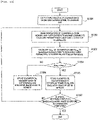
- FIG. 10 is a flowchart illustrating an operation of the machine learning device 1 according to the present embodiment.
- each processing unit (the input unit 10, the learning unit 11, and the like) is described as an operation subject. It may be interpreted that the CPU 201 is the operation subject, and the CPU 201 executes each processing unit as a program.
- the input unit 10 outputs the input image Ai of the learning image DB (determined + before determination) to the learning unit 11.
- the learning unit 11 reads, from the memory 90, the parameters in Equations 1, 2, and 3 related to the classifier CA.
- the learning unit 11 further performs the machine learning using the learning image DB (determined + before determination) 101, and calculates the respective parameters in Equations 1, 2, and 3 related to the classifier CB.
- the suitability evaluation unit 12 calculates Ave dr1 of the classifier CA and Ave dr2 of the classifier CB according to Equation 5 using the parameters of the classifiers CA and CB and the evaluation image.
- the update determination unit 13 compares the calculated Ave dr1 and Ave dr2 . In a case in which Ave dr2 > Ave dr1 , the update determination unit 13 proceeds the process to step 1005. On the other hand, in a case in which the calculation result Ave dr2 ⁇ Ave dr1 , the update determination unit 13 proceeds the process to step 1006.
- the update determination unit 13 proceeds the process to step 1007.
- the update determination unit 13 proceeds the process to step 1008.
- the update determination unit 13 proceeds the process to step 1008.
- the update determination unit 13 proceeds the process to step 1009.
- the update determination unit 13 updates the classifier CA and the learning image DB (determined) 100.
- the update determination unit 13 changes the order of the images in the learning image DB (determined + before determination).
- the update determination unit 13 replaces the correct label of the learning image DB (before determination).
- the update determination unit 13 checks whether an update determination for all the images in the learning image DB (determined + before determination) is completed, and proceeds the process to step 1011 if the update determination is completed. On the other hand, if the update determination is not completed, the update determination unit 13 returns the process to step 1002 and repeats step 1002 to step 1009.
- the update determination unit 13 stores information of the classifier CA in the memory 90 (equivalent to the auxiliary storage device 203).
- the machine learning device automatically determines an image that contributes to the improvement in identification accuracy of the classifier, and controls whether the classifier and the learning image database can be updated according to a determination result. More specifically, the machine learning device executes the machine learning using images in a plurality of learning image databases to create a plurality of classifiers, and further evaluates the plurality of created classifiers to obtain evaluation results. The machine learning device determines a learning image database and a classifier that are to be used by determining a plurality of evaluation results and controlling whether the classifiers and the learning image databases can be updated. Accordingly, it is possible to create the classifier capable of identifying the object (for example, a tissue or a cell) in the image with high accuracy and the learning image database including the image contributing to a continuous improvement in identification accuracy of the classifier.
- the object for example, a tissue or a cell
- learning images to be input includes images that do not contribute to the improvement in identification accuracy of the classifier
- the input learning images do not contribute to the improvement in identification accuracy of the classifier at that time, it is possible to use the learning images as images contributing to the improvement in identification accuracy of the classifier by changing the order of the images to be learned and relearning the images.
- the machine learning device 1 according to a second embodiment illustrated in FIG. 12 includes many components similar to those according to the first embodiment illustrated in FIG. 1 , includes a learning image DB (before determination) 201 instead of the learning image DB (determined + before determination) 101 according to the first embodiment, and includes an update determination unit 23.
- a learning image DB before determination
- a learning image DB determined + before determination
- the machine learning device 1 executes the machine learning using images in the learning image databases to create a plurality of classifiers, and further evaluates the plurality of created classifiers to obtain evaluation results.
- the machine learning device 1 determines a plurality of evaluation results and controls whether the classifier and the learning image database can be updated or creation of the classifier and the learning image database. Accordingly, it is possible to create, for example, the classifier capable of identifying the object (for example, a tissue or a cell) in the image with high accuracy and the learning image database including an image contributing to a continuous improvement in identification accuracy of the classifier.
- the classifier and the learning image database are suitable for each facility or each period.
- the learning image DB (before determination) 201 stores an image input by the input unit 10, and does not store other images.
- the learning unit 11 creates the classifier CA based on the learning image DB (determined) 100, and creates the classifier CB based on the learning image DB (before determination) 201.
- the suitability evaluation unit 12 evaluates the classifiers by obtaining Ave dr1 of the classifier CA and Ave dr2 of the classifier CB using the evaluation image.
- the update determination unit 23 controls whether the classifiers CA and CB, the learning image DB (determined) 100, and the learning image DB (before determination) 201 can be updated or creation of the classifiers CA and CB, the learning image DB (determined) 100, and the learning image DB (before determination) 201 by comparing a plurality of Ave drX obtained by the suitability evaluation unit 12.
- the update determination unit 23 stores the classifier CA and the learning image DB (determined) as a set with the evaluation image.
- a configuration example of the hardware of the machine learning device 1 according to the present embodiment has the same configuration as that in FIG. 2 .
- the memory 202 is provided with the update determination unit 23.
- the auxiliary storage device 203 of the machine learning device 1 stores: the calculation result Ave drX obtained by the suitability evaluation unit 12; the classifiers CA and CB, the learning image DB (determined) 100, the learning image DB (before determination) 201, and the evaluation image that are determined by the update determination unit 23; and the parameters in Equations 1, 2, and 3 generated by the learning unit 11.
- FIG. 13 is a flowchart illustrating an operation of the machine learning device 1 according to the present embodiment.
- each processing unit (the input unit 10, the learning unit 11, and the like) is described as an operation subject. It may be interpreted that the CPU 201 is the operation subject, and the CPU 201 executes each processing unit as a program.
- the input unit 10 outputs the input image Ai of the learning image DB (before determination) 201 to the learning unit 11.
- the learning unit 11 reads, from the memory 90, the parameters in Equations 1, 2, and 3 related to the classifier CA.
- the machine learning is executed using the learning image DB (before determination) 201, and the parameters in Equations 1, 2, and 3 related to the classifier CB is calculated.
- the suitability evaluation unit 12 calculates Ave dr1 of the classifier CA and Ave dr2 of the classifier CB according to Equation 5 using the parameters of the classifiers CA and CB and the evaluation image.
- the update determination unit 13 compares the calculated Ave dr1 and Ave dr2 . In a case in which Ave dr2 > Ave dr1 , the update determination unit 13 proceeds the process to step 1305. On the other hand, in a case in which Ave dr2 ⁇ Ave dr1 , the update determination unit 13 proceeds the process to step 1306.
- the update determination unit 13 stores the classifier CB, the learning image DB (before determination) 201, the evaluation image, and the calculation results (Ave dr2 and Ave dr1 ) as a set in the memory 90 (equivalent to the auxiliary storage device 203).
- the update determination unit 13 stores the classifier CA, the learning image DB (determined) 100, the evaluation image, and the calculation results (Ave dr2 and Ave dr1 ) as a set in the memory 90 (equivalent to the auxiliary storage device 203) .
- the update determination unit 13 checks whether an update determination for all the images in the learning image DB (before determination) 201 is completed, and ends the process if the update determination is completed. On the other hand, if the update determination is not completed, the update determination unit 13 returns the process to step 1302 and repeats step 1302 to step 1306.
- the machine learning is executed using the images in the plurality of learning image databases to create a plurality of classifiers, and the plurality of created classifiers are further evaluated to obtain evaluation results.
- the learning image database and the classifier that are to be used are determined by determining a plurality of evaluation results and controlling whether the classifier and the learning image database can be updated or creation of the classifier and the learning image database. Accordingly, it is possible to obtain, for each facility, the classifier capable of identifying the object (for example, a tissue or a cell) in the image with high accuracy and the learning image database.
- the classifier, the learning image DB, the evaluation images, and the calculation results are set as a set to create data, so that performance of the classifier created according to data of another facility (a hospital or the like) can be determined by comparing the calculation results.
- the machine learning device 1 may hold a plurality of learning image DBs (determined) 100, and execute the above-mentioned process between each of the plurality of learning image DBs (determined) 100 and the learning image DB (before determination) 201. Accordingly, a more appropriate learning image DB and a more appropriate classifier can be obtained.
- FIG. 14 is a functional block diagram illustrating a configuration of a remote diagnosis support system 1400 according to a third embodiment.
- the remote diagnosis support system 1400 includes a server (computer) 1403 and an image acquisition device 1405.
- the image acquisition device 1405 is, for example, a device such as a virtual slide device or a personal computer equipped with a camera, and includes an image capturing unit 1401 that captures a new image and a display unit 1404 that displays a determination result transmitted from the server 1403.
- the image acquisition device 1405 includes a communication device that transmits image data to the server 1403 and receives data transmitted from the server 1403.
- the server 1403 includes the image diagnosis support device 5 that executes, using the machine learning device 1 according to the first embodiment or the second embodiment, an image process on the image data transmitted from the image acquisition device 1405, and a storage unit 1402 that stores an identification result output from the image diagnosis support device 5.
- the server 1403 includes a communication device that receives the image data transmitted from the image acquisition device 1405 and transmits determination result data to the image acquisition device 1405.
- the image diagnosis support device 5 identifies, for objects (for example, a tissue or a cell) in the image generated by the image capturing unit 1401, the presence or absence of an object (for example, an abnormal tissue or an abnormal cell (for example, a cancer)) to be detected using the classifier (the current classifier) obtained by the machine learning device 1.
- the display unit 1404 displays the identification result transmitted from the server 1403 on a display device screen of the image acquisition device 1405.
- a regenerative medical device including an image capturing unit, a culture device for iPS cells, an MRI, an ultrasonic image capturing device, or the like may be used.
- the remote diagnosis support system accurately classifies whether an object (for example, a tissue or a cell) in an image transmitted from a facility or the like at a different location is an object (an abnormal tissue, an abnormal cell, or the like) to be detected using the parameters of the classifiers obtained by the machine learning device 1. Further, a classification result is transmitted to the above-described facility or the like at a different location, and the classification result is displayed on the display unit of the image acquisition device in the facility or the like.
- an object for example, a tissue or a cell
- FIG. 15 is a functional block diagram showing a configuration of a network contract service providing system 1500 according to a fourth embodiment.
- the network contract service providing system 1500 includes a server (computer) 1503 and an image acquisition device 1505.
- the image acquisition device 1505 is, for example, a device such as a virtual slide device or a personal computer equipped with a camera.
- the image acquisition device 1505 includes an image capturing unit 1501 that captures a new image, a storage unit 1504 that stores a classifier (a current classifier) transmitted from the server 1503, and the image diagnosis support device 5.
- a classifier a current classifier
- the image diagnosis support device 5 reads the classifier transmitted from the server 1503, and determines whether an object (for example, a tissue or a cell) in an image newly captured by the image capturing unit 1501 is an object (for example, an abnormal tissue or an abnormal cell) to be detected using the classifier obtained by the machine learning device 1 according to the first embodiment or the second embodiment.
- an object for example, a tissue or a cell
- the image acquisition device 1505 includes a communication device that transmits image data to the server 1503 and receives data transmitted from the server 1503.
- the server 1503 includes the image diagnosis support device 5 and a storage unit 1502 that stores a classifier output from the machine learning device 1 of the image diagnosis support device 5.
- the image diagnosis support device 5 creates a classifier from the machine learning device 1 according to the first embodiment or the second embodiment on the image data transmitted from the image acquisition device 1505, and further executes an identification process using the created classifier.
- the server 1503 includes a communication device that receives image data transmitted from the image acquisition device 1505 and transmits a classifier to the image acquisition device 1505.
- the machine learning device 1 in the image diagnosis support device 5 executes the machine learning so as to determine an object (for example, a tissue or a cell) in an image captured by the image capturing unit 1501 as an object (for example, a normal tissue or a normal cell is a normal tissue or a normal cell, and an abnormal tissue or an abnormal cell is an abnormal tissue or an abnormal cell) to be detected, and creates a classifier.
- the classifier calculates a feature amount of an object (for example, a tissue or a cell) in an image of a facility or the like at a different location.
- the storage unit 1504 stores the classifier transmitted from the server 1503.
- the image diagnosis support device 5 in the image acquisition device 1505 reads the classifier from the storage unit 1504, classifies whether the object (for example, a tissue or a cell) in the image newly captured by the image capturing unit 1501 of the image acquisition device 1505 is an object (for example, an abnormal tissue or an abnormal cell) to be detected using the classifier, and displays the classification result on a display screen of the output device (display device) 204 of the image diagnosis support device 5.
- the object for example, a tissue or a cell
- the regenerative medical device including the image capturing unit, the culture device for iPS cells, the MRI, the ultrasonic image capturing device, or the like may be used.
- the network contract service providing system executes the machine learning so as to classify an object (for example, a tissue or a cell) in an image transmitted from a facility or the like at a different location into an object (for example, a normal tissue or a normal cell is a normal tissue or a normal cell, and an abnormal tissue or an abnormal cell is an abnormal tissue or an abnormal cell) to be detected, and creates a classifier.
- the network contract service providing system transmits the classifier to the facility or the like at a different location, and reads the classifier by the image acquisition device in the facility or the like.
- the classifier in the image acquisition device classifies whether an object (for example, a tissue or a cell) in a new image is an object (for example, an abnormal tissue or an abnormal cell) to be detected.
- the embodiments described above can be modified as follows.
- the learning unit 11 obtains a feature amount using a filter by executing the machine learning, and other feature amounts such as HOG may be used.
- the learning unit 11 may use a square error, a Hinge loss, or the like instead of the negative log likelihood as the loss function.
- the learning unit 11 may generate the classifier according to any method different from the method according to the above-mentioned embodiment.
- the updating or generation of the classifier and the learning image database has been described in the above-mentioned embodiment.
- the updating or generation of the classifier and the learning database according to the above-mentioned embodiment can also be applied to a data sample different from an image, for example, a voice data sample, a sensor data sample, and a text data sample.
- the invention can also be implemented by a program code of software for implementing the functions according to the embodiments.
- a storage medium in which the program code is recorded is provided to a system or a device, and a computer (or a CPU or an MPU) of the system or the device reads the program code stored in the storage medium.
- the program code itself read out from the storage medium implements the functions according to the above-described embodiment, and the program code itself and the storage medium storing the program code constitute the invention.
- Examples of the storage medium that supplies such a program code include a flexible disk, a CD-ROM, a DVD-ROM, a hard disk, an optical disk, a magneto-optical disk, a CD-R, a magnetic tape, a nonvolatile memory card, and a ROM.
- An operating system (OS) or the like running on the computer may execute a part or all of an actual process based on an instruction of the program code, and the function according to the above-described embodiment may be implemented by the process. Further, after the program code read out from the storage medium is written in the memory on the computer, the CPU or the like of the computer may execute a part or all of the actual process based on the instruction of the program code, and the function according to the above-described embodiment may be implemented by the process.
- the program code may be stored in a storage unit such as a hard disk or a memory of a system or a device, or in a storage medium such as a CD-RW or a CD-R, and a computer (or a CPU or an MPU) of the system or the device may read out and execute the program code stored in the storage unit or the storage medium at the time of use.
- a storage unit such as a hard disk or a memory of a system or a device
- a storage medium such as a CD-RW or a CD-R
- a computer or a CPU or an MPU
- control lines and information lines considered to be necessary for description are shown, and all of the control lines and information lines are not necessarily shown for the product. All configurations may be connected to one another.
Landscapes
- Engineering & Computer Science (AREA)
- Theoretical Computer Science (AREA)
- Health & Medical Sciences (AREA)
- Data Mining & Analysis (AREA)
- Physics & Mathematics (AREA)
- Software Systems (AREA)
- General Physics & Mathematics (AREA)
- Medical Informatics (AREA)
- Artificial Intelligence (AREA)
- Evolutionary Computation (AREA)
- General Health & Medical Sciences (AREA)
- General Engineering & Computer Science (AREA)
- Computing Systems (AREA)
- Biomedical Technology (AREA)
- Mathematical Physics (AREA)
- Computer Vision & Pattern Recognition (AREA)
- Life Sciences & Earth Sciences (AREA)
- Public Health (AREA)
- Molecular Biology (AREA)
- Epidemiology (AREA)
- Computational Linguistics (AREA)
- Biophysics (AREA)
- Primary Health Care (AREA)
- Databases & Information Systems (AREA)
- Pathology (AREA)
- Nuclear Medicine, Radiotherapy & Molecular Imaging (AREA)
- Radiology & Medical Imaging (AREA)
- Bioinformatics & Cheminformatics (AREA)
- Bioinformatics & Computational Biology (AREA)
- Evolutionary Biology (AREA)
- Multimedia (AREA)
- Image Analysis (AREA)
- Magnetic Resonance Imaging Apparatus (AREA)
- Ultra Sonic Daignosis Equipment (AREA)
Abstract
Description
- The present application claims priority from
Japanese Patent Application No. 2019-181165 filed on October 1, 2019 - The present invention relates to machine learning, and is applicable to, for example, an image processing technique using machine learning for detecting a specific object (for example, cancer cells or bubbles on a liquid surface) included in a captured image.
- In recent years, as an image recognition technique, an image recognition technique using machine learning or the like has been studied. By using Deep Learning or the like, detection accuracy of an object in an image is improved. In order to develop a classifier that detects the object in the image, for example, a technique proposed in
PTL 1 is provided. InPTL 1, a plurality of learning image data groups are set to execute machine learning, and parameters of a neural network are calculated. - PTL 1:
JP-A-2016-143351 - However, as in
PTL 1, even when learning images are divided into a plurality of image groups and relearned to obtain parameters, the image groups may include an image that does not contribute to an improvement in identification accuracy of a classifier, and the identification accuracy of the classifier is not necessarily improved. InPTL 1, it is impossible to create a learning image database capable of continuously improving the identification accuracy of the classifier. - A machine learning device according to an aspect of the invention includes: a processor configured to process a data sample; and a storage device configured to store a result of the process. The processor is configured to: create a plurality of classifiers based on a plurality of learning databases, each of the plurality of learning databases storing a plurality of learning data samples; create an evaluation result on identification performance of each of the plurality of classifiers; and determine, based on the evaluation result, one learning database among the plurality of learning databases and a classifier to be generated based on the one learning database as a learning database and a classifier that are to be used.
- Further features related to the invention are clarified based on the description of the present specification and accompanying drawings. Aspects of the invention are achieved and implemented utilizing elements, combinations of various elements, the following detailed description, and accompanying claims. It should be understood that the description of the present specification is merely exemplary, and is not intended to limit the scope of claims or application examples of the invention in any sense.
- According to an aspect of the invention, an appropriate learning database and an appropriate classifier can be created and used.
-
- [
FIG. 1] FIG. 1 is a block diagram illustrating functions of a machine learning device according to a first embodiment. - [
FIG. 2A] FIG. 2A is a diagram illustrating a configuration example of hardware of the machine learning device according to the first embodiment. - [
FIG. 2B] FIG. 2B is a diagram illustrating a configuration example of a learning unit according to the first embodiment. - [
FIG. 3] FIG. 3 is a diagram illustrating an example of an operation of the learning unit according to the first embodiment. - [
FIG. 4] FIG. 4 is a diagram illustrating an example of the operation of the learning unit according to the first embodiment. - [
FIG. 5] FIG. 5 is a diagram illustrating an example of the operation of the learning unit according to the first embodiment. - [
FIG. 6] FIG. 6 is a diagram illustrating an example of the operation of the learning unit according to the first embodiment. - [
FIG. 7] FIG. 7 is a diagram illustrating an example of the operation of the learning unit according to the first embodiment. - [
FIG. 8] FIG. 8 is a diagram illustrating an example of an operation of a drawing unit according to the first embodiment. - [
FIG. 9] FIG. 9 is a flowchart illustrating the operation of the learning unit according to the first embodiment. - [
FIG. 10] FIG. 10 is a flowchart illustrating an overall operation of the machine learning device according to the first embodiment. - [
FIG. 11] FIG. 11 is a diagram illustrating an example of an update status display of the drawing unit according to the first embodiment. - [
FIG. 12] FIG. 12 is a block diagram illustrating functions of a machine learning device according to a second embodiment. - [
FIG. 13] FIG. 13 is a flowchart illustrating an overall operation of the machine learning device according to the second embodiment. - [
FIG. 14] FIG. 14 is a diagram illustrating a schematic configuration of a remote diagnosis support system on which an image diagnosis support device including a machine learning device according to a third embodiment is mounted. - [
FIG. 15] FIG. 15 is a diagram illustrating a schematic configuration of a network contract service providing system on which an image diagnosis support device including a machine learning device according to a fourth embodiment is mounted. - In an embodiment, machine learning is executed using images in learning image databases to create a plurality of classifiers, evaluation results are further obtained by evaluating the plurality of created classifiers, and whether the classifiers and the learning image databases can be updated is controlled by determining a plurality of evaluation results. Accordingly, a machine learning device and a machine learning method are provided for implementing creations of a classifier capable of identifying an object (for example, a tissue or a cell) in an image with high accuracy and a learning image database including an image contributing to a continuous improvement in identification accuracy of the classifier.
- Hereinafter, embodiments of the invention will be described with reference to the accompanying drawings. In the accompanying drawings, functionally the same element may be displayed with the same number. The accompanying drawings show specific embodiments and implementation examples according to the principle in the invention. The accompanying drawings, the embodiments, and the implementation examples are for understanding the invention and are not used to limit the invention.
- The present embodiment is described in sufficient detail in order for a person skilled in the art to implement the invention, but it should be understood that other implementations and aspects are possible, and changes in configuration and structure and replacement of various elements are possible without departing from the scope and spirit of the technical idea of the invention. Therefore, the following description should not be construed as being limited to the present embodiment.
- Further, as will be described later, the embodiments of the invention may be implemented by software running on a general purpose computer, or may be implemented by dedicated hardware or a combination of software and hardware. Hereinafter, each process in the embodiments of the invention will be described with "each processing unit (for example, a learning unit) serving as a program" as a subject (operation subject). Since a program is executed by a processor (CPU or the like) to execute a determined process using a memory and a communication port (communication control device), the description may be made with the processor as the subject.
-
FIG. 1 is a block diagram illustrating a functional configuration of a machine learning device according to a first embodiment. Amachine learning device 1 includes aninput unit 10, alearning unit 11, asuitability evaluation unit 12, anupdate determination unit 13, adrawing unit 14, acontrol unit 91, a learning image database (DB) (determined) 100, a learning image DB (determined + before determination) 101, anevaluation image 102, and amemory 90. Themachine learning device 1 may be implemented in an image acquisition device such as an image diagnosis support device, or may be implemented in, as will be described later (third to fourth embodiments), a server to be connected to the image acquisition device via a network. - The
input unit 10, thelearning unit 11, thesuitability evaluation unit 12, theupdate determination unit 13, and thedrawing unit 14 in themachine learning device 1 may be implemented by a program or a processor that executes the program, or may be implemented by a hardware module. - Image data is input to the
input unit 10. For example, theinput unit 10 may acquire, as an input image, encoded still image data in a format of JPG, Jpeg2000, PNG, BMP, or the like captured at predetermined time intervals by an image capturing unit such as a camera built in the image acquisition device (not illustrated inFIG. 1 ). - The
input unit 10 may extract the still image data of frames at predetermined intervals from moving image data in a format of MotionJPEG, MPEG, H.264, HD/SDI, or the like, and acquire an image of the still image data as an input image. Theinput unit 10 may acquire the input image from an image capturing unit via a bus, a network, or the like. Theinput unit 10 may acquire an image already stored in a detachable recording medium as an input image. The image input by theinput unit 10 is stored in the learning image DB (determined + before determination) 101 as a learning image (before determination). - The learning image DB (determined) 100 stores a plurality of combinations of images determined as learning images and correct labels. Correct labels corresponding to the images are determined. The learning image (before determination) includes a plurality of combinations of images before being determined as the learning images and the correct labels. The correct labels corresponding to the images may be changed.
- The
learning unit 11 executes the machine learning such that an image of a specific object in the input image is identified as the specific object, for example, an image of a normal tissue or cell is identified as the normal tissue or cell, and an image of an abnormal tissue or cell in the input image is identified as the abnormal tissue or cell. Thelearning unit 11 creates a classifier CA (parameters (a filter coefficient, an offset value, and the like) necessary for identification) based on the learning image DB (determined) 100. Thelearning unit 11 creates a classifier CB based on the learning image DB (determined + before determination) 101 obtained by adding the learning image (before determination) input by theinput unit 10 to the learning image DB (determined) 100. - The
suitability evaluation unit 12 calculates identification results and identification values of the classifiers CA and CB using theevaluation image 102. Theupdate determination unit 13 controls whether the classifier CA and the learning image DB (determined) 100 can be updated using the identification results and the identification values of the classifiers CA and CB obtained by thesuitability evaluation unit 12. Theupdate determination unit 13 stores, in thememory 90, information such as later-described Avedr1 and Avedr2 that are obtained by thesuitability evaluation unit 12, each MdrN, the number of updates of the classifier CA and the learning image DB (determined) determined by theupdate determination unit 13, and transition of the updated Avedr1. - The
drawing unit 14 outputs, to an output device such as a display or a printer, the information such as the later-described Avedr1 and Avedr2 that are obtained by thesuitability evaluation unit 12, each MdrN, the number of updates of the classifier CA and the learning image DB (determined) determined by theupdate determination unit 13, and transition of the updated Avedr1. - The
control unit 91 is implemented by, for example, a processor that executes a program, and is connected to each element in themachine learning device 1. Each component of themachine learning device 1 operates as described above autonomously or in response to an instruction from thecontrol unit 91. - As described above, in the
machine learning device 1 according to the present embodiment, thelearning unit 11 executes the machine learning to create the classifier CA from the learning image DB (determined) 100, and to create the classifier CB based on the learning image DB (determined + before determination) 101 obtained by adding the learning image (before determination) input by theinput unit 10 to the learning image DB (determined) 100. Thesuitability evaluation unit 12 calculates the identification results and the identification values of the classifiers CA and CB using theevaluation image 102. Theupdate determination unit 13 controls whether the classifier CA and the learning image DB (determined) 100 can be updated using the identification results and the identification values of the classifiers CA and CB obtained by thesuitability evaluation unit 12. -
FIG. 2A is a diagram illustrating a configuration example of hardware of themachine learning device 1 according to the first embodiment. Themachine learning device 1 includes a CPU (processor) 201 that executes various programs, a memory 202 (main storage device) that stores various programs, and an auxiliary storage device 203 (equivalent to the memory 90) that stores various types of data. Themachine learning device 1 further includes anoutput device 204 that outputs an identification result and an update possibility result of the classifier and the learning image DB (determined) 100, aninput device 205 that inputs an instruction of a user, an image, or the like, and acommunication device 206 that executes communication with another device. These components in themachine learning device 1 are connected to one another by abus 207. - The
CPU 201 reads various programs from thememory 202 as necessary and executes the programs. Thememory 202 stores theinput unit 10, thelearning unit 11, thesuitability evaluation unit 12, theupdate determination unit 13, and thedrawing unit 14 as programs. - The
auxiliary storage device 203 stores the learning image (before determination), parameters of the classifiers CA and CB generated by thelearning unit 11, the identification results and the identification values generated by thesuitability evaluation unit 12, and an update result determined by theupdate determination unit 13. Theauxiliary storage device 203 further stores the learning image DB (determined) 100, the learning image DB (determined + before determination) 101, position information for drawing a detection frame generated by thedrawing unit 14, and the like. Each of thememory 202, theauxiliary storage device 203, and a combination thereof is a storage device. - The
output device 204 includes devices such as a display, a printer, and a speaker. For example, theoutput device 204 is a display device, and displays data generated by thedrawing unit 14 on a screen. Theinput device 205 includes devices such as a keyboard, a mouse, and a microphone. The instruction (including determination of a learning image (before determination) input) of the user is input to themachine learning device 1 by theinput device 205. - The
communication device 206 is not essential in themachine learning device 1, and in a case in which a communication device is provided in a personal computer or the like connected to the image acquisition device, themachine learning device 1 may not hold thecommunication device 206. Thecommunication device 206 receives, for example, data (including an image) transmitted from another device (for example, a server) to be connected via a network, and stores the data in theauxiliary storage device 203. - The machine learning device according to the present embodiment executes the machine learning using the images in the learning image databases to create a plurality of classifiers, and further evaluates the plurality of created classifiers to obtain evaluation results. The machine learning device can create the classifier capable of identifying the object (for example, a tissue or a cell) in the image with higher accuracy and the learning image database including the image contributing to a continuous improvement in identification accuracy of the classifier by determining the evaluation results and controlling whether the classifier and the learning image database can be updated.
- Hereinafter, the configuration and the operation of each element will be described in detail.
-
FIG. 2B illustrates a configuration example of thelearning unit 11. Thelearning unit 11 includes afeature extraction unit 111, alocal identification unit 112, and anoverall identification unit 113. - The
feature extraction unit 111 obtains a feature amount of the input image.FIG. 3 illustrates an example of obtaining the feature amount. CNN inFIG. 3 represents a convolutional neural network. For example, thefeature extraction unit 111 obtains a feature amount FAi of an object (for example, a tissue or a cell) of an input image Ai from the input image Ai using a feature extractor FEA that executes a calculation according toEquation 1.
[Math 1]
- The
learning unit 11 obtains a filter coefficient wj by the machine learning such that an image of each object is identified as each object (a normal tissue or a normal cell is identified as a normal tissue or a normal cell, or an abnormal tissue or an abnormal cell is identified as an abnormal tissue or an abnormal cell). Here, pj represents a pixel value, bi represents an offset value, m represents the number of filter coefficients, and h represents a nonlinear function. - As illustrated in
FIG. 4 , thefeature extraction unit 111 obtains a feature amount fi of any filter i by obtaining a calculation result of eachfilter 42 from the upper left to the lower right of a target image (for example, a pathological tissue image) 41 according toEquation 1. For example, a matrix of feature amounts fi obtained by the feature extractor FEA is set as the feature amount FAi of the input image Ai. A method for creating the feature extractor FEA will be described later. - As illustrated in
FIG. 5 , thelocal identification unit 112 calculates a value of an object likelihood (for example, a lesion likelihood) for each local region according to Equation 2 using the feature amount FAi of the feature extractor FEA obtained by thefeature extraction unit 111 and a nonlinear function NF (for example, a sigmoid function). Thelocal identification unit 112 determines, based on the calculated value, whether an object in the input image Ai is an object (for example, a normal cell or an abnormal cell) to be detected.
[Math 2]
- In Equation 2, LS represents a local identification value including a three-dimensional array of a class, a height, and a width, and FAi represents a feature amount including a three-dimensional array of a feature amount number, a height, and a width that are obtained by the
feature extraction unit 111. W represents a filter for calculating a local identification value including a four-dimensional array of a class, a feature amount number, a height, and a width, and B represents an offset value for calculating a local identification value including a one-dimensional array of a class. c represents an index of the class, y represents an index of the feature amount in a vertical direction, x represents an index of the feature amount in a horizontal direction, fy represents an index of the filter in the vertical direction, fx represents an index of the filter in the horizontal direction, and j represents an index of the filter. - In Equation 2, the local identification value is calculated using a Convolution process, but the method for calculating the local identification value is not limited thereto. For example, the local identification value may be obtained by applying the Convolution process, the nonlinear function, or the like a plurality of times, or the local identification value may be calculated by inputting a feature amount at each coordinate to another identification method such as Random forest or SVM.
- As illustrated in
FIG. 6 , theoverall identification unit 113 obtains a basic identification value BS using a local identification value LS obtained by thelocal identification unit 112 and the nonlinear function (for example, a sigmoid function). Theoverall identification unit 113 determines whether the object in the input image Ai is an object (for example, a normal cell or an abnormal cell) to be detected using the basic identification value BS as a calculation result R indicating a value of the object likelihood (for example, the lesion likelihood) of each object image in the input image (S1). - The basic identification value BS is calculated using a global identification value GS in Equation 3 and according to
Equation 4.
[Math 3]
[Math 4]
- In Equation 3, GS represents a global identification value including a one-dimensional array of a class, FAi represents the feature amount including the three-dimensional array of the feature amount number, the height, and the width that are obtained by the
feature extraction unit 111, and W represents a filter for calculating a global identification value including a four-dimensional array of a class, a feature amount number, a height, and a width. B represents an offset value for calculating a global identification value including a one-dimensional array of a class, and c represents an index of the class. y represents the index of the feature amount in the vertical direction, x represents the index of the feature amount in the horizontal direction, fy represents the index of the filter in the vertical direction, fx represents the index of the filter in the horizontal direction, and j represents the index of the filter. - Label in
Equation 4 indicates a teacher label (correct label) in an image unit including a one-dimensional array of a class. Thelearning unit 11 to be described later obtains the coefficient of the filter W and the offset value B that are to be updated in Equation 3 by the machine learning. NLL represents a loss function, for example, a negative log likelihood. - In Equation 3, the global identification value is calculated using the Convolution process and an average process in the horizontal and vertical directions, but the method for calculating the global identification value is not limited thereto. For example, the average process in the horizontal and vertical directions may be executed after the Convolution process, the nonlinear function, or the like is applied a plurality of times, or average values in the horizontal and vertical directions of values obtained by inputting the feature amount at each coordinate to another identification method such as Random forest or SVM may be calculated. The process is not limited to the average process in the horizontal and vertical directions, and may be a summation process or the like.
- The
learning unit 11 learns the feature amount of each object using a present machine learning technique such that theoverall identification unit 113 identifies each object in the input image as each object (for example, a normal tissue or a normal cell is identified as a normal tissue or a normal cell, or an abnormal tissue or an abnormal cell is identified as an abnormal tissue or an abnormal cell) using the local identification value, and obtains the coefficient of the filter W and the offset value B. For example, the convolutional neural network may be used as the machine learning technique. - As illustrated in
FIG. 7 , by executing the machine learning in advance, thelearning unit 11 calculates the feature amount FAi of the input image Ai according toEquation 1 using the input image Ai (for example, a pathological image). Next, thelearning unit 11 obtains the local identification value LS based on the feature amount FAi according to Equation 2. Thelearning unit 11 calculates the parameters inEquations 1 to 3 using the basic identification value BS obtained based on the local identification value LS, such that the image of the target object is determined as the target object (for example, an abnormal tissue or an abnormal cell is determined as an abnormal tissue or an abnormal cell, and a normal tissue or a normal cell is determined as a normal tissue or a normal cell). - The
learning unit 11 repeatedly executes processes of thefeature extraction unit 111, thelocal identification unit 112, and theoverall identification unit 113 using a plurality of learning images of the learning image DB (determined) 100, and obtains the parameters (the filter coefficient wj, the coefficient of the filter W, the offset values bi and B, and the like) shown inEquations 1, 2, and 3. - The
learning unit 11 creates the classifier CA including the feature extractor that calculates the feature amount of the input image based on the input image, a local classifier that obtains the local identification value, and a global classifier that obtains the global identification value. Similarly, thelearning unit 11 obtains the parameters (the filter coefficient wj, the coefficient of the filter W, the offset values bi and B, and the like) shown inEquations 1, 2, and 3 using a plurality of learning images in the learning image DB (determined + before determination) 101, and creates the classifier CB. Thelearning unit 11 stores the obtained parameters (the filter coefficient wj, the coefficient of the filter W, the offset values bi and B, and the like) in thememory 90. - For example, the
learning unit 11 creates the classifiers CA and CB by adjusting a balance between the numbers of images of identification types of the learning image DB (determined) 100 and the learning image DB (determined + before determination) 101. For example, thelearning unit 11 adjusts the number of images such that a difference in the number of images between the identification types of the learning image DB (determined) 100 and the learning image DB (determined + before determination) 101 is smaller than a predetermined threshold. Accordingly, more appropriate evaluations can be executed. - For the classifiers CA and CB created by the
learning unit 11, thesuitability evaluation unit 12 evaluates the classifiers by obtaining AvedrX (Avedr1) of the classifier CA and AvedrX (Avedr2) of the classifier CB according toEquation 5 using theevaluation image 102. InEquation 5, N represents the number of types to be identified. Each MdrN indicates a target detection rate. For example, if N = 2, Mdr1 represents a benign tumor detection rate (average), and Mdr2 represents a malignant tumor detection rate (average). Thesuitability evaluation unit 12 can use a value different from AvedrX, and may use, for example, the maximum value of MdrN.
[Math 5]
- The
update determination unit 13 controls whether the classifier CA and the learning image DB (determined) 100 can be updated by comparing a plurality of AvedrX obtained by thesuitability evaluation unit 12. For example, in a case in which Avedr2 > Avedr1 and Avedr2 > TH1 (for example, TH1 = 0.7) (K1), theupdate determination unit 13 updates the classifier CA and the learning image DB (determined) 100. Specifically, theupdate determination unit 13 updates a content of the learning image DB (determined) 100 to a content of the learning image DB (determined + before determination) 101, and updates a content of the classifier CA to a content of the classifier CB learned in the learning image DB (determined + before determination) 101. - In a case in which Avedr2 ≤ Avedr1 and Avedr2 > TH1 (K2), the
update determination unit 13 does not update the classifier CA and the learning image DB (determined), and changes an order of images in the learning image DB (before determination), for example, at random. Thelearning unit 11 executes relearning using the learning image DB (before determination) whose order of images is changed. In a case of neither K1 nor K2, for relearning, theupdate determination unit 13 changes correct labels of several images in the learning image DB (before determination) automatically or according to an instruction of the user via the input device. For example, theupdate determination unit 13 may determine whether there is a change in the correct label for each mini batch of the images. - The
update determination unit 13 records, in thememory 90 or a log file, Avedr1 and Avedr2 that are obtained by thesuitability evaluation unit 12, each MdrN, the number of updates of the classifier CA and the learning image DB (determined) 100 that are determined by theupdate determination unit 13, transition of the updated Avedr1, and the like. - As an example, the
drawing unit 14 displays, on a graphical user interface (GUI) illustrated inFIG. 11 , Avedr1 and Avedr2 that are obtained by thesuitability evaluation unit 12, each MdrN, the number of updates of the classifier CA and the learning image DB (determined) that are determined by theupdate determination unit 13, the transition of the updated Avedr1, and the like. In the example inFIG. 11 , Avedr1 is displayed as 0.71, Avedr2 is displayed as 0.81, Mdr1 is displayed as 0.80, Mdr2 is displayed as 0.82, and the number of updates is displayed as 10. - The
drawing unit 14 displays an identification result obtained by each classifier for an unknown image input by theinput unit 10. In a case in which a specific portion in the image is determined as an object (for example, an abnormal tissue or an abnormal cell) to be detected, as illustrated inFIG. 8 , thedrawing unit 14 may draw adetection frame 82 in aninput target image 81 in order to indicate a portion (for example, a portion suspected as an abnormal tissue or an abnormal cell) of the object to be detected. On the other hand, in a case in which thetarget image 81 is determined as a normal tissue or a normal cell, thedrawing unit 14 may display theinput target image 81 as it is without drawing thedetection frame 82 on theinput target image 81. - As illustrated in
FIG. 8 , thedrawing unit 14 displays a result (for example, a tumor) 83 of the determined object likelihood. Thedrawing unit 14 is not an essential component of themachine learning device 1, and when the image diagnosis support device is provided with a drawing unit, themachine learning device 1 may not hold thedrawing unit 14. -
FIG. 9 is a flowchart illustrating an operation of thelearning unit 11 of themachine learning device 1 according to the first embodiment. Hereinafter, thelearning unit 11 is described as an operation subject. It may be interpreted that theCPU 201 is the operation subject, and theCPU 201 executes each processing unit as a program. - The
input unit 10 receives the learning input image Ai and outputs the input image Ai to thelearning unit 11. - By executing the machine learning and according to the above-mentioned
Equation 1, thelearning unit 11 obtains a feature amount of an object (for example, a tissue or a cell) in the input image Ai using a filter, and creates the feature extractor FEA. Thelearning unit 11 obtains the filter coefficient wj and the offset value bi for the feature amount FAi. - By executing the machine learning and according to Equation 2, the
learning unit 11 obtains the local identification value LS based on the feature amount FAi, calculates a value of the object likelihood (for example, a lesion likelihood) for each local region, and obtains the parameters (the coefficient of the filter W, the offset value B, or the like) in Equation 2 for obtaining the local identification value so as to determine whether the object in the input image Ai is an object (for example, a normal cell or an abnormal cell) to be detected. - By executing the machine learning and using the basic identification value BS obtained based on the local identification value LS, the
learning unit 11 obtains the parameters (the coefficient of the filter W, the offset value B, and the like) in Equation 3 so as to determine the image of the target object as the target object (for example, an abnormal tissue or an abnormal cell is determined as an abnormal tissue or an abnormal cell, and a normal tissue or a normal cell is determined as a normal tissue or a normal cell). - The
learning unit 11 stores the parameters (the filter coefficient wj, the coefficient of the filter W, the offset values bi and B, and the like) inEquations 1, 2, and 3 in thememory 90. -
FIG. 10 is a flowchart illustrating an operation of themachine learning device 1 according to the present embodiment. Hereinafter, each processing unit (theinput unit 10, thelearning unit 11, and the like) is described as an operation subject. It may be interpreted that theCPU 201 is the operation subject, and theCPU 201 executes each processing unit as a program. - The
input unit 10 outputs the input image Ai of the learning image DB (determined + before determination) to thelearning unit 11. - The
learning unit 11 reads, from thememory 90, the parameters inEquations 1, 2, and 3 related to the classifier CA. Thelearning unit 11 further performs the machine learning using the learning image DB (determined + before determination) 101, and calculates the respective parameters inEquations 1, 2, and 3 related to the classifier CB. - The
suitability evaluation unit 12 calculates Avedr1 of the classifier CA and Avedr2 of the classifier CB according toEquation 5 using the parameters of the classifiers CA and CB and the evaluation image. - The
update determination unit 13 compares the calculated Avedr1 and Avedr2. In a case in which Avedr2 > Avedr1, theupdate determination unit 13 proceeds the process to step 1005. On the other hand, in a case in which the calculation result Avedr2 ≤ Avedr1, theupdate determination unit 13 proceeds the process to step 1006. - In a case in which Avedr2 > TH1, the
update determination unit 13 proceeds the process to step 1007. On the other hand, in a case in which Avedr2 ≤ TH1, theupdate determination unit 13 proceeds the process to step 1008. - In a case in which Avedr2 > TH1, the
update determination unit 13 proceeds the process to step 1008. On the other hand, in a case in which Avedr2 ≤ TH1, theupdate determination unit 13 proceeds the process to step 1009. - The
update determination unit 13 updates the classifier CA and the learning image DB (determined) 100. - The
update determination unit 13 changes the order of the images in the learning image DB (determined + before determination). - The
update determination unit 13 replaces the correct label of the learning image DB (before determination). - The
update determination unit 13 checks whether an update determination for all the images in the learning image DB (determined + before determination) is completed, and proceeds the process to step 1011 if the update determination is completed. On the other hand, if the update determination is not completed, theupdate determination unit 13 returns the process to step 1002 and repeats step 1002 to step 1009. - The
update determination unit 13 stores information of the classifier CA in the memory 90 (equivalent to the auxiliary storage device 203). - As described above, even in a case in which the learning image database includes an image that does not contribute to the improvement in identification accuracy of the classifier, the machine learning device automatically determines an image that contributes to the improvement in identification accuracy of the classifier, and controls whether the classifier and the learning image database can be updated according to a determination result. More specifically, the machine learning device executes the machine learning using images in a plurality of learning image databases to create a plurality of classifiers, and further evaluates the plurality of created classifiers to obtain evaluation results. The machine learning device determines a learning image database and a classifier that are to be used by determining a plurality of evaluation results and controlling whether the classifiers and the learning image databases can be updated. Accordingly, it is possible to create the classifier capable of identifying the object (for example, a tissue or a cell) in the image with high accuracy and the learning image database including the image contributing to a continuous improvement in identification accuracy of the classifier.
- Even in a case in which learning images to be input includes images that do not contribute to the improvement in identification accuracy of the classifier, it is possible to create the learning image database by excluding these images. Even in a case in which the input learning images do not contribute to the improvement in identification accuracy of the classifier at that time, it is possible to use the learning images as images contributing to the improvement in identification accuracy of the classifier by changing the order of the images to be learned and relearning the images.
- Hereinafter, the second embodiment will be described. The
machine learning device 1 according to a second embodiment illustrated inFIG. 12 includes many components similar to those according to the first embodiment illustrated inFIG. 1 , includes a learning image DB (before determination) 201 instead of the learning image DB (determined + before determination) 101 according to the first embodiment, and includes anupdate determination unit 23. Hereinafter, configurations different from those inFIG. 1 will be mainly described. - The
machine learning device 1 according to the present embodiment executes the machine learning using images in the learning image databases to create a plurality of classifiers, and further evaluates the plurality of created classifiers to obtain evaluation results. Themachine learning device 1 determines a plurality of evaluation results and controls whether the classifier and the learning image database can be updated or creation of the classifier and the learning image database. Accordingly, it is possible to create, for example, the classifier capable of identifying the object (for example, a tissue or a cell) in the image with high accuracy and the learning image database including an image contributing to a continuous improvement in identification accuracy of the classifier. The classifier and the learning image database are suitable for each facility or each period. - Hereinafter, the configuration and the operation of each element that are different from those in
FIG. 1 will be described in detail. - The learning image DB (before determination) 201 stores an image input by the
input unit 10, and does not store other images. - The
learning unit 11 creates the classifier CA based on the learning image DB (determined) 100, and creates the classifier CB based on the learning image DB (before determination) 201. Thesuitability evaluation unit 12 evaluates the classifiers by obtaining Avedr1 of the classifier CA and Avedr2 of the classifier CB using the evaluation image. Theupdate determination unit 23 controls whether the classifiers CA and CB, the learning image DB (determined) 100, and the learning image DB (before determination) 201 can be updated or creation of the classifiers CA and CB, the learning image DB (determined) 100, and the learning image DB (before determination) 201 by comparing a plurality of AvedrX obtained by thesuitability evaluation unit 12. - That is, in a case in which Avedr2 > Avedr1 is satisfied for all the images of the evaluation image, the classifier CB that is created based on the learning image DB (before determination) 201 collected, for example, from another facility or at another time, is more suitable for identification of the evaluation image than the classifier CA that is created based on the learning image DB (determined) 100 collected before. Therefore, the
update determination unit 23 stores the classifier CB and the learning image DB (before determination) as a set with the evaluation image, separately from the classifier CA and the learning image DB (determined). - In the case in which Avedr2 ≤ Avedr1, the classifier CA that is created based on the learning image DB (determined) collected before is more suitable for the identification of the evaluation image than the classifier CB that is created based on the learning image DB (before determination) collected, for example, from another facility or at another time. Therefore, the
update determination unit 23 stores the classifier CA and the learning image DB (determined) as a set with the evaluation image. - A configuration example of the hardware of the
machine learning device 1 according to the present embodiment has the same configuration as that inFIG. 2 . Unlike themachine learning device 1 according to the first embodiment, thememory 202 is provided with theupdate determination unit 23. - The
auxiliary storage device 203 of themachine learning device 1 stores: the calculation result AvedrX obtained by thesuitability evaluation unit 12; the classifiers CA and CB, the learning image DB (determined) 100, the learning image DB (before determination) 201, and the evaluation image that are determined by theupdate determination unit 23; and the parameters inEquations 1, 2, and 3 generated by thelearning unit 11. -
FIG. 13 is a flowchart illustrating an operation of themachine learning device 1 according to the present embodiment. Hereinafter, each processing unit (theinput unit 10, thelearning unit 11, and the like) is described as an operation subject. It may be interpreted that theCPU 201 is the operation subject, and theCPU 201 executes each processing unit as a program. - The
input unit 10 outputs the input image Ai of the learning image DB (before determination) 201 to thelearning unit 11. - The
learning unit 11 reads, from thememory 90, the parameters inEquations 1, 2, and 3 related to the classifier CA. The machine learning is executed using the learning image DB (before determination) 201, and the parameters inEquations 1, 2, and 3 related to the classifier CB is calculated. - The
suitability evaluation unit 12 calculates Avedr1 of the classifier CA and Avedr2 of the classifier CB according toEquation 5 using the parameters of the classifiers CA and CB and the evaluation image. - The
update determination unit 13 compares the calculated Avedr1 and Avedr2. In a case in which Avedr2 > Avedr1, theupdate determination unit 13 proceeds the process to step 1305. On the other hand, in a case in which Avedr2 ≤ Avedr1, theupdate determination unit 13 proceeds the process to step 1306. - The
update determination unit 13 stores the classifier CB, the learning image DB (before determination) 201, the evaluation image, and the calculation results (Avedr2 and Avedr1) as a set in the memory 90 (equivalent to the auxiliary storage device 203). - The
update determination unit 13 stores the classifier CA, the learning image DB (determined) 100, the evaluation image, and the calculation results (Avedr2 and Avedr1) as a set in the memory 90 (equivalent to the auxiliary storage device 203) . - The
update determination unit 13 checks whether an update determination for all the images in the learning image DB (before determination) 201 is completed, and ends the process if the update determination is completed. On the other hand, if the update determination is not completed, theupdate determination unit 13 returns the process to step 1302 and repeats step 1302 to step 1306. - In the second embodiment, the machine learning is executed using the images in the plurality of learning image databases to create a plurality of classifiers, and the plurality of created classifiers are further evaluated to obtain evaluation results. In the second embodiment, the learning image database and the classifier that are to be used are determined by determining a plurality of evaluation results and controlling whether the classifier and the learning image database can be updated or creation of the classifier and the learning image database. Accordingly, it is possible to obtain, for each facility, the classifier capable of identifying the object (for example, a tissue or a cell) in the image with high accuracy and the learning image database.
- The classifier, the learning image DB, the evaluation images, and the calculation results are set as a set to create data, so that performance of the classifier created according to data of another facility (a hospital or the like) can be determined by comparing the calculation results.
- By changing the evaluation image into image data of any facility, it is possible to determine which classifier for a facility is used for the image of the facility to identify the object in the image with high accuracy.
- The
machine learning device 1 may hold a plurality of learning image DBs (determined) 100, and execute the above-mentioned process between each of the plurality of learning image DBs (determined) 100 and the learning image DB (before determination) 201. Accordingly, a more appropriate learning image DB and a more appropriate classifier can be obtained. -
FIG. 14 is a functional block diagram illustrating a configuration of a remotediagnosis support system 1400 according to a third embodiment. The remotediagnosis support system 1400 includes a server (computer) 1403 and animage acquisition device 1405. - The
image acquisition device 1405 is, for example, a device such as a virtual slide device or a personal computer equipped with a camera, and includes animage capturing unit 1401 that captures a new image and adisplay unit 1404 that displays a determination result transmitted from theserver 1403. Although not illustrated, theimage acquisition device 1405 includes a communication device that transmits image data to theserver 1403 and receives data transmitted from theserver 1403. - The
server 1403 includes the imagediagnosis support device 5 that executes, using themachine learning device 1 according to the first embodiment or the second embodiment, an image process on the image data transmitted from theimage acquisition device 1405, and astorage unit 1402 that stores an identification result output from the imagediagnosis support device 5. Although not illustrated, theserver 1403 includes a communication device that receives the image data transmitted from theimage acquisition device 1405 and transmits determination result data to theimage acquisition device 1405. - The image
diagnosis support device 5 identifies, for objects (for example, a tissue or a cell) in the image generated by theimage capturing unit 1401, the presence or absence of an object (for example, an abnormal tissue or an abnormal cell (for example, a cancer)) to be detected using the classifier (the current classifier) obtained by themachine learning device 1. Thedisplay unit 1404 displays the identification result transmitted from theserver 1403 on a display device screen of theimage acquisition device 1405. - As the
image acquisition device 1405, a regenerative medical device including an image capturing unit, a culture device for iPS cells, an MRI, an ultrasonic image capturing device, or the like may be used. - As described above, according to the third embodiment, it is possible to provide a remote diagnosis support system. Specifically, the remote diagnosis support system accurately classifies whether an object (for example, a tissue or a cell) in an image transmitted from a facility or the like at a different location is an object (an abnormal tissue, an abnormal cell, or the like) to be detected using the parameters of the classifiers obtained by the
machine learning device 1. Further, a classification result is transmitted to the above-described facility or the like at a different location, and the classification result is displayed on the display unit of the image acquisition device in the facility or the like. -
FIG. 15 is a functional block diagram showing a configuration of a network contractservice providing system 1500 according to a fourth embodiment. The network contractservice providing system 1500 includes a server (computer) 1503 and animage acquisition device 1505. - The
image acquisition device 1505 is, for example, a device such as a virtual slide device or a personal computer equipped with a camera. Theimage acquisition device 1505 includes animage capturing unit 1501 that captures a new image, astorage unit 1504 that stores a classifier (a current classifier) transmitted from theserver 1503, and the imagediagnosis support device 5. - The image
diagnosis support device 5 reads the classifier transmitted from theserver 1503, and determines whether an object (for example, a tissue or a cell) in an image newly captured by theimage capturing unit 1501 is an object (for example, an abnormal tissue or an abnormal cell) to be detected using the classifier obtained by themachine learning device 1 according to the first embodiment or the second embodiment. - Although not illustrated, the
image acquisition device 1505 includes a communication device that transmits image data to theserver 1503 and receives data transmitted from theserver 1503. - The
server 1503 includes the imagediagnosis support device 5 and astorage unit 1502 that stores a classifier output from themachine learning device 1 of the imagediagnosis support device 5. The imagediagnosis support device 5 creates a classifier from themachine learning device 1 according to the first embodiment or the second embodiment on the image data transmitted from theimage acquisition device 1505, and further executes an identification process using the created classifier. - Although not illustrated, the
server 1503 includes a communication device that receives image data transmitted from theimage acquisition device 1505 and transmits a classifier to theimage acquisition device 1505. - The
machine learning device 1 in the imagediagnosis support device 5 executes the machine learning so as to determine an object (for example, a tissue or a cell) in an image captured by theimage capturing unit 1501 as an object (for example, a normal tissue or a normal cell is a normal tissue or a normal cell, and an abnormal tissue or an abnormal cell is an abnormal tissue or an abnormal cell) to be detected, and creates a classifier. The classifier calculates a feature amount of an object (for example, a tissue or a cell) in an image of a facility or the like at a different location. Thestorage unit 1504 stores the classifier transmitted from theserver 1503. - The image
diagnosis support device 5 in theimage acquisition device 1505 reads the classifier from thestorage unit 1504, classifies whether the object (for example, a tissue or a cell) in the image newly captured by theimage capturing unit 1501 of theimage acquisition device 1505 is an object (for example, an abnormal tissue or an abnormal cell) to be detected using the classifier, and displays the classification result on a display screen of the output device (display device) 204 of the imagediagnosis support device 5. - As the
image acquisition device 1505, the regenerative medical device including the image capturing unit, the culture device for iPS cells, the MRI, the ultrasonic image capturing device, or the like may be used. - As described above, according to the fourth embodiment, it is possible to provide a network contract service providing system. Specifically, the network contract service providing system executes the machine learning so as to classify an object (for example, a tissue or a cell) in an image transmitted from a facility or the like at a different location into an object (for example, a normal tissue or a normal cell is a normal tissue or a normal cell, and an abnormal tissue or an abnormal cell is an abnormal tissue or an abnormal cell) to be detected, and creates a classifier. The network contract service providing system transmits the classifier to the facility or the like at a different location, and reads the classifier by the image acquisition device in the facility or the like. The classifier in the image acquisition device classifies whether an object (for example, a tissue or a cell) in a new image is an object (for example, an abnormal tissue or an abnormal cell) to be detected.
- The embodiments described above can be modified as follows. The
learning unit 11 obtains a feature amount using a filter by executing the machine learning, and other feature amounts such as HOG may be used. Thelearning unit 11 may use a square error, a Hinge loss, or the like instead of the negative log likelihood as the loss function. Thelearning unit 11 may generate the classifier according to any method different from the method according to the above-mentioned embodiment. - The updating or generation of the classifier and the learning image database has been described in the above-mentioned embodiment. By changing the number of dimensions of input data to
Equations 1 to 3 from two dimensions to another dimension, the updating or generation of the classifier and the learning database according to the above-mentioned embodiment can also be applied to a data sample different from an image, for example, a voice data sample, a sensor data sample, and a text data sample. - The invention can also be implemented by a program code of software for implementing the functions according to the embodiments. In this case, a storage medium in which the program code is recorded is provided to a system or a device, and a computer (or a CPU or an MPU) of the system or the device reads the program code stored in the storage medium. In this case, the program code itself read out from the storage medium implements the functions according to the above-described embodiment, and the program code itself and the storage medium storing the program code constitute the invention. Examples of the storage medium that supplies such a program code include a flexible disk, a CD-ROM, a DVD-ROM, a hard disk, an optical disk, a magneto-optical disk, a CD-R, a magnetic tape, a nonvolatile memory card, and a ROM.
- An operating system (OS) or the like running on the computer may execute a part or all of an actual process based on an instruction of the program code, and the function according to the above-described embodiment may be implemented by the process. Further, after the program code read out from the storage medium is written in the memory on the computer, the CPU or the like of the computer may execute a part or all of the actual process based on the instruction of the program code, and the function according to the above-described embodiment may be implemented by the process.
- Further, by distributing the program code of software for implementing the function according to the embodiment via a network, the program code may be stored in a storage unit such as a hard disk or a memory of a system or a device, or in a storage medium such as a CD-RW or a CD-R, and a computer (or a CPU or an MPU) of the system or the device may read out and execute the program code stored in the storage unit or the storage medium at the time of use.
- Finally, processes and techniques described herein are not inherently related to any particular device, and can be implemented by any appropriate combination of components. Further, various types of devices for a general purpose can be used according to methods described herein. It may be beneficial to construct a dedicated device to execute the steps in the method described herein. Various inventions can be formed by appropriately combining the plurality of the components disclosed in the embodiments.
- For example, some components may be deleted from all the components disclosed in the embodiments. Further, the components according to different embodiments may be appropriately combined. The invention is described in relation to specific examples, but these specific examples are for illustrative purposes only and not for purposes of limitation in all aspects. Those skilled in the art will recognize that there are numerous combinations of hardware, software, and firmware that are suitable for practicing the invention. For example, the described software can be implemented in a wide range of programs or script languages such as assembler, C/C++, perl, Shell, PHP, and Java (registered trademark).
- Further, in the above-mentioned embodiments, control lines and information lines considered to be necessary for description are shown, and all of the control lines and information lines are not necessarily shown for the product. All configurations may be connected to one another.
- In addition, other implementations according to the invention will be apparent to those skilled in the art in consideration of the specification and the embodiments of the invention disclosed herein. Various aspects and/or components according to the described embodiments can be used alone or in any combination.
Claims (15)
- A machine learning device comprising:a processor configured to process a data sample; anda storage device configured to store a result of the process, whereinthe processor is configured to:create a plurality of classifiers based on a plurality of learning databases, each of the plurality of learning databases storing a plurality of learning data samples;create an evaluation result on identification performance of each of the plurality of classifiers; anddetermine, based on the evaluation result, one learning database among the plurality of learning databases and a classifier to be generated based on the one learning database as a learning database and a classifier that are to be used.
- The machine learning device according to claim 1, whereinthe data sample is an image, andeach of the plurality of learning databases is a learning image database.
- The machine learning device according to claim 2, whereinthe plurality of learning databases include a first learning database and a second learning database,the second learning database is configured to store images to be stored in the first learning database and new input images, andthe processor is configured to determine whether the first learning database is updatable according to the second learning database and whether a classifier to be generated based on the second learning database is usable.
- The machine learning device according to claim 3, wherein
the processor is configured to determine, based on a comparison result between identification results of a first classifier generated based on the first learning database and a second classifier generated based on the second learning database, whether the first learning database is updatable according to the second learning database and whether a classifier to be generated based on the second learning database is usable. - The machine learning device according to claim 4, wherein
the processor is configured to:determine whether to change an order of the new input images based on the comparison result between the identification result of the first classifier and the identification result of the second classifier;create, when it is determined that the order is to be changed, a new second classifier based on the second learning database in which the order of the new input images is changed; anddetermine, based on a comparison result between identification results of the first classifier and the new second classifier, whether the first learning database is updatable according to the second learning database and whether the classifier to be generated based on the second learning database is usable. - The machine learning device according to claim 3, wherein
in the first learning database and the second learning database, a balance of the number of images of identification types is adjusted. - The machine learning device according to claim 2, whereinthe plurality of learning databases include a first learning database and a second learning database,the second learning database is configured to store a new input image different from an image stored in the first learning database, andthe processor is configured to determine to select and use one of the first learning database and the second learning database.
- A remote diagnosis support system comprising:an image acquisition device including an image capturing device configured to capture an image; anda server including an image diagnosis support device provided with the machine learning device according to claim 2, whereinthe image diagnosis support device includes a current classifier that is generated and used by the machine learning device,the image acquisition device is configured to transmit the image to the server,the server is configured to process the received image by the image diagnosis support device, and transmit an image of an object identified by the current classifier and an identification result of the object to the image acquisition device, andthe image acquisition device is configured to display the received image of the object and the received identification result on a display device.
- A network contract service providing system comprising:an image acquisition device including an image capturing device configured to capture an image; anda server including an image diagnosis support device provided with the machine learning device according to claim 2, whereinthe image diagnosis support device includes a current classifier that is generated and used by the machine learning device,the server is configured to transmit the current classifier to the image acquisition device, andthe image acquisition device is configured to process the image captured by the image capturing device using the received current classifier, and display an image of an object identified by the current classifier and an identification result of the object on a display device.
- An image diagnosis support device comprising:a processor configured to process an image; anda storage device configured to store a result of the process, whereinthe processor is configured to:create a plurality of classifiers based on a plurality of learning image databases;create an evaluation result on identification performance of each of the plurality of classifiers;determine, based on the evaluation result, one learning image database among the plurality of learning image databases and a classifier to be generated based on the one learning image database as a learning image database and a classifier that are to be used; anddisplay an identification result of a new input image obtained by the classifier to be generated based on the one learning image database.
- A machine learning method for a machine learning device to create a classifier, whereinthe machine learning device includesa processor configured to process a data sample, anda storage device configured to store a result of the process,the machine learning method comprising:creating, by the processor, a plurality of classifiers based on a plurality of learning databases, each of the plurality of learning databases storing a plurality of learning data samples;creating, by the processor, an evaluation result on identification performance of each of the plurality of classifiers; anddetermining, by the processor and based on the evaluation result, one learning database among the plurality of learning databases and a classifier to be generated based on the one learning database as a learning database and a classifier that are to be used.
- The machine learning method according to claim 11, whereinthe data sample is an image, andeach of the plurality of learning databases is a learning image database.
- The machine learning method according to claim 12, whereinthe plurality of learning databases include a first learning database and a second learning database, andthe second learning database is configured to store images to be stored in the first learning database and new input images, andthe machine learning method further comprisingdetermining, by the processor, whether the first learning database is updatable according to the second learning database and whether a classifier to be generated based on the second learning database is usable.
- The machine learning method according to claim 13, wherein
the processor is configured to determine, based on a comparison result between identification results of a first classifier generated based on the first learning database and a second classifier generated based on the second learning database, whether the first learning database is updatable according to the second learning database and whether a classifier to be generated based on the second learning database is usable. - An image diagnosis support method using an image diagnosis support device, whereinthe image diagnosis support device includesa processor configured to process an image, anda storage device configured to store a result of the process,the image diagnosis support method comprising:creating, by the processor, a plurality of classifiers based on a plurality of learning image databases;creating, by the processor, an evaluation result on identification performance of each of the plurality of classifiers;determining, by the processor and based on the evaluation result, one learning image database among the plurality of learning image databases and a classifier to be generated based on the one learning image database as a learning image database and a classifier that are to be used; anddisplaying, by the processor, an identification result of a new input image obtained by the classifier to be generated based on the one learning image database.
Applications Claiming Priority (2)
| Application Number | Priority Date | Filing Date | Title |
|---|---|---|---|
| JP2019181165A JP7429514B2 (en) | 2019-10-01 | 2019-10-01 | machine learning device |
| PCT/JP2020/036985 WO2021065937A1 (en) | 2019-10-01 | 2020-09-29 | Machine learning apparatus |
Publications (2)
| Publication Number | Publication Date |
|---|---|
| EP4039194A1 true EP4039194A1 (en) | 2022-08-10 |
| EP4039194A4 EP4039194A4 (en) | 2023-08-16 |
Family
ID=75270988
Family Applications (1)
| Application Number | Title | Priority Date | Filing Date |
|---|---|---|---|
| EP20870459.3A Pending EP4039194A4 (en) | 2019-10-01 | 2020-09-29 | Machine learning apparatus |
Country Status (5)
| Country | Link |
|---|---|
| US (1) | US20220351078A1 (en) |
| EP (1) | EP4039194A4 (en) |
| JP (1) | JP7429514B2 (en) |
| CN (1) | CN114424218B (en) |
| WO (1) | WO2021065937A1 (en) |
Families Citing this family (3)
| Publication number | Priority date | Publication date | Assignee | Title |
|---|---|---|---|---|
| JP7762363B2 (en) * | 2021-06-09 | 2025-10-30 | ソニーグループ株式会社 | Information processing program, information processing device, information processing method, and microscope system |
| JP7651490B2 (en) * | 2022-02-08 | 2025-03-26 | 株式会社東芝 | Management device, management method, and program |
| JP2024000357A (en) * | 2022-06-20 | 2024-01-05 | トヨタ自動車株式会社 | Machine learning devices and programs |
Family Cites Families (13)
| Publication number | Priority date | Publication date | Assignee | Title |
|---|---|---|---|---|
| JP2009064162A (en) * | 2007-09-05 | 2009-03-26 | Fuji Heavy Ind Ltd | Image recognition system |
| JP2010231455A (en) * | 2009-03-26 | 2010-10-14 | Panasonic Electric Works Co Ltd | Signal identification method and signal identification apparatus |
| US9111218B1 (en) * | 2011-12-27 | 2015-08-18 | Google Inc. | Method and system for remediating topic drift in near-real-time classification of customer feedback |
| US9324022B2 (en) * | 2014-03-04 | 2016-04-26 | Signal/Sense, Inc. | Classifying data with deep learning neural records incrementally refined through expert input |
| WO2015192239A1 (en) * | 2014-06-20 | 2015-12-23 | Miovision Technologies Incorporated | Machine learning platform for performing large scale data analytics |
| CN106778795A (en) * | 2015-11-24 | 2017-05-31 | 华为技术有限公司 | A kind of sorting technique and device based on incremental learning |
| JP6629678B2 (en) * | 2016-06-16 | 2020-01-15 | 株式会社日立製作所 | Machine learning device |
| US10389928B2 (en) * | 2016-08-11 | 2019-08-20 | United States Of America, As Represented By The Secretary Of The Army | Weapon fire detection and localization algorithm for electro-optical sensors |
| JP6979278B2 (en) | 2017-04-07 | 2021-12-08 | 株式会社日立ハイテク | Image diagnosis support device, image diagnosis support system, and image diagnosis support method |
| JP7054436B2 (en) * | 2017-12-14 | 2022-04-14 | オムロン株式会社 | Detection system, information processing device, evaluation method and program |
| JP6930411B2 (en) | 2017-12-15 | 2021-09-01 | コニカミノルタ株式会社 | Information processing device and information processing method |
| CN109492765A (en) * | 2018-11-01 | 2019-03-19 | 浙江工业大学 | A kind of image Increment Learning Algorithm based on migration models |
| CN109815909A (en) * | 2019-01-25 | 2019-05-28 | 合肥市智信汽车科技有限公司 | A kind of non-motor vehicle detection and recognition methods based on deep learning |
-
2019
- 2019-10-01 JP JP2019181165A patent/JP7429514B2/en active Active
-
2020
- 2020-09-29 WO PCT/JP2020/036985 patent/WO2021065937A1/en not_active Ceased
- 2020-09-29 EP EP20870459.3A patent/EP4039194A4/en active Pending
- 2020-09-29 CN CN202080064619.2A patent/CN114424218B/en active Active
- 2020-09-29 US US17/762,479 patent/US20220351078A1/en active Pending
Also Published As
| Publication number | Publication date |
|---|---|
| CN114424218A (en) | 2022-04-29 |
| US20220351078A1 (en) | 2022-11-03 |
| CN114424218B (en) | 2025-09-16 |
| EP4039194A4 (en) | 2023-08-16 |
| JP7429514B2 (en) | 2024-02-08 |
| WO2021065937A1 (en) | 2021-04-08 |
| JP2021056919A (en) | 2021-04-08 |
Similar Documents
| Publication | Publication Date | Title |
|---|---|---|
| US11676268B2 (en) | Image diagnosis assisting apparatus, image diagnosis assisting system and image diagnosis assisting method | |
| EP3961562B1 (en) | Image processing method, image processing device, and image processing system | |
| US20190236779A1 (en) | Diagnostic imaging assistance apparatus and system, and diagnostic imaging assistance method | |
| US9510756B2 (en) | Method and system for diagnosis of attention deficit hyperactivity disorder from magnetic resonance images | |
| CN110648322B (en) | Cervical abnormal cell detection method and system | |
| EP3276573A1 (en) | Cytodiagnosis assistance device, cytodiagnosis assistance method, remote diagnosis assistance system, service provision system, and image processing method | |
| US20220351078A1 (en) | Machine learning device | |
| CN112183336A (en) | Expression recognition model training method and device, terminal equipment and storage medium | |
| KR20210113539A (en) | Method, apparatus and computer program for classifying chromosomes using artificial intelligence | |
| CN118212634B (en) | Intelligent management system and method for mesenchymal stem cells | |
| US11972560B2 (en) | Machine learning device, image diagnosis support device, machine learning method and image diagnosis support method | |
| Chen et al. | A novel graphical model approach to segmenting cell images | |
| EP4303809A1 (en) | Image diagnosis assistance device, image diagnosis assistance method, remote diagnosis assistance system, and internet contracting service system | |
| CN113313060A (en) | Abnormal event classification model construction method and detection method based on video monitoring | |
| CN116758068B (en) | Marrow picture cell morphology analysis method based on artificial intelligence | |
| EP4546257A1 (en) | Classifier generation device and image diagnosis assistance device | |
| CN118736579B (en) | Cell segmentation model training method, cell segmentation method and system | |
| JP7365261B2 (en) | computer systems and programs | |
| Prasad et al. | Transfer Learning Framework for Short-Duration ECG Signal Classification and Cardiac Event Detection |
Legal Events
| Date | Code | Title | Description |
|---|---|---|---|
| STAA | Information on the status of an ep patent application or granted ep patent |
Free format text: STATUS: UNKNOWN |
|
| STAA | Information on the status of an ep patent application or granted ep patent |
Free format text: STATUS: THE INTERNATIONAL PUBLICATION HAS BEEN MADE |
|
| PUAI | Public reference made under article 153(3) epc to a published international application that has entered the european phase |
Free format text: ORIGINAL CODE: 0009012 |
|
| STAA | Information on the status of an ep patent application or granted ep patent |
Free format text: STATUS: REQUEST FOR EXAMINATION WAS MADE |
|
| 17P | Request for examination filed |
Effective date: 20220329 |
|
| AK | Designated contracting states |
Kind code of ref document: A1 Designated state(s): AL AT BE BG CH CY CZ DE DK EE ES FI FR GB GR HR HU IE IS IT LI LT LU LV MC MK MT NL NO PL PT RO RS SE SI SK SM TR |
|
| DAV | Request for validation of the european patent (deleted) | ||
| DAX | Request for extension of the european patent (deleted) | ||
| A4 | Supplementary search report drawn up and despatched |
Effective date: 20230718 |
|
| RIC1 | Information provided on ipc code assigned before grant |
Ipc: G16H 50/70 20180101ALI20230713BHEP Ipc: G16H 50/20 20180101ALI20230713BHEP Ipc: G16H 30/40 20180101ALI20230713BHEP Ipc: G16H 30/20 20180101ALI20230713BHEP Ipc: G06V 10/70 20220101ALI20230713BHEP Ipc: G06N 3/08 20060101ALI20230713BHEP Ipc: G06N 3/045 20230101ALI20230713BHEP Ipc: A61B 5/055 20060101ALI20230713BHEP Ipc: G06N 20/00 20190101ALI20230713BHEP Ipc: G06T 7/00 20170101ALI20230713BHEP Ipc: A61B 8/00 20060101AFI20230713BHEP |
|
| STAA | Information on the status of an ep patent application or granted ep patent |
Free format text: STATUS: EXAMINATION IS IN PROGRESS |
|
| 17Q | First examination report despatched |
Effective date: 20250507 |