EP4038715B1 - Systems and methods for wireless charger docking - Google Patents
Systems and methods for wireless charger docking Download PDFInfo
- Publication number
- EP4038715B1 EP4038715B1 EP20737735.9A EP20737735A EP4038715B1 EP 4038715 B1 EP4038715 B1 EP 4038715B1 EP 20737735 A EP20737735 A EP 20737735A EP 4038715 B1 EP4038715 B1 EP 4038715B1
- Authority
- EP
- European Patent Office
- Prior art keywords
- transmission
- amplitude
- transmission amplitude
- coil
- accessory device
- Prior art date
- Legal status (The legal status is an assumption and is not a legal conclusion. Google has not performed a legal analysis and makes no representation as to the accuracy of the status listed.)
- Active
Links
Images
Classifications
-
- H—ELECTRICITY
- H02—GENERATION; CONVERSION OR DISTRIBUTION OF ELECTRIC POWER
- H02J—ELECTRIC POWER NETWORKS; CIRCUIT ARRANGEMENTS OR SYSTEMS FOR SUPPLYING OR DISTRIBUTING ELECTRIC POWER; SYSTEMS FOR STORING ELECTRIC ENERGY
- H02J50/00—Circuit arrangements or systems for wireless supply or distribution of electric power
- H02J50/005—Mechanical details of housing or structure aiming to accommodate the power transfer means, e.g. mechanical integration of coils, antennas or transducers into emitting or receiving devices
-
- H—ELECTRICITY
- H02—GENERATION; CONVERSION OR DISTRIBUTION OF ELECTRIC POWER
- H02J—ELECTRIC POWER NETWORKS; CIRCUIT ARRANGEMENTS OR SYSTEMS FOR SUPPLYING OR DISTRIBUTING ELECTRIC POWER; SYSTEMS FOR STORING ELECTRIC ENERGY
- H02J50/00—Circuit arrangements or systems for wireless supply or distribution of electric power
- H02J50/10—Circuit arrangements or systems for wireless supply or distribution of electric power using inductive coupling
-
- H—ELECTRICITY
- H02—GENERATION; CONVERSION OR DISTRIBUTION OF ELECTRIC POWER
- H02J—ELECTRIC POWER NETWORKS; CIRCUIT ARRANGEMENTS OR SYSTEMS FOR SUPPLYING OR DISTRIBUTING ELECTRIC POWER; SYSTEMS FOR STORING ELECTRIC ENERGY
- H02J50/00—Circuit arrangements or systems for wireless supply or distribution of electric power
- H02J50/10—Circuit arrangements or systems for wireless supply or distribution of electric power using inductive coupling
- H02J50/12—Circuit arrangements or systems for wireless supply or distribution of electric power using inductive coupling of the resonant type
-
- H—ELECTRICITY
- H02—GENERATION; CONVERSION OR DISTRIBUTION OF ELECTRIC POWER
- H02J—ELECTRIC POWER NETWORKS; CIRCUIT ARRANGEMENTS OR SYSTEMS FOR SUPPLYING OR DISTRIBUTING ELECTRIC POWER; SYSTEMS FOR STORING ELECTRIC ENERGY
- H02J50/00—Circuit arrangements or systems for wireless supply or distribution of electric power
- H02J50/80—Circuit arrangements or systems for wireless supply or distribution of electric power involving the exchange of data, concerning supply or distribution of electric power, between transmitting devices and receiving devices
-
- H—ELECTRICITY
- H02—GENERATION; CONVERSION OR DISTRIBUTION OF ELECTRIC POWER
- H02J—ELECTRIC POWER NETWORKS; CIRCUIT ARRANGEMENTS OR SYSTEMS FOR SUPPLYING OR DISTRIBUTING ELECTRIC POWER; SYSTEMS FOR STORING ELECTRIC ENERGY
- H02J7/00—Circuit arrangements for charging or discharging batteries or for supplying loads from batteries
- H02J7/02—Circuit arrangements for charging or discharging batteries or for supplying loads from batteries for charging batteries from AC mains by converters
-
- H—ELECTRICITY
- H02—GENERATION; CONVERSION OR DISTRIBUTION OF ELECTRIC POWER
- H02J—ELECTRIC POWER NETWORKS; CIRCUIT ARRANGEMENTS OR SYSTEMS FOR SUPPLYING OR DISTRIBUTING ELECTRIC POWER; SYSTEMS FOR STORING ELECTRIC ENERGY
- H02J7/00—Circuit arrangements for charging or discharging batteries or for supplying loads from batteries
- H02J7/40—Circuit arrangements for charging or discharging batteries or for supplying loads from batteries characterised by the exchange of charge or discharge related data
- H02J7/47—Arrangements for checking compatibility or authentication between one component, e.g. a battery or a battery charger, and another component, e.g. a power source
-
- H—ELECTRICITY
- H02—GENERATION; CONVERSION OR DISTRIBUTION OF ELECTRIC POWER
- H02J—ELECTRIC POWER NETWORKS; CIRCUIT ARRANGEMENTS OR SYSTEMS FOR SUPPLYING OR DISTRIBUTING ELECTRIC POWER; SYSTEMS FOR STORING ELECTRIC ENERGY
- H02J7/00—Circuit arrangements for charging or discharging batteries or for supplying loads from batteries
- H02J7/70—Circuit arrangements for charging or discharging batteries or for supplying loads from batteries characterised by the mechanical construction
-
- H—ELECTRICITY
- H04—ELECTRIC COMMUNICATION TECHNIQUE
- H04B—TRANSMISSION
- H04B5/00—Near-field transmission systems, e.g. inductive or capacitive transmission systems
- H04B5/70—Near-field transmission systems, e.g. inductive or capacitive transmission systems specially adapted for specific purposes
- H04B5/79—Near-field transmission systems, e.g. inductive or capacitive transmission systems specially adapted for specific purposes for data transfer in combination with power transfer
Definitions
- Wireless electronic devices provide users improved levels of freedom while remaining connected to personal and professional communications.
- Wireless accessory devices allow more efficient interactions with communications and other electronic devices.
- electronic and accessory devices intended to be used wirelessly conventionally require wired charging of an internal power supply.
- Wireless charging techniques are becoming more common, but exhibit lower power transmission performance, lower charging performance, slower data transmission, and other shortcomings relative to wired charging and data transfer.
- US 2016/301263 A1 relates to a method for wireless power transmission between a transmitter and a receiver, comprising a power phase and a measurement phase, wherein the receiver measures a received power during the measurement phase and transmits information on the measured power to the transmitter, wherein the transmitter compares the power output by said transmitter with the power measured by the receiver and from this determines a power loss, wherein the power phase is suppressed when the power loss exceeds a maximum permissible limit value, wherein, during the measurement phase, the transmitter outputs a power which is less than the power output during the power phase.
- an accessory device is positioned proximate a wireless charging device, such as a near-field communication transmission coil.
- the wireless charging device provides a transmission energy that is received by the accessory device and induces an electrical current in the accessory device. Modulation of the transmission energy amplitude varies the induced current to transmit data to the accessory device.
- a wireless charging device sets a first transmission amplitude to establish communication with the accessory device and, if the wireless charging device does not receive a recognized response from the accessory device, changes the transmission energy to a second transmission amplitude.
- a method of adapting the charging of an accessory device includes transmitting a first transmission signal at a first transmission amplitude, measuring a receiving load of the first transmission signal, and if the charging device does not receive a response signal to the first transmission signal, transmitting a second transmission signal at a second transmission amplitude that is different from the first transmission amplitude.
- a system for communicating with an accessory device wirelessly includes a transmission coil, a processor in data communication with the transmission coil, and a hardware storage device in data communication with the processor.
- the hardware storage device has instructions stored thereon that, when executed by a processor, cause the processor to transmit a first transmission signal at a first transmission amplitude with the transmission coil, measure a receiving load of the first transmission signal, and if the transmission coil does not receive a response signal to the first transmission signal, transmit a second transmission signal at a second transmission amplitude that is different from the first transmission amplitude.
- the present disclosure relates generally to devices, systems, and methods for docking an accessory device on a wireless charger.
- the wireless charger is part of a dock integrated into another electronic device, such as a peripheral dock on a laptop computer.
- the wireless charger is a dedicated dock for the accessory device, such as a charging cradle for a remote control.
- a user docks an accessory device on another electronic device to charge the accessory device.
- the dock includes a transmission coil that produces a magnetic field. The magnetic field of the dock can magnetically couple the transmission coil to a receiving coil of the accessory device to induce an electric current in the receiving coil of the accessory device.
- a computer mouse can be docked on a wireless charging pad to charge the mouse between use sessions.
- the accessory device is a wearable device, such as a smartwatch.
- the accessory device is a stylus.
- the accessory device is a keyboard.
- the accessory device is a touch-sensitive device, such as a track pad, touchscreen, other capacitive touch-sensitive surface, other resistive touch-sensitive surface, or other touch-sensitive input mechanism.
- the accessory device is an audio device, such as a wireless speaker, headphones, earphones, or other audio device capable of generating audio signals to communicate with a user.
- the electronic device is a computing device, including but not limited to a laptop computer, hybrid computer, foldable computer, tablet computer, smartphone, wearable computing device, or other computing device.
- the electronic device includes a dock that contains a transmission coil.
- the transmission coil can send a transmission energy from the dock to the accessory device.
- the transmission coil When a transmission current is applied to the transmission coil in the dock, the transmission coil generates a magnetic field that extends beyond an outer surface of the dock.
- a receiving coil positioned within the magnetic field proximate the dock experiences the magnetic field.
- a varying magnetic field induces a current in the receiving coil.
- the transmission coil produces a radio frequency (RF) signal in the near-field communication (NFC) frequency range.
- RF radio frequency
- the transmission coil transmits energy from the transmission coil to the receiving coil to wirelessly charge and/or communicate with the accessory device.
- the power supply is a battery.
- the power supply is a capacitor.
- the transmission coil modulates the transmission energy from the transmission coil to the receiving coil to communicate data from the dock and/or electronic device to the accessory device.
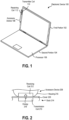
- FIG. 1 is a perspective view of an embodiment of an electronic device 100 with an accessory device 108 docked thereto.
- the electronic device 100 illustrated in FIG. 1 is a laptop computer having a first portion 102 and a second portion 104 that are movable relative to one another, and the accessory device 108 is a stylus that pairs with the electronic device to provide inputs and inking functionally.
- a processor 106 of the electronic device 100 is located in the second portion 104 and is in data communication with a transmission coil 110 located in the first portion 102.
- a receiving coil 112 receives a transmission energy from the transmission coil 110, and the accessory device 108 enters a docked mode.
- the bezel of the first portion 102 that contains the transmission coil 110 acts as the dock for the accessory device 108.
- the dock includes a retention mechanism, such as a mechanical retention mechanism, a magnetic retention mechanism, or an adhesive retention mechanism, to hold the accessory device 108 in proximity to the dock.
- the dock is oriented such that gravity holds the accessory device 108 in proximity to the dock.
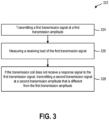
- FIG. 2 is a side view of another embodiment of an accessory device 208 resting on a dock 214.
- the accessory device 208 has a housing 216, with the receiving coil 212 positioned at or near a surface of the housing 216.
- the receiving coil 212 is positioned proximate a transmission coil 210 of the dock 214, such that a transmission energy 218 is transmitted to the receiving coil 212.
- the transmission energy 218 is transmitted through one or more parts of the accessory device 208 and/or dock 214 en route to the receiving coil 212.
- the housing 216 of the accessory device 208 and/or a cover 220 of the dock 214 are at least partly transparent to the transmission energy 218.
- the cover 220 is a non-magnetic material to allow the transmission energy 218 to pass through the cover 220 to the receiving coil 212.
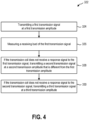
- a method (322) of communicating via a wireless charging device includes transmitting (324) a first transmission signal at a first transmission amplitude with a transmission coil and measuring (326) a receiving load of the transmission signal.
- the transmission signal is a power signal to establish communications for powering or charging an accessory device.
- the first transmission signal induces a current in the object and the transmission coil experiences a receiving load. Measuring the receiving load of the transmission signal allows the wireless charging device to detect the presence of the object in proximity to the transmission coil.
- induction of a current through a magnetic coupling causes bouncing.
- Bouncing is the generation of multiple signals as an electrical contact or electrical coupling opens or closes. Debouncing detects the multiple signals and ensures that only a single signal will be acted upon for a single opening or closing of a contact.
- the method includes debouncing a response signal from the accessory device to ensure a receiving load is measured accurately.
- the first transmission signal includes a modulated signal to communicate with the receiving coil of the accessory device.
- the transmission coil provides the modulated signal by changing the amplitude of the first transmission signal during the first transmission signal.
- An accessory device can receive and interpret the amplitude modulations of a first transmission signal and subsequently respond to the first transmission signal.
- a response from the accessory device confirms to the wireless charging device that the object in the magnetic field of the transmission coil is a chargeable accessory device and the wireless charging device can begin charging the accessory device.
- the first transmission signal fails to communicate with the accessory device. In some embodiments, the communication fails because of foreign object interference. In some embodiments, the communication fails because of electromagnetic interference (EMI) or radio frequency interference (RFI). In some embodiments, the communication fails because the first transmission signal is underpower. In some embodiments, the communication fails because the first transmission signal is overpower.
- EMI electromagnetic interference
- RFID radio frequency interference
- the method includes, if the transmission coil does not receive a response signal to the first transmission signal, transmitting (328) a second transmission signal at a second transmission amplitude that is different from the first transmission amplitude.
- the first transmission signal is saturating the receiving coil.
- a ferromagnetic object experiences a current in the presence of a varying magnetic field. However, the current cannot increase indefinitely as the amplitude of the magnetic field increases. The ferromagnetic object will experience a current up to a saturation point. Because the magnetic field can only induce a current up to the saturation point, variation of the amplitude of the magnetic field beyond the saturation point produces no changes in the electrical current.
- a magnetic saturation of the receiving coil prevents communication by modulation of the magnetic field.
- the wireless charging device sends a second transmission signal that has a second transmission amplitude that is less than the first transmission amplitude.
- the second transmission amplitude is a percentage of the first transmission amplitude in a range having an upper value, a lower value, or upper and lower values including any of 5%, 10%, 20%, 30%, 40%, 50%, 60%, 70%, 80%, 90%, or any values therebetween.
- the second transmission amplitude is less than 90% of the first transmission amplitude.
- the second transmission amplitude is less than 80% of the first transmission amplitude.
- the second transmission amplitude is less than 60% of the first transmission amplitude. In some embodiments, the second transmission amplitude is between 5% and 80% of the first transmission amplitude. In some embodiments, the second transmission amplitude is between 10% and 60% of the first transmission amplitude.
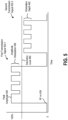
- FIG. 4 illustrates another flowchart illustrating a method of communicating using a wireless charging device.
- the method (322) of communicating using a wireless charging device includes transmitting (324) a first transmission signal at a first transmission amplitude with a transmission coil and measuring (326) a receiving load of the transmission signal. If the transmission coil does not receive a response signal to the first transmission signal, the method further includes transmitting (328) a second transmission signal at a second transmission amplitude that is different from the first transmission amplitude. If the transmission coil does not receive a response signal to the second transmission signal, the method further includes transmitting (330) a third transmission signal at a third transmission amplitude that is different from the first transmission amplitude and the second transmission amplitude.
- the wireless charging device sends a third transmission signal that has a third transmission amplitude that is less than the second transmission amplitude.
- the third transmission amplitude is a percentage of the second transmission amplitude in a range having an upper value, a lower value, or upper and lower values including any of 5%, 10%, 20%, 30%, 40%, 50%, 60%, 70%, 80%, 90%, or any values therebetween.
- the third transmission amplitude is less than 90% of the second transmission amplitude.
- the third transmission amplitude is less than 80% of the second transmission amplitude.
- the third transmission amplitude is less than 60% of the second transmission amplitude. In some embodiments, the third transmission amplitude is between 5% and 80% of the second transmission amplitude. In some embodiments, the third transmission amplitude is between 10% and 60% of the second transmission amplitude.
- the third transmission amplitude is a percentage of the first transmission amplitude in a range having an upper value, a lower value, or upper and lower values including any of 5%, 10%, 20%, 30%, 40%, 50%, 60%, 70%, 80%, or any values therebetween. In some embodiments, the third transmission amplitude is less than 80% of the first transmission amplitude. In some embodiments, the third transmission amplitude is less than 70% of the first transmission amplitude. In some embodiments, the third transmission amplitude is less than 60% of the first transmission amplitude. In some embodiments, the third transmission amplitude is between 5% and 80% of the first transmission amplitude. In some embodiments, the third transmission amplitude is between 10% and 60% of the first transmission amplitude.
- the modulation of the transmission signal is relative to a peak transmission amplitude.
- FIG. 5 illustrates an example transmission signal 432.
- a first transmission signal 432-1 begins when the RF (e.g., magnetic) field is turned on at 434 and has a peak amplitude 436.
- the amplitude has an amplitude modulation 438 down to 90%, 80%, 70%, 60% of the peak amplitude 436, or any values therebetween.
- the modulation depth is the amount of current variation that is induced in the receiving coil of the accessory device. If the amplitude modulation occurs above the saturation level 440 of the receiving coil, there is no modulation depth and the amplitude modulation 438 produces little or no change in the induced current.
- the modulation depth to communication data to through the wireless charging device is less than 90% (e.g., the low points of the transmission signal are 90% of the peak amplitude). In some embodiments, the modulation depth to communication data to through the wireless charging device is less than 80%. In some embodiments, the modulation depth to communication data to through the wireless charging device is less than 60%.
- the peak amplitude 436 and/or modulation 438 is above a saturation level 440 of the receiving coil.
- the wireless charging device reduces the transmission amplitude to below the saturation level 440 of the receiving coil, such that the amplitude modulation of a second transmission signal 432-2 generates a modulation depth 442 less than a modulation threshold set in the system.
- the modulation depth is detected by measuring the receiving load. Because the receiving load is related to the receiving coil response to the magnetic field, a stronger magnetic field produces an associated increase in the receiving load. In some embodiments, an increase in the transmission amplitude without an increase in receiving load indicates saturation of the receiving coil.
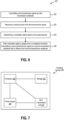
- FIG. 6 is a flowchart illustrating another embodiment of a method according to the present disclosure.
- another method (522) of communicating using a wireless charging device includes transmitting (524) a first transmission signal at a first transmission amplitude with a transmission coil and measuring (526) a receiving load of the transmission signal. The method further includes determining (544) a modulation depth based on the receiving load. If the modulation depth is greater than a modulation threshold, the method includes transmitting (546) a second transmission signal at a second transmission amplitude that is different from the first transmission amplitude. For example, if the modulation threshold is set at 80%, and the modulation depth is determined to be 90%, the method includes transmitting a second transmission signal at a second amplitude.
- the second transmission amplitude is a percentage of the first transmission amplitude in a range having an upper value, a lower value, or upper and lower values including any of 5%, 10%, 20%, 30%, 40%, 50%, 60%, 70%, 80%, 90%, or any values therebetween. In some embodiments, the second transmission amplitude is less than 90% of the first transmission amplitude. In some embodiments, the second transmission amplitude is less than 80% of the first transmission amplitude. In some embodiments, the second transmission amplitude is less than 60% of the first transmission amplitude. In some embodiments, the second transmission amplitude is between 5% and 80% of the first transmission amplitude. In some embodiments, the second transmission amplitude is between 10% and 60% of the first transmission amplitude.
- the second transmission amplitude is less than the first transmission amplitude by the same amount at the modulation threshold. For example, if the modulation threshold is 80%, the second transmission amplitude is 80% of the first transmission amplitude.
- the wireless charging device 548 includes a processor 506 (such as the processor 106 in the electronic device 100 of FIG. 1 ) in data communication with a power supply 550 and a transmission coil 510 (such as the transmission coil 110 of FIG. 1 or other charging component that provides a charging energy to the accessory device).
- the electronic device 100 is, or includes, the wireless charging device 548.
- the charging device 548 further includes a hardware storage device 552 in data communication with the processor 506.
- the hardware storage device includes instructions stored thereon that, when executed by the processor, cause the processor to perform any of the methods described herein.
- the hardware storage device is a solid-state hardware storage device.
- the hardware storage device is a platen-based storage device.
- the hardware storage device is an optical disk drive.
- the present disclosure relates generally to systems and methods for docking an accessory device on a wireless charger.
- the wireless charger is part of a dock integrated into another electronic device, such as a peripheral dock on a laptop computer.
- the wireless charger is a dedicated dock for the accessory device, such as a charging cradle for a remote control.
- a user docks an accessory device on another electronic device to charge the accessory device.
- the dock includes a transmission coil that produces a magnetic field. The magnetic field of the dock can magnetically couple the transmission coil to a receiving coil of the accessory device to induce an electric current in the receiving coil of the accessory device.
- a computer mouse can be docked on a wireless charging pad to charge the mouse between use sessions.
- the accessory device is a wearable device, such as a smartwatch.
- the accessory device is a stylus.
- the accessory device is a keyboard.
- the accessory device is a touch-sensitive device, such as a track pad, touchscreen, other capacitive touch-sensitive surface, other resistive touch-sensitive surface, or other touch-sensitive input mechanism.
- the accessory device is an audio device, such as a wireless speaker, headphones, earphones, or other audio device capable of generating audio signals to communicate with a user.
- the electronic device is a computing device, including but not limited to a laptop computer, hybrid computer, foldable computer, tablet computer, smartphone, wearable computing device, or other computing device.
- the electronic device includes a dock that contains a transmission coil.
- the transmission coil can send a transmission energy from the dock to the accessory device.
- the transmission coil When a transmission current is applied to the transmission coil in the dock, the transmission coil generates a magnetic field that extends beyond an outer surface of the dock.
- a receiving coil positioned within the magnetic field proximate the dock experiences the magnetic field.
- a varying magnetic field induces a current in the receiving coil.
- the transmission coil produces a RF signal in the near-field communication (NFC) frequency range.
- NFC near-field communication
- the transmission coil transmits energy from the transmission coil to the receiving coil to wirelessly charge and/or communicate with the accessory device.
- the power supply is a battery.
- the power supply is a capacitor.
- the transmission coil modulates the transmission energy from the transmission coil to the receiving coil to communicate data from the dock and/or electronic device to the accessory device.
- a method of communicating via a wireless charging device includes transmitting a first transmission signal at a first transmission amplitude with a transmission coil and measuring a receiving load of the transmission signal.
- the first transmission signal induces a current in the object and the transmission coil experiences a receiving load. Measuring the receiving load of the transmission signal allows the wireless charging device to detect the presence of the object in proximity to the transmission coil.
- induction of a current through a magnetic coupling causes bouncing.
- Bouncing is the generation of multiple signals as an electrical contact or electrical coupling opens or closes. Debouncing detects the multiple signals and ensures that only a single signal will be acted upon for a single opening or closing of a contact.
- the method includes debouncing a response signal from the accessory device to ensure a receiving load is measured accurately.
- the first transmission signal includes a modulated signal to communicate with the receiving coil of the accessory device.
- the transmission coil provides the modulated signal by changing the amplitude of the first transmission signal during the first transmission signal.
- An accessory device can receive and interpret the amplitude modulations of a first transmission signal and subsequently respond to the first transmission signal.
- a response from the accessory device confirms to the wireless charging device that the object in the magnetic field of the transmission coil is a chargeable accessory device and the wireless charging device can begin charging the accessory device.
- the first transmission signal fails to communicate with the accessory device. In some embodiments, the communication fails because of foreign object interference. In some embodiments, the communication fails because of electromagnetic interference (EMI) or radio frequency interference (RFI). In some embodiments, the communication fails because the first transmission signal is underpower. In some embodiments, the communication fails because the first transmission signal is overpower.
- EMI electromagnetic interference
- RFID radio frequency interference
- the method includes, if the transmission coil does not receive a response signal to the first transmission signal, transmitting a second transmission signal at a second transmission amplitude that is different from the first transmission amplitude.
- the first transmission signal is saturating the receiving coil.
- a ferromagnetic object experiences a current in the presence of a varying magnetic field. However, the current cannot increase indefinitely as the amplitude of the magnetic field increases. The ferromagnetic object will experience a current up to a saturation point. Because the magnetic field can only induce a current up to the saturation point, variation of the amplitude of the magnetic field beyond the saturation point produces no changes in the electrical current.
- a magnetic saturation of the receiving coil prevents communication by modulation of the magnetic field.
- the wireless charging device sends a second transmission signal that has a second transmission amplitude that is less than the first transmission amplitude.
- the second transmission amplitude is a percentage of the first transmission amplitude in a range having an upper value, a lower value, or upper and lower values including any of 5%, 10%, 20%, 30%, 40%, 50%, 60%, 70%, 80%, 90%, or any values therebetween.
- the second transmission amplitude is less than 90% of the first transmission amplitude.
- the second transmission amplitude is less than 80% of the first transmission amplitude.
- the second transmission amplitude is less than 60% of the first transmission amplitude. In some embodiments, the second transmission amplitude is between 5% and 80% of the first transmission amplitude. In some embodiments, the second transmission amplitude is between 10% and 60% of the first transmission amplitude.
- another method of communicating using a wireless charging device includes transmitting a first transmission signal at a first transmission amplitude with a transmission coil and measuring a receiving load of the transmission signal. If the transmission coil does not receive a response signal to the first transmission signal, the method further includes transmitting a second transmission signal at a second transmission amplitude that is different from the first transmission amplitude. If the transmission coil does not receive a response signal to the second transmission signal, the method further includes transmitting a third transmission signal at a third transmission amplitude that is different from the first transmission amplitude and the second transmission amplitude.
- the wireless charging device sends a third transmission signal that has a third transmission amplitude that is less than the second transmission amplitude.
- the third transmission amplitude is a percentage of the second transmission amplitude in a range having an upper value, a lower value, or upper and lower values including any of 5%, 10%, 20%, 30%, 40%, 50%, 60%, 70%, 80%, 90%, or any values therebetween.
- the third transmission amplitude is less than 90% of the second transmission amplitude.
- the third transmission amplitude is less than 80% of the second transmission amplitude.
- the third transmission amplitude is less than 60% of the second transmission amplitude. In some embodiments, the third transmission amplitude is between 5% and 80% of the second transmission amplitude. In some embodiments, the third transmission amplitude is between 10% and 60% of the second transmission amplitude.
- the third transmission amplitude is a percentage of the first transmission amplitude in a range having an upper value, a lower value, or upper and lower values including any of 5%, 10%, 20%, 30%, 40%, 50%, 60%, 70%, 80%, or any values therebetween. In some embodiments, the third transmission amplitude is less than 80% of the first transmission amplitude. In some embodiments, the third transmission amplitude is less than 70% of the first transmission amplitude. In some embodiments, the third transmission amplitude is less than 60% of the first transmission amplitude. In some embodiments, the third transmission amplitude is between 5% and 80% of the first transmission amplitude. In some embodiments, the third transmission amplitude is between 10% and 60% of the first transmission amplitude.
- the modulation of the transmission signal is relative to a peak transmission amplitude. In some embodiments, the amplitude is modulated by 10%, 20%, 30%, 40%, or any values therebetween.
- the modulation depth is the amount of variation that is induced in the receiving coil of the accessory device. In some embodiments, the modulation depth to communication data to through the wireless charging device is less than 90% (e.g., the low points of the transmission signal are 90% of the peak amplitude). In some embodiments, the modulation depth to communication data to through the wireless charging device is less than 80%. In some embodiments, the modulation depth to communication data to through the wireless charging device is less than 60%.
- the wireless charging device reduces the transmission amplitude to below a saturation level of the receiving coil, such that the amplitude modulation of the transmission signal generates a modulation depth less than a modulation threshold set in the system.
- the modulation depth is detected by measuring the receiving load. Because the receiving load is related to the receiving coil response to the magnetic field, a stronger magnetic field produces an associated increase in the receiving load. In some embodiments, an increase in the transmission amplitude without an increase in receiving load indicates saturation of the receiving coil.
- another method of communicating using a wireless charging device includes transmitting a first transmission signal at a first transmission amplitude with a transmission coil and measuring a receiving load of the transmission signal. The method further includes determining a modulation depth based on the receiving load. If the modulation depth is greater than a modulation threshold, transmitting a second transmission signal at a second transmission amplitude that is different from the first transmission amplitude. For example, if the modulation threshold is set at 80%, and the modulation depth is determined to be 90%, the method includes transmitting a second transmission signal at a second amplitude.
- the second transmission amplitude is a percentage of the first transmission amplitude in a range having an upper value, a lower value, or upper and lower values including any of 5%, 10%, 20%, 30%, 40%, 50%, 60%, 70%, 80%, 90%, or any values therebetween. In some embodiments, the second transmission amplitude is less than 90% of the first transmission amplitude. In some embodiments, the second transmission amplitude is less than 80% of the first transmission amplitude. In some embodiments, the second transmission amplitude is less than 60% of the first transmission amplitude. In some embodiments, the second transmission amplitude is between 5% and 80% of the first transmission amplitude. In some embodiments, the second transmission amplitude is between 10% and 60% of the first transmission amplitude.
- the second transmission amplitude is less than the first transmission amplitude by the same amount at the modulation threshold. For example, if the modulation threshold is 80%, the second transmission amplitude is 80% of the first transmission amplitude.
- the wireless charging device includes a processor in data communication with a power supply and a transmission coil.
- the charging device further includes a hardware storage device in data communication with the processor.
- the hardware storage device includes instructions stored thereon that, when executed by the processor, cause the processor to perform any of the methods described herein.
- the hardware storage device is a solid-state hardware storage device.
- the hardware storage device is a platen-based storage device.
- the hardware storage device is an optical disk drive.
- the present disclosure relates to systems and methods for adapting the charging of an accessory device via a wireless charging device according to at least the examples provided in the sections below.
- the charged accessory device may be accessory device 108.
- the following steps are performed at the charging device, which may be the electronic device 100.
- a first transmission signal is transmitted at a first transmission amplitude.
- the first transmission signal may be transmitted by the NFC transmission coil 510.
- the first transmission signal may be transmission signal 432-1.
- the first transmission amplitude may be peak amplitude 436.
- a receiving load of the first power signal measuring is measured.
- the measurement may be performed via the power supply 550.
- a second transmission signal is transmitted at a second transmission amplitude that is different from the first transmission amplitude and that is lower than the first transmission amplitude so as to reduce potential magnetic saturation.
- the second transmission signal which may be transmission signal 432-2, may be transmitted via NFC transmission coil 510.
- the charged accessory device may be accessory device 108.
- the following steps are performed at the charging device, which may be the electronic device 100.
- a first power signal is transmitted at a first transmission amplitude.
- the first power signal may be transmitted by the NFC transmission coil 510.
- the first power signal may be transmission signal 432-1.
- the first transmission amplitude may be peak amplitude 436.
- a receiving load of the first power signal measuring is measured.
- the measurement may be performed via the power supply 550.
- a modulation depth is determined based on the receiving load.
- the modulation depth may be modulation 438. If the modulation depth is greater than a modulation threshold, a second power signal is transmitted at a second transmission amplitude that is different from the first transmission amplitude.
- the second power signal may be transmission signal 432-2.
- a system for communicating wirelessly with an accessory device.
- the accessory device may be accessory device 108.
- the system comprises a transmission coil, which may be NFC Transmission coil 510, a processor (which may be processor 506) in data communication with the transmission coil, and a hardware storage device, which may be storage 552, in data communication with the processor.
- the hardware storage device stores instructions that, when executed by a processor, cause the system to perform the following steps.
- a first power signal is transmitted with a first transmission amplitude with the transmission coil.
- a receiving load of the first transmission signal is measured.
- a response signal is received from the accessory device. If the transmission coil does not receive the response signal, a second power signal is transmitted at a second transmission amplitude that is different from the first transmission amplitude.
- Numbers, percentages, ratios, or other values stated herein are intended to include that value, and also other values that are “about” or “approximately” the stated value, as would be appreciated by one of ordinary skill in the art encompassed by embodiments of the present disclosure.
- a stated value should therefore be interpreted broadly enough to encompass values that are at least close enough to the stated value to perform a desired function or achieve a desired result.
- the stated values include at least the variation to be expected in a suitable manufacturing or production process, and may include values that are within 5%, within 1%, within 0.1%, or within 0.01% of a stated value.
- any directions or reference frames in the preceding description are merely relative directions or movements.
- any references to “front” and “back” or “top” and “bottom” or “left” and “right” are merely descriptive of the relative position or movement of the related elements.
Landscapes
- Engineering & Computer Science (AREA)
- Power Engineering (AREA)
- Computer Networks & Wireless Communication (AREA)
- Signal Processing (AREA)
- Charge And Discharge Circuits For Batteries Or The Like (AREA)
Description
- Wireless electronic devices provide users improved levels of freedom while remaining connected to personal and professional communications. Wireless accessory devices allow more efficient interactions with communications and other electronic devices. However, even electronic and accessory devices intended to be used wirelessly conventionally require wired charging of an internal power supply. Wireless charging techniques are becoming more common, but exhibit lower power transmission performance, lower charging performance, slower data transmission, and other shortcomings relative to wired charging and data transfer.
US 2016/301263 A1 relates to a method for wireless power transmission between a transmitter and a receiver, comprising a power phase and a measurement phase, wherein the receiver measures a received power during the measurement phase and transmits information on the measured power to the transmitter, wherein the transmitter compares the power output by said transmitter with the power measured by the receiver and from this determines a power loss, wherein the power phase is suppressed when the power loss exceeds a maximum permissible limit value, wherein, during the measurement phase, the transmitter outputs a power which is less than the power output during the power phase. - It is the object of the present invention to provide a method of adapting charging for an accessory device and a corresponding system.
This object is solved by the subject matter of the independent claims.
Preferred embodiments are defined in the dependent claims. - In some embodiments, an accessory device is positioned proximate a wireless charging device, such as a near-field communication transmission coil. The wireless charging device provides a transmission energy that is received by the accessory device and induces an electrical current in the accessory device. Modulation of the transmission energy amplitude varies the induced current to transmit data to the accessory device. In some embodiments, a wireless charging device sets a first transmission amplitude to establish communication with the accessory device and, if the wireless charging device does not receive a recognized response from the accessory device, changes the transmission energy to a second transmission amplitude.
- In some embodiments, a method of adapting the charging of an accessory device includes transmitting a first transmission signal at a first transmission amplitude, measuring a receiving load of the first transmission signal, and if the charging device does not receive a response signal to the first transmission signal, transmitting a second transmission signal at a second transmission amplitude that is different from the first transmission amplitude.
- In some embodiments, a system for communicating with an accessory device wirelessly includes a transmission coil, a processor in data communication with the transmission coil, and a hardware storage device in data communication with the processor. The hardware storage device has instructions stored thereon that, when executed by a processor, cause the processor to transmit a first transmission signal at a first transmission amplitude with the transmission coil, measure a receiving load of the first transmission signal, and if the transmission coil does not receive a response signal to the first transmission signal, transmit a second transmission signal at a second transmission amplitude that is different from the first transmission amplitude.
- This Summary is provided to introduce a selection of concepts in a simplified form that are further described below in the Detailed Description. This Summary is not intended to identify key features or essential features of the claimed subject matter, nor is it intended to be used as an aid in determining the scope of the claimed subject matter.
- Additional features and advantages will be set forth in the description which follows, and in part will be obvious from the description, or may be learned by the practice of the teachings herein. Features and advantages of the disclosure may be realized and obtained by means of the instruments and combinations particularly pointed out in the appended claims. Features of the present disclosure will become more fully apparent from the following description and appended claims or may be learned by the practice of the disclosure as set forth hereinafter.
- In order to describe the manner in which the above-recited and other features of the disclosure can be obtained, a more particular description will be rendered by reference to specific embodiments thereof which are illustrated in the appended drawings. For better understanding, the like elements have been designated by like reference numbers throughout the various accompanying figures. While some of the drawings may be schematic or exaggerated representations of concepts, at least some of the drawings may be drawn to scale. Understanding that the drawings depict some example embodiments, the embodiments will be described and explained with additional specificity and detail through the use of the accompanying drawings in which:
-
FIG. 1 is a perspective view of an electronic device with an accessory device docked thereon, according to at least one embodiment of the present disclosure; -
FIG. 2 is a side view of an accessory device positioned on a dock, according to at least one embodiment of the present disclosure; -
FIG. 3 is a flowchart of a method of communicating data to an accessory device with a wireless charger, according to at least one embodiment of the present disclosure; -
FIG. 4 is a flowchart of another method of communicating data to an accessory device with a wireless charger, according to at least one embodiment of the present disclosure; -
FIG. 5 is a graph illustrating transmitting transmission signals with different amplitudes and modulation depths, according to at least one embodiment of the present disclosure; -
FIG. 6 is a flowchart of yet another method of communicating data to an accessory device with a wireless charger, according to at least one embodiment of the present disclosure; and -
FIG. 7 is a system diagram of a charging device, according to at least one embodiment of the present disclosure. - The present disclosure relates generally to devices, systems, and methods for docking an accessory device on a wireless charger. In some embodiments, the wireless charger is part of a dock integrated into another electronic device, such as a peripheral dock on a laptop computer. In some embodiments, the wireless charger is a dedicated dock for the accessory device, such as a charging cradle for a remote control.
- In some embodiments, a user docks an accessory device on another electronic device to charge the accessory device. In some embodiments, the dock includes a transmission coil that produces a magnetic field. The magnetic field of the dock can magnetically couple the transmission coil to a receiving coil of the accessory device to induce an electric current in the receiving coil of the accessory device.
- In some embodiments, a computer mouse can be docked on a wireless charging pad to charge the mouse between use sessions. In some embodiments, the accessory device is a wearable device, such as a smartwatch. In some embodiments, the accessory device is a stylus. In some embodiments, the accessory device is a keyboard. In some embodiments, the accessory device is a touch-sensitive device, such as a track pad, touchscreen, other capacitive touch-sensitive surface, other resistive touch-sensitive surface, or other touch-sensitive input mechanism. In some embodiments, the accessory device is an audio device, such as a wireless speaker, headphones, earphones, or other audio device capable of generating audio signals to communicate with a user.
- In some embodiments, the electronic device is a computing device, including but not limited to a laptop computer, hybrid computer, foldable computer, tablet computer, smartphone, wearable computing device, or other computing device. In some embodiments, the electronic device includes a dock that contains a transmission coil. The transmission coil can send a transmission energy from the dock to the accessory device. When a transmission current is applied to the transmission coil in the dock, the transmission coil generates a magnetic field that extends beyond an outer surface of the dock. A receiving coil positioned within the magnetic field proximate the dock experiences the magnetic field. A varying magnetic field induces a current in the receiving coil. In some embodiments, the transmission coil produces a radio frequency (RF) signal in the near-field communication (NFC) frequency range.
- In some embodiments, the transmission coil transmits energy from the transmission coil to the receiving coil to wirelessly charge and/or communicate with the accessory device. In some embodiments, the power supply is a battery. In some embodiments, the power supply is a capacitor. In some embodiments, the transmission coil modulates the transmission energy from the transmission coil to the receiving coil to communicate data from the dock and/or electronic device to the accessory device.
-
FIG. 1 is a perspective view of an embodiment of anelectronic device 100 with anaccessory device 108 docked thereto. Theelectronic device 100 illustrated inFIG. 1 is a laptop computer having afirst portion 102 and asecond portion 104 that are movable relative to one another, and theaccessory device 108 is a stylus that pairs with the electronic device to provide inputs and inking functionally. - In some embodiments, a
processor 106 of theelectronic device 100 is located in thesecond portion 104 and is in data communication with atransmission coil 110 located in thefirst portion 102. When theaccessory device 108 is positioned in proximity to thetransmission coil 110, areceiving coil 112 receives a transmission energy from thetransmission coil 110, and theaccessory device 108 enters a docked mode. In the illustrated embodiment, the bezel of thefirst portion 102 that contains thetransmission coil 110 acts as the dock for theaccessory device 108. In some embodiments, the dock includes a retention mechanism, such as a mechanical retention mechanism, a magnetic retention mechanism, or an adhesive retention mechanism, to hold theaccessory device 108 in proximity to the dock. In some embodiments, the dock is oriented such that gravity holds theaccessory device 108 in proximity to the dock. -
FIG. 2 is a side view of another embodiment of anaccessory device 208 resting on adock 214. In some embodiments, theaccessory device 208 has a housing 216, with the receivingcoil 212 positioned at or near a surface of the housing 216. The receivingcoil 212 is positioned proximate atransmission coil 210 of thedock 214, such that atransmission energy 218 is transmitted to the receivingcoil 212. - In some embodiments, the
transmission energy 218 is transmitted through one or more parts of theaccessory device 208 and/or dock 214 en route to the receivingcoil 212. In some embodiments, the housing 216 of theaccessory device 208 and/or acover 220 of thedock 214 are at least partly transparent to thetransmission energy 218. In the illustrated embodiment with atransmission coil 210 that generates a magnetic field, thecover 220 is a non-magnetic material to allow thetransmission energy 218 to pass through thecover 220 to the receivingcoil 212. - Referring now to
FIG. 3 , in some embodiments, a method (322) of communicating via a wireless charging device includes transmitting (324) a first transmission signal at a first transmission amplitude with a transmission coil and measuring (326) a receiving load of the transmission signal. In some embodiments, the transmission signal is a power signal to establish communications for powering or charging an accessory device. When a metallic or otherwise ferromagnetic object is proximate the transmission coil, the first transmission signal induces a current in the object and the transmission coil experiences a receiving load. Measuring the receiving load of the transmission signal allows the wireless charging device to detect the presence of the object in proximity to the transmission coil. - In some embodiments, induction of a current through a magnetic coupling causes bouncing. Bouncing is the generation of multiple signals as an electrical contact or electrical coupling opens or closes. Debouncing detects the multiple signals and ensures that only a single signal will be acted upon for a single opening or closing of a contact. In some embodiments, the method includes debouncing a response signal from the accessory device to ensure a receiving load is measured accurately.
- In some embodiments, the first transmission signal includes a modulated signal to communicate with the receiving coil of the accessory device. The transmission coil provides the modulated signal by changing the amplitude of the first transmission signal during the first transmission signal. An accessory device can receive and interpret the amplitude modulations of a first transmission signal and subsequently respond to the first transmission signal. A response from the accessory device confirms to the wireless charging device that the object in the magnetic field of the transmission coil is a chargeable accessory device and the wireless charging device can begin charging the accessory device.
- In some embodiments, the first transmission signal fails to communicate with the accessory device. In some embodiments, the communication fails because of foreign object interference. In some embodiments, the communication fails because of electromagnetic interference (EMI) or radio frequency interference (RFI). In some embodiments, the communication fails because the first transmission signal is underpower. In some embodiments, the communication fails because the first transmission signal is overpower.
- In some embodiments, the method includes, if the transmission coil does not receive a response signal to the first transmission signal, transmitting (328) a second transmission signal at a second transmission amplitude that is different from the first transmission amplitude.
- In embodiments where the communication fails because of overpower, the first transmission signal is saturating the receiving coil. A ferromagnetic object experiences a current in the presence of a varying magnetic field. However, the current cannot increase indefinitely as the amplitude of the magnetic field increases. The ferromagnetic object will experience a current up to a saturation point. Because the magnetic field can only induce a current up to the saturation point, variation of the amplitude of the magnetic field beyond the saturation point produces no changes in the electrical current. In some embodiments, a magnetic saturation of the receiving coil prevents communication by modulation of the magnetic field.
- In embodiments where the receiving coil magnetically saturates and fails to send a response signal to the transmission coil of the wireless charging device, the wireless charging device sends a second transmission signal that has a second transmission amplitude that is less than the first transmission amplitude. In some embodiments, the second transmission amplitude is a percentage of the first transmission amplitude in a range having an upper value, a lower value, or upper and lower values including any of 5%, 10%, 20%, 30%, 40%, 50%, 60%, 70%, 80%, 90%, or any values therebetween. In some embodiments, the second transmission amplitude is less than 90% of the first transmission amplitude. In some embodiments, the second transmission amplitude is less than 80% of the first transmission amplitude. In some embodiments, the second transmission amplitude is less than 60% of the first transmission amplitude. In some embodiments, the second transmission amplitude is between 5% and 80% of the first transmission amplitude. In some embodiments, the second transmission amplitude is between 10% and 60% of the first transmission amplitude.
-
FIG. 4 illustrates another flowchart illustrating a method of communicating using a wireless charging device. In some embodiments, the method (322) of communicating using a wireless charging device includes transmitting (324) a first transmission signal at a first transmission amplitude with a transmission coil and measuring (326) a receiving load of the transmission signal. If the transmission coil does not receive a response signal to the first transmission signal, the method further includes transmitting (328) a second transmission signal at a second transmission amplitude that is different from the first transmission amplitude. If the transmission coil does not receive a response signal to the second transmission signal, the method further includes transmitting (330) a third transmission signal at a third transmission amplitude that is different from the first transmission amplitude and the second transmission amplitude. - In embodiments where the receiving coil magnetically saturates and fails to send a response signal to the transmission coil of the wireless charging device, the wireless charging device sends a third transmission signal that has a third transmission amplitude that is less than the second transmission amplitude. In some embodiments, the third transmission amplitude is a percentage of the second transmission amplitude in a range having an upper value, a lower value, or upper and lower values including any of 5%, 10%, 20%, 30%, 40%, 50%, 60%, 70%, 80%, 90%, or any values therebetween. In some embodiments, the third transmission amplitude is less than 90% of the second transmission amplitude. In some embodiments, the third transmission amplitude is less than 80% of the second transmission amplitude. In some embodiments, the third transmission amplitude is less than 60% of the second transmission amplitude. In some embodiments, the third transmission amplitude is between 5% and 80% of the second transmission amplitude. In some embodiments, the third transmission amplitude is between 10% and 60% of the second transmission amplitude.
- In some embodiments, the third transmission amplitude is a percentage of the first transmission amplitude in a range having an upper value, a lower value, or upper and lower values including any of 5%, 10%, 20%, 30%, 40%, 50%, 60%, 70%, 80%, or any values therebetween. In some embodiments, the third transmission amplitude is less than 80% of the first transmission amplitude. In some embodiments, the third transmission amplitude is less than 70% of the first transmission amplitude. In some embodiments, the third transmission amplitude is less than 60% of the first transmission amplitude. In some embodiments, the third transmission amplitude is between 5% and 80% of the first transmission amplitude. In some embodiments, the third transmission amplitude is between 10% and 60% of the first transmission amplitude.
- In some embodiments, the modulation of the transmission signal is relative to a peak transmission amplitude.
FIG. 5 illustrates an example transmission signal 432. A first transmission signal 432-1 begins when the RF (e.g., magnetic) field is turned on at 434 and has apeak amplitude 436. In some embodiments, the amplitude has anamplitude modulation 438 down to 90%, 80%, 70%, 60% of thepeak amplitude 436, or any values therebetween. The modulation depth is the amount of current variation that is induced in the receiving coil of the accessory device. If the amplitude modulation occurs above thesaturation level 440 of the receiving coil, there is no modulation depth and theamplitude modulation 438 produces little or no change in the induced current. - In some embodiments, the modulation depth to communication data to through the wireless charging device is less than 90% (e.g., the low points of the transmission signal are 90% of the peak amplitude). In some embodiments, the modulation depth to communication data to through the wireless charging device is less than 80%. In some embodiments, the modulation depth to communication data to through the wireless charging device is less than 60%.
- In some embodiments, the
peak amplitude 436 and/ormodulation 438 is above asaturation level 440 of the receiving coil. In some embodiments, the wireless charging device reduces the transmission amplitude to below thesaturation level 440 of the receiving coil, such that the amplitude modulation of a second transmission signal 432-2 generates amodulation depth 442 less than a modulation threshold set in the system. In some embodiments, the modulation depth is detected by measuring the receiving load. Because the receiving load is related to the receiving coil response to the magnetic field, a stronger magnetic field produces an associated increase in the receiving load. In some embodiments, an increase in the transmission amplitude without an increase in receiving load indicates saturation of the receiving coil. -
FIG. 6 is a flowchart illustrating another embodiment of a method according to the present disclosure. In some embodiments, another method (522) of communicating using a wireless charging device includes transmitting (524) a first transmission signal at a first transmission amplitude with a transmission coil and measuring (526) a receiving load of the transmission signal. The method further includes determining (544) a modulation depth based on the receiving load. If the modulation depth is greater than a modulation threshold, the method includes transmitting (546) a second transmission signal at a second transmission amplitude that is different from the first transmission amplitude. For example, if the modulation threshold is set at 80%, and the modulation depth is determined to be 90%, the method includes transmitting a second transmission signal at a second amplitude. - In some embodiments, the second transmission amplitude is a percentage of the first transmission amplitude in a range having an upper value, a lower value, or upper and lower values including any of 5%, 10%, 20%, 30%, 40%, 50%, 60%, 70%, 80%, 90%, or any values therebetween. In some embodiments, the second transmission amplitude is less than 90% of the first transmission amplitude. In some embodiments, the second transmission amplitude is less than 80% of the first transmission amplitude. In some embodiments, the second transmission amplitude is less than 60% of the first transmission amplitude. In some embodiments, the second transmission amplitude is between 5% and 80% of the first transmission amplitude. In some embodiments, the second transmission amplitude is between 10% and 60% of the first transmission amplitude.
- In some embodiments, the second transmission amplitude is less than the first transmission amplitude by the same amount at the modulation threshold. For example, if the modulation threshold is 80%, the second transmission amplitude is 80% of the first transmission amplitude.
- In some embodiments, such as illustrated in
FIG. 7 , thewireless charging device 548 includes a processor 506 (such as theprocessor 106 in theelectronic device 100 ofFIG. 1 ) in data communication with apower supply 550 and a transmission coil 510 (such as thetransmission coil 110 ofFIG. 1 or other charging component that provides a charging energy to the accessory device). In some embodiments, theelectronic device 100 is, or includes, thewireless charging device 548. The chargingdevice 548 further includes ahardware storage device 552 in data communication with theprocessor 506. In some embodiments, the hardware storage device includes instructions stored thereon that, when executed by the processor, cause the processor to perform any of the methods described herein. In some embodiments, the hardware storage device is a solid-state hardware storage device. In some embodiments, the hardware storage device is a platen-based storage device. In some embodiments, the hardware storage device is an optical disk drive. - The present disclosure relates generally to systems and methods for docking an accessory device on a wireless charger. In some embodiments, the wireless charger is part of a dock integrated into another electronic device, such as a peripheral dock on a laptop computer. In some embodiments, the wireless charger is a dedicated dock for the accessory device, such as a charging cradle for a remote control.
- In some embodiments, a user docks an accessory device on another electronic device to charge the accessory device. In some embodiments, the dock includes a transmission coil that produces a magnetic field. The magnetic field of the dock can magnetically couple the transmission coil to a receiving coil of the accessory device to induce an electric current in the receiving coil of the accessory device.
- In some embodiments, a computer mouse can be docked on a wireless charging pad to charge the mouse between use sessions. In some embodiments, the accessory device is a wearable device, such as a smartwatch. In some embodiments, the accessory device is a stylus. In some embodiments, the accessory device is a keyboard. In some embodiments, the accessory device is a touch-sensitive device, such as a track pad, touchscreen, other capacitive touch-sensitive surface, other resistive touch-sensitive surface, or other touch-sensitive input mechanism. In some embodiments, the accessory device is an audio device, such as a wireless speaker, headphones, earphones, or other audio device capable of generating audio signals to communicate with a user.
- In some embodiments, the electronic device is a computing device, including but not limited to a laptop computer, hybrid computer, foldable computer, tablet computer, smartphone, wearable computing device, or other computing device. In some embodiments, the electronic device includes a dock that contains a transmission coil. The transmission coil can send a transmission energy from the dock to the accessory device. When a transmission current is applied to the transmission coil in the dock, the transmission coil generates a magnetic field that extends beyond an outer surface of the dock. A receiving coil positioned within the magnetic field proximate the dock experiences the magnetic field. A varying magnetic field induces a current in the receiving coil. In some embodiments, the transmission coil produces a RF signal in the near-field communication (NFC) frequency range.
- In some embodiments, the transmission coil transmits energy from the transmission coil to the receiving coil to wirelessly charge and/or communicate with the accessory device. In some embodiments, the power supply is a battery. In some embodiments, the power supply is a capacitor. In some embodiments, the transmission coil modulates the transmission energy from the transmission coil to the receiving coil to communicate data from the dock and/or electronic device to the accessory device.
- In some embodiments, a method of communicating via a wireless charging device includes transmitting a first transmission signal at a first transmission amplitude with a transmission coil and measuring a receiving load of the transmission signal. When a metallic or otherwise ferromagnetic object is proximate the transmission coil, the first transmission signal induces a current in the object and the transmission coil experiences a receiving load. Measuring the receiving load of the transmission signal allows the wireless charging device to detect the presence of the object in proximity to the transmission coil.
- In some embodiments, induction of a current through a magnetic coupling causes bouncing. Bouncing is the generation of multiple signals as an electrical contact or electrical coupling opens or closes. Debouncing detects the multiple signals and ensures that only a single signal will be acted upon for a single opening or closing of a contact. In some embodiments, the method includes debouncing a response signal from the accessory device to ensure a receiving load is measured accurately.
- In some embodiments, the first transmission signal includes a modulated signal to communicate with the receiving coil of the accessory device. The transmission coil provides the modulated signal by changing the amplitude of the first transmission signal during the first transmission signal. An accessory device can receive and interpret the amplitude modulations of a first transmission signal and subsequently respond to the first transmission signal. A response from the accessory device confirms to the wireless charging device that the object in the magnetic field of the transmission coil is a chargeable accessory device and the wireless charging device can begin charging the accessory device.
- In some embodiments, the first transmission signal fails to communicate with the accessory device. In some embodiments, the communication fails because of foreign object interference. In some embodiments, the communication fails because of electromagnetic interference (EMI) or radio frequency interference (RFI). In some embodiments, the communication fails because the first transmission signal is underpower. In some embodiments, the communication fails because the first transmission signal is overpower.
- In some embodiments, the method includes, if the transmission coil does not receive a response signal to the first transmission signal, transmitting a second transmission signal at a second transmission amplitude that is different from the first transmission amplitude.
- In embodiments where the communication fails because of overpower, the first transmission signal is saturating the receiving coil. A ferromagnetic object experiences a current in the presence of a varying magnetic field. However, the current cannot increase indefinitely as the amplitude of the magnetic field increases. The ferromagnetic object will experience a current up to a saturation point. Because the magnetic field can only induce a current up to the saturation point, variation of the amplitude of the magnetic field beyond the saturation point produces no changes in the electrical current. In some embodiments, a magnetic saturation of the receiving coil prevents communication by modulation of the magnetic field.
- In embodiments where the receiving coil magnetically saturates and fails to send a response signal to the transmission coil of the wireless charging device, the wireless charging device sends a second transmission signal that has a second transmission amplitude that is less than the first transmission amplitude. In some embodiments, the second transmission amplitude is a percentage of the first transmission amplitude in a range having an upper value, a lower value, or upper and lower values including any of 5%, 10%, 20%, 30%, 40%, 50%, 60%, 70%, 80%, 90%, or any values therebetween. In some embodiments, the second transmission amplitude is less than 90% of the first transmission amplitude. In some embodiments, the second transmission amplitude is less than 80% of the first transmission amplitude. In some embodiments, the second transmission amplitude is less than 60% of the first transmission amplitude. In some embodiments, the second transmission amplitude is between 5% and 80% of the first transmission amplitude. In some embodiments, the second transmission amplitude is between 10% and 60% of the first transmission amplitude.
- In some embodiments, another method of communicating using a wireless charging device includes transmitting a first transmission signal at a first transmission amplitude with a transmission coil and measuring a receiving load of the transmission signal. If the transmission coil does not receive a response signal to the first transmission signal, the method further includes transmitting a second transmission signal at a second transmission amplitude that is different from the first transmission amplitude. If the transmission coil does not receive a response signal to the second transmission signal, the method further includes transmitting a third transmission signal at a third transmission amplitude that is different from the first transmission amplitude and the second transmission amplitude.
- In embodiments where the receiving coil magnetically saturates and fails to send a response signal to the transmission coil of the wireless charging device, the wireless charging device sends a third transmission signal that has a third transmission amplitude that is less than the second transmission amplitude. In some embodiments, the third transmission amplitude is a percentage of the second transmission amplitude in a range having an upper value, a lower value, or upper and lower values including any of 5%, 10%, 20%, 30%, 40%, 50%, 60%, 70%, 80%, 90%, or any values therebetween. In some embodiments, the third transmission amplitude is less than 90% of the second transmission amplitude. In some embodiments, the third transmission amplitude is less than 80% of the second transmission amplitude. In some embodiments, the third transmission amplitude is less than 60% of the second transmission amplitude. In some embodiments, the third transmission amplitude is between 5% and 80% of the second transmission amplitude. In some embodiments, the third transmission amplitude is between 10% and 60% of the second transmission amplitude.
- In some embodiments, the third transmission amplitude is a percentage of the first transmission amplitude in a range having an upper value, a lower value, or upper and lower values including any of 5%, 10%, 20%, 30%, 40%, 50%, 60%, 70%, 80%, or any values therebetween. In some embodiments, the third transmission amplitude is less than 80% of the first transmission amplitude. In some embodiments, the third transmission amplitude is less than 70% of the first transmission amplitude. In some embodiments, the third transmission amplitude is less than 60% of the first transmission amplitude. In some embodiments, the third transmission amplitude is between 5% and 80% of the first transmission amplitude. In some embodiments, the third transmission amplitude is between 10% and 60% of the first transmission amplitude.
- In some embodiments, the modulation of the transmission signal is relative to a peak transmission amplitude. In some embodiments, the amplitude is modulated by 10%, 20%, 30%, 40%, or any values therebetween. The modulation depth is the amount of variation that is induced in the receiving coil of the accessory device. In some embodiments, the modulation depth to communication data to through the wireless charging device is less than 90% (e.g., the low points of the transmission signal are 90% of the peak amplitude). In some embodiments, the modulation depth to communication data to through the wireless charging device is less than 80%. In some embodiments, the modulation depth to communication data to through the wireless charging device is less than 60%.
- In some embodiments, the wireless charging device reduces the transmission amplitude to below a saturation level of the receiving coil, such that the amplitude modulation of the transmission signal generates a modulation depth less than a modulation threshold set in the system. In some embodiments, the modulation depth is detected by measuring the receiving load. Because the receiving load is related to the receiving coil response to the magnetic field, a stronger magnetic field produces an associated increase in the receiving load. In some embodiments, an increase in the transmission amplitude without an increase in receiving load indicates saturation of the receiving coil.
- In some embodiments, another method of communicating using a wireless charging device includes transmitting a first transmission signal at a first transmission amplitude with a transmission coil and measuring a receiving load of the transmission signal. The method further includes determining a modulation depth based on the receiving load. If the modulation depth is greater than a modulation threshold, transmitting a second transmission signal at a second transmission amplitude that is different from the first transmission amplitude. For example, if the modulation threshold is set at 80%, and the modulation depth is determined to be 90%, the method includes transmitting a second transmission signal at a second amplitude.
- In some embodiments, the second transmission amplitude is a percentage of the first transmission amplitude in a range having an upper value, a lower value, or upper and lower values including any of 5%, 10%, 20%, 30%, 40%, 50%, 60%, 70%, 80%, 90%, or any values therebetween. In some embodiments, the second transmission amplitude is less than 90% of the first transmission amplitude. In some embodiments, the second transmission amplitude is less than 80% of the first transmission amplitude. In some embodiments, the second transmission amplitude is less than 60% of the first transmission amplitude. In some embodiments, the second transmission amplitude is between 5% and 80% of the first transmission amplitude. In some embodiments, the second transmission amplitude is between 10% and 60% of the first transmission amplitude.
- In some embodiments, the second transmission amplitude is less than the first transmission amplitude by the same amount at the modulation threshold. For example, if the modulation threshold is 80%, the second transmission amplitude is 80% of the first transmission amplitude.
- In some embodiments, the wireless charging device includes a processor in data communication with a power supply and a transmission coil. The charging device further includes a hardware storage device in data communication with the processor. In some embodiments, the hardware storage device includes instructions stored thereon that, when executed by the processor, cause the processor to perform any of the methods described herein. In some embodiments, the hardware storage device is a solid-state hardware storage device. In some embodiments, the hardware storage device is a platen-based storage device. In some embodiments, the hardware storage device is an optical disk drive.
- The present disclosure relates to systems and methods for adapting the charging of an accessory device via a wireless charging device according to at least the examples provided in the sections below.
- In an embodiment, the charged accessory device may be
accessory device 108. The following steps are performed at the charging device, which may be theelectronic device 100. - A first transmission signal is transmitted at a first transmission amplitude. The first transmission signal may be transmitted by the
NFC transmission coil 510. The first transmission signal may be transmission signal 432-1. The first transmission amplitude may bepeak amplitude 436. - A receiving load of the first power signal measuring is measured. The measurement may be performed via the
power supply 550. - It is determined based on the measured receiving load whether a response signal is received from the accessory device. If the charging device does not receive the response signal, a second transmission signal is transmitted at a second transmission amplitude that is different from the first transmission amplitude and that is lower than the first transmission amplitude so as to reduce potential magnetic saturation. The second transmission signal, which may be transmission signal 432-2, may be transmitted via
NFC transmission coil 510. - In another embodiment, the charged accessory device may be
accessory device 108. The following steps are performed at the charging device, which may be theelectronic device 100. - A first power signal is transmitted at a first transmission amplitude. The first power signal may be transmitted by the
NFC transmission coil 510. The first power signal may be transmission signal 432-1. The first transmission amplitude may bepeak amplitude 436. - A receiving load of the first power signal measuring is measured. The measurement may be performed via the
power supply 550. - A modulation depth is determined based on the receiving load. The modulation depth may be
modulation 438. If the modulation depth is greater than a modulation threshold, a second power signal is transmitted at a second transmission amplitude that is different from the first transmission amplitude. The second power signal may be transmission signal 432-2. - In another embodiment, a system is provided for communicating wirelessly with an accessory device. The accessory device may be
accessory device 108. The system comprises a transmission coil, which may beNFC Transmission coil 510, a processor (which may be processor 506) in data communication with the transmission coil, and a hardware storage device, which may bestorage 552, in data communication with the processor. The hardware storage device stores instructions that, when executed by a processor, cause the system to perform the following steps. - A first power signal is transmitted with a first transmission amplitude with the transmission coil. A receiving load of the first transmission signal is measured.
- It is determined based on the measured receiving load whether a response signal is received from the accessory device. If the transmission coil does not receive the response signal, a second power signal is transmitted at a second transmission amplitude that is different from the first transmission amplitude.
- The articles "a," "an," and "the" are intended to mean that there are one or more of the elements in the preceding descriptions. The terms "comprising," "including," and "having" are intended to be inclusive and mean that there may be additional elements other than the listed elements. Additionally, it should be understood that references to "one embodiment" or "an embodiment" of the present disclosure are not intended to be interpreted as excluding the existence of additional embodiments that also incorporate the recited features. For example, any element described in relation to an embodiment herein may be combinable with any element of any other embodiment described herein. Numbers, percentages, ratios, or other values stated herein are intended to include that value, and also other values that are "about" or "approximately" the stated value, as would be appreciated by one of ordinary skill in the art encompassed by embodiments of the present disclosure. A stated value should therefore be interpreted broadly enough to encompass values that are at least close enough to the stated value to perform a desired function or achieve a desired result. The stated values include at least the variation to be expected in a suitable manufacturing or production process, and may include values that are within 5%, within 1%, within 0.1%, or within 0.01% of a stated value.
- A person having ordinary skill in the art should realize in view of the present disclosure that equivalent constructions do not depart from the scope of the present disclosure, and that various changes, substitutions, and alterations may be made to embodiments disclosed herein without departing from the scope of the present disclosure. Equivalent constructions, including functional "means-plus-function" clauses are intended to cover the structures described herein as performing the recited function, including both structural equivalents that operate in the same manner, and equivalent structures that provide the same function. It is the express intention of the applicant not to invoke means-plus-function or other functional claiming for any claim except for those in which the words 'means for' appear together with an associated function. Each addition, deletion, and modification to the embodiments that falls within the meaning and scope of the claims is to be embraced by the claims.
- It should be understood that any directions or reference frames in the preceding description are merely relative directions or movements. For example, any references to "front" and "back" or "top" and "bottom" or "left" and "right" are merely descriptive of the relative position or movement of the related elements.
- The present disclosure may be embodied in other specific forms without departing from its characteristics. The described embodiments are to be considered as illustrative and not restrictive. The scope of the disclosure is, therefore, indicated by the appended claims rather than by the foregoing description.
Claims (14)
- A method of adapting charging for an accessory device (108, 208), the method comprising:
at a wireless charging device (100, 214):transmitting (324) a first power signal (432-1) with a first transmission amplitude;measuring (326) a receiving load of the first power signal; and characterised by determining based on the measured receiving load whether a response signal is received from the accessory device and whether a receiving coil of the accessory device magnetically saturates, wherein it is determined that the receiving coil of the accessory device magnetically saturates if an increase of the first transmission amplitude does not lead to an increase of the measured receiving load; andif the wireless charging device does not receive the response signal and the receiving coil of the accessory device magnetically saturates, transmitting (328) a second power signal (432-2) at a second transmission amplitude that is lower than the first transmission amplitude so as to reduce potential magnetic saturation. - The method of claim 1 further comprising debouncing the response signal at the transmission coil.
- The method of claim 1, wherein the second transmission amplitude is less than 75% of the first transmission amplitude.
- The method of claim 1 further comprising if the transmission coil does not receive a response signal to the second transmission signal, transmitting (330) a third power signal at a third transmission amplitude.
- The method of claim 4, wherein the third transmission amplitude is less than 75% of the second transmission amplitude.
- The method of claim 1, wherein:determining based on the measured receiving load whether a response signal is received from the accessory device includes determining (544) a modulation depth (442) based on the receiving load, andif the modulation depth is greater than a modulation threshold, transmitting (546) a second power signal at a second transmission amplitude that is less than the first transmission amplitude.
- The method of claim 6, wherein the second transmission amplitude is at least twice the determined modulation depth.
- The method of claim 7, wherein the second transmission amplitude is less than the first transmission amplitude by an amount equal to at least the modulation threshold.
- The method of claim 6, wherein the modulation threshold is 90% of the first transmission amplitude.
- The method of claim 6, wherein the second transmission amplitude is less than 75% of the first transmission amplitude.
- The method of claim 6 further comprising if the modulation depth is greater than the modulation threshold, transmitting a charging energy from a transmission coil.
- The method of claim 6 further comprising:measuring a second receiving load of the second power signal;determining a second modulation depth based on the second receiving load; andif the second modulation depth is greater than a modulation threshold, transmitting a third power signal at a third transmission amplitude that is less than the second transmission amplitude.
- A computer-readable medium storing thereon computer-executable instructions that, when carried out by a processor, cause the processor to perform the method of one of claims 1 to 12.
- A system comprising means adapted to perform the method of one of claims 1 to 12.
Applications Claiming Priority (3)
| Application Number | Priority Date | Filing Date | Title |
|---|---|---|---|
| US201962908414P | 2019-09-30 | 2019-09-30 | |
| US16/743,785 US11742698B2 (en) | 2019-09-30 | 2020-01-15 | Systems and methods for wireless charger docking |
| PCT/US2020/038575 WO2021066906A1 (en) | 2019-09-30 | 2020-06-19 | Systems and methods for wireless charger docking |
Publications (2)
| Publication Number | Publication Date |
|---|---|
| EP4038715A1 EP4038715A1 (en) | 2022-08-10 |
| EP4038715B1 true EP4038715B1 (en) | 2025-03-05 |
Family
ID=75162257
Family Applications (1)
| Application Number | Title | Priority Date | Filing Date |
|---|---|---|---|
| EP20737735.9A Active EP4038715B1 (en) | 2019-09-30 | 2020-06-19 | Systems and methods for wireless charger docking |
Country Status (4)
| Country | Link |
|---|---|
| US (1) | US11742698B2 (en) |
| EP (1) | EP4038715B1 (en) |
| CN (1) | CN114514669A (en) |
| WO (1) | WO2021066906A1 (en) |
Families Citing this family (1)
| Publication number | Priority date | Publication date | Assignee | Title |
|---|---|---|---|---|
| WO2025264078A1 (en) * | 2024-06-18 | 2025-12-26 | 삼성전자주식회사 | Electronic device for detecting magnetic saturation in wireless power transmission system, operating method therefor, and recording medium |
Family Cites Families (18)
| Publication number | Priority date | Publication date | Assignee | Title |
|---|---|---|---|---|
| US7352567B2 (en) | 2005-08-09 | 2008-04-01 | Apple Inc. | Methods and apparatuses for docking a portable electronic device that has a planar like configuration and that operates in multiple orientations |
| US7948208B2 (en) | 2006-06-01 | 2011-05-24 | Mojo Mobility, Inc. | Power source, charging system, and inductive receiver for mobile devices |
| US7764046B2 (en) | 2006-08-31 | 2010-07-27 | Semiconductor Energy Laboratory Co., Ltd. | Power storage device and semiconductor device provided with the power storage device |
| US8497658B2 (en) | 2009-01-22 | 2013-07-30 | Qualcomm Incorporated | Adaptive power control for wireless charging of devices |
| US9647481B2 (en) | 2012-12-04 | 2017-05-09 | Qualcomm Incorporated | Apparatus and methods for docking a dockee with a docking host utilizing a wireless charger in a wireless docking environment |
| US9559544B2 (en) * | 2013-03-15 | 2017-01-31 | Jay Marketing Associates, Inc. | Wireless interrogation and wireless charging of electronic devices |
| GB2519079B (en) * | 2013-10-08 | 2020-11-04 | Nokia Technologies Oy | Method and apparatus for wireless power transfer |
| EP2876770B1 (en) | 2013-11-22 | 2016-08-17 | TOSHIBA Electronics Europe GmbH | Method for the cableless transmission of power |
| US9537353B1 (en) | 2014-06-03 | 2017-01-03 | Apple Inc. | Methods for detecting mated coils |
| US9991753B2 (en) | 2014-06-11 | 2018-06-05 | Enovate Medical Llc | Variable wireless transfer |
| CN105245019B (en) * | 2014-07-07 | 2017-09-29 | 宏达国际电子股份有限公司 | Near field communication and wireless charging device and switching method thereof |
| US10199850B2 (en) * | 2015-09-16 | 2019-02-05 | Energous Corporation | Systems and methods for wirelessly transmitting power from a transmitter to a receiver by determining refined locations of the receiver in a segmented transmission field associated with the transmitter |
| US9847678B2 (en) * | 2015-09-18 | 2017-12-19 | Qualcomm Incorporated | Methods and systems for compatible operation between a wireless power transfer system and wirelessly communicating vehicle systems |
| CN105337427B (en) | 2015-11-30 | 2018-08-10 | 联想(北京)有限公司 | Wireless charging device |
| US10291073B2 (en) | 2016-06-13 | 2019-05-14 | Qualcomm Incorporated | Devices and methods for controlling transmitter power supply based on wireless receiver request |
| WO2018034392A1 (en) | 2016-08-16 | 2018-02-22 | 엘지전자(주) | Wireless power transmitter and receiver |
| US20180090966A1 (en) | 2016-09-27 | 2018-03-29 | Ford Global Technologies, Llc | System And Method For Communicating Dynamic Charging Attributes Of A Charging Station |
| US10404105B2 (en) * | 2017-09-14 | 2019-09-03 | Dell Products L.P. | Power storage adapter for wireless power transmission |
-
2020
- 2020-01-15 US US16/743,785 patent/US11742698B2/en active Active
- 2020-06-19 CN CN202080069008.7A patent/CN114514669A/en active Pending
- 2020-06-19 EP EP20737735.9A patent/EP4038715B1/en active Active
- 2020-06-19 WO PCT/US2020/038575 patent/WO2021066906A1/en not_active Ceased
Also Published As
| Publication number | Publication date |
|---|---|
| US11742698B2 (en) | 2023-08-29 |
| WO2021066906A1 (en) | 2021-04-08 |
| US20210099014A1 (en) | 2021-04-01 |
| EP4038715A1 (en) | 2022-08-10 |
| CN114514669A (en) | 2022-05-17 |
Similar Documents
| Publication | Publication Date | Title |
|---|---|---|
| EP2779358B1 (en) | Wireless charging systems, devices, and methods | |
| CN107154678B (en) | Wireless charging for input devices | |
| US10742050B2 (en) | Accessory communication over power pins | |
| US9626009B2 (en) | Coordinate indicating device and coordinate measuring device for measuring input coordinates of coordinate indicating device | |
| US12301024B2 (en) | Two-sided inductive charging coil | |
| EP4038715B1 (en) | Systems and methods for wireless charger docking | |
| CN112825432A (en) | A wireless charging system and wireless charging method | |
| US10003384B2 (en) | Docking station for a wireless energy and data connection | |
| US11940838B2 (en) | Systems and methods for wireless charger docking | |
| CN107749659A (en) | The wireless charging method and device of a kind of wireless headset | |
| CN108695952B (en) | Power Management Circuit | |
| JP6357278B2 (en) | Electronic device and charging method | |
| KR20150057951A (en) | Non-contact type power supplying apparatus and non-contact type power supplying method | |
| CN209710283U (en) | The charging unit and earphone of electronic equipment | |
| KR20240111758A (en) | Wireless audio equipment and its control method | |
| US12328158B2 (en) | Dynamically reconfigurable tuning for wireless power and data communications | |
| CN114070358B (en) | Noise Responsive Near Field Communication Device | |
| CN219246049U (en) | Electronic equipment | |
| CN112152333A (en) | Information display method, device and storage medium | |
| CN120999929A (en) | Magnetic alignment structure for wireless power transfer systems | |
| CN112952929A (en) | Charging method and device, intelligent wearable device, mobile terminal and charging system |
Legal Events
| Date | Code | Title | Description |
|---|---|---|---|
| STAA | Information on the status of an ep patent application or granted ep patent |
Free format text: STATUS: UNKNOWN |
|
| STAA | Information on the status of an ep patent application or granted ep patent |
Free format text: STATUS: THE INTERNATIONAL PUBLICATION HAS BEEN MADE |
|
| PUAI | Public reference made under article 153(3) epc to a published international application that has entered the european phase |
Free format text: ORIGINAL CODE: 0009012 |
|
| STAA | Information on the status of an ep patent application or granted ep patent |
Free format text: STATUS: REQUEST FOR EXAMINATION WAS MADE |
|
| 17P | Request for examination filed |
Effective date: 20220303 |
|
| AK | Designated contracting states |
Kind code of ref document: A1 Designated state(s): AL AT BE BG CH CY CZ DE DK EE ES FI FR GB GR HR HU IE IS IT LI LT LU LV MC MK MT NL NO PL PT RO RS SE SI SK SM TR |
|
| DAV | Request for validation of the european patent (deleted) | ||
| DAX | Request for extension of the european patent (deleted) | ||
| STAA | Information on the status of an ep patent application or granted ep patent |
Free format text: STATUS: EXAMINATION IS IN PROGRESS |
|
| 17Q | First examination report despatched |
Effective date: 20230216 |
|
| GRAP | Despatch of communication of intention to grant a patent |
Free format text: ORIGINAL CODE: EPIDOSNIGR1 |
|
| STAA | Information on the status of an ep patent application or granted ep patent |
Free format text: STATUS: GRANT OF PATENT IS INTENDED |
|
| INTG | Intention to grant announced |
Effective date: 20240806 |
|
| P01 | Opt-out of the competence of the unified patent court (upc) registered |
Free format text: CASE NUMBER: APP_50056/2024 Effective date: 20240903 |
|
| GRAJ | Information related to disapproval of communication of intention to grant by the applicant or resumption of examination proceedings by the epo deleted |
Free format text: ORIGINAL CODE: EPIDOSDIGR1 |
|
| STAA | Information on the status of an ep patent application or granted ep patent |
Free format text: STATUS: EXAMINATION IS IN PROGRESS |
|
| GRAP | Despatch of communication of intention to grant a patent |
Free format text: ORIGINAL CODE: EPIDOSNIGR1 |
|
| STAA | Information on the status of an ep patent application or granted ep patent |
Free format text: STATUS: GRANT OF PATENT IS INTENDED |
|
| INTC | Intention to grant announced (deleted) | ||
| INTG | Intention to grant announced |
Effective date: 20241112 |
|
| GRAS | Grant fee paid |
Free format text: ORIGINAL CODE: EPIDOSNIGR3 |
|
| GRAA | (expected) grant |
Free format text: ORIGINAL CODE: 0009210 |
|
| STAA | Information on the status of an ep patent application or granted ep patent |
Free format text: STATUS: THE PATENT HAS BEEN GRANTED |
|
| AK | Designated contracting states |
Kind code of ref document: B1 Designated state(s): AL AT BE BG CH CY CZ DE DK EE ES FI FR GB GR HR HU IE IS IT LI LT LU LV MC MK MT NL NO PL PT RO RS SE SI SK SM TR |
|
| REG | Reference to a national code |
Ref country code: GB Ref legal event code: FG4D |
|
| REG | Reference to a national code |
Ref country code: CH Ref legal event code: EP |
|
| REG | Reference to a national code |
Ref country code: DE Ref legal event code: R096 Ref document number: 602020047200 Country of ref document: DE |
|
| REG | Reference to a national code |
Ref country code: IE Ref legal event code: FG4D |
|
| PG25 | Lapsed in a contracting state [announced via postgrant information from national office to epo] |
Ref country code: RS Free format text: LAPSE BECAUSE OF FAILURE TO SUBMIT A TRANSLATION OF THE DESCRIPTION OR TO PAY THE FEE WITHIN THE PRESCRIBED TIME-LIMIT Effective date: 20250605 |
|
| PG25 | Lapsed in a contracting state [announced via postgrant information from national office to epo] |
Ref country code: FI Free format text: LAPSE BECAUSE OF FAILURE TO SUBMIT A TRANSLATION OF THE DESCRIPTION OR TO PAY THE FEE WITHIN THE PRESCRIBED TIME-LIMIT Effective date: 20250305 |
|
| PGFP | Annual fee paid to national office [announced via postgrant information from national office to epo] |
Ref country code: DE Payment date: 20250520 Year of fee payment: 6 |
|
| REG | Reference to a national code |
Ref country code: NL Ref legal event code: MP Effective date: 20250305 |
|
| PG25 | Lapsed in a contracting state [announced via postgrant information from national office to epo] |
Ref country code: ES Free format text: LAPSE BECAUSE OF FAILURE TO SUBMIT A TRANSLATION OF THE DESCRIPTION OR TO PAY THE FEE WITHIN THE PRESCRIBED TIME-LIMIT Effective date: 20250305 |
|
| PGFP | Annual fee paid to national office [announced via postgrant information from national office to epo] |
Ref country code: GB Payment date: 20250520 Year of fee payment: 6 |
|
| REG | Reference to a national code |
Ref country code: LT Ref legal event code: MG9D |
|
| PG25 | Lapsed in a contracting state [announced via postgrant information from national office to epo] |
Ref country code: NO Free format text: LAPSE BECAUSE OF FAILURE TO SUBMIT A TRANSLATION OF THE DESCRIPTION OR TO PAY THE FEE WITHIN THE PRESCRIBED TIME-LIMIT Effective date: 20250605 |
|
| PG25 | Lapsed in a contracting state [announced via postgrant information from national office to epo] |
Ref country code: HR Free format text: LAPSE BECAUSE OF FAILURE TO SUBMIT A TRANSLATION OF THE DESCRIPTION OR TO PAY THE FEE WITHIN THE PRESCRIBED TIME-LIMIT Effective date: 20250305 |
|
| PG25 | Lapsed in a contracting state [announced via postgrant information from national office to epo] |
Ref country code: LV Free format text: LAPSE BECAUSE OF FAILURE TO SUBMIT A TRANSLATION OF THE DESCRIPTION OR TO PAY THE FEE WITHIN THE PRESCRIBED TIME-LIMIT Effective date: 20250305 |
|
| PG25 | Lapsed in a contracting state [announced via postgrant information from national office to epo] |
Ref country code: BG Free format text: LAPSE BECAUSE OF FAILURE TO SUBMIT A TRANSLATION OF THE DESCRIPTION OR TO PAY THE FEE WITHIN THE PRESCRIBED TIME-LIMIT Effective date: 20250305 Ref country code: GR Free format text: LAPSE BECAUSE OF FAILURE TO SUBMIT A TRANSLATION OF THE DESCRIPTION OR TO PAY THE FEE WITHIN THE PRESCRIBED TIME-LIMIT Effective date: 20250606 |
|
| REG | Reference to a national code |
Ref country code: AT Ref legal event code: MK05 Ref document number: 1773863 Country of ref document: AT Kind code of ref document: T Effective date: 20250305 |
|
| PG25 | Lapsed in a contracting state [announced via postgrant information from national office to epo] |
Ref country code: NL Free format text: LAPSE BECAUSE OF FAILURE TO SUBMIT A TRANSLATION OF THE DESCRIPTION OR TO PAY THE FEE WITHIN THE PRESCRIBED TIME-LIMIT Effective date: 20250305 |
|
| PG25 | Lapsed in a contracting state [announced via postgrant information from national office to epo] |
Ref country code: SE Free format text: LAPSE BECAUSE OF FAILURE TO SUBMIT A TRANSLATION OF THE DESCRIPTION OR TO PAY THE FEE WITHIN THE PRESCRIBED TIME-LIMIT Effective date: 20250305 |
|
| PG25 | Lapsed in a contracting state [announced via postgrant information from national office to epo] |
Ref country code: SM Free format text: LAPSE BECAUSE OF FAILURE TO SUBMIT A TRANSLATION OF THE DESCRIPTION OR TO PAY THE FEE WITHIN THE PRESCRIBED TIME-LIMIT Effective date: 20250305 |
|
| PG25 | Lapsed in a contracting state [announced via postgrant information from national office to epo] |
Ref country code: PT Free format text: LAPSE BECAUSE OF FAILURE TO SUBMIT A TRANSLATION OF THE DESCRIPTION OR TO PAY THE FEE WITHIN THE PRESCRIBED TIME-LIMIT Effective date: 20250707 |
|
| PG25 | Lapsed in a contracting state [announced via postgrant information from national office to epo] |
Ref country code: PL Free format text: LAPSE BECAUSE OF FAILURE TO SUBMIT A TRANSLATION OF THE DESCRIPTION OR TO PAY THE FEE WITHIN THE PRESCRIBED TIME-LIMIT Effective date: 20250305 Ref country code: IT Free format text: LAPSE BECAUSE OF FAILURE TO SUBMIT A TRANSLATION OF THE DESCRIPTION OR TO PAY THE FEE WITHIN THE PRESCRIBED TIME-LIMIT Effective date: 20250305 |
|
| PG25 | Lapsed in a contracting state [announced via postgrant information from national office to epo] |
Ref country code: AT Free format text: LAPSE BECAUSE OF FAILURE TO SUBMIT A TRANSLATION OF THE DESCRIPTION OR TO PAY THE FEE WITHIN THE PRESCRIBED TIME-LIMIT Effective date: 20250305 |
|
| PG25 | Lapsed in a contracting state [announced via postgrant information from national office to epo] |
Ref country code: CZ Free format text: LAPSE BECAUSE OF FAILURE TO SUBMIT A TRANSLATION OF THE DESCRIPTION OR TO PAY THE FEE WITHIN THE PRESCRIBED TIME-LIMIT Effective date: 20250305 Ref country code: EE Free format text: LAPSE BECAUSE OF FAILURE TO SUBMIT A TRANSLATION OF THE DESCRIPTION OR TO PAY THE FEE WITHIN THE PRESCRIBED TIME-LIMIT Effective date: 20250305 |
|
| PG25 | Lapsed in a contracting state [announced via postgrant information from national office to epo] |
Ref country code: RO Free format text: LAPSE BECAUSE OF FAILURE TO SUBMIT A TRANSLATION OF THE DESCRIPTION OR TO PAY THE FEE WITHIN THE PRESCRIBED TIME-LIMIT Effective date: 20250305 |
|
| PG25 | Lapsed in a contracting state [announced via postgrant information from national office to epo] |
Ref country code: SK Free format text: LAPSE BECAUSE OF FAILURE TO SUBMIT A TRANSLATION OF THE DESCRIPTION OR TO PAY THE FEE WITHIN THE PRESCRIBED TIME-LIMIT Effective date: 20250305 |
|
| PG25 | Lapsed in a contracting state [announced via postgrant information from national office to epo] |
Ref country code: IS Free format text: LAPSE BECAUSE OF FAILURE TO SUBMIT A TRANSLATION OF THE DESCRIPTION OR TO PAY THE FEE WITHIN THE PRESCRIBED TIME-LIMIT Effective date: 20250705 |
|
| REG | Reference to a national code |
Ref country code: DE Ref legal event code: R097 Ref document number: 602020047200 Country of ref document: DE |
|
| PLBE | No opposition filed within time limit |
Free format text: ORIGINAL CODE: 0009261 |
|
| STAA | Information on the status of an ep patent application or granted ep patent |
Free format text: STATUS: NO OPPOSITION FILED WITHIN TIME LIMIT |
|
| PG25 | Lapsed in a contracting state [announced via postgrant information from national office to epo] |
Ref country code: DK Free format text: LAPSE BECAUSE OF FAILURE TO SUBMIT A TRANSLATION OF THE DESCRIPTION OR TO PAY THE FEE WITHIN THE PRESCRIBED TIME-LIMIT Effective date: 20250305 |
|
| REG | Reference to a national code |
Ref country code: CH Ref legal event code: L10 Free format text: ST27 STATUS EVENT CODE: U-0-0-L10-L00 (AS PROVIDED BY THE NATIONAL OFFICE) Effective date: 20260114 |
|
| REG | Reference to a national code |
Ref country code: CH Ref legal event code: H13 Free format text: ST27 STATUS EVENT CODE: U-0-0-H10-H13 (AS PROVIDED BY THE NATIONAL OFFICE) Effective date: 20260127 |
|
| PG25 | Lapsed in a contracting state [announced via postgrant information from national office to epo] |
Ref country code: MC Free format text: LAPSE BECAUSE OF FAILURE TO SUBMIT A TRANSLATION OF THE DESCRIPTION OR TO PAY THE FEE WITHIN THE PRESCRIBED TIME-LIMIT Effective date: 20250305 |
|
| 26N | No opposition filed |
Effective date: 20251208 |
|
| PG25 | Lapsed in a contracting state [announced via postgrant information from national office to epo] |
Ref country code: LU Free format text: LAPSE BECAUSE OF NON-PAYMENT OF DUE FEES Effective date: 20250619 |
|
| REG | Reference to a national code |
Ref country code: BE Ref legal event code: MM Effective date: 20250630 |
|
| PG25 | Lapsed in a contracting state [announced via postgrant information from national office to epo] |
Ref country code: IE Free format text: LAPSE BECAUSE OF NON-PAYMENT OF DUE FEES Effective date: 20250619 |
|
| PG25 | Lapsed in a contracting state [announced via postgrant information from national office to epo] |
Ref country code: BE Free format text: LAPSE BECAUSE OF NON-PAYMENT OF DUE FEES Effective date: 20250630 |
|
| PG25 | Lapsed in a contracting state [announced via postgrant information from national office to epo] |
Ref country code: FR Free format text: LAPSE BECAUSE OF NON-PAYMENT OF DUE FEES Effective date: 20250630 |
|
| PG25 | Lapsed in a contracting state [announced via postgrant information from national office to epo] |
Ref country code: CH Free format text: LAPSE BECAUSE OF NON-PAYMENT OF DUE FEES Effective date: 20250630 |