EP4038113B1 - Decarboxylation of n-oxyphthalimide-based polymers - Google Patents
Decarboxylation of n-oxyphthalimide-based polymers Download PDFInfo
- Publication number
- EP4038113B1 EP4038113B1 EP20824453.3A EP20824453A EP4038113B1 EP 4038113 B1 EP4038113 B1 EP 4038113B1 EP 20824453 A EP20824453 A EP 20824453A EP 4038113 B1 EP4038113 B1 EP 4038113B1
- Authority
- EP
- European Patent Office
- Prior art keywords
- phthalimide
- process according
- poly
- polyolefin
- radical
- Prior art date
- Legal status (The legal status is an assumption and is not a legal conclusion. Google has not performed a legal analysis and makes no representation as to the accuracy of the status listed.)
- Active
Links
Images
Classifications
-
- C—CHEMISTRY; METALLURGY
- C08—ORGANIC MACROMOLECULAR COMPOUNDS; THEIR PREPARATION OR CHEMICAL WORKING-UP; COMPOSITIONS BASED THEREON
- C08F—MACROMOLECULAR COMPOUNDS OBTAINED BY REACTIONS ONLY INVOLVING CARBON-TO-CARBON UNSATURATED BONDS
- C08F290/00—Macromolecular compounds obtained by polymerising monomers on to polymers modified by introduction of aliphatic unsaturated end or side groups
- C08F290/02—Macromolecular compounds obtained by polymerising monomers on to polymers modified by introduction of aliphatic unsaturated end or side groups on to polymers modified by introduction of unsaturated end groups
- C08F290/06—Polymers provided for in subclass C08G
- C08F290/062—Polyethers
-
- C—CHEMISTRY; METALLURGY
- C08—ORGANIC MACROMOLECULAR COMPOUNDS; THEIR PREPARATION OR CHEMICAL WORKING-UP; COMPOSITIONS BASED THEREON
- C08F—MACROMOLECULAR COMPOUNDS OBTAINED BY REACTIONS ONLY INVOLVING CARBON-TO-CARBON UNSATURATED BONDS
- C08F120/00—Homopolymers of compounds having one or more unsaturated aliphatic radicals, each having only one carbon-to-carbon double bond, and only one being terminated by only one carboxyl radical or a salt, anhydride, ester, amide, imide or nitrile thereof
- C08F120/02—Monocarboxylic acids having less than ten carbon atoms; Derivatives thereof
- C08F120/10—Esters
- C08F120/34—Esters containing nitrogen, e.g. N,N-dimethylaminoethyl (meth)acrylate
- C08F120/36—Esters containing nitrogen, e.g. N,N-dimethylaminoethyl (meth)acrylate containing oxygen in addition to the carboxy oxygen, e.g. 2-N-morpholinoethyl (meth)acrylate or 2-isocyanatoethyl (meth)acrylate
-
- C—CHEMISTRY; METALLURGY
- C08—ORGANIC MACROMOLECULAR COMPOUNDS; THEIR PREPARATION OR CHEMICAL WORKING-UP; COMPOSITIONS BASED THEREON
- C08F—MACROMOLECULAR COMPOUNDS OBTAINED BY REACTIONS ONLY INVOLVING CARBON-TO-CARBON UNSATURATED BONDS
- C08F220/00—Copolymers of compounds having one or more unsaturated aliphatic radicals, each having only one carbon-to-carbon double bond, and only one being terminated by only one carboxyl radical or a salt, anhydride ester, amide, imide or nitrile thereof
- C08F220/02—Monocarboxylic acids having less than ten carbon atoms; Derivatives thereof
- C08F220/10—Esters
- C08F220/26—Esters containing oxygen in addition to the carboxy oxygen
- C08F220/28—Esters containing oxygen in addition to the carboxy oxygen containing no aromatic rings in the alcohol moiety
- C08F220/285—Esters containing oxygen in addition to the carboxy oxygen containing no aromatic rings in the alcohol moiety and containing a polyether chain in the alcohol moiety
- C08F220/286—Esters containing oxygen in addition to the carboxy oxygen containing no aromatic rings in the alcohol moiety and containing a polyether chain in the alcohol moiety and containing polyethylene oxide in the alcohol moiety, e.g. methoxy polyethylene glycol (meth)acrylate
-
- C—CHEMISTRY; METALLURGY
- C08—ORGANIC MACROMOLECULAR COMPOUNDS; THEIR PREPARATION OR CHEMICAL WORKING-UP; COMPOSITIONS BASED THEREON
- C08F—MACROMOLECULAR COMPOUNDS OBTAINED BY REACTIONS ONLY INVOLVING CARBON-TO-CARBON UNSATURATED BONDS
- C08F293/00—Macromolecular compounds obtained by polymerisation on to a macromolecule having groups capable of inducing the formation of new polymer chains bound exclusively at one or both ends of the starting macromolecule
- C08F293/005—Macromolecular compounds obtained by polymerisation on to a macromolecule having groups capable of inducing the formation of new polymer chains bound exclusively at one or both ends of the starting macromolecule using free radical "living" or "controlled" polymerisation, e.g. using a complexing agent
-
- C—CHEMISTRY; METALLURGY
- C08—ORGANIC MACROMOLECULAR COMPOUNDS; THEIR PREPARATION OR CHEMICAL WORKING-UP; COMPOSITIONS BASED THEREON
- C08F—MACROMOLECULAR COMPOUNDS OBTAINED BY REACTIONS ONLY INVOLVING CARBON-TO-CARBON UNSATURATED BONDS
- C08F299/00—Macromolecular compounds obtained by interreacting polymers involving only carbon-to-carbon unsaturated bond reactions, in the absence of non-macromolecular monomers
- C08F299/02—Macromolecular compounds obtained by interreacting polymers involving only carbon-to-carbon unsaturated bond reactions, in the absence of non-macromolecular monomers from unsaturated polycondensates
- C08F299/022—Macromolecular compounds obtained by interreacting polymers involving only carbon-to-carbon unsaturated bond reactions, in the absence of non-macromolecular monomers from unsaturated polycondensates from polycondensates with side or terminal unsaturations
- C08F299/024—Macromolecular compounds obtained by interreacting polymers involving only carbon-to-carbon unsaturated bond reactions, in the absence of non-macromolecular monomers from unsaturated polycondensates from polycondensates with side or terminal unsaturations the unsaturation being in acrylic or methacrylic groups
-
- C—CHEMISTRY; METALLURGY
- C08—ORGANIC MACROMOLECULAR COMPOUNDS; THEIR PREPARATION OR CHEMICAL WORKING-UP; COMPOSITIONS BASED THEREON
- C08F—MACROMOLECULAR COMPOUNDS OBTAINED BY REACTIONS ONLY INVOLVING CARBON-TO-CARBON UNSATURATED BONDS
- C08F8/00—Chemical modification by after-treatment
-
- C—CHEMISTRY; METALLURGY
- C08—ORGANIC MACROMOLECULAR COMPOUNDS; THEIR PREPARATION OR CHEMICAL WORKING-UP; COMPOSITIONS BASED THEREON
- C08F—MACROMOLECULAR COMPOUNDS OBTAINED BY REACTIONS ONLY INVOLVING CARBON-TO-CARBON UNSATURATED BONDS
- C08F8/00—Chemical modification by after-treatment
- C08F8/04—Reduction, e.g. hydrogenation
-
- C—CHEMISTRY; METALLURGY
- C08—ORGANIC MACROMOLECULAR COMPOUNDS; THEIR PREPARATION OR CHEMICAL WORKING-UP; COMPOSITIONS BASED THEREON
- C08F—MACROMOLECULAR COMPOUNDS OBTAINED BY REACTIONS ONLY INVOLVING CARBON-TO-CARBON UNSATURATED BONDS
- C08F8/00—Chemical modification by after-treatment
- C08F8/30—Introducing nitrogen atoms or nitrogen-containing groups
-
- C—CHEMISTRY; METALLURGY
- C08—ORGANIC MACROMOLECULAR COMPOUNDS; THEIR PREPARATION OR CHEMICAL WORKING-UP; COMPOSITIONS BASED THEREON
- C08F—MACROMOLECULAR COMPOUNDS OBTAINED BY REACTIONS ONLY INVOLVING CARBON-TO-CARBON UNSATURATED BONDS
- C08F2438/00—Living radical polymerisation
- C08F2438/03—Use of a di- or tri-thiocarbonylthio compound, e.g. di- or tri-thioester, di- or tri-thiocarbamate, or a xanthate as chain transfer agent, e.g . Reversible Addition Fragmentation chain Transfer [RAFT] or Macromolecular Design via Interchange of Xanthates [MADIX]
-
- C—CHEMISTRY; METALLURGY
- C08—ORGANIC MACROMOLECULAR COMPOUNDS; THEIR PREPARATION OR CHEMICAL WORKING-UP; COMPOSITIONS BASED THEREON
- C08F—MACROMOLECULAR COMPOUNDS OBTAINED BY REACTIONS ONLY INVOLVING CARBON-TO-CARBON UNSATURATED BONDS
- C08F2800/00—Copolymer characterised by the proportions of the comonomers expressed
- C08F2800/10—Copolymer characterised by the proportions of the comonomers expressed as molar percentages
-
- C—CHEMISTRY; METALLURGY
- C08—ORGANIC MACROMOLECULAR COMPOUNDS; THEIR PREPARATION OR CHEMICAL WORKING-UP; COMPOSITIONS BASED THEREON
- C08F—MACROMOLECULAR COMPOUNDS OBTAINED BY REACTIONS ONLY INVOLVING CARBON-TO-CARBON UNSATURATED BONDS
- C08F2810/00—Chemical modification of a polymer
- C08F2810/50—Chemical modification of a polymer wherein the polymer is a copolymer and the modification is taking place only on one or more of the monomers present in minority
Definitions
- the present invention relates to the decarboxylation of N-oxyphthalimide-based polymers.
- Post-polymerization modification is an attractive approach for the synthesis of functional polymers that overcomes problems related to a limited functional group tolerance of the mentioned polymerization strategies.
- the synthesis of functional polymers through post-polymerization modification is based on the polymerization of monomers with functional groups that are inert towards the polymerization conditions but which can be quantitatively converted into a broad range of other functional groups in a subsequent reaction step.
- the success of this method is based on the excellent conversions achievable under mild conditions, the excellent functional group tolerance, and the orthogonality of the post-polymerization modification reactions.
- Post-polymerization modification facilitates diversification in a single polymeric backbone, essential for engineering functional materials which are otherwise not possible by direct polymerization.
- nucleophilic substitution of polymeric active esters has become the most common form of post-polymerization modification since the introduction of these polymers by the groups of Ferruti ( Ferruti et al., Polymer 1972, 13, 462 ) and Ringsdorf ( Ringsdorf et al., Angew. Chem. 1972, 84, 1189 ; Angew. Chem. Int. Ed. Engl. 1972, 11, 1103 ).
- the respective reactive polymers poly( N -hydroxysuccinimide acrylate) and poly( N- hydroxysuccinimide methacrylate) can react with amines under very mild reaction conditions, yielding functionalized polyacrylamide or polymethacrylamide derivatives.
- N -hydroxysuccinimide acrylate and N- hydroxysuccinimide methacrylate are only soluble in DMF and DMSO and the post-polymerization modification of these active ester polymers can be accompanied by side reactions, such as succinimide ring-opening or the formation of N -substituted glutarimide groups.
- a new and innovative field is the usage of polymeric phthalimide-based esters for post-polymerization modifications.
- Shaaban et al. ( Shaaban et al., Acta Polymerica 1988, 39, 3, 145-148 ) describe the exchange of the phthalimide group of poly-N-acryloyloxy- and -N-methacryloyloxyphthalimides using amines and hydroxylated compounds. Berlinova et al.
- the Barton decarboxylation is a radical reaction in which a carboxylic acid is converted to a thiohydroxamate ester. The product is then heated in the presence of a radical initiator and tributyltin hydride as hydrogen donor to afford the decarboxylated product.
- N -oxyphthalimide based small molecule redox-active esters found N -oxyphthalimide based small molecule redox-active esters to be convenient starting materials for simple thermally-induced nickel-catalyzed radical formation and subsequent radical trapping with a hydrogen atom source such as phenylsilane, or an electron deficient olefin.
- a hydrogen atom source such as phenylsilane, or an electron deficient olefin.
- Monomers bearing an activated ester group can be polymerized under various polymerization techniques, like Free Radical Polymerization or Controlled Radical Polymerization, such as Reversible Addition-Fragmentation Chain-Transfer Polymerization (RAFT).
- RAFT Reversible Addition-Fragmentation Chain-Transfer Polymerization
- Free Radical Polymerization is a method of polymerization by which a polymer forms by the successive addition of free-radical building blocks. In the free radical formation usually separate radical-generating initiators are involved. Following its generation, the initiating free radical adds (non-radical) monomer units, thereby growing the polymer chain. Free Radical Polymerization is a key synthesis route for obtaining a wide variety of different polymers and material composites. The relatively non-specific nature of free-radical chemical interactions makes this one of the most versatile forms of polymerization available and allows facile reactions of polymeric free-radical chain ends and other chemicals or substrates ( Rudin et al., The Elements of Polymer Science & Engineering (Third Edition), 2013, 341-389 ).
- Controlled Radical Polymerization methods enable the straightforward synthesis of polymeric materials from a wide range of different monomers featuring narrow molar mass distributions as well as low dispersity and allow for a good control over the polymerization itself.
- Reversible Addition-Fragmentation Chain-Transfer Polymerization makes use of a chain transfer agent in the form of a thiocarbonylthio compound (or similar) to afford control over the generated molecular mass and polydispersity during Free Radical Polymerization ( Matyjaszewski et al., Materials Today 2005, 8, 26-33 ; G. Moad et al., Chem. Asian J. 2013, 8, 1634-1644 ).
- Polyolefins are by far the largest class of synthetic polymers made and used today. There are several reasons for this, such as low cost of production, light weight, and high chemical resistance. A wide range of mechanical properties can be provided through the use of copolymerization, blending, and additives to make products from elastomers to thermoplastics to high strength fibers ( Lohse et al., Applied Polymer Science: 21st Century, 2000, chapter: Polyolefins ).
- Polyolefins are most commonly synthesized by coordination polymerization using a metal based catalyst such as the Ziegler-Natta catalyst, by cationic polymerization at low temperature, or by radical polymerization at high pressure ( Merna et al., Chem. Rev. 2016, 116, 3, 771-785 ).
- a metal based catalyst such as the Ziegler-Natta catalyst
- cationic polymerization at low temperature or by radical polymerization at high pressure
- radical polymerization at high pressure Merna et al., Chem. Rev. 2016, 116, 3, 771-785 .
- a variety of mechanisms for controlling the length and end group chemistry of polyolefins have been developed over the past decades, including coordination polymerization ( Zhang et al., J. Am. Chem. Soc. 2008, 130, 442-443 ), and catalyzed chain growth polymerization ( German et al., Angew. Chem., Int.
- Dommanget et al. describe the controlled radical polymerization of ethylene using RAFT in the presence of xanthates as controlling agents under relative mild conditions (70 °C, ⁇ 200 bars)( Dommanget et al., Angew. Chem. Int. Ed. 2014, 53, 6683 - 6686 ).
- Polyolefins containing block copolymers are typically prepared in a multistep fashion, from two distinct polymerization mechanisms, as most techniques are not compatible with both polar and non-polar vinyl monomers ( Franssen et al., Chem. Soc. Rev. 2013, 42, 5809-5832 ).
- the olefin block is typically prepared first by a catalytic coordination polymerization and then transformed into a suitable initiator for addition of the second block by Controlled Radical Polymerization ( Zhao et al., J. Mater. Chem., 2012, 22, 5737-5745 ).
- Chapman et al. describe the synthesis of controlled polyolefins via decarboxylation of poly(acrylic acid) activated with N- hydroxytetrachlorophthalimide ( Chapman et al., Polym. Chem. 2017, 8, 6636-6643 ). According to Chapman et al.
- N -acryloyloxy-tetrachlorophthalimide was polymerized by RAFT and well-defined polyolefins with alkyl side chains were generated by decarboxylation and C-C bond formation using a dialkylzinc reagent, nickel(II) chloride ethylene glycol dimethyl ether complex (NiCl 2 glyme) and 4,4'-di- tert -butyl-bipyridyl (bbbpy).
- the objective technical problem was to provide a polyolefin, polyolefin copolymer, polyolefin block copolymer or a functionalized polyolefin, functionalized polyolefin copolymer or functionalized polyolefin block copolymer via radical decarboxylation of an N -oxyphthalimide-based polyolefin-precursor polymer, copolymer or block copolymer and via trapping the resulting radicals.
- the preparation of a polyolefin, polyolefin copolymer or polyolefin block copolymer or a functionalized polyolefin, functionalized polyolefin copolymer or functionalized polyolefin block copolymer is realized by a thermally or photo-induced radical decarboxylation reaction using a redox transition-metal catalyst and a reducing agent and by trapping the resulting radicals with a radical donor.
- the method according to the invention is suitable for radical based post-polymerization modifications.
- the removal of the N-oxyphthalimide side group on the one hand gives the opportunity to develop a new and innovative method for the synthesis of well-defined polyolefin-like structures and on the other hand allows for the introduction of new functional groups to a polymeric system.
- N -oxyphthalimide-based polyolefin-precursor polymers are polymers that are built from monomers comprising an N -oxyphthalimide moiety and being suitable to be transformed to a polyolefin backbone after polymerization and post-polymerization modification.
- the monomer comprising an N -oxyphthalimide moiety is copolymerized with at least one different monomer unit.
- the redox transition-metal catalyst is a transition-metal complex (including one or more ligands) which can under influence of heat or light perform a single-electron transfer (SET) to an organic species in order to form a radical localized at the organic species.
- SET single-electron transfer
- the transition-metal catalyst is oxidized during the SET and has to be reduced afterwards in accordance to restart the catalytic cycle.
- the reducing agent according to the invention is a metal atom, an inorganic compound or an organic compound that is capable of building a redox pair with the transition-metal catalyst.
- the radical donor is a molecular species capable of independent existence that contains an unpaired electron in an atomic orbital and donates an electron to or accept an electron from other molecules, therefore behaving as oxidant or reductant.
- the radical donor can be a hydrogen-radical donor or an organic radical donor.
- the N -oxyphthalimide-based polyolefin-precursor polymer, copolymer or block copolymer is poly[ N- (acryloyloxy)phthalimide] or poly[ N -(methacryloyloxy)-phthalimide], a poly[ N -(acryloyloxy)phthalimide]- or poly[ N- (methacryloyloxy)phthalimide]-copolymer, or a poly[ N -(acryloyloxy)phthalimide]- or poly[ N -(methacryloyloxy)phthalimide]-block copolymer.
- an N -oxyphthalimide-based polyolefin-precursor polymer, copolymer or block copolymer is decarboxylated thermally with a redox transition-metal catalyst, a reducing agent and a radical donor.
- thermally means that the decarboxylation is initiated by the reduction of the transition-metal catalyst under supply of activation energy in the form of heat.
- the redox transition-metal catalyst is a Ni(II) catalyst.
- Ni(II) catalyst is (4,4'-di- tert -butyl-2,2'-dipyridyl)nickel ([Ni(bbbpy)]II).
- the thermally initiated decarboxylation reaction is performed at elevated temperatures, e.g. at a temperature in the range of 35 °C - 100 °C.
- the thermally initiated decarboxylation reaction is performed at 40 °C - 60 °C.
- the radical donor in the thermally induced decarboxylation reaction under redox transition-metal catalysis is phenylsilane, 4-hydroxy-TEMPO (4-hydroxy-2,2,6,6-tetramethylpiperidine- N -oxyl) or a 4-hydroxy-TEMPO derivative, such as 2,2,6,6-tetramethylpiperidine- N -oxyl, 4-methoxy-2,2,6,6-tetramethylpiperidine- N -oxyl, 4-carboxy-2,2,6,6-tetramethylpiperidine- N -oxyl, 4-methoxycarbonyl-2,2,6,6-tetramethylpiperidine- N -oxyl or 4-amino-2,2,6,6-tetramethylpiperidine-N-oxyl.
- 4-hydroxy-TEMPO 4-hydroxy-2,2,6,6-tetramethylpiperidine- N -oxyl
- 4-hydroxy-TEMPO derivative such as 2,2,6,6-tetramethylpiperidine- N -oxyl, 4-methoxy-2
- phenylsilane serves as a hydrogen-radical donor. Hydrogen transfer agents in radical reactions need a low metal-H bond dissociation energy. Phenylsilane can substitute for the toxic tri-n-butyltin hydride reagent, which generates difficult to separate nonpolar byproducts such as bis(tributyltin) oxide).
- the dissociation energy of the Sn-H bond in Bu 3 SnH is 78 kcal/mol ( Laarhoven et al., Acc. Chem. Res. 1999, 32, 342 ), the dissociation energy of the Si-H bond in phenylsilane is 88.2 kcal/mol ( Walsh et al., Acc. Chem. Res. 1981, 148, 246-252 ).
- further advantages of phenylsilane are the good handleability and the high boiling point.
- 4-Hydroxy-TEMPO and its derivatives are stable radicals and suitable as organic radical traps due to the easy handling of the compounds ( Barriga et al., Synlett. 2001 (4), 563 ; Marshall et al., Org. Biomol. Chem. 2011, 9, 4936-4947 ).
- TEMPO 2,2,6,6-tetramethylpiperidin-1-yl)oxyl
- Suitable reducing agents for the thermally initiated decarboxylation reaction are base metals like Zn(0), alkali metal borohydrides, such as sodium borohydride or potassium borohydride, alkali metal aluminium hydrides, such as lithium aluminium hydride or sodium aluminium hydride, diisobutylaluminium hydride or hydrazine.
- the reducing agent is Zn(0).
- the thermally-induced transition-metal-catalyzed decarboxylation of phthalimide-based activated esters is performed with poly[ N -(acryloyloxy)-phthalimide] or poly[ N -(methacryloyloxy)phthalimide], a poly[ N- (acryloyloxy)phthalimide]- or poly[ N -(methacryloyloxy)-phthalimide]-copolymer, or a poly[ N -(acryloyloxy)phthalimide]- or poly[ N -(methacryloyloxy)phthalimide]-block copolymer using ([Ni(bbpy)]II) as redox transition-metal catalyst, zinc as reducing agent and phenylsilane, 4-hydroxy-TEMPO or a 4-hydroxy-TEMPO derivative as radical compound.
- the reaction mechanism is based on a SET nickel-based catalytic cycle.
- the cycle starts with the reduction of a Ni(II)-species to Ni(0) by a reducing agent such as zinc, followed by a SET from the reduced nickel species to the phthalimide side group of the polymer, copolymer or block copolymer.
- the unpaired electron is stabilized and delocalized over the activated ester group.
- the phthalimide group is also cleaved from the molecule and a secondary radical is formed which is located at the polymer backbone.
- the phthalimide group must be replaced by a hydrogen atom using a hydrogen-radical donor, like phenylsilane ( Qin et al., Angew. Chem. Int. Ed. 2017, 56 (1), 260-265 ).
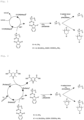
- the phthalimide group must be replaced by organic radical compounds, like 4-hydroxy-TEMPO or a 4-hydroxy-TEMPO derivative (cf. figure 1 ).
- R is H or CH 3 and R' is H, OH, OCH 3 , COOH, COOCH 3 or NH 2
- N-(acryloyloxy)phthalimide or N-(methacryloyloxy)phthalimide is performed with N-hydroxyphthalimide and acrylic acid or methacrylic acid as educts and 4-dimethylaminopyridine and 1-ethyl-3-(3-dimethylamino-propyl)carbodiimide hydrochloride (EDC ⁇ HCl) as reagents ( Steglich et al., Angew. Chem., Band 90, 1978, 556-557 ).
- poly[ N -(acryloyloxy)phthalimide] or poly[ N -(methacryloyloxy)phthalimide] are prepared by Free Radical Polymerization of N -(acryloyloxy)phthalimide or N- (methacryloyloxy)phthalimide, respectively, using azobisisobutyronitrile (AIBN) as radical-generating initiator.
- AIBN azobisisobutyronitrile
- poly[ N -(acryloyloxy)phthalimide] or poly[ N- (methacryloyloxy)phthalimide] are prepared from N- (acryloyloxy)phthalimide or N -(methacryloyloxy)phthalimide by RAFT polymerization using a radical-generating initiator, like azobisisobutyronitrile (AIBN), and a common chain transfer agent, like a dithioester, dithiocarbamate, xanthate or a trithiocarbonate, such as 4-cyano-4-[(dodecylsulfanylthio-carbonyl)sulfanyl]pentanoic acid or 2-(dodecylthiocarbono-thioylthio)-2-methylpropionic acid (DDMAT).
- a radical-generating initiator like azobisisobutyronitrile (AIBN)
- AIBN azobisisobutyronitrile
- a common chain transfer agent like a
- poly[ N -(acryloyloxy)phthalimide]-copolymers or -block copolymers or poly[ N -(methacryloyloxy)phthalimide]-copolymers or -block copolymers, e.g. with oligo(ethylene glycol)methyl ether acrylates increases the solubility of the respective copolymers in organic solvents and thus enables the decarboxylation reaction according to the invention to be quantitative.
- a statistic meaning statistically distributed monomers in the chain
- poly[N-(acryloyloxy)phthalimide]-copolymer is synthesized with oligo(ethylene glycol) methyl ether acrylate (OEGMeA) as comonomer.
- the copolymerization is conducted with a ratio of 1:3 of N-(acryloyloxy)phthalimide to oligo(ethylene glycol) methyl ether acrylate by Free Radical Polymerization using azobisisobutyronitrile (AIBN) as radical-generating initiator.
- AIBN azobisisobutyronitrile
- poly[ N -(methacryloyloxy)phthalimide]-block-poly[oligo(ethylene glycol) methyl ether methacrylate] is synthesized by Free Radical Polymerization with a ratio of 1:1 of N -(methacryloyloxy)phthalimide to oligo(ethylene glycol) methyl ether acrylate using azobisisobutyronitrile (AIBN) as radical-generating initiator.
- AIBN azobisisobutyronitrile
- an N -oxyphthalimide-based polyolefin-precursor polymer, copolymer or block copolymer is decarboxylated photo-induced with a redox transition-metal catalyst, a reducing agent and a radical donor.
- photo-induced means that the decarboxylation reaction is initiated by converting the transition- metal catalyst in an excited state by absorption of light.
- the Ru(II) catalyst is tris(bipyridine)ruthenium(II) chloride.
- the photo-induced decarboxylation reaction is performed under irradiation with blue light, according to a wavelength range of 420 - 490 nm.
- Suitable light sources are light emitting diodes, ultraviolet-lamps or mercury vapor lamps.
- the photo-induced decarboxylation reaction is conducted with an N -oxyphthalimide-based polyolefin-precursor polymer, copolymer or block copolymer under irradiation with blue light with a wavelength maximum of 440 - 450 nm.
- the radical donor in the photo-induced decarboxylation reaction under redox transition-metal catalysis is phenylsilane, 4-hydroxy-TEMPO or a 4-hydroxy-TEMPO derivative.
- the reducing agent in the photo-induced decarboxylation reaction is a Hantzsch ester.
- Hantzsch ester is the term used to describe compounds like 3,5-diethoxycarbonyl-1,4-dihydro-2,6-dimethylpyridine and derivatives ( Wang et al., Org. Biomol. Chem. 2019, 17, 6936-6951 ).
- the photoredox-induced transition-metal-catalyzed decarboxylation of phthalimide-based activated esters is performed with poly[ N -(acryloyloxy)-phthalimide] or poly[ N -(methacryloyloxy)phthalimide], a poly[N-(acryloyloxy)phthalimide]- or poly[ N -(methacryloyloxy)-phthalimide]-copolymer, or a poly[ N -(acryloyloxy)phthalimide]- or poly[ N -(methacryloyloxy)phthalimide]-block copolymer using tris(bipyridine)ruthenium(II) chloride as redox transition-metal catalyst, a Hantzsch ester as reducing agent and phenylsilane, 4-hydroxy-TEMPO or a 4-hydroxy-TEMPO derivative as radical donors.
- the decarboxylation is based on a radical mechanism. Tris(bipyridine)ruthenium(II) chloride hexahydrate is used as redox active compound in the decarboxylation, whereas a Hantzsch ester is oxidized during the decarboxylation.
- the (RuII) metal catalyst is excited to the photoexcited state (Ru*II) with blue light.
- the Hantzsch ester reduces the excited (Ru*II) catalyst to (RuI) followed by a SET from (RuI) to the phthalimide side group of the polymer or (block) copolymer oxidizing the Rucatalyst to (RuII) .
- the cycle is reinitiated by the light-induced transition of (RuII) to (Ru*II).
- the transfer of electrons to the phthalimide side group is followed by release of carbon dioxide and phthalimide species and the formation of a secondary radical located at the polymer backbone.
- Hydrogen-radical donors like phenylsilane can be used to react with the radical to form polyolefins or polyolefin (block) copolymers, other radical compounds like 4-hydroxy-TEMPO or 4-hydroxy-TEMPO derivatives can be employed to form different kinds of functionalized polymers or (block) copolymers (cf. figure 2 ).
- Figure 2 describes the decarboxylation mechanism of the ruthenium-catalysis based redox reaction starting with the light induced transition of tris(bipyridine)ruthenium(II) to tris(bipyridine)ruthenium(*II) followed by the reduction of the Ru-species by a Hantzsch ester and a SET to the phthalimide side group of the polymer leading to the release of carbon dioxide and the phthalimide species with formation of a secondary radical at the polymer backbone, which can further react with a hydrogen-radical donor, like phenylsilane, resulting in polyolefins or with an organic radical donor, like 4-hydroxy-TEMPO or 4-hydroxy-TEMPO derivatives, resulting in functionalized polyolefins.
- R is H or CH 3 and R' is H, OH, OCH 3 , COOH, COOCH 3 or NH 2 .
- the invention describes a new efficient method for polyolefin and polyolefin (block) copolymer production.
- An olefin like ethylene or propylene, is no longer used directly as a monomer starting material, but the starting material is now an active ester monomer, such as an activated acrylic or methacrylic acid ester.
- This allows synthetic access to many modern synthesis methods for polyolefins, such as controlled radical polymerization methods (in addition to RAFT, ATRP (Atom Transfer Radical Polymerization), NMP (Nitroxide-Mediated Radical Polymerization) and others should also be mentioned).
- N -oxyphthalimide-based polyolefin-precursor polymers, copolymers or block copolymers are decarboxylated generating polymer backbone radicals that can be trapped by radical donors, the synthetic access to a variety of architectures, such as functionalized (block) copolymers, star polymers, polymer networks, etc., is possible.
- N -(Acryloyloxy) phthalimide (0.50 g, 2.30 mmol. 1.0 eq.) and AIBN (Polymer 1: 3.0 mg, 0.018 mmol, 0.008 eq.)/(Polymer 2: 9.1 mg, 0.055 mmol, 0.024 eq.) were dissolved in 2.5 ml of anhydrous DMF in a round bottom flask. The flask was sealed with a septum and the solution was deoxygenated with an argon flow for 20 minutes.
- the flask was placed in a preheated oil bath for 1.5 hours at 70 °C and the polymer was precipitated in cold diethyl ether, centrifuged, washed three times with cold diethyl ether, and dried under reduced pressure at 40 °C.
- N -(Acryloyloxy)phthalimide (0.25 g, 1.08 mmol, 12.0 eq.), AIBN (1.77 mg , 0.01 mmol , 0.1 eq , and 2-(dodecylthiocarbonothioylthio)-2-methylpropionic acid (31.7 mg, 0.09 mmol, 1.0 eq.) were dissolved in 1.0 ml of anhydrous DMF in a round bottom flask. The flask was sealed with a septum and the solution was deoxygenated with an argon flow for 20 minutes.
- the flask was placed in a preheated oil bath for 6.5 hours at 80 °C and the polymer was precipitated in cold diethyl ether, centrifuged, washed with diethyl ether, and dried under reduced pressure at 40 °C.
- N -(Methacryloyloxy)phthalimide 0.5 g, 2.11 mmol, 18.1 eq.
- AIBN 1.91 mg, 0.01 mmol, 0.1 eq.
- 4-cyano-4-[(dodecylsulfanylthiocarbonyl)sulfanyl]pentanoic acid 46.9 mg, 0.12 mmol, 1.0 eq.
- the flask was sealed with a septum and the solution was deoxygenated with an argon flow for 20 minutes.
- the flask was placed in a preheated oil bath for 3.5 hours at 70 °C and the polymer was precipitated in cold diethyl ether, centrifuged, washed with diethyl ether, and dried under reduced pressure at 40 °C.
- Oligo(ethylene glycol) methyl ether acrylate (1.00 g, 2.10 mmol, 3.0 eq.), N -(acryloyloxy)phthalimide (0.15 g, 0.69 mmol, 1.0 eq.) and AIBN (3.40 mg, 0.013 mmol, 0.008 eq.) were dissolved in 1 ml of DMF in a round bottom flask. Afterwards, the flask was sealed with as septum and the solution was deoxygenated with an argon flow for 20 minutes.
- the flask was placed in a preheated oil bath for 1.5 hours at 80 °C and the polymer was precipitated in cold diethyl ether, centrifuged, washed three times with cold diethyl ether, and dried at room temperature.
- the ratio of N -(acryloyloxy)phthalimide to oligo(ethylene glycol) methyl ether acrylate was found to be 1:3.
- N -(methacryloyloxy)phthalimide] (0.15 g, 0.02 mmol, 1.0 eq.)
- AIBN (0.28 mg, 0.002 mmol, 0.1 eq.)
- oligo(ethylene glycol) methyl ether methacrylate 852 mg, 1.7 mmol, 1.0 eq.
- the flask was placed in a preheated oil bath for 18 hours at 70 °C and the polymer was precipitated in cold diethyl ether, centrifuged, washed with diethyl ether, and dried under reduced pressure at 40 °C.
- N -(Acryloyloxy) phthalimide 200 mg, 0.92 mmol, 30 eq.
- AIBN 0.5 mg, 0.003 mmol, 0.1 eq.
- BPTT S-benzyl S '-propyltrithiocarbonate
- a Schlenk tube was charged with poly[ N -(acryloyloxy)-phthalimide)] (100 mg, 0.01 mmol, 1.0 eq.), zinc (15.6 mg, 0.24 mmol, 0.5 eq. per ester group), and a stir bar. The Schlenk tube was then evacuated and backfilled with argon three times. 0.1 ml of anhydrous THF and 0.05 ml of isopropyl alcohol were deoxygenated in a vial with an argon flow for 20 minutes and added to the Schlenk tube. A solution of NiCl 2 ⁇ 6 H 2 O (9.72 mg, 0.04 mmol, 0.1 eq.
- a balloon filled with argon was added on the Schlenk tube which was placed in a preheated oil bath at 40 °C and the solution was stirred for 48 hours. The Schlenk tube was then removed from the oil bath and allowed to cool to ambient temperature. The polymer was precipitated in cold diethyl ether, centrifuged, washed three times with diethyl ether, and dried at room temperature.
- At least 90 % of the phthalimide side groups were removed as determined by 1 H-NMR and ATR-FT-IR.
- a Schlenk tube was charged with poly[N-(methacryloyloxy)-phthalimide)] (100 mg, 0.002 mmol, 1 .0 eq.), zinc (15.6 mg, 0.24 mmol, 0.5 eq. per ester group), and a stir bar. The Schlenk tube was then evacuated and backfilled with argon three times.
- phenylsilane (50.7 mg, 0.47 mmol, 1.5 eq. per ester group) in 0.5 ml of anhydrous DMF was also deoxygenated with an argon flow in a vial and the nickel catalyst and phenylsilane solution were added in quick succession.
- a balloon filled with argon was added on the Schlenk tube which was placed in a preheated oil bath at 40 °C and the solution was stirred for 48 hours. The Schlenk tube was then removed from the oil bath and allowed to cool to ambient temperature. The polymer was precipitated in cold diethyl ether, centrifuged, washed three times with diethyl ether, and dried at room temperature.
- the yield of the decarboxylation reaction could not be determined quantitatively due to the poor solubility of the reaction product.
- a Schlenk tube was charged with poly[ N -(acryloyloxy)-phthalimide)] (100 mg, 0.01 mmol, 1.0 eq.), zinc (15.6 mg, 0.24 mmol, 0.5 eq. per ester group), and a stir bar. The Schlenk tube was then evacuated and backfilled with argon three times. A solution of NiCl 2 ⁇ 6 H 2 O (9.72 mg, 0.04 mmol, 0.1 eq. per ester group) and 4,4'-di- tert -butyl-2,2'-dipyridyl (23.2 mg, 0.08 mmol, 0.2 eq.
- the phthalimide side groups could be removed quantitatively as determined by 1 H-NMR and ATR-FT-IR.
- a Schlenk tube was charged with poly[ N -(acryloyloxy)-phthalimide)]-co-poly[oligo(ethylene glycol) methyl ether acrylate] (100 mg, 0.08 mmol, 1.0 eq.), zinc (15.0 mg, 0.23 mmol, 0.5 eq. per ester group), and a stir bar.
- the Schlenk tube was then evacuated and backfilled with argon three times.
- 0.1 ml of anhydrous THF and 0.05 ml of isopropyl alcohol were deoxygenated with an argon flow in a vial and added to the Schlenk tube.
- a solution of NiCl 2 ⁇ 6 H 2 O (11.0 mg, 0.05 mmol, 0.1 eq.
- a balloon filled with argon was added on the Schlenk tube which was placed in a preheated oil bath at 40 °C and the solution was stirred for 48 hours. The Schlenk tube was then removed from the oil bath and allowed to cool to ambient temperature. The polymer was precipitated in cold diethyl ether, centrifuged, washed three times with diethyl ether and dried at room temperature.
- the phthalimide side groups could be removed quantitatively as determined by 1 H-NMR.
- a Schlenk tube was charged with poly[ N- (methacryloyloxy)phthalimide]- block -poly[oligo(ethylene glycol) methyl ether methacrylate] (500 mg, 0.01 mmol, 1.0 eq.), zinc (15.0 mg, 0.23 mmol, 0.5 eq. per ester group), and a stir bar.
- the Schlenk tube was then evacuated and backfilled with argon three times.
- 0.1 ml of anhydrous THF and 0.05 ml of i-PrOH were deoxygenated in a vial with an argon flow for 20 minutes and added to the Schlenk tube.
- a solution of NiCl 2 ⁇ 6 H 2 O (11.0 mg, 0.05 mmol, 0.1 eq.
- a balloon filled with argon was added on the Schlenk tube which was placed in a preheated oil bath at 40 °C and the solution was stirred for 48 hours. The Schlenk tube was then removed from the oil bath and allowed to cool to ambient temperature. The polymer was precipitated in cold diethyl ether, centrifuged, washed three times with diethyl ether, and dried at room temperature.
- the phthalimide side groups could be removed quantitatively as determined by 1 H-NMR.
- a Schlenk tube was charged with zinc (15.6 mg, 0.24 mmol, 0.5 eq. per ester group), and a stir bar. The Schlenk tube was then evacuated and backfilled with argon three times.
- phenylsilane (50.7 mg, 0.47 mmol, 1.5 eq. per ester group) in 0.5 ml of anhydrous DMF and poly[ N -(acryloyloxy)phthalimide]- block -poly(OEGMeA) (100 mg, 0.02 mmol, 1.0 eq.) in a mixture of 0.5 ml of anhydrous DMF, 0.1 ml of anhydrous THF and 0.05 ml of isopropanol in a separate vial were also deoxygenated with a nitrogen flow and the nickel catalyst and phenylsilane solution were added in quick succession.
- a balloon filled with nitrogen was added on the Schlenk tube which was placed in a preheated oil bath at 40 °C and the solution was stirred for 30 minutes.
- the polymer was precipitated in cold diethyl ether, centrifuged, washed three times with diethyl ether, purified by dialysis in methanol and dried at room temperature.
- the phthalimide side groups could be removed quantitatively as determined by 1 H-NMR.
- Ru(bpy) 3 Cl 2 ⁇ 6 H 2 O (8.9 mg, 0.01 mmol, 0.02 eq. per ester group), Hantzsch ester (142 mg, 0.6 mmol, 1.0 eq. per ester group) and poly[ N -(acryloyloxy)phthalimide]- block- poly(OEGMeA) (130 mg, 0.024 mmol, 1.0 eq.) were placed in a dry Schlenk tube equipped with a stirring bar. The tube was evacuated and backfilled with nitrogen three times. Simultaneously, phenylsilane (97.0 mg, 0.9 mmol, 1.5 eq.
Landscapes
- Chemical & Material Sciences (AREA)
- Health & Medical Sciences (AREA)
- Chemical Kinetics & Catalysis (AREA)
- Medicinal Chemistry (AREA)
- Polymers & Plastics (AREA)
- Organic Chemistry (AREA)
- General Chemical & Material Sciences (AREA)
- Addition Polymer Or Copolymer, Post-Treatments, Or Chemical Modifications (AREA)
- Graft Or Block Polymers (AREA)
Description
- The present invention relates to the decarboxylation of N-oxyphthalimide-based polymers.
- The synthesis of functional polymers with precisely defined molecular mass, composition, and architecture is a significant challenge. Functional polymers may be prepared by polymerization of appropriately protected monomers, although the additional deprotection step may not necessarily proceed to completion and may also affect the structural integrity of the polymer backbone. Direct polymerization of functional monomers clearly is a more attractive strategy. The traditional living anionic and cationic polymerization techniques, however, only offer very limited possibilities for the direct polymerization of monomers containing functional groups. Such functional groups may either completely prevent controlled polymerization or may participate in side reactions that can lead to loss of control over the polymerization reaction.
- This situation has improved with the development of controlled radical polymerization techniques as well as with advances in catalytic polymerization, which have resulted in polymerization reactions with a higher functional group tolerance.
- Post-polymerization modification is an attractive approach for the synthesis of functional polymers that overcomes problems related to a limited functional group tolerance of the mentioned polymerization strategies.
- The synthesis of functional polymers through post-polymerization modification is based on the polymerization of monomers with functional groups that are inert towards the polymerization conditions but which can be quantitatively converted into a broad range of other functional groups in a subsequent reaction step. The success of this method is based on the excellent conversions achievable under mild conditions, the excellent functional group tolerance, and the orthogonality of the post-polymerization modification reactions.
- Post-polymerization modification facilitates diversification in a single polymeric backbone, essential for engineering functional materials which are otherwise not possible by direct polymerization.
- Nowadays, various methods have been developed to further modify polymers. Popular methods are based on activated esters, thiol reactions, 1,3-dipolar cycloadditions, cross-coupling reactions, or Michael-type additions (Gauthier et al., Angew. Chem. Int. Ed. 2009, 48, 48-58).
- The nucleophilic substitution of polymeric active esters has become the most common form of post-polymerization modification since the introduction of these polymers by the groups of Ferruti (Ferruti et al., Polymer 1972, 13, 462) and Ringsdorf (Ringsdorf et al., Angew. Chem. 1972, 84, 1189; Angew. Chem. Int. Ed. Engl. 1972, 11, 1103).
- The reaction of active ester polymers with amines is probably the most frequently used post-polymerization modification strategy. Amines are most often used for the post-polymerization modification of active ester polymers since they can react selectively without the need for protection groups even in the presence of weaker nucleophiles, such as alcohols. The most common monomers used to prepare sidechain N-hydroxysuccinimide ester polymers are N-hydroxysuccinimide acrylate and N-hydroxysuccinimide methacrylate. The respective reactive polymers poly(N-hydroxysuccinimide acrylate) and poly(N-hydroxysuccinimide methacrylate) can react with amines under very mild reaction conditions, yielding functionalized polyacrylamide or polymethacrylamide derivatives.
- A drawback of N-hydroxysuccinimide acrylate and N-hydroxysuccinimide methacrylate is that they are only soluble in DMF and DMSO and the post-polymerization modification of these active ester polymers can be accompanied by side reactions, such as succinimide ring-opening or the formation of N-substituted glutarimide groups. The solubility of active-ester-based polymer precursors can be improved by copolymerization or by replacing the N-hydroxysuccinimide ester group with other activating groups, such as 2,4,5-trichlorophenol ester, endo-N-hydroxy-5-norbornene-2,3-dicarboxyimide, or pentafluorophenol ester groups, as shown by Théato and co-workers (Théato et al., Macromolecules 2004, 37, 5475; Théato et al., Eur. Polym. J. 2005, 41, 1569).
- A new and innovative field is the usage of polymeric phthalimide-based esters for post-polymerization modifications. Shaaban et al. (Shaaban et al., Acta Polymerica 1988, 39, 3, 145-148) describe the exchange of the phthalimide group of poly-N-acryloyloxy- and -N-methacryloyloxyphthalimides using amines and hydroxylated compounds. Berlinova et al. (Berlinova et al., Journal of Polymer Science: Part A Polymer Chemistry 1995, 33, 1751-1758) describe the use of phthalimidoacrylate prepolymers for the synthesis of graft copolymers with poly(ethylene oxide) side chains by activated ester substitution of poly(phthalimidoacrylate) or poly(phthalimidoacrylate-co-styrene) with amine-terminated poly(ethylene glycol) monomethyl ether.
- Using the Barton decarboxylation, it is possible to remove carboxylic acid moieties from alkyl groups and replace them with other functional groups (Barton et al., J. Chem. Soc., Chem. Commun. 1983, 939-941). The Barton decarboxylation is a radical reaction in which a carboxylic acid is converted to a thiohydroxamate ester. The product is then heated in the presence of a radical initiator and tributyltin hydride as hydrogen donor to afford the decarboxylated product.
- Metal-catalyzed decarboxylation reactions of redox-active phthalimide-based esters have been used for the modification of organic small molecules. Qin et al. (Qin et al., Angew. Chem. Int. Ed. 2017, 56 (1), 260-265) found N-oxyphthalimide based small molecule redox-active esters to be convenient starting materials for simple thermally-induced nickel-catalyzed radical formation and subsequent radical trapping with a hydrogen atom source such as phenylsilane, or an electron deficient olefin. Zheng et al. (Zheng et al., Org. Lett. 2018, 20, 4824-4827) describe the metal-catalyzed decarboxylative aminoxylation of N-oxyphthalimide small molecule active esters with (4-hydroxy-TEMPO (4-hydroxy-2,2,6,6-tetramethylpiperidine-N-oxyl) in the presence of a ruthenium photoredox catalyst and a Hantzsch ester.
- Monomers bearing an activated ester group can be polymerized under various polymerization techniques, like Free Radical Polymerization or Controlled Radical Polymerization, such as Reversible Addition-Fragmentation Chain-Transfer Polymerization (RAFT). Combining the functionalization of polymers via polymeric activated esters with these polymerization techniques generate possibilities to realize highly functionalized polymer architectures (Théato et al., Journal of Polymer Science: Part A: Polymer Chemistry, 2008, Vol. 46, 6677-6687).
- Free Radical Polymerization is a method of polymerization by which a polymer forms by the successive addition of free-radical building blocks. In the free radical formation usually separate radical-generating initiators are involved. Following its generation, the initiating free radical adds (non-radical) monomer units, thereby growing the polymer chain. Free Radical Polymerization is a key synthesis route for obtaining a wide variety of different polymers and material composites. The relatively non-specific nature of free-radical chemical interactions makes this one of the most versatile forms of polymerization available and allows facile reactions of polymeric free-radical chain ends and other chemicals or substrates (Rudin et al., The Elements of Polymer Science & Engineering (Third Edition), 2013, 341-389).
- Controlled Radical Polymerization methods enable the straightforward synthesis of polymeric materials from a wide range of different monomers featuring narrow molar mass distributions as well as low dispersity and allow for a good control over the polymerization itself. Reversible Addition-Fragmentation Chain-Transfer Polymerization makes use of a chain transfer agent in the form of a thiocarbonylthio compound (or similar) to afford control over the generated molecular mass and polydispersity during Free Radical Polymerization (Matyjaszewski et al., Materials Today 2005, 8, 26-33; G. Moad et al., Chem. Asian J. 2013, 8, 1634-1644).
- Polyolefins are by far the largest class of synthetic polymers made and used today. There are several reasons for this, such as low cost of production, light weight, and high chemical resistance. A wide range of mechanical properties can be provided through the use of copolymerization, blending, and additives to make products from elastomers to thermoplastics to high strength fibers (Lohse et al., Applied Polymer Science: 21st Century, 2000, chapter: Polyolefins).
- The European production of polyethlyene totals about 15 million tons, resulting in a third of the total polymer production in Europe
https://www.plasticseurope.org/application/files/6315/4510/965 8/Plastics_the_ facts_2018_AF_web.pdf). - Polyolefins are most commonly synthesized by coordination polymerization using a metal based catalyst such as the Ziegler-Natta catalyst, by cationic polymerization at low temperature, or by radical polymerization at high pressure (Merna et al., Chem. Rev. 2016, 116, 3, 771-785). A variety of mechanisms for controlling the length and end group chemistry of polyolefins have been developed over the past decades, including coordination polymerization (Zhang et al., J. Am. Chem. Soc. 2008, 130, 442-443), and catalyzed chain growth polymerization (German et al., Angew. Chem., Int. Ed., 2013, 52, 3438-3441), both of which yield polymers with very low dispersity. Although indirect, an attractive alternative is to polymerize symmetrically functionalized dienes by acyclic diene metathesis (ADMET) polycondensation (Lehman et al., Macromolecules 2007, 40, 2643-2656) and then hydrogenate the remaining double bonds. Dommanget et al. describe the controlled radical polymerization of ethylene using RAFT in the presence of xanthates as controlling agents under relative mild conditions (70 °C, < 200 bars)(Dommanget et al., Angew. Chem. Int. Ed. 2014, 53, 6683 - 6686).
- Polyolefins containing block copolymers are typically prepared in a multistep fashion, from two distinct polymerization mechanisms, as most techniques are not compatible with both polar and non-polar vinyl monomers (Franssen et al., Chem. Soc. Rev. 2013, 42, 5809-5832). In the case of olefin-acrylate copolymers, the olefin block is typically prepared first by a catalytic coordination polymerization and then transformed into a suitable initiator for addition of the second block by Controlled Radical Polymerization (Zhao et al., J. Mater. Chem., 2012, 22, 5737-5745).
- Chapman et al. describe the synthesis of controlled polyolefins via decarboxylation of poly(acrylic acid) activated with N-hydroxytetrachlorophthalimide (Chapman et al., Polym. Chem. 2017, 8, 6636-6643). According to Chapman et al. N-acryloyloxy-tetrachlorophthalimide was polymerized by RAFT and well-defined polyolefins with alkyl side chains were generated by decarboxylation and C-C bond formation using a dialkylzinc reagent, nickel(II) chloride ethylene glycol dimethyl ether complex (NiCl2 glyme) and 4,4'-di-tert-butyl-bipyridyl (bbbpy).
- The objective technical problem was to provide a polyolefin, polyolefin copolymer, polyolefin block copolymer or a functionalized polyolefin, functionalized polyolefin copolymer or functionalized polyolefin block copolymer via radical decarboxylation of an N-oxyphthalimide-based polyolefin-precursor polymer, copolymer or block copolymer and via trapping the resulting radicals.
- The objective technical problem is solved by the embodiments characterized in independent claim 1. Preferred embodiments can be found in the dependent claims.
- According to the invention the preparation of a polyolefin, polyolefin copolymer or polyolefin block copolymer or a functionalized polyolefin, functionalized polyolefin copolymer or functionalized polyolefin block copolymer is realized by a thermally or photo-induced radical decarboxylation reaction using a redox transition-metal catalyst and a reducing agent and by trapping the resulting radicals with a radical donor.
- The method according to the invention is suitable for radical based post-polymerization modifications. The removal of the N-oxyphthalimide side group on the one hand gives the opportunity to develop a new and innovative method for the synthesis of well-defined polyolefin-like structures and on the other hand allows for the introduction of new functional groups to a polymeric system.
- As provided herein N-oxyphthalimide-based polyolefin-precursor polymers are polymers that are built from monomers comprising an N-oxyphthalimide moiety and being suitable to be transformed to a polyolefin backbone after polymerization and post-polymerization modification. In the case of N-oxyphthalimide-based polyolefin-precursor copolymers or block copolymers, the monomer comprising an N-oxyphthalimide moiety is copolymerized with at least one different monomer unit.
- The redox transition-metal catalyst is a transition-metal complex (including one or more ligands) which can under influence of heat or light perform a single-electron transfer (SET) to an organic species in order to form a radical localized at the organic species. The transition-metal catalyst is oxidized during the SET and has to be reduced afterwards in accordance to restart the catalytic cycle.
- The reducing agent according to the invention is a metal atom, an inorganic compound or an organic compound that is capable of building a redox pair with the transition-metal catalyst.
- The radical donor is a molecular species capable of independent existence that contains an unpaired electron in an atomic orbital and donates an electron to or accept an electron from other molecules, therefore behaving as oxidant or reductant. According to the invention the radical donor can be a hydrogen-radical donor or an organic radical donor.
- In a preferred embodiment the N-oxyphthalimide-based polyolefin-precursor polymer, copolymer or block copolymer is poly[N-(acryloyloxy)phthalimide] or poly[N-(methacryloyloxy)-phthalimide], a poly[N-(acryloyloxy)phthalimide]- or poly[N-(methacryloyloxy)phthalimide]-copolymer, or a poly[N-(acryloyloxy)phthalimide]- or poly[N-(methacryloyloxy)phthalimide]-block copolymer.
- In one embodiment an N-oxyphthalimide-based polyolefin-precursor polymer, copolymer or block copolymer is decarboxylated thermally with a redox transition-metal catalyst, a reducing agent and a radical donor.
- According to the invention the term thermally means that the decarboxylation is initiated by the reduction of the transition-metal catalyst under supply of activation energy in the form of heat.
- In a preferred embodiment the redox transition-metal catalyst is a Ni(II) catalyst.
- In a more preferred embodiment the Ni(II) catalyst is (4,4'-di-tert-butyl-2,2'-dipyridyl)nickel ([Ni(bbbpy)]II).
- The thermally initiated decarboxylation reaction is performed at elevated temperatures, e.g. at a temperature in the range of 35 °C - 100 °C.
- In a preferred embodiment the thermally initiated decarboxylation reaction is performed at 40 °C - 60 °C.
- In a preferred embodiment the radical donor in the thermally induced decarboxylation reaction under redox transition-metal catalysis is phenylsilane, 4-hydroxy-TEMPO (4-hydroxy-2,2,6,6-tetramethylpiperidine-N-oxyl) or a 4-hydroxy-TEMPO derivative, such as 2,2,6,6-tetramethylpiperidine-N-oxyl, 4-methoxy-2,2,6,6-tetramethylpiperidine-N-oxyl, 4-carboxy-2,2,6,6-tetramethylpiperidine-N-oxyl, 4-methoxycarbonyl-2,2,6,6-tetramethylpiperidine-N-oxyl or 4-amino-2,2,6,6-tetramethylpiperidine-N-oxyl.
- According to the invention phenylsilane serves as a hydrogen-radical donor. Hydrogen transfer agents in radical reactions need a low metal-H bond dissociation energy. Phenylsilane can substitute for the toxic tri-n-butyltin hydride reagent, which generates difficult to separate nonpolar byproducts such as bis(tributyltin) oxide). The dissociation energy of the Sn-H bond in Bu3SnH is 78 kcal/mol (Laarhoven et al., Acc. Chem. Res. 1999, 32, 342), the dissociation energy of the Si-H bond in phenylsilane is 88.2 kcal/mol (Walsh et al., Acc. Chem. Res. 1981, 148, 246-252). In addition to very low toxicity, further advantages of phenylsilane are the good handleability and the high boiling point.
- 4-Hydroxy-TEMPO and its derivatives are stable radicals and suitable as organic radical traps due to the easy handling of the compounds (Barriga et al., Synlett. 2001 (4), 563; Marshall et al., Org. Biomol. Chem. 2011, 9, 4936-4947).
- The optionally substituted TEMPO (2,2,6,6-tetramethylpiperidin-1-yl)oxyl) moiety attached to the polymer increases the solubility of the polymer in organic solvents in comparison to polymers with pure polyolefin segments. TEMPO derivatives can be used for further functionalization reactions like esterification, amide formation or etherification.
- Suitable reducing agents for the thermally initiated decarboxylation reaction are base metals like Zn(0), alkali metal borohydrides, such as sodium borohydride or potassium borohydride, alkali metal aluminium hydrides, such as lithium aluminium hydride or sodium aluminium hydride, diisobutylaluminium hydride or hydrazine.
- In a preferred embodiment the reducing agent is Zn(0).
- In an especially preferred embodiment the thermally-induced transition-metal-catalyzed decarboxylation of phthalimide-based activated esters is performed with poly[N-(acryloyloxy)-phthalimide] or poly[N-(methacryloyloxy)phthalimide], a poly[N-(acryloyloxy)phthalimide]- or poly[N-(methacryloyloxy)-phthalimide]-copolymer, or a poly[N-(acryloyloxy)phthalimide]- or poly[N-(methacryloyloxy)phthalimide]-block copolymer using ([Ni(bbbpy)]II) as redox transition-metal catalyst, zinc as reducing agent and phenylsilane, 4-hydroxy-TEMPO or a 4-hydroxy-TEMPO derivative as radical compound.
- Without being restricted by a particular theory, the following mechanism is assumed for the thermally-induced decarboxylation reaction according to the invention:
The reaction mechanism is based on a SET nickel-based catalytic cycle. The cycle starts with the reduction of a Ni(II)-species to Ni(0) by a reducing agent such as zinc, followed by a SET from the reduced nickel species to the phthalimide side group of the polymer, copolymer or block copolymer. The unpaired electron is stabilized and delocalized over the activated ester group. - Once the electron is located at the ester functionality, CO2 is formed and released from the molecule. Besides CO2, the phthalimide group is also cleaved from the molecule and a secondary radical is formed which is located at the polymer backbone. For the formation of polyolefins or polyolefin (block) copolymers, the phthalimide group must be replaced by a hydrogen atom using a hydrogen-radical donor, like phenylsilane (Qin et al., Angew. Chem. Int. Ed. 2017, 56 (1), 260-265). For the formation of further functionalized polymers or (block) copolymers, the phthalimide group must be replaced by organic radical compounds, like 4-hydroxy-TEMPO or a 4-hydroxy-TEMPO derivative (cf.
figure 1 ). -
Figure 1 describes the decarboxylation mechanism of the nickel-catalysis based redox cycle, starting with the reduction of the nickel(II) species [Ni(bbbpy)]II (bbbpy = 4,4'-di-tert-butyl-bipyridyl) by zinc as reducing agent and followed by a SET from the nickel(0) spezies [Ni(bbbpy)]0 to the phthalimide side group of the polyolefin-precursor polymer leading to the release of CO2 and phthalimide species forming a radical at the backbone which can further react with a hydrogen-radical donor, like phenylsilane, resulting in polyolefins or with an organic radical donor, like 4-hydroxy-TEMPO or a 4-hydroxy-TEMPO derivative, resulting in functionalized polyolefins. Infigure 1 R is H or CH3 and R' is H, OH, OCH3, COOH, COOCH3 or NH2. - According to the invention the synthesis of N-(acryloyloxy)phthalimide or N-(methacryloyloxy)phthalimide, respectively, is performed with N-hydroxyphthalimide and acrylic acid or methacrylic acid as educts and 4-dimethylaminopyridine and 1-ethyl-3-(3-dimethylamino-propyl)carbodiimide hydrochloride (EDC·HCl) as reagents (Steglich et al., Angew. Chem., Band 90, 1978, 556-557).
- According to the invention poly[N-(acryloyloxy)phthalimide] or poly[N-(methacryloyloxy)phthalimide] are prepared by Free Radical Polymerization of N-(acryloyloxy)phthalimide or N-(methacryloyloxy)phthalimide, respectively, using azobisisobutyronitrile (AIBN) as radical-generating initiator. By varying the ratio of AIBN to monomer used for the polymerization the molar mass of poly[N-(acryloyloxy)phthalimide] or poly[N-(methacryloyloxy)-phthalimide] can be adjusted.
- Alternatively poly[N-(acryloyloxy)phthalimide] or poly[N-(methacryloyloxy)phthalimide] are prepared from N-(acryloyloxy)phthalimide or N-(methacryloyloxy)phthalimide by RAFT polymerization using a radical-generating initiator, like azobisisobutyronitrile (AIBN), and a common chain transfer agent, like a dithioester, dithiocarbamate, xanthate or a trithiocarbonate, such as 4-cyano-4-[(dodecylsulfanylthio-carbonyl)sulfanyl]pentanoic acid or 2-(dodecylthiocarbono-thioylthio)-2-methylpropionic acid (DDMAT).
- It was observed that polymers with pure polyolefin segments obtained after cleavage of the N-oxyphthalimide group were highly insoluble in common organic solvents and only low amounts of the product could be dissolved for further analysis. However, it is in the realm of possibility that the decarboxylation proceeds almost quantitative and only the non-quantitative decarboxylated chains were soluble.
- The formation of poly[N-(acryloyloxy)phthalimide]-copolymers or -block copolymers or poly[N-(methacryloyloxy)phthalimide]-copolymers or -block copolymers, e.g. with oligo(ethylene glycol)methyl ether acrylates increases the solubility of the respective copolymers in organic solvents and thus enables the decarboxylation reaction according to the invention to be quantitative.
- According to the invention a statistic (meaning statistically distributed monomers in the chain) poly[N-(acryloyloxy)phthalimide]-copolymer is synthesized with oligo(ethylene glycol) methyl ether acrylate (OEGMeA) as comonomer. The copolymerization is conducted with a ratio of 1:3 of N-(acryloyloxy)phthalimide to oligo(ethylene glycol) methyl ether acrylate by Free Radical Polymerization using azobisisobutyronitrile (AIBN) as radical-generating initiator.
- In addition, poly[N-(methacryloyloxy)phthalimide]-block-poly[oligo(ethylene glycol) methyl ether methacrylate] is synthesized by Free Radical Polymerization with a ratio of 1:1 of N-(methacryloyloxy)phthalimide to oligo(ethylene glycol) methyl ether acrylate using azobisisobutyronitrile (AIBN) as radical-generating initiator.
- In another embodiment an N-oxyphthalimide-based polyolefin-precursor polymer, copolymer or block copolymer is decarboxylated photo-induced with a redox transition-metal catalyst, a reducing agent and a radical donor.
- According to the invention photo-induced means that the decarboxylation reaction is initiated by converting the transition- metal catalyst in an excited state by absorption of light.
- In a preferred embodiment the redox transition-metal catalyst is a Ru(II) catalyst.
- In a more preferred embodiment the Ru(II) catalyst is tris(bipyridine)ruthenium(II) chloride.
- The photo-induced decarboxylation reaction is performed under irradiation with blue light, according to a wavelength range of 420 - 490 nm. Suitable light sources are light emitting diodes, ultraviolet-lamps or mercury vapor lamps.
- In a preferred embodiment the photo-induced decarboxylation reaction is conducted with an N-oxyphthalimide-based polyolefin-precursor polymer, copolymer or block copolymer under irradiation with blue light with a wavelength maximum of 440 - 450 nm.
- In a preferred embodiment the radical donor in the photo-induced decarboxylation reaction under redox transition-metal catalysis is phenylsilane, 4-hydroxy-TEMPO or a 4-hydroxy-TEMPO derivative.
- In a preferred embodiment the reducing agent in the photo-induced decarboxylation reaction is a Hantzsch ester.
- Hantzsch ester is the term used to describe compounds like 3,5-diethoxycarbonyl-1,4-dihydro-2,6-dimethylpyridine and derivatives (Wang et al., Org. Biomol. Chem. 2019, 17, 6936-6951).
- In an especially preferred embodiment the photoredox-induced transition-metal-catalyzed decarboxylation of phthalimide-based activated esters is performed with poly[N-(acryloyloxy)-phthalimide] or poly[N-(methacryloyloxy)phthalimide], a poly[N-(acryloyloxy)phthalimide]- or poly[N-(methacryloyloxy)-phthalimide]-copolymer, or a poly[N-(acryloyloxy)phthalimide]- or poly[N-(methacryloyloxy)phthalimide]-block copolymer using tris(bipyridine)ruthenium(II) chloride as redox transition-metal catalyst, a Hantzsch ester as reducing agent and phenylsilane, 4-hydroxy-TEMPO or a 4-hydroxy-TEMPO derivative as radical donors.
- Without being restricted by a particular theory, the following mechanism is assumed for the photo-induced decarboxylation reaction according to the invention:
The decarboxylation is based on a radical mechanism. Tris(bipyridine)ruthenium(II) chloride hexahydrate is used as redox active compound in the decarboxylation, whereas a Hantzsch ester is oxidized during the decarboxylation. The (RuII) metal catalyst is excited to the photoexcited state (Ru*II) with blue light. The Hantzsch ester reduces the excited (Ru*II) catalyst to (RuI) followed by a SET from (RuI) to the phthalimide side group of the polymer or (block) copolymer oxidizing the Rucatalyst to (RuII) . The cycle is reinitiated by the light-induced transition of (RuII) to (Ru*II). Analogously to the nickel-based catalytic system, the transfer of electrons to the phthalimide side group is followed by release of carbon dioxide and phthalimide species and the formation of a secondary radical located at the polymer backbone. Hydrogen-radical donors like phenylsilane can be used to react with the radical to form polyolefins or polyolefin (block) copolymers, other radical compounds like 4-hydroxy-TEMPO or 4-hydroxy-TEMPO derivatives can be employed to form different kinds of functionalized polymers or (block) copolymers (cf.figure 2 ). -
Figure 2 describes the decarboxylation mechanism of the ruthenium-catalysis based redox reaction starting with the light induced transition of tris(bipyridine)ruthenium(II) to tris(bipyridine)ruthenium(*II) followed by the reduction of the Ru-species by a Hantzsch ester and a SET to the phthalimide side group of the polymer leading to the release of carbon dioxide and the phthalimide species with formation of a secondary radical at the polymer backbone, which can further react with a hydrogen-radical donor, like phenylsilane, resulting in polyolefins or with an organic radical donor, like 4-hydroxy-TEMPO or 4-hydroxy-TEMPO derivatives, resulting in functionalized polyolefins. Infigure 2 R is H or CH3 and R' is H, OH, OCH3, COOH, COOCH3 or NH2. - The invention describes a new efficient method for polyolefin and polyolefin (block) copolymer production. An olefin, like ethylene or propylene, is no longer used directly as a monomer starting material, but the starting material is now an active ester monomer, such as an activated acrylic or methacrylic acid ester. This allows synthetic access to many modern synthesis methods for polyolefins, such as controlled radical polymerization methods (in addition to RAFT, ATRP (Atom Transfer Radical Polymerization), NMP (Nitroxide-Mediated Radical Polymerization) and others should also be mentioned).
- Combined with the post-polymerization method according to the invention, namely that N-oxyphthalimide-based polyolefin-precursor polymers, copolymers or block copolymers are decarboxylated generating polymer backbone radicals that can be trapped by radical donors, the synthetic access to a variety of architectures, such as functionalized (block) copolymers, star polymers, polymer networks, etc., is possible.
- This opens up completely new fields of application for polyolefin polymers or (block) copolymers, like the use as solid state electrolytes in batteries, the use as functional membranes such as stretchable films or the use as compatibilizing agents, e.g. in immiscible polymer blends.
- N-(Acryloyloxy) phthalimide (0.50 g, 2.30 mmol. 1.0 eq.) and AIBN (Polymer 1: 3.0 mg, 0.018 mmol, 0.008 eq.)/(Polymer 2: 9.1 mg, 0.055 mmol, 0.024 eq.) were dissolved in 2.5 ml of anhydrous DMF in a round bottom flask. The flask was sealed with a septum and the solution was deoxygenated with an argon flow for 20 minutes. Afterwards, the flask was placed in a preheated oil bath for 1.5 hours at 70 °C and the polymer was precipitated in cold diethyl ether, centrifuged, washed three times with cold diethyl ether, and dried under reduced pressure at 40 °C.
- 1H NMR (400 MHz, DCM-d2): δ / ppm = 7.92 -7.40 (m, 4H, CaromaticH, 3.79 - 3.30 (m, 1H, CHCH2), 2.69 - 1.88 (m. 2H, CHCH2).
- FT-IR (ATR): v/cm-1 = 2930 (C-H of backbone), 1811 (C=O of ester), 1784 (C=O of phthalimide), 1670 (C=C aromatic), 1467 (C=C aromatic), 1357 (C-N), 1055 (C-O of ester), 833 (N-O of phthalimide).
- Molar mass of polymer 1 according to SEC = 8400 g mol-1, Ð (dispersity) = 2.45, ~ 37 monomer units per chain, ratio of AIBN to monomer = 0.008:1
- Molar mass of
polymer 2 according to SEC = 2500 g mol-1, Ð (dispersity) = 1.22, ~ 11 monomer units per chain, ratio of AIBN to monomer = 0.024:1 - N-(Acryloyloxy)phthalimide (0.25 g, 1.08 mmol, 12.0 eq.), AIBN (1.77 mg , 0.01 mmol , 0.1 eq , and 2-(dodecylthiocarbonothioylthio)-2-methylpropionic acid (31.7 mg, 0.09 mmol, 1.0 eq.) were dissolved in 1.0 ml of anhydrous DMF in a round bottom flask. The flask was sealed with a septum and the solution was deoxygenated with an argon flow for 20 minutes. Afterwards, the flask was placed in a preheated oil bath for 6.5 hours at 80 °C and the polymer was precipitated in cold diethyl ether, centrifuged, washed with diethyl ether, and dried under reduced pressure at 40 °C.
- 1H NMR (400 MHz, DCM-d2): δ / ppm = 7.92 - 7.46 (m, 4H, CaromaticH), 3.80 -3.27 (m, 1H, CHCH2), 2.68 -1.88 (m, 2H, CHCH2).
- Molar mass according to SEC = 3600 g mol-1, Ð = 1.22, ~ 15 monomer units per chain.
- N-(Methacryloyloxy)phthalimide (0.5 g, 2.11 mmol, 18.1 eq.), AIBN (1.91 mg, 0.01 mmol, 0.1 eq.), and 4-cyano-4-[(dodecylsulfanylthiocarbonyl)sulfanyl]pentanoic acid (46.9 mg, 0.12 mmol, 1.0 eq.) were dissolved in 1.0 ml of anhydrous DMF in a round bottom flask. The flask was sealed with a septum and the solution was deoxygenated with an argon flow for 20 minutes. Afterwards, the flask was placed in a preheated oil bath for 3.5 hours at 70 °C and the polymer was precipitated in cold diethyl ether, centrifuged, washed with diethyl ether, and dried under reduced pressure at 40 °C.
- 1H NMR (400 MHz, DMSO-d5) : δ / ppm = 8.17 - 7.54 (m, 4H, CaromaticH), 2.06 - 1.13 (m, 5H, CbackboneH2CH3).
Molar mass according to SEC = 8800 g mol-1, Ð = 2.03 - Oligo(ethylene glycol) methyl ether acrylate (1.00 g, 2.10 mmol, 3.0 eq.), N-(acryloyloxy)phthalimide (0.15 g, 0.69 mmol, 1.0 eq.) and AIBN (3.40 mg, 0.013 mmol, 0.008 eq.) were dissolved in 1 ml of DMF in a round bottom flask. Afterwards, the flask was sealed with as septum and the solution was deoxygenated with an argon flow for 20 minutes. After deoxygenating, the flask was placed in a preheated oil bath for 1.5 hours at 80 °C and the polymer was precipitated in cold diethyl ether, centrifuged, washed three times with cold diethyl ether, and dried at room temperature. The ratio of N-(acryloyloxy)phthalimide to oligo(ethylene glycol) methyl ether acrylate was found to be 1:3.
- 1H NMR (400 MHz, CDCl3): δ / ppm = 7.82 (m, 4 H, CaromaticH), 4.19 (m, 2H, COOCH2), 3.79 - 3.46 (m, 32H, (OCH2CH2O)8), 3.36 (s, 3H, CH2OCH3), 2.64 - 1.15 (m, 3H, CbackboneH).
Molar mass according to SEC = 28300 g mol-1, Ð = 2.17 - Poly[N-(methacryloyloxy)phthalimide] (0.15 g, 0.02 mmol, 1.0 eq.), AIBN (0.28 mg, 0.002 mmol, 0.1 eq.), and oligo(ethylene glycol) methyl ether methacrylate (852 mg, 1.7 mmol, 1.0 eq.) were dissolved in 1.5 ml of anhydrous DMF in a round bottom flask. The flask was sealed with a septum and the solution was deoxygenated with an argon flow for 20 minutes. Afterwards, the flask was placed in a preheated oil bath for 18 hours at 70 °C and the polymer was precipitated in cold diethyl ether, centrifuged, washed with diethyl ether, and dried under reduced pressure at 40 °C.
- 1H NMR (400 MHz, CDCl3): δ / ppm = 7.92 - 7.46 (m, 4H, CaromaticH), 4.05 (s, 2H), 3.61 (m, 34H, (OCH2CH2)8), 2.00 (s, 3H, CH3), 0.91 (m, 2H, CbackboneH).
- Molar mass Poly[N-(methacryloyloxy)phthalimide]-block: M n, phthalimide = 8800 g mol-1, Ð phthalimide = 2.03;
- Molar mass total polymer: M n, block = 47.000 g mol-1, Ð block = 1.84
- N-(Acryloyloxy) phthalimide (200 mg, 0.92 mmol, 30 eq.), AIBN (0.5 mg, 0.003 mmol, 0.1 eq.), and S-benzyl S'-propyltrithiocarbonate (BPTT) (7.45 mg, 0.03 mmol, 1.0 eq.) were dissolved in 0.25 ml of DMF in a pear shaped flask. The flask was sealed with a septum, the solution was deoxygenated with an argon flow for 20 minutes and the flask was placed in a preheated oil bath for 5 hours at 80 °C. Deinhibited oligo(ethylene glycol) methyl ether acrylate (83.0 mg, 0.17 mmol, 5.5 eq.) and AIBN (0.5 mg, 0.003 mmol, 0.1 eq.) were dissolved in 0.1 ml of DMF in a pear-shaped flask and the solution was deoxygenated with a nitrogen flow for 20 minutes. After 5 hours, the mixture was added to the polymerization flask and the reaction mixture was stirred overnight. The polymer was precipitated in cold diethyl ether, centrifuged, washed with diethyl ether, and dried at room temperature.
- 1H NMR (400 MHz, DCM-d2): δ / ppm = 8.13 (m, 4H, CaromaticH), 4.44 (s, 2H, COOCH2), 3.88 (m, 32H, (OCH2CH2)8), 3.64 (s, 3H, CH3), 2.97 - 2.42 (m, 1H, COOCbackboneH), 2.12 (m, 2H, CbackboneH).
- Molar mass Poly [N-(acryloyloxy)phthalimide]-block: M n, phthalimide = 5000 g mol-1, Ð phthalimide = 1.6,
DP(degree of polymerization)phthalimide = 20; - Molar mass total polymer: M n, block = 5400 g mol-1, Ð block = 1.6, DP(degree of polymerization)OEGMeA(poly[OEGMeA]-block) = 1
- A Schlenk tube was charged with poly[N-(acryloyloxy)-phthalimide)] (100 mg, 0.01 mmol, 1.0 eq.), zinc (15.6 mg, 0.24 mmol, 0.5 eq. per ester group), and a stir bar. The Schlenk tube was then evacuated and backfilled with argon three times. 0.1 ml of anhydrous THF and 0.05 ml of isopropyl alcohol were deoxygenated in a vial with an argon flow for 20 minutes and added to the Schlenk tube. A solution of NiCl2 · 6 H2O (9.72 mg, 0.04 mmol, 0.1 eq. per ester group) and 4,4'-di-tert-butyl-2,2'-dipyridyl (23.2 mg, 0.08 mmol, 0.2 eq. per ester group) in 0.5 ml of anhydrous DMF was deoxygenated in a vial with an argon flow for 20 minutes. Simultaneously, phenylsilane (50.7 mg, 0.47 mmol, 1.5 eq. per ester group) in 0.5 ml of anhydrous DMF was also deoxygenated with an argon flow in a vial and the nickel catalyst and phenylsilane solution were added in quick succession. A balloon filled with argon was added on the Schlenk tube which was placed in a preheated oil bath at 40 °C and the solution was stirred for 48 hours. The Schlenk tube was then removed from the oil bath and allowed to cool to ambient temperature. The polymer was precipitated in cold diethyl ether, centrifuged, washed three times with diethyl ether, and dried at room temperature.
- At least 90 % of the phthalimide side groups were removed as determined by 1H-NMR and ATR-FT-IR.
- 1H NMR (400 MHz, DMF-d7): δ / ppm = 7.77 - 6.64 (m, 4H, CaromaticH), 3.68 - 3.09 (m, 1H, CHCOON), 1.99 - 0.38 (m, 2H, CbackboneH2).
- A Schlenk tube was charged with poly[N-(methacryloyloxy)-phthalimide)] (100 mg, 0.002 mmol, 1 .0 eq.), zinc (15.6 mg, 0.24 mmol, 0.5 eq. per ester group), and a stir bar. The Schlenk tube was then evacuated and backfilled with argon three times.
- 0.1 ml of anhydrous THF and 0.05 ml of i-PrOH were deoxygenated in a vial with an argon flow for 20 minutes and added to the Schlenk tube. A solution of NiCl2 · 6 H2O (9.72 mg, 0.04 mmol, 0.1 eq. per ester group) and 4,4'-di-tert-butyl-2,2'-dipyridyl (23.2 mg, 0.08 mmol, 0.2 eq. per ester group) in 0.5 ml of anhydrous DMF was deoxygenated in a vial with an argon flow for 20 minutes. Simultaneously, phenylsilane (50.7 mg, 0.47 mmol, 1.5 eq. per ester group) in 0.5 ml of anhydrous DMF was also deoxygenated with an argon flow in a vial and the nickel catalyst and phenylsilane solution were added in quick succession. A balloon filled with argon was added on the Schlenk tube which was placed in a preheated oil bath at 40 °C and the solution was stirred for 48 hours. The Schlenk tube was then removed from the oil bath and allowed to cool to ambient temperature. The polymer was precipitated in cold diethyl ether, centrifuged, washed three times with diethyl ether, and dried at room temperature.
- The yield of the decarboxylation reaction could not be determined quantitatively due to the poor solubility of the reaction product.
- 1H NMR (400 MHz, DMF-d7): δ / ppm = 7.83 - 6.61 (m, 4H, CaromaticH), 1.92 - 0.42 (m, 5H, CH3 / CbackboneH2).
- A Schlenk tube was charged with poly[N-(acryloyloxy)-phthalimide)] (100 mg, 0.01 mmol, 1.0 eq.), zinc (15.6 mg, 0.24 mmol, 0.5 eq. per ester group), and a stir bar. The Schlenk tube was then evacuated and backfilled with argon three times. A solution of NiCl2 · 6 H2O (9.72 mg, 0.04 mmol, 0.1 eq. per ester group) and 4,4'-di-tert-butyl-2,2'-dipyridyl (23.2 mg, 0.08 mmol, 0.2 eq. per ester group) in 0.5 ml of anhydrous DMF was deoxygenated in a vial with an argon flow for 20 minutes. Simultaneously, 4-hydroxy-TEMPO (0.11 g, 0.61 mmol, 1.5 eq. per ester group) in 0.5 ml of anhydrous DMF was also deoxygenated with an argon flow in a vial and the nickel catalyst and 4-hydroxy-TEMPO solution were added in quick succession. A balloon filled with argon was added on the Schlenk tube which was placed in a preheated oil bath at 40 °C and the solution was stirred for 48 hours. The Schlenk tube was then removed from the oil bath and allowed to cool to ambient temperature. The polymer was precipitated in cold diethyl ether, centrifuged, washed with diethyl ether, and dried at room temperature.
- The phthalimide side groups could be removed quantitatively as determined by 1H-NMR and ATR-FT-IR.
- 1H NMR (400 MHz, DMSO-d6) : δ / ppm = 4.75 - 4.31 (m, 1H, NOCHCH2), 4.04 - 3.66 (m, 1H, CHOH), 3.48 - 3.07 (m, 1H, CHOH), 2.05 - 0.40 (m, 18H, NC(CH3)4(CH2)2/NOCHCH2).
- A Schlenk tube was charged with poly[N-(acryloyloxy)-phthalimide)]-co-poly[oligo(ethylene glycol) methyl ether acrylate] (100 mg, 0.08 mmol, 1.0 eq.), zinc (15.0 mg, 0.23 mmol, 0.5 eq. per ester group), and a stir bar. The Schlenk tube was then evacuated and backfilled with argon three times. 0.1 ml of anhydrous THF and 0.05 ml of isopropyl alcohol were deoxygenated with an argon flow in a vial and added to the Schlenk tube. A solution of NiCl2 · 6 H2O (11.0 mg, 0.05 mmol, 0.1 eq. per ester group) and 4,4'-di-tert-butyl-2,2'-dipyridyl (24.8 mg, 0.09 mmol, 0.2 eq. per ester group) in 0.5 ml of anhydrous DMF was deoxygenated in a vial with an argon flow for 20 minutes. Simultaneously, phenylsilane (74.8 mg, 0.69 mmol, 1.5 eq. per ester group) in 0.5 ml of anhydrous DMF was also deoxygenated in a vial and the nickel catalyst and phenylsilane solution were added in quick succession. A balloon filled with argon was added on the Schlenk tube which was placed in a preheated oil bath at 40 °C and the solution was stirred for 48 hours. The Schlenk tube was then removed from the oil bath and allowed to cool to ambient temperature. The polymer was precipitated in cold diethyl ether, centrifuged, washed three times with diethyl ether and dried at room temperature.
- The phthalimide side groups could be removed quantitatively as determined by 1H-NMR.
- 1H NMR (400 MHz, CDCl3): δ / ppm = 4.18 (s, 2H, COOCH2), 3.93 - 3.49 (m, 32H, (OCH2CH2O)8), 3.37 (s, 3H, (OCH2CH2O)8CH3), 2.3 (m, 1H, CHCOO), 2.09 - 0.51 (m, CbackboneH2).
Molar mass = 22300 g mol-1; Ð = 2.46 - A Schlenk tube was charged with poly[N-(methacryloyloxy)phthalimide]-block-poly[oligo(ethylene glycol) methyl ether methacrylate] (500 mg, 0.01 mmol, 1.0 eq.), zinc (15.0 mg, 0.23 mmol, 0.5 eq. per ester group), and a stir bar. The Schlenk tube was then evacuated and backfilled with argon three times. 0.1 ml of anhydrous THF and 0.05 ml of i-PrOH were deoxygenated in a vial with an argon flow for 20 minutes and added to the Schlenk tube. A solution of NiCl2 · 6 H2O (11.0 mg, 0.05 mmol, 0.1 eq. per ester group) and 4,4'-di-tert-butyl-2,2'-dipyridyl (24.8 mg, 0.09 mmol, 0.2 eq. per ester group) in 1.5 ml of anhydrous DMF was deoxygenated in a vial with an argon flow for 20 minutes. Simultaneously, phenylsilane (74.8 mg, 0.69 mmol, 1.5 eq. per ester group) in 1.5 ml of anhydrous DMF was also deoxygenated with an argon flow in a vial and the nickel catalyst and phenylsilane solution were added in quick succession. A balloon filled with argon was added on the Schlenk tube which was placed in a preheated oil bath at 40 °C and the solution was stirred for 48 hours. The Schlenk tube was then removed from the oil bath and allowed to cool to ambient temperature. The polymer was precipitated in cold diethyl ether, centrifuged, washed three times with diethyl ether, and dried at room temperature.
- The phthalimide side groups could be removed quantitatively as determined by 1H-NMR.
- 1H NMR (400 MHz, Acetone-d6): δ / ppm = 4.16 (s, 2H, COOCH2), 3.93 - 3.45 (m, 34H, CH2O(CH2CH2O)8), 3.32 (s, 3H, OCH3), 2.80 (s, 2H, CbackboneCH2), 2.05 - 1.75 (s, 3H, CbackboneCH3) 1.29 - 0.84 (m, CbackboneCH2CH3).
- A Schlenk tube was charged with zinc (15.6 mg, 0.24 mmol, 0.5 eq. per ester group), and a stir bar. The Schlenk tube was then evacuated and backfilled with argon three times. A solution of NiCl2 · 6 H2O (9.72 mg, 0.04 mmol, 0.1 eq. per ester group) and 4,4'-di-tert-butyl-2,2'-dipyridyl (23.2 mg, 0.08 mmol, 0.2 eq. per ester group) in 0.5 ml of anhydrous DMF was deoxygenated in a vial with a nitrogen flow for 20 minutes. Simultaneously, phenylsilane (50.7 mg, 0.47 mmol, 1.5 eq. per ester group) in 0.5 ml of anhydrous DMF and poly[N-(acryloyloxy)phthalimide]-block-poly(OEGMeA) (100 mg, 0.02 mmol, 1.0 eq.) in a mixture of 0.5 ml of anhydrous DMF, 0.1 ml of anhydrous THF and 0.05 ml of isopropanol in a separate vial were also deoxygenated with a nitrogen flow and the nickel catalyst and phenylsilane solution were added in quick succession. A balloon filled with nitrogen was added on the Schlenk tube which was placed in a preheated oil bath at 40 °C and the solution was stirred for 30 minutes. The polymer was precipitated in cold diethyl ether, centrifuged, washed three times with diethyl ether, purified by dialysis in methanol and dried at room temperature.
- 1H NMR (400 MHz, DCM-d2): δ / ppm = 7.27 - 6.94 (m, 5H, CHBPTT), 4.19 - 3.98 (s, 2H, COOCH2), 3.73 - 3.32 (s, 3H, CH3), 3.25 (s, OH), 2.50 - 1.48 (m, 3H, CbackboneH), 1.48 - 0.86 (s, 2H, CH2, PE).
- Poly[N-(acryloyloxy)phthalimide] (100 mg, 0.012 mmol, 1.0 eq.), Ru(bpy)3Cl2· 6 H2O (6.1 mg, 0.008 mmol, 0.02 eq. per ester group), and Hantzsch ester (103 mg, 0.41 mmol, 1.0 eq. per ester group) were placed in a dry Schlenk tube equipped with a stirring bar. The tube was evacuated and backfilled with argon three times. Simultaneously, 4-hydroxy-TEMPO (105 mg, 0.61 mmol, 1.5 eq. per ester group) in 2.5 ml of anhydrous DMF was deoxygenated with an argon flow for 20 minutes and added via a gas-tight syringe under argon atmosphere afterwards. The reaction mixture was stirred under the irradiation of three 3 W blue LEDs (distance app. 1.5 cm from the light source, wavelength maximum 440 - 450 nm) at room temperature for 24 hours, precipitated in cold diethyl ether, centrifuged, washed with diethyl ether, and dried under reduced pressure at 40 °C.
- The phthalimide side groups could be removed quantitatively as determined by 1H-NMR.
- 1H NMR (400 MHz, DMSO-d6) : δ / ppm = 4.65 - 4.01 (m, 1H, NOCHCH2), 3.72 (m, 1H, CHOH), 3.34 (m, 1H, CHOH), 1.98 - 1.55 (m, 4H, HOCH(CH2)2), 1.53 - 0.62 (m, 14H, ONe (CH3)4/CbackboneH2).
- Ru(bpy)3Cl2 · 6 H2O (8.9 mg, 0.01 mmol, 0.02 eq. per ester group), Hantzsch ester (142 mg, 0.6 mmol, 1.0 eq. per ester group) and poly[N-(acryloyloxy)phthalimide]-block-poly(OEGMeA) (130 mg, 0.024 mmol, 1.0 eq.) were placed in a dry Schlenk tube equipped with a stirring bar. The tube was evacuated and backfilled with nitrogen three times. Simultaneously, phenylsilane (97.0 mg, 0.9 mmol, 1.5 eq. per ester group) in 1.0 ml of anhydrous DMF was deoxygenated with a nitrogen flow for 20 minutes and added via a gas-tight syringe under argon atmosphere afterwards. The reaction mixture was stirred under the irradiation of three 3 W blue LEDs (distance app. 1.5 cm from the light source, wavelength maximum 440 - 450 nm) at room temperature for 30 minutes, precipitated in cold diethyl ether, centrifuged, washed with diethyl ether, and purified by dialysis in methanol.
- 1H NMR (400 MHz, DCM-d2): δ / ppm = 4.17 (s, 2H, COOCH2), 3.58 (m, 32H, (OCH2CH2)8), 3.32 (s, 3H, CH3), 2.95 - 2.21 (m, 3H, CbackboneH), 1.25 (s, 2H, CH2, PE).
Molar mass M n, block = 1100 g mol-1
Claims (13)
- A process for the preparation of a polyolefin, polyolefin copolymer or polyolefin block copolymer or a functionalized polyolefin, functionalized polyolefin copolymer or functionalized polyolefin block copolymer, wherein an N-oxyphthalimide-based polyolefin-precursor polymer, copolymer or block copolymer is decarboxylated in a radical reaction using a redox transition metal catalyst and a reducing agent and wherein the polymer backbone radicals formed in the decarboxylation reaction are trapped by a radical donor.
- A process according to claim 1,
wherein the redox transition-metal catalyst is a Ni(II) catalyst. - A process according to claim 2,
wherein the Ni(II) catalyst is (4,4'-di-tert-butyl-2,2'-dipyridyl)-nickel ([Ni(bbbpy)]II). - A process according to the preceding claims,
wherein the decarboxylation reaction is performed within a temperature range of 40 °C - 60 °C. - A process according to the preceding claims,
wherein the reducing agent is a base metal, an alkali metal borohydride, an alkali metal aluminium hydride, diisobutylaluminium hydride or hydrazine. - A process according to claim 5,
wherein the reducing agent is Zn(0). - A process according to claim 1,
wherein the redox transition-metal catalyst is a Ru(II) catalyst. - A process according to claim 7,
wherein the redox transition-metal catalyst is tris(bipyridine)ruthenium(II) chloride. - A process according to claim 1,
wherein the decarboxylation reaction is performed under irradiation with blue light, according to a wavelength range of 420 - 490 nm. - A process according to claim 9,
wherein the decarboxylation reaction is performed under irradiation with blue light with a wavelength maximum of 440 - 450 nm. - A process according to claim 1,
wherein the reducing agent is a Hantzsch ester. - A process according to the preceding claims,
wherein the radical donor is phenylsilane, 4-hydroxy-2,2,6,6-tetramethylpiperidine-N-oxyl (4-hydroxy-TEMPO), 2,2,6,6-tetramethylpiperidine-N-oxyl, 4-methoxy-2,2,6,6-tetramethylpiperidine-N-oxyl, 4-carboxy-2,2,6,6-tetramethyl-piperidine-N-oxyl, 4-methoxycarbonyl-2,2,6,6-tetramethyl-piperidine-N-oxyl or 4-amino-2,2,6,6-tetramethylpiperidine-N-oxyl. - A process according to the preceding claims,
wherein the N-oxyphthalimide-based polyolefin-precursor polymer, copolymer or block copolymer comprises poly[N-(acryloyloxy)phthalimide] or poly[N-(methacryloyloxy)-phthalimide].
Applications Claiming Priority (2)
| Application Number | Priority Date | Filing Date | Title |
|---|---|---|---|
| EP19401040.1A EP3798242A1 (en) | 2019-09-30 | 2019-09-30 | Decarboxylation of n-oxyphthalimide-based polymers |
| PCT/EP2020/025403 WO2021063538A1 (en) | 2019-09-30 | 2020-09-10 | Decarboxylation of n-oxyphthalimide-based polymers |
Publications (2)
| Publication Number | Publication Date |
|---|---|
| EP4038113A1 EP4038113A1 (en) | 2022-08-10 |
| EP4038113B1 true EP4038113B1 (en) | 2023-11-01 |
Family
ID=68242621
Family Applications (2)
| Application Number | Title | Priority Date | Filing Date |
|---|---|---|---|
| EP19401040.1A Withdrawn EP3798242A1 (en) | 2019-09-30 | 2019-09-30 | Decarboxylation of n-oxyphthalimide-based polymers |
| EP20824453.3A Active EP4038113B1 (en) | 2019-09-30 | 2020-09-10 | Decarboxylation of n-oxyphthalimide-based polymers |
Family Applications Before (1)
| Application Number | Title | Priority Date | Filing Date |
|---|---|---|---|
| EP19401040.1A Withdrawn EP3798242A1 (en) | 2019-09-30 | 2019-09-30 | Decarboxylation of n-oxyphthalimide-based polymers |
Country Status (2)
| Country | Link |
|---|---|
| EP (2) | EP3798242A1 (en) |
| WO (1) | WO2021063538A1 (en) |
-
2019
- 2019-09-30 EP EP19401040.1A patent/EP3798242A1/en not_active Withdrawn
-
2020
- 2020-09-10 WO PCT/EP2020/025403 patent/WO2021063538A1/en not_active Ceased
- 2020-09-10 EP EP20824453.3A patent/EP4038113B1/en active Active
Also Published As
| Publication number | Publication date |
|---|---|
| EP3798242A1 (en) | 2021-03-31 |
| WO2021063538A1 (en) | 2021-04-08 |
| EP4038113A1 (en) | 2022-08-10 |
Similar Documents
| Publication | Publication Date | Title |
|---|---|---|
| Tunca | Triple click reaction strategy for macromolecular diversity | |
| Quémener et al. | RAFT and click chemistry: A versatile approach to well-defined block copolymers | |
| CN102083863B (en) | Improved Controlled Radical Polymerization Method | |
| EP0966489B1 (en) | Improvements in atom or group transfer radical polymerization | |
| US6512060B1 (en) | Atom or group transfer radical polymerization | |
| Nakabayashi et al. | RAFT polymerization of S-vinyl sulfide derivatives and synthesis of block copolymers having two distinct optoelectronic functionalities | |
| Yang et al. | Nitroxide radical coupling reaction: a powerful tool in polymer and material synthesis | |
| Doran et al. | Graft polymer growth using tandem photoinduced photoinitiator-free CuAAC/ATRP | |
| Lv et al. | Activation and deactivation of chain-transfer agent in controlled radical polymerization by oxygen initiation and regulation | |
| Uyar et al. | Synthesis and characterization of well-defined end-chain functional macrophotoinitiators of polystyrene and polyacrylonitrile by RAFT/MADIX polymerization | |
| Zhou et al. | Dependence of thermal stability on molecular structure of RAFT/MADIX agents: A kinetic and mechanistic study | |
| Haven et al. | Elements of RAFT navigation: RAFT 20 years later: RAFT-synthesis of uniform, sequence-defined (co) polymers | |
| Ramu et al. | Evaluation of the Role of [{Cu (PMDETA)} 2 (O22–)] 2+ in Open-Air Photo ATRP of Methyl Methacrylate | |
| KR100838217B1 (en) | N-alkoxy-4,4-dioxy-polyalkyl-piperidine compounds, their corresponding N-oxides and the radical polymerization controlled by them | |
| Wang et al. | Synthesis of thermal degradable poly (alkoxyamine) through a novel nitroxide radical coupling step growth polymerization mechanism | |
| Zhang et al. | Controlled synthesis and fluorescent properties of poly (9-(4-vinylbenzyl)-9H-carbazole) via nitroxide-mediated living free-radical polymerization | |
| Vijayakrishna et al. | Morpholine‐based RAFT agents for the reversible deactivation radical polymerization of vinyl acetate and N‐vinylimidazole | |
| EP3798242A1 (en) | Decarboxylation of n-oxyphthalimide-based polymers | |
| Haridharan et al. | Controlled polymerization of carbazole‐based vinyl and methacrylate monomers at ambient temperature: A comparative study through ATRP, SET, and SET‐RAFT polymerizations | |
| Barner et al. | Polymers with well-defined end groups via RAFT–synthesis, applications and postmodifications | |
| Haridharan et al. | Controlled polymerization of methacrylates at ambient temperature using trithiocarbonate chain transfer agents via SET‐RAFT–cyclohexyl methacrylate: A model study | |
| Jung et al. | Facile synthesis of polyperoxides with intermolecular peroxy bonds as macroinitiators for free radical graft copolymerization | |
| Yamamoto et al. | “Living” radical graft polymerization of styrene to polyethylene with 2, 2, 6, 6-tetramethylpiperidine-1-oxyl | |
| Daly et al. | Grafting of vinyl polymers to carboxylated poly (arylene ether sulfone) utilizing barton ester intermediates and nitroxide mediation | |
| Chang et al. | Synthesizing and characterization of comb-shaped carbazole containing copolymer via combination of ring opening polymerization and nitroxide-mediated polymerization |
Legal Events
| Date | Code | Title | Description |
|---|---|---|---|
| STAA | Information on the status of an ep patent application or granted ep patent |
Free format text: STATUS: UNKNOWN |
|
| STAA | Information on the status of an ep patent application or granted ep patent |
Free format text: STATUS: THE INTERNATIONAL PUBLICATION HAS BEEN MADE |
|
| PUAI | Public reference made under article 153(3) epc to a published international application that has entered the european phase |
Free format text: ORIGINAL CODE: 0009012 |
|
| STAA | Information on the status of an ep patent application or granted ep patent |
Free format text: STATUS: REQUEST FOR EXAMINATION WAS MADE |
|
| 17P | Request for examination filed |
Effective date: 20220307 |
|
| AK | Designated contracting states |
Kind code of ref document: A1 Designated state(s): AL AT BE BG CH CY CZ DE DK EE ES FI FR GB GR HR HU IE IS IT LI LT LU LV MC MK MT NL NO PL PT RO RS SE SI SK SM TR |
|
| DAV | Request for validation of the european patent (deleted) | ||
| DAX | Request for extension of the european patent (deleted) | ||
| GRAP | Despatch of communication of intention to grant a patent |
Free format text: ORIGINAL CODE: EPIDOSNIGR1 |
|
| STAA | Information on the status of an ep patent application or granted ep patent |
Free format text: STATUS: GRANT OF PATENT IS INTENDED |
|
| INTG | Intention to grant announced |
Effective date: 20230605 |
|
| GRAS | Grant fee paid |
Free format text: ORIGINAL CODE: EPIDOSNIGR3 |
|
| GRAA | (expected) grant |
Free format text: ORIGINAL CODE: 0009210 |
|
| STAA | Information on the status of an ep patent application or granted ep patent |
Free format text: STATUS: THE PATENT HAS BEEN GRANTED |
|
| AK | Designated contracting states |
Kind code of ref document: B1 Designated state(s): AL AT BE BG CH CY CZ DE DK EE ES FI FR GB GR HR HU IE IS IT LI LT LU LV MC MK MT NL NO PL PT RO RS SE SI SK SM TR |
|
| REG | Reference to a national code |
Ref country code: GB Ref legal event code: FG4D |
|
| REG | Reference to a national code |
Ref country code: CH Ref legal event code: EP |
|
| REG | Reference to a national code |
Ref country code: IE Ref legal event code: FG4D |
|
| REG | Reference to a national code |
Ref country code: DE Ref legal event code: R096 Ref document number: 602020020445 Country of ref document: DE |
|
| REG | Reference to a national code |
Ref country code: LT Ref legal event code: MG9D |
|
| REG | Reference to a national code |
Ref country code: NL Ref legal event code: MP Effective date: 20231101 |
|
| PG25 | Lapsed in a contracting state [announced via postgrant information from national office to epo] |
Ref country code: GR Free format text: LAPSE BECAUSE OF FAILURE TO SUBMIT A TRANSLATION OF THE DESCRIPTION OR TO PAY THE FEE WITHIN THE PRESCRIBED TIME-LIMIT Effective date: 20240202 |
|
| PG25 | Lapsed in a contracting state [announced via postgrant information from national office to epo] |
Ref country code: IS Free format text: LAPSE BECAUSE OF FAILURE TO SUBMIT A TRANSLATION OF THE DESCRIPTION OR TO PAY THE FEE WITHIN THE PRESCRIBED TIME-LIMIT Effective date: 20240301 |
|
| PG25 | Lapsed in a contracting state [announced via postgrant information from national office to epo] |
Ref country code: LT Free format text: LAPSE BECAUSE OF FAILURE TO SUBMIT A TRANSLATION OF THE DESCRIPTION OR TO PAY THE FEE WITHIN THE PRESCRIBED TIME-LIMIT Effective date: 20231101 |
|
| REG | Reference to a national code |
Ref country code: AT Ref legal event code: MK05 Ref document number: 1627163 Country of ref document: AT Kind code of ref document: T Effective date: 20231101 |
|
| PG25 | Lapsed in a contracting state [announced via postgrant information from national office to epo] |
Ref country code: NL Free format text: LAPSE BECAUSE OF FAILURE TO SUBMIT A TRANSLATION OF THE DESCRIPTION OR TO PAY THE FEE WITHIN THE PRESCRIBED TIME-LIMIT Effective date: 20231101 |
|
| PG25 | Lapsed in a contracting state [announced via postgrant information from national office to epo] |
Ref country code: AT Free format text: LAPSE BECAUSE OF FAILURE TO SUBMIT A TRANSLATION OF THE DESCRIPTION OR TO PAY THE FEE WITHIN THE PRESCRIBED TIME-LIMIT Effective date: 20231101 |
|
| PG25 | Lapsed in a contracting state [announced via postgrant information from national office to epo] |
Ref country code: ES Free format text: LAPSE BECAUSE OF FAILURE TO SUBMIT A TRANSLATION OF THE DESCRIPTION OR TO PAY THE FEE WITHIN THE PRESCRIBED TIME-LIMIT Effective date: 20231101 |
|
| PG25 | Lapsed in a contracting state [announced via postgrant information from national office to epo] |
Ref country code: NL Free format text: LAPSE BECAUSE OF FAILURE TO SUBMIT A TRANSLATION OF THE DESCRIPTION OR TO PAY THE FEE WITHIN THE PRESCRIBED TIME-LIMIT Effective date: 20231101 Ref country code: LT Free format text: LAPSE BECAUSE OF FAILURE TO SUBMIT A TRANSLATION OF THE DESCRIPTION OR TO PAY THE FEE WITHIN THE PRESCRIBED TIME-LIMIT Effective date: 20231101 Ref country code: IS Free format text: LAPSE BECAUSE OF FAILURE TO SUBMIT A TRANSLATION OF THE DESCRIPTION OR TO PAY THE FEE WITHIN THE PRESCRIBED TIME-LIMIT Effective date: 20240301 Ref country code: GR Free format text: LAPSE BECAUSE OF FAILURE TO SUBMIT A TRANSLATION OF THE DESCRIPTION OR TO PAY THE FEE WITHIN THE PRESCRIBED TIME-LIMIT Effective date: 20240202 Ref country code: ES Free format text: LAPSE BECAUSE OF FAILURE TO SUBMIT A TRANSLATION OF THE DESCRIPTION OR TO PAY THE FEE WITHIN THE PRESCRIBED TIME-LIMIT Effective date: 20231101 Ref country code: BG Free format text: LAPSE BECAUSE OF FAILURE TO SUBMIT A TRANSLATION OF THE DESCRIPTION OR TO PAY THE FEE WITHIN THE PRESCRIBED TIME-LIMIT Effective date: 20240201 Ref country code: AT Free format text: LAPSE BECAUSE OF FAILURE TO SUBMIT A TRANSLATION OF THE DESCRIPTION OR TO PAY THE FEE WITHIN THE PRESCRIBED TIME-LIMIT Effective date: 20231101 Ref country code: PT Free format text: LAPSE BECAUSE OF FAILURE TO SUBMIT A TRANSLATION OF THE DESCRIPTION OR TO PAY THE FEE WITHIN THE PRESCRIBED TIME-LIMIT Effective date: 20240301 |
|
| PG25 | Lapsed in a contracting state [announced via postgrant information from national office to epo] |
Ref country code: SE Free format text: LAPSE BECAUSE OF FAILURE TO SUBMIT A TRANSLATION OF THE DESCRIPTION OR TO PAY THE FEE WITHIN THE PRESCRIBED TIME-LIMIT Effective date: 20231101 Ref country code: RS Free format text: LAPSE BECAUSE OF FAILURE TO SUBMIT A TRANSLATION OF THE DESCRIPTION OR TO PAY THE FEE WITHIN THE PRESCRIBED TIME-LIMIT Effective date: 20231101 Ref country code: PL Free format text: LAPSE BECAUSE OF FAILURE TO SUBMIT A TRANSLATION OF THE DESCRIPTION OR TO PAY THE FEE WITHIN THE PRESCRIBED TIME-LIMIT Effective date: 20231101 Ref country code: NO Free format text: LAPSE BECAUSE OF FAILURE TO SUBMIT A TRANSLATION OF THE DESCRIPTION OR TO PAY THE FEE WITHIN THE PRESCRIBED TIME-LIMIT Effective date: 20240201 Ref country code: LV Free format text: LAPSE BECAUSE OF FAILURE TO SUBMIT A TRANSLATION OF THE DESCRIPTION OR TO PAY THE FEE WITHIN THE PRESCRIBED TIME-LIMIT Effective date: 20231101 Ref country code: HR Free format text: LAPSE BECAUSE OF FAILURE TO SUBMIT A TRANSLATION OF THE DESCRIPTION OR TO PAY THE FEE WITHIN THE PRESCRIBED TIME-LIMIT Effective date: 20231101 |
|
| PG25 | Lapsed in a contracting state [announced via postgrant information from national office to epo] |
Ref country code: DK Free format text: LAPSE BECAUSE OF FAILURE TO SUBMIT A TRANSLATION OF THE DESCRIPTION OR TO PAY THE FEE WITHIN THE PRESCRIBED TIME-LIMIT Effective date: 20231101 |
|
| PG25 | Lapsed in a contracting state [announced via postgrant information from national office to epo] |
Ref country code: CZ Free format text: LAPSE BECAUSE OF FAILURE TO SUBMIT A TRANSLATION OF THE DESCRIPTION OR TO PAY THE FEE WITHIN THE PRESCRIBED TIME-LIMIT Effective date: 20231101 |
|
| PG25 | Lapsed in a contracting state [announced via postgrant information from national office to epo] |
Ref country code: SK Free format text: LAPSE BECAUSE OF FAILURE TO SUBMIT A TRANSLATION OF THE DESCRIPTION OR TO PAY THE FEE WITHIN THE PRESCRIBED TIME-LIMIT Effective date: 20231101 |
|
| PG25 | Lapsed in a contracting state [announced via postgrant information from national office to epo] |
Ref country code: SM Free format text: LAPSE BECAUSE OF FAILURE TO SUBMIT A TRANSLATION OF THE DESCRIPTION OR TO PAY THE FEE WITHIN THE PRESCRIBED TIME-LIMIT Effective date: 20231101 Ref country code: SK Free format text: LAPSE BECAUSE OF FAILURE TO SUBMIT A TRANSLATION OF THE DESCRIPTION OR TO PAY THE FEE WITHIN THE PRESCRIBED TIME-LIMIT Effective date: 20231101 Ref country code: IT Free format text: LAPSE BECAUSE OF FAILURE TO SUBMIT A TRANSLATION OF THE DESCRIPTION OR TO PAY THE FEE WITHIN THE PRESCRIBED TIME-LIMIT Effective date: 20231101 Ref country code: EE Free format text: LAPSE BECAUSE OF FAILURE TO SUBMIT A TRANSLATION OF THE DESCRIPTION OR TO PAY THE FEE WITHIN THE PRESCRIBED TIME-LIMIT Effective date: 20231101 Ref country code: DK Free format text: LAPSE BECAUSE OF FAILURE TO SUBMIT A TRANSLATION OF THE DESCRIPTION OR TO PAY THE FEE WITHIN THE PRESCRIBED TIME-LIMIT Effective date: 20231101 Ref country code: CZ Free format text: LAPSE BECAUSE OF FAILURE TO SUBMIT A TRANSLATION OF THE DESCRIPTION OR TO PAY THE FEE WITHIN THE PRESCRIBED TIME-LIMIT Effective date: 20231101 |
|
| REG | Reference to a national code |
Ref country code: DE Ref legal event code: R097 Ref document number: 602020020445 Country of ref document: DE |
|
| PLBE | No opposition filed within time limit |
Free format text: ORIGINAL CODE: 0009261 |
|
| STAA | Information on the status of an ep patent application or granted ep patent |
Free format text: STATUS: NO OPPOSITION FILED WITHIN TIME LIMIT |
|
| 26N | No opposition filed |
Effective date: 20240802 |
|
| PG25 | Lapsed in a contracting state [announced via postgrant information from national office to epo] |
Ref country code: SI Free format text: LAPSE BECAUSE OF FAILURE TO SUBMIT A TRANSLATION OF THE DESCRIPTION OR TO PAY THE FEE WITHIN THE PRESCRIBED TIME-LIMIT Effective date: 20231101 |
|
| PG25 | Lapsed in a contracting state [announced via postgrant information from national office to epo] |
Ref country code: SI Free format text: LAPSE BECAUSE OF FAILURE TO SUBMIT A TRANSLATION OF THE DESCRIPTION OR TO PAY THE FEE WITHIN THE PRESCRIBED TIME-LIMIT Effective date: 20231101 |
|
| PG25 | Lapsed in a contracting state [announced via postgrant information from national office to epo] |
Ref country code: MC Free format text: LAPSE BECAUSE OF FAILURE TO SUBMIT A TRANSLATION OF THE DESCRIPTION OR TO PAY THE FEE WITHIN THE PRESCRIBED TIME-LIMIT Effective date: 20231101 |
|
| REG | Reference to a national code |
Ref country code: CH Ref legal event code: PL |
|
| PG25 | Lapsed in a contracting state [announced via postgrant information from national office to epo] |
Ref country code: LU Free format text: LAPSE BECAUSE OF NON-PAYMENT OF DUE FEES Effective date: 20240910 |
|
| REG | Reference to a national code |
Ref country code: BE Ref legal event code: MM Effective date: 20240930 |
|
| PG25 | Lapsed in a contracting state [announced via postgrant information from national office to epo] |
Ref country code: BE Free format text: LAPSE BECAUSE OF NON-PAYMENT OF DUE FEES Effective date: 20240930 |
|
| PG25 | Lapsed in a contracting state [announced via postgrant information from national office to epo] |
Ref country code: CH Free format text: LAPSE BECAUSE OF NON-PAYMENT OF DUE FEES Effective date: 20240930 |
|
| PG25 | Lapsed in a contracting state [announced via postgrant information from national office to epo] |
Ref country code: IE Free format text: LAPSE BECAUSE OF NON-PAYMENT OF DUE FEES Effective date: 20240910 |
|
| PG25 | Lapsed in a contracting state [announced via postgrant information from national office to epo] |
Ref country code: FI Free format text: LAPSE BECAUSE OF FAILURE TO SUBMIT A TRANSLATION OF THE DESCRIPTION OR TO PAY THE FEE WITHIN THE PRESCRIBED TIME-LIMIT Effective date: 20231101 |
|
| PGFP | Annual fee paid to national office [announced via postgrant information from national office to epo] |
Ref country code: DE Payment date: 20250919 Year of fee payment: 6 |
|
| PGFP | Annual fee paid to national office [announced via postgrant information from national office to epo] |
Ref country code: GB Payment date: 20250923 Year of fee payment: 6 |
|
| PGFP | Annual fee paid to national office [announced via postgrant information from national office to epo] |
Ref country code: FR Payment date: 20250925 Year of fee payment: 6 |
|
| PG25 | Lapsed in a contracting state [announced via postgrant information from national office to epo] |
Ref country code: RO Free format text: LAPSE BECAUSE OF FAILURE TO SUBMIT A TRANSLATION OF THE DESCRIPTION OR TO PAY THE FEE WITHIN THE PRESCRIBED TIME-LIMIT Effective date: 20231101 |
|
| PG25 | Lapsed in a contracting state [announced via postgrant information from national office to epo] |
Ref country code: CY Free format text: LAPSE BECAUSE OF FAILURE TO SUBMIT A TRANSLATION OF THE DESCRIPTION OR TO PAY THE FEE WITHIN THE PRESCRIBED TIME-LIMIT; INVALID AB INITIO Effective date: 20200910 |
|
| PG25 | Lapsed in a contracting state [announced via postgrant information from national office to epo] |
Ref country code: HU Free format text: LAPSE BECAUSE OF FAILURE TO SUBMIT A TRANSLATION OF THE DESCRIPTION OR TO PAY THE FEE WITHIN THE PRESCRIBED TIME-LIMIT; INVALID AB INITIO Effective date: 20200910 |
|
| PG25 | Lapsed in a contracting state [announced via postgrant information from national office to epo] |
Ref country code: TR Free format text: LAPSE BECAUSE OF FAILURE TO SUBMIT A TRANSLATION OF THE DESCRIPTION OR TO PAY THE FEE WITHIN THE PRESCRIBED TIME-LIMIT Effective date: 20231101 |