EP4037171B1 - Photovoltaic solar inverter with an ac grid filter without inductance - Google Patents
Photovoltaic solar inverter with an ac grid filter without inductance Download PDFInfo
- Publication number
- EP4037171B1 EP4037171B1 EP21205009.0A EP21205009A EP4037171B1 EP 4037171 B1 EP4037171 B1 EP 4037171B1 EP 21205009 A EP21205009 A EP 21205009A EP 4037171 B1 EP4037171 B1 EP 4037171B1
- Authority
- EP
- European Patent Office
- Prior art keywords
- transformer
- grid
- inverter
- power
- inductance
- Prior art date
- Legal status (The legal status is an assumption and is not a legal conclusion. Google has not performed a legal analysis and makes no representation as to the accuracy of the status listed.)
- Active
Links
Images





Classifications
-
- H—ELECTRICITY
- H02—GENERATION; CONVERSION OR DISTRIBUTION OF ELECTRIC POWER
- H02M—APPARATUS FOR CONVERSION BETWEEN AC AND AC, BETWEEN AC AND DC, OR BETWEEN DC AND DC, AND FOR USE WITH MAINS OR SIMILAR POWER SUPPLY SYSTEMS; CONVERSION OF DC OR AC INPUT POWER INTO SURGE OUTPUT POWER; CONTROL OR REGULATION THEREOF
- H02M1/00—Details of apparatus for conversion
- H02M1/12—Arrangements for reducing harmonics from AC input or output
- H02M1/126—Arrangements for reducing harmonics from AC input or output using passive filters
-
- H—ELECTRICITY
- H02—GENERATION; CONVERSION OR DISTRIBUTION OF ELECTRIC POWER
- H02J—ELECTRIC POWER NETWORKS; CIRCUIT ARRANGEMENTS OR SYSTEMS FOR SUPPLYING OR DISTRIBUTING ELECTRIC POWER; SYSTEMS FOR STORING ELECTRIC ENERGY
- H02J3/00—Circuit arrangements for AC mains or AC distribution networks
- H02J3/01—Arrangements for reducing harmonics or ripples
-
- H—ELECTRICITY
- H02—GENERATION; CONVERSION OR DISTRIBUTION OF ELECTRIC POWER
- H02J—ELECTRIC POWER NETWORKS; CIRCUIT ARRANGEMENTS OR SYSTEMS FOR SUPPLYING OR DISTRIBUTING ELECTRIC POWER; SYSTEMS FOR STORING ELECTRIC ENERGY
- H02J3/00—Circuit arrangements for AC mains or AC distribution networks
- H02J3/38—Arrangements for feeding a single network from two or more generators or sources in parallel; Arrangements for feeding already energised networks from additional generators or sources in parallel
- H02J3/381—Dispersed generators
-
- H—ELECTRICITY
- H02—GENERATION; CONVERSION OR DISTRIBUTION OF ELECTRIC POWER
- H02M—APPARATUS FOR CONVERSION BETWEEN AC AND AC, BETWEEN AC AND DC, OR BETWEEN DC AND DC, AND FOR USE WITH MAINS OR SIMILAR POWER SUPPLY SYSTEMS; CONVERSION OF DC OR AC INPUT POWER INTO SURGE OUTPUT POWER; CONTROL OR REGULATION THEREOF
- H02M5/00—Conversion of AC power input into AC power output, e.g. for change of voltage, for change of frequency, for change of number of phases
- H02M5/02—Conversion of AC power input into AC power output, e.g. for change of voltage, for change of frequency, for change of number of phases without intermediate conversion into DC
- H02M5/04—Conversion of AC power input into AC power output, e.g. for change of voltage, for change of frequency, for change of number of phases without intermediate conversion into DC by static converters
- H02M5/10—Conversion of AC power input into AC power output, e.g. for change of voltage, for change of frequency, for change of number of phases without intermediate conversion into DC by static converters using transformers
- H02M5/12—Conversion of AC power input into AC power output, e.g. for change of voltage, for change of frequency, for change of number of phases without intermediate conversion into DC by static converters using transformers for conversion of voltage or current amplitude only
-
- H—ELECTRICITY
- H02—GENERATION; CONVERSION OR DISTRIBUTION OF ELECTRIC POWER
- H02M—APPARATUS FOR CONVERSION BETWEEN AC AND AC, BETWEEN AC AND DC, OR BETWEEN DC AND DC, AND FOR USE WITH MAINS OR SIMILAR POWER SUPPLY SYSTEMS; CONVERSION OF DC OR AC INPUT POWER INTO SURGE OUTPUT POWER; CONTROL OR REGULATION THEREOF
- H02M7/00—Conversion of AC power input into DC power output; Conversion of DC power input into AC power output
- H02M7/42—Conversion of DC power input into AC power output without possibility of reversal
- H02M7/44—Conversion of DC power input into AC power output without possibility of reversal by static converters
-
- H—ELECTRICITY
- H02—GENERATION; CONVERSION OR DISTRIBUTION OF ELECTRIC POWER
- H02J—ELECTRIC POWER NETWORKS; CIRCUIT ARRANGEMENTS OR SYSTEMS FOR SUPPLYING OR DISTRIBUTING ELECTRIC POWER; SYSTEMS FOR STORING ELECTRIC ENERGY
- H02J2101/00—Supply or distribution of decentralised, dispersed or local electric power generation
- H02J2101/20—Dispersed power generation using renewable energy sources
- H02J2101/22—Solar energy
- H02J2101/24—Photovoltaics
-
- H—ELECTRICITY
- H02—GENERATION; CONVERSION OR DISTRIBUTION OF ELECTRIC POWER
- H02J—ELECTRIC POWER NETWORKS; CIRCUIT ARRANGEMENTS OR SYSTEMS FOR SUPPLYING OR DISTRIBUTING ELECTRIC POWER; SYSTEMS FOR STORING ELECTRIC ENERGY
- H02J3/00—Circuit arrangements for AC mains or AC distribution networks
- H02J3/38—Arrangements for feeding a single network from two or more generators or sources in parallel; Arrangements for feeding already energised networks from additional generators or sources in parallel
-
- Y—GENERAL TAGGING OF NEW TECHNOLOGICAL DEVELOPMENTS; GENERAL TAGGING OF CROSS-SECTIONAL TECHNOLOGIES SPANNING OVER SEVERAL SECTIONS OF THE IPC; TECHNICAL SUBJECTS COVERED BY FORMER USPC CROSS-REFERENCE ART COLLECTIONS [XRACs] AND DIGESTS
- Y02—TECHNOLOGIES OR APPLICATIONS FOR MITIGATION OR ADAPTATION AGAINST CLIMATE CHANGE
- Y02E—REDUCTION OF GREENHOUSE GAS [GHG] EMISSIONS, RELATED TO ENERGY GENERATION, TRANSMISSION OR DISTRIBUTION
- Y02E10/00—Energy generation through renewable energy sources
- Y02E10/50—Photovoltaic [PV] energy
- Y02E10/56—Power conversion systems, e.g. maximum power point trackers
Definitions
- Photovoltaic solar inverters connected to the AC grid with transformer to AC grid included.
- LCL filters are made up of coils and capacitors having large dimensions and weight.
- the main inductance of an LCL filter has the dimensions and weight indicated below: Width 480 mm Depth 301 mm Height 903 mm Weight >400 kg
- the ballpark dimensions of a common 6-module solar inverter with an integrated medium voltage transformer would be as follows: Width 6600 mm Depth 2200 mm Height 2200 mm Weight 14 Tn
- the idea is to find a configuration which reduces the weight and the dimensions of a solar inverter.
- ICTs Inter Cell Transformers
- the paper presents the design of a photovoltaic conversion system conditioning with grid connection and RLC load.
- the control system includes, firstly, a Maximum Power Point Tracker based on perturb and observe algorithm which tracks available power continuously.
- SCR Short Circuit Ratio
- SCR Short Circuit Ratio
- the present invention takes advantage of the transformer that converts the AC voltage at the outlet of the power modules to the voltage of the AC grid to which the solar inverter is connected as part of new filter topologies for the elimination of high frequency harmonics.
- a first aspect of the invention discloses method for determining the elements of a photovoltaic solar inverter with an AC grid filter, wherein the inverter is connectable to the AC grid at a connection point.
- the photovoltaic solar inverter of the present invention comprises:
- the method comprises the steps of:
- the solar inverter may further comprise "n" power modules connected to respective independent windings (multi-windings) on the low voltage side of the three-phase AC/AC transformer.
- the number of windings of the low working side "N" being the number of windings connected to the power modules to be operated among the total number of power modules "n". If, for example, Xcc is divided by 50 %, "x" is single and equals to 0.5.
- the inverter of the present invention can comprise a single DC power BUS for powering the "n” power modules, wherein the single DC BUS is connectable to at least one DC power source.
- the method may further comprise powering the "n” power modules with the single DC power BUS and connecting the single DC BUS to the at least one DC power source.
- the inverter of the present invention can comprise one DC power BUS for each of the "n” power modules, such that each of the "n” power modules is connectable to respective DC power sources.
- the method may further comprise powering each of the "n” power modules with respective DC power BUSES and connecting each of the "n” power modules to respective DC power sources.
- a second aspect not covered by the invention discloses a method for determining the elements of a photovoltaic solar inverter with an AC grid LLCL filter, wherein the inverter is connectable to the AC grid at a connection point.
- the solar inverter comprises:
- the solar inverter may further comprise "n" power modules connected to respective independent windings (multi-windings) on the low voltage side of the three-phase AC/AC transformer.
- the number of windings of the low working side "N" being the number of windings connected to the power modules to be operated among the total number of power modules "n". If, for example, Xcc is divided by 50 %, "x" is single and equals to 0.5.
- the inverter of this disclosure can comprise a single DC power BUS for powering the "n” power modules, wherein the single DC BUS is connectable to at least one DC power source.
- the method may further comprise powering the "n” power modules with the single DC power BUS and connecting the single DC BUS to the at least one DC power source.
- the inverter of this disclosure can comprise one DC power BUS for each of the "n” power modules, such that each of the "n” power modules is connectable to respective DC power sources.
- the method may further comprise powering each of the "n” power modules with respective DC power BUSES and connecting each of the "n” power modules to respective DC power sources.
- the present invention takes advantage the transformer (low to medium voltage, for example) which converts the AC voltage at the outlet of the power modules (usually low voltage around 600V) into the AC grid voltage (usually medium voltage: 36KV) to which the solar inverter is connected as part of new filter topologies for eliminating high frequency harmonics.
- FIG. 1 shows an inverter 1 of the state of the art, wherein there are several power modules 2, each of which includes the power stage 4 and the LCL filter 3, the outlets of power modules 2 are connected to a common AC BUS, which is connected to the inlet of the low to medium voltage transformer 5. Therefore, the present invention eliminates the filter 3 as such from the power module and adds a new specific transformer which replaces the transformer 5 so that not only does it comply with the low to medium voltage transformation ratio, but it furthermore has a frequency behaviour equivalent to the "first L-" of the "LCL” filter.
- the capacitor "-C-" is added at the outlet of the new specific transformer and is also set/configured based on the response needed for the "LCL” filter.
- the AC grid acts as the last "-L", which depends on the SCR (Short Circuit Ratio) so its values are limited within a range.
- Advantage is thereby taken of two existing elements such as the low to medium voltage transformer and the AC grid as first and third elements (inductances) of the LCL filter, and the capacitor is only added to form the filter as a second intermediate element.
- This invention has the advantage that it eliminates the very heavy coils to form the inductances of the LCL filter 3 included in the power modules 2 of the inverters of the state of the art.
- the first embodiment of the photovoltaic solar inverter 8' (topology 1) is shown in Figure 2 .
- the topology of the "LCL” filter of the state of the art is replaced with a "transformer + capacitor” topology.
- This topology involves the elimination of three-phase secondary inductances (i.e., inductances of the block with reference 3 in Figure 1 and additionally the capacitor in the same block).
- the photovoltaic solar inverter 8' shown in Figure 2 is a "simple" inverter with a single power module 9 (without inductance or a capacitor with which to form the LCL filter of the power module of the state of the art), wherein the transformer 10' and the capacitor 11 are located on the side of the AC grid 6.
- the "LCL” filter is completed with the inductance "L 2 " 6a that the AC grid has at the connection point. That is, the L-C-L filter is formed by the primary-secondary inductances 10a-10b of the specific transformer 10' (L-), the also specific capacitor 11 (-C-) and the inductance 6a which is variable but limited (within a range dependent on the SCR) of the AC grid (-L) 6.
- the primary-secondary inductances 10a-10b of the specific transformer 10' have an equivalent inductance L 1 .
- Reactance X CC is a parameter which has a certain margin of freedom in the design of the transformer. Therefore, by modifying the reactance X CC , the inductance L 1 and with it the selection and response of the filter, are also modified. That is, the response of the filter is configured by selecting suitable values of "C" and "X CC ".
- the equivalent inductance L 1 is determined by the transformer.
- the capacitor "C” is designed to obtain the desired attenuation at the switching frequency of the inverter (3kHz is considered).
- the second embodiment of the inverter 8" (topology 2) of the present invention is shown in Figure 5 .
- the inverter 8" shown in Figure 5 is a modular inverter without inductances or a capacitor with which to form the LCL filter of the power module of the state of the art.
- the inverter 8" has transformer 10" with multi-winding 10a, plus the capacitor 11 on the grid side.
- the three power modules 9 are connected to respective independent input windings 10a of the transformer 10", with the three power modules 9 being powered with DC BUS 12 common for all of them coming from the DC source 7, such as a photovoltaic solar power plant.
- the functions and advantages of the inverter 8" are:
- the third embodiment 8′′′ (topology 3) of the inverter of the present invention is shown in Figure 6 .
- the inverter 8′′′ shown in Figure 6 in a manner similar to that shown in Figure 5 , is an inverter modular without inductances or a capacitor with which to form the LCL filter of the power module of the state of the art.
- the inverter 8′′′ has transformer 10′′′ with multi-winding 10a, plus the capacitor 11 on the grid side AC 6.
- the only difference with respect to the inverter shown in Figure 5 is that it has independent DC buses.
- each of the three power modules 9 has an independent power supply 7 which, for example, can be different photovoltaic solar fields or a hybrid configuration with inputs for a photovoltaic solar field and batteries.
- the functions and advantages of the inverter 8′′′ are the same as those of the inverter 8" shown in Figure 5 .
- FIG. 7 An equivalent filter model for the photovoltaic solar inverters 8" and 8′′′ of the present invention shown in Figures 5 and 6 , respectively, are detailed below.
- the transformer 10" or 10′′′ is observed, represented as one inductance L 1 for each of the windings to which respective power modules 9 are connected.
- the equivalent model of the transformer 10" or 10′′′ for the different cases of use can thereby be analysed.
- Figure 7 also shows the capacitor "C" 11 and the grid inductance "L 2 " 6a.
- L 1 x + 1 ⁇ x ⁇ n N X cc ⁇ V n 2 2 ⁇ f n ⁇ S n wherein "x" is the proportion of impedance of the medium side (single), "N” is the number of windings of the low working side and "n” is the total number of windings of the low side.
- L 2 V n 2 2 ⁇ f n ⁇ SCR ⁇ S n .
- the operation is similar to the case of the inverter 8' of the first embodiment of the invention shown in Figure 2 , the equivalent filter of which can be carried out in a manner similar to that described for Figure 3 .
- the main difference with the inverter shown in Figure 2 is that the power modules 9 work interlinked, with the switching frequency to be attenuated by the filter being three times higher than the switching frequency of the power modules (3kHz in the power modules and 9kHz is the frequency of interest for the filter).
- the filter with two power modules is very similar to the filter with three power modules.
- the main difference is that the frequency of interest for the filter will only be 6kHz, according to the circumstance of 3kHz switching in the power modules 4.
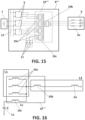
- FIG 15 A fourth 8 ⁇ example of the photovoltaic solar inverter not covered by the present invention is shown in Figure 15 (Topology 4).
- the resulting filter is LLCL.
- the equivalent filter is shown in Figure 16 , wherein the filter is made up of L 1 L C CL 2 .
- Inductance L 1 is the inductance equivalent to the three inductances 10a of the primary of the transformer 10 ⁇ .
- Inductance L 2 is the inductance equivalent to the inductance 10b of the secondary of the transformer 10 ⁇ and of the inductance 6a of the AC grid 6.
- the primary of the transformer has an additional inductance 10c which will be inductance "L C ", dedicated to the capacitor 11, such that the capacitor 11 is connected between the inductance 10c and ground.
- the design of the capacitor bank 11 would be dual, being adapted to the slot at the frequency of 6 and 9 kHz (two or three times the switching frequency).
Landscapes
- Engineering & Computer Science (AREA)
- Power Engineering (AREA)
- Inverter Devices (AREA)
- Supply And Distribution Of Alternating Current (AREA)
- Charge And Discharge Circuits For Batteries Or The Like (AREA)
- Control Of Electrical Variables (AREA)
Description
- Photovoltaic solar inverters connected to the AC grid with transformer to AC grid included.
- Dimensions, weight and cost of photovoltaic solar inverters, due to the large size and weight of the associated components. To study topologies that reduce the number of components and optimise their location.
- The solutions available today implement a filter after each of the DC/AC converter modules, for the purpose of connecting equipment to the grid and reducing high frequency harmonics. The typical topology of these filters is LCL, since it provides greater harmonics filtering with fewer inductances and with low grid current distortion.
- LCL filters are made up of coils and capacitors having large dimensions and weight.
- Primary inductances are the components that occupy the most physical space and that substantially increase the weight of the module and the equipment. As a guideline, the main inductance of an LCL filter has the dimensions and weight indicated below:
Width 480 mm Depth 301 mm Height 903 mm Weight >400 kg - Taking this information into account, the ballpark dimensions of a common 6-module solar inverter with an integrated medium voltage transformer would be as follows:
Width 6600 mm Depth 2200 mm Height 2200 mm Weight 14 Tn - The idea, therefore, is to find a configuration which reduces the weight and the dimensions of a solar inverter.
- As a document illustrating the state of the art in a general manner, the document entitled " A 60-kW 3-kW/kg Five-Level T-Type SiC PV Inverter With 99.2 % Peak Efficiency" by Yanjun et. al, published on 04 March 2018 in "2018 IEEE Applied Power Electronics Conference and Exposition (APEC), 20180304 IEEE" can be mentioned. The document by Yanjun et al. discloses a T-shaped photovoltaic inverter with silicon carbide SiC semiconductors having five levels instead of three to make more efficient use of this technology. To define these levels, two inverters from three levels are coupled together by means of coils. Due to the high switching frequencies in the five-level inverter, these coupling coils work as transformers under no load referred to in this document as "Inter Cell Transformers", or ICTs, which eliminate the need for the connection to the AC grid to have more additional inductances.
- The document " Intercell Transformer (ICT) Design Optimization and Interphase Crosstalk Mitigation of a 100-kW SiC Filter-Less Grid-Connected PV String Inverter" (published on 8 February 2020 in "IEEE Open Journal of Power Electronics, 20200208 IEEE"), also by Yanjun et al., focuses on the optimal sizing of the "Inter Cell Transformers" introduced in the preceding document.
- Another prior art document is the paper titled "Design and Simulation of a grid-connected photovoltaic system Design and simulation of a grid-connected photovoltaic system", Hammami Manel ET AL, updloaded January 21, 2015, XP055907571, URL: https://www.researchgate.net/profile/Manel-Hammami-2/publication/271194959 Design_ and_Simulation_of_a_grid-connected_photovoltaic_system/links/ 54bfd2d80cf21674ce9c89e6/Design-and-Simulation-of-a-grid-connected-photovoltaic-system.pdf, (20220331). The paper presents the design of a photovoltaic conversion system conditioning with grid connection and RLC load. In order to control the quality and quantity of the injected power to the grid, the control system includes, firstly, a Maximum Power Point Tracker based on perturb and observe algorithm which tracks available power continuously.
- Another prior art document is the utility model titled "Transformer for photovoltaic inverter", which was published under the publication number
CN202159565U on March 7, 2012 . This document discloses a transformer for a photovoltaic inverter. A pair of iron cores is arranged in the transformer and forms a reactor iron core, and the pair of the iron cores and a main iron core share one coil winding. - Another prior art document is the paper titled "An active capacitor converter for improving robustness of the ZCZ-type grid-connected inverter against grid impedance variation", 2017 IEEE APPLIED POWER ELECTRONICS CONFERENCE AND EXPOSITION (APEC), IEEE, (20170326), doi:10.1109/APEC.2017.7931216, pages 3608 - 3613, XP033098774 [A]. Using an impedance-based stability analysis method, this paper proposes an active capacitor converter (ACC) in parallel at the point of common coupling (PCC) to reshape the grid impedance, making the ratio of the reshaped grid impedance to the output impedance of GCI satisfy the Nyquist stability criterion. The ACC can guarantee the GCI to have high stability-robustness against wide-range grid impedance variation with low additional power losses and high power factor.
- The aforementioned documents achieve an inverter that does not need an additional coil at the AC output to act as a filter. However, none of these documents does so by sizing the output transformer as expressed in the present invention since, in practice, what they do is to minimise the output disturbances of the inverter to the point that the inductances which already exist in the apparatus are sufficient for filtering the switching disturbances with little to no modification.
- Lastly, it should be indicated that the present invention uses the concept of SCR (Short Circuit Ratio) as defined, for example, in
Chapter 1 of the document with a section entitled "Short Circuit Ratio (SCR)" and publicly accessible at the following link: https://www.nerc.com/comm/PC_Reliability_Guidelines_DL/Item_4a._Integrating%20_Inv erter-Based_Resources_into_Low_Short_Circuit_Strength_Systems_-_2017-11-08-FINAL.pdf - To solve the problems indicated above and relating to the excess weight and volume of photovoltaic solar inverters, the present invention takes advantage of the transformer that converts the AC voltage at the outlet of the power modules to the voltage of the AC grid to which the solar inverter is connected as part of new filter topologies for the elimination of high frequency harmonics.
- The invention is defined by the features of
method claim 1. The dependent claims recite advantageous embodiments of the invention. - A first aspect of the invention discloses method for determining the elements of a photovoltaic solar inverter with an AC grid filter, wherein the inverter is connectable to the AC grid at a connection point. The photovoltaic solar inverter of the present invention comprises:
- at least one power module for converting a DC input voltage into a three-phase AC output voltage;
- a three-phase AC/AC transformer for adapting the three-phase AC output voltage of the power module to the three-phase AC voltage of the AC grid, wherein the AC grid has, at the connection point, an inductance "L2"; wherein the three-phase AC/AC transformer comprises:
- ∘ at least one winding on the low voltage side connected to the power module;
- ∘ at least one winding on the grid side (medium voltage), which is a medium voltage side, connectable in series with the AC grid;
- wherein the winding on the low voltage side connected to the power module together with the winding on the grid side (medium voltage) have an equivalent inductance "L1" and an equivalent impedance "XCC"; and,
- a capacitor "C", connected to the winding of the grid side (medium voltage side) of the three-phase AC/AC transformer.
- The method comprises the steps of:
- defining at least two different values of a Short Circuit Ratio "SCR" at the connection point;
- obtaining corresponding values of the inductance "L2" of the AC grid at the connection point for each value of the Short Circuit Ratio "SCR" by means of the following formula:

- calculating the equivalent inductance "L1" of the AC/AC transformer by means of the following formula:
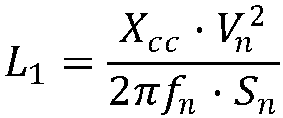
- setting a value for the resonant frequency fres of the L1CL2 filter and calculating, for each value of the Short Circuit Ratio "SCR", a corresponding value of the capacitor "C" by means of the following formula:

- selecting a value of the capacitor "C" between the minimum and maximum obtained values for the capacitor "C";
- XCC: is the equivalent impedance of the windings of the three-phase AC/AC transformer, configurable based on the frequency response needed for the LCL filter;
- Sn: is the nominal power of the transformer;
- Vn: is the nominal voltage of the transformer on the low side (power module side, usually between 600 and 660V);
- fn: is the working frequency (usually 50 or 60Hz);
- fres: is the resonant frequency of the L1CL2 filter.
- In one embodiment of the invention, the solar inverter may further comprise "n" power modules connected to respective independent windings (multi-windings) on the low voltage side of the three-phase AC/AC transformer. In this case, the method comprises a step of defining a proportion "x" of the transformer impedance on the grid side with respect to the equivalent impedance "Xcc" of the windings of the transformer; and, the step of calculating the equivalent inductance "L1" of the AC/AC transformer is calculated by means of the following formula:

- The inverter of the present invention can comprise a single DC power BUS for powering the "n" power modules, wherein the single DC BUS is connectable to at least one DC power source. Thus, the method may further comprise powering the "n" power modules with the single DC power BUS and connecting the single DC BUS to the at least one DC power source. Alternatively, the inverter of the present invention can comprise one DC power BUS for each of the "n" power modules, such that each of the "n" power modules is connectable to respective DC power sources. Thus, the method may further comprise powering each of the "n" power modules with respective DC power BUSES and connecting each of the "n" power modules to respective DC power sources.
- A second aspect not covered by the invention discloses a method for determining the elements of a photovoltaic solar inverter with an AC grid LLCL filter, wherein the inverter is connectable to the AC grid at a connection point. The solar inverter comprises:
- at least one power module for converting a DC input voltage into a three-phase AC output voltage;
- a three-phase AC/AC transformer for adapting the three-phase AC output voltage of the power module to the three-phase AC voltage of the AC grid, wherein the AC grid has, at the connection point, an inductance "Lp"; wherein the three-phase AC/AC transformer comprises:
- ∘ at least one winding on the low voltage side connected to the power module and with an equivalent inductance "L1";
- ∘ at least one winding on the low voltage side connected to a capacitor "C", and with an inductance "Lc";
- ∘ at least one winding on the grid side (medium voltage), which is a medium voltage side, connectable in series with the AC grid, wherein the winding on the grid side has an equivalent inductance "Lm" and an equivalent impedance "XCC"; and,
- the capacitor "C".
- The equivalent inductance "L1" (L-) of the AC/AC transformer (10""), the inductance "Lc" (-L-); the capacitor "C" (-C-) and an inductance "L2" (-L) resulting from adding the inductance "Lp" and the equivalent inductance "LM", form a high frequency filter with "LLCL" typology, such that the values of the equivalent inductance "L1" and of the capacitor "C" are calculated based on the frequency response of the "LLCL" filter according to the following steps of the method, which comprises:
- defining at least two different values of a Short Circuit Ratio "SCR" at the connection point;
- obtaining corresponding values of the inductance "L2" of the AC grid at the connection point for each value of the Short Circuit Ratio "SCR" by means of the following formula:


- calculating the equivalent inductance "L1" of the three-phase AC/AC transformer by means of the following formula:

- setting a value for the resonant frequency fres of the L1LmCLp filter and calculating, for each value of the Short Circuit Ratio "SCR", a corresponding value of the capacitor "C" by means of the following formula:


- selecting a value of the capacitor "C" between the minimum and maximum obtained values for the capacitor "C";
- XCC is the configurable element based on the frequency response needed for the L1LmCLp filter;
- x: proportion of impedance of the medium side (single; if, for example, Xcc is divided by 50 %, x=0.5);
- Sn is the nominal power of the transformer;
- Vn is the nominal voltage of the transformer on the low side (power module side);
- fn is the working frequency of the low side (usually 50 or 60Hz);
- fres is the resonant frequency of the L1LmCLp filter.
- In one embodiment of the second aspect not covered by the present invention, the solar inverter may further comprise "n" power modules connected to respective independent windings (multi-windings) on the low voltage side of the three-phase AC/AC transformer. In this case, the method comprises a step of defining a proportion "x" of the transformer impedance on the grid side with respect to the equivalent impedance "Xcc" of the windings of the transformer; and, the step of calculating the equivalent inductance "L1" of the three-phase AC/AC transformer is calculated by means of the following formula:

- For the second aspect not covered by the present invention, the inverter of this disclosure can comprise a single DC power BUS for powering the "n" power modules, wherein the single DC BUS is connectable to at least one DC power source. Thus, the method may further comprise powering the "n" power modules with the single DC power BUS and connecting the single DC BUS to the at least one DC power source. Alternatively, the inverter of this disclosure can comprise one DC power BUS for each of the "n" power modules, such that each of the "n" power modules is connectable to respective DC power sources. Thus, the method may further comprise powering each of the "n" power modules with respective DC power BUSES and connecting each of the "n" power modules to respective DC power sources.
- In conclusion, the advantages of the photovoltaic solar inverter of the present invention are listed below:
- Use of a transformer as a filter. The impedance of the transformer is used as a main coil of the filter:
- o Elimination of coils → Reduction of weight and cost;
- Use of a transformer with multiple secondary windings between power modules:
- ∘ Common mode choke between power modules;
- ∘ Use of interlinked switches;
- Use of interlinked switches:
- o Increase in the frequency of interest for filter design.
- Increase in the frequency of interest of the filter:
- ∘ Reduction of the capacitive nature of the filter used;
- ∘ Greater filter design range (the resonance has a higher frequency range in which it does not generate problems);
- Greater filter design range:
- o Possibility of using the grid impedance as the secondary impedance of the filter.
-
-
Figure 1 shows a photovoltaic solar inverter of the state of the art. -
Figure 2 shows the first embodiment (topology 1) of the photovoltaic solar inverter according to the present invention. -
Figure 3 shows an equivalent filter for the inverter shown inFigure 2 . -
Figure 4 shows the Bode plot of the resulting filter for the inverter of the present invention shown inFigure 2 for different AC connection grids having different SCR values. -
Figure 5 shows the second embodiment (topology 2) of the photovoltaic solar inverter according to the present invention, with a multi-winding transformer and common DC BUS for supplying power to the power modules. -
Figure 6 shows the third embodiment (topology 3) of the photovoltaic solar inverter according to the present invention, with a multi-winding transformer and independent supply for the power modules. -
Figure 7 shows an equivalent filter for any of the inverters shown inFigures 5 and 6 with three working power modules. -
Figure 8 shows a Bode plot for the filter shown inFigure 7 . -
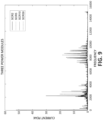
Figure 9 shows the current in the capacitor of the LCL filter for any of the inverters shown inFigures 5 and 6 , with three working power modules. -
Figure 10 shows an equivalent filter for any of the inverters shown inFigure 5 and 6 with two working power modules. -
Figure 11 shows a Bode plot for the filter shown inFigure 10 . -
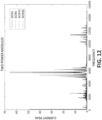
Figure 12 shows the current in the capacitor of the LCL filter for any of the inverters shown inFigures 5 and 6 , with two working power modules. -
Figure 13 shows a Bode plot for the filter shown inFigure 12 , with a single working power module. -
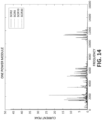
Figure 14 shows the current in the capacitor of the LCL filter for any of the inverters shown inFigures 5 and 6 , with one working power module. -
Figure 15 shows a further example (topology 4) of a photovoltaic solar inverter not covered by the present invention, with a multi-winding transformer, a winding dedicated to the capacitor, forming an LLCL filter. -
Figure 16 shows an equivalent filter for the inverter shown inFigure 15 . -
- 1.- photovoltaic solar inverter of the state of the art;
- 2.- photovoltaic solar inverter of the state of the art;
- 3.- LCL filter of the state of the art;
- 4.- power stage of the state of the art;
- 5.- low to medium voltage transformer of the state of the art;
- 6.- medium voltage AC grid (36 KV);
6a.- inductance of the AC grid; - 7.- DC voltage source (photovoltaic plant, batteries, etc.);
- 8.- photovoltaic solar inverter of the present invention.
- 8'.- photovoltaic solar inverter of the present invention -
Topology 1. - 8".- photovoltaic solar inverter of the present invention -
Topology 2. - 8‴.- photovoltaic solar inverter of the present invention -
Topology 3. - 8ʺʺ.- photovoltaic solar inverter not covered by the present invention -
Topology 4.
- 8'.- photovoltaic solar inverter of the present invention -
- 9.- power module of the present invention;
- 10'.- low to medium voltage transformer of the present invention -
Topology 1; - 10".- low to medium voltage transformer of the present invention -
Topology 2; - 10‴.- low to medium voltage transformer of the present invention -
Topology 3; - 10ʺʺ.- low to medium voltage transformer not covered by the present invention -
Topology 4;- 10a, 10b: primary winding (inductance) and secondary winding (inductance) of the transformer, respectively;
- 10c: winding (inductance) of the low to medium voltage transformer specific for the capacitor;
- 11.- capacitor (capacitor bank with one capacitor per phase - three-phase);
- 12.- DC BUS.
- The present invention takes advantage the transformer (low to medium voltage, for example) which converts the AC voltage at the outlet of the power modules (usually low voltage around 600V) into the AC grid voltage (usually medium voltage: 36KV) to which the solar inverter is connected as part of new filter topologies for eliminating high frequency harmonics.
-
Figure 1 shows aninverter 1 of the state of the art, wherein there areseveral power modules 2, each of which includes thepower stage 4 and theLCL filter 3, the outlets ofpower modules 2 are connected to a common AC BUS, which is connected to the inlet of the low tomedium voltage transformer 5. Therefore, the present invention eliminates thefilter 3 as such from the power module and adds a new specific transformer which replaces thetransformer 5 so that not only does it comply with the low to medium voltage transformation ratio, but it furthermore has a frequency behaviour equivalent to the "first L-" of the "LCL" filter. The capacitor "-C-" is added at the outlet of the new specific transformer and is also set/configured based on the response needed for the "LCL" filter. Lastly, the AC grid acts as the last "-L", which depends on the SCR (Short Circuit Ratio) so its values are limited within a range. Advantage is thereby taken of two existing elements such as the low to medium voltage transformer and the AC grid as first and third elements (inductances) of the LCL filter, and the capacitor is only added to form the filter as a second intermediate element. This invention has the advantage that it eliminates the very heavy coils to form the inductances of theLCL filter 3 included in thepower modules 2 of the inverters of the state of the art. - The first embodiment of the photovoltaic solar inverter 8' (topology 1) is shown in
Figure 2 . In this first embodiment, the topology of the "LCL" filter of the state of the art is replaced with a "transformer + capacitor" topology. This topology involves the elimination of three-phase secondary inductances (i.e., inductances of the block withreference 3 inFigure 1 and additionally the capacitor in the same block). The photovoltaic solar inverter 8' shown inFigure 2 is a "simple" inverter with a single power module 9 (without inductance or a capacitor with which to form the LCL filter of the power module of the state of the art), wherein the transformer 10' and thecapacitor 11 are located on the side of theAC grid 6. The "LCL" filter is completed with the inductance "L2" 6a that the AC grid has at the connection point. That is, the L-C-L filter is formed by the primary-secondary inductances 10a-10b of the specific transformer 10' (L-), the also specific capacitor 11 (-C-) and theinductance 6a which is variable but limited (within a range dependent on the SCR) of the AC grid (-L) 6. The primary-secondary inductances 10a-10b of the specific transformer 10' have an equivalent inductance L1. The impedance of the transformer ZCC is related to resistance RCC and reactance XCC by means of the expression ZCC = RCC + jXCC and in turn reactance XCC is related to inductance L1: XCC = 2πL 1. Reactance XCC is a parameter which has a certain margin of freedom in the design of the transformer. Therefore, by modifying the reactance XCC, the inductance L1 and with it the selection and response of the filter, are also modified. That is, the response of the filter is configured by selecting suitable values of "C" and "XCC". - The transfer function of the filter for the inverter shown in
Figure 2 , which has a filter equivalent to the one shown inFigure 3 , is developed below. Namely,Figure 3 shows the inductance "L1" equivalent to theprimary inductance 10a andsecondary inductance 10b of the transformer 10', and the capacitor "C" 11 and the equivalent grid inductance "L2" 6a is also shown. The transfer function is:
- The equivalent inductance L1 is determined by the transformer.
- Data of the transformer:
- Vf-f_n = 660V (low side)
- Sn = 1.209 MVA
- Xcc = 8 %
- fn = 50Hz
- Therefore:

- The inductance L2 is determined by the grid. For a defined SCR [2;5;10;30], the following is obtained:

- The capacitor "C" is designed to obtain the desired attenuation at the switching frequency of the inverter (3kHz is considered). The resonant frequency thereof is decided for that purpose. By setting it at 1200Hz, the following is true:

- Once the foregoing has been calculated, a single capacitor that works for the entire design range can be designed. For example, by choosing C=350µF:

- With the previous calculations, the Bode plot (see
Figure 4 ) of the resulting filter for the inverter of the present invention for the SCR values indicated above is obtained. - The second embodiment of the
inverter 8" (topology 2) of the present invention is shown inFigure 5 . Theinverter 8" shown inFigure 5 is a modular inverter without inductances or a capacitor with which to form the LCL filter of the power module of the state of the art. Theinverter 8" hastransformer 10" with multi-winding 10a, plus thecapacitor 11 on the grid side. On theDC side 7, the threepower modules 9 are connected to respectiveindependent input windings 10a of thetransformer 10", with the threepower modules 9 being powered withDC BUS 12 common for all of them coming from theDC source 7, such as a photovoltaic solar power plant. The functions and advantages of theinverter 8" are: - Raising/setting AC voltage between inverter and AC grid;
- Differential inductance for AC current filtering (together with the capacitor on the grid side)
- Common mode choke: this allows several power modules to work with a common DC BUS without common mode current recirculation. Interlinked operation of power modules.
- The
third embodiment 8‴ (topology 3) of the inverter of the present invention is shown inFigure 6 . Theinverter 8‴ shown inFigure 6 in a manner similar to that shown inFigure 5 , is an inverter modular without inductances or a capacitor with which to form the LCL filter of the power module of the state of the art. Theinverter 8‴ hastransformer 10‴ with multi-winding 10a, plus thecapacitor 11 on thegrid side AC 6. The only difference with respect to the inverter shown inFigure 5 is that it has independent DC buses. That is, on the direct current DC side, each of the threepower modules 9 has anindependent power supply 7 which, for example, can be different photovoltaic solar fields or a hybrid configuration with inputs for a photovoltaic solar field and batteries. The functions and advantages of theinverter 8‴ are the same as those of theinverter 8" shown inFigure 5 . - An equivalent filter model for the photovoltaic
solar inverters 8" and 8‴ of the present invention shown inFigures 5 and 6 , respectively, are detailed below. InFigure 7 , thetransformer 10" or 10‴ is observed, represented as one inductance L1 for each of the windings to whichrespective power modules 9 are connected. The equivalent model of thetransformer 10" or 10‴ for the different cases of use (one to three working power modules 9) can thereby be analysed.Figure 7 also shows the capacitor "C" 11 and the grid inductance "L2" 6a. - When working with this model, it will be necessary to define XCC of the primary (


- The generic equation based on the number of power module to calculate L1 is the following:

- Mentioned again is the expression for the inductance of the AC grid "L2", which varies according to the SCR (Short Circuit Ratio), according to the following expression:

- The case of three working power modules when the inverter has three power modules is analysed below. Taking the foregoing into account, the impedance of each secondary winding is three-fold (number of windings "n"=3); said value (


- When working with three
power modules 9, the operation is similar to the case of the inverter 8' of the first embodiment of the invention shown inFigure 2 , the equivalent filter of which can be carried out in a manner similar to that described forFigure 3 . The main difference with the inverter shown inFigure 2 is that thepower modules 9 work interlinked, with the switching frequency to be attenuated by the filter being three times higher than the switching frequency of the power modules (3kHz in the power modules and 9kHz is the frequency of interest for the filter). - The equivalent per power module for filter design can be calculated taking into account that N=n=3, x=0.5 and SCR [2, 5, 10, 30]:


- In this case L1 and L2 have the same value as in the previous case, and the main difference is that the capacitor will be designed to resonate the filter at 3600Hz for the different SCR values [2, 5, 10, 30], whereby:

- Once the foregoing has been calculated, a single capacitor that works for the entire design range can be designed. For example, by choosing C=70µF:

- With the previous calculations, the Bode plot (see
Figure 8 ) of the resulting filter for the inverter of the present invention according to thesecond embodiment 8" andthird embodiment 8‴ of the invention for SCR values [2, 5, 10, 30] and with three working power modules, is obtained.Figure 9 shows the current in the capacitor "C" 11 of the LCL filter for saidinverter 8" or 8‴ and the same SCR values. - The case of two working power modules when the inverter has three power modules in total is analysed below. With the previous considerations, the model of the photovoltaic solar inverter of the
second embodiment 8" and third 8‴ embodiment (Figure 5 and Figure 6 , respectively) can be determined working with two of the three power modules and their main equivalent inductance L1. The filter equivalent working with twopower modules 9 is shown inFigure 10 , wherein the main inductance L1 equivalent toinductances Figure 10 also shows thecapacitor 11 and theequivalent grid inductance 6a L2 of the AC grid. The equivalent inductance L1 is calculated as follows:
- With the value of the capacitor "C" defined for the operation with three power modules, C= 70µF, a resonant frequency is obtained:

- As can be observed, the filter with two power modules is very similar to the filter with three power modules. The main difference is that the frequency of interest for the filter will only be 6kHz, according to the circumstance of 3kHz switching in the
power modules 4. - With the previous calculations, the Bode plot (see
Figure 11 ) of the resulting filter for the inverter of the present invention according to thesecond embodiment 8" andthird embodiment 8‴ of the invention (topologies 2 and 3) for SCR values [2, 5, 10, 30] and with two working power modules, is obtained.Figure 12 shows the current in thecapacitor 11 of the LCL filter (L1CL2) for said embodiments of the inverter and the same SCR values. - The case of one working power module when the inverter has three power modules is analysed below. Lastly, with a
power module 9 and the same circumstances as in the previous cases for two and three power modules:
- With the same value of the capacitor defined for the operation of two and three modules of 70µF, resonant frequencies for different SCR values [2, 5, 10, 30] are obtained:

- With the previous calculations, the Bode plot (see
Figure 13 ) of the resulting filter for the inverter of the present invention according to thesecond embodiment 8" andthird embodiment 8‴ of the invention (topologies 2 and 3) for SCR values [2, 5, 10, 30] and with one working power module, is obtained.Figure 14 shows the current in the capacitor of the LCL filter for said embodiments of the inverter and the same SCR values. However, given the resonances of the filter, for one power module it is mandatory to increase the switching frequency. In this example, up to 6kHz. - A fourth 8ʺʺ example of the photovoltaic solar inverter not covered by the present invention is shown in
Figure 15 (Topology 4). In this case of the fourth example 8ʺʺ the resulting filter is LLCL. The equivalent filter is shown inFigure 16 , wherein the filter is made up of L1LCCL2. Inductance L1 is the inductance equivalent to the threeinductances 10a of the primary of the transformer 10ʺʺ. Inductance L2 is the inductance equivalent to theinductance 10b of the secondary of the transformer 10ʺʺ and of theinductance 6a of theAC grid 6. The primary of the transformer has anadditional inductance 10c which will be inductance "LC", dedicated to thecapacitor 11, such that thecapacitor 11 is connected between theinductance 10c and ground. The design of thecapacitor bank 11 would be dual, being adapted to the slot at the frequency of 6 and 9 kHz (two or three times the switching frequency). - The transfer function of the L1LCCL2 filter is:

- And the values of L1LCCL2 are calculated as follows:


- "N" is the number of windings of the low working side and "n" is the total number of windings of the low voltage side;
- XCC is the configurable element based on the frequency response needed for the LLCL filter;
- x: proportion of impedance of the medium side (single; if, for example, Xcc is divided by 50 %, x=0.5),
- Sn is the nominal power of the transformer;
- Vn is the nominal voltage of the transformer on the low side (power module side);
- fn is the working frequency of the low side (usually 50 or 60Hz);
- fres is the resonant frequency of the LLCL filter;
- L2 = LM + LP, wherein:

- LP is the inductance of the AC grid which varies according to the SCR (Short Circuit Ratio) according to the following expression:

Claims (4)
- A method for determining the elements of a photovoltaic solar inverter with an AC grid filter, wherein the inverter (8',8",8‴) is connectable to the AC grid (6) at a connection point; the inverter (8',8",8‴) comprises:• at least one power module (9) for converting a DC input voltage (7) into a three-phase AC output voltage;• a three-phase AC/AC transformer (10', 10", 10‴) for adapting the three-phase AC output voltage of the power module (9) to the three-phase AC voltage of the AC grid (6), wherein the AC grid (6) has, at the connection point, an inductance "L2"; wherein the three-phase AC/AC transformer (10', 10", 10‴) comprises:∘ at least one winding on the low voltage side (10a) connected to the power module (9);∘ at least one winding on the grid side (10b), which is a medium voltage side, connectable in series with the AC grid (6);wherein the winding on the low voltage side (10a) connected to the power module (9) together with the winding on the grid side (10b) have an equivalent inductance "L1" and an equivalent impedance "XCC";• a capacitor "C" (11), connected to the winding of the grid side (10b) of the three-phase AC/AC transformer (10', 10", 10‴);wherein the equivalent inductance "L1" (L1, 10a, 10b) of the AC/AC transformer, the capacitor "C" (C, 11) and the inductance "L2" (L2, 6a) of the AC grid form a high frequency "LCL" filter according to the following steps of the method, which comprises:• defining at least two different values of a Short Circuit Ratio "SCR" at the connection point;• obtaining corresponding values of the inductance "L2" of the AC grid (6) at the connection point for each value of the Short Circuit Ratio "SCR" by means of the following formula:
 • calculating the equivalent inductance "L1" of the AC/AC transformer by means of the following formula:
 • setting a value for the resonant frequency fres of the L1CL2 filter and calculating, for each value of the Short Circuit Ratio "SCR", a corresponding value of the capacitor "C" (11) by means of the following formula:
 • selecting a value of the capacitor "C" (11) between the minimum and maximum obtained values for the capacitor "C" (11);wherein:XCC: is the equivalent impedance of the windings of the three-phase AC/AC transformer;Sn: is the nominal power of the transformer;Vn: is the nominal voltage of the transformer on the low side;fn: is the working frequency;fres: is the resonant frequency of the L1CL2 filter.
 - The method of claim 1, wherein the inverter (8',8",8‴) further comprises "n" power modules (9) connected to respective windings on the low voltage side (10a) of the three-phase AC/AC transformer (10', 10", 10"'), wherein the method comprises a step of defining a proportion "x" of the transformer impedance on the grid side with respect to the equivalent impedance "Xcc" of the windings of the transformer; and, wherein the step of calculating the equivalent inductance "L1" of the AC/AC transformer is calculated by means of the following formula:

- The method of claim 2, wherein the method further comprises powering the "n" power modules (9) with a single DC power bus (12) comprised in the inverter (8',8",8‴), and connecting the single DC bus (12) to at least one DC power source (7).
- The method of claim 2, wherein the method further comprises powering each of the "n" power modules (9) with respective DC power buses (12) comprised in the inverter (8',8",8‴), and connecting each of the "n" power modules to respective DC power sources (7).
Applications Claiming Priority (1)
| Application Number | Priority Date | Filing Date | Title |
|---|---|---|---|
| ES202130063A ES2919853B2 (en) | 2021-01-27 | 2021-01-27 | PHOTOVOLTAIC SOLAR INVERTER WITH MAINS FILTER WITHOUT INDUCTANCE |
Publications (3)
| Publication Number | Publication Date |
|---|---|
| EP4037171A1 EP4037171A1 (en) | 2022-08-03 |
| EP4037171B1 true EP4037171B1 (en) | 2025-02-12 |
| EP4037171C0 EP4037171C0 (en) | 2025-02-12 |
Family
ID=78413811
Family Applications (1)
| Application Number | Title | Priority Date | Filing Date |
|---|---|---|---|
| EP21205009.0A Active EP4037171B1 (en) | 2021-01-27 | 2021-10-27 | Photovoltaic solar inverter with an ac grid filter without inductance |
Country Status (3)
| Country | Link |
|---|---|
| US (1) | US20220247177A1 (en) |
| EP (1) | EP4037171B1 (en) |
| ES (2) | ES2919853B2 (en) |
Families Citing this family (2)
| Publication number | Priority date | Publication date | Assignee | Title |
|---|---|---|---|---|
| ES2953912B2 (en) * | 2022-04-06 | 2024-07-24 | Power Electronics Espana S L | INTRINSIC POLARIZATION METHOD OF A DUAL DC/DC CONVERTER |
| CN115588987A (en) * | 2022-10-17 | 2023-01-10 | 上海海事大学 | Finite set model prediction control method of LLCL type battery energy storage converter |
Citations (2)
| Publication number | Priority date | Publication date | Assignee | Title |
|---|---|---|---|---|
| CN101599353A (en) * | 2009-04-22 | 2009-12-09 | 湖南大学 | Integrated filter inductance transformer |
| CN105513762A (en) * | 2015-12-29 | 2016-04-20 | 国家电网公司 | Calculating method for inductance value of filter reactor integrated on transformer and decoupling rate between windings |
Family Cites Families (3)
| Publication number | Priority date | Publication date | Assignee | Title |
|---|---|---|---|---|
| CN202159565U (en) * | 2011-05-26 | 2012-03-07 | 上海兆启新能源科技有限公司 | Transformer for photovoltaic inverter |
| DE102018109868A1 (en) * | 2018-04-24 | 2019-10-24 | Sma Solar Technology Ag | Power electronic device, transformer device and method |
| CN109039035B (en) * | 2018-08-07 | 2019-09-10 | 上海海事大学 | Adapt to the gird-connected inverter filter parameter design method of power grid reactance change |
-
2021
- 2021-01-27 ES ES202130063A patent/ES2919853B2/en active Active
- 2021-10-27 EP EP21205009.0A patent/EP4037171B1/en active Active
- 2021-10-27 ES ES21205009T patent/ES3014562T3/en active Active
-
2022
- 2022-01-26 US US17/584,515 patent/US20220247177A1/en not_active Abandoned
Patent Citations (2)
| Publication number | Priority date | Publication date | Assignee | Title |
|---|---|---|---|---|
| CN101599353A (en) * | 2009-04-22 | 2009-12-09 | 湖南大学 | Integrated filter inductance transformer |
| CN105513762A (en) * | 2015-12-29 | 2016-04-20 | 国家电网公司 | Calculating method for inductance value of filter reactor integrated on transformer and decoupling rate between windings |
Non-Patent Citations (1)
| Title |
|---|
| MILAN PRODANOVICPRODANOVIC ET AL: "Control and Filter Design of Three-Phase Inverters for High Power Quality Grid Connection", IEEE TRANSACTIONS ON POWER ELECTRONICS, INSTITUTE OF ELECTRICAL AND ELECTRONICS ENGINEERS, USA, vol. 18, no. 1, 1 January 2003 (2003-01-01), XP011078290, ISSN: 0885-8993 * |
Also Published As
| Publication number | Publication date |
|---|---|
| EP4037171C0 (en) | 2025-02-12 |
| US20220247177A1 (en) | 2022-08-04 |
| ES3014562T3 (en) | 2025-04-23 |
| EP4037171A1 (en) | 2022-08-03 |
| ES2919853B2 (en) | 2023-02-03 |
| ES2919853A1 (en) | 2022-07-28 |
Similar Documents
| Publication | Publication Date | Title |
|---|---|---|
| Zhang et al. | Multilevel inverters for grid-connected photovoltaic applications: Examining emerging trends | |
| CN108574420B (en) | Power electronic conversion unit and system | |
| US10243446B2 (en) | Current reference based selective harmonic current mitigation pulsed width modulation | |
| EP2448100A2 (en) | Multi-Phase Power Converters and Integrated Choke Therefor | |
| EP3125426B1 (en) | Method for designing multiple tuned filter in high voltage direct current system | |
| US12136871B2 (en) | Power supply system | |
| US12003114B2 (en) | Series/series resonant topology for wireless power transfer | |
| EP4037171B1 (en) | Photovoltaic solar inverter with an ac grid filter without inductance | |
| CN113726137B (en) | conversion device | |
| EP2637296A1 (en) | HVDC converter station with 2-phase modular multilevel converter and Scott-T 2 to 3 phase transformer | |
| EP3411946A1 (en) | Bidirectional dc-dc resonant converter | |
| CN101521457B (en) | Multi-state switch and converter using the multi-state switch | |
| Rahimi et al. | Optimal placement of additional switch in the photovoltaic single-phase grid-connected transformerless full bridge inverter for reducing common mode leakage current | |
| EP3780308B1 (en) | Inverter, power generation system, and method for inhibiting the distortion of harmonic waves | |
| CN112600415B (en) | Bidirectional resonant network, bidirectional direct current converter and parameter design method thereof | |
| Widagdo et al. | Harmonic mitigation using passive filters in 3-phase inverters to improve power quality on microgrid | |
| KR20100104665A (en) | Power converter and power conversion system using high frequency transformer | |
| CN114070025A (en) | Adjustable LCL filter optimization design method for T-type three-level energy storage converter | |
| Thakur et al. | Multi-objective optimization of triple port converter for photovoltaic and energy storage integration | |
| EP4270748A1 (en) | Inverter with scalable dc/dc voltage boost converter | |
| CN114553047B (en) | Three-phase alternating current-to-direct current converter based on three-phase transformer cascading | |
| Naresh et al. | Comparison of passive damping based LCL filter design methods for grid-connected voltage source converters | |
| Udovichenko | AC voltage regulators with high frequency transformer review | |
| CN118554782A (en) | Power converter and high-frequency circulation suppression method | |
| CN112600414B (en) | Resonant network, transformer and isolated DC converter and parameter design method thereof |
Legal Events
| Date | Code | Title | Description |
|---|---|---|---|
| PUAI | Public reference made under article 153(3) epc to a published international application that has entered the european phase |
Free format text: ORIGINAL CODE: 0009012 |
|
| STAA | Information on the status of an ep patent application or granted ep patent |
Free format text: STATUS: THE APPLICATION HAS BEEN PUBLISHED |
|
| STAA | Information on the status of an ep patent application or granted ep patent |
Free format text: STATUS: REQUEST FOR EXAMINATION WAS MADE |
|
| AK | Designated contracting states |
Kind code of ref document: A1 Designated state(s): AL AT BE BG CH CY CZ DE DK EE ES FI FR GB GR HR HU IE IS IT LI LT LU LV MC MK MT NL NO PL PT RO RS SE SI SK SM TR |
|
| 17P | Request for examination filed |
Effective date: 20220714 |
|
| RBV | Designated contracting states (corrected) |
Designated state(s): AL AT BE BG CH CY CZ DE DK EE ES FI FR GB GR HR HU IE IS IT LI LT LU LV MC MK MT NL NO PL PT RO RS SE SI SK SM TR |
|
| RIC1 | Information provided on ipc code assigned before grant |
Ipc: H02J 3/38 20060101ALI20220929BHEP Ipc: H02M 5/12 20060101ALI20220929BHEP Ipc: H02M 1/12 20060101AFI20220929BHEP |
|
| STAA | Information on the status of an ep patent application or granted ep patent |
Free format text: STATUS: EXAMINATION IS IN PROGRESS |
|
| 17Q | First examination report despatched |
Effective date: 20221109 |
|
| GRAP | Despatch of communication of intention to grant a patent |
Free format text: ORIGINAL CODE: EPIDOSNIGR1 |
|
| STAA | Information on the status of an ep patent application or granted ep patent |
Free format text: STATUS: GRANT OF PATENT IS INTENDED |
|
| INTG | Intention to grant announced |
Effective date: 20241014 |
|
| GRAS | Grant fee paid |
Free format text: ORIGINAL CODE: EPIDOSNIGR3 |
|
| GRAA | (expected) grant |
Free format text: ORIGINAL CODE: 0009210 |
|
| STAA | Information on the status of an ep patent application or granted ep patent |
Free format text: STATUS: THE PATENT HAS BEEN GRANTED |
|
| AK | Designated contracting states |
Kind code of ref document: B1 Designated state(s): AL AT BE BG CH CY CZ DE DK EE ES FI FR GB GR HR HU IE IS IT LI LT LU LV MC MK MT NL NO PL PT RO RS SE SI SK SM TR |
|
| REG | Reference to a national code |
Ref country code: GB Ref legal event code: FG4D |
|
| REG | Reference to a national code |
Ref country code: CH Ref legal event code: EP |
|
| REG | Reference to a national code |
Ref country code: DE Ref legal event code: R096 Ref document number: 602021025921 Country of ref document: DE |
|
| REG | Reference to a national code |
Ref country code: IE Ref legal event code: FG4D |
|
| U01 | Request for unitary effect filed |
Effective date: 20250310 |
|
| U07 | Unitary effect registered |
Designated state(s): AT BE BG DE DK EE FI FR IT LT LU LV MT NL PT RO SE SI Effective date: 20250318 |
|
| REG | Reference to a national code |
Ref country code: ES Ref legal event code: FG2A Ref document number: 3014562 Country of ref document: ES Kind code of ref document: T3 Effective date: 20250423 |
|
| PG25 | Lapsed in a contracting state [announced via postgrant information from national office to epo] |
Ref country code: RS Free format text: LAPSE BECAUSE OF FAILURE TO SUBMIT A TRANSLATION OF THE DESCRIPTION OR TO PAY THE FEE WITHIN THE PRESCRIBED TIME-LIMIT Effective date: 20250512 |
|
| PG25 | Lapsed in a contracting state [announced via postgrant information from national office to epo] |
Ref country code: PL Free format text: LAPSE BECAUSE OF FAILURE TO SUBMIT A TRANSLATION OF THE DESCRIPTION OR TO PAY THE FEE WITHIN THE PRESCRIBED TIME-LIMIT Effective date: 20250212 |
|
| PG25 | Lapsed in a contracting state [announced via postgrant information from national office to epo] |
Ref country code: NO Free format text: LAPSE BECAUSE OF FAILURE TO SUBMIT A TRANSLATION OF THE DESCRIPTION OR TO PAY THE FEE WITHIN THE PRESCRIBED TIME-LIMIT Effective date: 20250512 Ref country code: IS Free format text: LAPSE BECAUSE OF FAILURE TO SUBMIT A TRANSLATION OF THE DESCRIPTION OR TO PAY THE FEE WITHIN THE PRESCRIBED TIME-LIMIT Effective date: 20250612 |
|
| PG25 | Lapsed in a contracting state [announced via postgrant information from national office to epo] |
Ref country code: HR Free format text: LAPSE BECAUSE OF FAILURE TO SUBMIT A TRANSLATION OF THE DESCRIPTION OR TO PAY THE FEE WITHIN THE PRESCRIBED TIME-LIMIT Effective date: 20250212 |
|
| PG25 | Lapsed in a contracting state [announced via postgrant information from national office to epo] |
Ref country code: GR Free format text: LAPSE BECAUSE OF FAILURE TO SUBMIT A TRANSLATION OF THE DESCRIPTION OR TO PAY THE FEE WITHIN THE PRESCRIBED TIME-LIMIT Effective date: 20250513 |
|
| PG25 | Lapsed in a contracting state [announced via postgrant information from national office to epo] |
Ref country code: SM Free format text: LAPSE BECAUSE OF FAILURE TO SUBMIT A TRANSLATION OF THE DESCRIPTION OR TO PAY THE FEE WITHIN THE PRESCRIBED TIME-LIMIT Effective date: 20250212 |
|
| PG25 | Lapsed in a contracting state [announced via postgrant information from national office to epo] |
Ref country code: CZ Free format text: LAPSE BECAUSE OF FAILURE TO SUBMIT A TRANSLATION OF THE DESCRIPTION OR TO PAY THE FEE WITHIN THE PRESCRIBED TIME-LIMIT Effective date: 20250212 |
|
| PG25 | Lapsed in a contracting state [announced via postgrant information from national office to epo] |
Ref country code: SK Free format text: LAPSE BECAUSE OF FAILURE TO SUBMIT A TRANSLATION OF THE DESCRIPTION OR TO PAY THE FEE WITHIN THE PRESCRIBED TIME-LIMIT Effective date: 20250212 |
|
| U20 | Renewal fee for the european patent with unitary effect paid |
Year of fee payment: 5 Effective date: 20251007 |
|
| PLBE | No opposition filed within time limit |
Free format text: ORIGINAL CODE: 0009261 |
|
| STAA | Information on the status of an ep patent application or granted ep patent |
Free format text: STATUS: NO OPPOSITION FILED WITHIN TIME LIMIT |
|
| PGFP | Annual fee paid to national office [announced via postgrant information from national office to epo] |
Ref country code: GB Payment date: 20251007 Year of fee payment: 5 |
|
| 26N | No opposition filed |
Effective date: 20251113 |
|
| PGFP | Annual fee paid to national office [announced via postgrant information from national office to epo] |
Ref country code: ES Payment date: 20251103 Year of fee payment: 5 |