EP4037064B1 - Battery module, battery module assembly and production method therefor, and apparatus - Google Patents
Battery module, battery module assembly and production method therefor, and apparatus Download PDFInfo
- Publication number
- EP4037064B1 EP4037064B1 EP20936805.9A EP20936805A EP4037064B1 EP 4037064 B1 EP4037064 B1 EP 4037064B1 EP 20936805 A EP20936805 A EP 20936805A EP 4037064 B1 EP4037064 B1 EP 4037064B1
- Authority
- EP
- European Patent Office
- Prior art keywords
- battery module
- battery
- thermally conductive
- injection channel
- accommodation cavity
- Prior art date
- Legal status (The legal status is an assumption and is not a legal conclusion. Google has not performed a legal analysis and makes no representation as to the accuracy of the status listed.)
- Active
Links
Images




Classifications
-
- H—ELECTRICITY
- H01—ELECTRIC ELEMENTS
- H01M—PROCESSES OR MEANS, e.g. BATTERIES, FOR THE DIRECT CONVERSION OF CHEMICAL ENERGY INTO ELECTRICAL ENERGY
- H01M10/00—Secondary cells; Manufacture thereof
- H01M10/60—Heating or cooling; Temperature control
- H01M10/61—Types of temperature control
- H01M10/613—Cooling or keeping cold
-
- H—ELECTRICITY
- H01—ELECTRIC ELEMENTS
- H01M—PROCESSES OR MEANS, e.g. BATTERIES, FOR THE DIRECT CONVERSION OF CHEMICAL ENERGY INTO ELECTRICAL ENERGY
- H01M10/00—Secondary cells; Manufacture thereof
- H01M10/60—Heating or cooling; Temperature control
- H01M10/62—Heating or cooling; Temperature control specially adapted for specific applications
- H01M10/625—Vehicles
-
- H—ELECTRICITY
- H01—ELECTRIC ELEMENTS
- H01M—PROCESSES OR MEANS, e.g. BATTERIES, FOR THE DIRECT CONVERSION OF CHEMICAL ENERGY INTO ELECTRICAL ENERGY
- H01M10/00—Secondary cells; Manufacture thereof
- H01M10/60—Heating or cooling; Temperature control
- H01M10/65—Means for temperature control structurally associated with the cells
- H01M10/653—Means for temperature control structurally associated with the cells characterised by electrically insulating or thermally conductive materials
-
- H—ELECTRICITY
- H01—ELECTRIC ELEMENTS
- H01M—PROCESSES OR MEANS, e.g. BATTERIES, FOR THE DIRECT CONVERSION OF CHEMICAL ENERGY INTO ELECTRICAL ENERGY
- H01M10/00—Secondary cells; Manufacture thereof
- H01M10/60—Heating or cooling; Temperature control
- H01M10/65—Means for temperature control structurally associated with the cells
- H01M10/655—Solid structures for heat exchange or heat conduction
- H01M10/6556—Solid parts with flow channel passages or pipes for heat exchange
-
- H—ELECTRICITY
- H01—ELECTRIC ELEMENTS
- H01M—PROCESSES OR MEANS, e.g. BATTERIES, FOR THE DIRECT CONVERSION OF CHEMICAL ENERGY INTO ELECTRICAL ENERGY
- H01M10/00—Secondary cells; Manufacture thereof
- H01M10/60—Heating or cooling; Temperature control
- H01M10/65—Means for temperature control structurally associated with the cells
- H01M10/656—Means for temperature control structurally associated with the cells characterised by the type of heat-exchange fluid
- H01M10/6567—Liquids
-
- H—ELECTRICITY
- H01—ELECTRIC ELEMENTS
- H01M—PROCESSES OR MEANS, e.g. BATTERIES, FOR THE DIRECT CONVERSION OF CHEMICAL ENERGY INTO ELECTRICAL ENERGY
- H01M10/00—Secondary cells; Manufacture thereof
- H01M10/60—Heating or cooling; Temperature control
- H01M10/65—Means for temperature control structurally associated with the cells
- H01M10/658—Means for temperature control structurally associated with the cells by thermal insulation or shielding
-
- H—ELECTRICITY
- H01—ELECTRIC ELEMENTS
- H01M—PROCESSES OR MEANS, e.g. BATTERIES, FOR THE DIRECT CONVERSION OF CHEMICAL ENERGY INTO ELECTRICAL ENERGY
- H01M2220/00—Batteries for particular applications
- H01M2220/20—Batteries in motive systems, e.g. vehicle, ship, plane
-
- Y—GENERAL TAGGING OF NEW TECHNOLOGICAL DEVELOPMENTS; GENERAL TAGGING OF CROSS-SECTIONAL TECHNOLOGIES SPANNING OVER SEVERAL SECTIONS OF THE IPC; TECHNICAL SUBJECTS COVERED BY FORMER USPC CROSS-REFERENCE ART COLLECTIONS [XRACs] AND DIGESTS
- Y02—TECHNOLOGIES OR APPLICATIONS FOR MITIGATION OR ADAPTATION AGAINST CLIMATE CHANGE
- Y02E—REDUCTION OF GREENHOUSE GAS [GHG] EMISSIONS, RELATED TO ENERGY GENERATION, TRANSMISSION OR DISTRIBUTION
- Y02E60/00—Enabling technologies; Technologies with a potential or indirect contribution to GHG emissions mitigation
- Y02E60/10—Energy storage using batteries
Definitions
- the present disclosure relates to a field of battery technology, and in particular, to a battery module, a battery module assembly, and an apparatus
- the battery module assembly includes a battery module and a cooling component.
- thermal adhesive is filled between the battery module and the cooling component to reduce thermal resistance and improve thermal conductivity.
- thermally conductive slurry is directly spread on the cooling component, and then the battery module is directly placed on the thermally conductive slurry.
- the battery module has poor heat dissipation performance, which affects a normal use of the battery module.
- the document EP 3343691 Al discloses a battery module having stable strength and rigidity, high sealability and assemblability, and improved productivity.
- the battery module comprises a battery unit and a housing with a frame and end plates.
- An accommodation cavity comprising a thermal bond is formed at the bottom of the battery module as well as a cooling component in form of a cooling plate.
- the document CN 111048868 A discloses a battery module comprising a battery cell group, thermally conductive layer including a metal plate, thermally conductive glue, a frame, a glue injection for the thermally conductive slurry.
- the document US 2019/280355 Al discloses a method of manufacturing a battery module, which includes applying a thermal conductive member in form of a thermal conductive adhesive with an injection port.
- connection pipe 63 is connected to the first adapter portion 612 in a sealed manner, which reduces a possibility that the thermally conductive slurry overflows from a connection between one end of the connection pipe 63 and the first adapter portion 612.
- the first adapter portion 612 is disposed protruding from the body portion 611 and has a strip-shaped structure extending along the height direction X.
- the through hole on the first adapter portion 612 extends along the height direction X. In this way, the thickness of the body portion 611 can be reduced, which is beneficial to reduce the overall weight of the end plate assembly 60 and improve the energy density of the secondary battery.
- the limit frame 50 is provided with a boss 51.
- the blocking member 100 is located inside the boss 51, and an opening of the injection channel 200 and an opening of the discharge channel 300 are located inside the blocking member 100.
- the boss 51 is used to limit a position of the blocking member 100.
- the boss 51 can form a constraining limit for the blocking member 100 from the outside of the blocking member 100, so as to reduce a possibility that the blocking member 100 itself is expanded outward due to pressing stress and is offset in position.
- a surface of the insulation plate 62 away from the end plate 61 is provided with the boss 51.
- the cooling component 400 is disposed below the battery module 20.
- the cooling component 400 is used to cool the battery module 20.
- the accommodation cavity 500 is provided between the bottom of the battery module 20 and the cooling component 400.
- the injection channel 200 is communicated with the accommodation cavity 500.
- the injection channel 200 is used to inject the thermally conductive slurry into the accommodation cavity 500.
Landscapes
- Engineering & Computer Science (AREA)
- Manufacturing & Machinery (AREA)
- Chemical & Material Sciences (AREA)
- Chemical Kinetics & Catalysis (AREA)
- Electrochemistry (AREA)
- General Chemical & Material Sciences (AREA)
- Secondary Cells (AREA)
- Battery Mounting, Suspending (AREA)
Description
- The present disclosure relates to a field of battery technology, and in particular, to a battery module, a battery module assembly, and an apparatus
- With a development of science and technology, application fields of a secondary battery is more and more extensive. A capacity required for the secondary battery is becoming larger and larger. As the capacity of the secondary battery increases, technology for efficiently cooling heat generated in the secondary battery is also rapidly developing.
- The battery module assembly includes a battery module and a cooling component. Usually, thermal adhesive is filled between the battery module and the cooling component to reduce thermal resistance and improve thermal conductivity. In the prior art, thermally conductive slurry is directly spread on the cooling component, and then the battery module is directly placed on the thermally conductive slurry. However, in the battery module assembly manufactured in this way, the battery module has poor heat dissipation performance, which affects a normal use of the battery module.
- The document
EP 3343691 Al discloses a battery module having stable strength and rigidity, high sealability and assemblability, and improved productivity. The battery module comprises a battery unit and a housing with a frame and end plates. An accommodation cavity comprising a thermal bond is formed at the bottom of the battery module as well as a cooling component in form of a cooling plate. - The document
CN 111048868 A discloses a battery module comprising a battery cell group, thermally conductive layer including a metal plate, thermally conductive glue, a frame, a glue injection for the thermally conductive slurry. - The document
US 2019/280355 Al discloses a method of manufacturing a battery module, which includes applying a thermal conductive member in form of a thermal conductive adhesive with an injection port. - The invention is set out in the appended set of claims.
- Embodiments of the present disclosure provide a battery module, a battery module assembly, a production method therefor and an apparatus. The battery module is provided with an injection channel, and thermally conductive slurry injected into an accommodation cavity between the battery module and a cooling component through the injection channel can fully fill the accommodation cavity, thereby improving a heat dissipation efficiency of the battery module.
- In an aspect, an embodiment of the present disclosure provides a battery module, comprising a battery unit, a housing for accommodating the battery module, and a thermally conductive slurry. The battery unit comprises a top surface, a bottom surface, and a side surface connecting the top surface and the bottom surface. The housing comprises a limit frame and an injection channel arranged on the limit frame. The limit frame is arranged around the side surface of the battery unit. An accommodation cavity is formed by a bottom of the battery module and a cooling component. The injection channel is configured to be communicated with the accommodation cavity. The thermally conductive slurry is injected into the accommodation cavity from the injection channel. The limit frame comprises an end plate assembly provided at an end of the battery unit, the injection channel is provided in the end plate assembly, the end plate assembly comprises an end plate, an insulation plate, and a connection pipe, at least part of the insulation plate is provided between the end plate and the battery unit, the injection channel penetrates both the end plate and the insulation plate, two ends of the connection pipe are respectively connected to the end plate and the insulation plate, and the injection channel penetrates the end plate, the connection pipe and the insulation plate.
- In the battery module of the embodiment of the present disclosure, the injection channel is provided on the limit frame around the battery unit. When the battery module is applied to the battery module assembly, the battery module may be pre-assembled with the cooling component and the accommodation cavity is formed between the bottom of the battery module and the cooling part. Then, the thermally conductive slurry is injected into the accommodation cavity via the injection channel on the limit frame. Since the thermally conductive slurry is injected into the accommodation cavity via the injection channel, the thermally conductive slurry can effectively fill each area of the accommodation cavity under the action of the injection pressure. Thus on one hand it is ensured that the bottom surface of the battery module and the surface of the cooling component can be kept in contact with the thermally conductive slurry, so as to reduce the possibility of a gap appearing between the battery module and the thermally conductive slurry or between the cooling component and the thermally conductive slurry, which is beneficial to improve the heat dissipation effect and heat dissipation efficiency of the battery module.
- In another aspect, an embodiment of the present disclosure provides a battery module assembly comprising a cooling component and the battery module as described above. The accommodation cavity is provided between a bottom of the battery module and the cooling component. The injection channel is communicated with the accommodation cavity. The injection channel is used for injecting the thermally conductive slurry into the accommodation cavity. The thermally conductive slurry is used for conducting heat of the battery module to the cooling component.
- In another aspect, an embodiment of the present disclosure provides a production method for a battery module assembly, comprising:
- providing a cooling component;
- providing a battery module, wherein the battery module comprises a battery unit and a housing, the housing accommodates the battery unit, the housing comprises a limit frame and an injection channel arranged on the limit frame, and the limit frame is arranged around the side surface of the battery unit;
- connecting the battery module to the cooling component, forming an accommodation cavity between a bottom of the battery module and the cooling component, wherein the injection channel is communicated with the accommodation cavity;
- injecting the thermally conductive slurry into the accommodation cavity via the injection channel.
- In another aspect, an embodiment of the present disclosure provides an apparatus using a battery module as a power source, comprising the battery module as described above.
- Features, advantages, and technical effects of exemplary embodiments of the present disclosure will be described below with reference to the accompanying drawings.
-
FIG. 1 is a schematic structural diagram of a vehicle disclosed in an embodiment of the present disclosure; -
FIG. 2 is a schematic diagram of an exploded structure of a battery pack disclosed in an embodiment of the present disclosure; -
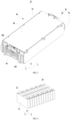
FIG. 3 is a schematic structural diagram of a battery module disclosed in an embodiment of the present disclosure; -
FIG. 4 is a schematic diagram of a partial structure of a battery module disclosed in an embodiment of the present disclosure; -
FIG. 5 is a schematic diagram of a partial cross-sectional structure of a battery module assembly disclosed in an embodiment of the present disclosure; -
FIG. 6 is an enlarged view of A part inFIG. 5 ; -
FIG. 7 is a schematic diagram of an exploded structure of a battery module disclosed in an embodiment of the present disclosure; -
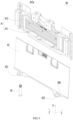
FIG. 8 is a schematic diagram of an exploded structure of an end plate assembly disclosed in an embodiment of the present disclosure; -
FIG. 9 is a schematic diagram of an exploded structure of an end plate assembly disclosed in an embodiment of the present disclosure; -
FIG. 10 is a schematic structural bottom diagram of an end plate assembly disclosed in an embodiment of the present disclosure. - In the drawings, figures are not drawn to actual scale.
- Description of reference signs:
- 1, vehicle;
- 10, battery pack; 11, box;
- 20, battery module;
- 30, battery unit; 31, secondary battery; 32, bus bar;
- 40. housing;
- 50, limit frame; 51, boss;
- 60. end plate assembly;
- 61, end plate; 611, body portion; 612, first adapter portion;
- 62, insulation plate; 621, second adapter portion; 621a, receiving portion; 622, protrusion;
- 63. connection pipe;
- 70. side plate assembly;
- 80. bottom plate;
- 90. top plate;
- 100. blocking member;
- 200, injection channel;
- 300, discharge channel;
- 400, cooling component;
- 500, accommodation cavity;
- X, height direction; Y, length direction; Z, width direction.
- Below, implementing ways of the present disclosure will be further described in detail with reference to accompanying drawings and embodiments. The detailed description of the following embodiments and the accompanying drawings are used to illustrate principles of the present disclosure by way of example, but should not be used to limit the scope of the present disclosure, that is, the present disclosure is not limited to the described embodiments. In the description of the present disclosure, it should be noted that, unless otherwise stated, the meaning of "a plurality" and the like is two or more; the orientation or position relation indicated by the terms such as "upper", "lower", "left", "right", "inner", "outer" and the like are only used to conveniently describe the present application and simplify the description, not to indicate or imply that the indicated device or element must have a particular orientation, be constructed and operate in a particular orientation and therefore cannot be understood to be a limitation to the present disclosure. Additionally, the terms "first", "second", "third" and the like are used for descriptive purposes only and are not to be construed as indicating or implying relative importance. The term "vertical" is not strictly vertical, but within an allowable range of errors. The term "parallel" is not strictly parallel, but within an allowable range of errors.
- Orientation words appearing in the following description are all directions shown in the drawings, and do not limit the specific structure of the present application. In the description of the present disclosure, it should be noted that, unless otherwise stated, the terms "installed", "connected to", "connected with" are to be understood broadly, and may be, for example, a fixed connection, a detachable connection, an integral connection, a direct connection or indirect connection through an intermediate medium. The specific meaning of the above terms in the present disclosure can be understood by those skilled in the art according to actual circumstance.
- For a better understanding of the present disclosure, embodiments of the present disclosure are described below with reference to
FIGS. 1 to 10 . - An embodiment of the present disclosure provides an apparatus using a battery module as a power source. The apparatus can be, but is not limited to, a vehicle, a ship, or an aircraft. Referring to
FIG. 1 , an embodiment of the present disclosure provides avehicle 1, which includes a vehicle body and abattery pack 10. Thebattery pack 10 is provided in the vehicle body. Thevehicle 1 may be a pure electric vehicle, a hybrid vehicle or an extended-range vehicle. The vehicle body is provided with a drive motor electrically connected to thebattery pack 10. Thebattery pack 10 supplies power to the drive motor. The drive motor is connected with wheels on the vehicle body via a transmission mechanism, so as to drive the vehicle to travel. Alternatively, thebattery pack 10 may be horizontally disposed at a bottom of the vehicle body. - Referring to
FIG. 2 , thebattery pack 10 can be arranged in various ways. In some optional embodiments, thebattery pack 10 includes abox 11 and a battery module assembly disposed in thebox 11. The number of battery module assemblies is set as one or more. One or more battery module assemblies are arranged in thebox 11. The type of thebox 11 is not limited. Thebox 11 may be a frame-shaped box, a disc-shaped box, a case-shaped box, or the like. Optionally, thebox 11 includes a lower box for accommodating the battery module assembly and an upper box covering and enclosing the lower box. After the upper box covers and encloses the lower box, an accommodating portion for accommodating the battery module assembly is formed. - After noticing a problem of poor heat dissipation of the battery module, the applicant conducts research and analysis on various structures of the battery module. The applicant found that there is a gap between the battery module and thermally conductive slurry or between a cooling component and the thermally conductive slurry, resulting in a non-contact state at some parts. Thus a thermal resistance of a position where a non-contact area is located is relatively large, which affects a heat dissipation and consistency of the battery module. After further research, it was found that a way of spreading the thermally conductive slurry on the cooling component and then placing the battery module on the thermally conductive slurry to press the conductive slurry will cause a gap between the battery module and the thermally conductive slurry or between the cooling component and the thermally conductive slurry. This is because there is a difference in a surface flatness of the surface of the battery module or the surface of the cooling component and thus undulating areas appear on surfaces of both the battery module and the cooling component. Thus during the pressing process of the thermally conductive slurry, it cannot be ensured that there is sufficient contact between the battery module and the thermally conductive slurry or between the cooling component and the thermally conductive slurry.
- Based on the above problem found by the applicant, the applicant improves the structure of the battery module, and embodiments of the present disclosure are further described below.
- Referring to
FIGS. 3 to 6 , the battery module assembly includes abattery module 20. Thebattery module 20 includes abattery unit 30 and ahousing 40. Thebattery unit 30 is accommodated in thehousing 40. Thebattery unit 30 includes a plurality ofsecondary batteries 30 and abus bar 32 connecting differentsecondary batteries 30 in series or in parallel. The plurality ofsecondary batteries 30 are arranged side by side in one direction. Thehousing 40 includes alimit frame 50 and aninjection channel 200 disposed on thelimit frame 50. Thelimit frame 50 encloses thebattery unit 30 inside thelimit frame 50. Thebattery unit 30 has a top surface, a bottom surface, and a side surface connecting the top surface and bottom surface. Thelimit frame 50 is disposed around a side surface of thebattery unit 30. The battery module assembly also includes acooling component 400. The bottom surface of thebattery unit 30 is disposed toward thecooling component 400. When thebattery module 20 is applied to the battery module assembly, thebattery module 20 may be pre-assembled with thecooling component 400 and anaccommodation cavity 500 is formed between a bottom of thebattery module 20 and thecooling component 400. Theinjection channel 200 provided on thelimit frame 50 is communicated with theaccommodation cavity 500. Then, the thermally conductive slurry is injected into theaccommodation cavity 500 via theinjection channel 200 on thelimit frame 50. Since the thermally conductive slurry is injected into theaccommodation cavity 500 via theinjection channel 200, the thermally conductive slurry can effectively fill each area of theaccommodation cavity 500 under an action of an injection pressure. Therefore, on one hand, it can be ensured that the bottom surface of thebattery module 20 and the surface of thecooling component 400 keep in contact with the thermally conductive slurry, which reduces a possibility of a gap appearing between thebattery module 20 and the thermally conductive slurry or between thecooling component 400 and the thermally conductive slurry. It is beneficial to improve a heat dissipation effect and a heat dissipation efficiency of thebattery module 20. On the other hand, an accuracy requirement for the flatness of the bottom surface of thebattery module 20 and the flatness of the surface of thecooling component 400 are low. The bottom surface of thebattery module 20 and the surface of thecooling component 400 are allowed to have undulations, so as to reduce processing requirements of the bottom of thebattery module 20 and thecooling component 400, and reduce the processing difficulty and cost. - In one embodiment, the battery module assembly includes the
cooling component 400 and the plurality ofbattery modules 20 disposed above thecooling component 400. In this embodiment, by arranging theinjection channel 200 on thelimit frame 50 of thebattery module 20, the thermally conductive slurry can be injected into theaccommodation cavity 500 between eachbattery module 20 and thecooling component 400 independently, so that thecooling component 400 and the box will not to be destroyed and structural integrity of each of thecooling component 400 and thebox 11 is ensured. If theinjection channel 200 is not provided on thelimit frame 50, after the battery module assembly is put into thebox 11 and assembled to form a battery pack, theinjection channel 200 needs to be provided on each of thecooling component 400 and thebox 11 at the same time for injecting the thermally conductive slurry in to theaccommodation cavity 500 formed between thebattery module 20 and thecooling component 400. However, providing theinjection channel 200 on thebox 11 may affect the overall airtightness of thebattery pack 10. - Referring to
FIG. 4 , thebattery unit 30 of the embodiment of the present disclosure has a predetermined height, length and width. The height direction X of thebattery unit 30 is perpendicular to an arrangement direction of the secondary batteries. The length direction Y of thebattery unit 30 is the same as the arrangement direction of the secondary batteries. The width direction Z of thebattery unit 30 is perpendicular to both the height direction X and the length direction Y. Referring toFIG. 3 , theinjection channel 200 penetrates thelimit frame 50 along the height direction X of thebattery unit 30. An injection device can be conveniently moved to a top of thebattery module 20 and aligned with theinjection channel 200 along the height direction X, which is beneficial to reduce the difficulty of aligning the injection device with theinjection channel 200. After the thermally conductive slurry is injected into theinjection channel 200, the thermally conductive slurry flows toward theaccommodation cavity 500 under an action of its own gravity combined with injection pressure, which is beneficial to improve fluidity of the thermally conductive slurry, reduce a possibility of retention of the thermally conductive slurry in theinjection channel 200, and improve efficiency of injection work. - In one embodiment, as shown in
FIG. 4 , thelimit frame 50 includes anend plate assembly 60 and aside plate assembly 70. Theend plate assembly 60 and theside plate assembly 70 are connected to each other and alternately arranged around thebattery unit 30. Thebattery unit 30 has two ends opposite to each other in the length direction Y of thebattery unit 30. Theend plate assembly 60 is disposed at the end of thebattery unit 30. The twoside plate assemblies 70 are oppositely disposed on two sides of thebattery unit 30 along the width direction Z of thebattery unit 30. - In one embodiment, the
injection channel 200 is provided in theside plate assembly 70. In the height direction X, theinjection channel 200 penetrates theside plate assembly 70. - In one embodiment, as shown in
FIG. 3 , theinjection channel 200 is provided in theend plate assembly 60. A structural feature, such as a reinforcing portion, is usually provided on theend plate assembly 60. Theinjection channel 200 disposed on theend plate assembly 60 can be processed and manufactured together with corresponding structural features, and the processing technology is simple. At the same time, theinjection channel 200 disposed on the corresponding structural features will not occupy additional space, which is beneficial to improve an energy density of thebattery module 20. In addition, since theinjection channel 200 is disposed in theend plate assembly 60, the thickness of theside plate assembly 70 can be reduced, which is beneficial to improve the energy density of thebattery module 20. In thebattery pack 10, two ormore battery modules 20 are arranged side by side. The respectiveside plate assemblies 70 in twoadjacent battery modules 20 are arranged adjacently, and theend plate assemblies 60 are arranged side by side along the width direction Z, so that a distance between theinjection channels 200 on respectiveend plate assemblies 60 is relatively large. In this way, when theinjection channel 200 is arranged on theend plate assembly 60, it is convenient for the injection devices to inject the thermally conductive slurry into the plurality ofbattery modules 20 at the same time, and a positional interference of two adjacent injection devices does not occur, which improves the convenience and efficiency of the injection. - In one embodiment, as shown in
FIGS. 3 ,7 and 8 together, theend plate assembly 60 includes anend plate 61 and aninsulation plate 62. At least part of theinsulation plate 62 is disposed between theend plate 61 and thebattery unit 30 for isolating theend plate 61 and thebattery unit 30. Theend plate 61 of theend plate assembly 60 is used for connecting with theside plate assembly 70. The material of theend plate 61 may be aluminum, aluminum alloy or steel. Theinjection channel 200 penetrates both theend plate 61 and theinsulation plate 62. In one example, a portion of theinsulation plate 62 is disposed between theend plate 61 and thebattery unit 30, and a portion thereof is located below theend plate 61 and serves to isolate theend plate 61 from thecooling component 400. - In one embodiment, as shown in
FIG. 3 ,FIG. 7 and FIG. 8 together, theend plate assembly 60 further includes aconnection pipe 63. Ends of theconnection pipe 63 are connected to theend plate 61 and theinsulation plate 62, respectively. Theinjection channel 200 penetrates theend plate 61, theconnection pipe 63 and theinsulation plate 62. Theconnection pipe 63 has two ends opposite in the height direction X. One end of theconnection pipe 63 is connected to theend plate 61, and the other end is connected to theinsulation plate 62. Since theend plate 61 and theinsulation plate 62 are manufactured separately, it is necessary to make a through hole in theend plate 61 to form a part of theinjection channel 200 and a through hole in theinsulation plate 62 to form a part of theinjection channel 200. In this embodiment, when theend plate 61 is connected to theinsulation plate 62 via theconnection pipe 63, theconnection pipe 63 can compensate for a position error of each of the through hole on theend plate 61 and the through hole on theinsulation plate 62, thereby reducing a positional accuracy requirement for manufacturing through holes on theend plate 61 and theinsulation plate 62. - In one embodiment, as shown in
FIGS. 7 and 8 , theend plate 61 has abody portion 611 and afirst adapter portion 612. Thefirst adapter portion 612 is disposed on a side of thebody portion 611 away from thebattery unit 30. At least part of theinsulation plate 62 is disposed between thebody portion 611 and thebattery unit 30. A through hole is machined on thefirst adapter portion 612 to form a part of theinjection channel 200. Theconnection pipe 63 is detachably connected to thefirst adapter portion 612. Optionally, one end of theconnection pipe 63 is threadedly connected with thefirst adapter portion 612 or one end of theconnection pipe 63 is in interference fit with the through hole on thefirst adapter portion 612. Optionally, one end of theconnection pipe 63 is connected to thefirst adapter portion 612 in a sealed manner, which reduces a possibility that the thermally conductive slurry overflows from a connection between one end of theconnection pipe 63 and thefirst adapter portion 612. In one example, thefirst adapter portion 612 is disposed protruding from thebody portion 611 and has a strip-shaped structure extending along the height direction X. The through hole on thefirst adapter portion 612 extends along the height direction X. In this way, the thickness of thebody portion 611 can be reduced, which is beneficial to reduce the overall weight of theend plate assembly 60 and improve the energy density of the secondary battery. In one embodiment, as shown inFIGS. 8 and9 , theinsulation plate 62 includes asecond adapter portion 621. Thesecond adapter portion 621 is disposed on a side of theinsulation plate 62 away from thebattery unit 30. A portion of theinsulation plate 62 beyond thebody portion 611 forms thesecond transition portion 621. One end of theconnection pipe 63 is connected to thesecond adapter portion 621. Theinjection channel 200 penetrates theend plate 61, theconnection pipe 63 and thesecond adapter portion 621. Optionally, one end of theconnection pipe 63 is connected with thesecond adapter 621 in a sealed manner to reduce a possibility that the thermally conductive slurry overflows from a connection between one end of theconnection pipe 63 and thesecond adapter portion 621. Optionally, thefirst adapter portion 612 and thesecond adapter portion 621 are disposed correspondingly along the height direction X. The through hole on thefirst adapter portion 612 and the through hole on thesecond adapter portion 621 are disposed correspondingly along the height direction X. In one example, thesecond adapter portion 621 has a receiving portion. One end of theconnection pipe 63 is accommodated in the receiving portion. In this way, on the one hand, one end of theconnection pipe 63 is less likely to interfere with an adjacent structural member, reducing a possibility that theconnection pipe 63 is blocked by the adjacent structural member which results in poor flow of the thermally conductive slurry. On the other hand, theinsulation plate 62 can limit a movement of theconnection pipe 63 along its own radial direction, so as to reduce a possibility of loosening due to frequent friction between theconnection pipe 63 and theinsulation plate 62. Optionally, one end of theconnection pipe 63 received in the receiving portion matches of the receiving portion in shape. One end of theconnection pipe 63 received in the receiving portion has an inner polygonal hole, which is convenient for inserting a tool into the inner polygonal hole and screwing theconnection pipe 63. - In one embodiment, as shown in
FIGS. 3 and7 together, thehousing 40 further includes adischarge channel 300. Thedischarge channel 300 is configured to be communicated with theaccommodation cavity 500 for discharging the thermally conductive slurry injected into theaccommodation cavity 500. During the injection of the thermally conductive slurry, as the thermally conductive slurry is continuously injected, air remaining in theaccommodation cavity 500 can be discharged via thedischarge channel 300, so that the thermally conductive slurry can fully fill theaccommodation cavity 500 and reduce a possibility that bubbles formed in the thermally conductive slurry affect the thermally conductive efficiency. In addition, thedischarge channel 300 may serve as a viewing site. An operator can judge whether theaccommodation cavity 500 is fully filled with the thermally conductive slurry by whether the thermally conductive slurry overflows from thedischarge channel 300. After theaccommodation cavity 500 is fully filled with the thermally conductive slurry, the thermally conductive slurry can overflow from thedischarge channel 300, and an injection operation is stopped at this time, thereby reducing unnecessary waste caused by excessive use of the thermally conductive slurry. In one example, theinsulation plate 62 includes aprotrusion 622. Theprotrusion 622 is disposed on a side of theinsulation plate 62 away from thebattery unit 30. Thedischarge channel 300 penetrates theprotrusion 622 in the height direction X of thebattery unit 30. A discharge port of thedischarge channel 300 is located on an upper surface of theprotrusion 622 and is higher than theaccommodation cavity 500, so as to ensure that the thermally conductive slurry will not overflow from thedischarge channel 300 until theaccommodation cavity 500 is fully filled with the thermally conductive slurry. Along the width direction Z of thebattery unit 30, thesecond adapter portion 621 and theprotrusion 622 are spaced apart, thereby increasing a distance between theinjection channel 200 and thedischarge channel 300. In this way, it is possible to reduce a possibility that the thermally conductive slurry injected from theinjection channel 200 is discharged from thedischarge channel 300 before theaccommodation cavity 500 is fully filled which will cause a misjudgment by the operator. - In one embodiment, as shown in
FIGS. 6 and10 , thebattery module 20 further includes a blockingmember 100. The blockingmember 100 is disposed on thehousing 40. Thehousing 40, the blockingmember 100 and thecooling component 400 are configured to form theaccommodation cavity 500. After thebattery module 20 is assembled with the cooling component, in the height direction X, the blockingmember 100 is located between thehousing 40 and thecooling component 400. The blockingmember 100 is arranged around the bottom of thehousing 40 in a closed form. The blockingmember 100 can block the thermally conductive slurry, reduce the possibility that the thermally conductive slurry injected into theaccommodation cavity 500 overflows from theaccommodation cavity 500 to the outside, improve the utilization rate of the thermally conductive slurry, and reduce unnecessary waste caused by excessive use of the thermally conductive slurry. In one example, the blockingmember 100 has an integrally formed annular structure. The blockingmember 100 also has a flexible structure and itself has elastic deformation ability. Thehousing 40 and thecooling component 400 can jointly apply a pressing stress to the blockingmember 100, so as to further improve the sealing between the blockingmember 100 and thehousing 40 and between the blockingmember 100 and thecooling component 400. Optionally, the material of the blockingmember 100 may be rubber or silicone. - In one embodiment, as shown in
FIG. 6 andFIG. 7 , thelimit frame 50 is provided with aboss 51. The blockingmember 100 is located inside theboss 51, and an opening of theinjection channel 200 and an opening of thedischarge channel 300 are located inside the blockingmember 100. Theboss 51 is used to limit a position of the blockingmember 100. Theboss 51 can form a constraining limit for the blockingmember 100 from the outside of the blockingmember 100, so as to reduce a possibility that the blockingmember 100 itself is expanded outward due to pressing stress and is offset in position. In one example, a surface of theinsulation plate 62 away from theend plate 61 is provided with theboss 51. - In one embodiment, as shown in
FIG. 10 , thehousing 40 further includes abottom plate 80. Thebattery unit 30 is disposed on and supported by thebottom plate 80. The blockingmember 100 is disposed on a side of thebottom plate 80 away from thebattery unit 30. Thebottom plate 80, the blockingmember 100 and thecooling component 400 form theaccommodation cavity 500. Thebottom plate 80 is connected fixedly to thelimit frame 50. In another embodiment, as shown inFIG. 3 , thehousing 40 further includes atop plate 90. Thetop plate 90 is connected fixedly with thelimit frame 50, so that thetop plate 90 , thebottom plate 80 and thelimit frame 50 enclose thebattery unit 30 . - Referring to
FIG. 3 andFIG. 6 , an embodiment of the present disclosure provides a battery module assembly, which includes thecooling component 400 and thebattery module 20. - In the height direction X, the
cooling component 400 is disposed below thebattery module 20. Thecooling component 400 is used to cool thebattery module 20. Theaccommodation cavity 500 is provided between the bottom of thebattery module 20 and thecooling component 400. Theinjection channel 200 is communicated with theaccommodation cavity 500. Theinjection channel 200 is used to inject the thermally conductive slurry into theaccommodation cavity 500. - The heat of the
battery module 20 may be conducted to thecooling component 400 via the thermally conductive slurry. Since the thermally conductive slurry is injected into theaccommodation cavity 500 via theinjection channel 200 on the limitingframe 50, it can be ensured that theaccommodation cavity 500 is fully filled with the thermally conductive slurry under the condition that each of the bottom surface of thebattery module 20 and the surface of thecooling component 400 has a difference in flatness. Therefore, it is difficult to leave a gap between thebattery module 20 and the thermally conductive slurry and between thecooling component 400 and the thermally conductive slurry, but instead they are in a good contact state, thereby ensuring a good heat dissipation effect of the battery module assembly itself. - An embodiment of the present disclosure provides a production method for a battery module assembly, which includes:
- providing the
cooling component 400; - providing the
battery module 20, wherein thebattery module 20 includes thebattery unit 30 and thehousing 40, thehousing 40 accommodates thebattery unit 30 and includes thelimit frame 50 and theinjection channel 200 disposed on thelimit frame 50, and thelimit frame 50 is arranged around thebattery unit 30; - connecting the
battery module 20 to thecooling component 400, forming theaccommodation cavity 500 between the bottom of thebattery module 20 and thecooling component 400, wherein theinjection channel 200 is communicated with theaccommodation cavity 500; - injecting the thermally conductive slurry into the
accommodation cavity 500 via theinjection channel 200 . - In the production method for the battery module assembly of the embodiment of the present disclosure, the
accommodation cavity 500 formed between thebattery module 20 and thecooling component 400 can be fully filled with the thermally conductive slurry via theinjection channel 200, so that a good contact state is kept between thebattery module 20 and the thermally conductive slurry and between thecooling component 400 and the thermally conductive slurry and thus the battery module assembly itself is ensured to have a good heat dissipation effect. - While the present disclosure has been described with reference to the preferred embodiments, various modifications may be made and equivalents may be substituted for parts thereof In particular, as long as there is no structural conflict, each technical feature mentioned in each embodiment can be combined in any manner. The present disclosure is not limited to the specific embodiments disclosed herein, but includes all technical solutions falling within the scope of the claims.
Claims (12)
- A battery module (20), comprising:a battery unit (30) comprising a top surface, a bottom surface, and a side surface connecting the top surface and the bottom surface;a housing (40) for accommodating the battery unit (30), wherein the housing (40) comprises a limit frame (50) and an injection channel (200) arranged on the limit frame (50), the limit frame (50) is arranged around the side surface of the battery unit (30); an accommodation cavity (500) is formed by a bottom of the battery module (20) and a cooling component (400), and the injection channel (200) is configured to be communicated with the accommodation cavity (500); andthermally conductive slurry which is injected into the accommodation cavity (500) from the injection channel (200), whereinthe limit frame (50) comprises an end plate assembly (60) provided at an end of the battery unit (30), the injection channel (200) is provided in the end plate assembly (60), the end plate assembly (60) comprises an end plate (61), an insulation plate (62), and a connection pipe (63), at least part of the insulation plate (62) is provided between the end plate (61) and the battery unit (30), the injection channel (200) penetrates both the end plate (61) and the insulation plate (62), two ends of the connection pipe (63) are respectively connected to the end plate (61) and the insulation plate (62), and the injection channel (200) penetrates the end plate (61), the connection pipe (63) and the insulation plate (62).
- The battery module (20) of claim 1, wherein the injection channel (200) penetrates the limit frame (50) along a height direction (X) of the battery unit (30).
- The battery module (20) according to claim 1, wherein the end plate (61) comprises a body portion (611) and a first adapter portion (612) provided on a side of the body portion (611) away from the battery unit (30), and the connection pipe (63) is detachably connected to the first adapter portion (612).
- The battery module (20) according to claim 1 or 3, wherein the insulation plate (62) comprises a second adapter portion (621) provided on a side of the insulation plate (62) away from the battery unit (30), one end of the connection pipe (63) is connected to the second adapter portion (621), and the injection channel (200) penetrates the end plate (61), the connection pipe (63) and the second adapter portion (621).
- The battery module (20) according to claim 4, wherein the second adapter portion (621) comprises a receiving portion (621a), and one end of the connection pipe (63) is received in the receiving portion (621a).
- The battery module (20) of claim 1, wherein the housing (40) further comprises a discharge channel (300) configured to be communicated with the accommodation cavity (500) to discharge the thermally conductive slurry injected into the accommodation cavity (500).
- The battery module (20) according to claim 1 or 4, wherein the insulation plate (62) comprises a protrusion (622) provided on a side of the insulation plate (62) away from the battery unit (30), the housing (40) comprises a discharge channel (300) penetrating the protrusion (622) in a height direction (X) of the battery unit (30) and configured to be communicated with the accommodation cavity (500).
- The battery module (20) according to any one of claims 1 to 7, wherein the battery module (20) further comprises a blocking member (100) provided on the housing (40), and the accommodation cavity (500) is formed by the housing (40), the blocking member (100) and the cooling component (400).
- The battery module (20) of claim 8, wherein the blocking member (100) has an annular flexible structure.
- The battery module (20) according to claim 8 or 9, wherein the limit frame (50) is provided with a boss (51), the blocking member (100) is located inside the boss (51), and the boss (51) is used to limit a position of the blocking member (100).
- A battery module assembly, comprising:a cooling component (400);the battery module (20) according to any one of claims 1 to 10, wherein the battery module (20) is connected to the cooling component (400), the accommodation cavity (500) is provided between the bottom of the battery module (20) and the cooling component (400), the injection channel (200) is communicated with the accommodation cavity (500) and used for injecting the thermally conductive slurry into the accommodation cavity (500), and the thermally conductive slurry is used for conducting heat of the battery module (20) to the cooling component (400).
- An apparatus using a battery module as a power source, comprising the battery module according to any one of claims 1 to 10.
Applications Claiming Priority (1)
| Application Number | Priority Date | Filing Date | Title |
|---|---|---|---|
| PCT/CN2020/091520 WO2021232338A1 (en) | 2020-05-21 | 2020-05-21 | Battery module, battery module assembly and production method therefor, and apparatus |
Publications (3)
| Publication Number | Publication Date |
|---|---|
| EP4037064A1 EP4037064A1 (en) | 2022-08-03 |
| EP4037064A4 EP4037064A4 (en) | 2023-05-10 |
| EP4037064B1 true EP4037064B1 (en) | 2025-07-09 |
Family
ID=76344786
Family Applications (1)
| Application Number | Title | Priority Date | Filing Date |
|---|---|---|---|
| EP20936805.9A Active EP4037064B1 (en) | 2020-05-21 | 2020-05-21 | Battery module, battery module assembly and production method therefor, and apparatus |
Country Status (4)
| Country | Link |
|---|---|
| US (1) | US12469900B2 (en) |
| EP (1) | EP4037064B1 (en) |
| CN (1) | CN112997350B (en) |
| WO (1) | WO2021232338A1 (en) |
Citations (1)
| Publication number | Priority date | Publication date | Assignee | Title |
|---|---|---|---|---|
| WO2018135756A1 (en) * | 2017-01-17 | 2018-07-26 | 주식회사 엘지화학 | Battery module, battery pack comprising such battery module, and vehicle comprising such battery pack |
Family Cites Families (12)
| Publication number | Priority date | Publication date | Assignee | Title |
|---|---|---|---|---|
| KR101271883B1 (en) * | 2011-07-22 | 2013-06-05 | 로베르트 보쉬 게엠베하 | Battery module |
| WO2017052296A1 (en) * | 2015-09-24 | 2017-03-30 | 주식회사 엘지화학 | Battery module |
| KR102119183B1 (en) * | 2016-08-18 | 2020-06-04 | 주식회사 엘지화학 | Battery module |
| KR102082906B1 (en) | 2016-10-10 | 2020-02-28 | 주식회사 엘지화학 | Battery module assembly |
| CN115411404A (en) * | 2018-03-07 | 2022-11-29 | Sk新能源株式会社 | Battery module and method for manufacturing same |
| CN208538976U (en) * | 2018-08-21 | 2019-02-22 | 宁德时代新能源科技股份有限公司 | battery module |
| CN209447881U (en) * | 2019-01-18 | 2019-09-27 | 宁德时代新能源科技股份有限公司 | A kind of battery modules |
| CN209747688U (en) * | 2019-06-28 | 2019-12-06 | 宁德时代新能源科技股份有限公司 | battery module |
| CN209981339U (en) * | 2019-08-26 | 2020-01-21 | 多氟多新能源科技有限公司 | Soft packet of lithium cell standard module |
| CN210006806U (en) * | 2019-08-29 | 2020-01-31 | 蜂巢能源科技有限公司 | Battery pack shell, battery pack and vehicle |
| CN111029505A (en) * | 2019-12-24 | 2020-04-17 | 孚能科技(镇江)有限公司 | Shell of battery module, battery module, and glue-pouring method of battery module |
| CN111048868B (en) * | 2019-12-25 | 2022-01-28 | 中国第一汽车股份有限公司 | Battery monomer group and battery module |
-
2020
- 2020-05-21 WO PCT/CN2020/091520 patent/WO2021232338A1/en not_active Ceased
- 2020-05-21 EP EP20936805.9A patent/EP4037064B1/en active Active
- 2020-05-21 CN CN202080005632.0A patent/CN112997350B/en active Active
-
2022
- 2022-05-17 US US17/746,905 patent/US12469900B2/en active Active
Patent Citations (1)
| Publication number | Priority date | Publication date | Assignee | Title |
|---|---|---|---|---|
| WO2018135756A1 (en) * | 2017-01-17 | 2018-07-26 | 주식회사 엘지화학 | Battery module, battery pack comprising such battery module, and vehicle comprising such battery pack |
Also Published As
| Publication number | Publication date |
|---|---|
| EP4037064A1 (en) | 2022-08-03 |
| EP4037064A4 (en) | 2023-05-10 |
| US20220278391A1 (en) | 2022-09-01 |
| CN112997350A (en) | 2021-06-18 |
| US12469900B2 (en) | 2025-11-11 |
| CN112997350B (en) | 2023-07-04 |
| WO2021232338A1 (en) | 2021-11-25 |
Similar Documents
| Publication | Publication Date | Title |
|---|---|---|
| US11894510B2 (en) | Battery pack and vehicle | |
| KR102646854B1 (en) | Battery module | |
| KR20220051147A (en) | Battery module and its manufacturing method | |
| KR20220101692A (en) | Battery packs and electric vehicles | |
| CN116368664A (en) | Batteries and electrical devices | |
| EP4456294A1 (en) | Battery, electric device, and forming method for battery | |
| KR20170044006A (en) | Battery module including a cooling plate and manufacturing method the same cooling plate | |
| KR20220003086A (en) | Power Battery Packs and Vehicles | |
| JP4960373B2 (en) | Heat dissipating device for battery pack and battery pack using the same | |
| CN216055057U (en) | Battery package box, battery package and vehicle | |
| CN211350713U (en) | Battery module and battery pack | |
| KR101533992B1 (en) | Battery Module | |
| KR20150037335A (en) | Battery Module with Cooling Member | |
| US20240356102A1 (en) | Battery Module, and Battery Pack and Vehicle Including the Same | |
| US11799150B2 (en) | Cooling structure for hybrid-electric vehicle battery cell assemblies | |
| EP4037064B1 (en) | Battery module, battery module assembly and production method therefor, and apparatus | |
| US11929480B2 (en) | Battery and battery apparatus | |
| CN222530669U (en) | Battery Pack | |
| CN117559029B (en) | Heat dissipation bracket, battery module and battery pack | |
| CN111435719A (en) | Battery module, battery pack, battery module, battery system, and electric vehicle | |
| CN111435716A (en) | Battery system, its mounting case, and electric vehicle having the same | |
| CN117638311A (en) | A battery pack and electrical equipment | |
| CN212695271U (en) | Lithium battery box with good protection performance | |
| CN209375636U (en) | Signal transmission parts, battery modules, battery systems and electric vehicles | |
| CN223552589U (en) | Battery and electric equipment |
Legal Events
| Date | Code | Title | Description |
|---|---|---|---|
| STAA | Information on the status of an ep patent application or granted ep patent |
Free format text: STATUS: THE INTERNATIONAL PUBLICATION HAS BEEN MADE |
|
| PUAI | Public reference made under article 153(3) epc to a published international application that has entered the european phase |
Free format text: ORIGINAL CODE: 0009012 |
|
| STAA | Information on the status of an ep patent application or granted ep patent |
Free format text: STATUS: REQUEST FOR EXAMINATION WAS MADE |
|
| 17P | Request for examination filed |
Effective date: 20220425 |
|
| AK | Designated contracting states |
Kind code of ref document: A1 Designated state(s): AL AT BE BG CH CY CZ DE DK EE ES FI FR GB GR HR HU IE IS IT LI LT LU LV MC MK MT NL NO PL PT RO RS SE SI SK SM TR |
|
| A4 | Supplementary search report drawn up and despatched |
Effective date: 20230413 |
|
| RIC1 | Information provided on ipc code assigned before grant |
Ipc: H01M 10/658 20140101ALI20230405BHEP Ipc: H01M 10/6567 20140101ALI20230405BHEP Ipc: H01M 10/6556 20140101ALI20230405BHEP Ipc: H01M 10/653 20140101ALI20230405BHEP Ipc: H01M 10/625 20140101ALI20230405BHEP Ipc: H01M 10/613 20140101AFI20230405BHEP |
|
| DAV | Request for validation of the european patent (deleted) | ||
| DAX | Request for extension of the european patent (deleted) | ||
| RAP1 | Party data changed (applicant data changed or rights of an application transferred) |
Owner name: CONTEMPORARY AMPEREX TECHNOLOGY(HONG KONG) LIMITED |
|
| GRAP | Despatch of communication of intention to grant a patent |
Free format text: ORIGINAL CODE: EPIDOSNIGR1 |
|
| STAA | Information on the status of an ep patent application or granted ep patent |
Free format text: STATUS: GRANT OF PATENT IS INTENDED |
|
| INTG | Intention to grant announced |
Effective date: 20250304 |
|
| GRAS | Grant fee paid |
Free format text: ORIGINAL CODE: EPIDOSNIGR3 |
|
| GRAA | (expected) grant |
Free format text: ORIGINAL CODE: 0009210 |
|
| STAA | Information on the status of an ep patent application or granted ep patent |
Free format text: STATUS: THE PATENT HAS BEEN GRANTED |
|
| AK | Designated contracting states |
Kind code of ref document: B1 Designated state(s): AL AT BE BG CH CY CZ DE DK EE ES FI FR GB GR HR HU IE IS IT LI LT LU LV MC MK MT NL NO PL PT RO RS SE SI SK SM TR |
|
| REG | Reference to a national code |
Ref country code: GB Ref legal event code: FG4D |
|
| REG | Reference to a national code |
Ref country code: CH Ref legal event code: EP |
|
| P01 | Opt-out of the competence of the unified patent court (upc) registered |
Free format text: CASE NUMBER: APP_28837/2025 Effective date: 20250617 |
|
| REG | Reference to a national code |
Ref country code: IE Ref legal event code: FG4D |
|
| REG | Reference to a national code |
Ref country code: DE Ref legal event code: R096 Ref document number: 602020054417 Country of ref document: DE |
|
| REG | Reference to a national code |
Ref country code: NL Ref legal event code: MP Effective date: 20250709 |
|
| PG25 | Lapsed in a contracting state [announced via postgrant information from national office to epo] |
Ref country code: PT Free format text: LAPSE BECAUSE OF FAILURE TO SUBMIT A TRANSLATION OF THE DESCRIPTION OR TO PAY THE FEE WITHIN THE PRESCRIBED TIME-LIMIT Effective date: 20251110 |
|
| PG25 | Lapsed in a contracting state [announced via postgrant information from national office to epo] |
Ref country code: NL Free format text: LAPSE BECAUSE OF FAILURE TO SUBMIT A TRANSLATION OF THE DESCRIPTION OR TO PAY THE FEE WITHIN THE PRESCRIBED TIME-LIMIT Effective date: 20250709 |
|
| REG | Reference to a national code |
Ref country code: AT Ref legal event code: MK05 Ref document number: 1812750 Country of ref document: AT Kind code of ref document: T Effective date: 20250709 |
|
| PG25 | Lapsed in a contracting state [announced via postgrant information from national office to epo] |
Ref country code: IS Free format text: LAPSE BECAUSE OF FAILURE TO SUBMIT A TRANSLATION OF THE DESCRIPTION OR TO PAY THE FEE WITHIN THE PRESCRIBED TIME-LIMIT Effective date: 20251109 |
|
| PG25 | Lapsed in a contracting state [announced via postgrant information from national office to epo] |
Ref country code: NO Free format text: LAPSE BECAUSE OF FAILURE TO SUBMIT A TRANSLATION OF THE DESCRIPTION OR TO PAY THE FEE WITHIN THE PRESCRIBED TIME-LIMIT Effective date: 20251009 |
|
| REG | Reference to a national code |
Ref country code: LT Ref legal event code: MG9D |
|
| PG25 | Lapsed in a contracting state [announced via postgrant information from national office to epo] |
Ref country code: AT Free format text: LAPSE BECAUSE OF FAILURE TO SUBMIT A TRANSLATION OF THE DESCRIPTION OR TO PAY THE FEE WITHIN THE PRESCRIBED TIME-LIMIT Effective date: 20250709 |
|
| PG25 | Lapsed in a contracting state [announced via postgrant information from national office to epo] |
Ref country code: FI Free format text: LAPSE BECAUSE OF FAILURE TO SUBMIT A TRANSLATION OF THE DESCRIPTION OR TO PAY THE FEE WITHIN THE PRESCRIBED TIME-LIMIT Effective date: 20250709 |
|
| PG25 | Lapsed in a contracting state [announced via postgrant information from national office to epo] |
Ref country code: HR Free format text: LAPSE BECAUSE OF FAILURE TO SUBMIT A TRANSLATION OF THE DESCRIPTION OR TO PAY THE FEE WITHIN THE PRESCRIBED TIME-LIMIT Effective date: 20250709 |
|
| PG25 | Lapsed in a contracting state [announced via postgrant information from national office to epo] |
Ref country code: GR Free format text: LAPSE BECAUSE OF FAILURE TO SUBMIT A TRANSLATION OF THE DESCRIPTION OR TO PAY THE FEE WITHIN THE PRESCRIBED TIME-LIMIT Effective date: 20251010 |
|
| PG25 | Lapsed in a contracting state [announced via postgrant information from national office to epo] |
Ref country code: SE Free format text: LAPSE BECAUSE OF FAILURE TO SUBMIT A TRANSLATION OF THE DESCRIPTION OR TO PAY THE FEE WITHIN THE PRESCRIBED TIME-LIMIT Effective date: 20250709 |
|
| PG25 | Lapsed in a contracting state [announced via postgrant information from national office to epo] |
Ref country code: LV Free format text: LAPSE BECAUSE OF FAILURE TO SUBMIT A TRANSLATION OF THE DESCRIPTION OR TO PAY THE FEE WITHIN THE PRESCRIBED TIME-LIMIT Effective date: 20250709 |
|
| PG25 | Lapsed in a contracting state [announced via postgrant information from national office to epo] |
Ref country code: PL Free format text: LAPSE BECAUSE OF FAILURE TO SUBMIT A TRANSLATION OF THE DESCRIPTION OR TO PAY THE FEE WITHIN THE PRESCRIBED TIME-LIMIT Effective date: 20250709 Ref country code: BG Free format text: LAPSE BECAUSE OF FAILURE TO SUBMIT A TRANSLATION OF THE DESCRIPTION OR TO PAY THE FEE WITHIN THE PRESCRIBED TIME-LIMIT Effective date: 20250709 |
|
| PG25 | Lapsed in a contracting state [announced via postgrant information from national office to epo] |
Ref country code: RS Free format text: LAPSE BECAUSE OF FAILURE TO SUBMIT A TRANSLATION OF THE DESCRIPTION OR TO PAY THE FEE WITHIN THE PRESCRIBED TIME-LIMIT Effective date: 20251009 |
|
| PG25 | Lapsed in a contracting state [announced via postgrant information from national office to epo] |
Ref country code: ES Free format text: LAPSE BECAUSE OF FAILURE TO SUBMIT A TRANSLATION OF THE DESCRIPTION OR TO PAY THE FEE WITHIN THE PRESCRIBED TIME-LIMIT Effective date: 20250709 |
|
| PG25 | Lapsed in a contracting state [announced via postgrant information from national office to epo] |
Ref country code: SM Free format text: LAPSE BECAUSE OF FAILURE TO SUBMIT A TRANSLATION OF THE DESCRIPTION OR TO PAY THE FEE WITHIN THE PRESCRIBED TIME-LIMIT Effective date: 20250709 |
|
| PGFP | Annual fee paid to national office [announced via postgrant information from national office to epo] |
Ref country code: GB Payment date: 20260331 Year of fee payment: 7 |
|
| PG25 | Lapsed in a contracting state [announced via postgrant information from national office to epo] |
Ref country code: DK Free format text: LAPSE BECAUSE OF FAILURE TO SUBMIT A TRANSLATION OF THE DESCRIPTION OR TO PAY THE FEE WITHIN THE PRESCRIBED TIME-LIMIT Effective date: 20250709 |
|
| PG25 | Lapsed in a contracting state [announced via postgrant information from national office to epo] |
Ref country code: IT Free format text: LAPSE BECAUSE OF FAILURE TO SUBMIT A TRANSLATION OF THE DESCRIPTION OR TO PAY THE FEE WITHIN THE PRESCRIBED TIME-LIMIT Effective date: 20250709 |
|
| PG25 | Lapsed in a contracting state [announced via postgrant information from national office to epo] |
Ref country code: CZ Free format text: LAPSE BECAUSE OF FAILURE TO SUBMIT A TRANSLATION OF THE DESCRIPTION OR TO PAY THE FEE WITHIN THE PRESCRIBED TIME-LIMIT Effective date: 20250709 |
|
| PG25 | Lapsed in a contracting state [announced via postgrant information from national office to epo] |
Ref country code: SK Free format text: LAPSE BECAUSE OF FAILURE TO SUBMIT A TRANSLATION OF THE DESCRIPTION OR TO PAY THE FEE WITHIN THE PRESCRIBED TIME-LIMIT Effective date: 20250709 Ref country code: EE Free format text: LAPSE BECAUSE OF FAILURE TO SUBMIT A TRANSLATION OF THE DESCRIPTION OR TO PAY THE FEE WITHIN THE PRESCRIBED TIME-LIMIT Effective date: 20250709 |