EP4036776A1 - Information processing program, information processing method, and information processing apparatus - Google Patents
Information processing program, information processing method, and information processing apparatus Download PDFInfo
- Publication number
- EP4036776A1 EP4036776A1 EP21213116.3A EP21213116A EP4036776A1 EP 4036776 A1 EP4036776 A1 EP 4036776A1 EP 21213116 A EP21213116 A EP 21213116A EP 4036776 A1 EP4036776 A1 EP 4036776A1
- Authority
- EP
- European Patent Office
- Prior art keywords
- training
- data
- machine learning
- learning model
- training data
- Prior art date
- Legal status (The legal status is an assumption and is not a legal conclusion. Google has not performed a legal analysis and makes no representation as to the accuracy of the status listed.)
- Granted
Links
Images




Classifications
-
- G—PHYSICS
- G06—COMPUTING OR CALCULATING; COUNTING
- G06F—ELECTRIC DIGITAL DATA PROCESSING
- G06F21/00—Security arrangements for protecting computers, components thereof, programs or data against unauthorised activity
- G06F21/60—Protecting data
- G06F21/62—Protecting access to data via a platform, e.g. using keys or access control rules
- G06F21/6218—Protecting access to data via a platform, e.g. using keys or access control rules to a system of files or objects, e.g. local or distributed file system or database
- G06F21/6245—Protecting personal data, e.g. for financial or medical purposes
-
- G—PHYSICS
- G06—COMPUTING OR CALCULATING; COUNTING
- G06N—COMPUTING ARRANGEMENTS BASED ON SPECIFIC COMPUTATIONAL MODELS
- G06N20/00—Machine learning
-
- G—PHYSICS
- G06—COMPUTING OR CALCULATING; COUNTING
- G06N—COMPUTING ARRANGEMENTS BASED ON SPECIFIC COMPUTATIONAL MODELS
- G06N3/00—Computing arrangements based on biological models
- G06N3/02—Neural networks
- G06N3/08—Learning methods
- G06N3/084—Backpropagation, e.g. using gradient descent
Definitions
- the embodiment discussed herein is related to an information processing program, an information processing method, and an information processing apparatus.
- a machine learning model is extracted by analyzing a face authentication edge device used for a face authentication system.
- a face image used as the training data is estimated by performing the training data estimation attack on the machine learning model.
- the training data estimation attack is an attack performed on a trained model (machine learning model) having undergone a training phase.
- the training data estimation attack is classified into a black box attack and a white box attack.
- the black box attack estimates the training data from input data and output data in an inference phase.
- the white box attack estimates from the trained machine learning model itself the training data.
- a defensive technique against the white box attack there is a known technique in which a trained machine learning model resistant to the training data estimation is generated by adding appropriate noise to parameters of the machine learning model when the parameters are updated. Examples of such a defensive technique against the white box attack include, for example, differential private-stochastic gradient descent (DP-SGD).
- DP-SGD differential private-stochastic gradient descent
- an object of the present disclosure is to enable generation of a machine learning model resistant to a white box attack that estimates training data.
- an information processing program that causes at least one computer to execute a process, the process includes, generating additional data by inputting meaningless data to a first machine learning model which has been trained with first training data; acquiring second training data by combining the first training data and the additional data; and training a machine learning model by using the second training data.
- the machine learning model resistant to the white box attack that estimates training data may be generated.
- FIG. 1 illustrates an example of a hardware configuration of an information processing apparatus 1 as an example of the embodiment.
- the information processing apparatus 1 includes, for example, a processor 11, a memory 12, a storage device 13, a graphic processing device 14, an input interface 15, an optical drive device 16, a device coupling interface 17, and a network interface 18 as the components.
- These components 11 to 18 are configured so as to be mutually communicable via a bus 19.
- the processor (control unit) 11 controls the entirety of this information processing apparatus 1.
- the processor 11 may be a multiprocessor.
- the processor 11 may be any one of a central processing unit (CPU), a microprocessor unit (MPU), a digital signal processor (DSP), an application-specific integrated circuit (ASIC), a programmable logic device (PLD), and a field-programmable gate array (FPGA).
- the processor 11 may be a combination of two or more types of elements of the CPU, the MPU, the DSP, the ASIC, the PLD, and the FPGA.
- the processor 11 executes a control program (information processing program: not illustrated), thereby realizing the functions as a training processing unit 100 (a first training execution unit 101, an additional training data creation unit 102, and a second training execution unit 105) exemplified in FIG. 2 .
- the information processing apparatus 1 realizes the function as the training processing unit 100 by executing, for example, programs (the information processing program and an operating system (OS) program) recorded in a computer-readable non-transitory recording medium.
- programs the information processing program and an operating system (OS) program
- Programs in which content of processing to be executed by the information processing apparatus 1 is described may be recorded in various recording media.
- the programs to be executed by the information processing apparatus 1 may be stored in the storage device 13.
- the processor 11 loads at least a subset of the programs in the storage device 13 into the memory 12 and executes the loaded programs.
- the programs to be executed by the information processing apparatus 1 may be recorded in a non-transitory portable recording medium such as an optical disc 16a, a memory device 17a, and a memory card 17c.
- a non-transitory portable recording medium such as an optical disc 16a, a memory device 17a, and a memory card 17c.
- the programs stored in the portable recording medium become executable after being installed in the storage device 13 by control from the processor 11.
- the processor 11 may read the programs directly from the portable recording medium and execute the programs.
- the memory 12 is a storage memory including a read-only memory (ROM) and a random-access memory (RAM).
- the RAM of the memory 12 is used as a main storage device of the information processing apparatus 1.
- the OS program and the control program to be executed by the processor 11 are at least partially stored in the RAM temporarily.
- Various types of data desired for processing by the processor 11 are stored in the memory 12.
- the storage device 13 is a storage device such as a hard disk drive (HDD), a solid-state drive (SSD), or a storage class memory (SCM) and stores various types of data.
- the storage device 13 is used as an auxiliary storage device of this information processing apparatus 1.
- the OS program, the control program, and the various types of data are stored in the storage device 13.
- the control program includes an information processing program.
- auxiliary storage device a semiconductor storage device such as an SCM or a flash memory may be used.
- a plurality of storage devices 13 may be used to configure redundant arrays of inexpensive disks (RAID).
- the storage device 13 may store various types of data generated when the first training execution unit 101, the additional training data creation unit 102 (an additional data creation unit 103 and a mini-batch creation unit 104), and the second training execution unit 105, which will be described later, execute processes.
- a monitor 14a is coupled to the graphic processing device 14.
- the graphic processing device 14 displays an image on a screen of the monitor 14a in accordance with an instruction from the processor 11.
- Examples of the monitor 14a include a display device with a cathode ray tube (CRT), a liquid crystal display device, and the like.
- a keyboard 15a and a mouse 15b are coupled to the input interface 15.
- the input interface 15 transmits signals transmitted from the keyboard 15a and the mouse 15b to the processor 11.
- the mouse 15b is an example of a pointing device, and a different pointing device may be used. Examples of the different pointing device include a touch panel, a tablet, a touch pad, a track ball, and the like.
- the optical drive device 16 reads data recorded in the optical disc 16a by using laser light or the like.
- the optical disc 16a is a portable non-transitory recording medium in which data is recorded so that the data is readable using light reflection.
- Examples of the optical disc 16a include a Digital Versatile Disc (DVD), a DVD-RAM, a compact disc read-only memory (CD-ROM), a CD-recordable (R)/CD-rewritable (RW), and the like.
- the device coupling interface 17 is a communication interface for coupling peripheral devices to the information processing apparatus 1.
- the memory device 17a or a memory reader-writer 17b may be coupled to the device coupling interface 17.
- the memory device 17a is a non-transitory recording medium such as a Universal Serial Bus (USB) memory which has the function of communication with the device coupling interface 17.
- the memory reader-writer 17b writes data to the memory card 17c or reads data from the memory card 17c.
- the memory card 17c is a card-type non-transitory recording medium.
- the network interface 18 is coupled to a network (not illustrated).
- the network interface 18 may be coupled to another information processing apparatus, a communication device, or the like via the network.
- an input image or an input text may be input via the network.
- FIG. 2 illustrates an example of a functional configuration of the information processing apparatus 1 as the example of the embodiment. As illustrated in FIG. 2 , the information processing apparatus 1 has the function of the training processing unit 100.
- the processor 11 executes the control program (information processing program), thereby realizing the function as the training processing unit 100.
- the training processing unit 100 realizes a learning process (training process) in machine learning by using training data.
- the information processing apparatus 1 functions as a training device that trains a machine learning model by using the training processing unit 100.
- the training processing unit 100 realizes the learning process (training process) in machine learning by using, for example, training data (teacher data) to which a correct answer label is assigned.
- the training processing unit 100 trains the machine learning model by using the training data and generates a trained machine learning model resistant to training data estimation.
- the machine learning model may be, for example, a deep learning model (deep neural network).
- a neural network may be a hardware circuit or a virtual network by software that couples layers virtually built in a computer program by the processor 11 or the like.
- the training processing unit 100 includes the first training execution unit 101, the additional data creation unit 103, and the second training execution unit 105.
- the first training execution unit 101 trains the machine learning model by using the training data and generates the trained machine learning model.
- the training data is configured as, for example, a combination of input data x and correct answer output data y.
- the training of the machine learning model performed by the first training execution unit 101 by using the training data may be referred to as first training.
- the machine learning model before the training by using the first training execution unit 101 is performed may be referred to as a first machine learning model. Since the first machine learning model is a machine learning model before the training is performed, the first machine learning model may be referred to as an empty machine learning model. Also, the machine learning model may be simply referred to as a model.
- first training data or training data A the training data used for the first training by the first training execution unit 101 may be referred to as first training data or training data A.
- the trained machine learning model generated by the first training execution unit 101 may be referred to as a second machine learning model or a machine learning model A.
- Model parameters of the machine learning model A are set by the first training performed by the first training execution unit 101.
- the first training execution unit 101 is able to generate the second machine learning model (machine learning model A) by training the first machine learning model with the training data A by using a known technique. Specific description of the generation of the second machine learning model is omitted.
- the additional training data creation unit 102 creates training data used when the second training execution unit 105, which will be described later, performs additional training on the second machine learning model (machine learning model A) generated by the first training execution unit 101.
- the training data used when the additional training is performed on the second machine learning model may be referred to as second training data or training data B.
- the training data B may be referred to as additional training data.
- the additional training data creation unit 102 includes the additional data creation unit 103 and the mini-batch creation unit 104.
- the additional data creation unit 103 creates a plurality of pieces of additional data.
- the additional data is data that is not input to the machine learning model A in a usual machine learning model operation, and the additional data is artificial data that is classified into a specific label by a classifier.
- the additional data creation unit 103 creates the additional data by, for example, a gradient descent method in which the gradient of the machine learning model A is obtained and in which input is updated in a direction in which the degree of certainty increases.
- stages 1 to 4 an example of a technique (stages 1 to 4) for generating the additional data by using a simple gradient descent method is described below.
- the additional data creation unit 103 first sets an objective function.
- the objective function may be represented by, for example, the following expression (1).
- L X 1 ⁇ f t X 2
- Stage 2 As an initial value, input of meaningless data (for example, noise or a certain value) with respect to the machine learning model A is prepared (hereinafter, referred to as initial value X 0 ).
- the initial value X 0 may be prepared and set in advance by an operator or the like or generated by the additional data creation unit 103.
- the additional data creation unit 103 obtains a derivative value L'(X 0 ) of L (X) around X 0 .
- the additional data creation unit 103 sets X 0 - ⁇ L'(X 0 ) as the additional data.
- the method of creating additional data is not limited to the above-described method and may be appropriately changed and performed.
- another objective function may be used.
- the stage 4 may be repeated a predetermined number of times.
- the expression of stage 4 may be changed.
- the additional data creation unit 103 creates the additional data by mechanically generating meaningless data (X 0 ) as the initial value by using machine learning model A (first machine learning model) trained with the training data A (first training data).
- an optimization technique other than the gradient descent method such as an evolutionary algorithm may be used.
- the optimization technique other than the gradient descent method may be change and performed in various manners.
- a fooling image may be used as the additional data.
- the fooling image may be generated by a known method, and description thereof is omitted.
- the mini-batch creation unit 104 creates the second training data (training data B, additional training data) by adding to the training data A the additional data created by the additional data creation unit 103.
- the mini-batch creation unit 104 performs up-sampling of the training data A or down-sampling of the additional data so that the number of samples of the additional data is sufficiently smaller than the number of samples of the training data A.
- the mini-batch creation unit 104 adjusts the number of pieces of the training data A and the number of pieces of the additional data so that the ratio of the pieces of the additional data to the pieces of the training data A is a predetermined value ( ⁇ ).
- the mini-batch creation unit 104 performs at least one of down-sampling of the training data A and up-sampling of the additional data, thereby setting the ratio of the pieces of the additional data to the pieces of the training data A to be ⁇ .
- the mini-batch creation unit 104 performs at least one of up-sampling of the training data A and down-sampling of the additional data, thereby setting the ratio of the pieces of the additional data to the pieces of the training data A to be ⁇ .
- a technique such as noise addition may be used for up-sampling.
- Increasing the ratio of the pieces of the additional data to the pieces of the training data A may improve the machine learning model (machine learning model B) generated by the second training execution unit 105, which will be described later, by using the second training data (training data B) in terms of resistance to a white box attack. Meanwhile, increasing the ratio of the pieces of the additional data to the pieces of the training data A may decrease the accuracy of the machine learning model (machine learning model B). Accordingly, it is desirable that the threshold ( ⁇ ) representing the ratio of the pieces of the additional data to the pieces of the training data A be set to be a value as large as possible within a range in which the accuracy of the machine learning model (machine learning model B) is maintained.
- the mini-batch creation unit 104 creates a plurality of mini-batches by using the training data A and the additional data.
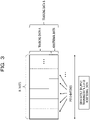
- FIG. 3 explains processes of the mini-batch creation unit 104 in the information processing apparatus 1 as the example of the embodiment.
- the mini-batch creation unit 104 For stabilizing training (machine learning) by the second training execution unit 105, which will be described later, the mini-batch creation unit 104 performs shuffling so that each of the mini-batches includes a certain ratio of the additional data.
- the mini-batch creation unit 104 separately randomly rearranges (shuffles) the training data A and the additional data and equally divides the rearranged training data A and the rearranged additional data into N parts (N is a natural number of two or more) separately.
- N is a natural number of two or more
- 1/N of the training data A generated by equally dividing the training data by N may be referred to as divided training data A.
- 1/N of the additional data generated by equally dividing the additional data into N parts may be referred to as divided additional data A.
- the mini-batch creation unit 104 creates a single mini-batch by combining a single part of the divided training data A extracted from the training data A divided into N parts (N-part divided) and the divided additional data extracted from the N-part divided additional data.
- the mini-batch is used for training for the machine learning model by the second training execution unit 105, which will be described later.
- the mini-batch creation unit 104 extracts a certain number of pieces of data from the shuffled training data A and the shuffled additional data separately and combines the extracted pieces of data into a single mini-batch.
- a set of the plurality of mini-batches may be referred to as training data B.
- the mini-batch creation unit 104 corresponds to a second training data creation unit that creates the training data B (second training data) by combining the training data A (first training data) and the additional data.
- the mini-batch creation unit 104 performs up-sampling or down-sampling of at least one of the training data A and the additional data so that the ratio of the pieces of the additional data to the pieces of the training data A (first training data) is the predetermined value ( ⁇ ) in the training data B.
- the size of the mini-batches may be appropriately set based on machine learning know-how.
- the mini-batch creation unit 104 shuffles the training data A and the additional data separately. This may suppress the occurrences of gradient bias in parameters set by the training.
- the second training execution unit 105 trains the machine learning model by using the training data B created by the additional training data creation unit 102, thereby creating the machine learning model resistant to a training data estimation attack.
- the second training execution unit 105 trains (additionally trains), by using the training data B, the machine learning model A trained by the first training execution unit 101.
- the training of the machine learning model performed by the second training execution unit 105 by using the training data B may be referred to as second training.
- the trained machine learning model generated by the second training execution unit 105 may be referred to as a machine learning model B.
- the machine learning model B may be referred to as a third machine learning model.
- the second training execution unit 105 is able to generate the third machine learning model (machine learning model B) by training the second machine learning model with the training data B by using a known technique. Specific description of the generation of the third machine learning model is omitted.
- the second training execution unit 105 generates the additionally trained machine learning model B by further training (additionally training) the trained machine learning model A by using the mini-batches generated by dividing into N parts the training data B created by the additional training data creation unit 102.
- the model parameters of the machine learning model B are set by the second training (additional training) by the second training execution unit 105.
- the second training execution unit 105 trains the machine learning model by using the training data B (second training data) and retrains the machine learning model A (first machine learning model) by using the training data B (second training data).
- the machine learning model B generated by the second training (additional training) by the second training execution unit 105 is resistant to the white box attack that estimates the training data A.
- Further training (additionally training) the trained machine learning model A may decrease the time taken to train the machine learning model.
- FIG. 4 illustrates an outline of the technique for training the machine learning model in the information processing apparatus 1.
- step S1 the operator prepares the empty machine learning model (first machine learning model) and the training data A.
- Information included in the empty machine learning model and the training data A is stored in a predetermined storage region of, for example, the storage device 13.
- step S2 the first training execution unit 101 trains the empty machine learning model (first machine learning model) by using the training data A (first training) to generate the trained machine learning model A (see reference sign A1 illustrated in FIG. 4 ).
- step S3 the additional data creation unit 103 generates the additional data by using an optimization technique for the machine learning model A (see reference sign A2 illustrated in FIG. 4 ).
- step S4 the mini-batch creation unit 104 compares the number of pieces of the additional data with the number of pieces of the training data A and checks whether the ratio of the pieces of the additional data to the pieces of the training data A is smaller than the predetermined ratio ⁇ .
- step S6 the mini-batch creation unit 104 performs at least one of down-sampling of the training data A and up-sampling of the additional data, thereby adjusting the ratio of the pieces of the additional data to the pieces of the training data A to be ⁇ .
- step S5 the mini-batch creation unit 104 performs at least one of up-sampling of the training data A and down-sampling of the additional data, thereby adjusting the ratio of the pieces of the additional data to the pieces of the training data A to be ⁇ .
- step S7 the mini-batch creation unit 104 separately randomly rearranges the training data A and the additional data.
- the mini-batch creation unit 104 equally divides the training data A and the additional data into N parts separately.
- step S8 the mini-batch creation unit 104 creates the training data B divided into N parts (N-part divided) by combining the N-part divided training data A and the N-part divided additional data (see reference sign A3 illustrated in FIG. 4 ).
- step S9 the second training execution unit 105 generates the additionally trained machine learning model B by further training (additionally training) the trained machine learning model A by using each of the mini-batches of the N-part divided training data B created by the additional training data creation unit 102 (see reference sign A4 illustrated in FIG. 4 ).
- step S10 the second training execution unit 105 outputs the generated machine learning model B.
- Information included in the machine learning model B is stored in a predetermined storage region of, for example, the storage device 13.
- the additional training data creation unit 102 creates the training data B including the additional data
- the second training execution unit 105 generates the additionally trained machine learning model B by further training (additionally training) the trained machine learning model A by using this training data B.
- the additional data is data that is not input in a usual machine learning model operation and is mechanically generated with, as the initial value, the meaningless data (X 0 ) with respect to the machine learning model A. Accordingly, even when the white box attack that estimates the training data is performed on the additionally trained machine learning model B, estimation of the training data A may be suppressed due to the influence of the additional data. When the white box attack that estimates the training data is performed on the machine learning model B, the additional data functions as a decoy, and the estimation of the training data A may be blocked.
- FIG. 6 explains results of the white box attack that estimates the training data performed on the machine learning model generated by the information processing apparatus 1 as the example of the embodiment.
- FIG. 6 illustrates an example in which the training data estimation attack is performed with respect to the machine learning model that estimates (classifies), based on input numeric character images, numeric characters represented by the numeric character images.
- FIG. 6 illustrates results of the training data estimation attack performed based on the machine learning model trained by the related-art technique that adds noise to the parameters of the machine learning model and results of the training data estimation attack performed based on the trained machine learning model created by the present information processing apparatus 1.
- MODEL PERFORMANCE (ACCURACY) indicates the performance (accuracy) of the machine learning model trained by the related-art technique and the performance (accuracy) of the machine learning model trained by the present information processing apparatus 1. It is understood that the performance (0.9863) of the machine learning model trained by the present information processing apparatus 1 is equivalent to the performance (0.9888) of the machine learning model trained by the related-art technique.
- the "resistance to training data estimation (attack result)" is indicated by arranging images (numeric character images) generated by performing the training data estimation attack on each of the machine learning models and numeric values as original correct answer data of the numeric character images.
- the numeric character images of the training data are reproduced by the white box attack.
- the numeric character images of the training data are not reproduced except for a subset of the numeric character images, and it is understood that the reproduction rate of the numeric character images of the training data by the white box attack is low. For example, this indicates that the machine learning model trained by the present information processing apparatus 1 is resistant to the training data estimation attack.
- the related-art defending technique against the white box attack in which noise is added to the parameters of the machine learning model, the noise significantly affects the inference ability of the model, thereby significantly degrading the accuracy.
- the additional data is unlikely to affect the inference ability of normal input.
- the degradation of the accuracy may be relatively suppressed.
- the configurations and the processes of the present embodiment may be selected as desired or may be combined as appropriate.
- the second training execution unit 105 further trains (additionally trains) the machine learning model A trained by the first training execution unit 101 according to the above-described embodiment, it is not limiting.
- the second training execution unit 105 may train the empty machine learning model by using the second training data.
Landscapes
- Engineering & Computer Science (AREA)
- Theoretical Computer Science (AREA)
- Software Systems (AREA)
- Physics & Mathematics (AREA)
- General Engineering & Computer Science (AREA)
- General Physics & Mathematics (AREA)
- General Health & Medical Sciences (AREA)
- Health & Medical Sciences (AREA)
- Artificial Intelligence (AREA)
- Medical Informatics (AREA)
- Mathematical Physics (AREA)
- Data Mining & Analysis (AREA)
- Evolutionary Computation (AREA)
- Computing Systems (AREA)
- Bioethics (AREA)
- Computer Vision & Pattern Recognition (AREA)
- Molecular Biology (AREA)
- Computational Linguistics (AREA)
- Biophysics (AREA)
- Biomedical Technology (AREA)
- Life Sciences & Earth Sciences (AREA)
- Databases & Information Systems (AREA)
- Computer Hardware Design (AREA)
- Computer Security & Cryptography (AREA)
- Management, Administration, Business Operations System, And Electronic Commerce (AREA)
- Image Analysis (AREA)
- Machine Translation (AREA)
Abstract
Description
- The embodiment discussed herein is related to an information processing program, an information processing method, and an information processing apparatus.
- In recent years, development and use of systems using machine learning have rapidly progressed. Meanwhile, various security problems unique to the systems using the machine learning have been found. For example, a training data estimation attack that estimates and steals the training data used for the machine learning is known.
- In the training data estimation attack, for example, a machine learning model is extracted by analyzing a face authentication edge device used for a face authentication system. A face image used as the training data is estimated by performing the training data estimation attack on the machine learning model.
- The training data estimation attack is an attack performed on a trained model (machine learning model) having undergone a training phase. The training data estimation attack is classified into a black box attack and a white box attack.
- The black box attack estimates the training data from input data and output data in an inference phase.
- As a defensive technique against the black box attack, for example, there is a known technique in which output information is simply decreased by, for example, adding noise to the output of a trained model or deleting the degree of certainty. There also is a known technique in which, against the attack, a fake gradient is provided and the attack is guided to a decoy data set prepared in advance.
- The white box attack estimates from the trained machine learning model itself the training data. As a defensive technique against the white box attack, there is a known technique in which a trained machine learning model resistant to the training data estimation is generated by adding appropriate noise to parameters of the machine learning model when the parameters are updated. Examples of such a defensive technique against the white box attack include, for example, differential private-stochastic gradient descent (DP-SGD).
-
Japanese Laid-open Patent Publication Nos. 2020-115312 2020-119044 - In many cases, there is usually a risk that an attacker obtains a machine learning model itself. Thus, only a defense against a black box attack is insufficient.
- Meanwhile, in the related-art defensive technique against the white box attack, since noise is added to the parameters of the machine learning model, estimation accuracy decreases. Thus, the accuracy is traded off for the strength of the resistance against the attack. Accordingly, there is a problem in that this technique is not able to be introduced into a system in which the accuracy of the machine learning model is demanded.
- In one aspect, an object of the present disclosure is to enable generation of a machine learning model resistant to a white box attack that estimates training data.
- According to an aspect of the embodiments, an information processing program that causes at least one computer to execute a process, the process includes, generating additional data by inputting meaningless data to a first machine learning model which has been trained with first training data; acquiring second training data by combining the first training data and the additional data; and training a machine learning model by using the second training data.
- According to an embodiment, the machine learning model resistant to the white box attack that estimates training data may be generated.
-
-
FIG. 1 illustrates an example of a hardware configuration of an information processing apparatus as an example of an embodiment; -
FIG. 2 illustrates an example of a functional configuration of the information processing apparatus as the example of the embodiment; -
FIG. 3 explains processes of a mini-batch creation unit in the information processing apparatus as the example of the embodiment; -
FIG. 4 illustrates an outline of a technique for training a machine learning model in the information processing apparatus as the example of the embodiment; -
FIG. 5 is a flowchart explaining the technique for training the machine learning model in the information processing apparatus as the example of the embodiment; and -
FIG. 6 explains results of a white box attack that estimates training data performed on the machine learning model generated by the information processing apparatus as the example of the embodiment. - Hereinafter, an embodiment related to an information processing program, a method of processing information, and an information processing apparatus will be described with reference to the drawings. However, the following embodiment is merely an example and does not intend to exclude application of various modification examples or techniques that are not explicitly described in the embodiment. For example, the present embodiment may be modified in a various manner and carried out without departing from the spirit of the embodiment. Each drawing does not indicate that only components illustrated in the drawing are provided. The drawings indicate that other functions and the like may be included.
-
FIG. 1 illustrates an example of a hardware configuration of aninformation processing apparatus 1 as an example of the embodiment. - As illustrated in
FIG. 1 , theinformation processing apparatus 1 includes, for example, aprocessor 11, amemory 12, a storage device 13, agraphic processing device 14, aninput interface 15, anoptical drive device 16, a device coupling interface 17, and anetwork interface 18 as the components. Thesecomponents 11 to 18 are configured so as to be mutually communicable via abus 19. - The processor (control unit) 11 controls the entirety of this
information processing apparatus 1. Theprocessor 11 may be a multiprocessor. For example, theprocessor 11 may be any one of a central processing unit (CPU), a microprocessor unit (MPU), a digital signal processor (DSP), an application-specific integrated circuit (ASIC), a programmable logic device (PLD), and a field-programmable gate array (FPGA). Theprocessor 11 may be a combination of two or more types of elements of the CPU, the MPU, the DSP, the ASIC, the PLD, and the FPGA. - The
processor 11 executes a control program (information processing program: not illustrated), thereby realizing the functions as a training processing unit 100 (a firsttraining execution unit 101, an additional trainingdata creation unit 102, and a second training execution unit 105) exemplified inFIG. 2 . - The
information processing apparatus 1 realizes the function as thetraining processing unit 100 by executing, for example, programs (the information processing program and an operating system (OS) program) recorded in a computer-readable non-transitory recording medium. - Programs in which content of processing to be executed by the
information processing apparatus 1 is described may be recorded in various recording media. For example, the programs to be executed by theinformation processing apparatus 1 may be stored in the storage device 13. Theprocessor 11 loads at least a subset of the programs in the storage device 13 into thememory 12 and executes the loaded programs. - The programs to be executed by the information processing apparatus 1 (processor 11) may be recorded in a non-transitory portable recording medium such as an
optical disc 16a, amemory device 17a, and amemory card 17c. For example, the programs stored in the portable recording medium become executable after being installed in the storage device 13 by control from theprocessor 11. Theprocessor 11 may read the programs directly from the portable recording medium and execute the programs. - The
memory 12 is a storage memory including a read-only memory (ROM) and a random-access memory (RAM). The RAM of thememory 12 is used as a main storage device of theinformation processing apparatus 1. The OS program and the control program to be executed by theprocessor 11 are at least partially stored in the RAM temporarily. Various types of data desired for processing by theprocessor 11 are stored in thememory 12. - The storage device 13 is a storage device such as a hard disk drive (HDD), a solid-state drive (SSD), or a storage class memory (SCM) and stores various types of data. The storage device 13 is used as an auxiliary storage device of this
information processing apparatus 1. The OS program, the control program, and the various types of data are stored in the storage device 13. The control program includes an information processing program. - As the auxiliary storage device, a semiconductor storage device such as an SCM or a flash memory may be used. A plurality of storage devices 13 may be used to configure redundant arrays of inexpensive disks (RAID).
- The storage device 13 may store various types of data generated when the first
training execution unit 101, the additional training data creation unit 102 (an additionaldata creation unit 103 and a mini-batch creation unit 104), and the secondtraining execution unit 105, which will be described later, execute processes. - A
monitor 14a is coupled to thegraphic processing device 14. Thegraphic processing device 14 displays an image on a screen of themonitor 14a in accordance with an instruction from theprocessor 11. Examples of themonitor 14a include a display device with a cathode ray tube (CRT), a liquid crystal display device, and the like. - A
keyboard 15a and amouse 15b are coupled to theinput interface 15. Theinput interface 15 transmits signals transmitted from thekeyboard 15a and themouse 15b to theprocessor 11. Themouse 15b is an example of a pointing device, and a different pointing device may be used. Examples of the different pointing device include a touch panel, a tablet, a touch pad, a track ball, and the like. - The
optical drive device 16 reads data recorded in theoptical disc 16a by using laser light or the like. Theoptical disc 16a is a portable non-transitory recording medium in which data is recorded so that the data is readable using light reflection. Examples of theoptical disc 16a include a Digital Versatile Disc (DVD), a DVD-RAM, a compact disc read-only memory (CD-ROM), a CD-recordable (R)/CD-rewritable (RW), and the like. - The device coupling interface 17 is a communication interface for coupling peripheral devices to the
information processing apparatus 1. For example, thememory device 17a or a memory reader-writer 17b may be coupled to the device coupling interface 17. Thememory device 17a is a non-transitory recording medium such as a Universal Serial Bus (USB) memory which has the function of communication with the device coupling interface 17. The memory reader-writer 17b writes data to thememory card 17c or reads data from thememory card 17c. Thememory card 17c is a card-type non-transitory recording medium. - The
network interface 18 is coupled to a network (not illustrated). Thenetwork interface 18 may be coupled to another information processing apparatus, a communication device, or the like via the network. For example, an input image or an input text may be input via the network. -
FIG. 2 illustrates an example of a functional configuration of theinformation processing apparatus 1 as the example of the embodiment. As illustrated inFIG. 2 , theinformation processing apparatus 1 has the function of thetraining processing unit 100. - In the
information processing apparatus 1, theprocessor 11 executes the control program (information processing program), thereby realizing the function as thetraining processing unit 100. - The
training processing unit 100 realizes a learning process (training process) in machine learning by using training data. For example, theinformation processing apparatus 1 functions as a training device that trains a machine learning model by using thetraining processing unit 100. - The
training processing unit 100 realizes the learning process (training process) in machine learning by using, for example, training data (teacher data) to which a correct answer label is assigned. Thetraining processing unit 100 trains the machine learning model by using the training data and generates a trained machine learning model resistant to training data estimation. - The machine learning model may be, for example, a deep learning model (deep neural network). A neural network may be a hardware circuit or a virtual network by software that couples layers virtually built in a computer program by the
processor 11 or the like. - As illustrated in
FIG. 2 , thetraining processing unit 100 includes the firsttraining execution unit 101, the additionaldata creation unit 103, and the secondtraining execution unit 105. - The first
training execution unit 101 trains the machine learning model by using the training data and generates the trained machine learning model. - The training data is configured as, for example, a combination of input data x and correct answer output data y.
- The training of the machine learning model performed by the first
training execution unit 101 by using the training data may be referred to as first training. The machine learning model before the training by using the firsttraining execution unit 101 is performed may be referred to as a first machine learning model. Since the first machine learning model is a machine learning model before the training is performed, the first machine learning model may be referred to as an empty machine learning model. Also, the machine learning model may be simply referred to as a model. - Hereinafter, the training data used for the first training by the first
training execution unit 101 may be referred to as first training data or training data A. - The trained machine learning model generated by the first
training execution unit 101 may be referred to as a second machine learning model or a machine learning model A. Model parameters of the machine learning model A are set by the first training performed by the firsttraining execution unit 101. - The first
training execution unit 101 is able to generate the second machine learning model (machine learning model A) by training the first machine learning model with the training data A by using a known technique. Specific description of the generation of the second machine learning model is omitted. - The additional training
data creation unit 102 creates training data used when the secondtraining execution unit 105, which will be described later, performs additional training on the second machine learning model (machine learning model A) generated by the firsttraining execution unit 101. Hereinafter, the training data used when the additional training is performed on the second machine learning model may be referred to as second training data or training data B. The training data B may be referred to as additional training data. - The additional training
data creation unit 102 includes the additionaldata creation unit 103 and themini-batch creation unit 104. - The additional
data creation unit 103 creates a plurality of pieces of additional data. The additional data is data that is not input to the machine learning model A in a usual machine learning model operation, and the additional data is artificial data that is classified into a specific label by a classifier. - The additional
data creation unit 103 creates the additional data by, for example, a gradient descent method in which the gradient of the machine learning model A is obtained and in which input is updated in a direction in which the degree of certainty increases. - Hereinafter, an example of a technique (
stages 1 to 4) for generating the additional data by using a simple gradient descent method is described below. - (Stage 1) The additional
data creation unit 103 first sets an objective function. - Input of machine learning model A: X
- Output of machine learning model A: f(X) = (f1(X), ..., fn(X))
- When the target label is set to t, the objective function may be represented by, for example, the following expression (1).

- When the value of L(X) described above is minimized, X is classified into a label t with the degree of certainty of 1. Since X depends on the label t as described above, the processing of
stage 1 is desired to be performed on all labels. - (Stage 2) As an initial value, input of meaningless data (for example, noise or a certain value) with respect to the machine learning model A is prepared (hereinafter, referred to as initial value X0).
- The initial value X0 may be prepared and set in advance by an operator or the like or generated by the additional
data creation unit 103. - (Stage 3) The additional
data creation unit 103 obtains a derivative value L'(X0) of L (X) around X0. - (Stage 4) The additional
data creation unit 103 sets X0 - λL'(X0) as the additional data. λ Is a hyperparameter. - The method of creating additional data is not limited to the above-described method and may be appropriately changed and performed. For example, another objective function may be used. The stage 4 may be repeated a predetermined number of times. The expression of stage 4 may be changed.
- The additional
data creation unit 103 creates the additional data by mechanically generating meaningless data (X0) as the initial value by using machine learning model A (first machine learning model) trained with the training data A (first training data). - To generate the additional data, an optimization technique other than the gradient descent method such as an evolutionary algorithm may be used. The optimization technique other than the gradient descent method may be change and performed in various manners.
- When the input data is an image data, for example, a fooling image may be used as the additional data. The fooling image may be generated by a known method, and description thereof is omitted.
- The
mini-batch creation unit 104 creates the second training data (training data B, additional training data) by adding to the training data A the additional data created by the additionaldata creation unit 103. - The
mini-batch creation unit 104 performs up-sampling of the training data A or down-sampling of the additional data so that the number of samples of the additional data is sufficiently smaller than the number of samples of the training data A. - For example, the
mini-batch creation unit 104 adjusts the number of pieces of the training data A and the number of pieces of the additional data so that the ratio of the pieces of the additional data to the pieces of the training data A is a predetermined value (α). - For example, when the ratio of the pieces of the additional data to the pieces of the training data A is smaller than the predetermined ratio α, the
mini-batch creation unit 104 performs at least one of down-sampling of the training data A and up-sampling of the additional data, thereby setting the ratio of the pieces of the additional data to the pieces of the training data A to be α. In contrast, when the ratio of the pieces of the additional data to the pieces of the training data A is greater than or equal to the predetermined ratio α, themini-batch creation unit 104 performs at least one of up-sampling of the training data A and down-sampling of the additional data, thereby setting the ratio of the pieces of the additional data to the pieces of the training data A to be α. A technique such as noise addition may be used for up-sampling. - Increasing the ratio of the pieces of the additional data to the pieces of the training data A may improve the machine learning model (machine learning model B) generated by the second
training execution unit 105, which will be described later, by using the second training data (training data B) in terms of resistance to a white box attack. Meanwhile, increasing the ratio of the pieces of the additional data to the pieces of the training data A may decrease the accuracy of the machine learning model (machine learning model B). Accordingly, it is desirable that the threshold (α) representing the ratio of the pieces of the additional data to the pieces of the training data A be set to be a value as large as possible within a range in which the accuracy of the machine learning model (machine learning model B) is maintained. - The
mini-batch creation unit 104 creates a plurality of mini-batches by using the training data A and the additional data. -
FIG. 3 explains processes of themini-batch creation unit 104 in theinformation processing apparatus 1 as the example of the embodiment. - For stabilizing training (machine learning) by the second
training execution unit 105, which will be described later, themini-batch creation unit 104 performs shuffling so that each of the mini-batches includes a certain ratio of the additional data. - For example, the
mini-batch creation unit 104 separately randomly rearranges (shuffles) the training data A and the additional data and equally divides the rearranged training data A and the rearranged additional data into N parts (N is a natural number of two or more) separately. Hereinafter, 1/N of the training data A generated by equally dividing the training data by N may be referred to as divided training data A. Also, 1/N of the additional data generated by equally dividing the additional data into N parts may be referred to as divided additional data A. - The
mini-batch creation unit 104 creates a single mini-batch by combining a single part of the divided training data A extracted from the training data A divided into N parts (N-part divided) and the divided additional data extracted from the N-part divided additional data. The mini-batch is used for training for the machine learning model by the secondtraining execution unit 105, which will be described later. - For example, the
mini-batch creation unit 104 extracts a certain number of pieces of data from the shuffled training data A and the shuffled additional data separately and combines the extracted pieces of data into a single mini-batch. A set of the plurality of mini-batches may be referred to as training data B. - The
mini-batch creation unit 104 corresponds to a second training data creation unit that creates the training data B (second training data) by combining the training data A (first training data) and the additional data. Themini-batch creation unit 104 performs up-sampling or down-sampling of at least one of the training data A and the additional data so that the ratio of the pieces of the additional data to the pieces of the training data A (first training data) is the predetermined value (α) in the training data B. - The size of the mini-batches may be appropriately set based on machine learning know-how. The
mini-batch creation unit 104 shuffles the training data A and the additional data separately. This may suppress the occurrences of gradient bias in parameters set by the training. - The second
training execution unit 105 trains the machine learning model by using the training data B created by the additional trainingdata creation unit 102, thereby creating the machine learning model resistant to a training data estimation attack. - In the present
information processing apparatus 1, the secondtraining execution unit 105 trains (additionally trains), by using the training data B, the machine learning model A trained by the firsttraining execution unit 101. - Hereinafter, the training of the machine learning model performed by the second
training execution unit 105 by using the training data B may be referred to as second training. - The trained machine learning model generated by the second
training execution unit 105 may be referred to as a machine learning model B. The machine learning model B may be referred to as a third machine learning model. - The second
training execution unit 105 is able to generate the third machine learning model (machine learning model B) by training the second machine learning model with the training data B by using a known technique. Specific description of the generation of the third machine learning model is omitted. - The second
training execution unit 105 generates the additionally trained machine learning model B by further training (additionally training) the trained machine learning model A by using the mini-batches generated by dividing into N parts the training data B created by the additional trainingdata creation unit 102. The model parameters of the machine learning model B are set by the second training (additional training) by the secondtraining execution unit 105. - The second
training execution unit 105 trains the machine learning model by using the training data B (second training data) and retrains the machine learning model A (first machine learning model) by using the training data B (second training data). - The machine learning model B generated by the second training (additional training) by the second
training execution unit 105 is resistant to the white box attack that estimates the training data A. - Further training (additionally training) the trained machine learning model A may decrease the time taken to train the machine learning model.
- The technique for training the machine learning model in the
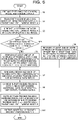
information processing apparatus 1 as the example of the embodiment configured as described above is described in accordance with a flowchart (steps S1 to S10) illustrated inFIG. 5 with reference toFIG. 4. FIG. 4 illustrates an outline of the technique for training the machine learning model in theinformation processing apparatus 1. - In step S1, the operator prepares the empty machine learning model (first machine learning model) and the training data A. Information included in the empty machine learning model and the training data A is stored in a predetermined storage region of, for example, the storage device 13.
- In step S2, the first
training execution unit 101 trains the empty machine learning model (first machine learning model) by using the training data A (first training) to generate the trained machine learning model A (see reference sign A1 illustrated inFIG. 4 ). - In step S3, the additional
data creation unit 103 generates the additional data by using an optimization technique for the machine learning model A (see reference sign A2 illustrated inFIG. 4 ). - In step S4, the
mini-batch creation unit 104 compares the number of pieces of the additional data with the number of pieces of the training data A and checks whether the ratio of the pieces of the additional data to the pieces of the training data A is smaller than the predetermined ratio α. - When the ratio of the pieces of the additional data to the pieces of the training data A is smaller than the predetermined ratio α as a result of the check (see a YES route in step S4), processing moves to step S6. In step S6, the
mini-batch creation unit 104 performs at least one of down-sampling of the training data A and up-sampling of the additional data, thereby adjusting the ratio of the pieces of the additional data to the pieces of the training data A to be α. - In contrast, when the ratio of the pieces of the additional data to the pieces of the training data A is greater than or equal to the predetermined ratio α as a result of the check (see a NO route in step S4), the processing moves to step S5. In step S5, the
mini-batch creation unit 104 performs at least one of up-sampling of the training data A and down-sampling of the additional data, thereby adjusting the ratio of the pieces of the additional data to the pieces of the training data A to be α. - Then, in step S7, the
mini-batch creation unit 104 separately randomly rearranges the training data A and the additional data. Themini-batch creation unit 104 equally divides the training data A and the additional data into N parts separately. - In step S8, the
mini-batch creation unit 104 creates the training data B divided into N parts (N-part divided) by combining the N-part divided training data A and the N-part divided additional data (see reference sign A3 illustrated inFIG. 4 ). - In step S9, the second
training execution unit 105 generates the additionally trained machine learning model B by further training (additionally training) the trained machine learning model A by using each of the mini-batches of the N-part divided training data B created by the additional training data creation unit 102 (see reference sign A4 illustrated inFIG. 4 ). - In step S10, the second
training execution unit 105 outputs the generated machine learning model B. Information included in the machine learning model B is stored in a predetermined storage region of, for example, the storage device 13. - As described above, with the
information processing apparatus 1 as the example of the embodiment, the additional trainingdata creation unit 102 creates the training data B including the additional data, and the secondtraining execution unit 105 generates the additionally trained machine learning model B by further training (additionally training) the trained machine learning model A by using this training data B. - The additional data is data that is not input in a usual machine learning model operation and is mechanically generated with, as the initial value, the meaningless data (X0) with respect to the machine learning model A. Accordingly, even when the white box attack that estimates the training data is performed on the additionally trained machine learning model B, estimation of the training data A may be suppressed due to the influence of the additional data. When the white box attack that estimates the training data is performed on the machine learning model B, the additional data functions as a decoy, and the estimation of the training data A may be blocked.
-
FIG. 6 explains results of the white box attack that estimates the training data performed on the machine learning model generated by theinformation processing apparatus 1 as the example of the embodiment. -
FIG. 6 illustrates an example in which the training data estimation attack is performed with respect to the machine learning model that estimates (classifies), based on input numeric character images, numeric characters represented by the numeric character images.FIG. 6 illustrates results of the training data estimation attack performed based on the machine learning model trained by the related-art technique that adds noise to the parameters of the machine learning model and results of the training data estimation attack performed based on the trained machine learning model created by the presentinformation processing apparatus 1. - In
FIG. 6 , "MODEL PERFORMANCE (ACCURACY)" indicates the performance (accuracy) of the machine learning model trained by the related-art technique and the performance (accuracy) of the machine learning model trained by the presentinformation processing apparatus 1. It is understood that the performance (0.9863) of the machine learning model trained by the presentinformation processing apparatus 1 is equivalent to the performance (0.9888) of the machine learning model trained by the related-art technique. - The "resistance to training data estimation (attack result)" is indicated by arranging images (numeric character images) generated by performing the training data estimation attack on each of the machine learning models and numeric values as original correct answer data of the numeric character images.
- In the result of the training data estimation attack performed based on the machine learning model trained by the related-art technique, the numeric character images of the training data are reproduced by the white box attack. In contrast, in the result of the training data estimation attack performed based on the machine learning model trained by the present
information processing apparatus 1, the numeric character images of the training data are not reproduced except for a subset of the numeric character images, and it is understood that the reproduction rate of the numeric character images of the training data by the white box attack is low. For example, this indicates that the machine learning model trained by the presentinformation processing apparatus 1 is resistant to the training data estimation attack. - The related-art defending technique against the white box attack in which noise is added to the parameters of the machine learning model, the noise significantly affects the inference ability of the model, thereby significantly degrading the accuracy. In contrast, in the machine learning model trained by the present
information processing apparatus 1, the additional data is unlikely to affect the inference ability of normal input. Thus, the degradation of the accuracy may be relatively suppressed. - The disclosed technique is not limited to the embodiment described above and may be carried out with various modifications without departing from the gist of the present embodiment.
- For example, the configurations and the processes of the present embodiment may be selected as desired or may be combined as appropriate.
- Although the second
training execution unit 105 further trains (additionally trains) the machine learning model A trained by the firsttraining execution unit 101 according to the above-described embodiment, it is not limiting. The secondtraining execution unit 105 may train the empty machine learning model by using the second training data. - The above-described disclosure enables a person skilled in the art to carry out and manufacture the present embodiment.
Claims (12)
- An information processing program that causes at least one computer to execute a process, the process comprising:generating additional data by inputting meaningless data to a first machine learning model which has been trained with first training data;acquiring second training data by combining the first training data and the additional data; andtraining a machine learning model by using the second training data.
- The information processing program according to claim 1, wherein the training is retraining the first machine learning model by using the second training data.
- The information processing program according to claim 1 or 2, wherein the generating includes using an optimization technique.
- The information processing program according to any one of claims 1 to 3, wherein the process further comprising
changing a number of pieces of at least one data selected from the first training data and the additional data so that a ratio of pieces of the additional data to pieces of the first training data to be a certain value. - An information processing method for a computer to execute a process comprising:generating additional data by inputting meaningless data to a first machine learning model which has been trained with first training data;acquiring second training data by combining the first training data and the additional data; andtraining a machine learning model by using the second training data.
- The information processing method according to claim 5, wherein the training is retraining the first machine learning model by using the second training data.
- The information processing method according to claim 5 or 6, wherein the generating includes using an optimization technique.
- The information processing method according to any one of claims 5 to 7, wherein the process further comprising
changing a number of pieces of at least one data selected from the first training data and the additional data so that a ratio of pieces of the additional data to pieces of the first training data to be a certain value. - An information processing apparatus comprising:an additional data creation unit that generates additional data by inputting meaningless data to a first machine learning model which has been trained with first training data;a second training data creation unit that acquires second training data by combining the first training data and the additional data; anda second training execution unit that trains a machine learning model by using the second training data.
- The information processing apparatus according to claim 9, wherein the second training execution unit further retrains the first machine learning model by using the second training data.
- The information processing apparatus according to claim 9 or 10, wherein the additional data creation unit further uses an optimization technique to generate the additional data.
- The information processing apparatus according to any one of claims 9 to 11, wherein the second training execution unit further changes a number of pieces of at least one data selected from the first training data and the additional data so that a ratio of pieces of the additional data to pieces of the first training data to be a certain value.
Applications Claiming Priority (1)
| Application Number | Priority Date | Filing Date | Title |
|---|---|---|---|
| JP2021012143A JP7679630B2 (en) | 2021-01-28 | 2021-01-28 | Information processing program, information processing method, and information processing device |
Publications (2)
| Publication Number | Publication Date |
|---|---|
| EP4036776A1 true EP4036776A1 (en) | 2022-08-03 |
| EP4036776B1 EP4036776B1 (en) | 2025-07-16 |
Family
ID=78824892
Family Applications (1)
| Application Number | Title | Priority Date | Filing Date |
|---|---|---|---|
| EP21213116.3A Active EP4036776B1 (en) | 2021-01-28 | 2021-12-08 | Information processing program, information processing method, and information processing apparatus |
Country Status (3)
| Country | Link |
|---|---|
| US (1) | US20220237512A1 (en) |
| EP (1) | EP4036776B1 (en) |
| JP (1) | JP7679630B2 (en) |
Families Citing this family (1)
| Publication number | Priority date | Publication date | Assignee | Title |
|---|---|---|---|---|
| JP7771191B2 (en) * | 2021-07-30 | 2025-11-17 | 富士フイルム株式会社 | Data creation device, data creation method, program, and recording medium |
Citations (2)
| Publication number | Priority date | Publication date | Assignee | Title |
|---|---|---|---|---|
| JP2020115312A (en) | 2019-01-18 | 2020-07-30 | オムロン株式会社 | Model generation device, model generation method, model generation program, model generation system, inspection system, and monitoring system |
| JP2020119044A (en) | 2019-01-18 | 2020-08-06 | 富士通株式会社 | Learning method, learning program and learning device |
Family Cites Families (5)
| Publication number | Priority date | Publication date | Assignee | Title |
|---|---|---|---|---|
| US10657259B2 (en) * | 2017-11-01 | 2020-05-19 | International Business Machines Corporation | Protecting cognitive systems from gradient based attacks through the use of deceiving gradients |
| US10303978B1 (en) * | 2018-03-26 | 2019-05-28 | Clinc, Inc. | Systems and methods for intelligently curating machine learning training data and improving machine learning model performance |
| JP7010371B2 (en) * | 2018-04-27 | 2022-01-26 | 日本電気株式会社 | Trained model update device, trained model update method, program |
| JP7010774B2 (en) * | 2018-06-26 | 2022-01-26 | トヨタ自動車株式会社 | Intermediate process state estimation method |
| US11755743B2 (en) * | 2019-09-03 | 2023-09-12 | Microsoft Technology Licensing, Llc | Protecting machine learning models from privacy attacks |
-
2021
- 2021-01-28 JP JP2021012143A patent/JP7679630B2/en active Active
- 2021-12-08 EP EP21213116.3A patent/EP4036776B1/en active Active
- 2021-12-17 US US17/554,048 patent/US20220237512A1/en active Pending
Patent Citations (2)
| Publication number | Priority date | Publication date | Assignee | Title |
|---|---|---|---|---|
| JP2020115312A (en) | 2019-01-18 | 2020-07-30 | オムロン株式会社 | Model generation device, model generation method, model generation program, model generation system, inspection system, and monitoring system |
| JP2020119044A (en) | 2019-01-18 | 2020-08-06 | 富士通株式会社 | Learning method, learning program and learning device |
Non-Patent Citations (3)
| Title |
|---|
| DIVYAM MADAAN ET AL: "Learning to Generate Noise for Robustness against Multiple Perturbations", ARXIV.ORG, CORNELL UNIVERSITY LIBRARY, 201 OLIN LIBRARY CORNELL UNIVERSITY ITHACA, NY 14853, 22 June 2020 (2020-06-22), XP081700150 * |
| HAN QIU ET AL: "FenceBox: A Platform for Defeating Adversarial Examples with Data Augmentation Techniques", ARXIV.ORG, CORNELL UNIVERSITY LIBRARY, 201 OLIN LIBRARY CORNELL UNIVERSITY ITHACA, NY 14853, 3 December 2020 (2020-12-03), XP081828235 * |
| QINGRONG CHEN ET AL: "Differentially Private Data Generative Models", ARXIV.ORG, CORNELL UNIVERSITY LIBRARY, 201 OLIN LIBRARY CORNELL UNIVERSITY ITHACA, NY 14853, 6 December 2018 (2018-12-06), XP080989669 * |
Also Published As
| Publication number | Publication date |
|---|---|
| JP2022115518A (en) | 2022-08-09 |
| US20220237512A1 (en) | 2022-07-28 |
| EP4036776B1 (en) | 2025-07-16 |
| JP7679630B2 (en) | 2025-05-20 |
Similar Documents
| Publication | Publication Date | Title |
|---|---|---|
| EP4254273A1 (en) | Machine learning program, machine learning apparatus, and machine learning method | |
| US10832149B2 (en) | Automatic segmentation of data derived from learned features of a predictive statistical model | |
| US11935129B2 (en) | Methods for automatically determining injury treatment relation to a motor vehicle accident and devices thereof | |
| CN112418310A (en) | Text style migration model training method and system and image generation method and system | |
| US20190147281A1 (en) | Method and system for monitoring safety critical symbols on a display | |
| EP4036776B1 (en) | Information processing program, information processing method, and information processing apparatus | |
| US20240330684A1 (en) | Data generation method, machine learning method, information processing apparatus, non-transitory computer-readable recording medium storing data generation program, and non-transitory computer-readable recording medium storing machine learning program | |
| US20260025400A1 (en) | Device, system and method for federated learning using risk audits | |
| US12400305B2 (en) | Detecting representative bias within image data sets | |
| US20220114255A1 (en) | Machine learning fraud resiliency using perceptual descriptors | |
| JP6804074B1 (en) | Processing equipment, learning equipment, processing programs, and learning programs | |
| US20250245566A1 (en) | Learning apparatus, learning method, and program | |
| WO2021079441A1 (en) | Detection method, detection program, and detection device | |
| US20230037904A1 (en) | Model compression device, model compression method, and program recording medium | |
| JP2008146608A (en) | Image processing apparatus and method | |
| EP4328813A1 (en) | Detection device, detection method, and detection program | |
| US20240037407A1 (en) | Learning apparatus, trained model generation method, classification apparatus, classification method, and computer readable recording medium | |
| EP4502877A1 (en) | Model training method, model training program, and information processing device | |
| JP2022035432A (en) | Information processing program, information processing method and information processing device | |
| US20250061135A1 (en) | Information processing apparatus, information processing method, and storage medium | |
| JP4865449B2 (en) | Difference generation device, difference application device, difference generation program, difference application program, difference generation application system, and difference generation application method | |
| WO2022250900A1 (en) | Machine learning for monitoring system health | |
| US20230154151A1 (en) | Image processing apparatus, control method thereof, and storage medium | |
| KR102948704B1 (en) | Apparatus and method for generating simulated scenario | |
| US20260086990A1 (en) | Method and apparatus for generating data |
Legal Events
| Date | Code | Title | Description |
|---|---|---|---|
| PUAI | Public reference made under article 153(3) epc to a published international application that has entered the european phase |
Free format text: ORIGINAL CODE: 0009012 |
|
| STAA | Information on the status of an ep patent application or granted ep patent |
Free format text: STATUS: THE APPLICATION HAS BEEN PUBLISHED |
|
| AK | Designated contracting states |
Kind code of ref document: A1 Designated state(s): AL AT BE BG CH CY CZ DE DK EE ES FI FR GB GR HR HU IE IS IT LI LT LU LV MC MK MT NL NO PL PT RO RS SE SI SK SM TR |
|
| STAA | Information on the status of an ep patent application or granted ep patent |
Free format text: STATUS: REQUEST FOR EXAMINATION WAS MADE |
|
| 17P | Request for examination filed |
Effective date: 20221103 |
|
| RBV | Designated contracting states (corrected) |
Designated state(s): AL AT BE BG CH CY CZ DE DK EE ES FI FR GB GR HR HU IE IS IT LI LT LU LV MC MK MT NL NO PL PT RO RS SE SI SK SM TR |
|
| REG | Reference to a national code |
Ref legal event code: R079 Free format text: PREVIOUS MAIN CLASS: G06F0021620000 Ipc: G06N0003084000 Ref country code: DE Ref document number: 602021034116 Country of ref document: DE |
|
| GRAP | Despatch of communication of intention to grant a patent |
Free format text: ORIGINAL CODE: EPIDOSNIGR1 |
|
| STAA | Information on the status of an ep patent application or granted ep patent |
Free format text: STATUS: GRANT OF PATENT IS INTENDED |
|
| RIC1 | Information provided on ipc code assigned before grant |
Ipc: G06F 21/62 20130101ALI20250214BHEP Ipc: G06N 3/084 20230101AFI20250214BHEP |
|
| INTG | Intention to grant announced |
Effective date: 20250318 |
|
| GRAS | Grant fee paid |
Free format text: ORIGINAL CODE: EPIDOSNIGR3 |
|
| GRAA | (expected) grant |
Free format text: ORIGINAL CODE: 0009210 |
|
| STAA | Information on the status of an ep patent application or granted ep patent |
Free format text: STATUS: THE PATENT HAS BEEN GRANTED |
|
| AK | Designated contracting states |
Kind code of ref document: B1 Designated state(s): AL AT BE BG CH CY CZ DE DK EE ES FI FR GB GR HR HU IE IS IT LI LT LU LV MC MK MT NL NO PL PT RO RS SE SI SK SM TR |
|
| REG | Reference to a national code |
Ref country code: GB Ref legal event code: FG4D |
|
| REG | Reference to a national code |
Ref country code: CH Ref legal event code: EP |
|
| REG | Reference to a national code |
Ref country code: DE Ref legal event code: R096 Ref document number: 602021034116 Country of ref document: DE |
|
| REG | Reference to a national code |
Ref country code: IE Ref legal event code: FG4D |
|
| REG | Reference to a national code |
Ref country code: NL Ref legal event code: MP Effective date: 20250716 |
|
| PG25 | Lapsed in a contracting state [announced via postgrant information from national office to epo] |
Ref country code: PT Free format text: LAPSE BECAUSE OF FAILURE TO SUBMIT A TRANSLATION OF THE DESCRIPTION OR TO PAY THE FEE WITHIN THE PRESCRIBED TIME-LIMIT Effective date: 20251117 |
|
| PG25 | Lapsed in a contracting state [announced via postgrant information from national office to epo] |
Ref country code: NL Free format text: LAPSE BECAUSE OF FAILURE TO SUBMIT A TRANSLATION OF THE DESCRIPTION OR TO PAY THE FEE WITHIN THE PRESCRIBED TIME-LIMIT Effective date: 20250716 |
|
| REG | Reference to a national code |
Ref country code: AT Ref legal event code: MK05 Ref document number: 1814727 Country of ref document: AT Kind code of ref document: T Effective date: 20250716 |
|
| PG25 | Lapsed in a contracting state [announced via postgrant information from national office to epo] |
Ref country code: IS Free format text: LAPSE BECAUSE OF FAILURE TO SUBMIT A TRANSLATION OF THE DESCRIPTION OR TO PAY THE FEE WITHIN THE PRESCRIBED TIME-LIMIT Effective date: 20251116 |
|
| PGFP | Annual fee paid to national office [announced via postgrant information from national office to epo] |
Ref country code: GB Payment date: 20251222 Year of fee payment: 5 |
|
| PG25 | Lapsed in a contracting state [announced via postgrant information from national office to epo] |
Ref country code: NO Free format text: LAPSE BECAUSE OF FAILURE TO SUBMIT A TRANSLATION OF THE DESCRIPTION OR TO PAY THE FEE WITHIN THE PRESCRIBED TIME-LIMIT Effective date: 20251016 |
|
| REG | Reference to a national code |
Ref country code: LT Ref legal event code: MG9D |
|
| PG25 | Lapsed in a contracting state [announced via postgrant information from national office to epo] |
Ref country code: AT Free format text: LAPSE BECAUSE OF FAILURE TO SUBMIT A TRANSLATION OF THE DESCRIPTION OR TO PAY THE FEE WITHIN THE PRESCRIBED TIME-LIMIT Effective date: 20250716 |
|
| PG25 | Lapsed in a contracting state [announced via postgrant information from national office to epo] |
Ref country code: FI Free format text: LAPSE BECAUSE OF FAILURE TO SUBMIT A TRANSLATION OF THE DESCRIPTION OR TO PAY THE FEE WITHIN THE PRESCRIBED TIME-LIMIT Effective date: 20250716 |
|
| PG25 | Lapsed in a contracting state [announced via postgrant information from national office to epo] |
Ref country code: HR Free format text: LAPSE BECAUSE OF FAILURE TO SUBMIT A TRANSLATION OF THE DESCRIPTION OR TO PAY THE FEE WITHIN THE PRESCRIBED TIME-LIMIT Effective date: 20250716 |
|
| PG25 | Lapsed in a contracting state [announced via postgrant information from national office to epo] |
Ref country code: GR Free format text: LAPSE BECAUSE OF FAILURE TO SUBMIT A TRANSLATION OF THE DESCRIPTION OR TO PAY THE FEE WITHIN THE PRESCRIBED TIME-LIMIT Effective date: 20251017 |
|
| PG25 | Lapsed in a contracting state [announced via postgrant information from national office to epo] |
Ref country code: SE Free format text: LAPSE BECAUSE OF FAILURE TO SUBMIT A TRANSLATION OF THE DESCRIPTION OR TO PAY THE FEE WITHIN THE PRESCRIBED TIME-LIMIT Effective date: 20250716 |
|
| PG25 | Lapsed in a contracting state [announced via postgrant information from national office to epo] |
Ref country code: LV Free format text: LAPSE BECAUSE OF FAILURE TO SUBMIT A TRANSLATION OF THE DESCRIPTION OR TO PAY THE FEE WITHIN THE PRESCRIBED TIME-LIMIT Effective date: 20250716 |
|
| PG25 | Lapsed in a contracting state [announced via postgrant information from national office to epo] |
Ref country code: PL Free format text: LAPSE BECAUSE OF FAILURE TO SUBMIT A TRANSLATION OF THE DESCRIPTION OR TO PAY THE FEE WITHIN THE PRESCRIBED TIME-LIMIT Effective date: 20250716 Ref country code: BG Free format text: LAPSE BECAUSE OF FAILURE TO SUBMIT A TRANSLATION OF THE DESCRIPTION OR TO PAY THE FEE WITHIN THE PRESCRIBED TIME-LIMIT Effective date: 20250716 |
|
| PG25 | Lapsed in a contracting state [announced via postgrant information from national office to epo] |
Ref country code: RS Free format text: LAPSE BECAUSE OF FAILURE TO SUBMIT A TRANSLATION OF THE DESCRIPTION OR TO PAY THE FEE WITHIN THE PRESCRIBED TIME-LIMIT Effective date: 20251016 |
|
| PG25 | Lapsed in a contracting state [announced via postgrant information from national office to epo] |
Ref country code: ES Free format text: LAPSE BECAUSE OF FAILURE TO SUBMIT A TRANSLATION OF THE DESCRIPTION OR TO PAY THE FEE WITHIN THE PRESCRIBED TIME-LIMIT Effective date: 20250716 |
|
| PG25 | Lapsed in a contracting state [announced via postgrant information from national office to epo] |
Ref country code: RO Free format text: LAPSE BECAUSE OF FAILURE TO SUBMIT A TRANSLATION OF THE DESCRIPTION OR TO PAY THE FEE WITHIN THE PRESCRIBED TIME-LIMIT Effective date: 20250716 |
|
| PG25 | Lapsed in a contracting state [announced via postgrant information from national office to epo] |
Ref country code: SM Free format text: LAPSE BECAUSE OF FAILURE TO SUBMIT A TRANSLATION OF THE DESCRIPTION OR TO PAY THE FEE WITHIN THE PRESCRIBED TIME-LIMIT Effective date: 20250716 |
|
| PG25 | Lapsed in a contracting state [announced via postgrant information from national office to epo] |
Ref country code: DK Free format text: LAPSE BECAUSE OF FAILURE TO SUBMIT A TRANSLATION OF THE DESCRIPTION OR TO PAY THE FEE WITHIN THE PRESCRIBED TIME-LIMIT Effective date: 20250716 |
|
| PG25 | Lapsed in a contracting state [announced via postgrant information from national office to epo] |
Ref country code: IT Free format text: LAPSE BECAUSE OF FAILURE TO SUBMIT A TRANSLATION OF THE DESCRIPTION OR TO PAY THE FEE WITHIN THE PRESCRIBED TIME-LIMIT Effective date: 20250716 |
|
| PG25 | Lapsed in a contracting state [announced via postgrant information from national office to epo] |
Ref country code: CZ Free format text: LAPSE BECAUSE OF FAILURE TO SUBMIT A TRANSLATION OF THE DESCRIPTION OR TO PAY THE FEE WITHIN THE PRESCRIBED TIME-LIMIT Effective date: 20250716 |
|
| PG25 | Lapsed in a contracting state [announced via postgrant information from national office to epo] |
Ref country code: SK Free format text: LAPSE BECAUSE OF FAILURE TO SUBMIT A TRANSLATION OF THE DESCRIPTION OR TO PAY THE FEE WITHIN THE PRESCRIBED TIME-LIMIT Effective date: 20250716 Ref country code: EE Free format text: LAPSE BECAUSE OF FAILURE TO SUBMIT A TRANSLATION OF THE DESCRIPTION OR TO PAY THE FEE WITHIN THE PRESCRIBED TIME-LIMIT Effective date: 20250716 |