EP4036015B1 - Aircraft propulsion system with variable area inlet assembly - Google Patents
Aircraft propulsion system with variable area inlet assembly Download PDFInfo
- Publication number
- EP4036015B1 EP4036015B1 EP22153739.2A EP22153739A EP4036015B1 EP 4036015 B1 EP4036015 B1 EP 4036015B1 EP 22153739 A EP22153739 A EP 22153739A EP 4036015 B1 EP4036015 B1 EP 4036015B1
- Authority
- EP
- European Patent Office
- Prior art keywords
- assembly
- inlet
- center body
- axis
- component
- Prior art date
- Legal status (The legal status is an assumption and is not a legal conclusion. Google has not performed a legal analysis and makes no representation as to the accuracy of the status listed.)
- Active
Links
Images



Classifications
-
- B—PERFORMING OPERATIONS; TRANSPORTING
- B64—AIRCRAFT; AVIATION; COSMONAUTICS
- B64D—EQUIPMENT FOR FITTING IN OR TO AIRCRAFT; FLIGHT SUITS; PARACHUTES; ARRANGEMENT OR MOUNTING OF POWER PLANTS OR PROPULSION TRANSMISSIONS IN AIRCRAFT
- B64D33/00—Arrangement in aircraft of power plant parts or auxiliaries not otherwise provided for
- B64D33/02—Arrangement in aircraft of power plant parts or auxiliaries not otherwise provided for of combustion air intakes
-
- F—MECHANICAL ENGINEERING; LIGHTING; HEATING; WEAPONS; BLASTING
- F02—COMBUSTION ENGINES; HOT-GAS OR COMBUSTION-PRODUCT ENGINE PLANTS
- F02C—GAS-TURBINE PLANTS; AIR INTAKES FOR JET-PROPULSION PLANTS; CONTROLLING FUEL SUPPLY IN AIR-BREATHING JET-PROPULSION PLANTS
- F02C7/00—Features, components parts, details or accessories, not provided for in, or of interest apart form groups F02C1/00 - F02C6/00; Air intakes for jet-propulsion plants
- F02C7/04—Air intakes for gas-turbine plants or jet-propulsion plants
- F02C7/042—Air intakes for gas-turbine plants or jet-propulsion plants having variable geometry
Definitions
- This disclosure relates generally to an aircraft propulsion system and, more particularly, to an inlet assembly for the aircraft propulsion system with a variable airflow inlet area.
- An aircraft propulsion system includes an inlet structure and a gas turbine engine.
- the inlet structure directs air into the gas turbine engine.
- Some known inlet structures include a variable airflow inlet area for tailoring a mass flow of the air entering the gas turbine engine. While these known inlet structures have various advantages, there is still room in the art for improvement. There is a need in the art therefore for an improved inlet assembly with a variable airflow inlet area.
- EP 2460729 A1 and EP3181862 A1 both disclose a prior art assembly according to the preamble of claim 1.
- an assembly is provided for an aircraft propulsion system as set forth in claim 1.
- the nacelle inlet structure may be configured as or otherwise include a scarfed inlet lip.
- the first component of the assembly may be configured as or otherwise include the center body.
- the second component of the assembly may be configured as or otherwise include the scarfed inlet structure.
- the scarfed inlet structure may have a leading edge.
- a first point on the leading edge may be axially displaced from a second point on the leading edge along the axis.
- a plane of an inlet orifice to the inlet opening passage may be angularly offset from the axis.
- the first surface is a tubular surface that radially tapers as center body extends in a forward direction along the axis.
- the second surface is a tubular surface that radially tapers as center body extends in an aft direction along the axis.
- the plateau surface may be aligned with an inlet lip of the scarfed inlet structure.
- the trailing edge of the plateau surface may have a scarfed configuration.
- the scarfed inlet structure may include a leading edge.
- the center body trailing edge may be separated from the leading edge by a first axial distance along the axis when the first component of the assembly is in the first position.
- the trailing edge may be separated from the leading edge by a second axial distance along the axis when the first component of the assembly is in the second position.
- the second axial distance may be different than the first axial distance.
- the plateau surface is a cylindrical surface with an axial length that changes as the cylindrical surface extends circumferentially about the axis.
- the axis may be coaxial with a centerline of the aircraft propulsion system.
- the axis may be offset from a centerline of the aircraft propulsion system.
- the present disclosure may include any one or more of the individual features disclosed above and/or below alone or in any combination thereof, insofar as they fall within the scope of the claims.
- FIG. 1 illustrates an aircraft propulsion system 20 for an aircraft such as, but not limited to, a commercial airliner or cargo plane.
- the aircraft propulsion system 20 includes a gas turbine engine 22 and a nacelle 24.
- the gas turbine engine 22 may be configured as a high-bypass turbofan engine.
- the gas turbine engine 22 of FIG. 1 for example, includes a fan section 26, a compressor section 27, a combustor section 28 and a turbine section 29.
- the compressor section 27 may include a low pressure compressor (LPC) section 27A and a high pressure compressor (HPC) section 27B.
- the turbine section 29 may include a high pressure turbine (HPT) section 29A and a low pressure turbine (LPT) section 29B.
- the engine sections 26-29B are arranged sequentially along an axial centerline 30 (e.g., a rotational axis) of the gas turbine engine 22 within an aircraft propulsion system housing 32.
- This housing 32 includes an outer housing structure 34 and an inner housing structure 36.
- the outer housing structure 34 includes an outer case 38 (e.g., a fan case) and an outer structure 40 of the nacelle 24; i.e., an outer nacelle structure.
- the outer case 38 houses at least the fan section 26.
- the outer nacelle structure 40 houses and provides an aerodynamic cover for the outer case 38.
- the outer nacelle structure 40 also covers a portion of an inner structure 42 of the nacelle 24; i.e., an inner nacelle structure, which may also be referred to as an inner fixed structure (IFS). More particularly, the outer nacelle structure 40 axially overlaps and extends circumferentially about (e.g., completely around) the inner nacelle structure 42.
- the outer nacelle structure 40 and the inner nacelle structure 42 thereby at least partially or completely form a bypass flow path 44 within the aircraft propulsion system 20.
- the inner housing structure 36 includes an inner case 46 (e.g., a core case) and the inner nacelle structure 42.
- the inner case 46 houses one or more of the engine sections 27A-29B, which engine sections 27A-29B may be collectively referred to as an engine core.
- the inner nacelle structure 42 houses and provides an aerodynamic cover for the inner case 46.
- Each of the engine sections 26, 27A, 27B, 29A and 29B includes a bladed rotor 48-52.
- the fan rotor 48 and the LPC rotor 49 are connected to and driven by the LPT rotor 52 through a low speed shaft 54.
- the HPC rotor 50 is connected to and driven by the HPT rotor 51 through a high speed shaft 56.
- the shafts 54 and 56 are rotatably supported by a plurality of bearings (not shown). Each of these bearings is connected to the aircraft propulsion system housing 32 (e.g., the inner case 46) by at least one stationary structure such as, for example, an annular support strut.
- This air is directed through a duct 60 (e.g., a fan duct in the fan section 26) and into a core flow path 62 and the bypass flow path 44.
- the core flow path 62 extends axially along the axial centerline 30 within the aircraft propulsion system 20, through the engine sections 27A-29B, to a core nozzle outlet, where the core flow path 62 is radially within the inner case 46.
- the bypass flow path 44 extends axially along the axial centerline 30 within the aircraft propulsion system 20 to a bypass nozzle outlet, where the bypass flow path 44 is radially between the outer nacelle structure 40 and the inner nacelle structure 42.
- the air within the core flow path 62 may be referred to as "core air”.
- the air within the bypass flow path 44 may be referred to as "bypass air”.
- the core air is compressed by the compressor rotors 49 and 50 and directed into a combustion chamber of a combustor in the combustor section 28.
- Fuel is injected into the combustion chamber and mixed with the compressed core air to provide a fuel-air mixture.
- This fuel air mixture is ignited and combustion products thereof flow through and sequentially cause the turbine rotors 51 and 52 to rotate.
- the rotation of the turbine rotors 51 and 52 respectively drive rotation of the compressor rotors 50 and 49 and, thus, compression of the air received from a core airflow inlet.
- the rotation of the LPT rotor 52 also drives rotation of the fan rotor 48, which propels bypass air through and out of the bypass flow path 44.
- the propulsion of the bypass air may account for a majority of thrust generated by the turbine engine 22.
- the aircraft propulsion system 20 of the present disclosure is not limited to the exemplary gas turbine engine configuration described above.
- Optimal mass flow requirements of the air entering the aircraft propulsion system 20 through the nacelle inlet structure 58 may change depending upon one or more parameters. These parameters may include, but are not limited to, modes of operation, aircraft maneuvers and operating conditions. For example, where the aircraft flies at supersonic speeds, the nacelle inlet structure 58 may be configured to direct a first mass flow of the air into the aircraft propulsion system 20. When the aircraft flies at subsonic speeds, the nacelle inlet structure 58 may be configured to direct a second mass flow of the air into the aircraft propulsion system 20, where the second mass flow is greater than the first mass flow.
- the aircraft propulsion system 20 of FIG. 1 includes a variable area inlet assembly 64.
- the variable area inlet assembly 64 of FIGS. 1 and 2 includes at least the nacelle inlet structure 58 and a center body 66; e.g., an inlet cone or an inlet spike. At least these variable area inlet assembly components 58 and 66 collectively form an annular inlet duct, which inlet duct forms an inlet passage 68 into and within the aircraft propulsion system 20.
- the inlet duct and its inlet passage 68 extend axially along the axial centerline 30 from an inlet orifice 70 of the inlet passage 68 to the fan duct 60.
- the inlet passage 68 of FIG. 1 includes a metering portion 72; e.g., a choke point.
- the term "metering portion" may describe a portion of the inlet passage 68 with the smallest cross-sectional flow area.
- the variable area inlet assembly 64 is configured to provide a variable airflow inlet area. More particularly, at least the variable area inlet assembly components 58 and 66 are configured to provide the metering portion 72 of the inlet passage 68 with a variable cross-sectional area. Referring to FIG. 3 for example, during a first (e.g., supersonic) mode of operation, at least one of the variable area inlet assembly components 58 and 66 is configured in / moves (e.g., rotates) to a first position; e.g., a fully closed position. In this first position, the metering portion 72 has a first area 74A; e.g., a cross-sectional area in the plane of FIG. 3 . Referring to FIG.
- the at least one of the variable area inlet assembly components 58 and 66 is configured in / moves (e.g., rotates) to a second position; e.g., a fully open position.
- the metering portion 72 has a second area 74B; e.g., a cross-sectional area in the plane of FIG. 4 .
- the second area 74B is different (e.g., greater) than the first area 74A.
- the nacelle inlet structure 58 is disposed at a forward, upstream end of the nacelle 24.
- the nacelle inlet structure 58 may be configured as a stationary and/or scarfed inlet structure.
- the nacelle inlet structure 58 of FIG. 1 includes a tubular inner barrel 76, a tubular outer barrel 78 and an annular scarfed inlet lip 80.
- the inner barrel 76 extends circumferentially about (e.g., completely around) an axial centerline 82 (e.g., an axis) of the variable area inlet assembly 64, which centerline 82 may be coaxial with the axial centerline 30.
- the inner barrel 76 extends axially along the axial centerline 30, 82 between a first (e.g., forward, upstream) end 84 of the inner barrel 76 and a second (e.g., aft, downstream) end 86 of the inner barrel 76.
- the inner barrel second end 86 of FIG. 1 is connected to a (e.g., forward, upstream) end of the outer case 38.
- the inner barrel 76 may be configured to attenuate noise generated during aircraft propulsion system operation and, more particularly for example, noise generated by rotation of the fan rotor 48.
- the inner barrel 76 may include at least one tubular noise attenuating acoustic panel or a circumferential array of arcuate noise attenuating acoustic panels arranged around the axial centerline.
- the present disclosure is not limited to such an acoustic inner barrel configuration.
- the outer barrel 78 extends circumferentially about (e.g., completely around) the axial centerline 30, 82.
- the outer barrel 78 extends axially along the axial centerline 30, 82 between a first (e.g., forward, upstream) end 88 of the outer barrel 78 and a second (e.g., aft, downstream) end 90 of the outer barrel 78.
- the outer barrel second end 90 of FIG. 1 is disposed next to respective (e.g., forward, upstream) ends of a pair of fan cowls (one visible in FIG. 1 ) of the outer nacelle structure 40.
- the inlet lip 80 forms a leading edge 92 of the nacelle 24 as well as an outer peripheral boundary of the inlet orifice 70 and a forward, upstream portion of the inlet passage 68.
- a flat plane 94 defined by at least three points along (or an entirety of) the nacelle leading edge 92 (see plane of FIG. 2 ) is angularly offset from the axial centerline 30, 82 by an angle 96; e.g., an acute angle.
- a first point 98 (e.g., one of the at least three points) on the nacelle leading edge 92 is axially displaced from a second point 100 (e.g., another one of the at least three points) on the nacelle leading edge 92 by a non-zero axial distance 102.
- the first point 98 of FIG. 5 may be a forwardmost, upstream-most point along the nacelle leading edge 92 located at, for example, a gravitational top of the aircraft propulsion system 20.
- first point 98 and/or the second point 100 may be respectively located along opposing sides of the aircraft propulsion system 20.
- first point 98 may be the only forwardmost, upstream-most point along the nacelle leading edge 92 and/or the second point 100 may be the only aftmost, downstream-most point along the nacelle leading edge 92
- the nacelle leading edge 92 may alternatively have an undulating (e.g., wavy) geometry.
- the inlet lip 80 of FIG. 5 has a cupped (e.g., a generally U-shaped or V-shaped) side sectional geometry.
- the inlet lip 80 and its cupped side sectional geometry extend circumferentially about (e.g., completely around) the axial centerline 30, 82; see also FIG. 2 .
- the inlet lip 80 of FIG. 5 for example, includes axially overlapping inner and outer lip portions 104 and 106.
- the inner lip portion 104 is connected to and may be integral with the outer lip portion 106 at and along the nacelle leading edge 92.
- An (e.g., aft, downstream) end of the inner lip portion 104 is axially adjacent and/or connected to the inner barrel first end 84.
- An (e.g., aft, downstream) end of the outer lip portion 106 is axially adjacent and/or connected to the outer barrel first end 88.
- the center body 66 may be configured as a double tapered center body.
- the center body 66 of FIG. 6 has a double tapered exterior skin that extends circumferentially about (e.g., completely around) an axial centerline 108 (e.g., a rotational axis) of the center body 66, which centerline 108 may be coaxial with the axial centerline 30, 82 (see also FIG. 2 ).
- the center body 66 and its exterior surface extend axially along the axial centerline 30, 82, 108 from a first (e.g., forward, upstream) end 110 of the center body 66 to a second (e.g., aft, downstream) end 112 of the center body 66.
- the exterior skin of FIG. 6 includes a first (e.g., forward, upstream) surface 114, a second (e.g., aft, downstream) surface 116 and a (e.g., intermediate) plateau surface 118.
- the first surface 114 may be a tapered and/or tubular surface.
- the first surface 114 of FIG. 6 for example, is configured as a substantially conical surface. This first surface 114 extends circumferentially about (e.g., completely around) the axial centerline 30, 82, 108.
- the first surface 114 extends axially along the axial centerline 30, 82, 108 from a leading end tip (e.g., forward, upstream point) of the center body 66 at the center body first end 110 to a (e.g., annular) leading edge 120 of the plateau surface 118.
- the first surface 114 flares (e.g., continuously or intermittently) radially away from the axial centerline 30, 82, 108 as the center body 66 and its surface 114 extend axially in an aft, downstream direction along the axial centerline 30, 82, 108 from the leading end tip towards (e.g., to) the plateau surface 118.
- the first surface 114 thereby tapers (e.g., continuously or intermittently) radially towards the axial centerline 30, 82, 108 as the center body 66 and its surface 114 extend axially in a forward, upstream direction along the axial centerline 30, 82, 108 from the plateau surface 118 towards (e.g., to) the leading end tip.
- the second surface 116 may be a tapered and/or tubular surface.
- the second surface 116 of FIG. 6 for example, is configured as a substantially conical surface. This second surface 116 extends circumferentially about (e.g., completely around) the axial centerline 30, 82, 108.
- the second surface 116 extends axially along the axial centerline 30, 82, 108 from a trailing edge of the center body 66 at the center body second end 112 to a (e.g., annular) trailing edge 122 of the plateau surface 118.
- the second surface 116 tapers (e.g., continuously or intermittently) radially towards the axial centerline 30, 82, 108 as the center body 66 and its surface 116 extend axially in the aft, downstream direction along the axial centerline 30, 82, 108 from the plateau surface 118 towards (e.g., to) the center body trailing edge.
- the second surface 116 thereby flares (e.g., continuously or intermittently) radially away from the axial centerline 30, 82, 108 as the center body 66 and its surface 116 extend axially in the forward, upstream direction along the axial centerline 30, 82, 108 from the center body trailing edge towards (e.g., to) the plateau surface 118.
- the plateau surface 118 may be an apex surface of the center body 66.
- the plateau surface 118 of FIG. 6 for example, is configured as a substantially cylindrical surface. This plateau surface 118 extends circumferentially about (e.g., completely around) the axial centerline 30, 82, 108.
- the plateau surface 118 extends axially along the axial centerline 30, 82, 108 from the plateau surface leading edge 120 to the plateau surface trailing edge 122.
- a flat plane 124 defined by at least three points along (or an entirety of) the plateau surface leading edge 120 is angularly offset from the axial centerline 30, 82, 108 by a first angle 126; e.g., a right angle.
- a flat plane 128 defined by at least three points along (or an entirety of) the plateau surface trailing edge 122 is angularly offset from the axial centerline 30, 82, 108 by a second angle 130; e.g., an acute angle.
- the second angle 130 of FIG. 6 is different (e.g., less) than the first angle 126.
- the plateau surface trailing edge plane 128 of FIG. 6 is thereby angularly offset from the plateau surface leading edge plane 124.
- the plateau surface trailing edge plane 128 may (or may not) be parallel with the inlet structure leading edge plane 94 (see FIG. 1 ).
- the plateau surface trailing edge plane 128 may have a scarfed configuration.
- a first point 132 (e.g., one of the at least three points) on the plateau surface trailing edge 122 is axially displaced from a second point 134 (e.g., another one of the at least three points) on the plateau surface trailing edge 122 by a non-zero axial distance 136.
- the first point 132 of FIG. 6 may be a forwardmost, upstream-most point along the trailing edge 122 located at, for example, the gravitational top of the aircraft propulsion system 20 during the first (e.g., supersonic) mode of operation.
- first point 132 located at, for example, the gravitational bottom of the aircraft propulsion system 20 during the first (e.g., supersonic) mode of operation.
- first point 132 and/or the second point 134 may be respectively located along opposing sides of the center body 66 during the first (e.g., supersonic) mode of operation.
- first point 132 may be the only forwardmost, upstream-most point along the plateau surface trailing edge 122 and/or the second point 134 may be the only aftmost, downstream-most point along the plateau surface trailing edge 122
- present disclosure is not limited to such an exemplary configuration.
- the plateau surface leading edge 120 may alternatively have an undulating (e.g., wavy) geometry.
- the plateau surface 118 has an axial length 138.
- This plateau surface axial length 138 (e.g., continuously or intermittently) changes as the plateau surface 118 extends circumferentially about (e.g., completely around) the axial centerline 30, 82, 108.
- the plateau surface axial length 138 may have a first (e.g., maximum) value at the first point 132.
- the plateau surface axial length 138 may have a second (e.g., minimum) value at the second point 134, which second value is different (e.g., less) than the first value.
- the center body 66 of FIGS. 1 and 2 is arranged within the nacelle inlet structure 58 and projects axially through the inlet orifice 70.
- the center body 66 at least partially (or completely) forms an inner peripheral boundary of the inlet passage 68.
- the plateau surface 118 is axially aligned with the inlet lip 80.
- the center body 66 may be configured to rotate (e.g., clockwise or counter-clockwise) about the axial centerline 30, 82, 108 between the first position (see FIG. 7 ) and the second position (see FIG. 8 ).
- the center body 66 may be rotationally supported by one or more bearing structures, track assemblies and/or other suitable slidable / movable / pivotable connectors (not shown).
- an inner peripheral boundary of the metering portion 72 is (e.g., completely) formed by the plateau surface 118.
- a minimum distance 140 between the inlet lip 80 and the center body 66 and, more particularly, between the inner lip portion 104 and the plateau surface 118 may be at least substantially or completely equal / uniform about the axial centerline 30, 82, 108.
- An axial distance 142 between the nacelle leading edge 92 and the plateau surface trailing edge 122 may also or alternatively be at least substantially or completely equal / uniform about the axial centerline 30, 82, 108.
- the inner peripheral boundary of the metering portion 72 is formed by at least (or only) a portion of the plateau surface 118 and a portion of the second surface 116.
- the minimum distance 140 may (e.g., continuously or intermittently) change about the axial centerline 30, 82, 108.
- the minimum distance 140 at a first point 144 along the metering portion 72 may be different (e.g., less) than the minimum distance at a second point 146 along the metering portion 72.
- the first point 144 of FIG. 8 may be at the gravitational top of the aircraft propulsion system 20.
- the minimum distance 140 at the first point 144 may be equal to the minimum distance 140 when the center body 66 is in the first position of FIG. 7 .
- the axial distance 142 between the nacelle leading edge 92 and the plateau surface trailing edge 122 may also or alternatively (e.g., continuously or intermittently) change about the axial centerline 30, 82, 108.
- the axial distance 142 at the first point 144 may be different (e.g., greater) than the axial distance 142 at the second point 146.
- the second area 74B of the metering portion 72 is different (e.g., greater) than the first area 74A of the metering portion 72 (see FIG. 3 ).
- the axial centerline / rotational axis 108 of the center body 66 is coaxial with the axial centerline / rotational axis 30 of the aircraft propulsion system 20 and its gas turbine engine 22 as described above.
- the axial centerline / rotational axis 108 of the center body 66 may be eccentric / non-coaxial with the axial centerline / rotational axis 30 of the aircraft propulsion system 20 and its gas turbine engine 22 as shown in FIG. 9 . More particularly, the axial centerline 108 may be displaced from and/or angularly offset from the axial centerline 30.
- the center body 66 may rotate one-hundred and eighty degrees (180°) between the first position of FIG. 7 and the second position of FIG. 8 .
- the center body 66 may rotate more than hundred and eighty degrees (e.g., between hundred and eighty degrees (180°) and two-hundred and seventy degrees (270°)) between the first and the second positions.
- the center body 66 may rotate less than hundred and eighty degrees (e.g., between ninety degrees (90°) and hundred and eighty degrees (180°)) between the first and the second positions.
- the center body 66 may be actuated by a gear drive system. In other embodiments, the center body 66 may be actuated by one or more other types of actuators such as, but not limited to, one or more worm and gear arrangements and/or one or more linear actuators arranged around a periphery of the center body 66.
- the center body 66 is described above as a movable structure, and the nacelle inlet structure 58 is described above as a stationary structure. However, it is contemplated that the functionality / operation of these structures 58 and 66 may be reversed.
- the center body 66 may be configured as a stationary structure, and the nacelle inlet structure 58 and/or its inlet lip 80 may be configured as a movable structure; e.g., a rotatable structure.
- the nacelle inlet structure 58 and/or its inlet lip 80 may thereby move (e.g., rotate clockwise or counter-clockwise about the centerline 30, 82, 108) between the first and the second positions to increase or decrease the area of the metering portion 72.
- the aircraft propulsion system 20 and its variable area inlet assembly 64 may be configured with various gas turbine engines other than the one described above.
- the gas turbine engine 22, for example, may be configured as a geared or a direct drive turbine engine.
- the gas turbine engine 22 may be configured with a single spool, with two spools (e.g., see FIG. 1 ), or with more than two spools.
- the gas turbine engine 22 may be configured as a turbofan engine, a turbojet engine or any other type of turbine engine.
- the present invention therefore is not limited to any particular types or configurations of gas turbine engines.
- the present disclosure is also not limited to applications where the aircraft is capable to traveling supersonic speeds.
Landscapes
- Engineering & Computer Science (AREA)
- Chemical & Material Sciences (AREA)
- Combustion & Propulsion (AREA)
- Physics & Mathematics (AREA)
- Geometry (AREA)
- Mechanical Engineering (AREA)
- General Engineering & Computer Science (AREA)
- Aviation & Aerospace Engineering (AREA)
- Structures Of Non-Positive Displacement Pumps (AREA)
- Turbine Rotor Nozzle Sealing (AREA)
Description
- This disclosure relates generally to an aircraft propulsion system and, more particularly, to an inlet assembly for the aircraft propulsion system with a variable airflow inlet area.
- An aircraft propulsion system includes an inlet structure and a gas turbine engine. The inlet structure directs air into the gas turbine engine. Some known inlet structures include a variable airflow inlet area for tailoring a mass flow of the air entering the gas turbine engine. While these known inlet structures have various advantages, there is still room in the art for improvement. There is a need in the art therefore for an improved inlet assembly with a variable airflow inlet area.
-
EP 2460729 A1 andEP3181862 A1 both disclose a prior art assembly according to the preamble of claim 1. - According to an aspect, an assembly is provided for an aircraft propulsion system as set forth in claim 1.
- The following optional features may be applied to the above aspect:
The nacelle inlet structure may be configured as or otherwise include a scarfed inlet lip. - The first component of the assembly may be configured as or otherwise include the center body. The second component of the assembly may be configured as or otherwise include the scarfed inlet structure.
- The scarfed inlet structure may have a leading edge. A first point on the leading edge may be axially displaced from a second point on the leading edge along the axis.
- A plane of an inlet orifice to the inlet opening passage may be angularly offset from the axis.
- The first surface is a tubular surface that radially tapers as center body extends in a forward direction along the axis.
- The second surface is a tubular surface that radially tapers as center body extends in an aft direction along the axis.
- The plateau surface may be aligned with an inlet lip of the scarfed inlet structure. The trailing edge of the plateau surface may have a scarfed configuration.
- The scarfed inlet structure may include a leading edge. The center body trailing edge may be separated from the leading edge by a first axial distance along the axis when the first component of the assembly is in the first position. The trailing edge may be separated from the leading edge by a second axial distance along the axis when the first component of the assembly is in the second position. The second axial distance may be different than the first axial distance.
- The plateau surface is a cylindrical surface with an axial length that changes as the cylindrical surface extends circumferentially about the axis.
- The axis may be coaxial with a centerline of the aircraft propulsion system.
- The axis may be offset from a centerline of the aircraft propulsion system.
- The present disclosure may include any one or more of the individual features disclosed above and/or below alone or in any combination thereof, insofar as they fall within the scope of the claims.
- The foregoing features and the operation of the invention will become more apparent in light of the following description and the accompanying drawings.
-
-
FIG. 1 is a schematic side sectional illustration of an aircraft propulsion system with a variable area inlet assembly in a first position. -
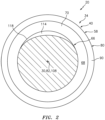
FIG. 2 is a cross-sectional illustration of the variable area inlet assembly in the first position taken along line 2-2 inFIG. 1 . -
FIG. 3 is a cross-sectional illustration of the variable area inlet assembly in the first position taken along line 3-3 inFIG. 1 . -
FIG. 4 is a cross-sectional illustration of the variable area inlet assembly in a second position taken along line 4-4 inFIG. 1 . -
FIG. 5 is a side sectional illustration of a forward, upstream portion of a nacelle inlet structure of the variable area inlet assembly. -
FIG. 6 is a side sectional illustration of a center body of the nacelle inlet structure. -
FIG. 7 is a side sectional illustration of the variable area inlet assembly in the first position. -
FIG. 8 is a side sectional illustration of the variable area inlet assembly in the second position. -
FIG. 9 is a side sectional illustration of another variable area inlet assembly. -
FIG. 1 illustrates anaircraft propulsion system 20 for an aircraft such as, but not limited to, a commercial airliner or cargo plane. Theaircraft propulsion system 20 includes agas turbine engine 22 and anacelle 24. - The
gas turbine engine 22 may be configured as a high-bypass turbofan engine. Thegas turbine engine 22 ofFIG. 1 , for example, includes afan section 26, acompressor section 27, acombustor section 28 and aturbine section 29. Thecompressor section 27 may include a low pressure compressor (LPC)section 27A and a high pressure compressor (HPC)section 27B. Theturbine section 29 may include a high pressure turbine (HPT)section 29A and a low pressure turbine (LPT)section 29B. - The engine sections 26-29B are arranged sequentially along an axial centerline 30 (e.g., a rotational axis) of the
gas turbine engine 22 within an aircraftpropulsion system housing 32. Thishousing 32 includes anouter housing structure 34 and aninner housing structure 36. - The
outer housing structure 34 includes an outer case 38 (e.g., a fan case) and anouter structure 40 of thenacelle 24; i.e., an outer nacelle structure. Theouter case 38 houses at least thefan section 26. Theouter nacelle structure 40 houses and provides an aerodynamic cover for theouter case 38. Theouter nacelle structure 40 also covers a portion of aninner structure 42 of thenacelle 24; i.e., an inner nacelle structure, which may also be referred to as an inner fixed structure (IFS). More particularly, theouter nacelle structure 40 axially overlaps and extends circumferentially about (e.g., completely around) theinner nacelle structure 42. Theouter nacelle structure 40 and theinner nacelle structure 42 thereby at least partially or completely form abypass flow path 44 within theaircraft propulsion system 20. - The
inner housing structure 36 includes an inner case 46 (e.g., a core case) and theinner nacelle structure 42. Theinner case 46 houses one or more of theengine sections 27A-29B, whichengine sections 27A-29B may be collectively referred to as an engine core. Theinner nacelle structure 42 houses and provides an aerodynamic cover for theinner case 46. - Each of the
engine sections fan rotor 48 and theLPC rotor 49 are connected to and driven by theLPT rotor 52 through alow speed shaft 54. TheHPC rotor 50 is connected to and driven by theHPT rotor 51 through ahigh speed shaft 56. Theshafts - During operation, air enters the
aircraft propulsion system 20 through aninlet structure 58 of theouter nacelle structure 40; i.e., a nacelle inlet structure. This air is directed through a duct 60 (e.g., a fan duct in the fan section 26) and into acore flow path 62 and thebypass flow path 44. Thecore flow path 62 extends axially along theaxial centerline 30 within theaircraft propulsion system 20, through theengine sections 27A-29B, to a core nozzle outlet, where thecore flow path 62 is radially within theinner case 46. Thebypass flow path 44 extends axially along theaxial centerline 30 within theaircraft propulsion system 20 to a bypass nozzle outlet, where thebypass flow path 44 is radially between theouter nacelle structure 40 and theinner nacelle structure 42. The air within thecore flow path 62 may be referred to as "core air". The air within thebypass flow path 44 may be referred to as "bypass air". - The core air is compressed by the
compressor rotors combustor section 28. Fuel is injected into the combustion chamber and mixed with the compressed core air to provide a fuel-air mixture. This fuel air mixture is ignited and combustion products thereof flow through and sequentially cause theturbine rotors turbine rotors compressor rotors LPT rotor 52 also drives rotation of thefan rotor 48, which propels bypass air through and out of thebypass flow path 44. The propulsion of the bypass air may account for a majority of thrust generated by theturbine engine 22. Theaircraft propulsion system 20 of the present disclosure, however, is not limited to the exemplary gas turbine engine configuration described above. - Optimal mass flow requirements of the air entering the
aircraft propulsion system 20 through thenacelle inlet structure 58 may change depending upon one or more parameters. These parameters may include, but are not limited to, modes of operation, aircraft maneuvers and operating conditions. For example, where the aircraft flies at supersonic speeds, thenacelle inlet structure 58 may be configured to direct a first mass flow of the air into theaircraft propulsion system 20. When the aircraft flies at subsonic speeds, thenacelle inlet structure 58 may be configured to direct a second mass flow of the air into theaircraft propulsion system 20, where the second mass flow is greater than the first mass flow. - To accommodate changing mass flows, the
aircraft propulsion system 20 ofFIG. 1 includes a variablearea inlet assembly 64. The variablearea inlet assembly 64 ofFIGS. 1 and2 includes at least thenacelle inlet structure 58 and acenter body 66; e.g., an inlet cone or an inlet spike. At least these variable areainlet assembly components inlet passage 68 into and within theaircraft propulsion system 20. Referring toFIG. 1 , the inlet duct and itsinlet passage 68 extend axially along theaxial centerline 30 from aninlet orifice 70 of theinlet passage 68 to thefan duct 60. Theinlet passage 68 ofFIG. 1 includes ametering portion 72; e.g., a choke point. The term "metering portion" may describe a portion of theinlet passage 68 with the smallest cross-sectional flow area. - The variable
area inlet assembly 64 is configured to provide a variable airflow inlet area. More particularly, at least the variable areainlet assembly components metering portion 72 of theinlet passage 68 with a variable cross-sectional area. Referring toFIG. 3 for example, during a first (e.g., supersonic) mode of operation, at least one of the variable areainlet assembly components metering portion 72 has afirst area 74A; e.g., a cross-sectional area in the plane ofFIG. 3 . Referring toFIG. 4 , during a second (e.g., subsonic) mode of operation, the at least one of the variable areainlet assembly components metering portion 72 has asecond area 74B; e.g., a cross-sectional area in the plane ofFIG. 4 . Thesecond area 74B is different (e.g., greater) than thefirst area 74A. - Referring to
FIG. 1 , thenacelle inlet structure 58 is disposed at a forward, upstream end of thenacelle 24. Thenacelle inlet structure 58 may be configured as a stationary and/or scarfed inlet structure. Thenacelle inlet structure 58 ofFIG. 1 includes a tubularinner barrel 76, a tubularouter barrel 78 and an annular scarfedinlet lip 80. - The
inner barrel 76 extends circumferentially about (e.g., completely around) an axial centerline 82 (e.g., an axis) of the variablearea inlet assembly 64, which centerline 82 may be coaxial with theaxial centerline 30. Theinner barrel 76 extends axially along theaxial centerline 30, 82 between a first (e.g., forward, upstream) end 84 of theinner barrel 76 and a second (e.g., aft, downstream) end 86 of theinner barrel 76. The inner barrelsecond end 86 ofFIG. 1 is connected to a (e.g., forward, upstream) end of theouter case 38. Theinner barrel 76 may be configured to attenuate noise generated during aircraft propulsion system operation and, more particularly for example, noise generated by rotation of thefan rotor 48. Theinner barrel 76, for example, may include at least one tubular noise attenuating acoustic panel or a circumferential array of arcuate noise attenuating acoustic panels arranged around the axial centerline. The present disclosure, however, is not limited to such an acoustic inner barrel configuration. - The
outer barrel 78 extends circumferentially about (e.g., completely around) theaxial centerline 30, 82. Theouter barrel 78 extends axially along theaxial centerline 30, 82 between a first (e.g., forward, upstream) end 88 of theouter barrel 78 and a second (e.g., aft, downstream) end 90 of theouter barrel 78. The outer barrelsecond end 90 ofFIG. 1 is disposed next to respective (e.g., forward, upstream) ends of a pair of fan cowls (one visible inFIG. 1 ) of theouter nacelle structure 40. - Referring to
FIG. 5 , theinlet lip 80 forms a leadingedge 92 of thenacelle 24 as well as an outer peripheral boundary of theinlet orifice 70 and a forward, upstream portion of theinlet passage 68. Aflat plane 94 defined by at least three points along (or an entirety of) the nacelle leading edge 92 (see plane ofFIG. 2 ) is angularly offset from theaxial centerline 30, 82 by anangle 96; e.g., an acute angle. With this arrangement, a first point 98 (e.g., one of the at least three points) on thenacelle leading edge 92 is axially displaced from a second point 100 (e.g., another one of the at least three points) on thenacelle leading edge 92 by a non-zeroaxial distance 102. Thefirst point 98 ofFIG. 5 may be a forwardmost, upstream-most point along thenacelle leading edge 92 located at, for example, a gravitational top of theaircraft propulsion system 20. Thesecond point 100 ofFIG. 5 may be an aftmost, downstream-most point along thenacelle leading edge 92 and/or diametrically opposed to thefirst point 98 located at, for example, a gravitational bottom of theaircraft propulsion system 20. The present disclosure, however, is not limited to such an exemplary inlet lip configuration. For example, in other embodiments, thefirst point 98 and/or thesecond point 100 may be respectively located along opposing sides of theaircraft propulsion system 20. Furthermore, while thefirst point 98 may be the only forwardmost, upstream-most point along thenacelle leading edge 92 and/or thesecond point 100 may be the only aftmost, downstream-most point along thenacelle leading edge 92, the present disclosure is not limited to such an exemplary configuration. Thenacelle leading edge 92, for example, may alternatively have an undulating (e.g., wavy) geometry. - The
inlet lip 80 ofFIG. 5 has a cupped (e.g., a generally U-shaped or V-shaped) side sectional geometry. Theinlet lip 80 and its cupped side sectional geometry extend circumferentially about (e.g., completely around) theaxial centerline 30, 82; see alsoFIG. 2 . Theinlet lip 80 ofFIG. 5 , for example, includes axially overlapping inner andouter lip portions inner lip portion 104 is connected to and may be integral with theouter lip portion 106 at and along thenacelle leading edge 92. An (e.g., aft, downstream) end of theinner lip portion 104 is axially adjacent and/or connected to the inner barrelfirst end 84. An (e.g., aft, downstream) end of theouter lip portion 106 is axially adjacent and/or connected to the outer barrelfirst end 88. - Referring to
FIG. 6 , thecenter body 66 may be configured as a double tapered center body. Thecenter body 66 ofFIG. 6 , for example, has a double tapered exterior skin that extends circumferentially about (e.g., completely around) an axial centerline 108 (e.g., a rotational axis) of thecenter body 66, which centerline 108 may be coaxial with theaxial centerline 30, 82 (see alsoFIG. 2 ). Thecenter body 66 and its exterior surface extend axially along theaxial centerline 30, 82, 108 from a first (e.g., forward, upstream)end 110 of thecenter body 66 to a second (e.g., aft, downstream)end 112 of thecenter body 66. The exterior skin ofFIG. 6 includes a first (e.g., forward, upstream)surface 114, a second (e.g., aft, downstream)surface 116 and a (e.g., intermediate)plateau surface 118. - The
first surface 114 may be a tapered and/or tubular surface. Thefirst surface 114 ofFIG. 6 , for example, is configured as a substantially conical surface. Thisfirst surface 114 extends circumferentially about (e.g., completely around) theaxial centerline 30, 82, 108. Thefirst surface 114 extends axially along theaxial centerline 30, 82, 108 from a leading end tip (e.g., forward, upstream point) of thecenter body 66 at the center bodyfirst end 110 to a (e.g., annular)leading edge 120 of theplateau surface 118. Thefirst surface 114 flares (e.g., continuously or intermittently) radially away from theaxial centerline 30, 82, 108 as thecenter body 66 and itssurface 114 extend axially in an aft, downstream direction along theaxial centerline 30, 82, 108 from the leading end tip towards (e.g., to) theplateau surface 118. Thefirst surface 114 thereby tapers (e.g., continuously or intermittently) radially towards theaxial centerline 30, 82, 108 as thecenter body 66 and itssurface 114 extend axially in a forward, upstream direction along theaxial centerline 30, 82, 108 from theplateau surface 118 towards (e.g., to) the leading end tip. - The
second surface 116 may be a tapered and/or tubular surface. Thesecond surface 116 ofFIG. 6 , for example, is configured as a substantially conical surface. Thissecond surface 116 extends circumferentially about (e.g., completely around) theaxial centerline 30, 82, 108. Thesecond surface 116 extends axially along theaxial centerline 30, 82, 108 from a trailing edge of thecenter body 66 at the center bodysecond end 112 to a (e.g., annular) trailingedge 122 of theplateau surface 118. Thesecond surface 116 tapers (e.g., continuously or intermittently) radially towards theaxial centerline 30, 82, 108 as thecenter body 66 and itssurface 116 extend axially in the aft, downstream direction along theaxial centerline 30, 82, 108 from theplateau surface 118 towards (e.g., to) the center body trailing edge. Thesecond surface 116 thereby flares (e.g., continuously or intermittently) radially away from theaxial centerline 30, 82, 108 as thecenter body 66 and itssurface 116 extend axially in the forward, upstream direction along theaxial centerline 30, 82, 108 from the center body trailing edge towards (e.g., to) theplateau surface 118. - The
plateau surface 118 may be an apex surface of thecenter body 66. Theplateau surface 118 ofFIG. 6 , for example, is configured as a substantially cylindrical surface. Thisplateau surface 118 extends circumferentially about (e.g., completely around) theaxial centerline 30, 82, 108. Theplateau surface 118 extends axially along theaxial centerline 30, 82, 108 from the plateausurface leading edge 120 to the plateausurface trailing edge 122. Aflat plane 124 defined by at least three points along (or an entirety of) the plateausurface leading edge 120 is angularly offset from theaxial centerline 30, 82, 108 by afirst angle 126; e.g., a right angle. Aflat plane 128 defined by at least three points along (or an entirety of) the plateausurface trailing edge 122 is angularly offset from theaxial centerline 30, 82, 108 by asecond angle 130; e.g., an acute angle. Thesecond angle 130 ofFIG. 6 is different (e.g., less) than thefirst angle 126. The plateau surface trailingedge plane 128 ofFIG. 6 is thereby angularly offset from the plateau surface leadingedge plane 124. The plateau surface trailingedge plane 128 may (or may not) be parallel with the inlet structure leading edge plane 94 (seeFIG. 1 ). Thus, the plateau surface trailingedge plane 128 may have a scarfed configuration. - A first point 132 (e.g., one of the at least three points) on the plateau
surface trailing edge 122 is axially displaced from a second point 134 (e.g., another one of the at least three points) on the plateausurface trailing edge 122 by a non-zeroaxial distance 136. Thefirst point 132 ofFIG. 6 may be a forwardmost, upstream-most point along the trailingedge 122 located at, for example, the gravitational top of theaircraft propulsion system 20 during the first (e.g., supersonic) mode of operation. Thesecond point 134 ofFIG. 6 may be an aftmost, downstream-most point along the trailingedge 122 and/or diametrically opposed to thefirst point 132 located at, for example, the gravitational bottom of theaircraft propulsion system 20 during the first (e.g., supersonic) mode of operation. The present disclosure, however, is not limited to such an exemplary inlet lip configuration. For example, in other embodiments, thefirst point 132 and/or thesecond point 134 may be respectively located along opposing sides of thecenter body 66 during the first (e.g., supersonic) mode of operation. Furthermore, while thefirst point 132 may be the only forwardmost, upstream-most point along the plateausurface trailing edge 122 and/or thesecond point 134 may be the only aftmost, downstream-most point along the plateausurface trailing edge 122, the present disclosure is not limited to such an exemplary configuration. The plateausurface leading edge 120, for example, may alternatively have an undulating (e.g., wavy) geometry. - The
plateau surface 118 has anaxial length 138. This plateau surface axial length 138 (e.g., continuously or intermittently) changes as theplateau surface 118 extends circumferentially about (e.g., completely around) theaxial centerline 30, 82, 108. The plateau surfaceaxial length 138 may have a first (e.g., maximum) value at thefirst point 132. The plateau surfaceaxial length 138 may have a second (e.g., minimum) value at thesecond point 134, which second value is different (e.g., less) than the first value. - The
center body 66 ofFIGS. 1 and2 is arranged within thenacelle inlet structure 58 and projects axially through theinlet orifice 70. Thecenter body 66 at least partially (or completely) forms an inner peripheral boundary of theinlet passage 68. Theplateau surface 118 is axially aligned with theinlet lip 80. - The
center body 66 may be configured to rotate (e.g., clockwise or counter-clockwise) about theaxial centerline 30, 82, 108 between the first position (seeFIG. 7 ) and the second position (seeFIG. 8 ). Thecenter body 66, for example, may be rotationally supported by one or more bearing structures, track assemblies and/or other suitable slidable / movable / pivotable connectors (not shown). - In the first position of
FIG. 7 , an inner peripheral boundary of themetering portion 72 is (e.g., completely) formed by theplateau surface 118. In this position, aminimum distance 140 between theinlet lip 80 and thecenter body 66 and, more particularly, between theinner lip portion 104 and theplateau surface 118 may be at least substantially or completely equal / uniform about theaxial centerline 30, 82, 108. Anaxial distance 142 between thenacelle leading edge 92 and the plateausurface trailing edge 122 may also or alternatively be at least substantially or completely equal / uniform about theaxial centerline 30, 82, 108. - In the second position of
FIG. 8 , the inner peripheral boundary of themetering portion 72 is formed by at least (or only) a portion of theplateau surface 118 and a portion of thesecond surface 116. In this position, theminimum distance 140 may (e.g., continuously or intermittently) change about theaxial centerline 30, 82, 108. For example, theminimum distance 140 at afirst point 144 along themetering portion 72 may be different (e.g., less) than the minimum distance at asecond point 146 along themetering portion 72. Thefirst point 144 ofFIG. 8 may be at the gravitational top of theaircraft propulsion system 20. Thesecond point 146 ofFIG. 8 may be diametrically opposed to thefirst point 144 and/or at the gravitational bottom of theaircraft propulsion system 20. Theminimum distance 140 at thefirst point 144 may be equal to theminimum distance 140 when thecenter body 66 is in the first position ofFIG. 7 . Theaxial distance 142 between thenacelle leading edge 92 and the plateausurface trailing edge 122 may also or alternatively (e.g., continuously or intermittently) change about theaxial centerline 30, 82, 108. For example, theaxial distance 142 at thefirst point 144 may be different (e.g., greater) than theaxial distance 142 at thesecond point 146. With the foregoing arrangement, thesecond area 74B of the metering portion 72 (seeFIG. 4 ) is different (e.g., greater) than thefirst area 74A of the metering portion 72 (seeFIG. 3 ). - In some embodiments, the axial centerline / rotational axis 108 of the
center body 66 is coaxial with the axial centerline /rotational axis 30 of theaircraft propulsion system 20 and itsgas turbine engine 22 as described above. However, in other embodiments, the axial centerline / rotational axis 108 of thecenter body 66 may be eccentric / non-coaxial with the axial centerline /rotational axis 30 of theaircraft propulsion system 20 and itsgas turbine engine 22 as shown inFIG. 9 . More particularly, the axial centerline 108 may be displaced from and/or angularly offset from theaxial centerline 30. - In some embodiments, referring to
FIGS. 7 and 8 , thecenter body 66 may rotate one-hundred and eighty degrees (180°) between the first position ofFIG. 7 and the second position ofFIG. 8 . However, in other embodiments, thecenter body 66 may rotate more than hundred and eighty degrees (e.g., between hundred and eighty degrees (180°) and two-hundred and seventy degrees (270°)) between the first and the second positions. In still other embodiments, thecenter body 66 may rotate less than hundred and eighty degrees (e.g., between ninety degrees (90°) and hundred and eighty degrees (180°)) between the first and the second positions. - In some embodiments, the
center body 66 may be actuated by a gear drive system. In other embodiments, thecenter body 66 may be actuated by one or more other types of actuators such as, but not limited to, one or more worm and gear arrangements and/or one or more linear actuators arranged around a periphery of thecenter body 66. - The
center body 66 is described above as a movable structure, and thenacelle inlet structure 58 is described above as a stationary structure. However, it is contemplated that the functionality / operation of thesestructures center body 66 may be configured as a stationary structure, and thenacelle inlet structure 58 and/or itsinlet lip 80 may be configured as a movable structure; e.g., a rotatable structure. Thenacelle inlet structure 58 and/or itsinlet lip 80 may thereby move (e.g., rotate clockwise or counter-clockwise about thecenterline 30, 82, 108) between the first and the second positions to increase or decrease the area of themetering portion 72. - The
aircraft propulsion system 20 and its variablearea inlet assembly 64 may be configured with various gas turbine engines other than the one described above. Thegas turbine engine 22, for example, may be configured as a geared or a direct drive turbine engine. Thegas turbine engine 22 may be configured with a single spool, with two spools (e.g., seeFIG. 1 ), or with more than two spools. Thegas turbine engine 22 may be configured as a turbofan engine, a turbojet engine or any other type of turbine engine. The present invention therefore is not limited to any particular types or configurations of gas turbine engines. The present disclosure is also not limited to applications where the aircraft is capable to traveling supersonic speeds. - While various embodiments of the present invention have been disclosed, it will be apparent to those of ordinary skill in the art that many more embodiments and implementations are possible within the scope of the invention. For example, the present invention as described herein includes several aspects and embodiments that include particular features. Although these features may be described individually, it is within the scope of the present invention that some or all of these features may be combined with any one of the aspects and remain within the scope of the invention. Accordingly, the present invention is not to be restricted except within the scope of the attached claims.
Claims (11)
- An assembly (64) for an aircraft propulsion system (20), comprising:a center body (66);a scarfed inlet structure (58) extending circumferentially about the center body (66); andan inlet passage (68) radially between and formed by at least the center body (66) and the scarfed inlet structure (58), the inlet passage (68) comprising a metering portion (72);a first component of the assembly (64) configured to rotate about an axis (108) relative to a second component of the assembly (64) between:a first position where the metering portion (72) has a first area (74A); anda second position where the metering portion (72) has a second area (74B) that is different than the first area (74A);wherein the first component of the assembly (64) comprises one of the center body (66) or the scarfed inlet structure (58), and the second component of the assembly (64) comprises the other one of the center body (66) or the scarfed inlet structure (58);characterised in that:the center body (66) includes a first tapered surface (114), a second tapered surface (116) and a plateau surface (118) that extends axially between the first tapered surface (114) and the second tapered surface (116);the metering portion (72) has an inner peripheral boundary;the inner peripheral boundary is formed by the plateau surface (118) when the first component of the assembly (64) is in the first position;the inner peripheral boundary is formed by the plateau surface (118) and the second tapered surface (116) when the first component of the assembly (64) is in the second position;the plateau surface (118) comprises a trailing edge (122); anda first point (132) on the trailing edge (122) is axially displaced from a second point (134) on the trailing edge (122) along the axis (108).
- The assembly (64) of claim 1, wherein the first component of the assembly (64) comprises the center body (66), and the second component of the assembly (64) comprises the scarfed inlet structure (58).
- The assembly (64) of claim 1 or 2, wherein:the scarfed inlet structure (58) has a leading edge (92); anda first point (98) on the leading edge (92) is axially displaced from a second point (100) on the leading edge (92) along the axis (108).
- The assembly (64) of claim 1, 2 or 3, wherein a plane (94) of an inlet orifice (70) to the inlet opening passage (68) is angularly offset from the axis (108).
- The assembly (64) of any preceding claim, wherein the first tapered surface (114) is a tubular surface (114) that radially tapers as center body (66) extends in a forward direction along the axis (108).
- The assembly (64) of any preceding claim, wherein the second tapered surface (116) is a tubular surface (116) that radially tapers as center body (66) extends in an aft direction along the axis (108).
- The assembly (64) of any preceding claim, wherein:the plateau surface (118) is aligned with an inlet lip (80) of the scarfed inlet structure (58); andthe trailing edge (122) of the plateau surface (118) has a scarfed configuration.
- The assembly (64) of any preceding claim, wherein:the scarfed inlet structure (58) comprises a leading edge (92);the trailing edge (122) is separated from the leading edge (92) by a first axial distance along the axis (108) when the first component of the assembly (64) is in the first position; andthe trailing edge (122) is separated from the leading edge (92) by a second axial distance along the axis (108) when the first component of the assembly (64) is in the second position, and the second axial distance is different than the first axial distance.
- The assembly (64) of any preceding claim, wherein the plateau surface (118) is a cylindrical surface (118) with an axial length (138) that changes as the cylindrical surface (118) extends circumferentially about the axis (108).
- The assembly (64) of any preceding claim, wherein the axis (108) is coaxial with a centerline (30) of the aircraft propulsion system (20).
- The assembly (64) of any of claims 1 to 9, wherein the axis (108) is offset from a centerline (30) of the aircraft propulsion system (20).
Priority Applications (1)
| Application Number | Priority Date | Filing Date | Title |
|---|---|---|---|
| EP24214910.2A EP4497936A3 (en) | 2021-01-27 | 2022-01-27 | Aircraft propulsion system with variable area inlet assembly |
Applications Claiming Priority (1)
| Application Number | Priority Date | Filing Date | Title |
|---|---|---|---|
| US17/159,343 US11639686B2 (en) | 2021-01-27 | 2021-01-27 | Aircraft propulsion system with variable area inlet assembly |
Related Child Applications (1)
| Application Number | Title | Priority Date | Filing Date |
|---|---|---|---|
| EP24214910.2A Division EP4497936A3 (en) | 2021-01-27 | 2022-01-27 | Aircraft propulsion system with variable area inlet assembly |
Publications (2)
| Publication Number | Publication Date |
|---|---|
| EP4036015A1 EP4036015A1 (en) | 2022-08-03 |
| EP4036015B1 true EP4036015B1 (en) | 2024-11-27 |
Family
ID=80121603
Family Applications (2)
| Application Number | Title | Priority Date | Filing Date |
|---|---|---|---|
| EP24214910.2A Pending EP4497936A3 (en) | 2021-01-27 | 2022-01-27 | Aircraft propulsion system with variable area inlet assembly |
| EP22153739.2A Active EP4036015B1 (en) | 2021-01-27 | 2022-01-27 | Aircraft propulsion system with variable area inlet assembly |
Family Applications Before (1)
| Application Number | Title | Priority Date | Filing Date |
|---|---|---|---|
| EP24214910.2A Pending EP4497936A3 (en) | 2021-01-27 | 2022-01-27 | Aircraft propulsion system with variable area inlet assembly |
Country Status (2)
| Country | Link |
|---|---|
| US (3) | US11639686B2 (en) |
| EP (2) | EP4497936A3 (en) |
Families Citing this family (1)
| Publication number | Priority date | Publication date | Assignee | Title |
|---|---|---|---|---|
| US11639686B2 (en) * | 2021-01-27 | 2023-05-02 | Rohr, Inc. | Aircraft propulsion system with variable area inlet assembly |
Family Cites Families (14)
| Publication number | Priority date | Publication date | Assignee | Title |
|---|---|---|---|---|
| US2876621A (en) | 1954-01-04 | 1959-03-10 | North American Aviation Inc | Variable area jet engine inlet duct |
| US3069842A (en) * | 1958-02-25 | 1962-12-25 | Nathan C Price | Variable geometry ram inlet and diffuser |
| US2970431A (en) * | 1959-01-02 | 1961-02-07 | Curtiss Wright Corp | Rotating inlet for jet engines |
| US3199810A (en) | 1963-08-29 | 1965-08-10 | Lockheed Aircraft Corp | Supersonic diffuser |
| US3664612A (en) | 1969-12-22 | 1972-05-23 | Boeing Co | Aircraft engine variable highlight inlet |
| US4132240A (en) | 1977-03-28 | 1979-01-02 | General Electric Company | Variable double lip quiet inlet |
| US5105615A (en) * | 1989-02-03 | 1992-04-21 | Mtu Motoren- Und Turbinen-Union Munchen Gmbh | Turbojet engine with at least one axially movable arranged sliding valve |
| US6276632B1 (en) | 1998-09-16 | 2001-08-21 | Bobby W. Sanders | Axi-symmetric mixed compression inlet with variable geometry centerbody |
| US6793175B1 (en) | 1999-08-25 | 2004-09-21 | The Boeing Company | Supersonic external-compression diffuser and method for designing same |
| GB201020410D0 (en) | 2010-12-01 | 2011-03-30 | Mbda Uk Ltd | An air intake system for an air vehicle |
| US8690097B1 (en) | 2012-04-30 | 2014-04-08 | The Boeing Company | Variable-geometry rotating spiral cone engine inlet compression system and method |
| US10107196B2 (en) | 2014-08-08 | 2018-10-23 | Thomas International, Inc. | Adjustable size inlet system |
| US20170175766A1 (en) | 2015-12-18 | 2017-06-22 | United Technologies Corporation | Gas turbine engine with rotating inlet |
| US11639686B2 (en) * | 2021-01-27 | 2023-05-02 | Rohr, Inc. | Aircraft propulsion system with variable area inlet assembly |
-
2021
- 2021-01-27 US US17/159,343 patent/US11639686B2/en active Active
-
2022
- 2022-01-27 EP EP24214910.2A patent/EP4497936A3/en active Pending
- 2022-01-27 EP EP22153739.2A patent/EP4036015B1/en active Active
-
2023
- 2023-05-01 US US18/141,817 patent/US12110824B2/en active Active
-
2024
- 2024-10-07 US US18/908,202 patent/US20250027446A1/en active Pending
Also Published As
| Publication number | Publication date |
|---|---|
| US20250027446A1 (en) | 2025-01-23 |
| EP4497936A3 (en) | 2025-03-19 |
| EP4036015A1 (en) | 2022-08-03 |
| US12110824B2 (en) | 2024-10-08 |
| US20220235700A1 (en) | 2022-07-28 |
| EP4497936A2 (en) | 2025-01-29 |
| US20230265795A1 (en) | 2023-08-24 |
| US11639686B2 (en) | 2023-05-02 |
Similar Documents
| Publication | Publication Date | Title |
|---|---|---|
| US9494084B2 (en) | Gas turbine engine with fan variable area nozzle for low fan pressure ratio | |
| EP4148246B1 (en) | Aircraft propulsion system with variable area inlet | |
| WO2013147951A1 (en) | Gas turbine engine with fan variable area nozzle for low fan pressure ratio | |
| EP3869024B1 (en) | High bypass ratio engine bypass duct nozzle with controlled nozzle area | |
| US20250027446A1 (en) | Aircraft propulsion system with variable area inlet assembly | |
| EP2115289B1 (en) | Gas turbine engine with fan variable area nozzle having rotating overlapping tabs | |
| EP4108897B1 (en) | Aircraft propulsion system with variable area inlet | |
| US20240229713A1 (en) | Aircraft propulsion system with variable area inlet | |
| EP4108574B1 (en) | Aircraft propulsion system with variable area inlet | |
| US11840985B2 (en) | Aircraft propulsion system with variable area inlet | |
| EP3798131B1 (en) | Passive internal compartment exhaust for an aircraft propulsion system | |
| WO2013141932A1 (en) | Gas turbine engine with fan variable area nozzle for low fan pressure ratio | |
| WO2013141934A2 (en) | Gas turbine engine with fan variable area nozzle | |
| EP4011779B1 (en) | Aircraft propulsion system inlet structure with variable airflow inlet area | |
| US12065977B2 (en) | Multi-duct exhaust system for gas turbine engine | |
| EP3798132B1 (en) | Nacelle cowl deflection limiter | |
| EP4575213A1 (en) | Acoustic engine exhaust center body with tapered inner skin | |
| US20260117669A1 (en) | Aircraft Propulsion System with Telescopic Guide Vane(S) | |
| WO2013141933A1 (en) | Gas turbine engine with fan variable area nozzle to reduce fan instability |
Legal Events
| Date | Code | Title | Description |
|---|---|---|---|
| PUAI | Public reference made under article 153(3) epc to a published international application that has entered the european phase |
Free format text: ORIGINAL CODE: 0009012 |
|
| STAA | Information on the status of an ep patent application or granted ep patent |
Free format text: STATUS: THE APPLICATION HAS BEEN PUBLISHED |
|
| AK | Designated contracting states |
Kind code of ref document: A1 Designated state(s): AL AT BE BG CH CY CZ DE DK EE ES FI FR GB GR HR HU IE IS IT LI LT LU LV MC MK MT NL NO PL PT RO RS SE SI SK SM TR |
|
| STAA | Information on the status of an ep patent application or granted ep patent |
Free format text: STATUS: REQUEST FOR EXAMINATION WAS MADE |
|
| STAA | Information on the status of an ep patent application or granted ep patent |
Free format text: STATUS: EXAMINATION IS IN PROGRESS |
|
| 17P | Request for examination filed |
Effective date: 20230203 |
|
| RBV | Designated contracting states (corrected) |
Designated state(s): AL AT BE BG CH CY CZ DE DK EE ES FI FR GB GR HR HU IE IS IT LI LT LU LV MC MK MT NL NO PL PT RO RS SE SI SK SM TR |
|
| 17Q | First examination report despatched |
Effective date: 20230306 |
|
| GRAP | Despatch of communication of intention to grant a patent |
Free format text: ORIGINAL CODE: EPIDOSNIGR1 |
|
| STAA | Information on the status of an ep patent application or granted ep patent |
Free format text: STATUS: GRANT OF PATENT IS INTENDED |
|
| INTG | Intention to grant announced |
Effective date: 20240620 |
|
| GRAS | Grant fee paid |
Free format text: ORIGINAL CODE: EPIDOSNIGR3 |
|
| GRAA | (expected) grant |
Free format text: ORIGINAL CODE: 0009210 |
|
| STAA | Information on the status of an ep patent application or granted ep patent |
Free format text: STATUS: THE PATENT HAS BEEN GRANTED |
|
| AK | Designated contracting states |
Kind code of ref document: B1 Designated state(s): AL AT BE BG CH CY CZ DE DK EE ES FI FR GB GR HR HU IE IS IT LI LT LU LV MC MK MT NL NO PL PT RO RS SE SI SK SM TR |
|
| REG | Reference to a national code |
Ref country code: GB Ref legal event code: FG4D |
|
| REG | Reference to a national code |
Ref country code: CH Ref legal event code: EP |
|
| REG | Reference to a national code |
Ref country code: IE Ref legal event code: FG4D |
|
| REG | Reference to a national code |
Ref country code: DE Ref legal event code: R096 Ref document number: 602022008031 Country of ref document: DE |
|
| REG | Reference to a national code |
Ref country code: LT Ref legal event code: MG9D |
|
| REG | Reference to a national code |
Ref country code: NL Ref legal event code: MP Effective date: 20241127 |
|
| PG25 | Lapsed in a contracting state [announced via postgrant information from national office to epo] |
Ref country code: PT Free format text: LAPSE BECAUSE OF FAILURE TO SUBMIT A TRANSLATION OF THE DESCRIPTION OR TO PAY THE FEE WITHIN THE PRESCRIBED TIME-LIMIT Effective date: 20250327 Ref country code: IS Free format text: LAPSE BECAUSE OF FAILURE TO SUBMIT A TRANSLATION OF THE DESCRIPTION OR TO PAY THE FEE WITHIN THE PRESCRIBED TIME-LIMIT Effective date: 20250327 Ref country code: HR Free format text: LAPSE BECAUSE OF FAILURE TO SUBMIT A TRANSLATION OF THE DESCRIPTION OR TO PAY THE FEE WITHIN THE PRESCRIBED TIME-LIMIT Effective date: 20241127 |
|
| PG25 | Lapsed in a contracting state [announced via postgrant information from national office to epo] |
Ref country code: NL Free format text: LAPSE BECAUSE OF FAILURE TO SUBMIT A TRANSLATION OF THE DESCRIPTION OR TO PAY THE FEE WITHIN THE PRESCRIBED TIME-LIMIT Effective date: 20241127 Ref country code: FI Free format text: LAPSE BECAUSE OF FAILURE TO SUBMIT A TRANSLATION OF THE DESCRIPTION OR TO PAY THE FEE WITHIN THE PRESCRIBED TIME-LIMIT Effective date: 20241127 |
|
| REG | Reference to a national code |
Ref country code: AT Ref legal event code: MK05 Ref document number: 1745499 Country of ref document: AT Kind code of ref document: T Effective date: 20241127 |
|
| PG25 | Lapsed in a contracting state [announced via postgrant information from national office to epo] |
Ref country code: BG Free format text: LAPSE BECAUSE OF FAILURE TO SUBMIT A TRANSLATION OF THE DESCRIPTION OR TO PAY THE FEE WITHIN THE PRESCRIBED TIME-LIMIT Effective date: 20241127 |
|
| PG25 | Lapsed in a contracting state [announced via postgrant information from national office to epo] |
Ref country code: ES Free format text: LAPSE BECAUSE OF FAILURE TO SUBMIT A TRANSLATION OF THE DESCRIPTION OR TO PAY THE FEE WITHIN THE PRESCRIBED TIME-LIMIT Effective date: 20241127 |
|
| PG25 | Lapsed in a contracting state [announced via postgrant information from national office to epo] |
Ref country code: NO Free format text: LAPSE BECAUSE OF FAILURE TO SUBMIT A TRANSLATION OF THE DESCRIPTION OR TO PAY THE FEE WITHIN THE PRESCRIBED TIME-LIMIT Effective date: 20250227 |
|
| PG25 | Lapsed in a contracting state [announced via postgrant information from national office to epo] |
Ref country code: GR Free format text: LAPSE BECAUSE OF FAILURE TO SUBMIT A TRANSLATION OF THE DESCRIPTION OR TO PAY THE FEE WITHIN THE PRESCRIBED TIME-LIMIT Effective date: 20250228 Ref country code: AT Free format text: LAPSE BECAUSE OF FAILURE TO SUBMIT A TRANSLATION OF THE DESCRIPTION OR TO PAY THE FEE WITHIN THE PRESCRIBED TIME-LIMIT Effective date: 20241127 Ref country code: LV Free format text: LAPSE BECAUSE OF FAILURE TO SUBMIT A TRANSLATION OF THE DESCRIPTION OR TO PAY THE FEE WITHIN THE PRESCRIBED TIME-LIMIT Effective date: 20241127 |
|
| PG25 | Lapsed in a contracting state [announced via postgrant information from national office to epo] |
Ref country code: PL Free format text: LAPSE BECAUSE OF FAILURE TO SUBMIT A TRANSLATION OF THE DESCRIPTION OR TO PAY THE FEE WITHIN THE PRESCRIBED TIME-LIMIT Effective date: 20241127 |
|
| PG25 | Lapsed in a contracting state [announced via postgrant information from national office to epo] |
Ref country code: RS Free format text: LAPSE BECAUSE OF FAILURE TO SUBMIT A TRANSLATION OF THE DESCRIPTION OR TO PAY THE FEE WITHIN THE PRESCRIBED TIME-LIMIT Effective date: 20250227 |
|
| PG25 | Lapsed in a contracting state [announced via postgrant information from national office to epo] |
Ref country code: SM Free format text: LAPSE BECAUSE OF FAILURE TO SUBMIT A TRANSLATION OF THE DESCRIPTION OR TO PAY THE FEE WITHIN THE PRESCRIBED TIME-LIMIT Effective date: 20241127 |
|
| PG25 | Lapsed in a contracting state [announced via postgrant information from national office to epo] |
Ref country code: DK Free format text: LAPSE BECAUSE OF FAILURE TO SUBMIT A TRANSLATION OF THE DESCRIPTION OR TO PAY THE FEE WITHIN THE PRESCRIBED TIME-LIMIT Effective date: 20241127 |
|
| PG25 | Lapsed in a contracting state [announced via postgrant information from national office to epo] |
Ref country code: EE Free format text: LAPSE BECAUSE OF FAILURE TO SUBMIT A TRANSLATION OF THE DESCRIPTION OR TO PAY THE FEE WITHIN THE PRESCRIBED TIME-LIMIT Effective date: 20241127 |
|
| PG25 | Lapsed in a contracting state [announced via postgrant information from national office to epo] |
Ref country code: RO Free format text: LAPSE BECAUSE OF FAILURE TO SUBMIT A TRANSLATION OF THE DESCRIPTION OR TO PAY THE FEE WITHIN THE PRESCRIBED TIME-LIMIT Effective date: 20241127 |
|
| PG25 | Lapsed in a contracting state [announced via postgrant information from national office to epo] |
Ref country code: SK Free format text: LAPSE BECAUSE OF FAILURE TO SUBMIT A TRANSLATION OF THE DESCRIPTION OR TO PAY THE FEE WITHIN THE PRESCRIBED TIME-LIMIT Effective date: 20241127 |
|
| PG25 | Lapsed in a contracting state [announced via postgrant information from national office to epo] |
Ref country code: CZ Free format text: LAPSE BECAUSE OF FAILURE TO SUBMIT A TRANSLATION OF THE DESCRIPTION OR TO PAY THE FEE WITHIN THE PRESCRIBED TIME-LIMIT Effective date: 20241127 |
|
| PG25 | Lapsed in a contracting state [announced via postgrant information from national office to epo] |
Ref country code: IT Free format text: LAPSE BECAUSE OF FAILURE TO SUBMIT A TRANSLATION OF THE DESCRIPTION OR TO PAY THE FEE WITHIN THE PRESCRIBED TIME-LIMIT Effective date: 20241127 |
|
| REG | Reference to a national code |
Ref country code: DE Ref legal event code: R097 Ref document number: 602022008031 Country of ref document: DE |
|
| REG | Reference to a national code |
Ref country code: CH Ref legal event code: PL |
|
| PG25 | Lapsed in a contracting state [announced via postgrant information from national office to epo] |
Ref country code: SE Free format text: LAPSE BECAUSE OF FAILURE TO SUBMIT A TRANSLATION OF THE DESCRIPTION OR TO PAY THE FEE WITHIN THE PRESCRIBED TIME-LIMIT Effective date: 20241127 |
|
| PG25 | Lapsed in a contracting state [announced via postgrant information from national office to epo] |
Ref country code: MC Free format text: LAPSE BECAUSE OF FAILURE TO SUBMIT A TRANSLATION OF THE DESCRIPTION OR TO PAY THE FEE WITHIN THE PRESCRIBED TIME-LIMIT Effective date: 20241127 Ref country code: LU Free format text: LAPSE BECAUSE OF NON-PAYMENT OF DUE FEES Effective date: 20250127 |
|
| PLBE | No opposition filed within time limit |
Free format text: ORIGINAL CODE: 0009261 |
|
| STAA | Information on the status of an ep patent application or granted ep patent |
Free format text: STATUS: NO OPPOSITION FILED WITHIN TIME LIMIT |
|
| PG25 | Lapsed in a contracting state [announced via postgrant information from national office to epo] |
Ref country code: BE Free format text: LAPSE BECAUSE OF NON-PAYMENT OF DUE FEES Effective date: 20250131 |
|
| PG25 | Lapsed in a contracting state [announced via postgrant information from national office to epo] |
Ref country code: CH Free format text: LAPSE BECAUSE OF NON-PAYMENT OF DUE FEES Effective date: 20250131 |
|
| REG | Reference to a national code |
Ref country code: BE Ref legal event code: MM Effective date: 20250131 |
|
| 26N | No opposition filed |
Effective date: 20250828 |
|
| PGFP | Annual fee paid to national office [announced via postgrant information from national office to epo] |
Ref country code: GB Payment date: 20251219 Year of fee payment: 5 |
|
| PGFP | Annual fee paid to national office [announced via postgrant information from national office to epo] |
Ref country code: FR Payment date: 20251217 Year of fee payment: 5 |
|
| PG25 | Lapsed in a contracting state [announced via postgrant information from national office to epo] |
Ref country code: IE Free format text: LAPSE BECAUSE OF NON-PAYMENT OF DUE FEES Effective date: 20250127 |
|
| PGFP | Annual fee paid to national office [announced via postgrant information from national office to epo] |
Ref country code: DE Payment date: 20251217 Year of fee payment: 5 |