EP4035915A1 - Intelligent glass and intelligent vehicle window system - Google Patents
Intelligent glass and intelligent vehicle window system Download PDFInfo
- Publication number
- EP4035915A1 EP4035915A1 EP19945461.2A EP19945461A EP4035915A1 EP 4035915 A1 EP4035915 A1 EP 4035915A1 EP 19945461 A EP19945461 A EP 19945461A EP 4035915 A1 EP4035915 A1 EP 4035915A1
- Authority
- EP
- European Patent Office
- Prior art keywords
- glass
- touch
- controller
- assembly
- intelligent
- Prior art date
- Legal status (The legal status is an assumption and is not a legal conclusion. Google has not performed a legal analysis and makes no representation as to the accuracy of the status listed.)
- Granted
Links
Images



Classifications
-
- B—PERFORMING OPERATIONS; TRANSPORTING
- B60—VEHICLES IN GENERAL
- B60J—WINDOWS, WINDSCREENS, NON-FIXED ROOFS, DOORS, OR SIMILAR DEVICES FOR VEHICLES; REMOVABLE EXTERNAL PROTECTIVE COVERINGS SPECIALLY ADAPTED FOR VEHICLES
- B60J3/00—Antiglare equipment associated with windows or windscreens; Sun visors for vehicles
- B60J3/04—Antiglare equipment associated with windows or windscreens; Sun visors for vehicles adjustable in transparency
-
- B—PERFORMING OPERATIONS; TRANSPORTING
- B60—VEHICLES IN GENERAL
- B60K—ARRANGEMENT OR MOUNTING OF PROPULSION UNITS OR OF TRANSMISSIONS IN VEHICLES; ARRANGEMENT OR MOUNTING OF PLURAL DIVERSE PRIME-MOVERS IN VEHICLES; AUXILIARY DRIVES FOR VEHICLES; INSTRUMENTATION OR DASHBOARDS FOR VEHICLES; ARRANGEMENTS IN CONNECTION WITH COOLING, AIR INTAKE, GAS EXHAUST OR FUEL SUPPLY OF PROPULSION UNITS IN VEHICLES
- B60K35/00—Instruments specially adapted for vehicles; Arrangement of instruments in or on vehicles
- B60K35/10—Input arrangements, i.e. from user to vehicle, associated with vehicle functions or specially adapted therefor
-
- G—PHYSICS
- G02—OPTICS
- G02F—OPTICAL DEVICES OR ARRANGEMENTS FOR THE CONTROL OF LIGHT BY MODIFICATION OF THE OPTICAL PROPERTIES OF THE MEDIA OF THE ELEMENTS INVOLVED THEREIN; NON-LINEAR OPTICS; FREQUENCY-CHANGING OF LIGHT; OPTICAL LOGIC ELEMENTS; OPTICAL ANALOGUE/DIGITAL CONVERTERS
- G02F1/00—Devices or arrangements for the control of the intensity, colour, phase, polarisation or direction of light arriving from an independent light source, e.g. switching, gating or modulating; Non-linear optics
- G02F1/01—Devices or arrangements for the control of the intensity, colour, phase, polarisation or direction of light arriving from an independent light source, e.g. switching, gating or modulating; Non-linear optics for the control of the intensity, phase, polarisation or colour
- G02F1/13—Devices or arrangements for the control of the intensity, colour, phase, polarisation or direction of light arriving from an independent light source, e.g. switching, gating or modulating; Non-linear optics for the control of the intensity, phase, polarisation or colour based on liquid crystals, e.g. single liquid crystal display cells
- G02F1/133—Constructional arrangements; Operation of liquid crystal cells; Circuit arrangements
- G02F1/13306—Circuit arrangements or driving methods for the control of single liquid crystal cells
-
- G—PHYSICS
- G02—OPTICS
- G02F—OPTICAL DEVICES OR ARRANGEMENTS FOR THE CONTROL OF LIGHT BY MODIFICATION OF THE OPTICAL PROPERTIES OF THE MEDIA OF THE ELEMENTS INVOLVED THEREIN; NON-LINEAR OPTICS; FREQUENCY-CHANGING OF LIGHT; OPTICAL LOGIC ELEMENTS; OPTICAL ANALOGUE/DIGITAL CONVERTERS
- G02F1/00—Devices or arrangements for the control of the intensity, colour, phase, polarisation or direction of light arriving from an independent light source, e.g. switching, gating or modulating; Non-linear optics
- G02F1/01—Devices or arrangements for the control of the intensity, colour, phase, polarisation or direction of light arriving from an independent light source, e.g. switching, gating or modulating; Non-linear optics for the control of the intensity, phase, polarisation or colour
- G02F1/13—Devices or arrangements for the control of the intensity, colour, phase, polarisation or direction of light arriving from an independent light source, e.g. switching, gating or modulating; Non-linear optics for the control of the intensity, phase, polarisation or colour based on liquid crystals, e.g. single liquid crystal display cells
- G02F1/133—Constructional arrangements; Operation of liquid crystal cells; Circuit arrangements
- G02F1/1333—Constructional arrangements; Manufacturing methods
- G02F1/13338—Input devices, e.g. touch panels
-
- G—PHYSICS
- G02—OPTICS
- G02F—OPTICAL DEVICES OR ARRANGEMENTS FOR THE CONTROL OF LIGHT BY MODIFICATION OF THE OPTICAL PROPERTIES OF THE MEDIA OF THE ELEMENTS INVOLVED THEREIN; NON-LINEAR OPTICS; FREQUENCY-CHANGING OF LIGHT; OPTICAL LOGIC ELEMENTS; OPTICAL ANALOGUE/DIGITAL CONVERTERS
- G02F1/00—Devices or arrangements for the control of the intensity, colour, phase, polarisation or direction of light arriving from an independent light source, e.g. switching, gating or modulating; Non-linear optics
- G02F1/01—Devices or arrangements for the control of the intensity, colour, phase, polarisation or direction of light arriving from an independent light source, e.g. switching, gating or modulating; Non-linear optics for the control of the intensity, phase, polarisation or colour
- G02F1/13—Devices or arrangements for the control of the intensity, colour, phase, polarisation or direction of light arriving from an independent light source, e.g. switching, gating or modulating; Non-linear optics for the control of the intensity, phase, polarisation or colour based on liquid crystals, e.g. single liquid crystal display cells
- G02F1/133—Constructional arrangements; Operation of liquid crystal cells; Circuit arrangements
- G02F1/1333—Constructional arrangements; Manufacturing methods
- G02F1/1334—Constructional arrangements; Manufacturing methods based on polymer dispersed liquid crystals, e.g. microencapsulated liquid crystals
-
- B—PERFORMING OPERATIONS; TRANSPORTING
- B60—VEHICLES IN GENERAL
- B60K—ARRANGEMENT OR MOUNTING OF PROPULSION UNITS OR OF TRANSMISSIONS IN VEHICLES; ARRANGEMENT OR MOUNTING OF PLURAL DIVERSE PRIME-MOVERS IN VEHICLES; AUXILIARY DRIVES FOR VEHICLES; INSTRUMENTATION OR DASHBOARDS FOR VEHICLES; ARRANGEMENTS IN CONNECTION WITH COOLING, AIR INTAKE, GAS EXHAUST OR FUEL SUPPLY OF PROPULSION UNITS IN VEHICLES
- B60K2360/00—Indexing scheme associated with groups B60K35/00 or B60K37/00 relating to details of instruments or dashboards
- B60K2360/143—Touch sensitive instrument input devices
- B60K2360/1434—Touch panels
-
- B—PERFORMING OPERATIONS; TRANSPORTING
- B60—VEHICLES IN GENERAL
- B60K—ARRANGEMENT OR MOUNTING OF PROPULSION UNITS OR OF TRANSMISSIONS IN VEHICLES; ARRANGEMENT OR MOUNTING OF PLURAL DIVERSE PRIME-MOVERS IN VEHICLES; AUXILIARY DRIVES FOR VEHICLES; INSTRUMENTATION OR DASHBOARDS FOR VEHICLES; ARRANGEMENTS IN CONNECTION WITH COOLING, AIR INTAKE, GAS EXHAUST OR FUEL SUPPLY OF PROPULSION UNITS IN VEHICLES
- B60K2360/00—Indexing scheme associated with groups B60K35/00 or B60K37/00 relating to details of instruments or dashboards
- B60K2360/77—Instrument locations other than the dashboard
- B60K2360/785—Instrument locations other than the dashboard on or in relation to the windshield or windows
-
- E—FIXED CONSTRUCTIONS
- E06—DOORS, WINDOWS, SHUTTERS, OR ROLLER BLINDS IN GENERAL; LADDERS
- E06B—FIXED OR MOVABLE CLOSURES FOR OPENINGS IN BUILDINGS, VEHICLES, FENCES OR LIKE ENCLOSURES IN GENERAL, e.g. DOORS, WINDOWS, BLINDS, GATES
- E06B9/00—Screening or protective devices for wall or similar openings, with or without operating or securing mechanisms; Closures of similar construction
- E06B9/24—Screens or other constructions affording protection against light, especially against sunshine; Similar screens for privacy or appearance; Slat blinds
- E06B2009/2464—Screens or other constructions affording protection against light, especially against sunshine; Similar screens for privacy or appearance; Slat blinds featuring transparency control by applying voltage, e.g. LCD, electrochromic panels
-
- G—PHYSICS
- G02—OPTICS
- G02F—OPTICAL DEVICES OR ARRANGEMENTS FOR THE CONTROL OF LIGHT BY MODIFICATION OF THE OPTICAL PROPERTIES OF THE MEDIA OF THE ELEMENTS INVOLVED THEREIN; NON-LINEAR OPTICS; FREQUENCY-CHANGING OF LIGHT; OPTICAL LOGIC ELEMENTS; OPTICAL ANALOGUE/DIGITAL CONVERTERS
- G02F2201/00—Constructional arrangements not provided for in groups G02F1/00 - G02F7/00
- G02F2201/44—Arrangements combining different electro-active layers, e.g. electrochromic, liquid crystal or electroluminescent layers
-
- G—PHYSICS
- G02—OPTICS
- G02F—OPTICAL DEVICES OR ARRANGEMENTS FOR THE CONTROL OF LIGHT BY MODIFICATION OF THE OPTICAL PROPERTIES OF THE MEDIA OF THE ELEMENTS INVOLVED THEREIN; NON-LINEAR OPTICS; FREQUENCY-CHANGING OF LIGHT; OPTICAL LOGIC ELEMENTS; OPTICAL ANALOGUE/DIGITAL CONVERTERS
- G02F2202/00—Materials and properties
- G02F2202/04—Materials and properties dye
Definitions
- the disclosure relates to the technical field of window display, and particularly relates to an intelligent glass and an intelligent window system.
- a dimming glass is also called an electric control dimming glass, an electric control liquid crystal glass, an intelligent dimming glass and the like, and is a functional sandwich glass product formed by sandwiching a high-tech liquid crystal film between two layers of glass to be processed at a high temperature and a high pressure.
- the dimming glass can be switched between a transparent state and an opaque state by various modes such as electric control, temperature control, light control, pressure control and the like. Due to the limitation of various conditions, the dimming glass for realizing mass production in the current market is mostly a dimming glass of an electric control type.
- liquid crystal molecules in the dimming glass are in an irregular dispersion state, and the electric control dimming glass presents a light transmissive and opaque appearance; when the dimming glass is powered on, the liquid crystal molecules in the dimming glass are arranged orderly, light can penetrate through the liquid crystal molecules freely, and the dimming glass presents a transparent state instantly.
- the embodiments of the disclosure aim to solve at least one of the technical problems existing in the prior art, and provide an intelligent glass and an intelligent window system.
- the embodiments of the disclosure provide an intelligent glass which includes: a touch display assembly and a glass assembly, wherein the touch display assembly is communicatively coupled to the glass assembly, and is configured to send a corresponding dimming instruction to the glass assembly based on a received touch instruction, such that the glass assembly adjusts its light transmittance based on the dimming instruction.
- the touch display assembly includes a touch component, a display component and a first controller; wherein the display component includes: a plurality of pixel units and a plurality of driving units, wherein the driving units are configured to drive the pixel units for display under control of the first controller; and the touch component includes: a plurality of touch units, wherein the plurality of touch units are configured to send a corresponding touch signal to the first controller based on the received touch instruction, such that the first controller sends the dimming instruction to the glass assembly based on the touch signal.
- the first controller is configured to control the driving units to drive the pixel units to generate a plurality of light emitting points; the touch units are provided at areas corresponding to areas where the light emitting points are located; wherein the first controller is configured to send a different dimming instruction when the first controller receives a touch signal sent by the touch units provided in areas where different light emitting points are located.
- the pixel unit includes a light emitting device, and the light emitting device includes an electroluminescent device.
- the touch unit includes a capacitive touch unit.
- the glass assembly includes a dye intelligent glass and a second controller; wherein the second controller is communicatively coupled to the first controller, and is configured to adjust light transmittance of the dye intelligent glass based on the dimming instruction sent by the first controller.
- the first controller and the second controller are coupled to each other by a bus.
- the first controller and the second controller are integrated in a same controller.
- the intelligent glass further includes a power module configured to supply power to the touch display assembly and the glass assembly.
- the power module includes: a power unit configured to supply a standard power supply voltage; and a power isolator configured to isolate a voltage higher than the standard power supply voltage, and to convert the standard power supply voltage into a voltage required by the touch display assembly and the glass assembly.
- the touch display assembly includes a transparent touch display assembly.
- the touch display assembly is stacked on the dimming glass.
- the glass assembly includes any one of a dye liquid crystal dimming glass, an organic electrochromic dimming glass, and an inorganic electrochromic dimming glass.
- the embodiments of the disclosure provide an intelligent window system including the intelligent glass as above.
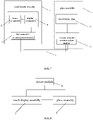
- Fig. 1 is a schematic diagram of a structure of an intelligent glass according to an embodiment of the present disclosure.
- the intelligent glass mainly includes a touch display assembly 1 and a glass assembly 2.
- the touch display assembly 1 is communicatively coupled to the glass assembly 2, and when receiving a touch instruction, the touch display assembly 1 sends a corresponding dimming instruction to the glass assembly 2, such that the glass assembly 2 adjusts its light transmittance based on the dimming instruction.
- the intelligent glass in the embodiments of the present disclosure includes the touch display assembly 1, the light transmittance of the glass assembly 2 can be adjusted in a touch mode, such that the light transmittance of the intelligent glass can be adjusted more conveniently, and the intelligent glass can be applicable to more fields.
- the touch display assembly 1 not only has a touch function, but also has a display function. That is, the intelligent glass in the embodiment of the present disclosure not only has an adjustable light transmittance, but also has a display function, such that user experience can be improved.
- a main function of the intelligent glass in the embodiment of the present disclosure is the glass function, and in order to prevent the touch display assembly 1 from affecting the glass function of the intelligent glass, the touch display assembly 1 may be designed as a transparent touch display assembly 1. Certainly, a proportion of the touch display assembly 1 and the glass assembly 2 may be designed according to a specific application scene of the intelligent glass.
- the touch instruction in the embodiment of the present disclosure refers to touch information generated when a user touches the touch display assembly 1.
- Fig. 2 is a schematic diagram of a structure of a touch display assembly according to an embodiment of the disclosure.
- the touch display assembly 1 may specifically include a touch component 12, a display component 11, and a first controller 13.
- Fig. 3 is a schematic diagram of another structure of the touch display assembly 1 according to an embodiment of the disclosure.
- the display component 11 includes a plurality of pixel units 111 and a plurality of driving units 112.
- the driving unit 112 can drive the pixel unit 111 to display according to a control signal sent by the first controller 13.
- the touch component 12 includes a plurality of touch units 121, and the touch unit 121 is configured to send a corresponding touch signal to the first controller 13 according to the touch instruction received by the touch unit 121, such that the first controller 13 sends a corresponding dimming instruction to the glass assembly 2 according to the touch signal.
- the touch unit 121 may be a capacitive touch unit 121, that is, each touch unit 121 includes a driving electrode and a receiving electrode.
- a capacitance between the driving electrode and the receiving electrode changes, and the touch signal is sent from the receiving electrode of the touch unit 121 to the first controller 13.
- a change of the capacitance between the driving electrode and the receiving electrode is analyzed by the first controller 13 based on the touch signal.
- a corresponding dimming instruction is sent from the first controller 13 to the glass assembly 2, such that the glass assembly 2 adjusts the light transmittance based on the dimming instruction.
- the first controller 13 may be a control chip such as a Micro Controller Unit (MCU), a Central Processing Unit (CPU), and the like.
- MCU Micro Controller Unit
- CPU Central Processing Unit
- the first controller 13 may control the driving units 112 to drive a part of the pixel units 111 for display, so as to generate a plurality of light emitting points.
- the touch units 121 in the touch component 12 are at least provided corresponding to areas where the light emitting points are located. That is, the touch unit 121 is provided at a position where a light emitting point is located.
- the touch unit 121 provided at the position where a light emitting point is located sends a touch signal to the first controller 13 after receiving the touch instruction.
- the first controller 13 generates different dimming instructions according to the touch signals sent by the touch units 121 at different positions, such that the glass assembly 2 can adjust the light transmittance based on the dimming instructions.
- each light emitting point is equivalent to a touch dimming button.
- the three light emitting points may be arranged side by side at intervals.
- a group of touch units 121 is provided at a position corresponding to each single point (each group of touch units 121 includes a plurality of touch units 121 arranged in an array).
- a corresponding touch signal is sent to the first controller 13 by the group of touch units 121.
- the first controller 13 sends a first dimming instruction to the glass assembly 2 based on the received touch signal and a correspondence relationship between the group of touch units 121 (or the light emitting points) and the dimming instruction, which is pre-stored in the first controller. Then, the glass assembly 2 adjusts its light transmittance based on the first dimming instruction. Similarly, after the groups of touch units 121 corresponding to a second light emitting point and a third light emitting point receive the touch instructions, the light transmittance of the glass assembly 2 is adjusted based on the above method.
- the difference between the first, second and third light emitting points is that the dimming instructions corresponding to the positions of the light emitting points at the three positions are different, that is, the light transmittance of the glass assembly 2 at different light emitting points is different after being adjusted.
- a plurality of light emitting points corresponds to a plurality of light transmittances.
- the touch display assembly 1 in order to prevent the touch display assembly 1 from affecting the overall glass function of the intelligent glass, preferably, the touch display assembly 1 is designed as a transparent touch display assembly 1. In this way, the light emitting device in the corresponding pixel unit 111 and the touch device in the touch unit 121 both adopt transparent functional devices.
- the light emitting device in the pixel unit 111 may be an electroluminescent device, that is, a material of the light emitting device is an electroluminescent (EL) material.
- Fig. 4 is a schematic diagram of a structure of a light emitting device according to an embodiment of the disclosure.
- the electroluminescent device may include a lower electrode 101, a lower dielectric layer 102, an electroluminescent material layer 103, an upper dielectric layer 104, and an upper electrode 105, which are sequentially provided on a substrate.
- electroluminescence is an optical and electrical phenomenon occurring when a current passes through a material or a strong electric field passes through the material, light is emitted from the material.
- An electroluminescent display is a display technology that uses an electroluminescent material (such as GaAs) sandwiched between two conductors. When a current passes through, the material radiates visible light. When a current passes through the electroluminescent material, the electroluminescent material emits light due to excitation of atoms. With different electroluminescent materials, light of different colors can be emitted.
- an electroluminescent device includes flat electrodes which are mutually parallel to each other, and an electroluminescent material. The top layer must be light transmissive, and therefore let light passing therethrough.
- the electroluminescent device is driven to emit light as follows: the first controller 13 controls the driving unit 112 to apply an alternating current to the upper electrode and the lower electrode of the electroluminescent device to generate an electric field, and electrons excited by the electric field collide with fluorescent substance in the electroluminescent material layer to cause electron energy level transition, change and recombination to emit cold light with high efficiency, i.e., to realize light emission of the electroluminescent device. As long as an alternating voltage is applied to the upper electrode and the lower electrode of the electroluminescent device in the pixel unit 111, the electroluminescent device of the pixel unit 111 can be lit.
- the touch unit 121 in the touch component 12 may specifically include a capacitive touch unit 121.
- the capacitive touch unit 121 may be a mutual-capacitive touch unit 121 or a self-capacitive touch unit 121.
- the touch unit 121 is a mutual-capacitive touch unit 121, it includes a driving electrode and a sensing electrode.
- the touch unit 121 is a self-capacitive touch unit 121, it includes a touch electrode.
- the touch unit 121 is a mutual-capacitive touch unit 121 or a self-capacitive touch unit 121, in order to ensure the light transmittance of the intelligent glass, the touch unit 121 is preferably designed as a transparent touch unit 121, that is, the electrode structure in the touch unit 121 is made of a transparent conductive material.
- Fig. 5 is a schematic diagram of a structure illustrating implementation of a touch function according to an embodiment of the present disclosure.
- the touch component 12 may include not only the touch unit 121 but also a relaxation oscillator 122.
- the relaxation oscillator 122 is coupled between the touch unit 121 and the first controller 13. Therefore, when a user touches the touch unit 121, that is, the touch unit 121 receives a touch instruction, the capacitance of the touch unit 121 changes, which changes a signal frequency of the relaxation oscillator. As long as the first controller 13 calculates the number of pulses in a fixed time, whether the user touches the touch unit 121 can be determined.
- Fig. 6 is a schematic diagram of a structure of a glass assembly according to an embodiment of the present disclosure.
- the glass assembly 2 may include a dye dimming glass 21 and a second controller 22.
- the second controller 22 is communicatively coupled to the first controller 13, and is configured to adjust the light transmittance of the dye dimming glass 21 based on the dimming instruction sent by the first controller 13.
- the dimming glass 21 in the embodiment may be a dye dimming glass, and the dye dimming glass specifically includes: a first substrate and a second substrate opposite to each other, and a liquid crystal layer between the first substrate and the second substrate. One side of the first substrate proximal to the liquid crystal layer is provided with a first electrode, and one side of the second substrate proximal to the liquid crystal layer is provided with a second electrode.
- the dye dimming glass 21 is formed by attaching a dyeing material to liquid crystal molecules in the liquid crystal layer. When a voltage is applied between a first electrode and a second electrode to generate an electric field for driving the liquid crystal molecules to deflect, the light transmittance of the dye dimming glass 21 is adjusted.
- the second controller 22 applies a corresponding voltage to the first electrode and the second electrode of the dye dimming glass 21 based on the dimming instruction, so as to deflect the liquid crystal molecules of the liquid crystal layer, thereby implementing corresponding adjustment of the light transmittance of the dye dimming glass 21.
- an organic electrochromic dimming glass or an inorganic electrochromic dimming glass may be selected in the glass assembly.
- the type of the dimming glass is not limited in the embodiments of the present disclosure.
- Fig. 7 is a schematic diagram illustrating connection between the touch display assembly and the glass assembly according to an embodiment of the present disclosure.
- the first controller 13 in the touch display assembly 1 and the second controller 22 in the glass assembly 2 are coupled to each other by a bus 3, which may be a CAN bus 3, but the present disclosure is not limited thereto.
- first controller 13 and the second controller 22 can be communicatively coupled to each other, a communication module should be provided in each of the first controller 13 and the second controller 22. If the first controller 13 and the second controller 22 are communicatively coupled to each other by a CAN bus 3, a CAN module is provided in each of the first controller 13 and the second controller 22.
- a RS485 module may be alternatively used as required.
- the communication module in the second controller is a master device of the RS485 module
- the communication module in the first controller 13 is a slave device of the RS485 module.
- the master device constantly monitors whether the slave device sends a dimming instruction, and when receiving the dimming instruction, the light transmittance of the glass assembly 2 is adjusted.
- first controller 13 and the second controller 22 in the embodiment of the present disclosure may also be integrated in a same controller.
- the first controller 13 and the second controller 22 in the embodiment is not limited thereto.
- the touch display assembly 1 and the glass assembly 2 may be stacked together. Specifically, if the touch display assembly 1 is provided with light emitting points for dimming control of the glass assembly 2, the touch display assembly 1 may be arranged at a corner of the glass assembly 2 to facilitate light adjustment by a user.
- the touch display assembly 1 and the glass assembly 2 may also be coupled to each other in a splicing structure.
- the position relationship between the touch display assembly and the glass assembly is not limited in the embodiment.
- Fig. 8 is a schematic diagram of another structure of an intelligent glass according to an embodiment of the present disclosure.
- the intelligent glass not only includes the touch display assembly 1 and the glass assembly 2, but also includes a power module 4.
- the power module 4 is configured to provide operating voltages for the touch display assembly 1 and the glass assembly 2, respectively.
- the power module may include a power unit and a power isolator.
- the power unit is used for providing a standard power supply voltage; and the power isolator is used for isolating the voltage higher than the standard power supply voltage and converting the standard power supply voltage respectively into the voltages required by the touch display assembly 1 and the glass assembly 2.
- Fig. 9 is a schematic diagram of a structure of a power module according to an embodiment of the disclosure.
- an 110V power supply in the motor is used as a power unit, and the 110V voltage output by the power module 4 is the standard power supply voltage.
- the power isolator isolates the voltage higher than 110V, so as to prevent high voltage short pulses generated when a motor is powered up from bringing destructive influence on a control system.
- the 110V voltage provides a corresponding power supply voltage for a light emitting device according to the power supply specification of the light emitting device in the touch display assembly 1.
- the 110V voltage provides the required power supply voltage for the whole intelligent glass system. Specifically, a power voltage of 110V is converted into a power voltage of (24V-27V)/3A by the power isolator, and the power voltage of (24V-27V)/3A is output to the first controller in the touch display assembly and the second controller in the glass assembly for supplying power.
- 24V power voltage for the glass assembly, in addition to 3.3V and 2.5V voltages necessary for the second controller and a digital-to-analog converter, 24V and -24V voltages need to be generated through a 27V voltage.
- the positive and negative 24V and -24V voltages are used for an operational amplifier (OPA), such that the maximum amplitude of the OPA output voltage is ⁇ 24V
- OPA operational amplifier
- a constant alternating voltage of 12V for the touch display assembly needs to be generated to drive the touch display assembly to perform display.
- the touch display assembly 1 After the touch display assembly 1 is powered up, the touch display assembly 1 starts to work.
- the first controller 13 detects whether the light emitting point on the touch display assembly 1 is touched in real time. When a certain light emitting point is detected to be touched, the following steps will be performed, and if not, the detection will be continued.
- the light transmittance corresponding to the dimming instruction is the same as the current light transmittance of the glass assembly 2 is judged. If the judgment result is "difference”, the following steps are performed; if the judgment result is "same”, whether a certain light emitting point is touched or not is continuously detected.
- the dimming instruction is sent to the glass assembly 2 through the bus 3.
- the glass assembly 2 After the glass assembly 2 is powered on, the glass assembly 2 starts to operate.
- the second controller 22 determines whether the bus 3 receives a dimming instruction.
- the light transmittance of the glass assembly 2 is adjusted based on the dimming instruction by the second controller 22.
- an embodiment of the present disclosure further provides an intelligent window system including the intelligent glass.
- the intelligent window system can be applied to traffic facilities such as automobiles, trains, airplanes and the like.
- the intelligent window system includes the intelligent glass above, and the intelligent glass includes the touch display assembly 1, the light transmittance of the glass assembly 2 can be adjusted in a touch manner, such that the light transmittance of the intelligent glass can be adjusted more conveniently, and the intelligent glass can be applicable to more fields.
- the touch display assembly 1 not only has a touch function, but also has a display function. That is, the intelligent glass in the embodiment of the present disclosure not only has an adjustable light transmittance, but also has a display function, such that user experience can be improved.
Landscapes
- Physics & Mathematics (AREA)
- Engineering & Computer Science (AREA)
- Chemical & Material Sciences (AREA)
- Nonlinear Science (AREA)
- Mechanical Engineering (AREA)
- Mathematical Physics (AREA)
- Crystallography & Structural Chemistry (AREA)
- General Physics & Mathematics (AREA)
- Optics & Photonics (AREA)
- Transportation (AREA)
- Combustion & Propulsion (AREA)
- Dispersion Chemistry (AREA)
- Devices For Indicating Variable Information By Combining Individual Elements (AREA)
- Electroluminescent Light Sources (AREA)
- Electrochromic Elements, Electrophoresis, Or Variable Reflection Or Absorption Elements (AREA)
- Liquid Crystal (AREA)
Abstract
Description
- The disclosure relates to the technical field of window display, and particularly relates to an intelligent glass and an intelligent window system.
- A dimming glass is also called an electric control dimming glass, an electric control liquid crystal glass, an intelligent dimming glass and the like, and is a functional sandwich glass product formed by sandwiching a high-tech liquid crystal film between two layers of glass to be processed at a high temperature and a high pressure. For example, according to different control means and principles, the dimming glass can be switched between a transparent state and an opaque state by various modes such as electric control, temperature control, light control, pressure control and the like. Due to the limitation of various conditions, the dimming glass for realizing mass production in the current market is mostly a dimming glass of an electric control type. For example, when the dimming glass is powered off, liquid crystal molecules in the dimming glass are in an irregular dispersion state, and the electric control dimming glass presents a light transmissive and opaque appearance; when the dimming glass is powered on, the liquid crystal molecules in the dimming glass are arranged orderly, light can penetrate through the liquid crystal molecules freely, and the dimming glass presents a transparent state instantly.
- The embodiments of the disclosure aim to solve at least one of the technical problems existing in the prior art, and provide an intelligent glass and an intelligent window system.
- In one aspect, the embodiments of the disclosure provide an intelligent glass which includes: a touch display assembly and a glass assembly, wherein the touch display assembly is communicatively coupled to the glass assembly, and is configured to send a corresponding dimming instruction to the glass assembly based on a received touch instruction, such that the glass assembly adjusts its light transmittance based on the dimming instruction.
- Optionally, the touch display assembly includes a touch component, a display component and a first controller; wherein the display component includes: a plurality of pixel units and a plurality of driving units, wherein the driving units are configured to drive the pixel units for display under control of the first controller; and the touch component includes: a plurality of touch units, wherein the plurality of touch units are configured to send a corresponding touch signal to the first controller based on the received touch instruction, such that the first controller sends the dimming instruction to the glass assembly based on the touch signal.
- Optionally, the first controller is configured to control the driving units to drive the pixel units to generate a plurality of light emitting points; the touch units are provided at areas corresponding to areas where the light emitting points are located; wherein the first controller is configured to send a different dimming instruction when the first controller receives a touch signal sent by the touch units provided in areas where different light emitting points are located.
- Optionally, the pixel unit includes a light emitting device, and the light emitting device includes an electroluminescent device.
- Optionally, the touch unit includes a capacitive touch unit.
- Optionally, the glass assembly includes a dye intelligent glass and a second controller; wherein the second controller is communicatively coupled to the first controller, and is configured to adjust light transmittance of the dye intelligent glass based on the dimming instruction sent by the first controller.
- Optionally, the first controller and the second controller are coupled to each other by a bus.
- Optionally, the first controller and the second controller are integrated in a same controller.
- Optionally, the intelligent glass further includes a power module configured to supply power to the touch display assembly and the glass assembly.
- Optionally, the power module includes: a power unit configured to supply a standard power supply voltage; and a power isolator configured to isolate a voltage higher than the standard power supply voltage, and to convert the standard power supply voltage into a voltage required by the touch display assembly and the glass assembly.
- Optionally, the touch display assembly includes a transparent touch display assembly.
- Optionally, the touch display assembly is stacked on the dimming glass.
- Optionally, the glass assembly includes any one of a dye liquid crystal dimming glass, an organic electrochromic dimming glass, and an inorganic electrochromic dimming glass.
- In second aspect, the embodiments of the disclosure provide an intelligent window system including the intelligent glass as above.
-
-
Fig. 1 is a schematic diagram of a structure of an intelligent glass according to an embodiment of the present disclosure; -
Fig. 2 is a schematic diagram of a structure of a touch display assembly according to an embodiment of the disclosure; -
Fig. 3 is a schematic diagram of another structure of a touch display assembly according to an embodiment of the disclosure; -
Fig. 4 is a schematic diagram of a structure of a light emitting device according to an embodiment of the disclosure; -
Fig. 5 is a schematic diagram of a structure for implementation of a touch function according to an embodiment of the present disclosure; -
Fig. 6 is a schematic diagram of a structure of a glass assembly according to an embodiment of the present disclosure; -
Fig. 7 is a schematic diagram illustrating connection between the touch display assembly and the glass assembly according to an embodiment of the present disclosure; -
Fig. 8 is a schematic diagram of another structure of an intelligent glass according to an embodiment of the present disclosure; and -
Fig. 9 is a schematic diagram of a specific structure of a power module according to an embodiment of the disclosure. - In order to enable those skilled in the art to better understand the technical solution of the disclosure, the disclosure will be further described in detail below in combination with the attached drawings and specific embodiments.
- Unless otherwise defined, the technical or scientific terms used in the disclosure shall have the general meaning understood by those with general skills in the art to which the disclosure belongs. "First", "second" and similar words used in the present disclosure do not indicate any order, quantity or importance, but are only used to distinguish different components. Similarly, "one", "a" or "the" and the like do not indicate a quantitative limit, but rather the existence of at least one. "Include" or "comprise" and other similar words mean that the elements or objects appearing before the word cover the elements or objects appearing after the word and their equivalents, without excluding other elements or objects. Words like "connect" or "couple" are not limited to physical or mechanical connections, but can include electrical connections, whether direct or indirect. "Up", "down", "left", "right" and so on are only used to represent the relative position relationship, and when an absolute position of the described object changes, the relative position relationship may also change accordingly.
-
Fig. 1 is a schematic diagram of a structure of an intelligent glass according to an embodiment of the present disclosure. - In a first aspect, embodiments of the present disclosure provide an intelligent glass, which may be applied to windows of automobiles, trains, airplanes, and the like. Referring to
Fig. 1 , the intelligent glass mainly includes a touch display assembly 1 and aglass assembly 2. The touch display assembly 1 is communicatively coupled to theglass assembly 2, and when receiving a touch instruction, the touch display assembly 1 sends a corresponding dimming instruction to theglass assembly 2, such that theglass assembly 2 adjusts its light transmittance based on the dimming instruction. - Since the intelligent glass in the embodiments of the present disclosure includes the touch display assembly 1, the light transmittance of the
glass assembly 2 can be adjusted in a touch mode, such that the light transmittance of the intelligent glass can be adjusted more conveniently, and the intelligent glass can be applicable to more fields. Moreover, as the name implies, the touch display assembly 1 not only has a touch function, but also has a display function. That is, the intelligent glass in the embodiment of the present disclosure not only has an adjustable light transmittance, but also has a display function, such that user experience can be improved. - It should be noted that, a main function of the intelligent glass in the embodiment of the present disclosure is the glass function, and in order to prevent the touch display assembly 1 from affecting the glass function of the intelligent glass, the touch display assembly 1 may be designed as a transparent touch display assembly 1. Certainly, a proportion of the touch display assembly 1 and the
glass assembly 2 may be designed according to a specific application scene of the intelligent glass. - The touch instruction in the embodiment of the present disclosure refers to touch information generated when a user touches the touch display assembly 1.
-
Fig. 2 is a schematic diagram of a structure of a touch display assembly according to an embodiment of the disclosure. - In some embodiments of the present disclosure, referring to
Fig. 2 , the touch display assembly 1 may specifically include atouch component 12, adisplay component 11, and afirst controller 13. -
Fig. 3 is a schematic diagram of another structure of the touch display assembly 1 according to an embodiment of the disclosure. Referring toFig. 3 , thedisplay component 11 includes a plurality ofpixel units 111 and a plurality ofdriving units 112. Thedriving unit 112 can drive thepixel unit 111 to display according to a control signal sent by thefirst controller 13. - The
touch component 12 includes a plurality oftouch units 121, and thetouch unit 121 is configured to send a corresponding touch signal to thefirst controller 13 according to the touch instruction received by thetouch unit 121, such that thefirst controller 13 sends a corresponding dimming instruction to theglass assembly 2 according to the touch signal. - The
touch unit 121 may be acapacitive touch unit 121, that is, eachtouch unit 121 includes a driving electrode and a receiving electrode. When there is a touch, a capacitance between the driving electrode and the receiving electrode changes, and the touch signal is sent from the receiving electrode of thetouch unit 121 to thefirst controller 13. A change of the capacitance between the driving electrode and the receiving electrode is analyzed by thefirst controller 13 based on the touch signal. After the change of the capacitance is detected, a corresponding dimming instruction is sent from thefirst controller 13 to theglass assembly 2, such that theglass assembly 2 adjusts the light transmittance based on the dimming instruction. - In the embodiment of the present disclosure, the
first controller 13 may be a control chip such as a Micro Controller Unit (MCU), a Central Processing Unit (CPU), and the like. - Further, in some embodiments of the present disclosure, the
first controller 13 may control thedriving units 112 to drive a part of thepixel units 111 for display, so as to generate a plurality of light emitting points. Thetouch units 121 in thetouch component 12 are at least provided corresponding to areas where the light emitting points are located. That is, thetouch unit 121 is provided at a position where a light emitting point is located. Moreover, in the embodiment of the present disclosure, thetouch unit 121 provided at the position where a light emitting point is located sends a touch signal to thefirst controller 13 after receiving the touch instruction. At this time, thefirst controller 13 generates different dimming instructions according to the touch signals sent by thetouch units 121 at different positions, such that theglass assembly 2 can adjust the light transmittance based on the dimming instructions. In short, each light emitting point is equivalent to a touch dimming button. - In short, if the
first controller 13 controls the drivingunits 112 to drive the correspondingpixel units 111 for display and three light emitting points in total are generated, the three light emitting points may be arranged side by side at intervals. A group oftouch units 121 is provided at a position corresponding to each single point (each group oftouch units 121 includes a plurality oftouch units 121 arranged in an array). When the group oftouch units 121 corresponding to a first light emitting point receives the touch instruction, a corresponding touch signal is sent to thefirst controller 13 by the group oftouch units 121. Thefirst controller 13 sends a first dimming instruction to theglass assembly 2 based on the received touch signal and a correspondence relationship between the group of touch units 121 (or the light emitting points) and the dimming instruction, which is pre-stored in the first controller. Then, theglass assembly 2 adjusts its light transmittance based on the first dimming instruction. Similarly, after the groups oftouch units 121 corresponding to a second light emitting point and a third light emitting point receive the touch instructions, the light transmittance of theglass assembly 2 is adjusted based on the above method. The difference between the first, second and third light emitting points is that the dimming instructions corresponding to the positions of the light emitting points at the three positions are different, that is, the light transmittance of theglass assembly 2 at different light emitting points is different after being adjusted. In other words, a plurality of light emitting points corresponds to a plurality of light transmittances. - In some embodiments of the present disclosure, in order to prevent the touch display assembly 1 from affecting the overall glass function of the intelligent glass, preferably, the touch display assembly 1 is designed as a transparent touch display assembly 1. In this way, the light emitting device in the
corresponding pixel unit 111 and the touch device in thetouch unit 121 both adopt transparent functional devices. - In the present embodiment, the light emitting device in the
pixel unit 111 may be an electroluminescent device, that is, a material of the light emitting device is an electroluminescent (EL) material.Fig. 4 is a schematic diagram of a structure of a light emitting device according to an embodiment of the disclosure. Referring toFig. 4 , the electroluminescent device may include alower electrode 101, a lowerdielectric layer 102, anelectroluminescent material layer 103, anupper dielectric layer 104, and anupper electrode 105, which are sequentially provided on a substrate. - It should be noted that, electroluminescence is an optical and electrical phenomenon occurring when a current passes through a material or a strong electric field passes through the material, light is emitted from the material. An electroluminescent display (ELD) is a display technology that uses an electroluminescent material (such as GaAs) sandwiched between two conductors. When a current passes through, the material radiates visible light. When a current passes through the electroluminescent material, the electroluminescent material emits light due to excitation of atoms. With different electroluminescent materials, light of different colors can be emitted. In fact, an electroluminescent device includes flat electrodes which are mutually parallel to each other, and an electroluminescent material. The top layer must be light transmissive, and therefore let light passing therethrough.
- The electroluminescent device is driven to emit light as follows: the
first controller 13 controls the drivingunit 112 to apply an alternating current to the upper electrode and the lower electrode of the electroluminescent device to generate an electric field, and electrons excited by the electric field collide with fluorescent substance in the electroluminescent material layer to cause electron energy level transition, change and recombination to emit cold light with high efficiency, i.e., to realize light emission of the electroluminescent device. As long as an alternating voltage is applied to the upper electrode and the lower electrode of the electroluminescent device in thepixel unit 111, the electroluminescent device of thepixel unit 111 can be lit. - In some embodiments of the present disclosure, the
touch unit 121 in thetouch component 12 may specifically include acapacitive touch unit 121. Specifically, thecapacitive touch unit 121 may be a mutual-capacitive touch unit 121 or a self-capacitive touch unit 121. When thetouch unit 121 is a mutual-capacitive touch unit 121, it includes a driving electrode and a sensing electrode. When thetouch unit 121 is a self-capacitive touch unit 121, it includes a touch electrode. No matter thetouch unit 121 is a mutual-capacitive touch unit 121 or a self-capacitive touch unit 121, in order to ensure the light transmittance of the intelligent glass, thetouch unit 121 is preferably designed as atransparent touch unit 121, that is, the electrode structure in thetouch unit 121 is made of a transparent conductive material. -
Fig. 5 is a schematic diagram of a structure illustrating implementation of a touch function according to an embodiment of the present disclosure. Referring toFig. 5 , thetouch component 12 may include not only thetouch unit 121 but also arelaxation oscillator 122. Therelaxation oscillator 122 is coupled between thetouch unit 121 and thefirst controller 13. Therefore, when a user touches thetouch unit 121, that is, thetouch unit 121 receives a touch instruction, the capacitance of thetouch unit 121 changes, which changes a signal frequency of the relaxation oscillator. As long as thefirst controller 13 calculates the number of pulses in a fixed time, whether the user touches thetouch unit 121 can be determined. -
Fig. 6 is a schematic diagram of a structure of a glass assembly according to an embodiment of the present disclosure. - In some embodiments of the present disclosure, referring to
Fig. 6 , theglass assembly 2 may include adye dimming glass 21 and asecond controller 22. Thesecond controller 22 is communicatively coupled to thefirst controller 13, and is configured to adjust the light transmittance of thedye dimming glass 21 based on the dimming instruction sent by thefirst controller 13. - The dimming
glass 21 in the embodiment may be a dye dimming glass, and the dye dimming glass specifically includes: a first substrate and a second substrate opposite to each other, and a liquid crystal layer between the first substrate and the second substrate. One side of the first substrate proximal to the liquid crystal layer is provided with a first electrode, and one side of the second substrate proximal to the liquid crystal layer is provided with a second electrode. Thedye dimming glass 21 is formed by attaching a dyeing material to liquid crystal molecules in the liquid crystal layer. When a voltage is applied between a first electrode and a second electrode to generate an electric field for driving the liquid crystal molecules to deflect, the light transmittance of thedye dimming glass 21 is adjusted. - Specifically, when the
first controller 13 sends a dimming instruction to thesecond controller 22 based on the touch instruction, thesecond controller 22 applies a corresponding voltage to the first electrode and the second electrode of thedye dimming glass 21 based on the dimming instruction, so as to deflect the liquid crystal molecules of the liquid crystal layer, thereby implementing corresponding adjustment of the light transmittance of thedye dimming glass 21. Of course, in some embodiments of the present disclosure, an organic electrochromic dimming glass or an inorganic electrochromic dimming glass may be selected in the glass assembly. The type of the dimming glass is not limited in the embodiments of the present disclosure. -
Fig. 7 is a schematic diagram illustrating connection between the touch display assembly and the glass assembly according to an embodiment of the present disclosure. - In some embodiments of the present disclosure, referring to
Fig. 7 , thefirst controller 13 in the touch display assembly 1 and thesecond controller 22 in theglass assembly 2 are coupled to each other by abus 3, which may be aCAN bus 3, but the present disclosure is not limited thereto. - It should be noted that, since the
first controller 13 and thesecond controller 22 can be communicatively coupled to each other, a communication module should be provided in each of thefirst controller 13 and thesecond controller 22. If thefirst controller 13 and thesecond controller 22 are communicatively coupled to each other by aCAN bus 3, a CAN module is provided in each of thefirst controller 13 and thesecond controller 22. - In a case that the
first controller 13 and thesecond controller 22 are communicating with each other by aCAN bus 3, a RS485 module may be alternatively used as required. Specifically, the communication module in the second controller is a master device of the RS485 module, and the communication module in thefirst controller 13 is a slave device of the RS485 module. In such a way, the master device constantly monitors whether the slave device sends a dimming instruction, and when receiving the dimming instruction, the light transmittance of theglass assembly 2 is adjusted. - Certainly, the
first controller 13 and thesecond controller 22 in the embodiment of the present disclosure may also be integrated in a same controller. Thefirst controller 13 and thesecond controller 22 in the embodiment is not limited thereto. - In some embodiments of the present disclosure, the touch display assembly 1 and the
glass assembly 2 may be stacked together. Specifically, if the touch display assembly 1 is provided with light emitting points for dimming control of theglass assembly 2, the touch display assembly 1 may be arranged at a corner of theglass assembly 2 to facilitate light adjustment by a user. - Certainly, the touch display assembly 1 and the
glass assembly 2 may also be coupled to each other in a splicing structure. The position relationship between the touch display assembly and the glass assembly is not limited in the embodiment. -
Fig. 8 is a schematic diagram of another structure of an intelligent glass according to an embodiment of the present disclosure. - In some embodiments of the present disclosure, referring to
Fig. 8 , the intelligent glass not only includes the touch display assembly 1 and theglass assembly 2, but also includes apower module 4. Thepower module 4 is configured to provide operating voltages for the touch display assembly 1 and theglass assembly 2, respectively. - Specifically, the power module may include a power unit and a power isolator. The power unit is used for providing a standard power supply voltage; and the power isolator is used for isolating the voltage higher than the standard power supply voltage and converting the standard power supply voltage respectively into the voltages required by the touch display assembly 1 and the
glass assembly 2. - As an example, the intelligent glass in the embodiment of the disclosure is used for a window of a motor.
Fig. 9 is a schematic diagram of a structure of a power module according to an embodiment of the disclosure. Referring toFig. 9 , an 110V power supply in the motor is used as a power unit, and the 110V voltage output by thepower module 4 is the standard power supply voltage. The power isolator isolates the voltage higher than 110V, so as to prevent high voltage short pulses generated when a motor is powered up from bringing destructive influence on a control system. The 110V voltage provides a corresponding power supply voltage for a light emitting device according to the power supply specification of the light emitting device in the touch display assembly 1. For example, when the light emitting device is an electroluminescent device, an alternating power supply needs to be provided for the light emitting device. Meanwhile, the 110V voltage provides the required power supply voltage for the whole intelligent glass system. Specifically, a power voltage of 110V is converted into a power voltage of (24V-27V)/3A by the power isolator, and the power voltage of (24V-27V)/3A is output to the first controller in the touch display assembly and the second controller in the glass assembly for supplying power. On the basis of the 24V power voltage, for the glass assembly, in addition to 3.3V and 2.5V voltages necessary for the second controller and a digital-to-analog converter, 24V and -24V voltages need to be generated through a 27V voltage. The positive and negative 24V and -24V voltages are used for an operational amplifier (OPA), such that the maximum amplitude of the OPA output voltage is ±24V For the touch display assembly, in addition to the 3.3V voltage required by the EL controller, a constant alternating voltage of 12V for the touch display assembly needs to be generated to drive the touch display assembly to perform display. - In order to make the function of the intelligent glass in the embodiment of the present disclosure more clear, the following description is made with reference to a control method of the intelligent glass.
- For the touch display assembly 1, after the touch display assembly 1 is powered up, the touch display assembly 1 starts to work.
- The
first controller 13 detects whether the light emitting point on the touch display assembly 1 is touched in real time. When a certain light emitting point is detected to be touched, the following steps will be performed, and if not, the detection will be continued. - When a certain light emitting point is detected to be touched, a light transmittance corresponding to the dimming instruction corresponding to the light emitting point is judged.
- Whether the light transmittance corresponding to the dimming instruction is the same as the current light transmittance of the
glass assembly 2 is judged. If the judgment result is "difference", the following steps are performed; if the judgment result is "same", whether a certain light emitting point is touched or not is continuously detected. - If the light transmittance corresponding to the dimming instruction is different from the current light transmittance of the
glass assembly 2, the dimming instruction is sent to theglass assembly 2 through thebus 3. - For the
glass assembly 2, after theglass assembly 2 is powered on, theglass assembly 2 starts to operate. - The
second controller 22 determines whether thebus 3 receives a dimming instruction. - When the dimming instruction is received, the light transmittance of the
glass assembly 2 is adjusted based on the dimming instruction by thesecond controller 22. - In a second aspect, an embodiment of the present disclosure further provides an intelligent window system including the intelligent glass.
- The intelligent window system can be applied to traffic facilities such as automobiles, trains, airplanes and the like.
- Since the intelligent window system includes the intelligent glass above, and the intelligent glass includes the touch display assembly 1, the light transmittance of the
glass assembly 2 can be adjusted in a touch manner, such that the light transmittance of the intelligent glass can be adjusted more conveniently, and the intelligent glass can be applicable to more fields. Moreover, as the name implies, the touch display assembly 1 not only has a touch function, but also has a display function. That is, the intelligent glass in the embodiment of the present disclosure not only has an adjustable light transmittance, but also has a display function, such that user experience can be improved. - It will be understood that the above embodiments are merely exemplary embodiments adopted to illustrate the principles of the present disclosure, and the present disclosure is not limited thereto. It will be apparent to those skilled in the art that various modifications and improvements can be made without departing from the spirit and scope of the disclosure, and such modifications and improvements are also considered to be within the scope of the disclosure.
Claims (14)
- An intelligent glass, comprising a touch display assembly and a glass assembly,
wherein the touch display assembly is communicatively coupled to the glass assembly, and is configured to send a corresponding dimming instruction to the glass assembly based on a received touch instruction, such that the glass assembly adjusts its light transmittance based on the dimming instruction. - The intelligent glass of claim 1, wherein the touch display assembly comprises a touch component, a display component and a first controller; whereinthe display component comprises a plurality of pixel units and a plurality of driving units, wherein the driving units are configured to drive the pixel units for display under control of the first controller; andthe touch component comprises a plurality of touch units, wherein the plurality of touch units are configured to send a corresponding touch signal to the first controller based on the received touch instruction, such that the first controller sends the dimming instruction to the glass assembly based on the touch signal.
- The intelligent glass of claim 2, wherein the first controller is configured to control the driving units to drive the pixel units to generate a plurality of light emitting points; the touch units are provided corresponding to areas where the light emitting points are located; and
the first controller is configured to send a different dimming instruction when the first controller receives a touch signal sent by the touch units provided in areas where different light emitting points are located. - The intelligent glass of claim 2, wherein the pixel unit comprises a light emitting device, and the light emitting device comprises an electroluminescent device.
- The intelligent glass of claim 2, wherein the touch unit comprises a capacitive touch unit.
- The intelligent glass of claim 2, wherein the glass assembly comprises a dye intelligent glass and a second controller; and
the second controller is communicatively coupled to the first controller, and is configured to adjust light transmittance of the dye intelligent glass based on the dimming instruction sent by the first controller. - The intelligent glass of claim 6, wherein the first controller and the second controller are coupled to each other by a bus.
- The intelligent glass of claim 6, wherein the first controller and the second controller are integrated in a same controller.
- The intelligent glass of claim 1, wherein the intelligent glass further comprises a power module configured to supply power to the touch display assembly and the glass assembly.
- The intelligent glass of claim 9, wherein the power module comprises:a power unit configured to supply a standard power supply voltage; anda power isolator configured to isolate a voltage higher than the standard power supply voltage, and to convert the standard power supply voltage into a voltage required by the touch display assembly and the glass assembly.
- The intelligent glass of claim 1, wherein the touch display assembly comprises a transparent touch display assembly.
- The intelligent glass of claim 1, wherein the touch display assembly is stacked on the dimming glass.
- The intelligent glass of claim 1, wherein the glass assembly comprises any one of a dye liquid crystal dimming glass, an organic electrochromic dimming glass, and an inorganic electrochromic dimming glass.
- An intelligent window system, comprising the intelligent glass of any one of claims 1-13.
Applications Claiming Priority (1)
| Application Number | Priority Date | Filing Date | Title |
|---|---|---|---|
| PCT/CN2019/108195 WO2021056340A1 (en) | 2019-09-26 | 2019-09-26 | Intelligent glass and intelligent vehicle window system |
Publications (3)
| Publication Number | Publication Date |
|---|---|
| EP4035915A1 true EP4035915A1 (en) | 2022-08-03 |
| EP4035915A4 EP4035915A4 (en) | 2022-10-19 |
| EP4035915B1 EP4035915B1 (en) | 2026-02-11 |
Family
ID=75165493
Family Applications (1)
| Application Number | Title | Priority Date | Filing Date |
|---|---|---|---|
| EP19945461.2A Active EP4035915B1 (en) | 2019-09-26 | 2019-09-26 | Intelligent glass and intelligent vehicle window system |
Country Status (4)
| Country | Link |
|---|---|
| US (1) | US11951814B2 (en) |
| EP (1) | EP4035915B1 (en) |
| CN (1) | CN113727869A (en) |
| WO (1) | WO2021056340A1 (en) |
Cited By (1)
| Publication number | Priority date | Publication date | Assignee | Title |
|---|---|---|---|---|
| US12313923B2 (en) | 2020-06-22 | 2025-05-27 | Beijing Boe Sensor Technology Co., Ltd. | Light shielding plate assembly and control method thereof, control device and vehicle |
Family Cites Families (12)
| Publication number | Priority date | Publication date | Assignee | Title |
|---|---|---|---|---|
| US6471360B2 (en) * | 2000-08-03 | 2002-10-29 | Ppg Industries Ohio, Inc. | Switchable electrochromic devices with uniform switching and preferential area shading |
| JP2005146766A (en) * | 2003-11-19 | 2005-06-09 | Auto Network Gijutsu Kenkyusho:Kk | In-vehicle operation device |
| US10571772B2 (en) * | 2011-01-11 | 2020-02-25 | Ajjer, Llc | Added feature electrooptical devices and automotive components |
| ES2760698T3 (en) | 2013-02-06 | 2020-05-14 | Isoclima Spa | Window construction |
| TWI541709B (en) * | 2014-08-04 | 2016-07-11 | Flat self-illuminating touch switch | |
| CN105183218B (en) * | 2015-08-21 | 2019-03-15 | 京东方科技集团股份有限公司 | Sunshade device, sunshade method and vehicle |
| DE102017214626A1 (en) * | 2017-08-22 | 2019-02-28 | Bayerische Motoren Werke Aktiengesellschaft | Windscreen with sun visor |
| CN207257311U (en) * | 2017-08-25 | 2018-04-20 | 惠州破立科技有限公司 | A kind of vehicle-mounted light adjusting system of touch control light transmittance |
| US10802300B2 (en) * | 2017-10-16 | 2020-10-13 | The Boeing Company | Interactive dimmable window systems and methods |
| CN207955282U (en) * | 2018-03-26 | 2018-10-12 | 信利光电股份有限公司 | A kind of Side window of vehicle glass |
| CN108336122A (en) * | 2018-03-30 | 2018-07-27 | 深圳力合光电传感股份有限公司 | A kind of display module, display system and display system production method |
| CN110164928B (en) * | 2019-05-16 | 2021-06-01 | 深圳市华星光电半导体显示技术有限公司 | Display panel and electronic device |
-
2019
- 2019-09-26 EP EP19945461.2A patent/EP4035915B1/en active Active
- 2019-09-26 WO PCT/CN2019/108195 patent/WO2021056340A1/en not_active Ceased
- 2019-09-26 CN CN201980001814.8A patent/CN113727869A/en active Pending
- 2019-09-26 US US17/043,944 patent/US11951814B2/en active Active
Cited By (1)
| Publication number | Priority date | Publication date | Assignee | Title |
|---|---|---|---|---|
| US12313923B2 (en) | 2020-06-22 | 2025-05-27 | Beijing Boe Sensor Technology Co., Ltd. | Light shielding plate assembly and control method thereof, control device and vehicle |
Also Published As
| Publication number | Publication date |
|---|---|
| US11951814B2 (en) | 2024-04-09 |
| EP4035915A4 (en) | 2022-10-19 |
| US20230131509A1 (en) | 2023-04-27 |
| CN113727869A (en) | 2021-11-30 |
| EP4035915B1 (en) | 2026-02-11 |
| WO2021056340A1 (en) | 2021-04-01 |
Similar Documents
| Publication | Publication Date | Title |
|---|---|---|
| CN115485158B (en) | Smart window systems and vehicle systems | |
| CN111524491B (en) | Drive circuit and drive method of light control glass and light control glass device | |
| US10466471B2 (en) | Three-layer full-color dynamic electronic paper | |
| KR20120040541A (en) | Smart window apparatus | |
| CN118692394A (en) | Display control method and device | |
| US7268766B2 (en) | Inverter driving apparatus and liquid crystal display including inverter driving apparatus | |
| US20180321564A1 (en) | Electronic Venetian Blind | |
| KR20060085927A (en) | Sequential Full Color Display and Photovoltaic Devices | |
| US10209599B2 (en) | Display panel, display method thereof and display device | |
| US9357611B2 (en) | Light emitting diode driver apparatus | |
| US11951814B2 (en) | Intelligent glass and intelligent window system | |
| US9018859B2 (en) | LED backlight driving circuit and LCD device | |
| CN102984873B (en) | One wire system intelligently takes electric electronic dimming system | |
| US9345102B2 (en) | Power supply device and electronic device | |
| US20040095341A1 (en) | Piezoelectric transformation driving apparatus | |
| US20190197968A1 (en) | Display device and control method of display device | |
| US12189233B2 (en) | Display system and method for operating a display system | |
| CN113075820A (en) | Display device, control method and optical module | |
| CN206773362U (en) | Liquid crystal light modulation device | |
| WO2024179151A1 (en) | Electrochromic display panel and electronic paper | |
| CN101655632A (en) | Liquid crystal display with split electrode | |
| CN211956996U (en) | Energy-saving intelligent mirror display device | |
| US20130271500A1 (en) | LED Backlight Driving Circuit, Backlight Module, and LCD Device | |
| KR102488705B1 (en) | Display apparatus | |
| TWM506064U (en) | Vehicle electronic window and electronic window with touch panel |
Legal Events
| Date | Code | Title | Description |
|---|---|---|---|
| STAA | Information on the status of an ep patent application or granted ep patent |
Free format text: STATUS: UNKNOWN |
|
| STAA | Information on the status of an ep patent application or granted ep patent |
Free format text: STATUS: THE INTERNATIONAL PUBLICATION HAS BEEN MADE |
|
| PUAI | Public reference made under article 153(3) epc to a published international application that has entered the european phase |
Free format text: ORIGINAL CODE: 0009012 |
|
| STAA | Information on the status of an ep patent application or granted ep patent |
Free format text: STATUS: REQUEST FOR EXAMINATION WAS MADE |
|
| 17P | Request for examination filed |
Effective date: 20210326 |
|
| AK | Designated contracting states |
Kind code of ref document: A1 Designated state(s): AL AT BE BG CH CY CZ DE DK EE ES FI FR GB GR HR HU IE IS IT LI LT LU LV MC MK MT NL NO PL PT RO RS SE SI SK SM TR |
|
| A4 | Supplementary search report drawn up and despatched |
Effective date: 20220915 |
|
| RIC1 | Information provided on ipc code assigned before grant |
Ipc: G02F 1/1334 20060101ALI20220909BHEP Ipc: G02F 1/1333 20060101ALI20220909BHEP Ipc: G02F 1/133 20060101ALI20220909BHEP Ipc: G02F 1/137 20060101ALI20220909BHEP Ipc: B60J 1/20 20060101ALI20220909BHEP Ipc: B60J 3/04 20060101AFI20220909BHEP |
|
| DAV | Request for validation of the european patent (deleted) | ||
| DAX | Request for extension of the european patent (deleted) | ||
| STAA | Information on the status of an ep patent application or granted ep patent |
Free format text: STATUS: EXAMINATION IS IN PROGRESS |
|
| 17Q | First examination report despatched |
Effective date: 20240408 |
|
| GRAP | Despatch of communication of intention to grant a patent |
Free format text: ORIGINAL CODE: EPIDOSNIGR1 |
|
| STAA | Information on the status of an ep patent application or granted ep patent |
Free format text: STATUS: GRANT OF PATENT IS INTENDED |
|
| INTG | Intention to grant announced |
Effective date: 20251008 |
|
| RIC1 | Information provided on ipc code assigned before grant |
Ipc: B60J 3/04 20060101AFI20250926BHEP Ipc: G02F 1/133 20060101ALI20250926BHEP Ipc: G02F 1/1333 20060101ALI20250926BHEP Ipc: G02F 1/1334 20060101ALI20250926BHEP Ipc: B60K 35/10 20240101ALI20250926BHEP Ipc: E06B 9/24 20060101ALN20250926BHEP |
|
| GRAS | Grant fee paid |
Free format text: ORIGINAL CODE: EPIDOSNIGR3 |
|
| GRAA | (expected) grant |
Free format text: ORIGINAL CODE: 0009210 |
|
| STAA | Information on the status of an ep patent application or granted ep patent |
Free format text: STATUS: THE PATENT HAS BEEN GRANTED |
|
| AK | Designated contracting states |
Kind code of ref document: B1 Designated state(s): AL AT BE BG CH CY CZ DE DK EE ES FI FR GB GR HR HU IE IS IT LI LT LU LV MC MK MT NL NO PL PT RO RS SE SI SK SM TR |
|
| REG | Reference to a national code |
Ref country code: CH Ref legal event code: F10 Free format text: ST27 STATUS EVENT CODE: U-0-0-F10-F00 (AS PROVIDED BY THE NATIONAL OFFICE) Effective date: 20260211 Ref country code: GB Ref legal event code: FG4D |
|
| REG | Reference to a national code |
Ref country code: DE Ref legal event code: R096 Ref document number: 602019081365 Country of ref document: DE |
|
| REG | Reference to a national code |
Ref country code: IE Ref legal event code: FG4D |