EP4033721A1 - Communication connection method and apparatus, and computer device and storage medium - Google Patents
Communication connection method and apparatus, and computer device and storage medium Download PDFInfo
- Publication number
- EP4033721A1 EP4033721A1 EP20833709.7A EP20833709A EP4033721A1 EP 4033721 A1 EP4033721 A1 EP 4033721A1 EP 20833709 A EP20833709 A EP 20833709A EP 4033721 A1 EP4033721 A1 EP 4033721A1
- Authority
- EP
- European Patent Office
- Prior art keywords
- relay node
- terminal
- relay
- request message
- node
- Prior art date
- Legal status (The legal status is an assumption and is not a legal conclusion. Google has not performed a legal analysis and makes no representation as to the accuracy of the status listed.)
- Pending
Links
- 238000004891 communication Methods 0.000 title claims abstract description 254
- 238000000034 method Methods 0.000 title claims abstract description 129
- 238000012790 confirmation Methods 0.000 claims abstract description 90
- 230000005540 biological transmission Effects 0.000 claims description 87
- 230000015654 memory Effects 0.000 claims description 22
- 238000005516 engineering process Methods 0.000 abstract description 7
- 230000008569 process Effects 0.000 description 60
- 238000004590 computer program Methods 0.000 description 45
- 238000010586 diagram Methods 0.000 description 20
- 238000001514 detection method Methods 0.000 description 13
- 238000012545 processing Methods 0.000 description 11
- 230000002093 peripheral effect Effects 0.000 description 10
- 230000002159 abnormal effect Effects 0.000 description 6
- 230000008859 change Effects 0.000 description 6
- 230000006870 function Effects 0.000 description 5
- 230000003993 interaction Effects 0.000 description 5
- 230000004927 fusion Effects 0.000 description 3
- 238000013473 artificial intelligence Methods 0.000 description 2
- 239000000919 ceramic Substances 0.000 description 2
- 238000012217 deletion Methods 0.000 description 2
- 230000037430 deletion Effects 0.000 description 2
- 238000001914 filtration Methods 0.000 description 2
- 238000004080 punching Methods 0.000 description 2
- 230000004044 response Effects 0.000 description 2
- 238000012216 screening Methods 0.000 description 2
- 230000009286 beneficial effect Effects 0.000 description 1
- 238000013461 design Methods 0.000 description 1
- 238000011161 development Methods 0.000 description 1
- 230000006872 improvement Effects 0.000 description 1
- 230000001788 irregular Effects 0.000 description 1
- 239000004973 liquid crystal related substance Substances 0.000 description 1
- 238000010801 machine learning Methods 0.000 description 1
- 239000000463 material Substances 0.000 description 1
- 238000010295 mobile communication Methods 0.000 description 1
- 238000012986 modification Methods 0.000 description 1
- 230000004048 modification Effects 0.000 description 1
- 238000012544 monitoring process Methods 0.000 description 1
- 230000003287 optical effect Effects 0.000 description 1
- 230000009467 reduction Effects 0.000 description 1
- 238000009877 rendering Methods 0.000 description 1
- 239000010409 thin film Substances 0.000 description 1
- 230000001052 transient effect Effects 0.000 description 1
- 238000013519 translation Methods 0.000 description 1
- 230000001960 triggered effect Effects 0.000 description 1
Images





Classifications
-
- H—ELECTRICITY
- H04—ELECTRIC COMMUNICATION TECHNIQUE
- H04L—TRANSMISSION OF DIGITAL INFORMATION, e.g. TELEGRAPHIC COMMUNICATION
- H04L12/00—Data switching networks
- H04L12/28—Data switching networks characterised by path configuration, e.g. LAN [Local Area Networks] or WAN [Wide Area Networks]
- H04L12/46—Interconnection of networks
- H04L12/4604—LAN interconnection over a backbone network, e.g. Internet, Frame Relay
- H04L12/462—LAN interconnection over a bridge based backbone
- H04L12/4625—Single bridge functionality, e.g. connection of two networks over a single bridge
-
- H—ELECTRICITY
- H04—ELECTRIC COMMUNICATION TECHNIQUE
- H04L—TRANSMISSION OF DIGITAL INFORMATION, e.g. TELEGRAPHIC COMMUNICATION
- H04L12/00—Data switching networks
- H04L12/28—Data switching networks characterised by path configuration, e.g. LAN [Local Area Networks] or WAN [Wide Area Networks]
- H04L12/46—Interconnection of networks
-
- H—ELECTRICITY
- H04—ELECTRIC COMMUNICATION TECHNIQUE
- H04L—TRANSMISSION OF DIGITAL INFORMATION, e.g. TELEGRAPHIC COMMUNICATION
- H04L63/00—Network architectures or network communication protocols for network security
- H04L63/08—Network architectures or network communication protocols for network security for authentication of entities
- H04L63/0807—Network architectures or network communication protocols for network security for authentication of entities using tickets, e.g. Kerberos
-
- H—ELECTRICITY
- H04—ELECTRIC COMMUNICATION TECHNIQUE
- H04L—TRANSMISSION OF DIGITAL INFORMATION, e.g. TELEGRAPHIC COMMUNICATION
- H04L63/00—Network architectures or network communication protocols for network security
- H04L63/08—Network architectures or network communication protocols for network security for authentication of entities
- H04L63/0876—Network architectures or network communication protocols for network security for authentication of entities based on the identity of the terminal or configuration, e.g. MAC address, hardware or software configuration or device fingerprint
-
- H—ELECTRICITY
- H04—ELECTRIC COMMUNICATION TECHNIQUE
- H04L—TRANSMISSION OF DIGITAL INFORMATION, e.g. TELEGRAPHIC COMMUNICATION
- H04L67/00—Network arrangements or protocols for supporting network services or applications
- H04L67/14—Session management
- H04L67/141—Setup of application sessions
-
- H—ELECTRICITY
- H04—ELECTRIC COMMUNICATION TECHNIQUE
- H04L—TRANSMISSION OF DIGITAL INFORMATION, e.g. TELEGRAPHIC COMMUNICATION
- H04L67/00—Network arrangements or protocols for supporting network services or applications
- H04L67/14—Session management
- H04L67/143—Termination or inactivation of sessions, e.g. event-controlled end of session
- H04L67/145—Termination or inactivation of sessions, e.g. event-controlled end of session avoiding end of session, e.g. keep-alive, heartbeats, resumption message or wake-up for inactive or interrupted session
-
- H—ELECTRICITY
- H04—ELECTRIC COMMUNICATION TECHNIQUE
- H04L—TRANSMISSION OF DIGITAL INFORMATION, e.g. TELEGRAPHIC COMMUNICATION
- H04L67/00—Network arrangements or protocols for supporting network services or applications
- H04L67/50—Network services
- H04L67/56—Provisioning of proxy services
- H04L67/562—Brokering proxy services
-
- H—ELECTRICITY
- H04—ELECTRIC COMMUNICATION TECHNIQUE
- H04L—TRANSMISSION OF DIGITAL INFORMATION, e.g. TELEGRAPHIC COMMUNICATION
- H04L9/00—Cryptographic mechanisms or cryptographic arrangements for secret or secure communications; Network security protocols
- H04L9/32—Cryptographic mechanisms or cryptographic arrangements for secret or secure communications; Network security protocols including means for verifying the identity or authority of a user of the system or for message authentication, e.g. authorization, entity authentication, data integrity or data verification, non-repudiation, key authentication or verification of credentials
- H04L9/3236—Cryptographic mechanisms or cryptographic arrangements for secret or secure communications; Network security protocols including means for verifying the identity or authority of a user of the system or for message authentication, e.g. authorization, entity authentication, data integrity or data verification, non-repudiation, key authentication or verification of credentials using cryptographic hash functions
- H04L9/3239—Cryptographic mechanisms or cryptographic arrangements for secret or secure communications; Network security protocols including means for verifying the identity or authority of a user of the system or for message authentication, e.g. authorization, entity authentication, data integrity or data verification, non-repudiation, key authentication or verification of credentials using cryptographic hash functions involving non-keyed hash functions, e.g. modification detection codes [MDCs], MD5, SHA or RIPEMD
-
- H—ELECTRICITY
- H04—ELECTRIC COMMUNICATION TECHNIQUE
- H04L—TRANSMISSION OF DIGITAL INFORMATION, e.g. TELEGRAPHIC COMMUNICATION
- H04L9/00—Cryptographic mechanisms or cryptographic arrangements for secret or secure communications; Network security protocols
- H04L9/50—Cryptographic mechanisms or cryptographic arrangements for secret or secure communications; Network security protocols using hash chains, e.g. blockchains or hash trees
Definitions
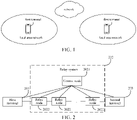
- This disclosure relates to the field of computer technologies, and in particular, to a communication connection method and apparatus, a computer device, and a storage medium.
- a first terminal obtains an Internet protocol (IP) address and a port number of a second terminal, and transmits a connection request message to the second terminal according to the IP address of the second terminal, the connection request message including the port number of the second terminal.
- IP Internet protocol
- the second terminal After receiving the connection request message, the second terminal establishes a communication connection with the first terminal through a port corresponding to the port number.
- a local area network on which the second terminal is located may also change, resulting in a change of the IP address of the second terminal.
- the communication connection between the first terminal and the second terminal is interrupted, and the communication connection needs to be re-established between the first terminal and the second terminal, resulting in relatively low communication efficiency.
- Embodiments of this disclosure provide a communication connection method and apparatus, a computer device, and a storage medium, which can improve the communication efficiency.
- the technical solutions are as follows:
- a communication connection method applicable to a first relay node.
- the method includes: receiving a connection request message transmitted by a first terminal, the connection request message carrying a first user identifier logging in to the first terminal and a second user identifier logging in to a second terminal; determining a second relay node corresponding to the second user identifier according to a correspondence between a user identifier and a relay node, the second relay node being a relay node communicatively connected to the second terminal; transmitting the connection request message to the second relay node through a relay path to the second relay node, so that the second relay node transmits the connection request message to the second terminal; and transmitting, upon reception of a connection confirmation message returned by the second terminal, the connection confirmation message to the first terminal, so that the first terminal establishes a communication connection with the second terminal based on the connection confirmation message.
- a communication connection method applicable to a control node.
- the method includes: receiving a path request transmitted by a first relay node, the path request being transmitted by the first relay node upon reception of a connection request message transmitted by a first terminal, the connection request message carrying a first user identifier logging in to the first terminal and a second user identifier logging in to a second terminal, and the path request carrying identification information of the first relay node and the second user identifier; determining a second relay node corresponding to the second user identifier according to a correspondence between a user identifier and a relay node, the second relay node being a relay node communicatively connected to the second terminal; transmitting, based on the identification information, information about a relay path between the first relay node and the second relay node to the first relay node, so that the first relay node transmits the connection request message to the second relay node according to the information about the relay path, and the second relay node transmits the connection request message to
- a communication connection method is provided, applicable to a third relay node.
- the method includes: receiving a connection request message transmitted by a previous-hop relay node, the connection request message being transmitted by a first terminal to a first relay node and then being forwarded by the first relay node, and the connection request message carrying a first user identifier logging in to the first terminal and a second user identifier logging in to a second terminal; determining a second relay node corresponding to the second user identifier according to a correspondence between a user identifier and a relay node, the second relay node being a relay node connected to the second terminal; selecting a target relay node from a plurality of next-hop relay nodes of the third relay node; transmitting the connection request message to the target relay node, so that the target relay node transmits the connection request message to the second relay node through a relay path to the second relay node, and the second relay node transmits the connection request message to the second terminal; and transmitting, upon
- an apparatus for establishing a communication connection includes: a receiving module, configured to receive a connection request message transmitted by a first terminal, the connection request message carrying a first user identifier logging in to the first terminal and a second user identifier logging in to a second terminal; a determining module, configured to determine a second relay node corresponding to the second user identifier according to a correspondence between a user identifier and a relay node, the second relay node being a relay node connected to the second terminal; and a transmission module, configured to transmit the connection request message to the second relay node through a relay path to the second relay node, so that the second relay node transmits the connection request message to the second terminal, the transmission module being further configured to transmit, upon reception of a connection confirmation message returned by the second terminal, the connection confirmation message to the first terminal, so that the first terminal establishes a communication connection with the second terminal based on the connection confirmation message.
- the transmission module includes: a selection unit, configured to select a target relay node from a plurality of next-hop relay nodes of the first relay node; and a transmission unit, configured to transmit the connection request message to the target relay node, so that the target relay node transmits the connection request message to the second relay node through a relay path to the second relay node.
- the selection unit is configured to perform at least one of the following operations: selecting a target relay node meeting a speed condition from the plurality of next-hop relay nodes of the first relay node, the speed condition being that a data transmission speed between the first relay node and the target relay node is greater than a data transmission speed between the first relay node and another next-hop relay node; and selecting a target relay node meeting a load condition from the plurality of next-hop relay nodes of the first relay node, the load condition being that a load amount of the target relay node is less than a load amount of another next-hop relay node.
- the first relay node is a node in a blockchain system
- the apparatus further includes: a storage module, configured to generate a communication connection record after the first terminal and the second terminal establish the communication connection, and store the communication connection record in the blockchain system, the communication connection record including the first user identifier and the second user identifier.
- the receiving module is configured to receive a first login request transmitted by the first terminal, the first login request carrying the first user identifier; and the apparatus further includes: a control module, configured to control the first terminal to perform login based on the first user identifier; and an establishment module, configured to establish a correspondence between the first user identifier and the first relay node.
- connection request message carries a token identifier; and the storage module is configured to correspondingly store the token identifier and identification information of the target relay node.
- the receiving module is configured to receive a communication request message transmitted by the first terminal, the communication request message carrying the token identifier and communication data; the apparatus further includes: an obtaining module, configured to obtain the identification information of the target relay node that is stored corresponding to the token identifier; and the transmission module is configured to transmit the communication request message to the target relay node based on the identification information, so that the target relay node transmits the communication request message to the second relay node through the relay path to the second relay node, and the second relay node transmits the communication request message to the second terminal.
- an apparatus for establishing a communication connection includes: a receiving module, configured to receive a path request transmitted by a first relay node, the path request being transmitted by the first relay node upon reception of a connection request message transmitted by a first terminal, the connection request message carrying a first user identifier logging in to the first terminal and a second user identifier logging in to a second terminal, and the path request carrying identification information of the first relay node and the second user identifier; a determining module, configured to determine a second relay node corresponding to the second user identifier according to a correspondence between a user identifier and a relay node, the second relay node being a relay node connected to the second terminal; and a transmission module, configured to transmit, based on the identification information, information about a relay path between the first relay node and the second relay node to the first relay node, so that the first relay node transmits the connection request message to the second relay node according to the information about the relay path
- the apparatus further includes: a selection module, configured to select a target relay node from a plurality of next-hop relay nodes of the first relay node; and use identification information of the target relay node as the information about the relay path.
- a selection module configured to select a target relay node from a plurality of next-hop relay nodes of the first relay node; and use identification information of the target relay node as the information about the relay path.
- the selection module is configured to perform at least one of the following operations: selecting a target relay node meeting a speed condition from the plurality of next-hop relay nodes of the first relay node, the speed condition being that a data transmission speed between the first relay node and the target relay node is greater than a data transmission speed between the first relay node and another next-hop relay node; and selecting a target relay node meeting a load condition from the plurality of next-hop relay nodes of the first relay node, the load condition being that a load amount of the target relay node is less than a load amount of another next-hop relay node.
- the receiving module is further configured to receive a path request transmitted by a third relay node, the path request being transmitted by the third relay node upon reception of the connection request message, the path request carrying identification information of the third relay node and the second user identifier, and the third relay node being different from the first relay node.
- the determining module is further configured to determine the second relay node corresponding to the second user identifier according to the correspondence.
- the selection module is further configured to select a target relay node from a plurality of next-hop relay nodes of the third relay node, and use identification information of the target relay node as information about the relay path.
- the transmission module is further configured to transmit, based on the identification information of the third relay node, the information about the relay path to the third relay node, so that the third relay node transmits the connection request message to the target relay node according to the information about the relay path, the target relay node transmits the connection request message to the second relay node, and the second relay node transmits the connection request message to the second terminal.
- the receiving module further configured to receive a second login request transmitted by the first terminal, the second login request carrying a network identifier of the first terminal;
- the apparatus further includes: an obtaining module, configured to obtain a relay node list corresponding to the network identifier, the relay node list including identification information of at least one relay node, and the at least one relay node being connected to a network corresponding to the network identifier; and the transmission module is configured to transmit the relay node list to the first terminal, so that the first terminal selects the identification information of the first relay node from the relay node list, and transmits a first login request to the first relay node based on the identification information, the first login request carrying the first user identifier.
- the receiving module configured to receive a registration request transmitted by the first relay node, the registration request carrying the first user identifier, the identification information of the first relay node, and address information of the first terminal; and the apparatus further includes: a storage module, configured to correspondingly store the first user identifier, the identification information of the first relay node, and the address information of the first terminal.
- the apparatus further includes: a deletion module, configured to delete the first user identifier, the identification information of the first relay node, and the address information of the first terminal in a case that an interruption duration of a connection relationship between the first terminal and the first relay node exceeds a target duration.
- a deletion module configured to delete the first user identifier, the identification information of the first relay node, and the address information of the first terminal in a case that an interruption duration of a connection relationship between the first terminal and the first relay node exceeds a target duration.
- control node is a node in a blockchain system
- the storage module is configured to store the first user identifier, the identification information of the first relay node, and the address information of the first terminal in the blockchain system.
- an apparatus for establishing a communication connection includes: a receiving module, configured to receive a connection request message transmitted by a previous-hop relay node, the connection request message being transmitted by a first terminal to a first relay node and then being forwarded by the first relay node, and the connection request message carrying a first user identifier logging in to the first terminal and a second user identifier logging in to a second terminal; a determining module, configured to determine a second relay node corresponding to the second user identifier according to a correspondence between a user identifier and a relay node, the second relay node being a relay node connected to the second terminal; and a selection module, configured to select a target relay node from a plurality of next-hop relay nodes of the third relay node; and a transmission module, configured to transmit the connection request message to the target relay node, so that the target relay node transmits the connection request message to the second relay node through a relay path to the second relay
- connection request message carries a token identifier
- the apparatus further includes: a storage module, configured to correspondingly store the token identifier and identification information of the target relay node.
- the receiving module is configured to receive a communication request message transmitted by the previous-hop relay node, the communication request message being transmitted by the previous-hop relay node upon reception of a communication request message transmitted by the first terminal, and the communication request message carrying the token identifier and communication data;
- the apparatus further includes: an obtaining module, configured to obtain the identification information of the target relay node that is stored corresponding to the token identifier; and the transmission module is configured to transmit the communication request message to the target relay node based on the identification information, so that the target relay node transmits the communication request message to the second relay node through the relay path to the second relay node, and the second relay node transmits the communication request message to the second terminal.
- a computer device including a processor and a memory, the memory storing at least one instruction, the instruction being loaded and executed by the processor to implement operations performed in the method for establishing a communication connection according to the foregoing aspect.
- a computer-readable storage medium storing at least one instruction, the instruction being loaded and executed by a processor to implement operations performed in the method for establishing a communication connection according to the foregoing aspect.
- a computer program product or a computer program storing computer program code, the computer program code being stored in a computer-readable storage medium.
- a processor of a computer device reads the computer program code from the computer-readable storage medium, and the processor executes the computer program code, to cause the computer device to implement operations performed in the method for establishing a communication connection according to the foregoing aspect.
- both the first terminal and the second terminal log in to relay nodes, and a communication connection between the first terminal and the second terminal is established by using at least one relay node. Because the first terminal and the second terminal log in to the relay nodes, changes of address information of the first terminal and the second terminal do not affect communication between the first terminal as well as the second terminal and the relay nodes to which the first terminal and the second terminal log in, and address information of the relay nodes do not change, the communication connection is not affected. When a location of the first terminal or the second terminal changes, the first terminal and the second terminal can still communicate with each other by using the established communication connection. There is no need to re-establish a connection, so that the communication efficiency is improved.
- At least one relay node needs to be selected to perform data forwarding.
- a data transmission speed, load, and the like of the relay node are considered, to ensure real-time interaction between the first terminal and the second terminal.
- first, second, and the like used in this disclosure may be used for describing various concepts in this specification. However, the concepts are not limited by the terms unless otherwise specified. The terms are merely used for distinguishing one concept from another concept. For example, without departing from the scope of this disclosure, a first terminal may be referred to as a second terminal, and similarly, the second terminal may be referred to as the first terminal.
- a plurality of relay nodes include three relay nodes, “each” refers to each of the three relay node, and “any” refers to any one of the three relay nodes, which may be the first one, the second one, or the third one.
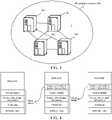
- FIG. 2 is a schematic diagram of an implementation environment according to an embodiment of this disclosure.
- the implementation environment includes: a first terminal 201, a relay system 202, and a second terminal 203.
- the first terminal 201 and the second terminal 203 are each communicatively connected to the relay system 202 through a network.
- the first terminal 201 and the second terminal 203 are devices such as mobile phones, computers, or tablet computers.
- the relay system 202 is a server, a server cluster including a plurality of servers, or a cloud computing service center. This is not limited in the embodiments of this disclosure.
- the first terminal 201 When the first terminal 201 communicates with the second terminal 203, the first terminal 201 transmits communication data to the relay system 202, and the relay system 202 forwards the communication data to the second terminal 203.
- the second terminal 203 transmits communication data to the relay system 202, and the relay system 202 forwards the communication data to the first terminal 201.
- the relay system 202 includes a control node 2021 and a plurality of relay nodes 2022.
- the control node 2021 is configured to manage the terminals and the plurality of relay nodes, and the plurality of relay nodes 2022 are configured to forward communication data between the first terminal 201 and the second terminal 203.
- the plurality of relay nodes 2022 are located in different regions, and cross-region communication can be implemented through data relay by using the plurality of relay nodes 2022.
- a target application is installed on the terminal 201, the relay system is associated with the target application, and the relay system provides services to the target application.
- the target application has a communication function, and the first terminal 201 communicates with the second terminal 203 by using the target application.
- a blockchain system is further provided.
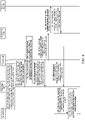
- the blockchain system 300 is a system for data sharing between nodes, and the blockchain system includes a plurality of nodes 301.
- Each node 301 can receive input information and maintain shared data in the blockchain system based on the received input information during normal working.
- there is an information connection between each two nodes in the blockchain system and the nodes can transmit information to each other through the information connection.
- the nodes can transmit information to each other through the information connection. For example, when any node in the blockchain system receives input information, other nodes in the blockchain system obtain the input information according to a consensus algorithm, and store the input information as data in the shared data, so that data stored in all the nodes in the blockchain system is consistent.
- Each node in the blockchain system has a corresponding node identifier, and each node in the blockchain system can store node identifiers of other nodes in the blockchain system, to broadcast a generated block to the other nodes in the blockchain system based on the node identifiers of the other nodes subsequently.
- Each node may maintain a node identifier list shown in the following table, and correspondingly store a node name and a node identifier in the node identifier list.
- the node identifier may be an IP address or any other information that can be used to identify the node. Only an IP address is used for description in Table 1.
- Table 1 Node name Node identifier Node 1 117.114.151.174
- Node 2 117.116.189.145 ... ...
- Node N 119.123.789.258
- Each node in the blockchain system stores the same blockchain.
- the blockchain includes a plurality of blocks, and a genesis block includes a block header and a block body.
- the block header stores a feature value of input information, a version number, a timestamp, and a difficulty value
- the block body stores the input information.
- a next block of the genesis block uses the genesis block as a parent block, and the next block also includes a block header and a block body.
- the block header stores a feature value of input information of the current block, the feature value in the block header of the parent block, a version number, a timestamp, and a difficulty value, and the rest is deduced by analogy, so that block data stored in each block in the blockchain is associated with block data stored in the parent block, ensuring the security of the input information in the blocks.
- any one of the control node and the plurality of relay nodes may be a node in the blockchain, and can share obtained information with other nodes in the blockchain system, implementing information sharing among a plurality of nodes.
- FIG. 5 is a flowchart of a login method according to an embodiment of this disclosure.
- interaction is performed by the first terminal 201 and the relay system 202 shown in FIG. 2 , and a login process is described in this embodiment of this disclosure.
- the method includes the following steps:
- the control node receives a second login request transmitted by the first terminal, the second login request carrying a network identifier of the first terminal.
- the control node is a server in the relay system that is configured to manage a plurality of relay nodes and a plurality of terminals.
- the control node stores related information of the plurality of relay nodes and the plurality of terminals.
- the control node may store status information of the plurality of relay nodes and configuration information of the plurality of terminals.
- the status information of the relay node includes at least one of the following: a node identifier of the relay node, address information of the relay node, a network to which the relay node is communicatively connected, a relay process list corresponding to the relay node, and address information corresponding to each relay process.
- the configuration information of the terminal includes an interaction manner of the terminal. For example, the terminal transmits a heartbeat packet to the control node at an interval of a preset duration, to notify the control node of status information of the terminal.
- the first terminal transmits the second login request in the following case: If the first terminal starts the target application, the first terminal transmits the second login request to the control node, the control node being a server associated with the target application.
- the first terminal may perform Internet service provider (ISP) identification, to obtain the network identifier of the first terminal, and transmit the second login request to the control node, the second login request carrying the network identifier of the first terminal.
- the network identifier may indicate a network service provider corresponding to a network.
- the network identifier is a number corresponding to the network service provider, the name of the company to which the network service provider belongs, or the like. Due to different network service providers, the terminal may be communicatively connected to different networks. For example, if the terminal is communicatively connected to a network provided by a network service provider A, a network identifier is an identifier A. If the terminal is communicatively connected to a network provided by a network service provider B, a network identifier is an identifier B.
- the network identifier can further indicate a connection range of the network to which the terminal is communicatively connected.
- the network to which the terminal is communicatively connected is a local network, a regional network, a national network, or a global network.
- the network identifier is 1.
- the network identifier is 2.
- the network identifier is 3.
- the network identifier is 4.
- the second login request further includes a location of the first terminal.
- the location is obtained through positioning by using a positioning system on the first terminal, or obtained through positioning by using a global positioning system (GPS).
- GPS global positioning system
- a network connection is established between the control node and the first terminal, and services are provided for the first terminal through the network connection.
- the control node may allocate a relay node for the first terminal according to the second login request and the status information of the plurality of relay nodes, so that the first terminal logs in to the allocated relay node.
- the control node obtains a relay node list corresponding to the network identifier, the relay node list including identification information of at least one relay node, and the at least one relay node being communicatively connected to a network corresponding to the network identifier.
- a plurality of relay nodes may be communicatively connected to networks provided by different network service providers.
- a first relay node is communicatively connected to the network provided by the network service provider A
- a second relay node is communicatively connected to the network provided by the network service provider B. This is not limited in this embodiment of this disclosure.
- the second login request carries the network identifier of the first terminal, so that the control node can obtain, according to the network identifier carried in the second login request, at least one relay node communicatively connected to a network corresponding to the network identifier.
- the control node filters out a relay node that is communicatively connected to another network.
- the obtaining a relay node and the filtering out a relay node refer to: obtaining identification information of the relay node and filtering out identification information of the relay node.
- the control node obtains identification information of a plurality of relay nodes, and screens the identification information of the plurality of relay nodes according to the network identifier of the first terminal, to obtain identification information of at least one relay node, the at least one relay node being communicatively connected to the network corresponding to the network identifier.
- the identification information of the relay node is a unique identifier of the relay node.
- the identification information is an internal IP address of the relay node, an external IP address of the relay node, a serial number of the node, a name of the node, or the like. The identification information is not limited in this embodiment of this disclosure.
- the network identifier of the first terminal is the identifier A
- identification information of a relay node that is communicatively connected to the network provided by the network service provider A is obtained, and identification information of a relay node that is communicatively connected to the network provided by the network service provider B and identification information of a relay node that is communicatively connected to a network provided by the network service provider C are filtered out.
- the network identifier can further indicate a network connection range of the first terminal, and at least one relay node that meets the network connection range of the first terminal is selected from the obtained at least one relay node.
- the network identifier is 1, indicating that the terminal is communicatively connected to the local network, and if the terminal is located in Shenzhen, at least one relay node located in Shenzhen is obtained.
- the network identifier is 2, indicating that the terminal is communicatively connected to the regional network, and if the terminal is located in Shenzhen, at least one relay node located in the Guangdong province is obtained.
- the second login request further carries the location of the first terminal, and the control node can perform further screening on the selected at least one relay node according to the location. For example, if the first terminal is located in Shenzhen, the control node may select a relay node that is close to the first terminal, such as a relay node located in Shenzhen or a relay node located in Guangzhou, and filter out a relay node located in Shanghai and a relay node located in Tianjin.
- a relay node that is close to the first terminal such as a relay node located in Shenzhen or a relay node located in Guangzhou, and filter out a relay node located in Shanghai and a relay node located in Tianjin.
- the control node After screening the identification information of the plurality of relay nodes, the control node adds the obtained identification information of the at least one relay node into the relay node list.
- the control node transmits the relay node list to the first terminal.
- the first terminal receives the relay node list, and selects identification information of a first relay node from the relay node list.
- the first relay node is any one of the plurality of relay nodes.
- the relay node list includes identification information of at least one relay node. If the relay node list includes identification information of one relay node, the relay node corresponding to the identification information is directly determined as the first relay node. If the relay node list includes identification information of a plurality of relay nodes, the first terminal selects one relay node from the plurality of relay nodes as the first relay node.
- the first terminal randomly selects one piece of identification information from the relay node list, and uses a relay node corresponding to the identification information as the first relay node.
- the first terminal may select, according to a target condition, a relay node that meets the target condition from the plurality of relay nodes as the first relay node.
- the target condition is a speed condition
- the speed condition is that a data transmission speed of the first relay node is greater than a data transmission speed of another relay node.
- the target condition is a load condition
- the load condition is that a load amount of the first relay node is less than a load amount of another relay node.
- the first terminal After receiving the relay node list, the first terminal can perform, according to the identification information in the relay node list, speed detection on the relay nodes corresponding to the identification information, and use a relay node having the highest data transmission speed in the plurality of relay nodes as the first relay node.
- the speed detection performed on the relay node by the first terminal includes: transmitting first data to the relay node, obtaining a first time at which the first data is transmitted, receiving the first data forwarded by the relay node, obtaining a second time at which the first data is received, and determining, according to a time difference between the first time and the second time, a data transmission speed between the first terminal and the relay node.
- a target quantity of relay nodes are selected, and one of the target quantity of relay nodes is used as the first relay node, and another one of the target quantity of relay nodes is used as a standby relay node.
- the first terminal can perform login by using the standby relay node.
- Data transmission speeds of the target quantity of relay nodes are greater than a data transmission speed of another relay node in the plurality of relay nodes.
- the using, by the first terminal, one of the target quantity of relay nodes as the first relay node includes: randomly selecting one relay node from the target quantity of relay nodes as the first relay node; or selecting a relay node having the highest data transmission speed in the target quantity of relay nodes as the first relay node, or selecting a relay node having the smallest load amount from the target quantity of relay nodes as the first relay node.
- the target quantity may be two, three, four, five, or any quantity.
- the target quantity is not limited in this embodiment of this disclosure.
- the first terminal transmits a first login request to the first relay node based on the identification information, the first login request carrying a first user identifier.
- the first user identifier is a user identifier logging in to the first terminal, and the first user identifier is used for indicating an identity of a user of the first terminal.
- the target application is installed on the first terminal, and the first user identifier is a user account that is used for logging in to the target application.
- the first login request further carries an internal IP address of the first terminal, so that the first relay node may subsequently communicate with the first terminal based on the internal IP address.
- the first relay node receives the first login request transmitted by the first terminal, controls the first terminal to perform login based on the first user identifier, and establishes a correspondence between the first user identifier and the first relay node.
- the first relay node After receiving the first login request, the first relay node can obtain the first user identifier carried in the first login request.
- the establishing, by the first relay node, a correspondence between the first user identifier and the first relay node includes: correspondingly storing, by the first relay node, the first user identifier and the identification information of the first relay node into the control node, so that the control node selects, based on the stored first user identifier and the stored identification information of the first relay node, a corresponding relay node to establish a communication connection between the first terminal and a second terminal.
- the first relay node transmits a registration request to the control node, the registration request carrying the first user identifier and the identification information of the first relay node, and the control node receives the registration request, and correspondingly stores the first user identifier and the identification information of the first relay node.
- the first login request carries address information of the first terminal, such as an internal IP address.
- the establishing, by the first relay node, a correspondence between the first user identifier and the first relay node refers to: establishing a correspondence between the first user identifier, the identification information of the first relay node, and the address information of the first terminal.
- the first relay node transmits a registration request to the control node, the registration request carrying the first user identifier, the identification information of the first relay node, and the address information of the first terminal.
- the control node receives the registration request, and correspondingly stores the first user identifier, the identification information of the first relay node, and the address information of the first terminal.
- the address information of the first terminal includes: an internal IP address of the first terminal, or an internal IP address and an external IP address of the first terminal.
- the identification information of the first relay node includes a node name of the first relay node and address information of the first relay node.
- the address information of the first relay node includes at least one of an external IP address and an internal IP address of the first relay node. The control node establishes a communication connection with the first relay node according to the address information of the first relay node, to implement data transmission with the first relay node.
- the control node can further transmit the external IP address of the first terminal to the first terminal. Therefore, the first terminal learns the external IP address of the first terminal.
- the external IP address can be carried, so that the first relay node forwards, based on the external IP address, communication data that is transmitted by the another terminal to the first terminal.
- the second terminal can also log in to the relay system, and a process of logging in to the relay system by the second terminal is similar to the process of logging in to the relay system by the first terminal. Details are not described herein.
- the relay system includes a plurality of relay nodes, and the first terminal logs in to the first relay node. Subsequently, a communication connection between the first terminal and the second terminal can be established by using the first relay node and another relay node in the relay system, and communication may be performed through the communication connection.
- the communication connection is established between the first terminal and the second terminal by logging in to relay nodes, a location change of the first terminal or the second terminal does not affect connections between the first terminal as well as the second terminal and the relay nodes to which the first terminal and the second terminal log in, and address information of the relay nodes do not change, the communication connection between the first terminal and the second terminal is not affected, and the first terminal and the second terminal can still communicate with each other by using the established communication connection. There is no need to re-establish a connection, so that the communication efficiency is improved.
- the first terminal selects a first relay node having a higher data transmission speed.
- the first relay node to which the first terminal logs in may transmit data faster, which ensures a data transmission speed, thereby ensuring the real-time communication between the first terminal and the second terminal.
- FIG. 6 is a flowchart of a method for establishing a communication connection according to an embodiment of this disclosure.
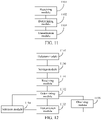
- FIG. 7 is a diagram of data exchange for establishing a communication connection according to an embodiment of this disclosure. In this embodiment of this disclosure, interaction is performed by the first terminal 201, the relay system 202, and the second terminal 203 shown in FIG. 2 , and a process of establishing a communication connection is described in this embodiment of this disclosure. Referring to FIG. 6 and FIG. 7 , the method includes the following steps:
- a first relay node receives a connection request message transmitted by the first terminal, the connection request message carrying a first user identifier logging in to the first terminal and a second user identifier logging in to the second terminal.
- the connection request message is transmitted to the first relay node by the first terminal upon reception of an instruction for communicating with the second terminal after the first terminal logs in to the first relay node.
- a user inputs communication data in a chat interface of the first terminal, the chat interface being an interface for chatting between the first terminal and the second terminal. If the first terminal receives a transmission instruction triggered by the user, the first terminal transmits a connection request message to the first relay node.
- the communication data is text data, audio data, video data, or the like.
- the user identifier is used for identifying an identity of the user of the terminal.
- the user identifier is a user account, a nickname of the user, a phone number of the user, or the like.
- the first terminal may establish connections with different second terminals by using different internal IP addresses. Therefore, when the first terminal establishes a communication connection with a second terminal, the first terminal may add, to a connection request message, an internal IP address that is used to establish the communication connection with the second terminal.
- the first relay node transmits an external IP address of the first terminal to the first terminal. Therefore, the first terminal may further add the external IP address to the connection request message.
- some networks are set as follows: an internal IP address of a terminal changes dynamically. If the first terminal is communicatively connected to such a network, an internal IP address of the first terminal constantly changes, and the first terminal adds a current internal IP address to the connection request message. Optionally, the first terminal further adds the external IP address to the connection request message.
- the first relay node can transmit the connection confirmation message to the first terminal according to the address information of the first terminal.
- connection request message further includes a token identifier, the token identifier being used for identifying the connection request message.
- token identifier is in a form of a serial number or a character string. A specific form of the token identifier is not limited in this embodiment of this disclosure.
- the first relay node after receiving the connection request message transmitted by the first terminal, the first relay node creates a new process, and use the process to perform the following communication connection steps of the first relay node in response to the connection request message.
- a process identifier of the process is added to a relay process list of the first relay node.
- the process identifier is address information of the process, such as a port number.
- the first relay node transmits a path request to the control node, the path request carrying identification information of the first relay node and the second user identifier.
- the first relay node After receiving the connection request message, the first relay node transmits the path request to the control node.
- the first relay node transmits the path request to the control node, the path request carrying the identification information of the first relay node and the second user identifier. After receiving the path request, the control node performs step 603 and step 604.
- the path request includes a first path request and a second path request.
- the first path request carries the second user identifier
- the second path request carries the identification information of the first relay node.
- the control node includes an online service module and a control module. The first relay node transmits the first path request to the online service module, and after receiving the first path request, the online service module performs step 603. After determining a second relay node, the online service module transmits identification information of the second relay node to the first relay node.
- the first relay node After receiving the identification information of the second relay node, the first relay node adds the identification information of the second relay node to the second path request, and transmits the second path request to the control module. After receiving the second path request, the control module performs step 604.
- the control node determines a second relay node corresponding to the second user identifier according to a correspondence between a user identifier and a relay node.
- the second relay node is a relay node to which the second terminal logs in, and the second relay node is any relay node in the relay system.
- the second terminal can log in to the second relay node by using the user identifier logging in to the second terminal.
- the control node stores a correspondence between the second user identifier and the second relay node. Therefore, the control node can query the correspondence between a user identifier and a relay node according to the second user identifier, to obtain the identification information of the second relay node corresponding to the second user identifier, to determine the second relay node corresponding to the second user identifier.
- control node can further determine address information of the second terminal according to the second user identifier, and adds the address information of the second terminal to the connection request message. Subsequently, the second relay node may directly transmit the connection request message to the second terminal based on the address information of the second terminal in the connection request message.
- the control node transmits information about a relay path between the first relay node and the second relay node to the first relay node based on the identification information of the first relay node.
- the control node determines the information about the relay path between the first relay node and the second relay node based on the identification information of the first relay node and the identification information of the second relay node.
- the control node determines a target relay node step by step; or directly determines at least one another relay node through which the first relay node transmits data to the second relay node.
- the control node determines a target relay node step by step. That the control node determines a target relay node step by step refers to that the control node determines only a target relay node of a current relay node.
- the first relay node obtains identification information of a target relay node in the control node, and transmits the connection request message to the target relay node.
- the target relay node obtains identification information of a target relay node of the current relay node in the control node, and transmits the connection request message to the target relay node until obtained identification information of a target relay node is the identification information of the second relay node.
- the target relay node is a node receiving the connection request message forwarded by the current relay node.
- control node determines a target relay node of the first relay node based on the identification information of the first relay node, there may be the following three cases.
- the first relay node and the second relay node are the same relay node.
- the control node After obtaining the identification information of the second relay node, if the identification information of the second relay node is the same as the identification information of the first relay node, the control node determines that the second relay node and the first relay node are the same relay node. The first relay node directly transmits the connection request message to the second terminal.
- the first relay node is directly communicatively connected to the second relay node.
- the control node After obtaining the identification information of the second relay node, the control node determines that the first relay node is communicatively connected to the second relay node based on the identification information of the first relay node and the identification information of the second relay node, uses the second relay node as a target relay node of the first relay node, and transmits a node identifier of the second relay node to the first relay node.
- the first relay node transmits the connection request message to the second relay node according to the node identifier of the second relay node.
- the first relay node and the second relay node are not the same relay node, and the first relay node is not directly communicatively connected to the second relay node.
- the control node After obtaining the identification information of the second relay node, the control node determines, based on the identification information of the first relay node and the identification information of the second relay node, that the first relay node and the second relay node are not the same relay node, and the first relay node is not directly communicatively connected to the second relay node, that is, the second relay node is not a next-hop relay node of the first relay node.
- a manner in which the control node determines the information about the relay path between the first relay node and the second relay node based on the identification information includes: selecting, by the control node, a target relay node from a plurality of next-hop relay nodes of the first relay node, and transmitting identification information of the target relay node to the first relay node, the identification information including a node identifier of the target relay node.
- the selecting a target relay node from a plurality of next-hop relay nodes of the first relay node may include at least one of the following operations:
- the control node stores identification information of an abnormal relay node.
- the first relay node transmits identification information of the plurality of next-hop relay nodes of the first relay node to the control node.
- the control node screens the identification information of the next-hop relay nodes according to the stored identification information of the abnormal relay node, and transmits identification information of a next-hop relay node that works normally to the first relay node.
- the first relay node performs speed detection on the next-hop relay node that works normally, and transmits a speed detection result to the control node.
- the control node selects, according to the speed detection result, a target relay node meeting a speed condition from the plurality of next-hop relay nodes of the first relay node.
- the control node stores a topological structure of relay nodes. After the first relay node transmits the identification information of the first relay node to the control node, the control node determines, according to the topological structure, a plurality of next-hop relay nodes communicatively connected to the first relay node. Therefore, the first relay node does not need to transmit identification information of the plurality of next-hop relay nodes to the control node.
- a speed detection process is similar to that in step 504. Details are not described herein.
- the first relay node transmits identification information of the plurality of next-hop relay nodes of the first relay node to the control node.
- the control node screens the identification information of the next-hop relay nodes according to stored identification information of an abnormal relay node, and performs speed detection on a next-hop relay node that works normally.
- the control node selects, according to a speed detection result, a target relay node meeting a speed condition from the plurality of next-hop relay nodes of the first relay node.
- a next-hop relay node having the highest data transmission speed is selected from the plurality of next-hop relay nodes of the first relay node as the target relay node, ensuring the data transmission speed between the first relay node and the second relay node, so that the first terminal interacts with the second terminal in real time.
- a relay node having the smallest load amount is selected from the plurality of next-hop relay nodes of the first relay node. In this way, the proper utilization of a plurality of relay nodes is ensured, and an abnormal relay node or a decrease in a data transmission speed of a relay node caused by a large load amount of the relay node can be avoided.
- a load amount of a relay node may be determined by using a relay process list of the relay node.
- a larger quantity of relay processes in the relay process list indicates a larger load amount of the relay node.
- the load amount of the relay node can be determined by using a quantity of terminals logging in to the relay node. This is not limited in this embodiment of this disclosure.
- the control node stores relay process lists of all relay nodes.
- the first relay node transmits identification information of the plurality of next-hop relay nodes of the first relay node to the control node.
- the control node obtains a relay process list of each relay node, and transmits the relay process list of each relay node to the first relay node.
- the first relay node selects a target relay node meeting a load condition from the plurality of next-hop relay nodes, the load condition being that a quantity of processes in a relay process list of the target relay node is less than a quantity of processes in a relay process list of another next-hop relay node.
- the control node stores relay process lists of all relay nodes.
- the first relay node may transmit identification information of the plurality of next-hop relay nodes of the first relay node to the control node.
- the control node obtains a relay process list of each relay node, and selects a target relay node meeting a load condition from the plurality of next-hop relay nodes, the load condition being that a quantity of processes in a relay process list of the target relay node is less than a quantity of processes in a relay process list of another next-hop relay node.
- the control node transmits a node identifier of the target relay node to the first relay node.
- the first relay node uses identification information of the target relay node as identification information of a third relay node, and transmits the connection request message to the third relay node.
- the selecting a target relay node from a plurality of next-hop relay nodes of the first relay node includes: selecting a target relay node meeting a speed condition and a load condition from the plurality of next-hop relay nodes of the first relay node. In this way, both a data transmission speed and a load amount of the relay node are considered, so that the selected target relay node has better performance.
- the selecting a target relay node meeting a speed condition and a load condition from the plurality of next-hop relay nodes of the first relay node includes: determining a first parameter of each next-hop relay node according to a data transmission speed between each next-hop relay node and the first relay node; determining a second parameter of each next-hop relay node according to a load amount of each next-hop relay node; and selecting a target relay node from the plurality of next-hop relay nodes according to the first parameter and the second parameter of each next-hop relay node.
- the first parameter has a positive correlation with the data transmission speed
- the second parameter has a negative correlation with the load amount.
- the selecting a target relay node from the plurality of next-hop relay nodes according to the first parameter and the second parameter of each next-hop relay node includes: performing statistical processing on the first parameter and the second parameter of each next-hop relay node, to obtain a third parameter of each next-hop relay node, the third parameter being capable of indicating performance of the relay node; and selecting a next-hop relay node having the largest third parameter as the target relay node.
- the performing statistical processing on the first parameter and the second parameter of each next-hop relay node, to obtain a third parameter of each next-hop relay node includes: performing average processing on the first parameter and the second parameter of each next-hop relay node, to obtain the third parameter of each next-hop relay node; or performing summation processing on the first parameter and the second parameter of each next-hop relay node, to obtain the third parameter of each next-hop relay node; or performing weighting processing on the first parameter and the second parameter of each next-hop relay node, to obtain the third parameter of each next-hop relay node.
- a target relay node is selected only according to a speed condition or a load condition.
- the target relay node may be alternatively selected according to another condition.
- a condition for selecting the target relay node is not limited in this embodiment of this disclosure.
- the third relay node obtains a target relay node of the third relay node in the same manner in which the first relay node obtains a target relay node, and each selected target relay node obtains a next-hop target relay node in the same manner in which the first relay node obtains a target relay node, until an obtained next-hop target relay node is the second relay node.
- the first relay node may transmit the connection request message to the target relay node, and correspondingly stores the token identifier and identification information of the target relay node.
- the third relay node transmits the identification information of the second relay node and the identification information of the third relay node to the control node, and the control node selects a target relay node from a plurality of next-hop relay nodes of the third relay node.
- the third relay node correspondingly stores the token identifier and identification information of the target relay node.
- Each selected target relay node obtains a next-hop target relay node from the control node, and correspondingly stores the token identifier and identification information of the next-hop target relay node after transmitting the connection request message to the next-hop target relay node.
- each target relay node further correspondingly stores the token identifier and a node identifier of a previous-hop relay node.
- the target relay node can further create a process, and use the process to perform steps of obtaining a next-hop target relay node, forwarding the connection request message, and the like in response to the connection request message.
- a process identifier of the process is the same as a process identifier of a corresponding process in the previous-hop relay node, or is designated by the previous-hop relay node.
- the first relay node after receiving the connection request message, the first relay node creates a process, a process identifier of the process being A.
- the first relay node may transmit the process identifier and the connection request message to the third relay node, and the third relay node creates a process, and uses the process identifier A as a process identifier of the process. Subsequently, when forwarding communication data of the first terminal, the first relay node can directly trigger the process of the third relay node according to the process identifier.
- the first relay node after transmitting the connection request message to the third relay node, the first relay node further transmits the relay process list of the first relay node to the control node, so that the control node updates the relay process list corresponding to the first relay node.
- each target relay node After transmitting the connection request message to the next-hop target relay node, each target relay node further transmits a relay process list of the target relay node to the control node, so that the control node updates the relay process list corresponding to the target relay node.
- a path request transmitted by the third relay node is received, the path request being transmitted by the third relay node upon reception of the connection request message, the path request carrying identification information of the third relay node and the second user identifier, and the third relay node being different from the first relay node.
- the second relay node corresponding to the second user identifier is determined according to the correspondence.
- Information about a transit path between the third relay node and the second relay node is transmitted to the third relay node, so that the third relay node transmits the connection request message to the second relay node according to the information about the relay path.
- the control node after receiving a path request of the first relay node, obtains information about a relay path between the first relay node and the second relay node.
- the first relay node transmits the connection request message and the information about the relay path to a next-hop relay node in the relay path according to the indication of the information about the relay path.
- Each relay node in the relay path transmits the connection request message and the information about the relay path to a next-hop relay node according to the indication of the information about the relay path.
- a manner in which the control node determines the information about the relay path between the first relay node and the second relay node based on the identification information includes: determining the information about the relay path between the first relay node and the second relay node based on address information of the first relay node and address information of the second relay node, the information about the relay path including identification information of at least one relay node.
- the control node stores a topological structure of a plurality of relay nodes, and determines the information about the relay path between the first relay node and the second relay node according to a node identifier of the first relay node, a node identifier of the second relay node, and the topological structure of the plurality of relay nodes.
- the control node determines a relay node in the relay path in the manner of selecting a target relay node described in the first possible implementation. Details are not described again in this embodiment of this disclosure.
- step 604 determines the information about the relay path. In some embodiments, step 604 is not performed.
- the control node After determining the second relay node corresponding to the second user identifier according to the correspondence between a user identifier and a relay node, the control node transmits the node identifier of the second relay node to the first relay node.
- the first relay node selects a target relay node from a plurality of next-hop relay nodes of the first relay node, and transmits the connection request message to the target relay node, so that the target relay node transmits the connection request message to the second relay node through a relay path to the second relay node.
- the selecting a target relay node from a plurality of next-hop relay nodes of the first relay node includes at least one of the following operations: (1) selecting a target relay node meeting a speed condition from the plurality of next-hop relay nodes of the first relay node, the speed condition being that a data transmission speed between the first relay node and the target relay node is greater than a data transmission speed between the first relay node and another next-hop relay node; and (2) selecting a target relay node meeting a load condition from the plurality of next-hop relay nodes of the first relay node, the load condition being that a load amount of the target relay node is less than a load amount of another next-hop relay node.
- the first relay node transmits the connection request message to the second relay node according to the information about the relay path.
- the information about the relay path indicates only a next-hop relay node, and each relay node other than the second relay node in the relay path needs to obtain information about a relay path from the control node, to transmit the connection request message to a next-hop target relay node.
- the first relay node after receiving the identification information of the target relay node, correspondingly stores the token identifier and the identification information of the target relay node.
- the information about the relay path indicates the relay path between the first relay node and the second relay node, and each relay node in the relay path transmits the connection request message and the information about the relay path to a next-hop target relay node according to the indication of the information about the relay path.
- the second relay node transmits the connection request message to the second terminal.
- the second relay node Because the second terminal logs in to the second relay node, the second relay node stores the address information of the second terminal, and transmits the connection request message to the second terminal based on the address information of the second terminal.
- the control node stores a correspondence between a user identifier and address information of a terminal. The address information of the second terminal is obtained from the control node based on the second user identifier, and the connection request message is transmitted to the second terminal according to the address information.
- connection request message carries the address information of the second terminal
- the second relay node transmits the connection request message to the second terminal according to the address information of the second terminal.
- the second terminal After receiving the connection request message, the second terminal transmits a connection confirmation message to the second relay node.
- the second terminal After receiving the connection request message, the second terminal directly generates the connection confirmation message according to the connection request message. Alternatively, after receiving a confirmation instruction for the connection request message, the second terminal transmits the connection confirmation message to the second relay node.
- a current interface of the second terminal displays the connection request message, and the connection request message indicates that the first terminal is to establish a communication connection with the second terminal. If a confirmation instruction for the connection request message is received, the second terminal generates the connection confirmation message, and transmits the connection confirmation message to the second relay node.
- connection confirmation message carries the second user identifier of the second terminal.
- connection confirmation message further carries the token identifier, so that each relay node in a relay path obtains identification information of a next-hop target relay node according to the token identifier.
- connection confirmation message further carries the address information of the first terminal, so that the first relay node directly transmits the connection confirmation message to the first terminal.
- the second relay node After receiving the connection confirmation message, the second relay node transmits the connection confirmation message to the first relay node.
- the second relay node After receiving the connection confirmation message, the second relay node obtains, based on the token identifier in the connection confirmation message, identification information of a next-hop target relay node from a correspondence between a token identifier and identification information of a target relay node, and transmits the connection confirmation message to the next-hop target relay node, thereby transmitting the connection confirmation message to the first relay node through the original path.
- the second relay node obtains identification information of a previous-hop relay node according to the token identifier, uses the previous-hop relay node as a next-hop target relay node, and transmits the connection confirmation message to the next-hop target relay node.
- the first relay node After receiving the connection confirmation message, the first relay node transmits the connection confirmation message to the first terminal, and the first terminal establishes a communication connection with the second terminal based on the connection confirmation message.
- the first terminal After the first terminal establishes the communication connection with the second terminal, the first terminal can communicate with the second terminal through the established communication connection.
- the first relay node receives a communication request message transmitted by the first terminal, the communication request message carrying the token identifier and communication data; obtains the identification information of the target relay node that is stored corresponding to the token identifier, and using the identification information of the target relay node as identification information of a third relay node; and transmits the communication request message to the third relay node, so that the third relay node transmits the communication request message to the second relay node through a relay path to the second relay node, and the second relay node transmits the communication request message to the second terminal.
- the first user identifier, the identification information of the first relay node, and the address information of the first terminal are deleted in a case that an interruption duration of a connection relationship between the first terminal and the first relay node exceeds a target duration.
- the second user identifier, the identification information of the second relay node, and the address information of the second terminal are deleted in a case that an interruption duration of a connection relationship between the second terminal and the second relay node exceeds the target duration.
- a relay node can further delete a correspondence between a token identifier and a target relay node according to the token identifier.
- a relay node can further delete a corresponding process.
- the first terminal and the second terminal establish the communication connection, if a relay node is abnormal in the relay path between the first relay node and the second relay node, the second terminal is off-line, or another case occurs, a connection failure message is returned to the first terminal.
- any one of the plurality of relay nodes and the control node is a node in a blockchain system. If the first relay node is the node in the blockchain system, after establishing the communication connection, the first relay node generates a communication connection record, and stores the communication connection record in the blockchain system, the communication connection record including the first user identifier and the second user identifier. Alternatively, after the first terminal logs in to the first relay node, a correspondence between the first user identifier and the first relay node is stored in the blockchain system. Alternatively, after the connection request message is received, the connection request message is stored in the blockchain system.
- the first relay node after transmitting the connection request message to the target relay node, the first relay node correspondingly stores the token identifier and the identification information of the target relay node into the blockchain system. Alternatively, after receiving the communication request message, the first relay node generates a communication request record, and stores the communication request record in the blockchain system.
- both the first terminal and the second terminal log in to relay nodes, and a communication connection between the first terminal and the second terminal is established by using at least one relay node. Because the first terminal and the second terminal log in to the relay nodes, changes of address information of the first terminal and the second terminal do not affect communication between the first terminal as well as the second terminal and the relay nodes to which the first terminal and the second terminal log in, and address information of the relay nodes do not change, the communication connection is not affected. When a location of the first terminal or the second terminal changes, the first terminal and the second terminal can still communicate with each other by using the established communication connection. There is no need to re-establish a connection, so that the communication efficiency is improved.
- At least one relay node needs to be selected to perform data forwarding.
- a data transmission speed, load, and the like of the relay node are considered, to ensure real-time interaction between the first terminal and the second terminal.
- a relay node includes RelaySvr (a data relay module) and RelayNode (a node management module).
- RelaySvr A terminal can log in to RelaySvr on the relay node, RelaySvr is responsible for communication between terminals, and data packets transmitted by the terminal need to be relayed through one or more layers of RelaySvr.
- RelayNode It is configured to obtain identification information of a plurality of next-hop relay nodes communicatively connected to the relay node; and can be further configured to measure a data transmission speed between the relay node and each next-hop relay node; provide address information of a next-hop relay node during data relay; and report a relay process list of the relay node and the data transmission speed between the relay node and each next-hop relay node to the control node.
- the control node may include: RelayOnline (a user online service), RelayCenter (an internal relay control and monitoring center), RelayCluster (an external client-specific control center), and P2PStun (a P2P network address translation (NAT) session transmission application).
- RelayOnline a user online service
- RelayCenter an internal relay control and monitoring center
- RelayCluster an external client-specific control center
- P2PStun a P2P network address translation (NAT) session transmission application
- RelayOnline (the user online service): It stores address information of a current online user and address information of RelaySvr to which the current online user logs in, and provides a corresponding service for relay routing and P2P hole punching.
- RelayCenter (the internal relay control and monitoring center): It stores relay process lists, identification information, and speed detection results of a plurality of current relay nodes; recognizes and identifies an abnormal node; calculates a next-hop relay node according to a speed detection result and routing configuration between nodes, and delivers a relay process list of a next-hop relay node of each relay node and a current optimal dynamic routing table to RelayNode of each relay node; and is responsible for quality monitoring of a backend server and a node link, and discovering and processing exceptions.
- RelayCluster (the external client-specific control center): It stores related information, such as addresses and loads of relay processes, of the plurality of current relay nodes, configuration information of terminals, and the like; filters relay nodes according to a configuration rule and an external IP address of a user source; and is responsible for delivering configuration information of terminals and relay node lists; and balancing the loads of the processes and controlling a capacity.
- P2PStun (the P2P NAT session transmission application): It provides a service for hole punching of P2P NAT, which is mainly providing a public IP address and a NAT type of a client.
- a target application is installed on a first terminal and a second terminal.
- the target application may be a session transmission application.
- the first terminal transmits a second login request to RelayCluster, and obtains a relay node list and configuration information of the terminal in RelayCluster.
- the first terminal selects a relay node from the relay node list as a first relay node, and transmits a first login request to the first relay node.
- the first relay node controls the first terminal to perform login, and transmits a registration request to RelayOnline.
- RelayOnline correspondingly stores a first user identifier of the first terminal, identification information of the first relay node, and address information of the first terminal.
- the first terminal transmits a connection request message to the first relay node.
- the first relay node After receiving the connection request message, the first relay node transmits a first path request to RelayOnline based on a second user identifier of the second terminal, and find identification information of the second relay node and address information of the second terminal in RelayOnline.
- the first relay node After obtaining the identification information of the second relay node, the first relay node transmits a second path request to RelayCenter.
- RelayCenter transmits identification information of a plurality of next-hop relay nodes that are directly communicatively connected to the first relay node and are close to the second relay node to the first relay node.
- the first relay node performs speed detection according to the plurality of next-hop relay nodes, to obtain a speed detection result of each next-hop relay node, and transmits the speed detection result to RelayCenter.
- RelayCenter determines a third relay node corresponding to the first relay node, and delivers information about a relay path to the first relay node, the information about the relay path including identification information of the third relay node.
- the first relay node transmits the connection request message to the third relay node.
- the third relay node obtains information about a relay path from RelayCenter.
- a manner in which the third relay node obtains the information about the relay path is similar to the manner in which the first relay node obtains the information about the relay path. Details are not described herein again. The foregoing operation is completed until the connection request message is transmitted to the second relay node.
- the second relay node transmits the connection request message to the second terminal, receives a connection confirmation message returned by the second terminal, and transmits the connection confirmation message to the first terminal according to a transmission path of the connection request message.
- the first terminal After the communication connection between the first terminal and the second terminal is established, the first terminal transmits communication data to the second terminal.
- a process of transmitting the communication data may be as follows: The first terminal transmits the communication data to the first relay node, the first relay node transmits the communication data to the third relay node according to the information about the relay path until a previous-hop relay node of the second relay node transmits the communication data to the second relay node, and the second relay node transmits the communication data to the second terminal.
- RelayCenter transmits status information of a plurality of relay nodes to RelayOnline, so that RelayOnline generates a corresponding relay node list.
- FIG. 9 is a schematic structural diagram of an apparatus for establishing a communication connection according to an embodiment of this disclosure.
- the apparatus includes: a receiving module 901, a determining module 902, and a transmission module 903.
- the receiving module 901 is configured to receive a connection request message transmitted by a first terminal, the connection request message carrying a first user identifier logging in to the first terminal and a second user identifier logging in to a second terminal.
- the determining module 902 is configured to determine a second relay node corresponding to the second user identifier according to a correspondence between a user identifier and a relay node, the second relay node being a relay node communicatively connected to the second terminal.
- the transmission module 903 is configured to transmit the connection request message to the second relay node through a relay path to the second relay node, so that the second relay node transmits the connection request message to the second terminal.
- the transmission module 903 is further configured to transmit, upon reception of a connection confirmation message returned by the second terminal, the connection confirmation message to the first terminal, so that the first terminal establishes a communication connection with the second terminal based on the connection confirmation message.
- the transmission module 903 includes: a selection unit 9031, configured to select a target relay node from a plurality of next-hop relay nodes of the first relay node; and a transmission unit 9032, configured to transmit the connection request message to the target relay node, so that the target relay node transmits the connection request message to the second relay node through a relay path to the second relay node.
- the selection unit 9031 is configured to perform at least one of the following operations: selecting a target relay node meeting a speed condition from the plurality of next-hop relay nodes of the first relay node, the speed condition being that a data transmission speed between the first relay node and the target relay node is greater than a data transmission speed between the first relay node and another next-hop relay node; and selecting a target relay node meeting a load condition from the plurality of next-hop relay nodes of the first relay node, the load condition being that a load amount of the target relay node is less than a load amount of another next-hop relay node.
- the first relay node is a node in a blockchain system
- the apparatus further includes: a storage module 904, configured to generate a communication connection record after the first terminal and the second terminal establish the communication connection, and store the communication connection record in the blockchain system, the communication connection record including the first user identifier and the second user identifier.
- the receiving module 901 is configured to receive a first login request transmitted by the first terminal, the first login request carrying the first user identifier; and as shown in FIG. 10 , the apparatus further includes: a control module 905, configured to control the first terminal to perform login based on the first user identifier; and an establishment module 906, configured to establish a correspondence between the first user identifier and the first relay node.
- connection request message carries a token identifier
- the storage module 904 is configured to correspondingly store the token identifier and identification information of the target relay node.
- the receiving module 901 is configured to receive a communication request message transmitted by the first terminal, the communication request message carrying the token identifier and communication data; as shown in FIG. 10 , the apparatus further includes: an obtaining module 907, configured to obtain the identification information of the target relay node that is stored corresponding to the token identifier; and the transmission module 903 is configured to transmit the communication request message to the target relay node based on the identification information, so that the target relay node transmits the communication request message to the second relay node through the relay path to the second relay node, and the second relay node transmits the communication request message to the second terminal.
- an obtaining module 907 configured to obtain the identification information of the target relay node that is stored corresponding to the token identifier
- the transmission module 903 is configured to transmit the communication request message to the target relay node based on the identification information, so that the target relay node transmits the communication request message to the second relay node through the relay path to the second relay node, and the second relay node transmits the communication request message to
- FIG. 11 is a schematic structural diagram of an apparatus for establishing a communication connection according to an embodiment of this disclosure.
- the apparatus includes: a receiving module 1101, a determining module 1102, and a transmission module 1103.
- the receiving module 1101 is configured to receive a path request transmitted by a first relay node, the path request being transmitted by the first relay node upon reception of a connection request message transmitted by a first terminal, the connection request message carrying a first user identifier logging in to the first terminal and a second user identifier logging in to a second terminal, and the path request carrying identification information of the first relay node and the second user identifier.
- the determining module 1102 is configured to determine a second relay node corresponding to the second user identifier according to a correspondence between a user identifier and a relay node, the second relay node being a relay node communicatively connected to the second terminal.
- the transmission module 1103 is configured to transmit, based on the identification information, information about a relay path between the first relay node and the second relay node to the first relay node, so that the first relay node transmits the connection request message to the second relay node according to the information about the relay path, and the second relay node transmits the connection request message to the second terminal.
- the apparatus further includes: a selection module 1104, configured to select a target relay node from a plurality of next-hop relay nodes of the first relay node; and use identification information of the target relay node as information about the relay path.
- a selection module 1104 configured to select a target relay node from a plurality of next-hop relay nodes of the first relay node; and use identification information of the target relay node as information about the relay path.
- the selection module 1104 is configured to perform at least one of the following operations: selecting a target relay node meeting a speed condition from the plurality of next-hop relay nodes of the first relay node, the speed condition being that a data transmission speed between the first relay node and the target relay node is greater than a data transmission speed between the first relay node and another next-hop relay node; and selecting a target relay node meeting a load condition from the plurality of next-hop relay nodes of the first relay node, the load condition being that a load amount of the target relay node is less than a load amount of another next-hop relay node.
- the receiving module 1101 is further configured to receive a path request transmitted by a third relay node, the path request being transmitted by the third relay node upon reception of the connection request message, the path request carrying identification information of the third relay node and the second user identifier, and the third relay node being different from the first relay node.
- the determining module 1102 is further configured to determine the second relay node corresponding to the second user identifier according to the correspondence.
- the selection module 1104 is further configured to select a target relay node from a plurality of next-hop relay nodes of the third relay node; and use identification information of the target relay node as information about the relay path.
- the transmission module 1103 is further configured to transmit, based on the identification information of the third relay node, the information about the relay path to the third relay node, so that the third relay node transmits the connection request message to the target relay node according to the information about the relay path, the target relay node transmits the connection request message to the second relay node, and the second relay node transmits the connection request message to the second terminal.
- the receiving module 1101 is further configured to receive a second login request transmitted by the first terminal, the second login request carrying a network identifier of the first terminal; as shown in FIG. 12 , the apparatus further includes: an obtaining module 1105, configured to obtain a relay node list corresponding to the network identifier, the relay node list including identification information of at least one relay node, and the at least one relay node being communicatively connected to a network corresponding to the network identifier; and the transmission module 1103 is configured to transmit the relay node list to the first terminal, so that the first terminal selects the identification information of the first relay node from the relay node list, and transmits a first login request to the first relay node based on the identification information, the first login request carrying the first user identifier.
- an obtaining module 1105 configured to obtain a relay node list corresponding to the network identifier, the relay node list including identification information of at least one relay node, and the at least one relay node being communicatively connected to a network
- the receiving module 1101 is configured to receive a registration request transmitted by the first relay node, the registration request carrying the first user identifier, the identification information of the first relay node, and address information of the first terminal; and as shown in FIG. 12 , the apparatus further includes: a storage module 1106, configured to correspondingly store the first user identifier, the identification information of the first relay node, and the address information of the first terminal.
- the apparatus further includes: a deletion module 1107, configured to delete the first user identifier, the identification information of the first relay node, and the address information of the first terminal in a case that an interruption duration of a connection relationship between the first terminal and the first relay node exceeds a target duration.
- a deletion module 1107 configured to delete the first user identifier, the identification information of the first relay node, and the address information of the first terminal in a case that an interruption duration of a connection relationship between the first terminal and the first relay node exceeds a target duration.
- control node is a node in a blockchain system
- the storage module 1106 is configured to store the first user identifier, the identification information of the first relay node, and the address information of the first terminal in the blockchain system.
- FIG. 13 is a schematic structural diagram of an apparatus for establishing a communication connection according to an embodiment of this disclosure.
- the apparatus includes: a receiving module 1301, a determining module 1302, a selection module 1303, and a transmission module 1304.
- the receiving module 1301 is configured to receive a connection request message transmitted by a previous-hop relay node, the connection request message being transmitted by a first terminal to a first relay node and then being forwarded by the first relay node, and the connection request message carrying a first user identifier logging in to the first terminal and a second user identifier logging in to a second terminal.
- the determining module 1302 is configured to determine a second relay node corresponding to the second user identifier according to a correspondence between a user identifier and a relay node, the second relay node being a relay node communicatively connected to the second terminal.
- the selection module 1303 is configured to select a target relay node from a plurality of next-hop relay nodes of the third relay node.
- the transmission module 1304 is configured to transmit the communication request message to the target relay node, so that the target relay node transmits the communication request message to the second relay node through a relay path to the second relay node, and the second relay node transmits the communication request message to the second terminal.
- the transmission module 1304 is further configured to transmit, upon reception of a connection confirmation message returned by the second terminal, the connection confirmation message to the previous-hop relay node, so that the previous-hop relay node transmits the connection confirmation message to the first terminal, and the first terminal establishes a communication connection with the second terminal based on the connection confirmation message.
- connection request message carries a token identifier
- the apparatus further includes: a storage module 1305, configured to correspondingly store the token identifier and identification information of the target relay node.
- the receiving module 1301 is configured to receive a communication request message transmitted by the previous-hop relay node, the communication request message being transmitted by the previous-hop relay node upon reception of a communication request message transmitted by the first terminal, and the communication request message carrying the token identifier and communication data; as shown in FIG. 14 , the apparatus further includes: an obtaining module 1306, configured to obtain the identification information of the target relay node that is stored corresponding to the token identifier; and the transmission module 1304 is configured to transmit the communication request message to the target relay node based on the identification information, so that the target relay node transmits the communication request message to the second relay node through the relay path to the second relay node, and the second relay node transmits the communication request message to the second terminal.
- an obtaining module 1306, configured to obtain the identification information of the target relay node that is stored corresponding to the token identifier
- the transmission module 1304 is configured to transmit the communication request message to the target relay node based on the identification information, so that the target relay node transmits the communication
- FIG. 15 is a structural block diagram of a terminal according to an embodiment of this disclosure.
- the terminal 1500 is configured to perform steps performed by the first terminal or the second terminal in the foregoing embodiment.
- the terminal 1500 is a portable mobile terminal, such as a smartphone, a tablet computer, a moving picture experts group audio layer III (MP3) player, a moving picture experts group audio layer IV (MP4) player, a notebook computer, or a desktop computer.
- MP3 moving picture experts group audio layer III
- MP4 moving picture experts group audio layer IV
- the terminal 1500 may also be referred to as a user equipment, a portable terminal, a laptop terminal, a desktop terminal, or another name.
- the terminal 1500 includes: a processor 1501 and a memory 1502.
- the processor 1501 includes one or more processing cores, for example, a 4-core processor or an 8-core processor.
- the processor 1501 may be implemented in at least one hardware form of a digital signal processor (DSP), a field-programmable gate array (FPGA), and a programmable logic array (PLA).
- DSP digital signal processor
- FPGA field-programmable gate array
- PDA programmable logic array
- the processor 1501 includes a main processor and a coprocessor.
- the main processor is configured to process data in an active state, also referred to as a central processing unit (CPU).
- the coprocessor is a low-power processor configured to process data in a standby state.
- a graphics processing unit (GPU) may be integrated into the processor 1501.
- the GPU is configured to be responsible for rendering and drawing content to be displayed on a display screen.
- the processor 1501 may further include an artificial intelligence (AI) processor.
- the AI processor is configured to process a computing operation related to machine learning.
- the memory 1502 includes one or more computer-readable storage media.
- the computer-readable storage medium is non-transient.
- the memory 1502 further includes a high-speed random access memory and a non-volatile memory, such as one or more magnetic disk storage devices or flash storage devices.
- the non-transitory computer-readable storage medium in the memory 1502 is configured to store at least one instruction, the at least one instruction being configured to be executed by the processor 1501 to implement the method for establishing a communication connection provided in the method embodiments of this disclosure.
- the terminal 1500 further includes: a peripheral device interface 1503 and at least one peripheral device.
- the processor 1501, the memory 1502, and the peripheral interface 1503 may be communicatively connected through a bus or a signal cable.
- Each peripheral is communicatively connected to the peripheral interface 1503 through a bus, a signal cable, or a circuit board.
- the peripheral device includes at least one of a radio frequency (RF) circuit 1504, a display screen 1505, a camera component 1506, an audio circuit 1507, a positioning component 1508, and a power supply 1509.
- RF radio frequency
- the peripheral interface 1503 may be configured to connect at least one peripheral device related to input/output (I/O) to the processor 1501 and the memory 1502.
- the processor 1501, the memory 1502, and the peripheral interface 1503 are integrated into the same chip or circuit board.
- any one or two of the processor 1501, the memory 1502, and the peripheral interface 1503 may be implemented on an independent chip or circuit board. This is not limited in this embodiment of this disclosure.
- the RF circuit 1504 is configured to receive and transmit an RF signal, which is also referred to as an electromagnetic signal.
- the RF circuit 1504 communicates with a communication network and another communication device by using the electromagnetic signal.
- the RF circuit 1504 converts an electric signal into an electromagnetic signal for transmission, or converts a received electromagnetic signal into an electric signal.
- the RF circuit 1504 includes: an antenna system, an RF transceiver, one or more amplifiers, a tuner, an oscillator, a DSP, a codec chip set, and a subscriber identity module card.
- the RF circuit 1504 may communicate with another terminal through at least one wireless communication protocol.
- the wireless communication protocol includes, but is not limited to, a world wide web, a metropolitan area network, an intranet, generations of mobile communication networks (2G, 3G, 4G, and 5G), a wireless local area network, and/or a wireless fidelity (Wi-Fi) network.
- the RF circuit 1504 further includes a circuit related to near field communication (NFC). This is not limited in this disclosure.
- the display screen 1505 is configured to display a user interface (UI).
- the UI may include a graphic, a text, an icon, a video, and any combination thereof.
- the display screen 1505 is further capable of collecting a touch signal on or above a surface of the display screen 1505.
- the touch signal may be inputted to the processor 1501 for processing as a control signal.
- the display screen 1505 is further configured to provide a virtual button and/or a virtual keyboard, which is also referred to as a soft button and/or a soft keyboard.
- the display screen 1505 is a flexible display screen, disposed on a curved surface or a folded surface of the terminal 1500. Even, the display screen 1505 is set in a non-rectangular irregular pattern, namely, a special-shaped screen.
- the display screen 1505 is manufactured by using a material such as a liquid crystal display (LCD) or an organic light-emitting diode (OLED).
- LCD liquid crystal display
- OLED organic light-emitting diode
- the camera component 1506 is configured to acquire an image or a video.
- the camera component 1506 includes a front-facing camera and a rear-facing camera.
- the front-facing camera is disposed on the front panel of the terminal
- the rear-facing camera is disposed on a back surface of the terminal.
- there are at least two rear-facing cameras each being any one of a main camera, a depth of field camera, a wide-angle camera, and a telephoto camera, to implement a background blurring function through fusion of the main camera and the depth of field camera, panoramic photo shooting and virtual reality (VR) shooting functions through fusion of the main camera and wide-angle camera, or another fusion shooting function.
- the camera component 1506 further includes a flash.
- the flash is a single color temperature flash or a double color temperature flash.
- the double color temperature flash is a combination of a warm light flash and a cold light flash, and may be used for light compensation under different color temperatures.
- the audio circuit 1507 may include a microphone and a speaker.
- the microphone is configured to collect sound waves of a user and an environment, and convert the sound waves into electrical signals and input the electrical signals into the processor 1501 for processing, or input the electrical signals into the RF circuit 1504 to implement voice communication.
- the microphone may be further an array microphone or an omni-directional collection type microphone.
- the speaker is configured to convert electrical signals from the processor 1501 or the RF circuit 1504 into sound waves.
- the speaker is a conventional thin-film speaker or a piezoelectric ceramic speaker.
- the audio circuit 1507 further includes an earphone jack.
- the positioning component 1508 is configured to determine a current geographic location of the terminal 1500, to implement navigation or a location based service (LBS).
- LBS location based service
- the positioning component 1508 is a positioning component based on the Global Positioning System (GPS) of the United States, the BeiDou system of China, the GLONASS System of Russia, or the GALILEO System of the European Union.
- GPS Global Positioning System
- the power supply 1509 is configured to supply power to components in the terminal 1500.
- the power supply 1509 is an alternating current, a direct current, a disposable battery, or a rechargeable battery.
- the rechargeable battery is a wired rechargeable battery or a wireless rechargeable battery.
- the rechargeable battery may further be configured to support a quick charge technology.
- FIG. 15 does not constitute a limitation to the terminal 1500, and the terminal may include more or fewer components than those shown in the figure, or some components may be combined, or a different component arrangement may be used.
- FIG. 16 is a schematic structural diagram of a server according to an embodiment of this disclosure.
- the server 1600 may vary greatly due to different configurations or performance, and may include one or more processors (such as CPUs) 1601 and one or more memories 1602.
- the memory 1602 stores at least one instruction, the at least one instruction being loaded and executed by the processor 1601 to implement the methods provided in the foregoing method embodiments.
- the server may further include components such as a wired or wireless network interface, a keyboard, and an I/O interface, to facilitate inputs/outputs.
- the server may further include another component configured to implement functions of a device, and details are not described herein.
- the server 1600 may be further configured to perform steps performed by the relay node or the control node in the foregoing method for establishing a communication connection.
- An embodiment of this disclosure further provides a computer device.
- the computer device includes a processor and a memory, the memory storing at least one instruction, the instruction being loaded and executed by the processor to implement the following operations: receiving a connection request message transmitted by a first terminal, the connection request message carrying a first user identifier logging in to the first terminal and a second user identifier logging in to a second terminal; determining a second relay node corresponding to the second user identifier according to a correspondence between a user identifier and a relay node, the second relay node being a relay node communicatively connected to the second terminal; transmitting the connection request message to the second relay node through a relay path to the second relay node, so that the second relay node transmits the connection request message to the second terminal; and transmitting, upon reception of a connection confirmation message returned by the second terminal, the connection confirmation message to the first terminal, so that the first terminal establishes a communication connection with the second terminal based on the connection confirmation message.
- the instruction is loaded and executed by the processor to implement the following operations: selecting a target relay node from a plurality of next-hop relay nodes of the first relay node; and transmitting the connection request message to the target relay node, so that the target relay node transmits the connection request message to the second relay node through a relay path to the second relay node.
- the instruction is loaded and executed by the processor to implement at least one of the following operations: selecting a target relay node meeting a speed condition from the plurality of next-hop relay nodes of the first relay node, the speed condition being that a data transmission speed between the first relay node and the target relay node is greater than a data transmission speed between the first relay node and another next-hop relay node; and selecting a target relay node meeting a load condition from the plurality of next-hop relay nodes of the first relay node, the load condition being that a load amount of the target relay node is less than a load amount of another next-hop relay node.
- the first relay node is a node in a blockchain system
- the instruction is loaded and executed by the processor to implement the following operations: generating a communication connection record after the first terminal and the second terminal establish the communication connection, and storing the communication connection record in the blockchain system, the communication connection record including the first user identifier and the second user identifier.
- the instruction is loaded and executed by the processor to implement the following operations: receiving a first login request transmitted by the first terminal, the first login request carrying the first user identifier; controlling the first terminal to perform login based on the first user identifier; and establishing a correspondence between the first user identifier and the first relay node.
- connection request message carries a token identifier
- the instruction is loaded and executed by the processor to implement the following operation: correspondingly storing the token identifier and identification information of the target relay node.
- the instruction is loaded and executed by the processor to implement the following operations: receiving a communication request message transmitted by the first terminal, the communication request message carrying the token identifier and communication data; obtaining the identification information of the target relay node that is stored corresponding to the token identifier; and transmitting the communication request message to the target relay node based on the identification information, so that the target relay node transmits the communication request message to the second relay node through the relay path to the second relay node, and the second relay node transmits the communication request message to the second terminal.
- An embodiment of this disclosure further provides a computer device.
- the computer device includes a processor and a memory, the memory storing at least one instruction, the instruction being loaded and executed by the processor to implement the following operations: receiving a path request transmitted by a first relay node, the path request being transmitted by the first relay node upon reception of a connection request message transmitted by a first terminal, the connection request message carrying a first user identifier logging in to the first terminal and a second user identifier logging in to a second terminal, and the path request carrying identification information of the first relay node and the second user identifier; determining a second relay node corresponding to the second user identifier according to a correspondence between a user identifier and a relay node, the second relay node being a relay node communicatively connected to the second terminal; transmitting, based on the identification information, information about a relay path between the first relay node and the second relay node to the first relay node, so that the first relay node transmits the connection request message to the
- the instruction is loaded and executed by the processor to implement the following operations: selecting a target relay node from a plurality of next-hop relay nodes of the first relay node; and using identification information of the target relay node as the information about the relay path.
- the instruction is loaded and executed by the processor to implement at least one of the following operations: selecting a target relay node meeting a speed condition from the plurality of next-hop relay nodes of the first relay node, the speed condition being that a data transmission speed between the first relay node and the target relay node is greater than a data transmission speed between the first relay node and another next-hop relay node; and selecting a target relay node meeting a load condition from the plurality of next-hop relay nodes of the first relay node, the load condition being that a load amount of the target relay node is less than a load amount of another next-hop relay node.
- the instruction is loaded and executed by the processor to implement the following operations: receiving a path request transmitted by a third relay node, the path request being transmitted by the third relay node upon reception of the connection request message, the path request carrying identification information of the third relay node and the second user identifier, and the third relay node being different from the first relay node; determining the second relay node corresponding to the second user identifier according to the correspondence; selecting a target relay node from a plurality of next-hop relay nodes of the third relay node; using identification information of the target relay node as information about the relay path; and transmitting, based on the identification information of the third relay node, the information about the relay path to the third relay node, so that the third relay node transmits the connection request message to the target relay node according to the information about the relay path, the target relay node transmits the connection request message to the second relay node, and the second relay node transmits the connection request message to the second terminal.
- the instruction is loaded and executed by the processor to implement the following operations: receiving a second login request transmitted by the first terminal, the second login request carrying a network identifier of the first terminal; obtaining a relay node list corresponding to the network identifier, the relay node list including identification information of at least one relay node, and the at least one relay node being communicatively connected to a network corresponding to the network identifier; and transmitting the relay node list to the first terminal, so that the first terminal selects the identification information of the first relay node from the relay node list, and transmits a first login request to the first relay node based on the identification information, the first login request carrying the first user identifier.
- the instruction is loaded and executed by the processor to implement the following operations: receiving a registration request transmitted by the first relay node, the registration request carrying the first user identifier, the identification information of the first relay node, and address information of the first terminal; and correspondingly storing the first user identifier, the identification information of the first relay node, and the address information of the first terminal.
- the instruction is loaded and executed by the processor to implement the following operations: deleting the first user identifier, the identification information of the first relay node, and the address information of the first terminal in a case that an interruption duration of a connection relationship between the first terminal and the first relay node exceeds a target duration.
- control node is a node in a blockchain system
- the instruction is loaded and executed by the processor to implement the following operation: storing the first user identifier, the identification information of the first relay node, and the address information of the first terminal in the blockchain system.
- An embodiment of this disclosure further provides a computer device.
- the computer device includes a processor and a memory, the memory storing at least one instruction, the instruction being loaded and executed by the processor to implement the following operations: receiving a connection request message transmitted by a previous-hop relay node, the connection request message being transmitted by a first terminal to a first relay node and then being forwarded by the first relay node, and the connection request message carrying a first user identifier logging in to the first terminal and a second user identifier logging in to a second terminal; determining a second relay node corresponding to the second user identifier according to a correspondence between a user identifier and a relay node, the second relay node being a relay node communicatively connected to the second terminal; selecting a target relay node from a plurality of next-hop relay nodes of the third relay node; transmitting the connection request message to the target relay node, so that the target relay node transmits the connection request message to the second relay node through a relay path
- connection request message carries a token identifier
- the instruction is loaded and executed by the processor to implement the following operation: correspondingly storing the token identifier and identification information of the target relay node.
- the instruction is loaded and executed by the processor to implement the following operations: receiving a communication request message transmitted by the previous-hop relay node, the communication request message being transmitted by the previous-hop relay node upon reception of a communication request message transmitted by the first terminal, and the communication request message carrying the token identifier and communication data; obtaining the identification information of the target relay node that is stored corresponding to the token identifier; and transmitting the communication request message to the target relay node based on the identification information, so that the target relay node transmits the communication request message to the second relay node through the relay path to the second relay node, and the second relay node transmits the communication request message to the second terminal.
- An embodiment of this disclosure further provides a computer-readable storage medium.
- the computer-readable storage medium stores at least one instruction, the instruction being loaded and executed by a processor to implement the following operations: receiving a connection request message transmitted by a first terminal, the connection request message carrying a first user identifier logging in to the first terminal and a second user identifier logging in to a second terminal; determining a second relay node corresponding to the second user identifier according to a correspondence between a user identifier and a relay node, the second relay node being a relay node communicatively connected to the second terminal; transmitting the connection request message to the second relay node through a relay path to the second relay node, so that the second relay node transmits the connection request message to the second terminal; and transmitting, upon reception of a connection confirmation message returned by the second terminal, the connection confirmation message to the first terminal, so that the first terminal establishes a communication connection with the second terminal based on the connection confirmation message.
- the instruction is loaded and executed by the processor to implement the following operations: selecting a target relay node from a plurality of next-hop relay nodes of the first relay node; and transmitting the connection request message to the target relay node, so that the target relay node transmits the connection request message to the second relay node through a relay path to the second relay node.
- the instruction is loaded and executed by the processor to implement at least one of the following operations: selecting a target relay node meeting a speed condition from the plurality of next-hop relay nodes of the first relay node, the speed condition being that a data transmission speed between the first relay node and the target relay node is greater than a data transmission speed between the first relay node and another next-hop relay node; and selecting a target relay node meeting a load condition from the plurality of next-hop relay nodes of the first relay node, the load condition being that a load amount of the target relay node is less than a load amount of another next-hop relay node.
- the first relay node is a node in a blockchain system
- the instruction is loaded and executed by the processor to implement the following operations: generating a communication connection record after the first terminal and the second terminal establish the communication connection, and storing the communication connection record in the blockchain system, the communication connection record including the first user identifier and the second user identifier.
- the instruction is loaded and executed by the processor to implement the following operations: receiving a first login request transmitted by the first terminal, the first login request carrying the first user identifier; controlling the first terminal to perform login based on the first user identifier; and establishing a correspondence between the first user identifier and the first relay node.
- connection request message carries a token identifier
- the instruction is loaded and executed by the processor to implement the following operation: correspondingly storing the token identifier and identification information of the target relay node.
- the instruction is loaded and executed by the processor to implement the following operations: receiving a communication request message transmitted by the first terminal, the communication request message carrying the token identifier and communication data; obtaining the identification information of the target relay node that is stored corresponding to the token identifier; and transmitting the communication request message to the target relay node based on the identification information, so that the target relay node transmits the communication request message to the second relay node through the relay path to the second relay node, and the second relay node transmits the communication request message to the second terminal.
- An embodiment of this disclosure further provides a computer-readable storage medium.
- the computer-readable storage medium stores at least one instruction, the instruction being loaded and executed by a processor to implement the following operations: receiving a path request transmitted by a first relay node, the path request being transmitted by the first relay node upon reception of a connection request message transmitted by a first terminal, the connection request message carrying a first user identifier logging in to the first terminal and a second user identifier logging in to a second terminal, and the path request carrying identification information of the first relay node and the second user identifier; determining a second relay node corresponding to the second user identifier according to a correspondence between a user identifier and a relay node, the second relay node being a relay node communicatively connected to the second terminal; transmitting, based on the identification information, information about a relay path between the first relay node and the second relay node to the first relay node, so that the first relay node transmits the connection request message to the second relay node according
- the instruction is loaded and executed by the processor to implement the following operations: selecting a target relay node from a plurality of next-hop relay nodes of the first relay node; and using identification information of the target relay node as the information about the relay path.
- the instruction is loaded and executed by the processor to implement at least one of the following operations: selecting a target relay node meeting a speed condition from the plurality of next-hop relay nodes of the first relay node, the speed condition being that a data transmission speed between the first relay node and the target relay node is greater than a data transmission speed between the first relay node and another next-hop relay node; and selecting a target relay node meeting a load condition from the plurality of next-hop relay nodes of the first relay node, the load condition being that a load amount of the target relay node is less than a load amount of another next-hop relay node.
- the instruction is loaded and executed by the processor to implement the following operations: receiving a path request transmitted by a third relay node, the path request being transmitted by the third relay node upon reception of the connection request message, the path request carrying identification information of the third relay node and the second user identifier, and the third relay node being different from the first relay node; determining the second relay node corresponding to the second user identifier according to the correspondence; selecting a target relay node from a plurality of next-hop relay nodes of the third relay node; use identification information of the target relay node as information about the relay path; and transmitting, based on the identification information of the third relay node, the information about the relay path to the third relay node, so that the third relay node transmits the connection request message to the target relay node according to the information about the relay path, the target relay node transmits the connection request message to the second relay node, and the second relay node transmits the connection request message to the second terminal.
- the instruction is loaded and executed by the processor to implement the following operations: receiving a second login request transmitted by the first terminal, the second login request carrying a network identifier of the first terminal; obtaining a relay node list corresponding to the network identifier, the relay node list including identification information of at least one relay node, and the at least one relay node being communicatively connected to a network corresponding to the network identifier; and transmitting the relay node list to the first terminal, so that the first terminal selects the identification information of the first relay node from the relay node list, and transmits a first login request to the first relay node based on the identification information, the first login request carrying the first user identifier.
- the instruction is loaded and executed by the processor to implement the following operations: receiving a registration request transmitted by the first relay node, the registration request carrying the first user identifier, the identification information of the first relay node, and address information of the first terminal; and correspondingly storing the first user identifier, the identification information of the first relay node, and the address information of the first terminal.
- the instruction is loaded and executed by the processor to implement the following operations: deleting the first user identifier, the identification information of the first relay node, and the address information of the first terminal in a case that an interruption duration of a connection relationship between the first terminal and the first relay node exceeds a target duration.
- control node is a node in a blockchain system
- the instruction is loaded and executed by the processor to implement the following operation: storing the first user identifier, the identification information of the first relay node, and the address information of the first terminal in the blockchain system.
- An embodiment of this disclosure further provides a computer-readable storage medium.
- the computer-readable storage medium stores at least one instruction, the instruction being loaded and executed by a processor to implement the following operations: receiving a connection request message transmitted by a previous-hop relay node, the connection request message being transmitted by a first terminal to a first relay node and then being forwarded by the first relay node, and the connection request message carrying a first user identifier logging in to the first terminal and a second user identifier logging in to a second terminal; determining a second relay node corresponding to the second user identifier according to a correspondence between a user identifier and a relay node, the second relay node being a relay node communicatively connected to the second terminal; selecting a target relay node from a plurality of next-hop relay nodes of the third relay node; transmitting the connection request message to the target relay node, so that the target relay node transmits the connection request message to the second relay node through a relay path to the second relay no
- connection request message carries a token identifier
- the instruction is loaded and executed by the processor to implement the following operation: correspondingly storing the token identifier and identification information of the target relay node.
- the instruction is loaded and executed by the processor to implement the following operations: receiving a communication request message transmitted by the previous-hop relay node, the communication request message being transmitted by the previous-hop relay node upon reception of a communication request message transmitted by the first terminal, and the communication request message carrying the token identifier and communication data; obtaining the identification information of the target relay node that is stored corresponding to the token identifier; and transmitting the communication request message to the target relay node based on the identification information, so that the target relay node transmits the communication request message to the second relay node through the relay path to the second relay node, and the second relay node transmits the communication request message to the second terminal.
- An embodiment of this disclosure further provides a computer program product or a computer program.
- the computer program product or the computer program stores computer program code, the computer program code being stored in a computer-readable storage medium.
- a processor of a computer device reads the computer program code from the computer-readable storage medium, and the processor executes the computer program code, to cause the computer device to implement the following operations: receiving a connection request message transmitted by a first terminal, the connection request message carrying a first user identifier logging in to the first terminal and a second user identifier logging in to a second terminal; determining a second relay node corresponding to the second user identifier according to a correspondence between a user identifier and a relay node, the second relay node being a relay node communicatively connected to the second terminal; transmitting the connection request message to the second relay node through a relay path to the second relay node, so that the second relay node transmits the connection request message to the second terminal; and transmitting, upon reception of a connection confirmation message returned by
- the processor executes the computer program code, to cause the computer device to implement the following operations: selecting a target relay node from a plurality of next-hop relay nodes of the first relay node; and transmitting the connection request message to the target relay node, so that the target relay node transmits the connection request message to the second relay node through a relay path to the second relay node.
- the processor executes the computer program code, to cause the computer device to implement at least one of the following operations: selecting a target relay node meeting a speed condition from the plurality of next-hop relay nodes of the first relay node, the speed condition being that a data transmission speed between the first relay node and the target relay node is greater than a data transmission speed between the first relay node and another next-hop relay node; and selecting a target relay node meeting a load condition from the plurality of next-hop relay nodes of the first relay node, the load condition being that a load amount of the target relay node is less than a load amount of another next-hop relay node.
- the first relay node is a node in a blockchain system
- the processor executes the computer program code, to cause the computer device to implement the following operations: generating a communication connection record after the first terminal and the second terminal establish the communication connection, and storing the communication connection record in the blockchain system, the communication connection record including the first user identifier and the second user identifier.
- the processor executes the computer program code, to cause the computer device to implement the following operations: receiving a first login request transmitted by the first terminal, the first login request carrying the first user identifier; controlling the first terminal to perform login based on the first user identifier; and establishing a correspondence between the first user identifier and the first relay node.
- connection request message carries a token identifier
- the processor executes the computer program code, to cause the computer device to implement the following operation: correspondingly storing the token identifier and identification information of the target relay node.
- the processor executes the computer program code, to cause the computer device to implement the following operations: receiving a communication request message transmitted by the first terminal, the communication request message carrying the token identifier and communication data; obtaining the identification information of the target relay node that is stored corresponding to the token identifier; and transmitting the communication request message to the target relay node based on the identification information, so that the target relay node transmits the communication request message to the second relay node through the relay path to the second relay node, and the second relay node transmits the communication request message to the second terminal.
- An embodiment of this disclosure further provides a computer program product or a computer program.
- the computer program product or the computer program stores computer program code, the computer program code being stored in a computer-readable storage medium.
- a processor of a computer device reads the computer program code from the computer-readable storage medium, and the processor executes the computer program code, to cause the computer device to implement the following operations: receiving a path request transmitted by a first relay node, the path request being transmitted by the first relay node upon reception of a connection request message transmitted by a first terminal, the connection request message carrying a first user identifier logging in to the first terminal and a second user identifier logging in to a second terminal, and the path request carrying identification information of the first relay node and the second user identifier; determining a second relay node corresponding to the second user identifier according to a correspondence between a user identifier and a relay node, the second relay node being a relay node communicatively connected to the second terminal; transmitting, based on the identification
- the processor executes the computer program code, to cause the computer device to implement the following operations: selecting a target relay node from a plurality of next-hop relay nodes of the first relay node; and using identification information of the target relay node as the information about the relay path.
- the processor executes the computer program code, to cause the computer device to implement at least one of the following operations: selecting a target relay node meeting a speed condition from the plurality of next-hop relay nodes of the first relay node, the speed condition being that a data transmission speed between the first relay node and the target relay node is greater than a data transmission speed between the first relay node and another next-hop relay node; and selecting a target relay node meeting a load condition from the plurality of next-hop relay nodes of the first relay node, the load condition being that a load amount of the target relay node is less than a load amount of another next-hop relay node.
- the processor executes the computer program code, to cause the computer device to implement the following operations: receiving a path request transmitted by a third relay node, the path request being transmitted by the third relay node upon reception of the connection request message, the path request carrying identification information of the third relay node and the second user identifier, and the third relay node being different from the first relay node; determining the second relay node corresponding to the second user identifier according to the correspondence; selecting a target relay node from a plurality of next-hop relay nodes of the third relay node; use identification information of the target relay node as information about the relay path; and transmitting, based on the identification information of the third relay node, the information about the relay path to the third relay node, so that the third relay node transmits the connection request message to the target relay node according to the information about the relay path, the target relay node transmits the connection request message to the second relay node, and the second relay node transmits the connection request message to the second terminal.
- the processor executes the computer program code, to cause the computer device to implement the following operations: receiving a second login request transmitted by the first terminal, the second login request carrying a network identifier of the first terminal; obtaining a relay node list corresponding to the network identifier, the relay node list including identification information of at least one relay node, and the at least one relay node being communicatively connected to a network corresponding to the network identifier; and transmitting the relay node list to the first terminal, so that the first terminal selects the identification information of the first relay node from the relay node list, and transmits a first login request to the first relay node based on the identification information, the first login request carrying the first user identifier.
- the processor executes the computer program code, to cause the computer device to implement the following operations: receiving a registration request transmitted by the first relay node, the registration request carrying the first user identifier, the identification information of the first relay node, and address information of the first terminal; and correspondingly storing the first user identifier, the identification information of the first relay node, and the address information of the first terminal.
- the processor executes the computer program code, to cause the computer device to implement the following operations: deleting the first user identifier, the identification information of the first relay node, and the address information of the first terminal in a case that an interruption duration of a connection relationship between the first terminal and the first relay node exceeds a target duration.
- control node is a node in a blockchain system
- the processor executes the computer program code, to cause the computer device to implement the following operation: storing the first user identifier, the identification information of the first relay node, and the address information of the first terminal in the blockchain system.
- An embodiment of this disclosure further provides a computer program product or a computer program.
- the computer program product or the computer program stores computer program code, the computer program code being stored in a computer-readable storage medium.
- a processor of a computer device reads the computer program code from the computer-readable storage medium, and the processor executes the computer program code, to cause the computer device to implement the following operations: receiving a connection request message transmitted by a previous-hop relay node, the connection request message being transmitted by a first terminal to a first relay node and then being forwarded by the first relay node, and the connection request message carrying a first user identifier logging in to the first terminal and a second user identifier logging in to a second terminal; determining a second relay node corresponding to the second user identifier according to a correspondence between a user identifier and a relay node, the second relay node being a relay node communicatively connected to the second terminal; selecting a target relay node from a plurality of next-hop relay nodes of the
- connection request message carries a token identifier
- the processor executes the computer program code, to cause the computer device to implement the following operation: correspondingly storing the token identifier and identification information of the target relay node.
- the processor executes the computer program code, to cause the computer device to implement the following operations: receiving a communication request message transmitted by the previous-hop relay node, the communication request message being transmitted by the previous-hop relay node upon reception of a communication request message transmitted by the first terminal, and the communication request message carrying the token identifier and communication data; obtaining the identification information of the target relay node that is stored corresponding to the token identifier; and transmitting the communication request message to the target relay node based on the identification information, so that the target relay node transmits the communication request message to the second relay node through the relay path to the second relay node, and the second relay node transmits the communication request message to the second terminal.
- the program may be stored in a computer-readable storage medium.
- the storage medium may be a read-only memory, a magnetic disk, an optical disc, or the like.
Landscapes
- Engineering & Computer Science (AREA)
- Computer Networks & Wireless Communication (AREA)
- Signal Processing (AREA)
- Computer Security & Cryptography (AREA)
- General Engineering & Computer Science (AREA)
- Computing Systems (AREA)
- Computer Hardware Design (AREA)
- Power Engineering (AREA)
- Health & Medical Sciences (AREA)
- Cardiology (AREA)
- General Health & Medical Sciences (AREA)
- Mobile Radio Communication Systems (AREA)
- Data Exchanges In Wide-Area Networks (AREA)
Abstract
Description
- This application claims priority to
Chinese Patent Application No. 201910888666.8, entitled "COMMUNICATION CONNECTION METHOD AND APPARATUS, COMPUTER DEVICE, AND STORAGE MEDIUM" and filed with the National Intellectual Property Administration, PRC on September 19, 2019 - This disclosure relates to the field of computer technologies, and in particular, to a communication connection method and apparatus, a computer device, and a storage medium.
- With the rapid development of the computer network, communication technologies become indispensable in people's daily life. To meet requirements of communicating diversified data, for example, sharing videos, sharing pictures, and sharing texts, an end-to-end communication technology is developed accordingly.
- As shown in
FIG. 1 , an end-to-end communication technology is provided. A first terminal obtains an Internet protocol (IP) address and a port number of a second terminal, and transmits a connection request message to the second terminal according to the IP address of the second terminal, the connection request message including the port number of the second terminal. After receiving the connection request message, the second terminal establishes a communication connection with the first terminal through a port corresponding to the port number. - If the location of the second terminal changes, a local area network on which the second terminal is located may also change, resulting in a change of the IP address of the second terminal. In this case, the communication connection between the first terminal and the second terminal is interrupted, and the communication connection needs to be re-established between the first terminal and the second terminal, resulting in relatively low communication efficiency.
- Embodiments of this disclosure provide a communication connection method and apparatus, a computer device, and a storage medium, which can improve the communication efficiency. The technical solutions are as follows:
- According to one aspect, a communication connection method is provided, applicable to a first relay node. The method includes:
receiving a connection request message transmitted by a first terminal, the connection request message carrying a first user identifier logging in to the first terminal and a second user identifier logging in to a second terminal; determining a second relay node corresponding to the second user identifier according to a correspondence between a user identifier and a relay node, the second relay node being a relay node communicatively connected to the second terminal; transmitting the connection request message to the second relay node through a relay path to the second relay node, so that the second relay node transmits the connection request message to the second terminal; and transmitting, upon reception of a connection confirmation message returned by the second terminal, the connection confirmation message to the first terminal, so that the first terminal establishes a communication connection with the second terminal based on the connection confirmation message. - According to another aspect, a communication connection method is provided, applicable to a control node. The method includes:
receiving a path request transmitted by a first relay node, the path request being transmitted by the first relay node upon reception of a connection request message transmitted by a first terminal, the connection request message carrying a first user identifier logging in to the first terminal and a second user identifier logging in to a second terminal, and the path request carrying identification information of the first relay node and the second user identifier; determining a second relay node corresponding to the second user identifier according to a correspondence between a user identifier and a relay node, the second relay node being a relay node communicatively connected to the second terminal; transmitting, based on the identification information, information about a relay path between the first relay node and the second relay node to the first relay node, so that the first relay node transmits the connection request message to the second relay node according to the information about the relay path, and the second relay node transmits the connection request message to the second terminal. - According to another aspect, a communication connection method is provided, applicable to a third relay node. The method includes: receiving a connection request message transmitted by a previous-hop relay node, the connection request message being transmitted by a first terminal to a first relay node and then being forwarded by the first relay node, and the connection request message carrying a first user identifier logging in to the first terminal and a second user identifier logging in to a second terminal; determining a second relay node corresponding to the second user identifier according to a correspondence between a user identifier and a relay node, the second relay node being a relay node connected to the second terminal; selecting a target relay node from a plurality of next-hop relay nodes of the third relay node; transmitting the connection request message to the target relay node, so that the target relay node transmits the connection request message to the second relay node through a relay path to the second relay node, and the second relay node transmits the connection request message to the second terminal; and transmitting, upon reception of a connection confirmation message returned by the second terminal, the connection confirmation message to the previous-hop relay node, so that the previous-hop relay node transmits the connection confirmation message to the first terminal, and the first terminal establishes a communication connection with the second terminal based on the connection confirmation message.
- According to still another aspect, an apparatus for establishing a communication connection is provided. The apparatus includes: a receiving module, configured to receive a connection request message transmitted by a first terminal, the connection request message carrying a first user identifier logging in to the first terminal and a second user identifier logging in to a second terminal; a determining module, configured to determine a second relay node corresponding to the second user identifier according to a correspondence between a user identifier and a relay node, the second relay node being a relay node connected to the second terminal; and a transmission module, configured to transmit the connection request message to the second relay node through a relay path to the second relay node, so that the second relay node transmits the connection request message to the second terminal, the transmission module being further configured to transmit, upon reception of a connection confirmation message returned by the second terminal, the connection confirmation message to the first terminal, so that the first terminal establishes a communication connection with the second terminal based on the connection confirmation message.
- In a possible implementation, the transmission module includes: a selection unit, configured to select a target relay node from a plurality of next-hop relay nodes of the first relay node; and a transmission unit, configured to transmit the connection request message to the target relay node, so that the target relay node transmits the connection request message to the second relay node through a relay path to the second relay node.
- In a possible implementation, the selection unit is configured to perform at least one of the following operations: selecting a target relay node meeting a speed condition from the plurality of next-hop relay nodes of the first relay node, the speed condition being that a data transmission speed between the first relay node and the target relay node is greater than a data transmission speed between the first relay node and another next-hop relay node; and selecting a target relay node meeting a load condition from the plurality of next-hop relay nodes of the first relay node, the load condition being that a load amount of the target relay node is less than a load amount of another next-hop relay node.
- In a possible implementation, the first relay node is a node in a blockchain system, and the apparatus further includes: a storage module, configured to generate a communication connection record after the first terminal and the second terminal establish the communication connection, and store the communication connection record in the blockchain system, the communication connection record including the first user identifier and the second user identifier.
- In a possible implementation, the receiving module is configured to receive a first login request transmitted by the first terminal, the first login request carrying the first user identifier; and the apparatus further includes: a control module, configured to control the first terminal to perform login based on the first user identifier; and an establishment module, configured to establish a correspondence between the first user identifier and the first relay node.
- In a possible implementation, the connection request message carries a token identifier; and the storage module is configured to correspondingly store the token identifier and identification information of the target relay node.
- In a possible implementation, the receiving module is configured to receive a communication request message transmitted by the first terminal, the communication request message carrying the token identifier and communication data; the apparatus further includes: an obtaining module, configured to obtain the identification information of the target relay node that is stored corresponding to the token identifier; and the transmission module is configured to transmit the communication request message to the target relay node based on the identification information, so that the target relay node transmits the communication request message to the second relay node through the relay path to the second relay node, and the second relay node transmits the communication request message to the second terminal.
- According to still another aspect, an apparatus for establishing a communication connection is provided. The apparatus includes: a receiving module, configured to receive a path request transmitted by a first relay node, the path request being transmitted by the first relay node upon reception of a connection request message transmitted by a first terminal, the connection request message carrying a first user identifier logging in to the first terminal and a second user identifier logging in to a second terminal, and the path request carrying identification information of the first relay node and the second user identifier; a determining module, configured to determine a second relay node corresponding to the second user identifier according to a correspondence between a user identifier and a relay node, the second relay node being a relay node connected to the second terminal; and a transmission module, configured to transmit, based on the identification information, information about a relay path between the first relay node and the second relay node to the first relay node, so that the first relay node transmits the connection request message to the second relay node according to the information about the relay path, and the second relay node transmits the connection request message to the second terminal.
- In a possible implementation, the apparatus further includes: a selection module, configured to select a target relay node from a plurality of next-hop relay nodes of the first relay node; and use identification information of the target relay node as the information about the relay path.
- In a possible implementation, the selection module is configured to perform at least one of the following operations: selecting a target relay node meeting a speed condition from the plurality of next-hop relay nodes of the first relay node, the speed condition being that a data transmission speed between the first relay node and the target relay node is greater than a data transmission speed between the first relay node and another next-hop relay node; and selecting a target relay node meeting a load condition from the plurality of next-hop relay nodes of the first relay node, the load condition being that a load amount of the target relay node is less than a load amount of another next-hop relay node.
- In a possible implementation, the receiving module is further configured to receive a path request transmitted by a third relay node, the path request being transmitted by the third relay node upon reception of the connection request message, the path request carrying identification information of the third relay node and the second user identifier, and the third relay node being different from the first relay node. The determining module is further configured to determine the second relay node corresponding to the second user identifier according to the correspondence. The selection module is further configured to select a target relay node from a plurality of next-hop relay nodes of the third relay node, and use identification information of the target relay node as information about the relay path. The transmission module is further configured to transmit, based on the identification information of the third relay node, the information about the relay path to the third relay node, so that the third relay node transmits the connection request message to the target relay node according to the information about the relay path, the target relay node transmits the connection request message to the second relay node, and the second relay node transmits the connection request message to the second terminal.
- In a possible implementation, the receiving module, further configured to receive a second login request transmitted by the first terminal, the second login request carrying a network identifier of the first terminal; the apparatus further includes: an obtaining module, configured to obtain a relay node list corresponding to the network identifier, the relay node list including identification information of at least one relay node, and the at least one relay node being connected to a network corresponding to the network identifier; and the transmission module is configured to transmit the relay node list to the first terminal, so that the first terminal selects the identification information of the first relay node from the relay node list, and transmits a first login request to the first relay node based on the identification information, the first login request carrying the first user identifier.
- In a possible implementation, the receiving module, configured to receive a registration request transmitted by the first relay node, the registration request carrying the first user identifier, the identification information of the first relay node, and address information of the first terminal; and the apparatus further includes: a storage module, configured to correspondingly store the first user identifier, the identification information of the first relay node, and the address information of the first terminal.
- In a possible implementation, the apparatus further includes: a deletion module, configured to delete the first user identifier, the identification information of the first relay node, and the address information of the first terminal in a case that an interruption duration of a connection relationship between the first terminal and the first relay node exceeds a target duration.
- In a possible implementation, the control node is a node in a blockchain system, and the storage module is configured to store the first user identifier, the identification information of the first relay node, and the address information of the first terminal in the blockchain system.
- According to still another aspect, an apparatus for establishing a communication connection is provided. The apparatus includes: a receiving module, configured to receive a connection request message transmitted by a previous-hop relay node, the connection request message being transmitted by a first terminal to a first relay node and then being forwarded by the first relay node, and the connection request message carrying a first user identifier logging in to the first terminal and a second user identifier logging in to a second terminal; a determining module, configured to determine a second relay node corresponding to the second user identifier according to a correspondence between a user identifier and a relay node, the second relay node being a relay node connected to the second terminal; and a selection module, configured to select a target relay node from a plurality of next-hop relay nodes of the third relay node; and a transmission module, configured to transmit the connection request message to the target relay node, so that the target relay node transmits the connection request message to the second relay node through a relay path to the second relay node, and the second relay node transmits the connection request message to the second terminal, the transmission module being further configured to transmit, upon reception of a connection confirmation message returned by the second terminal, the connection confirmation message to the previous-hop relay node, so that the previous-hop relay node transmits the connection confirmation message to the first terminal, and the first terminal establishes a communication connection with the second terminal based on the connection confirmation message.
- In a possible implementation, the connection request message carries a token identifier, and the apparatus further includes: a storage module, configured to correspondingly store the token identifier and identification information of the target relay node.
- In a possible implementation, the receiving module is configured to receive a communication request message transmitted by the previous-hop relay node, the communication request message being transmitted by the previous-hop relay node upon reception of a communication request message transmitted by the first terminal, and the communication request message carrying the token identifier and communication data; the apparatus further includes: an obtaining module, configured to obtain the identification information of the target relay node that is stored corresponding to the token identifier; and the transmission module is configured to transmit the communication request message to the target relay node based on the identification information, so that the target relay node transmits the communication request message to the second relay node through the relay path to the second relay node, and the second relay node transmits the communication request message to the second terminal.
- According to still another aspect, a computer device is provided, including a processor and a memory, the memory storing at least one instruction, the instruction being loaded and executed by the processor to implement operations performed in the method for establishing a communication connection according to the foregoing aspect.
- According to still another aspect, a computer-readable storage medium is provided, storing at least one instruction, the instruction being loaded and executed by a processor to implement operations performed in the method for establishing a communication connection according to the foregoing aspect.
- According to still another aspect, a computer program product or a computer program is provided, storing computer program code, the computer program code being stored in a computer-readable storage medium. A processor of a computer device reads the computer program code from the computer-readable storage medium, and the processor executes the computer program code, to cause the computer device to implement operations performed in the method for establishing a communication connection according to the foregoing aspect.
- The technical solutions provided in the embodiments of this disclosure have at least the following beneficial effects:
- In the method and apparatus for establishing a communication connection, the computer device, and the storage medium provided in the embodiments of this disclosure, both the first terminal and the second terminal log in to relay nodes, and a communication connection between the first terminal and the second terminal is established by using at least one relay node. Because the first terminal and the second terminal log in to the relay nodes, changes of address information of the first terminal and the second terminal do not affect communication between the first terminal as well as the second terminal and the relay nodes to which the first terminal and the second terminal log in, and address information of the relay nodes do not change, the communication connection is not affected. When a location of the first terminal or the second terminal changes, the first terminal and the second terminal can still communicate with each other by using the established communication connection. There is no need to re-establish a connection, so that the communication efficiency is improved.
- In addition, when the communication connection between the first terminal and the second terminal is established, at least one relay node needs to be selected to perform data forwarding. During selection of the relay node, a data transmission speed, load, and the like of the relay node are considered, to ensure real-time interaction between the first terminal and the second terminal.
- To describe the technical solutions in the embodiments of this disclosure more clearly, the following briefly describes the accompanying drawings required for describing the embodiments. Apparently, the accompanying drawings in the following description show only some embodiments of this disclosure, and a person of ordinary skill in the art may still derive other accompanying drawings according to the accompanying drawings without creative efforts.
-
FIG. 1 is a schematic diagram of establishing a communication connection according to the related art. -
FIG. 2 is a schematic diagram of an implementation environment according to an embodiment of this disclosure. -
FIG. 3 is a schematic diagram of a blockchain system according to an embodiment of this disclosure. -
FIG. 4 is a schematic diagram of a blockchain according to an embodiment of this disclosure. -
FIG. 5 is a flowchart of a login method according to an embodiment of this disclosure. -
FIG. 6 is a flowchart of a method for establishing a communication connection according to an embodiment of this disclosure. -
FIG. 7 is a diagram of data exchange for establishing a communication connection according to an embodiment of this disclosure. -
FIG. 8 is a flowchart of a method for establishing a communication connection according to an embodiment of this disclosure. -
FIG. 9 is a schematic structural diagram of an apparatus for establishing a communication connection according to an embodiment of this disclosure. -
FIG. 10 is a schematic structural diagram of another apparatus for establishing a communication connection according to an embodiment of this disclosure. -
FIG. 11 is a schematic structural diagram of an apparatus for establishing a communication connection according to an embodiment of this disclosure. -
FIG. 12 is a schematic structural diagram of another apparatus for establishing a communication connection according to an embodiment of this disclosure. -
FIG. 13 is a schematic structural diagram of an apparatus for establishing a communication connection according to an embodiment of this disclosure. -
FIG. 14 is a schematic structural diagram of another apparatus for establishing a communication connection according to an embodiment of this disclosure. -
FIG. 15 is a structural block diagram of a terminal according to an embodiment of this disclosure. -
FIG. 16 is a schematic structural diagram of a server according to an embodiment of this disclosure. - To make the objectives, technical solutions, and advantages of this disclosure clearer, the following further describes implementations of this disclosure in detail with reference to the accompanying drawings.
- It may be understood that the terms "first", "second", and the like used in this disclosure may be used for describing various concepts in this specification. However, the concepts are not limited by the terms unless otherwise specified. The terms are merely used for distinguishing one concept from another concept. For example, without departing from the scope of this disclosure, a first terminal may be referred to as a second terminal, and similarly, the second terminal may be referred to as the first terminal.
- For the terms "at least one", "a plurality of", "each", and "any" used in this disclosure, "at least one" includes one, two, or more, "a plurality of" includes two or more, "each" refers to each of "a plurality of corresponding ones", and "any" refers to any one of "a plurality of ones". For example, a plurality of relay nodes include three relay nodes, "each" refers to each of the three relay node, and "any" refers to any one of the three relay nodes, which may be the first one, the second one, or the third one.
-
FIG. 2 is a schematic diagram of an implementation environment according to an embodiment of this disclosure. Referring toFIG. 2 , the implementation environment includes: a first terminal 201, arelay system 202, and asecond terminal 203. The first terminal 201 and thesecond terminal 203 are each communicatively connected to therelay system 202 through a network. - The first terminal 201 and the
second terminal 203 are devices such as mobile phones, computers, or tablet computers. Therelay system 202 is a server, a server cluster including a plurality of servers, or a cloud computing service center. This is not limited in the embodiments of this disclosure. - When the first terminal 201 communicates with the
second terminal 203, the first terminal 201 transmits communication data to therelay system 202, and therelay system 202 forwards the communication data to thesecond terminal 203. Alternatively, thesecond terminal 203 transmits communication data to therelay system 202, and therelay system 202 forwards the communication data to the first terminal 201. - The
relay system 202 includes acontrol node 2021 and a plurality ofrelay nodes 2022. Thecontrol node 2021 is configured to manage the terminals and the plurality of relay nodes, and the plurality ofrelay nodes 2022 are configured to forward communication data between the first terminal 201 and thesecond terminal 203. Optionally, the plurality ofrelay nodes 2022 are located in different regions, and cross-region communication can be implemented through data relay by using the plurality ofrelay nodes 2022. - In a possible implementation, a target application is installed on the terminal 201, the relay system is associated with the target application, and the relay system provides services to the target application. The target application has a communication function, and the first terminal 201 communicates with the
second terminal 203 by using the target application. - Optionally, as shown in
FIG. 3 , a blockchain system is further provided. - Referring to the blockchain system shown in
FIG. 3 , theblockchain system 300 is a system for data sharing between nodes, and the blockchain system includes a plurality ofnodes 301. Eachnode 301 can receive input information and maintain shared data in the blockchain system based on the received input information during normal working. To ensure information exchange in the blockchain system, there is an information connection between each two nodes in the blockchain system, and the nodes can transmit information to each other through the information connection. For example, when any node in the blockchain system receives input information, other nodes in the blockchain system obtain the input information according to a consensus algorithm, and store the input information as data in the shared data, so that data stored in all the nodes in the blockchain system is consistent. - Each node in the blockchain system has a corresponding node identifier, and each node in the blockchain system can store node identifiers of other nodes in the blockchain system, to broadcast a generated block to the other nodes in the blockchain system based on the node identifiers of the other nodes subsequently. Each node may maintain a node identifier list shown in the following table, and correspondingly store a node name and a node identifier in the node identifier list. The node identifier may be an IP address or any other information that can be used to identify the node. Only an IP address is used for description in Table 1.
Table 1 Node name Node identifier Node 1 117.114.151.174 Node 2 117.116.189.145 ... ... Node N 119.123.789.258 - Each node in the blockchain system stores the same blockchain. Referring to
FIG. 4 , the blockchain includes a plurality of blocks, and a genesis block includes a block header and a block body. The block header stores a feature value of input information, a version number, a timestamp, and a difficulty value, and the block body stores the input information. A next block of the genesis block uses the genesis block as a parent block, and the next block also includes a block header and a block body. The block header stores a feature value of input information of the current block, the feature value in the block header of the parent block, a version number, a timestamp, and a difficulty value, and the rest is deduced by analogy, so that block data stored in each block in the blockchain is associated with block data stored in the parent block, ensuring the security of the input information in the blocks. - In this embodiment of this disclosure, any one of the control node and the plurality of relay nodes may be a node in the blockchain, and can share obtained information with other nodes in the blockchain system, implementing information sharing among a plurality of nodes.
-
FIG. 5 is a flowchart of a login method according to an embodiment of this disclosure. In this embodiment of this disclosure, interaction is performed by the first terminal 201 and therelay system 202 shown inFIG. 2 , and a login process is described in this embodiment of this disclosure. Referring toFIG. 5 , the method includes the following steps: - 501. The control node receives a second login request transmitted by the first terminal, the second login request carrying a network identifier of the first terminal.
- The control node is a server in the relay system that is configured to manage a plurality of relay nodes and a plurality of terminals. Optionally, the control node stores related information of the plurality of relay nodes and the plurality of terminals. In a possible implementation, the control node may store status information of the plurality of relay nodes and configuration information of the plurality of terminals.
- Optionally, the status information of the relay node includes at least one of the following: a node identifier of the relay node, address information of the relay node, a network to which the relay node is communicatively connected, a relay process list corresponding to the relay node, and address information corresponding to each relay process. This is not limited in this embodiment of this disclosure. The configuration information of the terminal includes an interaction manner of the terminal. For example, the terminal transmits a heartbeat packet to the control node at an interval of a preset duration, to notify the control node of status information of the terminal.
- Optionally, the first terminal transmits the second login request in the following case: If the first terminal starts the target application, the first terminal transmits the second login request to the control node, the control node being a server associated with the target application.
- After starting the target application, the first terminal may perform Internet service provider (ISP) identification, to obtain the network identifier of the first terminal, and transmit the second login request to the control node, the second login request carrying the network identifier of the first terminal. The network identifier may indicate a network service provider corresponding to a network. Optionally, the network identifier is a number corresponding to the network service provider, the name of the company to which the network service provider belongs, or the like. Due to different network service providers, the terminal may be communicatively connected to different networks. For example, if the terminal is communicatively connected to a network provided by a network service provider A, a network identifier is an identifier A. If the terminal is communicatively connected to a network provided by a network service provider B, a network identifier is an identifier B.
- Alternatively, the network identifier can further indicate a connection range of the network to which the terminal is communicatively connected. For example, the network to which the terminal is communicatively connected is a local network, a regional network, a national network, or a global network. For example, when the terminal is communicatively connected to the local network, the network identifier is 1. When the terminal is communicatively connected to the regional network, the network identifier is 2. When the terminal is communicatively connected to the national network, the network identifier is 3. When the terminal is communicatively connected to the global network, the network identifier is 4.
- In a possible implementation, the second login request further includes a location of the first terminal. Optionally, the location is obtained through positioning by using a positioning system on the first terminal, or obtained through positioning by using a global positioning system (GPS).
- A network connection is established between the control node and the first terminal, and services are provided for the first terminal through the network connection. After receiving the second login request transmitted by the first terminal, the control node may allocate a relay node for the first terminal according to the second login request and the status information of the plurality of relay nodes, so that the first terminal logs in to the allocated relay node.
- 502. The control node obtains a relay node list corresponding to the network identifier, the relay node list including identification information of at least one relay node, and the at least one relay node being communicatively connected to a network corresponding to the network identifier.
- A plurality of relay nodes may be communicatively connected to networks provided by different network service providers. For example, a first relay node is communicatively connected to the network provided by the network service provider A, and a second relay node is communicatively connected to the network provided by the network service provider B. This is not limited in this embodiment of this disclosure.
- The second login request carries the network identifier of the first terminal, so that the control node can obtain, according to the network identifier carried in the second login request, at least one relay node communicatively connected to a network corresponding to the network identifier. The control node filters out a relay node that is communicatively connected to another network.
- The obtaining a relay node and the filtering out a relay node refer to: obtaining identification information of the relay node and filtering out identification information of the relay node. In a possible implementation, the control node obtains identification information of a plurality of relay nodes, and screens the identification information of the plurality of relay nodes according to the network identifier of the first terminal, to obtain identification information of at least one relay node, the at least one relay node being communicatively connected to the network corresponding to the network identifier. The identification information of the relay node is a unique identifier of the relay node. Optionally, the identification information is an internal IP address of the relay node, an external IP address of the relay node, a serial number of the node, a name of the node, or the like. The identification information is not limited in this embodiment of this disclosure.
- For example, if the network identifier of the first terminal is the identifier A, identification information of a relay node that is communicatively connected to the network provided by the network service provider A is obtained, and identification information of a relay node that is communicatively connected to the network provided by the network service provider B and identification information of a relay node that is communicatively connected to a network provided by the network service provider C are filtered out.
- In a possible implementation, the network identifier can further indicate a network connection range of the first terminal, and at least one relay node that meets the network connection range of the first terminal is selected from the obtained at least one relay node. For example, the network identifier is 1, indicating that the terminal is communicatively connected to the local network, and if the terminal is located in Shenzhen, at least one relay node located in Shenzhen is obtained. Alternatively, the network identifier is 2, indicating that the terminal is communicatively connected to the regional network, and if the terminal is located in Shenzhen, at least one relay node located in the Guangdong province is obtained.
- In another possible implementation, the second login request further carries the location of the first terminal, and the control node can perform further screening on the selected at least one relay node according to the location. For example, if the first terminal is located in Shenzhen, the control node may select a relay node that is close to the first terminal, such as a relay node located in Shenzhen or a relay node located in Guangzhou, and filter out a relay node located in Shanghai and a relay node located in Tianjin.
- After screening the identification information of the plurality of relay nodes, the control node adds the obtained identification information of the at least one relay node into the relay node list.
- 503. The control node transmits the relay node list to the first terminal.
- 504. The first terminal receives the relay node list, and selects identification information of a first relay node from the relay node list.
- The first relay node is any one of the plurality of relay nodes. The relay node list includes identification information of at least one relay node. If the relay node list includes identification information of one relay node, the relay node corresponding to the identification information is directly determined as the first relay node. If the relay node list includes identification information of a plurality of relay nodes, the first terminal selects one relay node from the plurality of relay nodes as the first relay node.
- In a possible implementation, if the relay node list includes identification information of a plurality of relay nodes, the first terminal randomly selects one piece of identification information from the relay node list, and uses a relay node corresponding to the identification information as the first relay node. In another possible implementation, the first terminal may select, according to a target condition, a relay node that meets the target condition from the plurality of relay nodes as the first relay node. For example, the target condition is a speed condition, and the speed condition is that a data transmission speed of the first relay node is greater than a data transmission speed of another relay node. In another example, the target condition is a load condition, and the load condition is that a load amount of the first relay node is less than a load amount of another relay node.
- After receiving the relay node list, the first terminal can perform, according to the identification information in the relay node list, speed detection on the relay nodes corresponding to the identification information, and use a relay node having the highest data transmission speed in the plurality of relay nodes as the first relay node. Optionally, the speed detection performed on the relay node by the first terminal includes: transmitting first data to the relay node, obtaining a first time at which the first data is transmitted, receiving the first data forwarded by the relay node, obtaining a second time at which the first data is received, and determining, according to a time difference between the first time and the second time, a data transmission speed between the first terminal and the relay node.
- In a possible implementation, after a data transmission speed of each relay node is obtained, a target quantity of relay nodes are selected, and one of the target quantity of relay nodes is used as the first relay node, and another one of the target quantity of relay nodes is used as a standby relay node. When a fault occurs in the first relay node, the first terminal can perform login by using the standby relay node. Data transmission speeds of the target quantity of relay nodes are greater than a data transmission speed of another relay node in the plurality of relay nodes.
- Optionally, the using, by the first terminal, one of the target quantity of relay nodes as the first relay node includes: randomly selecting one relay node from the target quantity of relay nodes as the first relay node; or selecting a relay node having the highest data transmission speed in the target quantity of relay nodes as the first relay node, or selecting a relay node having the smallest load amount from the target quantity of relay nodes as the first relay node.
- The target quantity may be two, three, four, five, or any quantity. The target quantity is not limited in this embodiment of this disclosure.
- 505. The first terminal transmits a first login request to the first relay node based on the identification information, the first login request carrying a first user identifier.
- The first user identifier is a user identifier logging in to the first terminal, and the first user identifier is used for indicating an identity of a user of the first terminal. In a possible implementation, the target application is installed on the first terminal, and the first user identifier is a user account that is used for logging in to the target application.
- In a possible implementation, the first login request further carries an internal IP address of the first terminal, so that the first relay node may subsequently communicate with the first terminal based on the internal IP address.
- 506. The first relay node receives the first login request transmitted by the first terminal, controls the first terminal to perform login based on the first user identifier, and establishes a correspondence between the first user identifier and the first relay node.
- After receiving the first login request, the first relay node can obtain the first user identifier carried in the first login request. Optionally, the establishing, by the first relay node, a correspondence between the first user identifier and the first relay node includes: correspondingly storing, by the first relay node, the first user identifier and the identification information of the first relay node into the control node, so that the control node selects, based on the stored first user identifier and the stored identification information of the first relay node, a corresponding relay node to establish a communication connection between the first terminal and a second terminal.
- For example, the first relay node transmits a registration request to the control node, the registration request carrying the first user identifier and the identification information of the first relay node, and the control node receives the registration request, and correspondingly stores the first user identifier and the identification information of the first relay node.
- In a possible implementation, the first login request carries address information of the first terminal, such as an internal IP address. Optionally, the establishing, by the first relay node, a correspondence between the first user identifier and the first relay node refers to: establishing a correspondence between the first user identifier, the identification information of the first relay node, and the address information of the first terminal.
- In a possible implementation, the first relay node transmits a registration request to the control node, the registration request carrying the first user identifier, the identification information of the first relay node, and the address information of the first terminal. The control node receives the registration request, and correspondingly stores the first user identifier, the identification information of the first relay node, and the address information of the first terminal. Optionally, the address information of the first terminal includes: an internal IP address of the first terminal, or an internal IP address and an external IP address of the first terminal. When receiving the first login request, the first relay node can obtain the address information of the first terminal.
- Optionally, the identification information of the first relay node includes a node name of the first relay node and address information of the first relay node. Optionally, the address information of the first relay node includes at least one of an external IP address and an internal IP address of the first relay node. The control node establishes a communication connection with the first relay node according to the address information of the first relay node, to implement data transmission with the first relay node.
- In addition, after the login succeeds, the control node can further transmit the external IP address of the first terminal to the first terminal. Therefore, the first terminal learns the external IP address of the first terminal. When the first terminal communicates with another terminal, the external IP address can be carried, so that the first relay node forwards, based on the external IP address, communication data that is transmitted by the another terminal to the first terminal.
- This embodiment of this disclosure is described only by using an example in which the first terminal logs in to the relay system. In another embodiment, the second terminal can also log in to the relay system, and a process of logging in to the relay system by the second terminal is similar to the process of logging in to the relay system by the first terminal. Details are not described herein.
- In the method provided in this embodiment of this disclosure, the relay system includes a plurality of relay nodes, and the first terminal logs in to the first relay node. Subsequently, a communication connection between the first terminal and the second terminal can be established by using the first relay node and another relay node in the relay system, and communication may be performed through the communication connection. Because the communication connection is established between the first terminal and the second terminal by logging in to relay nodes, a location change of the first terminal or the second terminal does not affect connections between the first terminal as well as the second terminal and the relay nodes to which the first terminal and the second terminal log in, and address information of the relay nodes do not change, the communication connection between the first terminal and the second terminal is not affected, and the first terminal and the second terminal can still communicate with each other by using the established communication connection. There is no need to re-establish a connection, so that the communication efficiency is improved.
- In addition, when selecting the first relay node, considering a network to which a relay node is communicatively connected and a data transmission speed of the relay node, the first terminal selects a first relay node having a higher data transmission speed. The first relay node to which the first terminal logs in may transmit data faster, which ensures a data transmission speed, thereby ensuring the real-time communication between the first terminal and the second terminal.
-
FIG. 6 is a flowchart of a method for establishing a communication connection according to an embodiment of this disclosure.FIG. 7 is a diagram of data exchange for establishing a communication connection according to an embodiment of this disclosure. In this embodiment of this disclosure, interaction is performed by the first terminal 201, therelay system 202, and thesecond terminal 203 shown inFIG. 2 , and a process of establishing a communication connection is described in this embodiment of this disclosure. Referring toFIG. 6 andFIG. 7 , the method includes the following steps: - 601. A first relay node receives a connection request message transmitted by the first terminal, the connection request message carrying a first user identifier logging in to the first terminal and a second user identifier logging in to the second terminal.
- The connection request message is transmitted to the first relay node by the first terminal upon reception of an instruction for communicating with the second terminal after the first terminal logs in to the first relay node. For example, a user inputs communication data in a chat interface of the first terminal, the chat interface being an interface for chatting between the first terminal and the second terminal. If the first terminal receives a transmission instruction triggered by the user, the first terminal transmits a connection request message to the first relay node. Optionally, the communication data is text data, audio data, video data, or the like.
- The user identifier is used for identifying an identity of the user of the terminal. Optionally, the user identifier is a user account, a nickname of the user, a phone number of the user, or the like.
- In a possible implementation, the first terminal may establish connections with different second terminals by using different internal IP addresses. Therefore, when the first terminal establishes a communication connection with a second terminal, the first terminal may add, to a connection request message, an internal IP address that is used to establish the communication connection with the second terminal. Optionally, when the first terminal logs in to the first relay node, the first relay node transmits an external IP address of the first terminal to the first terminal. Therefore, the first terminal may further add the external IP address to the connection request message.
- In a possible implementation, for security, some networks are set as follows: an internal IP address of a terminal changes dynamically. If the first terminal is communicatively connected to such a network, an internal IP address of the first terminal constantly changes, and the first terminal adds a current internal IP address to the connection request message. Optionally, the first terminal further adds the external IP address to the connection request message.
- Subsequently, after receiving a connection confirmation message of the second terminal, the first relay node can transmit the connection confirmation message to the first terminal according to the address information of the first terminal.
- In a possible implementation, the connection request message further includes a token identifier, the token identifier being used for identifying the connection request message. Different connection request messages correspond to different token identifiers. Optionally, the token identifier is in a form of a serial number or a character string. A specific form of the token identifier is not limited in this embodiment of this disclosure.
- In a possible implementation, after receiving the connection request message transmitted by the first terminal, the first relay node creates a new process, and use the process to perform the following communication connection steps of the first relay node in response to the connection request message. In addition, a process identifier of the process is added to a relay process list of the first relay node. The process identifier is address information of the process, such as a port number.
- 602. The first relay node transmits a path request to the control node, the path request carrying identification information of the first relay node and the second user identifier.
- After receiving the connection request message, the first relay node transmits the path request to the control node.
- In a possible implementation, the first relay node transmits the path request to the control node, the path request carrying the identification information of the first relay node and the second user identifier. After receiving the path request, the control node performs step 603 and
step 604. - In another possible implementation, the path request includes a first path request and a second path request. The first path request carries the second user identifier, and the second path request carries the identification information of the first relay node. The control node includes an online service module and a control module. The first relay node transmits the first path request to the online service module, and after receiving the first path request, the online service module performs step 603. After determining a second relay node, the online service module transmits identification information of the second relay node to the first relay node.
- After receiving the identification information of the second relay node, the first relay node adds the identification information of the second relay node to the second path request, and transmits the second path request to the control module. After receiving the second path request, the control module performs
step 604. - 603. The control node determines a second relay node corresponding to the second user identifier according to a correspondence between a user identifier and a relay node.
- The second relay node is a relay node to which the second terminal logs in, and the second relay node is any relay node in the relay system. The second terminal can log in to the second relay node by using the user identifier logging in to the second terminal. When the second terminal logs in to the second relay node, the control node stores a correspondence between the second user identifier and the second relay node. Therefore, the control node can query the correspondence between a user identifier and a relay node according to the second user identifier, to obtain the identification information of the second relay node corresponding to the second user identifier, to determine the second relay node corresponding to the second user identifier.
- In a possible implementation, the control node can further determine address information of the second terminal according to the second user identifier, and adds the address information of the second terminal to the connection request message. Subsequently, the second relay node may directly transmit the connection request message to the second terminal based on the address information of the second terminal in the connection request message.
- 604. The control node transmits information about a relay path between the first relay node and the second relay node to the first relay node based on the identification information of the first relay node.
- The control node determines the information about the relay path between the first relay node and the second relay node based on the identification information of the first relay node and the identification information of the second relay node. Optionally, when determining the information about the relay path between the first relay node and the second relay node, the control node determines a target relay node step by step; or directly determines at least one another relay node through which the first relay node transmits data to the second relay node.
- In a first possible implementation, the control node determines a target relay node step by step. That the control node determines a target relay node step by step refers to that the control node determines only a target relay node of a current relay node. For example, the first relay node obtains identification information of a target relay node in the control node, and transmits the connection request message to the target relay node. The target relay node obtains identification information of a target relay node of the current relay node in the control node, and transmits the connection request message to the target relay node until obtained identification information of a target relay node is the identification information of the second relay node. The target relay node is a node receiving the connection request message forwarded by the current relay node.
- When the control node determines a target relay node of the first relay node based on the identification information of the first relay node, there may be the following three cases.
- First, the first relay node and the second relay node are the same relay node.
- After obtaining the identification information of the second relay node, if the identification information of the second relay node is the same as the identification information of the first relay node, the control node determines that the second relay node and the first relay node are the same relay node. The first relay node directly transmits the connection request message to the second terminal.
- Second, the first relay node is directly communicatively connected to the second relay node.
- After obtaining the identification information of the second relay node, the control node determines that the first relay node is communicatively connected to the second relay node based on the identification information of the first relay node and the identification information of the second relay node, uses the second relay node as a target relay node of the first relay node, and transmits a node identifier of the second relay node to the first relay node. The first relay node transmits the connection request message to the second relay node according to the node identifier of the second relay node.
- Third, the first relay node and the second relay node are not the same relay node, and the first relay node is not directly communicatively connected to the second relay node.
- After obtaining the identification information of the second relay node, the control node determines, based on the identification information of the first relay node and the identification information of the second relay node, that the first relay node and the second relay node are not the same relay node, and the first relay node is not directly communicatively connected to the second relay node, that is, the second relay node is not a next-hop relay node of the first relay node. In a possible implementation, a manner in which the control node determines the information about the relay path between the first relay node and the second relay node based on the identification information includes: selecting, by the control node, a target relay node from a plurality of next-hop relay nodes of the first relay node, and transmitting identification information of the target relay node to the first relay node, the identification information including a node identifier of the target relay node.
- The selecting a target relay node from a plurality of next-hop relay nodes of the first relay node may include at least one of the following operations:
- (1) Select a target relay node meeting a speed condition from the plurality of next-hop relay nodes of the first relay node, the speed condition being that a data transmission speed between the first relay node and the target relay node is greater than a data transmission speed between the first relay node and another next-hop relay node.
- In a possible implementation, the control node stores identification information of an abnormal relay node. The first relay node transmits identification information of the plurality of next-hop relay nodes of the first relay node to the control node. The control node screens the identification information of the next-hop relay nodes according to the stored identification information of the abnormal relay node, and transmits identification information of a next-hop relay node that works normally to the first relay node. The first relay node performs speed detection on the next-hop relay node that works normally, and transmits a speed detection result to the control node. The control node selects, according to the speed detection result, a target relay node meeting a speed condition from the plurality of next-hop relay nodes of the first relay node.
- In another possible implementation, the control node stores a topological structure of relay nodes. After the first relay node transmits the identification information of the first relay node to the control node, the control node determines, according to the topological structure, a plurality of next-hop relay nodes communicatively connected to the first relay node. Therefore, the first relay node does not need to transmit identification information of the plurality of next-hop relay nodes to the control node.
- A speed detection process is similar to that in
step 504. Details are not described herein. - In another possible implementation, the first relay node transmits identification information of the plurality of next-hop relay nodes of the first relay node to the control node. The control node screens the identification information of the next-hop relay nodes according to stored identification information of an abnormal relay node, and performs speed detection on a next-hop relay node that works normally. The control node selects, according to a speed detection result, a target relay node meeting a speed condition from the plurality of next-hop relay nodes of the first relay node.
- A next-hop relay node having the highest data transmission speed is selected from the plurality of next-hop relay nodes of the first relay node as the target relay node, ensuring the data transmission speed between the first relay node and the second relay node, so that the first terminal interacts with the second terminal in real time.
- (2) Select a target relay node meeting a load condition from the plurality of next-hop relay nodes of the first relay node, the load condition being that a load amount of the target relay node is less than a load amount of another next-hop relay node.
- A relay node having the smallest load amount is selected from the plurality of next-hop relay nodes of the first relay node. In this way, the proper utilization of a plurality of relay nodes is ensured, and an abnormal relay node or a decrease in a data transmission speed of a relay node caused by a large load amount of the relay node can be avoided.
- A load amount of a relay node may be determined by using a relay process list of the relay node. A larger quantity of relay processes in the relay process list indicates a larger load amount of the relay node. In addition, the load amount of the relay node can be determined by using a quantity of terminals logging in to the relay node. This is not limited in this embodiment of this disclosure.
- In a possible implementation, the control node stores relay process lists of all relay nodes. The first relay node transmits identification information of the plurality of next-hop relay nodes of the first relay node to the control node. The control node obtains a relay process list of each relay node, and transmits the relay process list of each relay node to the first relay node. The first relay node selects a target relay node meeting a load condition from the plurality of next-hop relay nodes, the load condition being that a quantity of processes in a relay process list of the target relay node is less than a quantity of processes in a relay process list of another next-hop relay node.
- In another possible implementation, the control node stores relay process lists of all relay nodes. The first relay node may transmit identification information of the plurality of next-hop relay nodes of the first relay node to the control node. The control node obtains a relay process list of each relay node, and selects a target relay node meeting a load condition from the plurality of next-hop relay nodes, the load condition being that a quantity of processes in a relay process list of the target relay node is less than a quantity of processes in a relay process list of another next-hop relay node. After the control node determines the target relay node, the control node transmits a node identifier of the target relay node to the first relay node. The first relay node uses identification information of the target relay node as identification information of a third relay node, and transmits the connection request message to the third relay node.
- In a possible implementation, the selecting a target relay node from a plurality of next-hop relay nodes of the first relay node includes: selecting a target relay node meeting a speed condition and a load condition from the plurality of next-hop relay nodes of the first relay node. In this way, both a data transmission speed and a load amount of the relay node are considered, so that the selected target relay node has better performance.
- Optionally, the selecting a target relay node meeting a speed condition and a load condition from the plurality of next-hop relay nodes of the first relay node includes: determining a first parameter of each next-hop relay node according to a data transmission speed between each next-hop relay node and the first relay node; determining a second parameter of each next-hop relay node according to a load amount of each next-hop relay node; and selecting a target relay node from the plurality of next-hop relay nodes according to the first parameter and the second parameter of each next-hop relay node.
- Optionally, the first parameter has a positive correlation with the data transmission speed, and the second parameter has a negative correlation with the load amount. The selecting a target relay node from the plurality of next-hop relay nodes according to the first parameter and the second parameter of each next-hop relay node includes: performing statistical processing on the first parameter and the second parameter of each next-hop relay node, to obtain a third parameter of each next-hop relay node, the third parameter being capable of indicating performance of the relay node; and selecting a next-hop relay node having the largest third parameter as the target relay node.
- The speed and the load may affect performance differently. Optionally, the performing statistical processing on the first parameter and the second parameter of each next-hop relay node, to obtain a third parameter of each next-hop relay node includes: performing average processing on the first parameter and the second parameter of each next-hop relay node, to obtain the third parameter of each next-hop relay node; or performing summation processing on the first parameter and the second parameter of each next-hop relay node, to obtain the third parameter of each next-hop relay node; or performing weighting processing on the first parameter and the second parameter of each next-hop relay node, to obtain the third parameter of each next-hop relay node.
- This embodiment of this disclosure is described by using an example in which a target relay node is selected only according to a speed condition or a load condition. In another embodiment, the target relay node may be alternatively selected according to another condition. A condition for selecting the target relay node is not limited in this embodiment of this disclosure.
- The third relay node obtains a target relay node of the third relay node in the same manner in which the first relay node obtains a target relay node, and each selected target relay node obtains a next-hop target relay node in the same manner in which the first relay node obtains a target relay node, until an obtained next-hop target relay node is the second relay node.
- After determining the target relay node, the first relay node may transmit the connection request message to the target relay node, and correspondingly stores the token identifier and identification information of the target relay node.
- The third relay node transmits the identification information of the second relay node and the identification information of the third relay node to the control node, and the control node selects a target relay node from a plurality of next-hop relay nodes of the third relay node. Optionally, after transmitting the connection request message to the target relay node, the third relay node correspondingly stores the token identifier and identification information of the target relay node. Each selected target relay node obtains a next-hop target relay node from the control node, and correspondingly stores the token identifier and identification information of the next-hop target relay node after transmitting the connection request message to the next-hop target relay node.
- In addition, if the second terminal agrees to establish a communication connection, the second terminal further needs to transmit a connection confirmation message to the first terminal. The connection confirmation message further needs to be returned according to a transmission path of the connection request message. Therefore, each target relay node further correspondingly stores the token identifier and a node identifier of a previous-hop relay node.
- In addition, after receiving the connection request message, the target relay node can further create a process, and use the process to perform steps of obtaining a next-hop target relay node, forwarding the connection request message, and the like in response to the connection request message. Optionally, a process identifier of the process is the same as a process identifier of a corresponding process in the previous-hop relay node, or is designated by the previous-hop relay node. To be specific, after receiving the connection request message, the first relay node creates a process, a process identifier of the process being A. The first relay node may transmit the process identifier and the connection request message to the third relay node, and the third relay node creates a process, and uses the process identifier A as a process identifier of the process. Subsequently, when forwarding communication data of the first terminal, the first relay node can directly trigger the process of the third relay node according to the process identifier.
- Optionally, after transmitting the connection request message to the third relay node, the first relay node further transmits the relay process list of the first relay node to the control node, so that the control node updates the relay process list corresponding to the first relay node. After transmitting the connection request message to the next-hop target relay node, each target relay node further transmits a relay process list of the target relay node to the control node, so that the control node updates the relay process list corresponding to the target relay node.
- In a first possible implementation, after the information about the relay path between the first relay node and the second relay node is transmitted to the first relay node, a path request transmitted by the third relay node is received, the path request being transmitted by the third relay node upon reception of the connection request message, the path request carrying identification information of the third relay node and the second user identifier, and the third relay node being different from the first relay node. The second relay node corresponding to the second user identifier is determined according to the correspondence. Information about a transit path between the third relay node and the second relay node is transmitted to the third relay node, so that the third relay node transmits the connection request message to the second relay node according to the information about the relay path.
- In a second possible implementation, after receiving a path request of the first relay node, the control node obtains information about a relay path between the first relay node and the second relay node. The first relay node transmits the connection request message and the information about the relay path to a next-hop relay node in the relay path according to the indication of the information about the relay path. Each relay node in the relay path transmits the connection request message and the information about the relay path to a next-hop relay node according to the indication of the information about the relay path.
- Optionally, a manner in which the control node determines the information about the relay path between the first relay node and the second relay node based on the identification information includes: determining the information about the relay path between the first relay node and the second relay node based on address information of the first relay node and address information of the second relay node, the information about the relay path including identification information of at least one relay node.
- The control node stores a topological structure of a plurality of relay nodes, and determines the information about the relay path between the first relay node and the second relay node according to a node identifier of the first relay node, a node identifier of the second relay node, and the topological structure of the plurality of relay nodes.
- Optionally, when determining the information about the relay path between the first relay node and the second relay node, the control node determines a relay node in the relay path in the manner of selecting a target relay node described in the first possible implementation. Details are not described again in this embodiment of this disclosure.
- This embodiment of this disclosure is described only by using an example in which step 604 is performed, where the control node determines the information about the relay path. In some embodiments,
step 604 is not performed. After determining the second relay node corresponding to the second user identifier according to the correspondence between a user identifier and a relay node, the control node transmits the node identifier of the second relay node to the first relay node. The first relay node selects a target relay node from a plurality of next-hop relay nodes of the first relay node, and transmits the connection request message to the target relay node, so that the target relay node transmits the connection request message to the second relay node through a relay path to the second relay node. - The selecting a target relay node from a plurality of next-hop relay nodes of the first relay node includes at least one of the following operations: (1) selecting a target relay node meeting a speed condition from the plurality of next-hop relay nodes of the first relay node, the speed condition being that a data transmission speed between the first relay node and the target relay node is greater than a data transmission speed between the first relay node and another next-hop relay node; and (2) selecting a target relay node meeting a load condition from the plurality of next-hop relay nodes of the first relay node, the load condition being that a load amount of the target relay node is less than a load amount of another next-hop relay node.
- 605. The first relay node transmits the connection request message to the second relay node according to the information about the relay path.
- In a first possible implementation, the information about the relay path indicates only a next-hop relay node, and each relay node other than the second relay node in the relay path needs to obtain information about a relay path from the control node, to transmit the connection request message to a next-hop target relay node.
- Optionally, after receiving the identification information of the target relay node, the first relay node correspondingly stores the token identifier and the identification information of the target relay node.
- In a second possible implementation, the information about the relay path indicates the relay path between the first relay node and the second relay node, and each relay node in the relay path transmits the connection request message and the information about the relay path to a next-hop target relay node according to the indication of the information about the relay path.
- 606. The second relay node transmits the connection request message to the second terminal.
- Because the second terminal logs in to the second relay node, the second relay node stores the address information of the second terminal, and transmits the connection request message to the second terminal based on the address information of the second terminal. Alternatively, the control node stores a correspondence between a user identifier and address information of a terminal. The address information of the second terminal is obtained from the control node based on the second user identifier, and the connection request message is transmitted to the second terminal according to the address information.
- In a possible implementation, the connection request message carries the address information of the second terminal, and the second relay node transmits the connection request message to the second terminal according to the address information of the second terminal.
- 607. After receiving the connection request message, the second terminal transmits a connection confirmation message to the second relay node.
- After receiving the connection request message, the second terminal directly generates the connection confirmation message according to the connection request message. Alternatively, after receiving a confirmation instruction for the connection request message, the second terminal transmits the connection confirmation message to the second relay node.
- In a possible implementation, a current interface of the second terminal displays the connection request message, and the connection request message indicates that the first terminal is to establish a communication connection with the second terminal. If a confirmation instruction for the connection request message is received, the second terminal generates the connection confirmation message, and transmits the connection confirmation message to the second relay node.
- The connection confirmation message carries the second user identifier of the second terminal. Optionally, the connection confirmation message further carries the token identifier, so that each relay node in a relay path obtains identification information of a next-hop target relay node according to the token identifier.
- In a possible implementation, the connection confirmation message further carries the address information of the first terminal, so that the first relay node directly transmits the connection confirmation message to the first terminal.
- 608. After receiving the connection confirmation message, the second relay node transmits the connection confirmation message to the first relay node.
- After receiving the connection confirmation message, the second relay node obtains, based on the token identifier in the connection confirmation message, identification information of a next-hop target relay node from a correspondence between a token identifier and identification information of a target relay node, and transmits the connection confirmation message to the next-hop target relay node, thereby transmitting the connection confirmation message to the first relay node through the original path.
- For example, the second relay node obtains identification information of a previous-hop relay node according to the token identifier, uses the previous-hop relay node as a next-hop target relay node, and transmits the connection confirmation message to the next-hop target relay node.
- 609. After receiving the connection confirmation message, the first relay node transmits the connection confirmation message to the first terminal, and the first terminal establishes a communication connection with the second terminal based on the connection confirmation message.
- After the first terminal establishes the communication connection with the second terminal, the first terminal can communicate with the second terminal through the established communication connection. In a possible implementation, the first relay node receives a communication request message transmitted by the first terminal, the communication request message carrying the token identifier and communication data; obtains the identification information of the target relay node that is stored corresponding to the token identifier, and using the identification information of the target relay node as identification information of a third relay node; and transmits the communication request message to the third relay node, so that the third relay node transmits the communication request message to the second relay node through a relay path to the second relay node, and the second relay node transmits the communication request message to the second terminal.
- After the first terminal and the second terminal establish the communication connection, the first user identifier, the identification information of the first relay node, and the address information of the first terminal are deleted in a case that an interruption duration of a connection relationship between the first terminal and the first relay node exceeds a target duration. The second user identifier, the identification information of the second relay node, and the address information of the second terminal are deleted in a case that an interruption duration of a connection relationship between the second terminal and the second relay node exceeds the target duration.
- Optionally, a relay node can further delete a correspondence between a token identifier and a target relay node according to the token identifier. Optionally, a relay node can further delete a corresponding process.
- When the first terminal and the second terminal establish the communication connection, if a relay node is abnormal in the relay path between the first relay node and the second relay node, the second terminal is off-line, or another case occurs, a connection failure message is returned to the first terminal.
- In a possible implementation, any one of the plurality of relay nodes and the control node is a node in a blockchain system. If the first relay node is the node in the blockchain system, after establishing the communication connection, the first relay node generates a communication connection record, and stores the communication connection record in the blockchain system, the communication connection record including the first user identifier and the second user identifier. Alternatively, after the first terminal logs in to the first relay node, a correspondence between the first user identifier and the first relay node is stored in the blockchain system. Alternatively, after the connection request message is received, the connection request message is stored in the blockchain system. Alternatively, after transmitting the connection request message to the target relay node, the first relay node correspondingly stores the token identifier and the identification information of the target relay node into the blockchain system. Alternatively, after receiving the communication request message, the first relay node generates a communication request record, and stores the communication request record in the blockchain system.
- In the method provided in this embodiment of this disclosure, both the first terminal and the second terminal log in to relay nodes, and a communication connection between the first terminal and the second terminal is established by using at least one relay node. Because the first terminal and the second terminal log in to the relay nodes, changes of address information of the first terminal and the second terminal do not affect communication between the first terminal as well as the second terminal and the relay nodes to which the first terminal and the second terminal log in, and address information of the relay nodes do not change, the communication connection is not affected. When a location of the first terminal or the second terminal changes, the first terminal and the second terminal can still communicate with each other by using the established communication connection. There is no need to re-establish a connection, so that the communication efficiency is improved.
- In addition, when the communication connection between the first terminal and the second terminal is established, at least one relay node needs to be selected to perform data forwarding. During selection of the relay node, a data transmission speed, load, and the like of the relay node are considered, to ensure real-time interaction between the first terminal and the second terminal.
- In a possible implementation, a relay node includes RelaySvr (a data relay module) and RelayNode (a node management module).
- RelaySvr: A terminal can log in to RelaySvr on the relay node, RelaySvr is responsible for communication between terminals, and data packets transmitted by the terminal need to be relayed through one or more layers of RelaySvr.
- RelayNode: It is configured to obtain identification information of a plurality of next-hop relay nodes communicatively connected to the relay node; and can be further configured to measure a data transmission speed between the relay node and each next-hop relay node; provide address information of a next-hop relay node during data relay; and report a relay process list of the relay node and the data transmission speed between the relay node and each next-hop relay node to the control node.
- The control node may include: RelayOnline (a user online service), RelayCenter (an internal relay control and monitoring center), RelayCluster (an external client-specific control center), and P2PStun (a P2P network address translation (NAT) session transmission application).
- RelayOnline (the user online service): It stores address information of a current online user and address information of RelaySvr to which the current online user logs in, and provides a corresponding service for relay routing and P2P hole punching.
- RelayCenter (the internal relay control and monitoring center): It stores relay process lists, identification information, and speed detection results of a plurality of current relay nodes; recognizes and identifies an abnormal node; calculates a next-hop relay node according to a speed detection result and routing configuration between nodes, and delivers a relay process list of a next-hop relay node of each relay node and a current optimal dynamic routing table to RelayNode of each relay node; and is responsible for quality monitoring of a backend server and a node link, and discovering and processing exceptions.
- RelayCluster (the external client-specific control center): It stores related information, such as addresses and loads of relay processes, of the plurality of current relay nodes, configuration information of terminals, and the like; filters relay nodes according to a configuration rule and an external IP address of a user source; and is responsible for delivering configuration information of terminals and relay node lists; and balancing the loads of the processes and controlling a capacity.
- P2PStun (the P2P NAT session transmission application): It provides a service for hole punching of P2P NAT, which is mainly providing a public IP address and a NAT type of a client.
- As shown in
FIG. 8 , a target application is installed on a first terminal and a second terminal. The target application may be a session transmission application. By using the target application, the first terminal transmits a second login request to RelayCluster, and obtains a relay node list and configuration information of the terminal in RelayCluster. The first terminal selects a relay node from the relay node list as a first relay node, and transmits a first login request to the first relay node. The first relay node controls the first terminal to perform login, and transmits a registration request to RelayOnline. RelayOnline correspondingly stores a first user identifier of the first terminal, identification information of the first relay node, and address information of the first terminal. - When the first terminal and the second terminal establish a communication connection, the first terminal transmits a connection request message to the first relay node. After receiving the connection request message, the first relay node transmits a first path request to RelayOnline based on a second user identifier of the second terminal, and find identification information of the second relay node and address information of the second terminal in RelayOnline. After obtaining the identification information of the second relay node, the first relay node transmits a second path request to RelayCenter. RelayCenter transmits identification information of a plurality of next-hop relay nodes that are directly communicatively connected to the first relay node and are close to the second relay node to the first relay node. The first relay node performs speed detection according to the plurality of next-hop relay nodes, to obtain a speed detection result of each next-hop relay node, and transmits the speed detection result to RelayCenter. RelayCenter determines a third relay node corresponding to the first relay node, and delivers information about a relay path to the first relay node, the information about the relay path including identification information of the third relay node. The first relay node transmits the connection request message to the third relay node. The third relay node obtains information about a relay path from RelayCenter. A manner in which the third relay node obtains the information about the relay path is similar to the manner in which the first relay node obtains the information about the relay path. Details are not described herein again. The foregoing operation is completed until the connection request message is transmitted to the second relay node.
- The second relay node transmits the connection request message to the second terminal, receives a connection confirmation message returned by the second terminal, and transmits the connection confirmation message to the first terminal according to a transmission path of the connection request message.
- After the communication connection between the first terminal and the second terminal is established, the first terminal transmits communication data to the second terminal. A process of transmitting the communication data may be as follows: The first terminal transmits the communication data to the first relay node, the first relay node transmits the communication data to the third relay node according to the information about the relay path until a previous-hop relay node of the second relay node transmits the communication data to the second relay node, and the second relay node transmits the communication data to the second terminal.
- In addition, RelayCenter transmits status information of a plurality of relay nodes to RelayOnline, so that RelayOnline generates a corresponding relay node list.
-
FIG. 9 is a schematic structural diagram of an apparatus for establishing a communication connection according to an embodiment of this disclosure. Referring toFIG. 9 , the apparatus includes: a receivingmodule 901, a determiningmodule 902, and atransmission module 903. - The receiving
module 901 is configured to receive a connection request message transmitted by a first terminal, the connection request message carrying a first user identifier logging in to the first terminal and a second user identifier logging in to a second terminal. The determiningmodule 902 is configured to determine a second relay node corresponding to the second user identifier according to a correspondence between a user identifier and a relay node, the second relay node being a relay node communicatively connected to the second terminal. Thetransmission module 903 is configured to transmit the connection request message to the second relay node through a relay path to the second relay node, so that the second relay node transmits the connection request message to the second terminal. Thetransmission module 903 is further configured to transmit, upon reception of a connection confirmation message returned by the second terminal, the connection confirmation message to the first terminal, so that the first terminal establishes a communication connection with the second terminal based on the connection confirmation message. - In a possible implementation, as shown in
FIG. 10 , thetransmission module 903 includes: aselection unit 9031, configured to select a target relay node from a plurality of next-hop relay nodes of the first relay node; and atransmission unit 9032, configured to transmit the connection request message to the target relay node, so that the target relay node transmits the connection request message to the second relay node through a relay path to the second relay node. - In a possible implementation, the
selection unit 9031 is configured to perform at least one of the following operations: selecting a target relay node meeting a speed condition from the plurality of next-hop relay nodes of the first relay node, the speed condition being that a data transmission speed between the first relay node and the target relay node is greater than a data transmission speed between the first relay node and another next-hop relay node; and selecting a target relay node meeting a load condition from the plurality of next-hop relay nodes of the first relay node, the load condition being that a load amount of the target relay node is less than a load amount of another next-hop relay node. - In a possible implementation, as shown in
FIG. 10 , the first relay node is a node in a blockchain system, and the apparatus further includes: astorage module 904, configured to generate a communication connection record after the first terminal and the second terminal establish the communication connection, and store the communication connection record in the blockchain system, the communication connection record including the first user identifier and the second user identifier. - In a possible implementation, the receiving
module 901 is configured to receive a first login request transmitted by the first terminal, the first login request carrying the first user identifier; and as shown inFIG. 10 , the apparatus further includes: acontrol module 905, configured to control the first terminal to perform login based on the first user identifier; and anestablishment module 906, configured to establish a correspondence between the first user identifier and the first relay node. - In a possible implementation, the connection request message carries a token identifier; and the
storage module 904 is configured to correspondingly store the token identifier and identification information of the target relay node. - In a possible implementation, the receiving
module 901 is configured to receive a communication request message transmitted by the first terminal, the communication request message carrying the token identifier and communication data; as shown inFIG. 10 , the apparatus further includes: an obtainingmodule 907, configured to obtain the identification information of the target relay node that is stored corresponding to the token identifier; and thetransmission module 903 is configured to transmit the communication request message to the target relay node based on the identification information, so that the target relay node transmits the communication request message to the second relay node through the relay path to the second relay node, and the second relay node transmits the communication request message to the second terminal. -
FIG. 11 is a schematic structural diagram of an apparatus for establishing a communication connection according to an embodiment of this disclosure. Referring toFIG. 11 , the apparatus includes: a receivingmodule 1101, a determiningmodule 1102, and atransmission module 1103. - The
receiving module 1101 is configured to receive a path request transmitted by a first relay node, the path request being transmitted by the first relay node upon reception of a connection request message transmitted by a first terminal, the connection request message carrying a first user identifier logging in to the first terminal and a second user identifier logging in to a second terminal, and the path request carrying identification information of the first relay node and the second user identifier. The determiningmodule 1102 is configured to determine a second relay node corresponding to the second user identifier according to a correspondence between a user identifier and a relay node, the second relay node being a relay node communicatively connected to the second terminal. Thetransmission module 1103 is configured to transmit, based on the identification information, information about a relay path between the first relay node and the second relay node to the first relay node, so that the first relay node transmits the connection request message to the second relay node according to the information about the relay path, and the second relay node transmits the connection request message to the second terminal. - In a possible implementation, as shown in
FIG. 12 , the apparatus further includes: aselection module 1104, configured to select a target relay node from a plurality of next-hop relay nodes of the first relay node; and use identification information of the target relay node as information about the relay path. - In a possible implementation, the
selection module 1104 is configured to perform at least one of the following operations: selecting a target relay node meeting a speed condition from the plurality of next-hop relay nodes of the first relay node, the speed condition being that a data transmission speed between the first relay node and the target relay node is greater than a data transmission speed between the first relay node and another next-hop relay node; and selecting a target relay node meeting a load condition from the plurality of next-hop relay nodes of the first relay node, the load condition being that a load amount of the target relay node is less than a load amount of another next-hop relay node. - In a possible implementation, the
receiving module 1101 is further configured to receive a path request transmitted by a third relay node, the path request being transmitted by the third relay node upon reception of the connection request message, the path request carrying identification information of the third relay node and the second user identifier, and the third relay node being different from the first relay node. The determiningmodule 1102 is further configured to determine the second relay node corresponding to the second user identifier according to the correspondence. Theselection module 1104 is further configured to select a target relay node from a plurality of next-hop relay nodes of the third relay node; and use identification information of the target relay node as information about the relay path. Thetransmission module 1103 is further configured to transmit, based on the identification information of the third relay node, the information about the relay path to the third relay node, so that the third relay node transmits the connection request message to the target relay node according to the information about the relay path, the target relay node transmits the connection request message to the second relay node, and the second relay node transmits the connection request message to the second terminal. - In a possible implementation, the
receiving module 1101 is further configured to receive a second login request transmitted by the first terminal, the second login request carrying a network identifier of the first terminal; as shown inFIG. 12 , the apparatus further includes: an obtainingmodule 1105, configured to obtain a relay node list corresponding to the network identifier, the relay node list including identification information of at least one relay node, and the at least one relay node being communicatively connected to a network corresponding to the network identifier; and thetransmission module 1103 is configured to transmit the relay node list to the first terminal, so that the first terminal selects the identification information of the first relay node from the relay node list, and transmits a first login request to the first relay node based on the identification information, the first login request carrying the first user identifier. - In a possible implementation, the
receiving module 1101 is configured to receive a registration request transmitted by the first relay node, the registration request carrying the first user identifier, the identification information of the first relay node, and address information of the first terminal; and as shown inFIG. 12 , the apparatus further includes: astorage module 1106, configured to correspondingly store the first user identifier, the identification information of the first relay node, and the address information of the first terminal. - In a possible implementation, as shown in
FIG. 12 , the apparatus further includes: adeletion module 1107, configured to delete the first user identifier, the identification information of the first relay node, and the address information of the first terminal in a case that an interruption duration of a connection relationship between the first terminal and the first relay node exceeds a target duration. - In a possible implementation, the control node is a node in a blockchain system, and the
storage module 1106 is configured to store the first user identifier, the identification information of the first relay node, and the address information of the first terminal in the blockchain system. -
FIG. 13 is a schematic structural diagram of an apparatus for establishing a communication connection according to an embodiment of this disclosure. Referring toFIG. 13 , the apparatus includes: a receivingmodule 1301, a determiningmodule 1302, aselection module 1303, and atransmission module 1304. - The
receiving module 1301 is configured to receive a connection request message transmitted by a previous-hop relay node, the connection request message being transmitted by a first terminal to a first relay node and then being forwarded by the first relay node, and the connection request message carrying a first user identifier logging in to the first terminal and a second user identifier logging in to a second terminal. The determiningmodule 1302 is configured to determine a second relay node corresponding to the second user identifier according to a correspondence between a user identifier and a relay node, the second relay node being a relay node communicatively connected to the second terminal. Theselection module 1303 is configured to select a target relay node from a plurality of next-hop relay nodes of the third relay node. Thetransmission module 1304 is configured to transmit the communication request message to the target relay node, so that the target relay node transmits the communication request message to the second relay node through a relay path to the second relay node, and the second relay node transmits the communication request message to the second terminal. Thetransmission module 1304 is further configured to transmit, upon reception of a connection confirmation message returned by the second terminal, the connection confirmation message to the previous-hop relay node, so that the previous-hop relay node transmits the connection confirmation message to the first terminal, and the first terminal establishes a communication connection with the second terminal based on the connection confirmation message. - In a possible implementation, as shown in
FIG. 14 , the connection request message carries a token identifier, and the apparatus further includes: astorage module 1305, configured to correspondingly store the token identifier and identification information of the target relay node. - In a possible implementation, the
receiving module 1301 is configured to receive a communication request message transmitted by the previous-hop relay node, the communication request message being transmitted by the previous-hop relay node upon reception of a communication request message transmitted by the first terminal, and the communication request message carrying the token identifier and communication data; as shown inFIG. 14 , the apparatus further includes: an obtainingmodule 1306, configured to obtain the identification information of the target relay node that is stored corresponding to the token identifier; and thetransmission module 1304 is configured to transmit the communication request message to the target relay node based on the identification information, so that the target relay node transmits the communication request message to the second relay node through the relay path to the second relay node, and the second relay node transmits the communication request message to the second terminal. -
FIG. 15 is a structural block diagram of a terminal according to an embodiment of this disclosure. The terminal 1500 is configured to perform steps performed by the first terminal or the second terminal in the foregoing embodiment. Optionally, the terminal 1500 is a portable mobile terminal, such as a smartphone, a tablet computer, a moving picture experts group audio layer III (MP3) player, a moving picture experts group audio layer IV (MP4) player, a notebook computer, or a desktop computer. The terminal 1500 may also be referred to as a user equipment, a portable terminal, a laptop terminal, a desktop terminal, or another name. - Generally, the terminal 1500 includes: a
processor 1501 and amemory 1502. - Optionally, the
processor 1501 includes one or more processing cores, for example, a 4-core processor or an 8-core processor. Optionally, theprocessor 1501 may be implemented in at least one hardware form of a digital signal processor (DSP), a field-programmable gate array (FPGA), and a programmable logic array (PLA). Optionally, theprocessor 1501 includes a main processor and a coprocessor. The main processor is configured to process data in an active state, also referred to as a central processing unit (CPU). The coprocessor is a low-power processor configured to process data in a standby state. In some embodiments, a graphics processing unit (GPU) may be integrated into theprocessor 1501. The GPU is configured to be responsible for rendering and drawing content to be displayed on a display screen. In some embodiments, theprocessor 1501 may further include an artificial intelligence (AI) processor. The AI processor is configured to process a computing operation related to machine learning. - The
memory 1502 includes one or more computer-readable storage media. Optionally, the computer-readable storage medium is non-transient. Optionally, thememory 1502 further includes a high-speed random access memory and a non-volatile memory, such as one or more magnetic disk storage devices or flash storage devices. In some embodiments, the non-transitory computer-readable storage medium in thememory 1502 is configured to store at least one instruction, the at least one instruction being configured to be executed by theprocessor 1501 to implement the method for establishing a communication connection provided in the method embodiments of this disclosure. - In some embodiments, the terminal 1500 further includes: a
peripheral device interface 1503 and at least one peripheral device. Theprocessor 1501, thememory 1502, and theperipheral interface 1503 may be communicatively connected through a bus or a signal cable. Each peripheral is communicatively connected to theperipheral interface 1503 through a bus, a signal cable, or a circuit board. For example, the peripheral device includes at least one of a radio frequency (RF)circuit 1504, adisplay screen 1505, acamera component 1506, anaudio circuit 1507, apositioning component 1508, and apower supply 1509. - The
peripheral interface 1503 may be configured to connect at least one peripheral device related to input/output (I/O) to theprocessor 1501 and thememory 1502. In some embodiments, theprocessor 1501, thememory 1502, and theperipheral interface 1503 are integrated into the same chip or circuit board. In some other embodiments, any one or two of theprocessor 1501, thememory 1502, and theperipheral interface 1503 may be implemented on an independent chip or circuit board. This is not limited in this embodiment of this disclosure. - The
RF circuit 1504 is configured to receive and transmit an RF signal, which is also referred to as an electromagnetic signal. TheRF circuit 1504 communicates with a communication network and another communication device by using the electromagnetic signal. TheRF circuit 1504 converts an electric signal into an electromagnetic signal for transmission, or converts a received electromagnetic signal into an electric signal. Optionally, theRF circuit 1504 includes: an antenna system, an RF transceiver, one or more amplifiers, a tuner, an oscillator, a DSP, a codec chip set, and a subscriber identity module card. TheRF circuit 1504 may communicate with another terminal through at least one wireless communication protocol. The wireless communication protocol includes, but is not limited to, a world wide web, a metropolitan area network, an intranet, generations of mobile communication networks (2G, 3G, 4G, and 5G), a wireless local area network, and/or a wireless fidelity (Wi-Fi) network. In some embodiments, theRF circuit 1504 further includes a circuit related to near field communication (NFC). This is not limited in this disclosure. - The
display screen 1505 is configured to display a user interface (UI). The UI may include a graphic, a text, an icon, a video, and any combination thereof. When thedisplay screen 1505 is a touch screen, thedisplay screen 1505 is further capable of collecting a touch signal on or above a surface of thedisplay screen 1505. The touch signal may be inputted to theprocessor 1501 for processing as a control signal. In this case, thedisplay screen 1505 is further configured to provide a virtual button and/or a virtual keyboard, which is also referred to as a soft button and/or a soft keyboard. In some embodiments, there is onedisplay screen 1505, disposed on a front panel of theterminal 1500. In some other embodiments, there are at least twodisplay screens 1505, disposed on different surfaces of the terminal 1500 respectively or in a folded design. In some embodiments, thedisplay screen 1505 is a flexible display screen, disposed on a curved surface or a folded surface of theterminal 1500. Even, thedisplay screen 1505 is set in a non-rectangular irregular pattern, namely, a special-shaped screen. Optionally, thedisplay screen 1505 is manufactured by using a material such as a liquid crystal display (LCD) or an organic light-emitting diode (OLED). - The
camera component 1506 is configured to acquire an image or a video. Optionally, thecamera component 1506 includes a front-facing camera and a rear-facing camera. Generally, the front-facing camera is disposed on the front panel of the terminal, and the rear-facing camera is disposed on a back surface of the terminal. In some embodiments, there are at least two rear-facing cameras, each being any one of a main camera, a depth of field camera, a wide-angle camera, and a telephoto camera, to implement a background blurring function through fusion of the main camera and the depth of field camera, panoramic photo shooting and virtual reality (VR) shooting functions through fusion of the main camera and wide-angle camera, or another fusion shooting function. In some embodiments, thecamera component 1506 further includes a flash. Optionally, the flash is a single color temperature flash or a double color temperature flash. The double color temperature flash is a combination of a warm light flash and a cold light flash, and may be used for light compensation under different color temperatures. - Optionally, the
audio circuit 1507 may include a microphone and a speaker. The microphone is configured to collect sound waves of a user and an environment, and convert the sound waves into electrical signals and input the electrical signals into theprocessor 1501 for processing, or input the electrical signals into theRF circuit 1504 to implement voice communication. For the purpose of stereo collection or noise reduction, there may be a plurality of microphones, disposed at different portions of the terminal 1500 respectively. The microphone may be further an array microphone or an omni-directional collection type microphone. The speaker is configured to convert electrical signals from theprocessor 1501 or theRF circuit 1504 into sound waves. Optionally, the speaker is a conventional thin-film speaker or a piezoelectric ceramic speaker. When the speaker is the piezoelectric ceramic speaker, electrical signals not only can be converted into sound waves that can be heard by human, but also can be converted into sound waves that cannot be heard by human for ranging or other uses. In some embodiments, theaudio circuit 1507 further includes an earphone jack. - The
positioning component 1508 is configured to determine a current geographic location of the terminal 1500, to implement navigation or a location based service (LBS). Optionally, thepositioning component 1508 is a positioning component based on the Global Positioning System (GPS) of the United States, the BeiDou system of China, the GLONASS System of Russia, or the GALILEO System of the European Union. - The
power supply 1509 is configured to supply power to components in theterminal 1500. Optionally, thepower supply 1509 is an alternating current, a direct current, a disposable battery, or a rechargeable battery. When thepower supply 1509 includes a rechargeable battery, the rechargeable battery is a wired rechargeable battery or a wireless rechargeable battery. The rechargeable battery may further be configured to support a quick charge technology. - A person skilled in the art may understand that the structure shown in
FIG. 15 does not constitute a limitation to the terminal 1500, and the terminal may include more or fewer components than those shown in the figure, or some components may be combined, or a different component arrangement may be used. -
FIG. 16 is a schematic structural diagram of a server according to an embodiment of this disclosure. Theserver 1600 may vary greatly due to different configurations or performance, and may include one or more processors (such as CPUs) 1601 and one ormore memories 1602. Thememory 1602 stores at least one instruction, the at least one instruction being loaded and executed by theprocessor 1601 to implement the methods provided in the foregoing method embodiments. Certainly, the server may further include components such as a wired or wireless network interface, a keyboard, and an I/O interface, to facilitate inputs/outputs. The server may further include another component configured to implement functions of a device, and details are not described herein. - The
server 1600 may be further configured to perform steps performed by the relay node or the control node in the foregoing method for establishing a communication connection. - An embodiment of this disclosure further provides a computer device. The computer device includes a processor and a memory, the memory storing at least one instruction, the instruction being loaded and executed by the processor to implement the following operations: receiving a connection request message transmitted by a first terminal, the connection request message carrying a first user identifier logging in to the first terminal and a second user identifier logging in to a second terminal; determining a second relay node corresponding to the second user identifier according to a correspondence between a user identifier and a relay node, the second relay node being a relay node communicatively connected to the second terminal; transmitting the connection request message to the second relay node through a relay path to the second relay node, so that the second relay node transmits the connection request message to the second terminal; and transmitting, upon reception of a connection confirmation message returned by the second terminal, the connection confirmation message to the first terminal, so that the first terminal establishes a communication connection with the second terminal based on the connection confirmation message.
- Optionally, the instruction is loaded and executed by the processor to implement the following operations: selecting a target relay node from a plurality of next-hop relay nodes of the first relay node; and transmitting the connection request message to the target relay node, so that the target relay node transmits the connection request message to the second relay node through a relay path to the second relay node.
- Optionally, the instruction is loaded and executed by the processor to implement at least one of the following operations: selecting a target relay node meeting a speed condition from the plurality of next-hop relay nodes of the first relay node, the speed condition being that a data transmission speed between the first relay node and the target relay node is greater than a data transmission speed between the first relay node and another next-hop relay node; and selecting a target relay node meeting a load condition from the plurality of next-hop relay nodes of the first relay node, the load condition being that a load amount of the target relay node is less than a load amount of another next-hop relay node.
- Optionally, the first relay node is a node in a blockchain system, and the instruction is loaded and executed by the processor to implement the following operations: generating a communication connection record after the first terminal and the second terminal establish the communication connection, and storing the communication connection record in the blockchain system, the communication connection record including the first user identifier and the second user identifier.
- Optionally, the instruction is loaded and executed by the processor to implement the following operations: receiving a first login request transmitted by the first terminal, the first login request carrying the first user identifier; controlling the first terminal to perform login based on the first user identifier; and establishing a correspondence between the first user identifier and the first relay node.
- Optionally, the connection request message carries a token identifier, and the instruction is loaded and executed by the processor to implement the following operation: correspondingly storing the token identifier and identification information of the target relay node.
- Optionally, the instruction is loaded and executed by the processor to implement the following operations: receiving a communication request message transmitted by the first terminal, the communication request message carrying the token identifier and communication data; obtaining the identification information of the target relay node that is stored corresponding to the token identifier; and transmitting the communication request message to the target relay node based on the identification information, so that the target relay node transmits the communication request message to the second relay node through the relay path to the second relay node, and the second relay node transmits the communication request message to the second terminal.
- An embodiment of this disclosure further provides a computer device. The computer device includes a processor and a memory, the memory storing at least one instruction, the instruction being loaded and executed by the processor to implement the following operations: receiving a path request transmitted by a first relay node, the path request being transmitted by the first relay node upon reception of a connection request message transmitted by a first terminal, the connection request message carrying a first user identifier logging in to the first terminal and a second user identifier logging in to a second terminal, and the path request carrying identification information of the first relay node and the second user identifier; determining a second relay node corresponding to the second user identifier according to a correspondence between a user identifier and a relay node, the second relay node being a relay node communicatively connected to the second terminal; transmitting, based on the identification information, information about a relay path between the first relay node and the second relay node to the first relay node, so that the first relay node transmits the connection request message to the second relay node according to the information about the relay path, and the second relay node transmits the connection request message to the second terminal.
- Optionally, the instruction is loaded and executed by the processor to implement the following operations: selecting a target relay node from a plurality of next-hop relay nodes of the first relay node; and using identification information of the target relay node as the information about the relay path.
- Optionally, the instruction is loaded and executed by the processor to implement at least one of the following operations: selecting a target relay node meeting a speed condition from the plurality of next-hop relay nodes of the first relay node, the speed condition being that a data transmission speed between the first relay node and the target relay node is greater than a data transmission speed between the first relay node and another next-hop relay node; and selecting a target relay node meeting a load condition from the plurality of next-hop relay nodes of the first relay node, the load condition being that a load amount of the target relay node is less than a load amount of another next-hop relay node.
- Optionally, the instruction is loaded and executed by the processor to implement the following operations: receiving a path request transmitted by a third relay node, the path request being transmitted by the third relay node upon reception of the connection request message, the path request carrying identification information of the third relay node and the second user identifier, and the third relay node being different from the first relay node; determining the second relay node corresponding to the second user identifier according to the correspondence; selecting a target relay node from a plurality of next-hop relay nodes of the third relay node; using identification information of the target relay node as information about the relay path; and transmitting, based on the identification information of the third relay node, the information about the relay path to the third relay node, so that the third relay node transmits the connection request message to the target relay node according to the information about the relay path, the target relay node transmits the connection request message to the second relay node, and the second relay node transmits the connection request message to the second terminal.
- Optionally, the instruction is loaded and executed by the processor to implement the following operations: receiving a second login request transmitted by the first terminal, the second login request carrying a network identifier of the first terminal; obtaining a relay node list corresponding to the network identifier, the relay node list including identification information of at least one relay node, and the at least one relay node being communicatively connected to a network corresponding to the network identifier; and transmitting the relay node list to the first terminal, so that the first terminal selects the identification information of the first relay node from the relay node list, and transmits a first login request to the first relay node based on the identification information, the first login request carrying the first user identifier.
- Optionally, the instruction is loaded and executed by the processor to implement the following operations: receiving a registration request transmitted by the first relay node, the registration request carrying the first user identifier, the identification information of the first relay node, and address information of the first terminal; and correspondingly storing the first user identifier, the identification information of the first relay node, and the address information of the first terminal.
- Optionally, the instruction is loaded and executed by the processor to implement the following operations: deleting the first user identifier, the identification information of the first relay node, and the address information of the first terminal in a case that an interruption duration of a connection relationship between the first terminal and the first relay node exceeds a target duration.
- Optionally, the control node is a node in a blockchain system, and the instruction is loaded and executed by the processor to implement the following operation: storing the first user identifier, the identification information of the first relay node, and the address information of the first terminal in the blockchain system.
- An embodiment of this disclosure further provides a computer device. The computer device includes a processor and a memory, the memory storing at least one instruction, the instruction being loaded and executed by the processor to implement the following operations: receiving a connection request message transmitted by a previous-hop relay node, the connection request message being transmitted by a first terminal to a first relay node and then being forwarded by the first relay node, and the connection request message carrying a first user identifier logging in to the first terminal and a second user identifier logging in to a second terminal; determining a second relay node corresponding to the second user identifier according to a correspondence between a user identifier and a relay node, the second relay node being a relay node communicatively connected to the second terminal; selecting a target relay node from a plurality of next-hop relay nodes of the third relay node; transmitting the connection request message to the target relay node, so that the target relay node transmits the connection request message to the second relay node through a relay path to the second relay node, and the second relay node transmits the connection request message to the second terminal; and transmitting, upon reception of a connection confirmation message returned by the second terminal, the connection confirmation message to the previous-hop relay node, so that the previous-hop relay node transmits the connection confirmation message to the first terminal, and the first terminal establishes a communication connection with the second terminal based on the connection confirmation message.
- Optionally, the connection request message carries a token identifier, and the instruction is loaded and executed by the processor to implement the following operation: correspondingly storing the token identifier and identification information of the target relay node.
- Optionally, the instruction is loaded and executed by the processor to implement the following operations: receiving a communication request message transmitted by the previous-hop relay node, the communication request message being transmitted by the previous-hop relay node upon reception of a communication request message transmitted by the first terminal, and the communication request message carrying the token identifier and communication data; obtaining the identification information of the target relay node that is stored corresponding to the token identifier; and transmitting the communication request message to the target relay node based on the identification information, so that the target relay node transmits the communication request message to the second relay node through the relay path to the second relay node, and the second relay node transmits the communication request message to the second terminal.
- An embodiment of this disclosure further provides a computer-readable storage medium. The computer-readable storage medium stores at least one instruction, the instruction being loaded and executed by a processor to implement the following operations: receiving a connection request message transmitted by a first terminal, the connection request message carrying a first user identifier logging in to the first terminal and a second user identifier logging in to a second terminal; determining a second relay node corresponding to the second user identifier according to a correspondence between a user identifier and a relay node, the second relay node being a relay node communicatively connected to the second terminal; transmitting the connection request message to the second relay node through a relay path to the second relay node, so that the second relay node transmits the connection request message to the second terminal; and transmitting, upon reception of a connection confirmation message returned by the second terminal, the connection confirmation message to the first terminal, so that the first terminal establishes a communication connection with the second terminal based on the connection confirmation message.
- Optionally, the instruction is loaded and executed by the processor to implement the following operations: selecting a target relay node from a plurality of next-hop relay nodes of the first relay node; and transmitting the connection request message to the target relay node, so that the target relay node transmits the connection request message to the second relay node through a relay path to the second relay node.
- Optionally, the instruction is loaded and executed by the processor to implement at least one of the following operations: selecting a target relay node meeting a speed condition from the plurality of next-hop relay nodes of the first relay node, the speed condition being that a data transmission speed between the first relay node and the target relay node is greater than a data transmission speed between the first relay node and another next-hop relay node; and selecting a target relay node meeting a load condition from the plurality of next-hop relay nodes of the first relay node, the load condition being that a load amount of the target relay node is less than a load amount of another next-hop relay node.
- Optionally, the first relay node is a node in a blockchain system, and the instruction is loaded and executed by the processor to implement the following operations: generating a communication connection record after the first terminal and the second terminal establish the communication connection, and storing the communication connection record in the blockchain system, the communication connection record including the first user identifier and the second user identifier.
- Optionally, the instruction is loaded and executed by the processor to implement the following operations: receiving a first login request transmitted by the first terminal, the first login request carrying the first user identifier; controlling the first terminal to perform login based on the first user identifier; and establishing a correspondence between the first user identifier and the first relay node.
- Optionally, the connection request message carries a token identifier, and the instruction is loaded and executed by the processor to implement the following operation: correspondingly storing the token identifier and identification information of the target relay node.
- Optionally, the instruction is loaded and executed by the processor to implement the following operations: receiving a communication request message transmitted by the first terminal, the communication request message carrying the token identifier and communication data; obtaining the identification information of the target relay node that is stored corresponding to the token identifier; and transmitting the communication request message to the target relay node based on the identification information, so that the target relay node transmits the communication request message to the second relay node through the relay path to the second relay node, and the second relay node transmits the communication request message to the second terminal.
- An embodiment of this disclosure further provides a computer-readable storage medium. The computer-readable storage medium stores at least one instruction, the instruction being loaded and executed by a processor to implement the following operations: receiving a path request transmitted by a first relay node, the path request being transmitted by the first relay node upon reception of a connection request message transmitted by a first terminal, the connection request message carrying a first user identifier logging in to the first terminal and a second user identifier logging in to a second terminal, and the path request carrying identification information of the first relay node and the second user identifier; determining a second relay node corresponding to the second user identifier according to a correspondence between a user identifier and a relay node, the second relay node being a relay node communicatively connected to the second terminal; transmitting, based on the identification information, information about a relay path between the first relay node and the second relay node to the first relay node, so that the first relay node transmits the connection request message to the second relay node according to the information about the relay path, and the second relay node transmits the connection request message to the second terminal.
- Optionally, the instruction is loaded and executed by the processor to implement the following operations: selecting a target relay node from a plurality of next-hop relay nodes of the first relay node; and using identification information of the target relay node as the information about the relay path.
- Optionally, the instruction is loaded and executed by the processor to implement at least one of the following operations: selecting a target relay node meeting a speed condition from the plurality of next-hop relay nodes of the first relay node, the speed condition being that a data transmission speed between the first relay node and the target relay node is greater than a data transmission speed between the first relay node and another next-hop relay node; and selecting a target relay node meeting a load condition from the plurality of next-hop relay nodes of the first relay node, the load condition being that a load amount of the target relay node is less than a load amount of another next-hop relay node.
- Optionally, the instruction is loaded and executed by the processor to implement the following operations: receiving a path request transmitted by a third relay node, the path request being transmitted by the third relay node upon reception of the connection request message, the path request carrying identification information of the third relay node and the second user identifier, and the third relay node being different from the first relay node; determining the second relay node corresponding to the second user identifier according to the correspondence; selecting a target relay node from a plurality of next-hop relay nodes of the third relay node; use identification information of the target relay node as information about the relay path; and transmitting, based on the identification information of the third relay node, the information about the relay path to the third relay node, so that the third relay node transmits the connection request message to the target relay node according to the information about the relay path, the target relay node transmits the connection request message to the second relay node, and the second relay node transmits the connection request message to the second terminal.
- Optionally, the instruction is loaded and executed by the processor to implement the following operations: receiving a second login request transmitted by the first terminal, the second login request carrying a network identifier of the first terminal; obtaining a relay node list corresponding to the network identifier, the relay node list including identification information of at least one relay node, and the at least one relay node being communicatively connected to a network corresponding to the network identifier; and transmitting the relay node list to the first terminal, so that the first terminal selects the identification information of the first relay node from the relay node list, and transmits a first login request to the first relay node based on the identification information, the first login request carrying the first user identifier.
- Optionally, the instruction is loaded and executed by the processor to implement the following operations: receiving a registration request transmitted by the first relay node, the registration request carrying the first user identifier, the identification information of the first relay node, and address information of the first terminal; and correspondingly storing the first user identifier, the identification information of the first relay node, and the address information of the first terminal.
- Optionally, the instruction is loaded and executed by the processor to implement the following operations: deleting the first user identifier, the identification information of the first relay node, and the address information of the first terminal in a case that an interruption duration of a connection relationship between the first terminal and the first relay node exceeds a target duration.
- Optionally, the control node is a node in a blockchain system, and the instruction is loaded and executed by the processor to implement the following operation: storing the first user identifier, the identification information of the first relay node, and the address information of the first terminal in the blockchain system.
- An embodiment of this disclosure further provides a computer-readable storage medium. The computer-readable storage medium stores at least one instruction, the instruction being loaded and executed by a processor to implement the following operations: receiving a connection request message transmitted by a previous-hop relay node, the connection request message being transmitted by a first terminal to a first relay node and then being forwarded by the first relay node, and the connection request message carrying a first user identifier logging in to the first terminal and a second user identifier logging in to a second terminal; determining a second relay node corresponding to the second user identifier according to a correspondence between a user identifier and a relay node, the second relay node being a relay node communicatively connected to the second terminal; selecting a target relay node from a plurality of next-hop relay nodes of the third relay node; transmitting the connection request message to the target relay node, so that the target relay node transmits the connection request message to the second relay node through a relay path to the second relay node, and the second relay node transmits the connection request message to the second terminal; and transmitting, upon reception of a connection confirmation message returned by the second terminal, the connection confirmation message to the previous-hop relay node, so that the previous-hop relay node transmits the connection confirmation message to the first terminal, and the first terminal establishes a communication connection with the second terminal based on the connection confirmation message.
- Optionally, the connection request message carries a token identifier, and the instruction is loaded and executed by the processor to implement the following operation: correspondingly storing the token identifier and identification information of the target relay node.
- Optionally, the instruction is loaded and executed by the processor to implement the following operations: receiving a communication request message transmitted by the previous-hop relay node, the communication request message being transmitted by the previous-hop relay node upon reception of a communication request message transmitted by the first terminal, and the communication request message carrying the token identifier and communication data; obtaining the identification information of the target relay node that is stored corresponding to the token identifier; and transmitting the communication request message to the target relay node based on the identification information, so that the target relay node transmits the communication request message to the second relay node through the relay path to the second relay node, and the second relay node transmits the communication request message to the second terminal.
- An embodiment of this disclosure further provides a computer program product or a computer program. The computer program product or the computer program stores computer program code, the computer program code being stored in a computer-readable storage medium. A processor of a computer device reads the computer program code from the computer-readable storage medium, and the processor executes the computer program code, to cause the computer device to implement the following operations: receiving a connection request message transmitted by a first terminal, the connection request message carrying a first user identifier logging in to the first terminal and a second user identifier logging in to a second terminal; determining a second relay node corresponding to the second user identifier according to a correspondence between a user identifier and a relay node, the second relay node being a relay node communicatively connected to the second terminal; transmitting the connection request message to the second relay node through a relay path to the second relay node, so that the second relay node transmits the connection request message to the second terminal; and transmitting, upon reception of a connection confirmation message returned by the second terminal, the connection confirmation message to the first terminal, so that the first terminal establishes a communication connection with the second terminal based on the connection confirmation message.
- Optionally, the processor executes the computer program code, to cause the computer device to implement the following operations: selecting a target relay node from a plurality of next-hop relay nodes of the first relay node; and transmitting the connection request message to the target relay node, so that the target relay node transmits the connection request message to the second relay node through a relay path to the second relay node.
- Optionally, the processor executes the computer program code, to cause the computer device to implement at least one of the following operations: selecting a target relay node meeting a speed condition from the plurality of next-hop relay nodes of the first relay node, the speed condition being that a data transmission speed between the first relay node and the target relay node is greater than a data transmission speed between the first relay node and another next-hop relay node; and selecting a target relay node meeting a load condition from the plurality of next-hop relay nodes of the first relay node, the load condition being that a load amount of the target relay node is less than a load amount of another next-hop relay node.
- Optionally, the first relay node is a node in a blockchain system, and the processor executes the computer program code, to cause the computer device to implement the following operations: generating a communication connection record after the first terminal and the second terminal establish the communication connection, and storing the communication connection record in the blockchain system, the communication connection record including the first user identifier and the second user identifier.
- Optionally, the processor executes the computer program code, to cause the computer device to implement the following operations: receiving a first login request transmitted by the first terminal, the first login request carrying the first user identifier; controlling the first terminal to perform login based on the first user identifier; and establishing a correspondence between the first user identifier and the first relay node.
- Optionally, the connection request message carries a token identifier, and the processor executes the computer program code, to cause the computer device to implement the following operation: correspondingly storing the token identifier and identification information of the target relay node.
- Optionally, the processor executes the computer program code, to cause the computer device to implement the following operations: receiving a communication request message transmitted by the first terminal, the communication request message carrying the token identifier and communication data; obtaining the identification information of the target relay node that is stored corresponding to the token identifier; and transmitting the communication request message to the target relay node based on the identification information, so that the target relay node transmits the communication request message to the second relay node through the relay path to the second relay node, and the second relay node transmits the communication request message to the second terminal.
- An embodiment of this disclosure further provides a computer program product or a computer program. The computer program product or the computer program stores computer program code, the computer program code being stored in a computer-readable storage medium. A processor of a computer device reads the computer program code from the computer-readable storage medium, and the processor executes the computer program code, to cause the computer device to implement the following operations: receiving a path request transmitted by a first relay node, the path request being transmitted by the first relay node upon reception of a connection request message transmitted by a first terminal, the connection request message carrying a first user identifier logging in to the first terminal and a second user identifier logging in to a second terminal, and the path request carrying identification information of the first relay node and the second user identifier; determining a second relay node corresponding to the second user identifier according to a correspondence between a user identifier and a relay node, the second relay node being a relay node communicatively connected to the second terminal; transmitting, based on the identification information, information about a relay path between the first relay node and the second relay node to the first relay node, so that the first relay node transmits the connection request message to the second relay node according to the information about the relay path, and the second relay node transmits the connection request message to the second terminal.
- Optionally, the processor executes the computer program code, to cause the computer device to implement the following operations: selecting a target relay node from a plurality of next-hop relay nodes of the first relay node; and using identification information of the target relay node as the information about the relay path.
- Optionally, the processor executes the computer program code, to cause the computer device to implement at least one of the following operations: selecting a target relay node meeting a speed condition from the plurality of next-hop relay nodes of the first relay node, the speed condition being that a data transmission speed between the first relay node and the target relay node is greater than a data transmission speed between the first relay node and another next-hop relay node; and selecting a target relay node meeting a load condition from the plurality of next-hop relay nodes of the first relay node, the load condition being that a load amount of the target relay node is less than a load amount of another next-hop relay node.
- Optionally, the processor executes the computer program code, to cause the computer device to implement the following operations: receiving a path request transmitted by a third relay node, the path request being transmitted by the third relay node upon reception of the connection request message, the path request carrying identification information of the third relay node and the second user identifier, and the third relay node being different from the first relay node; determining the second relay node corresponding to the second user identifier according to the correspondence; selecting a target relay node from a plurality of next-hop relay nodes of the third relay node; use identification information of the target relay node as information about the relay path; and transmitting, based on the identification information of the third relay node, the information about the relay path to the third relay node, so that the third relay node transmits the connection request message to the target relay node according to the information about the relay path, the target relay node transmits the connection request message to the second relay node, and the second relay node transmits the connection request message to the second terminal.
- Optionally, the processor executes the computer program code, to cause the computer device to implement the following operations: receiving a second login request transmitted by the first terminal, the second login request carrying a network identifier of the first terminal; obtaining a relay node list corresponding to the network identifier, the relay node list including identification information of at least one relay node, and the at least one relay node being communicatively connected to a network corresponding to the network identifier; and transmitting the relay node list to the first terminal, so that the first terminal selects the identification information of the first relay node from the relay node list, and transmits a first login request to the first relay node based on the identification information, the first login request carrying the first user identifier.
- Optionally, the processor executes the computer program code, to cause the computer device to implement the following operations: receiving a registration request transmitted by the first relay node, the registration request carrying the first user identifier, the identification information of the first relay node, and address information of the first terminal; and correspondingly storing the first user identifier, the identification information of the first relay node, and the address information of the first terminal.
- Optionally, the processor executes the computer program code, to cause the computer device to implement the following operations: deleting the first user identifier, the identification information of the first relay node, and the address information of the first terminal in a case that an interruption duration of a connection relationship between the first terminal and the first relay node exceeds a target duration.
- Optionally, the control node is a node in a blockchain system, and the processor executes the computer program code, to cause the computer device to implement the following operation: storing the first user identifier, the identification information of the first relay node, and the address information of the first terminal in the blockchain system.
- An embodiment of this disclosure further provides a computer program product or a computer program. The computer program product or the computer program stores computer program code, the computer program code being stored in a computer-readable storage medium. A processor of a computer device reads the computer program code from the computer-readable storage medium, and the processor executes the computer program code, to cause the computer device to implement the following operations: receiving a connection request message transmitted by a previous-hop relay node, the connection request message being transmitted by a first terminal to a first relay node and then being forwarded by the first relay node, and the connection request message carrying a first user identifier logging in to the first terminal and a second user identifier logging in to a second terminal; determining a second relay node corresponding to the second user identifier according to a correspondence between a user identifier and a relay node, the second relay node being a relay node communicatively connected to the second terminal; selecting a target relay node from a plurality of next-hop relay nodes of the third relay node; transmitting the connection request message to the target relay node, so that the target relay node transmits the connection request message to the second relay node through a relay path to the second relay node, and the second relay node transmits the connection request message to the second terminal; and transmitting, upon reception of a connection confirmation message returned by the second terminal, the connection confirmation message to the previous-hop relay node, so that the previous-hop relay node transmits the connection confirmation message to the first terminal, and the first terminal establishes a communication connection with the second terminal based on the connection confirmation message.
- Optionally, the connection request message carries a token identifier, and the processor executes the computer program code, to cause the computer device to implement the following operation: correspondingly storing the token identifier and identification information of the target relay node.
- Optionally, the processor executes the computer program code, to cause the computer device to implement the following operations: receiving a communication request message transmitted by the previous-hop relay node, the communication request message being transmitted by the previous-hop relay node upon reception of a communication request message transmitted by the first terminal, and the communication request message carrying the token identifier and communication data; obtaining the identification information of the target relay node that is stored corresponding to the token identifier; and transmitting the communication request message to the target relay node based on the identification information, so that the target relay node transmits the communication request message to the second relay node through the relay path to the second relay node, and the second relay node transmits the communication request message to the second terminal.
- A person of ordinary skill in the art may understand that all or some of the steps of the foregoing embodiments may be implemented by hardware, or may be implemented by a program instructing relevant hardware. The program may be stored in a computer-readable storage medium. The storage medium may be a read-only memory, a magnetic disk, an optical disc, or the like.
- The foregoing descriptions are merely optional embodiments of this disclosure, but are not intended to limit this disclosure. Any modification, equivalent replacement, or improvement made within the spirit and principle of this disclosure shall fall within the protection scope of this disclosure.
Claims (23)
- A method for establishing a communication connection, applicable to a first relay node, the method comprising:receiving a connection request message transmitted by a first terminal, the connection request message carrying a first user identifier logging in to the first terminal and a second user identifier logging in to a second terminal;determining a second relay node corresponding to the second user identifier according to a correspondence between a user identifier and a relay node, the second relay node being a relay node communicatively connected to the second terminal;transmitting the connection request message to the second relay node through a relay path to the second relay node, so that the second relay node transmits the connection request message to the second terminal; andtransmitting, upon reception of a connection confirmation message returned by the second terminal, the connection confirmation message to the first terminal, so that the first terminal establishes a communication connection with the second terminal based on the connection confirmation message.
- The method according to claim 1, wherein the transmitting the connection request message to the second relay node through a relay path to the second relay node comprises:selecting a target relay node from a plurality of next-hop relay nodes of the first relay node; andtransmitting the connection request message to the target relay node, so that the target relay node transmits the connection request message to the second relay node through a relay path to the second relay node.
- The method according to claim 2, wherein the selecting a target relay node from a plurality of next-hop relay nodes of the first relay node comprises at least one of the following operations:selecting a target relay node meeting a speed condition from the plurality of next-hop relay nodes of the first relay node, the speed condition being that a data transmission speed between the first relay node and the target relay node is greater than a data transmission speed between the first relay node and another next-hop relay node; andselecting a target relay node meeting a load condition from the plurality of next-hop relay nodes of the first relay node, the load condition being that a load amount of the target relay node is less than a load amount of another next-hop relay node.
- The method according to claim 1, wherein the first relay node is a node in a blockchain system, and the method further comprises:
generating a communication connection record after the first terminal and the second terminal establish the communication connection, and storing the communication connection record in the blockchain system, the communication connection record comprising the first user identifier and the second user identifier. - The method according to claim 1, wherein before the receiving a connection request message transmitted by a first terminal, the method further comprises:receiving a first login request transmitted by the first terminal, the first login request carrying the first user identifier;controlling the first terminal to perform login based on the first user identifier; andestablishing a correspondence between the first user identifier and the first relay node.
- The method according to claim 2, wherein the connection request message carries a token identifier, and after the selecting a target relay node from a plurality of next-hop relay nodes of the first relay node, the method further comprises:
correspondingly storing the token identifier and identification information of the target relay node. - The method according to claim 6, wherein after the transmitting, upon reception of a connection confirmation message returned by the second terminal, the connection confirmation message to the first terminal, the method further comprises:receiving a communication request message transmitted by the first terminal, the communication request message carrying the token identifier and communication data;obtaining the identification information of the target relay node that is stored corresponding to the token identifier; andtransmitting the communication request message to the target relay node based on the identification information, so that the target relay node transmits the communication request message to the second relay node through the relay path to the second relay node, and the second relay node transmits the communication request message to the second terminal.
- A method for establishing a communication connection, applicable to a control node, the method comprising:receiving a path request transmitted by a first relay node, the path request being transmitted by the first relay node upon reception of a connection request message transmitted by a first terminal, the connection request message carrying a first user identifier logging in to the first terminal and a second user identifier logging in to a second terminal, and the path request carrying identification information of the first relay node and the second user identifier;determining a second relay node corresponding to the second user identifier according to a correspondence between a user identifier and a relay node, the second relay node being a relay node communicatively connected to the second terminal; andtransmitting, based on the identification information, information about a relay path between the first relay node and the second relay node to the first relay node, so that the first relay node transmits the connection request message to the second relay node according to the information about the relay path, and the second relay node transmits the connection request message to the second terminal.
- The method according to claim 8, wherein before the transmitting information about a relay path between the first relay node and the second relay node to the first relay node, the method further comprises:selecting a target relay node from a plurality of next-hop relay nodes of the first relay node; andusing identification information of the target relay node as the information about the relay path.
- The method according to claim 9, wherein the selecting a target relay node from a plurality of next-hop relay nodes of the first relay node comprises at least one of the following operations:selecting a target relay node meeting a speed condition from the plurality of next-hop relay nodes of the first relay node, the speed condition being that a data transmission speed between the first relay node and the target relay node is greater than a data transmission speed between the first relay node and another next-hop relay node; andselecting a target relay node meeting a load condition from the plurality of next-hop relay nodes of the first relay node, the load condition being that a load amount of the target relay node is less than a load amount of another next-hop relay node.
- The method according to claim 9, wherein after the transmitting information about a relay path between the first relay node and the second relay node to the first relay node, the method further comprises:receiving a path request transmitted by a third relay node, the path request being transmitted by the third relay node upon reception of the connection request message, the path request carrying identification information of the third relay node and the second user identifier, and the third relay node being different from the first relay node;determining the second relay node corresponding to the second user identifier according to the correspondence;selecting a target relay node from a plurality of next-hop relay nodes of the third relay node;using identification information of the target relay node as information about the relay path; andtransmitting, based on the identification information of the third relay node, the information about the relay path to the third relay node, so that the third relay node transmits the connection request message to the target relay node according to the information about the relay path, the target relay node transmits the connection request message to the second relay node, and the second relay node transmits the connection request message to the second terminal.
- The method according to claim 8, wherein before the receiving a path request transmitted by a first relay node, the method further comprises:receiving a second login request transmitted by the first terminal, the second login request carrying a network identifier of the first terminal;obtaining a relay node list corresponding to the network identifier, the relay node list comprising identification information of at least one relay node, and the at least one relay node being communicatively connected to a network corresponding to the network identifier; andtransmitting the relay node list to the first terminal, so that the first terminal selects the identification information of the first relay node from the relay node list, and transmits a first login request to the first relay node based on the identification information, the first login request carrying the first user identifier.
- The method according to claim 12, wherein after the transmitting the relay node list to the first terminal, the method further comprises:receiving a registration request transmitted by the first relay node, the registration request carrying the first user identifier, the identification information of the first relay node, and address information of the first terminal; andcorrespondingly storing the first user identifier, the identification information of the first relay node, and the address information of the first terminal.
- The method according to claim 13, wherein after the correspondingly storing the first user identifier, the identification information of the first relay node, and the address information of the first terminal, the method further comprises:
deleting the first user identifier, the identification information of the first relay node, and the address information of the first terminal in a case that an interruption duration of a connection relationship between the first terminal and the first relay node exceeds a target duration. - The method according to claim 13, wherein the control node is a node in a blockchain system, and the method further comprises:
storing the first user identifier, the identification information of the first relay node, and the address information of the first terminal in the blockchain system. - A method for establishing a communication connection, applicable to a third relay node, the method comprising:receiving a connection request message transmitted by a previous-hop relay node, the connection request message being transmitted by a first terminal to a first relay node and then being forwarded by the first relay node, and the connection request message carrying a first user identifier logging in to the first terminal and a second user identifier logging in to a second terminal;determining a second relay node corresponding to the second user identifier according to a correspondence between a user identifier and a relay node, the second relay node being a relay node communicatively connected to the second terminal;selecting a target relay node from a plurality of next-hop relay nodes of the third relay node;transmitting the connection request message to the target relay node, so that the target relay node transmits the connection request message to the second relay node through a relay path to the second relay node, and the second relay node transmits the connection request message to the second terminal; andtransmitting, upon reception of a connection confirmation message returned by the second terminal, the connection confirmation message to the previous-hop relay node, so that the previous-hop relay node transmits the connection confirmation message to the first terminal, and the first terminal establishes a communication connection with the second terminal based on the connection confirmation message.
- The method according to claim 16, wherein the connection request message carries a token identifier, and after the selecting a target relay node from a plurality of next-hop relay nodes of the third relay node, the method further comprises:
correspondingly storing the token identifier and identification information of the target relay node. - The method according to claim 17, wherein after the transmitting, upon reception of a connection confirmation message returned by the second terminal, the connection confirmation message to the previous-hop relay node, the method further comprises:receiving a communication request message transmitted by the previous-hop relay node, the communication request message being transmitted by the previous-hop relay node upon reception of a communication request message transmitted by the first terminal, and the communication request message carrying the token identifier and communication data;obtaining the identification information of the target relay node that is stored corresponding to the token identifier; andtransmitting the communication request message to the target relay node based on the identification information, so that the target relay node transmits the communication request message to the second relay node through the relay path to the second relay node, and the second relay node transmits the communication request message to the second terminal.
- An apparatus for establishing a communication connection, applicable to a first relay node, the apparatus comprising:a receiving module, configured to receive a connection request message transmitted by a first terminal, the connection request message carrying a first user identifier logging in to the first terminal and a second user identifier logging in to a second terminal;a determining module, configured to determine a second relay node corresponding to the second user identifier according to a correspondence between a user identifier and a relay node, the second relay node being a relay node connected to the second terminal; anda transmission module, configured to transmit the connection request message to the second relay node through a relay path to the second relay node, so that the second relay node transmits the connection request message to the second terminal,the transmission module being further configured to transmit, upon reception of a connection confirmation message returned by the second terminal, the connection confirmation message to the first terminal, so that the first terminal establishes a communication connection with the second terminal based on the connection confirmation message.
- An apparatus for establishing a communication connection, applicable to a control node, the apparatus comprising:a receiving module, configured to receive a path request transmitted by a first relay node, the path request being transmitted by the first relay node upon reception of a connection request message transmitted by a first terminal, the connection request message carrying a first user identifier logging in to the first terminal and a second user identifier logging in to a second terminal, and the path request carrying identification information of the first relay node and the second user identifier;a determining module, configured to determine a second relay node corresponding to the second user identifier according to a correspondence between a user identifier and a relay node, the second relay node being a relay node connected to the second terminal; anda transmission module, configured to transmit, based on the identification information, information about a relay path between the first relay node and the second relay node to the first relay node, so that the first relay node transmits the connection request message to the second relay node according to the information about the relay path, and the second relay node transmits the connection request message to the second terminal.
- An apparatus for establishing a communication connection, applicable to a third relay node, the apparatus comprising:a receiving module, configured to receive a connection request message transmitted by a previous-hop relay node, the connection request message being transmitted by a first terminal to a first relay node and then being forwarded by the first relay node, and the connection request message carrying a first user identifier logging in to the first terminal and a second user identifier logging in to a second terminal;a determining module, configured to determine a second relay node corresponding to the second user identifier according to a correspondence between a user identifier and a relay node, the second relay node being a relay node connected to the second terminal;a selection module, configured to select a target relay node from a plurality of next-hop relay nodes of the third relay node; anda transmission module, configured to transmit the connection request message to the target relay node, so that the target relay node transmits the connection request message to the second relay node through a relay path to the second relay node, and the second relay node transmits the connection request message to the second terminal,the transmission module being further configured to transmit, upon reception of a connection confirmation message returned by the second terminal, the connection confirmation message to the previous-hop relay node, so that the previous-hop relay node transmits the connection confirmation message to the first terminal, and the first terminal establishes a communication connection with the second terminal based on the connection confirmation message.
- A computer device, comprising: a processor and a memory, the memory storing at least one instruction, the instruction being loaded and executed by the processor to implement operations performed in the method for establishing a communication connection according to any one of claims 1 to 7, or to implement operations performed in the method for establishing a communication connection according to any one of claims 8 to 15, or to implement operations performed in the method for establishing a communication connection according to any one of claims 16 to 18.
- A computer-readable storage medium, storing at least one instruction, the instruction being loaded and executed by a processor to implement operations performed in the method for establishing a communication connection according to any one of claims 1 to 7, or to implement operations performed in the method for establishing a communication connection according to any one of claims 8 to 15, or to implement operations performed in the method for establishing a communication connection according to any one of claims 16 to 18.
Applications Claiming Priority (2)
| Application Number | Priority Date | Filing Date | Title |
|---|---|---|---|
| CN201910888666.8A CN110445882A (en) | 2019-09-19 | 2019-09-19 | Communication connection method, device, computer equipment and storage medium |
| PCT/CN2020/113035 WO2021052175A1 (en) | 2019-09-19 | 2020-09-02 | Communication connection method and apparatus, and computer device and storage medium |
Publications (2)
| Publication Number | Publication Date |
|---|---|
| EP4033721A1 true EP4033721A1 (en) | 2022-07-27 |
| EP4033721A4 EP4033721A4 (en) | 2022-10-26 |
Family
ID=68440504
Family Applications (1)
| Application Number | Title | Priority Date | Filing Date |
|---|---|---|---|
| EP20833709.7A Pending EP4033721A4 (en) | 2019-09-19 | 2020-09-02 | COMMUNICATION CONNECTION METHOD AND APPARATUS, AND COMPUTER DEVICE AND STORAGE MEDIA |
Country Status (7)
| Country | Link |
|---|---|
| US (1) | US11750417B2 (en) |
| EP (1) | EP4033721A4 (en) |
| JP (1) | JP7301125B2 (en) |
| KR (1) | KR102578623B1 (en) |
| CN (1) | CN110445882A (en) |
| SG (1) | SG11202101217YA (en) |
| WO (1) | WO2021052175A1 (en) |
Families Citing this family (26)
| Publication number | Priority date | Publication date | Assignee | Title |
|---|---|---|---|---|
| CN110445882A (en) | 2019-09-19 | 2019-11-12 | 腾讯科技(深圳)有限公司 | Communication connection method, device, computer equipment and storage medium |
| CN110933166B (en) * | 2019-11-27 | 2022-08-12 | 中国联合网络通信集团有限公司 | A Consensus Platform, Terminal, Node and Path Selection Method |
| TWI733560B (en) * | 2020-08-13 | 2021-07-11 | 瑞昱半導體股份有限公司 | Switch and switch network system thereof |
| CN111817967B (en) * | 2020-08-28 | 2020-12-18 | 支付宝(杭州)信息技术有限公司 | Communication optimization system and message forwarding method of blockchain network |
| CN112085229B (en) * | 2020-09-09 | 2024-04-02 | 北京华胜天成科技股份有限公司 | Operation and maintenance method, device, computer equipment and storage medium |
| CN113079081B (en) | 2020-09-25 | 2022-08-02 | 支付宝(杭州)信息技术有限公司 | Message transmission method and device |
| CN113079082B (en) | 2020-09-25 | 2022-02-18 | 支付宝(杭州)信息技术有限公司 | Message transmission method and device |
| CN113079079B (en) | 2020-09-25 | 2022-08-02 | 支付宝(杭州)信息技术有限公司 | Message transmission method and device |
| CN112968969B (en) | 2020-09-25 | 2023-05-12 | 支付宝(杭州)信息技术有限公司 | Blockchain system, message transmission method and device |
| CN111935000B (en) | 2020-09-25 | 2021-01-08 | 支付宝(杭州)信息技术有限公司 | Message transmission method and device |
| CN111935315B (en) | 2020-09-25 | 2021-01-12 | 支付宝(杭州)信息技术有限公司 | Block synchronization method and device |
| CN111934997B (en) | 2020-09-25 | 2021-01-12 | 支付宝(杭州)信息技术有限公司 | Message transmission method and device |
| CN111934996B (en) | 2020-09-25 | 2021-01-12 | 支付宝(杭州)信息技术有限公司 | Message transmission method and device |
| CN112436997B (en) * | 2020-11-10 | 2023-03-03 | 杭州米络星科技(集团)有限公司 | Chat room message distribution method, message distribution system and electronic equipment |
| CN112469007B (en) * | 2020-11-19 | 2024-06-04 | 何卓略 | Connection method of Internet of things system |
| CN112910758B (en) * | 2021-01-26 | 2022-05-10 | 北京润信恒达科技有限公司 | Communication method and device for different types of APP, computer equipment and storage medium |
| CN113259225B (en) * | 2021-05-13 | 2022-06-28 | 杭州米络星科技(集团)有限公司 | Instant messaging method, server and instant messaging system |
| JP7444180B2 (en) * | 2022-01-05 | 2024-03-06 | 横河電機株式会社 | Transaction recording system, transaction recording method and relay device |
| WO2023167089A1 (en) | 2022-03-03 | 2023-09-07 | Sompoケア株式会社 | Method, information processing device, system, and program |
| WO2023215499A1 (en) * | 2022-05-04 | 2023-11-09 | Ofinno, Llc | Emergency service |
| US12567077B1 (en) * | 2022-09-28 | 2026-03-03 | United Services Automobile Association (Usaa) | Systems and methods for user affiliations in metaverses |
| US12463961B2 (en) * | 2022-12-05 | 2025-11-04 | At&T Intellectual Property I, L.P. | Temporary identifiers for network and service access and for transaction recordation |
| US12463935B2 (en) * | 2023-01-12 | 2025-11-04 | Cisco Technology, Inc. | Controller-based distributed remote access with static public IP avoidance |
| CN116800814A (en) * | 2023-06-14 | 2023-09-22 | 青岛海信移动通信技术有限公司 | Data relay method, server, terminal equipment and storage medium |
| CN116709463B (en) * | 2023-07-07 | 2026-04-24 | 中国电信股份有限公司技术创新中心 | A path determination method, terminal, and communication system |
| CN117715143B (en) * | 2024-02-05 | 2024-05-28 | 成都云位信息技术有限公司 | Relay ad hoc network communication method and system based on mobile terminal |
Family Cites Families (25)
| Publication number | Priority date | Publication date | Assignee | Title |
|---|---|---|---|---|
| JP4622817B2 (en) * | 2005-11-11 | 2011-02-02 | 沖電気工業株式会社 | Incoming call transfer apparatus and incoming call transfer method |
| TWI326173B (en) * | 2006-12-07 | 2010-06-11 | Ind Tech Res Inst | Apparatus and method of ip mobility management for persistent connections |
| JP2008205988A (en) | 2007-02-22 | 2008-09-04 | Hitachi Ltd | Data communication system and session management server |
| JP4892404B2 (en) | 2007-05-16 | 2012-03-07 | 日本電信電話株式会社 | Encrypted packet transfer method, relay device, program thereof, and communication system |
| EP2012489B1 (en) * | 2007-07-05 | 2009-05-06 | Conveneer AB | Method, apparatus and system for mobility management and efficient information retrieval in a communications network |
| JP5103244B2 (en) | 2008-03-28 | 2012-12-19 | Kddi株式会社 | Call control device, call control system, call control method, and computer program |
| JP4775451B2 (en) | 2009-02-04 | 2011-09-21 | ブラザー工業株式会社 | Telephone server and computer program |
| EP2842238A4 (en) * | 2012-04-27 | 2015-12-16 | Lg Electronics Inc | Method and apparatus for establishing device-to-device connection in wireless communication system |
| US10187840B2 (en) * | 2013-02-07 | 2019-01-22 | Idac Holdings, Inc. | Method and apparatus for selecting a routing path in a mesh network |
| JP6353704B2 (en) | 2014-05-26 | 2018-07-04 | 株式会社日立システムズ | Call system and communication method |
| JP6364999B2 (en) * | 2014-06-24 | 2018-08-01 | ブラザー工業株式会社 | COMMUNICATION SYSTEM, SERVER DEVICE, AND CLIENT DEVICE |
| US9948467B2 (en) * | 2015-12-21 | 2018-04-17 | Mastercard International Incorporated | Method and system for blockchain variant using digital signatures |
| US10219209B2 (en) * | 2016-03-28 | 2019-02-26 | The Boeing Company | Content delivery across heterogeneous networks |
| CN106254238B (en) * | 2016-09-29 | 2018-12-28 | 胡汉强 | A kind of data transmission method, Centralized Controller and communication device |
| EP3625935B1 (en) * | 2017-05-15 | 2023-04-19 | Visa International Service Association | Techniques for secure blockchain routing |
| KR102015700B1 (en) | 2017-08-23 | 2019-08-28 | 에스케이 주식회사 | Block Chain Based one ID Service System and Method |
| US11089111B2 (en) * | 2017-10-02 | 2021-08-10 | Vmware, Inc. | Layer four optimization for a virtual network defined over public cloud |
| CN109788507B (en) * | 2017-11-13 | 2021-10-22 | 华为技术有限公司 | Communication method and device |
| CN109996306B (en) * | 2017-12-29 | 2022-02-25 | 华为技术有限公司 | Communication method and communication device |
| CN108667717B (en) * | 2018-04-20 | 2021-06-08 | 网易(杭州)网络有限公司 | Block chain processing method, medium, device and computing equipment based on instant messaging message record |
| CN108306819B (en) * | 2018-04-20 | 2022-03-04 | 网易(杭州)网络有限公司 | Instant communication system implementation method, medium and computing device based on block chain |
| US11295359B1 (en) * | 2018-05-29 | 2022-04-05 | Block, Inc. | Nested conditions for blockchain-enforced contracts |
| CN109714751B (en) * | 2019-01-04 | 2021-08-20 | 中国联合网络通信集团有限公司 | A blockchain-based communication method and system |
| CN109492380B (en) * | 2019-01-11 | 2021-04-02 | 四川虹微技术有限公司 | Device authentication method, device and blockchain node |
| CN110445882A (en) * | 2019-09-19 | 2019-11-12 | 腾讯科技(深圳)有限公司 | Communication connection method, device, computer equipment and storage medium |
-
2019
- 2019-09-19 CN CN201910888666.8A patent/CN110445882A/en active Pending
-
2020
- 2020-09-02 SG SG11202101217YA patent/SG11202101217YA/en unknown
- 2020-09-02 JP JP2021513803A patent/JP7301125B2/en active Active
- 2020-09-02 EP EP20833709.7A patent/EP4033721A4/en active Pending
- 2020-09-02 KR KR1020217011880A patent/KR102578623B1/en active Active
- 2020-09-02 WO PCT/CN2020/113035 patent/WO2021052175A1/en not_active Ceased
-
2021
- 2021-01-14 US US17/149,139 patent/US11750417B2/en active Active
Also Published As
| Publication number | Publication date |
|---|---|
| KR102578623B1 (en) | 2023-09-15 |
| KR20210064294A (en) | 2021-06-02 |
| US20210135901A1 (en) | 2021-05-06 |
| SG11202101217YA (en) | 2021-04-29 |
| WO2021052175A1 (en) | 2021-03-25 |
| US11750417B2 (en) | 2023-09-05 |
| JP7301125B2 (en) | 2023-06-30 |
| JP2022503686A (en) | 2022-01-12 |
| EP4033721A4 (en) | 2022-10-26 |
| CN110445882A (en) | 2019-11-12 |
Similar Documents
| Publication | Publication Date | Title |
|---|---|---|
| US11750417B2 (en) | Method for establishing communication connection | |
| CN106686070B (en) | Database data migration method, device, terminal and system | |
| CN108390816B (en) | Network calling method and device | |
| CN110868459B (en) | Data transmission method, device, terminal and storage medium | |
| CN112163406B (en) | Interactive message display method and device, computer equipment and storage medium | |
| WO2019071612A1 (en) | Method for supporting both voice service and data service and terminal | |
| JP5891559B2 (en) | Instant messaging method, terminal, server and system | |
| CN115086481B (en) | Incoming call reminding method and electronic equipment | |
| CN109194972B (en) | Live stream acquisition method and device, computer equipment and storage medium | |
| CN113144622B (en) | Node switching method, device, equipment and computer-readable storage medium | |
| CN115242805B (en) | Distributed MQTT message transmission method, transmission system and storage medium based on gossip | |
| US12363229B2 (en) | Voice call transfer method and electronic device | |
| WO2022247750A1 (en) | Access request processing method, electronic device, electronic equipment, and medium | |
| CN113162956A (en) | A method, apparatus and network device for establishing a communication connection | |
| WO2020041988A1 (en) | Server node selection method and terminal device | |
| US12238071B2 (en) | Network dataset processing method and apparatus, computer device, and storage medium | |
| CN116709226B (en) | Communication relay method, electronic equipment, communication system and storage medium | |
| CN114666395B (en) | Dual-system network sharing method and device | |
| WO2024017191A1 (en) | Interaction method and apparatus, and device and storage medium | |
| HK40016758A (en) | Communication connection method, apparatus, computer device and storage medium | |
| CN115514697A (en) | Data verification method, electronic device, electronic equipment and medium | |
| CN114448950B (en) | Communication method, communication device, computer equipment and storage medium | |
| CN119629113A (en) | Routing information injection method, device, equipment and readable storage medium | |
| CN120723120A (en) | Interface interaction method and related device | |
| WO2023217089A1 (en) | Data transmission method and apparatus, device, system and storage medium |
Legal Events
| Date | Code | Title | Description |
|---|---|---|---|
| STAA | Information on the status of an ep patent application or granted ep patent |
Free format text: STATUS: UNKNOWN |
|
| STAA | Information on the status of an ep patent application or granted ep patent |
Free format text: STATUS: THE INTERNATIONAL PUBLICATION HAS BEEN MADE |
|
| PUAI | Public reference made under article 153(3) epc to a published international application that has entered the european phase |
Free format text: ORIGINAL CODE: 0009012 |
|
| STAA | Information on the status of an ep patent application or granted ep patent |
Free format text: STATUS: REQUEST FOR EXAMINATION WAS MADE |
|
| 17P | Request for examination filed |
Effective date: 20210115 |
|
| AK | Designated contracting states |
Kind code of ref document: A1 Designated state(s): AL AT BE BG CH CY CZ DE DK EE ES FI FR GB GR HR HU IE IS IT LI LT LU LV MC MK MT NL NO PL PT RO RS SE SI SK SM TR |
|
| REG | Reference to a national code |
Ref country code: DE Ref legal event code: R079 Free format text: PREVIOUS MAIN CLASS: H04L0029080000 Ipc: H04L0009320000 |
|
| A4 | Supplementary search report drawn up and despatched |
Effective date: 20220927 |
|
| RIC1 | Information provided on ipc code assigned before grant |
Ipc: H04L 12/46 20060101ALI20220921BHEP Ipc: H04L 9/00 20220101ALI20220921BHEP Ipc: H04L 9/32 20060101AFI20220921BHEP |
|
| DAV | Request for validation of the european patent (deleted) | ||
| DAX | Request for extension of the european patent (deleted) | ||
| STAA | Information on the status of an ep patent application or granted ep patent |
Free format text: STATUS: EXAMINATION IS IN PROGRESS |
|
| 17Q | First examination report despatched |
Effective date: 20250317 |