EP4033639A1 - Efficient wireless power charging apparatus and method therefor - Google Patents
Efficient wireless power charging apparatus and method therefor Download PDFInfo
- Publication number
- EP4033639A1 EP4033639A1 EP20864558.0A EP20864558A EP4033639A1 EP 4033639 A1 EP4033639 A1 EP 4033639A1 EP 20864558 A EP20864558 A EP 20864558A EP 4033639 A1 EP4033639 A1 EP 4033639A1
- Authority
- EP
- European Patent Office
- Prior art keywords
- transmitter
- receiver
- load impedance
- equivalent load
- opt
- Prior art date
- Legal status (The legal status is an assumption and is not a legal conclusion. Google has not performed a legal analysis and makes no representation as to the accuracy of the status listed.)
- Pending
Links
Images






Classifications
-
- H—ELECTRICITY
- H02—GENERATION; CONVERSION OR DISTRIBUTION OF ELECTRIC POWER
- H02J—ELECTRIC POWER NETWORKS; CIRCUIT ARRANGEMENTS OR SYSTEMS FOR SUPPLYING OR DISTRIBUTING ELECTRIC POWER; SYSTEMS FOR STORING ELECTRIC ENERGY
- H02J50/00—Circuit arrangements or systems for wireless supply or distribution of electric power
- H02J50/10—Circuit arrangements or systems for wireless supply or distribution of electric power using inductive coupling
- H02J50/12—Circuit arrangements or systems for wireless supply or distribution of electric power using inductive coupling of the resonant type
-
- H—ELECTRICITY
- H02—GENERATION; CONVERSION OR DISTRIBUTION OF ELECTRIC POWER
- H02J—ELECTRIC POWER NETWORKS; CIRCUIT ARRANGEMENTS OR SYSTEMS FOR SUPPLYING OR DISTRIBUTING ELECTRIC POWER; SYSTEMS FOR STORING ELECTRIC ENERGY
- H02J50/00—Circuit arrangements or systems for wireless supply or distribution of electric power
- H02J50/40—Circuit arrangements or systems for wireless supply or distribution of electric power using two or more transmitting or receiving devices
-
- H—ELECTRICITY
- H02—GENERATION; CONVERSION OR DISTRIBUTION OF ELECTRIC POWER
- H02J—ELECTRIC POWER NETWORKS; CIRCUIT ARRANGEMENTS OR SYSTEMS FOR SUPPLYING OR DISTRIBUTING ELECTRIC POWER; SYSTEMS FOR STORING ELECTRIC ENERGY
- H02J50/00—Circuit arrangements or systems for wireless supply or distribution of electric power
- H02J50/40—Circuit arrangements or systems for wireless supply or distribution of electric power using two or more transmitting or receiving devices
- H02J50/402—Circuit arrangements or systems for wireless supply or distribution of electric power using two or more transmitting or receiving devices the two or more transmitting or the two or more receiving devices being integrated in the same unit, e.g. power mats with several coils or antennas with several sub-antennas
-
- H—ELECTRICITY
- H03—ELECTRONIC CIRCUITRY
- H03H—IMPEDANCE NETWORKS, e.g. RESONANT CIRCUITS; RESONATORS
- H03H7/00—Multiple-port networks comprising only passive electrical elements as network components
- H03H7/01—Frequency selective two-port networks
- H03H7/0115—Frequency selective two-port networks comprising only inductors and capacitors
-
- H—ELECTRICITY
- H04—ELECTRIC COMMUNICATION TECHNIQUE
- H04B—TRANSMISSION
- H04B5/00—Near-field transmission systems, e.g. inductive or capacitive transmission systems
- H04B5/70—Near-field transmission systems, e.g. inductive or capacitive transmission systems specially adapted for specific purposes
- H04B5/79—Near-field transmission systems, e.g. inductive or capacitive transmission systems specially adapted for specific purposes for data transfer in combination with power transfer
-
- G—PHYSICS
- G01—MEASURING; TESTING
- G01R—MEASURING ELECTRIC VARIABLES; MEASURING MAGNETIC VARIABLES
- G01R27/00—Arrangements for measuring resistance, reactance, impedance, or electric characteristics derived therefrom
- G01R27/02—Measuring real or complex resistance, reactance, impedance, or other two-pole characteristics derived therefrom, e.g. time constant
- G01R27/16—Measuring impedance of element or network through which a current is passing from another source, e.g. cable, power line
Definitions
- the present disclosure relates to an efficient wireless power charging apparatus and a method thereof, more particularly, a wireless power charging apparatus and method that can perform charging with maximum efficiency.
- Wireless power transmission is to supplying power to an electronic device wirelessly not through a wire and a device requiring power can be wirelessly charged without connection to a power socket, so relevant researches are being actively conducted.
- a wireless power transmission technology a magnetic induction type, a magnetic resonance type, a microwave type, etc. are studied.
- a wireless power transmission apparatus has a transmitter for wirelessly transmitting power and a receiver for receiving transmitted power.
- the transmitter transmits power to the receiver in the type of generating and copying a magnetic field to the receiver.
- the transmitter and the receiver use a coil for power transmission, and the maximum power transmission can be generated in the wireless power transmission apparatus when they have the same resonance frequency.
- the coils included in the transmitter and the receiver have not only self inductance, but mutual inductance. Since the mutual inductance has great influence on power transmission, it is important to determine an optimal mutual inductance value in order to obtain the maximum power transmission efficiency. Further, power charging is possible at the receiver receiving power when a charging infrastructure is provided. However, since wireless charging efficiency is greatly influenced by the charging environment and the charging environment has various environmental factors, there is a problem that it is difficult to maximum wireless charging efficiency.
- the present disclosure relates to an efficient wireless power charging apparatus and a method thereof.
- the present disclosure relates to a wireless power charging apparatus and method that can perform charging with maximum efficiency.
- the present disclosure relates to a wireless power charging apparatus that includes: a plurality of transmitters each including a transmission resonance unit configured to transmit power using power provided from a power source unit and including one capacitor and one inductor; a receiver including a reception resonance unit configured to receive power transmitted from the plurality of transmission resonance units and including one capacitor and one inductor, and a load performing charging using received power; and a control unit configured to determine mutual inductance between each of the transmission resonance units and each of the reception units and equivalent load impedance of the receiver, configured to determine any one of the plurality of transmitters as a reference transmitter and determine a current ratio between the reference transmitter and another transmitter, and configured to determine an output current of each of the plurality of transmitters using each of the mutual inductances, the equivalent load impedance of the receiver, and the current ratio between the reference transmitter and another transmitter.
- the present may include: a process of determining mutual inductance between a plurality of transmission resonance units configured to transmit power using power provided from a power source unit and each including one capacitor and one inductor and a reception resonance unit configured to receive power transmitted from the plurality of transmission resonance units and including one capacitor and one inductor; a process of determining equivalent load impedance of a receiver including a load performing charging using received power and the reception resonance unit; a process of determining any one of the plurality of transmitters as a reference transmitter and determining a current ratio between the reference transmitter and another transmitter; and a process of determining output current of each of the plurality of transmitters using the mutual inductances, the equivalent load impedance of the receiver, and the current ratio between the reference transmitter and another transmitter.
- the present disclosure relates to a wireless power charging apparatus that includes: a plurality of transmitters each including a transmission resonance unit configured to transmit power using power provided from a power source unit and including one capacitor and one inductor; a plurality of receivers each including a reception resonance unit configured to receive power transmitted from the transmission resonance unit and including one capacitor and one inductor, and a load performing charging using received power; and a control unit configured to determine mutual inductance between each of the transmission resonance units and each of the reception units and to determine at least one subset composed of a transmitter and a receiver configured to independently perform wireless charging at the plurality of transmitters and the plurality of receivers using each of the mutual inductances, thereby determining an output current of each of the plurality of transmitters.
- the present disclosure relates to a wireless power charging method that includes: a process of determining mutual inductance between a plurality of transmission resonance units each including one capacitor and one inductor and configured to transmit power using power provided from a power source unit and a plurality of reception resonance units configured to receive power transmitted from the transmission resonance units and including one capacitor and one inductor; a process of determining at least one subset composed of a transmitter and a receiver configured to independently perform wireless charging at a plurality of transmitters each including one of the transmission resonance unit and a plurality of receivers each including one of the reception resonance units and a load performing charging using received power, using each of the mutual inductances; and a process of determining an output current at each of the plurality of transmitters using the subset.
- the present disclosure can perform wireless charging with maximum efficiency because the present disclosure controls charging efficiency by controlling the output current of a transmitter that transmits power.
- the present disclosure can be configured as a wireless power charging system including a plurality of transmitters and at least one receiver for wireless power charging.
- FIG. 1 is a diagram showing the configuration of a wireless power charging apparatus 10 according to an embodiment of the present disclosure.
- the wireless power charging apparatus 10 of the present disclosure includes a power source unit100, an amplification unit 110, a communication unit 120, a sensing unit 130, a resonation unit 140, a rectification unit 150, a conversion unit 160, and a control unit 170.
- the power source unit 100 supplies power to the wireless power charging apparatus 10 of the present disclosure, and for example, supplies AC (Alternating Current) DC (Direct Current) power.
- the amplification unit 110 amplifiers the power supplied from the power source unit 100 and may be a power amplifier.
- the communication unit 120 which is provided for communication with an external device or in the wireless power charging apparatus 10 of the present disclosure, may include a near field communication means such as Bluetooth and Wi-fi or a communication means that can perform communication by accessing a mobile communication network in accordance with various mobile communication standards such as LTE and 5G (5th Generation).
- a near field communication means such as Bluetooth and Wi-fi
- a communication means that can perform communication by accessing a mobile communication network in accordance with various mobile communication standards such as LTE and 5G (5th Generation).
- the sensing unit 130 senses a voltage or a current at a predetermined position in the wireless power charging apparatus 10 of the present disclosure and may include various sensors.
- the resonance unit 140 enables power to be transmitted by resonance between coils and includes a plurality of transmission resonance unit and one reception resonance unit each including a capacitor and an inductor.
- the rectification unit 150 which is provided to convert an alternating current into a direct current, may be a rectifier.
- the rectification unit 150 rectifies a current generated at the reception resonance unit.
- the conversion unit 160 which is provided to maintain a voltage that is provided for charging to satisfy a voltage condition for charging, may be a DC-DC converter.
- the conversion unit 160 can adjust a voltage in accordance with a conversion ratio.
- the control unit 140 generally controls wireless power charging apparatus 10 of the present disclosure such as determining mutual inductance of the resonation unit 140, equivalent load impedance of the reception unit 210, and a current or a voltage so that wireless power charging can be performed with the maximum efficiency.
- FIG. 2 is a diagram illustrating a transmitter 200 and a receiver 210 of the wireless power charging apparatus 10 according to an embodiment of the present disclosure.
- the wireless power charging apparatus 10 of the present disclosure includes a transmitter 200 for transmitting power and a receiver 210 for receiving power so that charging is possible.
- the transmitter 200 includes the control unit 170, the power source unit 100, the amplification unit 110, and the transmission resonance unit 220 and the receiver 210 includes the reception resonance unit 230, the rectification unit 150, the conversion unit 160, and a load R L .
- the control unit 170 is shown at the transmitter 200 in FIG. 2 , but the control unit 170 may be configured to generally control the wireless power charging apparatus 10 of the present disclosure including not only the transmitter 200, but the receiver 210.
- the sensing units 130 can sense a voltage or a current at a predetermined position of the transmitter 200 and the receiver 210 and can communicate with each other through the communication unit 120. For example, it is possible to transmit/receive a current or a voltage sensed through Bluetooth communication and transmit/receive control information.
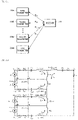
- FIG. 3a is a diagram illustrating the connection relationship of a plurality of transmitters 200a, 200b, 200c, and 200d and one receiver 210 of the wireless power charging apparatus 10 according to an embodiment of the present disclosure
- FIG. 3b is a diagram showing an equivalent circuit of the wireless power charging apparatus 10 illustrated in FIG. 3a .
- the wireless power charging apparatus 10 of the present disclosure includes first to t-th transmitters 200a, 200b, 200c, and 200d and a receiver 210 such that power charging can be performed at the receiver 210 using power transmitted from the first to t-th transmitters 200a, 200b, 200c, and 200d.
- each of the first to t-th transmitters 200a, 200b, 200c, and 200d may include a configuration the same as or similar to that of the transmitter 200 described with reference to FIG. 2 .
- the sizes of components such as capacitance, inductance, and impedance of each of the first to t-th transmitters 200a, 200b, 200c, and 200d may be the same as or different from those of the other transmitters.
- the power source unit 100, the communication unit 120, and the controller each may be configured as one component and applied to the entire wireless power charging apparatus 10, and the amplification unit 110, the transmission resonance unit 220, and the sensing unit 130 may be configured as a plurality of components included in each of the first to t-th transmitters 200a, 200b, 200c, and 200d.
- the control unit 170 controls power that is supplied to the first to t-th transmitters 200a, 200b, 200c, and 200d using power supplied from the power source unit 100.
- FIG. 3b is a diagram showing an equivalent circuit of the wireless power charging apparatus 10 configured as in FIG. 3a .
- the first transmitter 200a includes a capacitor having a power source unit I P1 , a plurality of resistances R Tx and R P,1 , and capacitance C P,1 , an inductor having self inductance L P,1 -M 11 , and an inductor having mutual inductance M 11 .
- the capacitor having a power source unit I P1 , a plurality of resistances R Tx and R P,1 , and capacitance C P,1 and the inductor having self inductance L P,1 -M 11 are connected in series and the inductor having mutual inductance M 11 may be connected between the receivers 210.
- the second transmitter 200b includes a capacitor having a power source unit I P2 , a plurality of resistances R Tx and R P,2 , and capacitance C P,2 , an inductor having self inductance L P,2 -M 21 , and an inductor having mutual inductance M 21 .
- the capacitor having a power source unit I P2 , a plurality of resistances R Tx and R P,2 , and capacitance C P,2 and the inductor having self inductance L P,2 -M 21 are connected in series and the inductor having the mutual inductance M 21 may be connected between the receivers 210.
- the t-1-th transmitter 200c includes a capacitor having a power source unit I Pt-1 , a plurality of resistances R Tx and R P,t-1 , and capacitance C P,t-1 , an inductor having self inductance L P,t-1 -M (t-1)1 , and an inductor having mutual inductance M (t-1)1 .
- the capacitor having a power source unit I Pt-1 , a plurality of resistances R Tx and R P,t-1 , and capacitance C P,t-1 and the inductor having self inductance L P,t-1 -M (t-1)1 are connected in series and the inductor having the mutual inductance M (t-1)1 may be connected between the receivers 210.
- the t-th transmitter 200d includes a capacitor having a power source unit I Pt , a plurality of resistances R Tx and R P,t , and capacitance C P,t , an inductor having self inductance L P,t -M t1 , and an inductor having mutual inductance M t1 .
- the capacitor having a power source unit I Pt , a plurality of resistances R Tx and R P,t , and capacitance C P,t and the inductor having self inductance L P,t -M t1 are connected in series and the inductor having the mutual inductance M t1 may be connected between the receivers 210.
- wireless power charging can be performed with the maximum efficiency in the configuration shown in FIGS. 3a and 3b .
- the present disclosure controls the magnitudes and phases of the output currents I P,1, I P,2, I P,t-1, and I P,t of the first to t-th transmitters 200a, 200b, 200c, and 200d so that the receiver 210 can be wirelessly charged with the maximum efficiency in correspondence to the charging environment.
- a method for maintaining the output currents I P,1, I P,2, I P,t-1, and I P,t of the first to t-th transmitters 200a, 200b, 200c, and 200d in the optimal state is as follows.
- an r-th transmitter is assumed as a reference transmitter and the reference transmitter can be freely determined.
- the control unit 170 determines the equivalent load impedance of the receiver 210 Z C which is a critical point at which the maximum efficiency of wireless charging can be provided, using [Equation 5]
- the control unit 170 considers a limit condition of the wireless charging apparatus. For example, as a limit condition, it may be considered that minimum power for charging the receiver 210 is required and the receiver 210 has minimum equivalent load impedance Z L,min . In this case, the minimum equivalent load impedance Z L,min of the receiver 210 is determined as in [Equation 6] and may be determined in advance.
- the controller 170 determines optimal equivalent load impedance Z opt at which the receiver 210 can have maximum efficiency.
- Z Opt ⁇ Z C Z C ⁇ Z L , min Z L , min Z C ⁇ Z L , min ⁇ t is a current ratio of the t-th transmitter 200d and the r-th transmitter that is the reference transmitter.
- the control unit 170 determines an optimal current ratio ⁇ t,Opt using [Equation 8] such that the receiver 210 can have maximum efficiency.
- ⁇ t , opt M t 1 R Pr M r 1 R Pt
- the control unit 170 determines an optimal output current I Pr,Opt of the r-th transmitter using [Equation 9].
- the control unit 170 determines optimal output current I Pt,Opt of the t-th transmitter 200d using [Equation 10].
- I Pt , Opt ⁇ t , Opt I Pr , Opt
- the optimal output current I Pt,Opt of the t-th transmitter 200d is determined as the ratio of the mutual inductance M t1 between the t-th transmitter 200d and the receiver 210 and the mutual inductance M r1 between the r-th transmitter and the receiver 210.
- the mutual inductances M t1 and M r1 may be coupled in different directions, so the control unit 170 determines an output current by controlling the phase of the output current I Pt,Opt of the t-th transmitter 200d.
- FIG. 3c is a diagram illustrating a method of determining mutual inductance by means of the control unit 170 in the wireless power charging apparatus 10 according to an embodiment of the present disclosure.
- the control unit 170 may determine mutual inductance through the method described in PCT/KR2020/009985 (publication date: 2020.07.29 ) and the present disclosure may include mutual inductance determined through the method described in PCT/KR2020/009985 .
- an equivalent circuit of the wireless power charging apparatus is composed of first to t-th transmission resonance circuits 300, 320, and 340, first to t-th power source units V S1 , V S2 , and Vst, first to q-th reception resonance circuits 310, 330, and 350, and load resistances R L1 , R L2 , and R Lq , as in FIG. 3c , is described.
- a mutual inductance value for transmitting power from the first to t-th transmission resonance circuits 300, 320, and 340 to the first to q-th reception resonance circuits 310, 330, and 350 is determined as in [Equation 11]
- M tq V Rq Z S q + R Lq I Pt ⁇ R Lq
- M tq mutual inductance of t-th reception resonance circuit and q-th reception resonance circuit
- the present disclosure determines a mutual inductance value through [Equation 11] by supplying power to only any one reception resonance circuit and stopping to supply power to the other resonance circuits in order to determine a mutual inductance value.
- a current I P1 is supplied only to the first reception resonance circuit 300 and power supply to the second reception resonance circuit to the t-th reception resonance circuit 320 and 340 is stopped, and then mutual inductances M 11 , M 12 to M 1q related to the first reception resonance circuit 300 are determined.
- a current I P2 is supplied only to the second reception resonance circuit 320 and power supply to the first reception resonance circuit 300, and the third reception resonance circuit (not shown) to the t-th reception resonance circuit 340 is stopped, and then mutual inductances M 21 , M 22 to M 2q related to the second reception resonance circuit 320 are determined. It is possible to determine all mutual inductance values by applying this method up to the t-th reception resonance circuit 340.
- V Rq,in-phase is a voltage that is generated at the q-th reception resonance circuit when currents having predetermined same magnitude and same phase is supplied to the reference transmission resonance circuit and the transmission resonance circuit for determining a sign
- V Rq,out of phase is a voltage that is generated at the q-th reception resonance circuit when currents having predetermined same magnitude and opposite phase are applied to the reference transmission resonance circuit and a transmission resonance circuit for determining a sign.
- power is not supplied to the transmission resonance circuits other than the reference transmission resonance circuit and a transmission resonance circuit for determining a sign.
- the sign of mutual inductance is (+), it means that the phases are the same, and when the sign is (-), it means that the phases are opposite.
- the reference transmission resonance circuit can be freely determined, and the signs of mutual inductance related to the reference transmission resonance circuit are all (+).
- the signs of the mutual inductances M 11 to M 1q related to the first transmission resonance circuit 300 are all (+).
- Reception voltages of the first reception resonance circuit to the q-th reception resonance circuit 310 and 350 are measured by supplying currents having the same magnitude and the same phase to the first transmission resonance circuit 300 that is a reference and the second transmission resonance circuit 320 for determining a sign in order to determine the signs of the mutual inductances M 21 to M 2q related to the second transmission resonance circuit 320. Thereafter, reception voltages of the first reception resonance circuit to the q-th reception resonance circuit 310 and 350 are determined by supplying currents having the same magnitude and opposite phases to the first transmission resonance circuit 300 and the second transmission resonance circuit 320. When the reception voltages of the first reception resonance circuit to the q-th reception resonance circuit 310 and 350 are determined, the sign of mutual inductance is determined using [Equation 12].
- the sign of mutual inductance for the third transmission resonance circuit (not show) and the t-th transmission resonance circuit 340 in the same method described above. For example, it is possible to measure a reception voltage of each of the first reception resonance circuit to the q-th reception resonance circuit 310 and 350 by supplying currents having the same magnitude and the same phase or current having the same magnitude and opposite phases to the first transmission resonance circuit 300 that is a reference and the t-th transmission resonance circuit 340 and then it is possible to determine the sign of mutual inductance using [Equation 12].
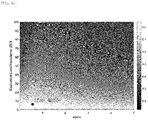
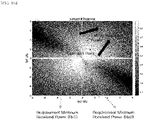
- FIGS. 4a to 4c are diagrams showing experimental examples of the wireless power charging apparatus 10 according to an embodiment of the present disclosure.
- the wireless power charging efficiency of the receiver 210 changes in accordance with the equivalent load impedance and a current ratio of the receiver 210, and optimal load impedance Z opt and a current ratio ⁇ t,Opt for maximum efficiency exist.
- FIG. 4b shows that, of the output current I P1 of the first transmitter 200a and the output current I P2 of the second transmitter 200b, the output current I P1,Opt of the first transmitter 200a which satisfies minimum charging power of the receiver 210 is 1.6A and the output current I P2,Opt of the second transmitter 200b is 0.8A.
- FIG. 5 is a flowchart illustrating a power charging method of the wireless power charging apparatus 10 according to an embodiment of the present disclosure.
- the control unit 170 of each of the transmitters 200a, 200b, 200c, and 200d performs a standby mode for monitoring whether a load exists by transmitting a pulse signal.
- the control unit 170 determines mutual inductance using the method described in PCT/KR2020/009985 (520).
- the control unit 170 determines optimal equivalent impedance Z opt so that the receiver 210 can have maximum efficiency using [Equation 7].
- the control unit 170 determines equivalent load impedance Z C of the receiver 210, which is a critical point at which maximum efficiency can be provided regardless of minimum power required for charging at the receiver 210 and the minimum equivalent load impedance Z L,min of the receiver 210, using [Equation 5], and determines the minimum equivalent load impedance Z L,min of the receiver 210, using [Equation 6], and then comparing them.
- the control unit 170 determines any one of the first to t-th transmitters 200a, 200b, 200c, and 200d as a reference transmitter and determines a current ratio ⁇ t,Opt between the r-th transmitter determined as the reference transmitter and the t-th transmitter 200d using [Equation 8] in order to provide maximum charging efficiency (540).
- the control unit 170 determines the output current of the r-th transmitter which can provide maximum efficiency to the receiver 210 using [Equation 9] (550).
- the control unit 170 determines the output current of each of the transmitters 200a, 200b, 200c, and 200d except for the r-th transmitter using [Equation 10.
- the control unit 170 adjusts the determined output current I Pt,Opt of each of the transmitters 200a, 200b, 200c, and 200d (570). For example, detailed adjustment is possible b using multi-variable optimization algorithm such as Newton's law.
- each of the transmitters 200a, 200b, 200c, and 200d supplies power to the receiver 210, whereby charging can be performed (580).
- the control unit 170 performs again from the processes from the process of determining mutual inductance to the process of adjusting the output current I Pt,Opt of each of the transmitters 200a, 200b, 200c, and 200d when the charging environment changes (example of 590) by periodically monitoring the charging environment.
- FIG. 6a is a diagram illustrating the connection relationship of a plurality of transmitters 200a, 200b, and 200c and a plurality of receivers 210a, 210b, and 210c of a wireless power charging apparatus 10 according to another embodiment of the present disclosure.
- the wireless power charging apparatus 10 includes first to t-th transmitters 200a, 200b, and 200c and first to q-th receivers 210a, 210b, and 210c such that power charging can be performed at the first to q-th receivers 210a, 210b, and 210c using power transmitted from the first to t-th transmitters 200a, 200b, and 200c.
- each of the first to t-th transmitters 200a, 200b, and 200c may have a configuration that is the same as or similar to the transmitter 200 described with reference to FIG.
- each of the first to q-th receivers 210a, 210b, and 210c may have a configuration that is the same as or similar to the receiver 210 described with reference to FIG. 2 .
- the sizes of components such as capacitance, inductance, and impedance of each of the first to t-th receivers 210a, 210b, and 210c and the first to q-th receivers 210a, 210b, and 210c may be the same as or different from those of the other receivers.
- the power source unit 100, the communication unit 120, and the controller each may be configured as one component and applied to the entire wireless power charging apparatus 10, and the amplification unit 110, the transmission resonance unit 220, and the sensing unit 130 may be configured as a plurality of components included in each of the first to t-th transmitters 200a, 200b, and 200c, and 200d.
- the reception resonance unit 230, the rectification unit 150, the conversion unit 160, and the sensing unit 130 may be configured in a plurality of components included in each of the first to q-th receivers 210a, 210b, and 210c.
- the control unit 170 controls power that is supplied to the first to t-th transmitters 200a, 200b, 200c, and 200d using power supplied from the power source unit 100.
- FIG. 6b is a diagram showing an equivalent circuit of the wireless power charging apparatus 10 when first and second transmitters 200a and 200b and first and second receivers 210a and 210b are configured as shown in FIG. 6a .
- an equivalent circuit including all of the first to t-th transmitters 200a, 200b, and 200c and the first to q-th receivers 210a, 210b, and 210c is very complicated, so the case in which the first and second transmitters 200a and 200b and the first and second receivers 210a and 210b are configured as shown in FIG. 6a is described as an example.
- the first transmitter 200a includes a capacitor having a power source unit I P1 , a plurality of resistors R Tx and R P1 , and capacitance C P1 , an inductor having self inductance L P1 -M 11 -M 12 , and inductors having mutual inductance M 11 and mutual inductance M 12 .
- the capacitor having a power source unit I P1 , a plurality of resistors R Tx and R P1 , and capacitance C P1 and the inductor having self inductance L P1 -M 11 -M 12 are connected in series, the inductor having mutual inductance M 11 is connected between the first receivers 210a, and the inductor having mutual inductance M 12 is connected between the second receivers 210b.
- the second transmitter 200b includes a capacitor having a power source unit I P2 , a plurality of resistors R Tx and R P2 , and capacitance C P2 , an inductor having self inductance L P2 -M 21 -M 22 , an inductor having mutual inductance M 21 , and an inductor having mutual inductance M 22 .
- the capacitor having a power source unit I P2 , a plurality of resistors R Tx and R P2 , and capacitance C P2 and the inductor having self inductance L P2 -M 21 -M 22 are connected in series, the inductor having mutual inductance M 21 is connected between the first receivers 210a, and the inductor having mutual inductance M 22 is connected between the second receivers 210b.
- the first receiver 210a includes an inductor having self inductance L S1 -M 11 -M 21 , a capacitor having capacitance C S1 , a resistance R S1 , impedance Z L1 , and inductors having mutual inductance M 11 and mutual inductance M 21 .
- the inductor having self inductance L S1 -M 11 -M 21 , the capacitor having capacitance C S1 , the resistance R S1 , the impedance Z L1 are connected in series, the inductor having mutual inductance M 11 is connected between the first transmitters 200a, and the inductor having mutual inductance M 21 is connected between the second transmitter 200b.
- the second receiver 210b includes an inductor having self inductance L S2 -M 12 -M 22 , a capacitor having capacitance Cs2, a resistance Rs2, impedance Z L2 , and inductors having mutual inductance M 12 and mutual inductance M 22 .
- the inductor having self inductance L S2 -M 12 -M 22 , the capacitor having capacitance C S2 , the resistance R S2 , the impedance Z L2 are connected in series, the inductor having mutual inductance M 12 is connected between the first transmitters 200a, and the inductor having mutual inductance M 22 is connected between the second transmitter 200b.
- wireless power charging can be performed with the maximum efficiency in the configuration shown in FIG. 6a .
- the present disclosure controls the magnitudes and phases of the output currents I P1 , I P2 , and I Pt of the first to t-th transmitters 200a, 200b, and 200c so that each of the first to q-th receivers 210a, 210b, and 210c can be wirelessly charged with the maximum efficiency in correspondence to the charging environment.
- a method for maintaining the output currents I P1 , I P2 , and I Pt of the first to t-th transmitters 200a, 200b, and 200c in the optimal state is as follows.
- the efficiency ⁇ of the wireless charging apparatus 10 can be expressed as a function of mutual inductance M tq , ⁇ t , and equivalent load impedance Z L,q of the q-th receiver 210c.
- ⁇ t is a current ratio of the t-th transmitter 200c and the r-th transmitter that is the reference transmitter.
- the equivalent load impedance Z L,q of the q-th receiver 210c is a function of the output voltage V R,q of the rectification 150 of the q-th receiver 210c in [Equation 17] and the output voltage V R,q of the rectification 150 of the q-th receiver 210c is a function of the output current I P,t of the t-th transmitter 200c.
- the efficiency ⁇ of the wireless charging apparatus 10 may be expressed as a function of mutual inductance M tq and the output current I P,t of the t-th transmitter 200c from the function of the mutual inductance M tq , the current ratio ⁇ t , and the equivalent load impedance Z L,q of the q-th receiver 210c.
- the mutual inductance M tq can be determined through the method described in PCT/KR2020/009985 , as described above, and the control unit 170 can determine the output current I P,t of the t-th transmitter 200c, using an optimization algorithm.
- the control unit 170 can determine the output current I P,t of the t-th transmitter 200c, using an optimization algorithm.
- a method of determining the output current I P,t of the t-th transmitter 200c using an optimization algorithm is described.
- FIG. 7 is a diagram illustrating a method of determining output currents I P1 , I P2 , and I Pt of a plurality of transmitters 200a, 200b, and 200c by setting a subset of the wireless power charging apparatus 10 according to another embodiment of the present disclosure.
- a subset which may be considered as an independent transmitter or receiver that is not influenced by other transmitters or receivers, is set to increase the charging efficiency.
- a subset it is possible to more quickly determine the output currents I P1 , I P2 , and I Pt of the transmitters 200a, 200b, and 200c, respectively, for maximum efficiency.
- the control unit 170 sets a subset using a matrix of mutual inductances M tq .
- the lows are transmitters
- the columns are receivers
- the i-th row ⁇ j-th column is a combination between the i-th transmitter and the j-th receiver.
- FIG. 7 shows a method of determining a subset when the wireless charging apparatus 10 is composed of first to fourth transmitters Tx1, Tx2, Tx3, and Tx4and first to third receivers Rx1, Rx2, and Rx3.
- FIG. 7 shows the case in which the first receiver Rx1 receives power from the first and second transmitters Tx1 and Tx2, the second receiver Rx2 receives power from the second and third transmitters Tx2 and Tx3, and the second receiver Rx3 receives power from the fourth transmitter Tx4. Since the mutual inductance M 43 between the third transmitter Rx 3 and the fourth transmitter Rx 4 configure a separate subset because the elements of the previous row and column are all '0'.
- mutual inductances M 11 , M 21 , M 22 , and M 32 configure on subset and the mutual inductance M 43 configures one subset. That is, the third transmitter Tx 3 and the fourth transmitter Rx 4 configure one subset, and the other transmitters and receivers configure one subset.
- the output currents I P1 , I P2 , and I Pt of the first to t-th transmitters 200a, 200b, and 200c, respectively, are determined by applying an optimization algorithm to each subset.
- I P is obtained in consideration of a limit condition when the wireless charging apparatus 10 is charged, in which Particle Swarm Optimization, Simulated Annealing, Generic Algorithm, etc. may be used. Further, since a great number of factors may be applied to a charging environment, output currents IP1, IP2, and IPt of the first to t-th transmitters 200a, 200b, and 200c determined in accordance with whether the charging limit condition is satisfied are adjusted.
- the control unit 170 checks whether the first to q-th receivers 210a, 210b, and 210c satisfy a charging limit condition, for example, it is possible to check the charging limit condition on the basis of whether the power and voltage supplied to the loads of the first to q-th receivers 210a, 210b, and 210c are within a predetermined range, and the control unit 170 determines that the charging condition is satisfied when they are within the predetermined range, and determines that adjustment is required because the charging condition is not satisfied.
- a charging limit condition for example, it is possible to check the charging limit condition on the basis of whether the power and voltage supplied to the loads of the first to q-th receivers 210a, 210b, and 210c are within a predetermined range
- the current of the transmitter that transmits power to each of the receiver is adjusted to increase.
- the current of the transmitter that transmits power to each of the receiver is adjusted to decrease.
- control unit 170 may control first the current of the transmitter that transmits power to a receiver having high urgency in consideration of urgency among the first to q-th receivers 210a, 210b, and 210c, and the urgency among the first to q-th receivers 210a, 210b, and 210c may be determined in consideration of the current state of each receiver and the differences between the power and voltage supplied to the load of each of the receivers and the predetermined range. For example, in consideration of the degree of gap of the power and voltage supplied to the load of each receiver spaced from the predetermined range, it may be possible to consider that the higher the gap, the higher the urgency.
- the control unit 170 can adjust only the current flowing to the transmitter that transmits power only to the corresponding receiver.
- the first receiver Rx1 receives power from the first and second transmitters Tx1 and Tx2, in which the first transmitter Tx1 transmits only to the first receiver Rx1 and the second transmitter Tx2 transmits power to the first and second receivers Rx1 and Rx2. Accordingly, when adjustment is required because the power and voltage supplied to the first transmitter Tx1 is under or over the predetermined range, it is possible to adjust only the current flowing to the first transmitter Tx1.
- FIGS. 8a and 8b are diagrams showing experimental examples of the wireless power charging apparatus 10 according to another embodiment of the present disclosure.
- FIGS. 8a and 8b The tests of FIGS. 8a and 8b were performed on the first and second transmitters 200a and 200b and the first and second receivers 210a and 210b.
- FIG. 9 is a flowchart illustrating a power charging method of the wireless power charging apparatus 10 according to another embodiment of the present disclosure.
- the control unit 170 of the first to t-th transmitters 200a, 200b, and 200c performs a standby mode for monitoring whether loads of the first to q-th receivers 210a, 210b, and 210c exist by transmitting a pulse signal (600).
- the control unit 170 determines the mutual inductance M tq between the first to t-th transmitters 200a, 200b, and 200c and the first to q-th receivers 210a, 210b, and 210c (620).
- the control unit 170 determines a subset of the wireless charging apparatus 10 (630) by creating a matrix about the mutual inductance M tq and determines optimal output currents I P1 , I P2 , and I Pt of the first to t-th transmitters 200a, 200b, and 200c by applying an optimization algorithm to each subset (640).
- the control unit 170 adjusts the determined output current I P1 , I P2 , and I Pt of the first to t-th transmitters 200a, 200b, and 200c (650).
- the first to t-th transmitters 200a, 200b, and 200c supply power to the first to q-th receivers 210a, 210b, and 210c so the charging can be performed (660).
- the control unit 170 performs again from the processes from the process of determining mutual inductance to the process of adjusting the output currents of the first to t-th transmitters 200a, 200b, and 200c when the charging environment changes (example of 670) by periodically monitoring the charging environment.
Landscapes
- Engineering & Computer Science (AREA)
- Power Engineering (AREA)
- Computer Networks & Wireless Communication (AREA)
- Physics & Mathematics (AREA)
- General Physics & Mathematics (AREA)
- Signal Processing (AREA)
- Charge And Discharge Circuits For Batteries Or The Like (AREA)
Abstract
Description
- The present disclosure relates to an efficient wireless power charging apparatus and a method thereof, more particularly, a wireless power charging apparatus and method that can perform charging with maximum efficiency.
- Wireless power transmission is to supplying power to an electronic device wirelessly not through a wire and a device requiring power can be wirelessly charged without connection to a power socket, so relevant researches are being actively conducted. As a wireless power transmission technology, a magnetic induction type, a magnetic resonance type, a microwave type, etc. are studied.
- A wireless power transmission apparatus has a transmitter for wirelessly transmitting power and a receiver for receiving transmitted power. The transmitter transmits power to the receiver in the type of generating and copying a magnetic field to the receiver. The transmitter and the receiver use a coil for power transmission, and the maximum power transmission can be generated in the wireless power transmission apparatus when they have the same resonance frequency.
- The coils included in the transmitter and the receiver have not only self inductance, but mutual inductance. Since the mutual inductance has great influence on power transmission, it is important to determine an optimal mutual inductance value in order to obtain the maximum power transmission efficiency. Further, power charging is possible at the receiver receiving power when a charging infrastructure is provided. However, since wireless charging efficiency is greatly influenced by the charging environment and the charging environment has various environmental factors, there is a problem that it is difficult to maximum wireless charging efficiency.
- The present disclosure relates to an efficient wireless power charging apparatus and a method thereof.
- Further, the present disclosure relates to a wireless power charging apparatus and method that can perform charging with maximum efficiency.
- The present disclosure relates to a wireless power charging apparatus that includes: a plurality of transmitters each including a transmission resonance unit configured to transmit power using power provided from a power source unit and including one capacitor and one inductor; a receiver including a reception resonance unit configured to receive power transmitted from the plurality of transmission resonance units and including one capacitor and one inductor, and a load performing charging using received power; and a control unit configured to determine mutual inductance between each of the transmission resonance units and each of the reception units and equivalent load impedance of the receiver, configured to determine any one of the plurality of transmitters as a reference transmitter and determine a current ratio between the reference transmitter and another transmitter, and configured to determine an output current of each of the plurality of transmitters using each of the mutual inductances, the equivalent load impedance of the receiver, and the current ratio between the reference transmitter and another transmitter.
- Further, the present may include: a process of determining mutual inductance between a plurality of transmission resonance units configured to transmit power using power provided from a power source unit and each including one capacitor and one inductor and a reception resonance unit configured to receive power transmitted from the plurality of transmission resonance units and including one capacitor and one inductor; a process of determining equivalent load impedance of a receiver including a load performing charging using received power and the reception resonance unit; a process of determining any one of the plurality of transmitters as a reference transmitter and determining a current ratio between the reference transmitter and another transmitter; and a process of determining output current of each of the plurality of transmitters using the mutual inductances, the equivalent load impedance of the receiver, and the current ratio between the reference transmitter and another transmitter.
- Further, the present disclosure relates to a wireless power charging apparatus that includes: a plurality of transmitters each including a transmission resonance unit configured to transmit power using power provided from a power source unit and including one capacitor and one inductor; a plurality of receivers each including a reception resonance unit configured to receive power transmitted from the transmission resonance unit and including one capacitor and one inductor, and a load performing charging using received power; and a control unit configured to determine mutual inductance between each of the transmission resonance units and each of the reception units and to determine at least one subset composed of a transmitter and a receiver configured to independently perform wireless charging at the plurality of transmitters and the plurality of receivers using each of the mutual inductances, thereby determining an output current of each of the plurality of transmitters.
- Further, the present disclosure relates to a wireless power charging method that includes: a process of determining mutual inductance between a plurality of transmission resonance units each including one capacitor and one inductor and configured to transmit power using power provided from a power source unit and a plurality of reception resonance units configured to receive power transmitted from the transmission resonance units and including one capacitor and one inductor; a process of determining at least one subset composed of a transmitter and a receiver configured to independently perform wireless charging at a plurality of transmitters each including one of the transmission resonance unit and a plurality of receivers each including one of the reception resonance units and a load performing charging using received power, using each of the mutual inductances; and a process of determining an output current at each of the plurality of transmitters using the subset.
- The present disclosure can perform wireless charging with maximum efficiency because the present disclosure controls charging efficiency by controlling the output current of a transmitter that transmits power.
- The present disclosure can be configured as a wireless power charging system including a plurality of transmitters and at least one receiver for wireless power charging.
- The above and other objectives, features and other advantages of the present invention will be more clearly understood from the following detailed description when taken in conjunction with the accompanying drawings, in which:
-
FIG. 1 is a diagram showing the configuration of a wireless power charging apparatus according to an embodiment of the present disclosure; -
FIG. 2 is a diagram illustrating a transmitter and a receiver of the wireless power charging apparatus according to an embodiment of the present disclosure; -
FIG. 3a is a diagram illustrating the connection relationship of a plurality of transmitters and one receiver of the wireless power charging apparatus according to an embodiment of the present disclosure; -
FIG. 3b is a diagram showing an equivalent circuit of the wireless power charging apparatus illustrated inFIG. 3a ; -
FIG. 3c is a diagram illustrating a method of determining mutual inductance by means of a controller in the wireless power charging apparatus according to an embodiment of the present disclosure; -
FIGS. 4a to 4c are diagrams showing experimental examples of the wireless power charging apparatus according to an embodiment of the present disclosure; -
FIG. 5 is a flowchart illustrating a power charging method of the wireless power charging apparatus according to an embodiment of the present disclosure; -
FIG. 6a is a diagram illustrating the connection relationship of a plurality of transmitters and a plurality of receivers of the wireless power charging apparatus according to another embodiment of the present disclosure; -
FIG. 6b is a diagram showing an equivalent circuit of the wireless power charging apparatus when first and second transmitters and first and second receivers are configured as shown inFIG. 6a ; -
FIG. 7 is a diagram illustrating a method of determining output currents of a plurality of transmitters by setting subset of the wireless power charging apparatus according to another embodiment of the present disclosure; -
FIGS. 8a and8b are diagrams showing experimental examples of the wireless power charging apparatus according to another embodiment of the present disclosure; and -
FIG. 9 is a flowchart illustrating a power charging method of the wireless power charging apparatus according to another embodiment of the present disclosure. - Hereinafter, embodiments of the present invention are described on the basis of the drawings. Detailed descriptions of well-known functions or configurations relating to the present disclosure will not be provided so as not to unnecessarily obscure the description of the present disclosure.
-
FIG. 1 is a diagram showing the configuration of a wirelesspower charging apparatus 10 according to an embodiment of the present disclosure. - Referring to
FIG. 1 , the wirelesspower charging apparatus 10 of the present disclosure includes a power source unit100, anamplification unit 110, acommunication unit 120, asensing unit 130, aresonation unit 140, arectification unit 150, aconversion unit 160, and acontrol unit 170. - The
power source unit 100 supplies power to the wirelesspower charging apparatus 10 of the present disclosure, and for example, supplies AC (Alternating Current) DC (Direct Current) power. - The
amplification unit 110 amplifiers the power supplied from thepower source unit 100 and may be a power amplifier. - The
communication unit 120, which is provided for communication with an external device or in the wirelesspower charging apparatus 10 of the present disclosure, may include a near field communication means such as Bluetooth and Wi-fi or a communication means that can perform communication by accessing a mobile communication network in accordance with various mobile communication standards such as LTE and 5G (5th Generation). - The
sensing unit 130 senses a voltage or a current at a predetermined position in the wirelesspower charging apparatus 10 of the present disclosure and may include various sensors. - The
resonance unit 140 enables power to be transmitted by resonance between coils and includes a plurality of transmission resonance unit and one reception resonance unit each including a capacitor and an inductor. - The
rectification unit 150, which is provided to convert an alternating current into a direct current, may be a rectifier. Therectification unit 150 rectifies a current generated at the reception resonance unit. - The
conversion unit 160, which is provided to maintain a voltage that is provided for charging to satisfy a voltage condition for charging, may be a DC-DC converter. Theconversion unit 160 can adjust a voltage in accordance with a conversion ratio. - The
control unit 140 generally controls wirelesspower charging apparatus 10 of the present disclosure such as determining mutual inductance of theresonation unit 140, equivalent load impedance of thereception unit 210, and a current or a voltage so that wireless power charging can be performed with the maximum efficiency. -
FIG. 2 is a diagram illustrating atransmitter 200 and areceiver 210 of the wirelesspower charging apparatus 10 according to an embodiment of the present disclosure. - Referring to
FIG. 2 , the wirelesspower charging apparatus 10 of the present disclosure includes atransmitter 200 for transmitting power and areceiver 210 for receiving power so that charging is possible. - The
transmitter 200 includes thecontrol unit 170, thepower source unit 100, theamplification unit 110, and thetransmission resonance unit 220 and thereceiver 210 includes thereception resonance unit 230, therectification unit 150, theconversion unit 160, and a load RL. Thecontrol unit 170 is shown at thetransmitter 200 inFIG. 2 , but thecontrol unit 170 may be configured to generally control the wirelesspower charging apparatus 10 of the present disclosure including not only thetransmitter 200, but thereceiver 210. - Further, though not shown in
FIG. 2 , thesensing units 130 can sense a voltage or a current at a predetermined position of thetransmitter 200 and thereceiver 210 and can communicate with each other through thecommunication unit 120. For example, it is possible to transmit/receive a current or a voltage sensed through Bluetooth communication and transmit/receive control information. - The meanings of the characters shown in
FIG. 2 are as follows. - VP : output voltage of
amplification unit 110, IP : output current oftransmitter 200 - Cp : capacitance of
transmission resonance unit 220, LP : self inductance oftransmission resonance unit 220 - M: mutual inductance, IS: reception current of
receiver 210 - CS: capacitance of
reception resonance unit 230, LS: self inductance ofreception resonance unit 230 - VR : output voltage of
rectification unit 150, VOut : charging voltage of load ofreceiver 210 - RL : load impedance of
receiver 210 -
FIG. 3a is a diagram illustrating the connection relationship of a plurality oftransmitters receiver 210 of the wirelesspower charging apparatus 10 according to an embodiment of the present disclosure andFIG. 3b is a diagram showing an equivalent circuit of the wirelesspower charging apparatus 10 illustrated inFIG. 3a . - Referring to
FIG. 3a , the wirelesspower charging apparatus 10 of the present disclosure includes first to t-th transmitters receiver 210 such that power charging can be performed at thereceiver 210 using power transmitted from the first to t-th transmitters th transmitters transmitter 200 described with reference toFIG. 2 . Further, the sizes of components such as capacitance, inductance, and impedance of each of the first to t-th transmitters power source unit 100, thecommunication unit 120, and the controller each may be configured as one component and applied to the entire wirelesspower charging apparatus 10, and theamplification unit 110, thetransmission resonance unit 220, and thesensing unit 130 may be configured as a plurality of components included in each of the first to t-th transmitters control unit 170 controls power that is supplied to the first to t-th transmitters power source unit 100. -
FIG. 3b is a diagram showing an equivalent circuit of the wirelesspower charging apparatus 10 configured as inFIG. 3a . - Referring to
FIG. 3b , in an equivalent circuit of the wirelesspower charging apparatus 10, thefirst transmitter 200a includes a capacitor having a power source unit IP1, a plurality of resistances RTx and RP,1, and capacitance CP,1, an inductor having self inductance LP,1-M11, and an inductor having mutual inductance M11. In this case, the capacitor having a power source unit IP1, a plurality of resistances RTx and RP,1, and capacitance CP,1 and the inductor having self inductance LP,1-M11 are connected in series and the inductor having mutual inductance M11 may be connected between thereceivers 210. Further, thesecond transmitter 200b includes a capacitor having a power source unit IP2, a plurality of resistances RTx and RP,2, and capacitance CP,2, an inductor having self inductance LP,2-M21, and an inductor having mutual inductance M21. In this case, the capacitor having a power source unit IP2, a plurality of resistances RTx and RP,2, and capacitance CP,2 and the inductor having self inductance LP,2-M21 are connected in series and the inductor having the mutual inductance M21 may be connected between thereceivers 210. Further, the t-1-th transmitter 200c includes a capacitor having a power source unit IPt-1, a plurality of resistances RTx and RP,t-1, and capacitance CP,t-1, an inductor having self inductance LP,t-1-M(t-1)1, and an inductor having mutual inductance M(t-1)1. In this case, the capacitor having a power source unit IPt-1, a plurality of resistances RTx and RP,t-1, and capacitance CP,t-1 and the inductor having self inductance LP,t-1-M(t-1)1 are connected in series and the inductor having the mutual inductance M(t-1)1 may be connected between thereceivers 210. Further, the t-th transmitter 200d includes a capacitor having a power source unit IPt, a plurality of resistances RTx and RP,t, and capacitance CP,t, an inductor having self inductance LP,t-Mt1, and an inductor having mutual inductance Mt1. In this case, the capacitor having a power source unit IPt, a plurality of resistances RTx and RP,t, and capacitance CP,t and the inductor having self inductance LP,t-Mt1 are connected in series and the inductor having the mutual inductance Mt1 may be connected between thereceivers 210. - Further, the
receiver 210 includes an inductor having self inductance

th transmitters - The meanings of the characters shown in
FIG. 3b are as follows and applied below in the same way. - VT,t: output voltage of
controller 170 of t-th transmitter 200d - IP,t: output current of t-
th transmitter 200d - CP,t: capacitance of
transmission resonance unit 220 of t-th transmitter 200d - LP,t : self inductance of
transmission resonance unit 220 of t-th transmitter 200d - RP,t: equivalent internal resistance of
transmission resonance unit 220 of t-th transmitter 200d - RTx : equivalent internal resistance of
amplification unit 220 of t-th transmitter 200d - w: operation angular frequency, w0: resonance angular frequency of
resonance unit 140 - f: operation frequency, f0: resonance frequency of
resonance unit 140 - Mt1 : mutual inductance between t-
th transmitter 200d and receiver - IS: reception current of
receiver 210 - LS: self inductance of
receiver 210 - CS: capacitance of
receiver 210 - VR: output voltage of
rectification unit 150 ofreceiver 210 - RS: equivalent internal resistance of
reception resonance unit 230 ofreceiver 210
- ZL : equivalent load impedance of
receiver 210, - RL : load impedance of
receiver 210 - VOut : charging voltage of load of
receiver 210 - ZCoil.MISO: impedance of all of transmitters seen from each
amplification unit 110 of first to t-th transmitters - Zref,MISO: impedance of all of transmitters seen from each
transmission resonance unit 220 of first to t-th transmitters - According to the present disclosure, wireless power charging can be performed with the maximum efficiency in the configuration shown in
FIGS. 3a and 3b . In wireless power charging, it is important to maintain the values of output currents IP,1, IP,2, IP,t-1, and IP,t of the first to t-th transmitters receiver 210 and the capacity of a load that needs to be charged. Accordingly, the present disclosure controls the magnitudes and phases of the output currents IP,1, IP,2, IP,t-1, and IP,t of the first to t-th transmitters receiver 210 can be wirelessly charged with the maximum efficiency in correspondence to the charging environment. - In the present disclosure, a method for maintaining the output currents IP,1, IP,2, IP,t-1, and IP,t of the first to t-
th transmitters - Hereafter, an r-th transmitter is assumed as a reference transmitter and the reference transmitter can be freely determined. The output current IP,t of the t-
th transmitter 200d is determined using the output current of the reference transmitter. Further, for the convenience, when ',' is omitted in current, resistance, impedance, etc. related to the t-th transmitter 200d, it is considered as being the same as when ',' is provided. For example, IP1 = IP,1, etc. - First, referring to [Equation 1] to [Equation 4], it can be seen the efficiency η of a system is changed by mutual inductance, αt, and equivalent load impedance of the
receiver 210. In this case, αt is a current ratio of the t-th transmitter 200d and the r-th transmitter that is the reference transmitter.


- Next, the process of determining the equivalent load impedance of the
receiver 210 is described. Thecontrol unit 170 determines the equivalent load impedance of the receiver 210 ZC which is a critical point at which the maximum efficiency of wireless charging can be provided, using [Equation 5]
- Next, the
control unit 170 considers a limit condition of the wireless charging apparatus. For example, as a limit condition, it may be considered that minimum power for charging thereceiver 210 is required and thereceiver 210 has minimum equivalent load impedance ZL,min. In this case, the minimum equivalent load impedance ZL,min of thereceiver 210 is determined as in [Equation 6] and may be determined in advance.
- In consideration of the limit condition, the
controller 170 determines optimal equivalent load impedance Zopt at which thereceiver 210 can have maximum efficiency.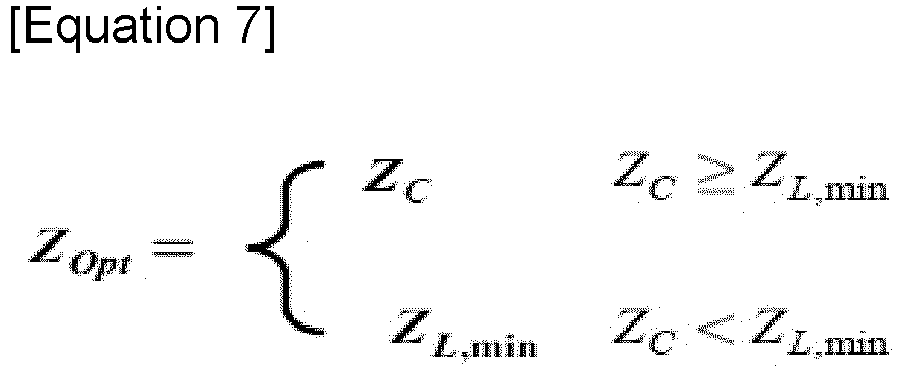
th transmitter 200d and the r-th transmitter that is the reference transmitter. Thecontrol unit 170 determines an optimal current ratio αt,Opt using [Equation 8] such that thereceiver 210 can have maximum efficiency.
- When the mutual inductances M11 to Mt1 between the first to t-
th transmitters receiver 210, the optimal equivalent load impedance Zopt of thereceiver 210, and the optimal current ratio αt,Opt between the t-th transmitter 210d and the r-th transmitter are determined, thecontrol unit 170 determines an optimal output current IPr,Opt of the r-th transmitter using [Equation 9].
- Further, when the optimal output current IPr,Opt of the r-th transmitter is determined, the
control unit 170 determines optimal output current IPt,Opt of the t-th transmitter 200d using [Equation 10].
- Referring to [Equation 10], it can be seen that the optimal output current IPt,Opt of the t-
th transmitter 200d is determined as the ratio of the mutual inductance Mt1 between the t-th transmitter 200d and thereceiver 210 and the mutual inductance Mr1 between the r-th transmitter and thereceiver 210. In this case, the mutual inductances Mt1 and Mr1 may be coupled in different directions, so thecontrol unit 170 determines an output current by controlling the phase of the output current IPt,Opt of the t-th transmitter 200d. -
FIG. 3c is a diagram illustrating a method of determining mutual inductance by means of thecontrol unit 170 in the wirelesspower charging apparatus 10 according to an embodiment of the present disclosure. - The
control unit 170 may determine mutual inductance through the method described inPCT/KR2020/009985 (publication date: 2020.07.29 PCT/KR2020/009985 - For example, the case in which an equivalent circuit of the wireless power charging apparatus is composed of first to t-th
transmission resonance circuits reception resonance circuits FIG. 3c , is described. When power is supplied to the first to t-thtransmission resonance circuits transmission resonance circuits reception resonance circuits - In this case, a mutual inductance value for transmitting power from the first to t-th
transmission resonance circuits reception resonance circuits 
- IPt : input current of t-th transmission resonance circuit
- w: operation angular frequency
- RLq : load resistance of q-th reception resonance circuit
- VRq : reception voltage of q-th reception resonance circuit
- ZSq : impedance of q-th reception resonance circuit

- CSq : capacitor of q-th reception resonance circuit
- LSq : self inductance of q-th reception resonance circuit
- RSq : internal resistance of q-th reception resonance circuit
- The present disclosure determines a mutual inductance value through [Equation 11] by supplying power to only any one reception resonance circuit and stopping to supply power to the other resonance circuits in order to determine a mutual inductance value.
- For example, a current IP1 is supplied only to the first
reception resonance circuit 300 and power supply to the second reception resonance circuit to the t-threception resonance circuit reception resonance circuit 300 are determined. Thereafter, a current IP2 is supplied only to the secondreception resonance circuit 320 and power supply to the firstreception resonance circuit 300, and the third reception resonance circuit (not shown) to the t-threception resonance circuit 340 is stopped, and then mutual inductances M21, M22 to M2q related to the secondreception resonance circuit 320 are determined. It is possible to determine all mutual inductance values by applying this method up to the t-threception resonance circuit 340. - Meanwhile, when a mutual inductance value is determined, the sign of the mutual inductance is determined, in which the sign of mutual inductance is determined as in [Equation 12].

- When the sign of mutual inductance is (+), it means that the phases are the same, and when the sign is (-), it means that the phases are opposite. Further, the reference transmission resonance circuit can be freely determined, and the signs of mutual inductance related to the reference transmission resonance circuit are all (+).
- For example, when the first
transmission resonance circuit 300 is determined as a reference transmission resonance circuit, the signs of the mutual inductances M11to M1q related to the firsttransmission resonance circuit 300 are all (+). - Reception voltages of the first reception resonance circuit to the q-th
reception resonance circuit transmission resonance circuit 300 that is a reference and the secondtransmission resonance circuit 320 for determining a sign in order to determine the signs of the mutual inductances M21 to M2q related to the secondtransmission resonance circuit 320. Thereafter, reception voltages of the first reception resonance circuit to the q-threception resonance circuit transmission resonance circuit 300 and the secondtransmission resonance circuit 320. When the reception voltages of the first reception resonance circuit to the q-threception resonance circuit - It is possible to determine the sign of mutual inductance for the third transmission resonance circuit (not show) and the t-th
transmission resonance circuit 340 in the same method described above. For example, it is possible to measure a reception voltage of each of the first reception resonance circuit to the q-threception resonance circuit transmission resonance circuit 300 that is a reference and the t-thtransmission resonance circuit 340 and then it is possible to determine the sign of mutual inductance using [Equation 12]. -
FIGS. 4a to 4c are diagrams showing experimental examples of the wirelesspower charging apparatus 10 according to an embodiment of the present disclosure. - The tests of
FIGS. 4a to 4c were performed on the first andsecond transmitters - Referring to
FIG. 4a , the wireless power charging efficiency of thereceiver 210 changes in accordance with the equivalent load impedance and a current ratio of thereceiver 210, and optimal load impedance Zopt and a current ratio αt,Opt for maximum efficiency exist. -
FIG. 4b shows that, of the output current IP1 of thefirst transmitter 200a and the output current IP2 of thesecond transmitter 200b, the output current IP1,Opt of thefirst transmitter 200a which satisfies minimum charging power of thereceiver 210 is 1.6A and the output current IP2,Opt of thesecond transmitter 200b is 0.8A. -
FIG. 4c shows that when M21 = -200nH by changing the sign of the mutual inductance M21 is changed into (-), the output current IP1,Opt of thefirst transmitter 200a which satisfies minimum charging power of thereceiver 210 is 1.6A and the output current IP2,Opt of thesecond transmitter 200b is (-)0.8A. -
FIG. 5 is a flowchart illustrating a power charging method of the wirelesspower charging apparatus 10 according to an embodiment of the present disclosure. - Referring to
FIG. 5 , according to the present disclosure, in order to consume minimum power when charging is not performed, thecontrol unit 170 of each of thetransmitters control unit 170 determines mutual inductance using the method described inPCT/KR2020/009985 - Thereafter, in order to provide maximum charging efficiency, the
control unit 170 determines optimal equivalent impedance Zopt so that thereceiver 210 can have maximum efficiency using [Equation 7]. In detail, thecontrol unit 170 determines equivalent load impedance ZC of thereceiver 210, which is a critical point at which maximum efficiency can be provided regardless of minimum power required for charging at thereceiver 210 and the minimum equivalent load impedance ZL,min of thereceiver 210, using [Equation 5], and determines the minimum equivalent load impedance ZL,min of thereceiver 210, using [Equation 6], and then comparing them. - When the equivalent load impedance ZC of the
receiver 210 for providing maximum charging efficiency is determined, thecontrol unit 170 determines any one of the first to t-th transmitters th transmitter 200d using [Equation 8] in order to provide maximum charging efficiency (540). When the current ratio αt,Opt is determined, thecontrol unit 170 determines the output current of the r-th transmitter which can provide maximum efficiency to thereceiver 210 using [Equation 9] (550). When the output current of the r-th transmitter that is the reference terminal is determined, thecontrol unit 170 determines the output current of each of thetransmitters Equation 10. - Meanwhile, a great number of factors may be applied to a charging environment, but it is difficult to apply all environmental factors to [Equation 9] and [Equation 10], so the
control unit 170 adjusts the determined output current IPt,Opt of each of thetransmitters transmitters transmitters receiver 210, whereby charging can be performed (580). In this case, since the charging environment may be changed by a change of the position of a load during charging, etc., thecontrol unit 170 performs again from the processes from the process of determining mutual inductance to the process of adjusting the output current IPt,Opt of each of thetransmitters -
FIG. 6a is a diagram illustrating the connection relationship of a plurality oftransmitters receivers power charging apparatus 10 according to another embodiment of the present disclosure. - Referring to
FIG. 6a , the wirelesspower charging apparatus 10 according to another embodiment of the present disclosure includes first to t-th transmitters th receivers th receivers th transmitters th transmitters transmitter 200 described with reference toFIG. 2 , and each of the first to q-th receivers receiver 210 described with reference toFIG. 2 . Further, the sizes of components such as capacitance, inductance, and impedance of each of the first to t-th receivers th receivers power source unit 100, thecommunication unit 120, and the controller each may be configured as one component and applied to the entire wirelesspower charging apparatus 10, and theamplification unit 110, thetransmission resonance unit 220, and thesensing unit 130 may be configured as a plurality of components included in each of the first to t-th transmitters reception resonance unit 230, therectification unit 150, theconversion unit 160, and thesensing unit 130 may be configured in a plurality of components included in each of the first to q-th receivers control unit 170 controls power that is supplied to the first to t-th transmitters power source unit 100. -
FIG. 6b is a diagram showing an equivalent circuit of the wirelesspower charging apparatus 10 when first andsecond transmitters second receivers FIG. 6a . - In the configuration shown in
FIG. 6a , an equivalent circuit including all of the first to t-th transmitters th receivers second transmitters second receivers FIG. 6a is described as an example. - Referring to
FIG. 6b , in an equivalent circuit of the wirelesspower charging apparatus 10, thefirst transmitter 200a includes a capacitor having a power source unit IP1, a plurality of resistors RTx and RP1, and capacitance CP1, an inductor having self inductance LP1-M11-M12, and inductors having mutual inductance M11 and mutual inductance M12. In this case, the capacitor having a power source unit IP1, a plurality of resistors RTx and RP1, and capacitance CP1 and the inductor having self inductance LP1-M11-M12 are connected in series, the inductor having mutual inductance M11 is connected between thefirst receivers 210a, and the inductor having mutual inductance M12 is connected between thesecond receivers 210b. - Further, the
second transmitter 200b includes a capacitor having a power source unit IP2, a plurality of resistors RTx and RP2, and capacitance CP2, an inductor having self inductance LP2-M21-M22, an inductor having mutual inductance M21, and an inductor having mutual inductance M22. In this case, the capacitor having a power source unit IP2, a plurality of resistors RTx and RP2, and capacitance CP2 and the inductor having self inductance LP2-M21-M22 are connected in series, the inductor having mutual inductance M21 is connected between thefirst receivers 210a, and the inductor having mutual inductance M22 is connected between thesecond receivers 210b. - Further, the
first receiver 210a includes an inductor having self inductance LS1-M11-M21, a capacitor having capacitance CS1, a resistance RS1, impedance ZL1, and inductors having mutual inductance M11and mutual inductance M21. In this case, in thefirst receiver 210a, the inductor having self inductance LS1-M11-M21, the capacitor having capacitance CS1, the resistance RS1, the impedance ZL1 are connected in series, the inductor having mutual inductance M11 is connected between thefirst transmitters 200a, and the inductor having mutual inductance M21 is connected between thesecond transmitter 200b. - Further, the
second receiver 210b includes an inductor having self inductance LS2-M12-M22, a capacitor having capacitance Cs2, a resistance Rs2, impedance ZL2, and inductors having mutual inductance M12and mutual inductance M22. In this case, in thesecond receiver 210b, the inductor having self inductance LS2-M12-M22, the capacitor having capacitance CS2, the resistance RS2, the impedance ZL2 are connected in series, the inductor having mutual inductance M12 is connected between thefirst transmitters 200a, and the inductor having mutual inductance M22 is connected between thesecond transmitter 200b. - Hereafter, an r-th transmitter is assumed as a reference transmitter and the reference transmitter can be freely determined. Further, for the convenience, when ',' is provided in current, resistance, impedance, etc. related to the t-
th transmitter 200d or the q-th receiver 210c, it is considered as being the same as when ',' is omitted. For example, IP,t = IPt, IS,q = ISq, etc. - Hereafter, characters are as follows.
- Mtq : mutual inductance between t-
th transmitter 200c and the q-th receiver 210c. - VR,q : output voltage of
rectification unit 150 of q-th receiver 210c - IS,q : reception current of q-
th receiver 210c - RS,q : equivalent internal resistance of
reception resonance unit 230 of q-th receiver 210c - ZL,q : equivalent load impedance of q-
th receiver 210c,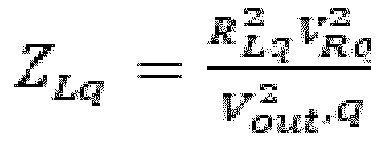
- RL,q : load impedance of q-
th receiver 210c - VOut,q : charging voltage of load of q-
th receiver 210c - ZCoil.MIMO : impedance of all of transmitters seen from each
amplification unit 110 of first to t-th transmitters - Zref,q,MIMO : impedance of all of transmitters when q-
th receiver 210c is seen from eachtransmission resonance unit 220 of first to t-th transmitters - ZCoil.1 : impedance seen from
amplification unit 110 offirst transmitter 210a - ZCoil.2 : impedance seen from
amplification unit 110 ofsecond transmitter 210b - Zref,1 : impedance seen from
transmission resonance unit 220 offirst transmitter 210a - Zref,2 : impedance seen from
transmission resonance unit 220 ofsecond transmitter 210b - According to the present disclosure, wireless power charging can be performed with the maximum efficiency in the configuration shown in
FIG. 6a . In wireless power charging, it is important to maintain the values of output currents IP1, IP2, and IPt of the first to t-th transmitters th receivers th transmitters th receivers - In the present disclosure, a method for maintaining the output currents IP1, IP2, and IPt of the first to t-
th transmitters - First, referring to [Equation 13] to [Equation 16], the efficiency η of the
wireless charging apparatus 10 can be expressed as a function of mutual inductance Mtq, αt, and equivalent load impedance ZL,q of the q-th receiver 210c. In this case, αt is a current ratio of the t-th transmitter 200c and the r-th transmitter that is the reference transmitter.


- Further, it can be seen that the equivalent load impedance ZL,q of the q-
th receiver 210c is a function of the output voltage VR,q of therectification 150 of the q-th receiver 210c in [Equation 17] and the output voltage VR,q of therectification 150 of the q-th receiver 210c is a function of the output current IP,t of the t-th transmitter 200c. Accordingly, the efficiency η of thewireless charging apparatus 10 may be expressed as a function of mutual inductance Mtq and the output current IP,t of the t-th transmitter 200c from the function of the mutual inductance Mtq, the current ratio αt, and the equivalent load impedance ZL,q of the q-th receiver 210c.

- In the present disclosure, the mutual inductance Mtq can be determined through the method described in
PCT/KR2020/009985 control unit 170 can determine the output current IP,t of the t-th transmitter 200c, using an optimization algorithm. Hereafter, a method of determining the output current IP,t of the t-th transmitter 200c using an optimization algorithm is described. -
FIG. 7 is a diagram illustrating a method of determining output currents IP1, IP2, and IPt of a plurality oftransmitters power charging apparatus 10 according to another embodiment of the present disclosure. - According to the present disclosure, power is transmitted/received between a plurality of transmitters and a plurality of receivers a subset, which may be considered as an independent transmitter or receiver that is not influenced by other transmitters or receivers, is set to increase the charging efficiency. When a subset is set, it is possible to more quickly determine the output currents IP1, IP2, and IPt of the
transmitters - The
control unit 170 sets a subset using a matrix of mutual inductances Mtq. In the matrix, the lows are transmitters, the columns are receivers, and the i-th row×j-th column is a combination between the i-th transmitter and the j-th receiver. In this configuration, when the elements of previous row and column from predetermined mutual inductance are both 0, it is considered as a separate subset from the corresponding mutual inductance. - For example,
FIG. 7 shows a method of determining a subset when thewireless charging apparatus 10 is composed of first to fourth transmitters Tx1, Tx2, Tx3, and Tx4and first to third receivers Rx1, Rx2, and Rx3.FIG. 7 shows the case in which the first receiver Rx1 receives power from the first and second transmitters Tx1 and Tx2, the second receiver Rx2 receives power from the second and third transmitters Tx2 and Tx3, and the second receiver Rx3 receives power from the fourth transmitter Tx4. Since the mutual inductance M43 between the third transmitter Rx3 and the fourth transmitter Rx4 configure a separate subset because the elements of the previous row and column are all '0'. Accordingly, mutual inductances M11, M21, M22, and M32 configure on subset and the mutual inductance M43 configures one subset. That is, the third transmitter Tx3 and the fourth transmitter Rx4 configure one subset, and the other transmitters and receivers configure one subset. - Meanwhile, when subsets are determined, the output currents IP1, IP2, and IPt of the first to t-
th transmitters wireless charging apparatus 10 is charged, in which Particle Swarm Optimization, Simulated Annealing, Generic Algorithm, etc. may be used. Further, since a great number of factors may be applied to a charging environment, output currents IP1, IP2, and IPt of the first to t-th transmitters - For example, a method of adjusting the output currents IP1, IP2, and IPt using a method such as hill-climb is described. The
control unit 170 checks whether the first to q-th receivers th receivers control unit 170 determines that the charging condition is satisfied when they are within the predetermined range, and determines that adjustment is required because the charging condition is not satisfied. - When the power and voltage supplied to the loads of the first to q-
th receivers th receivers control unit 170 may control first the current of the transmitter that transmits power to a receiver having high urgency in consideration of urgency among the first to q-th receivers th receivers - Further, when any one receiver receives power from a transmitter that transmits power only to the corresponding receiver and a transmitter that transmits power to all of receivers except for the corresponding and when adjustment is required because the power and voltage supplied to the load of the corresponding receiver is under or over a predetermined range, the
control unit 170 can adjust only the current flowing to the transmitter that transmits power only to the corresponding receiver. For example, the first receiver Rx1 receives power from the first and second transmitters Tx1 and Tx2, in which the first transmitter Tx1 transmits only to the first receiver Rx1 and the second transmitter Tx2 transmits power to the first and second receivers Rx1 and Rx2. Accordingly, when adjustment is required because the power and voltage supplied to the first transmitter Tx1 is under or over the predetermined range, it is possible to adjust only the current flowing to the first transmitter Tx1. -
FIGS. 8a and8b are diagrams showing experimental examples of the wirelesspower charging apparatus 10 according to another embodiment of the present disclosure. - The tests of
FIGS. 8a and8b were performed on the first andsecond transmitters second receivers - The test of
FIG. 8a was performed for RS1 = RS2 = 0.3Ω, RP1 = RP2 = 0.2Ω, RL1 = 5Ω, RL2 = 20Ω, f0 = 1MHz, M11 =300nH, M21 = 200nH, M12=200nH, and M22 = 800nH. In this state, of the output current IP1 of thefirst transmitter 200a and the output current IP2 of thesecond transmitter 200b, the output current IP1 of thefirst transmitter 200a which satisfy minimum charging power of the first andsecond receivers second transmitter 200b are all determined at (+). -
FIG. 8b shows that when mutual inductances are changed such that M11 = 400nH, M21 = - 200nH, M12 = 200nH, M22 = -600nH in the state shown in FIG. 5a, the output current IP1 of thefirst transmitter 200a which satisfies the minimum charging power of the first andsecond receivers second transmitter 200b is determined at (-) unlike FIG. 5a. -
FIG. 9 is a flowchart illustrating a power charging method of the wirelesspower charging apparatus 10 according to another embodiment of the present disclosure. - Referring to
FIG. 9 , according to the present disclosure, in order to consume minimum power when charging is not performed, thecontrol unit 170 of the first to t-th transmitters th receivers control unit 170 determines the mutual inductance Mtq between the first to t-th transmitters th receivers - When the mutual inductance Mtq is determined, the
control unit 170 determines a subset of the wireless charging apparatus 10 (630) by creating a matrix about the mutual inductance Mtq and determines optimal output currents IP1, IP2, and IPt of the first to t-th transmitters - Meanwhile, a great number of factors may be applied to a charging environment, but it is difficult to apply all environmental factors to the equations and optimization algorithm, so the
control unit 170 adjusts the determined output current IP1, IP2, and IPt of the first to t-th transmitters th transmitters th transmitters th receivers control unit 170 performs again from the processes from the process of determining mutual inductance to the process of adjusting the output currents of the first to t-th transmitters - Although detailed embodiments were described above, various modifications are possible without departing from the scope of the disclosure.
- Accordingly, the range of the disclosure is not limited to the embodiments and should be defined by not only the range of the claims described below, but also equivalents to the range of the claims.
Claims (25)
- A wireless power charging apparatus comprising:a plurality of transmitters each including a transmission resonance unit configured to transmit power using power provided from a power source unit and including one capacitor and one inductor;a receiver including a reception resonance unit configured to receive power transmitted from the plurality of transmission resonance units and including one capacitor and one inductor, and a load performing charging using received power; anda control unit configured to determine mutual inductance between each of the transmission resonance units and each of the reception units and equivalent load impedance of the receiver, configured to determine any one of the plurality of transmitters as a reference transmitter and determine a current ratio between the reference transmitter and another transmitter, and configured to determine an output current of each of the plurality of transmitters using each of the mutual inductances, the equivalent load impedance of the receiver, and the current ratio between the reference transmitter and another transmitter.
- The wireless power charging apparatus of claim 1, wherein the control unit determines the equivalent load impedance of the receiver using first equivalent load impedance and second equivalent load impedance, and
the first equivalent load impedance is predetermined equivalent load impedance of the receiver and the second equivalent load impedance is determined by a predetermined method. - The wireless power charging apparatus of claim 2, wherein the control unit determines the second equivalent load impedance as the equivalent load impedance of the receiver when the second equivalent load impedance is larger than or the same as the first equivalent load impedance, and determines the first equivalent load impedance as the equivalent load impedance of the receiver when the second equivalent load impedance is smaller than the first equivalent load impedance.
- The wireless power charging apparatus of claim 2, wherein the first equivalent load impedance is the same as load impedance of the receiver.
- The wireless power charging apparatus of claim 2, wherein the control unit determines the second equivalent load impedance using the following equation,
 Rs : equivalent internal resistance of reception resonance unit of receiverRPT : equivalent internal resistance of transmission resonance unit of T-th transmitterw0 : resonance angular frequencyMT1 : mutual inductance between T-th transmitter and receiver.
 - The wireless power charging apparatus of claim 1, wherein the control unit determines an output current of each of the plurality of transmitters in consideration of the magnitude and phase of a current between the reference transmitter and another transmitter.
- The wireless power charging apparatus of claim 1, wherein the control unit determines a current ratio between the reference transmitter and another transmitter using the following equation,
 Mr1 : mutual inductance between r-th transmitter and receiverMt1 : mutual inductance between t-th transmitter and receiverRPr : equivalent internal resistance of transmission resonance unit of r-th transmitterRPt : equivalent internal resistance of transmission resonance unit of t-th transmitter.
 - The wireless power charging apparatus of claim 7, wherein the control unit determines an output current of the reference transmitter using the following equation,
 αt,Opt : current ratio between reference transmitter (r-th transmitter) and another transmitter (T-th transmitter)MT1 : mutual inductance between T-th transmitter andreceiver.ZOpt : equivalent load impedance of receiverRs : equivalent internal resistance of reception resonance unit of receiverVOut : charging voltage of load of receiverw0 : resonance angular frequencyRL : load impedance of receiver.
 - The wireless power charging apparatus of claim 8, wherein the control unit determines an output current of each of the plurality of transmitters using the following equation,

- A wireless power charging method comprising:a process of determining mutual inductance between a plurality of transmission resonance units configured to transmit power using power provided from a power source unit and each including one capacitor and one inductor and a reception resonance unit configured to receive power transmitted from the plurality of transmission resonance units and including one capacitor and one inductor;a process of determining equivalent load impedance of a receiver including a load performing charging using received power and the reception resonance unit;a process of determining any one of the plurality of transmitters as a reference transmitter and determining a current ratio between the reference transmitter and another transmitter; anda process of determining output current of each of the plurality of transmitters using the mutual inductances, the equivalent load impedance of the receiver, and the current ratio between the reference transmitter and another transmitter.
- The wireless power charging method of claim 10, wherein the process of determining equivalent load impedance of a receiver includes:a process of determining first equivalent load impedance;a process of determining second equivalent load impedance; anda process of determining the equivalent load impedance of the receiver using the first and second equivalent load impedances,wherein the first equivalent load impedance is predetermined equivalent load impedance of the receiver and the second equivalent load impedance is determined by a predetermined method.
- The wireless power charging method of claim 11, wherein the process of determining equivalent load impedance of a receiver includes a process of determining the second equivalent load impedance as the equivalent load impedance of the receiver when the second equivalent load impedance is larger than or the same as the first equivalent load impedance, and of determining the first equivalent load impedance as the equivalent load impedance of the receiver when the second equivalent load impedance is smaller than the first equivalent load impedance.
- The wireless power charging method of claim 11, wherein the process of determining the first equivalent load impedance includes a process of determining load impedance of the receiver as the first equivalent load impedance.
- The wireless power charging method of claim 11, wherein the process of determining the second equivalent load impedance includes a process of determining the second equivalent load impedance using the following equation,
 Rs : equivalent internal resistance of reception resonance unit of receiverRPT : equivalent internal resistance of transmission resonance unit of T-th transmitterw0 : resonance angular frequencyMT1 : mutual inductance between T-th transmitter and receiver.
 - The wireless power charging method of claim 10, wherein the process of determining a current ratio between the reference transmitter and another transmitter includes a process of determining the current ratio in consideration of the magnitude and phase of a current between the reference transmitter and another transmitter.
- The wireless power charging method of claim 10, wherein the process of determining a current ratio between the reference transmitter and another transmitter determines the current ratio using the following equation,
 Mr1 : mutual inductance between r-th transmitter and receiverMt1 : mutual inductance between t-th transmitter and receiverRPr : equivalent internal resistance of transmission resonance unit of r-th transmitterRPt : equivalent internal resistance of transmission resonance unit of t-th transmitter.
 - The wireless power charging method of claim 16, wherein the process of determining an output current of the transmitter determines the output current of the reference transmitter using the following equation,
 ZOpt : equivalent load impedance of receiverRs : equivalent internal resistance of reception resonance unit of receiverVOut : charging voltage of load of receiverw0 : resonance angular frequencyRL : load impedance of receiver.
 - The wireless power charging method of claim 17, wherein the process of determining an output current of the transmitter determines an output current of each of the plurality of transmitter using the following equation,

- A wireless power charging apparatus comprising:a plurality of transmitters each including a transmission resonance unit configured to transmit power using power provided from a power source unit and including one capacitor and one inductor;a plurality of receivers each including a reception resonance unit configured to receive power transmitted from the transmission resonance unit and including one capacitor and one inductor, and a load performing charging using received power; anda control unit configured to determine mutual inductance between each of the transmission resonance units and each of the reception resonance units and to determine at least one subset composed of a transmitter and a receiver configured to independently perform wireless charging at the plurality of transmitters and the plurality of receivers using each of the mutual inductances, thereby determining an output current of each of the plurality of transmitters.
- The wireless power charging apparatus of claim 19, wherein the control unit determines the subset by creating a matrix about the plurality of transmitters and the plurality of receivers using the mutual inductance.
- The wireless power charging apparatus of claim 20, wherein the control unit configures terms related to the receiver in rows and terms related to the transmitter in columns in the matrix.
- The wireless power charging apparatus of claim 19, wherein the control unit determines an output current of each transmitter by applying arg max (η Subset R ) IP to each of the subsets.
- A wireless power charging method comprising:a process of determining mutual inductance between a plurality of transmission resonance units each including one capacitor and one inductor and configured to transmit power using power provided from a power source unit and a plurality of reception resonance units configured to receive power transmitted from the transmission resonance units and including one capacitor and one inductor;a process of determining at least one subset composed of a transmitter and a receiver configured to independently perform wireless charging at a plurality of transmitters each including one of the transmission resonance unit and a plurality of receivers each including one of the reception resonance units and a load performing charging using received power, using each of the mutual inductances; anda process of determining an output current at each of the plurality of transmitters using the subset.
- The wireless power charging method of claim 23, wherein the process of creating the subset includes a process of creating the subset by creating a matrix about the plurality of transmitters and the plurality of receivers using the mutual inductance.
- The wireless power charging method of claim 24, wherein the process of creating the subset includes a process of configuring terms related to the receiver in rows and terms related to the transmitter in columns in the matrix.
Applications Claiming Priority (3)
| Application Number | Priority Date | Filing Date | Title |
|---|---|---|---|
| KR20190116033 | 2019-09-20 | ||
| KR20190116042 | 2019-09-20 | ||
| PCT/KR2020/012531 WO2021054729A1 (en) | 2019-09-20 | 2020-09-17 | Efficient wireless power charging apparatus and method therefor |
Publications (2)
| Publication Number | Publication Date |
|---|---|
| EP4033639A1 true EP4033639A1 (en) | 2022-07-27 |
| EP4033639A4 EP4033639A4 (en) | 2022-11-16 |
Family
ID=74883264
Family Applications (1)
| Application Number | Title | Priority Date | Filing Date |
|---|---|---|---|
| EP20864558.0A Pending EP4033639A4 (en) | 2019-09-20 | 2020-09-17 | EFFICIENT WIRELESS POWER CHARGING APPARATUS AND METHOD |
Country Status (4)
| Country | Link |
|---|---|
| US (1) | US12288996B2 (en) |
| EP (1) | EP4033639A4 (en) |
| KR (1) | KR102614277B1 (en) |
| WO (1) | WO2021054729A1 (en) |
Families Citing this family (3)
| Publication number | Priority date | Publication date | Assignee | Title |
|---|---|---|---|---|
| KR102694022B1 (en) * | 2022-01-04 | 2024-08-12 | 한국과학기술원 | Real-time approximation method and apparatus of mutual inductance between transmitters and receivers for determining optimal operating condition in multiple-receiver wireless power transfer systems |
| WO2025023630A1 (en) * | 2023-07-21 | 2025-01-30 | 삼성전자 주식회사 | Electronic device for wirelessly receiving power, and method for operating same |
| KR20250089305A (en) * | 2023-12-11 | 2025-06-18 | 한국과학기술원 | System and method for 3-dimensional wireless power charging |
Family Cites Families (19)
| Publication number | Priority date | Publication date | Assignee | Title |
|---|---|---|---|---|
| JP4561796B2 (en) | 2007-08-31 | 2010-10-13 | ソニー株式会社 | Power receiving device and power transmission system |
| EP2416470B1 (en) * | 2009-03-30 | 2019-11-13 | Fujitsu Limited | Wireless power supply system, wireless power transmission device, and wireless power receiving device |
| KR101718826B1 (en) * | 2010-08-26 | 2017-03-23 | 삼성전자주식회사 | Wireless power transmission apparatus and method that transmit resonance power by multi-band |
| KR101739293B1 (en) * | 2010-12-23 | 2017-05-24 | 삼성전자주식회사 | System for wireless power transmission and reception using in-band communication |
| US9553485B2 (en) * | 2011-10-13 | 2017-01-24 | Integrated Device Technology, Inc. | Apparatus, system, and method for detecting a foreign object in an inductive wireless power transfer system based on input power |
| KR101349551B1 (en) * | 2011-11-02 | 2014-01-08 | 엘지이노텍 주식회사 | A wireless power transmission apparatus and method thereof |
| KR101338654B1 (en) * | 2011-12-19 | 2013-12-06 | 엘지이노텍 주식회사 | Apparatus for transmitting wireless power, apparatus for receiving wireless power, system for transmitting wireless power and method for transmitting wireless power |
| US9543074B2 (en) * | 2012-09-12 | 2017-01-10 | Samsung Electronics Co., Ltd. | Apparatus and method for wireless power reception, apparatus and method for wireless power transmission, and wireless power transmission system |
| KR102227504B1 (en) * | 2013-08-07 | 2021-03-15 | 삼성전자주식회사 | Wireless power transfer method and device to trasmit power stably to plural wireless power receiving devices |
| KR102125917B1 (en) * | 2013-08-07 | 2020-07-08 | 엘지이노텍 주식회사 | Wireless power transmitting device |
| KR102155371B1 (en) * | 2013-09-09 | 2020-09-11 | 삼성전자주식회사 | Method and apparatus of wireless power transmission for cancelling harmonics noise |
| JP2015146722A (en) * | 2014-01-06 | 2015-08-13 | 日東電工株式会社 | Wireless power transmission device |
| US9800076B2 (en) * | 2014-02-14 | 2017-10-24 | Massachusetts Institute Of Technology | Wireless power transfer |
| KR102233383B1 (en) | 2014-07-23 | 2021-03-29 | 삼성전자주식회사 | Wireless power transfer system and method based on transfer schedule |
| KR102208692B1 (en) * | 2014-08-26 | 2021-01-28 | 한국전자통신연구원 | Apparatus and method for charging energy |
| EP3241223A4 (en) | 2014-12-31 | 2018-06-13 | Massachusetts Institute Of Technology | Adaptive control of wireless power transfer |
| KR20160100755A (en) * | 2015-02-16 | 2016-08-24 | 엘지이노텍 주식회사 | Wireless apparatus and method for transmitting power |
| WO2018222287A1 (en) * | 2017-05-30 | 2018-12-06 | General Electric Company | A wireless charging device, a receiver device, and a method of operating the same |
| KR102231882B1 (en) | 2019-07-31 | 2021-03-25 | 에타일렉트로닉스 주식회사 | Method for determining mutual inductance for efficient wireless power transfer and appratus thereof |
-
2020
- 2020-09-16 KR KR1020200118743A patent/KR102614277B1/en active Active
- 2020-09-17 US US17/761,192 patent/US12288996B2/en active Active
- 2020-09-17 EP EP20864558.0A patent/EP4033639A4/en active Pending
- 2020-09-17 WO PCT/KR2020/012531 patent/WO2021054729A1/en not_active Ceased
Also Published As
| Publication number | Publication date |
|---|---|
| KR20210034510A (en) | 2021-03-30 |
| US12288996B2 (en) | 2025-04-29 |
| WO2021054729A1 (en) | 2021-03-25 |
| KR102614277B1 (en) | 2023-12-15 |
| US20220376552A1 (en) | 2022-11-24 |
| EP4033639A4 (en) | 2022-11-16 |
Similar Documents
| Publication | Publication Date | Title |
|---|---|---|
| US10181756B2 (en) | Wireless power transmitter and power transmission method thereof | |
| US10305327B2 (en) | Power transmitting device and wireless power transmission system | |
| EP4033639A1 (en) | Efficient wireless power charging apparatus and method therefor | |
| US9948144B2 (en) | Power transmission system and power transmission device used for power transmission system | |
| US20190088412A1 (en) | Wireless Power Transmitter and Method of Controlling Power Thereof | |
| US10652817B2 (en) | Combining power from electrically isolated power paths for powering remote units in a distributed antenna system(s) (DASs) | |
| US8947044B2 (en) | Wireless charging system and related method for transmitting data | |
| US20140070624A1 (en) | Apparatus and method for transmitting and receiving wireless power | |
| KR101994742B1 (en) | Non-contact type power charging apparatus, non-contact type battery apparatus and non-contact type power transmission method | |
| Cho et al. | Wireless power transfer for variable load, distance, and power division ratio in a loosely-coupled multiple-receiver relay system | |
| CN106953650A (en) | NFC or the detection of RFID device RF detunings and the regulation of driver power output | |
| KR20160030799A (en) | Non-contact type power charging apparatus | |
| US11632001B2 (en) | Wireless power control method and apparatus | |
| KR20160030801A (en) | Non-contact type power charging apparatus | |
| CN108521840A (en) | Wireless power transmission system and its operating method | |
| KR102563553B1 (en) | Efficient wireless power charging apparatus and method thereof | |
| US10608474B2 (en) | Wireless power system with power management | |
| KR102502145B1 (en) | Efficient wireless power charging apparatus and method thereof | |
| EP4115496B1 (en) | Electronic device and method for controlling wireless charging in electronic device | |
| CN106487106A (en) | Electric supply installation | |
| KR20220161906A (en) | Wireless charging apparatus with dynamic coil compensation capability and wireless charging method using thereof | |
| KR20190011087A (en) | Apparatus and method for temperature control for wireless charging | |
| KR102231882B1 (en) | Method for determining mutual inductance for efficient wireless power transfer and appratus thereof | |
| US11289268B2 (en) | Transmission coil for wireless power supply, transmission antenna, wireless power transmitter, and charger | |
| KR20230077351A (en) | Wireless power charging apparatus for efficient managing of charging state and method thereof |
Legal Events
| Date | Code | Title | Description |
|---|---|---|---|
| STAA | Information on the status of an ep patent application or granted ep patent |
Free format text: STATUS: THE INTERNATIONAL PUBLICATION HAS BEEN MADE |
|
| PUAI | Public reference made under article 153(3) epc to a published international application that has entered the european phase |
Free format text: ORIGINAL CODE: 0009012 |
|
| STAA | Information on the status of an ep patent application or granted ep patent |
Free format text: STATUS: REQUEST FOR EXAMINATION WAS MADE |
|
| 17P | Request for examination filed |
Effective date: 20220324 |
|
| AK | Designated contracting states |
Kind code of ref document: A1 Designated state(s): AL AT BE BG CH CY CZ DE DK EE ES FI FR GB GR HR HU IE IS IT LI LT LU LV MC MK MT NL NO PL PT RO RS SE SI SK SM TR |
|
| A4 | Supplementary search report drawn up and despatched |
Effective date: 20221017 |
|
| RIC1 | Information provided on ipc code assigned before grant |
Ipc: H04B 5/00 20060101ALI20221011BHEP Ipc: H03H 7/01 20060101ALI20221011BHEP Ipc: G01R 27/16 20060101ALI20221011BHEP Ipc: H02J 50/40 20160101ALI20221011BHEP Ipc: H02J 50/12 20160101AFI20221011BHEP |
|
| DAV | Request for validation of the european patent (deleted) | ||
| DAX | Request for extension of the european patent (deleted) | ||
| STAA | Information on the status of an ep patent application or granted ep patent |
Free format text: STATUS: EXAMINATION IS IN PROGRESS |
|
| 17Q | First examination report despatched |
Effective date: 20260204 |