EP4033127B1 - Hydraulic closed circuit motorization system and method for controlling the driving of a transport vehicle - Google Patents
Hydraulic closed circuit motorization system and method for controlling the driving of a transport vehicle Download PDFInfo
- Publication number
- EP4033127B1 EP4033127B1 EP21218408.9A EP21218408A EP4033127B1 EP 4033127 B1 EP4033127 B1 EP 4033127B1 EP 21218408 A EP21218408 A EP 21218408A EP 4033127 B1 EP4033127 B1 EP 4033127B1
- Authority
- EP
- European Patent Office
- Prior art keywords
- pressure
- branch
- emergency
- solenoid valve
- control unit
- Prior art date
- Legal status (The legal status is an assumption and is not a legal conclusion. Google has not performed a legal analysis and makes no representation as to the accuracy of the status listed.)
- Active
Links
Images




Classifications
-
- F—MECHANICAL ENGINEERING; LIGHTING; HEATING; WEAPONS; BLASTING
- F15—FLUID-PRESSURE ACTUATORS; HYDRAULICS OR PNEUMATICS IN GENERAL
- F15B—SYSTEMS ACTING BY MEANS OF FLUIDS IN GENERAL; FLUID-PRESSURE ACTUATORS, e.g. SERVOMOTORS; DETAILS OF FLUID-PRESSURE SYSTEMS, NOT OTHERWISE PROVIDED FOR
- F15B20/00—Safety arrangements for fluid actuator systems; Applications of safety devices in fluid actuator systems; Emergency measures for fluid actuator systems
-
- F—MECHANICAL ENGINEERING; LIGHTING; HEATING; WEAPONS; BLASTING
- F16—ENGINEERING ELEMENTS AND UNITS; GENERAL MEASURES FOR PRODUCING AND MAINTAINING EFFECTIVE FUNCTIONING OF MACHINES OR INSTALLATIONS; THERMAL INSULATION IN GENERAL
- F16H—GEARING
- F16H61/00—Control functions within control units of change-speed- or reversing-gearings for conveying rotary motion ; Control of exclusively fluid gearing, friction gearing, gearings with endless flexible members or other particular types of gearing
- F16H61/38—Control of exclusively fluid gearing
- F16H61/40—Control of exclusively fluid gearing hydrostatic
- F16H61/4043—Control of a bypass valve
-
- B—PERFORMING OPERATIONS; TRANSPORTING
- B60—VEHICLES IN GENERAL
- B60K—ARRANGEMENT OR MOUNTING OF PROPULSION UNITS OR OF TRANSMISSIONS IN VEHICLES; ARRANGEMENT OR MOUNTING OF PLURAL DIVERSE PRIME-MOVERS IN VEHICLES; AUXILIARY DRIVES FOR VEHICLES; INSTRUMENTATION OR DASHBOARDS FOR VEHICLES; ARRANGEMENTS IN CONNECTION WITH COOLING, AIR INTAKE, GAS EXHAUST OR FUEL SUPPLY OF PROPULSION UNITS IN VEHICLES
- B60K17/00—Arrangement or mounting of transmissions in vehicles
- B60K17/04—Arrangement or mounting of transmissions in vehicles characterised by arrangement, location or kind of gearing
- B60K17/10—Arrangement or mounting of transmissions in vehicles characterised by arrangement, location or kind of gearing of fluid gearing
-
- B—PERFORMING OPERATIONS; TRANSPORTING
- B60—VEHICLES IN GENERAL
- B60K—ARRANGEMENT OR MOUNTING OF PROPULSION UNITS OR OF TRANSMISSIONS IN VEHICLES; ARRANGEMENT OR MOUNTING OF PLURAL DIVERSE PRIME-MOVERS IN VEHICLES; AUXILIARY DRIVES FOR VEHICLES; INSTRUMENTATION OR DASHBOARDS FOR VEHICLES; ARRANGEMENTS IN CONNECTION WITH COOLING, AIR INTAKE, GAS EXHAUST OR FUEL SUPPLY OF PROPULSION UNITS IN VEHICLES
- B60K17/00—Arrangement or mounting of transmissions in vehicles
- B60K17/04—Arrangement or mounting of transmissions in vehicles characterised by arrangement, location or kind of gearing
- B60K17/14—Arrangement or mounting of transmissions in vehicles characterised by arrangement, location or kind of gearing the motor of fluid or electric gearing being disposed in, or adjacent to, traction wheel
-
- B—PERFORMING OPERATIONS; TRANSPORTING
- B60—VEHICLES IN GENERAL
- B60K—ARRANGEMENT OR MOUNTING OF PROPULSION UNITS OR OF TRANSMISSIONS IN VEHICLES; ARRANGEMENT OR MOUNTING OF PLURAL DIVERSE PRIME-MOVERS IN VEHICLES; AUXILIARY DRIVES FOR VEHICLES; INSTRUMENTATION OR DASHBOARDS FOR VEHICLES; ARRANGEMENTS IN CONNECTION WITH COOLING, AIR INTAKE, GAS EXHAUST OR FUEL SUPPLY OF PROPULSION UNITS IN VEHICLES
- B60K17/00—Arrangement or mounting of transmissions in vehicles
- B60K17/34—Arrangement or mounting of transmissions in vehicles for driving both front and rear wheels, e.g. four wheel drive vehicles
- B60K17/356—Arrangement or mounting of transmissions in vehicles for driving both front and rear wheels, e.g. four wheel drive vehicles having fluid or electric motor, for driving one or more wheels
-
- F—MECHANICAL ENGINEERING; LIGHTING; HEATING; WEAPONS; BLASTING
- F15—FLUID-PRESSURE ACTUATORS; HYDRAULICS OR PNEUMATICS IN GENERAL
- F15B—SYSTEMS ACTING BY MEANS OF FLUIDS IN GENERAL; FLUID-PRESSURE ACTUATORS, e.g. SERVOMOTORS; DETAILS OF FLUID-PRESSURE SYSTEMS, NOT OTHERWISE PROVIDED FOR
- F15B13/00—Details of servomotor systems ; Valves for servomotor systems
- F15B13/02—Fluid distribution or supply devices characterised by their adaptation to the control of servomotors
- F15B13/06—Fluid distribution or supply devices characterised by their adaptation to the control of servomotors for use with two or more servomotors
- F15B13/08—Assemblies of units, each for the control of a single servomotor only
- F15B13/0803—Modular units
- F15B13/0846—Electrical details
- F15B13/086—Sensing means, e.g. pressure sensors
-
- F—MECHANICAL ENGINEERING; LIGHTING; HEATING; WEAPONS; BLASTING
- F15—FLUID-PRESSURE ACTUATORS; HYDRAULICS OR PNEUMATICS IN GENERAL
- F15B—SYSTEMS ACTING BY MEANS OF FLUIDS IN GENERAL; FLUID-PRESSURE ACTUATORS, e.g. SERVOMOTORS; DETAILS OF FLUID-PRESSURE SYSTEMS, NOT OTHERWISE PROVIDED FOR
- F15B13/00—Details of servomotor systems ; Valves for servomotor systems
- F15B13/02—Fluid distribution or supply devices characterised by their adaptation to the control of servomotors
- F15B13/06—Fluid distribution or supply devices characterised by their adaptation to the control of servomotors for use with two or more servomotors
- F15B13/08—Assemblies of units, each for the control of a single servomotor only
- F15B13/0803—Modular units
- F15B13/0878—Assembly of modular units
- F15B13/0885—Assembly of modular units using valves combined with other components
- F15B13/0889—Valves combined with electrical components
-
- F—MECHANICAL ENGINEERING; LIGHTING; HEATING; WEAPONS; BLASTING
- F15—FLUID-PRESSURE ACTUATORS; HYDRAULICS OR PNEUMATICS IN GENERAL
- F15B—SYSTEMS ACTING BY MEANS OF FLUIDS IN GENERAL; FLUID-PRESSURE ACTUATORS, e.g. SERVOMOTORS; DETAILS OF FLUID-PRESSURE SYSTEMS, NOT OTHERWISE PROVIDED FOR
- F15B15/00—Fluid-actuated devices for displacing a member from one position to another; Gearing associated therewith
- F15B15/18—Combined units comprising both motor and pump
-
- F—MECHANICAL ENGINEERING; LIGHTING; HEATING; WEAPONS; BLASTING
- F16—ENGINEERING ELEMENTS AND UNITS; GENERAL MEASURES FOR PRODUCING AND MAINTAINING EFFECTIVE FUNCTIONING OF MACHINES OR INSTALLATIONS; THERMAL INSULATION IN GENERAL
- F16H—GEARING
- F16H39/00—Rotary fluid gearing using pumps and motors of the volumetric type, i.e. passing a predetermined volume of fluid per revolution
- F16H39/02—Rotary fluid gearing using pumps and motors of the volumetric type, i.e. passing a predetermined volume of fluid per revolution with liquid motors at a distance from liquid pumps
-
- F—MECHANICAL ENGINEERING; LIGHTING; HEATING; WEAPONS; BLASTING
- F16—ENGINEERING ELEMENTS AND UNITS; GENERAL MEASURES FOR PRODUCING AND MAINTAINING EFFECTIVE FUNCTIONING OF MACHINES OR INSTALLATIONS; THERMAL INSULATION IN GENERAL
- F16H—GEARING
- F16H61/00—Control functions within control units of change-speed- or reversing-gearings for conveying rotary motion ; Control of exclusively fluid gearing, friction gearing, gearings with endless flexible members or other particular types of gearing
- F16H61/38—Control of exclusively fluid gearing
- F16H61/40—Control of exclusively fluid gearing hydrostatic
- F16H61/4008—Control of circuit pressure
-
- F—MECHANICAL ENGINEERING; LIGHTING; HEATING; WEAPONS; BLASTING
- F16—ENGINEERING ELEMENTS AND UNITS; GENERAL MEASURES FOR PRODUCING AND MAINTAINING EFFECTIVE FUNCTIONING OF MACHINES OR INSTALLATIONS; THERMAL INSULATION IN GENERAL
- F16H—GEARING
- F16H61/00—Control functions within control units of change-speed- or reversing-gearings for conveying rotary motion ; Control of exclusively fluid gearing, friction gearing, gearings with endless flexible members or other particular types of gearing
- F16H61/38—Control of exclusively fluid gearing
- F16H61/40—Control of exclusively fluid gearing hydrostatic
- F16H61/4008—Control of circuit pressure
- F16H61/4017—Control of high pressure, e.g. avoiding excess pressure by a relief valve
-
- F—MECHANICAL ENGINEERING; LIGHTING; HEATING; WEAPONS; BLASTING
- F16—ENGINEERING ELEMENTS AND UNITS; GENERAL MEASURES FOR PRODUCING AND MAINTAINING EFFECTIVE FUNCTIONING OF MACHINES OR INSTALLATIONS; THERMAL INSULATION IN GENERAL
- F16H—GEARING
- F16H61/00—Control functions within control units of change-speed- or reversing-gearings for conveying rotary motion ; Control of exclusively fluid gearing, friction gearing, gearings with endless flexible members or other particular types of gearing
- F16H61/38—Control of exclusively fluid gearing
- F16H61/40—Control of exclusively fluid gearing hydrostatic
- F16H61/4192—Detecting malfunction or potential malfunction, e.g. fail safe
-
- F—MECHANICAL ENGINEERING; LIGHTING; HEATING; WEAPONS; BLASTING
- F16—ENGINEERING ELEMENTS AND UNITS; GENERAL MEASURES FOR PRODUCING AND MAINTAINING EFFECTIVE FUNCTIONING OF MACHINES OR INSTALLATIONS; THERMAL INSULATION IN GENERAL
- F16H—GEARING
- F16H61/00—Control functions within control units of change-speed- or reversing-gearings for conveying rotary motion ; Control of exclusively fluid gearing, friction gearing, gearings with endless flexible members or other particular types of gearing
- F16H61/38—Control of exclusively fluid gearing
- F16H61/40—Control of exclusively fluid gearing hydrostatic
- F16H61/44—Control of exclusively fluid gearing hydrostatic with more than one pump or motor in operation
-
- B—PERFORMING OPERATIONS; TRANSPORTING
- B60—VEHICLES IN GENERAL
- B60Y—INDEXING SCHEME RELATING TO ASPECTS CROSS-CUTTING VEHICLE TECHNOLOGY
- B60Y2200/00—Type of vehicle
- B60Y2200/10—Road Vehicles
- B60Y2200/14—Trucks; Load vehicles, Busses
- B60Y2200/145—Haulage vehicles, trailing trucks
-
- B—PERFORMING OPERATIONS; TRANSPORTING
- B60—VEHICLES IN GENERAL
- B60Y—INDEXING SCHEME RELATING TO ASPECTS CROSS-CUTTING VEHICLE TECHNOLOGY
- B60Y2200/00—Type of vehicle
- B60Y2200/40—Special vehicles
- B60Y2200/44—Multi-axle long vehicles, with independently drivable or steerable wheels
-
- F—MECHANICAL ENGINEERING; LIGHTING; HEATING; WEAPONS; BLASTING
- F15—FLUID-PRESSURE ACTUATORS; HYDRAULICS OR PNEUMATICS IN GENERAL
- F15B—SYSTEMS ACTING BY MEANS OF FLUIDS IN GENERAL; FLUID-PRESSURE ACTUATORS, e.g. SERVOMOTORS; DETAILS OF FLUID-PRESSURE SYSTEMS, NOT OTHERWISE PROVIDED FOR
- F15B2211/00—Circuits for servomotor systems
- F15B2211/60—Circuit components or control therefor
- F15B2211/65—Methods of control of the load sensing pressure
Definitions
- the invention relates to a hydraulic closed circuit motorization system and method for controlling the driving of a transport vehicle.
- transport vehicles For the transport of heavy loads ranging from some dozens to thousands of tons, in general, and of special loads having a large height extension, in particular, transport vehicles are used, which are motorized by means of a hydraulic closed circuit system having a main hydraulic pump and a plurality of hydraulic motors for driving wheels of tracks.
- FIG. 1 An example of a known hydraulic system of the type described above is shown in figure A1.
- the system comprises a variable-displacement hydraulic pump operated by a heat engine or by an electric motor K1 and a plurality of hydraulic motors M1,M2,..Mn, which also have a variable or fixed displacement, are connected to a delivery branch A and to a return branch B and have respective output shafts, each connected to a relative wheel or track of the vehicle in a direct manner or by means of dedicated mechanical transmissions.
- the pump P is protected from possible pressure peaks by a protection or bypass circuit having, for each branch, a respective maximum pressure-relief valve, indicated with C1.
- the pressure-relief valves C1 are set to a threshold value predefined by the pump manufacturer - and in the range of four hundred and fifty bars - and, once they have reached it, allow the oil flow to partially bypass the pump P so as not to exceed a rated maximum inner pressure of the pump P.
- the pump P Upon pickup, in ordinary advancing conditions of the vehicle, the pump P has its minimum displacement and the hydraulic motors M have their maximum displacement.
- the vehicle is capable of picking up even in the presence of steep slopes or significant resistances to the advancing thereof, which can depend on particular states or conditions of the ground.
- a running speed or maximum speed possible is reached, at which the displacement of the pump P reaches its maximum level and the displacement of the motors M reaches its minimum value.
- the pressure-relief valves C1 are capable of dampening possible pressure peaks deriving from a use in ordinary conditions, but, in a condition of instantaneous closing of the pump P, they could no nothing but laminate oil between the delivery branch and the return branch at the maximum calibration pressure and, consequently, produce a significant braking action on the vehicle.
- the object of the invention is to provide an emergency unit for a hydraulic closed circuit motorization system for a transport vehicle, which solves the problems discussed above in a simple and economic fashion.
- the object of the invention is to provide an emergency unit for a hydraulic closed circuit motorization system for a transport vehicle, which ensures a prompt and effective control of the movements of the vehicle in case of a sudden failure of any one of the driving or control components of the hydraulic circuit.
- an emergency hydraulic unit for a hydraulic closed circuit motorization system for a transport vehicle comprising at least a motorized pump for sending pressurised fluid in a delivery branch and for receiving the fluid from a return branch of the hydraulic circuit; the unit comprising:
- the invention further relates to a hydraulic closed circuit motorization system for controlling the driving of a transport vehicle.
- a hydraulic closed circuit motorization system for controlling the driving of a transport vehicle as claimed in claim 4.
- the invention further relates to a method for controlling the driving of a transport vehicle.
- the reference value is a value of the first derivative of said pressure differences detected in ordinary advancing condition of the vehicle.
- the invention relates to a transport vehicle.
- number 1 indicates, as a whole, a vehicle for the transport of goods and, in particular, for the transport of heavy loads and/or high loads, such as, for example, modules for launch vehicles or wind turbines, to which explicit reference will be made in the description below without because of this loosing in generality.
- the vehicle 1 comprises a frame 2 defining a loading plane and a plurality of wheels or tracks 3, which are schematically shown, are coupled to the frame 2 in a known manner and roll on the ground.
- the vehicle 1 For each wheel or track 3, the vehicle 1 comprises a respective hydraulic driving motor 4, which is known and schematically shown, conveniently having a variable or fixed displacement.
- the motors 4 are part of a hydraulic system 6 for driving the vehicle 1; the hydraulic system 6 is a closed circuit system and comprises, in addition to the hydraulic motors 4, a variable-displacement pump 7, which is driven by an electric motor or a heat engine, indicated with 8.
- the hydraulic system 6 comprises two or more pumps 7 driven by relative motors 8.
- the pump 7 and the hydraulic motors 4 are connected, in a known manner, to a delivery branch 9 and to a return branch 10 of the system 6, as visible in figure 1 , and are controlled by a general command and control unit 11 of the vehicle 1, which is known and schematically shown.
- the general command and control unit 11 commands and controls the pump 7, the hydraulic motors 4 and the driving motor 8 of the pump 7 in an ordinary advancing condition of the vehicle 1.
- the system 6 further comprises, for each branch 9 and 10, a known pressure-relief valve 12, which is not described in detail, is suited to protect the pump 7 and, therefore, is set to a predetermined pressure, in the example shown herein in the range of four hundred and fifty bars.
- a predetermined pressure in the example shown herein in the range of four hundred and fifty bars.
- the value of the calibration pressure can be different from the one indicated above, since it is chosen as a function of the type of pump used.
- the system 6 further comprises an emergency unit 13, which operates according to a logic independently of the general command and control unit 11 and intervenes when a fault or malfunction occurs in the hydraulic system 6, such as, for example, the breaking of the pump 7 or the failure of the control of the displacement of the pump 7 or even the breaking or a malfunction of the motor 8.
- an emergency unit 13 which operates according to a logic independently of the general command and control unit 11 and intervenes when a fault or malfunction occurs in the hydraulic system 6, such as, for example, the breaking of the pump 7 or the failure of the control of the displacement of the pump 7 or even the breaking or a malfunction of the motor 8.
- the emergency unit 13 comprises a command and control unit 15, which operates in emergency conditions and independently of the command and control unit 11.
- the command and control unit 15 is physically separate from the unit 11, as shown in figure 1 , and, in this case, an electric connection 15A to the general unit 11 can be provided or not be provided, for example for a diagnostic control or for setting operating parameters of the system or for synchronization activities.
- command and control unit 15 is partially or totally integrated in the general unit 11, but always configured so as to operate autonomously in case of emergency.
- the unit 13 When the command and control unit 15 is physically separate from the general unit 11, the unit 13 constitutes a kit that can be installed in existing vehicles. Even in this case, and owing to the above, it is evident that some parts or blocks of the unit 13 could be arranged in general unit 11.
- the unit 13 further comprises, for each branch 9, 10, a known pressure detector 16, which is designed to detect, either continuously or at predetermined time intervals, the pressure of the relative branch and to send a corresponding signal to the command and control unit 15.
- a known pressure detector 16 which is designed to detect, either continuously or at predetermined time intervals, the pressure of the relative branch and to send a corresponding signal to the command and control unit 15.
- the unit 13 finally comprises a two-way solenoid valve 18, which is electrically connected to the command and control unit 15 and has a port hydraulically connected to the delivery branch 9 and a port connected to the return branch 10, as shown in figure 1 and, in particular, in figure 2 .
- the solenoid valve 18 is a normally open bistable solenoid valve.
- the solenoid valve 18 is held, by a thrust spring 19, in an opening condition, in which it hydraulically and directly connects the delivery branch 9 to the return branch 10, basically setting the vehicle to a "neutral driving" state equivalent to the "neutral gear” of wheeled road vehicles.
- the solenoid valve 18 is switched to a closing position, in which it isolates the delivery branch 9 from the return branch 10, by an electric-hydraulic actuator 21, which is controlled by the command and control unit 15.
- the unit 13 further comprises, for each branch 9, 10, a pressure-relief valve 23, which is calibrated so as to protect the solenoid valve 18 and is set to the maximum pressure the solenoid valve can bear, in the example described herein a pressure of 420 bar.
- the general command and control unit 11 controls the pump 7 and the hydraulic motors 4 by changing their displacement so as to advance the vehicle 1 along the provided path and with the provided law of motion.
- the command and control unit 15 receives signals that are proportional to the pressures in the delivery branch 9 and in the return branch 10 and processes said data holding the solenoid valve 18 in its closing condition.
- the command and control unit 15 calculates, in an almost continuous manner or at predetermined time intervals and by means of a computation block 28 ( figure 2 ), the difference D between the pressure in the delivery branch 9 and the pressure in the return branch 10.
- the command and control unit 15 calculates the first derivative of the pressure difference D calculated by the block 28 as a function of time.
- the development of the first derivative of the pressure difference D is represented by segment 30 of the diagram of figure 5 .
- the first derivative of the pressure difference D oscillates in the neighbourhood of zero, remaining within a narrow range R, which, in the case described herein, ranges from circa 20 to circa -20 bar/s.
- the range R can be set and changed through the command unit 15 and, if necessary, communicated to the general unit 11 or it can be communicated to the unit 15 by the general unit 11, in any case through the connection 15A.
- the command and control unit 15 intervenes and, operating in the way described above, detects a sudden change in the first derivative of the pressure difference D.
- This sudden change is shown in segment 31 of figure 5 and, on a larger scale, in figure 7 .
- the command and control unit 15 by means of a comparator block 34 of the unit 15 itself ( figure 2 ), in each instant or at predetermined intervals, compares the value of the instantaneous first derivative with a reference value of the first derivative.
- the reference value can be chosen among values within the ordinary range R or be the limit values of the ordinary range R or even values on the outside of the range R, but very close to it.
- the command and control unit 15 When the value of the first derivative exceeds or is different from the reference value, the command and control unit 15, by means of a command block 35 of the unit 15 itself, opens the solenoid valve 18, short-circuiting the delivery branch 9 and the return branch 10.
- the braking back pressure can arbitrarily be changed, until it becomes null, regardless of the control carried out by the command and control unit 11 and, in general, of the control of the vehicle 1.
- the variant shown in figure 3 relates to a system 40, which differs from the system 1 because of some manufacturing details and whose components are indicated with the same numbers as the corresponding parts of the system 1.
- the system 40 comprises an emergency unit 41, which is arranged between the delivery branch 9 and the return branch 10 and operates autonomously from and independently of the command and control unit 11.
- the only difference between the unit 41 and the unit 13 lies in the fact that the former comprises, besides the solenoid valve 18, a further solenoid valve 42, which is connected between the delivery branch 9 and the return branch 10 in parallel to the solenoid valve 18 and is also controlled by the command and control unit 11 in order to ensure the short-circuiting of the delivery branch 9 and of the return branch 10 in case the aforesaid failures occur and in case the valve 18 does not operate as expected.
Landscapes
- Engineering & Computer Science (AREA)
- General Engineering & Computer Science (AREA)
- Mechanical Engineering (AREA)
- Chemical & Material Sciences (AREA)
- Physics & Mathematics (AREA)
- Fluid Mechanics (AREA)
- Combustion & Propulsion (AREA)
- Transportation (AREA)
- Analytical Chemistry (AREA)
- Fluid-Pressure Circuits (AREA)
- Control Of Fluid Gearings (AREA)
- Control Of Direct Current Motors (AREA)
- Auxiliary Drives, Propulsion Controls, And Safety Devices (AREA)
Description
- The invention relates to a hydraulic closed circuit motorization system and method for controlling the driving of a transport vehicle.
- For the transport of heavy loads ranging from some dozens to thousands of tons, in general, and of special loads having a large height extension, in particular, transport vehicles are used, which are motorized by means of a hydraulic closed circuit system having a main hydraulic pump and a plurality of hydraulic motors for driving wheels of tracks.
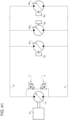
- An example of a known hydraulic system of the type described above is shown in figure A1.
- The system comprises a variable-displacement hydraulic pump operated by a heat engine or by an electric motor K1 and a plurality of hydraulic motors M1,M2,..Mn, which also have a variable or fixed displacement, are connected to a delivery branch A and to a return branch B and have respective output shafts, each connected to a relative wheel or track of the vehicle in a direct manner or by means of dedicated mechanical transmissions.
- The pump P is protected from possible pressure peaks by a protection or bypass circuit having, for each branch, a respective maximum pressure-relief valve, indicated with C1. The pressure-relief valves C1 are set to a threshold value predefined by the pump manufacturer - and in the range of four hundred and fifty bars - and, once they have reached it, allow the oil flow to partially bypass the pump P so as not to exceed a rated maximum inner pressure of the pump P.
- Upon pickup, in ordinary advancing conditions of the vehicle, the pump P has its minimum displacement and the hydraulic motors M have their maximum displacement. In this case, the vehicle is capable of picking up even in the presence of steep slopes or significant resistances to the advancing thereof, which can depend on particular states or conditions of the ground. As the speed increases, just like gear ratios are changed in mechanical transmission systems, by similarly acting upon the displacements of the pump P and of the motors M, a running speed or maximum speed possible is reached, at which the displacement of the pump P reaches its maximum level and the displacement of the motors M reaches its minimum value.
- If everything was sized in a correct manner, the motor K1 operating the pump P will also be in conditions close to its power limit.
- Known hydraulic motorization systems described above, despite keeping accelerations, decelerations and maximum pressure values of the system within defined and desired limits by carrying out a simultaneous and synchronized control of the displacement of the pump P and of the motors M1,M2, Mn, are scarcely satisfactory, as they are not capable of properly responding in emergency conditions deriving from unforeseeable faults, such as, for example, a sudden fault of the system controlling the displacement of the pump P, a sudden failure of the motor K1 operating the pump P or the breaking of the pump P.
- Indeed, if, for example, the displacement P of the pump abruptly decreases, the inertia action of the whole system tries to remain in the immediately previous state and this leads to a motoring over of the hydraulic motors M and, simultaneously, given how quick the phenomenon is, the pressure in the return branch increases, since the system is braking. The braking increases in terms of torque until the maximum protection system of the pump, specifically 450 bar, is reached.
- This pressure level is quickly reached and, consequently, the vehicle is slowed down in an equally quick manner. Because of the quickness of the event, the calibration limit value of the pressure-relief valves could be exceeded, thus causing unexpected and dangerous stresses to the system. The pressure-relief valves C1 are capable of dampening possible pressure peaks deriving from a use in ordinary conditions, but, in a condition of instantaneous closing of the pump P, they could no nothing but laminate oil between the delivery branch and the return branch at the maximum calibration pressure and, consequently, produce a significant braking action on the vehicle.
- Hence, in general, when one of the aforesaid faults occurs, the control of the vehicle is lost without having the chance to put in place suitable braking actions to protect the vehicle and the transported load.
- The problem discussed above is extremely amplified in case the vehicle transports a load having a higher centre of gravity, which is what happens, for example, during the transport of tubular cylindrical bodies for launch vehicles or wind turbines, which, in some cases, are transported in a vertical position.
- Indeed, in particular, a failed prompt control of the vehicle causes load stability problems, in some cases, and the damaging of the load itself when it is particularly fragile, in other cases, for the load and the vehicle are inevitably subjected to significant dynamic overloads since high transported masses correspond to large inertia actions.
- In any case, in the presence of a failure, all necessary and expected load safety conditions become null.
- The object of the invention is to provide an emergency unit for a hydraulic closed circuit motorization system for a transport vehicle, which solves the problems discussed above in a simple and economic fashion.
- In particular, the object of the invention is to provide an emergency unit for a hydraulic closed circuit motorization system for a transport vehicle, which ensures a prompt and effective control of the movements of the vehicle in case of a sudden failure of any one of the driving or control components of the hydraulic circuit.
- According to the invention, there is provided an emergency hydraulic unit for a hydraulic closed circuit motorization system for a transport vehicle; the hydraulic circuit comprising at least a motorized pump for sending pressurised fluid in a delivery branch and for receiving the fluid from a return branch of the hydraulic circuit; the unit comprising:
- pressure detection means for detecting the pressure in the delivery branch and in the return branch and for outputting respective electric signals;
- an emergency solenoid valve designed to be connected to the delivery branch, on one side, and to the return branch on the other side;
- a command and control unit in emergency conditions configured to receive said electric signals from said pressure detecting means and connected to said solenoid valve to switch the solenoid valve between an open position, in which it directly connects the delivery branch with the return branch, and a closed position in which it hydraulically isolates the delivery branch and the return branch; said command and control unit in emergency conditions comprising:
- first computation means for calculating the difference between the delivery pressure and the return pressure;
- second computation means for calculating, during the advancing of the vehicle, an instantaneous first derivative as a function of the time of said pressure difference;
- comparator means for comparing the instantaneous first derivative with a value of the first reference derivative; and
- actuator means for commanding said solenoid valve to open when a deviation between the value of the instantaneous first derivative and the value of the first reference derivative occurs.
- The invention further relates to a hydraulic closed circuit motorization system for controlling the driving of a transport vehicle.
- According to the invention, there is provided a hydraulic closed circuit motorization system for controlling the driving of a transport vehicle as claimed in claim 4.
- The invention further relates to a method for controlling the driving of a transport vehicle.
- According to the invention, there is provided a method for controlling the driving of a transport vehicle by using a hydraulic closed circuit motorization system as claimed in claim 4, the method comprising the steps of controlling the pump and the hydraulic motors by means of the general command and control unit during ordinary advancing condition of the vehicle so that the vehicle advances along the pre-planned route, and being characterised by keeping the emergency solenoid valve in a closed condition during the advancing of the vehicle in the ordinary advancing condition, and by identifying by means of the emergency control unit the instant in which failure of the pump or of the drive motor of the same pump starts and by commanding the solenoid valve to open by means of said emergency command and control unit establishing communication between the delivery branch and the return branch; identifying the instant in which failure starts, is carried out by detecting the pressures in the delivery branch and in the return branch, calculating the pressure difference between the pressures in said delivery and return branches, calculating the first derivative over time of said pressure differences and identifying a deviation of the first derivative with respect to a reference value.
- Preferably, in the method defined above, the reference value is a value of the first derivative of said pressure differences detected in ordinary advancing condition of the vehicle.
- Finally, the invention relates to a transport vehicle.
- According to the invention, there is provided a transport vehicle as claimed in
claim 13. - The invention will now be described with reference to the accompanying figures, which show a non-limiting embodiment thereof, wherein:
- figure A1 schematically shows, basically in blocks, a hydraulic closed circuit motorization system for a transport vehicle according to the prior art;
-
figure 1 schematically shows, substantially in blocks, a transport vehicle provided with a first preferred embodiment of a hydraulic closed circuit motorization system according to the invention; -
figure 2 shows, on a much larger scale, an emergency hydraulic unit offigure 1 according to the invention; -
figure 3 is similar tofigure 1 and shows a transport vehicle provided with a second preferred embodiment of a hydraulic motorization system according to the invention; -
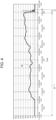
figure 4 shows the development of the pressures, as a function of time, in a delivery branch and in a return branch of the system offigures 1 and2 in case a sudden failure of a component of the system occurs; -
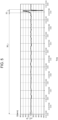
figure 5 is a diagram showing the development, as a function of time, of the derivative of the difference of the pressures in the delivery and return branches in case a sudden failure of the system occurs; -
figures 6 and7 show, on a much larger scale, a segment of the diagram offigure 4 and a segment of the diagram offigure 5 , respectively. - In
figure 1 ,number 1 indicates, as a whole, a vehicle for the transport of goods and, in particular, for the transport of heavy loads and/or high loads, such as, for example, modules for launch vehicles or wind turbines, to which explicit reference will be made in the description below without because of this loosing in generality. - The
vehicle 1 comprises a frame 2 defining a loading plane and a plurality of wheels ortracks 3, which are schematically shown, are coupled to the frame 2 in a known manner and roll on the ground. - For each wheel or
track 3, thevehicle 1 comprises a respective hydraulic driving motor 4, which is known and schematically shown, conveniently having a variable or fixed displacement. - The motors 4 are part of a hydraulic system 6 for driving the
vehicle 1; the hydraulic system 6 is a closed circuit system and comprises, in addition to the hydraulic motors 4, a variable-displacement pump 7, which is driven by an electric motor or a heat engine, indicated with 8. - According to a variant which is not shown herein, the hydraulic system 6 comprises two or more pumps 7 driven by relative motors 8.
- The pump 7 and the hydraulic motors 4 are connected, in a known manner, to a
delivery branch 9 and to areturn branch 10 of the system 6, as visible infigure 1 , and are controlled by a general command andcontrol unit 11 of thevehicle 1, which is known and schematically shown. The general command andcontrol unit 11 commands and controls the pump 7, the hydraulic motors 4 and the driving motor 8 of the pump 7 in an ordinary advancing condition of thevehicle 1. - Hereinafter, "ordinary advancing condition" indicates an advancing condition in which the pump 7 and the relative motor 8 work in a correct and efficient manner.
- The system 6 further comprises, for each
branch relief valve 12, which is not described in detail, is suited to protect the pump 7 and, therefore, is set to a predetermined pressure, in the example shown herein in the range of four hundred and fifty bars. However, the value of the calibration pressure can be different from the one indicated above, since it is chosen as a function of the type of pump used. - With reference to
figure 1 , again, and, in particular, tofigure 2 , the system 6 further comprises anemergency unit 13, which operates according to a logic independently of the general command andcontrol unit 11 and intervenes when a fault or malfunction occurs in the hydraulic system 6, such as, for example, the breaking of the pump 7 or the failure of the control of the displacement of the pump 7 or even the breaking or a malfunction of the motor 8. - The
emergency unit 13 comprises a command andcontrol unit 15, which operates in emergency conditions and independently of the command andcontrol unit 11. - The command and
control unit 15 is physically separate from theunit 11, as shown infigure 1 , and, in this case, anelectric connection 15A to thegeneral unit 11 can be provided or not be provided, for example for a diagnostic control or for setting operating parameters of the system or for synchronization activities. - Alternatively, the command and
control unit 15 is partially or totally integrated in thegeneral unit 11, but always configured so as to operate autonomously in case of emergency. - When the command and
control unit 15 is physically separate from thegeneral unit 11, theunit 13 constitutes a kit that can be installed in existing vehicles. Even in this case, and owing to the above, it is evident that some parts or blocks of theunit 13 could be arranged ingeneral unit 11. - In any case, the
unit 13 further comprises, for eachbranch pressure detector 16, which is designed to detect, either continuously or at predetermined time intervals, the pressure of the relative branch and to send a corresponding signal to the command andcontrol unit 15. - The
unit 13 finally comprises a two-way solenoid valve 18, which is electrically connected to the command andcontrol unit 15 and has a port hydraulically connected to thedelivery branch 9 and a port connected to thereturn branch 10, as shown infigure 1 and, in particular, infigure 2 . - With reference to
figure 2 , again, thesolenoid valve 18 is a normally open bistable solenoid valve. Thesolenoid valve 18 is held, by athrust spring 19, in an opening condition, in which it hydraulically and directly connects thedelivery branch 9 to thereturn branch 10, basically setting the vehicle to a "neutral driving" state equivalent to the "neutral gear" of wheeled road vehicles. - The
solenoid valve 18 is switched to a closing position, in which it isolates thedelivery branch 9 from thereturn branch 10, by an electric-hydraulic actuator 21, which is controlled by the command andcontrol unit 15. - With reference to
figure 2 , again, theunit 13 further comprises, for eachbranch relief valve 23, which is calibrated so as to protect thesolenoid valve 18 and is set to the maximum pressure the solenoid valve can bear, in the example described herein a pressure of 420 bar. - The operation of the system 6 will now be described starting from an advancing situation of the
vehicle 1 in an ordinary advancing condition, in which thesolenoid valve 18 is held in a closing condition by the command andcontrol unit 15 and the general command andcontrol unit 11 commands and control the displacement of the pump 7 and of the hydraulic motors 4, when they have a variable displacement, and of the motor 8 in order to advance thevehicle 1 along the provided advancing path. - Starting from this condition, if the pump 7 and the relative motor 8 do not suffer from failures, namely if they work correctly, the general command and
control unit 11 controls the pump 7 and the hydraulic motors 4 by changing their displacement so as to advance thevehicle 1 along the provided path and with the provided law of motion. - During this advancing, the pressures in the
delivery branch 9 and in thereturn branch 10 change over time with a law of motion represented insegment 25 of the diagram offigure 4 , wherein 26 indicates the development in thedelivery branch return branch 10. - During said advancing, again, the command and
control unit 15 receives signals that are proportional to the pressures in thedelivery branch 9 and in thereturn branch 10 and processes said data holding thesolenoid valve 18 in its closing condition. I - In particular, during the advancing of the
vehicle 1, the command andcontrol unit 15 calculates, in an almost continuous manner or at predetermined time intervals and by means of a computation block 28 (figure 2 ), the difference D between the pressure in thedelivery branch 9 and the pressure in thereturn branch 10. - During the advancing of the
vehicle 1, again, by means of afurther computation block 28, the command andcontrol unit 15 calculates the first derivative of the pressure difference D calculated by theblock 28 as a function of time. The development of the first derivative of the pressure difference D is represented by segment 30 of the diagram offigure 5 . - As shown by a closer analysis of segment 30, the first derivative of the pressure difference D oscillates in the neighbourhood of zero, remaining within a narrow range R, which, in the case described herein, ranges from circa 20 to circa -20 bar/s. The range R can be set and changed through the
command unit 15 and, if necessary, communicated to thegeneral unit 11 or it can be communicated to theunit 15 by thegeneral unit 11, in any case through theconnection 15A. - When, for whatever reason, a failure arises in the
system 13 affecting the pump 7 or its motor 8, for example the pump 7 quickly reaches its closing position or the relative motor 8 does not operate the pump 7 any longer in the expected manner, the pressure in thedelivery branch 9 suddenly decreases and, at the same time, the pressure in thereturn branch 10 suddenly increases due to the inertia of thevehicle 1, which causes the rotation of the hydraulic motors 4. - The situation described above is represented by
segment 31 of the diagram offigure 4 and, on a larger scale, in the diagram offigure 6 , wherein the development of the pressure P9 in thedelivery branch 9 is represented bycurve 26 and the development of the pressure P10 in thereturn branch 10 is represented bycurve 27. - In this situation, the command and
control unit 15 intervenes and, operating in the way described above, detects a sudden change in the first derivative of the pressure difference D. This sudden change is shown insegment 31 offigure 5 and, on a larger scale, infigure 7 . - According to
figure 5 , in the presence of the failure, the first derivative of the difference D reaches both positive and negative values that exceed 600 bar/s and, hence, are extremely distant from the limit values of the range R. In this situation, the command andcontrol unit 15, by means of acomparator block 34 of theunit 15 itself (figure 2 ), in each instant or at predetermined intervals, compares the value of the instantaneous first derivative with a reference value of the first derivative. The reference value can be chosen among values within the ordinary range R or be the limit values of the ordinary range R or even values on the outside of the range R, but very close to it. - When the value of the first derivative exceeds or is different from the reference value, the command and
control unit 15, by means of acommand block 35 of theunit 15 itself, opens thesolenoid valve 18, short-circuiting thedelivery branch 9 and thereturn branch 10. - With reference to
figures 6 and7 , it is evident how the opening of thesolenoid valve 18 in the neighbourhood of the peak of the first derivative of the difference D limits the back pressure or the rising of the pressure in the return branch in the neighbourhood of 120 bar, which corresponds to a contained braking backpressure 36 comparable to the drivingpressure 37 and, consequently, to small inertial actions acting upon thevehicle 1 and upon the load, which, hence, are preserved as well as the connection pipes between the pump 7 and the hydraulic motors 4 are preserved. - Examining
figures 6 and7 , one can see that the opening of thesolenoid valves 18 at values of the first derivative of the difference D in the range of 300 bar/s leads to the generation of a braking back pressure in thereturn branch 10, so that no inertial action is exerted upon the vehicle and upon the relative load following the failure. In this case, thesolenoid valve 18 is opened when there still is pressure in thedelivery branch 9. - Owing to the above, it is evident that, by properly choosing the value of the first derivative of the pressure difference D, the braking back pressure can arbitrarily be changed, until it becomes null, regardless of the control carried out by the command and
control unit 11 and, in general, of the control of thevehicle 1. - The variant shown in
figure 3 relates to asystem 40, which differs from thesystem 1 because of some manufacturing details and whose components are indicated with the same numbers as the corresponding parts of thesystem 1. - The
system 40 comprises anemergency unit 41, which is arranged between thedelivery branch 9 and thereturn branch 10 and operates autonomously from and independently of the command andcontrol unit 11. The only difference between theunit 41 and theunit 13 lies in the fact that the former comprises, besides thesolenoid valve 18, afurther solenoid valve 42, which is connected between thedelivery branch 9 and thereturn branch 10 in parallel to thesolenoid valve 18 and is also controlled by the command andcontrol unit 11 in order to ensure the short-circuiting of thedelivery branch 9 and of thereturn branch 10 in case the aforesaid failures occur and in case thevalve 18 does not operate as expected.
Claims (13)
- An emergency hydraulic unit (13) for a hydraulic closed circuit motorization system (6) for controlling the driving of a transport vehicle (1); the hydraulic circuit comprising at least a motorized pump (7) for sending pressurised fluid in a delivery branch (9) and for receiving the fluid from a return branch (10) of the hydraulic circuit; the unit comprising:- pressure detection means (16) for detecting the pressure in the delivery branch and in the return branch and for outputting respective electric signals;- an emergency solenoid valve (18) designed to be hydraulically connected to the delivery branch (9), on one side, and to the return branch (10) on the other side;- a command and control unit in emergency conditions (15) configured to receive said electric signals from said pressure detecting means (16) and connected to said solenoid valve (18) to switch the solenoid valve (18) between an open position, in which it directly connects, in use, the delivery branch (9) with the return branch (10), and a closed position in which it hydraulically isolates the delivery branch (9) and the return branch (10);said command and control unit in emergency conditions (15) comprising:- first computation means for calculating the difference (D) between the delivery pressure and the return pressure;- second computation means for calculating, during the advancing of the vehicle (1), an instantaneous first derivative as a function of the time of said pressure difference (D);- comparator means (34) for comparing the instantaneous first derivative with a value of the first reference derivative; and- actuator means (35) for commanding said solenoid valve (18) to open when a deviation between the value of the instantaneous first derivative and the value of the first reference derivative occurs.
- The unit according to claim 1, characterised in that it comprises a further emergency solenoid valve (42); said emergency solenoid valves (18,42) being designed to be connected in parallel to said delivery and return branches (9,10) and both being controlled by said command and control unit in emergency conditions (15).
- The unit according to claim 1 or 2, characterised in that said emergency solenoid valve (18) is a two-way bistable valve.
- A hydraulic closed circuit motorization system (6) for controlling the driving of a transport vehicle (1) comprising bodies rolling on the ground; the hydraulic system (6) comprising at least one variable-displacement pump (7) for sending an operating fluid in a delivery branch (9) and receiving the operating fluid from a return branch (10) of the system, at least one motor (8) for driving the main pump (7), a plurality of hydraulic motors (4) connected to the delivery branch and to the return branch (9,10) and actuating said rolling bodies, and a general command and control unit (11) for controlling said pump (7) and said hydraulic motors (4) in an ordinary advancing condition of the vehicle and moving the vehicle along a pre-planned advance route; characterised in that it furthermore comprises a hydraulic emergency command and control unit (13) comprising:- pressure detection means (16) for detecting the pressure of the delivery branch and of the return branch (9,10) and for outputting respective electric signals;- an emergency solenoid valve (18) interposed between said delivery branch and said return branch (9,10);- a command and control unit in emergency conditions (15) configured to receive said electric signals from said pressure detecting means (16) and to switch the solenoid valve (18) between an open position in which it directly connects the delivery branch (9) with the return branch (10), and a closed position in which it hydraulically isolates the delivery branch (9) and the return branch (10); said command and control unit in emergency conditions (15) comprising:- first computation means for calculating the difference (D) between the delivery pressure and the return pressure;- second computation means for calculating, during the advancing of the vehicle, an instantaneous first derivative as a function of the time of said pressure difference (D);- comparator means (34) for comparing the instantaneous first derivative with a value of the first reference derivative; and- actuator means (35) for commanding said solenoid valve (18) to open when a deviation between the value of the instantaneous first derivative and the value of the first reference derivative occurs.
- The system according to claim 4, characterised in that said general command and control unit in the ordinary advancing condition and said command and control unit in emergency conditions operate independently of one another.
- The system according to claim 4, characterised in that it comprises a further emergency solenoid valve (42); said emergency solenoid valves (18,42) being connected in parallel to said delivery and return branches (9,10) and both being controlled by said command and control unit in emergency conditions (15).
- The system according to any one of the claims from 4 to 6, characterised in that it comprises, for each of said delivery and return branches, a first pressure-relief valve (12) arranged to protect said pump (7) and a second pressure-relief valve (23) arranged to protect said solenoid valve (18) and independent of said first pressure-relief valve (12).
- A method for controlling the driving of a transport vehicle (1) by using a hydraulic motorization system (6) as claimed in claim 4, the method comprising the steps of controlling the pump (7) and the hydraulic motors (4) by means of the general command and control unit (11) during ordinary advancing condition of the vehicle so that the vehicle advances along the pre-planned route, and being characterised by keeping the emergency solenoid valve (18) in a closed condition during the advancing of the vehicle in the ordinary advancing condition, and by identifying by means of the emergency control unit (13) the instant in which failure of the pump (7) or of the drive motor (8) of the same pump starts and by commanding the solenoid valve (18) to open by means of said emergency command and control unit (13) establishing communication between the delivery branch and the return branch (9,10); identifying the instant in which failure starts, is carried out by detecting the pressures in the delivery branch (9) and in the return branch (10), calculating the pressure difference (D) between the pressures in said delivery and return branches (9,10), calculating the first derivative over time of said pressure differences and identifying a deviation of the first derivative with respect to a reference value.
- The method according to claim 8, characterised in that said reference value is a value of the first derivative of said pressure differences detected in ordinary advancing condition of the vehicle.
- The method according to claim 8 or 9, characterised in that the emergency solenoid valve (18) is brought to its open condition before the pressure in the delivery branch becoming null.
- The method according to claim 8 or 9, characterised in that the emergency solenoid valve (18) is brought to its open condition before the pressure in the return branch (10) is raised.
- The method according to claim 8 or 9, characterised in that identifying the instant of failure and the opening of said emergency solenoid valve (18) are carried out independently of the normal control of the pump and of the hydraulic motors by the general command and control unit (11) in ordinary advancing conditions of the vehicle (1).
- A motorized vehicle (1) for the transport of goods comprising a frame, a plurality of rolling bodies coupled to the frame and a hydraulic drive system (6) of said rolling bodies, characterised in that said hydraulic system (6) is as claimed in claim 4 and operates according to the method of claim 8.
Applications Claiming Priority (1)
| Application Number | Priority Date | Filing Date | Title |
|---|---|---|---|
| IT102021000000953A IT202100000953A1 (en) | 2021-01-20 | 2021-01-20 | METHOD AND CLOSED-CIRCUIT HYDRAULIC MOTORIZATION SYSTEM FOR CONTROLLING THE MOVEMENT OF A TRANSPORT VEHICLE |
Publications (3)
| Publication Number | Publication Date |
|---|---|
| EP4033127A1 EP4033127A1 (en) | 2022-07-27 |
| EP4033127B1 true EP4033127B1 (en) | 2024-08-14 |
| EP4033127C0 EP4033127C0 (en) | 2024-08-14 |
Family
ID=75340094
Family Applications (1)
| Application Number | Title | Priority Date | Filing Date |
|---|---|---|---|
| EP21218408.9A Active EP4033127B1 (en) | 2021-01-20 | 2021-12-30 | Hydraulic closed circuit motorization system and method for controlling the driving of a transport vehicle |
Country Status (10)
| Country | Link |
|---|---|
| US (1) | US12013031B2 (en) |
| EP (1) | EP4033127B1 (en) |
| JP (1) | JP2022111995A (en) |
| KR (1) | KR20220105603A (en) |
| CA (1) | CA3144087A1 (en) |
| ES (1) | ES2986634T3 (en) |
| IT (1) | IT202100000953A1 (en) |
| MX (1) | MX2022000168A (en) |
| PL (1) | PL4033127T3 (en) |
| ZA (1) | ZA202200893B (en) |
Family Cites Families (13)
| Publication number | Priority date | Publication date | Assignee | Title |
|---|---|---|---|---|
| DE2550167A1 (en) * | 1975-11-07 | 1977-05-12 | Linde Ag | Layout for pumping fluids - using drive system with hydrostatic pump and motor |
| JPS62292958A (en) * | 1986-06-11 | 1987-12-19 | Shimadzu Corp | hydraulic system |
| JPH044303A (en) * | 1990-04-19 | 1992-01-08 | Hitachi Constr Mach Co Ltd | Oil pressure circuit having hydraulic motor |
| JP3314886B2 (en) * | 1992-11-24 | 2002-08-19 | 株式会社小松製作所 | Hydraulic drive system abnormality detection device for four-wheel traveling device |
| DE10052794A1 (en) * | 2000-10-25 | 2002-05-08 | Bosch Gmbh Robert | Pressure control and method for program-controlled actuation of a pressure actuator |
| JP4220703B2 (en) * | 2001-01-18 | 2009-02-04 | サウアー ダンフォス インコーポレイテッド | Method and apparatus for smoothly switching mode of hydraulic mechanical transmission device by mechanical clutch |
| WO2006107242A1 (en) * | 2005-04-04 | 2006-10-12 | Volvo Construction Equipment Holding Sweden Ab | A method for damping relative movements occurring in a work vehicle during advance |
| FR2929381B1 (en) * | 2008-04-01 | 2010-05-14 | Centre Nat Rech Scient | INSTALLATION FOR THE PRODUCTION OF COLD, HEAT AND / OR WORKING |
| US8002073B2 (en) * | 2008-04-22 | 2011-08-23 | Kanzaki Kokyukoki Mfg. Co., Ltd. | Hydraulic drive working vehicle |
| US9803734B2 (en) * | 2012-01-24 | 2017-10-31 | Dana Belgium N.V | Method for operating a vehicle driveline |
| FR2993017B1 (en) * | 2012-07-03 | 2014-07-25 | Peugeot Citroen Automobiles Sa | METHOD OF CONTROLLING HYDRAULIC PRESSURE BY A FLOW REQUEST TO RECHARGE AN ACCUMULATOR |
| DE102016102914B3 (en) * | 2016-02-19 | 2017-05-11 | Max Holder Gmbh | Hydraulic drive arrangement for a vehicle and method for switching between two hydraulic operating modes of a hydraulic drive arrangement |
| US10801617B2 (en) * | 2018-01-05 | 2020-10-13 | Cnh Industrial America Llc | Propel system with active pump displacement control for balancing propel pump pressures in agricultural vehicles |
-
2021
- 2021-01-20 IT IT102021000000953A patent/IT202100000953A1/en unknown
- 2021-12-27 JP JP2021212703A patent/JP2022111995A/en active Pending
- 2021-12-28 CA CA3144087A patent/CA3144087A1/en active Pending
- 2021-12-30 EP EP21218408.9A patent/EP4033127B1/en active Active
- 2021-12-30 PL PL21218408.9T patent/PL4033127T3/en unknown
- 2021-12-30 US US17/565,997 patent/US12013031B2/en active Active
- 2021-12-30 ES ES21218408T patent/ES2986634T3/en active Active
-
2022
- 2022-01-03 MX MX2022000168A patent/MX2022000168A/en unknown
- 2022-01-18 KR KR1020220007057A patent/KR20220105603A/en active Pending
- 2022-01-19 ZA ZA2022/00893A patent/ZA202200893B/en unknown
Also Published As
| Publication number | Publication date |
|---|---|
| US12013031B2 (en) | 2024-06-18 |
| PL4033127T3 (en) | 2024-11-25 |
| EP4033127A1 (en) | 2022-07-27 |
| JP2022111995A (en) | 2022-08-01 |
| ES2986634T3 (en) | 2024-11-12 |
| IT202100000953A1 (en) | 2022-07-20 |
| US20220228661A1 (en) | 2022-07-21 |
| ZA202200893B (en) | 2022-10-26 |
| MX2022000168A (en) | 2022-07-21 |
| EP4033127C0 (en) | 2024-08-14 |
| KR20220105603A (en) | 2022-07-27 |
| CA3144087A1 (en) | 2022-07-20 |
Similar Documents
| Publication | Publication Date | Title |
|---|---|---|
| EP2681366B1 (en) | Fault detection, isolation and reconfiguration system for a hydraulic actuator circuit | |
| AU2016354098B2 (en) | Traction control system and process for a machine having a work implement | |
| KR101390074B1 (en) | Control device for working vehicle | |
| US5564519A (en) | Four-wheel traveling system for tipper | |
| EP2899319B1 (en) | Hydraulic Shovel | |
| US9731624B2 (en) | Electric driving wheel type work vehicle | |
| JP2007255710A (en) | Fluid transfer circuit for controlling wheel friction | |
| AU2021220842B2 (en) | Redundant steering system and machines and methods thereof | |
| US11624379B2 (en) | Hydrostatically driven vehicle with a secondary braking or steering supply | |
| EP4033127B1 (en) | Hydraulic closed circuit motorization system and method for controlling the driving of a transport vehicle | |
| JPWO2017199967A1 (en) | Vehicle operation control system | |
| WO2006130267A1 (en) | Hydraulic system having a return pressure compensator | |
| RU2842202C2 (en) | Hydraulic motorization system with closed circuit and method for controlling vehicle movement | |
| CN120621486A (en) | Steering mechanism, steering mechanism control method, and work machine | |
| US11821511B2 (en) | Electronic monitoring system for hydrostatic travel drives and travel drive with electronic monitoring system | |
| KR20100015055A (en) | Power steering system of large commercial vehicle | |
| CN212667485U (en) | Automobile safety steering control system | |
| EP3524859B1 (en) | Hydraulic arrangement, hydraulic system, and hydraulically drivable vehicle | |
| US20230373557A1 (en) | Hydraulic power steering system | |
| US11835130B1 (en) | Electric drive system for machine configured for switching sensor data sourcing pattern based on health status | |
| US20260110312A1 (en) | System for driving a hydraulic member | |
| CN116215651B (en) | Rear axle steering system with pressure shock protection and control method thereof | |
| US20240317010A1 (en) | Emergency operating method for an active chassis of a motor vehicle | |
| RU2030317C1 (en) | Steering hydraulic system of wheeled vehicle | |
| RU2033360C1 (en) | Steering hydraulic system of wheeled vehicle |
Legal Events
| Date | Code | Title | Description |
|---|---|---|---|
| PUAI | Public reference made under article 153(3) epc to a published international application that has entered the european phase |
Free format text: ORIGINAL CODE: 0009012 |
|
| STAA | Information on the status of an ep patent application or granted ep patent |
Free format text: STATUS: THE APPLICATION HAS BEEN PUBLISHED |
|
| AK | Designated contracting states |
Kind code of ref document: A1 Designated state(s): AL AT BE BG CH CY CZ DE DK EE ES FI FR GB GR HR HU IE IS IT LI LT LU LV MC MK MT NL NO PL PT RO RS SE SI SK SM TR |
|
| STAA | Information on the status of an ep patent application or granted ep patent |
Free format text: STATUS: REQUEST FOR EXAMINATION WAS MADE |
|
| 17P | Request for examination filed |
Effective date: 20230112 |
|
| RBV | Designated contracting states (corrected) |
Designated state(s): AL AT BE BG CH CY CZ DE DK EE ES FI FR GB GR HR HU IE IS IT LI LT LU LV MC MK MT NL NO PL PT RO RS SE SI SK SM TR |
|
| GRAP | Despatch of communication of intention to grant a patent |
Free format text: ORIGINAL CODE: EPIDOSNIGR1 |
|
| STAA | Information on the status of an ep patent application or granted ep patent |
Free format text: STATUS: GRANT OF PATENT IS INTENDED |
|
| RIC1 | Information provided on ipc code assigned before grant |
Ipc: F16H 61/4192 20100101ALI20231017BHEP Ipc: F16H 61/4043 20100101ALI20231017BHEP Ipc: F16H 61/4008 20100101AFI20231017BHEP |
|
| INTG | Intention to grant announced |
Effective date: 20231108 |
|
| GRAJ | Information related to disapproval of communication of intention to grant by the applicant or resumption of examination proceedings by the epo deleted |
Free format text: ORIGINAL CODE: EPIDOSDIGR1 |
|
| STAA | Information on the status of an ep patent application or granted ep patent |
Free format text: STATUS: REQUEST FOR EXAMINATION WAS MADE |
|
| GRAP | Despatch of communication of intention to grant a patent |
Free format text: ORIGINAL CODE: EPIDOSNIGR1 |
|
| STAA | Information on the status of an ep patent application or granted ep patent |
Free format text: STATUS: GRANT OF PATENT IS INTENDED |
|
| INTC | Intention to grant announced (deleted) | ||
| INTG | Intention to grant announced |
Effective date: 20240307 |
|
| RAP3 | Party data changed (applicant data changed or rights of an application transferred) |
Owner name: FAYMONVILLE DISTRIBUTION AG |
|
| GRAS | Grant fee paid |
Free format text: ORIGINAL CODE: EPIDOSNIGR3 |
|
| GRAA | (expected) grant |
Free format text: ORIGINAL CODE: 0009210 |
|
| STAA | Information on the status of an ep patent application or granted ep patent |
Free format text: STATUS: THE PATENT HAS BEEN GRANTED |
|
| AK | Designated contracting states |
Kind code of ref document: B1 Designated state(s): AL AT BE BG CH CY CZ DE DK EE ES FI FR GB GR HR HU IE IS IT LI LT LU LV MC MK MT NL NO PL PT RO RS SE SI SK SM TR |
|
| REG | Reference to a national code |
Ref country code: GB Ref legal event code: FG4D |
|
| REG | Reference to a national code |
Ref country code: CH Ref legal event code: EP |
|
| REG | Reference to a national code |
Ref country code: DE Ref legal event code: R096 Ref document number: 602021017171 Country of ref document: DE |
|
| REG | Reference to a national code |
Ref country code: IE Ref legal event code: FG4D |
|
| U01 | Request for unitary effect filed |
Effective date: 20240902 |
|
| U07 | Unitary effect registered |
Designated state(s): AT BE BG DE DK EE FI FR IT LT LU LV MT NL PT RO SE SI Effective date: 20240916 |
|
| REG | Reference to a national code |
Ref country code: ES Ref legal event code: FG2A Ref document number: 2986634 Country of ref document: ES Kind code of ref document: T3 Effective date: 20241112 |
|
| REG | Reference to a national code |
Ref country code: GR Ref legal event code: EP Ref document number: 20240402315 Country of ref document: GR Effective date: 20241111 |
|
| U20 | Renewal fee for the european patent with unitary effect paid |
Year of fee payment: 4 Effective date: 20241212 |
|
| PG25 | Lapsed in a contracting state [announced via postgrant information from national office to epo] |
Ref country code: IS Free format text: LAPSE BECAUSE OF FAILURE TO SUBMIT A TRANSLATION OF THE DESCRIPTION OR TO PAY THE FEE WITHIN THE PRESCRIBED TIME-LIMIT Effective date: 20241214 |
|
| PG25 | Lapsed in a contracting state [announced via postgrant information from national office to epo] |
Ref country code: HR Free format text: LAPSE BECAUSE OF FAILURE TO SUBMIT A TRANSLATION OF THE DESCRIPTION OR TO PAY THE FEE WITHIN THE PRESCRIBED TIME-LIMIT Effective date: 20240814 |
|
| PG25 | Lapsed in a contracting state [announced via postgrant information from national office to epo] |
Ref country code: RS Free format text: LAPSE BECAUSE OF FAILURE TO SUBMIT A TRANSLATION OF THE DESCRIPTION OR TO PAY THE FEE WITHIN THE PRESCRIBED TIME-LIMIT Effective date: 20241114 |
|
| PG25 | Lapsed in a contracting state [announced via postgrant information from national office to epo] |
Ref country code: RS Free format text: LAPSE BECAUSE OF FAILURE TO SUBMIT A TRANSLATION OF THE DESCRIPTION OR TO PAY THE FEE WITHIN THE PRESCRIBED TIME-LIMIT Effective date: 20241114 Ref country code: IS Free format text: LAPSE BECAUSE OF FAILURE TO SUBMIT A TRANSLATION OF THE DESCRIPTION OR TO PAY THE FEE WITHIN THE PRESCRIBED TIME-LIMIT Effective date: 20241214 Ref country code: HR Free format text: LAPSE BECAUSE OF FAILURE TO SUBMIT A TRANSLATION OF THE DESCRIPTION OR TO PAY THE FEE WITHIN THE PRESCRIBED TIME-LIMIT Effective date: 20240814 |
|
| PG25 | Lapsed in a contracting state [announced via postgrant information from national office to epo] |
Ref country code: SM Free format text: LAPSE BECAUSE OF FAILURE TO SUBMIT A TRANSLATION OF THE DESCRIPTION OR TO PAY THE FEE WITHIN THE PRESCRIBED TIME-LIMIT Effective date: 20240814 |
|
| PG25 | Lapsed in a contracting state [announced via postgrant information from national office to epo] |
Ref country code: CZ Free format text: LAPSE BECAUSE OF FAILURE TO SUBMIT A TRANSLATION OF THE DESCRIPTION OR TO PAY THE FEE WITHIN THE PRESCRIBED TIME-LIMIT Effective date: 20240814 |
|
| PG25 | Lapsed in a contracting state [announced via postgrant information from national office to epo] |
Ref country code: SK Free format text: LAPSE BECAUSE OF FAILURE TO SUBMIT A TRANSLATION OF THE DESCRIPTION OR TO PAY THE FEE WITHIN THE PRESCRIBED TIME-LIMIT Effective date: 20240814 |
|
| PLBE | No opposition filed within time limit |
Free format text: ORIGINAL CODE: 0009261 |
|
| STAA | Information on the status of an ep patent application or granted ep patent |
Free format text: STATUS: NO OPPOSITION FILED WITHIN TIME LIMIT |
|
| PG25 | Lapsed in a contracting state [announced via postgrant information from national office to epo] |
Ref country code: MC Free format text: LAPSE BECAUSE OF FAILURE TO SUBMIT A TRANSLATION OF THE DESCRIPTION OR TO PAY THE FEE WITHIN THE PRESCRIBED TIME-LIMIT Effective date: 20240814 |
|
| 26N | No opposition filed |
Effective date: 20250515 |
|
| PG25 | Lapsed in a contracting state [announced via postgrant information from national office to epo] |
Ref country code: IE Free format text: LAPSE BECAUSE OF NON-PAYMENT OF DUE FEES Effective date: 20241230 |
|
| U20 | Renewal fee for the european patent with unitary effect paid |
Year of fee payment: 5 Effective date: 20251118 |
|
| REG | Reference to a national code |
Ref country code: CH Ref legal event code: U11 Free format text: ST27 STATUS EVENT CODE: U-0-0-U10-U11 (AS PROVIDED BY THE NATIONAL OFFICE) Effective date: 20260101 |
|
| PGFP | Annual fee paid to national office [announced via postgrant information from national office to epo] |
Ref country code: GB Payment date: 20251223 Year of fee payment: 5 |
|
| PGFP | Annual fee paid to national office [announced via postgrant information from national office to epo] |
Ref country code: NO Payment date: 20251218 Year of fee payment: 5 |
|
| PGFP | Annual fee paid to national office [announced via postgrant information from national office to epo] |
Ref country code: TR Payment date: 20251210 Year of fee payment: 5 Ref country code: GR Payment date: 20251218 Year of fee payment: 5 |
|
| PGFP | Annual fee paid to national office [announced via postgrant information from national office to epo] |
Ref country code: PL Payment date: 20251202 Year of fee payment: 5 |
|
| PGFP | Annual fee paid to national office [announced via postgrant information from national office to epo] |
Ref country code: ES Payment date: 20260122 Year of fee payment: 5 |
|
| PGFP | Annual fee paid to national office [announced via postgrant information from national office to epo] |
Ref country code: CH Payment date: 20260101 Year of fee payment: 5 |