EP4030789A1 - Inter-device interactive control method, apparatus, and storage medium - Google Patents
Inter-device interactive control method, apparatus, and storage medium Download PDFInfo
- Publication number
- EP4030789A1 EP4030789A1 EP21188375.6A EP21188375A EP4030789A1 EP 4030789 A1 EP4030789 A1 EP 4030789A1 EP 21188375 A EP21188375 A EP 21188375A EP 4030789 A1 EP4030789 A1 EP 4030789A1
- Authority
- EP
- European Patent Office
- Prior art keywords
- determining
- location
- target operating
- interactive control
- map
- Prior art date
- Legal status (The legal status is an assumption and is not a legal conclusion. Google has not performed a legal analysis and makes no representation as to the accuracy of the status listed.)
- Pending
Links
Images




Classifications
-
- G—PHYSICS
- G06—COMPUTING OR CALCULATING; COUNTING
- G06F—ELECTRIC DIGITAL DATA PROCESSING
- G06F16/00—Information retrieval; Database structures therefor; File system structures therefor
- G06F16/20—Information retrieval; Database structures therefor; File system structures therefor of structured data, e.g. relational data
- G06F16/29—Geographical information databases
-
- H—ELECTRICITY
- H04—ELECTRIC COMMUNICATION TECHNIQUE
- H04M—TELEPHONIC COMMUNICATION
- H04M1/00—Substation equipment, e.g. for use by subscribers
- H04M1/72—Mobile telephones; Cordless telephones, i.e. devices for establishing wireless links to base stations without route selection
- H04M1/724—User interfaces specially adapted for cordless or mobile telephones
- H04M1/72448—User interfaces specially adapted for cordless or mobile telephones with means for adapting the functionality of the device according to specific conditions
- H04M1/72457—User interfaces specially adapted for cordless or mobile telephones with means for adapting the functionality of the device according to specific conditions according to geographic location
-
- H—ELECTRICITY
- H04—ELECTRIC COMMUNICATION TECHNIQUE
- H04W—WIRELESS COMMUNICATION NETWORKS
- H04W4/00—Services specially adapted for wireless communication networks; Facilities therefor
- H04W4/02—Services making use of location information
- H04W4/023—Services making use of location information using mutual or relative location information between multiple location based services [LBS] targets or of distance thresholds
-
- G—PHYSICS
- G16—INFORMATION AND COMMUNICATION TECHNOLOGY [ICT] SPECIALLY ADAPTED FOR SPECIFIC APPLICATION FIELDS
- G16Y—INFORMATION AND COMMUNICATION TECHNOLOGY SPECIALLY ADAPTED FOR THE INTERNET OF THINGS [IoT]
- G16Y10/00—Economic sectors
- G16Y10/75—Information technology; Communication
-
- G—PHYSICS
- G16—INFORMATION AND COMMUNICATION TECHNOLOGY [ICT] SPECIALLY ADAPTED FOR SPECIFIC APPLICATION FIELDS
- G16Y—INFORMATION AND COMMUNICATION TECHNOLOGY SPECIALLY ADAPTED FOR THE INTERNET OF THINGS [IoT]
- G16Y20/00—Information sensed or collected by the things
- G16Y20/10—Information sensed or collected by the things relating to the environment, e.g. temperature; relating to location
-
- G—PHYSICS
- G16—INFORMATION AND COMMUNICATION TECHNOLOGY [ICT] SPECIALLY ADAPTED FOR SPECIFIC APPLICATION FIELDS
- G16Y—INFORMATION AND COMMUNICATION TECHNOLOGY SPECIALLY ADAPTED FOR THE INTERNET OF THINGS [IoT]
- G16Y40/00—IoT characterised by the purpose of the information processing
- G16Y40/10—Detection; Monitoring
-
- G—PHYSICS
- G16—INFORMATION AND COMMUNICATION TECHNOLOGY [ICT] SPECIALLY ADAPTED FOR SPECIFIC APPLICATION FIELDS
- G16Y—INFORMATION AND COMMUNICATION TECHNOLOGY SPECIALLY ADAPTED FOR THE INTERNET OF THINGS [IoT]
- G16Y40/00—IoT characterised by the purpose of the information processing
- G16Y40/30—Control
- G16Y40/35—Management of things, i.e. controlling in accordance with a policy or in order to achieve specified objectives
-
- G—PHYSICS
- G16—INFORMATION AND COMMUNICATION TECHNOLOGY [ICT] SPECIALLY ADAPTED FOR SPECIFIC APPLICATION FIELDS
- G16Y—INFORMATION AND COMMUNICATION TECHNOLOGY SPECIALLY ADAPTED FOR THE INTERNET OF THINGS [IoT]
- G16Y40/00—IoT characterised by the purpose of the information processing
- G16Y40/60—Positioning; Navigation
-
- H—ELECTRICITY
- H04—ELECTRIC COMMUNICATION TECHNIQUE
- H04L—TRANSMISSION OF DIGITAL INFORMATION, e.g. TELEGRAPHIC COMMUNICATION
- H04L67/00—Network arrangements or protocols for supporting network services or applications
- H04L67/01—Protocols
- H04L67/12—Protocols specially adapted for proprietary or special-purpose networking environments, e.g. medical networks, sensor networks, networks in vehicles or remote metering networks
- H04L67/125—Protocols specially adapted for proprietary or special-purpose networking environments, e.g. medical networks, sensor networks, networks in vehicles or remote metering networks involving control of end-device applications over a network
-
- H—ELECTRICITY
- H04—ELECTRIC COMMUNICATION TECHNIQUE
- H04M—TELEPHONIC COMMUNICATION
- H04M1/00—Substation equipment, e.g. for use by subscribers
- H04M1/72—Mobile telephones; Cordless telephones, i.e. devices for establishing wireless links to base stations without route selection
- H04M1/724—User interfaces specially adapted for cordless or mobile telephones
- H04M1/72448—User interfaces specially adapted for cordless or mobile telephones with means for adapting the functionality of the device according to specific conditions
- H04M1/72454—User interfaces specially adapted for cordless or mobile telephones with means for adapting the functionality of the device according to specific conditions according to context-related or environment-related conditions
-
- H—ELECTRICITY
- H04—ELECTRIC COMMUNICATION TECHNIQUE
- H04W—WIRELESS COMMUNICATION NETWORKS
- H04W4/00—Services specially adapted for wireless communication networks; Facilities therefor
- H04W4/02—Services making use of location information
- H04W4/025—Services making use of location information using location based information parameters
- H04W4/026—Services making use of location information using location based information parameters using orientation information, e.g. compass
-
- H—ELECTRICITY
- H04—ELECTRIC COMMUNICATION TECHNIQUE
- H04W—WIRELESS COMMUNICATION NETWORKS
- H04W4/00—Services specially adapted for wireless communication networks; Facilities therefor
- H04W4/02—Services making use of location information
- H04W4/029—Location-based management or tracking services
-
- H—ELECTRICITY
- H04—ELECTRIC COMMUNICATION TECHNIQUE
- H04W—WIRELESS COMMUNICATION NETWORKS
- H04W4/00—Services specially adapted for wireless communication networks; Facilities therefor
- H04W4/20—Services signaling; Auxiliary data signalling, i.e. transmitting data via a non-traffic channel
-
- H—ELECTRICITY
- H04—ELECTRIC COMMUNICATION TECHNIQUE
- H04W—WIRELESS COMMUNICATION NETWORKS
- H04W4/00—Services specially adapted for wireless communication networks; Facilities therefor
- H04W4/70—Services for machine-to-machine communication [M2M] or machine type communication [MTC]
Definitions
- the Internet of Things can realize interconnections and intercommunications among various devices.
- the present disclosure generally relates to the technical field of device control, and more specifically to an inter-device interactive control method, an inter-device interactive control apparatus, and a storage medium.
- an inter-device interactive control method is applied to a first device, and includes: determining the location of the first device in a pre-established map; acquiring the target operation of the first device; determining the target operating device based on the location and the target operation of the first device; and performing operations on the determined target operating device.
- an inter-device interactive control apparatus including a determining module, configured to determine a location of the first device in a pre-established map; an acquiring module, configured to acquire a target operation of the first device; and a processing module, configured to determine a target operating device based on the location and the target operation of the first device, and perform operations on the determined target operating device.
- a non-transitory computer-readable storage medium when instructions in the storage medium are executed by a processor of a mobile terminal, it enables the mobile terminal to execute the inter-device interactive control method described in the first aspect of the present disclosure or any implementation of the first aspect.
- An inter-device interactive control method provided by some embodiments of the present disclosure can be applied to an interactive control scenario between IoT devices, and can realize smart interconnections and intercommunications between various devices.
- an IoT device can be a smart terminal or a smart home device.
- a pre-established map may be provided with specific locations of all devices in a predetermined space (for example, a house with multiple rooms) and a location relationship between different devices.
- a predetermined space for example, a house with multiple rooms
- the location information of any device in the predetermined space can be obtained through a map, and the location information may include the room, the locations in the room, etc.
- the location of any one device can be used to determine the locations of other devices.
- Various embodiments of the present disclosure provide an inter-device interactive control method, which can determine the device that controls and implements the operations by determining the location of the device that performs operation controls on other devices in the pre-established map, the target operation implemented by the first device, and the location relationship between different devices in the map. Furthermore, the smart interactive control can be realized between the devices, ensuring that no manual operation by the user is required in the process of realizing the interconnection and intercommunication of the devices, so as to improve the user's experience and satisfaction during use.
- the device that performs operation control on other devices is referred to as the first device, and the device that is controlled and performs operations is referred to as the target operating device.
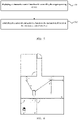
- FIG. 1 is a flowchart showing an inter-device interactive control method according to some embodiments.
- the inter-device interactive control method may include step S11 to step S14, and each step will be introduced below respectively.
- step S11 the location of the first device in the pre-established map is determined.
- the first device may be a mobile terminal or a smart home device.
- the location of the first device in the pre-established map can be determined by other devices with positioning functions.
- step S12 a target operation of the first device is acquired.
- the target operation of the first device may be acquired, where the target operation may include an operation of the first device pointing to the target operating device, for example, an operation of the first device waving in the southwest direction at the current location to point to the target operating device.
- the first device can be equipped with an inertial measurement unit (IMU). The first device can determine the target operation of the first device through the IMU.
- IMU inertial measurement unit
- step S13 the target operating device is determined based on the location and the target operation of the first device.
- the target operating device may be determined based on the location of the first device in the map, and the target operation performed by the first device (for example, the target operation is a pointing operation, such as the first device waving in the southwest direction at the current location).
- the target operating device based on the location relationship information of each device in the map, combined with the location of the first device in the map and the information of the first device waving in the southwest direction at its current location, the target operating device that the first device intends to position and control can be determined.
- the direction and area location matching the location and the target operation can be determined, and the device included in the direction and the area location can be used as the target operating device.
- the number of target operating devices determined in the embodiments of the present disclosure may be one or more.
- the second device that ultimately needs to be operated and controlled can be selected from the multiple devices.
- the target operation is a pointing operation, such as waving the first device in the southwest direction at the current location.
- the target operating device to be determined by the first device can be determined in combination with the user's operation.
- the two determined target operating devices may be displayed on the first device, and the user selects one target operating device from the two target operating devices as the target operating device that the first device intends to determine.
- the waving information of the first device during performing the target operation when the waving information of the first device during performing the target operation is 2 waves, it may indicate that the target operating device that the first device intends to position and control is the distant target operating device 2. When the waving information of the first device during performing the target operation is 1 wave, it may indicate that the target operating device that the first device intends to position and control is the nearby target operating device 1.
- the target operating device that the first device intends to determine is determined in combination with the waving information of the first device during performing the target operation, but it can also be determined according to actual conditions.
- the waving strength of the first device during the target operation exceeds the predetermined threshold, it means that the target operating device that the first device intends to position and control is the faraway target operating device 2.
- the waving strength of the first device during the target operation does not exceed the predetermined threshold, it means that the target operating device that the first device intends to position and control is the nearby target operating device 1.
- no specific limitation is made to the determining of the target operating device that the first device intends to determine by combining the waving information of the first device during the target operation.
- step S14 operations are performed on the determined target operating device.
- the first device may perform operations or control on the positioned target operating device.
- the inter-device interactive control method provided by the embodiments of the present disclosure can determine the target operating device by determining the location of the first device in a pre-established map, the target operation of the first device, and the location relationship between different devices in the map. Furthermore, smart interactive control can be realized between the first device and the target operating device, ensuring that no manual operation by the user is required in the process of realizing device interconnection and intercommunication, so as to improve the user's experience and satisfaction during use.
- the pre-established map may include a smart space semantic map. The process of determining the location of the first device in the pre-established map will be described through the following embodiments in combination with FIG. 2 in the present disclosure.
- FIG. 2 shows a flowchart of determining a location of a first device in a pre-established map.
- determining the location of the first device in the pre-established map may include step S21 and step S22, and each step will be introduced below respectively.
- a second device is determined in the smart space semantic map, and the second device is a device capable of communicating with the first device and providing a positioning function for the first device.
- the second device may be a device with a fixed location in the smart space semantic map.
- the second device may be understood as a beacon device.
- the second device may be a TV A located in room R2 in a house including multiple rooms, and the TV A as a beacon device has fixed location coordinates, that is, the TV located in room R2 has a fixed location in the smart space semantic map.
- the location coordinates may be the spatial location coordinates of the second device, or may be plane coordinates, such as the plane coordinates composed of the x-axis direction and the y-axis direction in FIG. 6 .
- step S22 a location of the first device in the smart space semantic map is determined based on the communication with the second device.
- the specific location of the first device in the smart space semantic map can be determined based on the positioning function of the second device.
- the first device and the second device may both be provided with a positioning module, such as an ultra-wideband (UWB) positioning module, and the precise positioning of the second device to the first device can be realized based on the ultra-wideband positioning technology.
- UWB ultra-wideband
- the positioning or control of the target operating device by the first device can be realized.
- the first device may be a mobile terminal, and the second device communicates with the first device based on ultra-wideband technology, and it can be determined that the first device is located 3 meters southwest of the second device.
- the second device since the second device has a fixed location in the smart space semantic map, combined with the first device located 3 meters southwest of the second device, the location of the first device in the smart space semantic map can be obtained.
- the location of the first device in the smart space semantic map can be determined based on the second device, and foundation is laid for the first device to position or control a target operating device that does not have the function of being positioned. It can be understood that there may exist multiple devices in the smart space semantic map which can communicate with the first device and provide a positioning function for the first device. In the application process, one or more second devices can be determined among multiple devices, and based on the second devices, the location of the first device in the smart space semantic map can be determined.
- one or more second devices satisfying the predetermined conditions may be determined among multiple devices.
- the predetermined conditions include one or a combination of the following conditions: the second device may be a device with the smallest distance from the first device.
- the second device may be a device selected by the user.
- the second device may be a device with the same type of positioning component as the first device.
- the second device may also be a device located in a designated orientation of the first device.
- the device with the smallest distance from the first device may be selected among multiple devices capable of providing a positioning function for the first device as the second device.
- the location of the first device in the smart space semantic map is determined based on the second device. In this way, since the second device is closest to the first device, the location of the first device in the smart space semantic map can be determined more quickly and accurately.
- a device selected by the user may be selected as the second device among multiple devices capable of providing a positioning function for the first device.
- the location of the first device in the smart space semantic map is determined based on the second device. It can be understood that selecting the second device based on the user's instruction can improve the user's experience and satisfaction during use.
- a device with the same type of positioning component as the first device may be selected as the second device among multiple devices capable of providing a positioning function for the first device.
- the location of the first device in the smart space semantic map is determined based on the second device.
- both the first device and the second device may be provided with an ultra-wideband positioning module.
- the first device and the second device have the same type of positioning components, which can avoid the problem where the positioning speed is too slow due to incompatibility in different positioning components.
- a device located in a specified orientation of the first device may be selected as the second device among multiple devices capable of providing a positioning function for the first device.
- the location of the first device in the smart space semantic map is determined, based on the second device.
- the target operation of the first device may include an operation in which the first device points to the target operating device.
- the process of determining the target operating device based on the location and the target operation of the first device will be described through the following embodiments in the present disclosure.
- FIG. 3 shows a flowchart of determining a target operating device.
- determining the target operating device may include step S31 and step S32, and each step will be introduced below respectively.
- step S31 in response to the operation of the first device pointing to the target operating device, an orientation of the first device after the orientation changing relative to the location of the first device in the pre-established map is determined, and a location of the second device in the pre-established map is determined.
- step S32 a device at a location of the orientation corresponding to the location of the second device in the pre-established map is determined as the target operating device.
- the target operation of the first device may include an operation in which the first device points to the target operating device.
- the orientation of the first device after the orientation changing relative to the location of the first device in the pre-established map can be determined.
- the first device is currently located 3 meters southwest of the second device, and the first device is waved along the southwest direction at the current location to point to the target operating device.
- the target operation of the first device may also include an operation in which the first device is moved and approached to the target operating device.
- the orientation of the first device after the orientation changing relative to the location of the first device in the pre-established map can be determined.
- the first device is currently located 3 meters southwest of the second device, and the first device is carried by the user to the target operating device along the southwest direction at the current location.
- the first device can determine the target operating device and the location of the target operating device in the smart space semantic map by means of the second device, laying a foundation for the first device to perform operations on the target operating device. In this way, it is possible to realize the operation control of the first device on the target operating device that does not have the function of being positioned, thereby not only realizing the interconnection and intercommunication of various devices, but also reducing the device manufacturing cost.
- the smart space semantic map may include sub-areas for distinguishing multiple different spatial locations, and the sub-areas also carry semantic label data that characterizes the association relationship between the sub-areas, which can be understood as different sub-areas logics in the predetermined space established and obtained by the smart space semantic maps, where the sub-area logic limits the interactive control of the devices in the sub-areas.
- the sub-area can correspond to a room in the space of the smart home.
- the first device can realize positioning and control of the target operating device located in the same sub-area by means of the second device located in the same sub-area.
- the second device belonging to the same sub-area as the first device may be determined in the smart space semantic map. Further, the second device can communicate with the first device to determine the location of the first device in the smart space semantic map, and combined with the target operation of the first device, determine the target operating device and the location of the target operating device in the smart space semantics map. Since the smart space semantic map establishes different sub-area logics in the predetermined space, in the application process, the first device can realize the positioning and control of the target operating device located in the same sub-area by means of the second device located in the same sub-area.
- the smart space semantic map may include sub-areas for distinguishing multiple different spatial locations, and the sub-areas also carry semantic label data that characterizes the association relationship between the sub-areas, which can be understood as different sub-areas logics in the predetermined space established by the smart space semantic maps.
- the sub-area can correspond to a room in the space of the smart home.
- devices between different sub-areas controlled correspondingly by different sub-area logics cannot be interactively controlled, and devices in the same sub-area can interactively control each other.
- FIG. 4 shows a flowchart of determining a second device in a smart space semantic map.
- determining the second device in the smart space semantic map may include step S41.
- step S41 a second device belonging to the same sub-area as the first device is determined in the smart space semantic map.
- the first device cannot realize the positioning and control of the target operating device located in a different sub-area by means of the second devices located in different sub-areas.
- the first device can realize the positioning and control of the target operating device located in a different sub-area by means of the second devices located in different sub-areas.
- one or more sub-areas which are the same as the sub-areas to which the first device belongs may be determined as one or more sub-areas for determining the second device.
- the second device is determined in one or more sub-areas.
- the user can preset to release the different sub-area logics established by the smart space semantic map.
- the application process when it is detected that the first device is set to determine the second device in different sub-areas, multiple sub-areas for determining the second device can be determined.
- the second device is determined in multiple sub-areas.
- the location of the first device in the smart space semantic map may be determined based on the second devices located in different sub-areas, and combined with the target operation of the first device, the target operating device and the location of the target operating device in the smart space semantic map are determined.
- the first device can independently break through the different sub-area logics in the smart space semantic map according to the association relationship between the sub-areas. That is, the first device can independently break through the relative isolation between the sub-areas, and determine the second device in one or more sub-areas different from the sub-area to which the first device belongs.
- the location of the first device in the smart space semantic map may be determined based on the second devices located in different sub-areas, and combined with the target operation of the first device, the target operating device and the location of the target operating device in the smart space semantic map are determined.
- FIG. 5 shows a flowchart of performing operations on a determined target operating device.
- performing operations on the determined target operating device may include step S51 to step S52, and various steps will be introduced below respectively.
- step S51 an interactive control interface for controlling the target operating device is displayed.
- step S52 based on the operation performed on the interactive control interface, the target operating device is controlled.
- an interactive control interface for controlling the target operating device may be displayed on the first device, and the target operating device may be controlled based on operations performed on the interactive control interface.
- a step of establishing a connection with the determined target operating device may be performed prior to performing step S51.
- the interactive control interface of the multiple target operating devices may be displayed.
- the first device is a mobile terminal
- the target operating devices are a smart speaker and a humidifier.
- An interactive control interface for controlling the smart speaker and the humidifier is displayed on the mobile terminal.
- the mobile terminal can realize the control of the smart speaker based on the operation performed on the interactive control interface.
- FIG. 6 shows a schematic diagram of a scenario in which the inter-device interactive control method shown in the embodiments of the present disclosure is applied.
- the process of determining the target operating device by the first device based on the second device will be described.
- the mobile terminal P is located in the room R2.
- the target operating device that the mobile terminal P intends to control is the humidifier W.
- the first device is the mobile terminal P
- the second device is the TVA
- the target device is the speaker U1 as an example for description.
- TV A is a beacon device, which can establish the location coordinates of TV A in the x direction and the y direction.
- the mobile terminal P is located in the room R2.
- Q be an angle of 45°, and it can be detected that the mobile terminal P is located 3 meters southwest of the TV A. Further, the location of the mobile terminal P in the smart semantic space map can be determined based on the TV A.
- the application process based on the location relationship information of each device in the smart space semantic map, combined with the location of the mobile terminal P in the smart space semantic map and the information that the mobile terminal P is waving along the M direction at the current location, it can be determined that the target operating device of the mobile terminal P is the speaker U1. It can be understood that if there are multiple speakers such as speakers U1, U2, etc. in the embodiment of the present disclosure, the multiple speakers can be displayed.
- the aforementioned speaker U1, speaker U2, TV A, and TV B may be devices in the same sub-area, or devices in different sub-areas.
- TV A the mobile terminal P realizes the operation control on the speaker U1 which does not have the function of being positioned, and thus can realize the interconnection and intercommunication between the mobile terminal P and the speaker U1. Since the speaker U1 is not equipped with a positioning module, the manufacturing cost of the speaker U1 can be reduced.
- the inter-device interactive control method can determine the target operating device by determining the location of the first device in a pre-established map, the target operation of the first device, and the location relationship between different devices in the map. Furthermore, the smart interactive control can be realized between the first device and the target operating device, ensuring that no manual operation by the user is required in the process of realizing device interconnection and intercommunication, so as to improve the user's experience and satisfaction during use.
- embodiments of the present disclosure also provide an inter-device interactive control apparatus.
- the inter-device interactive control apparatus includes hardware structures and/or software modules corresponding to each function.
- the embodiments of the present disclosure can be implemented in the form of hardware or a combination of hardware and computer software. Whether a certain function is executed by hardware or computer software-driven hardware depends on the specific application and design constraint conditions of the technical solution. Those skilled in the art can use different methods for each specific application to implement the described functions, but such implementation should not be considered as going beyond the scope of the technical solutions of the embodiments of the present disclosure.
- FIG. 7 is a block diagram showing an inter-device interactive control apparatus according to some embodiments.
- the inter-device interactive control apparatus may be applied to the first device.
- the inter-device interactive control apparatus may include a determining module 110, an acquiring module 120, and a processing module 130. Each module will be introduced below respectively.
- the determining module 110 can be configured to determine the location of the first device in a pre-established map.
- the acquiring module 120 can be configured to acquire a target operation of the first device.
- the processing module 130 can be configured to determine a target operating device based on the location and the target operation of the first device, and perform operations on the determined target operating device.
- the pre-established map may include a smart space semantic map.
- the determining module 110 can be configured to determine the location of the first device in the pre-established map in the following manner: determining a second device in the smart space semantic map, the second device being a device capable of communicating with the first device and providing a positioning function for the first device; and determining a location of the first device in the smart space semantic map, based on the communication with the second device.
- the determining module 110 can be configured to determine the second device in the smart space semantic map in the following manner: in response to the presence of multiple devices capable of communicating with the first device and providing a positioning function for the first device in the smart space semantic map, determining one or more second devices satisfying predetermined conditions among the multiple devices; wherein the predetermined conditions comprise one or a combination of the following conditions: the second device is the device with the smallest distance from the first device; the second device is a device selected by a user; the second device is a device having the same type of positioning component as the first device; and the second device is a device located in a designated orientation of the first device.
- the target operation of the first device may include an operation of the first device pointing to the target operating device; and the processing module 130 can be configured to determine the target operating device based on the location and the target operation of the first device in the following manner: in response to the operation of the first device pointing to the target operating device, determine the orientation of the first device after the orientation changing relative to the location of the first device in the pre-established map, and determine the location of the second device in the pre-established map; and determine a device at a location of the orientation corresponding to the location of the second device in the pre-established map, as the target operating device, and determine the location of the target operating device in the pre-established map.
- the smart space semantic map includes sub-areas for distinguishing multiple different spatial locations and the determining module 110 can be configured to determine the second device in the smart space semantic map in the following manner: determining a second device belonging to the same sub-area as the first device in the smart space semantic map.
- the smart spatial semantic map may include sub-areas for distinguishing multiple different spatial locations.
- the determining module 110 can be configured to determine the second device in the smart space semantic map in the following manner: determining one or more sub-areas different from the sub-areas to which the first device belongs as one or more sub-areas used to determine the second device; and determining the second device within the one or more sub-areas.
- the processing module 130 can be configured to perform operations on the determined target operating device in the following manner: establishing a connection with the determined target operating device; displaying an interactive control interface for controlling the target operating device; and controlling the target operating device, based on the operation performed on the interactive control interface.
- FIG. 8 is a block diagram of an apparatus 200 for interactive control between devices, according to some embodiments.
- the apparatus 200 for interactive control between devices can be a mobile phone, a computer, a digital broadcast terminal, a messaging device, a gaming console, a tablet, a medical device, exercise equipment, a personal digital assistant, etc.
- the apparatus 200 for interactive control between devices can include one or more of the following components: a processing component 202, a memory 204, a power component 206, a multimedia component 208, an audio component 210, an input/output (I/O) interface 212, a sensor component 214, and a communication component 216.
- the processing component 202 typically controls overall operations of the apparatus 200 for interactive control between devices, such as the operations associated with display, telephone calls, data communications, camera operations, and recording operations.
- the processing component 202 can include one or more processors 220 to execute instructions to perform all or part of the steps in the above described inter-device interactive control methods.
- the processing component 202 can also include one or more modules which facilitate the interaction between the processing component 202 and other components.
- the processing component 202 can also include a multimedia module to facilitate the interaction between the multimedia component 208 and the processing component 202.
- the memory 204 may be configured to store various types of data to support the operation of the apparatus 200 for interactive control between devices. Examples of such data include instructions for any applications or methods operated on the apparatus 200 for interactive control between devices, contact data, phonebook data, messages, pictures, video, etc.
- the memory 204 can be implemented using any type of volatile or non-volatile memory devices, or a combination thereof, such as a static random access memory (SRAM), an electrically erasable programmable read-only memory (EEPROM), an erasable programmable read-only memory (EPROM), a programmable read-only memory (PROM), a read-only memory (ROM), a magnetic memory, a flash memory, a magnetic disk, or optical disk.
- SRAM static random access memory
- EEPROM electrically erasable programmable read-only memory
- EPROM erasable programmable read-only memory
- PROM programmable read-only memory
- ROM read-only memory
- magnetic memory a magnetic memory
- flash memory a
- the power component 206 may provide power to various components of the apparatus 200 for interactive control between devices.
- the power component 206 can also include a power management system, one or more power sources, and any other components associated with the generation, management, and distribution of power in the apparatus 200 for interactive control between devices.
- the multimedia component 208 may include a screen providing an output interface between the apparatus 200 for interactive control between devices and the user.
- the screen can include a liquid crystal display (LCD) and a touch panel (TP).
- LCD liquid crystal display
- TP touch panel
- OLED organic light-emitting diode
- the screen can be implemented as a touch screen to receive input signals from the user.
- the touch panel includes one or more touch sensors to sense touches, swipes, and gestures on the touch panel.
- the touch sensor may not only sense a boundary of a touch or swipe action, but also sense the duration and pressure associated with the touch or swipe action.
- the multimedia component 208 may include a front camera and/or a rear camera.
- the apparatus 200 for interactive control between devices is in an operation mode, such as a photographing mode or a video mode
- the front camera and the rear camera can receive external multimedia datum.
- Each front camera and the rear camera can be a fixed optical lens system or have focus and optical zoom capabilities.
- the audio component 210 may be configured to output and/or input audio signals.
- the audio component 210 can include a microphone (MIC) configured to receive an external audio signal when the apparatus 200 for interactive control between devices is in an operation mode, such as a call mode, a recording mode, or a voice recognition mode.
- the received audio signal can be further stored in the memory 204 or transmitted via the communication component 216.
- the audio component 210 can further include a speaker to output audio signals.
- the I/O interface 212 may provide an interface between the processing component 202 and peripheral interface modules, such as a keyboard, a click wheel, buttons, etc.
- the buttons can include, but are not limited to, a home button, a volume button, a start button, and a lock button.
- the sensor component 214 may include one or more sensors to provide status assessments of various aspects of the apparatus 200 for interactive control between devices. For instance, the sensor component 214 can detect an open/closed status of the apparatus 200 for interactive control between devices, relative positioning of components, e.g., the display and the keypad, of the apparatus 200 for interactive control between devices, a change in location of the apparatus 200 for interactive control between devices or a component of the apparatus 200 for interactive control between devices, a presence or absence of user contact with the apparatus 200 for interactive control between devices, an orientation or an acceleration/deceleration of the apparatus 200 for interactive control between devices, and a change in temperature of the apparatus 200 for interactive control between devices.
- the sensor component 214 can include a proximity sensor configured to detect the presence of nearby objects without any physical contact.
- the sensor component 214 can also include a light sensor, such as a CMOS or CCD image sensor, for use in imaging applications.
- the sensor component 214 can also include an accelerometer sensor, a gyroscope sensor, a magnetic sensor, a pressure sensor, or a temperature sensor.
- the communication component 216 may be configured to facilitate wired or wireless communication between the apparatus 200 for interactive control between devices and other devices.
- the apparatus 200 for interactive control between devices can access a wireless network based on a communication standard, such as Wi-Fi, 2G, 3G, 4G, 5G or a combination thereof.
- the communication component 216 can receive a broadcast signal or broadcast associated information from an external broadcast management system via a broadcast channel.
- the communication component 216 can further include a near field communication (NFC) module to facilitate short-range communications.
- the NFC module can be implemented based on a radio frequency identification (RFID) technology, an infrared data association (IrDA) technology, an ultra-wideband (UWB) technology, a Bluetooth (BT) technology, or other technologies.
- RFID radio frequency identification
- IrDA infrared data association
- UWB ultra-wideband
- BT Bluetooth
- the apparatus 200 for interactive control between devices can be implemented with one or more application specific integrated circuits (ASICs), digital signal processors (DSPs), digital signal processing devices (DSPDs), programmable logic devices (PLDs), field programmable gate arrays (FPGAs), controllers, micro-controllers, microprocessors, or other electronic components, for performing the above described methods.
- ASICs application specific integrated circuits
- DSPs digital signal processors
- DSPDs digital signal processing devices
- PLDs programmable logic devices
- FPGAs field programmable gate arrays
- controllers micro-controllers, microprocessors, or other electronic components, for performing the above described methods.
- a non-transitory computer-readable storage medium including instructions is also provided, such as included in the memory 204, executable by the processor 220 in the apparatus 200 for interactive control between devices, for performing the above-described inter-device interactive control methods.
- the non-transitory computer-readable storage medium can be a ROM, a random access memory (RAM), a CD-ROM, a magnetic tape, a floppy disc, an optical data storage device, etc.
- the target operating device can be determined by determining the location of the first device in the pre-established map, the target operation of the first device, and the location relationship between different devices in the map. Furthermore, the smart interactive control can be realized between the first device and the target operating device, to ensure that users do not need to operate manually in the process of realizing the interconnection and intercommunication of devices, so as to improve the user's experience and satisfaction during use.
- the "multiple” in the disclosure means two or more, and other quantifiers are similar.
- “And/or” describes the relationship of the related objects, indicating that there may be three relationships, for example, A and/or B may indicate three cases: A exists alone, A and B exist simultaneously, and B exists alone.
- the character “/” generally indicates that the relationship between the contextually relevant objects is a “or” relationship.
- the singular forms “a,” “an,” “said,” and “the” are also intended to include the plural forms unless the context clearly indicates otherwise.
- first and second are used to describe various information, these information should not be limited by these terms. The terms are only used to distinguish the same type of information from each other, and do not indicate a specific order or importance. In fact, the expressions such as “first” and “second” and the like can be used interchangeably. For instance, first information can also be referred to as second information without departing from the scope of the disclosure, and similarly, the second information can also be referred to as the first information.
- modules may have modular configurations, or are composed of discrete components, but nonetheless may be referred to as "modules,” “components” or “circuits” in general.
- the components, units, circuits, blocks, or portions referred to herein may or may not be in modular forms, and these phrases may be interchangeably used.
- the various device components, units, blocks, portions, or modules may be realized with hardware, software, or a combination of hardware and software.
- the terms “installed,” “connected,” “coupled,” “fixed” and the like shall be understood broadly, and can be either a fixed connection or a detachable connection, or integrated, unless otherwise explicitly defined. These terms can refer to mechanical or electrical connections, or both. Such connections can be direct connections or indirect connections through an intermediate medium. These terms can also refer to the internal connections or the interactions between elements. The specific meanings of the above terms in some embodiments of the present disclosure can be understood by those of ordinary skill in the art on a case-by-case basis.
Landscapes
- Engineering & Computer Science (AREA)
- Computer Networks & Wireless Communication (AREA)
- Signal Processing (AREA)
- Computing Systems (AREA)
- Environmental & Geological Engineering (AREA)
- Human Computer Interaction (AREA)
- Health & Medical Sciences (AREA)
- General Business, Economics & Management (AREA)
- General Health & Medical Sciences (AREA)
- Databases & Information Systems (AREA)
- Remote Sensing (AREA)
- Theoretical Computer Science (AREA)
- Business, Economics & Management (AREA)
- Data Mining & Analysis (AREA)
- Development Economics (AREA)
- Economics (AREA)
- Accounting & Taxation (AREA)
- Physics & Mathematics (AREA)
- General Engineering & Computer Science (AREA)
- General Physics & Mathematics (AREA)
- Toxicology (AREA)
- Radar, Positioning & Navigation (AREA)
- Medical Informatics (AREA)
- Selective Calling Equipment (AREA)
- User Interface Of Digital Computer (AREA)
- Telephone Function (AREA)
Abstract
Description
- With the development of technologies, the Internet of Things (IoT) can realize interconnections and intercommunications among various devices.
- The present disclosure generally relates to the technical field of device control, and more specifically to an inter-device interactive control method, an inter-device interactive control apparatus, and a storage medium.
- According to a first aspect of the present disclosure, there is provided an inter-device interactive control method. Herein, the inter-device interactive control method is applied to a first device, and includes: determining the location of the first device in a pre-established map; acquiring the target operation of the first device; determining the target operating device based on the location and the target operation of the first device; and performing operations on the determined target operating device.
- According to a second aspect of the present disclosure, there is provided an inter-device interactive control apparatus, including a determining module, configured to determine a location of the first device in a pre-established map; an acquiring module, configured to acquire a target operation of the first device; and a processing module, configured to determine a target operating device based on the location and the target operation of the first device, and perform operations on the determined target operating device..
- According to a third aspect of the present disclosure, a non-transitory computer-readable storage medium is provided, and when instructions in the storage medium are executed by a processor of a mobile terminal, it enables the mobile terminal to execute the inter-device interactive control method described in the first aspect of the present disclosure or any implementation of the first aspect.
- It is to be understood that both the foregoing general description and the following detailed description are exemplary and explanatory only and are not restrictive of the disclosure, as claimed.
- The accompanying drawings, which are incorporated in and constitute a part of this description, illustrate embodiments consistent with the disclosure and, together with the description, serve to explain the principles of the disclosure.
-
FIG. 1 is a flowchart showing an inter-device interactive control method according to some embodiments. -
FIG. 2 shows a flowchart of determining a location of a first device in a pre-established map. -
FIG. 3 shows a flowchart of determining a target operating device. -
FIG. 4 shows a flowchart of determining a second device in a smart space semantic map. -
FIG. 5 shows a flowchart of performing operations on a determined target operating device. -
FIG. 6 shows a schematic diagram of a scenario in which the inter-device interactive control method shown in some embodiments of the present disclosure is applied. -
FIG. 7 is a block diagram showing an inter-device interactive control apparatus according to some embodiments. -
FIG. 8 is a block diagram showing an apparatus for interactive control between devices according to some embodiments. - Description will now be made in detail to embodiments, examples of which are illustrated in the accompanying drawings. The following description refers to the accompanying drawings in which the same numbers in different drawings represent the same or similar elements unless otherwise indicated. The implementations in the following description of exemplary embodiments do not represent all implementations consistent with the disclosure. Instead, they are merely examples of apparatuses and methods consistent with aspects related to the disclosure as detailed in the appended claims.
- In a process of realizing device interconnection and intercommunication, users are often required to manually operate to control functions between devices.
- An inter-device interactive control method provided by some embodiments of the present disclosure can be applied to an interactive control scenario between IoT devices, and can realize smart interconnections and intercommunications between various devices.
- In some embodiments of the disclosure, an IoT device can be a smart terminal or a smart home device.
- In the inter-device interactive control method provided in the present disclosure, a pre-established map may be provided with specific locations of all devices in a predetermined space (for example, a house with multiple rooms) and a location relationship between different devices. Taking a house with multiple rooms as the predetermined space as an example, the location information of any device in the predetermined space can be obtained through a map, and the location information may include the room, the locations in the room, etc. In the map, based on the location relationship between different devices, the location of any one device can be used to determine the locations of other devices.
- Various embodiments of the present disclosure provide an inter-device interactive control method, which can determine the device that controls and implements the operations by determining the location of the device that performs operation controls on other devices in the pre-established map, the target operation implemented by the first device, and the location relationship between different devices in the map. Furthermore, the smart interactive control can be realized between the devices, ensuring that no manual operation by the user is required in the process of realizing the interconnection and intercommunication of the devices, so as to improve the user's experience and satisfaction during use.
- In some embodiments of the present disclosure, for ease of description, the device that performs operation control on other devices is referred to as the first device, and the device that is controlled and performs operations is referred to as the target operating device.
-
FIG. 1 is a flowchart showing an inter-device interactive control method according to some embodiments. - In some embodiments of the present disclosure, as shown in
FIG. 1 , the inter-device interactive control method may include step S11 to step S14, and each step will be introduced below respectively. - In step S11, the location of the first device in the pre-established map is determined.
- In some embodiments, the first device may be a mobile terminal or a smart home device. In the application process, the location of the first device in the pre-established map can be determined by other devices with positioning functions.
- In step S12, a target operation of the first device is acquired.
- In an implementation, the target operation of the first device may be acquired, where the target operation may include an operation of the first device pointing to the target operating device, for example, an operation of the first device waving in the southwest direction at the current location to point to the target operating device. In the application process, the first device can be equipped with an inertial measurement unit (IMU). The first device can determine the target operation of the first device through the IMU.
- In step S13, the target operating device is determined based on the location and the target operation of the first device.
- In an implementation, the target operating device may be determined based on the location of the first device in the map, and the target operation performed by the first device (for example, the target operation is a pointing operation, such as the first device waving in the southwest direction at the current location). In the application process, based on the location relationship information of each device in the map, combined with the location of the first device in the map and the information of the first device waving in the southwest direction at its current location, the target operating device that the first device intends to position and control can be determined.
- In the embodiments of the present disclosure, based on the location and the target operation of the first device, the direction and area location matching the location and the target operation can be determined, and the device included in the direction and the area location can be used as the target operating device. Herein, the number of target operating devices determined in the embodiments of the present disclosure may be one or more.
- In the embodiments of the present disclosure, when there are multiple target operating devices, the second device that ultimately needs to be operated and controlled can be selected from the multiple devices.
- As a possible embodiment, it is assumed that the target operation is a pointing operation, such as waving the first device in the southwest direction at the current location. Based on the location information of each device in the map, combined with the location of the first device in the map and the information of the first device waving in the southwest direction at its current location, when two target operating devices (where the target operating device 1 is nearby and the target operating device 2 is faraway) are determined, the target operating device to be determined by the first device can be determined in combination with the user's operation. In some embodiments, the two determined target operating devices may be displayed on the first device, and the user selects one target operating device from the two target operating devices as the target operating device that the first device intends to determine.
- In some embodiments, when the waving information of the first device during performing the target operation is 2 waves, it may indicate that the target operating device that the first device intends to position and control is the distant target operating device 2. When the waving information of the first device during performing the target operation is 1 wave, it may indicate that the target operating device that the first device intends to position and control is the nearby target operating device 1.
- It can be understood that the target operating device that the first device intends to determine is determined in combination with the waving information of the first device during performing the target operation, but it can also be determined according to actual conditions. In some embodiments, when the waving strength of the first device during the target operation exceeds the predetermined threshold, it means that the target operating device that the first device intends to position and control is the faraway target operating device 2. When the waving strength of the first device during the target operation does not exceed the predetermined threshold, it means that the target operating device that the first device intends to position and control is the nearby target operating device 1. In the present disclosure, no specific limitation is made to the determining of the target operating device that the first device intends to determine by combining the waving information of the first device during the target operation.
- In step S14, operations are performed on the determined target operating device.
- In some embodiments, the first device may perform operations or control on the positioned target operating device.
- The inter-device interactive control method provided by the embodiments of the present disclosure can determine the target operating device by determining the location of the first device in a pre-established map, the target operation of the first device, and the location relationship between different devices in the map. Furthermore, smart interactive control can be realized between the first device and the target operating device, ensuring that no manual operation by the user is required in the process of realizing device interconnection and intercommunication, so as to improve the user's experience and satisfaction during use.
- In a possible embodiment, the pre-established map may include a smart space semantic map. The process of determining the location of the first device in the pre-established map will be described through the following embodiments in combination with
FIG. 2 in the present disclosure. -
FIG. 2 shows a flowchart of determining a location of a first device in a pre-established map. - In an embodiment of the present disclosure, as shown in
FIG. 2 , determining the location of the first device in the pre-established map may include step S21 and step S22, and each step will be introduced below respectively. - In step S21, a second device is determined in the smart space semantic map, and the second device is a device capable of communicating with the first device and providing a positioning function for the first device.
- In some embodiments, the second device may be a device with a fixed location in the smart space semantic map. Herein, the second device may be understood as a beacon device. In an example, such as in
FIG. 6 , the second device may be a TV A located in room R2 in a house including multiple rooms, and the TV A as a beacon device has fixed location coordinates, that is, the TV located in room R2 has a fixed location in the smart space semantic map. Herein, the location coordinates may be the spatial location coordinates of the second device, or may be plane coordinates, such as the plane coordinates composed of the x-axis direction and the y-axis direction inFIG. 6 . - In step S22, a location of the first device in the smart space semantic map is determined based on the communication with the second device.
- It can be understood that the specific location of the first device in the smart space semantic map can be determined based on the positioning function of the second device. In some embodiments, the first device and the second device may both be provided with a positioning module, such as an ultra-wideband (UWB) positioning module, and the precise positioning of the second device to the first device can be realized based on the ultra-wideband positioning technology. Further, in combination with the pointing direction of the first device and the location relationship between different devices in the smart space semantic map, the positioning or control of the target operating device by the first device can be realized.
- In some embodiments, the first device may be a mobile terminal, and the second device communicates with the first device based on ultra-wideband technology, and it can be determined that the first device is located 3 meters southwest of the second device. During the application process, since the second device has a fixed location in the smart space semantic map, combined with the first device located 3 meters southwest of the second device, the location of the first device in the smart space semantic map can be obtained.
- Through the present embodiment, the location of the first device in the smart space semantic map can be determined based on the second device, and foundation is laid for the first device to position or control a target operating device that does not have the function of being positioned. It can be understood that there may exist multiple devices in the smart space semantic map which can communicate with the first device and provide a positioning function for the first device. In the application process, one or more second devices can be determined among multiple devices, and based on the second devices, the location of the first device in the smart space semantic map can be determined.
- The process of determining the second device in the smart space semantic map will be described through the following embodiments in the present disclosure.
- In some embodiments of the present disclosure, in response to the presence of multiple devices which can communicate with the first device and provide the first device with a positioning function, in the smart space semantic map, one or more second devices satisfying the predetermined conditions may be determined among multiple devices.
- Herein, the predetermined conditions include one or a combination of the following conditions: the second device may be a device with the smallest distance from the first device. The second device may be a device selected by the user. The second device may be a device with the same type of positioning component as the first device. The second device may also be a device located in a designated orientation of the first device.
- In an example, the device with the smallest distance from the first device may be selected among multiple devices capable of providing a positioning function for the first device as the second device. The location of the first device in the smart space semantic map is determined based on the second device. In this way, since the second device is closest to the first device, the location of the first device in the smart space semantic map can be determined more quickly and accurately.
- In another example, a device selected by the user may be selected as the second device among multiple devices capable of providing a positioning function for the first device. The location of the first device in the smart space semantic map is determined based on the second device. It can be understood that selecting the second device based on the user's instruction can improve the user's experience and satisfaction during use.
- In yet another example, a device with the same type of positioning component as the first device may be selected as the second device among multiple devices capable of providing a positioning function for the first device. The location of the first device in the smart space semantic map is determined based on the second device. In an example, both the first device and the second device may be provided with an ultra-wideband positioning module. The first device and the second device have the same type of positioning components, which can avoid the problem where the positioning speed is too slow due to incompatibility in different positioning components.
- In yet another example, a device located in a specified orientation of the first device may be selected as the second device among multiple devices capable of providing a positioning function for the first device. The location of the first device in the smart space semantic map is determined, based on the second device.
- The target operation of the first device may include an operation in which the first device points to the target operating device. The process of determining the target operating device based on the location and the target operation of the first device will be described through the following embodiments in the present disclosure.
-
FIG. 3 shows a flowchart of determining a target operating device. - In an embodiment of the present disclosure, as shown in
FIG. 3 , determining the target operating device may include step S31 and step S32, and each step will be introduced below respectively. - In step S31, in response to the operation of the first device pointing to the target operating device, an orientation of the first device after the orientation changing relative to the location of the first device in the pre-established map is determined, and a location of the second device in the pre-established map is determined.
- In step S32, a device at a location of the orientation corresponding to the location of the second device in the pre-established map is determined as the target operating device.
- In some embodiments, the target operation of the first device may include an operation in which the first device points to the target operating device. When the operation of the first device pointing to the target operating device is detected, the orientation of the first device after the orientation changing relative to the location of the first device in the pre-established map can be determined. In an example, the first device is currently located 3 meters southwest of the second device, and the first device is waved along the southwest direction at the current location to point to the target operating device.
- In another embodiment, the target operation of the first device may also include an operation in which the first device is moved and approached to the target operating device. In an example, when it is detected that the first device is moved and approached to the target operating device, the orientation of the first device after the orientation changing relative to the location of the first device in the pre-established map can be determined. In an example, the first device is currently located 3 meters southwest of the second device, and the first device is carried by the user to the target operating device along the southwest direction at the current location.
- In this way, the first device can determine the target operating device and the location of the target operating device in the smart space semantic map by means of the second device, laying a foundation for the first device to perform operations on the target operating device. In this way, it is possible to realize the operation control of the first device on the target operating device that does not have the function of being positioned, thereby not only realizing the interconnection and intercommunication of various devices, but also reducing the device manufacturing cost.
- It can be understood that the smart space semantic map may include sub-areas for distinguishing multiple different spatial locations, and the sub-areas also carry semantic label data that characterizes the association relationship between the sub-areas, which can be understood as different sub-areas logics in the predetermined space established and obtained by the smart space semantic maps, where the sub-area logic limits the interactive control of the devices in the sub-areas. The sub-area can correspond to a room in the space of the smart home. In the application process, the first device can realize positioning and control of the target operating device located in the same sub-area by means of the second device located in the same sub-area.
- The process of determining the second device in the smart space semantic map will be described through the following embodiments in the present disclosure.
- In an embodiment of the present disclosure, the second device belonging to the same sub-area as the first device may be determined in the smart space semantic map. Further, the second device can communicate with the first device to determine the location of the first device in the smart space semantic map, and combined with the target operation of the first device, determine the target operating device and the location of the target operating device in the smart space semantics map. Since the smart space semantic map establishes different sub-area logics in the predetermined space, in the application process, the first device can realize the positioning and control of the target operating device located in the same sub-area by means of the second device located in the same sub-area.
- In another embodiment, the smart space semantic map may include sub-areas for distinguishing multiple different spatial locations, and the sub-areas also carry semantic label data that characterizes the association relationship between the sub-areas, which can be understood as different sub-areas logics in the predetermined space established by the smart space semantic maps. The sub-area can correspond to a room in the space of the smart home. Herein, devices between different sub-areas controlled correspondingly by different sub-area logics cannot be interactively controlled, and devices in the same sub-area can interactively control each other.
- The process of determining the second device in the smart space semantic map will be described through the following embodiments in the present disclosure.
-
FIG. 4 shows a flowchart of determining a second device in a smart space semantic map. - In an embodiment of the present disclosure, as shown in
FIG. 4 , determining the second device in the smart space semantic map may include step S41. - In step S41, a second device belonging to the same sub-area as the first device is determined in the smart space semantic map.
- In some embodiments, because the smart space semantic map establishes different sub-area logics in the predetermined space, the first device cannot realize the positioning and control of the target operating device located in a different sub-area by means of the second devices located in different sub-areas.
- In the application process, the first device can realize the positioning and control of the target operating device located in a different sub-area by means of the second devices located in different sub-areas.
- Herein, one or more sub-areas which are the same as the sub-areas to which the first device belongs may be determined as one or more sub-areas for determining the second device. The second device is determined in one or more sub-areas.
- In an example, the user can preset to release the different sub-area logics established by the smart space semantic map. In the application process, when it is detected that the first device is set to determine the second device in different sub-areas, multiple sub-areas for determining the second device can be determined. The second device is determined in multiple sub-areas. In some embodiments, the location of the first device in the smart space semantic map may be determined based on the second devices located in different sub-areas, and combined with the target operation of the first device, the target operating device and the location of the target operating device in the smart space semantic map are determined.
- In another embodiment, the first device can independently break through the different sub-area logics in the smart space semantic map according to the association relationship between the sub-areas. That is, the first device can independently break through the relative isolation between the sub-areas, and determine the second device in one or more sub-areas different from the sub-area to which the first device belongs. In some embodiments, the location of the first device in the smart space semantic map may be determined based on the second devices located in different sub-areas, and combined with the target operation of the first device, the target operating device and the location of the target operating device in the smart space semantic map are determined.
- The process of performing operations on the determined target operating device will be described in combination with
FIG. 5 through the following embodiments in the present disclosure. -
FIG. 5 shows a flowchart of performing operations on a determined target operating device. - In an embodiment of the present disclosure, as shown in
FIG. 5 , performing operations on the determined target operating device may include step S51 to step S52, and various steps will be introduced below respectively. - In step S51, an interactive control interface for controlling the target operating device is displayed.
- In step S52, based on the operation performed on the interactive control interface, the target operating device is controlled.
- In some embodiments, an interactive control interface for controlling the target operating device may be displayed on the first device, and the target operating device may be controlled based on operations performed on the interactive control interface. In some embodiments, prior to performing step S51, a step of establishing a connection with the determined target operating device (not shown) may be performed.
- In the embodiments of the present disclosure, if there are multiple determined target operating devices, the interactive control interface of the multiple target operating devices may be displayed.
- In an example, the first device is a mobile terminal, and the target operating devices are a smart speaker and a humidifier. An interactive control interface for controlling the smart speaker and the humidifier is displayed on the mobile terminal. The mobile terminal can realize the control of the smart speaker based on the operation performed on the interactive control interface.
-
FIG. 6 shows a schematic diagram of a scenario in which the inter-device interactive control method shown in the embodiments of the present disclosure is applied. - With reference to
FIG. 6 , taking the first device as the mobile terminal P, the second device as the TV B, and the target device as the humidifier W as an example, the process of determining the target operating device by the first device based on the second device will be described. - In an example, the mobile terminal P is located in the room R2. When it is detected that the mobile terminal P points to the southwest direction at the current location, it can be determined that the target operating device that the mobile terminal P intends to control is the humidifier W.
- In some embodiments of the present disclosure, as shown in
FIG. 6 , the first device is the mobile terminal P, the second device is the TVA, and the target device is the speaker U1 as an example for description. Among them, TV A is a beacon device, which can establish the location coordinates of TV A in the x direction and the y direction. - In an example, the mobile terminal P is located in the room R2. For ease of description, let Q be an angle of 45°, and it can be detected that the mobile terminal P is located 3 meters southwest of the TV A. Further, the location of the mobile terminal P in the smart semantic space map can be determined based on the TV A.
- When it is detected that the mobile terminal P is waving in the M direction at the current location, in the application process, based on the location relationship information of each device in the smart space semantic map, combined with the location of the mobile terminal P in the smart space semantic map and the information that the mobile terminal P is waving along the M direction at the current location, it can be determined that the target operating device of the mobile terminal P is the speaker U1. It can be understood that if there are multiple speakers such as speakers U1, U2, etc. in the embodiment of the present disclosure, the multiple speakers can be displayed.
- It can be understood that in the embodiments of the present disclosure, the aforementioned speaker U1, speaker U2, TV A, and TV B may be devices in the same sub-area, or devices in different sub-areas. With the help of TV A, the mobile terminal P realizes the operation control on the speaker U1 which does not have the function of being positioned, and thus can realize the interconnection and intercommunication between the mobile terminal P and the speaker U1. Since the speaker U1 is not equipped with a positioning module, the manufacturing cost of the speaker U1 can be reduced.
- According to the above description, the inter-device interactive control method provided by the embodiments of the present disclosure can determine the target operating device by determining the location of the first device in a pre-established map, the target operation of the first device, and the location relationship between different devices in the map. Furthermore, the smart interactive control can be realized between the first device and the target operating device, ensuring that no manual operation by the user is required in the process of realizing device interconnection and intercommunication, so as to improve the user's experience and satisfaction during use.
- Based on the same concept, embodiments of the present disclosure also provide an inter-device interactive control apparatus.
- It can be understood that, in order to implement the above-mentioned functions, the inter-device interactive control apparatus provided by the embodiments of the present disclosure includes hardware structures and/or software modules corresponding to each function. In combination with the units and algorithm steps of the examples disclosed in the embodiments of the present disclosure, the embodiments of the present disclosure can be implemented in the form of hardware or a combination of hardware and computer software. Whether a certain function is executed by hardware or computer software-driven hardware depends on the specific application and design constraint conditions of the technical solution. Those skilled in the art can use different methods for each specific application to implement the described functions, but such implementation should not be considered as going beyond the scope of the technical solutions of the embodiments of the present disclosure.
-
FIG. 7 is a block diagram showing an inter-device interactive control apparatus according to some embodiments. - In an embodiment of the present disclosure, the inter-device interactive control apparatus may be applied to the first device. As shown in
FIG. 7 , the inter-device interactive control apparatus may include a determiningmodule 110, an acquiringmodule 120, and aprocessing module 130. Each module will be introduced below respectively. - The determining
module 110 can be configured to determine the location of the first device in a pre-established map. - The acquiring
module 120 can be configured to acquire a target operation of the first device. - The
processing module 130 can be configured to determine a target operating device based on the location and the target operation of the first device, and perform operations on the determined target operating device. - In an embodiment of the present disclosure, the pre-established map may include a smart space semantic map. The determining
module 110 can be configured to determine the location of the first device in the pre-established map in the following manner: determining a second device in the smart space semantic map, the second device being a device capable of communicating with the first device and providing a positioning function for the first device; and determining a location of the first device in the smart space semantic map, based on the communication with the second device. - In an embodiment of the present disclosure, the determining
module 110 can be configured to determine the second device in the smart space semantic map in the following manner: in response to the presence of multiple devices capable of communicating with the first device and providing a positioning function for the first device in the smart space semantic map, determining one or more second devices satisfying predetermined conditions among the multiple devices; wherein the predetermined conditions comprise one or a combination of the following conditions: the second device is the device with the smallest distance from the first device; the second device is a device selected by a user; the second device is a device having the same type of positioning component as the first device; and the second device is a device located in a designated orientation of the first device. - In an embodiment of the present disclosure, the target operation of the first device may include an operation of the first device pointing to the target operating device; and the
processing module 130 can be configured to determine the target operating device based on the location and the target operation of the first device in the following manner: in response to the operation of the first device pointing to the target operating device, determine the orientation of the first device after the orientation changing relative to the location of the first device in the pre-established map, and determine the location of the second device in the pre-established map; and determine a device at a location of the orientation corresponding to the location of the second device in the pre-established map, as the target operating device, and determine the location of the target operating device in the pre-established map. - In an embodiment of the present disclosure, the smart space semantic map includes sub-areas for distinguishing multiple different spatial locations and the determining
module 110 can be configured to determine the second device in the smart space semantic map in the following manner: determining a second device belonging to the same sub-area as the first device in the smart space semantic map. - In an embodiment of the present disclosure, the smart spatial semantic map may include sub-areas for distinguishing multiple different spatial locations. The determining
module 110 can be configured to determine the second device in the smart space semantic map in the following manner: determining one or more sub-areas different from the sub-areas to which the first device belongs as one or more sub-areas used to determine the second device; and determining the second device within the one or more sub-areas. - In an embodiment of the present disclosure, the
processing module 130 can be configured to perform operations on the determined target operating device in the following manner: establishing a connection with the determined target operating device; displaying an interactive control interface for controlling the target operating device; and controlling the target operating device, based on the operation performed on the interactive control interface. - With respect to the devices in the above embodiments, the specific manners for performing operations for individual modules therein have been described in detail in the embodiments regarding the methods, which will not be elaborated herein.
-
FIG. 8 is a block diagram of anapparatus 200 for interactive control between devices, according to some embodiments. For example, theapparatus 200 for interactive control between devices can be a mobile phone, a computer, a digital broadcast terminal, a messaging device, a gaming console, a tablet, a medical device, exercise equipment, a personal digital assistant, etc. - Referring to
FIG. 8 , theapparatus 200 for interactive control between devices can include one or more of the following components: aprocessing component 202, amemory 204, apower component 206, amultimedia component 208, anaudio component 210, an input/output (I/O)interface 212, asensor component 214, and acommunication component 216. - The
processing component 202 typically controls overall operations of theapparatus 200 for interactive control between devices, such as the operations associated with display, telephone calls, data communications, camera operations, and recording operations. Theprocessing component 202 can include one ormore processors 220 to execute instructions to perform all or part of the steps in the above described inter-device interactive control methods. Moreover, theprocessing component 202 can also include one or more modules which facilitate the interaction between theprocessing component 202 and other components. For instance, theprocessing component 202 can also include a multimedia module to facilitate the interaction between themultimedia component 208 and theprocessing component 202. - The
memory 204 may be configured to store various types of data to support the operation of theapparatus 200 for interactive control between devices. Examples of such data include instructions for any applications or methods operated on theapparatus 200 for interactive control between devices, contact data, phonebook data, messages, pictures, video, etc. Thememory 204 can be implemented using any type of volatile or non-volatile memory devices, or a combination thereof, such as a static random access memory (SRAM), an electrically erasable programmable read-only memory (EEPROM), an erasable programmable read-only memory (EPROM), a programmable read-only memory (PROM), a read-only memory (ROM), a magnetic memory, a flash memory, a magnetic disk, or optical disk. - The
power component 206 may provide power to various components of theapparatus 200 for interactive control between devices. Thepower component 206 can also include a power management system, one or more power sources, and any other components associated with the generation, management, and distribution of power in theapparatus 200 for interactive control between devices. - The
multimedia component 208 may include a screen providing an output interface between theapparatus 200 for interactive control between devices and the user. In some embodiments, the screen can include a liquid crystal display (LCD) and a touch panel (TP). In some implementations, an organic light-emitting diode (OLED) display can be employed. - If the screen includes the touch panel, the screen can be implemented as a touch screen to receive input signals from the user. The touch panel includes one or more touch sensors to sense touches, swipes, and gestures on the touch panel. The touch sensor may not only sense a boundary of a touch or swipe action, but also sense the duration and pressure associated with the touch or swipe action. In some embodiments, the
multimedia component 208 may include a front camera and/or a rear camera. When theapparatus 200 for interactive control between devices is in an operation mode, such as a photographing mode or a video mode, the front camera and the rear camera can receive external multimedia datum. Each front camera and the rear camera can be a fixed optical lens system or have focus and optical zoom capabilities. - The
audio component 210 may be configured to output and/or input audio signals. For example, theaudio component 210 can include a microphone (MIC) configured to receive an external audio signal when theapparatus 200 for interactive control between devices is in an operation mode, such as a call mode, a recording mode, or a voice recognition mode. The received audio signal can be further stored in thememory 204 or transmitted via thecommunication component 216. In some embodiments, theaudio component 210 can further include a speaker to output audio signals. - The I/
O interface 212 may provide an interface between theprocessing component 202 and peripheral interface modules, such as a keyboard, a click wheel, buttons, etc. The buttons can include, but are not limited to, a home button, a volume button, a start button, and a lock button. - The
sensor component 214 may include one or more sensors to provide status assessments of various aspects of theapparatus 200 for interactive control between devices. For instance, thesensor component 214 can detect an open/closed status of theapparatus 200 for interactive control between devices, relative positioning of components, e.g., the display and the keypad, of theapparatus 200 for interactive control between devices, a change in location of theapparatus 200 for interactive control between devices or a component of theapparatus 200 for interactive control between devices, a presence or absence of user contact with theapparatus 200 for interactive control between devices, an orientation or an acceleration/deceleration of theapparatus 200 for interactive control between devices, and a change in temperature of theapparatus 200 for interactive control between devices. Thesensor component 214 can include a proximity sensor configured to detect the presence of nearby objects without any physical contact. Thesensor component 214 can also include a light sensor, such as a CMOS or CCD image sensor, for use in imaging applications. In some embodiments, thesensor component 214 can also include an accelerometer sensor, a gyroscope sensor, a magnetic sensor, a pressure sensor, or a temperature sensor. - The
communication component 216 may be configured to facilitate wired or wireless communication between theapparatus 200 for interactive control between devices and other devices. Theapparatus 200 for interactive control between devices can access a wireless network based on a communication standard, such as Wi-Fi, 2G, 3G, 4G, 5G or a combination thereof. In some embodiments, thecommunication component 216 can receive a broadcast signal or broadcast associated information from an external broadcast management system via a broadcast channel. In one exemplary embodiment, thecommunication component 216 can further include a near field communication (NFC) module to facilitate short-range communications. For example, the NFC module can be implemented based on a radio frequency identification (RFID) technology, an infrared data association (IrDA) technology, an ultra-wideband (UWB) technology, a Bluetooth (BT) technology, or other technologies. - In some embodiments, the
apparatus 200 for interactive control between devices can be implemented with one or more application specific integrated circuits (ASICs), digital signal processors (DSPs), digital signal processing devices (DSPDs), programmable logic devices (PLDs), field programmable gate arrays (FPGAs), controllers, micro-controllers, microprocessors, or other electronic components, for performing the above described methods. - In some embodiments, a non-transitory computer-readable storage medium including instructions is also provided, such as included in the
memory 204, executable by theprocessor 220 in theapparatus 200 for interactive control between devices, for performing the above-described inter-device interactive control methods. For example, the non-transitory computer-readable storage medium can be a ROM, a random access memory (RAM), a CD-ROM, a magnetic tape, a floppy disc, an optical data storage device, etc. - Various embodiments of the present disclosure can have one or more of the following advantages.
- The target operating device can be determined by determining the location of the first device in the pre-established map, the target operation of the first device, and the location relationship between different devices in the map. Furthermore, the smart interactive control can be realized between the first device and the target operating device, to ensure that users do not need to operate manually in the process of realizing the interconnection and intercommunication of devices, so as to improve the user's experience and satisfaction during use.
- It can be understood that the "multiple" in the disclosure means two or more, and other quantifiers are similar. "And/or" describes the relationship of the related objects, indicating that there may be three relationships, for example, A and/or B may indicate three cases: A exists alone, A and B exist simultaneously, and B exists alone. The character "/" generally indicates that the relationship between the contextually relevant objects is a "or" relationship. The singular forms "a," "an," "said," and "the" are also intended to include the plural forms unless the context clearly indicates otherwise.
- It can be further understood that although the terms such as "first" and "second" and the like are used to describe various information, these information should not be limited by these terms. The terms are only used to distinguish the same type of information from each other, and do not indicate a specific order or importance. In fact, the expressions such as "first" and "second" and the like can be used interchangeably. For instance, first information can also be referred to as second information without departing from the scope of the disclosure, and similarly, the second information can also be referred to as the first information.
- In the drawings, the same or similar reference numerals indicate the same or similar elements or elements with the same or similar functions. The described embodiments are part of the embodiments of the present disclosure, but not all of the embodiments. The embodiments described above with reference to the accompanying drawings are exemplary, and are intended to explain the present disclosure, but should not be construed as limiting the present disclosure. Based on the embodiments in the present disclosure, all other embodiments obtained by those of ordinary skill in the art without creative work shall fall within the protection scope of the present disclosure. The embodiments of the present disclosure are described in detail above with reference to the accompanying drawings.
- The various device components, units, circuits, blocks, or portions may have modular configurations, or are composed of discrete components, but nonetheless may be referred to as "modules," "components" or "circuits" in general. In other words, the components, units, circuits, blocks, or portions referred to herein may or may not be in modular forms, and these phrases may be interchangeably used.
- The various device components, units, blocks, portions, or modules may be realized with hardware, software, or a combination of hardware and software.
- In some embodiments of the present disclosure, the terms "installed," "connected," "coupled," "fixed" and the like shall be understood broadly, and can be either a fixed connection or a detachable connection, or integrated, unless otherwise explicitly defined. These terms can refer to mechanical or electrical connections, or both. Such connections can be direct connections or indirect connections through an intermediate medium. These terms can also refer to the internal connections or the interactions between elements. The specific meanings of the above terms in some embodiments of the present disclosure can be understood by those of ordinary skill in the art on a case-by-case basis.
- Some other embodiments of the present disclosure can be available to those skilled in the art upon consideration of the specification and practice of the various embodiments disclosed herein. The present application is intended to cover any variations, uses, or adaptations of the present disclosure following general principles of the present disclosure and include the common general knowledge or conventional technical means in the art without departing from the present disclosure. The specification and examples can be shown as illustrative only, and the true scope of the disclosure is indicated by the following claims.
Claims (15)
- An inter-device interactive control method, applied to a first device, the method comprising:determining (S11) a location of the first device in a pre-established map;acquiring (S12) a target operation of the first device;determining (S13) a target operating device based on the location and the target operation of the first device; andperforming (S14) operations on the determined target operating device.
- The inter-device interactive control method according to claim 1, wherein the pre-established map comprises a smart space semantic map; and
the determining (S11) a location of the first device in a pre-established map comprises:determining (S21) a second device in the smart space semantic map, the second device being a device capable of communicating with the first device and providing a positioning function for the first device; anddetermining (S22) a location of the first device in the smart space semantic map, based on the communication with the second device. - The inter-device interactive control method according to claim 2, wherein the determining (S21) the second device in the smart space semantic map comprises:in response to the presence of multiple devices capable of communicating with the first device and providing a positioning function for the first device in the smart space semantic map, determining one or more second devices satisfying predetermined conditions among the multiple devices;wherein the predetermined conditions comprise one or a combination of the following conditions:the second device is a device with the smallest distance from the first device;the second device is a device selected by a user;the second device is a device having the same type of positioning component as the first device; andthe second device is a device located in a designated orientation of the first device.
- The inter-device interactive control method according to any of claims 1 to 3, wherein the target operation of the first device comprises an operation of the first device pointing to the target operating device; and
the determining (S13) a target operating device based on the location and the target operation of the first device comprises:in response to the operation of the first device pointing to the target operating device, determining (S31) an orientation of the first device after the orientation changing relative to the location of the first device in the pre-established map, and determining a location of the second device in the pre-established map; anddetermining (S32), a device at a location of the orientation corresponding to the location of the second device in the pre-established map, as the target operating device, and determining a location of the target operating device in the pre-established map. - The inter-device interactive control method according to any of claims 2 to 4, wherein the smart space semantic map comprises sub-areas for distinguishing multiple different spatial locations; andthe determining (S21) the second device in the smart space semantic map comprises:determining (S41), in the smart space semantic map, a second device belonging to the same sub-area as the first device.
- The inter-device interactive control method according to any of claims 2 to 5, wherein the smart space semantic map comprises sub-areas for distinguishing multiple different spatial locations; andthe determining (S21) the second device in the smart space semantic map comprises:determining one or more sub-areas different from the sub-areas to which the first device belongs as one or more sub-areas used to determine the second device; anddetermining the second device within the one or more sub-areas.
- The inter-device interactive control method according to any of claims 1 to 6, wherein the performing operations on the determined target operating device comprises:establishing a connection with the determined target operating device;displaying (S51) an interactive control interface for controlling the target operating device; andcontrolling (S52) the target operating device, based on the operation performed on the interactive control interface.
- An inter-device interactive control apparatus, applied to a first device, the apparatus comprising:a determining module (110), configured to determine a location of the first device in a pre-established map;an acquiring module (120), configured to acquire a target operation of the first device; anda processing module (130), configured to determine a target operating device based on the location and the target operation of the first device, and perform operations on the determined target operating device.
- The inter-device interactive control apparatus according to claim 8, wherein the pre-established map comprises a smart space semantic map; and
the determining module (110) is configured to determine the location of the first device in the pre-established map by:determining a second device in the smart space semantic map, the second device being a device capable of communicating with the first device and providing a positioning function for the first device; anddetermining a location of the first device in the smart space semantic map, based on the communication with the second device. - The inter-device interactive control apparatus according to claim 9, wherein the determining module (110) is configured to determine the second device in the smart space semantic map by:in response to the presence of multiple devices capable of communicating with the first device and providing a positioning function for the first device in the smart space semantic map, determining one or more second devices satisfying predetermined conditions among the multiple devices;wherein the predetermined conditions comprise one or a combination of the following conditions:the second device is a device with the smallest distance from the first device;the second device is a device selected by a user;the second device is a device having the same type of positioning component as the first device; andthe second device is a device located in a designated orientation of the first device.
- The inter-device interactive control apparatus according to any of claims 8 to 10, wherein the target operation of the first device comprises an operation of the first device pointing to the target operating device; and
the processing module (130) is configured to determine the target operating device based on the location and the target operation of the first device by:in response to the operation of the first device pointing to the target operating device, determining an orientation of the first device after the orientation changing relative to the location of the first device in the pre-established map, and determining the location of the second device in the pre-established map; anddetermining, a device at a location of the orientation corresponding to the location of the second device in the pre-established map, as the target operating device, and determining a location of the target operating device in the pre-established map. - The inter-device interactive control apparatus according to any of claims 9 to 11, wherein the smart space semantic map comprises sub-areas for distinguishing multiple different spatial locations; and
the determining module (110) is configured to determine the second device in the smart space semantic map by:
determining a second device belonging to the same sub-area as the first device in the smart space semantic map. - The inter-device interactive control apparatus according to any of claims 9 to 12, wherein the smart space semantic map comprises sub-areas for distinguishing multiple different spatial locations; and
the determining module (110) is configured to determine the second device in the smart space semantic map by:determining one or more sub-areas different from the sub-areas to which the first device belongs as one or more sub-areas used to determine the second device; anddetermining the second device within the one or more sub-areas. - A non-transitory computer-readable storage medium, when instructions in the storage medium are executed by a processor of a mobile terminal, enabling the mobile terminal to implement the inter-device interactive control method according to any of claims 1 to 7.
- An Internet of Things (IoT) system comprising the inter-device interactive control apparatus according to any of claims 8 to 13, the system comprising the first device and the target operating device, wherein the target operating device is determined by:the location of the first device determined in the pre-established map;the target operation of the first device; anda location relationship among different devices in the pre-established map;thereby realizing a smart interactive control between the first device and the target operating device without user manual operation in realizing interconnections and intercommunications among the different devices.
Applications Claiming Priority (1)
| Application Number | Priority Date | Filing Date | Title |
|---|---|---|---|
| CN202110057901.4A CN112860827B (en) | 2021-01-15 | 2021-01-15 | Inter-device interactive control method, inter-device interactive control device and storage medium |
Publications (1)
| Publication Number | Publication Date |
|---|---|
| EP4030789A1 true EP4030789A1 (en) | 2022-07-20 |
Family
ID=76007126
Family Applications (1)
| Application Number | Title | Priority Date | Filing Date |
|---|---|---|---|
| EP21188375.6A Pending EP4030789A1 (en) | 2021-01-15 | 2021-07-29 | Inter-device interactive control method, apparatus, and storage medium |
Country Status (3)
| Country | Link |
|---|---|
| US (1) | US11778086B2 (en) |
| EP (1) | EP4030789A1 (en) |
| CN (1) | CN112860827B (en) |
Citations (5)
| Publication number | Priority date | Publication date | Assignee | Title |
|---|---|---|---|---|
| WO2014131029A2 (en) * | 2013-02-25 | 2014-08-28 | Qualcomm Incorporated | Context aware actions among heterogeneous internet of things (iot) devices |
| EP3328100A1 (en) * | 2015-07-24 | 2018-05-30 | ZTE Corporation | Instruction transmission method and apparatus based on indication direction, smart device, and storage medium |
| WO2019153339A1 (en) * | 2018-02-12 | 2019-08-15 | 北京小米移动软件有限公司 | Method, device, and system for determining location information |
| US20200100056A1 (en) * | 2018-09-20 | 2020-03-26 | Fuji Xerox Co., Ltd. | Information processing system, information processing apparatus, and non-transitory computer readable medium |
| US20200319074A1 (en) * | 2017-12-29 | 2020-10-08 | Lg Electronics Inc. | Device for measuring fine dust and fine dust information utilization system comprising same |
Family Cites Families (7)
| Publication number | Priority date | Publication date | Assignee | Title |
|---|---|---|---|---|
| JP6683893B2 (en) * | 2016-10-03 | 2020-04-22 | グーグル エルエルシー | Processing voice commands based on device topology |
| CN107121142B (en) * | 2016-12-30 | 2019-03-19 | 深圳市杉川机器人有限公司 | Topological map creation method and navigation method of mobile robot |
| US10887189B2 (en) * | 2017-08-03 | 2021-01-05 | Dish Network L.L.C. | Systems and methods of mapping connected devices |
| KR102834853B1 (en) * | 2019-07-23 | 2025-07-17 | 엘지전자 주식회사 | METHOD FOR PROVIDING IoT DEVICE INFORMATION, APPARATUS AND INTELLIGENT COMPUTING DEVICE THEREOF |
| CN110673505A (en) * | 2019-11-19 | 2020-01-10 | 珠海格力电器股份有限公司 | Smart home control method and device and storage medium |
| CN111487980B (en) * | 2020-05-14 | 2024-04-02 | 小狗电器互联网科技(北京)股份有限公司 | Control method of intelligent device, storage medium and electronic device |
| CN112073273B (en) * | 2020-08-26 | 2022-05-17 | 北京小米移动软件有限公司 | Device state control method, device state control apparatus, and storage medium |
-
2021
- 2021-01-15 CN CN202110057901.4A patent/CN112860827B/en active Active
- 2021-07-20 US US17/380,686 patent/US11778086B2/en active Active
- 2021-07-29 EP EP21188375.6A patent/EP4030789A1/en active Pending
Patent Citations (5)
| Publication number | Priority date | Publication date | Assignee | Title |
|---|---|---|---|---|
| WO2014131029A2 (en) * | 2013-02-25 | 2014-08-28 | Qualcomm Incorporated | Context aware actions among heterogeneous internet of things (iot) devices |
| EP3328100A1 (en) * | 2015-07-24 | 2018-05-30 | ZTE Corporation | Instruction transmission method and apparatus based on indication direction, smart device, and storage medium |
| US20200319074A1 (en) * | 2017-12-29 | 2020-10-08 | Lg Electronics Inc. | Device for measuring fine dust and fine dust information utilization system comprising same |
| WO2019153339A1 (en) * | 2018-02-12 | 2019-08-15 | 北京小米移动软件有限公司 | Method, device, and system for determining location information |
| US20200100056A1 (en) * | 2018-09-20 | 2020-03-26 | Fuji Xerox Co., Ltd. | Information processing system, information processing apparatus, and non-transitory computer readable medium |
Also Published As
| Publication number | Publication date |
|---|---|
| US20220232120A1 (en) | 2022-07-21 |
| US11778086B2 (en) | 2023-10-03 |
| CN112860827B (en) | 2024-04-30 |
| CN112860827A (en) | 2021-05-28 |
Similar Documents
| Publication | Publication Date | Title |
|---|---|---|
| US10569874B2 (en) | Flight control method and apparatus | |
| EP3035738B1 (en) | Method for connecting appliance to network and corresponding device | |
| US20160352661A1 (en) | Video communication method and apparatus | |
| US10134269B2 (en) | Control switching method and control terminal, and storage medium | |
| EP3136793A1 (en) | Method and apparatus for awakening electronic device | |
| US10439660B2 (en) | Method and device for adjusting frequencies of intercom apparatuses | |
| EP3322227B1 (en) | Methods and apparatuses for controlling wireless connection, computer program and recording medium | |
| EP3264817B1 (en) | Method and device for visually showing the security level of a wifi signal using an icon | |
| EP3001305A1 (en) | Method and device for controlling display of video | |
| EP3125615A1 (en) | Method, apparatus and system for smart device to access router | |
| CN113873192B (en) | Session display method, device, computer equipment and medium | |
| EP4030790A1 (en) | Method and apparatus for generating semantic map, and readable storage medium | |
| EP3131282A1 (en) | Method and apparatus for controlling video image and terminal | |
| CN108803444A (en) | Control method, device and the storage medium of smart machine | |
| EP3173912A1 (en) | Method and apparatus for processing point-reporting of touchscreen | |
| EP3896982A1 (en) | Method and apparatus for inputting information on display interface, and storage medium | |
| EP3667453A1 (en) | Drone control method and device, drone and core network device | |
| US8971916B1 (en) | Locating a data storage system | |
| CN108206884B (en) | Terminal, adjusting method for communication signal transmitted by terminal and electronic equipment | |
| CN107632285B (en) | Map creation and modification method and device | |
| US11075811B2 (en) | Method and apparatus for device identification | |
| CN112019895B (en) | Function operation control method, function operation control device, and storage medium | |
| EP3236717A1 (en) | Method, device and system for controlling smart light | |
| EP4030789A1 (en) | Inter-device interactive control method, apparatus, and storage medium | |
| CN111225111A (en) | Function control method, function control device and storage medium |
Legal Events
| Date | Code | Title | Description |
|---|---|---|---|
| PUAI | Public reference made under article 153(3) epc to a published international application that has entered the european phase |
Free format text: ORIGINAL CODE: 0009012 |
|
| STAA | Information on the status of an ep patent application or granted ep patent |
Free format text: STATUS: THE APPLICATION HAS BEEN PUBLISHED |
|
| AK | Designated contracting states |
Kind code of ref document: A1 Designated state(s): AL AT BE BG CH CY CZ DE DK EE ES FI FR GB GR HR HU IE IS IT LI LT LU LV MC MK MT NL NO PL PT RO RS SE SI SK SM TR |
|
| STAA | Information on the status of an ep patent application or granted ep patent |
Free format text: STATUS: REQUEST FOR EXAMINATION WAS MADE |
|
| 17P | Request for examination filed |
Effective date: 20230119 |
|
| RBV | Designated contracting states (corrected) |
Designated state(s): AL AT BE BG CH CY CZ DE DK EE ES FI FR GB GR HR HU IE IS IT LI LT LU LV MC MK MT NL NO PL PT RO RS SE SI SK SM TR |
|
| STAA | Information on the status of an ep patent application or granted ep patent |
Free format text: STATUS: EXAMINATION IS IN PROGRESS |
|
| 17Q | First examination report despatched |
Effective date: 20240731 |