EP4027447B1 - Battery cell, battery and electric apparatus - Google Patents
Battery cell, battery and electric apparatus Download PDFInfo
- Publication number
- EP4027447B1 EP4027447B1 EP21819705.1A EP21819705A EP4027447B1 EP 4027447 B1 EP4027447 B1 EP 4027447B1 EP 21819705 A EP21819705 A EP 21819705A EP 4027447 B1 EP4027447 B1 EP 4027447B1
- Authority
- EP
- European Patent Office
- Prior art keywords
- current collector
- electrode terminal
- protrusion
- end cover
- battery cell
- Prior art date
- Legal status (The legal status is an assumption and is not a legal conclusion. Google has not performed a legal analysis and makes no representation as to the accuracy of the status listed.)
- Active
Links
Images





Classifications
-
- H—ELECTRICITY
- H01—ELECTRIC ELEMENTS
- H01M—PROCESSES OR MEANS, e.g. BATTERIES, FOR THE DIRECT CONVERSION OF CHEMICAL ENERGY INTO ELECTRICAL ENERGY
- H01M10/00—Secondary cells; Manufacture thereof
- H01M10/04—Construction or manufacture in general
- H01M10/0422—Cells or battery with cylindrical casing
-
- H—ELECTRICITY
- H01—ELECTRIC ELEMENTS
- H01M—PROCESSES OR MEANS, e.g. BATTERIES, FOR THE DIRECT CONVERSION OF CHEMICAL ENERGY INTO ELECTRICAL ENERGY
- H01M50/00—Constructional details or processes of manufacture of the non-active parts of electrochemical cells other than fuel cells, e.g. hybrid cells
- H01M50/50—Current conducting connections for cells or batteries
- H01M50/531—Electrode connections inside a battery casing
-
- H—ELECTRICITY
- H01—ELECTRIC ELEMENTS
- H01M—PROCESSES OR MEANS, e.g. BATTERIES, FOR THE DIRECT CONVERSION OF CHEMICAL ENERGY INTO ELECTRICAL ENERGY
- H01M10/00—Secondary cells; Manufacture thereof
- H01M10/05—Accumulators with non-aqueous electrolyte
- H01M10/052—Li-accumulators
- H01M10/0525—Rocking-chair batteries, i.e. batteries with lithium insertion or intercalation in both electrodes; Lithium-ion batteries
-
- H—ELECTRICITY
- H01—ELECTRIC ELEMENTS
- H01M—PROCESSES OR MEANS, e.g. BATTERIES, FOR THE DIRECT CONVERSION OF CHEMICAL ENERGY INTO ELECTRICAL ENERGY
- H01M10/00—Secondary cells; Manufacture thereof
- H01M10/60—Heating or cooling; Temperature control
- H01M10/62—Heating or cooling; Temperature control specially adapted for specific applications
- H01M10/625—Vehicles
-
- H—ELECTRICITY
- H01—ELECTRIC ELEMENTS
- H01M—PROCESSES OR MEANS, e.g. BATTERIES, FOR THE DIRECT CONVERSION OF CHEMICAL ENERGY INTO ELECTRICAL ENERGY
- H01M4/00—Electrodes
- H01M4/02—Electrodes composed of, or comprising, active material
- H01M4/04—Processes of manufacture in general
-
- H—ELECTRICITY
- H01—ELECTRIC ELEMENTS
- H01M—PROCESSES OR MEANS, e.g. BATTERIES, FOR THE DIRECT CONVERSION OF CHEMICAL ENERGY INTO ELECTRICAL ENERGY
- H01M4/00—Electrodes
- H01M4/02—Electrodes composed of, or comprising, active material
- H01M4/64—Carriers or collectors
-
- H—ELECTRICITY
- H01—ELECTRIC ELEMENTS
- H01M—PROCESSES OR MEANS, e.g. BATTERIES, FOR THE DIRECT CONVERSION OF CHEMICAL ENERGY INTO ELECTRICAL ENERGY
- H01M4/00—Electrodes
- H01M4/02—Electrodes composed of, or comprising, active material
- H01M4/64—Carriers or collectors
- H01M4/70—Carriers or collectors characterised by shape or form
-
- H—ELECTRICITY
- H01—ELECTRIC ELEMENTS
- H01M—PROCESSES OR MEANS, e.g. BATTERIES, FOR THE DIRECT CONVERSION OF CHEMICAL ENERGY INTO ELECTRICAL ENERGY
- H01M50/00—Constructional details or processes of manufacture of the non-active parts of electrochemical cells other than fuel cells, e.g. hybrid cells
- H01M50/10—Primary casings; Jackets or wrappings
- H01M50/102—Primary casings; Jackets or wrappings characterised by their shape or physical structure
- H01M50/107—Primary casings; Jackets or wrappings characterised by their shape or physical structure having curved cross-section, e.g. round or elliptic
-
- H—ELECTRICITY
- H01—ELECTRIC ELEMENTS
- H01M—PROCESSES OR MEANS, e.g. BATTERIES, FOR THE DIRECT CONVERSION OF CHEMICAL ENERGY INTO ELECTRICAL ENERGY
- H01M50/00—Constructional details or processes of manufacture of the non-active parts of electrochemical cells other than fuel cells, e.g. hybrid cells
- H01M50/10—Primary casings; Jackets or wrappings
- H01M50/183—Sealing members
- H01M50/186—Sealing members characterised by the disposition of the sealing members
- H01M50/188—Sealing members characterised by the disposition of the sealing members the sealing members being arranged between the lid and terminal
-
- H—ELECTRICITY
- H01—ELECTRIC ELEMENTS
- H01M—PROCESSES OR MEANS, e.g. BATTERIES, FOR THE DIRECT CONVERSION OF CHEMICAL ENERGY INTO ELECTRICAL ENERGY
- H01M50/00—Constructional details or processes of manufacture of the non-active parts of electrochemical cells other than fuel cells, e.g. hybrid cells
- H01M50/20—Mountings; Secondary casings or frames; Racks, modules or packs; Suspension devices; Shock absorbers; Transport or carrying devices; Holders
- H01M50/204—Racks, modules or packs for multiple batteries or multiple cells
- H01M50/207—Racks, modules or packs for multiple batteries or multiple cells characterised by their shape
- H01M50/213—Racks, modules or packs for multiple batteries or multiple cells characterised by their shape adapted for cells having curved cross-section, e.g. round or elliptic
-
- H—ELECTRICITY
- H01—ELECTRIC ELEMENTS
- H01M—PROCESSES OR MEANS, e.g. BATTERIES, FOR THE DIRECT CONVERSION OF CHEMICAL ENERGY INTO ELECTRICAL ENERGY
- H01M50/00—Constructional details or processes of manufacture of the non-active parts of electrochemical cells other than fuel cells, e.g. hybrid cells
- H01M50/50—Current conducting connections for cells or batteries
- H01M50/531—Electrode connections inside a battery casing
- H01M50/538—Connection of several leads or tabs of wound or folded electrode stacks
-
- H—ELECTRICITY
- H01—ELECTRIC ELEMENTS
- H01M—PROCESSES OR MEANS, e.g. BATTERIES, FOR THE DIRECT CONVERSION OF CHEMICAL ENERGY INTO ELECTRICAL ENERGY
- H01M50/00—Constructional details or processes of manufacture of the non-active parts of electrochemical cells other than fuel cells, e.g. hybrid cells
- H01M50/50—Current conducting connections for cells or batteries
- H01M50/543—Terminals
-
- H—ELECTRICITY
- H01—ELECTRIC ELEMENTS
- H01M—PROCESSES OR MEANS, e.g. BATTERIES, FOR THE DIRECT CONVERSION OF CHEMICAL ENERGY INTO ELECTRICAL ENERGY
- H01M50/00—Constructional details or processes of manufacture of the non-active parts of electrochemical cells other than fuel cells, e.g. hybrid cells
- H01M50/50—Current conducting connections for cells or batteries
- H01M50/543—Terminals
- H01M50/552—Terminals characterised by their shape
- H01M50/559—Terminals adapted for cells having curved cross-section, e.g. round, elliptic or button cells
-
- H—ELECTRICITY
- H01—ELECTRIC ELEMENTS
- H01M—PROCESSES OR MEANS, e.g. BATTERIES, FOR THE DIRECT CONVERSION OF CHEMICAL ENERGY INTO ELECTRICAL ENERGY
- H01M50/00—Constructional details or processes of manufacture of the non-active parts of electrochemical cells other than fuel cells, e.g. hybrid cells
- H01M50/50—Current conducting connections for cells or batteries
- H01M50/543—Terminals
- H01M50/564—Terminals characterised by their manufacturing process
- H01M50/566—Terminals characterised by their manufacturing process by welding, soldering or brazing
-
- H—ELECTRICITY
- H01—ELECTRIC ELEMENTS
- H01M—PROCESSES OR MEANS, e.g. BATTERIES, FOR THE DIRECT CONVERSION OF CHEMICAL ENERGY INTO ELECTRICAL ENERGY
- H01M50/00—Constructional details or processes of manufacture of the non-active parts of electrochemical cells other than fuel cells, e.g. hybrid cells
- H01M50/60—Arrangements or processes for filling or topping-up with liquids; Arrangements or processes for draining liquids from casings
- H01M50/609—Arrangements or processes for filling with liquid, e.g. electrolytes
-
- H—ELECTRICITY
- H01—ELECTRIC ELEMENTS
- H01M—PROCESSES OR MEANS, e.g. BATTERIES, FOR THE DIRECT CONVERSION OF CHEMICAL ENERGY INTO ELECTRICAL ENERGY
- H01M50/00—Constructional details or processes of manufacture of the non-active parts of electrochemical cells other than fuel cells, e.g. hybrid cells
- H01M50/60—Arrangements or processes for filling or topping-up with liquids; Arrangements or processes for draining liquids from casings
- H01M50/609—Arrangements or processes for filling with liquid, e.g. electrolytes
- H01M50/627—Filling ports
-
- H—ELECTRICITY
- H01—ELECTRIC ELEMENTS
- H01M—PROCESSES OR MEANS, e.g. BATTERIES, FOR THE DIRECT CONVERSION OF CHEMICAL ENERGY INTO ELECTRICAL ENERGY
- H01M10/00—Secondary cells; Manufacture thereof
- H01M10/05—Accumulators with non-aqueous electrolyte
- H01M10/052—Li-accumulators
-
- H—ELECTRICITY
- H01—ELECTRIC ELEMENTS
- H01M—PROCESSES OR MEANS, e.g. BATTERIES, FOR THE DIRECT CONVERSION OF CHEMICAL ENERGY INTO ELECTRICAL ENERGY
- H01M10/00—Secondary cells; Manufacture thereof
- H01M10/05—Accumulators with non-aqueous electrolyte
- H01M10/054—Accumulators with insertion or intercalation of metals other than lithium, e.g. with magnesium or aluminium
-
- H—ELECTRICITY
- H01—ELECTRIC ELEMENTS
- H01M—PROCESSES OR MEANS, e.g. BATTERIES, FOR THE DIRECT CONVERSION OF CHEMICAL ENERGY INTO ELECTRICAL ENERGY
- H01M10/00—Secondary cells; Manufacture thereof
- H01M10/05—Accumulators with non-aqueous electrolyte
- H01M10/058—Construction or manufacture
-
- H—ELECTRICITY
- H01—ELECTRIC ELEMENTS
- H01M—PROCESSES OR MEANS, e.g. BATTERIES, FOR THE DIRECT CONVERSION OF CHEMICAL ENERGY INTO ELECTRICAL ENERGY
- H01M6/00—Primary cells; Manufacture thereof
- H01M6/14—Cells with non-aqueous electrolyte
-
- Y—GENERAL TAGGING OF NEW TECHNOLOGICAL DEVELOPMENTS; GENERAL TAGGING OF CROSS-SECTIONAL TECHNOLOGIES SPANNING OVER SEVERAL SECTIONS OF THE IPC; TECHNICAL SUBJECTS COVERED BY FORMER USPC CROSS-REFERENCE ART COLLECTIONS [XRACs] AND DIGESTS
- Y02—TECHNOLOGIES OR APPLICATIONS FOR MITIGATION OR ADAPTATION AGAINST CLIMATE CHANGE
- Y02E—REDUCTION OF GREENHOUSE GAS [GHG] EMISSIONS, RELATED TO ENERGY GENERATION, TRANSMISSION OR DISTRIBUTION
- Y02E60/00—Enabling technologies; Technologies with a potential or indirect contribution to GHG emissions mitigation
- Y02E60/10—Energy storage using batteries
-
- Y—GENERAL TAGGING OF NEW TECHNOLOGICAL DEVELOPMENTS; GENERAL TAGGING OF CROSS-SECTIONAL TECHNOLOGIES SPANNING OVER SEVERAL SECTIONS OF THE IPC; TECHNICAL SUBJECTS COVERED BY FORMER USPC CROSS-REFERENCE ART COLLECTIONS [XRACs] AND DIGESTS
- Y02—TECHNOLOGIES OR APPLICATIONS FOR MITIGATION OR ADAPTATION AGAINST CLIMATE CHANGE
- Y02P—CLIMATE CHANGE MITIGATION TECHNOLOGIES IN THE PRODUCTION OR PROCESSING OF GOODS
- Y02P70/00—Climate change mitigation technologies in the production process for final industrial or consumer products
- Y02P70/50—Manufacturing or production processes characterised by the final manufactured product
Definitions
- the present application relates to the technical field of batteries, and in particular to a battery cell, a battery, and an electric apparatus.
- the electrode terminal and the current collector are welded unreliably during battery assembly, thereby affecting the safety of the battery.
- US2012279053A1 discloses a current collector electrically connected to a first electrode plate or a second electrode plate includes a tubular current collection section.
- An external terminal electrically connected to the current collector includes a tubular terminal section into which the current collection section is inserted.
- the current collection section has, before being inserted into the terminal section, a greater outer diameter than the inner diameter of the terminal section. In the insertion process, the diameter of the current collection section is reduced or the diameter of the terminal section is expanded so that the outer diameter of the current collection section is equal to or smaller than the inner diameter of the terminal section, and then the current collection section is inserted into the terminal section.
- the outer peripheral surface of the current collection section and the inner peripheral surface of the terminal section are made to be in close contact with each other by the restoring force of the current collection section having the reduced diameter or of the terminal section having the expanded diameter, and as a result, the current collection section is fixed to the terminal section.
- the electrode assembly 120 includes a main body portion 121 and a tab 122, and the tab 122 is located on an end part of the main body portion 121 in a thickness direction of the end cover 150.
- the battery cell 100 is a cylindrical batter cell
- the main body portion 121 is provided with two end parts
- each end part is provided with a tab 122
- each tab 122 corresponds to each current collector 140
- the current collector 140 is welded with the corresponding tab 122.
- the current collector 140 and the electrode terminal 130 are connected through a welding portion 170, and the welding portion 170 is exposed at external peripheral surfaces of the current collector 140 and the electrode terminal 130. That is, the current collector 140 and the electrode terminal 130 may be butt welded at the external peripheral surfaces of the current collector 140 and the electrode terminal 130, and at this time, the welding portion 170 is exposed at the external peripheral surfaces of the current collector 140 and the electrode terminal 130.
- the end cover assembly, the current collector 140 and the electrode assembly 120 are arranged sequentially in the preset direction, and the thickness direction of the current collector 140 and the thickness direction of the end cover 150 are consistent with the preset direction;
- the external peripheral surface refers to a surface of an object in a direction perpendicular to the thickness direction of the current collector 140, or the external peripheral surface refers to a surface of an object in a circumferential direction, or the external peripheral surface refers to a side surface of an object, or the external peripheral surface refers to a side surface of an object in a circumferential direction, or the external peripheral surface refers to an outer side surface of an object.
- the current collector 140 and the electrode terminal 130 are welded from the peripheral side surface, and the welding operation is convenient.
- welding is performed from a side surface, so that the welding portion 170 does not penetrate through the current collector 140 in the thickness direction, and electrolyte is prevented from leaking from the welding portion 170.
- the side surface welding manner can ensure the welding quality of the current collector 140 and the electrode terminal 130, thereby ensuring the battery safety.
- the terminal body 131 is of a columnar structure
- the terminal pedestal 132 is of a disk-shaped structure
- a diameter of the terminal pedestal 132 is greater than a diameter of the terminal body 131.
- the terminal body 131 and the terminal pedestal 132 may be of other appropriate structures.
- the battery cell 100 further includes an external adapter 190, the external adapter 190 is connected to one end of the electrode terminal 130 away from the current collector 140, and the external adapter 190 is electrically insulated from the end cover 150 through the insulating piece 160.
- the external adapter 190 is sleeved on an external peripheral surface of the terminal body 131, the external adapter 190 is located on one side of the end cover 150 away from the current collector 140, and the external adapter 190 cooperates with the terminal pedestal 132 and the terminal body 131 to clamp the insulating piece 160 and the end cover 150 between the external adapter 190 and the terminal pedestal 132.
- the arrangement of the external adapter 190 increases the connection area of electric energy output so as to facilitate connection with the confluence part.
- the current collector 140 includes a protrusion 181, the protrusion 181 is configured to be connected to the electrode terminal 130, and an external peripheral surface of the protrusion 181 and the external peripheral surface of the electrode terminal 130 are connected through the welding portion 170.
- the protrusion 181 is protruded towards the electrode terminal 130 in the thickness direction of the current collector 140. Due to the arrangement of the protrusion 181, on one hand, the risk of damage to other parts can be reduced; and on the other hand, the welding reliability can be improved, and the welding quality of the current collector 140 and the electrode terminal 130 can be ensured.
- the current collector 140 includes a first surface 141 and a second surface 142 which are opposite to each other, the first surface 141 faces towards the electrode terminal 130, and the second surface 142 is configured to be attached to the electrode assembly 120.
- the second surface 142 of the current collector 140 is attached to the electrode assembly 120, so that the welding reliability of the current collector 140 and the electrode assembly 120 is improved or enhanced, and the problems that temperature distribution is uneven and the local temperature rise is too high are improved.
- the protrusion 181 is formed on the first surface 141, and the protrusion 181 is protruded towards the electrode terminal 130 from the first surface 141 in the thickness direction of the current collector 140.
- a groove 182 is formed at an external peripheral surface of the terminal pedestal 132, the protrusion 181 is configured to cooperate with the groove 182, and the protrusion 181 is configured to be inserted into the groove 182.
- the groove 182 extends in the circumferential direction of the terminal pedestal 132.
- the groove 182 can cooperate with the protrusion 181, thereby facilitating butt welding of the electrode terminal 130 and the current collector 140 at the joint of the groove 182 and the protrusion 181, the external peripheral surface of the protrusion 181 and the external peripheral surface of the electrode terminal 130 are connected through the welding portion 170, and the welding portion 170 is exposed at the external peripheral surfaces of the electrode terminal 130 and the current collector 140. It may also be understood that the welding portion 170 is exposed at the external peripheral surface of the protrusion 181.
- a gap 183 is formed between an end face of the electrode terminal 130 facing towards the current collector 140 and the first surface 141.
- the arrangement of the gap 183 can prevent the positioning of the end face of the electrode terminal 130 abutting against the first surface 141 and the positioning of the protrusion 181 abuts against the groove bottom of the groove 182 from forming repositioning.
- the arrangement of the gap 183 can prevent the influence on the welding between the current collector 140 and the electrode terminal 130 caused by an uneven welding area of the current collector 140 and the electrode assembly.
- At least part of the insulating piece 160 is arranged between the end cover 150 and the electrode terminal 130, and part of the insulating piece 160 extends between the end cover 150 and the current collector 140 for isolating the end cover 150 from the electrode terminal 130.
- the insulating piece 160 includes a first insulating piece 161 and a second insulating piece 162.
- the first insulating piece 161 is sleeved on the external peripheral surface of the terminal body 131 and is located on one side of the end cover 150 away from the current collector 140.
- the first insulating piece 161 is arranged between the end cover 150 and the electrode terminal 130.
- the second insulating piece 162 is sleeved on the external peripheral surface of the terminal body 131 and is located on one side of the end cover 150 facing towards the current collector 140, and the end cover 150 is located between the second insulating piece 162 and the first insulating piece 161; and the second insulating piece 162 is located between the end cover 150 and the terminal pedestal 132 and extends between the end cover 150 and the current collector 140.
- a recessed portion 163 for cooperating with the end cover 150 is formed on the second insulating piece 162, and the recessed portion 163 is of an annular structure; and part of the end cover 150 is configured to be embedded in the recessed portion 163, a middle part of the end cover 150 is provided with a through hole 151 cooperating with the second insulating piece 162, and part of the second insulating piece 162 penetrates into the through hole 151 so as to isolate the end cover 150 from the terminal body 131.
- the arrangement of the recessed portion 163 reasonably utilizes a mounting space, so that the external adapter 190 is closer to the current collector 140 in the thickness of the current collector 140, thereby reducing the height of the battery cell 100 and increasing the energy density of the battery cell 100.
- the end cover 150 is provided with a first liquid injection hole 152, where an avoiding groove 1641 is formed on an end face of one of the second bosses 164, the avoiding groove 1641 extends to an external peripheral surface of the second boss 164, a second liquid injection hole 1642 is formed on a bottom surface of the avoiding groove 1641, and the second liquid injection hole 1642 communicates with the first liquid injection hole 152.
- the electrolyte When electrolyte is injected from the first liquid injection hole 152 of the end cover 150, the electrolyte can flow to the avoiding groove 1641 through the second liquid injection hole 1642, can flow to the external peripheral surface of the second boss 164 through the avoiding groove 1641, and then flows to a gap between the electrode assembly 120 and the shell 110, thereby increasing the flow velocity of the electrolyte and improving the liquid injection efficiency.
- the arrangement of the avoiding groove 1641 prevents the end part of the second liquid injection hole 1642 from directly abutting against the electrode assembly 120, so that the electrolyte flows smoothly.
- the avoiding groove 1641 is formed on the end face of the second boss 164 facing towards the current collector 140.
- the battery cell 100 in order to prevent dust and other impurities from entering the shell 110, the battery cell 100 further includes a sealing cover (not shown in the figure), and the sealing cover is configured to block the first liquid injection hole 152, so that an accommodating space 111 of the shell 110 and the end cover 150 are sealed.
- a notch 144 is formed on the edge of the current collector 140, the plurality of second bosses 164 have a second boss 164a corresponding to the notch 144 of the current collector 140, a contour shape of the second boss 164a is matched with the notch 144, and the second boss 164a is clamped with the notch 144 so as to limit rotation of the current collector 140.
- the number of the second boss 164a is at least one, which is not limited in the present application.
- a shape of the notch 144 can be any appropriate form, such as a V shape, a U shape, concave shape, and the like.
- a shape of the notch 144 may be matched with shapes of other second bosses.
- a limiting portion 133 is formed on the edge of the electrode terminal 130, the limiting portion 133 corresponds to the notch 144, and the limiting portion 133 is matched with the contour of the second boss 164a, the limiting portion 133 cooperating with the second boss 164a may prevent rotation of the electrode terminal 130 and improve the assembling stability.
- the second liquid injection hole 1642 is formed in the second boss 164a.
- the current collector 140 may be of a disk structure, two end faces of the second boss 164 in the circumferential direction of the current collector 140 extend towards the terminal pedestal 132 and are arranged in an included angle, and the included angle of the two end faces is an obtuse angle, so that laser can enter the clearance portion 165 or the welding head can extend into the clearance portion 165 conveniently, and a length of the welding portion 170 is increased.
- the welding portion 170 is exposed at the external peripheral surfaces of the current collector 140 and the electrode terminal 130.
- the current collector 140 may also be attached to the electrode terminal 130.
- the edge contour of the current collector 140 is matched with the edge contour of the electrode terminal 130
- the first surface 141 of the current collector 140 is attached to the electrode terminal 130
- the welding portion 170 is located at the attached joint of the current collector 140 and the electrode terminal 130
- the current collector 140 and the electrode terminal 130 are fixed at the attached joint in a butt welding manner.
- the first surface 141 is attached to the electrode terminal 130, thereby ensuring the welding reliability of the current collector 140 and the electrode terminal 130.
- the welding portion 170 may also be exposed at the external peripheral surface of the electrode terminal 130, and the current collector 140 and the electrode terminal 130 may be welded at the external peripheral surface of the electrode terminal 130 in a penetration manner.
- the electrode terminal 130 may be provided with a protrusion 181, and the protrusion 181 is configured to connect the current collector 140.
- the protrusion 181 is formed on one surface of the terminal pedestal 132 closed to the current collector 140, and the protrusion 181 is protruded towards the current collector 140 in the thickness direction of the current collector 140; and a first boss 143 is formed on the first surface 141 of the current collector 140, the protrusion 181 is sleeved on the first boss 143, and the protrusion 181 and the first boss 143 are connected through the welding portion 170. That is, the electrode terminal 130 and the current collector 140 may be welded with the first boss 143 on the side surface of the protrusion 181 in a through welding manner, and the welding portion 170 is exposed on the side surface of the protrusion 181.
- the external peripheral surface of the protrusion 181 and the external peripheral surface of the current collector 140 are connected through the welding portion 170.
- the external peripheral surface of the protrusion 181 is a side surface of the protrusion 181, which may be understood as a surface of the protrusion 181 in a direction perpendicular to the preset direction.
- the side surface of the protrusion 181 may be understood as the external peripheral surface of the electrode terminal 130.
- the protrusion 181 may abut against the first surface 141, but the first boss 143 is not in contact with the end face of the terminal pedestal 132 facing towards the current collector 140, so that the positioning of the electrode terminal 130 and the current collector 140 is realized; or the first boss 143 may abut against the end face of the terminal pedestal 132 facing towards the current collector 140, but the protrusion 181 is in not contact with the first surface 141, so that the positioning of the electrode terminal 130 and the current collector 140 is realized.
- the first boss 143 is an annular boss. Due to the design of the annular boss, the weight of the current collector 140 can be reduced.
- a groove 182 may be formed at the peripheral edge of the first boss 143, the protrusion 181 is configured to be inserted into the groove 182, and the welding portion 170 is exposed at the external peripheral surfaces of the electrode terminal 130 and the current collector 140.
- the above-mentioned protrusion 181 may be an annular protrusion. Due to the arrangement of the annular protrusion, position accuracy of the current collector 140 and the electrode terminal 130 can be ensured, the length of the welding portion 170 can be increased in the same time, and firm connection between the current collector 140 and the electrode terminal 130 can be ensured.
- the side surface of the annular protrusion is the external peripheral surface of the annular protrusion.
- end part assembly may be an end part assembly applied to a positive electrode and/or an end part assembly applied to a negative electrode.
- the present application further provides a manufacturing method of a battery cell.
- the manufacturing method of the battery cell includes: As shown in FIG. 21 , welding the current collector 140 and the electrode terminal 130 from the circumferential direction of the electrode terminal 130, so that the electrode terminal 130 and the welding portion 170 of the current collector 140 are exposed at the external peripheral surface of the electrode terminal 130 and/or an external peripheral surface of the current collector 140.
- the manufacturing method of a battery cell before welding the electrode terminal 130 and the current collector 140, the manufacturing method of a battery cell further includes: attaching the second surface 142 of the current collector 140 and the electrode assembly 120 and welding the current collector 140 and the electrode assembly 120.
- the manufacturing method of a battery cell further includes injecting electrolyte into the shell 110.
- the electrolyte flows into the shell 110 from the first liquid injection hole 152 on the end cover 150, the second liquid injection hole 1642 on the insulating piece 160 and the avoiding groove 1641. After injecting the electrolyte, the first liquid injection hole 152 is sealed, so that the end cover 150 and the shell 110 form a sealed space.
Landscapes
- Chemical & Material Sciences (AREA)
- Chemical Kinetics & Catalysis (AREA)
- Electrochemistry (AREA)
- General Chemical & Material Sciences (AREA)
- Engineering & Computer Science (AREA)
- Manufacturing & Machinery (AREA)
- Materials Engineering (AREA)
- Connection Of Batteries Or Terminals (AREA)
- Sealing Battery Cases Or Jackets (AREA)
- Filling, Topping-Up Batteries (AREA)
Description
- The present application relates to the technical field of batteries, and in particular to a battery cell, a battery, and an electric apparatus.
- It is necessary to weld an electrode terminal with a current collector in the assembly process of a battery, so as to output current collected by the current collector by the electrode terminal.
- In related art, the electrode terminal and the current collector are welded unreliably during battery assembly, thereby affecting the safety of the battery.
-
US2012279053A1 discloses a current collector electrically connected to a first electrode plate or a second electrode plate includes a tubular current collection section. An external terminal electrically connected to the current collector includes a tubular terminal section into which the current collection section is inserted. The current collection section has, before being inserted into the terminal section, a greater outer diameter than the inner diameter of the terminal section. In the insertion process, the diameter of the current collection section is reduced or the diameter of the terminal section is expanded so that the outer diameter of the current collection section is equal to or smaller than the inner diameter of the terminal section, and then the current collection section is inserted into the terminal section. After that, the outer peripheral surface of the current collection section and the inner peripheral surface of the terminal section are made to be in close contact with each other by the restoring force of the current collection section having the reduced diameter or of the terminal section having the expanded diameter, and as a result, the current collection section is fixed to the terminal section. -
US20160155998A1 discloses that the thickness of a terminal connection portion of a positive electrode current collector is greater than that of a terminal connection portion of a negative electrode current collector. The terminal connection portion of the positive electrode current collector has a through-hole, and a positive electrode terminal is inserted into the through-hole and is upset on the terminal connection portion. The terminal connection portion of the negative electrode current collector has a through-hole, and a negative electrode terminal is inserted into the through-hole and is upset on the terminal connection portion. A recessed portion is formed in a lower surface of the positive electrode terminal connection portion around the through-hole, and a lower end portion of the positive electrode terminal is disposed in the recessed portion. - The scope of the invention is defined by the appended set of claims.
- In order to describe the technical solutions in the embodiments of the present application more clearly, the following briefly introduces the accompanying drawings required for describing the embodiments of the present application. Apparently, the accompanying drawings in the following description show merely some embodiments of the present application, and a person of ordinary skill in the art may also derive other drawings from these accompanying drawings without creative efforts.
-
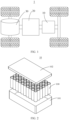
FIG. 1 is a schematic diagram of a vehicle provided by an embodiment of the present application; -
FIG. 2 is a structural schematic diagram of a battery provided by an embodiment of the present application; -
FIG. 3 is an assembling diagram of a battery cell provided by an embodiment of the present application; -
FIG. 4 is an exploded view of a battery cell provided by an embodiment of the present application; -
FIG. 5 is an exploded view of an end part assembly of a battery cell provided by an embodiment of the present application; -
FIG. 6 is a schematic diagram of a partial section structure of a battery cell provided by an embodiment of the present application; -
FIG. 7 is an assembling schematic diagram of an end part assembly and a current collector provided by an embodiment of the present application; -
FIG. 8 is an enlarged view of a position A inFIG. 7 ; -
FIG. 9 is an assembling schematic diagram of an end part assembly and a current collector provided by another embodiment of the present application; -
FIG. 10 is an exploded view of an end part assembly of a battery cell provided by an embodiment of the present application from another angle of view; -
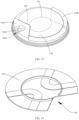
FIG. 11 is a schematic diagram of an avoiding portion and a welding portion of a battery cell provided by an embodiment of the present application; -
FIG. 12 is an assembling schematic diagram of a notch of a current collector and a second boss of an insulating piece provided by an embodiment of the present application; -
FIG. 13 is a schematic diagram of a notch of a current collector of a battery cell provided by an embodiment of the present application; -
FIG. 14 is a schematic diagram of a welding portion of an embodiment for butt welding of an electrode terminal and a current collector of a battery cell provided by an example of the present application; -
FIG. 15 is a schematic diagram of a welding portion for penetration welding of an electrode terminal and a current collector of a battery cell provided by an example of the present application at an external peripheral surface of the current collector; -
FIG. 16 is an enlarged view of a position B inFIG. 15 ; -
FIG. 17 is a schematic diagram of a welding portion for penetration welding of an electrode terminal and a current collector of a battery cell provided by an embodiment of the present application at an external peripheral surface of the electrode terminal; -
FIG. 18 is an enlarged view of a position C inFIG. 17 ; -
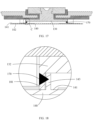
FIG. 19 is a schematic diagram of a welding portion of another embodiment for butt welding of an electrode terminal and a current collector of a battery cell provided by an embodiment of the present application; -
FIG. 20 is an enlarged view of a position D inFIG. 19 ; and -
FIG. 21 is a flowchart view of a manufacturing method of a battery cell provided by an embodiment of the present application. - In the accompanying drawings, the accompanying drawings are not drawn according to an actual ratio.
- Description of reference numerals: 1-vehicle; 10-battery; 101-box body; 102-upper cover; 100-battery cell; 110-shell; 111-accommodating space; 120-electrode assembly; 121-main body portion; 122-tab; 130-electrode terminal; 131-terminal body; 132-terminal pedestal; 133-limiting portion; 140-current collector; 141-first surface; 142-second surface; 143-first boss; 144-notch; 150-end cover; 151-through hole; 152-first liquid injection hole; 160-insulating piece; 161-first insulating piece; 162-second insulating piece; 1621-insulator; 1622-sealing body; 163-recessed portion; 164, 164a, 164b-second boss; 1641-avoiding groove; 1642-second liquid injection hole; 165-clearance portion; 170-welding portion; 181-protrusion; 182-groove; 183-gap; 190-external adapter; 20-controller; 30-motor.
- In order to make the objectives, technical solutions and advantages of the embodiments of the present application clearer, the technical solutions in the embodiments of the present application are described below clearly and completely with reference to the accompanying drawings in the embodiments of the present application. Apparently, the described embodiments are some rather than all of the embodiments. Generally, components of the embodiments of the present application described and shown in the accompanying drawings may be arranged and designed in various different configurations.
- Therefore, the following detailed description of the embodiments of the present application in the accompanying drawings is not intended to limit the protection scope of the present application, but merely represent selected embodiments of the present application.
- It should be noted that similar reference numerals and letters represent similar items in the accompanying drawings below. Therefore, once an item is defined in one drawing, it does not need to be further defined and described in subsequent drawings.
- In the description of the present application, it should be noted that the orientation or position relationship indicated by terms "inner", "outer" and the like is an orientation or position relationship shown in the drawings, or an orientation or position relationship that a product of the present application is usually placed during use, which is only for the convenience of describing the present application and simplifying the description, but does not indicate or imply that the referred devices or elements must have a specific orientation and be configured and operated in a specific orientation, so it cannot be understood as a limitation to the present application. In addition, the terms such as "first", "second" and the like are used only for distinguishing the description and cannot be understood to indicate or imply relative importance.
- In the description of the present application, it should also be noted that unless otherwise specified and limited, the terms "set" and "connect" should be understood in a broad sense. For example, they may be fixed connection, detachable connection or integrated connection, may be direct connection, may also be indirect connection implemented by an intermediate medium, and may be internal communication of two elements. A person of ordinary skill in the art may understand specific meanings of the above-mentioned terms in the present application based on the specific situation.
- In the present application, the term "and/or" merely describes the association relationship between the associated objects and indicates that there may be three relationships. For example, A and/or B may indicate three cases where only A exists, A and B exist at the same time, or only B exists. In addition, the character "/" in the present application generally indicates that the associated objects are in an "or" relationship.
- The battery mentioned in the embodiments of the present application may include a lithium ion secondary battery, a lithium ion primary battery, a lithium sulfur battery, a sodium lithium ion battery, a sodium ion battery or a magnesium ion battery. The embodiments of the present application are not limited to this. The battery may be of a cylinder, a flat body, a cuboid or other shapes, which is not limited by the embodiments of the present application. The battery is generally divided into three types according to packaging methods: a cylindrical battery, a square battery and a soft package battery.
- The battery described in the embodiments of the present application is applied to various devices using batteries, such as a mobile phone, a portable device, a notebook computer, a storage battery car, an electromobile, a ship, a spacecraft, an electric toy, an electric tool and the like. For example, the spacecraft includes an airplane, a rocket, a space shuttle, a spaceship and the like. The electric toy includes a fixed or mobile electric toy, such as a game machine, an electromobile toy, an electric ship toy and an electric airplane toy. The electric tool includes an electric tool for metal cutting, an electric tool for grinding, an electric tool for assembling and an electric tool for railways, such as an electric drill, an electric grinding machine, an electric wrench, an electric screw driver, an electric hammer, an electric impact drill, a concrete vibrator and an electric planer.
- It should be understood that the technical solutions described in the embodiments of the present application are not only suitable for the above described device, but also suitable for all devices using the battery. However, for simple description, the following embodiments are described by taking the electric vehicle as an example.
- For example, as shown in
FIG. 1 , it is a structural schematic diagram of avehicle 1 in an embodiment of the present application. Thevehicle 1 can be a fuel vehicle, a gas vehicle or a new energy vehicle, and the new energy vehicle can be a battery electric vehicle, a hybrid electric vehicle or an extended-range vehicle. As shown inFIG. 1 , the interior of thevehicle 1 can be equipped with abattery 10. For example, thebattery 10 can be arranged at the bottom or head or tail of thevehicle 1. Thebattery 10 can be configured to supply power for the vehicle. For example, thebattery 10 may serve as an operating power supply of thevehicle 1. In addition, thevehicle 1 may further include a controller 20 and a motor 30. The controller 20 is configured to control thebattery 10 to supply power for the motor 30, for example, for the working electricity demand of thevehicle 1 during starting, navigation and driving. In another embodiment of the present application, thebattery 10 not only may serve as an operating power supply of thevehicle 1, but also may serve as a driving power supply of thevehicle 1 to replace or partially replace fuel oil or natural gas to provide driving power for thevehicle 1. - For example, as shown in
FIG. 2 , it is a structural schematic diagram of abattery 10 in an embodiment of the present application. Thebattery 10 includes abox body 101, anupper cover 102 and a plurality ofbattery cells 100. The plurality ofbattery cells 100 are accommodated in thebox body 101, and theupper cover 102 is fastened to an opening of thebox body 101 to close the opening of thebox body 101. For example,FIG. 3 is an example of abattery cell 100. - The
battery 10 may further include a confluence part (not shown in the figure), and the confluence part is configured to realize the electric connection among a plurality ofbattery cells 100, such as parallel connection or series connection or parallel-series connection. Specifically, the confluence part may realize electric connection among thebattery cells 100 by connecting to the electrode terminal of thebattery cell 100. The confluence part may be fixed on the electrode terminal of thebattery cell 100 through welding. Electric energy of the plurality ofbatter cells 100 may further pass through a conductive mechanism (not shown in the figure) and pass through thebox body 101 to be led out. - According to different electricity requirements, the number of the
battery cells 100 can be set to any value. The plurality ofbattery cells 100 can be connected in series, in parallel or in series-parallel to achieve higher capacity or power. - In some embodiments, as shown in
FIG. 3 andFIG. 4 , thebattery cell 100 is a cylindrical battery. In other embodiments of the present application, thebattery cell 100 may also be a square battery. - Referring to
FIG. 4 andFIG. 5 , thebattery cell 100 includes ashell 110, anelectrode assembly 120, anelectrode terminal 130, acurrent collector 140, anend cover 150 and an insulatingpiece 160. Theelectrode assembly 120 includes a positive plate, a negative plate and an isolating membrane. The positive electrode plate includes a positive current collector and a positive active substance layer, the positive active material layer is coated on a surface of the positive current collector, the current collector uncoated with the positive active material layer protrudes out of the current collector coated with the positive active material layer, and the current collector uncoated with the positive electrode active material layer serves as a positive electrode tab. Taking the lithium-ion battery as an example, the positive current collector can be made of aluminum, and the positive active material can be lithium cobalt oxide, lithium iron phosphate, ternary lithium, or lithium manganate. The negative plate comprises a negative current collector and a negative active material layer, the negative active material layer is coated on a surface of the negative current collector, and the current collector uncoated with the negative active material layer protrudes out of the current collector coated with the negative active material layer, and the current collector uncoated with the negative electrode active material layer serves as a negative electrode tab. The negative current collector can be made of copper, and the negative active material can be carbon or silicon. To guarantee that no fusing occurs while a large current passes through, a plurality of positive electrode tabs are stacked together, and a plurality of negative electrode tabs are stacked together. The separator can be made of PP, or PE, and the like. In addition, the electrode assembly can be a wound structure or can be a laminated structure, and embodiments of the present application are not limited thereto. - As shown in
FIG. 6 , theshell 110 is provided with anaccommodating space 111 for accommodating theelectrode assembly 120, and theelectrode assembly 120 is configured to be accommodated in theshell 110. As shown inFIG. 4 andFIG. 6 , theelectrode terminal 130, theend cover 150 and the insulatingpiece 160 are assembled integrally and form an end part assembly, and theend cover 150 is configured to seal an opening at one end of theshell 110; as shown inFIG. 5 andFIG. 6 , the insulatingpiece 160 is arranged between theend cover 150 and theelectrode terminal 130 and is configured to electrically insulate theend cover 150 and theelectrode terminal 130. As shown inFIG. 6 , thecurrent collector 140 is configured to connect theelectrode assembly 120 and theelectrode terminal 130, and theelectrode terminal 130 is configured to output electric energy. - As shown in
FIG. 6 , theelectrode assembly 120 includes amain body portion 121 and atab 122, and thetab 122 is located on an end part of themain body portion 121 in a thickness direction of theend cover 150. For example, as shown inFIG. 4 andFIG. 6 , thebattery cell 100 is a cylindrical batter cell, themain body portion 121 is provided with two end parts, each end part is provided with atab 122, eachtab 122 corresponds to eachcurrent collector 140, and thecurrent collector 140 is welded with thecorresponding tab 122. - As shown in
FIG. 7 andFIG. 8 , thecurrent collector 140 and theelectrode terminal 130 are connected through awelding portion 170, and thewelding portion 170 is exposed at external peripheral surfaces of thecurrent collector 140 and theelectrode terminal 130. That is, thecurrent collector 140 and theelectrode terminal 130 may be butt welded at the external peripheral surfaces of thecurrent collector 140 and theelectrode terminal 130, and at this time, thewelding portion 170 is exposed at the external peripheral surfaces of thecurrent collector 140 and theelectrode terminal 130. - It should be noted that in the embodiments of the present application, the end cover assembly, the
current collector 140 and theelectrode assembly 120 are arranged sequentially in the preset direction, and the thickness direction of thecurrent collector 140 and the thickness direction of theend cover 150 are consistent with the preset direction; the external peripheral surface refers to a surface of an object in a direction perpendicular to the thickness direction of thecurrent collector 140, or the external peripheral surface refers to a surface of an object in a circumferential direction, or the external peripheral surface refers to a side surface of an object, or the external peripheral surface refers to a side surface of an object in a circumferential direction, or the external peripheral surface refers to an outer side surface of an object. For example, the external peripheral surface of thecurrent collector 140 is a surface of thecurrent collector 140 in a circumferential direction, namely, a side surface of thecurrent collector 140, which may be understood as a surface of thecurrent collector 140 in a direction perpendicular to the thickness of thecurrent collector 140; and theelectrode terminal 130 may be understood as a revolving body, a revolving center line of theelectrode terminal 130 extends along the preset direction (the thickness direction of the current collector 140), the external peripheral surface of theelectrode terminal 130 is a surface of theelectrode terminal 130 in the circumferential direction, namely a side surface of theelectrode terminal 130, which may be understood as a surface of theelectrode terminal 130 in a direction perpendicular to the revolving center line of theelectrode terminal 130. - In one aspect, in the embodiments of the present application, the
current collector 140 and theelectrode terminal 130 are welded from the peripheral side surface, and the welding operation is convenient. In another aspect, in the embodiments of the present application, welding is performed from a side surface, so that thewelding portion 170 does not penetrate through thecurrent collector 140 in the thickness direction, and electrolyte is prevented from leaking from thewelding portion 170. In yet another aspect, the side surface welding manner can ensure the welding quality of thecurrent collector 140 and theelectrode terminal 130, thereby ensuring the battery safety. - It should be noted that the
welding portion 170 may be understood as a weld joint. The weld joint is a joint formed by melting and connecting metal at the joint by using the high temperature of a welding heat source and is an entity. Welding may adopt laser welding, soldering and the like. As shown inFIG. 6 , the X-Y direction in the figure is the thickness direction of the current collector, short for thickness direction. Thewelding portion 170 may be understood as a weld joint which is formed by welding at the external peripheral surface of thecurrent collector 140 and/or an external peripheral surface of theelectrode terminal 130 in a direction perpendicular to the thickness direction of thecurrent collector 140. - In order to facilitate the assembling of the
end cover 150 and theelectrode terminal 130 and the output of electric energy, theend cover 150 is sleeved outside theelectrode terminal 130, and part of theelectrode terminal 130 is protruded out of theend cover 150. - As shown in
FIG. 7 , theelectrode terminal 130 includes aterminal body 131 and aterminal pedestal 132, and one end of theterminal body 131 and theterminal pedestal 132 are connected or integrally formed; theterminal pedestal 132 is configured to be connected to thecurrent collector 140; and theterminal body 131 is configured to be connected to the confluence part to lead out the electric energy. - In some embodiments, as shown in
FIG. 7 , theterminal body 131 is of a columnar structure, theterminal pedestal 132 is of a disk-shaped structure, and a diameter of theterminal pedestal 132 is greater than a diameter of theterminal body 131. In other embodiments, theterminal body 131 and theterminal pedestal 132 may be of other appropriate structures. - In some embodiments, as shown in
FIG. 5 ,FIG. 6 and FIG. 7 , thebattery cell 100 further includes anexternal adapter 190, theexternal adapter 190 is connected to one end of theelectrode terminal 130 away from thecurrent collector 140, and theexternal adapter 190 is electrically insulated from theend cover 150 through the insulatingpiece 160. As shown inFIG. 7 , theexternal adapter 190 is sleeved on an external peripheral surface of theterminal body 131, theexternal adapter 190 is located on one side of theend cover 150 away from thecurrent collector 140, and theexternal adapter 190 cooperates with theterminal pedestal 132 and theterminal body 131 to clamp the insulatingpiece 160 and theend cover 150 between theexternal adapter 190 and theterminal pedestal 132. The arrangement of theexternal adapter 190 increases the connection area of electric energy output so as to facilitate connection with the confluence part. - In some embodiments, as shown in
FIG. 7 , thecurrent collector 140 includes aprotrusion 181, theprotrusion 181 is configured to be connected to theelectrode terminal 130, and an external peripheral surface of theprotrusion 181 and the external peripheral surface of theelectrode terminal 130 are connected through thewelding portion 170. Theprotrusion 181 is protruded towards theelectrode terminal 130 in the thickness direction of thecurrent collector 140. Due to the arrangement of theprotrusion 181, on one hand, the risk of damage to other parts can be reduced; and on the other hand, the welding reliability can be improved, and the welding quality of thecurrent collector 140 and theelectrode terminal 130 can be ensured. - It should be noted that the external peripheral surface of the
protrusion 181 is a side surface of theprotrusion 181, which may be understood as a surface of theprotrusion 181 in a direction perpendicular to the preset direction. When theprotrusion 181 is formed on thecurrent collector 140, the side surface of theprotrusion 181 may be understood as the external peripheral surface of thecurrent collector 140. - In some embodiments, as shown in
FIG. 7 , thecurrent collector 140 includes afirst surface 141 and asecond surface 142 which are opposite to each other, thefirst surface 141 faces towards theelectrode terminal 130, and thesecond surface 142 is configured to be attached to theelectrode assembly 120. Thesecond surface 142 of thecurrent collector 140 is attached to theelectrode assembly 120, so that the welding reliability of thecurrent collector 140 and theelectrode assembly 120 is improved or enhanced, and the problems that temperature distribution is uneven and the local temperature rise is too high are improved. Theprotrusion 181 is formed on thefirst surface 141, and theprotrusion 181 is protruded towards theelectrode terminal 130 from thefirst surface 141 in the thickness direction of thecurrent collector 140. - In some embodiments, as shown in
FIG. 7 andFIG. 8 , agroove 182 is formed at an external peripheral surface of theterminal pedestal 132, theprotrusion 181 is configured to cooperate with thegroove 182, and theprotrusion 181 is configured to be inserted into thegroove 182. It can be understood that thegroove 182 extends in the circumferential direction of theterminal pedestal 132. Thegroove 182 can cooperate with theprotrusion 181, thereby facilitating butt welding of theelectrode terminal 130 and thecurrent collector 140 at the joint of thegroove 182 and theprotrusion 181, the external peripheral surface of theprotrusion 181 and the external peripheral surface of theelectrode terminal 130 are connected through thewelding portion 170, and thewelding portion 170 is exposed at the external peripheral surfaces of theelectrode terminal 130 and thecurrent collector 140. It may also be understood that thewelding portion 170 is exposed at the external peripheral surface of theprotrusion 181. - In some embodiments, as shown in
FIG. 7 andFIG. 8 , agap 183 is formed between an end face of theelectrode terminal 130 facing towards thecurrent collector 140 and thefirst surface 141. The arrangement of thegap 183 can prevent the positioning of the end face of theelectrode terminal 130 abutting against thefirst surface 141 and the positioning of theprotrusion 181 abuts against the groove bottom of thegroove 182 from forming repositioning. Or the arrangement of thegap 183 can prevent the influence on the welding between thecurrent collector 140 and theelectrode terminal 130 caused by an uneven welding area of thecurrent collector 140 and the electrode assembly. - In some embodiments, as shown in
FIG. 7 , at least part of the insulatingpiece 160 is arranged between theend cover 150 and theelectrode terminal 130, and part of the insulatingpiece 160 extends between theend cover 150 and thecurrent collector 140 for isolating theend cover 150 from theelectrode terminal 130. - In some embodiments, as shown in
FIG. 7 , the insulatingpiece 160 includes a firstinsulating piece 161 and a secondinsulating piece 162. The firstinsulating piece 161 is sleeved on the external peripheral surface of theterminal body 131 and is located on one side of theend cover 150 away from thecurrent collector 140. The firstinsulating piece 161 is arranged between theend cover 150 and theelectrode terminal 130. The secondinsulating piece 162 is sleeved on the external peripheral surface of theterminal body 131 and is located on one side of theend cover 150 facing towards thecurrent collector 140, and theend cover 150 is located between the second insulatingpiece 162 and the first insulatingpiece 161; and the second insulatingpiece 162 is located between theend cover 150 and theterminal pedestal 132 and extends between theend cover 150 and thecurrent collector 140. - In some embodiments, as shown in
FIG. 7 , a recessedportion 163 for cooperating with theend cover 150 is formed on the second insulatingpiece 162, and the recessedportion 163 is of an annular structure; and part of theend cover 150 is configured to be embedded in the recessedportion 163, a middle part of theend cover 150 is provided with a through hole 151 cooperating with the second insulatingpiece 162, and part of the second insulatingpiece 162 penetrates into the through hole 151 so as to isolate theend cover 150 from theterminal body 131. The arrangement of the recessedportion 163 reasonably utilizes a mounting space, so that theexternal adapter 190 is closer to thecurrent collector 140 in the thickness of thecurrent collector 140, thereby reducing the height of thebattery cell 100 and increasing the energy density of thebattery cell 100. - The first
insulating piece 161 and the second insulatingpiece 162 may be two independent parts and may also be integrally formed. When the first insulatingpiece 161 and the second insulatingpiece 162 are integrally formed, the insulatingpiece 160 can be deformed to facilitate assembling when being assembled with theelectrode terminal 130 and theend cover 150. Meanwhile, the insulatingpiece 160 and theelectrode terminal 130 are assembled in a sealed fit. In one embodiment, the first insulatingpiece 161 and the second insulatingpiece 162 are two independent parts, thereby facilitating the assembling of theend cover 150 and theelectrode terminal 130. - In some embodiments, the first insulating
piece 161 and the second insulatingpiece 162 are two independent parts. In order to ensure the sealed fit of the insulatingpiece 160 and theelectrode terminal 130, as shown inFIG. 9 , the second insulatingpiece 162 includes aninsulator 1621 and asealing body 1622, and theinsulator 1621 and thesealing body 1622 are two independent parts. The sealingbody 1622 is sleeved on the external peripheral surface of theterminal body 131, and theinsulator 1621 and theend cover 150 is sleeved on an external peripheral surface of thesealing body 1622, so that theend cover 150 hermetically cooperates with theelectrode terminal 130. - In some embodiments, as shown in
FIG. 10 and FIG. 11 , asecond boss 164 is formed on one side of the insulatingpiece 160 facing towards theelectrode assembly 120, and thesecond boss 164 is configured to abut against theelectrode assembly 120; and thesecond boss 164 abuts against theelectrode assembly 120, so that shaking of theelectrode assembly 120 can be avoided. - In some embodiments, referring to
FIG. 10 and FIG. 11 , a plurality ofsecond bosses 164 are formed on one side of the insulatingpiece 160 facing towards theelectrode assembly 120, thereby increasing contact surfaces with theelectrode assembly 120 and facilitating multi-point abutting against theelectrode assembly 120. - In some embodiments, referring to
FIG. 10 and FIG. 11 , the plurality ofsecond bosses 164 are arranged at the periphery of thecurrent collector 140 at intervals, aclearance portion 165 is formed between two adjacentsecond bosses 164, and at least part of thewelding portion 170 is located in theclearance portion 165. Through the arrangement of theclearance portion 165 between thesecond bosses 164, laser can penetrate from theclearance portion 165 or the welding head can extend into theclearance portion 165 to weld thecurrent collector 140 and theelectrode terminal 130. - In one embodiment, as shown in
FIG. 10 , the insulatingpiece 160 is provided with twosecond bosses 164, and the twosecond bosses 164 form twoclearance portions 165, so that thecurrent collector 140 and theelectrode terminal 130 are welded conveniently from two directions. - In some embodiments, as shown in
FIG. 10 andFIG. 5 , theend cover 150 is provided with a firstliquid injection hole 152, where an avoidinggroove 1641 is formed on an end face of one of thesecond bosses 164, the avoidinggroove 1641 extends to an external peripheral surface of thesecond boss 164, a secondliquid injection hole 1642 is formed on a bottom surface of the avoidinggroove 1641, and the secondliquid injection hole 1642 communicates with the firstliquid injection hole 152. - When electrolyte is injected from the first
liquid injection hole 152 of theend cover 150, the electrolyte can flow to the avoidinggroove 1641 through the secondliquid injection hole 1642, can flow to the external peripheral surface of thesecond boss 164 through the avoidinggroove 1641, and then flows to a gap between theelectrode assembly 120 and theshell 110, thereby increasing the flow velocity of the electrolyte and improving the liquid injection efficiency. The arrangement of the avoidinggroove 1641 prevents the end part of the secondliquid injection hole 1642 from directly abutting against theelectrode assembly 120, so that the electrolyte flows smoothly. - It should be noted that the avoiding
groove 1641 is formed on the end face of thesecond boss 164 facing towards thecurrent collector 140. - In some embodiments, in order to prevent dust and other impurities from entering the
shell 110, thebattery cell 100 further includes a sealing cover (not shown in the figure), and the sealing cover is configured to block the firstliquid injection hole 152, so that anaccommodating space 111 of theshell 110 and theend cover 150 are sealed. - In some embodiments, as shown in
FIG. 10 ,FIG. 12 and FIG. 13 , anotch 144 is formed on the edge of thecurrent collector 140, the plurality ofsecond bosses 164 have asecond boss 164a corresponding to thenotch 144 of thecurrent collector 140, a contour shape of thesecond boss 164a is matched with thenotch 144, and thesecond boss 164a is clamped with thenotch 144 so as to limit rotation of thecurrent collector 140. The number of thesecond boss 164a is at least one, which is not limited in the present application. A shape of thenotch 144 can be any appropriate form, such as a V shape, a U shape, concave shape, and the like. - In some embodiments, a shape of the
notch 144 may be matched with shapes of other second bosses. - In some embodiments, as shown in
FIG. 10 , a limitingportion 133 is formed on the edge of theelectrode terminal 130, the limitingportion 133 corresponds to thenotch 144, and the limitingportion 133 is matched with the contour of thesecond boss 164a, the limitingportion 133 cooperating with thesecond boss 164a may prevent rotation of theelectrode terminal 130 and improve the assembling stability. - In some embodiments, as shown in
FIG. 10 , in the plurality ofsecond bosses 164, except for thesecond boss 164a corresponding to thenotch 144, othersecond bosses 164b are of arc-shaped structures and are distributed in the circumferential direction of thecurrent collector 140, an internal peripheral surface of thesecond boss 164b is matched with an edge contour of thecurrent collector 140, and thesecond boss 164b cooperates with thesecond boss 164a to position thecurrent collector 140. - In some embodiments, as shown in
FIG. 10 andFIG. 12 , on the basis that thesecond boss 164a has larger area in a radial direction of thecurrent collector 140 relative to othersecond bosses 164b, the secondliquid injection hole 1642 is formed in thesecond boss 164a. - In one embodiment, as shown in
FIG. 10 andFIG. 12 , thecurrent collector 140 may be of a disk structure, two end faces of thesecond boss 164 in the circumferential direction of thecurrent collector 140 extend towards theterminal pedestal 132 and are arranged in an included angle, and the included angle of the two end faces is an obtuse angle, so that laser can enter theclearance portion 165 or the welding head can extend into theclearance portion 165 conveniently, and a length of thewelding portion 170 is increased. - As shown in
FIG. 12 , when the distance between thesecond boss 164 and a welding part (that is, a part before thewelding portion 170 is formed) of theterminal pedestal 132 and thecurrent collector 140 is larger, the intersection of the extension surfaces of the two end faces of thesecond boss 164 is located between thesecond boss 164 and the welding part of theterminal pedestal 132 and thecurrent collector 140. In this case, the continuity of thewelding portion 170 extending in the circumferential direction of theterminal pedestal 132 can be ensured. - In some embodiments, the
welding portion 170 is exposed at the external peripheral surfaces of thecurrent collector 140 and theelectrode terminal 130. In addition to the above manner, thecurrent collector 140 may also be attached to theelectrode terminal 130. As shown inFIG. 14 , the edge contour of thecurrent collector 140 is matched with the edge contour of theelectrode terminal 130, thefirst surface 141 of thecurrent collector 140 is attached to theelectrode terminal 130, thewelding portion 170 is located at the attached joint of thecurrent collector 140 and theelectrode terminal 130, and thecurrent collector 140 and theelectrode terminal 130 are fixed at the attached joint in a butt welding manner. Thefirst surface 141 is attached to theelectrode terminal 130, thereby ensuring the welding reliability of thecurrent collector 140 and theelectrode terminal 130. - In some examples, as shown in
FIG. 15 and FIG. 16 , thewelding portion 170 may also be exposed at the external peripheral surface of thecurrent collector 140, and thecurrent collector 140 and theelectrode terminal 130 may be welded at the external peripheral surface of thecurrent collector 140 in a penetration manner. Thecurrent collector 140 includes aprotrusion 181, theprotrusion 181 is formed on thefirst surface 141, theprotrusion 181 is protruded towards theelectrode terminal 130 in the thickness direction of the current collector, theprotrusion 181 is configured to be sleeved on the electrode terminal 130 (terminal pedestal 132), and thewelding portion 170 is exposed on the side surface of theprotrusion 181. - In some embodiments, the
welding portion 170 may also be exposed at the external peripheral surface of theelectrode terminal 130, and thecurrent collector 140 and theelectrode terminal 130 may be welded at the external peripheral surface of theelectrode terminal 130 in a penetration manner. As shown inFIG. 17 and FIG. 18 , theelectrode terminal 130 may be provided with aprotrusion 181, and theprotrusion 181 is configured to connect thecurrent collector 140. For example, theprotrusion 181 is formed on one surface of theterminal pedestal 132 closed to thecurrent collector 140, and theprotrusion 181 is protruded towards thecurrent collector 140 in the thickness direction of thecurrent collector 140; and afirst boss 143 is formed on thefirst surface 141 of thecurrent collector 140, theprotrusion 181 is sleeved on thefirst boss 143, and theprotrusion 181 and thefirst boss 143 are connected through thewelding portion 170. That is, theelectrode terminal 130 and thecurrent collector 140 may be welded with thefirst boss 143 on the side surface of theprotrusion 181 in a through welding manner, and thewelding portion 170 is exposed on the side surface of theprotrusion 181. It may be understood that the external peripheral surface of theprotrusion 181 and the external peripheral surface of the current collector 140 (the external peripheral surface of the first boss 143) are connected through thewelding portion 170. It should be noted that the external peripheral surface of theprotrusion 181 is a side surface of theprotrusion 181, which may be understood as a surface of theprotrusion 181 in a direction perpendicular to the preset direction. When theprotrusion 181 is formed on theelectrode terminal 130, the side surface of theprotrusion 181 may be understood as the external peripheral surface of theelectrode terminal 130. - It should be noted that the
protrusion 181 may abut against thefirst surface 141, but thefirst boss 143 is not in contact with the end face of theterminal pedestal 132 facing towards thecurrent collector 140, so that the positioning of theelectrode terminal 130 and thecurrent collector 140 is realized; or thefirst boss 143 may abut against the end face of theterminal pedestal 132 facing towards thecurrent collector 140, but theprotrusion 181 is in not contact with thefirst surface 141, so that the positioning of theelectrode terminal 130 and thecurrent collector 140 is realized. - In some embodiments, as shown in
FIG. 18 , thefirst boss 143 is an annular boss. Due to the design of the annular boss, the weight of thecurrent collector 140 can be reduced. - In some embodiments, a
protrusion 181 is formed on one surface of theterminal pedestal 132 close to thecurrent collector 140, agroove 182 may be formed at the peripheral edge of thecurrent collector 140, theprotrusion 181 is configured to be inserted into thegroove 182, and thewelding portion 170 is exposed at the external peripheral surfaces of theelectrode terminal 130 and thecurrent collector 140. Thegroove 182 can cooperate with theprotrusion 181, thereby facilitating the butt welding of theelectrode terminal 130 and thecurrent collector 140 at the junction of theprotrusion 181 and thegroove 182. - In some embodiments, as shown in
FIG. 19 and FIG. 20 , agroove 182 may be formed at the peripheral edge of thefirst boss 143, theprotrusion 181 is configured to be inserted into thegroove 182, and thewelding portion 170 is exposed at the external peripheral surfaces of theelectrode terminal 130 and thecurrent collector 140. - In some embodiments, the above-mentioned
protrusion 181 may be an annular protrusion. Due to the arrangement of the annular protrusion, position accuracy of thecurrent collector 140 and theelectrode terminal 130 can be ensured, the length of thewelding portion 170 can be increased in the same time, and firm connection between thecurrent collector 140 and theelectrode terminal 130 can be ensured. The side surface of the annular protrusion is the external peripheral surface of the annular protrusion. - It should be noted that the end part assembly may be an end part assembly applied to a positive electrode and/or an end part assembly applied to a negative electrode.
- The electric apparatus and the
battery 10 in the embodiments of the present application are described above. A manufacturing method of a battery cell in the embodiments of the present application will be described below. The parts which are not described in detail may be referenced to the foregoing embodiments. - The present application further provides a manufacturing method of a battery cell. The manufacturing method of the battery cell includes:
As shown inFIG. 21 , welding thecurrent collector 140 and theelectrode terminal 130 from the circumferential direction of theelectrode terminal 130, so that theelectrode terminal 130 and thewelding portion 170 of thecurrent collector 140 are exposed at the external peripheral surface of theelectrode terminal 130 and/or an external peripheral surface of thecurrent collector 140. - It should be noted that welding from the periphery of the
electrode terminal 130 refers to welding theelectrode terminal 130 and thecurrent collector 140 from the outer side surface of theelectrode terminal 130 in the radial direction towards the direction of the center line of theterminal body 131. The outer side surface of theelectrode terminal 130 refers to the external peripheral surface of theelectrode terminal 130. - In some examples, before welding the
electrode terminal 130 and thecurrent collector 140, the manufacturing method of a battery cell further includes: assembling theelectrode terminal 130, theend cover 150 and the insulatingpiece 160 integrally to form the end part assembly, and theend cover 150 is configured to seal an opening of theshell 110. - In some examples, before welding the
electrode terminal 130 and thecurrent collector 140, the manufacturing method of a battery cell further includes: attaching thesecond surface 142 of thecurrent collector 140 and theelectrode assembly 120 and welding thecurrent collector 140 and theelectrode assembly 120. - In some examples, the manufacturing method of a battery cell further includes injecting electrolyte into the
shell 110. The electrolyte flows into theshell 110 from the firstliquid injection hole 152 on theend cover 150, the secondliquid injection hole 1642 on the insulatingpiece 160 and the avoidinggroove 1641. After injecting the electrolyte, the firstliquid injection hole 152 is sealed, so that theend cover 150 and theshell 110 form a sealed space.
Claims (12)
- A battery cell (100), the battery cell (100) being a cylindrical battery cell, the battery cell (100) comprising:a shell (110);an electrode assembly (120), configured to be accommodated in the shell (110);an electrode terminal (130); andan end cover (150), configured to seal an opening at one end of the shell (110), the end cover (150) being sleeved outside the electrode terminal (130), and part of the electrode terminal (130) being protruded out of the end cover (150);a current collector (140), configured to connect the electrode assembly (120) and the electrode terminal (130),an insulating piece (160), extending between the end cover (150) and the current collector (140), and configured to isolate the end cover (150) from the electrode terminal (130), wherein the electrode terminal (130), the end cover (150) and the insulating piece (160) are assembled integrally and form an end cover assembly, the end cover assembly, the current collector (140) and the electrode assembly (120) are arranged sequentially in a thickness direction of the current collector (140);wherein the current collector (140) and the electrode terminal (130) are connected through a welding portion (170), and the welding portion (170) is exposed at an external peripheral surface of the current collector (140) and an external peripheral surface of the electrode terminal (130); andthe current collector (140) includes a protrusion (181), the protrusion (181) is protruded towards the electrode terminal (130) in the thickness direction of the current collector (140), the protrusion (181) is configured to be connected to the electrode terminal (130), and an external peripheral surface of the protrusion (181) and the external peripheral surface of the electrode terminal (130) are connected through the welding portion (170);wherein an external peripheral surface of the current collector (140) is a side surface of the protrusion (181), an external peripheral surface of the protrusion (181) is the side surface of the protrusion (181), and the welding portion (170) is exposed at the side surface of the protrusion (181);the electrode terminal (130) includes a terminal body (131) and a terminal pedestal (132), and one end of the terminal body (131) and the terminal pedestal (132) are connected or integrally formed; the terminal pedestal (132) is configured to be connected to the current collector (140); and the terminal body (131) is configured to be connected to the confluence part to lead out the electric energy;a groove (182) is formed on an external peripheral surface of the terminal pedestal (132), and the protrusion (181) is configured to cooperate with the groove (182) and the protrusion (181) is configured to be inserted into the groove (182).
- The battery cell (100) according to claim 1, wherein the protrusion (181) is an annular protrusion (181), and the annular protrusion (181) is configured to be sleeved on the external peripheral surface of the electrode terminal (130).
- The battery cell (100) according to claim 1 or 2, wherein the current collector (140) comprises a first surface (141) and a second surface (142) which are opposite to each other, the protrusion (181) is formed on the first surface (141), the first surface (141) faces towards the electrode terminal (130), and the second surface (142) is configured to be attached to the electrode assembly (120).
- The battery cell (100) according to claim 3, wherein a gap (183) is formed between the electrode terminal (130) and the first surface (141).
- The battery cell (100) according to any one of claims 1-4, wherein second bosses (164) are formed on one side of the insulating piece (160) towards the electrode assembly (120), the second bosses (164) are protruded towards the electrode assembly (120) in the thickness direction of the current collector (140), the second bosses (164) are configured to abut against the electrode assembly (120), a plurality of the second bosses (164) are arranged at the periphery of the current collector (140) at intervals, and a clearance portion is formed between two adjacent second bosses (164).
- The battery cell (100) according to claim 5, wherein a notch (144) is formed at an edge of the current collector (140), and at least one of the second bosses (164) is clamped with the notch to limit rotation of the current collector (140).
- The battery cell (100) according to claim 5, wherein the end cover (150) is provided with a first liquid injection hole (152), an avoiding groove (182) is formed on an end face of one of the second bosses (164), the avoiding groove (182) extends to an external peripheral surface of the second boss (164), a second liquid injection hole (1642) is formed on a bottom surface of the avoiding groove (182), and the second liquid injection hole (1642) communicates with the first liquid injection hole (152).
- A battery cell (100), the battery cell (100) being a cylindrical battery cell, the battery cell (100) comprising:a shell (110);an electrode assembly (120), configured to be accommodated in the shell (110);an electrode terminal (130); andan end cover (150), configured to seal an opening at one end of the shell (110), the end cover (150) being sleeved outside the electrode terminal (130), and part of the electrode terminal (130) being protruded out of the end cover (150);a current collector (140), configured to connect the electrode assembly (120) and the electrode terminal (130),an insulating piece (160), extending between the end cover (150) and the current collector (140), and configured to isolate the end cover (150) from the electrode terminal (130), wherein the electrode terminal (130), the end cover (150) and the insulating piece (160) are assembled integrally and form an end cover assembly, the end cover assembly, the current collector (140) and the electrode assembly (120) are arranged sequentially in a thickness direction of the current collector (140);wherein the current collector (140) and the electrode terminal (130) are connected through a welding portion (170), and the welding portion (170) is exposed at an external peripheral surface of the electrode terminal (130); andwherein the current collector (140) comprises a first surface (141) and a second surface (142) which are opposite to each other, the first surface (141) faces towards the electrode terminal (130), the second surface (142) is attached to the electrode assembly (120), a first boss (143) is formed on the first surface (141) and protruded in the thickness direction of the current collector (140),a protrusion (181) is formed on one surface of the electrode terminal (130) close to the current collector (140) and protruded in the thickness direction of the current collector (140), the protrusion (181) is sleeved on the first boss (143), and the protrusion (181) and the first boss (143) are connected through the welding portion (170);wherein the external peripheral surface of the electrode terminal (130) is a side surface of the protrusion (181), and the welding portion (170) is exposed at a side surface of the protrusion (181).
- The battery cell (100) according to claim 8, wherein the first boss (143) is an annular boss.
- The battery cell (100) according to claim 8 or 9, wherein a groove (182) is formed at a peripheral edge of the current collector (140), the protrusion (181) is configured to be inserted into the groove (182).
- A battery (10), comprising the battery cell (100) as defined in any one of the claims 1-10.
- An electric apparatus, comprising the battery (10) as defined in claim 11.
Applications Claiming Priority (2)
| Application Number | Priority Date | Filing Date | Title |
|---|---|---|---|
| CN202011249820.6A CN112072058B (en) | 2020-11-11 | 2020-11-11 | Battery cell, battery, electric device, and battery manufacturing method |
| PCT/CN2021/081053 WO2022099960A1 (en) | 2020-11-11 | 2021-03-16 | Battery cell, battery, electrical device, and battery manufacturing method |
Publications (3)
| Publication Number | Publication Date |
|---|---|
| EP4027447A1 EP4027447A1 (en) | 2022-07-13 |
| EP4027447A4 EP4027447A4 (en) | 2022-11-09 |
| EP4027447B1 true EP4027447B1 (en) | 2025-07-09 |
Family
ID=81453600
Family Applications (1)
| Application Number | Title | Priority Date | Filing Date |
|---|---|---|---|
| EP21819705.1A Active EP4027447B1 (en) | 2020-11-11 | 2021-03-16 | Battery cell, battery and electric apparatus |
Country Status (4)
| Country | Link |
|---|---|
| US (1) | US12068446B2 (en) |
| EP (1) | EP4027447B1 (en) |
| JP (1) | JP7559206B2 (en) |
| KR (1) | KR102937050B1 (en) |
Families Citing this family (13)
| Publication number | Priority date | Publication date | Assignee | Title |
|---|---|---|---|---|
| EP4391197A4 (en) * | 2022-01-27 | 2025-09-10 | Contemporary Amperex Technology Hong Kong Ltd | BATTERY CELL AND MANUFACTURING METHOD AND MANUFACTURING DEVICE THEREFOR, BATTERY AND ELECTRICAL DEVICE |
| KR20240144974A (en) * | 2022-02-03 | 2024-10-04 | 쥐.디 에스.피.에이. | Method for manufacturing a battery for energy storage |
| JPWO2024004451A1 (en) * | 2022-06-30 | 2024-01-04 | ||
| EP4336632A1 (en) * | 2022-09-07 | 2024-03-13 | VARTA Microbattery GmbH | Energy storage element and method for producing same |
| CN116169421B (en) * | 2022-09-09 | 2025-03-04 | 湖北亿纬动力有限公司 | Battery and assembly method thereof |
| WO2024077630A1 (en) * | 2022-10-14 | 2024-04-18 | 宁德时代新能源科技股份有限公司 | Battery cell, battery and electric device |
| EP4498504A4 (en) * | 2022-10-17 | 2025-11-19 | Contemporary Amperex Technology Hong Kong Ltd | BATTERY CELL, BATTERY AND ELECTRICAL DEVICE |
| CN115810842B (en) * | 2022-12-22 | 2024-01-26 | 厦门海辰储能科技股份有限公司 | Battery monomer and electric equipment |
| EP4597677A4 (en) * | 2023-03-03 | 2026-01-07 | Contemporary Amperex Technology Hong Kong Ltd | BATTERY CELL, BATTERY AND ELECTRICAL DEVICE |
| WO2025149774A1 (en) * | 2024-01-10 | 2025-07-17 | Freudenberg Sealing Technologies S.A.S. Di Externa Italia S.R.L.U. | Current collector for a lid assembly of a prismatic cell battery and method for assembling such current collector |
| KR20250158206A (en) * | 2024-04-30 | 2025-11-06 | 삼성에스디아이 주식회사 | Secondary battery |
| CN223245746U (en) * | 2024-09-25 | 2025-08-19 | 株式会社Aesc日本 | Secondary battery, battery pack and electronic device |
| KR20260047986A (en) * | 2024-10-02 | 2026-04-09 | 주식회사 엘지에너지솔루션 | Battery cell and battery pack and vehicle including the same |
Family Cites Families (16)
| Publication number | Priority date | Publication date | Assignee | Title |
|---|---|---|---|---|
| JP4501361B2 (en) * | 2003-06-05 | 2010-07-14 | パナソニック株式会社 | Secondary battery |
| JP2005183360A (en) * | 2003-11-28 | 2005-07-07 | Matsushita Electric Ind Co Ltd | Square battery and manufacturing method thereof |
| US7601460B2 (en) | 2003-11-28 | 2009-10-13 | Panasonic Corporation | Prismatic battery and manufacturing method thereof |
| JP2006324180A (en) * | 2005-05-20 | 2006-11-30 | Matsushita Electric Ind Co Ltd | Storage battery and manufacturing method thereof |
| CN101083317A (en) | 2006-05-31 | 2007-12-05 | 比亚迪股份有限公司 | Secondary batteries |
| KR100947989B1 (en) * | 2007-11-06 | 2010-03-18 | 삼성에스디아이 주식회사 | Secondary Battery and Manufacturing Method Thereof |
| US20090197160A1 (en) | 2008-01-31 | 2009-08-06 | Sanyo Electric Co., Ltd. | Stack type battery |
| JP5218565B2 (en) * | 2010-01-13 | 2013-06-26 | トヨタ自動車株式会社 | Battery manufacturing method |
| JP5582533B2 (en) * | 2010-10-22 | 2014-09-03 | 日立マクセル株式会社 | Sealed battery |
| WO2013001821A1 (en) * | 2011-06-28 | 2013-01-03 | 日本ケミコン株式会社 | Electricity storage device and method for manufacturing electricity storage device |
| JP2014107147A (en) * | 2012-11-28 | 2014-06-09 | Toyota Industries Corp | Electricity storage device |
| US10079370B2 (en) * | 2014-11-28 | 2018-09-18 | Sanyo Electric Co., Ltd. | Secondary battery |
| JP6597014B2 (en) * | 2015-07-21 | 2019-10-30 | 三洋電機株式会社 | Secondary battery |
| WO2018062339A1 (en) * | 2016-09-30 | 2018-04-05 | 三洋電機株式会社 | Method for manufacturing angular secondary battery |
| CN113451713B (en) | 2017-08-30 | 2024-03-19 | 宁德时代新能源科技股份有限公司 | Secondary batteries and battery modules |
| CN112072058B (en) | 2020-11-11 | 2021-04-06 | 江苏时代新能源科技有限公司 | Battery cell, battery, electric device, and battery manufacturing method |
-
2021
- 2021-03-16 JP JP2023503226A patent/JP7559206B2/en active Active
- 2021-03-16 EP EP21819705.1A patent/EP4027447B1/en active Active
- 2021-03-16 KR KR1020237001330A patent/KR102937050B1/en active Active
- 2021-12-16 US US17/553,071 patent/US12068446B2/en active Active
Also Published As
| Publication number | Publication date |
|---|---|
| US20220149421A1 (en) | 2022-05-12 |
| JP2023542596A (en) | 2023-10-11 |
| JP7559206B2 (en) | 2024-10-01 |
| EP4027447A4 (en) | 2022-11-09 |
| US12068446B2 (en) | 2024-08-20 |
| EP4027447A1 (en) | 2022-07-13 |
| KR102937050B1 (en) | 2026-03-10 |
| KR20230024376A (en) | 2023-02-20 |
Similar Documents
| Publication | Publication Date | Title |
|---|---|---|
| EP4027447B1 (en) | Battery cell, battery and electric apparatus | |
| CN112072058B (en) | Battery cell, battery, electric device, and battery manufacturing method | |
| US20240154218A1 (en) | Battery cell, battery, and electrical apparatus | |
| US20240356116A1 (en) | Battery cell, battery, electrical device, and manufacturing device and method for battery cell | |
| US20240145889A1 (en) | Insulation patch, battery cell, battery, and device | |
| CN117121288A (en) | Battery cells, batteries, electrical equipment and manufacturing methods and equipment for battery cells | |
| US20240162579A1 (en) | Battery cell, method and system for manufacturing battery cell, battery and electrical apparatus | |
| US20230420812A1 (en) | Tab welded structure, battery cell, and power consuming apparatus | |
| US20230395908A1 (en) | Battery cell, battery, and apparatus using battery | |
| US20240380080A1 (en) | Battery cell, battery, electrical device, and method and device for manufacturing battery cell | |
| WO2023159463A1 (en) | Battery cell, preparation method therefor and preparation system thereof, battery and electrical apparatus | |
| US20240332541A1 (en) | Electrode plate, electrode assembly, battery cell, battery, and electric device | |
| US20240313337A1 (en) | End Cover, Battery Cell, Battery, and Electrical Device | |
| CN218274819U (en) | Battery cells, batteries and electrical devices | |
| CN218648034U (en) | Battery monomer, power battery package and consumer | |
| EP4435916B1 (en) | Battery cell and manufacturing method and device therefor, battery, and electrical device | |
| CN116897457A (en) | End cover components, battery cells, batteries and electrical equipment | |
| US20250323355A1 (en) | Battery cell, battery, and power-consuming apparatus | |
| CN220710571U (en) | Cylindrical battery cell, battery pack and electronic equipment | |
| US12476333B2 (en) | Battery cell having conductive piece close to welding region | |
| CN215869576U (en) | Battery cover plate assembly and battery | |
| EP4679614A2 (en) | Current collector, secondary battery and electronic device | |
| US20260024888A1 (en) | Adapter sheet, secondary battery, battery assembly and electronic device | |
| EP4579893A1 (en) | Battery cell, battery, and electrical device |
Legal Events
| Date | Code | Title | Description |
|---|---|---|---|
| STAA | Information on the status of an ep patent application or granted ep patent |
Free format text: STATUS: UNKNOWN |
|
| STAA | Information on the status of an ep patent application or granted ep patent |
Free format text: STATUS: THE INTERNATIONAL PUBLICATION HAS BEEN MADE |
|
| PUAI | Public reference made under article 153(3) epc to a published international application that has entered the european phase |
Free format text: ORIGINAL CODE: 0009012 |
|
| STAA | Information on the status of an ep patent application or granted ep patent |
Free format text: STATUS: REQUEST FOR EXAMINATION WAS MADE |
|
| 17P | Request for examination filed |
Effective date: 20211215 |
|
| AK | Designated contracting states |
Kind code of ref document: A1 Designated state(s): AL AT BE BG CH CY CZ DE DK EE ES FI FR GB GR HR HU IE IS IT LI LT LU LV MC MK MT NL NO PL PT RO RS SE SI SK SM TR |
|
| REG | Reference to a national code |
Ref country code: DE Ipc: H01M0050559000 Ref country code: DE Ref legal event code: R079 Ref document number: 602021033918 Country of ref document: DE Free format text: PREVIOUS MAIN CLASS: H01M0050528000 Ipc: H01M0050559000 |
|
| A4 | Supplementary search report drawn up and despatched |
Effective date: 20221007 |
|
| RIC1 | Information provided on ipc code assigned before grant |
Ipc: H01M 50/107 20210101ALI20221003BHEP Ipc: H01M 4/70 20060101ALI20221003BHEP Ipc: H01M 50/566 20210101ALI20221003BHEP Ipc: H01M 50/559 20210101AFI20221003BHEP |
|
| STAA | Information on the status of an ep patent application or granted ep patent |
Free format text: STATUS: EXAMINATION IS IN PROGRESS |
|
| 17Q | First examination report despatched |
Effective date: 20231026 |
|
| DAV | Request for validation of the european patent (deleted) | ||
| DAX | Request for extension of the european patent (deleted) | ||
| GRAP | Despatch of communication of intention to grant a patent |
Free format text: ORIGINAL CODE: EPIDOSNIGR1 |
|
| STAA | Information on the status of an ep patent application or granted ep patent |
Free format text: STATUS: GRANT OF PATENT IS INTENDED |
|
| INTG | Intention to grant announced |
Effective date: 20250327 |
|
| GRAS | Grant fee paid |
Free format text: ORIGINAL CODE: EPIDOSNIGR3 |
|
| GRAA | (expected) grant |
Free format text: ORIGINAL CODE: 0009210 |
|
| STAA | Information on the status of an ep patent application or granted ep patent |
Free format text: STATUS: THE PATENT HAS BEEN GRANTED |
|
| AK | Designated contracting states |
Kind code of ref document: B1 Designated state(s): AL AT BE BG CH CY CZ DE DK EE ES FI FR GB GR HR HU IE IS IT LI LT LU LV MC MK MT NL NO PL PT RO RS SE SI SK SM TR |
|
| REG | Reference to a national code |
Ref country code: GB Ref legal event code: FG4D |
|
| REG | Reference to a national code |
Ref country code: CH Ref legal event code: EP |
|
| P01 | Opt-out of the competence of the unified patent court (upc) registered |
Free format text: CASE NUMBER: APP_28828/2025 Effective date: 20250617 |
|
| REG | Reference to a national code |
Ref country code: IE Ref legal event code: FG4D |
|
| REG | Reference to a national code |
Ref country code: DE Ref legal event code: R096 Ref document number: 602021033918 Country of ref document: DE |
|
| REG | Reference to a national code |
Ref country code: NL Ref legal event code: MP Effective date: 20250709 |
|
| PG25 | Lapsed in a contracting state [announced via postgrant information from national office to epo] |
Ref country code: PT Free format text: LAPSE BECAUSE OF FAILURE TO SUBMIT A TRANSLATION OF THE DESCRIPTION OR TO PAY THE FEE WITHIN THE PRESCRIBED TIME-LIMIT Effective date: 20251110 |
|
| PG25 | Lapsed in a contracting state [announced via postgrant information from national office to epo] |
Ref country code: NL Free format text: LAPSE BECAUSE OF FAILURE TO SUBMIT A TRANSLATION OF THE DESCRIPTION OR TO PAY THE FEE WITHIN THE PRESCRIBED TIME-LIMIT Effective date: 20250709 |
|
| REG | Reference to a national code |
Ref country code: AT Ref legal event code: MK05 Ref document number: 1812771 Country of ref document: AT Kind code of ref document: T Effective date: 20250709 |
|
| PG25 | Lapsed in a contracting state [announced via postgrant information from national office to epo] |
Ref country code: IS Free format text: LAPSE BECAUSE OF FAILURE TO SUBMIT A TRANSLATION OF THE DESCRIPTION OR TO PAY THE FEE WITHIN THE PRESCRIBED TIME-LIMIT Effective date: 20251109 |
|
| PG25 | Lapsed in a contracting state [announced via postgrant information from national office to epo] |
Ref country code: NO Free format text: LAPSE BECAUSE OF FAILURE TO SUBMIT A TRANSLATION OF THE DESCRIPTION OR TO PAY THE FEE WITHIN THE PRESCRIBED TIME-LIMIT Effective date: 20251009 |
|
| REG | Reference to a national code |
Ref country code: LT Ref legal event code: MG9D |
|
| PG25 | Lapsed in a contracting state [announced via postgrant information from national office to epo] |
Ref country code: AT Free format text: LAPSE BECAUSE OF FAILURE TO SUBMIT A TRANSLATION OF THE DESCRIPTION OR TO PAY THE FEE WITHIN THE PRESCRIBED TIME-LIMIT Effective date: 20250709 |
|
| PG25 | Lapsed in a contracting state [announced via postgrant information from national office to epo] |
Ref country code: FI Free format text: LAPSE BECAUSE OF FAILURE TO SUBMIT A TRANSLATION OF THE DESCRIPTION OR TO PAY THE FEE WITHIN THE PRESCRIBED TIME-LIMIT Effective date: 20250709 |
|
| PG25 | Lapsed in a contracting state [announced via postgrant information from national office to epo] |
Ref country code: HR Free format text: LAPSE BECAUSE OF FAILURE TO SUBMIT A TRANSLATION OF THE DESCRIPTION OR TO PAY THE FEE WITHIN THE PRESCRIBED TIME-LIMIT Effective date: 20250709 |
|
| PG25 | Lapsed in a contracting state [announced via postgrant information from national office to epo] |
Ref country code: GR Free format text: LAPSE BECAUSE OF FAILURE TO SUBMIT A TRANSLATION OF THE DESCRIPTION OR TO PAY THE FEE WITHIN THE PRESCRIBED TIME-LIMIT Effective date: 20251010 |
|
| PG25 | Lapsed in a contracting state [announced via postgrant information from national office to epo] |
Ref country code: SE Free format text: LAPSE BECAUSE OF FAILURE TO SUBMIT A TRANSLATION OF THE DESCRIPTION OR TO PAY THE FEE WITHIN THE PRESCRIBED TIME-LIMIT Effective date: 20250709 |
|
| PG25 | Lapsed in a contracting state [announced via postgrant information from national office to epo] |
Ref country code: LV Free format text: LAPSE BECAUSE OF FAILURE TO SUBMIT A TRANSLATION OF THE DESCRIPTION OR TO PAY THE FEE WITHIN THE PRESCRIBED TIME-LIMIT Effective date: 20250709 |
|
| PG25 | Lapsed in a contracting state [announced via postgrant information from national office to epo] |
Ref country code: BG Free format text: LAPSE BECAUSE OF FAILURE TO SUBMIT A TRANSLATION OF THE DESCRIPTION OR TO PAY THE FEE WITHIN THE PRESCRIBED TIME-LIMIT Effective date: 20250709 Ref country code: PL Free format text: LAPSE BECAUSE OF FAILURE TO SUBMIT A TRANSLATION OF THE DESCRIPTION OR TO PAY THE FEE WITHIN THE PRESCRIBED TIME-LIMIT Effective date: 20250709 |
|
| PG25 | Lapsed in a contracting state [announced via postgrant information from national office to epo] |
Ref country code: RS Free format text: LAPSE BECAUSE OF FAILURE TO SUBMIT A TRANSLATION OF THE DESCRIPTION OR TO PAY THE FEE WITHIN THE PRESCRIBED TIME-LIMIT Effective date: 20251009 |
|
| PG25 | Lapsed in a contracting state [announced via postgrant information from national office to epo] |
Ref country code: ES Free format text: LAPSE BECAUSE OF FAILURE TO SUBMIT A TRANSLATION OF THE DESCRIPTION OR TO PAY THE FEE WITHIN THE PRESCRIBED TIME-LIMIT Effective date: 20250709 |
|
| PG25 | Lapsed in a contracting state [announced via postgrant information from national office to epo] |
Ref country code: SM Free format text: LAPSE BECAUSE OF FAILURE TO SUBMIT A TRANSLATION OF THE DESCRIPTION OR TO PAY THE FEE WITHIN THE PRESCRIBED TIME-LIMIT Effective date: 20250709 |
|
| PGFP | Annual fee paid to national office [announced via postgrant information from national office to epo] |
Ref country code: GB Payment date: 20260325 Year of fee payment: 6 |
|
| PG25 | Lapsed in a contracting state [announced via postgrant information from national office to epo] |
Ref country code: DK Free format text: LAPSE BECAUSE OF FAILURE TO SUBMIT A TRANSLATION OF THE DESCRIPTION OR TO PAY THE FEE WITHIN THE PRESCRIBED TIME-LIMIT Effective date: 20250709 |
|
| PGFP | Annual fee paid to national office [announced via postgrant information from national office to epo] |
Ref country code: DE Payment date: 20260324 Year of fee payment: 6 |
|
| PG25 | Lapsed in a contracting state [announced via postgrant information from national office to epo] |
Ref country code: IT Free format text: LAPSE BECAUSE OF FAILURE TO SUBMIT A TRANSLATION OF THE DESCRIPTION OR TO PAY THE FEE WITHIN THE PRESCRIBED TIME-LIMIT Effective date: 20250709 |
|
| PGFP | Annual fee paid to national office [announced via postgrant information from national office to epo] |
Ref country code: FR Payment date: 20260330 Year of fee payment: 6 |
|
| PG25 | Lapsed in a contracting state [announced via postgrant information from national office to epo] |
Ref country code: CZ Free format text: LAPSE BECAUSE OF FAILURE TO SUBMIT A TRANSLATION OF THE DESCRIPTION OR TO PAY THE FEE WITHIN THE PRESCRIBED TIME-LIMIT Effective date: 20250709 |
|
| PG25 | Lapsed in a contracting state [announced via postgrant information from national office to epo] |
Ref country code: EE Free format text: LAPSE BECAUSE OF FAILURE TO SUBMIT A TRANSLATION OF THE DESCRIPTION OR TO PAY THE FEE WITHIN THE PRESCRIBED TIME-LIMIT Effective date: 20250709 Ref country code: SK Free format text: LAPSE BECAUSE OF FAILURE TO SUBMIT A TRANSLATION OF THE DESCRIPTION OR TO PAY THE FEE WITHIN THE PRESCRIBED TIME-LIMIT Effective date: 20250709 |