EP4027292B1 - Blockchain-based electricity charge settlement method and system for energy storage station - Google Patents
Blockchain-based electricity charge settlement method and system for energy storage station Download PDFInfo
- Publication number
- EP4027292B1 EP4027292B1 EP21865349.1A EP21865349A EP4027292B1 EP 4027292 B1 EP4027292 B1 EP 4027292B1 EP 21865349 A EP21865349 A EP 21865349A EP 4027292 B1 EP4027292 B1 EP 4027292B1
- Authority
- EP
- European Patent Office
- Prior art keywords
- electricity quantity
- quantity data
- energy storage
- storage station
- blockchain
- Prior art date
- Legal status (The legal status is an assumption and is not a legal conclusion. Google has not performed a legal analysis and makes no representation as to the accuracy of the status listed.)
- Active
Links
Images


Classifications
-
- H—ELECTRICITY
- H02—GENERATION; CONVERSION OR DISTRIBUTION OF ELECTRIC POWER
- H02J—ELECTRIC POWER NETWORKS; CIRCUIT ARRANGEMENTS OR SYSTEMS FOR SUPPLYING OR DISTRIBUTING ELECTRIC POWER; SYSTEMS FOR STORING ELECTRIC ENERGY
- H02J3/00—Circuit arrangements for AC mains or AC distribution networks
- H02J3/008—Circuit arrangements for power supply or distribution technologies responsive to energy trading
-
- G—PHYSICS
- G06—COMPUTING OR CALCULATING; COUNTING
- G06Q—INFORMATION AND COMMUNICATION TECHNOLOGY [ICT] SPECIALLY ADAPTED FOR ADMINISTRATIVE, COMMERCIAL, FINANCIAL, MANAGERIAL OR SUPERVISORY PURPOSES; SYSTEMS OR METHODS SPECIALLY ADAPTED FOR ADMINISTRATIVE, COMMERCIAL, FINANCIAL, MANAGERIAL OR SUPERVISORY PURPOSES, NOT OTHERWISE PROVIDED FOR
- G06Q50/00—Information and communication technology [ICT] specially adapted for implementation of business processes of specific business sectors, e.g. utilities or tourism
- G06Q50/06—Energy or water supply
-
- G—PHYSICS
- G06—COMPUTING OR CALCULATING; COUNTING
- G06F—ELECTRIC DIGITAL DATA PROCESSING
- G06F21/00—Security arrangements for protecting computers, components thereof, programs or data against unauthorised activity
- G06F21/60—Protecting data
- G06F21/64—Protecting data integrity, e.g. using checksums, certificates or signatures
-
- G—PHYSICS
- G06—COMPUTING OR CALCULATING; COUNTING
- G06Q—INFORMATION AND COMMUNICATION TECHNOLOGY [ICT] SPECIALLY ADAPTED FOR ADMINISTRATIVE, COMMERCIAL, FINANCIAL, MANAGERIAL OR SUPERVISORY PURPOSES; SYSTEMS OR METHODS SPECIALLY ADAPTED FOR ADMINISTRATIVE, COMMERCIAL, FINANCIAL, MANAGERIAL OR SUPERVISORY PURPOSES, NOT OTHERWISE PROVIDED FOR
- G06Q40/00—Finance; Insurance; Tax strategies; Processing of corporate or income taxes
- G06Q40/04—Trading; Exchange, e.g. stocks, commodities, derivatives or currency exchange
-
- G—PHYSICS
- G06—COMPUTING OR CALCULATING; COUNTING
- G06F—ELECTRIC DIGITAL DATA PROCESSING
- G06F16/00—Information retrieval; Database structures therefor; File system structures therefor
- G06F16/20—Information retrieval; Database structures therefor; File system structures therefor of structured data, e.g. relational data
- G06F16/27—Replication, distribution or synchronisation of data between databases or within a distributed database system; Distributed database system architectures therefor
-
- G—PHYSICS
- G06—COMPUTING OR CALCULATING; COUNTING
- G06F—ELECTRIC DIGITAL DATA PROCESSING
- G06F21/00—Security arrangements for protecting computers, components thereof, programs or data against unauthorised activity
- G06F21/60—Protecting data
- G06F21/602—Providing cryptographic facilities or services
-
- G—PHYSICS
- G06—COMPUTING OR CALCULATING; COUNTING
- G06N—COMPUTING ARRANGEMENTS BASED ON SPECIFIC COMPUTATIONAL MODELS
- G06N3/00—Computing arrangements based on biological models
- G06N3/02—Neural networks
- G06N3/08—Learning methods
- G06N3/084—Backpropagation, e.g. using gradient descent
-
- G—PHYSICS
- G06—COMPUTING OR CALCULATING; COUNTING
- G06Q—INFORMATION AND COMMUNICATION TECHNOLOGY [ICT] SPECIALLY ADAPTED FOR ADMINISTRATIVE, COMMERCIAL, FINANCIAL, MANAGERIAL OR SUPERVISORY PURPOSES; SYSTEMS OR METHODS SPECIALLY ADAPTED FOR ADMINISTRATIVE, COMMERCIAL, FINANCIAL, MANAGERIAL OR SUPERVISORY PURPOSES, NOT OTHERWISE PROVIDED FOR
- G06Q30/00—Commerce
- G06Q30/04—Billing or invoicing
-
- G—PHYSICS
- G06—COMPUTING OR CALCULATING; COUNTING
- G06Q—INFORMATION AND COMMUNICATION TECHNOLOGY [ICT] SPECIALLY ADAPTED FOR ADMINISTRATIVE, COMMERCIAL, FINANCIAL, MANAGERIAL OR SUPERVISORY PURPOSES; SYSTEMS OR METHODS SPECIALLY ADAPTED FOR ADMINISTRATIVE, COMMERCIAL, FINANCIAL, MANAGERIAL OR SUPERVISORY PURPOSES, NOT OTHERWISE PROVIDED FOR
- G06Q30/00—Commerce
- G06Q30/06—Buying, selling or leasing transactions
-
- H—ELECTRICITY
- H04—ELECTRIC COMMUNICATION TECHNIQUE
- H04L—TRANSMISSION OF DIGITAL INFORMATION, e.g. TELEGRAPHIC COMMUNICATION
- H04L9/00—Cryptographic mechanisms or cryptographic arrangements for secret or secure communications; Network security protocols
- H04L9/50—Cryptographic mechanisms or cryptographic arrangements for secret or secure communications; Network security protocols using hash chains, e.g. blockchains or hash trees
-
- G—PHYSICS
- G06—COMPUTING OR CALCULATING; COUNTING
- G06Q—INFORMATION AND COMMUNICATION TECHNOLOGY [ICT] SPECIALLY ADAPTED FOR ADMINISTRATIVE, COMMERCIAL, FINANCIAL, MANAGERIAL OR SUPERVISORY PURPOSES; SYSTEMS OR METHODS SPECIALLY ADAPTED FOR ADMINISTRATIVE, COMMERCIAL, FINANCIAL, MANAGERIAL OR SUPERVISORY PURPOSES, NOT OTHERWISE PROVIDED FOR
- G06Q2220/00—Business processing using cryptography
-
- H—ELECTRICITY
- H04—ELECTRIC COMMUNICATION TECHNIQUE
- H04L—TRANSMISSION OF DIGITAL INFORMATION, e.g. TELEGRAPHIC COMMUNICATION
- H04L2209/00—Additional information or applications relating to cryptographic mechanisms or cryptographic arrangements for secret or secure communication H04L9/00
- H04L2209/46—Secure multiparty computation, e.g. millionaire problem
- H04L2209/463—Electronic voting
Definitions
- the present disclosure relates to the technical field of electric power, and in particular, to a blockchain-based electricity charge settlement method and system for an energy storage station.
- An energy storage station is charged in the case of a valley electricity price and discharged in the case of a peak electricity price, to obtain a certain income from the differential electricity prices. This can effectively reduce an electricity charge of an enterprise.
- the energy storage station on a load side is built in an energy performance contracting mode, in other words, the energy storage station is built through cooperation between an energy storage station investment operator and an enterprise.
- distribution devices and two-way meters connected to the energy storage station are deployed in the enterprise, the energy storage station investment operator obtains electricity quantity data of the energy storage station from the enterprise and generates an electricity charge settlement document, and the energy storage station investment operator and the enterprise share earnings based on the electricity charge settlement document.
- Prior art document CN107817381 discloses a smart meter which has a block-chain module for performing data interaction with a central processor for implementing point-to-point power transaction between nodes and distributing electricity metering data and stored transaction data.
- a blockchain-based electricity charge settlement method for an energy storage station includes:
- the distributing the two-way electricity quantity data to a blockchain includes: encrypting the two-way electricity quantity data, and distributing encrypted two-way electricity quantity data to the blockchain.
- a blockchain-based electricity charge settlement system for an energy storage station includes:
- the trusted terminal is specifically configured to: encrypt the two-way electricity quantity data, and distribute encrypted two-way electricity quantity data to the blockchain.
- the present disclosure has the following beneficial effects.
- the trusted terminal directly collects the two-way electricity quantity data of the energy storage station, and distributes the two-way electricity quantity data to the blockchain; and the consensus node of the power-consuming enterprise and the consensus node of the energy storage station investment operator in the blockchain perform consensus calculation on the two-way electricity quantity data, and write the two-way electricity quantity data into the blockchain after reaching the consensus.
- the two-way electricity quantity data is accurate and cannot be tampered with, thereby ensuring authenticity of the two-way electricity quantity data.
- the smart settlement contract is executed, the electricity charge settlement result is generated automatically based on the authentic and credible two-way electricity quantity data to ensure authenticity of the electricity charge settlement result, and the electricity charge settlement result is written into the blockchain to prevent the electricity charge settlement result from being tampered with.
- FIG. 1 is a flowchart of a blockchain-based electricity charge settlement method for an energy storage station according to Embodiment 1 of the present disclosure.
- the method may include the following steps: Step S11: A trusted terminal collects two-way electricity quantity data of an energy storage station, and distributes the two-way electricity quantity data to a blockchain.
- the energy storage station may be understood as a system that is built on a load side and is charged and discharged based on local peak and valley electricity price periods, and is generally an electrochemical energy storage station with a lead carbon battery or a lithium battery as a battery medium.
- the energy storage station is directly connected to a 400 V/10 kV/35 kV bus on the load side (such as a commercial complex or an industrial enterprise), and is charged in the case of a valley electricity price and discharged in the case of a peak electricity price to obtain an income from the differential electricity prices, or is charged and discharged based on a corresponding dispatching requirement of a power grid to obtain a certain economic income, so as to reduce an electricity charge of an enterprise while stabilizing the power grid.
- the two-way electricity quantity data may be understood as forward electricity quantity data and reverse electricity quantity data.
- the forward electricity quantity data may be understood as data of an electricity quantity discharged by the energy storage station.
- the reverse electricity quantity data may be understood as data of an electricity quantity charged for the energy storage station.
- a saved electricity charge can be calculated as follows: "electricity price during discharging * electricity quantity discharged - electricity price during charging * electricity quantity charged”.
- the trusted terminal is a node in the blockchain.
- a process in which the trusted terminal becomes a node in the blockchain may be as follows: The trusted terminal applies for registration by uploading its own unique identifier in the Internet of Things, terminal hardware information, a network address, and other relevant information to the blockchain. After passing the verification and authentication performed by the blockchain, the trusted terminal packages all the information to generate block data and distributes the block data to the blockchain for broadcasting. After a consensus is reached, the trusted terminal becomes the node in the blockchain and has a public-private key pair. So far, the trusted terminal becomes the node with a unique identifier in the blockchain.
- Step S12 A consensus node of a power-consuming enterprise and a consensus node of an energy storage station investment operator in the blockchain perform consensus calculation on the two-way electricity quantity data, and after reaching a consensus, select one of the consensus node of the power-consuming enterprise and the consensus node of the energy storage station investment operator as a first accounting node.
- the consensus node of the power-consuming enterprise may be understood as a blockchain consensus node deployed locally by the power-consuming enterprise.
- the consensus node of the power-consuming enterprise may be deployed as follows: The power-consuming enterprise applies for registration by uploading its own business license, a bank's reference letter, and other documentary evidence to the blockchain. After passing the verification and authentication performed by the blockchain, the power-consuming enterprise packages all the information to generate block data and distributes the block data to the blockchain for broadcasting. After a consensus is reached, the consensus node of the power-consuming enterprise is deployed. The consensus node of the power-consuming enterprise becomes a node with a unique identifier in the blockchain. The consensus node of the power-consuming enterprise has a public-private key pair.
- the consensus node of the energy storage station investment operator may be understood as a blockchain consensus node deployed locally by the energy storage station investment operator in a company of the energy storage station investment operator.
- the consensus node of the energy storage station investment operator may be deployed as follows: The energy storage station investment operator applies for registration by uploading its own business license, a bank's reference letter, and other documentary evidence to the blockchain. After passing the verification and authentication performed by the blockchain, the energy storage station investment operator packages all the information to generate block data and distributes the block data to the blockchain for broadcasting. After a consensus is reached, the consensus node of the energy storage station investment operator is deployed. The consensus node of the energy storage station investment operator becomes a node with a unique identifier in the blockchain. The consensus node of the energy storage station investment operator has a public-private key pair.
- the consensus node of the power-consuming enterprise and the consensus node of the energy storage station investment operator in the blockchain can perform consensus calculation on the two-way electricity quantity data by using, but not limited to, a byzantine fault tolerance (BFT) consensus algorithm.
- BFT byzantine fault tolerance
- Step S13 The first accounting node processes the two-way electricity quantity data to obtain a first target block, and writes the first target block into the blockchain.
- the first accounting node can process the two-way electricity quantity data according to a specified block generation rule to obtain the first target block.
- the writing the first target block into the blockchain may be understood as writing the first target block into a distributed ledger in the blockchain.
- Step S14 Execute a smart settlement contract, obtain basic settlement data from the blockchain, perform electricity charge settlement based on the basic settlement data to obtain an electricity charge settlement result, and distribute the electricity charge settlement result to the blockchain, where the basic settlement data at least includes: two-way electricity quantity data in the first target block.
- a trigger condition for executing the smart settlement contract may be set.
- the trigger condition is met, all consensus nodes in the blockchain participate in the execution of the smart settlement contract.
- That the trigger condition is met may include but is not limited to: an agreed settlement date, such as 0:00 on the 1st day of each month, arrives.
- the basic settlement data may include: a time-of-use electricity price, profit distribution proportions of the power-consuming enterprise and the energy storage station investment operator, and the two-way electricity quantity data in the first target block.
- a contract is generated after the power-consuming enterprise and the energy storage station investment operator perform offline negotiation on the time-of-use electricity price and the profit distribution proportions of the power-consuming enterprise and the energy storage station investment operator, and the contract is written into a smart contract in advance when the smart contract is developed.
- data generated during electricity charge settlement based on the two-way electricity quantity data can also be distributed to the blockchain.
- Step S15 After reaching a consensus on the electricity charge settlement result, the consensus node of the power-consuming enterprise and the consensus node of the energy storage station investment operator in the blockchain select one of the consensus node of the power-consuming enterprise and the consensus node of the energy storage station investment operator as a second accounting node.
- the consensus node of the power-consuming enterprise and the consensus node of the energy storage station investment operator in the blockchain can perform consensus calculation on the electricity charge settlement result by using, but not limited to, the BFT consensus algorithm, and after reaching the consensus, select one of the consensus node of the power-consuming enterprise and the consensus node of the energy storage station investment operator as the second accounting node.
- Step S16 The second accounting node processes the electricity charge settlement result to obtain a second target block, and writes the second target block into the blockchain.
- the second accounting node can process the electricity charge settlement result according to the specified block generation rule to obtain the second target block.
- the data generated during electricity charge settlement based on the two-way electricity quantity data is automatically stored in the blockchain to realize traceability of the data generated in the process.
- a supervision department, a judicial department, an industry association, or a financial institution can also register with the blockchain and become a consensus node in the blockchain.
- the trusted terminal directly collects the two-way electricity quantity data of the energy storage station, and distributes the two-way electricity quantity data to the blockchain; and the consensus node of the power-consuming enterprise and the consensus node of the energy storage station investment operator in the blockchain perform consensus calculation on the two-way electricity quantity data, and write the two-way electricity quantity data into the blockchain after reaching the consensus.
- the two-way electricity quantity data is accurate and cannot be tampered with, thereby ensuring authenticity of the two-way electricity quantity data.
- the smart settlement contract is executed, the electricity charge settlement result is generated automatically based on the authentic and credible two-way electricity quantity data to ensure authenticity of the electricity charge settlement result, and the electricity charge settlement result is written into the blockchain to prevent the electricity charge settlement result from being tampered with.
- FIG. 2 is a flowchart of a blockchain-based electricity charge settlement method for an energy storage station according to Embodiment 2 of the present disclosure.
- This embodiment is mainly a detailed solution of the blockchain-based electricity charge settlement method for an energy storage station in Embodiment 1.
- the method may include but is not limited to the following steps: Step S21: A trusted terminal collects two-way electricity quantity data of an energy storage station.
- step S11 in Embodiment 1 For a detailed process in which the trusted terminal collects the two-way electricity quantity data of the energy storage station, refer to related description of step S11 in Embodiment 1. Details are not described herein again.
- Step S22 The trusted terminal determines whether the two-way electricity quantity data meets a precision requirement.
- step S23 is performed; if the two-way electricity quantity data does not meet the precision requirement, step S24 is performed.
- Step S23 Distribute the two-way electricity quantity data to a blockchain.
- Step S24 Compensate the two-way electricity quantity data, replace the two-way electricity quantity data with compensated two-way electricity quantity data, and return to perform the step of determining whether the two-way electricity quantity data meets the precision requirement.
- Steps S21 to S24 are a specific implementation of step S11 in Embodiment 1.
- Step S25 A consensus node of a power-consuming enterprise and a consensus node of an energy storage station investment operator in the blockchain perform consensus calculation on the two-way electricity quantity data, and after reaching a consensus, select one of the consensus node of the power-consuming enterprise and the consensus node of the energy storage station investment operator as a first accounting node.
- Step S26 The first accounting node processes the two-way electricity quantity data to obtain a first target block, and writes the first target block into the blockchain.
- Step S27 Execute a smart settlement contract, obtain basic settlement data from the blockchain, perform electricity charge settlement based on the basic settlement data to obtain an electricity charge settlement result, and distribute the electricity charge settlement result to the blockchain, where the basic settlement data at least includes: two-way electricity quantity data in the first target block.
- Step S28 After reaching a consensus on the electricity charge settlement result, the consensus node of the power-consuming enterprise and the consensus node of the energy storage station investment operator in the blockchain select one of the consensus node of the power-consuming enterprise and the consensus node of the energy storage station investment operator as a second accounting node.
- Step S29 The second accounting node processes the electricity charge settlement result to obtain a second target block, and writes the second target block into the blockchain.
- steps S25 to S29 For a detailed process of steps S25 to S29, refer to related description of steps S12 to S16 in Embodiment 1. Details are not described herein again.
- the trusted terminal determines whether the two-way electricity quantity data meets the precision requirement.
- the trusted terminal distributes the two-way electricity quantity data to the blockchain.
- the trusted terminal compensates the two-way electricity quantity data, replaces the two-way electricity quantity data with the compensated two-way electricity quantity data, and returns to perform the step of determining whether the two-way electricity quantity data meets the precision requirement, to ensure accuracy and precision of the collected two-way electricity quantity data.
- the two-way electricity quantity data is distributed to the blockchain to ensure that the data is accurate and cannot be tampered with.
- FIG. 3 is a flowchart of a blockchain-based electricity charge settlement method for an energy storage station according to Embodiment 3 of the present disclosure.
- This embodiment is mainly a detailed solution of the blockchain-based electricity charge settlement method for an energy storage station in Embodiment 2.
- the method may include but is not limited to the following steps: Step S31: A trusted terminal collects two-way electricity quantity data of an energy storage station.
- step S21 For a detailed process in which the trusted terminal collects the two-way electricity quantity data of the energy storage station, refer to related description of step S21 in Embodiment 2. Details are not described herein again.
- Step S32 The trusted terminal determines whether the two-way electricity quantity data meets a precision requirement.
- step S33 is performed; if the two-way electricity quantity data does not meet the precision requirement, step S34 is performed.
- steps S31 and S32 For a detailed process of steps S31 and S32, refer to related description of steps S21 and S22 in Embodiment 2. Details are not described herein again.
- Step S33 Encrypt the two-way electricity quantity data, and distribute encrypted two-way electricity quantity data to a blockchain.
- the encrypting the two-way electricity quantity data may be understood as: performing hash calculation and asymmetric encryption on the two-way electricity quantity data.
- Step S34 Compensate the two-way electricity quantity data, replace the two-way electricity quantity data with compensated two-way electricity quantity data, and return to perform the step of determining whether the two-way electricity quantity data meets the precision requirement.
- Step S35 A consensus node of a power-consuming enterprise and a consensus node of an energy storage station investment operator in the blockchain perform consensus calculation on the two-way electricity quantity data, and after reaching a consensus, select one of the consensus node of the power-consuming enterprise and the consensus node of the energy storage station investment operator as a first accounting node.
- Step S36 The first accounting node processes the two-way electricity quantity data to obtain a first target block, and writes the first target block into the blockchain.
- Step S37 Execute a smart settlement contract, obtain basic settlement data from the blockchain, perform electricity charge settlement based on the basic settlement data to obtain an electricity charge settlement result, and distribute the electricity charge settlement result to the blockchain, where the basic settlement data at least includes: two-way electricity quantity data in the first target block.
- Step S38 After reaching a consensus on the electricity charge settlement result, the consensus node of the power-consuming enterprise and the consensus node of the energy storage station investment operator in the blockchain select one of the consensus node of the power-consuming enterprise and the consensus node of the energy storage station investment operator as a second accounting node.
- Step S39 The second accounting node processes the electricity charge settlement result to obtain a second target block, and writes the second target block into the blockchain.
- steps S35 to S39 For a detailed process of steps S35 to S39, refer to related description of steps S25 to S29 in Embodiment 2. Details are not described herein again.
- the two-way electricity quantity data is encrypted, and the encrypted two-way electricity quantity data is distributed to the blockchain. This ensures transmission security of the two-way electricity quantity data, and further ensures accuracy and authenticity of data used for electricity charge settlement.
- FIG. 4 is a flowchart of a blockchain-based electricity charge settlement method for an energy storage station according to Embodiment 4 of the present disclosure.
- This embodiment is mainly a detailed solution of the blockchain-based electricity charge settlement method for an energy storage station described in Embodiment 2.
- the method may include but is not limited to the following steps: Step S41: A trusted terminal collects two-way electricity quantity data of an energy storage station.
- step S21 For a detailed process in which the trusted terminal collects the two-way electricity quantity data of the energy storage station, refer to related description of step S21 in Embodiment 2. Details are not described herein again.
- Step S42 Obtain a sampling error value of the trusted terminal, a sampling error value of a current transformer in the energy storage station, and a sampling error value of a voltage transformer in the energy storage station, and input the sampling error value of the trusted terminal, the sampling error value of the current transformer, and the sampling error value of the voltage transformer into a pre-trained BP neural network model, to obtain a predicted electricity quantity output by the pre-trained BP neural network model.
- a process of training a BP neural network model may include the following steps: S421: Initialize parameters of each layer in the BP neural network model.
- the BP neural network model may include an input layer, a hidden layer, and an output layer.
- Input variables of the input layer are the sampling error value of the trusted terminal, the sampling error value of the current transformer in the energy storage station, and the sampling error value of the voltage transformer in the energy storage station.
- W ij represents a weight of a connection between a j th node at the input layer and an i th node at the hidden layer
- W ki represents a weight of the i th node from the hidden layer to the output layer
- ⁇ i represents an output threshold of the i th node at the hidden layer
- ⁇ k represents an output threshold of a k th node at the output layer
- an activation function of the hidden layer is ⁇
- an activation function of the output layer is ⁇ .
- N represents a quantity of nodes at the input layer in the BP neural network model
- L represents a quantity of nodes at the output layer in the BP neural network model
- S422 Select a training sample from a sample set, and input the training sample into the BP neural network model to obtain a predicted electricity quantity output by the BP neural network model, where the training sample is the sampling error value of the trusted terminal, the sampling error value of the current transformer in the energy storage station, and the sampling error value of the voltage transformer in the energy storage station.
- O k represents the predicted electricity quantity
- T k represents the two-way electricity quantity data of the energy storage station
- p represents a quantity of training samples
- q represents the training sample
- L represents the quantity of nodes at the output layer in the BP neural network model
- K represents a node at the output layer in the BP neural network model
- E represents the error.
- S424 Determine whether an error between the predicted electricity quantity and a reference electricity quantity is within a specified range.
- step S425 is performed; if the error between the predicted electricity quantity and the reference electricity quantity is not within the specified range, step S426 is performed.
- the reference electricity quantity and the specified range may be set based on actual needs, and are not limited in the present disclosure.
- S426 Transmit the error to each layer in the BP neural network model based on an order from the output layer to the input layer in the BP neural network model, to update the parameters of each layer in the BP neural network model, and return to the step of selecting the training sample from the sample set.
- the transmitting the error to each layer in the BP neural network model based on an order from the output layer to the input layer in the BP neural network model, to update the parameters of each layer in the BP neural network model may be understood as: updating the parameters of each layer in the BP neural network model by using a back propagation principle.
- a process of updating the parameters of each layer in the BP neural network model may include but is not limited to the following steps:
- Step S43 Determine whether an error between the predicted electricity quantity and the two-way electricity quantity data collected by the trusted terminal exceeds a specified threshold.
- step S44 is performed; if the error between the predicted electricity quantity and the two-way electricity quantity data exceeds the specified threshold, step S45 is performed.
- the specified threshold may be set based on needs, and is not limited in the present disclosure.
- Steps S42 and S43 are a specific implementation of step S22 in Embodiment 2.
- Step S44 Distribute the two-way electricity quantity data to a blockchain.
- O k represents the predicted electricity quantity
- T k represents the two-way electricity quantity data of the energy storage station
- W ki represents the weight between the i th node at the hidden layer and the output layer
- ⁇ represents the network learning rate
- C k represents the compensated two-way electricity quantity data.
- Step S46 A consensus node of a power-consuming enterprise and a consensus node of an energy storage station investment operator in the blockchain perform consensus calculation on the two-way electricity quantity data, and after reaching a consensus, select one of the consensus node of the power-consuming enterprise and the consensus node of the energy storage station investment operator as a first accounting node.
- Step S47 The first accounting node processes the two-way electricity quantity data to obtain a first target block, and writes the first target block into the blockchain.
- Step S48 Execute a smart settlement contract, obtain basic settlement data from the blockchain, perform electricity charge settlement based on the basic settlement data to obtain an electricity charge settlement result, and distribute the electricity charge settlement result to the blockchain, where the basic settlement data at least includes: two-way electricity quantity data in the first target block.
- Step S49 After reaching a consensus on the electricity charge settlement result, the consensus node of the power-consuming enterprise and the consensus node of the energy storage station investment operator in the blockchain select one of the consensus node of the power-consuming enterprise and the consensus node of the energy storage station investment operator as a second accounting node.
- Step S410 The second accounting node processes the electricity charge settlement result to obtain a second target block, and writes the second target block into the blockchain.
- the BP neural network model determines the precision requirement of the two-way electricity quantity data. This can improve accuracy of determining the precision requirement, and improve accuracy and precision of the collected two-way electricity quantity data. When the accuracy and precision of the collected two-way electricity quantity data are ensured, the two-way electricity quantity data is distributed to the blockchain to further the accuracy of the data.
- the blockchain-based electricity charge settlement system for an energy storage station includes a trusted terminal 100, a consensus node 200 of a power-consuming enterprise and a consensus node 300 of an energy storage station investment operator as a second in a blockchain, and a smart contract execution node 400.
- the trusted terminal 100 is configured to collect two-way electricity quantity data of an energy storage station, and distribute the two-way electricity quantity data to the blockchain.
- the consensus node 200 of the power-consuming enterprise and the consensus node 300 of the energy storage station investment operator in the blockchain are configured to perform consensus calculation on the two-way electricity quantity data, and after reaching a consensus, select one of the consensus node 200 of the power-consuming enterprise and the consensus node 300 of the energy storage station investment operator as a first accounting node, where
- the first accounting node is configured to process the two-way electricity quantity data to obtain a first target block, and write the first target block into the blockchain.
- the writing the first target block into the blockchain may be understood as writing the first target block into a distributed ledger in the blockchain.
- the smart contract execution node 400 is configured to execute a smart settlement contract, obtain basic settlement data from the blockchain, perform electricity charge settlement based on the basic settlement data to obtain an electricity charge settlement result, and distribute the electricity charge settlement result to the blockchain, where the basic settlement data at least includes: two-way electricity quantity data in the first target block.
- the consensus node 200 of the power-consuming enterprise and the consensus node 300 of the energy storage station investment operator in the blockchain are further configured to: after reaching a consensus on the electricity charge settlement result, select one of the consensus node 200 of the power-consuming enterprise and the consensus node 300 of the energy storage station investment operator as a second accounting node, where the second accounting node is configured to process the electricity charge settlement result to obtain a second target block, and write the second target block into the blockchain.
- the writing the second target block into the blockchain may be understood as writing the second target block into the distributed ledger in the blockchain.
- the trusted terminal 100 may be specifically configured to:
- the trusted terminal 100 may be specifically configured to: encrypt the two-way electricity quantity data, and distribute encrypted two-way electricity quantity data to the blockchain.
- the trusted terminal 100 may be specifically configured to:
- a process of training a BP neural network model includes:
- the smart contract execution node 400 may be further configured to: distribute data generated during electricity charge settlement based on the two-way electricity quantity data to the blockchain.
- the second accounting node may further be configured to process the data generated during electricity charge settlement based on the two-way electricity quantity data to obtain a third target block, and write the third target block into the blockchain.
- the writing the third target block into the blockchain may be understood as writing the third target block into the distributed ledger in the blockchain.
- the consensus node 200 of the power-consuming enterprise and the consensus node 300 of the energy storage station investment operator in the blockchain, and the smart contract execution node 400 each may be one or more processors or chips that each have a communication interface, can realize a communication protocol, and may further include a memory, a related interface and system transmission bus, and the like if necessary.
- the processor or chip executes program-related code to realize a corresponding function.
- the foregoing apparatus is divided into various units based on functions for separate description. Certainly, functions of different units may be implemented in one or more pieces of software and/or hardware during implementation of the present disclosure.
- the present disclosure can be implemented by means of software plus a necessary universal hardware platform. Based on such understanding, the technical solutions of the present disclosure essentially, or the part contributing to the prior art may be embodied as a software product.
- the computer software product may be stored in a storage medium, such as a ROM/RAM, a magnetic disk or an optical disk, and includes a plurality of instructions for instructing a computer device (which may be a personal computer, a server, or a network device) to implement the method in the embodiments or parts of the embodiments.
Landscapes
- Engineering & Computer Science (AREA)
- Theoretical Computer Science (AREA)
- Physics & Mathematics (AREA)
- Business, Economics & Management (AREA)
- General Physics & Mathematics (AREA)
- Health & Medical Sciences (AREA)
- General Health & Medical Sciences (AREA)
- General Engineering & Computer Science (AREA)
- Computer Security & Cryptography (AREA)
- Software Systems (AREA)
- Economics (AREA)
- General Business, Economics & Management (AREA)
- Strategic Management (AREA)
- Marketing (AREA)
- Computing Systems (AREA)
- Data Mining & Analysis (AREA)
- Bioethics (AREA)
- Computer Hardware Design (AREA)
- Finance (AREA)
- Accounting & Taxation (AREA)
- Artificial Intelligence (AREA)
- Mathematical Physics (AREA)
- Molecular Biology (AREA)
- Evolutionary Computation (AREA)
- Computational Linguistics (AREA)
- Biophysics (AREA)
- Biomedical Technology (AREA)
- Life Sciences & Earth Sciences (AREA)
- Development Economics (AREA)
- Primary Health Care (AREA)
- Public Health (AREA)
- Tourism & Hospitality (AREA)
- Human Resources & Organizations (AREA)
- Water Supply & Treatment (AREA)
- Computer Networks & Wireless Communication (AREA)
- Signal Processing (AREA)
- Databases & Information Systems (AREA)
- Power Engineering (AREA)
- Technology Law (AREA)
- Management, Administration, Business Operations System, And Electronic Commerce (AREA)
Description
- The present disclosure relates to the technical field of electric power, and in particular, to a blockchain-based electricity charge settlement method and system for an energy storage station.
- An energy storage station is charged in the case of a valley electricity price and discharged in the case of a peak electricity price, to obtain a certain income from the differential electricity prices. This can effectively reduce an electricity charge of an enterprise. For a power-consuming enterprise, there is a certain financial pressure to use its own funds to build an energy storage station. Therefore, at present, the energy storage station on a load side is built in an energy performance contracting mode, in other words, the energy storage station is built through cooperation between an energy storage station investment operator and an enterprise. Specifically, distribution devices and two-way meters connected to the energy storage station are deployed in the enterprise, the energy storage station investment operator obtains electricity quantity data of the energy storage station from the enterprise and generates an electricity charge settlement document, and the energy storage station investment operator and the enterprise share earnings based on the electricity charge settlement document.
- However, in the above mode, it is difficult to ensure authenticity of the electricity quantity data obtained by the energy storage station investment operator or authenticity of electricity charge settlement conducted by the energy storage station investment operator. Prior art document
CN107817381 discloses a smart meter which has a block-chain module for performing data interaction with a central processor for implementing point-to-point power transaction between nodes and distributing electricity metering data and stored transaction data. - To resolve the above technical problems, embodiments of the present disclosure provide a blockchain-based electricity charge settlement method and system for an energy storage station, to ensure authenticity of data. The technical solutions are as follows:
A blockchain-based electricity charge settlement method for an energy storage station includes: - collecting, by a trusted terminal, two-way electricity quantity data of an energy storage station, and distributing the two-way electricity quantity data to a blockchain, where the collecting, by a trusted terminal, two-way electricity quantity data of an energy storage station, and distributing the two-way electricity quantity data to a blockchain includes: collecting, by the trusted terminal, the two-way electricity quantity data of the energy storage station, and determining whether the two-way electricity quantity data meets a precision requirement; and if the two-way electricity quantity data meets the precision requirement, distributing the two-way electricity quantity data to the blockchain; or if the two-way electricity quantity data does not meet the precision requirement, compensating the two-way electricity quantity data, replacing the two-way electricity quantity data with compensated two-way electricity quantity data, and returning to perform the step of determining whether the two-way electricity quantity data meets the precision requirement, where the determining whether the two-way electricity quantity data meets a precision requirement includes: obtaining a sampling error value of the trusted terminal, a sampling error value of a current transformer in the energy storage station, and a sampling error value of a voltage transformer in the energy storage station, inputting the sampling error value of the trusted terminal, the sampling error value of the current transformer, and the sampling error value of the voltage transformer into a pre-trained back propagation (BP) neural network model, to obtain a predicted electricity quantity output by the pre-trained BP neural network model, and determining whether an error between the predicted electricity quantity and the two-way electricity quantity data collected by the trusted terminal exceeds a specified threshold; a process of training a BP neural network model includes: initializing parameters of each layer in the BP neural network model; selecting a training sample from a sample set; inputting the training sample into the BP neural network model to obtain a predicted electricity quantity output by the BP neural network model, where the training sample is the sampling error value of the trusted terminal, the sampling error value of the current transformer in the energy storage station, and the sampling error value of the voltage transformer in the energy storage station; inputting the predicted electricity quantity and the two-way electricity quantity data of the energy storage station into a neural network error function


- performing, by a consensus node of a power-consuming enterprise and a consensus node of an energy storage station investment operator in the blockchain, consensus calculation on the two-way electricity quantity data, and after reaching a consensus, selecting one of the consensus node of the power-consuming enterprise and the consensus node of the energy storage station investment operator as a first accounting node;
- processing, by the first accounting node, the two-way electricity quantity data to obtain a first target block, and writing the first target block into the blockchain;
- executing a smart settlement contract, obtaining basic settlement data from the blockchain, performing electricity charge settlement based on the basic settlement data to obtain an electricity charge settlement result, and distributing the electricity charge settlement result to the blockchain, where the basic settlement data at least includes: two-way electricity quantity data in the first target block;
- selecting, by the consensus node of the power-consuming enterprise and the consensus node of the energy storage station investment operator in the blockchain after reaching a consensus on the electricity charge settlement result, one of the consensus node of the power-consuming enterprise and the consensus node of the energy storage station investment operator as a second accounting node; and
- processing, by the second accounting node, the electricity charge settlement result to obtain a second target block, and writing the second target block into the blockchain.
- The distributing the two-way electricity quantity data to a blockchain includes:
encrypting the two-way electricity quantity data, and distributing encrypted two-way electricity quantity data to the blockchain. - A blockchain-based electricity charge settlement system for an energy storage station includes:
- a trusted terminal, configured to collect two-way electricity quantity data of an energy storage station, and distribute the two-way electricity quantity data to a blockchain, where the trusted terminal is specifically configured to: collect the two-way electricity quantity data of the energy storage station, and determine whether the two-way electricity quantity data meets a precision requirement; and if the two-way electricity quantity data meets the precision requirement, distribute the two-way electricity quantity data to the blockchain; or if the two-way electricity quantity data does not meet the precision requirement, compensate the two-way electricity quantity data, replace the two-way electricity quantity data with compensated two-way electricity quantity data, and return to perform the step of determining whether the two-way electricity quantity data meets the precision requirement, where the determining whether the two-way electricity quantity data meets a precision requirement includes: obtaining a sampling error value of the trusted terminal, a sampling error value of a current transformer in the energy storage station, and a sampling error value of a voltage transformer in the energy storage station, inputting the sampling error value of the trusted terminal, the sampling error value of the current transformer, and the sampling error value of the voltage transformer into a pre-trained BP neural network model, to obtain a predicted electricity quantity output by the pre-trained BP neural network model, and determining whether an error between the predicted electricity quantity and the two-way electricity quantity data collected by the trusted terminal exceeds a specified threshold; a process of training a BP neural network model includes: initializing parameters of each layer in the BP neural network model; selecting a training sample from a sample set; inputting the training sample into the BP neural network model to obtain a predicted electricity quantity output by the BP neural network model, where the training sample is the sampling error value of the trusted terminal, the sampling error value of the current transformer in the energy storage station, and the sampling error value of the voltage transformer in the energy storage station; inputting the predicted electricity quantity and the two-way electricity quantity data of the energy storage station into a neural network error function


- a consensus node of a power-consuming enterprise and a consensus node of an energy storage station investment operator in the blockchain, configured to: perform consensus calculation on the two-way electricity quantity data, and after reaching a consensus, select one of the consensus node of the power-consuming enterprise and the consensus node of the energy storage station investment operator as a first accounting node, where
- the first accounting node is configured to process the two-way electricity quantity data to obtain a first target block, and write the first target block into the blockchain; and
- a smart contract execution node, configured to execute a smart settlement contract, obtain basic settlement data from the blockchain, perform electricity charge settlement based on the basic settlement data to obtain an electricity charge settlement result, and distribute the electricity charge settlement result to the blockchain, where the basic settlement data at least includes: two-way electricity quantity data in the first target block; and
- the consensus node of the power-consuming enterprise and the consensus node of the energy storage station investment operator in the blockchain are further configured to: after reaching a consensus on the electricity charge settlement result, select one of the consensus node of the power-consuming enterprise and the consensus node of the energy storage station investment operator as a second accounting node, where
- the second accounting node is configured to process the electricity charge settlement result to obtain a second target block, and write the second target block into the blockchain.
- The trusted terminal is specifically configured to:
encrypt the two-way electricity quantity data, and distribute encrypted two-way electricity quantity data to the blockchain. - Compared with the prior art, the present disclosure has the following beneficial effects.
- In the present disclosure, the trusted terminal directly collects the two-way electricity quantity data of the energy storage station, and distributes the two-way electricity quantity data to the blockchain; and the consensus node of the power-consuming enterprise and the consensus node of the energy storage station investment operator in the blockchain perform consensus calculation on the two-way electricity quantity data, and write the two-way electricity quantity data into the blockchain after reaching the consensus. In this way, the two-way electricity quantity data is accurate and cannot be tampered with, thereby ensuring authenticity of the two-way electricity quantity data. In addition, the smart settlement contract is executed, the electricity charge settlement result is generated automatically based on the authentic and credible two-way electricity quantity data to ensure authenticity of the electricity charge settlement result, and the electricity charge settlement result is written into the blockchain to prevent the electricity charge settlement result from being tampered with.
- To describe the technical solutions in the embodiments of the present disclosure more clearly, the accompanying drawings required to describe the embodiments are briefly described below. Apparently, the accompanying drawings described below are only some embodiments of the present disclosure. Those of ordinary skill in the art may further obtain other accompanying drawings based on these accompanying drawings without inventive effort.
-
FIG. 1 is a flowchart of a blockchain-based electricity charge settlement method for an energy storage station according to Embodiment 1 of the present disclosure; -
FIG. 2 is a flowchart of a blockchain-based electricity charge settlement method for an energy storage station according to Embodiment 2 of the present disclosure; -
FIG. 3 is a flowchart of a blockchain-based electricity charge settlement method for an energy storage station according to Embodiment 3 of the present disclosure; -
FIG. 4 is a flowchart of a blockchain-based electricity charge settlement method for an energy storage station according to Embodiment 4 of the present disclosure; -
FIG. 5 is a schematic structural diagram of a BP neural network model according to the present disclosure; and -
FIG. 6 is schematic diagram of a logical structure of a blockchain-based electricity charge settlement system for an energy storage station according to the present disclosure. - The technical solutions in the embodiments of the present disclosure are clearly and completely described below with reference to the accompanying drawings in the embodiments of the present disclosure. Apparently, the described embodiments are merely some rather than all of the embodiments of the present disclosure. All other embodiments obtained by those of ordinary skill in the art based on the embodiments of the present disclosure without creative efforts should fall within the protection scope of the present disclosure.
- To make the above-mentioned objectives, features, and advantages of the present disclosure clearer and more comprehensible, the present disclosure will be further described in detail below with reference to the accompanying drawings and specific implementations.
- A blockchain-based electricity charge settlement method for an energy storage station according to an embodiment of the present disclosure is described below.
FIG. 1 is a flowchart of a blockchain-based electricity charge settlement method for an energy storage station according to Embodiment 1 of the present disclosure. The method may include the following steps:
Step S11: A trusted terminal collects two-way electricity quantity data of an energy storage station, and distributes the two-way electricity quantity data to a blockchain. - In this embodiment, the energy storage station may be understood as a system that is built on a load side and is charged and discharged based on local peak and valley electricity price periods, and is generally an electrochemical energy storage station with a lead carbon battery or a lithium battery as a battery medium. The energy storage station is directly connected to a 400 V/10 kV/35 kV bus on the load side (such as a commercial complex or an industrial enterprise), and is charged in the case of a valley electricity price and discharged in the case of a peak electricity price to obtain an income from the differential electricity prices, or is charged and discharged based on a corresponding dispatching requirement of a power grid to obtain a certain economic income, so as to reduce an electricity charge of an enterprise while stabilizing the power grid.
- The two-way electricity quantity data may be understood as forward electricity quantity data and reverse electricity quantity data. The forward electricity quantity data may be understood as data of an electricity quantity discharged by the energy storage station. The reverse electricity quantity data may be understood as data of an electricity quantity charged for the energy storage station. A saved electricity charge can be calculated as follows: "electricity price during discharging * electricity quantity discharged - electricity price during charging * electricity quantity charged".
- It should be noted that the trusted terminal is a node in the blockchain. A process in which the trusted terminal becomes a node in the blockchain may be as follows: The trusted terminal applies for registration by uploading its own unique identifier in the Internet of Things, terminal hardware information, a network address, and other relevant information to the blockchain. After passing the verification and authentication performed by the blockchain, the trusted terminal packages all the information to generate block data and distributes the block data to the blockchain for broadcasting. After a consensus is reached, the trusted terminal becomes the node in the blockchain and has a public-private key pair. So far, the trusted terminal becomes the node with a unique identifier in the blockchain.
- Step S12: A consensus node of a power-consuming enterprise and a consensus node of an energy storage station investment operator in the blockchain perform consensus calculation on the two-way electricity quantity data, and after reaching a consensus, select one of the consensus node of the power-consuming enterprise and the consensus node of the energy storage station investment operator as a first accounting node.
- The consensus node of the power-consuming enterprise may be understood as a blockchain consensus node deployed locally by the power-consuming enterprise. The consensus node of the power-consuming enterprise may be deployed as follows: The power-consuming enterprise applies for registration by uploading its own business license, a bank's reference letter, and other documentary evidence to the blockchain. After passing the verification and authentication performed by the blockchain, the power-consuming enterprise packages all the information to generate block data and distributes the block data to the blockchain for broadcasting. After a consensus is reached, the consensus node of the power-consuming enterprise is deployed. The consensus node of the power-consuming enterprise becomes a node with a unique identifier in the blockchain. The consensus node of the power-consuming enterprise has a public-private key pair.
- The consensus node of the energy storage station investment operator may be understood as a blockchain consensus node deployed locally by the energy storage station investment operator in a company of the energy storage station investment operator. The consensus node of the energy storage station investment operator may be deployed as follows: The energy storage station investment operator applies for registration by uploading its own business license, a bank's reference letter, and other documentary evidence to the blockchain. After passing the verification and authentication performed by the blockchain, the energy storage station investment operator packages all the information to generate block data and distributes the block data to the blockchain for broadcasting. After a consensus is reached, the consensus node of the energy storage station investment operator is deployed. The consensus node of the energy storage station investment operator becomes a node with a unique identifier in the blockchain. The consensus node of the energy storage station investment operator has a public-private key pair.
- After the trusted terminal distributes the two-way electricity quantity data to the blockchain, the consensus node of the power-consuming enterprise and the consensus node of the energy storage station investment operator in the blockchain can perform consensus calculation on the two-way electricity quantity data by using, but not limited to, a byzantine fault tolerance (BFT) consensus algorithm.
- Step S13: The first accounting node processes the two-way electricity quantity data to obtain a first target block, and writes the first target block into the blockchain.
- The first accounting node can process the two-way electricity quantity data according to a specified block generation rule to obtain the first target block.
- The writing the first target block into the blockchain may be understood as writing the first target block into a distributed ledger in the blockchain.
- Step S14: Execute a smart settlement contract, obtain basic settlement data from the blockchain, perform electricity charge settlement based on the basic settlement data to obtain an electricity charge settlement result, and distribute the electricity charge settlement result to the blockchain, where the basic settlement data at least includes: two-way electricity quantity data in the first target block.
- In this embodiment, a trigger condition for executing the smart settlement contract may be set. When the trigger condition is met, all consensus nodes in the blockchain participate in the execution of the smart settlement contract.
- That the trigger condition is met may include but is not limited to: an agreed settlement date, such as 0:00 on the 1st day of each month, arrives.
- In this embodiment, the basic settlement data may include: a time-of-use electricity price, profit distribution proportions of the power-consuming enterprise and the energy storage station investment operator, and the two-way electricity quantity data in the first target block. A contract is generated after the power-consuming enterprise and the energy storage station investment operator perform offline negotiation on the time-of-use electricity price and the profit distribution proportions of the power-consuming enterprise and the energy storage station investment operator, and the contract is written into a smart contract in advance when the smart contract is developed.
- In this embodiment, after the electricity charge settlement result is distributed to the blockchain, data generated during electricity charge settlement based on the two-way electricity quantity data can also be distributed to the blockchain.
- Step S15: After reaching a consensus on the electricity charge settlement result, the consensus node of the power-consuming enterprise and the consensus node of the energy storage station investment operator in the blockchain select one of the consensus node of the power-consuming enterprise and the consensus node of the energy storage station investment operator as a second accounting node.
- After the electricity charge settlement result is distributed to the blockchain, the consensus node of the power-consuming enterprise and the consensus node of the energy storage station investment operator in the blockchain can perform consensus calculation on the electricity charge settlement result by using, but not limited to, the BFT consensus algorithm, and after reaching the consensus, select one of the consensus node of the power-consuming enterprise and the consensus node of the energy storage station investment operator as the second accounting node.
- Step S16: The second accounting node processes the electricity charge settlement result to obtain a second target block, and writes the second target block into the blockchain.
- In this embodiment, the second accounting node can process the electricity charge settlement result according to the specified block generation rule to obtain the second target block.
- In this embodiment, the data generated during electricity charge settlement based on the two-way electricity quantity data is automatically stored in the blockchain to realize traceability of the data generated in the process.
- In this embodiment, a supervision department, a judicial department, an industry association, or a financial institution can also register with the blockchain and become a consensus node in the blockchain.
- When the consensus node of the power-consuming enterprise, the consensus node of the energy storage station investment operator, or another node has a doubt about the electricity charge settlement result, data of the whole electricity charge settlement process in the blockchain can be verified and traced.
- In the present disclosure, the trusted terminal directly collects the two-way electricity quantity data of the energy storage station, and distributes the two-way electricity quantity data to the blockchain; and the consensus node of the power-consuming enterprise and the consensus node of the energy storage station investment operator in the blockchain perform consensus calculation on the two-way electricity quantity data, and write the two-way electricity quantity data into the blockchain after reaching the consensus. In this way, the two-way electricity quantity data is accurate and cannot be tampered with, thereby ensuring authenticity of the two-way electricity quantity data. In addition, the smart settlement contract is executed, the electricity charge settlement result is generated automatically based on the authentic and credible two-way electricity quantity data to ensure authenticity of the electricity charge settlement result, and the electricity charge settlement result is written into the blockchain to prevent the electricity charge settlement result from being tampered with.
- In another optional embodiment of the present disclosure,
FIG. 2 is a flowchart of a blockchain-based electricity charge settlement method for an energy storage station according to Embodiment 2 of the present disclosure. This embodiment is mainly a detailed solution of the blockchain-based electricity charge settlement method for an energy storage station in Embodiment 1. As shown inFIG. 2 , the method may include but is not limited to the following steps:
Step S21: A trusted terminal collects two-way electricity quantity data of an energy storage station. - For a detailed process in which the trusted terminal collects the two-way electricity quantity data of the energy storage station, refer to related description of step S11 in Embodiment 1. Details are not described herein again.
- Step S22: The trusted terminal determines whether the two-way electricity quantity data meets a precision requirement.
- If the two-way electricity quantity data meets the precision requirement, step S23 is performed; if the two-way electricity quantity data does not meet the precision requirement, step S24 is performed.
- Step S23: Distribute the two-way electricity quantity data to a blockchain.
- Step S24: Compensate the two-way electricity quantity data, replace the two-way electricity quantity data with compensated two-way electricity quantity data, and return to perform the step of determining whether the two-way electricity quantity data meets the precision requirement.
- Steps S21 to S24 are a specific implementation of step S11 in Embodiment 1.
- Step S25: A consensus node of a power-consuming enterprise and a consensus node of an energy storage station investment operator in the blockchain perform consensus calculation on the two-way electricity quantity data, and after reaching a consensus, select one of the consensus node of the power-consuming enterprise and the consensus node of the energy storage station investment operator as a first accounting node.
- Step S26: The first accounting node processes the two-way electricity quantity data to obtain a first target block, and writes the first target block into the blockchain.
- Step S27: Execute a smart settlement contract, obtain basic settlement data from the blockchain, perform electricity charge settlement based on the basic settlement data to obtain an electricity charge settlement result, and distribute the electricity charge settlement result to the blockchain, where the basic settlement data at least includes: two-way electricity quantity data in the first target block.
- Step S28: After reaching a consensus on the electricity charge settlement result, the consensus node of the power-consuming enterprise and the consensus node of the energy storage station investment operator in the blockchain select one of the consensus node of the power-consuming enterprise and the consensus node of the energy storage station investment operator as a second accounting node.
- Step S29: The second accounting node processes the electricity charge settlement result to obtain a second target block, and writes the second target block into the blockchain.
- For a detailed process of steps S25 to S29, refer to related description of steps S12 to S16 in Embodiment 1. Details are not described herein again.
- In this embodiment, the trusted terminal determines whether the two-way electricity quantity data meets the precision requirement. When the two-way electricity quantity data meets the precision requirement, the trusted terminal distributes the two-way electricity quantity data to the blockchain. When the two-way electricity quantity data does not meet the precision requirement, the trusted terminal compensates the two-way electricity quantity data, replaces the two-way electricity quantity data with the compensated two-way electricity quantity data, and returns to perform the step of determining whether the two-way electricity quantity data meets the precision requirement, to ensure accuracy and precision of the collected two-way electricity quantity data. When the accuracy and precision of the collected two-way electricity quantity data are ensured, the two-way electricity quantity data is distributed to the blockchain to ensure that the data is accurate and cannot be tampered with.
- In another optional embodiment of the present disclosure,
FIG. 3 is a flowchart of a blockchain-based electricity charge settlement method for an energy storage station according to Embodiment 3 of the present disclosure. This embodiment is mainly a detailed solution of the blockchain-based electricity charge settlement method for an energy storage station in Embodiment 2. As shown inFIG. 3 , the method may include but is not limited to the following steps:
Step S31: A trusted terminal collects two-way electricity quantity data of an energy storage station. - For a detailed process in which the trusted terminal collects the two-way electricity quantity data of the energy storage station, refer to related description of step S21 in Embodiment 2. Details are not described herein again.
- Step S32: The trusted terminal determines whether the two-way electricity quantity data meets a precision requirement.
- If the two-way electricity quantity data meets the precision requirement, step S33 is performed; if the two-way electricity quantity data does not meet the precision requirement, step S34 is performed.
- For a detailed process of steps S31 and S32, refer to related description of steps S21 and S22 in Embodiment 2. Details are not described herein again.
- Step S33: Encrypt the two-way electricity quantity data, and distribute encrypted two-way electricity quantity data to a blockchain.
- The encrypting the two-way electricity quantity data may be understood as: performing hash calculation and asymmetric encryption on the two-way electricity quantity data.
- Step S34: Compensate the two-way electricity quantity data, replace the two-way electricity quantity data with compensated two-way electricity quantity data, and return to perform the step of determining whether the two-way electricity quantity data meets the precision requirement.
- Step S35: A consensus node of a power-consuming enterprise and a consensus node of an energy storage station investment operator in the blockchain perform consensus calculation on the two-way electricity quantity data, and after reaching a consensus, select one of the consensus node of the power-consuming enterprise and the consensus node of the energy storage station investment operator as a first accounting node.
- Step S36: The first accounting node processes the two-way electricity quantity data to obtain a first target block, and writes the first target block into the blockchain.
- Step S37: Execute a smart settlement contract, obtain basic settlement data from the blockchain, perform electricity charge settlement based on the basic settlement data to obtain an electricity charge settlement result, and distribute the electricity charge settlement result to the blockchain, where the basic settlement data at least includes: two-way electricity quantity data in the first target block.
- Step S38: After reaching a consensus on the electricity charge settlement result, the consensus node of the power-consuming enterprise and the consensus node of the energy storage station investment operator in the blockchain select one of the consensus node of the power-consuming enterprise and the consensus node of the energy storage station investment operator as a second accounting node.
- Step S39: The second accounting node processes the electricity charge settlement result to obtain a second target block, and writes the second target block into the blockchain.
- For a detailed process of steps S35 to S39, refer to related description of steps S25 to S29 in Embodiment 2. Details are not described herein again.
- In this embodiment, the two-way electricity quantity data is encrypted, and the encrypted two-way electricity quantity data is distributed to the blockchain. This ensures transmission security of the two-way electricity quantity data, and further ensures accuracy and authenticity of data used for electricity charge settlement.
- In another optional embodiment of the present disclosure,
FIG. 4 is a flowchart of a blockchain-based electricity charge settlement method for an energy storage station according to Embodiment 4 of the present disclosure. This embodiment is mainly a detailed solution of the blockchain-based electricity charge settlement method for an energy storage station described in Embodiment 2. As shown inFIG. 4 , the method may include but is not limited to the following steps:
Step S41: A trusted terminal collects two-way electricity quantity data of an energy storage station. - For a detailed process in which the trusted terminal collects the two-way electricity quantity data of the energy storage station, refer to related description of step S21 in Embodiment 2. Details are not described herein again.
- Step S42: Obtain a sampling error value of the trusted terminal, a sampling error value of a current transformer in the energy storage station, and a sampling error value of a voltage transformer in the energy storage station, and input the sampling error value of the trusted terminal, the sampling error value of the current transformer, and the sampling error value of the voltage transformer into a pre-trained BP neural network model, to obtain a predicted electricity quantity output by the pre-trained BP neural network model.
- In this embodiment, a process of training a BP neural network model may include the following steps:
S421: Initialize parameters of each layer in the BP neural network model. - In this embodiment, as shown in
FIG. 5 , the BP neural network model may include an input layer, a hidden layer, and an output layer. Input variables of the input layer are the sampling error value of the trusted terminal, the sampling error value of the current transformer in the energy storage station, and the sampling error value of the voltage transformer in the energy storage station. Wij represents a weight of a connection between a jth node at the input layer and an ith node at the hidden layer, Wki represents a weight of the ith node from the hidden layer to the output layer, θi represents an output threshold of the ith node at the hidden layer, αk represents an output threshold of a kth node at the output layer, an activation function of the hidden layer is φ, and an activation function of the output layer is ψ. - A presentation function of a forward propagation process of a neural network may be

- An output result of the output layer may be expressed as

- In this embodiment, a quantity of nodes at the hidden layer may be confirmed according to an empirical formula Ny = N + 0.618(N - L).
- In the above formula, N represents a quantity of nodes at the input layer in the BP neural network model, and L represents a quantity of nodes at the output layer in the BP neural network model.
- S422: Select a training sample from a sample set, and input the training sample into the BP neural network model to obtain a predicted electricity quantity output by the BP neural network model, where the training sample is the sampling error value of the trusted terminal, the sampling error value of the current transformer in the energy storage station, and the sampling error value of the voltage transformer in the energy storage station.
- S423: Input the predicted electricity quantity and the two-way electricity quantity data of the energy storage station into a neural network error function

- In the above function, Ok represents the predicted electricity quantity, Tk represents the two-way electricity quantity data of the energy storage station, p represents a quantity of training samples, q represents the training sample, L represents the quantity of nodes at the output layer in the BP neural network model, K represents a node at the output layer in the BP neural network model, and E represents the error.
- S424: Determine whether an error between the predicted electricity quantity and a reference electricity quantity is within a specified range.
- If the error between the predicted electricity quantity and the reference electricity quantity is within the specified range, step S425 is performed; if the error between the predicted electricity quantity and the reference electricity quantity is not within the specified range, step S426 is performed.
- The reference electricity quantity and the specified range may be set based on actual needs, and are not limited in the present disclosure.
- S425: End the training.
- S426: Transmit the error to each layer in the BP neural network model based on an order from the output layer to the input layer in the BP neural network model, to update the parameters of each layer in the BP neural network model, and return to the step of selecting the training sample from the sample set.
- The transmitting the error to each layer in the BP neural network model based on an order from the output layer to the input layer in the BP neural network model, to update the parameters of each layer in the BP neural network model may be understood as: updating the parameters of each layer in the BP neural network model by using a back propagation principle.
- In this embodiment, a process of updating the parameters of each layer in the BP neural network model may include but is not limited to the following steps:
- updating a weight and a threshold of the output layer based on a correction amount


- updating a weight and a threshold of the hidden layer based on a correction amount


- η represents a network learning rate.
- Step S43: Determine whether an error between the predicted electricity quantity and the two-way electricity quantity data collected by the trusted terminal exceeds a specified threshold.
- If the error between the predicted electricity quantity and the two-way electricity quantity data does not exceed the specified threshold, step S44 is performed; if the error between the predicted electricity quantity and the two-way electricity quantity data exceeds the specified threshold, step S45 is performed.
- In this embodiment, the specified threshold may be set based on needs, and is not limited in the present disclosure.
- Steps S42 and S43 are a specific implementation of step S22 in Embodiment 2.
- Step S44: Distribute the two-way electricity quantity data to a blockchain.
- Step S45: Compensate the two-way electricity quantity data by using a compensation formula

- In the above formula, Ok represents the predicted electricity quantity, Tk represents the two-way electricity quantity data of the energy storage station, Wki represents the weight between the ith node at the hidden layer and the output layer, η represents the network learning rate, and Ck represents the compensated two-way electricity quantity data.
- It should be noted that Ok and Tk in


- Step S46: A consensus node of a power-consuming enterprise and a consensus node of an energy storage station investment operator in the blockchain perform consensus calculation on the two-way electricity quantity data, and after reaching a consensus, select one of the consensus node of the power-consuming enterprise and the consensus node of the energy storage station investment operator as a first accounting node.
- Step S47: The first accounting node processes the two-way electricity quantity data to obtain a first target block, and writes the first target block into the blockchain.
- Step S48: Execute a smart settlement contract, obtain basic settlement data from the blockchain, perform electricity charge settlement based on the basic settlement data to obtain an electricity charge settlement result, and distribute the electricity charge settlement result to the blockchain, where the basic settlement data at least includes: two-way electricity quantity data in the first target block.
- Step S49: After reaching a consensus on the electricity charge settlement result, the consensus node of the power-consuming enterprise and the consensus node of the energy storage station investment operator in the blockchain select one of the consensus node of the power-consuming enterprise and the consensus node of the energy storage station investment operator as a second accounting node.
- Step S410: The second accounting node processes the electricity charge settlement result to obtain a second target block, and writes the second target block into the blockchain.
- In this embodiment, the BP neural network model determines the precision requirement of the two-way electricity quantity data. This can improve accuracy of determining the precision requirement, and improve accuracy and precision of the collected two-way electricity quantity data. When the accuracy and precision of the collected two-way electricity quantity data are ensured, the two-way electricity quantity data is distributed to the blockchain to further the accuracy of the data.
- Next, a blockchain-based electricity charge settlement system for an energy storage station in the present disclosure is described. The system and the above-described blockchain-based electricity charge settlement method for an energy storage station can be cross-referenced.
- As shown in
FIG. 6 , the blockchain-based electricity charge settlement system for an energy storage station includes a trustedterminal 100, aconsensus node 200 of a power-consuming enterprise and aconsensus node 300 of an energy storage station investment operator as a second in a blockchain, and a smartcontract execution node 400. - The trusted
terminal 100 is configured to collect two-way electricity quantity data of an energy storage station, and distribute the two-way electricity quantity data to the blockchain. - The
consensus node 200 of the power-consuming enterprise and theconsensus node 300 of the energy storage station investment operator in the blockchain are configured to perform consensus calculation on the two-way electricity quantity data, and after reaching a consensus, select one of theconsensus node 200 of the power-consuming enterprise and theconsensus node 300 of the energy storage station investment operator as a first accounting node, where - the first accounting node is configured to process the two-way electricity quantity data to obtain a first target block, and write the first target block into the blockchain.
- The writing the first target block into the blockchain may be understood as writing the first target block into a distributed ledger in the blockchain.
- The smart
contract execution node 400 is configured to execute a smart settlement contract, obtain basic settlement data from the blockchain, perform electricity charge settlement based on the basic settlement data to obtain an electricity charge settlement result, and distribute the electricity charge settlement result to the blockchain, where the basic settlement data at least includes: two-way electricity quantity data in the first target block. - The
consensus node 200 of the power-consuming enterprise and theconsensus node 300 of the energy storage station investment operator in the blockchain are further configured to: after reaching a consensus on the electricity charge settlement result, select one of theconsensus node 200 of the power-consuming enterprise and theconsensus node 300 of the energy storage station investment operator as a second accounting node, where
the second accounting node is configured to process the electricity charge settlement result to obtain a second target block, and write the second target block into the blockchain. - The writing the second target block into the blockchain may be understood as writing the second target block into the distributed ledger in the blockchain.
- In this embodiment, the trusted
terminal 100 may be specifically configured to: - collect the two-way electricity quantity data of the energy storage station and determine whether the two-way electricity quantity data meets a precision requirement; and
- if the two-way electricity quantity data meets the precision requirement, distribute the two-way electricity quantity data to the blockchain; or
- if the two-way electricity quantity data does not meet the precision requirement, compensate the two-way electricity quantity data, replace the two-way electricity quantity data with compensated two-way electricity quantity data, and return to perform the step of determining whether the two-way electricity quantity data meets the precision requirement.
- In this embodiment, the trusted
terminal 100 may be specifically configured to:
encrypt the two-way electricity quantity data, and distribute encrypted two-way electricity quantity data to the blockchain. - In this embodiment, the trusted
terminal 100 may be specifically configured to: - obtain a sampling error value of the trusted
terminal 100, a sampling error value of a current transformer in the energy storage station, and a sampling error value of a voltage transformer in the energy storage station, and input the sampling error value of the trustedterminal 100, the sampling error value of the current transformer, and the sampling error value of the voltage transformer into a pre-trained BP neural network model, to obtain a predicted electricity quantity output by the pre-trained BP neural network model; and - determine whether an error between the predicted electricity quantity and the two-way electricity quantity data collected by the trusted
terminal 100 exceeds a specified threshold. - A process of training a BP neural network model includes:
- initializing parameters of each layer in the BP neural network model;
- selecting a training sample from a sample set, and inputting the training sample into the BP neural network model to obtain a predicted electricity quantity output by the BP neural network model, where the training sample is the sampling error value of the trusted
terminal 100, the sampling error value of the current transformer in the energy storage station, and the sampling error value of the voltage transformer in the energy storage station; - inputting the predicted electricity quantity and the two-way electricity quantity data of the energy storage station to a neural network error function

- determining whether an error between the predicted electricity quantity and a reference electricity quantity is within a specified range; and
- if the error between the predicted electricity quantity and the reference electricity quantity is within the specified range, ending the process; or
- if the error between the predicted electricity quantity and the reference electricity quantity is not within the specified range, transmitting the error to each layer in the BP neural network model based on an order from the output layer to an input layer in the BP neural network model, to update the parameters of each layer in the BP neural network model, and returning to the step of selecting the training sample from the sample set.
- The trusted
terminal 100 may be specifically configured to:
compensate the two-way electricity quantity data by using a compensation formula
- In this embodiment, the smart
contract execution node 400 may be further configured to:
distribute data generated during electricity charge settlement based on the two-way electricity quantity data to the blockchain. - The second accounting node may further be configured to process the data generated during electricity charge settlement based on the two-way electricity quantity data to obtain a third target block, and write the third target block into the blockchain.
- The writing the third target block into the blockchain may be understood as writing the third target block into the distributed ledger in the blockchain.
- In this embodiment of the present disclosure, the
consensus node 200 of the power-consuming enterprise and theconsensus node 300 of the energy storage station investment operator in the blockchain, and the smartcontract execution node 400 each may be one or more processors or chips that each have a communication interface, can realize a communication protocol, and may further include a memory, a related interface and system transmission bus, and the like if necessary. The processor or chip executes program-related code to realize a corresponding function. - It should be noted that all embodiments focus on the differences from other embodiments. The same or similar portions of these embodiments may refer to one another. For an apparatus embodiment, since it is basically similar to the method embodiment, the description is relatively simple, and reference can be made to the description of the method embodiment.
- Finally, it should be further noted that, in this specification, relationship terms such as first and second are only used to distinguish an entity or operation from another entity or operation, but do not necessarily require or imply that there is any actual relationship or order between these entities or operations. In addition, terms "include", "comprise", or any other variations thereof are intended to cover a non-exclusive inclusion, so that a process, a method, an article, or a device including a series of elements not only includes those elements, but also includes other elements that are not explicitly listed, or also includes inherent elements of the process, the method, the article, or the device. In the case that there are no more restrictions, an element limited by the statement "includes a ..." does not exclude the presence of additional identical elements in the process, the method, the article, or the device that includes the element.
- For ease of description, the foregoing apparatus is divided into various units based on functions for separate description. Certainly, functions of different units may be implemented in one or more pieces of software and/or hardware during implementation of the present disclosure.
- Through the description of the foregoing implementations, those skilled in the art can clearly understand that the present disclosure can be implemented by means of software plus a necessary universal hardware platform. Based on such understanding, the technical solutions of the present disclosure essentially, or the part contributing to the prior art may be embodied as a software product. The computer software product may be stored in a storage medium, such as a ROM/RAM, a magnetic disk or an optical disk, and includes a plurality of instructions for instructing a computer device (which may be a personal computer, a server, or a network device) to implement the method in the embodiments or parts of the embodiments.
- The blockchain-based electricity charge settlement method and system for an energy storage station are described in detail above. Specific examples are used for illustration of the principles and implementations of the present disclosure. The description of the above embodiments is only intended to help understand the method and core idea of the present disclosure. Meanwhile, a person of ordinary skill in the art may, based on the idea of the present disclosure, make modifications with respect to the specific implementations and the application scope. Therefore, the content of this specification shall not be construed as a limitation to the present disclosure.
Claims (4)
- A blockchain-based electricity charge settlement method for an energy storage station, comprising:collecting, by a trusted terminal, two-way electricity quantity data of an energy storage station, and distributing the two-way electricity quantity data to a blockchain, wherein the collecting, by a trusted terminal, two-way electricity quantity data of an energy storage station, and distributing the two-way electricity quantity data to a blockchain comprises: collecting, by the trusted terminal, the two-way electricity quantity data of the energy storage station, and determining whether the two-way electricity quantity data meets a precision requirement; and if the two-way electricity quantity data meets the precision requirement, distributing the two-way electricity quantity data to the blockchain; or if the two-way electricity quantity data does not meet the precision requirement, compensating the two-way electricity quantity data, replacing the two-way electricity quantity data with compensated two-way electricity quantity data, and returning to perform the step of determining whether the two-way electricity quantity data meets the precision requirement, wherein the determining whether the two-way electricity quantity data meets a precision requirement comprises: obtaining a sampling error value of the trusted terminal, a sampling error value of a current transformer in the energy storage station, and a sampling error value of a voltage transformer in the energy storage station, inputting the sampling error value of the trusted terminal, the sampling error value of the current transformer, and the sampling error value of the voltage transformer into a pre-trained back propagation (BP) neural network model, to obtain a predicted electricity quantity output by the pre-trained BP neural network model, and determining whether an error between the predicted electricity quantity and the two-way electricity quantity data collected by the trusted terminal exceeds a specified threshold; a process of training a BP neural network model comprises: initializing parameters of each layer in the BP neural network model; selecting a training sample from a sample set; inputting the training sample into the BP neural network model to obtain a predicted electricity quantity output by the BP neural network model, wherein the training sample comprises the sampling error value of the trusted terminal, the sampling error value of the current transformer in the energy storage station, and the sampling error value of the voltage transformer in the energy storage station; inputting the predicted electricity quantity and the two-way electricity quantity data of the energy storage station into a neural network error function

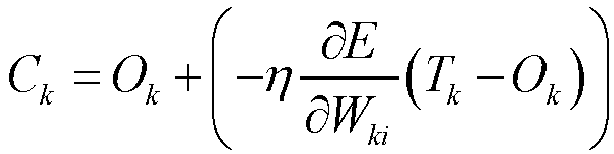 performing, by a consensus node of a power-consuming enterprise and a consensus node of an energy storage station investment operator in the blockchain, consensus calculation on the two-way electricity quantity data, and after reaching a consensus, selecting one of the consensus node of the power-consuming enterprise and the consensus node of the energy storage station investment operator as a first accounting node;processing, by the first accounting node, the two-way electricity quantity data to obtain a first target block, and writing the first target block into the blockchain;executing a smart settlement contract, obtaining basic settlement data from the blockchain, performing electricity charge settlement based on the basic settlement data to obtain an electricity charge settlement result, and distributing the electricity charge settlement result to the blockchain, wherein the basic settlement data at least comprises: two-way electricity quantity data in the first target block;selecting, by the consensus node of the power-consuming enterprise and the consensus node of the energy storage station investment operator in the blockchain after reaching a consensus on the electricity charge settlement result, one of the consensus node of the power-consuming enterprise and the consensus node of the energy storage station investment operator as a second accounting node; andprocessing, by the second accounting node, the electricity charge settlement result to obtain a second target block, and writing the second target block into the blockchain.
 - The method according to claim 1, wherein the distributing the two-way electricity quantity data to a blockchain comprises:
encrypting the two-way electricity quantity data, and distributing encrypted two-way electricity quantity data to the blockchain. - A blockchain-based electricity charge settlement system for an energy storage station, comprising:a trusted terminal, configured to collect two-way electricity quantity data of an energy storage station, and distribute the two-way electricity quantity data to a blockchain, wherein the trusted terminal is specifically configured to: collect the two-way electricity quantity data of the energy storage station, and determine whether the two-way electricity quantity data meets a precision requirement; and if the two-way electricity quantity data meets the precision requirement, distribute the two-way electricity quantity data to the blockchain; or if the two-way electricity quantity data does not meet the precision requirement, compensate the two-way electricity quantity data, replace the two-way electricity quantity data with compensated two-way electricity quantity data, and return to perform the step of determining whether the two-way electricity quantity data meets the precision requirement, wherein the determining whether the two-way electricity quantity data meets a precision requirement comprises: obtaining a sampling error value of the trusted terminal, a sampling error value of a current transformer in the energy storage station, and a sampling error value of a voltage transformer in the energy storage station, inputting the sampling error value of the trusted terminal, the sampling error value of the current transformer, and the sampling error value of the voltage transformer into a pre-trained BP neural network model, to obtain a predicted electricity quantity output by the pre-trained BP neural network model, and determining whether an error between the predicted electricity quantity and the two-way electricity quantity data collected by the trusted terminal exceeds a specified threshold; a process of training a BP neural network model comprises: initializing parameters of each layer in the BP neural network model; selecting a training sample from a sample set; inputting the training sample into the BP neural network model to obtain a predicted electricity quantity output by the BP neural network model, wherein the training sample comprises the sampling error value of the trusted terminal, the sampling error value of the current transformer in the energy storage station, and the sampling error value of the voltage transformer in the energy storage station; inputting the predicted electricity quantity and the two-way electricity quantity data of the energy storage station into a neural network error function

 a consensus node of a power-consuming enterprise and a consensus node of an energy storage station investment operator in the blockchain, configured to: perform consensus calculation on the two-way electricity quantity data, and after reaching a consensus, select one of the consensus node of the power-consuming enterprise and the consensus node of the energy storage station investment operator as a first accounting node, whereinthe first accounting node is configured to process the two-way electricity quantity data to obtain a first target block, and write the first target block into the blockchain; anda smart contract execution node, configured to execute a smart settlement contract, obtain basic settlement data from the blockchain, perform electricity charge settlement based on the basic settlement data to obtain an electricity charge settlement result, and distribute the electricity charge settlement result to the blockchain, wherein the basic settlement data at least comprises: two-way electricity quantity data in the first target block; andthe consensus node of the power-consuming enterprise and the consensus node of the energy storage station investment operator in the blockchain are further configured to: after reaching a consensus on the electricity charge settlement result, select one of the consensus node of the power-consuming enterprise and the consensus node of the energy storage station investment operator as a second accounting node, whereinthe second accounting node is configured to process the electricity charge settlement result to obtain a second target block, and write the second target block into the blockchain.
 - The system according to claim 3, wherein the trusted terminal is specifically configured to:
encrypt the two-way electricity quantity data, and distribute encrypted two-way electricity quantity data to the blockchain.
Applications Claiming Priority (2)
| Application Number | Priority Date | Filing Date | Title |
|---|---|---|---|
| CN202011307596.1A CN112132686B (en) | 2020-11-19 | 2020-11-19 | Energy storage power station electricity charge settlement method and system based on block chain |
| PCT/CN2021/115317 WO2022105349A1 (en) | 2020-11-19 | 2021-08-30 | Blockchain-based electricity charge settlement method and system for energy storage power station |
Publications (3)
| Publication Number | Publication Date |
|---|---|
| EP4027292A1 EP4027292A1 (en) | 2022-07-13 |
| EP4027292A4 EP4027292A4 (en) | 2022-12-14 |
| EP4027292B1 true EP4027292B1 (en) | 2023-07-12 |
Family
ID=73852081
Family Applications (1)
| Application Number | Title | Priority Date | Filing Date |
|---|---|---|---|
| EP21865349.1A Active EP4027292B1 (en) | 2020-11-19 | 2021-08-30 | Blockchain-based electricity charge settlement method and system for energy storage station |
Country Status (7)
| Country | Link |
|---|---|
| US (1) | US12126170B2 (en) |
| EP (1) | EP4027292B1 (en) |
| JP (1) | JP7386340B2 (en) |
| KR (1) | KR102836509B1 (en) |
| CN (1) | CN112132686B (en) |
| AU (1) | AU2021342399B2 (en) |
| WO (1) | WO2022105349A1 (en) |
Families Citing this family (9)
| Publication number | Priority date | Publication date | Assignee | Title |
|---|---|---|---|---|
| CN112132686B (en) * | 2020-11-19 | 2021-03-16 | 国网区块链科技(北京)有限公司 | Energy storage power station electricity charge settlement method and system based on block chain |
| CN112835987B (en) * | 2021-03-30 | 2025-03-07 | 中国工商银行股份有限公司 | Elevator cost sharing determination method, device and blockchain network based on blockchain |
| CN115543203A (en) * | 2022-10-13 | 2022-12-30 | 国网黑龙江省电力有限公司电力科学研究院 | Distributed electricity account data storage method and system for blockchain network |
| CN116433413A (en) * | 2023-03-10 | 2023-07-14 | 国网山东省电力公司滨州供电公司 | A method and system for reliable collection of photovoltaic power station data |
| CN116797248B (en) * | 2023-08-22 | 2024-01-30 | 厦门瞳景智能科技有限公司 | Data traceability management method and system based on blockchain |
| CN116840765B (en) * | 2023-08-31 | 2023-11-07 | 武汉格蓝若智能技术股份有限公司 | Voltage transformer error state evaluation method based on multivariate time sequence analysis |
| WO2025122032A1 (en) * | 2023-12-06 | 2025-06-12 | Дарья Юрьевна СОСУНОВА | Hardware and software system for acquiring and analyzing data about a good or service |
| CN120342796B (en) * | 2025-04-11 | 2026-04-21 | 浙江连连科技有限公司 | A smart billing and settlement method and system based on BOSS system |
| CN120875953A (en) * | 2025-06-19 | 2025-10-31 | 国网浙江省电力有限公司营销服务中心 | Electric power spot market electricity fee settlement system and method integrating blockchain technology |
Family Cites Families (21)
| Publication number | Priority date | Publication date | Assignee | Title |
|---|---|---|---|---|
| CN102682349A (en) * | 2012-05-14 | 2012-09-19 | 云南电力试验研究院(集团)有限公司电力研究院 | Electricity consumption intelligent prediction system and method |
| US10861112B2 (en) * | 2012-07-31 | 2020-12-08 | Causam Energy, Inc. | Systems and methods for advanced energy settlements, network-based messaging, and applications supporting the same on a blockchain platform |
| US10643288B2 (en) * | 2015-10-13 | 2020-05-05 | TransActive Grid Inc. | Use of blockchain based distributed consensus control |
| US10762564B2 (en) * | 2016-11-10 | 2020-09-01 | International Business Machines Corporation | Autonomous peer-to-peer energy networks operating on a blockchain |
| CN107423978A (en) * | 2017-06-16 | 2017-12-01 | 郑州大学 | A kind of distributed energy business confirmation method based on alliance's block chain |
| CN107481141A (en) * | 2017-07-25 | 2017-12-15 | 浙江大学 | Electric energy metrical and transaction terminal based on block chain technology |
| CN107453356B (en) * | 2017-08-21 | 2018-06-26 | 南京邮电大学 | User-side flexible load scheduling method based on adaptive dynamic programming |
| CN107817381A (en) * | 2017-11-10 | 2018-03-20 | 赫普科技发展(北京)有限公司 | A kind of intelligent electric meter |
| CN107800131A (en) | 2017-11-10 | 2018-03-13 | 赫普科技发展(北京)有限公司 | A kind of energy internet router |
| US10937111B2 (en) * | 2017-11-28 | 2021-03-02 | International Business Machines Corporation | Managing energy purchase agreements on a blockchain |
| JP2019185412A (en) * | 2018-04-11 | 2019-10-24 | 東京瓦斯株式会社 | Power transaction management device, method, and program |
| JP6996746B2 (en) | 2018-07-11 | 2022-01-17 | スマートソーラー株式会社 | Electricity trading platform |
| CN108694669A (en) * | 2018-07-18 | 2018-10-23 | 矩阵元技术(深圳)有限公司 | A kind of block chain intelligence contract implementation method and device |
| JP2020052452A (en) | 2018-09-21 | 2020-04-02 | 富士通株式会社 | Power supply apparatus, program and power supply method |
| CN109785131A (en) * | 2018-12-21 | 2019-05-21 | 昆明理工大学 | A kind of electricity transaction method based on block chain |
| CN209496406U (en) | 2018-12-21 | 2019-10-15 | 赫普科技发展(北京)有限公司 | A kind of electricity transaction system based on charging pile |
| JP6829242B2 (en) * | 2018-12-28 | 2021-02-10 | 株式会社エナリス | Electricity trading system |
| CN110827168A (en) * | 2019-09-26 | 2020-02-21 | 国网山东省电力公司菏泽供电公司 | Electric quantity data processing method based on block chain and electronic equipment |
| US11626990B1 (en) * | 2019-11-05 | 2023-04-11 | Nzero, Inc. | System for energy contracting through a distributed ledger |
| CN111612363B (en) * | 2020-05-26 | 2023-11-14 | 广东电网有限责任公司电力调度控制中心 | Blockchain-based power dispatching method, device, computer equipment and storage medium |
| CN112132686B (en) * | 2020-11-19 | 2021-03-16 | 国网区块链科技(北京)有限公司 | Energy storage power station electricity charge settlement method and system based on block chain |
-
2020
- 2020-11-19 CN CN202011307596.1A patent/CN112132686B/en active Active
-
2021
- 2021-08-30 AU AU2021342399A patent/AU2021342399B2/en active Active
- 2021-08-30 JP JP2022522044A patent/JP7386340B2/en active Active
- 2021-08-30 KR KR1020227007285A patent/KR102836509B1/en active Active
- 2021-08-30 EP EP21865349.1A patent/EP4027292B1/en active Active
- 2021-08-30 WO PCT/CN2021/115317 patent/WO2022105349A1/en not_active Ceased
- 2021-08-30 US US17/641,814 patent/US12126170B2/en active Active
Also Published As
| Publication number | Publication date |
|---|---|
| EP4027292A1 (en) | 2022-07-13 |
| KR20220071184A (en) | 2022-05-31 |
| AU2021342399B2 (en) | 2023-03-30 |
| AU2021342399A1 (en) | 2022-06-02 |
| US12126170B2 (en) | 2024-10-22 |
| EP4027292A4 (en) | 2022-12-14 |
| KR102836509B1 (en) | 2025-07-21 |
| CN112132686B (en) | 2021-03-16 |
| JP7386340B2 (en) | 2023-11-24 |
| JP2023509107A (en) | 2023-03-07 |
| WO2022105349A1 (en) | 2022-05-27 |
| US20230155381A1 (en) | 2023-05-18 |
| CN112132686A (en) | 2020-12-25 |
Similar Documents
| Publication | Publication Date | Title |
|---|---|---|
| EP4027292A1 (en) | Blockchain-based electricity charge settlement method and system for energy storage power station | |
| Du et al. | Supply chain finance innovation using blockchain | |
| Ozercan et al. | Realizing the potential of blockchain technologies in genomics | |
| JP6829242B2 (en) | Electricity trading system | |
| CN109493204B (en) | Service accounting method based on block chain and terminal equipment | |
| CN102243748A (en) | Electronic debt management operation system device and realization method of electronization and financial commercialization of claim and debt | |
| CN114219490A (en) | Transaction behavior data updating method, device, equipment and storage medium | |
| CN111027951B (en) | Cross-domain virtual resource flow control method, device, electronic device and storage medium | |
| CN112163846A (en) | Payment scheme determination method, device and system based on block chain | |
| Owolabi et al. | Blockchain-based system for secure and efficient cross-border remittances: A potential alternative to SWIFT | |
| Liu et al. | Privacy preserving divisible double auction with a hybridized TEE-blockchain system | |
| Khastieva et al. | Optimal transmission investment with regulated incentives based upon forward considerations of firm and intermittent resources with batteries | |
| CN121052923A (en) | A credit scoring method and device for individuals with no credit history | |
| CN111539724A (en) | Electronic commercial acceptance bill financing method and device based on block chain architecture | |
| Pestana et al. | Themis: Decentralized and trustless ad platform with reporting integrity | |
| CN113254980B (en) | Workload certification consensus method and system for deep learning | |
| CN116342249A (en) | Loan risk assessment method and device based on blockchain | |
| Tan et al. | A study on privacy protection of cross-chain transactions based on improved notary mechanisms | |
| CN114626843A (en) | Prepaid payment method, device, device and storage medium | |
| Ayoade et al. | Hyperledger-Based Blockchain System for Peer-to-Peer Energy Trading in Electromobility Systems | |
| Swan | Categorical Cryptoeconomics | |
| Liu et al. | Efficient and private divisible double auction in trusted execution environment | |
| JP2021015467A (en) | Power consignment system and method | |
| Ikeda | Blockchain Energy Trade System | |
| CN112134709B (en) | Block chain gateway system and contract executing method |
Legal Events
| Date | Code | Title | Description |
|---|---|---|---|
| STAA | Information on the status of an ep patent application or granted ep patent |
Free format text: STATUS: UNKNOWN |
|
| STAA | Information on the status of an ep patent application or granted ep patent |
Free format text: STATUS: THE INTERNATIONAL PUBLICATION HAS BEEN MADE |
|
| PUAI | Public reference made under article 153(3) epc to a published international application that has entered the european phase |
Free format text: ORIGINAL CODE: 0009012 |
|
| STAA | Information on the status of an ep patent application or granted ep patent |
Free format text: STATUS: REQUEST FOR EXAMINATION WAS MADE |
|
| 17P | Request for examination filed |
Effective date: 20220317 |
|
| AK | Designated contracting states |
Kind code of ref document: A1 Designated state(s): AL AT BE BG CH CY CZ DE DK EE ES FI FR GB GR HR HU IE IS IT LI LT LU LV MC MK MT NL NO PL PT RO RS SE SI SK SM TR |
|
| RAP3 | Party data changed (applicant data changed or rights of an application transferred) |
Owner name: INFORMATION AND COMMUNICATION BRANCH OF STATE GRID FUJIAN ELECTRIC POWER CO., LTD. Owner name: STATE GRID HENAN INFORMATION & TELECOMMUNICATION COMPANY Owner name: STATE GRID XIONG'AN FINANCIAL TECHNOLOGY GROUP CO., LTD. Owner name: STATE GRID ELECTRONIC COMMERCE CO., LTD. Owner name: STATE GRID DIGITAL TECHNOLOGY HOLDING CO., LTD |
|
| RAP3 | Party data changed (applicant data changed or rights of an application transferred) |
Owner name: INFORMATION AND COMMUNICATION BRANCH OF STATE GRID FUJIAN ELECTRIC POWER CO., LTD. Owner name: STATE GRID HENAN INFORMATION & TELECOMMUNICATION COMPANY Owner name: STATE GRID XIONG'AN FINANCIAL TECHNOLOGY GROUP CO., LTD. Owner name: STATE GRID DIGITAL TECHNOLOGY HOLDING CO., LTD Owner name: STATE GRID BLOCKCHAIN TECHNOLOGY (BEIJING) CO., LTD. |
|
| A4 | Supplementary search report drawn up and despatched |
Effective date: 20221110 |
|
| RIC1 | Information provided on ipc code assigned before grant |
Ipc: G06F 21/64 20130101ALI20221104BHEP Ipc: H04L 9/00 20220101ALI20221104BHEP Ipc: G06Q 50/06 20120101ALI20221104BHEP Ipc: G06N 3/08 20060101ALI20221104BHEP Ipc: G06Q 40/04 20120101AFI20221104BHEP |
|
| REG | Reference to a national code |
Ref country code: DE Ref country code: DE Ref legal event code: R079 Ref document number: 602021003487 Country of ref document: DE Free format text: PREVIOUS MAIN CLASS: G06Q0040040000 Ipc: G06N0003084000 |
|
| GRAP | Despatch of communication of intention to grant a patent |
Free format text: ORIGINAL CODE: EPIDOSNIGR1 |
|
| STAA | Information on the status of an ep patent application or granted ep patent |
Free format text: STATUS: GRANT OF PATENT IS INTENDED |
|
| RIC1 | Information provided on ipc code assigned before grant |
Ipc: H04L 9/00 20060101ALI20230123BHEP Ipc: G06Q 50/06 20120101ALI20230123BHEP Ipc: G06F 21/64 20130101ALI20230123BHEP Ipc: G06Q 30/06 20120101ALI20230123BHEP Ipc: G06Q 30/04 20120101ALI20230123BHEP Ipc: G06N 3/084 20230101AFI20230123BHEP |
|
| DAV | Request for validation of the european patent (deleted) | ||
| DAX | Request for extension of the european patent (deleted) | ||
| INTG | Intention to grant announced |
Effective date: 20230208 |
|
| RAP3 | Party data changed (applicant data changed or rights of an application transferred) |
Owner name: INFORMATION AND COMMUNICATION BRANCH OF STATE GRID FUJIAN ELECTRIC POWER CO., LTD. Owner name: STATE GRID HENAN INFORMATION & TELECOMMUNICATION COMPANY Owner name: STATE GRID XIONG'AN FINANCIAL TECHNOLOGY GROUP CO., LTD. Owner name: STATE GRID DIGITAL TECHNOLOGY HOLDING CO., LTD. Owner name: STATE GRID BLOCKCHAIN TECHNOLOGY (BEIJING) CO., LTD. |
|
| GRAS | Grant fee paid |
Free format text: ORIGINAL CODE: EPIDOSNIGR3 |
|
| GRAA | (expected) grant |
Free format text: ORIGINAL CODE: 0009210 |
|
| STAA | Information on the status of an ep patent application or granted ep patent |
Free format text: STATUS: THE PATENT HAS BEEN GRANTED |
|
| AK | Designated contracting states |
Kind code of ref document: B1 Designated state(s): AL AT BE BG CH CY CZ DE DK EE ES FI FR GB GR HR HU IE IS IT LI LT LU LV MC MK MT NL NO PL PT RO RS SE SI SK SM TR |
|
| REG | Reference to a national code |
Ref country code: CH Ref legal event code: EP |
|
| REG | Reference to a national code |
Ref country code: IE Ref legal event code: FG4D |
|
| REG | Reference to a national code |
Ref country code: DE Ref legal event code: R096 Ref document number: 602021003487 Country of ref document: DE |
|
| REG | Reference to a national code |
Ref country code: LT Ref legal event code: MG9D |
|
| REG | Reference to a national code |
Ref country code: NL Ref legal event code: MP Effective date: 20230712 |
|
| REG | Reference to a national code |
Ref country code: AT Ref legal event code: MK05 Ref document number: 1587908 Country of ref document: AT Kind code of ref document: T Effective date: 20230712 |
|
| PG25 | Lapsed in a contracting state [announced via postgrant information from national office to epo] |
Ref country code: NL Free format text: LAPSE BECAUSE OF FAILURE TO SUBMIT A TRANSLATION OF THE DESCRIPTION OR TO PAY THE FEE WITHIN THE PRESCRIBED TIME-LIMIT Effective date: 20230712 |
|
| PG25 | Lapsed in a contracting state [announced via postgrant information from national office to epo] |
Ref country code: ES Free format text: LAPSE BECAUSE OF FAILURE TO SUBMIT A TRANSLATION OF THE DESCRIPTION OR TO PAY THE FEE WITHIN THE PRESCRIBED TIME-LIMIT Effective date: 20230712 |
|
| PG25 | Lapsed in a contracting state [announced via postgrant information from national office to epo] |
Ref country code: IS Free format text: LAPSE BECAUSE OF FAILURE TO SUBMIT A TRANSLATION OF THE DESCRIPTION OR TO PAY THE FEE WITHIN THE PRESCRIBED TIME-LIMIT Effective date: 20231112 |
|
| PG25 | Lapsed in a contracting state [announced via postgrant information from national office to epo] |
Ref country code: SE Free format text: LAPSE BECAUSE OF FAILURE TO SUBMIT A TRANSLATION OF THE DESCRIPTION OR TO PAY THE FEE WITHIN THE PRESCRIBED TIME-LIMIT Effective date: 20230712 Ref country code: RS Free format text: LAPSE BECAUSE OF FAILURE TO SUBMIT A TRANSLATION OF THE DESCRIPTION OR TO PAY THE FEE WITHIN THE PRESCRIBED TIME-LIMIT Effective date: 20230712 Ref country code: PT Free format text: LAPSE BECAUSE OF FAILURE TO SUBMIT A TRANSLATION OF THE DESCRIPTION OR TO PAY THE FEE WITHIN THE PRESCRIBED TIME-LIMIT Effective date: 20231113 Ref country code: NO Free format text: LAPSE BECAUSE OF FAILURE TO SUBMIT A TRANSLATION OF THE DESCRIPTION OR TO PAY THE FEE WITHIN THE PRESCRIBED TIME-LIMIT Effective date: 20231012 Ref country code: LV Free format text: LAPSE BECAUSE OF FAILURE TO SUBMIT A TRANSLATION OF THE DESCRIPTION OR TO PAY THE FEE WITHIN THE PRESCRIBED TIME-LIMIT Effective date: 20230712 Ref country code: LT Free format text: LAPSE BECAUSE OF FAILURE TO SUBMIT A TRANSLATION OF THE DESCRIPTION OR TO PAY THE FEE WITHIN THE PRESCRIBED TIME-LIMIT Effective date: 20230712 Ref country code: IS Free format text: LAPSE BECAUSE OF FAILURE TO SUBMIT A TRANSLATION OF THE DESCRIPTION OR TO PAY THE FEE WITHIN THE PRESCRIBED TIME-LIMIT Effective date: 20231112 Ref country code: HR Free format text: LAPSE BECAUSE OF FAILURE TO SUBMIT A TRANSLATION OF THE DESCRIPTION OR TO PAY THE FEE WITHIN THE PRESCRIBED TIME-LIMIT Effective date: 20230712 Ref country code: FI Free format text: LAPSE BECAUSE OF FAILURE TO SUBMIT A TRANSLATION OF THE DESCRIPTION OR TO PAY THE FEE WITHIN THE PRESCRIBED TIME-LIMIT Effective date: 20230712 Ref country code: ES Free format text: LAPSE BECAUSE OF FAILURE TO SUBMIT A TRANSLATION OF THE DESCRIPTION OR TO PAY THE FEE WITHIN THE PRESCRIBED TIME-LIMIT Effective date: 20230712 Ref country code: AT Free format text: LAPSE BECAUSE OF FAILURE TO SUBMIT A TRANSLATION OF THE DESCRIPTION OR TO PAY THE FEE WITHIN THE PRESCRIBED TIME-LIMIT Effective date: 20230712 |
|
| PG25 | Lapsed in a contracting state [announced via postgrant information from national office to epo] |
Ref country code: PL Free format text: LAPSE BECAUSE OF FAILURE TO SUBMIT A TRANSLATION OF THE DESCRIPTION OR TO PAY THE FEE WITHIN THE PRESCRIBED TIME-LIMIT Effective date: 20230712 |
|
| REG | Reference to a national code |
Ref country code: DE Ref legal event code: R097 Ref document number: 602021003487 Country of ref document: DE |
|
| PG25 | Lapsed in a contracting state [announced via postgrant information from national office to epo] |
Ref country code: LU Free format text: LAPSE BECAUSE OF NON-PAYMENT OF DUE FEES Effective date: 20230830 |
|
| PG25 | Lapsed in a contracting state [announced via postgrant information from national office to epo] |
Ref country code: SM Free format text: LAPSE BECAUSE OF FAILURE TO SUBMIT A TRANSLATION OF THE DESCRIPTION OR TO PAY THE FEE WITHIN THE PRESCRIBED TIME-LIMIT Effective date: 20230712 Ref country code: RO Free format text: LAPSE BECAUSE OF FAILURE TO SUBMIT A TRANSLATION OF THE DESCRIPTION OR TO PAY THE FEE WITHIN THE PRESCRIBED TIME-LIMIT Effective date: 20230712 Ref country code: LU Free format text: LAPSE BECAUSE OF NON-PAYMENT OF DUE FEES Effective date: 20230830 Ref country code: EE Free format text: LAPSE BECAUSE OF FAILURE TO SUBMIT A TRANSLATION OF THE DESCRIPTION OR TO PAY THE FEE WITHIN THE PRESCRIBED TIME-LIMIT Effective date: 20230712 Ref country code: DK Free format text: LAPSE BECAUSE OF FAILURE TO SUBMIT A TRANSLATION OF THE DESCRIPTION OR TO PAY THE FEE WITHIN THE PRESCRIBED TIME-LIMIT Effective date: 20230712 Ref country code: CZ Free format text: LAPSE BECAUSE OF FAILURE TO SUBMIT A TRANSLATION OF THE DESCRIPTION OR TO PAY THE FEE WITHIN THE PRESCRIBED TIME-LIMIT Effective date: 20230712 Ref country code: SK Free format text: LAPSE BECAUSE OF FAILURE TO SUBMIT A TRANSLATION OF THE DESCRIPTION OR TO PAY THE FEE WITHIN THE PRESCRIBED TIME-LIMIT Effective date: 20230712 Ref country code: MC Free format text: LAPSE BECAUSE OF FAILURE TO SUBMIT A TRANSLATION OF THE DESCRIPTION OR TO PAY THE FEE WITHIN THE PRESCRIBED TIME-LIMIT Effective date: 20230712 |
|
| REG | Reference to a national code |
Ref country code: BE Ref legal event code: MM Effective date: 20230831 |
|
| PLBE | No opposition filed within time limit |
Free format text: ORIGINAL CODE: 0009261 |
|
| STAA | Information on the status of an ep patent application or granted ep patent |
Free format text: STATUS: NO OPPOSITION FILED WITHIN TIME LIMIT |
|
| REG | Reference to a national code |
Ref country code: IE Ref legal event code: MM4A |
|
| PG25 | Lapsed in a contracting state [announced via postgrant information from national office to epo] |
Ref country code: IT Free format text: LAPSE BECAUSE OF FAILURE TO SUBMIT A TRANSLATION OF THE DESCRIPTION OR TO PAY THE FEE WITHIN THE PRESCRIBED TIME-LIMIT Effective date: 20230712 |
|
| 26N | No opposition filed |
Effective date: 20240415 |
|
| PG25 | Lapsed in a contracting state [announced via postgrant information from national office to epo] |
Ref country code: IE Free format text: LAPSE BECAUSE OF NON-PAYMENT OF DUE FEES Effective date: 20230830 |
|
| PG25 | Lapsed in a contracting state [announced via postgrant information from national office to epo] |
Ref country code: IE Free format text: LAPSE BECAUSE OF NON-PAYMENT OF DUE FEES Effective date: 20230830 Ref country code: SI Free format text: LAPSE BECAUSE OF FAILURE TO SUBMIT A TRANSLATION OF THE DESCRIPTION OR TO PAY THE FEE WITHIN THE PRESCRIBED TIME-LIMIT Effective date: 20230712 |
|
| PG25 | Lapsed in a contracting state [announced via postgrant information from national office to epo] |
Ref country code: BE Free format text: LAPSE BECAUSE OF NON-PAYMENT OF DUE FEES Effective date: 20230831 |
|
| PG25 | Lapsed in a contracting state [announced via postgrant information from national office to epo] |
Ref country code: BG Free format text: LAPSE BECAUSE OF FAILURE TO SUBMIT A TRANSLATION OF THE DESCRIPTION OR TO PAY THE FEE WITHIN THE PRESCRIBED TIME-LIMIT Effective date: 20230712 |
|
| PG25 | Lapsed in a contracting state [announced via postgrant information from national office to epo] |
Ref country code: BG Free format text: LAPSE BECAUSE OF FAILURE TO SUBMIT A TRANSLATION OF THE DESCRIPTION OR TO PAY THE FEE WITHIN THE PRESCRIBED TIME-LIMIT Effective date: 20230712 |
|
| REG | Reference to a national code |
Ref country code: CH Ref legal event code: PL |
|
| PG25 | Lapsed in a contracting state [announced via postgrant information from national office to epo] |
Ref country code: CH Free format text: LAPSE BECAUSE OF NON-PAYMENT OF DUE FEES Effective date: 20240831 |
|
| PG25 | Lapsed in a contracting state [announced via postgrant information from national office to epo] |
Ref country code: CY Free format text: LAPSE BECAUSE OF FAILURE TO SUBMIT A TRANSLATION OF THE DESCRIPTION OR TO PAY THE FEE WITHIN THE PRESCRIBED TIME-LIMIT; INVALID AB INITIO Effective date: 20210830 |
|
| PG25 | Lapsed in a contracting state [announced via postgrant information from national office to epo] |
Ref country code: HU Free format text: LAPSE BECAUSE OF FAILURE TO SUBMIT A TRANSLATION OF THE DESCRIPTION OR TO PAY THE FEE WITHIN THE PRESCRIBED TIME-LIMIT; INVALID AB INITIO Effective date: 20210830 |
|
| PG25 | Lapsed in a contracting state [announced via postgrant information from national office to epo] |
Ref country code: GR Free format text: LAPSE BECAUSE OF FAILURE TO SUBMIT A TRANSLATION OF THE DESCRIPTION OR TO PAY THE FEE WITHIN THE PRESCRIBED TIME-LIMIT; INVALID AB INITIO Effective date: 20210830 |
|
| PGFP | Annual fee paid to national office [announced via postgrant information from national office to epo] |
Ref country code: DE Payment date: 20250808 Year of fee payment: 5 |
|
| PGFP | Annual fee paid to national office [announced via postgrant information from national office to epo] |
Ref country code: GB Payment date: 20250808 Year of fee payment: 5 |
|
| PGFP | Annual fee paid to national office [announced via postgrant information from national office to epo] |
Ref country code: FR Payment date: 20250808 Year of fee payment: 5 |
|
| PG25 | Lapsed in a contracting state [announced via postgrant information from national office to epo] |
Ref country code: TR Free format text: LAPSE BECAUSE OF FAILURE TO SUBMIT A TRANSLATION OF THE DESCRIPTION OR TO PAY THE FEE WITHIN THE PRESCRIBED TIME-LIMIT Effective date: 20230712 |