EP4027228B1 - Method controlling operation list, electronic device, and storage medium - Google Patents
Method controlling operation list, electronic device, and storage medium Download PDFInfo
- Publication number
- EP4027228B1 EP4027228B1 EP21186610.8A EP21186610A EP4027228B1 EP 4027228 B1 EP4027228 B1 EP 4027228B1 EP 21186610 A EP21186610 A EP 21186610A EP 4027228 B1 EP4027228 B1 EP 4027228B1
- Authority
- EP
- European Patent Office
- Prior art keywords
- operation item
- list
- viewport
- size
- buffer
- Prior art date
- Legal status (The legal status is an assumption and is not a legal conclusion. Google has not performed a legal analysis and makes no representation as to the accuracy of the status listed.)
- Active
Links
Images




Classifications
-
- G—PHYSICS
- G06—COMPUTING OR CALCULATING; COUNTING
- G06F—ELECTRIC DIGITAL DATA PROCESSING
- G06F3/00—Input arrangements for transferring data to be processed into a form capable of being handled by the computer; Output arrangements for transferring data from processing unit to output unit, e.g. interface arrangements
- G06F3/01—Input arrangements or combined input and output arrangements for interaction between user and computer
- G06F3/048—Interaction techniques based on graphical user interfaces [GUI]
- G06F3/0481—Interaction techniques based on graphical user interfaces [GUI] based on specific properties of the displayed interaction object or a metaphor-based environment, e.g. interaction with desktop elements like windows or icons, or assisted by a cursor's changing behaviour or appearance
- G06F3/0482—Interaction with lists of selectable items, e.g. menus
-
- G—PHYSICS
- G06—COMPUTING OR CALCULATING; COUNTING
- G06F—ELECTRIC DIGITAL DATA PROCESSING
- G06F9/00—Arrangements for program control, e.g. control units
- G06F9/06—Arrangements for program control, e.g. control units using stored programs, i.e. using an internal store of processing equipment to receive or retain programs
- G06F9/44—Arrangements for executing specific programs
- G06F9/451—Execution arrangements for user interfaces
-
- G—PHYSICS
- G06—COMPUTING OR CALCULATING; COUNTING
- G06F—ELECTRIC DIGITAL DATA PROCESSING
- G06F3/00—Input arrangements for transferring data to be processed into a form capable of being handled by the computer; Output arrangements for transferring data from processing unit to output unit, e.g. interface arrangements
- G06F3/01—Input arrangements or combined input and output arrangements for interaction between user and computer
- G06F3/048—Interaction techniques based on graphical user interfaces [GUI]
- G06F3/0484—Interaction techniques based on graphical user interfaces [GUI] for the control of specific functions or operations, e.g. selecting or manipulating an object, an image or a displayed text element, setting a parameter value or selecting a range
- G06F3/0485—Scrolling or panning
-
- G—PHYSICS
- G06—COMPUTING OR CALCULATING; COUNTING
- G06T—IMAGE DATA PROCESSING OR GENERATION, IN GENERAL
- G06T3/00—Geometric image transformations in the plane of the image
- G06T3/40—Scaling of whole images or parts thereof, e.g. expanding or contracting
Definitions
- the disclosure relates to the field of smart device technologies, and particularly to a method and apparatus for controlling an operation list, an electronic device, and a storage medium.
- Continuous enhancement of function of smart devices is causing the operation list of the smart device to grow in size to include the operation items.
- each operation item in the operation list of the smart device may be displayed in a center of the smart device, to improve display comfort of the list.
- US2016070429A1 discloses scrollable user interface containers, and allows mixing snap items and smooth items in the same container. Snap point ranges that correspond to container snap items are specified, such as by pixel values or per container item to be rendered. When because of a scroll operation a snap item of the container overlaps a boundary of a viewing port (e.g., if rendered), the scroll position is adjusted based upon a snap point range limit to snap the snap item for rendering based upon the viewing port boundary.
- US2015007108A1 teaches scrolling of a large number of list items can be supported without degradation in performance. Instead of continually moving list items into an actively laid out representation of the list items, list items can be moved in and out of the actively laid out representation as scrolling progresses. Management of the actively laid out representation can be performed transparently to a user to maintain the impression that the total list is present. List items can be grouped into page units, which can be managed to keep a constant number of page units present in the actively laid out representation. Further enhancements can be accomplished by storing some list items remotely.
- US2015277741A1 describes a scrollable container view renders hierarchically arranged layouts. Container items are only created and rendered to cover a view port on a user interface display screen, along with a buffer on each side of the view port. As the user pans or scrolls through the container, additional user interface items for the container are dynamically created and rendered.
- a method for controlling an operation list on a smart device which includes the features of claim 1, inter alia including: obtaining a target operation item; obtaining a remaining space between the target operation item and a bottom of a display region of a display of the device when the target operation item is located at a preset position; obtaining a size of a current list viewport of the operation list; extending the size of the current list viewport based on the remaining space to generate an extended current list viewport; generating a layout of the operation list based on the extended current list viewport to obtain a size of a next operation item of the target operation item; and determining a display position of the target operation item based on the size of the next operation item and the remaining space.
- determining the display position of the target operation item based on the size of the next operation item and the remaining space includes: setting the target operation item as the preset position in response to the size of the next operation item being greater than or equal to a size of the remaining space.
- determining the display position of the target operation item based on the size of the next operation item and the remaining space includes: obtaining a difference between the size of the next operation item and a size of the remaining space in response to the size of the next operation item being smaller than the size of the remaining space; and deviating, based on the difference, the target operation item from the preset position by the difference.
- the method optionally further includes: determining whether a buffer of the current list viewport covers the next operation item; keeping the size of the current list viewport unchanged in response to the buffer of the current list viewport covering the next operation item; and extending the size of the current list viewport in response to the buffer of the current list viewport not covering the next operation item.
- the method optionally further includes: restoring the size of the current list viewport to a default size.
- a smart device including the features of claim 4, inter alia including: a processor; and a memory configured to store instructions executable by the processor.
- the processor is configured to execute the instructions to implement the method for controlling the operation list as described above.
- a non-transitory computer-readable storage medium When instructions in the storage medium are executed by a processor of an electronic device, the processor is caused to implement the method for controlling the operation list as described above.
- FIG. 1 shows a prior art schematic diagram illustrating a display of an operation list of a smart device in the related arts.
- the smart TV 100 is taken as an example for description, but other smart devices are included in the scope hereof (such as tablets, phones, computers, etc.).
- the smart TV 100 has an operation list 110 and a display region 120.
- the operation list 110 has a current list viewport 130, in which the current list viewport 130 has a buffer 131.
- the operation list 110 includes operation items from the operation item 1 to the operation item 4.
- the operation items 2 and 3 are displayed in the current list viewport 130, and the operation item 3 is displayed in the center. It may be seen from the drawing that the size of the operation item 4 is large, so the operation item 4 is not completely moved into the buffer 131. As a result, the operation item 4 is not rendered. Therefore, the operation item 4 may not be displayed, resulting in a lot of white space between the operation item 3 and the bottom of the display region in the display region 120.
- the method for controlling the operation list in the related prior art may cause a gap from the bottom of the display region, resulting in poor display effect, and a white space in the display region of the smart device, seriously affecting user impression.
- a buffer of a list viewport that is, the buffer region is increased, and an extending length is dynamically configured, so that the specific information of the next operation item may be seen, and accurate loading may be achieved when loading.
- FIG. 2 depicts a flow chart illustrating a method for controlling an operation list. The method includes the following.
- the method for controlling the operation list may be configured not only in smart devices, but also in other devices similar to smart devices.
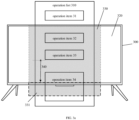
- FIG. 3a depicts a schematic diagram illustrating a control of an operation list according to exemplary embodiments.
- a smart TV 300 is taken as an example for description.
- the smart TV 300 has an operation list 310 and a display region 320.
- the operation list 310 has a current list viewport 330, in which the list viewport 330 has a buffer 331.
- the operation list 310 includes operation items from the operation item 31 to the operation item 34.
- the operation items 32 and 33 are displayed in the current list viewport 330. It may be seen from the drawing that the size of the operation item 34 is large, so the operation item 34 is not completely moved into the buffer 331. As a result, the operation item 34 is not rendered.
- the obtained target operation item refers to the target operation item entering the current list viewport 330, such as the operation items 32 and 33.
- the target operation item refers to the last operation item entered into the current list, for example, the operation item 33.
- the operation item 33 is the target operation item.
- it is preferentially set at a preset position, for example, a center position of the display region 320. It may be seen from the drawing that the operation list 310 is relatively long, and the operation list 310 includes a plurality of operation items. Since the operation list 310 is relatively long, it may not be completely displayed by the smart TV 300.
- the list viewport 330 is used to display the visible region of the operation list 310, in which the list viewport 330 is the part that may be displayed by the smart TV 300.
- a size of the list viewport 330 is close to a size of the display region 320 of the smart TV 300.
- a buffer 331 may be added to the list viewport 330.
- the operation item When an operation item enters the buffer 331, the operation item may be laid out and rendered in advance.
- the operation item may not be laid out and rendered, nor may the size of the operation item be known.
- the operation item 4 may not be laid out and rendered, and the size of the operation item 4 may not be known.
- a remaining space between the target operation item and a bottom of a display region is obtained when the target operation item is located at a preset position.
- the preset position may be the center of the display region, that is, the target operation item is displayed in the center.
- displaying the target operation item in the center of the display region is only a method for controlling a display of a smart TV
- the preset position may also be set in other parts based on the layout requirements.
- the preset position may also be preset based on needs of other smart devices. Since the target operation item has entered the list viewport, the target operation item has been laid out and rendered, and the size of the target operation item may be obtained.
- FIG. 3a shows the target operation item is the operation item 33.
- the remaining space refers to the distance between the bottom of the operation item 33 and the bottom of the display region 320. Therefore, as illustrated in FIG. 3a , the remaining space is 340.
- the sizes of the list viewports corresponding to the devices with different display regions are also different.
- the size of the current list viewport is close to the size of the display region of the smart device, different smart devices may correspond to different current list viewports in different preset sizes.
- the size of the current list viewport is extended based on the remaining space to generate an extended current list viewport.
- the current list viewport may be dynamically extended, so that the next operation item may be added to the extended current list viewport, and the next operation item may be laid out and rendered to obtain the size of the next operation item.
- FIG. 3b it is a schematic diagram illustrating a control of an operation list according to exemplary embodiments.
- the buffer 331 may be extended by the remaining space 340, so that the buffer 331 of the extended current list viewport 330 may cover the next operation item 34.
- extending the current list viewport 330 refers to extending the buffer 331 of the current list viewport 330, so that the buffer 331 may add the next operation item 34 into it. After the next operation item 34 is moved into the buffer 331, the size of the next operation item 34 may be obtained. At the same time, since the buffer 331 has been extended by the remaining space 340, next operation items that fill the remaining space 340 may all be moved into the buffer 331.
- the current list viewport is extended based on the remaining space corresponding to the current operation item, so the buffer of the current list viewport may be extended by the corresponding remaining space. In this way, the next operation item may be added into the buffer.
- next operation item 34 when the size of the next operation item 34 is too large and the next operation item 34 may not be moved into the buffer 331 normally, the next operation item 34 may not be laid out and rendered. Therefore, the size of the next operation item 34 may not be known, and the position of the current operation item 33 may not be selected. For this reason, at this time, the buffer 331 of the current list viewport 330 needs to be extended, so that the next operation item 34 may be moved into the buffer 331 so as to determine the size of the next operation item 34.
- the operation list is laid out based on the extended current list viewport to obtain a size of a next operation item of the target operation item.
- next operation item 34 in the buffer 331 is laid out and rendered based on the mechanism of the current list viewport 330, so that the size of the next operation item 34 may be known.
- a display position of the target operation item is determined based on the size of the next operation item and the remaining space.
- the display position of the target operation item 33 may be determined based on the size of the next operation item 34 and the remaining space 340. After the size of the next operation item 34 is known, the next operation item 34 may be rendered and laid out so as to obtain the size of the next operation item 34. After the size of the next operation item 34 and the size of the target operation item 33 are obtained, the appropriate position of the target operation item 33 may be dynamically determined.
- the target operation item when the next operation item 34 may fill the remaining space 340, the target operation item may be displayed in the center; when the next operation item 34 is slightly larger than the remaining space 340, the target operation item 33 may also be slightly deviated upward from the center position, so that the next operation item 34 may be displayed in the remaining space 340, as illustrated in FIG. 3c . Or, when the next operation item 34 is relatively large, since the next operation item 34 has been rendered, a part of the next operation item 34 may be displayed in the remaining space 340, and the target operation item 33 may be displayed in the center, as illustrated in FIG. 3d .
- the next operation item when the size of the next operation item is greater than or equal to the size of the remaining space, it means that the next operation item may fill the remaining space, so the target operation item may be set at the center position, and the remaining space may be filled with part or all of the next operation item.
- FIG. 3d depicts a schematic diagram illustrating a control of an operation list according to embodiments.
- the size of the next operation item 34 is small and may not fill the remaining space. Therefore, both the current operation item 33 and the next operation item 34 need to deviate downward the difference shown, so that the next operation item 34 may fill the remaining space, as illustrated in FIG. 3e .
- the difference between the size of the next operation item and the size of the remaining space is calculated, and the target operation item is deviated downward by the difference from the center position based on the difference, so that the next operation item may just fill the remaining space, thereby avoiding white space.
- the size of the current list viewport is restored to the default size.
- the size of the current list viewport 330 is restored, that is, the extended part of the buffer 331 (as illustrated in FIG. 3b ) is restored to the initial state.
- FIG. 4 shows a flow chart illustrating a method for controlling an operation list according to embodiments. The method includes the following.
- the method for controlling the operation list may be configured not only in smart devices, but also in other devices similar to smart devices.
- FIG. 3a it is a schematic diagram illustrating a control of an operation list according to exemplary embodiments.
- a smart TV is taken as an example for description.
- the smart TV 300 has an operation list 310 and a display region 320.
- the operation list 310 has a current list viewport 330, in which the list viewport 330 has a buffer 331.
- the operation list 310 includes operation items from the operation item 31 to the operation item 34.
- the operation items 32 and 33 are displayed in the current list viewport 330. It may be seen from the drawing that the size of the operation item 34 is large, so the operation item 34 is not completely moved into the buffer 331. As a result, the operation item 34 is not rendered.
- the obtained target operation item refers to the target operation item entering the current list viewport 330, such as the operation items 32 and 33.
- the target operation item refers to the last operation item entered into the current list, for example, the operation item 33.
- the operation item 33 is the target operation item.
- the target operation item it is preferentially set at a preset position, for example, a center position of the display region 320. It may be seen from the drawing that the operation list 310 is relatively long, and the operation list 310 includes a plurality of operation items. Since the operation list 310 is relatively long, it may not be completely displayed for the smart TV 300.
- the list viewport 330 is used to display the visible region of the operation list 310, in which the list viewport 330 is the part that may be displayed by the smart TV 300.
- a size of the list viewport 330 is close to a size of the display region 320 of the smart TV 300.
- a buffer 331 may be added to the list viewport 330.
- the operation item When an operation item enters the buffer 331, the operation item may be laid out and rendered in advance.
- the operation item may not be laid out and rendered, nor may the size of the operation item be known.
- the operation item 4 may not be laid out and rendered, and the size of the operation item 4 may not be known.
- a remaining space between the target operation item and a bottom of a display region is obtained when the target operation item is located at a preset position.
- the preset position may be the center of the display region, that is, the target operation item is displayed in the center.
- displaying the target operation item in the center of the display region is only a method for controlling a display of a smart TV
- the preset position may also be set in other parts based on the layout requirements.
- the preset position may also be preset based on needs of other smart devices. Since the target operation item has entered the list viewport, the target operation item has been laid out and rendered, and the size of the target operation item may be obtained.
- the target operation item is the operation item 33.
- the remaining space refers to the distance between the bottom of the operation item 33 and the bottom of the display region 320. Therefore, as illustrated in FIG. 3a , the remaining space is 340.
- the sizes of the list viewports corresponding to the devices with different display regions are also different.
- the size of the current list viewport is close to the size of the display region of the smart device, different smart devices may correspond to different current list viewports in different preset sizes.
- the word "cover” means that the next operation item completely enters the buffer. In this block, it is determined whether the next item operation completely enters the buffer.
- next operation item when the next operation item does not enter the buffer, or only partially enters the buffer, the next operation item may not be rendered. Only when the next operation item completely enters the buffer, the rendering of the next operation item may be triggered.
- the size of the current list viewport keeps unchanged in response to the buffer of the current list viewport covering the next operation item.
- the size of the current list viewport is extended in response to the buffer of the current list viewport not covering the next operation item.
- the buffer when the buffer may not cover the next operation item, the buffer may be dynamically extended. In some embodiments, when the buffer may not cover the next operation item, the next operation item may not be laid out and rendered, so the size of the next operation item may not be known.
- the size of the current list viewport is extended based on the remaining space to generate an extended current list viewport.
- the current list viewport may be dynamically extended, so that the next operation item may be added to the extended current list viewport, and the next operation item may be laid out and rendered to obtain the size of the next operation item.
- FIG. 3b it is a schematic diagram illustrating a control of an operation list according to exemplary embodiments.
- the buffer 331 may be extended by the remaining space 340, so that the buffer 331 of the extended current list viewport 330 may cover the next operation item 34.
- extending the current list viewport 330 refers to extending the buffer 331 of the current list viewport 330, so that the buffer 331 may add the next operation item 34 into it. After the next operation item 34 is moved into the buffer 331, the size of the next operation item 34 may be obtained. At the same time, since the buffer 331 has been extended by the remaining space 340, next operation items that fill the remaining space 340 may all be moved into the buffer 331.
- the current list viewport is extended based on the remaining space corresponding to the current operation item, so the buffer of the current list viewport may be extended by the corresponding remaining space. In this way, the next operation item may be added into the buffer.
- next operation item 34 when the size of the next operation item 34 is too large and the next operation item 34 may not be moved into the buffer 331 normally, the next operation item 34 may not be laid out and rendered. Therefore, the size of the next operation item 34 may not be known, and the position of the current operation item 33 may not be selected. For this reason, at this time, the buffer 331 of the current list viewport 330 needs to be extended, so that the next operation item 34 may be moved into the buffer 331 so as to determine the size of the next operation item 34.
- the operation list is laid out based on the extended current list viewport to obtain a size of a next operation item of the target operation item.
- next operation item 34 in the buffer 331 is laid out and rendered based on the mechanism of the current list viewport 330, so that the size of the next operation item 34 may be known.
- a display position of the target operation item is determined based on the size of the next operation item and the remaining space.
- the display position of the target operation item 33 may be determined based on the size of the next operation item 34 and the remaining space 340. After the size of the next operation item 34 is known, the next operation item 34 may be rendered and laid out so as to obtain the size of the next operation item 34. After the size of the next operation item 34 and the size of the target operation item 33 are obtained, the appropriate position of the target operation item 33 may be dynamically determined.
- the target operation item when the next operation item 34 may fill the remaining space 340, the target operation item may be displayed in the center; when the next operation item 34 is slightly larger than the remaining space 340, the target operation item 33 may also be slightly deviated upward from the center position, so that the next operation item 34 may be displayed in the remaining space 340, as illustrated in FIG. 3c . Or, when the next operation item 34 is relatively large, since the next operation item 34 has been rendered, a part of the next operation item 34 may be displayed in the remaining space 340, and the target operation item 33 may be displayed in the center, as illustrated in FIG. 3d .
- the next operation item when the size of the next operation item is greater than or equal to the size of the remaining space, it means that the next operation item may fill the remaining space, so the target operation item may be set at the center position, and the remaining space may be filled with part or all of the next operation item.
- the difference between the size of the next operation item and the size of the remaining space is obtained, and the target operation item is deviated downward from the center position by the difference based on the difference.
- FIG. 3d it is a schematic diagram illustrating a control of an operation list according to exemplary embodiments.
- the size of the next operation item 34 is small and may not fill the remaining space. Therefore, both the current operation item 33 and the next operation item 34 need to deviate downward the difference shown, so that the next operation item 34 may fill the remaining space, as illustrated in FIG. 3e .
- the difference between the size of the next operation item and the size of the remaining space is calculated, and the target operation item is deviated downward by the difference from the center position based on the difference, so that the next operation item may just fill the remaining space, thereby avoiding white space.
- the size of the current list viewport is restored to the default size.
- the size of the current list viewport 330 is restored, that is, the extended part of the buffer 331 (as illustrated in FIG. 3b ) is restored to the initial state.
- FIG. 5 depicts a block diagram illustrating an apparatus for controlling an operation list according to exemplary embodiments.
- the apparatus 200 includes an obtaining module 210, a remaining space obtaining module 220, a size obtaining module 230, a current list viewport control module 240, a layout module 250, and a display position determining module 260.
- the obtaining module 210 is configured to obtain a target operation item.
- the remaining space obtaining module 220 is configured to obtain a remaining space between the target operation item and a bottom of a display region when the target operation item is located at a preset position.
- the size obtaining module 230 is configured to obtain a size of a current list viewport of the operation list.
- the current list viewport control module 240 is configured to extend a size of the current list viewport based on the remaining space to generate an extended current list viewport.
- the layout module 250 is configured to generate a layout of the the operation list based on the extended current list viewport to obtain a size of a next operation item of the target operation item.
- the display position determining module 260 is configured to determine a display position of the target operation item based on the size of the next operation item and the remaining space.
- the display position determining module 260 is configured to set the target operation item as the preset position in response to the size of the next operation item being greater than or equal to a size of the remaining space.
- the display position determining module 260 is configured to obtain a difference between the size of the next operation item and a size of the remaining space in response to the size of the next operation item being smaller than the size of the remaining space, and deviate, based on the difference, the target operation item from the preset position by the difference.
- the apparatus 200 further includes a determining module 270, configured to determine whether a buffer of the current list viewport covers the next operation item.
- the current list viewport control module 240 is further configured to keep the size of the current list viewport unchanged in response to the buffer of the current list viewport covering the next operation item, and extend the size of the current list viewport in response to the buffer of the current list viewport not covering the next operation item.
- the apparatus 200 further includes a recovery module 280.
- the recovery module 280 is configured to restore the size of the current list viewport to a default size.
- an electronic device including: a processor; and a memory configured to store instructions executable by the processor, in which the processor is configured to execute the instructions to implement the method for controlling the operation list as described above.
- the electronic device may execute the above method.
- the electronic device may execute the above method.
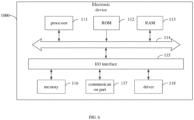
- FIG. 6 is a block diagram illustrating an electronic device according to embodiments.
- the electronic device illustrated in FIG. 6 is only an example, and is not restrictive of functions and the usable range of embodiments of the disclosure.
- the electronic device 1000 includes a processor 111, which may execute various appropriate actions and processing based on the program stored in a read only memory (ROM) 112 or the program loaded in a random access memory (RAM) 113 from the memory 116.
- ROM read only memory
- RAM random access memory
- various programs and data required for the operations of the electronic device 1000 are also stored.
- the processor 111, the ROM 112, and the RAM 113 are connected to one another through a bus 114.
- the input/output (I/O) interface 115 is also connected to the bus 114.
- the following components are connected to the I/O interface 115: a memory 116 including a hard disk, and the like; and a communication part 117 including a network interface card, such as a LAN (Local Area Network) card, a modem, and the like, which is executed by a network communication processing such as the Internet; and the driver 118 is also connected to the I/O interface 115 as needed.
- a memory 116 including a hard disk, and the like
- a communication part 117 including a network interface card, such as a LAN (Local Area Network) card, a modem, and the like, which is executed by a network communication processing such as the Internet
- the driver 118 is also connected to the I/O interface 115 as needed.
- the processes described above with reference to the flow charts may be implemented as computer software programs.
- the embodiments of the disclosure include a computer program carried on a computer-readable medium, in which the computer program includes program codes for executing the method illustrated in the flow chart.
- the computer program may be downloaded and installed from the network through the communication part 117.
- the processor 111 executes the above functions defined in the method of the disclosure.
- a storage medium including instructions such as the memory including instructions.
- the instructions may be executable by the processor 111 in the electronic device 1000, for performing the above methods.
- the storage medium may be a non-transitory computer-readable storage medium, for example, the non-transitory computer-readable storage medium may be a ROM, a RAM, a CD-ROM, a magnetic tape, a floppy disc, an optical data storage device, and the like.
- a computer-readable storage medium may be any tangible medium that includes or stores programs, in which the programs may be used by or in combination with instruction execution systems, apparatus, or devices.
- a computer-readable signal medium may include data signals spread in a baseband or as a part of a carrier wave, in which a computer-readable program code is carried. The spreading data signals may take many forms, including but not limited to electromagnetic signals, optical signals, or any appropriate combination of the above.
- the computer-readable signal medium may also be any computer-readable medium other than the computer-readable storage medium.
- the computer-readable medium may transmit, spread, or transmit programs for use by or in combination with the instruction execution systems, apparatus, or devices.
- the program code included in the computer-readable medium may be transmitted by any suitable medium, including but not limited to: wireless, wire, optical cable, RF, and the like, or any suitable combination of the above.
- the current list viewport may be extended based on the remaining space, so as to generate a layout based on the extended current list viewport, to determine the size of the next operation item, and to determine the display position of the target operation item based on the size of the next operation item and the remaining space. Therefore, white space at the bottom of the screen may be avoided, and the user impression may be improved.
Landscapes
- Engineering & Computer Science (AREA)
- Theoretical Computer Science (AREA)
- General Engineering & Computer Science (AREA)
- Software Systems (AREA)
- Physics & Mathematics (AREA)
- General Physics & Mathematics (AREA)
- Human Computer Interaction (AREA)
- User Interface Of Digital Computer (AREA)
Description
- The disclosure relates to the field of smart device technologies, and particularly to a method and apparatus for controlling an operation list, an electronic device, and a storage medium.
- Continuous enhancement of function of smart devices (e.g., smart televisions (TV)) is causing the operation list of the smart device to grow in size to include the operation items. At present, each operation item in the operation list of the smart device may be displayed in a center of the smart device, to improve display comfort of the list.
US2016070429A1 discloses scrollable user interface containers, and allows mixing snap items and smooth items in the same container. Snap point ranges that correspond to container snap items are specified, such as by pixel values or per container item to be rendered. When because of a scroll operation a snap item of the container overlaps a boundary of a viewing port (e.g., if rendered), the scroll position is adjusted based upon a snap point range limit to snap the snap item for rendering based upon the viewing port boundary.
US2015007108A1 , teaches scrolling of a large number of list items can be supported without degradation in performance. Instead of continually moving list items into an actively laid out representation of the list items, list items can be moved in and out of the actively laid out representation as scrolling progresses. Management of the actively laid out representation can be performed transparently to a user to maintain the impression that the total list is present. List items can be grouped into page units, which can be managed to keep a constant number of page units present in the actively laid out representation. Further enhancements can be accomplished by storing some list items remotely.
US2015277741A1 describesa scrollable container view renders hierarchically arranged layouts. Container items are only created and rendered to cover a view port on a user interface display screen, along with a buffer on each side of the view port. As the user pans or scrolls through the container, additional user interface items for the container are dynamically created and rendered. - According to a first aspect of the disclosure, there is provided a method for controlling an operation list on a smart device which includes the features of
claim 1, inter alia including: obtaining a target operation item; obtaining a remaining space between the target operation item and a bottom of a display region of a display of the device when the target operation item is located at a preset position; obtaining a size of a current list viewport of the operation list; extending the size of the current list viewport based on the remaining space to generate an extended current list viewport; generating a layout of the operation list based on the extended current list viewport to obtain a size of a next operation item of the target operation item; and determining a display position of the target operation item based on the size of the next operation item and the remaining space. - According to the disclosure, determining the display position of the target operation item based on the size of the next operation item and the remaining space includes: setting the target operation item as the preset position in response to the size of the next operation item being greater than or equal to a size of the remaining space.
- According to the disclosure, determining the display position of the target operation item based on the size of the next operation item and the remaining space includes: obtaining a difference between the size of the next operation item and a size of the remaining space in response to the size of the next operation item being smaller than the size of the remaining space; and deviating, based on the difference, the target operation item from the preset position by the difference.
- According to the disclosure, the method optionally further includes: determining whether a buffer of the current list viewport covers the next operation item; keeping the size of the current list viewport unchanged in response to the buffer of the current list viewport covering the next operation item; and extending the size of the current list viewport in response to the buffer of the current list viewport not covering the next operation item.
- According to the disclosure, the method optionally further includes: restoring the size of the current list viewport to a default size.
- According to a second aspect of the disclosure, there is also provided a smart device including the features of
claim 4, inter alia including: a processor; and a memory configured to store instructions executable by the processor. The processor is configured to execute the instructions to implement the method for controlling the operation list as described above. - According to a third aspect of the disclosure, in accordance with claim 7, there is also provided a non-transitory computer-readable storage medium. When instructions in the storage medium are executed by a processor of an electronic device, the processor is caused to implement the method for controlling the operation list as described above.
- It is to be understood that both the foregoing general description and the following detailed description are exemplary and explanatory only and are not restrictive of the disclosure.
- The accompanying drawings herein, which are incorporated in and constitute a part of this specification, illustrate embodiments consistent with the disclosure and, together with the description, serve to explain the principles of the disclosure, and does not constitute an improper limitation to the disclosure.
-
FIG. 1 is a schematic diagram illustrating a display of an operation list of a smart device in the related prior art. -
FIG. 2 is a flow chart illustrating a method for controlling an operation list according to exemplary embodiments. -
FIGS. 3a-3e are schematic diagrams illustrating a control of an operation list according to exemplary embodiments. -
FIG. 4 is a flow chart illustrating a method for controlling an operation list according to exemplary embodiments. -
FIG. 5 is a block diagram illustrating an apparatus for controlling an operation list according to exemplary embodiments. -
FIG. 6 is a block diagram illustrating an electronic device according to exemplary embodiments. - In order to enable those skilled in the art to better understand the technical solution in the disclosure, the technical solution in embodiments of the disclosure will be described clearly and completely with reference to the accompanying drawings.
- It should be noted that terms "first", "second" and the like in the specification and claims of the disclosure and the above drawings are used to distinguish similar objects, and not necessarily used to describe a specific sequence or an order of priority. It is understandable that the data used in this way may be interchanged under appropriate circumstances, so that the embodiments of the disclosure described herein may be implemented in an order other than those illustrated or described herein. The implementation described in the following exemplary embodiments do not represent all implementations consistent with the disclosure. On the contrary, they are only examples of apparatus and methods consistent with some aspects of the disclosure as detailed in the appended claims.
- In the related prior art, there are no further operation item following a current operation item, blank content may be displayed to the user, resulting in poor user impression. In detail, a currently operable operation item in the operation list may be usually displayed in the center.
- However, a size of a subsequent operation item is unknown. Although the current operation item is displayed in the center, there will be a gap from a bottom of the display region when the subsequent operation item is too large to be rendered, or the remaining space may not be filled when the second operation item below is not rendered if the next operation item is too small.
FIG. 1 shows a prior art schematic diagram illustrating a display of an operation list of a smart device in the related arts. Thesmart TV 100 is taken as an example for description, but other smart devices are included in the scope hereof (such as tablets, phones, computers, etc.). Thesmart TV 100 has anoperation list 110 and adisplay region 120. Theoperation list 110 has acurrent list viewport 130, in which thecurrent list viewport 130 has abuffer 131. Theoperation list 110 includes operation items from theoperation item 1 to theoperation item 4. Currently, theoperation items current list viewport 130, and theoperation item 3 is displayed in the center. It may be seen from the drawing that the size of theoperation item 4 is large, so theoperation item 4 is not completely moved into thebuffer 131. As a result, theoperation item 4 is not rendered. Therefore, theoperation item 4 may not be displayed, resulting in a lot of white space between theoperation item 3 and the bottom of the display region in thedisplay region 120. - In summary, it may be seen that the method for controlling the operation list in the related prior art may cause a gap from the bottom of the display region, resulting in poor display effect, and a white space in the display region of the smart device, seriously affecting user impression.
- In some embodiments of the disclosure, in order to obtain a size of a next operation item, it is necessary to extend a buffer of a list viewport, that is, the buffer region is increased, and an extending length is dynamically configured, so that the specific information of the next operation item may be seen, and accurate loading may be achieved when loading.
-
FIG. 2 depicts a flow chart illustrating a method for controlling an operation list. The method includes the following. - In block S210, a target operation item is obtained.
- According to the disclosure, the method for controlling the operation list may be configured not only in smart devices, but also in other devices similar to smart devices.
-
FIG. 3a depicts a schematic diagram illustrating a control of an operation list according to exemplary embodiments. Asmart TV 300 is taken as an example for description. Thesmart TV 300 has anoperation list 310 and adisplay region 320. Theoperation list 310 has acurrent list viewport 330, in which thelist viewport 330 has abuffer 331. Theoperation list 310 includes operation items from theoperation item 31 to theoperation item 34. Currently, theoperation items current list viewport 330. It may be seen from the drawing that the size of theoperation item 34 is large, so theoperation item 34 is not completely moved into thebuffer 331. As a result, theoperation item 34 is not rendered. In some embodiments, the obtained target operation item refers to the target operation item entering thecurrent list viewport 330, such as theoperation items operation item 33. In some embodiments, theoperation item 33 is the target operation item. For the target operation item, it is preferentially set at a preset position, for example, a center position of thedisplay region 320. It may be seen from the drawing that theoperation list 310 is relatively long, and theoperation list 310 includes a plurality of operation items. Since theoperation list 310 is relatively long, it may not be completely displayed by thesmart TV 300. Therefore, thelist viewport 330 is used to display the visible region of theoperation list 310, in which thelist viewport 330 is the part that may be displayed by thesmart TV 300. Generally speaking, a size of thelist viewport 330 is close to a size of thedisplay region 320 of thesmart TV 300. In order to improve the response speed, abuffer 331 may be added to thelist viewport 330. When an operation item enters thebuffer 331, the operation item may be laid out and rendered in advance. On the contrary, when the operation item does not enter thebuffer 331, or when only part of the operation item enters thebuffer 331, the operation item may not be laid out and rendered, nor may the size of the operation item be known. As illustrated inFIG. 3a , because theoperation item 4 has not completely entered thebuffer 331, theoperation item 4 may not be laid out and rendered, and the size of theoperation item 4 may not be known. - In block S230, a remaining space between the target operation item and a bottom of a display region is obtained when the target operation item is located at a preset position.
- In some embodiments of the disclosure, the preset position may be the center of the display region, that is, the target operation item is displayed in the center. However, it should be noted that displaying the target operation item in the center of the display region is only a method for controlling a display of a smart TV For smart TVs, the preset position may also be set in other parts based on the layout requirements. Of course, in other smart devices, the preset position may also be preset based on needs of other smart devices. Since the target operation item has entered the list viewport, the target operation item has been laid out and rendered, and the size of the target operation item may be obtained.
FIG. 3a shows the target operation item is theoperation item 33. When theoperation item 33 is in the center position, as illustrated inFIG. 3a , the remaining space refers to the distance between the bottom of theoperation item 33 and the bottom of thedisplay region 320. Therefore, as illustrated inFIG. 3a , the remaining space is 340. - In block S250, a size of a current list viewport of the operation list is obtained.
- In some embodiments of the disclosure, because different devices have different display regions, the sizes of the list viewports corresponding to the devices with different display regions are also different. In some embodiments of the disclosure, since the size of the current list viewport is close to the size of the display region of the smart device, different smart devices may correspond to different current list viewports in different preset sizes.
- In block S270, the size of the current list viewport is extended based on the remaining space to generate an extended current list viewport.
- In some embodiments of the disclosure, the current list viewport may be dynamically extended, so that the next operation item may be added to the extended current list viewport, and the next operation item may be laid out and rendered to obtain the size of the next operation item. Referring to
FIG. 3b , it is a schematic diagram illustrating a control of an operation list according to exemplary embodiments. In some embodiments, thebuffer 331 may be extended by the remainingspace 340, so that thebuffer 331 of the extendedcurrent list viewport 330 may cover thenext operation item 34. - In some embodiments of the disclosure, extending the
current list viewport 330 refers to extending thebuffer 331 of thecurrent list viewport 330, so that thebuffer 331 may add thenext operation item 34 into it. After thenext operation item 34 is moved into thebuffer 331, the size of thenext operation item 34 may be obtained. At the same time, since thebuffer 331 has been extended by the remainingspace 340, next operation items that fill the remainingspace 340 may all be moved into thebuffer 331. - In some embodiments of the disclosure, the current list viewport is extended based on the remaining space corresponding to the current operation item, so the buffer of the current list viewport may be extended by the corresponding remaining space. In this way, the next operation item may be added into the buffer.
- In some embodiments of the disclosure, referring to
FIG. 3b , when the size of thenext operation item 34 is too large and thenext operation item 34 may not be moved into thebuffer 331 normally, thenext operation item 34 may not be laid out and rendered. Therefore, the size of thenext operation item 34 may not be known, and the position of thecurrent operation item 33 may not be selected. For this reason, at this time, thebuffer 331 of thecurrent list viewport 330 needs to be extended, so that thenext operation item 34 may be moved into thebuffer 331 so as to determine the size of thenext operation item 34. - In block S290, the operation list is laid out based on the extended current list viewport to obtain a size of a next operation item of the target operation item.
- In some embodiments of the disclosure, with further reference to
FIG. 3b , since thenext operation item 34 has been added to thebuffer 331 of thecurrent list viewport 330, thenext operation item 34 in thebuffer 331 is laid out and rendered based on the mechanism of thecurrent list viewport 330, so that the size of thenext operation item 34 may be known. - In block S2100, a display position of the target operation item is determined based on the size of the next operation item and the remaining space.
- In some embodiments of the disclosure, with further reference to
FIG. 3b , after the size of thenext operation item 34 is obtained, the display position of thetarget operation item 33 may be determined based on the size of thenext operation item 34 and the remainingspace 340. After the size of thenext operation item 34 is known, thenext operation item 34 may be rendered and laid out so as to obtain the size of thenext operation item 34. After the size of thenext operation item 34 and the size of thetarget operation item 33 are obtained, the appropriate position of thetarget operation item 33 may be dynamically determined. For example, when thenext operation item 34 may fill the remainingspace 340, the target operation item may be displayed in the center; when thenext operation item 34 is slightly larger than the remainingspace 340, thetarget operation item 33 may also be slightly deviated upward from the center position, so that thenext operation item 34 may be displayed in the remainingspace 340, as illustrated inFIG. 3c . Or, when thenext operation item 34 is relatively large, since thenext operation item 34 has been rendered, a part of thenext operation item 34 may be displayed in the remainingspace 340, and thetarget operation item 33 may be displayed in the center, as illustrated inFIG. 3d . - According to some embodiments of the disclosure, when the size of the next operation item is greater than or equal to the size of the remaining space, it means that the next operation item may fill the remaining space, so the target operation item may be set at the center position, and the remaining space may be filled with part or all of the next operation item.
- In some embodiments embodiment of the disclosure, when the size of the next operation item is smaller than the size of the remaining space, the difference between the size of the next operation item and the size of the remaining space is obtained, and the target operation item is deviated downward from the center position by the difference based on the difference.
FIG. 3d depicts a schematic diagram illustrating a control of an operation list according to embodiments. In some embodiments, the size of thenext operation item 34 is small and may not fill the remaining space. Therefore, both thecurrent operation item 33 and thenext operation item 34 need to deviate downward the difference shown, so that thenext operation item 34 may fill the remaining space, as illustrated inFIG. 3e . - In some embodiments, when the size of the next operation item is too small to fill the remaining space, the difference between the size of the next operation item and the size of the remaining space is calculated, and the target operation item is deviated downward by the difference from the center position based on the difference, so that the next operation item may just fill the remaining space, thereby avoiding white space.
- According to some embodiments of the disclosure, after the position of the current operation item is determined, the size of the current list viewport is restored to the default size. Referring to
FIG. 3d , after the position of thecurrent operation item 33 is determined, the size of thecurrent list viewport 330 is restored, that is, the extended part of the buffer 331 (as illustrated inFIG. 3b ) is restored to the initial state. -
FIG. 4 shows a flow chart illustrating a method for controlling an operation list according to embodiments. The method includes the following. - In block S410, a target operation item is obtained.
- According to some embodiments of the disclosure, the method for controlling the operation list may be configured not only in smart devices, but also in other devices similar to smart devices.
- As illustrated in
FIG. 3a , it is a schematic diagram illustrating a control of an operation list according to exemplary embodiments. A smart TV is taken as an example for description. Thesmart TV 300 has anoperation list 310 and adisplay region 320. Theoperation list 310 has acurrent list viewport 330, in which thelist viewport 330 has abuffer 331. Theoperation list 310 includes operation items from theoperation item 31 to theoperation item 34. Currently, theoperation items current list viewport 330. It may be seen from the drawing that the size of theoperation item 34 is large, so theoperation item 34 is not completely moved into thebuffer 331. As a result, theoperation item 34 is not rendered. In some embodiments, the obtained target operation item refers to the target operation item entering thecurrent list viewport 330, such as theoperation items operation item 33. In some embodiments, theoperation item 33 is the target operation item. For the target operation item, it is preferentially set at a preset position, for example, a center position of thedisplay region 320. It may be seen from the drawing that theoperation list 310 is relatively long, and theoperation list 310 includes a plurality of operation items. Since theoperation list 310 is relatively long, it may not be completely displayed for thesmart TV 300. Therefore, thelist viewport 330 is used to display the visible region of theoperation list 310, in which thelist viewport 330 is the part that may be displayed by thesmart TV 300. Generally speaking, a size of thelist viewport 330 is close to a size of thedisplay region 320 of thesmart TV 300. In order to improve the response speed, abuffer 331 may be added to thelist viewport 330. When an operation item enters thebuffer 331, the operation item may be laid out and rendered in advance. On the contrary, when the operation item does not enter thebuffer 331, or when only part of the operation item enters thebuffer 331, the operation item may not be laid out and rendered, nor may the size of the operation item be known. As illustrated inFIG. 3a , because theoperation item 4 has not completely entered thebuffer 331, theoperation item 4 may not be laid out and rendered, and the size of theoperation item 4 may not be known. - In block S430, a remaining space between the target operation item and a bottom of a display region is obtained when the target operation item is located at a preset position.
- In some embodiments of the disclosure, the preset position may be the center of the display region, that is, the target operation item is displayed in the center. However, it should be noted that displaying the target operation item in the center of the display region is only a method for controlling a display of a smart TV For smart TVs, the preset position may also be set in other parts based on the layout requirements. Of course, in other smart devices, the preset position may also be preset based on needs of other smart devices. Since the target operation item has entered the list viewport, the target operation item has been laid out and rendered, and the size of the target operation item may be obtained. As illustrated in
FIG. 3a , the target operation item is theoperation item 33. When theoperation item 33 is in the center position, as illustrated inFIG. 3a , the remaining space refers to the distance between the bottom of theoperation item 33 and the bottom of thedisplay region 320. Therefore, as illustrated inFIG. 3a , the remaining space is 340. - In block S450, a size of a current list viewport of the operation list is obtained.
- In some embodiments of the disclosure, because different devices have different display regions, the sizes of the list viewports corresponding to the devices with different display regions are also different. In some embodiments of the disclosure, since the size of the current list viewport is close to the size of the display region of the smart device, different smart devices may correspond to different current list viewports in different preset sizes.
- In block S470, it is determined whether a buffer of the current list viewport covers the next operation item.
- In some embodiments of the disclosure, the word "cover" means that the next operation item completely enters the buffer. In this block, it is determined whether the next item operation completely enters the buffer.
- For the buffer, when the next operation item does not enter the buffer, or only partially enters the buffer, the next operation item may not be rendered. Only when the next operation item completely enters the buffer, the rendering of the next operation item may be triggered.
- In block S490, the size of the current list viewport keeps unchanged in response to the buffer of the current list viewport covering the next operation item.
- In block S4110, the size of the current list viewport is extended in response to the buffer of the current list viewport not covering the next operation item.
- In some embodiments, when the buffer may not cover the next operation item, the buffer may be dynamically extended. In some embodiments, when the buffer may not cover the next operation item, the next operation item may not be laid out and rendered, so the size of the next operation item may not be known.
- According to some embodiments of the disclosure, the size of the current list viewport is extended based on the remaining space to generate an extended current list viewport.
- In some embodiments of the disclosure, the current list viewport may be dynamically extended, so that the next operation item may be added to the extended current list viewport, and the next operation item may be laid out and rendered to obtain the size of the next operation item. Referring to
FIG. 3b , it is a schematic diagram illustrating a control of an operation list according to exemplary embodiments. In some embodiments, thebuffer 331 may be extended by the remainingspace 340, so that thebuffer 331 of the extendedcurrent list viewport 330 may cover thenext operation item 34. - In some embodiments of the disclosure, extending the
current list viewport 330 refers to extending thebuffer 331 of thecurrent list viewport 330, so that thebuffer 331 may add thenext operation item 34 into it. After thenext operation item 34 is moved into thebuffer 331, the size of thenext operation item 34 may be obtained. At the same time, since thebuffer 331 has been extended by the remainingspace 340, next operation items that fill the remainingspace 340 may all be moved into thebuffer 331. - In some embodiments of the disclosure, the current list viewport is extended based on the remaining space corresponding to the current operation item, so the buffer of the current list viewport may be extended by the corresponding remaining space. In this way, the next operation item may be added into the buffer.
- In some embodiments of the disclosure, referring to
FIG. 3b , when the size of thenext operation item 34 is too large and thenext operation item 34 may not be moved into thebuffer 331 normally, thenext operation item 34 may not be laid out and rendered. Therefore, the size of thenext operation item 34 may not be known, and the position of thecurrent operation item 33 may not be selected. For this reason, at this time, thebuffer 331 of thecurrent list viewport 330 needs to be extended, so that thenext operation item 34 may be moved into thebuffer 331 so as to determine the size of thenext operation item 34. - In block S4130, the operation list is laid out based on the extended current list viewport to obtain a size of a next operation item of the target operation item.
- In some embodiments of the disclosure, with further reference to
FIG. 3b , since thenext operation item 34 has been added to thebuffer 331 of thecurrent list viewport 330, thenext operation item 34 in thebuffer 331 is laid out and rendered based on the mechanism of thecurrent list viewport 330, so that the size of thenext operation item 34 may be known. - In block S4150, a display position of the target operation item is determined based on the size of the next operation item and the remaining space.
- In some embodiments of the disclosure, with further reference to
FIG. 3b , after the size of thenext operation item 34 is obtained, the display position of thetarget operation item 33 may be determined based on the size of thenext operation item 34 and the remainingspace 340. After the size of thenext operation item 34 is known, thenext operation item 34 may be rendered and laid out so as to obtain the size of thenext operation item 34. After the size of thenext operation item 34 and the size of thetarget operation item 33 are obtained, the appropriate position of thetarget operation item 33 may be dynamically determined. For example, when thenext operation item 34 may fill the remainingspace 340, the target operation item may be displayed in the center; when thenext operation item 34 is slightly larger than the remainingspace 340, thetarget operation item 33 may also be slightly deviated upward from the center position, so that thenext operation item 34 may be displayed in the remainingspace 340, as illustrated inFIG. 3c . Or, when thenext operation item 34 is relatively large, since thenext operation item 34 has been rendered, a part of thenext operation item 34 may be displayed in the remainingspace 340, and thetarget operation item 33 may be displayed in the center, as illustrated inFIG. 3d . - According to some embodiments of the disclosure, when the size of the next operation item is greater than or equal to the size of the remaining space, it means that the next operation item may fill the remaining space, so the target operation item may be set at the center position, and the remaining space may be filled with part or all of the next operation item.
- In some embodiments embodiment of the disclosure, when the size of the next operation item is smaller than the size of the remaining space, the difference between the size of the next operation item and the size of the remaining space is obtained, and the target operation item is deviated downward from the center position by the difference based on the difference. As illustrated in
FIG. 3d , it is a schematic diagram illustrating a control of an operation list according to exemplary embodiments. In some embodiments, the size of thenext operation item 34 is small and may not fill the remaining space. Therefore, both thecurrent operation item 33 and thenext operation item 34 need to deviate downward the difference shown, so that thenext operation item 34 may fill the remaining space, as illustrated inFIG. 3e . - In some embodiments, when the size of the next operation item is too small to fill the remaining space, the difference between the size of the next operation item and the size of the remaining space is calculated, and the target operation item is deviated downward by the difference from the center position based on the difference, so that the next operation item may just fill the remaining space, thereby avoiding white space.
- According to some embodiments of the disclosure, after the position of the current operation item is determined, the size of the current list viewport is restored to the default size. Referring to
FIG. 3d , after the position of thecurrent operation item 33 is determined, the size of thecurrent list viewport 330 is restored, that is, the extended part of the buffer 331 (as illustrated inFIG. 3b ) is restored to the initial state. -
FIG. 5 depicts a block diagram illustrating an apparatus for controlling an operation list according to exemplary embodiments. The apparatus 200 includes an obtainingmodule 210, a remainingspace obtaining module 220, asize obtaining module 230, a current listviewport control module 240, alayout module 250, and a displayposition determining module 260. The obtainingmodule 210 is configured to obtain a target operation item. The remainingspace obtaining module 220 is configured to obtain a remaining space between the target operation item and a bottom of a display region when the target operation item is located at a preset position. Thesize obtaining module 230 is configured to obtain a size of a current list viewport of the operation list. The current listviewport control module 240 is configured to extend a size of the current list viewport based on the remaining space to generate an extended current list viewport. Thelayout module 250 is configured to generate a layout of the the operation list based on the extended current list viewport to obtain a size of a next operation item of the target operation item. The displayposition determining module 260 is configured to determine a display position of the target operation item based on the size of the next operation item and the remaining space. - According to some embodiments of the disclosure, the display
position determining module 260 is configured to set the target operation item as the preset position in response to the size of the next operation item being greater than or equal to a size of the remaining space. - According to some embodiments of the disclosure, the display
position determining module 260 is configured to obtain a difference between the size of the next operation item and a size of the remaining space in response to the size of the next operation item being smaller than the size of the remaining space, and deviate, based on the difference, the target operation item from the preset position by the difference. - According to some embodiments of the disclosure, the apparatus 200 further includes a determining
module 270, configured to determine whether a buffer of the current list viewport covers the next operation item. The current listviewport control module 240 is further configured to keep the size of the current list viewport unchanged in response to the buffer of the current list viewport covering the next operation item, and extend the size of the current list viewport in response to the buffer of the current list viewport not covering the next operation item. - According to some embodiments of the disclosure, the apparatus 200 further includes a
recovery module 280. Therecovery module 280 is configured to restore the size of the current list viewport to a default size. - Regarding to the apparatus in the above embodiments, the specific operation methods in which each module performs has been described in detail in the embodiments of the method, and will not be elaborated herein.
- According to a third aspect of embodiments of the disclosure, there is also provided an electronic device, including: a processor; and a memory configured to store instructions executable by the processor, in which the processor is configured to execute the instructions to implement the method for controlling the operation list as described above.
- In order to implement the above embodiments, there is also provided a storage medium.
- When instructions in the storage medium are executed by the processor of an electronic device, the electronic device may execute the above method.
- In order to implement the above embodiments, there is also provided a computer program product.
- When the computer program product is executed by a processor of an electronic device, the electronic device may execute the above method.
-
FIG. 6 is a block diagram illustrating an electronic device according to embodiments. The electronic device illustrated inFIG. 6 is only an example, and is not restrictive of functions and the usable range of embodiments of the disclosure. - As illustrated in
FIG. 6 , theelectronic device 1000 includes aprocessor 111, which may execute various appropriate actions and processing based on the program stored in a read only memory (ROM) 112 or the program loaded in a random access memory (RAM) 113 from thememory 116. In theRAM 113, various programs and data required for the operations of theelectronic device 1000 are also stored. Theprocessor 111, theROM 112, and theRAM 113 are connected to one another through abus 114. The input/output (I/O)interface 115 is also connected to thebus 114. - The following components are connected to the I/O interface 115: a
memory 116 including a hard disk, and the like; and acommunication part 117 including a network interface card, such as a LAN (Local Area Network) card, a modem, and the like, which is executed by a network communication processing such as the Internet; and thedriver 118 is also connected to the I/O interface 115 as needed. - In particular, based on embodiments of the disclosure, the processes described above with reference to the flow charts may be implemented as computer software programs. For example, the embodiments of the disclosure include a computer program carried on a computer-readable medium, in which the computer program includes program codes for executing the method illustrated in the flow chart. In such some embodiments, the computer program may be downloaded and installed from the network through the
communication part 117. When the computer program is executed by theprocessor 111, theprocessor 111 executes the above functions defined in the method of the disclosure. - In some exemplary embodiments, there is also provided a storage medium including instructions, such as the memory including instructions. The instructions may be executable by the
processor 111 in theelectronic device 1000, for performing the above methods. Optionally, the storage medium may be a non-transitory computer-readable storage medium, for example, the non-transitory computer-readable storage medium may be a ROM, a RAM, a CD-ROM, a magnetic tape, a floppy disc, an optical data storage device, and the like. - In the disclosure, a computer-readable storage medium may be any tangible medium that includes or stores programs, in which the programs may be used by or in combination with instruction execution systems, apparatus, or devices. In the disclosure, a computer-readable signal medium may include data signals spread in a baseband or as a part of a carrier wave, in which a computer-readable program code is carried. The spreading data signals may take many forms, including but not limited to electromagnetic signals, optical signals, or any appropriate combination of the above. The computer-readable signal medium may also be any computer-readable medium other than the computer-readable storage medium. The computer-readable medium may transmit, spread, or transmit programs for use by or in combination with the instruction execution systems, apparatus, or devices. The program code included in the computer-readable medium may be transmitted by any suitable medium, including but not limited to: wireless, wire, optical cable, RF, and the like, or any suitable combination of the above.
- The technical solutions provided in embodiments of the disclosure may at least have the following beneficial effects. In the embodiments of the disclosure, the current list viewport may be extended based on the remaining space, so as to generate a layout based on the extended current list viewport, to determine the size of the next operation item, and to determine the display position of the target operation item based on the size of the next operation item and the remaining space. Therefore, white space at the bottom of the screen may be avoided, and the user impression may be improved.
- Other embodiments of the disclosure will be apparent to those skilled in the art from consideration of the specification and practice of the disclosure disclosed here. The disclosure is intended to cover any variations, uses, or adaptations of the disclosure following the general principles thereof and including such departures from the disclosure as come within known or customary practice in the art. It is intended that the specification and examples be considered as exemplary only, with a true scope of the disclosure being indicated by the following claims.
- It should be understood that the disclosure is not limited to the precise structure described above and illustrated in the drawings, and various modifications and changes may be made without departing from its scope. The scope of the disclosure is only limited by the appended claims.
Claims (7)
- A method for controlling an operation list on a smart device comprising a display,the operation list comprising a plurality of operation items, the operation items having different sizes;wherein a list viewport is the part of the operation list that is displayed by the smart device;the method comprising:obtaining (S210; S410) a target operation item, the obtained target operation item referring to the operation item entering a current list viewport;obtaining (S230; S430) a remaining space between the target operation item and a bottom of a display region of the display of the smart device when the target operation item is located at a preset position; the method being characterized by:extending (S270) a buffer (331) of a current list viewport of the operation list based on the remaining space;generating a layout (S290; S4130) of the operation list based on the extended buffer (331) and the current list viewport to obtain a size of a next operation item of the target operation item, the next operation item being the operation item following the target operation item in the operation list; anddetermining (S2100; S4150) a display position of the target operation item in the viewport based on the size of the next operation item and the remaining space, comprising: setting the target operation item at the preset position in response to the size of the next operation item being greater than or equal to a size of the remaining space; and obtaining a difference between the size of the next operation item and a size of the remaining space in response to the size of the next operation item being smaller than the size of the remaining space, and deviating, based on the difference, the target operation item from the preset position by the difference.
- The method as claimed in claim 1, further comprising:determining (S470) whether the buffer of the current list viewport covers the next operation item;keeping (S490) the buffer of the current list viewport unchanged in response to the buffer of the current list viewport covering the next operation item; andextending (S4110) the buffer of the current list viewport in response to the buffer of the current list viewport not covering the next operation item.
- The method as claimed in any one of claims 1 to 2, further comprising:
restoring the buffer of the current list viewport to a default size. - A smart device for controlling an operation list,the operation list comprising a plurality of operation items, the operation items having different sizes;wherein a list viewport is the part of the operation list that is displayed by the smart device;the smart device comprising:a display (120);a processor (111); anda memory (116) configured to store instructions executable by the processor;wherein the processor (111) is configured to execute the instructions to: obtain a target operation item, the obtained target operation item referring to the operation item entering a current list viewport;obtain a remaining space between the target operation item and a bottom of a display region of a display of the smart device when the target operation item is located at a preset position;being characterized by that:the processor (111) is configured to execute the instructions to: extend a buffer (331) of the current list viewport of the operation list based on the remaining space;layout the operation list based on the extended buffer and the current list viewport to obtain a size of a next operation item of the target operation item, the next operation item being the operation item following the target operation item in the operation list; anddetermine a display position of the target operation item in the viewport based on the size of the next operation item and the remaining space, wherein the processor (111) is further configured to execute the instructions to:set the target operation item at the preset position in response to the size of the next operation item being greater than or equal to a size of the remaining space; andobtain a difference between the size of the next operation item and a size of the remaining space in response to the size of the next operation item being smaller than the size of the remaining space; anddeviate, based on the difference, the target operation item from the preset position by the difference.
- The smart device as claimed in claim 4, wherein the processor (111) is further configured to execute the instructions to:determine whether the buffer of the current list viewport covers the next operation item;keep the buffer of the current list viewport in response to the buffer of the current list viewport covering the next operation item; andextend the buffer of the current list viewport in response to the buffer of the current list viewport not covering the next operation item.
- The smart device as claimed in claim 4 or 5, wherein the processor (111) is further configured to execute the instructions to:
restore the buffer of the current list viewport to a default size. - A computer-readable storage medium, wherein when instructions in the storage medium are executed by a processor of a smart device, the processor is caused to perform the method according to any one of claims 1 to 3.
Applications Claiming Priority (1)
| Application Number | Priority Date | Filing Date | Title |
|---|---|---|---|
| CN202110021005.2A CN112346813B (en) | 2021-01-08 | 2021-01-08 | Control method and device of operation list |
Publications (2)
| Publication Number | Publication Date |
|---|---|
| EP4027228A1 EP4027228A1 (en) | 2022-07-13 |
| EP4027228B1 true EP4027228B1 (en) | 2024-05-01 |
Family
ID=74427433
Family Applications (1)
| Application Number | Title | Priority Date | Filing Date |
|---|---|---|---|
| EP21186610.8A Active EP4027228B1 (en) | 2021-01-08 | 2021-07-20 | Method controlling operation list, electronic device, and storage medium |
Country Status (5)
| Country | Link |
|---|---|
| US (1) | US11656739B2 (en) |
| EP (1) | EP4027228B1 (en) |
| JP (1) | JP7528030B2 (en) |
| KR (1) | KR102550532B1 (en) |
| CN (1) | CN112346813B (en) |
Family Cites Families (19)
| Publication number | Priority date | Publication date | Assignee | Title |
|---|---|---|---|---|
| US6915401B2 (en) * | 2002-03-21 | 2005-07-05 | International Business Machines Corporation | System and method for managing off-screen buffers for electronic images |
| WO2010035141A2 (en) | 2008-09-24 | 2010-04-01 | Erwan Maigret | Method and system for rendering or interactive lighting of a complex three dimensional scene |
| US20100164839A1 (en) | 2008-12-31 | 2010-07-01 | Lyons Kenton M | Peer-to-peer dynamically appendable logical displays |
| US9792385B2 (en) * | 2009-06-19 | 2017-10-17 | Oath Inc. | Systems and methods for improved web-based document retrieval and object manipulation |
| WO2012048007A2 (en) | 2010-10-05 | 2012-04-12 | Citrix Systems, Inc. | Touch support for remoted applications |
| JP2012147184A (en) | 2011-01-11 | 2012-08-02 | Funai Electric Co Ltd | Portable information processor |
| US20130067393A1 (en) * | 2011-09-12 | 2013-03-14 | Ryan J. Demopoulos | Interaction with Lists |
| US9218105B2 (en) * | 2011-10-18 | 2015-12-22 | Blackberry Limited | Method of modifying rendered attributes of list elements in a user interface |
| US9535574B2 (en) * | 2013-06-28 | 2017-01-03 | Jive Software, Inc. | Infinite scrolling a very large dataset |
| CN103648055A (en) * | 2013-12-09 | 2014-03-19 | 乐视致新电子科技(天津)有限公司 | Screen adaptive method of intelligent TV browser, device thereof and intelligent TV |
| US20150277741A1 (en) * | 2014-03-31 | 2015-10-01 | Microsoft Corporation | Hierarchical virtual list control |
| CN105373534B (en) * | 2014-08-12 | 2020-07-07 | 腾讯科技(北京)有限公司 | List display method, device and list display terminal |
| US10019146B2 (en) * | 2014-09-04 | 2018-07-10 | Home Box Office, Inc. | Snap points including ranges |
| CN104238885B (en) * | 2014-09-11 | 2019-09-10 | 吴涛军 | The method and device that a kind of autoplacement shown suitable for more equipment contents and content are shown |
| KR20160083723A (en) * | 2015-01-02 | 2016-07-12 | 삼성전자주식회사 | Dispaly apparatus and displaying method thereof |
| CN109257651A (en) * | 2018-09-10 | 2019-01-22 | 深圳市同洲电子股份有限公司 | The method of adjustment and adjustment device at the interface smart television portal |
| CN109614193A (en) * | 2018-12-11 | 2019-04-12 | 北京微播视界科技有限公司 | A method, device, device and storage medium for displaying a list interface |
| CN109799945B (en) * | 2018-12-24 | 2021-04-13 | 天津字节跳动科技有限公司 | Method and device for scrolling and displaying long list of small programs, electronic equipment and storage medium |
| CN111479146B (en) * | 2020-04-13 | 2022-04-05 | 海信视像科技股份有限公司 | Display device and display method |
-
2021
- 2021-01-08 CN CN202110021005.2A patent/CN112346813B/en active Active
- 2021-06-21 KR KR1020210079764A patent/KR102550532B1/en active Active
- 2021-06-24 JP JP2021104844A patent/JP7528030B2/en active Active
- 2021-07-20 EP EP21186610.8A patent/EP4027228B1/en active Active
- 2021-07-21 US US17/382,113 patent/US11656739B2/en active Active
Also Published As
| Publication number | Publication date |
|---|---|
| CN112346813A (en) | 2021-02-09 |
| CN112346813B (en) | 2021-04-13 |
| KR20220100493A (en) | 2022-07-15 |
| KR102550532B1 (en) | 2023-07-03 |
| JP7528030B2 (en) | 2024-08-05 |
| US20220221960A1 (en) | 2022-07-14 |
| US11656739B2 (en) | 2023-05-23 |
| EP4027228A1 (en) | 2022-07-13 |
| JP2022107493A (en) | 2022-07-21 |
Similar Documents
| Publication | Publication Date | Title |
|---|---|---|
| CN113778272B (en) | Light application split-screen processing method, device and electronic device | |
| US5038138A (en) | Display with enhanced scrolling capabilities | |
| US9626102B2 (en) | Method for controlling screen and electronic device thereof | |
| CN112579927B (en) | Method and device for displaying navigation bar | |
| CN114610426B (en) | Method, device, equipment and storage medium for adjusting interface layout | |
| CN108027980A (en) | The method and terminal that picture is shown | |
| US20230199262A1 (en) | Information display method and device, and terminal and storage medium | |
| JP2023551670A (en) | Page switching display method, device, storage medium and electronic equipment | |
| CN114071047A (en) | Frame rate control method and related device | |
| CN110020300B (en) | A browser page synthesis method and terminal | |
| US12521626B2 (en) | In-game display controlling method, device and electronic equipment | |
| CN112995401A (en) | Control display method, device, equipment and medium | |
| CN114756792A (en) | Page display method and device, electronic equipment and readable storage medium | |
| CN113176846A (en) | Picture display method, device, equipment and storage medium | |
| US20240201830A1 (en) | Page interaction | |
| JP6339550B2 (en) | Terminal program, terminal device, and terminal control method | |
| US11656739B2 (en) | Method for controlling display position of list items within a viewport, electronic device, and storage medium | |
| CN110215702B (en) | Method and device for controlling grouping in game | |
| US10095397B2 (en) | Navigating scrollable sections of content in a viewing area | |
| KR101820657B1 (en) | System and Method for Auto-Scrolling Webtoon Screen Image | |
| US20160085435A1 (en) | Hover activation based on input device pointer movement | |
| US12052476B2 (en) | Method for determining location of focus, electronic device, and storage medium | |
| CN109634544B (en) | Application interface display method and device, display equipment and storage medium | |
| RU2821439C2 (en) | Method and equipment for managing list of operations, electronic device and data medium | |
| US20250103184A1 (en) | Information presentation method and apparatus, electronic device and storage medium |
Legal Events
| Date | Code | Title | Description |
|---|---|---|---|
| PUAI | Public reference made under article 153(3) epc to a published international application that has entered the european phase |
Free format text: ORIGINAL CODE: 0009012 |
|
| STAA | Information on the status of an ep patent application or granted ep patent |
Free format text: STATUS: THE APPLICATION HAS BEEN PUBLISHED |
|
| AK | Designated contracting states |
Kind code of ref document: A1 Designated state(s): AL AT BE BG CH CY CZ DE DK EE ES FI FR GB GR HR HU IE IS IT LI LT LU LV MC MK MT NL NO PL PT RO RS SE SI SK SM TR |
|
| STAA | Information on the status of an ep patent application or granted ep patent |
Free format text: STATUS: REQUEST FOR EXAMINATION WAS MADE |
|
| 17P | Request for examination filed |
Effective date: 20221017 |
|
| RBV | Designated contracting states (corrected) |
Designated state(s): AL AT BE BG CH CY CZ DE DK EE ES FI FR GB GR HR HU IE IS IT LI LT LU LV MC MK MT NL NO PL PT RO RS SE SI SK SM TR |
|
| GRAP | Despatch of communication of intention to grant a patent |
Free format text: ORIGINAL CODE: EPIDOSNIGR1 |
|
| STAA | Information on the status of an ep patent application or granted ep patent |
Free format text: STATUS: GRANT OF PATENT IS INTENDED |
|
| INTG | Intention to grant announced |
Effective date: 20231208 |
|
| P01 | Opt-out of the competence of the unified patent court (upc) registered |
Effective date: 20240131 |
|
| GRAS | Grant fee paid |
Free format text: ORIGINAL CODE: EPIDOSNIGR3 |
|
| GRAA | (expected) grant |
Free format text: ORIGINAL CODE: 0009210 |
|
| STAA | Information on the status of an ep patent application or granted ep patent |
Free format text: STATUS: THE PATENT HAS BEEN GRANTED |
|
| AK | Designated contracting states |
Kind code of ref document: B1 Designated state(s): AL AT BE BG CH CY CZ DE DK EE ES FI FR GB GR HR HU IE IS IT LI LT LU LV MC MK MT NL NO PL PT RO RS SE SI SK SM TR |
|
| REG | Reference to a national code |
Ref country code: GB Ref legal event code: FG4D |
|
| REG | Reference to a national code |
Ref country code: CH Ref legal event code: EP |
|
| REG | Reference to a national code |
Ref country code: IE Ref legal event code: FG4D |
|
| REG | Reference to a national code |
Ref country code: DE Ref legal event code: R096 Ref document number: 602021012539 Country of ref document: DE |
|
| REG | Reference to a national code |
Ref country code: LT Ref legal event code: MG9D |
|
| REG | Reference to a national code |
Ref country code: NL Ref legal event code: MP Effective date: 20240501 |
|
| PG25 | Lapsed in a contracting state [announced via postgrant information from national office to epo] |
Ref country code: IS Free format text: LAPSE BECAUSE OF FAILURE TO SUBMIT A TRANSLATION OF THE DESCRIPTION OR TO PAY THE FEE WITHIN THE PRESCRIBED TIME-LIMIT Effective date: 20240901 |
|
| PG25 | Lapsed in a contracting state [announced via postgrant information from national office to epo] |
Ref country code: BG Free format text: LAPSE BECAUSE OF FAILURE TO SUBMIT A TRANSLATION OF THE DESCRIPTION OR TO PAY THE FEE WITHIN THE PRESCRIBED TIME-LIMIT Effective date: 20240501 |
|
| PG25 | Lapsed in a contracting state [announced via postgrant information from national office to epo] |
Ref country code: FI Free format text: LAPSE BECAUSE OF FAILURE TO SUBMIT A TRANSLATION OF THE DESCRIPTION OR TO PAY THE FEE WITHIN THE PRESCRIBED TIME-LIMIT Effective date: 20240501 Ref country code: HR Free format text: LAPSE BECAUSE OF FAILURE TO SUBMIT A TRANSLATION OF THE DESCRIPTION OR TO PAY THE FEE WITHIN THE PRESCRIBED TIME-LIMIT Effective date: 20240501 |
|
| PG25 | Lapsed in a contracting state [announced via postgrant information from national office to epo] |
Ref country code: GR Free format text: LAPSE BECAUSE OF FAILURE TO SUBMIT A TRANSLATION OF THE DESCRIPTION OR TO PAY THE FEE WITHIN THE PRESCRIBED TIME-LIMIT Effective date: 20240802 |
|
| PG25 | Lapsed in a contracting state [announced via postgrant information from national office to epo] |
Ref country code: PT Free format text: LAPSE BECAUSE OF FAILURE TO SUBMIT A TRANSLATION OF THE DESCRIPTION OR TO PAY THE FEE WITHIN THE PRESCRIBED TIME-LIMIT Effective date: 20240902 |
|
| REG | Reference to a national code |
Ref country code: AT Ref legal event code: MK05 Ref document number: 1683272 Country of ref document: AT Kind code of ref document: T Effective date: 20240501 |
|
| PGFP | Annual fee paid to national office [announced via postgrant information from national office to epo] |
Ref country code: FR Payment date: 20240730 Year of fee payment: 4 |
|
| PG25 | Lapsed in a contracting state [announced via postgrant information from national office to epo] |
Ref country code: NL Free format text: LAPSE BECAUSE OF FAILURE TO SUBMIT A TRANSLATION OF THE DESCRIPTION OR TO PAY THE FEE WITHIN THE PRESCRIBED TIME-LIMIT Effective date: 20240501 |
|
| PG25 | Lapsed in a contracting state [announced via postgrant information from national office to epo] |
Ref country code: ES Free format text: LAPSE BECAUSE OF FAILURE TO SUBMIT A TRANSLATION OF THE DESCRIPTION OR TO PAY THE FEE WITHIN THE PRESCRIBED TIME-LIMIT Effective date: 20240501 |
|
| PG25 | Lapsed in a contracting state [announced via postgrant information from national office to epo] |
Ref country code: AT Free format text: LAPSE BECAUSE OF FAILURE TO SUBMIT A TRANSLATION OF THE DESCRIPTION OR TO PAY THE FEE WITHIN THE PRESCRIBED TIME-LIMIT Effective date: 20240501 |
|
| PG25 | Lapsed in a contracting state [announced via postgrant information from national office to epo] |
Ref country code: PL Free format text: LAPSE BECAUSE OF FAILURE TO SUBMIT A TRANSLATION OF THE DESCRIPTION OR TO PAY THE FEE WITHIN THE PRESCRIBED TIME-LIMIT Effective date: 20240501 |
|
| PG25 | Lapsed in a contracting state [announced via postgrant information from national office to epo] |
Ref country code: LV Free format text: LAPSE BECAUSE OF FAILURE TO SUBMIT A TRANSLATION OF THE DESCRIPTION OR TO PAY THE FEE WITHIN THE PRESCRIBED TIME-LIMIT Effective date: 20240501 |
|
| PG25 | Lapsed in a contracting state [announced via postgrant information from national office to epo] |
Ref country code: PT Free format text: LAPSE BECAUSE OF FAILURE TO SUBMIT A TRANSLATION OF THE DESCRIPTION OR TO PAY THE FEE WITHIN THE PRESCRIBED TIME-LIMIT Effective date: 20240902 Ref country code: PL Free format text: LAPSE BECAUSE OF FAILURE TO SUBMIT A TRANSLATION OF THE DESCRIPTION OR TO PAY THE FEE WITHIN THE PRESCRIBED TIME-LIMIT Effective date: 20240501 Ref country code: NO Free format text: LAPSE BECAUSE OF FAILURE TO SUBMIT A TRANSLATION OF THE DESCRIPTION OR TO PAY THE FEE WITHIN THE PRESCRIBED TIME-LIMIT Effective date: 20240801 Ref country code: NL Free format text: LAPSE BECAUSE OF FAILURE TO SUBMIT A TRANSLATION OF THE DESCRIPTION OR TO PAY THE FEE WITHIN THE PRESCRIBED TIME-LIMIT Effective date: 20240501 Ref country code: LV Free format text: LAPSE BECAUSE OF FAILURE TO SUBMIT A TRANSLATION OF THE DESCRIPTION OR TO PAY THE FEE WITHIN THE PRESCRIBED TIME-LIMIT Effective date: 20240501 Ref country code: IS Free format text: LAPSE BECAUSE OF FAILURE TO SUBMIT A TRANSLATION OF THE DESCRIPTION OR TO PAY THE FEE WITHIN THE PRESCRIBED TIME-LIMIT Effective date: 20240901 Ref country code: HR Free format text: LAPSE BECAUSE OF FAILURE TO SUBMIT A TRANSLATION OF THE DESCRIPTION OR TO PAY THE FEE WITHIN THE PRESCRIBED TIME-LIMIT Effective date: 20240501 Ref country code: GR Free format text: LAPSE BECAUSE OF FAILURE TO SUBMIT A TRANSLATION OF THE DESCRIPTION OR TO PAY THE FEE WITHIN THE PRESCRIBED TIME-LIMIT Effective date: 20240802 Ref country code: FI Free format text: LAPSE BECAUSE OF FAILURE TO SUBMIT A TRANSLATION OF THE DESCRIPTION OR TO PAY THE FEE WITHIN THE PRESCRIBED TIME-LIMIT Effective date: 20240501 Ref country code: ES Free format text: LAPSE BECAUSE OF FAILURE TO SUBMIT A TRANSLATION OF THE DESCRIPTION OR TO PAY THE FEE WITHIN THE PRESCRIBED TIME-LIMIT Effective date: 20240501 Ref country code: BG Free format text: LAPSE BECAUSE OF FAILURE TO SUBMIT A TRANSLATION OF THE DESCRIPTION OR TO PAY THE FEE WITHIN THE PRESCRIBED TIME-LIMIT Effective date: 20240501 Ref country code: AT Free format text: LAPSE BECAUSE OF FAILURE TO SUBMIT A TRANSLATION OF THE DESCRIPTION OR TO PAY THE FEE WITHIN THE PRESCRIBED TIME-LIMIT Effective date: 20240501 Ref country code: RS Free format text: LAPSE BECAUSE OF FAILURE TO SUBMIT A TRANSLATION OF THE DESCRIPTION OR TO PAY THE FEE WITHIN THE PRESCRIBED TIME-LIMIT Effective date: 20240801 |
|
| PG25 | Lapsed in a contracting state [announced via postgrant information from national office to epo] |
Ref country code: DK Free format text: LAPSE BECAUSE OF FAILURE TO SUBMIT A TRANSLATION OF THE DESCRIPTION OR TO PAY THE FEE WITHIN THE PRESCRIBED TIME-LIMIT Effective date: 20240501 |
|
| PG25 | Lapsed in a contracting state [announced via postgrant information from national office to epo] |
Ref country code: EE Free format text: LAPSE BECAUSE OF FAILURE TO SUBMIT A TRANSLATION OF THE DESCRIPTION OR TO PAY THE FEE WITHIN THE PRESCRIBED TIME-LIMIT Effective date: 20240501 |
|
| PG25 | Lapsed in a contracting state [announced via postgrant information from national office to epo] |
Ref country code: CZ Free format text: LAPSE BECAUSE OF FAILURE TO SUBMIT A TRANSLATION OF THE DESCRIPTION OR TO PAY THE FEE WITHIN THE PRESCRIBED TIME-LIMIT Effective date: 20240501 |
|
| PG25 | Lapsed in a contracting state [announced via postgrant information from national office to epo] |
Ref country code: RO Free format text: LAPSE BECAUSE OF FAILURE TO SUBMIT A TRANSLATION OF THE DESCRIPTION OR TO PAY THE FEE WITHIN THE PRESCRIBED TIME-LIMIT Effective date: 20240501 Ref country code: SK Free format text: LAPSE BECAUSE OF FAILURE TO SUBMIT A TRANSLATION OF THE DESCRIPTION OR TO PAY THE FEE WITHIN THE PRESCRIBED TIME-LIMIT Effective date: 20240501 |
|
| PG25 | Lapsed in a contracting state [announced via postgrant information from national office to epo] |
Ref country code: SM Free format text: LAPSE BECAUSE OF FAILURE TO SUBMIT A TRANSLATION OF THE DESCRIPTION OR TO PAY THE FEE WITHIN THE PRESCRIBED TIME-LIMIT Effective date: 20240501 |
|
| PG25 | Lapsed in a contracting state [announced via postgrant information from national office to epo] |
Ref country code: SM Free format text: LAPSE BECAUSE OF FAILURE TO SUBMIT A TRANSLATION OF THE DESCRIPTION OR TO PAY THE FEE WITHIN THE PRESCRIBED TIME-LIMIT Effective date: 20240501 Ref country code: SK Free format text: LAPSE BECAUSE OF FAILURE TO SUBMIT A TRANSLATION OF THE DESCRIPTION OR TO PAY THE FEE WITHIN THE PRESCRIBED TIME-LIMIT Effective date: 20240501 Ref country code: RO Free format text: LAPSE BECAUSE OF FAILURE TO SUBMIT A TRANSLATION OF THE DESCRIPTION OR TO PAY THE FEE WITHIN THE PRESCRIBED TIME-LIMIT Effective date: 20240501 Ref country code: EE Free format text: LAPSE BECAUSE OF FAILURE TO SUBMIT A TRANSLATION OF THE DESCRIPTION OR TO PAY THE FEE WITHIN THE PRESCRIBED TIME-LIMIT Effective date: 20240501 Ref country code: DK Free format text: LAPSE BECAUSE OF FAILURE TO SUBMIT A TRANSLATION OF THE DESCRIPTION OR TO PAY THE FEE WITHIN THE PRESCRIBED TIME-LIMIT Effective date: 20240501 Ref country code: CZ Free format text: LAPSE BECAUSE OF FAILURE TO SUBMIT A TRANSLATION OF THE DESCRIPTION OR TO PAY THE FEE WITHIN THE PRESCRIBED TIME-LIMIT Effective date: 20240501 |
|
| REG | Reference to a national code |
Ref country code: DE Ref legal event code: R097 Ref document number: 602021012539 Country of ref document: DE |
|
| PG25 | Lapsed in a contracting state [announced via postgrant information from national office to epo] |
Ref country code: IT Free format text: LAPSE BECAUSE OF FAILURE TO SUBMIT A TRANSLATION OF THE DESCRIPTION OR TO PAY THE FEE WITHIN THE PRESCRIBED TIME-LIMIT Effective date: 20240501 Ref country code: MC Free format text: LAPSE BECAUSE OF FAILURE TO SUBMIT A TRANSLATION OF THE DESCRIPTION OR TO PAY THE FEE WITHIN THE PRESCRIBED TIME-LIMIT Effective date: 20240501 |
|
| REG | Reference to a national code |
Ref country code: CH Ref legal event code: PL |
|
| PLBE | No opposition filed within time limit |
Free format text: ORIGINAL CODE: 0009261 |
|
| STAA | Information on the status of an ep patent application or granted ep patent |
Free format text: STATUS: NO OPPOSITION FILED WITHIN TIME LIMIT |
|
| PG25 | Lapsed in a contracting state [announced via postgrant information from national office to epo] |
Ref country code: LU Free format text: LAPSE BECAUSE OF NON-PAYMENT OF DUE FEES Effective date: 20240720 |
|
| PG25 | Lapsed in a contracting state [announced via postgrant information from national office to epo] |
Ref country code: LU Free format text: LAPSE BECAUSE OF NON-PAYMENT OF DUE FEES Effective date: 20240720 |
|
| 26N | No opposition filed |
Effective date: 20250204 |
|
| PG25 | Lapsed in a contracting state [announced via postgrant information from national office to epo] |
Ref country code: BE Free format text: LAPSE BECAUSE OF NON-PAYMENT OF DUE FEES Effective date: 20240731 Ref country code: SI Free format text: LAPSE BECAUSE OF FAILURE TO SUBMIT A TRANSLATION OF THE DESCRIPTION OR TO PAY THE FEE WITHIN THE PRESCRIBED TIME-LIMIT Effective date: 20240501 Ref country code: CH Free format text: LAPSE BECAUSE OF NON-PAYMENT OF DUE FEES Effective date: 20240731 |
|
| REG | Reference to a national code |
Ref country code: BE Ref legal event code: MM Effective date: 20240731 |
|
| PG25 | Lapsed in a contracting state [announced via postgrant information from national office to epo] |
Ref country code: IE Free format text: LAPSE BECAUSE OF NON-PAYMENT OF DUE FEES Effective date: 20240720 |
|
| PG25 | Lapsed in a contracting state [announced via postgrant information from national office to epo] |
Ref country code: SE Free format text: LAPSE BECAUSE OF FAILURE TO SUBMIT A TRANSLATION OF THE DESCRIPTION OR TO PAY THE FEE WITHIN THE PRESCRIBED TIME-LIMIT Effective date: 20240501 |
|
| PGFP | Annual fee paid to national office [announced via postgrant information from national office to epo] |
Ref country code: DE Payment date: 20250722 Year of fee payment: 5 |
|
| PG25 | Lapsed in a contracting state [announced via postgrant information from national office to epo] |
Ref country code: CY Free format text: LAPSE BECAUSE OF FAILURE TO SUBMIT A TRANSLATION OF THE DESCRIPTION OR TO PAY THE FEE WITHIN THE PRESCRIBED TIME-LIMIT; INVALID AB INITIO Effective date: 20210720 |
|
| PG25 | Lapsed in a contracting state [announced via postgrant information from national office to epo] |
Ref country code: HU Free format text: LAPSE BECAUSE OF FAILURE TO SUBMIT A TRANSLATION OF THE DESCRIPTION OR TO PAY THE FEE WITHIN THE PRESCRIBED TIME-LIMIT; INVALID AB INITIO Effective date: 20210720 |
|
| GBPC | Gb: european patent ceased through non-payment of renewal fee |
Effective date: 20250720 |
|
| PG25 | Lapsed in a contracting state [announced via postgrant information from national office to epo] |
Ref country code: GB Free format text: LAPSE BECAUSE OF NON-PAYMENT OF DUE FEES Effective date: 20250720 |
|
| PG25 | Lapsed in a contracting state [announced via postgrant information from national office to epo] |
Ref country code: FR Free format text: LAPSE BECAUSE OF NON-PAYMENT OF DUE FEES Effective date: 20250731 |