EP4026772B1 - Inflatable partition - Google Patents
Inflatable partition Download PDFInfo
- Publication number
- EP4026772B1 EP4026772B1 EP21216655.7A EP21216655A EP4026772B1 EP 4026772 B1 EP4026772 B1 EP 4026772B1 EP 21216655 A EP21216655 A EP 21216655A EP 4026772 B1 EP4026772 B1 EP 4026772B1
- Authority
- EP
- European Patent Office
- Prior art keywords
- inflatable
- inflatable frame
- frame
- flexible membrane
- partition
- Prior art date
- Legal status (The legal status is an assumption and is not a legal conclusion. Google has not performed a legal analysis and makes no representation as to the accuracy of the status listed.)
- Active
Links
Images



Classifications
-
- B—PERFORMING OPERATIONS; TRANSPORTING
- B60—VEHICLES IN GENERAL
- B60R—VEHICLES, VEHICLE FITTINGS, OR VEHICLE PARTS, NOT OTHERWISE PROVIDED FOR
- B60R13/00—Elements for body-finishing, identifying, or decorating; Arrangements or adaptations for advertising purposes
- B60R13/08—Insulating elements, e.g. for sound insulation
-
- E—FIXED CONSTRUCTIONS
- E04—BUILDING
- E04B—GENERAL BUILDING CONSTRUCTIONS; WALLS, e.g. PARTITIONS; ROOFS; FLOORS; CEILINGS; INSULATION OR OTHER PROTECTION OF BUILDINGS
- E04B2/00—Walls, e.g. partitions, for buildings; Wall construction with regard to insulation; Connections specially adapted to walls
- E04B2/74—Removable non-load-bearing partitions; Partitions with a free upper edge
- E04B2/7407—Removable non-load-bearing partitions; Partitions with a free upper edge assembled using frames with infill panels or coverings only; made-up of panels and a support structure incorporating posts
- E04B2/7416—Removable non-load-bearing partitions; Partitions with a free upper edge assembled using frames with infill panels or coverings only; made-up of panels and a support structure incorporating posts with free upper edge, e.g. for use as office space dividers
-
- A—HUMAN NECESSITIES
- A47—FURNITURE; DOMESTIC ARTICLES OR APPLIANCES; COFFEE MILLS; SPICE MILLS; SUCTION CLEANERS IN GENERAL
- A47G—HOUSEHOLD OR TABLE EQUIPMENT
- A47G5/00—Screens; Draught-deflectors
-
- B—PERFORMING OPERATIONS; TRANSPORTING
- B64—AIRCRAFT; AVIATION; COSMONAUTICS
- B64D—EQUIPMENT FOR FITTING IN OR TO AIRCRAFT; FLIGHT SUITS; PARACHUTES; ARRANGEMENT OR MOUNTING OF POWER PLANTS OR PROPULSION TRANSMISSIONS IN AIRCRAFT
- B64D11/00—Passenger or crew accommodation; Flight-deck installations not otherwise provided for
- B64D11/0023—Movable or removable cabin dividers, e.g. for class separation
Definitions
- the present disclosure relates to an inflatable partition to create a temporary, portable barrier.
- the seats of vehicles such as an airplane, bus, train, or automobile, and of a venue such as a concert hall, auditorium, etc. may be spaced close together such that passengers or attendees are in close proximity.
- Pathogens such as SARS-CoV-2/COVID-19, for example and without limitation, may be spread between passengers or attendees through air droplets created as the result of breathing, coughing, sneezing, etc. The spread of such pathogens is particularly prevalent if physical distancing or other measures are not possible or used.
- US2015/321744 A1 in an abstract states that "An aircraft comprising a fuselage defining a longitudinal axis and an interior compartment. Along the axis, in cross-section perpendicular to the axis, the compartment is enclosed by a floor, sidewall and ceiling structure.
- the aircraft further comprises an environmental control system comprising a conduit system through which a pressurized fluid is supplied, at least one first terminal disposed inside the compartment and in fluid communication with the conduit system, and a selectively inflatable and deflatable partition element.
- the partition element comprises at least one second terminal and is constructed such that it is inflatable from a deflated condition into an inflated condition by establishing a fluid communication between the second terminal and the first terminal. In the inflated condition the partition element completely closes the cross-section of the compartment, thereby dividing it into two portions, and in the deflated condition collapses and at least partially unblocks the cross section.”
- the system consists of dividing a passenger or freight cabin (1) into smaller separate compartments.
- Walls are made of a gas-tight and fire-proof or fire-resistant flexible material.
- the perimeter of the wall is formed by an inflatable flexible tube (5). This forms a seal with the cabin wall and each wall is divided, by internal walls, into separate compartments. USE - For a passenger or transport aircraft.”
- US 10286993 B2 in an abstract states that "A pressure bulkhead for an aircraft comprising a fuselage.
- the pressure bulkhead comprises an inflatable element, suitable for being filled with air, which in turn comprises a cover which delimits an inner zone.
- the pressure bulkhead further comprises a seal suitable for providing an airtight seal between the cover and the fuselage of the aircraft.”
- WO2010/130062A1 in an abstract states that "An inflatable enclosure comprises several inflatable wall structures (1, 2) connected to each other, the inflatable wall structures (1, 2) comprise inflatable walls and inflatable bracing members, a triangular bracing structure is made up by the inflatable wall structures (1, 2) and the inflatable bracing members.
- An inflatable enclosure system comprises the inflatable enclosure and fans connected to the inflatable wall structures (1, 2) of the inflatable enclosure.”
- examples according to the present disclosure provide a number of advantages. For example, examples according to the present disclosure enable a portable, inflatable, lightweight partition to easily separate areas.
- the inflatable partition establishes a temporary barrier to enable containment and separation of areas where a permanent divider is not possible or desired.
- an inflatable partition in one aspect of the present disclosure, includes a flexible membrane and an inflatable frame extending along a periphery of the flexible membrane.
- the inflatable frame has an inner edge adjacent to the flexible membrane and an outer edge.
- the inflatable frame includes a first side, a second side opposite the first side, an upper portion connecting the first and second sides, and a bottom portion opposite the upper portion.
- the inflatable frame further includes a sealing mechanism extending along at least a portion of the outer edge.
- the inflatable frame is inflatable between a first state and a second state.
- the inflatable partition also includes a support member coupled to the inflatable frame and a first structural member and a second structural member. Each of the first and second structural members is coupled to the inflatable frame and extends vertically from the upper portion to the bottom portion of the inflatable frame.
- the first and second structural members define an opening in the inflatable partition.
- the sealing mechanism includes a first sealing mechanism extending along the first side of the inflatable frame and a second sealing mechanism extending along the second side of the inflatable frame.
- the sealing mechanism includes a third sealing mechanism extending along the upper portion of the inflatable frame.
- the first sealing mechanism includes a first sealing member and a second sealing member spaced apart from the first sealing member.
- first and second sealing members are flexible strips extending outward from the outer edge of the inflatable frame, and each of the first and second sealing members is configured to frictionally engage with a surface such that the inflatable partition is releasably secured to the surface.
- the first and second sealing members are silicone rubber.
- the sealing mechanism includes a first sealing member and a second sealing member spaced apart from the first sealing member.
- the first and second sealing members are configured to frictionally engage with a surface when the inflatable frame is inflated such that a negative pressure condition exists between the inflatable frame and the surface.
- the flexible membrane includes a first flexible membrane and a second flexible membrane releasably coupled together to extend across the opening.
- the first flexible membrane has a first edge
- the second flexible membrane has a second edge
- the first and second flexible membranes are magnetically coupled together along the first and second edges.
- the flexible membrane is transparent.
- the flexible membrane is foldable.
- the flexible membrane includes a first flexible membrane extending from the inner edge of the first side of the inflatable frame to the first structural member, a second flexible membrane extending from the first structural member, a third flexible membrane extending from the second structural member, and a fourth flexible member extending from the inner edge of the second side of the inflatable frame to the second structural member.
- the second and third flexible membranes are releasably coupled together to extend across the opening.
- the inflatable frame is inflatable between the first state comprising an uninflated state and the second state comprising an inflated state.
- the support member is inflatable and is fluidly coupled to the inflatable frame.
- the support member includes a first support member, a second support member, a third support member, and a fourth support member.
- Each of the first, second, third, and fourth support members extends perpendicular to the inflatable frame.
- first, second, third, and fourth support members are evenly distributed along the bottom portion of the inflatable frame.
- the inflatable frame has a varying diameter around the periphery of the flexible membrane when the inflatable frame is inflated.
- the inflatable partition further includes an inflation mechanism including a battery, a motor coupled to the battery, and a turbine coupled to the motor, and the inflatable frame is inflatable by the inflation mechanism.
- the inflatable frame is inflatable by one or more of an external pump, a fan, and a compressed air cartridge.
- a vehicle in another aspect of the present disclosure, includes a body having an interior surface and an inflatable partition.
- the inflatable partition includes a flexible membrane and an inflatable frame extending along a periphery of the flexible membrane.
- the inflatable frame has an inner edge adjacent to the flexible membrane and an outer edge.
- the inflatable frame includes a first side, a second side opposite the first side, an upper portion connecting the first and second sides, and a bottom portion opposite the upper portion.
- the inflatable frame further includes a sealing mechanism extending along at least a portion of the outer edge.
- the inflatable frame is inflatable between a first state and a second state.
- the inflatable partition also includes a support member coupled to the inflatable frame, a first structural member, and a second structural member. Each of the first and second structural members is coupled to the inflatable frame and extends vertically from the upper portion to the bottom portion of the inflatable frame, the first and second structural members defining an opening in the inflatable partition.
- the sealing mechanism includes a first sealing mechanism extending along the first side of the inflatable frame and a second sealing mechanism extending along the second side of the inflatable frame.
- the first sealing mechanism includes a first sealing member and a second sealing member spaced apart from the first sealing member.
- first and second sealing members are flexible strips extending outward from the outer edge of the inflatable frame.
- Each of the first and second sealing members is configured to frictionally engage with a surface such that the inflatable partition is releasably secured to the interior surface.
- the sealing mechanism includes a third sealing mechanism extending along the upper portion of the inflatable frame.
- the first and second sealing members are silicone rubber.
- the sealing mechanism includes a first sealing member and a second sealing member spaced apart from the first sealing member.
- the first and second sealing members are configured to frictionally engage with the interior surface when the inflatable frame is inflated such that a negative pressure condition exists between the inflatable frame and the interior surface.
- the flexible membrane is transparent.
- the flexible membrane is foldable.
- the flexible membrane includes a first flexible membrane extending from the inner edge of the first side of the inflatable frame to the first structural member, a second flexible membrane extending from the first structural member, a third flexible membrane extending from the second structural member, and a fourth flexible member extending from the inner edge of the second side of the inflatable frame to the second structural member.
- the second and third flexible membranes are releasably coupled together to extend across the opening.
- the inflatable frame is inflatable between the first state comprising an uninflated state and the second state comprising an inflated state.
- the support member is inflatable and is fluidly coupled to the inflatable frame.
- the support member includes a first support member, a second support member, a third support member, and a fourth support member.
- Each of the first, second, third, and fourth support members extends perpendicular to the inflatable frame.
- first, second, third, and fourth support members are evenly distributed along the bottom portion of the inflatable frame.
- the inflatable frame has a varying diameter around the periphery of the flexible membrane when the inflatable frame is inflated.
- the inflatable partition further includes an inflation mechanism including a battery, a motor coupled to the battery, and a turbine coupled to the motor, and the inflatable frame is inflatable by the inflation mechanism.
- the inflatable frame is inflatable by one or more of an external pump, a fan, and a compressed air cartridge.
- a method for establishing a temporary barrier includes providing an inflatable partition comprising a flexible membrane and an inflatable frame extending along a periphery of the flexible membrane.
- the inflatable frame has an inner edge adjacent to the flexible membrane and an outer edge.
- the inflatable frame includes a first side, a second side opposite the first side, an upper portion connecting the first and second sides, and a bottom portion opposite the upper portion.
- the inflatable frame further includes a first sealing mechanism extending along the outer edge of the first side of the inflatable frame and a second sealing mechanism extending along the outer edge of the second side of the inflatable frame.
- the inflatable frame is inflatable between a first state and a second state.
- the method further includes unfolding the inflatable partition from a folded configuration to an unfolded configuration and positioning the inflatable partition at a desired location of the temporary barrier such that the first side of the inflatable frame is adjacent to a first surface and the second side of the inflatable frame is adjacent to a second surface.
- the method also includes inflating the inflatable frame of the inflatable partition such that the first sealing mechanism frictionally engages with the first surface and the second sealing mechanism frictionally engages with the second surface.
- inflating the inflatable frame of the inflatable partition includes activating an air pump coupled with the flexible membrane and fluidly coupled with the inflatable frame.
- the method further includes creating a negative pressure condition between the first side of the inflatable frame and the first surface and between the second side of the inflatable frame and the second surface.
- an inflatable partition includes an inflatable outer periphery with a central membrane or septum. This configuration allows the inflatable partition to be easily and quickly inflated to a desired pressure inflation and configured for position in the desired location. Additional features, such as a motor and pump, support members, a magnetic slit, among others, are included in various examples depending on the intended use and location of the partition. Throughout the various examples discussed herein, like reference numbers refer to like components.
- FIGS. 1 and 2 illustrate one example of an inflatable partition 100.
- the inflatable partition 100 is a flexible member that can be unfolded and inflated between a first, or uninflated, configuration, and a second, or inflated, configuration.
- the inflatable partition 100 includes a flexible membrane 102 and an inflatable frame 104 encircling at least a portion of the flexible membrane 102.
- the flexible membrane 102 is a foldable, flexible material such as plastic, for example and without limitation, that can be manipulated by hand between the first configuration for storage and transport and unfolded and inflated to the second configuration, for use as a partition between adjoining areas.
- the flexible membrane 102 is substantially rectangular.
- the flexible membrane 102 is shaped to tightly fit against the interior walls or surfaces of a cabin, such as a cabin of an aircraft fuselage.
- the flexible membrane 102 includes multiple portions that are coupled together across the length and/or height of the inflatable partition 100 to form a continuous divider. As shown in FIG. 1 , the flexible membrane 102 includes a first flexible membrane portion 102A, a second flexible membrane portion 102B, a third flexible membrane portion 102C, and a fourth flexible membrane portion 102D. However, in some examples, the first, second, third, and fourth flexible membrane portions 102A, 102B, 102C, and 102D are not distinct and separate portions but identify areas of the flexible membrane 102 that are separated by other components of the inflatable partition 100.
- the flexible membrane 102 is substantially transparent, that is, the flexible membrane 102 is see-through to allow an attendant, such as a flight attendant, to view the occupants of each area separated by the inflatable partition 100.
- the flexible membrane 102 is opaque, colored, frosted, or includes a design, logo, or other representation.
- the inflatable partition 100 includes a first tension member 108 and a second tension member 109.
- the first and second tension members 108, 109 are substantially parallel and extend between the top and bottom edges of the flexible membrane 102 to provide additional stability to the flexible membrane 102 when the inflatable partition 100 is in the second, or inflated, configuration.
- the first and second tension members 108, 109 are inflatable members.
- the first and second tension members 108, 109 are flexible straps or rods that are more rigid than the flexible membrane 102.
- the first and second tension members 108, 109 are inflatable.
- the first and second tension members 108, 109 define a doorway or opening 111 in the flexible membrane 102.
- the second and third flexible membrane portions 102B and 102C are releasably coupled by a coupling at a seam 110.
- the seam 110 joins a first edge of the second flexible membrane portion 102B with a second edge of the third flexible membrane portion 102C.
- the coupling is a magnetic coupling.
- the coupling is a reusable adhesive, hook and loop closure, or other type of mechanical closure or fastening, for example and without limitation.
- the inflatable partition 100 also includes one or more support members 106 coupled to the inflatable frame 104. As shown in FIG. 2 , the inflatable partition 100 includes four support members 106. In various examples, the support members 106 are inflatable members in fluidic communication with the bottom portion 104D of the inflatable frame 104. The support members 106 extend generally perpendicular to the inflatable frame 104 to support the inflatable frame 104 when the inflatable partition 100 is inflated and positioned in the desired location. In various examples, the inflatable partition 100 includes more or fewer support members 106, depending on various factors such as, for example and without limitation, the size of the inflatable partition 100, the position of the inflatable partition 100, etc.
- the inflatable frame 104 extends along the outer edge of the flexible membrane 102. As shown in FIG. 1 , the inflatable frame 104 is inflatable and deflatable between a first, or deflated, state and a second, or inflated, state.
- the inflatable frame 104 is inflatable via any means of inflation including, for example and without limitation, an inflation mechanism internal or external to the inflatable partition 100, such as a compressed air cartridge or cylinder, a handheld or electric pump, battery-powered compressor or fan, etc.
- the inflatable frame 104 has a varying diameter around the periphery of the flexible membrane 102. The time to deploy or inflate the inflatable partition 100 and the overall weight of the inflatable partition 100 is reduced when the diameter of the inflatable frame 104 is progressively reduced from the bottom to the top of the inflatable partition 100.
- the diameter of the inflatable frame 104 is larger at the bottom of the inflatable partition 100 than at the top.
- the varying diameter of the inflatable frame 104 results in a lower center of gravity of the inflatable partition 100 for better stability when the inflatable partition 100 is inflated and positioned at the desired location.
- the inflatable frame 104 includes an inner edge 114 adjacent to the flexible membrane 102 and an outer edge 124.
- the inflatable frame 104 includes a first side 104A, a second side 104B opposite the first side 104A, an upper portion 104C connecting the first and second sides 104A, 104B, and a bottom portion 104D opposite the upper portion 104C.
- the upper portion 104C is shaped with one or more distinct portions arranged in series, such as a first upper portion 104C1, a second upper portion 104C2, and a third upper portion 104C3.
- the first side 104A, the second side 104B, and the upper portion 104C are shaped to align with, and seal against the ceiling, surface, and/or walls of the intended location of use of the inflatable partition 100, as discussed in greater detail herein.
- the inflatable frame 104 further includes a sealing mechanism 120.
- the sealing mechanism 120 extends along at least a portion of the outer edge 124 of the inflatable frame 104.
- a sealing mechanism 120 extends along each of the first and second sides 104A, 104B of the inflatable frame 104.
- a sealing mechanism 120 extends along the upper portion 104C of the inflatable frame 104, including one or more of the first, second, and third upper portions 104C1, 104C2, 104C3.
- the sealing mechanism 120 is segmented; that is, separate and discrete sealing mechanisms 120 extend along at least a portion of the outer edge 124 of the inflatable frame 104.
- the sealing mechanism 120 is continuous along at least a portion of the outer edge 124 of the inflatable frame 104 in some examples, while in some examples, the sealing mechanism 120 includes a plurality of sealing mechanisms 120 extending along at least a portion of the outer edge 124 of the inflatable frame 104. In various examples, the plurality of sealing mechanisms 120 are separated by dividers, such as silicon rubber dividers, to allow local generation of negative pressure in each sealing mechanism segment 120, as discussed in greater detail herein.
- the inflatable frame 104 includes a first inflatable frame member 116 and a second inflatable frame member 118.
- the first and second inflatable frame members 116, 118 are joined together at joints 117 to define an inflatable area 105 of the tubular structure of the inflatable frame 104.
- at least a portion of each of the first and second inflatable frame members 116, 118 overlap at the joints 117.
- the first and second inflatable frame members 116, 118 are coupled together with adhesive, for example and without limitation.
- the flexible membrane 102 includes a joining tab 112.
- the joining tab 112 is coupled to the inflatable frame 104 using any coupling means, such as adhesive, for example and without limitation.
- at least a portion 128 of the second inflatable frame member 118 overlaps and is coupled to the edge of the flexible membrane 102 to provide additional support for the coupling between the flexible membrane 102 and the inflatable frame 104.
- the sealing mechanism 120 includes a first sealing member 121 and a second sealing member 122 spaced apart from the first sealing member 121.
- the first and second sealing members 121, 122 are flexible strips extending outward from the outer edge 124 of the inflatable frame 104.
- Each of the first and second sealing members 121, 122 is configured to frictionally engage with a surface such that the inflatable partition 100 is releasably secured to the surface.
- At least a portion of the first sealing member 121 is coupled to the inflatable frame 104.
- at least a portion of the second sealing member 122 is coupled to the inflatable frame 104. As shown in FIG.
- a first sealing member tab 123 is coupled to the first inflatable frame member 116 using any coupling means, such as adhesive, for example and without limitation.
- the second sealing member tab 125 is coupled to the second inflatable frame member 118 using adhesive, or any other coupling means.
- the first and second sealing members 121, 122 along with the tubular structure of the inflatable frame 104, create a negative pressure zone between the inflatable frame 104 and the surface against which the inflatable partition 100 is positioned.
- the first and second sealing members 121, 122 further provide an increased contact area with the surface against which the inflatable partition 100 is positioned to frictionally engage with the surface and support the inflatable partition 100 in the desired location.
- an inflation mechanism 130 is coupled with the inflatable partition 100 and is controlled by the operator to inflate and/or deflate the inflatable partition 100.
- the inflation mechanism 130 includes a one-way valve.
- the inflation mechanism 130 is a pump, compressed air cartridge or cylinder, or fan, for example and without limitation.
- the inflation mechanism 130 includes a battery, a motor coupled to the battery, and a turbine coupled to the motor, all contained within the inflation mechanism 130 coupled to the inflatable frame 104.
- the inflation mechanism 130 is incorporated into or coupled with the bottom portion 104D of the inflatable frame 104. While the inflation mechanism 130 is shown in one location on the inflatable partition 100, it is understood that the inflation mechanism 130 may be located anywhere within or coupled to the inflatable partition 100.
- FIG. 5 illustrates a flow of air through the tubular structure of the inflatable frame 104, according to an example.
- the first and second tension members 108, 109 are inflatable members that are coupled with the inflatable frame 104 using one-way valves 131, 132, 133, 134.
- the one-way valves 131, 132, 133, 134 permit a flow of air from the inflation mechanism 130 through the first and second tension members 108, 109 and into the tubular structure of the inflatable frame 104.
- the inflation mechanism 130 generates a flow of air 141 that progresses to the left (shown by the arrows 141) and a flow of air 142 that progresses to the right (shown by the arrows 142) through the bottom portion 104D of the inflatable frame 104.
- the first side 104A of the inflatable frame 104 is coupled with the bottom portion 104D at a first sealed junction 135.
- the second side 104B of the inflatable frame 104 is coupled with the bottom portion 104D at a second sealed junction 136.
- the first and second tension members 108, 109 are inflated at approximately the same rate to raise the flexible membrane 102 coupled to the first and second tension members 108, 109.
- the one-way valves 133, 134 open when a predetermined pressure is reached within the first and second tension members 108, 109. Air then enters the upper portion 104C of the inflatable frame 104 via the one-way valves 133, 134. The air is distributed throughout the first side 104A, the second side 104B, and the upper portion 104C of the inflatable frame 104, as illustrated by the arrows 145, 146.
- FIG. 5 illustrates one example of the inflatable partition 100 including a plurality of one way valves to direct the air through the inflatable frame 104; however, it is understood that other configurations of one way valves, including more or fewer valves and different placement of the valves, and connections between the tubular members of the inflatable frame 104 are possible.
- At least a portion of the inflatable frame 104 of the inflatable partition 100 includes a compressible material capable of at least partially self-inflating the inflatable frame 104 when in fluidic communication with ambient air.
- FIG. 6 illustrates two inflatable partitions 100 positioned within a vehicle, such as an aircraft cabin, to create a barrier between adjacent areas, such as adjacent rows of seats.
- the inflatable partitions 100 are shown in the second, or unfolded and/or inflated, configuration.
- One of the inflatable partitions 100 separates a first area 201 from a second area 202.
- the other inflatable partition 100 separates the second area 202 from a third area 203.
- the second area 202 is, in some examples, a defined isolated area from the rest of the aircraft cabin.
- the inflatable frame 104 is positioned adjacent to the surfaces 251, 252 of the aircraft cabin interior.
- the inflatable partition 100 has a slightly smaller dimension than the cabin interior such that the first and second sealing members 121, 122 of the sealing mechanism 120 will close any gap between the inflatable frame 104 and the surfaces 251, 252.
- the inflatable partition 100 is in the second, or inflated, configuration, the inflatable frame 104 is enlarged due to the pressure in the tubular structure. Air within the gap between the first and second sealing members 121, 122 and the surface 251 will be squeezed out due to the pressure of the tubular structure of the inflatable frame 104 against the surface 251, thus creating a negative pressure zone between the sealing mechanism 120 and the surface 251.
- the first and second sealing members 121, 122 frictionally engage with the surface 251 to help secure the inflatable partition 100 in the desired position and to seal the inflatable partition against the surface 251. Furthermore, the magnetic or other coupling of the flexible membrane 102 at the seam 110 provides additional sealing benefits while allowing ingress to and egress from the area 202.
- a method 700 to provide an inflatable partition as a temporary, physical barrier is illustrated as a flowchart in FIG. 7 .
- the method 700 can be utilized in connection with the inflatable partition 100 discussed herein.
- the order of operation of the method 700 is not limited to the sequential execution as illustrated in FIG. 7 , but may be performed in one or more varying orders, or steps may be performed simultaneously, as applicable in accordance with the present disclosure.
- an inflatable partition such as the inflatable partition 100
- the inflatable partition 100 is unfolded from the first, or folded and uninflated, configuration, to the second, or unfolded, configuration.
- the method 700 continues at 706, wherein the inflatable frame 104 of the inflatable partition 100 is positioned at a desired location of the temporary barrier.
- the desired location is a position between adjacent rows of seats, such as seats on an aircraft, bus, train, car, truck, or other vehicle, as shown in FIG. 6 .
- the inflatable partition 100 is inflated by the inflation mechanism 130.
- Air or other fluid can be used to inflate the inflatable frame 104 as discussed herein.
- any of a number of inflation mechanisms may be used to inflate the inflatable frame 104.
- inflation of the inflatable partition 100 temporarily secures the inflatable frame 104 against the surface at the desired location using a combination of frictional engagement and negative pressure.
- other means of securing the inflatable partition 100 at the desired location are used including, for example and without limitation, temporarily securing one or more of the support members 106 to the lower surface or floor at the desired location.
- These attributes can include, but are not limited to cost, strength, durability, life cycle cost, marketability, appearance, packaging, size, serviceability, weight, manufacturability, ease of assembly, etc. As such, examples described as less desirable than other examples or prior art implementations with respect to one or more characteristics are not outside the scope of the disclosure and can be desirable for particular applications.
Landscapes
- Engineering & Computer Science (AREA)
- Architecture (AREA)
- Physics & Mathematics (AREA)
- Aviation & Aerospace Engineering (AREA)
- Electromagnetism (AREA)
- Civil Engineering (AREA)
- Structural Engineering (AREA)
- Acoustics & Sound (AREA)
- Mechanical Engineering (AREA)
- Air Bags (AREA)
- Tents Or Canopies (AREA)
- Buffer Packaging (AREA)
Description
- The present disclosure relates to an inflatable partition to create a temporary, portable barrier.
- The seats of vehicles, such as an airplane, bus, train, or automobile, and of a venue such as a concert hall, auditorium, etc. may be spaced close together such that passengers or attendees are in close proximity. Pathogens, such as SARS-CoV-2/COVID-19, for example and without limitation, may be spread between passengers or attendees through air droplets created as the result of breathing, coughing, sneezing, etc. The spread of such pathogens is particularly prevalent if physical distancing or other measures are not possible or used.
-
US2015/321744 A1 in an abstract states that "An aircraft comprising a fuselage defining a longitudinal axis and an interior compartment. Along the axis, in cross-section perpendicular to the axis, the compartment is enclosed by a floor, sidewall and ceiling structure. The aircraft further comprises an environmental control system comprising a conduit system through which a pressurized fluid is supplied, at least one first terminal disposed inside the compartment and in fluid communication with the conduit system, and a selectively inflatable and deflatable partition element. The partition element comprises at least one second terminal and is constructed such that it is inflatable from a deflated condition into an inflated condition by establishing a fluid communication between the second terminal and the first terminal. In the inflated condition the partition element completely closes the cross-section of the compartment, thereby dividing it into two portions, and in the deflated condition collapses and at least partially unblocks the cross section." -
DE3922579 A1 in an abstract states that "The system consists of dividing a passenger or freight cabin (1) into smaller separate compartments. Walls are made of a gas-tight and fire-proof or fire-resistant flexible material. The perimeter of the wall is formed by an inflatable flexible tube (5). This forms a seal with the cabin wall and each wall is divided, by internal walls, into separate compartments. USE - For a passenger or transport aircraft." -
US 10286993 B2 -
WO2010/130062A1 in an abstract states that "An inflatable enclosure comprises several inflatable wall structures (1, 2) connected to each other, the inflatable wall structures (1, 2) comprise inflatable walls and inflatable bracing members, a triangular bracing structure is made up by the inflatable wall structures (1, 2) and the inflatable bracing members. An inflatable enclosure system comprises the inflatable enclosure and fans connected to the inflatable wall structures (1, 2) of the inflatable enclosure." - The present invention is set out in independent claim 1, with some optional features set out in the claims dependent thereto.
- Examples according to the present disclosure provide a number of advantages. For example, examples according to the present disclosure enable a portable, inflatable, lightweight partition to easily separate areas. The inflatable partition establishes a temporary barrier to enable containment and separation of areas where a permanent divider is not possible or desired.
- In one aspect of the present disclosure, an inflatable partition includes a flexible membrane and an inflatable frame extending along a periphery of the flexible membrane. The inflatable frame has an inner edge adjacent to the flexible membrane and an outer edge. The inflatable frame includes a first side, a second side opposite the first side, an upper portion connecting the first and second sides, and a bottom portion opposite the upper portion. The inflatable frame further includes a sealing mechanism extending along at least a portion of the outer edge. The inflatable frame is inflatable between a first state and a second state. The inflatable partition also includes a support member coupled to the inflatable frame and a first structural member and a second structural member. Each of the first and second structural members is coupled to the inflatable frame and extends vertically from the upper portion to the bottom portion of the inflatable frame. The first and second structural members define an opening in the inflatable partition.
- In some aspects, the sealing mechanism includes a first sealing mechanism extending along the first side of the inflatable frame and a second sealing mechanism extending along the second side of the inflatable frame.
- In some aspects, the sealing mechanism includes a third sealing mechanism extending along the upper portion of the inflatable frame.
- In some aspects, the first sealing mechanism includes a first sealing member and a second sealing member spaced apart from the first sealing member.
- In some aspects, the first and second sealing members are flexible strips extending outward from the outer edge of the inflatable frame, and each of the first and second sealing members is configured to frictionally engage with a surface such that the inflatable partition is releasably secured to the surface.
- In some aspects, the first and second sealing members are silicone rubber.
- In some aspects, the sealing mechanism includes a first sealing member and a second sealing member spaced apart from the first sealing member. The first and second sealing members are configured to frictionally engage with a surface when the inflatable frame is inflated such that a negative pressure condition exists between the inflatable frame and the surface.
- In some aspects, the flexible membrane includes a first flexible membrane and a second flexible membrane releasably coupled together to extend across the opening.
- In some aspects, the first flexible membrane has a first edge, the second flexible membrane has a second edge, and the first and second flexible membranes are magnetically coupled together along the first and second edges.
- In some aspects, the flexible membrane is transparent.
- In some aspects, the flexible membrane is foldable.
- In some aspects, the flexible membrane includes a first flexible membrane extending from the inner edge of the first side of the inflatable frame to the first structural member, a second flexible membrane extending from the first structural member, a third flexible membrane extending from the second structural member, and a fourth flexible member extending from the inner edge of the second side of the inflatable frame to the second structural member. The second and third flexible membranes are releasably coupled together to extend across the opening.
- In some aspects, the inflatable frame is inflatable between the first state comprising an uninflated state and the second state comprising an inflated state.
- In some aspects, the support member is inflatable and is fluidly coupled to the inflatable frame.
- In some aspects, the support member includes a first support member, a second support member, a third support member, and a fourth support member. Each of the first, second, third, and fourth support members extends perpendicular to the inflatable frame.
- In some aspects, the first, second, third, and fourth support members are evenly distributed along the bottom portion of the inflatable frame.
- In some aspects, the inflatable frame has a varying diameter around the periphery of the flexible membrane when the inflatable frame is inflated.
- In some aspects, the inflatable partition further includes an inflation mechanism including a battery, a motor coupled to the battery, and a turbine coupled to the motor, and the inflatable frame is inflatable by the inflation mechanism.
- In some aspects, the inflatable frame is inflatable by one or more of an external pump, a fan, and a compressed air cartridge.
- In another aspect of the present disclosure, a vehicle includes a body having an interior surface and an inflatable partition. The inflatable partition includes a flexible membrane and an inflatable frame extending along a periphery of the flexible membrane. The inflatable frame has an inner edge adjacent to the flexible membrane and an outer edge. The inflatable frame includes a first side, a second side opposite the first side, an upper portion connecting the first and second sides, and a bottom portion opposite the upper portion. The inflatable frame further includes a sealing mechanism extending along at least a portion of the outer edge. The inflatable frame is inflatable between a first state and a second state. The inflatable partition also includes a support member coupled to the inflatable frame, a first structural member, and a second structural member. Each of the first and second structural members is coupled to the inflatable frame and extends vertically from the upper portion to the bottom portion of the inflatable frame, the first and second structural members defining an opening in the inflatable partition.
- In some aspects, the sealing mechanism includes a first sealing mechanism extending along the first side of the inflatable frame and a second sealing mechanism extending along the second side of the inflatable frame.
- In some aspects, the first sealing mechanism includes a first sealing member and a second sealing member spaced apart from the first sealing member.
- In some aspects, the first and second sealing members are flexible strips extending outward from the outer edge of the inflatable frame. Each of the first and second sealing members is configured to frictionally engage with a surface such that the inflatable partition is releasably secured to the interior surface.
- In some aspects, the sealing mechanism includes a third sealing mechanism extending along the upper portion of the inflatable frame.
- In some aspects, the first and second sealing members are silicone rubber.
- In some aspects, the sealing mechanism includes a first sealing member and a second sealing member spaced apart from the first sealing member. The first and second sealing members are configured to frictionally engage with the interior surface when the inflatable frame is inflated such that a negative pressure condition exists between the inflatable frame and the interior surface.
- In some aspects, the flexible membrane is transparent.
- In some aspects, the flexible membrane is foldable.
- In some aspects, the flexible membrane includes a first flexible membrane extending from the inner edge of the first side of the inflatable frame to the first structural member, a second flexible membrane extending from the first structural member, a third flexible membrane extending from the second structural member, and a fourth flexible member extending from the inner edge of the second side of the inflatable frame to the second structural member. The second and third flexible membranes are releasably coupled together to extend across the opening.
- In some aspects, the inflatable frame is inflatable between the first state comprising an uninflated state and the second state comprising an inflated state.
- In some aspects, the support member is inflatable and is fluidly coupled to the inflatable frame.
- In some aspects, the support member includes a first support member, a second support member, a third support member, and a fourth support member. Each of the first, second, third, and fourth support members extends perpendicular to the inflatable frame.
- In some aspects, the first, second, third, and fourth support members are evenly distributed along the bottom portion of the inflatable frame.
- In some aspects, the inflatable frame has a varying diameter around the periphery of the flexible membrane when the inflatable frame is inflated.
- In some aspects, the inflatable partition further includes an inflation mechanism including a battery, a motor coupled to the battery, and a turbine coupled to the motor, and the inflatable frame is inflatable by the inflation mechanism.
- In some aspects, the inflatable frame is inflatable by one or more of an external pump, a fan, and a compressed air cartridge.
- In another aspect of the present disclosure, a method for establishing a temporary barrier includes providing an inflatable partition comprising a flexible membrane and an inflatable frame extending along a periphery of the flexible membrane. The inflatable frame has an inner edge adjacent to the flexible membrane and an outer edge. The inflatable frame includes a first side, a second side opposite the first side, an upper portion connecting the first and second sides, and a bottom portion opposite the upper portion. The inflatable frame further includes a first sealing mechanism extending along the outer edge of the first side of the inflatable frame and a second sealing mechanism extending along the outer edge of the second side of the inflatable frame. The inflatable frame is inflatable between a first state and a second state. The method further includes unfolding the inflatable partition from a folded configuration to an unfolded configuration and positioning the inflatable partition at a desired location of the temporary barrier such that the first side of the inflatable frame is adjacent to a first surface and the second side of the inflatable frame is adjacent to a second surface. The method also includes inflating the inflatable frame of the inflatable partition such that the first sealing mechanism frictionally engages with the first surface and the second sealing mechanism frictionally engages with the second surface.
- In some aspects, inflating the inflatable frame of the inflatable partition includes activating an air pump coupled with the flexible membrane and fluidly coupled with the inflatable frame.
- In some aspects, the method further includes creating a negative pressure condition between the first side of the inflatable frame and the first surface and between the second side of the inflatable frame and the second surface.
- The present disclosure will be described in conjunction with the following figures, wherein like numerals denote like elements.
-
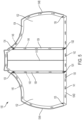
FIG. 1 is a schematic front perspective view illustration of an inflatable partition for providing a temporary barrier, according to an example. -
FIG. 2 is a schematic front perspective view illustration of the inflatable partition shown inFIG. 1 , illustrating an opening in the flexible membrane, according to an example. -
FIG. 3 is a schematic partial perspective view illustration of the inflatable frame of the inflatable partition shown inFIG. 1 , according to an example. -
FIG. 4 is a schematic top cutaway partial view illustration of the inflatable frame of the inflatable partition, according to an example. -
FIG. 5 is a schematic front view illustration of the inflatable partition shown inFIG. 1 , illustrating inflation air flow within the inflatable frame, according to an example. -
FIG. 6 is a schematic cutaway view of two inflatable partitions installed in a cabin area as a temporary, physical barrier between adjacent rows of seats, according to an example. -
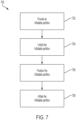
FIG. 7 is a flowchart illustration of a method for establishing a temporary barrier, according to an example. - The foregoing and other features of the present disclosure will become more fully apparent from the following description and appended claims, taken in conjunction with the accompanying drawings. Understanding that these drawings depict only several examples in accordance with the disclosure and are not to be considered limiting of its scope, the disclosure will be described with additional specificity and detail through the use of the accompanying drawings. Any dimensions disclosed in the drawings or elsewhere herein are for the purpose of illustration only.
- Examples of the present disclosure are described herein. It is to be understood, however, that the disclosed examples are merely examples and other examples can take various and alternative forms. The figures are not necessarily to scale; some features could be exaggerated or minimized to show details of particular components. Therefore, specific structural and functional details disclosed herein are not to be interpreted as limiting, but merely as a representative basis for teaching one skilled in the art to variously employ the present disclosure. As those of ordinary skill in the art will understand, various features illustrated and described with reference to any one of the figures can be combined with features illustrated in one or more other figures to produce examples that are not explicitly illustrated or described. The combinations of features illustrated provide representative examples for typical applications. Various combinations and modifications of the features consistent with the teachings of this disclosure, however, could be desired for particular applications or implementations.
- Certain terminology may be used in the following description for the purpose of reference only, and thus are not intended to be limiting. For example, terms such as "above" and "below" refer to directions in the drawings to which reference is made. Terms such as "front," "back," "fore," "aft," "left," "right," "rear," and "side" describe the orientation and/or location of portions of the components or elements within a consistent but arbitrary frame of reference which is made clear by reference to the text and the associated drawings describing the components or elements under discussion. Moreover, terms such as "first," "second," "third," and so on may be used to describe separate components. Such terminology may include the words specifically mentioned above, derivatives thereof, and words of similar import.
- In various examples, including the illustrated examples discussed herein, an inflatable partition includes an inflatable outer periphery with a central membrane or septum. This configuration allows the inflatable partition to be easily and quickly inflated to a desired pressure inflation and configured for position in the desired location. Additional features, such as a motor and pump, support members, a magnetic slit, among others, are included in various examples depending on the intended use and location of the partition. Throughout the various examples discussed herein, like reference numbers refer to like components.
-
FIGS. 1 and2 illustrate one example of aninflatable partition 100. Theinflatable partition 100 is a flexible member that can be unfolded and inflated between a first, or uninflated, configuration, and a second, or inflated, configuration. Theinflatable partition 100 includes aflexible membrane 102 and aninflatable frame 104 encircling at least a portion of theflexible membrane 102. In various examples, theflexible membrane 102 is a foldable, flexible material such as plastic, for example and without limitation, that can be manipulated by hand between the first configuration for storage and transport and unfolded and inflated to the second configuration, for use as a partition between adjoining areas. In some examples, theflexible membrane 102 is substantially rectangular. In various examples, theflexible membrane 102 is shaped to tightly fit against the interior walls or surfaces of a cabin, such as a cabin of an aircraft fuselage. - In some examples, the
flexible membrane 102 includes multiple portions that are coupled together across the length and/or height of theinflatable partition 100 to form a continuous divider. As shown inFIG. 1 , theflexible membrane 102 includes a firstflexible membrane portion 102A, a secondflexible membrane portion 102B, a thirdflexible membrane portion 102C, and a fourthflexible membrane portion 102D. However, in some examples, the first, second, third, and fourthflexible membrane portions flexible membrane 102 that are separated by other components of theinflatable partition 100. - In various examples, the
flexible membrane 102 is substantially transparent, that is, theflexible membrane 102 is see-through to allow an attendant, such as a flight attendant, to view the occupants of each area separated by theinflatable partition 100. In other examples, theflexible membrane 102 is opaque, colored, frosted, or includes a design, logo, or other representation. - As shown in
FIG. 1 , theinflatable partition 100 includes afirst tension member 108 and asecond tension member 109. The first andsecond tension members flexible membrane 102 to provide additional stability to theflexible membrane 102 when theinflatable partition 100 is in the second, or inflated, configuration. In various examples, the first andsecond tension members second tension members flexible membrane 102. In various examples, the first andsecond tension members second tension members flexible membrane 102. The second and thirdflexible membrane portions seam 110. Theseam 110 joins a first edge of the secondflexible membrane portion 102B with a second edge of the thirdflexible membrane portion 102C. In various examples, the coupling is a magnetic coupling. In various examples, the coupling is a reusable adhesive, hook and loop closure, or other type of mechanical closure or fastening, for example and without limitation. - The
inflatable partition 100 also includes one ormore support members 106 coupled to theinflatable frame 104. As shown inFIG. 2 , theinflatable partition 100 includes foursupport members 106. In various examples, thesupport members 106 are inflatable members in fluidic communication with thebottom portion 104D of theinflatable frame 104. Thesupport members 106 extend generally perpendicular to theinflatable frame 104 to support theinflatable frame 104 when theinflatable partition 100 is inflated and positioned in the desired location. In various examples, theinflatable partition 100 includes more orfewer support members 106, depending on various factors such as, for example and without limitation, the size of theinflatable partition 100, the position of theinflatable partition 100, etc. - The
inflatable frame 104 extends along the outer edge of theflexible membrane 102. As shown inFIG. 1 , theinflatable frame 104 is inflatable and deflatable between a first, or deflated, state and a second, or inflated, state. Theinflatable frame 104 is inflatable via any means of inflation including, for example and without limitation, an inflation mechanism internal or external to theinflatable partition 100, such as a compressed air cartridge or cylinder, a handheld or electric pump, battery-powered compressor or fan, etc. Theinflatable frame 104 has a varying diameter around the periphery of theflexible membrane 102. The time to deploy or inflate theinflatable partition 100 and the overall weight of theinflatable partition 100 is reduced when the diameter of theinflatable frame 104 is progressively reduced from the bottom to the top of theinflatable partition 100. In other words, the diameter of theinflatable frame 104 is larger at the bottom of theinflatable partition 100 than at the top. In addition, the varying diameter of theinflatable frame 104 results in a lower center of gravity of theinflatable partition 100 for better stability when theinflatable partition 100 is inflated and positioned at the desired location. - With continued reference to
FIGS. 1 and2 , theinflatable frame 104 includes aninner edge 114 adjacent to theflexible membrane 102 and anouter edge 124. In various examples, theinflatable frame 104 includes afirst side 104A, asecond side 104B opposite thefirst side 104A, anupper portion 104C connecting the first andsecond sides bottom portion 104D opposite theupper portion 104C. In various examples, theupper portion 104C is shaped with one or more distinct portions arranged in series, such as a first upper portion 104C1, a second upper portion 104C2, and a third upper portion 104C3. Thefirst side 104A, thesecond side 104B, and theupper portion 104C are shaped to align with, and seal against the ceiling, surface, and/or walls of the intended location of use of theinflatable partition 100, as discussed in greater detail herein. - As shown in
FIG. 1 and in greater detail inFIGS. 3 and4 , theinflatable frame 104 further includes asealing mechanism 120. Thesealing mechanism 120 extends along at least a portion of theouter edge 124 of theinflatable frame 104. In various examples, asealing mechanism 120 extends along each of the first andsecond sides inflatable frame 104. In various examples, asealing mechanism 120 extends along theupper portion 104C of theinflatable frame 104, including one or more of the first, second, and third upper portions 104C1, 104C2, 104C3. In various examples, thesealing mechanism 120 is segmented; that is, separate anddiscrete sealing mechanisms 120 extend along at least a portion of theouter edge 124 of theinflatable frame 104. In other words, thesealing mechanism 120 is continuous along at least a portion of theouter edge 124 of theinflatable frame 104 in some examples, while in some examples, thesealing mechanism 120 includes a plurality of sealingmechanisms 120 extending along at least a portion of theouter edge 124 of theinflatable frame 104. In various examples, the plurality of sealingmechanisms 120 are separated by dividers, such as silicon rubber dividers, to allow local generation of negative pressure in eachsealing mechanism segment 120, as discussed in greater detail herein. - With continued reference to
FIGS. 3 and4 , in various examples, theinflatable frame 104 includes a firstinflatable frame member 116 and a secondinflatable frame member 118. The first and secondinflatable frame members joints 117 to define aninflatable area 105 of the tubular structure of theinflatable frame 104. In various examples, at least a portion of each of the first and secondinflatable frame members joints 117. In some examples, the first and secondinflatable frame members flexible membrane 102 includes a joiningtab 112. The joiningtab 112 is coupled to theinflatable frame 104 using any coupling means, such as adhesive, for example and without limitation. In various examples, at least aportion 128 of the secondinflatable frame member 118 overlaps and is coupled to the edge of theflexible membrane 102 to provide additional support for the coupling between theflexible membrane 102 and theinflatable frame 104. - The
sealing mechanism 120 includes afirst sealing member 121 and asecond sealing member 122 spaced apart from thefirst sealing member 121. In various examples, the first andsecond sealing members outer edge 124 of theinflatable frame 104. Each of the first andsecond sealing members inflatable partition 100 is releasably secured to the surface. At least a portion of thefirst sealing member 121 is coupled to theinflatable frame 104. Similarly, at least a portion of thesecond sealing member 122 is coupled to theinflatable frame 104. As shown inFIG. 4 , a firstsealing member tab 123 is coupled to the firstinflatable frame member 116 using any coupling means, such as adhesive, for example and without limitation. The secondsealing member tab 125 is coupled to the secondinflatable frame member 118 using adhesive, or any other coupling means. As discussed in greater detail herein, the first andsecond sealing members inflatable frame 104, create a negative pressure zone between theinflatable frame 104 and the surface against which theinflatable partition 100 is positioned. The first andsecond sealing members inflatable partition 100 is positioned to frictionally engage with the surface and support theinflatable partition 100 in the desired location. - As shown in
FIG. 5 , aninflation mechanism 130 is coupled with theinflatable partition 100 and is controlled by the operator to inflate and/or deflate theinflatable partition 100. In various examples, theinflation mechanism 130 includes a one-way valve. In various examples, theinflation mechanism 130 is a pump, compressed air cartridge or cylinder, or fan, for example and without limitation. In various examples, theinflation mechanism 130 includes a battery, a motor coupled to the battery, and a turbine coupled to the motor, all contained within theinflation mechanism 130 coupled to theinflatable frame 104. In various examples, theinflation mechanism 130 is incorporated into or coupled with thebottom portion 104D of theinflatable frame 104. While theinflation mechanism 130 is shown in one location on theinflatable partition 100, it is understood that theinflation mechanism 130 may be located anywhere within or coupled to theinflatable partition 100. -
FIG. 5 illustrates a flow of air through the tubular structure of theinflatable frame 104, according to an example. In the illustrated example, the first andsecond tension members inflatable frame 104 using one-way valves way valves inflation mechanism 130 through the first andsecond tension members inflatable frame 104. - In the illustrated example, the
inflation mechanism 130 generates a flow ofair 141 that progresses to the left (shown by the arrows 141) and a flow ofair 142 that progresses to the right (shown by the arrows 142) through thebottom portion 104D of theinflatable frame 104. Thefirst side 104A of theinflatable frame 104 is coupled with thebottom portion 104D at a first sealedjunction 135. Similarly, thesecond side 104B of theinflatable frame 104 is coupled with thebottom portion 104D at a second sealedjunction 136. Air flows from thebottom portion 104D upward through the first andsecond tension members way valves arrows bottom portion 104D is reached. As a result, the first andsecond tension members flexible membrane 102 coupled to the first andsecond tension members - The one-
way valves second tension members upper portion 104C of theinflatable frame 104 via the one-way valves first side 104A, thesecond side 104B, and theupper portion 104C of theinflatable frame 104, as illustrated by thearrows FIG. 5 illustrates one example of theinflatable partition 100 including a plurality of one way valves to direct the air through theinflatable frame 104; however, it is understood that other configurations of one way valves, including more or fewer valves and different placement of the valves, and connections between the tubular members of theinflatable frame 104 are possible. - In various examples, at least a portion of the
inflatable frame 104 of theinflatable partition 100 includes a compressible material capable of at least partially self-inflating theinflatable frame 104 when in fluidic communication with ambient air. -
FIG. 6 illustrates twoinflatable partitions 100 positioned within a vehicle, such as an aircraft cabin, to create a barrier between adjacent areas, such as adjacent rows of seats. Theinflatable partitions 100 are shown in the second, or unfolded and/or inflated, configuration. One of theinflatable partitions 100 separates afirst area 201 from asecond area 202. The otherinflatable partition 100 separates thesecond area 202 from athird area 203. Thesecond area 202 is, in some examples, a defined isolated area from the rest of the aircraft cabin. - As shown in
FIG. 6 , theinflatable frame 104 is positioned adjacent to thesurfaces inflatable partition 100 has a slightly smaller dimension than the cabin interior such that the first andsecond sealing members sealing mechanism 120 will close any gap between theinflatable frame 104 and thesurfaces inflatable partition 100 is in the second, or inflated, configuration, theinflatable frame 104 is enlarged due to the pressure in the tubular structure. Air within the gap between the first andsecond sealing members surface 251 will be squeezed out due to the pressure of the tubular structure of theinflatable frame 104 against thesurface 251, thus creating a negative pressure zone between thesealing mechanism 120 and thesurface 251. The first andsecond sealing members surface 251 to help secure theinflatable partition 100 in the desired position and to seal the inflatable partition against thesurface 251. Furthermore, the magnetic or other coupling of theflexible membrane 102 at theseam 110 provides additional sealing benefits while allowing ingress to and egress from thearea 202. - A
method 700 to provide an inflatable partition as a temporary, physical barrier is illustrated as a flowchart inFIG. 7 . Themethod 700 can be utilized in connection with theinflatable partition 100 discussed herein. The order of operation of themethod 700 is not limited to the sequential execution as illustrated inFIG. 7 , but may be performed in one or more varying orders, or steps may be performed simultaneously, as applicable in accordance with the present disclosure. - Beginning at 702, an inflatable partition, such as the
inflatable partition 100, is provided. Next, at 704, theinflatable partition 100 is unfolded from the first, or folded and uninflated, configuration, to the second, or unfolded, configuration. - The
method 700 continues at 706, wherein theinflatable frame 104 of theinflatable partition 100 is positioned at a desired location of the temporary barrier. In various examples, the desired location is a position between adjacent rows of seats, such as seats on an aircraft, bus, train, car, truck, or other vehicle, as shown inFIG. 6 . - Next, at 708, the
inflatable partition 100 is inflated by theinflation mechanism 130. Air or other fluid can be used to inflate theinflatable frame 104 as discussed herein. Furthermore, as discussed herein, any of a number of inflation mechanisms may be used to inflate theinflatable frame 104. - As discussed herein, inflation of the
inflatable partition 100 temporarily secures theinflatable frame 104 against the surface at the desired location using a combination of frictional engagement and negative pressure. In various examples, other means of securing theinflatable partition 100 at the desired location are used including, for example and without limitation, temporarily securing one or more of thesupport members 106 to the lower surface or floor at the desired location. - It should be emphasized that many variations and modifications may be made to the herein-described examples, the elements of which are to be understood as being among other acceptable examples. All such modifications and variations are intended to be included herein within the scope of this disclosure and protected by the following claims. Moreover, any of the steps described herein can be performed simultaneously or in an order different from the steps as ordered herein. Moreover, as should be apparent, the features and attributes of the specific examples disclosed herein may be combined in different ways to form additional examples.
- Conditional language used herein, such as, among others, "can," "could," "might," "may," "e.g.," and the like, unless specifically stated otherwise, or otherwise understood within the context as used, is generally intended to convey that certain examples include, while other examples do not include, certain features, elements and/or states. Thus, such conditional language is not generally intended to imply that features, elements and/or states are in any way required for one or more examples or that one or more examples necessarily include logic for deciding, with or without author input or prompting, whether these features, elements and/or states are included or are to be performed in any particular example.
- Moreover, the following terminology may have been used herein. The singular forms "a," "an," and "the" include plural referents unless the context clearly dictates otherwise. Thus, for example, reference to an item includes reference to one or more items. The term "ones" refers to one, two, or more, and generally applies to the selection of some or all of a quantity. The term "plurality" refers to two or more of an item. The term "about" or "approximately" means that quantities, dimensions, sizes, formulations, parameters, shapes and other characteristics need not be exact, but may be approximated and/or larger or smaller, as desired, reflecting acceptable tolerances, conversion factors, rounding off, measurement error and the like and other factors known to those of skill in the art. The term "substantially" means that the recited characteristic, parameter, or value need not be achieved exactly, but that deviations or variations, including for example, tolerances, measurement error, measurement accuracy limitations and other factors known to those of skill in the art, may occur in amounts that do not preclude the effect the characteristic was intended to provide.
- While exemplary examples are described above, it is not intended that these examples describe all possible forms encompassed by the claims. The words used in the specification are words of description rather than limitation, and it is understood that various changes can be made without departing from the scope of the disclosure. As previously described, the features of various examples can be combined to form further exemplary aspects of the present disclosure that may not be explicitly described or illustrated. While various examples could have been described as providing advantages or being preferred over other examples or prior art implementations with respect to one or more desired characteristics, those of ordinary skill in the art recognize that one or more features or characteristics can be compromised to achieve desired overall system attributes, which depend on the specific application and implementation. These attributes can include, but are not limited to cost, strength, durability, life cycle cost, marketability, appearance, packaging, size, serviceability, weight, manufacturability, ease of assembly, etc. As such, examples described as less desirable than other examples or prior art implementations with respect to one or more characteristics are not outside the scope of the disclosure and can be desirable for particular applications.
Claims (15)
- An aircraft cabin, comprising:a body having an interior surface (251); andan inflatable partition (100) comprising:a flexible membrane (102);an inflatable frame (104) extending along a periphery of the flexible membrane (102), the inflatable frame (104) having an inner edge (114) adjacent to the flexible membrane (102) and an outer edge (124), the inflatable frame (104) including a first side (104A), a second side (104B) opposite the first side (104A), an upper portion (104C) connecting the first and second side (104B)s, and a bottom portion (104D) opposite the upper portion (104C), the inflatable frame (104) further including a sealing mechanism (120) extending along at least a portion (128) of the outer edge (124), wherein the inflatable frame (104) is inflatable between a first state and a second state, and wherein the inflatable frame (104) has a varying diameter around the periphery of the flexible membrane (102), the varying diameter being progressively reduced from the bottom to the top of the inflatable partition (100);and wherein the inflatable partition further comprises;a support member (106) coupled to the inflatable frame (104); anda first structural member (108) and a second structural member (109), wherein each of the first and second structural members is coupled to the inflatable frame (104) and extends vertically from the upper portion (104C) to the bottom portion (104D) of the inflatable frame (104), and the first and second structural members defining an opening (111) in the inflatable partition (100).
- The aircraft cabin of claim 1, wherein the sealing mechanism (120) includes a first sealing mechanism (120) extending along the first side (104A) of the inflatable frame (104) and a second sealing mechanism (120) extending along the second side (104B) of the inflatable frame (104).
- The aircraft cabin of claim 2, wherein the first sealing mechanism (120) includes a first sealing member (121) and a second sealing member (122) spaced apart from the first sealing member (121).
- The aircraft cabin of claim 3, wherein the first and second sealing members are flexible strips extending outward from the outer edge (124) of the inflatable frame (104), and each of the first and second sealing members is configured to frictionally engage with a surface (251) such that the inflatable partition (100) is releasably secured to the interior surface (251).
- The aircraft cabin of claim 4, wherein the sealing mechanism (120) includes a third sealing mechanism (120) extending along the upper portion (104C) of the inflatable frame (104).
- The aircraft cabin of any one of claims 1-5, wherein the first and second sealing members are configured to frictionally engage with the interior surface (251) when the inflatable frame (104) is inflated such that a negative pressure condition exists between the inflatable frame (104) and the interior surface (251).
- The aircraft cabin of any one of claims 1-6, wherein the flexible membrane (102) is foldable.
- The aircraft cabin of any one of claims 1-7, wherein the flexible membrane (102) is substantially transparent.
- The aircraft cabin of any one of claims 1-8, wherein the flexible membrane (102) includes a first flexible membrane (102) extending from the inner edge (114) of the first side (104A) of the inflatable frame (104) to the first structural member (108), a second flexible membrane (102) extending from the first structural member (108), a third flexible membrane (102) extending from the second structural member (109), and a fourth flexible member extending from the inner edge (114) of the second side (104B) of the inflatable frame (104) to the second structural member (109), and the second and third flexible membranes are releasably coupled together to extend across the opening (111).
- The aircraft cabin of any one of claims 1-9, wherein the inflatable frame (104) is inflatable between the first state comprising an uninflated state and the second state comprising an inflated state.
- The aircraft cabin of any one of claims 1-10, wherein the support member (106) is inflatable and is fluidly coupled to the inflatable frame (104).
- The aircraft cabin of claim 11, wherein the support member (106) includes a first support member, a second support member, a third support member, and a fourth support member, wherein each of the first, second, third, and fourth support members (106) extends perpendicular to the inflatable frame (104).
- The aircraft cabin of claim 12, wherein the first, second, third, and fourth support members (106) are evenly distributed along the bottom portion (104D) of the inflatable frame (104).
- The aircraft cabin of any one of claims 1-13 wherein the inflatable partition (100) further comprises an inflation mechanism (130) including a battery, a motor coupled to the battery, and a turbine coupled to the motor, and the inflatable frame (104) is inflatable by the inflation mechanism (130).
- The aircraft cabin of any one of claims 1-14, wherein the inflatable frame (104) is inflatable by one or more of an external pump, a fan, and a compressed air cartridge.
Applications Claiming Priority (1)
| Application Number | Priority Date | Filing Date | Title |
|---|---|---|---|
| US202163134270P | 2021-01-06 | 2021-01-06 |
Publications (2)
| Publication Number | Publication Date |
|---|---|
| EP4026772A1 EP4026772A1 (en) | 2022-07-13 |
| EP4026772B1 true EP4026772B1 (en) | 2025-02-05 |
Family
ID=79018985
Family Applications (1)
| Application Number | Title | Priority Date | Filing Date |
|---|---|---|---|
| EP21216655.7A Active EP4026772B1 (en) | 2021-01-06 | 2021-12-21 | Inflatable partition |
Country Status (4)
| Country | Link |
|---|---|
| US (2) | US11885123B2 (en) |
| EP (1) | EP4026772B1 (en) |
| JP (1) | JP7732902B2 (en) |
| CN (1) | CN114715049A (en) |
Families Citing this family (3)
| Publication number | Priority date | Publication date | Assignee | Title |
|---|---|---|---|---|
| EP3919383A1 (en) * | 2020-06-04 | 2021-12-08 | Koninklijke Fabriek Inventum B.V. | Inflatable isolation walls for aircraft cabins |
| US11885123B2 (en) * | 2021-01-06 | 2024-01-30 | The Boeing Company | Inflatable partition |
| US20260015076A1 (en) * | 2024-07-15 | 2026-01-15 | The Boeing Company | Barrier system and method for a cargo compartment of an aircraft |
Citations (1)
| Publication number | Priority date | Publication date | Assignee | Title |
|---|---|---|---|---|
| DE3922579C2 (en) * | 1988-01-27 | 1992-06-11 |
Family Cites Families (20)
| Publication number | Priority date | Publication date | Assignee | Title |
|---|---|---|---|---|
| US2955606A (en) * | 1956-04-30 | 1960-10-11 | Garrett Corp | General purpose inflatable shelter |
| US3178779A (en) * | 1962-06-28 | 1965-04-20 | North American Aviation Inc | Multi-cell inflatable seal |
| US3284955A (en) * | 1964-06-01 | 1966-11-15 | Presray Corp | Motor vehicle seal |
| US3548904A (en) * | 1969-03-28 | 1970-12-22 | Davis Aircraft Prod Co | Inflatable cargo blanket |
| JPS584496Y2 (en) * | 1979-04-27 | 1983-01-26 | スミクロス工業株式会社 | smoke control device |
| US4430832A (en) * | 1981-09-25 | 1984-02-14 | Nor-Lake Incorporated | Floor sealing gasket |
| DE3802331A1 (en) * | 1988-01-27 | 1989-09-07 | Messerschmitt Boelkow Blohm | SAFETY DEVICE FOR AIRCRAFT |
| JPH07164955A (en) * | 1993-12-16 | 1995-06-27 | Achilles Corp | Simple partition |
| JPH10100944A (en) * | 1996-09-26 | 1998-04-21 | Tokyo Sharyo Kk | Cargo box with movable partition wall for automobile |
| DE20305956U1 (en) * | 2003-04-11 | 2003-07-24 | Conteyor Multibag Systems N V | Flexible compartment system |
| US7178810B1 (en) * | 2004-11-02 | 2007-02-20 | The Presray Corporation | Mounting arrangement for inflatable seals |
| WO2010130062A1 (en) | 2009-05-11 | 2010-11-18 | Chen Xing | An inflatable enclosure and an inflatable enclosure system |
| US20120131857A1 (en) * | 2010-11-26 | 2012-05-31 | Smart Enclosure LLC | Inflatable Enclosure |
| EP2712806B1 (en) * | 2012-09-28 | 2016-05-11 | Airbus Operations GmbH | A partition for a vehicle |
| US20150101258A1 (en) * | 2013-10-14 | 2015-04-16 | International Shelter Solutions LLC | Support member sleeve |
| DE102013114391A1 (en) * | 2013-12-18 | 2015-06-18 | Airbus Operations Gmbh | A pressure hull of an aircraft, comprising a pressure bulkhead movably mounted relative to the hull structure |
| EP2942268B1 (en) * | 2014-05-09 | 2017-11-22 | Airbus Defence and Space GmbH | Aircraft having a self-erecting partition element in a compartment inside the fuselage |
| EP3176072B1 (en) * | 2015-12-03 | 2019-04-03 | Airbus Operations S.L. | Pressure bulkhead |
| EP3919383A1 (en) * | 2020-06-04 | 2021-12-08 | Koninklijke Fabriek Inventum B.V. | Inflatable isolation walls for aircraft cabins |
| US11885123B2 (en) * | 2021-01-06 | 2024-01-30 | The Boeing Company | Inflatable partition |
-
2021
- 2021-12-15 US US17/551,672 patent/US11885123B2/en active Active
- 2021-12-21 EP EP21216655.7A patent/EP4026772B1/en active Active
-
2022
- 2022-01-05 CN CN202210004875.3A patent/CN114715049A/en active Pending
- 2022-01-06 JP JP2022000865A patent/JP7732902B2/en active Active
-
2023
- 2023-10-27 US US18/496,109 patent/US12247394B2/en active Active
Patent Citations (1)
| Publication number | Priority date | Publication date | Assignee | Title |
|---|---|---|---|---|
| DE3922579C2 (en) * | 1988-01-27 | 1992-06-11 |
Also Published As
| Publication number | Publication date |
|---|---|
| US20220213683A1 (en) | 2022-07-07 |
| US20240060296A1 (en) | 2024-02-22 |
| JP7732902B2 (en) | 2025-09-02 |
| CN114715049A (en) | 2022-07-08 |
| US12247394B2 (en) | 2025-03-11 |
| EP4026772A1 (en) | 2022-07-13 |
| US11885123B2 (en) | 2024-01-30 |
| JP2022117940A (en) | 2022-08-12 |
Similar Documents
| Publication | Publication Date | Title |
|---|---|---|
| EP4026772B1 (en) | Inflatable partition | |
| CN101970297B (en) | aircraft airbag system | |
| RU2003596C1 (en) | Airship | |
| EP2143610A2 (en) | Retracting Air Cushioned Landing System for Air Vehicles | |
| ES2256558T3 (en) | AIRCRAFT LIGHTER THAN THE AIR PROVIDED WITH LANDING TRAIN MEDIA WITH AIR DAMPING. | |
| US20200148327A1 (en) | Method of forming a hollow spar for an aerial vehicle | |
| BRPI0707829A2 (en) | double wall floor segment for a travel device to accommodate system components | |
| JP2010280375A (en) | External pressurization system for lighter than air vehicle | |
| WO2017178899A2 (en) | Multiple task aerocarrier | |
| CN117125274A (en) | Aircraft device, self-propelled module, payload, system and method for moving payload | |
| US10858126B2 (en) | Deformable closure mechanism | |
| EP3272643B1 (en) | Aircraft or spacecraft passenger cabin partition | |
| US11691733B2 (en) | Inflatable isolation walls for aircraft cabins | |
| US20220219821A1 (en) | Inflatable Aerodynamic Cargo Container | |
| US20180370610A1 (en) | Aircraft fuselage frame equipped with airbag and riser duct closure cover | |
| EP3112256A1 (en) | Aircraft external part with inflatable panels | |
| ES2932255T3 (en) | Composite panel systems and methods | |
| JPS6321605B2 (en) | ||
| WO2007109826A1 (en) | An aircraft buoyancy augmentation device | |
| NL2025440B1 (en) | Shielding screen with inflatable edge body | |
| CN212149272U (en) | Air bag inflatable covering of folding wing | |
| US20260015076A1 (en) | Barrier system and method for a cargo compartment of an aircraft | |
| US12479567B1 (en) | Inflatable wing | |
| US10994850B2 (en) | Aspirators for evacuation assemblies | |
| JP2025026829A (en) | Barrier system and method for aircraft cargo compartments |
Legal Events
| Date | Code | Title | Description |
|---|---|---|---|
| PUAI | Public reference made under article 153(3) epc to a published international application that has entered the european phase |
Free format text: ORIGINAL CODE: 0009012 |
|
| STAA | Information on the status of an ep patent application or granted ep patent |
Free format text: STATUS: THE APPLICATION HAS BEEN PUBLISHED |
|
| AK | Designated contracting states |
Kind code of ref document: A1 Designated state(s): AL AT BE BG CH CY CZ DE DK EE ES FI FR GB GR HR HU IE IS IT LI LT LU LV MC MK MT NL NO PL PT RO RS SE SI SK SM TR |
|
| RIN1 | Information on inventor provided before grant (corrected) |
Inventor name: WEI, DANIEL Inventor name: LONG, LONG Inventor name: LIU, WEIQIANG Inventor name: DONG, ZHONGZHE |
|
| STAA | Information on the status of an ep patent application or granted ep patent |
Free format text: STATUS: REQUEST FOR EXAMINATION WAS MADE |
|
| 17P | Request for examination filed |
Effective date: 20221121 |
|
| RBV | Designated contracting states (corrected) |
Designated state(s): AL AT BE BG CH CY CZ DE DK EE ES FI FR GB GR HR HU IE IS IT LI LT LU LV MC MK MT NL NO PL PT RO RS SE SI SK SM TR |
|
| RAP3 | Party data changed (applicant data changed or rights of an application transferred) |
Owner name: THE BOEING COMPANY |
|
| STAA | Information on the status of an ep patent application or granted ep patent |
Free format text: STATUS: EXAMINATION IS IN PROGRESS |
|
| 17Q | First examination report despatched |
Effective date: 20231005 |
|
| GRAP | Despatch of communication of intention to grant a patent |
Free format text: ORIGINAL CODE: EPIDOSNIGR1 |
|
| STAA | Information on the status of an ep patent application or granted ep patent |
Free format text: STATUS: GRANT OF PATENT IS INTENDED |
|
| GRAJ | Information related to disapproval of communication of intention to grant by the applicant or resumption of examination proceedings by the epo deleted |
Free format text: ORIGINAL CODE: EPIDOSDIGR1 |
|
| STAA | Information on the status of an ep patent application or granted ep patent |
Free format text: STATUS: EXAMINATION IS IN PROGRESS |
|
| GRAP | Despatch of communication of intention to grant a patent |
Free format text: ORIGINAL CODE: EPIDOSNIGR1 |
|
| INTG | Intention to grant announced |
Effective date: 20240819 |
|
| STAA | Information on the status of an ep patent application or granted ep patent |
Free format text: STATUS: GRANT OF PATENT IS INTENDED |
|
| INTC | Intention to grant announced (deleted) | ||
| INTG | Intention to grant announced |
Effective date: 20240919 |
|
| P01 | Opt-out of the competence of the unified patent court (upc) registered |
Free format text: CASE NUMBER: APP_54856/2024 Effective date: 20241004 |
|
| GRAS | Grant fee paid |
Free format text: ORIGINAL CODE: EPIDOSNIGR3 |
|
| GRAA | (expected) grant |
Free format text: ORIGINAL CODE: 0009210 |
|
| STAA | Information on the status of an ep patent application or granted ep patent |
Free format text: STATUS: THE PATENT HAS BEEN GRANTED |
|
| AK | Designated contracting states |
Kind code of ref document: B1 Designated state(s): AL AT BE BG CH CY CZ DE DK EE ES FI FR GB GR HR HU IE IS IT LI LT LU LV MC MK MT NL NO PL PT RO RS SE SI SK SM TR |
|
| REG | Reference to a national code |
Ref country code: GB Ref legal event code: FG4D |
|
| REG | Reference to a national code |
Ref country code: CH Ref legal event code: EP |
|
| REG | Reference to a national code |
Ref country code: IE Ref legal event code: FG4D |
|
| REG | Reference to a national code |
Ref country code: DE Ref legal event code: R096 Ref document number: 602021025757 Country of ref document: DE |
|
| REG | Reference to a national code |
Ref country code: NL Ref legal event code: MP Effective date: 20250205 |
|
| PG25 | Lapsed in a contracting state [announced via postgrant information from national office to epo] |
Ref country code: RS Free format text: LAPSE BECAUSE OF FAILURE TO SUBMIT A TRANSLATION OF THE DESCRIPTION OR TO PAY THE FEE WITHIN THE PRESCRIBED TIME-LIMIT Effective date: 20250505 |
|
| PG25 | Lapsed in a contracting state [announced via postgrant information from national office to epo] |
Ref country code: FI Free format text: LAPSE BECAUSE OF FAILURE TO SUBMIT A TRANSLATION OF THE DESCRIPTION OR TO PAY THE FEE WITHIN THE PRESCRIBED TIME-LIMIT Effective date: 20250205 |
|
| PG25 | Lapsed in a contracting state [announced via postgrant information from national office to epo] |
Ref country code: PL Free format text: LAPSE BECAUSE OF FAILURE TO SUBMIT A TRANSLATION OF THE DESCRIPTION OR TO PAY THE FEE WITHIN THE PRESCRIBED TIME-LIMIT Effective date: 20250205 |
|
| PG25 | Lapsed in a contracting state [announced via postgrant information from national office to epo] |
Ref country code: ES Free format text: LAPSE BECAUSE OF FAILURE TO SUBMIT A TRANSLATION OF THE DESCRIPTION OR TO PAY THE FEE WITHIN THE PRESCRIBED TIME-LIMIT Effective date: 20250205 |
|
| REG | Reference to a national code |
Ref country code: LT Ref legal event code: MG9D |
|
| PG25 | Lapsed in a contracting state [announced via postgrant information from national office to epo] |
Ref country code: IS Free format text: LAPSE BECAUSE OF FAILURE TO SUBMIT A TRANSLATION OF THE DESCRIPTION OR TO PAY THE FEE WITHIN THE PRESCRIBED TIME-LIMIT Effective date: 20250605 Ref country code: NO Free format text: LAPSE BECAUSE OF FAILURE TO SUBMIT A TRANSLATION OF THE DESCRIPTION OR TO PAY THE FEE WITHIN THE PRESCRIBED TIME-LIMIT Effective date: 20250505 |
|
| PG25 | Lapsed in a contracting state [announced via postgrant information from national office to epo] |
Ref country code: NL Free format text: LAPSE BECAUSE OF FAILURE TO SUBMIT A TRANSLATION OF THE DESCRIPTION OR TO PAY THE FEE WITHIN THE PRESCRIBED TIME-LIMIT Effective date: 20250205 |
|
| PG25 | Lapsed in a contracting state [announced via postgrant information from national office to epo] |
Ref country code: HR Free format text: LAPSE BECAUSE OF FAILURE TO SUBMIT A TRANSLATION OF THE DESCRIPTION OR TO PAY THE FEE WITHIN THE PRESCRIBED TIME-LIMIT Effective date: 20250205 |
|
| PG25 | Lapsed in a contracting state [announced via postgrant information from national office to epo] |
Ref country code: LV Free format text: LAPSE BECAUSE OF FAILURE TO SUBMIT A TRANSLATION OF THE DESCRIPTION OR TO PAY THE FEE WITHIN THE PRESCRIBED TIME-LIMIT Effective date: 20250205 Ref country code: PT Free format text: LAPSE BECAUSE OF FAILURE TO SUBMIT A TRANSLATION OF THE DESCRIPTION OR TO PAY THE FEE WITHIN THE PRESCRIBED TIME-LIMIT Effective date: 20250605 |
|
| PG25 | Lapsed in a contracting state [announced via postgrant information from national office to epo] |
Ref country code: GR Free format text: LAPSE BECAUSE OF FAILURE TO SUBMIT A TRANSLATION OF THE DESCRIPTION OR TO PAY THE FEE WITHIN THE PRESCRIBED TIME-LIMIT Effective date: 20250506 Ref country code: BG Free format text: LAPSE BECAUSE OF FAILURE TO SUBMIT A TRANSLATION OF THE DESCRIPTION OR TO PAY THE FEE WITHIN THE PRESCRIBED TIME-LIMIT Effective date: 20250205 |
|
| REG | Reference to a national code |
Ref country code: AT Ref legal event code: MK05 Ref document number: 1764856 Country of ref document: AT Kind code of ref document: T Effective date: 20250205 |
|
| PG25 | Lapsed in a contracting state [announced via postgrant information from national office to epo] |
Ref country code: SE Free format text: LAPSE BECAUSE OF FAILURE TO SUBMIT A TRANSLATION OF THE DESCRIPTION OR TO PAY THE FEE WITHIN THE PRESCRIBED TIME-LIMIT Effective date: 20250205 |
|
| PG25 | Lapsed in a contracting state [announced via postgrant information from national office to epo] |
Ref country code: SM Free format text: LAPSE BECAUSE OF FAILURE TO SUBMIT A TRANSLATION OF THE DESCRIPTION OR TO PAY THE FEE WITHIN THE PRESCRIBED TIME-LIMIT Effective date: 20250205 |
|
| PG25 | Lapsed in a contracting state [announced via postgrant information from national office to epo] |
Ref country code: DK Free format text: LAPSE BECAUSE OF FAILURE TO SUBMIT A TRANSLATION OF THE DESCRIPTION OR TO PAY THE FEE WITHIN THE PRESCRIBED TIME-LIMIT Effective date: 20250205 |
|
| PG25 | Lapsed in a contracting state [announced via postgrant information from national office to epo] |
Ref country code: IT Free format text: LAPSE BECAUSE OF FAILURE TO SUBMIT A TRANSLATION OF THE DESCRIPTION OR TO PAY THE FEE WITHIN THE PRESCRIBED TIME-LIMIT Effective date: 20250205 |
|
| PG25 | Lapsed in a contracting state [announced via postgrant information from national office to epo] |
Ref country code: AT Free format text: LAPSE BECAUSE OF FAILURE TO SUBMIT A TRANSLATION OF THE DESCRIPTION OR TO PAY THE FEE WITHIN THE PRESCRIBED TIME-LIMIT Effective date: 20250205 |
|
| PG25 | Lapsed in a contracting state [announced via postgrant information from national office to epo] |
Ref country code: EE Free format text: LAPSE BECAUSE OF FAILURE TO SUBMIT A TRANSLATION OF THE DESCRIPTION OR TO PAY THE FEE WITHIN THE PRESCRIBED TIME-LIMIT Effective date: 20250205 Ref country code: CZ Free format text: LAPSE BECAUSE OF FAILURE TO SUBMIT A TRANSLATION OF THE DESCRIPTION OR TO PAY THE FEE WITHIN THE PRESCRIBED TIME-LIMIT Effective date: 20250205 |
|
| PG25 | Lapsed in a contracting state [announced via postgrant information from national office to epo] |
Ref country code: RO Free format text: LAPSE BECAUSE OF FAILURE TO SUBMIT A TRANSLATION OF THE DESCRIPTION OR TO PAY THE FEE WITHIN THE PRESCRIBED TIME-LIMIT Effective date: 20250205 |
|
| PG25 | Lapsed in a contracting state [announced via postgrant information from national office to epo] |
Ref country code: SK Free format text: LAPSE BECAUSE OF FAILURE TO SUBMIT A TRANSLATION OF THE DESCRIPTION OR TO PAY THE FEE WITHIN THE PRESCRIBED TIME-LIMIT Effective date: 20250205 |
|
| REG | Reference to a national code |
Ref country code: DE Ref legal event code: R097 Ref document number: 602021025757 Country of ref document: DE |
|
| PLBE | No opposition filed within time limit |
Free format text: ORIGINAL CODE: 0009261 |
|
| STAA | Information on the status of an ep patent application or granted ep patent |
Free format text: STATUS: NO OPPOSITION FILED WITHIN TIME LIMIT |
|
| PGFP | Annual fee paid to national office [announced via postgrant information from national office to epo] |
Ref country code: GB Payment date: 20251229 Year of fee payment: 5 |
|
| 26N | No opposition filed |
Effective date: 20251106 |
|
| PGFP | Annual fee paid to national office [announced via postgrant information from national office to epo] |
Ref country code: FR Payment date: 20251226 Year of fee payment: 5 |
|
| PGFP | Annual fee paid to national office [announced via postgrant information from national office to epo] |
Ref country code: DE Payment date: 20251229 Year of fee payment: 5 |