EP4026708B1 - Pneumatic tire - Google Patents
Pneumatic tire Download PDFInfo
- Publication number
- EP4026708B1 EP4026708B1 EP21199450.4A EP21199450A EP4026708B1 EP 4026708 B1 EP4026708 B1 EP 4026708B1 EP 21199450 A EP21199450 A EP 21199450A EP 4026708 B1 EP4026708 B1 EP 4026708B1
- Authority
- EP
- European Patent Office
- Prior art keywords
- groove
- pneumatic tire
- noise
- tread
- groove side
- Prior art date
- Legal status (The legal status is an assumption and is not a legal conclusion. Google has not performed a legal analysis and makes no representation as to the accuracy of the status listed.)
- Active
Links
Images



Classifications
-
- B—PERFORMING OPERATIONS; TRANSPORTING
- B60—VEHICLES IN GENERAL
- B60C—VEHICLE TYRES; TYRE INFLATION; TYRE CHANGING; CONNECTING VALVES TO INFLATABLE ELASTIC BODIES IN GENERAL; DEVICES OR ARRANGEMENTS RELATED TO TYRES
- B60C19/00—Tyre parts or constructions not otherwise provided for
- B60C19/002—Noise damping elements provided in the tyre structure or attached thereto, e.g. in the tyre interior
-
- B—PERFORMING OPERATIONS; TRANSPORTING
- B60—VEHICLES IN GENERAL
- B60C—VEHICLE TYRES; TYRE INFLATION; TYRE CHANGING; CONNECTING VALVES TO INFLATABLE ELASTIC BODIES IN GENERAL; DEVICES OR ARRANGEMENTS RELATED TO TYRES
- B60C11/00—Tyre tread bands; Tread patterns; Anti-skid inserts
- B60C11/03—Tread patterns
- B60C11/13—Tread patterns characterised by the groove cross-section, e.g. for buttressing or preventing stone-trapping
- B60C11/1307—Tread patterns characterised by the groove cross-section, e.g. for buttressing or preventing stone-trapping with special features of the groove walls
-
- B—PERFORMING OPERATIONS; TRANSPORTING
- B60—VEHICLES IN GENERAL
- B60C—VEHICLE TYRES; TYRE INFLATION; TYRE CHANGING; CONNECTING VALVES TO INFLATABLE ELASTIC BODIES IN GENERAL; DEVICES OR ARRANGEMENTS RELATED TO TYRES
- B60C11/00—Tyre tread bands; Tread patterns; Anti-skid inserts
- B60C11/03—Tread patterns
- B60C11/13—Tread patterns characterised by the groove cross-section, e.g. for buttressing or preventing stone-trapping
- B60C11/1307—Tread patterns characterised by the groove cross-section, e.g. for buttressing or preventing stone-trapping with special features of the groove walls
- B60C11/1323—Tread patterns characterised by the groove cross-section, e.g. for buttressing or preventing stone-trapping with special features of the groove walls asymmetric
-
- B—PERFORMING OPERATIONS; TRANSPORTING
- B60—VEHICLES IN GENERAL
- B60C—VEHICLE TYRES; TYRE INFLATION; TYRE CHANGING; CONNECTING VALVES TO INFLATABLE ELASTIC BODIES IN GENERAL; DEVICES OR ARRANGEMENTS RELATED TO TYRES
- B60C11/00—Tyre tread bands; Tread patterns; Anti-skid inserts
- B60C11/03—Tread patterns
- B60C11/0306—Patterns comprising block rows or discontinuous ribs
- B60C11/0309—Patterns comprising block rows or discontinuous ribs further characterised by the groove cross-section
-
- B—PERFORMING OPERATIONS; TRANSPORTING
- B60—VEHICLES IN GENERAL
- B60C—VEHICLE TYRES; TYRE INFLATION; TYRE CHANGING; CONNECTING VALVES TO INFLATABLE ELASTIC BODIES IN GENERAL; DEVICES OR ARRANGEMENTS RELATED TO TYRES
- B60C11/00—Tyre tread bands; Tread patterns; Anti-skid inserts
- B60C11/03—Tread patterns
- B60C11/12—Tread patterns characterised by the use of narrow slits or incisions, e.g. sipes
-
- B—PERFORMING OPERATIONS; TRANSPORTING
- B60—VEHICLES IN GENERAL
- B60C—VEHICLE TYRES; TYRE INFLATION; TYRE CHANGING; CONNECTING VALVES TO INFLATABLE ELASTIC BODIES IN GENERAL; DEVICES OR ARRANGEMENTS RELATED TO TYRES
- B60C11/00—Tyre tread bands; Tread patterns; Anti-skid inserts
- B60C11/03—Tread patterns
- B60C11/12—Tread patterns characterised by the use of narrow slits or incisions, e.g. sipes
- B60C11/1236—Tread patterns characterised by the use of narrow slits or incisions, e.g. sipes with special arrangements in the tread pattern
-
- G—PHYSICS
- G10—MUSICAL INSTRUMENTS; ACOUSTICS
- G10K—SOUND-PRODUCING DEVICES; METHODS OR DEVICES FOR PROTECTING AGAINST, OR FOR DAMPING, NOISE OR OTHER ACOUSTIC WAVES IN GENERAL; ACOUSTICS NOT OTHERWISE PROVIDED FOR
- G10K11/00—Methods or devices for transmitting, conducting or directing sound in general; Methods or devices for protecting against, or for damping, noise or other acoustic waves in general
- G10K11/16—Methods or devices for protecting against, or for damping, noise or other acoustic waves in general
- G10K11/172—Methods or devices for protecting against, or for damping, noise or other acoustic waves in general using resonance effects
-
- B—PERFORMING OPERATIONS; TRANSPORTING
- B60—VEHICLES IN GENERAL
- B60B—VEHICLE WHEELS; CASTORS; AXLES FOR WHEELS OR CASTORS; INCREASING WHEEL ADHESION
- B60B2900/00—Purpose of invention
- B60B2900/10—Reduction of
- B60B2900/133—Noise
-
- B—PERFORMING OPERATIONS; TRANSPORTING
- B60—VEHICLES IN GENERAL
- B60C—VEHICLE TYRES; TYRE INFLATION; TYRE CHANGING; CONNECTING VALVES TO INFLATABLE ELASTIC BODIES IN GENERAL; DEVICES OR ARRANGEMENTS RELATED TO TYRES
- B60C11/00—Tyre tread bands; Tread patterns; Anti-skid inserts
- B60C11/03—Tread patterns
- B60C11/0306—Patterns comprising block rows or discontinuous ribs
-
- B—PERFORMING OPERATIONS; TRANSPORTING
- B60—VEHICLES IN GENERAL
- B60C—VEHICLE TYRES; TYRE INFLATION; TYRE CHANGING; CONNECTING VALVES TO INFLATABLE ELASTIC BODIES IN GENERAL; DEVICES OR ARRANGEMENTS RELATED TO TYRES
- B60C11/00—Tyre tread bands; Tread patterns; Anti-skid inserts
- B60C11/03—Tread patterns
- B60C2011/0337—Tread patterns characterised by particular design features of the pattern
- B60C2011/0339—Grooves
- B60C2011/0341—Circumferential grooves
-
- B—PERFORMING OPERATIONS; TRANSPORTING
- B60—VEHICLES IN GENERAL
- B60C—VEHICLE TYRES; TYRE INFLATION; TYRE CHANGING; CONNECTING VALVES TO INFLATABLE ELASTIC BODIES IN GENERAL; DEVICES OR ARRANGEMENTS RELATED TO TYRES
- B60C11/00—Tyre tread bands; Tread patterns; Anti-skid inserts
- B60C11/03—Tread patterns
- B60C11/13—Tread patterns characterised by the groove cross-section, e.g. for buttressing or preventing stone-trapping
- B60C11/1307—Tread patterns characterised by the groove cross-section, e.g. for buttressing or preventing stone-trapping with special features of the groove walls
- B60C2011/1338—Tread patterns characterised by the groove cross-section, e.g. for buttressing or preventing stone-trapping with special features of the groove walls comprising protrusions
-
- B—PERFORMING OPERATIONS; TRANSPORTING
- B60—VEHICLES IN GENERAL
- B60C—VEHICLE TYRES; TYRE INFLATION; TYRE CHANGING; CONNECTING VALVES TO INFLATABLE ELASTIC BODIES IN GENERAL; DEVICES OR ARRANGEMENTS RELATED TO TYRES
- B60C11/00—Tyre tread bands; Tread patterns; Anti-skid inserts
- B60C11/03—Tread patterns
- B60C11/13—Tread patterns characterised by the groove cross-section, e.g. for buttressing or preventing stone-trapping
- B60C11/1353—Tread patterns characterised by the groove cross-section, e.g. for buttressing or preventing stone-trapping with special features of the groove bottom
- B60C2011/1361—Tread patterns characterised by the groove cross-section, e.g. for buttressing or preventing stone-trapping with special features of the groove bottom with protrusions extending from the groove bottom
-
- B—PERFORMING OPERATIONS; TRANSPORTING
- B60—VEHICLES IN GENERAL
- B60Y—INDEXING SCHEME RELATING TO ASPECTS CROSS-CUTTING VEHICLE TECHNOLOGY
- B60Y2306/00—Other features of vehicle sub-units
- B60Y2306/09—Reducing noise
-
- G—PHYSICS
- G10—MUSICAL INSTRUMENTS; ACOUSTICS
- G10K—SOUND-PRODUCING DEVICES; METHODS OR DEVICES FOR PROTECTING AGAINST, OR FOR DAMPING, NOISE OR OTHER ACOUSTIC WAVES IN GENERAL; ACOUSTICS NOT OTHERWISE PROVIDED FOR
- G10K2210/00—Details of active noise control [ANC] covered by G10K11/178 but not provided for in any of its subgroups
- G10K2210/30—Means
- G10K2210/321—Physical
- G10K2210/3227—Resonators
Definitions
- the present invention relates to a pneumatic tire, and more particularly, a pneumatic tire formed so that noise generated from a groove is reduced by disposing a noise reflector in the groove.
- Tires are mounted on a variety of vehicles, from small vehicles to heavy-duty vehicles, to support loads of the vehicles, and to perform a power transmission function that transmit power of the vehicles to the ground and a brake function, as well as functions for dampening vibrations and shocks from the ground that occur when the vehicles travel.
- a power transmission function that transmit power of the vehicles to the ground and a brake function, as well as functions for dampening vibrations and shocks from the ground that occur when the vehicles travel.
- an internal air pressure is applied to the tires which play an important part in traveling and braking of the vehicles.
- the existing tire includes a tread portion in contact with a road surface, and a groove may be formed in the tread portion.
- the groove improves drainage.
- the pipe resonance causes noise.
- WO 2015/100435 A1 discloses various embodiments of a tire tread having one or more flexible gate apparatuses.
- US 2005/126670 A1 discloses a tread for a pneumatic tire.
- the tread has a plurality of grooves.
- the grooves have a base defining the depth of the groove relative to the tread surface, opposing groove walls, and a centerline equidistance from the opposing groove walls.
- the groove may extend in either a circumferential or a lateral direction of the tread when the tread is applied to a pneumatic tire.
- WO 2016/057149 A1 discloses various embodiments of a tire traction element.
- a tire traction element is oriented in a circumferential groove of a tire to provide improved snow and/or mud traction.
- US 2011/203709 A1 discloses a pneumatic vehicle tire that includes a tread rubber that is divided into tread elements, such as tread bars or circumferential ribs, by circumferential grooves and transverse grooves.
- JP 2012-116339 A discloses a tire that has the circumferential groove composed of a pair of groove walls and a groove bottom part connecting lower ends of the groove walls; and a tread which includes a land part and has projecting parts of plate form disposed in the circumferential groove as a pair between the both-side groove walls.
- DE 10 2007 016 930 A1 discloses a pneumatic vehicle tire, in particular, for commercial vehicles, with a number of circumferential grooves (2, 2') running in the circumferential direction, which have border edges (4, 4') running parallel to one another and straight in the circumferential direction on the tread periphery.
- a pneumatic tire for reducing noise including: a tread portion including: a tread surface for making contacting with a road surface; and a groove recessed inward from the tread surface and extending along a circumferential direction of the pneumatic tire; and a plurality of noise reflectors protruding from the groove and disposed spaced apart from each other along the circumferential direction of the pneumatic tire, wherein the groove includes: a groove bottom surface spaced apart by a predetermined distance from the tread surface in a radial direction of the pneumatic tire; and a plurality of groove side surfaces connected to the groove bottom surface and each including a connection curved surface having a predetermined curvature, wherein each of the noise reflectors includes: a support surface supported by at least portions of the connection curved surface and the groove bottom surface; and a protrusion surface located on a side opposite to the support surface.
- the protrusion surface includes a first connection portion and a second connection portion which connect the support surface, and a portion of the protrusion surface is disposed to be spaced apart from the connection curved surface between the first connection portion and the second connection portion.
- the pneumatic tire may has a meridian plane passing through a center of the pneumatic tire and perpendicular to an axial direction of the tire, the plurality of groove side surface includes a first groove side surface and a second groove side surface, the first groove side surface and the second groove side surface are inclined so that an axial gap therebetween decreases as it goes to the groove bottom surface from the tread surface, and each of the first groove side surface and the second groove side surface extends to be inclined with respect to the meridian surface.
- An axial length of the noise reflector between the first connection portion and the second connection portion is 20% or more and 30% or less of a maximum distance between the first groove side surface and the second groove side surface (112) in the axial direction of the pneumatic tire, a radial height of the noise reflector between the first connection portion and the second connection portion in the radial direction is 65% or more and 75% or less of a length from the tread surface to the groove bottom surface in the radial direction of the pneumatic tire, and a separation distance between centers of the adjacent noise reflectors in the circumferential direction is 1 or more times and less than 2 times a thickness of the noise reflector in the circumferential direction.
- the tread portion may further include a sipe recessed inward from the tread surface and extending in a direction deviating from an extension direction of the groove to be connected to the groove, and the noise reflector may be disposed to be spaced apart from the sipe in the circumferential direction of the pneumatic tire.
- a noise reflector may be disposed in the groove of the pneumatic tire, and thus, noise generated by the groove may be reduced.
- a radial direction "R” described below means a radial direction of a tire.
- An axis may mean a rotation axis of the tire, and an axial direction "A” means a direction parallel to the rotation axis of the tire.
- the axial direction does not necessarily pass through a center of the rotation axis of the tire, and includes a direction parallel to an extension direction of the rotation axis of the tire.
- a circumferential direction "C” is a direction along an outer circumferential surface of the tire and means a direction perpendicular to the radial direction.
- the circumferential direction may be either the clockwise direction or counterclockwise direction when viewed from a side surface of the tire.
- the directions include both positive and negative directions.
- the pneumatic tire 1 according to the first embodiment of the present invention includes a tread portion 100 and a noise reflector 200.
- the tread portion 100 is disposed on an outer portion of the pneumatic tire 1, corresponds to a thick rubber layer having a configuration in which the road surface is directly grounded, and may be formed of a rubber material having strong cut, impact, and abrasion resistance to protect an inside of the tire.
- a surface of the tread portion 100 may extend toward a side wall (not illustrated) of the pneumatic tire 1 as a portion contacting the road surface.
- the tread portion 100 may include a groove 110 and a sipe 120 to improve water discharge performance, conditional friction performance, or the like.
- the groove 110 is recessed inward from the surface of the tread portion 100.
- the groove 110 may be formed in the circumferential direction or the axial direction of the pneumatic tire 1, or may be extended in a direction deviating from the circumferential direction or the axial direction of the pneumatic tire 1.
- the groove 110 will be described on the basis of being formed in the circumferential direction, but is not limited thereto.
- the groove 110 may include a plurality of grooves 110 and the plurality of grooves 110 may be disposed to be spaced apart from each other.
- the plurality of grooves 110 formed in the circumferential direction of the pneumatic tire 1 may be disposed to be spaced apart from each other in the axial direction of the pneumatic tire 1.
- a width of the groove 110 perpendicular to an extension direction of the groove 110 may be 1.1 mm or more.
- the groove 110 includes a plurality of groove side surfaces 111 and 112 and a groove bottom surface 113.
- the plurality of groove side surfaces 111 and 112 is recessed from the surface of the tread portion 100.
- the plurality of groove side surfaces 111 and 112 are connected to the groove bottom surface 113 and portions connected to the groove bottom surface 113 have a predetermined curvature.
- the predetermined curvature may be equal to or less than R5 (5 mm), for example.
- the plurality of groove side surfaces 111 and 112 includes a first groove side surface 111 and a second groove side surface 112.
- the second groove side surface 112 may be disposed at a position more spaced apart from a center of the tread portion 100 than the first groove side surface 111.
- the second groove side surface 112 located on one side (left side of FIG. 1 ) in the axial direction of the pneumatic tire 1 with respect to a meridian plane "m" is located on one side (left side of FIG. 1 ) of the first groove side surface 111 in the axial direction of the pneumatic tire 1.
- the second groove side surface 112 located on the other side (right side of FIG. 1 ) in the axial direction of the pneumatic tire 1 with respect to the meridian surface "m" is located on the other side (right side of FIG.
- the meridian plane "m" refers to a plane perpendicular to the axial direction while passing through a center of the pneumatic tire 1.
- the second groove side surface 112 is disposed to be farther from the meridian surface "m" than the first groove side surface 111 in the axial direction of the pneumatic tire 1.
- first groove side surface 111 and the second groove side surface 112 are inclined so that a gap therebetween decreases in a direction closer to the groove bottom surface 113.
- an angle "g" at which the first groove side surface 111 and the second groove side surface 112 are inclined may be in a range of 5° to 30° with respect to the radial direction of the pneumatic tire 1.
- the angle "g" formed between each of the first groove side surface 111 and the second groove side surface 112 and the meridian surface "m” may be in a range of 5° to 30°.
- the plurality of groove side surfaces 111 and 112 include connection curved surfaces 111a and 112a and inclined surfaces 111b and 112b, respectively.
- connection curved surfaces 111a and 112a are portions of the groove side surfaces that are connected to the groove bottom surface 113 and formed with a predetermined curvature.
- the connection curved surfaces 111a and 112a support the noise reflector 200.
- the first groove side surface 111 includes the first connection curved surface 111a connected to the groove bottom surface 113
- the second groove side surface 112 includes the second connection curved surface 112a connected to the groove bottom surface 113.
- the inclined surfaces 111b and 112b may be located between the connection curved surfaces 111a and 112a and the surface of the tread portion 100.
- the inclined surfaces 111b and 112b are surfaces that may be connected to a second connection unit 220b of the noise reflector 200 to be described below.
- the inclined surfaces 111b and 112b may be inclined to form the angle "g" with the meridian surface "m” as described above.
- the first groove side surface 111 includes the first inclined surface 111b connected to the first connection curved surface 111a
- the second groove side surface 112 includes the second inclined surface 112b connected to the second connection curved surface 112a.
- first inclined surface 111b and the second inclined surface 112b are inclined so that an axial gap therebetween gradually decreases toward the groove bottom surface 113.
- an angle “g1" between the first inclined surface 111b and the meridian surface "m” and an angle g2 between the second inclined surface 112b and the meridian surface “m” may be in a range of 5° to 30°.
- the angle “g1” and the angle “g2" may be the same or different from each other.
- the groove bottom surface 113 are connected to the plurality of groove side surfaces 111 and 112 and may extend in a direction parallel to the surface of the tread portion 100. In other words, the groove bottom surface 113 may be located between the first groove side surface 111 and the second groove side surface 112.
- the sipe 120 may be recessed inwardly from the surface of the tread portion 100, and may be connected to the groove 110 by extending in a direction that deviates from a direction in which the groove 110 is extended.
- the sipe 120 may extend in a direction close to the sidewall or in the axial direction of the pneumatic tire 1.
- a width of the sipe 120 perpendicular to an extension direction of the sipe 120 may be 1.0 mm or less.
- One side of the sipe 120 may be connected to the first groove side surface 111 or the second groove side surface 112 of the groove 110.
- the sipe 120 may be spaced apart from the noise reflector 200 in the circumferential direction of the pneumatic tire 1.
- some of the plurality of sipes 120 may be connected to one groove 110.
- the plurality of sipes 120 are connected to the groove 110, and thus, a plurality of pitches 130 may be formed on the surface of the tread portion 100.
- the plurality of noise reflectors 200 may be disposed between the plurality of sipes 120.
- the noise reflector 200 may be disposed to be spaced apart from the sipe 120 in the circumferential direction.
- a gap "E" between the sipe 120 and the noise reflector 200 may be in a range between 1.5 mm and 3.0 mm.
- the gap "E” may be a gap between the sipe 120 and the noise reflector 200 formed closest to the sipe 120 among the plurality of noise reflectors 200.
- the sipe 120 may include a plurality of sipe side surfaces 121 and 122 and a sipe bottom surface 123.
- the plurality of sipe side surfaces 121 and 122 may be recessed inward from the surface of the tread portion 10. In addition, the plurality of sipe side surfaces 121 and 122 may be connected to any one of the plurality of groove side surfaces 111 and 112.
- the gap "E" between the sipe 120 and the noise reflector 200 described above by the plurality of sipe side surfaces 121 and 122 may be a gap between any one of the plurality of noise reflector 200 and any one of the plurality of sipe side surfaces 121 and 122 formed closest thereto.
- the sipe bottom surface 123 is connected to the plurality of sipe side surfaces 121 and 122 and may be formed in a direction parallel to the surface of the tread portion 100. In other words, the sipe bottom surface 123 may be located between the plurality of sipe bottom surfaces 123. At least a portion of the plurality of sipe bottom surfaces 123 may be disposed at different positions according to the length of the plurality of sipe side surfaces 121 and 122 being recessed from the surface of the tread portion 100. In other words, the sipe bottom surface 123 may be connected to any one of the plurality of groove side surfaces 111 and 112 or the groove bottom surface 113.
- the noise reflector 200 may reduce noise by reducing pipe resonance generated by air flowing in the groove 110.
- the noise reflector 200 protrudes from the groove 110, and the plurality of noise reflectors 200 is provided and disposed to be spaced apart from each other along the circumferential direction of the pneumatic tire 1.
- the noise reflector 200 protrudes from at least one of the first groove side surface 111 and the second groove side surface 112.
- the noise reflectors 200 may protrude from the first groove side surface 111 and the groove bottom surface 113 and may be spaced apart from each other along the circumferential direction of the pneumatic tire 1.
- the plurality of noise reflectors 200 may protrude from the second groove side surface 112 and the groove bottom surface 113 and may be spaced apart from each other along the circumferential direction of the pneumatic tire 1.
- first noise reflectors 200a which are some of the plurality of noise reflectors 200 may protrude from the first groove side surface 111 and the groove bottom surface 113 and may be disposed to be spaced apart from each other along the circumferential direction of the pneumatic tire 1
- second noise reflectors 200b which are the remainder thereof may protrude from the second groove side surface 112 and the groove bottom surface 113 and may be spaced apart from each other along the circumferential direction of the pneumatic tire 1.
- the first noise reflectors 200a and the second noise reflectors 200b may be spaced apart from each other.
- a height "b" of the noise reflector 200 is shown with respect to a length "B" from the surface of the tread portion 100 to the groove bottom surface 113 in the radial direction of the pneumatic tire 1.
- the height "b” of the noise reflector 200 is 65% or more and 75% or less of the length "B" from the surface of the tread portion 100 to the groove bottom surface 113 in the radial direction of the pneumatic tire 1.
- a thickness "W” of the noise reflector 200 in the circumferential direction of the pneumatic tire 1 may be 3% to 10% or less of a length of the gap between the plurality of sipes 120 or the pitch between the plurality of sipes 120, but is not limited thereto.
- the thickness W of the noise reflector 200 may be in a range of 1.0 mm to 3.0 mm.
- the thickness W of the noise reflector 200 is less than a circumferential separation distance L between the centers of the plurality of noise reflectors 200.
- the circumferential separation distance L between the centers of the plurality of noise reflectors 200 is 1 or more times and less than 2 times the thickness "W" of the noise reflector 200.
- the separation distance L may be 1.0 mm or more and 6.0 mm or less.
- the plurality of noise reflectors 200 may be disposed in the groove 110 in a number of 300 or more and 1000 or less.
- the noise reflector 200 may include a support surface 210 and a protrusion surface 220.
- the support surface 210 is supported by the groove bottom surface 113 and one of the first groove side surface 111 and the second groove side surface 112.
- the support surface 210 may also be formed into a curved surface corresponding to the connection curved surfaces 111a and 112a.
- the support surface 210 is formed in a curved surface to be supported by the connection curved surfaces 111a and 112a, the inclined surfaces 111b and 112b, and the groove bottom surface 113.
- the support surface 210 may be supported by the first connection curved surface 111a, the first inclined surface 111b, and the groove bottom surface 113, or may be supported by the second connection curved surface 112a, the second inclined surface 112b, and the groove bottom surface 113.
- the protrusion surface 220 is located on a side opposite to the support surface 210 and may be spaced apart from the connection curved surfaces 111a and 112a.
- the protrusion surface 220 may be connected to the groove bottom surface 113 and one of the first groove side surface 111 and the second groove side surface 112.
- the protrusion surface 220 includes one side that is connected to the groove bottom surface 113 and the other side that is located on a side opposite to one side and connected to the first groove side surface 111 or the second groove side surface 112.
- one side of the protrusion surface 220 will be referred to as a first connection portion 220a
- the other side of the protrusion surface 220 will be referred to as a second connection portion 220b.
- the first connection portion 220a and the second connection portion 220b of the protrusion surface 220 are connected to the support surface 210.
- the protrusion surface 220 includes a protruding curved surface having a shape that goes away from a first virtual surface "V”, which is a virtual plane perpendicular to the groove bottom surface 113, toward an outer side in the radial direction of the pneumatic tire 1.
- the first connection portion 220a may be closer to the first virtual surface V than the second connection portion 220b.
- the protrusion surface 220 may be in contact with a second virtual surface "S”, which is a virtual plane that is perpendicular to the groove bottom surface 113 and passes through the first connection portion 220a of the protrusion surface 220.
- a length "a" from the second virtual surface “S” to the second connection portion 220b of the protrusion surface 220 based on the axial direction of the pneumatic tire 1 is 20% or more and 30% or less of a maximum gap "I” between the first groove side surface 111 and the second groove side surface 112.
- the noise reflector 200 is 20% or more and 30% or less of the maximum distance "I” between the first groove side surface 111 and the second groove side surface 112 and may protrude from the groove bottom surface 113 and any one of the first groove side surfaces 111 and the second groove side surface 112.
- the noise reflector 200 is disposed in the groove 110 of the pneumatic tire 1 according to the first embodiment of the present invention, noise caused by the flow of air flowing in the groove 110 can be reduced.
- V1, V2, and V3 illustrated in FIG. 7 are grooves having different shapes
- V4 and V5 are grooves in which different types of noise reflectors are disposed. Even when the shapes of the grooves are different, there is no change in a noise level and a noise level per unit volume. Meanwhile, as the noise reflector is provided, the noise level per unit volume was improved by 4% in V4 and by 6% or more in V5. In addition, in the noise level and the noise level per unit volume, V5 including the noise reflector formed long in the radial direction of the pneumatic tire 1 were further improved than V4. In other words, as the noise reflector 200 is provided on the groove bottom surface 113 and the groove side surfaces 111 and 112 as in V5, noise can be efficiently reduced.
- noise when the noise reflector 200 is applied to the groove 110, noise can be reduced in a band of 500 hz to 800 hz than when the noise reflector 200 is not applied.
- V1 illustrated in FIG. 9 represents the drainage performance of the tire in which the noise reflector is not present
- V5 represents the drainage performance of the tire to which the noise reflector 200 of the present invention is applied
- V2, V3, and V4 represent the tire drainage performance in a state in which protrusions of different shapes are applied to the groove.
- ST represents tire drainage performance in a straight traveling state
- CO represents tire drainage performance in a cornering state.
- V5 to which the noise reflector 200 of the present invention is applied has drainage performance better than those of V2, V3, and V4 in ST and CO states.
- the drainage performance of V5 may be close to the drainage performance of V1. In other words, even when the noise reflector 200 of the present invention is applied to the groove 110, the groove 110 can efficiently discharge water.
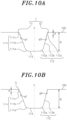
- FIGS. 10A and 10B a pneumatic tire 1 according to a second embodiment of the present invention will be described with reference to FIGS. 10A and 10B .
- at least one of the plurality of groove side surfaces 111 and 112 may further include surface connection surfaces 111c and 112c.
- these differences will be mainly described, and the same description and reference numerals refer to the above-described embodiments.
- the surface connection surfaces 111c and 112c may be located between the inclined surfaces 111b and 112b and the surface of the tread portion 100.
- a length "d" of each of the surface connection surfaces 111c and 112c in the radial direction of the pneumatic tire 1 may be 25% or less of a length "B" from the surface of the tread portion 100 to the groove bottom surface 113.
- the surface connection surfaces 111c and 112c may be inclined to be further away from the virtual surface "V" in order to form a predetermined angle "f" with the inclined surfaces 111b and 112b.
- the angle "f" of each of the inclined surface connection surfaces 111c and 112c may be 30° or less based on the inclined surfaces 111b and 112b.
- the surface connection surfaces 111c and 112c may be inclined more than the inclined surfaces 111b and 112b with respect to the virtual surface "V".
- first groove side surface 111 may include a first surface connection surface 111c disposed between the first inclined surface 111b and the surface of the tread portion 100
- second groove side surface 112 may include a second surface connection surface 112c disposed between the second inclined surface 112b and the surface of the tread portion 100
- first groove side surface 111 may include a first surface connection surface 111c
- the second inclined surface 112b of the second groove side surface 112 may be directly connected to the surface of the tread portion 20.
- the second groove side 112 may include a second surface connection surface 112c, and the first inclined surface 111b of the first groove side surface 111 may be directly connected to the surface of the tread portion 100.
- the angle "f1" between the first surface connection surface 111c and the first inclined surface 111b and the angle "f2" between the second surface connection surface 112c and the second inclined surface 112b may be formed equal to or different from each other.
- an area of the groove 110 may be reduced, and thus, the drainage performance may be reduced compared to V1 as described above.
- at least one of the plurality of groove side surfaces 111 and 112 includes the surface connection surfaces 111c and 112c, an area of the groove 110 can be further secured (the area is increased), and thus, reduced drainage performance can be supplemented.
Landscapes
- Engineering & Computer Science (AREA)
- Mechanical Engineering (AREA)
- Physics & Mathematics (AREA)
- Acoustics & Sound (AREA)
- Multimedia (AREA)
- Tires In General (AREA)
- Pharmaceuticals Containing Other Organic And Inorganic Compounds (AREA)
- Acyclic And Carbocyclic Compounds In Medicinal Compositions (AREA)
- Transition And Organic Metals Composition Catalysts For Addition Polymerization (AREA)
Description
- The present invention relates to a pneumatic tire, and more particularly, a pneumatic tire formed so that noise generated from a groove is reduced by disposing a noise reflector in the groove.
- Tires are mounted on a variety of vehicles, from small vehicles to heavy-duty vehicles, to support loads of the vehicles, and to perform a power transmission function that transmit power of the vehicles to the ground and a brake function, as well as functions for dampening vibrations and shocks from the ground that occur when the vehicles travel. In order to perform the functions of the tires, an internal air pressure is applied to the tires which play an important part in traveling and braking of the vehicles.
- With the change of the times, a proportion of unpaved roads gradually decreases, vehicles without an internal combustion engine such as electric vehicles are popularized, and noise is recently being regarded as important among the main performance of tires.
- The existing tire includes a tread portion in contact with a road surface, and a groove may be formed in the tread portion. The groove improves drainage. However, air flows in the groove as the vehicle travels, and thus, pipe resonance may be generated by the flowing air. There is a problem that the pipe resonance causes noise.
WO 2015/100435 A1 discloses various embodiments of a tire tread having one or more flexible gate apparatuses.
US 2005/126670 A1 discloses a tread for a pneumatic tire. The tread has a plurality of grooves. The grooves have a base defining the depth of the groove relative to the tread surface, opposing groove walls, and a centerline equidistance from the opposing groove walls. The groove may extend in either a circumferential or a lateral direction of the tread when the tread is applied to a pneumatic tire.
WO 2016/057149 A1 discloses various embodiments of a tire traction element. In one embodiment, a tire traction element is oriented in a circumferential groove of a tire to provide improved snow and/or mud traction.
US 2011/203709 A1 discloses a pneumatic vehicle tire that includes a tread rubber that is divided into tread elements, such as tread bars or circumferential ribs, by circumferential grooves and transverse grooves.
JP 2012-116339 A
DE 10 2007 016 930 A1 discloses a pneumatic vehicle tire, in particular, for commercial vehicles, with a number of circumferential grooves (2, 2') running in the circumferential direction, which have border edges (4, 4') running parallel to one another and straight in the circumferential direction on the tread periphery. - In view of the above, a pneumatic tire formed so that noise generated from a groove can be reduced is provided according
toindependent claim 1. Further refinements are subject of the dependent claims. - In accordance with an embodiment sueful for understanding the present invention, there is provided a pneumatic tire for reducing noise including: a tread portion including: a tread surface for making contacting with a road surface; and a groove recessed inward from the tread surface and extending along a circumferential direction of the pneumatic tire; and a plurality of noise reflectors protruding from the groove and disposed spaced apart from each other along the circumferential direction of the pneumatic tire, wherein the groove includes: a groove bottom surface spaced apart by a predetermined distance from the tread surface in a radial direction of the pneumatic tire; and a plurality of groove side surfaces connected to the groove bottom surface and each including a connection curved surface having a predetermined curvature, wherein each of the noise reflectors includes: a support surface supported by at least portions of the connection curved surface and the groove bottom surface; and a protrusion surface located on a side opposite to the support surface. The protrusion surface includes a first connection portion and a second connection portion which connect the support surface, and a portion of the protrusion surface is disposed to be spaced apart from the connection curved surface between the first connection portion and the second connection portion. The pneumatic tire may has a meridian plane passing through a center of the pneumatic tire and perpendicular to an axial direction of the tire, the plurality of groove side surface includes a first groove side surface and a second groove side surface, the first groove side surface and the second groove side surface are inclined so that an axial gap therebetween decreases as it goes to the groove bottom surface from the tread surface, and each of the first groove side surface and the second groove side surface extends to be inclined with respect to the meridian surface. An axial length of the noise reflector between the first connection portion and the second connection portion is 20% or more and 30% or less of a maximum distance between the first groove side surface and the second groove side surface (112) in the axial direction of the pneumatic tire, a radial height of the noise reflector between the first connection portion and the second connection portion in the radial direction is 65% or more and 75% or less of a length from the tread surface to the groove bottom surface in the radial direction of the pneumatic tire, and a separation distance between centers of the adjacent noise reflectors in the circumferential direction is 1 or more times and less than 2 times a thickness of the noise reflector in the circumferential direction.
- The tread portion may further include a sipe recessed inward from the tread surface and extending in a direction deviating from an extension direction of the groove to be connected to the groove, and the noise reflector may be disposed to be spaced apart from the sipe in the circumferential direction of the pneumatic tire.
- According to embodiments of the present invention, a noise reflector may be disposed in the groove of the pneumatic tire, and thus, noise generated by the groove may be reduced.
-
-
FIG. 1 is a plan view of a pneumatic tire according to a first embodiment of the present invention. -
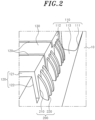
FIG. 2 is a perspective view of a noise reflector disposed in a groove according to the first embodiment of the present invention. -
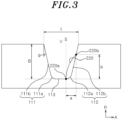
FIG. 3 is a cross-sectional view of the groove according to the first embodiment of the present invention. -
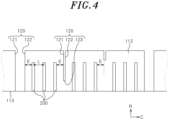
FIG. 4 is a partial cross-sectional view of a pneumatic tire taken along line IV-IV ofFIG. 1 . -
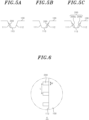
FIGS. 5A to 5C are cross-sectional views of the noise reflector according to the first embodiment of the present invention. -
FIG. 6 is an enlarged view of K illustrated inFIG. 1 . -
FIG. 7 is a table illustrating a level of noise generated by the pneumatic tire according to the first embodiment of the present invention. -
FIG. 8 is a graph illustrating a noise evaluation result of the pneumatic tire according to the first embodiment of the present invention. -
FIG. 9 is a table illustrating results of evaluating drainage performance of the pneumatic tire according to the first embodiment of the present invention. -
FIGS. 10A and 10B are cross-sectional views of side surfaces of a plurality of grooves of a pneumatic tire according to a second embodiment of the present invention. - Hereinafter, specific embodiments for implementing the present invention will be described with reference to the accompanying drawings.
- In describing the embodiments of the present invention, the detailed descriptions of well-known functions or configurations will be omitted if it is determined that the detailed descriptions of well-known functions or configurations may unnecessarily make obscure the present invention.
- When an element is referred to as being 'connected' to, or 'contacted' with another element, it should be understood that the element may be directly connected to, or contacted with the other element, but that other elements may exist in the middle.
- The terms used in the present application are only used for describing specific embodiments, and are not intended to limit the present invention. Singular expressions include plural expressions unless the context clearly indicates otherwise.
- In addition, in the present application, expressions such as an upper side, a lower side, and a side surface are described with reference to the drawings, and it should be noted in advance that if the direction of the object is changed, it may be expressed differently. For the same reason, some components in the accompanying drawings are exaggerated, omitted, or schematically illustrated, and the size of each component does not entirely reflect the actual size.
- The terms used herein, including ordinal numbers such as "first" and "second" may be used to describe, and not to limit, various components. The terms simply distinguish the components from one another.
- The meaning of "including" as used in the specification specifies a specific characteristic, region, integer, step, action, element and/or component, but does not exclude the existence or addition of other specific characteristic, region, integer, step, action, element, component and/or group.
- Meanwhile, a radial direction "R" described below means a radial direction of a tire. An axis may mean a rotation axis of the tire, and an axial direction "A" means a direction parallel to the rotation axis of the tire. The axial direction does not necessarily pass through a center of the rotation axis of the tire, and includes a direction parallel to an extension direction of the rotation axis of the tire. In addition, a circumferential direction "C" is a direction along an outer circumferential surface of the tire and means a direction perpendicular to the radial direction. The circumferential direction may be either the clockwise direction or counterclockwise direction when viewed from a side surface of the tire.
- Meanwhile, unless otherwise specified, the directions include both positive and negative directions.
- Hereinafter, a
pneumatic tire 1 according to a first embodiment of the present invention will be described with reference to the drawings. - Referring to
FIG. 1 , thepneumatic tire 1 according to the first embodiment of the present invention includes atread portion 100 and anoise reflector 200. - The
tread portion 100 is disposed on an outer portion of thepneumatic tire 1, corresponds to a thick rubber layer having a configuration in which the road surface is directly grounded, and may be formed of a rubber material having strong cut, impact, and abrasion resistance to protect an inside of the tire. A surface of thetread portion 100 may extend toward a side wall (not illustrated) of thepneumatic tire 1 as a portion contacting the road surface. In addition, thetread portion 100 may include agroove 110 and asipe 120 to improve water discharge performance, conditional friction performance, or the like. - Referring further to
FIG. 2 , thegroove 110 is recessed inward from the surface of thetread portion 100. Thegroove 110 may be formed in the circumferential direction or the axial direction of thepneumatic tire 1, or may be extended in a direction deviating from the circumferential direction or the axial direction of thepneumatic tire 1. Hereinafter, thegroove 110 will be described on the basis of being formed in the circumferential direction, but is not limited thereto. In addition, thegroove 110 may include a plurality ofgrooves 110 and the plurality ofgrooves 110 may be disposed to be spaced apart from each other. For example, the plurality ofgrooves 110 formed in the circumferential direction of thepneumatic tire 1 may be disposed to be spaced apart from each other in the axial direction of thepneumatic tire 1. In addition, a width of thegroove 110 perpendicular to an extension direction of thegroove 110 may be 1.1 mm or more. Thegroove 110 includes a plurality of groove side surfaces 111 and 112 and agroove bottom surface 113. - Referring further to
FIG. 3 , the plurality of groove side surfaces 111 and 112 is recessed from the surface of thetread portion 100. The plurality of groove side surfaces 111 and 112 are connected to thegroove bottom surface 113 and portions connected to thegroove bottom surface 113 have a predetermined curvature. The predetermined curvature may be equal to or less than R5 (5 mm), for example. In addition, the plurality of groove side surfaces 111 and 112 includes a firstgroove side surface 111 and a secondgroove side surface 112. The secondgroove side surface 112 may be disposed at a position more spaced apart from a center of thetread portion 100 than the firstgroove side surface 111. For example, in the plurality of groove side surfaces 111 and 112 of thegroove 110, the secondgroove side surface 112 located on one side (left side ofFIG. 1 ) in the axial direction of thepneumatic tire 1 with respect to a meridian plane "m" is located on one side (left side ofFIG. 1 ) of the firstgroove side surface 111 in the axial direction of thepneumatic tire 1. In addition, in the plurality of groove side surfaces 111 and 112 of thegroove 110, the secondgroove side surface 112 located on the other side (right side ofFIG. 1 ) in the axial direction of thepneumatic tire 1 with respect to the meridian surface "m" is located on the other side (right side ofFIG. 1 ) of the firstgroove side surface 111 in the axial direction of thepneumatic tire 1. In the present specification, the meridian plane "m" refers to a plane perpendicular to the axial direction while passing through a center of thepneumatic tire 1. In other words, in each of thegrooves 110, the secondgroove side surface 112 is disposed to be farther from the meridian surface "m" than the firstgroove side surface 111 in the axial direction of thepneumatic tire 1. - In addition, the first
groove side surface 111 and the secondgroove side surface 112 are inclined so that a gap therebetween decreases in a direction closer to thegroove bottom surface 113. For example, an angle "g" at which the firstgroove side surface 111 and the secondgroove side surface 112 are inclined may be in a range of 5° to 30° with respect to the radial direction of thepneumatic tire 1. In other words, the angle "g" formed between each of the firstgroove side surface 111 and the secondgroove side surface 112 and the meridian surface "m" may be in a range of 5° to 30°. In addition, the plurality of groove side surfaces 111 and 112 include connectioncurved surfaces inclined surfaces - As described above, the connection curved
surfaces groove bottom surface 113 and formed with a predetermined curvature. The connection curvedsurfaces noise reflector 200. The firstgroove side surface 111 includes the first connection curvedsurface 111a connected to thegroove bottom surface 113, and the secondgroove side surface 112 includes the second connection curvedsurface 112a connected to thegroove bottom surface 113. - The
inclined surfaces surfaces tread portion 100. In addition, theinclined surfaces second connection unit 220b of thenoise reflector 200 to be described below. In addition, theinclined surfaces groove side surface 111 includes the firstinclined surface 111b connected to the first connection curvedsurface 111a, and the secondgroove side surface 112 includes the secondinclined surface 112b connected to the second connection curvedsurface 112a. In addition, the firstinclined surface 111b and the secondinclined surface 112b are inclined so that an axial gap therebetween gradually decreases toward thegroove bottom surface 113. For example, an angle "g1" between the firstinclined surface 111b and the meridian surface "m" and an angle g2 between the secondinclined surface 112b and the meridian surface "m" may be in a range of 5° to 30°. The angle "g1" and the angle "g2" may be the same or different from each other. - The
groove bottom surface 113 are connected to the plurality of groove side surfaces 111 and 112 and may extend in a direction parallel to the surface of thetread portion 100. In other words, thegroove bottom surface 113 may be located between the firstgroove side surface 111 and the secondgroove side surface 112. - Referring further to
FIG. 4 , thesipe 120 may be recessed inwardly from the surface of thetread portion 100, and may be connected to thegroove 110 by extending in a direction that deviates from a direction in which thegroove 110 is extended. For example, thesipe 120 may extend in a direction close to the sidewall or in the axial direction of thepneumatic tire 1. In addition, a width of thesipe 120 perpendicular to an extension direction of thesipe 120 may be 1.0 mm or less. One side of thesipe 120 may be connected to the firstgroove side surface 111 or the secondgroove side surface 112 of thegroove 110. In addition, thesipe 120 may be spaced apart from thenoise reflector 200 in the circumferential direction of thepneumatic tire 1. In addition, some of the plurality ofsipes 120 may be connected to onegroove 110. The plurality ofsipes 120 are connected to thegroove 110, and thus, a plurality ofpitches 130 may be formed on the surface of thetread portion 100. The plurality ofnoise reflectors 200 may be disposed between the plurality ofsipes 120. In addition, thenoise reflector 200 may be disposed to be spaced apart from thesipe 120 in the circumferential direction. For example, a gap "E" between thesipe 120 and thenoise reflector 200 may be in a range between 1.5 mm and 3.0 mm. The gap "E" may be a gap between thesipe 120 and thenoise reflector 200 formed closest to thesipe 120 among the plurality ofnoise reflectors 200. Thesipe 120 may include a plurality of sipe side surfaces 121 and 122 and asipe bottom surface 123. - The plurality of sipe side surfaces 121 and 122 may be recessed inward from the surface of the
tread portion 10. In addition, the plurality of sipe side surfaces 121 and 122 may be connected to any one of the plurality of groove side surfaces 111 and 112. The gap "E" between thesipe 120 and thenoise reflector 200 described above by the plurality of sipe side surfaces 121 and 122 may be a gap between any one of the plurality ofnoise reflector 200 and any one of the plurality of sipe side surfaces 121 and 122 formed closest thereto. - The
sipe bottom surface 123 is connected to the plurality of sipe side surfaces 121 and 122 and may be formed in a direction parallel to the surface of thetread portion 100. In other words, thesipe bottom surface 123 may be located between the plurality of sipe bottom surfaces 123. At least a portion of the plurality of sipe bottom surfaces 123 may be disposed at different positions according to the length of the plurality of sipe side surfaces 121 and 122 being recessed from the surface of thetread portion 100. In other words, thesipe bottom surface 123 may be connected to any one of the plurality of groove side surfaces 111 and 112 or thegroove bottom surface 113. - Referring further to
FIGS. 5A to 5C , thenoise reflector 200 may reduce noise by reducing pipe resonance generated by air flowing in thegroove 110. Thenoise reflector 200 protrudes from thegroove 110, and the plurality ofnoise reflectors 200 is provided and disposed to be spaced apart from each other along the circumferential direction of thepneumatic tire 1. In addition, thenoise reflector 200 protrudes from at least one of the firstgroove side surface 111 and the secondgroove side surface 112. For example, thenoise reflectors 200 may protrude from the firstgroove side surface 111 and thegroove bottom surface 113 and may be spaced apart from each other along the circumferential direction of thepneumatic tire 1. As another example, the plurality ofnoise reflectors 200 may protrude from the secondgroove side surface 112 and thegroove bottom surface 113 and may be spaced apart from each other along the circumferential direction of thepneumatic tire 1. As still another example,first noise reflectors 200a which are some of the plurality ofnoise reflectors 200 may protrude from the firstgroove side surface 111 and thegroove bottom surface 113 and may be disposed to be spaced apart from each other along the circumferential direction of thepneumatic tire 1, andsecond noise reflectors 200b which are the remainder thereof may protrude from the secondgroove side surface 112 and thegroove bottom surface 113 and may be spaced apart from each other along the circumferential direction of thepneumatic tire 1. In addition, thefirst noise reflectors 200a and thesecond noise reflectors 200b may be spaced apart from each other. - Referring further to
FIGS. 3 ,4 and6 , a height "b" of thenoise reflector 200 is shown with respect to a length "B" from the surface of thetread portion 100 to thegroove bottom surface 113 in the radial direction of thepneumatic tire 1. According to the invention, the height "b" of thenoise reflector 200 is 65% or more and 75% or less of the length "B" from the surface of thetread portion 100 to thegroove bottom surface 113 in the radial direction of thepneumatic tire 1. A thickness "W" of thenoise reflector 200 in the circumferential direction of thepneumatic tire 1 may be 3% to 10% or less of a length of the gap between the plurality ofsipes 120 or the pitch between the plurality ofsipes 120, but is not limited thereto. For example, the thickness W of thenoise reflector 200 may be in a range of 1.0 mm to 3.0 mm. In addition, the thickness W of thenoise reflector 200 is less than a circumferential separation distance L between the centers of the plurality ofnoise reflectors 200. According to the invention, the circumferential separation distance L between the centers of the plurality ofnoise reflectors 200 is 1 or more times and less than 2 times the thickness "W" of thenoise reflector 200. For example, the separation distance L may be 1.0 mm or more and 6.0 mm or less. In addition, the plurality ofnoise reflectors 200 may be disposed in thegroove 110 in a number of 300 or more and 1000 or less. Thenoise reflector 200 may include asupport surface 210 and aprotrusion surface 220. - The
support surface 210 is supported by thegroove bottom surface 113 and one of the firstgroove side surface 111 and the secondgroove side surface 112. In addition, thesupport surface 210 may also be formed into a curved surface corresponding to the connection curvedsurfaces support surface 210 is formed in a curved surface to be supported by the connection curvedsurfaces inclined surfaces groove bottom surface 113. For example, thesupport surface 210 may be supported by the first connection curvedsurface 111a, the firstinclined surface 111b, and thegroove bottom surface 113, or may be supported by the second connection curvedsurface 112a, the secondinclined surface 112b, and thegroove bottom surface 113. - The
protrusion surface 220 is located on a side opposite to thesupport surface 210 and may be spaced apart from the connection curvedsurfaces protrusion surface 220 may be connected to thegroove bottom surface 113 and one of the firstgroove side surface 111 and the secondgroove side surface 112. Theprotrusion surface 220 includes one side that is connected to thegroove bottom surface 113 and the other side that is located on a side opposite to one side and connected to the firstgroove side surface 111 or the secondgroove side surface 112. Hereinafter, one side of theprotrusion surface 220 will be referred to as afirst connection portion 220a, and the other side of theprotrusion surface 220 will be referred to as asecond connection portion 220b. Thefirst connection portion 220a and thesecond connection portion 220b of theprotrusion surface 220 are connected to thesupport surface 210. In addition, theprotrusion surface 220 includes a protruding curved surface having a shape that goes away from a first virtual surface "V", which is a virtual plane perpendicular to thegroove bottom surface 113, toward an outer side in the radial direction of thepneumatic tire 1. In other words, thefirst connection portion 220a may be closer to the first virtual surface V than thesecond connection portion 220b. In addition, theprotrusion surface 220 may be in contact with a second virtual surface "S", which is a virtual plane that is perpendicular to thegroove bottom surface 113 and passes through thefirst connection portion 220a of theprotrusion surface 220. - A length "a" from the second virtual surface "S" to the
second connection portion 220b of theprotrusion surface 220 based on the axial direction of thepneumatic tire 1 is 20% or more and 30% or less of a maximum gap "I" between the firstgroove side surface 111 and the secondgroove side surface 112. In other words, thenoise reflector 200 is 20% or more and 30% or less of the maximum distance "I" between the firstgroove side surface 111 and the secondgroove side surface 112 and may protrude from thegroove bottom surface 113 and any one of the first groove side surfaces 111 and the secondgroove side surface 112. - Hereinafter, operations and effects of the
pneumatic tire 1 according to the first embodiment of the present invention will be described with further reference toFIGS. 7 to 9 . - Since the
noise reflector 200 is disposed in thegroove 110 of thepneumatic tire 1 according to the first embodiment of the present invention, noise caused by the flow of air flowing in thegroove 110 can be reduced. - V1, V2, and V3 illustrated in
FIG. 7 are grooves having different shapes, and V4 and V5 are grooves in which different types of noise reflectors are disposed. Even when the shapes of the grooves are different, there is no change in a noise level and a noise level per unit volume. Meanwhile, as the noise reflector is provided, the noise level per unit volume was improved by 4% in V4 and by 6% or more in V5. In addition, in the noise level and the noise level per unit volume, V5 including the noise reflector formed long in the radial direction of thepneumatic tire 1 were further improved than V4. In other words, as thenoise reflector 200 is provided on thegroove bottom surface 113 and the groove side surfaces 111 and 112 as in V5, noise can be efficiently reduced. - In addition, as illustrated in
FIG. 8 , when thenoise reflector 200 is applied to thegroove 110, noise can be reduced in a band of 500 hz to 800 hz than when thenoise reflector 200 is not applied. - As illustrated in
FIG. 9 , even when thenoise reflector 200 is disposed in thegroove 110, drainage performance of thegroove 110 is hardly affected. V1 illustrated inFIG. 9 represents the drainage performance of the tire in which the noise reflector is not present, and V5 represents the drainage performance of the tire to which thenoise reflector 200 of the present invention is applied. In addition, V2, V3, and V4 represent the tire drainage performance in a state in which protrusions of different shapes are applied to the groove. ST represents tire drainage performance in a straight traveling state, and CO represents tire drainage performance in a cornering state. According toFIG. 9 , it can be seen that V5 to which thenoise reflector 200 of the present invention is applied has drainage performance better than those of V2, V3, and V4 in ST and CO states. In addition, the drainage performance of V5 may be close to the drainage performance of V1. In other words, even when thenoise reflector 200 of the present invention is applied to thegroove 110, thegroove 110 can efficiently discharge water. - Hereinafter, a
pneumatic tire 1 according to a second embodiment of the present invention will be described with reference toFIGS. 10A and 10B . As compared with the first embodiment described above, in the second embodiment of the present invention, at least one of the plurality of groove side surfaces 111 and 112 may further include surface connection surfaces 111c and 112c. Hereinafter, these differences will be mainly described, and the same description and reference numerals refer to the above-described embodiments. - The surface connection surfaces 111c and 112c may be located between the
inclined surfaces tread portion 100. A length "d" of each of the surface connection surfaces 111c and 112c in the radial direction of thepneumatic tire 1 may be 25% or less of a length "B" from the surface of thetread portion 100 to thegroove bottom surface 113. In addition, the surface connection surfaces 111c and 112c may be inclined to be further away from the virtual surface "V" in order to form a predetermined angle "f" with theinclined surfaces inclined surfaces inclined surfaces - These surface connection surfaces 111c and 112c may be included in one or more of the plurality of groove side surfaces 111 and 112. As an example, referring to
Fig. 10A , the firstgroove side surface 111 may include a firstsurface connection surface 111c disposed between the firstinclined surface 111b and the surface of thetread portion 100, and the secondgroove side surface 112 may include a secondsurface connection surface 112c disposed between the secondinclined surface 112b and the surface of thetread portion 100. As another example, referring toFig. 10B , the firstgroove side surface 111 may include a firstsurface connection surface 111c, and the secondinclined surface 112b of the secondgroove side surface 112 may be directly connected to the surface of the tread portion 20. As still another example, thesecond groove side 112 may include a secondsurface connection surface 112c, and the firstinclined surface 111b of the firstgroove side surface 111 may be directly connected to the surface of thetread portion 100. In addition, the angle "f1" between the firstsurface connection surface 111c and the firstinclined surface 111b and the angle "f2" between the secondsurface connection surface 112c and the secondinclined surface 112b may be formed equal to or different from each other. - Hereinafter, operation and effects of the
pneumatic tire 1 according to the second embodiment of the present invention will be described. - When the
noise reflector 200 is applied to thegroove 110, an area of thegroove 110 may be reduced, and thus, the drainage performance may be reduced compared to V1 as described above. When at least one of the plurality of groove side surfaces 111 and 112 includes the surface connection surfaces 111c and 112c, an area of thegroove 110 can be further secured (the area is increased), and thus, reduced drainage performance can be supplemented. - The examples of the present invention have been described above as specific embodiments, but these are only examples, and the present invention is not limited thereto, and should be construed as having the widest scope as defined in the appended claims, taking into account the technical concept disclosed in the present specification. A person skilled in the art may combine/substitute the disclosed embodiments to implement a pattern of a shape that is not disclosed, but it also does not depart from the scope of the present invention as defined in the claims. In addition, those skilled in the art can easily change or modify the disclosed embodiments based on the present specification, and it is clear that such changes or modifications also belong to the scope of the present invention as defined in the claims.
Claims (3)
- A pneumatic tire for reducing noise comprising:a tread portion (100) including: a tread surface for making contacting with a road surface; and a groove (110) recessed inward from the tread surface and extending along a circumferential direction of the pneumatic tire; anda plurality of noise reflectors (200) protruding from the groove (110) and disposed spaced apart from each other along the circumferential direction of the pneumatic tire,wherein the groove (110) includes:a groove bottom surface (113) spaced apart by a predetermined distance from the tread surface in a radial direction of the pneumatic tire; anda plurality of groove side surfaces, including a first and a second groove side surfaces (111, 112), connected to the groove bottom surface (113), the groove side surfaces (111, 112) respectively including a first and a second connection curved surface (111a, 112a) having a predetermined curvature and a first and a second inclined surface (111b, 112b), respectively connected to the first and the second connection curved surface (111a, 1112a),wherein each of the noise reflectors (200) includes:a support surface (210) supported by the respective first and/or the second inclined surface (111b, 112b), the first and/or the second connection curved surface (111a, 112a) and the groove bottom surface (113); anda protrusion surface (220) located on a side opposite to the support surface (210) and disposed to be spaced apart from the connection curved surface (111a, 112a), wherein one side of the protrusion surface (220) includes a first connection portion (220a) and the other side of the protrusion surface (220) includes a second connection portion (220b), and the first connection portion (220a) and the second connection portion (220b) are connected to the support surface (210),wherein the protrusion surface (220) includes a protruding curved surface having a shape which goes away from a central virtual plane perpendicular to the groove bottom surface (113) as it goes from the groove bottom surface (113) toward an outer side in the radial direction of the pneumatic tire, andwherein the pneumatic tire has a meridian plane passing through a center of the pneumatic tire and perpendicular to an axial direction of the tire,the first groove side surface (111) and the second groove side surface (112) are inclined so that an axial gap therebetween decreases as it goes to the groove bottom surface (113) from the tread surface, andeach of the first groove side surface (111) and the second groove side surface (112) extends to be inclined with respect to the meridian surface,characterized in thatan axial length "a" of the noise reflector (200) between the first connection portion (220a) and the second connection portion (220b) is 20% or more and 30% or less of a maximum distance "I" between the first groove side surface (111) and the second groove side surface (112) in the axial direction of the pneumatic tire,a radial height "b" of the noise reflector (200) between the first connection portion (220a) and the second connection portion (220b) in the radial direction is 65% or more and 75% or less of a length "B" from the tread surface to the groove bottom surface (113) in the radial direction of the pneumatic tire, anda separation distance "L" between centers of the adjacent noise reflectors (200) in the circumferential direction is 1 or more times and less than 2 times a thickness "W" of the noise reflector (200) in the circumferential direction.
- The pneumatic tire of claim 1,wherein the tread portion (100) further includes a sipe (120) recessed inward from the tread surface and extending in a direction deviating from an extension direction of the groove (110) to be connected to the groove (110), andthe noise reflector (200) is disposed to be spaced apart from the sipe (120) in the circumferential direction of the pneumatic tire.
- The pneumatic tire of claim 2,
wherein a gap between the sipe (120) and the noise reflector (200) formed closest to the sipe (120) among the plurality of noise reflectors (200) is in a range between 1.5 mm and 3.0 mm.
Applications Claiming Priority (1)
| Application Number | Priority Date | Filing Date | Title |
|---|---|---|---|
| KR1020210001500A KR102445780B1 (en) | 2021-01-06 | 2021-01-06 | pneumatic tire |
Publications (2)
| Publication Number | Publication Date |
|---|---|
| EP4026708A1 EP4026708A1 (en) | 2022-07-13 |
| EP4026708B1 true EP4026708B1 (en) | 2024-05-01 |
Family
ID=77998896
Family Applications (1)
| Application Number | Title | Priority Date | Filing Date |
|---|---|---|---|
| EP21199450.4A Active EP4026708B1 (en) | 2021-01-06 | 2021-09-28 | Pneumatic tire |
Country Status (5)
| Country | Link |
|---|---|
| US (1) | US20220212505A1 (en) |
| EP (1) | EP4026708B1 (en) |
| JP (1) | JP7230321B2 (en) |
| KR (1) | KR102445780B1 (en) |
| CN (1) | CN114714825B (en) |
Families Citing this family (1)
| Publication number | Priority date | Publication date | Assignee | Title |
|---|---|---|---|---|
| USD998541S1 (en) * | 2022-04-21 | 2023-09-12 | Kumho Tire Co., Inc | Vehicle tyre |
Family Cites Families (23)
| Publication number | Priority date | Publication date | Assignee | Title |
|---|---|---|---|---|
| EP0602989A1 (en) * | 1992-12-16 | 1994-06-22 | Sumitomo Rubber Industries, Co. Ltd | Pneumatic tyre |
| US7004216B2 (en) * | 2003-12-11 | 2006-02-28 | The Goodyear Tire & Rubber Company | Tire tread including spaced projections in base of groove |
| DE102006031779B4 (en) * | 2006-07-10 | 2013-09-26 | Continental Reifen Deutschland Gmbh | Tread pattern of a vehicle tire |
| DE102007016930A1 (en) * | 2007-04-05 | 2008-10-09 | Continental Aktiengesellschaft | Vehicle tires |
| JP4262286B1 (en) * | 2007-10-23 | 2009-05-13 | 住友ゴム工業株式会社 | Pneumatic tire |
| JP5160870B2 (en) * | 2007-12-10 | 2013-03-13 | 東洋ゴム工業株式会社 | Pneumatic tire |
| DE102008037497A1 (en) * | 2008-10-30 | 2010-05-06 | Continental Reifen Deutschland Gmbh | Vehicle tires |
| CN102481809B (en) * | 2009-09-07 | 2015-03-11 | 株式会社普利司通 | Pneumatic tire |
| JP5615680B2 (en) * | 2010-12-01 | 2014-10-29 | 株式会社ブリヂストン | tire |
| WO2013088726A1 (en) * | 2011-12-13 | 2013-06-20 | 株式会社ブリヂストン | Pneumatic tire |
| JP6012397B2 (en) * | 2012-10-24 | 2016-10-25 | 株式会社ブリヂストン | Pneumatic tire |
| JP5827669B2 (en) * | 2013-12-04 | 2015-12-02 | 住友ゴム工業株式会社 | Pneumatic tire |
| JP6154076B2 (en) * | 2013-12-19 | 2017-06-28 | ブリヂストン アメリカズ タイヤ オペレーションズ、 エルエルシー | Tire with sipe depth with bias in circumferential direction |
| JP2017501082A (en) * | 2013-12-26 | 2017-01-12 | ブリヂストン アメリカズ タイヤ オペレーションズ、 エルエルシー | Tire tread with flexible gate device |
| BR112017006738A2 (en) * | 2014-10-06 | 2017-12-19 | Bridgestone Americas Tire Operations Llc | tire traction element |
| JP6001710B2 (en) * | 2015-03-06 | 2016-10-05 | 株式会社ブリヂストン | Pneumatic tire |
| DE112015007150T5 (en) * | 2015-11-25 | 2018-08-09 | Kumho Tire Co., Inc. | tire |
| JP2017210226A (en) * | 2016-05-27 | 2017-11-30 | クムホ タイヤ シーオー.,インク. | Resonance noise reduction tire having sound absorbing material |
| US11420484B2 (en) * | 2016-07-06 | 2022-08-23 | The Yokohama Rubber Co., Ltd. | Pneumatic tire |
| FR3055580A1 (en) * | 2016-09-07 | 2018-03-09 | Compagnie Generale Des Etablissements Michelin | PNEUMATIC HAVING ASYMMETRICAL SCULPTURE ELEMENTS AND DECENTRATED NOISE SHOCK ABSORBERS |
| JP6790664B2 (en) * | 2016-09-26 | 2020-11-25 | 住友ゴム工業株式会社 | tire |
| JP7027873B2 (en) * | 2017-12-20 | 2022-03-02 | 住友ゴム工業株式会社 | tire |
| KR101957640B1 (en) * | 2018-08-13 | 2019-03-12 | 한국타이어 주식회사 | Noise reduction tire |
-
2021
- 2021-01-06 KR KR1020210001500A patent/KR102445780B1/en active Active
- 2021-09-22 US US17/448,465 patent/US20220212505A1/en not_active Abandoned
- 2021-09-28 EP EP21199450.4A patent/EP4026708B1/en active Active
- 2021-09-30 JP JP2021161148A patent/JP7230321B2/en active Active
- 2021-10-13 CN CN202111191678.9A patent/CN114714825B/en active Active
Also Published As
| Publication number | Publication date |
|---|---|
| KR20220099605A (en) | 2022-07-14 |
| US20220212505A1 (en) | 2022-07-07 |
| EP4026708A1 (en) | 2022-07-13 |
| CN114714825A (en) | 2022-07-08 |
| JP7230321B2 (en) | 2023-03-01 |
| CN114714825B (en) | 2024-04-09 |
| JP2022106273A (en) | 2022-07-19 |
| KR102445780B1 (en) | 2022-09-22 |
Similar Documents
| Publication | Publication Date | Title |
|---|---|---|
| CN205468331U (en) | Inflatable tire | |
| JP5440590B2 (en) | Pneumatic tire | |
| CN111660733A (en) | Tyre for vehicle wheels | |
| CN112124008B (en) | pneumatic tire | |
| JP7187255B2 (en) | pneumatic tire | |
| JP6450261B2 (en) | Pneumatic tire | |
| RU2708830C1 (en) | Pneumatic tire | |
| WO2016194287A1 (en) | Pneumatic tire | |
| AU2011228471B2 (en) | Pneumatic tire | |
| WO2018016477A1 (en) | Pneumatic tire | |
| JP7284037B2 (en) | tire | |
| CN113043797A (en) | Tyre for vehicle wheels | |
| JP2019073062A (en) | Pneumatic tire | |
| EP4026708B1 (en) | Pneumatic tire | |
| WO2010092987A1 (en) | Pneumatic tire | |
| JP5685841B2 (en) | Pneumatic tire | |
| JP2016222205A (en) | Pneumatic tire | |
| RU2633030C1 (en) | Pneumatic tyre for high-load vehicles | |
| CN114905894B (en) | Tire with a tire body | |
| JP4020685B2 (en) | Pneumatic tire | |
| CN114829163B (en) | Tire with a tire body | |
| CN115195355A (en) | Tyre for vehicle wheels | |
| CN114379287A (en) | Tyre for vehicle wheels | |
| JP6571993B2 (en) | Pneumatic tire | |
| JP7111261B2 (en) | tire |
Legal Events
| Date | Code | Title | Description |
|---|---|---|---|
| PUAI | Public reference made under article 153(3) epc to a published international application that has entered the european phase |
Free format text: ORIGINAL CODE: 0009012 |
|
| STAA | Information on the status of an ep patent application or granted ep patent |
Free format text: STATUS: REQUEST FOR EXAMINATION WAS MADE |
|
| 17P | Request for examination filed |
Effective date: 20210928 |
|
| AK | Designated contracting states |
Kind code of ref document: A1 Designated state(s): AL AT BE BG CH CY CZ DE DK EE ES FI FR GB GR HR HU IE IS IT LI LT LU LV MC MK MT NL NO PL PT RO RS SE SI SK SM TR |
|
| RBV | Designated contracting states (corrected) |
Designated state(s): AL AT BE BG CH CY CZ DE DK EE ES FI FR GB GR HR HU IE IS IT LI LT LU LV MC MK MT NL NO PL PT RO RS SE SI SK SM TR |
|
| STAA | Information on the status of an ep patent application or granted ep patent |
Free format text: STATUS: EXAMINATION IS IN PROGRESS |
|
| 17Q | First examination report despatched |
Effective date: 20230714 |
|
| GRAP | Despatch of communication of intention to grant a patent |
Free format text: ORIGINAL CODE: EPIDOSNIGR1 |
|
| STAA | Information on the status of an ep patent application or granted ep patent |
Free format text: STATUS: GRANT OF PATENT IS INTENDED |
|
| INTG | Intention to grant announced |
Effective date: 20240131 |
|
| GRAS | Grant fee paid |
Free format text: ORIGINAL CODE: EPIDOSNIGR3 |
|
| GRAA | (expected) grant |
Free format text: ORIGINAL CODE: 0009210 |
|
| STAA | Information on the status of an ep patent application or granted ep patent |
Free format text: STATUS: THE PATENT HAS BEEN GRANTED |
|
| AK | Designated contracting states |
Kind code of ref document: B1 Designated state(s): AL AT BE BG CH CY CZ DE DK EE ES FI FR GB GR HR HU IE IS IT LI LT LU LV MC MK MT NL NO PL PT RO RS SE SI SK SM TR |
|
| REG | Reference to a national code |
Ref country code: GB Ref legal event code: FG4D |
|
| REG | Reference to a national code |
Ref country code: CH Ref legal event code: EP |
|
| REG | Reference to a national code |
Ref country code: IE Ref legal event code: FG4D |
|
| REG | Reference to a national code |
Ref country code: DE Ref legal event code: R096 Ref document number: 602021012579 Country of ref document: DE |
|
| REG | Reference to a national code |
Ref country code: LT Ref legal event code: MG9D |
|
| REG | Reference to a national code |
Ref country code: NL Ref legal event code: MP Effective date: 20240501 |
|
| PG25 | Lapsed in a contracting state [announced via postgrant information from national office to epo] |
Ref country code: IS Free format text: LAPSE BECAUSE OF FAILURE TO SUBMIT A TRANSLATION OF THE DESCRIPTION OR TO PAY THE FEE WITHIN THE PRESCRIBED TIME-LIMIT Effective date: 20240901 |
|
| PG25 | Lapsed in a contracting state [announced via postgrant information from national office to epo] |
Ref country code: BG Free format text: LAPSE BECAUSE OF FAILURE TO SUBMIT A TRANSLATION OF THE DESCRIPTION OR TO PAY THE FEE WITHIN THE PRESCRIBED TIME-LIMIT Effective date: 20240501 |
|
| PG25 | Lapsed in a contracting state [announced via postgrant information from national office to epo] |
Ref country code: FI Free format text: LAPSE BECAUSE OF FAILURE TO SUBMIT A TRANSLATION OF THE DESCRIPTION OR TO PAY THE FEE WITHIN THE PRESCRIBED TIME-LIMIT Effective date: 20240501 Ref country code: HR Free format text: LAPSE BECAUSE OF FAILURE TO SUBMIT A TRANSLATION OF THE DESCRIPTION OR TO PAY THE FEE WITHIN THE PRESCRIBED TIME-LIMIT Effective date: 20240501 |
|
| PG25 | Lapsed in a contracting state [announced via postgrant information from national office to epo] |
Ref country code: GR Free format text: LAPSE BECAUSE OF FAILURE TO SUBMIT A TRANSLATION OF THE DESCRIPTION OR TO PAY THE FEE WITHIN THE PRESCRIBED TIME-LIMIT Effective date: 20240802 |
|
| PG25 | Lapsed in a contracting state [announced via postgrant information from national office to epo] |
Ref country code: PT Free format text: LAPSE BECAUSE OF FAILURE TO SUBMIT A TRANSLATION OF THE DESCRIPTION OR TO PAY THE FEE WITHIN THE PRESCRIBED TIME-LIMIT Effective date: 20240902 |
|
| REG | Reference to a national code |
Ref country code: AT Ref legal event code: MK05 Ref document number: 1681863 Country of ref document: AT Kind code of ref document: T Effective date: 20240501 |
|
| PG25 | Lapsed in a contracting state [announced via postgrant information from national office to epo] |
Ref country code: NL Free format text: LAPSE BECAUSE OF FAILURE TO SUBMIT A TRANSLATION OF THE DESCRIPTION OR TO PAY THE FEE WITHIN THE PRESCRIBED TIME-LIMIT Effective date: 20240501 |
|
| PG25 | Lapsed in a contracting state [announced via postgrant information from national office to epo] |
Ref country code: ES Free format text: LAPSE BECAUSE OF FAILURE TO SUBMIT A TRANSLATION OF THE DESCRIPTION OR TO PAY THE FEE WITHIN THE PRESCRIBED TIME-LIMIT Effective date: 20240501 |
|
| PG25 | Lapsed in a contracting state [announced via postgrant information from national office to epo] |
Ref country code: AT Free format text: LAPSE BECAUSE OF FAILURE TO SUBMIT A TRANSLATION OF THE DESCRIPTION OR TO PAY THE FEE WITHIN THE PRESCRIBED TIME-LIMIT Effective date: 20240501 |
|
| PG25 | Lapsed in a contracting state [announced via postgrant information from national office to epo] |
Ref country code: PL Free format text: LAPSE BECAUSE OF FAILURE TO SUBMIT A TRANSLATION OF THE DESCRIPTION OR TO PAY THE FEE WITHIN THE PRESCRIBED TIME-LIMIT Effective date: 20240501 |
|
| PG25 | Lapsed in a contracting state [announced via postgrant information from national office to epo] |
Ref country code: LV Free format text: LAPSE BECAUSE OF FAILURE TO SUBMIT A TRANSLATION OF THE DESCRIPTION OR TO PAY THE FEE WITHIN THE PRESCRIBED TIME-LIMIT Effective date: 20240501 |
|
| PG25 | Lapsed in a contracting state [announced via postgrant information from national office to epo] |
Ref country code: PT Free format text: LAPSE BECAUSE OF FAILURE TO SUBMIT A TRANSLATION OF THE DESCRIPTION OR TO PAY THE FEE WITHIN THE PRESCRIBED TIME-LIMIT Effective date: 20240902 Ref country code: PL Free format text: LAPSE BECAUSE OF FAILURE TO SUBMIT A TRANSLATION OF THE DESCRIPTION OR TO PAY THE FEE WITHIN THE PRESCRIBED TIME-LIMIT Effective date: 20240501 Ref country code: NO Free format text: LAPSE BECAUSE OF FAILURE TO SUBMIT A TRANSLATION OF THE DESCRIPTION OR TO PAY THE FEE WITHIN THE PRESCRIBED TIME-LIMIT Effective date: 20240801 Ref country code: NL Free format text: LAPSE BECAUSE OF FAILURE TO SUBMIT A TRANSLATION OF THE DESCRIPTION OR TO PAY THE FEE WITHIN THE PRESCRIBED TIME-LIMIT Effective date: 20240501 Ref country code: LV Free format text: LAPSE BECAUSE OF FAILURE TO SUBMIT A TRANSLATION OF THE DESCRIPTION OR TO PAY THE FEE WITHIN THE PRESCRIBED TIME-LIMIT Effective date: 20240501 Ref country code: IS Free format text: LAPSE BECAUSE OF FAILURE TO SUBMIT A TRANSLATION OF THE DESCRIPTION OR TO PAY THE FEE WITHIN THE PRESCRIBED TIME-LIMIT Effective date: 20240901 Ref country code: HR Free format text: LAPSE BECAUSE OF FAILURE TO SUBMIT A TRANSLATION OF THE DESCRIPTION OR TO PAY THE FEE WITHIN THE PRESCRIBED TIME-LIMIT Effective date: 20240501 Ref country code: GR Free format text: LAPSE BECAUSE OF FAILURE TO SUBMIT A TRANSLATION OF THE DESCRIPTION OR TO PAY THE FEE WITHIN THE PRESCRIBED TIME-LIMIT Effective date: 20240802 Ref country code: FI Free format text: LAPSE BECAUSE OF FAILURE TO SUBMIT A TRANSLATION OF THE DESCRIPTION OR TO PAY THE FEE WITHIN THE PRESCRIBED TIME-LIMIT Effective date: 20240501 Ref country code: ES Free format text: LAPSE BECAUSE OF FAILURE TO SUBMIT A TRANSLATION OF THE DESCRIPTION OR TO PAY THE FEE WITHIN THE PRESCRIBED TIME-LIMIT Effective date: 20240501 Ref country code: BG Free format text: LAPSE BECAUSE OF FAILURE TO SUBMIT A TRANSLATION OF THE DESCRIPTION OR TO PAY THE FEE WITHIN THE PRESCRIBED TIME-LIMIT Effective date: 20240501 Ref country code: AT Free format text: LAPSE BECAUSE OF FAILURE TO SUBMIT A TRANSLATION OF THE DESCRIPTION OR TO PAY THE FEE WITHIN THE PRESCRIBED TIME-LIMIT Effective date: 20240501 Ref country code: RS Free format text: LAPSE BECAUSE OF FAILURE TO SUBMIT A TRANSLATION OF THE DESCRIPTION OR TO PAY THE FEE WITHIN THE PRESCRIBED TIME-LIMIT Effective date: 20240801 |
|
| PG25 | Lapsed in a contracting state [announced via postgrant information from national office to epo] |
Ref country code: DK Free format text: LAPSE BECAUSE OF FAILURE TO SUBMIT A TRANSLATION OF THE DESCRIPTION OR TO PAY THE FEE WITHIN THE PRESCRIBED TIME-LIMIT Effective date: 20240501 |
|
| PG25 | Lapsed in a contracting state [announced via postgrant information from national office to epo] |
Ref country code: EE Free format text: LAPSE BECAUSE OF FAILURE TO SUBMIT A TRANSLATION OF THE DESCRIPTION OR TO PAY THE FEE WITHIN THE PRESCRIBED TIME-LIMIT Effective date: 20240501 |
|
| PG25 | Lapsed in a contracting state [announced via postgrant information from national office to epo] |
Ref country code: CZ Free format text: LAPSE BECAUSE OF FAILURE TO SUBMIT A TRANSLATION OF THE DESCRIPTION OR TO PAY THE FEE WITHIN THE PRESCRIBED TIME-LIMIT Effective date: 20240501 |
|
| PG25 | Lapsed in a contracting state [announced via postgrant information from national office to epo] |
Ref country code: SK Free format text: LAPSE BECAUSE OF FAILURE TO SUBMIT A TRANSLATION OF THE DESCRIPTION OR TO PAY THE FEE WITHIN THE PRESCRIBED TIME-LIMIT Effective date: 20240501 Ref country code: RO Free format text: LAPSE BECAUSE OF FAILURE TO SUBMIT A TRANSLATION OF THE DESCRIPTION OR TO PAY THE FEE WITHIN THE PRESCRIBED TIME-LIMIT Effective date: 20240501 |
|
| PG25 | Lapsed in a contracting state [announced via postgrant information from national office to epo] |
Ref country code: SM Free format text: LAPSE BECAUSE OF FAILURE TO SUBMIT A TRANSLATION OF THE DESCRIPTION OR TO PAY THE FEE WITHIN THE PRESCRIBED TIME-LIMIT Effective date: 20240501 |
|
| PG25 | Lapsed in a contracting state [announced via postgrant information from national office to epo] |
Ref country code: SM Free format text: LAPSE BECAUSE OF FAILURE TO SUBMIT A TRANSLATION OF THE DESCRIPTION OR TO PAY THE FEE WITHIN THE PRESCRIBED TIME-LIMIT Effective date: 20240501 Ref country code: SK Free format text: LAPSE BECAUSE OF FAILURE TO SUBMIT A TRANSLATION OF THE DESCRIPTION OR TO PAY THE FEE WITHIN THE PRESCRIBED TIME-LIMIT Effective date: 20240501 Ref country code: RO Free format text: LAPSE BECAUSE OF FAILURE TO SUBMIT A TRANSLATION OF THE DESCRIPTION OR TO PAY THE FEE WITHIN THE PRESCRIBED TIME-LIMIT Effective date: 20240501 Ref country code: EE Free format text: LAPSE BECAUSE OF FAILURE TO SUBMIT A TRANSLATION OF THE DESCRIPTION OR TO PAY THE FEE WITHIN THE PRESCRIBED TIME-LIMIT Effective date: 20240501 Ref country code: DK Free format text: LAPSE BECAUSE OF FAILURE TO SUBMIT A TRANSLATION OF THE DESCRIPTION OR TO PAY THE FEE WITHIN THE PRESCRIBED TIME-LIMIT Effective date: 20240501 Ref country code: CZ Free format text: LAPSE BECAUSE OF FAILURE TO SUBMIT A TRANSLATION OF THE DESCRIPTION OR TO PAY THE FEE WITHIN THE PRESCRIBED TIME-LIMIT Effective date: 20240501 |
|
| REG | Reference to a national code |
Ref country code: DE Ref legal event code: R097 Ref document number: 602021012579 Country of ref document: DE |
|
| PG25 | Lapsed in a contracting state [announced via postgrant information from national office to epo] |
Ref country code: IT Free format text: LAPSE BECAUSE OF FAILURE TO SUBMIT A TRANSLATION OF THE DESCRIPTION OR TO PAY THE FEE WITHIN THE PRESCRIBED TIME-LIMIT Effective date: 20240501 |
|
| PLBE | No opposition filed within time limit |
Free format text: ORIGINAL CODE: 0009261 |
|
| STAA | Information on the status of an ep patent application or granted ep patent |
Free format text: STATUS: NO OPPOSITION FILED WITHIN TIME LIMIT |
|
| 26N | No opposition filed |
Effective date: 20250204 |
|
| PG25 | Lapsed in a contracting state [announced via postgrant information from national office to epo] |
Ref country code: MC Free format text: LAPSE BECAUSE OF FAILURE TO SUBMIT A TRANSLATION OF THE DESCRIPTION OR TO PAY THE FEE WITHIN THE PRESCRIBED TIME-LIMIT Effective date: 20240501 Ref country code: SI Free format text: LAPSE BECAUSE OF FAILURE TO SUBMIT A TRANSLATION OF THE DESCRIPTION OR TO PAY THE FEE WITHIN THE PRESCRIBED TIME-LIMIT Effective date: 20240501 |
|
| REG | Reference to a national code |
Ref country code: CH Ref legal event code: PL |
|
| PG25 | Lapsed in a contracting state [announced via postgrant information from national office to epo] |
Ref country code: LU Free format text: LAPSE BECAUSE OF NON-PAYMENT OF DUE FEES Effective date: 20240928 |
|
| REG | Reference to a national code |
Ref country code: BE Ref legal event code: MM Effective date: 20240930 |
|
| PG25 | Lapsed in a contracting state [announced via postgrant information from national office to epo] |
Ref country code: BE Free format text: LAPSE BECAUSE OF NON-PAYMENT OF DUE FEES Effective date: 20240930 |
|
| PG25 | Lapsed in a contracting state [announced via postgrant information from national office to epo] |
Ref country code: CH Free format text: LAPSE BECAUSE OF NON-PAYMENT OF DUE FEES Effective date: 20240930 |
|
| PG25 | Lapsed in a contracting state [announced via postgrant information from national office to epo] |
Ref country code: IE Free format text: LAPSE BECAUSE OF NON-PAYMENT OF DUE FEES Effective date: 20240928 |
|
| PG25 | Lapsed in a contracting state [announced via postgrant information from national office to epo] |
Ref country code: SE Free format text: LAPSE BECAUSE OF FAILURE TO SUBMIT A TRANSLATION OF THE DESCRIPTION OR TO PAY THE FEE WITHIN THE PRESCRIBED TIME-LIMIT Effective date: 20240501 |
|
| PGFP | Annual fee paid to national office [announced via postgrant information from national office to epo] |
Ref country code: DE Payment date: 20250910 Year of fee payment: 5 |
|
| PGFP | Annual fee paid to national office [announced via postgrant information from national office to epo] |
Ref country code: FR Payment date: 20250922 Year of fee payment: 5 |
|
| PG25 | Lapsed in a contracting state [announced via postgrant information from national office to epo] |
Ref country code: CY Free format text: LAPSE BECAUSE OF FAILURE TO SUBMIT A TRANSLATION OF THE DESCRIPTION OR TO PAY THE FEE WITHIN THE PRESCRIBED TIME-LIMIT; INVALID AB INITIO Effective date: 20210928 |
|
| PG25 | Lapsed in a contracting state [announced via postgrant information from national office to epo] |
Ref country code: HU Free format text: LAPSE BECAUSE OF FAILURE TO SUBMIT A TRANSLATION OF THE DESCRIPTION OR TO PAY THE FEE WITHIN THE PRESCRIBED TIME-LIMIT; INVALID AB INITIO Effective date: 20210928 |