EP4026581A1 - Environment control device - Google Patents
Environment control device Download PDFInfo
- Publication number
- EP4026581A1 EP4026581A1 EP20870787.7A EP20870787A EP4026581A1 EP 4026581 A1 EP4026581 A1 EP 4026581A1 EP 20870787 A EP20870787 A EP 20870787A EP 4026581 A1 EP4026581 A1 EP 4026581A1
- Authority
- EP
- European Patent Office
- Prior art keywords
- sleeper
- control device
- symptom
- environment control
- snoring
- Prior art date
- Legal status (The legal status is an assumption and is not a legal conclusion. Google has not performed a legal analysis and makes no representation as to the accuracy of the status listed.)
- Withdrawn
Links
Images


Classifications
-
- F—MECHANICAL ENGINEERING; LIGHTING; HEATING; WEAPONS; BLASTING
- F24—HEATING; RANGES; VENTILATING
- F24F—AIR-CONDITIONING; AIR-HUMIDIFICATION; VENTILATION; USE OF AIR CURRENTS FOR SCREENING
- F24F5/00—Air-conditioning systems or apparatus not covered by F24F1/00 or F24F3/00, e.g. using solar heat or combined with household units such as an oven or water heater
-
- A—HUMAN NECESSITIES
- A61—MEDICAL OR VETERINARY SCIENCE; HYGIENE
- A61B—DIAGNOSIS; SURGERY; IDENTIFICATION
- A61B5/00—Measuring for diagnostic purposes; Identification of persons
- A61B5/103—Measuring devices for testing the shape, pattern, colour, size or movement of the body or parts thereof, for diagnostic purposes
- A61B5/11—Measuring movement of the entire body or parts thereof, e.g. head or hand tremor or mobility of a limb
- A61B5/1116—Determining posture transitions
-
- A—HUMAN NECESSITIES
- A61—MEDICAL OR VETERINARY SCIENCE; HYGIENE
- A61B—DIAGNOSIS; SURGERY; IDENTIFICATION
- A61B5/00—Measuring for diagnostic purposes; Identification of persons
- A61B5/45—For evaluating or diagnosing the musculoskeletal system or teeth
- A61B5/4538—Evaluating a particular part of the muscoloskeletal system or a particular medical condition
- A61B5/4542—Evaluating the mouth, e.g. the jaw
- A61B5/4557—Evaluating bruxism
-
- A—HUMAN NECESSITIES
- A61—MEDICAL OR VETERINARY SCIENCE; HYGIENE
- A61B—DIAGNOSIS; SURGERY; IDENTIFICATION
- A61B5/00—Measuring for diagnostic purposes; Identification of persons
- A61B5/48—Other medical applications
- A61B5/4806—Sleep evaluation
- A61B5/4809—Sleep detection, i.e. determining whether a subject is asleep or not
-
- A—HUMAN NECESSITIES
- A61—MEDICAL OR VETERINARY SCIENCE; HYGIENE
- A61B—DIAGNOSIS; SURGERY; IDENTIFICATION
- A61B5/00—Measuring for diagnostic purposes; Identification of persons
- A61B5/48—Other medical applications
- A61B5/4806—Sleep evaluation
- A61B5/4812—Detecting sleep stages or cycles
-
- A—HUMAN NECESSITIES
- A61—MEDICAL OR VETERINARY SCIENCE; HYGIENE
- A61B—DIAGNOSIS; SURGERY; IDENTIFICATION
- A61B5/00—Measuring for diagnostic purposes; Identification of persons
- A61B5/48—Other medical applications
- A61B5/4806—Sleep evaluation
- A61B5/4815—Sleep quality
-
- A—HUMAN NECESSITIES
- A61—MEDICAL OR VETERINARY SCIENCE; HYGIENE
- A61B—DIAGNOSIS; SURGERY; IDENTIFICATION
- A61B5/00—Measuring for diagnostic purposes; Identification of persons
- A61B5/48—Other medical applications
- A61B5/4806—Sleep evaluation
- A61B5/4818—Sleep apnoea
-
- A—HUMAN NECESSITIES
- A61—MEDICAL OR VETERINARY SCIENCE; HYGIENE
- A61F—FILTERS IMPLANTABLE INTO BLOOD VESSELS; PROSTHESES; DEVICES PROVIDING PATENCY TO, OR PREVENTING COLLAPSING OF, TUBULAR STRUCTURES OF THE BODY, e.g. STENTS; ORTHOPAEDIC, NURSING OR CONTRACEPTIVE DEVICES; FOMENTATION; TREATMENT OR PROTECTION OF EYES OR EARS; BANDAGES, DRESSINGS OR ABSORBENT PADS; FIRST-AID KITS
- A61F5/00—Orthopaedic methods or devices for non-surgical treatment of bones or joints; Nursing devices ; Anti-rape devices
- A61F5/56—Devices for preventing snoring
-
- A—HUMAN NECESSITIES
- A61—MEDICAL OR VETERINARY SCIENCE; HYGIENE
- A61M—DEVICES FOR INTRODUCING MEDIA INTO, OR ONTO, THE BODY; DEVICES FOR TRANSDUCING BODY MEDIA OR FOR TAKING MEDIA FROM THE BODY; DEVICES FOR PRODUCING OR ENDING SLEEP OR STUPOR
- A61M21/00—Other devices or methods to cause a change in the state of consciousness; Devices for producing or ending sleep by mechanical, optical, or acoustical means, e.g. for hypnosis
- A61M21/02—Other devices or methods to cause a change in the state of consciousness; Devices for producing or ending sleep by mechanical, optical, or acoustical means, e.g. for hypnosis for inducing sleep or relaxation, e.g. by direct nerve stimulation, hypnosis, analgesia
-
- F—MECHANICAL ENGINEERING; LIGHTING; HEATING; WEAPONS; BLASTING
- F24—HEATING; RANGES; VENTILATING
- F24F—AIR-CONDITIONING; AIR-HUMIDIFICATION; VENTILATION; USE OF AIR CURRENTS FOR SCREENING
- F24F11/00—Control or safety arrangements
- F24F11/62—Control or safety arrangements characterised by the type of control or by internal processing, e.g. using fuzzy logic, adaptive control or estimation of values
- F24F11/63—Electronic processing
- F24F11/65—Electronic processing for selecting an operating mode
- F24F11/66—Sleep mode
-
- G—PHYSICS
- G06—COMPUTING OR CALCULATING; COUNTING
- G06N—COMPUTING ARRANGEMENTS BASED ON SPECIFIC COMPUTATIONAL MODELS
- G06N3/00—Computing arrangements based on biological models
- G06N3/02—Neural networks
- G06N3/08—Learning methods
-
- G—PHYSICS
- G06—COMPUTING OR CALCULATING; COUNTING
- G06N—COMPUTING ARRANGEMENTS BASED ON SPECIFIC COMPUTATIONAL MODELS
- G06N3/00—Computing arrangements based on biological models
- G06N3/02—Neural networks
- G06N3/08—Learning methods
- G06N3/09—Supervised learning
-
- A—HUMAN NECESSITIES
- A61—MEDICAL OR VETERINARY SCIENCE; HYGIENE
- A61F—FILTERS IMPLANTABLE INTO BLOOD VESSELS; PROSTHESES; DEVICES PROVIDING PATENCY TO, OR PREVENTING COLLAPSING OF, TUBULAR STRUCTURES OF THE BODY, e.g. STENTS; ORTHOPAEDIC, NURSING OR CONTRACEPTIVE DEVICES; FOMENTATION; TREATMENT OR PROTECTION OF EYES OR EARS; BANDAGES, DRESSINGS OR ABSORBENT PADS; FIRST-AID KITS
- A61F5/00—Orthopaedic methods or devices for non-surgical treatment of bones or joints; Nursing devices ; Anti-rape devices
- A61F5/56—Devices for preventing snoring
- A61F2005/563—Anti-bruxisme
-
- A—HUMAN NECESSITIES
- A61—MEDICAL OR VETERINARY SCIENCE; HYGIENE
- A61M—DEVICES FOR INTRODUCING MEDIA INTO, OR ONTO, THE BODY; DEVICES FOR TRANSDUCING BODY MEDIA OR FOR TAKING MEDIA FROM THE BODY; DEVICES FOR PRODUCING OR ENDING SLEEP OR STUPOR
- A61M16/00—Devices for influencing the respiratory system of patients by gas treatment, e.g. ventilators; Tracheal tubes
- A61M16/10—Preparation of respiratory gases or vapours
- A61M16/1075—Preparation of respiratory gases or vapours by influencing the temperature
-
- A—HUMAN NECESSITIES
- A61—MEDICAL OR VETERINARY SCIENCE; HYGIENE
- A61M—DEVICES FOR INTRODUCING MEDIA INTO, OR ONTO, THE BODY; DEVICES FOR TRANSDUCING BODY MEDIA OR FOR TAKING MEDIA FROM THE BODY; DEVICES FOR PRODUCING OR ENDING SLEEP OR STUPOR
- A61M16/00—Devices for influencing the respiratory system of patients by gas treatment, e.g. ventilators; Tracheal tubes
- A61M16/10—Preparation of respiratory gases or vapours
- A61M16/14—Preparation of respiratory gases or vapours by mixing different fluids, one of them being in a liquid phase
- A61M16/16—Devices to humidify the respiration air
-
- A—HUMAN NECESSITIES
- A61—MEDICAL OR VETERINARY SCIENCE; HYGIENE
- A61M—DEVICES FOR INTRODUCING MEDIA INTO, OR ONTO, THE BODY; DEVICES FOR TRANSDUCING BODY MEDIA OR FOR TAKING MEDIA FROM THE BODY; DEVICES FOR PRODUCING OR ENDING SLEEP OR STUPOR
- A61M21/00—Other devices or methods to cause a change in the state of consciousness; Devices for producing or ending sleep by mechanical, optical, or acoustical means, e.g. for hypnosis
- A61M2021/0005—Other devices or methods to cause a change in the state of consciousness; Devices for producing or ending sleep by mechanical, optical, or acoustical means, e.g. for hypnosis by the use of a particular sense, or stimulus
- A61M2021/0016—Other devices or methods to cause a change in the state of consciousness; Devices for producing or ending sleep by mechanical, optical, or acoustical means, e.g. for hypnosis by the use of a particular sense, or stimulus by the smell sense
-
- A—HUMAN NECESSITIES
- A61—MEDICAL OR VETERINARY SCIENCE; HYGIENE
- A61M—DEVICES FOR INTRODUCING MEDIA INTO, OR ONTO, THE BODY; DEVICES FOR TRANSDUCING BODY MEDIA OR FOR TAKING MEDIA FROM THE BODY; DEVICES FOR PRODUCING OR ENDING SLEEP OR STUPOR
- A61M21/00—Other devices or methods to cause a change in the state of consciousness; Devices for producing or ending sleep by mechanical, optical, or acoustical means, e.g. for hypnosis
- A61M2021/0005—Other devices or methods to cause a change in the state of consciousness; Devices for producing or ending sleep by mechanical, optical, or acoustical means, e.g. for hypnosis by the use of a particular sense, or stimulus
- A61M2021/0066—Other devices or methods to cause a change in the state of consciousness; Devices for producing or ending sleep by mechanical, optical, or acoustical means, e.g. for hypnosis by the use of a particular sense, or stimulus with heating or cooling
-
- A—HUMAN NECESSITIES
- A61—MEDICAL OR VETERINARY SCIENCE; HYGIENE
- A61M—DEVICES FOR INTRODUCING MEDIA INTO, OR ONTO, THE BODY; DEVICES FOR TRANSDUCING BODY MEDIA OR FOR TAKING MEDIA FROM THE BODY; DEVICES FOR PRODUCING OR ENDING SLEEP OR STUPOR
- A61M2205/00—General characteristics of the apparatus
- A61M2205/07—General characteristics of the apparatus having air pumping means
-
- A—HUMAN NECESSITIES
- A61—MEDICAL OR VETERINARY SCIENCE; HYGIENE
- A61M—DEVICES FOR INTRODUCING MEDIA INTO, OR ONTO, THE BODY; DEVICES FOR TRANSDUCING BODY MEDIA OR FOR TAKING MEDIA FROM THE BODY; DEVICES FOR PRODUCING OR ENDING SLEEP OR STUPOR
- A61M2205/00—General characteristics of the apparatus
- A61M2205/33—Controlling, regulating or measuring
- A61M2205/3368—Temperature
- A61M2205/3372—Temperature compensation
-
- A—HUMAN NECESSITIES
- A61—MEDICAL OR VETERINARY SCIENCE; HYGIENE
- A61M—DEVICES FOR INTRODUCING MEDIA INTO, OR ONTO, THE BODY; DEVICES FOR TRANSDUCING BODY MEDIA OR FOR TAKING MEDIA FROM THE BODY; DEVICES FOR PRODUCING OR ENDING SLEEP OR STUPOR
- A61M2205/00—General characteristics of the apparatus
- A61M2205/33—Controlling, regulating or measuring
- A61M2205/3375—Acoustical, e.g. ultrasonic, measuring means
-
- A—HUMAN NECESSITIES
- A61—MEDICAL OR VETERINARY SCIENCE; HYGIENE
- A61M—DEVICES FOR INTRODUCING MEDIA INTO, OR ONTO, THE BODY; DEVICES FOR TRANSDUCING BODY MEDIA OR FOR TAKING MEDIA FROM THE BODY; DEVICES FOR PRODUCING OR ENDING SLEEP OR STUPOR
- A61M2205/00—General characteristics of the apparatus
- A61M2205/50—General characteristics of the apparatus with microprocessors or computers
- A61M2205/52—General characteristics of the apparatus with microprocessors or computers with memories providing a history of measured variating parameters of apparatus or patient
-
- G—PHYSICS
- G06—COMPUTING OR CALCULATING; COUNTING
- G06N—COMPUTING ARRANGEMENTS BASED ON SPECIFIC COMPUTATIONAL MODELS
- G06N20/00—Machine learning
Definitions
- the present disclosure relates to an environment control device.
- Symptoms that disturb sleep of a sleeper may, for example, cause frequent awakenings of the sleeper during sleep and thus may deteriorate their sleep quality if such symptoms occur during sleep.
- Some methods have been proposed to prevent or reduce snoring and bruxism.
- Patent Document 1 proposes a method using a snore detector that detects a snore. When a snore is detected, random airflow, 1/f airflow, aromatic airflow, or the like is supplied to a sleeper to stop the snore.
- Patent Document 1 Japanese Unexamined Patent Publication No. H4-146746
- the known technique does not take the cause of the snore into account in preventing the snore.
- the effect on reduction or stop of the snore, and hence the effect on improvement of sleep quality are less reliable.
- a first aspect of the present disclosure is directed to an environment control device including: a determination unit (10) configured to determine a type of a symptom that disturbs sleep of a sleeper; and a supply unit (20) configured to supply the sleeper with a stimulus that reduces the symptom, according to the type of the symptom determined by the determination unit (10).
- the determination unit (10) determines a type of a symptom that disturbs sleep of a sleeper, and the supply unit (20) supplies the sleeper with a stimulus suitable for the type of the symptom.
- This configuration can reduce a symptom that disturbs sleep in consideration of the cause of the symptom. The sleep quality can thus be improved.
- a second aspect of the present disclosure is an embodiment of the first aspect.
- the symptom includes at least snoring, and the determination unit (10) determines whether the snoring is due to nasal congestion or due to constriction of the throat.
- the second aspect it is possible to select stimuli suitable for the snoring due to nasal congestion and the snoring due to constriction of the throat.
- a third aspect of the present disclosure is an embodiment of the second aspect.
- the supply unit (20) supplies the sleeper with air of which at least one of temperature or humidity is controlled.
- the snoring due to the nasal congestion can be reduced.
- a fourth aspect of the present disclosure is an embodiment of the third aspect.
- the supply unit (20) supplies the sleeper with humidity-controlled air.
- the snoring due to the nasal congestion can be reduced.
- a fifth aspect of the present disclosure is an embodiment of any one of the second to fourth aspects.
- the supply unit (20) supplies the sleeper with purified air.
- the snoring due to the nasal congestion can be reduced.
- a sixth aspect of the present disclosure is an embodiment of any one of the second to fifth aspects.
- the supply unit (20) supplies the sleeper with a first functional component having at least one of a vasoconstriction effect, an anti-inflammatory effect, or an immunostimulatory effect.
- the snoring due to the nasal congestion can be reduced.
- a seventh aspect of the present disclosure is an embodiment of any one of the second to sixth aspects.
- the supply unit (20) supplies the sleeper with airflow that makes the sleeper take a lateral recumbent position.
- the snoring due to the constriction of the throat can be reduced.
- the determination unit (10) includes a sound detector (111) configured to detect sounds emitted from the sleeper, and determines the type of the symptom based on the sounds detected by the sound detector (111).
- the eighth aspect it is possible to determine the type of the symptom disturbing the sleep of the sleeper based on the sounds emitted from the sleeper.
- the determination unit (10) further includes a posture detector (112) configured to detect a posture of the sleeper, and determines the type of the symptom based on the sounds detected by the sound detector (111) and the posture detected by the posture detector (112).
- a posture detector (112) configured to detect a posture of the sleeper, and determines the type of the symptom based on the sounds detected by the sound detector (111) and the posture detected by the posture detector (112).
- the ninth aspect it is possible to determine the type of the symptom disturbing the sleep of the sleeper based on the sounds emitted from the sleeper and the posture of the sleeper.
- a tenth aspect of the present disclosure is an embodiment of the ninth aspect.
- the determination unit (10) determines that the sleeper is snoring due to the constriction of the throat when a first condition is met in which the snoring of the sleeper is reduced when the posture detected by the posture detector (112) has been changed from a supine position to a lateral recumbent position, and determines that the sleeper is snoring due to the nasal congestion when the first condition is not met.
- the tenth aspect it is possible to determine whether the snoring is due to nasal congestion or due to constriction of the throat.
- An eleventh aspect of the present disclosure is an embodiment of any one of the first to tenth aspects.
- the symptom includes at least bruxism, and the determination unit (10) determines that the sleeper is bruxing.
- a twelfth aspect of the present disclosure is an embodiment of the eleventh aspect.
- the supply unit (20) supplies the sleeper with a stimulus that reduces the bruxism of the sleeper.
- the supply unit (20) supplies the sleeper with a stimulus that reduces the bruxism. Since the bruxism can be reduced, the sleep quality can be improved.
- a thirteenth aspect of the present disclosure is an embodiment of the twelfth aspect.
- the supply unit (20) supplies the sleeper with a second functional component having a relaxing effect.
- a fourteenth aspect of the present disclosure is an embodiment of the twelfth or thirteenth aspects.
- the supply unit (20) supplies the sleeper with airflow with 1/f fluctuations.
- a fifteenth aspect of the present disclosure is an embodiment of any one of the first to fourteenth aspects.
- the supply unit (20) is configured to supply the sleeper with a stimulus by two or more types of supply method
- the environment control device further includes a storage (30) configured to store, as learning data, a type of the supply method through which the stimulus has been supplied to the sleeper and an effect on a reduction of the symptom
- the supply unit (20) is configured to select the supply method based on the learning data stored in the storage (30).
- the fifteenth aspect it is possible to reduce the symptom that disturbs sleep (e.g., snoring and bruxism) in consideration of differences of individual sleepers.
- disturbs sleep e.g., snoring and bruxism
- a sixteenth aspect of the present disclosure is an embodiment of any one of the first to fifteenth aspects.
- the supply unit (20) selects a stimulus that is most effective for the symptom from among a plurality of stimuli prepared beforehand and supplies the sleeper with the selected stimulus, and if the effect on the reduction of the symptom is not recognized within predetermined time after the supply of the stimulus, the supply unit (20) selects a next most effective stimulus for the symptom from among the plurality of stimuli and supplies the sleeper with the selected stimulus.
- the sixteenth aspect it is possible to supply the sleeper, while checking the effects on the reduction of the symptom that disturbs sleep, with the most effective stimulus for that symptom. This can improve the reliability of the symptom reduction by the stimulus.
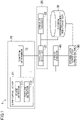
- FIG. 1 is a diagram illustrating a schematic configuration of an environment control device according to this embodiment.
- the environment control device (1) has a determination unit (10) and a supply unit (20) as main components.
- the determination unit (10) determines the type of a symptom that disturbs sleep of a sleeper.
- the supply unit (20) supplies the sleeper with a stimulus that reduces the symptom, according to the type of the symptom determined by the determination unit (10).
- Symptoms that disturb sleep include at least snoring.
- the determination unit (10) determines, for example, whether the snoring is due to nasal congestion or due to constriction of the throat.
- the nasal congestion determined herein is assumed to be caused by swelling of the nasal mucosa due to e.g., bacteria, viruses, and allergenic substances.
- Countermeasures for easing the nasal congestion include a method of removing or avoiding a causative substance of the nasal congestion and a method of reducing swelling of the nasal mucosa.
- the supply unit (20) of the present embodiment may supply a sleeper with air of which at least one of temperature or humidity is controlled (e.g., humidity-controlled air) when the determination unit (10) determines that the snoring is due to nasal congestion.
- the supply unit (20) may supply a sleeper with purified air when the determination unit (10) determines that the snoring is due to nasal congestion.
- the supply unit (20) may supply a sleeper with a first functional component having at least one of a vasoconstriction effect, an anti-inflammatory effect, or an immunostimulatory effect when the determination unit (10) determines that the snoring is due to nasal congestion.
- the supply unit (20) may supply a sleeper with airflow that makes the sleeper take a lateral recumbent position when the determination unit (10) determines the snoring is due to constriction of the throat.
- the determination unit (10) may be configured to further determine that the sleeper is bruxing.
- the supply unit (20) may be configured to supply the sleeper with a stimulus that reduces the bruxism when the determination unit (10) determines that the sleeper is bruxing.
- the supply unit (20) may supply the sleeper with, for example, a second functional component having a relaxing effect and/or airflow with 1/f fluctuations when the determination unit (10) determines that the sleeper is bruxing.
- the determination unit (10) may include a symptom detector (11) and a symptom determiner (12).
- the symptom detector (11) may have, for example, a sound detector (111) configured to detect sounds emitted from a sleeper, and a posture detector (112) configured to detect a posture of the sleeper.
- the sound detector (111) may be, for example, a smartphone, a remote control of an air conditioner, or any other similar devices, or a microphone provided in a pillow or any other products used by the sleeper.
- the posture detector (112) may be, for example, a posture measurement sensor or an image sensor capable of image processing.
- the symptom determiner (12) determines the type of the symptom that disturbs sleep of the sleeper (e.g., the type of the snoring of the sleeper and/or the occurrence of bruxism), based on the sounds detected by the sound detector (111) and/or the posture detected by the posture detector (112).
- the type of the symptom that disturbs sleep of the sleeper e.g., the type of the snoring of the sleeper and/or the occurrence of bruxism
- the determination unit (10) may be configured to determine that the sleeper is snoring due to the constriction of the throat when a first condition is met in which the snoring of the sleeper is reduced when the posture detected by the posture detector (112) has been changed from a supine position to a lateral recumbent position, and determine that the sleeper is snoring due to the nasal congestion when the first condition is not met.
- the supply unit (20) may be configured to supply the sleeper with a stimulus by two or more types of supply method.
- the environment control device (1) may further include a storage (30) configured to store, as learning data, the type of the supply method (a determination result) through which the stimulus has been supplied to the sleeper and the effects on the reduction of the symptom that disturbs the sleep.
- the supply unit (20) may include a stimulus selector (21) configured to select a stimulus supply method based on the learning data stored in the storage (30), and a stimulus provider (22) configured to provide the sleeper with the stimulus selected by the stimulus selector (21).
- the stimulus provider (22) include an air conditioner, air purifier, a humidifier, an aroma generator, and any other similar devices.
- the environment control device (1) may further include an effect checker (40) and a stored data corrector (learning section) (50).
- the effect checker (40) is configured to check whether the stimulus supplied to the sleeper from the supply unit (20) shows an effect on the reduction of the symptom (e.g., snoring and/or bruxism) within predetermined time from the supply of the stimulus (i.e., whether the snoring and/or bruxism is reduced), based on the sounds detected by the sound detector (111) and/or the posture detected by the posture detector (112).
- the symptom e.g., snoring and/or bruxism
- the learning section (50) corrects the learning data stored in the storage (30) based on the effect on the reduction of the symptom checked by the effect checker (40).
- This configuration allows storage of the conditions of the stimulus that eases the symptoms, such as snoring and bruxism, in the storage (30). It is thus possible to supply the sleeper who starts to snore or brux again with the stimulus that can ease the symptom, i.e., snoring or bruxism, effectively based on the information stored in the storage (30).
- the learning section (50) may employ machine learning using a neural network, for example.
- the environment control device (1) includes a computer, e.g., a microcomputer, which executes programs to execute functions of the symptom determiner (12), the stimulus selector (21), the effect checker (40), and the learning section (50).
- the storage (30) may be a recording medium, such as a computer-readable ROM, an optical disk, and a hard disk drive.
- the computer may be configured to be able to transmit and receive data to and from each of the symptom detector (11) and the stimulus provider (22) via a communication line or the like.
- FIG. 2 is a flowchart showing a method of reducing a symptom, such as snoring and bruxism, by using the environment control device (1) illustrated in FIG. 1 .
- Step S01 in order to detect whether the sleeper presents symptoms, such as snoring and bruxism, sounds emitted from the sleeper and/or the posture of the sleeper are detected by using the symptom detector (11) (the sound detector (111) and the posture detector (112)).
- the symptom detector (11) the sound detector (111) and the posture detector (112)
- Step S02 the symptom determiner (12) determines the presence or absence of a symptom (e.g., snoring and/or bruxism) based on the sounds or posture detected in Step S01. If there is no symptom, the process returns to Step S01. If there is a symptom, the process proceeds to Step S03.
- a symptom e.g., snoring and/or bruxism
- snoring occurs when mucosa vibrates during breathing due to constriction of the throat or nasal congestion.
- the frequency of the snoring sounds is lower than or equal to about 200 Hz or around 500 Hz.
- the snoring due to the constriction of the throat tends to be reduced in the lateral recumbent position, as compared to the supine position, whereas the snoring due to the nasal congestion does not have such a tendency.
- the type of the snoring may be determined by, for example, supplying cold air to the face of the sleeper to cause the sleeper to change their position from the supine position to the lateral recumbent position.
- bruxism sounds are generated when teeth are ground. In many cases, bruxism occurs consecutively at intervals from 12.5 msec to 20.5 msec and has its peaks present in a frequency range of 2000 Hz or lower and a frequency range from 3000 Hz to 6300 Hz. Since the snoring sounds and the teeth grinding sounds have different frequency bands, the snoring sounds and the teeth grinding sounds can be discriminated from each other even when the snoring and bruxism occur at the same time.
- Step S03 the stimulus selector (21) selects a stimulus to be supplied to the sleeper based on the type of the symptom (e.g., snoring and/or bruxism) determined in Step S02 and the learning data stored in the storage (30). Then, in Step S04, the stimulus provider (22) provides the sleeper with the stimulus selected in Step S03.
- the type of the symptom e.g., snoring and/or bruxism
- Step S02 If the symptom determined in Step S02 is "snoring due to nasal congestion," the following stimuli may be selected, for example:
- the “purified air” can be outside air, which may be supplied to the sleeper by ventilation through an air conditioner or the like, if the outside air is cleaner than the room air.
- the "first functional component” may be supplied to only the sleeper along with vortex ring-shaped airflow generated using the air gun.
- the “first functional component” may be supplied to the sleeper by blowing airflow from an air conditioner against a wall material (for example, Hinoki or Japanese cypress) containing aromatic ingredients to promote diffusion of the aromatic ingredients.
- Step S02 If the symptom determined in Step S02 is "snoring due to constriction of the throat," "airflow that makes the sleeper take a lateral recumbent position" may be selected as a stimulus.
- cold air may be supplied from an air conditioner to the face of the sleeper to cause the sleeper to turn the face opposite to the air conditioner, avoiding the cold air. It is possible to make the sleeper take the lateral recumbent position in this manner.
- Step S02 If the symptom determined in Step S02 is "bruxism,” the following stimuli may be selected, for example:
- the "second functional component” may be supplied to only the sleeper along with vortex ring-shaped airflow generated using the air gun.
- the “second functional component” may be supplied to the sleeper by blowing airflow from an air conditioner against a wall material (for example, Hinoki or Japanese cypress) containing aromatic ingredients to promote diffusion of the aromatic ingredients.
- Step S05 the effect checker (40) checks whether the stimulus provided to the sleeper in Step S04 shows an effect on the reduction of the symptom (e.g., snoring and/or bruxism) within predetermined time from the provision of the stimulus, based on the sounds detected by the sound detector (111) and/or the posture detected by the posture detector (112). Then, in Step S06, the learning section (50) corrects the learning data stored in the storage (30) based on the effect on the reduction of the symptom checked by the effect checker (40). Thereafter, the process returns to Step S01.
- the stimulus provided to the sleeper in Step S04 shows an effect on the reduction of the symptom (e.g., snoring and/or bruxism) within predetermined time from the provision of the stimulus, based on the sounds detected by the sound detector (111) and/or the posture detected by the posture detector (112).
- the learning section (50) corrects the learning data stored in the storage (30) based on the effect on the reduction of
- FIG. 3 is a diagram illustrating an example of how the environment control device (1) illustrated in FIG. 1 learns effects on the reduction of the symptoms, such as snoring and bruxism.
- the horizontal axis of each graph indicates the type of stimulus (stimuli 1 to 5 as examples), and the vertical axis indicates a symptom reduction effect value of each stimulus.
- the learning data used in the environment control device (1) of this embodiment is "relationship data (hereinafter referred to as reduction effect learning data) showing reduction effects of respective stimuli for each cause of the symptom (such as snoring, bruxism, etc.)."
- an initial value of the “reduction effect learning data” is first prepared. Specifically, subject tests are conducted in advance to see the reduction effects of the respective stimuli for each cause of the symptom. The average value of the reduction effect values obtained is stored as an initial value for each stimulus. The initial value may be prepared for each attribute (age, sex, etc.) of the subject.
- FIG. 3 shows that a "stimulus 1" has the highest initial value of the "reduction effect learning data.”
- the learned value of the "reduction effect learning data" is updated while the environment control device (1) performs environment control in an actual use environment.
- the symptom such as snoring, bruxism, etc.
- the reduction effect value of each stimulus is corrected based on the result of the check. For example, the reduction effect value before the stimulus supply is multiplied by a coefficient of 0.9 if there is no reduction effect, and is multiplied by a coefficient of 1.1 if there is a reduction effect. The reduction effect value is corrected in this manner.
- FIG. 3 includes a diagram showing that the reduction effect value (i.e., the initial value) of the "stimulus 1" is multiplied by the coefficient of 0.9 when the "stimulus 1" is “not effective” in the first environmental control, and a diagram showing that the reduction effect value (i.e., the initial value) of the "stimulus 1" is multiplied by the coefficient of 1.1 when the "stimulus 1" is “effective” in the first environmental control.
- the reduction effect value i.e., the initial value
- FIG. 3 includes a diagram showing that the reduction effect value of the "stimulus 2" is multiplied by the coefficient of 1.1 when the “stimulus 2" is “effective” in the second environmental control using the newly obtained “reduction effect learning data,” and a diagram showing that the reduction effect value of the "stimulus 2” is multiplied by the coefficient of 0.9 when the "stimulus 2" is “not effective” in the second environmental control.
- FIG. 3 also includes a diagram showing that the reduction effect value of the "stimulus 1" is multiplied by the coefficient of 1.1 when the "stimulus 1" is “effective” in the second environmental control using the "reduction effect learning data" in which the reduction effect value (i.e., the initial value) of the "stimulus 1" has been multiplied by the coefficient of 1.1, and a diagram showing that the reduction effect value of the "stimulus 1" is multiplied by the coefficient of 0.9 when the "stimulus 1" is “not effective” in the second environmental control.
- the method of correcting the reduction effect value of each stimulus is not limited to the multiplication by a coefficient as described above.
- the reduction effect value may be corrected by various methods, such as the addition and/or subtraction of a predetermined value.
- the environment control device (1) of the present embodiment described above includes: a determination unit (10) configured to determine a type of a symptom that disturbs sleep of a sleeper; and a supply unit (20) configured to supply the sleeper with a stimulus that reduces the symptom, according to the type of the symptom determined by the determination unit (10).
- This configuration can reduce a symptom that disturbs sleep in consideration of the cause of the symptom. The sleep quality can thus be improved.
- the symptom includes at least snoring
- the determination unit (10) determines whether the snoring is due to nasal congestion or due to constriction of the throat, which enables the selection of stimuli suitable for the snoring due to nasal congestion and the snoring due to constriction of the throat.
- the supply unit (20) supplies the sleeper with air of which at least one of temperature or humidity is controlled (e.g., humidity-controlled air), which can reduce the snoring due to the nasal congestion.
- air of which at least one of temperature or humidity is controlled e.g., humidity-controlled air
- the supply unit (20) supplies the sleeper with purified air, which can reduce the snoring due to the nasal congestion.
- the supply unit (20) supplies the sleeper with a first functional component having at least one of a vasoconstriction effect, an anti-inflammatory effect, or an immunostimulatory effect, which can reduce the snoring due to the nasal congestion.
- the supply unit (20) supplies the sleeper with airflow that makes the sleeper take a lateral recumbent position, which can reduce the snoring due to the constriction of the throat.
- the determination unit (10) includes a sound detector (111) configured to detect sounds emitted from the sleeper, and determines the type of the symptom disturbing sleep of the sleeper based on the sounds detected by the sound detector (111), which enables determination of the type of the symptom disturbing the sleep of the sleeper based on the sounds emitted from the sleeper.
- a sound detector (111) configured to detect sounds emitted from the sleeper, and determines the type of the symptom disturbing sleep of the sleeper based on the sounds detected by the sound detector (111), which enables determination of the type of the symptom disturbing the sleep of the sleeper based on the sounds emitted from the sleeper.
- the determination unit (10) further includes a posture detector (112) configured to detect a posture of the sleeper, and determines the type of the symptom disturbing sleep of the sleeper based on the sounds detected by the sound detector (111) and the posture detected by the posture detector (112), which enables determination of the type of the symptom disturbing the sleep of the sleeper based on the sounds emitted from the sleeper and the posture of the sleeper.
- a posture detector (112) configured to detect a posture of the sleeper, and determines the type of the symptom disturbing sleep of the sleeper based on the sounds detected by the sound detector (111) and the posture detected by the posture detector (112), which enables determination of the type of the symptom disturbing the sleep of the sleeper based on the sounds emitted from the sleeper and the posture of the sleeper.
- the determination unit (10) may determine that the sleeper is snoring due to the constriction of the throat when a first condition is met in which the snoring of the sleeper is reduced when the posture detected by the posture detector (112) has been changed from a supine position to a lateral recumbent position, and may determine that the sleeper is snoring due to the nasal congestion when the first condition is not met.
- This configuration enables determination of whether the snoring is due to nasal congestion or due to constriction of the throat.
- the symptom disturbing the sleep includes at least bruxism
- the determination unit (10) determines that the sleeper is bruxing, which enables the selection of a stimulus suitable for the bruxism.
- the supply unit (20) supplies the sleeper with a stimulus that reduces the bruxism, which makes it possible to reduce the bruxism and therefore improve the sleep quality.
- the supply unit (20) supplies the sleeper with a second functional component having a relaxing effect, which can reduce the bruxism.
- the supply unit (20) supplies the sleeper with airflow with 1/f fluctuations, which can reduce the bruxism.
- the supply unit (20) may be configured to supply the sleeper with a stimulus by two or more types of supply method.
- the environment control device (1) may further include a storage (30) configured to store, as learning data, the type of the supply method through which the stimulus has been supplied to the sleeper and the effects on the reduction of the symptom disturbing the sleep, and the supply unit (20) may be configured to select a supply method based on the learning data stored in the storage (30).
- This configuration can reduce the symptom that disturbs sleep (e.g., snoring and bruxism) in consideration of differences of individual sleepers.
- the environment control device (1) of the present embodiment detects symptoms, such as snoring and bruxism during sleep, and further analyzes and determines the cause of the symptoms (e.g., snoring due to nasal congestion and snoring due to constriction of the throat) based on sound information or other information in the environment.
- This configuration enables selection of a stimulus that is most effective for the cause of the symptom from among a plurality of stimuli prepared beforehand, and supply of the selected stimulus to the sleeper for predetermined time (e.g., about several minutes).
- the environment control device (1) determines both of the type of snoring and the occurrence of the bruxism as the types of the symptoms that disturb sleep of the sleeper. Instead, the environment control device (1) may determine either one of the type of the snoring or the occurrence of the bruxism. Alternatively, the occurrence of other symptoms, such as sleep apnea syndrome, may be determined in addition to the type of snoring and/or the occurrence of the bruxism.
- the symptom detector (11) includes both of the sound detector (111) and the posture detector (112), but may include only the sound detector (111). In this case, the learning section (50) performs machine learning using only sounds detected by the sound detector (111) to estimate the symptoms, such as snoring and bruxism. Alternatively, the symptom detector (11) may include a means for detecting another index, such as the body temperature of the sleeper, in addition to the sound detector (111) and the posture detector (112).
- the present disclosure is useful for an environment control device.
Landscapes
- Health & Medical Sciences (AREA)
- Life Sciences & Earth Sciences (AREA)
- Engineering & Computer Science (AREA)
- Physics & Mathematics (AREA)
- General Health & Medical Sciences (AREA)
- Biomedical Technology (AREA)
- Heart & Thoracic Surgery (AREA)
- Veterinary Medicine (AREA)
- Public Health (AREA)
- Animal Behavior & Ethology (AREA)
- Biophysics (AREA)
- Molecular Biology (AREA)
- Surgery (AREA)
- Medical Informatics (AREA)
- Pathology (AREA)
- Anesthesiology (AREA)
- Oral & Maxillofacial Surgery (AREA)
- Dentistry (AREA)
- Theoretical Computer Science (AREA)
- General Engineering & Computer Science (AREA)
- Orthopedic Medicine & Surgery (AREA)
- Psychology (AREA)
- Mathematical Physics (AREA)
- Acoustics & Sound (AREA)
- Physiology (AREA)
- Hematology (AREA)
- Pain & Pain Management (AREA)
- Software Systems (AREA)
- Data Mining & Analysis (AREA)
- Evolutionary Computation (AREA)
- Computing Systems (AREA)
- Rheumatology (AREA)
- General Physics & Mathematics (AREA)
- Computational Linguistics (AREA)
- Artificial Intelligence (AREA)
- Physical Education & Sports Medicine (AREA)
- Chemical & Material Sciences (AREA)
- Signal Processing (AREA)
- Combustion & Propulsion (AREA)
- Mechanical Engineering (AREA)
Abstract
Description
- The present disclosure relates to an environment control device.
- Symptoms that disturb sleep of a sleeper, such as snoring and bruxism, may, for example, cause frequent awakenings of the sleeper during sleep and thus may deteriorate their sleep quality if such symptoms occur during sleep. Some methods have been proposed to prevent or reduce snoring and bruxism.
- As a known technique,
Patent Document 1, for example, proposes a method using a snore detector that detects a snore. When a snore is detected, random airflow, 1/f airflow, aromatic airflow, or the like is supplied to a sleeper to stop the snore. - Patent Document 1:
Japanese Unexamined Patent Publication No. H4-146746 - However, the known technique does not take the cause of the snore into account in preventing the snore. Thus, the effect on reduction or stop of the snore, and hence the effect on improvement of sleep quality, are less reliable.
- It is an object of the present disclosure to reduce symptoms that disturb sleep of a sleeper and thereby improve their sleep quality.
- A first aspect of the present disclosure is directed to an environment control device including: a determination unit (10) configured to determine a type of a symptom that disturbs sleep of a sleeper; and a supply unit (20) configured to supply the sleeper with a stimulus that reduces the symptom, according to the type of the symptom determined by the determination unit (10).
- According to the first aspect, the determination unit (10) determines a type of a symptom that disturbs sleep of a sleeper, and the supply unit (20) supplies the sleeper with a stimulus suitable for the type of the symptom. This configuration can reduce a symptom that disturbs sleep in consideration of the cause of the symptom. The sleep quality can thus be improved.
- A second aspect of the present disclosure is an embodiment of the first aspect. In the second aspect, the symptom includes at least snoring, and the determination unit (10) determines whether the snoring is due to nasal congestion or due to constriction of the throat.
- According to the second aspect, it is possible to select stimuli suitable for the snoring due to nasal congestion and the snoring due to constriction of the throat.
- A third aspect of the present disclosure is an embodiment of the second aspect. In the third aspect, when the determination unit (10) determines that the snoring is due to the nasal congestion, the supply unit (20) supplies the sleeper with air of which at least one of temperature or humidity is controlled.
- According to the third aspect, the snoring due to the nasal congestion can be reduced.
- A fourth aspect of the present disclosure is an embodiment of the third aspect. In the fourth aspect, when the determination unit (10) determines that the snoring is due to the nasal congestion, the supply unit (20) supplies the sleeper with humidity-controlled air.
- According to the fourth aspect, the snoring due to the nasal congestion can be reduced.
- A fifth aspect of the present disclosure is an embodiment of any one of the second to fourth aspects. In the fifth aspect, when the determination unit (10) determines that the snoring is due to the nasal congestion, the supply unit (20) supplies the sleeper with purified air.
- According to the fifth aspect, the snoring due to the nasal congestion can be reduced.
- A sixth aspect of the present disclosure is an embodiment of any one of the second to fifth aspects. In the sixth aspect, when the determination unit (10) determines that the snoring is due to the nasal congestion, the supply unit (20) supplies the sleeper with a first functional component having at least one of a vasoconstriction effect, an anti-inflammatory effect, or an immunostimulatory effect.
- According to the sixth aspect, the snoring due to the nasal congestion can be reduced.
- A seventh aspect of the present disclosure is an embodiment of any one of the second to sixth aspects. In the seventh aspect, when the determination unit (10) determines that the snoring is due to the constriction of the throat, the supply unit (20) supplies the sleeper with airflow that makes the sleeper take a lateral recumbent position.
- According to the seventh aspect, the snoring due to the constriction of the throat can be reduced.
- An eighth aspect of the present disclosure is an embodiment of any one of the first to seventh aspects. In the eighth aspect, the determination unit (10) includes a sound detector (111) configured to detect sounds emitted from the sleeper, and determines the type of the symptom based on the sounds detected by the sound detector (111).
- According to the eighth aspect, it is possible to determine the type of the symptom disturbing the sleep of the sleeper based on the sounds emitted from the sleeper.
- A ninth aspect of the present disclosure is an embodiment of the eighth aspect, the determination unit (10) further includes a posture detector (112) configured to detect a posture of the sleeper, and determines the type of the symptom based on the sounds detected by the sound detector (111) and the posture detected by the posture detector (112).
- According to the ninth aspect, it is possible to determine the type of the symptom disturbing the sleep of the sleeper based on the sounds emitted from the sleeper and the posture of the sleeper.
- A tenth aspect of the present disclosure is an embodiment of the ninth aspect. In the tenth aspect, the determination unit (10) determines that the sleeper is snoring due to the constriction of the throat when a first condition is met in which the snoring of the sleeper is reduced when the posture detected by the posture detector (112) has been changed from a supine position to a lateral recumbent position, and determines that the sleeper is snoring due to the nasal congestion when the first condition is not met.
- According to the tenth aspect, it is possible to determine whether the snoring is due to nasal congestion or due to constriction of the throat.
- An eleventh aspect of the present disclosure is an embodiment of any one of the first to tenth aspects. In the eleventh aspect, the symptom includes at least bruxism, and the determination unit (10) determines that the sleeper is bruxing.
- According to the eleventh aspect, it is possible to select a stimulus suitable for the bruxism.
- A twelfth aspect of the present disclosure is an embodiment of the eleventh aspect. In the twelfth aspect, when the determination unit (10) determines that the sleeper is bruxing, the supply unit (20) supplies the sleeper with a stimulus that reduces the bruxism of the sleeper.
- According to the twelfth aspect, when the determination unit (10) determines the occurrence of the bruxism of the sleeper, the supply unit (20) supplies the sleeper with a stimulus that reduces the bruxism. Since the bruxism can be reduced, the sleep quality can be improved.
- A thirteenth aspect of the present disclosure is an embodiment of the twelfth aspect. In the thirteenth aspect, when the determination unit (10) determines that the sleeper is bruxing, the supply unit (20) supplies the sleeper with a second functional component having a relaxing effect.
- According to the thirteenth aspect, it is possible to reduce the bruxism.
- A fourteenth aspect of the present disclosure is an embodiment of the twelfth or thirteenth aspects. In the fourteenth aspect, when the determination unit (10) determines that the sleeper is bruxing, the supply unit (20) supplies the sleeper with airflow with 1/f fluctuations.
- According to the fourteenth aspect, it is possible to reduce the bruxism.
- A fifteenth aspect of the present disclosure is an embodiment of any one of the first to fourteenth aspects. In the fifteenth aspect, the supply unit (20) is configured to supply the sleeper with a stimulus by two or more types of supply method, the environment control device further includes a storage (30) configured to store, as learning data, a type of the supply method through which the stimulus has been supplied to the sleeper and an effect on a reduction of the symptom, and the supply unit (20) is configured to select the supply method based on the learning data stored in the storage (30).
- According to the fifteenth aspect, it is possible to reduce the symptom that disturbs sleep (e.g., snoring and bruxism) in consideration of differences of individual sleepers.
- A sixteenth aspect of the present disclosure is an embodiment of any one of the first to fifteenth aspects. In the sixteenth aspect, the supply unit (20) selects a stimulus that is most effective for the symptom from among a plurality of stimuli prepared beforehand and supplies the sleeper with the selected stimulus, and if the effect on the reduction of the symptom is not recognized within predetermined time after the supply of the stimulus, the supply unit (20) selects a next most effective stimulus for the symptom from among the plurality of stimuli and supplies the sleeper with the selected stimulus.
- According to the sixteenth aspect, it is possible to supply the sleeper, while checking the effects on the reduction of the symptom that disturbs sleep, with the most effective stimulus for that symptom. This can improve the reliability of the symptom reduction by the stimulus.
-
-
FIG. 1 is a diagram illustrating a schematic configuration of an environment control device according to an embodiment. -
FIG. 2 is a flowchart showing a method of reducing a symptom that disturbs sleep by using the environment control device illustrated inFIG. 1 . -
FIG. 3 is a diagram illustrating an example of how the environment control device illustrated inFIG. 1 learns an effect on reduction of the symptom that disturbs sleep. - An embodiment of the present disclosure will be described below with reference to the drawings. The following embodiment is merely a preferred example in nature, and is not intended to limit the scope, applications, or use of the invention.
-
FIG. 1 is a diagram illustrating a schematic configuration of an environment control device according to this embodiment. - As illustrated in
FIG. 1 , the environment control device (1) has a determination unit (10) and a supply unit (20) as main components. The determination unit (10) determines the type of a symptom that disturbs sleep of a sleeper. The supply unit (20) supplies the sleeper with a stimulus that reduces the symptom, according to the type of the symptom determined by the determination unit (10). - Symptoms that disturb sleep include at least snoring. The determination unit (10) determines, for example, whether the snoring is due to nasal congestion or due to constriction of the throat. The nasal congestion determined herein is assumed to be caused by swelling of the nasal mucosa due to e.g., bacteria, viruses, and allergenic substances. Countermeasures for easing the nasal congestion include a method of removing or avoiding a causative substance of the nasal congestion and a method of reducing swelling of the nasal mucosa. Thus, the supply unit (20) of the present embodiment may supply a sleeper with air of which at least one of temperature or humidity is controlled (e.g., humidity-controlled air) when the determination unit (10) determines that the snoring is due to nasal congestion. Alternatively, the supply unit (20) may supply a sleeper with purified air when the determination unit (10) determines that the snoring is due to nasal congestion. Alternatively, the supply unit (20) may supply a sleeper with a first functional component having at least one of a vasoconstriction effect, an anti-inflammatory effect, or an immunostimulatory effect when the determination unit (10) determines that the snoring is due to nasal congestion. Alternatively, the supply unit (20) may supply a sleeper with airflow that makes the sleeper take a lateral recumbent position when the determination unit (10) determines the snoring is due to constriction of the throat.
- The determination unit (10) may be configured to further determine that the sleeper is bruxing. In this case, the supply unit (20) may be configured to supply the sleeper with a stimulus that reduces the bruxism when the determination unit (10) determines that the sleeper is bruxing. Specifically, the supply unit (20) may supply the sleeper with, for example, a second functional component having a relaxing effect and/or airflow with 1/f fluctuations when the determination unit (10) determines that the sleeper is bruxing.
- In this embodiment, the determination unit (10) may include a symptom detector (11) and a symptom determiner (12). The symptom detector (11) may have, for example, a sound detector (111) configured to detect sounds emitted from a sleeper, and a posture detector (112) configured to detect a posture of the sleeper. The sound detector (111) may be, for example, a smartphone, a remote control of an air conditioner, or any other similar devices, or a microphone provided in a pillow or any other products used by the sleeper. The posture detector (112) may be, for example, a posture measurement sensor or an image sensor capable of image processing. The symptom determiner (12) determines the type of the symptom that disturbs sleep of the sleeper (e.g., the type of the snoring of the sleeper and/or the occurrence of bruxism), based on the sounds detected by the sound detector (111) and/or the posture detected by the posture detector (112).
- For example, the determination unit (10) may be configured to determine that the sleeper is snoring due to the constriction of the throat when a first condition is met in which the snoring of the sleeper is reduced when the posture detected by the posture detector (112) has been changed from a supine position to a lateral recumbent position, and determine that the sleeper is snoring due to the nasal congestion when the first condition is not met.
- In this embodiment, the supply unit (20) may be configured to supply the sleeper with a stimulus by two or more types of supply method. The environment control device (1) may further include a storage (30) configured to store, as learning data, the type of the supply method (a determination result) through which the stimulus has been supplied to the sleeper and the effects on the reduction of the symptom that disturbs the sleep. In this case, the supply unit (20) may include a stimulus selector (21) configured to select a stimulus supply method based on the learning data stored in the storage (30), and a stimulus provider (22) configured to provide the sleeper with the stimulus selected by the stimulus selector (21). Examples of the stimulus provider (22) include an air conditioner, air purifier, a humidifier, an aroma generator, and any other similar devices.
- If the environment control device (1) includes the storage (30), the environment control device (1) may further include an effect checker (40) and a stored data corrector (learning section) (50). The effect checker (40) is configured to check whether the stimulus supplied to the sleeper from the supply unit (20) shows an effect on the reduction of the symptom (e.g., snoring and/or bruxism) within predetermined time from the supply of the stimulus (i.e., whether the snoring and/or bruxism is reduced), based on the sounds detected by the sound detector (111) and/or the posture detected by the posture detector (112). The learning section (50) corrects the learning data stored in the storage (30) based on the effect on the reduction of the symptom checked by the effect checker (40). This configuration allows storage of the conditions of the stimulus that eases the symptoms, such as snoring and bruxism, in the storage (30). It is thus possible to supply the sleeper who starts to snore or brux again with the stimulus that can ease the symptom, i.e., snoring or bruxism, effectively based on the information stored in the storage (30). The learning section (50) may employ machine learning using a neural network, for example.
- The environment control device (1) includes a computer, e.g., a microcomputer, which executes programs to execute functions of the symptom determiner (12), the stimulus selector (21), the effect checker (40), and the learning section (50). The storage (30) may be a recording medium, such as a computer-readable ROM, an optical disk, and a hard disk drive. The computer may be configured to be able to transmit and receive data to and from each of the symptom detector (11) and the stimulus provider (22) via a communication line or the like.
-
FIG. 2 is a flowchart showing a method of reducing a symptom, such as snoring and bruxism, by using the environment control device (1) illustrated inFIG. 1 . - First, in Step S01, in order to detect whether the sleeper presents symptoms, such as snoring and bruxism, sounds emitted from the sleeper and/or the posture of the sleeper are detected by using the symptom detector (11) (the sound detector (111) and the posture detector (112)).
- Next, in Step S02, the symptom determiner (12) determines the presence or absence of a symptom (e.g., snoring and/or bruxism) based on the sounds or posture detected in Step S01. If there is no symptom, the process returns to Step S01. If there is a symptom, the process proceeds to Step S03.
- In general, snoring occurs when mucosa vibrates during breathing due to constriction of the throat or nasal congestion. In many cases, the frequency of the snoring sounds is lower than or equal to about 200 Hz or around 500 Hz. The snoring due to the constriction of the throat tends to be reduced in the lateral recumbent position, as compared to the supine position, whereas the snoring due to the nasal congestion does not have such a tendency. Thus, if the sleeper does not change their position spontaneously in Step S01, the type of the snoring may be determined by, for example, supplying cold air to the face of the sleeper to cause the sleeper to change their position from the supine position to the lateral recumbent position.
- In bruxism, sounds are generated when teeth are ground. In many cases, bruxism occurs consecutively at intervals from 12.5 msec to 20.5 msec and has its peaks present in a frequency range of 2000 Hz or lower and a frequency range from 3000 Hz to 6300 Hz. Since the snoring sounds and the teeth grinding sounds have different frequency bands, the snoring sounds and the teeth grinding sounds can be discriminated from each other even when the snoring and bruxism occur at the same time.
- Next, in Step S03, the stimulus selector (21) selects a stimulus to be supplied to the sleeper based on the type of the symptom (e.g., snoring and/or bruxism) determined in Step S02 and the learning data stored in the storage (30). Then, in Step S04, the stimulus provider (22) provides the sleeper with the stimulus selected in Step S03.
- If the symptom determined in Step S02 is "snoring due to nasal congestion," the following stimuli may be selected, for example:
- air controlled to have the temperature and humidity (the temperature of about 20°C to about 24°C and the humidity of about 55% to about 60%) easy on the nasal cavity (which air can be supplied through an air conditioner, for example);
- purified air from which allergens, viruses and the like have been removed (which air can be supplied through an air purifier, for example); and
- the first functional component having at least one of a vasoconstriction effect, an anti-inflammatory effect, or an immunostimulatory effect (e.g., peppermint (menthol), eucalyptus, tea tree, etc., which component can be supplied through an aroma generator, for example).
- The "purified air" can be outside air, which may be supplied to the sleeper by ventilation through an air conditioner or the like, if the outside air is cleaner than the room air. The "first functional component" may be supplied to only the sleeper along with vortex ring-shaped airflow generated using the air gun. Alternatively, the "first functional component" may be supplied to the sleeper by blowing airflow from an air conditioner against a wall material (for example, Hinoki or Japanese cypress) containing aromatic ingredients to promote diffusion of the aromatic ingredients.
- If the symptom determined in Step S02 is "snoring due to constriction of the throat," "airflow that makes the sleeper take a lateral recumbent position" may be selected as a stimulus. For example, cold air may be supplied from an air conditioner to the face of the sleeper to cause the sleeper to turn the face opposite to the air conditioner, avoiding the cold air. It is possible to make the sleeper take the lateral recumbent position in this manner.
- If the symptom determined in Step S02 is "bruxism," the following stimuli may be selected, for example:
- a second functional component having a relaxing effect (e.g., lavender (linalool), chamomile, sandalwood, cypress, neroli, etc., which component can be supplied through an aroma generator, for example); and
- airflow with 1/f fluctuations (which airflow can be supplied through an air conditioner, for example).
- The "second functional component" may be supplied to only the sleeper along with vortex ring-shaped airflow generated using the air gun. Alternatively, the "second functional component" may be supplied to the sleeper by blowing airflow from an air conditioner against a wall material (for example, Hinoki or Japanese cypress) containing aromatic ingredients to promote diffusion of the aromatic ingredients.
- Next, in Step S05, the effect checker (40) checks whether the stimulus provided to the sleeper in Step S04 shows an effect on the reduction of the symptom (e.g., snoring and/or bruxism) within predetermined time from the provision of the stimulus, based on the sounds detected by the sound detector (111) and/or the posture detected by the posture detector (112). Then, in Step S06, the learning section (50) corrects the learning data stored in the storage (30) based on the effect on the reduction of the symptom checked by the effect checker (40). Thereafter, the process returns to Step S01.
-
FIG. 3 is a diagram illustrating an example of how the environment control device (1) illustrated inFIG. 1 learns effects on the reduction of the symptoms, such as snoring and bruxism. InFIG. 3 , the horizontal axis of each graph indicates the type of stimulus (stimuli 1 to 5 as examples), and the vertical axis indicates a symptom reduction effect value of each stimulus. - The learning data used in the environment control device (1) of this embodiment is "relationship data (hereinafter referred to as reduction effect learning data) showing reduction effects of respective stimuli for each cause of the symptom (such as snoring, bruxism, etc.)."
- To generate the "reduction effect learning data," an initial value of the "reduction effect learning data" is first prepared. Specifically, subject tests are conducted in advance to see the reduction effects of the respective stimuli for each cause of the symptom. The average value of the reduction effect values obtained is stored as an initial value for each stimulus. The initial value may be prepared for each attribute (age, sex, etc.) of the subject.
-
FIG. 3 shows that a "stimulus 1" has the highest initial value of the "reduction effect learning data." - Subsequently, the learned value of the "reduction effect learning data" is updated while the environment control device (1) performs environment control in an actual use environment. Specifically, the symptom (such as snoring, bruxism, etc.) reduction effect is checked for each stimulus supplied to the sleeper, and the reduction effect value of each stimulus is corrected based on the result of the check. For example, the reduction effect value before the stimulus supply is multiplied by a coefficient of 0.9 if there is no reduction effect, and is multiplied by a coefficient of 1.1 if there is a reduction effect. The reduction effect value is corrected in this manner.
-
FIG. 3 includes a diagram showing that the reduction effect value (i.e., the initial value) of the "stimulus 1" is multiplied by the coefficient of 0.9 when the "stimulus 1" is "not effective" in the first environmental control, and a diagram showing that the reduction effect value (i.e., the initial value) of the "stimulus 1" is multiplied by the coefficient of 1.1 when the "stimulus 1" is "effective" in the first environmental control. - As a result of multiplying the reduction effect value (i.e., the initial value) of the "
stimulus 1" by the coefficient of 0.9 when the "stimulus 1" is "not effective" in the first environmental control, the "stimulus 2" has the highest reduction effect value of the "reduction effect learning data."FIG. 3 includes a diagram showing that the reduction effect value of the "stimulus 2" is multiplied by the coefficient of 1.1 when the "stimulus 2" is "effective" in the second environmental control using the newly obtained "reduction effect learning data," and a diagram showing that the reduction effect value of the "stimulus 2" is multiplied by the coefficient of 0.9 when the "stimulus 2" is "not effective" in the second environmental control. -
FIG. 3 also includes a diagram showing that the reduction effect value of the "stimulus 1" is multiplied by the coefficient of 1.1 when the "stimulus 1" is "effective" in the second environmental control using the "reduction effect learning data" in which the reduction effect value (i.e., the initial value) of the "stimulus 1" has been multiplied by the coefficient of 1.1, and a diagram showing that the reduction effect value of the "stimulus 1" is multiplied by the coefficient of 0.9 when the "stimulus 1" is "not effective" in the second environmental control. - These processes are repeated, which enables acquisition of the optimum "reduction effect learning data" for the sleeper. It is therefore possible to improve the reliability of the environmental control for easing the symptoms, such as snoring and bruxism.
- The method of correcting the reduction effect value of each stimulus is not limited to the multiplication by a coefficient as described above. The reduction effect value may be corrected by various methods, such as the addition and/or subtraction of a predetermined value.
- The environment control device (1) of the present embodiment described above includes: a determination unit (10) configured to determine a type of a symptom that disturbs sleep of a sleeper; and a supply unit (20) configured to supply the sleeper with a stimulus that reduces the symptom, according to the type of the symptom determined by the determination unit (10). This configuration can reduce a symptom that disturbs sleep in consideration of the cause of the symptom. The sleep quality can thus be improved.
- According to the environment control device (1) of the present embodiment, the symptom includes at least snoring, and the determination unit (10) determines whether the snoring is due to nasal congestion or due to constriction of the throat, which enables the selection of stimuli suitable for the snoring due to nasal congestion and the snoring due to constriction of the throat.
- According to the environment control device (1) of the present embodiment, when the determination unit (10) determines that the snoring is due to the nasal congestion, the supply unit (20) supplies the sleeper with air of which at least one of temperature or humidity is controlled (e.g., humidity-controlled air), which can reduce the snoring due to the nasal congestion.
- According to the environment control device (1) of the present embodiment, when the determination unit (10) determines that the snoring is due to the nasal congestion, the supply unit (20) supplies the sleeper with purified air, which can reduce the snoring due to the nasal congestion.
- According to the environment control device (1) of the present embodiment, when the determination unit (10) determines the snoring is due to the nasal congestion, the supply unit (20) supplies the sleeper with a first functional component having at least one of a vasoconstriction effect, an anti-inflammatory effect, or an immunostimulatory effect, which can reduce the snoring due to the nasal congestion.
- According to the environment control device (1) of the present embodiment, when the determination unit (10) determines the snoring is due to the constriction of the throat, the supply unit (20) supplies the sleeper with airflow that makes the sleeper take a lateral recumbent position, which can reduce the snoring due to the constriction of the throat.
- According to the environment control device (1) of the present embodiment, the determination unit (10) includes a sound detector (111) configured to detect sounds emitted from the sleeper, and determines the type of the symptom disturbing sleep of the sleeper based on the sounds detected by the sound detector (111), which enables determination of the type of the symptom disturbing the sleep of the sleeper based on the sounds emitted from the sleeper.
- According to the environment control device (1) of the present embodiment, the determination unit (10) further includes a posture detector (112) configured to detect a posture of the sleeper, and determines the type of the symptom disturbing sleep of the sleeper based on the sounds detected by the sound detector (111) and the posture detected by the posture detector (112), which enables determination of the type of the symptom disturbing the sleep of the sleeper based on the sounds emitted from the sleeper and the posture of the sleeper.
- According to the environment control device (1) of the present embodiment, the determination unit (10) may determine that the sleeper is snoring due to the constriction of the throat when a first condition is met in which the snoring of the sleeper is reduced when the posture detected by the posture detector (112) has been changed from a supine position to a lateral recumbent position, and may determine that the sleeper is snoring due to the nasal congestion when the first condition is not met. This configuration enables determination of whether the snoring is due to nasal congestion or due to constriction of the throat.
- According to the environment control device (1) of the present embodiment, the symptom disturbing the sleep includes at least bruxism, and the determination unit (10) determines that the sleeper is bruxing, which enables the selection of a stimulus suitable for the bruxism. In this case, when the determination unit (10) determines that the sleeper is bruxing, the supply unit (20) supplies the sleeper with a stimulus that reduces the bruxism, which makes it possible to reduce the bruxism and therefore improve the sleep quality.
- According to the environment control device (1) of the present embodiment, when the determination unit (10) determines that the sleeper is bruxing, the supply unit (20) supplies the sleeper with a second functional component having a relaxing effect, which can reduce the bruxism.
- According to the environment control device (1) of the present embodiment, when the determination unit (10) determines that the sleeper is bruxing, the supply unit (20) supplies the sleeper with airflow with 1/f fluctuations, which can reduce the bruxism.
- According to the environment control device (1) of the present embodiment, the supply unit (20) may be configured to supply the sleeper with a stimulus by two or more types of supply method. In this case, the environment control device (1) may further include a storage (30) configured to store, as learning data, the type of the supply method through which the stimulus has been supplied to the sleeper and the effects on the reduction of the symptom disturbing the sleep, and the supply unit (20) may be configured to select a supply method based on the learning data stored in the storage (30). This configuration can reduce the symptom that disturbs sleep (e.g., snoring and bruxism) in consideration of differences of individual sleepers.
- As described above, the environment control device (1) of the present embodiment detects symptoms, such as snoring and bruxism during sleep, and further analyzes and determines the cause of the symptoms (e.g., snoring due to nasal congestion and snoring due to constriction of the throat) based on sound information or other information in the environment. This configuration enables selection of a stimulus that is most effective for the cause of the symptom from among a plurality of stimuli prepared beforehand, and supply of the selected stimulus to the sleeper for predetermined time (e.g., about several minutes). Moreover, in the control by the environment control device (1), whether there is a reduction effect (whether the symptoms, such as snoring and bruxism, have been reduced or not) within predetermined time after the stimulus supply is checked: if the reduction effect is not recognized, the next most effective stimulus is selected sequentially. It is therefore possible to achieve the environmental control less influenced by the individual differences.
- In the above embodiment, the environment control device (1) determines both of the type of snoring and the occurrence of the bruxism as the types of the symptoms that disturb sleep of the sleeper. Instead, the environment control device (1) may determine either one of the type of the snoring or the occurrence of the bruxism. Alternatively, the occurrence of other symptoms, such as sleep apnea syndrome, may be determined in addition to the type of snoring and/or the occurrence of the bruxism.
- The symptom detector (11) includes both of the sound detector (111) and the posture detector (112), but may include only the sound detector (111). In this case, the learning section (50) performs machine learning using only sounds detected by the sound detector (111) to estimate the symptoms, such as snoring and bruxism. Alternatively, the symptom detector (11) may include a means for detecting another index, such as the body temperature of the sleeper, in addition to the sound detector (111) and the posture detector (112).
- While the embodiments (including other embodiments) have been described above, it will be understood that various changes in form and details can be made without departing from the spirit and scope of the claims. The embodiments (including other embodiments) may be combined and replaced with each other without deteriorating intended functions of the present disclosure. In addition, the expressions of "first," "second," ... described above are used to distinguish the terms to which these expressions are given, and do not limit the number and order of the terms.
- As can be seen from the foregoing description, the present disclosure is useful for an environment control device.
-
- 1
- Environment Control Device
- 10
- Determination Unit
- 11
- Symptom Detector
- 111
- Sound Detector
- 112
- Posture Detector
- 12
- Symptom Determiner
- 20
- Supply Unit
- 21
- Stimulus Selector
- 22
- Stimulus Provider
- 30
- Storage
- 40
- Effect Checker
- 50
- Learning Section
Claims (16)
- An environment control device, comprising:a determination unit (10) configured to determine a type of a symptom that disturbs sleep of a sleeper; anda supply unit (20) configured to supply the sleeper with a stimulus that reduces the symptom, according to the type of the symptom determined by the determination unit (10).
- The environment control device of claim 1, whereinthe symptom includes at least snoring, andthe determination unit (10) determines whether the snoring is due to nasal congestion or due to constriction of the throat.
- The environment control device of claim 2, wherein
when the determination unit (10) determines that the snoring is due to the nasal congestion, the supply unit (20) supplies the sleeper with air of which at least one of temperature or humidity is controlled. - The environment control device of claim 3, wherein
when the determination unit (10) determines that the snoring is due to the nasal congestion, the supply unit (20) supplies the sleeper with humidity-controlled air. - The environment control device of any one of claims 2 to 4, wherein when the determination unit (10) determines that the snoring is due to the nasal congestion, the supply unit (20) supplies the sleeper with purified air.
- The environment control device of any one of claims 2 to 5, wherein when the determination unit (10) determines that the snoring is due to the nasal congestion, the supply unit (20) supplies the sleeper with a first functional component having at least one of a vasoconstriction effect, an anti-inflammatory effect, or an immunostimulatory effect.
- The environment control device of any one of claims 2 to 6, wherein when the determination unit (10) determines that the snoring is due to the constriction of the throat, the supply unit (20) supplies the sleeper with airflow that makes the sleeper take a lateral recumbent position.
- The environment control device of any one of claims 1 to 7, wherein
the determination unit (10)includes a sound detector (111) configured to detect sounds emitted from the sleeper, anddetermines the type of the symptom based on the sounds detected by the sound detector (111). - The environment control device of claim 8, wherein
the determination unit (10)further includes a posture detector (112) configured to detect a posture of the sleeper, anddetermines the type of the symptom based on the sounds detected by the sound detector (111) and the posture detected by the posture detector (112). - The environment control device of claim 9, wherein
the determination unit (10)determines that the sleeper is snoring due to the constriction of the throat when a first condition is met in which the snoring of the sleeper is reduced when the posture detected by the posture detector (112) has been changed from a supine position to a lateral recumbent position, anddetermines that the sleeper is snoring due to the nasal congestion when the first condition is not met. - The environment control device of any one of claims 1 to 10, whereinthe symptom includes at least bruxism, andthe determination unit (10) determines that the sleeper is bruxing.
- The environment control device of claim 11, wherein
when the determination unit (10) determines that the sleeper is bruxing, the supply unit (20) supplies the sleeper with a stimulus that reduces the bruxism of the sleeper. - The environment control device of claim 12, wherein
when the determination unit (10) determines that the sleeper is bruxing, the supply unit (20) supplies the sleeper with a second functional component having a relaxing effect. - The environment control device of claim 12 or 13, wherein
when the determination unit (10) determines that the sleeper is bruxing, the supply unit (20) supplies the sleeper with airflow with 1/f fluctuations. - The environment control device of any one of claims 1 to 14, whereinthe supply unit (20) is configured to supply the sleeper with a stimulus by two or more types of supply method,the environment control device further includes a storage (30) configured to store, as learning data, a type of the supply method through which the stimulus has been supplied to the sleeper and an effect on a reduction of the symptom, andthe supply unit (20) is configured to select the supply method based on the learning data stored in the storage (30).
- The environment control device of any one of claims 1 to 15, wherein
the supply unit (20) selects a stimulus that is most effective for the symptom from among a plurality of stimuli prepared beforehand and supplies the sleeper with the selected stimulus, and if the effect on the reduction of the symptom is not recognized within predetermined time after the supply of the stimulus, the supply unit (20) selects a next most effective stimulus for the symptom from among the plurality of stimuli and supplies the sleeper with the selected stimulus.
Applications Claiming Priority (2)
| Application Number | Priority Date | Filing Date | Title |
|---|---|---|---|
| JP2019179913A JP7367926B2 (en) | 2019-09-30 | 2019-09-30 | environmental control device |
| PCT/JP2020/033776 WO2021065360A1 (en) | 2019-09-30 | 2020-09-07 | Environment control device |
Publications (2)
| Publication Number | Publication Date |
|---|---|
| EP4026581A1 true EP4026581A1 (en) | 2022-07-13 |
| EP4026581A4 EP4026581A4 (en) | 2023-05-10 |
Family
ID=75271742
Family Applications (1)
| Application Number | Title | Priority Date | Filing Date |
|---|---|---|---|
| EP20870787.7A Withdrawn EP4026581A4 (en) | 2019-09-30 | 2020-09-07 | ENVIRONMENT CONTROL DEVICE |
Country Status (5)
| Country | Link |
|---|---|
| US (1) | US20220211972A1 (en) |
| EP (1) | EP4026581A4 (en) |
| JP (1) | JP7367926B2 (en) |
| CN (1) | CN114502888B (en) |
| WO (1) | WO2021065360A1 (en) |
Families Citing this family (2)
| Publication number | Priority date | Publication date | Assignee | Title |
|---|---|---|---|---|
| JP7677838B2 (en) * | 2021-06-23 | 2025-05-15 | キヤノンメディカルシステムズ株式会社 | Biometric information processing device |
| US12515001B2 (en) * | 2021-08-16 | 2026-01-06 | Koninklijke Philips N.V. | Diagnosis and treatment for OSA-related bruxism |
Family Cites Families (19)
| Publication number | Priority date | Publication date | Assignee | Title |
|---|---|---|---|---|
| US4220142A (en) * | 1977-09-01 | 1980-09-02 | Raymond C. Rosen | Behavioral shaping device for eliminating nocturnal sounds |
| JPS5719806A (en) * | 1980-07-09 | 1982-02-02 | Toyota Central Res & Dev Lab Inc | Fluctuation driving device |
| JPH04146746A (en) * | 1990-10-09 | 1992-05-20 | Matsushita Electric Ind Co Ltd | anti-snoring device |
| JP3303426B2 (en) * | 1993-05-19 | 2002-07-22 | 松下電器産業株式会社 | Bedtime equipment |
| US6093158A (en) * | 1997-05-15 | 2000-07-25 | Morris; Donald E. | Systems for modifying behavioral disorders |
| KR100455035B1 (en) * | 2001-07-20 | 2004-11-12 | 김창선 | non nose clogger |
| US20030199945A1 (en) * | 2002-02-11 | 2003-10-23 | James Ciulla | Device and method for treating disordered breathing |
| JP4245439B2 (en) * | 2003-08-08 | 2009-03-25 | 三洋電機株式会社 | Snoring prevention device |
| JP4733413B2 (en) * | 2005-02-25 | 2011-07-27 | フランスベッド株式会社 | Snoring pillow |
| US8327841B2 (en) * | 2007-04-04 | 2012-12-11 | Braebon Medical Corporation | Method and device for determining the location of snoring |
| US20090281433A1 (en) * | 2008-05-07 | 2009-11-12 | Sonitus Medical, Inc. | Systems and methods for pulmonary monitoring and treatment |
| SK6424Y1 (en) * | 2012-07-20 | 2013-05-03 | Ceit Sk S R O | Method of automatic cleaning of filters in the cooling equipment and cooling equipment with automatic filter cleaning |
| JP2016043189A (en) * | 2014-08-26 | 2016-04-04 | ソニー株式会社 | Sleep aid device, sleep aid system and sleep aid method |
| US20160095570A1 (en) * | 2014-10-02 | 2016-04-07 | Michiel Allessie | Method for detecting teeth grinding |
| JP2016101349A (en) * | 2014-11-28 | 2016-06-02 | ダイキン工業株式会社 | Bruxism detection device |
| US10285636B2 (en) * | 2015-11-16 | 2019-05-14 | Half Mile Technologies, Inc. | Apparatus and method for detecting bruxism |
| WO2018215836A1 (en) * | 2017-05-25 | 2018-11-29 | Mari Co., Ltd. | Anti-snoring apparatus, anti-snoring method, and program |
| JP2019010437A (en) * | 2017-06-30 | 2019-01-24 | ヤマハ株式会社 | Determination device and determination method |
| WO2019133654A1 (en) * | 2017-12-28 | 2019-07-04 | Sleep Number Corporation | Bed having snore detection feature |
-
2019
- 2019-09-30 JP JP2019179913A patent/JP7367926B2/en active Active
-
2020
- 2020-09-07 CN CN202080068123.2A patent/CN114502888B/en active Active
- 2020-09-07 WO PCT/JP2020/033776 patent/WO2021065360A1/en not_active Ceased
- 2020-09-07 EP EP20870787.7A patent/EP4026581A4/en not_active Withdrawn
-
2022
- 2022-03-23 US US17/702,302 patent/US20220211972A1/en active Pending
Also Published As
| Publication number | Publication date |
|---|---|
| JP2021053178A (en) | 2021-04-08 |
| CN114502888A (en) | 2022-05-13 |
| CN114502888B (en) | 2024-03-01 |
| JP7367926B2 (en) | 2023-10-24 |
| US20220211972A1 (en) | 2022-07-07 |
| EP4026581A4 (en) | 2023-05-10 |
| WO2021065360A1 (en) | 2021-04-08 |
Similar Documents
| Publication | Publication Date | Title |
|---|---|---|
| US11717626B2 (en) | Automated control for detection of flow limitation | |
| CA3065994C (en) | Autotitrating method and apparatus | |
| Schellhas et al. | Upper airway obstruction induced by non-invasive ventilation using an oronasal interface | |
| US20220211972A1 (en) | Environment control device | |
| De Vries et al. | Clinical-and cost-effectiveness of a mandibular advancement device versus continuous positive airway pressure in moderate obstructive sleep apnea | |
| Fernandez Alvarez et al. | Monitoring noninvasive ventilation in patients with obesity hypoventilation syndrome: comparison between ventilator built-in software and respiratory polygraphy | |
| Freedman | Treatment of obstructive sleep apnea syndrome | |
| Freedman | Treatment of obstructive sleep apnea: choosing the best positive airway pressure device | |
| US11351318B2 (en) | Pressure support device and method of determining changes in a patient circuit | |
| Kwon et al. | Is epiglottis surgery necessary for obstructive sleep apnea patients with epiglottis obstruction? | |
| US8752549B2 (en) | Airway pressure release ventilation | |
| Lebret et al. | Comparison of auto‐and fixed‐continuous positive airway pressure on air leak in patients with obstructive sleep apnea: data from a randomized controlled trial | |
| Hsu et al. | Continuous positive airway pressure therapy in sleep apnoea | |
| de Andrade Xavier et al. | Clinical decision-making for continuous positive airway pressure mask selection | |
| Unoki et al. | Automatic tube compensation during weaning from mechanical ventilation: evidence and clinical implications | |
| Domingo et al. | Effectiveness of unattended ambulatory sleep studies for the diagnosis and treatment of OSAS | |
| Bakker et al. | Randomised controlled trial of auto‐adjusting positive airway pressure in morbidly obese patients requiring high therapeutic pressure delivery | |
| Husain | Evaluation and comparison of Tranquility and AutoSet T autotitrating CPAP machines | |
| Aydin Guclu et al. | Comparison of 3‐months treatment adherence and estimating residual apnea hypopnea index between home versus in‐laboratory auto‐titrating positive airway pressure titration | |
| US20260114837A1 (en) | Acoustic sensing system | |
| Oksenberg et al. | Continuous and loud snoring only in the supine posture | |
| Mathur et al. | 0874 Patients with Congenital Central Hypoventilation Syndrome Do Not Wake Up to Ventilator Alarms | |
| Mitra et al. | Fifteen-minute consultation: How to interpret and manage ventilator alarms in the neonatal intensive care unit | |
| Carbonara et al. | Noninvasive mechanical ventilation | |
| Rathi et al. | Central Sleep Apnea due to Positive Airway Pressure Mask Leakage |
Legal Events
| Date | Code | Title | Description |
|---|---|---|---|
| STAA | Information on the status of an ep patent application or granted ep patent |
Free format text: STATUS: THE INTERNATIONAL PUBLICATION HAS BEEN MADE |
|
| PUAI | Public reference made under article 153(3) epc to a published international application that has entered the european phase |
Free format text: ORIGINAL CODE: 0009012 |
|
| STAA | Information on the status of an ep patent application or granted ep patent |
Free format text: STATUS: REQUEST FOR EXAMINATION WAS MADE |
|
| 17P | Request for examination filed |
Effective date: 20220407 |
|
| AK | Designated contracting states |
Kind code of ref document: A1 Designated state(s): AL AT BE BG CH CY CZ DE DK EE ES FI FR GB GR HR HU IE IS IT LI LT LU LV MC MK MT NL NO PL PT RO RS SE SI SK SM TR |
|
| DAV | Request for validation of the european patent (deleted) | ||
| DAX | Request for extension of the european patent (deleted) | ||
| RAP3 | Party data changed (applicant data changed or rights of an application transferred) |
Owner name: OSAKA UNIVERSITY Owner name: DAIKIN INDUSTRIES, LTD. |
|
| A4 | Supplementary search report drawn up and despatched |
Effective date: 20230406 |
|
| RIC1 | Information provided on ipc code assigned before grant |
Ipc: A61F 5/56 20060101ALI20230331BHEP Ipc: A61B 5/107 20060101ALI20230331BHEP Ipc: A61B 5/00 20060101ALI20230331BHEP Ipc: F24F 11/66 20180101ALI20230331BHEP Ipc: A61M 21/02 20060101AFI20230331BHEP |
|
| P01 | Opt-out of the competence of the unified patent court (upc) registered |
Effective date: 20230525 |
|
| STAA | Information on the status of an ep patent application or granted ep patent |
Free format text: STATUS: THE APPLICATION IS DEEMED TO BE WITHDRAWN |
|
| 18D | Application deemed to be withdrawn |
Effective date: 20231107 |