EP4026118B1 - Vehicle avatar devices for interactive virtual assistant - Google Patents
Vehicle avatar devices for interactive virtual assistant Download PDFInfo
- Publication number
- EP4026118B1 EP4026118B1 EP19944239.3A EP19944239A EP4026118B1 EP 4026118 B1 EP4026118 B1 EP 4026118B1 EP 19944239 A EP19944239 A EP 19944239A EP 4026118 B1 EP4026118 B1 EP 4026118B1
- Authority
- EP
- European Patent Office
- Prior art keywords
- zone
- microphones
- speaker
- avatar
- voice
- Prior art date
- Legal status (The legal status is an assumption and is not a legal conclusion. Google has not performed a legal analysis and makes no representation as to the accuracy of the status listed.)
- Active
Links
Images
Classifications
-
- G—PHYSICS
- G10—MUSICAL INSTRUMENTS; ACOUSTICS
- G10L—SPEECH ANALYSIS TECHNIQUES OR SPEECH SYNTHESIS; SPEECH RECOGNITION; SPEECH OR VOICE PROCESSING TECHNIQUES; SPEECH OR AUDIO CODING OR DECODING
- G10L15/00—Speech recognition
- G10L15/22—Procedures used during a speech recognition process, e.g. man-machine dialogue
-
- G—PHYSICS
- G06—COMPUTING OR CALCULATING; COUNTING
- G06F—ELECTRIC DIGITAL DATA PROCESSING
- G06F3/00—Input arrangements for transferring data to be processed into a form capable of being handled by the computer; Output arrangements for transferring data from processing unit to output unit, e.g. interface arrangements
- G06F3/16—Sound input; Sound output
- G06F3/167—Audio in a user interface, e.g. using voice commands for navigating, audio feedback
-
- G—PHYSICS
- G06—COMPUTING OR CALCULATING; COUNTING
- G06F—ELECTRIC DIGITAL DATA PROCESSING
- G06F3/00—Input arrangements for transferring data to be processed into a form capable of being handled by the computer; Output arrangements for transferring data from processing unit to output unit, e.g. interface arrangements
- G06F3/16—Sound input; Sound output
- G06F3/165—Management of the audio stream, e.g. setting of volume, audio stream path
-
- G—PHYSICS
- G10—MUSICAL INSTRUMENTS; ACOUSTICS
- G10L—SPEECH ANALYSIS TECHNIQUES OR SPEECH SYNTHESIS; SPEECH RECOGNITION; SPEECH OR VOICE PROCESSING TECHNIQUES; SPEECH OR AUDIO CODING OR DECODING
- G10L25/00—Speech or voice analysis techniques not restricted to a single one of groups G10L15/00 - G10L21/00
- G10L25/48—Speech or voice analysis techniques not restricted to a single one of groups G10L15/00 - G10L21/00 specially adapted for particular use
- G10L25/51—Speech or voice analysis techniques not restricted to a single one of groups G10L15/00 - G10L21/00 specially adapted for particular use for comparison or discrimination
- G10L25/63—Speech or voice analysis techniques not restricted to a single one of groups G10L15/00 - G10L21/00 specially adapted for particular use for comparison or discrimination for estimating an emotional state
-
- H—ELECTRICITY
- H04—ELECTRIC COMMUNICATION TECHNIQUE
- H04R—LOUDSPEAKERS, MICROPHONES, GRAMOPHONE PICK-UPS OR LIKE ACOUSTIC ELECTROMECHANICAL TRANSDUCERS; ELECTRIC HEARING AIDS; PUBLIC ADDRESS SYSTEMS
- H04R1/00—Details of transducers, loudspeakers or microphones
- H04R1/20—Arrangements for obtaining desired frequency or directional characteristics
- H04R1/32—Arrangements for obtaining desired frequency or directional characteristics for obtaining desired directional characteristic only
- H04R1/40—Arrangements for obtaining desired frequency or directional characteristics for obtaining desired directional characteristic only by combining a number of identical transducers
- H04R1/406—Arrangements for obtaining desired frequency or directional characteristics for obtaining desired directional characteristic only by combining a number of identical transducers microphones
-
- H—ELECTRICITY
- H04—ELECTRIC COMMUNICATION TECHNIQUE
- H04R—LOUDSPEAKERS, MICROPHONES, GRAMOPHONE PICK-UPS OR LIKE ACOUSTIC ELECTROMECHANICAL TRANSDUCERS; ELECTRIC HEARING AIDS; PUBLIC ADDRESS SYSTEMS
- H04R3/00—Circuits for transducers
- H04R3/005—Circuits for transducers for combining the signals of two or more microphones
-
- H—ELECTRICITY
- H05—ELECTRIC TECHNIQUES NOT OTHERWISE PROVIDED FOR
- H05B—ELECTRIC HEATING; ELECTRIC LIGHT SOURCES NOT OTHERWISE PROVIDED FOR; CIRCUIT ARRANGEMENTS FOR ELECTRIC LIGHT SOURCES, IN GENERAL
- H05B47/00—Circuit arrangements for operating light sources in general, i.e. where the type of light source is not relevant
- H05B47/10—Controlling the light source
- H05B47/105—Controlling the light source in response to determined parameters
- H05B47/115—Controlling the light source in response to determined parameters by determining the presence or movement of objects or living beings
- H05B47/12—Controlling the light source in response to determined parameters by determining the presence or movement of objects or living beings by detecting audible sound
-
- B—PERFORMING OPERATIONS; TRANSPORTING
- B60—VEHICLES IN GENERAL
- B60Q—ARRANGEMENT OF SIGNALLING OR LIGHTING DEVICES, THE MOUNTING OR SUPPORTING THEREOF OR CIRCUITS THEREFOR, FOR VEHICLES IN GENERAL
- B60Q9/00—Arrangement or adaptation of signal devices not provided for in one of main groups B60Q1/00 - B60Q7/00, e.g. haptic signalling
-
- G—PHYSICS
- G01—MEASURING; TESTING
- G01C—MEASURING DISTANCES, LEVELS OR BEARINGS; SURVEYING; NAVIGATION; GYROSCOPIC INSTRUMENTS; PHOTOGRAMMETRY OR VIDEOGRAMMETRY
- G01C21/00—Navigation; Navigational instruments not provided for in groups G01C1/00 - G01C19/00
- G01C21/26—Navigation; Navigational instruments not provided for in groups G01C1/00 - G01C19/00 specially adapted for navigation in a road network
- G01C21/34—Route searching; Route guidance
- G01C21/36—Input/output arrangements for on-board computers
- G01C21/3626—Details of the output of route guidance instructions
- G01C21/3629—Guidance using speech or audio output, e.g. text-to-speech
-
- G—PHYSICS
- G10—MUSICAL INSTRUMENTS; ACOUSTICS
- G10L—SPEECH ANALYSIS TECHNIQUES OR SPEECH SYNTHESIS; SPEECH RECOGNITION; SPEECH OR VOICE PROCESSING TECHNIQUES; SPEECH OR AUDIO CODING OR DECODING
- G10L15/00—Speech recognition
- G10L15/22—Procedures used during a speech recognition process, e.g. man-machine dialogue
- G10L2015/223—Execution procedure of a spoken command
-
- H—ELECTRICITY
- H04—ELECTRIC COMMUNICATION TECHNIQUE
- H04R—LOUDSPEAKERS, MICROPHONES, GRAMOPHONE PICK-UPS OR LIKE ACOUSTIC ELECTROMECHANICAL TRANSDUCERS; ELECTRIC HEARING AIDS; PUBLIC ADDRESS SYSTEMS
- H04R2499/00—Aspects covered by H04R or H04S not otherwise provided for in their subgroups
- H04R2499/10—General applications
- H04R2499/13—Acoustic transducers and sound field adaptation in vehicles
Definitions
- the present disclosure relates to virtual assistants employed in vehicles.
- Modern vehicles are equipped with multi-zone systems to allow various passengers to take advantage of voice-activated features or engage in hands-free telephone conversations in different areas of the vehicle.
- ⁇ speaker ⁇
- ⁇ the voice assistant
- current practices require a speaker, who is often the driver of a vehicle, to quickly look at small display screens to obtain information, thereby taking their eyes off the road.
- US 2019/057703 A1 describes a voice assistance system including an interface configured to receive and to process a voice command.
- US 2014/074480 A1 describes a vehicle having an implemented logic to set user preferences in in-vehicle components once a user has been identified by comparing voice stamps and identifying the zone occupied by the user.
- Avatar devices can be visual avatars, such as LED lighting, or other sensory avatar devices, including haptic avatars, such as a vibrating device.
- the present disclosure provides a system and a method in which the avatar devices are LEDs are used to indicate the status of a voice assistant.
- LEDs can be employed to indicate the active area or zone of a voice assistant, indicate the status of the voice assistant and the emotion of the voice assistant.
- the speakers whether passengers or drivers, can quickly obtain information at a glance, or through peripheral vision, thereby increasing safety, and ease of use of the vehicle's systems and voice assistant.
- the LEDs can be used to indicate that a voice assistant is listening to or waiting for a command in a particular zone or seat.
- the LED is turned on in a particular zone, the speaker or speakers in the vehicle are made aware which zone in the vehicle the voice assistant is currently active in.
- the LED is turned off the speaker is made aware that the voice assistant is no longer active in that zone.
- LEDs can also be used to indicate the current status of a voice assistant in the active zone. For example, different LED effects can be used to indicate that the voice assistant is idle, listening, processing or snoozing. For instance, LEDs can be turned off to indicate an idle voice assistant status, and the LED can be turned on with low brightness to indicate a listening voice assistant status.
- LEDs can be used to indicate an emotion status of the voice assistant. For example, a blue light can be used to indicate that the voice assistant is calm, and a red light can indicate the voice assistant is angry. These indicators facilitate communication and understanding between the voice assistant and the speaker by providing the voice assistant more human like features.
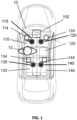
- System 100 is a multi-microphone system used to capture speech sound from multiple persons in an example environment 10, such as a vehicle in FIG. 1 .
- an example environment 10 such as a vehicle in FIG. 1 .
- embodiments as described herein can be employed in other exemplary multi zone to person environments, for example a conference room.
- Environment 10 includes spatial zones 110, 120, 130, and 140, having microphones 114, 124, 134, and 144, respectively.
- Microphones 114, 124, 134, and 144 are arranged such that different spatial zones 110, 120, 130, and 140 are covered by each respective microphone.
- microphones 114, 124, 134, and 144 are spatially separated so that each spatial zone is defined by the proximity to the corresponding microphone. This is also referred to as an "acoustic bubble" around the microphone.
- microphones 114, 124, 134, and 144 are spatially separated so that each spatial zone is defined by the proximity to the corresponding microphone.
- Environment 10 also includes spatial zones 110, 120, 130, and 140, having avatars 115, 125, 135, and 145, respectively.
- Avatars 115, 125, 135, and 145 are arranged such that different spatial zones 110, 120, 130, and 140 are covered by each respective avatar.
- avatars 115, 125, 135, and 145 are described as lighting devices corresponding to each spatial zone, for example an LED light or LED strip.
- Spatial zones 110, 120, 130, and 140 are indicated by the respective dashed boundary lines.
- the dashed lines are for illustrative purposes only and are not intended to limit the relative sizes and/or dispositions within environment 10.
- microphone 114 is in spatial zone 110
- microphone 124 is in spatial zone 120
- microphone 134 is in spatial zone 130
- microphone 144 is in spatial zone 140.
- LED 115 is in spatial zone 110
- LED 125 is in spatial zone 120
- LED 135 is in spatial zone 130
- LED 145 is in spatial zone 140.
- User 12 is shown sitting in the driver seat, in zone 110.
- the system and method of the present disclosure is operable in an environment with at least two zones.
- Such a configuration corresponds to one microphone and LED avatar for the driver's seat and one microphone and LED avatar for the front passenger's seat.
- each zone 110, 120, 130 and 140 can include multiple microphones or an array of microphones to focus on the related speaker in each zone. That is, although microphone 114 is shown and described as one microphone, for example, microphone 114 can be an array of microphones.
- microphone 114 can be an array of microphones.
- such an arrangement allows for techniques such as beamforming.
- Examples can also comprise virtual microphones.
- a virtual microphone as used herein is understood to be a combination of multiple physical microphones in an array of microphones dedicated to a single spatial zone and the processing and determining of one output signal therefrom. Beamforming techniques to determine one output signal are examples.
- This output signal associated to the array of microphones and designated as the output signal of a virtual microphone can focus on one dedicated zone similar to a single omni-directional microphone positioned close to a speaker in a particular zone, or similar to a directional microphone steered towards the desired zone or rather speaker.
- each of spatial zones 110, 120, 130 and 140 is shown in the figures to include a single LED or LED strip, each zone can include multiple LEDs or LED strips.
- an avatar can include other devices providing visual cues or lighting that can correspond uniquely to a different zone.
- avatars are described as visual avatars, other sensory avatar devices that do not distract a driver can be used.
- avatars 115, 125, 135, and 145 can haptic avatars, such as a vibrating element embedded in each seat.
- environments such as environment 10 can have more than four spatial zones as long as each zone has at least one microphone and one avatar.
- a sports utility vehicle with seating for six passengers can be outfitted with six microphones and six LED strips for 6 zones corresponding to six seats. So again, for a van having twelve seats (12 zones, 12 microphones, 12 LED strips), a bus having sixty seats (60 zones, 60 microphones, 60 LED strips), and so on.
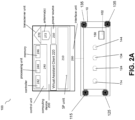
- System 100 includes the following exemplary components that are electrically and/or communicatively connected: a sound reproducer 102 ( FIG. 1 ); a first microphone 114; a first LED strip 115, a second microphone 124; a second LED strip 125, a third microphone 134; a third LED strip 135; a fourth microphone 144; a fourth LED strip 145; and a computing unit 200.
- Computing unit 200 can include the following: a virtual assistant client 220; a signal processing (SP) unit 210; a control unit 240, which can be configured to include a controller 242, a processing unit 244 and/or a non-transitory memory 246; a power source 250 (e.g., battery or AC-DC converter); an interface unit 260, which can be configured as an interface for external power connection and/or external data connection; a transceiver unit 270 for wireless communication; and antenna(s) 272.
- the components of computing unit 200 can be implemented in a distributed manner.
- SP unit 210 performs gain estimation and application, speaker activity detection, and multi-channel signal processing.
- Sound reproducer 102 is an electromechanical device that produces sound, also known as a loudspeaker.
- the location shown for sound reproducer 102 in FIG. 1 is for illustrative purposes only. In embodiments, there can be one or more sound reproducers 102.
- Microphones 114, 124, 134, and 144 are transducers that convert sound into an electrical signal.
- a microphone utilizes a diaphragm that converts sound to mechanical motion that is in turn converted to an electrical signal.
- a microphone according to the present disclosure can also include a radio transmitter and receiver for wireless applications.
- Microphones 114, 124, 134, and 144 can be directional micro-phones (e.g. cardioid microphones) so that focus on a spatial zone is emphasized. An omni-directional microphone can also focus on one zone by its position within the zone close to the desired speaker. Microphone 114 can be one or more microphones or microphone arrays. Microphones 124, 134, and 144 can also be one or more microphones or microphone arrays.
- Sound reproducer 102 and microphones 114, 124, 134, and 144 can be disposed in one or more enclosures 150.
- Detecting in which zone of at least two zones a person is speaking based on multiple microphone signals can be done, e.g., by evaluating the speech power occurring at a microphone in each of the at least two zones.
- the system can be configured to perform of multi-zone processing (e.g., for separation, combination, or zone selection) using, for example, the observation of level differences of the different microphone signals. For each passenger speaking it is assumed that the passenger dedicated microphone for the respective passenger's seat shows higher signal level compared to the microphones for the other seats.
- acoustic cross-talk couplings between the spatial zones in the car are at least in the range of about -6 dB (depending on the placement of the microphones, the position of the speaker and further room acoustic parameters).
- the system is also configured with a virtual assistant.
- virtual assistant refers to any information processing system that interprets natural language input in spoken and/or textual form to infer user intent, and perform actions based on the inferred user intent.
- the system can be configured to one or more of the following: identifying a task flow with steps and parameters designed to accomplish the inferred user intent; inputting specific requirements from the inferred user intent into the task flow; executing the task flow by invoking programs, methods, services, APIs, or the like; and generating output responses to the user in an audible (e.g., speech) and/or visual form.
- audible e.g., speech
- a virtual assistant is configured to accept a user request at least partially in the form of a natural language command, request, statement, narrative, and/or inquiry.
- the user request seeks either an informational answer or performance of a task by the virtual assistant.
- a virtual assistant can be implemented according to a client-server model.
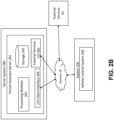
- the virtual assistant can include a client-side portion 220 executed on a user device such as a vehicle control system computing device 200, and a server-side portion executed on a server system 280.
- the vehicle control system computing device 200 can communicate with a server system 280 through one or more networks 20, which can include the Internet, an intranet, or any other wired or wireless public or private network.
- the client-side portion executed on the vehicle control system computing device 200 can provide client-side functionalities, such as user-facing input and output processing and communications with server system 280.
- Server system 280 can provide server-side functionalities for any number of clients residing on a respective user device.
- Server system can include one or more virtual assistant servers 281 that can include a client-facing I/O interface 284, one or more processing modules, data and model storage 283, and an I/O interface to external services.
- the client-facing I/O interface 284 can facilitate the client-facing input and output processing for virtual assistant server.
- the one or more processing modules can utilize data and model storage 283 to determine the user's intent based on natural language input, and can perform task execution based on inferred user intent.
- Virtual assistant server 281 can include an external services I/O interface configured to communicate with external services 30, such as telephony services, calendar services, information services, messaging services, navigation services, and the like, through network(s) 20 for task completion or information acquisition.
- the I/O interface 285 to external services 30 can facilitate such communications.
- Server system 280 can be implemented on one or more standalone data processing devices or a distributed network of computers.
- server system 280 can employ various virtual devices and/or services of third party service providers (e.g., third-party cloud service providers) to provide the underlying computing resources and/or infrastructure resources of server system.
- third party service providers e.g., third-party cloud service providers
- the functionality of the virtual assistant is described in as including both a client-side portion 220 and a server-side portion 281, in some examples, the functions of an assistant (or speech recognition in general) can be implemented as a standalone application installed on a user device or vehicle control system 200. In addition, the division of functionalities between the client and server portions of the virtual assistant can vary in different examples.
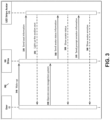
- FIG. 3 illustrates a logic flow 300 of an example method according to the present disclosure.
- the functionality of logic flow 300 can be performed by (i) a single computing entity, e.g., computing unit 200 of system 100, or (ii) in a distributed manner. In the latter case, portions of the structure and/or operations of logic flow 300 are performed across multiple computing platforms and/or entities using a distributed system architecture, e.g., a master-slave architecture, a client-server architecture, a peer-to-peer architecture, a shared database architecture, and the like.
- a distributed system architecture e.g., a master-slave architecture, a client-server architecture, a peer-to-peer architecture, a shared database architecture, and the like.
- the embodiments are not limited in this context.
- a user such as user 12 speaks a wake up or voice command detected by one of the microphones such as microphone 114, which is used to signal the system or drive 100 to wake up.
- the wake up command spoken by the user can be a phrase such as "hello" in various languages.
- the microphone closest to and in the zone of the speaker sends the signal to system 100.
- System 100 is able to identify which zone the signal was received from. For example, a signal received from microphone 114 in zone 110 indicates the speaker is user 12 and is the driver.
- a trigger can be used to detect a speech zone.
- exemplary non-limiting triggers include a Coherence-to-Diffuse-Ratio that indicates proximity of the microphone to the speaker, relative time delays between microphones, a Signal-to-Noise-Ratio smoothed over time, zone activity detection based on voice biometrics, or visual information provided by a camera or another sensor (not shown) configured to provide information regarding the spatial zone position of an active speaker.
- a camera can be used for the trigger.
- the system 100 sends zone or seat information to an avatar such as LED avatar 115.
- the LED avatar can be any one of the LED avatars in the vehicle, depending on which user is the speaker or which zone needs information based on the voice input. For example, where user 12 is the driver and the speaker, LED avatar 115 in zone 110 is sent the seat information at step 320, which the same zone as the speaker.
- the LED avatar lights up in the zone corresponding to the zone of the user 12. For example, LED avatar 115 lights up in zone 110 to indicate that the voice assistant is active or listening for a voice command in zone 110 from speaker user 12.
- the LED avatar in the active area or zone can light up with a low brightness to indicate that the voice assistance is active in that zone.
- a user issues voice commands to the voice assistant to operate a voice recognition system.
- a user can operate the voice recognition system as known in the art, by issuing various commands, to command the voice assistant to operate any number of vehicle operations and systems.
- voice assistants are configured to perform operations such as switching radio stations, opening or closing a specific window, locking the vehicle, calling a specific person, or adjusting or enter a destination into the navigation system.
- the voice commands are received by system 100 through a microphone that is in the same zone as the user.
- system 100 sends avatar status information and command to an LED avatar.
- Avatar status information can include statuses any number of statuses such as, for example, listening, processing, snoozing, or idle.
- the system 100 sends an avatar status information corresponding to the status "listening" to LED avatar 115.
- the system when system 100 sends the status "listening" to an LED avatar, the system is configured to control the brightness of the LED.
- the system can be further configured to vary the brightness based on speaker input to the system. For example, in a "listening" status configuration, the system can be configured to dim or brighten the LED to correspond to the the volume of a user's voice.
- the LEDs can be configured to dim when the volume of a user's voice decreases and brighten when the volume of a user's voice increase.
- the system 100 when the avatar status is "processing", can be configured to light an avatar having an LED strip or series of LED lights from a left end of the LED lights to a right end of the LED lights. The LED lights that light up first will also fade first. The system can be configured to light LED lights the right end to the left end. This sequence can repeat while the avatar status information is "processing".
- the processing status can indicate that the system 100 received a voice command, is currently processing the request.
- the system 100 can be configured to change the brightness of the LED avatar low to high and then from high to low and repeat this sequence while the avatar status is "snoozing".
- the system 100 can be configured to turn the LED avatar off so no light is emitted.
- the system can be configured to operate a haptic feedback avatar device to send vibrations to the seat in the zone the user is in, based on the avatar status information.
- the system 100 is configured to operate LED or other avatar, for example as described above, based on the avatar information received from system 100 in step 350.
- the system 100 can be configured to provide emotion information to an LED avatar in the zone of the user to indicate a particular emotion.
- the emotion is related to the voice command issued by the user in step 340, and the result of the processed request or command. For example, if the voice command issued by the user at step 340 is "go home", the system 100 can be configured to enter the known address of the user in the system's navigation. If the amount of time for the user to arrive at the destination is greater than usual due to traffic, the system 100 can be configured to send emotion information indicating an angry state to the LED avatar in the zone of the user. For example, the system can be configured to command the LED to emit a red light based on the "angry" emotional prompt.
- system 100 can detect the user's emotional state through the voice data received from the microphone in the user's zone. In some embodiments system 100 can detect the user's emotional state through visual information received from a camera within the vehicle. In some embodiments system 100 can send emotion information related to the user's current emotional state to an LED avatar. For example, if the system 100 detects the user is upset, the system 100 can be configured to send the emotion information indicating the user's angry state to the LED avatar. In some embodiments the LED avatar can be configured provide certain lighting to calm the user when the user is upset, for example a soft blue light.
- emotion information is obtained or generated through natural language understanding (NLU) algorithms.
- NLU natural language understanding
- the system 100 can be configured with an NLU system configured to perform sentiment analysis as known in the art.
- the system can also be configured to perform emotion recognition, for example using facial tracking recognition systems and emotion recognition software.
- the LED avatar can be configured to display lighting corresponding to the emotion information received from system 100 at step 370.
- the system can be configured to so that the LED avatar lights up with a red color to indicate anger based on a "anger” prompt at step 370. If the emotion information is "calm” the LED can light up to a blue color to show a calm state.
- the term “substantially” means the complete or nearly complete extent or degree of an action, characteristic, property, state, structure, item, or result.
- an object that is “substantially” enclosed means that the object is either completely enclosed or nearly completely enclosed.
- the exact allowable degree of deviation from absolute completeness can in some cases depend on the specific context. However, generally, the nearness of completion will be to have the same overall result as if absolute and total completion were obtained.
- the term "about” is used to provide flexibility to a numerical range endpoint by providing that a given value can be “a little above” or “a little below” the endpoint. Further, where a numerical range is provided, the range is intended to include any and all numbers within the numerical range, including the end points of the range.
- processes described in conjunction with Figures 1 to 3 can be implemented by and/or executed on a single network computer. In other embodiments, these processes or portions of these processes can be implemented by and/or executed on a plurality of network computers. Likewise, in at least one of the various embodiments, processes or portions thereof, can operate on one or more client computers, such as client computer. However, embodiments are not so limited, and various combinations of network computers, client computers, virtual machines, or the like can be used. Further, in at least one of the various embodiments, the processes described in conjunction with the flowchart illustrations can be operative in system with logical architectures, such as those described in herein.
- each block of the flowchart illustrations described herein, and combinations of blocks in the flowchart illustrations can be implemented by computer program instructions.
- These program instructions can be provided to a processor to produce a machine, such that the instructions, which execute on the processor, create means for implementing the actions specified in the flowchart block or blocks.
- the computer program instructions can be executed by a processor to cause a series of operational steps to be performed by the processor to produce a computer-implemented process such that the instructions, which execute on the processor to provide steps for implementing the actions specified in the flowchart block or blocks.
- the computer program instructions can also cause at least some of the operational steps shown in the blocks of the flowchart to be performed in parallel. Moreover, some of the steps can also be performed across more than one processor, such as might arise in a multi-processor computer system or even a group of multiple computer systems.
- blocks of the flowchart illustrations support combinations for performing the specified actions, combinations of steps for performing the specified actions and program instruction means for performing the specified actions. It will also be understood that each block of the flowchart illustrations, and combinations of blocks in the flowchart illustrations, can be implemented by special purpose hardware-based systems, which perform the specified actions or steps, or combinations of special purpose hardware and computer instructions.
- special purpose hardware-based systems which perform the specified actions or steps, or combinations of special purpose hardware and computer instructions.
Landscapes
- Engineering & Computer Science (AREA)
- Health & Medical Sciences (AREA)
- Physics & Mathematics (AREA)
- Theoretical Computer Science (AREA)
- Human Computer Interaction (AREA)
- Audiology, Speech & Language Pathology (AREA)
- General Health & Medical Sciences (AREA)
- Multimedia (AREA)
- Acoustics & Sound (AREA)
- Signal Processing (AREA)
- Otolaryngology (AREA)
- General Engineering & Computer Science (AREA)
- General Physics & Mathematics (AREA)
- Computational Linguistics (AREA)
- Psychiatry (AREA)
- Hospice & Palliative Care (AREA)
- Child & Adolescent Psychology (AREA)
- User Interface Of Digital Computer (AREA)
Description
- The present disclosure relates to virtual assistants employed in vehicles.
- Modern vehicles are equipped with multi-zone systems to allow various passengers to take advantage of voice-activated features or engage in hands-free telephone conversations in different areas of the vehicle. In systems where each person speaking (hereinafter: \"speaker\") has a dedicated zone close to the respective person's position, it can be difficult for a speaker and driver to know if the voice assistant has properly identified which zone the speaker is in, and what the current status of the voice assistant is. For example, current practices require a speaker, who is often the driver of a vehicle, to quickly look at small display screens to obtain information, thereby taking their eyes off the road.
- These problems can lead to the speaker driving dangerously, needlessly repeating themselves, waiting to speak, or speaking at the wrong time to issue a command or request to the voice assistant.
US 2019/057703 A1 describes a voice assistance system including an interface configured to receive and to process a voice command.
US 2014/074480 A1 describes a vehicle having an implemented logic to set user preferences in in-vehicle components once a user has been identified by comparing voice stamps and identifying the zone occupied by the user. - The aforementioned and related problems can be solved by a system and method that provides a sensory status indicator for the voice assistant which is highly visible or readily identifiable with minimal concentration needed from a speaker. In particular, the invention is set out in the independent claims 1, 14 and 15, preferred forms being set out in the dependent claims 2 to 13.
- The present disclosure provides a system and a method in which avatar devices are used to indicate the status of a voice assistant. Avatar devices can be visual avatars, such as LED lighting, or other sensory avatar devices, including haptic avatars, such as a vibrating device.
- The present disclosure provides a system and a method in which the avatar devices are LEDs are used to indicate the status of a voice assistant. As used herein, LEDs can be employed to indicate the active area or zone of a voice assistant, indicate the status of the voice assistant and the emotion of the voice assistant. The speakers, whether passengers or drivers, can quickly obtain information at a glance, or through peripheral vision, thereby increasing safety, and ease of use of the vehicle's systems and voice assistant.
- In multi-zone vehicles, with a zone per seat, and with multiple speakers in different zones, the LEDs can be used to indicate that a voice assistant is listening to or waiting for a command in a particular zone or seat. When the LED is turned on in a particular zone, the speaker or speakers in the vehicle are made aware which zone in the vehicle the voice assistant is currently active in. When the LED is turned off the speaker is made aware that the voice assistant is no longer active in that zone.
- LEDs can also be used to indicate the current status of a voice assistant in the active zone. For example, different LED effects can be used to indicate that the voice assistant is idle, listening, processing or snoozing. For instance, LEDs can be turned off to indicate an idle voice assistant status, and the LED can be turned on with low brightness to indicate a listening voice assistant status.
- Lastly, LEDs can be used to indicate an emotion status of the voice assistant. For example, a blue light can be used to indicate that the voice assistant is calm, and a red light can indicate the voice assistant is angry. These indicators facilitate communication and understanding between the voice assistant and the speaker by providing the voice assistant more human like features.
- The accompanying drawings illustrate aspects of the present disclosure, and together with the general description given above and the detailed description given below, explain the principles of the present disclosure. As shown throughout the drawings, like reference numerals designate like or corresponding parts.
-
FIG. 1 shows an exemplary vehicular environment for an exemplary system and method according to the present disclosure. -
FIG. 2A shows an embodiment of the system according to the present disclosure. -
FIG. 2B shows a system for a virtual assistant according to a client-server model. -
FIG. 3 is logic flow diagram of an example method according to the present disclosure. - Referring to the drawings and, in particular, to
FIGS. 1 ,2A-2B and3 , a system is generally represented byreference numeral 100, hereinafter \"system 100\".System 100 is a multi-microphone system used to capture speech sound from multiple persons in anexample environment 10, such as a vehicle inFIG. 1 . As will be appreciated, embodiments as described herein can be employed in other exemplary multi zone to person environments, for example a conference room. -
Environment 10 includesspatial zones microphones Microphones spatial zones microphones microphones -
Environment 10 also includesspatial zones avatars Avatars spatial zones avatars -
Spatial zones environment 10. - In
FIG. 1 ,microphone 114 is inspatial zone 110,microphone 124 is inspatial zone 120,microphone 134 is inspatial zone 130, and microphone 144 is inspatial zone 140. InFIG. 1 ,LED 115 is inspatial zone 110,LED 125 is inspatial zone 120,LED 135 is inspatial zone 130, andLED 145 is inspatial zone 140.User 12 is shown sitting in the driver seat, inzone 110. - Although four spatial zones are shown in
environment 10, the system and method of the present disclosure is operable in an environment with at least two zones. For example, in a vehicular environment, there can be one seat-dedicated microphone 114 andLED strip 115 forzone 110 and a second seat-dedicated microphone 124 andLED strip 125 forzone 120. Such a configuration corresponds to one microphone and LED avatar for the driver's seat and one microphone and LED avatar for the front passenger's seat. - Although each of
spatial zones - Although each of
spatial zones avatars - It will further be understood that environments such as
environment 10 can have more than four spatial zones as long as each zone has at least one microphone and one avatar. For example, a sports utility vehicle with seating for six passengers can be outfitted with six microphones and six LED strips for 6 zones corresponding to six seats. So again, for a van having twelve seats (12 zones, 12 microphones, 12 LED strips), a bus having sixty seats (60 zones, 60 microphones, 60 LED strips), and so on. - Referring to
FIGS. 2A-2B , example components ofsystem 100 will now be discussed. -
System 100 includes the following exemplary components that are electrically and/or communicatively connected: a sound reproducer 102 (FIG. 1 ); afirst microphone 114; afirst LED strip 115, asecond microphone 124; asecond LED strip 125, athird microphone 134; athird LED strip 135; afourth microphone 144; afourth LED strip 145; and acomputing unit 200.Computing unit 200 can include the following: a virtualassistant client 220; a signal processing (SP)unit 210; acontrol unit 240, which can be configured to include acontroller 242, a processing unit 244 and/or anon-transitory memory 246; a power source 250 (e.g., battery or AC-DC converter); aninterface unit 260, which can be configured as an interface for external power connection and/or external data connection; atransceiver unit 270 for wireless communication; and antenna(s) 272. The components ofcomputing unit 200 can be implemented in a distributed manner. -
SP unit 210 performs gain estimation and application, speaker activity detection, and multi-channel signal processing. -
Sound reproducer 102 is an electromechanical device that produces sound, also known as a loudspeaker. The location shown forsound reproducer 102 inFIG. 1 is for illustrative purposes only. In embodiments, there can be one ormore sound reproducers 102. -
Microphones - Several types of microphones exist that use different techniques to convert, for example, air pressure variations of a sound wave into an electrical signal. Nonlimiting examples include: dynamic microphones that use a coil of wire suspended in a magnetic field; condenser microphones that use a vibrating diaphragm as a capacitor plate; and piezoelectric microphones that use a crystal of made of piezoelectric material. A microphone according to the present disclosure can also include a radio transmitter and receiver for wireless applications.
-
Microphones Microphone 114 can be one or more microphones or microphone arrays.Microphones -
Sound reproducer 102 andmicrophones more enclosures 150. - Detecting in which zone of at least two zones a person is speaking based on multiple microphone signals can be done, e.g., by evaluating the speech power occurring at a microphone in each of the at least two zones.
- The system can be configured to perform of multi-zone processing (e.g., for separation, combination, or zone selection) using, for example, the observation of level differences of the different microphone signals. For each passenger speaking it is assumed that the passenger dedicated microphone for the respective passenger's seat shows higher signal level compared to the microphones for the other seats. Typically, acoustic cross-talk couplings between the spatial zones in the car ("cross-talk") are at least in the range of about -6 dB (depending on the placement of the microphones, the position of the speaker and further room acoustic parameters).
- The system is also configured with a virtual assistant. The terms "virtual assistant," "digital assistant," "intelligent automated assistant," or "automatic digital assistant" refer to any information processing system that interprets natural language input in spoken and/or textual form to infer user intent, and perform actions based on the inferred user intent. For example, to act on an inferred user intent, the system can be configured to one or more of the following: identifying a task flow with steps and parameters designed to accomplish the inferred user intent; inputting specific requirements from the inferred user intent into the task flow; executing the task flow by invoking programs, methods, services, APIs, or the like; and generating output responses to the user in an audible (e.g., speech) and/or visual form.
- A virtual assistant is configured to accept a user request at least partially in the form of a natural language command, request, statement, narrative, and/or inquiry. Typically, the user request seeks either an informational answer or performance of a task by the virtual assistant.
- As shown in
FIG. 2B , a virtual assistant can be implemented according to a client-server model. The virtual assistant can include a client-side portion 220 executed on a user device such as a vehicle controlsystem computing device 200, and a server-side portion executed on aserver system 280. The vehicle controlsystem computing device 200 can communicate with aserver system 280 through one ormore networks 20, which can include the Internet, an intranet, or any other wired or wireless public or private network. - The client-side portion executed on the vehicle control
system computing device 200 can provide client-side functionalities, such as user-facing input and output processing and communications withserver system 280.Server system 280 can provide server-side functionalities for any number of clients residing on a respective user device. - Server system can include one or more virtual assistant servers 281 that can include a client-facing I/
O interface 284, one or more processing modules, data andmodel storage 283, and an I/O interface to external services. The client-facing I/O interface 284 can facilitate the client-facing input and output processing for virtual assistant server. The one or more processing modules can utilize data andmodel storage 283 to determine the user's intent based on natural language input, and can perform task execution based on inferred user intent. Virtual assistant server 281 can include an external services I/O interface configured to communicate withexternal services 30, such as telephony services, calendar services, information services, messaging services, navigation services, and the like, through network(s) 20 for task completion or information acquisition. The I/O interface 285 toexternal services 30 can facilitate such communications. -
Server system 280 can be implemented on one or more standalone data processing devices or a distributed network of computers. In some examples,server system 280 can employ various virtual devices and/or services of third party service providers (e.g., third-party cloud service providers) to provide the underlying computing resources and/or infrastructure resources of server system. - Although the functionality of the virtual assistant is described in as including both a client-
side portion 220 and a server-side portion 281, in some examples, the functions of an assistant (or speech recognition in general) can be implemented as a standalone application installed on a user device orvehicle control system 200. In addition, the division of functionalities between the client and server portions of the virtual assistant can vary in different examples. -
FIG. 3 illustrates a logic flow 300 of an example method according to the present disclosure. The functionality of logic flow 300 can be performed by (i) a single computing entity, e.g., computingunit 200 ofsystem 100, or (ii) in a distributed manner. In the latter case, portions of the structure and/or operations of logic flow 300 are performed across multiple computing platforms and/or entities using a distributed system architecture, e.g., a master-slave architecture, a client-server architecture, a peer-to-peer architecture, a shared database architecture, and the like. The embodiments are not limited in this context. - At
step 310, a user such asuser 12 speaks a wake up or voice command detected by one of the microphones such asmicrophone 114, which is used to signal the system or drive 100 to wake up. The wake up command spoken by the user can be a phrase such as "hello" in various languages. The microphone closest to and in the zone of the speaker sends the signal tosystem 100.System 100 is able to identify which zone the signal was received from. For example, a signal received frommicrophone 114 inzone 110 indicates the speaker isuser 12 and is the driver. - In some embodiments, at
step 310, a trigger can be used to detect a speech zone. Exemplary non-limiting triggers include a Coherence-to-Diffuse-Ratio that indicates proximity of the microphone to the speaker, relative time delays between microphones, a Signal-to-Noise-Ratio smoothed over time, zone activity detection based on voice biometrics, or visual information provided by a camera or another sensor (not shown) configured to provide information regarding the spatial zone position of an active speaker. - In some embodiments, where an algorithm related to a camera extracts activity information of the zone dedicated speaker based on visual information, a camera can be used for the trigger.
- At
step 320 thesystem 100 sends zone or seat information to an avatar such asLED avatar 115. The LED avatar can be any one of the LED avatars in the vehicle, depending on which user is the speaker or which zone needs information based on the voice input. For example, whereuser 12 is the driver and the speaker,LED avatar 115 inzone 110 is sent the seat information atstep 320, which the same zone as the speaker. - At
step 330, in response to receiving the zone or seat information, the LED avatar lights up in the zone corresponding to the zone of theuser 12. For example,LED avatar 115 lights up inzone 110 to indicate that the voice assistant is active or listening for a voice command inzone 110 fromspeaker user 12. - In some embodiments the LED avatar in the active area or zone can light up with a low brightness to indicate that the voice assistance is active in that zone.
- At
step 340, a user issues voice commands to the voice assistant to operate a voice recognition system. A user can operate the voice recognition system as known in the art, by issuing various commands, to command the voice assistant to operate any number of vehicle operations and systems. For example, voice assistants are configured to perform operations such as switching radio stations, opening or closing a specific window, locking the vehicle, calling a specific person, or adjusting or enter a destination into the navigation system. The voice commands are received bysystem 100 through a microphone that is in the same zone as the user. - At step 350,
system 100 sends avatar status information and command to an LED avatar. Avatar status information can include statuses any number of statuses such as, for example, listening, processing, snoozing, or idle. For example, whenuser 12 speaks a voice command atstep 340, thesystem 100 sends an avatar status information corresponding to the status "listening" toLED avatar 115. - In some embodiments, when
system 100 sends the status "listening" to an LED avatar, the system is configured to control the brightness of the LED. The system can be further configured to vary the brightness based on speaker input to the system. For example, in a "listening" status configuration, the system can be configured to dim or brighten the LED to correspond to the the volume of a user's voice. In some embodiments, the LEDs can be configured to dim when the volume of a user's voice decreases and brighten when the volume of a user's voice increase. - In some embodiments, when the avatar status is "processing", the
system 100 can be configured to light an avatar having an LED strip or series of LED lights from a left end of the LED lights to a right end of the LED lights. The LED lights that light up first will also fade first. The system can be configured to light LED lights the right end to the left end. This sequence can repeat while the avatar status information is "processing". In some embodiments, the processing status can indicate that thesystem 100 received a voice command, is currently processing the request. - In some embodiments when the avatar status is "snoozing", the
system 100 can be configured to change the brightness of the LED avatar low to high and then from high to low and repeat this sequence while the avatar status is "snoozing". - In some embodiments when the avatar status is "idle", the
system 100 can be configured to turn the LED avatar off so no light is emitted. - In some embodiments, the system can be configured to operate a haptic feedback avatar device to send vibrations to the seat in the zone the user is in, based on the avatar status information.
- Accordingly, at step 360, the
system 100 is configured to operate LED or other avatar, for example as described above, based on the avatar information received fromsystem 100 in step 350. - In some embodiments, at
step 370 thesystem 100 can be configured to provide emotion information to an LED avatar in the zone of the user to indicate a particular emotion. In some embodiments the emotion is related to the voice command issued by the user instep 340, and the result of the processed request or command. For example, if the voice command issued by the user atstep 340 is "go home", thesystem 100 can be configured to enter the known address of the user in the system's navigation. If the amount of time for the user to arrive at the destination is greater than usual due to traffic, thesystem 100 can be configured to send emotion information indicating an angry state to the LED avatar in the zone of the user. For example, the system can be configured to command the LED to emit a red light based on the "angry" emotional prompt. - In some embodiments the
system 100 can detect the user's emotional state through the voice data received from the microphone in the user's zone. In someembodiments system 100 can detect the user's emotional state through visual information received from a camera within the vehicle. In someembodiments system 100 can send emotion information related to the user's current emotional state to an LED avatar. For example, if thesystem 100 detects the user is upset, thesystem 100 can be configured to send the emotion information indicating the user's angry state to the LED avatar. In some embodiments the LED avatar can be configured provide certain lighting to calm the user when the user is upset, for example a soft blue light. - In some embodiments emotion information is obtained or generated through natural language understanding (NLU) algorithms. For example, the
system 100 can be configured with an NLU system configured to perform sentiment analysis as known in the art. In some embodiments, the system can also be configured to perform emotion recognition, for example using facial tracking recognition systems and emotion recognition software. - At
step 380, the LED avatar can be configured to display lighting corresponding to the emotion information received fromsystem 100 atstep 370. - For example, as described above, the system can be configured to so that the LED avatar lights up with a red color to indicate anger based on a "anger" prompt at
step 370. If the emotion information is "calm" the LED can light up to a blue color to show a calm state. - It should be understood that elements or functions of the present invention as described above can be implemented in the form of control logic using computer software in a modular or integrated manner. Based on the disclosure and teachings provided herein, a person of ordinary skill in the art will know and appreciate other ways and/or methods to implement the present invention using hardware and a combination of hardware and software.
- When a certain structural element is described as "is connected to", "is coupled to", or "is in contact with" a second structural element, it should be interpreted that the second structural element can "be connected to", "be coupled to", or "be in contact with" another structural element, as well as that the certain structural element is directly connected to or is in direct contact with yet another structural element.
- It should be noted that the terms "first", "second", and the like can be used herein to modify various elements. These modifiers do not imply a spatial, sequential or hierarchical order to the modified elements unless specifically stated.
- As used herein, the terms "a" and "an" mean \"one or more\" unless specifically indicated otherwise.
- As used herein, the term "substantially" means the complete or nearly complete extent or degree of an action, characteristic, property, state, structure, item, or result. For example, an object that is "substantially" enclosed means that the object is either completely enclosed or nearly completely enclosed. The exact allowable degree of deviation from absolute completeness can in some cases depend on the specific context. However, generally, the nearness of completion will be to have the same overall result as if absolute and total completion were obtained.
- As used herein, the term "about" is used to provide flexibility to a numerical range endpoint by providing that a given value can be "a little above" or "a little below" the endpoint. Further, where a numerical range is provided, the range is intended to include any and all numbers within the numerical range, including the end points of the range.
- While the present disclosure has been described with reference to one or more exemplary embodiments, it will be understood by those skilled in the art, that various changes can be made, and equivalents can be substituted for elements thereof without departing from the scope of the present claims. In addition, many modifications can be made to adapt a particular situation or material to the teachings of the present disclosure without departing from the scope of the appended claims.
- The operation of certain aspects of the present disclosure have been described with respect to flowchart illustrations. In at least one of various embodiments, processes described in conjunction with
Figures 1 to 3 can be implemented by and/or executed on a single network computer. In other embodiments, these processes or portions of these processes can be implemented by and/or executed on a plurality of network computers. Likewise, in at least one of the various embodiments, processes or portions thereof, can operate on one or more client computers, such as client computer. However, embodiments are not so limited, and various combinations of network computers, client computers, virtual machines, or the like can be used. Further, in at least one of the various embodiments, the processes described in conjunction with the flowchart illustrations can be operative in system with logical architectures, such as those described in herein. - It will be understood that each block of the flowchart illustrations described herein, and combinations of blocks in the flowchart illustrations, can be implemented by computer program instructions. These program instructions can be provided to a processor to produce a machine, such that the instructions, which execute on the processor, create means for implementing the actions specified in the flowchart block or blocks. The computer program instructions can be executed by a processor to cause a series of operational steps to be performed by the processor to produce a computer-implemented process such that the instructions, which execute on the processor to provide steps for implementing the actions specified in the flowchart block or blocks. The computer program instructions can also cause at least some of the operational steps shown in the blocks of the flowchart to be performed in parallel. Moreover, some of the steps can also be performed across more than one processor, such as might arise in a multi-processor computer system or even a group of multiple computer systems.
- Accordingly, blocks of the flowchart illustrations support combinations for performing the specified actions, combinations of steps for performing the specified actions and program instruction means for performing the specified actions. It will also be understood that each block of the flowchart illustrations, and combinations of blocks in the flowchart illustrations, can be implemented by special purpose hardware-based systems, which perform the specified actions or steps, or combinations of special purpose hardware and computer instructions. The foregoing examples should not be construed as limiting and/or exhaustive, but rather, as illustrative use cases to show an implementation of at least one of the various embodiments of the present disclosure as claimed.
Claims (15)
- A method (300) for an interactive voice system that is carried out by a virtual assistant for a vehicle (10) that comprises a multi-microphone system used to capture speech sound from multiple persons in the vehicle (10), wherein the virtual assistant comprises an information processing system that interprets natural language input in spoken and/or textual form to infer user intent and perform actions based on the inferred user intent, wherein the virtual assistant is implemented either as a standalone application installed on a user device or vehicle control system or according to a client-server model, wherein, when the virtual assistant is implemented according to said client-server model, the virtual assistant includes a client-side portion (220) that is executed on a vehicle control system computing device (200) and server-side portion (281) that is executed on a server system (280), wherein the vehicle control system (200) communicates with the server system (280) through one or more networks, wherein the networks include one or more of the Internet or intranet, and a wired public or private network, wherein the method comprises:receiving a signal from a plurality of microphones (114, 124, 134, 144), wherein said plurality of microphones (114, 124, 134, 144) is in said vehicle (10), wherein said vehicle (10) includes spatial zones (110, 120, 130, 140), each of which has one of said microphones (114, 124, 134, 144), wherein said microphones (114, 124, 134, 144) are arranged such that different spatial zones (110, 120, 130, 140) are covered by each respective microphone, wherein the microphones (114, 124, 134, 144) are spatially separated so that each spatial zone (110, 120, 130, 140) is defined by proximity to its corresponding microphone;wherein each of the spatial zone (110, 120, 130, 140) has a corresponding avatar (115, 125, 135, 145), each of which indicates status of the virtual assistant,wherein the avatars (115, 125, 135, 145) are arranged such that different spatial zones (110, 120, 130, 140) are covered by each respective avatar, andwherein the signal comprises a speech signal component from a speaker, wherein the speaker is a person who is speaking, wherein the speech signal component is a voice command or question;identifying a spatial zone (110, 120, 130, 140) from which the speech signal was received as a speech zone;sending information that identifies the spatial zone (110, 120, 130, 140) to a lighting device of the avatar that is in the spatial zone (110, 120, 130, 140); andcontrolling the lighting device of the avatar (115, 125, 135, 145) that is in the spatial zone, wherein controlling the lighting device provides a visual indication of a status for different operations of the interactive voice assistant system.
- Method of claim 1, wherein each of the avatars comprises a LED device and wherein the system is configured to control the respective lighting device of each of the avatars by illuminating, de-illuminating, or changing the illumination of the respective LED device.
- Method of any of claims 1 to 2, wherein identifying the speech zone comprises
detecting the speech signal component by one or more of the microphones (114, 124, 134, 144) from the plurality of microphones (114, 124, 134, 144). - Method of claim 3, wherein identifying the speech zone comprises:
determining proximity of at least one microphone (114) from the plurality of microphones (114, 214, 314, 414) to the speaker according to one or more of: coherence-to-diffuse ratio that indicates proximity of the at least one microphone (114, 214, 314, 414) to the speaker, relative time delays between the at least one microphone (114, 214, 314, 414) and one or more other microphones of the plurality of microphones (114, 214, 314, 414), a signal-to-noise ratio smoothed over time, zone activity detection based on voice biometrics, or visual information provided by a camera or another sensor configured to provide information regarding a spatial zone position of an active speaker. - Method of any of claims 1 to 4, wherein controlling the lighting device comprises:
lighting the lighting device according to a lighting configuration that indicates that the voice assistant system is active or is listening for a further voice command in the speech zone. - Method of any of claims 1 to 5, wherein controlling the lighting device comprises:
lighting the lighting device according to one of a plurality of status indication lighting configurations, each of which indicates a determined voice assistant system status from a plurality of voice assistant system statuses. - Method of claim 6, wherein the plurality of voice assistant system statuses includes one or more of: listening status indicating the voice assistant system is receiving a command from the speaker, processing status indicating the voice assistant system is processing a previously received command, a snoozing status indicating the voice assistant system is in snoozing mode, or idle status indicating the voice assistant command is in idle mode.
- Method of claim 6, wherein the plurality of status indication lighting configurations each controls a brightness level and activation sequence of multiple LED lights of the avatar.
- Method of claim 6, further comprising:
vibrating a seat in the speech zone when a determined voice assistant system status exists. - Method of any of claims 1 to 9, wherein controlling the lighting device indicates emotion information of an executed activity of the voice assistant system.
- Method of claim 10, wherein controlling the lighting device indicates an angry emotion in response to a determination that an amount of time, computed by a navigation system coupled to the voice assistance system, to arrive at a destination specified by the speaker is greater than usual.
- Method of any of claims 1 to 11, wherein controlling the lighting device of the avatar device further comprises:
indicating the speaker's emotional state. - Method of claim 12, further comprising:
detecting the speaker's emotional state based on one or more of: voice data received from one or more microphones (114, 124, 134, 144) in the speaker's spatial zone (110, 120. 130, 140) and visual information of the speaker obtained from a camera in the vehicle (10). - System (100) configured to control an interactive voice assistant system for a vehicle (10), the system (100) comprising:means for receiving from a plurality of microphones (114, 124, 134, 144), wherein said plurality of microphones is in a vehicle (10) that includes spatial zones (110, 120, 130, 140), each of which has one of the microphones (114, 124, 134, 144), wherein the microphones (114, 124, 134, 144) are arranged such that different spatial zones (110, 120, 130, 140) are covered by each respective microphones (114, 124, 134, 144), wherein the microphones are spatially separated so that each spatial zone is defined by proximity to its corresponding microphone (114, 124, 134, 144),wherein each of the spatial zones (110, 120, 130, 140) has a corresponding avatar (115, 125, 135, 145), each of which indicates status of the virtual assistant,wherein the avatars are arranged such that different spatial zones (110, 120, 130, 140) are covered by each respective avatar,wherein the signal comprises a speech signal component from a speaker, wherein the speech signal component is a voice command or question and wherein the speaker is a person who is speaking;means for identifying a speech zone from which the speech signal was received,means for sending information that identifies the speech zone to a lighting device of the avatar that is in the speech zone,means for controlling the lighting device of the avatar(115, 125, 135, 145) wherein controlling the lighting device provides a visual information of statuses for different operations of the interactive voice assistant system.
- A software computer program that is stored in a non-transitory form on a computer-readable medium, the software including instructions for causing a computing device to perform all steps of any one of claims 1 - 13, wherein the software is executed on the system of claim 14.
Applications Claiming Priority (1)
| Application Number | Priority Date | Filing Date | Title |
|---|---|---|---|
| PCT/CN2019/104012 WO2021042238A1 (en) | 2019-09-02 | 2019-09-02 | Vehicle avatar devices for interactive virtual assistant |
Publications (4)
| Publication Number | Publication Date |
|---|---|
| EP4026118A1 EP4026118A1 (en) | 2022-07-13 |
| EP4026118A4 EP4026118A4 (en) | 2023-05-24 |
| EP4026118C0 EP4026118C0 (en) | 2024-06-12 |
| EP4026118B1 true EP4026118B1 (en) | 2024-06-12 |
Family
ID=74852669
Family Applications (1)
| Application Number | Title | Priority Date | Filing Date |
|---|---|---|---|
| EP19944239.3A Active EP4026118B1 (en) | 2019-09-02 | 2019-09-02 | Vehicle avatar devices for interactive virtual assistant |
Country Status (4)
| Country | Link |
|---|---|
| US (1) | US12308026B2 (en) |
| EP (1) | EP4026118B1 (en) |
| CA (1) | CA3148488A1 (en) |
| WO (1) | WO2021042238A1 (en) |
Families Citing this family (7)
| Publication number | Priority date | Publication date | Assignee | Title |
|---|---|---|---|---|
| CN112669867B (en) * | 2020-12-15 | 2023-04-11 | 阿波罗智联(北京)科技有限公司 | Debugging method and device of noise elimination algorithm and electronic equipment |
| DE102021204944A1 (en) * | 2021-05-17 | 2022-11-17 | Volkswagen Aktiengesellschaft | Method for displaying a state of a language assistance system, language assistance system and motor vehicle |
| US20230085087A1 (en) * | 2021-09-13 | 2023-03-16 | Alexis Herrera | Voice-Controlled Smart Device and Method of Use Thereof |
| GB2627444B (en) * | 2023-02-21 | 2025-04-30 | Jaguar Land Rover Ltd | A control system for a loudspeaker system |
| CN116620160A (en) * | 2023-06-02 | 2023-08-22 | 长城汽车股份有限公司 | A control method, device, vehicle-mounted terminal and vehicle for interior lamps and lanterns |
| FR3160485A1 (en) * | 2024-03-25 | 2025-09-26 | Stellantis Auto Sas | Control of an audio content playback function in a vehicle |
| CN119325165B (en) * | 2024-12-16 | 2025-05-27 | 易事达光电(广东)股份有限公司 | Synchronous control method based on two-color headlights |
Family Cites Families (59)
| Publication number | Priority date | Publication date | Assignee | Title |
|---|---|---|---|---|
| US4397635A (en) * | 1982-02-19 | 1983-08-09 | Samuels Curtis A | Reading teaching system |
| US6940785B2 (en) * | 2000-08-01 | 2005-09-06 | Hourpower Watches, Llc | Watch |
| AU2003260926A1 (en) * | 2002-10-23 | 2004-05-13 | Koninklijke Philips Electronics N.V. | Controlling an apparatus based on speech |
| ATE415048T1 (en) * | 2005-07-28 | 2008-12-15 | Harman Becker Automotive Sys | IMPROVED COMMUNICATION FOR VEHICLE INTERIORS |
| US7297929B2 (en) * | 2006-03-15 | 2007-11-20 | Honeywell International, Inc. | Light sensor and processor incorporating historical readings |
| US20090110246A1 (en) * | 2007-10-30 | 2009-04-30 | Stefan Olsson | System and method for facial expression control of a user interface |
| US9727226B2 (en) * | 2010-04-02 | 2017-08-08 | Nokia Technologies Oy | Methods and apparatuses for providing an enhanced user interface |
| US11017250B2 (en) * | 2010-06-07 | 2021-05-25 | Affectiva, Inc. | Vehicle manipulation using convolutional image processing |
| WO2013001432A1 (en) * | 2011-06-29 | 2013-01-03 | Koninklijke Philips Electronics N.V. | Intelligent lighting network for generating light avatars |
| EP2842123B1 (en) * | 2012-05-16 | 2019-10-16 | Nuance Communications, Inc. | Speech communication system for combined voice recognition, hands-free telephony and in-car-communication |
| US9549061B2 (en) * | 2012-06-14 | 2017-01-17 | General Motors Llc | Call center based zoned microphone control in a vehicle |
| US9786294B1 (en) * | 2012-07-30 | 2017-10-10 | Amazon Technologies, Inc. | Visual indication of an operational state |
| US20140074480A1 (en) * | 2012-09-11 | 2014-03-13 | GM Global Technology Operations LLC | Voice stamp-driven in-vehicle functions |
| US10265022B2 (en) * | 2012-10-30 | 2019-04-23 | Nokia Technologies Oy | Determining biometrics utilizing a display-embedded distance-measuring sensor |
| EP3042363A1 (en) * | 2013-09-04 | 2016-07-13 | Zero360, Inc. | Device for providing alerts via electric stimulation |
| WO2015049617A1 (en) * | 2013-10-03 | 2015-04-09 | Koninklijke Philips N.V. | Device for linking selective illumination of a light source with input and related methods |
| KR20150130818A (en) * | 2014-05-14 | 2015-11-24 | 엘지전자 주식회사 | Mobile terminal and method for controlling the same |
| KR102216048B1 (en) * | 2014-05-20 | 2021-02-15 | 삼성전자주식회사 | Apparatus and method for recognizing voice commend |
| US20160039356A1 (en) * | 2014-08-08 | 2016-02-11 | General Motors Llc | Establishing microphone zones in a vehicle |
| US20160089954A1 (en) * | 2014-09-30 | 2016-03-31 | Continental Automotive Systems Inc. | System and method for setting an environmental condition in or around a vehicle in response to a determined mood |
| US9979724B2 (en) * | 2015-02-06 | 2018-05-22 | NXT-ID, Inc. | Distributed method and system to improve collaborative services across multiple devices |
| JP6739907B2 (en) * | 2015-06-18 | 2020-08-12 | パナソニック インテレクチュアル プロパティ コーポレーション オブ アメリカPanasonic Intellectual Property Corporation of America | Device specifying method, device specifying device and program |
| US10503392B2 (en) * | 2015-06-25 | 2019-12-10 | Oath Inc. | User interface adjustment methods and systems |
| KR101910383B1 (en) * | 2015-08-05 | 2018-10-22 | 엘지전자 주식회사 | Driver assistance apparatus and vehicle including the same |
| US10176798B2 (en) * | 2015-08-28 | 2019-01-08 | Intel Corporation | Facilitating dynamic and intelligent conversion of text into real user speech |
| US9914418B2 (en) * | 2015-09-01 | 2018-03-13 | Ford Global Technologies, Llc | In-vehicle control location |
| US9875081B2 (en) * | 2015-09-21 | 2018-01-23 | Amazon Technologies, Inc. | Device selection for providing a response |
| US11023049B2 (en) * | 2015-11-24 | 2021-06-01 | Ford Global Technologies, Llc | Methods and systems for enabling gesture control for a vehicle feature |
| US10120939B2 (en) * | 2015-12-16 | 2018-11-06 | At&T Intellectual Property I, L.P. | Detecting and using mood-condition affinities |
| US10024674B2 (en) * | 2015-12-22 | 2018-07-17 | Intel Corporation | Predictive transportation system modeling |
| US10185544B1 (en) * | 2015-12-28 | 2019-01-22 | Amazon Technologies, Inc. | Naming devices via voice commands |
| US20190057703A1 (en) | 2016-02-29 | 2019-02-21 | Faraday&Future Inc. | Voice assistance system for devices of an ecosystem |
| EP3633670A1 (en) * | 2016-05-11 | 2020-04-08 | Harman Becker Automotive Systems GmbH | Method and system for selecting sensor locations on a vehicle for active road noise control |
| US20180089308A1 (en) * | 2016-09-27 | 2018-03-29 | International Business Machines Corporation | Notification of potentially problematic textual messages |
| US10535966B2 (en) * | 2016-10-03 | 2020-01-14 | Google Llc | Planar electrical connector for an electronic device |
| US10181323B2 (en) * | 2016-10-19 | 2019-01-15 | Sonos, Inc. | Arbitration-based voice recognition |
| US20180122372A1 (en) * | 2016-10-31 | 2018-05-03 | Soundhound, Inc. | Distinguishable open sounds |
| US10403171B2 (en) * | 2016-11-17 | 2019-09-03 | Jerome Toliver | System providing customized remedial training for drivers |
| CN206426859U (en) * | 2016-11-25 | 2017-08-22 | 未来汽车科技(深圳)有限公司 | Automobile instrument panel and automobile |
| CN106828102A (en) * | 2016-11-25 | 2017-06-13 | 未来汽车科技(深圳)有限公司 | Automobile instrument panel and control method |
| US10192171B2 (en) * | 2016-12-16 | 2019-01-29 | Autonomous Fusion, Inc. | Method and system using machine learning to determine an automotive driver's emotional state |
| US9881632B1 (en) * | 2017-01-04 | 2018-01-30 | 2236008 Ontario Inc. | System and method for echo suppression for in-car communications |
| US20180190306A1 (en) * | 2017-01-04 | 2018-07-05 | 2236008 Ontario Inc. | Voice interface and vocal entertainment system |
| US10170111B2 (en) * | 2017-01-19 | 2019-01-01 | Toyota Motor Engineering & Manufacturing North America, Inc. | Adaptive infotainment system based on vehicle surrounding and driver mood and/or behavior |
| US10372130B1 (en) * | 2017-05-19 | 2019-08-06 | Zoox, Inc. | Communicating reasons for vehicle actions |
| EP3656188B1 (en) * | 2017-07-19 | 2023-07-05 | Signify Holding B.V. | Speech control |
| EP3467819B1 (en) * | 2017-10-05 | 2024-06-12 | Harman Becker Automotive Systems GmbH | Apparatus and method using multiple voice command devices |
| CN108128238A (en) * | 2017-12-25 | 2018-06-08 | 奇瑞商用车(安徽)有限公司 | A kind of voice activated control for automobile atmosphere lamp |
| US11468894B2 (en) * | 2017-12-29 | 2022-10-11 | DMAI, Inc. | System and method for personalizing dialogue based on user's appearances |
| US10289152B1 (en) * | 2018-02-23 | 2019-05-14 | The Chamberlain Group, Inc. | Interactive multimedia assistant device with a swappable personality customizable skin |
| US10871543B2 (en) * | 2018-06-12 | 2020-12-22 | Kaam Llc | Direction of arrival estimation of acoustic-signals from acoustic source using sub-array selection |
| US10346541B1 (en) * | 2018-10-05 | 2019-07-09 | Capital One Services, Llc | Typifying emotional indicators for digital messaging |
| US11183183B2 (en) * | 2018-12-07 | 2021-11-23 | Sonos, Inc. | Systems and methods of operating media playback systems having multiple voice assistant services |
| US11070911B2 (en) * | 2019-04-11 | 2021-07-20 | Karma Automotive Llc | Personal sound zone system |
| US10917717B2 (en) * | 2019-05-30 | 2021-02-09 | Nuance Communications, Inc. | Multi-channel microphone signal gain equalization based on evaluation of cross talk components |
| US11367437B2 (en) * | 2019-05-30 | 2022-06-21 | Nuance Communications, Inc. | Multi-microphone speech dialog system for multiple spatial zones |
| US11503401B2 (en) * | 2020-02-21 | 2022-11-15 | Harman International Industries, Incorporated | Dual-zone automotive multimedia system |
| CN111402877B (en) * | 2020-03-17 | 2023-08-11 | 阿波罗智联(北京)科技有限公司 | Noise reduction method, device, equipment and medium based on vehicle-mounted multitone area |
| US10999419B1 (en) * | 2020-06-23 | 2021-05-04 | Harman International Industries, Incorporated | Systems and methods for in-vehicle voice calls |
-
2019
- 2019-09-02 CA CA3148488A patent/CA3148488A1/en active Pending
- 2019-09-02 WO PCT/CN2019/104012 patent/WO2021042238A1/en not_active Ceased
- 2019-09-02 EP EP19944239.3A patent/EP4026118B1/en active Active
-
2022
- 2022-03-02 US US17/684,529 patent/US12308026B2/en active Active
Also Published As
| Publication number | Publication date |
|---|---|
| US12308026B2 (en) | 2025-05-20 |
| US20230012342A1 (en) | 2023-01-12 |
| EP4026118C0 (en) | 2024-06-12 |
| EP4026118A1 (en) | 2022-07-13 |
| EP4026118A4 (en) | 2023-05-24 |
| WO2021042238A1 (en) | 2021-03-11 |
| CA3148488A1 (en) | 2021-03-11 |
Similar Documents
| Publication | Publication Date | Title |
|---|---|---|
| US12308026B2 (en) | Vehicle avatar devices for interactive virtual assistant | |
| CN111868824B (en) | Device and method for context-aware control | |
| CN102030008B (en) | Emotive advisory system | |
| EP3301948A1 (en) | System and method for localization and acoustic voice interface | |
| US11930082B1 (en) | Multiple zone communications and controls | |
| KR20220031610A (en) | Multi-modal user interface | |
| JP5018773B2 (en) | Voice input system, interactive robot, voice input method, and voice input program | |
| EP4336492B1 (en) | Localized voice recognition assistant | |
| JP2019518985A (en) | Processing audio from distributed microphones | |
| US11917386B2 (en) | Estimating user location in a system including smart audio devices | |
| EP3618465B1 (en) | Vehicle communication system and method of operating vehicle communication systems | |
| CN115431762B (en) | Multi-screen interaction method, device, equipment and computer readable storage medium | |
| WO2020223304A1 (en) | Speech dialog system aware of ongoing conversations | |
| EP4004911B1 (en) | Multi-modal smart audio device system attentiveness expression | |
| JP2010010857A (en) | Voice input robot, remote conference support system, and remote conference support method | |
| US12243519B2 (en) | Automatic adaptation of multi-modal system components | |
| CN110121744A (en) | Processing speech from distributed microphones | |
| WO2024212815A1 (en) | Data processing method and related device | |
| WO2023220194A1 (en) | In-vehicle generation of routines using voice commands | |
| JP2023551704A (en) | Acoustic state estimator based on subband domain acoustic echo canceller | |
| US20250048041A1 (en) | Processing audio signals from unknown entities | |
| CN118675514B (en) | Voice interaction method, device, equipment, storage medium and vehicle | |
| WO2020240789A1 (en) | Speech interaction control device and speech interaction control method | |
| US20260018175A1 (en) | Annotating automatic speech recognition transcription | |
| JP2020112733A (en) | Information processing apparatus and information processing method |
Legal Events
| Date | Code | Title | Description |
|---|---|---|---|
| STAA | Information on the status of an ep patent application or granted ep patent |
Free format text: STATUS: THE INTERNATIONAL PUBLICATION HAS BEEN MADE |
|
| PUAI | Public reference made under article 153(3) epc to a published international application that has entered the european phase |
Free format text: ORIGINAL CODE: 0009012 |
|
| STAA | Information on the status of an ep patent application or granted ep patent |
Free format text: STATUS: REQUEST FOR EXAMINATION WAS MADE |
|
| 17P | Request for examination filed |
Effective date: 20220317 |
|
| AK | Designated contracting states |
Kind code of ref document: A1 Designated state(s): AL AT BE BG CH CY CZ DE DK EE ES FI FR GB GR HR HU IE IS IT LI LT LU LV MC MK MT NL NO PL PT RO RS SE SI SK SM TR |
|
| DAV | Request for validation of the european patent (deleted) | ||
| DAX | Request for extension of the european patent (deleted) | ||
| A4 | Supplementary search report drawn up and despatched |
Effective date: 20230420 |
|
| RIC1 | Information provided on ipc code assigned before grant |
Ipc: G06F 3/16 20060101ALI20230414BHEP Ipc: G10L 15/22 20060101AFI20230414BHEP |
|
| GRAP | Despatch of communication of intention to grant a patent |
Free format text: ORIGINAL CODE: EPIDOSNIGR1 |
|
| STAA | Information on the status of an ep patent application or granted ep patent |
Free format text: STATUS: GRANT OF PATENT IS INTENDED |
|
| INTG | Intention to grant announced |
Effective date: 20240108 |
|
| GRAS | Grant fee paid |
Free format text: ORIGINAL CODE: EPIDOSNIGR3 |
|
| GRAA | (expected) grant |
Free format text: ORIGINAL CODE: 0009210 |
|
| STAA | Information on the status of an ep patent application or granted ep patent |
Free format text: STATUS: THE PATENT HAS BEEN GRANTED |
|
| AK | Designated contracting states |
Kind code of ref document: B1 Designated state(s): AL AT BE BG CH CY CZ DE DK EE ES FI FR GB GR HR HU IE IS IT LI LT LU LV MC MK MT NL NO PL PT RO RS SE SI SK SM TR |
|
| REG | Reference to a national code |
Ref country code: GB Ref legal event code: FG4D |
|
| REG | Reference to a national code |
Ref country code: CH Ref legal event code: EP |
|
| REG | Reference to a national code |
Ref country code: DE Ref legal event code: R096 Ref document number: 602019053788 Country of ref document: DE |
|
| REG | Reference to a national code |
Ref country code: IE Ref legal event code: FG4D |
|
| U01 | Request for unitary effect filed |
Effective date: 20240612 |
|
| RAP4 | Party data changed (patent owner data changed or rights of a patent transferred) |
Owner name: CERENCE OPERATING COMPANY |
|
| U07 | Unitary effect registered |
Designated state(s): AT BE BG DE DK EE FI FR IT LT LU LV MT NL PT SE SI Effective date: 20240712 |
|
| U20 | Renewal fee for the european patent with unitary effect paid |
Year of fee payment: 6 Effective date: 20240807 |
|
| PG25 | Lapsed in a contracting state [announced via postgrant information from national office to epo] |
Ref country code: HR Free format text: LAPSE BECAUSE OF FAILURE TO SUBMIT A TRANSLATION OF THE DESCRIPTION OR TO PAY THE FEE WITHIN THE PRESCRIBED TIME-LIMIT Effective date: 20240612 |
|
| PG25 | Lapsed in a contracting state [announced via postgrant information from national office to epo] |
Ref country code: GR Free format text: LAPSE BECAUSE OF FAILURE TO SUBMIT A TRANSLATION OF THE DESCRIPTION OR TO PAY THE FEE WITHIN THE PRESCRIBED TIME-LIMIT Effective date: 20240913 |
|
| PG25 | Lapsed in a contracting state [announced via postgrant information from national office to epo] |
Ref country code: ES Free format text: LAPSE BECAUSE OF FAILURE TO SUBMIT A TRANSLATION OF THE DESCRIPTION OR TO PAY THE FEE WITHIN THE PRESCRIBED TIME-LIMIT Effective date: 20240612 |
|
| PG25 | Lapsed in a contracting state [announced via postgrant information from national office to epo] |
Ref country code: NO Free format text: LAPSE BECAUSE OF FAILURE TO SUBMIT A TRANSLATION OF THE DESCRIPTION OR TO PAY THE FEE WITHIN THE PRESCRIBED TIME-LIMIT Effective date: 20240912 Ref country code: HR Free format text: LAPSE BECAUSE OF FAILURE TO SUBMIT A TRANSLATION OF THE DESCRIPTION OR TO PAY THE FEE WITHIN THE PRESCRIBED TIME-LIMIT Effective date: 20240612 Ref country code: GR Free format text: LAPSE BECAUSE OF FAILURE TO SUBMIT A TRANSLATION OF THE DESCRIPTION OR TO PAY THE FEE WITHIN THE PRESCRIBED TIME-LIMIT Effective date: 20240913 Ref country code: ES Free format text: LAPSE BECAUSE OF FAILURE TO SUBMIT A TRANSLATION OF THE DESCRIPTION OR TO PAY THE FEE WITHIN THE PRESCRIBED TIME-LIMIT Effective date: 20240612 Ref country code: RS Free format text: LAPSE BECAUSE OF FAILURE TO SUBMIT A TRANSLATION OF THE DESCRIPTION OR TO PAY THE FEE WITHIN THE PRESCRIBED TIME-LIMIT Effective date: 20240912 |
|
| PG25 | Lapsed in a contracting state [announced via postgrant information from national office to epo] |
Ref country code: PL Free format text: LAPSE BECAUSE OF FAILURE TO SUBMIT A TRANSLATION OF THE DESCRIPTION OR TO PAY THE FEE WITHIN THE PRESCRIBED TIME-LIMIT Effective date: 20240612 |
|
| PG25 | Lapsed in a contracting state [announced via postgrant information from national office to epo] |
Ref country code: IS Free format text: LAPSE BECAUSE OF FAILURE TO SUBMIT A TRANSLATION OF THE DESCRIPTION OR TO PAY THE FEE WITHIN THE PRESCRIBED TIME-LIMIT Effective date: 20241012 |
|
| PG25 | Lapsed in a contracting state [announced via postgrant information from national office to epo] |
Ref country code: CZ Free format text: LAPSE BECAUSE OF FAILURE TO SUBMIT A TRANSLATION OF THE DESCRIPTION OR TO PAY THE FEE WITHIN THE PRESCRIBED TIME-LIMIT Effective date: 20240612 |
|
| PG25 | Lapsed in a contracting state [announced via postgrant information from national office to epo] |
Ref country code: RO Free format text: LAPSE BECAUSE OF FAILURE TO SUBMIT A TRANSLATION OF THE DESCRIPTION OR TO PAY THE FEE WITHIN THE PRESCRIBED TIME-LIMIT Effective date: 20240612 Ref country code: SK Free format text: LAPSE BECAUSE OF FAILURE TO SUBMIT A TRANSLATION OF THE DESCRIPTION OR TO PAY THE FEE WITHIN THE PRESCRIBED TIME-LIMIT Effective date: 20240612 |
|
| PG25 | Lapsed in a contracting state [announced via postgrant information from national office to epo] |
Ref country code: SM Free format text: LAPSE BECAUSE OF FAILURE TO SUBMIT A TRANSLATION OF THE DESCRIPTION OR TO PAY THE FEE WITHIN THE PRESCRIBED TIME-LIMIT Effective date: 20240612 |
|
| PG25 | Lapsed in a contracting state [announced via postgrant information from national office to epo] |
Ref country code: SM Free format text: LAPSE BECAUSE OF FAILURE TO SUBMIT A TRANSLATION OF THE DESCRIPTION OR TO PAY THE FEE WITHIN THE PRESCRIBED TIME-LIMIT Effective date: 20240612 Ref country code: SK Free format text: LAPSE BECAUSE OF FAILURE TO SUBMIT A TRANSLATION OF THE DESCRIPTION OR TO PAY THE FEE WITHIN THE PRESCRIBED TIME-LIMIT Effective date: 20240612 Ref country code: RO Free format text: LAPSE BECAUSE OF FAILURE TO SUBMIT A TRANSLATION OF THE DESCRIPTION OR TO PAY THE FEE WITHIN THE PRESCRIBED TIME-LIMIT Effective date: 20240612 Ref country code: PL Free format text: LAPSE BECAUSE OF FAILURE TO SUBMIT A TRANSLATION OF THE DESCRIPTION OR TO PAY THE FEE WITHIN THE PRESCRIBED TIME-LIMIT Effective date: 20240612 Ref country code: IS Free format text: LAPSE BECAUSE OF FAILURE TO SUBMIT A TRANSLATION OF THE DESCRIPTION OR TO PAY THE FEE WITHIN THE PRESCRIBED TIME-LIMIT Effective date: 20241012 Ref country code: CZ Free format text: LAPSE BECAUSE OF FAILURE TO SUBMIT A TRANSLATION OF THE DESCRIPTION OR TO PAY THE FEE WITHIN THE PRESCRIBED TIME-LIMIT Effective date: 20240612 |
|
| PLBE | No opposition filed within time limit |
Free format text: ORIGINAL CODE: 0009261 |
|
| STAA | Information on the status of an ep patent application or granted ep patent |
Free format text: STATUS: NO OPPOSITION FILED WITHIN TIME LIMIT |
|
| PG25 | Lapsed in a contracting state [announced via postgrant information from national office to epo] |
Ref country code: MC Free format text: LAPSE BECAUSE OF FAILURE TO SUBMIT A TRANSLATION OF THE DESCRIPTION OR TO PAY THE FEE WITHIN THE PRESCRIBED TIME-LIMIT Effective date: 20240612 |
|
| REG | Reference to a national code |
Ref country code: CH Ref legal event code: PL |
|
| 26N | No opposition filed |
Effective date: 20250313 |
|
| GBPC | Gb: european patent ceased through non-payment of renewal fee |
Effective date: 20240912 |
|
| PG25 | Lapsed in a contracting state [announced via postgrant information from national office to epo] |
Ref country code: GB Free format text: LAPSE BECAUSE OF NON-PAYMENT OF DUE FEES Effective date: 20240912 |
|
| PG25 | Lapsed in a contracting state [announced via postgrant information from national office to epo] |
Ref country code: CH Free format text: LAPSE BECAUSE OF NON-PAYMENT OF DUE FEES Effective date: 20240930 |
|
| PG25 | Lapsed in a contracting state [announced via postgrant information from national office to epo] |
Ref country code: IE Free format text: LAPSE BECAUSE OF NON-PAYMENT OF DUE FEES Effective date: 20240902 |
|
| U20 | Renewal fee for the european patent with unitary effect paid |
Year of fee payment: 7 Effective date: 20250807 |
|
| PG25 | Lapsed in a contracting state [announced via postgrant information from national office to epo] |
Ref country code: CY Free format text: LAPSE BECAUSE OF FAILURE TO SUBMIT A TRANSLATION OF THE DESCRIPTION OR TO PAY THE FEE WITHIN THE PRESCRIBED TIME-LIMIT; INVALID AB INITIO Effective date: 20190902 |
|
| PG25 | Lapsed in a contracting state [announced via postgrant information from national office to epo] |
Ref country code: HU Free format text: LAPSE BECAUSE OF FAILURE TO SUBMIT A TRANSLATION OF THE DESCRIPTION OR TO PAY THE FEE WITHIN THE PRESCRIBED TIME-LIMIT; INVALID AB INITIO Effective date: 20190902 |