EP4025846B1 - Systeme d'echange thermique pour vehicule automobile - Google Patents
Systeme d'echange thermique pour vehicule automobile Download PDFInfo
- Publication number
- EP4025846B1 EP4025846B1 EP20757389.0A EP20757389A EP4025846B1 EP 4025846 B1 EP4025846 B1 EP 4025846B1 EP 20757389 A EP20757389 A EP 20757389A EP 4025846 B1 EP4025846 B1 EP 4025846B1
- Authority
- EP
- European Patent Office
- Prior art keywords
- condenser
- heat exchange
- exchanger
- exchange system
- collecting bottle
- Prior art date
- Legal status (The legal status is an assumption and is not a legal conclusion. Google has not performed a legal analysis and makes no representation as to the accuracy of the status listed.)
- Active
Links
Images

Classifications
-
- B—PERFORMING OPERATIONS; TRANSPORTING
- B60—VEHICLES IN GENERAL
- B60H—ARRANGEMENTS OF HEATING, COOLING, VENTILATING OR OTHER AIR-TREATING DEVICES SPECIALLY ADAPTED FOR PASSENGER OR GOODS SPACES OF VEHICLES
- B60H1/00—Heating, cooling or ventilating devices
- B60H1/00321—Heat exchangers for air-conditioning devices
- B60H1/00328—Heat exchangers for air-conditioning devices of the liquid-air type
-
- B—PERFORMING OPERATIONS; TRANSPORTING
- B60—VEHICLES IN GENERAL
- B60H—ARRANGEMENTS OF HEATING, COOLING, VENTILATING OR OTHER AIR-TREATING DEVICES SPECIALLY ADAPTED FOR PASSENGER OR GOODS SPACES OF VEHICLES
- B60H1/00—Heating, cooling or ventilating devices
- B60H1/32—Cooling devices
- B60H1/3204—Cooling devices using compression
- B60H1/3227—Cooling devices using compression characterised by the arrangement or the type of heat exchanger, e.g. condenser, evaporator
-
- F—MECHANICAL ENGINEERING; LIGHTING; HEATING; WEAPONS; BLASTING
- F25—REFRIGERATION OR COOLING; COMBINED HEATING AND REFRIGERATION SYSTEMS; HEAT PUMP SYSTEMS; MANUFACTURE OR STORAGE OF ICE; LIQUEFACTION SOLIDIFICATION OF GASES
- F25B—REFRIGERATION MACHINES, PLANTS OR SYSTEMS; COMBINED HEATING AND REFRIGERATION SYSTEMS; HEAT PUMP SYSTEMS
- F25B39/00—Evaporators; Condensers
- F25B39/04—Condensers
-
- F—MECHANICAL ENGINEERING; LIGHTING; HEATING; WEAPONS; BLASTING
- F25—REFRIGERATION OR COOLING; COMBINED HEATING AND REFRIGERATION SYSTEMS; HEAT PUMP SYSTEMS; MANUFACTURE OR STORAGE OF ICE; LIQUEFACTION SOLIDIFICATION OF GASES
- F25B—REFRIGERATION MACHINES, PLANTS OR SYSTEMS; COMBINED HEATING AND REFRIGERATION SYSTEMS; HEAT PUMP SYSTEMS
- F25B40/00—Subcoolers, desuperheaters or superheaters
- F25B40/02—Subcoolers
-
- F—MECHANICAL ENGINEERING; LIGHTING; HEATING; WEAPONS; BLASTING
- F28—HEAT EXCHANGE IN GENERAL
- F28D—HEAT-EXCHANGE APPARATUS, NOT PROVIDED FOR IN ANOTHER SUBCLASS, IN WHICH THE HEAT-EXCHANGE MEDIA DO NOT COME INTO DIRECT CONTACT
- F28D1/00—Heat-exchange apparatus having stationary conduit assemblies for one heat-exchange medium only, the media being in contact with different sides of the conduit wall, in which the other heat-exchange medium is a large body of fluid, e.g. domestic or motor car radiators
- F28D1/02—Heat-exchange apparatus having stationary conduit assemblies for one heat-exchange medium only, the media being in contact with different sides of the conduit wall, in which the other heat-exchange medium is a large body of fluid, e.g. domestic or motor car radiators with heat-exchange conduits immersed in the body of fluid
- F28D1/04—Heat-exchange apparatus having stationary conduit assemblies for one heat-exchange medium only, the media being in contact with different sides of the conduit wall, in which the other heat-exchange medium is a large body of fluid, e.g. domestic or motor car radiators with heat-exchange conduits immersed in the body of fluid with tubular conduits
- F28D1/0408—Multi-circuit heat exchangers, e.g. integrating different heat exchange sections in the same unit or heat exchangers for more than two fluids
- F28D1/0426—Multi-circuit heat exchangers, e.g. integrating different heat exchange sections in the same unit or heat exchangers for more than two fluids with units having particular arrangement relative to the large body of fluid, e.g. with interleaved units or with adjacent heat exchange units in common air flow or with units extending at an angle to each other or with units arranged around a central element
- F28D1/0443—Combination of units extending one beside or one above the other
-
- F—MECHANICAL ENGINEERING; LIGHTING; HEATING; WEAPONS; BLASTING
- F28—HEAT EXCHANGE IN GENERAL
- F28F—DETAILS OF HEAT-EXCHANGE AND HEAT-TRANSFER APPARATUS, OF GENERAL APPLICATION
- F28F9/00—Casings; Header boxes; Auxiliary supports for elements; Auxiliary members within casings
- F28F9/001—Casings in the form of plate-like arrangements; Frames enclosing a heat exchange core
- F28F9/002—Casings in the form of plate-like arrangements; Frames enclosing a heat exchange core with fastening means for other structures
-
- F—MECHANICAL ENGINEERING; LIGHTING; HEATING; WEAPONS; BLASTING
- F28—HEAT EXCHANGE IN GENERAL
- F28F—DETAILS OF HEAT-EXCHANGE AND HEAT-TRANSFER APPARATUS, OF GENERAL APPLICATION
- F28F9/00—Casings; Header boxes; Auxiliary supports for elements; Auxiliary members within casings
- F28F9/02—Header boxes; End plates
- F28F9/0246—Arrangements for connecting header boxes with flow lines
-
- F—MECHANICAL ENGINEERING; LIGHTING; HEATING; WEAPONS; BLASTING
- F25—REFRIGERATION OR COOLING; COMBINED HEATING AND REFRIGERATION SYSTEMS; HEAT PUMP SYSTEMS; MANUFACTURE OR STORAGE OF ICE; LIQUEFACTION SOLIDIFICATION OF GASES
- F25B—REFRIGERATION MACHINES, PLANTS OR SYSTEMS; COMBINED HEATING AND REFRIGERATION SYSTEMS; HEAT PUMP SYSTEMS
- F25B2339/00—Details of evaporators; Details of condensers
- F25B2339/04—Details of condensers
- F25B2339/044—Condensers with an integrated receiver
-
- F—MECHANICAL ENGINEERING; LIGHTING; HEATING; WEAPONS; BLASTING
- F25—REFRIGERATION OR COOLING; COMBINED HEATING AND REFRIGERATION SYSTEMS; HEAT PUMP SYSTEMS; MANUFACTURE OR STORAGE OF ICE; LIQUEFACTION SOLIDIFICATION OF GASES
- F25B—REFRIGERATION MACHINES, PLANTS OR SYSTEMS; COMBINED HEATING AND REFRIGERATION SYSTEMS; HEAT PUMP SYSTEMS
- F25B2339/00—Details of evaporators; Details of condensers
- F25B2339/04—Details of condensers
- F25B2339/044—Condensers with an integrated receiver
- F25B2339/0442—Condensers with an integrated receiver characterised by the mechanical fixation of the receiver to the header
-
- F—MECHANICAL ENGINEERING; LIGHTING; HEATING; WEAPONS; BLASTING
- F28—HEAT EXCHANGE IN GENERAL
- F28D—HEAT-EXCHANGE APPARATUS, NOT PROVIDED FOR IN ANOTHER SUBCLASS, IN WHICH THE HEAT-EXCHANGE MEDIA DO NOT COME INTO DIRECT CONTACT
- F28D21/00—Heat-exchange apparatus not covered by any of the groups F28D1/00 - F28D20/00
- F28D2021/0019—Other heat exchangers for particular applications; Heat exchange systems not otherwise provided for
- F28D2021/008—Other heat exchangers for particular applications; Heat exchange systems not otherwise provided for for vehicles
- F28D2021/0084—Condensers
Definitions
- the present invention relates to a heat exchange system arranged on a fluid distribution circuit and comprising at least a plurality of heat exchangers each capable of carrying out an exchange of calories between a flow of air passing through the heat exchange system and a fluid circulating in this heat exchanger.
- a thermal system on the front of the vehicle, comprising in particular a condenser capable of ensuring a heat exchange between a refrigerant circulating in the condenser and a flow of fresh air incident thereon coming from outside the vehicle. It is known to produce the condenser in a single piece with a series of stacked plates forming between them blades for circulating the refrigerant.
- the condenser may be associated with a tank or bottle for storing the liquid phase refrigerant fluid which is capable of compensating for any leaks in the air conditioning circuit, as well as a subcooling portion for subcooling the refrigerant fluid at the outlet of the storage tank.
- the storage tank separates the liquid phase from the gaseous phase of the refrigerant fluid and ensures the filtration and dehydration of the refrigerant fluid.
- the refrigerant storage tank is integrated into the condenser volume, in the stack of plates transverse to them.
- the refrigerant storage tank can be integrated by brazing between the two heat exchange blocks and be non-removable. The operation of brazing the complete module in one go is a complex assembly operation to carry out.
- the storage tank is attached laterally to the condenser by appropriate mechanical assemblies and remains removable. This configuration does not ensure optimal circulation because it requires the use of bulky connecting pipes between the condensing unit, the storage tank and the subcooling unit. This results in an increase in the overall size of the module, an increased risk of leakage and an increase in manufacturing costs.
- the invention falls within this context and aims to improve the efficiency of the heat exchange system by improving the exchange surface of the heat exchangers while reducing the size and promoting practical assembly of the heat exchange system.
- the invention provides a heat exchange system , as defined by the appended independent claim, capable of ensuring efficient circulation of the refrigerant fluid from an outlet of the condenser to a refrigerant fluid collector bottle and then into a subcooling exchanger.
- the invention provides a direct connection link between an outlet of the collector bottle and an inlet of the subcooling exchanger.
- the condenser comprises a collecting bottle for the refrigerant fluid and there is a direct connection link between an outlet of the collecting bottle and an inlet of the independent subcooling exchanger.
- upstream and downstream are used to describe the arrangement of a constituent element of the heat exchange system relative to the direction of circulation of the refrigerant fluid from an inlet of the condenser towards the heat exchanger and passing through the collector bottle.
- Heat exchangers are advantageously composed of a bundle of refrigerant circulation tubes parallel to each other and between which the air flow circulates, it being understood that fins or blades can be positioned between these tubes in order to increase the heat exchange surface between the air passing between two adjacent tubes and the fluid passing through each tube.
- the heat exchangers are arranged opposite a grille opening on the front of the vehicle so that first and second front exchange surfaces, parallel to each other and extending along a plane of elongation of the heat exchangers, are successively crossed by the incident incoming air flow.
- the subcooling exchanger is arranged in a different plane than the associated condenser, relative to the direction of circulation of the air passing through the heat exchange system.
- the condenser and the subcooling exchanger are arranged in an axial stack relative to the direction of circulation of the air flow, the axial stack being defined by a stacking direction from front to rear according to the direction of circulation of the air flow.
- the collecting bottle extends, along a longitudinal elongation axis, parallel to a vertical lateral surface of the condenser, perpendicular to the first and second front surfaces of said condenser, and is arranged upstream of the sub-cooling exchanger relative to the direction of circulation of the refrigerant fluid, the collecting bottle has a substantially cylindrical shape and extends between two longitudinal inlet and outlet ends along a main direction of longitudinal elongation, in addition the bottle may contain a filter to remove impurities and/or a desiccator to absorb residual moisture in the refrigerant fluid circulation loops;
- the subcooling exchanger is arranged downstream of the collecting bottle according to the direction of circulation of the refrigerant fluid and has, in a vertical direction, defined by the plane of elongation of the heat exchangers, a dimension smaller than a dimension of the condenser so that it only partially covers the condenser and the inlet of the subcooling exchanger is arranged at the same height as the outlet end of the collector bottle in the vertical direction previously defined.
- the subcooling exchanger is arranged behind the condenser relative to the direction of circulation of the air flow, advantageously, the heat exchanger is arranged in the same plane of elongation as a radiator and downstream of the latter.
- the connecting link is a metallic refrigerant pipe connected to the outlet end of the collector bottle via a first connecting flange and to the subcooling exchanger via a second connecting flange.
- the first flange is formed by a cap placed at the open outlet end of the collecting bottle.
- Another subject of the invention is a motor vehicle comprising a heat exchange system as previously described.
- the vehicle may be electric and/or hybrid.
- the longitudinal, vertical or transverse directions refer to the orientation of the heat exchange system according to the invention, represented by the LVT trihedron.
- the longitudinal direction L corresponds to the main direction of the air flow brought to pass through the heat exchange system, and the vertical V and transverse T directions correspond to straight lines perpendicular to this longitudinal direction.
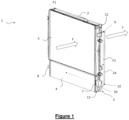
- FIG. 1 illustrates a heat exchange system 1 of a thermal conditioning system of an air flow F for a motor vehicle.
- the heat exchange system 1 according to the invention comprises a plurality of heat exchangers 2, 3, 4 configured to carry out a heat exchange between an air flow F and a fluid circulating in the heat exchanger.
- the heat exchange system 1 comprises at least one refrigerant circuit F1 comprising a condenser 2, a radiator 3 and an independent subcooling exchanger 4, also called a "subcooler" in English.
- the heat exchange system 1 is intended to be arranged in a front face of the vehicle opposite a grille opening so that the heat exchangers can be crossed by the air flow F coming from outside the vehicle.
- the heat exchange system also comprises a collector bottle 24 arranged between the condenser 2 and the subcooling exchanger 4.
- upstream/downstream and front/rear are used to describe the arrangement of a constituent element of the heat exchange system 1 relative to the direction of circulation of a fluid F, F1 circulating in the heat exchange system 1.
- upstream and downstream are understood relative to the direction of circulation of the refrigerant fluid F1, shown diagrammatically by dotted line arrows, in the condenser 2 and the subcooling exchanger 4 passing through the collector bottle 24.
- front and rear are understood relative to the direction of circulation of the air flow F, shown diagrammatically by a solid line arrow, from the exterior of the vehicle to an interior compartment on the front of the vehicle.
- Each heat exchanger 2, 3, 4 has a substantially rectangular parallelepiped shape defined by exchange surfaces parallel to each other.
- the exchange surfaces of these heat exchangers extend along a vertical and transverse elongation plane of said heat exchanger and are delimited transversely by distribution boxes which allow the circulation of the fluid over the entire extent of the exchange surface.
- the exchange surface of each heat exchanger 2, 3, 4 is advantageously composed of a bundle of parallel refrigerant circulation tubes F1 between them and between which fins or slats can be positioned in order to increase the heat exchange surface.
- the heat exchangers are arranged longitudinally, as will be described in detail below, so that the radiator 3 and the subcooling exchanger 4 are arranged in the same vertical and transverse plane, upstream of the condenser 2 which is arranged parallel to the other two heat exchangers 3, 4. All these heat exchangers are arranged relative to each other so that they can be successively crossed by the incoming air flow F.
- the heat exchange system 1 is particular in that it comprises a direct and compact connection system 5 between the condenser 2 and the subcooling exchanger 4, via the manifold 24.
- the condenser 2 is configured to carry out a heat exchange between the refrigerant fluid F1 previously described and the external air flow F so that the hot refrigerant fluid in the gaseous state entering the condenser 2 via an inlet pipe 6 is cooled at the exchange surface with the air, condenses and comes out in a liquid/gaseous state.
- the subcooling exchanger 4 is arranged in series with the condenser 2 on the refrigerant circuit in order to subcool the refrigerant F1 in liquid phase.
- the refrigerant in liquid phase is capable of penetrating into the subcooling exchanger 4.
- the subcooling exchanger is offset longitudinally relative to the condenser 2, the condenser 2 and the subcooling exchanger 4 being arranged in an axial stack defined by a stacking direction from front to rear determined by the direction of circulation of the air flow F.
- the subcooling exchanger 4 comprises an inlet flange 7 configured to receive at the inlet of the subcooling exchanger the refrigerant fluid and an outlet flange 8 fluidly connected to the refrigerant circuit of the vehicle, not shown here.
- the refrigerant circuit F1 comprises the collector bottle 24, also called “storage tank”, which is arranged between the condenser 2 and the subcooling exchanger 4 according to the direction of circulation of the refrigerant F1.
- the collector bottle 24 is advantageously connected to the outlet of the condenser 2, not visible in the figures, and it is configured to separate the liquid phase from the gaseous phase of the refrigerant F1, to compensate for possible volume variations in the air conditioning circuit and to ensure the filtration and dehydration of the refrigerant F1 which passes through it.
- the collecting bottle 24 has a substantially cylindrical shape and it extends between two vertical inlet 9 and outlet 10 ends in a main direction of vertical elongation V.
- a refrigerant treatment assembly 11 comprising in particular a desiccator and an associated metal filter in the form of a mesh (here not visible in the figures) is arranged inside the collecting bottle 24, and more particularly in the lower part, close to the outlet end, of the collecting bottle.
- This assembly has the function of eliminating impurities and absorbing residual moisture in the circulation loops of the refrigerant F1 in order to avoid any chemical interaction between possible water molecules and the refrigerant F1 (for example a fluid of type R134a) likely to damage the other components of the air conditioning circuit.
- the collecting bottle 24 is here fixed to the condenser on a transverse end edge of the latter.
- the collecting bottle 24 extends, along its vertical elongation axis, parallel to a vertical lateral surface 12 of said condenser 2.
- the collecting bottle 24 is made integral with the condenser 2 by brazing.
- the inlet flange 7 is similarly arranged on a vertical lateral surface 13 of the subcooling exchanger 4. And the dimension vertical of the condenser and subcooling exchanger and the arrangement of the collecting bottle is such that the inlet flange 7 of the subcooling exchanger 4 is arranged close to, at the same height, the outlet end 10 of the collecting bottle 24 in the vertical direction previously defined.
- the various heat exchangers have fixing lugs 14 making it possible to fix them to a structural element of the vehicle, or to a common frame ensuring their relative position with respect to each other.
- the connection system 5 comprises a tube 50, here metallic, having a U-shaped elbow, with successively a first portion 51 fluidly connected to the outlet end 10 of the collecting bottle 24 and extending in the vertical extension of this bottle, a second portion 52 extending said first portion 51 longitudinally in the direction of the subcooling exchanger 4, with a first elbow portion connecting the first 51 and the second portion 52 to each other, and a third portion 53 fluidly connected to the inlet flange 7 of the subcooling exchanger and extending in the vertical extension of this inlet flange, with a second elbow portion connecting the second 52 and the third portion 53 to each other.
- the compact connection system 5 extends vertically and longitudinally between the outlet end 10 of the collector bottle 24 and the inlet flange 7 of the subcooling exchanger 4.
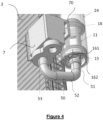
- the [ Figure 4 ] illustrates more particularly the connection of the tubing 50 forming part of the compact connection system 5 on the outlet end 10 by by means of a suitable connecting means 15 configured to close the collecting bottle 24 at its outlet end.
- the collecting bottle comprises a treatment assembly 11 arranged in the lower portion, as illustrated, the treatment assembly comprising a desiccator and a filter.
- the treatment assembly 11 is arranged such that the fluid exiting through the outlet end has passed through the treatment assembly.
- the refrigerant fluid is able to pass from the collecting bottle 24 to the subcooling exchanger, via the treatment assembly 11 and the tubing 50, in order to subject it to a subcooling pass.
- the invention also relates to a motor vehicle equipped with a heat exchange system 1 as previously described.
- the heat exchange system 1 according to the invention may be of particular interest in electric or hybrid vehicles for which it is necessary to be able to recharge the electrical storage batteries quickly via charging stations using high electrical powers.
- the heat generated in the batteries by this recharging process must be able to be evacuated to avoid damaging them.
- the heat exchange system 1 according to the invention makes it possible to group together the plurality of exchangers mentioned above, and in particular the presence of a condenser and a subcooling exchanger arranged in series with respect to a refrigerant circuit with a collector bottle interposed between them, in a controlled size, which makes it possible to optimize the size of the exchange surfaces and therefore improve cooling performance.
Landscapes
- Engineering & Computer Science (AREA)
- Physics & Mathematics (AREA)
- Thermal Sciences (AREA)
- Mechanical Engineering (AREA)
- General Engineering & Computer Science (AREA)
- Air-Conditioning For Vehicles (AREA)
- Heat-Exchange Devices With Radiators And Conduit Assemblies (AREA)
Description
- La présente invention concerne un système d'échange thermique disposé sur un circuit de distribution de fluides et comportant au moins une pluralité d'échangeurs thermiques chacun apte à réaliser un échange de calories entre un flux d'air traversant le système d'échange thermique et un fluide circulant dans cet échangeur thermique.
- Il est connu d'agencer en face avant du véhicule un tel système thermique comportant notamment un condenseur apte à assurer un échange de chaleur entre un fluide réfrigérant circulant dans le condenseur et un flux d'air frais incident en provenant de l'extérieur du véhicule. Il est connu de réaliser le condenseur d'un seul tenant avec une série de plaques empilées formant entre elles des lames de circulation du fluide réfrigérant.
- Le condenseur peut être associé à un réservoir ou bouteille de stockage du fluide réfrigérant en phase liquide qui est apte à compenser d'éventuelles fuites dans le circuit de climatisation, ainsi qu'à une portion de sous-refroidissement permettant de réaliser un sous-refroidissement du fluide réfrigérant en sortie du réservoir de stockage. Le réservoir de stockage sépare la phase liquide de la phase gazeuse du fluide réfrigérant et assure la filtration et la déshydratation du fluide réfrigérant.
- Dans un agencement connu, le réservoir de stockage du fluide réfrigérant est intégré dans le volume du condenseur, dans l'empilement de plaques transversalement à celles-ci. De manière alternative, le réservoir de stockage du fluide réfrigérant peut être intégré par brasage entre les deux blocs d'échange de chaleur et être indémontable. L'opération de brasage du module complet en une seule fois est une opération d'assemblage complexe à réaliser.
- Dans un autre agencement, le réservoir de stockage est rapporté latéralement par des assemblages mécaniques appropriés sur le condenseur et reste démontable. Une telle configuration ne permet pas d'assurer une circulation optimale car elle nécessite d'utiliser des tubulures de liaisons encombrantes entre le bloc de condensation, le réservoir de stockage et le bloc de sous-refroidissement. Il en résulte une augmentation de l'encombrement du module complet, un risque accru de fuite et une augmentation des coûts de fabrication.
- L'invention s'inscrit dans ce contexte et vise à améliorer le rendement du système d'échange thermique en améliorant la surface d'échange des échangeurs thermiques tout en réduisant l'encombrement et en favorisant un montage pratique du système d'échange thermique.
- A cet effet, l'invention propose un système d'échange thermique , comme défini par la revendication indépendante annexée, apte à assurer une circulation efficace du fluide réfrigérant depuis une sortie du condenseur vers une bouteille collectrice de fluide réfrigérant puis dans un échangeur de sous-refroidissement. A cet effet, l'invention propose un lien de connexion direct entre une sortie de la bouteille collectrice et une entrée de l'échangeur de sous-refroidissement.
- L'invention a pour objet un système d'échange thermique disposé dans une face avant d'un véhicule automobile comportant une pluralité d'échangeurs thermiques, chacun configuré pour réaliser un échange thermique entre un flux d'air et un fluide circulant dans l'échangeur thermique, comprenant au moins un condenseur et un échangeur de sous-refroidissement configuré pour sous-refroidir un fluide réfrigérant présent à l'état liquide en sortie de condenseur. Le condenseur est configuré pour être traversé par le flux d'air et permettre le refroidissement du fluide réfrigérant à l'état gazeux jusqu'à sa condensation à l'état liquide.
- Selon une caractéristique de l'invention, le condenseur comprend une bouteille collectrice du fluide réfrigérant et il existe un lien de connexion direct entre une sortie de la bouteille collectrice et une entrée de l'échangeur de sous-refroidissement indépendant.
- Par la suite, les termes « amont » et « aval » sont utilisés pour décrire la disposition d'un élément constitutif du système de d'échange thermique par rapport au sens de circulation du fluide réfrigérant depuis une entrée du condenseur en direction de l'échangeur thermique et en passant par la bouteille collectrice.
- De même, les termes « avant » et « arrière » sont utilisés pour décrire la disposition d'un élément constitutif du système d'échange thermique par rapport au sens de circulation du flux d'air depuis l'extérieur du véhicule vers un compartiment intérieur de face avant du véhicule. Les échangeurs thermiques sont avantageusement composés d'un faisceau de tubes de circulation du fluide réfrigérant parallèles entre eux et entre lesquels circule le flux d'air étant entendu qu'entre ces tubes peuvent être positionnées des ailettes ou lamelles en vue d'augmenter la surface d'échange thermique entre l'air passant entre deux tubes adjacents et le fluide passant dans chaque tube. Les échangeurs thermiques, de forme sensiblement parallélépipédique rectangle, sont disposés en regard d'une ouverture de calandre de face avant du véhicule de manière à ce que des première et seconde surfaces frontales d'échange, parallèles entre elles et s'étendant selon un plan d'allongement des échangeurs thermiques, soient successivement traversées par le flux d'air entrant incident.
- Selon une série de caractéristiques du système d'échange thermique selon réalisations exemplaires de l'invention , on prévoit, en plus des caractéristiques définies par la revendication indépendante 1 annexée, que :
L'échangeur de sous-refroidissement est agencé dans un plan différent de celui du condenseur associé, par rapport à la direction de circulation de l'air passant à travers le système d'échange thermique. - Le condenseur et l'échangeur de sous-refroidissement sont agencés selon un empilement axial par rapport au sens de circulation du flux d'air, l'empilement axial étant définit par une direction d'empilement de l'avant vers l'arrière selon le sens de circulation du flux d'air.
- La bouteille collectrice s'étend, selon un axe d'allongement longitudinal, parallèlement à une surface latérale verticale du condenseur, perpendiculaire aux première et seconde surfaces frontales dudit condenseur, et est agencée en amont de l'échangeur de sous-refroidissement par rapport au sens de circulation du fluide réfrigérant, la bouteille collectrice présente une forme sensiblement cylindrique et s'étend entre deux extrémités longitudinales d'entrée et de sortie selon une direction principale d'allongement longitudinal, en outre la bouteille peut être contenir d'un filtre pour éliminer les impuretés et/ou d'un dessiccateur pour absorber l'humidité résiduelle dans les boucles de circulation du fluide réfrigérant;
- L'échangeur de sous-refroidissement est agencé en aval de la bouteille collectrice selon le sens de circulation du fluide réfrigérant et présente, selon une direction verticale, définie par le plan d'allongement des échangeurs thermiques, une dimension inférieure à une dimension du condenseur de sorte qu'il ne recouvre que partiellement le condenseur et que l'entrée de l'échangeur de sous-refroidissement est disposée à même hauteur que l'extrémité de sortie de la bouteille collectrice selon la direction verticale précédemment définie.
- L'échangeur de sous-refroidissement est agencé en arrière du condenseur par rapport au sens de circulation du flux d'air, avantageusement, l'échangeur thermique est agencé dans un même plan d'allongement qu'un radiateur et en aval de celui-ci.
- Selon une série de caractéristiques du lien de connexion direct entre la bouteille collectrice et l'échangeur de sous-refroidissement selon l'invention pouvant être prises seules ou en combinaison, on prévoit que :
- Le lien de connexion est une tubulure réfrigérante métallique reliée à l'extrémité de sortie de la bouteille collectrice par l'intermédiaire d'une première bride de connexion et à l'échangeur de sous-refroidissement par l'intermédiaire d'une deuxième bride de connexion.
- La première bride est formée par un bouchon disposé à l'extrémité de sortie ouverte de la bouteille collectrice.
- L'invention a pour autre objet un véhicule automobile comprenant un système d'échange thermique tel que précédemment décrit. Selon une caractéristique de l'invention, le véhicule peut être électrique et/ou hybride.
- D'autres caractéristiques et avantages de l'invention apparaitront plus clairement à la lecture de la description détaillée d'un mode de réalisation de l'invention, donné ci-après à titre d'exemple illustratif et non limitatif et s'appuyant sur les figures annexées, dans lesquelles on a illustré un système d'échange thermique disposé en face avant d'un véhicule automobile selon l'invention et parmi lesquelles :
- la [
Figure 1 ] est une vue en perspective d'un système d'échange thermique pour véhicule automobile selon l'invention équipé d'une pluralité d'échangeurs thermiques, parmi lesquelles un radiateur et un échangeur de sous-refroidissement disposés l'un au-dessus de l'autre en face avant du système d'échange thermique sont particulièrement visibles, et d'une bouteille collectrice ; - la [
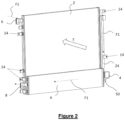
Figure 2 ] est une vue en perspective, selon un angle différent de celui de la [Figure 1 ], du système d'échange thermique dans laquelle on a retiré le radiateur pour rendre plus visible le condenseur et l'échangeur de sous-refroidissement ; - la [
Figure 3 ] est une vue de détail d'une portion inférieure du système d'échange thermique selon l'invention, le radiateur étant ici retiré, rendant visible une connexion directe entre la bouteille collectrice et un échangeur de sous-refroidissement ; - la [
Figure 4 ] est une vue de dessous du lien de connexion direct représenté sur la [Figure 3 ], seule une bride d'entrée de l'échangeur de sous-refroidissement étant illustrée. - Si les figures exposent l'invention de manière détaillée pour sa mise en œuvre, elles peuvent, bien entendu, servir à mieux définir l'invention le cas échéant. De même, il est rappelé que, pour l'ensemble des figures, les mêmes éléments sont désignés par les mêmes repères. On comprendra également que le mode de réalisation de l'invention illustré par les figures est donné à titre d'exemple non limitatif. Par conséquent, d'autres configurations du système d'échange thermique selon l'invention peuvent être réalisées, notamment par variations de l'agencement et du dimensionnement des éléments qui le composent, notamment des échangeurs thermiques, de la bouteille collectrice et du lien de connexion direct.
- Dans la suite de la description, les directions longitudinales, verticales ou transversales se réfèrent à l'orientation du système d'échange thermique selon l'invention, représentées parle trièdre LVT. La direction longitudinale L correspond à la direction principale du flux d'air amené à traverser le système d'échange thermique, et les directions verticale V et transversale T correspondent à des droites perpendiculaires à cette direction longitudinale.
- La [
Figure 1 ] illustre un système d'échange thermique 1 d'un système de conditionnement thermique d'un flux d'air F pour véhicule automobile. Le système d'échange thermique 1 selon l'invention comporte une pluralité d'échangeurs thermiques 2, 3, 4 configurés pour réaliser un échange thermique entre un flux d'air F et un fluide circulant dans l'échangeur thermique. - Plus particulièrement, le système d'échange thermique 1 selon l'invention comporte au moins un circuit de fluide réfrigérant F1 comprenant un condenseur 2, un radiateur 3 et un échangeur de sous-refroidissement 4 indépendant, également appelé « subcooler » en anglais. Le système d'échange thermique 1 est destiné à être agencé dans une face avant du véhicule en regard d'une ouverture de calandre de manière à ce que les échangeurs thermiques puissent être traversés par le flux d'air F en provenance de l'extérieur du véhicule.
- Le système d'échange thermique comporte par ailleurs une bouteille collectrice 24 agencée entre le condenseur 2 et l'échangeur de sous-refroidissement 4.
- Dans la suite de la description, les termes « amont/aval » et « avant/arrière » sont utilisés pour décrire la disposition d'un élément constitutif du système de d'échange thermique 1 par rapport au sens de circulation d'un fluide F, F1 circulant dans le système d'échange thermique 1. Ainsi, les termes « amont » et « aval » sont compris par rapport au sens de circulation du fluide réfrigérant F1, schématisé par des flèches en traits pointillés, dans le condenseur 2 et l'échangeur de sous-refroidissement 4 en passant par la bouteille collectrice 24. Les termes « avant » et « arrière » sont compris par rapport au sens de circulation du flux d'air F, schématisé par une flèche en trait plein, depuis l'extérieur du véhicule vers un compartiment intérieur de face avant du véhicule.
- Chaque échangeur thermique 2, 3, 4 présente une forme sensiblement parallélépipédique rectangle définie par des surfaces d'échange parallèles entre elles. Les surfaces d'échange de ces échangeurs thermiques s'étendent selon un plan d'allongement vertical et transversal dudit échangeur thermique et sont délimitées transversalement par des boîtes de distribution qui permettent la circulation du fluide sur toute l'étendue de la surface d'échange. La surface d'échange de chaque échangeur thermique 2, 3, 4 est avantageusement composé d'un faisceau de tubes de circulation du fluide réfrigérant F1 parallèles entre eux et entre lesquels peuvent être positionnées des ailettes ou lamelles en vue d'augmenter la surface d'échange thermique.
- Par ailleurs, les échangeurs thermiques sont agencés longitudinalement, tel que cela va être repris en détail ci-après, de sorte que le radiateur 3 et l'échangeur de sous-refroidissement 4 sont disposés dans un même plan vertical et transversal, en amont du condenseur 2 qui est disposé parallèlement aux deux autres échangeurs thermiques 3, 4. Tous ces échangeurs thermiques sont disposés les uns par rapport aux autres de manière à pouvoir être successivement traversées par le flux d'air F entrant.
- Tel qu'illustré sur les
figures 1 et2 , l'échangeur de sous-refroidissement 4 présente, selon la direction verticale V, une dimension de valeur inférieure à celle d'une dimension correspondante du condenseur 2 de sorte que l'échangeur de sous-refroidissement ne recouvre que partiellement le condenseur. - Le système d'échange thermique 1 selon l'invention est particulier en ce qu'il comprend un système de connexion 5 direct et compact entre le condenseur 2 et l'échangeur de sous-refroidissement 4, via la boîte collectrice 24.
- Le condenseur 2 est configuré pour réaliser un échange thermique entre le fluide réfrigérant F1 précédemment décrit et le flux d'air F extérieur de sorte que le fluide réfrigérant chaud à l'état gazeux pénétrant dans le condenseur 2 par une tubulure d'entrée 6 est refroidi au niveau de la surface d'échange avec l'air, se condense et ressort dans un état liquide/gazeux.
- L'échangeur de sous-refroidissement 4 est agencé en série du condenseur 2 sur le circuit du fluide réfrigérant afin de sous-refroidir le fluide réfrigérant F1 en phase liquide. Le fluide réfrigérant sous phase liquide est susceptible de pénétrer dans l'échangeur de sous-refroidissement 4. Tel que décrit précédemment, l'échangeur de sous-refroidissement est décalé longitudinalement par rapport au condenseur 2, le condenseur 2 et l'échangeur de sous-refroidissement 4 étant agencés selon un empilement axial défini par une direction d'empilement de l'avant vers l'arrière déterminée par le sens de circulation du flux d'air F.
- L'échangeur de sous-refroidissement 4 comporte une bride d'entrée 7 configurée pour recevoir en entrée de l'échangeur de sous-refroidissement le fluide réfrigérant et une bride de sortie 8 reliée fluidiquement au circuit de fluide réfrigérant du véhicule, ici non représenté.
- Avantageusement, le circuit de fluide réfrigérant F1 comprend la bouteille collectrice 24, également appelée « réservoir de stockage », qui est agencée entre le condenseur 2 et l'échangeur de sous-refroidissement 4 selon le sens de circulation du fluide réfrigérant F1. La bouteille collectrice 24 est avantageusement reliée à la sortie du condenseur 2, non visible sur les figures, et elle est configurée pour séparer la phase liquide de la phase gazeuse du fluide réfrigérant F1, pour compenser d'éventuelles variations de volume dans le circuit de conditionnement d'air et pour assurer la filtration et la déshydratation du fluide réfrigérant F1 qui la traverse.
- Plus particulièrement, et tel que cela est visible sur la [
Figure 1 ] ou sur la [Figure 3 ] et la [Figure 4 ], la bouteille collectrice 24 présente une forme sensiblement cylindrique et elle s'étend entre deux extrémités verticales d'entrée 9 et de sortie 10 selon une direction principale d'allongement verticale V. Avantageusement, un ensemble de traitement 11 du fluide réfrigérant, comportant notamment un dessicateur et un filtre métallique associé sous forme de treillis (ici non visible sur les figures) est disposé à l'intérieur de la bouteille collectrice 24, et plus particulièrement dans la partie inférieure, proche de l'extrémité de sortie, de la bouteille collectrice. Cet ensemble a pour fonction d'éliminer les impuretés et d'absorber l'humidité résiduelle dans les boucles de circulation du fluide réfrigérant F1 afin d'éviter toute interaction chimique entre d'éventuelles molécules d'eau et le fluide réfrigérant F1 (par exemple un fluide de type R134a) susceptible d'endommager les autres composants du circuit de conditionnement d'air. - La bouteille collectrice 24 est ici fixée sur le condenseur sur un bord d'extrémité transversal de ce dernier. En d'autres termes, la bouteille collectrice 24 s'étend, selon son axe d'allongement vertical, parallèlement à une surface latérale verticale 12 dudit condenseur 2. Avantageusement, la bouteille collectrice 24 est rendue solidaire du condenseur 2 par brasage.
- La bride d'entrée 7 est de manière analogue disposée sur une surface latérale verticale 13 de l'échangeur de sous-refroidissement 4. Et la dimension verticale des condenseur et échangeur de sous-refroidissement et la disposition de la bouteille collectrice est telle que la bride d'entrée 7 de l'échangeur de sous-refroidissement 4 est disposée à proximité, à même hauteur, de l'extrémité de sortie 10 de la bouteille collectrice 24 selon la direction verticale précédemment définie.
- Les différents échangeurs thermiques comportent des pattes de fixation 14 rendant possible leur fixation sur un élément structurel du véhicule, ou bien sur un cadre commun assurant leur position relative les uns par rapport aux autres.
- Le système de connexion 5 direct et compact entre le condenseur 2 et l'échangeur de sous-refroidissement 4, via la boîte collectrice 24, s'étend ainsi en regard des surfaces latérales verticale 12, 13 voisines de ces deux échangeurs thermiques.
- Le système de connexion 5 comporte une tubulure 50, ici métallique, présentant une forme coudée en U, avec successivement une première portion 51 reliée fluidiquement à l'extrémité de sortie 10 de la bouteille collectrice 24 et s'étendant dans le prolongement vertical de cette bouteille, une deuxième portion 52 prolongeant ladite première portion 51 longitudinalement en direction de l'échangeur de sous-refroidissement 4, avec une première portion coudée reliant la première 51 et la deuxième portion 52 entre elles, et une troisième portion 53 reliée fluidiquement à la bride d'entrée 7 de l'échangeur de sous-refroidissement et s'étendant dans le prolongement vertical de cette bride d'entrée, avec une deuxième portion coudée reliant la deuxième 52 et la troisième portion 53 entre elles.
- La [
Figure 3 ] et la [Figure 4 ] illustrent une portion du système d'échange thermique 1 selon l'invention qui rend plus visible le système de connexion compact 5 entre la bouteille collectrice 24 et l'échangeur de sous-refroidissement 4. - Tel que précédemment décrit, le système de connexion compact 5 s'étend verticalement et longitudinalement entre l'extrémité de sortie 10 de la bouteille collectrice 24 et la bride d'entrée 7 de l'échangeur de sous-refroidissement 4. La [
Figure 4 ] illustre plus particulièrement la connexion de la tubulure 50 formant partie du système de connexion compact 5 sur l'extrémité de sortie 10 par l'intermédiaire d'un moyen de raccordement approprié 15 configuré pour fermer la bouteille collectrice 24 à son extrémité de sortie. - Il convient de noter que la tubulure 50 est représentée sur la [
Figure 4 ] dans une position avant sa fixation sur l'extrémité de sortie de la bouteille collectrice, avec la première portion 51 de la tubulure à distance du moyen de raccordement 15 qui vient d'être évoqué La tubulure 50 de forme coudée est rendue étanche à ses connexions avec la bouteille collectrice 24 et la bride de l'échangeur de sous-refroidissement par des opérations de brasage du système de connexion compact 5. - Le condenseur 2 et l'échangeur de sous-refroidissement 4 peuvent être maintenus solidaires l'un à l'autre par l'intermédiaire d'un dispositif d'accrochage 17 latéral, formé ici en partie par la bride d'entrée de l'échangeur de sous-refroidissement. Plus particulièrement, le dispositif d'accrochage 17 comporte ici une fente 18, formée verticalement et transversalement dans un appendice 70 de la bride d'entrée 7, et une nervure 19 formant saillie de la boîte collectrice ou de la surface latérale verticale 12 du condenseur 2. L'appendice 70 de la bride d'entrée est tournée vers la boîte collectrice 24 lorsque les échangeurs thermiques sont assemblés dans le système selon l'invention, et la fente 18 est dimensionnée pour recevoir la nervure. La coopération de formes assure un positionnement relatif de l'échangeur de sous-refroidissement 4 par rapport au condenseur 2, notamment selon la direction longitudinale. Il convient de noter que cette position longitudinale relative des échangeurs thermiques est ici essentielle à conserver du fait de l'agencement longitudinal de la tubulure 50 brasée.
- La [
Figure 4 ] détaille par ailleurs la portion inférieure, c'est-à-dire l'extrémité de sortie 10, de la bouteille collectrice 24 montée de façon adjacente au condenseur 2, en rendant visible l'intérieur de la bouteille collectrice au voisinage de cette extrémité de sortie, par transparence de l'enveloppe externe de la bouteille collectrice. Tel que décrit précédemment, la bouteille collectrice comporte un ensemble de traitement 11 disposé dans la portion inférieure, tel qu'illustrée, l'ensemble de traitement comportant un dessicateur et un filtre. L'ensemble de traitement 11 est disposé de telle sorte que le fluide sortant par l'extrémité de sortie est passé par l'ensemble de traitement. - Le moyen de raccordement 15 est disposé en travers de l'ouverture formée par l'extrémité de sortie, en aval de l'ensemble de traitement par rapport au sens de circulation de fluide réfrigérant. Ce moyen de raccordement 15 comporte plus particulièrement une base formant bouchon 16 de la bouteille collectrice avec une collerette externe 161 disposée contre la face interne de l'enveloppe de la bouteille collectrice 24, et une collerette interne 162 formant en son centre un trou de passage pour le fluide et formant un manchon pour le brasage de la tubulure 50.
- Une fois le système de connexion compact 5 raccordé d'une part à l'extrémité de sortie 10 de la bouteille collectrice et d'autre part à la bride d'entrée 7 de l'échangeur de sous-refroidissement 4, le fluide réfrigérant est apte à passer de la bouteille collectrice 24 à l'échangeur de sous-refroidissement, via l'ensemble de traitement 11 et la tubulure 50, afin de lui faire subir une passe de sous-refroidissement.
- La [
Figure 3 ] et la [Figure 4 ] illustrent bien que la bride d'entrée 7 de l'échangeur de sous-refroidissement 4 est disposée sensiblement à même hauteur que l'extrémité de sortie 10 de la bouteille collectrice 24 selon la direction verticale précédemment définie. On comprend que cette configuration permet un écoulement optimisé du fluide réfrigérant F1 entre la bouteille collectrice 24 et l'échangeur de sous-refroidissement 4. - L'invention concerne également un véhicule automobile équipé d'un système d'échange thermique 1 tel que précédemment décrit. Le système d'échange thermique 1 selon l'invention peut trouver un intérêt particulier dans des véhicules électriques ou hybrides pour lesquels il est nécessaire de pouvoir recharger les batteries de stockage électrique rapidement par l'intermédiaire de bornes de recharge mettant en œuvre des puissances électriques élevées. La chaleur générée dans les batteries par ce processus de recharge doit pouvoir être évacuée pour éviter de les endommager. Le système d'échange thermique 1 selon l'invention permet de regrouper la pluralité des échangeurs évoqués précédemment, et notamment la présence d'un condenseur et d'un échangeur de sous refroidissement agencés en série par rapport à un circuit de fluide réfrigérant avec une bouteille collectrice interposée entre eux, dans un encombrement maitrisé, ce qui permet d'optimiser la dimension des surfaces d'échange et donc d'améliorer les performances de refroidissement.
- La description qui précède explique clairement comment l'invention permet d'atteindre les objectifs qu'elle s'est fixée et notamment de proposer un système d'échange thermique comprenant au moins un condenseur et une bouteille collectrice reliée par un système de connexion direct et compact à un échangeur de sous-refroidissement indépendant, dans le but d'améliorer les échanges thermiques, de réduire le volume d'encombrement et de simplifier l'assemblage du système d'échange thermique.
- L'invention ne saurait se limiter aux modes de réalisation spécifiquement donnés dans ce document à titre d'exemples non limitatifs, et s'étend en particulier à tous moyens tombant sous la définition donnée par la revendication indépendante 1 annexée.
Claims (6)
- Système d'échange thermique (1) pour véhicule automobile comportant une pluralité d'échangeurs thermiques (2, 4), chacun configuré pour réaliser un échange thermique entre un flux d'air (F), traversant principalement longitudinalement le système d'échange thermique, et un fluide réfrigérant (F1) circulant dans l'échangeur thermique (2, 4), la pluralité d'échangeurs thermiques comprenant au moins un condenseur (2) et un échangeur de sous-refroidissement (4) configuré pour sous-refroidir le fluide réfrigérant (F1) présent à l'état liquide en sortie de condenseur (2), caractérisé en ce que le condenseur (2) comprend une bouteille collectrice (24) du fluide réfrigérant (F1) configuré pour au moins séparer la phase liquide de la phase gazeuse du fluide réfrigérant et en ce qu'il existe un système de connexion (5) direct entre une sortie (10) de la bouteille collectrice (24) et une entrée (7) de l'échangeur de sous-refroidissement (4), ledit système de connexion (5) étant brasé sur la bouteille collectrice (24) et sur une bride d'entrée (7) de l'échangeur de sous refroidissement de manière à former une connexion étanche, caractérisé en ce que l'échangeur de sous-refroidissement (4) présente, selon une direction verticale, une dimension de valeur inférieure à celle d'une dimension correspondante du condenseur (2), de sorte que l'échangeur de sous-refroidissement ne recouvre verticalement que partiellement le condenseur (2) et de sorte que l'entrée (7) de l'échangeur de sous-refroidissement (4) est disposée sensiblement à même hauteur que la sortie (7) de la bouteille collectrice (24) selon ladite direction verticale, en ce que le système de connexion (5) direct comporte une tubulure coudée reliant fluidiquement la sortie (10) de la bouteille collectrice (24) à la bride d'entrée (7) de l'échangeur de sous-refroidissement, la tubulure (50) étant agencée selon un plan d'allongement principal longitudinal et vertical, et en ce qu'il comporte un dispositif d'accrochage (17) verrouillant la position relative de l'échangeur de sous-refroidissement (4) par rapport à la bouteille collectrice au moins selon la direction longitudinale.
- Système d'échange thermique (1) selon la revendication 1, caractérisé en ce que le condenseur (2) et l'échangeur de sous-refroidissement (4) sont agencés selon un empilement longitudinal, parallèlement à la direction principale du flux d'air (F) amené à traverser successivement l'échangeur de sous-refroidissement et le condenseur (2).
- Système d'échange thermique (1) selon l'une quelconque des revendications 1 ou 2, caractérisé en ce que la bouteille collectrice (24) s'étend, selon un axe d'allongement principal vertical, parallèlement à une surface latérale (12) verticale du condenseur (2).
- Système d'échange thermique (1) selon l'une des revendications précédentes, caractérisé en ce que la tubulure (50) est reliée à la sortie (10) de la bouteille collectrice par l'intermédiaire d'un moyen de raccordement (15) qui comporte au moins un bouchon (16) disposé en travers de l'extrémité de sortie (10) de la bouteille collectrice (3).
- Système d'échange thermique (1) selon l'une quelconque des revendications précédentes, caractérisé en ce que la tubulure de connexion (5) présente une forme en U, avec deux portions coudées reliant l'une à l'autre trois portions (51, 52, 53) fluidiquement continues.
- Véhicule automobile comprenant un système d'échange thermique (1) selon l'une quelconque des revendications 1 à 5.
Applications Claiming Priority (2)
| Application Number | Priority Date | Filing Date | Title |
|---|---|---|---|
| FR1909634A FR3100318A1 (fr) | 2019-09-02 | 2019-09-02 | Systeme d’echange thermique pour vehicule automobile |
| PCT/FR2020/051392 WO2021044088A1 (fr) | 2019-09-02 | 2020-07-28 | Systeme d'echange thermique pour vehicule automobile |
Publications (2)
| Publication Number | Publication Date |
|---|---|
| EP4025846A1 EP4025846A1 (fr) | 2022-07-13 |
| EP4025846B1 true EP4025846B1 (fr) | 2025-06-25 |
Family
ID=68733356
Family Applications (1)
| Application Number | Title | Priority Date | Filing Date |
|---|---|---|---|
| EP20757389.0A Active EP4025846B1 (fr) | 2019-09-02 | 2020-07-28 | Systeme d'echange thermique pour vehicule automobile |
Country Status (4)
| Country | Link |
|---|---|
| EP (1) | EP4025846B1 (fr) |
| CN (1) | CN114729766A (fr) |
| FR (1) | FR3100318A1 (fr) |
| WO (1) | WO2021044088A1 (fr) |
Families Citing this family (2)
| Publication number | Priority date | Publication date | Assignee | Title |
|---|---|---|---|---|
| EP4148369B1 (fr) * | 2021-09-08 | 2024-10-23 | Valeo Autosystemy Sp. z o.o. | Ensemble échangeur thermique |
| US20250257947A1 (en) * | 2024-02-14 | 2025-08-14 | Honeywell International Inc. | Micro vapor cycle condenser unit |
Family Cites Families (3)
| Publication number | Priority date | Publication date | Assignee | Title |
|---|---|---|---|---|
| DE10226851A1 (de) * | 2002-06-15 | 2004-01-08 | Bayerische Motoren Werke Ag | Kondensatoranordnung für Fahrzeugklimaanlagen |
| US20150101778A1 (en) * | 2013-10-14 | 2015-04-16 | Hyundai Motor Company | Cooling module for vehicle |
| CN106103155B (zh) * | 2014-07-29 | 2018-04-27 | 翰昂汽车零部件有限公司 | 车用空调系统 |
-
2019
- 2019-09-02 FR FR1909634A patent/FR3100318A1/fr not_active Withdrawn
-
2020
- 2020-07-28 EP EP20757389.0A patent/EP4025846B1/fr active Active
- 2020-07-28 CN CN202080061602.1A patent/CN114729766A/zh active Pending
- 2020-07-28 WO PCT/FR2020/051392 patent/WO2021044088A1/fr not_active Ceased
Also Published As
| Publication number | Publication date |
|---|---|
| EP4025846A1 (fr) | 2022-07-13 |
| CN114729766A (zh) | 2022-07-08 |
| WO2021044088A1 (fr) | 2021-03-11 |
| FR3100318A1 (fr) | 2021-03-05 |
Similar Documents
| Publication | Publication Date | Title |
|---|---|---|
| EP2402694B1 (fr) | Condenseur, notamment pour système de climatisation d'un vehicule automobile et échangeur de chaleur equipé d'un tel condenseur | |
| EP4025846B1 (fr) | Systeme d'echange thermique pour vehicule automobile | |
| EP2726806A1 (fr) | Boitier d'echangeur a plaques empilees et echangeur comprenant un tel boitier | |
| EP3769365A1 (fr) | Système de refroidissement d'au moins une batterie de véhicule automobile | |
| FR2916835A1 (fr) | Module d'echange de chaleur pour un circuit de climatisation | |
| FR2963868A1 (fr) | Echangeur de chaleur comprenant un element chauffant serigraphie | |
| FR2997485A1 (fr) | Echangeur thermique, notamment pour vehicule automobile | |
| WO2018060646A1 (fr) | Boite collectrice comprenant un matériau à changement de phase et échangeur de chaleur comprenant une telle boite collectrice | |
| FR3066012A1 (fr) | Dispositif d'echange de chaleur pour vehicule automobile | |
| WO2021116628A1 (fr) | Dispositif de régulation thermique d'au moins un composant électrique | |
| FR3065796A1 (fr) | Echangeur thermique mis en œuvre dans un circuit de regulation thermique d'un pack-batterie de vehicule automobile | |
| EP1817536A1 (fr) | Echangeur de chaleur comportant au moins une bride pour un collecteur de cet echangeur ainsi qu'un reservoir destine a equiper un tel echangeur | |
| FR2992713A1 (fr) | Faisceau d'echange de chaleur et echangeur de chaleur comprenant ledit faisceau | |
| EP3430339B1 (fr) | Échangeur de chaleur, en particulier pour véhicule, plus particulièrement pour des véhicules automobiles | |
| FR3056729B1 (fr) | Boite collectrice pour echangeur de chaleur avec saillies | |
| EP2392877B1 (fr) | Système unitaire comprenant un condenseur, un échangeur de chaleur interne et une bouteille | |
| EP2072936B1 (fr) | Echangeur de chaleur unitaire pour un circuit de climatisation | |
| EP3218665A1 (fr) | Dispositif de fixation pour échangeur de chaleur | |
| FR3158064A1 (fr) | Module et système de traitement thermique pour véhicule | |
| FR2962205A1 (fr) | Boitier collecteur d'un echangeur de chaleur conduisant un fluide caloporteur et comprenant un faisceau d'echange d'un fluide refrigerant | |
| WO2025146342A1 (fr) | Module et système de traitement thermique pour véhicule | |
| FR3164000A1 (fr) | Module de traitement thermique de véhicule comportant une plaque de distribution | |
| EP2743108B1 (fr) | Circuit de conditionnement d'air, notamment pour véhicule automobile | |
| WO2023030972A1 (fr) | Échangeur de chaleur pour boucle de fluide réfrigérant | |
| EP2392876A1 (fr) | Système unitaire comprenant un condenseur, une bouteille et un échangeur de chaleur interne |
Legal Events
| Date | Code | Title | Description |
|---|---|---|---|
| STAA | Information on the status of an ep patent application or granted ep patent |
Free format text: STATUS: UNKNOWN |
|
| STAA | Information on the status of an ep patent application or granted ep patent |
Free format text: STATUS: THE INTERNATIONAL PUBLICATION HAS BEEN MADE |
|
| PUAI | Public reference made under article 153(3) epc to a published international application that has entered the european phase |
Free format text: ORIGINAL CODE: 0009012 |
|
| STAA | Information on the status of an ep patent application or granted ep patent |
Free format text: STATUS: REQUEST FOR EXAMINATION WAS MADE |
|
| 17P | Request for examination filed |
Effective date: 20220209 |
|
| AK | Designated contracting states |
Kind code of ref document: A1 Designated state(s): AL AT BE BG CH CY CZ DE DK EE ES FI FR GB GR HR HU IE IS IT LI LT LU LV MC MK MT NL NO PL PT RO RS SE SI SK SM TR |
|
| DAV | Request for validation of the european patent (deleted) | ||
| DAX | Request for extension of the european patent (deleted) | ||
| P01 | Opt-out of the competence of the unified patent court (upc) registered |
Effective date: 20230528 |
|
| STAA | Information on the status of an ep patent application or granted ep patent |
Free format text: STATUS: EXAMINATION IS IN PROGRESS |
|
| 17Q | First examination report despatched |
Effective date: 20230918 |
|
| RIC1 | Information provided on ipc code assigned before grant |
Ipc: B60H 1/32 20060101ALI20241211BHEP Ipc: F28F 9/02 20060101ALI20241211BHEP Ipc: F28F 9/00 20060101ALI20241211BHEP Ipc: F28D 21/00 20060101ALI20241211BHEP Ipc: F28D 1/04 20060101ALI20241211BHEP Ipc: F28F 9/007 20060101ALI20241211BHEP Ipc: F28B 9/08 20060101ALI20241211BHEP Ipc: F25B 40/02 20060101ALI20241211BHEP Ipc: B60H 1/00 20060101ALI20241211BHEP Ipc: F25B 39/04 20060101AFI20241211BHEP |
|
| GRAP | Despatch of communication of intention to grant a patent |
Free format text: ORIGINAL CODE: EPIDOSNIGR1 |
|
| STAA | Information on the status of an ep patent application or granted ep patent |
Free format text: STATUS: GRANT OF PATENT IS INTENDED |
|
| INTG | Intention to grant announced |
Effective date: 20250121 |
|
| GRAS | Grant fee paid |
Free format text: ORIGINAL CODE: EPIDOSNIGR3 |
|
| GRAA | (expected) grant |
Free format text: ORIGINAL CODE: 0009210 |
|
| STAA | Information on the status of an ep patent application or granted ep patent |
Free format text: STATUS: THE PATENT HAS BEEN GRANTED |
|
| AK | Designated contracting states |
Kind code of ref document: B1 Designated state(s): AL AT BE BG CH CY CZ DE DK EE ES FI FR GB GR HR HU IE IS IT LI LT LU LV MC MK MT NL NO PL PT RO RS SE SI SK SM TR |
|
| REG | Reference to a national code |
Ref country code: GB Ref legal event code: FG4D Free format text: NOT ENGLISH |
|
| REG | Reference to a national code |
Ref country code: CH Ref legal event code: EP |
|
| REG | Reference to a national code |
Ref country code: CH Ref legal event code: EP |
|
| REG | Reference to a national code |
Ref country code: IE Ref legal event code: FG4D Free format text: LANGUAGE OF EP DOCUMENT: FRENCH |
|
| REG | Reference to a national code |
Ref country code: DE Ref legal event code: R096 Ref document number: 602020053343 Country of ref document: DE |
|
| PG25 | Lapsed in a contracting state [announced via postgrant information from national office to epo] |
Ref country code: FI Free format text: LAPSE BECAUSE OF FAILURE TO SUBMIT A TRANSLATION OF THE DESCRIPTION OR TO PAY THE FEE WITHIN THE PRESCRIBED TIME-LIMIT Effective date: 20250625 |
|
| PGFP | Annual fee paid to national office [announced via postgrant information from national office to epo] |
Ref country code: DE Payment date: 20250922 Year of fee payment: 6 |
|
| REG | Reference to a national code |
Ref country code: LT Ref legal event code: MG9D |
|
| PG25 | Lapsed in a contracting state [announced via postgrant information from national office to epo] |
Ref country code: NO Free format text: LAPSE BECAUSE OF FAILURE TO SUBMIT A TRANSLATION OF THE DESCRIPTION OR TO PAY THE FEE WITHIN THE PRESCRIBED TIME-LIMIT Effective date: 20250925 Ref country code: GR Free format text: LAPSE BECAUSE OF FAILURE TO SUBMIT A TRANSLATION OF THE DESCRIPTION OR TO PAY THE FEE WITHIN THE PRESCRIBED TIME-LIMIT Effective date: 20250926 |
|
| PG25 | Lapsed in a contracting state [announced via postgrant information from national office to epo] |
Ref country code: BG Free format text: LAPSE BECAUSE OF FAILURE TO SUBMIT A TRANSLATION OF THE DESCRIPTION OR TO PAY THE FEE WITHIN THE PRESCRIBED TIME-LIMIT Effective date: 20250625 |
|
| PG25 | Lapsed in a contracting state [announced via postgrant information from national office to epo] |
Ref country code: HR Free format text: LAPSE BECAUSE OF FAILURE TO SUBMIT A TRANSLATION OF THE DESCRIPTION OR TO PAY THE FEE WITHIN THE PRESCRIBED TIME-LIMIT Effective date: 20250625 |
|
| PGFP | Annual fee paid to national office [announced via postgrant information from national office to epo] |
Ref country code: FR Payment date: 20250930 Year of fee payment: 6 |
|
| PG25 | Lapsed in a contracting state [announced via postgrant information from national office to epo] |
Ref country code: RS Free format text: LAPSE BECAUSE OF FAILURE TO SUBMIT A TRANSLATION OF THE DESCRIPTION OR TO PAY THE FEE WITHIN THE PRESCRIBED TIME-LIMIT Effective date: 20250925 |
|
| PG25 | Lapsed in a contracting state [announced via postgrant information from national office to epo] |
Ref country code: LV Free format text: LAPSE BECAUSE OF FAILURE TO SUBMIT A TRANSLATION OF THE DESCRIPTION OR TO PAY THE FEE WITHIN THE PRESCRIBED TIME-LIMIT Effective date: 20250625 |
|
| REG | Reference to a national code |
Ref country code: NL Ref legal event code: MP Effective date: 20250625 |
|
| PG25 | Lapsed in a contracting state [announced via postgrant information from national office to epo] |
Ref country code: NL Free format text: LAPSE BECAUSE OF FAILURE TO SUBMIT A TRANSLATION OF THE DESCRIPTION OR TO PAY THE FEE WITHIN THE PRESCRIBED TIME-LIMIT Effective date: 20250625 |
|
| PG25 | Lapsed in a contracting state [announced via postgrant information from national office to epo] |
Ref country code: PT Free format text: LAPSE BECAUSE OF FAILURE TO SUBMIT A TRANSLATION OF THE DESCRIPTION OR TO PAY THE FEE WITHIN THE PRESCRIBED TIME-LIMIT Effective date: 20251027 |
|
| REG | Reference to a national code |
Ref country code: AT Ref legal event code: MK05 Ref document number: 1806794 Country of ref document: AT Kind code of ref document: T Effective date: 20250625 |
|
| PG25 | Lapsed in a contracting state [announced via postgrant information from national office to epo] |
Ref country code: IS Free format text: LAPSE BECAUSE OF FAILURE TO SUBMIT A TRANSLATION OF THE DESCRIPTION OR TO PAY THE FEE WITHIN THE PRESCRIBED TIME-LIMIT Effective date: 20251025 |
|
| PG25 | Lapsed in a contracting state [announced via postgrant information from national office to epo] |
Ref country code: AT Free format text: LAPSE BECAUSE OF FAILURE TO SUBMIT A TRANSLATION OF THE DESCRIPTION OR TO PAY THE FEE WITHIN THE PRESCRIBED TIME-LIMIT Effective date: 20250625 Ref country code: SM Free format text: LAPSE BECAUSE OF FAILURE TO SUBMIT A TRANSLATION OF THE DESCRIPTION OR TO PAY THE FEE WITHIN THE PRESCRIBED TIME-LIMIT Effective date: 20250625 |
|
| PG25 | Lapsed in a contracting state [announced via postgrant information from national office to epo] |
Ref country code: CZ Free format text: LAPSE BECAUSE OF FAILURE TO SUBMIT A TRANSLATION OF THE DESCRIPTION OR TO PAY THE FEE WITHIN THE PRESCRIBED TIME-LIMIT Effective date: 20250625 |
|
| PG25 | Lapsed in a contracting state [announced via postgrant information from national office to epo] |
Ref country code: PL Free format text: LAPSE BECAUSE OF FAILURE TO SUBMIT A TRANSLATION OF THE DESCRIPTION OR TO PAY THE FEE WITHIN THE PRESCRIBED TIME-LIMIT Effective date: 20250625 |
|
| PG25 | Lapsed in a contracting state [announced via postgrant information from national office to epo] |
Ref country code: EE Free format text: LAPSE BECAUSE OF FAILURE TO SUBMIT A TRANSLATION OF THE DESCRIPTION OR TO PAY THE FEE WITHIN THE PRESCRIBED TIME-LIMIT Effective date: 20250625 |
|
| PG25 | Lapsed in a contracting state [announced via postgrant information from national office to epo] |
Ref country code: SK Free format text: LAPSE BECAUSE OF FAILURE TO SUBMIT A TRANSLATION OF THE DESCRIPTION OR TO PAY THE FEE WITHIN THE PRESCRIBED TIME-LIMIT Effective date: 20250625 |
|
| PG25 | Lapsed in a contracting state [announced via postgrant information from national office to epo] |
Ref country code: ES Free format text: LAPSE BECAUSE OF FAILURE TO SUBMIT A TRANSLATION OF THE DESCRIPTION OR TO PAY THE FEE WITHIN THE PRESCRIBED TIME-LIMIT Effective date: 20250625 |
|
| REG | Reference to a national code |
Ref country code: CH Ref legal event code: W10 Free format text: ST27 STATUS EVENT CODE: U-0-0-W10-W00 (AS PROVIDED BY THE NATIONAL OFFICE) Effective date: 20260218 |
|
| REG | Reference to a national code |
Ref country code: CH Ref legal event code: H13 Free format text: ST27 STATUS EVENT CODE: U-0-0-H10-H13 (AS PROVIDED BY THE NATIONAL OFFICE) Effective date: 20260224 |
|
| PG25 | Lapsed in a contracting state [announced via postgrant information from national office to epo] |
Ref country code: RO Free format text: LAPSE BECAUSE OF FAILURE TO SUBMIT A TRANSLATION OF THE DESCRIPTION OR TO PAY THE FEE WITHIN THE PRESCRIBED TIME-LIMIT Effective date: 20250625 Ref country code: LU Free format text: LAPSE BECAUSE OF NON-PAYMENT OF DUE FEES Effective date: 20250728 |
|
| RAP2 | Party data changed (patent owner data changed or rights of a patent transferred) |
Owner name: VALEO ELECTRIFICATION |
|
| REG | Reference to a national code |
Ref country code: BE Ref legal event code: MM Effective date: 20250731 |
|
| PG25 | Lapsed in a contracting state [announced via postgrant information from national office to epo] |
Ref country code: MC Free format text: LAPSE BECAUSE OF FAILURE TO SUBMIT A TRANSLATION OF THE DESCRIPTION OR TO PAY THE FEE WITHIN THE PRESCRIBED TIME-LIMIT Effective date: 20250625 |
|
| PG25 | Lapsed in a contracting state [announced via postgrant information from national office to epo] |
Ref country code: DK Free format text: LAPSE BECAUSE OF FAILURE TO SUBMIT A TRANSLATION OF THE DESCRIPTION OR TO PAY THE FEE WITHIN THE PRESCRIBED TIME-LIMIT Effective date: 20250625 |
|
| PG25 | Lapsed in a contracting state [announced via postgrant information from national office to epo] |
Ref country code: IT Free format text: LAPSE BECAUSE OF FAILURE TO SUBMIT A TRANSLATION OF THE DESCRIPTION OR TO PAY THE FEE WITHIN THE PRESCRIBED TIME-LIMIT Effective date: 20250625 Ref country code: BE Free format text: LAPSE BECAUSE OF NON-PAYMENT OF DUE FEES Effective date: 20250731 |
|
| PG25 | Lapsed in a contracting state [announced via postgrant information from national office to epo] |
Ref country code: CH Free format text: LAPSE BECAUSE OF NON-PAYMENT OF DUE FEES Effective date: 20250731 |
|
| PLBE | No opposition filed within time limit |
Free format text: ORIGINAL CODE: 0009261 |
|
| STAA | Information on the status of an ep patent application or granted ep patent |
Free format text: STATUS: NO OPPOSITION FILED WITHIN TIME LIMIT |