EP4024699B1 - Motor vibration control method and electronic device - Google Patents
Motor vibration control method and electronic device Download PDFInfo
- Publication number
- EP4024699B1 EP4024699B1 EP20866623.0A EP20866623A EP4024699B1 EP 4024699 B1 EP4024699 B1 EP 4024699B1 EP 20866623 A EP20866623 A EP 20866623A EP 4024699 B1 EP4024699 B1 EP 4024699B1
- Authority
- EP
- European Patent Office
- Prior art keywords
- motor vibration
- motor
- battery
- waveform
- electronic device
- Prior art date
- Legal status (The legal status is an assumption and is not a legal conclusion. Google has not performed a legal analysis and makes no representation as to the accuracy of the status listed.)
- Active
Links
Images


Classifications
-
- H—ELECTRICITY
- H04—ELECTRIC COMMUNICATION TECHNIQUE
- H04M—TELEPHONIC COMMUNICATION
- H04M19/00—Current supply arrangements for telephone systems
- H04M19/02—Current supply arrangements for telephone systems providing ringing current or supervisory tones, e.g. dialling tone or busy tone
- H04M19/04—Current supply arrangements for telephone systems providing ringing current or supervisory tones, e.g. dialling tone or busy tone the ringing-current being generated at the substations
-
- H—ELECTRICITY
- H02—GENERATION; CONVERSION OR DISTRIBUTION OF ELECTRIC POWER
- H02P—CONTROL OR REGULATION OF ELECTRIC MOTORS, ELECTRIC GENERATORS OR DYNAMO-ELECTRIC CONVERTERS; CONTROLLING TRANSFORMERS, REACTORS OR CHOKE COILS
- H02P23/00—Arrangements or methods for the control of AC motors characterised by a control method other than vector control
- H02P23/14—Estimation or adaptation of motor parameters, e.g. rotor time constant, flux, speed, current or voltage
-
- H—ELECTRICITY
- H02—GENERATION; CONVERSION OR DISTRIBUTION OF ELECTRIC POWER
- H02P—CONTROL OR REGULATION OF ELECTRIC MOTORS, ELECTRIC GENERATORS OR DYNAMO-ELECTRIC CONVERTERS; CONTROLLING TRANSFORMERS, REACTORS OR CHOKE COILS
- H02P25/00—Arrangements or methods for the control of AC motors characterised by the kind of AC motor or by structural details
- H02P25/02—Arrangements or methods for the control of AC motors characterised by the kind of AC motor or by structural details characterised by the kind of motor
- H02P25/032—Reciprocating, oscillating or vibrating motors
-
- H—ELECTRICITY
- H04—ELECTRIC COMMUNICATION TECHNIQUE
- H04M—TELEPHONIC COMMUNICATION
- H04M19/00—Current supply arrangements for telephone systems
- H04M19/02—Current supply arrangements for telephone systems providing ringing current or supervisory tones, e.g. dialling tone or busy tone
- H04M19/04—Current supply arrangements for telephone systems providing ringing current or supervisory tones, e.g. dialling tone or busy tone the ringing-current being generated at the substations
- H04M19/047—Vibrating means for incoming calls
-
- G—PHYSICS
- G08—SIGNALLING
- G08B—SIGNALLING SYSTEMS, e.g. PERSONAL CALLING SYSTEMS; ORDER TELEGRAPHS; ALARM SYSTEMS
- G08B6/00—Tactile signalling systems, e.g. tactile personal calling systems
-
- H—ELECTRICITY
- H02—GENERATION; CONVERSION OR DISTRIBUTION OF ELECTRIC POWER
- H02J—ELECTRIC POWER NETWORKS; CIRCUIT ARRANGEMENTS OR SYSTEMS FOR SUPPLYING OR DISTRIBUTING ELECTRIC POWER; SYSTEMS FOR STORING ELECTRIC ENERGY
- H02J7/00—Circuit arrangements for charging or discharging batteries or for supplying loads from batteries
- H02J7/80—Circuit arrangements for charging or discharging batteries or for supplying loads from batteries including monitoring or indicating arrangements
-
- H—ELECTRICITY
- H02—GENERATION; CONVERSION OR DISTRIBUTION OF ELECTRIC POWER
- H02J—ELECTRIC POWER NETWORKS; CIRCUIT ARRANGEMENTS OR SYSTEMS FOR SUPPLYING OR DISTRIBUTING ELECTRIC POWER; SYSTEMS FOR STORING ELECTRIC ENERGY
- H02J7/00—Circuit arrangements for charging or discharging batteries or for supplying loads from batteries
- H02J7/855—Circuit arrangements for charging or discharging batteries or for supplying loads from batteries with circuits adapted for supplying loads from the battery
-
- H—ELECTRICITY
- H04—ELECTRIC COMMUNICATION TECHNIQUE
- H04M—TELEPHONIC COMMUNICATION
- H04M1/00—Substation equipment, e.g. for use by subscribers
- H04M1/72—Mobile telephones; Cordless telephones, i.e. devices for establishing wireless links to base stations without route selection
- H04M1/724—User interfaces specially adapted for cordless or mobile telephones
- H04M1/72403—User interfaces specially adapted for cordless or mobile telephones with means for local support of applications that increase the functionality
-
- H—ELECTRICITY
- H04—ELECTRIC COMMUNICATION TECHNIQUE
- H04W—WIRELESS COMMUNICATION NETWORKS
- H04W52/00—Power management, e.g. Transmission Power Control [TPC] or power classes
- H04W52/02—Power saving arrangements
- H04W52/0209—Power saving arrangements in terminal devices
- H04W52/0261—Power saving arrangements in terminal devices managing power supply demand, e.g. depending on battery level
- H04W52/0267—Power saving arrangements in terminal devices managing power supply demand, e.g. depending on battery level by controlling user interface components
Definitions
- This application relates to the field of terminal technologies, and in particular, to a motor vibration control method and an electronic device.
- a motor is used to implement a vibration function in terminal devices such as a mobile phone, so that when a user performs a touch operation on the mobile phone, a touch feedback is received to confirm an operation execution status; or when the mobile phone receives a notification, vibration is generated to remind the user in time.
- a mobile phone and other terminal products are used in various environments.
- a loading capability of a battery of the mobile phone also changes.
- the loading capability decreases, that is, an output current decreases.
- the loading capability is excessively low, a power failure occurs on the mobile phone.
- the mobile phone is powered off.
- Motor vibration of a common mobile phone is usually disabled when a loading capability of the mobile phone is excessively low, to prevent the mobile phone from being powered off due to a power failure. Consequently, the user cannot receive the touch feedback or vibration prompts.
- CN102724340A relates to a method for adjusting vibration strength of a mobile phone.
- a main control chip of the mobile phone is connected with a vibration motor driving circuit and a battery temperature detecting circuit or an additive temperature detecting circuit.
- the method comprises the steps as follows: a spreadsheet in which temperature thresholds Ct are corresponding to motor driving parameters Vb in a one-to-one manner is established and stored on the main control chip; the temperature C in the mobile phone is read from the main control chip at a fixed time interval T through the battery temperature detecting circuit or the additive temperature detecting circuit; and therefore, when the temperature C in the mobile phone falls into the range of one temperature threshold Ct, the main control chip calls the driving parameter Vb corresponding to the temperature threshold C in the spreadsheet so as to adjust the driving ability of a motor.
- the main control chip calls the corresponding motor driving parameter Vb to adjust the ways of the driving ability of the motor according to the temperature detected at fixed time and the falling temperature threshold, thereby prolonging the service life of the motor.
- US20080113693A1 discloses an apparatus and method for battery power management are disclosed utilizing Received Signal Strength Indicator (RSSI) of a dual band dual mode terminal, that includes a mobile communication unit; a portable internet unit for transmitting/receiving a portable internet signal; a battery measuring unit for measuring remaining battery capacity; a power supply unit for supplying power from the battery to the mobile communication unit and portable internet unit; and a controller for deriving remaining run times of the mobile communication and portable internet units using consumption current according to the RSSI of the mobile communication and portable internet units when the remaining battery capacity falls below a set value, and for controlling power supply of the power supply unit based on the derived remaining run times.
- RSSI Received Signal Strength Indicator
- This application provides a motor vibration control method and an electronic device, so that when a loading capability of a battery is low, the electronic device can drive a motor to vibrate without being powered off.
- this application provides a motor vibration control method.
- the method may include: A battery status is obtained when a first motor vibration waveform vibration request is received.
- the battery status includes a battery temperature, a battery temperature and a battery level, or a battery power supply capability.
- a motor vibration parameter is switched if the battery status meets a preset condition, where the preset condition is that the battery power supply capability is lower than a first threshold, the battery temperature is lower than a second threshold, or the battery temperature and the battery level are lower than a third threshold array.
- the motor vibration parameter includes a motor vibration waveform or a motor vibration input voltage. A motor is driven to vibrate based on a switched motor vibration parameter.
- the battery power supply capability is an input current of the battery to the motor.
- the switching a motor vibration parameter includes: A second motor vibration waveform is determined based on the battery power supply capability, where a peak current of the second motor vibration waveform is less than the battery power supply capability. A first motor vibration waveform is switched to the second motor vibration waveform.
- a peak input current of a switched motor vibration waveform is limited by the current battery power supply capability, so that it can be ensured that the switched motor vibration waveform does not exceed the current battery power supply capability. This prevents a power failure caused by battery overload.
- a plurality of motor vibration waveforms and a correspondence between the plurality of motor vibration waveforms and the battery power supply capability are preconfigured on the electronic device.
- the determining a second motor vibration waveform based on the battery power supply capability includes: The second motor vibration waveform is matched and determined from the plurality of motor vibration waveforms based on the battery power supply capability and the correspondence between the plurality of motor vibration waveforms and the battery power supply capability.
- the battery power supply capability is obtained based on the battery temperature and the battery level, or is obtained through reading by the electronic device.
- a correspondence between the battery temperature and the battery level, and the motor vibration waveform is prestored in the electronic device, and the motor vibration waveform indicated by the correspondence is a motor vibration waveform allowed under a condition of a corresponding battery temperature and battery level.
- the switching a motor vibration parameter includes: A motor vibration waveform is determined based on the obtained battery level, the obtained battery temperature, and the correspondence, and the determined motor vibration waveform is switched to and used. Alternatively, a motor vibration waveform is determined based on the obtained battery temperature and the correspondence, and the determined motor vibration waveform is switched to and used.
- the correspondence between the battery temperature and the battery level, and the motor vibration waveform may be established, to directly match a motor vibration waveform with low power consumption based on the battery temperature, or to match a motor vibration waveform with low power consumption based on the battery temperature and the battery level. This implements fast and dynamic switching to the motor vibration waveform with low power consumption.
- user vibration experience of the second motor vibration waveform is similar to that of the first motor vibration waveform.
- the switched motor vibration waveform can bring, to a user, vibration experience similar to that before the switching, so that the user can directly determine a reason for current motor vibration based on the vibration experience. This improves user experience.
- the first motor vibration waveform is switched to one of the plurality of second motor vibration waveforms with a maximum vibration amount.
- a motor waveform library is preconfigured on the electronic device, and motor waveforms in the motor waveform library are classified based on user vibration experience.
- the motor waveform library further includes a plurality of third motor vibration waveforms.
- the battery power supply capability is divided based on preset intervals, where each preset interval corresponds to one third motor vibration waveform of the plurality of third motor vibration waveforms.
- the preset interval is matched based on a current battery power supply capability
- the third motor vibration waveform is matched based on the preset interval
- the current motor vibration waveform may also be switched to a motor vibration waveform with low power consumption. This prevents battery overload.
- the switching a motor vibration parameter, and the driving a motor to vibrate based on a switched motor vibration parameter include: A second peak input voltage is determined based on the battery power supply capability. A compression ratio is obtained based on the second peak input voltage and a first peak input voltage, and a first motor vibration input voltage is compressed based on the compression ratio, to generate a second motor vibration input voltage.
- the first peak input voltage is a peak voltage of a first motor vibration waveform
- the first motor vibration input voltage is a drive voltage of the first motor vibration waveform.
- the first motor vibration input voltage is switched to the second motor vibration input voltage.
- a fourth motor vibration waveform is generated based on the second motor vibration input voltage, and the motor is driven to vibrate according to the fourth motor vibration waveform.
- the second peak input voltage is a peak voltage of the fourth motor vibration waveform.
- the peak input voltage that can be provided for the motor may be determined based on the current battery power supply capability. Then, the compression ratio is obtained based on the peak input voltage and the peak input voltage of the original motor vibration waveform. An original input voltage is compressed based on the compression ratio, to obtain a motor vibration input voltage with low power consumption.
- the battery power supply capability includes an input voltage and an input current that are of a battery to the motor.
- V represents the first peak input voltage.
- I represents a first peak input current, and the first peak input current is a peak current of the first motor vibration waveform.
- V represents the second peak input voltage.
- i represents a second peak input current, and the second peak current is a maximum input current of the motor allowed by a current battery power supply capability.
- k represents a motor coefficient.
- V , I , v , and k are positive numbers.
- the motor vibration control method further includes: The fourth motor vibration waveform is stored in a motor waveform library. If the motor vibration power consumption needs to be reduced, the peak value of the motor vibration waveform is staggered from an operation peak value of an application with high power consumption.
- an embodiment of this application provides an electronic device.
- the electronic device may be an apparatus for implementing the method in the first aspect.
- the electronic device may include one or more processors and a memory.
- the memory stores instructions, and when the instructions are executed by the one or more processors, the electronic device is enabled to perform:
- a battery status is obtained when a first motor vibration waveform vibration request is received, where the battery status includes a battery temperature, a battery temperature and a battery level, or a battery power supply capability.
- a motor vibration parameter is switched if the battery status meets a preset condition.
- the preset condition is that the battery power supply capability is lower than a first threshold, the battery temperature is lower than a second threshold, or the battery temperature and the battery level are lower than a third threshold array.
- the motor vibration parameter includes a motor vibration waveform or a motor vibration input voltage. A motor is driven to vibrate based on a switched motor vibration parameter.
- the battery power supply capability is an input current of the battery to the motor.
- the electronic device is enabled to perform: A second motor vibration waveform is determined based on the battery power supply capability, where a peak current of the second motor vibration waveform is less than the battery power supply capability. A first motor vibration waveform is switched to the second motor vibration waveform.
- a plurality of motor vibration waveforms and a correspondence between the plurality of motor vibration waveforms and the battery power supply capability are preconfigured on the electronic device.
- the electronic device is enabled to perform:
- the second motor vibration waveform is matched and determined from the plurality of motor vibration waveforms based on the battery power supply capability and the correspondence between the plurality of motor vibration waveforms and the battery power supply capability.
- the battery power supply capability is obtained based on the battery temperature and the battery level, or is obtained through reading by the electronic device.
- a correspondence between the battery temperature and the battery level, and the motor vibration waveform is prestored in the electronic device, and the motor vibration waveform indicated by the correspondence is a motor vibration waveform allowed under a condition of a corresponding battery temperature and battery level.
- the electronic device is enabled to perform: A motor vibration waveform is determined based on the obtained battery level, the obtained battery temperature, and the correspondence, and the determined motor vibration waveform is switched to and used.
- a motor vibration waveform is determined based on the obtained battery temperature and the correspondence, and the determined motor vibration waveform is switched to and used.
- user vibration experience of the second motor vibration waveform is similar to that of the first motor vibration waveform.
- the first motor vibration waveform is switched to one of the plurality of second motor vibration waveforms with a maximum vibration amount.
- a motor waveform library is preconfigured on the electronic device, and motor waveforms in the motor waveform library are classified based on user vibration experience.
- the motor waveform library further includes a plurality of third motor vibration waveforms.
- the battery power supply capability is divided based on preset intervals, where each preset interval corresponds to one third motor vibration waveform of the plurality of third motor vibration waveforms.
- the preset interval is matched based on a current battery power supply capability
- the third motor vibration waveform is matched based on the preset interval
- a second peak input voltage is determined based on the battery power supply capability.
- a compression ratio is obtained based on the second peak input voltage and a first peak input voltage.
- a first motor vibration input voltage is compressed based on the compression ratio to generate a second motor vibration input voltage, where the first peak input voltage is a peak voltage of a first motor vibration waveform, and the first motor vibration input voltage is a drive voltage of the first motor vibration waveform.
- the first motor vibration input voltage is switched to the second motor vibration input voltage.
- a fourth motor vibration waveform is generated based on the second motor vibration input voltage, and the motor is driven to vibrate according to the fourth motor vibration waveform, where the second peak input voltage is a peak voltage of the fourth motor vibration waveform.
- the battery power supply capability includes an input voltage and an input current that are of a battery to the motor.
- V represents the first peak input voltage.
- I represents a first peak input current, and the first peak input current is a peak current of the first motor vibration waveform.
- V represents the second peak input voltage.
- i represents a second peak input current, and the second peak current is a maximum input current of the motor allowed by a current battery power supply capability.
- k represents a motor coefficient.
- V , I , v, and k are positive numbers.
- the electronic device when the instructions are executed by the electronic device, the electronic device is enabled to perform:
- the fourth motor vibration waveform is stored in a motor waveform library.
- the electronic device is a system chip having a motor vibration control function.
- this application provides an electronic device.
- the electronic device has a function of implementing the motor vibration control method according to any one of the first aspect and the possible implementations of the first aspect.
- the function may be implemented by hardware, or may be implemented by hardware executing corresponding software.
- the hardware or the software includes one or more modules corresponding to the function.
- this application provides a computer storage medium, including computer instructions.
- the computer instructions When the computer instructions are run on an electronic device, the electronic device is enabled to perform the motor vibration control method according to any one of the first aspect and the possible implementations of the first aspect.
- this application provides a computer program product.
- the computer program product runs on an electronic device, the electronic device is enabled to perform the motor vibration control method according to any one of the first aspect and the possible implementations of the first aspect.
- a circuit system includes a processing circuit, and the processing circuit is configured to perform the motor vibration control method according to any one of the first aspect and the possible implementations of the first aspect.
- an embodiment of this application provides a chip system, including at least one processor and at least one interface circuit.
- the at least one interface circuit is configured to: perform a transceiver function and send instructions to the at least one processor.
- the at least one processor executes the instructions, the at least one processor performs the motor vibration control method according to any one of the first aspect and the possible implementations of the first aspect.
- the motor vibration control method provided in the embodiments of this application may be applied to an electronic device such as a mobile phone, a tablet computer, a desktop computer, a laptop computer, a notebook computer, an ultra-mobile personal computer (ultra-mobile personal computer, UMPC), a handheld computer, a netbook, and a personal digital assistant (personal digital assistant, PDA), a wearable electronic device, a virtual reality device, or artificial intelligence (artificial intelligence, AI).
- an electronic device such as a mobile phone, a tablet computer, a desktop computer, a laptop computer, a notebook computer, an ultra-mobile personal computer (ultra-mobile personal computer, UMPC), a handheld computer, a netbook, and a personal digital assistant (personal digital assistant, PDA), a wearable electronic device, a virtual reality device, or artificial intelligence (artificial intelligence, AI).
- AI artificial intelligence
- FIG. 1 is a schematic diagram of a structure of an electronic device 100 by using a mobile phone as the electronic device 100.
- the electronic device 100 may include a processor 110, an external memory interface 120, an internal memory 121, a universal serial bus (universal serial bus, USB) interface 130, a charging management module 140, a power management module 141, a battery 142, an antenna 1, an antenna 2, a mobile communication module 150, a wireless communication module 160, an audio module 170, a speaker 170A, a receiver 170B, a microphone 170C, a headset jack 170D, a sensor module 180, a button 190, a motor 191, an indicator 192, a camera 193, a display 194, a subscriber identification module (subscriber identification module, SIM) card interface 195, and the like.
- a processor 110 an external memory interface 120, an internal memory 121, a universal serial bus (universal serial bus, USB) interface 130, a charging management module 140, a power management module 141, a battery 142, an antenna 1, an antenna 2, a mobile communication module 150, a wireless communication module 160, an audio module 170,
- the sensor module 180 may include a pressure sensor 180A, a gyroscope sensor 180B, a barometric pressure sensor 180C, a magnetic sensor 180D, an acceleration sensor 180E, a distance sensor 180F, an optical proximity sensor 180G, a fingerprint sensor 180H, a temperature sensor 180J, a touch sensor 180K, an ambient light sensor 180L, a bone conduction sensor 180M, and the like.
- the structure shown in the embodiments of this application does not constitute a specific limitation on the electronic device 100.
- the electronic device 100 may include more or fewer components than those shown in the figure, some components may be combined, or some components may be split, or different component arrangements may be used.
- the components shown in the figure may be implemented by hardware, software, or a combination of software and hardware.
- the processor 110 may include one or more processing units.
- the processor 110 may include an application processor (application processor, AP), a modem processor, a graphics processing unit (graphics processing unit, GPU), an image signal processor (image signal processor, ISP), a controller, a memory, a video codec, a digital signal processor (digital signal processor, DSP), a baseband processor, a microprocessor, and/or a neural-network processing unit (neural-network processing unit, NPU).
- Different processing units may be independent devices, or may be integrated into one or more processors.
- the controller may be a nerve center and a command center of the electronic device 100.
- the controller may generate an operation control signal based on an instruction operation code and a time sequence signal, to control to read instructions and execute instructions.
- a memory may be further disposed in the processor 110, and is configured to store instructions and data.
- the memory in the processor 110 is a cache.
- the memory may store instructions or data that has just been used or is cyclically used by the processor 110. If the processor 110 needs to use the instructions or the data again, the processor may directly invoke the instructions or the data from the memory. This avoids repeated access and reduces waiting time of the processor 110. Therefore, system efficiency is improved.
- the processor 110 may include one or more interfaces.
- the interface may include an inter-integrated circuit (inter-integrated circuit, I2C) interface, an inter-integrated circuit sound (inter-integrated circuit sound, I2S) interface, a pulse code modulation (pulse code modulation, PCM) interface, a universal asynchronous receiver/transmitter (universal asynchronous receiver/transmitter, UART) interface, a mobile industry processor interface (mobile industry processor interface, MIPI), a general-purpose input/output (general-purpose input/output, GPIO) interface, a subscriber identity module (subscriber identity module, SIM) interface, a universal serial bus (universal serial bus, USB) interface, and/or the like.
- I2C inter-integrated circuit
- I2S inter-integrated circuit sound
- PCM pulse code modulation
- PCM pulse code modulation
- UART universal asynchronous receiver/transmitter
- MIPI mobile industry processor interface
- GPIO general-purpose input/output
- the I2C interface is a two-way synchronous serial bus, including a serial data line (serial data line, SDA) and a serial clock line (serial clock line, SCL).
- the processor 110 may include a plurality of groups of I2C buses.
- the processor 110 may be separately coupled to the touch sensor 180K, a charger, a flash, the camera 193, and the like through different I2C bus interfaces.
- the processor 110 may be coupled to the touch sensor 180K through an I2C interface, so that the processor 110 communicates with the touch sensor 180K through the I2C bus interface, to implement a touch function of the electronic device 100.
- the I2S interface may be configured to perform audio communication.
- the processor 110 may include a plurality of groups of I2S buses.
- the processor 110 may be coupled to the audio module 170 through the I2S bus, to implement communication between the processor 110 and the audio module 170.
- the audio module 170 may transfer an audio signal to the wireless communication module 160 through the I2S interface, to implement a function of answering a call by using a Bluetooth headset.
- the PCM interface may also be configured to: perform audio communication, and sample, quantize, and code an analog signal.
- the audio module 170 may be coupled to the wireless communication module 160 through a PCM bus interface.
- the audio module 170 may alternatively transfer an audio signal to the wireless communication module 160 through the PCM interface, to implement a function of answering a call by using the Bluetooth headset. Both the I2S interface and the PCM interface may be configured to perform the audio communication.
- the UART interface is a universal serial data bus, and is configured to perform asynchronous communication.
- the bus may be a two-way communication bus.
- the bus switches to-be-transmitted data between serial communication and parallel communication.
- the UART interface is usually configured to connect the processor 110 to the wireless communication module 160.
- the processor 110 communicates with a Bluetooth module in the wireless communication module 160 through the UART interface, to implement a Bluetooth function.
- the audio module 170 may transfer an audio signal to the wireless communication module 160 through the UART interface, to implement a function of playing music by using the Bluetooth headset.
- the MIPI interface may be configured to connect the processor 110 to a peripheral component such as the display 194 or the camera 193.
- the MIPI interface includes a camera serial interface (camera serial interface, CSI), a display serial interface (display serial interface, DSI), and the like.
- the processor 110 communicates with the camera 193 through the CSI, to implement a photographing function of the electronic device 100.
- the processor 110 communicates with the display 194 through the DSI, to implement a display function of the electronic device 100.
- the GPIO interface may be configured by using software.
- the GPIO interface may be configured as a control signal or a data signal.
- the GPIO interface may be configured to connect the processor 110 to the camera 193, the display 194, the wireless communication module 160, the audio module 170, the sensor module 180, and the like.
- the GPIO interface may alternatively be configured as an I2C interface, an I2S interface, a UART interface, an MIPI interface, or the like.
- the USB interface 130 is an interface that complies with a USB standard specification, and may be specifically a mini USB interface, a micro USB interface, a USB Type-C interface, or the like.
- the USB interface 130 may be configured to connect to a charger to charge the electronic device 100, or may be configured to transmit data between the electronic device 100 and a peripheral device, or may be configured to connect to a headset, to play audio by using the headset.
- This interface may be further configured to connect to another electronic device such as an AR device.
- an interface connection relationship between modules illustrated in this embodiment of this application is merely an example for description, and does not constitute a limitation on the structure of the electronic device 100.
- the electronic device 100 may alternatively use an interface connection manner different from that in the foregoing embodiments, or a combination of a plurality of interface connection manners.
- a wireless communication function of the electronic device 100 may be implemented through the antenna 1, the antenna 2, the mobile communication module 150, the wireless communication module 160, the modem processor, the baseband processor, and the like.
- the antenna 1 and the antenna 2 are configured to transmit and receive electromagnetic wave signals.
- Each antenna in the electronic device 100 may be configured to cover one or more communication bands. Different antennas may further be reused, to improve antenna utilization.
- the antenna 1 may be reused as a diversity antenna in a wireless local area network.
- an antenna may be used in combination with a tuning switch.
- the mobile communication module 150 may provide a wireless communication solution that includes 2G/3G/4G/5G or the like and that is applied to the electronic device 100.
- the mobile communication module 150 may include at least one filter, a switch, a power amplifier, a low noise amplifier (low noise amplifier, LNA), and the like.
- the mobile communication module 150 may receive an electromagnetic wave through the antenna 1, perform processing such as filtering and amplification on the received electromagnetic wave, and transmit a processed electromagnetic wave to the modem processor for demodulation.
- the mobile communication module 150 may further amplify a signal modulated by the modem processor, and convert the signal to an electromagnetic wave for radiation through the antenna 1.
- at least some functional modules of the mobile communication module 150 may be disposed in the processor 110.
- at least some functional modules of the mobile communication module 150 may be disposed in a same device as at least some modules of the processor 110.
- the modem processor may include a modulator and a demodulator.
- the modulator is configured to modulate a to-be-sent low-frequency baseband signal into a medium-high frequency signal.
- the demodulator is configured to demodulate a received electromagnetic wave signal into a low-frequency baseband signal. Then, the demodulator transmits the low-frequency baseband signal obtained through demodulation to the baseband processor for processing.
- the baseband processor processes the low-frequency baseband signal, and then transmits a processed signal to the application processor.
- the application processor outputs a sound signal by using an audio device (which is not limited to the speaker 170A, the receiver 170B, or the like), or displays an image or a video on the display 194.
- the modem processor may be an independent component.
- the modem processor may be independent of the processor 110, and is disposed in a same device as the mobile communication module 150 or another functional module.
- the wireless communication module 160 may provide a wireless communication solution that is applied to the electronic device 100, and that includes a wireless local area network (wireless local area networks, WLAN) (for example, a wireless fidelity (wireless fidelity, Wi-Fi) network), Bluetooth (bluetooth, BT), a global navigation satellite system (global navigation satellite system, GNSS), frequency modulation (frequency modulation, FM), a near field communication (near field communication, NFC) technology, an infrared (infrared, IR) technology, or the like.
- the wireless communication module 160 may be one or more components integrating at least one communication processing module.
- the wireless communication module 160 receives an electromagnetic wave through the antenna 2, performs frequency modulation and filtering processing on the electromagnetic wave signal, and sends a processed signal to the processor 110.
- the wireless communication module 160 may further receive a to-be-sent signal from the processor 110, perform frequency modulation and amplification on the signal, and convert the signal into an electromagnetic wave for radiation through the antenna 2.
- the antenna 1 is coupled to the mobile communication module 150, and the antenna 2 is coupled to the wireless communication module 160, so that the electronic device 100 can communicate with a network and another device by using a wireless communication technology.
- the wireless communication technology may include a global system for mobile communications (global system for mobile communications, GSM), a general packet radio service (general packet radio service, GPRS), code division multiple access (code division multiple access, CDMA), wideband code division multiple access (wideband code division multiple access, WCDMA), time-division code division multiple access (time-division code division multiple access, TD-SCDMA), long term evolution (long term evolution, LTE), BT, a GNSS, a WLAN, NFC, FM, an IR technology, and/or the like.
- GSM global system for mobile communications
- GPRS general packet radio service
- code division multiple access code division multiple access
- CDMA wideband code division multiple access
- WCDMA wideband code division multiple access
- time-division code division multiple access time-division code
- the GNSS may include a global positioning system (global positioning system, GPS), a global navigation satellite system (global navigation satellite system, GLONASS), a BeiDou navigation satellite system (BeiDou navigation satellite system, BDS), a quasi-zenith satellite system (quasi-zenith satellite system, QZSS), and/or a satellite-based augmentation system (satellite-based augmentation systems, SBAS).
- GPS global positioning system
- GLONASS global navigation satellite system
- BeiDou navigation satellite system BeiDou navigation satellite system
- BDS BeiDou navigation satellite system
- QZSS quasi-zenith satellite system
- SBAS satellite-based augmentation system
- the electronic device 100 implements a display function by using the GPU, the display 194, the application processor, and the like.
- the GPU is a microprocessor for image processing, and is connected to the display 194 and the application processor.
- the GPU is configured to: perform mathematical and geometric calculation, and render an image.
- the processor 110 may include one or more GPUs that execute program instructions to generate or change display information.
- the display 194 is configured to display an image, a video, and the like.
- the display 194 includes a display panel.
- the display panel may be a liquid crystal display (liquid crystal display, LCD), an organic light-emitting diode (organic light-emitting diode, OLED), an active-matrix organic light emitting diode (active-matrix organic light emitting diode, AMOLED), a flexible light-emitting diode (flexible light-emitting diode, FLED), a mini-LED, a micro-LED, a micro-OLED, a quantum dot light emitting diode (quantum dot light emitting diodes, QLED), or the like.
- the electronic device 100 may include one or N displays 194, where N is a positive integer greater than 1.
- the electronic device 100 may implement a photographing function by using the ISP, the camera 193, the video codec, the GPU, the display 194, the application processor, and the like.
- the ISP is configured to process data fed back by the camera 193. For example, during photographing, a shutter is pressed, and light is transmitted to a photosensitive element of the camera through a lens. An optical signal is converted into an electrical signal, and the photosensitive element of the camera transmits the electrical signal to the ISP for processing, to convert the electrical signal into a visible image.
- the ISP may further perform algorithm optimization on noise, brightness, and complexion of the image.
- the ISP may further optimize parameters such as exposure and a color temperature of a shooting scenario.
- the ISP may be disposed in the camera 193.
- the camera 193 is configured to capture a static image or a video. An optical image of an object is generated through the lens, and is projected to the photosensitive element.
- the photosensitive element may be a charge coupled device (charge coupled device, CCD) or a complementary metal-oxide-semiconductor (complementary metal-oxide-semiconductor, CMOS) phototransistor.
- CCD charge coupled device
- CMOS complementary metal-oxide-semiconductor
- the photosensitive element converts an optical signal into an electrical signal, and then transmits the electrical signal to the ISP for converting the electrical signal into a digital image signal.
- the ISP outputs the digital image signal to the DSP for processing.
- the DSP converts the digital image signal into a standard image signal in an RGB format, a YUV format, or the like.
- the electronic device 100 may include one or N cameras 193, where N is a positive integer greater than 1.
- the digital signal processor is configured to process a digital signal, and may process another digital signal in addition to the digital image signal. For example, when the electronic device 100 selects a frequency, the digital signal processor is configured to perform Fourier transformation on frequency energy.
- the video codec is configured to: compress or decompress a digital video.
- the electronic device 100 may support one or more types of video codecs. In this way, the electronic device 100 can play or record videos in a plurality of encoding formats, for example, moving picture experts group (moving picture experts group, MPEG)-1, MPEG-2, MPEG-3, and MPEG-4.
- MPEG moving picture experts group
- the NPU is a neural-network (neural-network, NN) computing processor.
- the NPU quickly processes input information with reference to a structure of a biological neural network, for example, with reference to a transfer mode between human brain neurons, and may further continuously perform self-learning.
- Applications such as intelligent cognition of the electronic device 100, for example, image recognition, facial recognition, speech recognition, and text understanding, may be implemented through the NPU.
- the external memory interface 120 may be configured to connect to an external memory card, for example, a micro SD card, to extend a storage capability of the electronic device 100.
- the external memory card communicates with the processor 110 through the external memory interface 120, to implement a data storage function. For example, files such as music and videos are stored in the external memory card.
- the internal memory 121 may be configured to store computer-executable program code.
- the executable program code includes instructions.
- the processor 110 runs the instructions stored in the internal memory 121 to perform various function applications of the electronic device 100 and process data.
- the internal memory 121 may include a program storage area and a data storage area.
- the program storage area may store an operating system, an application required by at least one function (for example, a sound playing function or an image playing function), and the like.
- the data storage area may store data (such as audio data and a phone book) and the like that are created during use of the electronic device 100.
- the internal memory 121 may include a high-speed random access memory, and may further include a nonvolatile memory, for example, at least one magnetic disk storage device, a flash memory device, or a universal flash storage (universal flash storage, UFS).
- the electronic device 100 may implement audio functions such as music playing and recording functions by using the audio module 170, the speaker 170A, the receiver 170B, the microphone 170C, the headset jack 170D, the application processor, and the like.
- the audio module 170 is configured to convert digital audio information into an analog audio signal for output, and is also configured to convert an analog audio input into a digital audio signal.
- the audio module 170 may further be configured to code and decode an audio signal.
- the audio module 170 may be disposed in the processor 110, or some functional modules of the audio module 170 are disposed in the processor 110.
- the speaker 170A also referred to as a "loudspeaker" is configured to convert an audio electrical signal into a sound signal.
- the electronic device 100 may listen to music or answer a hands-free call by using the speaker 170A.
- the receiver 170B also referred to as an "earpiece", is configured to convert an audio electrical signal into a sound signal.
- the receiver 170B may be placed near a human ear to listen to a voice.
- the microphone 170C also referred to as a "mike” or a “microphone” is configured to convert a sound signal into an electrical signal.
- a user may make a sound near the microphone 170C through the mouth of the user, to input a sound signal to the microphone 170C.
- At least one microphone 170C may be disposed in the electronic device 100.
- two microphones 170C may be disposed in the electronic device 100, to implement a noise reduction function, in addition to collecting a sound signal.
- three, four, or more microphones 170C may alternatively be disposed in the electronic device 100, to collect a sound signal, implement noise reduction, and identify a sound source, to implement a directional recording function and the like.
- the headset jack 170D is configured to connect to a wired headset.
- the headset jack 170D may be the USB interface 130, or may be a 3.5 mm open mobile terminal platform (open mobile terminal platform, OMTP) standard interface or a Cellular Telecommunications Industry Association of the USA (Cellular Telecommunications Industry Association of the USA, CTIA) standard interface.
- OMTP open mobile terminal platform
- CTIA Cellular Telecommunications Industry Association of the USA
- the pressure sensor 180A is configured to sense a pressure signal, and may convert the pressure signal into an electrical signal.
- the pressure sensor 180A may be disposed on the display 194.
- the capacitive pressure sensor may include at least two parallel plates made of conductive materials.
- the electronic device 100 may also calculate a touch location based on a detection signal of the pressure sensor 180A.
- touch operations that are performed in a same touch position but have different touch operation intensity may correspond to different operation instructions. For example, when a touch operation whose touch operation strength is less than a first pressure threshold is performed on a Messages icon, an instruction for viewing an SMS message is executed. When a touch operation whose touch operation strength is greater than or equal to the first pressure threshold is performed on the Messages icon, an instruction for creating an SMS message is executed.
- the gyroscope sensor 180B may be configured to determine a motion posture of the electronic device 100. In some embodiments, an angular velocity of the electronic device 100 around three axes (namely, axes x, y, and z) may be determined by using the gyroscope sensor 180B.
- the gyroscope sensor 180B may be configured to implement image stabilization during shooting. For example, when the shutter is pressed, the gyroscope sensor 180B detects an angle at which the electronic device 100 jitters, obtains, through calculation based on the angle, a distance for which a lens module needs to compensate, and allows the lens to cancel the jitter of the electronic device 100 through reverse motion, to implement image stabilization.
- the gyroscope sensor 180B may be further used in a navigation scenario and a motion-sensing game scenario.
- the barometric pressure sensor 180C is configured to measure barometric pressure.
- the electronic device 100 calculates an altitude based on a barometric pressure value measured by the barometric pressure sensor 180C, to assist in positioning and navigation.
- the magnetic sensor 180D includes a Hall effect sensor.
- the electronic device 100 may detect opening and closing of a flip cover by using the magnetic sensor 180D.
- the electronic device 100 may detect opening and closing of a flip cover by using the magnetic sensor 180D.
- a feature such as automatic unlocking upon opening of the flip cover is set based on a detected opening or closing state of the flip cover.
- the acceleration sensor 180E may detect magnitudes of accelerations of the electronic device 100 in various directions (usually on three axes). When the electronic device 100 is still, a magnitude and a direction of gravity may be detected.
- the acceleration sensor 180E may be further configured to identify a posture of the electronic device, and is used in an application such as switching between a landscape mode and a portrait mode or a pedometer.
- the distance sensor 180F is configured to measure a distance.
- the electronic device 100 may measure the distance in an infrared manner or a laser manner. In some embodiments, in a shooting scenario, the electronic device 100 may measure a distance through the distance sensor 180F, to implement quick focusing.
- the optical proximity sensor 180G may include, for example, a light-emitting diode (LED) and an optical detector such as a photodiode.
- the light-emitting diode may be an infrared light-emitting diode.
- the electronic device 100 emits infrared light by using the light-emitting diode.
- the electronic device 100 detects infrared reflected light from a nearby object by using the photodiode. When sufficient reflected light is detected, the electronic device 100 may determine that there is an object near the electronic device 100. When insufficient reflected light is detected, the electronic device 100 may determine that there is no object near the electronic device 100.
- the electronic device 100 may detect, by using the optical proximity sensor 180G, that the user holds the electronic device 100 close to an ear for a call, to automatically turn off a screen for power saving.
- the optical proximity sensor 180G may also be used in a smart cover mode or a pocket mode to automatically unlock or lock the screen.
- the ambient light sensor 180L is configured to sense ambient light luminance.
- the electronic device 100 may adaptively adjust brightness of the display 194 based on the sensed ambient light brightness.
- the ambient light sensor 180L may be further configured to automatically adjust a white balance during photographing.
- the ambient light sensor 180L may also cooperate with the optical proximity sensor 180G to detect whether the electronic device 100 is in a pocket, to avoid an accidental touch.
- the fingerprint sensor 180H is configured to collect a fingerprint.
- the electronic device 100 may use a feature of the collected fingerprint to implement fingerprint-based unlocking, application lock access, fingerprint-based photographing, fingerprint-based call answering, and the like.
- the temperature sensor 180J is configured to detect a temperature.
- the electronic device 100 executes a temperature processing policy based on the temperature detected by the temperature sensor 180J. For example, when the temperature reported by the temperature sensor 180J exceeds a threshold, the electronic device 100 degrades performance of a processor near the temperature sensor 180J, to reduce power consumption for thermal protection.
- the electronic device 100 heats the battery 142 to prevent the electronic device 100 from being unexpectedly powered off due to a low temperature.
- the electronic device 100 boosts an output voltage of the battery 142 to prevent the electronic device 100 from being unexpectedly powered off due to a low temperature.
- the touch sensor 180K is also referred to as a "touch panel”.
- the touch sensor 180K may be disposed on the display 194, and the touch sensor 180K and the display 194 form a touchscreen, which is also referred to as a "touch screen”.
- the touch sensor 180K is configured to detect a touch operation performed on or near the touch sensor.
- the touch sensor may transfer the detected touch operation to the application processor, to determine a type of a touch event.
- a visual output related to the touch operation may be provided on the display 194.
- the touch sensor 180K may alternatively be disposed on a surface of the electronic device 100 in a position different from that of the display 194.
- the bone conduction sensor 180M may obtain a vibration signal.
- the bone conduction sensor 180M may obtain a vibration signal of a vibration bone of a human vocal-cord part.
- the bone conduction sensor 180M may also be in contact with a human pulse, and receive a blood pressure beating signal.
- the bone conduction sensor 180M may alternatively be disposed in a headset, to obtain a bone conduction headset.
- the audio module 170 may obtain a voice signal through parsing based on the vibration signal that is of the vibration bone of the vocal part and that is obtained by the bone conduction sensor 180M, to implement a voice function.
- the application processor may parse heart rate information based on the blood pressure beating signal obtained by the bone conduction sensor 180M, to implement a heart rate detection function.
- the button 190 includes a power button, a volume button, and the like.
- the button 190 may be a mechanical button, or may be a touch-sensitive button.
- the electronic device 100 may receive a button input, and generate a button signal input related to user setting and function control of the electronic device 100.
- the indicator 192 may be an indicator, and may be configured to indicate a charging status and a level change, or may be configured to indicate a message, a missed call, a notification, and the like.
- the SIM card interface 195 is configured to connect to a SIM card.
- the SIM card may be inserted into the SIM card interface 195 or removed from the SIM card interface 195, to implement contact with or separation from the electronic device 100.
- the electronic device 100 may support one or N SIM card interfaces, where N is a positive integer greater than 1.
- the SIM card interface 195 can support a nano-SIM card, a micro-SIM card, a SIM card, and the like.
- a plurality of cards may be simultaneously inserted into a same SIM card interface 195.
- the plurality of cards may be of a same type, or may be of different types.
- the SIM card interface 195 may be compatible with different types of SIM cards.
- the SIM card interface 195 may also be compatible with the external memory card.
- the electronic device 100 interacts with a network through the SIM card, to implement functions such as calling and data communication.
- the electronic device 100 uses an eSIM, that is, an embedded SIM card.
- the eSIM card may be embedded into the electronic device 100, and cannot be separated from the electronic device 100.
- the power management module 141 is configured to connect to the battery 142, the charging management module 140, and the processor 110.
- the power management module 141 receives input from the battery 142 and/or the charging management module 140, and supplies power to the processor 110, the internal memory 121, an external memory, the display 194, the camera 193, the wireless communication module 160, the motor 191, and the like.
- the power management module 141 may be further configured to monitor parameters such as a battery capacity, a battery cycle count, and a battery health status (electric leakage or impedance).
- the power management module 141 may alternatively be disposed in the processor 110.
- the power management module 141 and the charging management module 140 may alternatively be disposed in a same device.
- the motor 191 may generate a vibration prompt.
- the motor 191 may be configured for a vibration prompt of a notification (for example, an incoming call), or may be configured for a vibration feedback of a touch operation.
- touch operations performed on different applications may correspond to different vibration feedback effects.
- the motor 191 may also correspond to different vibration feedback effects for touch operations performed on different areas of the display 194.
- Different application scenarios for example, a time reminder, information receiving, an alarm clock, a game
- Different operations for example, tapping, double-tapping, and touching and holding
- the vibration feedback effect can also be customized.
- a motor vibration system in the electronic device is shown.
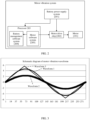
- the system includes a battery power supply system 201, a motor driver chip 202, a processor 203, and the motor 191.
- the battery power supply system 201 is configured to supply power to the entire electronic device including the motor, and may include the power management module 141, the battery 142, the charging management module 140, and the like.
- the motor driver chip 202 is configured to control power of a signal that drives the motor, and may be an independent chip, including a power amplifier (power amplifier, PA), a smart power amplifier (Smart PA), and the like.
- the motor driver chip 202 may alternatively be integrated in the processor 110 in FIG. 1 , to implement generation and storage of motor vibration waveforms in some implementations of this embodiment of this application.
- the motor 191 is configured to: generate vibration, and convert an electrical signal into mechanical vibration.
- the processor 203 is configured to control the electronic device, including control of motor vibration.
- the processor 203 may be the processor 110 shown in FIG. 1 , or may be integrated into the processor 110 shown in FIG. 1 .
- FIG. 2 shows an example in which the processor 203 includes a battery management software system 204 and a motor software system 205.
- the motor software system 205 or the motor driver chip 202 may support storage and generation of the motor vibration waveforms. This is not specifically limited in the embodiments of this application.
- the battery management software system 204 is configured to detect and manage a status of a battery system, including a temperature, a level, an aging degree, an internal resistance, a supported voltage, a current, and the like of a current battery.
- the motor software system 205 is configured to: receive a motor vibration request, convert the motor vibration request, and transmit a converted motor vibration request to the motor driver chip 202, so as to drive the motor 191 to vibrate.
- the motor software system 205 may obtain information such as a battery temperature, a battery level, and a power supply capability from the battery management software system 204.
- the motor software system 205 may directly obtain raw data from the sensor module 180 shown in FIG. 1 and a hardware detection point, to obtain information such as a battery temperature and a power supply capability through algorithm calculation.
- the battery management software system 204 may monitor a level and a temperature of the battery 142 in real time, and may obtain current power supply capability data of the battery 142, for example, a maximum output current of the battery 142 in a current condition. Therefore, the electronic device 100 may determine, based on the power supply capability of the battery 142, whether vibration power consumption of the motor 191 needs to be reduced. If the power supply capability of the battery 142 is lower than a specific threshold, the vibration power consumption of the motor 191 needs to be reduced, to prevent a power failure of the electronic device 100.
- the battery management software system monitors the battery power supply capability in real time and calculates a corresponding battery power supply capability based on changes in factors that affect the battery power supply capability.
- the factors that affect the battery power supply capability include a battery temperature, a battery level, a battery aging condition, and the like.
- the battery aging factor may be a quantity of times of charging and discharging, use duration, and the like.
- the battery aging factor affects the battery power supply capability for a long period of time. In the embodiments of this application, impact of the battery temperature and the battery level on the battery power supply capability is mainly considered.
- Table 1 lists a correspondence table of the power supply capability of a type of battery, the battery 142, under different conditions of battery temperatures and battery levels. It can be learned from Table 1 that, at a same battery temperature, battery functional capabilities corresponding to different battery levels are different; with a same battery level, battery power supply capabilities corresponding to different battery temperatures are also different. Therefore, the battery temperature and the battery level need to be combined to learn the power supply capability of the battery 142 under the current condition, so as to determine whether operation power consumption of an application (for example, the motor 191) needs to be reduced in this case.
- the motor software system inputs a motor vibration waveform to the motor driver chip, and then drives the motor to vibrate according to the motor vibration waveform.
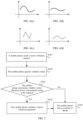
- Different motor vibration waveforms can bring different vibration experience to the user. As shown in FIG. 3 , if motor vibration waveforms are gentler, such as a waveform 1 and a waveform 2, when a mobile phone vibrates, a vibration sense of the mobile phone may be gentler, duration is longer, and vibration experience of the user is smoother. If a motor vibration waveform is sharper, such as a waveform 3, when the mobile phone vibrates, a vibration sense of the mobile phone may be stronger, duration is shorter, and the user may obtain more stimulating vibration experience.
- Motor vibration waveforms with similar shapes can bring similar vibration experience to the user, but the user feels different vibration sense intensities with different vibration amounts. For example, if two motor vibration waveforms are gentle waveforms, a vibration amount of one waveform is 0.8g, and a vibration amount of the other waveform is 0.4g, the user may feel that a vibration sense of the vibration waveform with a larger vibration amount is stronger.
- different motor vibration waveforms may be designed in advance, and the motor vibration waveforms are stored in a motor waveform library.
- motor vibration waveforms may be numbered, so that a corresponding motor vibration waveform can be subsequently called by calling different motor vibration waveform numbers.
- vibration waveforms in the motor waveform library are classified based on conditions such as user vibration experience.
- FIG. 4(a) to FIG. 4(d) show an example of four different partial motor vibration waveforms including peak waveforms, and the four vibration waveforms may be divided into two groups based on user vibration experience.
- a first group is vibration waveforms whose user vibration experience is gentler, including two waveforms in FIG. 4(a) and in FIG. 4(b) .
- the two waveforms have similar shapes but different vibration amounts. In this case, the user can obtain similar vibration experience, but different vibration sense intensities.
- a second group is vibration waveforms whose user vibration experience is more stimulating, including two waveforms in FIG. 4(c) and in FIG. 4(d) .
- the two waveforms have similar shapes, and the user can obtain vibration with similar vibration experience.
- Different motor vibration waveforms bring different vibration experience to users.
- Mobile phone manufacturers preconfigure the motor waveform library. During a development process, the mobile phone manufacturers select motor vibration waveforms for different applications or gestures from the motor waveform library.
- Third-party application developers select motor vibration waveforms from the motor waveform library during a third-party application development process. Statuses of the preconfigured motor vibration waveforms corresponding to different applications or gestures are stored in the internal memory 121 of the electronic device 100. There are two manners of storing the motor waveforms. One manner is to store motor vibration waveform data, to be specific, store the motor vibration waveforms in the internal memory 121, and directly call a corresponding motor vibration waveform when necessary.
- the other is to store motor vibration waveform parameters such as an input voltage feature value and an input current feature value.
- the motor vibration waveform parameters such as the input voltage feature value and the input current feature value are stored in the internal memory 121, and the corresponding motor vibration waveform parameters are invoked when necessary, to generate motor vibration waveform data based on the motor vibration waveform parameters.
- the mobile phone detects some operations of the user, the mobile phone drives the motor to vibrate according to different vibration waveforms, so that the user can directly determine, based on vibration experience, whether a current operation is correct. For example, tapping corresponds to a waveform 1, double-tapping corresponds to a waveform 2, and touching and holding corresponds to a waveform 3.
- the waveform 1, the waveform 2, and the waveform 3 are motor vibration waveforms with different waveforms, and have greatly different vibration experience.
- the user may sense, based on vibration experience, whether a current vibration waveform is the vibration waveform 2, and further determine whether the mobile phone detects the double-tapping operation. If the detection is incorrect, for example, the mobile phone detects a tapping operation, and drives the motor to vibrate according to the waveform 1, the user may sense an operation exception based on the vibration experience, and perform the tapping operation again.
- different vibration modes are set for an SMS message and a phone call. After the mobile phone receives an SMS message or receives an incoming call, the user may learn, based on different vibration experience, that a current vibration prompt is the new message or the new incoming call without viewing a screen of the mobile phone.
- vibration power consumption of the motor 191 may be reduced, to adapt to a scenario in which a loading capability of the battery 142 is low, for example, a scenario in which a battery temperature is low and/or a battery level is low.
- an instantaneous vibration peak current generated when the motor 191 vibrates may be reduced by using a vibration waveform with low power consumption or by reducing an input voltage. This can effectively prevent a power failure due to overload of the battery 142.
- FIG. 3 shows an example of motor vibration waveforms generated by changes in an input voltage or a current with time.
- the waveform 1 and the waveform 2 are two motor vibration waveforms that have similar user vibration experience.
- the waveform 2 has a smaller amplitude than that of the waveform 1, that is, a vibration current of the waveform 2 is smaller than a vibration current of the waveform 1. In this case, power consumption of the waveform 2 is lower than that of the waveform 1.
- the motor software system may select and input the waveform 2 to the motor driver chip, to drive the motor to vibrate according to the waveform 2.
- An embodiment of this application provides a motor vibration control method. As shown in FIG. 5 , the method may include the following steps.
- S101 A mobile phone sends a motor vibration request.
- a motor when the mobile phone receives a prompt, for example, when the mobile phone receives an incoming call signal or an SMS message signal, a motor needs to vibrate to remind a user.
- the mobile phone detects some operations of the user, touch vibration needs to be performed to feed back to the user.
- the mobile phone sends the motor vibration request to the motor software system 205, to drive the motor to vibrate.
- a motor vibration waveform needs to be determined.
- the mobile phone queries a current battery status to match the corresponding motor vibration waveform or a corresponding input voltage.
- the motor software system 205 determines the required motor vibration waveform, and delivers a vibration command to the motor driver chip 202, to drive the motor 191 to vibrate.
- S102 The mobile phone queries a battery status.
- the mobile phone may query the current battery status from a battery power supply system 201 or a battery management software system 204.
- the battery status includes a battery temperature, a battery temperature and a battery level, or a battery power supply capability.
- the battery status is used to subsequently determine whether to reduce motor vibration power consumption.
- a motor vibration parameter that needs to be switched to may be determined based on current battery status data.
- the motor vibration parameter may include a motor vibration waveform or a motor vibration wave input voltage. It may be understood that motor vibration waveforms in a motor waveform library have numbers.
- the motor vibration parameter is a motor vibration waveform number, and a corresponding motor vibration waveform with low power consumption can be called by calling the motor vibration waveform number.
- step S103 The mobile phone determines whether the motor vibration power consumption needs to be reduced. If the motor vibration power consumption needs to be reduced, step S104 is performed, to be specific, a motor vibration parameter with low power consumption is switched to. If the motor vibration power consumption needs not to be reduced, step S105 is performed, to be specific, the current motor vibration parameter is still used to drive the motor to vibrate.
- a preset condition is set. When the battery status meets the preset condition, it is determined that the motor currently needs to be driven to vibrate with low power consumption, to prevent the mobile phone from being unexpectedly powered off due to an instantaneous peak current caused by vibration of the motor with high power consumption and that is higher than a power supply current of a battery.
- the preset condition is that the battery power supply capability is lower than a first threshold, the current battery temperature is lower than a second threshold, or the current battery temperature and battery level are lower than a third threshold array.
- the first threshold, the second threshold, and the third threshold may be obtained based on battery modeling data, test data, and empirical data, and are preconfigured on a terminal such as a mobile phone.
- the mobile phone may determine, based on a battery status parameter, the first threshold, the second threshold, and the third threshold, whether the motor currently needs to be driven to vibrate with low power consumption. If the motor needs to be driven to vibrate with low power consumption, the mobile phone needs to switch the motor vibration parameter to drive the motor to vibrate with low power consumption. If low power consumption processing is not required, the mobile phone may continue to drive the motor to vibrate based on the current motor vibration parameter.
- S104 The mobile phone switches the motor vibration parameter.
- the instantaneous peak current generated when the motor vibrates is reduced by switching the motor vibration parameter. Therefore, this reduces the motor vibration power consumption and prevents battery overload.
- the switching of the motor vibration parameter includes the following manners.
- a vibration waveform with low power consumption is switched to based on the power supply capability of the mobile phone, to drive the motor to vibrate.
- the battery power supply capability may be classified into different power supply capability levels such as 1 A to 1.1 A and 1.1 A to 1.2 A.
- a vibration waveform whose peak current is less than a maximum power supply current (corresponding to a lower limit of the power supply capability level) of the mobile phone is selected, to effectively reduce the motor vibration power consumption.
- the power supply capability level of the mobile phone may be obtained based on the battery temperature and the battery level, or a value of the power supply capability may be directly obtained from the battery management software system, and mainly includes a value of the maximum power supply current of the mobile phone.
- the mobile phone may switch to the waveform with low power consumption that has similar vibration experience for the user.
- Table 2 lists an example of four waveforms 36 to 39 that have similar waveform shapes in the motor waveform library and similar user vibration experience. In other words, the four waveforms belong to a same classification group. Table 2 also includes a waveform 44.
- the waveform 44 belongs to another group of waveforms with low power consumption and has different vibration experience from that of the waveforms 36 to 39. Voltages need to be normalized, to unify a measurement standard and ensure obtaining vibration peak currents under a same voltage condition.
- Table 2 shows vibration amounts and vibration peak currents of different motor vibration waveforms when the voltages are normalized to 3.8 V.
- Table 2 Vibration waveform number 36 39 38 37 44 Vibration amount (g) 1.5 0.4 0.8 1.15 0.2 Vibration peak current (A) 3.236 0.36 0.9504 2.665 1.827
- a waveform with low power consumption may be selected from a preconfigured motor waveform library based on a current battery power supply capability, where the waveform has a similar vibration experience to that of a vibration waveform corresponding to operating the application or the gesture.
- an original motor vibration waveform is the waveform 36.
- the motor vibration waveform can be switched to a waveform 37.
- a motor vibration waveform that is available under a condition of a current temperature and level may be selected based on the battery power supply capability and the motor vibration peak current.
- a vibration peak current of the selected vibration waveform is lower than the battery power supply capability, so that a current power supply current of the battery meets a motor vibration requirement without causing mobile phone battery overload.
- Table 3 is obtained based on Table 1 and Table 2.
- the mobile phone determines a current battery power supply capability based on the current battery temperature and battery level, and then matches a corresponding motor vibration wave waveform with low power consumption based on the battery power supply capability, to drive the motor to vibrate.
- a correspondence between a battery temperature and a battery level, and an optional motor vibration waveform is preconfigured on the mobile phone. Further, refer to Table 4.
- the mobile phone may directly match a corresponding motor vibration wave waveform with low power consumption based on the current battery temperature and battery level, to drive the motor to vibrate.
- a correspondence between a battery temperature and an optional motor vibration waveform is preconfigured on the mobile phone. Further, refer to Table 5.
- the mobile phone may directly match a corresponding motor vibration wave waveform with low power consumption based on the current battery temperature, to drive the motor to vibrate.
- Table 5 Battery temperature (°C) -5 -10 -15 -20 Available motor vibration wave 38 38 39 39
- the mobile phone may directly obtain the battery power supply capability, refer to Table 6.
- the mobile phone may directly match a corresponding motor vibration wave waveform with low power consumption based on the current battery power supply capability, to drive the motor to vibrate.
- selection may be performed from the plurality of optional motor vibration waveforms based on an actual experience requirement of the user. For example, in waveforms having similar vibration experience, a corresponding waveform may be selected based on a magnitude of a vibration amount, and a waveform having a larger vibration amount may bring a stronger vibration sense to the user. Refer to Table 3. When the current battery temperature is -5°C and the battery level is 30%, there are two vibration waveforms available: the waveform 38 and the waveform 39. For example, a motor vibration waveform having a larger vibration amount may be selected, and the user may have vibration experience of a stronger vibration sense. For example, the vibration waveform 38 is selected to drive the motor to vibrate.
- the vibration waveform 38 having a larger vibration amount may be selected to drive the motor to vibrate, so that the user can quickly sense the vibration.
- the vibration waveform 39 having a smaller vibration amount may be selected to implement vibration, so that the user can sense the vibration without affecting other readers.
- a group of general motor vibration waveforms with low power consumption may be established in the motor waveform library.
- the group of general motor vibration waveforms with low power consumption include motor vibration waveforms with low power consumption 90 to 94.
- the battery power supply capability is divided based on specific intervals, and each interval corresponds to a waveform in the group of general waveforms with low power consumption.
- the mobile phone selects a waveform having similar user vibration experience from the motor waveform library, no corresponding waveform is matched.
- the mobile phone may select a general waveform with low power consumption corresponding to a lower limit of the power supply capability in Table 4 which the current battery power supply capability is greater than or equal to.
- the waveform with low power consumption is switched to, and overload of the battery is prevented.
- the current battery power supply capability is 0.94 A
- no motor vibration waveform with low power consumption that has similar user vibration experience to that of a current motor vibration waveform is matched.
- 0.94 A > 0.7 A
- a motor vibration waveform 91 is selected to drive the motor to vibrate.
- Table 1 and Table 2 are merely examples of some conditions of the battery status and some motor vibration wave parameters. Therefore, it can be understood that Table 3, Table 4, and Table 5 may further include more conditions of the battery status and corresponding available motor vibration waveforms.
- Table 3, Table 4, and Table 5 may further include more conditions of the battery status and corresponding available motor vibration waveforms.
- vibration peak currents are determined, and then an available vibration waveform number is selected.
- a purpose of the normalizing the voltages is to unify the measurement standard, and obtain vibration peak currents under a same voltage condition.
- the normalized voltage may alternatively be another value, for example, 4.2 V. This is not specifically limited in the embodiments of this application.
- a preset threshold may be set. When a difference between the motor vibration peak current and the current of the battery power supply capability is greater than the preset threshold, a corresponding vibration waveform is the available motor vibration waveform.
- the preset threshold may be empirical data obtained through tests. This is not specifically limited in the embodiments of this application.
- Table 3 Table 4, Table 5, and Table 6, a correspondence table between a battery temperature, a battery level, and a power supply capability, and an available vibration waveform number is established and stored in a memory of the mobile phone.
- the mobile phone may match, by using the corresponding table, a corresponding available motor vibration waveform in vibration waveforms having similar user vibration experience.
- an input voltage for driving the motor to vibrate is changed, to reduce power consumption generated when the motor vibrates.
- an input voltage currently available for driving the motor to vibrate may be obtained based on the power supply capability (power supply current) of the battery.
- V represents a peak input voltage of an original motor vibration waveform.
- I represents a power supply current of the original motor vibration waveform.
- V represents a peak input voltage with low power consumption of a required motor vibration waveform under a condition of a current battery status.
- i a current power supply current capability of the battery to the motor.
- the proportionally compressed motor vibration waveform may be stored in the motor waveform library in the manner 1.
- the motor vibration waveform may be directly called without recalculation.
- calculating the input voltage of the motor vibration waveform may also be related to specific motor model modeling.
- a mobile phone manufacturer configures a motor for a mobile phone
- modeling training and verification are performed on parameters that affect quality of the motor, and optimal parameters are selected to control the quality of the motor.
- Different models and quality of motors may implement different input voltages.
- the mobile phone obtains the input voltage according only to the foregoing formula without considering impact of different motor models on the input voltage.
- an available motor vibration waveform with low power consumption having similar user vibration experience may be first matched based on the battery power supply capability, or a battery temperature and a battery level from a motor waveform library preconfigured on the mobile phone. If no available motor vibration waveform is matched from the motor waveform library, the foregoing formula may alternatively be used to determine an input voltage that can be provided based on the current battery status for the motor. In this way, the battery provides the proportionally compressed input voltage, to implement motor vibration with low power consumption.
- a general motor vibration waveform with low power consumption that meets a current power supply capability may be matched. This reduces motor vibration power consumption and prevents the mobile phone from being powered off due to an unexpected power failure.
- S105 The mobile phone drives the motor to vibrate.
- step S103 when the mobile phone determines that the current battery status can meet a current motor vibration condition, that is, vibration with low power consumption is not required, step S104 does not need to be performed, and step S105 is directly performed.
- the mobile phone drives the motor to vibrate by using the current motor vibration parameter.
- the motor software system drives, based on the vibration parameter, the motor to vibrate, to provide vibration feedback for the user.
- This implements motor vibration in a case of a low loading capability of the battery.
- step S103 when the mobile phone determines that the motor needs to vibrate with low power consumption, that is, when the mobile phone determines that a current scenario is a scenario in which a loading capability of the mobile phone is low, a peak value of a voltage used when the motor vibrates can be staggered from a peak value of a voltage used in an application with high power consumption in the output voltage of the battery of the mobile phone. In other words, this prevents a case in which the application with high power consumption runs simultaneously as the motor vibration waveform reaches a peak value, causing an excessively high instantaneous current and a power failure due to battery overload.
- an instantaneous peak voltage is high at a moment when a shutter is pressed to take photos.
- a peak value of the vibration of the motor may be staggered from the peak value of the photographing voltage at different time. This ensures that the supply capability at the current battery status is sufficient to implement the vibration of the current motor vibration waveform.
- an embodiment of this application discloses an electronic device, including one or more processors 601, a memory 602, and one or more computer programs 603.
- the foregoing components may be connected through one or more communication buses 604.
- the one or more computer programs 603 are stored in the memory 602 and are configured to be executed by the one or more processors 601.
- the one or more computer programs 603 include instructions, and the instructions may be used to perform the steps in the motor vibration control embodiments.
- the processor 601 may be specifically the processor 110 shown in FIG. 1
- the memory 602 may be specifically the internal memory 121 shown in FIG. 1 .
- the electronic device further includes a communication module 605, a battery power supply module 606, and a motor 607.
- the communication module 605 may be specifically the mobile communication module 150 and/or the wireless communication module 160 shown in FIG. 1 .
- the battery power supply module 606 may specifically include the charging management module 140, the power management module 141, and the battery 142 shown in FIG. 1 .
- the motor 607 may be specifically the motor 191 shown in FIG. 1 . This is not limited in the embodiments of this application.
- the battery power supply module 606 and the motor 607 may be configured to perform steps in the motor vibration control method.
- the processor 601 may be a processor or a controller, for example, a central processing unit (central processing unit, CPU), a GPU, a general-purpose processor, a digital signal processor (digital signal processor, DSP), an application-specific integrated circuit (application-specific integrated circuit, ASIC), a field programmable gate array (field programmable gate array, FPGA) or another programmable logic device, a transistor logic device, a hardware component, or any combination thereof.
- the processor may implement or execute various example logical blocks, modules, and circuits described with reference to content disclosed in this application.
- the processor may alternatively be a combination of processors implementing a computing function, for example, a combination of one or more microprocessors, or a combination of the DSP and a microprocessor.
- the communication module 605 may be a transceiver, a transceiver circuit, an input/output device, a communication interface, or the like.
- the communication module 605 may be specifically a Bluetooth apparatus, a Wi-Fi apparatus, a peripheral interface, or the like.
- the memory 602 may include a high-speed random access memory or another type of static storage device that may store static information and instructions, a random access memory (random access memory, RAM) or another type of dynamic storage device that may store information and instructions.
- the memory 602 may alternatively be an electrically erasable programmable read-only memory (electrically erasable programmable read-only memory, EEPROM), or any other medium that can be configured to carry or store expected program code in a form of an instruction or a data structure and that can be accessed by a computer. However, this is not limited thereto.
- the memory 602 may exist independently, and is connected to the processor 601 through the communication bus 604. Alternatively, the memory 602 may be integrated with the processor 601.
- the chip system includes at least one processor 701 and at least one interface circuit 702.
- the processor 701 and the interface circuit 702 may be interconnected through a line.
- the interface circuit 702 may be configured to receive a signal from another apparatus.
- the interface circuit 702 may be configured to send a signal to another apparatus (for example, the processor 701).
- the interface circuit 702 may read instructions stored in a memory, and send the instructions to the processor 701.
- an electronic device may be enabled to perform the steps performed by the electronic device 100 in the foregoing embodiments.
- the chip system may further include another discrete component. This is not specifically limited in the embodiments of this application.
- An embodiment of this application further provides a computer storage medium.
- the computer storage medium stores computer instructions.
- the computer instructions run on an electronic device, the electronic device is enabled to perform the foregoing related method steps, to implement the motor vibration control method in the foregoing embodiments.
- An embodiment of this application further provides a computer program product.
- the computer program product runs on a computer, the computer performs the foregoing related steps, to implement the motor vibration control method in the foregoing embodiments.
- an embodiment of this application further provides an apparatus.
- the apparatus may be specifically a component or a module, and the apparatus may include a processor and a memory that are connected to each other.
- the memory is configured to store computer-executable instructions.
- the processor may execute the computer-executable instructions stored in the memory, so that the apparatus performs the motor vibration control method in the foregoing method embodiments.
- the electronic device, the computer storage medium, the computer program product, or the chip provided in the embodiments of this application may be all configured to perform the corresponding method provided above. Therefore, for beneficial effects that can be achieved, refer to the beneficial effects of the corresponding method provided above. Details are not described herein again.
- the motor vibration control method may be performed by an electronic device.
- the electronic device may be an entire computing device, or may be a part of components of the computing device, for example, a chip related to a motor vibration function such as a system chip or a communication chip having a function of a motor vibration control method.
- the system chip of the motor vibration control method is also referred to as a system on chip, or referred to as a system on chip (system on chip, SOC) chip.
- a wireless communication apparatus may be a terminal such as a smartphone, or may be a system chip or a communication chip that can be disposed on the terminal and that has a function of a motor vibration control method.
- the disclosed methods may be implemented in other manners.
- the described electronic device embodiment is merely an example.
- the module or division into the units is merely logical function division and may be other division in actual implementation.
- a plurality of units or components may be combined or integrated into another system, or some features may be ignored or not performed.
- the displayed or discussed mutual couplings or direct couplings or communication connections may be implemented by using some interfaces.
- the indirect couplings or communication connections between the modules or units may be implemented in electronic, mechanical, or other forms.
- the units described as separate parts may or may not be physically separate. Parts displayed as units may or may not be physical units, in other words, may be located in one position, or may be distributed on a plurality of network units. A part or all of the units may be selected based on actual requirements to achieve the objectives of the solutions of the embodiments.
- functional units in the embodiments of this application may be integrated into one processing unit, or each of the units may exist alone physically, or two or more units are integrated into one unit.
- the integrated unit may be implemented in a form of hardware, or may be implemented in a form of a software functional unit.
- the integrated unit When the integrated unit is implemented in the form of the software functional unit and sold or used as an independent product, the integrated unit may be stored in a computer-readable storage medium.
- the computer software product is stored in a storage medium and includes several instructions for instructing a computer device (which may be a personal computer, a server, a network device, or the like) to perform all or some of the steps of the methods described in the embodiments of this application.
- the foregoing storage medium includes any medium that can store program instructions, such as a flash memory, a removable hard disk, a read-only memory, a random access memory, a magnetic disk, or an optical disc.
Landscapes
- Engineering & Computer Science (AREA)
- Power Engineering (AREA)
- Signal Processing (AREA)
- Telephone Function (AREA)
Description
- This application claims priority to
Chinese Patent Application No. 201910883245.6, filed with the China National Intellectual Property Administration on September 18, 2019 - This application relates to the field of terminal technologies, and in particular, to a motor vibration control method and an electronic device.
- A motor is used to implement a vibration function in terminal devices such as a mobile phone, so that when a user performs a touch operation on the mobile phone, a touch feedback is received to confirm an operation execution status; or when the mobile phone receives a notification, vibration is generated to remind the user in time.
- As consumer electronic devices, a mobile phone and other terminal products are used in various environments. When a temperature and a battery level change, a loading capability of a battery of the mobile phone also changes. To be specific, when the temperature and the level decrease, the loading capability decreases, that is, an output current decreases. When the loading capability is excessively low, a power failure occurs on the mobile phone. As a result, the mobile phone is powered off. Motor vibration of a common mobile phone is usually disabled when a loading capability of the mobile phone is excessively low, to prevent the mobile phone from being powered off due to a power failure. Consequently, the user cannot receive the touch feedback or vibration prompts.
CN102724340A relates to a method for adjusting vibration strength of a mobile phone. A main control chip of the mobile phone is connected with a vibration motor driving circuit and a battery temperature detecting circuit or an additive temperature detecting circuit. The method comprises the steps as follows: a spreadsheet in which temperature thresholds Ct are corresponding to motor driving parameters Vb in a one-to-one manner is established and stored on the main control chip; the temperature C in the mobile phone is read from the main control chip at a fixed time interval T through the battery temperature detecting circuit or the additive temperature detecting circuit; and therefore, when the temperature C in the mobile phone falls into the range of one temperature threshold Ct, the main control chip calls the driving parameter Vb corresponding to the temperature threshold C in the spreadsheet so as to adjust the driving ability of a motor. The main control chip calls the corresponding motor driving parameter Vb to adjust the ways of the driving ability of the motor according to the temperature detected at fixed time and the falling temperature threshold, thereby prolonging the service life of the motor. -
US20080113693A1 discloses an apparatus and method for battery power management are disclosed utilizing Received Signal Strength Indicator (RSSI) of a dual band dual mode terminal, that includes a mobile communication unit; a portable internet unit for transmitting/receiving a portable internet signal; a battery measuring unit for measuring remaining battery capacity; a power supply unit for supplying power from the battery to the mobile communication unit and portable internet unit; and a controller for deriving remaining run times of the mobile communication and portable internet units using consumption current according to the RSSI of the mobile communication and portable internet units when the remaining battery capacity falls below a set value, and for controlling power supply of the power supply unit based on the derived remaining run times. - This application provides a motor vibration control method and an electronic device, so that when a loading capability of a battery is low, the electronic device can drive a motor to vibrate without being powered off.
- To achieve the foregoing objectives, the following technical solutions are used in this application. The invention is set out in the appended set of claims.
- According to a first aspect, this application provides a motor vibration control method. The method may include: A battery status is obtained when a first motor vibration waveform vibration request is received. The battery status includes a battery temperature, a battery temperature and a battery level, or a battery power supply capability. A motor vibration parameter is switched if the battery status meets a preset condition, where the preset condition is that the battery power supply capability is lower than a first threshold, the battery temperature is lower than a second threshold, or the battery temperature and the battery level are lower than a third threshold array. The motor vibration parameter includes a motor vibration waveform or a motor vibration input voltage. A motor is driven to vibrate based on a switched motor vibration parameter.
- In this way, in a scenario in which a loading capability of a battery is low, a motor vibration waveform with low power consumption is switched to or a motor vibration input voltage is changed, to dynamically adjust motor vibration power consumption and reduce the motor vibration power consumption. Therefore, a mobile phone is not powered off due to an unexpected power failure.
- In a possible implementation, the battery power supply capability is an input current of the battery to the motor. The switching a motor vibration parameter includes: A second motor vibration waveform is determined based on the battery power supply capability, where a peak current of the second motor vibration waveform is less than the battery power supply capability. A first motor vibration waveform is switched to the second motor vibration waveform.
- In this way, a peak input current of a switched motor vibration waveform is limited by the current battery power supply capability, so that it can be ensured that the switched motor vibration waveform does not exceed the current battery power supply capability. This prevents a power failure caused by battery overload.
- In a possible implementation, a plurality of motor vibration waveforms and a correspondence between the plurality of motor vibration waveforms and the battery power supply capability are preconfigured on the electronic device. The determining a second motor vibration waveform based on the battery power supply capability includes: The second motor vibration waveform is matched and determined from the plurality of motor vibration waveforms based on the battery power supply capability and the correspondence between the plurality of motor vibration waveforms and the battery power supply capability. The battery power supply capability is obtained based on the battery temperature and the battery level, or is obtained through reading by the electronic device.
- In this way, the correspondence between the battery power supply capability and the motor vibration waveform in a motor waveform library is established, to dynamically match a corresponding motor vibration waveform with low power consumption based on the battery power supply capability. This implements driving the motor to vibrate with low power consumption.
- In a possible implementation, a correspondence between the battery temperature and the battery level, and the motor vibration waveform is prestored in the electronic device, and the motor vibration waveform indicated by the correspondence is a motor vibration waveform allowed under a condition of a corresponding battery temperature and battery level. The switching a motor vibration parameter includes: A motor vibration waveform is determined based on the obtained battery level, the obtained battery temperature, and the correspondence, and the determined motor vibration waveform is switched to and used. Alternatively, a motor vibration waveform is determined based on the obtained battery temperature and the correspondence, and the determined motor vibration waveform is switched to and used.
- In this way, the correspondence between the battery temperature and the battery level, and the motor vibration waveform may be established, to directly match a motor vibration waveform with low power consumption based on the battery temperature, or to match a motor vibration waveform with low power consumption based on the battery temperature and the battery level. This implements fast and dynamic switching to the motor vibration waveform with low power consumption.
- In a possible implementation, user vibration experience of the second motor vibration waveform is similar to that of the first motor vibration waveform.
- In this way, the switched motor vibration waveform can bring, to a user, vibration experience similar to that before the switching, so that the user can directly determine a reason for current motor vibration based on the vibration experience. This improves user experience.
- In a possible implementation, if there are a plurality of second motor vibration waveforms, the first motor vibration waveform is switched to one of the plurality of second motor vibration waveforms with a maximum vibration amount.
- In a possible implementation, a motor waveform library is preconfigured on the electronic device, and motor waveforms in the motor waveform library are classified based on user vibration experience.
- In a possible implementation, the motor waveform library further includes a plurality of third motor vibration waveforms. The battery power supply capability is divided based on preset intervals, where each preset interval corresponds to one third motor vibration waveform of the plurality of third motor vibration waveforms.
- In a possible implementation, if no second motor vibration waveform is matched, the preset interval is matched based on a current battery power supply capability, and the third motor vibration waveform is matched based on the preset interval.
- In this way, when no motor vibration waveform having similar vibration experience is matched from the motor vibration waveform library, the current motor vibration waveform may also be switched to a motor vibration waveform with low power consumption. This prevents battery overload.
- In a possible implementation, the switching a motor vibration parameter, and the driving a motor to vibrate based on a switched motor vibration parameter include: A second peak input voltage is determined based on the battery power supply capability. A compression ratio is obtained based on the second peak input voltage and a first peak input voltage, and a first motor vibration input voltage is compressed based on the compression ratio, to generate a second motor vibration input voltage. The first peak input voltage is a peak voltage of a first motor vibration waveform, and the first motor vibration input voltage is a drive voltage of the first motor vibration waveform. The first motor vibration input voltage is switched to the second motor vibration input voltage. A fourth motor vibration waveform is generated based on the second motor vibration input voltage, and the motor is driven to vibrate according to the fourth motor vibration waveform. The second peak input voltage is a peak voltage of the fourth motor vibration waveform.
- In this way, the peak input voltage that can be provided for the motor may be determined based on the current battery power supply capability. Then, the compression ratio is obtained based on the peak input voltage and the peak input voltage of the original motor vibration waveform. An original input voltage is compressed based on the compression ratio, to obtain a motor vibration input voltage with low power consumption.
- In a possible implementation, the battery power supply capability includes an input voltage and an input current that are of a battery to the motor. The determining a second peak input voltage based on the battery power supply capability includes: A relationship between a peak input voltage and a peak input current of the motor is established according to a formula v=k * i * (V / I), to determine the second peak input voltage. V represents the first peak input voltage. I represents a first peak input current, and the first peak input current is a peak current of the first motor vibration waveform. V represents the second peak input voltage. i represents a second peak input current, and the second peak current is a maximum input current of the motor allowed by a current battery power supply capability. k represents a motor coefficient. V, I, v , and k are positive numbers.
- In a possible implementation, the motor vibration control method further includes: The fourth motor vibration waveform is stored in a motor waveform library. If the motor vibration power consumption needs to be reduced, the peak value of the motor vibration waveform is staggered from an operation peak value of an application with high power consumption.
- According to a second aspect, an embodiment of this application provides an electronic device. The electronic device may be an apparatus for implementing the method in the first aspect. The electronic device may include one or more processors and a memory. The memory stores instructions, and when the instructions are executed by the one or more processors, the electronic device is enabled to perform: A battery status is obtained when a first motor vibration waveform vibration request is received, where the battery status includes a battery temperature, a battery temperature and a battery level, or a battery power supply capability. A motor vibration parameter is switched if the battery status meets a preset condition. The preset condition is that the battery power supply capability is lower than a first threshold, the battery temperature is lower than a second threshold, or the battery temperature and the battery level are lower than a third threshold array. The motor vibration parameter includes a motor vibration waveform or a motor vibration input voltage. A motor is driven to vibrate based on a switched motor vibration parameter.
- In a possible implementation, the battery power supply capability is an input current of the battery to the motor. When the instructions are executed by the electronic device, the electronic device is enabled to perform: A second motor vibration waveform is determined based on the battery power supply capability, where a peak current of the second motor vibration waveform is less than the battery power supply capability. A first motor vibration waveform is switched to the second motor vibration waveform.
- In a possible implementation, a plurality of motor vibration waveforms and a correspondence between the plurality of motor vibration waveforms and the battery power supply capability are preconfigured on the electronic device. When the instructions are executed by the electronic device, the electronic device is enabled to perform: The second motor vibration waveform is matched and determined from the plurality of motor vibration waveforms based on the battery power supply capability and the correspondence between the plurality of motor vibration waveforms and the battery power supply capability. The battery power supply capability is obtained based on the battery temperature and the battery level, or is obtained through reading by the electronic device.
- In a possible implementation, a correspondence between the battery temperature and the battery level, and the motor vibration waveform is prestored in the electronic device, and the motor vibration waveform indicated by the correspondence is a motor vibration waveform allowed under a condition of a corresponding battery temperature and battery level. When the instructions are executed by the electronic device, the electronic device is enabled to perform: A motor vibration waveform is determined based on the obtained battery level, the obtained battery temperature, and the correspondence, and the determined motor vibration waveform is switched to and used. Alternatively, a motor vibration waveform is determined based on the obtained battery temperature and the correspondence, and the determined motor vibration waveform is switched to and used.
- In a possible implementation, user vibration experience of the second motor vibration waveform is similar to that of the first motor vibration waveform.
- In a possible implementation, if there are a plurality of second motor vibration waveforms, the first motor vibration waveform is switched to one of the plurality of second motor vibration waveforms with a maximum vibration amount.
- In a possible implementation, a motor waveform library is preconfigured on the electronic device, and motor waveforms in the motor waveform library are classified based on user vibration experience.
- In a possible implementation, the motor waveform library further includes a plurality of third motor vibration waveforms. The battery power supply capability is divided based on preset intervals, where each preset interval corresponds to one third motor vibration waveform of the plurality of third motor vibration waveforms.
- In a possible implementation, if no second motor vibration waveform is matched, the preset interval is matched based on a current battery power supply capability, and the third motor vibration waveform is matched based on the preset interval.
- In a possible implementation, when the instructions are executed by the electronic device, the electronic device is enabled to perform: A second peak input voltage is determined based on the battery power supply capability. A compression ratio is obtained based on the second peak input voltage and a first peak input voltage. A first motor vibration input voltage is compressed based on the compression ratio to generate a second motor vibration input voltage, where the first peak input voltage is a peak voltage of a first motor vibration waveform, and the first motor vibration input voltage is a drive voltage of the first motor vibration waveform. The first motor vibration input voltage is switched to the second motor vibration input voltage. A fourth motor vibration waveform is generated based on the second motor vibration input voltage, and the motor is driven to vibrate according to the fourth motor vibration waveform, where the second peak input voltage is a peak voltage of the fourth motor vibration waveform.
- In a possible implementation, the battery power supply capability includes an input voltage and an input current that are of a battery to the motor. When the instructions are executed by the electronic device, the electronic device is enabled to perform: A relationship between a peak input voltage and a peak input current of the motor according to a formula v=k * i * (V / I), to determine the second peak input voltage. V represents the first peak input voltage. I represents a first peak input current, and the first peak input current is a peak current of the first motor vibration waveform. V represents the second peak input voltage. i represents a second peak input current, and the second peak current is a maximum input current of the motor allowed by a current battery power supply capability. k represents a motor coefficient. V, I, v, and k are positive numbers.
- In a possible implementation, when the instructions are executed by the electronic device, the electronic device is enabled to perform: The fourth motor vibration waveform is stored in a motor waveform library.
- In a possible implementation, the electronic device is a system chip having a motor vibration control function.
- According to a third aspect, this application provides an electronic device. The electronic device has a function of implementing the motor vibration control method according to any one of the first aspect and the possible implementations of the first aspect. The function may be implemented by hardware, or may be implemented by hardware executing corresponding software. The hardware or the software includes one or more modules corresponding to the function.
- According to a fourth aspect, this application provides a computer storage medium, including computer instructions. When the computer instructions are run on an electronic device, the electronic device is enabled to perform the motor vibration control method according to any one of the first aspect and the possible implementations of the first aspect.
- According to a fifth aspect, this application provides a computer program product. When the computer program product runs on an electronic device, the electronic device is enabled to perform the motor vibration control method according to any one of the first aspect and the possible implementations of the first aspect.
- According to a sixth aspect, a circuit system is provided. The circuit system includes a processing circuit, and the processing circuit is configured to perform the motor vibration control method according to any one of the first aspect and the possible implementations of the first aspect.
- According to a seventh aspect, an embodiment of this application provides a chip system, including at least one processor and at least one interface circuit. The at least one interface circuit is configured to: perform a transceiver function and send instructions to the at least one processor. When the at least one processor executes the instructions, the at least one processor performs the motor vibration control method according to any one of the first aspect and the possible implementations of the first aspect.
-
-
FIG. 1 is a schematic diagram of a structure of an electronic device according to an embodiment of this application; -
FIG. 2 is a schematic diagram of a structure of a motor vibration system according to an embodiment of this application; -
FIG. 3 is a schematic diagram of motor vibration waveforms according to an embodiment of this application; -
FIG. 4(a) to FIG. 4(d) are schematic diagrams of classification of a motor vibration waveform according to an embodiment of this application; -
FIG. 5 is a schematic flowchart of a motor vibration control method according to an embodiment of this application; -
FIG. 6 is a schematic diagram of a structure of an electronic device according to an embodiment of this application; and -
FIG. 7 is a schematic diagram of a structure of a chip system according to an embodiment of this application. - The following describes in detail a motor vibration control method and an electronic device provided in embodiments of this application with reference to the accompanying drawings.
- The motor vibration control method provided in the embodiments of this application may be applied to an electronic device such as a mobile phone, a tablet computer, a desktop computer, a laptop computer, a notebook computer, an ultra-mobile personal computer (ultra-mobile personal computer, UMPC), a handheld computer, a netbook, and a personal digital assistant (personal digital assistant, PDA), a wearable electronic device, a virtual reality device, or artificial intelligence (artificial intelligence, AI). This is not limited in the embodiments of this application.
- For example,
FIG. 1 is a schematic diagram of a structure of anelectronic device 100 by using a mobile phone as theelectronic device 100. - The
electronic device 100 may include aprocessor 110, anexternal memory interface 120, aninternal memory 121, a universal serial bus (universal serial bus, USB) interface 130, acharging management module 140, apower management module 141, abattery 142, anantenna 1, anantenna 2, amobile communication module 150, awireless communication module 160, anaudio module 170, aspeaker 170A, areceiver 170B, amicrophone 170C, aheadset jack 170D, asensor module 180, abutton 190, amotor 191, anindicator 192, acamera 193, adisplay 194, a subscriber identification module (subscriber identification module, SIM) card interface 195, and the like. Thesensor module 180 may include apressure sensor 180A, agyroscope sensor 180B, a barometric pressure sensor 180C, amagnetic sensor 180D, anacceleration sensor 180E, adistance sensor 180F, anoptical proximity sensor 180G, afingerprint sensor 180H, atemperature sensor 180J, atouch sensor 180K, an ambientlight sensor 180L, abone conduction sensor 180M, and the like. - It may be understood that the structure shown in the embodiments of this application does not constitute a specific limitation on the
electronic device 100. In some other embodiments of this application, theelectronic device 100 may include more or fewer components than those shown in the figure, some components may be combined, or some components may be split, or different component arrangements may be used. The components shown in the figure may be implemented by hardware, software, or a combination of software and hardware. - The
processor 110 may include one or more processing units. For example, theprocessor 110 may include an application processor (application processor, AP), a modem processor, a graphics processing unit (graphics processing unit, GPU), an image signal processor (image signal processor, ISP), a controller, a memory, a video codec, a digital signal processor (digital signal processor, DSP), a baseband processor, a microprocessor, and/or a neural-network processing unit (neural-network processing unit, NPU). Different processing units may be independent devices, or may be integrated into one or more processors. - The controller may be a nerve center and a command center of the
electronic device 100. The controller may generate an operation control signal based on an instruction operation code and a time sequence signal, to control to read instructions and execute instructions. - A memory may be further disposed in the
processor 110, and is configured to store instructions and data. In some embodiments, the memory in theprocessor 110 is a cache. The memory may store instructions or data that has just been used or is cyclically used by theprocessor 110. If theprocessor 110 needs to use the instructions or the data again, the processor may directly invoke the instructions or the data from the memory. This avoids repeated access and reduces waiting time of theprocessor 110. Therefore, system efficiency is improved. - In some embodiments, the
processor 110 may include one or more interfaces. The interface may include an inter-integrated circuit (inter-integrated circuit, I2C) interface, an inter-integrated circuit sound (inter-integrated circuit sound, I2S) interface, a pulse code modulation (pulse code modulation, PCM) interface, a universal asynchronous receiver/transmitter (universal asynchronous receiver/transmitter, UART) interface, a mobile industry processor interface (mobile industry processor interface, MIPI), a general-purpose input/output (general-purpose input/output, GPIO) interface, a subscriber identity module (subscriber identity module, SIM) interface, a universal serial bus (universal serial bus, USB) interface, and/or the like. - The I2C interface is a two-way synchronous serial bus, including a serial data line (serial data line, SDA) and a serial clock line (serial clock line, SCL). In some embodiments, the
processor 110 may include a plurality of groups of I2C buses. Theprocessor 110 may be separately coupled to thetouch sensor 180K, a charger, a flash, thecamera 193, and the like through different I2C bus interfaces. For example, theprocessor 110 may be coupled to thetouch sensor 180K through an I2C interface, so that theprocessor 110 communicates with thetouch sensor 180K through the I2C bus interface, to implement a touch function of theelectronic device 100. - The I2S interface may be configured to perform audio communication. In some embodiments, the
processor 110 may include a plurality of groups of I2S buses. Theprocessor 110 may be coupled to theaudio module 170 through the I2S bus, to implement communication between theprocessor 110 and theaudio module 170. In some embodiments, theaudio module 170 may transfer an audio signal to thewireless communication module 160 through the I2S interface, to implement a function of answering a call by using a Bluetooth headset. - The PCM interface may also be configured to: perform audio communication, and sample, quantize, and code an analog signal. In some embodiments, the
audio module 170 may be coupled to thewireless communication module 160 through a PCM bus interface. In some embodiments, theaudio module 170 may alternatively transfer an audio signal to thewireless communication module 160 through the PCM interface, to implement a function of answering a call by using the Bluetooth headset. Both the I2S interface and the PCM interface may be configured to perform the audio communication. - The UART interface is a universal serial data bus, and is configured to perform asynchronous communication. The bus may be a two-way communication bus. The bus switches to-be-transmitted data between serial communication and parallel communication. In some embodiments, the UART interface is usually configured to connect the
processor 110 to thewireless communication module 160. For example, theprocessor 110 communicates with a Bluetooth module in thewireless communication module 160 through the UART interface, to implement a Bluetooth function. In some embodiments, theaudio module 170 may transfer an audio signal to thewireless communication module 160 through the UART interface, to implement a function of playing music by using the Bluetooth headset. - The MIPI interface may be configured to connect the
processor 110 to a peripheral component such as thedisplay 194 or thecamera 193. The MIPI interface includes a camera serial interface (camera serial interface, CSI), a display serial interface (display serial interface, DSI), and the like. In some embodiments, theprocessor 110 communicates with thecamera 193 through the CSI, to implement a photographing function of theelectronic device 100. Theprocessor 110 communicates with thedisplay 194 through the DSI, to implement a display function of theelectronic device 100. - The GPIO interface may be configured by using software. The GPIO interface may be configured as a control signal or a data signal. In some embodiments, the GPIO interface may be configured to connect the
processor 110 to thecamera 193, thedisplay 194, thewireless communication module 160, theaudio module 170, thesensor module 180, and the like. The GPIO interface may alternatively be configured as an I2C interface, an I2S interface, a UART interface, an MIPI interface, or the like. - The USB interface 130 is an interface that complies with a USB standard specification, and may be specifically a mini USB interface, a micro USB interface, a USB Type-C interface, or the like. The USB interface 130 may be configured to connect to a charger to charge the
electronic device 100, or may be configured to transmit data between theelectronic device 100 and a peripheral device, or may be configured to connect to a headset, to play audio by using the headset. This interface may be further configured to connect to another electronic device such as an AR device. - It can be understood that an interface connection relationship between modules illustrated in this embodiment of this application is merely an example for description, and does not constitute a limitation on the structure of the
electronic device 100. In some other embodiments of this application, theelectronic device 100 may alternatively use an interface connection manner different from that in the foregoing embodiments, or a combination of a plurality of interface connection manners. - A wireless communication function of the
electronic device 100 may be implemented through theantenna 1, theantenna 2, themobile communication module 150, thewireless communication module 160, the modem processor, the baseband processor, and the like. - The
antenna 1 and theantenna 2 are configured to transmit and receive electromagnetic wave signals. Each antenna in theelectronic device 100 may be configured to cover one or more communication bands. Different antennas may further be reused, to improve antenna utilization. For example, theantenna 1 may be reused as a diversity antenna in a wireless local area network. In some other embodiments, an antenna may be used in combination with a tuning switch. - The
mobile communication module 150 may provide a wireless communication solution that includes 2G/3G/4G/5G or the like and that is applied to theelectronic device 100. Themobile communication module 150 may include at least one filter, a switch, a power amplifier, a low noise amplifier (low noise amplifier, LNA), and the like. Themobile communication module 150 may receive an electromagnetic wave through theantenna 1, perform processing such as filtering and amplification on the received electromagnetic wave, and transmit a processed electromagnetic wave to the modem processor for demodulation. Themobile communication module 150 may further amplify a signal modulated by the modem processor, and convert the signal to an electromagnetic wave for radiation through theantenna 1. In some embodiments, at least some functional modules of themobile communication module 150 may be disposed in theprocessor 110. In some embodiments, at least some functional modules of themobile communication module 150 may be disposed in a same device as at least some modules of theprocessor 110. - The modem processor may include a modulator and a demodulator. The modulator is configured to modulate a to-be-sent low-frequency baseband signal into a medium-high frequency signal. The demodulator is configured to demodulate a received electromagnetic wave signal into a low-frequency baseband signal. Then, the demodulator transmits the low-frequency baseband signal obtained through demodulation to the baseband processor for processing. The baseband processor processes the low-frequency baseband signal, and then transmits a processed signal to the application processor. The application processor outputs a sound signal by using an audio device (which is not limited to the
speaker 170A, thereceiver 170B, or the like), or displays an image or a video on thedisplay 194. In some embodiments, the modem processor may be an independent component. In some other embodiments, the modem processor may be independent of theprocessor 110, and is disposed in a same device as themobile communication module 150 or another functional module. - The
wireless communication module 160 may provide a wireless communication solution that is applied to theelectronic device 100, and that includes a wireless local area network (wireless local area networks, WLAN) (for example, a wireless fidelity (wireless fidelity, Wi-Fi) network), Bluetooth (bluetooth, BT), a global navigation satellite system (global navigation satellite system, GNSS), frequency modulation (frequency modulation, FM), a near field communication (near field communication, NFC) technology, an infrared (infrared, IR) technology, or the like. Thewireless communication module 160 may be one or more components integrating at least one communication processing module. Thewireless communication module 160 receives an electromagnetic wave through theantenna 2, performs frequency modulation and filtering processing on the electromagnetic wave signal, and sends a processed signal to theprocessor 110. Thewireless communication module 160 may further receive a to-be-sent signal from theprocessor 110, perform frequency modulation and amplification on the signal, and convert the signal into an electromagnetic wave for radiation through theantenna 2. - In some embodiments, in the
electronic device 100, theantenna 1 is coupled to themobile communication module 150, and theantenna 2 is coupled to thewireless communication module 160, so that theelectronic device 100 can communicate with a network and another device by using a wireless communication technology. The wireless communication technology may include a global system for mobile communications (global system for mobile communications, GSM), a general packet radio service (general packet radio service, GPRS), code division multiple access (code division multiple access, CDMA), wideband code division multiple access (wideband code division multiple access, WCDMA), time-division code division multiple access (time-division code division multiple access, TD-SCDMA), long term evolution (long term evolution, LTE), BT, a GNSS, a WLAN, NFC, FM, an IR technology, and/or the like. The GNSS may include a global positioning system (global positioning system, GPS), a global navigation satellite system (global navigation satellite system, GLONASS), a BeiDou navigation satellite system (BeiDou navigation satellite system, BDS), a quasi-zenith satellite system (quasi-zenith satellite system, QZSS), and/or a satellite-based augmentation system (satellite-based augmentation systems, SBAS). - The
electronic device 100 implements a display function by using the GPU, thedisplay 194, the application processor, and the like. The GPU is a microprocessor for image processing, and is connected to thedisplay 194 and the application processor. The GPU is configured to: perform mathematical and geometric calculation, and render an image. Theprocessor 110 may include one or more GPUs that execute program instructions to generate or change display information. - The
display 194 is configured to display an image, a video, and the like. Thedisplay 194 includes a display panel. The display panel may be a liquid crystal display (liquid crystal display, LCD), an organic light-emitting diode (organic light-emitting diode, OLED), an active-matrix organic light emitting diode (active-matrix organic light emitting diode, AMOLED), a flexible light-emitting diode (flexible light-emitting diode, FLED), a mini-LED, a micro-LED, a micro-OLED, a quantum dot light emitting diode (quantum dot light emitting diodes, QLED), or the like. In some embodiments, theelectronic device 100 may include one or N displays 194, where N is a positive integer greater than 1. - The
electronic device 100 may implement a photographing function by using the ISP, thecamera 193, the video codec, the GPU, thedisplay 194, the application processor, and the like. - The ISP is configured to process data fed back by the
camera 193. For example, during photographing, a shutter is pressed, and light is transmitted to a photosensitive element of the camera through a lens. An optical signal is converted into an electrical signal, and the photosensitive element of the camera transmits the electrical signal to the ISP for processing, to convert the electrical signal into a visible image. The ISP may further perform algorithm optimization on noise, brightness, and complexion of the image. The ISP may further optimize parameters such as exposure and a color temperature of a shooting scenario. In some embodiments, the ISP may be disposed in thecamera 193. - The
camera 193 is configured to capture a static image or a video. An optical image of an object is generated through the lens, and is projected to the photosensitive element. The photosensitive element may be a charge coupled device (charge coupled device, CCD) or a complementary metal-oxide-semiconductor (complementary metal-oxide-semiconductor, CMOS) phototransistor. The photosensitive element converts an optical signal into an electrical signal, and then transmits the electrical signal to the ISP for converting the electrical signal into a digital image signal. The ISP outputs the digital image signal to the DSP for processing. The DSP converts the digital image signal into a standard image signal in an RGB format, a YUV format, or the like. In some embodiments, theelectronic device 100 may include one orN cameras 193, where N is a positive integer greater than 1. - The digital signal processor is configured to process a digital signal, and may process another digital signal in addition to the digital image signal. For example, when the
electronic device 100 selects a frequency, the digital signal processor is configured to perform Fourier transformation on frequency energy. - The video codec is configured to: compress or decompress a digital video. The
electronic device 100 may support one or more types of video codecs. In this way, theelectronic device 100 can play or record videos in a plurality of encoding formats, for example, moving picture experts group (moving picture experts group, MPEG)-1, MPEG-2, MPEG-3, and MPEG-4. - The NPU is a neural-network (neural-network, NN) computing processor. The NPU quickly processes input information with reference to a structure of a biological neural network, for example, with reference to a transfer mode between human brain neurons, and may further continuously perform self-learning. Applications such as intelligent cognition of the
electronic device 100, for example, image recognition, facial recognition, speech recognition, and text understanding, may be implemented through the NPU. - The
external memory interface 120 may be configured to connect to an external memory card, for example, a micro SD card, to extend a storage capability of theelectronic device 100. The external memory card communicates with theprocessor 110 through theexternal memory interface 120, to implement a data storage function. For example, files such as music and videos are stored in the external memory card. - The
internal memory 121 may be configured to store computer-executable program code. The executable program code includes instructions. Theprocessor 110 runs the instructions stored in theinternal memory 121 to perform various function applications of theelectronic device 100 and process data. Theinternal memory 121 may include a program storage area and a data storage area. The program storage area may store an operating system, an application required by at least one function (for example, a sound playing function or an image playing function), and the like. The data storage area may store data (such as audio data and a phone book) and the like that are created during use of theelectronic device 100. In addition, theinternal memory 121 may include a high-speed random access memory, and may further include a nonvolatile memory, for example, at least one magnetic disk storage device, a flash memory device, or a universal flash storage (universal flash storage, UFS). - The
electronic device 100 may implement audio functions such as music playing and recording functions by using theaudio module 170, thespeaker 170A, thereceiver 170B, themicrophone 170C, theheadset jack 170D, the application processor, and the like. - The
audio module 170 is configured to convert digital audio information into an analog audio signal for output, and is also configured to convert an analog audio input into a digital audio signal. Theaudio module 170 may further be configured to code and decode an audio signal. In some embodiments, theaudio module 170 may be disposed in theprocessor 110, or some functional modules of theaudio module 170 are disposed in theprocessor 110. - The
speaker 170A, also referred to as a "loudspeaker", is configured to convert an audio electrical signal into a sound signal. Theelectronic device 100 may listen to music or answer a hands-free call by using thespeaker 170A. - The
receiver 170B, also referred to as an "earpiece", is configured to convert an audio electrical signal into a sound signal. When theelectronic device 100 answers a call or receives voice information, thereceiver 170B may be placed near a human ear to listen to a voice. - The
microphone 170C, also referred to as a "mike" or a "microphone", is configured to convert a sound signal into an electrical signal. When making a call or sending voice information, a user may make a sound near themicrophone 170C through the mouth of the user, to input a sound signal to themicrophone 170C. At least onemicrophone 170C may be disposed in theelectronic device 100. In some other embodiments, twomicrophones 170C may be disposed in theelectronic device 100, to implement a noise reduction function, in addition to collecting a sound signal. In some other embodiments, three, four, ormore microphones 170C may alternatively be disposed in theelectronic device 100, to collect a sound signal, implement noise reduction, and identify a sound source, to implement a directional recording function and the like. - The
headset jack 170D is configured to connect to a wired headset. Theheadset jack 170D may be the USB interface 130, or may be a 3.5 mm open mobile terminal platform (open mobile terminal platform, OMTP) standard interface or a Cellular Telecommunications Industry Association of the USA (Cellular Telecommunications Industry Association of the USA, CTIA) standard interface. - The
pressure sensor 180A is configured to sense a pressure signal, and may convert the pressure signal into an electrical signal. In some embodiments, thepressure sensor 180A may be disposed on thedisplay 194. There are a plurality of types ofpressure sensors 180A, such as a resistive pressure sensor, an inductive pressure sensor, and a capacitive pressure sensor. The capacitive pressure sensor may include at least two parallel plates made of conductive materials. When a force is applied to thepressure sensor 180A, capacitance between electrodes changes. Theelectronic device 100 determines pressure intensity based on a capacitance change. When a touch operation is performed on thedisplay 194, theelectronic device 100 detects intensity of the touch operation by using thepressure sensor 180A. Theelectronic device 100 may also calculate a touch location based on a detection signal of thepressure sensor 180A. In some embodiments, touch operations that are performed in a same touch position but have different touch operation intensity may correspond to different operation instructions. For example, when a touch operation whose touch operation strength is less than a first pressure threshold is performed on a Messages icon, an instruction for viewing an SMS message is executed. When a touch operation whose touch operation strength is greater than or equal to the first pressure threshold is performed on the Messages icon, an instruction for creating an SMS message is executed. - The
gyroscope sensor 180B may be configured to determine a motion posture of theelectronic device 100. In some embodiments, an angular velocity of theelectronic device 100 around three axes (namely, axes x, y, and z) may be determined by using thegyroscope sensor 180B. Thegyroscope sensor 180B may be configured to implement image stabilization during shooting. For example, when the shutter is pressed, thegyroscope sensor 180B detects an angle at which theelectronic device 100 jitters, obtains, through calculation based on the angle, a distance for which a lens module needs to compensate, and allows the lens to cancel the jitter of theelectronic device 100 through reverse motion, to implement image stabilization. Thegyroscope sensor 180B may be further used in a navigation scenario and a motion-sensing game scenario. - The barometric pressure sensor 180C is configured to measure barometric pressure. In some embodiments, the
electronic device 100 calculates an altitude based on a barometric pressure value measured by the barometric pressure sensor 180C, to assist in positioning and navigation. - The
magnetic sensor 180D includes a Hall effect sensor. Theelectronic device 100 may detect opening and closing of a flip cover by using themagnetic sensor 180D. In some embodiments, when theelectronic device 100 is a flip phone, theelectronic device 100 may detect opening and closing of a flip cover by using themagnetic sensor 180D. Further, a feature such as automatic unlocking upon opening of the flip cover is set based on a detected opening or closing state of the flip cover. - The
acceleration sensor 180E may detect magnitudes of accelerations of theelectronic device 100 in various directions (usually on three axes). When theelectronic device 100 is still, a magnitude and a direction of gravity may be detected. Theacceleration sensor 180E may be further configured to identify a posture of the electronic device, and is used in an application such as switching between a landscape mode and a portrait mode or a pedometer. - The
distance sensor 180F is configured to measure a distance. Theelectronic device 100 may measure the distance in an infrared manner or a laser manner. In some embodiments, in a shooting scenario, theelectronic device 100 may measure a distance through thedistance sensor 180F, to implement quick focusing. - The
optical proximity sensor 180G may include, for example, a light-emitting diode (LED) and an optical detector such as a photodiode. The light-emitting diode may be an infrared light-emitting diode. Theelectronic device 100 emits infrared light by using the light-emitting diode. Theelectronic device 100 detects infrared reflected light from a nearby object by using the photodiode. When sufficient reflected light is detected, theelectronic device 100 may determine that there is an object near theelectronic device 100. When insufficient reflected light is detected, theelectronic device 100 may determine that there is no object near theelectronic device 100. Theelectronic device 100 may detect, by using theoptical proximity sensor 180G, that the user holds theelectronic device 100 close to an ear for a call, to automatically turn off a screen for power saving. Theoptical proximity sensor 180G may also be used in a smart cover mode or a pocket mode to automatically unlock or lock the screen. - The ambient
light sensor 180L is configured to sense ambient light luminance. Theelectronic device 100 may adaptively adjust brightness of thedisplay 194 based on the sensed ambient light brightness. The ambientlight sensor 180L may be further configured to automatically adjust a white balance during photographing. The ambientlight sensor 180L may also cooperate with theoptical proximity sensor 180G to detect whether theelectronic device 100 is in a pocket, to avoid an accidental touch. - The
fingerprint sensor 180H is configured to collect a fingerprint. Theelectronic device 100 may use a feature of the collected fingerprint to implement fingerprint-based unlocking, application lock access, fingerprint-based photographing, fingerprint-based call answering, and the like. - The
temperature sensor 180J is configured to detect a temperature. In some embodiments, theelectronic device 100 executes a temperature processing policy based on the temperature detected by thetemperature sensor 180J. For example, when the temperature reported by thetemperature sensor 180J exceeds a threshold, theelectronic device 100 degrades performance of a processor near thetemperature sensor 180J, to reduce power consumption for thermal protection. In some other embodiments, when the temperature is less than another threshold, theelectronic device 100 heats thebattery 142 to prevent theelectronic device 100 from being unexpectedly powered off due to a low temperature. In some other embodiments, when the temperature is less than still another threshold, theelectronic device 100 boosts an output voltage of thebattery 142 to prevent theelectronic device 100 from being unexpectedly powered off due to a low temperature. - The
touch sensor 180K is also referred to as a "touch panel". Thetouch sensor 180K may be disposed on thedisplay 194, and thetouch sensor 180K and thedisplay 194 form a touchscreen, which is also referred to as a "touch screen". Thetouch sensor 180K is configured to detect a touch operation performed on or near the touch sensor. The touch sensor may transfer the detected touch operation to the application processor, to determine a type of a touch event. A visual output related to the touch operation may be provided on thedisplay 194. In some other embodiments, thetouch sensor 180K may alternatively be disposed on a surface of theelectronic device 100 in a position different from that of thedisplay 194. - The
bone conduction sensor 180M may obtain a vibration signal. In some embodiments, thebone conduction sensor 180M may obtain a vibration signal of a vibration bone of a human vocal-cord part. Thebone conduction sensor 180M may also be in contact with a human pulse, and receive a blood pressure beating signal. In some embodiments, thebone conduction sensor 180M may alternatively be disposed in a headset, to obtain a bone conduction headset. Theaudio module 170 may obtain a voice signal through parsing based on the vibration signal that is of the vibration bone of the vocal part and that is obtained by thebone conduction sensor 180M, to implement a voice function. The application processor may parse heart rate information based on the blood pressure beating signal obtained by thebone conduction sensor 180M, to implement a heart rate detection function. - The
button 190 includes a power button, a volume button, and the like. Thebutton 190 may be a mechanical button, or may be a touch-sensitive button. Theelectronic device 100 may receive a button input, and generate a button signal input related to user setting and function control of theelectronic device 100. - The
indicator 192 may be an indicator, and may be configured to indicate a charging status and a level change, or may be configured to indicate a message, a missed call, a notification, and the like. - The SIM card interface 195 is configured to connect to a SIM card. The SIM card may be inserted into the SIM card interface 195 or removed from the SIM card interface 195, to implement contact with or separation from the
electronic device 100. Theelectronic device 100 may support one or N SIM card interfaces, where N is a positive integer greater than 1. The SIM card interface 195 can support a nano-SIM card, a micro-SIM card, a SIM card, and the like. A plurality of cards may be simultaneously inserted into a same SIM card interface 195. The plurality of cards may be of a same type, or may be of different types. The SIM card interface 195 may be compatible with different types of SIM cards. The SIM card interface 195 may also be compatible with the external memory card. Theelectronic device 100 interacts with a network through the SIM card, to implement functions such as calling and data communication. In some embodiments, theelectronic device 100 uses an eSIM, that is, an embedded SIM card. The eSIM card may be embedded into theelectronic device 100, and cannot be separated from theelectronic device 100. - The
charging management module 140 is configured to receive a charging input from the charger. The charger may be a wireless charger or a wired charger. In some embodiments in which wired charging is used, thecharging management module 140 may receive a charging input from the wired charger through the USB interface 130. In some embodiments in which wireless charging is used, thecharging management module 140 may receive a wireless charging input through a wireless charging coil of theelectronic device 100. Thecharging management module 140 may further supply power to the electronic device by using thepower management module 141 when thebattery 142 is charged. - The
power management module 141 is configured to connect to thebattery 142, thecharging management module 140, and theprocessor 110. Thepower management module 141 receives input from thebattery 142 and/or thecharging management module 140, and supplies power to theprocessor 110, theinternal memory 121, an external memory, thedisplay 194, thecamera 193, thewireless communication module 160, themotor 191, and the like. Thepower management module 141 may be further configured to monitor parameters such as a battery capacity, a battery cycle count, and a battery health status (electric leakage or impedance). In some other embodiments, thepower management module 141 may alternatively be disposed in theprocessor 110. In some other embodiments, thepower management module 141 and thecharging management module 140 may alternatively be disposed in a same device. - The
motor 191 may generate a vibration prompt. Themotor 191 may be configured for a vibration prompt of a notification (for example, an incoming call), or may be configured for a vibration feedback of a touch operation. For example, touch operations performed on different applications (for example, photographing and audio playing) may correspond to different vibration feedback effects. Themotor 191 may also correspond to different vibration feedback effects for touch operations performed on different areas of thedisplay 194. Different application scenarios (for example, a time reminder, information receiving, an alarm clock, a game) may also correspond to different vibration feedback effects. Different operations (for example, tapping, double-tapping, and touching and holding) performed by the user may also correspond to different vibration feedback effects. The vibration feedback effect can also be customized. - As shown in
FIG. 2 , for example, a motor vibration system in the electronic device is shown. The system includes a batterypower supply system 201, amotor driver chip 202, aprocessor 203, and themotor 191. - The battery
power supply system 201 is configured to supply power to the entire electronic device including the motor, and may include thepower management module 141, thebattery 142, thecharging management module 140, and the like. - The
motor driver chip 202 is configured to control power of a signal that drives the motor, and may be an independent chip, including a power amplifier (power amplifier, PA), a smart power amplifier (Smart PA), and the like. Themotor driver chip 202 may alternatively be integrated in theprocessor 110 inFIG. 1 , to implement generation and storage of motor vibration waveforms in some implementations of this embodiment of this application. - The
motor 191 is configured to: generate vibration, and convert an electrical signal into mechanical vibration. - The
processor 203 is configured to control the electronic device, including control of motor vibration. Theprocessor 203 may be theprocessor 110 shown inFIG. 1 , or may be integrated into theprocessor 110 shown inFIG. 1 .FIG. 2 shows an example in which theprocessor 203 includes a batterymanagement software system 204 and amotor software system 205. Themotor software system 205 or themotor driver chip 202 may support storage and generation of the motor vibration waveforms. This is not specifically limited in the embodiments of this application. - The battery
management software system 204 is configured to detect and manage a status of a battery system, including a temperature, a level, an aging degree, an internal resistance, a supported voltage, a current, and the like of a current battery. - The
motor software system 205 is configured to: receive a motor vibration request, convert the motor vibration request, and transmit a converted motor vibration request to themotor driver chip 202, so as to drive themotor 191 to vibrate. - In some implementations of this embodiment of this application, the
motor software system 205 may obtain information such as a battery temperature, a battery level, and a power supply capability from the batterymanagement software system 204. Alternatively, themotor software system 205 may directly obtain raw data from thesensor module 180 shown inFIG. 1 and a hardware detection point, to obtain information such as a battery temperature and a power supply capability through algorithm calculation. - In some implementations of this embodiment of this application, the battery
management software system 204 may monitor a level and a temperature of thebattery 142 in real time, and may obtain current power supply capability data of thebattery 142, for example, a maximum output current of thebattery 142 in a current condition. Therefore, theelectronic device 100 may determine, based on the power supply capability of thebattery 142, whether vibration power consumption of themotor 191 needs to be reduced. If the power supply capability of thebattery 142 is lower than a specific threshold, the vibration power consumption of themotor 191 needs to be reduced, to prevent a power failure of theelectronic device 100. - The battery management software system monitors the battery power supply capability in real time and calculates a corresponding battery power supply capability based on changes in factors that affect the battery power supply capability. The factors that affect the battery power supply capability include a battery temperature, a battery level, a battery aging condition, and the like. The battery aging factor may be a quantity of times of charging and discharging, use duration, and the like. The battery aging factor affects the battery power supply capability for a long period of time. In the embodiments of this application, impact of the battery temperature and the battery level on the battery power supply capability is mainly considered.
- Refer to the following Table 1. For example, Table 1 lists a correspondence table of the power supply capability of a type of battery, the
battery 142, under different conditions of battery temperatures and battery levels. It can be learned from Table 1 that, at a same battery temperature, battery functional capabilities corresponding to different battery levels are different; with a same battery level, battery power supply capabilities corresponding to different battery temperatures are also different. Therefore, the battery temperature and the battery level need to be combined to learn the power supply capability of thebattery 142 under the current condition, so as to determine whether operation power consumption of an application (for example, the motor 191) needs to be reduced in this case.Table 1 Battery temperature (°C) -5 -5 -5 -10 -10 -10 -20 -20 Battery level 30% 20% 10% 50% 30% 20% 50% 20% Power supply capability (A) 1.5 1.2 0.95 1.4 1.26 0.94 0.78 0.568 - The motor software system inputs a motor vibration waveform to the motor driver chip, and then drives the motor to vibrate according to the motor vibration waveform. Different motor vibration waveforms can bring different vibration experience to the user. As shown in
FIG. 3 , if motor vibration waveforms are gentler, such as awaveform 1 and awaveform 2, when a mobile phone vibrates, a vibration sense of the mobile phone may be gentler, duration is longer, and vibration experience of the user is smoother. If a motor vibration waveform is sharper, such as awaveform 3, when the mobile phone vibrates, a vibration sense of the mobile phone may be stronger, duration is shorter, and the user may obtain more stimulating vibration experience. Motor vibration waveforms with similar shapes can bring similar vibration experience to the user, but the user feels different vibration sense intensities with different vibration amounts. For example, if two motor vibration waveforms are gentle waveforms, a vibration amount of one waveform is 0.8g, and a vibration amount of the other waveform is 0.4g, the user may feel that a vibration sense of the vibration waveform with a larger vibration amount is stronger. - In some implementations, different motor vibration waveforms may be designed in advance, and the motor vibration waveforms are stored in a motor waveform library. In the motor waveform library, motor vibration waveforms may be numbered, so that a corresponding motor vibration waveform can be subsequently called by calling different motor vibration waveform numbers.
- Optionally, in some implementations of this embodiment of this application, vibration waveforms in the motor waveform library are classified based on conditions such as user vibration experience.
FIG. 4(a) to FIG. 4(d) show an example of four different partial motor vibration waveforms including peak waveforms, and the four vibration waveforms may be divided into two groups based on user vibration experience. A first group is vibration waveforms whose user vibration experience is gentler, including two waveforms inFIG. 4(a) and inFIG. 4(b) . The two waveforms have similar shapes but different vibration amounts. In this case, the user can obtain similar vibration experience, but different vibration sense intensities. A second group is vibration waveforms whose user vibration experience is more stimulating, including two waveforms inFIG. 4(c) and inFIG. 4(d) . The two waveforms have similar shapes, and the user can obtain vibration with similar vibration experience. - Different motor vibration waveforms bring different vibration experience to users. Mobile phone manufacturers preconfigure the motor waveform library. During a development process, the mobile phone manufacturers select motor vibration waveforms for different applications or gestures from the motor waveform library. Third-party application developers select motor vibration waveforms from the motor waveform library during a third-party application development process. Statuses of the preconfigured motor vibration waveforms corresponding to different applications or gestures are stored in the
internal memory 121 of theelectronic device 100. There are two manners of storing the motor waveforms. One manner is to store motor vibration waveform data, to be specific, store the motor vibration waveforms in theinternal memory 121, and directly call a corresponding motor vibration waveform when necessary. The other is to store motor vibration waveform parameters such as an input voltage feature value and an input current feature value. To be specific, the motor vibration waveform parameters such as the input voltage feature value and the input current feature value are stored in theinternal memory 121, and the corresponding motor vibration waveform parameters are invoked when necessary, to generate motor vibration waveform data based on the motor vibration waveform parameters. During actual application, when the mobile phone detects some operations of the user, the mobile phone drives the motor to vibrate according to different vibration waveforms, so that the user can directly determine, based on vibration experience, whether a current operation is correct. For example, tapping corresponds to awaveform 1, double-tapping corresponds to awaveform 2, and touching and holding corresponds to awaveform 3. Thewaveform 1, thewaveform 2, and thewaveform 3 are motor vibration waveforms with different waveforms, and have greatly different vibration experience. After double-tapping, the user may sense, based on vibration experience, whether a current vibration waveform is thevibration waveform 2, and further determine whether the mobile phone detects the double-tapping operation. If the detection is incorrect, for example, the mobile phone detects a tapping operation, and drives the motor to vibrate according to thewaveform 1, the user may sense an operation exception based on the vibration experience, and perform the tapping operation again. For another example, different vibration modes (different vibration waveforms) are set for an SMS message and a phone call. After the mobile phone receives an SMS message or receives an incoming call, the user may learn, based on different vibration experience, that a current vibration prompt is the new message or the new incoming call without viewing a screen of the mobile phone. - In some implementations of this embodiment of this application, vibration power consumption of the
motor 191 may be reduced, to adapt to a scenario in which a loading capability of thebattery 142 is low, for example, a scenario in which a battery temperature is low and/or a battery level is low. Specifically, an instantaneous vibration peak current generated when themotor 191 vibrates may be reduced by using a vibration waveform with low power consumption or by reducing an input voltage. This can effectively prevent a power failure due to overload of thebattery 142. - Generally, a smaller amplitude of the motor vibration waveform indicates smaller voltage and current values, and lower power consumption.
FIG. 3 shows an example of motor vibration waveforms generated by changes in an input voltage or a current with time. For example, thewaveform 1 and thewaveform 2 are two motor vibration waveforms that have similar user vibration experience. Thewaveform 2 has a smaller amplitude than that of thewaveform 1, that is, a vibration current of thewaveform 2 is smaller than a vibration current of thewaveform 1. In this case, power consumption of thewaveform 2 is lower than that of thewaveform 1. In this way, if a motor vibration waveform corresponding to an application of the mobile phone is awaveform 1, when the mobile phone is in a scenario in which the loading capability is low, and needs to select a vibration waveform having similar user vibration experience and lower power consumption, the motor software system may select and input thewaveform 2 to the motor driver chip, to drive the motor to vibrate according to thewaveform 2. - An embodiment of this application provides a motor vibration control method. As shown in
FIG. 5 , the method may include the following steps. - S101: A mobile phone sends a motor vibration request.
- In a possible implementation, when the mobile phone receives a prompt, for example, when the mobile phone receives an incoming call signal or an SMS message signal, a motor needs to vibrate to remind a user. Alternatively, when the mobile phone detects some operations of the user, touch vibration needs to be performed to feed back to the user. In this case, the mobile phone sends the motor vibration request to the
motor software system 205, to drive the motor to vibrate. In a process of processing the motor vibration request, a motor vibration waveform needs to be determined. In this case, the mobile phone queries a current battery status to match the corresponding motor vibration waveform or a corresponding input voltage. - It should be noted that, in this embodiment of this application, when receiving the motor vibration request (the motor vibration waveform can be statically stored or dynamically loaded), the
motor software system 205 determines the required motor vibration waveform, and delivers a vibration command to themotor driver chip 202, to drive themotor 191 to vibrate. - S102: The mobile phone queries a battery status.
- In a possible implementation, refer to
FIG. 2 . The mobile phone may query the current battery status from a batterypower supply system 201 or a batterymanagement software system 204. The battery status includes a battery temperature, a battery temperature and a battery level, or a battery power supply capability. The battery status is used to subsequently determine whether to reduce motor vibration power consumption. When the motor vibration power consumption needs to be reduced, a motor vibration parameter that needs to be switched to may be determined based on current battery status data. The motor vibration parameter may include a motor vibration waveform or a motor vibration wave input voltage. It may be understood that motor vibration waveforms in a motor waveform library have numbers. When a motor vibration parameter needs to be switched to the motor vibration waveform, the motor vibration parameter is a motor vibration waveform number, and a corresponding motor vibration waveform with low power consumption can be called by calling the motor vibration waveform number. - S103: The mobile phone determines whether the motor vibration power consumption needs to be reduced. If the motor vibration power consumption needs to be reduced, step S104 is performed, to be specific, a motor vibration parameter with low power consumption is switched to. If the motor vibration power consumption needs not to be reduced, step S105 is performed, to be specific, the current motor vibration parameter is still used to drive the motor to vibrate.
- In a possible implementation, a preset condition is set. When the battery status meets the preset condition, it is determined that the motor currently needs to be driven to vibrate with low power consumption, to prevent the mobile phone from being unexpectedly powered off due to an instantaneous peak current caused by vibration of the motor with high power consumption and that is higher than a power supply current of a battery. The preset condition is that the battery power supply capability is lower than a first threshold, the current battery temperature is lower than a second threshold, or the current battery temperature and battery level are lower than a third threshold array. The first threshold, the second threshold, and the third threshold may be obtained based on battery modeling data, test data, and empirical data, and are preconfigured on a terminal such as a mobile phone. The mobile phone may determine, based on a battery status parameter, the first threshold, the second threshold, and the third threshold, whether the motor currently needs to be driven to vibrate with low power consumption. If the motor needs to be driven to vibrate with low power consumption, the mobile phone needs to switch the motor vibration parameter to drive the motor to vibrate with low power consumption. If low power consumption processing is not required, the mobile phone may continue to drive the motor to vibrate based on the current motor vibration parameter.
- S104: The mobile phone switches the motor vibration parameter.
- The instantaneous peak current generated when the motor vibrates is reduced by switching the motor vibration parameter. Therefore, this reduces the motor vibration power consumption and prevents battery overload. The switching of the motor vibration parameter includes the following manners.
- In a possible implementation, a vibration waveform with low power consumption is switched to based on the power supply capability of the mobile phone, to drive the motor to vibrate. For example, the battery power supply capability may be classified into different power supply capability levels such as 1 A to 1.1 A and 1.1 A to 1.2 A. A vibration waveform whose peak current is less than a maximum power supply current (corresponding to a lower limit of the power supply capability level) of the mobile phone is selected, to effectively reduce the motor vibration power consumption. The power supply capability level of the mobile phone may be obtained based on the battery temperature and the battery level, or a value of the power supply capability may be directly obtained from the battery management software system, and mainly includes a value of the maximum power supply current of the mobile phone.
- To ensure user vibration experience, when a loading capability of the battery of the mobile phone is low and a waveform with low power consumption needs to be switched to, the mobile phone may switch to the waveform with low power consumption that has similar vibration experience for the user. The following Table 2 lists an example of four waveforms 36 to 39 that have similar waveform shapes in the motor waveform library and similar user vibration experience. In other words, the four waveforms belong to a same classification group. Table 2 also includes a waveform 44. The waveform 44 belongs to another group of waveforms with low power consumption and has different vibration experience from that of the waveforms 36 to 39. Voltages need to be normalized, to unify a measurement standard and ensure obtaining vibration peak currents under a same voltage condition. The following Table 2 shows vibration amounts and vibration peak currents of different motor vibration waveforms when the voltages are normalized to 3.8 V.
Table 2 Vibration waveform number 36 39 38 37 44 Vibration amount (g) 1.5 0.4 0.8 1.15 0.2 Vibration peak current (A) 3.236 0.36 0.9504 2.665 1.827 - Optionally, when the loading capability of the battery decreases, and a vibration feedback is required for an application or a gesture, a waveform with low power consumption may be selected from a preconfigured motor waveform library based on a current battery power supply capability, where the waveform has a similar vibration experience to that of a vibration waveform corresponding to operating the application or the gesture. For example, an original motor vibration waveform is the waveform 36. When the loading capability of the battery decreases, the motor vibration waveform can be switched to a
waveform 37. - Optionally, the battery temperature and the battery level affect the battery power supply capability. Therefore, a motor vibration waveform that is available under a condition of a current temperature and level may be selected based on the battery power supply capability and the motor vibration peak current. To be specific, a vibration peak current of the selected vibration waveform is lower than the battery power supply capability, so that a current power supply current of the battery meets a motor vibration requirement without causing mobile phone battery overload.
- For example, the following Table 3 is obtained based on Table 1 and Table 2. The mobile phone determines a current battery power supply capability based on the current battery temperature and battery level, and then matches a corresponding motor vibration wave waveform with low power consumption based on the battery power supply capability, to drive the motor to vibrate.
Table 3 Battery temperature (°C) -5 -5 -5 -10 -10 -10 -20 -20 Battery level 30% 20% 10% 50% 30% 20% 50% 20% Power supply capability (A) 1.5 1.2 0.95 1.4 1.26 0.94 0.78 0.568 Available motor vibration wave 38 and 39 38 and 39 39 38 and 39 38 and 39 39 39 39 - For another example, a correspondence between a battery temperature and a battery level, and an optional motor vibration waveform is preconfigured on the mobile phone. Further, refer to Table 4. The mobile phone may directly match a corresponding motor vibration wave waveform with low power consumption based on the current battery temperature and battery level, to drive the motor to vibrate.
Table 4 Battery temperature (°C) -5 -5 -5 -10 -10 -10 -20 -20 Battery level 30% 20% 10% 50% 30% 20% 50% 20% Available motor vibration wave 38 and 39 38 and 39 39 38 and 39 38 and 39 39 39 39 - For another example, a correspondence between a battery temperature and an optional motor vibration waveform is preconfigured on the mobile phone. Further, refer to Table 5. The mobile phone may directly match a corresponding motor vibration wave waveform with low power consumption based on the current battery temperature, to drive the motor to vibrate.
Table 5 Battery temperature (°C) -5 -10 -15 -20 Available motor vibration wave 38 38 39 39 - For another example, when the mobile phone may directly obtain the battery power supply capability, refer to Table 6. The mobile phone may directly match a corresponding motor vibration wave waveform with low power consumption based on the current battery power supply capability, to drive the motor to vibrate.
Table 6 Power supply capability (A) 1.5 1.2 0.95 1.4 1.26 0.94 0.78 0.568 Available motor vibration wave 38 and 39 38 and 39 39 38 and 39 38 and 39 39 39 39 - Optionally, when there are a plurality of optional motor vibration waveforms, selection may be performed from the plurality of optional motor vibration waveforms based on an actual experience requirement of the user. For example, in waveforms having similar vibration experience, a corresponding waveform may be selected based on a magnitude of a vibration amount, and a waveform having a larger vibration amount may bring a stronger vibration sense to the user. Refer to Table 3. When the current battery temperature is -5°C and the battery level is 30%, there are two vibration waveforms available: the waveform 38 and the waveform 39. For example, a motor vibration waveform having a larger vibration amount may be selected, and the user may have vibration experience of a stronger vibration sense. For example, the vibration waveform 38 is selected to drive the motor to vibrate. Alternatively, if the user is in a noisy environment (for example, the user is shopping), refer to Table 2. The vibration waveform 38 having a larger vibration amount may be selected to drive the motor to vibrate, so that the user can quickly sense the vibration. Alternatively, if the user is in a quiet environment (for example, the user is reading a book in a library), refer to Table 2. The motor may select the vibration waveform 39 having a smaller vibration amount to implement vibration, so that the user can sense the vibration without affecting other readers.
- Optionally, a group of general motor vibration waveforms with low power consumption may be established in the motor waveform library. Refer to the following Table 6. The group of general motor vibration waveforms with low power consumption include motor vibration waveforms with low power consumption 90 to 94. The battery power supply capability is divided based on specific intervals, and each interval corresponds to a waveform in the group of general waveforms with low power consumption. When the mobile phone selects a waveform having similar user vibration experience from the motor waveform library, no corresponding waveform is matched. In this case, the mobile phone may select a general waveform with low power consumption corresponding to a lower limit of the power supply capability in Table 4 which the current battery power supply capability is greater than or equal to. In this way, the waveform with low power consumption is switched to, and overload of the battery is prevented. For example, the current battery power supply capability is 0.94 A, and no motor vibration waveform with low power consumption that has similar user vibration experience to that of a current motor vibration waveform is matched. In this case, refer to the following Table 7. 0.94 A > 0.7 A, and a
motor vibration waveform 91 is selected to drive the motor to vibrate.Table 7 Battery temperature (°C) -25 -20 -5 -5 -5 Battery level (%) 20 40 15 20 30 Lower limit of a power supply capability (A) 0.3 0.7 1 1.2 1.5 Available motor vibration waveform 90 91 92 93 94 - It should be noted that Table 1 and Table 2 are merely examples of some conditions of the battery status and some motor vibration wave parameters. Therefore, it can be understood that Table 3, Table 4, and Table 5 may further include more conditions of the battery status and corresponding available motor vibration waveforms. In addition, when voltages are normalized to 3.8 V in Table 2, Table 3, Table 4, Table 5, and Table 6, vibration peak currents are determined, and then an available vibration waveform number is selected. A purpose of the normalizing the voltages is to unify the measurement standard, and obtain vibration peak currents under a same voltage condition. The normalized voltage may alternatively be another value, for example, 4.2 V. This is not specifically limited in the embodiments of this application.
- Further, in the foregoing Table 3, Table 4, Table 5, and Table 6, it is only considered that the motor vibration peak current needs to be less than the battery power supply capability in a process of selecting the available motor vibration waveform. It may be understood that, because the battery also needs to supply power to another component in the mobile phone, a preset threshold may be set. When a difference between the motor vibration peak current and the current of the battery power supply capability is greater than the preset threshold, a corresponding vibration waveform is the available motor vibration waveform. The preset threshold may be empirical data obtained through tests. This is not specifically limited in the embodiments of this application.
- In this way, as shown in Table 3, Table 4, Table 5, and Table 6, a correspondence table between a battery temperature, a battery level, and a power supply capability, and an available vibration waveform number is established and stored in a memory of the mobile phone. When determining that the current motor needs to vibrate with low power consumption, the mobile phone may match, by using the corresponding table, a corresponding available motor vibration waveform in vibration waveforms having similar user vibration experience.
- In a possible implementation, an input voltage for driving the motor to vibrate is changed, to reduce power consumption generated when the motor vibrates. For example, an input voltage currently available for driving the motor to vibrate may be obtained based on the power supply capability (power supply current) of the battery. For example, a peak value relationship between a voltage and a current may be established according to a formula v=k * i * (V / I), to obtain a corresponding input voltage with low power consumption. V represents a peak input voltage of an original motor vibration waveform. I represents a power supply current of the original motor vibration waveform. V represents a peak input voltage with low power consumption of a required motor vibration waveform under a condition of a current battery status. i represents a current power supply current capability of the battery to the motor. k represents a motor coefficient, and is related to motor specifications and a motor design system. The measured empirical value of k varies with the motor specifications and the motor design system. For example, when k = 1, v/i=V / I may be obtained according to the foregoing formula, that is, an input voltage for implementing motor vibration currently may be obtained, and the input voltage is a peak voltage of the motor vibration waveform. A compression ratio is calculated based on the peak voltage and the peak voltage of the current motor vibration waveform, and the current motor vibration waveform is compressed based on the ratio in an equal proportion, to obtain a switched motor vibration waveform. This effectively reduces motor vibration power consumption.
- Optionally, the proportionally compressed motor vibration waveform may be stored in the motor waveform library in the
manner 1. In this case, when the motor vibration waveform is required again subsequently, the motor vibration waveform may be directly called without recalculation. - It should be noted that calculating the input voltage of the motor vibration waveform may also be related to specific motor model modeling. When a mobile phone manufacturer configures a motor for a mobile phone, modeling training and verification are performed on parameters that affect quality of the motor, and optimal parameters are selected to control the quality of the motor. Different models and quality of motors may implement different input voltages. After the manufacturer configures a motor for a mobile phone by using the motor model, the mobile phone obtains the input voltage according only to the foregoing formula without considering impact of different motor models on the input voltage.
- In this way, when the loading capability of the mobile phone decreases and a parameter needs to be replaced for the motor, an available motor vibration waveform with low power consumption having similar user vibration experience may be first matched based on the battery power supply capability, or a battery temperature and a battery level from a motor waveform library preconfigured on the mobile phone. If no available motor vibration waveform is matched from the motor waveform library, the foregoing formula may alternatively be used to determine an input voltage that can be provided based on the current battery status for the motor. In this way, the battery provides the proportionally compressed input voltage, to implement motor vibration with low power consumption. Alternatively, when no available motor vibration waveform having similar user vibration experience is matched from the motor waveform library, a general motor vibration waveform with low power consumption that meets a current power supply capability may be matched. This reduces motor vibration power consumption and prevents the mobile phone from being powered off due to an unexpected power failure.
- S105: The mobile phone drives the motor to vibrate.
- In a possible implementation, in step S103, when the mobile phone determines that the current battery status can meet a current motor vibration condition, that is, vibration with low power consumption is not required, step S104 does not need to be performed, and step S105 is directly performed. The mobile phone drives the motor to vibrate by using the current motor vibration parameter.
- In a possible implementation, after matching the foregoing switched motor vibration parameter with low power consumption, the motor software system drives, based on the vibration parameter, the motor to vibrate, to provide vibration feedback for the user. This implements motor vibration in a case of a low loading capability of the battery.
- In another possible implementation, a large-capacitance component may be added to the motor, and is configured to filter the vibration peak value of the motor vibration waveform, to implement a smooth peak current. In other words, no increased instantaneous current is generated when the motor vibrates, so that the power supply capability of the battery is not exceeded, and the battery is not overloaded. When the loading capability of the battery is low, a vibration function of the mobile phone can be ensured without powering off the mobile phone due to an unexpected power failure caused by vibration.
- In another possible implementation, in step S103, when the mobile phone determines that the motor needs to vibrate with low power consumption, that is, when the mobile phone determines that a current scenario is a scenario in which a loading capability of the mobile phone is low, a peak value of a voltage used when the motor vibrates can be staggered from a peak value of a voltage used in an application with high power consumption in the output voltage of the battery of the mobile phone. In other words, this prevents a case in which the application with high power consumption runs simultaneously as the motor vibration waveform reaches a peak value, causing an excessively high instantaneous current and a power failure due to battery overload. For example, when the mobile phone takes photos, an instantaneous peak voltage is high at a moment when a shutter is pressed to take photos. In this case, if there is a vibration prompt of an incoming call or an SMS message, a peak value of the vibration of the motor may be staggered from the peak value of the photographing voltage at different time. This ensures that the supply capability at the current battery status is sufficient to implement the vibration of the current motor vibration waveform.
- It can be learned that, according to the motor vibration control method provided in this application, in a scenario in which the loading capability of the battery is low, the motor vibration waveform with low power consumption is switched to or an input voltage of the motor vibration waveform is changed, to dynamically adjust motor vibration power consumption and implement motor vibration with low power consumption. Therefore, the mobile phone is not powered off due to the unexpected power failure. This resolves poor user experience in the conventional technology caused by disabling a motor vibration function when the mobile phone is in the scenario in which the loading capability of the battery is low.
- As shown in
FIG. 6 , an embodiment of this application discloses an electronic device, including one ormore processors 601, amemory 602, and one ormore computer programs 603. The foregoing components may be connected through one ormore communication buses 604. The one ormore computer programs 603 are stored in thememory 602 and are configured to be executed by the one ormore processors 601. The one ormore computer programs 603 include instructions, and the instructions may be used to perform the steps in the motor vibration control embodiments. - For example, the
processor 601 may be specifically theprocessor 110 shown inFIG. 1 , and thememory 602 may be specifically theinternal memory 121 shown inFIG. 1 . - The electronic device further includes a
communication module 605, a batterypower supply module 606, and amotor 607. Thecommunication module 605 may be specifically themobile communication module 150 and/or thewireless communication module 160 shown inFIG. 1 . The batterypower supply module 606 may specifically include thecharging management module 140, thepower management module 141, and thebattery 142 shown inFIG. 1 . Themotor 607 may be specifically themotor 191 shown inFIG. 1 . This is not limited in the embodiments of this application. The batterypower supply module 606 and themotor 607 may be configured to perform steps in the motor vibration control method. - The
processor 601 may be a processor or a controller, for example, a central processing unit (central processing unit, CPU), a GPU, a general-purpose processor, a digital signal processor (digital signal processor, DSP), an application-specific integrated circuit (application-specific integrated circuit, ASIC), a field programmable gate array (field programmable gate array, FPGA) or another programmable logic device, a transistor logic device, a hardware component, or any combination thereof. The processor may implement or execute various example logical blocks, modules, and circuits described with reference to content disclosed in this application. The processor may alternatively be a combination of processors implementing a computing function, for example, a combination of one or more microprocessors, or a combination of the DSP and a microprocessor. - The
communication module 605 may be a transceiver, a transceiver circuit, an input/output device, a communication interface, or the like. For example, thecommunication module 605 may be specifically a Bluetooth apparatus, a Wi-Fi apparatus, a peripheral interface, or the like. - The
memory 602 may include a high-speed random access memory or another type of static storage device that may store static information and instructions, a random access memory (random access memory, RAM) or another type of dynamic storage device that may store information and instructions. Thememory 602 may alternatively be an electrically erasable programmable read-only memory (electrically erasable programmable read-only memory, EEPROM), or any other medium that can be configured to carry or store expected program code in a form of an instruction or a data structure and that can be accessed by a computer. However, this is not limited thereto. Thememory 602 may exist independently, and is connected to theprocessor 601 through thecommunication bus 604. Alternatively, thememory 602 may be integrated with theprocessor 601. - An embodiment of this application further provides a chip system. As shown in
FIG. 7 , the chip system includes at least oneprocessor 701 and at least oneinterface circuit 702. Theprocessor 701 and theinterface circuit 702 may be interconnected through a line. For example, theinterface circuit 702 may be configured to receive a signal from another apparatus. For another example, theinterface circuit 702 may be configured to send a signal to another apparatus (for example, the processor 701). For example, theinterface circuit 702 may read instructions stored in a memory, and send the instructions to theprocessor 701. When the instructions are executed by theprocessor 701, an electronic device may be enabled to perform the steps performed by theelectronic device 100 in the foregoing embodiments. Certainly, the chip system may further include another discrete component. This is not specifically limited in the embodiments of this application. - An embodiment of this application further provides a computer storage medium. The computer storage medium stores computer instructions. When the computer instructions run on an electronic device, the electronic device is enabled to perform the foregoing related method steps, to implement the motor vibration control method in the foregoing embodiments.
- An embodiment of this application further provides a computer program product. When the computer program product runs on a computer, the computer performs the foregoing related steps, to implement the motor vibration control method in the foregoing embodiments.
- In addition, an embodiment of this application further provides an apparatus. The apparatus may be specifically a component or a module, and the apparatus may include a processor and a memory that are connected to each other. The memory is configured to store computer-executable instructions. When the apparatus runs, the processor may execute the computer-executable instructions stored in the memory, so that the apparatus performs the motor vibration control method in the foregoing method embodiments.
- The electronic device, the computer storage medium, the computer program product, or the chip provided in the embodiments of this application may be all configured to perform the corresponding method provided above. Therefore, for beneficial effects that can be achieved, refer to the beneficial effects of the corresponding method provided above. Details are not described herein again.
- It should be understood that the motor vibration control method provided in the embodiments of this application may be performed by an electronic device. The electronic device may be an entire computing device, or may be a part of components of the computing device, for example, a chip related to a motor vibration function such as a system chip or a communication chip having a function of a motor vibration control method. The system chip of the motor vibration control method is also referred to as a system on chip, or referred to as a system on chip (system on chip, SOC) chip. Specifically, a wireless communication apparatus may be a terminal such as a smartphone, or may be a system chip or a communication chip that can be disposed on the terminal and that has a function of a motor vibration control method.
- Based on the foregoing descriptions of the implementations, a person skilled in the art may clearly understand that for the purpose of convenient and brief descriptions, division into the foregoing functional modules is merely used as an example for description. During actual application, the foregoing functions can be allocated to different functional modules for implementation based on a requirement, that is, an inner structure of an apparatus is divided into different functional modules to implement all or some of the functions described above. For detailed working processes of the foregoing system, apparatus, and unit, refer to corresponding processes in the foregoing method embodiments. Details are not described herein again.
- In the several embodiments provided in this application, it should be understood that the disclosed methods may be implemented in other manners. For example, the described electronic device embodiment is merely an example. For example, the module or division into the units is merely logical function division and may be other division in actual implementation. For example, a plurality of units or components may be combined or integrated into another system, or some features may be ignored or not performed. In addition, the displayed or discussed mutual couplings or direct couplings or communication connections may be implemented by using some interfaces. The indirect couplings or communication connections between the modules or units may be implemented in electronic, mechanical, or other forms.
- The units described as separate parts may or may not be physically separate. Parts displayed as units may or may not be physical units, in other words, may be located in one position, or may be distributed on a plurality of network units. A part or all of the units may be selected based on actual requirements to achieve the objectives of the solutions of the embodiments.
- In addition, functional units in the embodiments of this application may be integrated into one processing unit, or each of the units may exist alone physically, or two or more units are integrated into one unit. The integrated unit may be implemented in a form of hardware, or may be implemented in a form of a software functional unit.
- When the integrated unit is implemented in the form of the software functional unit and sold or used as an independent product, the integrated unit may be stored in a computer-readable storage medium. Based on such an understanding, the technical solutions of this application essentially, or the part contributing to the conventional technology, or all or some of the technical solutions may be implemented in a form of a software product. The computer software product is stored in a storage medium and includes several instructions for instructing a computer device (which may be a personal computer, a server, a network device, or the like) to perform all or some of the steps of the methods described in the embodiments of this application. The foregoing storage medium includes any medium that can store program instructions, such as a flash memory, a removable hard disk, a read-only memory, a random access memory, a magnetic disk, or an optical disc.
- The foregoing description is merely a specific implementation of this application, but is not intended to limit the protection scope of this application. Therefore, the protection scope of this application shall be subject to the protection scope of the claims.
Claims (15)
- A motor vibration control method, applied to an electronic device, wherein the method comprises:Obtaining (Step 102) a battery status when a first motor vibration waveform vibration request is received, wherein the battery status comprises a battery temperature and a battery level, or a battery power supply capability; wherein the battery power supply capability is an input current of a battery to the motor;Switching (Step 104) a motor vibration parameter if the battery status meets a preset condition, wherein the preset condition is that the battery power supply capability is lower than a first threshold or the battery temperature is lower than a second threshold, and the motor vibration parameter comprises a motor vibration waveform or a motor vibration input voltage; andDriving (Step 105) a motor to vibrate based on a switched motor vibration parameter.
- The motor vibration control method according to claim 1, wherein the switching a motor vibration parameter comprises:determining a second motor vibration waveform based on the battery power supply capability, wherein a peak current of the second motor vibration waveform is less than the battery power supply capability; andswitching a first motor vibration waveform to the second motor vibration waveform.
- The motor vibration control method according to claim 2, wherein a plurality of motor vibration waveforms and a correspondence between the plurality of motor vibration waveforms and the battery power supply capability are preconfigured on the electronic device, and the determining a second motor vibration waveform based on the battery power supply capability comprises:
matching and determining the second motor vibration waveform from the plurality of motor vibration waveforms based on the battery power supply capability and the correspondence between the plurality of motor vibration waveforms and the battery power supply capability, wherein the battery power supply capability is obtained based on the battery temperature and the battery level, or is obtained through reading by the electronic device. - The motor vibration control method according to claim 1, wherein a correspondence between the battery temperature and the battery level, and the motor vibration waveform is prestored in the electronic device, and the motor vibration waveform indicated by the correspondence is a motor vibration waveform allowed under a condition of a corresponding battery temperature and battery level; and the switching a motor vibration parameter comprises:determining a motor vibration waveform based on the obtained battery level, the obtained battery temperature, and the correspondence, and switching to and using the determined motor vibration waveform; ordetermining a motor vibration waveform based on the obtained battery temperature and the correspondence, and switching to and using the determined motor vibration waveform.
- The motor vibration control method according to claim 2 or 3, wherein
user vibration experience of the second motor vibration waveform is similar to that of the first motor vibration waveform. - The motor vibration control method according to any one of claims 2 to 4, wherein
if there are a plurality of second motor vibration waveforms, the first motor vibration waveform is switched to one of the plurality of second motor vibration waveforms with a maximum vibration amount. - The motor vibration control method according to any one of claims 1 to 6, wherein a motor waveform library is preconfigured on the electronic device, and motor waveforms in the motor waveform library are classified based on user vibration experience.
- The motor vibration control method according to claim 7, whereinthe motor waveform library further comprises a plurality of third motor vibration waveforms; andthe battery power supply capability is divided based on preset intervals, wherein each preset interval corresponds to one third motor vibration waveform of the plurality of third motor vibration waveforms.
- The motor vibration control method according to claim 8, wherein
if no second motor vibration waveform is matched, the preset interval is matched based on a current battery power supply capability, and the third motor vibration waveform is matched based on the preset interval. - The motor vibration control method according to claim 1, wherein the switching a motor vibration parameter, and the driving a motor to vibrate based on a switched motor vibration parameter comprise:determining a second peak input voltage based on the battery power supply capability;obtaining a compression ratio based on the second peak input voltage and a first peak input voltage, and compressing a first motor vibration input voltage based on the compression ratio to generate a second motor vibration input voltage, wherein the first peak input voltage is a peak voltage of a first motor vibration waveform, and the first motor vibration input voltage is a drive voltage of the first motor vibration waveform;switching the first motor vibration input voltage to the second motor vibration input voltage; andgenerating a fourth motor vibration waveform based on the second motor vibration input voltage, and driving the motor to vibrate according to the fourth motor vibration waveform, wherein the second peak input voltage is a peak voltage of the fourth motor vibration waveform.
- An electronic device, comprising:one or more processors;a memory; andone or more computer programs, wherein the one or more computer programs are stored in the memory, the one or more computer programs comprise instructions, and when the instructions are executed by the electronic device, the electronic device is enabled to perform:obtaining (Step 102) a battery status when a first motor vibration waveform vibration request is received, wherein the battery status comprises a battery temperature and a battery level, or a battery power supply capability; wherein the battery power supply capability is an input current of a battery to the motor,switching (Step 104) a motor vibration parameter if the battery status meets a preset condition, wherein the preset condition is that the battery power supply capability is lower than a first threshold, the battery temperature is lower than a second threshold, or the battery temperature and the battery level are lower than a third threshold array, and the motor vibration parameter comprises a motor vibration waveform or a motor vibration input voltage; anddriving (Step 105) a motor to vibrate based on a switched motor vibration parameter.
- The electronic device according to claim 11, wherein the battery power supply capability is an input current of a battery to the motor, and when the instructions are executed by the electronic device, the electronic device is enabled to perform:determining a second motor vibration waveform based on the battery power supply capability, wherein a peak current of the second motor vibration waveform is less than the battery power supply capability; andswitching a first motor vibration waveform to the second motor vibration waveform.
- The electronic device according to claim 12, wherein a plurality of motor vibration waveforms and a correspondence between the plurality of motor vibration waveforms and the battery power supply capability are preconfigured on the electronic device, and when the instructions are executed by the electronic device, the electronic device is enabled to perform:
matching and determining the second motor vibration waveform from the plurality of motor vibration waveforms based on the battery power supply capability and the correspondence between the plurality of motor vibration waveforms and the battery power supply capability, wherein the battery power supply capability is obtained based on the battery temperature and the battery level, or is obtained through reading by the electronic device. - The electronic device according to claim 11, wherein a correspondence between the battery temperature and the battery level, and the motor vibration waveform is prestored in the electronic device, and the motor vibration waveform indicated by the correspondence is a motor vibration waveform allowed under a condition of a corresponding battery temperature and battery level; and when the instructions are executed by the electronic device, the electronic device is enabled to perform:determining a motor vibration waveform based on the obtained battery level, the obtained battery temperature, and the correspondence, and switching to and using the determined motor vibration waveform; ordetermining a motor vibration waveform based on the obtained battery temperature and the correspondence, and switching to and using the determined motor vibration waveform.
- The electronic device according to claim 12 or 13, wherein
user vibration experience of the second motor vibration waveform is similar to that of the first motor vibration waveform.
Applications Claiming Priority (2)
| Application Number | Priority Date | Filing Date | Title |
|---|---|---|---|
| CN201910883245.6A CN112532145B (en) | 2019-09-18 | 2019-09-18 | Motor vibration control method and electronic device |
| PCT/CN2020/112884 WO2021052170A1 (en) | 2019-09-18 | 2020-09-01 | Motor vibration control method and electronic device |
Publications (3)
| Publication Number | Publication Date |
|---|---|
| EP4024699A1 EP4024699A1 (en) | 2022-07-06 |
| EP4024699A4 EP4024699A4 (en) | 2022-11-16 |
| EP4024699B1 true EP4024699B1 (en) | 2025-05-21 |
Family
ID=74883679
Family Applications (1)
| Application Number | Title | Priority Date | Filing Date |
|---|---|---|---|
| EP20866623.0A Active EP4024699B1 (en) | 2019-09-18 | 2020-09-01 | Motor vibration control method and electronic device |
Country Status (4)
| Country | Link |
|---|---|
| US (1) | US11949356B2 (en) |
| EP (1) | EP4024699B1 (en) |
| CN (1) | CN112532145B (en) |
| WO (1) | WO2021052170A1 (en) |
Families Citing this family (10)
| Publication number | Priority date | Publication date | Assignee | Title |
|---|---|---|---|---|
| CN115389927B (en) | 2021-05-24 | 2024-05-10 | 荣耀终端有限公司 | Motor damping calculation method and system |
| CN113761741B (en) * | 2021-09-07 | 2024-08-30 | 维沃移动通信有限公司 | Vibration motor control method and control device, electronic device and storage medium |
| CN115956716A (en) * | 2021-10-11 | 2023-04-14 | 深圳麦克韦尔科技有限公司 | Electronic atomizer linear motor control method, device and system and electronic atomizer |
| CN114500729B (en) * | 2022-02-14 | 2023-12-19 | Tcl通讯科技(成都)有限公司 | Vibration control method, vibration control device, terminal and computer readable storage medium |
| TWI814486B (en) * | 2022-07-14 | 2023-09-01 | 科林創新股份有限公司 | Somatosensory generation system with temperature control effect |
| CN120566994B (en) * | 2022-11-22 | 2026-02-27 | 荣耀终端股份有限公司 | Method for driving motor and terminal equipment |
| CN115933941B (en) * | 2022-11-23 | 2026-01-16 | 瑞声开泰声学科技(上海)有限公司 | Motor control method, terminal device and computer storage medium |
| CN118191583B (en) * | 2022-12-12 | 2025-02-07 | 荣耀终端有限公司 | A linear motor aging test method and terminal device |
| CN118368699A (en) * | 2023-01-18 | 2024-07-19 | 荣耀终端有限公司 | Network channel control method and electronic device |
| CN121055818A (en) * | 2024-05-30 | 2025-12-02 | 华为技术有限公司 | Vibration control methods and electronic equipment |
Family Cites Families (19)
| Publication number | Priority date | Publication date | Assignee | Title |
|---|---|---|---|---|
| US5994855A (en) * | 1998-05-07 | 1999-11-30 | Optiva Corporation | Automatic power adjustment system for introductory use of a vibrating device on a human body |
| US20080066991A1 (en) * | 2006-09-15 | 2008-03-20 | Denso Corporation | On-vehicle control apparatus powered by on-vehicle battery |
| WO2008053454A1 (en) | 2006-11-03 | 2008-05-08 | Koninklijke Philips Electronics, N.V. | System and method for maintaining performance of battery-operated toothbrushes |
| KR20080042367A (en) * | 2006-11-09 | 2008-05-15 | 삼성전자주식회사 | Power management device and method according to the received electric field strength of DVX terminal |
| CN101222713A (en) | 2008-02-04 | 2008-07-16 | 深圳华为通信技术有限公司 | Electricity output control method, device and terminal |
| CN101645979A (en) * | 2008-08-06 | 2010-02-10 | 比亚迪股份有限公司 | Method, system and mobile terminal for switching working modes of mobile terminal |
| CN102421633B (en) * | 2009-05-13 | 2015-08-12 | 丰田自动车株式会社 | Vibration control device |
| TW201127003A (en) | 2010-01-26 | 2011-08-01 | Chi Mei Comm Systems Inc | Mobile phone and method for adjusting vibration frequency of the mobile phone |
| CN102538947A (en) | 2010-12-27 | 2012-07-04 | 富泰华工业(深圳)有限公司 | Electronic device with vibration detection function and vibration detection method thereof |
| CN102724340A (en) * | 2012-06-19 | 2012-10-10 | 广东欧珀移动通信有限公司 | A method for adjusting the strength of mobile phone vibration |
| US9167076B2 (en) | 2013-07-01 | 2015-10-20 | Atmel Corporation | Ring accessory |
| KR101610124B1 (en) * | 2014-09-23 | 2016-04-08 | 현대자동차 주식회사 | Apparatus and method for controlling engine speed of hybrid electric vehicle |
| CN105530361A (en) | 2014-09-29 | 2016-04-27 | 东莞宇龙通信科技有限公司 | Vibration prompt method, vibration prompt device, terminal and motor |
| CN105515283B (en) * | 2015-12-07 | 2018-06-26 | 珠海格力电器股份有限公司 | Motor and its speed regulation circuit and method |
| CN105791578A (en) * | 2016-03-08 | 2016-07-20 | 广东欧珀移动通信有限公司 | Method, device and mobile terminal for prompting a message |
| CN105812567A (en) | 2016-03-29 | 2016-07-27 | 努比亚技术有限公司 | Mobile terminal control method and device |
| CN106054075A (en) | 2016-06-27 | 2016-10-26 | 联想(北京)有限公司 | Method for determining vibration motor driving parameter and electronic device |
| CN107831899B (en) | 2017-11-20 | 2020-09-01 | 珠海市魅族科技有限公司 | Vibration control method and device of motor, mobile terminal and readable storage medium |
| CN108258977A (en) * | 2018-01-11 | 2018-07-06 | 上海展扬通信技术有限公司 | Motor vibrations control method, mobile terminal and computer readable storage medium |
-
2019
- 2019-09-18 CN CN201910883245.6A patent/CN112532145B/en active Active
-
2020
- 2020-09-01 WO PCT/CN2020/112884 patent/WO2021052170A1/en not_active Ceased
- 2020-09-01 US US17/761,721 patent/US11949356B2/en active Active
- 2020-09-01 EP EP20866623.0A patent/EP4024699B1/en active Active
Also Published As
| Publication number | Publication date |
|---|---|
| US11949356B2 (en) | 2024-04-02 |
| EP4024699A1 (en) | 2022-07-06 |
| US20220416706A1 (en) | 2022-12-29 |
| CN112532145A (en) | 2021-03-19 |
| WO2021052170A1 (en) | 2021-03-25 |
| CN112532145B (en) | 2023-03-28 |
| EP4024699A4 (en) | 2022-11-16 |
Similar Documents
| Publication | Publication Date | Title |
|---|---|---|
| EP4024699B1 (en) | Motor vibration control method and electronic device | |
| EP4027629B1 (en) | Display control method for electronic device having foldable screen, and electronic device | |
| EP4024168B1 (en) | Hand gesture interaction method and apparatus, and terminal device | |
| US12596195B2 (en) | Electronic device and sensor control method for controlling light sensor based on status of time of flight sensor | |
| EP4072111B1 (en) | Screen-on control method, electronic device, computer-readable storage medium and computer program product | |
| EP3968133A1 (en) | Air-mouse mode implementation method and related device | |
| EP3813352B1 (en) | Photographing method and electronic device | |
| EP3993460B1 (en) | Method, electronic device and system for realizing functions through nfc tag | |
| EP3952264B1 (en) | Information processing method and device | |
| US12457403B2 (en) | Connection establishment method and electronic device | |
| CN114221402B (en) | Charging method and device of terminal device and terminal device | |
| EP4280596A1 (en) | Video call method and related device | |
| CN115714890A (en) | Power supply circuit and electronic device | |
| EP4254195A1 (en) | Data backup method, electronic device, data backup system and chip system | |
| US20250053363A1 (en) | Screen-on control method, electronic device, and computer-readable storage medium | |
| EP4310645A1 (en) | Method and apparatus for enabling function in application | |
| CN114243162B (en) | Battery heating methods, devices and equipment | |
| EP4600955A1 (en) | Signal collection method, and electronic device and storage medium | |
| EP4354911A1 (en) | Traffic statistical method and electronic device | |
| WO2023216930A1 (en) | Wearable-device based vibration feedback method, system, wearable device and electronic device | |
| EP4600927A1 (en) | Fatigue reminding method and apparatus, and electronic device | |
| EP4660849A1 (en) | Page display method, electronic device and storage medium | |
| CN117713267B (en) | A wireless charging control method, device and system | |
| EP4528455A1 (en) | Device input method and system, and electronic device and storage medium | |
| EP4589426A1 (en) | Hardware device calling method and apparatus |
Legal Events
| Date | Code | Title | Description |
|---|---|---|---|
| STAA | Information on the status of an ep patent application or granted ep patent |
Free format text: STATUS: THE INTERNATIONAL PUBLICATION HAS BEEN MADE |
|
| PUAI | Public reference made under article 153(3) epc to a published international application that has entered the european phase |
Free format text: ORIGINAL CODE: 0009012 |
|
| STAA | Information on the status of an ep patent application or granted ep patent |
Free format text: STATUS: REQUEST FOR EXAMINATION WAS MADE |
|
| 17P | Request for examination filed |
Effective date: 20220331 |
|
| AK | Designated contracting states |
Kind code of ref document: A1 Designated state(s): AL AT BE BG CH CY CZ DE DK EE ES FI FR GB GR HR HU IE IS IT LI LT LU LV MC MK MT NL NO PL PT RO RS SE SI SK SM TR |
|
| A4 | Supplementary search report drawn up and despatched |
Effective date: 20221013 |
|
| RIC1 | Information provided on ipc code assigned before grant |
Ipc: H04W 52/02 20090101ALI20221007BHEP Ipc: H02P 25/032 20160101ALI20221007BHEP Ipc: H04M 19/04 20060101ALI20221007BHEP Ipc: H04M 1/725 20210101ALI20221007BHEP Ipc: H02P 23/14 20060101AFI20221007BHEP |
|
| DAV | Request for validation of the european patent (deleted) | ||
| DAX | Request for extension of the european patent (deleted) | ||
| GRAP | Despatch of communication of intention to grant a patent |
Free format text: ORIGINAL CODE: EPIDOSNIGR1 |
|
| STAA | Information on the status of an ep patent application or granted ep patent |
Free format text: STATUS: GRANT OF PATENT IS INTENDED |
|
| INTG | Intention to grant announced |
Effective date: 20250123 |
|
| GRAS | Grant fee paid |
Free format text: ORIGINAL CODE: EPIDOSNIGR3 |
|
| GRAA | (expected) grant |
Free format text: ORIGINAL CODE: 0009210 |
|
| STAA | Information on the status of an ep patent application or granted ep patent |
Free format text: STATUS: THE PATENT HAS BEEN GRANTED |
|
| AK | Designated contracting states |
Kind code of ref document: B1 Designated state(s): AL AT BE BG CH CY CZ DE DK EE ES FI FR GB GR HR HU IE IS IT LI LT LU LV MC MK MT NL NO PL PT RO RS SE SI SK SM TR |
|
| REG | Reference to a national code |
Ref country code: GB Ref legal event code: FG4D |
|
| REG | Reference to a national code |
Ref country code: CH Ref legal event code: EP |
|
| REG | Reference to a national code |
Ref country code: DE Ref legal event code: R096 Ref document number: 602020051809 Country of ref document: DE |
|
| REG | Reference to a national code |
Ref country code: IE Ref legal event code: FG4D |
|
| REG | Reference to a national code |
Ref country code: NL Ref legal event code: MP Effective date: 20250521 |
|
| PG25 | Lapsed in a contracting state [announced via postgrant information from national office to epo] |
Ref country code: PT Free format text: LAPSE BECAUSE OF FAILURE TO SUBMIT A TRANSLATION OF THE DESCRIPTION OR TO PAY THE FEE WITHIN THE PRESCRIBED TIME-LIMIT Effective date: 20250922 Ref country code: ES Free format text: LAPSE BECAUSE OF FAILURE TO SUBMIT A TRANSLATION OF THE DESCRIPTION OR TO PAY THE FEE WITHIN THE PRESCRIBED TIME-LIMIT Effective date: 20250521 Ref country code: FI Free format text: LAPSE BECAUSE OF FAILURE TO SUBMIT A TRANSLATION OF THE DESCRIPTION OR TO PAY THE FEE WITHIN THE PRESCRIBED TIME-LIMIT Effective date: 20250521 |
|
| PGFP | Annual fee paid to national office [announced via postgrant information from national office to epo] |
Ref country code: DE Payment date: 20250730 Year of fee payment: 6 |
|
| REG | Reference to a national code |
Ref country code: LT Ref legal event code: MG9D |
|
| PG25 | Lapsed in a contracting state [announced via postgrant information from national office to epo] |
Ref country code: NO Free format text: LAPSE BECAUSE OF FAILURE TO SUBMIT A TRANSLATION OF THE DESCRIPTION OR TO PAY THE FEE WITHIN THE PRESCRIBED TIME-LIMIT Effective date: 20250821 Ref country code: GR Free format text: LAPSE BECAUSE OF FAILURE TO SUBMIT A TRANSLATION OF THE DESCRIPTION OR TO PAY THE FEE WITHIN THE PRESCRIBED TIME-LIMIT Effective date: 20250822 |
|
| PG25 | Lapsed in a contracting state [announced via postgrant information from national office to epo] |
Ref country code: PL Free format text: LAPSE BECAUSE OF FAILURE TO SUBMIT A TRANSLATION OF THE DESCRIPTION OR TO PAY THE FEE WITHIN THE PRESCRIBED TIME-LIMIT Effective date: 20250521 Ref country code: NL Free format text: LAPSE BECAUSE OF FAILURE TO SUBMIT A TRANSLATION OF THE DESCRIPTION OR TO PAY THE FEE WITHIN THE PRESCRIBED TIME-LIMIT Effective date: 20250521 |
|
| PG25 | Lapsed in a contracting state [announced via postgrant information from national office to epo] |
Ref country code: BG Free format text: LAPSE BECAUSE OF FAILURE TO SUBMIT A TRANSLATION OF THE DESCRIPTION OR TO PAY THE FEE WITHIN THE PRESCRIBED TIME-LIMIT Effective date: 20250521 |
|
| PGFP | Annual fee paid to national office [announced via postgrant information from national office to epo] |
Ref country code: GB Payment date: 20250731 Year of fee payment: 6 |
|
| PG25 | Lapsed in a contracting state [announced via postgrant information from national office to epo] |
Ref country code: HR Free format text: LAPSE BECAUSE OF FAILURE TO SUBMIT A TRANSLATION OF THE DESCRIPTION OR TO PAY THE FEE WITHIN THE PRESCRIBED TIME-LIMIT Effective date: 20250521 |
|
| PG25 | Lapsed in a contracting state [announced via postgrant information from national office to epo] |
Ref country code: RS Free format text: LAPSE BECAUSE OF FAILURE TO SUBMIT A TRANSLATION OF THE DESCRIPTION OR TO PAY THE FEE WITHIN THE PRESCRIBED TIME-LIMIT Effective date: 20250821 |
|
| PG25 | Lapsed in a contracting state [announced via postgrant information from national office to epo] |
Ref country code: IS Free format text: LAPSE BECAUSE OF FAILURE TO SUBMIT A TRANSLATION OF THE DESCRIPTION OR TO PAY THE FEE WITHIN THE PRESCRIBED TIME-LIMIT Effective date: 20250921 |
|
| PG25 | Lapsed in a contracting state [announced via postgrant information from national office to epo] |
Ref country code: LV Free format text: LAPSE BECAUSE OF FAILURE TO SUBMIT A TRANSLATION OF THE DESCRIPTION OR TO PAY THE FEE WITHIN THE PRESCRIBED TIME-LIMIT Effective date: 20250521 |
|
| REG | Reference to a national code |
Ref country code: AT Ref legal event code: MK05 Ref document number: 1797683 Country of ref document: AT Kind code of ref document: T Effective date: 20250521 |
|
| PG25 | Lapsed in a contracting state [announced via postgrant information from national office to epo] |
Ref country code: SM Free format text: LAPSE BECAUSE OF FAILURE TO SUBMIT A TRANSLATION OF THE DESCRIPTION OR TO PAY THE FEE WITHIN THE PRESCRIBED TIME-LIMIT Effective date: 20250521 Ref country code: DK Free format text: LAPSE BECAUSE OF FAILURE TO SUBMIT A TRANSLATION OF THE DESCRIPTION OR TO PAY THE FEE WITHIN THE PRESCRIBED TIME-LIMIT Effective date: 20250521 Ref country code: AT Free format text: LAPSE BECAUSE OF FAILURE TO SUBMIT A TRANSLATION OF THE DESCRIPTION OR TO PAY THE FEE WITHIN THE PRESCRIBED TIME-LIMIT Effective date: 20250521 |
|
| PG25 | Lapsed in a contracting state [announced via postgrant information from national office to epo] |
Ref country code: CZ Free format text: LAPSE BECAUSE OF FAILURE TO SUBMIT A TRANSLATION OF THE DESCRIPTION OR TO PAY THE FEE WITHIN THE PRESCRIBED TIME-LIMIT Effective date: 20250521 |
|
| PG25 | Lapsed in a contracting state [announced via postgrant information from national office to epo] |
Ref country code: EE Free format text: LAPSE BECAUSE OF FAILURE TO SUBMIT A TRANSLATION OF THE DESCRIPTION OR TO PAY THE FEE WITHIN THE PRESCRIBED TIME-LIMIT Effective date: 20250521 |
|
| PG25 | Lapsed in a contracting state [announced via postgrant information from national office to epo] |
Ref country code: SK Free format text: LAPSE BECAUSE OF FAILURE TO SUBMIT A TRANSLATION OF THE DESCRIPTION OR TO PAY THE FEE WITHIN THE PRESCRIBED TIME-LIMIT Effective date: 20250521 Ref country code: RO Free format text: LAPSE BECAUSE OF FAILURE TO SUBMIT A TRANSLATION OF THE DESCRIPTION OR TO PAY THE FEE WITHIN THE PRESCRIBED TIME-LIMIT Effective date: 20250521 |
|
| PG25 | Lapsed in a contracting state [announced via postgrant information from national office to epo] |
Ref country code: IT Free format text: LAPSE BECAUSE OF FAILURE TO SUBMIT A TRANSLATION OF THE DESCRIPTION OR TO PAY THE FEE WITHIN THE PRESCRIBED TIME-LIMIT Effective date: 20250521 |
|
| REG | Reference to a national code |
Ref country code: DE Ref legal event code: R097 Ref document number: 602020051809 Country of ref document: DE |
|
| PLBE | No opposition filed within time limit |
Free format text: ORIGINAL CODE: 0009261 |
|
| STAA | Information on the status of an ep patent application or granted ep patent |
Free format text: STATUS: NO OPPOSITION FILED WITHIN TIME LIMIT |
|
| REG | Reference to a national code |
Ref country code: CH Ref legal event code: L10 Free format text: ST27 STATUS EVENT CODE: U-0-0-L10-L00 (AS PROVIDED BY THE NATIONAL OFFICE) Effective date: 20260402 |
|
| REG | Reference to a national code |
Ref country code: CH Ref legal event code: H13 Free format text: ST27 STATUS EVENT CODE: U-0-0-H10-H13 (AS PROVIDED BY THE NATIONAL OFFICE) Effective date: 20260425 |
|
| 26N | No opposition filed |
Effective date: 20260224 |