EP4024546B1 - Electrode assembly and method for manufacturing same - Google Patents
Electrode assembly and method for manufacturing same Download PDFInfo
- Publication number
- EP4024546B1 EP4024546B1 EP20892270.8A EP20892270A EP4024546B1 EP 4024546 B1 EP4024546 B1 EP 4024546B1 EP 20892270 A EP20892270 A EP 20892270A EP 4024546 B1 EP4024546 B1 EP 4024546B1
- Authority
- EP
- European Patent Office
- Prior art keywords
- separator
- stacked
- unit cell
- film
- die
- Prior art date
- Legal status (The legal status is an assumption and is not a legal conclusion. Google has not performed a legal analysis and makes no representation as to the accuracy of the status listed.)
- Active
Links
Images




Classifications
-
- H—ELECTRICITY
- H01—ELECTRIC ELEMENTS
- H01M—PROCESSES OR MEANS, e.g. BATTERIES, FOR THE DIRECT CONVERSION OF CHEMICAL ENERGY INTO ELECTRICAL ENERGY
- H01M4/00—Electrodes
- H01M4/02—Electrodes composed of, or comprising, active material
- H01M4/13—Electrodes for accumulators with non-aqueous electrolyte, e.g. for lithium-accumulators; Processes of manufacture thereof
-
- H—ELECTRICITY
- H01—ELECTRIC ELEMENTS
- H01M—PROCESSES OR MEANS, e.g. BATTERIES, FOR THE DIRECT CONVERSION OF CHEMICAL ENERGY INTO ELECTRICAL ENERGY
- H01M10/00—Secondary cells; Manufacture thereof
- H01M10/04—Construction or manufacture in general
- H01M10/0413—Large-sized flat cells or batteries for motive or stationary systems with plate-like electrodes
-
- H—ELECTRICITY
- H01—ELECTRIC ELEMENTS
- H01M—PROCESSES OR MEANS, e.g. BATTERIES, FOR THE DIRECT CONVERSION OF CHEMICAL ENERGY INTO ELECTRICAL ENERGY
- H01M50/00—Constructional details or processes of manufacture of the non-active parts of electrochemical cells other than fuel cells, e.g. hybrid cells
- H01M50/40—Separators; Membranes; Diaphragms; Spacing elements inside cells
- H01M50/46—Separators, membranes or diaphragms characterised by their combination with electrodes
-
- H—ELECTRICITY
- H01—ELECTRIC ELEMENTS
- H01M—PROCESSES OR MEANS, e.g. BATTERIES, FOR THE DIRECT CONVERSION OF CHEMICAL ENERGY INTO ELECTRICAL ENERGY
- H01M10/00—Secondary cells; Manufacture thereof
- H01M10/04—Construction or manufacture in general
- H01M10/0436—Small-sized flat cells or batteries for portable equipment
-
- H—ELECTRICITY
- H01—ELECTRIC ELEMENTS
- H01M—PROCESSES OR MEANS, e.g. BATTERIES, FOR THE DIRECT CONVERSION OF CHEMICAL ENERGY INTO ELECTRICAL ENERGY
- H01M10/00—Secondary cells; Manufacture thereof
- H01M10/05—Accumulators with non-aqueous electrolyte
- H01M10/052—Li-accumulators
- H01M10/0525—Rocking-chair batteries, i.e. batteries with lithium insertion or intercalation in both electrodes; Lithium-ion batteries
-
- H—ELECTRICITY
- H01—ELECTRIC ELEMENTS
- H01M—PROCESSES OR MEANS, e.g. BATTERIES, FOR THE DIRECT CONVERSION OF CHEMICAL ENERGY INTO ELECTRICAL ENERGY
- H01M10/00—Secondary cells; Manufacture thereof
- H01M10/05—Accumulators with non-aqueous electrolyte
- H01M10/058—Construction or manufacture
- H01M10/0585—Construction or manufacture of accumulators having only flat construction elements, i.e. flat positive electrodes, flat negative electrodes and flat separators
-
- H—ELECTRICITY
- H01—ELECTRIC ELEMENTS
- H01M—PROCESSES OR MEANS, e.g. BATTERIES, FOR THE DIRECT CONVERSION OF CHEMICAL ENERGY INTO ELECTRICAL ENERGY
- H01M4/00—Electrodes
- H01M4/02—Electrodes composed of, or comprising, active material
- H01M4/13—Electrodes for accumulators with non-aqueous electrolyte, e.g. for lithium-accumulators; Processes of manufacture thereof
- H01M4/139—Processes of manufacture
-
- H—ELECTRICITY
- H01—ELECTRIC ELEMENTS
- H01M—PROCESSES OR MEANS, e.g. BATTERIES, FOR THE DIRECT CONVERSION OF CHEMICAL ENERGY INTO ELECTRICAL ENERGY
- H01M50/00—Constructional details or processes of manufacture of the non-active parts of electrochemical cells other than fuel cells, e.g. hybrid cells
- H01M50/40—Separators; Membranes; Diaphragms; Spacing elements inside cells
- H01M50/463—Separators, membranes or diaphragms characterised by their shape
- H01M50/466—U-shaped, bag-shaped or folded
-
- H—ELECTRICITY
- H01—ELECTRIC ELEMENTS
- H01M—PROCESSES OR MEANS, e.g. BATTERIES, FOR THE DIRECT CONVERSION OF CHEMICAL ENERGY INTO ELECTRICAL ENERGY
- H01M50/00—Constructional details or processes of manufacture of the non-active parts of electrochemical cells other than fuel cells, e.g. hybrid cells
- H01M50/50—Current conducting connections for cells or batteries
- H01M50/531—Electrode connections inside a battery casing
- H01M50/54—Connection of several leads or tabs of plate-like electrode stacks, e.g. electrode pole straps or bridges
-
- Y—GENERAL TAGGING OF NEW TECHNOLOGICAL DEVELOPMENTS; GENERAL TAGGING OF CROSS-SECTIONAL TECHNOLOGIES SPANNING OVER SEVERAL SECTIONS OF THE IPC; TECHNICAL SUBJECTS COVERED BY FORMER USPC CROSS-REFERENCE ART COLLECTIONS [XRACs] AND DIGESTS
- Y02—TECHNOLOGIES OR APPLICATIONS FOR MITIGATION OR ADAPTATION AGAINST CLIMATE CHANGE
- Y02E—REDUCTION OF GREENHOUSE GAS [GHG] EMISSIONS, RELATED TO ENERGY GENERATION, TRANSMISSION OR DISTRIBUTION
- Y02E60/00—Enabling technologies; Technologies with a potential or indirect contribution to GHG emissions mitigation
- Y02E60/10—Energy storage using batteries
-
- Y—GENERAL TAGGING OF NEW TECHNOLOGICAL DEVELOPMENTS; GENERAL TAGGING OF CROSS-SECTIONAL TECHNOLOGIES SPANNING OVER SEVERAL SECTIONS OF THE IPC; TECHNICAL SUBJECTS COVERED BY FORMER USPC CROSS-REFERENCE ART COLLECTIONS [XRACs] AND DIGESTS
- Y02—TECHNOLOGIES OR APPLICATIONS FOR MITIGATION OR ADAPTATION AGAINST CLIMATE CHANGE
- Y02P—CLIMATE CHANGE MITIGATION TECHNOLOGIES IN THE PRODUCTION OR PROCESSING OF GOODS
- Y02P70/00—Climate change mitigation technologies in the production process for final industrial or consumer products
- Y02P70/50—Manufacturing or production processes characterised by the final manufactured product
Definitions
- the present invention relates to an electrode assembly and a method for manufacturing same, and more particularly, to: a method for manufacturing an electrode assembly, wherein, during the method, a fixing tape according to the related art is not used, and thus problems occurring upon attachment of the fixing tape may be resolved; and an electrode assembly which may be manufactured through the manufacturing method above.
- Batteries for storing electric energy are generally classified into a primary battery and a secondary battery.
- the primary battery is a disposable consumable battery, but on the other hand, the secondary battery is a rechargeable battery which is manufactured by using a material in which oxidation and reduction processes between electric current and substances are repeatable. That is, when the reduction reaction to the material is performed by the current, power is recharged. Also, when the oxidation reaction to the material is performed, the power is discharged. Such recharging and discharging may be performed repeatedly.
- a lithium secondary battery is generally manufactured by mounting, to a case, an electrode assembly in which a positive electrode (cathode), a separator, and a negative electrode (an anode) are stacked. The recharging and discharging of the lithium secondary battery are performed while lithium ions are intercalated into the negative electrode from lithium metal oxide of the positive electrode and deintercalated therefrom repeatedly.
- the electrode assembly is provided as one electrode assembly obtained by: stacking a fixed number of unit cells, each of which comprises a negative electrode, a separator, and a positive electrode stacked in a predetermined order; or stacking a positive electrode, a separator, and a negative electrode one by one repeatedly. Also, the electrode assembly is accommodated in a case such as a cylindrical can, a prismatic pouch, or the like, and finally, a secondary battery is manufactured.
- a winding method, a stacking method, a stacking and folding method, and the like are well-known as a method for manufacturing the electrode assembly.
- a separator is stacked between the negative electrode and the positive electrode and then rolled.
- a negative electrode and a positive electrode are cut into desired width and length and then the negative electrode, a separator, and the positive electrode are repeatedly stacked.
- unit cells are placed side by side on a folding separator and then folded from one side.
- FIG. 1A schematically illustrating a manufacturing process of the related art in which a predetermined number of positive electrodes 2, separators 1, and negative electrodes 3 are stacked on each other to manufacture a unit cell 10, and then, a predetermined number of unit cells 10 are stacked on each other to manufacture an electrode assembly 100.
- a mono cell in which a separator/a positive electrode/a separator/a negative electrode are stacked from the bottom, is manufactured as a unit cell 10, and a plurality of unit cells 10 are stacked on each other.
- a half cell 20 in which a separator/an electrode (a negative electrode or a positive electrode)/a separator are stacked in the order, is placed on the uppermost layer so that the separator 1 is positioned on the uppermost layer.
- fixing tapes 200 for fixing the electrode assembly 100 are attached to wrap the circumference of the electrode assembly 100 (or to bind a side surface to a top surface and a bottom surface), thereby binding the unit cells 10.
- FIG. 1B illustrating a state in which folding and wrinkling of a separator occur in a structure of an electrode assembly according to the related art
- a structure of making the binding through the fixing tape 200 described above may have a problem in which an end of the separator 1 is folded and wrinkled due to pressure applied when the fixing tape 200 is attached.
- US 2015/147626 A1 discloses an electrode assembly comprising a thermally fusing film.
- a main object of the present invention is to provide an electrode assembly and a method for manufacturing same, wherein, a process of additionally attaching a fixing tape after stacking of electrode assemblies is completed may be removed.
- the present invention provides the electrode assembly in which a negative electrode, a separator, and a positive electrode are repeatedly stacked, the electrode assembly comprising a film disposed to cover one of side surfaces defined by stacking the negative electrode, the separator, and the positive electrode, wherein the film is thermally fused to the side surface defined by stacking the negative electrode, the separator, and the positive electrode.
- the separator two or more sheets of the separators are merged at an end and bonded to each other to form a bonding portion, and the film is thermally fused to the bonding portion.
- the film is disposed on each of two facing side surfaces of the side surfaces defined by stacking the negative electrode, the separator, and the positive electrode.
- the film is made of a thermoplastic material which is plastically deformed when subjected to heat and a pressure. More particularly, the film is made of a polyethylene terephthalate (PET) material.
- PET polyethylene terephthalate
- a manufacturing method according to the present invention is a method for manufacturing an electrode assembly in which a negative electrode, a separator, and a positive electrode are repeatedly stacked, the method comprising: a unit cell manufacturing step (S10) of manufacturing a unit cell having a predetermined stack structure of the negative electrode, the separator, and the positive electrode, wherein ends of the separators are bonded to each other to form a bonding portion; a film inserting step (S20) of inserting a film into a die; a unit cell stacking step (S30) of stacking the unit cell into the die; and a thermal fusing step (S40) of applying heat and a pressure to thermally fuse the film to the bonding portion of the stacked unit cell within the die.
- the unit cell stacking step (S30) and the thermal fusing step (S40) are repeatedly performed until stacking of predetermined unit cells is completed after the film inserting step (S20).
- the unit cell stacking step (S30) may be repeated until stacking of predetermined unit cells is completed after the film inserting step (S20), and when the unit cell stacking step (S30) is complete, the thermal fusing step (S40) may be repeated to thermally fuse the film to each of the stacked unit cells.
- a mono cell in which the separator/the negative electrode/the separator/the positive electrode are stacked sequentially from the bottom or a mono cell in which the separator/the positive electrode/the separator/the negative electrode are stacked sequentially from the bottom is manufactured as the unit cell.
- a half cell in which the separator/the negative electrode/the separator are stacked sequentially from the bottom or a half cell in which the separator/the positive electrode/the separator are stacked sequentially from the bottom is separately manufactured as the unit cell in addition to the mono cell.
- the unit cell stacking step (S30) is repeatedly performed, the mono cells are stacked, wherein, when the unit cell stacking step (S30) is finally performed, the half cell is stacked.
- the film is made of a thermoplastic material which is plastically deformed when subjected to heat and a pressure, and in the thermal fusing step (S40), the film is pressed and simultaneously heated by a tip of a soldering tool and thermally fused to the unit cell.
- the die is configured to allow the tip of the soldering tool to enter the die or allow the soldering tool to be embedded in the die, and the thermal fusion of the film is performed within the die.
- the film is thermally fused and fixed to the side surface of the electrode assembly instead of using the fixing tape (that is, subjected to lower pressure than pressure generated when the fixing tape is attached).
- the fixing tape that is, subjected to lower pressure than pressure generated when the fixing tape is attached.
- two or more sheets of the separators are merged at the end to form the bonding portion, and the film is thermally fused to the bonding portion.
- the separator may be prevented from being folded or deformed during the thermal fusion. That is, when the thermal fusion is made, the ends of the separators are bonded to each other to restrict movements thereof, and in a region in which the bonding portion is formed, the thickness is increased. Thus, the area of thermal fusion to the film is enlarged, and fixing force may increase.
- the thermal fusion is performed right after the unit cell is stacked, and then, the next unit cell is stacked.
- the stacking of all the unit cells is complete, and then, the thermal fusion is performed.
- the manufacturing process may be flexible according to conditions of the electrode assembly.
- the thermal fusion is performed within the die by the soldering tool that enters the die in which the unit cell is stacked or the soldering tool that is embedded in the die.
- the unit cell is prevented from shaking during the thermal fusing process, and more stable thermal fusion may be achieved.
- the present invention relates to an electrode assembly in which a negative electrode 3, a separator 1, and a positive electrode 2 are repeatedly stacked on each other, and a method for manufacturing the electrode assembly.
- the present invention provides, as a first embodiment, a method for manufacturing an electrode assembly.
- a manufacturing method according to the embodiment comprises a unit cell manufacturing step (S10), a film inserting step (S20), a unit cell stacking step (S30), and a thermal fusing step (S40).
- a unit cell 10 having a predetermined stack structure of a negative electrode 3, a separator 1, and a positive electrode 2 is manufactured, and ends of separators 1 are bonded to each other to form a bonding portion 1a.
- the mono cell may have a structure in which the separator 1/the positive electrode 2/the separator 1/the negative electrode 3 are stacked sequentially from the bottom or a structure in which the separator 1/the negative electrode 3/the separator 1/the positive electrode 2 are stacked sequentially from the bottom.
- a half cell is additionally provided, in which the uppermost electrode (a positive electrode or a negative electrode) is removed from the mono cell.
- the separator 1 has an area larger than each of areas of the positive electrode 2 and the negative electrode 3, and has ends protruding to both sides, respectively, as illustrated in the drawing.
- the unit cell manufacturing step (S10) upper and lower surfaces of the ends of the separators 1 are bonded to each other to form the bonding portion 1a.
- the bonding portion 1a is not necessarily formed at all of the protruding ends of the separators 1, but it is desirable to be formed at the ends that face the film 30 when the unit cells 10 are stacked.
- FIGS. 4A to 4C illustrate, in a method for manufacturing an electrode assembly of the invention: a cross-section (a) of a die M; a state (b) in which films 3 are attached inside the die M; a state (c) in which a unit cell 10 is placed between the films 30 inside the die M; and states (d and e) in which the films 30 and bonding portions 1a of unit cells 10 are bonded to each other by the soldering tool G within the die M.
- the films 30 are disposed on the both inner circumferential surfaces facing each other inside the die M.
- the die M is manufactured to have a size enough to stack the unit cells 10 between the films 30 disposed therein and also manufactured to have sufficient strength.
- the die M may be configured such that the inner space thereof for stacking the unit cells 10 has a hexahedral shape, and one side surface or both side surfaces thereof on which the film 30 is not disposed may be provided in an open state so that an operation of an gripper (not shown) or the like for conveying and stacking the unit cell 10 when the unit cells 10 are stacked is not interfered.
- the die M may have a slit (not shown) or the like through which the soldering tool G may enter vertically or a structure in which the soldering tool G is mounted inside the die M in a slidable manner.
- the unit cell stacking step (S30) is performed, in a state in which the film 30 is disposed inside the die M, and the soldering tool G is ready to operate.
- the unit cells 10 are stacked at the right position between the two films 30 inside the die M.
- each of the unit cells 10 is the mono cell as described above, and the stacking is performed such that the separator 1 is placed on a lower side.
- the thermal fusing step (S40) is performed, in which heat and a pressure are applied inside the die M to thermally fuse the film 30 to the bonding portion 1a of the stacked unit cell 10.
- the two films 30 are inserted to come into contact with both side wall surfaces, respectively, which face each other within the die M.
- the thermal fusion is simultaneously performed on the both side wall surfaces of the die M.
- FIG. 4C illustrates that the unit cell stacking step (S30) and the thermal fusing step (S40) are repeatedly performed until the stacking of predetermined unit cells 10 is completed after the film inserting step (S20). So, when one unit cell 10 is stacked, the unit cell 10 is thermally fused, and then, a next unit cell 10 is stacked and thermally fused.
- the manufacturing process may be made in a manner in which, after all of the unit cells 10 are stacked without thermal fusion and in a state in which the stacking is complete, the thermal fusion of the unit cells 10 is performed sequentially from a unit cell 10 on the bottom layer (or from a unit cell from the top layer). That is, in the present invention, the order of the unit cell stacking step (S30) and the thermal fusing step (S40) may be changed flexibly.
- the mono cells are stacked while the unit cell stacking step (S30) is performed repeatedly, and when the unit cell stacking step (S30) is performed finally, the half cell is stacked.
- the electrode assembly manufactured by the above manner has a structure in which the separator 1 is disposed on each of the uppermost layer and the lowermost layer.
- the film 30 of the present invention is made of a thermoplastic material which is plastically deformed when subjected to heat and a pressure.
- the film may be made of a polyethylene terephthalate (PET) material.
- the film 30 is pressed and simultaneously heated by a tip of the soldering tool G and thermally fused to the bonding portion 1a of the unit cell 10.
- the temperature and pressure to be applied may be changed according to the thickness and material properties of the film 30 or the relative position and size of the bonding portion.
- the die M is configured to allow the tip of the soldering tool G to enter the die or the soldering tool G to be embedded in the die, and the thermal fusion of the film 30 is performed within the die M.
- the present invention provides, as a second embodiment, an electrode assembly which may be manufactured through the manufacturing method according to the first embodiment.
- the electrode assembly provided in the embodiment is an electrode assembly in which a negative electrode 3, a separator 1, and a positive electrode 2 are repeatedly stacked, and the electrode assembly comprises a film 30 disposed to cover one of the side surfaces defined by stacking the negative electrode 3, the separator 1, and the positive electrode 2.
- the film 30 is thermally fused to the side surface defined by stacking the negative electrode 3, the separator 1, and the positive electrode 2.
- the negative electrode 3 and the positive electrode 2 according to the present invention have a negative electrode tab 3a and a positive electrode tab 2a protruding to the sides, respectively.
- the positive electrode tab 2a and the negative electrode tab 3a are configured to protrude in directions opposite to each other, and the film 30 is attached to each of the side surfaces of the electrode assembly having two sides perpendicular to the sides from which the positive electrode tab 2a and the negative electrode tab 3a protrude.
- the film 30 is thermally fused and fixed to the side surface of the electrode assembly instead of using the fixing tape and is subjected to lower pressure than pressure generated when the fixing tape of the related art is attached.
- the folding or wrinkling of the separator 1 occurring in the structure of the related art may be prevent.
- the separator 1 may be prevented from being folded or deformed during the thermal fusion. That is, when the thermal fusion is made, ends of the separators 1 are bonded to each other to restrict movements thereof, and in a region in which the bonding portion 1a is formed, the thickness is increased. Thus, the area of thermal fusion to the film 30 is enlarged, and fixing force may increase.
- the thermal fusion is performed right after the unit cell 10 is stacked, and then, the next unit cell 10 is stacked.
- the stacking of all the unit cells 10 is complete, and then, the thermal fusion is performed.
- the manufacturing process may be flexible according to conditions of the electrode assembly.
- the thermal fusion is performed within the die M by the soldering tool G that enters the die M in which the unit cell 10 is stacked or the soldering tool G that is embedded in the die.
- the unit cell 10 is prevented from shaking during the thermal fusing process, and more stable thermal fusion may be achieved.
Landscapes
- Chemical & Material Sciences (AREA)
- Chemical Kinetics & Catalysis (AREA)
- Electrochemistry (AREA)
- General Chemical & Material Sciences (AREA)
- Engineering & Computer Science (AREA)
- Manufacturing & Machinery (AREA)
- Materials Engineering (AREA)
- Secondary Cells (AREA)
- Cell Separators (AREA)
Description
- The present application claims the benefit of the priority of
Korean Patent Application No. 10-2019-0153475, filed on November 26, 2019 - The present invention relates to an electrode assembly and a method for manufacturing same, and more particularly, to: a method for manufacturing an electrode assembly, wherein, during the method, a fixing tape according to the related art is not used, and thus problems occurring upon attachment of the fixing tape may be resolved; and an electrode assembly which may be manufactured through the manufacturing method above.
- Batteries for storing electric energy are generally classified into a primary battery and a secondary battery. The primary battery is a disposable consumable battery, but on the other hand, the secondary battery is a rechargeable battery which is manufactured by using a material in which oxidation and reduction processes between electric current and substances are repeatable. That is, when the reduction reaction to the material is performed by the current, power is recharged. Also, when the oxidation reaction to the material is performed, the power is discharged. Such recharging and discharging may be performed repeatedly.
- Among various types of secondary batteries, a lithium secondary battery is generally manufactured by mounting, to a case, an electrode assembly in which a positive electrode (cathode), a separator, and a negative electrode (an anode) are stacked. The recharging and discharging of the lithium secondary battery are performed while lithium ions are intercalated into the negative electrode from lithium metal oxide of the positive electrode and deintercalated therefrom repeatedly.
- The electrode assembly is provided as one electrode assembly obtained by: stacking a fixed number of unit cells, each of which comprises a negative electrode, a separator, and a positive electrode stacked in a predetermined order; or stacking a positive electrode, a separator, and a negative electrode one by one repeatedly. Also, the electrode assembly is accommodated in a case such as a cylindrical can, a prismatic pouch, or the like, and finally, a secondary battery is manufactured.
- Also, a winding method, a stacking method, a stacking and folding method, and the like are well-known as a method for manufacturing the electrode assembly. In the winding method, a separator is stacked between the negative electrode and the positive electrode and then rolled. In the stacking method, a negative electrode and a positive electrode are cut into desired width and length and then the negative electrode, a separator, and the positive electrode are repeatedly stacked. In the stack and folding method, unit cells are placed side by side on a folding separator and then folded from one side.
- An electrode assembly through the stacking method of the above-described methods is manufactured in a manner as shown in
FIG. 1A schematically illustrating a manufacturing process of the related art in which a predetermined number ofpositive electrodes 2,separators 1, andnegative electrodes 3 are stacked on each other to manufacture aunit cell 10, and then, a predetermined number ofunit cells 10 are stacked on each other to manufacture anelectrode assembly 100. For reference, in the electrode assembly illustrated inFIG. 1A , a mono cell, in which a separator/a positive electrode/a separator/a negative electrode are stacked from the bottom, is manufactured as aunit cell 10, and a plurality ofunit cells 10 are stacked on each other. Here, ahalf cell 20, in which a separator/an electrode (a negative electrode or a positive electrode)/a separator are stacked in the order, is placed on the uppermost layer so that theseparator 1 is positioned on the uppermost layer. - Also, when a predetermined number of
unit cells 10 are stacked, fixingtapes 200 for fixing theelectrode assembly 100 are attached to wrap the circumference of the electrode assembly 100 (or to bind a side surface to a top surface and a bottom surface), thereby binding theunit cells 10. - However, as shown in
FIG. 1B illustrating a state in which folding and wrinkling of a separator occur in a structure of an electrode assembly according to the related art, a structure of making the binding through thefixing tape 200 described above may have a problem in which an end of theseparator 1 is folded and wrinkled due to pressure applied when thefixing tape 200 is attached. - The folding and wrinkling of the
separator 1 may cause thenegative electrode 3 and thepositive electrode 2 to come into contact with each other, which is likely to cause short circuit.
US 2015/147626 A1 discloses an electrode assembly comprising a thermally fusing film. - Thus, to solve the problems described above, a main object of the present invention is to provide an electrode assembly and a method for manufacturing same, wherein, a process of additionally attaching a fixing tape after stacking of electrode assemblies is completed may be removed.
- An electrode assembly according to the present invention in order to achieve the object described above is provided as defined in the appended set of claims, the present invention provides the electrode assembly in which a negative electrode, a separator, and a positive electrode are repeatedly stacked, the electrode assembly comprising a film disposed to cover one of side surfaces defined by stacking the negative electrode, the separator, and the positive electrode, wherein the film is thermally fused to the side surface defined by stacking the negative electrode, the separator, and the positive electrode. Here, two or more sheets of the separators are merged at an end and bonded to each other to form a bonding portion, and the film is thermally fused to the bonding portion.
- The film is disposed on each of two facing side surfaces of the side surfaces defined by stacking the negative electrode, the separator, and the positive electrode.
- The film is made of a thermoplastic material which is plastically deformed when subjected to heat and a pressure. More particularly, the film is made of a polyethylene terephthalate (PET) material.
- In addition, the present invention further provides a manufacturing method by which the electrode assembly having the configuration described above may be manufactured. A manufacturing method according to the present invention is a method for manufacturing an electrode assembly in which a negative electrode, a separator, and a positive electrode are repeatedly stacked, the method comprising: a unit cell manufacturing step (S10) of manufacturing a unit cell having a predetermined stack structure of the negative electrode, the separator, and the positive electrode, wherein ends of the separators are bonded to each other to form a bonding portion; a film inserting step (S20) of inserting a film into a die; a unit cell stacking step (S30) of stacking the unit cell into the die; and a thermal fusing step (S40) of applying heat and a pressure to thermally fuse the film to the bonding portion of the stacked unit cell within the die.
- In the film inserting step (S20), two films are inserted to come into contact with both side wall surfaces, respectively, which face each other within the die.
- The unit cell stacking step (S30) and the thermal fusing step (S40) are repeatedly performed until stacking of predetermined unit cells is completed after the film inserting step (S20).
- Alternatively, the unit cell stacking step (S30) may be repeated until stacking of predetermined unit cells is completed after the film inserting step (S20), and when the unit cell stacking step (S30) is complete, the thermal fusing step (S40) may be repeated to thermally fuse the film to each of the stacked unit cells.
- In the unit cell manufacturing step (S10), a mono cell in which the separator/the negative electrode/the separator/the positive electrode are stacked sequentially from the bottom or a mono cell in which the separator/the positive electrode/the separator/the negative electrode are stacked sequentially from the bottom is manufactured as the unit cell. In addition, in the unit cell manufacturing step (S10), a half cell in which the separator/the negative electrode/the separator are stacked sequentially from the bottom or a half cell in which the separator/the positive electrode/the separator are stacked sequentially from the bottom is separately manufactured as the unit cell in addition to the mono cell.
- Also, while the unit cell stacking step (S30) is repeatedly performed, the mono cells are stacked, wherein, when the unit cell stacking step (S30) is finally performed, the half cell is stacked.
- The film is made of a thermoplastic material which is plastically deformed when subjected to heat and a pressure, and in the thermal fusing step (S40), the film is pressed and simultaneously heated by a tip of a soldering tool and thermally fused to the unit cell.
- The die is configured to allow the tip of the soldering tool to enter the die or allow the soldering tool to be embedded in the die, and the thermal fusion of the film is performed within the die.
- In the present invention having the configuration described above, the film is thermally fused and fixed to the side surface of the electrode assembly instead of using the fixing tape (that is, subjected to lower pressure than pressure generated when the fixing tape is attached). Thus, the folding or wrinkling of the separator occurring in the structure of the related art may be prevent.
- Particularly, in the present invention, two or more sheets of the separators are merged at the end to form the bonding portion, and the film is thermally fused to the bonding portion. Thus, the separator may be prevented from being folded or deformed during the thermal fusion. That is, when the thermal fusion is made, the ends of the separators are bonded to each other to restrict movements thereof, and in a region in which the bonding portion is formed, the thickness is increased. Thus, the area of thermal fusion to the film is enlarged, and fixing force may increase.
- Also, in the present invention, the thermal fusion is performed right after the unit cell is stacked, and then, the next unit cell is stacked. Alternatively, in the present invention, the stacking of all the unit cells is complete, and then, the thermal fusion is performed. Thus, the manufacturing process may be flexible according to conditions of the electrode assembly.
- Also, the thermal fusion is performed within the die by the soldering tool that enters the die in which the unit cell is stacked or the soldering tool that is embedded in the die. Thus, the unit cell is prevented from shaking during the thermal fusing process, and more stable thermal fusion may be achieved.
-
-
FIG. 1A is a view schematically illustrating a manufacturing process of an electrode assembly of the related art. -
FIG. 1B is a view schematically illustrating a state in which a separator is folded and wrinkled in a structure of an electrode assembly of the related art. -
FIG. 2 is a flow chart of a method for manufacturing an electrode assembly of the present invention. -
FIG. 3 is a view illustrating a state in which, during a unit cell manufacturing step, a negative electrode, a separator, and a positive electrode are stacked on each other and manufactured as a unit cell. -
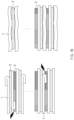
FIG. 4A is a view showing: a cross-section (a) of a die in a method for manufacturing an electrode assembly of the present invention; and a state (b) in which a film is attached to the inside of the die. -
FIG. 4B is a view additionally illustrating a state (c) in which a unit cell is placed between the films inside the die illustrated inFIG. 4A . -
FIG. 4C is a view additionally illustrating states (c, d, and e) in which a film and a bonding portion of a unit cell are bonded to each other by a soldering tool within the die illustrated inFIG. 4B . -
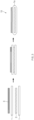
FIG. 5 is a view illustrating a plan view, a front view, and a left side view of an electrode assembly which is manufactured by a method for manufacturing an electrode assembly of the present invention. - Hereinafter, the present invention will be described in detail with reference to the accompanying drawings so that the present invention can be easily carried out by a person skill in the art to which the present invention pertains. However, the present invention may be embodied in several different forms, and not be limited to the embodiments set forth herein.
- A part unrelated to the description will be omitted so as to clearly describe the present invention, and the same reference symbols are affixed to identical or similar elements throughout the specification.
- Also, terms or words used in this specification and claims should not be restrictively interpreted as ordinary meanings or dictionary-based meanings, but should be interpreted as meanings and concepts conforming to the scope of the present invention on the basis of the principle that an inventor can properly define the concept of a term to describe and explain his or her invention in the best ways.
- The present invention relates to an electrode assembly in which a
negative electrode 3, aseparator 1, and apositive electrode 2 are repeatedly stacked on each other, and a method for manufacturing the electrode assembly. Hereinafter, embodiments of the present invention will be described in more detail with reference to the accompanying drawings. - The present invention provides, as a first embodiment, a method for manufacturing an electrode assembly. As illustrated in
FIG. 2 showing a sequence of a method for manufacturing an electrode assembly according to the present invention, a manufacturing method according to the embodiment comprises a unit cell manufacturing step (S10), a film inserting step (S20), a unit cell stacking step (S30), and a thermal fusing step (S40). - During the unit cell manufacturing step (S10), a
unit cell 10 having a predetermined stack structure of anegative electrode 3, aseparator 1, and apositive electrode 2 is manufactured, and ends ofseparators 1 are bonded to each other to form abonding portion 1a. - That is, as illustrated in
FIG. 3 showing a state in which anegative electrode 3, aseparator 1, apositive electrode 2 are stacked on each other and manufactured into aunit cell 10, a mono cell and a half cell, each of which has a predetermined stack structure, are manufactured as a unit cell. As illustrated in the drawing, the mono cell may have a structure in which theseparator 1/thepositive electrode 2/theseparator 1/thenegative electrode 3 are stacked sequentially from the bottom or a structure in which theseparator 1/thenegative electrode 3/theseparator 1/thepositive electrode 2 are stacked sequentially from the bottom. Also, a half cell is additionally provided, in which the uppermost electrode (a positive electrode or a negative electrode) is removed from the mono cell. In order for theseparator 1 to be placed on the uppermost layer after the stacking of mono cells is complete, the half cell has a structure in which theseparator 1/thenegative electrode 3/theseparator 1 are stacked sequentially from the bottom or a structure in which theseparator 1/thepositive electrode 2/theseparator 1 are stacked sequentially from the bottom. Thus, the half cell is stacked after stacking of mono cells is complete, and thus, an electrode assembly stacked according to the present invention has a structure in which the separator is placed in each of the lowermost layer and the uppermost layer. - Here, in the
unit cell 10 manufactured with the mono cell and the half cell, theseparator 1 has an area larger than each of areas of thepositive electrode 2 and thenegative electrode 3, and has ends protruding to both sides, respectively, as illustrated in the drawing. During the unit cell manufacturing step (S10), upper and lower surfaces of the ends of theseparators 1 are bonded to each other to form thebonding portion 1a. Thebonding portion 1a is not necessarily formed at all of the protruding ends of theseparators 1, but it is desirable to be formed at the ends that face thefilm 30 when theunit cells 10 are stacked. -
FIGS. 4A to 4C illustrate, in a method for manufacturing an electrode assembly of the invention: a cross-section (a) of a die M; a state (b) in whichfilms 3 are attached inside the die M; a state (c) in which aunit cell 10 is placed between thefilms 30 inside the die M; and states (d and e) in which thefilms 30 andbonding portions 1a ofunit cells 10 are bonded to each other by the soldering tool G within the die M. - Referring to
FIGS. 4A to 4C , during the film inserting step (S20), thefilms 30 are disposed on the both inner circumferential surfaces facing each other inside the die M. The die M is manufactured to have a size enough to stack theunit cells 10 between thefilms 30 disposed therein and also manufactured to have sufficient strength. The die M may be configured such that the inner space thereof for stacking theunit cells 10 has a hexahedral shape, and one side surface or both side surfaces thereof on which thefilm 30 is not disposed may be provided in an open state so that an operation of an gripper (not shown) or the like for conveying and stacking theunit cell 10 when theunit cells 10 are stacked is not interfered. - Also, the
film 30 inside the die M may be disposed in a temporarily fixed state on the inner circumferential surface of the die M so that vertically standing state thereof is maintained before thermal fusion is performed. That is, a clip, a holder, or the like for temporarily fixing the film may be installed in the die M. Alternatively, thefilm 30, having an adhesive with relatively weak adhesion applied on the surface thereof before disposed, may be disposed inside the die M. Such a means for temporarily fixing thefilm 30 may be embodied using other well-known methods as long as thefilm 30 may be easily separated from the inner circumferential surface of the die M after the manufacturing of the electrode assembly is completed. - Also, in order for the soldering tool G to enter when thermally fusing the
film 30 and theunit cell 10, the die M may have a slit (not shown) or the like through which the soldering tool G may enter vertically or a structure in which the soldering tool G is mounted inside the die M in a slidable manner. - Next, the unit cell stacking step (S30) is performed, in a state in which the
film 30 is disposed inside the die M, and the soldering tool G is ready to operate. During the unit cell stacking step (S30), theunit cells 10 are stacked at the right position between the twofilms 30 inside the die M. Here, each of theunit cells 10 is the mono cell as described above, and the stacking is performed such that theseparator 1 is placed on a lower side. - Also, the thermal fusing step (S40) is performed, in which heat and a pressure are applied inside the die M to thermally fuse the
film 30 to thebonding portion 1a of the stackedunit cell 10. - In the embodiment, the two
films 30 are inserted to come into contact with both side wall surfaces, respectively, which face each other within the die M. Thus, the thermal fusion is simultaneously performed on the both side wall surfaces of the die M. - Also,
FIG. 4C illustrates that the unit cell stacking step (S30) and the thermal fusing step (S40) are repeatedly performed until the stacking ofpredetermined unit cells 10 is completed after the film inserting step (S20). So, when oneunit cell 10 is stacked, theunit cell 10 is thermally fused, and then, anext unit cell 10 is stacked and thermally fused. - However, there is no change in position of the
unit cell 10 between thefilms 30 within the die M. Thus, the manufacturing process may be made in a manner in which, after all of theunit cells 10 are stacked without thermal fusion and in a state in which the stacking is complete, the thermal fusion of theunit cells 10 is performed sequentially from aunit cell 10 on the bottom layer (or from a unit cell from the top layer). That is, in the present invention, the order of the unit cell stacking step (S30) and the thermal fusing step (S40) may be changed flexibly. - Also, as described above, the mono cells are stacked while the unit cell stacking step (S30) is performed repeatedly, and when the unit cell stacking step (S30) is performed finally, the half cell is stacked. Thus, the electrode assembly manufactured by the above manner has a structure in which the
separator 1 is disposed on each of the uppermost layer and the lowermost layer. - Here, the
film 30 of the present invention is made of a thermoplastic material which is plastically deformed when subjected to heat and a pressure. For example, the film may be made of a polyethylene terephthalate (PET) material. - During the thermal fusing step (S40), the
film 30 is pressed and simultaneously heated by a tip of the soldering tool G and thermally fused to thebonding portion 1a of theunit cell 10. Also, the temperature and pressure to be applied may be changed according to the thickness and material properties of thefilm 30 or the relative position and size of the bonding portion. Here, as described above, the die M is configured to allow the tip of the soldering tool G to enter the die or the soldering tool G to be embedded in the die, and the thermal fusion of thefilm 30 is performed within the die M. - The present invention provides, as a second embodiment, an electrode assembly which may be manufactured through the manufacturing method according to the first embodiment.
- The electrode assembly provided in the embodiment is an electrode assembly in which a
negative electrode 3, aseparator 1, and apositive electrode 2 are repeatedly stacked, and the electrode assembly comprises afilm 30 disposed to cover one of the side surfaces defined by stacking thenegative electrode 3, theseparator 1, and thepositive electrode 2. Thefilm 30 is thermally fused to the side surface defined by stacking thenegative electrode 3, theseparator 1, and thepositive electrode 2. - That is, referring to
FIG. 5 illustrating a plan view, a front view, and a left side view of the electrode assembly which is manufactured by the method for manufacturing an electrode assembly of the present invention, thenegative electrode 3 and thepositive electrode 2 according to the present invention have anegative electrode tab 3a and apositive electrode tab 2a protruding to the sides, respectively. Thepositive electrode tab 2a and thenegative electrode tab 3a are configured to protrude in directions opposite to each other, and thefilm 30 is attached to each of the side surfaces of the electrode assembly having two sides perpendicular to the sides from which thepositive electrode tab 2a and thenegative electrode tab 3a protrude. - In the present invention having the configuration described above, the
film 30 is thermally fused and fixed to the side surface of the electrode assembly instead of using the fixing tape and is subjected to lower pressure than pressure generated when the fixing tape of the related art is attached. Thus, the folding or wrinkling of theseparator 1 occurring in the structure of the related art may be prevent. - Particularly, in the present invention, two or more sheets of the
separators 1 are merged at the end to form thebonding portion 1a, and thefilm 30 is thermally fused to thebonding portion 1a. Thus, theseparator 1 may be prevented from being folded or deformed during the thermal fusion. That is, when the thermal fusion is made, ends of theseparators 1 are bonded to each other to restrict movements thereof, and in a region in which thebonding portion 1a is formed, the thickness is increased. Thus, the area of thermal fusion to thefilm 30 is enlarged, and fixing force may increase. - Also, in the present invention, the thermal fusion is performed right after the
unit cell 10 is stacked, and then, thenext unit cell 10 is stacked. Alternatively, in the present invention, the stacking of all theunit cells 10 is complete, and then, the thermal fusion is performed. Thus, the manufacturing process may be flexible according to conditions of the electrode assembly. - Also, the thermal fusion is performed within the die M by the soldering tool G that enters the die M in which the
unit cell 10 is stacked or the soldering tool G that is embedded in the die. Thus, theunit cell 10 is prevented from shaking during the thermal fusing process, and more stable thermal fusion may be achieved. - Although the present invention is described by specific embodiments and drawings, the present invention is not limited thereto, and various changes and modifications may be made by a person skilled in the art to which the present invention pertains within the technical idea of the present invention and scope of the appended claims.
Claims (11)
- An electrode assembly comprising a plurality of unit cells (10) and films (30),wherein each of the unit cells (10) has a structure in which a first separator, a positive electrode or a negative electrode, and a second separator are sequentially stacked, andwherein each of the first separator and the second separator has an area larger than each of areas of the positive electrode (2) and the negative electrode (3),wherein each of the first separator and the second separator has ends protruding both sides of the separator, andbonding portions (1a) are formed by bonding the ends on each of the two sides of the first separator and the second separators of the unit cell,the films (30) are disposed to cover the bonding portions (1a),the films are disposed on each of the two sides of the directions perpendicular to the stacking direction of the electrodes and separators, and are attached to each of the side surfaces of the electrode assembly having two sides perpendicular to the sides from which the positive electrode tab (2a) and the negative electrode tab (3a) protrude, andthe films are thermally fused to the bonding portion (1a), andthe plurality of unit cells is stacked and thermally fused together at bonding portions (1a) on each of two sides of the first and the second separator of each unit cell.
- The electrode assembly of claim 1, wherein each of the unit cells has a negative electrode on the second separator, when the positive electrode is stacked in the each of the unit cells, or
each of the unit cells has a positive electrode on the second separator, when the negative electrode is stacked in the each of the unit cells. - The electrode assembly of claim 1, wherein the film (30) is made of a thermoplastic material which is plastically deformed when subjected to heat and a pressure.
- The electrode assembly of claim 3, wherein the film (30) is made of a polyethylene terephthalate (PET) material.
- A method for manufacturing an electrode assembly according to claim 1, the method comprising:a unit cell (10) manufacturing step (S10) of manufacturing a unit cell having a predetermined stack structure of a first separator, a positive electrode or a negative electrode, and a second separator,wherein each of the first separator and the second separator has an area larger than each of areas of the positive electrode and the negative electrode so that ends of the first separator and the second separator (1) are bonded to each other to form a bonding portion (1a);a film inserting step (S20) of inserting films (30) into a die (M) such that two films are inserted to come into contact with both side wall surfaces that have a direction perpendicular to the stacking direction of the unit cell to be stacked in the die (M), respectively, and such that the two films face each other within the die (M) ;a unit cell stacking step (S30) of stacking the unit cell (10) into the die (M) such that the bonding portion (1a) is positioned to contact the films (30); anda thermal fusing step (S40) of applying heat and a pressure to thermally fuse the film (30) to the bonding portion (1a) of the stacked unit cell (10) within the die (M).
- The method of claim 5, wherein, in the unit cell (10) manufacturing step (S10), each of the unit cells has a negative electrode on the second separator, when the positive electrode is stacked in the each of the unit cells, or
each of the unit cells has a positive electrode on the second separator, when the negative electrode is stacked in the each of the unit cells. - The method of claim 5, wherein the unit cell stacking step (S30) and the thermal fusing step (S40) are repeatedly performed until stacking of predetermined unit cells (10) is completed after the film inserting step (S20).
- The method of claim 5, wherein the unit cell stacking step (S30) is repeated until stacking of predetermined unit cells (10) is completed after the film inserting step (S20), and
when the unit cell stacking step (S30) is completed, the thermal fusing step (S40) is repeated to thermally fuse the film (30) to each of the stacked unit cells (10). - The method of claim 5, wherein, in the unit cell manufacturing step (S10),a mono cell in which the first separator/the negative electrode/the second separator/the positive electrode are stacked sequentially from the bottom or a mono cell in which the first separator/the positive electrode/the second separator/the negative electrode are stacked sequentially from the bottom is manufactured as the unit cell,a half cell in which the first separator/the negative electrode/the second separator are stacked sequentially from the bottom or a half cell in which the first separator/the positive electrode/the second separator are stacked sequentially from the bottom is separately manufactured as the unit cell in addition to the mono cell, andwhile the unit cell stacking step (S30) is repeatedly performed, the mono cells are stacked,wherein, when the unit cell stacking step (S30) is finally performed, the half cell is stacked.
- The method of claim 5, wherein the film (30) is made of a thermoplastic material which is plastically deformed when subjected to heat and a pressure, and
in the thermal fusing step (S40), the film is pressed and simultaneously heated by a tip of a soldering tool and thermally fused to the unit cell (10). - The method of claim 10, wherein the die (M) is configured to allow the tip of the soldering tool to enter the die or allow the soldering tool to be embedded in the die, and
the thermal fusion of the film (30) is performed within the die (M).
Applications Claiming Priority (2)
| Application Number | Priority Date | Filing Date | Title |
|---|---|---|---|
| KR1020190153475A KR102872284B1 (en) | 2019-11-26 | 2019-11-26 | Electrode assembly and manufacturing method thereof |
| PCT/KR2020/009060 WO2021107314A1 (en) | 2019-11-26 | 2020-07-10 | Electrode assembly and method for manufacturing same |
Publications (3)
| Publication Number | Publication Date |
|---|---|
| EP4024546A1 EP4024546A1 (en) | 2022-07-06 |
| EP4024546A4 EP4024546A4 (en) | 2023-03-08 |
| EP4024546B1 true EP4024546B1 (en) | 2025-01-29 |
Family
ID=76130333
Family Applications (1)
| Application Number | Title | Priority Date | Filing Date |
|---|---|---|---|
| EP20892270.8A Active EP4024546B1 (en) | 2019-11-26 | 2020-07-10 | Electrode assembly and method for manufacturing same |
Country Status (9)
| Country | Link |
|---|---|
| US (1) | US20230143528A1 (en) |
| EP (1) | EP4024546B1 (en) |
| JP (1) | JP7452923B2 (en) |
| KR (1) | KR102872284B1 (en) |
| CN (1) | CN114467191B (en) |
| ES (1) | ES3009903T3 (en) |
| HU (1) | HUE070486T2 (en) |
| PL (1) | PL4024546T3 (en) |
| WO (1) | WO2021107314A1 (en) |
Families Citing this family (2)
| Publication number | Priority date | Publication date | Assignee | Title |
|---|---|---|---|---|
| EP4456312A3 (en) * | 2023-04-26 | 2024-11-06 | Volkswagen Ag | Lithium ion accumulator |
| CN120322882A (en) * | 2023-05-17 | 2025-07-15 | 株式会社Lg新能源 | Electrode assembly winding device, winding method and electrode assembly manufactured thereby |
Citations (1)
| Publication number | Priority date | Publication date | Assignee | Title |
|---|---|---|---|---|
| US20120156538A1 (en) * | 2009-06-29 | 2012-06-21 | Li-Tec Battery Gmbh | Method for producing a battery arrangement |
Family Cites Families (28)
| Publication number | Priority date | Publication date | Assignee | Title |
|---|---|---|---|---|
| JPH09161759A (en) * | 1995-12-05 | 1997-06-20 | Nissan Motor Co Ltd | Separator |
| JP2001052657A (en) | 1999-08-03 | 2001-02-23 | Toshiba Battery Co Ltd | Lithium secondary battery |
| KR100515572B1 (en) * | 2000-02-08 | 2005-09-20 | 주식회사 엘지화학 | Stacked electrochemical cell and method for preparing the same |
| JP2002331309A (en) * | 2001-05-09 | 2002-11-19 | Toshiba Electronic Engineering Corp | Bending method of thin plate, mold and method of manufacturing sealed secondary battery |
| JP4769019B2 (en) | 2005-05-17 | 2011-09-07 | 本田技研工業株式会社 | Storage battery |
| KR100925857B1 (en) * | 2006-03-14 | 2009-11-06 | 주식회사 엘지화학 | Multiple nested electrochemical cells with increased safety |
| JP4766057B2 (en) * | 2008-01-23 | 2011-09-07 | ソニー株式会社 | Nonaqueous electrolyte battery and method for producing nonaqueous electrolyte battery |
| JP5334162B2 (en) | 2008-09-08 | 2013-11-06 | Necエナジーデバイス株式会社 | Multilayer secondary battery |
| CN102138244B (en) * | 2009-03-31 | 2014-05-28 | 三菱重工业株式会社 | Secondary battery and battery system |
| EP2477255B1 (en) * | 2009-09-10 | 2020-02-26 | Envision AESC Energy Devices Ltd. | Stacked battery and method for manufacturing same |
| JP5891655B2 (en) * | 2010-08-30 | 2016-03-23 | ソニー株式会社 | Nonaqueous electrolyte battery, nonaqueous electrolyte battery manufacturing method, insulating material, insulating material manufacturing method, battery pack, electronic device, electric vehicle, power storage device, and power system |
| JP5851785B2 (en) | 2011-09-29 | 2016-02-03 | オートモーティブエナジーサプライ株式会社 | Battery and manufacturing method thereof |
| KR101480740B1 (en) * | 2012-02-20 | 2015-01-12 | 주식회사 엘지화학 | Manufacturing method of Stacked-Typed Electrode Assembly of Novel Strucure |
| KR20130134566A (en) * | 2012-05-31 | 2013-12-10 | 주식회사 엘지화학 | Secondary battery and method for preparation thereof |
| EP2958179B1 (en) * | 2013-02-15 | 2017-06-21 | LG Chem, Ltd. | Electrode assembly having improved safety and production method therefor |
| KR101650860B1 (en) * | 2013-09-23 | 2016-08-24 | 주식회사 엘지화학 | Battery Cell Having Separation Film of Suppressed Thermal Shrinkage |
| WO2015079365A1 (en) * | 2013-11-28 | 2015-06-04 | Semiconductor Energy Laboratory Co., Ltd. | Power storage unit and electronic device including the same |
| KR102221807B1 (en) * | 2014-08-11 | 2021-03-02 | 삼성에스디아이 주식회사 | Secondary battery |
| KR101731149B1 (en) * | 2014-09-03 | 2017-04-28 | 에스케이이노베이션 주식회사 | Separator of lithium polymer secondary battery and lithium polymer secondary battery |
| JP6652127B2 (en) * | 2015-03-24 | 2020-02-19 | 日本電気株式会社 | Secondary battery, method of manufacturing secondary battery, electric vehicle, and power storage system |
| JP6775154B2 (en) | 2015-08-26 | 2020-10-28 | パナソニックIpマネジメント株式会社 | Power storage device |
| DE102015218533A1 (en) * | 2015-09-28 | 2017-03-30 | Robert Bosch Gmbh | Process for producing an electrode composite |
| CN108780869B (en) * | 2016-03-14 | 2022-04-15 | 株式会社村田制作所 | Electrical storage device |
| WO2018021398A1 (en) * | 2016-07-28 | 2018-02-01 | 東レ株式会社 | Multilayer wound body |
| JP2019192625A (en) | 2018-04-19 | 2019-10-31 | 株式会社豊田自動織機 | Manufacturing method for power storage module and power storage module |
| JP7102912B2 (en) | 2018-04-27 | 2022-07-20 | 株式会社豊田自動織機 | Manufacturing method of power storage module and power storage module |
| JP7102911B2 (en) | 2018-04-27 | 2022-07-20 | 株式会社豊田自動織機 | Manufacturing method of power storage module |
| CN110148772B (en) * | 2019-05-28 | 2020-12-22 | 乐山伟力得能源有限公司 | Electric pile packaging process and electric pile assembly |
-
2019
- 2019-11-26 KR KR1020190153475A patent/KR102872284B1/en active Active
-
2020
- 2020-07-10 WO PCT/KR2020/009060 patent/WO2021107314A1/en not_active Ceased
- 2020-07-10 US US17/769,490 patent/US20230143528A1/en active Pending
- 2020-07-10 PL PL20892270.8T patent/PL4024546T3/en unknown
- 2020-07-10 HU HUE20892270A patent/HUE070486T2/en unknown
- 2020-07-10 EP EP20892270.8A patent/EP4024546B1/en active Active
- 2020-07-10 ES ES20892270T patent/ES3009903T3/en active Active
- 2020-07-10 JP JP2022520645A patent/JP7452923B2/en active Active
- 2020-07-10 CN CN202080065302.0A patent/CN114467191B/en active Active
Patent Citations (1)
| Publication number | Priority date | Publication date | Assignee | Title |
|---|---|---|---|---|
| US20120156538A1 (en) * | 2009-06-29 | 2012-06-21 | Li-Tec Battery Gmbh | Method for producing a battery arrangement |
Also Published As
| Publication number | Publication date |
|---|---|
| WO2021107314A1 (en) | 2021-06-03 |
| PL4024546T3 (en) | 2025-04-14 |
| CN114467191B (en) | 2024-07-02 |
| EP4024546A4 (en) | 2023-03-08 |
| ES3009903T3 (en) | 2025-03-31 |
| CN114467191A (en) | 2022-05-10 |
| EP4024546A1 (en) | 2022-07-06 |
| KR102872284B1 (en) | 2025-10-16 |
| JP2022552651A (en) | 2022-12-19 |
| KR20210064831A (en) | 2021-06-03 |
| HUE070486T2 (en) | 2025-06-28 |
| US20230143528A1 (en) | 2023-05-11 |
| JP7452923B2 (en) | 2024-03-19 |
Similar Documents
| Publication | Publication Date | Title |
|---|---|---|
| US11973177B2 (en) | Secondary battery and method for manufacturing the same | |
| EP3531488B1 (en) | Electrode assembly and method for manufacturing the same | |
| EP3567666B1 (en) | Electrode assembly | |
| JP4418243B2 (en) | Jelly roll type electrode assembly and secondary battery employing the same | |
| US20130084479A1 (en) | Secondary battery | |
| EP4220796B1 (en) | Secondary battery and method for manufacturing the same, and pressing block for manufacturing secondary battery | |
| EP3136466B1 (en) | Manufacture method of electrode assembly | |
| EP4040553A1 (en) | Electrode assembly and manufacturing method therefor | |
| US20200251783A1 (en) | Secondary battery | |
| US11018395B2 (en) | Electrode assembly and manufacturing method thereof | |
| EP4024546B1 (en) | Electrode assembly and method for manufacturing same | |
| EP3886225B1 (en) | Secondary battery | |
| EP4174995A1 (en) | Secondary battery manufacturing method and secondary battery | |
| US20170054127A1 (en) | Secondary battery and fabricating method thereof | |
| CN109923723B (en) | Electrode assembly and method of manufacturing the same | |
| EP4715915A1 (en) | Secondary battery and method for manufacturing same | |
| EP4579830A1 (en) | Method for manufacturing secondary battery | |
| EP4712220A2 (en) | Pouch-type secondary batteries, press devices thereof, and manufacturing methods thereof | |
| EP4597696A1 (en) | Secondary battery | |
| KR102340101B1 (en) | Battery and method for manufcturing the same | |
| KR20250072076A (en) | Taping Device for Secondary Battery and Secondary Battery manufactured using the Device | |
| KR20240038510A (en) | Electrode assembly |
Legal Events
| Date | Code | Title | Description |
|---|---|---|---|
| STAA | Information on the status of an ep patent application or granted ep patent |
Free format text: STATUS: THE INTERNATIONAL PUBLICATION HAS BEEN MADE |
|
| PUAI | Public reference made under article 153(3) epc to a published international application that has entered the european phase |
Free format text: ORIGINAL CODE: 0009012 |
|
| STAA | Information on the status of an ep patent application or granted ep patent |
Free format text: STATUS: REQUEST FOR EXAMINATION WAS MADE |
|
| 17P | Request for examination filed |
Effective date: 20220331 |
|
| AK | Designated contracting states |
Kind code of ref document: A1 Designated state(s): AL AT BE BG CH CY CZ DE DK EE ES FI FR GB GR HR HU IE IS IT LI LT LU LV MC MK MT NL NO PL PT RO RS SE SI SK SM TR |
|
| DAV | Request for validation of the european patent (deleted) | ||
| DAX | Request for extension of the european patent (deleted) | ||
| A4 | Supplementary search report drawn up and despatched |
Effective date: 20230202 |
|
| RIC1 | Information provided on ipc code assigned before grant |
Ipc: H01M 50/466 20210101ALI20230127BHEP Ipc: H01M 10/04 20060101AFI20230127BHEP |
|
| STAA | Information on the status of an ep patent application or granted ep patent |
Free format text: STATUS: EXAMINATION IS IN PROGRESS |
|
| 17Q | First examination report despatched |
Effective date: 20230912 |
|
| GRAP | Despatch of communication of intention to grant a patent |
Free format text: ORIGINAL CODE: EPIDOSNIGR1 |
|
| STAA | Information on the status of an ep patent application or granted ep patent |
Free format text: STATUS: GRANT OF PATENT IS INTENDED |
|
| INTG | Intention to grant announced |
Effective date: 20240826 |
|
| P01 | Opt-out of the competence of the unified patent court (upc) registered |
Free format text: CASE NUMBER: APP_49811/2024 Effective date: 20240903 |
|
| GRAS | Grant fee paid |
Free format text: ORIGINAL CODE: EPIDOSNIGR3 |
|
| GRAA | (expected) grant |
Free format text: ORIGINAL CODE: 0009210 |
|
| STAA | Information on the status of an ep patent application or granted ep patent |
Free format text: STATUS: THE PATENT HAS BEEN GRANTED |
|
| AK | Designated contracting states |
Kind code of ref document: B1 Designated state(s): AL AT BE BG CH CY CZ DE DK EE ES FI FR GB GR HR HU IE IS IT LI LT LU LV MC MK MT NL NO PL PT RO RS SE SI SK SM TR |
|
| REG | Reference to a national code |
Ref country code: GB Ref legal event code: FG4D |
|
| REG | Reference to a national code |
Ref country code: CH Ref legal event code: EP |
|
| REG | Reference to a national code |
Ref country code: DE Ref legal event code: R096 Ref document number: 602020045644 Country of ref document: DE |
|
| REG | Reference to a national code |
Ref country code: IE Ref legal event code: FG4D |
|
| REG | Reference to a national code |
Ref country code: NL Ref legal event code: FP |
|
| REG | Reference to a national code |
Ref country code: SE Ref legal event code: TRGR |
|
| REG | Reference to a national code |
Ref country code: ES Ref legal event code: FG2A Ref document number: 3009903 Country of ref document: ES Kind code of ref document: T3 Effective date: 20250331 |
|
| REG | Reference to a national code |
Ref country code: HU Ref legal event code: AG4A Ref document number: E070486 Country of ref document: HU |
|
| PG25 | Lapsed in a contracting state [announced via postgrant information from national office to epo] |
Ref country code: RS Free format text: LAPSE BECAUSE OF FAILURE TO SUBMIT A TRANSLATION OF THE DESCRIPTION OR TO PAY THE FEE WITHIN THE PRESCRIBED TIME-LIMIT Effective date: 20250429 |
|
| PG25 | Lapsed in a contracting state [announced via postgrant information from national office to epo] |
Ref country code: FI Free format text: LAPSE BECAUSE OF FAILURE TO SUBMIT A TRANSLATION OF THE DESCRIPTION OR TO PAY THE FEE WITHIN THE PRESCRIBED TIME-LIMIT Effective date: 20250129 |
|
| PGFP | Annual fee paid to national office [announced via postgrant information from national office to epo] |
Ref country code: GB Payment date: 20250624 Year of fee payment: 6 |
|
| REG | Reference to a national code |
Ref country code: LT Ref legal event code: MG9D |
|
| PG25 | Lapsed in a contracting state [announced via postgrant information from national office to epo] |
Ref country code: IS Free format text: LAPSE BECAUSE OF FAILURE TO SUBMIT A TRANSLATION OF THE DESCRIPTION OR TO PAY THE FEE WITHIN THE PRESCRIBED TIME-LIMIT Effective date: 20250529 Ref country code: NO Free format text: LAPSE BECAUSE OF FAILURE TO SUBMIT A TRANSLATION OF THE DESCRIPTION OR TO PAY THE FEE WITHIN THE PRESCRIBED TIME-LIMIT Effective date: 20250429 |
|
| PGFP | Annual fee paid to national office [announced via postgrant information from national office to epo] |
Ref country code: NL Payment date: 20250623 Year of fee payment: 6 |
|
| REG | Reference to a national code |
Ref country code: AT Ref legal event code: MK05 Ref document number: 1764390 Country of ref document: AT Kind code of ref document: T Effective date: 20250129 |
|
| PG25 | Lapsed in a contracting state [announced via postgrant information from national office to epo] |
Ref country code: HR Free format text: LAPSE BECAUSE OF FAILURE TO SUBMIT A TRANSLATION OF THE DESCRIPTION OR TO PAY THE FEE WITHIN THE PRESCRIBED TIME-LIMIT Effective date: 20250129 |
|
| PG25 | Lapsed in a contracting state [announced via postgrant information from national office to epo] |
Ref country code: LV Free format text: LAPSE BECAUSE OF FAILURE TO SUBMIT A TRANSLATION OF THE DESCRIPTION OR TO PAY THE FEE WITHIN THE PRESCRIBED TIME-LIMIT Effective date: 20250129 Ref country code: PT Free format text: LAPSE BECAUSE OF FAILURE TO SUBMIT A TRANSLATION OF THE DESCRIPTION OR TO PAY THE FEE WITHIN THE PRESCRIBED TIME-LIMIT Effective date: 20250529 |
|
| PGFP | Annual fee paid to national office [announced via postgrant information from national office to epo] |
Ref country code: FR Payment date: 20250624 Year of fee payment: 6 |
|
| PG25 | Lapsed in a contracting state [announced via postgrant information from national office to epo] |
Ref country code: BG Free format text: LAPSE BECAUSE OF FAILURE TO SUBMIT A TRANSLATION OF THE DESCRIPTION OR TO PAY THE FEE WITHIN THE PRESCRIBED TIME-LIMIT Effective date: 20250129 Ref country code: GR Free format text: LAPSE BECAUSE OF FAILURE TO SUBMIT A TRANSLATION OF THE DESCRIPTION OR TO PAY THE FEE WITHIN THE PRESCRIBED TIME-LIMIT Effective date: 20250430 |
|
| PG25 | Lapsed in a contracting state [announced via postgrant information from national office to epo] |
Ref country code: AT Free format text: LAPSE BECAUSE OF FAILURE TO SUBMIT A TRANSLATION OF THE DESCRIPTION OR TO PAY THE FEE WITHIN THE PRESCRIBED TIME-LIMIT Effective date: 20250129 |
|
| PGFP | Annual fee paid to national office [announced via postgrant information from national office to epo] |
Ref country code: TR Payment date: 20250624 Year of fee payment: 6 |
|
| PGFP | Annual fee paid to national office [announced via postgrant information from national office to epo] |
Ref country code: SE Payment date: 20250624 Year of fee payment: 6 |
|
| PGFP | Annual fee paid to national office [announced via postgrant information from national office to epo] |
Ref country code: HU Payment date: 20250721 Year of fee payment: 6 |
|
| PG25 | Lapsed in a contracting state [announced via postgrant information from national office to epo] |
Ref country code: SM Free format text: LAPSE BECAUSE OF FAILURE TO SUBMIT A TRANSLATION OF THE DESCRIPTION OR TO PAY THE FEE WITHIN THE PRESCRIBED TIME-LIMIT Effective date: 20250129 |
|
| PGFP | Annual fee paid to national office [announced via postgrant information from national office to epo] |
Ref country code: ES Payment date: 20250822 Year of fee payment: 6 |
|
| PG25 | Lapsed in a contracting state [announced via postgrant information from national office to epo] |
Ref country code: DK Free format text: LAPSE BECAUSE OF FAILURE TO SUBMIT A TRANSLATION OF THE DESCRIPTION OR TO PAY THE FEE WITHIN THE PRESCRIBED TIME-LIMIT Effective date: 20250129 |
|
| PGFP | Annual fee paid to national office [announced via postgrant information from national office to epo] |
Ref country code: DE Payment date: 20250624 Year of fee payment: 6 |
|
| PGFP | Annual fee paid to national office [announced via postgrant information from national office to epo] |
Ref country code: IT Payment date: 20250624 Year of fee payment: 6 Ref country code: PL Payment date: 20250626 Year of fee payment: 6 |
|
| PG25 | Lapsed in a contracting state [announced via postgrant information from national office to epo] |
Ref country code: CZ Free format text: LAPSE BECAUSE OF FAILURE TO SUBMIT A TRANSLATION OF THE DESCRIPTION OR TO PAY THE FEE WITHIN THE PRESCRIBED TIME-LIMIT Effective date: 20250129 Ref country code: EE Free format text: LAPSE BECAUSE OF FAILURE TO SUBMIT A TRANSLATION OF THE DESCRIPTION OR TO PAY THE FEE WITHIN THE PRESCRIBED TIME-LIMIT Effective date: 20250129 |
|
| PG25 | Lapsed in a contracting state [announced via postgrant information from national office to epo] |
Ref country code: RO Free format text: LAPSE BECAUSE OF FAILURE TO SUBMIT A TRANSLATION OF THE DESCRIPTION OR TO PAY THE FEE WITHIN THE PRESCRIBED TIME-LIMIT Effective date: 20250129 |
|
| PG25 | Lapsed in a contracting state [announced via postgrant information from national office to epo] |
Ref country code: SK Free format text: LAPSE BECAUSE OF FAILURE TO SUBMIT A TRANSLATION OF THE DESCRIPTION OR TO PAY THE FEE WITHIN THE PRESCRIBED TIME-LIMIT Effective date: 20250129 |
|
| REG | Reference to a national code |
Ref country code: DE Ref legal event code: R097 Ref document number: 602020045644 Country of ref document: DE |
|
| PLBE | No opposition filed within time limit |
Free format text: ORIGINAL CODE: 0009261 |
|
| STAA | Information on the status of an ep patent application or granted ep patent |
Free format text: STATUS: NO OPPOSITION FILED WITHIN TIME LIMIT |
|
| REG | Reference to a national code |
Ref country code: CH Ref legal event code: L10 Free format text: ST27 STATUS EVENT CODE: U-0-0-L10-L00 (AS PROVIDED BY THE NATIONAL OFFICE) Effective date: 20251210 |
|
| 26N | No opposition filed |
Effective date: 20251030 |
|
| REG | Reference to a national code |
Ref country code: CH Ref legal event code: H13 Free format text: ST27 STATUS EVENT CODE: U-0-0-H10-H13 (AS PROVIDED BY THE NATIONAL OFFICE) Effective date: 20260224 |
|
| PG25 | Lapsed in a contracting state [announced via postgrant information from national office to epo] |
Ref country code: LU Free format text: LAPSE BECAUSE OF NON-PAYMENT OF DUE FEES Effective date: 20250710 |
|
| REG | Reference to a national code |
Ref country code: BE Ref legal event code: MM Effective date: 20250731 |
|
| PG25 | Lapsed in a contracting state [announced via postgrant information from national office to epo] |
Ref country code: BE Free format text: LAPSE BECAUSE OF NON-PAYMENT OF DUE FEES Effective date: 20250731 |
|
| PG25 | Lapsed in a contracting state [announced via postgrant information from national office to epo] |
Ref country code: CH Free format text: LAPSE BECAUSE OF NON-PAYMENT OF DUE FEES Effective date: 20250731 |