EP4024526A1 - Lithium-rich manganese-based positive electrode material for use in lithium-ion battery, preparation method for the material, positive electrode tab, lithium-ion battery, and electric vehicle - Google Patents
Lithium-rich manganese-based positive electrode material for use in lithium-ion battery, preparation method for the material, positive electrode tab, lithium-ion battery, and electric vehicle Download PDFInfo
- Publication number
- EP4024526A1 EP4024526A1 EP20925911.8A EP20925911A EP4024526A1 EP 4024526 A1 EP4024526 A1 EP 4024526A1 EP 20925911 A EP20925911 A EP 20925911A EP 4024526 A1 EP4024526 A1 EP 4024526A1
- Authority
- EP
- European Patent Office
- Prior art keywords
- lithium
- positive electrode
- electrode material
- rich manganese
- based positive
- Prior art date
- Legal status (The legal status is an assumption and is not a legal conclusion. Google has not performed a legal analysis and makes no representation as to the accuracy of the status listed.)
- Pending
Links
- 239000011572 manganese Substances 0.000 title claims abstract description 134
- 229910052744 lithium Inorganic materials 0.000 title claims abstract description 98
- WHXSMMKQMYFTQS-UHFFFAOYSA-N Lithium Chemical compound [Li] WHXSMMKQMYFTQS-UHFFFAOYSA-N 0.000 title claims abstract description 97
- 239000007774 positive electrode material Substances 0.000 title claims abstract description 95
- 229910052748 manganese Inorganic materials 0.000 title claims abstract description 92
- PWHULOQIROXLJO-UHFFFAOYSA-N Manganese Chemical compound [Mn] PWHULOQIROXLJO-UHFFFAOYSA-N 0.000 title claims abstract description 91
- HBBGRARXTFLTSG-UHFFFAOYSA-N Lithium ion Chemical compound [Li+] HBBGRARXTFLTSG-UHFFFAOYSA-N 0.000 title claims abstract description 35
- 229910001416 lithium ion Inorganic materials 0.000 title claims abstract description 35
- 238000002360 preparation method Methods 0.000 title claims abstract description 12
- 239000000463 material Substances 0.000 title abstract description 15
- 238000001354 calcination Methods 0.000 claims description 65
- WMFOQBRAJBCJND-UHFFFAOYSA-M Lithium hydroxide Chemical compound [Li+].[OH-] WMFOQBRAJBCJND-UHFFFAOYSA-M 0.000 claims description 20
- 239000000654 additive Substances 0.000 claims description 16
- 239000000203 mixture Substances 0.000 claims description 14
- 230000000996 additive effect Effects 0.000 claims description 13
- 239000012299 nitrogen atmosphere Substances 0.000 claims description 10
- 238000000034 method Methods 0.000 claims description 7
- 238000002156 mixing Methods 0.000 claims description 6
- 239000002243 precursor Substances 0.000 claims description 6
- -1 B3+ Chemical compound 0.000 claims description 5
- 239000013078 crystal Substances 0.000 claims description 5
- 229910005518 NiaCobMnc Inorganic materials 0.000 claims description 3
- LDDQLRUQCUTJBB-UHFFFAOYSA-N ammonium fluoride Chemical compound [NH4+].[F-] LDDQLRUQCUTJBB-UHFFFAOYSA-N 0.000 claims description 3
- XGZVUEUWXADBQD-UHFFFAOYSA-L lithium carbonate Chemical compound [Li+].[Li+].[O-]C([O-])=O XGZVUEUWXADBQD-UHFFFAOYSA-L 0.000 claims description 3
- 229910052808 lithium carbonate Inorganic materials 0.000 claims description 3
- 238000007086 side reaction Methods 0.000 abstract description 13
- 238000007599 discharging Methods 0.000 abstract description 10
- 230000008602 contraction Effects 0.000 abstract description 8
- 239000008151 electrolyte solution Substances 0.000 abstract 1
- QVGXLLKOCUKJST-UHFFFAOYSA-N atomic oxygen Chemical compound [O] QVGXLLKOCUKJST-UHFFFAOYSA-N 0.000 description 21
- 239000001301 oxygen Substances 0.000 description 21
- 229910052760 oxygen Inorganic materials 0.000 description 21
- 239000007789 gas Substances 0.000 description 20
- PXHVJJICTQNCMI-UHFFFAOYSA-N nickel Substances [Ni] PXHVJJICTQNCMI-UHFFFAOYSA-N 0.000 description 16
- 239000003792 electrolyte Substances 0.000 description 11
- 230000000052 comparative effect Effects 0.000 description 10
- 239000002245 particle Substances 0.000 description 10
- KGBXLFKZBHKPEV-UHFFFAOYSA-N boric acid Chemical compound OB(O)O KGBXLFKZBHKPEV-UHFFFAOYSA-N 0.000 description 9
- 239000000126 substance Substances 0.000 description 9
- 239000004570 mortar (masonry) Substances 0.000 description 7
- 238000004833 X-ray photoelectron spectroscopy Methods 0.000 description 6
- 239000000843 powder Substances 0.000 description 6
- 238000005516 engineering process Methods 0.000 description 4
- 150000002500 ions Chemical class 0.000 description 4
- 229910001496 lithium tetrafluoroborate Inorganic materials 0.000 description 4
- 230000014759 maintenance of location Effects 0.000 description 4
- 229910002983 Li2MnO3 Inorganic materials 0.000 description 3
- 238000004458 analytical method Methods 0.000 description 3
- 239000012535 impurity Substances 0.000 description 3
- 238000009830 intercalation Methods 0.000 description 3
- 230000002687 intercalation Effects 0.000 description 3
- 229910052759 nickel Inorganic materials 0.000 description 3
- 238000011056 performance test Methods 0.000 description 3
- XKRFYHLGVUSROY-UHFFFAOYSA-N Argon Chemical compound [Ar] XKRFYHLGVUSROY-UHFFFAOYSA-N 0.000 description 2
- ZOXJGFHDIHLPTG-UHFFFAOYSA-N Boron Chemical compound [B] ZOXJGFHDIHLPTG-UHFFFAOYSA-N 0.000 description 2
- 229910013191 LiMO2 Inorganic materials 0.000 description 2
- 239000004327 boric acid Substances 0.000 description 2
- 229910052796 boron Inorganic materials 0.000 description 2
- 230000015556 catabolic process Effects 0.000 description 2
- 229910017052 cobalt Inorganic materials 0.000 description 2
- 239000010941 cobalt Substances 0.000 description 2
- GUTLYIVDDKVIGB-UHFFFAOYSA-N cobalt atom Chemical compound [Co] GUTLYIVDDKVIGB-UHFFFAOYSA-N 0.000 description 2
- 239000006258 conductive agent Substances 0.000 description 2
- 238000006731 degradation reaction Methods 0.000 description 2
- 238000009831 deintercalation Methods 0.000 description 2
- 238000004519 manufacturing process Methods 0.000 description 2
- 208000019901 Anxiety disease Diseases 0.000 description 1
- 239000006245 Carbon black Super-P Substances 0.000 description 1
- KMTRUDSVKNLOMY-UHFFFAOYSA-N Ethylene carbonate Chemical compound O=C1OCCO1 KMTRUDSVKNLOMY-UHFFFAOYSA-N 0.000 description 1
- 229910001290 LiPF6 Inorganic materials 0.000 description 1
- 229910002097 Lithium manganese(III,IV) oxide Inorganic materials 0.000 description 1
- 239000002033 PVDF binder Substances 0.000 description 1
- 238000000026 X-ray photoelectron spectrum Methods 0.000 description 1
- PFYQFCKUASLJLL-UHFFFAOYSA-N [Co].[Ni].[Li] Chemical compound [Co].[Ni].[Li] PFYQFCKUASLJLL-UHFFFAOYSA-N 0.000 description 1
- HFCVPDYCRZVZDF-UHFFFAOYSA-N [Li+].[Co+2].[Ni+2].[O-][Mn]([O-])(=O)=O Chemical compound [Li+].[Co+2].[Ni+2].[O-][Mn]([O-])(=O)=O HFCVPDYCRZVZDF-UHFFFAOYSA-N 0.000 description 1
- 238000009825 accumulation Methods 0.000 description 1
- 239000011149 active material Substances 0.000 description 1
- 230000002411 adverse Effects 0.000 description 1
- 230000036506 anxiety Effects 0.000 description 1
- 229910052786 argon Inorganic materials 0.000 description 1
- 230000006399 behavior Effects 0.000 description 1
- 239000011230 binding agent Substances 0.000 description 1
- 238000000354 decomposition reaction Methods 0.000 description 1
- 230000007547 defect Effects 0.000 description 1
- IEJIGPNLZYLLBP-UHFFFAOYSA-N dimethyl carbonate Chemical compound COC(=O)OC IEJIGPNLZYLLBP-UHFFFAOYSA-N 0.000 description 1
- 230000005611 electricity Effects 0.000 description 1
- 230000007613 environmental effect Effects 0.000 description 1
- 229910000473 manganese(VI) oxide Inorganic materials 0.000 description 1
- 238000001228 spectrum Methods 0.000 description 1
- 239000000758 substrate Substances 0.000 description 1
- 239000002562 thickening agent Substances 0.000 description 1
- 229910052723 transition metal Inorganic materials 0.000 description 1
Images


Classifications
-
- H—ELECTRICITY
- H01—ELECTRIC ELEMENTS
- H01M—PROCESSES OR MEANS, e.g. BATTERIES, FOR THE DIRECT CONVERSION OF CHEMICAL ENERGY INTO ELECTRICAL ENERGY
- H01M4/00—Electrodes
- H01M4/02—Electrodes composed of, or comprising, active material
- H01M4/36—Selection of substances as active materials, active masses, active liquids
- H01M4/48—Selection of substances as active materials, active masses, active liquids of inorganic oxides or hydroxides
- H01M4/50—Selection of substances as active materials, active masses, active liquids of inorganic oxides or hydroxides of manganese
- H01M4/505—Selection of substances as active materials, active masses, active liquids of inorganic oxides or hydroxides of manganese of mixed oxides or hydroxides containing manganese for inserting or intercalating light metals, e.g. LiMn2O4 or LiMn2OxFy
-
- C—CHEMISTRY; METALLURGY
- C01—INORGANIC CHEMISTRY
- C01G—COMPOUNDS CONTAINING METALS NOT COVERED BY SUBCLASSES C01D OR C01F
- C01G53/00—Compounds of nickel
- C01G53/40—Complex oxides containing nickel and at least one other metal element
- C01G53/42—Complex oxides containing nickel and at least one other metal element containing alkali metals, e.g. LiNiO2
- C01G53/44—Complex oxides containing nickel and at least one other metal element containing alkali metals, e.g. LiNiO2 containing manganese
-
- C—CHEMISTRY; METALLURGY
- C01—INORGANIC CHEMISTRY
- C01G—COMPOUNDS CONTAINING METALS NOT COVERED BY SUBCLASSES C01D OR C01F
- C01G53/00—Compounds of nickel
- C01G53/40—Complex oxides containing nickel and at least one other metal element
- C01G53/42—Complex oxides containing nickel and at least one other metal element containing alkali metals, e.g. LiNiO2
- C01G53/44—Complex oxides containing nickel and at least one other metal element containing alkali metals, e.g. LiNiO2 containing manganese
- C01G53/50—Complex oxides containing nickel and at least one other metal element containing alkali metals, e.g. LiNiO2 containing manganese of the type (MnO2)n-, e.g. Li(NixMn1-x)O2 or Li(MyNixMn1-x-y)O2
-
- C—CHEMISTRY; METALLURGY
- C01—INORGANIC CHEMISTRY
- C01G—COMPOUNDS CONTAINING METALS NOT COVERED BY SUBCLASSES C01D OR C01F
- C01G53/00—Compounds of nickel
- C01G53/80—Compounds containing nickel, with or without oxygen or hydrogen, and containing one or more other elements
- C01G53/82—Compounds containing nickel, with or without oxygen or hydrogen, and containing two or more other elements
-
- H—ELECTRICITY
- H01—ELECTRIC ELEMENTS
- H01M—PROCESSES OR MEANS, e.g. BATTERIES, FOR THE DIRECT CONVERSION OF CHEMICAL ENERGY INTO ELECTRICAL ENERGY
- H01M10/00—Secondary cells; Manufacture thereof
- H01M10/05—Accumulators with non-aqueous electrolyte
- H01M10/052—Li-accumulators
- H01M10/0525—Rocking-chair batteries, i.e. batteries with lithium insertion or intercalation in both electrodes; Lithium-ion batteries
-
- H—ELECTRICITY
- H01—ELECTRIC ELEMENTS
- H01M—PROCESSES OR MEANS, e.g. BATTERIES, FOR THE DIRECT CONVERSION OF CHEMICAL ENERGY INTO ELECTRICAL ENERGY
- H01M4/00—Electrodes
- H01M4/02—Electrodes composed of, or comprising, active material
- H01M4/04—Processes of manufacture in general
- H01M4/0471—Processes of manufacture in general involving thermal treatment, e.g. firing, sintering, backing particulate active material, thermal decomposition, pyrolysis
-
- H—ELECTRICITY
- H01—ELECTRIC ELEMENTS
- H01M—PROCESSES OR MEANS, e.g. BATTERIES, FOR THE DIRECT CONVERSION OF CHEMICAL ENERGY INTO ELECTRICAL ENERGY
- H01M4/00—Electrodes
- H01M4/02—Electrodes composed of, or comprising, active material
- H01M4/36—Selection of substances as active materials, active masses, active liquids
- H01M4/48—Selection of substances as active materials, active masses, active liquids of inorganic oxides or hydroxides
- H01M4/485—Selection of substances as active materials, active masses, active liquids of inorganic oxides or hydroxides of mixed oxides or hydroxides for inserting or intercalating light metals, e.g. LiTi2O4 or LiTi2OxFy
-
- H—ELECTRICITY
- H01—ELECTRIC ELEMENTS
- H01M—PROCESSES OR MEANS, e.g. BATTERIES, FOR THE DIRECT CONVERSION OF CHEMICAL ENERGY INTO ELECTRICAL ENERGY
- H01M4/00—Electrodes
- H01M4/02—Electrodes composed of, or comprising, active material
- H01M4/36—Selection of substances as active materials, active masses, active liquids
- H01M4/48—Selection of substances as active materials, active masses, active liquids of inorganic oxides or hydroxides
- H01M4/52—Selection of substances as active materials, active masses, active liquids of inorganic oxides or hydroxides of nickel, cobalt or iron
- H01M4/525—Selection of substances as active materials, active masses, active liquids of inorganic oxides or hydroxides of nickel, cobalt or iron of mixed oxides or hydroxides containing iron, cobalt or nickel for inserting or intercalating light metals, e.g. LiNiO2, LiCoO2 or LiCoOxFy
-
- C—CHEMISTRY; METALLURGY
- C01—INORGANIC CHEMISTRY
- C01P—INDEXING SCHEME RELATING TO STRUCTURAL AND PHYSICAL ASPECTS OF SOLID INORGANIC COMPOUNDS
- C01P2002/00—Crystal-structural characteristics
- C01P2002/50—Solid solutions
- C01P2002/52—Solid solutions containing elements as dopants
-
- C—CHEMISTRY; METALLURGY
- C01—INORGANIC CHEMISTRY
- C01P—INDEXING SCHEME RELATING TO STRUCTURAL AND PHYSICAL ASPECTS OF SOLID INORGANIC COMPOUNDS
- C01P2002/00—Crystal-structural characteristics
- C01P2002/60—Compounds characterised by their crystallite size
-
- C—CHEMISTRY; METALLURGY
- C01—INORGANIC CHEMISTRY
- C01P—INDEXING SCHEME RELATING TO STRUCTURAL AND PHYSICAL ASPECTS OF SOLID INORGANIC COMPOUNDS
- C01P2002/00—Crystal-structural characteristics
- C01P2002/80—Crystal-structural characteristics defined by measured data other than those specified in group C01P2002/70
- C01P2002/85—Crystal-structural characteristics defined by measured data other than those specified in group C01P2002/70 by XPS, EDX or EDAX data
-
- C—CHEMISTRY; METALLURGY
- C01—INORGANIC CHEMISTRY
- C01P—INDEXING SCHEME RELATING TO STRUCTURAL AND PHYSICAL ASPECTS OF SOLID INORGANIC COMPOUNDS
- C01P2004/00—Particle morphology
- C01P2004/60—Particles characterised by their size
- C01P2004/61—Micrometer sized, i.e. from 1-100 micrometer
-
- C—CHEMISTRY; METALLURGY
- C01—INORGANIC CHEMISTRY
- C01P—INDEXING SCHEME RELATING TO STRUCTURAL AND PHYSICAL ASPECTS OF SOLID INORGANIC COMPOUNDS
- C01P2006/00—Physical properties of inorganic compounds
- C01P2006/40—Electric properties
-
- H—ELECTRICITY
- H01—ELECTRIC ELEMENTS
- H01M—PROCESSES OR MEANS, e.g. BATTERIES, FOR THE DIRECT CONVERSION OF CHEMICAL ENERGY INTO ELECTRICAL ENERGY
- H01M4/00—Electrodes
- H01M4/02—Electrodes composed of, or comprising, active material
- H01M2004/021—Physical characteristics, e.g. porosity, surface area
-
- H—ELECTRICITY
- H01—ELECTRIC ELEMENTS
- H01M—PROCESSES OR MEANS, e.g. BATTERIES, FOR THE DIRECT CONVERSION OF CHEMICAL ENERGY INTO ELECTRICAL ENERGY
- H01M4/00—Electrodes
- H01M4/02—Electrodes composed of, or comprising, active material
- H01M2004/026—Electrodes composed of, or comprising, active material characterised by the polarity
- H01M2004/028—Positive electrodes
-
- Y—GENERAL TAGGING OF NEW TECHNOLOGICAL DEVELOPMENTS; GENERAL TAGGING OF CROSS-SECTIONAL TECHNOLOGIES SPANNING OVER SEVERAL SECTIONS OF THE IPC; TECHNICAL SUBJECTS COVERED BY FORMER USPC CROSS-REFERENCE ART COLLECTIONS [XRACs] AND DIGESTS
- Y02—TECHNOLOGIES OR APPLICATIONS FOR MITIGATION OR ADAPTATION AGAINST CLIMATE CHANGE
- Y02E—REDUCTION OF GREENHOUSE GAS [GHG] EMISSIONS, RELATED TO ENERGY GENERATION, TRANSMISSION OR DISTRIBUTION
- Y02E60/00—Enabling technologies; Technologies with a potential or indirect contribution to GHG emissions mitigation
- Y02E60/10—Energy storage using batteries
Definitions
- the present disclosure relates to the technical field of lithium-ion batteries, for example, to a lithium-rich manganese-based positive electrode material for use in a lithium-ion battery, a preparation method therefor, a positive electrode plate, a lithium-ion battery, and an electric vehicle.
- such a material has good thermal stability and a differential scanning caborimetry (DSC) decomposition temperature of up to 240°C and shows significant advantages over high nickel ternary positive electrode materials such as nickel cobalt lithium manganate and nickel cobalt lithium aluminate.
- DSC differential scanning caborimetry
- the lithium-rich manganese-based positive electrode material also has many defects, one of which is the serious capacity degradation during a charge-discharge cycle, which directly affects the commercial application prospects of the lithium-rich manganese-based positive electrode material.
- the present disclosure provides a lithium-rich manganese-based positive electrode material for use in a lithium-ion battery.
- the lithium-rich manganese-based positive electrode material provides high structural stability in the charging-discharging cycle, is not prone to experiencing expansion or contraction that causes grain boundary stress imbalance, is not prone to undergoing a side reaction with an electrolyte, and is easy to industrialize; moreover, the lithium-ion battery made with the material has great cycle performance, great rate capability, and great commercial prospects.
- the present disclosure provides a lithium-rich manganese-based positive electrode material used in a lithium-ion battery in an embodiment.
- the lithium-rich manganese-based positive electrode material includes a crystal formed by xLi 2+ ⁇ Mn (1- ⁇ - ⁇ ) Ti ⁇ M ⁇ O 3-v M' v ⁇ (1-x)Li 1+ ⁇ ' Ni a Co b Mn c M ⁇ ' O 2-v' M' v' , wherein 0.4 ⁇ x ⁇ 0.6, 0 ⁇ ⁇ ⁇ 0.1, 0 ⁇ ⁇ 0.2, 0 ⁇ ⁇ ⁇ 0.05, and 0.005 ⁇ v ⁇ 0.02; 0 ⁇ ⁇ ' ⁇ 0.04, 0 ⁇ a ⁇ 0.3, 0 ⁇ b ⁇ 0.3, 0 ⁇ c ⁇ 0.5, 0 ⁇ ⁇ ' ⁇ 0.1, 0 ⁇ v' ⁇ 0.01, and ⁇ ' + a + b + c
- the lithium-rich manganese-based positive electrode material of the present disclosure provides high structural stability in the charging-discharging cycle, is not prone to experiencing expansion or contraction that causes grain boundary stress imbalance, is not prone to undergoing a side reaction with an electrolyte, and is easy to industrialize; moreover, the lithium-ion battery made with the material has great cycle performance, great rate capability, and great commercial prospects.
- the median diameter D50 of the lithium-rich manganese-based positive electrode material is 3 ⁇ m to 14 ⁇ m, for example, 3 ⁇ m, 4 ⁇ m, 5 ⁇ m, 6 ⁇ m, 7 ⁇ m, 8 ⁇ m, 9 ⁇ m, 10 ⁇ m, 11 ⁇ m, 12 ⁇ m, 13 ⁇ m or 14 ⁇ m, etc.
- the median diameter D50 of singly crystalline particles of the lithium-rich manganese-based positive electrode material is 1 nm to 200 nm, for example, 1 nm, 2 nm, 5 nm, 10 nm, 20 nm, 30 nm, 40 nm, 50 nm, 100 nm or 200 nm, etc.
- the lithium-rich manganese-based positive electrode material is at least one of 0.5Li 2 Mn 0.97 Ti 0.01 B 0.02 O 2.95 F 0.05 ⁇ 0.5LiNi 0.4 Co 0.4 Mn 0.22 B 0.02 O 1.95 F 0.05 or 0.5Li 2 Mn 0.98 B 0.02 O 2.95 F 0.05 ⁇ 0.5LiNi 0.4 Co 0.4 Mn 0.22 B 0.02 O 1.95 F 0.05 .
- the present disclosure provides a method for preparing the above-mentioned lithium-rich manganese-based positive electrode material in an embodiment.
- the method includes the following steps:
- the precursor in step (1) includes at least one of Ni 0.2 Co 0.2 Mn 0.595 Ti 0.005 CO 3 or Ni 0.2 Co 0.2 Mn 0.595 Ti 0.005 CO 2.95 F 0.05 .
- the first calcination treatment in step (1) is performed at a temperature of 300°C to 800°C, for example, 300°C, 400°C, 500°C, 600°C, 700°C or 800°C, etc.
- the first calcination treatment in step (1) is performed for 4 hours to 12 hours, for example, 4 hours, 6 hours, 8 hours, 10 hours or 12 hours, etc.
- the first calcination treatment in step (1) is performed in an O 2 and/or N 2 atmosphere.
- the additive including M and M' in step (2) may be one additive including both M and M', or may be a mixture of an additive including M and an additive including M'.
- the additive may be boride B 2 O 3 , boric acid H 3 BO 3 , lithium tetrafluoroborate LiBF 4 , etc.
- the specific manner of mixing the two above-mentioned additives is not particularly limited and can be flexibly selected by those skilled in the art according to the actual needs, which will not be described in detail herein.
- the second calcination treatment in step (3) is performed at a temperature of 330°C to 820°C, for example, 330°C, 400°C, 500°C, 600°C, 700°C or 820°C, etc.
- the second calcination treatment in step (3) is performed for 6 hours to 12 hours, for example, 6 hours, 7 hours, 8 hours, 9 hours, 10 hours, 11 hours or 12 hours, etc.
- the second calcination treatment in step (3) is performed in an O 2 and/or N 2 atmosphere.
- the lithium source in step (4) includes at least one of LiOH ⁇ H 2 O or Li 2 CO 3 and at least one of LiF or NH 4 F so that sufficient lithium sources are provided to effectively prepare the above-mentioned lithium-rich manganese-based positive electrode material.
- the third calcination treatment in step (5) is performed at a temperature of 700°C to 950°C, for example, 700°C, 750°C, 800°C, 850°C, 900°C or 950°C, etc.
- the third calcination treatment in step (5) is performed for 10 hours to 24 hours, for example, 10 hours, 12 hours, 14 hours, 16 hours, 18 hours, 20 hours, 21 hours, 22 hours, 23 hours or 24 hours, etc.
- the third calcination treatment in step (5) is performed in an O 2 and/or N 2 atmosphere.
- the present disclosure provides a positive electrode plate in an embodiment.
- the positive electrode plate includes the above-mentioned lithium-rich manganese-based positive electrode material.
- the present disclosure provides a lithium-ion battery in an embodiment.
- the ion battery includes the above-mentioned positive electrode plate.
- the present disclosure provides an electric vehicle in an embodiment.
- the electric vehicle includes the above-mentioned ion battery.
- the lithium-rich manganese-based positive electrode material in the related art exhibits high specific capacity only under the condition of high cut-off voltage (discharge specific capacity is greater than or equal to 250 mAh/g within a voltage window of 2 V to 4.8 V). Therefore, the requirement for the electrochemical stability of the electrolyte is demanding, so as to avoid adverse side reactions between the electrolyte and the lithium-rich manganese-based positive electrode material.
- the content of manganese in the lithium-rich manganese-based positive electrode material usually exceeds 40%, which is much higher than the content of nickel and cobalt, while the metallic conductivity of manganese is only 0.2 ⁇ 10 7 S/m, which is about 1/8 of the metallic conductivity of cobalt, which results in that the lithium ion intercalation/deintercalation behaviors are greatly resisted when the lithium-rich manganese-based positive electrode material undergoes charging and discharging at a large current, affecting the rate capability.
- the lithium-rich manganese-based positive electrode material consists of Li 2 MnO 3 (space group C2/m) and LiMO 2 (space group R3-m), Li 2 MnO 3 tends to undergo phase inversion to Li 2 MnO 3 in thermodynamics, and multiple charge-discharge cycles can promote the phase inversion. Therefore, when LiMn 2 O 4 accumulates to certain content, the number of intercalation sites of lithium ions in the lithium-rich manganese-based positive electrode material is greatly reduced. More importantly, for the lithium-rich manganese-based positive electrode material, the crystals in the structure show complex existing forms due to the preferred orientation, leading to the presence of anisotropic stress at the grain boundaries between crystalline grains.
- the present disclosure provides a lithium-rich manganese-based positive electrode material used in a lithium-ion battery in an embodiment.
- the lithium-rich manganese-based positive electrode material includes a crystal formed by xLi 2+ ⁇ Mn (1- ⁇ - ⁇ ) Ti ⁇ M ⁇ O 3-v M' v ⁇ (1-x)Li 1+ ⁇ ' Ni a Co b Mn c M ⁇ ' O 2-v' M' v' , wherein 0.4 ⁇ x ⁇ 0.6, 0 ⁇ ⁇ ⁇ 0.1, 0 ⁇ ⁇ 0.2, 0 ⁇ ⁇ ⁇ 0.05, and 0.005 ⁇ v ⁇ 0.02; 0 ⁇ ⁇ ' ⁇ 0.04, 0 ⁇ a ⁇ 0.3, 0 ⁇ b ⁇ 0.3, 0 ⁇ c ⁇ 0.5, 0 ⁇ ⁇ ' ⁇ 0.1, 0 ⁇ v' ⁇ 0.01, and ⁇ ' + a + b + c
- the lithium-rich manganese-based positive electrode material of the present disclosure provides high structural stability in the charging-discharging cycle, is not prone to experiencing expansion or contraction that causes grain boundary stress imbalance, is not prone to undergoing a side reaction with the electrolyte, and is easy to industrialize; moreover, the lithium-ion battery made with the material has great cycle performance, great rate capability, and great commercial prospects.
- the lithium-rich manganese-based positive electrode material of the present disclosure provides high structural stability in the charging-discharging cycle, is not prone to experiencing expansion or contraction that causes grain boundary stress imbalance, is not prone to undergoing a side reaction with the electrolyte, and is easy to industrialize; moreover, the lithium-ion battery made with the material has great cycle performance, great rate capability, and great commercial prospects.
- the median diameter D50 of the lithium-rich manganese-based positive electrode material is 3 ⁇ m to 14 ⁇ m, for example, 3 ⁇ m, 4 ⁇ m, 5 ⁇ m, 6 ⁇ m, 7 ⁇ m, 8 ⁇ m, 9 ⁇ m, 10 ⁇ m, 11 ⁇ m, 12 ⁇ m, 13 ⁇ m or 14 ⁇ m, etc.
- the median diameter D50 of the lithium-rich manganese-based positive electrode material is 3 ⁇ m to 14 ⁇ m so that the lithium-rich manganese-based positive electrode material provides high structural stability in the charging-discharging cycle, is not prone to experiencing expansion or contraction that causes grain boundary stress imbalance, and is not prone to undergoing a side reaction with the electrolyte, and the lithium-ion battery made with the material has great cycle performance and great rate capability.
- the median diameter D50 of singly crystalline particles of the lithium-rich manganese-based positive electrode material is 1 nm to 200 nm, for example, 1 nm, 2 nm, 5 nm, 10 nm, 20 nm, 30 nm, 40 nm, 50 nm, 100 nm or 200 nm, etc.
- the median diameter D50 of singly crystalline particles of the lithium-rich manganese-based positive electrode material of the present disclosure is 1 nm to 200 nm so that the lithium-rich manganese-based positive electrode material provides high structural stability in the charging-discharging cycle, is not prone to experiencing expansion or contraction that causes grain boundary stress imbalance, and is not prone to undergoing a side reaction with the electrolyte, and the lithium-ion battery made with the material has great cycle performance and great rate capability.
- the lithium-rich manganese-based positive electrode material is at least one of 0.5Li 2 Mn 0.97 Ti 0.01 B 0.02 O 2.95 F 0.05 ⁇ 0.5LiNi 0.4 Co 0.4 Mn 0.22 B 0.02 O 1.95 F 0.05 or 0.5Li 2 Mn 0.98 B 0.02 O 2.95 F 0.05 ⁇ 0.5LiNi 0.4 CO 0.4 Mn 0.22 B 0.02 O 1.95 F 0.05 .
- the lithium-rich manganese-based positive electrode material of the present disclosure provides higher structural stability in the charging-discharging cycle, is less prone to experiencing expansion or contraction that causes grain boundary stress imbalance, and is less prone to undergoing a side reaction with the electrolyte, and the lithium-ion battery made with the material has better cycle performance and better rate capability.
- the present disclosure provides a method for preparing the above-mentioned lithium-rich manganese-based positive electrode material in an embodiment.
- the method includes steps S100, S200, S300, S400, and S500.
- a first calcination treatment is performed on a precursor for preparing a lithium-rich manganese-based positive electrode material to obtain a first prefab.
- the precursor includes at least one of Ni 0.2 Co 0.2 Mn 0.595 Ti 0.005 CO 3 or Ni 0.2 Co 0.2 Mn 0.595 Ti 0.005 CO 2.95 F 0.05 .
- the first calcination treatment is performed at a temperature of 300°C to 800°C, for example, 300°C, 400°C, 500°C, 600°C, 700°C or 800°C, etc.
- the first calcination treatment is performed for 4 hours to 12 hours, for example, 4 hours, 6 hours, 8 hours, 10 hours or 12 hours, etc.
- the first calcination treatment is performed in an O 2 and/or N 2 atmosphere.
- the first prefab is mixed with an additive including M and M' to obtain a first mixture.
- the additive including M and M' may be one additive including both M and M' or may be a mixture of an additive including M and an additive including M'.
- the additive may be boride B 2 O 3 , boric acid H 3 BO 3 , lithium tetrafluoroborate LiBF 4 , etc.
- the specific manner of mixing the two above-mentioned additives is not particularly limited and can be flexibly selected by those skilled in the art according to the actual needs, which will not be described in detail herein.
- a second calcination treatment is performed on the first mixture to obtain a second prefab.
- the second calcination treatment is performed at a temperature of 330°C to 820°C, for example, 330°C, 400°C, 500°C, 600°C, 700°C or 820°C, etc.
- the second calcination treatment is performed for 6 hours to 12 hours, for example, 6 hours, 7 hours, 8 hours, 9 hours, 10 hours, 11 hours or 12 hours, etc.
- the second calcination treatment is performed in an O 2 and/or N 2 atmosphere.
- the second prefab is mixed with a lithium source to obtain a second mixture.
- the lithium source in step (4) includes at least one of LiOH ⁇ H 2 O or Li 2 CO 3 and at least one of LiF or NH 4 F so that sufficient lithium sources are provided to effectively prepare the above-mentioned lithium-rich manganese-based positive electrode material.
- the third calcination treatment is performed at a temperature of 700°C to 950°C, for example, 700°C, 750°C, 800°C, 850°C, 900°C or 950°C, etc.
- the third calcination treatment is performed for 10 hours to 24 hours, for example, 10 hours, 12 hours, 14 hours, 16 hours, 18 hours, 20 hours, 21 hours, 22 hours, 23 hours or 24 hours, etc.
- the third calcination treatment is performed in an O 2 and/or N 2 atmosphere.
- the present disclosure provides a positive electrode plate in an embodiment.
- the positive electrode plate includes the above-mentioned lithium-rich manganese-based positive electrode material.
- the positive electrode plate of the present disclosure also includes other components of a conventional positive electrode plate, such as a substrate, a conductive agent, a binder, a thickener, etc., which will not be described in detail herein.
- the positive electrode plate of the present disclosure provides high stability, is not prone to undergoing a side reaction with the electrolyte, and is easy to industrialize; moreover, the lithium-ion battery made with the positive electrode plate has great cycle performance, great rate capability, and great commercial prospects.
- the present disclosure provides a lithium-ion battery in an embodiment.
- the ion battery includes the above-mentioned positive electrode plate.
- the lithium-ion battery of the present disclosure has great cycle performance, great rate capability, and great commercial prospects.
- the present disclosure provides an electric vehicle in an embodiment.
- the electric vehicle includes the above-mentioned ion battery.
- the shape, structure, and manufacturing process of the electric vehicle of the present disclosure are the shapes, structures, and manufacturing processes of conventional electric vehicles.
- the chemical formula of the lithium-rich manganese-based positive electrode material was 0.5Li 2 Mn 0.97 Ti 0.01 B 0.02 O 2.95 F 0.05 ⁇ 0.5LiNi 0.4 Co 0.4 Mn 0.22 B 0.02 O 1.95 F 0.05 , the median diameter D50 was 11 ⁇ m, and the median diameter D50 of singly crystalline particles was 120 nm.
- the chemical formula of the lithium-rich manganese-based positive electrode material was 0.5Li 2 Mn 0.97 Ti 0.01 B 0.02 O 2.95 F 0.05 ⁇ 0.5LiNi 0.4 Co 0.4 Mn 0.22 B 0.02 O 1.95 F 0.05 , the median diameter D50 was 11 ⁇ m, and the median diameter D50 of singly crystalline particles was 120 nm.
- the chemical formula of the lithium-rich manganese-based positive electrode material was 0.5Li 2 Mn 0.97 Ti 0.006 Ce 0.004 B 0.02 O 2.95 F 0.05 ⁇ 0.5LiNi 0.4 Co 0.4 Mn 0.22 B 0.02 O 1.95 F 0.05 , the median diameter D50 was 11 ⁇ m, and the median diameter D50 of singly crystalline particles was 120 nm.
- the chemical formula of the lithium-rich manganese-based positive electrode material was 0.5Li 2 Mn 0.97 Ti 0.006 Al 0.004 B 0.02 O 2.95 F 0.05 ⁇ 0.5LiNi 0.4 Co 0.4 Mn 0.22 B 0.02 O 1.95 F 0.05 , the median diameter D50 was 11 ⁇ m, and the median diameter D50 of singly crystalline particles was 120 nm.
- the chemical formula of the lithium-rich manganese-based positive electrode material was 0.5Li 2 Mn 0.97 Ti 0.006 Zr 0.004 B 0.02 O 2.95 F 0.05 ⁇ 0.5LiNi 0.4 Co 0.4 Mn 0.22 B 0.02 O 1.95 F 0.05 , the median diameter D50 was 11 ⁇ m, and the median diameter D50 of singly crystalline particles was 120 nm.
- the chemical formula of the lithium-rich manganese-based positive electrode material was 0.5Li 2 Mn 0.97 Ti 0.006 Cr 0.004 B 0.02 O 2.95 F 0.05 ⁇ 0.5LiNi 0.4 CO 0.4 Mn 0.22 B 0.02 O 1.95 F 0.05 , the median diameter D50 was 11 ⁇ m, and the median diameter D50 of singly crystalline particles was 120 nm.
- the chemical formula of the lithium-rich manganese-based positive electrode material was 0.5Li 2 Mn 0.99 Ti 0.01 O 3 ⁇ 0.5LiNi 0.4 Co 0.4 Mn 0.2 O 2 , the median diameter D50 was 11 ⁇ m, and the median diameter D50 of singly crystalline particles was 120 nm.
- the positive electrode plate was composed of 92 wt% of active material, 4 wt% of Super-P conductive agent, and 4 wt% of PVDF binder;
- the electrolyte was prepared by 1 M of LiPF 6 , the same volume of ethylene carbonate and dimethyl carbonate, and additives.
- the rate capability was tested at discharge rates of 0.1 C, 0.2 C, 0.5 C, 1 C and 2 C, respectively, and the potential window was 2 V to 4.6 V.
- the cycle performance test was performed after 50 cycles at charge and discharge rates of 0.5 C and 1 C, respectively. The test results are shown in Table 1 and FIGS. 4 to 7 .
- Example 1 Discharge rate of 0.1 C Discharge rate of 0.5 C Discharge rate of 1 C Discharge rate of 2 C
- Example 1 287 mAh/g 226.4 mAh/g 204.4 mAh/g 180.2 mAh/g
- Example 2 284.9 mAh/g 226.3 mAh/g 205.9 mAh/g 187.9 mAh/g
- Example 3 285.6 mAh/g 228.5 mAh/g 209.6 mAh/g 190.5 mAh/g
- Example 4 284.7 mAh/g 225.1 mAh/g 203.4 mAh/g 184.3 mAh/g
- Example 5 289.6 mAh/g 229.6 mAh/g 208.1 mAh/g 188.9 mAh/g
- Example 6 284.5 mAh/g 223.3 mAh/g 203.2 mAh/g 182.3 mAh/g Comparative Example 1 282.8 mAh/g 221.4 mAh/g 199.6 mAh/g 178.3 mAh/g
- the cycle capacity retention rate of the battery prepared by the positive electrode material of Example 1 was 87.4%; the cycle capacity retention rate of the battery prepared by the positive electrode material of Example 2 reached 87.7%; the cycle capacity retention rate of the battery prepared by the positive electrode material of Comparative Example 1 was 83.2%. It can be concluded that the cycle performance of the lithium-rich manganese-based positive electrode material was improved (the capacity retention rate was increased by at least 4%) by modifying the grain boundaries of the crystalline grains of the lithium-rich manganese-based positive electrode material in the present disclosure. As can be seen from FIGS.
- the lithium-rich manganese-based positive electrode material of the present disclosure exhibited high specific discharge capacity at high discharge rates.
- the specific discharge capacity of the material of Comparative Example 1 was 197.4 mAh/g while the specific discharge capacity of the materials of Example 1 and Example 2 was increased to 202.6 mAh/g and 204.6 mAh/g, respectively (the specific discharge capacity was increased by at least 3% at the rate of 1 C).
Landscapes
- Chemical & Material Sciences (AREA)
- Inorganic Chemistry (AREA)
- Chemical Kinetics & Catalysis (AREA)
- Electrochemistry (AREA)
- General Chemical & Material Sciences (AREA)
- Organic Chemistry (AREA)
- Engineering & Computer Science (AREA)
- Manufacturing & Machinery (AREA)
- Materials Engineering (AREA)
- Battery Electrode And Active Subsutance (AREA)
- Secondary Cells (AREA)
Abstract
Description
- The present disclosure relates to the technical field of lithium-ion batteries, for example, to a lithium-rich manganese-based positive electrode material for use in a lithium-ion battery, a preparation method therefor, a positive electrode plate, a lithium-ion battery, and an electric vehicle.
- At present, due to the rapid development of battery technologies, the automobile industry is undergoing tremendous change. Battery electric vehicles and hybrid electric vehicles have gained unprecedented attention, and major automobile manufacturers have been investing a lot of money and manpower to speed up the development and accumulation of related technologies, so as to avoid losing opportunities or even being eliminated from the competition of new energy. However, although battery electric vehicles powered by electricity have the advantage of environmental friendliness, the current battery technologies still cannot fully meet market demands, such as battery cost, performance degradation, cruising range, safety issues, etc., which more or less affect the buying inclination of consumers. In order to solve the problem of range anxiety, researchers have been trying to develop positive electrode materials with high energy density for lithium-ion batteries to obtain lithium-ion batteries with high energy density. The lithium-rich manganese-based positive electrode material, xLi2MnO3•(1-x)LiMO2 (M = Ni, Co, Mn, etc.), is a type of positive electrode material that has high specific discharge capacity and high energy density and has been widely concerned by academia and industry. In addition, such a material has good thermal stability and a differential scanning caborimetry (DSC) decomposition temperature of up to 240°C and shows significant advantages over high nickel ternary positive electrode materials such as nickel cobalt lithium manganate and nickel cobalt lithium aluminate. However, the lithium-rich manganese-based positive electrode material also has many defects, one of which is the serious capacity degradation during a charge-discharge cycle, which directly affects the commercial application prospects of the lithium-rich manganese-based positive electrode material.
- Therefore, the existing technologies related to lithium-rich manganese-based positive electrode materials still need to be improved.
- The present disclosure provides a lithium-rich manganese-based positive electrode material for use in a lithium-ion battery. The lithium-rich manganese-based positive electrode material provides high structural stability in the charging-discharging cycle, is not prone to experiencing expansion or contraction that causes grain boundary stress imbalance, is not prone to undergoing a side reaction with an electrolyte, and is easy to industrialize; moreover, the lithium-ion battery made with the material has great cycle performance, great rate capability, and great commercial prospects.
- The present disclosure provides a lithium-rich manganese-based positive electrode material used in a lithium-ion battery in an embodiment. The lithium-rich manganese-based positive electrode material includes a crystal formed by xLi2+αMn(1-µ-λ)TiµMλO3-vM'v·(1-x)Li1+α'NiaCobMncMλ'O2-v'M'v', wherein 0.4 < x < 0.6, 0 ≤ α < 0.1, 0 < µ ≤ 0.2, 0 < λ ≤ 0.05, and 0.005 ≤ v ≤ 0.02; 0 ≤ α' ≤ 0.04, 0 < a < 0.3, 0 < b < 0.3, 0 < c < 0.5, 0< λ' < 0.1, 0 < v' ≤ 0.01, and α' + a + b + c + λ' = 1; M includes at least one of Al3+, Mg2+, Ti4+, Z4+, Zn2+, Ca2+, B3+, Cr3+, Cr6+ or Ce3+ , Ce4+; M' includes at least one of F-, Cl-, Br-, C4- , N3-, S2- , P3- or Se2-.
- The lithium-rich manganese-based positive electrode material of the present disclosure provides high structural stability in the charging-discharging cycle, is not prone to experiencing expansion or contraction that causes grain boundary stress imbalance, is not prone to undergoing a side reaction with an electrolyte, and is easy to industrialize; moreover, the lithium-ion battery made with the material has great cycle performance, great rate capability, and great commercial prospects.
- In an embodiment, the median diameter D50 of the lithium-rich manganese-based positive electrode material is 3 µm to 14 µm, for example, 3 µm, 4 µm, 5 µm, 6 µm, 7 µm, 8 µm, 9 µm, 10 µm, 11 µm, 12 µm, 13 µm or 14 µm, etc.
- In an embodiment, the median diameter D50 of singly crystalline particles of the lithium-rich manganese-based positive electrode material is 1 nm to 200 nm, for example, 1 nm, 2 nm, 5 nm, 10 nm, 20 nm, 30 nm, 40 nm, 50 nm, 100 nm or 200 nm, etc.
- In an embodiment, the lithium-rich manganese-based positive electrode material is at least one of 0.5Li2Mn0.97Ti0.01B0.02O2.95F0.05·0.5LiNi0.4Co0.4Mn0.22B0.02O1.95F0.05 or 0.5Li2Mn0.98B0.02O2.95F0.05·0.5LiNi0.4Co0.4Mn0.22B0.02O1.95F0.05.
- The present disclosure provides a method for preparing the above-mentioned lithium-rich manganese-based positive electrode material in an embodiment. The method includes the following steps:
- (1) performing a first calcination treatment on a precursor for preparing a lithium-rich manganese-based positive electrode material to obtain a first prefab;
- (2) mixing the first prefab in step (1) with an additive including M and M' to obtain a first mixture;
- (3) performing a second calcination treatment on the first mixture in step (2) to obtain a second prefab;
- (4) mixing the second prefab in step (3) with a lithium source to obtain a second mixture; and
- (5) performing a third calcination treatment on the second mixture in step (4) to obtain the lithium-rich manganese-based positive electrode material.
- In an embodiment, the precursor in step (1) includes at least one of Ni0.2Co0.2Mn0.595Ti0.005CO3 or Ni0.2Co0.2Mn0.595Ti0.005CO2.95F0.05.
- In an embodiment, the first calcination treatment in step (1) is performed at a temperature of 300°C to 800°C, for example, 300°C, 400°C, 500°C, 600°C, 700°C or 800°C, etc.
- In an embodiment, the first calcination treatment in step (1) is performed for 4 hours to 12 hours, for example, 4 hours, 6 hours, 8 hours, 10 hours or 12 hours, etc.
- In an embodiment, the first calcination treatment in step (1) is performed in an O2 and/or N2 atmosphere.
- In an embodiment, the additive including M and M' in step (2) may be one additive including both M and M', or may be a mixture of an additive including M and an additive including M'. For example, in some embodiments of the present disclosure, the additive may be boride B2O3, boric acid H3BO3, lithium tetrafluoroborate LiBF4, etc. The specific manner of mixing the two above-mentioned additives is not particularly limited and can be flexibly selected by those skilled in the art according to the actual needs, which will not be described in detail herein.
- In an embodiment, the second calcination treatment in step (3) is performed at a temperature of 330°C to 820°C, for example, 330°C, 400°C, 500°C, 600°C, 700°C or 820°C, etc.
- In an embodiment, the second calcination treatment in step (3) is performed for 6 hours to 12 hours, for example, 6 hours, 7 hours, 8 hours, 9 hours, 10 hours, 11 hours or 12 hours, etc.
- In an embodiment, the second calcination treatment in step (3) is performed in an O2 and/or N2 atmosphere.
- In an embodiment, the lithium source in step (4) includes at least one of LiOH·H2O or Li2CO3 and at least one of LiF or NH4F so that sufficient lithium sources are provided to effectively prepare the above-mentioned lithium-rich manganese-based positive electrode material.
- In an embodiment, the third calcination treatment in step (5) is performed at a temperature of 700°C to 950°C, for example, 700°C, 750°C, 800°C, 850°C, 900°C or 950°C, etc.
- In an embodiment, the third calcination treatment in step (5) is performed for 10 hours to 24 hours, for example, 10 hours, 12 hours, 14 hours, 16 hours, 18 hours, 20 hours, 21 hours, 22 hours, 23 hours or 24 hours, etc.
- In an embodiment, the third calcination treatment in step (5) is performed in an O2 and/or N2 atmosphere.
- The present disclosure provides a positive electrode plate in an embodiment. The positive electrode plate includes the above-mentioned lithium-rich manganese-based positive electrode material.
- The present disclosure provides a lithium-ion battery in an embodiment. The ion battery includes the above-mentioned positive electrode plate.
- The present disclosure provides an electric vehicle in an embodiment. The electric vehicle includes the above-mentioned ion battery.
- The drawings are used to provide a further understanding of the technical solutions of the present disclosure, and constitute a part of the specification, explain the technical solutions of the present application in conjunction with the embodiments of the present disclosure, and do not limit the technical solutions of the present disclosure.
-
FIG. 1 is a flowchart of a method for preparing a lithium-rich manganese-based positive electrode material according to an embodiment of the present disclosure. -
FIG. 2 is a graph of X-ray photoelectron spectroscopy (XPS) analysis test results of a lithium-rich manganese-based positive electrode material according to an embodiment of the present disclosure. -
FIG. 3 is a graph of XPS analysis test results of a lithium-rich manganese-based positive electrode material according to an embodiment of the present disclosure. -
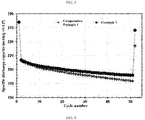
FIG. 4 is a graph of cycle performance test results of lithium-ion batteries in Example 1 and Comparative Example 1 of the present disclosure. -
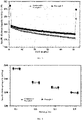
FIG. 5 is a graph of cycle performance test results of lithium-ion batteries in Example 2 and Comparative Example 1 of the present disclosure. -
FIG. 6 is a graph of rate capability test results of lithium-ion batteries in Example 1 and Comparative Example 1 of the present disclosure. -
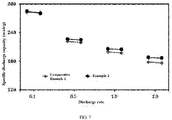
FIG. 7 is a graph of rate capability test results of lithium-ion batteries in Example 2 and Comparative Example 1 of the present disclosure. - The lithium-rich manganese-based positive electrode material in the related art exhibits high specific capacity only under the condition of high cut-off voltage (discharge specific capacity is greater than or equal to 250 mAh/g within a voltage window of 2 V to 4.8 V). Therefore, the requirement for the electrochemical stability of the electrolyte is demanding, so as to avoid adverse side reactions between the electrolyte and the lithium-rich manganese-based positive electrode material. Secondly, the content of manganese in the lithium-rich manganese-based positive electrode material usually exceeds 40%, which is much higher than the content of nickel and cobalt, while the metallic conductivity of manganese is only 0.2 × 10⁷ S/m, which is about 1/8 of the metallic conductivity of cobalt, which results in that the lithium ion intercalation/deintercalation behaviors are greatly resisted when the lithium-rich manganese-based positive electrode material undergoes charging and discharging at a large current, affecting the rate capability. Then, the lithium-rich manganese-based positive electrode material consists of Li2MnO3 (space group C2/m) and LiMO2 (space group R3-m), Li2MnO3 tends to undergo phase inversion to Li2MnO3 in thermodynamics, and multiple charge-discharge cycles can promote the phase inversion. Therefore, when LiMn2O4 accumulates to certain content, the number of intercalation sites of lithium ions in the lithium-rich manganese-based positive electrode material is greatly reduced. More importantly, for the lithium-rich manganese-based positive electrode material, the crystals in the structure show complex existing forms due to the preferred orientation, leading to the presence of anisotropic stress at the grain boundaries between crystalline grains. During the charge-discharge cycle, these crystalline grains contract and expand with the intercalation and deintercalation of lithium ions, which results in the stress intensification at the grain boundaries and finally causes micro-cracks within the crystalline grains, leading to the poor cycle performance of lithium-ion batteries prepared by the lithium-rich manganese-based positive electrode material.
- The present disclosure provides a lithium-rich manganese-based positive electrode material used in a lithium-ion battery in an embodiment. The lithium-rich manganese-based positive electrode material includes a crystal formed by xLi2+αMn(1-µ-λ)TiµMλO3-vM'v·(1-x)Li1+α'NiaCobMncMλ'O2-v'M'v', wherein 0.4 < x < 0.6, 0 ≤ α < 0.1, 0 < µ ≤ 0.2, 0 < λ ≤ 0.05, and 0.005 ≤ v ≤ 0.02; 0 ≤ α' ≤ 0.04, 0 < a < 0.3, 0 < b < 0.3, 0 < c < 0.5, 0< λ' < 0.1, 0 < v' ≤ 0.01, and α' + a + b + c + λ' = 1; M includes at least one of Al3+, Mg2+, Ti4+, Zr4+, Zn2+, Ca2+, B3+, Cr3+, Cr6+ or Ce3+ , Ce4+; M' includes at least one of F-, Cl- , Br-, C4-, N3- , S2-, P3- or Se2-.
- In the present disclosure, chemical bonds with high strength are introduced in the lithium-rich manganese-based positive electrode material through M and M' to anchor the boundary regions of the crystalline grains so that the impact of grain boundary stress on the lithium-rich manganese-based positive electrode material can be relieved to a certain extent, thereby improving the structural stability of the lithium-rich manganese-based positive electrode material. Therefore, the lithium-rich manganese-based positive electrode material of the present disclosure provides high structural stability in the charging-discharging cycle, is not prone to experiencing expansion or contraction that causes grain boundary stress imbalance, is not prone to undergoing a side reaction with the electrolyte, and is easy to industrialize; moreover, the lithium-ion battery made with the material has great cycle performance, great rate capability, and great commercial prospects. The lithium-rich manganese-based positive electrode material of the present disclosure provides high structural stability in the charging-discharging cycle, is not prone to experiencing expansion or contraction that causes grain boundary stress imbalance, is not prone to undergoing a side reaction with the electrolyte, and is easy to industrialize; moreover, the lithium-ion battery made with the material has great cycle performance, great rate capability, and great commercial prospects.
- In an embodiment, the median diameter D50 of the lithium-rich manganese-based positive electrode material is 3 µm to 14 µm, for example, 3 µm, 4 µm, 5 µm, 6 µm, 7 µm, 8 µm, 9 µm, 10 µm, 11 µm, 12 µm, 13 µm or 14 µm, etc.
- In the related art, the median diameter D50 of the lithium-rich manganese-based positive electrode material is 3 µm to 14 µm so that the lithium-rich manganese-based positive electrode material provides high structural stability in the charging-discharging cycle, is not prone to experiencing expansion or contraction that causes grain boundary stress imbalance, and is not prone to undergoing a side reaction with the electrolyte, and the lithium-ion battery made with the material has great cycle performance and great rate capability.
- In an embodiment, the median diameter D50 of singly crystalline particles of the lithium-rich manganese-based positive electrode material is 1 nm to 200 nm, for example, 1 nm, 2 nm, 5 nm, 10 nm, 20 nm, 30 nm, 40 nm, 50 nm, 100 nm or 200 nm, etc.
- The median diameter D50 of singly crystalline particles of the lithium-rich manganese-based positive electrode material of the present disclosure is 1 nm to 200 nm so that the lithium-rich manganese-based positive electrode material provides high structural stability in the charging-discharging cycle, is not prone to experiencing expansion or contraction that causes grain boundary stress imbalance, and is not prone to undergoing a side reaction with the electrolyte, and the lithium-ion battery made with the material has great cycle performance and great rate capability.
- In an embodiment, the lithium-rich manganese-based positive electrode material is at least one of 0.5Li2Mn0.97Ti0.01B0.02O2.95F0.05·0.5LiNi0.4Co0.4Mn0.22B0.02O1.95F0.05 or 0.5Li2Mn0.98B0.02O2.95F0.05·0.5LiNi0.4CO0.4Mn0.22B0.02O1.95F0.05.
- Compared with other specific types of lithium-rich manganese-based positive electrode materials, the lithium-rich manganese-based positive electrode material of the present disclosure provides higher structural stability in the charging-discharging cycle, is less prone to experiencing expansion or contraction that causes grain boundary stress imbalance, and is less prone to undergoing a side reaction with the electrolyte, and the lithium-ion battery made with the material has better cycle performance and better rate capability.
- The present disclosure provides a method for preparing the above-mentioned lithium-rich manganese-based positive electrode material in an embodiment. With reference to
FIG. 1 , the method includes steps S100, S200, S300, S400, and S500. - In S100, a first calcination treatment is performed on a precursor for preparing a lithium-rich manganese-based positive electrode material to obtain a first prefab.
- In an embodiment, the precursor includes at least one of Ni0.2Co0.2Mn0.595Ti0.005CO3 or Ni0.2Co0.2Mn0.595Ti0.005CO2.95F0.05.
- In an embodiment, the first calcination treatment is performed at a temperature of 300°C to 800°C, for example, 300°C, 400°C, 500°C, 600°C, 700°C or 800°C, etc.
- In an embodiment, the first calcination treatment is performed for 4 hours to 12 hours, for example, 4 hours, 6 hours, 8 hours, 10 hours or 12 hours, etc.
- In an embodiment, the first calcination treatment is performed in an O2 and/or N2 atmosphere.
- In the present disclosure, with the first calcination treatment performed in an O2 and/or N2 atmosphere, other impurities are not prone to being introduced, and other side reactions are not prone to happening, thereby effectively preparing the above-mentioned lithium-rich manganese-based positive electrode material.
- In S200, the first prefab is mixed with an additive including M and M' to obtain a first mixture.
- In an embodiment, the additive including M and M' may be one additive including both M and M' or may be a mixture of an additive including M and an additive including M'. For example, in some embodiments of the present disclosure, the additive may be boride B2O3, boric acid H3BO3, lithium tetrafluoroborate LiBF4, etc. The specific manner of mixing the two above-mentioned additives is not particularly limited and can be flexibly selected by those skilled in the art according to the actual needs, which will not be described in detail herein.
- In S300, a second calcination treatment is performed on the first mixture to obtain a second prefab.
- In an embodiment, the second calcination treatment is performed at a temperature of 330°C to 820°C, for example, 330°C, 400°C, 500°C, 600°C, 700°C or 820°C, etc.
- In an embodiment, the second calcination treatment is performed for 6 hours to 12 hours, for example, 6 hours, 7 hours, 8 hours, 9 hours, 10 hours, 11 hours or 12 hours, etc.
- In an embodiment, the second calcination treatment is performed in an O2 and/or N2 atmosphere.
- In the present disclosure, with the second calcination treatment performed in an O2 and/or N2 atmosphere, other impurities are not prone to being introduced, and other side reactions are not prone to happening, thereby effectively preparing the above-mentioned lithium-rich manganese-based positive electrode material.
- In S400, the second prefab is mixed with a lithium source to obtain a second mixture.
- In an embodiment, the lithium source in step (4) includes at least one of LiOH·H2O or Li2CO3 and at least one of LiF or NH4F so that sufficient lithium sources are provided to effectively prepare the above-mentioned lithium-rich manganese-based positive electrode material.
- In S500, a third calcination treatment is performed on the second mixture to obtain the lithium-rich manganese-based positive electrode material.
- In an embodiment, the third calcination treatment is performed at a temperature of 700°C to 950°C, for example, 700°C, 750°C, 800°C, 850°C, 900°C or 950°C, etc.
- In an embodiment, the third calcination treatment is performed for 10 hours to 24 hours, for example, 10 hours, 12 hours, 14 hours, 16 hours, 18 hours, 20 hours, 21 hours, 22 hours, 23 hours or 24 hours, etc.
- In an embodiment, the third calcination treatment is performed in an O2 and/or N2 atmosphere.
- In the present disclosure, with the third calcination treatment performed in an O2 and/or N2 atmosphere, other impurities are not prone to being introduced, and other side reactions are not prone to happening, thereby effectively preparing the above-mentioned lithium-rich manganese-based positive electrode material.
- The present disclosure provides a positive electrode plate in an embodiment. The positive electrode plate includes the above-mentioned lithium-rich manganese-based positive electrode material.
- The positive electrode plate of the present disclosure also includes other components of a conventional positive electrode plate, such as a substrate, a conductive agent, a binder, a thickener, etc., which will not be described in detail herein.
- The positive electrode plate of the present disclosure provides high stability, is not prone to undergoing a side reaction with the electrolyte, and is easy to industrialize; moreover, the lithium-ion battery made with the positive electrode plate has great cycle performance, great rate capability, and great commercial prospects.
- The present disclosure provides a lithium-ion battery in an embodiment. The ion battery includes the above-mentioned positive electrode plate.
- The lithium-ion battery of the present disclosure has great cycle performance, great rate capability, and great commercial prospects.
- The present disclosure provides an electric vehicle in an embodiment. The electric vehicle includes the above-mentioned ion battery.
- The shape, structure, and manufacturing process of the electric vehicle of the present disclosure are the shapes, structures, and manufacturing processes of conventional electric vehicles.
- 1 mol of Ni0.2Co0.2Mn0.595Ti0.005CO3 was subjected to the first calcination treatment in a calciner at 600°C for 4 hours in the mixed gas of O2 and N2 with a volume fraction of oxygen of 2%. Then the calcined product and 0.01 mol of B2O3 were thoroughly ground and mixed in a grinder and then subjected to the second calcination treatment in a calciner at 630°C for 6 hours in the mixed gas of O2 and N2 with a volume fraction of oxygen of 2%. Then the powder sample obtained after the second calcination treatment, 1.45 mol of LiOH·H2O, and 0.05 mol of LiF were thoroughly ground and mixed in a mortar and then subjected to the third calcination treatment in a calciner at 820°C for 12 hours in the mixed gas of O2 and N2 with a volume fraction of oxygen of 2% to obtain the lithium-rich manganese-based positive electrode material. The chemical formula of the lithium-rich manganese-based positive electrode material was 0.5Li2Mn0.97Ti0.01B0.02O2.95F0.05·0.5LiNi0.4Co0.4Mn0.22B0.02O1.95F0.05, the median diameter D50 was 11 µm, and the median diameter D50 of singly crystalline particles was 120 nm.
- 1 mol of Ni0.2Co0.2Mn0.595Ti0.005CO3 was subjected to the first calcination treatment in a calciner at 600°C for 4 hours in the mixed gas of O2 and N2 with a volume fraction of oxygen of 2%. Then the calcined product and 0.02 mol of H3BO3 were thoroughly ground and mixed in a grinder and then subjected to the second calcination treatment in a calciner at 650°C for 5 hours in the mixed gas of O2 and N2 with a volume fraction of oxygen of 2%. Then the powder sample obtained after the second calcination treatment, 1.45 mol of LiOH·H2O, and 0.05 mol of LiF were thoroughly ground and mixed in a mortar and then subjected to the third calcination treatment in a calciner at 820°C for 12 hours in the mixed gas of O2 and N2 with a volume fraction of oxygen of 2% to obtain the lithium-rich manganese-based positive electrode material. The chemical formula of the lithium-rich manganese-based positive electrode material was 0.5Li2Mn0.97Ti0.01B0.02O2.95F0.05·0.5LiNi0.4Co0.4Mn0.22B0.02O1.95F0.05, the median diameter D50 was 11 µm, and the median diameter D50 of singly crystalline particles was 120 nm.
- 1 mol of Ni0.2Co0.2Mn0.595Ti0.003Ce0.002CO3 was subjected to the first calcination treatment in a calciner at 600°C for 4 hours in the mixed gas of O2 and N2 with a volume fraction of oxygen of 2%. Then the calcined product and 0.02 mol of H3BO3 were thoroughly ground and mixed in a grinder and then subjected to the second calcination treatment in a calciner at 650°C for 5 hours in the mixed gas of O2 and N2 with a volume fraction of oxygen of 2%. Then the powder sample obtained after the second calcination treatment, 1.45 mol of LiOH·H2O, and 0.05 mol of LiF were thoroughly ground and mixed in a mortar and then subjected to the third calcination treatment in a calciner at 820°C for 12 hours in the mixed gas of O2 and N2 with a volume fraction of oxygen of 2% to obtain the lithium-rich manganese-based positive electrode material. The chemical formula of the lithium-rich manganese-based positive electrode material was 0.5Li2Mn0.97Ti0.006Ce0.004B0.02O2.95F0.05·0.5LiNi0.4Co0.4Mn0.22B0.02O1.95F0.05, the median diameter D50 was 11 µm, and the median diameter D50 of singly crystalline particles was 120 nm.
- 1 mol of Ni0.2Co0.2Mn0.595Ti0.003Al0.002CO3 was subjected to the first calcination treatment in a calciner at 600°C for 4 hours in the mixed gas of O2 and N2 with a volume fraction of oxygen of 2%. Then the calcined product and 0.02 mol of H3BO3 were thoroughly ground and mixed in a grinder and then subjected to the second calcination treatment in a calciner at 650°C for 5 hours in the mixed gas of O2 and N2 with a volume fraction of oxygen of 2%. Then the powder sample obtained after the second calcination treatment, 1.45 mol of LiOH·H2O, and 0.05 mol of LiF were thoroughly ground and mixed in a mortar and then subjected to the third calcination treatment in a calciner at 820°C for 12 hours in the mixed gas of O2 and N2 with a volume fraction of oxygen of 2% to obtain the lithium-rich manganese-based positive electrode material. The chemical formula of the lithium-rich manganese-based positive electrode material was 0.5Li2Mn0.97Ti0.006Al0.004B0.02O2.95F0.05·0.5LiNi0.4Co0.4Mn0.22B0.02O1.95F0.05, the median diameter D50 was 11 µm, and the median diameter D50 of singly crystalline particles was 120 nm.
- 1 mol of Ni0.2Co0.2Mn0.595Ti0.003Zr0.002CO3 was subjected to the first calcination treatment in a calciner at 600°C for 4 hours in the mixed gas of O2 and N2 with a volume fraction of oxygen of 2%. Then the calcined product and 0.02 mol of H3BO3 were thoroughly ground and mixed in a grinder and then subjected to the second calcination treatment in a calciner at 650°C for 5 hours in the mixed gas of O2 and N2 with a volume fraction of oxygen of 2%. Then the powder sample obtained after the second calcination treatment, 1.45 mol of LiOH·H2O, and 0.05 mol of LiF were thoroughly ground and mixed in a mortar and then subjected to the third calcination treatment in a calciner at 820°C for 12 hours in the mixed gas of O2 and N2 with a volume fraction of oxygen of 2% to obtain the lithium-rich manganese-based positive electrode material. The chemical formula of the lithium-rich manganese-based positive electrode material was 0.5Li2Mn0.97Ti0.006Zr0.004B0.02O2.95F0.05·0.5LiNi0.4Co0.4Mn0.22B0.02O1.95F0.05, the median diameter D50 was 11 µm, and the median diameter D50 of singly crystalline particles was 120 nm.
- 1 mol of Ni0.2Co0.2Mn0.595Ti0.003Cr0.002CO3 was subjected to the first calcination treatment in a calciner at 600°C for 4 hours in the mixed gas of O2 and N2 with a volume fraction of oxygen of 2%. Then the calcined product and 0.02 mol of H3BO3 were thoroughly ground and mixed in a grinder and then subjected to the second calcination treatment in a calciner at 650°C for 5 hours in the mixed gas of O2 and N2 with a volume fraction of oxygen of 2%. Then the powder sample obtained after the second calcination treatment, 1.45 mol of LiOH·H2O, and 0.05 mol of LiF were thoroughly ground and mixed in a mortar and then subjected to the third calcination treatment in a calciner at 820°C for 12 hours in the mixed gas of O2 and N2 with a volume fraction of oxygen of 2% to obtain the lithium-rich manganese-based positive electrode material. The chemical formula of the lithium-rich manganese-based positive electrode material was 0.5Li2Mn0.97Ti0.006Cr0.004B0.02O2.95F0.05·0.5LiNi0.4CO0.4Mn0.22B0.02O1.95F0.05, the median diameter D50 was 11 µm, and the median diameter D50 of singly crystalline particles was 120 nm.
- 1 mol of Ni0.2Co0.2Mn0.595Ti0.005CO3 was subjected to the first calcination treatment in a calciner at 600°C for 4 hours in the mixed gas of O2 and N2 with a volume fraction of oxygen of 2%. Then the calcined product and 1.5 mol of LiOH·H2O were thoroughly ground and mixed in a mortar and then subjected to the third calcination treatment in a calciner at 820°C for 12 hours in the mixed gas of O2 and N2 with a volume fraction of oxygen of 2% to obtain the lithium-rich manganese-based positive electrode material. The chemical formula of the lithium-rich manganese-based positive electrode material was 0.5Li2Mn0.99Ti0.01O3·0.5LiNi0.4Co0.4Mn0.2O2, the median diameter D50 was 11 µm, and the median diameter D50 of singly crystalline particles was 120 nm.
-
- (1) The lithium-rich manganese-based positive electrode materials obtained in Examples 1 and 2 were tested by X-ray photoelectron spectroscopy (XPS). The test process is as follows: Firstly, the lithium-rich manganese-based positive electrode material was dried in a vacuum oven at 100°C for 4 hours, then a certain amount of lithium-rich manganese-based positive electrode material was weighed, pasted on the sample stage, and put into the sample chamber of the XPS device. The sample surface was cleaned with C60 GCIB clusters for 30 minutes under a certain vacuum, and then X-ray scanning was performed to collect spectra. The test results are shown in
FIG.2 andFIG. 3 . - (2) The button half-cell batteries prepared in Examples 1 to 6 and Comparative Example 1 were evaluated for electrical properties.
- In a glove box filled with argon, lithium metal sheets were assembled into the button cell: the positive electrode plate was composed of 92 wt% of active material, 4 wt% of Super-P conductive agent, and 4 wt% of PVDF binder; the electrolyte was prepared by 1 M of LiPF6, the same volume of ethylene carbonate and dimethyl carbonate, and additives.
- The rate capability was tested at discharge rates of 0.1 C, 0.2 C, 0.5 C, 1 C and 2 C, respectively, and the potential window was 2 V to 4.6 V. The cycle performance test was performed after 50 cycles at charge and discharge rates of 0.5 C and 1 C, respectively. The test results are shown in Table 1 and
FIGS. 4 to 7 .Table 1 Discharge rate of 0.1 C Discharge rate of 0.5 C Discharge rate of 1 C Discharge rate of 2 C Example 1 287 mAh/g 226.4 mAh/g 204.4 mAh/g 180.2 mAh/g Example 2 284.9 mAh/g 226.3 mAh/g 205.9 mAh/g 187.9 mAh/g Example 3 285.6 mAh/g 228.5 mAh/g 209.6 mAh/g 190.5 mAh/g Example 4 284.7 mAh/g 225.1 mAh/g 203.4 mAh/g 184.3 mAh/g Example 5 289.6 mAh/g 229.6 mAh/g 208.1 mAh/g 188.9 mAh/g Example 6 284.5 mAh/g 223.3 mAh/g 203.2 mAh/g 182.3 mAh/g Comparative Example 1 282.8 mAh/g 221.4 mAh/g 199.6 mAh/g 178.3 mAh/g - From the XPS spectra analysis of Examples 1 and 2 (with reference to
FIG. 2 andFIG. 3 ), boron elements had entered the crystal lattice of the lithium-rich manganese-based positive electrode material and formed chemical bonds with oxygen elements or transition metal elements, which shows that the scheme in which grain boundaries are modified by using boron elements in Examples 1 and 2 is feasible. - As can be seen from
FIGS. 4 and5 , under the condition that the charging rate was 0.5 C and the discharging rate was 1 C, after 50 charge-discharge cycles, the cycle capacity retention rate of the battery prepared by the positive electrode material of Example 1 was 87.4%; the cycle capacity retention rate of the battery prepared by the positive electrode material of Example 2 reached 87.7%; the cycle capacity retention rate of the battery prepared by the positive electrode material of Comparative Example 1 was 83.2%. It can be concluded that the cycle performance of the lithium-rich manganese-based positive electrode material was improved (the capacity retention rate was increased by at least 4%) by modifying the grain boundaries of the crystalline grains of the lithium-rich manganese-based positive electrode material in the present disclosure. As can be seen fromFIGS. 6 and7 , the lithium-rich manganese-based positive electrode material of the present disclosure exhibited high specific discharge capacity at high discharge rates. For example, when the charge rate was 0.5 C and the discharge rate was 1 C, the specific discharge capacity of the material of Comparative Example 1 was 197.4 mAh/g while the specific discharge capacity of the materials of Example 1 and Example 2 was increased to 202.6 mAh/g and 204.6 mAh/g, respectively (the specific discharge capacity was increased by at least 3% at the rate of 1 C). - As can be seen from Table 1, with the comparison among Examples 1 to 6, the cycle performance and rate capability of the lithium-rich manganese-based positive electrode material provided in the present disclosure are significantly improved compared with the material of Comparative Example 1.
Claims (18)
- A lithium-rich manganese-based positive electrode material used in a lithium-ion battery, comprising a crystal formed by xLi2+αMn(1-µ-λ)TiµMλO3-vM'v·(1-x)Li1+α'NiaCobMncMλ'O2-v'M'v', wherein 0.4 < x < 0.6, 0 ≤ α < 0.1, 0 < µ ≤ 0.2, 0 < λ ≤ 0.05, and 0.005 ≤ v ≤ 0.02;
wherein 0 ≤ α' ≤ 0.04, 0 < a < 0.3, 0 < b < 0.3, 0 < c < 0.5, 0< λ' < 0.1, 0 < v' < 0.01, and α' + a + b + c + λ' = 1. - The lithium-rich manganese-based positive electrode material according to claim 1, wherein M comprises at least one of Al3+, Mg2+, Ti4+, Zr4+, Zn2+, Ca2+, B3+, Cr3+, Cr6+, Ce3+ or Ce4+.
- The lithium-rich manganese-based positive electrode material according to claim 1 or 2, wherein M' comprises at least one of F-, Cl-, Br-, C4-, N3-, S2-, P3- or Se2-.
- The lithium-rich manganese-based positive electrode material according to any one of claims 1 to 3, wherein the median diameter D50 of the lithium-rich manganese-based positive electrode material is 3 µm to 14 µm.
- The lithium-rich manganese-based positive electrode material according to any one of claims 1 to 4, wherein the lithium-rich manganese-based positive electrode material is at least one of 0.5Li2Mn0.97Ti0.01B0.02O2.95F0.05·0.5LiNi0.4Co0.4Mn0.22B0.02O1.95F0.05 or 0.5Li2Mn0.98B0.02O2.95F0.05·0.5LiNi0.4Co0.4Mn0.22B0.02O1.95F0.05.
- A method for preparing the lithium-rich manganese-based positive electrode material according to any one of claims 1 to 5, comprising the following steps:(1) performing a first calcination treatment on a precursor for preparing a lithium-rich manganese-based positive electrode material to obtain a first prefab;(2) mixing the first prefab in step (1) with an additive comprising M and M' to obtain a first mixture;(3) performing a second calcination treatment on the first mixture in step (2) to obtain a second prefab;(4) mixing the second prefab in step (3) with a lithium source to obtain a second mixture; and(5) performing a third calcination treatment on the second mixture in step (4) to obtain the lithium-rich manganese-based positive electrode material.
- The preparation method according to claim 6, wherein the precursor comprises at least one of Ni0.2Co0.2Mn0.595Ti0.005CO3 or Ni0.2Co0.2Mn0.595Ti0.005CO2.95F0.05.
- The preparation method according to claim 6 or 7, wherein the first calcination treatment is performed at a temperature of 300°C to 800°C.
- The preparation method according to any one of claims 6 to 8, wherein the first calcination treatment is performed for 4 hours to 12 hours.
- The preparation method according to any one of claims 6 to 9, wherein the second calcination treatment is performed at a temperature of 330°C to 820°C.
- The preparation method according to any one of claims 6 to 10, wherein the second calcination treatment is performed for 6 hours to 12 hours.
- The preparation method according to any one of claims 6 to 11, wherein the third calcination treatment is performed at a temperature of 700°C to 950°C.
- The preparation method according to any one of claims 6 to 12, wherein the third calcination treatment is performed for 10 hours to 24 hours.
- The preparation method according to any one of claims 6 to 13, wherein at least one of the first calcination treatment, the second calcination treatment or the third calcination treatment is performed in an O2 and/or N2 atmosphere.
- The preparation method according to any one of claims 6 to 14, wherein the lithium source comprises at least one of LiOH·H2O or Li2CO3 and at least one of LiF and NH4F.
- A positive electrode plate, comprising the lithium-rich manganese-based positive electrode material according to any one of claims 1 to 5.
- A lithium-ion battery, comprising the positive electrode plate according to claim 16.
- An electric vehicle, comprising the lithium-ion battery according to claim 17.
Applications Claiming Priority (2)
| Application Number | Priority Date | Filing Date | Title |
|---|---|---|---|
| CN202010190732.7A CN111430703B (en) | 2020-03-18 | 2020-03-18 | Lithium-rich manganese-based cathode material for lithium-ion batteries and preparation method thereof, cathode sheet, lithium-ion battery and electric vehicle |
| PCT/CN2020/124714 WO2021184764A1 (en) | 2020-03-18 | 2020-10-29 | Lithium-rich manganese-based positive electrode material for use in lithium-ion battery, preparation method for the material, positive electrode tab, lithium-ion battery, and electric vehicle |
Publications (2)
| Publication Number | Publication Date |
|---|---|
| EP4024526A1 true EP4024526A1 (en) | 2022-07-06 |
| EP4024526A4 EP4024526A4 (en) | 2023-10-25 |
Family
ID=71549533
Family Applications (1)
| Application Number | Title | Priority Date | Filing Date |
|---|---|---|---|
| EP20925911.8A Pending EP4024526A4 (en) | 2020-03-18 | 2020-10-29 | Lithium-rich manganese-based positive electrode material for use in lithium-ion battery, preparation method for the material, positive electrode tab, lithium-ion battery, and electric vehicle |
Country Status (4)
| Country | Link |
|---|---|
| US (1) | US20230076419A1 (en) |
| EP (1) | EP4024526A4 (en) |
| CN (1) | CN111430703B (en) |
| WO (1) | WO2021184764A1 (en) |
Families Citing this family (4)
| Publication number | Priority date | Publication date | Assignee | Title |
|---|---|---|---|---|
| CN111430703B (en) * | 2020-03-18 | 2023-09-22 | 蜂巢能源科技有限公司 | Lithium-rich manganese-based cathode material for lithium-ion batteries and preparation method thereof, cathode sheet, lithium-ion battery and electric vehicle |
| CN115411250A (en) * | 2022-09-15 | 2022-11-29 | 山东大学 | Preparation method and application of modified lithium-rich manganese-based positive electrode of lithium ion battery |
| CN119678264B (en) * | 2023-01-03 | 2026-01-16 | 宁德时代新能源科技股份有限公司 | Composite positive electrode material, preparation method, positive electrode plate, secondary battery and power utilization device |
| CN119640405A (en) * | 2025-02-18 | 2025-03-18 | 山东诺迅新能源有限公司 | High-capacity long-cycle monocrystal lithium-rich manganese-based material and preparation method thereof |
Family Cites Families (16)
| Publication number | Priority date | Publication date | Assignee | Title |
|---|---|---|---|---|
| EP1511101B1 (en) * | 2003-08-21 | 2015-05-27 | Samsung SDI Co., Ltd. | Negative active material for non-aqueous electrolyte battery, method of preparing same, and non-aqueous electrolyte battery comprising same |
| EP2471134B1 (en) * | 2009-08-27 | 2022-01-05 | Zenlabs Energy, Inc. | Layer-layer lithium rich complex metal oxides with high specific capacity and excellent cycling |
| JP5682172B2 (en) * | 2010-08-06 | 2015-03-11 | Tdk株式会社 | Active material, method for producing active material, and lithium ion secondary battery |
| CN102610806B (en) * | 2012-02-27 | 2014-11-12 | 宁德新能源科技有限公司 | Lithium ion battery and anode active material thereof |
| KR101835586B1 (en) * | 2012-08-23 | 2018-03-07 | 삼성에스디아이 주식회사 | Composite cathode active material, and cathode and lithium battery containing the material |
| CN102916169B (en) * | 2012-10-26 | 2015-05-13 | 中国科学院宁波材料技术与工程研究所 | Lithium-rich manganese-based anode material and method for manufacturing same |
| KR101794097B1 (en) * | 2013-07-03 | 2017-11-06 | 삼성에스디아이 주식회사 | Positive active material for rechargeable lithium battery, method of preparing the same, and positive electrode for rechargeable lithium battery and rechargeable lithium battery including the same |
| CN105164834B (en) * | 2013-07-29 | 2018-02-27 | 株式会社Lg 化学 | The electrode active material and include its lithium secondary battery that energy density improves |
| JP2016033902A (en) * | 2014-07-31 | 2016-03-10 | ソニー株式会社 | Positive electrode active material, positive electrode and battery |
| CN106910887B (en) * | 2015-12-22 | 2020-05-26 | 国联汽车动力电池研究院有限责任公司 | A lithium-rich manganese-based positive electrode material, a preparation method thereof, and a lithium ion battery comprising the positive electrode material |
| US11245114B2 (en) * | 2016-01-20 | 2022-02-08 | Uchicago Argonne, Llc | Electroactive materials for rechargeable batteries |
| CN109565046B (en) * | 2016-12-02 | 2022-07-12 | 松下知识产权经营株式会社 | Positive electrode active material and battery using same |
| JP7241287B2 (en) * | 2017-07-27 | 2023-03-17 | パナソニックIpマネジメント株式会社 | Positive electrode active material and battery |
| CN109411735A (en) * | 2018-11-30 | 2019-03-01 | 厦门大学 | A kind of positive electrode and preparation method thereof and lithium ion battery |
| CN109860569B (en) * | 2019-02-28 | 2021-06-18 | 蜂巢能源科技有限公司 | Positive electrode material for lithium ion battery and preparation method thereof |
| CN111430703B (en) * | 2020-03-18 | 2023-09-22 | 蜂巢能源科技有限公司 | Lithium-rich manganese-based cathode material for lithium-ion batteries and preparation method thereof, cathode sheet, lithium-ion battery and electric vehicle |
-
2020
- 2020-03-18 CN CN202010190732.7A patent/CN111430703B/en active Active
- 2020-10-29 WO PCT/CN2020/124714 patent/WO2021184764A1/en not_active Ceased
- 2020-10-29 EP EP20925911.8A patent/EP4024526A4/en active Pending
- 2020-10-29 US US17/793,259 patent/US20230076419A1/en active Pending
Also Published As
| Publication number | Publication date |
|---|---|
| EP4024526A4 (en) | 2023-10-25 |
| US20230076419A1 (en) | 2023-03-09 |
| CN111430703B (en) | 2023-09-22 |
| CN111430703A (en) | 2020-07-17 |
| WO2021184764A1 (en) | 2021-09-23 |
Similar Documents
| Publication | Publication Date | Title |
|---|---|---|
| EP4002520A1 (en) | Positive electrode material and preparation method therefor, and lithium-ion battery | |
| US20230048254A1 (en) | Positive electrode material and preparation method therefor, lithium-ion battery, and electric vehicle | |
| EP3663265B1 (en) | Positive electrode active material for lithium secondary battery and lithium secondary battery including the same | |
| EP4043403A1 (en) | Cobalt-free positive electrode material for lithium ion battery, preparation method therefor, and lithium ion battery | |
| Yuan et al. | Surfactant-assisted hydrothermal synthesis of V2O5 coated LiNi1/3Co1/3Mn1/3O2 with ideal electrochemical performance | |
| US20230076419A1 (en) | Lithium-rich manganese-based positive electrode material for use in lithium-ion battery, preparation method for the material, positive electrode tab, lithium-ion battery, and electric vehicle | |
| EP4535460A1 (en) | Positive electrode material, and positive electrode sheet and battery comprising same | |
| EP4057387A1 (en) | Lithium ion battery positive electrode material and preparation method therefor | |
| CN101771145B (en) | Method for preparing multielement cathode materials for lithium ion batteries | |
| EP4447156B1 (en) | Ternary positive electrode material, preparation method therefor, and secondary battery | |
| CN113571679A (en) | Spinel oxide coated lithium-rich manganese-based positive electrode material | |
| US20250122097A1 (en) | Cathode material, preparation method thereof, and lithium-ion battery | |
| CN110459764B (en) | A kind of positive electrode material of lithium ion battery and its preparation method and application | |
| KR20230159139A (en) | Positive electrode active material for lithium secondary battery and method for manufacturing the same | |
| US20260121034A1 (en) | Positive electrode active material and preparation method and use thereof | |
| CN117423828A (en) | Positive electrode active material, preparation method thereof, positive electrode sheet and secondary battery | |
| EP4645454A1 (en) | Positive electrode material and preparation method therefor and use thereof | |
| KR102793307B1 (en) | Positive electrode active material for lithium secondary battery and method for manufacturing the same | |
| EP4475220A1 (en) | Positive electrode composite material and preparation method therefor, positive electrode sheet, and battery | |
| CN118511322B (en) | Positive electrode active materials, electrochemical devices and electronic equipment | |
| EP4723234A1 (en) | Positive electrode active material and preparation method therefor, positive electrode sheet, battery and electric device | |
| CN109950534A (en) | A kind of nickelic tertiary cathode material of Sc doping vario-property | |
| CN1812166A (en) | Preperative method for ferrous phosphate radical lithium salt of lithium ion secondary cell active material | |
| Tian et al. | Effect of Cerium Substitution on Structural and Electrochemical Performance of Li [Li0. 2Mn0. 54Co0. 13Ni0. 13] O2 Cathode Material for Lithium-Ion Battery | |
| US12494484B2 (en) | Secondary battery including cathode material including irreversible additive, and method for manufacturing the same |
Legal Events
| Date | Code | Title | Description |
|---|---|---|---|
| STAA | Information on the status of an ep patent application or granted ep patent |
Free format text: STATUS: THE INTERNATIONAL PUBLICATION HAS BEEN MADE |
|
| PUAI | Public reference made under article 153(3) epc to a published international application that has entered the european phase |
Free format text: ORIGINAL CODE: 0009012 |
|
| STAA | Information on the status of an ep patent application or granted ep patent |
Free format text: STATUS: REQUEST FOR EXAMINATION WAS MADE |
|
| 17P | Request for examination filed |
Effective date: 20220328 |
|
| AK | Designated contracting states |
Kind code of ref document: A1 Designated state(s): AL AT BE BG CH CY CZ DE DK EE ES FI FR GB GR HR HU IE IS IT LI LT LU LV MC MK MT NL NO PL PT RO RS SE SI SK SM TR |
|
| DAV | Request for validation of the european patent (deleted) | ||
| DAX | Request for extension of the european patent (deleted) | ||
| A4 | Supplementary search report drawn up and despatched |
Effective date: 20230921 |
|
| RIC1 | Information provided on ipc code assigned before grant |
Ipc: H01M 10/0525 20100101ALI20230915BHEP Ipc: C01G 53/00 20060101ALI20230915BHEP Ipc: H01M 4/525 20100101ALI20230915BHEP Ipc: H01M 4/505 20100101AFI20230915BHEP |