EP4024312A1 - Pattern extraction program, device, and method - Google Patents
Pattern extraction program, device, and method Download PDFInfo
- Publication number
- EP4024312A1 EP4024312A1 EP19943242.8A EP19943242A EP4024312A1 EP 4024312 A1 EP4024312 A1 EP 4024312A1 EP 19943242 A EP19943242 A EP 19943242A EP 4024312 A1 EP4024312 A1 EP 4024312A1
- Authority
- EP
- European Patent Office
- Prior art keywords
- combination
- combination patterns
- samples
- pattern
- evaluation values
- Prior art date
- Legal status (The legal status is an assumption and is not a legal conclusion. Google has not performed a legal analysis and makes no representation as to the accuracy of the status listed.)
- Withdrawn
Links
Images






Classifications
-
- G—PHYSICS
- G06—COMPUTING OR CALCULATING; COUNTING
- G06Q—INFORMATION AND COMMUNICATION TECHNOLOGY [ICT] SPECIALLY ADAPTED FOR ADMINISTRATIVE, COMMERCIAL, FINANCIAL, MANAGERIAL OR SUPERVISORY PURPOSES; SYSTEMS OR METHODS SPECIALLY ADAPTED FOR ADMINISTRATIVE, COMMERCIAL, FINANCIAL, MANAGERIAL OR SUPERVISORY PURPOSES, NOT OTHERWISE PROVIDED FOR
- G06Q30/00—Commerce
- G06Q30/02—Marketing; Price estimation or determination; Fundraising
- G06Q30/0201—Market modelling; Market analysis; Collecting market data
- G06Q30/0204—Market segmentation
-
- G—PHYSICS
- G06—COMPUTING OR CALCULATING; COUNTING
- G06F—ELECTRIC DIGITAL DATA PROCESSING
- G06F17/00—Digital computing or data processing equipment or methods, specially adapted for specific functions
- G06F17/40—Data acquisition and logging
-
- G—PHYSICS
- G06—COMPUTING OR CALCULATING; COUNTING
- G06Q—INFORMATION AND COMMUNICATION TECHNOLOGY [ICT] SPECIALLY ADAPTED FOR ADMINISTRATIVE, COMMERCIAL, FINANCIAL, MANAGERIAL OR SUPERVISORY PURPOSES; SYSTEMS OR METHODS SPECIALLY ADAPTED FOR ADMINISTRATIVE, COMMERCIAL, FINANCIAL, MANAGERIAL OR SUPERVISORY PURPOSES, NOT OTHERWISE PROVIDED FOR
- G06Q30/00—Commerce
- G06Q30/02—Marketing; Price estimation or determination; Fundraising
- G06Q30/0201—Market modelling; Market analysis; Collecting market data
-
- G—PHYSICS
- G06—COMPUTING OR CALCULATING; COUNTING
- G06F—ELECTRIC DIGITAL DATA PROCESSING
- G06F16/00—Information retrieval; Database structures therefor; File system structures therefor
- G06F16/20—Information retrieval; Database structures therefor; File system structures therefor of structured data, e.g. relational data
- G06F16/24—Querying
- G06F16/245—Query processing
- G06F16/2458—Special types of queries, e.g. statistical queries, fuzzy queries or distributed queries
- G06F16/2462—Approximate or statistical queries
Definitions
- the disclosed technique relates to a pattern extraction program, a pattern extraction device, and a pattern extraction method.
- segmentation is performed to subdivide a group of customers by a combination of attributes according to marketing needs.
- Each set of subdivided customers is called a “segment”, and the customers contained in each segment have common attributes.
- Information on the segment is used to, for example, narrow down business targets and use diverse business strategies suitably.
- Non-Patent Document 1 " What is Market Segmentation?”, [online], [Searched on August 21, The First Year of Reiwa], Internet ⁇ https://www.qualtrics.com/experience-management/brand/what-is-market-segmentation/>
- the disclosed technique aims to extract a combination pattern of attribute values adapted to allow information on segments that is useful from a marketing perspective to be obtained.
- the disclosed technique acquires sample set data associated with both of data item values individually related to a plurality of data items and label information regarding a predetermined event.
- the disclosed technique acquires a plurality of combination patterns, each of which is a combination of one or more of the data item values.
- the disclosed technique determines evaluation values for each of the plurality of combination patterns. The evaluation values are determined based on the number of the samples that satisfy each of the combination patterns among the samples indicated by the sample set data and the ratio of the samples whose label information indicates a predetermined value among the samples that satisfy each of the combination patterns.
- the disclosed technique extracts one of the combination patterns that corresponds to one of the evaluation values that has a local maximum value in the evaluation values individually related to the plurality of combination patterns.
- sample set data is input to a pattern extraction device 10.
- the sample set data is data indicating a set of samples associated with both of data item values individually related to a plurality of data items and label information regarding a predetermined event.
- the "plurality of data items” denotes attributes of the customer, which, for example, can be assumed as gender, age, unmarried/married, occupation, and the like.
- the "data item values” in this case denote attribute values related to each attribute. For example, male and female can be assumed for the attribute "gender”, 20s, 30s, 40s,... can be assumed for the attribute "age”, being unmarried and married can be assumed for the attribute "unmarried/married", and a company employee, self-employed,... can be assumed for the attribute "occupation”.
- label information regarding a predetermined event denotes information indicating whether or not a reaction in response to an external influence (action) is as expected.
- action an external influence
- a sample that makes a reaction as expected in response to an action is called a "successful case”
- a sample that does not make a reaction as expected is called a “failed case”
- the label information indicating success or failure is correlated with each sample.
- the pattern extraction device 10 executes pattern extraction processing to extract segments from the sample set data and output the extracted segments.
- the segment in the present embodiment will be described.
- the "segment” denotes a group of samples having similar high success rates for an action expressed by a combination pattern of attribute values that each of these samples has in common.
- the white plus (+) and minus (-) marks represent individual samples, where the sample represented by the plus mark denotes the successful case, and the sample represented by the minus mark denotes the failed case.
- a set of samples having a combination pattern of certain attribute values in common denotes the "segment”.
- the ratio of successful cases among the samples contained in the segment is called the "success rate" of that segment.
- the success rate of the segment 1 is "50%".
- the number of samples contained in the segment 2 is nine, of which three are successful cases. Accordingly, the success rate of the segment 2 is "33%”.
- the pattern extraction device 10 includes a sample acquisition unit 12, a combination pattern acquisition unit 14, a determination unit 16, and an extraction unit 18.
- the sample acquisition unit 12 acquires the sample set data input to the pattern extraction device 10 and passes the acquired sample set data to the combination pattern acquisition unit 14.
- the combination pattern acquisition unit 14 acquires a combination of one or more attribute values selected from among a plurality of attribute values that each sample contained in the sample set data has, as a combination pattern. Specifically, the combination pattern acquisition unit 14 acquires the combination pattern by adding and deleting the attribute value of another attribute to and from the attribute value selected from an initial attribute value set, which is a set of attribute values selected at the beginning.
- the initial attribute value set can be assumed as a set of attribute values of attributes whose attribute values have an exclusive relationship, such as gender, unmarried/married, and the like (for example, ⁇ male, female, unmarried, married ⁇ ).
- the combination pattern acquisition unit 14 passes the acquired combination pattern of the attribute values to the determination unit 16.
- the determination unit 16 determines the evaluation value for each combination pattern passed from the combination pattern acquisition unit 14. The determination unit 16 determines the evaluation value based on the number of samples that satisfy the combination pattern among samples indicated by the sample set data and the ratio of samples whose label information indicates a predetermined value among the samples that satisfy the combination pattern.
- the number of samples that satisfy the combination pattern denotes the number of samples having a combination of attribute values indicated by the combination pattern and represents the size of the set that satisfies the combination pattern.
- the samples whose label information indicates a predetermined value denotes the successful cases. For example, the ratio of the samples whose label information indicates a predetermined value among samples that satisfy the combination pattern denotes the success rate in the set that satisfies the combination pattern.
- the determination unit 16 determines, for each combination pattern, the evaluation value having the property of increasing as the success rate becomes higher when the size of the group is kept unchanged, and increasing as the group becomes greater when the success rate is kept unchanged.
- the evaluation value for example, a chi-square value (X 2 ) can be used.
- the determination unit 16 passes the evaluation value determined for each combination pattern to the extraction unit 18.
- the extraction unit 18 chooses a combination pattern having a great evaluation value passed from the determination unit 16 such that samples contained in sets that satisfy that combination pattern do not have a large overlap and extracts the chosen combination pattern as a segment.
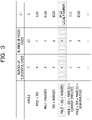
- the extraction unit 18 extracts a combination pattern that corresponds to an evaluation value that has a local maximum value in the evaluation values individually related to a plurality of combination patterns. More specifically, as illustrated in FIG. 3 , in regard to the evaluation value for a specified combination pattern, the extraction unit 18 acquires the evaluation value for a combination pattern obtained by adding one or more data item values to the specified combination pattern, from among the plurality of combination patterns. In addition, the extraction unit 18 acquires the evaluation value for a combination pattern obtained by deleting one or more data item values from the specified combination pattern. When the evaluation value of the specified combination pattern is higher than any of the acquired evaluation values, the extraction unit 18 extracts the specified combination pattern as a combination pattern whose evaluation value has a local maximum value.
- the extraction unit 18 extracts a combination pattern whose evaluation value determined by the determination unit 16 is reduced when one or more attribute values are added and one or more attribute values are deleted, from among the combination patterns acquired by the combination pattern acquisition unit 14.
- the extraction unit 18 outputs the extracted combination pattern as a segment.
- a combination pattern corresponding to a set having a high success rate and a great number of samples may be extracted.
- the comprehensiveness with respect to the whole may be improved because the local maximum values are rarely adjacent to each other.
- an appropriate segment is not regularly extracted because the extraction result depends on the threshold value setting. For example, as illustrated in FIG. 4 , when the threshold value of the success rate is assumed as 40%, the sets D and E are extracted. When the success rate of the set F including the sets D and E is less than 40%, the set F is not extracted as a segment even if the set F is an appropriate set from the marketing perspective.
- an appropriate segment may be extracted without depending on the threshold value of the success rate.
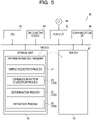
- the pattern extraction device 10 can be implemented, for example, by a computer 40 illustrated in FIG. 5 .
- the computer 40 includes a central processing unit (CPU) 41, a memory 42 as a temporary storage area, and a nonvolatile storage unit 43.
- the computer 40 includes an input/output device 44 such as an input unit and a display unit, and a read/write (R/W) unit 45 that controls reading and writing of data from and to a storage medium 49.
- the computer 40 includes a communication interface (I/F) 46 connected to a network such as the Internet.
- the CPU 41, the memory 42, the storage unit 43, the input/output device 44, the R/W unit 45, and the communication I/F 46 are interconnected via a bus 47.
- the storage unit 43 may be implemented by a hard disk drive (HDD), a solid state drive (SSD), a flash memory, or the like.
- the storage unit 43 as a storage medium stores a pattern extraction program 50 for making the computer 40 function as the pattern extraction device 10.
- the pattern extraction program 50 includes a sample acquisition process 52, a combination pattern acquisition process 54, a determination process 56, and an extraction process 58.
- the CPU 41 reads the pattern extraction program 50 from the storage unit 43, develops the read pattern extraction program in the memory 42, and sequentially executes the processes included in the pattern extraction program 50.
- the CPU 41 executes the sample acquisition process 52 to operate as the sample acquisition unit 12 illustrated in FIG. 1 .
- the CPU 41 executes the combination pattern acquisition process 54 to operate as the combination pattern acquisition unit 14 illustrated in FIG. 1 .
- the CPU 41 executes the determination process 56 to operate as the determination unit 16 illustrated in FIG. 1 .
- the CPU 41 executes the extraction process 58 to operate as the extraction unit 18 illustrated in FIG. 1 . This will cause the computer 40 executing the pattern extraction program 50 to function as the pattern extraction device 10.
- the CPU 41 that executes the program is hardware.
- the function that is implemented by the pattern extraction program 50 can be implemented by, for example, a semiconductor integrated circuit, in more detail, an application specific integrated circuit (ASIC) or the like.
- ASIC application specific integrated circuit
- the sample acquisition unit 12 acquires the sample set data input to the pattern extraction device 10 and passes the acquired sample set data to the combination pattern acquisition unit 14. Then, the pattern extraction device 10 executes the pattern extraction processing illustrated in FIG. 6 .
- the pattern extraction processing is an example of a pattern extraction method of the disclosed technique.
- step S12 the combination pattern acquisition unit 14 selects an unselected attribute value from the initial attribute value set and acquires a combination pattern P made up of the selected attribute value to pass the acquired combination pattern P to the determination unit 16. Then, the determination unit 16 specifies a set of samples having the attribute values indicated by the passed combination pattern P and determines the evaluation value based on the number of samples and the success rate of the specified set.
- step S14 the combination pattern acquisition unit 14 acquires a combination pattern obtained by adding one attribute value of another attribute to the current combination pattern P and passes the acquired combination pattern to the determination unit 16. Then, the determination unit 16 determines the evaluation value of the passed combination pattern and passes the determined evaluation value to the extraction unit 18. Then, the extraction unit 18 searches for an attribute value that allows the evaluation value to rise by being added, by verifying whether or not the determined evaluation value rises higher than the evaluation value related to the combination pattern P.
- step S16 the extraction unit 18 verifies whether or not an attribute value that allows the evaluation value to rise by being added has been found in step S14 above.
- the processing proceeds to step S18, and when the attribute value has not been found, the processing proceeds to step S20.
- step S18 the combination pattern acquisition unit 14 acquires a combination pattern obtained by adding the attribute value that allows the evaluation value to rise by being added, to the current combination pattern P, as a new combination pattern P and passes the acquired combination pattern to the determination unit 16. Then, the determination unit 16 determines the evaluation value of the passed combination pattern P, and the processing returns to step S14.
- step S20 the combination pattern acquisition unit 14 acquires a combination pattern obtained by deleting one attribute value from the current combination pattern P and passes the acquired combination pattern to the determination unit 16. Then, the determination unit 16 determines the evaluation value of the passed combination pattern and passes the determined evaluation value to the extraction unit 18. Then, the extraction unit 18 searches for an attribute value that allows the evaluation value to rise by being deleted, by verifying whether or not the determined evaluation value rises higher than the evaluation value related to the combination pattern P.
- step S22 the extraction unit 18 verifies whether or not an attribute value that allows the evaluation value to rise by being deleted has been found in step S20 above.
- the processing proceeds to step S24, and when the attribute value has not been found, the processing proceeds to step S26.
- step S24 the extraction unit 18 acquires a new combination pattern P by deleting the attribute value that allows the evaluation value to rise by being deleted, from the current combination pattern P and passes the acquired combination pattern P to the determination unit 16. Then, the determination unit 16 determines the evaluation value of the passed combination pattern P, and the processing returns to step S14.
- X 2 of the combination pattern [male ⁇ married] obtained by deleting the attribute value "30s” is 11.86
- the X 2 of the combination pattern [30s ⁇ married] obtained by deleting the attribute value "male” is 10.00.
- step S26 the extraction unit 18 extracts and outputs the current combination pattern P as a segment.
- step S28 the extraction unit 18 verifies whether or not the number of extracted segments has reached a defined number.
- the processing returns to step S12.
- step S12 an attribute value that has not been selected so far is selected from the initial attribute value set.
- the attribute value "female" is selected.
- the pattern extraction device calculates an evaluation value based on the number of samples and the success rate of a set that satisfies the combination pattern of attribute values, for each combination pattern and extracts a combination pattern whose evaluation value has a local maximum value, as a segment. This may make it possible to extract a combination pattern of attribute values adapted to allow information on segments that is useful from the marketing perspective to be obtained.
- a pattern extraction device 210 includes a sample acquisition unit 12, a combination pattern acquisition unit 214, a determination unit 216, and an extraction unit 218.
- the combination pattern acquisition unit 214 comprehensively acquires a combination pattern of one or more attribute values selected from among a plurality of attribute values that each sample contained in the sample set data has.
- the combination pattern acquisition unit 214 passes the acquired combination pattern of the attribute values to the determination unit 216.
- the determination unit 216 determines an evaluation value similar to the evaluation value in the first embodiment for each combination pattern passed from the combination pattern acquisition unit 214. In addition, when a predetermined successful case is excluded from the sample set by the extraction unit 218 to be described later, the determination unit 216 redetermines the evaluation value of each combination pattern for the sample set after the exclusion.
- the extraction unit 218 extracts a combination pattern with the maximum evaluation value determined by the determination unit 216 from among a plurality of combination patterns acquired by the combination pattern acquisition unit 214, as a segment.
- the extraction unit 218 excludes a sample of the successful case among samples that satisfy the combination pattern with the maximum evaluation value from the sample set data and notifies the determination unit 216 of information on the excluded sample. This causes the determination unit 216 to redetermine the evaluation value.
- the extraction unit 218 repeats extracting the combination pattern with the maximum evaluation value, based on the redetermined evaluation value, as illustrated in FIG. 9 .
- the pattern extraction device 210 can be implemented, for example, by the computer 40 illustrated in FIG. 5 .
- a storage unit 43 of the computer 40 stores a pattern extraction program 250 for making the computer 40 function as the pattern extraction device 210.
- the pattern extraction program 250 includes a sample acquisition process 52, a combination pattern acquisition process 254, a determination process 256, and an extraction process 258.
- a CPU 41 reads the pattern extraction program 250 from the storage unit 43, develops the read pattern extraction program in a memory 42, and sequentially executes the processes included in the pattern extraction program 250.
- the CPU 41 executes the sample acquisition process 52 to operate as the sample acquisition unit 12 illustrated in FIG. 1 .
- the CPU 41 executes the combination pattern acquisition process 254 to operate as the combination pattern acquisition unit 214 illustrated in FIG. 1 .
- the CPU 41 executes the determination process 256 to operate as the determination unit 216 illustrated in FIG. 1 .
- the CPU 41 executes the extraction process 258 to operate as the extraction unit 218 illustrated in FIG. 1 . This will cause the computer 40 executing the pattern extraction program 250 to function as the pattern extraction device 210.
- the CPU 41 that executes the program is hardware.
- the function implemented by the pattern extraction program 250 can also be implemented by, for example, a semiconductor integrated circuit, in more detail, an ASIC or the like.
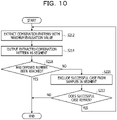
- the sample acquisition unit 12 acquires the sample set data input to the pattern extraction device 210 and passes the acquired sample set data to the combination pattern acquisition unit 214. Then, the pattern extraction device 210 executes the pattern extraction processing illustrated in FIG. 10 . Note that the pattern extraction processing is an example of the pattern extraction method of the disclosed technique.
- step S212 the combination pattern acquisition unit 214 comprehensively acquires a combination pattern of one or more attribute values selected from among a plurality of attribute values that each sample contained in the sample set data has and passes the acquired combination pattern to the determination unit 216. Then, the determination unit 216 determines the evaluation value for each combination pattern passed from the combination pattern acquisition unit 214 and passes the determined evaluation value to the extraction unit 218. Thereafter, the extraction unit 218 extracts the combination pattern with the maximum evaluation value determined by the determination unit 216.
- step S214 the extraction unit 218 outputs the extracted combination pattern as a segment.
- step S2108 the extraction unit 218 verifies whether or not the number of extracted segments has reached a defined number.
- the processing proceeds to step S220, and when the defined number has been reached, the pattern extraction processing ends.
- step S220 the extraction unit 218 excludes a sample of the successful case among samples that satisfy the combination pattern (extracted segment) with the maximum evaluation value extracted in step S212 above, from the sample set data.
- step S222 the extraction unit 218 verifies whether or not a sample of the successful case remains in the sample set data.
- the extraction unit 218 notifies the determination unit 216 of information on the sample excluded in step S220 above, and the processing returns to step S212.
- the pattern extraction processing ends.
- the determination unit 216 redetermines the evaluation value of each combination pattern for the sample set after excluding the successful case, and the extraction unit 218 extracts a combination pattern with the maximum evaluation value based on the redetermined evaluation value.
- the pattern extraction device calculates an evaluation value based on the number of samples and the success rate of a set that satisfies the combination pattern of attribute values, for each combination pattern and extracts a combination pattern with the maximum evaluation value, as a segment. Then, a sample of the successful case that satisfies the extracted combination pattern is excluded, and the calculation of the evaluation value for each combination pattern and the extraction of the combination pattern with the maximum evaluation value are repeated.
- This is substantially relevant to extracting the combination pattern whose evaluation value has a local maximum value as in the first embodiment. Therefore, as in the first embodiment, it may be possible to extract a combination pattern of attribute values adapted to allow information on segments that is useful from the marketing perspective to be obtained.
- a mode of the pattern extraction program stored (installed) in advance in the storage unit has been described.
- the program according to the disclosed technique may also be provided in a form stored in a storage medium such as a compact disc read only memory (CD-ROM), a digital versatile disc read only memory (DVD-ROM), or a universal serial bus (USB) memory.
- CD-ROM compact disc read only memory
- DVD-ROM digital versatile disc read only memory
- USB universal serial bus
Landscapes
- Business, Economics & Management (AREA)
- Engineering & Computer Science (AREA)
- Strategic Management (AREA)
- Accounting & Taxation (AREA)
- Finance (AREA)
- Development Economics (AREA)
- Entrepreneurship & Innovation (AREA)
- Theoretical Computer Science (AREA)
- Physics & Mathematics (AREA)
- General Physics & Mathematics (AREA)
- Data Mining & Analysis (AREA)
- Game Theory and Decision Science (AREA)
- Marketing (AREA)
- General Business, Economics & Management (AREA)
- Economics (AREA)
- General Engineering & Computer Science (AREA)
- Software Systems (AREA)
- Computer Hardware Design (AREA)
- Mathematical Physics (AREA)
- Databases & Information Systems (AREA)
- Information Retrieval, Db Structures And Fs Structures Therefor (AREA)
- Management, Administration, Business Operations System, And Electronic Commerce (AREA)
Abstract
Description
- The disclosed technique relates to a pattern extraction program, a pattern extraction device, and a pattern extraction method.
- In the field of marketing, "segmentation" is performed to subdivide a group of customers by a combination of attributes according to marketing needs. Each set of subdivided customers is called a "segment", and the customers contained in each segment have common attributes. Information on the segment is used to, for example, narrow down business targets and use diverse business strategies suitably.
- Non-Patent Document 1: "What is Market Segmentation?", [online], [Searched on August 21, The First Year of Reiwa], Internet <https://www.qualtrics.com/experience-management/brand/what-is-market-segmentation/>
- In order to obtain information on segments that is useful from a marketing perspective, a group of customers' needs to be appropriately segmented according to marketing needs.
- As one aspect, the disclosed technique aims to extract a combination pattern of attribute values adapted to allow information on segments that is useful from a marketing perspective to be obtained.
- In one mode, the disclosed technique acquires sample set data associated with both of data item values individually related to a plurality of data items and label information regarding a predetermined event. In addition, the disclosed technique acquires a plurality of combination patterns, each of which is a combination of one or more of the data item values. Then, the disclosed technique determines evaluation values for each of the plurality of combination patterns. The evaluation values are determined based on the number of the samples that satisfy each of the combination patterns among the samples indicated by the sample set data and the ratio of the samples whose label information indicates a predetermined value among the samples that satisfy each of the combination patterns. Furthermore, the disclosed technique extracts one of the combination patterns that corresponds to one of the evaluation values that has a local maximum value in the evaluation values individually related to the plurality of combination patterns.
- As one aspect, there is an effect that a combination pattern of attributes adapted to allow information on segments that is useful from a marketing perspective to be obtained may be extracted.
-
-
FIG. 1 is a functional block diagram of a pattern extraction device according to first and second embodiments. -
FIG. 2 is a diagram for explaining a segment. -
FIG. 3 is a diagram for explaining the extraction of a combination pattern whose evaluation value has a local maximum value in the first embodiment. -
FIG. 4 is a diagram for explaining the extraction of combination patterns by association analysis. -
FIG. 5 is a block diagram illustrating a schematic configuration of a computer that functions as the pattern extraction device according to the first and second embodiments. -
FIG. 6 is a flowchart illustrating an example of pattern extraction processing in the first embodiment. -
FIG. 7 is a diagram for explaining the pattern extraction processing in the first embodiment. -
FIG. 8 is a diagram for explaining pattern extraction processing in the second embodiment. -
FIG. 9 is a diagram for explaining the pattern extraction processing in the second embodiment. -
FIG. 10 is a flowchart illustrating an example of the pattern extraction processing in the second embodiment. - Hereinafter, an example of embodiments according to the disclosed technique will be described with reference to the drawings.
- As illustrated in
FIG. 1 , sample set data is input to apattern extraction device 10. The sample set data is data indicating a set of samples associated with both of data item values individually related to a plurality of data items and label information regarding a predetermined event. - For example, when each sample is relevant to a customer, the "plurality of data items" denotes attributes of the customer, which, for example, can be assumed as gender, age, unmarried/married, occupation, and the like. The "data item values" in this case denote attribute values related to each attribute. For example, male and female can be assumed for the attribute "gender", 20s, 30s, 40s,... can be assumed for the attribute "age", being unmarried and married can be assumed for the attribute "unmarried/married", and a company employee, self-employed,... can be assumed for the attribute "occupation".
- In addition, the "label information regarding a predetermined event" in the present embodiment denotes information indicating whether or not a reaction in response to an external influence (action) is as expected. In the following, it is assumed that a sample that makes a reaction as expected in response to an action is called a "successful case", a sample that does not make a reaction as expected is called a "failed case", and the label information indicating success or failure is correlated with each sample.
- The
pattern extraction device 10 executes pattern extraction processing to extract segments from the sample set data and output the extracted segments. - Here, the segment in the present embodiment will be described. As illustrated in
FIG. 2 , the "segment" denotes a group of samples having similar high success rates for an action expressed by a combination pattern of attribute values that each of these samples has in common. In the example inFIG. 2 , the white plus (+) and minus (-) marks represent individual samples, where the sample represented by the plus mark denotes the successful case, and the sample represented by the minus mark denotes the failed case. In the sample set as illustrated inFIG. 2 , a set of samples having a combination pattern of certain attribute values in common denotes the "segment". In addition, the ratio of successful cases among the samples contained in the segment is called the "success rate" of that segment. - For example, as illustrated in
FIG. 2 , when the set of samples having a combination pattern of certain attribute values in common is assumed as asegment 1, the number of samples contained in thesegment 1 is eight, of which four are successful cases. Accordingly, the success rate of thesegment 1 is "50%". In addition, when the set of samples having a combination pattern of different attribute values in common is assumed as asegment 2, the number of samples contained in thesegment 2 is nine, of which three are successful cases. Accordingly, the success rate of thesegment 2 is "33%". - Functionally, as illustrated in
FIG. 1 , thepattern extraction device 10 includes asample acquisition unit 12, a combinationpattern acquisition unit 14, adetermination unit 16, and anextraction unit 18. - The
sample acquisition unit 12 acquires the sample set data input to thepattern extraction device 10 and passes the acquired sample set data to the combinationpattern acquisition unit 14. - The combination
pattern acquisition unit 14 acquires a combination of one or more attribute values selected from among a plurality of attribute values that each sample contained in the sample set data has, as a combination pattern. Specifically, the combinationpattern acquisition unit 14 acquires the combination pattern by adding and deleting the attribute value of another attribute to and from the attribute value selected from an initial attribute value set, which is a set of attribute values selected at the beginning. The initial attribute value set can be assumed as a set of attribute values of attributes whose attribute values have an exclusive relationship, such as gender, unmarried/married, and the like (for example, {male, female, unmarried, married}). - The combination
pattern acquisition unit 14 passes the acquired combination pattern of the attribute values to thedetermination unit 16. - The
determination unit 16 determines the evaluation value for each combination pattern passed from the combinationpattern acquisition unit 14. Thedetermination unit 16 determines the evaluation value based on the number of samples that satisfy the combination pattern among samples indicated by the sample set data and the ratio of samples whose label information indicates a predetermined value among the samples that satisfy the combination pattern. The number of samples that satisfy the combination pattern denotes the number of samples having a combination of attribute values indicated by the combination pattern and represents the size of the set that satisfies the combination pattern. The samples whose label information indicates a predetermined value denotes the successful cases. For example, the ratio of the samples whose label information indicates a predetermined value among samples that satisfy the combination pattern denotes the success rate in the set that satisfies the combination pattern. - Specifically, the
determination unit 16 determines, for each combination pattern, the evaluation value having the property of increasing as the success rate becomes higher when the size of the group is kept unchanged, and increasing as the group becomes greater when the success rate is kept unchanged. As the evaluation value, for example, a chi-square value (X2) can be used. Thedetermination unit 16 passes the evaluation value determined for each combination pattern to theextraction unit 18. - The
extraction unit 18 chooses a combination pattern having a great evaluation value passed from thedetermination unit 16 such that samples contained in sets that satisfy that combination pattern do not have a large overlap and extracts the chosen combination pattern as a segment. - Specifically, the
extraction unit 18 extracts a combination pattern that corresponds to an evaluation value that has a local maximum value in the evaluation values individually related to a plurality of combination patterns. More specifically, as illustrated inFIG. 3 , in regard to the evaluation value for a specified combination pattern, theextraction unit 18 acquires the evaluation value for a combination pattern obtained by adding one or more data item values to the specified combination pattern, from among the plurality of combination patterns. In addition, theextraction unit 18 acquires the evaluation value for a combination pattern obtained by deleting one or more data item values from the specified combination pattern. When the evaluation value of the specified combination pattern is higher than any of the acquired evaluation values, theextraction unit 18 extracts the specified combination pattern as a combination pattern whose evaluation value has a local maximum value. - For example, the
extraction unit 18 extracts a combination pattern whose evaluation value determined by thedetermination unit 16 is reduced when one or more attribute values are added and one or more attribute values are deleted, from among the combination patterns acquired by the combinationpattern acquisition unit 14. Theextraction unit 18 outputs the extracted combination pattern as a segment. - By extracting a combination pattern whose evaluation value having the property as described above has a local maximum value, a segment that may not be found by usual association analysis may be found.
- For example, as illustrated in
FIG. 4 , it is assumed that the success rates of sets for each of various combination patterns of attribute values is worked out by the association analysis, and a combination pattern corresponding to a set with a success rate equal to or greater than a set threshold value (40% in the example inFIG. 4 ) is extracted as a segment. In this case, as in the sets A and B inFIG. 4 , samples will overlap (the part of the broken line C), and sets with similar combination patterns will be extracted, which will end up with an extraction result with poor comprehensiveness with respect to the whole. - On the other hand, by extracting a set that satisfies the combination pattern whose evaluation value has a local maximum value using the evaluation value as in the present embodiment, a combination pattern corresponding to a set having a high success rate and a great number of samples may be extracted. In addition, when a plurality of segments is extracted, the comprehensiveness with respect to the whole may be improved because the local maximum values are rarely adjacent to each other.
- Furthermore, when a combination pattern corresponding to a set having a success rate equal to or greater than a set threshold value is extracted as a segment, an appropriate segment is not regularly extracted because the extraction result depends on the threshold value setting. For example, as illustrated in
FIG. 4 , when the threshold value of the success rate is assumed as 40%, the sets D and E are extracted. When the success rate of the set F including the sets D and E is less than 40%, the set F is not extracted as a segment even if the set F is an appropriate set from the marketing perspective. - On the other hand, in the present embodiment, by extracting a set that satisfies a combination pattern that has a high success rate and a local maximum value of the evaluation value that increases as the number of samples becomes greater, an appropriate segment may be extracted without depending on the threshold value of the success rate.
- The
pattern extraction device 10 can be implemented, for example, by acomputer 40 illustrated inFIG. 5 . Thecomputer 40 includes a central processing unit (CPU) 41, amemory 42 as a temporary storage area, and anonvolatile storage unit 43. In addition, thecomputer 40 includes an input/output device 44 such as an input unit and a display unit, and a read/write (R/W)unit 45 that controls reading and writing of data from and to astorage medium 49. Furthermore, thecomputer 40 includes a communication interface (I/F) 46 connected to a network such as the Internet. TheCPU 41, thememory 42, thestorage unit 43, the input/output device 44, the R/W unit 45, and the communication I/F 46 are interconnected via abus 47. - The
storage unit 43 may be implemented by a hard disk drive (HDD), a solid state drive (SSD), a flash memory, or the like. Thestorage unit 43 as a storage medium stores apattern extraction program 50 for making thecomputer 40 function as thepattern extraction device 10. Thepattern extraction program 50 includes asample acquisition process 52, a combinationpattern acquisition process 54, adetermination process 56, and anextraction process 58. - The
CPU 41 reads thepattern extraction program 50 from thestorage unit 43, develops the read pattern extraction program in thememory 42, and sequentially executes the processes included in thepattern extraction program 50. TheCPU 41 executes thesample acquisition process 52 to operate as thesample acquisition unit 12 illustrated inFIG. 1 . In addition, theCPU 41 executes the combinationpattern acquisition process 54 to operate as the combinationpattern acquisition unit 14 illustrated inFIG. 1 . Furthermore, theCPU 41 executes thedetermination process 56 to operate as thedetermination unit 16 illustrated inFIG. 1 . Additionally, theCPU 41 executes theextraction process 58 to operate as theextraction unit 18 illustrated inFIG. 1 . This will cause thecomputer 40 executing thepattern extraction program 50 to function as thepattern extraction device 10. Note that theCPU 41 that executes the program is hardware. - In addition, the function that is implemented by the
pattern extraction program 50 can be implemented by, for example, a semiconductor integrated circuit, in more detail, an application specific integrated circuit (ASIC) or the like. - Next, the performance of the
pattern extraction device 10 according to the first embodiment will be described. Thesample acquisition unit 12 acquires the sample set data input to thepattern extraction device 10 and passes the acquired sample set data to the combinationpattern acquisition unit 14. Then, thepattern extraction device 10 executes the pattern extraction processing illustrated inFIG. 6 . Note that the pattern extraction processing is an example of a pattern extraction method of the disclosed technique. - In step S12, the combination
pattern acquisition unit 14 selects an unselected attribute value from the initial attribute value set and acquires a combination pattern P made up of the selected attribute value to pass the acquired combination pattern P to thedetermination unit 16. Then, thedetermination unit 16 specifies a set of samples having the attribute values indicated by the passed combination pattern P and determines the evaluation value based on the number of samples and the success rate of the specified set. - Here, it is assumed that the initial attribute value set is {male, female, unmarried, married}, from which "male" is selected, and as illustrated in
FIG. 7 , X2 as an example of the evaluation value is determined to be 0.22 for the combination pattern P = [male]. - Next, in step S14, the combination
pattern acquisition unit 14 acquires a combination pattern obtained by adding one attribute value of another attribute to the current combination pattern P and passes the acquired combination pattern to thedetermination unit 16. Then, thedetermination unit 16 determines the evaluation value of the passed combination pattern and passes the determined evaluation value to theextraction unit 18. Then, theextraction unit 18 searches for an attribute value that allows the evaluation value to rise by being added, by verifying whether or not the determined evaluation value rises higher than the evaluation value related to the combination pattern P. - Next, in step S16, the
extraction unit 18 verifies whether or not an attribute value that allows the evaluation value to rise by being added has been found in step S14 above. When the attribute value has been found, the processing proceeds to step S18, and when the attribute value has not been found, the processing proceeds to step S20. - In step S18, the combination
pattern acquisition unit 14 acquires a combination pattern obtained by adding the attribute value that allows the evaluation value to rise by being added, to the current combination pattern P, as a new combination pattern P and passes the acquired combination pattern to thedetermination unit 16. Then, thedetermination unit 16 determines the evaluation value of the passed combination pattern P, and the processing returns to step S14. - For example, as illustrated in
FIG. 7 , assuming that X2 of the combination pattern [male × 30s] obtained by adding the attribute value "30s" of the attribute "age" to the current combination pattern P = [male] is 10.0, X2 of the combination pattern [male × 30s] rises higher than X2 = 0.22 of the combination pattern P = [male]. Therefore, the new combination pattern P = [male × 30s] is employed. - Then, returning to step S14, assuming that X2 of a combination pattern obtained by adding the attribute value "married" of the attribute "unmarried/married" to the current combination pattern P = [male × 30s] is 14.2, X2 rises. Therefore, the new combination pattern P = [male × 30s × married] is employed.
- When no more attribute value that allows the evaluation value to rise by being added has been found, the processing proceeds to step S20 with the current combination pattern P = [male × 30s × married] maintained.
- In step S20, the combination
pattern acquisition unit 14 acquires a combination pattern obtained by deleting one attribute value from the current combination pattern P and passes the acquired combination pattern to thedetermination unit 16. Then, thedetermination unit 16 determines the evaluation value of the passed combination pattern and passes the determined evaluation value to theextraction unit 18. Then, theextraction unit 18 searches for an attribute value that allows the evaluation value to rise by being deleted, by verifying whether or not the determined evaluation value rises higher than the evaluation value related to the combination pattern P. - Next, in step S22, the
extraction unit 18 verifies whether or not an attribute value that allows the evaluation value to rise by being deleted has been found in step S20 above. When the attribute value has been found, the processing proceeds to step S24, and when the attribute value has not been found, the processing proceeds to step S26. - In step S24, the
extraction unit 18 acquires a new combination pattern P by deleting the attribute value that allows the evaluation value to rise by being deleted, from the current combination pattern P and passes the acquired combination pattern P to thedetermination unit 16. Then, thedetermination unit 16 determines the evaluation value of the passed combination pattern P, and the processing returns to step S14. - For example, as illustrated in
FIG. 3 , X2 of the combination pattern [male × 30s] obtained by deleting the attribute value "married" from the current combination pattern P = [male × 30s × married] is 8.49. In addition, X2 of the combination pattern [male × married] obtained by deleting the attribute value "30s" is 11.86, and the X2 of the combination pattern [30s × married] obtained by deleting the attribute value "male" is 10.00. The evaluation value of any combination pattern does not rise from the evaluation value of 14.22 for the combination pattern P = [male × 30s × married male]. Therefore, neither attribute value will not be deleted from the current combination pattern P. - In step S26, the
extraction unit 18 extracts and outputs the current combination pattern P as a segment. - Next, in step S28, the
extraction unit 18 verifies whether or not the number of extracted segments has reached a defined number. When the defined number has not been reached, the processing returns to step S12. In step S12, an attribute value that has not been selected so far is selected from the initial attribute value set. In the case of the above initial attribute value set = {male, female, married, unmarried}, for example, the attribute value "female" is selected. When the number of extracted segments has reached the defined number, the pattern extraction processing ends. - As described above, the pattern extraction device according to the first embodiment calculates an evaluation value based on the number of samples and the success rate of a set that satisfies the combination pattern of attribute values, for each combination pattern and extracts a combination pattern whose evaluation value has a local maximum value, as a segment. This may make it possible to extract a combination pattern of attribute values adapted to allow information on segments that is useful from the marketing perspective to be obtained.
- Next, a second embodiment will be described. Note that, in a pattern extraction device according to the second embodiment, similar parts to those of the
pattern extraction device 10 according to the first embodiment are designated by the same reference numerals and detailed description thereof will be omitted. - Functionally, as illustrated in
FIG. 1 , apattern extraction device 210 includes asample acquisition unit 12, a combinationpattern acquisition unit 214, adetermination unit 216, and anextraction unit 218. - The combination
pattern acquisition unit 214 comprehensively acquires a combination pattern of one or more attribute values selected from among a plurality of attribute values that each sample contained in the sample set data has. The combinationpattern acquisition unit 214 passes the acquired combination pattern of the attribute values to thedetermination unit 216. - The
determination unit 216 determines an evaluation value similar to the evaluation value in the first embodiment for each combination pattern passed from the combinationpattern acquisition unit 214. In addition, when a predetermined successful case is excluded from the sample set by theextraction unit 218 to be described later, thedetermination unit 216 redetermines the evaluation value of each combination pattern for the sample set after the exclusion. - As illustrated in
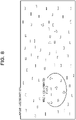
FIG. 8 , theextraction unit 218 extracts a combination pattern with the maximum evaluation value determined by thedetermination unit 216 from among a plurality of combination patterns acquired by the combinationpattern acquisition unit 214, as a segment. In addition, as illustrated inFIG. 9 , theextraction unit 218 excludes a sample of the successful case among samples that satisfy the combination pattern with the maximum evaluation value from the sample set data and notifies thedetermination unit 216 of information on the excluded sample. This causes thedetermination unit 216 to redetermine the evaluation value. When the evaluation value is redetermined by thedetermination unit 216, theextraction unit 218 repeats extracting the combination pattern with the maximum evaluation value, based on the redetermined evaluation value, as illustrated inFIG. 9 . - In this manner, since a combination pattern that is given the maximum evaluation value next is extracted after excluding the successful case of the combination pattern with the maximum evaluation value, substantially, the combination pattern with the evaluation value that has a local maximum value will be extracted.
- The
pattern extraction device 210 can be implemented, for example, by thecomputer 40 illustrated inFIG. 5 . Astorage unit 43 of thecomputer 40 stores apattern extraction program 250 for making thecomputer 40 function as thepattern extraction device 210. Thepattern extraction program 250 includes asample acquisition process 52, a combinationpattern acquisition process 254, adetermination process 256, and anextraction process 258. - A
CPU 41 reads thepattern extraction program 250 from thestorage unit 43, develops the read pattern extraction program in amemory 42, and sequentially executes the processes included in thepattern extraction program 250. TheCPU 41 executes thesample acquisition process 52 to operate as thesample acquisition unit 12 illustrated inFIG. 1 . In addition, theCPU 41 executes the combinationpattern acquisition process 254 to operate as the combinationpattern acquisition unit 214 illustrated inFIG. 1 . Furthermore, theCPU 41 executes thedetermination process 256 to operate as thedetermination unit 216 illustrated inFIG. 1 . Additionally, theCPU 41 executes theextraction process 258 to operate as theextraction unit 218 illustrated inFIG. 1 . This will cause thecomputer 40 executing thepattern extraction program 250 to function as thepattern extraction device 210. Note that theCPU 41 that executes the program is hardware. - Note that the function implemented by the
pattern extraction program 250 can also be implemented by, for example, a semiconductor integrated circuit, in more detail, an ASIC or the like. - Next, the performance of the
pattern extraction device 210 according to the second embodiment will be described. Thesample acquisition unit 12 acquires the sample set data input to thepattern extraction device 210 and passes the acquired sample set data to the combinationpattern acquisition unit 214. Then, thepattern extraction device 210 executes the pattern extraction processing illustrated inFIG. 10 . Note that the pattern extraction processing is an example of the pattern extraction method of the disclosed technique. - In step S212, the combination
pattern acquisition unit 214 comprehensively acquires a combination pattern of one or more attribute values selected from among a plurality of attribute values that each sample contained in the sample set data has and passes the acquired combination pattern to thedetermination unit 216. Then, thedetermination unit 216 determines the evaluation value for each combination pattern passed from the combinationpattern acquisition unit 214 and passes the determined evaluation value to theextraction unit 218. Thereafter, theextraction unit 218 extracts the combination pattern with the maximum evaluation value determined by thedetermination unit 216. - Next, in step S214, the
extraction unit 218 outputs the extracted combination pattern as a segment. - Subsequently, in step S218, the
extraction unit 218 verifies whether or not the number of extracted segments has reached a defined number. When the defined number has not been reached, the processing proceeds to step S220, and when the defined number has been reached, the pattern extraction processing ends. - In step S220, the
extraction unit 218 excludes a sample of the successful case among samples that satisfy the combination pattern (extracted segment) with the maximum evaluation value extracted in step S212 above, from the sample set data. - Next, in step S222, the
extraction unit 218 verifies whether or not a sample of the successful case remains in the sample set data. When a sample of the successful case remains, theextraction unit 218 notifies thedetermination unit 216 of information on the sample excluded in step S220 above, and the processing returns to step S212. When a sample of the successful case does not remain, the pattern extraction processing ends. - When returning to step S212, repeatedly, the
determination unit 216 redetermines the evaluation value of each combination pattern for the sample set after excluding the successful case, and theextraction unit 218 extracts a combination pattern with the maximum evaluation value based on the redetermined evaluation value. - As described above, the pattern extraction device according to the second embodiment calculates an evaluation value based on the number of samples and the success rate of a set that satisfies the combination pattern of attribute values, for each combination pattern and extracts a combination pattern with the maximum evaluation value, as a segment. Then, a sample of the successful case that satisfies the extracted combination pattern is excluded, and the calculation of the evaluation value for each combination pattern and the extraction of the combination pattern with the maximum evaluation value are repeated. This is substantially relevant to extracting the combination pattern whose evaluation value has a local maximum value as in the first embodiment. Therefore, as in the first embodiment, it may be possible to extract a combination pattern of attribute values adapted to allow information on segments that is useful from the marketing perspective to be obtained.
- Note that the attributes and attribute values used in each of the above-described embodiments are examples, and other attributes and attribute values may be used.
- Furthermore, in each of the above-described embodiments, a mode of the pattern extraction program stored (installed) in advance in the storage unit has been described. However, the embodiment is not limited to the case. The program according to the disclosed technique may also be provided in a form stored in a storage medium such as a compact disc read only memory (CD-ROM), a digital versatile disc read only memory (DVD-ROM), or a universal serial bus (USB) memory.
Claims (13)
- A pattern extraction program
for causing a computer to execute processing comprising:acquiring sample set data associated with both of data item values individually related to a plurality of data items and label information regarding a predetermined event;acquiring a plurality of combination patterns, each of which is a combination of one or more of the data item values;determining evaluation values for each of the plurality of combination patterns, based on a number of the samples that satisfy each of the combination patterns among the samples indicated by the sample set data and a ratio of the samples whose label information indicates a predetermined value among the samples that satisfy each of the combination patterns; andextracting one of the combination patterns that corresponds to one of the evaluation values that has a local maximum value in the evaluation values individually related to the plurality of combination patterns. - The pattern extraction program according to claim 1, wherein the evaluation values have a property of increasing as the ratio becomes higher when the number of the samples that satisfy each of the combination patterns is kept unchanged, and increasing as the number of the samples that satisfy each of the combination patterns becomes greater when the ratio is kept unchanged.
- The pattern extraction program according to claim 1 or 2, wherein, among the plurality of combination patterns, when a specified evaluation value for a specified combination pattern is higher than any of a first evaluation value for a first combination pattern obtained by adding one or more of the data item values to the specified combination pattern, and a second evaluation value for a second combination pattern obtained by deleting one or more of the data item values from the specified combination pattern, the specified combination pattern is extracted as the one of the combination patterns with the one of the evaluation values that has the local maximum value.
- The pattern extraction program according to claim 1 or 2, which further causes the computer to execute processing comprising:extracting another one of the combination patterns with another one of the evaluation values that is maximum, as the one of the combination patterns with the one of the evaluation values that has the local maximum value, from among the plurality of combination patterns; andrepeatedly, redetermining the evaluation values individually related to the plurality of combination patterns by excluding, from the sample set data, the samples of which the label information indicates the predetermined value among the samples that satisfy the another one of the combination patterns with the another one of the evaluation values that is maximum, and extracting the another one of the combination patterns with the another one of the evaluation values that is maximum, based on the redetermined evaluation values.
- A pattern extraction device comprising:a sample acquisition unit that acquires sample set data associated with both of data item values individually related to a plurality of data items and label information regarding a predetermined event;a combination pattern acquisition unit that acquires a plurality of combination patterns, each of which is a combination of one or more of the data item values;a determination unit that determines evaluation values for each of the plurality of combination patterns, based on a number of the samples that satisfy each of the combination patterns among the samples indicated by the sample set data and a ratio of the samples whose label information indicates a predetermined value among the samples that satisfy each of the combination patterns; andan extraction unit that extracts one of the combination patterns that corresponds to one of the evaluation values that has a local maximum value in the evaluation values individually related to the plurality of combination patterns.
- The pattern extraction device according to claim 5, wherein the determination unit determines the evaluation values that have a property of increasing as the ratio becomes higher when the number of the samples that satisfy each of the combination patterns is kept unchanged, and increasing as the number of the samples that satisfy each of the combination patterns becomes greater when the ratio is kept unchanged.
- The pattern extraction device according to claim 5 or 6, wherein the extraction unit extract, among the plurality of combination patterns, when a specified evaluation value for a specified combination pattern is higher than any of a first evaluation value for a first combination pattern obtained by adding one or more of the data item values to the specified combination pattern, and a second evaluation value for a second combination pattern obtained by deleting one or more of the data item values from the specified combination pattern, the specified combination pattern as the one of the combination patterns with the one of the evaluation values that has the local maximum value.
- The pattern extraction device according to claim 5 or 6, whereinthe extraction unit extract another one of the combination patterns with another one of the evaluation values that is maximum, as the one of the combination patterns with the one of the evaluation values that has the local maximum value, from among the plurality of combination patterns; andthe determination unit repeatedly, redetermine the evaluation values individually related to the plurality of combination patterns by excluding, from the sample set data, the samples of which the label information indicates the predetermined value among the samples that satisfy the another one of the combination patterns with the another one of the evaluation values that is maximum, and extracting the another one of the combination patterns with the another one of the evaluation values that is maximum, based on the redetermined evaluation values.
- A pattern extraction method for a computer to execute a process comprising:acquiring sample set data associated with both of data item values individually related to a plurality of data items and label information regarding a predetermined event;acquiring a plurality of combination patterns, each of which is a combination of one or more of the data item values;determining evaluation values for each of the plurality of combination patterns, based on a number of the samples that satisfy each of the combination patterns among the samples indicated by the sample set data and a ratio of the samples whose label information indicates a predetermined value among the samples that satisfy each of the combination patterns; andextracting one of the combination patterns that corresponds to one of the evaluation values that has a local maximum value in the evaluation values individually related to the plurality of combination patterns.
- The pattern extraction method according to claim 9, wherein the evaluation values have a property of increasing as the ratio becomes higher when the number of the samples that satisfy each of the combination patterns is kept unchanged, and increasing as the number of the samples that satisfy each of the combination patterns becomes greater when the ratio is kept unchanged.
- The pattern extraction method according to claim 9 or 10, wherein, among the plurality of combination patterns, when a specified evaluation value for a specified combination pattern is higher than any of a first evaluation value for a first combination pattern obtained by adding one or more of the data item values to the specified combination pattern, and a second evaluation value for a second combination pattern obtained by deleting one or more of the data item values from the specified combination pattern, the specified combination pattern is extracted as the one of the combination patterns with the one of the evaluation values that has the local maximum value.
- The pattern extraction method according to claim 9 or 10, which further causes the computer to execute processing comprising:extracting another one of the combination patterns with another one of the evaluation values that is maximum, as the one of the combination patterns with the one of the evaluation values that has the local maximum value, from among the plurality of combination patterns; andrepeatedly, redetermining the evaluation values individually related to the plurality of combination patterns by excluding, from the sample set data, the samples of which the label information indicates the predetermined value among the samples that satisfy the another one of the combination patterns with the another one of the evaluation values that is maximum, and extracting the another one of the combination patterns with the another one of the evaluation values that is maximum, based on the redetermined evaluation values.
- A non-transitory computer-readable storage medium storing a pattern extraction program that causes at least one computer to execute a process, the process comprising:acquiring sample set data associated with both of data item values individually related to a plurality of data items and label information regarding a predetermined event;acquiring a plurality of combination patterns, each of which is a combination of one or more of the data item values;determining evaluation values for each of the plurality of combination patterns, based on a number of the samples that satisfy each of the combination patterns among the samples indicated by the sample set data and a ratio of the samples whose label information indicates a predetermined value among the samples that satisfy each of the combination patterns; andextracting one of the combination patterns that corresponds to one of the evaluation values that has a local maximum value in the evaluation values individually related to the plurality of combination patterns.
Applications Claiming Priority (1)
| Application Number | Priority Date | Filing Date | Title |
|---|---|---|---|
| PCT/JP2019/033949 WO2021038801A1 (en) | 2019-08-29 | 2019-08-29 | Pattern extraction program, device, and method |
Publications (2)
| Publication Number | Publication Date |
|---|---|
| EP4024312A1 true EP4024312A1 (en) | 2022-07-06 |
| EP4024312A4 EP4024312A4 (en) | 2022-08-10 |
Family
ID=74684677
Family Applications (1)
| Application Number | Title | Priority Date | Filing Date |
|---|---|---|---|
| EP19943242.8A Withdrawn EP4024312A4 (en) | 2019-08-29 | 2019-08-29 | PATTERN EXTRACTION PROGRAM, DEVICE AND METHOD |
Country Status (5)
| Country | Link |
|---|---|
| US (1) | US20220172235A1 (en) |
| EP (1) | EP4024312A4 (en) |
| JP (1) | JP7168095B2 (en) |
| CN (1) | CN114287017A (en) |
| WO (1) | WO2021038801A1 (en) |
Families Citing this family (1)
| Publication number | Priority date | Publication date | Assignee | Title |
|---|---|---|---|---|
| US12265521B1 (en) * | 2023-11-29 | 2025-04-01 | Stripe, Inc. | Methods and systems for authorization rate gradual degradation detection |
Family Cites Families (37)
| Publication number | Priority date | Publication date | Assignee | Title |
|---|---|---|---|---|
| US20020049720A1 (en) * | 2000-05-11 | 2002-04-25 | Chase Manhattan Bank | System and method of data mining |
| JP3516144B1 (en) * | 2002-06-18 | 2004-04-05 | オムロン株式会社 | Optical information code reading method and optical information code reader |
| US20050071223A1 (en) * | 2003-09-30 | 2005-03-31 | Vivek Jain | Method, system and computer program product for dynamic marketing strategy development |
| US20050216525A1 (en) * | 2004-03-26 | 2005-09-29 | Andre Wachholz-Prill | Defining target group for marketing campaign |
| US7627620B2 (en) * | 2004-12-16 | 2009-12-01 | Oracle International Corporation | Data-centric automatic data mining |
| US20110258049A1 (en) * | 2005-09-14 | 2011-10-20 | Jorey Ramer | Integrated Advertising System |
| US20070112733A1 (en) * | 2005-11-14 | 2007-05-17 | Beyer Dirk M | Method and system for extracting customer attributes |
| JP5228461B2 (en) * | 2007-12-05 | 2013-07-03 | 富士通株式会社 | Pattern extraction apparatus, pattern extraction program, and pattern extraction method |
| JP2009223809A (en) * | 2008-03-18 | 2009-10-01 | Fujitsu Ltd | Sort condition preparation program, sort condition preparation device, and sort condition preparation method |
| JP5512096B2 (en) * | 2008-05-12 | 2014-06-04 | 株式会社東芝 | Information analysis apparatus and control program therefor |
| US8554602B1 (en) * | 2009-04-16 | 2013-10-08 | Exelate, Inc. | System and method for behavioral segment optimization based on data exchange |
| JP5455978B2 (en) * | 2011-06-08 | 2014-03-26 | 株式会社東芝 | Pattern extraction apparatus and method |
| JP6181360B2 (en) * | 2012-08-30 | 2017-08-16 | アクセンチュア グローバル サービシズ リミテッド | Marketing device, marketing method, program, and recording medium |
| JP5871842B2 (en) * | 2013-03-04 | 2016-03-01 | 日本電信電話株式会社 | Information visualization apparatus, method, and program |
| JP5735034B2 (en) * | 2013-05-09 | 2015-06-17 | 日本電信電話株式会社 | Profile estimation model learning device, profile estimation device, method, and program |
| JP2016035684A (en) * | 2014-08-04 | 2016-03-17 | 日本電信電話株式会社 | Information management system, information management method, and information management program |
| JP2016053829A (en) * | 2014-09-03 | 2016-04-14 | ソニー株式会社 | Information processing method, program, and information processing device |
| US10178043B1 (en) * | 2014-12-08 | 2019-01-08 | Conviva Inc. | Dynamic bitrate range selection in the cloud for optimized video streaming |
| JP6436440B2 (en) * | 2014-12-19 | 2018-12-12 | インターナショナル・ビジネス・マシーンズ・コーポレーションInternational Business Machines Corporation | Generating apparatus, generating method, and program |
| US11138618B1 (en) * | 2015-06-22 | 2021-10-05 | Amazon Technologies, Inc. | Optimizing in-application purchase items to achieve a developer-specified metric |
| US11188940B1 (en) * | 2015-09-01 | 2021-11-30 | Groupon, Inc. | Method, apparatus, and computer program for predicting consumer behavior |
| CN105389548A (en) * | 2015-10-23 | 2016-03-09 | 南京邮电大学 | Love and marriage evaluation system and method based on face recognition |
| CN106651409A (en) * | 2015-10-29 | 2017-05-10 | 北京京东尚科信息技术有限公司 | Method for predicting marital status of user and device thereof |
| WO2017094207A1 (en) * | 2015-11-30 | 2017-06-08 | 日本電気株式会社 | Information processing system, information processing method, and information processing program |
| CN105701498B (en) * | 2015-12-31 | 2021-09-07 | 腾讯科技(深圳)有限公司 | User classification method and server |
| US20170193538A1 (en) * | 2016-01-06 | 2017-07-06 | Oracle International Corporation | System and method for determining the priority of mixed-type attributes for customer segmentation |
| CA3015447C (en) * | 2016-02-22 | 2021-09-14 | Tata Consultancy Services Limited | Systems and methods for computing data privacy-utility tradeoff |
| US10936620B2 (en) * | 2016-11-22 | 2021-03-02 | Flytxt BV | Systems and methods for management of multi-perspective customer segments |
| CN106971317A (en) * | 2017-03-09 | 2017-07-21 | 杨伊迪 | The advertisement delivery effect evaluation analyzed based on recognition of face and big data and intelligently pushing decision-making technique |
| CN106919706A (en) * | 2017-03-10 | 2017-07-04 | 广州视源电子科技股份有限公司 | Data updating method and device |
| WO2018207259A1 (en) * | 2017-05-09 | 2018-11-15 | 日本電気株式会社 | Information processing system, information processing device, prediction model extraction method, and prediction model extraction program |
| US20180361253A1 (en) * | 2017-05-22 | 2018-12-20 | Scientific Revenue, Inc. | Method of automating segmentation of users of game or online service with limited a priori knowledge |
| JP6828830B2 (en) * | 2017-11-02 | 2021-02-10 | 日本電気株式会社 | Evaluation system, evaluation method and evaluation program |
| US10769647B1 (en) * | 2017-12-21 | 2020-09-08 | Wells Fargo Bank, N.A. | Divergent trend detection and mitigation computing system |
| CN109147949A (en) * | 2018-08-16 | 2019-01-04 | 辽宁大学 | A method of based on post-class processing come for detecting teacher's sub-health state |
| US10248527B1 (en) * | 2018-09-19 | 2019-04-02 | Amplero, Inc | Automated device-specific dynamic operation modifications |
| CN109949175B (en) * | 2019-03-26 | 2023-05-05 | 桂林电子科技大学 | A User Attribute Inference Method Based on Collaborative Filtering and Similarity Measurement |
-
2019
- 2019-08-29 CN CN201980099698.8A patent/CN114287017A/en active Pending
- 2019-08-29 EP EP19943242.8A patent/EP4024312A4/en not_active Withdrawn
- 2019-08-29 JP JP2021541906A patent/JP7168095B2/en active Active
- 2019-08-29 WO PCT/JP2019/033949 patent/WO2021038801A1/en not_active Ceased
-
2022
- 2022-02-14 US US17/671,471 patent/US20220172235A1/en not_active Abandoned
Also Published As
| Publication number | Publication date |
|---|---|
| CN114287017A (en) | 2022-04-05 |
| US20220172235A1 (en) | 2022-06-02 |
| JPWO2021038801A1 (en) | 2021-03-04 |
| WO2021038801A1 (en) | 2021-03-04 |
| JP7168095B2 (en) | 2022-11-09 |
| EP4024312A4 (en) | 2022-08-10 |
Similar Documents
| Publication | Publication Date | Title |
|---|---|---|
| CN114036909B (en) | Method, device and related equipment for merging tables across pages of PDF documents | |
| US20190065995A1 (en) | Information processing apparatus and method of controlling information processing apparatus | |
| US11294792B2 (en) | Automated review of source code for style issues | |
| JPWO2007139039A1 (en) | Information classification device, information classification method, and information classification program | |
| JP6737151B2 (en) | Synonym expression extraction device, synonym expression extraction method, and synonym expression extraction program | |
| JP2017515222A (en) | Line segmentation method | |
| CN112784009A (en) | Subject term mining method and device, electronic equipment and storage medium | |
| US20220172235A1 (en) | Storage medium, pattern extraction device, and pattern extraction method | |
| JP2007086954A (en) | Character recognition processing device, character recognition processing method, and computer program | |
| US8787676B2 (en) | Image processing apparatus, computer readable medium storing program, and image processing method | |
| CN113157788B (en) | Big data mining methods and systems | |
| US11461094B2 (en) | Non-transitory computer-readable storage medium for storing warning matching program, warning matching method, and warning matching device | |
| JP2017037486A (en) | Data processing method, data processing program, and information processing apparatus | |
| US10055341B2 (en) | To-be-stubbed target determining apparatus, to-be-stubbed target determining method and non-transitory recording medium storing to-be-stubbed target determining program | |
| JP6984729B2 (en) | Semantic estimation system, method and program | |
| JP6988991B2 (en) | Semantic estimation system, method and program | |
| JP6551026B2 (en) | Candidate word evaluation device, candidate word evaluation system, program, and candidate word evaluation method | |
| US9910846B2 (en) | Conversion device and conversion method | |
| JP5169648B2 (en) | Original image search device and original image search program | |
| JP2009223391A (en) | Image processor and image processing program | |
| US20230195280A1 (en) | Identification device, identification method, and identification program | |
| US20230090897A1 (en) | Data analysis requirement definition aid apparatus and data analysis requirement definition aid method | |
| US12511293B2 (en) | Computer-readable recording medium storing information processing program, information processing device, and information processing method | |
| CN111400491A (en) | Formula body positioning method, device and equipment and computer readable storage medium | |
| US11947957B2 (en) | Grouping software applications based on technical facets |
Legal Events
| Date | Code | Title | Description |
|---|---|---|---|
| STAA | Information on the status of an ep patent application or granted ep patent |
Free format text: STATUS: THE INTERNATIONAL PUBLICATION HAS BEEN MADE |
|
| PUAI | Public reference made under article 153(3) epc to a published international application that has entered the european phase |
Free format text: ORIGINAL CODE: 0009012 |
|
| STAA | Information on the status of an ep patent application or granted ep patent |
Free format text: STATUS: REQUEST FOR EXAMINATION WAS MADE |
|
| 17P | Request for examination filed |
Effective date: 20220214 |
|
| AK | Designated contracting states |
Kind code of ref document: A1 Designated state(s): AL AT BE BG CH CY CZ DE DK EE ES FI FR GB GR HR HU IE IS IT LI LT LU LV MC MK MT NL NO PL PT RO RS SE SI SK SM TR |
|
| A4 | Supplementary search report drawn up and despatched |
Effective date: 20220712 |
|
| RIC1 | Information provided on ipc code assigned before grant |
Ipc: G06F 16/2458 20190101ALI20220706BHEP Ipc: G06Q 30/02 20120101AFI20220706BHEP |
|
| DAV | Request for validation of the european patent (deleted) | ||
| DAX | Request for extension of the european patent (deleted) | ||
| STAA | Information on the status of an ep patent application or granted ep patent |
Free format text: STATUS: THE APPLICATION HAS BEEN WITHDRAWN |
|
| 18W | Application withdrawn |
Effective date: 20240730 |