EP4024253A1 - Detection of malicious activity on endpoint computers by utilizing anomaly detection in web access patterns, in organizational environments - Google Patents
Detection of malicious activity on endpoint computers by utilizing anomaly detection in web access patterns, in organizational environments Download PDFInfo
- Publication number
- EP4024253A1 EP4024253A1 EP21218261.2A EP21218261A EP4024253A1 EP 4024253 A1 EP4024253 A1 EP 4024253A1 EP 21218261 A EP21218261 A EP 21218261A EP 4024253 A1 EP4024253 A1 EP 4024253A1
- Authority
- EP
- European Patent Office
- Prior art keywords
- sequence
- website
- machine
- benign
- suspicious
- Prior art date
- Legal status (The legal status is an assumption and is not a legal conclusion. Google has not performed a legal analysis and makes no representation as to the accuracy of the status listed.)
- Granted
Links
Images



Classifications
-
- G—PHYSICS
- G06—COMPUTING OR CALCULATING; COUNTING
- G06F—ELECTRIC DIGITAL DATA PROCESSING
- G06F21/00—Security arrangements for protecting computers, components thereof, programs or data against unauthorised activity
- G06F21/50—Monitoring users, programs or devices to maintain the integrity of platforms, e.g. of processors, firmware or operating systems
- G06F21/55—Detecting local intrusion or implementing counter-measures
- G06F21/554—Detecting local intrusion or implementing counter-measures involving event detection and direct action
-
- G—PHYSICS
- G06—COMPUTING OR CALCULATING; COUNTING
- G06F—ELECTRIC DIGITAL DATA PROCESSING
- G06F21/00—Security arrangements for protecting computers, components thereof, programs or data against unauthorised activity
- G06F21/50—Monitoring users, programs or devices to maintain the integrity of platforms, e.g. of processors, firmware or operating systems
- G06F21/55—Detecting local intrusion or implementing counter-measures
- G06F21/552—Detecting local intrusion or implementing counter-measures involving long-term monitoring or reporting
Definitions
- the present invention relates to the field of cyber security. More particularly, the present invention relates to a system and method for detecting suspicious machines based on web access patterns in group (organizational) environments.
- adware as advertisement-supported software that automatically generates adverts on the screen, usually within a web browser.
- a certain enterprise computer which is an endpoint machine, such as a mobile device, a desktop computer or a laptop
- Modern malicious codes running on such computers usually communicate via web protocols to fulfill their malicious intentions. Web accesses of these malicious codes exhibit deviation from the regular usage patterns of such machines.
- the typical usage patterns exhibited by a certain computer in an enterprise network often share similarities with other users within the same organizations, due to the similar nature of the work of the respective computers' users.
- people across different organizations that share the same functional role or in related industries with shared behavioral patterns also share highly similar web usage patterns on their computers.
- the similarity across different computers is even further enhanced, since users with similar functional roles use quite similar applications on their computers. Most of the time, these applications exhibit similar web usage patterns in order to function properly. Such similar web usage patterns may be used for improving the detection of malicious activities.
- a method for detecting malicious activity on endpoint computer machines utilizing anomaly detection in web access patterns in organizational environments comprising the steps of:
- a system for detecting malicious activity on endpoint computers utilizing anomaly detection in web access patterns in organizational environments comprising:
- the system may further comprise:
- the filter component may be adapted to perform:
- the system proposed by the present invention uses the output of the system disclosed in Israeli patent application 279697 or co-pending European application No. 21216471.9 (that are related to detecting suspicious websites in proxy's data streams), to provide a system and method for detecting suspicious machines (being computerized devices, such as computers and servers), based on web access patterns in a group (organizational) environment or on endpoint computers, by utilizing anomaly detection in web access patterns in organizational environments.
- IL279697 discloses a system for identifying similar computers vis-a-vis normal web usage patterns across different areas in an organization and across organizations. The knowledge extracted from the baseline of common usage patterns is then utilized for identifying deviation in web usage patterns, as an indication for the presence of malicious activity on specific endpoints or a group of endpoints, where the deviation was identified.
- the system disclosed in IL279697 is based on utilizing raw web proxy access and error logs as an input. Then, during a preprocessing stage, the system cleans and transforms the raw input data for reformatting, making corrections, and cleaning the data. As a part of the preprocessing and reformatting process, the system divides the data into fixed-size sequences, where each website in the same sequence belongs to the same machine. After preprocessing, the system runs an LSTM algorithm (which is a type of neural network that is commonly used for time series data and natural language processing) on the processed data so as to obtain a loss score for each sequence. The greater is the loss score, the higher is the suspiciousness of the sequence.
- LSTM algorithm which is a type of neural network that is commonly used for time series data and natural language processing
- the system disclosed in IL279697 runs a pre-trained classifier for classifying each website as benign or suspicious. With the data provided by the previous steps, along with additional data provided by the proxy, the system disclosed in IL279697 calculates a severity score for each suspicious machine. Finally, in order to help the analyst investigate the suspicious users, a dashboard has been created using Tableau software. The dashboard contains several components for making the investigation easier for the analyst. Also, the system disclosed in IL279697 creates a similarity graph between users, in order to find users who are similar to a user that was found to be infected by malicious software, and investigate these users, as well.
- IL279697 The system disclosed in IL279697 includes several modules:
- the system disclosed in IL279697 labels suspicious machines, finds a similarity group of suspicious machines, and helps a cyber analyst investigate the suspicious machines and the suspicious websites provided by the algorithm.
- Tableau software (Seattle, WA, U.S.A. - a data visualization software that is used for data science and business intelligence) was used as a visualization framework.
- the system proposed by the present invention comprises the following components:
- the machine component is adapted to visualize the suspicious machines in a period of a few days, for example.
- Fig. 1 shows a graph of the number of unique suspicious websites in each day of the data, where each color represents a different machine of a corresponding user. As can be seen, many users appear on multiple days. Each column represents a different day, and different colors represent different machines. The greater the number of websites related to a machine, the higher the area that corresponds to that machine in the graph. If a particular machine appears on different days, that machine is represented by the same color.
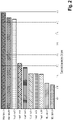
- Fig. 2 shows an example for the top-machines component that represents the top 10 suspicious machines and suspiciousness scores of their sequence.
- an analyst can see the most suspicious machines of the current day ordered by the severity score, as defined in IL279697 .
- the analyst can click on the machine in this component, and the system will label the entire clicked machine's appearance in the top-machines component.
- an analyst can see the websites that have been accessed by the machine selected by the top-machines component.
- the system provides relevant data that is aggregated from data provided by the proxy. The additional data will help the analyst to decide if the website is malicious or benign.
- Table 1 below describes the additional data provided by the system, on each website.
- Table 1 - list of website data Feature Description Filter result Content filtering result: Denied, Proxied or Observed
- Avg. sequence loss The average sequence loss of all the sequences the website appeared Number of machines The number of machines that accessed to the website Number of records The website amount of records Click-to-Action (c2a) average Number of bytes sent from the client to the appliance.
- ICAP Internet Content Adaptation Protocol
- RFC 3507 Internet Content Adaptation Protocol
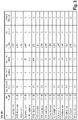
- Fig. 3 shows a list of the websites and their corresponding features, specified in Table 1 above.
- a filter component has been created, in order to make it easier for the analyst to investigate the data. This filter component is adapted to filter less relevant data and focus the analyst on the important data.
- the filter component contains several features:
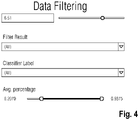
- Fig. 4 shows an example of data filtering representation, which includes the filter result, the classifier label and the average percentage.
- Fig. 5 shows a similarity graph between several machines, where the thicker the node, the higher the similarity between the machines.
- the similarity component creates a graph that represents the machines that have similar behavior to the selected machine in the machine component or the top-machines component. The thicker the node between the machines, the more similar they are.
- Jaccard Similarity that measures similarity between finite sample sets
- Fig. 6 shows a full dashboard, which represents the machine component that visualizes the suspicious machines in a period of several days.
Landscapes
- Engineering & Computer Science (AREA)
- Computer Security & Cryptography (AREA)
- Software Systems (AREA)
- Theoretical Computer Science (AREA)
- Computer Hardware Design (AREA)
- Physics & Mathematics (AREA)
- General Engineering & Computer Science (AREA)
- General Physics & Mathematics (AREA)
- Computer And Data Communications (AREA)
- Debugging And Monitoring (AREA)
- Data Exchanges In Wide-Area Networks (AREA)
Abstract
Description
- The present invention relates to the field of cyber security. More particularly, the present invention relates to a system and method for detecting suspicious machines based on web access patterns in group (organizational) environments.
- Nowadays, access to the Internet is allowed by many organizations and serves as part of the working environment, as well as one of the main tools for information acquisition. However, access from the internal network of an organization to the Internet exposes the internal endpoints and users of the organizational environment to different types of threats. This happens particularly upon browsing a site containing malware, such as malicious scripts, Trojan downloaders, exploits (an exploit is an attack on a computer system, especially one that takes advantage of a particular vulnerability the system offers to intruders), and adware (as advertisement-supported software that automatically generates adverts on the screen, usually within a web browser. Some forms of adware are highly manipulative and create an open door for malicious programs).
- Once computer viruses have infected a certain computer, they utilize common web protocols, such as HTTP and HTTPS, to conduct their malicious actions, such as coordination with command and control servers, payload (is the part of transmitted data that is the actual intended message) download and data exfiltration. These malicious intentionoriginated web activities are part of the overall web activities of almost any computer that is connected to a data network.
- Users and applications on a certain enterprise computer (which is an endpoint machine, such as a mobile device, a desktop computer or a laptop) render common usage patterns of web resources over time, due to their repetitive nature of work, common tasks, and personal interests.
- Modern malicious codes running on such computers usually communicate via web protocols to fulfill their malicious intentions. Web accesses of these malicious codes exhibit deviation from the regular usage patterns of such machines. The typical usage patterns exhibited by a certain computer in an enterprise network often share similarities with other users within the same organizations, due to the similar nature of the work of the respective computers' users. Furthermore, people across different organizations that share the same functional role or in related industries with shared behavioral patterns also share highly similar web usage patterns on their computers. The similarity across different computers is even further enhanced, since users with similar functional roles use quite similar applications on their computers. Most of the time, these applications exhibit similar web usage patterns in order to function properly. Such similar web usage patterns may be used for improving the detection of malicious activities.
- It is therefore an object of the present invention to provide a system and method for detecting malicious activity on suspicious endpoint computers in organizational environments, based on web access patterns in a group environment.
- Other objects and advantages of the invention will become apparent as the description proceeds.
- A method for detecting malicious activity on endpoint computer machines utilizing anomaly detection in web access patterns in organizational environments, comprising the steps of:
- a) receiving input raw data including raw web proxy access data and error logs data;
- b) preprocessing the input raw data by reformatting the data by dividing the data into a fixed-size sequence, wherein each website in the same sequence belongs to the same machine;
- c) running an LSTM algorithm on the preprocessed data and obtaining a loss score for each sequence, such that the greater the loss score, the higher the suspiciousness of the sequence;
- d) running a pre-trained classifier for classifying each website as being benign or suspicious;
- e) for each suspicious machine, calculating a severity score using the data provided by the preceding steps, along with additional data provided by the proxy;
- f) investigating suspicious users, using a dashboard showing suspicious users; and
- g) creating a similarity graph between users in order to find similar users to a user that was found to be infected by malicious software, and detecting malicious activity by investigating the similar users.
- A system for detecting malicious activity on endpoint computers utilizing anomaly detection in web access patterns in organizational environments, comprising:
- a) data collection and pre-processing module for collecting, aggregating and transforming received log data into temporal website sequences of length n, such that each sequence is from a specific user;
- b) an LSTM training module, for feeding each sequence, including the sequence's machine ID to a neural network for performing a training phase and predicting the next website in the sequence;
- c) an anomaly detection module that uses LSTM for feeding all the sequences into the LSTM once again, after the LSTM is trained and is able to predict the next token correctly, the LSTM provides a "probability score" representing how probable the sequence is for every sequence, such that if the probability score is above a predetermined threshold t, deciding that the sequence is suspicious;
- d) a benign URL's remover being a pre-trained classifier, for;
- d.1) classifying each website as malicious or benign;
- d.2) if a benign website appears in a malicious sequence, filter the benign website out;
- d.3) if most of the suspicious websites of a user are classified as benign, ignoring the user; and
- e) an alerting module, for proving alerts regarding the detection of malicious activity by investigating the similar users.
- The following data may be provided for each machine in the organization:
- i. each machine sequences of websites, each website inside each sequence, and the sequence score as provided by the LSTM;
- ii. for each website inside the sequences, the website's classification that provided by the benign URL's remover, benign or suspicious; and
- iii. a severity score for each machine in the weblogs that contains the daily score and the decay score.
- The system may further comprise:
- a) a machine component for visualizing the suspicious machines in a predetermined period;
- b) a top-machines component, for showing the most suspicious machines of a current day, ordered according to a severity score;
- c) a website component, for showing the websites accessed by the machine chosen in the machine component or the top-machines components;
- d) a filter component for filtering less relevant data; and
- e) a similarity component, for finding a malicious software which infects a machine in an organization by creating a graph that represents the machines that have similar behavior to the selected machine in the machine component or the top-machines component.
- The similarity between the machines may be calculated using Jaccard Similarity, defined as:

- The filter component may be adapted to perform:
- i. filtering Sequence loss, for determining which sequences will be presented to the system, such that if the sequence loss is lower than the predetermined number, all the websites inside the sequence will not appear in the website component, and the number of websites in the machine component will be reduced;
- ii. filtering result for allowing selecting Denied, Proxied, or Observed results;
- iii. classifier labeling, for allowing selecting between benign or suspicious website labels; and
- iv. percentage averaging for allowing removing machines having a percentage of their suspicious websites lower than the predetermined number, from the machine components visualization.
- The above and other characteristics and advantages of the invention will be better understood through the following illustrative and non-limitative detailed description of preferred embodiments thereof, with reference to the appended drawings, wherein:
-
Fig. 1 shows a graph of the number of unique suspicious websites in each day of the data, where each color represents a different machine of a corresponding user; -
Fig. 2 shows an example for the top-machines component that represents the top 10 suspicious machines and suspiciousness scores of their sequence; -
Fig. 3 shows a list of the websites and their corresponding features, specified in Table 1 below; -
Fig. 4 shows an example of data filtering representation, which includes the filter result, the classifier label and the average percentage; -
Fig. 5 shows a similarity graph between several machines; and -
Fig. 6 shows a full dashboard, which represents the machine component that visualizes the suspicious machines in a period of several days. - The system proposed by the present invention uses the output of the system disclosed in
Israeli patent application 279697 European application No. 21216471.9 -
Israeli Patent Application No. 279697 IL279697 - The system disclosed in
IL279697 - Since a benign website can appear in a malicious sequence, the system disclosed in
IL279697 IL279697 IL279697 - The system disclosed in
IL279697 - 1) Data collection and pre-processing module - the data collection and pre-processing module collects data to be used, which consists of proxy logs received by Symantec's Blue Coat (Blue Coat Advanced Web & Cloud Security is a protection tool against web and network-based threats, which enables cloud data protection, and provides flexible business policy control across enterprise and cloud, including web, social and mobile networks). Once the log data arrive at the system, it is collected, aggregated, and transformed into temporal website sequences of length n, where each sequence is from a specific user. In addition, very popular websites are removed.
- 2) Long-Short-Term-Model (LSTM) training module - each sequence, including the sequence's machine ID, is fed into a neural network for a training phase. The neural network predicts the next token (website) in the sequence.
- 3) Anomaly detection module using LSTM - after the model is trained and is able to predict the next token correctly, all the sequences are fed into the model once again. For every sequence, the model provides a "probability score" representing how probable the sequence is. In case the score is above a specific threshold t, the sequence is considered suspicious.
- 4) Benign URL's remover - in some cases, a benign website could appear in a malicious sequence. For that reason, a pre-trained classifier is used to classify each website as malicious or benign in order to filter the benign out. In case that most of the suspicious websites of a user are classified as benign, the user is ignored.
- 5) Alerting module - the system output alerts based on predefined alert logic. This logic takes into account several features such as the number of suspicious websites of a machine, the number of websites blocked by the proxy, etc. In addition, the alerting module outputs a dashboard for the visualization of the results, where an analyst can easily investigate the situations and extract meaningful insights.
- After running the algorithm, the following data is gathered for each machine in the organization:
- 1) Each machine sequences of websites, each website inside each sequence, and the sequence score as provided by the LSTM.
- 2) For each website inside the sequences, the website's classification that provided by the benign URL's remover, benign or suspicious.
- 3) A severity score for each machine in the weblogs that contains the daily score and the decay score, as mentioned in
IL279697 - The system disclosed in
IL279697 - The system proposed by the present invention comprises the following components:
- The machine component is adapted to visualize the suspicious machines in a period of a few days, for example.
-
Fig. 1 shows a graph of the number of unique suspicious websites in each day of the data, where each color represents a different machine of a corresponding user. As can be seen, many users appear on multiple days. Each column represents a different day, and different colors represent different machines. The greater the number of websites related to a machine, the higher the area that corresponds to that machine in the graph. If a particular machine appears on different days, that machine is represented by the same color. -
Fig. 2 shows an example for the top-machines component that represents the top 10 suspicious machines and suspiciousness scores of their sequence. As shown, from the results of the top-machines component, an analyst can see the most suspicious machines of the current day ordered by the severity score, as defined inIL279697 - In the website component, an analyst can see the websites that have been accessed by the machine selected by the top-machines component. The system provides relevant data that is aggregated from data provided by the proxy. The additional data will help the analyst to decide if the website is malicious or benign.
- Table 1 below describes the additional data provided by the system, on each website.
Table 1 - list of website data Feature Description Filter result Content filtering result: Denied, Proxied or Observed Avg. sequence loss The average sequence loss of all the sequences the website appeared Number of machines The number of machines that accessed to the website Number of records The website amount of records Click-to-Action (c2a) average Number of bytes sent from the client to the appliance. Avg. Time Taken Average time taken (in seconds) to process from the first client request received by the proxy. time taken ICAP The average time is taken (in milliseconds) to process the request from the first byte of client request data received by the proxy, to the last byte sent by the proxy to the client. This includes the delays caused by the Internet Content Adaptation Protocol (ICAP - is a lightweight HTTP-like protocol specified in RFC 3507 which is used to extend transparent proxy servers, thereby freeing up resources and standardizing the way in which new features are implemented. ICAP is generally used to implement virus scanning and content filters in transparent HTTP proxy caches). -
Fig. 3 shows a list of the websites and their corresponding features, specified in Table 1 above. - Each day and each user may contain a huge amount of data. This large amount of data can make it difficult for the analyst to investigate the suspicious users. A filter component has been created, in order to make it easier for the analyst to investigate the data. This filter component is adapted to filter less relevant data and focus the analyst on the important data.
- The filter component contains several features:
- 1) Sequence loss filtering- this filter determines which sequences will be presented to the system. If the sequence loss is lower than the predetermined number, all the websites inside the sequence will not appear in the website component, and the number of websites in the machine component will be reduced.
- 2) Filter Results- the analyst can choose which filter results he wants to see Denied, Proxied, or Observed. For example, if the analyst chooses the Denied filter result, only the website denied by the proxy will appear in the website component, and the number of websites in the machine component will be reduced.
- 3) Classifier Label - the analyst can choose which website label provided by the benign URL's remover he wants to see Benign or Suspicious. For example, if the analyst chose Suspicious as the classifier label, only the website that has been classified as suspicious by the benign URL's remover will appear in the website component, and the number of websites in the machine component will be reduced.
- 4) Average Percentage Filter - by using this filter, the analyst can remove machines with a percentage of suspicious websites that is lower than the selected number. The machine that will be filtered by this filter will be removed from the machine components visualization.
-
Fig. 4 shows an example of data filtering representation, which includes the filter result, the classifier label and the average percentage. - In most cases, when malicious software infects a machine in an organization, it is trying to spread inside the organization. The similarity component is adapted to find such malicious software.
Fig. 5 shows a similarity graph between several machines, where the thicker the node, the higher the similarity between the machines. - As can be seen in
Fig. 5 , the similarity component creates a graph that represents the machines that have similar behavior to the selected machine in the machine component or the top-machines component. The thicker the node between the machines, the more similar they are. - In order to calculate the similarity between the machines, Jaccard Similarity (that measures similarity between finite sample sets) was used, as defined below:

-
Fig. 6 shows a full dashboard, which represents the machine component that visualizes the suspicious machines in a period of several days. - The above examples and description have of course been provided only for the purpose of illustration, and are not intended to limit the invention in any way. As will be appreciated by the skilled person, the invention can be carried out in a great variety of ways, employing more than one technique from those described above, all without exceeding the scope of the invention.
Claims (6)
- A method for detecting malicious activity on endpoint computer machines in organizational environments by utilizing anomaly detection in web access patterns, comprising:a) receiving input raw data including raw web proxy access data and error logs data;b) preprocessing said input raw data by preprocessing and reformatting said data by dividing said data into fixed-size sequences, wherein each website in the same sequence belongs to the same machine;c) running an LSTM algorithm on the preprocessed data and obtaining a loss score for each sequence, such that the greater the loss score, the higher the suspiciousness of the sequence;d) running a pre-trained classifier for classifying each website as being benign or suspicious;e) for each suspicious machine, calculating a severity score using the data provided by the preceding steps, along with additional data provided by said proxy;f) investigating suspicious users; andg) creating a similarity graph between users in order to find similar users to a user that was found to be infected by malicious software, and detecting malicious activity by investigating said similar users.
- A system for detecting malicious activity on endpoint computers utilizing anomaly detection in web access patterns in organizational environments, comprising:a) data collection and pre-processing module for collecting, aggregating and transforming received log data into temporal website sequences of length n, such that each sequence is from a specific user;b) an LSTM training module, for feeding each sequence, including the sequence's machine ID to a neural network for performing a training phase and predicting the next website in the sequence;c) an anomaly detection module that uses LSTM for feeding all the sequences into said LSTM once again, after said LSTM is trained and is able to predict the next token correctly, said LSTM provides a "probability score" representing how probable the sequence is for every sequence, such that if said probability score is above a predetermined threshold t, deciding that the sequence is suspicious;d) a benign URL's remover being a pre-trained classifier, for;d.1) classifying each website as malicious or benign;d.2) if a benign website appears in a malicious sequence, filter said benign website out;d.3) if most of the suspicious websites of a user are classified as benign, ignoring said user; ande) an alerting module, for proving alerts upon detecting malicious activity.
- A system according to claim 2, wherein the following data is provided for each machine in the organization:a) each machine sequences of websites, each website inside each sequence, and the sequence score as provided by the LSTM;b) for each website inside the sequences, the website's classification that provided by the benign URL's remover, as benign or suspicious website; andc) a severity score for each machine in the weblogs that contains the daily score and the decay score.
- A system according to claim 2, further comprising:a) a machine component for visualizing the suspicious machines in a predetermined period;b) a top-machines component, for showing the most suspicious machines of a current day, ordered according to a severity score;c) a website component, for showing the websites accessed by the machine chosen in the machine component or the top-machines components;d) a filter component for filtering less relevant data; ande) a similarity component, for finding a malicious software which infects a machine in an organization by creating a graph that represents the machines that have similar behavior to the selected machine in the machine component or the top-machines component.
- A system according to claim 4, wherein the similarity between the machines is calculated using Jaccard Similarity, defined as:

- A system according to claim 4, wherein the filter component is adapted to perform:a) filtering sequence loss, for determining which sequences will be presented to the system, such that if the sequence loss is lower than a predetermined number, all the websites inside said sequence will not appear in the website component, and the number of websites in the machine component will be reduced;b) filtering result for allowing selecting Denied, Proxied, or Observed results;c) classifier labeling, for allowing selecting between benign or suspicious website labels; andd) percentage averaging for allowing removing machines having a percentage of their suspicious websites lower than the predetermined number, from the machine components visualization.
Applications Claiming Priority (1)
| Application Number | Priority Date | Filing Date | Title |
|---|---|---|---|
| IL279905A IL279905A (en) | 2020-12-31 | 2020-12-31 | A method for detecting malicious activity on end computers by detecting anomalies in internet access patterns, in corporate environments |
Publications (2)
| Publication Number | Publication Date |
|---|---|
| EP4024253A1 true EP4024253A1 (en) | 2022-07-06 |
| EP4024253B1 EP4024253B1 (en) | 2023-10-25 |
Family
ID=79185414
Family Applications (1)
| Application Number | Title | Priority Date | Filing Date |
|---|---|---|---|
| EP21218261.2A Active EP4024253B1 (en) | 2020-12-31 | 2021-12-30 | Detection of malicious activity on endpoint computers by utilizing anomaly detection in web access patterns, in organizational environments |
Country Status (2)
| Country | Link |
|---|---|
| EP (1) | EP4024253B1 (en) |
| IL (1) | IL279905A (en) |
Cited By (1)
| Publication number | Priority date | Publication date | Assignee | Title |
|---|---|---|---|---|
| CN119182603A (en) * | 2024-09-25 | 2024-12-24 | 南京能邦信息技术有限公司 | Intelligent network security protection method and system |
Citations (3)
| Publication number | Priority date | Publication date | Assignee | Title |
|---|---|---|---|---|
| US20180063168A1 (en) * | 2016-08-31 | 2018-03-01 | Cisco Technology, Inc. | Automatic detection of network threats based on modeling sequential behavior in network traffic |
| US20200076842A1 (en) * | 2018-09-05 | 2020-03-05 | Oracle International Corporation | Malicious activity detection by cross-trace analysis and deep learning |
| IL279697A (en) | 2020-12-23 | 2022-07-01 | B G Negev Technologies And Applications Ltd At Ben Gurion Univ | System and method for detecting suspicious websites in information streams from proxy servers |
-
2020
- 2020-12-31 IL IL279905A patent/IL279905A/en unknown
-
2021
- 2021-12-30 EP EP21218261.2A patent/EP4024253B1/en active Active
Patent Citations (3)
| Publication number | Priority date | Publication date | Assignee | Title |
|---|---|---|---|---|
| US20180063168A1 (en) * | 2016-08-31 | 2018-03-01 | Cisco Technology, Inc. | Automatic detection of network threats based on modeling sequential behavior in network traffic |
| US20200076842A1 (en) * | 2018-09-05 | 2020-03-05 | Oracle International Corporation | Malicious activity detection by cross-trace analysis and deep learning |
| IL279697A (en) | 2020-12-23 | 2022-07-01 | B G Negev Technologies And Applications Ltd At Ben Gurion Univ | System and method for detecting suspicious websites in information streams from proxy servers |
Non-Patent Citations (1)
| Title |
|---|
| SHIBAHARA TOSHIKI ET AL: "Malicious URL sequence detection using event de-noising convolutional neural network", 2017 IEEE INTERNATIONAL CONFERENCE ON COMMUNICATIONS (ICC), IEEE, 21 May 2017 (2017-05-21), pages 1 - 7, XP033132713, DOI: 10.1109/ICC.2017.7996831 * |
Cited By (1)
| Publication number | Priority date | Publication date | Assignee | Title |
|---|---|---|---|---|
| CN119182603A (en) * | 2024-09-25 | 2024-12-24 | 南京能邦信息技术有限公司 | Intelligent network security protection method and system |
Also Published As
| Publication number | Publication date |
|---|---|
| EP4024253B1 (en) | 2023-10-25 |
| IL279905A (en) | 2022-07-01 |
Similar Documents
| Publication | Publication Date | Title |
|---|---|---|
| US12407712B2 (en) | Artificial intelligence cyber security analyst | |
| US8707431B2 (en) | Insider threat detection | |
| CN110912890B (en) | An Intranet-Oriented Vulnerability Attack Detection System | |
| EP3356985B1 (en) | Detection of security incidents with low confidence security events | |
| US20200322368A1 (en) | Method and system for clustering darknet traffic streams with word embeddings | |
| US7690037B1 (en) | Filtering training data for machine learning | |
| CN107332848B (en) | Network flow abnormity real-time monitoring system based on big data | |
| US20150047034A1 (en) | Composite analysis of executable content across enterprise network | |
| US20220263858A1 (en) | Systems and methods for automated threat detection | |
| Kaur et al. | Automatic attack signature generation systems: A review | |
| US7630987B1 (en) | System and method for detecting phishers by analyzing website referrals | |
| JP7409978B2 (en) | Risk assessment system and risk assessment method | |
| Elshoush et al. | An improved framework for intrusion alert correlation | |
| EP3699796B1 (en) | Message report processing and threat prioritization | |
| EP2747365A1 (en) | Network security management | |
| US12411946B2 (en) | Cyber threat information processing apparatus, cyber threat information processing method, and storage medium storing cyber threat information processing program | |
| KR101940512B1 (en) | Apparatus for analyzing the attack feature DNA and method thereof | |
| EP4024253B1 (en) | Detection of malicious activity on endpoint computers by utilizing anomaly detection in web access patterns, in organizational environments | |
| Wu et al. | Efficient intrusion detection via heterogeneous graph attention networks and parallel provenance analysis | |
| Kılıç et al. | A hybrid method based on a genetic algorithm that uses network packets to classify spyware | |
| Skopik et al. | Detecting unknown cyber security attacks through system behavior analysis | |
| Preuveneers et al. | On the use of AutoML for combating alert fatigue in security operations centers | |
| Wagner et al. | Visual analytics: Foundations and experiences in malware analysis | |
| Fredriksson Franzén et al. | Anomaly detection for automated security log analysis: Comparison of existing techniques and tools | |
| Dash et al. | Intelligent System Log Analysis for Cybersecurity: Implementing Advanced Anomaly Detection |
Legal Events
| Date | Code | Title | Description |
|---|---|---|---|
| PUAI | Public reference made under article 153(3) epc to a published international application that has entered the european phase |
Free format text: ORIGINAL CODE: 0009012 |
|
| STAA | Information on the status of an ep patent application or granted ep patent |
Free format text: STATUS: THE APPLICATION HAS BEEN PUBLISHED |
|
| AK | Designated contracting states |
Kind code of ref document: A1 Designated state(s): AL AT BE BG CH CY CZ DE DK EE ES FI FR GB GR HR HU IE IS IT LI LT LU LV MC MK MT NL NO PL PT RO RS SE SI SK SM TR |
|
| STAA | Information on the status of an ep patent application or granted ep patent |
Free format text: STATUS: REQUEST FOR EXAMINATION WAS MADE |
|
| 17P | Request for examination filed |
Effective date: 20230104 |
|
| RBV | Designated contracting states (corrected) |
Designated state(s): AL AT BE BG CH CY CZ DE DK EE ES FI FR GB GR HR HU IE IS IT LI LT LU LV MC MK MT NL NO PL PT RO RS SE SI SK SM TR |
|
| GRAP | Despatch of communication of intention to grant a patent |
Free format text: ORIGINAL CODE: EPIDOSNIGR1 |
|
| STAA | Information on the status of an ep patent application or granted ep patent |
Free format text: STATUS: GRANT OF PATENT IS INTENDED |
|
| RIC1 | Information provided on ipc code assigned before grant |
Ipc: G06F 21/55 20130101AFI20230706BHEP |
|
| INTG | Intention to grant announced |
Effective date: 20230726 |
|
| GRAS | Grant fee paid |
Free format text: ORIGINAL CODE: EPIDOSNIGR3 |
|
| GRAA | (expected) grant |
Free format text: ORIGINAL CODE: 0009210 |
|
| STAA | Information on the status of an ep patent application or granted ep patent |
Free format text: STATUS: THE PATENT HAS BEEN GRANTED |
|
| AK | Designated contracting states |
Kind code of ref document: B1 Designated state(s): AL AT BE BG CH CY CZ DE DK EE ES FI FR GB GR HR HU IE IS IT LI LT LU LV MC MK MT NL NO PL PT RO RS SE SI SK SM TR |
|
| REG | Reference to a national code |
Ref country code: GB Ref legal event code: FG4D |
|
| REG | Reference to a national code |
Ref country code: CH Ref legal event code: EP |
|
| REG | Reference to a national code |
Ref country code: DE Ref legal event code: R096 Ref document number: 602021006212 Country of ref document: DE |
|
| REG | Reference to a national code |
Ref country code: IE Ref legal event code: FG4D |
|
| REG | Reference to a national code |
Ref country code: LT Ref legal event code: MG9D |
|
| REG | Reference to a national code |
Ref country code: NL Ref legal event code: MP Effective date: 20231025 |
|
| REG | Reference to a national code |
Ref country code: AT Ref legal event code: MK05 Ref document number: 1625407 Country of ref document: AT Kind code of ref document: T Effective date: 20231025 |
|
| PG25 | Lapsed in a contracting state [announced via postgrant information from national office to epo] |
Ref country code: NL Free format text: LAPSE BECAUSE OF FAILURE TO SUBMIT A TRANSLATION OF THE DESCRIPTION OR TO PAY THE FEE WITHIN THE PRESCRIBED TIME-LIMIT Effective date: 20231025 |
|
| PG25 | Lapsed in a contracting state [announced via postgrant information from national office to epo] |
Ref country code: GR Free format text: LAPSE BECAUSE OF FAILURE TO SUBMIT A TRANSLATION OF THE DESCRIPTION OR TO PAY THE FEE WITHIN THE PRESCRIBED TIME-LIMIT Effective date: 20240126 |
|
| PG25 | Lapsed in a contracting state [announced via postgrant information from national office to epo] |
Ref country code: IS Free format text: LAPSE BECAUSE OF FAILURE TO SUBMIT A TRANSLATION OF THE DESCRIPTION OR TO PAY THE FEE WITHIN THE PRESCRIBED TIME-LIMIT Effective date: 20240225 |
|
| PG25 | Lapsed in a contracting state [announced via postgrant information from national office to epo] |
Ref country code: LT Free format text: LAPSE BECAUSE OF FAILURE TO SUBMIT A TRANSLATION OF THE DESCRIPTION OR TO PAY THE FEE WITHIN THE PRESCRIBED TIME-LIMIT Effective date: 20231025 |
|
| PG25 | Lapsed in a contracting state [announced via postgrant information from national office to epo] |
Ref country code: AT Free format text: LAPSE BECAUSE OF FAILURE TO SUBMIT A TRANSLATION OF THE DESCRIPTION OR TO PAY THE FEE WITHIN THE PRESCRIBED TIME-LIMIT Effective date: 20231025 |
|
| PG25 | Lapsed in a contracting state [announced via postgrant information from national office to epo] |
Ref country code: ES Free format text: LAPSE BECAUSE OF FAILURE TO SUBMIT A TRANSLATION OF THE DESCRIPTION OR TO PAY THE FEE WITHIN THE PRESCRIBED TIME-LIMIT Effective date: 20231025 |
|
| PG25 | Lapsed in a contracting state [announced via postgrant information from national office to epo] |
Ref country code: LT Free format text: LAPSE BECAUSE OF FAILURE TO SUBMIT A TRANSLATION OF THE DESCRIPTION OR TO PAY THE FEE WITHIN THE PRESCRIBED TIME-LIMIT Effective date: 20231025 Ref country code: IS Free format text: LAPSE BECAUSE OF FAILURE TO SUBMIT A TRANSLATION OF THE DESCRIPTION OR TO PAY THE FEE WITHIN THE PRESCRIBED TIME-LIMIT Effective date: 20240225 Ref country code: GR Free format text: LAPSE BECAUSE OF FAILURE TO SUBMIT A TRANSLATION OF THE DESCRIPTION OR TO PAY THE FEE WITHIN THE PRESCRIBED TIME-LIMIT Effective date: 20240126 Ref country code: ES Free format text: LAPSE BECAUSE OF FAILURE TO SUBMIT A TRANSLATION OF THE DESCRIPTION OR TO PAY THE FEE WITHIN THE PRESCRIBED TIME-LIMIT Effective date: 20231025 Ref country code: BG Free format text: LAPSE BECAUSE OF FAILURE TO SUBMIT A TRANSLATION OF THE DESCRIPTION OR TO PAY THE FEE WITHIN THE PRESCRIBED TIME-LIMIT Effective date: 20240125 Ref country code: AT Free format text: LAPSE BECAUSE OF FAILURE TO SUBMIT A TRANSLATION OF THE DESCRIPTION OR TO PAY THE FEE WITHIN THE PRESCRIBED TIME-LIMIT Effective date: 20231025 Ref country code: PT Free format text: LAPSE BECAUSE OF FAILURE TO SUBMIT A TRANSLATION OF THE DESCRIPTION OR TO PAY THE FEE WITHIN THE PRESCRIBED TIME-LIMIT Effective date: 20240226 |
|
| PG25 | Lapsed in a contracting state [announced via postgrant information from national office to epo] |
Ref country code: SE Free format text: LAPSE BECAUSE OF FAILURE TO SUBMIT A TRANSLATION OF THE DESCRIPTION OR TO PAY THE FEE WITHIN THE PRESCRIBED TIME-LIMIT Effective date: 20231025 Ref country code: RS Free format text: LAPSE BECAUSE OF FAILURE TO SUBMIT A TRANSLATION OF THE DESCRIPTION OR TO PAY THE FEE WITHIN THE PRESCRIBED TIME-LIMIT Effective date: 20231025 Ref country code: PL Free format text: LAPSE BECAUSE OF FAILURE TO SUBMIT A TRANSLATION OF THE DESCRIPTION OR TO PAY THE FEE WITHIN THE PRESCRIBED TIME-LIMIT Effective date: 20231025 Ref country code: NO Free format text: LAPSE BECAUSE OF FAILURE TO SUBMIT A TRANSLATION OF THE DESCRIPTION OR TO PAY THE FEE WITHIN THE PRESCRIBED TIME-LIMIT Effective date: 20240125 Ref country code: LV Free format text: LAPSE BECAUSE OF FAILURE TO SUBMIT A TRANSLATION OF THE DESCRIPTION OR TO PAY THE FEE WITHIN THE PRESCRIBED TIME-LIMIT Effective date: 20231025 Ref country code: HR Free format text: LAPSE BECAUSE OF FAILURE TO SUBMIT A TRANSLATION OF THE DESCRIPTION OR TO PAY THE FEE WITHIN THE PRESCRIBED TIME-LIMIT Effective date: 20231025 |
|
| PG25 | Lapsed in a contracting state [announced via postgrant information from national office to epo] |
Ref country code: DK Free format text: LAPSE BECAUSE OF FAILURE TO SUBMIT A TRANSLATION OF THE DESCRIPTION OR TO PAY THE FEE WITHIN THE PRESCRIBED TIME-LIMIT Effective date: 20231025 |
|
| PG25 | Lapsed in a contracting state [announced via postgrant information from national office to epo] |
Ref country code: CZ Free format text: LAPSE BECAUSE OF FAILURE TO SUBMIT A TRANSLATION OF THE DESCRIPTION OR TO PAY THE FEE WITHIN THE PRESCRIBED TIME-LIMIT Effective date: 20231025 |
|
| REG | Reference to a national code |
Ref country code: DE Ref legal event code: R097 Ref document number: 602021006212 Country of ref document: DE |
|
| PG25 | Lapsed in a contracting state [announced via postgrant information from national office to epo] |
Ref country code: SK Free format text: LAPSE BECAUSE OF FAILURE TO SUBMIT A TRANSLATION OF THE DESCRIPTION OR TO PAY THE FEE WITHIN THE PRESCRIBED TIME-LIMIT Effective date: 20231025 |
|
| PG25 | Lapsed in a contracting state [announced via postgrant information from national office to epo] |
Ref country code: SM Free format text: LAPSE BECAUSE OF FAILURE TO SUBMIT A TRANSLATION OF THE DESCRIPTION OR TO PAY THE FEE WITHIN THE PRESCRIBED TIME-LIMIT Effective date: 20231025 Ref country code: SK Free format text: LAPSE BECAUSE OF FAILURE TO SUBMIT A TRANSLATION OF THE DESCRIPTION OR TO PAY THE FEE WITHIN THE PRESCRIBED TIME-LIMIT Effective date: 20231025 Ref country code: RO Free format text: LAPSE BECAUSE OF FAILURE TO SUBMIT A TRANSLATION OF THE DESCRIPTION OR TO PAY THE FEE WITHIN THE PRESCRIBED TIME-LIMIT Effective date: 20231025 Ref country code: IT Free format text: LAPSE BECAUSE OF FAILURE TO SUBMIT A TRANSLATION OF THE DESCRIPTION OR TO PAY THE FEE WITHIN THE PRESCRIBED TIME-LIMIT Effective date: 20231025 Ref country code: EE Free format text: LAPSE BECAUSE OF FAILURE TO SUBMIT A TRANSLATION OF THE DESCRIPTION OR TO PAY THE FEE WITHIN THE PRESCRIBED TIME-LIMIT Effective date: 20231025 Ref country code: DK Free format text: LAPSE BECAUSE OF FAILURE TO SUBMIT A TRANSLATION OF THE DESCRIPTION OR TO PAY THE FEE WITHIN THE PRESCRIBED TIME-LIMIT Effective date: 20231025 Ref country code: CZ Free format text: LAPSE BECAUSE OF FAILURE TO SUBMIT A TRANSLATION OF THE DESCRIPTION OR TO PAY THE FEE WITHIN THE PRESCRIBED TIME-LIMIT Effective date: 20231025 |
|
| PG25 | Lapsed in a contracting state [announced via postgrant information from national office to epo] |
Ref country code: LU Free format text: LAPSE BECAUSE OF NON-PAYMENT OF DUE FEES Effective date: 20231230 |
|
| PG25 | Lapsed in a contracting state [announced via postgrant information from national office to epo] |
Ref country code: MC Free format text: LAPSE BECAUSE OF FAILURE TO SUBMIT A TRANSLATION OF THE DESCRIPTION OR TO PAY THE FEE WITHIN THE PRESCRIBED TIME-LIMIT Effective date: 20231025 |
|
| REG | Reference to a national code |
Ref country code: BE Ref legal event code: MM Effective date: 20231231 |
|
| PG25 | Lapsed in a contracting state [announced via postgrant information from national office to epo] |
Ref country code: MC Free format text: LAPSE BECAUSE OF FAILURE TO SUBMIT A TRANSLATION OF THE DESCRIPTION OR TO PAY THE FEE WITHIN THE PRESCRIBED TIME-LIMIT Effective date: 20231025 Ref country code: LU Free format text: LAPSE BECAUSE OF NON-PAYMENT OF DUE FEES Effective date: 20231230 |
|
| PLBE | No opposition filed within time limit |
Free format text: ORIGINAL CODE: 0009261 |
|
| STAA | Information on the status of an ep patent application or granted ep patent |
Free format text: STATUS: NO OPPOSITION FILED WITHIN TIME LIMIT |
|
| 26N | No opposition filed |
Effective date: 20240726 |
|
| REG | Reference to a national code |
Ref country code: IE Ref legal event code: MM4A |
|
| PG25 | Lapsed in a contracting state [announced via postgrant information from national office to epo] |
Ref country code: IE Free format text: LAPSE BECAUSE OF NON-PAYMENT OF DUE FEES Effective date: 20231230 |
|
| PG25 | Lapsed in a contracting state [announced via postgrant information from national office to epo] |
Ref country code: BE Free format text: LAPSE BECAUSE OF NON-PAYMENT OF DUE FEES Effective date: 20231231 |
|
| PG25 | Lapsed in a contracting state [announced via postgrant information from national office to epo] |
Ref country code: SI Free format text: LAPSE BECAUSE OF FAILURE TO SUBMIT A TRANSLATION OF THE DESCRIPTION OR TO PAY THE FEE WITHIN THE PRESCRIBED TIME-LIMIT Effective date: 20231025 |
|
| PG25 | Lapsed in a contracting state [announced via postgrant information from national office to epo] |
Ref country code: SI Free format text: LAPSE BECAUSE OF FAILURE TO SUBMIT A TRANSLATION OF THE DESCRIPTION OR TO PAY THE FEE WITHIN THE PRESCRIBED TIME-LIMIT Effective date: 20231025 Ref country code: IE Free format text: LAPSE BECAUSE OF NON-PAYMENT OF DUE FEES Effective date: 20231230 Ref country code: BE Free format text: LAPSE BECAUSE OF NON-PAYMENT OF DUE FEES Effective date: 20231231 |
|
| PG25 | Lapsed in a contracting state [announced via postgrant information from national office to epo] |
Ref country code: FI Free format text: LAPSE BECAUSE OF FAILURE TO SUBMIT A TRANSLATION OF THE DESCRIPTION OR TO PAY THE FEE WITHIN THE PRESCRIBED TIME-LIMIT Effective date: 20231025 |
|
| PG25 | Lapsed in a contracting state [announced via postgrant information from national office to epo] |
Ref country code: CY Free format text: LAPSE BECAUSE OF FAILURE TO SUBMIT A TRANSLATION OF THE DESCRIPTION OR TO PAY THE FEE WITHIN THE PRESCRIBED TIME-LIMIT; INVALID AB INITIO Effective date: 20211230 |
|
| REG | Reference to a national code |
Ref country code: CH Ref legal event code: PL |
|
| PG25 | Lapsed in a contracting state [announced via postgrant information from national office to epo] |
Ref country code: CH Free format text: LAPSE BECAUSE OF NON-PAYMENT OF DUE FEES Effective date: 20241231 |
|
| PG25 | Lapsed in a contracting state [announced via postgrant information from national office to epo] |
Ref country code: TR Free format text: LAPSE BECAUSE OF FAILURE TO SUBMIT A TRANSLATION OF THE DESCRIPTION OR TO PAY THE FEE WITHIN THE PRESCRIBED TIME-LIMIT Effective date: 20231025 |
|
| PGFP | Annual fee paid to national office [announced via postgrant information from national office to epo] |
Ref country code: GB Payment date: 20251218 Year of fee payment: 5 |
|
| PGFP | Annual fee paid to national office [announced via postgrant information from national office to epo] |
Ref country code: FR Payment date: 20251218 Year of fee payment: 5 |
|
| PGFP | Annual fee paid to national office [announced via postgrant information from national office to epo] |
Ref country code: DE Payment date: 20251222 Year of fee payment: 5 |
|
| PG25 | Lapsed in a contracting state [announced via postgrant information from national office to epo] |
Ref country code: HU Free format text: LAPSE BECAUSE OF FAILURE TO SUBMIT A TRANSLATION OF THE DESCRIPTION OR TO PAY THE FEE WITHIN THE PRESCRIBED TIME-LIMIT; INVALID AB INITIO Effective date: 20211230 |
|
| PG25 | Lapsed in a contracting state [announced via postgrant information from national office to epo] |
Ref country code: CH Free format text: THE PATENT HAS BEEN ANNULLED BY A DECISION OF A NATIONAL AUTHORITY Effective date: 20241231 |