EP4024252A1 - A system and method for identifying exploited cves using honeypots - Google Patents
A system and method for identifying exploited cves using honeypots Download PDFInfo
- Publication number
- EP4024252A1 EP4024252A1 EP21217793.5A EP21217793A EP4024252A1 EP 4024252 A1 EP4024252 A1 EP 4024252A1 EP 21217793 A EP21217793 A EP 21217793A EP 4024252 A1 EP4024252 A1 EP 4024252A1
- Authority
- EP
- European Patent Office
- Prior art keywords
- cve
- honeypot
- cves
- properties
- exploited
- Prior art date
- Legal status (The legal status is an assumption and is not a legal conclusion. Google has not performed a legal analysis and makes no representation as to the accuracy of the status listed.)
- Granted
Links
Images
Classifications
-
- H—ELECTRICITY
- H04—ELECTRIC COMMUNICATION TECHNIQUE
- H04L—TRANSMISSION OF DIGITAL INFORMATION, e.g. TELEGRAPHIC COMMUNICATION
- H04L63/00—Network architectures or network communication protocols for network security
- H04L63/14—Network architectures or network communication protocols for network security for detecting or protecting against malicious traffic
- H04L63/1441—Countermeasures against malicious traffic
- H04L63/1491—Countermeasures against malicious traffic using deception as countermeasure, e.g. honeypots, honeynets, decoys or entrapment
-
- G—PHYSICS
- G06—COMPUTING OR CALCULATING; COUNTING
- G06F—ELECTRIC DIGITAL DATA PROCESSING
- G06F21/00—Security arrangements for protecting computers, components thereof, programs or data against unauthorised activity
- G06F21/50—Monitoring users, programs or devices to maintain the integrity of platforms, e.g. of processors, firmware or operating systems
- G06F21/55—Detecting local intrusion or implementing counter-measures
-
- G—PHYSICS
- G06—COMPUTING OR CALCULATING; COUNTING
- G06F—ELECTRIC DIGITAL DATA PROCESSING
- G06F21/00—Security arrangements for protecting computers, components thereof, programs or data against unauthorised activity
- G06F21/50—Monitoring users, programs or devices to maintain the integrity of platforms, e.g. of processors, firmware or operating systems
- G06F21/55—Detecting local intrusion or implementing counter-measures
- G06F21/552—Detecting local intrusion or implementing counter-measures involving long-term monitoring or reporting
-
- G—PHYSICS
- G06—COMPUTING OR CALCULATING; COUNTING
- G06F—ELECTRIC DIGITAL DATA PROCESSING
- G06F21/00—Security arrangements for protecting computers, components thereof, programs or data against unauthorised activity
- G06F21/50—Monitoring users, programs or devices to maintain the integrity of platforms, e.g. of processors, firmware or operating systems
- G06F21/55—Detecting local intrusion or implementing counter-measures
- G06F21/56—Computer malware detection or handling, e.g. anti-virus arrangements
-
- G—PHYSICS
- G06—COMPUTING OR CALCULATING; COUNTING
- G06F—ELECTRIC DIGITAL DATA PROCESSING
- G06F21/00—Security arrangements for protecting computers, components thereof, programs or data against unauthorised activity
- G06F21/50—Monitoring users, programs or devices to maintain the integrity of platforms, e.g. of processors, firmware or operating systems
- G06F21/57—Certifying or maintaining trusted computer platforms, e.g. secure boots or power-downs, version controls, system software checks, secure updates or assessing vulnerabilities
- G06F21/577—Assessing vulnerabilities and evaluating computer system security
-
- G—PHYSICS
- G06—COMPUTING OR CALCULATING; COUNTING
- G06N—COMPUTING ARRANGEMENTS BASED ON SPECIFIC COMPUTATIONAL MODELS
- G06N3/00—Computing arrangements based on biological models
- G06N3/02—Neural networks
- G06N3/04—Architecture, e.g. interconnection topology
- G06N3/045—Combinations of networks
- G06N3/0455—Auto-encoder networks; Encoder-decoder networks
-
- H—ELECTRICITY
- H04—ELECTRIC COMMUNICATION TECHNIQUE
- H04L—TRANSMISSION OF DIGITAL INFORMATION, e.g. TELEGRAPHIC COMMUNICATION
- H04L63/00—Network architectures or network communication protocols for network security
- H04L63/14—Network architectures or network communication protocols for network security for detecting or protecting against malicious traffic
- H04L63/1408—Network architectures or network communication protocols for network security for detecting or protecting against malicious traffic by monitoring network traffic
- H04L63/1416—Event detection, e.g. attack signature detection
-
- H—ELECTRICITY
- H04—ELECTRIC COMMUNICATION TECHNIQUE
- H04L—TRANSMISSION OF DIGITAL INFORMATION, e.g. TELEGRAPHIC COMMUNICATION
- H04L63/00—Network architectures or network communication protocols for network security
- H04L63/14—Network architectures or network communication protocols for network security for detecting or protecting against malicious traffic
- H04L63/1408—Network architectures or network communication protocols for network security for detecting or protecting against malicious traffic by monitoring network traffic
- H04L63/1425—Traffic logging, e.g. anomaly detection
-
- G—PHYSICS
- G06—COMPUTING OR CALCULATING; COUNTING
- G06N—COMPUTING ARRANGEMENTS BASED ON SPECIFIC COMPUTATIONAL MODELS
- G06N20/00—Machine learning
-
- G—PHYSICS
- G06—COMPUTING OR CALCULATING; COUNTING
- G06N—COMPUTING ARRANGEMENTS BASED ON SPECIFIC COMPUTATIONAL MODELS
- G06N3/00—Computing arrangements based on biological models
- G06N3/02—Neural networks
- G06N3/04—Architecture, e.g. interconnection topology
- G06N3/045—Combinations of networks
Definitions
- the present invention relates to the field of cyber security. More particularly, the present invention relates to automatic computer-implemented system and method for identifying exploited CVEs, using honeypots.
- CVE Common Vulnerabilities and Exposures
- CVE is a dictionary-type list of standardized names for vulnerabilities and other information related to security exposures.
- CVE aims to standardize the names for all publicly known vulnerabilities and security exposures.
- the goal of CVE is to make it easier to share data across separate vulnerable databases and security tools for handling cybersecurity problems and attacks (like viruses, malware, etc.).
- Standard IDs allow security administrators to access technical information about a specific threat across multiple CVE-compatible information sources. Not all the CVEs are being exploited in the real world.
- MITRE is a not-for-profit organization that operates research and development centers sponsored by the U.S federal government.
- CVEs contain valuable information about most of the known vulnerabilities and are commonly used by security researchers ⁇ analysts to manually investigate suspicious activities. Not every vulnerability is a risk. If a CVE exists, it doesn't mean is already exploited in the real world - It has the potential to be exploited.
- a Honeypot is a network-attached system (a computer security mechanism) set up as a decoy to lure cyber-attackers and to detect, deflect or study hacking attempts to gain unauthorized access to information systems.
- the function of a honeypot is to represent itself on the internet as a potential target for attackers (usually a server or other high-value target) and to gather information and notify defenders regarding any attempt to access the honeypot by unauthorized users.
- An automatic computer-implemented method for identifying exploited CVEs using honeypots comprising the steps of:
- the honeypot servers may be Glastof honeypot servers.
- the CVE's text follows the MITRE guidelines.
- the honeypots may be low-interaction web applications that are capable of emulating thousands of vulnerabilities, for gathering data from attacks that target web applications.
- the Properties Locator may use a simple substrings lookup for several properties and combines advanced techniques of NLP and clustering methods for other more vague CVE's properties.
- An exploited CVE may be evaluated using honeypot temporal data analysis by:
- the honeypot records are clustered, and being split into clusters of similar attack patterns.
- An autoencoder may be used to learn an embedding representation on the attack pattern part of each of the honeypot requests, and apply K-Means and DBSCAN clustering methods on the embeddings.
- the identification that all names referring to the same product is performed by calculating the most similar embeddings to a specific product.
- An automatic system for identifying exploited CVEs using honeypots comprising:
- the Honeypot Data may be a web server of stored honeypots data, which consists of data that appears to be a legitimate part of the site, but is isolated and monitored, and that seems to contain information or a resource of value to attackers.
- the present invention provides an automatic computer-implemented system and method for identifying exploited CVEs using honeypots.
- the proposed method recognizes new exploited CVEs and updates the existing exploited CVEs list according to the newly recognized CVEs.
- the proposed method automatically extracts the relevant properties from the CVE text, and locates these properties in the honeypot data.
- the method proposed by the present invention finds anomalies in the honeypot data relate to these CVEs and alerts on actually exploited CVEs.
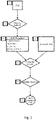
- Fig. 1 is a block diagram of the system and method proposed by the present invention parts and components, according to an embodiment of the present invention.
- the system includes a relevant CVE dataset 1 out of the publicly available database, which stores the newly published CVEs from the internet into a database server.
- the Properties Extractor 2 is a software module which uses NLP techniques to extract the relevant properties from the CVE's text.
- the CVE's text is usually following the MITRE guidelines (which are guidelines for designing user interface software, the MITRE Corporation, Bedford, Massachusetts, U.S.A.) but not always, due to the huge amount of people that contribute to the CVE databases. For a human, it is easy to extract the relevant properties from the CVE, but for a computer program, it is a more complicated task. Some similar properties can be located in different locations in the CVE text, some can be referred to with multiple names, and some are concepts abbreviations. These are the reasons that the CVEs are usually used for manual exploration by security researchers.
- NLP Natural Language Processing
- the method proposed by the present invention uses NLP techniques to build a model that learns where the relevant properties are located in the CVE's text, and extracts them into a structured format.
- the CVE Properties module 3 is a software module which provides structured information about the exploitation of a computerized device (which may be any computerized product), with a focus on web attacks.
- the relevant CVE's properties for the method are: Product Name (for example, the IP address), Attack Pattern, Exploited File Name and Exploited Parameter Name.
- Product Name - is used to understand what product is being attacked. Knowing the product name, it is possible to locate its relevant records in the honeypot data and investigate only them.
- Attack Pattern - Attack patterns are descriptions of common methods for exploiting software, in order to understand how the product is being exploited. There are many ways to compromise a product using different attack patterns.
- Exploited Parameter Name this is the actual parameter that is being abused (for example, URL parameters, which are a way to structure additional information for a given URL).
- Query parameters are primarily used to specify and sort content on a web page, but they're also often used for traffic tracking). By inserting specific values to this parameter, the attacker can achieve his goal: to retrieve information, sabotage the service, apply denial of service, etc.
- Honeypot Data Server 4 is a web server of honeypots data.
- a honeypot consists of data (for example, in a network site) that appears to be a legitimate part of the site, but is actually isolated and monitored, and that seems to contain information or a resource of value to attackers.
- the method proposed by the present invention uses data recorded by web-based honeypots that pretend to be web servers.
- the honeypots are low-interaction web applications, capable of emulating thousands of vulnerabilities to gather data from attacks that target web applications. The principle is to reply to the attack, using the response the attacker is expecting from his attempt to exploit the web application.
- Low interaction honeypots such as a Glastopf honeypot (Glastopf is a low-interaction honeypot that emulates a vulnerable web server hosting many web pages and web applications with thousands of vulnerabilities) are designed to emulate vulnerable services and potentially detect attacks without exposing the full operating system functionality.
- Glastopf honeypot is a low-interaction honeypot that emulates a vulnerable web server hosting many web pages and web applications with thousands of vulnerabilities
- Properties Locator 5 is a software module that is used to locate the CVE's properties in the honeypot data records.
- the Properties Locator module operates on time series data by using simple substrings lookup for some of the properties, as well as combining more advanced techniques of NLP and clustering for other, more vague, CVE's properties. This task requires many advanced algorithms with the following challenges:
- the properties listed above are not always available, since it is not guaranteed that all of them exist in the CVE.
- the existing properties may not appear in the honeypot records by their name. For example, a product named Content Management System can appear in the honeypot recorder as "cms".
- An autoencoder is used to learn an embedding representation on the attack pattern part of each of the honeypot requests, and apply K-Means (K-Means clustering is a method of vector quantization, originally from signal processing, that is popular for cluster analysis in data mining.
- K-means clustering aims to partition n observations into k clusters in which each observation belongs to the cluster with the nearest mean, serving as a prototype of the cluster) and DBSCAN (Density-Based Spatial Clustering of Applications with Noise- DBSCAN- is a density-based non-parametric data clustering algorithm: given a set of points in some space, it groups together points that are closely packed together (points with many nearby neighbors), marking as outliers points that lie alone in low-density regions (whose nearest neighbors are too far away)) clustering methods on the embeddings (an embedding is a mapping of a discrete categorical variable to a vector of continuous numbers.
- word2vec is a neural network-based model that is used to produce word embeddings (the representation of words for text analysis, typically in the form of a real-valued vector that encodes the meaning of the word such that the words that are closer in the vector space are expected to be similar in meaning).
- This model is a shallow, two-layer neural network that is trained to reconstruct linguistic contexts of words.
- Word2vec takes as its input a large corpus of text and produces a vector space, typically of several hundred dimensions, with each unique word in the corpus being assigned a corresponding vector in the space.
- Word vectors are positioned in the vector space such that words that share common contexts in the corpus are located close to one another in the space) is being applied on each honeypot record for extracting an embedding representation for each record, thereby helping identifying similar products with different names.
- products called "phpmyadmin” and “php_my_admin” and "pma” are typically referring to the same service.
- the proposed method is able to identify that all these names refer to the same product by calculating the most similar embeddings to a specific product.
- the exploited file and parameter usually appear as they are in the honeypot data (choosing the most suitable parameters for the model is a necessary part of the model training. There are two important parameters in random forest algorithm which will determine the accuracy of the model.
- n_estimators is “n_estimators.”
- max_depth is the maximum allowable depth for each tree. If “n_estimators” is too big, the result may be overfitting. However, if “n_estimators” is too small, the result may be underfitting. So, a suitable value of “n_estimators” is important for the predicted accuracy of the final model.).
- Anomaly Detection module 6 is a software module that is used for locating all the honeypot records that belong to this specific CVE's properties for a given CVE, using anomaly detection methods (to locate trends in the honeypot records and relevant for each CVE). Then, it applies anomaly behavior recognition methods to estimate if the CVE has been exploited.
- anomaly behavior recognition methods to estimate if the CVE has been exploited.
- honeypot temporal data analysis There are several ways to evaluate an exploited CVE using honeypot temporal data analysis. One is by seeing a peak in scans after the CVE was published, the second is by seeing changes in exploitation pattern (i.e. - all previous requests for this service were Cross-site scripting and now changed to SQL injection), and the third is by seeing a peak of new different IPs trying to exploit this CVE.
- Alert Exploited CVE module 7 is a software module which scores all the anomalies that are related to the CVE and alerts on exploited ones. An expert analyst can give a score for each of these anomalies (and identify even more cases) and the system alerts on the CVEs with the highest scores (CVEs with in-the-wild exploitation - in-the-wild threats are threats spreading among real world computers).
- honeypot records are clustered and split into clusters of similar attack patterns, for overcoming the challenges that the properties are not always available. It is not guaranteed that all of them exist in the CVE and the existing properties may not appear in the honeypot records by their name.
Landscapes
- Engineering & Computer Science (AREA)
- Computer Security & Cryptography (AREA)
- General Engineering & Computer Science (AREA)
- Computer Hardware Design (AREA)
- Theoretical Computer Science (AREA)
- Software Systems (AREA)
- Physics & Mathematics (AREA)
- Computing Systems (AREA)
- General Physics & Mathematics (AREA)
- Computer Networks & Wireless Communication (AREA)
- Signal Processing (AREA)
- General Health & Medical Sciences (AREA)
- Health & Medical Sciences (AREA)
- Computational Linguistics (AREA)
- Virology (AREA)
- Mathematical Physics (AREA)
- Biophysics (AREA)
- Biomedical Technology (AREA)
- Artificial Intelligence (AREA)
- Life Sciences & Earth Sciences (AREA)
- Data Mining & Analysis (AREA)
- Evolutionary Computation (AREA)
- Molecular Biology (AREA)
- Other Investigation Or Analysis Of Materials By Electrical Means (AREA)
- Investigating Or Analyzing Materials By The Use Of Ultrasonic Waves (AREA)
- Inspection Of Paper Currency And Valuable Securities (AREA)
- Information Transfer Between Computers (AREA)
- Computer And Data Communications (AREA)
Abstract
Description
- The present invention relates to the field of cyber security. More particularly, the present invention relates to automatic computer-implemented system and method for identifying exploited CVEs, using honeypots.
- Common Vulnerabilities and Exposures (CVE) is a dictionary-type list of standardized names for vulnerabilities and other information related to security exposures. CVE aims to standardize the names for all publicly known vulnerabilities and security exposures. The goal of CVE is to make it easier to share data across separate vulnerable databases and security tools for handling cybersecurity problems and attacks (like viruses, malware, etc.). There is a need to standardize the way each known vulnerability or exposure is identified. Standard IDs allow security administrators to access technical information about a specific threat across multiple CVE-compatible information sources. Not all the CVEs are being exploited in the real world.
- CVEs can be free publicly available on lots of websites, contributed by many security experts and organizations, and written in semi-structured form, almost always followed by MITRE CVE guidelines. MITRE is a not-for-profit organization that operates research and development centers sponsored by the U.S federal government.
- "99% of the vulnerabilities exploited by the end of 2020 will continue to be ones known by security and IT professionals at the time of the incident" ( Gartner, Inc., Stamford, CT, U.S.A.).
- These CVEs contain valuable information about most of the known vulnerabilities and are commonly used by security researchers\analysts to manually investigate suspicious activities. Not every vulnerability is a risk. If a CVE exists, it doesn't mean is already exploited in the real world - It has the potential to be exploited.
- A Honeypot is a network-attached system (a computer security mechanism) set up as a decoy to lure cyber-attackers and to detect, deflect or study hacking attempts to gain unauthorized access to information systems. The function of a honeypot is to represent itself on the internet as a potential target for attackers (usually a server or other high-value target) and to gather information and notify defenders regarding any attempt to access the honeypot by unauthorized users.
- The disadvantage of the currently available conventional methods for working with CVE lists is that it is unknown which CVEs from the list were exploited. Therefore, it is necessary to check all the CVEs in the list and extract only the exploited CVEs. These tests are performed manually by software engineers and professionals, and not automatically.
- It is therefore an object of the present invention to provide an automatic computer-implemented system and method for identifying exploited CVEs using honeypots, for locating publicly known vulnerabilities in the honeypot data and alerting on the currently exploited CVEs by detecting anomalies in the honeypots.
- It is another object of the present invention to provide an automatic computer-implemented system and method for identifying exploited CVEs using honeypots, to extract meaningful properties from the CVEs.
- It is a further object of the present invention to provide an automatic computer-implemented system and method for identifying exploited CVEs using honeypots, without the need for human intervention.
- Other objects and advantages of the invention will become apparent as the description proceeds.
- An automatic computer-implemented method for identifying exploited CVEs using honeypots, comprising the steps of:
- a) downloading and storing new published CVEs from the internet into a database server;
- b) extracting properties from the stored CVEs into a structured format, using Natural Language Processing algorithms;
- c) recording all incoming data traffic using one or more honeypot servers and sending the honeypot records to a central database server;
- d) locating the CVE's properties in the honeypot records using Product Name, Attack Pattern, Exploited File Name and Exploited Parameter Name, and storing the records for further analysis;
- e) detecting anomalies in the CVE's related records; and
- f) scoring each CVE's exploitability by its anomalies status and alerting CVEs having a score higher than a predetermined value.
- The honeypot servers may be Glastof honeypot servers.
- In one aspect, the CVE's text follows the MITRE guidelines.
- The honeypots may be low-interaction web applications that are capable of emulating thousands of vulnerabilities, for gathering data from attacks that target web applications.
- The Properties Locator may use a simple substrings lookup for several properties and combines advanced techniques of NLP and clustering methods for other more vague CVE's properties.
- An exploited CVE may be evaluated using honeypot temporal data analysis by:
- identifying a peak in scans after the CVE was published;
- identifying changes in exploitation pattern;
- identifying a peak of new different IPs trying to exploit the CVE.
- In one aspect, the honeypot records are clustered, and being split into clusters of similar attack patterns.
- An autoencoder may be used to learn an embedding representation on the attack pattern part of each of the honeypot requests, and apply K-Means and DBSCAN clustering methods on the embeddings.
- The identification that all names referring to the same product is performed by calculating the most similar embeddings to a specific product.
- An automatic system for identifying exploited CVEs using honeypots, comprising:
- a) a server for downloading and storing new published CVEs from the internet into a database server;
- b) a Properties Extractor software module which uses NLP techniques and algorithms for extracting the relevant properties from the stored CVE's text;
- c) a CVE Properties software module which provides structured information about the exploitation of a product, with a focus on web attacks;
- d) one or more honeypot web servers for recording all income traffic and sending it to a central database server;
- e) a Properties Locator software module for locating the CVE's properties in the honeypot data records and storing those records, to be analyzed;
- f) an Anomaly Detection software module for locating all the honeypot records that belong to a specific CVE's properties for a given CVE and detecting anomalies in the CVE's related records by applying anomaly behavior recognition methods to estimate if the CVE has been exploited; and
- g) an Alert Exploited CVE software module for scoring each CVE's exploitability by its anomalies status, and alerting CVEs with a high score (higher than a predetermined value), using a rule-based scoring system.
- The Honeypot Data may be a web server of stored honeypots data, which consists of data that appears to be a legitimate part of the site, but is isolated and monitored, and that seems to contain information or a resource of value to attackers.
- The above and other characteristics and advantages of the invention will be better understood through the following illustrative and non-limitative detailed description of preferred embodiments thereof, with reference to the appended drawings, wherein:
-
Fig. 1 is a block diagram of the system and method proposed by the present invention parts and components, according to an embodiment of the present invention. - The present invention provides an automatic computer-implemented system and method for identifying exploited CVEs using honeypots. The proposed method recognizes new exploited CVEs and updates the existing exploited CVEs list according to the newly recognized CVEs. The proposed method automatically extracts the relevant properties from the CVE text, and locates these properties in the honeypot data. When a CVE gets published, the method proposed by the present invention finds anomalies in the honeypot data relate to these CVEs and alerts on actually exploited CVEs.
-
Fig. 1 is a block diagram of the system and method proposed by the present invention parts and components, according to an embodiment of the present invention. The system includes a relevant CVE dataset 1 out of the publicly available database, which stores the newly published CVEs from the internet into a database server. - The
Properties Extractor 2 is a software module which uses NLP techniques to extract the relevant properties from the CVE's text. The CVE's text is usually following the MITRE guidelines (which are guidelines for designing user interface software, the MITRE Corporation, Bedford, Massachusetts, U.S.A.) but not always, due to the huge amount of people that contribute to the CVE databases. For a human, it is easy to extract the relevant properties from the CVE, but for a computer program, it is a more complicated task. Some similar properties can be located in different locations in the CVE text, some can be referred to with multiple names, and some are concepts abbreviations. These are the reasons that the CVEs are usually used for manual exploration by security researchers. Due to the rapid developments in Natural Language Processing (NLP - a subfield of artificial intelligence concerned with the interactions between computers and human language, in particular how to program computers to process and analyze large amounts of natural language data. The goal is a computer capable of "understanding" the contents of documents, including the contextual nuances of the language within them), which is the technical form that relates to all software techniques related to text analysis, it is possible to build powerful models that can process text and extract information from the text. - The method proposed by the present invention uses NLP techniques to build a model that learns where the relevant properties are located in the CVE's text, and extracts them into a structured format.
- The
CVE Properties module 3 is a software module which provides structured information about the exploitation of a computerized device (which may be any computerized product), with a focus on web attacks. The relevant CVE's properties for the method are: Product Name (for example, the IP address), Attack Pattern, Exploited File Name and Exploited Parameter Name. - Product Name - is used to understand what product is being attacked. Knowing the product name, it is possible to locate its relevant records in the honeypot data and investigate only them.
- Attack Pattern - Attack patterns are descriptions of common methods for exploiting software, in order to understand how the product is being exploited. There are many ways to compromise a product using different attack patterns.
- Exploited File Name - this is the exploit entrance point represented by the source file where the attacker finds a parameter to abuse.
- Exploited Parameter Name - this is the actual parameter that is being abused (for example, URL parameters, which are a way to structure additional information for a given URL). Query parameters are primarily used to specify and sort content on a web page, but they're also often used for traffic tracking). By inserting specific values to this parameter, the attacker can achieve his goal: to retrieve information, sabotage the service, apply denial of service, etc.
- Honeypot Data Server 4 is a web server of honeypots data. Generally, a honeypot consists of data (for example, in a network site) that appears to be a legitimate part of the site, but is actually isolated and monitored, and that seems to contain information or a resource of value to attackers. The method proposed by the present invention uses data recorded by web-based honeypots that pretend to be web servers. The honeypots are low-interaction web applications, capable of emulating thousands of vulnerabilities to gather data from attacks that target web applications. The principle is to reply to the attack, using the response the attacker is expecting from his attempt to exploit the web application. Low interaction honeypots, such as a Glastopf honeypot (Glastopf is a low-interaction honeypot that emulates a vulnerable web server hosting many web pages and web applications with thousands of vulnerabilities) are designed to emulate vulnerable services and potentially detect attacks without exposing the full operating system functionality.
-
Properties Locator 5 is a software module that is used to locate the CVE's properties in the honeypot data records. The Properties Locator module operates on time series data by using simple substrings lookup for some of the properties, as well as combining more advanced techniques of NLP and clustering for other, more vague, CVE's properties. This task requires many advanced algorithms with the following challenges:
The properties listed above are not always available, since it is not guaranteed that all of them exist in the CVE. The existing properties may not appear in the honeypot records by their name. For example, a product named Content Management System can appear in the honeypot recorder as "cms". Another example, an attack pattern SQL Injection (SQL injection is a code injection technique used to attack data-driven applications, in which malicious SQL statements are inserted into an entry field for execution, e.g., to dump the database contents to the attacker, that appears in many different forms like "+and+1=1" or "1 UNION SELECT 1 FROM information_schema.tables". Such challenges are overcome by clustering all the honeypot records, and splitting them into clusters of similar attack patterns. An autoencoder is used to learn an embedding representation on the attack pattern part of each of the honeypot requests, and apply K-Means (K-Means clustering is a method of vector quantization, originally from signal processing, that is popular for cluster analysis in data mining. K-means clustering aims to partition n observations into k clusters in which each observation belongs to the cluster with the nearest mean, serving as a prototype of the cluster) and DBSCAN (Density-Based Spatial Clustering of Applications with Noise- DBSCAN- is a density-based non-parametric data clustering algorithm: given a set of points in some space, it groups together points that are closely packed together (points with many nearby neighbors), marking as outliers points that lie alone in low-density regions (whose nearest neighbors are too far away)) clustering methods on the embeddings (an embedding is a mapping of a discrete categorical variable to a vector of continuous numbers. In the context of neural networks, embeddings are low-dimensional, learned continuous vector representations of discrete variables. Neural network embeddings are useful because they can reduce the dimensionality of categorical variables and meaningfully represent categories in the transformed space). The attack pattern part of a request will be all the charters to the right of the '?' charter a URL request. For example: For a given URL request-"/folder1/folder2/file.txt?param1=val1" the attack pattern will be "param1=val". In addition, word2vec (Word2vec is a neural network-based model that is used to produce word embeddings (the representation of words for text analysis, typically in the form of a real-valued vector that encodes the meaning of the word such that the words that are closer in the vector space are expected to be similar in meaning). This model is a shallow, two-layer neural network that is trained to reconstruct linguistic contexts of words. Word2vec takes as its input a large corpus of text and produces a vector space, typically of several hundred dimensions, with each unique word in the corpus being assigned a corresponding vector in the space. Word vectors are positioned in the vector space such that words that share common contexts in the corpus are located close to one another in the space) is being applied on each honeypot record for extracting an embedding representation for each record, thereby helping identifying similar products with different names. For example, products called "phpmyadmin" and "php_my_admin" and "pma" are typically referring to the same service. The proposed method is able to identify that all these names refer to the same product by calculating the most similar embeddings to a specific product. The exploited file and parameter usually appear as they are in the honeypot data (choosing the most suitable parameters for the model is a necessary part of the model training. There are two important parameters in random forest algorithm which will determine the accuracy of the model. One is "n_estimators." Another is "max_depth." "n_estimators" is the number of decision trees and "max_depth" is the maximum allowable depth for each tree. If "n_estimators" is too big, the result may be overfitting. However, if "n_estimators" is too small, the result may be underfitting. So, a suitable value of "n_estimators" is important for the predicted accuracy of the final model.). -
Anomaly Detection module 6 is a software module that is used for locating all the honeypot records that belong to this specific CVE's properties for a given CVE, using anomaly detection methods (to locate trends in the honeypot records and relevant for each CVE). Then, it applies anomaly behavior recognition methods to estimate if the CVE has been exploited. There are several ways to evaluate an exploited CVE using honeypot temporal data analysis. One is by seeing a peak in scans after the CVE was published, the second is by seeing changes in exploitation pattern (i.e. - all previous requests for this service were Cross-site scripting and now changed to SQL injection), and the third is by seeing a peak of new different IPs trying to exploit this CVE. - Alert Exploited
CVE module 7 is a software module which scores all the anomalies that are related to the CVE and alerts on exploited ones. An expert analyst can give a score for each of these anomalies (and identify even more cases) and the system alerts on the CVEs with the highest scores (CVEs with in-the-wild exploitation - in-the-wild threats are threats spreading among real world computers). - All the honeypot records are clustered and split into clusters of similar attack patterns, for overcoming the challenges that the properties are not always available. It is not guaranteed that all of them exist in the CVE and the existing properties may not appear in the honeypot records by their name.
- The above examples and description have of course been provided only for the purpose of illustration, and are not intended to limit the invention in any way. As will be appreciated by the skilled person, the invention can be carried out in a great variety of ways, employing more than one technique from those described above, all without exceeding the scope of the invention.
Claims (11)
- An automatic computer-implemented method for identifying exploited CVEs using honeypots, comprising:a) downloading and storing new published CVEs from the internet into a database server;b) extracting properties from the stored CVEs into a structured format, using Natural Language Processing;c) recording all incoming data traffic using one or more honeypot servers and sending the honeypot records to a central database server;d) locating CVE's properties in said honeypot records using Product Name, Attack Pattern, Exploited File Name and Exploited Parameter Name, and storing CVE's related records;e) detecting anomalies in said CVE's related records; andf) scoring each CVE's exploitability by its anomalies status and alerting CVEs having a score higher than a predetermined value.
- A method according to claim 1, wherein the honeypot servers are Glastof honeypot servers.
- A method according to claim 1, wherein the CVE's text follows the MITRE guidelines.
- A method according to claim 1, wherein the honeypots are low-interaction web applications being capable of emulating thousands of vulnerabilities, for gathering data from attacks that target web applications.
- A method according to claim 1, wherein the Properties Locator uses simple substrings lookup for several CVE's properties, and combines of NLP and clustering techniques for more vague CVE's properties.
- A method according to claim 1, wherein an exploited CVE is evaluated using honeypot temporal data analysis by:- identifying a peak in scans after the CVE was published;- identifying changes in the exploitation pattern;- identifying a peak of new different IPs trying to exploit said CVE.
- A method according to claim 1, wherein all the honeypot records are clustered, and being split into clusters having similar attack patterns.
- A method according to claim 1, wherein an autoencoder is used to learn an embedding representation on the attack pattern part of each of the honeypot requests, and apply K-Means and DBSCAN clustering on the embeddings.
- A method according to claim 1, wherein the identification that all names referring to the same product is performed by calculating the most similar embeddings to a specific product.
- An automatic system for identifying exploited CVEs using honeypots, comprising:a) a server for downloading and storing new published CVEs from the internet into a database server;b) a Properties Extractor software module which uses NLP techniques and algorithms for extracting the relevant properties from the stored CVE's text;c) a CVE Properties software module which provides structured information about the exploitation of a product, with a focus on web attacks;d) one or more honeypot web servers for recording all income traffic and sending it to a central database server;e) a Properties Locator software module for locating the CVE's properties in the honeypot data records and storing those records, to be analyzed;f) an Anomaly Detection software module for locating all said honeypot records that belong to a specific CVE's properties for a given CVE and detecting anomalies in the CVE's related records by applying anomaly behavior recognition methods to estimate if the CVE has been exploited; andg) an Alert Exploited CVE software module for scoring each CVE's exploitability by its anomalies status, and alerting CVEs with a high score, using a rule-based scoring system.
- A system according to claim 9, wherein the Honeypot Data Server is an isolated and monitored web server of stored honeypots data, which consists of data that appears to be a legitimate part of the site, and potentially contains information being valuable to attackers.
Applications Claiming Priority (1)
| Application Number | Priority Date | Filing Date | Title |
|---|---|---|---|
| IL279893A IL279893A (en) | 2020-12-31 | 2020-12-31 | A system and method for identifying exploited cves using honeypots |
Publications (2)
| Publication Number | Publication Date |
|---|---|
| EP4024252A1 true EP4024252A1 (en) | 2022-07-06 |
| EP4024252B1 EP4024252B1 (en) | 2024-08-14 |
Family
ID=79269756
Family Applications (1)
| Application Number | Title | Priority Date | Filing Date |
|---|---|---|---|
| EP21217793.5A Active EP4024252B1 (en) | 2020-12-31 | 2021-12-27 | A system and method for identifying exploited cves using honeypots |
Country Status (2)
| Country | Link |
|---|---|
| EP (1) | EP4024252B1 (en) |
| IL (1) | IL279893A (en) |
Cited By (4)
| Publication number | Priority date | Publication date | Assignee | Title |
|---|---|---|---|---|
| CN116074080A (en) * | 2023-01-28 | 2023-05-05 | 北京航天驭星科技有限公司 | Data processing method and platform of satellite ground station management system |
| CN116800525A (en) * | 2023-07-21 | 2023-09-22 | 浙江网商银行股份有限公司 | Honeypot protection methods, devices, storage media and electronic equipment |
| CN118101346A (en) * | 2024-04-25 | 2024-05-28 | 广州大学 | A method for automatically generating attack graph interaction rules for honeypoint deployment |
| CN120498898A (en) * | 2025-07-09 | 2025-08-15 | 中国电建集团江西省电力设计院有限公司 | Electric honey pot construction method and system based on large language model |
Citations (3)
| Publication number | Priority date | Publication date | Assignee | Title |
|---|---|---|---|---|
| EP3336739A1 (en) * | 2016-12-18 | 2018-06-20 | Deutsche Telekom AG | A method for classifying attack sources in cyber-attack sensor systems |
| EP3340567A1 (en) * | 2016-12-21 | 2018-06-27 | Deutsche Telekom AG | Model for identifying attack propagation patterns in a monitored sensor-based system |
| US20200374298A1 (en) * | 2019-05-20 | 2020-11-26 | Architecture Technology Corporation | Systems and methods for malware detection and mitigation |
-
2020
- 2020-12-31 IL IL279893A patent/IL279893A/en unknown
-
2021
- 2021-12-27 EP EP21217793.5A patent/EP4024252B1/en active Active
Patent Citations (3)
| Publication number | Priority date | Publication date | Assignee | Title |
|---|---|---|---|---|
| EP3336739A1 (en) * | 2016-12-18 | 2018-06-20 | Deutsche Telekom AG | A method for classifying attack sources in cyber-attack sensor systems |
| EP3340567A1 (en) * | 2016-12-21 | 2018-06-27 | Deutsche Telekom AG | Model for identifying attack propagation patterns in a monitored sensor-based system |
| US20200374298A1 (en) * | 2019-05-20 | 2020-11-26 | Architecture Technology Corporation | Systems and methods for malware detection and mitigation |
Non-Patent Citations (1)
| Title |
|---|
| ABBASI ET AL: "Detection and classification of malicious network streams in honeynets", A THESIS PRESENTED IN PARTIAL FULFILMENT OF THE REQUIREMENTS FOR THE DEGREE OF DOCTOR OF PHILOSOPHY IN COMPUTER SCIENCE, 16 December 2013 (2013-12-16), Massey University, XP055864235, Retrieved from the Internet <URL:https://mro.massey.ac.nz/bitstream/handle/10179/4967/02_whole.pdf?sequence=2&isAllowed=y> [retrieved on 20211122] * |
Cited By (5)
| Publication number | Priority date | Publication date | Assignee | Title |
|---|---|---|---|---|
| CN116074080A (en) * | 2023-01-28 | 2023-05-05 | 北京航天驭星科技有限公司 | Data processing method and platform of satellite ground station management system |
| CN116074080B (en) * | 2023-01-28 | 2023-06-16 | 北京航天驭星科技有限公司 | Data processing method and platform of satellite ground station management system |
| CN116800525A (en) * | 2023-07-21 | 2023-09-22 | 浙江网商银行股份有限公司 | Honeypot protection methods, devices, storage media and electronic equipment |
| CN118101346A (en) * | 2024-04-25 | 2024-05-28 | 广州大学 | A method for automatically generating attack graph interaction rules for honeypoint deployment |
| CN120498898A (en) * | 2025-07-09 | 2025-08-15 | 中国电建集团江西省电力设计院有限公司 | Electric honey pot construction method and system based on large language model |
Also Published As
| Publication number | Publication date |
|---|---|
| IL279893A (en) | 2022-07-01 |
| EP4024252B1 (en) | 2024-08-14 |
Similar Documents
| Publication | Publication Date | Title |
|---|---|---|
| Alam et al. | Phishing attacks detection using machine learning approach | |
| Kumar et al. | A robust intelligent zero-day cyber-attack detection technique | |
| US11425161B2 (en) | Computer-implemented method, a system and a computer program for identifying malicious URI data items | |
| Shibahara et al. | Efficient dynamic malware analysis based on network behavior using deep learning | |
| Huang et al. | Open source intelligence for malicious behavior discovery and interpretation | |
| EP4024252B1 (en) | A system and method for identifying exploited cves using honeypots | |
| US12524523B2 (en) | Cyber threat information processing apparatus, cyber threat information processing method, and storage medium storing cyber threat information processing program | |
| KR102592624B1 (en) | Threat hunting system and method for against social issue-based advanced persistent threat using artificial intelligence | |
| Geyik et al. | Detection of phishing websites from URLs by using classification techniques on WEKA | |
| US20240348639A1 (en) | Cyber threat information processing apparatus, cyber threat information processing method, and storage medium storing cyber threat information processing program | |
| CN118138361A (en) | Security policy making method and system based on autonomously evolutionary agent | |
| US20240054215A1 (en) | Cyber threat information processing apparatus, cyber threat information processing method, and storage medium storing cyber threat information processing program | |
| US20250028818A1 (en) | Cyber threat information processing apparatus, cyber threat information processing method, and storage medium storing cyber threat information processing program | |
| Shin et al. | Unsupervised multi-stage attack detection framework without details on single-stage attacks | |
| CN114500122B (en) | Specific network behavior analysis method and system based on multi-source data fusion | |
| CN117118658A (en) | A data processing method, device, equipment, media and program product | |
| Tyagi et al. | Next generation phishing detection and prevention system using machine learning | |
| Bergman et al. | Recognition of tor malware and onion services | |
| Majidpour et al. | Application of deep learning to enhance the accuracy of intrusion detection in modern computer networks | |
| Apoorva et al. | Analysis of uniform resource locator using boosting algorithms for forensic purpose | |
| US20240154997A1 (en) | Tor-based malware detection | |
| Sugantham V et al. | An Improved Method of Phishing URL Detection Using Machine Learning | |
| KR20240085509A (en) | Threat hunting system and method for defending social issue-based advanced persistent threat using asset vulnerability analysis | |
| Amen et al. | Machine Learning for Multiple Stage Phishing URL Prediction | |
| Anashkin et al. | Implementation of Behavioral Indicators in Threat Detection and User Behavior Analysis |
Legal Events
| Date | Code | Title | Description |
|---|---|---|---|
| PUAI | Public reference made under article 153(3) epc to a published international application that has entered the european phase |
Free format text: ORIGINAL CODE: 0009012 |
|
| STAA | Information on the status of an ep patent application or granted ep patent |
Free format text: STATUS: THE APPLICATION HAS BEEN PUBLISHED |
|
| AK | Designated contracting states |
Kind code of ref document: A1 Designated state(s): AL AT BE BG CH CY CZ DE DK EE ES FI FR GB GR HR HU IE IS IT LI LT LU LV MC MK MT NL NO PL PT RO RS SE SI SK SM TR |
|
| STAA | Information on the status of an ep patent application or granted ep patent |
Free format text: STATUS: REQUEST FOR EXAMINATION WAS MADE |
|
| 17P | Request for examination filed |
Effective date: 20230102 |
|
| RBV | Designated contracting states (corrected) |
Designated state(s): AL AT BE BG CH CY CZ DE DK EE ES FI FR GB GR HR HU IE IS IT LI LT LU LV MC MK MT NL NO PL PT RO RS SE SI SK SM TR |
|
| GRAP | Despatch of communication of intention to grant a patent |
Free format text: ORIGINAL CODE: EPIDOSNIGR1 |
|
| STAA | Information on the status of an ep patent application or granted ep patent |
Free format text: STATUS: GRANT OF PATENT IS INTENDED |
|
| INTG | Intention to grant announced |
Effective date: 20240529 |
|
| GRAS | Grant fee paid |
Free format text: ORIGINAL CODE: EPIDOSNIGR3 |
|
| GRAA | (expected) grant |
Free format text: ORIGINAL CODE: 0009210 |
|
| STAA | Information on the status of an ep patent application or granted ep patent |
Free format text: STATUS: THE PATENT HAS BEEN GRANTED |
|
| AK | Designated contracting states |
Kind code of ref document: B1 Designated state(s): AL AT BE BG CH CY CZ DE DK EE ES FI FR GB GR HR HU IE IS IT LI LT LU LV MC MK MT NL NO PL PT RO RS SE SI SK SM TR |
|
| REG | Reference to a national code |
Ref country code: GB Ref legal event code: FG4D |
|
| REG | Reference to a national code |
Ref country code: CH Ref legal event code: EP |
|
| REG | Reference to a national code |
Ref country code: DE Ref legal event code: R096 Ref document number: 602021017167 Country of ref document: DE |
|
| REG | Reference to a national code |
Ref country code: IE Ref legal event code: FG4D |
|
| REG | Reference to a national code |
Ref country code: LT Ref legal event code: MG9D |
|
| REG | Reference to a national code |
Ref country code: NL Ref legal event code: MP Effective date: 20240814 |
|
| PG25 | Lapsed in a contracting state [announced via postgrant information from national office to epo] |
Ref country code: NO Free format text: LAPSE BECAUSE OF FAILURE TO SUBMIT A TRANSLATION OF THE DESCRIPTION OR TO PAY THE FEE WITHIN THE PRESCRIBED TIME-LIMIT Effective date: 20241114 |
|
| REG | Reference to a national code |
Ref country code: AT Ref legal event code: MK05 Ref document number: 1713972 Country of ref document: AT Kind code of ref document: T Effective date: 20240814 |
|
| PG25 | Lapsed in a contracting state [announced via postgrant information from national office to epo] |
Ref country code: FI Free format text: LAPSE BECAUSE OF FAILURE TO SUBMIT A TRANSLATION OF THE DESCRIPTION OR TO PAY THE FEE WITHIN THE PRESCRIBED TIME-LIMIT Effective date: 20240814 Ref country code: NL Free format text: LAPSE BECAUSE OF FAILURE TO SUBMIT A TRANSLATION OF THE DESCRIPTION OR TO PAY THE FEE WITHIN THE PRESCRIBED TIME-LIMIT Effective date: 20240814 Ref country code: PT Free format text: LAPSE BECAUSE OF FAILURE TO SUBMIT A TRANSLATION OF THE DESCRIPTION OR TO PAY THE FEE WITHIN THE PRESCRIBED TIME-LIMIT Effective date: 20241216 Ref country code: PL Free format text: LAPSE BECAUSE OF FAILURE TO SUBMIT A TRANSLATION OF THE DESCRIPTION OR TO PAY THE FEE WITHIN THE PRESCRIBED TIME-LIMIT Effective date: 20240814 Ref country code: GR Free format text: LAPSE BECAUSE OF FAILURE TO SUBMIT A TRANSLATION OF THE DESCRIPTION OR TO PAY THE FEE WITHIN THE PRESCRIBED TIME-LIMIT Effective date: 20241115 |
|
| PG25 | Lapsed in a contracting state [announced via postgrant information from national office to epo] |
Ref country code: BG Free format text: LAPSE BECAUSE OF FAILURE TO SUBMIT A TRANSLATION OF THE DESCRIPTION OR TO PAY THE FEE WITHIN THE PRESCRIBED TIME-LIMIT Effective date: 20240814 |
|
| PG25 | Lapsed in a contracting state [announced via postgrant information from national office to epo] |
Ref country code: LV Free format text: LAPSE BECAUSE OF FAILURE TO SUBMIT A TRANSLATION OF THE DESCRIPTION OR TO PAY THE FEE WITHIN THE PRESCRIBED TIME-LIMIT Effective date: 20240814 |
|
| PG25 | Lapsed in a contracting state [announced via postgrant information from national office to epo] |
Ref country code: AT Free format text: LAPSE BECAUSE OF FAILURE TO SUBMIT A TRANSLATION OF THE DESCRIPTION OR TO PAY THE FEE WITHIN THE PRESCRIBED TIME-LIMIT Effective date: 20240814 Ref country code: IS Free format text: LAPSE BECAUSE OF FAILURE TO SUBMIT A TRANSLATION OF THE DESCRIPTION OR TO PAY THE FEE WITHIN THE PRESCRIBED TIME-LIMIT Effective date: 20241214 |
|
| PG25 | Lapsed in a contracting state [announced via postgrant information from national office to epo] |
Ref country code: HR Free format text: LAPSE BECAUSE OF FAILURE TO SUBMIT A TRANSLATION OF THE DESCRIPTION OR TO PAY THE FEE WITHIN THE PRESCRIBED TIME-LIMIT Effective date: 20240814 |
|
| PG25 | Lapsed in a contracting state [announced via postgrant information from national office to epo] |
Ref country code: ES Free format text: LAPSE BECAUSE OF FAILURE TO SUBMIT A TRANSLATION OF THE DESCRIPTION OR TO PAY THE FEE WITHIN THE PRESCRIBED TIME-LIMIT Effective date: 20240814 Ref country code: RS Free format text: LAPSE BECAUSE OF FAILURE TO SUBMIT A TRANSLATION OF THE DESCRIPTION OR TO PAY THE FEE WITHIN THE PRESCRIBED TIME-LIMIT Effective date: 20241114 |
|
| PG25 | Lapsed in a contracting state [announced via postgrant information from national office to epo] |
Ref country code: RS Free format text: LAPSE BECAUSE OF FAILURE TO SUBMIT A TRANSLATION OF THE DESCRIPTION OR TO PAY THE FEE WITHIN THE PRESCRIBED TIME-LIMIT Effective date: 20241114 Ref country code: PT Free format text: LAPSE BECAUSE OF FAILURE TO SUBMIT A TRANSLATION OF THE DESCRIPTION OR TO PAY THE FEE WITHIN THE PRESCRIBED TIME-LIMIT Effective date: 20241216 Ref country code: PL Free format text: LAPSE BECAUSE OF FAILURE TO SUBMIT A TRANSLATION OF THE DESCRIPTION OR TO PAY THE FEE WITHIN THE PRESCRIBED TIME-LIMIT Effective date: 20240814 Ref country code: NO Free format text: LAPSE BECAUSE OF FAILURE TO SUBMIT A TRANSLATION OF THE DESCRIPTION OR TO PAY THE FEE WITHIN THE PRESCRIBED TIME-LIMIT Effective date: 20241114 Ref country code: NL Free format text: LAPSE BECAUSE OF FAILURE TO SUBMIT A TRANSLATION OF THE DESCRIPTION OR TO PAY THE FEE WITHIN THE PRESCRIBED TIME-LIMIT Effective date: 20240814 Ref country code: LV Free format text: LAPSE BECAUSE OF FAILURE TO SUBMIT A TRANSLATION OF THE DESCRIPTION OR TO PAY THE FEE WITHIN THE PRESCRIBED TIME-LIMIT Effective date: 20240814 Ref country code: IS Free format text: LAPSE BECAUSE OF FAILURE TO SUBMIT A TRANSLATION OF THE DESCRIPTION OR TO PAY THE FEE WITHIN THE PRESCRIBED TIME-LIMIT Effective date: 20241214 Ref country code: HR Free format text: LAPSE BECAUSE OF FAILURE TO SUBMIT A TRANSLATION OF THE DESCRIPTION OR TO PAY THE FEE WITHIN THE PRESCRIBED TIME-LIMIT Effective date: 20240814 Ref country code: GR Free format text: LAPSE BECAUSE OF FAILURE TO SUBMIT A TRANSLATION OF THE DESCRIPTION OR TO PAY THE FEE WITHIN THE PRESCRIBED TIME-LIMIT Effective date: 20241115 Ref country code: FI Free format text: LAPSE BECAUSE OF FAILURE TO SUBMIT A TRANSLATION OF THE DESCRIPTION OR TO PAY THE FEE WITHIN THE PRESCRIBED TIME-LIMIT Effective date: 20240814 Ref country code: ES Free format text: LAPSE BECAUSE OF FAILURE TO SUBMIT A TRANSLATION OF THE DESCRIPTION OR TO PAY THE FEE WITHIN THE PRESCRIBED TIME-LIMIT Effective date: 20240814 Ref country code: BG Free format text: LAPSE BECAUSE OF FAILURE TO SUBMIT A TRANSLATION OF THE DESCRIPTION OR TO PAY THE FEE WITHIN THE PRESCRIBED TIME-LIMIT Effective date: 20240814 Ref country code: AT Free format text: LAPSE BECAUSE OF FAILURE TO SUBMIT A TRANSLATION OF THE DESCRIPTION OR TO PAY THE FEE WITHIN THE PRESCRIBED TIME-LIMIT Effective date: 20240814 |
|
| PG25 | Lapsed in a contracting state [announced via postgrant information from national office to epo] |
Ref country code: RO Free format text: LAPSE BECAUSE OF FAILURE TO SUBMIT A TRANSLATION OF THE DESCRIPTION OR TO PAY THE FEE WITHIN THE PRESCRIBED TIME-LIMIT Effective date: 20240814 Ref country code: SM Free format text: LAPSE BECAUSE OF FAILURE TO SUBMIT A TRANSLATION OF THE DESCRIPTION OR TO PAY THE FEE WITHIN THE PRESCRIBED TIME-LIMIT Effective date: 20240814 Ref country code: DK Free format text: LAPSE BECAUSE OF FAILURE TO SUBMIT A TRANSLATION OF THE DESCRIPTION OR TO PAY THE FEE WITHIN THE PRESCRIBED TIME-LIMIT Effective date: 20240814 |
|
| PG25 | Lapsed in a contracting state [announced via postgrant information from national office to epo] |
Ref country code: EE Free format text: LAPSE BECAUSE OF FAILURE TO SUBMIT A TRANSLATION OF THE DESCRIPTION OR TO PAY THE FEE WITHIN THE PRESCRIBED TIME-LIMIT Effective date: 20240814 |
|
| PG25 | Lapsed in a contracting state [announced via postgrant information from national office to epo] |
Ref country code: CZ Free format text: LAPSE BECAUSE OF FAILURE TO SUBMIT A TRANSLATION OF THE DESCRIPTION OR TO PAY THE FEE WITHIN THE PRESCRIBED TIME-LIMIT Effective date: 20240814 |
|
| PG25 | Lapsed in a contracting state [announced via postgrant information from national office to epo] |
Ref country code: IT Free format text: LAPSE BECAUSE OF FAILURE TO SUBMIT A TRANSLATION OF THE DESCRIPTION OR TO PAY THE FEE WITHIN THE PRESCRIBED TIME-LIMIT Effective date: 20240814 Ref country code: SK Free format text: LAPSE BECAUSE OF FAILURE TO SUBMIT A TRANSLATION OF THE DESCRIPTION OR TO PAY THE FEE WITHIN THE PRESCRIBED TIME-LIMIT Effective date: 20240814 |
|
| REG | Reference to a national code |
Ref country code: DE Ref legal event code: R097 Ref document number: 602021017167 Country of ref document: DE |
|
| PLBE | No opposition filed within time limit |
Free format text: ORIGINAL CODE: 0009261 |
|
| STAA | Information on the status of an ep patent application or granted ep patent |
Free format text: STATUS: NO OPPOSITION FILED WITHIN TIME LIMIT |
|
| PG25 | Lapsed in a contracting state [announced via postgrant information from national office to epo] |
Ref country code: MC Free format text: LAPSE BECAUSE OF FAILURE TO SUBMIT A TRANSLATION OF THE DESCRIPTION OR TO PAY THE FEE WITHIN THE PRESCRIBED TIME-LIMIT Effective date: 20240814 |
|
| 26N | No opposition filed |
Effective date: 20250515 |
|
| REG | Reference to a national code |
Ref country code: CH Ref legal event code: PL |
|
| PG25 | Lapsed in a contracting state [announced via postgrant information from national office to epo] |
Ref country code: LU Free format text: LAPSE BECAUSE OF NON-PAYMENT OF DUE FEES Effective date: 20241227 |
|
| PG25 | Lapsed in a contracting state [announced via postgrant information from national office to epo] |
Ref country code: SE Free format text: LAPSE BECAUSE OF FAILURE TO SUBMIT A TRANSLATION OF THE DESCRIPTION OR TO PAY THE FEE WITHIN THE PRESCRIBED TIME-LIMIT Effective date: 20240814 |
|
| REG | Reference to a national code |
Ref country code: BE Ref legal event code: MM Effective date: 20241231 |
|
| PG25 | Lapsed in a contracting state [announced via postgrant information from national office to epo] |
Ref country code: BE Free format text: LAPSE BECAUSE OF NON-PAYMENT OF DUE FEES Effective date: 20241231 |
|
| PG25 | Lapsed in a contracting state [announced via postgrant information from national office to epo] |
Ref country code: CH Free format text: LAPSE BECAUSE OF NON-PAYMENT OF DUE FEES Effective date: 20241231 |
|
| PG25 | Lapsed in a contracting state [announced via postgrant information from national office to epo] |
Ref country code: IE Free format text: LAPSE BECAUSE OF NON-PAYMENT OF DUE FEES Effective date: 20241227 |
|
| PGFP | Annual fee paid to national office [announced via postgrant information from national office to epo] |
Ref country code: GB Payment date: 20251218 Year of fee payment: 5 |
|
| PGFP | Annual fee paid to national office [announced via postgrant information from national office to epo] |
Ref country code: FR Payment date: 20251218 Year of fee payment: 5 |
|
| PGFP | Annual fee paid to national office [announced via postgrant information from national office to epo] |
Ref country code: DE Payment date: 20251222 Year of fee payment: 5 |
|
| PG25 | Lapsed in a contracting state [announced via postgrant information from national office to epo] |
Ref country code: CY Free format text: LAPSE BECAUSE OF FAILURE TO SUBMIT A TRANSLATION OF THE DESCRIPTION OR TO PAY THE FEE WITHIN THE PRESCRIBED TIME-LIMIT Effective date: 20240814 |
|
| PG25 | Lapsed in a contracting state [announced via postgrant information from national office to epo] |
Ref country code: TR Free format text: LAPSE BECAUSE OF FAILURE TO SUBMIT A TRANSLATION OF THE DESCRIPTION OR TO PAY THE FEE WITHIN THE PRESCRIBED TIME-LIMIT Effective date: 20240814 |
|
| PG25 | Lapsed in a contracting state [announced via postgrant information from national office to epo] |
Ref country code: HU Free format text: LAPSE BECAUSE OF FAILURE TO SUBMIT A TRANSLATION OF THE DESCRIPTION OR TO PAY THE FEE WITHIN THE PRESCRIBED TIME-LIMIT; INVALID AB INITIO Effective date: 20211227 |
|
| PG25 | Lapsed in a contracting state [announced via postgrant information from national office to epo] |
Ref country code: SI Free format text: LAPSE BECAUSE OF FAILURE TO SUBMIT A TRANSLATION OF THE DESCRIPTION OR TO PAY THE FEE WITHIN THE PRESCRIBED TIME-LIMIT Effective date: 20240814 |
|
| PG25 | Lapsed in a contracting state [announced via postgrant information from national office to epo] |
Ref country code: LT Free format text: LAPSE BECAUSE OF FAILURE TO SUBMIT A TRANSLATION OF THE DESCRIPTION OR TO PAY THE FEE WITHIN THE PRESCRIBED TIME-LIMIT Effective date: 20240814 |