EP4023869B1 - Gas turbine engine - Google Patents
Gas turbine engine Download PDFInfo
- Publication number
- EP4023869B1 EP4023869B1 EP20856783.4A EP20856783A EP4023869B1 EP 4023869 B1 EP4023869 B1 EP 4023869B1 EP 20856783 A EP20856783 A EP 20856783A EP 4023869 B1 EP4023869 B1 EP 4023869B1
- Authority
- EP
- European Patent Office
- Prior art keywords
- gas
- supply passage
- turbine engine
- lubricator
- oil
- Prior art date
- Legal status (The legal status is an assumption and is not a legal conclusion. Google has not performed a legal analysis and makes no representation as to the accuracy of the status listed.)
- Active
Links
Images

Classifications
-
- F—MECHANICAL ENGINEERING; LIGHTING; HEATING; WEAPONS; BLASTING
- F01—MACHINES OR ENGINES IN GENERAL; ENGINE PLANTS IN GENERAL; STEAM ENGINES
- F01D—NON-POSITIVE DISPLACEMENT MACHINES OR ENGINES, e.g. STEAM TURBINES
- F01D25/00—Component parts, details, or accessories, not provided for in, or of interest apart from, other groups
- F01D25/18—Lubricating arrangements
- F01D25/20—Lubricating arrangements using lubrication pumps
-
- F—MECHANICAL ENGINEERING; LIGHTING; HEATING; WEAPONS; BLASTING
- F01—MACHINES OR ENGINES IN GENERAL; ENGINE PLANTS IN GENERAL; STEAM ENGINES
- F01D—NON-POSITIVE DISPLACEMENT MACHINES OR ENGINES, e.g. STEAM TURBINES
- F01D25/00—Component parts, details, or accessories, not provided for in, or of interest apart from, other groups
- F01D25/16—Arrangement of bearings; Supporting or mounting bearings in casings
-
- F—MECHANICAL ENGINEERING; LIGHTING; HEATING; WEAPONS; BLASTING
- F01—MACHINES OR ENGINES IN GENERAL; ENGINE PLANTS IN GENERAL; STEAM ENGINES
- F01D—NON-POSITIVE DISPLACEMENT MACHINES OR ENGINES, e.g. STEAM TURBINES
- F01D25/00—Component parts, details, or accessories, not provided for in, or of interest apart from, other groups
- F01D25/18—Lubricating arrangements
-
- F—MECHANICAL ENGINEERING; LIGHTING; HEATING; WEAPONS; BLASTING
- F02—COMBUSTION ENGINES; HOT-GAS OR COMBUSTION-PRODUCT ENGINE PLANTS
- F02C—GAS-TURBINE PLANTS; AIR INTAKES FOR JET-PROPULSION PLANTS; CONTROLLING FUEL SUPPLY IN AIR-BREATHING JET-PROPULSION PLANTS
- F02C6/00—Plural gas-turbine plants; Combinations of gas-turbine plants with other apparatus; Adaptations of gas-turbine plants for special use
- F02C6/04—Gas-turbine plants providing heated or pressurised working fluid for other apparatus, e.g. without mechanical power output
- F02C6/06—Gas-turbine plants providing heated or pressurised working fluid for other apparatus, e.g. without mechanical power output providing compressed gas
- F02C6/08—Gas-turbine plants providing heated or pressurised working fluid for other apparatus, e.g. without mechanical power output providing compressed gas the gas being bled from the gas-turbine compressor
-
- F—MECHANICAL ENGINEERING; LIGHTING; HEATING; WEAPONS; BLASTING
- F02—COMBUSTION ENGINES; HOT-GAS OR COMBUSTION-PRODUCT ENGINE PLANTS
- F02C—GAS-TURBINE PLANTS; AIR INTAKES FOR JET-PROPULSION PLANTS; CONTROLLING FUEL SUPPLY IN AIR-BREATHING JET-PROPULSION PLANTS
- F02C7/00—Features, components parts, details or accessories, not provided for in, or of interest apart form groups F02C1/00 - F02C6/00; Air intakes for jet-propulsion plants
- F02C7/06—Arrangements of bearings; Lubricating
-
- F—MECHANICAL ENGINEERING; LIGHTING; HEATING; WEAPONS; BLASTING
- F16—ENGINEERING ELEMENTS AND UNITS; GENERAL MEASURES FOR PRODUCING AND MAINTAINING EFFECTIVE FUNCTIONING OF MACHINES OR INSTALLATIONS; THERMAL INSULATION IN GENERAL
- F16N—LUBRICATING
- F16N7/00—Arrangements for supplying oil or unspecified lubricant from a stationary reservoir or the equivalent in or on the machine or member to be lubricated
- F16N7/30—Arrangements for supplying oil or unspecified lubricant from a stationary reservoir or the equivalent in or on the machine or member to be lubricated the oil being fed or carried along by another fluid
- F16N7/32—Mist lubrication
-
- F—MECHANICAL ENGINEERING; LIGHTING; HEATING; WEAPONS; BLASTING
- F05—INDEXING SCHEMES RELATING TO ENGINES OR PUMPS IN VARIOUS SUBCLASSES OF CLASSES F01-F04
- F05D—INDEXING SCHEME FOR ASPECTS RELATING TO NON-POSITIVE-DISPLACEMENT MACHINES OR ENGINES, GAS-TURBINES OR JET-PROPULSION PLANTS
- F05D2260/00—Function
- F05D2260/98—Lubrication
-
- F—MECHANICAL ENGINEERING; LIGHTING; HEATING; WEAPONS; BLASTING
- F16—ENGINEERING ELEMENTS AND UNITS; GENERAL MEASURES FOR PRODUCING AND MAINTAINING EFFECTIVE FUNCTIONING OF MACHINES OR INSTALLATIONS; THERMAL INSULATION IN GENERAL
- F16N—LUBRICATING
- F16N2210/00—Applications
- F16N2210/02—Turbines
Definitions
- One aspect of the present invention relates to a gas turbine engine utilized in a flying object, an aircraft, or the like, the gas turbine comprising an oil mist supply system.
- JP 2001-165390 discloses a mechanism that supplies oil mist to a bearing in a gas turbine engine of a flying object.
- this oil mist supply mechanism while the flying object is flying, compressed air is introduced from a compressor of the engine to an oil mist generating means.
- the oil mist generating means generates the oil mist from oil by the introduced compressed air.
- the generated oil mist is supplied to the bearing.
- JP H10 89087 A discloses a gas turbine with a heat exchanger through which air compressed by a compressor of the gas turbine is supplied as air for generating oil mist which cools a bearing of the gas turbine.
- GB 2 075 134 A discloses an emergency oil mist system for a main lubrication system for a bearing of a gas turbine engine. Upon failure of a pressurized lubricant source, a valve is actuated to connect the auxiliary reservoir to the atmosphere and simultaneously connect the pressurized air source to the nozzle. The pressurized air passing through the nozzle draws oil from the emergency reservoir to provide a mist.
- the compressed air from the compressor is necessary to supply the oil mist to the bearing.
- the pressure of the air of the compressor is low before the engine is started or immediately after the engine is started, the supply of the oil mist to the bearing becomes unstable.
- a gas turbine engine in which a compressor, a combustor, and a turbine are arranged so as to be lined up along a rotating shaft.
- the gas turbine engine includes: a casing accommodating the compressor, the combustor, and the turbine; bearings arranged in the casing; a main lubricator including an oil mist generator that generates oil mist by mixing oil with compressed air extracted from the compressor and a first supply passage through which the oil mist is guided to the bearings; and a starting lubricator including a second supply passage that is connected to a portion of the first supply passage and through which a gas flowing out from a gas source is guided to a connection portion of the first supply passage, the connection portion being the portion of the first supply passage, and an opener that starts supply of the gas from the gas source through the second supply passage to the connection portion.
- the main lubricator supplies the oil mist through the first supply passage to the bearings by pressure of the compressed air extracted from the compressor.
- the starting lubricator supplies the oil mist to the bearings through the second supply passage and a portion of the first supply passage which portion is located downstream of the connection portion, by the pressure of the gas supplied from the gas source.
- a gas turbine engine including a lubricator that supplies oil mist to a bearing by air extracted from a compressor, lubrication of the bearing when starting the engine can be easily performed.
- a “front side” denotes an upstream side in a direction in which air flows in an engine
- a “rear side” denotes a downstream side in the direction in which the air flows in the engine.
- a “radial direction” denotes a direction orthogonal to a rotation axis of a rotating shaft of the engine.
- a “circumferential direction” denotes a direction around the rotation axis of the rotating shaft of the engine.
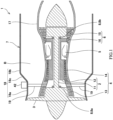
- FIG. 1 is a sectional view of a gas turbine engine 1 according to Embodiment 1.
- the gas turbine engine 1 is an aircraft turbo fan engine and includes a rotating shaft 2, a fan 3, a compressor 4, a combustor 5, a turbine 6, and a casing 7.
- an aircraft gas turbine engine is described as the gas turbine engine.
- the rotating shaft 2 extends in a front-rear direction of the gas turbine engine 1.
- the fan 3 is connected to a front portion of the rotating shaft 2 and rotates together with the rotating shaft 2.
- the compressor 4, the combustor 5, and the turbine 6 are lined up in this order from the front side toward the rear side along the rotating shaft 2.
- the casing 7 is a tubular object having an axis that coincides with a rotation axis of the rotating shaft 2.
- the casing 7 accommodates the rotating shaft 2, the fan 3, the compressor 4, the combustor 5, and the turbine 6.
- the gas turbine engine 1 is a two-shaft gas turbine engine.
- the compressor 4 includes a low-pressure compressor 13 and a high-pressure compressor 14 arranged behind the low-pressure compressor 13.
- both the low-pressure compressor 13 and the high-pressure compressor 14 are axial flow compressors.
- the types of the low-pressure compressor 13 and the high-pressure compressor 14 are not limited to this.
- the high-pressure compressor 14 may be a centrifugal compressor.
- the turbine 6 includes a low-pressure turbine 15 and a high-pressure turbine 16 arranged in front of the low-pressure turbine 15.
- the rotating shaft 2 includes a low-pressure shaft 11 and a high-pressure shaft 12.
- the low-pressure shaft 11 couples the low-pressure compressor 13 to the low-pressure turbine 15.
- the high-pressure shaft 12 couples the high-pressure compressor 14 to the high-pressure turbine 16.
- the high-pressure shaft 12 is a tubular shaft including a hollow space therein.
- the low-pressure shaft 11 is inserted into the hollow space of the high-pressure shaft 12.
- the low-pressure turbine 15 is coupled to the fan 3 through the low-pressure shaft 11.
- the casing 7 includes an inner shell 17, an outer shell 18, and struts 19.
- the inner shell 17 has a substantially cylindrical shape and accommodates the compressor 4, the combustor 5, and the turbine 6.
- the outer shell 18 has a substantially cylindrical shape and is arranged concentrically with the inner shell 17 so as to be spaced apart from the inner shell 17 outward in the radial direction.
- the struts 19 are arranged at intervals in the circumferential direction. Each strut 19 couples the inner shell 17 to the outer shell 18.
- the strut 19 extends inward in the radial direction from the outer shell 18, penetrates the inner shell 17 in the radial direction, and extends to a passage of air compressed by the compressor 4.
- the struts 19 are arranged at positions between the low-pressure compressor 13 and the high-pressure compressor 14 in the axial direction of the rotating shaft 2.
- the casing 7 may include a strut or struts other than the struts 19.
- the casing 7 may include a strut or struts in front of the low-pressure compressor 13 in the axial direction of the rotating shaft 2 or behind the high-pressure compressor 14 in the axial direction of the rotating shaft 2.
- a cylindrical bypass passage B is formed between the inner shell 17 and the outer shell 18. Part of the air sucked by the fan 3 is supplied to the low-pressure compressor 13, and the rest of the air flows through the bypass passage B and is discharged to the rear side.
- An outer peripheral surface of the outer shell 18 of the casing 7 includes a first region 18a, a second region 18b, and a third region 18c.
- the second region 18b is located behind the first region 18a, and the third region 18c connects the first region 18a and the second region 18b.
- the first region 18a is smaller in diameter than the second region 18b.
- the first region 18a is located at a position corresponding to at least the low-pressure compressor 13 in the front-rear direction (rotation axis direction).
- the second region 18b is located at a position corresponding to at least the combustor 5 in the front-rear direction (rotation axis direction).
- the third region 18c is an inclined region that gradually increases in diameter toward the rear side.
- a below-described cartridge 42 is arranged in the first region 18a.
- the rotating shaft 2 is supported by bearings 8.
- the bearings 8 are arranged in an internal space of the casing 7 (more specifically, at a radially inner side of the inner shell 17) along the rotating shaft 2.
- FIG. 1 among the bearings 8, only bearings 8a and 8b that support the low-pressure shaft 11 are shown, and bearings that support the high-pressure shaft 12 are not shown.
- the gas turbine engine 1 includes an oil mist supply system 20A that supplies oil mist to the bearings 8.
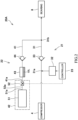
- FIG. 2 is a schematic configuration diagram of the oil mist supply system 20A.
- the oil mist supply system 20A includes a main lubricator 21, a starting lubricator 22, and a controller 23.
- the main lubricator 21 is a lubricator that supplies the oil mist to the bearings 8 while the gas turbine engine 1 is operating.
- the main lubricator 21 supplies the oil mist to the bearings 8 by the pressure of the compressed air extracted from the compressor 4.
- the main lubricator 21 includes a first supply passage 31, an oil mist generator 32, and a first backflow preventer 33.
- the first supply passage 31 guides the compressed air, extracted from the compressor 4, to the bearings 8.
- a side of the first supply passage 31 which side is close to the compressor 4 is referred to as an "upstream side," and a side of the first supply passage 31 which side is close to the bearings 8 is referred to as a "downstream side.”
- the first supply passage 31 may be comprised of a pipe, a casing, a housing, or the like.
- the oil mist generator 32 generates the oil mist by mixing oil with the compressed air extracted from the compressor 4.
- the oil mist generator 32 is located at a portion of the first supply passage 31 so as to be able to supply the generated oil mist to the portion of the first supply passage 31.
- the oil mist generator 32 includes an electrically-operated lubricating oil pump that discharges a small amount of oil from a lubricating oil tank (not shown) to the portion (oil mixing portion 31a) of the first supply passage 31.
- the electrically-operated lubricating oil pump is disposed on, for example, an outer peripheral surface of the first region 18a.
- the oil mist generated at the oil mixing portion 31a is supplied through the first supply passage 31 to the bearings 8 by the pressure of the compressed air extracted from the compressor 4.
- the oil mist having cooled the bearings 8 is guided through a discharge passage (not shown) toward the bypass passage B (see FIG. 1 ) and is discharged to the bypass passage B.
- the discharge passage may be disposed in the struts 19 and the strut(s) arranged at a different position(s).
- the first backflow preventer 33 prevents a fluid from flowing through the first supply passage 31 from the downstream side to the upstream side.
- the first backflow preventer 33 is, for example, a check valve.
- the first backflow preventer 33 is disposed at a portion of the first supply passage 31 which portion is located upstream of a connection portion 31b of the first supply passage 31, the connection portion 31b being connected to a below-described second supply passage 41.
- the first backflow preventer 33 is disposed at a portion of the first supply passage 31 which portion is located downstream of the oil mist generator 32 (more specifically, the oil mixing portion 31a).
- the first backflow preventer 33 may be disposed at a portion of the first supply passage 31 which portion is located upstream of the oil mist generator 32 (more specifically, the oil mixing portion 31a).
- the starting lubricator 22 is a lubricator that supplies the oil mist to the bearings 8 before or immediately after the gas turbine engine 1 is started.
- the starting lubricator 22 includes the second supply passage 41, the cartridge 42, an oil storing chamber 43, and a second backflow preventer 44.
- An end portion of the second supply passage 41 is connected to a portion of the first supply passage 31. More specifically, the end portion of the second supply passage 41 is connected to a portion of the first supply passage 31 which portion is located downstream of the first backflow preventer 33. A portion where the first supply passage 31 and the second supply passage 41 are connected to each other is referred to as the "connection portion 31b.”
- the cartridge 42 is connected to an end portion 41a of the second supply passage 41, the end portion 41a being opposite to the end portion connected to the connection portion 31b of the first supply passage 31.
- a side 6of the second supply passage 41 which side is close to the cartridge 42 is referred to as the "upstream side,” and a side of the second supply passage 41 which side is close to the connection portion 31b is referred to as the "downstream side.”
- the second supply passage 41 is comprised of a pipe, a casing, a housing, or the like.
- the cartridge 42 is attachable to and detachable from the upstream end portion 41a of the second supply passage 41.
- the cartridge 42 includes a gas filled chamber 51 as a gas source, and an opener 52.
- the gas filled chamber 51 is filled with a high-pressure gas.
- the opener 52 is a device that starts the supply of the gas from the gas filled chamber 51 as the gas source through the second supply passage 41 to the connection portion 31b.
- the opener 52 is disposed at a gas passage 52a located in the cartridge 42.
- the gas passage 52a connects a gas outlet 51a of the gas filled chamber 51 and the upstream end portion 41a of the second supply passage 41.
- the opener 52 is an electrically-driven on-off valve.
- the opener 52 changes a state between the gas filled chamber 51 and the first supply passage 31 from a blocked state to a communicating state or from the communicating state to the blocked state.
- the opener 52 changes the state between the gas filled chamber 51 and the first supply passage 31 from the blocked state to the communicating state. With this, the gas is guided from the gas filled chamber 51 through the second supply passage 41 to the connection portion 31b.
- the oil storing chamber 43 is disposed at the second supply passage 41.
- the oil storing chamber 43 stores a predetermined amount of oil.
- the high-pressure gas flows into the oil storing chamber 43 from the gas filled chamber 51.
- the stored oil and the high-pressure gas are mixed with each other, and this generates the oil mist.
- the generated oil mist is supplied to the bearings 8 through a portion of the second supply passage 41 which portion is located downstream of the oil storing chamber 43 and a portion of the first supply passage 31 which portion is located downstream of the connection portion 31b.
- the starting lubricator 22 supplies the oil mist to the bearings 8 by the pressure of the gas flowing out from the gas filled chamber 51 as the gas source.
- the oil storing chamber 43 may be formed such that the stored oil and the gas flowing from the upstream side through the second supply passage 41 into the oil storing chamber 43 are mixed with each other.
- the oil storing chamber 43 may be, for example, a part of a pipe.
- the second backflow preventer 44 prevents a fluid from flowing through the second supply passage 41 from the downstream side to the upstream side.
- the second backflow preventer 44 is, for example, a check valve.
- the second backflow preventer 44 is disposed at a portion of the second supply passage 41 which portion is located downstream of the oil storing chamber 43.
- the controller 23 controls the supply of the oil mist to the bearings 8 from the main lubricator 21 and the starting lubricator 22.
- the controller 23 is a so-called computer and includes a calculation processing portion (such as a CPU) and a storage portion (such as a ROM and a RAM).
- the controller 23 is electrically connected to the oil mist generator 32 and the opener 52.
- the controller 23 performs the supply of the oil mist by the starting lubricator 22. Specifically, the controller 23 transmits a gas supply command to the opener 52. With this, the on-off valve as the opener 52 opens, and the high-pressure gas flows into the oil storing chamber 43 from the gas filled chamber 51. Then, in the oil storing chamber 43, the oil mist is generated. By the pressure of the gas flowing out from the gas filled chamber 51, the generated oil mist is supplied to the bearings 8 through a portion of the second supply passage 41 which portion is located downstream of the oil storing chamber 43 and a portion of the first supply passage 31 which portion is located downstream of the connection portion 31b. The gas and the oil mist having flowed into the first supply passage 31 from the second supply passage 41 are prevented by the first backflow preventer 33 from flowing toward the compressor 4.
- the starting lubricator 22 is only required to secure the lubricity of the bearings 8 in a short period of time until the supply of the oil mist by the main lubricator 21 can be stably executed.
- the amount of gas (i.e., the pressure of the gas) filled in the gas filled chamber 51 and the amount of oil stored in the oil storing chamber 43 are suitably adjusted such that the lubricity of the bearings 8 can be secured in the above-described period of time.
- the gas turbine engine 1 After the supply of the oil mist by the starting lubricator 22 is executed, the gas turbine engine 1 is started. However, the gas turbine engine 1 may be started before or simultaneously with the execution of the supply of the oil mist by the starting lubricator 22. Then, immediately after the gas turbine engine 1 is started, the supply of the oil mist by the starting lubricator 22 is executed.
- the controller 23 After the pressure of the compressor 4 is adequately increased by the start of the gas turbine engine 1, the controller 23 performs the supply of the oil mist by the main lubricator 21. Specifically, the controller 23 transmits an oil mist generating command to (the electrically-operated lubricating oil pump of) the oil mist generator 32. With this, the oil mist generator 32 generates the oil mist by mixing the oil with the compressed air extracted from the compressor 4. The generated oil mist is supplied to the bearings 8 through the first supply passage 31 by the pressure of the compressed air extracted from the compressor 4. The gas and the oil mist having flowed into the second supply passage 41 from the first supply passage 31 are prevented by the second backflow preventer 44 from flowing toward the cartridge 42.
- the oil mist can be supplied to the bearings 8 by using the starting lubricator 22 by the pressure of the gas flowing out from the gas filled chamber 51. Therefore, the lubrication of the bearings 8 when starting the gas turbine engine 1 can be easily performed.
- the cartridge 42 includes the gas filled chamber 51 as the gas source. Therefore, the used cartridge 42 can be easily replaced with the new cartridge 42 that can be utilized as the gas source. On this account, the starting lubricator 22 can be easily set to a usable state.
- the backflow of the high-pressure fluid toward the oil mist generator 32 and the compressor 4 can be prevented by the first backflow preventer 33. Furthermore, the backflow of the high-pressure fluid toward the oil storing chamber 43 can be prevented by the second backflow preventer 44. Since the first backflow preventer 33 and the second backflow preventer 44 are the check valves, the backflow of the high-pressure fluid can be prevented by mechanical structure.
- the opener 52 is the on-off valve
- the state between the gas filled chamber 51 and the first supply passage 31 can be switched from the communicating state to the blocked state.
- the gas filled chamber 51 of the used cartridge 42 can be filled with the high-pressure gas again.
- the cartridge 42 can be repeatedly used.
- the starting lubricator 22 stores the oil and the high-pressure gas in the same space, only the high-pressure gas is guided to the bearings 8 by the start of the supply of the gas by the opener 52 with the oil staying in the space.
- the gas having flowed out from the gas filled chamber 51 as the gas source reaches the oil storing chamber 43 before reaching the bearings 8. Therefore, the gas having flowed out from the gas source and the oil can be surely mixed with each other, and the oil mist can be surely supplied to the bearings 8.
- Embodiment 2 Next, the gas turbine engine 1 according to Embodiment 2 will be described with reference to FIG. 3 .
- the same reference signs are used for the same components as in Embodiment 1, and the repetition of the same explanation is avoided.
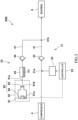
- FIG. 3 is a schematic configuration diagram of an oil mist supply system 20B of the gas turbine engine 1 according to Embodiment 2.
- the gas source and the opener in the starting lubricator 22 are different in configuration.
- the cartridge 42 instead of the gas filled chamber 51 and the opener 52 in Embodiment 1, the cartridge 42 includes a gas generating chamber 61 and an opener 62.
- the gas generating chamber 61 stores a known gas generating agent 61a.
- the gas generating agent 61a is gunpowder that is ignited to generate a combustion gas.
- the opener 62 starts the supply of the gas from the gas generating chamber 61 as the gas source through the second supply passage 41 to the connection portion 31b.
- the opener 62 includes a stopper 63 and a destroyer 64.
- the stopper 63 closes a gas outlet 61b of the gas generating chamber 61, and the destroyer 64 destroys the stopper 63.
- the stopper 63 is a metal plate made of stainless steel, for example.
- the destroyer 64 is, for example, an igniter that ignites the gas generating agent 61a.
- the igniter as the destroyer 64 ignites the gas generating agent 61a by an ignition command from the controller 23, and with this, the combustion gas is generated.
- the stopper 63 is destroyed by a shock wave generated by the generation of the combustion gas or by the pressure of the gas in the gas generating chamber 61 increased by the generation of the combustion gas.
- the opener 62 changes the state between the gas generating chamber 61 and the first supply passage 31 from the blocked state to the communicating state.
- the destroyer 64 may mechanically destroy the stopper 63 by using, for example, a pin without using a chemical reaction.
- the high-pressure gas flows into the oil storing chamber 43 from the gas generating chamber 61.
- the stored oil and the high-pressure gas are mixed with each other, and this generates the oil mist.
- the generated oil mist is supplied to the bearings 8 through a portion of the second supply passage 41 which portion is located downstream of the oil storing chamber 43 and a portion of the first supply passage 31 which portion is located downstream of the connection portion 31b.
- the same effects as in Embodiment 1 are obtained. Moreover, in the present embodiment, since the opener 62 includes the stopper 63 that closes the gas outlet 61b of the gas generating chamber 61 and the destroyer 64 that destroys the stopper 63, the opener 62 can be made smaller than the opener 62 that is an electrically driven valve. As a result, the cartridge 42 can be downsized.
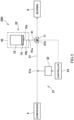
- FIG. 4 is a schematic configuration diagram of an oil mist supply system 20C of the gas turbine engine 1 according to Embodiment 3.
- a three-way valve 71 is disposed at the connection portion 31b of the first supply passage 31, the connection portion 31b being connected to the second supply passage 41.
- the three-way valve 71 serves as the "first backflow preventer” and the "second backflow preventer.”
- the three-way valve 71 switches between a first position and a second position.
- a portion of the first supply passage 31 which portion is located upstream of the connection portion 31b and a portion of the first supply passage 31 which portion is located downstream of the connection portion 31b communicate with each other, and communication between the second supply passage 41 and the portion of the first supply passage 31 which portion is located downstream of the connection portion 31b is blocked.
- the three-way valve 71 is an electrically driven valve and is electrically connected to the controller 23.
- the supply of the oil mist by the starting lubricator 22 is started.
- the engine 1 is driving, and the three-way valve 71 is switched from the second position to the first position by another control signal transmitted from the controller 23 to the three-way valve 71, the supply of the oil mist by the main lubricator 21 is started.
- Embodiment 1 the same effects as in Embodiment 1 are obtained. Moreover, in the present embodiment, the backflow of the high-pressure fluid toward the oil mist generator 32 and the compressor 4 and the backflow of the high-pressure fluid toward the oil storing chamber 43 are prevented by a single device.
- FIG. 5 is a schematic configuration diagram of an oil mist supply system 20D of the gas turbine engine 1 according to Modified Example of Embodiment 3.
- a gas filled chamber 72 as the gas source stores the high-pressure oil mist.
- the gas filled chamber 72 stores a predetermined amount of oil and a high-pressure gas in a mixed state.
- a gas outlet 72a of the gas filled chamber 72 is located at a lower portion of the gas filled chamber 72 (for example, a lower surface of the gas filled chamber 72).
- the oil (for example, condensate of a part of the oil mist) stored in the gas filled chamber 72 may accumulate in at least one of a lower portion of an internal space of the gas filled chamber 72, the second supply passage 41, or a gas passage 72b connecting the gas outlet 72a and the upstream end portion 41a of the second supply passage 41.
- the three-way valve 71 serves as not only the “first backflow preventer” and the "second backflow preventer” but also the "opener.”
- the three-way valve 71 is switched from the first position to the second position, i.e., when the second supply passage 41 and the portion of the first supply passage 31 which portion is located downstream of the connection portion 31b are made to communicate with each other, the supply of the oil mist by the starting lubricator 22 to the bearings 8 is started.
- the three-way valve 71 is switched from the second position to the first position after the supply of the oil mist by the starting lubricator 22, the supply of the oil mist by the main lubricator 21 is realized.
- Embodiments 1, 2, and 3 and Modified Example of Embodiment 3 may be suitably combined with each other.
- the opener 52 instead of the on-off valve, the opener 52 may include the stopper that closes the gas outlet of the gas filled chamber 51 and the destroyer that destroys the stopper.
- the gas source instead of the gas filled chamber 51, 72, the gas source may be the gas generating chamber that stores the gas generating agent.
- the gas source may be the combination of the gas generating chamber and the gas filled chamber.
- the gas generating chamber 61 may be separated from a gas filled chamber that stores the high-pressure gas, by a stopper different from the stopper 63. Then, after the stopper between the gas generating chamber and the gas filled chamber is destroyed by the generation of the gas in the gas generating chamber 61, the stopper 63 may be destroyed by the pressure of the gas.
- the first backflow preventer 33 and the second backflow preventer 44 do not have to be the check valves.
- each of the first backflow preventer 33 and the second backflow preventer 44 may be an on-off valve that blocks not only the flow of the fluid from the downstream side to the upstream side in the first supply passage 31 or the second supply passage 41 but also the flow of the fluid from the upstream side to the downstream side in the first supply passage 31 or the second supply passage 41 at the same time.
- the first backflow preventer 33 and the second backflow preventer 44 may be, for example, electrically-driven on-off valves.
- the on-off valve disposed at a portion of the second supply passage 41 which portion is located downstream of the oil storing chamber 43 may serve as an opener instead of or in addition to the opener 52, 62.
- the cartridge 42 may include not only the gas source but also the oil storing chamber 43. With this, the oil storing chamber 43 can be easily filled with the oil. Furthermore, the cartridge 42 does not have to include the opener 52, 62, and in this case, the opener 52, 62 may be disposed at a portion of the second supply passage 41 which portion is located between the oil storing chamber 43 and the gas source.
- the cartridge 42 does not have to be arranged in the first region 18a.
- the starting lubricator 22 does not have to include the cartridge 42 that is attachable to and detachable from the second supply passage 41.
- the gas source may be different in configuration from the gas filled chamber and the gas generating chamber and is only required to be able to supply the oil mist to the bearings 8.
- the gas source is different from the compressor 4 that supplies the gas by the start of the engine. The gas source can supply the gas even when the engine is in a stop state.
- the gas turbine engine according to each of at least some of the embodiments of the present disclosure is not limited to a two-shaft gas turbine engine and may be a single-shaft gas turbine engine.
- the gas turbine engine according to each of at least some of the embodiments of the present invention is not limited to an aircraft gas turbine engine and is applicable to, for example, an unmanned flying object.
- the gas turbine engine according to each of at least some of the embodiments of the present invention does not have to be a turbo fan engine and may be a turbojet engine.
Landscapes
- Engineering & Computer Science (AREA)
- General Engineering & Computer Science (AREA)
- Mechanical Engineering (AREA)
- Chemical & Material Sciences (AREA)
- Combustion & Propulsion (AREA)
- Oil, Petroleum & Natural Gas (AREA)
- Structures Of Non-Positive Displacement Pumps (AREA)
- Rolling Contact Bearings (AREA)
Description
- One aspect of the present invention relates to a gas turbine engine utilized in a flying object, an aircraft, or the like, the gas turbine comprising an oil mist supply system.
-
JP 2001-165390 -
JP H10 89087 A GB 2 075 134 A - According to the above-described oil mist supply mechanism, the compressed air from the compressor is necessary to supply the oil mist to the bearing. However, there is a possibility that since the pressure of the air of the compressor is low before the engine is started or immediately after the engine is started, the supply of the oil mist to the bearing becomes unstable. As a method of securing the lubricity of the bearing until the pressure of the air of the compressor becomes high to some extent, there may be a method of filling the bearing with grease before the engine is started, but such work extremely requires time and labor.
- To solve the above problems, a gas turbine engine according to the present invention comprises the features of
claim 1. A gas turbine engine in which a compressor, a combustor, and a turbine are arranged so as to be lined up along a rotating shaft. The gas turbine engine includes: a casing accommodating the compressor, the combustor, and the turbine; bearings arranged in the casing; a main lubricator including an oil mist generator that generates oil mist by mixing oil with compressed air extracted from the compressor and a first supply passage through which the oil mist is guided to the bearings; and a starting lubricator including a second supply passage that is connected to a portion of the first supply passage and through which a gas flowing out from a gas source is guided to a connection portion of the first supply passage, the connection portion being the portion of the first supply passage, and an opener that starts supply of the gas from the gas source through the second supply passage to the connection portion. The main lubricator supplies the oil mist through the first supply passage to the bearings by pressure of the compressed air extracted from the compressor. When the opener starts the supply of the gas, the starting lubricator supplies the oil mist to the bearings through the second supply passage and a portion of the first supply passage which portion is located downstream of the connection portion, by the pressure of the gas supplied from the gas source. - There is a possibility that since the pressure of the air of the compressor is low, for example, before or immediately after the engine is started, the supply of the oil mist from the main lubricator to the bearings becomes unstable. Even in this case, according to the above configuration, when the opener starts the supply of the gas from the gas source, the oil mist can be supplied to the bearings by the pressure of the gas flowing out from the gas source. Therefore, the lubrication of the bearings when starting the engine can be easily performed.
- In a gas turbine engine including a lubricator that supplies oil mist to a bearing by air extracted from a compressor, lubrication of the bearing when starting the engine can be easily performed.
-
-
FIG. 1 is a schematic sectional view of a gas turbine engine according toEmbodiment 1. -
FIG. 2 is a schematic configuration diagram of an oil mist supply system of the gas turbine engine according toEmbodiment 1. -
FIG. 3 is a schematic configuration diagram of the oil mist supply system of the gas turbine engine according toEmbodiment 2. -
FIG. 4 is a schematic configuration diagram of the oil mist supply system of the gas turbine engine according toEmbodiment 3. -
FIG. 5 is a schematic configuration diagram of the oil mist supply system of the gas turbine engine according to Modified Example ofEmbodiment 3. - Hereinafter, embodiments will be described with reference to the drawings. In the following description, a "front side" denotes an upstream side in a direction in which air flows in an engine, and a "rear side" denotes a downstream side in the direction in which the air flows in the engine. A "radial direction" denotes a direction orthogonal to a rotation axis of a rotating shaft of the engine. A "circumferential direction" denotes a direction around the rotation axis of the rotating shaft of the engine.
-
FIG. 1 is a sectional view of agas turbine engine 1 according toEmbodiment 1. Thegas turbine engine 1 is an aircraft turbo fan engine and includes arotating shaft 2, afan 3, acompressor 4, acombustor 5, aturbine 6, and acasing 7. In the present embodiment andEmbodiments shaft 2 extends in a front-rear direction of thegas turbine engine 1. Thefan 3 is connected to a front portion of the rotatingshaft 2 and rotates together with the rotatingshaft 2. Thecompressor 4, thecombustor 5, and theturbine 6 are lined up in this order from the front side toward the rear side along the rotatingshaft 2. Thecasing 7 is a tubular object having an axis that coincides with a rotation axis of therotating shaft 2. Thecasing 7 accommodates therotating shaft 2, thefan 3, thecompressor 4, thecombustor 5, and theturbine 6. - Specifically, the
gas turbine engine 1 is a two-shaft gas turbine engine. Thecompressor 4 includes a low-pressure compressor 13 and a high-pressure compressor 14 arranged behind the low-pressure compressor 13. For example, both the low-pressure compressor 13 and the high-pressure compressor 14 are axial flow compressors. However, the types of the low-pressure compressor 13 and the high-pressure compressor 14 are not limited to this. For example, the high-pressure compressor 14 may be a centrifugal compressor. Theturbine 6 includes a low-pressure turbine 15 and a high-pressure turbine 16 arranged in front of the low-pressure turbine 15. The rotatingshaft 2 includes a low-pressure shaft 11 and a high-pressure shaft 12. The low-pressure shaft 11 couples the low-pressure compressor 13 to the low-pressure turbine 15. The high-pressure shaft 12 couples the high-pressure compressor 14 to the high-pressure turbine 16. The high-pressure shaft 12 is a tubular shaft including a hollow space therein. The low-pressure shaft 11 is inserted into the hollow space of the high-pressure shaft 12. The low-pressure turbine 15 is coupled to thefan 3 through the low-pressure shaft 11. - The
casing 7 includes aninner shell 17, anouter shell 18, andstruts 19. Theinner shell 17 has a substantially cylindrical shape and accommodates thecompressor 4, thecombustor 5, and theturbine 6. Theouter shell 18 has a substantially cylindrical shape and is arranged concentrically with theinner shell 17 so as to be spaced apart from theinner shell 17 outward in the radial direction. Thestruts 19 are arranged at intervals in the circumferential direction. Eachstrut 19 couples theinner shell 17 to theouter shell 18. In the present embodiment, thestrut 19 extends inward in the radial direction from theouter shell 18, penetrates theinner shell 17 in the radial direction, and extends to a passage of air compressed by thecompressor 4. In the present embodiment, thestruts 19 are arranged at positions between the low-pressure compressor 13 and the high-pressure compressor 14 in the axial direction of therotating shaft 2. However, the positions of thestruts 19 are not limited to this. Thecasing 7 may include a strut or struts other than thestruts 19. For example, thecasing 7 may include a strut or struts in front of the low-pressure compressor 13 in the axial direction of therotating shaft 2 or behind the high-pressure compressor 14 in the axial direction of therotating shaft 2. A cylindrical bypass passage B is formed between theinner shell 17 and theouter shell 18. Part of the air sucked by thefan 3 is supplied to the low-pressure compressor 13, and the rest of the air flows through the bypass passage B and is discharged to the rear side. - An outer peripheral surface of the
outer shell 18 of thecasing 7 includes afirst region 18a, asecond region 18b, and athird region 18c. Thesecond region 18b is located behind thefirst region 18a, and thethird region 18c connects thefirst region 18a and thesecond region 18b. Thefirst region 18a is smaller in diameter than thesecond region 18b. Thefirst region 18a is located at a position corresponding to at least the low-pressure compressor 13 in the front-rear direction (rotation axis direction). Thesecond region 18b is located at a position corresponding to at least thecombustor 5 in the front-rear direction (rotation axis direction). Thethird region 18c is an inclined region that gradually increases in diameter toward the rear side. A below-describedcartridge 42 is arranged in thefirst region 18a. - The
rotating shaft 2 is supported bybearings 8. Thebearings 8 are arranged in an internal space of the casing 7 (more specifically, at a radially inner side of the inner shell 17) along therotating shaft 2. InFIG. 1 , among thebearings 8, only bearings 8a and 8b that support the low-pressure shaft 11 are shown, and bearings that support the high-pressure shaft 12 are not shown. Thegas turbine engine 1 includes an oilmist supply system 20A that supplies oil mist to thebearings 8. -
FIG. 2 is a schematic configuration diagram of the oilmist supply system 20A. The oilmist supply system 20A includes amain lubricator 21, a startinglubricator 22, and acontroller 23. - The
main lubricator 21 is a lubricator that supplies the oil mist to thebearings 8 while thegas turbine engine 1 is operating. Themain lubricator 21 supplies the oil mist to thebearings 8 by the pressure of the compressed air extracted from thecompressor 4. Themain lubricator 21 includes afirst supply passage 31, anoil mist generator 32, and afirst backflow preventer 33. - The
first supply passage 31 guides the compressed air, extracted from thecompressor 4, to thebearings 8. A side of thefirst supply passage 31 which side is close to thecompressor 4 is referred to as an "upstream side," and a side of thefirst supply passage 31 which side is close to thebearings 8 is referred to as a "downstream side." Thefirst supply passage 31 may be comprised of a pipe, a casing, a housing, or the like. - The
oil mist generator 32 generates the oil mist by mixing oil with the compressed air extracted from thecompressor 4. Theoil mist generator 32 is located at a portion of thefirst supply passage 31 so as to be able to supply the generated oil mist to the portion of thefirst supply passage 31. For example, theoil mist generator 32 includes an electrically-operated lubricating oil pump that discharges a small amount of oil from a lubricating oil tank (not shown) to the portion (oil mixing portion 31a) of thefirst supply passage 31. The electrically-operated lubricating oil pump is disposed on, for example, an outer peripheral surface of thefirst region 18a. The oil mist generated at theoil mixing portion 31a is supplied through thefirst supply passage 31 to thebearings 8 by the pressure of the compressed air extracted from thecompressor 4. The oil mist having cooled thebearings 8 is guided through a discharge passage (not shown) toward the bypass passage B (seeFIG. 1 ) and is discharged to the bypass passage B. For example, the discharge passage may be disposed in thestruts 19 and the strut(s) arranged at a different position(s). - The
first backflow preventer 33 prevents a fluid from flowing through thefirst supply passage 31 from the downstream side to the upstream side. Thefirst backflow preventer 33 is, for example, a check valve. Thefirst backflow preventer 33 is disposed at a portion of thefirst supply passage 31 which portion is located upstream of aconnection portion 31b of thefirst supply passage 31, theconnection portion 31b being connected to a below-describedsecond supply passage 41. In the present embodiment, thefirst backflow preventer 33 is disposed at a portion of thefirst supply passage 31 which portion is located downstream of the oil mist generator 32 (more specifically, theoil mixing portion 31a). Thefirst backflow preventer 33 may be disposed at a portion of thefirst supply passage 31 which portion is located upstream of the oil mist generator 32 (more specifically, theoil mixing portion 31a). - The starting
lubricator 22 is a lubricator that supplies the oil mist to thebearings 8 before or immediately after thegas turbine engine 1 is started. The startinglubricator 22 includes thesecond supply passage 41, thecartridge 42, anoil storing chamber 43, and asecond backflow preventer 44. - An end portion of the
second supply passage 41 is connected to a portion of thefirst supply passage 31. More specifically, the end portion of thesecond supply passage 41 is connected to a portion of thefirst supply passage 31 which portion is located downstream of thefirst backflow preventer 33. A portion where thefirst supply passage 31 and thesecond supply passage 41 are connected to each other is referred to as the "connection portion 31b." Thecartridge 42 is connected to anend portion 41a of thesecond supply passage 41, theend portion 41a being opposite to the end portion connected to theconnection portion 31b of thefirst supply passage 31. A side 6of thesecond supply passage 41 which side is close to thecartridge 42 is referred to as the "upstream side," and a side of thesecond supply passage 41 which side is close to theconnection portion 31b is referred to as the "downstream side." Thesecond supply passage 41 is comprised of a pipe, a casing, a housing, or the like. - The
cartridge 42 is attachable to and detachable from theupstream end portion 41a of thesecond supply passage 41. Thecartridge 42 includes a gas filledchamber 51 as a gas source, and anopener 52. The gas filledchamber 51 is filled with a high-pressure gas. - The
opener 52 is a device that starts the supply of the gas from the gas filledchamber 51 as the gas source through thesecond supply passage 41 to theconnection portion 31b. Theopener 52 is disposed at agas passage 52a located in thecartridge 42. Thegas passage 52a connects agas outlet 51a of the gas filledchamber 51 and theupstream end portion 41a of thesecond supply passage 41. In the present embodiment, theopener 52 is an electrically-driven on-off valve. Theopener 52 changes a state between the gas filledchamber 51 and thefirst supply passage 31 from a blocked state to a communicating state or from the communicating state to the blocked state. Specifically, upon reception of a gas supply command from thecontroller 23, theopener 52 changes the state between the gas filledchamber 51 and thefirst supply passage 31 from the blocked state to the communicating state. With this, the gas is guided from the gas filledchamber 51 through thesecond supply passage 41 to theconnection portion 31b. - The
oil storing chamber 43 is disposed at thesecond supply passage 41. Theoil storing chamber 43 stores a predetermined amount of oil. When the supply of the gas by theopener 52 starts, the high-pressure gas flows into theoil storing chamber 43 from the gas filledchamber 51. With this, in theoil storing chamber 43, the stored oil and the high-pressure gas are mixed with each other, and this generates the oil mist. By the pressure of the gas flowing out from the gas filledchamber 51, the generated oil mist is supplied to thebearings 8 through a portion of thesecond supply passage 41 which portion is located downstream of theoil storing chamber 43 and a portion of thefirst supply passage 31 which portion is located downstream of theconnection portion 31b. - As above, when the
opener 52 starts the supply of the gas, the startinglubricator 22 supplies the oil mist to thebearings 8 by the pressure of the gas flowing out from the gas filledchamber 51 as the gas source. Theoil storing chamber 43 may be formed such that the stored oil and the gas flowing from the upstream side through thesecond supply passage 41 into theoil storing chamber 43 are mixed with each other. Theoil storing chamber 43 may be, for example, a part of a pipe. - The
second backflow preventer 44 prevents a fluid from flowing through thesecond supply passage 41 from the downstream side to the upstream side. Thesecond backflow preventer 44 is, for example, a check valve. Thesecond backflow preventer 44 is disposed at a portion of thesecond supply passage 41 which portion is located downstream of theoil storing chamber 43. - The
controller 23 controls the supply of the oil mist to thebearings 8 from themain lubricator 21 and the startinglubricator 22. Thecontroller 23 is a so-called computer and includes a calculation processing portion (such as a CPU) and a storage portion (such as a ROM and a RAM). Thecontroller 23 is electrically connected to theoil mist generator 32 and theopener 52. - Before the
gas turbine engine 1 is started, thecontroller 23 performs the supply of the oil mist by the startinglubricator 22. Specifically, thecontroller 23 transmits a gas supply command to theopener 52. With this, the on-off valve as theopener 52 opens, and the high-pressure gas flows into theoil storing chamber 43 from the gas filledchamber 51. Then, in theoil storing chamber 43, the oil mist is generated. By the pressure of the gas flowing out from the gas filledchamber 51, the generated oil mist is supplied to thebearings 8 through a portion of thesecond supply passage 41 which portion is located downstream of theoil storing chamber 43 and a portion of thefirst supply passage 31 which portion is located downstream of theconnection portion 31b. The gas and the oil mist having flowed into thefirst supply passage 31 from thesecond supply passage 41 are prevented by thefirst backflow preventer 33 from flowing toward thecompressor 4. - The starting
lubricator 22 is only required to secure the lubricity of thebearings 8 in a short period of time until the supply of the oil mist by themain lubricator 21 can be stably executed. In other words, the amount of gas (i.e., the pressure of the gas) filled in the gas filledchamber 51 and the amount of oil stored in theoil storing chamber 43 are suitably adjusted such that the lubricity of thebearings 8 can be secured in the above-described period of time. - After the supply of the oil mist by the starting
lubricator 22 is executed, thegas turbine engine 1 is started. However, thegas turbine engine 1 may be started before or simultaneously with the execution of the supply of the oil mist by the startinglubricator 22. Then, immediately after thegas turbine engine 1 is started, the supply of the oil mist by the startinglubricator 22 is executed. - After the pressure of the
compressor 4 is adequately increased by the start of thegas turbine engine 1, thecontroller 23 performs the supply of the oil mist by themain lubricator 21. Specifically, thecontroller 23 transmits an oil mist generating command to (the electrically-operated lubricating oil pump of) theoil mist generator 32. With this, theoil mist generator 32 generates the oil mist by mixing the oil with the compressed air extracted from thecompressor 4. The generated oil mist is supplied to thebearings 8 through thefirst supply passage 31 by the pressure of the compressed air extracted from thecompressor 4. The gas and the oil mist having flowed into thesecond supply passage 41 from thefirst supply passage 31 are prevented by thesecond backflow preventer 44 from flowing toward thecartridge 42. - According to the above-described configuration, even when the pressure of the air of the
compressor 4 is low, such as before or immediately after thegas turbine engine 1 is started, the oil mist can be supplied to thebearings 8 by using the startinglubricator 22 by the pressure of the gas flowing out from the gas filledchamber 51. Therefore, the lubrication of thebearings 8 when starting thegas turbine engine 1 can be easily performed. - Moreover, in the present embodiment, the
cartridge 42 includes the gas filledchamber 51 as the gas source. Therefore, the usedcartridge 42 can be easily replaced with thenew cartridge 42 that can be utilized as the gas source. On this account, the startinglubricator 22 can be easily set to a usable state. - Moreover, in the present embodiment, the backflow of the high-pressure fluid toward the
oil mist generator 32 and thecompressor 4 can be prevented by thefirst backflow preventer 33. Furthermore, the backflow of the high-pressure fluid toward theoil storing chamber 43 can be prevented by thesecond backflow preventer 44. Since thefirst backflow preventer 33 and thesecond backflow preventer 44 are the check valves, the backflow of the high-pressure fluid can be prevented by mechanical structure. - Moreover, in the present embodiment, since the
opener 52 is the on-off valve, the state between the gas filledchamber 51 and thefirst supply passage 31 can be switched from the communicating state to the blocked state. Furthermore, the gas filledchamber 51 of the usedcartridge 42 can be filled with the high-pressure gas again. Thus, thecartridge 42 can be repeatedly used. - For example, there is a possibility that if the starting
lubricator 22 stores the oil and the high-pressure gas in the same space, only the high-pressure gas is guided to thebearings 8 by the start of the supply of the gas by theopener 52 with the oil staying in the space. However, in the present embodiment, the gas having flowed out from the gas filledchamber 51 as the gas source reaches theoil storing chamber 43 before reaching thebearings 8. Therefore, the gas having flowed out from the gas source and the oil can be surely mixed with each other, and the oil mist can be surely supplied to thebearings 8. - Next, the
gas turbine engine 1 according toEmbodiment 2 will be described with reference toFIG. 3 . In the present embodiment andEmbodiment 3 described below, the same reference signs are used for the same components as inEmbodiment 1, and the repetition of the same explanation is avoided. -
FIG. 3 is a schematic configuration diagram of an oilmist supply system 20B of thegas turbine engine 1 according toEmbodiment 2. InEmbodiment 2, the gas source and the opener in the startinglubricator 22 are different in configuration. - Specifically, instead of the gas filled
chamber 51 and theopener 52 inEmbodiment 1, thecartridge 42 includes agas generating chamber 61 and anopener 62. Thegas generating chamber 61 stores a knowngas generating agent 61a. Thegas generating agent 61a is gunpowder that is ignited to generate a combustion gas. - The
opener 62 starts the supply of the gas from thegas generating chamber 61 as the gas source through thesecond supply passage 41 to theconnection portion 31b. In the present embodiment, theopener 62 includes astopper 63 and adestroyer 64. Thestopper 63 closes agas outlet 61b of thegas generating chamber 61, and thedestroyer 64 destroys thestopper 63. - The
stopper 63 is a metal plate made of stainless steel, for example. Thedestroyer 64 is, for example, an igniter that ignites thegas generating agent 61a. To be specific, the igniter as thedestroyer 64 ignites thegas generating agent 61a by an ignition command from thecontroller 23, and with this, the combustion gas is generated. Thestopper 63 is destroyed by a shock wave generated by the generation of the combustion gas or by the pressure of the gas in thegas generating chamber 61 increased by the generation of the combustion gas. Thus, theopener 62 changes the state between thegas generating chamber 61 and thefirst supply passage 31 from the blocked state to the communicating state. Thedestroyer 64 may mechanically destroy thestopper 63 by using, for example, a pin without using a chemical reaction. - When the supply of the gas is started by the
opener 62 as above, the high-pressure gas flows into theoil storing chamber 43 from thegas generating chamber 61. With this, in theoil storing chamber 43, the stored oil and the high-pressure gas are mixed with each other, and this generates the oil mist. By the pressure of the gas flowing out from thegas generating chamber 61, the generated oil mist is supplied to thebearings 8 through a portion of thesecond supply passage 41 which portion is located downstream of theoil storing chamber 43 and a portion of thefirst supply passage 31 which portion is located downstream of theconnection portion 31b. - In the present embodiment, the same effects as in
Embodiment 1 are obtained. Moreover, in the present embodiment, since theopener 62 includes thestopper 63 that closes thegas outlet 61b of thegas generating chamber 61 and thedestroyer 64 that destroys thestopper 63, theopener 62 can be made smaller than theopener 62 that is an electrically driven valve. As a result, thecartridge 42 can be downsized. - Next, the
gas turbine engine 1 according toEmbodiment 3 will be described with reference toFIG. 4. FIG. 4 is a schematic configuration diagram of an oil mist supply system 20C of thegas turbine engine 1 according toEmbodiment 3. - In the present embodiment, instead of respectively disposing the
first backflow preventer 33 and thesecond backflow preventer 44 at thefirst supply passage 31 and thesecond supply passage 41, a three-way valve 71 is disposed at theconnection portion 31b of thefirst supply passage 31, theconnection portion 31b being connected to thesecond supply passage 41. To be specific, the three-way valve 71 serves as the "first backflow preventer" and the "second backflow preventer." - The three-
way valve 71 switches between a first position and a second position. When the three-way valve 71 is set to the first position, a portion of thefirst supply passage 31 which portion is located upstream of theconnection portion 31b and a portion of thefirst supply passage 31 which portion is located downstream of theconnection portion 31b communicate with each other, and communication between thesecond supply passage 41 and the portion of thefirst supply passage 31 which portion is located downstream of theconnection portion 31b is blocked. When the three-way valve 71 is set to the second position, communication between the portion of thefirst supply passage 31 which portion is located upstream of theconnection portion 31b and the portion of thefirst supply passage 31 which portion is located downstream of theconnection portion 31b is blocked, and thesecond supply passage 41 and the portion of thefirst supply passage 31 which portion is located downstream of theconnection portion 31b communicate with each other. - The three-
way valve 71 is an electrically driven valve and is electrically connected to thecontroller 23. When the three-way valve 71 is switched from the first position to the second position by a control signal transmitted from thecontroller 23 to the three-way valve 71, the supply of the oil mist by the startinglubricator 22 is started. When theengine 1 is driving, and the three-way valve 71 is switched from the second position to the first position by another control signal transmitted from thecontroller 23 to the three-way valve 71, the supply of the oil mist by themain lubricator 21 is started. - In the present embodiment, the same effects as in
Embodiment 1 are obtained. Moreover, in the present embodiment, the backflow of the high-pressure fluid toward theoil mist generator 32 and thecompressor 4 and the backflow of the high-pressure fluid toward theoil storing chamber 43 are prevented by a single device. - Next, the
gas turbine engine 1 according to Modified Example ofEmbodiment 3 will be described with reference toFIG. 5. FIG. 5 is a schematic configuration diagram of an oilmist supply system 20D of thegas turbine engine 1 according to Modified Example ofEmbodiment 3. - In Modified Example, a gas filled
chamber 72 as the gas source stores the high-pressure oil mist. In other words, the gas filledchamber 72 stores a predetermined amount of oil and a high-pressure gas in a mixed state. When thecartridge 42 is attached to theupstream end portion 41a of thesecond supply passage 41, agas outlet 72a of the gas filledchamber 72 is located at a lower portion of the gas filled chamber 72 (for example, a lower surface of the gas filled chamber 72). Therefore, the oil (for example, condensate of a part of the oil mist) stored in the gas filledchamber 72 may accumulate in at least one of a lower portion of an internal space of the gas filledchamber 72, thesecond supply passage 41, or agas passage 72b connecting thegas outlet 72a and theupstream end portion 41a of thesecond supply passage 41. - In Modified Example, the three-
way valve 71 serves as not only the "first backflow preventer" and the "second backflow preventer" but also the "opener." When the three-way valve 71 is switched from the first position to the second position, i.e., when thesecond supply passage 41 and the portion of thefirst supply passage 31 which portion is located downstream of theconnection portion 31b are made to communicate with each other, the supply of the oil mist by the startinglubricator 22 to thebearings 8 is started. Moreover, when the three-way valve 71 is switched from the second position to the first position after the supply of the oil mist by the startinglubricator 22, the supply of the oil mist by themain lubricator 21 is realized. - In Modified Example, the same effects as in
Embodiment 3 are obtained. Moreover, since thegas outlet 72a of the gas filledchamber 72 is located at the lower portion of the gas filledchamber 72, it is possible to prevent a case where only the high-pressure gas is supplied to thebearings 8 when thesecond supply passage 41 and thefirst supply passage 31 communicate with each other. - Various modifications may be made within the scope of the appended claims.
- For example,
Embodiments Embodiment 3 may be suitably combined with each other. For example, inEmbodiment 1, instead of the on-off valve, theopener 52 may include the stopper that closes the gas outlet of the gas filledchamber 51 and the destroyer that destroys the stopper. Moreover, for example, inEmbodiment 3 and Modified Example ofEmbodiment 3, instead of the gas filledchamber - Moreover, the gas source may be the combination of the gas generating chamber and the gas filled chamber. For example, in
Embodiment 2, thegas generating chamber 61 may be separated from a gas filled chamber that stores the high-pressure gas, by a stopper different from thestopper 63. Then, after the stopper between the gas generating chamber and the gas filled chamber is destroyed by the generation of the gas in thegas generating chamber 61, thestopper 63 may be destroyed by the pressure of the gas. - Moreover, in
Embodiments first backflow preventer 33 and thesecond backflow preventer 44 do not have to be the check valves. For example, each of thefirst backflow preventer 33 and thesecond backflow preventer 44 may be an on-off valve that blocks not only the flow of the fluid from the downstream side to the upstream side in thefirst supply passage 31 or thesecond supply passage 41 but also the flow of the fluid from the upstream side to the downstream side in thefirst supply passage 31 or thesecond supply passage 41 at the same time. Thefirst backflow preventer 33 and thesecond backflow preventer 44 may be, for example, electrically-driven on-off valves. In this case, the on-off valve disposed at a portion of thesecond supply passage 41 which portion is located downstream of theoil storing chamber 43 may serve as an opener instead of or in addition to theopener - Moreover, in
Embodiments cartridge 42 may include not only the gas source but also theoil storing chamber 43. With this, theoil storing chamber 43 can be easily filled with the oil. Furthermore, thecartridge 42 does not have to include theopener opener second supply passage 41 which portion is located between theoil storing chamber 43 and the gas source. - Moreover, the
cartridge 42 does not have to be arranged in thefirst region 18a. To shorten thesecond supply passage 41, it is preferable to arrange thecartridge 42 in the vicinity of thefirst supply passage 31, for example, in the vicinity of theoil mist generator 32. - Moreover, the starting
lubricator 22 does not have to include thecartridge 42 that is attachable to and detachable from thesecond supply passage 41. In this case, the gas source may be different in configuration from the gas filled chamber and the gas generating chamber and is only required to be able to supply the oil mist to thebearings 8. The gas source is different from thecompressor 4 that supplies the gas by the start of the engine. The gas source can supply the gas even when the engine is in a stop state. - Moreover, the gas turbine engine according to each of at least some of the embodiments of the present disclosure is not limited to a two-shaft gas turbine engine and may be a single-shaft gas turbine engine. The gas turbine engine according to each of at least some of the embodiments of the present invention is not limited to an aircraft gas turbine engine and is applicable to, for example, an unmanned flying object. The gas turbine engine according to each of at least some of the embodiments of the present invention does not have to be a turbo fan engine and may be a turbojet engine.
-
- 1
- gas turbine engine
- 2
- rotating shaft
- 4
- compressor
- 5
- combustor
- 6
- turbine
- 7
- casing
- 8
- bearing
- 21
- main lubricator
- 22
- starting lubricator
- 31
- first supply passage
- 31a
- oil mixing portion
- 31b
- connection portion
- 32
- oil mist generator
- 33
- first backflow preventer
- 41
- second supply passage
- 42
- cartridge
- 43
- oil storing chamber
- 44
- second backflow preventer
- 51
- gas filled chamber (gas source)
- 52
- opener
- 61
- gas generating chamber (gas source)
- 61a
- gas generating agent
- 62
- opener
- 63
- stopper
- 64
- destroyer
- 71
- three-way valve
- 72
- gas filled chamber (gas source)
Claims (7)
- A gas turbine engine (1) comprising,a casing (7) accommodating a compressor (4), a combustor (5), and a turbine (6);bearings (8) being in the casing (7); anda main lubricator (21) includingan oil mist generator (32) that generates oil mist by mixing oil with compressed air extracted from the compressor (4) anda first supply passage (31) through which the oil mist is guided to the bearings,the main lubricator (21) supplying the oil mist through the first supply passage (31) to the bearings (8) by pressure of the compressed air extracted from the compressor, characterized in that:the gas turbine engine (1) further comprisesa starting lubricator (22) includinga second supply passage (41) that is connected to a portion of the first supply passage (31) and through which a gas flowing out from a gas source (51, 61, 72) is guided to a connection portion of the first supply passage (31), the connection portion being the portion of the first supply passage (31) andan opener (52, 62) that starts supply of the gas from the gas source (51, 61, 72) through the second supply passage (41) to the connection portion, anda controller (23) configured to perform supply of the oil mist by the starting lubricator (22) before or immediately after the gas turbine engine (1) is started; andwhen the opener (52, 62, 71) starts the supply of the gas, the starting lubricator (22) supplies the oil mist to the bearings (8) through the second supply passage (41) and a portion of the first supply passage (31) which portion is located downstream of the connection portion, by the pressure of the gas flowing out from the gas source (51, 61, 72).
- The gas turbine engine (1) according to claim 1, wherein:the starting lubricator (22) includes a cartridge (42) that is attachable to and detachable from the second supply passage (41); andthe cartridge (42) includes as the gas source (51, 61, 72) at least one of a gas filled chamber (51) that is filled with a high-pressure gas or a gas generating chamber (61) that stores a gas generating agent.
- The gas turbine engine (1) according to claim 1 or 2, wherein the opener (71) is a three-way valve that switches betweena first position at which a portion of the first supply passage (31) which portion is located upstream of the connection portion and the portion of the first supply passage (31) which portion is located downstream of the connection portion communicate with each other, and communication between the gas source (51, 61, 72) and the portion of the first supply passage (31) which portion is located downstream of the connection portion is blocked anda second position at which communication between the portion of the first supply passage (31) which portion is located upstream of the connection portion and the portion of the first supply passage (31) which portion is located downstream of the connection portion is blocked, and the gas source (51, 61, 72) and the portion of the first supply passage (31) which portion is located downstream of the connection portion communicate with each other.
- The gas turbine engine (1) according to claim 1 or 2, wherein:the main lubricator (21) further includes a first backflow preventer (33) that prevents a fluid from flowing from the connection portion toward the compressor;the starting lubricator (22) further includes a second backflow preventer (44) that prevents the fluid from flowing from the connection portion toward the gas source (51, 61, 72); andthe second backflow preventer (44) is the opener itself or is a device different from the opener.
- The gas turbine engine (1) according to claim 4, wherein the opener (52) is an on-off valve at the second supply passage (41) or at a gas passage connecting the gas source (51, 61, 72) and the second supply passage (41).
- The gas turbine engine (1) according to claim 4, wherein:the gas source (61) includes at least one of a gas filled chamber (51) that is filled with a high-pressure gas or a gas generating chamber (61) that stores a gas generating agent; andthe opener (62) includesa stopper (63) that closes a gas outlet of the gas filled chamber (51) or a gas outlet of the gas generating chamber (61) anda destroyer (64) that destroys the stopper (63).
- The gas turbine engine (1) according to any one of claims 4 to 6, wherein:the starting lubricator (22) further includes an oil storing chamber (43) that is at the second supply passage (41) and stores the oil;the second backflow preventer (44) is a check valve at a portion of the second supply passage (41) which portion is between the oil storing chamber (43) and the connection portion; andthe opener (52, 62, 71) is at a portion of the second supply passage (41) which portion is between the oil storing chamber (43) and the gas source (51, 61, 72), a gas passage connecting the gas source (51, 61, 72) and the second supply passage (41), or the gas source (51, 61, 72).
Applications Claiming Priority (2)
| Application Number | Priority Date | Filing Date | Title |
|---|---|---|---|
| JP2019157865A JP7336919B2 (en) | 2019-08-30 | 2019-08-30 | gas turbine engine |
| PCT/JP2020/032458 WO2021039928A1 (en) | 2019-08-30 | 2020-08-27 | Gas turbine engine |
Publications (3)
| Publication Number | Publication Date |
|---|---|
| EP4023869A1 EP4023869A1 (en) | 2022-07-06 |
| EP4023869A4 EP4023869A4 (en) | 2023-12-06 |
| EP4023869B1 true EP4023869B1 (en) | 2025-04-16 |
Family
ID=74684168
Family Applications (1)
| Application Number | Title | Priority Date | Filing Date |
|---|---|---|---|
| EP20856783.4A Active EP4023869B1 (en) | 2019-08-30 | 2020-08-27 | Gas turbine engine |
Country Status (4)
| Country | Link |
|---|---|
| US (1) | US11732648B2 (en) |
| EP (1) | EP4023869B1 (en) |
| JP (1) | JP7336919B2 (en) |
| WO (1) | WO2021039928A1 (en) |
Families Citing this family (1)
| Publication number | Priority date | Publication date | Assignee | Title |
|---|---|---|---|---|
| US11746699B2 (en) * | 2019-08-30 | 2023-09-05 | Kawasaki Jukogyo Kabushiki Kaisha | Gas turbine engine |
Family Cites Families (12)
| Publication number | Priority date | Publication date | Assignee | Title |
|---|---|---|---|---|
| US4284174A (en) * | 1979-04-18 | 1981-08-18 | Avco Corporation | Emergency oil/mist system |
| JPH04124399U (en) * | 1991-04-26 | 1992-11-12 | 積水化学工業株式会社 | Oil change device for bearings in extruder |
| JPH08178183A (en) * | 1994-12-27 | 1996-07-12 | I N Ji Shoji Kk | Automatic oiler |
| JPH1089087A (en) * | 1996-09-10 | 1998-04-07 | Mitsubishi Heavy Ind Ltd | Oil mist generator for gas turbine |
| US5911678A (en) * | 1997-07-11 | 1999-06-15 | Rolls-Royce Plc | Gas turbine engine starting |
| JP3467553B2 (en) | 1999-12-08 | 2003-11-17 | 川崎重工業株式会社 | Bearing lubrication method and bearing mechanism |
| US7387189B2 (en) | 2003-08-14 | 2008-06-17 | United Technologies Corp. | Emergency lubrication system |
| JP4773804B2 (en) * | 2005-11-17 | 2011-09-14 | 三菱重工業株式会社 | gas turbine |
| US7836675B2 (en) * | 2006-02-21 | 2010-11-23 | General Electric Company | Supercore sump vent pressure control |
| US8651240B1 (en) * | 2012-12-24 | 2014-02-18 | United Technologies Corporation | Pressurized reserve lubrication system for a gas turbine engine |
| GB201200289D0 (en) * | 2012-01-10 | 2012-02-22 | Rolls Royce Plc | Gas turbine engine buffer seals |
| JP6141043B2 (en) * | 2013-02-21 | 2017-06-07 | 三菱重工業株式会社 | Oil mist generator |
-
2019
- 2019-08-30 JP JP2019157865A patent/JP7336919B2/en active Active
-
2020
- 2020-08-27 WO PCT/JP2020/032458 patent/WO2021039928A1/en not_active Ceased
- 2020-08-27 US US17/638,719 patent/US11732648B2/en active Active
- 2020-08-27 EP EP20856783.4A patent/EP4023869B1/en active Active
Also Published As
| Publication number | Publication date |
|---|---|
| US20220290607A1 (en) | 2022-09-15 |
| EP4023869A4 (en) | 2023-12-06 |
| JP7336919B2 (en) | 2023-09-01 |
| EP4023869A1 (en) | 2022-07-06 |
| US11732648B2 (en) | 2023-08-22 |
| JP2021036142A (en) | 2021-03-04 |
| WO2021039928A1 (en) | 2021-03-04 |
Similar Documents
| Publication | Publication Date | Title |
|---|---|---|
| EP3708793B1 (en) | Lubrication systems and methods with superposition gearbox | |
| US7401461B2 (en) | Reduced-weight fuel system for gas turbine engine, gas turbine engine having a reduced-weight fuel system, and method of providing fuel to a gas turbine engine using a reduced-weight fuel system | |
| US12258904B2 (en) | Passive auxiliary lubrication system | |
| EP3848568B1 (en) | Oil supply device of aircraft gas turbine | |
| US5992139A (en) | Turbine engine with turbocompressor for supplying atomizing fluid to turbine engine fuel system | |
| EP4023869B1 (en) | Gas turbine engine | |
| US11802513B2 (en) | Gas turbine engine having electrically operated accessory | |
| US11162420B2 (en) | Gas turbine engine oil scavenging system and method | |
| EP4105460B1 (en) | Gas turbine engine | |
| US3050939A (en) | Gas turbine engine with shaft failure control | |
| EP4023870B1 (en) | Gas turbine engine | |
| EP3447247B1 (en) | Gas turbine engine assembly comprising damped fluid transfer tube | |
| RU2539315C1 (en) | Liquid-propellant rocket engine turbopump unit | |
| US12110826B2 (en) | Assembly for aircraft turbine engine comprising an improved system for lubricating a fan drive reduction gear | |
| EP4050198B1 (en) | Gas turbine engine | |
| US8479488B2 (en) | Oxyfuel gas turbine system and method | |
| EP4332363B1 (en) | Gas turbine engine with integral actuation system | |
| WO2014143261A1 (en) | Cartridge style ejector pump | |
| EP4563800A1 (en) | Turbine engine including an air turbine starter | |
| JP2512500Y2 (en) | Liquid fuel supply system for small jet engine | |
| CN121969819A (en) | Especially turbine engines used in aircraft | |
| Lance et al. | Space shuttle orbiter auxiliary power unit development challenges |
Legal Events
| Date | Code | Title | Description |
|---|---|---|---|
| STAA | Information on the status of an ep patent application or granted ep patent |
Free format text: STATUS: THE INTERNATIONAL PUBLICATION HAS BEEN MADE |
|
| PUAI | Public reference made under article 153(3) epc to a published international application that has entered the european phase |
Free format text: ORIGINAL CODE: 0009012 |
|
| STAA | Information on the status of an ep patent application or granted ep patent |
Free format text: STATUS: REQUEST FOR EXAMINATION WAS MADE |
|
| 17P | Request for examination filed |
Effective date: 20220318 |
|
| AK | Designated contracting states |
Kind code of ref document: A1 Designated state(s): AL AT BE BG CH CY CZ DE DK EE ES FI FR GB GR HR HU IE IS IT LI LT LU LV MC MK MT NL NO PL PT RO RS SE SI SK SM TR |
|
| DAV | Request for validation of the european patent (deleted) | ||
| DAX | Request for extension of the european patent (deleted) | ||
| A4 | Supplementary search report drawn up and despatched |
Effective date: 20231103 |
|
| RIC1 | Information provided on ipc code assigned before grant |
Ipc: F16N 7/32 20060101ALI20231027BHEP Ipc: F01D 25/18 20060101ALI20231027BHEP Ipc: F01D 25/16 20060101ALI20231027BHEP Ipc: F02C 7/06 20060101AFI20231027BHEP |
|
| GRAP | Despatch of communication of intention to grant a patent |
Free format text: ORIGINAL CODE: EPIDOSNIGR1 |
|
| STAA | Information on the status of an ep patent application or granted ep patent |
Free format text: STATUS: GRANT OF PATENT IS INTENDED |
|
| INTG | Intention to grant announced |
Effective date: 20241211 |
|
| GRAS | Grant fee paid |
Free format text: ORIGINAL CODE: EPIDOSNIGR3 |
|
| GRAA | (expected) grant |
Free format text: ORIGINAL CODE: 0009210 |
|
| STAA | Information on the status of an ep patent application or granted ep patent |
Free format text: STATUS: THE PATENT HAS BEEN GRANTED |
|
| AK | Designated contracting states |
Kind code of ref document: B1 Designated state(s): AL AT BE BG CH CY CZ DE DK EE ES FI FR GB GR HR HU IE IS IT LI LT LU LV MC MK MT NL NO PL PT RO RS SE SI SK SM TR |
|
| REG | Reference to a national code |
Ref country code: GB Ref legal event code: FG4D |
|
| REG | Reference to a national code |
Ref country code: CH Ref legal event code: EP |
|
| REG | Reference to a national code |
Ref country code: IE Ref legal event code: FG4D |
|
| REG | Reference to a national code |
Ref country code: DE Ref legal event code: R096 Ref document number: 602020049690 Country of ref document: DE |
|
| REG | Reference to a national code |
Ref country code: NL Ref legal event code: MP Effective date: 20250416 |
|
| PG25 | Lapsed in a contracting state [announced via postgrant information from national office to epo] |
Ref country code: NL Free format text: LAPSE BECAUSE OF FAILURE TO SUBMIT A TRANSLATION OF THE DESCRIPTION OR TO PAY THE FEE WITHIN THE PRESCRIBED TIME-LIMIT Effective date: 20250416 |
|
| REG | Reference to a national code |
Ref country code: AT Ref legal event code: MK05 Ref document number: 1785839 Country of ref document: AT Kind code of ref document: T Effective date: 20250416 |
|
| PG25 | Lapsed in a contracting state [announced via postgrant information from national office to epo] |
Ref country code: PT Free format text: LAPSE BECAUSE OF FAILURE TO SUBMIT A TRANSLATION OF THE DESCRIPTION OR TO PAY THE FEE WITHIN THE PRESCRIBED TIME-LIMIT Effective date: 20250818 Ref country code: FI Free format text: LAPSE BECAUSE OF FAILURE TO SUBMIT A TRANSLATION OF THE DESCRIPTION OR TO PAY THE FEE WITHIN THE PRESCRIBED TIME-LIMIT Effective date: 20250416 Ref country code: ES Free format text: LAPSE BECAUSE OF FAILURE TO SUBMIT A TRANSLATION OF THE DESCRIPTION OR TO PAY THE FEE WITHIN THE PRESCRIBED TIME-LIMIT Effective date: 20250416 |
|
| PGFP | Annual fee paid to national office [announced via postgrant information from national office to epo] |
Ref country code: DE Payment date: 20250703 Year of fee payment: 6 |
|
| REG | Reference to a national code |
Ref country code: LT Ref legal event code: MG9D |
|
| PG25 | Lapsed in a contracting state [announced via postgrant information from national office to epo] |
Ref country code: NO Free format text: LAPSE BECAUSE OF FAILURE TO SUBMIT A TRANSLATION OF THE DESCRIPTION OR TO PAY THE FEE WITHIN THE PRESCRIBED TIME-LIMIT Effective date: 20250716 Ref country code: GR Free format text: LAPSE BECAUSE OF FAILURE TO SUBMIT A TRANSLATION OF THE DESCRIPTION OR TO PAY THE FEE WITHIN THE PRESCRIBED TIME-LIMIT Effective date: 20250717 |
|
| PG25 | Lapsed in a contracting state [announced via postgrant information from national office to epo] |
Ref country code: PL Free format text: LAPSE BECAUSE OF FAILURE TO SUBMIT A TRANSLATION OF THE DESCRIPTION OR TO PAY THE FEE WITHIN THE PRESCRIBED TIME-LIMIT Effective date: 20250416 |
|
| PG25 | Lapsed in a contracting state [announced via postgrant information from national office to epo] |
Ref country code: BG Free format text: LAPSE BECAUSE OF FAILURE TO SUBMIT A TRANSLATION OF THE DESCRIPTION OR TO PAY THE FEE WITHIN THE PRESCRIBED TIME-LIMIT Effective date: 20250416 |
|
| PGFP | Annual fee paid to national office [announced via postgrant information from national office to epo] |
Ref country code: GB Payment date: 20250703 Year of fee payment: 6 |
|
| PG25 | Lapsed in a contracting state [announced via postgrant information from national office to epo] |
Ref country code: HR Free format text: LAPSE BECAUSE OF FAILURE TO SUBMIT A TRANSLATION OF THE DESCRIPTION OR TO PAY THE FEE WITHIN THE PRESCRIBED TIME-LIMIT Effective date: 20250416 |
|
| PG25 | Lapsed in a contracting state [announced via postgrant information from national office to epo] |
Ref country code: AT Free format text: LAPSE BECAUSE OF FAILURE TO SUBMIT A TRANSLATION OF THE DESCRIPTION OR TO PAY THE FEE WITHIN THE PRESCRIBED TIME-LIMIT Effective date: 20250416 |
|
| PGFP | Annual fee paid to national office [announced via postgrant information from national office to epo] |
Ref country code: FR Payment date: 20250704 Year of fee payment: 6 |
|
| PG25 | Lapsed in a contracting state [announced via postgrant information from national office to epo] |
Ref country code: RS Free format text: LAPSE BECAUSE OF FAILURE TO SUBMIT A TRANSLATION OF THE DESCRIPTION OR TO PAY THE FEE WITHIN THE PRESCRIBED TIME-LIMIT Effective date: 20250716 |
|
| PG25 | Lapsed in a contracting state [announced via postgrant information from national office to epo] |
Ref country code: IS Free format text: LAPSE BECAUSE OF FAILURE TO SUBMIT A TRANSLATION OF THE DESCRIPTION OR TO PAY THE FEE WITHIN THE PRESCRIBED TIME-LIMIT Effective date: 20250816 |
|
| PG25 | Lapsed in a contracting state [announced via postgrant information from national office to epo] |
Ref country code: LV Free format text: LAPSE BECAUSE OF FAILURE TO SUBMIT A TRANSLATION OF THE DESCRIPTION OR TO PAY THE FEE WITHIN THE PRESCRIBED TIME-LIMIT Effective date: 20250416 |
|
| PG25 | Lapsed in a contracting state [announced via postgrant information from national office to epo] |
Ref country code: SM Free format text: LAPSE BECAUSE OF FAILURE TO SUBMIT A TRANSLATION OF THE DESCRIPTION OR TO PAY THE FEE WITHIN THE PRESCRIBED TIME-LIMIT Effective date: 20250416 Ref country code: DK Free format text: LAPSE BECAUSE OF FAILURE TO SUBMIT A TRANSLATION OF THE DESCRIPTION OR TO PAY THE FEE WITHIN THE PRESCRIBED TIME-LIMIT Effective date: 20250416 |
|
| REG | Reference to a national code |
Ref country code: DE Ref legal event code: R097 Ref document number: 602020049690 Country of ref document: DE |
|
| PG25 | Lapsed in a contracting state [announced via postgrant information from national office to epo] |
Ref country code: CZ Free format text: LAPSE BECAUSE OF FAILURE TO SUBMIT A TRANSLATION OF THE DESCRIPTION OR TO PAY THE FEE WITHIN THE PRESCRIBED TIME-LIMIT Effective date: 20250416 |
|
| PG25 | Lapsed in a contracting state [announced via postgrant information from national office to epo] |
Ref country code: EE Free format text: LAPSE BECAUSE OF FAILURE TO SUBMIT A TRANSLATION OF THE DESCRIPTION OR TO PAY THE FEE WITHIN THE PRESCRIBED TIME-LIMIT Effective date: 20250416 |
|
| PG25 | Lapsed in a contracting state [announced via postgrant information from national office to epo] |
Ref country code: SK Free format text: LAPSE BECAUSE OF FAILURE TO SUBMIT A TRANSLATION OF THE DESCRIPTION OR TO PAY THE FEE WITHIN THE PRESCRIBED TIME-LIMIT Effective date: 20250416 Ref country code: RO Free format text: LAPSE BECAUSE OF FAILURE TO SUBMIT A TRANSLATION OF THE DESCRIPTION OR TO PAY THE FEE WITHIN THE PRESCRIBED TIME-LIMIT Effective date: 20250416 |
|
| PG25 | Lapsed in a contracting state [announced via postgrant information from national office to epo] |
Ref country code: IT Free format text: LAPSE BECAUSE OF FAILURE TO SUBMIT A TRANSLATION OF THE DESCRIPTION OR TO PAY THE FEE WITHIN THE PRESCRIBED TIME-LIMIT Effective date: 20250416 |
|
| PLBE | No opposition filed within time limit |
Free format text: ORIGINAL CODE: 0009261 |
|
| STAA | Information on the status of an ep patent application or granted ep patent |
Free format text: STATUS: NO OPPOSITION FILED WITHIN TIME LIMIT |
|
| REG | Reference to a national code |
Ref country code: CH Ref legal event code: L10 Free format text: ST27 STATUS EVENT CODE: U-0-0-L10-L00 (AS PROVIDED BY THE NATIONAL OFFICE) Effective date: 20260225 |
|
| REG | Reference to a national code |
Ref country code: CH Ref legal event code: H13 Free format text: ST27 STATUS EVENT CODE: U-0-0-H10-H13 (AS PROVIDED BY THE NATIONAL OFFICE) Effective date: 20260324 |
|
| 26N | No opposition filed |
Effective date: 20260119 |
|
| PG25 | Lapsed in a contracting state [announced via postgrant information from national office to epo] |
Ref country code: MC Free format text: LAPSE BECAUSE OF FAILURE TO SUBMIT A TRANSLATION OF THE DESCRIPTION OR TO PAY THE FEE WITHIN THE PRESCRIBED TIME-LIMIT Effective date: 20250416 |
|
| PG25 | Lapsed in a contracting state [announced via postgrant information from national office to epo] |
Ref country code: LU Free format text: LAPSE BECAUSE OF NON-PAYMENT OF DUE FEES Effective date: 20250827 |
|
| PG25 | Lapsed in a contracting state [announced via postgrant information from national office to epo] |
Ref country code: CH Free format text: LAPSE BECAUSE OF NON-PAYMENT OF DUE FEES Effective date: 20250831 |