EP4023858B1 - Variable vane, gas turbine engine and method for operating a variable vane - Google Patents
Variable vane, gas turbine engine and method for operating a variable vane Download PDFInfo
- Publication number
- EP4023858B1 EP4023858B1 EP22150257.8A EP22150257A EP4023858B1 EP 4023858 B1 EP4023858 B1 EP 4023858B1 EP 22150257 A EP22150257 A EP 22150257A EP 4023858 B1 EP4023858 B1 EP 4023858B1
- Authority
- EP
- European Patent Office
- Prior art keywords
- vane
- vane portion
- trunnion
- slot
- variable
- Prior art date
- Legal status (The legal status is an assumption and is not a legal conclusion. Google has not performed a legal analysis and makes no representation as to the accuracy of the status listed.)
- Active
Links
Images





Classifications
-
- F—MECHANICAL ENGINEERING; LIGHTING; HEATING; WEAPONS; BLASTING
- F01—MACHINES OR ENGINES IN GENERAL; ENGINE PLANTS IN GENERAL; STEAM ENGINES
- F01D—NON-POSITIVE DISPLACEMENT MACHINES OR ENGINES, e.g. STEAM TURBINES
- F01D17/00—Regulating or controlling by varying flow
- F01D17/10—Final actuators
- F01D17/12—Final actuators arranged in stator parts
- F01D17/14—Final actuators arranged in stator parts varying effective cross-sectional area of nozzles or guide conduits
- F01D17/16—Final actuators arranged in stator parts varying effective cross-sectional area of nozzles or guide conduits by means of nozzle vanes
- F01D17/162—Final actuators arranged in stator parts varying effective cross-sectional area of nozzles or guide conduits by means of nozzle vanes for axial flow, i.e. the vanes turning around axes which are essentially perpendicular to the rotor centre line
-
- F—MECHANICAL ENGINEERING; LIGHTING; HEATING; WEAPONS; BLASTING
- F01—MACHINES OR ENGINES IN GENERAL; ENGINE PLANTS IN GENERAL; STEAM ENGINES
- F01D—NON-POSITIVE DISPLACEMENT MACHINES OR ENGINES, e.g. STEAM TURBINES
- F01D17/00—Regulating or controlling by varying flow
- F01D17/10—Final actuators
- F01D17/12—Final actuators arranged in stator parts
- F01D17/14—Final actuators arranged in stator parts varying effective cross-sectional area of nozzles or guide conduits
- F01D17/16—Final actuators arranged in stator parts varying effective cross-sectional area of nozzles or guide conduits by means of nozzle vanes
- F01D17/167—Final actuators arranged in stator parts varying effective cross-sectional area of nozzles or guide conduits by means of nozzle vanes of vanes moving in translation
-
- F—MECHANICAL ENGINEERING; LIGHTING; HEATING; WEAPONS; BLASTING
- F02—COMBUSTION ENGINES; HOT-GAS OR COMBUSTION-PRODUCT ENGINE PLANTS
- F02C—GAS-TURBINE PLANTS; AIR INTAKES FOR JET-PROPULSION PLANTS; CONTROLLING FUEL SUPPLY IN AIR-BREATHING JET-PROPULSION PLANTS
- F02C7/00—Features, components parts, details or accessories, not provided for in, or of interest apart form groups F02C1/00 - F02C6/00; Air intakes for jet-propulsion plants
- F02C7/06—Arrangements of bearings; Lubricating
-
- F—MECHANICAL ENGINEERING; LIGHTING; HEATING; WEAPONS; BLASTING
- F02—COMBUSTION ENGINES; HOT-GAS OR COMBUSTION-PRODUCT ENGINE PLANTS
- F02C—GAS-TURBINE PLANTS; AIR INTAKES FOR JET-PROPULSION PLANTS; CONTROLLING FUEL SUPPLY IN AIR-BREATHING JET-PROPULSION PLANTS
- F02C9/00—Controlling gas-turbine plants; Controlling fuel supply in air- breathing jet-propulsion plants
- F02C9/16—Control of working fluid flow
- F02C9/20—Control of working fluid flow by throttling; by adjusting vanes
- F02C9/22—Control of working fluid flow by throttling; by adjusting vanes by adjusting turbine vanes
-
- F—MECHANICAL ENGINEERING; LIGHTING; HEATING; WEAPONS; BLASTING
- F04—POSITIVE - DISPLACEMENT MACHINES FOR LIQUIDS; PUMPS FOR LIQUIDS OR ELASTIC FLUIDS
- F04D—NON-POSITIVE-DISPLACEMENT PUMPS
- F04D29/00—Details, component parts, or accessories
- F04D29/40—Casings; Connections of working fluid
- F04D29/52—Casings; Connections of working fluid for axial pumps
- F04D29/54—Fluid-guiding means, e.g. diffusers
- F04D29/56—Fluid-guiding means, e.g. diffusers adjustable
- F04D29/563—Fluid-guiding means, e.g. diffusers adjustable specially adapted for elastic fluid pumps
-
- F—MECHANICAL ENGINEERING; LIGHTING; HEATING; WEAPONS; BLASTING
- F05—INDEXING SCHEMES RELATING TO ENGINES OR PUMPS IN VARIOUS SUBCLASSES OF CLASSES F01-F04
- F05D—INDEXING SCHEME FOR ASPECTS RELATING TO NON-POSITIVE-DISPLACEMENT MACHINES OR ENGINES, GAS-TURBINES OR JET-PROPULSION PLANTS
- F05D2240/00—Components
- F05D2240/50—Bearings
-
- F—MECHANICAL ENGINEERING; LIGHTING; HEATING; WEAPONS; BLASTING
- F05—INDEXING SCHEMES RELATING TO ENGINES OR PUMPS IN VARIOUS SUBCLASSES OF CLASSES F01-F04
- F05D—INDEXING SCHEME FOR ASPECTS RELATING TO NON-POSITIVE-DISPLACEMENT MACHINES OR ENGINES, GAS-TURBINES OR JET-PROPULSION PLANTS
- F05D2250/00—Geometry
- F05D2250/10—Two-dimensional
-
- F—MECHANICAL ENGINEERING; LIGHTING; HEATING; WEAPONS; BLASTING
- F05—INDEXING SCHEMES RELATING TO ENGINES OR PUMPS IN VARIOUS SUBCLASSES OF CLASSES F01-F04
- F05D—INDEXING SCHEME FOR ASPECTS RELATING TO NON-POSITIVE-DISPLACEMENT MACHINES OR ENGINES, GAS-TURBINES OR JET-PROPULSION PLANTS
- F05D2250/00—Geometry
- F05D2250/20—Three-dimensional
- F05D2250/24—Three-dimensional ellipsoidal
- F05D2250/241—Three-dimensional ellipsoidal spherical
-
- F—MECHANICAL ENGINEERING; LIGHTING; HEATING; WEAPONS; BLASTING
- F05—INDEXING SCHEMES RELATING TO ENGINES OR PUMPS IN VARIOUS SUBCLASSES OF CLASSES F01-F04
- F05D—INDEXING SCHEME FOR ASPECTS RELATING TO NON-POSITIVE-DISPLACEMENT MACHINES OR ENGINES, GAS-TURBINES OR JET-PROPULSION PLANTS
- F05D2250/00—Geometry
- F05D2250/20—Three-dimensional
- F05D2250/29—Three-dimensional machined; miscellaneous
- F05D2250/294—Three-dimensional machined; miscellaneous grooved
-
- F—MECHANICAL ENGINEERING; LIGHTING; HEATING; WEAPONS; BLASTING
- F05—INDEXING SCHEMES RELATING TO ENGINES OR PUMPS IN VARIOUS SUBCLASSES OF CLASSES F01-F04
- F05D—INDEXING SCHEME FOR ASPECTS RELATING TO NON-POSITIVE-DISPLACEMENT MACHINES OR ENGINES, GAS-TURBINES OR JET-PROPULSION PLANTS
- F05D2250/00—Geometry
- F05D2250/70—Shape
- F05D2250/73—Shape asymmetric
-
- F—MECHANICAL ENGINEERING; LIGHTING; HEATING; WEAPONS; BLASTING
- F05—INDEXING SCHEMES RELATING TO ENGINES OR PUMPS IN VARIOUS SUBCLASSES OF CLASSES F01-F04
- F05D—INDEXING SCHEME FOR ASPECTS RELATING TO NON-POSITIVE-DISPLACEMENT MACHINES OR ENGINES, GAS-TURBINES OR JET-PROPULSION PLANTS
- F05D2260/00—Function
- F05D2260/50—Kinematic linkage, i.e. transmission of position
-
- F—MECHANICAL ENGINEERING; LIGHTING; HEATING; WEAPONS; BLASTING
- F05—INDEXING SCHEMES RELATING TO ENGINES OR PUMPS IN VARIOUS SUBCLASSES OF CLASSES F01-F04
- F05D—INDEXING SCHEME FOR ASPECTS RELATING TO NON-POSITIVE-DISPLACEMENT MACHINES OR ENGINES, GAS-TURBINES OR JET-PROPULSION PLANTS
- F05D2260/00—Function
- F05D2260/50—Kinematic linkage, i.e. transmission of position
- F05D2260/56—Kinematic linkage, i.e. transmission of position using cams or eccentrics
Definitions
- This invention relates generally to vane assemblies for rotational equipment, and more particularly to a variable vane, a gas turbine engine and a method for operating a variable vane.
- variable vanes namely, vanes which are not fixed but pivot about axes such as to vary the angle of the vane airfoil, are sometimes used in gas turbine engine systems, such as compressors, to optimize compressor operability and/or efficiency over the compressor speed range.
- These variable vanes may include variable inlet guide vanes (IGV) located directly upstream of the first compressor stage, or variable vanes which form part of one or more of the subsequent downstream stages in a multistage compressor (ex: first compressor stage and/or second compressor stage, etc.).
- IIGV variable inlet guide vanes
- Variable vanes enable optimized compressor efficiency and/or operability by providing a close-coupled direction of the gas flow into the immediately downstream rotor stage, and/or may introduce swirl into the compressor rotor to improve low speed operability of the compressor, and thus the engine, as well as to increase the flow capacity at high speeds.
- variable vane assemblies which further improve the efficiency of the associated equipment (e.g., a compressor) throughout the range of operational power conditions for the equipment.
- variable vane as claimed in claim 1
- method as claimed in claim 12.
- the gas turbine engine 10 is schematically illustrated.
- the gas turbine engine 10 is disclosed herein as a two-spool turbofan engine that generally includes a fan section 12, a compressor section 14, a combustor section 16, and a turbine section 18.
- the fan section 12 drives air along a bypass flow path 20 while the compressor section 14 drives air along a core flow path 22 for compression and communication into the combustor section 16 and then expansion through the turbine section 18.
- a turbofan gas turbine engine in the disclosed non-limiting embodiments, it should be understood that the concepts described herein are not limited to use with turbofans as the teachings may be applied to other types of turbine engines including those with three-spool architectures or turbojets with no bypass flowpath.
- the gas turbine engine 10 generally includes a low-pressure spool 24 and a high-pressure spool 26 mounted for rotation about an axial centerline 28 of the gas turbine engine 10 relative to an engine static structure 30 via one or more bearing systems 32. It should be understood that various bearing systems 32 at various locations may alternatively or additionally be provided.
- the low-pressure spool 24 generally includes a first shaft 34 that interconnects a fan 36, a low-pressure compressor 38, and a low-pressure turbine 40.
- the first shaft 34 is connected to the fan 36 through a gear assembly of a fan drive gear system 42 to drive the fan 36 at a lower speed than the low-pressure spool 24.
- the high-pressure spool 26 generally includes a second shaft 44 that interconnects a high-pressure compressor 46 and a high-pressure turbine 48. It is to be understood that "low pressure” and "high pressure” or variations thereof as used herein are relative terms indicating that the high pressure is greater than the low pressure.
- An annular combustor 50 is disposed between the high-pressure compressor 46 and the high-pressure turbine 48 along the axial centerline 28.
- the first shaft 34 and the second shaft 44 are concentric and rotate via the one or more bearing systems 32 about the axial centerline 28 which is collinear with respective axial centerlines of the first and second shafts 34, 44.
- Airflow along the core flow path 22 is compressed by the low-pressure compressor 38, then the high-pressure compressor 46, mixed and burned with fuel in the combustor 50, and then expanded over the high-pressure turbine 48 and the low-pressure turbine 40.
- the low-pressure turbine 40 and the high-pressure turbine 48 rotationally drive the low-pressure spool 24 and the high-pressure spool 26, respectively, in response to the expansion.
- the gas turbine engine 10 may include a variable vane assembly 52 comprising a plurality of variable vanes 54 disposed about the axial centerline 28.
- the variable vane assembly 52 may be located axially adjacent and forward of a first rotor stage 116.
- Each variable vane 54 may include a first vane portion 56 which is fixed (e.g., relative to the axial centerline 28) and a second vane portion 58 which is disposed axially aft of and adjacent the first vane portion 56.
- the second vane portion 58 of the variable vane 54 is configured to move relative to the first vane portion 56.
- variable vane assembly 52 may be included in the fan section 12 and/or the low-pressure compressor 38 of the compressor section 14 of the gas turbine engine 10 as shown, for example, in FIG. 2A .
- the variable vane assembly 52 may additionally or alternatively be included in the high-pressure compressor 46 of the compressor section 14 of the gas turbine engine 10 as shown, for example, in FIG. 2B .
- the variable vane assembly 52 may be located in an annular passage 60 defined between an outer radial structure and an inner radial structure.
- the outer radial structure and the inner radial structure may be a casing, shroud, duct, or other structural assembly and will be referred to herein as an outer casing 62 and an inner casing 64.
- the first vane portion 56 of each variable vane 54 may be fixedly connected to the outer casing 62 and the inner casing 64 and may be configured to provide structural support to the outer casing 62 and the inner casing 64 (e.g., the first vane portion 56 may function as a strut).
- each variable vane 54 may be moveably mounted to the outer casing 62 and the inner casing 64 and configured to move relative to the respective first vane portion 56.
- the second vane portion 58 includes an outer radial end 66 disposed adjacent the outer casing 62 and an inner radial end 68 disposed opposite the outer radial end 66 and adjacent the inner casing 64.
- the variable vane assembly 52 may include an actuation system 102 (e.g., a hydraulic actuation system) configured to effect movement of the second vane portion 58.
- the actuation system 102 may be located radially outside the outer casing 62 and/or radially inside the inner casing 64 and in communication with one or both of the radial ends 66, 68 of the second vane portion 58 to effect movement thereof.
- the present disclosure is not limited to any particular actuation system or any particular method for effecting movement of the second vane portion 58.
- the variable vane 54 includes a chord length 70 extending from a leading edge 72 of the variable vane 54 to a trailing edge 74 of the variable vane 54.
- the variable vane 54 includes an axial chord length 134 extending in an axial direction from the leading edge 72 of the variable vane 54 to the trailing edge 74 of the variable vane 54.
- the variable vane 54 further includes a gap 76 disposed between the first vane portion 56 and the second vane portion 58.
- the first vane portion 56 includes a first forward axial end 78 and a first aft axial end 80 opposite the first forward axial end 78.
- the first forward axial end 78 may correspond to the leading edge 72 of the variable vane 54.
- the second vane portion 58 includes a second forward axial end 82 and a second aft axial end 84 opposite the second forward axial end 82.
- the second aft axial end 84 may correspond to the trailing edge 74.
- the first aft axial end 80 of the first vane portion 56 is defined by a vane surface which defines a recess within which the second vane portion 58 (e.g., the second forward axial end 82) is configured to be located.
- the vane surface may extend between a first edge 86 of the first aft axial end 80 and a second edge 88 of the first aft axial end 80 located axially aft of the first edge 86.
- the vane surface may have a concave shape between the first edge 86 and the second edge 88 which faces the second vane portion 58.
- the second vane portion 58 includes a first face 118 extending from the second forward axial end 82 to the second aft axial end 84 and a second face 120 opposite the first face 118 and extending from the second forward axial end 82 to the second aft axial end 84.
- the second vane portion 58 includes a thickness 136 between the first face 118 and the second face 120. As used herein, the thickness 136 refers to a location of maximum thickness between first face 118 and the second face 120.
- the variable vane 54 additionally includes a pressure side 90 and a suction side 92 opposite the pressure side 90. During operation of the gas turbine engine 10, some amount of fluid may flow through the gap 76 in a direction from the pressure side 90 to the suction side 92.
- aspects of the present disclosure include the second vane portion 58 of the variable vane 54 which is configured to rotate from a first rotational position to a second rotational position between or including an open position (e.g., a fully open position) and a closed position (e.g., a fully closed position) of the second vane portion 58 as the second vane portion 58 axially translates relative to the first vane portion 56 of the variable vane 54.
- the second vane portion 58 may rotate from the first rotational position to the second rotational position, in a direction from the open position to the closed position, as the second vane portion 58 axially translates relative to the first vane portion 56 of the variable vane 54.
- chord length 70 of the variable vane 54 may be adjusted to provide greater efficiency during various power conditions of the gas turbine engine 10.
- the second vane portion 58 may be positioned toward the open position wherein the second vane portion 58 may be substantially aligned with (e.g., parallel to) the first vane portion 56, thereby minimizing the pressure loss of a fluid passing the variable vane assembly 52.
- the second vane portion may be positioned toward closed position to reduce the flow of the fluid through the variable vane assembly 52 and provide turning to the fluid.
- the second vane portion 58 may be selectively positioned in the open position, the closed position, or a range of intermediate positions between the open position and the closed position by rotating the second vane portion 58.
- the term "open position” means the maximum rotational position of the second vane portion 58 in the direction of the suction side 92 of the variable vane 54 and the term “closed position” means the maximum rotational position of the second vane portion 58 in the direction of the pressure side 90 of the variable vane 54.
- the second vane portion 58 may be configured to rotate between 0 and 40 degrees from the open position to the closed position.
- the second vane portion 58 may be configured to rotate between 0 and 50 degrees from the open position to the closed position.
- the second vane portion 58 may be configured to rotate greater than 50 degrees from the open position to the closed position.
- FIGS. 4-7 top views of the variable vane 54 in multiple positions are shown illustrating the outer radial end 66 of the second vane portion 58.
- the second vane portion 58 includes a trunnion 94 projecting radially outward from the outer radial end 66.
- the trunnion 94 is disposed in a slot 96 defined in the outer casing 62 and is in communication with the actuation system 102 as discussed above (see FIGS. 2A and 2B ).
- the trunnion 94 is configured to translate between a first slot end 98 of the slot 96 corresponding to a first axial position of the second vane portion 58 and a second slot end 100 of the slot 96 corresponding to a second axial position of the second vane portion 58, by operation of the actuation system 102.
- the first slot end 98 may be an axially forward end of the slot 96 while the second slot end 100 may be an axially aft end of the slot 96.
- the first axial position of the second vane portion 58 may be a proximate position of the second vane portion 58 (e.g., the second forward axial end 82) with respect to the first vane portion 56 and the second axial position of the second vane portion 58 may be a distal position of the second vane portion (e.g., the second forward axial end 82) with respect to the first vane portion 56.
- the first slot end 98 may be axially forward of the first aft axial end 80 of the first vane portion 56 and the second slot end 100 may be axially aft of the first aft axial end 80 of the first vane portion 56.
- the trunnion 94 may be located in an axially forward region of the second vane portion 58 and may be axially spaced aft of the second forward axial end 82 of the second vane portion 58, using the open position of the second vane portion 58 as a reference.
- the trunnion 94 may be located in the axially forward 50 percent of the second vane portion 58 by length from the second forward axial end 82 to the second aft axial end 84.
- the trunnion 94 may be located in the axially forward 25 percent of the second vane portion 58 by length from the second forward axial end 82 to the second aft axial end 84.
- the trunnion 94 may be located in the axially forward 10 percent of the second vane portion 58 by length from the second forward axial end 82 to the second aft axial end 84.
- the second vane portion 58 is further configured to rotate about a trunnion axis 104 of the trunnion 94 from an open position to a closed position as the trunnion 94 translates from the first slot end 98 to the second slot end 100.
- the second vane portion 58 is configured to rotate about the trunnion axis 104 of the trunnion 94 from the closed position to the open position as the trunnion 94 translates from the second slot end 100 to the first slot end 98.
- chord length 70 of the variable vane 54 increases while a circumferential gap (e.g., a circumferential distance) between circumferentially adjacent variable vanes 54 of the variable vane assembly 52 decreases. Accordingly, a ratio of the circumferential gap to chord length 70 may decrease as the second vane portion 58 transitions from the open position to the closed position.
- the inner radial end 68 may additionally include a trunnion disposed in a respective slot of the inner casing 64 and may be in communication with an actuation system such as the actuation system 102 or an actuation system which is independent of the actuation system 102.
- the trunnion and respective slot of the inner casing 64 may have a configuration which is substantially the same as corresponding trunnions 94 and slots 96 which will be described in greater detail below.
- the inner radial end 68 of the second vane portion 58 may be movably mounted to the inner casing 64 by, for example, a spherical bearing 144 or other mounting configuration allowing some relative movement between the inner radial end 68 of the second vane portion 58 and the inner casing 64.
- the variable vane assembly 52 of FIG. 2A is illustrated as having the actuation system 102 located at the inner radial end 68 while the variable vane assembly 52 of FIG.
- the inner radial end 68 is not limited to any particular mounting configuration and the actuation system 102, the spherical bearing 144, or another mounting configuration may be used at the inner radial end 68 for any of the aspects or embodiments described herein.
- the location of the trunnion 94 at the first slot end 98 may correspond to the second vane portion 58 being in the open position while the location of the trunnion 94 at the second slot end 100 may correspond to the second vane portion 58 being in the shut position.
- the second vane portion 58 may be configured to rotate independent of translation of the trunnion 94 and/or the trunnion 94 may be configured to translate independent of rotation of the second vane portion 58.
- the slot 96 extends in a straight (i.e., linear) direction from the first slot end 98 to the second slot end 100.
- the slot 96 may extend, for example, in a substantially axial direction from the first slot end 98 to the second slot end 100.
- substantially with regard to an angular relationship refers to the noted angular relationship (e.g., "parallel") +/- 5 degrees.
- the rotation and axial movement of the second vane portion 58 may result in the second aft axial end 84 of the second vane portion 58 maintaining a substantially constant axial position (generally indicated as axial position 106) while minimizing the gap 76 between the second forward axial end 82 of the second vane portion 58 and the first aft axial end 80 of the first vane portion 56.
- substantially with respect to the constant axial position refers to the constant axial position +/one percent of the axial chord length 134 of the variable vane 54.
- the axial position of the second aft axial end 84 of the second vane portion 58 may be maintained within an axial range of +/- five percent of the axial chord length 134 over at least fifty degrees of rotation of the second vane portion 58.
- the aft axial end 84 of the second vane portion 58 may be maintained within an axial range of +/- one percent of the axial chord length 134 per ten degrees of rotation of the second vane portion 58 between a first rotational position and a second rotational position.
- the slot 96 may be curved between the first slot end 98 and the second slot end 100.
- the curved slot may have a concave side 108 which faces the pressure side 90 of the variable vane 54 and a convex side 110, opposite the concave side 108, which faces the suction side 92 of the variable vane 54.
- the curved slot 96 configuration may allow a smaller gap 76 between the second forward axial end 82 of the second vane portion 58 and the first aft axial end 80 of the first vane portion 56 throughout the range of motion of the second vane portion 58, in comparison to the straight slot 96 configuration of FIG. 4 .
- the curved slot 96 configuration may result in greater variation of the axial position of the second aft axial end 84 of the second vane portion 58 throughout its range of motion, in comparison to the straight slot 96 configuration of FIG. 4 .
- variable vane assembly 52 may include a sync ring 112 disposed about the axial centerline 28 and configured to rotate in a circumferential direction about the axial centerline 28.
- the second vane portion 58 may further include a geared cam 114 (e.g., a geared "French-curve” cam) in rotational communication with the trunnion 94.
- the geared cam 114 may be configured to engage the sync ring 112 and effect translation of the trunnion 94 between the first slot end 98 and the second slot end 100 of the slot 96 based on the circumferential rotation of the sync ring 112.
- the sync ring 112 and geared cam 114 may effect axial and rotational movement of the second vane portion 58 instead of the actuation system 102 in communication with the trunnion 94.
- the sync ring 112 may be located axially forward of the slot 96 (see FIG. 6 ).
- the sync ring 112 may be located axially aft of the slot 96 (see FIG. 7 ). The location of the sync ring 112 axially aft of the slot 96 may allow the aerodynamic load on the second vane portion 58 to cause the trunnion 94 and geared cam 114 to remain engaged with the sync ring 112 As shown in FIGS.
- variable vane assembly 52 includes a slot 96 having a straight configuration similar to that shown in FIG. 4 , however, it should be understood that the slot 96 is not limited to this configuration and may have an alterative configuration such as the curved slot 96 of shown in FIG. 5 .
- the use of a sync ring 112 and geared cam 114 may provide for a reduction in weight of the variable vane assembly 52 in comparison to a variable vane assembly and actuation system using vane arms to effect movement of a second vane portion.
- the second vane portion 58 includes a trunnion 128 projecting outward from the outer radial end 66 of the second vane portion 58.
- the trunnion 128 includes a button 122 having a first portion 124 fixedly in contact with the outer radial end 66 of the second vane portion 58 and a second portion 126 detached from (e.g., not in contact with) the second vane portion 58.
- the trunnion axis 130 may be spaced axially aft of the first vane portion 56 and may be spaced circumferentially from the second vane portion 58.
- Rotation of the trunnion 128 about the trunnion axis 130 by the actuation system 102 causes the button 122 and, therefore, the second vane portion 58 to move from the first axial position to the second axial position, as shown by the movement of reference point 132 along a reference path 146, while the second vane portion 58 also rotates from a first rotational position to a second rotational position.
- the button 122 configuration may result in greater variation of the axial position of the second aft axial end 84 of the second vane portion 58 throughout its range of motion, in comparison to the straight slot 96 configuration of FIG. 4 .
- a radius 140 of the button 122 may be greater than two times the thickness 136 of the second vane portion 58 (see FIG. 3 ).
- the radius 140 may be between two times and three times the thickness 136.
- the radius 140 may be greater than three times the thickness 136.
- the radius 140 may be between two times and ten times the thickness 136. In various other embodiments, the radius 140 may be greater than ten times the thickness 136.
- the enlarged radius 140 of the button 122 may promote axial movement of the second vane portion 58 in addition to rotation of the second vane portion, thereby allowing the chord length 70 of the variable vane 54 to increase as the second vane portion 58 rotates in a direction from the open position toward the closed position.
- the button 122 size (e.g., radius 140) and/or shape may be selected to provide a preferred reference path for passing air flow as well as a preferred length (e.g., chord length 70) variation of the variable vane 54 along the range of rotation of the second vane portion 58.
- the second vane portion 58 may include a second trunnion 148 projecting outward from the inner radial end 68 of the second vane portion 58.
- the second trunnion 148 includes a second button 150 and may have a configuration that is substantially the same as the trunnion 128.
- the second button 150 may have a radius and shape which is the same as the button 122.
- the second forward axial end 82 of the second vane portion 58 may have an axial displacement 152 which is substantially constant along the radial length of the second vane portion 58 as the second vane portion 58 rotates from the first rotational position to the second rotational position.
- the second button 150 may have a radius and/or shape which is different than the button 122.
- the second button 150 may have a radius which is smaller than the radius 140 of the button 122.
- the second forward axial end 82 of the second vane portion 58 may have an axial displacement 152 which varies along the radial length of the second vane portion 58 as the second vane portion 58 rotates from the first rotational position to the second rotational position.
- the axial displacement 152 of the second forward axial end 82 may be greater at the outer radial end 66 of the second vane portion 58 than at the inner radial end 68 of the second vane portion 58.
- the second vane portion 58 may be mounted to the spherical bearing 144 at the inner radial end 68.
- the second forward axial end 82 of the second vane portion 58 may be axially fixed at the inner radial end 68 and the axial displacement 152 of the second forward axial end 82 may vary along the radial length of the second vane portion 58, to a greater degree than the second vane portion 58 shown in FIG. 9B , as the second vane portion 58 rotates from the first rotational position to the second rotational position.
- variable vane 54 of the present disclosure benefits from changing the circumferential gap to chord length 70 ratio to be more ideal under both high and low power conditions, resulting in reduced pressure loss across the variable vane assembly 52 as well as greater turning of the fluid passing through the variable vane assembly 52. Further, the variable vane assembly 52 may require less closure compared to conventional variable vane assemblies due to reduced air angle deviation at low power.
Landscapes
- Engineering & Computer Science (AREA)
- Mechanical Engineering (AREA)
- General Engineering & Computer Science (AREA)
- Chemical & Material Sciences (AREA)
- Combustion & Propulsion (AREA)
- Physics & Mathematics (AREA)
- Fluid Mechanics (AREA)
- Control Of Turbines (AREA)
- Structures Of Non-Positive Displacement Pumps (AREA)
- Supercharger (AREA)
Description
- This invention relates generally to vane assemblies for rotational equipment, and more particularly to a variable vane, a gas turbine engine and a method for operating a variable vane.
- Variable vanes, namely, vanes which are not fixed but pivot about axes such as to vary the angle of the vane airfoil, are sometimes used in gas turbine engine systems, such as compressors, to optimize compressor operability and/or efficiency over the compressor speed range. These variable vanes may include variable inlet guide vanes (IGV) located directly upstream of the first compressor stage, or variable vanes which form part of one or more of the subsequent downstream stages in a multistage compressor (ex: first compressor stage and/or second compressor stage, etc.). Variable vanes enable optimized compressor efficiency and/or operability by providing a close-coupled direction of the gas flow into the immediately downstream rotor stage, and/or may introduce swirl into the compressor rotor to improve low speed operability of the compressor, and thus the engine, as well as to increase the flow capacity at high speeds. There is a need for variable vane assemblies which further improve the efficiency of the associated equipment (e.g., a compressor) throughout the range of operational power conditions for the equipment.
-
US 4 995 786 A discloses the subject matter of the preamble of claim 1. - According to an aspect of the present invention, there is provided a variable vane as claimed in claim 1, and a method as claimed in
claim 12. Various advantageous aspects of the invention are defined in the dependent claims. - The present disclosure, and all its aspects, embodiments and advantages associated therewith will become more readily apparent in view of the detailed description provided below, including the accompanying drawings.
-
-
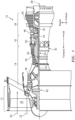
FIG. 1 illustrates a side cutaway view of a gas turbine engine, in accordance with one or more embodiments of the present disclosure. -
FIG. 2A illustrates a side, cross-sectional view of a portion of a fan assembly or low-pressure compressor of the gas turbine engine ofFIG. 1 , in accordance with one or more embodiments of the present disclosure. -
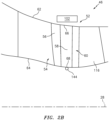
FIG. 2B illustrates a side, cross-sectional view of a portion of a high-pressure compressor of the gas turbine engine ofFIG. 1 , in accordance with one or more embodiments of the present disclosure. -
FIG. 3 illustrates a top, cross-sectional view of an exemplary variable vane, in accordance with one or more embodiments of the present disclosure. -
FIG. 4 illustrates a top, cross-sectional view of an exemplary variable vane in several positions, in accordance with one aspect of the present invention. -
FIG. 5 illustrates a top, cross-sectional view of an exemplary variable vane in several positions, in accordance with one aspect of the present invention. -
FIG. 6 illustrates a top, cross-sectional view of an exemplary variable vane in several positions, in accordance with one or more embodiments of the present disclosure. -
FIG. 7 illustrates a top, cross-sectional view of an exemplary variable vane in several positions, in accordance with one or more embodiments of the present disclosure. -
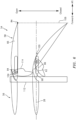
FIG. 8 illustrates a top, cross-sectional view of an exemplary variable vane in several positions, which is not part of the present invention, but is present for illustration purposes only. -
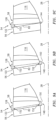
FIG. 9A illustrates a side, cross-sectional view of an embodiment of the variable vane ofFIG. 8 , which is not part of the present invention, but is present for illustration purposes only. -
FIG. 9B illustrates a side, cross-sectional view of an embodiment of the variable vane ofFIG. 8 , which is not part of the present invention, but is present for illustration purposes only. -
FIG. 9C illustrates a side, cross-sectional view of an embodiment of the variable vane ofFIG. 8 , which is not part of the present invention, but is present for illustration purposes only. - It is noted that various connections are set forth between elements in the following description and in the drawings. It is noted that these connections are general and, unless specified otherwise, may be direct or indirect and that this specification is not intended to be limiting in this respect. A coupling between two or more entities may refer to a direct connection or an indirect connection. An indirect connection may incorporate one or more intervening entities. It is further noted that various method or process steps for embodiments of the present disclosure are described in the following description and drawings. The description may present the method and/or process steps as a particular sequence. However, to the extent that the method or process does not rely on the particular order of steps set forth herein, the method or process should not be limited to the particular sequence of steps described. As one of ordinary skill in the art would appreciate, other sequences of steps may be possible. Therefore, the particular order of the steps set forth in the description should not be construed as a limitation.
- Referring to
FIG. 1 , an exemplarygas turbine engine 10 is schematically illustrated. Thegas turbine engine 10 is disclosed herein as a two-spool turbofan engine that generally includes afan section 12, acompressor section 14, acombustor section 16, and aturbine section 18. Thefan section 12 drives air along abypass flow path 20 while thecompressor section 14 drives air along acore flow path 22 for compression and communication into thecombustor section 16 and then expansion through theturbine section 18. Although depicted as a turbofan gas turbine engine in the disclosed non-limiting embodiments, it should be understood that the concepts described herein are not limited to use with turbofans as the teachings may be applied to other types of turbine engines including those with three-spool architectures or turbojets with no bypass flowpath. - The
gas turbine engine 10 generally includes a low-pressure spool 24 and a high-pressure spool 26 mounted for rotation about anaxial centerline 28 of thegas turbine engine 10 relative to an enginestatic structure 30 via one or more bearingsystems 32. It should be understood thatvarious bearing systems 32 at various locations may alternatively or additionally be provided. - The low-
pressure spool 24 generally includes afirst shaft 34 that interconnects afan 36, a low-pressure compressor 38, and a low-pressure turbine 40. Thefirst shaft 34 is connected to thefan 36 through a gear assembly of a fandrive gear system 42 to drive thefan 36 at a lower speed than the low-pressure spool 24. The high-pressure spool 26 generally includes asecond shaft 44 that interconnects a high-pressure compressor 46 and a high-pressure turbine 48. It is to be understood that "low pressure" and "high pressure" or variations thereof as used herein are relative terms indicating that the high pressure is greater than the low pressure. Anannular combustor 50 is disposed between the high-pressure compressor 46 and the high-pressure turbine 48 along theaxial centerline 28. Thefirst shaft 34 and thesecond shaft 44 are concentric and rotate via the one or more bearingsystems 32 about theaxial centerline 28 which is collinear with respective axial centerlines of the first andsecond shafts - Airflow along the
core flow path 22 is compressed by the low-pressure compressor 38, then the high-pressure compressor 46, mixed and burned with fuel in thecombustor 50, and then expanded over the high-pressure turbine 48 and the low-pressure turbine 40. The low-pressure turbine 40 and the high-pressure turbine 48 rotationally drive the low-pressure spool 24 and the high-pressure spool 26, respectively, in response to the expansion. - Referring to
FIGS. 2A and2B , thegas turbine engine 10 may include avariable vane assembly 52 comprising a plurality ofvariable vanes 54 disposed about theaxial centerline 28. Thevariable vane assembly 52 may be located axially adjacent and forward of afirst rotor stage 116. Eachvariable vane 54 may include afirst vane portion 56 which is fixed (e.g., relative to the axial centerline 28) and asecond vane portion 58 which is disposed axially aft of and adjacent thefirst vane portion 56. As will be discussed in further detail, thesecond vane portion 58 of thevariable vane 54 is configured to move relative to thefirst vane portion 56. Thevariable vane assembly 52 may be included in thefan section 12 and/or the low-pressure compressor 38 of thecompressor section 14 of thegas turbine engine 10 as shown, for example, inFIG. 2A . Thevariable vane assembly 52 may additionally or alternatively be included in the high-pressure compressor 46 of thecompressor section 14 of thegas turbine engine 10 as shown, for example, inFIG. 2B . - The
variable vane assembly 52 may be located in anannular passage 60 defined between an outer radial structure and an inner radial structure. The outer radial structure and the inner radial structure may be a casing, shroud, duct, or other structural assembly and will be referred to herein as anouter casing 62 and aninner casing 64. Thefirst vane portion 56 of eachvariable vane 54 may be fixedly connected to theouter casing 62 and theinner casing 64 and may be configured to provide structural support to theouter casing 62 and the inner casing 64 (e.g., thefirst vane portion 56 may function as a strut). As will be discussed in further detail, thesecond vane portion 58 of eachvariable vane 54 may be moveably mounted to theouter casing 62 and theinner casing 64 and configured to move relative to the respectivefirst vane portion 56. Thesecond vane portion 58 includes an outerradial end 66 disposed adjacent theouter casing 62 and an innerradial end 68 disposed opposite the outerradial end 66 and adjacent theinner casing 64. Thevariable vane assembly 52 may include an actuation system 102 (e.g., a hydraulic actuation system) configured to effect movement of thesecond vane portion 58. Theactuation system 102 may be located radially outside theouter casing 62 and/or radially inside theinner casing 64 and in communication with one or both of the radial ends 66, 68 of thesecond vane portion 58 to effect movement thereof. The present disclosure is not limited to any particular actuation system or any particular method for effecting movement of thesecond vane portion 58. - Referring to
FIG. 3 , thevariable vane 54 includes achord length 70 extending from a leading edge 72 of thevariable vane 54 to a trailing edge 74 of thevariable vane 54. Thevariable vane 54 includes anaxial chord length 134 extending in an axial direction from the leading edge 72 of thevariable vane 54 to the trailing edge 74 of thevariable vane 54. Thevariable vane 54 further includes agap 76 disposed between thefirst vane portion 56 and thesecond vane portion 58. Thefirst vane portion 56 includes a first forward axial end 78 and a first aftaxial end 80 opposite the first forward axial end 78. The first forward axial end 78 may correspond to the leading edge 72 of thevariable vane 54. Thesecond vane portion 58 includes a second forwardaxial end 82 and a second aftaxial end 84 opposite the second forwardaxial end 82. The second aftaxial end 84 may correspond to the trailing edge 74. The first aftaxial end 80 of thefirst vane portion 56 is defined by a vane surface which defines a recess within which the second vane portion 58 (e.g., the second forward axial end 82) is configured to be located. The vane surface may extend between afirst edge 86 of the first aftaxial end 80 and asecond edge 88 of the first aftaxial end 80 located axially aft of thefirst edge 86. The vane surface may have a concave shape between thefirst edge 86 and thesecond edge 88 which faces thesecond vane portion 58. Thesecond vane portion 58 includes afirst face 118 extending from the second forwardaxial end 82 to the second aftaxial end 84 and asecond face 120 opposite thefirst face 118 and extending from the second forwardaxial end 82 to the second aftaxial end 84. Thesecond vane portion 58 includes athickness 136 between thefirst face 118 and thesecond face 120. As used herein, thethickness 136 refers to a location of maximum thickness betweenfirst face 118 and thesecond face 120. Thevariable vane 54 additionally includes apressure side 90 and asuction side 92 opposite thepressure side 90. During operation of thegas turbine engine 10, some amount of fluid may flow through thegap 76 in a direction from thepressure side 90 to thesuction side 92. - Referring to
FIGS. 3-8 , aspects of the present disclosure include thesecond vane portion 58 of thevariable vane 54 which is configured to rotate from a first rotational position to a second rotational position between or including an open position (e.g., a fully open position) and a closed position (e.g., a fully closed position) of thesecond vane portion 58 as thesecond vane portion 58 axially translates relative to thefirst vane portion 56 of thevariable vane 54. For example, thesecond vane portion 58 may rotate from the first rotational position to the second rotational position, in a direction from the open position to the closed position, as thesecond vane portion 58 axially translates relative to thefirst vane portion 56 of thevariable vane 54. Accordingly, thechord length 70 of thevariable vane 54 may be adjusted to provide greater efficiency during various power conditions of thegas turbine engine 10. During relatively higher power operations of thegas turbine engine 10, thesecond vane portion 58 may be positioned toward the open position wherein thesecond vane portion 58 may be substantially aligned with (e.g., parallel to) thefirst vane portion 56, thereby minimizing the pressure loss of a fluid passing thevariable vane assembly 52. During relatively lower power operations of thegas turbine engine 10, the second vane portion may be positioned toward closed position to reduce the flow of the fluid through thevariable vane assembly 52 and provide turning to the fluid. Thus, depending on the operating conditions of thegas turbine engine 10, thesecond vane portion 58 may be selectively positioned in the open position, the closed position, or a range of intermediate positions between the open position and the closed position by rotating thesecond vane portion 58. As used herein, the term "open position" means the maximum rotational position of thesecond vane portion 58 in the direction of thesuction side 92 of thevariable vane 54 and the term "closed position" means the maximum rotational position of thesecond vane portion 58 in the direction of thepressure side 90 of thevariable vane 54. In various embodiments, thesecond vane portion 58 may be configured to rotate between 0 and 40 degrees from the open position to the closed position. In various embodiments, thesecond vane portion 58 may be configured to rotate between 0 and 50 degrees from the open position to the closed position. In various embodiments, thesecond vane portion 58 may be configured to rotate greater than 50 degrees from the open position to the closed position. - Referring to
FIGS. 4-7 , top views of thevariable vane 54 in multiple positions are shown illustrating the outerradial end 66 of thesecond vane portion 58. Thesecond vane portion 58 includes atrunnion 94 projecting radially outward from the outerradial end 66. Thetrunnion 94 is disposed in aslot 96 defined in theouter casing 62 and is in communication with theactuation system 102 as discussed above (seeFIGS. 2A and2B ). Thetrunnion 94 is configured to translate between afirst slot end 98 of theslot 96 corresponding to a first axial position of thesecond vane portion 58 and asecond slot end 100 of theslot 96 corresponding to a second axial position of thesecond vane portion 58, by operation of theactuation system 102. Thefirst slot end 98 may be an axially forward end of theslot 96 while thesecond slot end 100 may be an axially aft end of theslot 96. The first axial position of thesecond vane portion 58 may be a proximate position of the second vane portion 58 (e.g., the second forward axial end 82) with respect to thefirst vane portion 56 and the second axial position of thesecond vane portion 58 may be a distal position of the second vane portion (e.g., the second forward axial end 82) with respect to thefirst vane portion 56. In various embodiments, thefirst slot end 98 may be axially forward of the first aftaxial end 80 of thefirst vane portion 56 and thesecond slot end 100 may be axially aft of the first aftaxial end 80 of thefirst vane portion 56. Thetrunnion 94 may be located in an axially forward region of thesecond vane portion 58 and may be axially spaced aft of the second forwardaxial end 82 of thesecond vane portion 58, using the open position of thesecond vane portion 58 as a reference. For example, in various embodiments, thetrunnion 94 may be located in the axially forward 50 percent of thesecond vane portion 58 by length from the second forwardaxial end 82 to the second aftaxial end 84. In various embodiments, thetrunnion 94 may be located in the axially forward 25 percent of thesecond vane portion 58 by length from the second forwardaxial end 82 to the second aftaxial end 84. In various embodiments, thetrunnion 94 may be located in the axially forward 10 percent of thesecond vane portion 58 by length from the second forwardaxial end 82 to the second aftaxial end 84. - The
second vane portion 58 is further configured to rotate about atrunnion axis 104 of thetrunnion 94 from an open position to a closed position as thetrunnion 94 translates from thefirst slot end 98 to thesecond slot end 100. Similarly, thesecond vane portion 58 is configured to rotate about thetrunnion axis 104 of thetrunnion 94 from the closed position to the open position as thetrunnion 94 translates from thesecond slot end 100 to thefirst slot end 98. As thetrunnion 94 translates from thefirst slot end 98 toward thesecond slot end 100 and thesecond vane portion 58 rotates in a direction from the open position to the closed position, thechord length 70 of thevariable vane 54 increases while a circumferential gap (e.g., a circumferential distance) between circumferentially adjacentvariable vanes 54 of thevariable vane assembly 52 decreases. Accordingly, a ratio of the circumferential gap tochord length 70 may decrease as thesecond vane portion 58 transitions from the open position to the closed position. - While the operation of the
second vane portion 58 is explained above with respect to the outerradial end 66 of thesecond vane portion 58, it should be understood that the innerradial end 68 may additionally include a trunnion disposed in a respective slot of theinner casing 64 and may be in communication with an actuation system such as theactuation system 102 or an actuation system which is independent of theactuation system 102. The trunnion and respective slot of theinner casing 64 may have a configuration which is substantially the same as correspondingtrunnions 94 andslots 96 which will be described in greater detail below. In various other embodiments, the innerradial end 68 of thesecond vane portion 58 may be movably mounted to theinner casing 64 by, for example, aspherical bearing 144 or other mounting configuration allowing some relative movement between the innerradial end 68 of thesecond vane portion 58 and theinner casing 64. Thevariable vane assembly 52 ofFIG. 2A is illustrated as having theactuation system 102 located at the innerradial end 68 while thevariable vane assembly 52 ofFIG. 2B is illustrated as having thespherical bearing 144 located at the innerradial end 68, however, it should be understood that the innerradial end 68 is not limited to any particular mounting configuration and theactuation system 102, thespherical bearing 144, or another mounting configuration may be used at the innerradial end 68 for any of the aspects or embodiments described herein. - In various embodiments, the location of the
trunnion 94 at thefirst slot end 98 may correspond to thesecond vane portion 58 being in the open position while the location of thetrunnion 94 at thesecond slot end 100 may correspond to thesecond vane portion 58 being in the shut position. In various other embodiments, thesecond vane portion 58 may be configured to rotate independent of translation of thetrunnion 94 and/or thetrunnion 94 may be configured to translate independent of rotation of thesecond vane portion 58. - Referring to
FIG. 4 , in various embodiments, theslot 96 extends in a straight (i.e., linear) direction from thefirst slot end 98 to thesecond slot end 100. Theslot 96 may extend, for example, in a substantially axial direction from thefirst slot end 98 to thesecond slot end 100. As used herein, the term "substantially" with regard to an angular relationship refers to the noted angular relationship (e.g., "parallel") +/- 5 degrees. In operation, as thetrunnion 94 translates from thefirst slot end 98 to thesecond slot end 100, or anywhere therebetween, the rotation and axial movement of thesecond vane portion 58 may result in the second aftaxial end 84 of thesecond vane portion 58 maintaining a substantially constant axial position (generally indicated as axial position 106) while minimizing thegap 76 between the second forwardaxial end 82 of thesecond vane portion 58 and the first aftaxial end 80 of thefirst vane portion 56. As used herein, the term "substantially" with respect to the constant axial position refers to the constant axial position +/one percent of theaxial chord length 134 of thevariable vane 54. As previously discussed, thevariable vane assembly 52 may be located axially adjacent and forward of a first rotor stage 116 (seeFIGS. 2A and2B ). By maintaining the second aftaxial end 84 of thesecond vane portion 58 in a substantially constantaxial position 106 throughout the range of motion of thesecond vane portion 58, thevariable vane assembly 52 may be located closer to thefirst rotor stage 116 than would be acceptable with conventional variable vane assemblies, improving efficiency and performance of the rotational equipment. In various embodiments, the axial position of the second aftaxial end 84 of thesecond vane portion 58 may be maintained within an axial range of +/- five percent of theaxial chord length 134 over at least fifty degrees of rotation of thesecond vane portion 58. For example, the aftaxial end 84 of thesecond vane portion 58 may be maintained within an axial range of +/- one percent of theaxial chord length 134 per ten degrees of rotation of thesecond vane portion 58 between a first rotational position and a second rotational position. - Referring to
FIG. 5 , in various embodiments, theslot 96 may be curved between thefirst slot end 98 and thesecond slot end 100. For example, as shown inFIG. 5 , the curved slot may have aconcave side 108 which faces thepressure side 90 of thevariable vane 54 and aconvex side 110, opposite theconcave side 108, which faces thesuction side 92 of thevariable vane 54. Thecurved slot 96 configuration may allow asmaller gap 76 between the second forwardaxial end 82 of thesecond vane portion 58 and the first aftaxial end 80 of thefirst vane portion 56 throughout the range of motion of thesecond vane portion 58, in comparison to thestraight slot 96 configuration ofFIG. 4 . However, as can be seen inFIG. 5 , thecurved slot 96 configuration may result in greater variation of the axial position of the second aftaxial end 84 of thesecond vane portion 58 throughout its range of motion, in comparison to thestraight slot 96 configuration ofFIG. 4 . - Referring to
FIGS. 6 and7 , in various embodiments, thevariable vane assembly 52 may include async ring 112 disposed about theaxial centerline 28 and configured to rotate in a circumferential direction about theaxial centerline 28. Thesecond vane portion 58 may further include a geared cam 114 (e.g., a geared "French-curve" cam) in rotational communication with thetrunnion 94. The gearedcam 114 may be configured to engage thesync ring 112 and effect translation of thetrunnion 94 between thefirst slot end 98 and thesecond slot end 100 of theslot 96 based on the circumferential rotation of thesync ring 112. Accordingly, thesync ring 112 and gearedcam 114 may effect axial and rotational movement of thesecond vane portion 58 instead of theactuation system 102 in communication with thetrunnion 94. In various embodiments, thesync ring 112 may be located axially forward of the slot 96 (seeFIG. 6 ). In various other embodiments, thesync ring 112 may be located axially aft of the slot 96 (seeFIG. 7 ). The location of thesync ring 112 axially aft of theslot 96 may allow the aerodynamic load on thesecond vane portion 58 to cause thetrunnion 94 and gearedcam 114 to remain engaged with thesync ring 112 As shown inFIGS. 6 and7 , thevariable vane assembly 52 includes aslot 96 having a straight configuration similar to that shown inFIG. 4 , however, it should be understood that theslot 96 is not limited to this configuration and may have an alterative configuration such as thecurved slot 96 of shown inFIG. 5 . The use of async ring 112 and gearedcam 114 may provide for a reduction in weight of thevariable vane assembly 52 in comparison to a variable vane assembly and actuation system using vane arms to effect movement of a second vane portion. - The following subject-matter is not according to the invention and is present for illustration purposes only.
- Referring to
FIG. 8 , a top view of thevariable vane 54 in multiple positions is shown illustrating the outerradial end 66 of thesecond vane portion 58. In various embodiments, thesecond vane portion 58 includes atrunnion 128 projecting outward from the outerradial end 66 of thesecond vane portion 58. Thetrunnion 128 includes abutton 122 having afirst portion 124 fixedly in contact with the outerradial end 66 of thesecond vane portion 58 and asecond portion 126 detached from (e.g., not in contact with) thesecond vane portion 58. Thetrunnion 128 further includes atrunnion portion 138 which is fixedly mounted to thesecond portion 126 of thebutton 122 at a cross-sectional center of thebutton 122 and projects radially outward from thebutton 122. Thetrunnion 128, via thetrunnion portion 138, is in communication with theactuation system 102 as discussed above (seeFIGS. 2A and2B ) and is configured to rotate by operation of theactuation system 102. Thus, thesecond vane portion 58 is configured to rotate about a trunnion axis 130 of thetrunnion 128 between the open position and the closed position. The trunnion axis 130 may be spaced axially aft of thefirst vane portion 56 and may be spaced circumferentially from thesecond vane portion 58. Rotation of thetrunnion 128 about the trunnion axis 130 by theactuation system 102 causes thebutton 122 and, therefore, thesecond vane portion 58 to move from the first axial position to the second axial position, as shown by the movement ofreference point 132 along areference path 146, while thesecond vane portion 58 also rotates from a first rotational position to a second rotational position. As with thecurved slot 96 configuration discussed above, thebutton 122 configuration ofFIG. 8 may allow asmaller gap 76 between the second forwardaxial end 82 of thesecond vane portion 58 and the first aftaxial end 80 of thefirst vane portion 56 throughout the range of motion of thesecond vane portion 58, in comparison to thestraight slot 96 configuration ofFIG. 4 . However, as can be seen inFIG. 8 , thebutton 122 configuration may result in greater variation of the axial position of the second aftaxial end 84 of thesecond vane portion 58 throughout its range of motion, in comparison to thestraight slot 96 configuration ofFIG. 4 . - In various embodiments, a
radius 140 of thebutton 122 may be greater than two times thethickness 136 of the second vane portion 58 (seeFIG. 3 ). For example, theradius 140 may be between two times and three times thethickness 136. In various embodiments, theradius 140 may be greater than three times thethickness 136. For example, theradius 140 may be between two times and ten times thethickness 136. In various other embodiments, theradius 140 may be greater than ten times thethickness 136. Theenlarged radius 140 of thebutton 122, relative to thethickness 136 of thesecond vane portion 58 for example, may promote axial movement of thesecond vane portion 58 in addition to rotation of the second vane portion, thereby allowing thechord length 70 of thevariable vane 54 to increase as thesecond vane portion 58 rotates in a direction from the open position toward the closed position. Thebutton 122 size (e.g., radius 140) and/or shape may be selected to provide a preferred reference path for passing air flow as well as a preferred length (e.g., chord length 70) variation of thevariable vane 54 along the range of rotation of thesecond vane portion 58. - Referring to
FIGS. 8 and9A-C , in various embodiments, thesecond vane portion 58 may include asecond trunnion 148 projecting outward from the innerradial end 68 of thesecond vane portion 58. Thesecond trunnion 148 includes asecond button 150 and may have a configuration that is substantially the same as thetrunnion 128. In various embodiments, and as shown inFIG. 9A , thesecond button 150 may have a radius and shape which is the same as thebutton 122. Accordingly, the second forwardaxial end 82 of thesecond vane portion 58 may have anaxial displacement 152 which is substantially constant along the radial length of thesecond vane portion 58 as thesecond vane portion 58 rotates from the first rotational position to the second rotational position. In various embodiments, and as shown inFIG. 9B , thesecond button 150 may have a radius and/or shape which is different than thebutton 122. For example, thesecond button 150 may have a radius which is smaller than theradius 140 of thebutton 122. Accordingly, the second forwardaxial end 82 of thesecond vane portion 58 may have anaxial displacement 152 which varies along the radial length of thesecond vane portion 58 as thesecond vane portion 58 rotates from the first rotational position to the second rotational position. For example, theaxial displacement 152 of the second forwardaxial end 82 may be greater at the outerradial end 66 of thesecond vane portion 58 than at the innerradial end 68 of thesecond vane portion 58. In various other embodiments, and as shown inFIG. 9C , thesecond vane portion 58 may be mounted to thespherical bearing 144 at the innerradial end 68. Accordingly, the second forwardaxial end 82 of thesecond vane portion 58 may be axially fixed at the innerradial end 68 and theaxial displacement 152 of the second forwardaxial end 82 may vary along the radial length of thesecond vane portion 58, to a greater degree than thesecond vane portion 58 shown inFIG. 9B , as thesecond vane portion 58 rotates from the first rotational position to the second rotational position. - The
variable vane 54 of the present disclosure benefits from changing the circumferential gap tochord length 70 ratio to be more ideal under both high and low power conditions, resulting in reduced pressure loss across thevariable vane assembly 52 as well as greater turning of the fluid passing through thevariable vane assembly 52. Further, thevariable vane assembly 52 may require less closure compared to conventional variable vane assemblies due to reduced air angle deviation at low power. - It should be understood that relative positional terms such as "forward," "aft," "upper," "lower," "above," "below," and the like are with reference to the normal operational attitude of the gas turbine engine and should not be considered otherwise limiting.
- While various aspects of the present disclosure have been disclosed, it will be apparent to those of ordinary skill in the art that many more embodiments and implementations are possible within the scope of the present disclosure. For example, the present disclosure as described herein includes several aspects and embodiments that include particular features. Although these particular features may be described individually, it is within the scope of the present disclosure that some or all of these features may be combined with any one of the aspects and remain within the scope of the present disclosure. References to "various embodiments," "one embodiment," "an embodiment," "an example embodiment," etc., indicate that the embodiment described may include a particular feature, structure, or characteristic, but every embodiment may not necessarily include the particular feature, structure, or characteristic. Moreover, such phrases are not necessarily referring to the same embodiment. Further, when a particular feature, structure, or characteristic is described in connection with an embodiment, it is submitted that it is within the knowledge of one skilled in the art to effect such feature, structure, or characteristic in connection with other embodiments whether or not explicitly described. Accordingly, the present disclosure is not to be restricted except in light of the attached claims.
Claims (13)
- A variable vane (54) comprising:a first vane portion (56); anda second vane portion (58) adjacent the first vane portion (56), the second vane portion (58) comprising a trunnion (94; 128; 148) projecting outward from a radial end (66; 68) of the second vane portion (58), the second vane portion (58) configured to rotate about a trunnion axis (104; 130) of the trunnion (94; 128; 148) from a first rotational position to a second rotational position,characterised in that:
the trunnion (94; 128; 148) is disposed in a slot (96) within which the trunnion (94; 128; 148) is configured to translate between a first slot end (98) corresponding to a first axial position of the second vane portion (58) and a second slot end (100) corresponding to a second axial position of the second vane portion (58) and wherein the second vane portion (58) is configured to rotate about the trunnion axis (104; 130) of the trunnion (94; 128; 148) from the first rotational position to the second rotational position as the trunnion (94; 128; 148) translates from the first slot end (98) to the second slot end (100). - The variable vane (54) of claim 1, wherein the second vane portion (58) is mounted to a spherical bearing (144) at a or the second radial end (68), opposite the radial end (66).
- The variable vane (54) of claim 1 or 2, wherein the second vane portion (58) is configured to rotate at least forty degrees between a fully open position and a fully closed position.
- The variable vane (54) of claim 1, 2 or 3, wherein the first vane portion (56) comprises a first forward axial end (78) and a first aft axial end (80) opposite the first forward axial end (78), and wherein the first slot end (98) is axially forward of the first aft axial end (80) and the second slot end (100) is axially aft of the first aft axial end (80).
- The variable vane (54) of claim 5, wherein the first aft axial end (80) of the first vane portion (56) comprises a vane surface which defines a recess within which the second vane portion (58) is configured to be located, the vane surface extending between a first edge (86) and a second edge (88) located axially aft of the first edge (86), wherein the vane surface has a concave shape between the first edge (86) and the second edge (88) which faces the second vane portion (58).
- The variable vane (54) of any preceding claim, wherein the second vane portion (58) comprises a second forward axial end (82) and a second aft axial end (84) opposite the second forward axial end (82), and wherein the second aft axial end (84) maintains a substantially constant axial position as the trunnion (94; 128; 148) translates from the first slot end (98) to the second slot end (100).
- The variable vane (54) of any preceding claim, wherein the slot (96) extends in a substantially axial direction between the first slot end (98) and the second slot end (100).
- The variable vane (54) of any preceding claim, wherein the slot (96) is curved between the first slot end (98) and the second slot end (100), and wherein, optionally, the curved slot (96) has a concave side (108) which faces a pressure side (90) of the variable vane (54) and a convex side (110) which faces a suction side (92) of the variable vane (54).
- The variable vane (54) of any preceding claim, further comprising a sync ring (112) disposed about an axial centerline (28) and configured to rotate in a circumferential direction about the axial centerline (28);
wherein the second vane portion (58) further comprises a geared cam (114) in rotational communication with the trunnion (94; 128; 148), the geared cam (114) configured to engage the sync ring (112) and effect translation of the trunnion (94; 128; 148) between the first slot end (98) and the second slot end (100) based on a rotation of the sync ring (112). - A gas turbine engine (10) having an axial centerline (28), the gas turbine engine (10) comprising:
a variable vane assembly (52), optionally located in at least one of a fan section (12) or a compressor section (14) of the gas turbine engine (10), the variable vane assembly (52) comprising a plurality of variable vanes (54) disposed about the axial centerline (28), each variable vane (54) of the plurality of variable vanes (54) comprising the variable vane (54) of any preceding claim, wherein:the first vane portion (56) is fixed relative to the axial centerline (28); andthe second vane portion (58) is disposed axially aft of the first vane portion (56). - The gas turbine engine (10) of claim 10, further comprising an actuation system (102) connected to the trunnion (94; 128; 148), the actuation system (102) configured to effect one or both of a rotation or an axial translation of the trunnion (94; 128; 148).
- A method for operating a variable vane (54), the method comprising:providing a first vane portion (56) of the variable vane (54) and a second vane portion (58) of the variable vane (54) adjacent the first vane portion (56), the second vane portion (58) comprising a trunnion (94; 128; 148) projecting outward from a radial end (66; 68) of the second vane portion (58),wherein the trunnion (94; 128; 148) is disposed in a slot (96) within which the trunnion (94; 128; 148) is configured to translate between a first slot end (98) corresponding to a first axial position of the second vane portion (58) and a second slot end (100) corresponding to a second axial position of the second vane portion (58) and wherein the second vane portion (58) is configured to rotate about the trunnion axis (104; 130) of the trunnion (94; 128; 148) from a first rotational position to a second rotational position as the trunnion (94; 128; 148) translates from the first slot end (98) to the second slot end (100),wherein the method further comprises:
rotating the second vane portion (58), relative to a trunnion axis (104; 130) of the trunnion (94; 128; 148), from the first rotational position to the second rotational position. - The method of claim 12, further comprising translating the trunnion (94; 128; 148) of the second vane portion (58) from the first slot end (98) of the slot (96) to the second slot end (100) of the slot (96) as the second vane portion (58) rotates from the first rotational position to the second rotational position.
Priority Applications (1)
| Application Number | Priority Date | Filing Date | Title |
|---|---|---|---|
| EP24182937.3A EP4407192A3 (en) | 2021-01-04 | 2022-01-04 | Variable vane, gas turbine engine and method for operating a variable vane |
Applications Claiming Priority (1)
| Application Number | Priority Date | Filing Date | Title |
|---|---|---|---|
| US17/140,604 US11384656B1 (en) | 2021-01-04 | 2021-01-04 | Variable vane and method for operating same |
Related Child Applications (1)
| Application Number | Title | Priority Date | Filing Date |
|---|---|---|---|
| EP24182937.3A Division EP4407192A3 (en) | 2021-01-04 | 2022-01-04 | Variable vane, gas turbine engine and method for operating a variable vane |
Publications (3)
| Publication Number | Publication Date |
|---|---|
| EP4023858A2 EP4023858A2 (en) | 2022-07-06 |
| EP4023858A3 EP4023858A3 (en) | 2022-10-26 |
| EP4023858B1 true EP4023858B1 (en) | 2024-06-19 |
Family
ID=79230966
Family Applications (2)
| Application Number | Title | Priority Date | Filing Date |
|---|---|---|---|
| EP24182937.3A Pending EP4407192A3 (en) | 2021-01-04 | 2022-01-04 | Variable vane, gas turbine engine and method for operating a variable vane |
| EP22150257.8A Active EP4023858B1 (en) | 2021-01-04 | 2022-01-04 | Variable vane, gas turbine engine and method for operating a variable vane |
Family Applications Before (1)
| Application Number | Title | Priority Date | Filing Date |
|---|---|---|---|
| EP24182937.3A Pending EP4407192A3 (en) | 2021-01-04 | 2022-01-04 | Variable vane, gas turbine engine and method for operating a variable vane |
Country Status (2)
| Country | Link |
|---|---|
| US (2) | US11384656B1 (en) |
| EP (2) | EP4407192A3 (en) |
Families Citing this family (7)
| Publication number | Priority date | Publication date | Assignee | Title |
|---|---|---|---|---|
| US11384656B1 (en) * | 2021-01-04 | 2022-07-12 | Raytheon Technologies Corporation | Variable vane and method for operating same |
| US12398655B2 (en) | 2023-03-17 | 2025-08-26 | Rolls-Royce North American Technologies Inc. | Segmented variable fan outlet guide vane with segment interface components |
| US12398648B2 (en) * | 2023-03-17 | 2025-08-26 | Rolls-Royce North American Technologies Inc. | Segmented variable fan outlet guide vane with cam assembly and pass through actuation mechanisms |
| US12320260B2 (en) * | 2023-03-17 | 2025-06-03 | Rolls-Royce North American Technologies Inc. | Segmented variable fan outlet guide vane with cam assembly and unique actuation mechanisms |
| US12480422B2 (en) | 2023-03-17 | 2025-11-25 | Rolls-Royce North American Technologies Inc. | Segmented variable fan outlet guide vane with pass through actuation mechanisms |
| US12292056B2 (en) | 2023-03-17 | 2025-05-06 | Rolls-Royce North American Technologies Inc. | Segmented variable fan outlet guide vane with gear assembly |
| US12428974B2 (en) | 2023-03-17 | 2025-09-30 | Rolls-Royce North American Technologies Inc. | Segmented variable fan outlet guide vane with unique actuation mechanisms |
Family Cites Families (18)
| Publication number | Priority date | Publication date | Assignee | Title |
|---|---|---|---|---|
| US3295827A (en) * | 1966-04-06 | 1967-01-03 | Gen Motors Corp | Variable configuration blade |
| US3563669A (en) | 1969-07-10 | 1971-02-16 | Gen Motors Corp | Variable area nozzle |
| US3887297A (en) * | 1974-06-25 | 1975-06-03 | United Aircraft Corp | Variable leading edge stator vane assembly |
| US4053256A (en) | 1975-09-29 | 1977-10-11 | United Technologies Corporation | Variable camber vane for a gas turbine engine |
| US4856962A (en) * | 1988-02-24 | 1989-08-15 | United Technologies Corporation | Variable inlet guide vane |
| US4995786A (en) | 1989-09-28 | 1991-02-26 | United Technologies Corporation | Dual variable camber compressor stator vane |
| DE4208311A1 (en) | 1992-03-16 | 1993-09-23 | Asea Brown Boveri | Flow control guide system for steam turbine - uses two=part guide blades with rear part capable of swivel movement |
| FR2714109B1 (en) | 1993-12-22 | 1996-01-19 | Snecma | Variable camber turbomachine blade. |
| FR2857699B1 (en) | 2003-07-17 | 2007-06-29 | Snecma Moteurs | DEFROSTING DEVICE FOR TURBOMACHINE INPUT DIRECTION WHEEL DARK, DAWN WITH SUCH A DEFROSTING DEVICE, AND AIRCRAFT ENGINE EQUIPPED WITH SUCH AUBES |
| US9249736B2 (en) * | 2008-12-29 | 2016-02-02 | United Technologies Corporation | Inlet guide vanes and gas turbine engine systems involving such vanes |
| US8915703B2 (en) * | 2011-07-28 | 2014-12-23 | United Technologies Corporation | Internally actuated inlet guide vane for fan section |
| EP2984315B1 (en) * | 2013-04-08 | 2018-07-11 | United Technologies Corporation | Annular airflow actuation system for variable cycle gas turbine engines |
| US9617864B2 (en) | 2014-07-21 | 2017-04-11 | United Technologies Corporation | Seal assembly for a guide vane assembly |
| EP3009607A1 (en) | 2014-10-13 | 2016-04-20 | United Technologies Corporation | Fixed-variable vane with potting in gap |
| US10208619B2 (en) | 2015-11-02 | 2019-02-19 | Florida Turbine Technologies, Inc. | Variable low turbine vane with aft rotation axis |
| US10287902B2 (en) | 2016-01-06 | 2019-05-14 | General Electric Company | Variable stator vane undercut button |
| US10808568B2 (en) | 2018-09-12 | 2020-10-20 | Raytheon Technologies Corporation | Airfoil assembly for a gas turbine engine |
| US11384656B1 (en) * | 2021-01-04 | 2022-07-12 | Raytheon Technologies Corporation | Variable vane and method for operating same |
-
2021
- 2021-01-04 US US17/140,604 patent/US11384656B1/en active Active
-
2022
- 2022-01-04 EP EP24182937.3A patent/EP4407192A3/en active Pending
- 2022-01-04 EP EP22150257.8A patent/EP4023858B1/en active Active
- 2022-07-11 US US17/861,931 patent/US11852021B2/en active Active
Also Published As
| Publication number | Publication date |
|---|---|
| EP4407192A2 (en) | 2024-07-31 |
| US11384656B1 (en) | 2022-07-12 |
| US11852021B2 (en) | 2023-12-26 |
| EP4023858A3 (en) | 2022-10-26 |
| EP4023858A2 (en) | 2022-07-06 |
| EP4407192A3 (en) | 2024-12-04 |
| US20220341343A1 (en) | 2022-10-27 |
Similar Documents
| Publication | Publication Date | Title |
|---|---|---|
| EP4023858B1 (en) | Variable vane, gas turbine engine and method for operating a variable vane | |
| EP4008884B1 (en) | Variable guide vane assembly for a gas turbine engine and gas turbine engine | |
| US20210231052A1 (en) | Radial variable inlet guide vane for axial or axi-centrifugal compressors | |
| US7125222B2 (en) | Gas turbine engine variable vane assembly | |
| EP2659112B1 (en) | Gas turbine engine and variable camber vane system | |
| US8123471B2 (en) | Variable stator vane contoured button | |
| US10287902B2 (en) | Variable stator vane undercut button | |
| US20140140822A1 (en) | Contoured Stator Shroud | |
| US10443412B2 (en) | Variable pitch fan pitch range limiter | |
| US20090067978A1 (en) | Variable area turbine vane arrangement | |
| EP3071796B1 (en) | Gas turbine engine variable area vane with contoured endwalls | |
| EP4006315B1 (en) | Variable orientation guide vane for a gas turbine engine, and method of operating adjacent variable orientation first and second vanes disposed in an annular gas path of a gas turbine engine | |
| CN115413308B (en) | Compressor module for a turbomachine | |
| US20240328325A1 (en) | Seal Assembly For a Gas Turbine Engine | |
| CN114981521B (en) | Module for a turbomachine | |
| US11851158B2 (en) | Variable pitch fan assembly with remote counterweights | |
| EP3626933B1 (en) | High pressure turbine rear side plate | |
| US20220268285A1 (en) | Housing for a centrifugal compressor | |
| CN111692134A (en) | Backflow type compressor and engine thereof | |
| US12398671B2 (en) | Compressor assembly for a gas turbine engine having multi-stage bleed extraction | |
| US20240271542A1 (en) | Low-pressure turbine | |
| US12338770B1 (en) | Thrust diverter for an open rotor aircraft propulsion system |
Legal Events
| Date | Code | Title | Description |
|---|---|---|---|
| PUAI | Public reference made under article 153(3) epc to a published international application that has entered the european phase |
Free format text: ORIGINAL CODE: 0009012 |
|
| STAA | Information on the status of an ep patent application or granted ep patent |
Free format text: STATUS: THE APPLICATION HAS BEEN PUBLISHED |
|
| AK | Designated contracting states |
Kind code of ref document: A2 Designated state(s): AL AT BE BG CH CY CZ DE DK EE ES FI FR GB GR HR HU IE IS IT LI LT LU LV MC MK MT NL NO PL PT RO RS SE SI SK SM TR |
|
| PUAL | Search report despatched |
Free format text: ORIGINAL CODE: 0009013 |
|
| AK | Designated contracting states |
Kind code of ref document: A3 Designated state(s): AL AT BE BG CH CY CZ DE DK EE ES FI FR GB GR HR HU IE IS IT LI LT LU LV MC MK MT NL NO PL PT RO RS SE SI SK SM TR |
|
| RIC1 | Information provided on ipc code assigned before grant |
Ipc: F04D 29/56 20060101ALI20220920BHEP Ipc: F01D 17/16 20060101AFI20220920BHEP |
|
| STAA | Information on the status of an ep patent application or granted ep patent |
Free format text: STATUS: REQUEST FOR EXAMINATION WAS MADE |
|
| 17P | Request for examination filed |
Effective date: 20230426 |
|
| RBV | Designated contracting states (corrected) |
Designated state(s): AL AT BE BG CH CY CZ DE DK EE ES FI FR GB GR HR HU IE IS IT LI LT LU LV MC MK MT NL NO PL PT RO RS SE SI SK SM TR |
|
| RAP3 | Party data changed (applicant data changed or rights of an application transferred) |
Owner name: RTX CORPORATION |
|
| GRAP | Despatch of communication of intention to grant a patent |
Free format text: ORIGINAL CODE: EPIDOSNIGR1 |
|
| STAA | Information on the status of an ep patent application or granted ep patent |
Free format text: STATUS: GRANT OF PATENT IS INTENDED |
|
| INTG | Intention to grant announced |
Effective date: 20240117 |
|
| GRAS | Grant fee paid |
Free format text: ORIGINAL CODE: EPIDOSNIGR3 |
|
| GRAA | (expected) grant |
Free format text: ORIGINAL CODE: 0009210 |
|
| STAA | Information on the status of an ep patent application or granted ep patent |
Free format text: STATUS: THE PATENT HAS BEEN GRANTED |
|
| AK | Designated contracting states |
Kind code of ref document: B1 Designated state(s): AL AT BE BG CH CY CZ DE DK EE ES FI FR GB GR HR HU IE IS IT LI LT LU LV MC MK MT NL NO PL PT RO RS SE SI SK SM TR |
|
| REG | Reference to a national code |
Ref country code: GB Ref legal event code: FG4D |
|
| REG | Reference to a national code |
Ref country code: CH Ref legal event code: EP |
|
| REG | Reference to a national code |
Ref country code: DE Ref legal event code: R096 Ref document number: 602022003964 Country of ref document: DE |
|
| PG25 | Lapsed in a contracting state [announced via postgrant information from national office to epo] |
Ref country code: BG Free format text: LAPSE BECAUSE OF FAILURE TO SUBMIT A TRANSLATION OF THE DESCRIPTION OR TO PAY THE FEE WITHIN THE PRESCRIBED TIME-LIMIT Effective date: 20240619 |
|
| PG25 | Lapsed in a contracting state [announced via postgrant information from national office to epo] |
Ref country code: HR Free format text: LAPSE BECAUSE OF FAILURE TO SUBMIT A TRANSLATION OF THE DESCRIPTION OR TO PAY THE FEE WITHIN THE PRESCRIBED TIME-LIMIT Effective date: 20240619 Ref country code: FI Free format text: LAPSE BECAUSE OF FAILURE TO SUBMIT A TRANSLATION OF THE DESCRIPTION OR TO PAY THE FEE WITHIN THE PRESCRIBED TIME-LIMIT Effective date: 20240619 |
|
| REG | Reference to a national code |
Ref country code: LT Ref legal event code: MG9D |
|
| PG25 | Lapsed in a contracting state [announced via postgrant information from national office to epo] |
Ref country code: GR Free format text: LAPSE BECAUSE OF FAILURE TO SUBMIT A TRANSLATION OF THE DESCRIPTION OR TO PAY THE FEE WITHIN THE PRESCRIBED TIME-LIMIT Effective date: 20240920 |
|
| REG | Reference to a national code |
Ref country code: NL Ref legal event code: MP Effective date: 20240619 |
|
| PG25 | Lapsed in a contracting state [announced via postgrant information from national office to epo] |
Ref country code: LV Free format text: LAPSE BECAUSE OF FAILURE TO SUBMIT A TRANSLATION OF THE DESCRIPTION OR TO PAY THE FEE WITHIN THE PRESCRIBED TIME-LIMIT Effective date: 20240619 |
|
| PG25 | Lapsed in a contracting state [announced via postgrant information from national office to epo] |
Ref country code: NO Free format text: LAPSE BECAUSE OF FAILURE TO SUBMIT A TRANSLATION OF THE DESCRIPTION OR TO PAY THE FEE WITHIN THE PRESCRIBED TIME-LIMIT Effective date: 20240919 Ref country code: LV Free format text: LAPSE BECAUSE OF FAILURE TO SUBMIT A TRANSLATION OF THE DESCRIPTION OR TO PAY THE FEE WITHIN THE PRESCRIBED TIME-LIMIT Effective date: 20240619 Ref country code: HR Free format text: LAPSE BECAUSE OF FAILURE TO SUBMIT A TRANSLATION OF THE DESCRIPTION OR TO PAY THE FEE WITHIN THE PRESCRIBED TIME-LIMIT Effective date: 20240619 Ref country code: GR Free format text: LAPSE BECAUSE OF FAILURE TO SUBMIT A TRANSLATION OF THE DESCRIPTION OR TO PAY THE FEE WITHIN THE PRESCRIBED TIME-LIMIT Effective date: 20240920 Ref country code: FI Free format text: LAPSE BECAUSE OF FAILURE TO SUBMIT A TRANSLATION OF THE DESCRIPTION OR TO PAY THE FEE WITHIN THE PRESCRIBED TIME-LIMIT Effective date: 20240619 Ref country code: BG Free format text: LAPSE BECAUSE OF FAILURE TO SUBMIT A TRANSLATION OF THE DESCRIPTION OR TO PAY THE FEE WITHIN THE PRESCRIBED TIME-LIMIT Effective date: 20240619 Ref country code: RS Free format text: LAPSE BECAUSE OF FAILURE TO SUBMIT A TRANSLATION OF THE DESCRIPTION OR TO PAY THE FEE WITHIN THE PRESCRIBED TIME-LIMIT Effective date: 20240919 |
|
| PG25 | Lapsed in a contracting state [announced via postgrant information from national office to epo] |
Ref country code: NL Free format text: LAPSE BECAUSE OF FAILURE TO SUBMIT A TRANSLATION OF THE DESCRIPTION OR TO PAY THE FEE WITHIN THE PRESCRIBED TIME-LIMIT Effective date: 20240619 |
|
| REG | Reference to a national code |
Ref country code: AT Ref legal event code: MK05 Ref document number: 1696034 Country of ref document: AT Kind code of ref document: T Effective date: 20240619 |
|
| PG25 | Lapsed in a contracting state [announced via postgrant information from national office to epo] |
Ref country code: NL Free format text: LAPSE BECAUSE OF FAILURE TO SUBMIT A TRANSLATION OF THE DESCRIPTION OR TO PAY THE FEE WITHIN THE PRESCRIBED TIME-LIMIT Effective date: 20240619 |
|
| PG25 | Lapsed in a contracting state [announced via postgrant information from national office to epo] |
Ref country code: PT Free format text: LAPSE BECAUSE OF FAILURE TO SUBMIT A TRANSLATION OF THE DESCRIPTION OR TO PAY THE FEE WITHIN THE PRESCRIBED TIME-LIMIT Effective date: 20241021 |
|
| PG25 | Lapsed in a contracting state [announced via postgrant information from national office to epo] |
Ref country code: PT Free format text: LAPSE BECAUSE OF FAILURE TO SUBMIT A TRANSLATION OF THE DESCRIPTION OR TO PAY THE FEE WITHIN THE PRESCRIBED TIME-LIMIT Effective date: 20241021 |
|
| PG25 | Lapsed in a contracting state [announced via postgrant information from national office to epo] |
Ref country code: PL Free format text: LAPSE BECAUSE OF FAILURE TO SUBMIT A TRANSLATION OF THE DESCRIPTION OR TO PAY THE FEE WITHIN THE PRESCRIBED TIME-LIMIT Effective date: 20240619 |
|
| PG25 | Lapsed in a contracting state [announced via postgrant information from national office to epo] |
Ref country code: EE Free format text: LAPSE BECAUSE OF FAILURE TO SUBMIT A TRANSLATION OF THE DESCRIPTION OR TO PAY THE FEE WITHIN THE PRESCRIBED TIME-LIMIT Effective date: 20240619 |
|
| PG25 | Lapsed in a contracting state [announced via postgrant information from national office to epo] |
Ref country code: IS Free format text: LAPSE BECAUSE OF FAILURE TO SUBMIT A TRANSLATION OF THE DESCRIPTION OR TO PAY THE FEE WITHIN THE PRESCRIBED TIME-LIMIT Effective date: 20241019 Ref country code: AT Free format text: LAPSE BECAUSE OF FAILURE TO SUBMIT A TRANSLATION OF THE DESCRIPTION OR TO PAY THE FEE WITHIN THE PRESCRIBED TIME-LIMIT Effective date: 20240619 |
|
| PG25 | Lapsed in a contracting state [announced via postgrant information from national office to epo] |
Ref country code: CZ Free format text: LAPSE BECAUSE OF FAILURE TO SUBMIT A TRANSLATION OF THE DESCRIPTION OR TO PAY THE FEE WITHIN THE PRESCRIBED TIME-LIMIT Effective date: 20240619 |
|
| PG25 | Lapsed in a contracting state [announced via postgrant information from national office to epo] |
Ref country code: RO Free format text: LAPSE BECAUSE OF FAILURE TO SUBMIT A TRANSLATION OF THE DESCRIPTION OR TO PAY THE FEE WITHIN THE PRESCRIBED TIME-LIMIT Effective date: 20240619 Ref country code: SK Free format text: LAPSE BECAUSE OF FAILURE TO SUBMIT A TRANSLATION OF THE DESCRIPTION OR TO PAY THE FEE WITHIN THE PRESCRIBED TIME-LIMIT Effective date: 20240619 |
|
| PG25 | Lapsed in a contracting state [announced via postgrant information from national office to epo] |
Ref country code: SM Free format text: LAPSE BECAUSE OF FAILURE TO SUBMIT A TRANSLATION OF THE DESCRIPTION OR TO PAY THE FEE WITHIN THE PRESCRIBED TIME-LIMIT Effective date: 20240619 Ref country code: ES Free format text: LAPSE BECAUSE OF FAILURE TO SUBMIT A TRANSLATION OF THE DESCRIPTION OR TO PAY THE FEE WITHIN THE PRESCRIBED TIME-LIMIT Effective date: 20240619 |
|
| PG25 | Lapsed in a contracting state [announced via postgrant information from national office to epo] |
Ref country code: SM Free format text: LAPSE BECAUSE OF FAILURE TO SUBMIT A TRANSLATION OF THE DESCRIPTION OR TO PAY THE FEE WITHIN THE PRESCRIBED TIME-LIMIT Effective date: 20240619 Ref country code: SK Free format text: LAPSE BECAUSE OF FAILURE TO SUBMIT A TRANSLATION OF THE DESCRIPTION OR TO PAY THE FEE WITHIN THE PRESCRIBED TIME-LIMIT Effective date: 20240619 Ref country code: RO Free format text: LAPSE BECAUSE OF FAILURE TO SUBMIT A TRANSLATION OF THE DESCRIPTION OR TO PAY THE FEE WITHIN THE PRESCRIBED TIME-LIMIT Effective date: 20240619 Ref country code: PL Free format text: LAPSE BECAUSE OF FAILURE TO SUBMIT A TRANSLATION OF THE DESCRIPTION OR TO PAY THE FEE WITHIN THE PRESCRIBED TIME-LIMIT Effective date: 20240619 Ref country code: IS Free format text: LAPSE BECAUSE OF FAILURE TO SUBMIT A TRANSLATION OF THE DESCRIPTION OR TO PAY THE FEE WITHIN THE PRESCRIBED TIME-LIMIT Effective date: 20241019 Ref country code: ES Free format text: LAPSE BECAUSE OF FAILURE TO SUBMIT A TRANSLATION OF THE DESCRIPTION OR TO PAY THE FEE WITHIN THE PRESCRIBED TIME-LIMIT Effective date: 20240619 Ref country code: EE Free format text: LAPSE BECAUSE OF FAILURE TO SUBMIT A TRANSLATION OF THE DESCRIPTION OR TO PAY THE FEE WITHIN THE PRESCRIBED TIME-LIMIT Effective date: 20240619 Ref country code: CZ Free format text: LAPSE BECAUSE OF FAILURE TO SUBMIT A TRANSLATION OF THE DESCRIPTION OR TO PAY THE FEE WITHIN THE PRESCRIBED TIME-LIMIT Effective date: 20240619 Ref country code: AT Free format text: LAPSE BECAUSE OF FAILURE TO SUBMIT A TRANSLATION OF THE DESCRIPTION OR TO PAY THE FEE WITHIN THE PRESCRIBED TIME-LIMIT Effective date: 20240619 |
|
| PG25 | Lapsed in a contracting state [announced via postgrant information from national office to epo] |
Ref country code: IT Free format text: LAPSE BECAUSE OF FAILURE TO SUBMIT A TRANSLATION OF THE DESCRIPTION OR TO PAY THE FEE WITHIN THE PRESCRIBED TIME-LIMIT Effective date: 20240619 |
|
| REG | Reference to a national code |
Ref country code: DE Ref legal event code: R097 Ref document number: 602022003964 Country of ref document: DE |
|
| PG25 | Lapsed in a contracting state [announced via postgrant information from national office to epo] |
Ref country code: DK Free format text: LAPSE BECAUSE OF FAILURE TO SUBMIT A TRANSLATION OF THE DESCRIPTION OR TO PAY THE FEE WITHIN THE PRESCRIBED TIME-LIMIT Effective date: 20240619 |
|
| PLBE | No opposition filed within time limit |
Free format text: ORIGINAL CODE: 0009261 |
|
| STAA | Information on the status of an ep patent application or granted ep patent |
Free format text: STATUS: NO OPPOSITION FILED WITHIN TIME LIMIT |
|
| 26N | No opposition filed |
Effective date: 20250320 |
|
| REG | Reference to a national code |
Ref country code: CH Ref legal event code: PL |
|
| PG25 | Lapsed in a contracting state [announced via postgrant information from national office to epo] |
Ref country code: SE Free format text: LAPSE BECAUSE OF FAILURE TO SUBMIT A TRANSLATION OF THE DESCRIPTION OR TO PAY THE FEE WITHIN THE PRESCRIBED TIME-LIMIT Effective date: 20240619 |
|
| PG25 | Lapsed in a contracting state [announced via postgrant information from national office to epo] |
Ref country code: MC Free format text: LAPSE BECAUSE OF FAILURE TO SUBMIT A TRANSLATION OF THE DESCRIPTION OR TO PAY THE FEE WITHIN THE PRESCRIBED TIME-LIMIT Effective date: 20240619 Ref country code: LU Free format text: LAPSE BECAUSE OF NON-PAYMENT OF DUE FEES Effective date: 20250104 |
|
| PG25 | Lapsed in a contracting state [announced via postgrant information from national office to epo] |
Ref country code: BE Free format text: LAPSE BECAUSE OF NON-PAYMENT OF DUE FEES Effective date: 20250131 |
|
| PG25 | Lapsed in a contracting state [announced via postgrant information from national office to epo] |
Ref country code: CH Free format text: LAPSE BECAUSE OF NON-PAYMENT OF DUE FEES Effective date: 20250131 |
|
| REG | Reference to a national code |
Ref country code: BE Ref legal event code: MM Effective date: 20250131 |
|
| PGFP | Annual fee paid to national office [announced via postgrant information from national office to epo] |
Ref country code: GB Payment date: 20251220 Year of fee payment: 5 |
|
| PGFP | Annual fee paid to national office [announced via postgrant information from national office to epo] |
Ref country code: FR Payment date: 20251217 Year of fee payment: 5 |
|
| PG25 | Lapsed in a contracting state [announced via postgrant information from national office to epo] |
Ref country code: IE Free format text: LAPSE BECAUSE OF NON-PAYMENT OF DUE FEES Effective date: 20250104 |
|
| PGFP | Annual fee paid to national office [announced via postgrant information from national office to epo] |
Ref country code: DE Payment date: 20251217 Year of fee payment: 5 |